BY LINDSEY ANDERSON SGN CONTRIBUTING WRITER
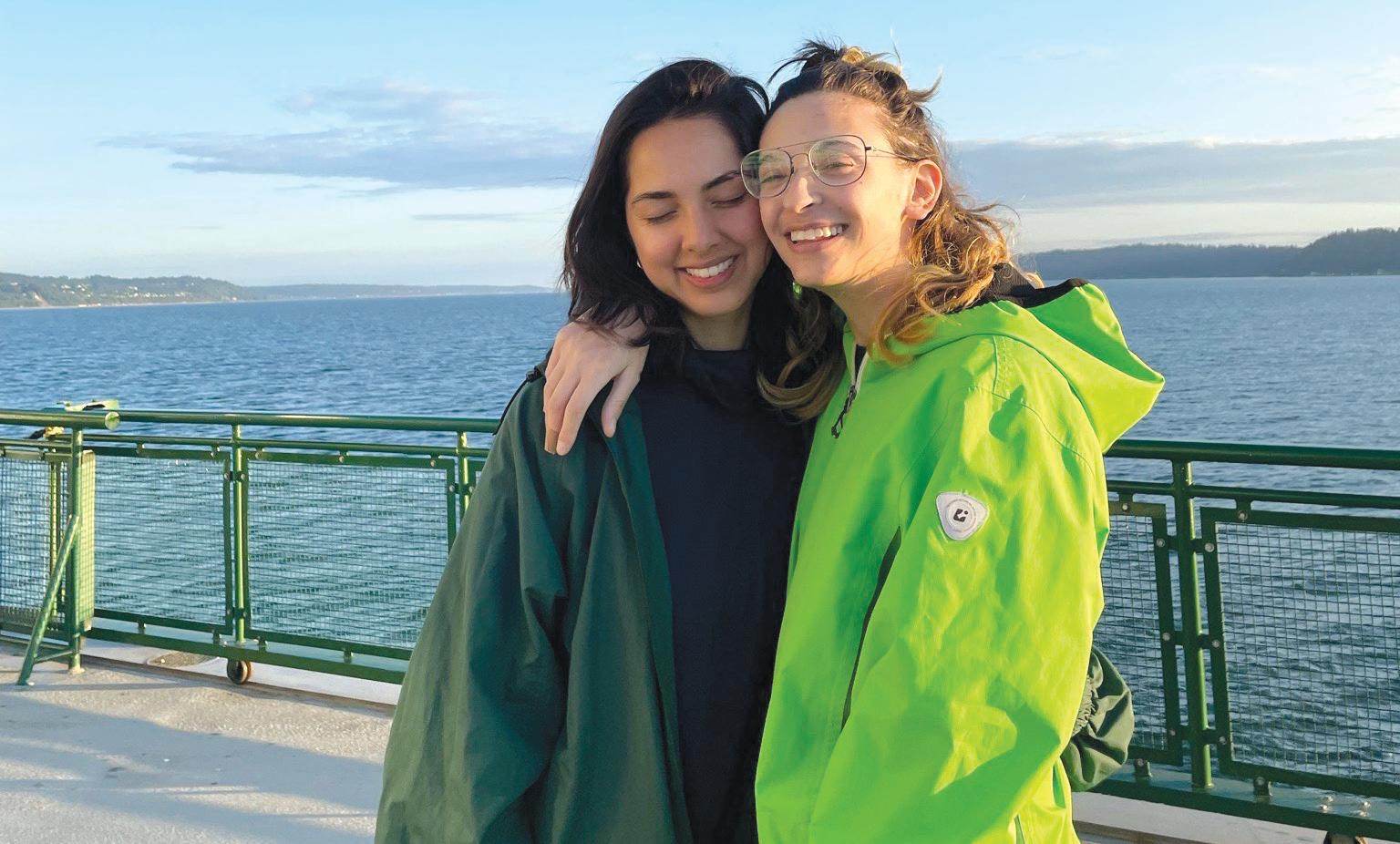
If the luckiest people are those who love their work, Seattle couple Daniela Casalino and Jake Maia Arlow have hit the jackpot — they love their work and the person they get to do it with.
Casalino and Arlow are using their professional and creative talents in art and writing to develop a new young adult graphic novel together, set in Seattle and loosely based on Casalino’s experiences growing up in the region.
“I have lived in Seattle since I was about two and a half,” Casalino said in an interview with the SGN. “We moved quite a bit growing up, but we would come back to Seattle fairly often, and ever since graduating college in 2019, I’ve lived here full-time.”
While they have decided to set their novel in Seattle, the pair have very different histories with the city. Unlike Casalino, Arlow did not grow up in the Pacific Northwest or even on the West Coast. “I lived in New York for most of my life until January of 2021, when I moved to live with Daniela here in Seattle,” she explained.
Cultivating inspiration from their real lives, the early drafts for their graphic novel center on two girls, one from Seattle and one from out of town, who fall in love. “It’s fun, because I’ve heard from Daniela all these things, and I’m like, oh, I wish I had gone on an outdoor trip with my high school! That is so far from my high school experience,” Arlow said, laughing. “I can contribute more to the [character] who moves from away, but hearing more about what it was like being a teenager in Seattle sounds so cool, and so far from my own experience.”
Some of the scenes Casalino and Arlow have begun to write are pulled right from Casalino’s PNW childhood. “We thought about a lot of Washington teenage-specific things that we want them to do, [from] what I remember from growing up,” Casalino said.
“That’s sort of setting the scene, but more generally, it’s about a group of friends in a fictionalized Eastside suburb of Seattle, just following them through a year in their life, and specifically about a girl who moves from out of town into the suburb, who gets into a relationship with a girl who already lives here.”
Living vicariously through their characters
While some of their ideas for the graphic novel come from Casalino and Arlow’s real-life experiences, other things, like being in an openly Queer high school friend group, are more fictionalized. “We’re
both people who didn’t come out until college. It’s like being able to vicariously live through characters that… deal with that earlier on,” Casalino added.
Although Casalino and Arlow didn’t get the chance to be out and explore their sexualities in high school, they have observed a shift in teen culture, such that more and more young people can come out as LGBTQ+ to supportive and safe communities.
“We both have younger siblings, and we interact a lot with younger people, and we think it’s very cool how they’re not fazed by sexuality. It’s much more integrated. It’s not so much a big thing a lot of the time,” Casalino observed.
The idea of creating stories for Queer teens to enjoy inspires Casalino and Arlow to keep working. Both admit they did not have much access to LGBTQ+ stories, especially not positive ones, while they were growing up.
“I didn’t read any books featuring Queer protagonists when I was younger. I think if I had access to those stories, especially ones that are chill and relatively tame and aren’t confronting you with… all the shit you’re going to have to deal with [when you come out], it would have made coming out and pursuing Queer relationships more accessible to me. It would have given me a more optimistic view of my life,” Casalino said.
“I don’t know, I only read Will Grayson, Will Grayson in high school, and it was like the one Queer story I had,” she added with a laugh.
“For me, when I was in high school, and Orange Is the New Black came out, I thought the only way I could pursue a Lesbian relationship or have sex with a woman was to be in prison,” Arlow said. “Those stories were there, Queer stories were accessible to me, but I wasn’t shown them. I wasn’t exposed to them as much, so I was like, Orange Is the New Black? I guess I should go to jail.”
“No one is thinking that now. I think as a Queer author, and as a Queer bookseller working in a bookstore here in Seattle, I’m seeing so many kids come in, and they’ll not even know what they’re looking for. They’ll be like, ‘Oh… do you even have a book that’s sort of about two girls or something like that?’ and I’ll [say] yes, and pull 20 books off the shelf that could be good for them. That’s so exciting for both me and them, and I think it’s a point of connection for Queer people to talk about a Queer book or to show a younger Queer person a Queer book or… story.”
Inspired by another popular Queer graphic novel
Their plan for the graphic novel is to follow in the footsteps of another popular Queer teen romance that has proven very popular in 2022. “I think the closest comp to it is honestly Heartstopper. We were very obsessed with the books and the TV show, and we’ve talked for ages about high school Queer stories,” Casalino said. “One of the things that we liked was that there was this big cast of characters that were diverse in their backgrounds and their sexualities, and that wasn’t instantly traumatic for all of them but… kind of a part of the fabric of who they were.”
“Yeah, it’s inspired by the many different storylines of Heartstopper,” Arlow added. “Especially for me, coming from writing novels, it’s harder to focus on a large cast of characters, but in a graphic novel, it’s just so much easier to say, ‘Oh, we want to tell all these many little stories.’ It’s visual and almost cinematic. You can tell many stories from many different people, and we’re excited to plan out all the different stories of all the different characters.”
Working with Casalino on their collaborative project has been different for Arlow, whose previous work writing Queer middle-grade novels was much more solitary. “As we conceptualize, Daniela will be drawing different potential scenes from it for proof of concept and to understand what the characters look like, and it’s just so cool, even from the beginning to understand visually what characters look like, what the story will… be. It’s easier to imagine what the story will look like when you can see the characters,” she said.
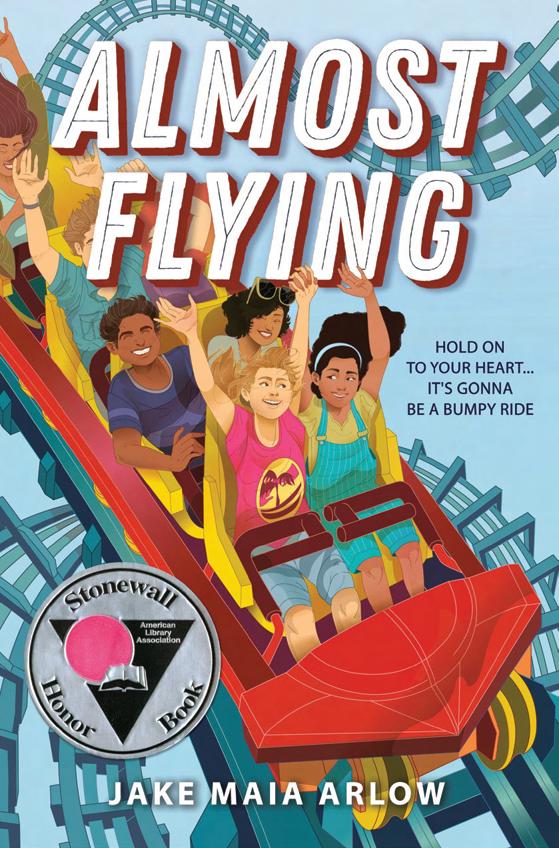
Despite Casalino and Arlow being relatively young, the two bring years of experience and skills to their collaboration. “I have been writing, technically as a career, since college,” Arlow said, “and my first book, called Almost Flying, which is a Queer middle-grade roller-coaster roadtrip novel, actually came out exactly one year ago today.”
“And I’ve never been a full-time professional illustrator, but I have been drawing since I was in middle and high school, and then in college, I was an illustrator at the student newspaper,” Casalino humbly added.
“Also, you’re an architect, and you draw so much through that,” Arlow reminded her.
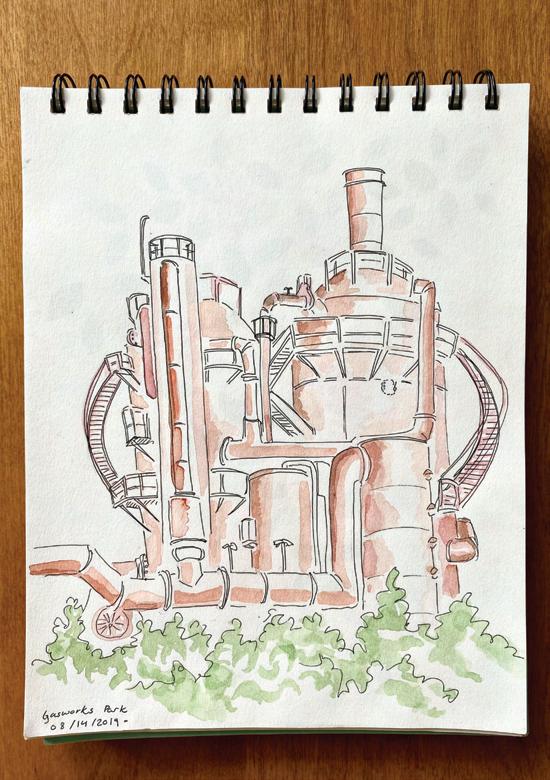
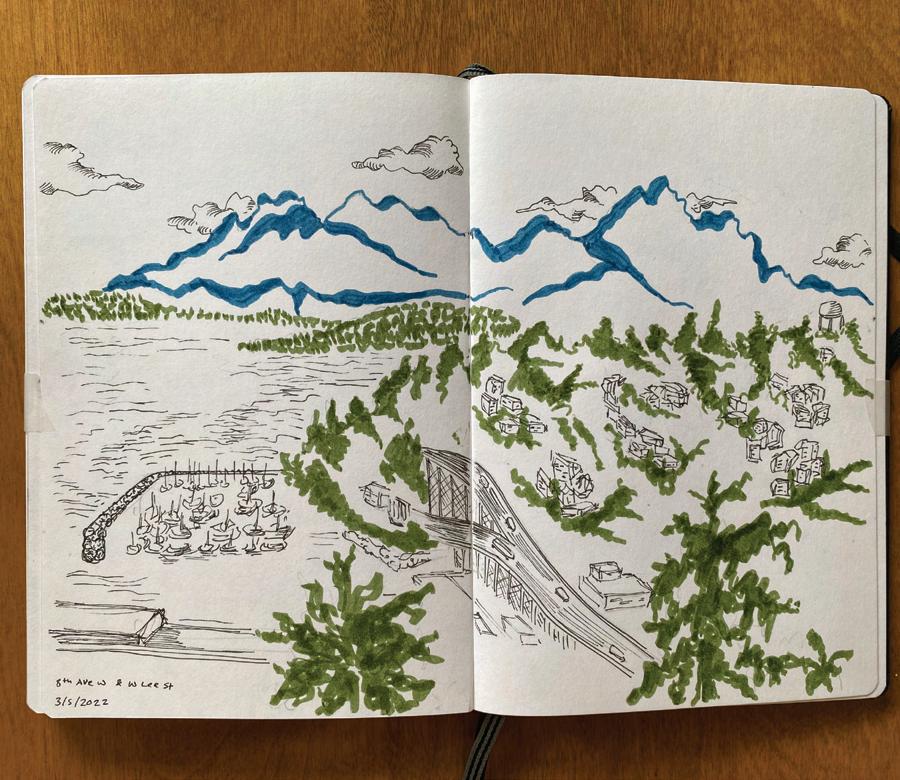
“That’s true. The drawing was kind of an on-ramp to my interest in architecture, because I like to draw buildings and landscapes,” said Casalino. “So, nowadays archi-
tecture doesn’t involve so much drawing by hand, but I like to maintain it as a skill, and it’s really fun. I’ve been doing it side by side with other academic and career pursuits.” Their creative pursuits have brought them valuable experience and, at times, some pretty high accolades. Arlow recalled her experience of becoming a published author for the first time last year with a smile. “It was interesting because it was my introduction into the world of publishing, but also through that, I met so many other Queer authors and storytellers,” she said.
“It was exciting because I was living in Seattle when the book came out. The day it came out, I rented a Zipcar and drove around to every bookstore in the Seattle area and signed copies of the book. It was just really thrilling to see that some booksellers… were so excited and had it on their Pride display.”
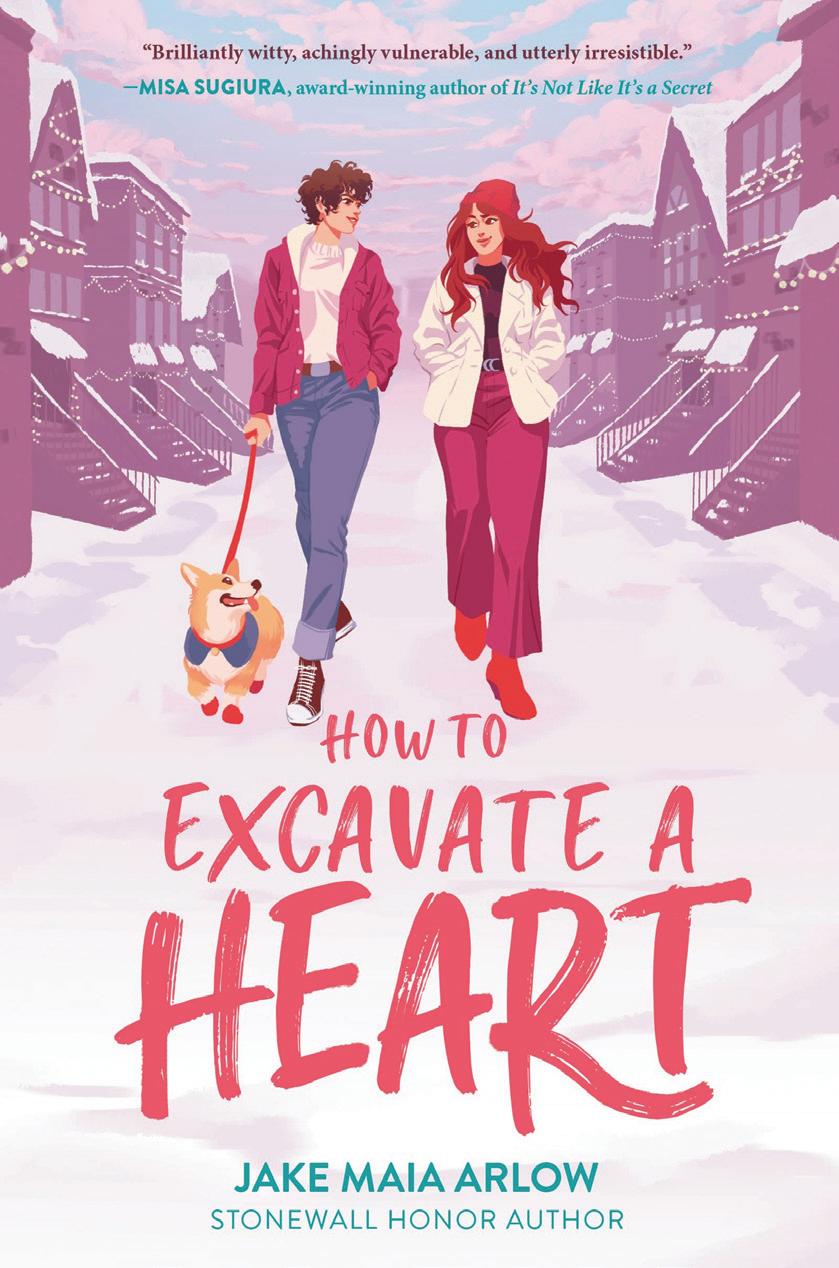
Arlow’s second book, How to Excavate a Heart, will hit shelves in November. The book is already on presale at the Queen Anne Book Company, the store Arlow works at. Despite all her success, she remains humble, but Casalino was more than happy to remind her that she will also be accepting the Stonewall Honor Award in late June for her first book.
“Yeah, Almost Flying, my first book, got the Stonewall Honor from the American Library Association,” Arlow said. “It’s specifically for kids’ books, and they give it to a few [Queer] books each year... There will be a little ceremony and a little conference in late June, and I’m excited about that.”
“I would go, but the tickets are $1,000,” Casalino added.
“I get flown out there for free, which is nice,” Arlow replied, “and I wouldn’t be able to go if that weren’t the case… I jokingly tweeted… that they should have a fund for partners of people accepting the awards to be able to go with them, but yeah,” Arlow said.
Inspired by each other Arlow and Casalino’s relationship inspires much of their creativity, from small scenes in their upcoming graphic novel to even just providing them with a healthy space to bounce ideas off one another.
“I would say this is the first healthy relationship I’ve been in. So it inspires me,” Arlow said. “When I’m thinking about stories I want to write in the future or what we’re writing together, I think [that] the way we communicate and our relationship goes into a lot of it.” She said she sometimes puts a conversation or even a style of communication she recognizes between her and Casalino into the scenes of her books.
“It’s fun to put those things in, even if it’s just a little Easter egg for us,” she added. “In my book that’s coming out, we were just starting to date when I wrote and was editing How to Excavate a Heart, but even then, I remember telling her, ‘Oh, I added something that was like… the emotions that I felt before we were dating’… Just being able to put those emotions into stories was very exciting and feels like honoring our relationship but also being able to share a positive Queer relationship.”
“Yeah, I would second that, being in a healthy relationship,” Casalino added with a laugh. “I feel like I have learned so much. It is nice just to take in romance stories, and now I can see myself in some of them. Also, it’s very inspiring to be with a writer: you process a lot externally, so I have a lot of dialogue and story ideas from early on in the process, and whenever I have ideas, historically, I immediately thought, ‘This is so stupid, why would I even say it out loud?’ But it’s very cool to [think] maybe you should tell someone about an idea you have and not immediately disregard it.”
Creative collaboration has become a staple of Casalino and Arlow’s relationship. “I’ll talk to Daniela about story ideas,” Arlow said. “We’ve been like, let’s go on a walk and we’ll discuss what our graphic novel should look like and what scenes we want. We’ll take a long walk around our neighborhood and [say], okay, this is what we could put in there… It’s just nice and fun.”
The greatest story of their lives
It’s no surprise that Casalino and Arlow can
bounce story ideas off of each other so well — their relationship has so far played out as perhaps the most interesting story of them all.
“We met in college through a mutual friend,” Casalino recalled. “I was illustrating at the college newspaper, and my friend was an editor there, so we would collaborate a lot on illustrations for essays and articles, and this friend is a really good friend of Jake’s.”
“She connected the two of us, because she found out we were both fans of this comedy podcast,” Casalino continued with a laugh. “It’s like cringe to talk about it now, but that is how we met. …The first time we hung out in person, we were going to a recording of the comedy podcast… but we didn’t start dating until a little bit after we had both graduated from college.”
“And we have been dating for two years and change now,” Arlow added.
They decided to start dating long-distance, with the idea that they would have plenty of opportunities to travel and visit each other.
“Yeah, March 3 [2020] was the day we started dating,” Arlow said, “and then literally a week or two later, the world shut down. We were making plans, and then we didn’t get to visit each other for a very long time. We would talk on Google Hangout every night for many hours, though.”
They made long-distance work for nine months before Arlow decided to move to Seattle. She arrived at SeaTac on January 6, 2021.
“…A rough day for the world, and for the United States specifically, but yeah, that was the day I moved,” Arlow said.
“I was driving to the airport, checking my phone in the parking lot, being like, ‘I can’t focus on the insurrection currently,’” Casalino added.
Despite all the challenges of dating during the pandemic, both Casalino and Arlow agree the challenges they faced early on in their relationship ultimately made them stronger.
“I think our relationship is very supportive and communicative,” Casalino said. “I want to say that the months of long-distance where truly we could only talk for like five hours a day helped with that.”
“I think having the baseline of our relationship, where we knew each other from before and were friends, and then dating when we could only talk to each other and …get to know each other on such a deep level allowed us to have such a good mode of communication and understanding of each other,” Arlow added.
“Yeah, and I think that we have a very similar sense of humor. We value creativity, I don’t know, it is just like a silly, goofy mood all the time,” Casalino said.
Advice for future creators
As a pair of young and successful creatives in Seattle, Casalino and Arlow have some advice for anyone looking to forge a career in the arts.
“For writing specifically, I would say just write all the time,” Arlow said. “I will sometimes do virtual talks for middle schoolers and high schoolers, and they’ll be like yeah, I write on a Google Doc, I have a shared Google Doc with my friends, but that’s not
writing. And I’m like, ‘Yes, that’s writing.’
“Even if you’re writing out your grocery list or typing in your note app, that’s writing. You don’t need to have a journal and write these amazing things to be a writer. Just writing your thoughts down or writing a silly story with a friend on a shared Google Doc or typing out an observation in your note app, that’s writing. So just write things all the time and connect with other Queer people and Queer writers and readers — which I feel is most Queer people, because we like to share our stories.”
“I think I have very similar advice for illustrating, which is just to be not particularly precious with your work and to be very experimental with what you choose to illustrate and… use as a topic and where you illustrate,” Casalino said. “Not everything has to be this big masterpiece contributing to your brand or your larger vision.
“Also, you don’t have to share everything. For a while, I [thought that] every good illustrator is online and really into sharing every aspect of their process, but I think that as long as you are doing it for yourself and you’re engaging through books and media with the kinds of stuff that you’re drawn to, that’s setting you on the right path.”
Casalino and Arlow are active members of Seattle’s Queer community and can be found on TikTok at @danielamakes and @jakewhosagirl, where they share some of their creative skills, favorite books, and reasons why they love the Pacific Northwest.




In this episode, Ash and Lindsey talk about Pride in the Park and Pride Asia! Our special guest is Port Townsend Film Festival's new Executive Director Danielle McClelland, who gives us a very hopeful message before Ash and Lindsey have a frank discussion about guns and gun violence. Warning: The last 25 minutes of today's show contain a very serious discussion that is not for everyone. Listener discretion is encouraged.
BI-WEEKLY! FIND US WHEREVER YOU LISTEN TO PODCASTS!
BY LINDSEY ANDERSON SGN CONTRIBUTING WRITER
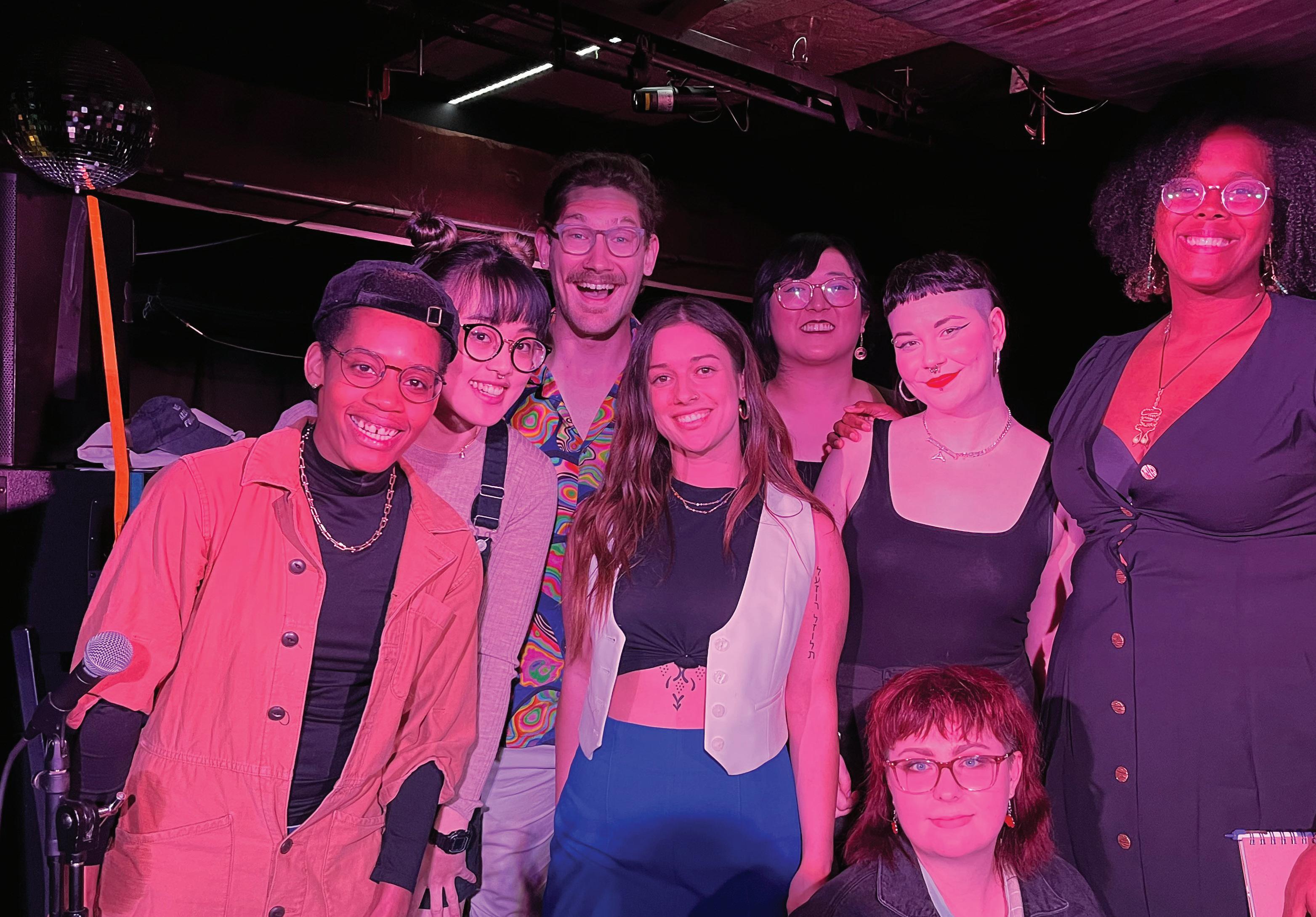
On Saturday, June 11, Queers from all across Seattle lined the block outside Kremwerk. While it not yet been officially documented, rumor has it the crowd that gathered that night may have been the Gayest audience in town. LGBTQs young and slightly older all came out of the woodwork to witness the special Pride edition of The Queer Agenda, Nam Nam Production’s live Queer dating show, created by local celebrity power couple Stephanie Nam and Jalesa Johnson (who met at a different live dating show Stephanie was producing).
The couple hosted the night and warmed up the crowd with some hilarious improvised and unscripted bits. Once the audience was feeling loose, Nam and Johnson introducing the stars of the show, the contestants they had hand-selected, hoping that some would leave the stage with a new romantic partner.
Meeting the contestants
First to introduce themselves to the audience was Caitlyn Glinski, a massage therapist and self-described “sad cowboy.” Johnson informed the audience that Glinski’s sun sign is Gemini, which means they are usually bad at making decisions. To prove Johnson wrong, they agreed to a quick round of “FMK,” choosing between three classic Geminis: Edward Cullen, Draco Malfoy, and Arthur, from the children’s cartoon Arthur
Next to the stage was another Seattlebased comedian, Jessa White, who said her ideal person was someone who “wants to fuck her” and who she also “wants to fuck.” When Nam asked White what she was looking for that night, she replied, “an orgasm before midnight.”
Following White was crowd favorite Juno Men. Men is also a Seattle comedian and producer and said she was hoping to make a connection, either platonically or, if the energy was right, romantically. She said her ideal partner has “wit, intelligence, kindness, and an affinity for KBBQ.”
The next contestant to join the show was Aviona Gaines, an SEL (social-emotional learning) specialist who describes herself as someone “who asks too many questions.” Among her listed hobbies, Gaines said she enjoys “reframing things,” to which Johnson asked what her favorite type of frame was. After a moment of mild confusion, Gaines explained her hobby is positively reframing ideas, not objects.
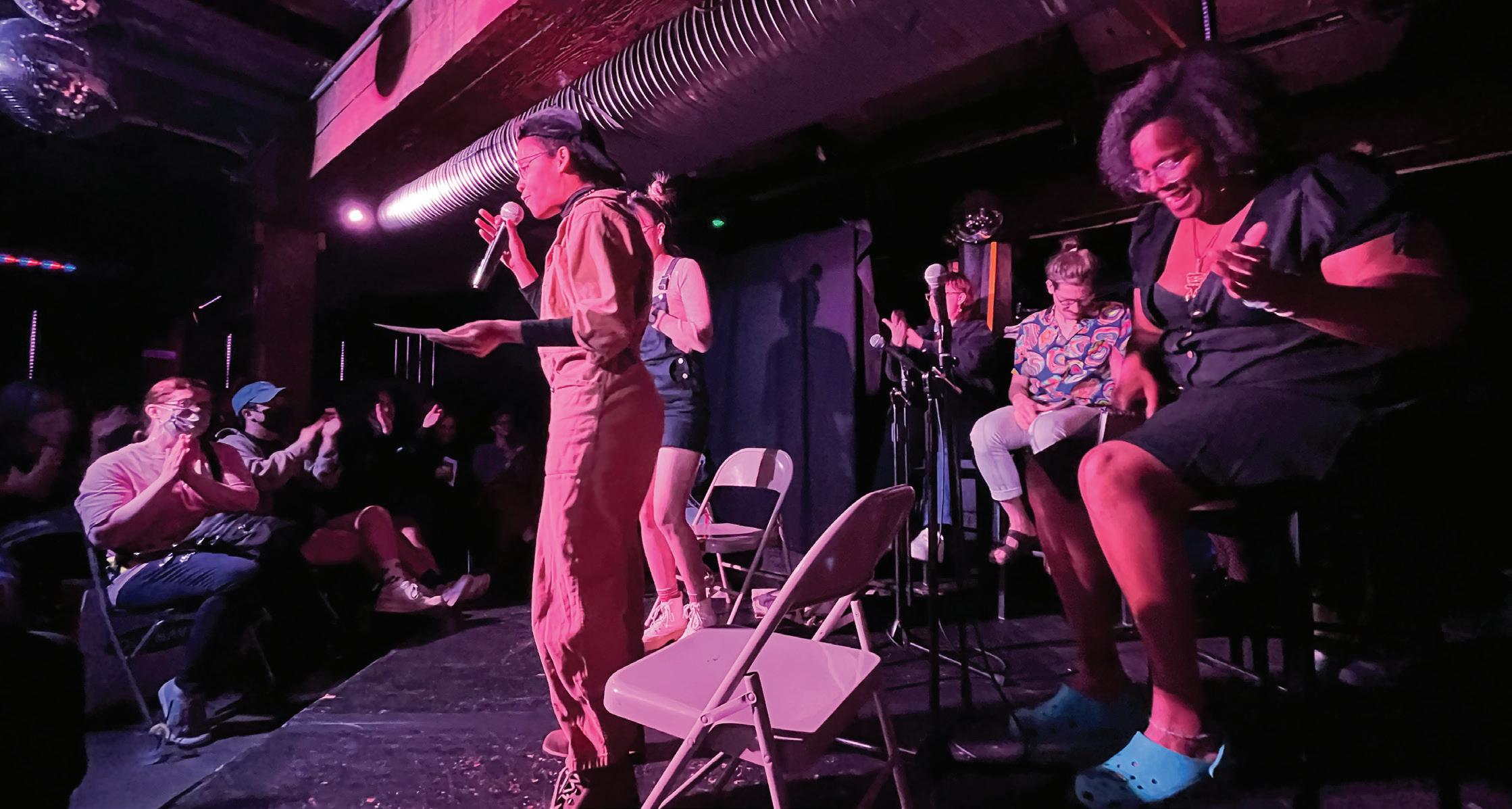
After Gaines charmed the crowd, the youngest contestant on the show strutted their way onto the stage. Monty Rozema is a comic-bookstore employee and teaching artist. Rozema said they enjoy scrapbooking, roller skating, reading, and Pinterest. “I take Pinterest very seriously,” they said. Per Rozema’s request, Johnson improvised a round of comic book-inspired “FMK.” The winner? Frozone.
The final contestant to make his way to the stage was Jonathan Dale Logerstedt, or as Nam liked to say, “our token male.” Logerstedt said his ideal partner was someone who enjoys “lots of kinky Queer sex,” to which the audience whooped and applauded.
Each of the contestants on The Queer Agenda identified as some sort of Queer, and all were open to dating people of any gender, although a few did admit they have preferences.
Let the games begin
Once the contestants finished introducing themselves, it was time to start the games. Nam and Johnson began the night with a few light rounds of “Would You Rather,” handing each contestant two cards to hold
up to signify their preference on topics like “camping or parties,” “weed or alcohol,” and “monogamy or open relationship.”
Next, Johnson and Nam read off questions the contestants had anonymously submitted to them before the show. They probed each participant with the questions, which varied in depth and spice
Once the contestants explained a little bit more about their preferences, Johnson and Nam spiced things up with a game of squirtable pick-up lines. The hosts paired off the contestants, had them sit in front of the audience, and made them read cringe pick-up lines to each other. If they could get their partner to break into a laugh with their delivery, the pick-up artist was allowed to squirt them with a small water gun. The game was a hit with the crowd.
After all the fun, chaos, and even a little lap-dancing between contestants, it was time for the moment everyone had been waiting for. Nam passed out notebooks to each of the contestants and asked them to write down the name of the person they felt the best connection with. Secretively, each contestant looked around and scrawled out a name.
Nam and Johnson then pulled out a wild-
card: they asked all the singles to announce aloud the person they had chosen. Awkwardness ensued as each contestant slowly came forward to declare who their night’s crush had been. The show’s star seemed to be Gaines, who attracted not one but two requests for a second date. “What are you doing before midnight?” White asked her, followed by uproarious applause.
Men also proved to be a popular option, with an offer for a friend date, a something-more date, and even an admirer in the crowd asking if she would go out with them.
The night ended on a high, with all the contestants laughing and fending off the horny Queers in the audience looking to scoop up a chance for a date with one of the hot stars of the show.
Nam and Johnson proudly closed out the night, deeming the show the Queerest edition of The Queer Agenda yet. They also informed the room that if any single Queers out there are looking to sign up to be on the next live dating show, another round will be happening in August. A link to apply for a position on the show can be found on Nam’s website at https://www.s anienam.com/productions.
BY MAGGIE BLOODSTONE SGN CONTRIBUTING WRITER
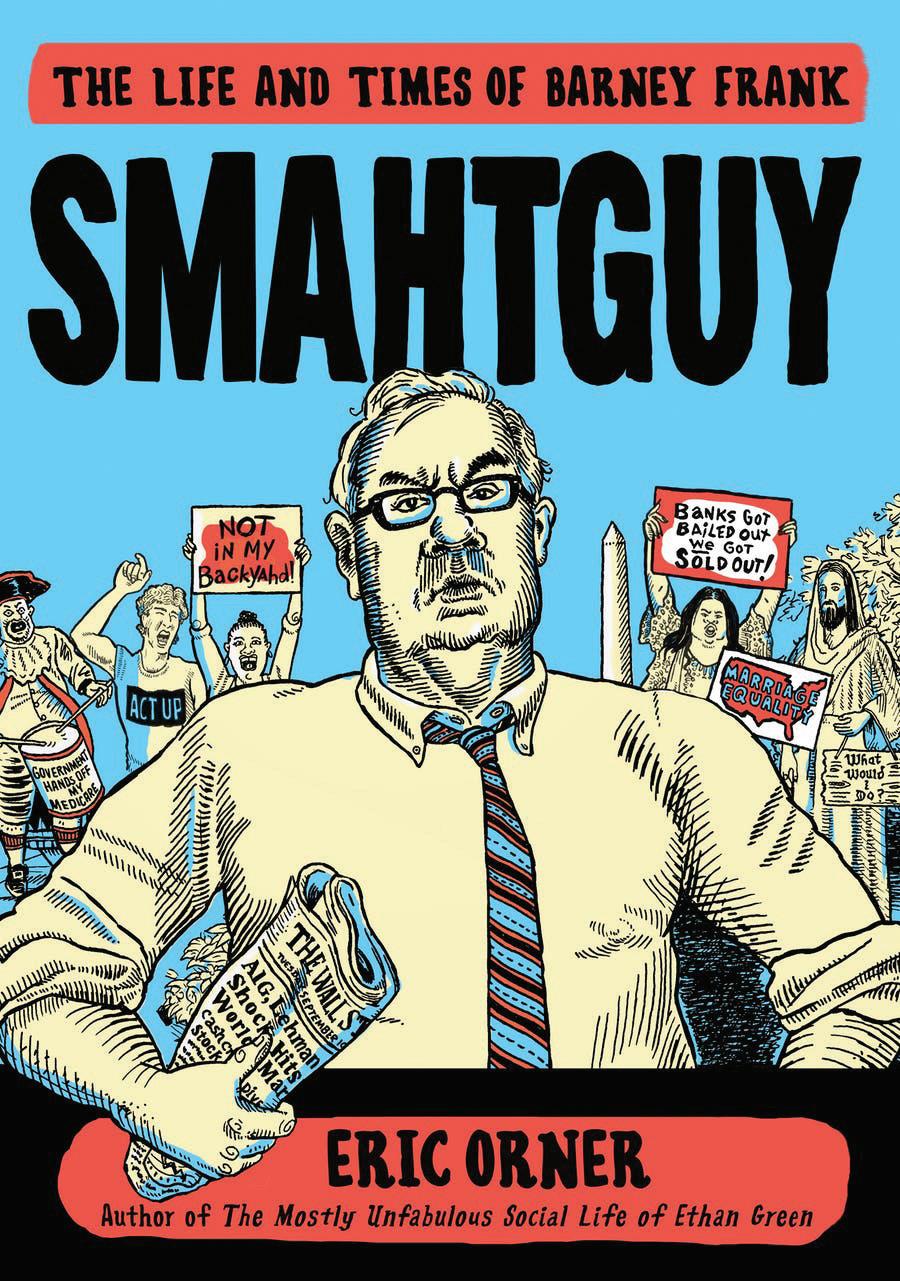
SMAHTGUY: THE LIFE AND TIMES OF BARNEY FRANK
ERIC ORNER
© 2022 Metropolitan Books
$25.99 / $13.99 (e-book)
224 pages
We probably should have seen what was coming back when House Majority Leader Dick Armey “accidentally” referred to Rep. Barney Frank of Massachusetts as “Barney Fag” in a 1995 interview. We should have seen the cracks in the façade of civility on the part of the American right wing that would erupt in a Vesuvius of shameless slander, insults, and defamation a decade and a half later.
The difference back then was that Armey at least had the cojones to apologize, as opposed to the double- and-tripling down employed by “conservatives” and Republicans of the redhat variety nowadays. We could definitely use a token offering of shame and accountability nowadays — but more importantly, we need a Barney Frank right now.
A must-read for political junkies who also dig graphic novels, Smahtguy is relatable, humane, well researched, and sharp as a brass tack. Eric Orner is the ideal choice to graphically chronicle Frank: Gay, politically astute, and witness to the man in action firsthand, having been a one-time intern.
Not to mention, he’s witty AF. His The Mostly Unfabulous Social Life of Ethan Green is inarguably one of the funniest Gay-themed strips in the history of funny. With Smahtguy, he also takes his subject dead seriously and gives equal consideration to both Frank’s political and private lives, with ample helpings of the kind of saucy badinage that made Ethan Green so hugely enjoyable. (There’s even a cameo of that strip’s Hat Sisters in an early ’70s Gay rights march scene, among nostalgiainducing signs like “Gay Is Good” and “Better Blatant Than Latent”).
Orner does justice to the “and times” part of the book’s title, immersing the reader in the social and political landscapes of the ’60s through the 2010s and making complex political issues comprehensible to even those most easily bored by the inner work-
ings of government. This is not just a biography but a prescient look into the absurdity and actual work of politics. (Someone please draft Aaron Sorkin and put him to work on a miniseries based on this book now.)
Besides humor, Orner employs another technique that has come to be associated with LGBTQ and women cartoonists: the inclusion of various races, shapes, sizes, and appearances among background characters, making them a group of individuals and not just a milling crowd.
Orner also uses color uniquely: one page will have blue highlights, which segue into yellow on the next page, then pink on the next. A dash of rose taints the face of a bloviating colleague railing against a pot decriminalization bill Frank introduced. Splashes of color give added depth to scenes of people just sitting around talking. This proves far more effective than full color, which, with Orner’s tightly packed, detailed art, would have overwhelmed the reader and distracted from the narrative. It’s a clever device that keeps the eye awake in a way just black-andwhite wouldn’t have accomplished.
Orner also has a keen eye for detail, from period pieces like peace-sign necklaces and platform wedgies to the brutalist architecture of Boston City Hall, snarky newspaper headlines, and campaign posters of Frank proclaiming “Neatness Isn’t Everything.”
Frank’s background
A lifelong liberal from a left-leaning New Jersey family, Frank fought for every progressive cause under the sun, from eliminating race-based gerrymandering to public transportation to the protection of sex workers to abortion rights.
He attended Harvard in the waning years of the “good old days,” when Gays and Lesbians were branded “security risks” and not even JFK could show any interest in their civil rights. He made his political bones as a schlubby Jewish kid in the midst of Irish Catholic–dominated Boston, where the not-at-all-missed Louise Day Hicks openly expounded on “replacement theory” when it was just “white backlash.”
Frank proved himself indispensable in Boston Mayor Kevin White’s administra-
tion, and was even instrumental in curtailing violence in the wake of MLK’s assassination by working with the mayor’s office on televising a James Brown concert. And he wasn’t cowed by the likes of Massachusetts Senate President Billy Bulger or his scarier brother Whitey, like most Boston Dems, thanks to his natural-born chutzpah and the memory of his truck stop–owning dad’s brushes with Jersey wise guys. His skill at fighting mob-like tactics would serve him well against Republicans — and even members of his own party — throughout his career.
Even before coming out himself, he filed the first Massachusetts Gay rights bill, even before taking his seat in the state legislature, and later fought to repeal the criminalization of sodomy, which was torpedoed at the last minute by conservative hacks who thought it would be a hoot to wait until the last second to vote no.
But even this didn’t slow Frank down. He went up against a John Bircher (for the young’uns, that’s the equivalent of “MAGAot” in boomer-speak) in his first congressional race in 1980, when being unapologetically liberal against a rightwing lunatic was actually an advantage
Frank was a true populist and a welcome alternative from the usual smarmy glad-handing. This was well illustrated in an encounter with some Vietnam vets, in which Frank took phone numbers for the purpose of personally contacting the VA on their behalf. As one vet put it, “No ‘thank you for your service’ bullshit. Weird.”
The end of the closet
By page 123, you no doubt may be thinking, “When the hell is he going to come out already?” And well you might. After a mostly unfabulous run of missed or brief encounters, Barney entered into what he thought was a casual, uncomplicated relationship with a hot young hustler, “Steve,” who used Barney’s apartment to throw parties with other DC professional wastrels, leading to the notorious “bordello scandal.”
The Moonie-owned Washington Times asked Frank point-blank if he had paid for sex with “Steve.” Knowing the best defense was just plain honesty, he replied in the
affirmative. This was the last thing the muck merchants anticipated, but contrary to their slavering expectations, Frank’s candor was rewarded with overwhelming positive support, even in the worst years of AIDS and despite demands for his removal by those with far noisier skeletons in their closets (Gingrich, Hastert, Larry “Wide Stance” Craig).
This episode, plus being outed by homophobic homo congressman Bob Bauman (depicted as a trollish anti-Frank, complete with horns) and the AIDS crisis reminding him sharply of who he was, ushered in the end of Barney’s long residency in the closet. Frank would continue to fight the good fight during the rise of “neoconservatism,” laying the groundwork for the legalization of same-sex marriage and serving as the Clinton White House’s unofficial LGBT liaison (he would return their support by standing by Bill during the Lewinsky kerfuffle).
His work with Bush’s Treasury Secretary Henry Paulsen on the 2008 banking crisis was an example of bipartisanship we’re not likely to see again in our lifetimes (well, my lifetime, at least).
His prescience in seeing the inevitable pop of the housing bubble and his dogged persistence led to the Dodd-Frank Wall Street reform bill. The hearings on that bill are definitely a comedic highlight in Orner’s book, with the Senate depicted in traditional Roman garb and attitude and Frank entertaining thoughts of the Ides of March and Maxine Waters’ curt summation: “Getta load’a this shit” (if she didn’t actually say it, she should have). The hardwon Dodd-Frank bill passes with the ghosts of LBJ and Frank’s comrade-in-arms Tip O’Neill in celestial attendance.
The book closes with Frank’s retirement from a jam-packed career and his marriage to Jim Ready — a joyous and welcome happy ending. Orner is a deft hand at depicting flirting, affection, and relationships in all their sweetness and messiness, and makes the reader feel as much a part of the reception revelry as any other guest, having been through a lot with Barney for 220 pages and realizing, as one wedding guest puts it, “You gotta love Barney Frank to like him.”





BY JOEY AMATO SPECIAL TO THE SGN
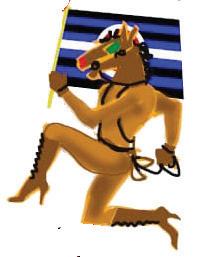
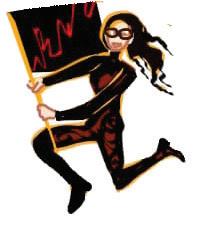
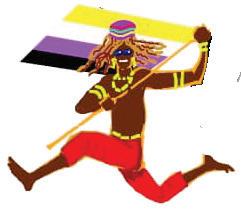
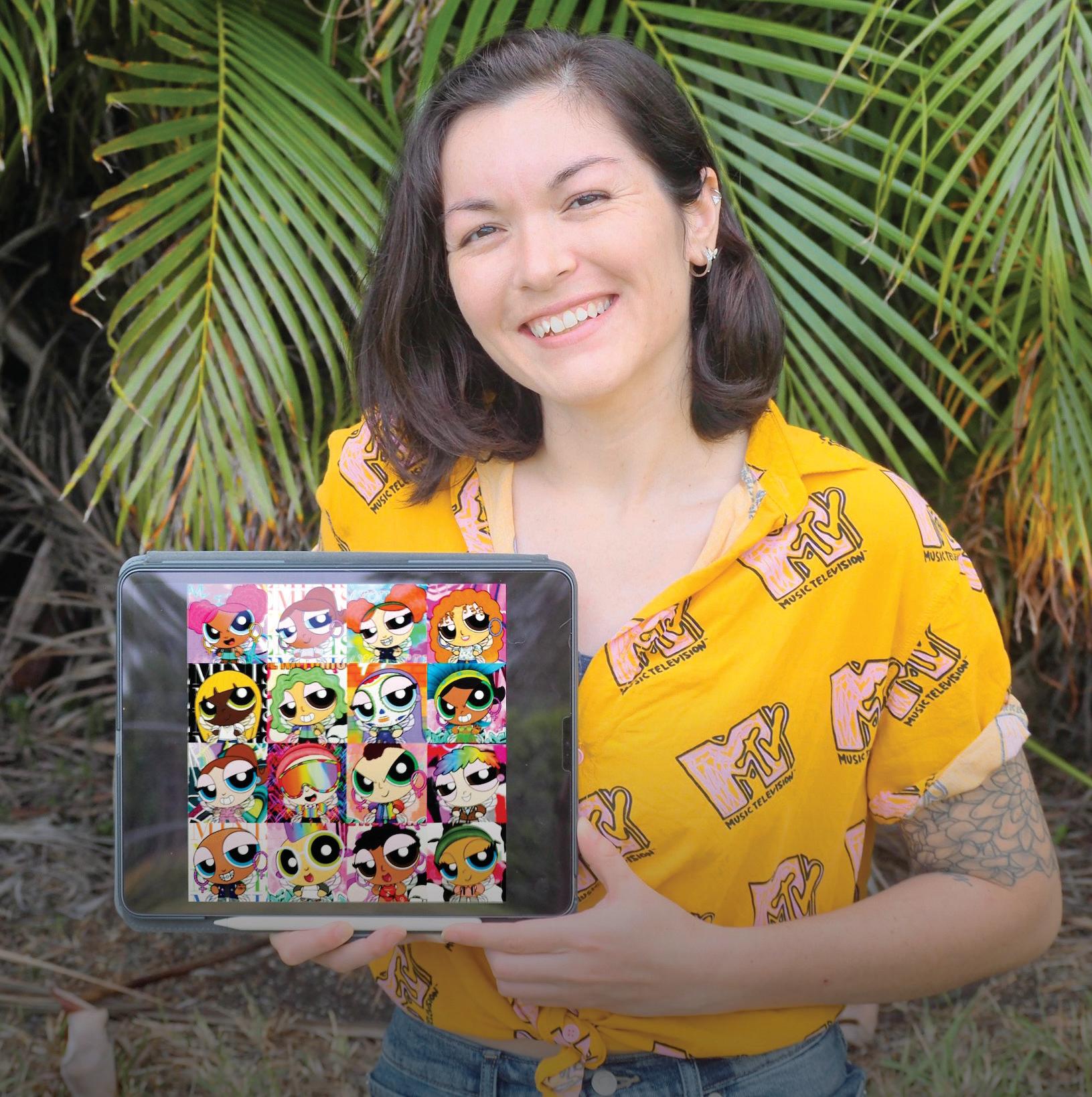
Taylor Diamond-Vizcaino is the founder and CEO of True Dream Vision, a company that wants to see people in the LGBTQ community succeed financially, emotionally, physically, and culturally. It is introducing the world to Pride Pixies, a series of NFTs created to change the lives of others for the better through activism, support, inclusivity, acceptance, and representation.
“T he enactment of the Florida ‘Don’t Say Gay Bill’ appeared to be designed to marginalize, vilify, and set back human rights for the LGBTQ community,” stated Diamond-Vizcaino. “I utilized the evolution of technology as a method for change, activism, and social awareness. Society has already built foundations to fight this bill, but now through the power of the blockchain, we can remove censorship through an immutable distributed ledger and support those that haven’t had the education and freedom to search for their identity without prejudice.”
Born in South Florida, Diamond-Vizcaino was the child of teen parents and raised by what she calls a village of independent youngsters. “Growing up in a Latin household to young parents instilled in me a sense of responsibility and independence. My upbringing allowed me to have room to grow and be creative but still feel responsibility and a sense of duty.”
Nearly every member of her family was a teacher, artist, or entrepreneur. Throughout high school, she was taught leader-
ship and perseverance through the Junior Reserve Officers’ Training Corps (ROTC) and was presented an award for her outstanding leadership in the district.
Af ter high school, Diamond-Vizcaino relocated to Orlando, where she studied media and cultural anthropology and sociology at the University of Central Florida.
“During these years, I built a new support team with my co-workers while working as a lifeguard. Orlando granted me the opportunity to meet individuals from all over the world searching for their community while I searched for mine. With an anthropology degree and my knowledge of medicine, I began to turn my focus back onto society. At this time in my life, I was sure about my sexuality as a Bisexual woman. I started to educate myself more on labels and conservative thoughts about marginalized people.”
Dia mond-Vizcaino grew to embrace her creative side by selling custom prints, designs, and apparel on online marketplaces. Not only was she filling her need to be creative, but she figured out a way to help the community.
Technology and activism
A nonfungible token (NFT) is a financial asset consisting of digital data and intellectual property stored on the blockchain, such as video, photos, film, and art. Recoded ownership of this asset is also stored on the blockchain for the world to see.
NF Ts allow their buyers to say they
own the original copy of a digital file in the same way you might own the original copy of a piece of physical art. An NFT creates a chain of title and a certificate of authenticity that you couldn’t attain in the traditional system. Some benefits of owning an NFT are that owners can obtain special rewards, or an authentic certificate of admission to an event, preventing counterfeit items.
NF Ts first hit Diamond-Vizcaino’s radar in early 2020, and her first thought was to merge her creative passions with technology. “Since technology is rapidly evolving, I called upon my father [a longterm cryptocurrency investor] to provide me insight into cryptocurrency, blockchain technology, and the monetization of intellectual property. The ability for creators to monetize their own intellectual property from videos, photos art, music, film, and memberships really had me thinking about how I can serve more of a humanitarian purpose in this world for good.”
She realized that creators, visionaries, and people of all backgrounds now have the opportunity to utilize this technology as a humanitarian effort for social change. It was at that moment that Diamond-Vizcaino created Pride Pixies.
“T he industry’s biggest challenges are lack of inclusivity, the lack of education, and friction in the NFT and crypto markets. We are addressing these challenges by building an inclusive community, donating 5% of our profits to Human Rights Cam-
paign Foundation and Ofrezco.org, to support marginalized people and women in tech. We are developing the first animated, nonbinary series of NFTs, the first nonbinary play-to-earn video game, and an NFT/ DeFi platform with ease-of-access to enter the market, as well as supplying tutorials and webinars to educate all.”
There has never been a time in a creator’s life when they could monetize their intellectual property for life in perpetuity. Creators now have the ability to program a smart contract built into the NFT that can pay royalties to the creator of the NFT for life, as long as the NFT trades on the open market.
“T hese royalties can be used to fund educational events, donate to human rights activism, support women in tech, [or] develop and build out more an animated series, films, or video games,” said Diamond-Vizcaino.
Pr ide Pixies’ NFT was originally set to mint on June 1, 2022, but due to the recent volatile market conditions and inflation, Diamond-Vizcaino decided to postpone to June 1, 2023, allowing for more time to promote Pride Pixies, increase their engagement for a larger community, and continue developing the items on their roadmap.
Dia mond-Vizcaino will only offer 10,557 Pride Pixies NFTs, so the limitededition supply will surely be in demand.
“Change is evolutionary, and the impact we make is one that sets the path for the new visionaries of the world,” she said.