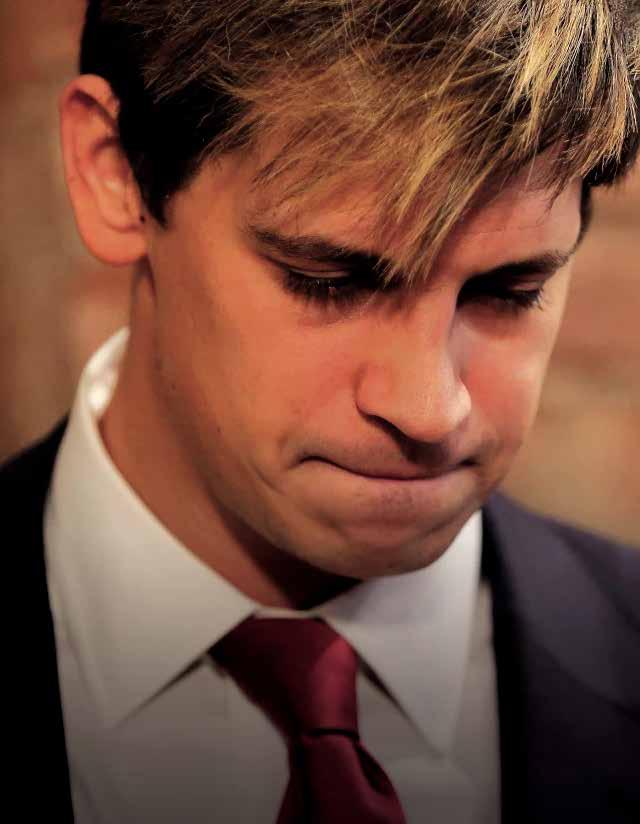
Milo Yiannopoulos – Photo by Lucas Jackson / Reuters
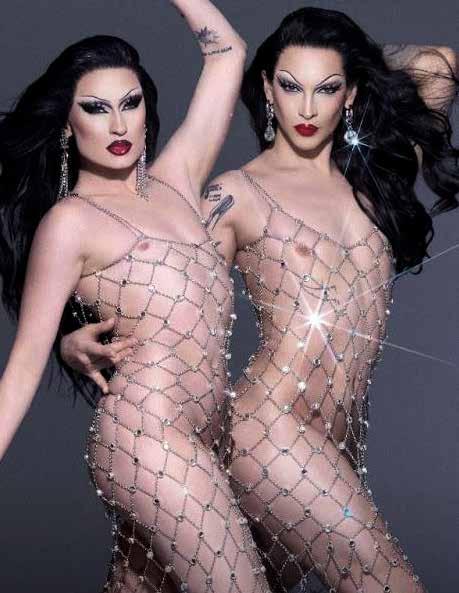
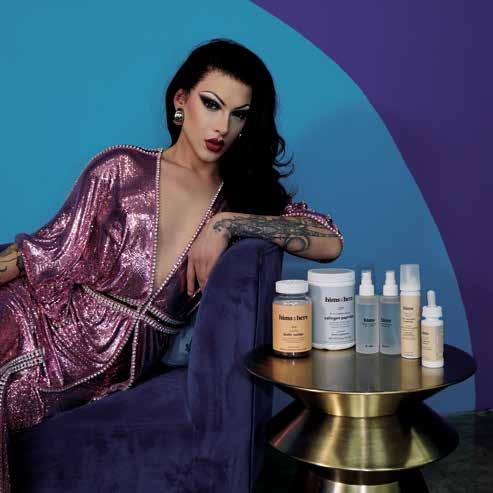
Gottmik and Violet Chachki – Photo courtesy of Him & Hers
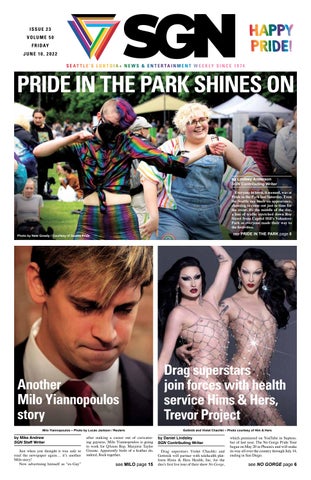
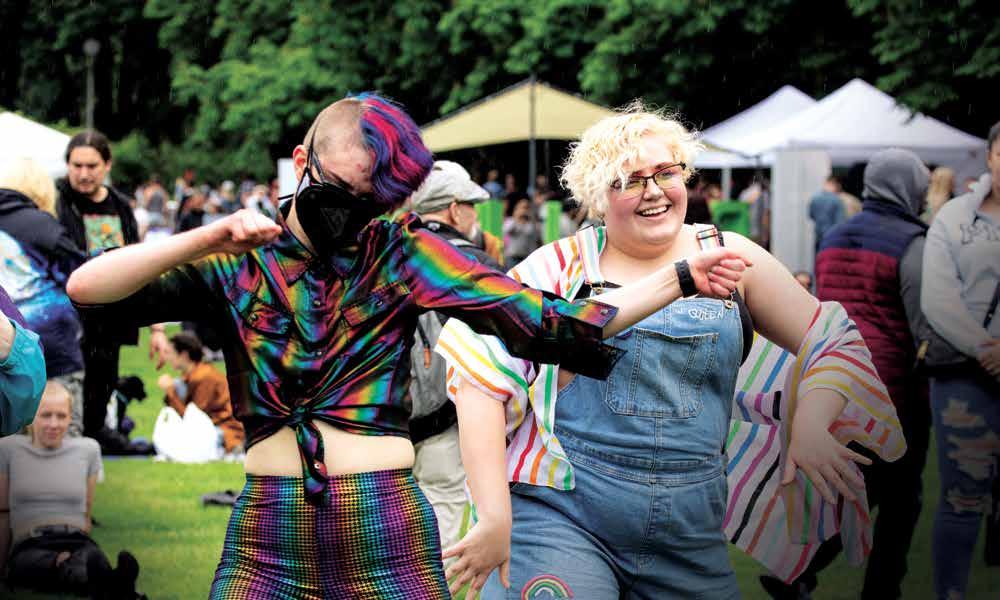
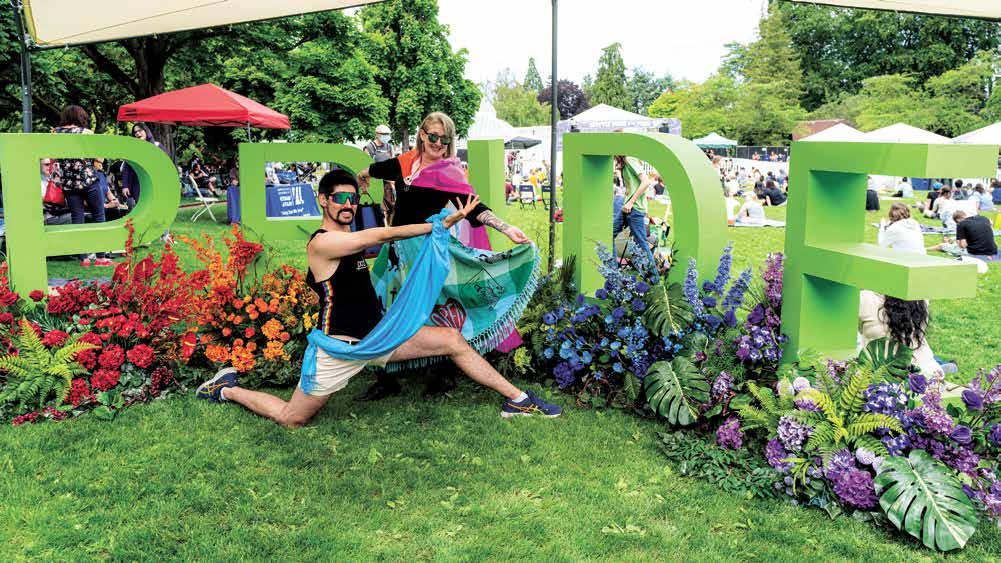
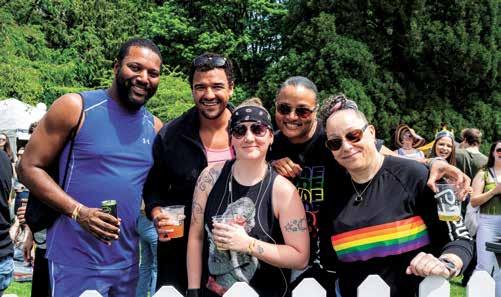
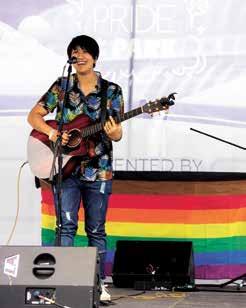
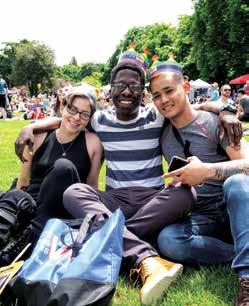
Photo by Nate Gowdy / Courtesy of Seattle Pride
by Lindsey Anderson SGN Contributing Writer
Local News
PRIDE IN THE PARK
Vendors traveled from all over Seattle to demonstrate their support with rainbow flags, face paint, and a whole lot of bubbles. Notable ones included T-Mobile, with its iconic pink tent; the Seattle Mariners, who were giving away stylish white and rainbow fanny packs; Overlake Medical Center; and QFC, which brought water bottles, as well as rainbow fruit snacks and applesauce for all the hungry Queers to munch on. Pride in the Park was the perfect family event. Parents came with their children — humans and dogs — decked out in the most festive attire. Kids ran around with
bubbles, streamers, and rainbow ribbons, only adding to the gaiety. Some children even brought their parents as allies, bravely attending their first Pride events together.
Activist groups like PFLAG and Mama Dragons also set up booths, handing out information to members of the LGBTQ+ community and their loved ones. Both organizations aim to support families of Queer people by offering community outlets and mental health resources.
Taking place just above the soon-to-be renovated amphitheater, Pride in the Park featured plenty of good music. The morning kicked off with some of the hottest Queer anthems played by DJ Kween Kaysh.
Later, a performance for the youngest attendees began: drag queen story time,
hosted by the always fabulous Cookie Couture, who let all the little ones know that dressing up is for everyone.
There was plenty to do at Pride in the Park. Some vendors set up arts and crafts stations, including a dog-painting booth. The Seattle Public Library provided a book give-away. CHEER Seattle gave performances and danced along with some of their youngest admirers. Rain City Rock Camp set up an “instrument petting zoo” for kids to get some hands-on experience with different types of musical instruments.
Across the way from the booths, live music filled the early summer air as musicians took to the stage to perform for those sprawled out on the lush grass.
One performer Seattleites were excited
to see was local singer Jeanie Rak, who opened the music portion of the event. Rak, who used to be a Pike Place busker, has quickly become a recognizable face, having released a new EP earlier this year.
Other performers at the event included drag duo LUChi, folk singer Carly Ann Calbero, local rapper Taylor Elizza Beth, R&B singer Morgan Britt, energetic drag queen Hot Pink Shade, punk artist Dark Smith, and headliner Fly Moon Royalty. Pride in the Park was the perfect kick-off to Pride month. After two years of staying at home, people were clearly ready to come out and celebrate.
Photos by Nate Gowdy / Courtesy of Seattle Pride
Local
Cat killer at large on Capitol Hill
by Lindsey Anderson SGN Contributing Writer
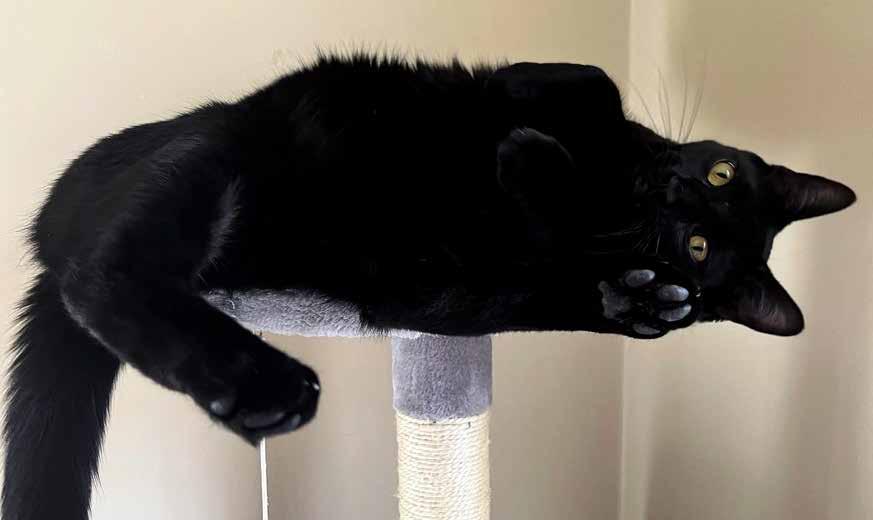
The Capitol Hill neighborhood has been shaken by the news that a possible serial killer of cats is on the loose in the area. Signs began popping up around the neighborhood on May 31, offering up a $2,000 reward for any tips that could lead to the arrest of the alleged killer.
“Some loser with a BB gun is shooting cats in the area around 18th and 19th!” the flyers read. The creator of the flyer asks anyone with information to submit anonymous tips to catreportcd@gmail.com.
The SGN reached out to that email address for more information but has yet to hear back.
Animal abuse is now considered a crime in every state, although penalties vary. According to Washington law, intentionally inflicting substantial pain on, causing physical injury to, or killing an animal by a means causing undue suffering, or forcing a minor to inflict unnecessary pain, injury, or death on an animal, is considered animal cruelty and thus illegal. Depending on the severity of the crime, an offender can face steep fines and even jail time.
Unfortunately, BB gun–related cat deaths are pretty common, and strays are the usual targets.
Psychological studies have also found that people who abuse animals or derive pleasure from watching them suffer are more likely to commit future crimes against humans, such as sexual and physical abuse. Research from the FBI has also found that most serial killers, school shooters, and mass murderers started by killing and torturing animals.
Advice for cat owners
We reached out to the Animal Control Department of the Seattle Animal Shelter to ask if they have received any reports related to the BB gun cat killer. They were unable to share that information with us but did direct
us to their website, where they provide tips and advice for cat owners in Seattle.
If you are a cat owner worried about the latest threat facing your feline in Capitol Hill, experts advise always keeping your cat indoors unless you have access to an outdoor cat run, or can supervise all outdoor activity.
“The Seattle Animal Shelter believes that a healthy cat is an indoor cat. Indoor cats enjoy longer, safer, and healthier lives than those that are outside. If you love your cat, keep it indoors,” the official statement from the SAS reads.
“Within the city, there is no leash law for cats. Because of this and many other factors, you can expect to see cats roaming
in your neighborhood. Additionally, many free-roaming cats do not have a home. These are cats that were domestic pets or were born as feral cats.”
The Seattle Animal Shelter also advises those who do choose to let their cats roam outdoors to make sure they are spayed and neutered, because the feral cat population is not healthy for Seattle’s ecosystem and leads to an overflow of strays in the shelter.
“While these cats become part of the natural ecosystem, often reducing the rodent population in our neighborhoods, they can also harm native wildlife and songbirds,” the SAS writes. “Please spay and neuter your cats, and consider keeping them indoors or confined with an outdoor enclosure.”
To keep stray populations down, the SAS has partnered with several organizations, including the Best Friends Animal Society, Ally Cat Allies, and the Feral Cat Spay/ Neuter Project to trap and tend to feral cats, then release them back to their habitats.
The shelter explains that TNR (trap, neuter, release) is “[a] technique in which community cats are humanely trapped, evaluated, spayed or neutered by a licensed veterinarian, eartipped to show they’ve been sterilized, vaccinated against rabies and distemper, and then returned to their original habitat.”
All of these steps are important to ensure that cats are safe from all dangers they may face on the streets of Seattle: cars, coyotes, and now, a cat killer with a BB gun.
Gottmik made waves last year in Season 13 of RuPaul’s Drag Race, when he became the first Trans man to compete in the series, armed with a striking fusion of makeup styles drawn from his experience as a celebrity makeup artist. He has worked with the likes of Kaia Gerber, Tinashe, Paris Hilton, Heidi Klum, and Lil Nas X. Chachki shares Drag Race roots with Gottmik, as the winner of 2009’s season 7, and was called “one of the most powerful drag queens in America” by New York magazine. She was also the first drag queen to attend the Met Gala. Her background as a burlesque performer, model, and recording artist are sure to have come into play during the tour.
“We couldn’t be happier to be breaking down stigmas with Hims & Hers,” Gottmik said of the tour in a press release. “For many others out there, mental health is a lifelong opportunity [for] improvement, and isn’t easy to talk about.
“As someone who has dealt with the struggles of finding the right medications and even accessing a good treatment plan, I know that connecting with a professional about mental health and finding the right medication that works for you can be a lifesaving action for those suffering from depression and anxiety.”
“A lot of fun is to be had being a drag queen,” Violet Chachki continued. “But there are some downsides to being this fabulous.
“Years of snatching ponytails, wigs, and using face tapes has been traumatic and stressful to my hairline, resulting in hair damage and thinning. Performing is my
calling, and unfortunately all of the fantastic headpieces I wear have definitely taken a toll on my hair.”
Both queens had nothing but praise for
Hims & Hers for providing easy access to quality health care professionals and treatment plans. Building on that theme, during the partnership, the platform will be providing free therapy services to volunteer inhouse counselors at the Trevor Project, the world’s largest suicide prevention and mental health organization for LGBTQ+ youth.
“The Trevor Project’s lifesaving work would not be possible without our incredible volunteer counselors, who dedicate their time to supporting thousands of LGBTQ youth in crisis,” commented Corporate Partnerships Manager Sofi Goode at the Trevor Project. “Our research shows that more than 1.8 million LGBTQ young people seriously consider suicide in the US each year, and our trained counselors are available 24/7, 365 days a year to offer free and confidential services to those who need a safe, nonjudgemental place to talk.
“We’re beyond grateful to Hims & Hers for enabling us to provide many of our volunteers access to licensed mental health professionals and treatment on their platform for free. Taking care of others is always their top priority, and we want to make sure they’re also equipped with highquality resources to take care of themselves.”
If you or someone you know is feeling hopeless or suicidal, the Trevor Project has trained crisis counselors available 24/7 at 1-866-488-7386, via chat at TheTrevorProject.org/Help, or via texting at 678678. You can find out more about the No Gorge Pride Tour at linktr.ee/nogorge.
Photo by Izabel Diaz / @handsomekingoliver
Violet Chachki – Photo courtesy of Him & Hers
Books
Ada’s Technical Books welcomes curious readers to its Capitol Hill location
By Lindsey Anderson SGN Contributing Writer
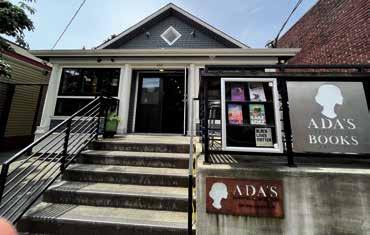
There’s no better thaw to the Seattle Freeze than walking into Ada’s Technical Books, located on Capitol Hill. The store is instantly warm and inviting, thanks to the atmosphere curated by the friendly booksellers and baristas.
“Everyone is very casual and very accepting of people… If you’re just here to hang out, you’re good for us,” said retail manager and book buyer extraordinaire Joan Sepulveda.
Sepulveda has been working as Ada’s book curator for the last ten years. Over that decade, she has seen the store grow up in front of her very eyes.
“We started as a computer science bookstore. We stocked primarily technical manuals and science books, as well as books on programming and programming languages, and that was very successful, especially in the late 2000s, during the tech boom,” Sepulveda explained.
While technical books are what first put Ada’s on the map, the store eventually grew into a community gathering spot for all kinds of readers. “When we moved to this location, we quickly realized that we were going to be a lot more of a neighborhood bookstore,” Sepulveda said. “We shifted our focus a little bit away from the computer manuals and programming guides, which we still have, [and] started putting our science books and books about nature and physics and math more towards the forefront, as opposed to being just computer programing and computer science.”
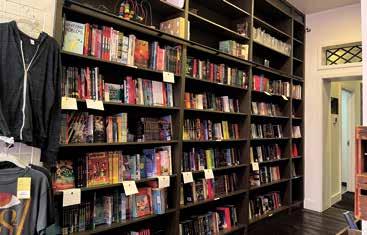
Now the store is known for stocking nonfiction books featuring a wide variety of topics. “Ninety percent of our stock is nonfiction. We [also] carry a lot of biography and history, both about science and the social justice movement and people involved in that,” Sepulveda said. “What makes us unique is our focus on nonfiction… as opposed to just kind of entertaining.”
Despite mostly carrying true tales, Ada’s still has titles for fiction lovers, too. “We do have entertaining books,” Sepulveda added. “You know, like beach reads and all of that, but all of those are still couched in the idea of imagining the world as better and coming from an own voice. These are stories that aren’t normally told.”
Calling all Queers
Ada’s has a very Queer vibe, despite not having started as an LGBTQ+ store. “I mean, it’s been there since day one,” Sepulveda said. “We didn’t set out to be a Queer bookstore. Our owner is not Queer, but her brother is, and she grew up in that community as a very supportive ally. And wanting to be a hub of Capitol Hill, and Seattle in general, I mean, the LGBTQ community is so important here, and it’s something we naturally gravitated towards.”
The store also prioritizes books that reinforce messages about social justice. “Social justice is very important to us; Black Lives Matter is very important to us, [as is] being a safe place where you can find good books. That hasn’t been a problem on Capitol Hill. I mean, Elliott Bay has been here forever, and that is the bookstore of Capitol Hill, but we’re trying to carve out our little niche among the community, and I think we’re doing that,” Sepulveda said.
One special aspect of Ada’s is that LGBTQ+ books, social justice-themed books, and critical race texts are in just about any area of the store. “We don’t have a specific section for [LGBTQ+ books], because it’s just all mixed in with all our books,” Sepulveda explained. “We’re a very Queer store. I would say 75% of our staff is Queer. I’m a Trans woman, and that’s been
a part of Ada’s culture since the beginning: just being a very accepting and welcoming place for the Queer community.”
As the primary curator at Ada’s, Sepulveda prides herself on making sure books by lesser-known authors hit the front of the shelves, which often means showcasing LGBTQ+ titles, much to the benefit of the community. “I would say a good selection of our books are by Queer writers or feature Queer characters, just because that’s what interests me and that’s what I select,” she continued. “That’s just going into our fiction philosophy, which is that we want to focus on books that are great but haven’t necessarily gotten the press that, you know, Stephen King or someone like him has. You know, authors and selections that you won’t find in every bookstore.”
Ada’s recommendations
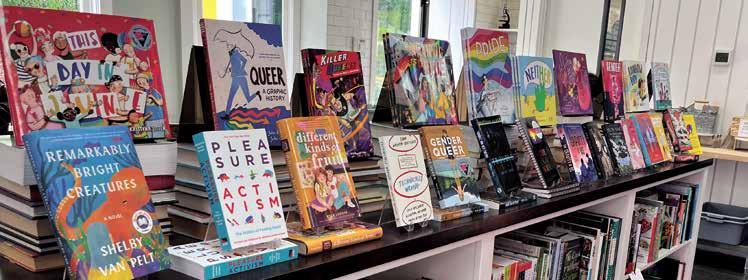
Some of the most popular titles at Ada’s have been LGBTQ+ texts. Sepulveda shared with us some of the store’s recent best sellers. “The Times I Knew I Was Gay by Eleanor Crewes is a graphic novel about her life growing up. It’s a tongue-in-cheek biography, with just a little bit of sadness, which you know the Queer community tends to have,” she said.
“Pleasure Activism by Adrienne Maree Brown has been a very popular book for the past year,” she continued. “It’s about how to stay involved in the social justice movement and not burn out, how to derive pleasure from fighting for progress and social agendas, which we all know is hard and grueling and needs as much love and attention as it can get, but being able to fight the fight and do things that naturally feel good to you that make the world a better place.”
“And then a classic book that continues to sell well every summer is Gender Queer by Maia Kobabe. It’s another graphic novel memoir about em coming out and discovering who e is and trying to balance eir gender identity with who e want to be and who other people see em as. It’s a very poignant memoir and always a best seller,” she said.
A building with history
As Ada’s celebrates Pride month, the store will feature LGBTQ+ books in its dis-
plays and dazzling rainbow lights to highlight the building’s beautiful architecture.
“The rainbow lights are for Pride month, but we tend to keep them on pretty often,” Sepulveda admitted with a laugh. “They’re very eye-catching, and everyone is very excited whenever they’re on. Definitely, during Pride month they’re always on.”
The beautiful old-school Seattle building Ada’s calls home has a unique history. “We tried very hard to fit into the neighborhood when we moved in,” Sepulveda said. “This was a used bookstore called Horizon Books before we got it, and the refurbishment was very much in keeping with that old-house aesthetic and fitting into the neighborhood. The neighborhood association gave us an award just for doing that, for fitting in with the neighborhood aesthetic.
“It’s beautiful, it’s a great open space to sit and hang out,” she added.
Ada’s prides itself on being a part of Capitol Hill’s diverse community. Every month the store gives back to nonprofits in the area. “We don’t accept tips at Ada’s. Everybody here is just paid a living wage, but we do have a donation jar for people to throw a dollar or their change into, and that donation rotates every month or so to a different nonprofit on Capitol Hill,” Sepulveda said. The store most often donates to organizations that help underrepresented people and communities involved in tech.
Since opening its doors in Capitol Hill, Ada’s has expanded again. “During the pandemic, we purchased Fuel Coffee, and we have remodeled all of the Fuel Coffee locations, and they are now also minibookstores. So, we now have a bunch of mini-curations of books, and when I say mini, I mean like 2,000 titles as opposed to the like 10,000 we have here. But still, it’s a good chunk of books,” Sepulveda said. She has been in charge of curating all the books at the mini-stores as well. “Those are more general. They’re less about science and nonfiction but still emphasize curiosity and untold stories to put out into the world. All of our Fuel locations are also wonderful bookstores, and if you can’t make your way up to Ada’s, do check out the local Fuel. They are wonderful,” she said.
A dream job
For Sepulveda, there is much to love about Ada’s, and working at the store has been her dream come true. Her favorite part is all the people she gets to encounter.
“It’s probably a silly answer, but I just love all my coworkers. I love the people that come here. It’s just very curious and very engaging in the world, and the community always wants to know more and do more. People just like being here. There’s always a wonderful community and something to walk into.”
Aside from the people she gets to encounter, Sepulveda loves her job as a bookkeeper. “I love curating books,” she said. “It is one of my passions. It is probably what I always wanted to do with my life, and being able to do that here has probably been my dream come true. I love being able to help people find the stories that are going to expand their horizons.”
Working with books has always been Sepulveda’s dream. “I always wanted to work with books. My mom was a librarian, so I grew up in libraries and surrounded by books. [After] college, I didn’t know what I wanted to do. I asked around, and then when Ada’s first opened in 2009, they quickly expanded and needed another person to help share the load, and I was the first hire,” she recalled with a smile.
Working at Ada’s has given Sepulveda the space to grow and feel like a part of a community, and she takes pride in the leadership position she holds at the store. “I came out as Transgender very recently. I’ve been a part of the LGBTQ+ community my entire life, but feeling like a member of it recently has been very interesting and changes how I view a lot of these things.
“Being able to be a Transgender person in a position of leadership, and a position of management, and a position of responsibility within our community, even if it’s something as silly as stocking books that people are going to find, I find that very rewarding and very important,” she added.
Thanks to Sepulveda’s hard work curating unique titles, Ada’s is the perfect stop for all the curious at heart looking to learn a little more about the world, engage with a wonderful community, and enjoy a delicious cup of coffee.
Photos by Lindsey Anderson
Books
My Moment : When You Finally Said, "NO."
by Terri Schlichenmeyer Special to the SGN
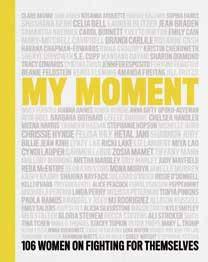
MY MOMENT: 106 WOMEN ON FIGHTING FOR THEMSELVES
Stories collected by KRISTIN CHENOWETH, KATHY NAJIMY, LINDA PERRY, CHELY WRIGHT, and LAUREN BLITZER
Watching Dr. Christine Blasey Ford testify in the Senate Chambers some time ago, Kristin Chenoweth, Kathy Najimy, Linda Perry, Chely Wright, and Lauren Blitzer became outraged. Over the years, they’d heard other women’s stories of bullying, abuse, injustice, and more; the five of them are friends, and they had stories to tell, too. They decided to ask women from all over the world one question: “What was the moment in your life when you realized you were ready to fight for yourself?”
The answers are in this book.
High school student Miya Lao was bullied for her diminutive height, until she realized that she didn’t need to give bullies any attention because “they weren’t my friends.” Performer Adrienne Warren was told by boys that she didn’t belong on the ball court until she “decided to be a warrior for myself.” Actress Kelly O’Hara accomplished an athletic feat and nobody believed her; she proved them wrong.
There are stories of racism here too: activist Anna Gifty Opoku-Agyeman was taunted by racist jokes until she confronted the kid who told them. And there are stories of women who struggled before coming out, dealing with doubters, haters, and homophobes.
Comedian Melissa Peterman was a victim of body-shaming. Actress Marlo Thomas’ own father stopped believing in her. Actress Debra Messing was sexually harassed by a director, and TV host S.E. Cupp by a magazine publisher. Comedian Carol Burnett was told that her idea for a show was “a man’s game.” Lawyer Tina Tchen’s ideas were stolen by a male co-worker. Singer-songwriter Alice Peacock hoped to
change her family’s legacy. (But musician Chrissie Hynde says she started standing up for herself “the moment I was born.”)
You know the feeling: frustration, like your arms are tied to your sides and the tears are coming, although you’ve promised yourself that you weren’t going to cry — and then something inside you flips. Those are the kinds of stories you’ll read in My Moment, and instantly, they’ll all seem familiar, as if you’ve known them all your life.
That’s discouraging. And yet, what you’ll read here is empowering, too, because the balance of content — from coming-out stories to bullying to harassment at work — will show readers that no matter what they’ve experienced, it’s not new or shameful. Yes, some stories may seem more relatable than others; some have no catalyst other than an unwillingness to accept anymore guff. In any case, readers will find breaking points, strength, and guts inside this book, as well as a yell-out-loud lack of uniqueness, and that may lend courage to those who need words of support and power.
A little of that is always good, making My Moment a modern woman’s must-read.
Image courtesy of Gallery Books
Director Fernando González Gómez drives into danger with The Passenger
by Sara Michelle Fetters SGN Staff Writer
Now in Theaters
On Demand and DVD June 28
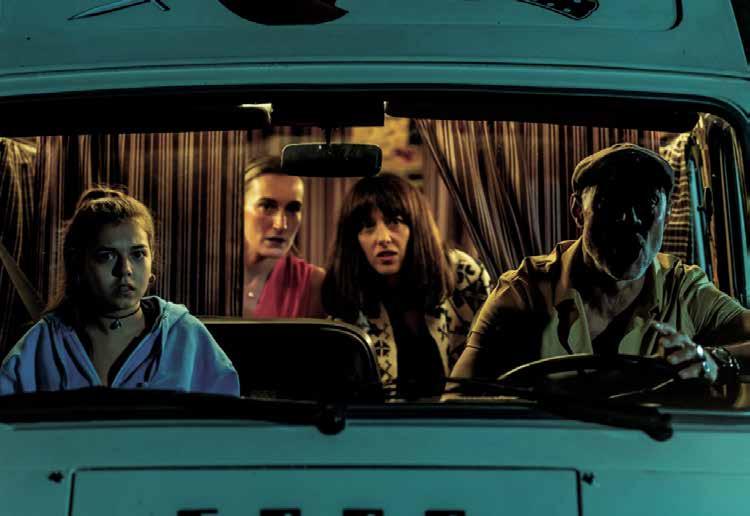
One of my favorite discoveries from this past April’s Seattle International Film Festival was directors Fernando González Gómez and Raúl Cerezo’s horrifying black comedy The Passenger. It is a bleakly thrilling character study that follows Blasco (Ramiro Blas), the driver of a ride service van, who travels across Spain with three female passengers, Mariela (Cecilia Suá rez), Lidia (Cristina Alcá zar), and Lidia’s daughter Marta (Paula Gallego).
Blasco is chauvinistic and something of a blowhard, seemingly unable to stop spouting all sorts of offensive gibberish, even if part of him knows the drive would go a bit more smoothly if he could keep his mouth shut. But things take an even more mysterious — and increasingly ominous — turn when they pick up an injured new passenger. The race against time to save this stranger soon transforms into a fight for their own survival as the trip progresses.
The Passenger is a smart, characterdriven shocker. But what begins as pitchblack commentary and incisive social commentary soon becomes something else entirely. The last third of the picture is a rollercoaster of gruesome, deeply unsettling suspense, everything building to a climax that had me on pins and needles as I watched Blasco’s van finally reach its alltoo-final destination.
I sat down with Gómez over Zoom to briefly chat about the making of The Passenger. Here are the edited transcripts of what he had to say:
Sara Michelle Fetters: This is a bit of a roller coaster ride that is going to really discombobulate some people. What was it that inspired you to tell this story?
Fernando González Gómez: My friend, now my brother, Raúl Cerezo, the co-director with me of The Passenger, was driving a van to the Sitges Film Festival five or six years ago. He was using a very popular app in Spain called BlaBlaCar. It’s an app where you can share your trip with strangers in order to save money, because of the gas or whatever. You say, ‘We’re going to drive from Madrid to Barcelona, 9:00 a.m. tomorrow, Monday” and these are the characteristics of the driver. You can say if you talk a lot or if you smoke or not, and all of these things are items Blasco mentions in the movie.
So Raúl was driving to Sitges and was with his friend and partner, Helion Ramalho, who is one of the producers of the film. They were traveling with an old woman, and everything was nice. And, [at a certain] moment of the trip, they pick up another guy. In this case, it was a Black guy, and at the moment that he entered into the car, the woman started to be a racist monster to him.
At that moment, Raúl and Helion realized that this situation could be a movie, and they transformed the idea of this old woman, this racist monster, into a real monster, and this is the start of The Passenger SMF: It’s interesting, because your film brings up a lot of intriguing ideas relating to racism and misogyny, along with so many other hot topics in the world right now. You look at them from such a complex but nonjudgmental way. Was that difficult?
FGG: Yes. We have three modern and strong girls with this old man, [who is] installed in the past with all of these problems…. It was difficult task.
We worked a lot with the tone, what
could be the correct tone to be in between the comedy. But when the drama comes, we need to be able to understand the dramatic moments and feel [them] with the characters and understand [all] of them. We don’t want to judge Blasco. It’s a good idea that, step by step, they disappear, but with Blasco, we need to know that there are people like him.
SMF: The film forces the audience to decide for themselves who are the real monsters. Are there even monsters here? And, more importantly, what would they do if they were in a similar situation? Did you feel like there was a danger that you were almost challenging your audience too much?
FGG: It’s the kind of histories that we want to tell to the audience. We love that in our movies you can find a subtext. You can find more things when you watch a second time. As you said, you can probably see all the subtext and all of these problems in the in-between. We liked to do this. We liked that the audience knows very well the characters, that they are a part of this trip with them, know their past, and know their histories in order to suffer with them.
In modern movies… you are like a voyeur in another building, just watching something happening, and it doesn’t matter what is going to happen with the characters… because you don’t know anyone. You don’t know Marta. You don’t know Blasco. You don’t know their interior problems, their history. Why are they there? Why are they doing this trip together?
We do not want that. For us, it’s important to develop all the characters. We spend I think it’s 20 minutes with them, learning about them. If we erase the first sequence of the movie and we start when they begin the trip, you are in a daily comedy with normal characters traveling together. That’s all. That’s not this movie.
SMF: I love that you bring up the juxtaposition between the comedy and the drama, how it all slowly and insidiously grows more serious and more uncomfortable and more terrifying as events progress. Was that difficult to balance? How do you balance those comedic aspects, even if they are dark comedic aspects, with the full-throttle terror to come?
FGG: Yes. This was probably the hard-
est part. The characters were really well done in the script by Luis Sanchez-Polack. Everything was very, very defined, very specific. When we were working, Raúl and I, we were designing the characters to reflect the script. There was a lot of work on this text.
I think the moment when we knew the tone would work [was] when we started to work with the cast, when we finally found our actors and we [started] working with Cecilia Suárez, Cristina Alcázar, Ramiro Blas, and Paula Gallego. That’s when we knew.
One important point is to know that Paula, who plays Marta, entered into the movie one week and a half [before the] start of filming, because we had a problem. We were working with another actress, and we had a problem two weeks before the start. We had to start a crazy search for a new actress. Finally we found Paula, and she did a great job entering in this context. She stepped right in. We were really happy with the chemistry between her and Ramiro Blas. This helped us find the correct tone.
SMF: It’s a motion picture that is, by and large, self-contained for the majority of the film, even though it’s on the road, even though that you have a lot of exteriors. You’re inside the vehicle pretty much. Yet this film showcases an incredible visual style. How did that work? How did you guys figure out visually how to tell this story, so that you could move from interiors to exteriors and make the vehicle itself another character in the film?
FGG: Yes. This is a good point. When we started working on the planification, Raúl and I, we had two musts. The first was that we always want to have a cinematographic language, okay? When we put the camera in somewhere, we have a reason to do it. This is first point.
Second point, we don’t want to bore the audience, because we know when we read the script that 80% of the movie [is] inside the vehicle. We need to be fresh, and also we need to keep our cinematographic language. We worked a lot with Ignacio Aguilar, the DP, in order to design all the shots. We had a replica of the van that was inside a building and over a system with hydraulic pistons we can move to simulate the movement of the asphalt and the roads. It was a replica only from the inside, not outside.
We could use this in order to apply all the shots that we designed in the pre-planning.
SMF: Have you been surprised at all by the reactions that you’ve gotten at various film festivals?
FGG: Little bit surprised, but by the international reactions. This is a very local movie. It’s very Spanish because of the music. The original score is composed by Alejandro Roman. But we have another part that’s orchestra music, seven tracks, and these come from the bullfighting tradition, the tradition of Spain. It’s nice that the people in other countries that don’t have this knowledge about this music respond positively, because this music defines Blasco, because he is like an old bullfighter. We like that something local can cross borders and that people are enjoying it in the States. But even in Germany, even in Belgium, they are enjoying it. It’s crazy. The movie has been sold to 25 countries, including Korea and Japan, far away from the bullfighting tradition and far away from these local Spanish jokes.
I remember in Seattle, one guy from the audience told me [when we finished], “Fernando, when Blasco is saying that if you don’t see the bull on a trip, it’s a bad luck [sign]. What does that mean? Are you are telling me that you have to see bulls, animals on the road?” And I said with a laugh, “No, no, no, no, it’s a commercial. It’s an advertisement. It’s a really famous advertisement. It’s like the stickers that he has in the van of the bull that you can see on the secondary roads when you are doing a trip crossing Spain.” It is a very local joke. [laughs]
SMF: Now that the film is going to be out there on a more massive level outside of the festival circuit, what do you hope viewers are talking about afterward?
FGG: Who knows? [laughs] The test that we [had was] that the screening in Seattle, and screenings in Kansas and another in Austin. The temperature that I have is that the American audience really enjoys the fresh narrative and the fresh characters. We see that they are seeing something that reminds them of the old tradition of genre movies, from Carpenter or Cronenberg, or someone like that. We are seeing that people are enjoying it a lot, and we are very happy because of that.
Fernando González Gómez – Photo courtesy of the director
Gleefully vile The Passenger is a horrifying road trip into madness
by Sara Michelle Fetters SGN Staff Writer
THE PASSENGER
Now in Theaters
VOD and DVD June 28
Blasco (Ramiro Blas) uses his beloved van to drive for a popular ride-service app. His latest job involves carrying three female passengers, Mariela (Cecilia Suá rez), Lidia (Cristina Alcá zar), and Lidia’s daughter Marta (Paula Gallego), across Spain to an isolated locale. During the trip, Blasco’s van strikes a woman stumbling down the road. When they stop to help, things take a disastrous turn. The foursome have inadvertently encountered an otherworldly threat that will make the remainder of their journey a chaotic fight for survival.
The gleefully anarchic and exuberantly pitch-black The Passenger is a dangerously nasty horror comedy that got under my skin. It’s a vicious little exercise in minimalistic suspense that shifts tone at the drop of the hat, building to a gorily terrific conclusion that, while not entirely unexpected, is delivered with such playfully brutal intensity that it’s difficult not to be impressed.
There’s a reason this was one of my favorite discoveries during this past April’s Seattle International Film Festival. Directors Raúl Cerezo and Fernando Gonzá lez G ómez have a great deal of fun toying with their audience, while Luis Sá nchezPolack’s tightly wound script is an efficient Rube Goldberg machine made up of seemingly disparate parts that, when assembled, build into something distinctly, insidiously marvelous.
Not that every viewer will have the same reaction I did. Maybe during the last third, that’s possible, but they’ll have to get to that point, and in some instances that will prove difficult. Blasco is not an easy character to be around. He’s sexist. He’s a misogynist. He’s even a bit racist. Blasco appears to have zero control over the words that come out of his mouth, frequently making comments or telling stories that put his three passengers ill at ease.
But there is method to this madness. Sá nchez-Polack’s screenplay is an aggressive satire, a comedy of social anxieties, generational worries, and pent-up aggressions that is as perceptive as it is uncomfortable. Blasco is not a hero, and yet he is
the focal point for the majority of the narrative. Most shockingly, he is also the one audiences are expected to root for as events increasingly cascade out of control and spiral into gooey madness.
That we do so is a testament to the writing and to Cerezo and Gómez’s dexterous handling of the material. That almost goes without saying. But it is also due to Blas’s fearless performance. The veteran Spanish character actor isn’t worrying about trying to make Blasco likable. He does not sand down the rough edges or provide any physical, nonverbal clues that he’s a better person than the words coming out of his mouth indicate. Yet Blas makes him authentic, allowing the melancholia of his life to shine through, making his actions near the end worth cheering, even when the man himself remains something of a pitiable monster.
The other mesmerizing bright spot is Gallego. Her performance snuck up on me.
There is a quiet grace to her that is constantly intriguing. After the van’s encounter with the new passenger, however, the young actor comes alive in a variety of peculiar ways. Her physical movements change, while her verbal cadences and facial ticks help cement the general unease that threatens to overwhelm all those in the van and send their trip down a dangerous side road leading straight to damnation. Gallego is outstanding, and I hope to see much more of her in the future.
For a motion picture that is almost entirely self-contained inside a single, if admittedly mobile, location, The Passenger still features a deliciously disquieting visual aesthetic. Cinematographer Ignacio Aguilar and the entire production team have done an exceptional job crafting a look and feel that allows the world outside of the van to take on a life of its own. While not altogether flashy, there is still always something hap-
pening in the frame that catches the eye, and when the gruesome makeup effects begin to take center stage, Aguilar refuses to drown the screen in goo, maintaining a naturalistic lighting scheme that considerably augments the growing terror.
The Passenger will not be for everyone. The mixture of hardcore comedy, dark social commentary, and full-throttle horror doesn’t seamlessly mesh. But Cerezo and Gómez know what they’re doing, and for those who do like their genre fare challenging, or want their scares to be combined with something intellectually substantive, this vile gem gets the job done. The film reaches its final destination with nary a second to spare, the screeching tires of its finale a deafening claxon sending out a warning to keep the roads clear, and that dangerous objects in the rearview mirror are much closer to ripping out the driver’s jugular than they appear to be.
Paula Gallego, Cristina Alcázar, Cecilia Suárez, and Ramiro Blas in The Passenger – Photo courtesy of Dark Star Pictures
How to have your Hot Queer Summer while being hopelessly depressed
A guide for LGBTQ+ Seattleites
by A.V. Eichenbaum SGN Managing Editor
It’s June in Seattle! The mountain’s out again, the birds are chirping, and, if you’re like me, you’ve discovered that it wasn’t the long, gray spring or record rainfall that’s been causing your depression. It’s life!
That’s right, folks. The world’s a mess, and catching some rays at the beach can’t stave off the crushing weight that keeps you up at night. But hey! That’s no reason not to have a good time this Pride!
Here are a few fun, easy ways to have your Hot Queer Summer despite feeling that one more step down the endless, twisting road of existence might be too much to handle!
Exercise
Your friends in the cult of Peloton are right. All you need to get out of your funk is a solid three to six hours sweating on a bicycle to nowhere. Is it expensive? You bet it is! And an added plus? An unreasonably attractive, incredibly angry person will scream absurdities at you through a screen the entire time.
Now that’s what I call good for your mental health!
If a Peloton subscription or gym membership are outside your budget, work up a sweat explaining to your parents that your job is actually a real job, and you can’t move across the country on a whim because they met an editor from their local paper at a party. For a hot, sexy pre-workout warm up, have a quick panic attack before even picking up the phone!
Damn! Are those abs or have you been dry heaving for an hour? Either way, you’re looking fine!
Get outside
There’s nothing like the sights and smells of a sweltering Seattle summer day to really get your brain back on track! Remember 2020, when nature was healing
Photo by Kampus Production / Pexels
because no one was driving to work? Well, forget about that! Not only is everyone back on the road, but every out-of-state license plate still means the potential for plague from God knows where.
Maybe it seems like swarms of people from all over had the same idea you did when you decided to walk down to the water for a quick breather on your lunch break. Crowds of inconsiderate tourists are exactly the kind of people you want to be around when you’re questioning your entire life’s decisions!
So someone’s vomiting into the lake you wanted to swim in! Who cares? You’re working on your tan, sweetheart! Nothing’s gonna break your stride!
Shopping day
You have a chemical imbalance in your brain that the vast majority of Americans think is something you can grit your teeth and smile through. You know what helps with that? Buying things you don’t need!
Yep! Nothing fills the hole in your quicker soul than spending money you don’t have on trash you couldn’t care less about. Sometimes it’s organic and free trade, but you can’t help thinking there’s no ethical consumerism in the current economic climate. But sunglasses are on sale! Choosing apathy for your own sanity has never been so ab-so-lutely sexy. Bring some friends along!
Can’t find the strength to get out of bed? Don’t worry. Amazon’s here for you. Wrestle with your guilt over supporting an openly sinister corporation vs. your need to feel some sort of comfort in a harsh world. Surprise! Another workout! Look at you, keeping toned! Slay!
Explore Seattle’s restaurant scene
Nothing says “I’m doing just fine!” quite like eating your feelings. Did your favorite restaurant finally reopen after all the pandemic stuff? Lucky you! Order delivery
The world’s a mess, and catching some rays at the beach can’t stave off the crushing weight that keeps you up at night. But hey! That’s no reason not to have a good time this Pride!
every day until you’re completely sick of it and your credit card is maxed out.
Are you worried the strangers who work at your favorite restaurant will judge you? Use a different delivery app every time you order and pretend they don’t recognize your name. Problem solved!
Maybe you feel like going out and treating yourself somewhere other than your humid, messy apartment. Most of these places have air conditioning. You can go anywhere in town and become increasingly aware that you don’t know what to do with your hands!
Should you read a book or listen to a podcast? Maybe! But you don’t want the waitstaff to think you’re addicted to your phone. What if the podcast’s funny? What if you laugh out loud, sitting alone in a crowded Italian restaurant? They’ll think you’re nuts, but at least they’ll know you’ve got a real zest for life!
Try not to think about what that one dick from high school would say about you scarfing down an entire family-sized linguine alle vongole by yourself. Body image issues? Who’s heard of ’em? Not you! You’re full of clams and ready for swimsuit season, baby!
Try romance
Whether it’s Grindr, Tinder, Hinge, or OkCupid, maybe it’s time to listen to that one friend and go get your heart broken again. Sure, Seattle’s been ranked worst city in the US to be single multiple years in a row, but how hard could it be? There are so many Gay bars here! When it comes to hangovers, the options are endless!
It’s the perfect city for the hopeless romantic. I mean, come on! Sleepless in Seattle was filmed here! What’s more romantic than Tom Hanks?
Just looking for a quick hookup? Great! If you can handle countless unanswered messages and accidental swipes, you can definitely handle the escapist fantasy you’ve built around this one date crumbling after your small talk falls short. What else do you have up your sleeve? Trauma bonding? Maybe! Let’s hope they forget the deeply personal things you both shared after they lose your number tomorrow. Some people are really into the whole sad thing, so this is your chance to shine! If you’re in a relationship already, never fear! You can still have fun never deciding what to do with your mutual days off until one of you is called into work to cover because of the ongoing Great Resignation. Absence makes the heart grow fonder, right? Right you are, babe. Besides, lonely is IN, and you’re doing GREAT.
You got this!
You’re now fully equipped with all sorts of options for your full-on, no-holds-barred Hot Queer Summer. The whole world’s out there, just waiting for you to slap on something other than sweats. So stop staring at the mold spot on your ceiling, put on some deodorant, and hop to it! Nothing can stop you now! Because of these fantastic suggestions, you’re healed!
National News
MILO
continued from cover
“Mummy always said I’d end up in government!” Yiannopoulos wrote on his social media accounts.
The caption ran alongside a photo of Yiannopoulos’s House of Representatives ID sitting on a leather Louis Vuitton bag.
“I’ve finally been persuaded out of retirement,” he added. “But my skills are a bit rusty, so the best role I could land was an unpaid internship with a friend. Pray for me!”
After a seven-year career as a far-right commentator — first for Breitbart and then
National news highlights
by Daniel Lindsley
SGN Contributing Writer
Louisiana passes Trans sports ban, Ohio poised to do worse
Reuters reported on June 3 that Ohio’s House of Representatives passed a bill that would not only ban Trans girls from girls’ sports but require verification of “internal and external reproductive anatomy” from a doctor if a student’s sex is “disputed.” The bill will move to the senate in several months.
LGBTQ rights group Equality Ohio said in a statement that the provisions “target a handful of Ohio students and their families who simply want to play sports like everyone else.” Over the last 10 years, the Ohio High School Association has had a Transgender policy in place that has approved “fewer than 20 Transgender girls” to play high school girls’ sports,” the organization said.
as a freelance gadfly — Yiannopoulos announced last year that he had converted to the Roman Catholic Church and became “ex-Gay.”
Since that obviously put an end to his “Gay that hates LGBTQ rights” gig, he resorted to hawking plaster statues of the Virgin Mary online.
But Yiannopoulos makes an odd Catholic. He has publicly attacked Pope Francis for shielding Gay clerics in the church.
Yiannopoulos aligns with the Catholic traditionalist movement, which includes Supreme Court Justice Amy Coney Barrett. Taylor Greene was raised Catholic but stopped attending Mass after the church’s
child abuse scandals went public.
One of Taylor Greene’s signature issues is the claim that Democrats lead a vast network of pedophiles and child sex traffickers.
“I could care less what 2 consenting adults do sexually, nor do I judge, but when it comes to adults training children sexually, both mentally & physically, I do care. And so do MOST people,” she wrote in her social media posts just after Yiannopoulos came to work for her.
“We must protect children from child grooming predators & abusers in every way possible.”
Yiannopoulos used to maintain — presumably based on his own experiences —
Meanwhile Louisiana has passed its own ban, as reported on June 7, with enough votes in the Republican-controlled state legislature to override any veto from Democratic Gov. John Bel Edwards, who has joined Trans rights groups in criticizing the bill as bigoted and unnecessary.
“I hope we can all get to a point soon where we realize these young people are doing the very best they can to survive,” Edwards said of Trans youth. “I just think we can be better than that bill.”
that sexual relations between adults and minors could be consensual, and could benefit the children involved. In fact, he was reportedly fired by Breitbart after his views on pedophilia went public.
Taylor Greene, however, glossed over Yiannopoulos’s prior views in a statement defending her new intern.
“So I have an intern that was raped by a priest as a young teen, was gay, has offended everyone at some point, turned his life back to Jesus and Church, and changed his life. Great story!” she said.
UFC star punches back at critics of rainbow shorts
LGBTQ Nation reported June 6 on American UFC star Jeff Molina’s response to his critics, after he was mocked for wearing rainbow shorts during a fight against Kazakh martial artist Zhalgas Zhumagulov. The shorts were mostly gray, with Molina’s name in a rainbow font.
“I picked the colors because I thought it looked cool, and then it also supports a good cause,” Molina said. “I’ll support anything of a community that’s been oppressed and ostracized for some time for something they can’t help.”
Critics on social media said Molina was “virtue signaling,” among other things, but he wore the shorts to raise money for the LGBTQ Center of Southern Nevada, a LGBTQ charity to which the UFC is donating sales from a special Pride month shirt.
Molina added, “It’s not even about being an ally — I’m not saying I’m not — but it’s just like, just be a decent fucking person. Just be a decent human being. Judging someone, and then trying to justify it with religion, and saying all sorts of spiteful, hateful shit is just crazy to me.”
LGBTQ Nation noted that Molina’s comments stand out against UFC athletes’ history of making homophobic and transphobic comments online.
Milo Yiannopoulos – Photo by Lucas Jackson / Reuters
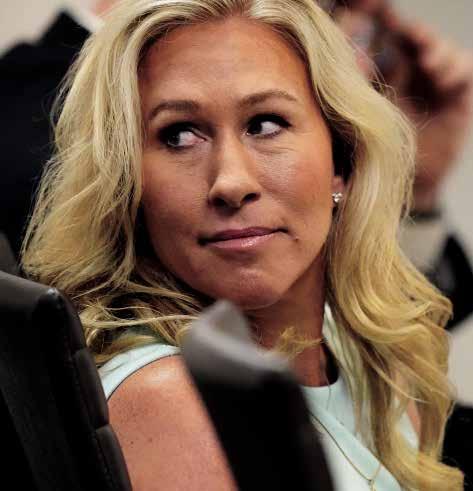
Marjorie Taylor Greene – Photo by John Bazemore / AP
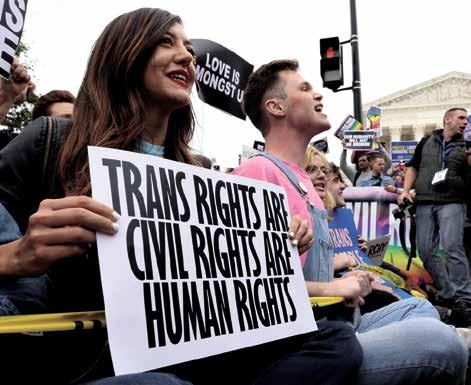
Photo by Jonathan Ernst / Reuters
International News
ILGA international ranks Malta #1 in Europe for LGBTQ rights
by Mike Andrew SGN Staff Writer
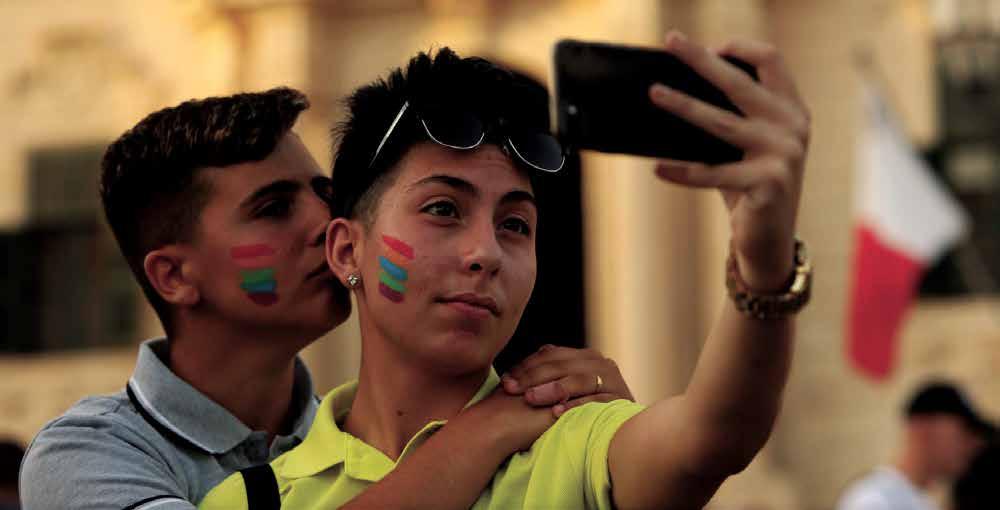
Malta is number one in Europe for LGBTQ rights and inclusion, according to the latest rankings from ILGA-Europe, an umbrella organization for more than 600 LGBTQ and human rights advocacy groups.
The small island nation of half a million people, situated near Sicily in the Mediterranean, also topped previous ILGA-Europe ratings.
Azerbaijan, Turkey, Russia, and Armenia came last in the rankings of 49 countries.
International news highlights
by Daniel Lindsley SGN Contributing Writer
Community rallies to save Queer-friendly nude beach
Reuters reported June 3 on the community of Zipolite, Oaxaca, a town on the southern Pacific coast of Mexico that was hit by Hurricane Agatha on May 30. Three days after the storm hit, a GoFundMe campaign had raised over $21,000 “for the reconstruction of this paradise,” the campaign said.
Zipolite is a popular spot for LGBTQ residents and visitors and is famous more broadly for being laid-back and home to one of Mexico’s few nude beaches.
The fundraiser was organized by Zipolite Diverso, a group made up of LGBTQowned and inclusive small businesses. Its first priority was immediate needs, such as food and water, and the rebuilding that would follow.
Photo by Darrin Zammit Lupi / Reuters
Denmark, France, Iceland, and Montenegro rose in the rankings over previous reports. The United Kingdom’s rating slipped, however, with Boris Johnson’s Tory government falling behind on its promises for reform.
Bulgaria, Romania, and Poland were close to the bottom of the chart, but a little above the lowest rankings in the EU.
According to ILGA-Europe, there is cause for some optimism.
“After complete stagnation last year, which was extraordinarily worrying to us, there is a new upward dynamic,” Evelyne Paradis, the executive director of ILGAEurope, said in a statement.
“While you hear us speak of some signs of optimism, our call today is one of redoubling efforts to make sure there is renewed mobilization, one focused on action, not just words,” Paradis told an annual forum of European government and civil society groups meeting in Cyprus last month.
While adult LGBTQ people may see some advances in legal protections, young people were still particularly vulnerable, ILGA-Europe warned.
One report by IGLYO, the International Lesbian, Gay, Bisexual, Transgender, Queer and Intersex (LGBTQI) Youth and Student Organisation, said there had been a “complete standstill” in inclusion efforts in schools.
by Jose de Jesus Cortes / Reuters
“None of us were expecting to have such a large response,” said one organizer, Ricky Castellanos, who owns a bed-andbreakfast that was damaged by the storm. Artist and Diverso coordinator Thomas Flechel said, “We’re organizing this as members of the LGBTQ community, but
the aid will be directed to those who need it the most, whether they’re part of the community or not.”
Setting its fundraising goal from $10,000 to $50,000, the campaign said, “Thanks to all, Zipolite will come back, and stronger.”
One in two LGBTQ students in Europe had experienced bullying at school, while “Don’t Say Gay” laws introduced in five European nations made it impossible for students to receive inclusive content in schools, IGLYO’s Bella FitzPatrick said.
“I think it’s very apt that many of the advances we have achieved in our community over the past 10-15 years really pertain to adults. But much of the backlash is aimed squarely at youth. It’s really important to remember that in a lot of cases, schools aren’t that different from what they were 20 years ago. [Children] are still being bullied. They are still being beaten up,” FitzPatrick said.
Baltic Pride pulls record numbers as parliaments debate human rights bills
NBC News reported on June 7 that about 10,000 people from across the Baltics attended a Baltic Pride event in Lithuania, a country that as early as 2009 banned information about nontraditional families, as defined by the country’s constitution — in critics’ words, a ban on “gay propaganda.”
Twenty-one-year-old nonbinary Lithuanian Eddie Balčiūnaitė (he/she/they) said before the Pride march that he’d first heard about Queer people in church. “It wasn’t a very positive portrayal, as you can imagine. You Google stuff, you talk to your friends, and hopefully you learn something about yourself — but not with the help of the school or your teacher.”
Companies like Google, Moody’s, and Swedbank sponsored the march, along with national embassies, including the United States, Canada, and Norway.
NBC put the event into a larger historical context by noting that Lithuania, Latvia, and Estonia were all under Soviet occupation from 1944 to 1991 and joined the European Union in 2004 when the Iron Curtain fell. Their human rights records, especially concerning sexual minorities, has lagged behind other countries.
Now though, the Lithuanian and Latvian parliaments are debating bills that would introduce civil partnerships for same-sex couples, a move that would grant some of the same rights as marriage.
Photo
Ukrainian “unicorns” take to the battlefield
by Lindsey Anderson SGN Contributing Writer
As the war in Ukraine rages on, a surprising new group of soldiers is taking to the battlefield. They call themselves “unicorns.”
“It dates back to 2014, when the Russian war started,” Ukrainian volunteer soldier Oleksandr Zhuhan told Reuters media.
“Lots of people said there are no Gay people in the army. [Gay soldiers then] chose the unicorn because it is like a fantastic, ‘nonexistent’ creature, and so it became the symbol of LGBTQ people in the army.”
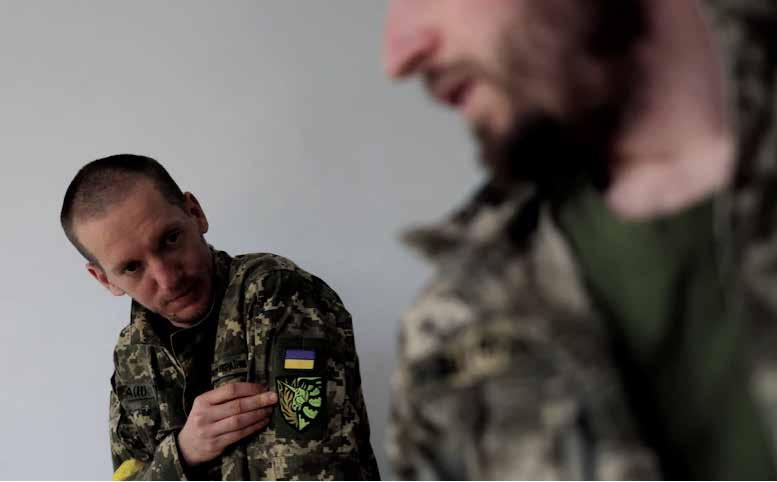
Zhuhan and his partner Antonina Romanova are two of Ukraine’s “unicorn fighters.” They wear a unicorn insignia under the Ukrainian flag on their uniforms.
While Ukraine is known for its intolerance of the LGBTQ+ community, Zhuhan and Romanova say their presence in the military was well received.
Like most who make up the Ukrainian army, Zhuhan and Romanova are not trained fighters. They were performers who met in the theater before the Russian invasion. They found their first tour of duty in Odessa terrifying. Zhuhan contracted pneumonia, and both experienced the horrific realities of war firsthand.
Despite their difficulties, the two found camaraderie among their fellow fighters.
“There was no aggression, no bullying,” Romanova reported. “It was a little unusual for the others. But, over time, people started calling me Antonina. Some even used my ‘she’ pronoun,” she said.
Zhuhan’s latest commander expressed his intolerance of homophobia to his recruits, saying that the only important thing on the front line is being a good fighter.
Zhuhan and Romanova are open about their identities as Queer and Trans fighters for the Ukrainian army. “I think people in Mykolaiv are going to ask questions, and we are not going to hide,” Zhuhan said of his identity. “We are going to be very open about it.”
Why defend a homophobic nation?
Although Ukraine is much more conservative around homosexuality, LGBTQ+ people are joining the fight against the Russian invasion, and the country is more than willing to utilize their support. Ukraine has no bans on Queer or Trans people joining
the military, even though LGBTQ+ discrimination and conversion therapy remain legal. Furthermore, Ukraine still has a ban on same-sex marriage and adoption. A recent opinion poll from Equaldex showed that 85% of the country opposes marriage equality, and 62% say there is no justification for homosexuality.
With such homophobic laws and practices still on the books, some wonder why unicorn fighters are willing to risk their lives for a country that won’t recognize their own.
“This is our war, [as] Ukrainians, but we have also been fighting as LGBTQ people,” said Viktor Pilipanko, a unicorn fighter and LGBTQ+ rights advocate on social media. “We are confronting a tyrannical, homophobic enemy.”
While Queer people in Ukraine may not be “tolerated” by the vast majority or have equal rights to marriage and adoption, they are not actively hunted down and tortured like LGBTQ+ people in Russia. Many unicorn fighters fear that a Russian victory will mean death or torture.
Is Russia planning a mass “Gay purge”?
In February 2022, before the current war started, the United States warned that Russia had plans to execute and send “vulnerable populations” into work camps following an invasion of Ukraine. The US representative to the Office of the United Nations and Other International Organizations, Ambassador Bathsheba Nell Crocker, issued a letter to the UN High Commissioner for Human Rights concerning the safety of specific members of the Russian and Ukrainian populations.
“I would like to bring to your attention to disturbing information recently obtained by the United States that indicates that human rights violations and abuses in the aftermath of a further invasion are being planned,” Nell Crocker wrote. “We have credible information that indicates [that] Russian forces are creating lists of identified Ukrainians to be killed or sent to camps following a military occupation. [Putin] will likely target those who oppose Russian actions, including Russian and Belarusian dissidents in exile in Ukraine, journalists and anti-corruption activists, and vulnerable populations such as religious and ethnic minorities and
LGBTQI+ persons.”
Following Nell Crocker’s letter, the Kremlin publicly denied any kind of list and accused the United States of disseminating misinformation to destabilize Eastern Europe. It also denied plans to invade Ukraine.
The Ukrainian unicorn fighters have reason to fear Russian law if Russia is victorious. Russia has famously violated international human rights laws with secret-police sweeps, interrogations, and torture of members of the LGBTQ+ community.
In 2019 Russia was exposed as taking part in a “Gay purge” in Chechnya, in the Caucasus region. Human Rights Watch reported on the purge, noting that Gay and Bisexual men were held unlawfully and beaten and humiliated in an attempt to get them to expose others. In 2017, reports surfaced of a similar “Gay purge” in the area. Chechnya is known for being one of the more conservative and homophobic regions of Russia. It is not uncommon for police there to publicly condone “honor killings” of Queer men.
The reports obtained by Human Rights Watch from four Queer men held in unlawful detention tell of shock torture, beatings, humiliation, degradation, and even rape.
In each case, the men were taken by police who showed up at their homes or places of work after suspecting them to be homosexual. One of the men received a tip that the police were after him and fled for several weeks. When he returned, thinking he was safe, he was intercepted.
When the Russian LGBT Network reported the crimes in 2019, nothing was done. The police claimed the reports made by survivors were all fabricated.
Homophobic sentiments have been on the rise in Russia ever since the Kremlin instituted laws to defend “traditional Russian values.”
Russian refugees join the fight
For many of these victims, the only escape from police-condoned torture is to flee to neighboring countries, like Ukraine.
“I know many LGBTQ people from Russia, Belarus, and Kazakhstan who moved to Ukraine in recent years because of discrimination in their home countries,” the Ukraine Pride co-founder reported to Forbes
In recent years, Queer Ukrainians and Russian refugees alike have been advocating for more LGBTQ+ tolerance and rights in the country, but, amid the Russian invasion, they are now just fighting to remain in a country that won’t kill or torture them for who they are.
LGBTQ+ Ukrainians have been aiding the war effort however they can. For some unicorns, this has meant fighting. For others, like Veronika Limina, it comes in the form of education.
“I am angry,” Limina told The Guardian when asked why she has set up a combat and paramedic skills training camp for LGBTQ+ fighters. “We will kill Putin,” she continued. She explained that even if Ukraine doesn’t support LGBTQ+ rights, Russia is not an alternative.
Ukrainian LGBTQ+ centers in Ukraine have now turned into military boot camps. Nash Mir in Kyiv, which was originally founded in 1997 to fight injustice and homophobia in Ukraine, has now shifted its focus to aiding the war effort.
“There is no time for disagreements now, and the Ukrainian LGBT+ community, as an integral part of our people, must do everything for our victory! In the Russian world, our existence — either as LGBT+ people or as Ukrainians — is simply impossible. Let us do our job in our places — in the army, in the Territorial Defense, in the workplace, as volunteers,” the organization said in a statement.
“We are very conscious of the threats which we have faced — as both Ukrainians and LGBT+ people,” added Andrii Kravchuk, a member of Nash Mir. “We understand that the Russian occupation would mean total lawlessness and repressions — we see it right now in the [Russian]-occupied territories of Crimea and Donbas.”
The Ukrainian unicorns, while inexperienced on the battlefield, might be some of the country’s most hardened fighters. The rag-tag groups of LGBTQ+ advocates have spent lifetimes fighting to be seen in a country that doesn’t respect them and to escape another that is ready at the drop of a hat to torture and murder them.
Perhaps, by the end of the war, the people of Ukraine will see the unicorns as more than mythical creatures.
Antonina Romanova (left) and Oleksandr Zhuhan wear a unicorn insignia on their uniforms – Photo by Edgar Su / Reuters