Taylor: Rest in power Vigil held for a local nonbinary activist hero”
by Renee Raketty SGN Contributing Writer
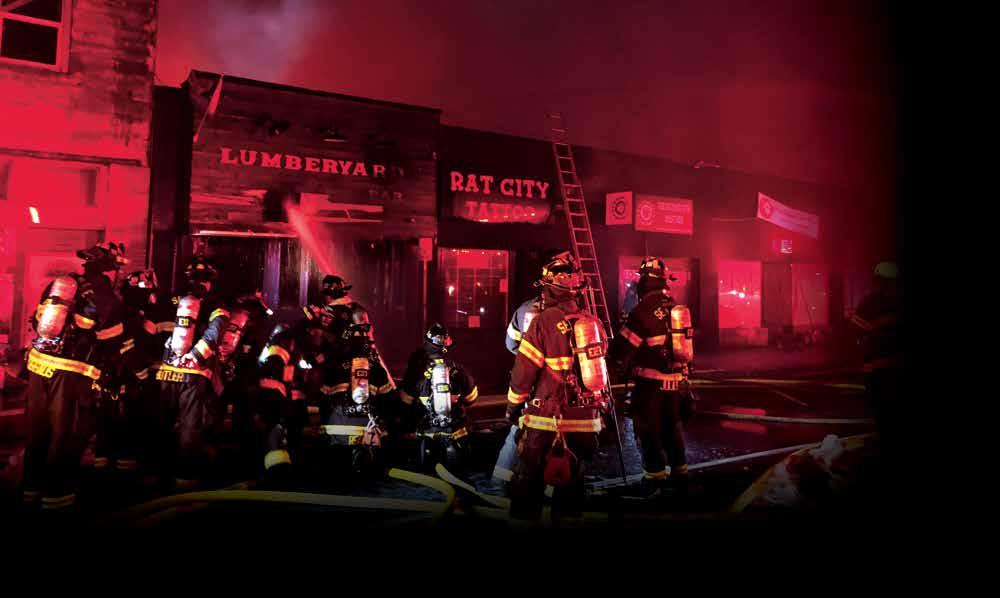
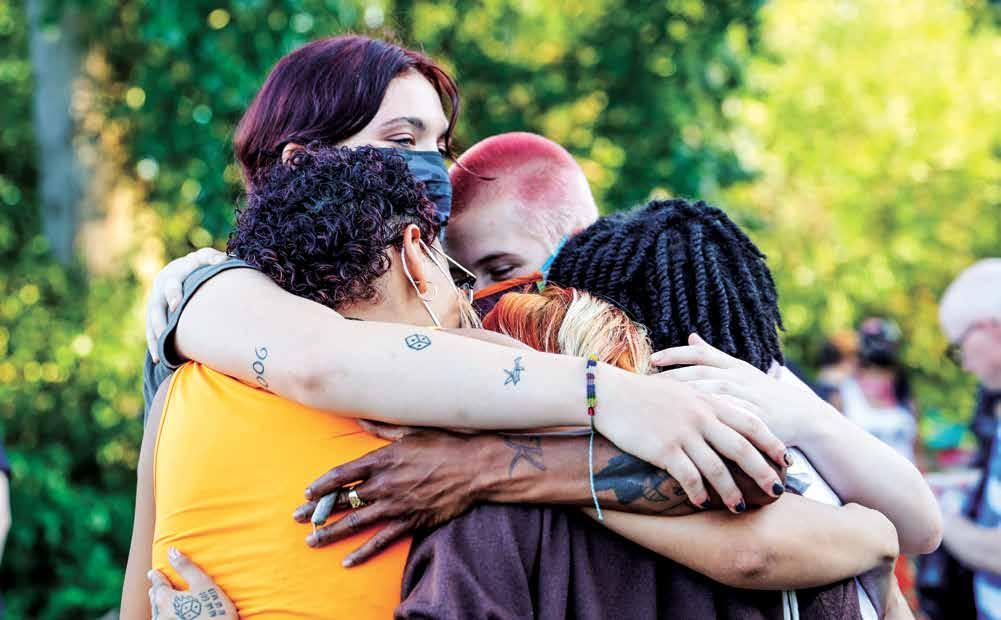
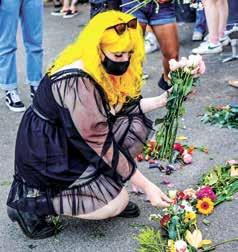
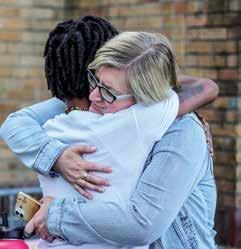
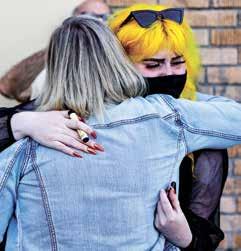
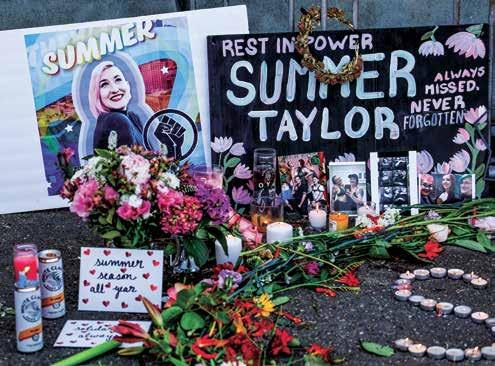
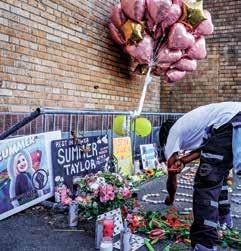
The family, friends, and local activists fighting against Black oppression gathered outside the Seattle Public Theater at Green Lake on Sunday, July 4, for a vigil to remember the life of Summer Taylor, who died one year prior, from injuries sustained while participating in the Black Femme March on Interstate 5.
“Summer season all year,” said Tru, a protest leader, who led the assembled crowd of approximately 75 people in a chant. The saying has become a rallying cry for protests in Seattle organized in the wake of the murder of George Floyd in Minneapolis by a police officer on May 25, 2020.
“Summer was the absolute life of the party,” said Marilyn Manslam, who danced
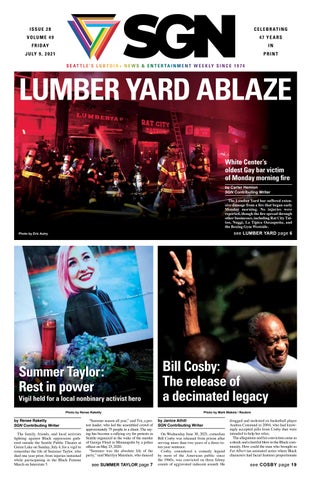
White Center’s oldest Gay bar victim of Monday morning fire
by Carter Hemion SGN Contributing Writer
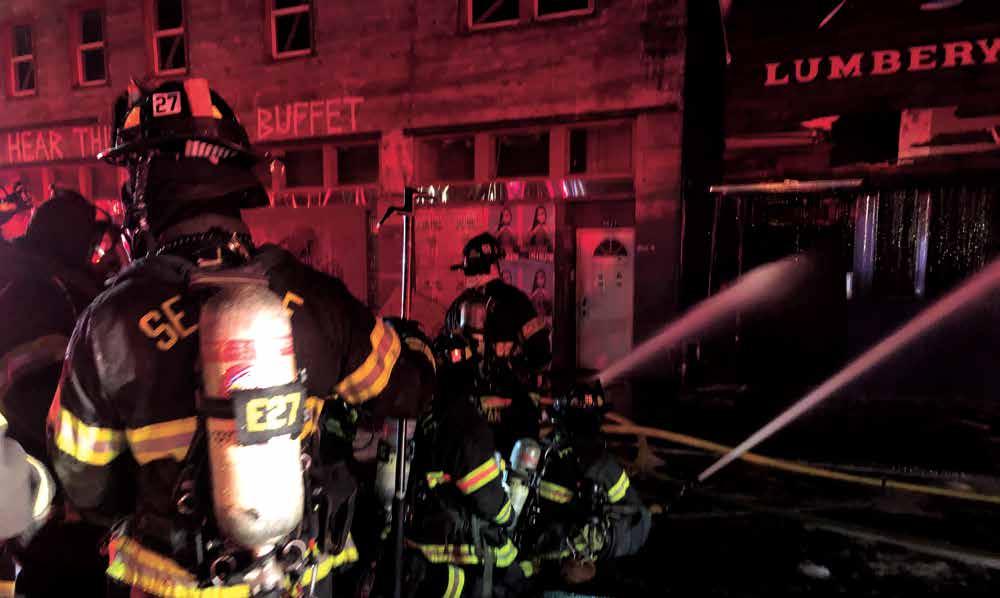
The Lumber Yard bar suffered extensive damage from a fire that began early Monday morning. No injuries were reported, though the fire spread through other businesses, including Rat City Tattoo, Nuggi, La Típica Oaxaqueña, and the Boxing Gym Westside.
see LUMBER YARD page 6
Cosby: The release of a
by Janice Athill SGN Contributing Writer
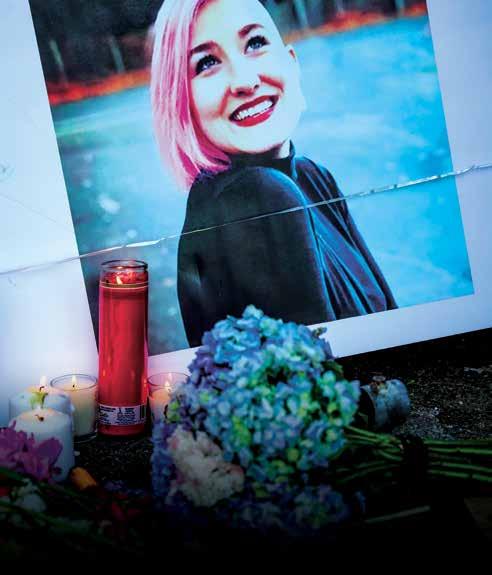
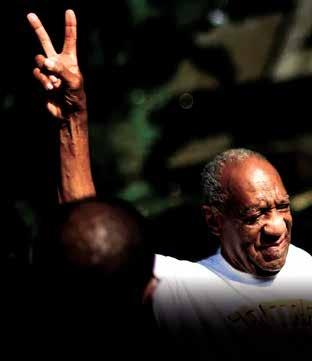
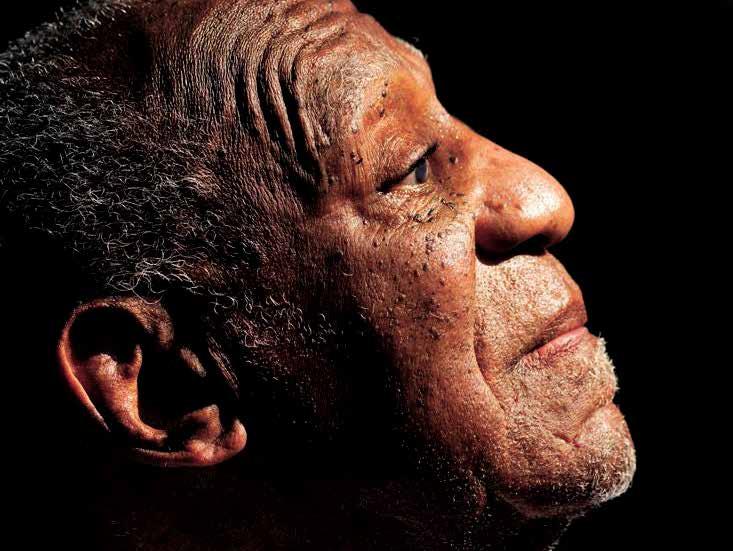
On Wednesday June 30, 2021, comedian Bill Cosby was released from prison after serving more than two years of a three-toten-year sentence.
Cosby, considered a comedy legend by most of the American public since the 1960s, was convicted on three felony counts of aggravated indecent assault. He
drugged and molested ex-basketball player Andrea Constand in 2004, who had knowingly accepted pills from Cosby that were intended to help her relax.
The allegations and his conviction came as a shock and a hurtful blow to the Black community. How could the man who brought us Fat Albert (an animated series where Black characters had facial features proportionate
Photo by Renee Raketty
Photo by Mark Makela / Reuters
Photo by Eric Autry
This week in SGN history: 5 years ago
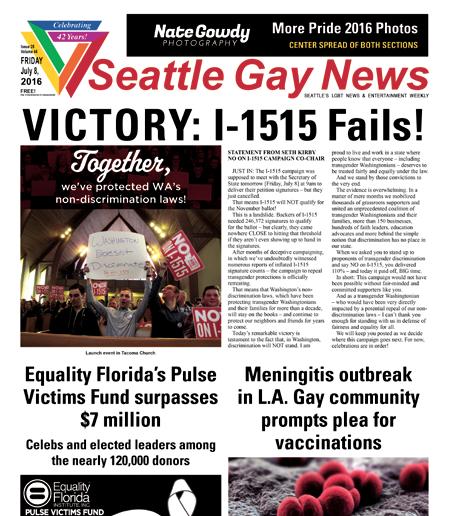
Big victory in WA
The anti-Trans initiative I-1515 failed to get on the November 2016 ballot (though we were already heading for a big loss in the presidential election), as reported by SGN Associate Editor Shaun Knittel:
The I-1515 campaign, an effort to repeal Washington state’s 10-year-old nondiscrimination law protecting members of Washington’s Transgender community, failed to turn in enough (246,372) signatures to qualify for this year’s fall election ballot. “Washingtonians have sent a clear message: we won’t discriminate,” said Seth Kirby, chair of Washington Won’t Discriminate, the No on I-1515 campaign.
“As a Transgender man, I’m encouraged that voters didn’t buy the pitch that repealing our state’s nondiscrimination protections for Transgender people would somehow make everyone safer. Washingtonians value fairness and equality, and we believe that everyone in our state should be able to earn a living, frequent a business, earn an education, and raise a family free from the fear of discrimination.’
Joseph Backholm, who led the charge for I-1515, encouraged male signaturegatherers to enter women’s restrooms to demonstrate the ramifications of the Transgender-rights decision earlier this year. Those reports angered many, including people outside of the LGBTQ community, because it demonstrated that Backholm was willfully and dangerously misrepresenting the intent of the law.
Backholm dismissed it as a “joke,” saying, “It was obvious to all that we are not seriously encouraging people to gather signatures inside restrooms.” The joke was certainly lost on the general public and the county sheriff, state attorney general, and LGBTQ activists, who warned that following woman into bathrooms is illegal.
Update: In 2018, The documentary The Most Dangerous Year premiered at the Seattle Queer Film Festival, directed by Vlada Knowlton. The film featured the No on 1515 campaign as well as a strong focus on parents letting kids be the gender they want to be. A must-see.
Pakistani mullahs clarify: Intersex people can marry, not Trans people
As reported by SGN Staff Writer Mike Andrew,
A group of Pakistani mullahs who made headlines last week with a fatwa that Transgender people can marry has now issued a clarification: they meant Intersex people and not Trans people at all.
The 50 religious scholars, known as Tanzeem Itehad-e-Ummat, had been quoted as saying that Trans people with “visible signs of being a male” may marry a woman or another Trans person with “visible signs of being a female,” but someone with “visible signs of both genders” may not marry anyone.
According to NAZ Pakistan (an LGBTI-supportive HIV and sexual health organization), kahawja sira is the Urdu equivalent of the Hindi word hijra, which can indicate an Intersex or Transgender person, or even a drag entertainer. They are legally recognized as a “third gender” in India, one of the few countries that does so. “Efforts need to be made to bring clarity among the general population on the differences between a eunuch, Transgender (both men and women), and khawaja sira,” NAZ said in a statement. “It must be understood by all stakeholders that khawaja sira is a culture and not a gender.”
Equality Florida’s Pulse victims fund surpasses $7 million
An online fundraiser for the victims of the Pulse Nightclub shooting set up by Equality Florida raised $7M in a campaign that continues to break records for online philanthropy. Equality Florida’s Pulse Victims Fund also received support from several high-profile donors, including Jeffree Star, Philip DeFranco, Jesse Tyler Ferguson, California’s [then] Lt. Gov. Gavin Newsom, Stuart Milk, and Lena Dunham.
Update: After the tragedy in Orlando, the community came together to form a new organization called One Orlando Alliance. The organization consists of representatives from each LGBT organization. Look for a Seattle version to debut in 2022.
Outbreak in Los Angeles
In 2016, people in LA were called to get vaccinated for an outbreak of meningitis, as reported by Knittel:
Los Angeles County public health officials and LGBT advocates are urging Gay and Bisexual men to get meningitis vaccinations, citing a recent outbreak of potentially deadly meningococcal disease that is disproportionately affecting men who have sex with men (MSM). Though the weakened immune systems of people who are HIV-positive might make them more susceptible to meningococcal disease, only one of LA County’s 17 cases is in a person known to be HIV positive, said Benjamin Schwartz, deputy chief of the LA County Acute Communicable Disease Control Program.
The county is recommending that all Gay or Bisexual men who have had multiple sexual partners or who seek sexual partners through online dating apps like Grindr get vaccinated, as well as all people who are HIV positive. Some of the infected people in LA County said they had used online dating apps, Gunzenhauser said.
ChristianMingle forced to add Lesbian and Gay users
I guess we can add ChristianMingle to the list of dating apps, as reported by Mike Andrew:
by MK Scott SGN Contributing Writer
The popular online dating site ChristianMingle will now allow users to look for same-sex matches.
The change in policy settles a class action discrimination suit brought by two Gay men in 2013. According to their complaint, ChristianMingle allowed users to choose “man seeking woman” or “woman seeking man” but did not provide any same-sex options. Therefore it violated California’s Unruh Civil Rights Act, which requires “business establishments” to offer “full and equal accommodations” to people regardless of their sexual orientation.
The website’s owner, Spark Networks Inc., also agreed that within two years, it would adjust other searching and profile features to give Lesbian and Gay singles a more tailored experience.
In addition, Spark Networks agreed to pay each plaintiff $9,000, and $450,000 in attorneys’ fees to the two men’s lawyers. The company did not admit any wrongdoing as part of the agreement.
“I am gratified that we were able to work with Spark to help ensure that people can fully participate in all the diverse marketplaces that make our country so special, regardless of their sexual orientation,” Vineet Dubey, one of the plaintiffs’ attorneys, said in a statement.
A Spark Networks spokesperson said the company was “pleased to resolve this litigation.”
Spark Networks also owns CatholicMingles, AdventistSinglesConnection, and BlackSingles, which are all included in the settlement. Another Sparksowned site, JDate — aimed at matching up Jewish users — was not party to the litigation.
Ex-Pope Benedict’s moment Leave it to the ex-Pope to write a book and brag about how he defeated a Gay lobby, as Mike Andrew reported: Retired Pope Benedict XVI claims that he defeated a powerful “Gay lobby” entrenched in the Vatican. The ex-pontiff makes the assertion in his new autobiography, The Last Conversations
In the book, Benedict says that a “Gay lobby” of four or five people tried to influence papal decisions, but that he was able to “break up this power group.”
According to Italian journalist Luigi Accattoli, in the book, Benedict “again denies blackmail or pressure” from the Gay lobby or other insider pressure groups for him to step down. Benedict made that decision on his own, he says, because of failing health, as he stated publicly at the time.
When Pope Francis delivered his famous “who am I to judge” soundbite, he seemed to dismiss the idea of a Gay lobby. “I still haven’t found anyone with an identity card in the Vatican with ‘gay’ on it,” he quipped.
2016 This Week in SGN History
Trump insanity
2016 was just as insane as
reported by Mike Andrew:
Eric Trump, son of Republican presidential candidate Donald Trump, has endorsed his sister Ivanka as a potential running mate for his father.
“She’s got the beautiful looks, she’s smart, she’s smart, smart, smart,” Eric Trump said July 7 on Fox News. “She’s certainly got my vote.”
Republican Sen. Bob Corker of Tennessee may have sparked the “Ivanka for VP” boomlet on July 6, when he took himself out of the running for the number two slot on the Republican ticket. “His best running mate, by the way, would be Ivanka,” Corker said after announcing he did not want to be Trump’s running mate.
Update: Obviously, Gov. Mike Pence of Indiana was chosen to be VP, but Ivanka had an office in the White House, along with her husband, Jared Kushner. Last week it was revealed that Ivanka could be next to be indicted.
Kim Davis with a capital T: Andrew also reported the following: Kim Davis, once the darling of the anti-marriage equality set, is in trouble with the law again.
According to Kentucky Attorney General Andy Beshear, Davis violated the state’s Open Records Act by refusing to produce documents from her 2015 the legal battle against marriage equality.
The records — which include details of her relationship with Liberty Counsel, the group that offered her legal representation — were requested March 1 by the Campaign for Accountability.
In May, the attorney general’s office asked to review the documents in private so it could decide whether the exemptions cited were relevant. Again Liberty Counsel refused to produce the documents, even for a private review, and this violated the Open Records Act, the attorney general’s office said.
Under Kentucky law, Davis and the Liberty Counsel can appeal the attorney general’s decision only by suing in circuit court. Mat Staver, founder and chairman of Liberty Counsel, said Tuesday that the group has not decided whether to challenge the ruling.
Meanwhile, a Tennessee man filed a federal lawsuit against Davis for denying him a license to marry his laptop. Much of the 44-page legal complaint compares same-sex marriages to Sevier’s wouldbe marriage to his laptop. Sevier has filed several similar lawsuits, including one in Utah.
Update: In 2018, Davis ran again for Rowan County clerk as a Republican (unopposed) and won the primary, but in the general election, she lost against Democrat Elwood Caudill Jr.
Over 47 years, the Seattle Gay News has covered thousands of stories that still resonate today. This week we look back at Vol. 44, Issue 28, published on July 8, 2016.
2020. Eric Trump endorsed his sister Ivanka as VP, as
Local News
Celebrate Pride the Tacoma way
by Josephine Baird SGN Contributing Writer
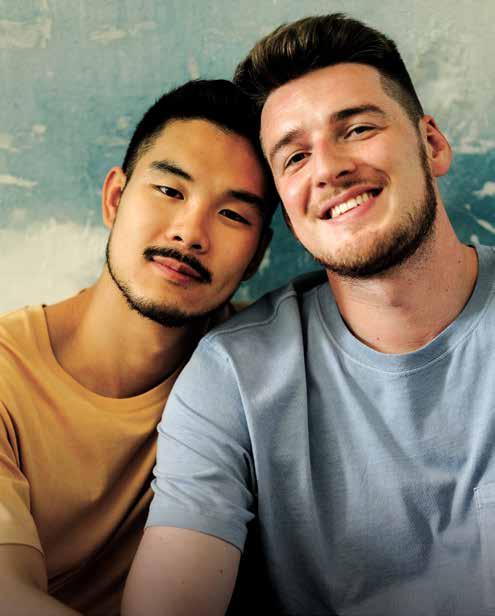
After an exciting month of celebrating Pride in the Seattle area, it might feel like the party is over. But thanks to the Rainbow Center in Tacoma, it doesn’t have to be. If you are willing to make the short trek south, new opportunities to celebrate await.
Tacoma Pride is happening this weekend, on Saturday, July 10. Although June is Pride Month, Tacoma celebrates July as to not conflict with Seattle’s events and to keep the party going a bit longer.
Last year, as with most major events, Tacoma Pride Festival plans and activities were restricted. Although this year’s events aren’t quite the same as pre-COVID years, there will be opportunities to celebrate and gather.
According to a press release from the Rainbow Center’s executive director, Troy Christensen, “As restrictions are lifting, we anticipate larger gatherings than last year. Holding our celebrations in July rather than June now has the added benefit of another month of vaccinations.”
While the Tacoma Pride parade on July 10 will be virtual for community safety, the Rainbow Center has come up with a different way for people to participate. The new, main event for 2021, “Points of Pride,” is a way for businesses and organizations to show support to for the LGBTQ commu-
nity. Dozens of agencies and businesses will be stopping points where Pride-goers will receive special deals, such as discounted products, 2021 Pride collectibles, or signature cocktails, both on July 10 and other summer dates (details at tacomapride. org). So far, more than a hundred “Points of Pride” partners are registered . The Rainbow Center has a history of attracting large crowds for Pride. In order to keep people engaged and satisfied, Marsh Samuela, the center’s celebrations manager, has had to be creative. Samuela said, “We want to make sure we uphold that reputation.” To do that, Samuela has had to come up with a mix of virtual and in-person activities to keep people safe and celebratory in the age of COVID.
Although “Points of Pride” is this year’s signature event, there are many others before, on, and after July 10. Some are for the whole family, such as a parking lot party at Immanuel Presbyterian Church, the Tacoma Pride Awards ceremony, the 5k Run Stride with Pride, a Grand Cinema–sponsored film in Wright Park, and LGBTQ Family Days at Northwest Trek and Point Defiance Zoo and Aquarium. There are also adult-only events, including at Wooden City, Browne Family Vineyards, Alma Mater and a block party at The Mix. To learn more about “Points of Pride” or other Pride events in Tacoma, go to tacomapride.org.
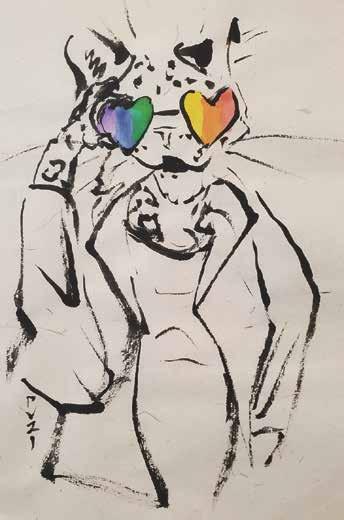
Artwork by Michael Travis
The Pride flag on the Tacoma Dome – Photo courtesy of Tacoma Pride Festival
Local News
Richland florist loses yet again
End of the road for appeals
by Mike Andrew SGN Staff Writer
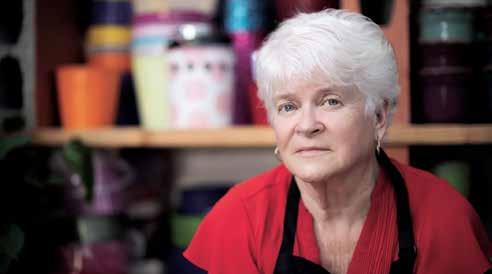
The US Supreme Court has declined to hear an appeal from Barronelle Stutzman, a Richland florist who refused to provide wedding flowers for a Gay couple.
The high court’s July 2 ruling leaves in place a Washington State Supreme Court ruling that Stutzman violated the state’s anti-discrimination laws when she refused service to Robert Ingersoll and Curt Freed.
Stutzman claimed that she had a First Amendment right to do so because samesex weddings violated her religious beliefs. After losing a string of court cases, she filed a final appeal to the US Supreme Court.
Four justices are required to agree to hear the case, but only Justices Samuel Alito and Clarence Thomas — the most hard-core of the high court’s conservative majority — said there were grounds to take the appeal.
The court’s rejection of her appeal marks the end of the road for a court case that extends back to 2013.
Taking advantage of the new Washington state law legalizing same-sex mar-
riage, long-time couple Ingersoll and Freed decided to marry. They asked Stutzman — who had been their regular supplier of flowers — to provide wedding arrangements.
She declined, and ultimately the couple sued her for violating Washington state’s anti-discrimination laws. They were represented by the ACLU.
Washington’s attorney general, Bob Ferguson, also filed a consumer protection action against Stutzman. That action resulted in a relatively modest penalty for Stutzman: a $2,000 fine, a $1 payment for court costs, and agreement not to discriminate in the future.
Stutzman, however, refused to comply,
alleging that her religious liberty rights were being infringed. She also filed a countersuit, charging that the state’s action had hurt her business.
On November 15, 2016, Ferguson personally argued the case in front of the Washington State Supreme Court, which found unanimously that Stutzman had violated state anti-discrimination and consumer protection laws.
Stutzman then filed an appeal in federal court, alleging that her First Amendment rights to freedom of religion were being violated.
In 2018, the US Supreme Court vacated the State Supreme Court’s ruling, but without deciding on the merits of Stutzman’s arguments. Instead, the high court instructed Washington state courts to determine whether they’d acted out of prejudice against Stutzman’s religious convictions.
Once again, the Washington State Supreme Court ruled against Stutzman. Once again, she appealed to the US Supreme Court. In this latest decision, the justices said clearly she had no further claims on their attention.
Eric Autry, a public information officer for the Seattle Fire Department, was present from the beginning of the response until 6 a.m. on Monday. He confirmed that firefighters responded from SFD, King County Fire District #2, Tukwila Fire Department, Skyway Fire Department, and Puget Sound Regional Fire Authority. A fire investigator is assigned to every case, and to Autry’s knowledge, the investigator arrived after he left.
The Lumber Yard Bar was the first LGBTQ bar in White Center and has been a beloved gathering place since its incep -
tion. One loyal customer, Philip McKinnis, described it as “our happy place.” Said McKinnis, “I am devastated by these events… We had just started to enjoy the crowds coming back and making new friends.”
The bar’s house drag queen, Dolly Madison, known outside of drag as Derik Kleinhesselink, spoke out about the impact of the fire and the value of the bar to the community. As the house queen, Madison said, she created themed shows and entertainment while facilitating a space where community members could gather and get to know each other.
Madison and her DJ husband Al were friends with owners Nathan Adams and Michale Farrar years before the bar opened and were involved with its initial planning.
Together they created a “diverse and fully inclusive, community-focused bar.”
Just prior to the fire, she says, the bar had closed due to a power outage on the block, and later, someone reported smoke coming from the Lumber Yard. Said Madison, “Seeing the photos of the devastation was like having to identify the corpse of a loved one.”
Madison and her husband have lost a source of income, new staff are unemployed, and the building is severely damaged.
For the community, she said, “the Lumber Yard was a haven. So much love has been poured into this gathering place.” As White Center’s first LGBTQ bar, it benefited the whole community with a safe environment.
Madison is heartbroken but reflects that she and her husband will find a way to continue performing during this time. She said, “If there’s a group that continues to survive and thrive, it’s the LGBTQ community. If Michale and Nathan choose to restore, it will not be a rebuild — it will be something so amazing and full of even more love and inclusion that people wont be able to resist it.”
To support the Lumber Yard Bar, White Center Pride has started a GoFundMe page for its recovery. As of July 7, the page surpassed its goal of raising $100,000, but another page was established at gofund. me/630595e2.
Barronelle Stutzman – Photo courtesy of ADF
Photo by Eric Autry
SUMMER TAYLOR
the Cupid Shuffle with Taylor on I-5. “Summer had a magnetic personality.
“Getting to dance with Summer that night was one of the best experiences of my life.”
Taylor, who identified as nonbinary and used they/them pronouns, had been a veterinary assistant and kennel supervisor at Urban Animal on Capitol Hill. They were said to have loved animals and had been pursuing a career in veterinary medicine. They had two cats, Tango and Zucchini; one dog, Ginger; and two guinea pigs, Carrot and Bubbles. They were also a fan of music and of the science-fiction and fantasy genre. They were just 24 years old.
Taylor’s mom, Dalia Taylor, said that the family “was so touched” by the vigil and wanted to convey they that they “continue to be proud of the courage — shown not only by Summer but by all of you: the activists, the media, the brave body and souls fighting for equity and justice in Seattle, America, and around the world.”
“You are our heroes, and you are my hero,” she said.
Taylor’s brother, Luke Taylor, and his partner Angelina and grandparents Randel and Diane Williams were also present at the vigil. They joined others in lighting candles for Taylor.
The family announced that they were also planning a memorial service for Taylor, which had been delayed due to the COVID-19 pandemic.
Friends were on hand to share funny and inspiring stories. Fellow protesters stated that Taylor was in inspiration to them,
including one that transitioned their gender identify from nonbinary to female. A coworker noted that Taylor affirmed them as someone who was also nonbinary.
One protest organizer in attendance reminded those assembled that “life is always going to knock you down” but noted that “you can get back up and keep going.”
“We can hurt and do nothing, or we can heal, and do a hell of a lot more,” said TK. “We are the cornerstone of change.”
Background
Protests had taken to I-5 for 18 days in a row prior to the morning of July 4, 2020,
mostly during off-peak hours. In response, the Washington State Patrol had shut down the roadway between SR 520 and I-90, including all access ramps. However, the driver of the car that struck Taylor, Dawit Kelete, is believed to have driven the wrong way on an interstate off-ramp.
A livestream showed the events as they unfolded, including Kelete’s car driving on the shoulder to avoid protest vehicles blocking the roadway to protect the demonstration and swerving back into the fleeing protesters. The video showed the collision and resulting chaos.
Kelete fled the scene but was blocked by
the protest vehicles and was arrested by the Washington State Patrol a few minutes later. It is believed he was under the influence at the time of the incident. He has been charged with vehicular homicide and reckless driving. He is out of jail on a $100,000 bond awaiting trial.
Diaz Love, who is nonbinary and uses they/ them pronouns, was also hit by Kelete. They have spent the last year physically recovering from their injuries and have shared their dramatic recovery and mental health struggles online following the incident.
Protests bore fruit
Omari Salisbury of Converge Media stated that sustained protests over the last year bore fruit in Olympia, where the Washington state legislature passed multiple police accountability measures. “[Gov.] Inslee signed… bills for police and police accountability,” he said. “Seattle is maybe the only place in America that you can say you can see a straight line [from] people being in the streets to actual change.
“That’s part and parcel of these young people who came out and made their voices heard, and, in some cases, lost their lives.”
The police accountability measures include requiring officers to intervene in instances of excessive force and report bad conduct to their supervisors. Police tactics such as chokeholds and neck restraints have been banned. The use of tear gas and the acquisition of military equipment have been restricted.
Gov. Jay Inslee (D) said that the 12 police accountability bills he signed will “work in coordination with one another to create a system of accountability and integrity stronger than anywhere else in the nation.”
Photos by Renee Raketty
Local News
MoPop showcases Stonewall A tour of the powerful traveling LGBTQ history exhibit
by Lindsey Anderson SGN Contributing Writer
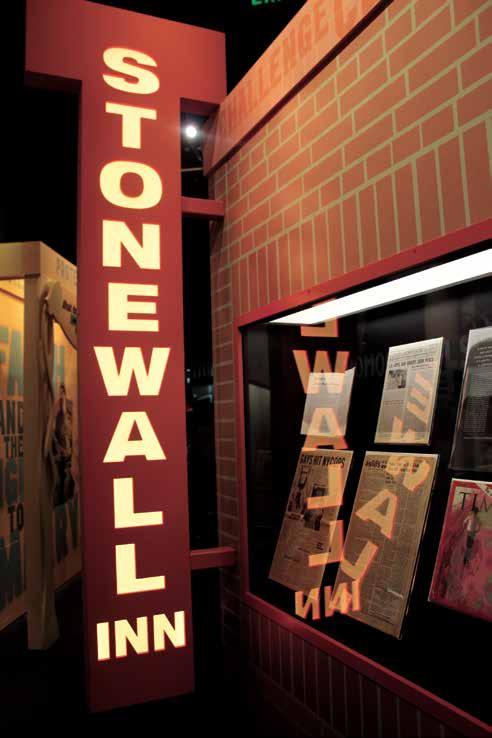
It was the night that changed everything. On June 28, 1969, Greenwich Village witnessed an uproar led by Trans women of color.
Brave people who had had enough of the authorities telling them who they could and couldn’t be, what they could and couldn’t wear, and who they could and couldn’t love, rioted against the police who were raiding the Stonewall Inn.
For nearly a week, LGBTQ folks and allies gathered, protested, and rioted against the police, against sodomy laws, and against a country that wanted to keep them in the closet.
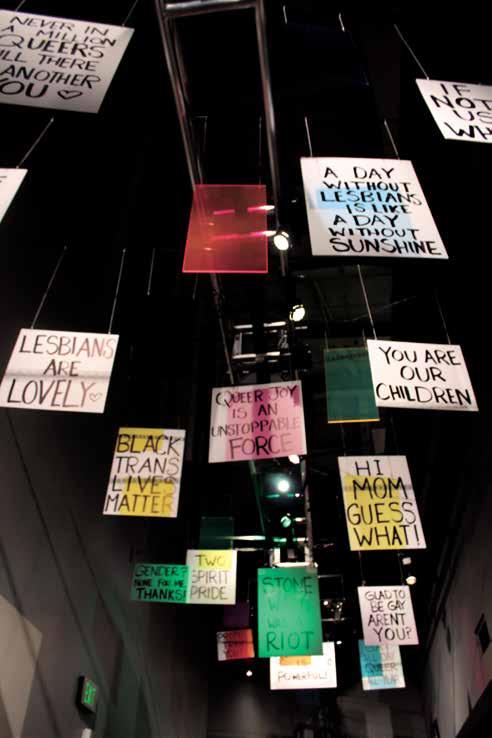
Now, over fifty years later, Seattle’s Museum of Pop Culture is paying homage to those brave people with its new exhibit, “Rise Up: Stonewall and the LGBTQ Rights Movement,” in which patrons are taken on a
Photo by Lindsey Anderson
journey through history, exploring the work of activists and groundbreaking figures who led the fight for LGBTQ rights.
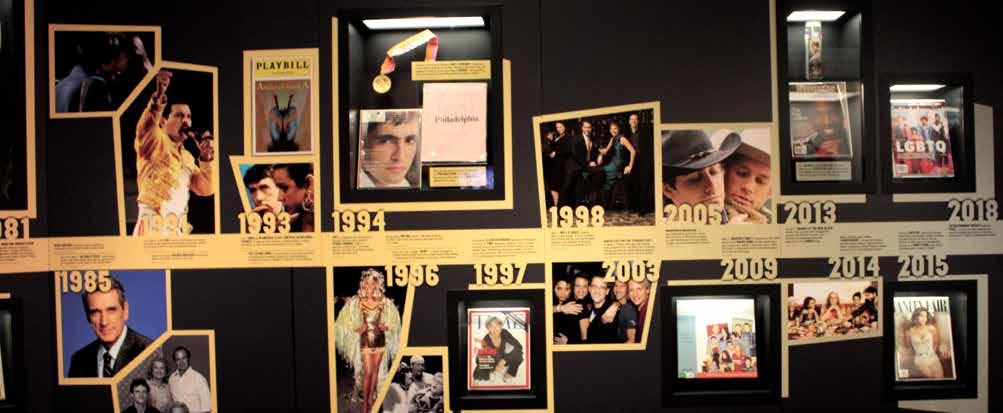
Today, in 2021, it can be easy to forget the battles that were fought for equality, and it can be even easier to forget that many of those battles were very recent. Upon entering the exhibit, visitors encounter a wall detailing the fight for LGBTQ rights in the US military. At the top, patrons can read all about the “Don’t Ask, Don’t Tell,” policies of the ’90s, a policy wherein homosexuality was not to be discussed. For younger members of the community, this might sound archaic, more like a history lesson than a lived experience, but as the wall continues, patrons are met with much more recent fights.
Donald Trump’s tweets litter the base of the wall like discarded garbage, relics from before the disgraced former president was banned from Twitter, detailing his ban on Transgender people joining the military (the ban was lifted by President Biden).
The inclusion of such recent events reminds viewers that the fight is not over — the movement continues.
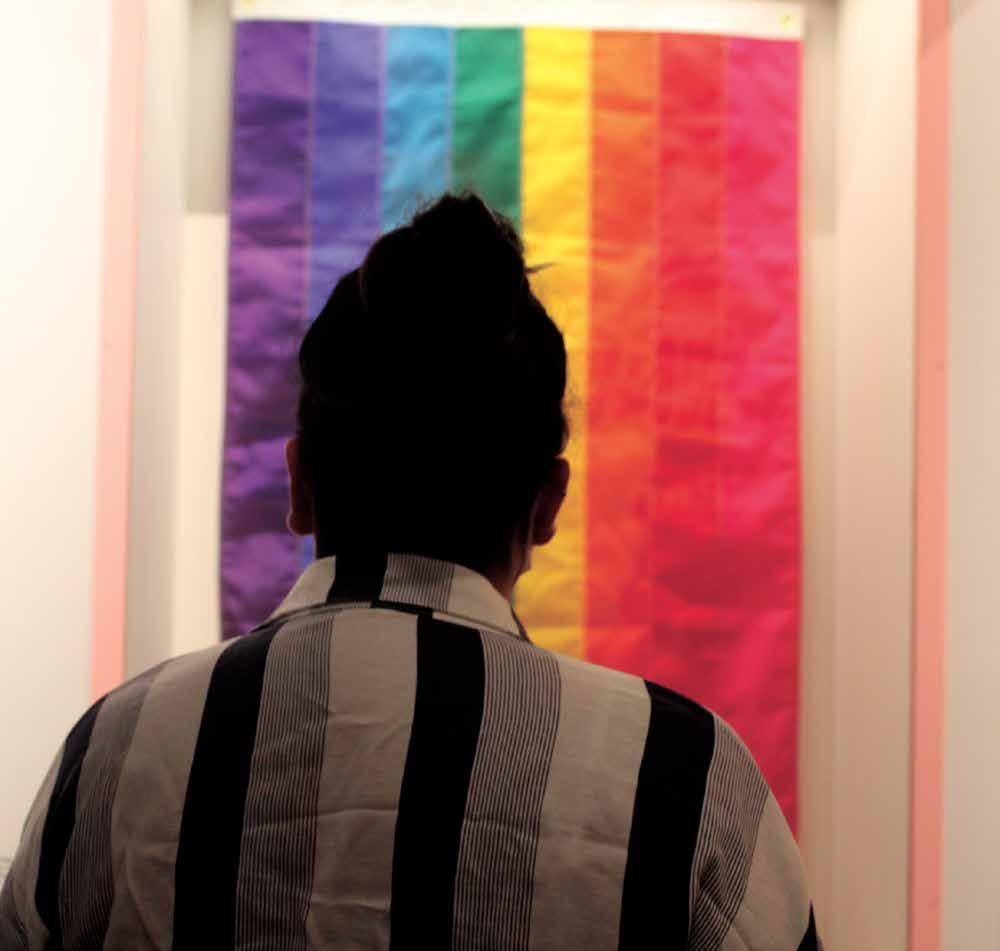
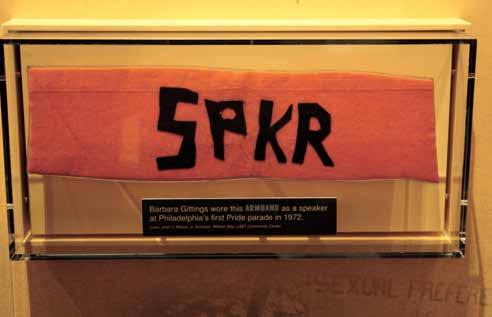
Headlines line the walls as patrons continue through the exhibit, and reports from major newspapers document celebrations, like the first Pride marches, and tragedies, like the assassination of Harvey Milk, the first openly Gay elected official in the United States. An original Pride flag — including teal and fuchsia stripes — hangs in a glass case, reminding viewers of the meaning behind each colorful stripe.
In stark contrast to objects that might be seen as artifacts sits the suit of James Obergefell, the man behind the Supreme Court case that legalized same sex marriage. The suit and headline serve as a reminder that not even a decade ago, samesex couples could not marry legally in all fifty states.
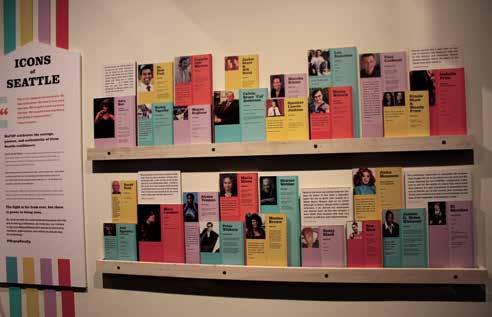
Near the end of the exhibit, images of iconic Seattle Queer icons line the walls.
Everyone from US soccer star Megan Rapinoe to drag queen extraordinaire Jinkx Monsoon smiles at passersby, while blackand-white signs hang from the rafters, some old messages from the riots of the ’60s, others modern celebrations from today’s Pride marches.
As I walked through the exhibit, I saw much of what I expected: relics from a time my parents don’t even remember, colorful photos of Pride celebrations, and stories of icons. What I didn’t expect to see were the reminders of all the recent battles, the attacks made every day on the rights of Trans and nonbinary people, and the accounts of couples who had to fight tooth and nail to get married — couples who haven’t yet celebrated an eighth anniversary.
MoPop’s exhibit is a breathtaking array of the vibrant and painful history of the LGBTQ rights movement, and it reminds us, yet again, that history is still in the making. It’s a timeline of an era that has yet to conclude.
Photos by Lindsey Anderson
Local News
Bruce Harrell wants to be your next mayor
by Anthony Greer Special to the SGN
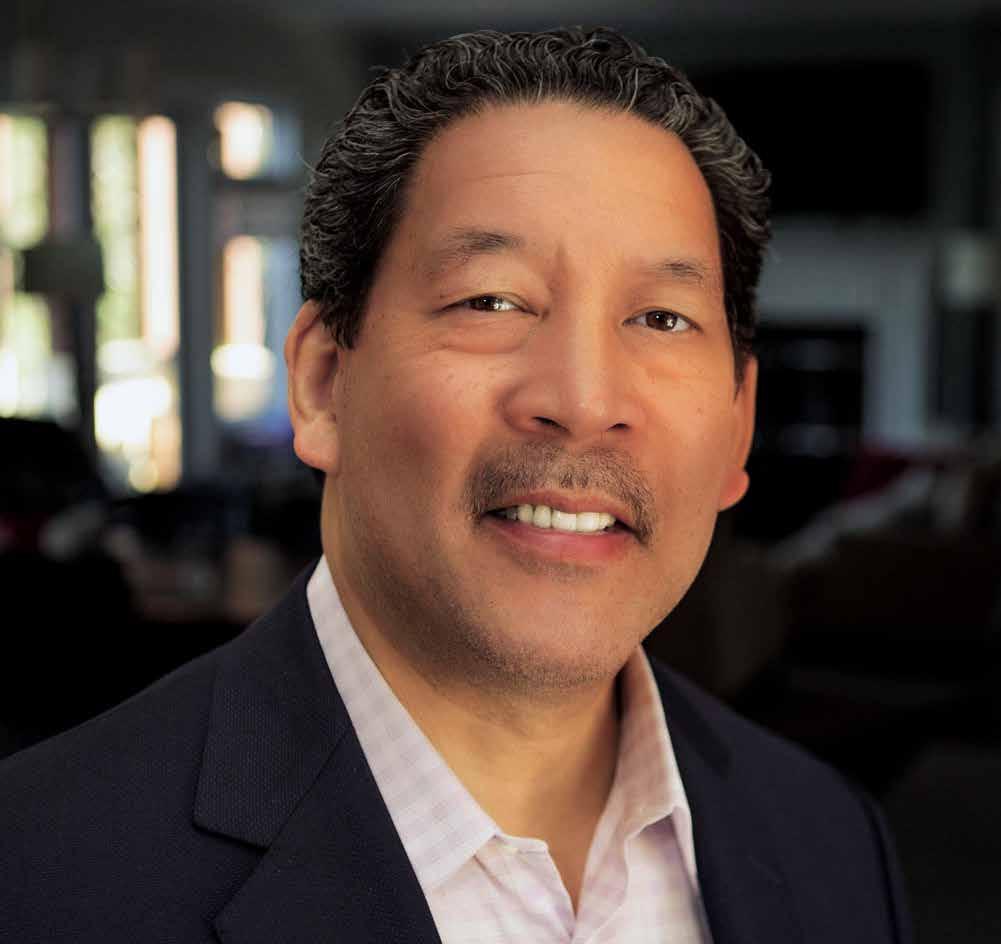
Three-term Seattle City Councilmember Bruce Harrell discussed his holistic approaches to the homelessness crisis, institutional racism, police reform, and small business revitalization, and why he’s best suited to become Seattle’s next mayor.
“I think that this is going to be the most important era in Seattle in the last 30 years,” Harrell explained. “The strategies that we put in place now will define the city for the next 20 years.”
As the son of a Black father and a Japanese mother, Harrell was raised to respect both where he came from and to believe in what was possible.
“While Seattle has its history of discrimination and racist and oppressive laws, it was much different than where my Black and Japanese grandparents had left,” Harrell says. “I saw Seattle as a young person as a city that I wanted to give back to. I would do the things I wanted to do in life but make sure that those who come after me were awarded the same opportunities. I saw politics as a way to achieve that end.”
Harrell’s achievements
Some of Harrell’s biggest accomplishments include the following:
• Sustainable race and social justice legislation that changed how the City of Seattle views its policies and budget decisions
• Serving as a lead negotiator and the “unsung hero” of the minimum wage increase
• Spearheading the City of Seattle’s first tuition assistance program formally known as the 13th Year, which is now part of the Seattle Promise Program
As a mayoral candidate, Harrell believes he has the best narrative of truly being a positive leader. “While I hear others talk about collaboration, vision, and unity, I think I have the strongest track record of being as such. I also think my life experiences lend themselves to creating a vision that is quite different from my opponents… it not only speaks to lived experiences, but also my strong and clear legislative records reflecting those values.”
The homelessness crisis and low-income housing
The homelessness crisis has been one of Seattle’s biggest problems for years. Despite increased spending year over year, the number of homeless Seattleites remains roughly the same.
“Our state legislature, our federal legislators, and our local legislators need to all work zealously on recognizing that we as a country have created a subclass of poverty and people with housing insecurity,” Harrell added. “This problem is much more complex than one city council or one state legislative body.”
To solve the crisis, Harrell stresses that we need a more holistic, data-driven approach.
“I think the data will show that predictors of people who may be homeless in five, ten, fifteen years from now can be analyzed. My focus will not just be on housing the homeless but also looking at the predictors early in their lives as to where systems fail,” he said. “Causation is very complex. It’s not just about treating someone who, for example, has drug and alcohol dependency problems, but to try and figure out how that developed earlier in their life.”
Harrell also believes that low-income housing is of critical importance. “I will aggressively implement a housing levy to double down on low-income housing. We will continue to aggressively look at our zoning laws to see where there are great opportunities around transit, light rail, arterials, where it continues to make sense to
create as much density as possible.
“We will also look at the employer community as to what their corporate social responsibility (CSR) objectives are and if they can invest in affordable housing options for their employees. In short, we will do everything and use every tool state legislation has given us to achieve density and affordable low-income housing.”
Institutional racism and the Race and Data Initiative
“We need to defeat institutional racism, including but not limited to police reform,” Harrell said. “But our work cannot stop there. In our communities, we still have disparities in job opportunities and health outcomes and housing opportunities. Our work has to address those disparities as well.”
Harrell is introducing the Race and Data Initiative to take a closer look at the causes of job, housing, and prosecutorial discrimination, as well as sentencing disparities in the judicial system.
“We will do a deep analysis of the causes and effects, and we will implement policies accordingly,” he said.
“Institutional racism is often hard to see with the naked eye. Years ago, I examined why streetlights failed in what seemed to be poorer parts of the city. The city didn’t have an intentionally racist policy in place. Their policy on repairing street lights was that, when people complained, they would take it upon themselves to have the lights repaired by a certain time across the board,” Harrell explained.
“What they didn’t take into consideration is that communities complain differently. Many communities come from immigrant or refugee life, and were not quick to call the government to complain.
“We changed our policy on how we replace streetlights, based not on a complaint system but on a quadrant system — by dividing the city into quadrants and recognizing that we could mathematically tell the life-cycle of, at that point, a highpressure sodium streetlight. We took out what turned out to be an institutional practice that had a [disparate] impact [by] race, even though there wasn’t a person saying, ‘Let’s perpetuate a racist policy.’”
Harrell believes the Race and Data Initiative can be used to identify many other intentional and unintentional institutionally racist practices.
Police reform
Harrell explained that his life experiences lend themselves to creating a vision that differs from his opponents with regards to police reform.
“It’s hard to talk about why police reform matters so much when you haven’t experienced unkindness from police,” Harrell said. “It’s hard to talk about changing the police culture when you haven’t crossexamined police officers on the stand as I have.
“I believe the only way we truly achieve policy reform is through cultural change in the police department. We’ve already had citizen review panels, use-of-force guidelines in place, and we are under federal consent decree,” he said. “Under my leadership, the officers will break the code of silence, we will reestablish what behavior is acceptable and what is not tolerated, and we will be the leaders in this country in deescalation.
“I will bring in a team of people to help me, and we will change the narrative with respect to our police department. It will be
reimagined and realigned, and we will ask the fundamental question: Does a gun and badge need to be going into places they’re currently going in? I will truly change the culture of the police department. It will take a lot of work, but I’m going to do it.”
Small business revitalization
The pandemic had a devastating toll on many of Seattle’s small businesses. Many that have been around for 20 or 30 years will likely never return, and e-commerce has exacerbated the vulnerability of small brick-and-mortar stores.
“The City of Seattle has to optimize its ability to support small business employers and employees to figure out what a 2022 city should look like in the world of ecommerce,” Harrell said. “I am creating a Seattle jobs center as one means toward this strategy.
“A Seattle jobs center will allow small business employers to find employees. Most importantly, it will allow potential employees to find resources, grant opportunities, and training opportunities to align themselves with the field of employment they would like to enter. With the Seattle jobs center, we are going to allow people to pursue their dreams and employers to find the talent they need.
“That should be the city’s role: to be the biggest evangelizer of the jobs market,” Harrell added. “Post-pandemic, there will be winners and losers in the jobs war. The cities that figure out how best they can win the jobs war will be the better cities in this country.”
To learn more about Bruce Harrell, visit www.bruceforseattle.com.
Bruce Harrell – Photo courtesy of Bruce for Seattle
THIS AD SPACE HAS BEEN GENEROUSLY DONATED BY KRISTIN COSTELLO IN MEMORY OF SGN PUBLISHER GEORGE BAKAN
Film Marvel’s Black Widow gamely fights for its heroine’s respect
by Sara Michelle Fetters SGN Staff Writer
BLACK WIDOW
Theaters / Disney+
Even had Black Widow, Marvel’s latest entry in its cinematic universe (called MCU), come out as scheduled in May of last year, this adventure centered on Natasha Romanoff (Scarlett Johansson), the Avengers’ heroic assassin with a dark past, would still feel egregiously late. At worst, this story, which picks up after the events of Captain America: Civil War, should have come out before 2018’s Avengers: Infinity War, probably somewhere between Guardians of the Galaxy Vol. 2 and Black Panther
But it’s here now, and unlike Steve Rogers, Tony Stark, and the rest of the gang, no one is going to perform a magical “time heist” to place this action-heavy conspiracy thriller from director Cate Shortland (Lore) earlier in the Marvel timeline. Even if Natasha deserved better — and I’m referring not just to the studio’s handling of her first and likely only solo adventure but also the character’s horribly idiotic fate in Avengers: Endgame — this is the film where she finally gets some respect, along with an opportunity to shine away from her far more powerful compatriots.
On the run from authorities, Natasha is shocked when she receives a package of
vials containing strange red dust, sent to her by Yelena Belova (Florence Pugh). The pair were raised as sisters by Alexei Shostakov (David Harbour) and Melina Vostokoff (Rachel Weisz), Russian spies on a secret mission in the United States supervised by the mysterious Dreykov (Ray Winstone).
When the fake family was forced to flee after completing their mission, Natasha and Yelena were separated and sent to the Red Room, a secret training facility designed to turn them into assassins.
While Natasha escaped and became an Avenger, Yelena continued to work for Dreykov, and until recently was being utilized as a mindless drone, completing missions with zero empathy for anything or anyone that stood in her way. But the red dust freed her from his control. Now she wants to bring down the Red Room and make sure Dreykov can’t harm anyone ever again, and the only one she knows who can assist her in doing this is the one person she’s angriest at for leaving her behind and rebranding herself as a hero: Natasha. There are elements in this film that are far darker those what we typically get in Marvel offerings, most notably a subplot dealing with how Natasha was able to get in S.H.I.E.L.D.’s good graces and the ghoulish adolescent collateral damage that was required on her part to make it happen. But even this facet is given a polished shimmer, especially as the film nears completion,
and while I imagine some parents won’t be happy with having to explain a couple of very adult topics to their little ones, I seriously doubt any nightmares will be unintentionally generated.
I like how relatively low the stakes are. Even though there is a danger to the world at large if Dreykov goes unchallenged, essentially this is a simple, straightforward mission to bring down the Red Room and silence the man who controlled every aspect of Natasha’s and Yelena’s lives for far too long. Along the way, there is also a bit of family reunification, as Alexei and Melina are brought into the picture — they, too, appear to want to see Dreykov pay for his crimes.
It’s those familial moments where I felt the workmanlike screenplay by Eric Pearson (Godzilla vs. Kong), from a story by Jac Schaeffer (WandaVision) and Ned Benson (The Disappearance of Eleanor Rigby), came up a little short. As well cast as both Weisz and especially Harbour (who is clearly having a blast) might be, neither Melina and Alexei strongly register. They’re additional puzzle pieces that, when placed in the proper position, allow the mystery to make sense and not much more, and I can’t say I cared about either of them at any point.
But that’s not the issue that keeps me from wanting to fully embrace all that Black Widow has to offer. As this is part of a larger game plan, turns out Natasha isn’t the most interesting, or arguably even the main, char-
acter — and this is in a motion picture carrying her name. Yelena is the one with the most noteworthy arc. She’s the one who has all the most memorable moments. She has all of the best lines. This is her showcase, and it’s clear a choice was made to give her the most time in the spotlight.
Pugh does respond accordingly, however, and she’s outstanding. If she is going to be a part of the Marvel production line for a few years, her Yelena will have instantaneously become one of the more intriguing new characters the studio has so far introduced during this latest phase. There is a buoyant manic urgency to her performance that’s electrifying, and I’m understandably curious to learn what happens to the newbie hero next.
Shortland does a solid job with the material, but even she isn’t able to entirely gloss over how Natasha randomly keeps disappearing in her own movie or how what is supposed to be her story frequently focuses on other characters. I do like how the filmmaker doesn’t shy away from the darker corners of Pearson’s script, and an early set piece where Natasha and Yelena break Alexei out of a Siberian prison — complete with impromptu avalanche — is suitably spectacular.
Black Widow isn’t Marvel at its best, but it is still good enough to entertain. Maybe that’s enough.
Scarlett Johansson and Florence Pugh in Black Widow – Photo courtesy of Marvel Studios
Ferociously unsubtle Forever Purge channels current events
by Sara Michelle Fetters SGN Staff Writer
FOREVER PURGE
Theaters
The Purge franchise might go down as one of the more prescient exploitation horror-action series of the 21st century. Writer James DeMonaco’s brainchild has morphed from its modest 2013 homeinvasion roots to, with the arrival of The Forever Purge, full-on commenting on the United States drowning in extreme rightwing propaganda, racist fearmongering, and political incitement to violence.
There’s nothing subtle about this fifth entry, and I can’t help but feel that’s exactly as it should be. The countrywide insurrection that makes up the majority of the 103-minute running time doesn’t pull any of its morbidly unsettling punches. The white supremacists who make a collective decision to keep the yearly Purge Night going forever until only “true Americans” (i.e., straight white people) are left in the continental US are suitably disgusting. They’re all the worst sort of people on every level, and there’s nothing wrong whatsoever with DeMonaco and director Everardo Gout (Days of Grace) showcasing them as such.
There does, however, come a point where reality and fantasy too closely mirror each other. As over the top as the terrors depicted in this film might be, they still pale in comparison to the reality of what happened in real life on January 6.
We’ve gotten a small taste of what this sort of formerly unthinkably dystopian fantasy nightmare might actually look like, and as expertly as Gout stages things, I still found the inherent thrills and chills of this particular nationwide trauma slightly muted because of that.
The most unsettling aspect of this sequel is how it captures the zeitgeisty fear of so many as to how easy it is for a wellfinanced political minority to take back power after a shellacking at the ballot box.
The story takes place four years after the events of The Purge: Election Year. The New Founding Fathers of America (NFFA) are swept back into power in the House,
Senate, and presidency with the aid of state and local governments, which curbed voting rights, along with a major assist from wealthy donors bankrolling nativist propaganda to rile up their rightwing base.
Sound familiar? DeMonaco and Gout do what all good, down-and-dirty horror filmmakers are supposed to do: play on real fears while pulling zero punches. Their thriller is pointedly aggressive in how it approaches its subject matter, unafraid to revel in its exploitation roots, while at the same time offering up giant dollops of purposefully obvious social commentary.
For those in need a plot synopsis, after the first Purge Night of the newly rein-
Technically proficient Tomorrow War is a mechanically forgettable waste of time
by Sara Michelle Fetters SGN Staff Writer
THE TOMORROW WAR
Amazon Prime
Humanity is on the verge of extinction. It is 2051, and a vicious alien race, known only as “white spikes,” are coming close to becoming the dominant species, killing every form of life they encounter. While the remaining humans have come together to defend themselves, they are still on the cusp of losing this war. All hope appears to have been eradicated.
But maybe not…
After soldiers magically appear on the field in the middle of a 2021 World Cup soccer match, it appears future generations aren’t quite ready to throw in the towel. They’ve gone back in time to urge their ancestors to travel to 2051 to help fight for Earth’s survival. It’s a last-gasp effort to turn the tide of war in humanity’s favor, and even this may not be enough to stop the white spikes from their single-minded pursuit of total annihilation.
The Tomorrow War is undeniably expensive, and every penny appears to be up there on the screen. I appreciate that director Chris McKay (The Lego Batman Movie) and writer Zach Dean (Deadfall ) are attempting to tell an original story that isn’t a part of some long-running franchise or a reboot of a past favorite. This is an ambitious science fiction-action spectacle that wears its heart on its sleeve and takes a lot of very big swings, all of which I’d like to enthusiastically support.
Frustratingly, that’s not how things work out. This is a massive misfire that I unfortunately never connected with on an emotional level. I found there to be precious few thrills. Almost none of the suspenseful bits gave me anything resembling a chill. It all
came across like a mechanical rollercoaster ride that’s competently constructed yet with shockingly little imagination. At 140 minutes, sitting through it all to the very end was far more difficult than by all accounts it should have been.
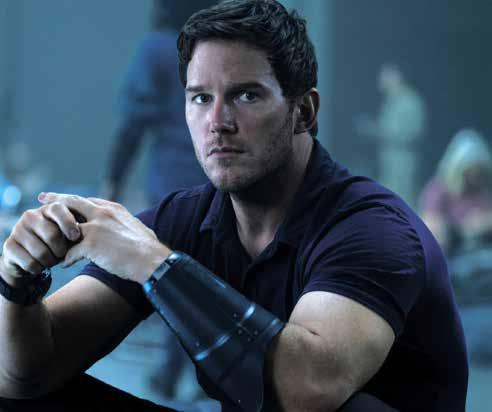
The human angle revolves around decorated former Iraq war veteran current high school science teacher Dan Forester, portrayed by Christ Pratt with the same sort of goofy machismo he brings to his Guardians of the Galaxy adventures. He’s drafted to go into the future to fight by a woman (Yvonne Strahovski) who knows him better than he knows himself, but her reasons for doing so are not nearly as surprising as I
stalled NFFA concludes, Texas rancher Caleb Tucker (Will Patton), his son Dylan (Josh Lucas), Dylan’s pregnant wife Cassie (Cassidy Freeman), and Dylan’s younger sister Harper (Leven Rambin) awake to discover that the evening’s carnage is still ongoing. With the aid of two of their undocumented ranch hands, Juan (Tenoch Huerta) and T.T. (Alejandro Edda), and Juan’s wife Adela (Ana de la Reguera), all of them flee to the only safe haven open to them: Mexico.
It’s all very well directed by Gout, and the action scenes have a punchy magnetism that is as brutal as they are cutthroat. It should also be noted that de la Reguera delivers a ferocious, scene-stealing performance. She takes DeMonaco’s material and makes it sing in ways far beyond anything he likely dreamt possible. Her Adela is the best character this franchise has introduced since Frank Grillo burst onto screens as Leo Barnes in The Purge: Anarchy. She’s terrific.
If this is the last theatrical chapter of The Purge franchise, it gets the job done. Much like 2018’s The First Purge, this new entry dials into so many hot-button issues that keeping track of them amid all of the bloodshed is alluringly hypnotic. The Forever Purge also puts the minority members of its cast front and center, their steadfast heroism a call to action to stand up against fascism, extremist ideology, and racist violence that is worth listening to.
imagine they were supposed to be.
I do like that McKay and Dean tell a self-contained story. While there are plenty of ways a sequel could be spun out of this, that the filmmakers don’t drop a post-credits scene hinting at additional loose ends or sprinkle intimations as to what might happen next is refreshing.
What I didn’t care for was how manufactured and facile so many of the internal plot mechanics are. It was almost as if Dean watched Paul Verhoeven’s darkly satirical take on Starship Troopers and wondered what would happen if he wrote a similar scenario, but with a time travel twist played perfectly straight. There is a disastrously leaden
didacticism affecting the majority of the narrative components, and I almost began to wish Forester would fail in his mission and humanity would meet a grisly end.
The talented Betty Gilpin is stranded with a nothing role as Forester’s wife Emmy, while Mary Lynn Rajskub pops up in an even more thankless part as one of the 2021 citizens drafted to fight in 2051. Sam Richardson gets a bit more to do as another scientist-turned-soldier, but even he doesn’t make a long-lasting impression. The same can also be said about J.K. Simmons and Edwin Hodge, who both deserve far better than what Dean’s screenplay offers up.
McKay directs confidently enough, and most of the action scenes are fluidly shot by cinematographer Larry Fong (Kong: Skull Island ) and crisply cut together by editors Roger Barton (World War Z ) and Garret Elkins (Anomalisa). The creature design for the white spikes is also solid, and the carnivorous monsters are suitably threatening.
But there’s no heart to any of this, no soul hidden underneath the film’s skin. It comes across like an expensive puzzle assembled in a corporate board room utilizing statistical analyses and complex spreadsheets asserting to know what audiences will find most appealing — even though that’s not even close to being the case. There isn’t an honest human emotion to be found, and authenticity is in short supply.
Considering that the core of all this revolves around the relationship between parent and child, this is a gigantic roadblock not even McKay’s efficiently staged action sequences can overcome. The Tomorrow War is as forgettable as it is disappointing, and if I had my druthers and could go back in time, I’d ask the filmmakers to start over from scratch and populate their story with interesting three-dimensional characters I could actually care about.
Forever Purge – Photo courtesy of Universal Pictures
The Tomorrow War – Photo courtesy of Amazon Studios
Bloody good Fear Street Part 2 is a nightmarish summer camp slasher throwback
by Sara Michelle Fetters SGN Staff Writer
FEAR STREET PART 2: 1978
Netflix
With Sam (Olivia Scott Welch) possessed by the spirit of Sarah Fier, Deena (Kiana Madeira) is determined to save the love of her life from eternal damnation, before she becomes the latest in Shadyside’s long line of teenage serial killers. With the assistance of her whip-smart little brother Josh (Benjamin Flores Jr.), she tracks down one of the few people to have ever survived one of Fier’s demonic assaults, local agoraphobe C. Berman (Gillian Jacobs).
While not exactly happy to welcome the pair into her home, especially as they have a hogtied Sam hidden in the trunk of their car, Ms. Berman still feels compelled to help. She proceeds to tell Deena and Josh what happened the night mild-mannered athlete Tommy Slater (McCabe Slye) went inexplicably nuts, a quiet summertime evening in 1978 at Camp Nightwing that was transformed into a hellish bloodbath that left multiple campers dismembered.
By the very nature of its flashback structure, Fear Street Part 2: 1978 cannot help but be a slight step down from its gruesomely entertaining predecessor. That does not mean director Leigh Janiak’s middle chapter of her trilogy, inspired by the works of author R.L. Stine, isn’t still a heck of a lot of fun. Channeling any number of summer camp slasher favorites — most notably Friday the 13th and Sleepaway Camp — this sequel is a bloody good time overflowing in gory thrills.
It is also far more than just a goofy slasher throwback with a supernatural twist. Once again, Janiak and her talented team of writers have done a terrific job of making sure the central mystery fueling Sarah Fier’s three centuries of evil remains front and center. Moreover, they’ve also populated this installment with a sensational collection of characters worth spending time with. The central relationship
between sisters Cindy (Emily Rudd) and Ziggy (Sadie Sink) is especially strong, as is a surprisingly multifaceted subplot involving Cindy’s estranged former best friend Alice (Ryan Simpkins).
I’m hesitant to reveal much more, even though where this story is headed is never in doubt. The main twists are obvious, and the fact we know going in just about everyone — save dashing future Sunnyvale
sheriff Nick Goode (Ted Sutherland) — is going to die doesn’t help. I should also say that the inclusion of a certain Supernatural season finale staple by Kansas on the soundtrack irked me, but this is a personal annoyance and as such should probably be taken with a grain of salt. In other words, carry on, wayward son, and maybe ignore that particular nitpick.
Still, as love letters to 1970s and ’80s slashers go, this is one of the best I’ve seen outside of 2015’s The Final Girls. But unlike Todd Strauss-Schulson’s fitfully funny cult favorite, and even though Janiak does make sure to include several solid laughs, this sequel is most definitely not a comedy. The director treats her characters with respect and does not mitigate the dire seriousness of the situation they find themselves forced to deal with. Sarah Fier’s darkness becomes even more pervasive and destructive, all of which makes it crystal clear how horrific the stakes are for Deena, Josh, and poor, possessed Sam back in 1994.
The final scenes of Fear Street Part 2: 1978 throw everything we thought we knew about this story into outright chaos. It’s a delicious cliffhanger, one that’s far more satisfying than the one that concluded the first chapter, because it brings solid closure to this tale while also opening the door to even greater thrills to (hopefully) come.
But the focus remains on Deena and Sam, whose relationship is this trilogy’s heart and soul. Even with so much working against them and the evil connected to Sarah Fier intent on their grisly evisceration, here’s hoping they get their happy ending. Goodness knows they’re working overtime to earn it.
Fear Street Part 2: 1978 – Photos courtesy of Netflix
Books Twice Sold Tales is a purrfect reading experience
by Lindsey Anderson SGN Contributing Writer
A pair more iconic than coffee and donuts, more classic than Seattle and rain, more beloved than movies and popcorn can be found at Twice Sold Tales: kitties and books.
Twice Sold Tales has centered its image — from the neon cat sign out front to the posters that line the walls — around some of our most beloved furry friends. Readers come for the books but stay for the cats.
Owner and manager Jamie Lutton elaborates on the appeal of co-owning a bookstore with several felines: “Not everybody’s a reader,” Lutton said. “Come in and pet the cats, but I do try to have good books.”
Indeed, Lutton makes sure to stock the many shelves with a wide array of books. From the 180 linear feet of fiction to her special recommendations shelf, readers can find just about anything they’re looking for.
Lutton loves to recommend books to inquisitive readers, mostly drawing from the store’s rich collection of nonfiction. “I tend to recommend dead authors more,” Lutton told me, “I think dead authors are better than living ones.”
Lutton has read every title that she places on the recommendation shelf, and she is always willing to have a riveting conversation about the titles she loves. “I try to be a good bookseller,” she said. “I put the books first and don’t stand in the way,” she joked as she gave me a tour of the shop.
Twice Sold Tales also houses a unique selection of LGBTQ literature. A quaint nook nestled in between two cat towers creates a fun book cave, with Queer titles lining the sides of the enclosure. Here Lutton pulled a copy of Edmond White’s A Boy’s Own Story, recommending it as a mustread for any LGBTQ reader.
Lutton describes the shop as “Queer friendly” and informed me that Twice Sold Tales has been employing members of the LGBTQ community since the doors first opened — nearly 35 years ago! While Lutton is not Queer herself, she said she enjoys learning from all of the many customers who come in. “That is how I first learned about different pronouns,” she said.
Ultimately, it is the customers and the rich Capitol Hill community that make Twice Sold Tales’ Queer section so noteworthy. “The Queer section really came about because there was a community need for it,” Lutton said.
Op-Ed
Twice Sold Tales acquires most of its books via community sales and donations, and Lutton has seen many special and collectable titles pass through the doors. Some of the best sellers are collectible Lesbian novels from the 1980s.
In addition, in its archives can be found Queer erotica and historical, pre-Stonewall
by Lindsey Anderson
literature. For these special gems, readers need to ask at the front desk.
What sets Twice Sold Tales apart from other used bookstores in Seattle is “the staff”: six adorable cats, named Elenore, Lily, Buster, Stinker, James, and Jinx. All rescues, the cats are free to roam around the store, often getting into mischief, basking
COSBY
to their faces) and The Cosby Show (a sitcom with ratings rivaling the Superbowl every Thursday night) — for which he partnered with a clinical psychologist to make sure that there weren’t any negative images of the Black community — also be tried for and convicted of sexual assault?
Cosby’s fall from grace has been called both justice and an orchestrated attack on his rich legacy, which includes donating millions of dollars to Black institutions of higher education and being directly responsible for thousands of Black children going to college.
Many had their hearts broken by his conviction. So how is it possible that a man found guilty on three counts of drugging and sexual assault has now been allowed to go free?
After Constand came forward to the police regarding her assault in 2005, the state prosecutor did not press criminal charges. Constand then sued Cosby for sexual battery and defamation, requesting $150,000. They
in the sun, and of course receiving lots of pets from readers.
Come for the books, stay for the cats, and get to know a little bit more about LGBTQ history through the literature at Twice Sold Tales. With so many reading options — and friendly kitties to pet — you won’t be disappointed.
reached a settlement in 2006 that included a confidentiality agreement.
When more accusations surfaced against Cosby in 2014 and 2015, the local authorities reopened Constand’s case — it being the only one still within the statute of limitations — and charged him days before the 12-year limit on her allegations.
In the latest ruling, the Supreme Court of Pennsylvania found not only that the former prosecutor had in 2006 agreed not to charge Cosby if he testified in the civil lawsuit (in which he admitted to giving quaaludes to Constand, who knowingly accepted) but also that testimony from unrelated accusers had tainted the trial.
While this ruling will remain hard for many to accept, we can only hope the decision does not affect victims reporting their assaults but instead encourages them to come forward immediately to provide indisputable evidence in their cases — especially considering that Harvey Weinstein’s lawyers are praising the ruling (they have appealed his rape conviction, claiming the trial was unfair and that judges favored the prosecutors).
Photo by Matt Rourke / AP
Photos
National & International News
National news highlights
by Daniel Lindsley SGN Contributing Writer
California: More anti-LGBTQ states added to list Reuters reported June 28 on California’s recent ban on state-funded, nonessential travel to Arkansas, Florida, Montana, North Dakota, and West Virginia over the five states’ collective string of laws that discriminate against the LGBTQ community. California has kept a list of 12 states with anti-LGBTQ legislation since 2016, and added these additional five on the anniversary of the Stonewall riots.
State Dept. adds more gender options to passports
LGBTQ Nation reported on June 30 that the State Department will be taking steps to add more gender marker options to US passports for intersex, nonbinary, and gendernonconforming citizens. The State Department also plans to revise US passport applications to allow selfselection of gender identity, without medical clearance that the applicant is transitioning, even if the gender on their passport wouldn’t match other official documents.
International news highlights
by Daniel Lindsley
SGN Contributing Writer
Sponsored Content
House Wine teams up with HRC to celebrate equality
by Anthony Greer Special to the SGN
To celebrate and support LGBTQ+ equality, House Wine has partnered with the Human Rights Campaign to donate $2 from every case of Rainbow Rosé Bubbles sold.
“We want to raise as much money as possible to support the work that the HRC does,” said Brad Mayer, vice president of public relations and partnerships for Precept Wines (which owns House Wine). “House Wine is a brand that welcomes everyone, and we want everyone to enjoy our products, no matter who they are or where they are.”
“The HRC is so well known and has strong brand recognition. I loved the idea of partnership with a company that does amazing work and also has strong visibility. They’ve also been great partners when getting the message out to their membership,” Mayer added.
The idea behind House Wine, a Seattlebased company that was started in 2004,
was to produce a wine that is accessible to everyone. In Europe, everyone has a favorite house wine for the daily dining table. House Wine echoes that philosophy. Its motto is “Don’t overthink it, just drink it!”
House Wine teamed up with HRC three years ago, and has since raised over $100,000. Mayer said, “We wanted to reflect the values of our wines, which is that we’re accepting of everyone.”
House Wine has donated cans to LGBTQ-related HRC dinners both in Seattle and around the country, as well as Seattle’s 2019 Pride.
“House Wine cans are fun, part of a celebration, and easy to take with you, and they made me think of Pride,” Mayer said.
Mayer described Rainbow Rose Bubbles as crisp, refreshing, not too sweet, and very effervescent. The cans are so popular that they’re now sold year round.
“A lot of people in the beginning thought it was more of a summer type of beverage, but I think now people understand the
Canada: Conversion therapy Reuters reported June 30 on the Canadian Senate’s decision to delay until September a bill that would ban LGBT conversion therapy. Deputy Prime Minister Chrystia Freeland, who pushed for additional sittings to see the bill, framed her disappointment at the delay in terms of its harm to Canadians as a whole. Conservative Sen. Don Plett called the push itself a liberal political stunt. The bill will come up again in September, but only if an election isn’t called before then.
beauty of it year-round,” Mayer said. “It’s an enjoyable wine, not overly complicated, and is meant for people to enjoy.
Rainbow Rose Bubbles is the #1 selling 375ml canned wine in the country. The canned wine category is one of the fastest growing package sizes in the industry. House Wine cans did particularly well during the pandemic, because they’re perfect for takeout orders. Also, House Wine’s cans are environmentally friendly and easily recyclable.
House Wine produces its product in Walla Walla. While it is sold all over the country, “at the end of the day we are local, and we have a lot of pride in our hometown,” said Mayer.
You can purchase Rainbow Rose Bubbles at your local QFC, Safeway, Target, Bartell’s, Whole Foods, or Amazon Go store. You can also enjoy them in many local restaurants and bars, including 5 Point Cafe, Captain Blacks, the Madison Pub, the Mecca Cafe, Redhook Brewery, Audacity Brewing, Rhein Haus, Rose Temple, Big Mario’s Pizza, and Diamond Knot Brewery, to name a few.
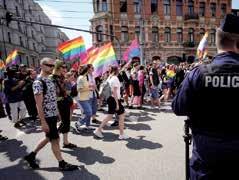
Poland: EU action possible Reuters reported on June 30 that the EU is considering legal action against Poland for its anti-LGBTQ policies, which include a law banning same-sex couples from adopting children, and certain towns and areas declaring themselves “LGBT-free” zones. The zones in particular, officials said, may violate certain EU treaties. If grounds for an infringement procedure are found, Poland could be challenged to eliminate the zones or face significant fines. A Polish spokesperson said in response that there are no laws in Poland that discriminate against LGBT people.
Photo courtesy of Precept Wine
Photo by Elijah Nouvelage / Reuters
Equality March in Lodz, Poland – Photo by Marcin Stepien, Agencja Gazeta via Reuters
Shimmering Miss Nevada makes history
by Lindsey Anderson SGN Contributing Writer
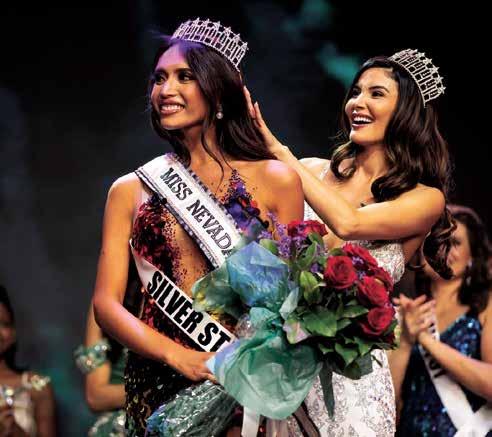
Kataluna Enriquez is a name you’ll want to remember. On June 27, 2021, she was crowned Miss Nevada, beating 21 other competitors for the coveted title.
Enriquez, a designer and visionary, is also Transgender. After winning Nevada’s preliminary pageant in March, she became the first Trans woman to compete for the title of Miss Nevada. With a shiny new crown on her head, Enriquez is now on her way to being the first Trans competitor in the Miss USA pageant, and if she were to win that as well, she would become just the second Trans woman to compete for the Miss Universe title.
Enriquez has faced a difficult journey to the top, dealing with discrimination, hatred, and bigotry while pursuing her dream. She began competing in pageants in 2015, but at the time she could not afford custom gowns that would fit her body. That was when she began creating her own looks. She eventually launched her own line, Kataluna Kouture, which has helped fund her competitions.
It was creating her own iconic looks that led Enriquez to design a sequined rainbow
gown to wear in the Miss Nevada pageant. The gown stunned judges and audience members alike, shimmering as the sequins caught the spotlight, launching it back out toward the audience. While judges look for many different things, it was surely that shimmer that caught their eye, one that represents Enriquez and all that she stands for.
With a humble heart, Enriquez has caught the spotlight and launched it back out to her fans and supporters. “My win is our win,” Enriquez posted on Instagram. “We just made history.”
At a time when conservative attacks on Trans women are mounting, it is refreshing to watch a Trans woman win so big. For Trans girls at home, Enriquez has become a beacon of hope, a symbol of what can be achieved.
“When I was young, I always wanted to see someone on the Miss USA stage — someone like me,” Enriquez told NPR, “and it just so happened to be that I was that person that I needed to make history.”
The spotlight will be on Enriquez as she competes for the title of Miss USA on November 29, but regardless of the outcome, being crowned Miss Nevada is a major step in celebrating Trans women.
NJ court upholds $3.5M fine for conversion therapy group
by Mike Andrew SGN Staff Writer
A New Jersey appeals court has ruled that a so-called “conversion therapy” group must pay a $3.5 million fine and cease operations.
The group in question, the Jewish Institute for Global Awareness (JIFGA), is merely a new name for Jews Offering New Alternatives for Healing (JONAH), an organization previously barred from operating in New Jersey.
In a July 7 ruling, the New Jersey Appellate Division said the record showed
that JIFGA is a “successor in interest to and continuation of” JONAH. The court’s decision also affirmed a $3.5 million award for attorney fees and costs.
The trial court found JIFGA and JONAH shared the same co-founders, co-directors, phone number, and email address; occupied the same office space; and continued JONAH’s practices of therapy referrals.
“Those findings are supported by the record,” the appeals panel wrote.
Since JONAH had previously been fined and barred from operating in the state, its new incarnation, JIFGA, must
cease operations and pay the $3.5 million fine, the court ruled.
The court also said that a crowdfunding campaign to raise money for Gay conversion therapy efforts violated previous court orders because it was “undisputed” that JIFGA retained some of the funds raised.
The court upheld a lower court ruling that organization leaders Arthur Goldberg and Elaine Berk violated an injunction order and settlement agreement by continuing to refer individuals to conversion therapy.
The appeals court pointed to “numerous email exchanges” in which Goldberg, and to a lesser extent Berk, communicated with
people seeking, and therapists providing, conversion therapy. Goldberg and Berk also followed up about referral fees, the decision said.
Addressing the $3.5 million fine, the court said the “short and complete answer” is that the defendants agreed to those damages in a prior settlement agreement with New Jersey courts.
Thomas Kessler, an attorney for the plaintiffs in the case, hailed the decision.
“Conversion therapy hurts vulnerable people, and we hope that today’s decisive victory sends a clear message that this harmful practice can and should be stopped,” Kessler said in an email.