
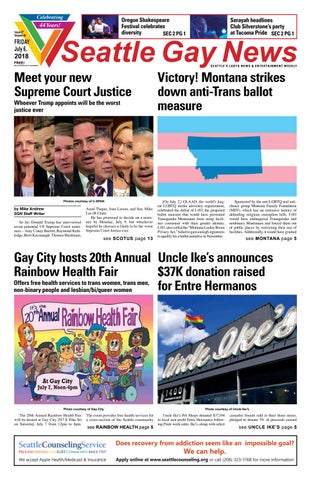
Whoever Trump appoints will be the worst justice ever







by Mike Andrew SGN Staff Writer
So far, Donald Trump has interviewed seven potential US Supreme Court nominees – Amy Coney Barrett, Raymond Kethledge, Brett Kavanaugh, Thomas Hardiman,
Amul Thapar, Joan Larsen, and Sen. Mike Lee (R-Utah).
He has promised to decide on a nominee by Monday, July 9, but whichever hopeful he chooses is likely to be the worst Supreme Court Justice ever.
see SCOTUS page 13
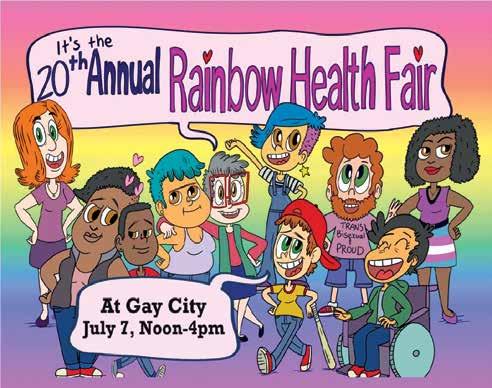
Offers free health services to trans women, trans men, non-binary people and lesbian/bi/queer women
[On July 2,] GLAAD, the world’s largest LGBTQ media advocacy organization, celebrated the defeat of I-183, the proposed ballot measure that would have prevented Transgender Montanans from using facilities consistent with their gender identity. I-183, also called the “Montana Locker Room Privacy Act,” failed to gain enough signatures to qualify for a ballot initiative in November.
Sponsored by the anti-LGBTQ and antichoice group Montana Family Foundation (MFF), which has an extensive history of defending religious exemption bills, I-183 would have endangered Transgender and nonbinary Montanans and forced them out of public places by restricting their use of facilities. Additionally, it would have granted see MONTANA page 5
for Entre Hermanos
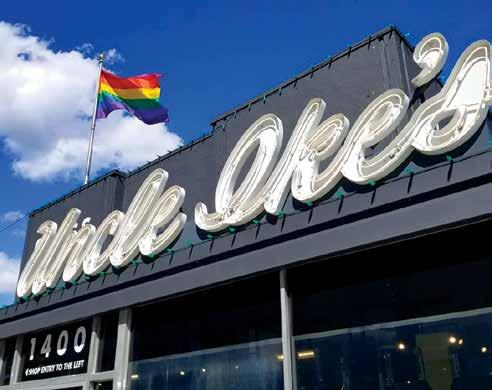
Uncle Ike’s Pot Shops donated $37,194 to local non-profit Entre Hermanos following Pride week sales. Ike’s, along
see UNCLE IKE’S page 5






by Mark Segal Philadelphia Gay News
As we go to press, I’m preparing to travel for my last of four speaking gigs this June, all for Pride month. There are various reasons why groups ask me to speak during Pride month. Some are familiar with my column or writings; others want me to speak about publishing in the LGBT community; still others, a point of LGBT history I’ve been personally involved with. But I’m sure that very few know that when they ask me to speak, especially during Pride month, I’m going to speak about organizing that very first Pride, since what most of them don’t know is I was a part of that, and a death this past week just before New York’s Gay Pride made me think a lot about what Pride stands for.

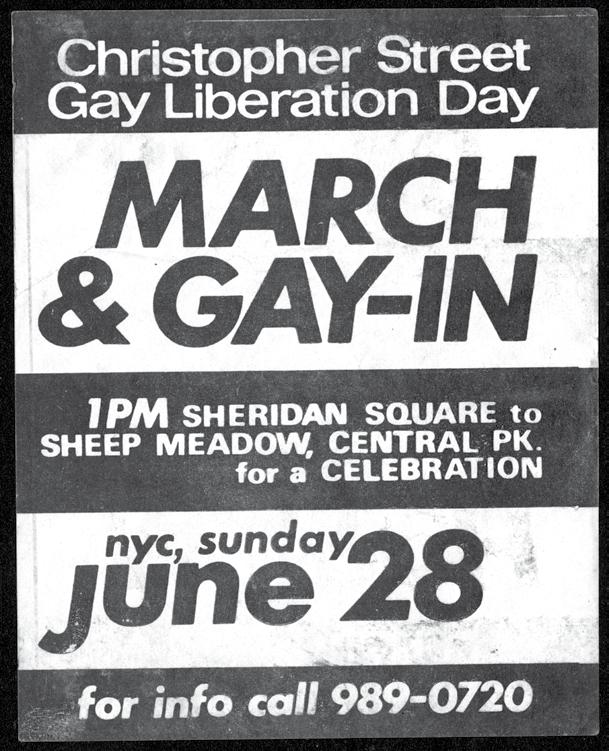
Many of us in New York’s Gay Liberation Front (GLF), which was born from the ashes of the Stonewall Riot in 1969, felt that something was needed to mark the first anniversary in June 1970. It was Craig Rodwell who founded the Christopher Street Gay Liberation Day Committee. Many of us in GLF joined Craig in what many people thought was an outrageous endeavor: Gay people marching out of the Village, all the way across town to Central Park and then having what we called a “Gay In” — a party. The earliest discussion was of who should be a part of the march. We all had opinions. Some only wanted people who had helped from that moment at Stonewall to create the community of that first year of the modern LGBT-equality movement. Other wanted to restrict churches, since they had been among the worst oppressors of our community. But in the end, we felt that it was the word PRIDE that held all of us together. So anyone who had pride in themselves and their community could march. That is the simplicity of Pride, and before we had Pride, we had
people like Dick Litsch, former president of the Mattachine Society in New York, one of the few OUT gay men in the U.S. in the late 1960s. He was a brave man, and to do that at that time took Pride.
Mark Segal, PGN publisher, is the nation’s most-award-winning commentator in LGBT media. You can follow him on Facebook at www.facebook.com/MarkSegalPGN or Twitter at https://twitter.com/PhilaGayNews.
continued from cover
with limited health and wellness resources: trans women, trans men, non-binary people and lesbian/bi/queer women.
This year’s fair will feature a new health service: gender-affirming hormones. Medi cal providers from Planned Parenthood will be available to prescribe treatments that help align people with their gender identity. Insurance or self-pay is required for this service, but financial assistance is available to people in need. To schedule an appointment for hormones visit gaycity.

org/RainbowHealth. The health fair will also have licensed mental health therapists on-site to write letters of support for those seeking gender-affirming health care, such
Some of the other free services available include massages, HIV testing, acupuncture, and cuddling sessions. Free mammograms will also be available to uninsured people that are 40+ years old with an appointment. To schedule a mammogram appointment, please call (425) 200-5841.
“We’re honored to continue the legacy of Rainbow Health Fair, a service that was started two decades ago by Seattle Lesbian Cancer Project,” says Fred Swanson, Exec-
continued from cover
June 18-24 to the local non-profit. Entre Hermanos, located in The Central District, promotes the health and well-being of the Latino LGBTQ community through disease prevention, education, support services, advocacy and community building.
Ian Eisenberg, Owner of Uncle Ike’s decided not to renew Ike’s spot in Seattle’s Annual Pride Parade. “We were spending all this money on entry fees and giveaways in the parade, which was a lot of fun, don’t get me wrong, but we felt our money would be better spent giving back to our community especially during the Trump era when immigration and health reform are so important.”
Ike’s 2017 Pride donation of $12,000 helped Entre Hermanos expand their legal services. “We started taking immigration cases in office for the first time in our organization’s history. This includes asylum, citizenship, DACA renewals, and spouse petition. Also, we have incorporated into
utive Director of Gay City. “As Gay City continues to grow in our role as Seattle’s LGBTQ Center, you can expect to see even more programs like this which address specific needs of underserved groups in LGBTQ communities. We’re excited to be a part of it.”
The Rainbow Health Fair is sponsored by Gay City, Amerigroup, Ingersoll Gender Center, Planned Parenthood, Swedish Hospital, Susan G. Komen: Puget Sound, and Women’s Health Outreach.
To learn more about the Rainbow Health Fair, please visit GayCity.org/ RainbowHealthFair.
our legal programs, family law clinics. This includes adoption.” Miguel Bravo, Fundraising Manager at Entre Hermanos said in an e-mail.
Participating cannabis brands included: 1937 Farms, Artizin, Avitas, Bacon’s Buds, Craft Elixirs, Fairwinds, Falcanna, Freddy’s Fuego, Gabriel, Goodship, Happy Apple, Heylo, House of Cultivar, Ionic, Leafwerx, Pearl, Phat Panda, Royal Tree, Seattle Green Bud, Smokey Point Productions, Solstice, Sweetwater Farms, Top Shelf WA, and Velvet Swing.
“We are always excited to collaborate with Uncle Ike’s and support the community,” Alex Kwon of Leafwerx said. Johnny Wilson, VP of Sales for Phat Panda, followed up by saying, “We value the diversity of the community; this world would be boring if everyone was the same! We are happy to have this opportunity to give back. Thank you for your continued support of our brands.”
resources, fostering arts, and building community.
Courtesy of Gay City Health Project
by Mike Andrew SGN Staff Writer
Almost half of LGBT employees are in the closet at work, according to a new study by the Human Rights Campaign (HRC). The research found that 46% of LGBT employees in the US hide their sexuality in their workplaces.
This represented a mere 4% drop from the HRC’s 2008 Degrees of Equality report, which was created before Barack Obama’s presidency, before same-sex marriage was legalized across the US, and before Transgender rights became a prominent issue in the civil rights struggle.
A similar survey by the British LGBT rights organization Stonewall revealed that
continued from cover
people the right to sue the government if they encountered a transgender or nonbinary person in a facility that did not match the gender on their birth certificate.
In response, a number of local advocacy groups formed the coalition Free & Fair Montana in order to protect the human rights of Trans and nonbinary Montanans and oppose this discriminatory measure. Among
35% of LGBT people in the UK remain in the closet at work.
One of the reasons may be bullying or fear of bullying at work. A study published last year by CareerBuilder showed that four out of 10 LGBT workers feel bullied at work. Of those surveyed, 15% said they had called in sick after being bullied.
Research released earlier this month found that only 55% of adult Americans feel OK about working with LGBT people.
According to the just-released HRC survey, 53% of American LGBT workers have heard jokes about Lesbian or Gay people at least once while at work.
One in five LGBT employees reported to the HRC that they had been told or had colleagues imply that they should dress in
those involved in this coalition was the ACLU of Montana, which in October 2017 filed a petition arguing that the language used in the ballot and fiscal impact statements for the initiative did not make clear its discriminatory effect. They also noted that, if enacted, it would cost the government a considerable amount of time and money to enforce these new laws. The Montana Supreme Court ruled in the ACLU’s favor, and both statements were revised.
As a result of efforts by local advocates, the MFF received less than 10,000
manner more standard for their gender.
Not surprisingly, nearly one in three LGBT people said they felt unhappy or depressed at work.
When asked directly by researchers why they choose to remain closeted at work, one in four respondents said they didn’t want to be stereotyped, while more than one in three said they were worried about making co-workers feel uncomfortable.
More than one in four LGBT employees reported they were worried losing connections or relationships with colleagues, or about co-workers thinking that they might be attracted to them because they are LGBT.
Deena Fidas, director of the HRC’s Workplace Equality Program, said that the accepting, inclusive face that many compa-
of the nearly 25,000 signatures required to qualify for a ballot initiative, showing that support for Trans rights in Montana greatly outnumbers the opposition.
“Local advocacy groups in Montana today set a powerful example for the rest of the country by refusing to let this harmful anti-trans initiative reach the ballot in November,” said Sarah Kate Ellis, president and CEO of GLAAD. “While safety in public facilities is important to all of us, assault and harassment are already illegal, and laws that specifically bar restroom
nies show in their public relations materials is not necessarily reflected in how their employees actually feel.
“While LGBTQ-inclusive corporate policies are becoming the norm, LGBTQ workers too often face a climate of bias in their workplace,” she said in a statement.
“LGBTQ employees are still avoiding making personal and professional connections at work because they fear coming out – and that hurts not only that employee but the company as a whole.
“Even the best-of-the-best private sector employers with top-rated policies and practices must do more to nurture a climate of inclusion for all.”
access for transgender people only increase the abuse and mistreatment that many trans people already face.”
The battle for Trans rights continues in Massachusetts, where Freedom for All Massachusetts is working to fight a November 2018 ballot initiative that would repeal basic protections for Trans people after the state extended nondiscrimination protections to Transgender people in July 2016.





There can be no excusing, driving after cannabis using.
Cannabis affects





It’s illegal to use cannabis while riding as a passenger. Keep cannabis in original, unopened cannabis out of reach—like in the trunk.


It’s a crime, a bad decision, you could cause harm or a collision.

increase
Mixing alcohol and cannabis can increase the risk of crashes.


105 deadly crashes in 2016 involved a driver who tested positive for cannabis. An increase from 91 fatal crashes in Washington state during the previous year.

When it comes to cannabis, safety is essential. Driving under the in uence is illegal—and it’s also dangerous. Cannabis can impair judgment, alertness, and reaction time. And driving while under the in uence could lead to harmful—possibly deadly—collisions. Which could mean signi cant legal penalties for you. By choosing a safer ride, you can keep yourself—and others on the road—out of harm’s way.
For more on safe driving, visit KnowThisAboutCannabis.org
* Source information for statements can be found at KnowThisAboutCannabis.org/Sources

As L.A.’s homeless catastrophe festers, City Hall fast-tracks Parker Center demolition to block housing initiative; HHF and AHF seeks voter input on decision
The Los Angeles City Council’s vote to expedite the demolition of former L.A.P.D. headquarters after the building sat empty since 2009 and replace it with an expected $900 million office tower for city workers shows an “edifice complex” and just how out of touch the Mayor, City Council and L.A. bureaucrats are with the landscape and reality of life in today’s Los Angeles.
As 31,000 homeless remain on L.A streets and the City offers few concrete, innovative or workable solutions – meeting with vocal neighborhood resistance to shelter plans citywide – City officials willfully ignore housing advocates’ proposal – and their pending ballot initiative – to let voters decide on repurposing Parker Center as affordable and homeless housing.
LOS ANGELES, Calif. – The Healthy Housing Foundation Powered by AHF, which launched in Los Angeles in October 2017 to address and help house the homeless and has now housed over 400 formerly homeless and at-risk individuals in three former hotels and
motels in L.A., today sharply criticized Los Angeles City Council for their vote earlier today [July 3, 2018] to fast-track demolition of Parker Center, the former L.A.P.D. headquarters and replace it with an expected $900 million luxury office tower for city workers. The Health Housing Foundation and AHF both question the motives and speed with which city officials are moving to destroy the building – and its potential as affordable and homeless housing – since the building has been sitting vacant since 2009, and during the time which the number of homeless and unsheltered individuals in the City of Los Angeles exploded to more than 31,000.
“The City Council’s action to speed the destruction of Parker Center is an insult to good governance and to the homeless population. The luxury city office building, which will wind up costing a billion dollars, is the last thing we need during the current homeless catastrophe. The Healthy Housing Foundation is currently in the process of developing a plan to preserve the building, rename it for Tom Bradley, and house 730 people at less
than one-quarter of the price – and, we have already submitted a ballot initiative to make this happen,” said Michael Weinstein, President of AHF. “Obviously, the council is rushing to destroy the building ASAP because they don’t want a housing for the homeless in their backyard. Their ‘edifice complex’ demands a luxury city government office tower as a monument to their own arrogance.”
Earlier in 2018, HHF opened the doors to a 27-room temporary housing facility re-christened the Sunrise on Sunset (SOS, the former Sunset 8 Motel), the renovated 220-room Madison Hotel on Skid Row, and the historic 150-room King Edward Hotel in the Los Angeles community.
AIDS Healthcare Foundation (AHF), which began as the AIDS Hospice Foundation, has a long history of providing and advocating for secure and affordable housing for the chronically ill. From its start providing AIDS hospice in the 1980s as a place for people to die with dignity to its recent creation of the Healthy Housing Foundation, which in six months has housed nearly 400
previously homeless individuals – more than any housed by the L.A. City-sponsored 2016 Ballot Measure HHH, which will not house its first residents until the end of 2019 at the earliest – AHF has been working to address the housing needs of the chronically ill for more than 30 years.
AIDS Healthcare Foundation (AHF), the largest global AIDS organization, currently provides medical care and/or services to over 924,000 individuals in 41 countries worldwide in the US, Africa, Latin America/ Caribbean, the Asia/Pacific Region and Eastern Europe. To learn more about AHF, please visit our website: www.aidshealth. org, find us on Facebook: www.facebook. com/aidshealth and follow us on Twitter: @aidshealthcare and Instagram: @ aidshealthcare
Courtesy of AHF
After two years of open Transgender service, the consensus from the military leadership is that inclusive policy works
SAN FRANCISCO – June 30th marks two years since the US military officially began allowing transgender individuals to serve openly in its ranks. Those service members have compiled a record of distinction and earned consistent support from the highest ranks of the nation’s military leadership.
“While the culture wars are fought out on Donald Trump’s Twitter account, transgender service members have compiled a two-year record of achievement serving America on the front lines. They are proving every day what military leaders and medical professionals told us: that inclusive service strengthens the US military and makes our country safer,” said Aaron Belkin, director of the Palm Center.
The consensus in support of open service puts virtually the entire military chain of command at odds with the political leadership of the armed forces, as President Donald Trump and his Defense Secretary, James Mattis, have called for reinstituting a ban on transgender service members. Federal judges have repeatedly blocked the ban from going into effect as the issue works its way through the courts.
Patriotic transgender men and women have been serving openly with honor and distinction. Examples include the following:
• Air Force Staff Sergeant Ashleigh Buch, whose commander, Lt. Col. David “Bo” Rice, said of her: “She means the world to this unit. She makes us better. And we would have done that [supported gender transition] for any airman, but it made it really easy for one of your best.”
• Air Force Staff Sergeant Brandon Rodriguez, who has deployed three times in his 11 years of service and currently works in ground transportation at Kirtland Air Force Base. Rodriguez said his commander has been “nothing but supportive.” His commander, Col. Richard Gibbs, said, “How we choose to define ourselves doesn’t really matter to me. It’s all about the people who choose to support and defend the Constitution of the United States. The rest of it is just treating each other well.”
• Air Force Staff Sergeant Logan Ireland, who was awarded the Military Outstanding Volunteer Service Medal, was named
Non-Commissioned Officer of the Quarter and is a Combat Leader Course graduate. Ireland deployed to Qatar and to Afghanistan to conduct counterintelligence missions in support of Operation Enduring Freedom.
• Marine Lance Corporal Aaron Wixson, whose commanding officer, Col. Walker Field, said that Wixson’s decision to forgo an athletic scholarship and enlist showed his “exceptional character and patriotism,” adding that: “We are lucky to have such talent in our ranks and will benefit from his retention … Enabling LCpl Wixson to openly serve as a transgender Marine necessarily increases readiness and broadens the overall talent of the organization.”
• Navy Corpsman Petty Officer 3rd Class Akira Wyatt, a Filipino-American who immigrated to the US as a child and later enlisted in the Navy. Wyatt was assigned to the 1st Marine Division at Camp Pendleton, deploying to Okinawa, Japan, as part of the 31st Marine Expeditionary Deployment, where she provided medical education, training, and support to sailors and marines.
• Army Captain Jennifer Peace, who deployed to Iraq and to Afghanistan as a military intelligence officer with the 4th Infantry Division. She was named the Distinguished Honor Graduate of the Intelligence Career Course and became the primary staff intelligence officer in her infantry battalion during the “Pathway to the Pacific” mission to Asia, where she was rated #1 out of 11 intelligence officers.
Top military and medical leaders have issued clear support for open service, finding that inclusive policy has been a success and is not harming unit cohesion or readiness. These voices include the following:
• Marine Corps Gen. Joseph F. Dunford Jr., Chairman of the Joint Chiefs of Staff, who told the Senate Armed Services Committee, “I believe any individual who meets the physical and mental standards, and is worldwide deployable and is currently serving, should be afforded the opportunity to continue to serve.” Gen. Dunford said that he had consistently advised the president and the military that service members should not be removed on the basis of their gender identity. Gen. Dunford’s two immediate predecessors have also endorsed inclusive policy. Admiral Mike
Mullen advised the Congress to “respect the military’s judgment and not to breach the faith of service members who defend our freedoms” by discharging them after they had been told they could openly serve. General Martin Dempsey said of transgender troops that “the service of men and women who volunteer and who meet our standards of service is a blessing, not a burden.”
• All five military chiefs of staff, with Army Chief of Staff General Mark Milley saying in April 2018: “I have received precisely zero reports of issues of cohesion, discipline, morale and all those sorts of things.”
• The military’s highest ranking enlisted personnel, who have expressed support for inclusive service. The Navy’s top enlisted sailor, Master Chief Petty Officer Steven Giordano, said of transgender sailors, “We are honored and blessed to have you on our team, and you will continue to have my support.”
His Army counterpart, Sergeant Major of the Army Daniel Dailey, reiterated the supportive conclusion of his boss, Gen. Mark Milley, that inclusive service caused no problems saying, “I agree with the chief. We haven’t heard any issues or concerns, and I personally have not had any issues or concerns.”
And the Air Force’s top enlisted leader, Chief Master Sergeant Kaleth Wright, answered a question about transgender service members by vowing to treat them equally, saying, “We take care of them just like any other airmen.”
• Fifty-six retired generals and admirals, who last year affirmed their support for transgender service, stating that a ban would cause “significant disruptions” to readiness, “deprive the military of mission-critical talent” and “compromise the integrity of transgender troops who would be forced to live a lie, as well as non-transgender peers who would be forced to choose between reporting their comrades or disobeying policy.”
• A group of three retired military surgeons general and three Palm Center scholars, who issued a report in April thoroughly debunking the Pentagon’s rationale for banning transgender military service. The panel found that the Pentagon had made “a series of erroneous assertions and mischaracterizations about the scientific research” on the health and fitness of transgender people. The report
found the military had “no evidence” that allowing transgender service has compromised unit cohesion, and that the Pentagon’s case for reinstating the transgender ban “is contradicted by ample evidence clearly demonstrating that transition-related care is effective, that transgender personnel diagnosed with gender dysphoria are deployable and medically fit, that inclusive policy has not compromised cohesion and instead promotes readiness, and that the financial costs of inclusion are not high.”
• Six former US surgeons general, who signed a statement disputing Pentagon claims about the medical fitness of transgender troops and issuing their support for open transgender service. The group stated that, in their judgment, the Pentagon’s report on transgender military service “mischaracterized the robust body of peer-reviewed research on the effectiveness of transgender medical care” and that there is actually “a global medical consensus that such care is reliable, safe, and effective” and that “transgender troops are as medically fit as their nontransgender peers.”
• The American Medical Association, the nation’s largest group of physicians and medical students, which stated in April that “there is no medically valid reason to exclude transgender individuals from military service” and that the Trump administration had “mischaracterized and rejected the wide body of peerreviewed research on the effectiveness of transgender medical care” in an effort to rationalize a ban on transgender troops. The rationale for the transgender ban has now been repudiated by the American Medical Association, American Psychological Association, and the American Psychiatric Association.
The Palm Center is an independent research institute committed to sponsoring state-of-the-art scholarship to enhance the quality of public dialogue about critical and controversial issues of the day. Our research has been published in leading social science journals and extensively consulted and cited by US military leaders. The Palm Center seeks to be a resource for scholars, policymakers, journalists, opinion leaders, students, and the public at large. For more information, visit www.palmcenter.org.


continued from cover
Amy Coney Barrett
The supposed frontrunner at this point, Amy Coney Barrett, has only a slim judicial record, having served on the 7th Circuit Court of Appeals only since November 2 last year. She is mainly known – and loved by the right wing – for her membership in a sketchy, cult-like Christian charismatic group called People of Praise (POP).
Although Barrett is a Roman Catholic, People of Praise is not one of the Catholic Charismatic Revival groups that have received qualified support from several popes. Barrett’s group is a nondenominational organization heavily influenced by Pentecostal beliefs, like faith healing and speaking in tongues.
And although Barrett believes in traditional Catholic teachings about human sexuality – it’s a sin unless you were married in church to a spouse of the opposite sex and you intend to reproduce – People of Praise has little in common with Traditionalist Catholicism. Unlike Barrett’s group, Catholic Traditionalism emphasizes ritual – the Latin Mass, fancy vestments, gold crosses, an ornate altar instead of a simple Communion Table, the priest standing with his back to the congregation instead of facing them.
Barrett’s group is a so-called “covenant community,” meaning that recruits are urged to sign what they believe to be a divine contract swearing to stay with the group eternally. The objective, one former member said in a blog post, is to build 200 “cities of God” populated by members of their movement.
“I was a member of what the group calls the campus division – a section of the POP that is composed of mostly, but not exclusively, college students,” the former member said.
“The campus division carries out evangelism and the city-building work of the POP. That’s right, city-building. [People of Praise] believes the Lord Jesus Christ has called the community to build 200 cities and recruit 200,000 members in the next 40 years.”
Another former People of Praise member, Notre Dame philosophy professor Adrian J. Reimers, said that the social structures promoted by the group are deeply discriminatory against women.
He explained that the group assigns “a personal head to each member, except married women, who are pastored or ‘headed’ by their husbands…As ‘head’ of his wife, the husband is regarded as her pastor.”
This, Reimers says, “subverts the basic equality that exists between husband and wife.” He noted that the husband has to answer to his own “head” and what people tell the head is not confidential.
“These pastoral systems are not harmless,” he concluded. “Growing evidence, along with a proper understanding of their dynamics, suggests that these systems cripple community members psychologically, reducing them to fear and bondage rather than liberating them for the authentic freedom of sons and daughters of God.”
Other views held by Barrett’s group are uncompromising rejection of both abortion and contraceptives and, of course, of marriage equality and legal protections for LGBT folks.
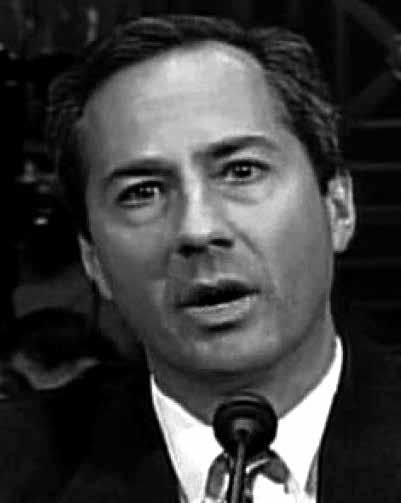
Raymond Kethledge
Unlike Barrett, Raymond Kethledge does have an extensive judicial record –all of it bad – as a Justice of the 6th Circuit Court.
In 2012, Kethledge wrote the majority opinion in Sierra Club v. Korleski, finding that private individuals may not sue states for failing to perform their regulatory duties established by the federal Clean Air Act, is spite of the fact that the Environmental Protection Agency said individuals had that right.
In Bailey v. Callaghan, Kethledge, again writing the majority opinion for the 6th Circuit, said that teachers unions may not use a dues check-off system to deduct union dues from members’ pay checks automatically.
In 2013, in John B. v. Emkes, an opinion written by Kethledge, made it more difficult for courts to oversee state Medicaid programs to ensure that they comply with federal laws.
In EEOC v. Kaplan Higher Education Corp (2014), Kethledge again wrote the majority opinion for the 6th Circuit, overturning an EEOC ruling that an employer’s policy of running credit checks on job applicants unfairly excluded AfricanAmerican applicants.
Brett Kavanaugh
Brett Kavanaugh also has a substantial judicial record, although he is noted more for his law review articles and his dissents than his majority opinions.
In 2009, Kavanaugh wrote an article for the Minnesota Law Review arguing that US presidents should be exempt from “timeconsuming and distracting” lawsuits and investigations, which “would ill serve the public interest, especially in times of financial or national security crisis.” This view is notable in light of Donald Trump’s legal problems.
Kavanaugh wrote a dissent in Sissel v. US Department of Health and Human Services (2014), a serious legal challenge to the Affordable Care Act (ACA, or Obamacare). Although a three-judge panel found that the ACA is constitutional, Kavanaugh wanted the entire DC Circuit Court to rehear the case.
In EPA v. EME Homer City Generation, L.P. (2014), however, Kavanaugh was against a rehearing by the whole circuit court that would have led to the court affirming Clean Air Act environmental protections.
In the one case in which Kavanaugh wrote an important majority opinion, he ruled that Osama bin Laden’s press agent, Ali al-Bahlul, could be held for war crimes even though the particular acts he was charged with are not defined as war crimes in either US or international law.
Thomas Hardiman
Thomas Hardiman is perhaps best known for having been a Supreme Court “finalist” before – last year, in fact, when he was being considered for the seat vacated by Antonin Scalia. That nomination eventually went to Neil Gorsuch.
As a justice of the 3rd Circuit Court of Appeals, Hardiman established a record of uniform hostility to the rights of prisoners.
In United States v. Fisher (2007), Hardiman ruled that a judge could use a “preponderance of the evidence” standard – instead of “beyond reasonable doubt” – when extending a prison sentence. In United States v. Abbott (2009), Hardiman held that judges may impose as many “mandatory minimum” sentences as they wished, so that a prisoner’s time in custody could be extended almost without limits.
In Florence v. Board of Chosen Freeholders (2010), Hardiman ruled that
universal prison strip searches were not “unreasonable” and therefore not in violation of the Fourth Amendment.
In Barkes v. First Correctional Medical, Inc. (2014), Hardiman dissented from a ruling that state prison officials could be sued for failing to provide adequate suicide prevention protocols after a mentally ill inmate committed suicide.
Amul Thapar
Amul Thapar is notable for one case he presided over as a federal district court judge.
In 2013, he heard charges against three elderly pacifists – including an 84-year-old nun – arising from a protest at an enriched uranium facility. In this case, Thapar charged the defendants with the federal crime of terrorism to keep them in jail until their sentencing. He then sentenced the nun to 35 months in federal prison, and the two others to more than five years each.
On appeal, the 6th Circuit reversed the most serious convictions against the protesters and, in May 2015, ordered their immediate release from custody, noting that the protesters’ sentencing guidelines now recommended substantially less time in custody than they had already served.
Joan Larsen
Larsen has no real record as a judge, having taken her seat on the 6th Circuit Court in November last year. Her nomination to that seat is notable because it was held up for months by the two Democratic senators from her home state of Michigan, Debbie Stabenow and Gary Peters. Larsen’s Senate confirmation did go forward after she met with the two senators to assure them that she was qualified for the post.
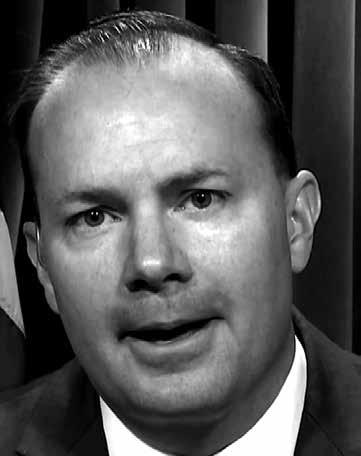
Mike Lee
Lee is no longer considered a serious contender for the Supreme Court nomination, in part because Trump’s advisors are said to be worried that if he left the Senate, Republicans might not be able to hold his seat. That’s just as well, because Lee is the prime sponsor of the so-called First Amendment Defense Act, a measure that would allow businesses to refuse service to LGBT customers based on a “sincerely held religious belief or moral conviction.”
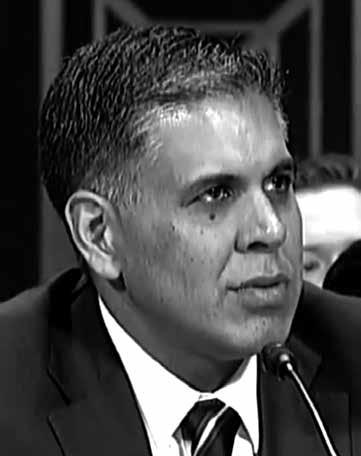
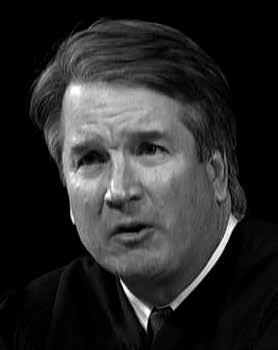
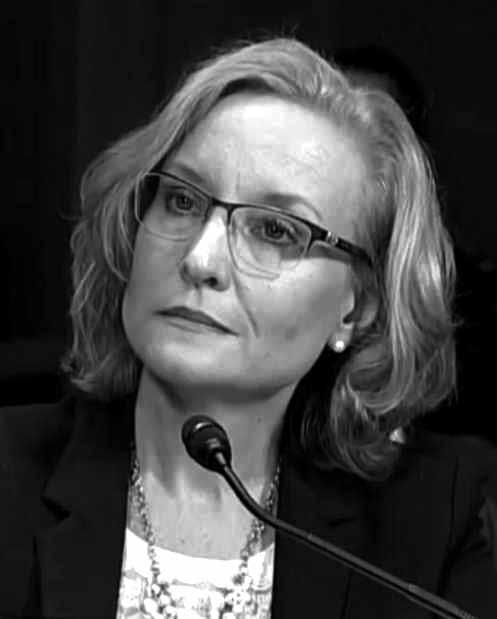
Photos courtesy of C-SPAN