Capitol Hill Block Party marks 25 years with Queer artists Rebecca Black, MUNA
by Kylin Brown SGN Contributing Writer
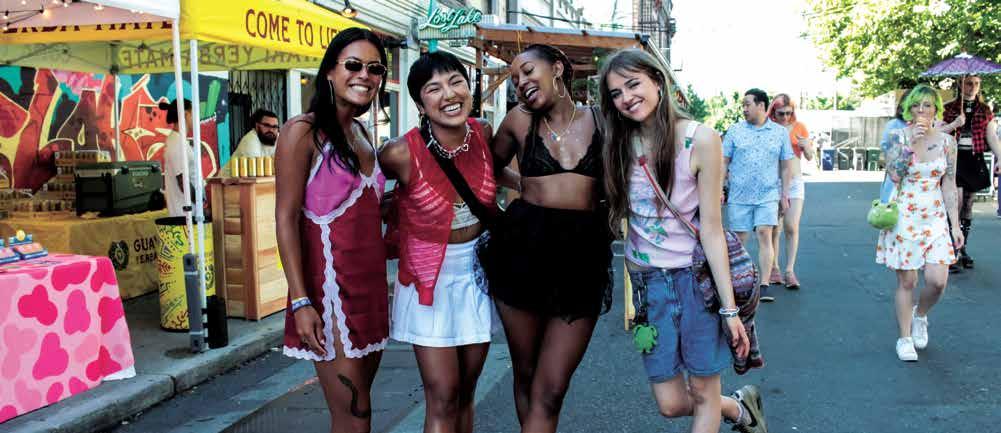
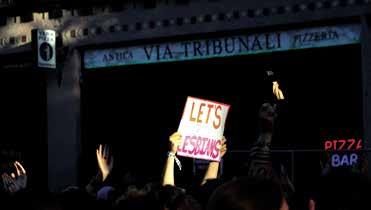
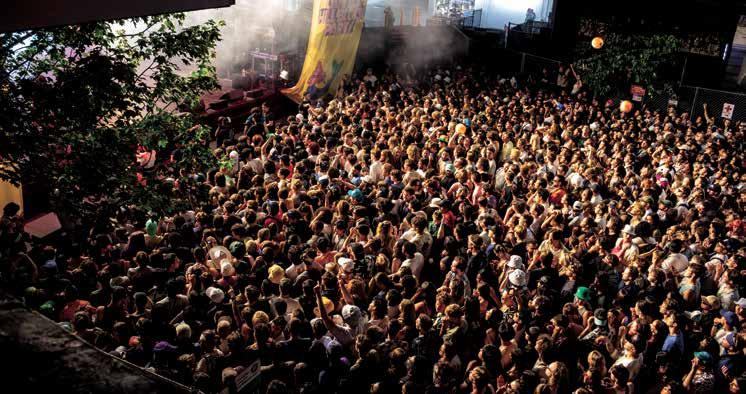
This year marked 25 years for the music festival Capitol Hill Block Party in the Pike-Pine area, and despite several sports events, the Bite of Seattle, and Taylor Swift’s “Eras Tour” all coinciding last weekend, the festival proved its continuing success by packing Pike Street with dancing people all three nights.
The event proved its place in the neighborhood and Seattle music scene by booking several well-known yet niche headliners, like Sofi Tukker, Denzel Curry, and Louis the Child, as well as emerging local talent such as Sea Lemon and The Kerrys, and providing a diverse array of food, drink, and wellness vendors to satisfy ticket-holders and fence-jumpers alike.
see CHBP page 11
by Teddy MacQuarrie SGN Staff Writer
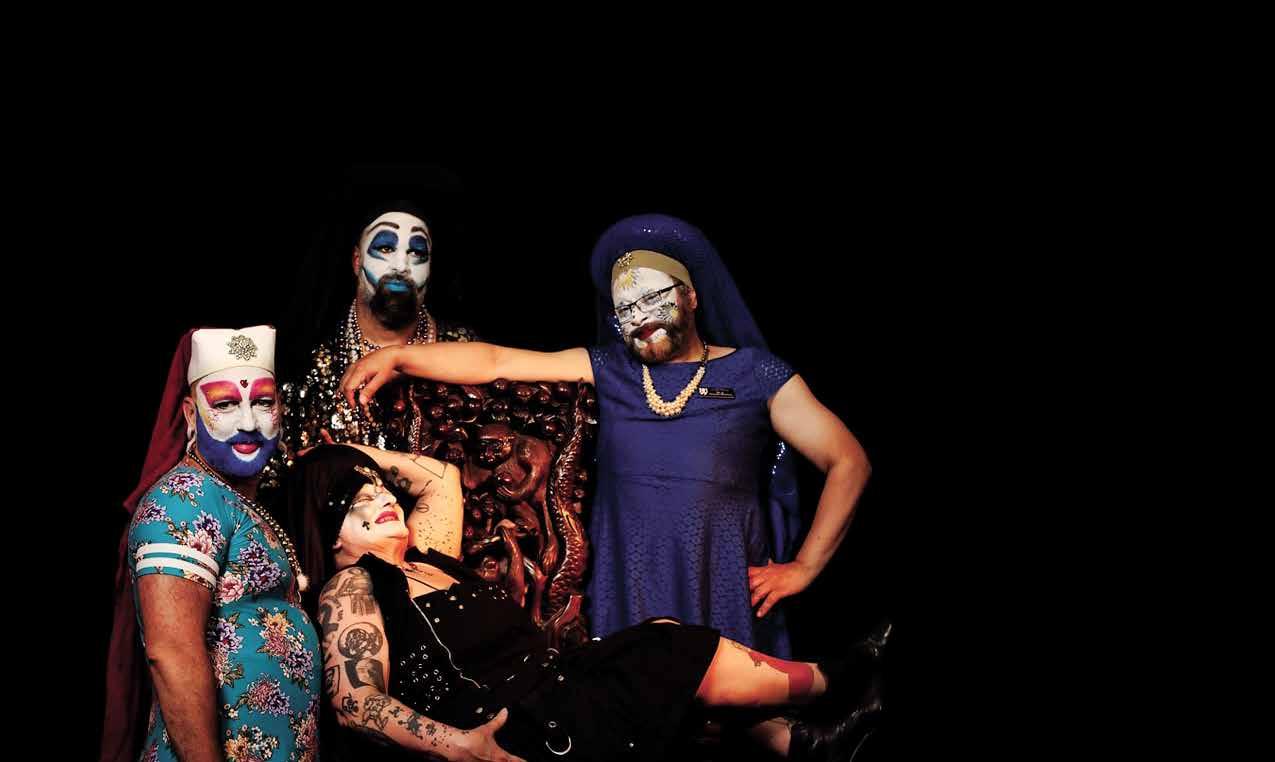
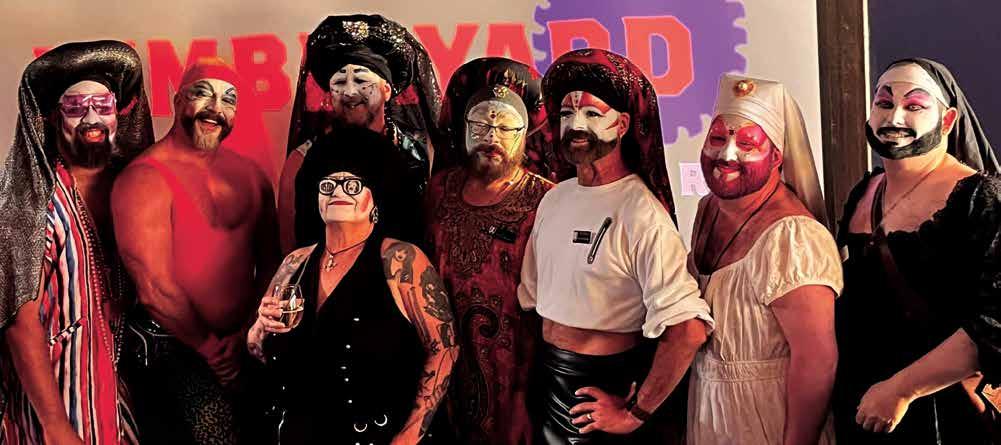
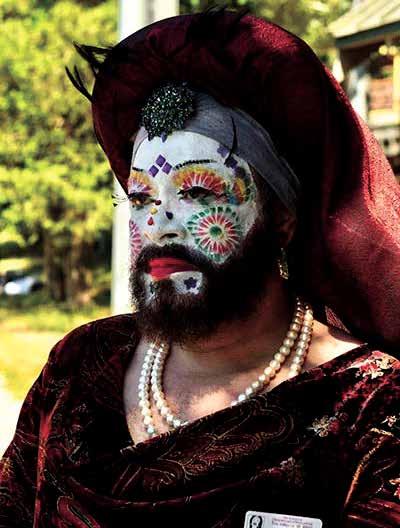
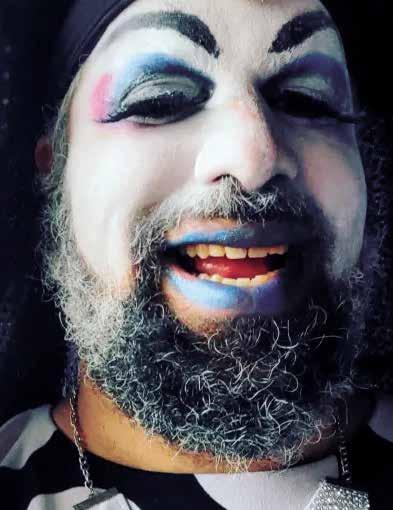
It’s hard to miss them. Bedecked in colorful nun drag and with faces painted in white, the Sisters of Perpetual Indulgence tend to make their presence known. Whether they’re out and about ministering to bar goers, running a fundraiser for Queer nonprofits, staffing the coat check, doing volunteer work, or offering blessings at Queer events and venues, the nuns are a conspicuous organization defined by their mission to “promulgate universal joy” and “expiate stigmatic guilt” (that is, guilt that is externally imposed).
Arlington Pride stands tall despite protesting neighbors see SISTERS page 7
by Cameron Martinez SGN Intern
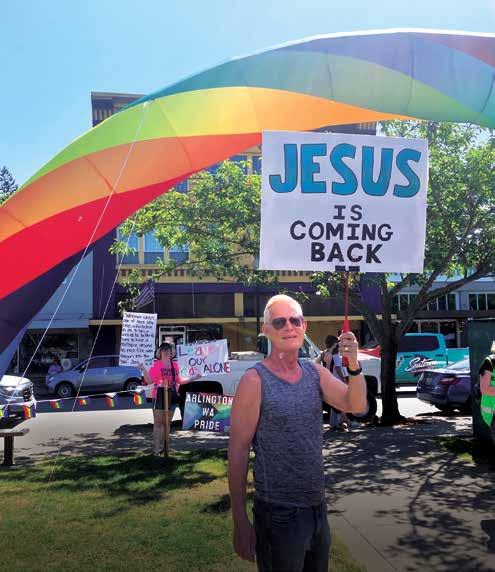
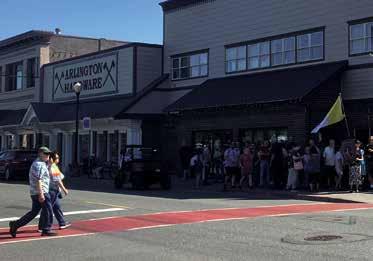
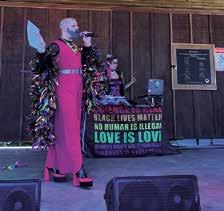
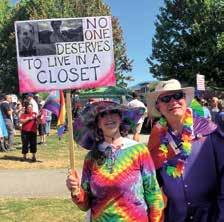
On Saturday, July 22, Arlington held its second annual Pride festival, “Camp Pride,” to the dismay of several citizens. The event, which took place at Legion Memorial Park in downtown Arlington, was designed to help the Queer youth of the city express themselves in ways they are not normally able to, but they were
still met by approximately 60 protestors. Camp Pride was the target of misinformation for a few months, but it really ramped up when in early July flyers were seen around the Gleneagle neighborhood indicating that drag queens groom children. This, of course, led to outrage among conservative Christians on social media.
see ARLINGTON page 10
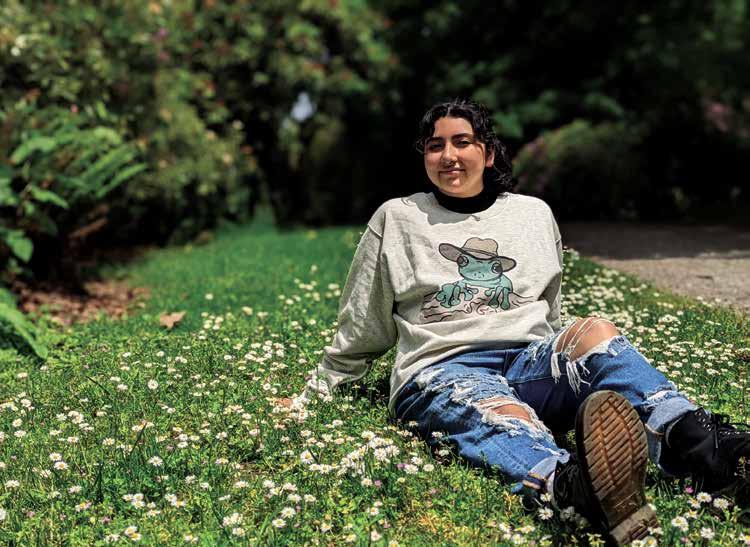
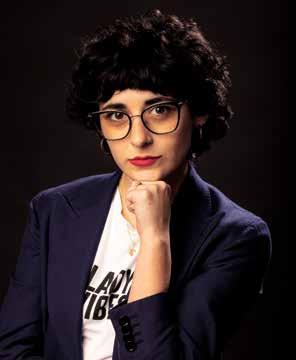
Photo courtesy of Kylin Brown
Photo by Cameron Martinez
Photo by Malixe
Local News
New organization Asian Trans Sisters building connections
by Kali Herbst Minino SGN Intern
By tabling at a variety of community events, a new group focused on creating a space for Asian Transfem people has been putting its small but dedicated energy into finding others to network with. Asian Trans Sisters has a long-term vision to share resources, provide mutual aid, participate in advocacy, and build community. This year, its goal is to build a foundation and make itself visible.
The six-person crew started tabling at events two months ago, including the Gender Justice League’s Trans Pride, Pride Asia, and the Wing Luke Museum’s Jam Fest. Jill Kong, a primary organizer, says the next couple of months will focus on envisioning what members want the organization to look like and how to make it grow. The first peer group meeting will take place August 29.
“It’s really small right now, and I think there’s a lot of intentionality in finding community… We historically haven’t had that much visibility,” Kong said. “We may be small, but I think that’s the point of it, to go from that invisibility to have more representation, to really have a space where we can grow.”
Kong’s preference is to co-imagine the next year alongside other members. She would like to form alliances with national groups and provide resources that aren’t primarily in English.
“I think that for pan-Asian folks, we have a shared diaspora identity, but there’s also a desire to connect that identity with the culture that we were rooted in, the cultures that we came from,” Kong said. “I think it will be really powerful to have resources, to
see how things can be talked about in your own language, not just in English.”
The idea for Asian Trans Sisters was
A night at The Lumber Yard
by Nemesis Special to the SGN
The Lumber Yard, an LGBTQIA+ bar and event space located in Seattle’s White Center, is thriving and stronger than ever.
Having originally opened in January of 2018, it was the target of arson and closed July 5, 2021. Since the incident, the Lumber Yard has reopened in a new space right across the street and is a beacon of hope, inclusion, and community in White Center for many Queer people.
Staffed by wonderful people of all gender expressions, sexual orientations, and backgrounds, the Lumber Yard has an industrial vibe while still staying true to its roots.
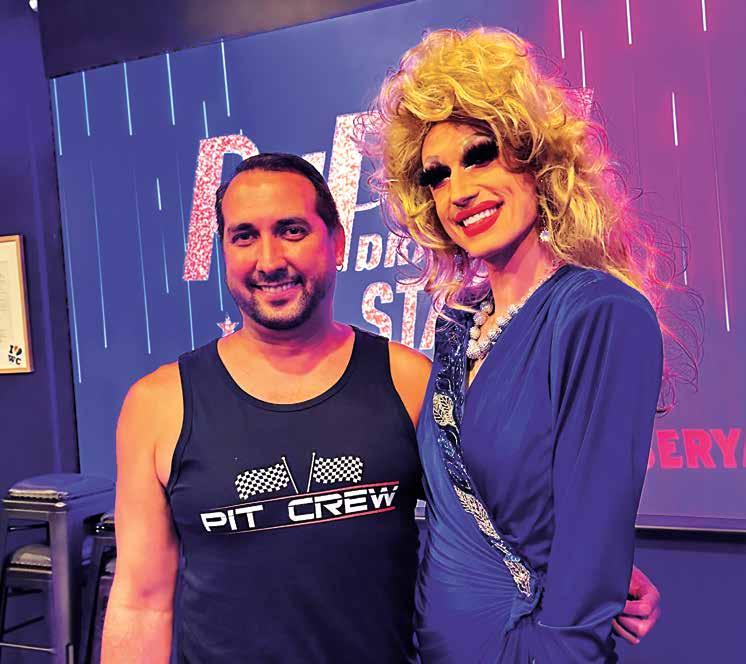
Last Friday evening’s festivities began with a viewing party for the finale of RuPaul’s Drag Race All Stars season 8, hosted by the stunning diva and Seattle drag staple Cookie Couture, wearing one of her signature blonde wigs in a gorgeous blue gown, along with the extremely talented DJ Redline. Patrons celebrated the win of Canada’s very own Jimbo as the newest addition to the hall of champions. Cookie Couture’s hot takes on this season made the viewing experience all the more enjoyable.
Afterward, DJ Redline kicked off the monthly underwear night. This event, with no cover charge, is a safe and accepting place for everyone to show off and appreciate their forms. Patrons celebrated body positivity and inclusivity, dancing the night away to stellar tracks. The event also featured a free clothing check and sexy go-go dancers. Three-dollar Sinfire shots helped raise money for Lambda Legal.
In an increasingly hostile political climate for the LGBTQIA+ community, it is vital more now than ever to provide safe spaces for Queer people to be their authentic selves, free from judgment and hostility. Lumber Yard more than delivers.
and describes the experience as isolating. She wasn’t able to find any communities that were intersectionally Asian, POC, and Trans, particularly Transfem. In recent years, she’s realized she would have liked to see that kind of group.
“I wanted to create something that I know that I would have wanted 10 years ago,” Kong said. “A small group of people who can [form] a specific, pure, intersectional peer group — it could be a really important space to find commonality and share things that might not resonate outside of those spaces.”
She has the perfect background to create that kind of space. At her day job, Kong works as a healthy communities organizer at Global to Local, an organization based in South King County that serves immigrant communities, particularly around food justice. The search for partners for Asian Trans Sisters has been informed by her job, and she places value in networking.
“I’m really grateful that a lot of the bigger organizations I’ve talked to have been really kind,” Kong said.
Networking and finding financial contributors, especially donors who want to help at a grassroots level, is the main type of support she says Asian Trans Sisters needs from the community. Finding people who have built small organizations like hers that she can learn from is also a priority of hers.
“The goal is to be able to seek fiscal sponsorship to support some of the programming activities we’re looking to do and expand to later down the line,” Kong said.
recent. After moving to the United States for college from China 10 years ago, Kong started her transitioning journey,
Asian Trans Sisters is still working on some form of digital visibility, whether that be a website or social media. Kong says the best way to get involved at the moment is by contacting her directly at jillkong1993@ gmail.com.
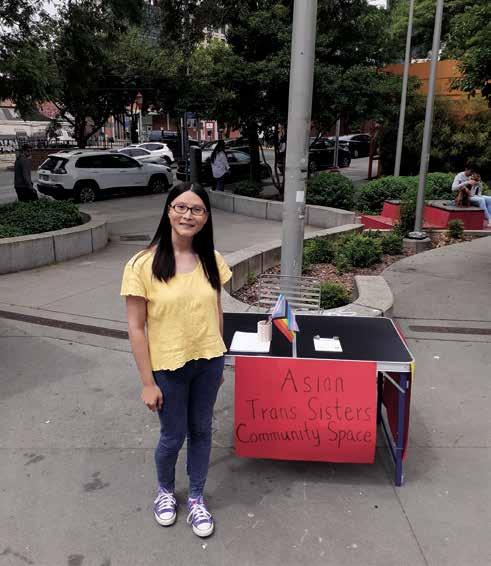
Jill Kong tabling at Pride Asia – Courtesy photo
Coutesy photo
Local News
SISTERS
For the a few years, however, the Sisters were missed. Its activities curtailed by the COVID-19 pandemic and its impact on Queer social life, Seattle’s Abbey of St. Joan experienced a number of challenges in living out its mission, and it faced issues related to recruitment, purpose, and activity.
The Sisters regularly engage in a tradition called bar ministry, in which a group of nuns in full painted faces and habits patronize bars in order to meet and talk with people, the goal being to bring joy to the Queer spaces around Seattle. The gregarious and riotous groups elicit a number of responses to their presence. But to see the nuns out and about generally evokes a sense of joy, safety, and radical affirmation. They help create the space for people to be their Queer selves.
But as the Abbey’s prioress, Sister Christiana Puregaëspella Metroform, or Sister Metro, explained: “The pandemic pretty much brought us to a halt, because our ministry is about approaching people, which we could not do at that time.”
In the last year, however, the Sisters have worked to recover the spirit and energy that has defined them as a force in the Queer community for four decades.
The pandemic’s effects
During the pandemic, as bars and other venues closed due to public health concerns, the order’s means of approaching people became impossible. Some even closed for good, and the social practices and rhythms within the Queer community itself changed. Such changes have impacted the ways the Sisters approach others.
Sister Berna Bush, one of the Abbey’s active nuns, describes how they have noticed a shift in the way that people respond to their presence. “You can’t just go around and hit up every single bar goer. It [has become] very controlled and very cliquey in a certain way. And without being able to be out as often and in the same public way led to a lot of people not having the same reaction to us that they had in the past.”
Alongside ministry, the pandemic hit the Sisters in their daily life. “It kept us at home,” said Sister Metro, recalling the difficulties of having to have meetings over Zoom. Sister Berna, the Abbey’s most recently fully professed nun, recalled even receiving her black veil — the ceremony in which a nun becomes fully professed — over Zoom in November 2020. The inability to meet in person led to several sisters falling by the wayside, while COVID itself led some to leave Seattle.
From 2020 to the present, the Abbey went from having around 15 members actively involved to around 6-8. In normal times, the Abbey sees a handful of interested individuals become junior members each year. Since 2020, there have only been four junior members in the pipeline, and according to Sister Berna, “it took almost a year and half before we even had them start joining us up.”
Since public health restrictions have been lifted, the Abbey has strived to regain visibility. Being unable to host their own events since 2020, the nuns have lately found themselves supporting other organizations and venues. They routinely operate coat checks as a fundraiser during events at bars such as CC’s, and on July 14 disbursed over $16,000 in grants to local charities during their anniversary party at the Lumber Yard. But that situation is looking up. On August 19, the Sisters will host their first major event since COVID began, facing off against the Quake Rugby in a game of kickball as they revive their annual event, “Jockstraps and Glitter,” at Cal Anderson Park.
Updated outreach
For both Sisters Metro and Berna, this period provided an opportunity for reflection on the order’s mission and purpose. Founded in the crucible of another viral
pandemic, the Sisters are reinventing their work on HIV/AIDS awareness and safer sex outreach. Calling itself “a group of twentyfirst century nuns” in its mission statement, the Abbey is working hard to keep their sexual health strategies, information, and attitudes in line with the developments of the twenty-first century.
Current efforts in the Abbey focus on updating the organization’s approach to safer sex outreach in light of PrEP, doxyPEP, and the mpox outbreak. Barrier methods of STI prevention have been a historical hallmark of the Sisters’ approach, and as willing as they are to embrace newer strategies, they see a conundrum in how to minister effectively without the tangible sign of a condom to hand out to people.
Furthermore, as part of the mission to mitigate health risks, Sister Metro wants to see Narcan in every nun’s purse should they find themselves called upon to help reverse an opioid overdose.
Work still to do
Even events outside of Seattle have brought the Abbey’s mission and purpose into sharp relief. Public attention focused on the Los Angeles house’s experience with Pride Night with the Dodgers last June. The protests of a small number of highly vis-
ible and vocal religious conservatives led to the team rescinding an honor — only to have them backpedal that decision once the backlash reached fever pitch. The Dodgers underestimated how important the Sisters are to the Queer community.
Yet, as Sister Berna notes, “The Dodgers really did demonstrate that we are seeing a pendulum [swing], where you saw that the trolls that the church groups had sent after the Sisters were in a more legitimate position to actually take action, [which] I don’t think could have happened four years ago.” The controversy instigated by the conservative organizations highlighted a wider problem of reactionary hostility toward Queer people nationwide. To the Abbey, this is evidence that stigmatic guilt is alive and well and targeting the Queer community, and a sign that they have work to do.
For anyone who has missed the Sisters, their return to Seattle’s Queer social life is a welcome development. The task of promulgating universal joy and expiating stigmatic guilt is ever in need of workers, and the nuns of Seattle’s Abbey of St. Joan are back and ready to throw back their veils and roll up their sleeves. Whether it be in the bars, in the news, or on the kickball field, they are breaking out of their cloister and coming to a venue or event near you.
Sisters at The Lumber Yard during their anniversary party on July 14. (l-r) Sisters Berna Bush, Ellie Fitness, Alleva Marx (back), Castrata Stigmata BananaFana Fo-Fata, Christiana Metroform, Tia Totaller-Bagger, Novice Mari Kona de la Verga, Postulant Hera Tickle – Photo by Danny Aalund
Sister Berna Bush – Courtesy photo
Prioress Christiana Metroform – Photo by Jorge Hernandez
Mother of Damarius Butts speaks to Chief Diaz about the SPD break room indignity Local News
by Benny Loy SGN Acting Editor
In January 2021, protesters used charcoal and chalk to write on temporary concrete “eco-block” walls stacked outside the Seattle Police Deapartment’s East Precinct. Four protestors who wrote political statements that would wash off in the rain were arrested. Subsequently, a lawsuit was filed against the City of Seattle regarding the constitutionality of the arrests and the SPD’s double standard when chalk statements are pro-police.
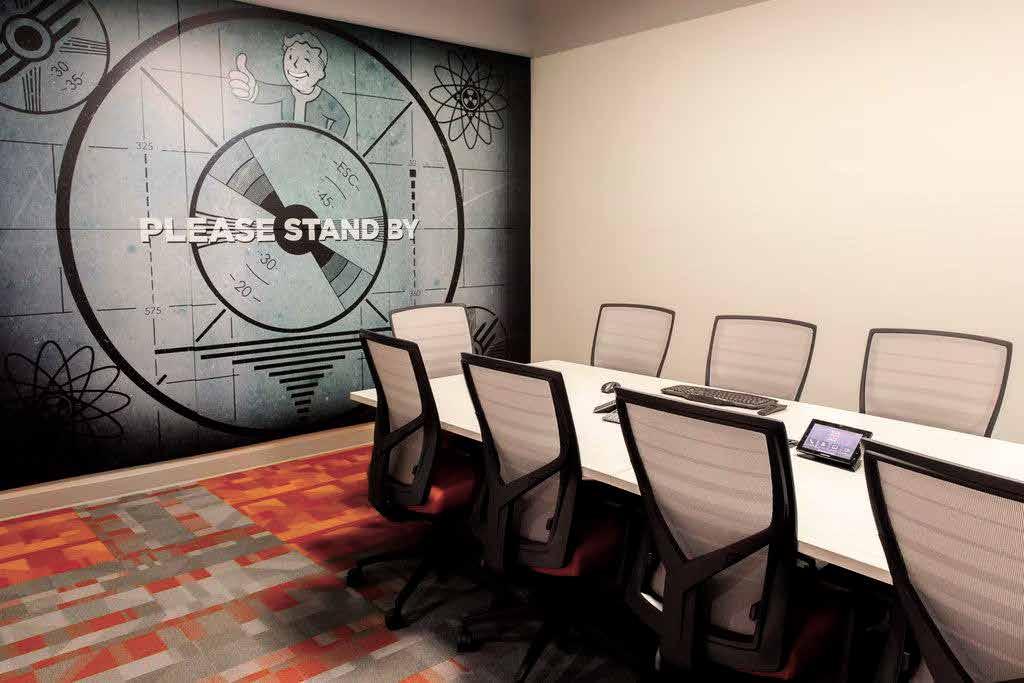
As part of the lawsuit, police body-cam footage of the arrests was recently released. It showed officers in a break room standing up to respond to the vandalism report. As they left, the body-cam captured the decorations along the walls. A Trump flag was hung in a place of prominence next to a mural of the precinct’s mascot, with the American flag on the other side. Along the wall to the right of the mural were shelves
that visibly contained what Braden Pence, attorney for the plaintiffs in the graffiti lawsuit, said was “disturbing trophies and iconography.”
The most upsetting item sat just above the break room’s microwave: a mock tombstone for Damarius Butts, a young Black man who, after fleeing a robbery, was killed by officers after an exchange of gunfire. Butts died on April 20, 2017, and an inquest jury found the shooting justified.
The origin of the tombstone has not been verified. Still, the legal director of ACLU Washington, La Rond Baker, said that it appears that the tombstone was taken from a BLM memorial for people killed by police.
Following the release of the footage, community members were outraged, and the Office of Police Accountability (OPA) began an investigation. Chief Adrian Diaz also ordered an investigation of all precincts to ensure that the decor meets department policy and standards.
Many
questions to answer
On July 19, the Community Police Commission asked that Chief Diaz attend a meeting to answer questions about the incident. Chief Diaz attended the meeting virtually and said, “I wish I were here in better circumstances. In 2021 I acknowledged the impacts that we created after George Floyd’s murder, and I apologize for those impacts. Those impacts that we’re discussing today, they’ve created deep mistrust. But our department is committed to making it right, and I’m committed to making it right.”
He continued, “These images bring back hurt and trauma. I’ve talked to community members about this hurt, and I’ve talked with officers. They were embarrassed and expressed that they can’t have this. It’s unacceptable, and we’ll work with OPA regarding the situation. While we know these items are no longer up, my focus is that we rebuild trust.” He emphasized that SPD culture is in the process of changing and that that change takes time.
A line of questions from Commissioner Adrien Leavitt followed. “I want to know who took the memorial to Damarius,” he said. “I want to know where it was taken from and who brought it to the East Precinct. [I want to know] who displayed it. I want to know how long it was there. I want to know how many officers saw it and did not say anything… I want to know when it was removed… I have questions about whether anyone was ever held accountable.”
Chief Diaz said that the SPD is working with the OPA to get answers to those questions. He shared that the East Precinct captain was Eric Sano at the time. Diaz, when answering about who was involved, reminded the listeners that over 500 officers had left the department and the East Precinct specifically. It is still unknown whether those who were responsible and complicit in the incident are still with the SPD. When answering about SPD culture, he said they’re investing in and promoting initiatives that help create an officer who healthily interacts with the community.
Damarius Butt’s mother, Stephanie Butts, said, “My son was a loving son, brother, father, and much more. Every day we miss him. Our family hasn’t been the same since that day. He was my first child and the first grandchild to my parents.
“Damarius was killed on April 20, 2017, by the Seattle Police Department. The day that I lost my son was the worst day of my life.
“When I first heard that the SPD displayed a fake tombstone with my son’s name on it, I was shocked. I can not explain the pain and anger that I felt. It was very hurtful to know that the SPD joked about killing my son.”
Her voice cracked with emotion as she continued, “That SPD officers were so callous that they warmed up food below my son’s fake tombstone and didn’t see anything wrong with that… I want to know why this happened and why this was allowed to continue. I want to know if anyone has been held accountable. I want to know what is being done so that it never happens again. I want to know why killing my son and getting away with it wasn’t enough. I want answers, and so far, I haven’t heard any.”
Chief Diaz responded, saying he doesn’t want this to happen again and wants answers. He said that is why they are working with the OPA and investigating to hold those responsible accountable.
Commissioner Joel Merkel thanked Stephanie Butts for speaking and added, “Damarius Butts was entitled to dignity, and his family was entitled to dignity.”
The trophy and decorations in the break room are gone, but the hurt felt by the community and the Butts family are not. Though the SPD, through the leadership of Chief Diaz, has been trying to repair relationships, and working on growing a culture that humanizes those they protect and serve through more presence at Advisory Council meetings and programs like Before the Badge, injustices like this damage its attempts to build trust.
Courtesy of MacDonald Hoague & Bayless
Seattle Police Chief Adrian Diaz – Photo by Elaine Thompson / AP
Local News
“I am disheartened to learn that members of our LGBTQ+ communities feel they have been the victims of hateful speech, harassment, and intimidation,” said Arlington Mayor Barabara Tolbert in response to the flyers. “These types of disgraceful actions do not belong in Arlington. I like to think that Arlington’s residents are accepting, open-minded, and respectful.
“As a community, we have a challenge to come together with kindness and compassion for each other. I call on every individual on both sides of this issue to demonstrate tolerance in our community. As mayor of Arlington, I am dedicated to maintaining Arlington as an inclusive city where we can acknowledge our differences, and allow everyone to feel safe and respected.”
Security concerns
“I grew up in Arlington from the time that I was three years old, and I am Queer,” said Kenzie Killebrew during a June 5 Arlington City Council meeting, speaking in support of having security at Pride. “I will say that I did not feel safe or like a part of the community when I was growing up here, but seeing Pride happen here makes a really positive impact on me, and it makes me want to be more involved with the community.
“It was detrimental — to say it as mildly as possible — to grow up around some of the ideologies that were held in Arlington 20-plus years ago, but I see a really positive change happening that I’m really proud of this city … being a part of.
“Please consider the difference that it can make to folks in the Gay community, especially young people, to have recognition, celebration, and safety.”
While the city ultimately agreed to offer free security because it was considered a “First Amendment event,” it refused to enforce RCW 9.41.300(2a), which prohibits people from openly carrying a weapon less than 250 feet from a permitted demonstration.
On July 14, Arlington WA Pride posted a call to action on all its social media accounts urging attendees to write to city officials and businesses about the possible danger that comes from allowing people to openly carry weapons.
On July 17, Everett, a neighboring city, went as far as to pass a resolution in support of Arlington’s LGBTQIA+ community, urging the city create a 250 feet weaponfree buffer zone around the venue.
Fun at Camp Pride
The controversy, however, did not stop attendees of Camp Pride from having fun. Between the drag performances that the protestors dreaded, there was also a bubble show, face painting, music, interactive booths, and speakers.
“Look out, straight, white, Christian males,” said comedian Kaylin Bosley to the protestors surrounding the venue and a crowd of laughing Queer people. “I’ll steal your girl; I’ll turn your kids Gay. I’ll even Trans her a little dog while I’m in town. I mean, these bozos are treating me like I’m the boogeyman. I might as well have some fun with that. Hope they didn’t spend all day on those signs…
“These guys are convinced that if they relax for five whole minutes, the Queers are going to rise with a rainbow fist and smash them down and spread such disgusting and un-American values as equality, tolerance, and respect for religions and viewpoints other than your own religion. Oh, God, that must be terrifying. We can’t have that. Let’s make sure we get our supporters all riled up with a campaign of lies, mistruths, and bovine excrement.”
Activities and resources
“When we started Arlington Pride, it was the youth that came forward to us first,” said Caera Gramore, the acting president of Arlington WA Pride during the June 5 city council meeting.
“At our first fundraising event, about 20 to 30 school-age youth showed up … and told us how excited they were that it could finally
feel seen and supported and how important that was to them. And for myself as a mental health practitioner, that was important to me too, because I understand how that can impact a developing nervous system.”
With that in mind, Gramore and other board members made sure the event had plenty of kid-friendly activities and resources.
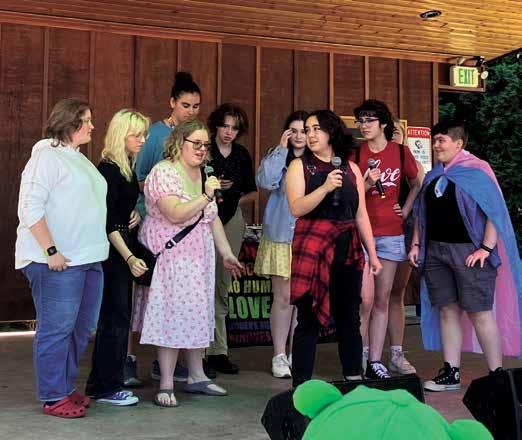
One of the standout booths of the day was Red Curtain Foundation for the Arts, an organization dedicated to creating accessibility to the visual arts for students in Snohomish County. Every summer, it puts on a theatre program for teens aged 14-19 during which they stage an entire musical. This year, they are performing The Prom, about two girls who want to go to prom together, but the PTA is against it. In anticipation for the upcoming shows on August 4 and 5, the teens performed a song during Pride.
“It’s so important to show that, especially for our kids that we have here today, that they are accepted, they are loved, they are going to be included in our programs, in programs all around the county, all around the city, especially somewhere like Marysville or Arlington, where that doesn’t always show up,” said Red Curtain instructor Courtney Calkins.
Another participating organization was Sherwood Community Services, which “exists to create an inclusive society [for] children and adults with disabilities” in Snohomish, Skagit, Island, and San Juan Counties.
“Since Sherwood has spent over 60 years fighting for people with disabilities and supporting inclusion, we know well that you can’t wait for the inclusion of one group without fighting for it,” said Sherwood’s development and partnership associate, Jessica Sherritt.
“As we gather here today to commemorate the progress made towards equality and acceptance, it is crucial that we extend our wider to embrace all members of our diverse community. First and foremost, inclusion is the very essence of the great movement. It is a celebration of our differences, a recognition that each individual, regardless of their background, deserves love, respect, and a sense of belonging. Just as we fight for the rights of the LGBTQ community, we must not forget those with disabilities who also have been marginalized and left behind.”
While Pride events in large cities often make the largest waves, it’s important to recognize that there are Queer communities in smaller towns as well. Their fight may be harder, but they still have just as much fun.
Photos by Cameron Martinez
Arts & Entertainment
CHBP
Getting down on Friday with Channel Tres, Rebecca Black, and Sofi Tukker
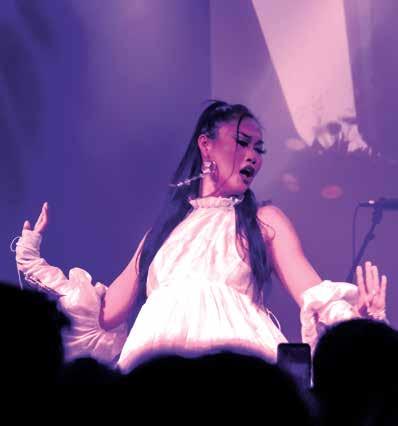
Early in the evening on Friday, Comptonborn producer and rapper Channel Tres took the stage and wowed the crowd with his genre-bending performance of what he’s dubbed “Compton house,” a mix of funk, hip-hop, soul, and electronic music. His full set of choreo led the crowd to join him — flanked by dancers in white-rimmed sunglasses — in dancing and clapping along to songs like “Topdown” and “6am.” While later admitting he’d just had surgery the day before and thought about canceling, he said “I love Seattle. I wasn’t going to miss this,” and Friday’s show went on.
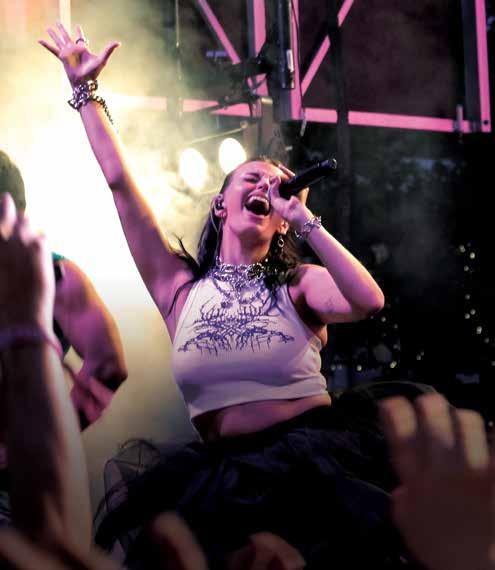
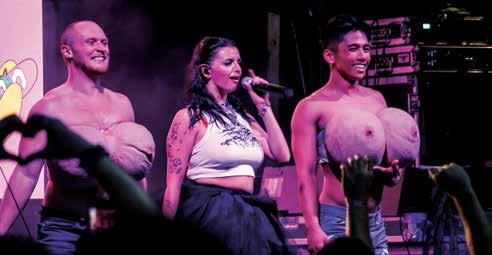
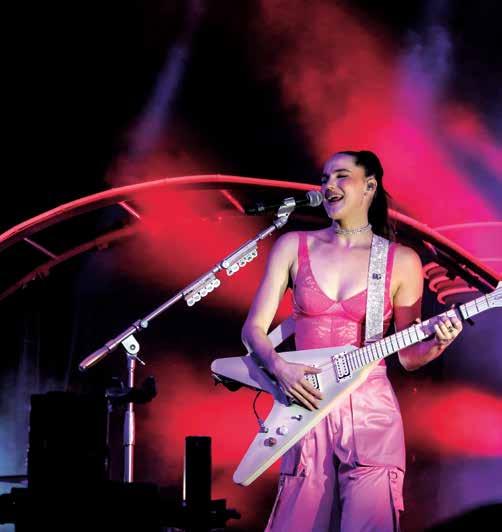
Speaking of the day of the week, you might know a little 2011 tune by the name of “Friday.” If you do, you know its artist, Rebecca Black, or at least her in an earlier era. To the delight of YouTube bullies and longtime supporters alike, a now 26 and Queer Rebecca Black took the Vera Stage Friday to introduce herself as a new kind of pop star — and crushed any doubt of her talent that was ever born of her early fame. Currently in the midst of wrapping up the tour for her debut album Let Her Burn, which boasted numerous sold-out shows across the country, Black made CHBP one of the last stops. While focusing her per-
formance mainly on fan favorites from her 2019 EP “Rebecca Black Was Here” and of course, the new album, Black also leaned into the day of the week and the cringe of her 2010s virality, performing her surprisingly hyper-pop 2021 “Friday” remix featuring 3OH!3, Big Freedia, and Dorian Electra for a lively crowd.
Accompanied by two masc, harness-clad dancers, who sometimes also wore largerthan-life, realistic (nude) boob attachments on their chests, Black was expressive and fully captivating, even to the security guard at Gemini Room, who tried to get a better view of the stage. (Stay tuned for next week’s issue to catch up with Rebecca Black in an SGN exclusive interview from her green room at the festival.)
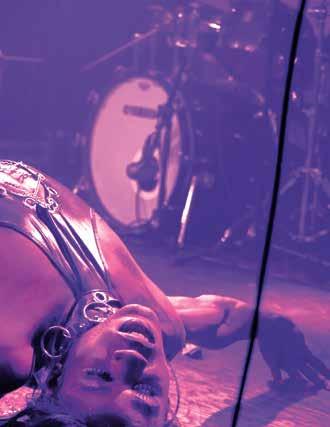
Friday night’s festivities continued with a drag showcase by Kylie Mooncakes, featuring her “favorite performers from this new generation of ballroom,” Fenty Wintour (Instagram: @its.justfenty), Viper (@ viperfengs), Pixie (@flixofpix), and Rubí Venus (@sof.mrodriguez).
The showcase filled Neumos with festival-goers, one of whom described the experience as “entering a portal to a whole different occasion.” Drenched in blue-red stage lights and donning stockings, each queen took the stage with their own ballroom style. Voguing brought the crowd to several peaks of excitement, and a wide variety of paper currency lined the stagefront by the final applause.
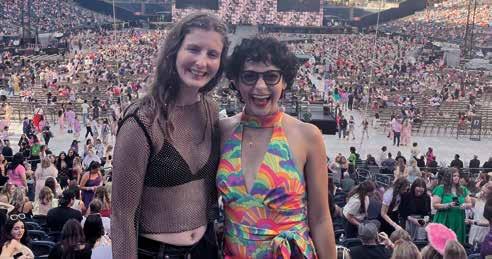
Festival goers
Drag showcase – All photos courtesy of Kylin Brown
Rebecca Black
Channel Tres
Arts & Entertainment
continued from page 11
Later, in another realm called the “Main Stage,” multi-instrumental artist duo Sofi Tukker — composed of one Sophie Hawley-Weld and one Tucker Halpern — headlined Friday evening.
In a pre-performance sit-down, they told me they have a hard time defining their music, as the DJ/band binary has never really worked for them. “We just make music and perform it, and hope people enjoy the experience,” said Halpern.
“With the tools that we have available to us,” added Hawley-Weld, with a laugh.
Depending on the venue, they said, they’ll plan to make adjustments in their set list, instruments, and stage presence to create an atmosphere that makes people “feel free to express their authentic selves.”
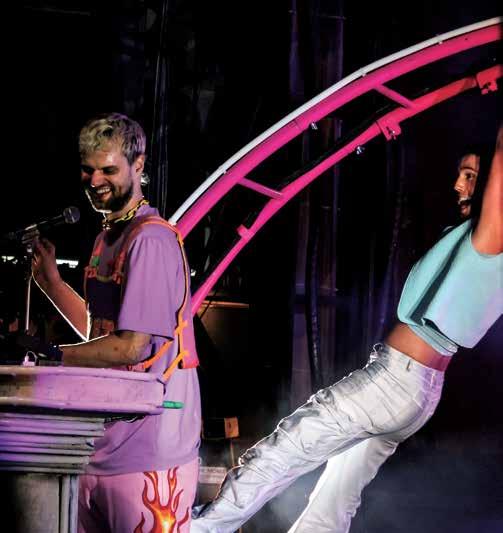
For Capitol Hill Block Party, they brought along Bob’s Dance Shop, described on its website as “an immersive entertainment experience, a paradise of self-expression, empowerment, and community.” The dancers have partnered with Sofi Tukker at several other recent events, and added dimension to the stage during the headliners’ set, crawling out from stage right and charading as alligators for the song “Jacaré” (Brazilian for alligator).
Hawley-Weld met Halpern at Brown University over musical interests while studying Brazilian Portuguese, and thus Sofi Tukker’s trademark sound includes the language and other mentions of Brazil. In the music video for “Jacaré,” released this April, unknowing fans would come to learn that “an alligator” in Brazilian Portuguese is code for a woman who likes women. Sofi is seen stealing Tucker’s fictional girlfriend in the music video, which has now hit over 1.6 million views.
On stage with the dancers, Sofi Tukker brought the audience a multisensory experience, a fully choreographed set with playground ladders and colorful clothing — partially from their own fashion line, “Wet Tennis” — to a full-capacity crowd and ended Friday night with a joyous dance party.
Saturday and Sunday saw it all Friday’s jam-packed schedule, also including Goth Babe, Jean Dawson, Sea Lemon, Momma, Wavedash, and Husbands, felt like a marathon of pop, rock, and Queer artistry. Following it up, Saturday and Sunday allowed attendees a bit
more R&R in the early evenings, featuring vendor activities, games in the beer garden, and fun-loving, synthy artists like Elohim, Spill Tab, and Surf Mesa.
Chill afternoons both days made for a surprising headliner turnout for both Denzel Curry on Saturday and Louis the Child on Sunday, as well as their lead-ups, like Slayyyter, Rico Nasty, MUNA, and Madeon.
As the crowds grew each night, the block saw a wide array of incredible street fashion, mosh pits, and crowd surfing (even one surfer in a watermelon-shaped pool float).
MUNA’s return to Seattle for the first time since Day In Day Out Fest last August was well anticipated, especially after they
recently concluded opening for Taylor Swift’s tour and fans on Twitter complained that they “should have been in Seattle.”
At Day In Day Out 2022, also covered by the SGN, they told the crowd between songs that they “wholeheartedly believe in a joyful Queer revolution,” but at Capitol Hill Block Party, several anti-LGBTQ federal legislative moves later, it was clear that they had changed their stance.
“This is a song about Queer joy, but we’re also here for Queer motherfuckin’ rage,” said vocalist and guitarist Naomi McPherson before nodding to their bandmates and gifting the crowd with the utterly Sapphic hit “Silk Chiffon.”
On Sunday night, Slayyyter’s performance brought an influx of scantily-clad twenty- and thirtysomethings to the Main Stage. The 26-year-old artist, famous first on SoundCloud and for her songs “Daddy AF” and “Hello Kitty,” brought down the proverbial house.
The message of self-expression first mentioned by Sofi Tukker on Friday evolved into a clear theme throughout the weekend. From the mosh pits of Denzel Curry fans to the Sunday outfits that would have shocked any churchgoer in my hometown, Capitol Hill Block Party has seen an all-inclusive evolution that couldn’t be more fit for the ripe age of 25.
Sofi Tukker
MUNA
A MUNA fan
Fans at Denzel Curry – All photos courtresy of Kylin Brown
Disney’s new Haunted Mansion doesn’t give audiences a ghost of a chance to enjoy themselves
by Sara Michelle Fetters SGN Staff Writer
HAUNTED MANSION
Theaters
Haunted Mansion comes so close to being good that it’s honestly infuriating that it comes up short. It’s frankly annoying.
But all of the pieces are in place: A game cast willing to give themselves over to the inherent silliness of a scenario more closely aligned to the iconic Disney amusement park ride than the 2003 Eddie Murphy comedy ever was. Fun, imaginative visuals coupled with excellent digital effects work and spectacular production design courtesy of Darren Gilford (TRON: Legacy and Star Wars: Episode VII – The Force Awakens). A superb score composed by Oscar-nominee Kris Bowers (King Richard ) that fuses New Orleans rhythms, Buddy Baker’s classic “Grim Grinning Ghosts,” and his own creatively intoxicating themes.
So what’s the problem? For one thing, as much success as screenwriter Katie Dippold (The Heat) and director Justin Simien (Dear White People) may have had in the past, their creative sensibilities seem to be entirely out of synch on this project. While there are delightful bits sprinkled in here and there, much of the comedy falls flat, the deadly stakes the main characters are trying to overcome are annoyingly weightless, and — unlike the theme park ride — there is no enjoyably creepy momentum propelling events forward.
Then there is the frenetic, ponderously disjointed climax. What should be a visually splendid whirligig of supernatural havoc — mixed with cathartically relatable human revelation revolving around grief, forgiveness, and love — instead becomes a video game scene of cartoonish chaos and melodramatically dull heroics. The entire ending is unforgivably turgid, and it nearly erases all of the goodwill generated by the stuff that does work. It sent me out of the theater wondering what in the heck happened for it all to go wrong.
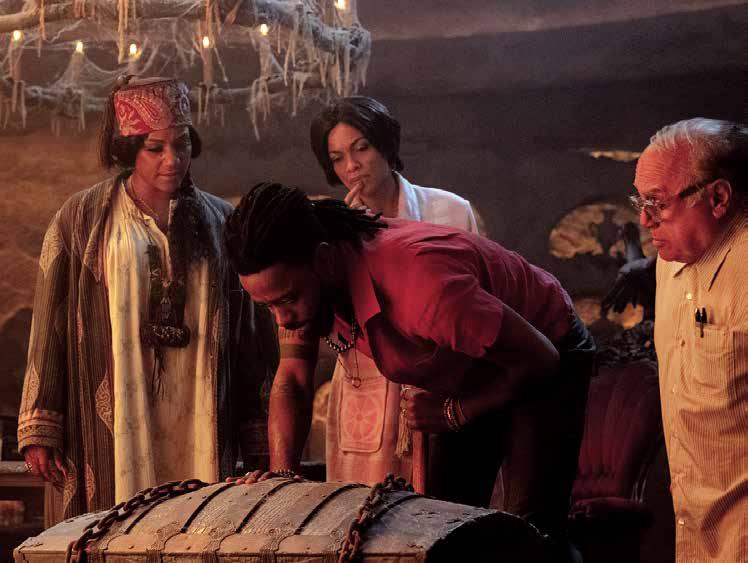
There is much to like about how Dippold sets events in motion. Single mom Gabbie (Rosario Dawson) and her son Travis (Chase W. Dillon) move into a dilapidated Louisiana mansion with hopes of transforming it into a bed-and-breakfast, only to discover it’s haunted by 999 ghosts. They turn to Father Kent (Owen Wilson) for help, and he enlists astrophysicist-turned-tour guide Ben Matthias (LaKeith Stanfield), psychic Harriet (Tiffany Haddish), and historian Bruce Davis (Danny DeVito) for additional aid.
Turns out the estate hides a terrible secret: a powerful poltergeist known only as “the Hatbox Ghost” (Jared Leto) has been trapping souls for over a century, and he only needs one more to unleash unimaginable evil upon the world. The problem is, this person must give themselves over to the afterlife willingly — and that’s where Ben comes in. His grief over a recent loss is so omnipresent that the Hatbox Ghost intends to pull out all the stops to trick him into succumbing to his pain, and in doing so give the grinning ghoul the power he’s been lusting after.
Ben is the main character. Kent, Harriet, and Bruce also make more of an impact on what’s going on inside this haunted mansion than Gabbie and Travis do. Until around the two-thirds mark, it’s almost as if Dippold and Simien forget about the two entirely. This is especially maddening, as the relationship between Ben and Travis gradually ends up becoming the most important one in the entire story. But the bond they create isn’t authentic. As good as Stanfield and Dillon are working with one another — and they are very, very good indeed — that does not make their charac-
ters’ interactions emotionally genuine, and this is a major reason the climax misfires. There are some wonderful sequences, not the least of which is a brief sojourn to a different Louisiana estate entirely. Ben and Kent search for a way to end the Hatbox Ghost’s reign of terror and are forced to suffer through a delightfully dull guided tour led by a perfectly cast gothic megastar who’s sowed their oats working with Tim Burton in classics like Beetlejuice and Edward Scissorhands. It’s extremely funny stuff.
I also quite liked an extended séance sequence in which Ben finds himself transported into the realm of the departed and
interacts with several of the ghosts trapped in the mansion, including the original owner, William Gracey (J.R. Adduci). This is also the only point in the tale where the Hatbox Ghost is legitimately scary, and if the menace this demon exudes here had been present for all of the comedy-thriller’s laborious 122-minute running time, maybe I wouldn’t have felt nearly as let down by the final product as I sadly did.
(As a refresher, that aforementioned Eddie Murphy version didn’t even run an hourand-a-half and, as forgettable as it may have been, it still offered up more thrills, chills, and especially laughs than this new incar-
nation does, and it had an even more convoluted, nonsensical narrative.)
Part of me feels I may be coming down on this film too harshly. DeVito frequently steals the show, Stansfield deserves to be a major star, and there are a plethora of positives hiding in the darkened corridors of this ride into the unknown. But there aren’t enough of them. The missteps are too noticeable, and the ending does remain an absolute waste of time. It’s time for Disney to give up the ghost on trying to transmogrify its legendary theme park ride into a viable cinematic franchise, as this new Haunted Mansion is dead on arrival.
Haunted Mansion – Photos courtesy of Disney
The afterlife is calling in terrifyingly relentless Talk to Me
by Sara Michelle Fetters
SGN Staff Writer
TALK TO ME
Theaters
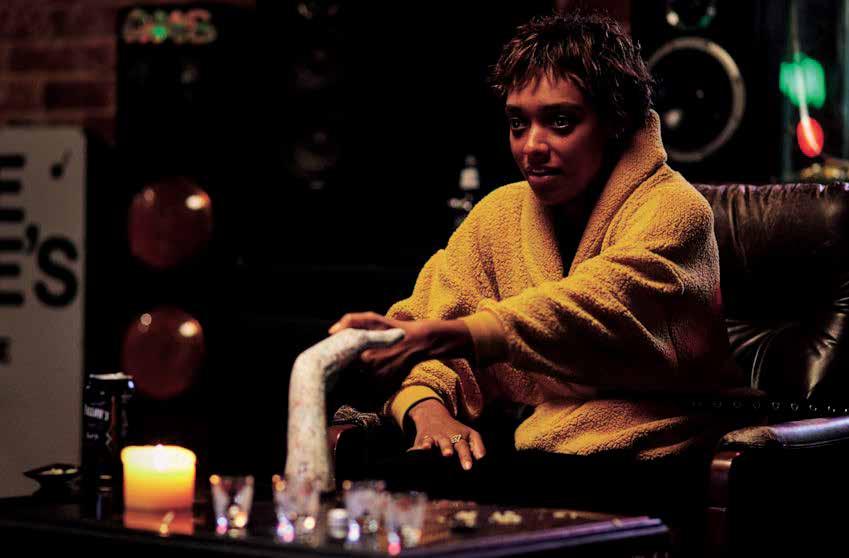
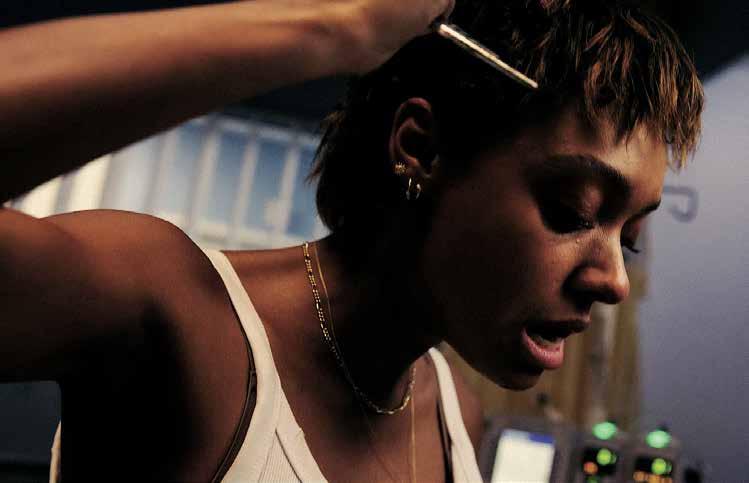
Teenager Mia (Sophie Wilde) has not gotten over her mom’s supposedly accidental death a year prior. She’s estranged from her father Max (Marcus Johnson) and spends most of her time over at the house of her classmate Jade (Alexandra Jensen), where she tutors her best friend’s younger brother, Riley (Joe Bird). The pair’s workaholic — yet still highly observant — mother Sue (Miranda Otto) thinks of Mia as a de facto member of the family, and she’s happy she can be there to support the emotionally fragile 17-year-old.
Another student from their school, a notorious hooligan named Haley (Zoe Terakes),
has been filming a series of viral videos at house parties, in which willing participants appear to go into some sort of hypnotic trance after coming into contact with a creepy ceramic hand and whispering “talk to me” to an unseen visitor. Mia is keen to take part in one of these paranormal sessions and, after doing so, becomes obsessed with continuing to let herself become possessed by the spirits of the recently deceased.
Audiences sitting down to watch Talk to Me will not be surprised to learn that this is a very bad idea. The more Mia does this, like an addict excitedly looking for their next fix, the more she wants to keep grabbing that spooky hand. But events take a disastrous turn after Riley sits down for a session and ends up a comatose vegetable, clinging to life in the hospital — and it only gets worse from there.
Working from an original concept conceived by writer Daley Pearson, filmmakers Danny and Michael Philippou pull out all the stops in their feature-length narrative debut. The opening third to their lean, mean, and at times gleefully chilling horror yarn is darn near perfect. The way they introduce their main characters, how they set things up, Mia’s first encounter with the mysterious hand, and her initial forays into psychologically scarring madness — it’s all stupendous.
Everything builds to the aftermath of Riley’s use of the hand, and what happens then is a magically terrifying whirl of sudden violence, ugly self-mutilation, and unimaginable familial trauma. The reactions from Jade and Sue are suffocating in their emotional purity, and I loved how the Philippou brothers refuse to sugarcoat their anger, vitriol, and distrust pointed directly
at Mia. It’s potent stuff, and not only does it isolate the teen from those she’d grown closest to since her mother’s death, but it also gives her a potent reason to overcome the demons — potentially imagined, likely all too real — assaulting her since she first grabbed that hand.
Wilde is extraordinary. While I’m getting a little tired of watching horror films about characters dealing with their grief after the death of a loved one, this does not diminish a single ounce of the mesmeric power fueling the actor’s masterful performance. She digs deep, revealing Mia’s scars with a subtly heartrending specificity that’s astonishing.
As for the Philippous, they are never anything other than in complete control of the material. Mia’s first foray into the afterlife is stunning, and things only get better from there. While jump scares are left to a minimum, when they are utilized, they are done so with such organic precision that they have a profound impact on the proceedings. The pair also ramp up the energy level considerably after Riley ends up in the hospital, and this gives Mia’s race against time to save her friend’s life an added layer of ticking-clock urgency that sent shivers up my spine and left me covering my mouth in slack-jawed shock on more than one occasion.
The last third does leave a little to be desired. Based on the rules for the hand’s usage and its potential dangers that they spell out early on, there are not a ton of unexpected places for the Philippous to go. This diminishes a fair amount of their film’s unnerving charm, and as well directed and suitably authentic as the climax may be, this is still the only section that I found underwhelming. It’s fine, and I’m certain the majority of viewers will be satisfied, but I admit to wanting more. Even with that being the case, Talk to Me is a lot of unsettling fun. The Philippous show tremendous promise, and Wilde has the entrancing screen presence to become a major star sooner rather than later. The first hour of the picture is some of the best horror filmmaking I’ve seen in ages, and a few of the key set pieces are petrifying in their relentlessness. The afterlife is calling, and I’m more than satisfied that I chose to answer and hear what it had to say.
Tense Cobweb weaves a sinister tale of Halloween terror Film
by Sara Michelle Fetters SGN Staff Writer
COBWEB
Theaters
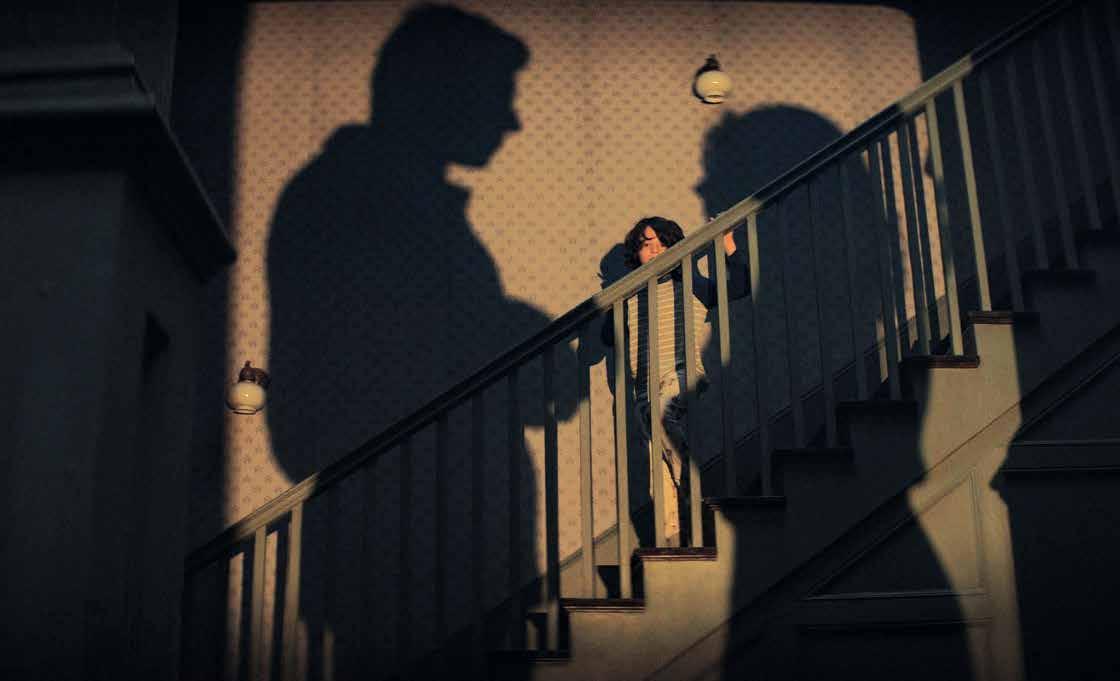
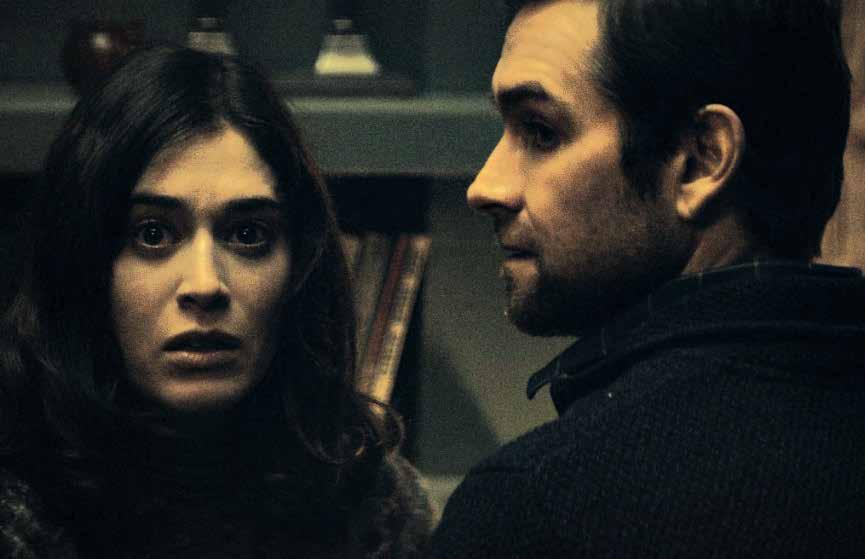
Is there something — or someone — trapped in the walls of his house? Or, as the parents Carol (Lizzy Caplan) and Mark (Antony Starr) of eight-year-old Peter (Woody Norman) insist, is the rap-rap-rapping behind the wallpaper only a terrifying figment of the boy’s imagination? He’s not sure, and between all the bullying he’s receiving at school and his mom and dad’s overprotectiveness regarding virtually every move he makes, Peter is starting to wonder if there’s something wrong with him.
If there isn’t something — or someone — in the walls, does that just mean he’s crazy?
There is something about a well-made genre picture that brings a gigantic smile to my face. Director Samuel Bodin and writer Chris Thomas Devlin (Texas Chainsaw Massacre) may not do anything terribly new or original with their visceral shocker Cobweb, but their exceedingly confident production still manages to entertain. This descent into psychologically scarring thrills and chills gets the job done, and it’s really rather a shame that this handsomely mounted production isn’t getting a wider theatrical release and more of a marketing push.
The central mystery is whether or not Carol and Mark are hiding murderous secrets from Peter and if the voice calling to the boy from behind his bedroom wall is real or instead nothing but a terrifying fantasy. Into this mix are thrown a quartet of schoolyard bullies looking to exact a little payback for a confrontation gone wrong. They inadvertently are joined by a caring substitute teacher named Miss Devine (Cleopatra Coleman), who has taken a special interest in Peter, having started to suspect the boy’s parents are abusing their son so subtly that her school’s administrators haven’t taken notice.
Little of this is subtle. When Mark decides Peter needs to be punished, he doesn’t only ground the boy, he goes so far as to lock him in a secret room hidden in their base-
ment. Carol is prone to sudden, angry outbursts that border on being outright violent. A neighborhood kid went missing on Halloween night before Peter was born, and ever since, his parents have refused to celebrate the holiday, even though the kid’s disappearance had nothing to do with either of them.
The family’s backyard pumpkin patch is beginning to rot.
It’s basic math, and in this case one plus one does equal two. But Bodin and Devlin have a few tricks tucked up their sleeve, and it’s clear early on that not everything is how it appears and that Peter may not be the junior detective he thinks he is. While a third-act twist isn’t surprising, it’s so wonderfully delivered that I can’t say it mattered. Things explode into a maelstrom of failure, fear, and dismembering violence, and Peter’s
reaction to the subsequent carnage and chaos is nothing less than priceless.
Caplan and Starr are great as the sinister parents, and a large part of me wishes they would have had slightly more to do, especially during the film’s last 30 minutes. Even though they are completely different in tone and style, Norman is also nearly as terrific here as he was in Mike Mills’ 2021 sensation C’mon C’mon. The kid has a future as an actor if he wants one, and his performance here is another bona fide winner.
This is Bodin’s feature-length directorial debut, but he handles the material like a seasoned veteran. The filmmaker appears to have an inherent knack for utilizing limited spaces, and I love how he showcases the geography of the family’s home with gracefully pinpoint precision. Bodin gives
cinematographer Philip Lozano the freedom to move his camera with dexterously subtle specificity, and it’s superb the way he lights each scene and magnifies certain key aspects of production designer Alan Gilmore’s creatively tactile and lived-in interiors.
I can’t talk about anything that happens during the last third of Cobweb, but one should probably know that this is the section where the film earns its R rating. Blood flows freely, and Bodin balances practical makeup effects, CGI, and old-school incamera trickery with aplomb. If the final moments aren’t novel, they’re still presented with intelligent authority, and the shiver that slithered up my spine as Peter faced off against his true adversary was entirely genuine. I liked this film a lot.
Cobweb – Photos courtesy of Lionsgate
Book club on the road: Powell’s Books Books
by Lindsey Anderson SGN Staff Writer
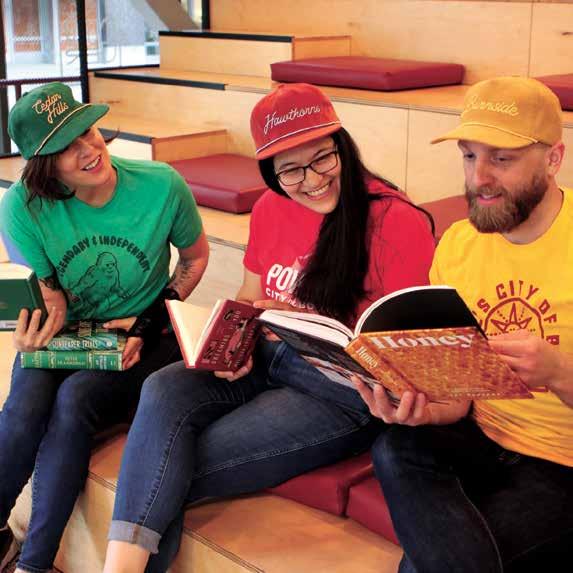
While Seattle is home to some of the biggest, most beautiful indie bookstores in the Pacific Northwest, they tend to pale compared to one of Portland’s most iconic: Powell’s Books, a must-see for bibliophiles of all ages.
Powell’s somehow feels both old and new at the same time. Staff picks and popular new items like Pageboy line the walls at the front of the store, beckoning readers to inspect their shiny covers. On the other hand, walking along the dense shelves, one is struck by the intense smell of old paper; it greets the nose like a familiar friend.
Customers eventually find themselves surrounded by old wooden shelves, where worn and well-read titles poke out. With their cracked spines and yellowing pages, it is the older books that hold the most spirit. Each one carries with it secrets the answers to which are never to be known. Who might have turned these pages before? The store seems to know, but it will never tell.
The legend of Powell’s Powell’s is considered a PNW landmark, but it began in Chicago. In 1970 Michael Powell opened his first bookstore shortly after graduating from the University of Chicago, taking out a $3,000 loan to
do so. He was so successful that he paid the loan back in just a few months.
Powell’s found its way to Portland thanks to his father, Walter, who lived in Portland but spent a summer visiting his son in Chicago. Upon seeing how successful the bookstore was, he decided to open his own in the West. The original Portland Powell’s started in a former used car dealership on NW Burnside. Walter bought up every used book he could until the whole building was stacked full.
Michael joined his father in Portland in 1979, where they expanded the business into one of the country’s first combinations of new and used bookstores, as well as one of the only bookstores open 365 days a year. As it expanded, they continued to staff it full of literature experts who could offer advice and recommendations to anyone who came through the front doors.
For 40 years, Powell’s Books has continued to serve Portland’s community. The Powell family still runs the store, with Michael’s daughter Emily now in charge.
“My grandfather [Walter] taught me that our job is to connect the writer’s voice with the reader’s ear and not let our egos get in between,” she said on the official website.
“My father taught me not only the love of the book itself but also how to love the business of bookselling.”
POWELL’S page 18
Photos courtesy of Powell’s Books
Books
Gays on Broadway : A front-row seat to Queer history in NYC theater
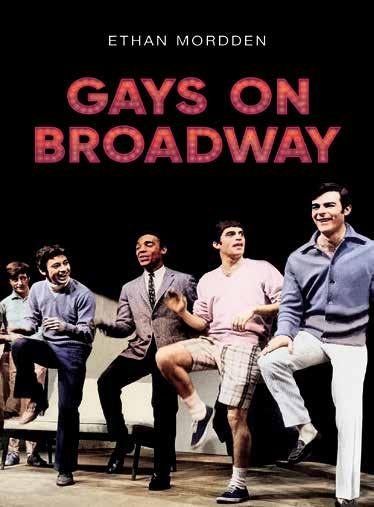
Perhaps not surprisingly, the LGBTQ history of the Great White Way starts with drag queens. In the earliest parts of the twentieth century, many comedies were written “specifically calling for a male character forced... to disguise himself as a woman,” often to the delight of audiences. Still, any overt mention of such things was forbidden then.
By the 1930s, as author Ethan Mordden says in his survey called Gays on Broadway, not only were audiences treated to titillating hints of gayness that were barely concealed, but the “odd gay character” often showed up in plays on purpose.
And yet, behind the scenes, few Gay or Lesbian actors dared to come out; many of them, instead, entered “lavender marriages.” In 1942, New York’s “Wales Law,” a sort of Hays Code for Broadway, shut down a “salute to vaudeville,” putting all of Broadway on notice.
Even so, “gay characters did turn up in a few postwar titles.” This was, after all, a time when Tennessee Williams’ hand was all over theater — especially with what Mordden calls his “beautiful male” character: shirtless, buff, and highly memorable for Gay audiences.
In the 1950s, Williams’ influence was joined by some “honestly gay characters” onstage, and by the talents of Tallulah Bankhead, who “maintained a strong association with camp humor.” By the 1960s, “gay characters were everywhere on Broadway,” the word “gay” was acceptable, and the adventurous theatergoer could find nudity off-Broadway.
A decade later, though Broadway was “still partly stuck in stereotype mode,” says Mordden. “Now it was the turn of gay people.”
You’ve seen your favorite play... how many times? You’ve followed a handful of actors from off-Broadway to on, and you’ve discovered some intriguing talent. And now you need Gays on Broadway to fill in the gaps of your knowledge and to see how it all began.
Going back more than a century ago — before movies were a thing and TV was invented —Mordden acts as a sort of usher as he takes readers on a trip that goes both backstage and onstage. HE casually but constantly name-drops, and it’s good to see often-forgotten actors mentioned in a way that may spur you to learn more about them and their long-ago plays. He also delightfully highlights the cleverness of actors and writers who winked at audiences when “gay” was a bad word.
Almost as much fun as collecting playbills, almost as good as a seat behind the orchestra, this is one of those books that theatergoers will want to take to the show to read during intermission. Get Gays on Broadway and take a seat.
POWELL’S
continued from page 17
More than just books
Today, Powell’s has three locations in Portland. The largest is Powell’s City of Books, which carries over one million new and used volumes. This location is also home to the Rare Books Room, where col-
lectors can hunt for hard-to-find antique editions of classics. There are also two smaller locations, one at Cedar Hills Crossing and one on Hawthorne. All locations are ADA accessible. Together, they are a staple of the city.
The stores host events every week. On Saturday mornings, they hold children’s story hour; each features different picture books and encourages reading, imagina-
tion, and creativity among youngsters. There are also regular local author visits, including a variety of fiction, nonfiction, local, and national guests. On Tuesday, August 1, Powell’s will host Omar El Akkad, the author of Mobility, to talk about his new nonfiction book about immigration. The next day, author and environmentalist John W. Reid will appear for a special reading of Ever Green: Saving Big Forests to Save the Planet.
Powell’s sells more than just books, though. For anyone passing through Portland, it is a perfect stop for souvenirs. Shoppers can find magnets, socks, journals, candles, and totes among a wide assortment of fun gifts.
At just under three hours from Seattle, Powell’s is the perfect destination for a summer road trip.
Image courtesy of Oxford University Press
Photos courtesy of Powell’s Books
Queerest World Cup kicks off down under Sports
by Lindsey Anderson SGN Staff Writer
On Thursday, July 20, Australia and New Zealand kicked off their first-ever joint World Cup. The countries are hosting a record 32 nations in the largest women’s soccer tournament.
Not only that, the 2023 tournament has the most LGBTQ+ athletes in history. According to GLAAD, a record 91 LGBTQ+ players are competing in the monthlong event, which has something for all Queer fans to enjoy, from amazing athleticism to forbidden romances.
Players to watch out for
Home team Australia has the most Queer athletes, with 40% identifying as LGBTQ+. Some of the most prominent include forward Hayley Rasso, winger Caitlin Ford, defender Ellie Carpenter, and forward Sam Kerr.
Not only are Carpenter and Kerr two of Australia’s players to watch out for, but they’re also dating competitors! Carpenter is currently in a relationship with Danielle van de Donk, a player for the Dutch national team. Outside of the World Cup, the two are both on the football club Olympique Lyonnais in France.
Kerr is also in a “forbidden relationship” with US star Kristie Mewis. Australia has yet to play either the Netherlands or the US, but it will be a romantic showdown worth watching.
Brazil is another competitor to watch in this year’s tournament. The team dominated the preliminary game against Panama 4-0. Brazil’s number one player to watch is “Marta.” A powerhouse forward in previous tournaments, Marta, now 37, is one of the oldest players competing. Despite her age, she is still a threat on the field and holds the record for most goals scored in World Cup matches — 17! Since her last appearance in the 2019 cup, Marta has wed club teammate Toni Pressley.
Fellow forward “Debinha” is also a Lesbian player who strikes fear in the hearts of competitors. Brazil is known for having a powerful attack, and fans can expect to see Debinha leading the charge. FIFA describes her as a “natural goal scorer” and anticipates that rivals will attempt to target her. Switzerland’s team also has several Queer players. One of the most impressive is forward Ramona Bachmann. She has scored over 130 international goals
throughout her career. With so much experience playing at that level, Switzerland will rely on her to inspire and lead younger players. Bachmann publicly came out in 2015 at the Canadian Women’s World Cup. The Republic of Ireland is an underdog not worth leaving out. Midfielder Katie McCabe is the shining star. Named captain at 21, McCabe has led the Irish squad for the last six years. She came out as a Lesbian in 2019 and has since had a few public relationships with teammates; she recently ended one with Ruesha Littlejohn.
Of course, everyone in the world seems to have their eyes on the US. As four-time World Cup champions and defending victors, it’s the team to beat. It also has some of the most well-known LGBTQ+ athletes. Of course, leading the crew is Seattleite Megan Rapinoe, who has appeared in three previous World Cups. At 38, she is now one of the oldest players in the tournament and the oldest on the squad. Throughout her career, Rapinoe has been an active spokesperson for the LGBTQ+ community and equal pay for women. She is currently engaged to Seattle Storm basketball player Sue Bird. Rapinoe has said this will be her final World Cup.
Kristie Mewis will be playing in her first World Cup, though she has appeared in other international competitions with the American women’s national team (USWNT), including the 2020 Olympics. She has played for US national teams alongside her sister, Sam Mewis, for the last decade. As mentioned, Mewis is currently in a relationship with Australian forward Sam Kerr.
Kelly O’Hara is another staple of the USWNT. She first appeared on its World Cup roster in 2011 when the coach called her up to replace an injured teammate. She scored her first international goal for the United States in the 2015 World Cup semifinal against Germany. A well-known playmaker, O’Hara can often be seen connecting passes and has assisted several critical goals in past matches. When she’s not playing soccer, O’Hara lives with her partner in Washington, DC. They got engaged in 2022.
Let the games begin!
There are eight preliminary brackets to start the World Cup off. Each bracket has four teams that play each other in a roundrobin-style tournament, earning points for
goals scored, wins, and goals against. The two leaders in each bracket move to the knockout portion, in which winners continue until they lose.
In the first week, each team has played at least one match, giving way to predictions about how well they may do against the rest of their bracket.
Group A, the first to compete, comprises home team New Zealand, Switzerland, Norway, and the Philippines. Switzerland seems to be dominant in this bracket, earning a solid 2-0 win in their first match against the Philippines. Their second match against Norway ended in a 0-0 draw.
New Zealand also has one win under their belt after a hard-fought match against Norway. In the 47th minute, forward Hannah Wilkinson (another Queer athlete) scored a goal on a cross sent her way.
The first upset of the tournament came on Monday, July 24, when the Philippines, which had previously lost to Switzerland, beat New Zealand. The Philippines is a true Cinderella team this year in its first-ever Women’s World Cup appearance. Scoring the first goal was Sarina Bolden, who nailed a beautiful header into the hands of New Zealand’s goalie, who then couldn’t keep her gloves on the ball. The Philippines’ next match will be against Norway on July 30.
Group B includes Australia, the Republic of Ireland, Nigeria, and Canada. Canada’s first match was against Nigeria, which ended in a 0-0 tie. In a well-fought game on Wednesday, July 26, they squeezed out a 2-1 victory against the Republic of Ireland. McCabe scored Ireland’s first goal on a corner kick against Canada in the first half, putting the team in the lead. In the first half of overtime, Canada scored their first goal, though it was technically an own goal credited to Ireland’s Megan Connolly. Adriana Leon scored Canada’s final goal in the second half, securing their victory. Canada’s first victory marked the Republic of Ireland’s second loss; it also fell to Australia in their first preliminary match.
Group C contains Spain, Costa Rica, Zambia, and Japan. Spain and Japan currently lead. Spain scored three goals against Costa Rica in the first match and five against Zambia in the second. Japan scored five goals in their first match against Zambia. Against Costa Rica, they scored two. The highly anticipated Japan vs. Spain match will be on Monday, July 31.
Group D includes England, Haiti, Denmark, and China. In England’s first match, they eked out a victory against Haiti. Denmark pulled a 1-0 upset against China.
Group E is home to the US, Vietnam, the Netherlands, and Portugal. The USWNT’s first match ended in a 3-0 victory over Vietnam. The US had 21 shots, whereas Vietnam didn’t even get one. Newcomer Sophia Smith scored her first World Cup goal — and then her second! Lindsey Horan scored the third goal. The Netherlands also secured a victory against Portugal.
Group F comprises France, Jamaica, Panama, and Brazil. As expected, Brazil leads the group, having logged a 4-0 victory over Panama in their first match. Ariadina Ary Borges scored a hat trick with goals in the 19th, 39th, and 70th minutes; Zaneratto Beatriz also scored. France and Jamaica ended in a 0-0 tie.
Group G, which contains Argentina, Italy, South Africa, and Sweden, started with matches over the weekend. Sweden beat South Africa 2-1. Italy also squeezed out a 1-0 victory over Argentina in a highly anticipated match.
Group H includes Germany, Morocco, Colombia, and South Korea. Germany whipped Morocco 6-0, and Colombia beat South Korea 2-0 in their first meetings.
As the matches continue, fans anxiously await more exciting upsets, more goals, and a continued celebration of the world’s greatest game.
Photo courtesy of FIFA
United States’ Lindsey Horan (r) celebrates with Sophia Smith (l) and Megan Rapinoe after scoring during the Women’s World Cup soccer match between the United States and Vietnam at Eden Park in Auckland, New Zealand, Saturday, July 22, 2023 – Photo by Abbie Parr / AP
Op-Ed
Trans artist sues gaming giant Bethesda, says healthcare “held hostage”
by Daniel Lindsley SGN Staff Writer
A former employee of video game industry giant Bethesda Softworks and ZeniMax Online Studios is suing the companies after accusing them of transphobic behavior in the workplace, and of holding her healthcare “hostage” after she took her complaints to Human Resources.
Leona Faren, who worked as a media artist for Elder Scrolls Online from 2018 to 2022, posted a four-hour video on YouTube this month, giving a detailed account of her experience at the companies. The video includes audio recordings of meetings with her boss and various screenshots.
Faren alleges that her boss (whom Faren referred to as “Elphaba” for anonymity) unceremoniously outed her in a company meeting, didn’t understand why that was a problem, and then failed to apologize.
She also claims that her boss began treating her unfairly in other ways, such as during employee evaluations, when there were concerns expressed about her “velocity” and work output in general — both of which were more than acceptable, Faren said, but intentionally warped to “push [her] out.”
“She was unfairly judging my velocity to make my numbers look bad and get rid of me,” Faren said of her boss. “And she wasn’t letting me transfer to another team, because she was worried that whoever I worked under at that point wouldn’t get rid of me, and she’d have to continue working with a Trans girl.”
In one of the recordings, after hearing that Faren would need medical leave under the Family and Medical Leave Act (FMLA), “Elphaba” suggests that Faren might be demoted from midlevel to associate, and that she might be under stricter work expectations going forward.
Faren also claims she faced issues with the company’s workflow tools, which allegedly delayed changing her portrait, reverted her profile to her deadname, and in some cases locked her out of certain systems due to her name change.
In 2021, Faren finally transferred to another team, where she says she flourished because she “was working for someone who didn’t care [that she] was Trans.” Early in 2022, however, the company put Faren under a “performance improvement plan” after her former boss “was allowed by corporate to do [her] yearly review.”
“She gave me straight ones,” Faren said. “Across the board.”
Also in 2022, she claims, HR approached her and offered to pay for her genderaffirming surgeries, so long as she resigned and released the company from any potential discrimination lawsuit.
She took the deal, but it hasn’t stopped her from sharing her story on YouTube, and court documents show that she is pursuing some kind of legal action against ZeniMax anyway. The company’s deadline for gathering a response is today, July 28.
The company has been silent about the issue so far.
The Seattle context
Say what you will about whether video games discourse should be taken seriously. It won’t change the fact that they’re an ever more popular pastime, not to mention one deeply entangled with the story of Seattle. Worldwide, video games generated $220 billion in 2022, about $28 billion of which was generated by Microsoft, Nintendo, Valve, Bungie, and other game studios with a strong presence here. According to the Pocket Gamer website, that makes Seattle the number one city in the US for video games revenue. ZeniMax is based in Rockville, Maryland.
Faren isn’t the first Trans person in the industry to come forward with a story like this. Gaming is a disproportionately Queer pastime, with a 2020 Nielsen 360 survey finding that 10% of gamers identify as LGBTQ, compared to the 7% or so of the general population. It stands to reason, then, that plenty of Queer people are in the games industry. Despite this, it has a rocky history with minorities in general.
Local game company Bungie made the news in 2021, after the website IGN published an expose on its history of a toxic work culture dominated by straight white
men with big egos. The article also discussed the company’s more recent initiatives to improve diversity and foster a healthier workplace.
Earlier that same year, the state of California had filed a lawsuit against Activision Blizzard for workplace discrimination, sexual harassment, unequal pay, and other complaints. So far Blizzard has settled many of the suits for anywhere between $10 million and $35 million each.
It’s worth mentioning that there’s money to be made criticizing “top dog” companies like Bethesda, but the barrel of that can-
non is usually aimed at the games themselves — their shoddy state on release, the way they’re designed, their monetization schemes, and often the quality of the writing in them.
Right now, many gaming news outlets are holding their breath for the release of Starfield, yet another Bethesda game with lofty promises to break. We should be watching Bethesda and other big studios carefully, but not just for the quality of their products. We should be asking how the people making them are being treated.
Photo courtesy of Bethesda
Photo courtesy of ZeniMax Online Studios
from the Eras Tour and nursing an emotional hangover
Dear Izzy,
This past weekend, I had the chance to see Taylor Swift perform at Lumen Field as a part of her Eras Tour. I had been dreaming of the concert for pretty much my whole life, and the night was incredible. It was everything I had hoped for and so much more. However, since that night, I barely can remember the songs she performed. It’s like I blacked out and have a hangover that won’t quit. I am worried I will never recover and nothing will ever make me feel as alive as seeing her perform did. What is going on with me? What do I do? I don’t want to be this sad forever.
— Emotionally Hungover
Dear Hungover, You took the words right out of my mouth. Like you, I too went to the show and alas, I too have an emotional hangover that won’t quit. According to Psychology Today, “emotional hangovers are the energetic residue left over from the interaction, and without an outlet, this energy affects your physical well-being. [It] can make you feel tired, foggy, or ill.” This explains why you, I, and apparently hundreds of other people (per TikTok) feel a comedown like no other after seeing this show.
Last month, BBC News wrote about another phenomenon that explains why you are having trouble remembering certain aspects of the concert, like a postconcert amnesia of sorts. With the help of music psychologist Dr. Michelle Phillips, it explained that “when fans are excited and so immersed in a moment, they can feel as though ‘time has suddenly passed’ and they haven’t been able to properly process everything they’ve just seen, heard and felt.” (Funnily enough, I felt something similar in the days after getting married.)
So how do you deal with these post-concert blues? First and foremost, acknowledge that how you are feeling is absolutely normal, and embrace it. Watch the tour videos! Scroll through your photos. It’s okay to take a day to ruminate on the joy and love you felt in those moments listening to your favorite artist perform. Also, let yourself feel sad. That being said, you can’t let the sadness consume you.
How you actually do that is through mindfulness and gratitude. I don’t know about you, but I feel like the luckiest person in the world that I was able to experience the Eras Tour. In the days after, focusing on this gratitude and letting it fill up your body will make the aftershock less vivid. From there, focus on how your body actually feels.
Like a real hangover, it is important to treat the symptoms that come up. Feeling groggy and headachy? Drink more water than usual, and make sure you are eating healthy foods. If you are feeling sleepy and
by Isabel Mata SGN Staff Writer
Ask Izzy is a biweekly advice column about relationships, mental health, and sexuality. Written by Isabel Mata — a Seattle-based lifestyle writer, podcast host, and mental health advocate — Ask Izzy offers tangible expert advice so all readers can have stronger relationships, better sex, and healthier mindsets. Submit your question today by emailing info@sgn.org with the subject Ask Izzy.
exhausted, take a nap! Allow your body to rest and recover by listening to what it is telling you.
As a Queer, neurodivergent person, Taylor’s music has mirrored my experiences of falling in love, getting hurt, and finding myself through adulthood. So the experience of singing these songs with 70,000 people was powerful as fuck! It’s not going to be something you just “shake off.”
While it may seem like you might never recover from such an incredible experience, it’s important to remember that this feeling will pass. In a few weeks, maybe even just days, you will look back on your concert experience with joy rather than sadness. It will be something you cherish forever, I promise.
Courtesy photos
National/International News
by Kali Herbst Minino SGN Intern
Virginia removes Trans accommodations in new guidelines
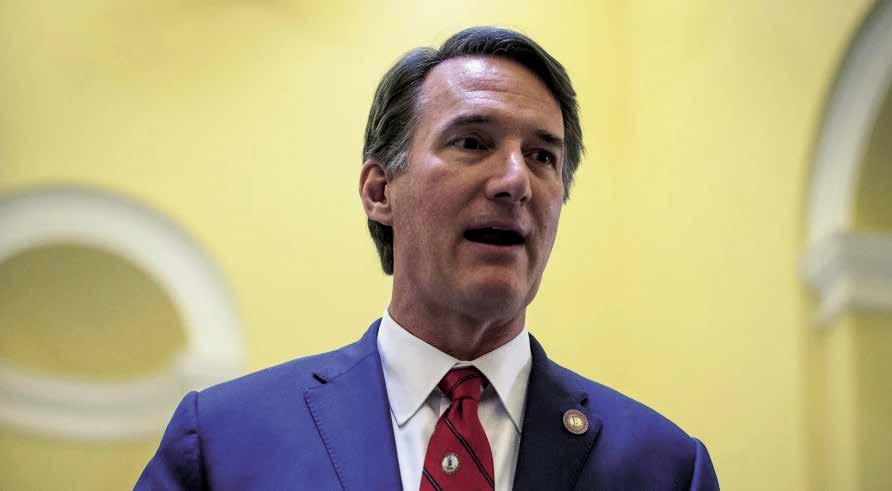
New guidelines on Trans students that remove accommodations and add instances of required parental notification were established by Virginia’s Department of Education on July 18. Under the newly elected Republican governor, Glenn Youngkin, these guidelines are a stark move away from the 2021 guidance released during Democratic Gov. Ralph Northam’s term.
Separation by sex assigned at birth for restrooms, locker rooms, and some programs is a part of the guidelines, which allow parents to opt out and request that their children use a sex-separated facility instead if federal law requires schools to allow Trans students to use facilities based on gender. Unless otherwise approved by a parent, the policies also suggest that students should be referred to by their names and pronouns found in official records.
The guidelines also instruct school divisions to discourage teachers from hiding information about a student’s gender from their parents, and say that parents should be able to object prior to offers of genderrelated counseling.
It’s unclear how widely the policies will be implemented. A 2020 state law requires school boards in Virginia to make regulations similar to the Department of Education’s guidelines. Despite the rule, only 10% fully adopted the original set of guidelines, according to the Virginia Mercury
National news highlights International news highlights
by Kali Herbst Minino SGN Intern
Peruvian court orders same-sex unions be registered in public records
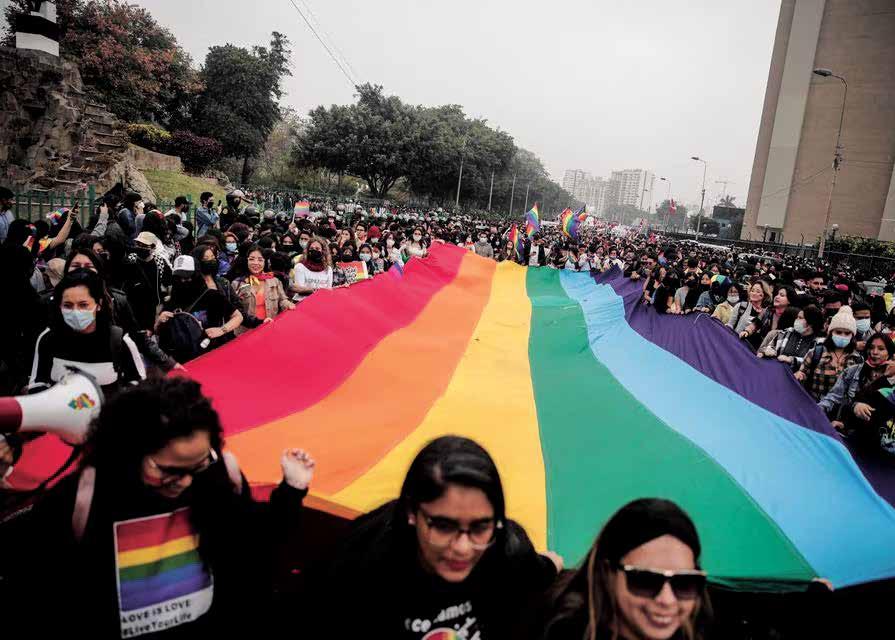
A Peruvian court ruled on July 21 in favor of recognizing same-sex unions in public records. The case was brought by a citizen who sued the country’s registration office after it didn’t record her 2019 overseas marriage.
The Superior Court of Justice of Lima ordered the office to “proceed with the registration” of the marriage. It also declared an article of the Peruvian Civil Code of 1984, which refers to marriage as union between a man and woman, inapplicable.
An appeal against the ruling is likely.
A 2021 Ipsos survey found that 68% of people in Peru supported same-sex marriage, but 61% disapproved of Gay people holding public office.
The ruling is a marked change from a 2020 case brought by a Gay couple who weren’t able to get their Mexican marriage certificate recognized in Peru. When the case was heard by the Inter-American Court of Human Rights, it was ruled that Peru recognizes marriages only between man and woman.
Countries in South America that have legalized same-sex marriage are Argentina, Uruguay, Brazil, Chile, Ecuador, and Colombia.
Legal challenge to anti-LGBTQ+ bill rejected by Ghana supreme court
The Human Sexual Rights and Ghanaian Family Values bill, which would criminalize same-sex relationships, being Trans, and advocating for LGBTQ+ rights in Ghana, has been debated since August 2021. On July 19, a legal challenge to the bill was dismissed by Ghana’s supreme court.
Louisiana governor’s veto on gender-affirming care ban overturned by state legislature
A Louisiana bill banning hormone treatments, puberty-blocking drugs, and gender-affirming surgeries for minors that was originally vetoed by Gov. John Bel Edwards is set to become law at the beginning of next year.
After the veto, the House and Senate gathered for a one-day override — only the third
of its kind in the state. The House voted 75 to 23 while the Senate voted 28 to 11.
Louisiana is one of 20 other states that have passed similar bans. In states with similar laws, like Alabama, Arkansas, Indiana, Kentucky, and Tennessee, judges have found that they violate the right to equal protection under the 14th Amendment of the US Constitution.
One argument raised by supporters of the bill is that it will prevent minors
from states where gender-affirming care is banned from traveling to Louisiana to receive it. However, a report from the Louisiana Department of Health showed that between 2017 and 2021, only a couple dozen minors received that care, with no gender-affirming surgeries reported.
According to the Human Rights Campaign, anti-LGBTQ+ laws have been introduced across 41 states this year alone.
The challenge was brought by academic researcher Amanda Odoi, who filed a lawsuit arguing the bill could impact financial support and donor aid. The court ruled that her arguments were not convincing enough for an injunction.
The bill would diminish already limited freedoms: for example, Gay sex is ille-
gal and punishable by up to three years in prison. The new bill includes sentences of up to 10 years for advocacy efforts, and publishing content considered pro-LGBTQ+ or challenging the gender binary would also be subject to prosecution.
In 2021, the United Nations warned that the bill could create “a system of state-
sponsored discrimination and violence” against sexual minorities. Under its provisions, sentencing could be reduced via a request for conversion therapy, which UN experts have warned could lead to torture.
Currently, the bill is missing one stage of parliamentary approval before becoming law.
Virginia Gov. Glenn Youngkin – Photo by John C. Clark / AP
2022 Pride parade in Lima, Peru – Photo by Sebastian Castaneda / Reuters
Episode 71: Ladie Chablis
In this week's episode, Benny and Lindsey talk about the big turnout at Tacoma Pride, what it's like to cover Can Can Cabaret, Seattle's future as a climate haven, and what musical artists really speak to them. Lindsey interviews interviews local drag darling Ladie Chablis.
NEW EPISODES WEEKLY! FIND RADIO SGN WHEREVER YOU LISTEN TO PODCASTS!