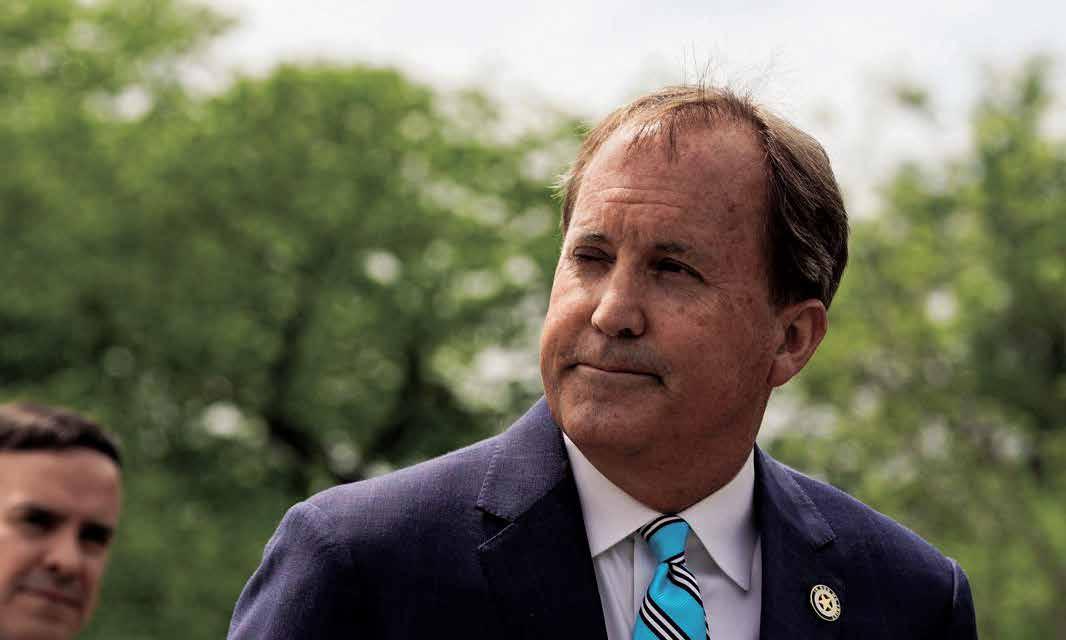
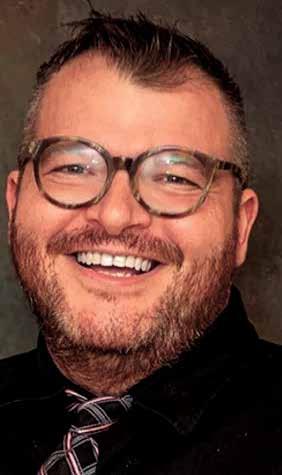
Texas Attorney General Ken Paxton gave one possible answer on June 28: Lawrence v. Texas, the 2003 case in which the US Supreme Court established a right to privacy during consensual sex.
At issue was a Texas law banning “sodomy” — defined as sex between people of the
same sex. In a 6-3 decision, the court ruled that the law violated the substantive due process rights of privacy and personal autonomy. Clarence Thomas, one of the dissenters in Lawrence, wrote in his concurring opinion in this month’s abortion case that the high court should revisit all prior decisions based on substantive due process claims, including Lawrence and Obergefell v. Hodges, which legalized same-sex marriage.
see TEXAS page 21
by Lindsey Anderson SGN Contributing Writer
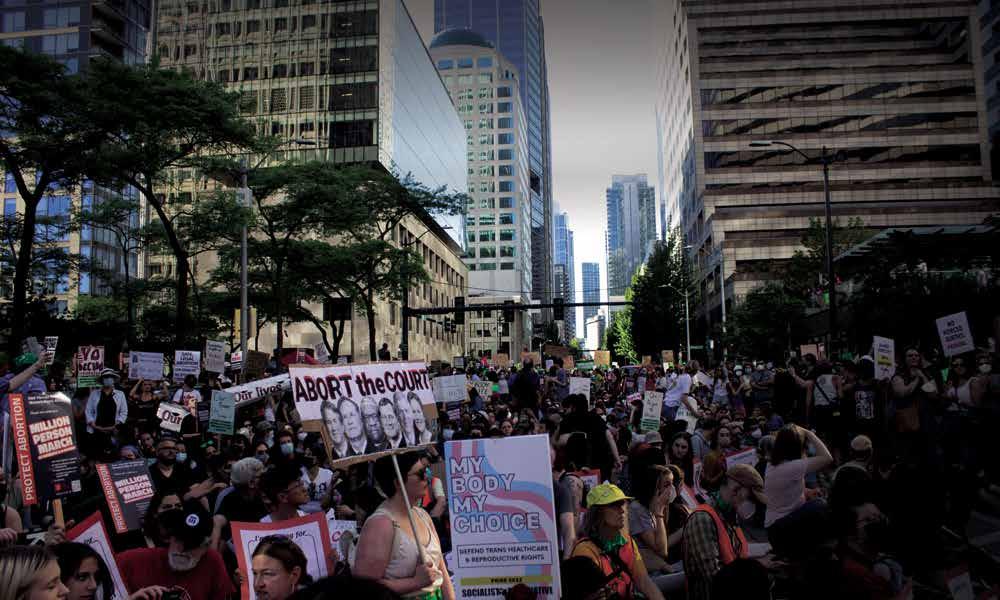
On Friday, June 24, millions across the country awoke to the news they had been dreading. The Supreme Court had overturned Roe v. Wade, effectively leaving the issue of abortion up to the states.
see ABORTION RIGHTS page 6
Grease 2 : 40 years of wanting more than the boy next door with a Pfeiffer and the Pink Ladies
by Sara Michelle Fetters SGN Staff Writer
I did not see Grease 2 when it was released during the summer of 1982. It didn’t interest me. I had just watched the original Grease on television with my parents — a big event, as it was one of my mother’s favorites. If Mom loved it, it goes without saying that I would too, right? Wrong. Sure the music was great, and
what little kid doesn’t like the colorful absurdity of the “You’re the One that I Want” finale with John Travolta and Olivia Newton-John dancing and singing about their mutual affection while making their way through all of those carnival rides? But it just felt wrong to me. I didn’t like the characters. I didn’t like the relationships. It made me feel dirty, even if I was too young to know why.
see UNFORGETTABLES page 17
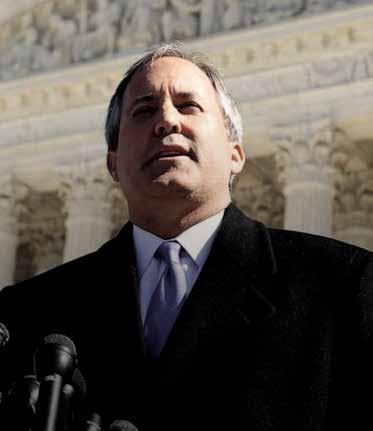
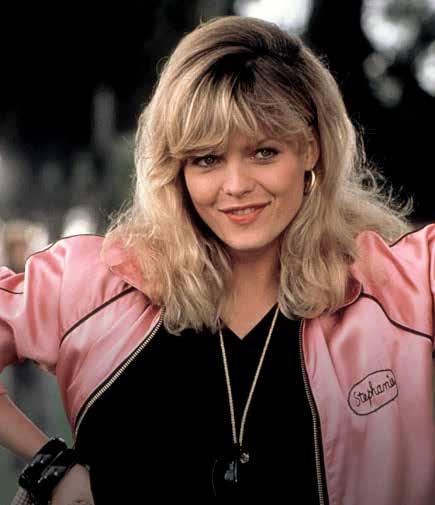
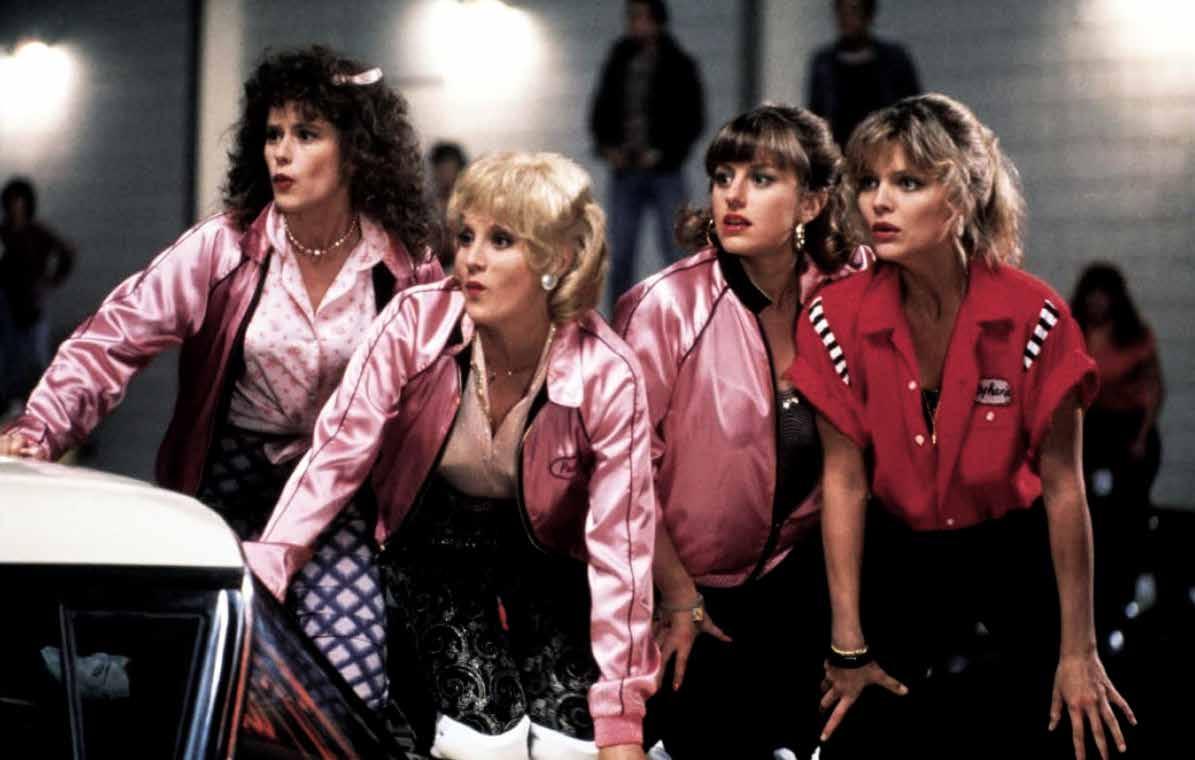
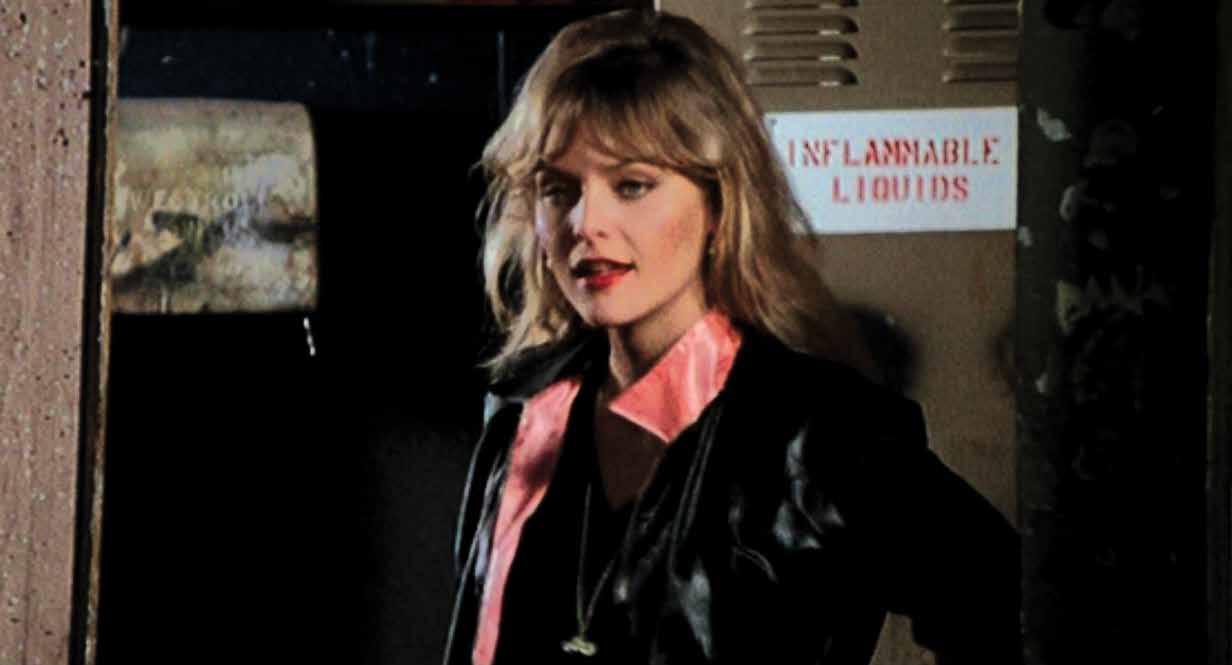
Texas Attorney General Ken Paxton – Photo by Kevin Lamarque / Reuters Michelle Pfeiffer in Grease 2 – Photo courtesy of Paramount Pictures
Photo by Lindsey Anderson
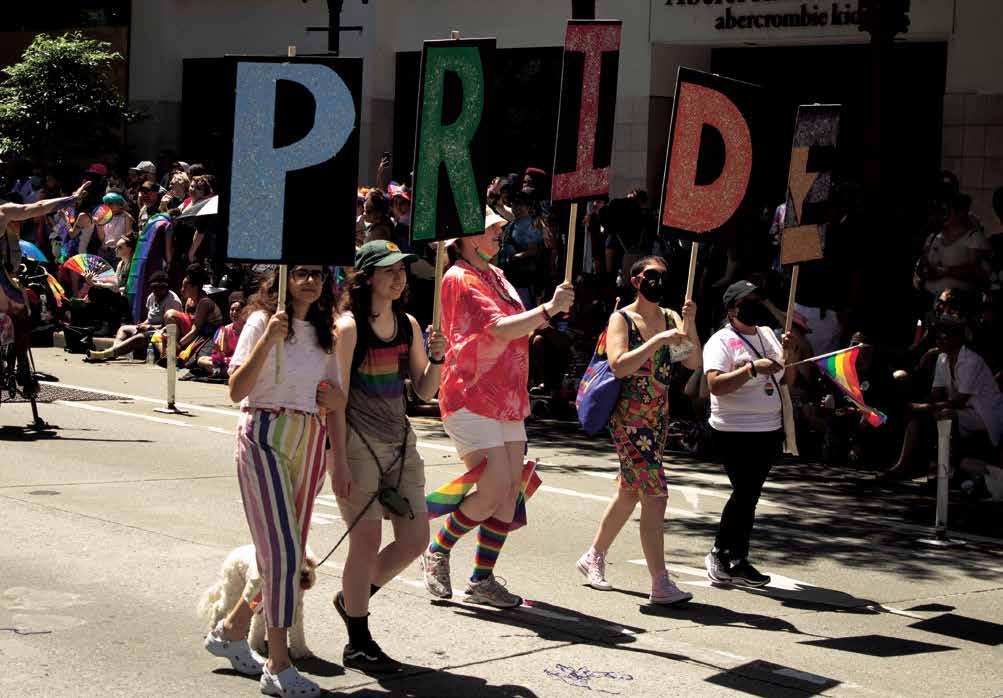
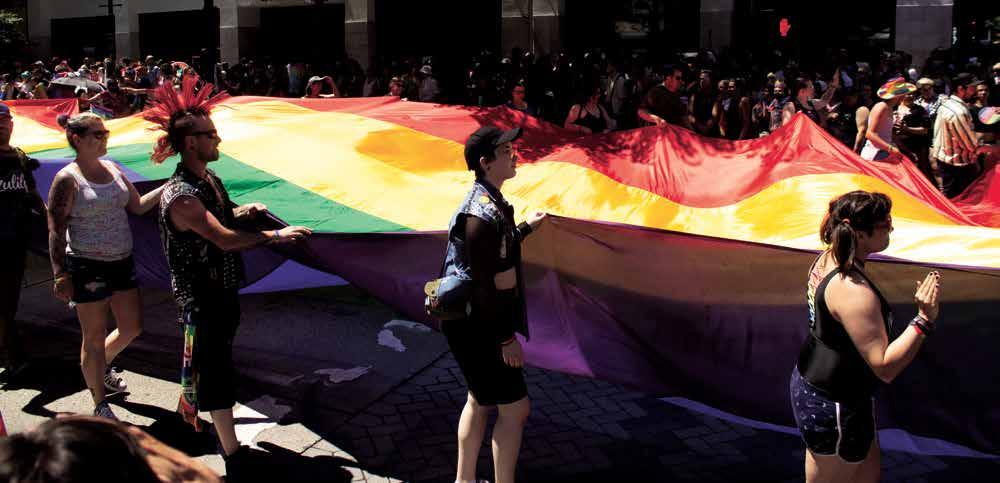
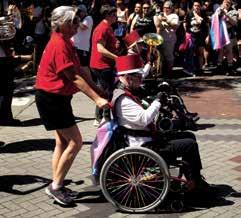
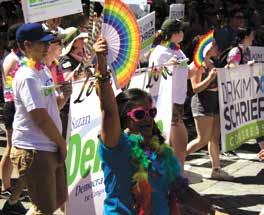
Seattle Pride Parade dazzles after two-year hiatus
by Lindsey Anderson SGN Contributing Writer
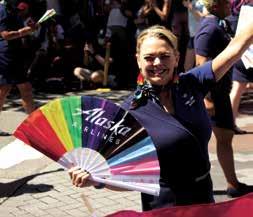
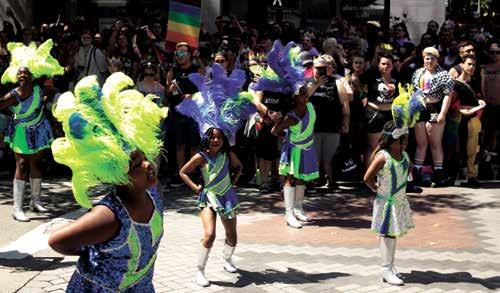
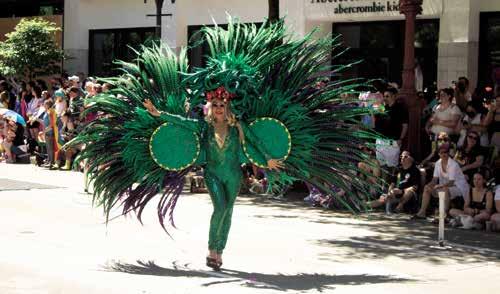
After a two-year hiatus, the Seattle Pride Parade returned to its full glory, with floats, music, and local celebrities drawing a crowd to downtown on Sunday. The festivities began promptly at 10 a.m. with speakers, including Seattle Pride’s director, Krystal Marx. At 11 a.m., the parade was fully underway on Fourth Avenue, led first by Dykes on Bikes and the Border Riders, members of the armed forces, and scouts of all kinds, then by grand marshals, including frontline workers: Alaska Airlines flight attendants, teachers, bank tellers, bus drivers, and healthcare workers.
Charities and organizations
LGBTQ+ charities and organizations made up many of the participants in the parade. Volunteers and staff members from PFLAG, the ACLU, DESC, Black Pride, Entre Hermanos, and the GSBA made up just some of the many contingents from the LGBTQ+ community.
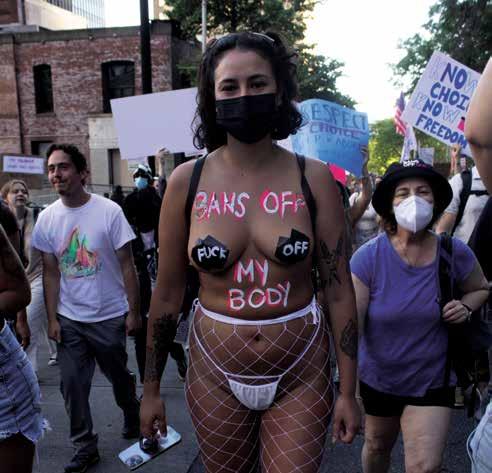
Marchers made themselves more visible by sporting colorful outfits, face paint, and signs, despite the heat (topping out at 86 degrees, Sunday was Seattle’s hottest day of the summer to that point). The weather did not deter the festivities, however. The sunshine only prompted some participants to shed their clothes.
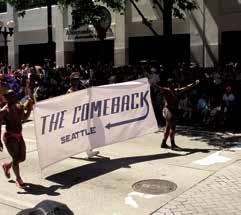
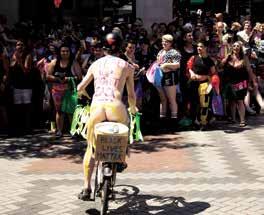
One group proved that less can be more, especially when it comes to Pride outfits. Sporting nothing but body paint, a group of cyclists paraded through the streets to raucous applause. Despite receiving flak from conservatives online later, the group encouraged body positivity and self-esteem.
Seattle professional athletes come out to celebrate
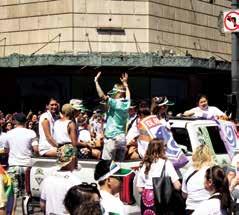
The naked cyclists weren’t the only athletes to take to the streets in celebration of Pride. Participants from all of Seattle’s major sports teams showed up in different waves of the parade. First were soccer stars representing both the Seattle Sounders and the O.L. Reign, some of whom rode through the parade on the back of a pickup truck, waving to fans as volunteers handed out exclusive Pride merch and kicked around blow-up soccer balls. Some fans lost it as players Phallon Tullis-Joyce, Ally Watt, Sinclaire Miramontez, and Quinn waved and blew kisses toward them.
Then came members of the Seattle Mariners baseball team, led by the Mariner Moose mascot, who danced and threw prizes to those in attendance. Members of the Seattle Storm followed, marching, dancing, and even riding atop a small car with the mascot, Doppler. The final sports heroes to strut their way down the parade route were the Seattle Seahawks, joined by the Seagals, who danced and cheered to Pride bops.
Local businesses
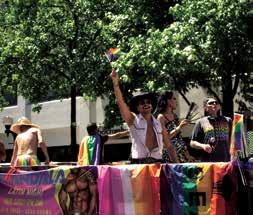
Local Queer businesses also made appearances. Announcing its reopening, The Comeback contingent featured a large banner held up by several men in nothing but sneakers and speedos. They were flanked by gorgeous drag queens enduring the heat under layers of makeup, jewels, and fringe, and were followed by a float full of drag queens and hunks performing and throwing T-shirts into the excited crowd. The float advertised the club’s special Latin night, “Eskandala,” every Sunday.
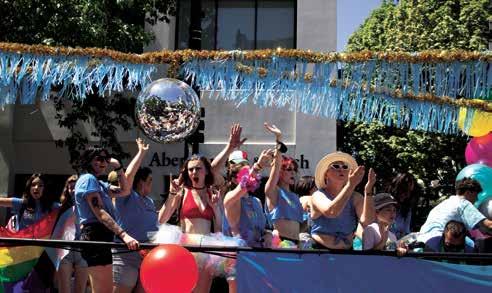
Excited to finally be back out and celebrating Pride and to demonstrate their support, attendees cheered extra loud for regional healthcare workers who paraded down Fourth Avenue. Premera Blue Cross brought prom to Pride with a blue float decorated with a disco ball and balloons. Atop the float
young people celebrated and danced along to the music, enjoying a prom they may have had to miss due to the pandemic.
UW Medicine also showed up to celebrate all the work they have done to help keep the community safe with their free COVID testing sites. Med students laughed, danced, and marched down the street with a massive football helmet–shaped go-kart.
Highlighting the arts
Community arts programs also were represented at the parade. Black Coffee Northwest came out to showcase not only their unique local businesses but also Black excellence with an iconic step-dance performance from some of the city’s youngest future superstars, to the rhythm of an ecstatic drum line that somehow transferred the energy of the crowd into the beats emanating from their instruments.
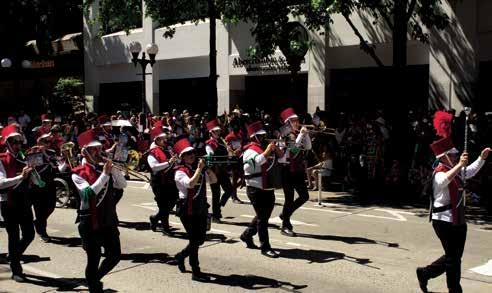
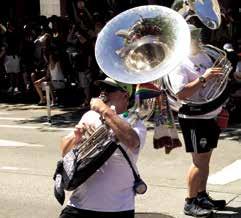
Local marching bands showered the crowd with music and love. Accompanying Seattle Soccer was a talented group of bassists who formed an iconic line in rainbow shorts. At each break in their song, one of the performers would throw out a pile of sparkles in a moment of pure joy and celebration. The Rainbow City Marching Band also performed near the start of the parade.
Abortion protests at Pride
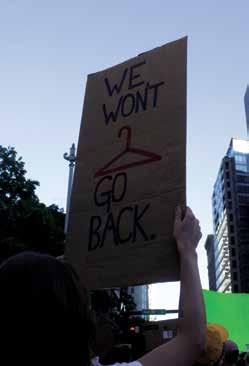
Despite the excitement, joy, and celebration, there was also an underlying air of rage, as the festivities happened to fall just 48 hours after the Supreme Court’s ruling overturning Roe v. Wade. Some activists and volunteers took this moment to highlight the issue. Signs about abortion rights and reproductive justice, and calls to “abort the court” were common among marchers regardless of the organizations they were representing.
Some protesters showed up with the single purpose of bringing attention to the ruling and reminding those in attendance that
the courts likely won’t stop at Roe. “Pride was a RIOT” read a sign held by a masked person in a pink leotard. “Don’t just vote, ACT UP,” their other sign read. Another protester who seemed to appear out of nowhere held up a brick with the word “SCOTUS” (the Supreme Court) on one side and “ACAB” (All Cops Are Bastards) on the other. With brief chants, the protesters reminded those in celebration of the legacy of the march and the importance of activism.
Capitalist takeover
Of course, it wouldn’t be the Pride Parade without corporations taking to the streets to take advantage of the advertising opportunity and rainbow capitalism. Seattle-based corporations such as Starbucks, T-Mobile, Alaska Airlines, and Boeing showed off their progressive stances by marching in colorful T-shirts and giving away keychains and other merch or goodies.
While the participation of corporations was to be expected, it left many in the crowd feeling bored. “My friends and I got sick of the corporate floats in the parade, so we just started walking in it and infiltrated all of the businesses,” said one onlooker.
Aside from the overt commercialization of Pride, some POC community members found the weekend events to be, at times, culturally insensitive. “No, seriously, why were there so many white people with dreads and braids? It was my first Pride and I was very confused,” said Seattlite Maddie May. “I lost it when I saw the white lady selling woven baskets and dream catchers,” added another observer, Angel.
Despite the heat, an apparent lack of deodorant, and the always-present PNWstyle cultural appropriation, Seattle Pride 2022 was still a space to find some joy, meet fellow members of the community, and celebrate love.
Photo by Lindsey Anderson
Photos by Lindsey Anderson
Local
ABORTION RIGHTS
continued from cover
The decision was 6-3, with the majority ruling that Roe was unconstitutional because the right to abortion was “not deeply rooted in the Nation’s history and traditions.” Justice Alito, who wrote the majority opinion, said that the Roe case, which inferred a right to privacy under the 14th Amendment, was wrongly decided nearly fifty years ago.
In the original decision, Justice Blackmun wrote for the 7-2 majority that a woman’s right to medical privacy is protected by the 14th Amendment. The ruling meant laws that policed a woman’s body were unconstitutional. The court did, however, acknowledge both sides of the abortion debate by implementing “trimesters” as a form of compromise. Under Roe, abortion would be federally legal in the first trimester and cannot be regulated by state laws. In the second trimester, abortion could be regulated for the protection of the mother’s health but not banned. In the final trimester, when the fetus is considered “viable,” states could ban abortion with exceptions for cases when the mother’s life was at risk.
A 1992 ruling upheld Roe but changed the trimester framework, allowing states to regulate abortions before fetal viability as long as a “substantial obstacle” or “undue burden” was not added.
Dobbs v. Jackson Women’s Health Organization officially reverses all of this, now
making it possible for states to regulate and ban abortion from conception. Because some states and lawmakers consider life to begin at conception — not implantation — forms of birth control such as IUDs, which prevent a fertilized egg from attaching to the uterus, are also under attack.
Trigger bans go into effect
Thirteen states had already placed “trigger” bans on the books, meaning that as soon as the court announced that Roe had been overturned, total bans on abortion were immediately set in motion. Among those states is Washington’s neighbor, Idaho.
The new laws, expected to go into effect within the next 30 days pending litigation, deem anyone who provides or attempts to provide an abortion a felon, with a penalty of two to five years in prison. Healthcare professionals who are charged will have their licenses suspended for up to six months and permanently revoked after a second charge.
Furthermore, states with immediate abortion bans also consider the use of Plan B or any attempt to terminate a pregnancy after just 14 days a felony. For most, two weeks is not early enough to detect an unplanned pregnancy. At-home pregnancy tests don’t even work until four weeks.
Because of the severity of these state laws, Washington, which allows abortions up until week 25, is expected to see a drastic influx of patients from other states seeking the procedure.
What does overturning Roe mean for other 14th Amendment rulings?
The 14th Amendment, which was passed in 1866 following emancipation, includes a clause that reads, “No State shall make or enforce any law which shall abridge the privileges or immunities of citizens of the United States; nor shall any State deprive any person of life, liberty, or property, without due process of law; nor deny to any person within its jurisdiction the equal protection of the laws.”
Because Dobbs says that the 14th Amendment was applied incorrectly in the original Roe ruling, some wonder if the justices will also reconsider other cases based on the right to privacy. These include Loving v. Virginia (the right to interracial marriage), Lawrence v. Texas (legalizing sodomy), Griswold v. Connecticut (legalizing contraception for married couples), and Obergefell v. Hodges (legalizing marriage equality). While the majority opinion said this should not call other cases into question, conservative justice Clarence Thomas did mention in his concurring opinion that the court should reexamine such cases.
While Americans are less concerned that Loving v. Virginia will be overturned (Thomas, who is Black, is married to a white woman), there is a reasonable fear that other cases mentioned by Thomas might be next.
“I think this is not over,” Vice President Kamala Harris told CNN on Monday following the ruling. “I think [Thomas] just said the quiet part out loud, and I think that is
why we all must understand the significance of what just happened. This is profound.”
Many are now wondering — now that the Supreme Court has overturned a nearly 50-year-old precedent — what else it will do.
Calls for judicial impeachment
Three justices (Amy Coney Barrett, Brett Kavanaugh, and Neil Gorsuch) made clear under oath at their confirmation hearings that Roe was an established precedent, despite having now joined the majority to overturn it. Americans are now calling out their hypocrisy, and some are even demanding their impeachment.
Rep. Alexandria Ocasio-Cortez condemned the justices at a rally in New York City on Friday, and later told NBC’s Meet the Press, “They lied, and I believe lying under oath is an impeachable offense, and I believe that this is something that should very seriously be considered.” Ocasio-Cortez also singled out Justice Thomas, whose wife was heavily involved in the January 6th insurrection but has refused to recuse himself from a case involving her.
Despite calls from Ocasio-Cortez and the American people, impeachment is not likely. While it is possible to impeach members of the Supreme Court, the procedure calls for a 2/3 majority in the Senate. Democrats and Republicans are currently split 50-50, and while Vice President Harris could break a tie, that of course would not be enough.
Photos by Lindsey Anderson
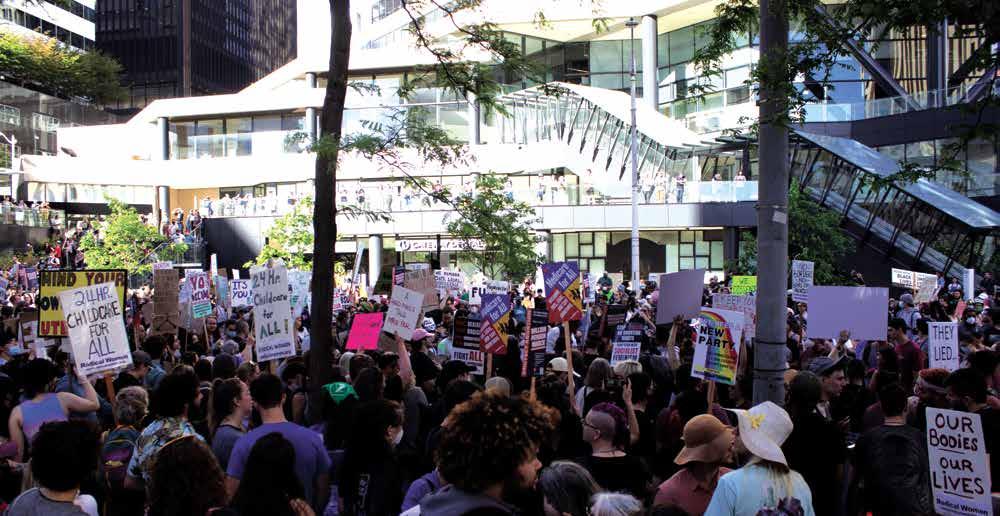
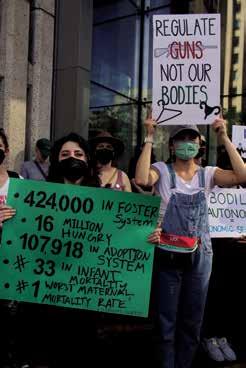
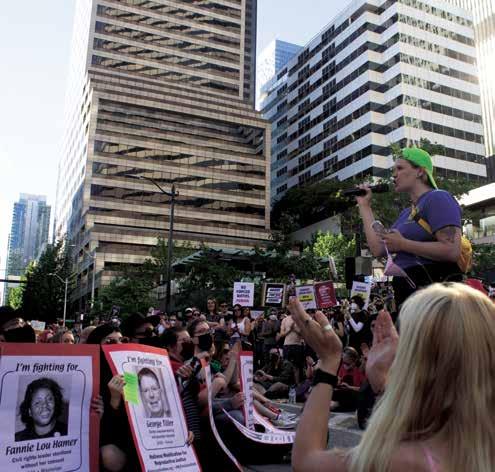
Across the country, angered Americans took to the streets on Friday to protest the Supreme Court’s decision. In Seattle, the light rail system was backed up on Friday afternoon as protesters in the hundreds made their way downtown to express their anger. One young protester, Kennedy, sat on the floor of the train working on her sign. “Honestly, I’m just really upset, and so I’m going to the protest. I talked to my grandma this morning, and she was like, ‘Just do what you can,’ so here I am, this is what I’m doing,” she said.
Protesters gathered at the Federal Building downtown to share their anger, mourn the loss of their rights, and vow to continue fighting.
“When the decision came down this morning, my cheeks just flushed with rage,” said Kelly Froh. “No one is surprised that this happened, but we’re just feeling very emotional about it today, and I just wanted to be with other women, with other people, today.”
Froh was honest about her despair, sharing a sense of hopelessness protesters across the country carried with them. “Do I think a protest is going to turn it all around? No, but I think that’s where connections are made, where people can feel some solidarity. So I painted a dumb sign, and down I go downtown. I’m just hoping for solace in the fact that so many people are affected by this and it’s horrible,” she added.
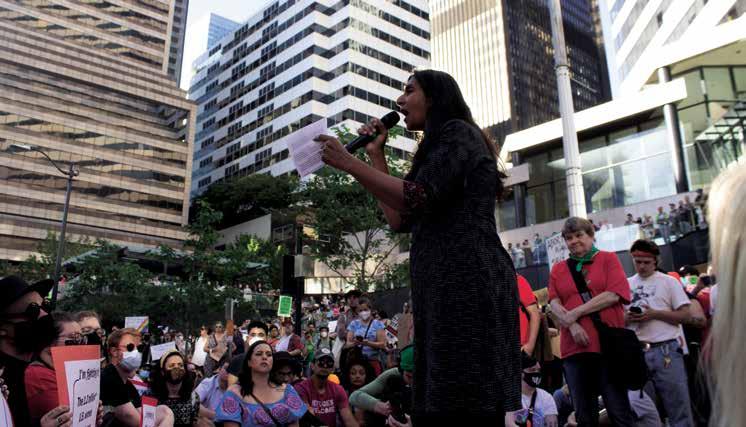
A massive crowd filled the steps of the Federal Building and overflowed onto the sidewalks and across the street. The energy of the event rose with each speaker who stepped forward to share their stories, condemn the Supreme Court decision, and unite with others through their shared emotions.
Seattle speaks out
For the sake of anonymity and safety, many speakers at the rally only used their first names.
Some speakers, like Darnelle, addressed the effects the ruling will have locally. Despite Washington remaining one of the most liberal states in the country and not changing its abortion laws, the state will still be impacted by those in neighboring areas who now may travel here to receive healthcare.
“Our state is expecting a 300% increase in abortion demand from other states,” Darnelle said. “We must welcome, support, protect, and fund our sisters from out of state. If you can fund abortion, do so.”
Other speakers, like Christina from the Freedom Socialist Party, reminded listeners of the intersectional repercussions the ruling will have. “The high court of this country has eroded or terminated access to safe and legal abortion for women, and Transgender and Nonbinary people. This will have a terrible impact [on] all women, but especially… for low-income women, women of color, young women, and Transgender people. Poverty will increase, and the health and well-being of many will
decline. I hate to say this, but there will be lives lost because of this horrible decision.”
Some speakers shared personal stories, like Angela, a student of social welfare, who shared her experience with abortion. Six months into a pregnancy she had planned and was excited about, Angela found out her baby had died.
“The doctor came into the room, and he told me three things. He told me that my son had died, he said that I had the option to go home, even though at that point my life was in danger because I was already having some complications, and that if that didn’t work, just going home to see if I would give birth to that baby. He said, ‘You need to find another doctor, because I will not perform the procedure that you will need to save your life.’
“That was because of his political beliefs and complete disregard for my life,” she continued. “I don’t ever want to hear a story like mine again. I don’t want to know that there are women out there who are being denied healthcare by their doctors because they don’t want to perform a procedure that would save their life.”
Protesters take part in civil disobedience
After several speakers, an organizer with Rise Up 4 Abortion Rights came forward to declare that the event would include civil disobedience. For 49 minutes, people were asked to occupy the streets, one minute for every year Roe v. Wade was in effect.
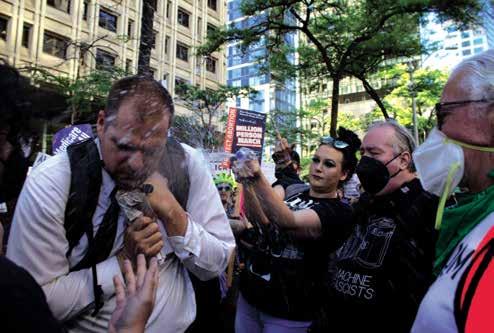
Somberly, the activists took to the streets. Counterprotesters joined, egging on the abortion activists with signs about heaven and hell. One man stood in the center of all the action, dressed in a white dress shirt and tie, and read his Bible aloud. All around him, protesters took out their anger on the religious right, dumping water on the man’s head and ripping out pages of his Bible.
In the middle of the street, protesters sat down and held up their signs. Cyclists barricaded the intersections on both ends of the block, protecting the protesters.
Two protesters taking part in the civil disobedience were Frances and Jo. Frances said they were protesting “because fuck the establishment we are currently in.”
“Yeah, I am pissed with the SCOTUS. They should not have overturned that decision that’s 49 years of precedent, and I’m frustrated, as someone with a uterus,” Jo added. “They’re not listening, and it’s time they fucking listen.”
“The only way we are going to make any change is if we revolt, and that’s why I’m here,” Frances said.
Once everyone willing to risk arrest to participate in the civil disobedience had filled the street, more speakers came out to the center of the action. They included medical assistants from Planned Parenthood, activists from local political organizations like Rise Up 4 Abortion Rights, and concerned students and young people.
see ABORTION RIGHTS page 9
Protesters take to the streets in Seattle
Photo by Lindsey Anderson
SCOTUS rules in favor of praying high school coach Local News
by Mike Andrew SGN Staff Writer
Only three days after its decision overturning Roe v. Wade, the US Supreme Court issued another ruling upholding religion over secular values.
In a 6-3 decision handed down on June 27, the court ruled that public school teachers may pray in public and on school property and invite students to join them. It was the same majority as in the abortion rights case.
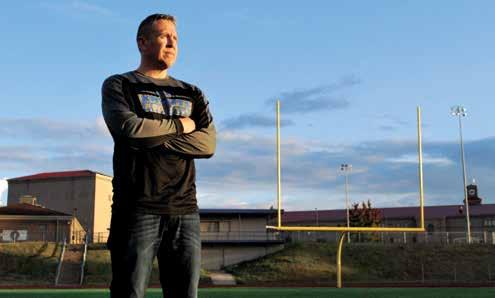
The case, known as Kennedy vs. Bremerton School District, involves a Washington state high school football coach, Joseph Kennedy, who customarily knelt to pray on the 50-yard line of his school’s football field after games. He invited his players and other students to join him in prayer.
A 20-year veteran of the US Marine Corps, Kennedy started coaching Bremerton High School in 2008. Initially he prayed alone, but in public, at the end of games. Subsequently, students and players joined him, and he began giving short talks with religious references.
When school district officials learned of his prayers and talks, they asked him to stop. Initially, he said he would comply and
ABORTION RIGHTS
continued from page 7
Kshama Sawant speaks out
One of the biggest reactions from the crowd was for Seattle City Councilmember Kshama Sawant. “Millions of people are rightly angry at this ruling, and thousands, maybe even hundreds of thousands, are protesting today across the country,” Sawant said. “Our anger cannot simply be at the Republicans and the right wing — while certainly, they have been the instigators of this. The Democratic Party and its affiliates have enabled this to happen. Democrats have had 50 years — 50 years — to codify Roe into law. They have utterly failed to do so.”
Sawant argued that the Democrats failed to codify Roe because of the influence of capitalist donors who aid their political careers. She recalled the leaked ruling, which informed the public over a month ago that Roe would soon be on the chopping block. “Even with the leak, the same Democratic Party completely failed to form any kind of semblance of a fight back,” she said.
“When this ruling came out this morning, so many people around me asked, ‘What do we do? Where do we go from here?’ And I say regardless of anything else, if we don’t learn one lesson, then nothing else is going to work. If we take one thing away from what has happened, it is that we cannot put our trust in the institutions or the Democratic Party. We need to organize independently to win back our rights,” she said to a roar of applause.
Unlike other politicians who have spoken out against the decision and voiced their sadness or anger, Sawant called for action and informed the crowd of her plans to use her position to help solidify abortion access in the Pacific Northwest. “This morning, from my office, I announced legislation to make Seattle a sanctuary city for abortion rights,” she said.
“We, unfortunately, will not have the jurisdiction to make those warrants go away, but what we can do is tell Seattle police that this is not your priority to arrest and prosecute people for getting an abortion. Our message to our [sisters] nationwide is to let anyone come to Seattle without fear of prosecution,” Sawant continued.
“We are also calling on the governor and state legislature to pass legislation to make the state a sanctuary state for abortion rights. My office will also be bringing a people’s budget amendment to the budget, to make abortion in Seattle free for anyone. And how will we pay for it? Tax the rich!”
for a while, he stopped leading students in prayer in the locker room and on the field.
But, he said, he wanted to continue praying on the field himself, with students free to join if they wished.
The district told Kennedy he was free to pray on the 50-yard line if it didn’t interfere with his official duties, or when he was off duty, but doing so immediately after a game
ended could be seen as the school endorsing religion, which was prohibited both by statute and the US and state constitutions.
When Kennedy refused to stop praying after games, he was terminated and subsequently sued the school district, claiming that his First Amendment right to free exercise of his religion had been infringed.
“Joseph Kennedy lost his job as a high
school football coach because he knelt at midfield after games to offer a quiet prayer of thanks,” Justice Neil Gorsuch wrote for the majority. “The Constitution and the best of our traditions counsel mutual respect and tolerance, not censorship and suppression, for religious and nonreligious views alike.”
“Both the Free Exercise and the Free Speech clauses of the First Amendment protect expressions like Mr. Kennedy’s,” Gorsuch concluded.
In her dissent, Justice Sonia Sotomayor wrote that the Constitution neither requires nor authorizes public schools to allow officials to pray “at the center of a school event.”
She cited the same sections of the Bill of Rights as the majority, writing that they protected students who have a right to education free from government-exercised religion.
“Official-led prayer strikes at the core of our constitutional protections for the religious liberty of students and their parents,” Sotomayor wrote.
While Gorsuch wrote that students were not compelled to join Kennedy’s prayers, Sotomayor noted that “some students reported joining Kennedy’s prayer because they felt social pressure to follow their coach and teammates.”
Sawant finished her speech by reminding the crowd that progress is not necessarily made by voting but by acting.
“Fighting for our rights and winning back those we have lost means fighting for socialist feminism. Socialist feminism means basing ourselves on working-class struggles. Socialist feminism means recognizing that it is no accident that the Democrats have failed to codify Roe and are still not fighting — it’s because the party is in defense of the capitalist system, and the needs of billionaires are always above the rights of ordinary people and the oppressed. They are always defending the rich, and know they’ll have abortion rights, regardless.”
Activists march through downtown
After the speakers finished, the organizers of the event called on those in attendance to participate in a march downtown. Protesters grabbed their signs and made their way along the streets to chants of “Abort the court!”
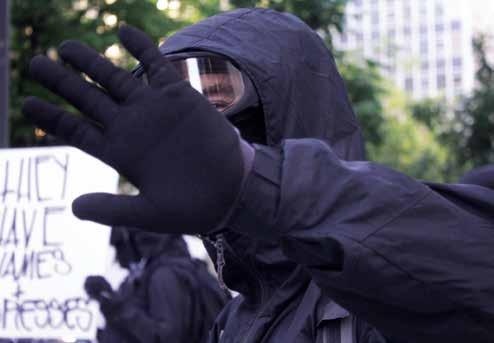
Anti-fascist protesters also showed up on the margins of the procession, knocking on glass windows and overturning garbage cans. They held up flares and signs that read, “You said you’d riot!” The protesters received support from onlookers, who recorded and cheered them on.
A small group of counterprotesters tried to engage with marchers but were quickly shoved aside by the masked anti-fascists, which later drew a greater police presence to the scene.
Peaceful protesters scattered toward the far side of the street as the march returned to the Federal Building, and police began making arrests. At one point, small tear gas canisters were unleashed, although it was unclear whether they were from police or anti-fascist protesters.
Once everyone had made their way back to the stage, a few more speakers stepped forward — including one of the youngest members of the protest, an 11-year-old who shared their outrage at the court despite not fully grasping the complexities of the federal system.
As the event wound down, community leaders urged those moved to action to continue to come out and support Rise Up 4 Abortion Rights protests and marches and asked for anyone financially able to donate to support those coming to the state in need of an abortion.
For people who turned out, especially first-time protesters, the event was very empowering. Two friends, Megan Lee and Keiko Betcher, reflected on everything they saw on Friday. Lee said she decided
to show up “because the SCOTUS fucking sucks. It’s an injustice for women’s reproductive rights. How are we going back to a time when reproductive rights were impossible? Like, that’s just unbelievable.”
Despite their rage, Lee and Betcher found the event inspiring. “I thought it was super empowering,” Lee said. “It was cool to see a bunch of people mobilize. I mean, it’s Seattle, so obviously, there’s going to be a bunch of people doing their stuff, but it was empowering to see a bunch of people go. I didn’t think that many people were going to show up.”
“Yeah, it’s cool that it happened in, like, a day,” Betcher added.
Community action
Refuse Fascism, Students 4 Abortion Rights, and Rise 4 Abortion Rights will all be hosting ongoing protest events for the foreseeable future. For more information on how to join, visit https://riseup4abortionrights.org.
The organization is also supporting an ongoing economic protest in which uterusowning people and their allies are being asked to withhold spending money so as to crash the federal economic system and bring attention to the crisis facing reproductive justice.
Photo courtesy of First Liberty Institute
Photo by Lindsey Anderson
Books Say “Oh, Hello Again” to Nook and Cranny Books
By Lindsey Anderson
SGN Contributing Writer
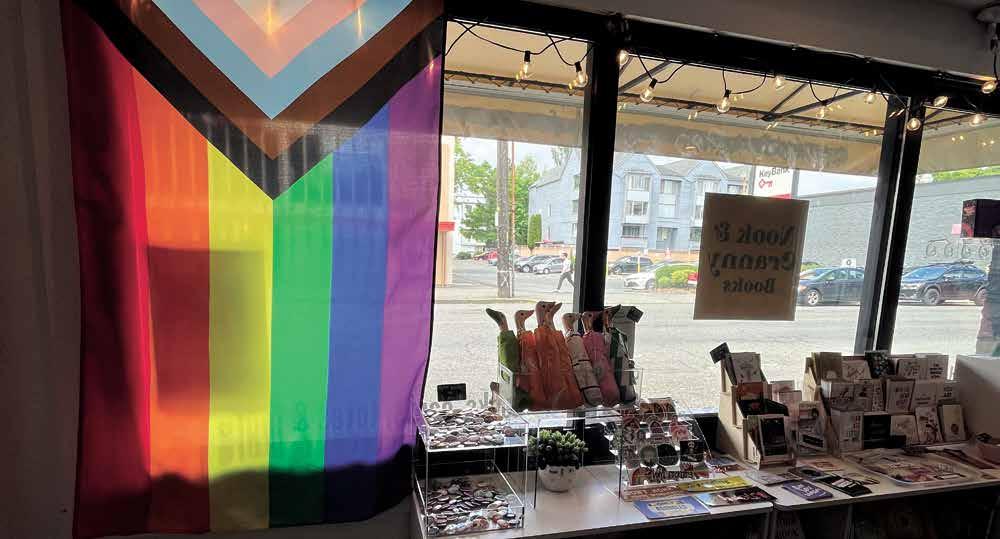
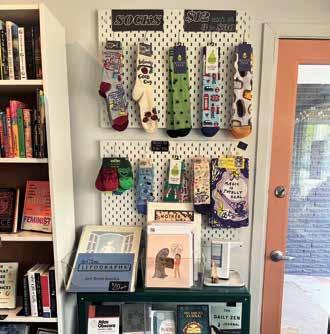
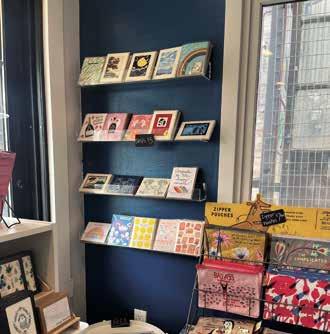
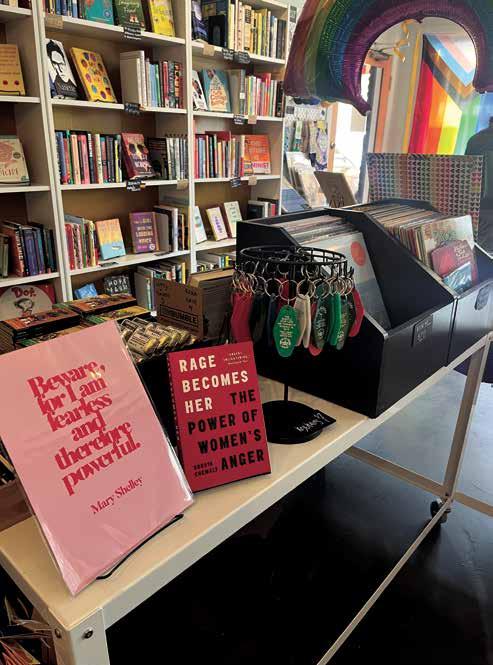
Seattle’s newest indie bookstore opened its doors on Capitol Hill this past weekend to a warm welcome. Selling everything from books to totes to stickers, the unique store has already become a hidden gem in one of the city’s most iconic districts.
Nook and Cranny Books, formerly known as Oh, Hello Again, celebrated its soft launch by bringing a bit more cheer, color, and sparkles to the neighborhood during Pride weekend with a drag queen story hour hosted by local icon Visage LaRue.
“It was so much fun!” gushed the store manager and sister to the owner, Elle Commandant. Commandant is excited to start working at the new bookstore and said that opening Nook and Cranny was a dream come true for her sister, Maren Commandant.
“She just bought [the store], and we did the big opening last week,” Elle said with a smile. “The opening went well. It was a lot of fun and quite busy, which is always good for the first day.”
Elle said her sister has always been a lifelong reader, and when the chance to buy Oh, Hello Again presented itself, she jumped at it.
“She had wandered in here while it was still Oh, Hello Again,” Elle said. “She loves
bookstores and never stays away from them… A lot of [the former owner] Carrie’s curations in here were also things my sister loved. She found herself going through the shelves, like, ‘I need to read this! I need to read this!’ …She loved the space.
“So, after talking more with Carrie, she found out [Carrie] was going to be leaving the country and needed a new owner to take over, so it just worked out.”
“Finding this little shop felt serendipitous. In the midst of my rigorous planning for The Rascal Cook, and the discouragement that came when I realized it would take a cool million to build out a commercial kitchen from scratch, I read in the CHS newsletter that there was a bookshop for sale intact,” Maren said.
“It felt like a pipe dream at first, but the moment I walked in and saw it in person I knew it had to be mine. It was so inspiring to see the space and all the possibilities in spite of its size. Because I definitely plan to hold micro community events. I want to do a literary-themed dinner series and readings from local authors, possibly host a book club. A good friend of mine came to do Drag Queen Storytime for Pride weekend and I plan to make that a regular thing come fall...perhaps including an adult story hour as well.”
Maren’s passions include book selling and culinary arts, and she hopes to com-
bine the two one day. “I am a chef by trade – still catering even now to help supplement the new business venture – and my original business plan, cultivated in 2020 during the height of the pandemic, was to have a fullservice book cafe with a prix fixe menu, beer and wine bar, and, of course, books. It would be called The Rascal Cook: Books & Brews and it would be a community space to celebrate storytelling in all forms. While all of that may still happen for me one day, it is just the grown-up version of my very real childhood dream of having a bookshop – or a library with a ladder,” she said.
While dedicated readers and lovers of Oh, Hello Again were sad to see the bookstore close its doors, Maren was determined to bring the unique reading space back. She has spent several weeks curating some of the best titles and setting up the colorful shop. Although the store has only been open now for a week, Elle says it has already become a must-see for people in the neighborhood.
“I love working at the bookstore. It’s a great spot,” she said. “Happy vibes in here, and the neighborhood is really sweet! There’s a lot of good people around.”
Despite the store’s Capitol Hill location, Maren and Elle do not live in the neighborhood, so meeting the residents has been a highlight.
Unique genre curations
While there are several indie bookstores on Capitol Hill and North Seattle, where the sisters call home, Elle says Maren’s special touch sets Nook and Cranny apart from the rest.
“I would say a big part of it is, you know, when people come in, giving them that space to explore and fall in love,” Elle said. “When you go through the books, you notice that they’re not organized traditionally. You know, we don’t have a nonfiction section or a sci-fi section. It’s a little more specific than that.”
The organization style at Nook and Cranny is unique. Instead of lumping books together based on traditional genres, Maren has created new ones. Sections in the store include “cheaper than therapy,” “banned books,” “to feel like a kid again,” “for the socially awkward,” “when you have a short attention span,” and a personal favorite, “for twentysomething men.”
“The non-traditional organizational style is great. It was one of the things that attracted me the most about the previous shop because it is exactly how I shop for books,” Maren said. “The previous proprietor was more focused on the therapeutic aspect of reading fiction, while I just like the fluidity of the system and how it offers a glimpse into our
Like every kid in the world, the one you love has a zillion questions.
“Why” begins with ants and runs through zebras. “When” goes from astronauts to zoos. “Who” from aunties to, well, you. So why not keep a few books around for the kiddoes, books that entertain and gently inform?
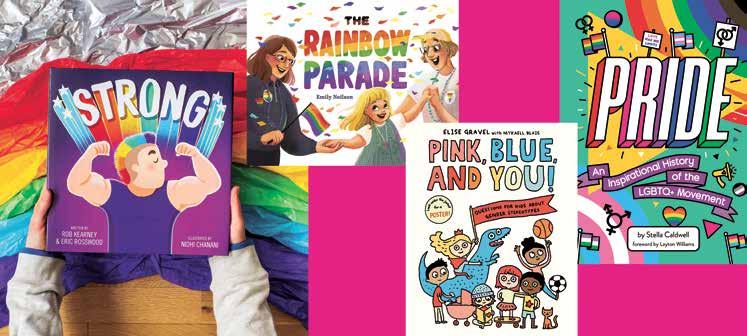
Life is better when you have a friend, and in Strong by Rob Kearney and Eric Rosswood, illustrated by Nidhi Chanani (Little, Brown, $17.99), a guy named Rob has always been one of the strongest guys around. When he decides he wants to compete, he finds someone to work out with him and they fall in love — but when Rob goes to the competition, everybody whispers about him. Why does he look so strange? Four-to-six-year-olds will be glad to see that when the right kind of cheerleader arrives, looks don’t matter at all.
Kids who got to see a Pride parade for the first time this year will want to own The Rainbow Parade by Emily Neilson (Penguin Dial, $17.99). It’s the story of Emily, who celebrates Pride with Mommy and Mama and a whole lot of people who are having a really good time. But to be in the parade? Not Emily — or maybe. Four-to-seven-year-olds who are new to Pride will want you to read this book aloud at least once a week.
NOOK AND CRANNY
continued from page 10
unique relationships with certain books. I want to come across Fight Club next to a picture book on bullying in a section called ‘On Expressing Feelings.’ The method has more soul. It certainly tells a story all on its own and that is what the shop is all about. Some folks may be frustrated by the apparent lack of organization. But if you’re looking for a specific book, we do have ways of easily finding it. And maybe you’ll be surprised by the thing you find on the shelf beside it!”
Despite the nontraditional organization, each section is designed with deliberate intention. The shelves are a walk-through book-recommendation experience.
“It kind of creates an environment where it encourages more exploration and helps people find something they may not think to look for before and perhaps fall in love with a new genre,” Elle said.
All kinds of books are found in these unique sections. “We even have kids’ books scattered throughout the sections, because people often ignore those, but there are some real gems out there,” she added.
The store already has the neighborhood talking, and Elle says it is all because of the unique new genres they’ve created.
“I would certainly say a big part of it would be the way she has chosen to organize the books in that nontraditional manner,” Elle said. “It is a little more interpretive. …The way [Maren] explained it to me was: if you need something then you look for that, and then there are books you don’t expect to find there, for example… if you’re just needing that escape from general life [or] you need something to just shock you at that moment.
…I haven’t seen that in any other bookstores.”
LGBTQ+ representation
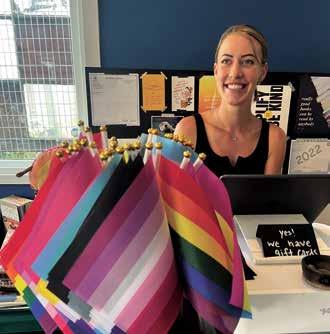
LGBTQ+ inclusion is a staple of the store, which is currently decked out in rainbow flags, balloons, and artwork to celebrate Pride. “We want this to be a safe space 100%, and welcoming for everybody,” Elle said.
“The mission of Nook & Cranny remains the same: to celebrate the stories in our community. I love the concept of the Community Table where strangers come together to find connection and I think that
Slightly older kids may appreciate having Pink, Blue, and You! by Elise Gravel with Kykaell Blais (Random House Kids, $17.99) to check with now and then. This book touches on some of the things that kids hear but don’t understand. Are there “boy things” and “girl things,” and if there are, who decides who can play with them? You can be a boy or a girl, but what if someone thinks they’re both? Who made all these rules, anyhow? For seven-to-tenyear-olds who need the blanks filled in on their gender education, this is a good choice to give. Bonus: you might learn a thing or two, as well.
For teens who are trying to figure things out for themselves, or for 12-to-17-yearold allies, Pride: An Inspirational History of the LGBTQ+ Movement by Stella Caldwell, foreword by Layton Williams (Penguin Workshop, $14.99), is a great book to give or have around. It’s filled with quick-to-read, different-length entries on a variety of people, places, and things your teen will want to know about — things like what it was like to be gay in the 1950s, the early days of legalized same-sex marriage, early Pride celebrations, and pioneers who
can apply to my little space as well,” Maren said. “I want people to come and feel like they’re meeting friends, be that in the form of books or other humans.”
“I am a queer business owner, and it was an unplanned delight to be able to open my shop during Pride Week,” she continued.
“One thing that I really want to make part of the culture of curation in the shop is nor-
malizing queer stories. I do have a section called ‘Gender and Identity’ and another on ‘Allyship’, but a lot of those books will be distributed throughout the store because I think it’s important to encounter those stories even when we’re not actively looking for them. I feel the same about stories involving race and racism and other ‘hot button’ topics. I do have a section for them, but you will
came out strong when it was illegal to do so. Teens and young adults who are Trans, Gay, Lesbian, or Queer also get a chance to weigh in on why they “have Pride.” Varied, interesting, and informative, this is one of those books that an adult can absolutely be caught reading. If these great books don’t quite fit what you’re looking for for the kid you love, be sure to ask your favorite librarian or bookseller for help. They’ve got answers.
definitely find them integrated throughout because the people these stories are about do not disappear just because you aren’t looking for them. We’re living our lives whether the rest of the world is woke or not.”
The Commandants have also scattered LGBTQ+ books across the store, hoping readers who may not look for those titles will stumble across them.
“Maren has put little Pride flags in front of different sections, indicating that there are [relevant] books in that section,” Elle said, “but she wanted to space them out, because people might not think to look for those books, and she does want them to have more exposure.”
So far, the store has made all sorts of sales, with no one genre or style of book more popular than another. “It has seemed pretty diverse,” Elle said of the sales made so far. “I’ve noticed people pulling from all sorts of different sections. I think that’s one of the fun things about this area, that there’s just diversity as far as the… people coming in. There has been quite a range.”
One trend Elle has noticed is the popularity of kids’ books, for readers of all ages. “Honestly, my favorite right now is a kid’s book, Julien Is a Mermaid. It is just a stunning book, with a beautiful message and artistry throughout…. There was another one called the Knight and the Prince, which is kind of a slightly nontraditional prince tale, where he falls in love with a knight.”
The popularity of children’s books is linked to the events the store has already held, like drag queen story hour, which encourages family and community engagement. Elle says Maren is planning more community events to follow the success of the past weekends’.
“There’s more to come. I know there will be some more great events that Maren will be trying to make happen. She will be trying to incorporate some of her culinary skills as well.”
For anyone looking to discover a surprising new book, or in need of a curated selection, stop by the city’s newest bookstore, Nook and Cranny, in Capitol Hill.
Nook and Cranny is located at 324 15th Ave. E.
Images courtesy of the publishers
Photos by Lindsey Anderson
Butler’s showstopping magnificence powers Luhrmann’s visually chaotic Elvis
by Sara Michelle Fetters
SGN Staff Writer
ELVIS
Theaters
Elvis is undeniably a motion picture directed by Baz Luhrmann. The Aussie wild man behind Moulin Rouge! and The Great Gatsby strikes again.
An explosively colorful exercise in music, momentum, and visual carnage, this is an eye-popping, hagiographic look at one of the most iconic musical figures of the 20th century. The drama is absolutely nuts, and those who were expecting anything else likely have no idea who Luhrmann is or haven’t seen any of the insane, love-them-or-hate-them titles that make up the bulk of his filmography. Is this a biography of Elvis Presley? Not sure I’d go that far. The screenplay, written by Luhrmann, Sam Bromell, Craig Pearce (Strictly Ballroom), and Jeremy Doner (Heartbreaker), is a burst of volcanic potpourri, bouncing through signature moments in Presley’s life with a cartoonish urgency that’s both spectacular and obnox-
ious. I’m in the camp that the former adjective wins out over the latter, but it’s a pretty close race, and I have no idea what general audiences are going to think when they get a look at the film for themselves.
It should be noted that the story is told by an unreliable narrator, and that is entirely by design. Luhrmann allows Presley’s longtime promoter and manager, Colonel Tom Parker (Tom Hanks), to tell this tale, and he gets to do so while seemingly breathing his last gasps of oxygen from a tiny Las Vegas hospital room as he clings onto life. This is a man who has his reasons to sell this saga in the way he does, attempting to color himself as the hero of and not the abhorrent rogue he believes history has judged him to be. This is a cagey bit of misdirection on Luhrmann’s part, because not only does it make Presley’s larger-than-life persona leap off the screen, it makes Parker more of a craven, inhuman monster than any straightforward biography of the singer likely ever could have. He’s a nasty piece of work, a sly bottom-feeder who strangely knows how to bend every opportunity or obstacle in his favor. Parker is the supervillain of the piece,
the duplicitous and savvy Lex Luthor to Presley’s wholesome and talented Superman. Safe to say that that description helps explain Hanks’s unhinged, loopily carnivorous performance. Those who felt that the two-time Academy Award winner no longer could get back in touch with the inspired comedic insanity of his early days in Hollywood won’t know what hit them watching him here. Hanks goes for broke. From the bizarre accent to his rickety physicality, from the gruesome makeup effects to the pugnaciously slovenly wardrobe choices, the actor revels in disgusting depravity as if he were a hog gleefully rutting in the mud. But where some will find Hanks awful and others will undoubtedly call what he’s doing positively brilliant, I do not think there will be any such debate when it comes to youngster Austin Butler. He is superb as Presley. So terrific I almost can’t put into words just how spectacular he is. Amid all the noise and manic activity Luhrmann orchestrates with malevolent gusto around him, the actor still towers above the fray with overpowering charisma. This is a soulful portrait of a determined artist being
ripped into a myriad of pieces by forces far beyond his control. Butler commands the screen from the second Elvis walks upon the stage to the last moment the singershowman makes his tragic farewell. Is there a plot? Sort of. It’s clear that Luhrmann is more interested in mythmaking, era-hopping, and genre-melding than he is in trying to dig all that deeply into the complex cultural, racial, and political realities of Presley’s life. But the basic through line is the relationship between Colonel Parker and his talented star, while the social upheaval of the 1950s, ’60s, and ’70s passes by as if in the rearview mirror of a speeding Pink Cadillac racing toward a destination in the sweltering deserts just outside of Las Vegas.
Olivia DeJonge makes a notable impression as Priscilla Presley, as does an excellent Kelvin Harrison Jr. in an all-too-brief appearance as the immortal B.B. King. It’s hard to say the same about Helen Thomson, Richard Roxburgh, David Wenham, and Kodi Smit-McPhee. But although none of them are relegated entirely to background status, each does have at least one or two standout moments, especially Thomson as Presley’s beloved mother, Gladys.
Granted, it would be difficult for any actor, even ones as talented as the ensemble Luhrmann has employed here, to stand out amid all the audio and visual freneticism. But much like Romeo + Juliet or the groundbreaking Moulin Rouge!, there is a method to the director’s madness. He unleashes his creative team in ways that frequently astonish, combining eras of music like a mad genius while allowing the expressive camera of director of photography Mandy Walker (Mulan) to spin this way and that like a whirling dervish. The whole thing is a technical marvel from top to bottom, with every penny of the production budget up on the screen for the entire audience to see.
Luhrmann’s films continue to be an acquired taste. Each is like watching a filmmaker attempt to capture lightning in a bottle, the razzle and the dazzle working overtime to coexist even during moments where neither complements the other in any way whatsoever. This is Elvis in a nutshell, and if this overheated, phantasmagorical whirligig didn’t quite set my heart on fire, still — thanks in large part to Butler’s mesmerizing magnificence — I couldn’t have stopped falling in love with the finished product, even if had I wanted to.
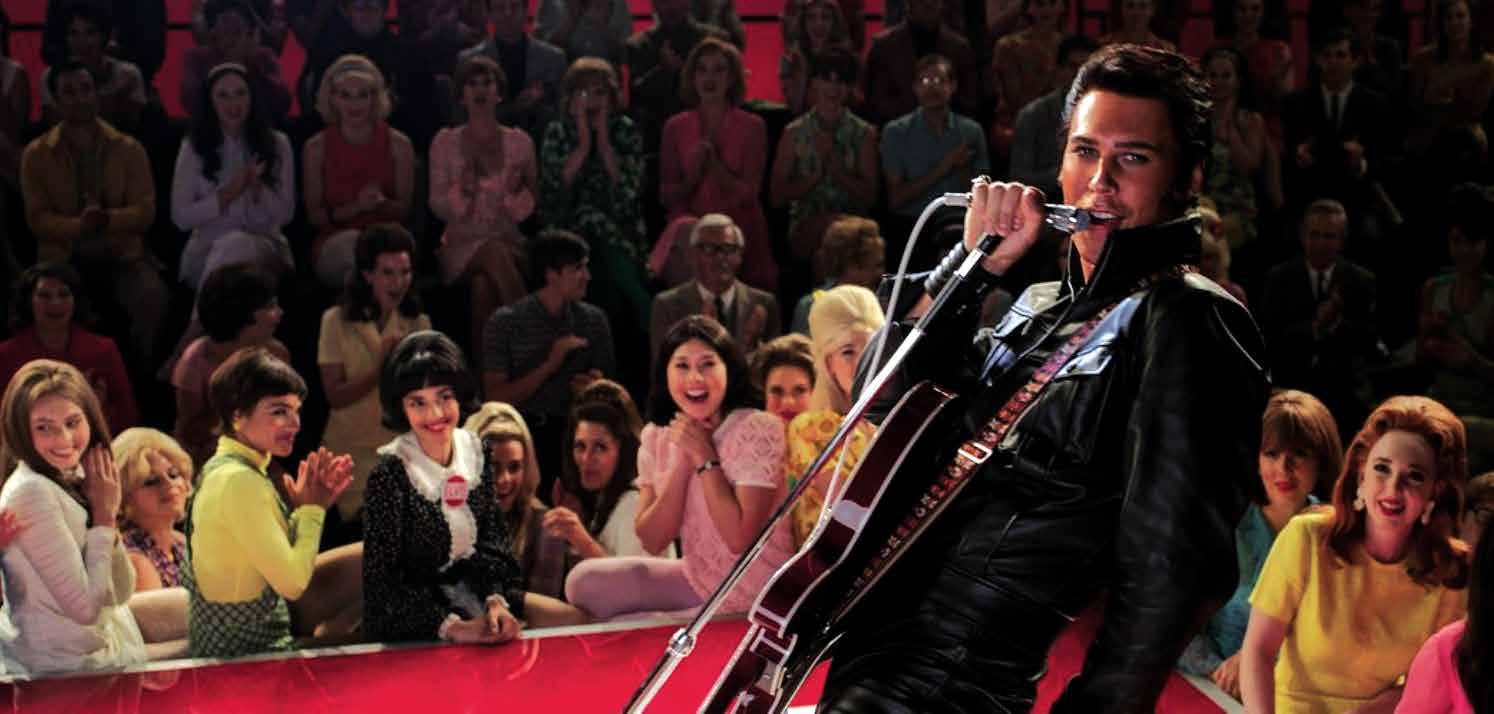
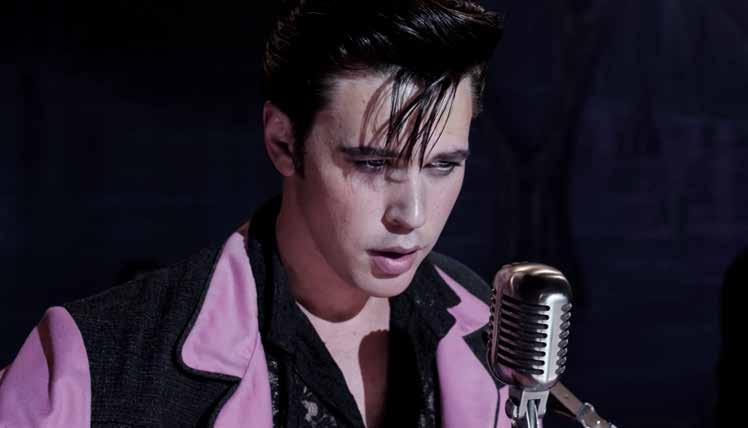
Austin Butler in Elvis – Photos courtesy of Warner Bros.
Crowd-pleasing Black Phone dials up suspense
by Sara Michelle Fetters SGN Staff Writer
THE BLACK PHONE Theaters
Someone is kidnapping teenage boys. The local kids have nicknamed whoever it is “The Grabber,” and while 13-yearold Finney (Mason Thames) shudders at the mere thought of the inhuman villain, his 11-year-old sister Gwen (Madeleine McGraw) fearlessly badmouths this unknown ghoul at every opportunity. But when her brother appears to be the next kid taken by this mystery man, she makes it her mission to find him no matter what the cost.
Director and co-writer Scott Derrickson teams up once more with frequent collaborator Robert Cargill to dial up 1970s-set The Black Phone, based on the short story by Joe Hill. The pair behind both Sinister shockers hold back the scares to amplify the thrills and chills, delivering arguably the most crowd-pleasing horror flick since Leigh Whannell’s The Invisible Man
This is a fun, fast-paced, malevolent little gem that seductively builds to a slambang climax that elicited a bevy of hearty cheers from my preview audience. Better yet, it deserved them. Derrickson delivers the kick-ass goods, and the final act is so outstanding that I was willing to overlook how some of the more serious moments provoked unintentional chuckles and how a few of the humorous bits brought forth a couple of eye-rolling groans.
Thankfully those reactions are few and far between. Most of the laughs are genuine, and many of the shocks make a vibrant impact on the viewer’s nervous system. Derrickson stages a couple of suspense sequences — most notably one where Finney ponders an escape attempt even though he’s been secretly urged to remain a captive for the time being — that work exceedingly well. He and Cargill also script a humdinger of an emotional moment between Gwen and her depressively drunken father, Terrence (Jeremy Davies),
not too long after her brother’s abduction that genuinely took me by surprise.
There are two supernatural elements at play, and the film confidently balances them both. The first concerns Finney. The Grabber’s underground lair sports that mysterious black phone of the title. Its cord has been cut, so there is no working line. Yet sometimes it rings, and while the Grabber can hear the chime, Finney is the only one who has ever picked up the receiver and spoken with the ghostly voices wanting to engage him in spooky conversation.
The other involves Gwen. Turns out, she has dreams, and frequently they come true.
The girl doesn’t know if this is an angelic gift from the heavens above or just some fluke occurrence that keeps her up at night, horrified at all the awful things she psychically bears witness to.
Both of these are important facets of the overarching story, and it’s immediately clear this strange black phone and Gwen’s visions will play a large role in whether Finney survives his encounter with the Grabber. Derrickson moves back and forth
between these elements with fluid precision, inching each aspect closer and closer to one another, right before the high-octane final ten minutes kick things into suspenseful overdrive.
Davies is as solid as ever, but Terrence is too underdeveloped for his part of the journey to fully make an impact. But he gets off better than Sinister and Sinister II star James Ransone does. I get why he’s in the film, and I understand where his character fits in the proceedings; I just don’t think any of the bits involving him work all that well — not even the wallop of a surprise that reminded me of something out of an old-school Stephen King thriller.
Who is terrific is Ethan Hawke. He cuts loose something fierce as the Grabber, reveling in the unhinged lunacy of this psychotic creature of destruction and depravity. Hawke brings this kidnapping, murderous magician to life with such jovial bravado that the shudders that went up and down my spine whenever he sauntered into the frame were entirely genuine. It’s a spellbinding treat of a performance: the
Grabber’s inhuman villainy is a seductively sleazy dance of death I couldn’t help but be enamored with.
As great as the veteran actor may be, however, that’s nothing compared to what Thames and McGraw accomplish. They are otherworldly awesome, both youngsters doing a stupendous job of giving their characters an interior fortitude and agency that grows, evolves, and most of all magnifies as events progress. McGraw is particularly outstanding, but it also helps that Derrickson and Cargill give Gwen all the best lines and most of the more memorable moments.
The Black Phone is a perfect example of how to tell a simple, somewhat familiar story with flair, intelligence, and style. Not much unexpected happens, and yet that hardly ever matters. There is some electricity coursing through this film’s wiry frame, so I could have cared less that I almost always knew where things were going to end up. It’s the getting there that proved to be such a blast, making answering Derrickson’s call to suspense one of the happier decisions I’ve made in all of 2022.
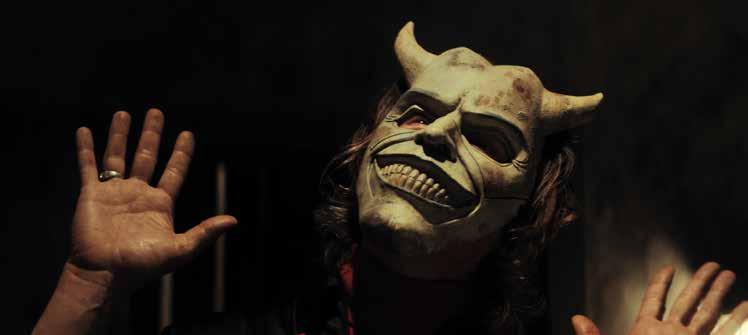
Ethan Hawke in The Black Phone – Photo courtesy of Universal Pictures
Mason Thames in The Black Phone – Photo courtesy of Universal Pictures
UNFORGETTABLES
There were other reasons I initially avoided the sequel like the plague. June of ’82 saw the release of Poltergeist, E.T. The Extra-Terrestrial, Star Trek II: The Wrath of Khan, Firefox, Blade Runner, and Megaforce, all far more exciting-sounding motion pictures that my adolescent heart was bursting at the seams to get a look at. (John Carpenter’s now-classic The Thing was also released that month, but that was one of the rare R-rated motion pictures my parents refused to let me see, so sadly it wasn’t even on my radar).
Couple that with Gene Siskel and Roger Ebert’s vicious takedown of Grease 2 on their PBS television program, and it’s no wonder I had no wish to give it a look.
Fast-forward a few years, probably around the time I was in sixth or seventh grade. I was at a neighborhood friend’s house. Her family had cable, and we were playing a board
game when Grease 2 randomly came on Showtime or HBO. She literally squealed in happiness. To her, this was the Best. Movie. Ever!, so suffice it to say, we were going to stop what we were doing and watch it.
I’m glad we did, because it’s safe to say my little mind was blown, and for the life of me, I can’t fully articulate all the reasons why. Does this sequel have any songs, even the enthusiastic, crowd-pleasing “Cool Rider,” that are half as memorable as those from the original? Do any of the actors give a boldly multifaceted performance equal to Stockard Channing’s as Rizzo? Is there any single element that is as oddly memorable as the sight of Danny and Sandy flying off into the heavens during the rambunctious climax?
The answer to those questions is an empathetic negative on all counts. Yet Grease 2 is the superior motion picture. It is a colorful cartoon, a silly lark that has more in common with a Busby Berkeley musical crossed with an episode of Scooby Doo, Where Are You! than it does with the 1978 favorite directed by Randal Kleiser. The
film is shockingly empowering and delightfully feminist, and I’ll never forget sitting on the couch at my friend’s house discovering how wrong I was for dismissing it sight unseen for so many years.
I knew I was hooked the moment Rydell High class of 1962 senior — and current leader of the Pink Ladies — Stephanie Zinone (Michelle Pfeiffer in her first starring role) looked straight at the camera and said, “I ain’t no one’s trophy… I kiss who I want, when I want.” It’s an immediate declaration that director and award-winning choreographer Patricia Birch was going to tackle the blatant, overtly exaggerated misogyny at the center of the first film as forcefully and as directly as she could. This sequel would be as open-mindedly feminist as the filmmaker could get away with, and if it took playing things in broad, vaudevillian technicolor, so be it.
But Birch’s promotion to being the one calling the shots behind the camera is noticeable in a multitude of ways, not the least of which is the clear, athletically
exhilarating staging of the dance numbers. She masterfully utilizes space, and this is apparent during two of the film’s biggest sequences, “Back to School Again” outside Rydell High and “Score Tonight” inside a bowling alley. They are spectacular moments through and through, and from the staging to the performances to the cinematography, it’s obvious Birch took her job seriously and ensured that the sequel was visually engaging in ways the original frustratingly was not.
Most of the songs do leave something to be desired. As sizzling a hottie as he is, star Maxwell Caulfield (as British exchange student and Sandy Olsson’s cousin Michael Carrington) has trouble igniting the screen the same way his co-star Pfeiffer does. They don’t have a ton of chemistry, and other than a sublime little moment in a diner discussing Shakespeare, hamburgers, and ketchup, there’s not a ton of heat in any of their scenes.
No matter. Pfeiffer’s “Cool Rider” number is an all-timer that presages her phenomenal, career-best work in 1989’s The Fabulous Baker Boys. Birch strips away any pretense that her sequel belongs to anyone other than the Pink Ladies, giving them agency outside of their T-Bird boyfriends, who here are depicted as singleminded nincompoops whose machismo is a ridiculous act. There is a gender-flipped gonzo goofiness to the film that was wildly ahead of its time in ’82 and, sadly, remains
Does any of this make Grease 2 a misunderstood gem deserving of reevaluation four decades after it bombed theatrically with such nuclear forcefulness? I think so. There’s a reason the sequel has grown a passionate cult following, and it’s no wonder why viewers all along the gender spectrum are drawn to Stephanie, whose Pink Ladies are happy to wait for “a whole lot more than the boy next door.”
Everyone deserves to find their own Cool Rider, no matter who they are or what they Grease 2 believes that right down to its core, making it a forgotten, sexpositive, and gender-affirming miracle that keeps burning me through and through.
Now celebrating its 40th anniversary, is available on Blu-ray for the first time from Paramount Home Entertainment and to purchase digitally on multiple platforms. It is also currently streaming on Paramount+.
Games
Frail Hearts : A stylish game about Queer love, acceptance, and killing monsters
by Daniel Lindsley SGN Contributing Writer
Imagine this: you are trapped in a prison, one built inside you by the world you live in, and though you may have strained against it in the past — or not — you’re too tired now, and you’ve found it easier to give up and try to forget about it.
Then something tears open your little piece of the world that trapped you, and though you’re not sure it’s a world worth saving, the ensuing chaos is the push you need to start looking for a way out. How will you do that? By solving mysteries and fighting monsters with your friends, of course.
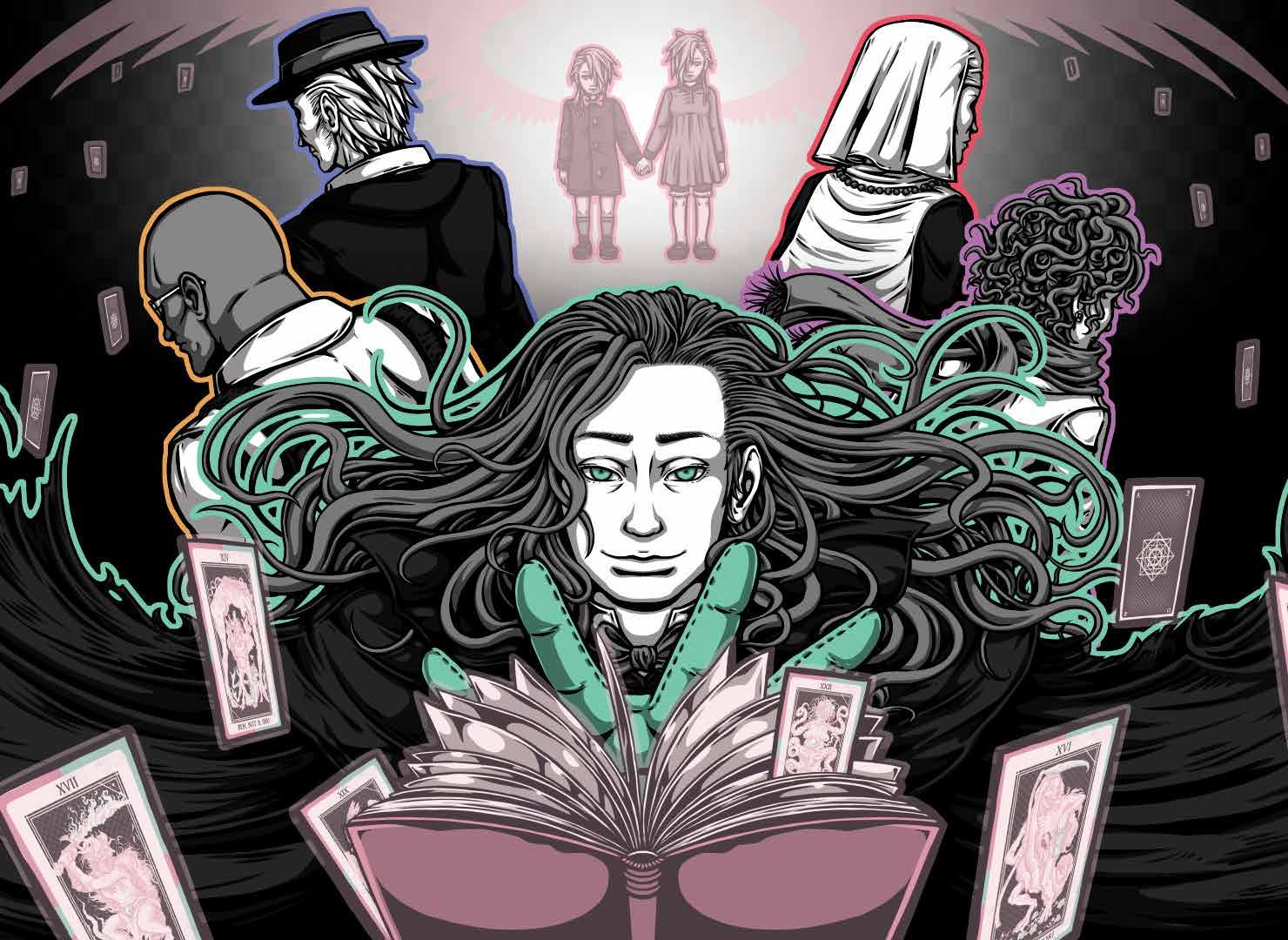
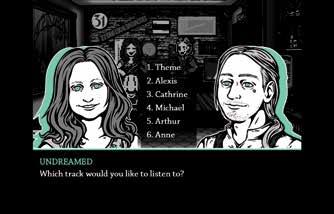
From the mind of Nonbinary Italian game developer Fiore comes a genre blend of turn-based JRPG (Japanese role-playing game), visual novel, and Lovecraftian horror. Frail Hearts: Versicorae Domlion follows four Queer characters through a bleak 1930s urban landscape as they solve mysteries and grapple with love, acceptance, and demons both inner and worldly.
Hearts is rendered in grayscale, save highlights of muted color for each of the characters, and its world is all stark pixel art until the characters enter dialogue or battle. More detailed art then serves to show characters’ expressions while they speak, and emphasize the full horror of the enemies they face. The soundtrack was composed by Undreamed, a folk fantasy band from Merano, Italy.
Fiore (she/her) described the development process of Hearts as “hurtful, [but] it helped me (and I hope others as well) to endure the last two years... to realize what could come after the pandemic. I really wish it will become the starting point for more stories to tell and worlds to create.”
And there is no shortage of inspiration to be taken from this piece. The pain involved in making it may be evident in the enemies alone, who feel like morbid collections of bodily symbols, specific enough that each player should have no trouble gleaning their own interpretations.
Fiore’s degree in etching and graphic arts
and her fascination with goth aesthetics and romanticism are on full display here. She designed the enemies with imagination influenced by her toxic experiences with relatives and broader society.
As the plot of the game moves forward, a player can make choices that will not only influence the story’s general end but also the characters’ arcs. “Personal growth is key to the characters’ adventures,” said a Ravenage Games spokesperson in an email, “and sooner or later, they will be able and ready to make their choices.”
Of the Queer main cast, players can expect inner turmoil, like that of Michael O’Glory, a masculine gangster who can’t accept his love for his only friend, Gabriel. The inciting event for O’Glory, then, is Gabriel’s death. It is the beginning of the man’s search for something to fill the void; a transformation will follow, for better or for worse.
As for the rest of the cast, at least two minor characters are heterosexual, but they have the rare gift of supportive families,
and they have trouble relating to the conflicts of the main characters. There’s no veil of symbolism there.
Hearts was published by Ravenage, a small games company just over a year old. Fiore developed the game under the studio Sezhes, which she founded “after the desire to recreate the emotions that surprised us in our childhood: wonder, admiration, hope, but also fear towards the unknown.”
“Every video game we produce can be considered as a single artwork,” Fiore said. “But who knows... Putting all pieces together could create a single, greater universe.”
It seems that Hearts is only the beginning.
You can find out more about Sezhes and its projects at https://www.sezhes.com. A demo for Frail Hearts: Versicorae Domlion is available now on Steam, where the game is planned for release in the third quarter of 2022.
Images courtesy of Ravenage
Hot summer fun in the Chicago sun Travel
by Bill Malcolm Special to the SGN
Chicago makes for a perfect summer vacation. Festivals, biking along the lake, or just hanging out at the (Queer) Kathy Osterman Beach (aka Hollywood Beach) in the Bryn Mawr neighborhood are all great options.
Boystown, the “gayborhood,” has been rechristened “Northalsted” to promote inclusion. You will find most of the Gay bars and businesses on Halsted Street.
I always stay at the Hotel Versey (644 W. Diversey Pkwy., at the intersection of Clark, Broadway, and Diversey, near the Diversey station on the Brown Line), just south of the gayborhood. The rooms are full of murals featuring local attractions, and parking is just $20 for your entire stay at the Century Shopping Center garage next door (the center also features an LA Fitness, which is free to use for hotel guests). Book directly at HotelVersey.com to save money. Weekday rates are reasonable; weekend rates are also better than anything downtown. Plus, you can walk to the bars or just enjoy the many nearby shops and restaurants. There is even a Trader Joe’s across the street; just west of there is the new Dom’s Kitchen and Market (2730 N. Halstead St.), where every kind of food is available freshly prepared.
Just steps from the hotel is my favorite Italian restaurant: Renaldi’s Pizza (2827 N. Broadway); try the Spingione sausage pizza. Next door to the hotel is Stan’s Donuts, a local favorite, which also offers grilled cheese and cookies.
Nearby Broadway features loads of independent shops and restaurants and is a fun way to spend the day. There’s Unabridged Books (3521 N. Broadway), one of the last remaining independent bookstores, featuring a wide array of LGBTQ titles. It has been around since 1980 and is still going strong.
Also, don’t miss Cram Fashion at 3331 N. Broadway. And grab a salad or enjoy a glass of wine at Mariano’s (3030 N. Broadway).
If you need anything, the Walmart Neighborhood Market is at 2844 N. Broadway.
Other hotel options in the neighborhood include the Best Western Hawthorn Terrace and The Willows. All are just steps to the Lakeshore Path, which runs along nearby Lake Michigan.
Bargain hunters will also love the Heart of Chicago Motel, near the Andersonville neighborhood further north; it features free parking.
What to do
Head to the Queer beach (Osterman, or Hollywood, Beach). Enjoy the asada skirt steak tacos at the restaurant on the beach, Lakebreeze, with a margarita.
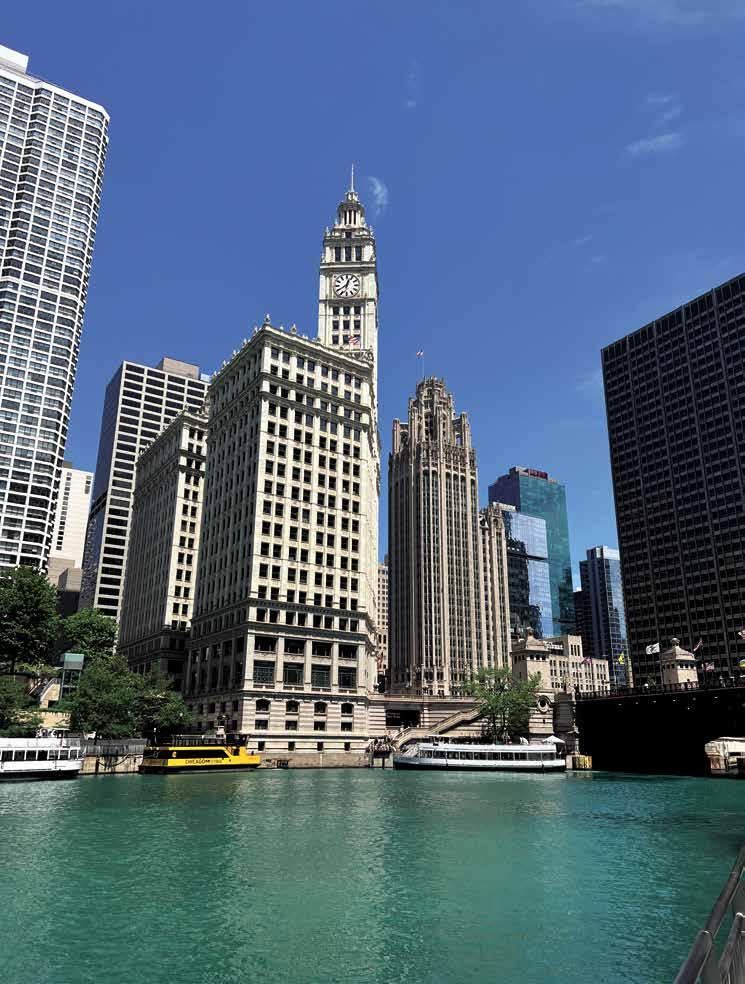
Hop on the L or the CTA bus for a trip to the Loop to experience Chicago’s incredible architecture. My favorite is the Wrigley Building on Michigan Avenue near the Chicago River. Even the new buildings are stunning, such as the Trump Tower. Chicago does have some of the best architecture of any city on the planet.
Millennium Park in the loop is a must. The Shedd Aquarium is also recommended. Navy Pier has a Ferris wheel, among other features.
Walk along the new Riverwalk and then head up Michigan Avenue, which features the best shopping in the Midwest.
Or rent a Divvy Bike and explore the city.
Catch the Cézanne exhibit at the Art Institute.
The Lincoln Park Zoo is another fun idea.
Don’t miss Northalsted Market Days, a summer street festival now in its 40th year, which will be held August 6 and 7. Lots of eye candy!
Nightlife
Make your first stop at Sidetracks (3349 N. Halsted), America’s biggest and oldest video bar. There is something going on every night. The famous Sunday afternoon show tunes now happen on Mondays and Fridays as well. Don’t miss the rooftop bar.
Many other LGBTQ bars are nearby. The North End at 3733 N. Halsted is a sports bar. The Lucky Horseshoe features adult entertainment. Charlie’s is a Western-themed bar.
Just north of Andersonville on North Clark, you will find Touché and Jackhammer, which are popular with the leather crowd.
Getting there
Chicago is a major hub for all transportation types, with both O’Hare and Midway Airports as options. Southwest has a huge hub at closer in Midway Airport (to which you can fly on Porter from Toronto). Hop on the Orange Line for a quick ride into town.
Or try Amtrak, which has great service from around the country. Chicago’s Union Station (and historic Great Hall) are worth a visit even if you are not taking the train.
Travel tips
If you are driving, look out for the many red-light cameras at intersections, which are eager to give you a ticket for going just a few miles over the speed limit. Short yellow lights also make it very likely you could get a ticket if you enter an intersection while the light is no longer green. It’s a revenue raiser for the city, pure and simple, and a total scam. So drive slowly, and do not try to go through an intersection if there are only seconds left to cross.
You don’t need a car in the city, though. Better to walk, take the CTA, or rent a BCycle to get around. The CTA (public transportation) is a great way to get around. Buy a VENTRA pass, so you don’t have to look for change.
Like many US cities, crime is an issue, but I felt safe walking around the areas I visited.
Remember Lake Shore Drive? It also has a new name, Jean-Baptiste Pointe DuSable Lake Shore Drive, in honor of the city’s founder.
For more information
For more information, visit GrabChicago.com (or pick up a copy). GRAB Magazine is Chicago’s only remaining in-print LGBTQ magazine. Check the maps at the back of an issue for where to find the bars, restaurants, and other LGBTQ businesses. The Chicago Reader is the biweekly alternative publication.
You will be amazed at everything Chicago has to offer. It is the Paris of the Midwest. And arguably one of the most LGBTQ+-friendly cities in the world. Just ask Mayor Lori E. Lightfoot — or her First Lady. Chicago will surprise — especially the great beaches along Lake Michigan, the miles of bike paths, the wonderful parks along the lake, and the interesting neighborhoods. You cannot beat Chicago for a vacation.
Bill Malcolm is America’s only LGBTQoriented syndicated value-travel columnist.
Photo courtesy of Bill Malcolm
Op-Ed
Queerness and radical fluidity
Reflecting
on what it means to be Queer today
by Georgia Skerritt SGN Intern
Considering the increasing sense of Queer community I have felt in recent years, I wasn’t surprised to read Gallup’s new data that around 21% of adults in Gen Z identify as LGBT+. Indeed, we are living in an increasingly Queer world.
At the beginning of my Queer journey, I worried about finding community and comfort. Being any type of “other” on top of the social isolation I had been battling in previous years was scary. The further I ventured out of the proverbial closet though, the more support I received. Coming out was hard, but being out has led to liberated and dynamic expression. In fact, I would argue that, in its purest form, queerness today is about radical fluidity.
When I first came out about six years ago, I felt constantly tempted to jump from one label to the next, hoping to have some-
thing that would always tell me who I was. I suspect most people in the Queer community can relate. Having recently come to terms with my asexuality — something I had known for some time but struggled to accept — I have realized all over again that navigating identity today can be terrifying.
The ubiquity of social media means that we are constantly being monitored, a frightening reality for someone who is only beginning to explore who they are and question what the world has told them about happiness. There is constant pressure to label yourself, not for your own peace but for others to understand and categorize you more easily.
From my Ace perspective, Queer experiences begin with a question of the self but evolve into a questioning of social conditioning. Social and cultural forces tell us from childhood what ought to make us happy and what ought to make us whole; Queer experiences begin when we have the
Coming out was hard, but being out has led to liberated and dynamic expression.
courage to challenge these assumptions.
Sexuality today is a focal point of Western society, and is considered an essential aspect of our identities — that is, sex isn’t just something you do, it’s a part of who you are. Considering this, self-exploration can be especially daunting when we try to unpack our queerness. Questioning identity in these circumstances is scary enough, and not having a label (i.e., not having an answer about who you are) can feel so much worse.
I believe, however, that this shift from rigid labels to granting ourselves fluid changes of expression is the essence of Queer strength and community.
To be Queer today is simply to let go and allow ourselves to move freely through
different identities, depending on where we are in life. Often we are not taught to exist for ourselves, but releasing ourselves from certain labels — or even all labels — is the first step in reclaiming our power and existing for our own sake.
Queerness is a journey inward with no end, a surrender to change, and the prioritization of honesty and presence over conformity, realizing that queerness is a process of unlearning and unbecoming everything that we are not. To be Queer today is to return to our purest forms… to remember who we were before the world got its hands on us, and ultimately arrive at radical, everchanging love.
Photo by cottonbro / Pexels
National & International News International news highlights
TEXAS
continued from cover
Within a week, Paxton — a notorious publicity-seeking right-winger — jumped into the spotlight.
“My job is to defend state law, and I’ll continue to do that,” Paxton said during a Friday appearance on News Nation’s show On Balance with Leland Vittert. “That is my job under the Constitution, and I’m certainly willing and able to do that.”
Texas, like many states with sodomy laws on the books at the time of the Lawrence decision, did not actually repeal the law even though the Supreme Court’s ruling made it unenforceable.
Currently Alabama, Florida, Idaho, Kansas, Louisiana, Michigan, Mississippi, North Carolina, Oklahoma, South Carolina, Texas, and Utah still have such laws — and they could become enforceable again if
the Supreme Court reverses the Lawrence decision.
“I’m sure you read Justice Thomas’s concurrence, where he said there were a number of other of these issues — [the prior Supreme Court cases] Griswold, Lawrence, and Obergefell — he felt needs to be looked at again,” Vittert told Paxton.
“Obviously the Lawrence case came from Texas... Would you as attorney general be comfortable defending a law that once again outlawed sodomy? That questioned Lawrence again or Griswold or Gay marriage? That came from the state legislature to put to the test what Justice Thomas said?”
“Yeah, I mean there’s all kinds of issues here, but certainly the Supreme Court has stepped into issues that I don’t think there’s any constitutional provision dealing with,” Paxton responded. “They were legislative issues, and this is one of those issues and there may be more. So it would depend on
National news highlights
by Daniel Lindsley
SGN Contributing Writer
Kentucky’s teacher of the year
quits, citing homophobia
NBC News reported on June 27 that Kentucky’s “2022 Teacher of the Year,” Willie Carver Jr., has quit the profession, after having to go back into the closet to keep his job teaching English in the small town of Montgomery.
Carver recounted his administrator’s words at the time of his hiring: “He said ‘You will be crucified. No one will protect you, including me.’”
That was 12 years ago. After changes in the school’s administration, he was able to teach openly as a Gay man. But there were years prior to that of administrators trying to stifle LGBTQ identities, in what he described as a “death by a thousand cuts.”
Carver said that his employer ordered teachers to remove books by LGBTQ authors from the curriculum, defended students accused of tearing down Pride posters, and shut down a student-led poll on LGBTQ inclusion.
The final straw, Carver said, was when the school failed to address repeated harassment, such as community members showing up to board meetings and accusing Carver and LGBTQ students of being “groomers.” Verbal attacks were also made online.
“I have put up with these problems
over the years because the benefits outweighed the cons,” Carver said. “But I’ve now reached a stage where I’m starting to see the toll on my mental health is going to be such that my students are not going to be seeing a successful LGBTQ person in front of them. They’re seeing someone who is stressed out and unhappy.”
the issue and dependent on what state law had said at the time.”
Asked if he would support the Texas legislature filing suit to test the high court’s view of the law, Paxton was cautious.
“I’d have to take a look at it,” Paxton said. “This is all new territory for us, so I’d have to [see] how the legislature was laid out and whether we thought we could defend it. Ultimately, if it’s constitutional, we’re going to go defend it.”
Paxton is up for reelection this year, and his statement drew a swift rebuke from his Democratic opponent Rochelle Garza, who took to Twitter to call out the attorney general for his remarks.
“Roe was just the first — they won’t stop till they roll back all of our civil rights,” Garza wrote. “We MUST kick Ken Paxton out of office this Nov. When I’m Attorney General, Texans will have a Civil Rights Division to protect ALL of our rights. Y’all means all. Period.”
by Daniel Lindsley SGN Contributing Writer
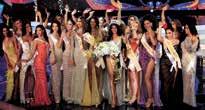
After a hiatus, Trans beauty pageant
Reuters reported on June 25 that Filipina contestant Fuschia Anne Ravena has been crowned Miss International Queen 2022, at a contest in Thailand billed as the most popular Trans beauty pageant in the world. Just behind Ravena were the contestants from Colombia and France. Ravena, 27, had this to say of the victory: “My first message to everyone is to spread love and peace and unity, because that is the most important thing that we do as of the moment and what’s happening in the world right now.”
Show organizer Alisa Phanthusak said the show returned during Pride month after a two-year hiatus to celebrate gender equality. Reuters noted that the contest was launched over a decade ago to foster Trans acceptance, and that among Asian countries, Thailand has one of the most open and visible LGBTQ+ communities.
Still, activists say Thai laws and institutions are lagging behind social attitudes, and still discriminate against LGBTQ+ people and couples.
London Pride vets remember first march
Title IX proposal aims to protect Trans students
Reuters reported on June 23 that the Biden administration has proposed expanding Title IX protections against sex discrimination to include Trans students, replacing rules established during the Trump administration that weakened the measures.
The changes would address how federally funded K-12 and higher education institutions respond to complaints of sexual discrimination, harassment, or assaults. It would mean Trans students would receive explicit protections under the law for the first time, requiring schools to respond promptly to complaints of sexual discrimination, provide support for complainants, and actively stamp out sex discrimination.
Education Secretary Miguel Cardona said on Twitter, “Every student should be able to learn, grow, and thrive in school & not be derailed in their education by sex discrimination.”
The National Women’s Law Center praised the move, while calling on the Biden administration to protect Trans student athletes as well.
Virginia Foxx, the top Republican on the House Education and Labor Committee, said in a statement that such changes would undermine female athletes and due process. “For an administration that claims to carry the torch for ‘equality,’ these proposed regulations are steeped in hypocrisy.”
Reuters reported on June 27 on some the words from London’s Pride veterans, who marched from Trafalgar Square to Hyde Park 50 years ago, on July 1, 1972, to protest against discrimination. John R. Lloyd, now 69, remembered it fondly. “Oh, it was exhilarating,” he said. “It was empowering. We thought we could take over the world and change it to how we feel... It was about system change as well.”
Seventy-three-year-old Trans woman Roz Kaveney said, “It was about not letting anyone tell you who you are, or what you should do. It was about autonomy. It was about freedom, and it was about joy.”
“I simply wanted not to be a criminal,” recalled Simon Watney, also 73. He joined the march with his thenboyfriend. “I thought it was outrageous that I had to grow up like all my friends under the shadow of the law. Some people spat, some people shouted. Most people were kind of astonished, I think, and bewildered. Some people just looked the other way.”
Activist Peter Tatchell, also at the 1972 march, said he felt Pride had lost focus. “It’s now become basically a big party. And parties are fine, but we also need to protest, because there’s still unfinished business, [there are] still battles for our community to fight and win.”
Other veterans looked to other countries, and were wary of how fragile LGBTQ rights can be.
Photo by Soe Zeya Tun / Reuters
resumes with Filipina winner
Willie Carver, Jr. – Courtesy photo
Photo by Elizabeth Frantz / Reuters
Episode 27: Krystal Marx
Join Lindsey and Ash on a chill breakfast journey through the gayest presidents, an anniversary gone awry, some national news, and more! Special guest Krystal Marx talks inclusivity and accessibility at Pride.
BI-WEEKLY! FIND US WHEREVER YOU LISTEN TO PODCASTS!