I remember my first viewing of director Arthur Hiller and screenwriter Leslie Dixon’s 1987 comedy Outrageous Fortune as if it were yesterday. This happened at a Spokane drive-in. I was a month away from turning 13, and my little sister was barely four years old. Our family trips to the movies were understandably growing fewer and further between, now that she was part of our clan, so this outing was something of a special occasion.
I loved the film. I was now old enough to understand most of the double and triple entendres not so subtly concealed in Dixon’s script. Even more, I was fascinated by the blossoming female friendship in the Hitchcockian mistaken-identity scenario central to Hiller and Dixon’s comedy. Outrageous Fortune spoke to me. I even saw it an additional three times in the theater, even though technically I was not old enough to do so. Granted, by the time the film made its way to second-run theaters,
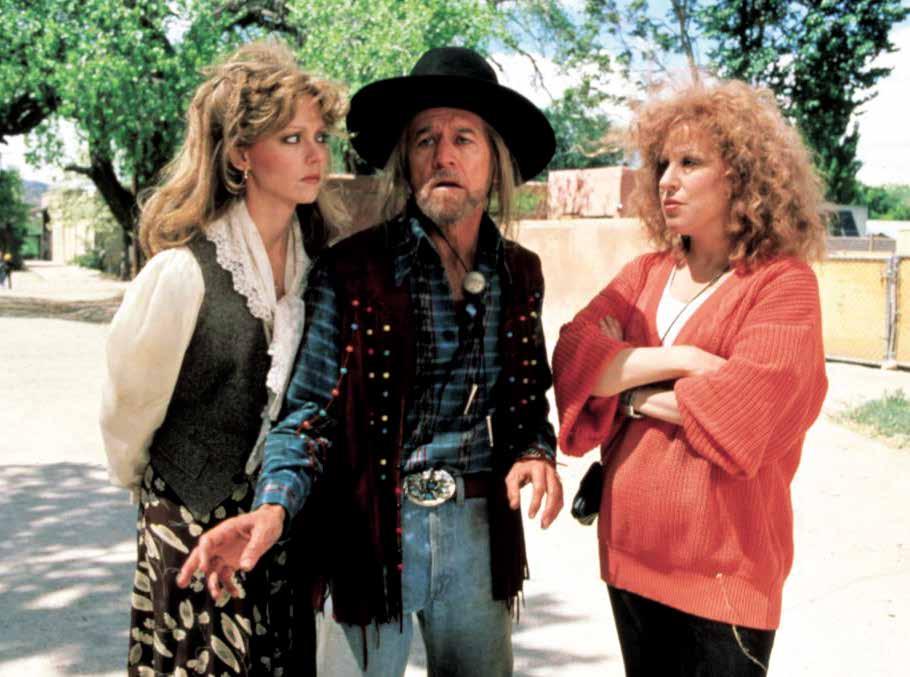
Bette Midler and Shelley Long in Outrageous Fortune – Photo courtesy of Touchstone Pictures
Photo by Pixabay / Pexels
Photo courtesy of John Morrison
Local News
LABOR LAWS
one hour of paid leave for every 40 hours worked. Workers may also carry over up to 40 hours of unused sick leave from one year to the next.
This turned out to be a critically important benefit as the COVID-19 pandemic rages on.
VANDALS
Used Furniture has been located at 117 Summit Ave. E. for over 18 years, adjacent to Pretty Parlor and across from the Biltmore Apartments building. Keeping the business alive was difficult during the 2020 shutdown, the couple told the SGN “The store is still just upside down from COVID19,” Morrison said.
Both owners are in their seventies now and have been together since before the legalization of marriage equality. They’ve been through sickness (including major surgeries) and health since the pandemic began.
The store has seen financial losses, but the owners also witnessed the community come together to support them during the past two years’ trying times. Even through the months of civil unrest and upheaval on Capitol Hill that year, which included spikes in vandalism, the owners said they never thought someone would target them.
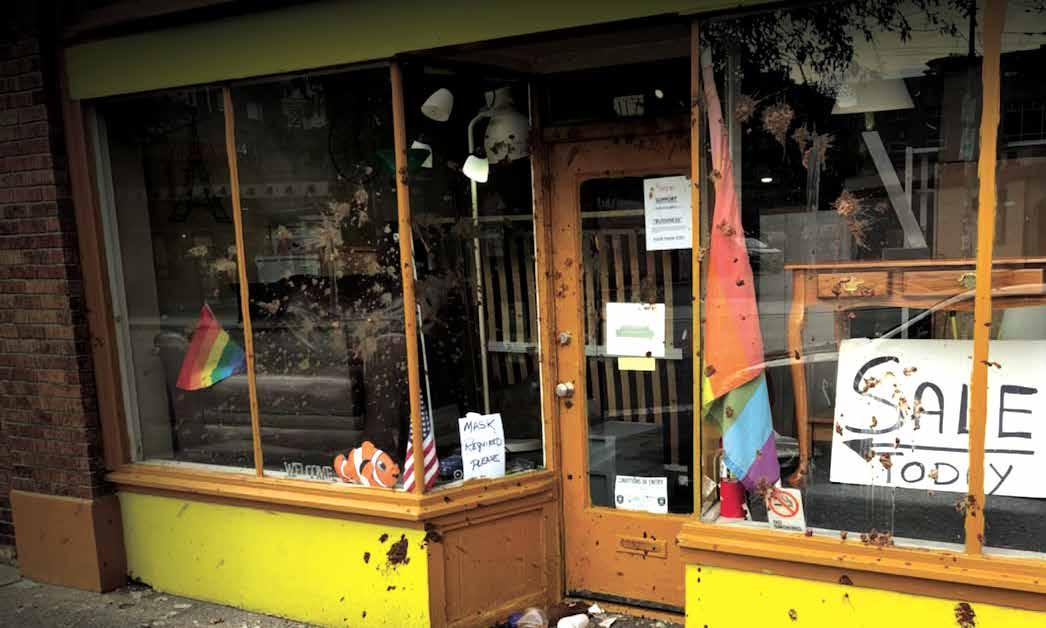
However, they have now seen four separate attacks of vandalism on their business. In the first week of October, a large amount of garbage was dumped directly in front of their door, and the vicinity smelled intensely of feces. They said they kept quiet, assuming the culprit was a homeless or mentally ill person. Morrison said, “Mental illness is a huge problem that needs to be addressed [in Seattle].”
On Christmas Day, the store was trashed a second time. “The stench and the mess was unbelievable,” said Morrison. They then installed security cameras to monitor the situation.
Now, they have partial security camera footage and evidence of the latest attacks on their storefront on New Year’s Eve and New Year’s Day. They were watching the Space Needle from their window at home, and at the same minute that the fireworks began, their cameras caught someone yelling hateful speech at the storefront. This is why they say they filed a police report. This event has caused the crime to be upgraded from basic vandalism to a felony hate crime.
Also effective January 1, the state’s workers gained better overtime protections as the state’s overtime pay standard phases in a new salary threshold.
The state sets an income threshold, and workers falling below that level must get time-and-a-half overtime pay for all hours worked beyond 40 per week. The new threshold is now higher 1.75 times the state minimum wage, or $1,014.30 per week. A higher threshold means that more
workers will be eligible for overtime pay.
Farmworkers will also be getting overtime pay for the first time, under a new law passed by the state legislature last year. The law includes a three-year phase-in schedule, incrementally reducing the number of hours worked by farmworkers before they are entitled to overtime pay over the next three years.
Workers who have questions about the wages or other rights they’re entitled to
under the new rules should visit the State of Washington L&I website: www.lni.wa.gov. Seattle and SeaTac have enacted their own minimum wage ordinances, with pay at a higher rate than the state. Seattle workers can visit the Seattle Office of Labor Standards website (www.seattle.gov/ laborstandards). SeaTac workers should go to the SeaTac city website (www.seatacwa. gov) and search for employment standards.
Later on New Year’s Eve, as if someone knew the exact location of their two outdoor cameras already, both recordings stopped. “Somebody that knew the cameras were there did this,” said Evans. “They knocked them right out, like with a paintball gun or something.”
The cameras have yet to be recovered. No other stores nearby were hit.
After the attack on New Year’s Eve, the typically tidy storefront was trashed, from the sidewalk to the windows and doorknob. On New Year’s Day, just after Evans and Morrison cleaned up the mess and were heading to the police, they realized their truck’s tires had
been slashed. They say the cost of the cameras and tires has totaled $1,300.
Through each of these events, the most appalling aspect was the smell, said Morrison.
“I thought it was poop at first,” said Evans. “Then a young man from the Biltmore came and informed us of something you can buy on Amazon, something called ‘Liquid Ass.’”
While classified under “Toys & Games” on Amazon, Liquid Ass is like a smoke bomb to the olfactory system. For the storefront itself to hold the stench, the attacker(s) would have needed to deploy a large quantity directly onto the exterior of the build-
ing, likely several cans per attack. It could be smelled across the street.
“It’s very disturbing,” said Morrison. “We weren’t going to go to the police at first, but like they told us, we need to be asking the community for their eyes.”
While the video footage is being analyzed and the store is taking on extra security measures now, the suspect or suspects remain at large as of Tuesday.
Anyone with information regarding these events are asked to call John Morrison at (206) 261-7888 with details.
Photo by Andrew Kelly / Reuters
Used Furniture storefront before the most recent attack – Photo courtesy of John Morrison
Arts & Entertainment
“It means everything to me”
An interview with Bosco, Seattle’s latest Drag Race star
by Nick Rapp SGN Contributing Writer
As we move into the new year, Seattle has more than a few reasons to be excited for what’s to come in the city’s flourishing drag scene. By requiring vaccine checks and mask wearing, local bars have been able to continue hosting a diverse selection of drag shows.
Moreover, one of Seattle’s queens, Bosco, has scored a coveted spot in the cast of season 14 of RuPaul’s Drag Race
With a drag aesthetic self-described as “equal parts evil and naked,” Bosco has made a name for herself performing at Queer/Bar weekly in a variety of shows. Luckily, the SGN got the chance to speak with her about her arc as a performer, the origins of “Bosco,” and what it has been like since the announcement of her casting on Drag Race
Note: This interview has been edited for length and clarity.
Nick Rapp: I know that you’re from Montana. How long have you lived in Seattle? And what brought you out here?
Bosco: I have lived in Seattle since 2015, so we just hit year six. I moved, mainly, to not be in Montana. I love Montanans for the most part, but what I wanted to do didn’t really have a place there. And I wanted to make money and perform, so Seattle was a much better option. I have my dad’s family out here, so it was just a very easy and logical move.
NR: When did you start doing drag?
B: Well, I spent a few months working on makeup and figuring things out. So, the first time I ever went out and performed in drag was January of 2018. I’m going to consider that my start date. So that puts us at what, four years?
NR: Congrats on the anniversary! You mentioned in your “Meet the Queens” interview that the name “Bosco” came from your childhood dog. What kind of dog was he?
B: Bosco was a Newfoundland.
NR: Do you channel any of his energy as a drag queen?
B: No, not particularly. Bosco was pretty stupid and just liked to sleep. And while out of drag, I am both of those things, in drag that doesn’t make for a particularly captivating performer, so, mainly I just took the name.
NR: I know Bosco is also a pet bear from Avatar: The Last Airbender. Did this factor into the name at all?
B: No, but I do think it’s funny that Bosco means something different to, like, literally everyone. For some people, it’s the chocolate sauce from Seinfeld To Irish people, there’s a puppet named Bosco from a children’s show. There’s Bosco the bear from Avatar And then if you’re from the Midwest, there’s a fried cheese stick called a Bosco.
NR: To me, it’s my childhood friend’s dog named Bosco, who was really small and definitely gay. He was incredible.
B: Why are there so many dogs named Bosco?
NR: Truly, I don’t know. So, how long did it take you to perfect your eyebrow technique?
B: I found the eyebrow shape about a year into drag, like, “Oh, this is neat. It’ll help tell me apart from literally every other white twink doing drag right now.” But I didn’t get really good at the specifics of the shape until about a year after that.
NR: As for Drag Race, was being on the show a long-term goal of yours?
B: It’s gonna sound super conceited, but the moment I started doing drag I was like, “I’m going to be on Drag Race.” I don’t know why. Especially if I look back at those photos, I’m like, “Who is she, thinking such things?” But it just always felt like that was the destination that I was going to reach, at a certain point. It always felt like a matter of when to me.
NR: What was the adjustment like from doing live shows in Seattle to jumping into performing on TV?
B: Fun story. My first performance on TV was the first time I had performed in front of people in over a year and a half because of the lockdowns it was quite the adjustment. We filmed starting in May, so at that point, the majority of the drag queens on the show hadn’t performed in front of a live audience for over a year; it was quite a bit of trial by fire.
NR: You’re the first Seattle queen that has been on Drag Race for a few years. What does it mean to you to get the chance to represent Seattle on TV?
B: Oh, it means everything to me. Seattle has traditionally been very well represented as far as talented queens. But the scene has changed a lot since Robbie Turner [the
most recent Seattle competitor] was on. I’m excited to represent what the scene is doing now and hopefully make room for some more Seattle girls to get on there are so many in the scene that deserve to be on the show next.
NR: Do you have a favorite moment since announcing your spot on the show?
B: I really, really, really have enjoyed the fan art since being announced. It feels special to have my art make an impact with other artists. Like, today, I saw that there’s this dog on Instagram [@rupawl_official] and their owner dresses them up as queens from Drag Race So, somebody just re-created my promo outfit and put it on their dog, and it’s hysterical.
NR: And are there any events in Seattle that you’re excited about in the coming months?
B: Queer/Bar has been my home for years. And there’s this show that I host with Irene DuBois called “Mothership” every Thursday. We’re adding a new queen named Arrietty to the lineup, who’s eventually going to succeed me once I move out of the rotation. I absolutely love that show; we have local talent every single week and it brings an awesome crowd. And, yeah, I get to be drunk and make fun of people on the mic and walk around and lip-synch words at people. It’s great.
Though this interview was conducted over the phone, Bosco assured me that she was in full drag, wearing a wig, looking glam. Check out her Instagram @hereisbosco, and make sure to tune in to Season 14 of RuPaul’s Drag Race, premiering on Friday, Jan. 7, 2022 at 8:00 p.m. PST on VH1.
Bosco – Photo courtesy of VH1
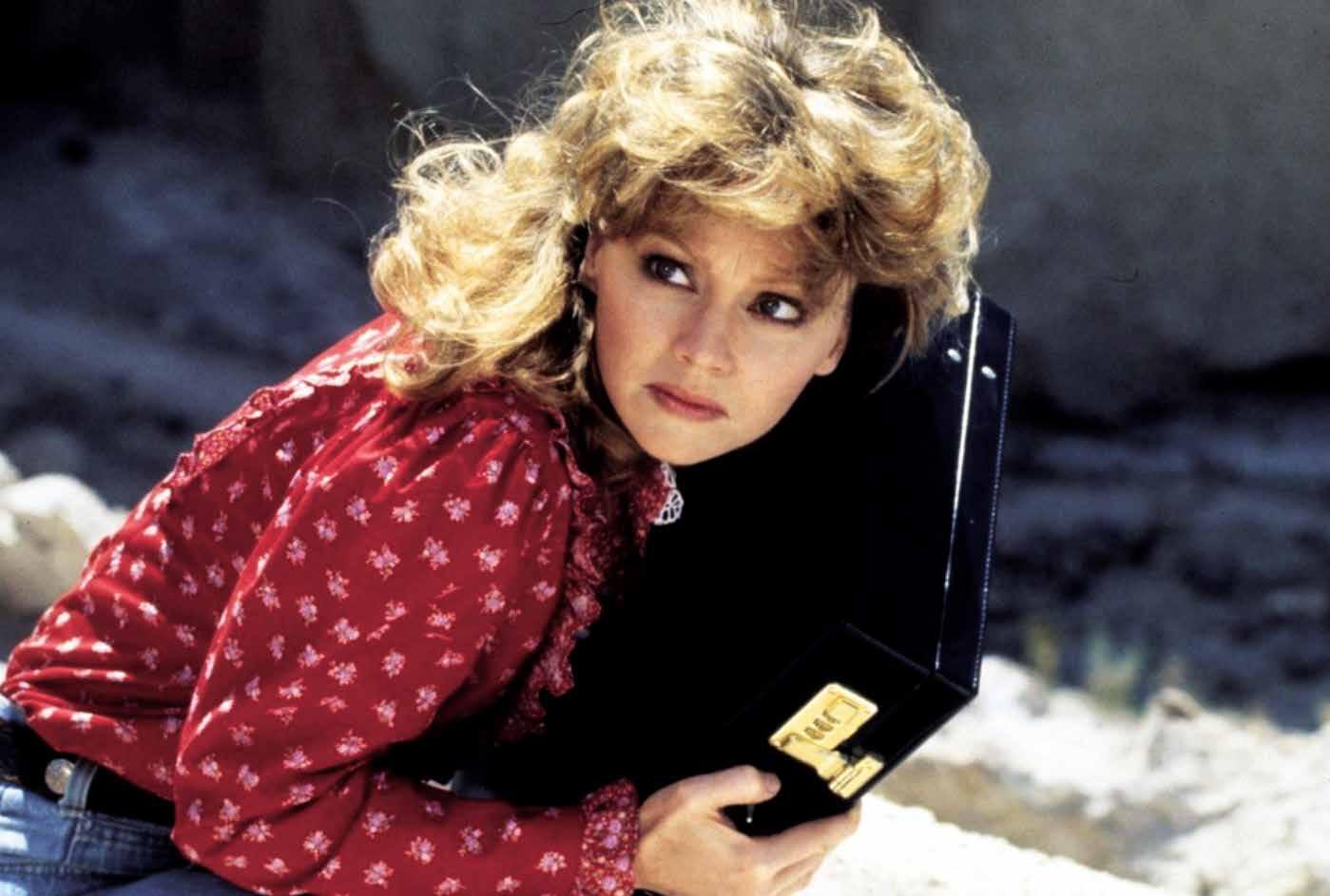
Shelley Long in Outrageous Fortune – Photo courtesy of Touchstone Pictures
Shelley Long, George Carlin, and Bette Midler in Outrageous Fortune – Photo courtesy of Touchstone Pictures
UNFORGETTABLES
continued from cover it’s not like the teenage ticket takers were all that interested in checking my ID, as by that age I was already 6’2” and some would say moderately imposing.
Hiller and Dixon’s film was released 35 years ago this month. Starring Bette Midler and Shelley Long, it’s one of a handful of 1980s hit comedies that’s managed to hold up over the decades. While certain aspects have undeniably aged poorly, there’s less of that here than is typical for films of this era. This is a wildly entertaining adventure with a giant heart. Better, it overflows with a number of genuine belly laughs.
The plot is pure Hollywood suspensethriller hokum: Struggling actresses Lauren (Long) and Sandy (Midler) loathe one another on sight. The former is a prima donna from a wealthy family. The latter is a streetsmart broad with a potty mouth who can talk her way out of anything. They’re in an acting class taught by stern Russian taskmaster Stanislav Korzenowski (Robert Prosky). Unbeknownst to either of them, the women are also dating the same man, kindly primary school teacher Michael (Peter Coyote).
Needless to say, he’s not who he says he is. After he dies in an apparent explosion, Lauren and Sandy discover they’ve been inadvertently dating an ex-CIA agent who has recently stolen a top-secret poison with the intent to sell it to the highest bidder. Not that the women are initially privy to any of that information. They only know Michael isn’t dead the burned body just
wasn’t big enough where it mattered most and that they are determined to find him, mostly so they can find out which of them he has feelings for and which he’s been using purely for sex.
It’s hard not to think that films like Susanna Fogel’s 2018 delight The Spy Who Dumped Me owe a massive debt of gratitude to Outrageous Fortune, most notably Dixon’s gloriously silly yet shrewdly intelligent screenplay. In lesser hands, this could have been a slovenly mess. But with writing this honest, and with Hiller directing with the same comedic precision he brought to his male-dominated buddy comedies The In-Laws and Silver Streak, the overall result is quietly groundbreaking.
Female friendships born out of animosity and distrust aren’t anything new, cinematically speaking, of course. But in the context of a motion picture like this one? Where the women get to be every bit as uncouth as men? Where they also get to dodge bullets, steal suitcases filled with money, and otherwise selflessly save the day? Examples on that front are rare, the most obvious being Louis Malle’s scandalously entertaining 1965 Western Viva Maria! with Brigitte Bardot and Jeanne Moreau, made over two decades before this Midler/Long collaboration ever saw the light of day.
Are there speed bumps? Certainly. Like many ’80s comedies, certain gags haven’t aged well, particularly a brief sequence where the ladies get assistance from a tough-talking Black cab driver and head into Harlem to learn more about Michael. What was only somewhat regrettable back in 1987 is far more uncomfortable now.
But there are so many more instances where Outrageous Fortune is proudly ahead of its time. There’s a lovely joke about an actor being forced to hide being Gay that’s deftly underplayed by Long and a scenestealing Christopher McDonald in one of his earliest roles. An even better bit a few beats later involves Korzenowski trying to teach his acting class the best way to “play dead.” Midler melts hearts into oozing bits of disquieting gelatin as Sandy is forced to react when her teacher maliciously ridicules her for not knowing Hamlet
Midler was on an incredible streak for Touchstone Pictures at this point in her career. Her small role in Down and Out in Beverly Hills had people revving to see more of her. They got their wish just a few months later with the release of Ruthless People, in which the Divine Miss M reasserted herself not so much as a major talent but as a bona fide force of nature. She followed this up with Big Business with Lily Tomlin and the classic five-tissue weepie Beaches with Barbara Hershey, the latter concluding a extraordinary five-picture run.
Long was top-billed here, in large part due to her Emmy-winning fame from playing Diane Chambers on Cheers She’d also come off a pair of comedic hits, 1982’s Night Shift with Henry Winkler and Michael Keaton, and 1986’s The Money Pit with Tom Hanks. She’d have a few more high-profile film roles after this one: another 1987 release, Hello Again, and the minor cult favorite Troop Beverly Hills in 1989. But Outrageous Fortune is the picture that utilized her talents the best, and it’s a shame she’s never found another role or motion picture its equal.
I think what ultimately makes this one so special is its rather clever and unobtrusively knowing examination of identity. Whether it’s a magnificent George Carlin popping up in the third act as an alcoholic New Mexico guide who knows a thing or two about lasting friendships, or the ways Midler and Long have a field day playing against traditional gender roles and stereotypes, there is precious little that follows typical genre conventions.
My favorite moment comes at about the midpoint of the story. Lauren and Sandy have done the impossible and tracked Michael down. About to confront him and find out the information they think they want to know, the pair put their competition aside as they help one another primp and give each other heartfelt words of encouragement before making their presence known.
Even though it remains unspoken, it is in these precious few seconds before they get an answer to a question they erroneously believed they were waiting for where the women realize they’ve somehow, someway become friends. From that point everything changes. Their bickering becomes more supportive. Their differences only augment the other’s strengths. Lauren and Sandy come to understand they work better together than they ever did apart, and they don’t need a man to care for or tell them otherwise, let alone save the day. They can handle that on their own.
Now celebrating its 35th anniversary, Outrageous Fortune is available on DVD and to purchase digitally on multiple platforms.
Bette Midler and Shelley Long in Outrageous Fortune – Photo courtesy of Touchstone Pictures
Star-studded 355 is a suitably generic actioner
by Sara Michelle Fetters SGN Staff Writer
THE 355 Theaters
The 355 is a passable action programmer that will play fine at home when it’s eventually airing on TBS or TNT multiple times over a weekend. Jessica Chastain, Lupita Nyong’o, Penélope Cruz, Diane Kruger, and Bingbing Fan are a decent team of spies, and director and co-writer Simon Kinberg (X-Men: Dark Phoenix) manages to stage a couple of well-orchestrated set pieces where things go boom with suitable flair.
But none of this is particularly memorable. It may be nicely shot by Tim Maurice-Jones (The Woman in Black) and efficiently edited by John Gilbert (Adrift) and Lee Smith (1917 ), and while I was moderately fond of the energetic score by Junkie XL (aka Tom Holkenborg), it’s not like the film goes anywhere unexpected. There’s not an original bone in this globe-trotting thriller’s body. The whole thing follows the James Blond/Jason Bourne/Mission: Impossible template so closely, it almost borders on plagiarism.
CIA spies Mace (Chastain) and Nick (Sebastian Stan) are tasked with procuring a powerful electronic device from a rogue Colombian operative (Edgar Ramírez), who doesn’t know how dangerous this tiny thingamabob actually is. Events go sideways when German spy Marie (Kruger) arrives on the scene. They go even more lethally off the rails when Colombian government therapist Graciela (Cruz) is called in to try and ease tensions.
With events spiraling out of control and with each of their superiors cutting ties with the lot of them, Mace, Marie, and Graciela realize they must join forces if they are going to survive. They are joined by former MI6 electronics expert Khadijah (Nyong’o), a friend of Mace’s she coerced out of retirement. Now the four of them are in a world of hurt, and if they don’t recover
the device, each woman is as good as dead.
The doodad they’re all after has the power to disrupt anything with an electronic circuit including aircraft already in flight but it’s really just a convoluted McGuffin to bring the women together. They also cross paths with the mysterious Chinese counterespionage agent Lin Mi Sheng (Fan), not knowing whose side she is on. There are also a handful of doublecrosses involving a couple of powerful men, while behind-the-scenes shady moneyman Elijah Clarke (Jason Flemyng) violently pulls the strings.
It’s as pointlessly convoluted as it all sounds, and at a skosh over two hours, the film also takes itself far too seriously for being as absurd as it is. Had this been a Hong
Kong production from the 1990s or a Cannon Films effort from the 1980s, it would have been an economical 90 minutes, tops. Even as Kinberg presses down on the gas pedal, the plotting goes to laborious lengths to keep things accelerating, with one character even pointing out that things could have been over long ago had any of the baddies killed the women when they had the opportunity instead of idiotically leaving them alive for no rational reason.
Not that I was ever bored. One set piece in a crowded Macao marketplace with Mace, Khadijah, Marie, and Graciela working together for the first time is suitably tense, and no matter how many directions each woman went off in, I never lost track of where anyone was or what they were doing.
Later on there’s a rousing action sequence in a glitzy high-rise, with Chastain hanging off the side of the building as if she were doing her best Tom Cruise impersonation and Fan showing off her martial arts prowess with enthusiastic flair.
Can’t say, though, that any of that makes me think it’s worth rushing out to a theater to see The 355 Especially right now. This is a title that screams “watch me at home!” I don’t foresee this birthing a new series, no matter how much the climax sets up future adventures for the women. But it’s not a total waste of time, and if you’ve got laundry to do or have a game of pinochle to play, having this on in the background as ambient noise will do quite nicely.
Penélope Cruz, Jessica Chastain, Diane Kruger, and Lupita Nyong'o in The 355 – Photo courtesy of Universal Pictures
Jessica Chastain in The 355 – Photo courtesy of Universal Pictures
Books
Sing it loud, sing it proud
She Raised Her Voice! brings the house down
by Terri Schlichenmeyer Special to the SGN
SHE RAISED HER VOICE!: 50 BLACK WOMEN WHO SANG THEIR WAY INTO MUSIC HISTORY
JORDANNAH ELIZABETH, ILLUSTRATED BY BRIANA DENGOUE
When she was just a little girl, author Jordannah Elizabeth loved listening closely to music and she paid attention to how it made her feel. Hearing Nina Simone, for instance, changed her life and sent her searching for other Black female singers and their works. There were many of them, and each inspired her to reach for her dreams.
By stepping back and forth through a century or so of song, and with a willingness to tell the unvarnished truth, Elizabeth’s She Raised Her Voice!, illustrated by Briana Dengoue, weaves a wide range of biographies of Black female performers into a sort of literary old-school mix-tape.
She then extends your child’s musical instruction by challenging young readers to sample the work of the singers in her book, and to pay attention to how it makes them feel.
The stories are varied. Take R&B singer Anita Baker. Her father was absent from the moment she was born and her mother died when Baker was just two years old. She grew up in foster care until she was 12, and then she was raised by her foster sister.
Singer Natalie Cole’s father was wildly famous, but she wanted her own career. Sadly, though, after two successful albums, Natalie “began to do drugs that made her quite sick.” She had to work very hard to get her career back on track.
Here are some others: The Pointer Sisters were only allowed to listen to Christian music when they were small. When singer Mahalia Jackson was “a wealthy international star,” she experienced racism; singing, she figured, soothed the souls of those who were likewise going through the same thing. Libba Cotton was a left-handed guitar player, “making her stand out.” Billie Holiday had the ability to improvise with both tune and lyrics. Bob Dylan was said to
have fallen in love with Mavis Staples. And if you think your child is way too young to start finding their dream, get this: Tracy Chapman started writing her own songs at age eight, the same age Gladys Knight won a TV-show contest. Janet Jackson performed with her brothers at age ten, the same age Bessie Smith started performing.
Why not be happy all year long?
Four books on finding happiness in 2022
by Terri Schlichenmeyer Special to the SGN
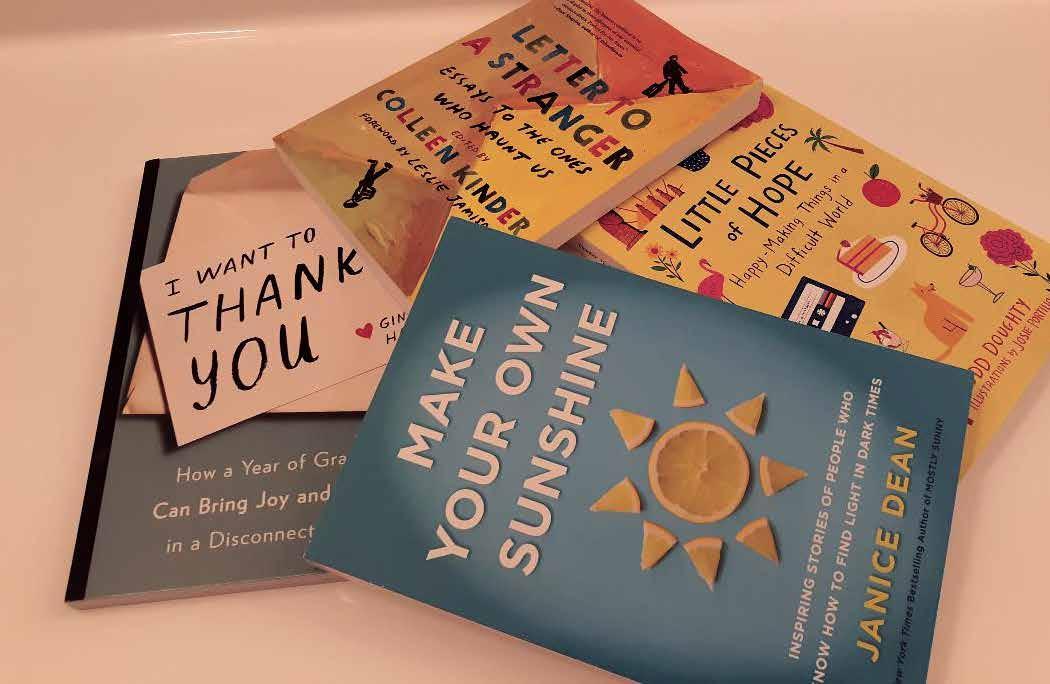
The last year was a tough one. Some days, it was all you could do to get through it and so this year, you’ve promised yourself that things will be better. The thing is, you aren’t exactly sure where to start. But these four books are a great first step... Sometimes, you find someone who’s an especially sunny person and you wonder how they do it. In Make Your Own Sunshine by Janice Dean (Harper, $25.99), you’ll read 21 tales of kindness, respect, fun, gratitude, and happiness. There are birthdays in this book, family time, and surprises, teachers and love, parents, kids, and happy memories. It’s about taking care of one another during a pandemic and in normal times. If you long for the spirit of giving all year long, this is a book you’ll cherish.
OK, so you want to be happy this new year, but you don’t have all year to do it. Then you really need to have Todd Doughty’s Little Pieces of Hope (Penguin Life, $16.00) tucked away where it’s handy at all times. Pick up this book, open it at random, and read for 30 seconds. Open it later in another spot. Leave it where you think you might need a reminder of all you have, and all you have to give. Browse a minute, because this book is made of short paragraphs and sentences that can all stand alone, and a minute is all you need to be comforted, inspired, and reminded that things aren’t all bad.
In I Want to Thank You by Gina Hamadey (TarcherPerigee, $22.00), you’ll read about a year of appreciation. One day, when Hamadey was simply done, she realized that she needed to do something to get herself out of the sadness she was feeling. She decided to take a year and write thank-you
Khan had her own band at age eleven.
Adults
But
Raised Her Voice! is a book to tap into.
letters to one person per day neighbors, friends, family, strangers, the famous and not-so-famous to tell them how they affected her life for the better. It’s a wonderful, heartfelt story that may very well inspire you to go buy some stamps and get to work...
Don’t know who to write to? Well, then, you need Letter to a Stranger: Essays to
the Ones Who Haunt Us, edited by Colleen Kinder (Algonquin, $19.95). This book is quite different from the ones above; it’s more along the lines of essays by authors and others, written to people they met or saw once or many times, someone who stuck in their minds and can never be forgotten. Grouped in several relatable categories, each entry will take a few minutes to read, but they may collectively spur you to savor and share with someone the story of that one individual whose presence will always linger.
Want more? Then be sure to ask your favorite bookseller or librarian; they have all kinds of happy finds.
Chaka
may be surprised at who’s not in this book Josephine Baker, Mary Wells, Miriam Makeba, Donna Summer but these omissions leave room to continue the lessons for your 8-to-14-year-old by yourself.
first, start here: She
Image courtesy of Running Press Kids
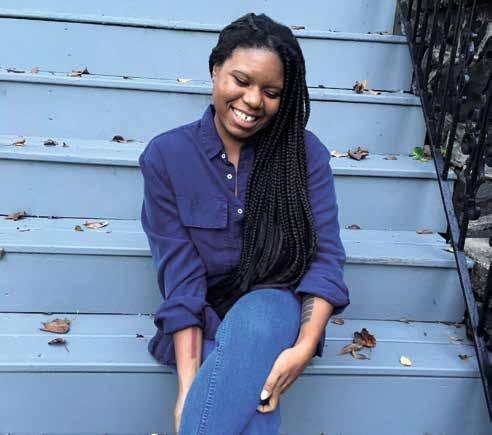
Jordannah Elizabeth – Photo courtesy of the author
Photo by Terri Schlichenmeyer
Episode 15: Olivia Sterne
Activist and generally interesting person Olivia Sterne is our guest this week! Also in this episode, Ash & Lindsey go over the week's events, talk their top picks for 2021, and set intentions for the new year! IT. IS. A. HOOT.
SGN Book Club: Jonny Garza Villa’s YA Queer romances tell untold stories
by Lindsey Anderson SGN Contributing Writer
The year 2021 has officially come to an end, the holidays are finally over, and, let’s face it, we probably all have a long list of resolutions that won’t get done. However, if you need inspiration to finally make those dreams a reality, look no further than the author Jonny Garza Villa, this winter’s Book Club selection.
At the beginning of 2020, Garza Villa had not much more than a rough first draft and a dream. Now, as we close out 2021, they are a successful published author, with one book flying off the shelves and another on the way.
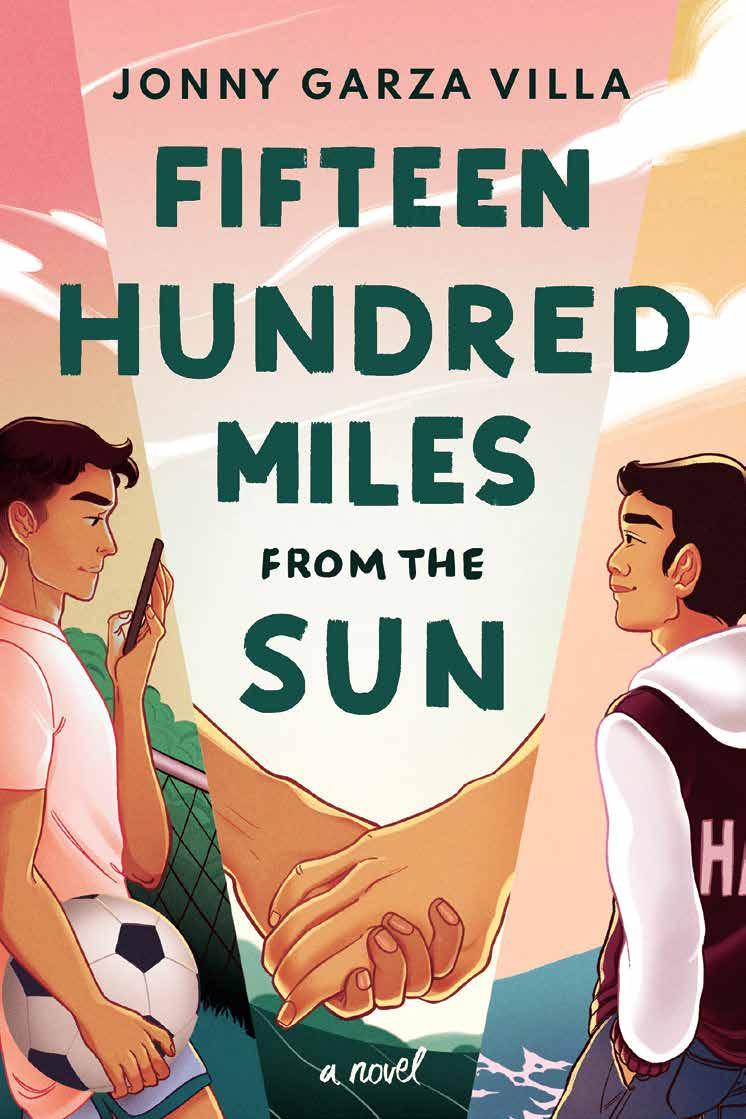
I sat down to talk with Garza Villa about their first novel, Fifteen Hundred Miles from the Sun, this soon-to-be young-adult classic’s starry inspiration, and their journey into the publishing industry.
Love, Simon vibes
Fifteen Hundred Miles from the Sun, Garza Villa’s romance about a long-distance relationship between Mat, a Vietnamese American Queer teen in California and Jules, a closeted Mexican American boy in South Texas, was inspired by similar coming-of-age stories he had gotten into recently.
“I was inspired by reading Simon vs. the Homo Sapiens Agenda by Becky Albertalli,” Garza Villa told me. “I read it shortly before seeing Love, Simon. I wanted to consume both of them at the same time, and I love both of them.”
While they loved Love, Simon, they noticed the story was overwhelmingly white and not necessarily reflective of their experiences.
“I saw it with some Chicana friends of mine who are all Queer and Mexican Americans, and after the movie, we all had this discussion about our own experiences as Mexican-American Queer people and young Queer people of color. We don’t get that same sort of opportunity as, like, books by white Queer people about white Queer people. And I was just, like, well, someone should write that book.”
The more they thought about it, the more Garza Villa felt compelled to write their own Love, Simon story. “I kind of went into [it] thinking, I can do that. I can write a book. Why not? I knew I didn’t know what I was doing or what would happen if I even drafted this and what the process of publishing it would even look like. I just kind of wanted to prove to myself that I could write something like this, and that’s just how it started.”
Garza Villa dove into the writing process, starting their first draft during NaNoWriMo 2019. They describe their process as “chaotic” and “a little obsessive.”
“I’m a Sagittarius,” Garza Villa said, “so when I get an idea, it’s like, I have to do this, and it’s my entire personality until I get bored of it or it finishes. I’m not necessarily someone who likes to outline a lot, so first drafts are kind of like vibes and aesthetics and skeleton dialogues and not a lot of plot. A lot of times I’ll send drafts to my agent, and they’ll be like, make sure something is happening in this story. We love vibes, but it can’t just be kissing then it’s over.”
Garza Villa’s writing process is also highly influenced by nontraditional methods. “I like to rely on things that are not necessarily writing but are productive. I love to go to Spotify and create playlists and go to Pinterest and create aesthetics and get myself in the mood to write about the scene or the character or something that makes me more creative when I finally get into Microsoft Word.”
A hero after their own heart
When it came to drafting the story, Garza Villa knew they wanted to see themselves in the book. The main character, Jules, is heavily influenced by his own experiences as a Mexican American teen growing up closeted in South Texas. “I would say that a lot of myself went into Jules’ character. A lot of just like my hopes and dreams, but also trepidations and secrets and traumas even went into him as a character, especially internally.”
Garza Villa also styled Jules’ friend group after their own. “The friend group,
just as a whole, reflects the [one] I was able to make in college, after high school. They’re very much just, like, day one, always-have-your-back sort of characters, and that does reflect the change I had from high school to college… In high school [I was surrounded by people] who I don’t think I would have [been comfortable coming] out to. In college, it was very different: being introduced to Queer people of color and close friends I knew wouldn’t have that same [discomfort] around it.”
While Garza Villa worked hard to make sure Jules’ story reflects experiences
unique to themselves and some of their Queer and BIPOC friends, they also noted that in other ways, their own high school experience was quite different from the one they created for Jules.
“I grew up in a small, predominantly white, conservative town in southeast Texas, and I was not [a] person who embraced my culture. Moving to San Antonio after high school, I found myself as a Mexican person, a Chicano person. But even then, writing this book especially from the point of view of a high schooler, when I knew that in my own experiences, I was not [accepting my identity]
Image courtesy of Skyscape
at this point in my life there was a lot of imposter syndrome. I wondered, am I Mexican enough to write this book?... Is someone gonna clock this and be like, oh you’re fake?”
Connecting to Mexican culture
The first step to for Garza Villa to connect with their culture was rediscovering their favorite parts of their Mexican heritage. “The foundation of getting into it was food. I relied on food as just a thing I had always been comfortable with my whole life, as something I culturally belonged with. I put it on strong with the food in the book. I knew that I wanted to make Jules a person who was very proudly Mexican American, and I wanted to do that respectfully and in a way that felt like I was putting my part of it into that.”
Despite their own experiences having differed from those they created for Jules, Garza Villa still thinks writing for teens and young adults is very important. “I do just see something special about writing specifically about the 17, 18, even 19 age range of a person,” they said, “[about] being so close to the next period of your life and feeling so much more like an adult than you ever had, but also getting these experiences where you realize you’re not an adult and not ready for what’s going to happen next. That sort of optimism but reluctance that can come with that age. I wanted to focus on that sort of stuff with my writing.”
Garza Villa says they loved many of the coming-of-age experiences depicted in Love, Simon but noticed that some of them were did not match their own Queer experiences in the town they grew up in.
“I felt, especially as Queer people who come from environments and towns where we’re not necessarily allowed to be ourselves, that there’s this sort of transition period of being able to move away… That just really has been a huge point of my own life, and I just stick with that in different degrees and points of views.”
Coming out in the 2020s
After the premiere of Love, Simon, many LGBTQ+ people were critical of the story, saying they were sick of seeing the “coming out” trope repeated and that as a society, we have moved past these types of stories.
“As I was writing this, I was hearing a lot of sentiments about how coming out stories aren’t necessary anymore. Those kinds of [stories about] coming into yourself as Queer people aren’t needed anymore, and I wanted to reflect that there are parts of this country where seeing ourselves is not necessarily granted, and we must see those journeys.”
In many spaces in America, coming out is still a massive struggle for teens. “I feel like there’s an environmental impact that you have to take into consideration,” Garza Villa said, “especially what it means for a Queer relationship in the same setting that I write my stories in, and coming from a Mexican point of view and a socially conservative point of view. I would say the environment itself is what makes the biggest difference.”
Garza Villa works to showcase the difference between a rural Queer coming-of-age story, like that of Jules, and the experiences of someone growing into their Queer identity in a socially accepting environment, like Mat.
While, of course, not everybody in Los Angeles is accepting of public displays of Queer affection, “you’re still in a place a little more accustomed to seeing Queer people out and about. And I thought it was important to get both those perspectives, and have a character like Jules, who was trying to figure out how to be open in his life, versus Mat, who is out and trying to get more people to be accepting of his life. I wanted to put those two together, because I think it’s important.”
Words of hope for young readers
After writing their first novel, Garza Villa realized what an impact Queer literature can have on young adult audiences. They hope readers can take away a sense of belonging after reading Fifteen Hundred Miles from the Sun
“I hope that… anyone who knows what it is to be in Jules’ shoes, and is still existing in a place that is similar to Jules’ own experience of having to hide for his safety,” they said, “knows that anywhere you are within your coming out… you are enough. You are
enough for this world. There’s no rush, you are loved, you are supported.
“And I hope just reading it even if you’re reading it behind closed doors in your bedroom at night that you feel not so alone, that you feel that you have Jules and Mat and all Jules’ friends and his sister all there to support you.
“And even if you don’t know what it is to be in Jules’ shoes, [I hope] you… know what it is to be a supportive friend or a supportive sibling.”
Garza Villa added, “[For] someone getting into the next phase of your life, maybe as a college senior…, [with] all the expectations of our parents and the hopes we have personally, [while figuring out] what it is you want to do with your life… that’s a whole hell of a lot sometimes. You’re gonna do great.”
The most rewarding part of becoming a successful author for Garza Villa is the feedback they receive from fans, especially young adults growing up near their hometown.
“I think it just kind of hits differently. I know from hearing from readers who grew up in South Texas along the Gulf Coast that [Jules] meant something to them. And to get those references like Whataburger and Selena and even like the colloquial Spanish that comes from South Texas that’s different from living in New Mexico or Arizona or California… Those specific things put [readers] in a place that made this book home for them... I think it’s important
that we have stories that feel like home to us. I think we all kind of are raised to take it for granted, really, until we see it.”
New year, new book
Garza Villa is already prepping their next young-adult novel, another BIPOC Queer rom-com. “In my next book, coming out in early 2023, called Ander and Santi Were Here, the main character is a nonbinary Chicana character. As connected as I felt to Jules, getting to write a Gay nonbinary character was, like, okay, I felt close to this.”
Ander and Santi Were Here follow the titular character, Ander, a young muralist taking a gap year before heading off to college in Chicago, who falls for the new waiter at their family’s taqueria, Santi. “They get into this very flirtatious will-they-won’tthey situation, which gets complicated when ICE comes into the taqueria, and we find out that Santi is undocumented, so they have to figure out how to hold on to love when the world would rather they be separated.”
With edits to their new book coming in 2022, Garza Villa has much to look forward to in the new year. “I love New Year’s.... I’m not huge on resolutions, but just throw away last year and let’s get into the new year and drink a little bit,” they laughed.
They’re celebrating the calendar change in sunny San Antonio, which, as they put it, is “actually having a cold front right now,” although they admit a Texas cold front is
nothing like Washington has ever seen. “As a person who lives very much south, every time it gets below 72 degrees, I’m not someone who is fun to be around.”
Despite the “cold,” Garza Villa is having a blast celebrating the holidays with family and friends. “When I think of the holidays, I think of tamales. Every New Year’s, my grandma makes buñuelos, which is kind of like a fried tortilla covered in cinnamon and sugar. Like a Mexican crispy snickerdoodle sort of flavor going on. I think that’s really where I find a lot of comforts. My favorite traditions are the foods I get to look forward to in December.”
Their ideal date would also occur in winter, coinciding with their Sagittarius birthday. “Last year for my birthday, I wanted to go to this trail of lights in Austin. It’s miles and miles of lights, and I think that would make a cute date. And listening to Mariah Carey on repeat while you go [along] a huge trail of lights and decorations,” they mused. Garza Villa is also thrilled to be included in the SGN Book Club. “I’m really happy that it’s a winter selection,” they said. “A lot of my favorite things happen in the winter in this novel. Jules is Sagittarius, and I love that. I hope you all enjoy it!”
For anyone interested in joining, pick up a copy of Fifteen Hundred Miles from the Sun, find us on Instagram @sgn_books, and let us know what you think!
Jonny Garza Villa – Photo courtesy of the author
Op-Ed
Snow: Brought to you by Seattle’s growing climate crisis
by Lindsey Anderson SGN Contributing Writer
If there is one thing I learned about Seattleites since moving here in May, it’s that there is nothing the people of this town love more than complaining about the weather.
For the first few months, I experienced all the traditional Seattle woes drizzle, rain, sideways rain but as the summer days began to drift in, I soon found, to my surprise, a new side to Seattle weather.
The dismal heat landed like a low cloud, encompassing all those stuck in town. Dogs and shirts were left inside; pavements steamed hot enough to boil an egg in ten seconds. Stores quickly sold out of air conditioners, bags of ice, and popsicles. The whole city of vampires evaporated into a puddle of hot complaints.
Eventually, the heat subsided, and the city cooled down into a gorgeous fall, one filled with bright colors, mysterious fog, and the best opportunities for leaf frolicking. Once again, we experienced the typical rainy days Seattleites boast about, the most hardcore PNW warriors never exposing weakness by using an umbrella.
However, a new surprise was lurking just at the end of the year. Snowpocalypse 2021 descended, promising a white postChristmas for anyone willing to stay up and wait for the flurries. It wasn’t your average Western Washington snowfall, however. A blanket of thick white snow covered streets, cars, and buildings brought and cheer all around for nearly eight minutes.
One quick stroll around Capitol Hill was all it took to spot nearly a dozen stuck cars with poor drivers perplexed as to why their Kia Sorentos and Toyota Priuses were unable to make it up a 20-degree incline. For a week, the city shut down. Libraries and coffee shops, the lifeblood of all Seattle neighborhoods, scrunched their hours if they were able to get folks to come in at all.
With the snow finally starting to melt, people are back to work as usual, but many are left wondering: what is causing Seattle’s weird weather patterns, and how come it is so unprepared each time a new crisis strikes?
If it’s global warming, why is Seattle so cold?
What is causing Seattle’s severe weather events? The short answer: global warming. While it may seem silly at first, the rise of the global heat index is exactly what is causing the frigid temperatures we have been experiencing here in Seattle. Over the last two decades, the Arctic has warmed twice as fast as the rest of the world. This shift in temperature is causing the jet stream to dip further south, sending frigid arctic air into more southern latitudes than it used to.
Another reason for increased snowfall is that moisture is evaporating at higher rates due to an increase in global temperature. With more water in the air and colder temperatures, Seattle is experiencing snow at higher frequencies each winter.
The summer heatwaves and wildfire smoke are also direct results of climate change. Greenhouse-gas emissions have led the temperature to rise nearly 2 degrees Celsius since the 1880s. While this may seem small, it’s a big deal.
While signatories to the Paris Climate Agreement vowed to curb global warming at a 1.5-degree Celsius increase from preindustrial times, even that would mean summer temperatures that reach unhealthy levels for up to 60 million people worldwide. As the state of global warming stands now, temperatures are expected to keep climbing, to an increase of 3 degrees Celsius (5.4 degrees Fahrenheit) by the year 2100.
If current levels of greenhouse gas emissions continue at the rate they are going in the US, this means nearly one-third of the US population will experience heat waves above 105 degrees Fahrenheit. This is incredibly alarming, as heat waves already contribute to the most weather-related deaths in the United States. These heat waves in the US are also responsible for global food shortages, raising the cost of goods people need to survive and further widening the gap between the poor and the middle class.
Why isn’t Seattle prepared for climate disasters?
As a lifelong Eastern Washingtonian, the
first thing I noticed was the complete lack of snowplows in Seattle. In my hometown of Spokane, the moment a snowflake lands on the ground, ten plows are out on all the roads, clearing the way. Sure, it may take a few days for them to get into the neighborhoods, but main roads, especially hills leading to places of business, are cleared within a day.
In Seattle, busy side roads remained snowy, and when the temperature rose just enough to melt the top layers into slush, a thick and dangerous layer of ice soon followed.
According to Seattle.gov, the city does not have dedicated snow plows. Trucks have to outfitted with snow removal equipment when the white stuff threatens, and there are not enough to plow all streets. In comparison, Spokane has 40 truck plows, 35 graders, 10 loaders, and 4 deicing trucks. It has snowplows running in 12-hour shifts around the clock to ensure that the streets remain clear for drivers.
Despite locals reporting that nearly every winter Seattle has received at least one day of significant snowfall, the city has yet to invest in more plows, which, in turn, forces citizens to stay home from work or put themselves in danger to make it into the office.
Snow isn’t Seattle’s only problem as the climate continues to change. Seattle was built for a moderate climate, and with summer heatwaves now predicted to become more and more regular, older buildings will require some remodeling.
Many of Seattle’s historic buildings are experiencing more wear and tear due to increased temperatures in the summer. Lack of efficient climate control indoors, and in-unit air conditioning, has led to many health concerns for older and vulnerable citizens.
For those without homes, the risk is even greater. While the city does have several homeless shelters provided by private organizations, they often discriminate against LGBTQ+ people and those with drug abuse problems. For those that shelters are unwilling to house, the hottest and coldest months can become quite deadly.
Is climate change worth fighting?
As the effects of climate change become more and more catastrophic, affecting our everyday lives in Seattle, hopelessness can feel inevitable.
While the increasing storms and heatwaves we are experiencing here in Seattle might seem like something out of the Book of Revelations, that does not mean it is time to throw in the towel. As author and activist Rebecca Solnit says, “People have always been good at imagining the end of the world, which is much easier to picture than the strange sidelong paths of change in a world without end.”
While the challenge may seem intimidating, so has nearly everything worth fighting for. Joining dedicated climate activists can make a difference in fighting the extreme weather that is now starting to bite back at us.
“There is a great deal each of us can do,” said Natural Resources Defense Council senior scientist Kim Knowlton, “and little things add up to big things.” Actions that may seem insignificant can in fact add up. Getting involved with local government through lobbying, letters to congresspeople, attending town halls, and even protesting has led to many victories in the battle against climate change, such as the takedown of Keystone XL and the abandonment of the Atlantic Coast Pipeline. If policies like President Biden’s Build Back Better agenda are passed, the United States could cut its global emissions in half by 2030.
Other small ways individuals can help fight climate change are by making lifestyle changes, including going meat- or dairyfree, driving less, and composting food.
If we, a community, are to learn to survive in a new climate, we must start taking individual steps to create a better environment. We must not lose hope that our actions can further the movement, and we must encourage Seattle and King County to invest, not only in more snow plows (because God knows we need them) but in more sustainability programs.
Photo by Lindsey Anderson
Travel Pride Journey: Iceland’s a Wonderland
by Joey Amato Special to the SGN
The only way to describe Iceland is... magical. It truly is. Iceland is like no other place I’ve visited in the world. It’s topography, climate, people, culture, history, and nightlife blended together make Iceland a surreal adventure that everyone should experience at least once in their lifetime. In my case, this is my second visit to the country, and probably not my last.
The first time I set foot on the island, I was on a mission to see the elusive northern lights. While they evaded me during that visit, this time was different. I didn’t see Aurora dancing through the sky, but I did see a hint of the lights, enough to make me stop and stare in awe of their beauty.
One of Iceland’s many strengths is its people. I met an incredible group of people who helped make this visit extremely memorable, including openly Gay Icelandic pop star Friðrik Ómar, who invited me to his Christmas concert. Although most of the concert was in sung in Icelandic, many of the songs were recognizable, including a fabulous version of Mariah Carey’s “All I Want for Christmas”. Friðrik was a former contestant on Eurovision, and it was easy to see why. His vocals and stage presence were extraordinary, reminiscent of George Michael.
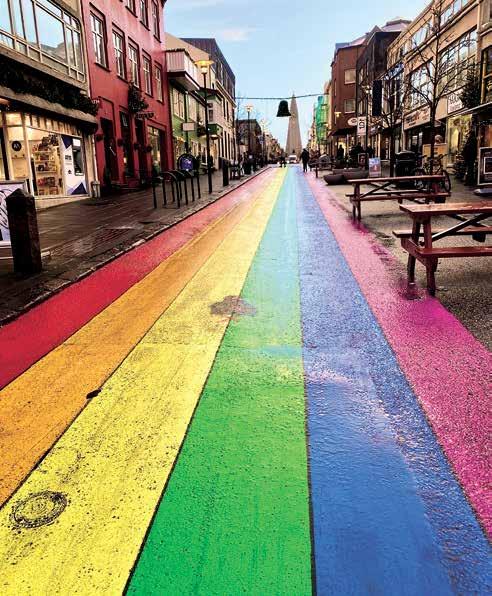
Book your stay at the Reykjavik Konsulat hotel located in the heart of the downtown Reykjavik, just a short walk from all of the city’s main attractions including Harpa concert hall, Sun Voyager and the iconic Hallgrimskirkja cathedral, the largest church in the country which and towers over the center of Reykjavik. Its 240-foot-high tower provides a wonderful 360° view of the city. Visitors can either walk up the stairs to the top or pay a small fee to use the elevator.
Our spacious room at Reykjavik Konsulat included a walk-in shower, king bed with ultra-luxurious linens as well as a seating area. Every day the hotel offers a complimentary happy hour as well a delicious breakfast buffet, featuring a variety of local specialties including smoked salmon. The hotel also offers a nice fitness center as well as bath house complete with sauna and
hot tub. Don’t get too excited, bath house means something completely different in Iceland than it does in the United States.
Going to Iceland in the winter is an adventure. It definitely isn’t a relaxing trip; more like a journey to the most extraordinary ends
of the earth you will ever discover. With that in mind, book a full day private excursion to the South Coast with Friend In Iceland. Our wonderful guide Gunnar picked us up from our hotel in a Mercedes mini-bus and we were off to explore a part of the country I hadn’t been to on my prior visit.
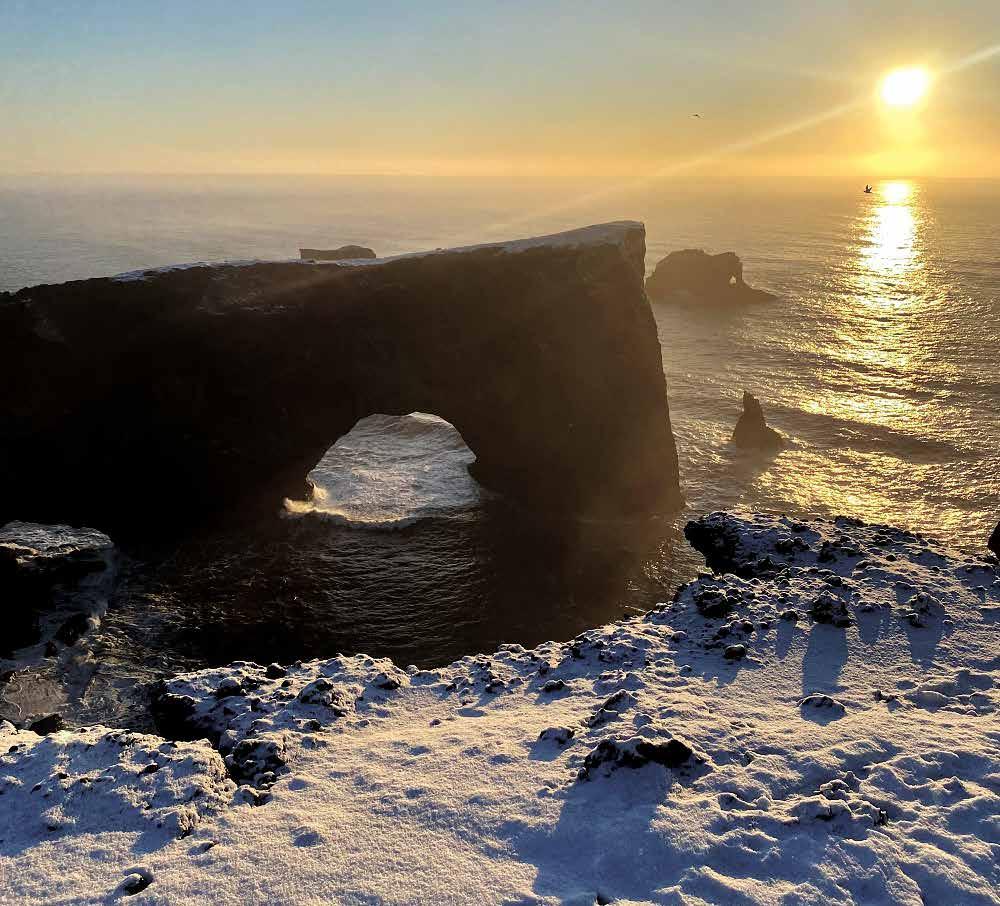
The nearly 9-hour tour took us to Seljalandsfoss and Skógafoss waterfalls where we had the opportunity to stand at the base and feel the power of these natural wonders. Next, we journeyed up to the top of a cliff which provided views of the ocean as well as a rock formation jutting out into the sea which connects to Reynisfjara black sand beach. Words can’t describe how beautiful this moment was. I’m almost in tears again just thinking about it. The waves crashing on the beach coupled with a clear sky and mesmerizing sunrise made for an absolutely majestic view.
Gunnar then brought us to a cute restaurant where we had lunch which consisted of pizza and a sandwich, not typical Icelandic cuisine, but it was delicious nonetheless.
Reykjavik is home to one Gay bar, called Kíkí. Although it was closed during this visit due to COVID-19 restrictions, we did happen to meet the owner who invited us back to the country this summer for their pride celebration. 2022 marks the 23rd annual Reykjavik Pride, which is held in early August. The festival attracts over 100,000 people to the city for a week-long celebration including a festival, parade, and numerous parties.
Wake up early the next morning and get ready for your next Icelandic adventure in the Golden Circle. Although this region is easily drivable from Reykjavik in the summer, I wouldn’t recommend venturing on your own during the winter months as many of the roads are icy and the weather can be quite spontaneous. One moment it will be sunny and then 30-minutes later you can find yourself in a winter storm with 40-mile per hour wind gusts.
Begin your Golden Circle tour with a trip to Thingvellir National Park, a UNESCO heritage site and home to Gullfoss, also known as the ‘Golden Water
fall’, one of the most beautiful and pow
erful waterfalls in Iceland. I recommend descended the stairs to the lower viewing area to really comprehend the size and scope of this natural treasure. Not too far away is Geysir, Iceland’s version of Old Faithful. The geyser erupts about every 7 minutes, so keep your camera ready.
Finally, end your tour with a snowmobile ride on the Langjökull glacier. This is also something I didn’t experience on my first visit, and I can honestly say it was one of the coolest (literally) experiences of my life. We had to jump off our luxurious tour bus and board a souped-up monster truck looking bus which transports you to the glacier where a team is ready to outfit you with protective gear and teach you how to use the snowmobiles. The hour tour of the glacier will make you feel like you were on another planet. There are points where the sky and the glacier meet, and you can’t tell them apart. I was fooled by a few optical illusions a few times.
Iceland can be inexpensive to get to, but then very expensive while you are there, so please plan accordingly. Food and alcohol can add up really quickly, so pace yourself when visiting the bars. One of my favorite restaurants we visited in Reykjavik was Noodle Station. Guests can order soup three ways: with chicken, beef, or just vegetables. It is the perfect way to end a long day spent playing in the ice and snow and quite affordable. Do your research before visiting to find some of the city’s hidden gems and cheap eats.
Icelandair offers direct flights to Reykjavik for relatively low prices from Boston, New York, Chicago, Raleigh-Durham, and a few other U.S. cities, so check their website regularly to catch a great deal.
South Coast – Photo by Joey Amato
Downtown Reykjavik – Photo by Joey Amato
National News
CDC shortens isolation guidelines as COVID-19 cases spike
by Hannah Saunders SGN Contributing Writer
On Dec. 27, 2021, the Centers for Disease Control and Prevention (CDC) shortened COVID-19 isolation guidelines from 10 days to 5 for those who test positive for COVID-19. The updated guidance came shortly before the United States registered one million new COVID-19 cases on Jan. 2–4.
“People with COVID-19 should isolate for 5 days, and if they are asymptomatic or their symptoms are resolving (without fever for 24 hours), follow that by 5 days of wearing a mask when around others, to minimize the risk of infecting people they encounter,” read the CDC statement.
As of Dec. 20, 2021, the Omicron variant was detected in most states and territories. According to the CDC, Omicron spreads faster than previous variants, and those who are vaccinated or asymptomatic can still spread the virus. Vaccines are expected to protect people against severe illness, hospitalization, and death, although breakthrough COVID-19 cases are becoming more common with this variant.
According to the CDC, data from the United Kingdom and South Africa shows that vaccine effectiveness against infection for people who received two doses is about 35%, while for those who received a booster dose, it is about 75%.
The CDC mentioned how its decision to update isolation guidelines was motivated by science, with the majority of transmissions taking place one to two days prior to developing symptoms, and two to three days after.
That said, the center has received criticism for placing capitalism over the health and safety of Americans, particularly those who are at high risk of severe COVID19-related illness.
New guidance for those who test positive
For anyone in the general public who is exposed to COVID-19 who is unvaccinated or are six months from their second mRNA vaccine dose (or received a Johnson & Johnson vaccine over two months ago) and are not boosted, the CDC recommends quarantining for five days, followed by strict mask use for another five days.
Those exposed to COVID-19 who have received a booster dose do not need to quarantine but need to wear a well-fitting mask for ten days when around others, and those who are symptomatic need to quarantine immediately until receiving a negative test result.
Additionally, the isolation period for healthcare workers who test positive for COVID-19 has dropped from 10 days to 7 days, and healthcare workers who have undergone a high-risk exposure but who are vaccinated and boosted and are not required to quarantine.
“The Omicron variant is spreading quickly and has the potential to impact all facets of our society. The CDC’s updated recommendations for isolation and quarantine balance what we know about the spread of the virus and the protection provided by vaccination and booster doses,” said Rochelle Walensky, the CDC’s director. “These updates ensure that people can safely continue their daily lives. Prevention is our best option: get vaccinated, get boosted, wear a mask in public indoor settings in areas of substantial and high community transmission, and take a test before you gather.”
Nurses condemn CDC guidance
National Nurses United (NNU), the largest organization of registered nurses in the country, sent Walensky a letter on Dec. 22, 2021, urging the CDC to maintain the ten-day COVID-19 isolation guidance.
“Weakening COVID-19 guidance now, in the face of what could be the most devastating COVID-19 surge yet, will only result in further transmission, illness, and death,” wrote Zenei Triunfo-Cortez, the NNU president.
Triunfo-Cortez also stated that the shortening of the isolation period was for “maintaining business operation, revenues, and profits, without regard for science or the health of employees and the public.”
“Let’s be clear: This is about what’s good for business, not what’s good for public health,” said Triunfo-Cortez. “Our employers claim there is a ‘nursing shortage,’ and that’s why they must flout optimal isolation times, but we know there are plenty of registered nurses in this country. There is only a shortage of nurses willing to work in the unsafe conditions created by hospital employers and this government’s refusal to impose lifesaving standards. So this is a vicious cycle where weakening protections just drives more nurses away from their jobs.”
The letter also mentions how reducing the isolation period guarantees more transmissions, and that strengthening, not weakening, guidelines is the ticket to solving healthcare worker staffing shortages.
“The hospital industry manufactured the current staffing crisis by imposing unsafe working conditions on nurses,” said TriunfoCortez. “The COVID-19 pandemic exacerbated long-standing staffing issues when hospitals failed to protect us and our patients.”
CDC smells of capitalism
Last week, tweets mocking the CDC’s new guidance were abundant.
The CDC claimed that science was taken into consideration when constructing its updated guidance. However, Twitter’s vibe is that they reek of capitalism. America is seeing its highest number of recorded COVID-19 cases, yet the CDC is requiring COVID-positive Americans to isolate for half of the original isolation period.
With the rise in cases, more workers are expected to call out sick, and calling out for a full ten days would contribute further to staffing shortages across the nation, so even if someone tests positive for COVID-19, they are allowed to reenter the public sphere, where there are also immunocompromised, disabled, and unvaccinated children.
Other social media posts question why the government refuses to pay people to stay home when the country is seeing a spike in COVID-19 cases.
Forgotten populations
The United States has come a long way since the start of the pandemic, but there are still populations whose needs have continuously been ignored. Although vaccines reduce the severity and spread of COVID19, there remain high-risk groups.
Children who are under the age of five are not yet eligible to receive a vaccine. There are also certain disabled and immunocompromised people who are unable to
receive a vaccine, and for those who have done so, it is still uncertain how effective the vaccine is when taking specific illnesses into consideration.
These latter groups are more likely to have serious COVID-19 infections if they get sick, and are more likely to become hospitalized or face death. What’s a mild case of COVID-19 for one person may not be as mild for another.
Officials and health experts have relayed that Omicron isn’t “that bad”; however, milder infections still cause hospitalizations, and those numbers most likely will remain high simply due to the sheer increase in Omicron cases over the past few weeks.
Disabled and immunocompromised populations in the US feel as though the CDC’s new shortened guidelines are a game of eugenics, evincing an “everyone will get it” mentality. But not everyone who gets it will survive.
Generally speaking, while these compromised populations have put their past few years on hold, the country has continued moving forward without them. As ablebodied Americans rush to return to a more normal life, the disabled population has been an afterthought.
Long COVID-19:
A possible disability
Since the start of the pandemic, disabled American lives have been viewed as “lesser.” The US Office of Civil Rights has investigated a number of complaints about states unlawfully singling out and denying healthcare to those with disabilities, both mental and physical. According to NPR, a medical provider in Oregon even placed an unlawful “do not resuscitate” order for a disabled patient, and a group home was instructed to do likewise for its residents, in case they came to the hospital.
One in four adults in the United States has a disability, according to the CDC. The disabled population remains a high-risk group when it comes to severe COVID19-related outcomes. With each peeledback guideline, people living with disabilities have not been protected.
COVID-19 symptoms may get better within weeks, yet they may also linger for months, which is when it becomes “long COVID.” Long COVID can happen to anyone, regardless of vaccination status or mildness of symptoms.
A Nov. 2021 research study from the University of Michigan found that over 40% of COVID-19 survivors around the globe experienced long-term effects from the virus, with fatigue being the most common recurring symptom, followed by shortness of breath, insomnia, joint pain, and memory problems.
Under the Americans with Disabilities Act (ADA), long COVID may be consid-
ered a disability, which is defined as a limitation on one or more major life activities, including seeing, hearing, walking, breaking, learning, working, and the operation of a major bodily function, among others. Although not all long COVID cases cause disabilities, those it does cause are becoming more common.
Symptoms of COVID-19
• Sore throat
• Tiredness/fatigue
• Headache
• Shortness of breath/difficulty breathing
• Difficulty thinking or concentrating
• Chest pain
• Cough
• Dizziness on standing
• Fever
• Joint/muscle pain
• Loss of taste or smell
• Fast beating/pounding heart (heart palpitations)
Some people who contract COVID-19 may experience damage to multiple organs, including inflammation of the heart muscle, damage to the circulatory system resulting in poor blood flow, and lung, kidney, skin, and brain damage.
Where do we go from here?
As the nation experiences a spike in cases, it is more important than ever to take safety precautions. If you are not vaccinated, get vaccinated. If you are not boosted, get boosted. Wearing masks when indoors and at crowded outdoor events is crucial to stopping the spread of the virus.
Omicron spreads faster than previous COVID-19 variants, and cloth masks may not be enough for protection. Health experts recommend people switch to KN-95, N-95, or even surgical masks, with a cloth mask on top (to close any gaps) for greater protection.
Testing is also going to remain important. PCR tests are the most effective at detecting COVID-19. Rapid tests are unable to determine which variant a person has if they test positive and Omicron is great at not showing up at all on rapid tests. Therefore, it’s important to take both a nasal and oral swab if taking rapid tests.
In King County, as of Jan. 4, 2022, new COVID-19 cases are averaging 2,358 per day, which is up 15% in the last seven days. Furthermore, the county is seeing on average 27 hospitalizations daily, which is up 80% in the last seven days. The three age groups impacted the most are 20-29-yearolds, 30-39-year-olds, and 10-19-year-olds. We’re not out of the woods, yet. Get vaccinated, get boosted, wear a mask, and wash your hands!
Photo by Manu Fernandez / AP
Nat’l & Int’l News National news highlights
UN bows to evangelicals, removes folk art sculpture
by Mike Andrew SGN Staff Writer
In an apparent concession to evangelical Christians, the United Nations has removed a folk art sculpture from the Visitors Plaza outside its New York City headquarters.
The sculpture, titled “Guardian for International Peace and Security,” depicts a figure from native Oaxacan folk art the alebrije resembling a winged lion or tiger.
Evangelicals noticed the sculpture in November, after the UN tweeted an image of the artwork, and immediately worked themselves into a frenzy over its alleged resemblance to one of the “end times” beasts described in Daniel 7:2-4. The scripture is usually interpreted as referring to kingdoms that existed at the time that portion of the Book of Daniel was composed the mid-2nd century BCE with the winged lion representing Babylon.
Ironically, the winged lion also symbolizes St. Mark the Evangelist in mainstream Christian art and found its way on to the coat of arms of the renaissance Republic of Venice, whose patron saint was St. Mark.
According to the UN, “The guardian is a fusion of jaguar and eagle,” not a winged lion at all, “and is donated by the Government of Oaxaca, Mexico. It is created by artists Jacobo and Maria Angeles.”
Before being displayed at UN headquarters, the sculpture was displayed at Rockefeller Center during Día de los Muertos celebrations. It did not draw hostile comments from evangelicals in that venue.
The Christian Post reported that public complaints forced the UN to remove the offending artwork, but Stéphane Dujarric, spokesman for the UN Secretary General, maintained that the display was only temporary and was removed as scheduled.
“The statue you refer to was a temporary exhibit organized by the Permanent Mission of Mexico to the United Nations. It was taken down, as scheduled and anticipated, on 20 December,” Dujarric said in a January 4 statement.
Ricardo Angeles, son of the artists and the principal designer of the alebrije, referred to it as a “guardian” for the immigrants to the US.
“I love New York and its architecture, especially the Art Nouveau styles and the gargoyles of some buildings,” Angeles said.
by Daniel Lindsley
Mexico: “Kiss-a-thon” protest at Six Flags
The Advocate reported on January 3 that a protest was held in response to an incident at Six Flags Mexico on December 29, in which a Queer couple was reprimanded by the park’s director for kissing. The protest gained traction when a friend of the couple tweeted about the incident, saying the park director falsely claimed that regulations prohibited displays of affection in order to protect a “family environment.” The tweet has since garnered around 20,000 retweets and 44,000 likes. The ensuing bestón, or kiss-a-thon, involved protestors holding rainbow flags and kissing in front of the park’s entrance. Six Flags Mexico has since issued a statement saying it has removed the policy that “addresses affectionate behavior” and that the whole situation was a “misunderstanding.”
by Daniel Lindsley SGN Contributing Writer
“I decided to create fantastical beings that also symbolized empathy and solidarity from us, the artisans who didn’t immigrate, toward our family members who are here in the United States.”
London: It’s a Sin star leads in BBC New Year’s concert
The BBC reported on December 31 on Olly Alexander’s BBC One concert, and the Gay 31-year-old singer’s feelings about the event. “I feel very lucky to be doing it,” Alexander said. “It’s such an honor to bring in the new year with everyone watching. I feel very privileged and excited.” Yet Alexander also admitted he felt nervous;
last year’s performance by Alicia Keys in Los Angeles had low ratings in the United Kingdom, although this was, according to inews, because both the show and the singer were based outside the country. Alexander was joined by both Australian singer Kylie Minogue and the English synth-pop duo Pet Shop Boys, all of whom Alexander described as “legends.”
US: Trans Jeopardy winner breaks records, shrugs off haters NBC News reported on January 3 on Amy Schneider, the first Trans contestant to qualify for the game show Jeopardy! ’s Tournament of Champions, and on her response to transphobic comments on her Twitter account. “I’d like to thank all the people who have taken the time, during this busy holiday season, to reach out and explain to me that, actually, I’m a man,” she wrote on New Year’s Eve. “Every single one of you is the first person to make that very clever point, which had never once before crossed my mind.” Schneider ended the tweet with an emoji of praying hands. Many of Schneider’s followers, including some former Jeopardy! contestants, expressed their support in the comments. In late December, Schneider broke the record for most Jeopardy! wins by a woman, with a total of 23 and a winning streak of 10, earning $855,600 so far.
California:
Police search Trans people more often, report says LGBTQ Nation reported on January 3 that a new report from California’s Racial and Identity Profiling Advisory Board says that California law enforcement officials conduct body searches on Black and Transgender people more often than white and cisgender people. The report found that Transgender women were 2.4 times more likely to be bodysearched, and that police took actions against Trans people 62% of the time they were stopped, with both data points far above those of cisgender people. As for a potential response to the findings, the board suggested that law enforcement agencies adopt policies and LGBTQ-specific training to, among other things, keep officers from frisking people to figure out their sex.
Olly Alexander performs on New Year’s Eve – Photo courtesy of the BBC
SGN Contributing Writer
Amy Schneider – Photo courtesy of Jeopardy Productions, Inc.