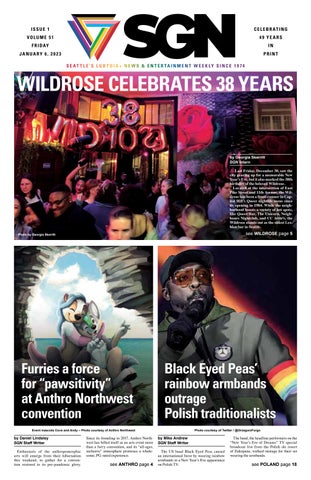
WILDROSE CELEBRATES 38 YEARS

by Georgia Skerritt SGN Intern
by Mike Andrew SGN Staff Writer
by Daniel Lindsley SGN Staff Writer
Photo courtesy of Twitter /
Event mascots Cove and Andy – Photo courtesy of Anthro Northwest
Photo by Georgia Skerritt






by Georgia Skerritt SGN Intern
by Mike Andrew SGN Staff Writer
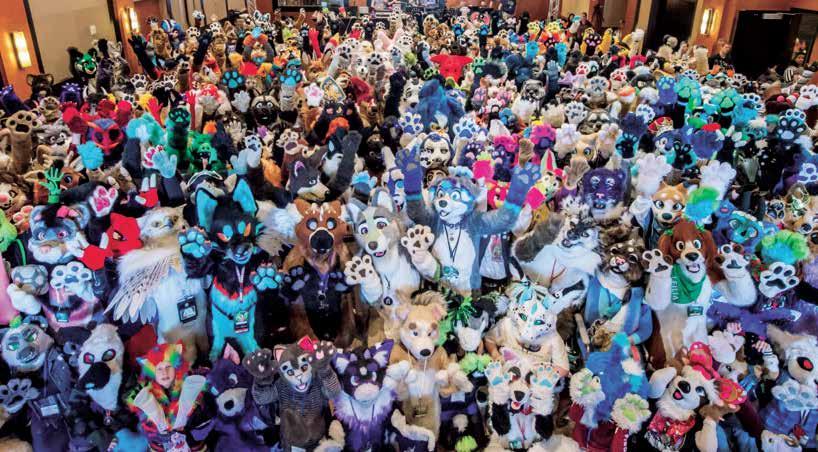
Their strong online presence aside, in the analog world, furries have preferred to keep their heads low and stick to the treeline, and their reasons for that go back decades. Historically, when the fandom has been in the news, it has rarely been for the reasons its members would like. The 24-hour news cycle demands engagement, after all, and what could be better for that than a shock piece about a bit of so-called “deviancy”?
For instance, in November last year, furries were used as a political punching bag — or perhaps a blunt instrument — when Republican politicians such as New Hampshire’s Don Bolduc repeatedly lied that public schools were installing litter boxes for what he called “furry” students. Given all the right-wing bile about gender identity in schools, it’s likely that the ultimate targets of those rumors were Trans kids.
Mind you, things have been getting better for furries, now that a few honest documentaries have been made on the subject and anthropologists have taken notice. By the numbers, we now know that the furry fandom is not the sex-crazed cult that mainstream news, CSI, and “cringe compilation” videos would have us believe.
What are furries, really?
But that same media-shyness caused by bad press has also kept furries from improving their reputation with the general public. Before we get into all the good things furries are doing for the world, or at least for Seattle, we need to break down what furries really are.
The truth is (as furries have been telling us for years) that they’re a group of hobbyists with an appreciation for anthropomorphic art. I’m writing about them here because they also happen to have a vastly greater proportion of Queer people than the general population, according to a 2020 survey by the International Anthropomorphic Research Project.
The survey found that only 10% of furries described themselves as heterosexual. And if you still think furries are exclusively a “sex thing,” note that only 4% of respondents listed sex as the most important part of the fandom; in fact, 10.5% said they identify as Asexual, which doesn’t preclude them from sex, but it does put a big dent in one of the most prevalent stereotypes.
But since numbers aren’t always convincing and can be misleading, I reached out to
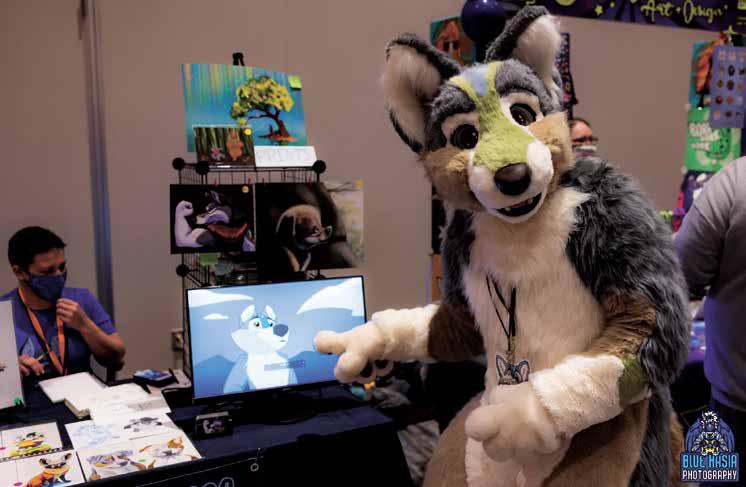
the founder of Anthro Northwest, who goes by Gabriel, for his take on all this.
“‘Furry’ is such a diamond,” Gabriel said of the fandom. “It’s this shiny, beautiful thing. You look through a facet and you see something, and you turn it a little bit and look through a different facet, and you see something else beautiful. There are so many different things you can celebrate in the fandom.”
The reasons for that multifaceted nature are themselves complicated. Unlike most fandoms, which are usually tied to a genre, creator, company, or particular intellectual property, furries are brought together by a shared love for the more agnostic category of anthropomorphic art.
That love spans all speculative genres and artistic media, from cosplay in the form of fur suits, to video games, literature, and even music. And the art furries make is often bespoke in a deeply and precisely personal way, which has made the fandom particularly resistant to mass commercialization.
Finally, the convention Furries are a wildly diverse group, artisti-
cally and in many other ways. Then what the heck are they up to at Anthro Northwest?
Like any convention, it has panels. Some are educational on the crafts front, focusing on the making, maintaining, and wearing of fur suits. Others, such as “Starting a Furry-Based Freelancing Business,” are about making money.
A surprising number cover mental health topics, like “Knowing Your Limits and Preventing Burnout,” a discussion on healthy creativity; and “Being Pawsitive, Inside and Out,” which is a space to share the positive effects of the fandom on one’s life and “explore how to bring forward your best self.” Anxiety, gender performance, postconvention depression, grief — there are panels addressing all of those issues and more.
Charity has always been a big part of Anthro Northwest, too; it’s actually a 501(c) nonprofit. This year it has partnered with Sarvey Wildlife Care Center, whose mission is caring for and rehabilitating injured, orphaned, sick, and displaced wild animals, so they can be safely released back into the wild. The center also helps educate people
on environmental and ecological topics.
Aside from the money from ticket sales, “celebrity artists” are scheduled to offer personalized doodles to donors, and there will be a raffle and an auction as well.
Of course, there are plenty of more commonly fun things going on, too, like DJ performances, movie screenings, bedtime stories, video game tournaments — you get the idea.
“This year [is] about restoration,” Gabriel said. “Last year we pared it back a lot. A lot of the really cool events got put on hold for a little bit. But the film festival is coming back this year. There should be a big parade, with a big group photo — I dunno, it feels like the magic and the energy is back.”
“It’s a celebration of beauty and love,” Gabriel said, “and the people there are amazing, wonderful, and kind.”
You can learn more about this year’s Anthro Northwest at https://anthronw. com/anw5/index.html, and get updates on any of its current or upcoming events on Twitter @anthronw.
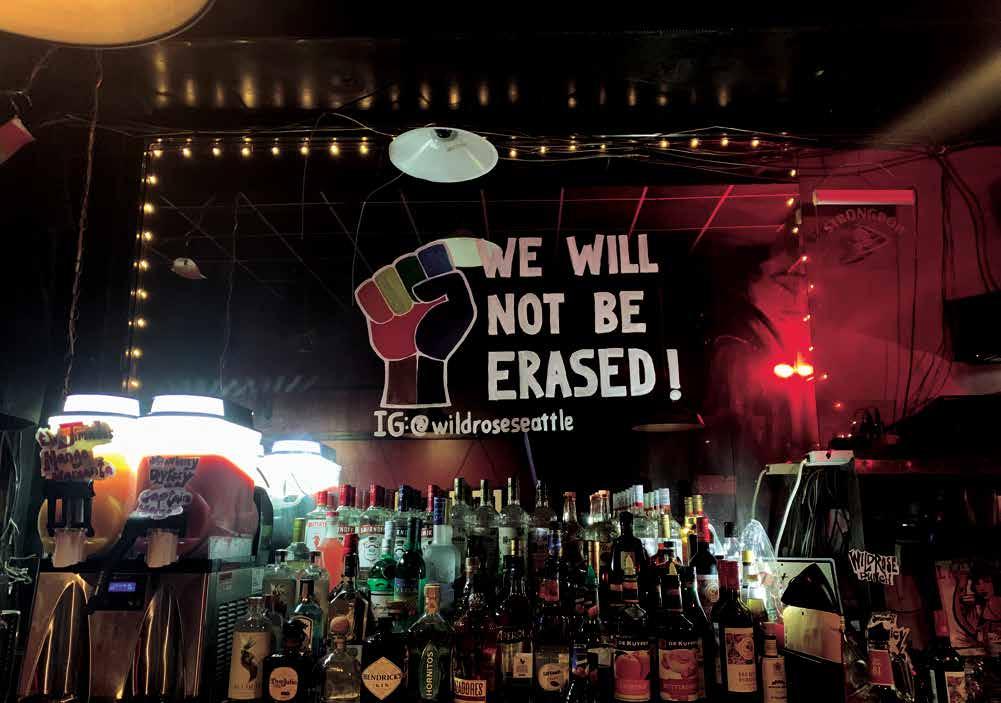

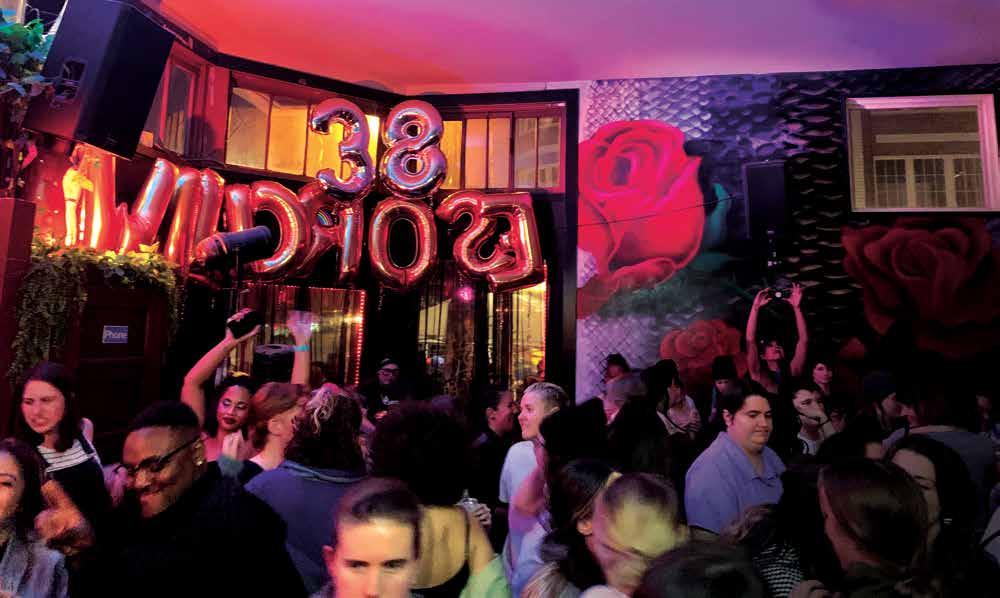
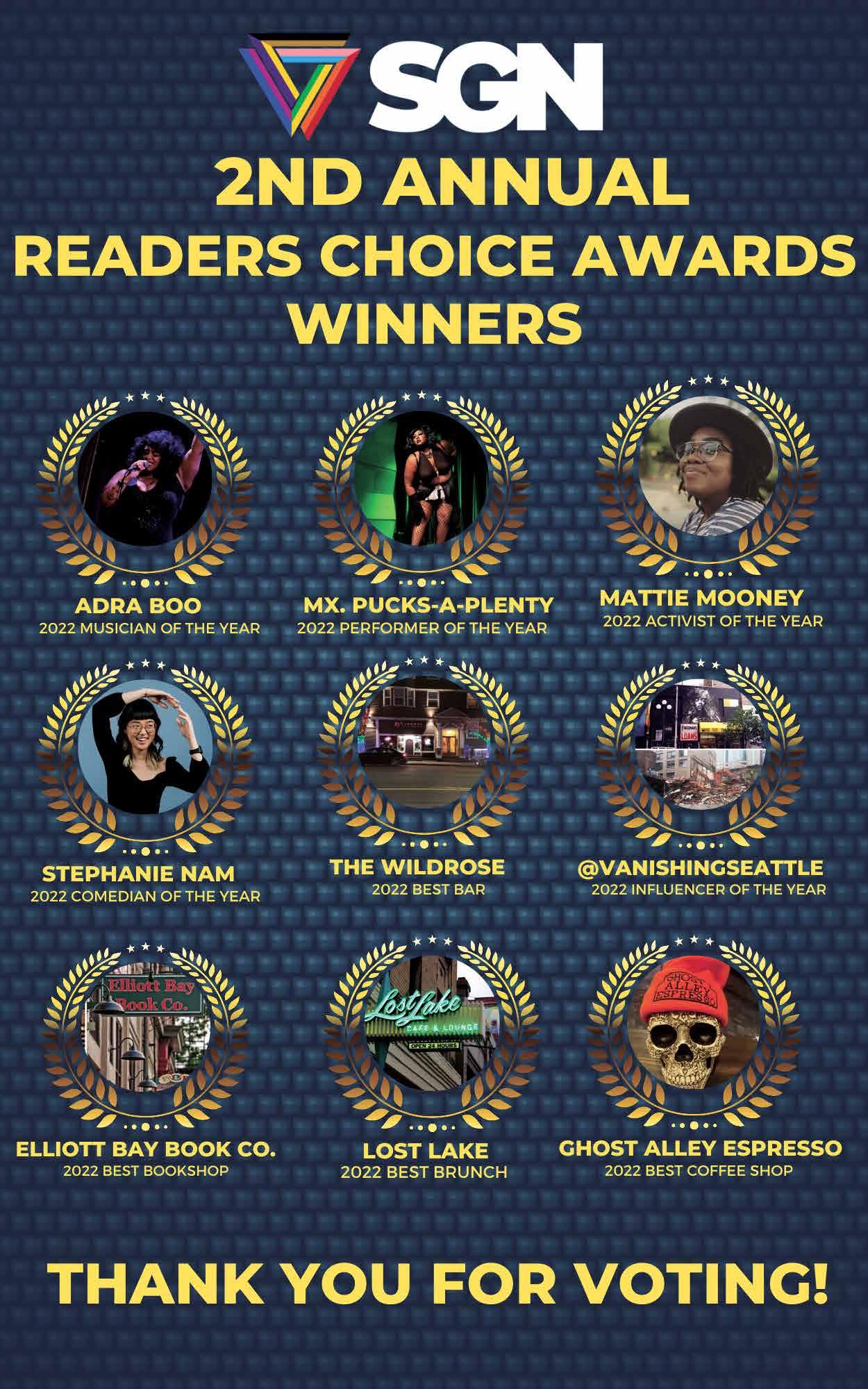
In recent weeks, the Wildrose team took to social media to announce their “Party Like It’s 1984” event in honor of the bar’s 38th anniversary, at which ’80s attire was encouraged. By 9:00 p.m. on the 30th, the space was at maximum capacity, and the line to get in wrapped around the corner, filled with partygoers at various levels of excitement and anticipation.
Upon entering, visitors were immediately swept up by the bustling atmosphere and friendly crew. Small groups of patrons sat at tables and booths lining the wall, nursing various drinks over long conversations with friends and family. Further in, warm and inviting staff members tended to the bar, offering a drink menu with several cocktail, cider, and beer options (all of the beers on tap from local breweries).
In a recent conversation with the SGN, Wildrose co-owner Martha Manning explained that she and her team try to focus on partnering with local businesses, saying, “We love working with local folks and highlighting what’s coming from the city.” Manning, who has had partial ownership of the space since September 2001 and currently co-owns with her business partner Shelley Brothers, explained that this focus also extends to music and artistic collaborations. While the Wildrose has previously hosted DJs and musical artists from several cities across the US, any opportunity to highlight local creators is honored.
“For music, we do try to focus on LGBTQIA+ folks, and we also try to support local artists as much as we can,” Manning said.
For last Friday’s event, the team invited Ricki Leigh to mix music for the night. She’s been based in Seattle for over 10 years; her website describes her as “one of the premier female DJs on the West Coast,” and indeed
she is. Throughout the night, throngs of eager attendees sang along and danced to Leigh’s music lineup, including crowd favorites like Katy Perry, Nelly, and Beyoncé.
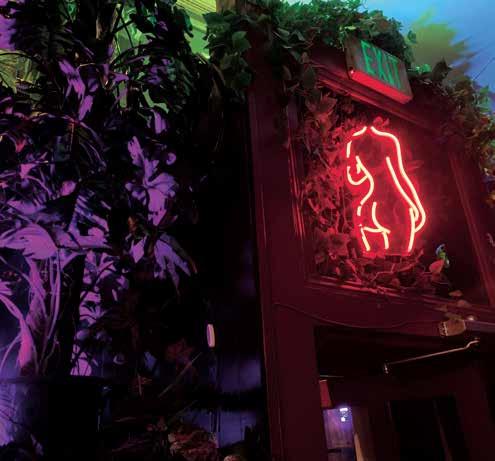
Beyond the dance floor itself, the rest of the venue set a subtle tone, with neon signs and numerous houseplants throughout offering a refreshing dose of decoration. Between the dance floor and the back seating area, lit tastefully in red , was a mural of a rose, one of the bar’s signature features. The mural, which often garners attention on social media as a photo backdrop for visitors, was done by another local artist, Takiyah Ward, who was also a major contributing artist in to the June 2020 Black Lives Matter street lettering next to Cal Anderson Park.
Manning explained that the New Year’s Eve party thrown the next evening was equally, if not more, busy — both events were at maximum capacity all night. With such an enthusiastic reception from the community, the Wildrose team looks
forward to more full houses in the new year. “In supporting the community, they absolutely support us back,” Manning said about both visitors and partnering artists alike. “We’re like a community center a lot of the time.”
While most of us are hopefully entering 2023 in good spirits, we still have a couple of months of winter cold to get through before we can start to enjoy the lakes and beer gardens again. In the meantime, be sure to ring in the new year with a visit to the Wildrose and get a taste of one of Capitol Hill’s most beloved Queer venues. It surely won’t disappoint.
The Wildrose is located at 1021 E. Pike St. and is open Tuesday–Sunday every week. To follow its schedule and snag tickets to upcoming events, visit its profile on Facebook or Instagram for up-to-date info.
by Lindsey Anderson SGN Staff Writer
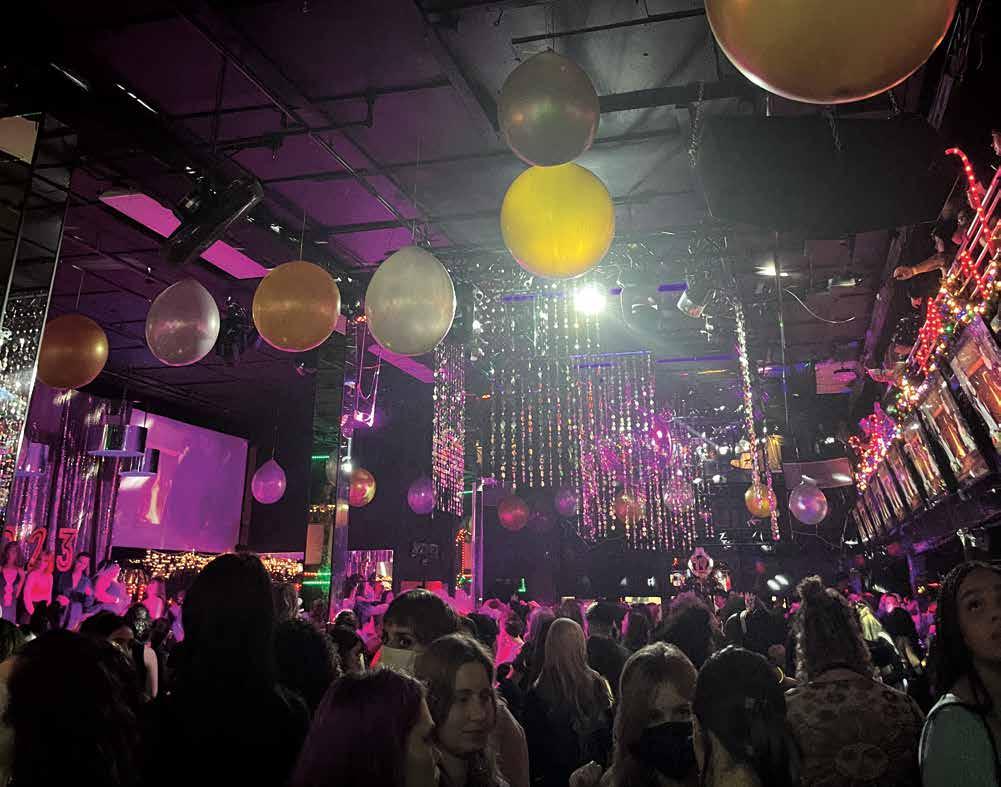
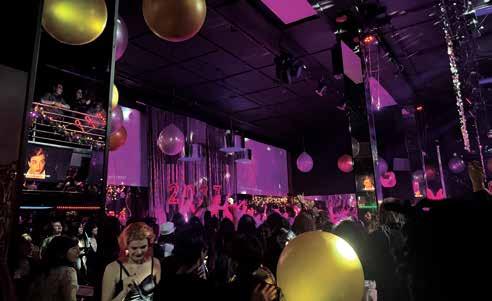
The red carpets were all rolled out for possibly the biggest Sapphic event of 2022 on Saturday, December 31. Neighbour’s Nightclub, in partnership with Sapphic Events, hosted an all-night New Year’s bash starting at 5 p.m. and lasting until 4 a.m. The club was reserved exclusively for people who identify as Sapphic to party between the hours of 5 and 10 p.m, then opened its doors for everyone else to join in the celebration until long after 2022 came to a close.
Drinks were flowing, drag queens and strippers were stunning the room, and music blared over the many speakers inside the club as a line of some of Seattle’s hottest girls, Gays, and theys stretched around the block. Once inside, it was clear the Lesbians were running the night.
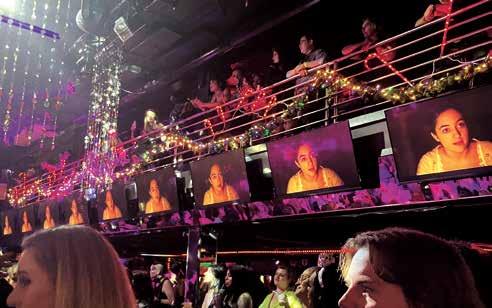
Portrait of a Lady on Fire, a critically acclaimed French Lesbian film, played on all the screens. Dancers swung around the poles in the middle of the room like trained acrobats. Every so often, the music would settle down as the night’s host, Shadae Simone, led those in attendance in group manifestations for the year ahead.
The party was a huge success for Sapphic Events, previously known as Sapphic Seattle. It was the organization’s first New Year’s Eve bash after it faced backlash due to a controversy earlier in the year. Despite some still protesting the group over the way it handled the allegations, the house was packed, with tickets nearly sold out days in advance.
Sapphic Events was created to create safe spaces for Queer women and Nonbinary people to feel comfortable drinking and dancing, away from the often danger-
ous cis-het male gaze. In keeping with the mission to protect Queer and Trans women, the holiday event required all guests to show proof of vaccination at the door and provided security checks and patdowns only by women. The event also listed several strict rules against “unicorn hunting,” the practice of couples looking for a third in a predatory way.
Simone got the crowd hyped for every performer, and made sure to encourage and validate those who make a living in sex work and performance. While the music at times felt like the soundtrack to a 2010’s middle school dance, the drinks and overall vibe kept the party alive, even after Gale’s “ABCDEFU” caused some gag.
As the clock ticked closer to 2023, the energy in the room kept rising. Dancers Varian Oatman, Kylie Hanako, and Lavender Sinclair brought the house down with their stunning outfits and incredible moves. The midnight countdown served as just the beginning of the rest of the raucous night.
“It was so crazy after midnight,” partygoer Alexis Ashe said as she recalled the vibrant shift in the venue. Maybe it was all the manifesting, or simply the magic of so many Queer women sharing a space, but as the clock shifted into the new year, so did the vibe. People of all identities, genders, and generations shared the floor of Neighbour’s, soaking in the beats and dreaming up new goals for the coming year.
For people interested in more Sapphicfocused LGBTQ+ club nights, Sapphic Events isn’t the only option. Honey, Seattle’s premier and Queer all-women’s party, celebrates BIPOC Queer women and hosts seasonal events for those 21 and over looking to enjoy a magical night full of Queer joy.
by Sara Michelle Fetters SGN Staff Writer
M3GAN Theaters
After her parents are tragically killed in an automobile accident on the way to an Oregon ski resort, eight-year-old Cady (Violet McGraw) is sent to live in Seattle
with her aunt Gemma (Allison Williams), a robotics engineer at a toy company. Not having the first clue how to deal or connect with her niece, the electronics whiz is instead inspired to finish crafting her greatest invention: M3GAN.
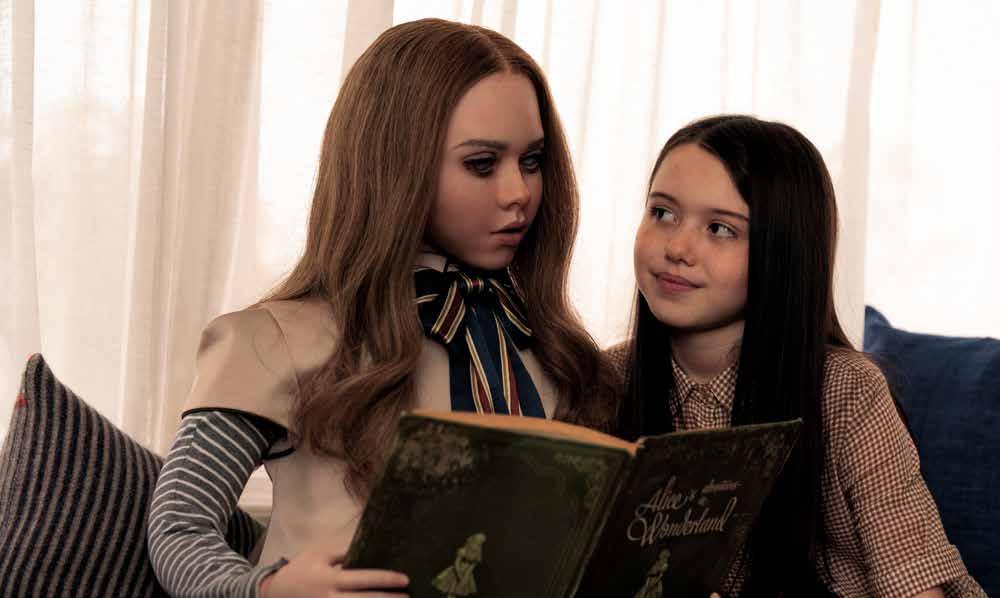
M3GAN is an advanced, four-foot-tall, hyperrealistic robotic doll programmed to instantly bond with its new owner. It listens to Cady’s needs, responds to her questions,
is her greatest confidant, and becomes the best friend the little girl has ever had. The cybernetic humanoid hybrid is a spectacular success, and not only does this creation put Gemma on the fast track to success with her employers, but the robot also appears to have helped ease her niece’s unfathomable pain over the loss of her parents.
Anyone well versed in their Isaac Asimov or Harlan Ellison knows what’s going to

happen next. Robotics and artificial intelligence don’t tend to make comfortable bedfellows, and that is indeed the case with this goofily energetic film from Gerard Johnstone (Housebound ). Working from a screenplay written by Malignant scribe Akela Cooper, the director unleashes a sensationally entertaining robotic-doll-runamok sci-fi thriller that helps start 2023 off with a campily bloodcurdling bang.
None of the actors mug for the camera. Everyone is all in on the gag, no matter how ridiculous events become. This is especially true for M3GAN. Cooper’s dialogue overflows in choice nuggets that are almost certain to instantly enter the pop culture lexicon, each delivered with pinpoint, malevolent precision by the character’s voiceover actor, Jenna Davis.
As for M3GAN’s impressive physical performance, it is a mixture of child actor Amie Donald’s acrobatically lithe movements and eyebrow raises, incredible practical makeup effects, and seamless digital motion capture. The robot is 100% realistic. I believed M3GAN existed from the first moment the mechanical being bonded with Cady. It’s stunning work, and the doll’s climactic rampage is all the more effective because of it.
Much like Malignant, this horror effort does get undeniably silly, and I knew from the start where this mechanically diabolic madness was headed. But Williams and especially McGraw give it their all, and I liked how authentically Cady and Gemma’s relationship evolved. They never go over the top or let their performances become overtly theatrical, the duo instead maintaining a straight face even when delivering one-liners that would have made Sylvester Stallone or Arnold Schwarzenegger cringe in their action-hero heydays. There’s not much more to add. The way my promo audience reacted, M3GAN has all the makings of being a January surprise hit and the start of a new franchise, one that has the potential to get even better with a second chapter. I’m pretty positive this film and I will be friends to the end, and I’m equally confident everyone from Talking Tina to Chucky himself would happily add M3GAN to their “killer doll” support group if given the opportunity.
by Sara Michelle Fetters SGN Staff Writer
A MAN CALLED OTTO
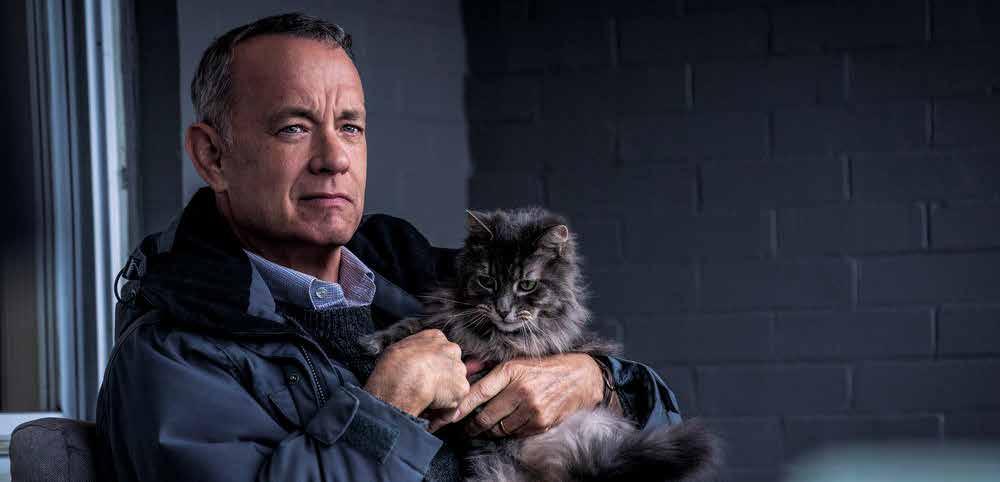
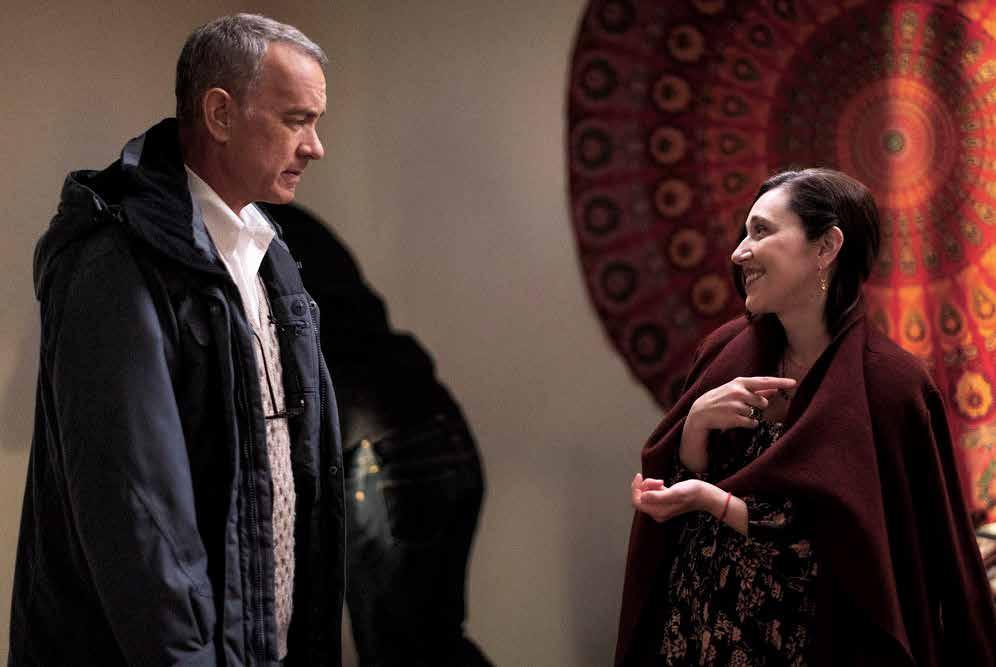
The primary sin director Marc Forster’s A Man Called Otto makes is that doesn’t live up to either author Fredrik Backman’s source material A Man Called Ove or the excellent 2015 Swedish adaptation directed by Hannes Holm and starring Rolf Lassgård. Otherwise, it’s hard to get too worked up about this English-language remake. Tom Hanks is terrific. Actress Mariana Treviño is memorably sublime in support. David Magee’s efficient screenplay doesn’t sand away all of the book’s darker, sharply unsettling edges.
These are all good things, and Forster is an astute enough filmmaker to heavily lean into all of them. He keeps the pace moving and doesn’t layer on the syrup, save for one notable, mind-blowingly obnoxious flashback sequence (more on that later). The drama is superbly shot by cinematographer Matthias Koenigswieser (Christopher Robin), and the suitably melancholic score by Thomas Newman (1917 ) is unsurprisingly excellent. All in all, A Man Called Otto is an easy (if still moderately forgettable) watch, but as the last motion picture I got a look at in 2022, I have few major complaints.
Widower Otto Anderson (Hanks) lives in a small gated community that condo developers have been itching to get their hands on for quite some time. He walks around the neighborhood every morning, verifying that every resident’s parking permit is up to date, garbage has been picked up, and recycling has been properly sorted. His cantankerous personality could easily rub some the wrong way, but most of his neighbors are accepting, even forgiving, of his irritably unpleasant quirks.
On the day Otto has made some rather permanent plans regarding his future, newcomers Tommy (Manuel Garcia-Rulfo), his pregnant wife Marisol (Treviño), and their two children (Christiana Montoya, Alessandra Perez) rent one of the homes in the neighborhood. Otto initially doesn’t think this will change anything, but Marisol has other plans. She basically forces herself into his life, making him homemade Mexican snacks and prodding him into giving her driving lessons. She even convinces him to babysit.
It’s pretty standard stuff. Forster and Magee last collaborated on 2004’s Finding Neverland, and it’s not like the pair has ever been known for digging too deeply into the nastier recesses of the human condition. To their credit, they don’t entirely cop out with this adaptation. Backman’s novel gets pretty bleak in places and dives headfirst into several uncomfortable truths. The filmmakers keep much of this material relatively intact, and I’m happy an entire subplot involving Otto’s desire to end things and join his late wife in the hereafter has not been excised.
Making comedy out of potential suicide isn’t easy, and I can’t say Forster has the chops to completely pull it off. The director has some trouble balancing tone, and the shifts from straight drama to wacky physical schtick to pitch-black social commentary are far from seamless. Some of the
transitions are jarring, so much that they were almost like blinking neon lights that took me right out of the movie and muted much of the emotional impact.
But Hanks does know how to do this sort of thing — take a look at Punchline, Nothing in Common, Joe vs. the Volcano, and especially The ‘Burbs for grandly pleasurable verification on that front — and, even better, can make it look easy. Every time Marisol came knocking at Otto’s front door at the most inopportune times, the actor’s reactions are so precise, so authentically agitated, I couldn’t have stopped myself from happily chuckling even had I wanted to try.
There is another key misstep, and sadly it’s a doozy. While the filtering of frequent flashbacks chronicling Otto’s courtship and eventual marriage are mostly well executed, there is an exasperating exception. A pivotal bus trip the pair took as
they returned home from their honeymoon and the personal tragedy that transpired is so maudlin, so heavy-handed, I wanted to grab any nearby item and angrily throw it at the screen. Forster gives in to his melodramatic, baser instincts and hammers home emotions that don’t require any embellishment. I hated this whole sequence. But Hanks, Treviño, some powerful scenes immediately after this one, and an ending that felt authentic and well restored a smile to my face. Forster gets things back on track, and as contrived as the climax may be, I liked all of these characters just enough that this didn’t bother me. While far from the near-brilliance of Backman’s novel, A Man Called Otto is a nice adaptation with strong performances that kept me pleasantly entertained for most of its running time. Where’s the sin in that?
by Sara Michelle Fetters SGN Staff Writer
Theaters / PVOD (1/13)
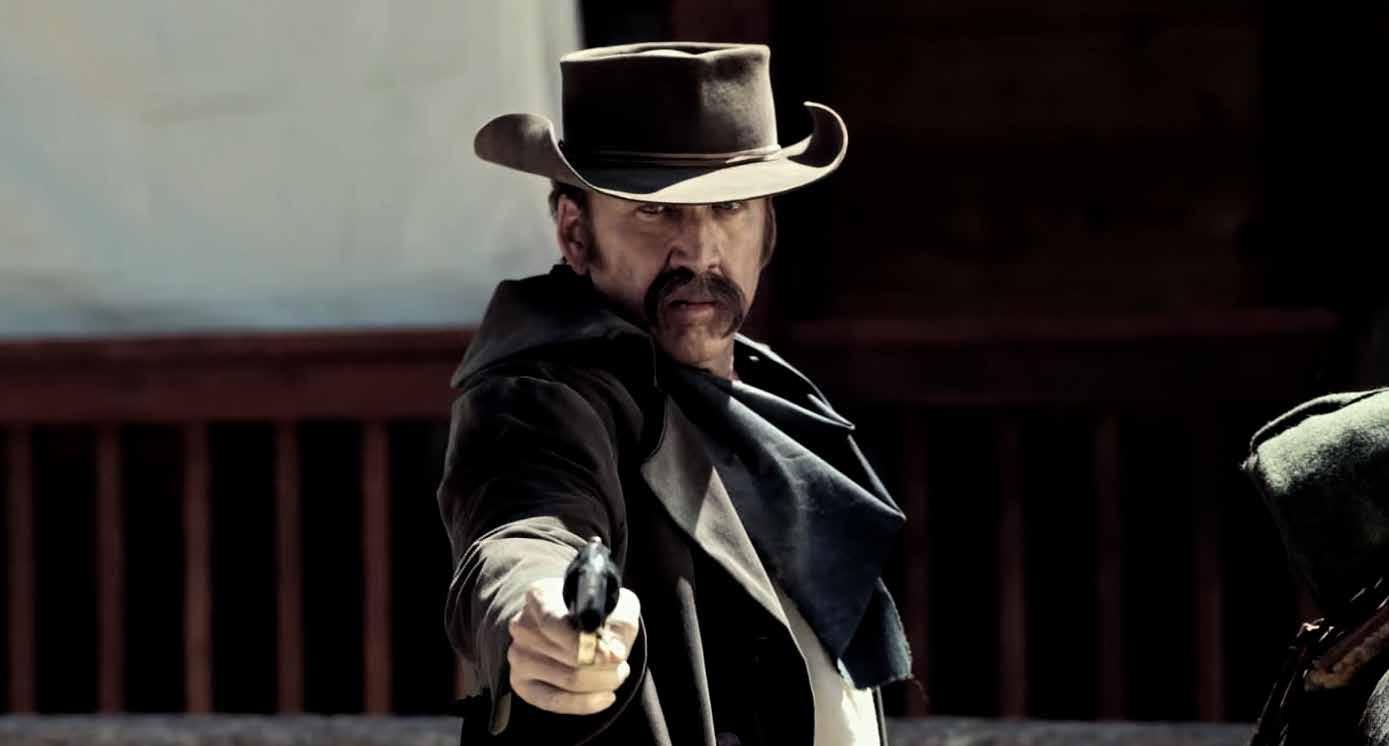
The Old Way is a cold, uncompromising Western that tracks down suspense and tension by moseying down a conventional narrative trail. Director Brett Donowho (Acts of Violence) and screenwriter Carl W. Lucas (The Wave) appear to have watched Unforgiven, True Grit, and as many Budd Boetticher and Monte Hellman oaters as they could, multiple times, pulling themes and ideas from the best in an attempt to make them their own.
That they almost succeed has everything
to do with the cast they’ve lassoed to fill the dusty boots of these otherwise familiar characters. Nicolas Cage is convincingly hard and pitiless as the former gunslinger who laid his six-shooter down for love, only to angrily reload when tragedy strikes. Nick Searcy is convincingly withered and weary as the grizzled lawman who tries to keep this ruthless legend from getting his revenge. Noah Le Gros is charmingly merciless as the quickdraw killer who is compelled to awaken a sleeping demon to settle an old score.
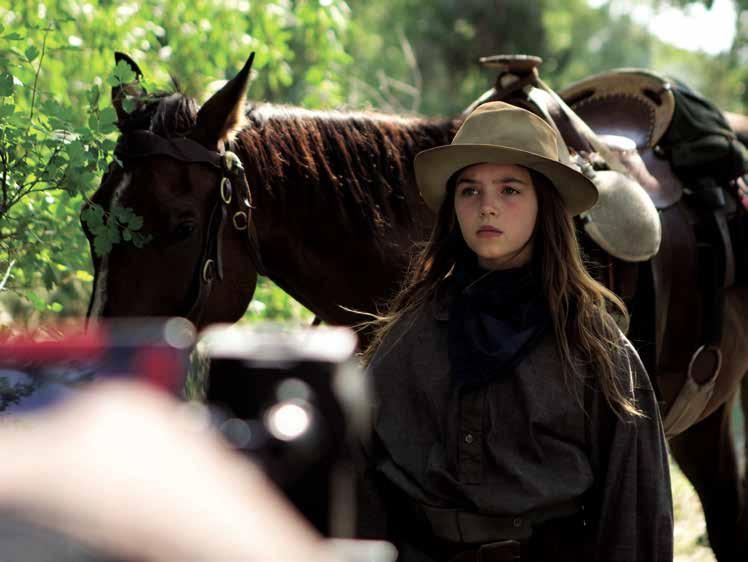
Best of all is young upstart Ryan Kiera Armstrong, who broke out last year as the pipsqueak telekinetic pyromaniac Charlie McGee in the otherwise forgettable Firestarter remake. She’s the oddly quiet daughter of Cage’s shootist, and Armstrong fre-
quently steals scene after scene from her far more recognizable costars. Her work during the film’s climax is tremendous, and the psychological permutations her character goes through in the span of a few minutes are an incredible display of emotive dexterity.
Colton Briggs (Cage) is a legendary enforcer who has retired to the life of a simple shopkeeper living with his lovely Ruth (Kerry Knuppe) and inquisitive daughter Brooke (Armstrong) in a nameless small town. After a day working at their family’s store, Colton and Brooke return home to discover US Marshal Jarret (Searcy) and his posse sitting on their doorstep. Outlaw James McCallister (Le Gros) and his small band of cutthroats (Clint Howard, Abraham Benrubi, Shiloh Fernandez) had paid
Briggs’ wife a visit, the bloody remnants of which — including a personal message meant for his eyes only — are left splattered about the family’s barn.
It’s no secret where things are headed from there. Against the marshal’s orders, Briggs will “unretire” and slip his gun belt back on, ready to track McCallister all the way to hell to get his revenge. The killer, in turn, has a personal tie to the pursuer he has purposefully antagonized, an opening prologue spelling that out in bullet-riddled Technicolor just on the off chance anyone might miss how the pair are connected.
The tweak is the insertion of Brooke. She’s something of a cross between Mattie Ross from True Grit and what I imagine Ellen Barkin’s incarnation of Calamity Jane in Wild Bill would have been like had we first encountered her as a 12-year-old child. This allows for an unknown commodity to enter into the proceedings, and Donowho and Lucas go to great lengths to make the most of it.
What do I mean? There are long conversations between Briggs and his daughter as they attempt to suss one another out. She wants to know how her father became so good at killing people. He, for his part, begins to see pieces of himself in the child, things that he always paid no attention to before and are suddenly clear as day now — and isn’t sure how he feels about that. Early in their journey tracking McCallister and his crew, the pair have a terrific moonlit conversation about what it means when people cry and what it takes to shed a tear, and this one brief bit has a tremendous impact on everything from that moment forward.
The climax in a Mexican town is well staged, and Cage showcases the action chops that helped make him a genre superstar during the 1990s. But it’s obvious where things are headed, and I kept waiting for the filmmakers to do something unexpected — only to realize that that was never going to happen. Things end exactly where I anticipated, and it’s a testament to how strong Cage, Armstrong, and Le Gros are throughout that this isn’t a bigger issue.
Heck, in some ways this makes The Old Way kind of refreshing. It lives up to its title in that Donowho and Lucas are content to keep themselves from rewriting the Western rulebook. Their film shoots straight and hits the majority of its targets, and thus kicks off 2023 with entertaining old-fashioned bravado.




by Terri Schlichenmeyer
It happens every year. The decorations come down. The last of the Christmas leftovers have been eaten. Errant bits of ripped wrapping are found and discarded. You have no more holiday candy or cookies. You look around at your empty hands, and you wonder now what?
Now it’s time to settle in and read for the rest of the winter season.
For your pleasure, here are the Top Five Bookworm Picks for the Best of 2022...
Fiction
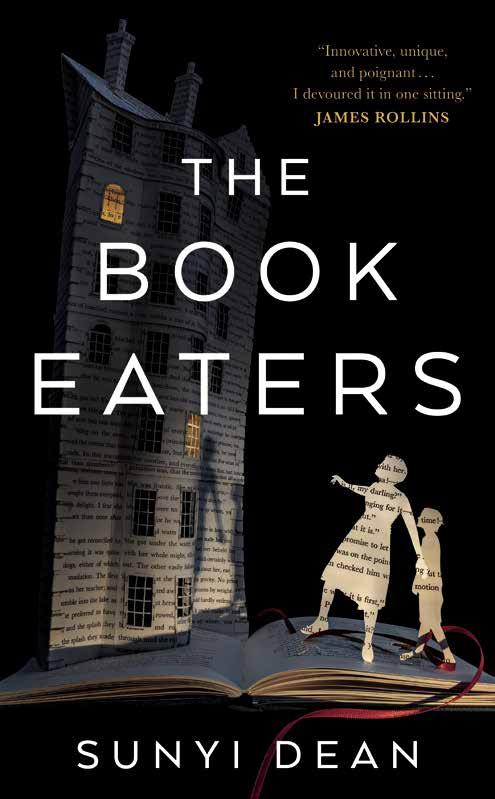
Lovers of fairy tales are in for a big surprise with The Book Eaters by Sunyi Dean (Tor, $26.99). It’s a dark, dark legend filled with evil dragons that look like men, princesses that are worse than second-class citizens within their realms, and a chase that will chill you. Book lovers will adore this tale, especially if you don’t necessarily need a happily-ever-after.
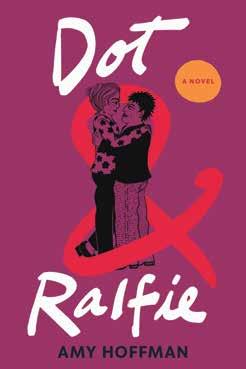
Dot and Ralphie by Amy Hoffman (University of Wisconsin Press, $16.95) doesn’t look like much. But aren’t you glad you don’t judge a book by its cover? This is a sweet tale of two elderly women, partners in life, love, and aging. It’s sweet and grumpy and charming, somewhat like a Lesbian Honeymooners episode, only better.
Readers who are familiar with the thrillers that James Lee Burke writes will absolutely be stunned by Every Cloak Rolled in Blood (Simon & Schuster, $27.00), because in this novel, the thrill is secondary to the
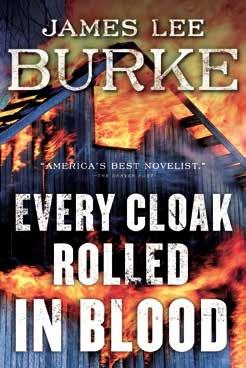
main plot. Here, retired detective Aaron Broussard has lost his beloved daughter, and it’s cut him to the core. Fiery, glasssharp grief doesn’t stop crime, though, and so he still has to solve it — whether real or imagined. Read this with an open heart and tissues at hand. It may be Burke’s best.
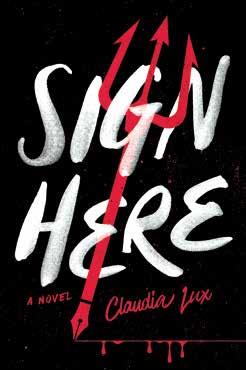
Those who like clever stories will love
Sign Here by Claudia Lux (Berkeley, $27.00), the tale of Peyote Trip, whose job on the Fifth Floor of Hell is to recruit new souls for eternity. But Pey has a plan to get out of his purgatory, which turns this funny, sharpwitted story into a shady mystery that will make you laugh a lot and squirm even more.
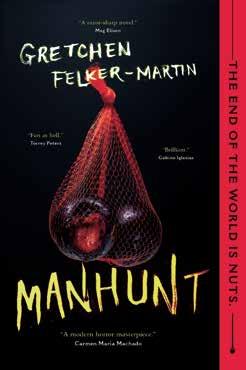
Here’s a book that’s absolutely not for everyone: Manhunt by Gretchen Felker-Martin (Macmillan Nightfire, $17.99), a Lesbianfeminist dystopian thriller, which sounds like a lot — and it is. A virus has hit every corner of the world, making men into wolf-like killing machines and sending the women into hiding. When two young women — one of them trans — learn that a healer might be able to save them from the inevitable, they head out to find her, but a makeshift band of female warriors get in their way. Again, this isn’t for everyone, but if you’re looking for something very, very different, this is it.
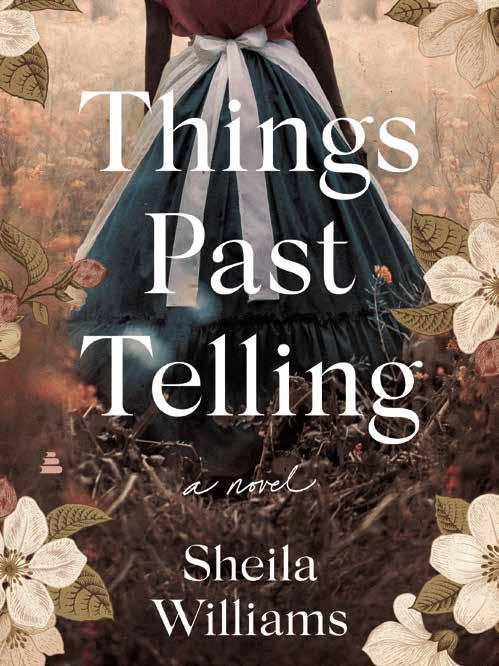
BONUS: Things Past Telling by Sheila Williams (Amistad, $25.99), a novel of the memories of a 112-year-old former slave, who was also a pirate’s woman, a healer, and someone reaching for things her soul needed. It’s an adventurous book with the tiniest touch of fantasy — and you shouldn’t miss it.
Nonfiction
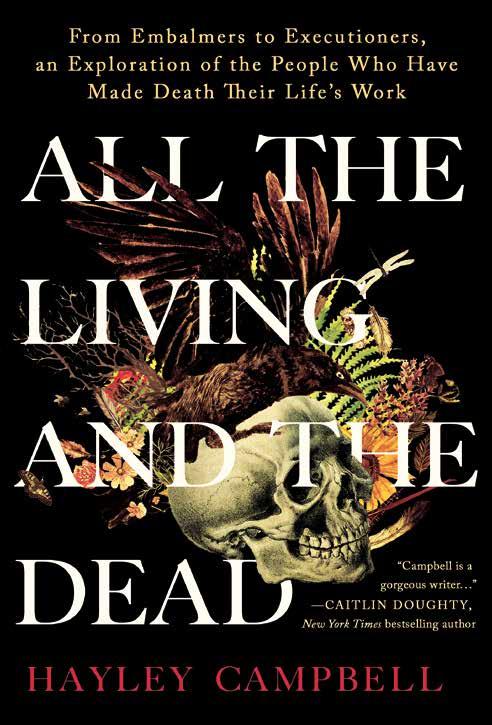
You have questions. And All the Living and the Dead by Hayley Campbell (St. Martin’s Press, $29.99) has answers. When someone dies, what happens next? A wide variety of things, that’s what, and it’s someone else’s job to see that they’re done right. This book is careful not to be (too) gruesome, but it is compellingly fascinating.
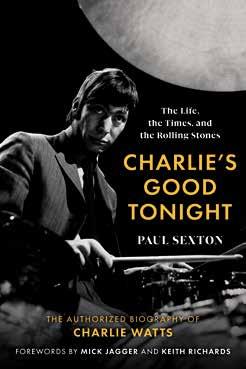
Charlie’s Good Tonight by Paul Sexton (Harper, $27.99) is on this list because it could be the biggest surprise of the year. It’s the story of the late Rolling Stones drum-
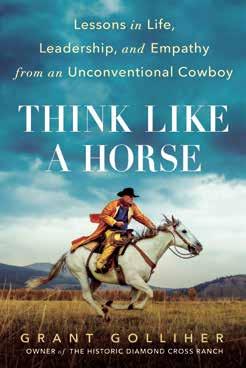
mer Charlie Watts, a man who really never wanted fame and often actively shunned the limelight. If you think you know all about the debauchery of your favorite rock ‘n’ roll band, think again and be totally charmed by one man’s life. There are two business books on this list, because they don’t at all read like business books; in fact, Think Like a Horse by Grant Golliher (Putnam, $28.00) and Meet Me by the Fountain by Alexandra Lange (Bloomsbury, $28.00) both seem more like snuggle-in-front-of-the-fire kinds of tomes.
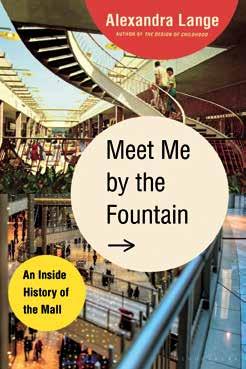
Golliher’s is pure cowboy — he was a rancher and worked extensively with horses — and there are Western-novel tones on getting the most out of people. Lange’s is a trip to the mall throughout history, including a good look at stores you may have visited over the years. These are both great for the business-minded reader, but could be enjoyed by anyone.
And finally, an obsession: To Walk About in Freedom by Carole Emberton (W.W. Norton, $28.95), a jaw-dropping memoir that hides in a history book. In the earlier
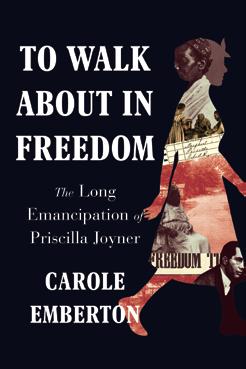
part of the last century, the government paid writers to interview people for a WPA project. One of the interviewees was a former slave who offers up not only her life but a real-life account of the end of slavery and how it impacted everyday, average people. This is a volume you’ll be talking about well into the new year.
If these 11 books don’t fit your mood, then be sure to check with your favorite bookseller or librarian. When it comes to this kind of thing, (s)he is a superhero. Happy reading!
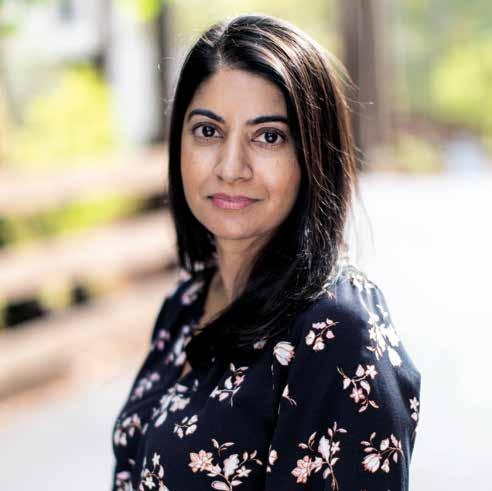
by Lindsey Anderson SGN Staff Writer
The new year is officially here: a time to make resolutions, plans, and hopes for the next trip around the sun. New Year’s is also a great time to reflect on all the accomplishments of the last 365 days.
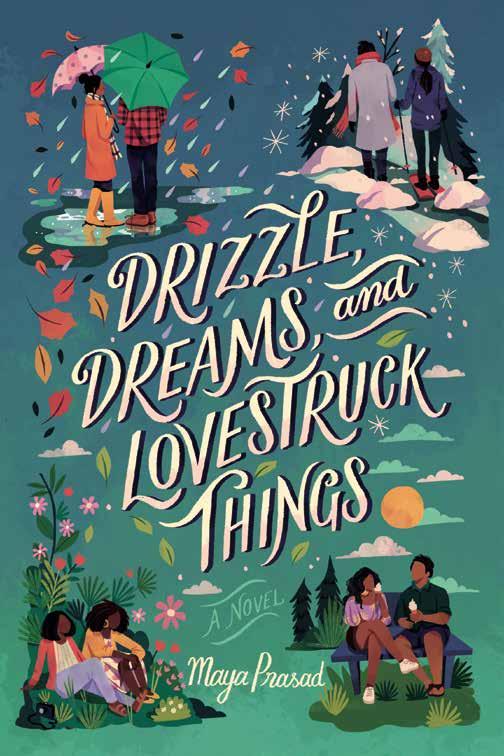
For new author Maya Prasad, 2022 brought great successes, like the release of her first published novel, Drizzle, Dreams, and Lovestruck Things. Her debut follows the adventures of four sisters living in the Pacific Northwest as they encounter different seasons of love.
“Seasons are a big part of the book,” Prasad said. “It takes place over four seasons. One sister’s point of view is in fall, one is in winter, one in spring, and so on. I had a lot of fun incorporating what time of year it is with the romance, so I think it is fun to read in any season, but especially winter.”
Writing four stories in one presented a unique challenge, but the task demonstrated Prasad’s talent for crafting diverse voices and writing from new perspectives.
“I enjoyed writing four different characters, four voices, four distinct romances, so I had a lot of fun with it,” she said.
“I got into writing because I wanted to create a representation, and in this case, I was going for joyful representation. I wanted to write something that would inspire kids, especially Brown kids and Queer kids, to see a hopeful future for themselves and see that they are worthy of love and that they are beautiful, so that was sort of the mindset I was going into.”
Prasad ultimately decided to center her novel on four sisters because of her upbringing. “I am one of four siblings, so I had fun writing about sisters because of that, and I live in the Pacific Northwest, so I was inspired by the weather and all the little quirks of living in the Pacific Northwest. I didn’t grow up here, so in a way, I claimed it as my home.”
There’s no place like the PNW Setting Drizzle, Dreams, and Lovestruck Things in the Pacific Northwest allowed Prasad not only to explore the region she calls home but to learn more about it as well. For readers who live here, she made sure to include plenty of Easter eggs.
“There are lots of little jokes that I try to include in there,” she said with a laugh.
The most important element of all the characters Prasad created was their joy. She wanted to give her readers authentic depictions of happy BIPOC and LGBTQ+ characters.
see PRASAD page 14
continued from page 13
“There’s a little part where I talk about how it rained on Monday, and then it rained on Tuesday, and then it rained on Wednesday, and it rained on Thursday, and then finally on the weekend, they get a beautiful sunny day. I think [that’s a] feeling we have here in the Pacific Northwest — where we get so much bad weather but then …we get that one sunny day [and] we just have to race outside and make the most of it. So that was really fun to incorporate.”
Prasad also had a good time poking fun at those who take outdoor time just a little too far.
“I also [joked about] how people [in the Pacific Northwest] are so outdoorsy and love hiking. I have a …scene where they are camping on an island in the San Juans. The sister whose point of view it is is sort of complaining about it. She loves doing it, but she’s talking about how camping sounds so romantic, stars and [the outdoors], but also [her] back hurts from sleeping on the ground all night.”
While Prasad was able to lean on her own experiences living in the Northwest for most of the book, she also had to do some research to make sure she was accurately portraying Orcas Island, where she chose to set the novel.
“I had been to Orcas Island before, but I just wanted to make sure I got the details right. I try to avoid too many specifics, so I don’t say ‘It’s that way,’ where the business is located, because a lot of these things are still fictional, but I just wanted to make sure that I was describing it well,” she said.
In the early stages of her writing, Prasad took a trip to the island to learn more about it but struggled to connect with locals due to the pandemic.
“Throughout the pandemic, everything was closed so I didn’t have a chance to talk to people while I was there,” she said, “but I met someone on Twitter who lives on Orcas Island and is a teacher there, and she agreed to do a Zoom interview with me. I asked her all these small details about Orcas, like does the high school have lockers — and the answer is no. Things like that.”
Prasad, a lifelong learner, enjoyed discovering more about the region she lives in and even uncovered some surprising facts.
“For one thing, I thought Orcas Island was named after orcas, the killer whale, but it’s not. It’s named after a Spanish explorer, a shortened version of his name,” she said. “I thought that was interesting.”
Aside from exploring the history and geography behind the small town she chose to set the book in, Prasad also looked into the activities she chose as hobbies for her characters.
“I did a lot of research on photography. One of the sisters is a photographer, and I wanted to make sure I knew how to describe the specifics of that, so I read about it, and it gave me some insight into my amateur photography.”
Exploring intergenerational Queer relationships
One of the reasons Drizzle, Dreams, and Lovestruck Things stands out among the many young adult novels available at the moment is the attention to detail Prasad put into each of her characters. They come alive on the page. Accurately portraying Queer and BIPOC characters was especially important to her.
From the very beginning, Prasad knew she wanted to include LGBTQ+ storylines in her novel. While these are becoming more and more common in novels for younger readers, Prasad also wanted to include intergenerational Queer identities, to show the differences between LGBTQ+ people today and those who grew up in different times.
“The dad is Bi. He owns this inn, and he …works on it with someone else who he ended up falling in love with, a man. …I knew that would end up affecting the story as well, because the girls would grow up with this nontraditional family, and they
would embrace that. Of course, one of the sisters is Queer, and at the beginning of the story it’s not a surprise or anything — the other sisters already know that she’s interested in girls… She’s also the youngest, she’s 15, so she hasn’t really had a real relationship before, and so the story is about her first real big crush and her first kiss, and it was a lot of fun to write.”
Writing the father as an out Bisexual character in a same-sex relationship also gave her the chance to explore the ways sexuality and culture intersect for older adults, as well as the relationship between Queer children and their families.
“She is a little different from her sisters, in that they haven’t kept in contact with their family in India and her sisters don’t know why, but Sirisha, as the Queer one, kind of suspects that it might have to do with her dad’s relationship,” she explained.
Writing Queer characters presented another challenge for Prasad. “I think mostly for me it was a matter of responsibility, like I felt responsible to create a good representation,” she said. “Other than that, I feel like it is pretty universal. The act of falling in love and a lot of the tropes are the same. I wanted to make sure that it felt swoony, just as swoony as the others, if not more so. It was mostly thinking about how to portray it in a way kids could relate to, especially Queer kids.”
“I wanted to create a work of joyful representation both for Brown kids and Queer kids, and Brown Queer kids,” she continued. “I hope that readers can take away that sense of hopefulness and that you’re worthy of love no matter who you are. Especially the diaspora kids. I hope they take away that they are enough and [that] you don’t have to be more Indian or more American — whatever they are is enough. You’re beautiful and you can find love too.”
The story continues
Prasad is continuing the love from Drizzle, Dreams, and Lovestruck Things in an already highly anticipated second book.
“I’m working on a sequel.. So, there will be another story about the four sisters. You’ll see where these relationships go next. Sadly, some of them won’t make it, but the sequel is still hopeful and there are new romances, too. It’s a lot of fun,” she gushed.
Despite the stories from her book embracing many cheesy rom-com tropes, Prasad is happy that her sequel will add some realism to the experiences of young love.
“I think it’s important for kids to realize that this isn’t necessarily the person you’re going to be with forever, so don’t get too attached. I think high school romances are very sweet, but be aware that it might not work out, and that’s okay: you’ll survive.”
The lessons she includes in her books, about love and growing up, are important ones that teens of all identities can connect with. Sharing wisdom with readers who are still figuring life out is one of her favorite things about writing YA fiction. “I like writing for kids and teens. That age where you’re trying to figure out who you are is just something that draws me.”
Nurturing a love of science through literature
Most recently, Prasad has branched out from writing YA lit to explore children’s chapter books.
“I have a science background. I graduated from CalTech, and I worked as a software engineer for over ten years. I wanted to bring that science background in. I’m also a parent, and I was reading a lot of chapter books with my kiddo, and I thought this would be a fun story,” she said of her children’s book series Sejal Sinha
“My kid loves cardboard boxes and pretending to go on adventures in them, as so
many kids do. I took the idea of a kid who wants to imagine a place they’re going to in a cardboard box, and I tried to combine it with science. It’s like Magic School Bus: they go on little science adventures and learn more about the topic at hand.
“The first one is about a family celebrating Diwali, but there’s a hurricane warning on the news and they’re worried that they might have to evacuate. Sejal, who is the main character and an Indian-American girl, and her cousin get into their cardboard box and fly into the hurricane and learn a lot about the science of hurricanes and some of the theories of how we might alter hurricanes.”
Whether she’s writing science books for kids or romance books for teens, Prasad says she will try to include at least some LGBTQ+ characters. “I think all of my stories will probably have some Queer representation, especially if it’s a young adult. My chapter book doesn’t, I guess, but the third one does because it has a Nonbinary character.”
For readers looking to spice up their new year with some romance, Prasad’s Drizzle, Dreams, and Lovestruck Things is a great read to inspire folks to look for love in all seasons. For those in the PNW who are especially discouraged by the dreary winter, she has some advice as well.
“First of all, I think the book club idea is great, because you can escape to maybe a nondreary winter, something cozy. But mostly I’d say, take your vitamin D, because that’s very important. Number two, embrace the weather! Go out, get cold, get wet, have the right rain gear, and then you can enjoy it when you come back in and get warm and have hot cocoa. That’s how the sisters deal with it in Drizzle, Dreams, and Lovestruck Things.” Prasad’s novel reminds readers that there is always something new to explore in the Pacific Northwest, and the best way to have a good new year is to start romanticizing the little things.
by Bill Malcolm Special to the SGN
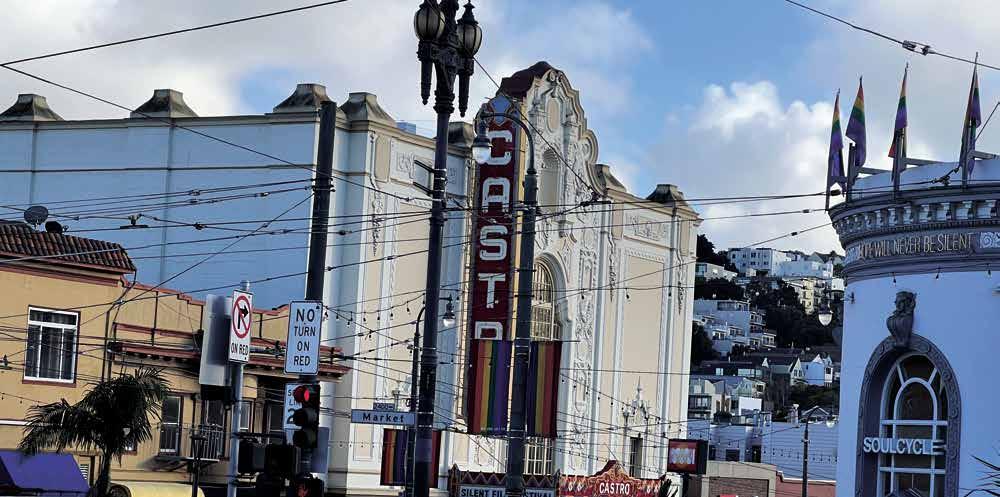
You cannot beat a visit to the city of San Francisco. The Castro — and the city as a whole — was the mecca for many in the LGBTQ+ community, and there is still a draw today. Whether it be the first Lesbian organization in the US, the Daughters of Bilitis; the first Gay community center in the US, founded by the Society for Individual Rights; the first rainbow flag; the first Gay Games; the influential Tales of the City by Armistead Maupin; or the tragedies of the
AIDS crisis and the twin assassinations of Gay Supervisor Harvey Milk and Mayor George Moscone, the City by the Bay is steeped in Queer history.
The Castro Clones are long gone (do the younger Gays know what this means?). But the bars are as popular as they ever were.
In a word, the City continues to be a magnet.
What to do
• Enjoy a hike on the new Presidio Tunnel Tops, located on the northwest corner of the city, and stop by the new visitor center,
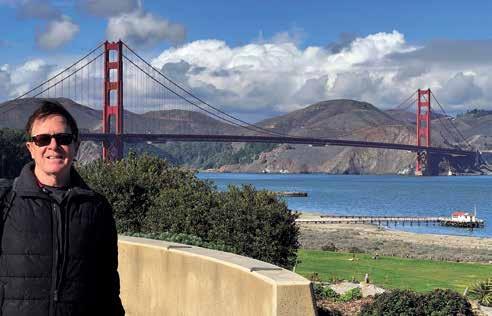
featuring stunning overlooks, including of the Marin Headlands and the Golden Gate Bridge. A free shuttle provides service from the Embarcadero BART station. Details at PresidioTunnelTops.org.
• Take a hike with the San Francisco Hiking Club (which I founded). The LGBTQ group offers mainly weekend hikes, as does the Gay Lesbian Sierrans (GLS), now known as the Rainbow Sierrans. Both hike the many parks throughout the region. From February through April, the Bay Area hills are ablaze with native wildflowers, including California poppies.
• Catch a film or show at the historic Castro Theater (just south of Market and Castro).
• Enjoy Golden Gate Park, which includes the DeYoung Museum (don’t miss the “Ramses the Great and the Gold of the Pharaohs” exhibit).
• Visit the LGBTQ History Museum on 18th Street near Divisadero.
• Work out at SF Fitness at Market and Noe Streets (2301 Market). Day passes are available.
Where to eat
• The Santeria (2251 Market) has great food and margaritas.
• Alice’s in Noe Valley (1599 Sanchez) has great Chinese food.
• Starbelly (3582 16th Street) has great comfort food, cocktails, and brunch.
• La Mediterranee (288 Noe) is very good for Middle Eastern and Mediterranean food.
• Orphan Andy’s (3991 17th Street) has great breakfasts and dinner. It is a mainstay.
Where to stay
I always stay at family-owned Beck’s Motor Lodge (2222 Market Street, in the Castro; free parking, although you don’t need a car). The Peets Coffee is across the street, as is the Gay sports bar, Hi-Tops. Nearby, Rosenberg Deli (276 Noe) has everything you need, including an It’s It (a San Francisco treat: ice cream covered by two graham crackers and smothered in chocolate).
Nightlife
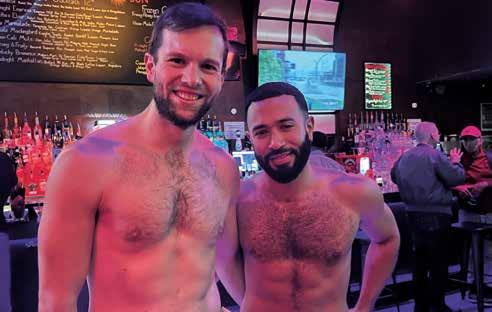
• My favorite Castro bars include the Midnight Sun (4067 18th), which has great (strong) drink specials and hosts Boogie Wonderland, a disco dance club party and beer bust, every Sunday.
• The 440 Castro (that’s also the address) had $3 beer the night I was there and was packed.
• Toad Hall nearby (4146 18th) has karaoke, while Harvey’s (Castro and 18th) had drag queens the night I was there. It also offers great food.
• The popular Beaux (2344 Market) has Latin Night on Wednesday including go-go dancers. Friday features a DJ and the GoGo Beasts. (See their calendar at BeauxSF. com.)
• The Lookout (Market and Noe) features a large balcony from which you can peruse the crowds.
• The Twin Peaks tavern (Market and Castro) is where you can also scope out the Castro scene. It was the first openly Gay bar in San Francisco and was a hit because it was one of the few that had big windows through which those on the street could see who was inside — scandalous at the time! Now it’s officially San Francisco Landmark #264. The crowd there is older (I wouldn’t go there once upon a time).
• Moby Dick (4049 18th), with its huge aquarium, is also very popular.
Travel tips
• Grab a Clipper Card to enjoy easy, onetap admission to all the transit in the city, including the historic streetcars, the Muni Metro, BART, and more. Muni is your intown subway, while BART goes all over the Bay Area.
• Read the BAR (Bay Area Reporter), which comes out every Thursday. The SF Bay Times is the monthly LGBTQ periodical. Both list current events. Gloss Magazine also is a good source of nightlife information.
Yes, the area has too many homeless, the streets are filthy, and property crime has skyrocketed (don’t leave anything in your car). But the Castro neighborhood and San Francisco in general are great to visit and so walkable (albeit hilly). And the mild climate (with lush green hills in the spring after the winter rains) cannot be beat.
Yes, you will leave your heart here.
Bill Malcolm lived in the Castro in San Francisco for 12 years after graduating from UC Santa Cruz. He founded the San Francisco Hiking Club, which is still offering weekend hikes today.
by Stan Popovich Special to the SGN
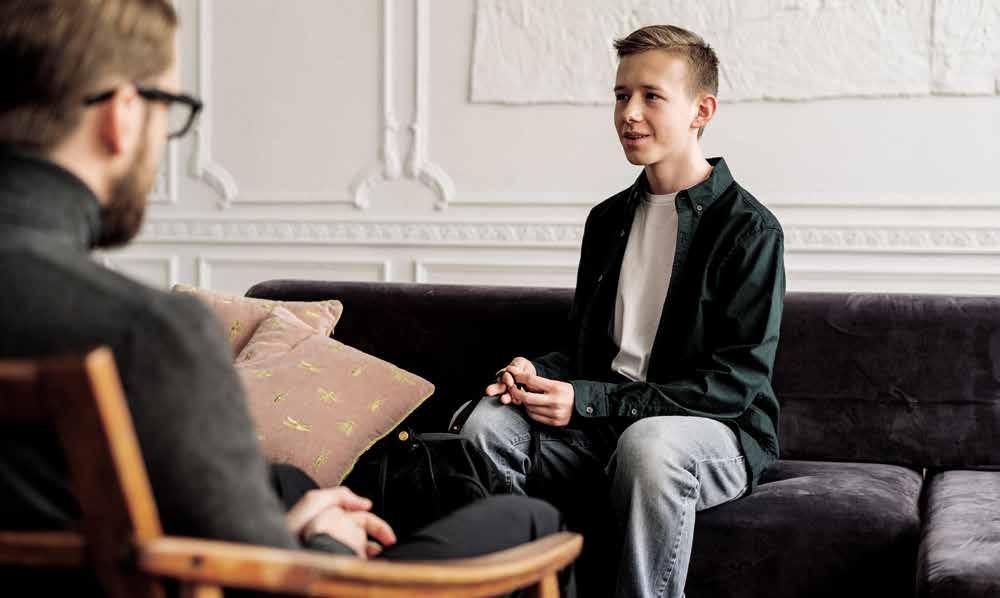
Getting professional help for dealing with your persistent fears and anxieties is the single most important step in your recovery.
But many people are reluctant to get the assistance they need for various reasons. Making excuses for not getting treatment for your fear related issues will not help the situation, however.
With this in mind, here are seven reasons why getting help for your mental health problems is so important.
1. You can’t manage your anxieties all by yourself.
Many people think that they can overcome their mental health problems on their own. This is a mistake. Your fears, anxieties, and depression can be difficult to manage, and more than likely you will need some direction. You should seek assistance to start the recovery process.
2. You will get tips on handling your mental health issues.
Getting professional help can lead to additional insights on and suggestions for
your stress and anxiety problems. A professional counselor can give you many ideas on how you can successfully manage your fears and anxieties. This is important in getting your life back on track.
3. You will get access to different resources.
Most counselors and psychologists know of ways to get rid of your fears. They can recommend certain treatments that will improve your situation. The only way you can get access to these treatments is if you talk to a counselor. Ask your primary care

physician if he or she knows anyone that can be of assistance.
4. You will improve.
As you work with a professional, you will improve your skill managing your fears. You will be able to overcome your anxieties over time, which will benefit you later on in your life. Knowing how to boost your mental health will get your life back on track and make you much happier.
5. You will get better a lot faster.
Getting some guidance from a counselor will save you a lot of suffering in the long run. You will get the answers you are looking for, which will help reduce your fears and anxieties. You will get better a lot faster by talking to a therapist, and you will feel much better about yourself, which is important when it comes to dealing with your mental health.
6. It is your life.
Remember that you are the person who is suffering, not your friends and family. Don’t let the opinions of your peers prevent you from getting the relief that you deserve. Managing your anxieties should be your number one priority. Always do what is best for you, and do not get into the habit of trying to please everybody else.
7. You will not be alone
You will have people in your corner who will be able to help improve your mental health issues. You won’t feel as alone when attempting to get rid of your fears. It is best to be with others who are supportive and who will understand your situation. This will help make things easier when it comes to your fears and anxieties.
Stan Popovich is the author of the popular managing-fear book, A Layman’s Guide to Managing Fear. For more information about Stan’s book and to get some more free mental health advice, please visit http://www.managingfear.com
by Daniel Lindsley SGN Staff Writer

Voices clash, homes vandalized over Drag Story Hour
An estimated 100 protesters against Drag Story Hour picketed a public library in the Queens borough of New York City on Friday last week, as part of a broader controversy over children’s proximity to drag events.
The protesters carried signs reading “Leave the Kids Alone” and “Stop Drag Queen Story Hour.”
The counterprotesters, meanwhile, numbered about 400, according to New York City Councilmember Shekar Krishnan. “We outnumbered the haters and drowned them out with chanting, drumming, dancing, and ABBA singalongs,” he wrote on Twitter.
A spokesperson for the police said one person connected to the event was arrested, and that they received two arson complaints over burned vehicles. And a few hours before, New York City Council Speaker Adrienne Adams released a joint statement with three other members saying that their homes had been vandalized in retaliation for supporting Drag Story Hour.
“The harmful, homophobic, and transphobic extremism targeting Drag Story Hour events and the New Yorkers who support them, including councilmembers, is vile and dangerous,” they said.
Trump-appointed judges rule against Florida Trans students
The 11th US Circuit Court of Appeals ruled in a 7-4 vote that a high school in St. Johns County, Florida, did not violate the US Constitution or federal law by keeping Trans students from using bathrooms that match their gender identity.
The school’s policy was initially challenged in 2017 by Drew Adams, who sued the district after being barred from using the boys’ bathroom at a high school in Ponte Vedra Beach. He was given the choice of the girls’ or gender-neutral bathrooms instead.
Adams’ lawyer, Tara Borelli of Lambda Legal, said that “this is an aberrant ruling that contradicts the rulings of every other circuit to consider the question across the country. We will be reviewing and evaluating this dangerous decision over the weekend.”
Borelli also said that the bathroom policy in question violated equal protections under Title IX, while Trumpappointed Circuit Judge Barbara Lagosa argued that the policy was meant to protect students’ privacy.

continued from cover
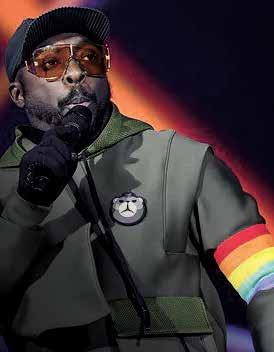
Singer Will.i.am thanked Poles for their “open hearts and minds” for taking Ukrainian women and children into their homes following Russia’s invasion of Ukraine.
He then dedicated the band’s song “Where Is the Love?” “to those that experience hate throughout the year,” explicitly naming the Jewish community, people of African descent, and the LGBTQ community.
The armbands generated an immediate reaction on Polish social media.
“LGBT promotion on TVP2. Disgrace! This isn’t New Year’s Eve of Dreams, it’s New Year’s Eve of Degeneracy,” said Poland’s Deputy Justice Minister Marcin Warchol on Twitter. Warchol is a leader of the right-wing nationalist United Poland Party.
Warchol asked the singer on Twitter why the band had played gigs in countries with much worse LGBTQ records, including Qatar and Saudi Arabia, accusing the musicians of selling their principles for profit.
by Daniel Lindsley SGN Staff Writer
English Trans activist says award a mixed blessing
Prominent Trans rights activist Helen Belcher of Wiltshire, England, told the BBC on New Year’s Eve that she is worried that the press will react with “just another big blazing row” to her being recognized in the King’s New Year’s Honors list.
“I would hope it would mean things that we say are taken with a little bit more seriousness,” said Belcher, 59. Belcher is director of Transactual and Trans Media Watch, both Trans rights advocacy and research groups.
“To be honest,” Belcher went on, “I feel a slight fear of what the press reaction is going to be, because it’s almost as if Trans people can’t do anything right at the moment in the current environment.”
Of the new year, she said, “I think it’s just going to be another year of just trying to plod on and keep pushing where we can, and try and build arguments and funds to shift the narrative a bit. And whether this award will help do that, I don’t know. I doubt it, but we can try.”
Will.i.am responded that rather than boycott such countries, it was better to play there, hoping to inspire people to have greater tolerance. As far as the money the band makes from its gigs, Will.i.am replied, “It’s called a music career.”
“We are the Black Eyed Peas. That’s P-E-A-S, or you can say the Black Eyed Peace, or P-E-A-C-E, because we are about peace, equality, and harmony. We are not the Black Eyed PiS. We stand for unity, love, tolerance,” the singer said, referring to the Polish political party PiS, or Law and Justice Party. PiS is the senior party in the right-wing Polish government, with United Poland as its junior partner.
According to BBC News, the Black Eyed Peas were a last-minute replacement for ex-Spice Girl Melanie C, who pulled out of the booking citing “issues that do not align with the communities I support.” The band reportedly received about $1 million for their performance.
The Law and Justice Party, meanwhile, distanced itself from the armband controversy.
Asked about the issue on January 2, Polish
said he supported “the family” but was against restricting bands’ “artistic expression.”
Poland also has money on the line. Some 35 billion euros (more than $37 billion) — allocated by the EU to the Polish government for pandemic relief — is being held up over concerns that the right-wing Polish government is interfering with judicial independence to promote its own political agenda.
The United Poland Party is generally anti-EU and has accused PiS of being willing to sell out Polish traditions for money from abroad. The coalition government can’t survive without United Poland’s votes in Parliament.
“Violence, the destruction of churches, spitting at children and corrupting children… the LGBT flag is a symbol of intolerance and aggression,” the United Poland chairman, Zbigniew Ziobro, said on Twitter.
“In this matter, United Poland fundamentally disagrees with Mateusz Morawiecki and PiS. We will never agree to the artistic promotion of LGBT on Polish television.”

Melanie Chisholm (Mel C) at Closing Party Pride in Amsterdam, on the last day of Gay Pride 2018 – Photo courtesy of DPPA / AP Spice Girl cancels concert in Poland after fans educate
In a move praised by LGBT advocates, Spice Girl Melanie C canceled a New Year’s Eve concert in Poland, presumably after learning of the Polish government’s anti-LGBTQ policies.
“In light of some issues that have been brought to my attention, that do not align with the communities I support, I’m afraid I will no longer be able to perform in Poland as planned on New Year’s Eve,” she wrote on Twitter.
“I hope to be back there very soon,” she
added. “Hope you’re all having a wonderful Christmas and best wishes for 2023.” Polish state broadcaster TVP had a slightly different story, claiming that Melanie canceled “under the pressure of online comments.” Reporters Without Borders has described TVP as government propaganda, which aligns with its airing of Invasion, a film about the supposed “inside story, aims, methods, and money behind the LGBT invasion” of Poland. Melanie C still managed to appear on the prerecorded BBC One New Year’s Eve concert.