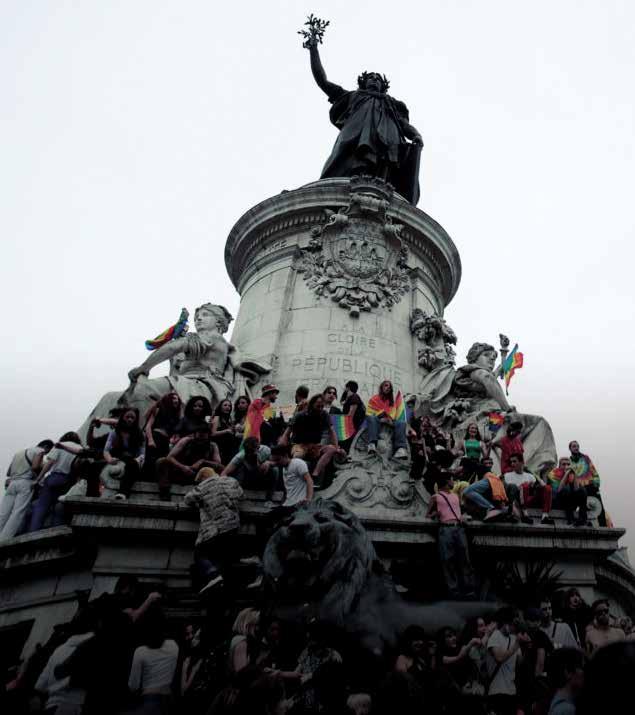
The French National Assembly banned conversion therapy on January 25. The new law not only forbids the practice but establishes criminal and civil penalties for so-called therapists who claim to “cure” homosexuality or gender nonconformity.
Conversion therapists are now liable to prison terms of up to two years and fines of 30,000 euros ($34,000). The punishment
can increase to three years imprisonment and fines of 45,000 euros ($50,000) for cases involving minors or other particularly vulnerable people.
The law also allows victims of conversion therapy to file civil suits seeking monetary damages, and authorizes activists to file suit on behalf of victims in order to protect people who are unable or unwilling to report the abusive practice to police.
Nonprofit to bring first-ever LGBTQ cannabis conference to Emerald City
by Paige McGlauflin SGN Contributing Writer
There aren’t many conversations happening on LGBTQ equity in the cannabis community. The Full Spectrum wants to change that.
by Kylin Brown SGN Contributing Writer
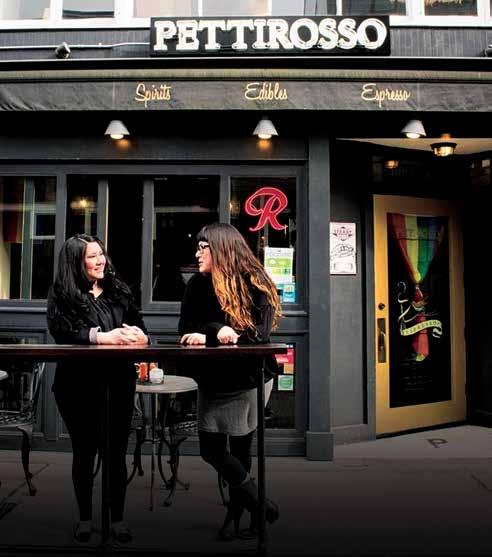
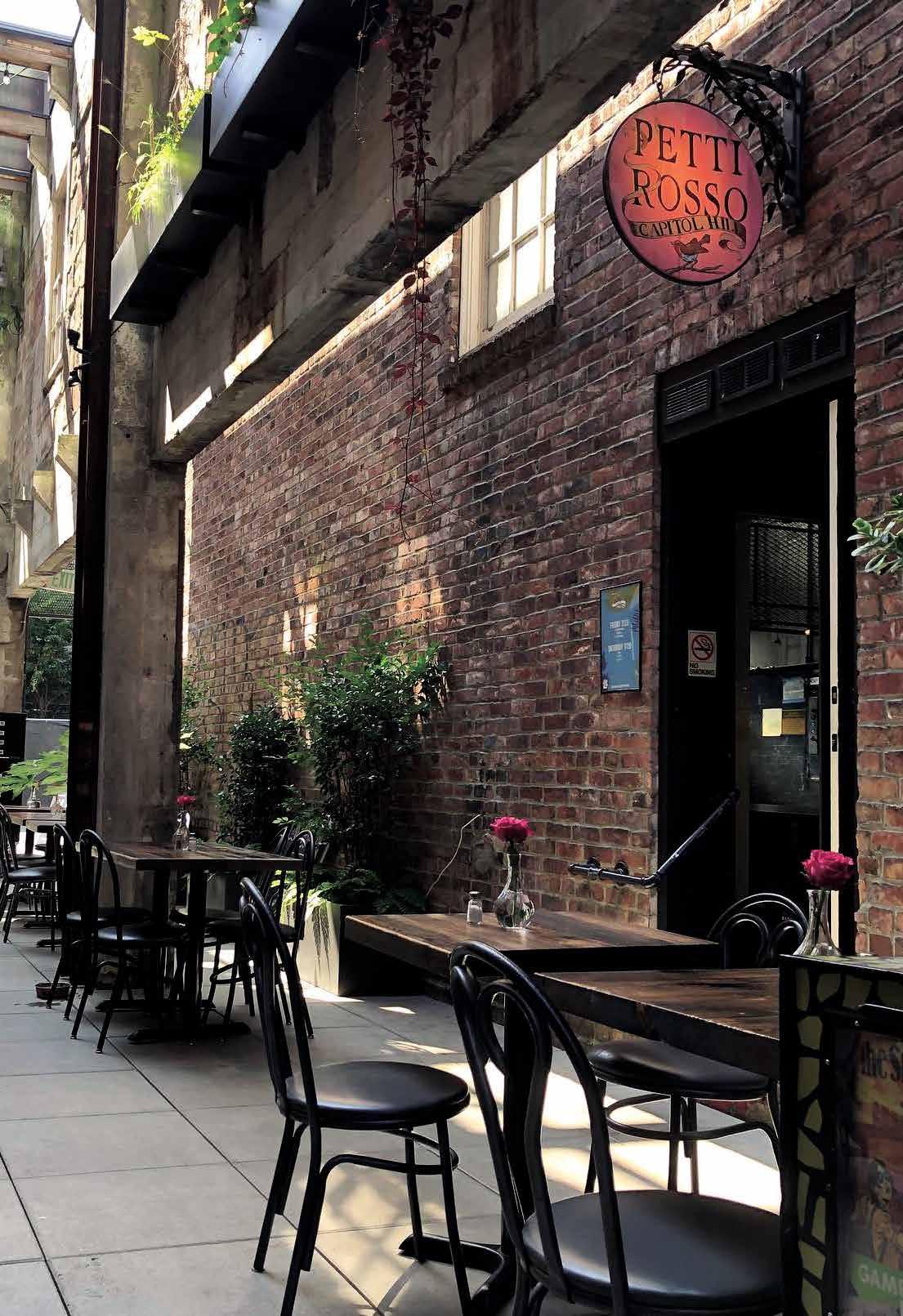
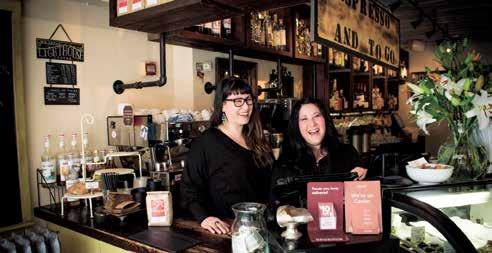
After 27 years on Capitol Hill, Café Pettirosso announced its permanent closure as of February 6. In a statement released Sunday, the owner-sibling duo Yuki and Miki Sodos cited upcoming developments at their 11th Avenue and E. Pike Street location that would cause “too much” of a burden, and said that they would like to end their tenure “on their own terms.”
“Pettirosso loves you Seattle, but the path of small business is crushing right now,” read the statement. “We stayed open every day during the pandemic, the protests, snowstorms, years of construction, and gentrification, but it is now our time.”
This year marked the tenth that Café Pettirosso has resided at its present address, adjacent to the entrance of Chophouse Row. Now, 2022 will also mark the end of an era of brilliant patisserie and artisanal coffee at the café.
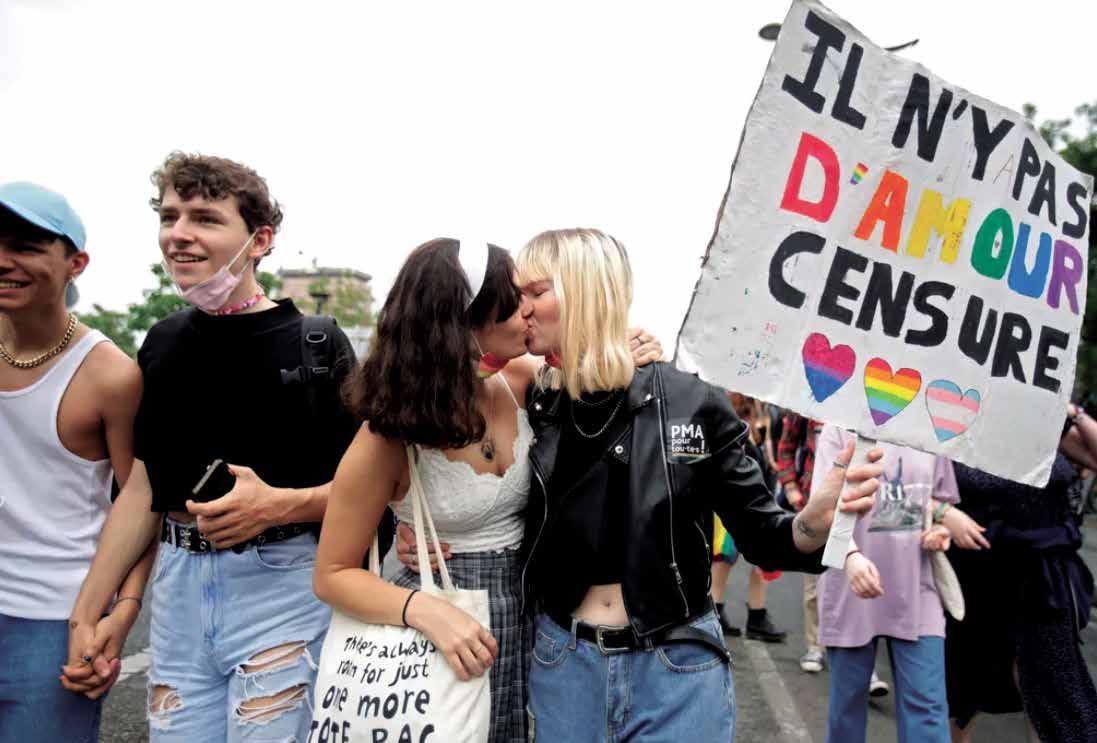
Photo by Sarah Meyssonnier /Reuters
Photo courtesy of Café Pettirosso
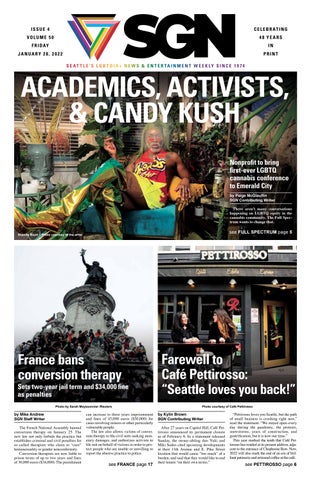
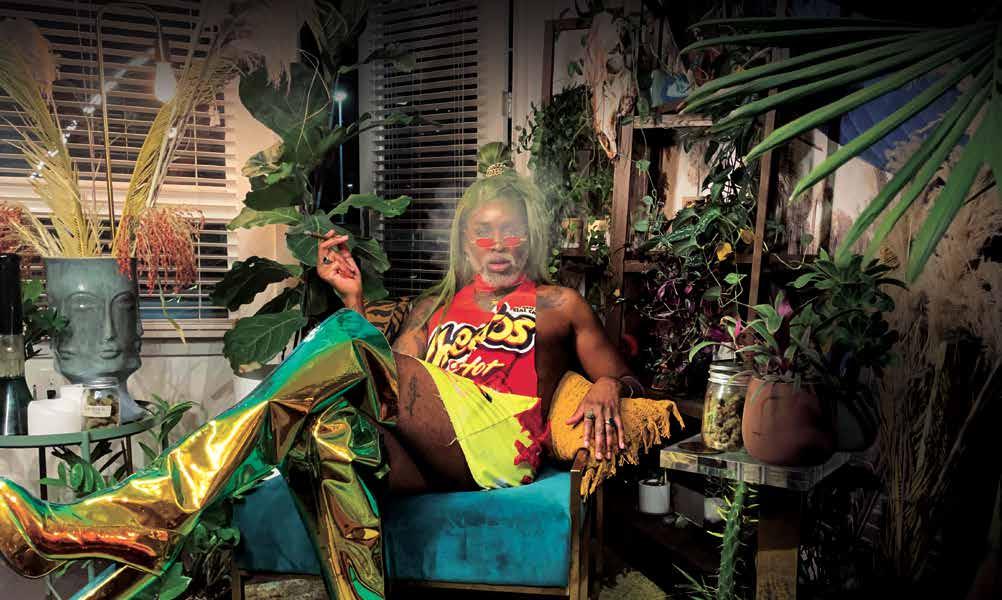
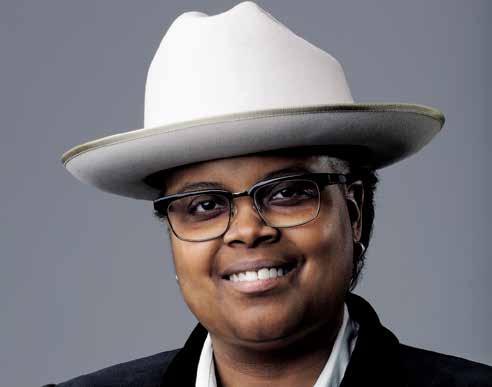
Shanita Blunt – Photo courtesy of the artist
Seattle’s Starbucks employees fight for union
by Mike Andrew SGN Staff Writer
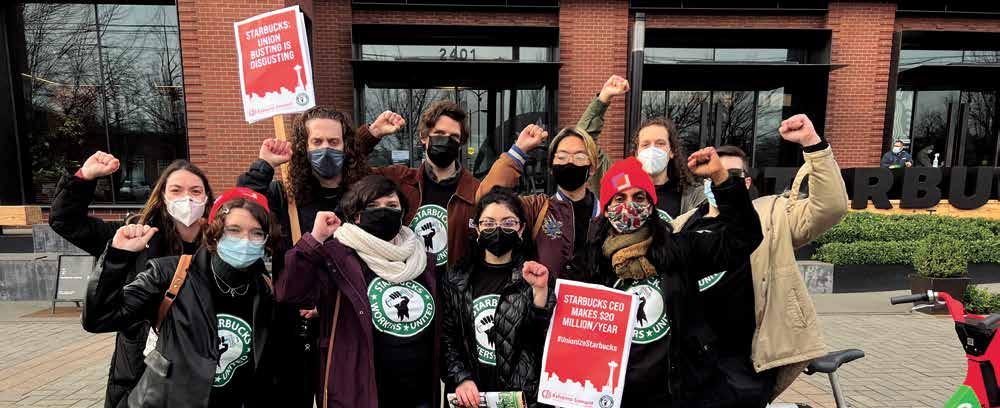
The drive to unionize Starbucks employees has gathered momentum as workers at two more Seattle locations announced plans to join SB Workers United.
The first Seattle location to unionize was the Denny and Broadway store. Workers there announced their desire for union representation last month. They are now joined by Starbucks’ drive-thru location on Westlake, and the store at Fifth and Pike downtown.
Some Starbucks workers used to be
unionized when the company first formed, decades ago, but the coffee mega-corporation successfully broke the early union. Today, only Starbucks-franchised stores at airports and supermarkets have unionized employees.
The new push for unionization started at two Starbucks stores in Buffalo, New York, where employees voted in December to join Workers United, an affiliate of the Service Employees International Union (SEIU).
The organizing campaign now pits one of the country’s biggest corporations against one of its biggest unions. Some 30 Starbucks stores have filed for union representation,
according to the National Labor Relations Board (NLRB), the federal agency charged with enforcing labor regulations and supervising union elections. Starbucks has about 9,000 locations nationwide.
Starbucks opposes the unionization efforts of its employees (whom it calls “partners”).
“We continue to believe a union is not necessary at Starbucks,” Starbucks spokesperson Reggie Borges said in a statement to the Seattle Times. “We believe direct communication between partners has made our company what it is today… We’re also going to respect our partners’ right to organize.”
Starbucks workers say they face severe understaffing in high-pressure stores, work under lax health and safety protocols, and have no input on store policies.
Workers at the Broadway and Denny location on Capitol Hill say the company has begun holding “captive audience” anti-union meetings. In such meetings, the
company requires workers to attend propaganda sessions where company spokespeople denounce the union.
Workers at the Denny and Broadway store have also filed an unfair labor practice charge accusing the company of illegally punishing a worker for union activities. Federal labor law protects what is called “concerted action” by workers to get their employers to address grievances.
According to Starbucks corporate spokespeople, the meetings are “an opportunity for partners to be informed,” and “we deny any claims of intimidation or union busting.”
Having notified the NLRB of their desire to join Workers United, the next step for local Starbucks workers is to hold an NLRB-supervised election. If a majority of the employees vote to be represented by the union, the NLRB will certify the union as their representative in bargaining a contract.
Seattle City Council Member Kshama Sawant (front, r) joins Starbucks workers at a rally outside the company's corporate headquarters
FULL SPECTRUM continued from cover
This weekend, the Seattle-based nonprofit The Full Spectrum — whose mission is to enhance and sustain LGBTQ diversity, inclusion, and access within the world of cannabis — will host its first annual conference, focusing on the complexities and challenges in the LGBTQ cannabis community. The Full Spectrum states that this conference will be the first of its kind to ever be held.
“Cannabis was legalized in direct response to the AIDS crisis by queer people,” Neil Lequia, Full Spectrum’s founder and board president, told the SGN. Lequia also noted that LGBTQ adults are twice as likely to use cannabis than the general population, adding, “We are doing what we can to make sure that we are not forgotten within the industry realm as well as the patient realm, and everyday consumers as well.”
The conference will be held virtually, with free streaming access on YouTube. VIP passes are also available for $50 and will include access to the Purple Party Smoke Sesh on Friday, and smoke breaks, networking sessions, and social hours throughout both Saturday and Sunday.
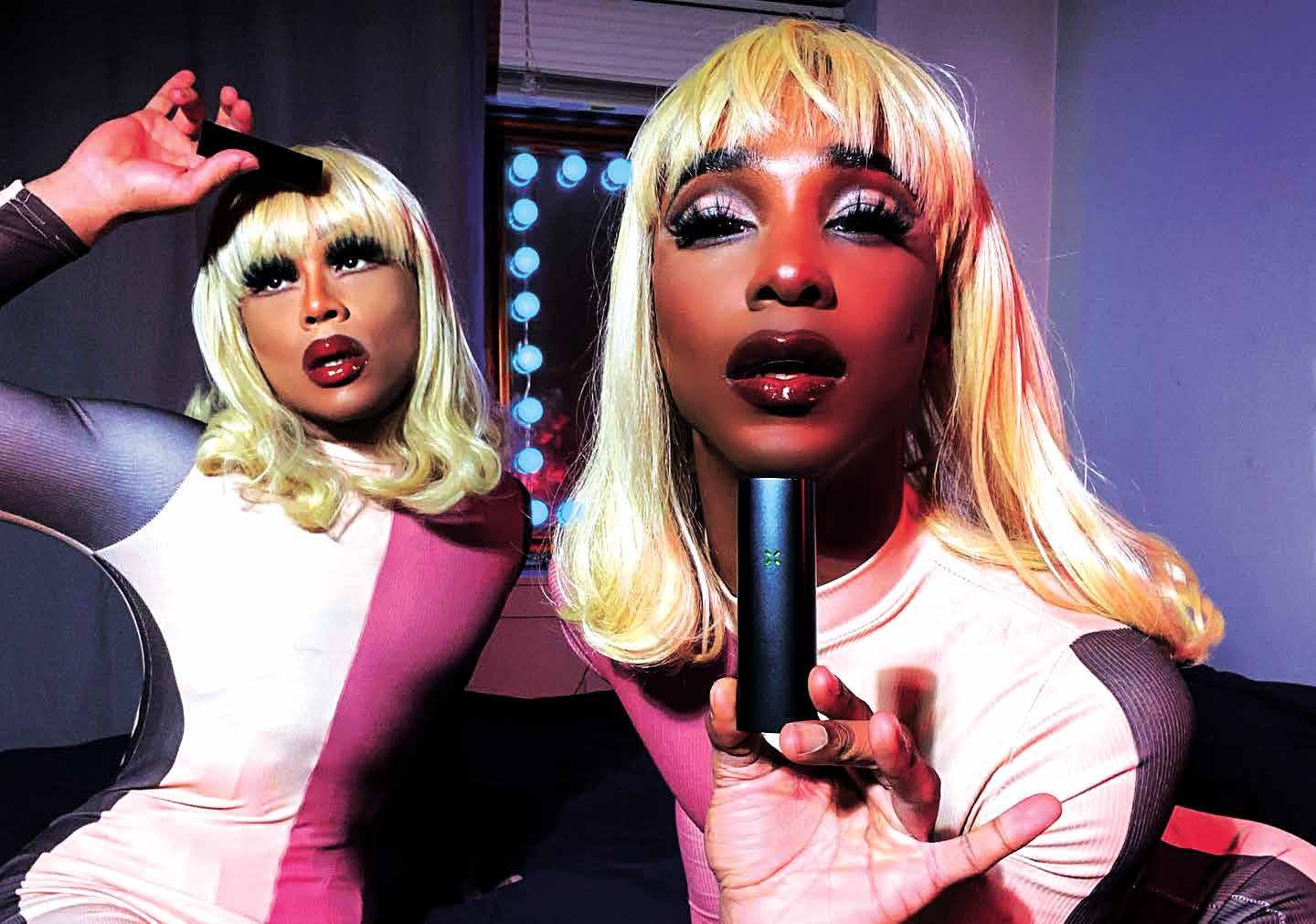
Friday will mark the conference’s kickoff, with the Purple Party entertainment, featuring performances from Los Angeles–based drag artist Shanita Blunt and Seattlebased drag duo LÜCHI!?.
Topics to be discussed on Saturday and Sunday vary widely and include panels on LGBTQ entrepreneurship in the cannabis industry, HIV and cannabis, and Trans and Nonbinary people in cannabis, as well as workshops, including one on “rainbowwashing,” or when companies publicly show support for the LGBTQ community but fail to do the same in their private practices.
Those in attendance will include activists, academics, and business owners from across the United States and Canada. Californiabased activist John Entwistle Jr. will present the opening keynote on Saturday morning. Entwistle co-authored the state’s Proposition 215, the nation’s first medical marijuana legislation signed into law, and co-founded the San Francisco Cannabis Buyers Club, both with his partner Dennis Peron.
Amber Senter will present the closing keynote on Sunday. Senter is executive director of SuperNova Women, a nonprofit whose mission is to empower women of color to become self-sufficient shareholders in the cannabis economy.
“We’re just really grateful to have a lot of amazing individuals come share their stories with us,” Lequia said.
Local aspects
The Full Spectrum has also worked to include local activists, businesses, and organizations in the conference. Tacoma-based activist and Deep Green Extracts founder Grandma Cat Jeter will be a featured panelist in the “LGBTQ Legends of Cannabis” session. Several local organizations and businesses, including the Cannabis Alliance, Heylo Labs, and Viridian Staffing, have also partnered with The Full Spectrum.
“We were the second state to legalize, which was great, because we were pioneering the efforts. But we didn’t really understand the best practices at the time to make it a fair and equitable space on the market for people of color, who have been disproportionately affected by the war on drugs,” Lequia said.
Conversations on how to generate equity in the cannabis industry are reemerging in the state, including recently introduced WA Senate bills 5706 and 5796. SB 5706 aims to fund a cannabis social equity assistance grant program; SB 5796 aims to restructure cannabis revenue appropriations with transparency and accountability, and to increase community infrastructure and investment.
“It’s a bit like sticking toothpaste back in the tube, but yeah, I’m glad that there is a focus on that as well,” Lequia added. “And I hope that one day, we’ll have equity programs that also include LGBTQ voices.”
For more information, including a full schedule and list of speakers, please visit thefullspectrumnetwork.com/ conference-2022. Additionally, The Full Spectrum offers a free virtual smoke session every second Friday of the month. Those interested in learning more can sign up for the mailing list on its website.
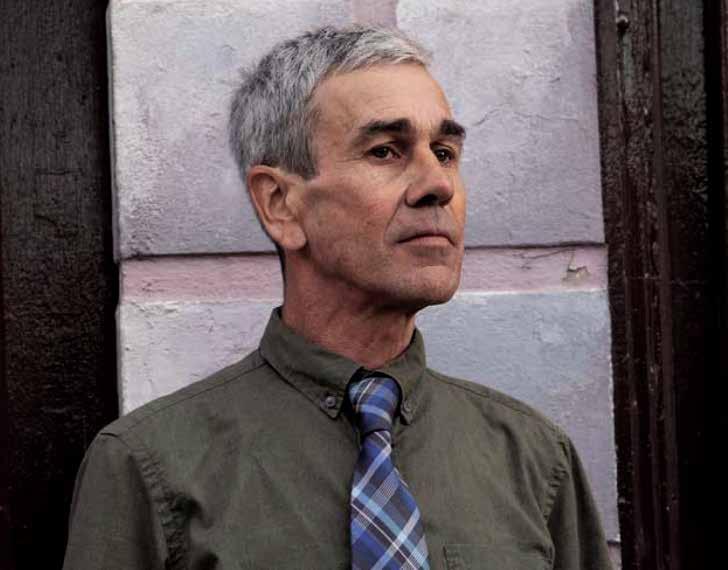
Opening keynote speaker John Entwistle, Jr. – Photo courtesy of The Full Spectrum
Closing keynote speaker Amber Senter – Photo courtesy of The Full Spectrum
LüChi – Photo courtesy of the artists
Food & Nightlife
Photo courtesy of Café Pettirosso
PETTIROSSO
continued from cover
Decades of respite
Robin Wright founded Café Pettirosso (Italian for “robin”), as a coffee cart in 1994. As the business evolved into a brickand-mortar location, it quickly became known for its quaint atmosphere.
Welcoming walls of plum accented by apricot-gold decor and the smells of wood enveloped all who entered the space (or stood in line at the door). Pulitzer-winning former Seattle Times writer Susan Kelleher described the café-bistro with one word: “Respite.” As the world outside became ever more chaotic over the years, Pettirosso offered its patrons a brief, delightful escape.
In 2011, the Sodos sisters, who also own Othello’s Bang Bang Café, came to own the café by Wright’s request upon her retirement. They elevated the existing features of the bistro, giving the venue a large dining space and full bar. They also introduced more plant-based and gluten-free menu items, like their neighborhood-famous vegan mac ‘n’ cheese.
Pettirosso’s story as told by Yuki Sodos on the website describes her first encounter with the café in 2000 under Wright’s ownership. “Robin made the most delicious hand-pulled espresso on her vintage 2-group machine and played only opera,” she said. “The colorful café and charming ambiance had a gravitational pull, and not just for me.”
Plans for development
Throughout the years, the café has been continuously updated and well maintained under the Sodos’ ownership. It is the longeststanding of four current tenants in the historic Baker Linen Building, which was purchased in 2019 by neighborhood developer Liz Dunn, of Dunn & Hobbes, LLC, for $5.4 million. Constructed in 1916 as an automobile showroom, garage, and services building for Seattle Automobile Company, the building’s first great transition was in the 1940s when it got its current name. It became a garmentproducing facility for Baker Linen, its namesake, in the early part of that decade.
Dunn is a preservation-minded developer. Upon purchase, she announced no
immediate changes to Baker Linen. Proposed updates include expansive co-working office spaces for the neighborhood, which would bring the Pike/Pine area up to speed with similar fast-paced parts of Seattle (like SLU, host of “urban basecamp” The Collective).
The developer’s projects around Capitol Hill have proved impressive in the past. Next to Baker Linen, Chophouse Row debuted in 2015 and is lined with inviting spaces. Additions at Chophouse Row have also stayed complementary to the height and history of the space, which aligns with the plans for Baker Linen.
Reactions
With the loss of Café Pettirosso, however, the community is audibly upset. In the 24 hours following Pettirosso’s social media announcements, over a hundred comments flowed in. Community members on Facebook said they are “gutted,” “so sad,” and “crushed.”
“We love you, Robin Wright, for creating Café Pettirosso and we love you Capitol Hill!!! … Thank you for an amazing 27 years!!! #PettirossoLovesYou,” reads the owners’ statement.
In the sea of comment reactions, someone wrote, “Seattle loves you back.”
This news hasn’t been easy for workers either. In the café Monday morning, a clerk said that they are hopeful they and their teammates are talented enough to find new work as soon as possible.
On Monday, Capitol Hill Seattle Blog reported a response from Dunn. She maintained that the building is not slated to be gutted “in the near future,” and that Dunn & Hobbes provided Pettirosso an option to extend its lease another five years.
While the development timeline remains unclear, Café Pettiroso’s current lease is set to end at the end of February, and the owners pointed to a “massive raise in the rent” as a component of their decision to terminate the business on their own terms.
Always a respite, Café Pettirosso will go down in the books as an impactful community establishment where people could share in the pleasures of brunch and chosen family.
Photos courtesy of Café Pettirosso
Food & Nightlife
Bingo, but make it Gay
Enjoy weekly Tuesday comedy and debauchery at Olmste(a)d
by Nick Rapp SGN Contributing Writer
Bingo has come a long way since its origins as a lotto game rip-off played with beans (it used to be called “beano”). Schools incorporate it into lesson plans, game boards are used for fundraisers and sweepstakes, big bucks are won playing it online and at casinos, and it’s perhaps the most common association with retirement recreational activities in America.
At its core, the game is an easy opportunity to bring people together in friendly, entirely chance-based competition in a lively group setting. And “Fuck Yeah Bingo” on Capitol Hill offers just that.
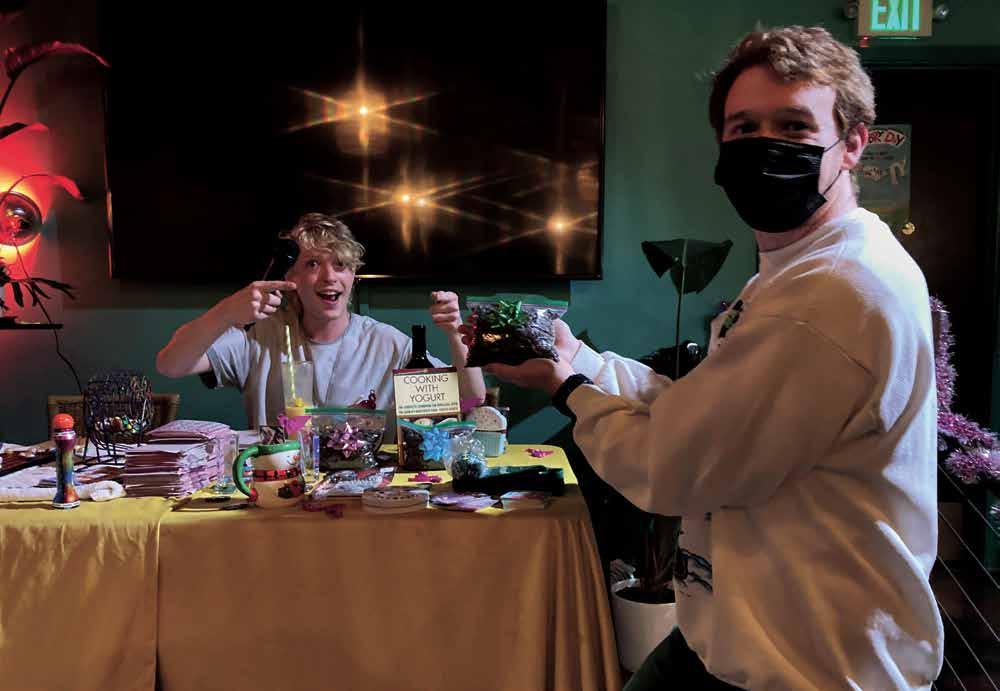
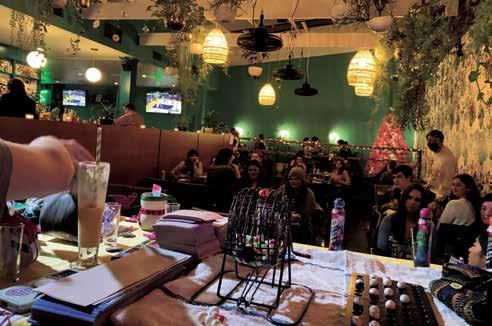
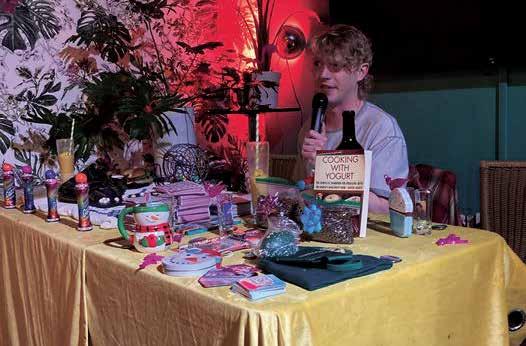
Local comedians Bobby Higley and Jaleesa Johnson host this raunchy event every Tuesday at Olmste(a)d restaurant (314 Broadway E.) from 7 to 9 p.m. After having thrived during a 7.5-year run at the now-closed Highline Bar, it has garnered a solid group of regulars at Olmste(a)d for the past six months. It is Queer, it is ridiculous, and it is, in the hosts’ words, “not your grandmother’s bingo, unless she’s a freak!”
The SGN had the chance ask Higley some questions as to what is in store in an evening’s game.
What is the format?
Plain and simple, “it’s two queer standup comics hosting free bar bingo,” said Higley. “We have excruciating one-liners, tell stories, and workshop jokes, all live and unscripted. We call numbers, people hoist daubers, shit’s very gay.”
What sort of prizes are there?
Higley explained that there are all sorts of prizes, but made clear that there is no gambling. “We have donation rounds with spicy prizes, but I’d really [rather] not get
into it with the Washington State Gambling Commission. So, let’s just say terrible and often understated prizes.” Intriguing!
Is there a theme to the games?
“Watch two super funny queers get drunk on tequila and then mine their own personal trauma for... um… fun, yes fun!”
What is your favorite part of hosting bingo?
To this, Higley answered, “I have three things I adore most about bingo.” The first is “two hours of being able to play around. There is a whole lot of freedom that is missing in standup. In standup I need to achieve laughs to succeed... At bingo I get the same joy from the pained groans of regulars hearing my 69-ing bit for the 40th time as I do the laughter.”
Second is “the regulars — god, they turn it out each and every week.” The show is seeing a turnout of “40-60 people regularly for a Tuesday night event, and I recognize the same wonderful faces week after week.”
Lastly, “getting to hang out with my awesome friend and co-host Jalessa Johnson. She’s hilarious and a great energy to be around.”
So, f you’re looking for a way to spice up your Tuesday night, the event is for you. It is low-stakes, low-cost, and full of Queer comedy. You may even leave with a random prize that you didn’t know you needed!
Bingo players can reserve a table for free at https://bit.ly/3rL01e4 or show up before 7 p.m. to snag a table at the last minute. Olmste(a)d is open 4-10 p.m. on Tuesdays, so you can grab a bite early or stay for a while after playing as well.
Photos courtesy of Fuck Yeah Bingo
Film
Pointless Adventures of Buck Wild is an uninspired waste of time
by Sara Michelle Fetters SGN Staff Writer
THE ICE AGE ADVENTURES OF BUCK WILD
Disney+
The Ice Age adventures have always been hit-and-miss, with 2002’s first film and 2009’s Ice Age: Dawn of the Dinosaurs arguably the best of the five features making up this popular franchise. As forgettable as some installments have been (I can’t for a moment recollect what happens in 2006’s Ice Age: The Meltdown), none have been outright terrible. Heck, thanks to brief comedic interstitials featuring the ongoing antics of squirrel-rat hybrid Scrat,
they even have occasional moments of Looney Tunes—like inspiration worthy of a few hearty laughs.
Now comes The Ice Age Adventures of Buck Wild, and not only is this sixth installment easily the worst in the series, but it’s also the one that forces me to take back my comment that none have been “outright terrible.” There is no Scrat. Other than Simon Pegg as thrill-seeking, one-eyed weasel Buck Wild, it appears none of the other primary members of the vocal cast — most notably the core quartet of Ray Romano, Denis Leary, John Leguizamo, and Queen Latifah — were asked to return. The animation is clunky and visually uninspired. Almost none of the gags land.
I have no idea who is going to enjoy this
one. Die-hard fans are going to be disappointed by all the changes. Newcomers will be bored. Younger kids might like all the flashy colors and occasional attempts at visual whiz-bang, but it’s all so lazily paced and indifferently slapped together that it’s possible they’ll lose interest long before the not-even-90-minute running time concludes. This Disney-produced effort — noticeably bypassing theaters to appear on the studio’s streaming service Disney+ instead — is a disagreeable waste of time.
Tired of having their adopted mammoth big sister Ellie (voiced by Dominique Jennings) constantly monitoring their every movie, possum siblings Crash (Vincent Tong) and Eddie (Aaron Harris) secretly head out on their own, away from their cho -
sen herd. Falling into a deep fissure in the Earth, they rediscover the tunnel leading directly to that lost world of dinosaurs and other creatures erroneously thought extinct that they journeyed to not so long ago.
Hoping to see Buck again, they are startled to find they’ve landed in a dangerous mess that could result in their getting eaten by a pack of ravenous raptors. A pint-sized dino with an enlarged brain named Orson (Utkarsh Ambudkar) wants to take over this lost world, and standing in his way is that plucky weasel. So as happy as Buck may be to see Crash and Eddie, given this new threat to his home, he isn’t in the mood to babysit the brothers. Worse, he’s worried they could inadvertently bumble their way into aiding Orson in his quest for subterranean domination. The idea is that Crash and Eddie are supposed to learn things about responsibility, courage, selflessness, and family, while Buck ends up realizing that his lone-wolf attitude and steadfast refusal to plan will undoubtedly be his undoing, sooner rather than later, if he doesn’t change his ways. But I thought all three of these characters had already learned variations of that during almost all of the previous Ice Age films. This gives these lessons little weight and even less meaning, so a sense of pointless déjà vu hovers right from the start.
I do say some of this would have been, if not acceptable, at least not nearly as bothersome if there had been some solid laughs sprinkled here or there. But with no Scrat, and with so much of the plot feeling like a secondrate Cartoon Channel riff instead of a sequel to any of the other entries in the series, it’s a significant problem that there are no original ideas or that the characters — both old and new — aren’t any fun to hang out with. While I know I’m not the target audience, I still shouldn’t have loathed every second I spent watching The Ice Age Adventures of Buck Wild. It felt like a repugnant cash grab by a studio that had nothing to do with any of the previous installments and only got to make this one because they purchased 20th Century Fox and the majority of its assets. I really didn’t like this sequel, not at all, and I can’t wait to never think about it ever again.
The Ice Age Adventures Buck Wild – Photos courtesy of 20th Century Studios
Fantasy novelist Audrey Coulthurst returns with powerful new book Books
by Lindsey Anderson SGN Contributing Writer
Earlier this year, our book club had the pleasure of reading Of Fire and Stars, the first novel by fantasy author Audrey Coulthurst. Fans raved about the book’s magical metaphors and rich romance. Now, by popular demand, Coulthurst’s sequel Of Ice and Shadows is out, picking up right where the previous book left off.
Of Fire and Stars took us to the magical kingdom of Mynaria, where witches are feared for their magical powers. We were introduced to princess Denneleia, a shy and sophisticated young woman with secrets so deep she kept them from herself. Forced to hide her powers and a growing attraction to her soon-to-be sister-in-law, Princess Amaranthine, Denneleia had to choose between her duty to the kingdom or her duty to her heart.
Coulthurst was willing to sit down with us once again and dish about their newest hit. (Note: For those who have yet to read that first book, the rest of this article contains some spoilers.)
The story continues In our last interview, Coulthurst let us in on the not-so-surprising secret that they are very detail-oriented when it comes to their writing process. While the reins haven’t loosened much since the publication of their first book, they admit writing the sequel was, at times, a struggle.
“Writing the sequel was much more difficult, mostly because of time constraints,” they said. “Since Of Fire and Stars was my first book, I had all the time in the world to revise it before submitting it to agents. There was a gap of almost five years between the first draft of that book and the version I [submitted] for publication.
Of Ice and Shadows was written on a much shorter timeline — and it’s a longer book. In all honesty, it was one of the hardest books I’ve ever drafted. Getting it across the finish line to publication took a lot of support from my editor and my writer friends.”
For Coulthurst, the research part is always their favorite. While they had already spent hours researching everything from horsemanship to stab wounds for the first book, there was more they needed to understand when writing Of Ice and Shadows. “When writing fantasy novels, I often end up reading about geography, weather, and architecture to support world-building,” they said.
Another challenge Coulthurst had to face when coming up with their sequel was how to develop Denna and Mare’s relationship further. Since the characters overcame their main hurdle in the first book and got together in the end, Coulthurst had to find ways to keep readers interested while building off of the previous love story. However, Coulthurst always loves a good challenge.
“It was fun to put Denna and Mare through new challenges and to explore how getting together in the first place is hardly the main obstacle in a relationship. Time will always bring new trials to a partnership and give people the choice to confront them together or be driven apart,” they said. “Much of what Denna and Mare go through in Of Ice and Shadows is figuring out how to balance their love for each other with what they need from each other and might not yet know how to give.”
More than just romance
Evolving the story beyond romance was also something Coulthurst had to work through. “Of Fire and Stars was essentially a romance,” they said. “Of Ice and Shadows required me to write a different kind of story, one that was much more driven by the
external plot and character decisions that weren’t related to their relationship.”
And, as much as this may dismay some readers, Coulthurst felt their relationship ought to take on some angst as well. “The book wouldn’t have been interesting if Denna and Mare’s relationship hadn’t faced some difficulties, so figuring out how to do that in an authentic way that gave the characters room to grow was important to the development of the plot.”
Coulthurst also admits that the plotlines they focused on in Of Ice and Shadows had been stewing in their brain for years. “A draft of Of Ice and Shadows existed before I wrote Inkmistress or even got Of Fire and Stars published, but the revision process of the first book and the writing of Inkmistress dramatically changed the plot and worldbuilding of Of Ice and Shadows. Very little of the original draft remains.”
Favorite romance tropes
Coulthurst partnered with the SGN Book Club earlier this winter to give away a few copies of their newest book. Those who received a personally inscribed tome may have gotten a hint of its main theme. “It’s worth noting that the inscription I use when personalizing Of Ice and Shadows is ‘Own your power!’ So much of Denna and Mare’s journeys in this book is about figuring out their true strengths and who they want to become. It’s hard for Denna to embrace her magic after hiding it for so long, and it’s extremely challenging for Mare to have sacrificed everything familiar to go to a kingdom where she is the weak one, the outsider, because she doesn’t have magic.”
While the story is one of growth and selflove, it is, essentially, still a romance. With three books under their belt, Coulthurst is becoming something of a romance expert. And their audience is sure to recognize
some of Coulthurst’s favorite tropes. “Readers can probably figure this out via my books, but I’m a big fan of enemies-tolovers or rivals-to-lovers. There’s something about the inherent tension in a rivalry that makes for a fun romance.”
Coulthurst is also a fan of the “forbidden love” trope, which they think Queer stories are especially good at telling. “The experience of falling for someone of the same gender can be fraught with internal conflict (especially if it’s the first same-sex relationship). While society has broadly become more accepting, and we see more Queer stories now than ever before, it is still challenging to grapple with first-time same-sex attraction, because heterosexuality is the default orientation and is likely to always be the majority.”
A special message for their readers
As they settle into this new year, Coulthurst has some big goals on the horizon. “I hope to finally finish my next book for publication,” they said.
While 2021 was a bit of a challenge, they said they’re back in a very creative frame of mind and ready to write, and they hope their readers are feeling prosperous as well. “I also wish for health and happiness for all my readers and the people they love,” Coulthurst said, looking forward to 2022. As for their characters, Coulthurst is sure they’d have very different resolutions for the new year. “Denna would be the type to have an organized checklist of goals, whereas Mare would make a joke of a resolution like ‘drink more ale at seedy pubs’ — if she made one at all.”
For those who have resolved to read more, pick up a copy of Of Ice and Shadows and read along with us on Instagram, where our book club can be found @SGN_books.
Image courtesy of Balzer + Bray
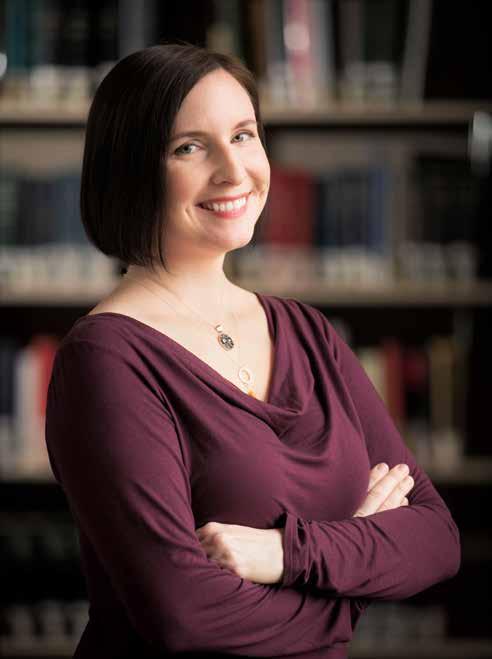
Audrey Coulthurst – Photo by Evrim Icoz
Books
Personal Effects a fascinating but flawed look at preparing for loss
by Terri Schlichenmeyer Special to the SGN
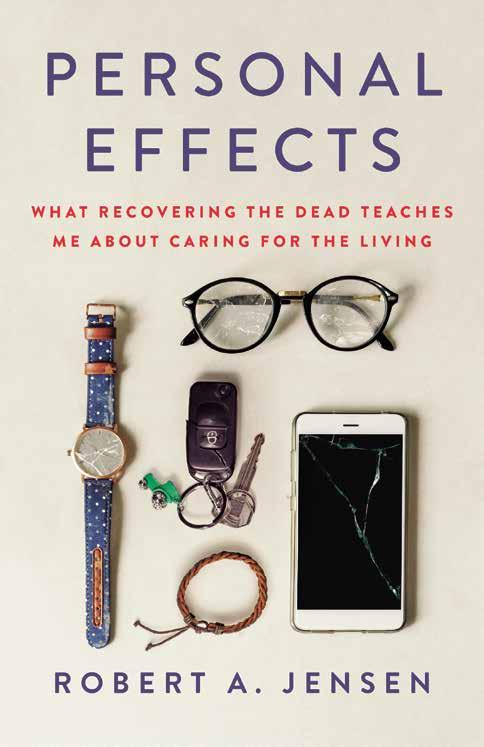
PERSONAL EFFECTS: WHAT RECOVERING THE DEAD TEACHES ME ABOUT CARING FOR THE LIVING
Robert Jensen’s growing-up years were not what you’d call “a normal childhood.” His mother suffered from mental illness; his father treated him as “a secondary concern.” It perhaps didn’t help that there was no room for discussion about Jensen’s being a boy “who liked boys as much as girls.”
Says Jensen, “I hope you never have to see the things that I’ve seen...” He doesn’t say that because of his personal life, though, but because of his job: he is an expert in recovering human remains and personal effects when disaster, accidents, murders, and battles occur.
He says it’s not even his “first weird job,” but as the chairman of Kenyon International Emergency Services, he knows that it’s one of the most important.
For instance, he was called to work after the Murrah Building was bombed in Oklahoma City. He’s recovered the dead for the US government in Somalia; helped recovery efforts in places such as Haiti, New Orleans, and New York; and worked to resolve what happened in devastating plane crashes around the world. He’s
brought back the remains of loved ones to their grieving families, and he’s also been involved in the efforts to recover valuable cargo for insurance companies.
Something bad is going to happen to you. If not now, tomorrow; if not then, soon. Disasters happen, and there are things you can do to minimize the damage and hassle.
“Being prepared for a disaster is really not that hard,” Jensen says. Just “don’t prepare for the last disaster that just occurred.”
But getting the information you need to do so won’t be easy if you want advice from his new book, Personal Effects
The thing is that this book is solid. For fans of the unusual, you can’t get any more unusual than the story, both personal and professional, of a guy who searches for body parts. Jensen’s tale is thrilling, cringe-
worthy, and heroic; there’s advice and littleknown minutiae that only an insider would know. You won’t be able to forget the gist of this book.
And yet, man, it’s a rough read. Personal Effects is laden with choppy half-sentences, errant punctuation, and too much repetition — things that are relatively common, and forgivable. But then there’s the irritatingly incorrect homonym usage, a maddening assumption of readers’ prior knowledge, and an extremely unfortunate quotation from a grieving mother that really could’ve been told better. In all, it’s a book that’ll make you sigh but not in a satisfied way.
For most readers, this’ll be a dealbreaker, and that’s too bad. Personal Effects is basically very, very fascinating, but its errors might not make it worth picking up.
Image courtesy of St. Martin’s Press
Robert A. Jensen – Photo by Karrie Porter Bond
National News
Federal investigation looks into BYU discrimination against LGBTQ students
by Lindsey Anderson SGN Contributing Writer
Brigham Young University in Provo, Utah, is at the center of an ongoing federal investigation that is looking into whether or not the school is actively discriminating against LGBTQ students. The federal Office of Civil Rights began looking into possible discrimination on October 21, 2021, after receiving a complaint the previous March.
The investigation concerns reported violations of the 1972 law Title IX, which prohibits discrimination in schools based on gender or sex.
The complaint to the Title IX office came after the school amended its honor code in 2020 by removing a section titled “Homosexual Behavior,” which had prohibited “all forms of physical intimacy that give expression to homosexual feelings.” Following the amendment, many LGBTQ students felt they now had space to be open about their identities and relationships, which prompted several public coming-outs. This joy, however, was short-lived.
Soon after, Kevin Worthen, BYU’s president, released a clarifying statement informing students that, despite the revision to the code, “same-sex romantic behavior” was still not permitted. “Same-sex romantic behavior cannot lead to eternal marriage and is therefore not compatible with the principles included in the Honor Code,” he said. Worthen’s statement brought new attention to disciplinary policies for LGBTQ students and caught the attention of the federal Title IX office.
BYU’s honor code prohibits premarital sexual relations for all couples, but students in same-sex relationships have faced harsher punishments for holding hands or kissing in public than their heterosexual counterparts. In the spring of 2021, BYU students joined a federal lawsuit challenging faith-based schools’ abilities to access government funds if they don’t follow anti-discrimination laws regarding sexual orientation.
The lawsuit accuses the school of decades of abuse of LGBTQ students, including “conversion therapy, expulsion, denial of housing and healthcare, sexual and physical abuse, and harassment,” as well as “less visible, but no less damaging, consequences of institutionalized shame, fear, anxiety, and loneliness.”
BYU addresses investigation
Last November, Worthen dismissed the federal investigation in a public statement, in which he argued that BYU is exempt from Title IX policies as a religious institution. “We reaffirm that the First Amendment to the US Constitution protects the autonomy of religious institutions, including BYU, to be free from government involvement in the teaching or practice of religion and excessive entanglement with their religious affairs.”
Worthen also argued that Title IX does not protect against discrimination against LGBTQ+ people. “BYU maintains that the text, structure, purpose, and history of Title IX make clear that the term ‘sex’ is not ambiguous and refers only to biological differences between males and females, and therefore Title IX does not apply to discrimination ‘based on sexual orientation or gender identity,” he said.
Despite Worthen’s defense, the Department of Health Education and Welfare states that all educational institutions receiving federal aid, even indirectly, are subject to federal law.
The institution is aware that accepting federal funds of any kind could strengthen the argument that it must abide by anti-discrimination laws, including those applying to LGBTQ people. Because of this, BYU pub-
licly refused federal aid, even going so far as to reject funds from the CARE Act, which provided federal assistance to students during the height of the COVID-19 pandemic.
However, the school is still dependent on federal funds. A quick visit to the university website shows that all prospective undergraduate students must fill out a FAFSA form for federal student loans. As for funds from the CARE Act, the government allocated the most money to institutions where students receive the highest federal assistance. BYU was offered the highest amount for any college in Utah.
BYU students receive so much federal funding because 25% of the student population is married. Married students do not have to put their parents’ income on their FASFA form. This allows students to earn much more in federal financial aid, and the school benefits greatly as a result.
Now the federal investigation is looking deeper into the FASFA-based funding the school receives to see if it is enough to require BYU to abide by federal anti-discrimination laws.
Daily discrimination
While the investigation is primarily focused on the university’s honor code, BYU students say it is just the tip of the iceberg when it comes to discrimination on campus.
I spoke with a current BYU student about their experiences as a member of the LGBTQ community there. The student, who asked to remain anonymous, shed light on the day-to-day struggles they face.
“In terms of discrimination from students, things can certainly be difficult, depending on who you’re around. I have a girlfriend, and we’ve had people openly stare at us while holding hands on campus,” they said.
The university also prohibits students in leadership roles from speaking out about LGBTQ issues or expressing their identities in any public way.
“I was a resident assistant for a BYU dorm and was told that, as a representative of the university, I was not allowed to have safe-space stickers or anything Priderelated on the outside of my apartment because it was ‘too divisive given the current events.’”
by
Even in the classroom, LGBTQ students face daily challenges. The student I spoke to admitted they had to drop a class because the professor was so uncomfortable with them that he refused to communicate with them directly.
“In terms of homophobia, it was a religion class, and clear microaggressions were being made toward the LGBTQ+ community under the guise of studying Elder Holland’s address concerning musket fire and the defense of the traditional family. I remember sitting in class, holding back tears because I felt unwelcome and unsafe in a university I had worked so hard to get into,” they said.
The professor was referencing former University President Edgar Holland’s August 2021 speech, wherein he declared that “we have to be careful that love and empathy do not get interpreted as condoning and advocacy... wounding students and parents of students who are confused about what so much recent flag-waving and parade-holding on this issue means.”
A shocking history of oppression
BYU has a long history of discrimination against the LGBTQ community. In 1962, university leaders delivered a series of homophobic speeches, after which five students committed suicide. A decade later, the school started practicing aversion therapy on homosexual students. This lasted until the mid-1980s. During this time, former BYU President Dallin H. Oaks began conducting “surveillance raids,” attempting to out suspected LGBTQ students.
“As teens, we were taught that homosexuality is second only to murder in the eyes of God,” former BYU student John Cameron told ABC News in 2011. Cameron was one of 14 students who was subjected to the 1972 shock therapy program. While the school no longer condones shock therapy, those who went through it have continued to experience PTSD throughout their lives. Cameron, now a playwriter at the University of Iowa, poured his trauma into his work, creating 14, a play based on his experiences with shock therapy at BYU.
Forcing students into the closet
Now BYU operates under the guise that LGBTQ students don’t exist, and when they
demand to be seen, the school shuts them down.
“…Outside my circle of friends, there is almost nowhere I feel I can be open about my identity,” the anonymous BYU student admitted. “This is exacerbated by BYU refusing to allow a club for queer students. Some groups have popped up in the absence of a club and been run for years [but] are still denied club status.”
The university has not addressed why it will not allow an LGBTQ club, but students believe it is because it fears romantic entanglements, “which feels extremely unfair, especially when psychological studies show [that] isolation reduces mental health, which is already an issue with the number of queer students at BYU who experience poor mental health and even suicidality because of their environment,” the student said.
The federal investigation raises mixed feelings for BYU students. Despite the school’s stance on homosexuality, many students understand that it is tied to the beliefs of the church, and without a change in church doctrines, BYU’s LGBTQ policies will likely remain as they are.
However, members of the LGBTQ community want to feel welcome at their school and are hopeful the investigation might bring about some much-needed changes.
“I’m tired of feeling like an outsider and like I can’t be who I am, and if a federal investigation can result in a change, like the allowance of a club or something more, that would be amazing.”
As far as change in the church goes, LGBTQ issues remain a gray area and one that students feel they should not be punished for. “Many ecclesiastical leaders in local church areas, called bishops, including my own, see no issue with same-sex dating,” the student said. “Many bishops do see an issue. My degree should not be threatened by a gray area that my ecclesiastical leaders can’t even agree on.”
While the church and the school may have a long way to go before LGBTQ students can feel fully accepted and welcome, many hope the federal investigation will result in a nudge in the right direction for the institution.
Photo
Rick Bowmer / AP
National News
National news highlights
by Daniel Lindsley SGN Contributing Writer
Provo:
Mormon university under investigation
NBC News reported January 21 on the US Department of Education’s civil rights investigation into the LGBTQ dating ban at Brigham Young University. The Utah-based school withdrew its written ban on “homosexual behavior” in 2020 but later clarified that same-sex dating was still prohibited. While heterosexual couples are also punished for holding hands or kissing, the complaint that sparked the investigation claims that same-sex couples face harsher discipline for the same acts.
University spokeswoman Carri Jenkins said in a statement that BYU has the right to enforce the policies of the Church of Jesus Christ of Latterday Saints, which runs the school, and that she doesn’t expect further legal action. The Department of Education’s Office for Civil Rights acknowledges that BYU has some religious exemptions. The investigation will evaluate whether or not the complaint falls under those exemptions or not.
Washington, DC:
Report calls for stronger action from Biden
On January 20, The Advocate published a report on the Biden administration’s progress on LGBTQ+ issues. Sharon McGowan, Lambda Legal chief strategy officer and legal director, acknowledged the “tall task to reverse four years of damage done by the Trump administration,” and the progress the Biden administration has made so far, but also said it hasn’t been enough. The report shows that underrepresentation remains an issue in the federal judiciary, and recommends the administration focus on appointing more LGBTQ+ judges. Praise for Biden’s lifting of Trump’s ban on Transgender people in the military was tempered by calls for legislation to prevent such bans in the future.
The report also called for a more “staunch defense of Trans and noncomforming kids,” and for the administration to prioritize protecting voting rights, Black Trans women, and the rights of Trans people in federal custody, as well as updating HIV-related policies.
Anti-vaxxers push feminizing HRT as COVID treatment
by Kylin Brown SGN Contributing Writer
As the pandemic rages on across the US, those who still refuse vaccines have touted the efficacy of several unusual over-thecounter drugs. The latest addition to their growing list of “treatments”? Feminizing hormone replacement therapy (HRT), perscribed for Transgender women during their transition to suppress masculine characteristics. So basically: don’t get jabbed, just undergo a medical transition.
Previously, the antiparasitic drug ivermectin and the antimalarial, immunomodulatory hydroxychloroquine have been the main alternatives promoted by anti-vaccine advocates for over-the-counter treatment of COVID-19. Now, with the help of a “team of experts” called the Front Line COVID19 Critical Care Alliance (FLCCC), a comprehensive list of anything-but-the-vaccines has been formulated for “treatment of the COVID-19 patient.”
This includes drugs like spironolactone and finasteride (an anti-androgen), listed in the FLCCC’s document, “Overview of the MATH+, I-MASK+ and I-RECOVER Protocols.”
Located in section 3.2, “Second Line Treatments,” right under B-complex vitamins, the FLCCC states that “androgens augment SARS-CoV-2 infectivity by promoting the expression of transmembrane protease (TMPRSS2) that primes the spike viral entry protein.”
Its sources? It first cites a paper that discusses the efficacy of androgen suppression and modulation in preventing prostate cancer metastasis, which never mentions SARS-CoV-2.
It later goes on to cite an Iranian study published in late 2021 about the use of finasteride in critical care patients hospitalized by the virus. A seven-day course of the drug boosted oxygen saturation in the bloodstream of some patients, but “the results did not show significant differences in mortality,” read the findings. Nor did it “influence other outcomes.”
It appears that overall, the FLCCC’s sources do not justify its inclusion of antiandrogen drugs on the list. Perhaps many other substances on the list are incorrectly researched by the organization as well.
These sorts of unproven, reactive measures are being promoted to shorten and minimize COVID-19 infections once they happen, but they do not prevent infection or hinder the spread of the virus like vaccines do.
Meanwhile, the FLCCC protocols are being used in right-wing media to promote “expert advice” on how to survive COVID19 — not if, but when you are infected.
In a Fox News segment aired on Jan. 10, Dr. Pierre Kory, FLCCC president, pointed to the intricacies of FDA approval processes while explaining the organization’s protocols.
“What you’re seeing is the product of a system, right? The system is entirely structured, and it’s scary how it’s structured. It’s
structured to entirely act within the interests of for-profit pharmaceutical corporations,” Kory said.
However, the proven methodologies used by the FDA in drug testing ensure that treatments are both safe and effective for a particular use.
“In some instances, it can be highly dangerous to use a medicine for the prevention or treatment of COVID-19 that has not been approved by or has not received emergencyuse authorization from the FDA,” reads the FDA reaction to the popularization of ivermectin to “treat” COVID-19.
These alternative measures show an extreme resistance to vaccines, wherein untested territory is more acceptable than any mainstream solution. Unfortunately, while mainstream methods (vaccines) are consistently proving to be effective at saving lives, people who have advocated for the use of generic drugs, like prominent Q-Anon spokeswoman Veronica Wolski, have ended up dead.
Meanwhile, the right continues its campaign of transphobia across Southern states, pushing felony charges and incarceration for anyone offering medical-transition drugs and surgeries.
A question lingers: how can hormone replacement therapy be available for untested experiments in dire pneumonic circumstances but illegal for their known mechanisms of action?
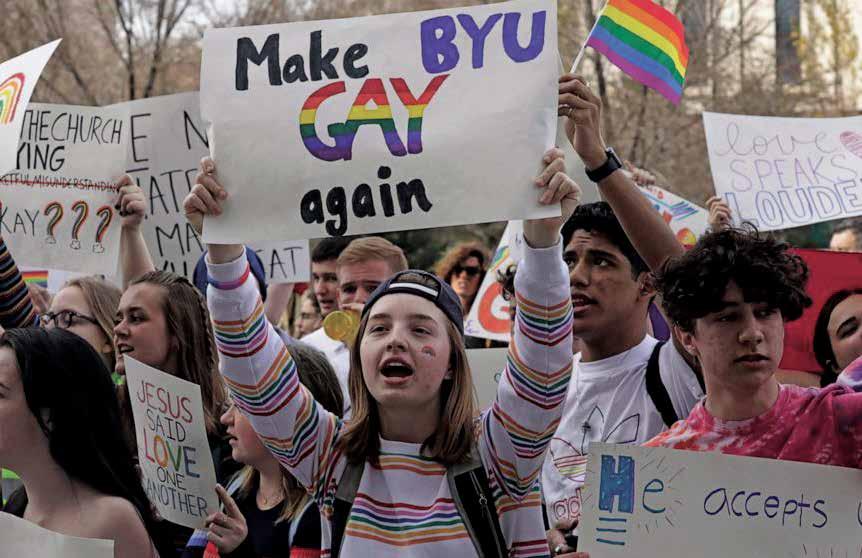
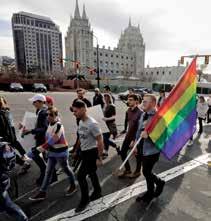
BYU students march in Salt Lake City to protest the ban on same-sex romantic behavior – Photo by Rick Bowmer / AP
Photo by Karolina Grabowska / Pexels
International News
FRANCE
continued from cover
The legislation was proposed by French President Emmanuel Macron’s governing party and was approved unanimously in a 142-0 vote. Opposition parties abstained from the vote so as not to oppose the measure while not supporting Macron.
“Conversion therapies are deplorable,” French Health Minister Olivier Veran said. “They cause terrible suffering.”
Veran tweeted with the hashtag
International news highlights
by Daniel Lindsley SGN Contributing Writer
Finland:
MP on trial for hate speech
The BBC reported on January 24 that Finnish MP Paiva Rasanen has gone on trial for hate speech, after being accused of making public derogatory comments toward homosexual people in the past. According to Finland’s state prosecutor, Rasanen’s comments in an online article, a radio interview, and a 2019 tweet went beyond religious freedom of speech by being, as the BBC put it, “likely to cause intolerance, contempt, and hatred towards homosexuals.”
The tweet included a photo of a verse from the Bible that calls homosexual acts “shameful” and questioned the Finnish Lutheran Church’s official support of Finland Pride week. Rasanen’s
“RienÀGuérir,” which translates as “Nothing to Cure” and is used online by backers of the proposed legislation.
French National Assembly member Laurence Vanceunebrock, who helped steer the law’s passage through Parliament, said it will target “all those who equated an identity or a sexual orientation with sickness.”
“There is nothing to cure,” she told the National Assembly, repeating the Health Minister’s hashtag.
The law will take effect 14 days after Macron signs it, which he is expected to do quickly. He hailed the law on Twitter, say-
ing, “Let’s be proud of it. Because being oneself is not a crime.”
Conversion therapy has been banned in Washington state since 2018. In August last year a federal court ruled that the ban was constitutional because it regulates professional conduct and does not violate First Amendment free speech rights.
The City of Seattle also has an ordinance banned conversion therapy within its city limits.
In 2015, the American Psychological Association and the Substance Abuse and Mental Health Services Administration
collaborated on a report stating “conversion therapy — efforts to change an individual’s sexual orientation, gender identity, or gender expression — is a practice that is not supported by credible evidence and has been disavowed by behavioral health experts and associations.
”Conversion therapy perpetuates outdated views of gender roles and identities as well as the negative stereotype that being a sexual or gender minority or identifying as LGBTQ is an abnormal aspect of human development. Most importantly, it may put young people at risk of serious harm.”
online article, published in 2004, described homosexuality as a disorder.
The former Finland interior minister arrived in court with a Bible, stating she was “honored to be defending freedom of speech and religion,” and that she didn’t “wish to offend any group of people, but this is a question of saving people for eternal life.” Should Rasanen be convicted, she could technically face prison time, but the prosecution has requested she instead be fined relative to her income.
Santiago: New Chilean government chooses two Gay ministers
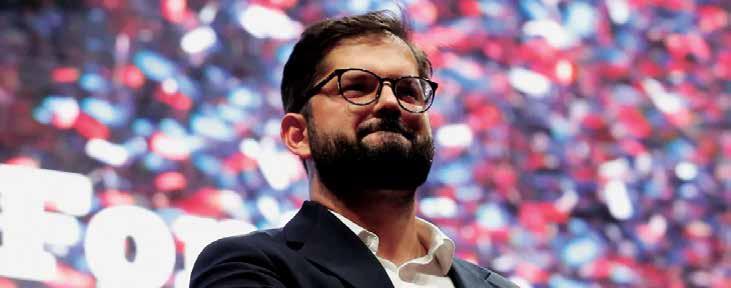
The Washington Blade reported on January 21 that Chilean President-elect Gabriel Boric has named two openly LGBTQ people to his cabinet: Marco Antonio Ávila, a Gay man, as education minister; and Alexandra Benado, who is Lesbian, as sports minister. One spokesperson for Movilh, a Chilean LGBTQ rights group, has already expressed
approval: “The visibility of sexual orientation and gender identity is no longer an impediment to access any position in Chile,” Javiera Zúñiga said in a press release. “Sexual orientation and gender identity are irrelevant for the positions, whether they are public or private. Capability is the only thing that matters.” Boric’s government will take office in early March, just before the country’s newly passed marriage equality laws will come into effect.
Chilean President-elect Gabriel Boric – Photo by Rodrigo Garrido / Reuters