ALKI BEACH PRIDE WARMS HEARTS WITH FIRST CLOTHING DRIVE
by Mike Andrew SGN Staff Writer
by Daniel Lindsley
SGN Staff Writer
by Sara Michelle Fetters SGN Staff Writer
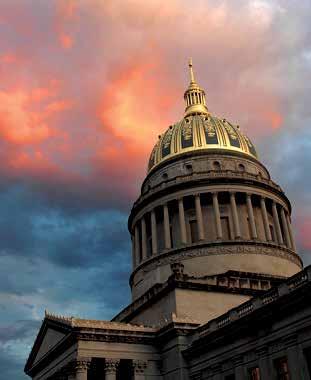
Photo courtesy of West Virginia Legislature
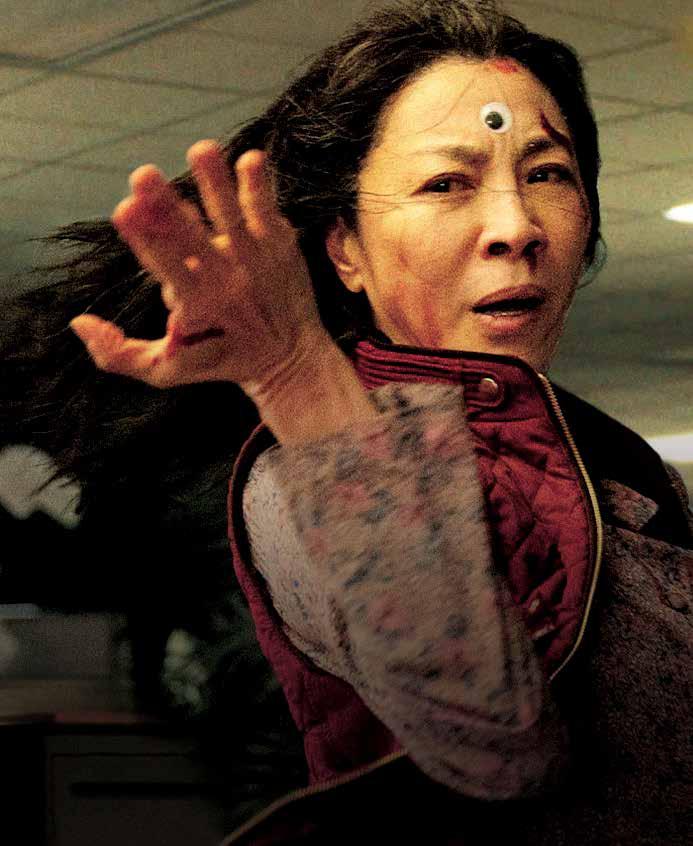
Michelle Yeoh in Everything Everywhere All at Once – Photo courtesy of A24
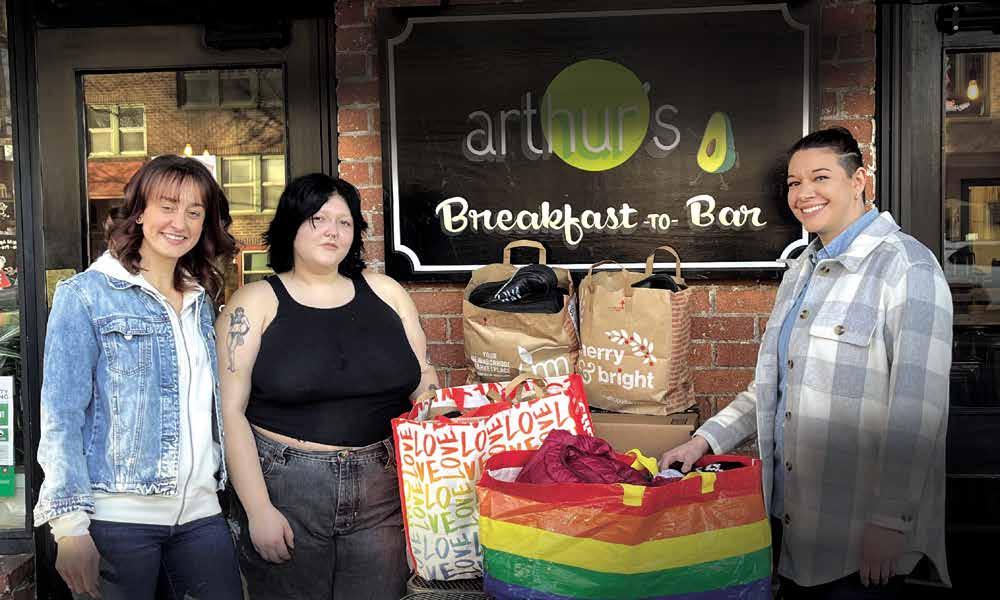
Lacey Pratt (l), Kayla Paredes (r), and Arthur’s staff with clothes for pickup – Photo by Daniel Lindsley
Local News
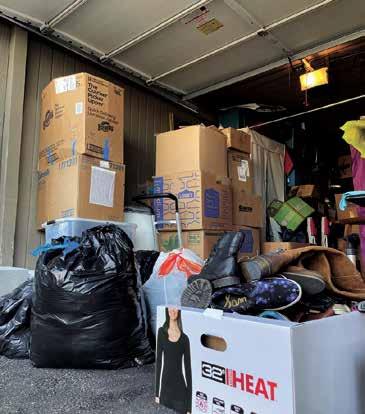
According to ABP board members Kayla “KP” Paredes and Lacey Pratt, what started with just two locations quickly expanded to seven. The Admiral Theatre, Arthur’s, Harry’s Beach House, the Lumber Yard Bar, Youngstown Coffee, Tibbetts United Methodist Church, and Ramone Myers Berkshire Hathaway are all drop-off locations.
“What’s been great about the organization as a whole, that we’ve seen throughout the coat drive, is that people notice we’re doing something, and they contact us to get involved,” Paredes said. “Our reach is far beyond what we could’ve imagined when we started.”
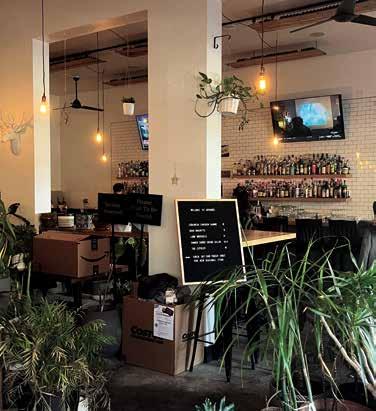
Flanked by potted plants and sipping coffee drinks, Paredes and Pratt spoke with me in the verdant Arthur’s café and bar, during one of the duo’s regular clothing pickups. They said they had been there only once, for a Seahawks game, but the coat drive meant they would be visiting more often, if for different reasons.
When she’s not volunteering, Pratt is a nanny for a few West Seattle families. Paredes does web design “and redesign,” and has helped ABP give its website a makeover.
Alki Beach Pride began 25 years ago as a series of informal beach bonfires with friends and family. It was started by Stacy Bass-Walden, who would go on to co-found the larger, more official event. The pandemic put it on hold, but last summer, it made a big comeback.
“It’s still really small,” Pratt said of ABP. “It’s only a handful of people who have been putting this together.”
But like the Pride event itself, the coat drive is seeing the same upwelling of local grassroots support. West Seattle does, after all, have a reputation for being a popular spot for Queer couples to settle down.
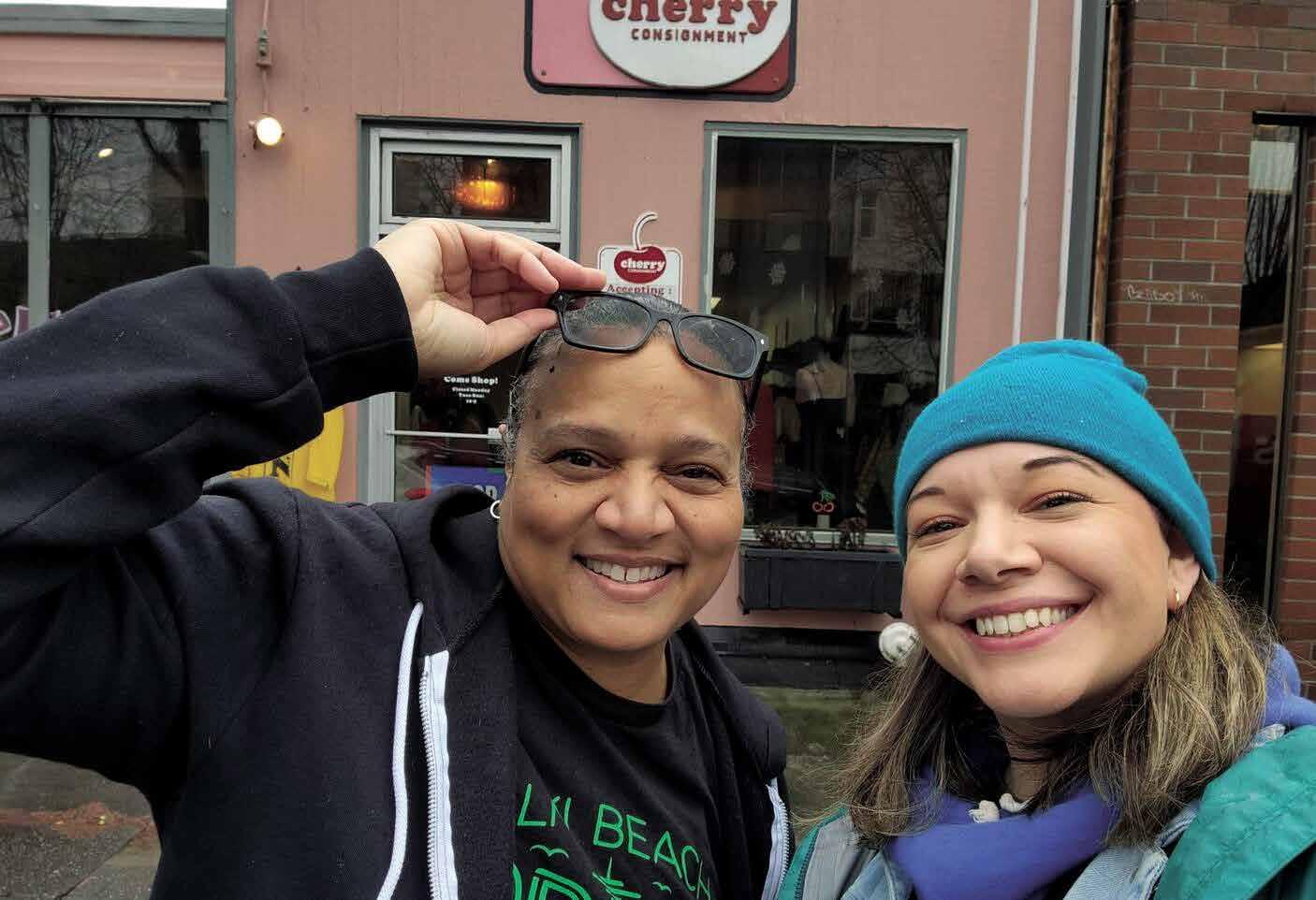
“It’s been an awesome turnout,” Pratt said. Since starting on January 9, “we’ve had two of the places call with full bins. We had the Cherry Consignment reach out, just
saying they had a donation they’d like for us to come pick up, so they donated two full bins as well.”
Arthur’s also had a full bin that Monday afternoon, plus an extra box about the size of a large ice chest, which a waiter said was brought in by a patron.
It’s a no-brainer, then, that Out of the Closet will be well worth checking out after January 28, when the coat drive ends; at just a glance, the bins were full of good stuff, and Paredes and Pratt agreed.
“There are a lot of warm, comfy coats. There’s bags, shoes, and belts, you name it,” Paredes said.
“And I would say you get the best of both worlds,” Pratt added. “You can make room in your closet, but then go and support [the AIDS Healthcare Foundation] by buying the clothes that are there.”
For the community, by the community
This year’s drive might be ABP’s first, but with any luck, it won’t be its last.
“I feel like it probably should be [an annual event],” Paredes said. “It’s already making a huge impact the first year.”
For now though, most future plans are around the big Pride event in August.
“We’re really hoping for good staging, good music, just events — things to do, things to learn,” Pratt said.
“For the community, by the community, really,” Paredes added. “I think it’s huge, what Stacy’s vision is: to get the community involved,” and to “shout out Queer voices, Black voices, and minority voices.”
In addition to that broad vision, the more specific impetus for the coat drive was Bass-Walden’s late older brother, Carl Walden, who lost his life to AIDS in 2004
at the young age of 37. Working with Out of the Closet, and by extension the AIDS Healthcare Foundation, has been an opportunity to honor his memory.
As for Paredes and Pratt specifically, they’ve worked with small nonprofits before, like In Her Shoes, an international women’s advocacy group based in California.
“Through that, we were like, ‘What could we do that’s more involved in our West Seattle community?’” Pratt said. And ‘What could we do that’s more involved with our LGBTQ community?’ We wanted to build connections, and we wanted to build a community of people we’d see in town.”
To find out more about Alki Beach Pride and how to get involved, visit https://www. alkibeachpride.org. For updates, you can follow it on Instagram @alkibeachpride.
Bins of clothes in storage – Photo courtesy of Alki Beach Pride / Lacey Pratt
A full dropoff bin nestled into signage at Arthur’s – Photo by Daniel Lindsley
Stacy Bass-Walden and Kayla Paredes take a selfie outside Cherry Consignment – Photo courtesy of Alki Beach Pride / Kayla Paredes
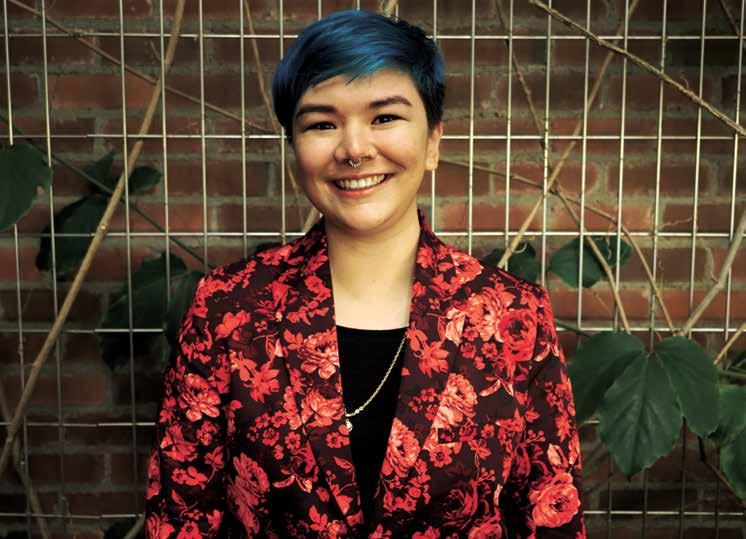
Self-described “Gaysian,” Seattle-based poet and editor Ally Ang is being directed to pose for photos. We are standing in the Capitol Hill Library after their interview, as our photographer snaps shots of them with their bright blue hair and floral suit. Ally is a bit shy initially, blushing a little at the attention and prone to the occasional nervous giggle. Eventually, their confidence emerges as they give the camera a brilliant smile.
Ally is too humble for their own good. Here at the SGN, we’d like to fix that.
The poet has such accomplishments as being published in Queer Nature: A Poetry Anthology, Nepantia: An Anthology Dedicated to Queer Poets of Color, Foglifter, Columbia Journal, and more. They’ve been nominated for a Pushcart Prize and Best of the Net. Also, add Tin House Workshop alum and 2022 Jack Straw Writers Program fellow to the list. Their newest achievement is a National Endowment for the Arts (NEA) Creative Writing fellowship, which came with a $25,000 grant.
This is no small sum for any artist, and this award is highly competitive. According to the NEA, nearly 1,900 people applied for the 2023 fellowship; only 36 were chosen.
Ally announced in a tweet after receiving the news, “I am honored and mind blown to announce that I am a 2023 @NEAarts Fellow! I’m getting $25,000 to work on my writing and joining a cohort of some of the most amazing poets in the world!”
Ally’s poetry explores topics such as their being Asian (in their poem “Owed to My Father’s Accent”), and their sexuality and vision for a better world (in “On Being Asked What Is Your Dream Job?”), among others. In so few words, they give the reader glimpses into their hard-won battles and well-deserved joys.
Benny Loy: What are your pronouns and identity?
Ally Ang: Thanks for asking. My pronouns are they/them, and I identify as Bisexual and Nonbinary, and Asian American. And a poet! I guess those are the big ones.
BL: I noticed your Twitter and Instagram handles are @TheOceanIsGay. Where did that come from?
AA: I like to believe that the ocean and the moon are Lesbian lovers, and I don’t know, I just think the ocean is very Gay.
BL: So how did you start writing?
AA: I started writing when I was a kid, and I was, you know, one of the very shy, nerdy kids who was reading all the time. I started writing poetry because I didn’t know how to talk about a lot of my feelings or I didn’t want to talk about my feelings. And poetry felt like a way to express them. I wrote a lot of teenage-angst poems that are really bad. And I put them on Tumblr, and I hope they don’t still exist out there somewhere, but maybe they do. I only started to take my writing a little bit more seriously when I was in college.
BL: Did you have an “aha” moment where you realized that this is something you could feasibly pursue?
AA: Honestly, getting the NEA fellowship was kind of that “aha” moment because, you know, it’s always been something I’m very passionate about. But I never thought I could make any money, because it’s poetry. Like, who makes money from poems? I never want it to be my main source of income, because that’s unrealistic, and I want it to remain something that brings me joy. Yeah, but that did feel very validating, that I am pursuing something that other people will find worthwhile and not just me.
BL: How would you say your identity affects your work?
AA: I was an Asian American kid in a predominantly white town. I was also trying to figure out my queerness and didn’t know what to do about that. A lot of my first poems… [were] me exploring my identity. And in a lot of ways, I think now I would look back on them as [clichéd]. But it was important for me to put it into words. It’s what really sparked my love of poetry.
I didn’t really care too much about the old dead white guy poets that we learned about in school. But when I discovered slam and spoken-word poets, and I saw other people of color and Queer people and people from marginalized identities writing poems and sharing their experiences on such a big stage, I was like, “I didn’t even know you could write poems about this stuff and, like, have it be respected.”
Becoming familiar with the work of contemporary Queer poets of color really showed me that our experiences are worth writing about.
BL: How do you plan to use the grant?
AA: A lot of it will be spent very unsexily on rent and bills. I think just having a little
bit more financial stability means everything. It means I can devote more of my time and energy to writing. I also just finished writing my first full-length poetry manuscript. So, I’m trying to get that published.
BL: Tell me about your work with Forward Together.
AA: I just started working with them this past summer. I’m still pretty new there, but they’re a women of color–led reproductive justice organization. It’s rooted in frameworks of Queer and Trans liberation, which, you know, all of those issues are very important to me. I’m a grant writer for them, so I guess my job is to tell the story of the organization to people who want to support that mission. So that’s been a cool way to use my writing in a way that both helps [a] cause that I care about and also pays the rent.
It’s been really wonderful. I love working at a place that is women of color led and has so many Queer and Trans people on staff. Reproductive justice, Trans rights, and Queer rights are really urgent right now.
BL: What would say are the biggest obstacles to pursuing writing?
AA: I mean, capitalism! I think I have
a lot more spaciousness with my job with Forward Together, but it always feels so hard to make time and energy for writing when you’re working full-time and also have a social life and a cat to take care of. Sometimes it feels like it’s really easy to push writing to the bottom of my to-do list, because other things feel more urgent. Sometimes I have to really make an effort to prioritize writing. Especially now that I’m no longer in school, I don’t have those formal structures.
Also, perfectionism. I’m trying to be better about giving myself permission to not be perfect at everything. It’s okay to be bad at things. I don’t have to be perfect, I’ll focus on having fun with it.
Ang is a source of pride for the community; their poetry gives a voice to those who may find it difficult to express their feelings. LGBTQIA+ people of color’s work inspired them, and now Ang shares their unique story, like the people they look up to. Like when they were a teen, their work may pass down that poetic spark to someone who never considered that their words could also matter. The NEA could not have made a better choice.
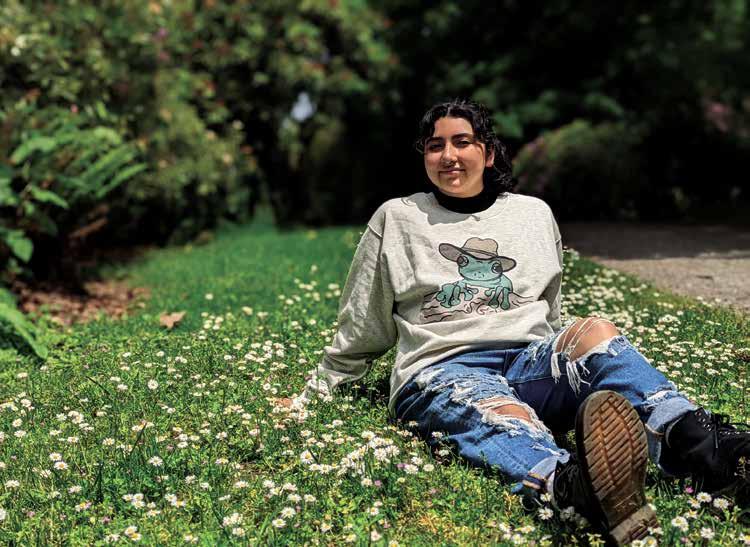
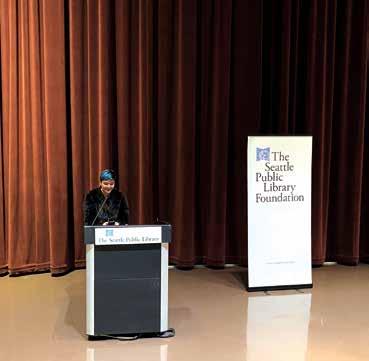
Ally Ang – Photos by Lauren Vasatka
Cyberthriller Missing goes online to generate suspense
by Sara Michelle Fetters SGN Staff Writer
MISSING Theaters
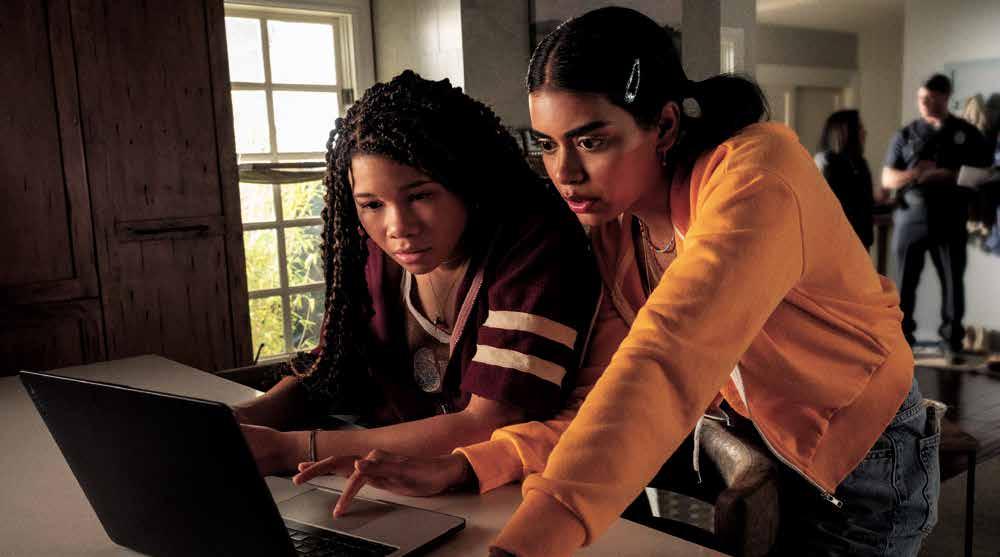
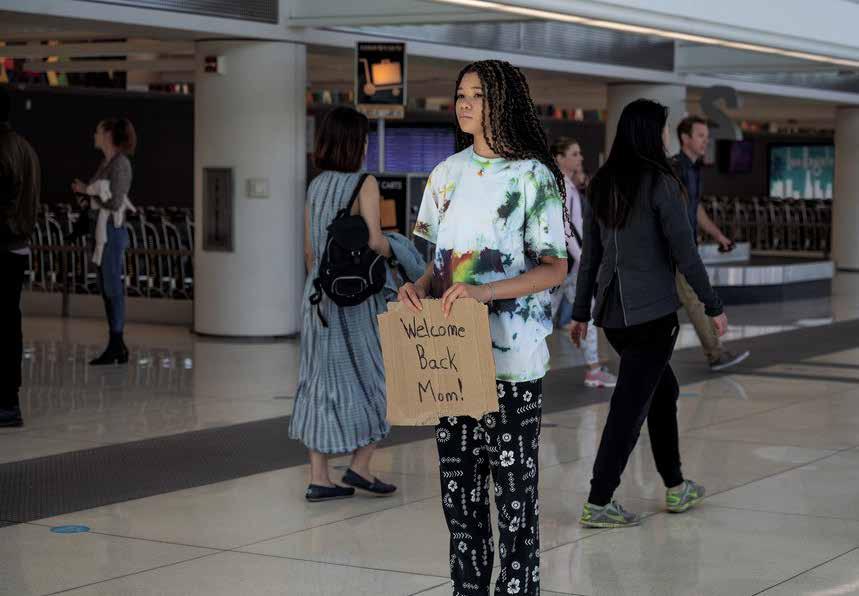
The last time June (Storm Reid) saw her mother Grace (Nia Long) was when Grace was getting into an Uber to go to the airport with her boyfriend Kevin (Ken Leung) for a romantic vacation in Colombia. The teen was supposed to pick them up at the airport on their return, but neither made their flight, and June is understandably frantic as she wonders what the heck has happened.
The US consulate in Colombia assures June that they’re working with local law enforcement to find her mom. Grace’s trusted confidant and lawyer Heather (Amy Landecker) is also on the case, stating she is going to clear her calendar and make figuring out what happened her top priority. June’s best friend Veena (Megan Suri) comes over every day to provide moral support.
But June isn’t one to sit and do nothing. With the whole world now online, cameras recording everything, and gig economy workers ready to do almost anything for a nominal fee at the click of a mouse or the swipe of a finger, this daughter is determined to find her mother no matter what obstacles are thrown in her way.
Not so much a sequel to 2018’s Searching as it is another tale of online moxie and resolve set in the same universe, Missing is a tensely enjoyable roller-coaster ride that had my eyes glued to the screen. Once again told entirely through laptop webcams, security cameras, smartphones, and other high-tech devices, much like its predecessor, this is a character-driven mystery that treats the audience with intelligence and respect. It’s also a lot of fun.
Searching filmmakers Sev Ohanian and Aneesh Chaganty have returned to craft this original story, while that film’s editors Nicholas D. Johnson and Will Merrick share the director’s chair in this installment and also get credited for writing the cyberthriller’s screenplay. While this new mystery is a tad more implausible, I do like that the creative team has stuck to their guns about populating this madness with a complicated hero who always feels authentic, no matter how silly everything turns out to be.
What do I mean? June is a boringly real 18-year-old trying to bust out of her parent’s shadow. She doesn’t empty her voicemail. She responds to “I love you” with a thumbs-up emoji. She makes plans to hold a house party while her mother’s in Colombia. She goes out of her way to treat Kevin with disdain, thinking that if she remains distant and aloof, maybe he’ll have second thoughts about Grace.
The filmmakers drop astute hints as to why June feels like her mother is smothering her yet also is angered and somewhat saddened to see her falling in love with someone other than her late father. The tragic backstory there is cleverly handled. It’s easy to see why, even if much of it transpired when June was a toddler, it would still weigh heavily on her psyche.
Reid delivers a beautifully astute performance, made all the more impressive considering the way her story is shot and edited. There are layers upon layers upon layers to the visuals, with computer and smartphone screens competing for attention, frequently at the same time. So Reid has to craft a believable character without the aid of traditional cinematic storytelling techniques. For anyone who has watched her career evolve in films like A Wrinkle in Time and The Invisible Man, this likely will not be shocking, not that it makes the confidently naturalistic ease with which she does this any less impressive.
I did feel that the resolution to the mystery at the heart of Missing was slightly more obvious than it was in Searching Additionally, while I’ll always celebrate
any picture that gives the wonderful Joaquim de Almeida a key role, and even though the veteran character actor gives a terrific performance, the subplot he’s involved in — which I am not going to reveal — isn’t as seamlessly integrated as I hoped. If it works at all, it is only because de Almeida and Reid are so good, and not because the script successfully develops the connection between their characters in a lasting or meaningful way.
Not that I’m complaining. Searching worked even with an equally absurd premise, and this is also the case with Missing As loopy as things get, I cared about June, and I couldn’t help but become intimately involved in her search for Grace. I was on the edge of my seat, and that says it all.
Storm Reid and Megan Suri in Missing – Photo courtesy of Screen Gems
Storm Reid in Missing – Photo courtesy of Screen Gems
OSCARS
continued from cover
This year’s locks are as an eclectic a trio as any I can recollect. First there’s the high-concept multiverse spectacle of directors Dan Kwan and Daniel Scheinert’s freewheeling, action-heavy whirligig Everything Everywhere All at Once A mind-blowing showcase for international superstar Michelle Yeoh and career-revitalizing bonanza for former The Goonies and Indiana Jones and the Temple of Doom child star Ke Huy Quan, this film came out of nowhere and quickly became one of the most talked-about surprise hits of 2022.
Next is the character-driven drama Tár. Director Todd Field’s first foray back behind the camera since 2006’s Little Children, this forcefully challenging descent into ambition, creativity, and showmanship features two-time Academy Award winner and seven-time nominee Cate Blanchett in what may be the greatest performance of her career.
Finally comes the modern crown prince of Oscar usual suspects: Steven Spielberg. The legendary filmmaker returns with The Fabelmans, a thinly fictionalized autobiographical account of his childhood with a down-to-earth computer engineer father and a mother who happily kept her head in the clouds, seemingly no matter the situation. But this is no fairy tale, the darker edges of artistic obsession inching in from the corners of the frame with merciless dedication. There is an underlying cynicism at the heart of Speilberg’s latest, and I admit it caught me somewhat by surprise. These appear to be the consensus Best Picture frontrunners, and it’s a given that each film will be mentioned numerous times as the nominees for each category are announced by Riz Ahmed and Allison Williams this Tuesday at 5:30 a.m. (PT). But what other films do we expect to make the cut? What will be the biggest surprises? Which actors anticipating hearing their name called will unhappily be left wondering what the heck happened?
It’s safe to say the two biggest films of 2022, Top Gun: Maverick and Avatar: The Way of Water will get nominated in several categories, likely even Best Picture as
well. It is also safe to assume that writerdirector Martin McDonagh’s The Banshees of Inisherin will do equally as well, and I’m all but certain all four of the film’s primary actors (Colin Farrell, Brendan Gleeson, Kerry Condon, and Barry Keoghan) will garner nominations for their performances. Other virtual locks include Baz Luhrmann’s Elvis (Best Picture and Best Actor especially), Darren Aronofsky’s The Whale (primarily for Best Actor contender Brendan Fraser, though Picture, Supporting Actress, and especially Makeup & Hair Design are probable as well), and S.S. Rajamouli’s rambunctious, eye-popping sensation RRR (for Best Original Song for certain, but Director and Picture are not outside the realm of possibility).
There’s an amusing online rumor circulating right now that Andrea Riseborough may come out of nowhere and secure a nomination for the under-the-radar melodrama To Leslie, and while that would certainly be a shock, it would also be a welldeserved one. There is also buzz that German filmmaker Edward Berger’s All Quiet on the Western Front will be a significant force to be reckoned with in multiple categories and not just Best International Film; predictions for it to appear in the Director, Actor, and especially Picture categories are not as far afield as initially assumed.
As far as Best Picture goes for 2023, the biggest wildcard is the Motion Picture Academy of Arts and Sciences’ return to a clean list of ten nominees. No longer will the number vary. No longer does a nominee have to secure 5% of the voting body’s firstplace votes to garner a nod. The ten films with the highest vote totals are getting in. The last time the Academy utilized this format back in 2011, Debra Granik’s indie darling Winter’s Bone and Sony Picture’s surprisingly popular science fiction smash District 9 made the cut. Expect something similar to happen this year.
I’m usually a lot better at predicting the winners than I am the nominees. Nevertheless, here are my guesses as to which films, directors, and actors will make the cut in the top categories for the 95th Academy Awards. I’m excited to find out Tuesday morning just how good my prognostication skills are.
BEST PICTURE
My Prediction: All Quiet on the Western Front, Avatar: The Way of Water, The Banshees of Inisherin, Elvis, Everything Everywhere All at Once, The Fabelmans, Tár, Top Gun: Maverick, The Whale, The Woman King Other contenders: Aftersun, Babylon, Black Panther: Wakanda Forever, Decision to Leave, Glass Onion, Nope, RRR, Thirteen Lives, Till, Women Talking Film I want to get nominated but won’t be: The Eternal Daughter
BEST DIRECTOR
My Prediction: Martin McDonagh (The Banshees of Inisherin), Dan Kwan, Daniel Scheinert (Everything Everywhere All at Once), Steven Spielberg (The Fabelmans), S.S. Rajamouli (RRR), Todd Field (Tár)
Other contenders: Edward Berger (All Quiet on the Western Front), James Cameron (Avatar: The Way of Water), Park Chan-wook (Decision to Leave), Baz Luhrmann (Elvis), Jordan Peele (Nope), Joseph Kosinski (Top Gun: Maverick), Gina Prince-Bythewood (The Woman King), Sarah Polley (Women Talking)
Director I want to get nominated but won’t be: Charlotte Wells (Aftersun)
BEST ACTRESS
My Predictions: Margot Robbie (Babylon), Michelle Yeoh (Everything Everywhere All at Once), Cate Blanchett (Tár), Danielle Deadwyler (Till ), Viola Davis (The Woman King) Other contenders: Ana de Armas (Blonde), Tang Wei (Decision to Leave), Olivia Colman (Empire of Light), Michelle Williams (The Fabelmans), Emma Thompson (Good Luck to You, Leo Grande), Mia Goth (Pearl ), Andrea Riseborough (To Leslie), Rooney Mara (Women Talking)
Actress I want to be nominated but won’t be: Regina Hall (Honk for Jesus. Save Your Soul.)
BEST ACTOR
My Prediction: Paul Mescal (Aftersun), Colin Farrell (The Banshees of Inisherin), Austin Butler (Elvis), Tom Cruise (Top Gun: Maverick), Brendan Fraser (The Whale)
Other contenders: Felix Kammerer (All Quiet on the Western Front), Diego Calva (Babylon), Gabriel LaBelle (The Fabelmans), Adam Sandler (Hustle), Bill Nighy (Living), Ralph Fiennes (The Menu), Daniel Kaluuya (Nope)
Actor I want to get nominated but won’t be: Park Hae-il (Decision to Leave)
BEST SUPPORTING ACTRESS
My Prediction: Angela Bassett (Black Panther: Wakanda Forever), Kerry Condon (The Banshees of Inisherin), Stephanie Hsu (Everything Everywhere All at Once), Janelle Monáe (Glass Onion), Dolly De Leon (Triangle of Sadness)
Other contenders: Jamie Lee Curtis (Everything Everywhere All at Once), Michelle Willaims (The Fabelmans), Keke Palmer (Nope), Carey Mulligan (She Said ), Nina Hoss (Tár), Hong Chau (The Whale), Lashana Lynch (The Woman King), Thuso Mbedu (The Woman King), Jessie Buckley (Women Talking), Claire Foy (Women Talking)
Actress I want to be nominated but won’t be: Nicole Kidman (The Northman)
BEST SUPPORTING ACTOR
My Prediction: Brendan Gleeson (The Banshees of Inisherin), Barry Keoghan (The Banshees of Inisherin), Ke Huy Quan (Everything Everywhere All at Once), Paul Dano (The Fabelmans), Ben Whishaw (Women Talking)
Other contenders: Anthony Hopkins (Armageddon Time), Brad Pitt (Babylon), Mark Rylance (Bones and All ), Brian Tyree Henry (Causeway), Tom Hanks (Elvis), Judd Hirsch (The Fabelmans), Eddie Redmayne (The Good Nurse)
Actor I want to be nominated but won’t be: Edward Norton (Glass Onion)
Nina Hoss and Cate Blanchett in Tár – Photo courtesy of Focus Features
Terrifically disgusting Kids vs. Aliens is a waste of a gorily good idea
by Sara Michelle Fetters SGN Staff Writer
KIDS VS. ALIENS
Theaters / PVOD
Jason Eisner’s Kids vs. Aliens has the same issue the director’s V/H/S 2 installment “Slumber Party Alien Abduction” had: it never makes a case for being anything more than a potentially good idea. The short version was sadly the least interesting story in that otherwise excellent 2013 horror anthology, and this 75-minute elongated variation is similarly disappointing. I wanted to like it, but frustratingly, I never did. Other than being a nice showcase for some terrifically goopy practical gore and makeup effects, there are sadly not that many positives to talk about.
The game cast of youngsters does give it their all, so that is also worth celebrating. There are scenes where relative newcomers Phoebe Rex (as teenage outcast Samantha) and Dominic Mariche (as her aspiring John Carpenter-meets-Steven Spielberg little brother Gary) undeniably shine. They have an energetic vitality that’s invigorating, and if the remainder of the movie were only a little better, I think I’d be a lot more forgiving toward it than I sadly am, thanks to their dual charms.
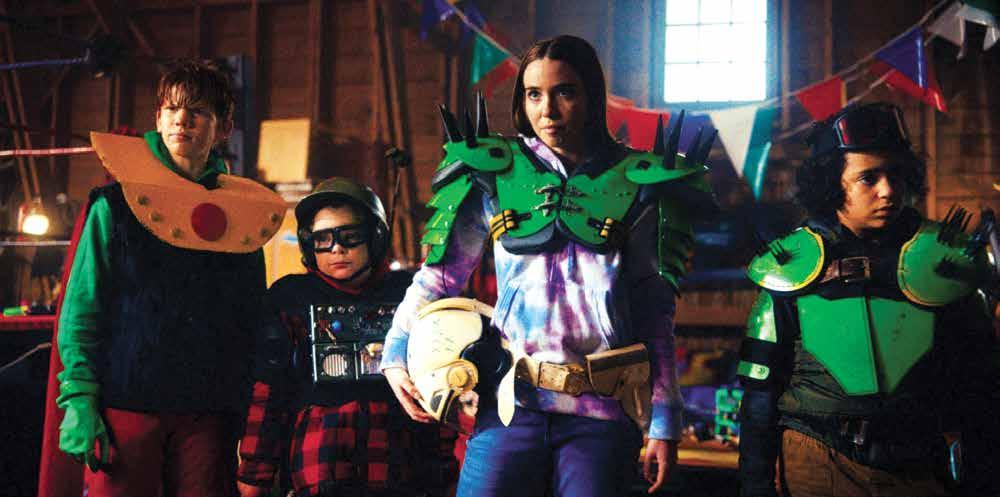
It’s Halloween weekend, and Samantha and Gary’s parents have once again left them on their own to go on another of their seemingly endless “business trips.” But instead of helping her brother finish filming his epic fantasy action opus in their barn with his friends Jack (Asher Grayson Percival) and Miles (Ben Tector) like she promised, Samantha has inexplicably given local bad boy Billy (Calem MacDonald) permission to hold a raucous costume party on their property.
Unsurprisingly, this was a mistake. Not only is Billy using Samantha by pretending to be attracted to her, but he and his besties Trish (Emma Vickers) and Dallas (Isaiah Fortune) also intend to humiliate their shy, nerdy classmate in ways that will make her a social pariah. It’s more trick than treat, and all three reprobates plan to take extreme pleasure in watching Samantha dissolve into a depressed pile of emotionally devastated goo in front of their entire high school.
Then the alien invasion starts.
Eisner has never been a subtle filmmaker; he did make Hobo with a Shotgun, after all. But while Billy’s antics are purposefully cartoonish — he’s basically a teenage Snidely Whiplash, the only things missing being the black trench coat and the sinister mustache — that does not make him inherently interesting. Worse, he’s not scary. It’s a given Billy is going to act like a selfish prig, out only to save himself, the only question being at what point the mask will drop and everyone, including his supposed “friends” Trish and Dallas, will see him for who he truly is.
Then there are the aliens. Their initial attack is as ominous and as eerie here as it was in the original V/H/S 2 version, with
Eisner using blinding white light and an ear-splitting horn to signify the arrival of these interstellar creatures. But the assault on the party is over and done with so swiftly that if viewers blink, they’ll likely have zero idea who got kidnapped, who got away, and who is still left to play the hero in the immediate aftermath. It all becomes a frantic visual blur, and not in a manner that could be construed as mysterious or suspenseful, just exasperating.
The journey into the spacecraft is somewhat cool, Ewen Dickson and Michael Pierson’s inventively clever production design in particular. Also, not to repeat myself, the makeup and gross-out effects are frankly incredible. There’s a melting bit that’s so gloppy and revolting that fans of that sort
of thing will likely want to let out a hearty cheer, while a transformation sequence not too long after that is creatively abhorrent in all the best ways.
Shame that it’s all for naught. The last act is a frenetic nightmare, and while there are a couple of slick moments, most involving Samantha; a mysterious sword; and a flurry of WWE-inspired wrestling moves, Eisner’s insistence on pressing down fully on the gas peddle and not explaining a single darn thing quickly becomes tiresome.
As stated, much like with “Slumber Party Alien Abduction,” there is a nifty idea sitting at the center of Kids vs. Aliens. Too bad Eisner and his talented team don’t end up doing anything equally nifty with it.
Ben Tector, Asher Grayson, Phoebe Rex, and Dominic Mariche in Kids vs. Aliens – Photo courtesy of RLJE Films
Kids vs. Aliens – Photo courtesy of RLJE Films
Books
How to Sell a Haunted House a fun and terrifying read
Driving by it, her parents’ house looked smaller then she remembered.
Then again, it had been some time since Louise Joyner had been home. Years ago, she’d escaped the place and never looked back, returning only when necessary — like now, when she and her brother, Mark, had a double funeral to plan and that shabby old house to clear out.
She couldn’t say she had a bad childhood, but it wasn’t normal, either. Nancy Joyner had been a good mother, but her focus was more on doll collecting, puppet making, and puppet ministry for the church. Some-
times, it felt as if Louise and Mark were raised with a third sibling, a ratty old puppet named Pupkin that their mother had had since she was a child.
That was embarrassing and somewhat traumatic, which is why Louise moved to California long ago, as far from Charleston as she could get. But then her parents were killed in an accident, she had to hurry home. And if that wasn’t enough heartbreak, she learned that they’d left everything to Mark, except their mother’s artwork.
It didn’t help that Mark was being a jerk.
He wanted the house cleaned out immediately, even before the funeral. He tried to bar Louise from getting their mother’s crafts and dolls, that awful taxidermied-squirrel Nativity, all the marionettes and puppets and Pupkin, but Louise was adamant.
She wanted that awful inheritance.
Truthfully, though, she’d probably just throw it all away later. True fact #2: they were creepy things, and the worst of her childhood.
Brian Kennedy explores Queer romance and country music in debut novel
by Lindsey Anderson
SGN Staff Writer
Music shapes the world we live in, it often defines culture. Now, in a time when culture is Queerer than ever, there isn’t a single genre off-limits to Queer people.
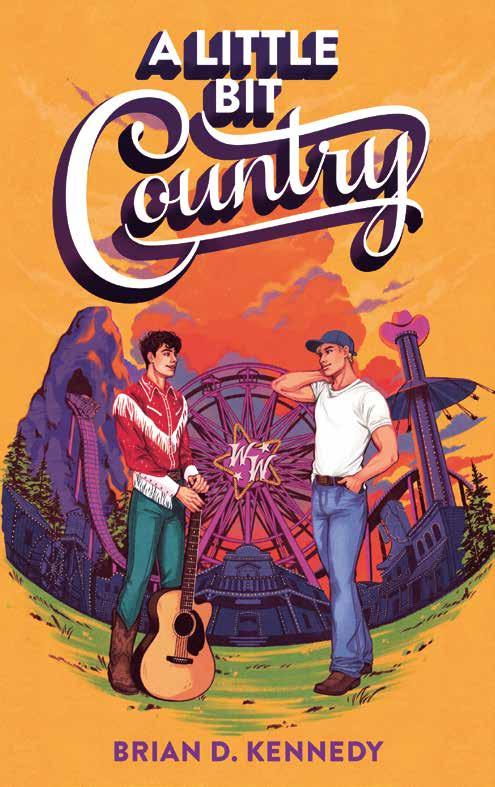
It was this shift in culture that inspired debut author Brian Kennedy to craft his young adult novel A Little Bit Country. It follows the romance of two Gay teens working at a Dollywood-inspired theme park and explores both country music’s appeal to Queer people and the gatekeeping that has kept so many members of the LGBTQ+ community out of the genre for decades.
Queering up country music
While the finished book is unapologetically Queer, when Kennedy first came up with the idea to write a YA book about country music, he assumed the romance would have to be straight. “When I first thought I should do a country music book someday, I was like, ‘Well, I guess it has to be a straight story about a boy who works at a theme park and the girl he meets there,’ and my friend was like, ‘Why does it have to be straight?’ I was like, ‘It’s country music. It’s not going to be believable if I write he’s a Queer country artist,’ and she was like, ‘Well, you’re the author — you can do what you want.’” Kennedy took his friend’s advice to heart and began exploring the nuances of telling a Queer country love story. “Looking back on it now, I feel kind of silly about it, but at the time, I didn’t open my eyes and think, ‘Yeah, of course, if I want things to change, I should write the story I want to see.’ So, no, I did not know right away that it was going to be Queer, but once I decided that, it made a lot of sense.” Initially, Kennedy was inspired to write A Little Bit Country by his admiration for country superstar Dolly Parton. “I love Dolly Parton, I love what she stands for. She’s very inclusive, and she owns a theme park in Tennessee called Dollywood. I always thought a theme park would be a fun setting for a book,” Kennedy said. “I didn’t write Dolly Parton in my book. I have a stand-in for her. It’s a country singer named Wanda Jean, so I knew my character was going to love Wanda Jean and her theme park, and then I thought, if it’s going to be a romantic comedy, I could play on the trope of ‘opposites attract,’ so if he loves country music, then I needed a boy who hated country music.”
Writing a story set in a fictional version of Dollywood was a fun way for Kennedy to explore and connect with the music he has come to love so much. “It just celebrates
She’d go home and forget it all happened. But she wouldn’t go alone... If there was a dial on the outside of How to Sell a Haunted House, you wouldn’t be surprised to see it turned up high. The story offers maximum creepiness, freaky googly-eyes, and dolls that move. The only thing better would be a ghost. Oh, wait. There’s a ghost, too. And nightmares, and animals with tiny teeth, and electric tools that behave on their own, an attic, beloved stuffed toys with the capability for disappointment, and a thick thread of dark humor trailing lazily throughout. Author Grady Hendrix absolutely knows how to make the hair stand up on the back of your neck, but he also knows how to wink at readers who are ready to get a joke. Why, oh why does it always have to be dolls and puppets? Because it does, of course. And for that, you’re going to love How to Sell a Haunted House, no strings attached.
country music. I love country music, but I think it does have some issues,” he said.
“It’s a very white industry, a very male industry, a very straight industry. This is sort of my love letter to it — not ignoring the
problems, but saying this is a genre that people who aren’t those things also love, and we can make space for them in that genre. My book is also showing how I see that playing out with Queer artists specifically.”
Coming out as a country music fan Kennedy has a unique perspective on the music genre. Unlike a lot of country music fans, his love for it isn’t entirely fueled by nostalgia. He became a fan as an adult.
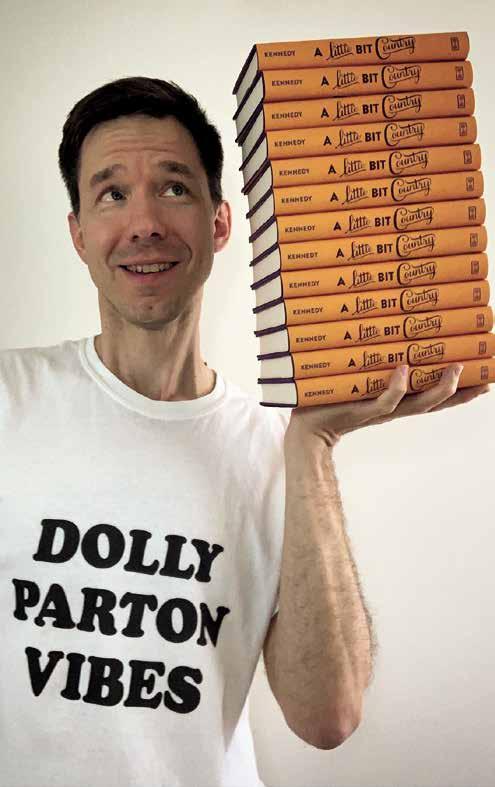
Brian Kennedy – Photo by Sylvie Rosokoff
Image courtesy of Barkley
“I grew up in the Midwest, in Minnesota,” he said. “This was in the ’90s when I was in high school, sort of in the suburbs, and my friends didn’t listen to country music. It wasn’t a genre I listened to at all. I couldn’t relate to any of the songs. But once I got older and I came out… in my early twenties, that’s when I felt like I could listen to whatever music I wanted to and not be judged.”
Coming out in his twenties gave Kennedy the chance to explore a “delayed adolescence.” No longer afraid to embrace the things he liked, he was able to explore the pieces of culture, like fashion and music, that he had denied himself while in the closet.
“When I was growing up, I wanted to be careful of what artists I liked. I wanted to like male artists because I was deeply in the closet and didn’t want it to seem suspicious that I liked all these female singers. But once I came out, I was free to listen to what I wanted.”
Kennedy was first drawn to Dolly Parton, not for her music but because of her fun, feminine persona. “I was sort of like, ‘Okay, I know who Dolly Parton is. Obviously she’s this fun, campy character.’ I think that’s what initially drew me to her, so I started listening to her well-known songs. Once I got into her music and started listening to some of her earlier songs — and she did some bluegrass albums at that time — I was like, ‘Okay, she’s a real artist, and these songs have stories and meanings,’ and that’s when I started to fall in love with the genre as a whole.”
Like any great affair, Kennedy recognizes that country music isn’t perfect, but watching it evolve over recent years has given him new reasons to fall in love with the genre.
“It’s a very straight genre, [but] I think in recent years it’s opened up a little more,” he said. “There have been some great artists like Lil Nas X and Brandi Carlile, who sort of made some headway. There’s still a lot of ground to go, especially since Lil Nas X put his music on Spotify and that’s how he became popular. He didn’t have a recording contract, but it became so popular that it
showed there’s this hunger for other people who don’t identify as straight. I just hope that continues to grow. There are a lot of Queer indie artists, which is great. I just hope they get the chance to be covered as other artists do.”
Writing Queer YA in the age of book bans
Writing a Queer book set in a world of “traditional values” and conservative communities provided some real-life challenges for Kennedy. He had to determine just how “Queer” he wanted his book to be, a discussion that only got more difficult after political attacks on LGBTQ+ literature led many authors to stumble.
“Luckily my publisher publishes a lot of Queer novels,” he said, “so there wasn’t any pushback about what I could add. Just in my mindset, it was less about what I had to add and being more careful about what I could add.”
With conservative politicians often accusing LGBTQ+ people of trying to “groom” children by discussing their identities, Kennedy had to decide whether or not he was going to include mature discussions of sex and sexuality in his novel.
“Unfortunately, with a lot of book banning, especially with Queer books, I was like, ‘Well, how Queer do I want this book to be?’ Do I worry about that? And I just decided that’s something I can’t worry about. I want to write the book I want to write, and I wanted to talk about sex a little. Young adult books can have sex in them. I don’t think they should be very explicit necessarily, but I do think it’s something teenagers talk about and think about, so I just wanted to normalize, yeah, two boys … talking about sex.
“Just to have that conversation on the page, for me, felt very important, as an author, to show that yeah, it’s okay to think about this and not have all the answers. It’s just natural. Straight people talk about it, so let’s have Queer kids talk about it too.”
While Kennedy’s Queer country love story is a first for the music genre, it joins a well-established list of LGBTQ+ YA romcoms, which have gotten more and more popular over the last few years. Like many Queer rom-com authors, Kennedy enjoys playing around with tropes that were originally designed for heterosexual couples.
“I think any trope can work for a Queer romance, and I always think it’s exciting to see some that maybe aren’t used as often getting used more now,” he said. “I think as an author, the one I tend to stick to is ‘opposites attract.’ There’s so much built-in conflict [that] I feel like it’s easier to write, because it’s already baked in there, so it just gives me a lot to play with.
“As far as tropes I like to read, I know there’s one called ‘forced proximity,’ where people run into each other. I always think that’s fun to read.”
Inspiring the future
Not only are Queer YA rom-coms like A Little Bit Country fun outlets for readers to escape into, but they are also packed full of valuable messages for young adults.
“I hope that any reader, but especially Queer readers, can see that there’s no right way to be Queer in regards to coming out. There’s no right way to do it. There’s no shame in not being out,” Kennedy said.
Understanding the struggles that Queer young people go through is important for writing books they’ll relate to. For Kennedy, who spent his teenage years closeted, the idea of struggling to come out was an issue close to his heart.
“Of my two characters, Emmitt, the country singer, is from the Chicago suburbs and is in a very safe environment, where he’s very proudly out and very proudly Gay and doesn’t feel the need to hide it,” Kennedy explained. “My other character, Luke, who is from the South, from this fictional small town I created, is not in this safe space, and he feels a lot of guilt about that. Through the book, he works through his
guilt and sees that he has to do what’s best for him, and just because he can’t be out to everyone doesn’t make him any less valid than any other Queer kid. That’s just a message I felt was important to get out there.”
Kennedy, who also works part-time at the LGBTQ+ center in Manhattan, values the connections he can form with readers, and the enthusiasm teenagers have for young adult books. After the success of his first novel, he is very ready to get back to the writing room and work on his second.
“As long as they will let me keep writing them and keep publishing them, all my books will be Queer. They’re the books I wanted when I was growing up that weren’t available, and when they were available, I was too timid and ashamed to check them out. So now to be able to write them and have readers who are Queer, it’s the coolest thing in the world. I’m not getting over that anytime soon.”
His next book is still in the early stages of production, but by next year Kennedy is hoping to see it on shelves.
“I have another book with the same publisher, another YA book. I don’t have a release date yet. We’re aiming for early 2024. I don’t think I’m supposed to say much about it yet, but I will say it’s another rom-com. It’s two boys again, it’s ‘opposites attract,’ and the one hint I’ve been giving is that it’s not set in the country music world. It’s about a different kind of music I like, and that’s all I can say now.”
In the meantime, readers can grab a copy of A Little Bit Country, stalk Kennedy’s Spotify for clues to what his next book may be, and also, he said, “I would love to see some fan art. That would be cool.”
A Little Bit Country is our next read for the SGN Book Club. Grab a copy from an indie bookstore near you, and read along with us on Instagram!
Image courtesy of Balzer + Bray
Brian Kennedy – Photo courtesy of the author
Travel
Bring
your passport for
a trip to the Motor City
Van Gogh, classic cars, Canadian culture, and more
by Bill Malcolm Special to the SGN
Detroit, a historic city settled by the French on the banks of the Detroit River between Lake St. Clair and Lake Erie, makes a great weekend getaway.
Some highlights: The Detroit Institute of Arts and Charles H. Wright Museum of African American History are mustsees, as is the Henry Ford Museum. Great Lebanese food is everywhere, and trendy Ferndale makes for a fun night on the town. Bring your passport and have lunch in nearby Windsor, Ontario, just two miles away; the Canadian influence in everywhere in Detroit.
What to do
Check out the Henry Ford Museum of American Innovation in nearby Dearborn (aka the Henry Ford and Greenfield Village; www.thehenryford.org). It features a collection of classic cars, including presidential limousines, in particular the one that JFK was assassinated in. The museum also explores the history of the automobile (not just Ford products) and features displays of trains, planes, motorcycles, trucks, and bicycles.
You can spend a day learning about Henry Ford’s interest in aviation or how the automobile shaped (destroyed?) American cities. The museum is very open about how freeway construction caused havoc, displacing urban residents and destroying communities.
There is also a history of how Japanese automakers reshaped the American industry during a painful transition to more fuelefficient (and safer) cars.
Be sure and stop for lunch at Zimmerman’s Deli in the museum (the Ann Arbor sandwich shop that features great bread and cookies), which also serves street tacos. Wash it down with Faygo (the Detroit equivalent of Coke products). The Michigan Café features local treats like pasties, cherry salads, Coney Island hot dogs, and more.
In mid-town Detroit you will find the Detroit Institute of Arts (https://dia.org/ events), which features a large collection of paintings, including some by Van Gogh. Indeed, the DIA was the first American museum to recognize the works of Van Gogh and to begin acquiring his paintings. Its new exhibit, “Rethinking Monuments,” opens later this year. Don’t miss the Friday film series as well.
The Wright Museum of African American History (https://www.thewright.org) covers the history of slavery as well as cur-
rent events, including exhibits on the 1960s riots, Obama, and the Detroit jazz scene. You will also learn about the Motown music scene (and other great Detroit performers).
Belle Isle State Park offers great views of both Detroit and Windsor. The huge island in the middle of the Detroit River witnesses ice floes this time of year, and is home to a beach in the summer. Explore the nature center or the conservancy.
Nightlife
Pronto! Lounge and Showbar is a must, as is the Five15 Bar next door; both are on Washington Street in downtown Royal Oak.
Just down the road in LGBTQ+-friendly Ferndale, you will find SoHo (Ferndalesoho.com) at 205 W. Nine Mile. “Ferndale’s friendly gayborhood bar” has karaoke on Tuesdays and Sundays.
Next door is 215, which features tea dances and other special events. (Across the street is Affirmations, the LGBTQ+ community center.)
There’s also Menjo’s/The Eagle (https:// menjoscomplexdetroit.com).
There are a lot of nice restaurants and shops along Nine Mile Road in Ferndale, or grab a salad from Western Market (447 West Nine Mile).
Where to stay
I stayed at the Hyatt Place in Royal Oak (422 N. Main Street), a trendy, LGBTQ+friendly suburb. The breakfast is excellent, and staff are top-notch. There’s also a fun bar that serves food. The new property is steps from the restaurants and shops on Main Street and Washington Street (one block west) and walkable to Pronto, as well as the Detroit Zoo (and the Amtrak stop). The Emagine cinema is next door, and
there’s outdoor skating nearby, in front of the Royal Oak Library.
I have also stayed at the Town Place Suites by Marriott in Troy. You can work out at the nearby Powerhouse Gym nearby (1461 W. 14 Mile).
Where to eat
With its large Arab population, Detroit has healthy Lebanese food everywhere, including at gas stations, like the Mr. Kabob in the Sunoco station in Berkley (3372 Coolidge), which has a beef kabob wrap to die for.
Near the Hyatt Place in Royal Oak is Boukie’s Grill (105 Main Street), which has excellent lentil soup, tabbouleh salad, and pitas. Try the fresh-squeezed carrot juice with spinach and beet.
Getting there
From Seattle, fly nonstop on Alaska or Delta. Then take a Metro Car taxi to the hotel, or take the SMART bus via downtown Detroit.
Travel tips
Detroit culture is heavily influenced by nearby Canada. Indeed, Toronto is just four hours a away (or you can take the VIA Rail from nearby Windsor).
So, enjoy Canadian culture during your visit. You can watch the CBC on channel 1009 on Spectrum Cable, or listen to French radio at 1550 AM (SRC from Windsor). Enjoy a Labatt’s beer at the bar.
Bring your passport if you want to go to Canada for lunch or to pick up some English candy (the Cadbury chocolate treats imported from Britain are much better than the American ones, which use inferior ingredients). Try a Crunchie bar.
Your dollar is worth $1.36 against the loonie (Canada’s dollar coin, which has a
loon on it), so go on a shopping spree while in Windsor.
Native Michiganders have a heavy nasal twang. A friendly bunch, they will use their hand to tell you where they are from (the lower peninsula is shaped like a mitten).
Don’t plan on making left turns. Michigan has a unique system: you go right instead, and then do a U turn.
Do plan on going 70 mph on the urban freeways, which are excellent.
Do you need something at a convenience store? They’re called party stores.
Enjoy the local foods: pasties (pronounced pahstees), which are pocket sandwiches; or coneys (a hot dog with chili); or Detroit-style pizza washed down with a beer from Canada. And the best Lebanese food, available everywhere!
All of this is only in “the D,” a unique and underrated American border city that deserves a second look.
For more information
Between the Lines is the biweekly LGBTQ newspaper (https://pridesource. com). Metra Magazine is another similar publication (https://www.metramagazine. com). You will also get nightlife ideas from Out Post (in print and on Facebook at https://www.facebook.com/opmag), Detroit’s LGBTQ magazine.
The Detroit area will surprise you. Plan your winter vacation now at www. visitdetroit.com.
Bill Malcolm’s syndicated LGBTQ+ travel column appears in publications throughout North America. He is a former resident of Royal Oak and worked downtown at the Renaissance Center in Detroit for six years. Special thanks to Visit Detroit for travel tips and hospitality.
Photos by Bill Malcolm
What to do when your friends don’t understand your mental health situation
by Stan Popovich Special to the SGN
Do you struggle with your mental health and have a difficult time in getting people to be more understanding? In some cases, your friends or colleagues might give you a hard time regarding your anxieties and depression.
If so, here are seven suggestions on how to deal with people regarding your mental health issues:
Listen to the professionals and not your friends.
Your peers may mean well, but when it comes down to it, the professionals are aware of your circumstances more than anyone. When you have questions about your mental health, consult a therapist. They know what you are going through and will be able to provide you with suggestions and insights on how to deal with your current problem.
Don’t argue.
It is important that you do not get into arguments with those giving you a rough time. This isn’t a situation where you need to get approval from everyone. It is not your job to worry about how others may view your circumstances. Your health is more important than what other people may think.
Your goal is to get better.
This is your life, and you are the one suffering. Concentrate on how you can face
Photos by Liza Summer / Pexels
your fears and anxieties. Your number one priority is to get relief and get better.
Tell your friends to learn about your situation.
Explain to your peers that the best way for them to help you is to learn about your mental health issues. They could talk to a counselor, read some good books, or join a support group to better understand your situation.
Distance yourself from those who give you a difficult time.
If your friends who don’t understand your situation won’t make an effort, then distance yourself from them, because they will only make things worse. You need to surround yourself with positive and supportive people. If you have problems or issues with a particular person, you can always ask a counselor for advice.
Understand that you are not alone. It can be very frustrating to manage your fear-related issues when the people you know are on your case. Remember, you are not alone. There are millions of people around the world who struggle with fears, anxieties, and depression. The key is to find those people who can relate to you through various organizations in your area.
Join a local mental health support group.
There are many mental health awareness support groups in your area. Many hospitals, churches, and counselors will be able to provide you with a list of these organizations. These groups will be aware of your situation and can give you additional advice regarding your problems.
Stan Popovich is the author of the popular book A Layman’s Guide to Managing Fear. For more information about his book and to get some more free mental health advice, please visit http:// www.managingfear.com.
National News
Diocese of Des Moines bars preferred pronouns, restroom access
by Mike Andrew SGN Staff Writer
The Roman Catholic diocese of Des Moines, Iowa, is enforcing a new gender identity policy that bans preferred pronouns, forbids the use of puberty blockers, and forces students, staff, and church members to use restrooms associated with their sex assigned at birth.
“These policies are established as binding for diocesan parishes, schools, organizations, and institutions of the Catholic Church in the Diocese of Des Moines,” the diocese said in a January 16 statement.
The diocese includes 17 schools and 80 parishes in southwest Iowa.
According to the church, the policy “applies, but is not limited to, all Church employees, personnel, volunteers, and those entrusted to the care of the Church,” meaning lay people.
Under the policy, no one “may designate a ‘preferred pronoun.’” The diocese said people “must use the bathroom or locker room that matches their biological sex” and “are to follow the dress code or uniform that accords with their biological sex.”
Participation in school or parish activities “must be consistent with the biological sex of the participant,” the diocese said.
The diocese also barred using genderaffirming medical treatments like puberty blockers, saying, “no person is permitted to have on-site or to distribute any medications for the purpose of gender reassignment.”
Anyone who may question their gender “should be guided to appropriate ministers and counselors,” according to church policy.
LGBTQ advocates say policies like this are part of a growing trend among Catholic dioceses of the United States that are causing “severe harm” and damage to Transgender and Nonbinary youth.
“There are many, many pitfalls to this,” Marianne Duddy-Burke, the executive director of DignityUSA, a Catholic LGBTQ advocacy organization, told Insider magazine after the announcement.
“It just pushes kids with gender identity questions or gender dysphoria to the mar-
National news highlights
by Daniel Lindsley
SGN Staff Writer
New era dawns in bearded drag imperial court
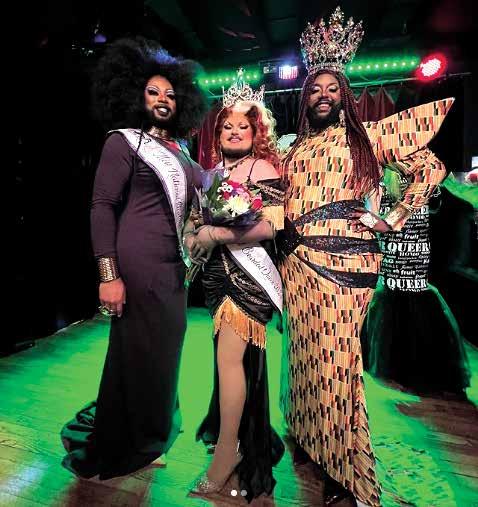
The National Bearded Empress Pageant announced this week that it has entered a “a new day, a new dawn, and era” by proclaiming Kenzie the first-ever National Pacific Northwest Bearded Queen, after a regional contest at the Skylark Café. Competing for the title were the talented Babylon Brooks, Athena Nuff, and Nemesis.
In the announcement on the organization’s Instagram account, it thanked the host Dion Dior Black for “a wonderful pageant and safe space for these fierce bearded beauties to celebrate their artistry!”
It also confirmed that all participants qualified to compete at the National Bearded Empress Pageant on April 17, in honor of 2022’s winner, Empress Vagenesis.
gins. It isolates them,” Duddy-Burke said, adding that the policies can lead to both depression and anxiety. “It makes them think there’s something wrong with them.”
LGBTQ advocates estimated that around two dozen of the 194 Roman Catholic dioceses and archdioceses in the US have adopted similar policies in recent years. Among them are Wisconsin’s Diocese of Green Bay, Wisconsin’s Diocese of Milwaukee, and Nebraska’s Diocese of Omaha.
“They are very harmful statements,”
Francis DeBernardo, the executive director of New Ways Ministry, an advocacy group for LGBTQ Catholics, told Insider. “It can cause severe mental and emotional problems to be rejected like that.”
“Transgender young people already have enough pressures on them that they shouldn’t be receiving pressure from an institution that is supposed to be helping them,” DeBernardo said.
“This policy could have deadly consequences in the name of an ideological
concern,” Keenan Crow, policy and advocacy director of One Iowa, confirmed. “We know that when people are constantly misgendered, their risk for adverse mental health outcomes goes up.”
If the diocese was “really trying to discern what would be best for folks, I would think that their health, their mental health, their well-being would be top on the list,” Crow said.
“Unfortunately, it does not seem to be.”
Free speech groups decry cancelation of school play
After administrators at a high school in Duval County, Florida, canceled a student production of Paula Vogel’s play Indecent, free-speech organizations like the National Coalition Against Censorship, PEN America, and the Dramatists Legal Defense Fund have responded with condemnation.
“The decision has no relevance to any legislation but is rather a function of our responsibilities to ensure [that] students engage in educational activities appropriate for their age,” said Sonya Duke-Bolden, a Duval County district spokesperson.
The canceled play is a true story about a controversial Yiddish play from the early 1920s, which itself featured the first Broadway stage kiss ever between two women, and at the time of its debut, it was censored, often violently.
The Duval County district has put on shows of Rent and Chicago in the past, which both address sex and other adult topics, without such pushback.
In a joint statement, the free-speech groups said that canceling Indecent is “deeply hurtful to LGBTQ+ students, including members of the cast, who see the rejection of the play as a denial of the historical experience of LGBTQ+ people and the persistence of discrimination against them.”
Photo courtesy of @nationalbeardedempresspageant / Instagram
Photo courtesy of Diocese of Des Moines
The 118th US Congress is now in session
by Lindsey Anderson SGN Staff Writer
On January 3, 2023, the 118th US congressional session began. For the next two years, this Congress will work with (and against) the Biden administration until the next congressional election.
Much has changed in Washington with the swearing-in of new House Republicans. The party now controls the House of Representatives, but due to a surprisingly small “red wave” in November, Democrats were able to hold onto a slight majority in the Senate, and even increase it by one seat.
2023’s newest political drama
The new session has been full of drama, even before officially beginning. Following the November election, Arizona Sen. Kyrsten Sinema announced she would become an independent. This narrowed the very thin Senate majority the party holds. However, it still has a slight advantage thanks to Vice President Kamala Harris’s tie-breaking power.
As if the party realignments in the Senate weren’t enough, the House of Representatives has been facing different issues. For the first time in over a century, the House adjourned without a speaker, after Republican Kevin McCarthy failed to receive a majority of the votes needed to secure the position. The resistance to McCarthy came mostly from far-right members of the Republican conference, whose personal distrust of the representative came after he spoke out against former president Donald Trump following the January 6 insurrection. McCarthy has since expressed support once again for the former president.
At 1 a.m. on January 7, after 15 rounds of voting, and much bargaining, the new Speaker of the House was officially sworn in, but not without making many concessions to the MAGA supporters who had opposed him.
One of these includes allowing rankand-file members of the House GOP to gain more influence over legislation. Another important change to the rules of the House is an update regarding a motion to vacate. Previously, if representatives were dissatisfied with the Speaker, only party leaders could bring forward a motion to vacate the seat in favor of another Speaker. Now, if only one sitting member brings forward a motion to vacate, a vote can be held to oust McCarthy. This rewrite of the rules could potentially put the Speaker in the pockets of the far right, leading the House to vote on more MAGA-backed legislation.
What are House Republicans planning to do next?
So, what can American voters expect to see from this new Congress? First, the House plans on conducting several investigations. On the top of their list, Republicans want to look into fentanyl overdoses, the origins of COVID-19, censorship by “Big Tech,” the withdrawal from Afghanistan, the politicization of the Department of Justice, and the “border crisis.”
One of Republicans’ biggest complaints about the current administration is over higher gas prices and inflation. Republicans blame American dependency on foreign oil. In the Speaker’s new “Commitment to America” document, House Republicans have put together a plan to combat economic struggles by sacrificing historic environmental wins made by the Biden administration.
In Biden’s first two years, the president has made the largest investment into the clean-energy transition the United States has ever seen, thanks in part to a Democratic majority in Congress. Now the House is planning to move climate efforts away from investing in renewable energy and toward supporting more natural gas extraction in the United States.
House Republicans have committed to a strong economy by agreeing to “maximize production of reliable, American-made energy… [and] cut the permitting process time in half to reduce reliance on foreign
countries, prevent rolling blackouts, and lower the cost of gas and utilities.” This focus moves away from long-term environmental protection in favor of short-term economic gains.
“The Biden administration wants to take the California model national, trade American energy for foreign dependence, and make US energy more expensive and less competitive,” Rep. Garret Graves of Louisiana said.
The new Republican economic model also encourages the US to expand manufacturing and move supply chains away from China.
Republican plans to “defend” America
Of course, Republicans in Congress are still fighting for more funding to “secure the southern border.” The Commitment to America states that “the situation at the border has become both a national security and humanitarian crisis and must be addressed immediately.”
In the House, this means pushing legislation that will increase funding of border enforcement strategies, infrastructure, and “advanced technology to prevent illegal crossings and trafficking by cartels.” Also on the agenda for Republicans is making it necessary for employees to show proof of “legal status” to get a job and eliminating welfare programs and incentives.
Republicans in the House are also hoping to reduce crime by introducing and voting on legislation that will combat police defunding efforts made in the wake of grassroots anti–police brutality movements.
Not only do they aim to increase police funding, but they also want to combat “liberal prosecutors and district attorneys who fail to do their job and keep criminals off the streets.” This plan also includes supporting 200,000 more police officers through recruitment and higher retention bonuses.
Fentanyl
The Commitment to America document claims that 300 Americans die of fentanyl poisoning every week and that this is directly linked to both an influx of immigration at the southern border and a weakened police state due to funding cuts. Because they are concerned for American safety, Republicans plan to introduce legislation that will criminalize all forms of fentanyl.
They also claim the drug is the leading cause of death in Americans aged 18-45, although the claim is disputed. “According to preliminary 2021 data, accidents were the leading cause of death among 18-45-year-olds, with accidental synthetic opioid overdoses amounting to less than half of those deaths,” Jeff Lancashire, a spokesperson for the CDC, told the AP.
While House Republicans are hoping to introduce fiscally conservative policies, they plan on increasing funding to more than just the police. In their plans for the next two years, they also intend to “invest in the efficient, effective military” and “exercise peace through strength with our allies to counter increasing global threats.”
Expect to see more anti-LGBTQ+ legislation
Some of House Republicans’ most concerning plans have been deemed by many on the left as bigotry disguised as compassion. The social issues the party will be focusing on most are “family issues,” mostly regarding censorship of materials in public schools, anti-Trans laws for youth sports, and continuing to strip away abortion access.
“When parents tried to understand what their children were being taught and how their tax dollars were being spent, they weren’t just ignored — they were targeted by this administration,” the Commitment to America Document reads.
Now Republicans are hoping to advance what they call “the Parents’ Bill of Rights,” which will protect a parent’s right to know what their child is being taught in school, protect their children’s privacy, and provide access to information regarding public school funding. The plan also mentions a parent’s right to “be heard.”
“Parents should be able to choose a curriculum for their child that fits with their values and their beliefs,” Republican Rep. Julia Letlow said in support of the pan. This will also include banning Trans girls from competing in women’s sports, as Republicans see it as a violation of Title IX, a law the party has historically opposed.
Schools and Big Tech
Republicans are also determined to keep schools open and blame the current administration for the drop in test scores
that was seen nationwide after the COVID19 pandemic led all public schools to move to temporary online teaching. While online education is something the party is united in fighting against, one of its core pillars for healthcare is expanding online telehealth coverage. They also plan on reducing the costs of drugs and healthcare through “transparency, choice, and competition.”
The final hurdle Republicans are hoping to overcome in the next two years is the war they are fighting against “Big Tech.” They believe the social media industry is working to silence and censor conservative viewpoints, and so they hope to introduce new laws that will limit the power and range that social media apps like TikTok have in the United States.
“Worse than crystalizing an ideological echo chamber, these apps have proven to be incredibly addictive for children, with potentially devastating consequences,” states the Commitment to America document.
Republicans have also put forth statistics to back up these claims, such as that 70% of Republican campaign emails go to spam in Gmail, compared to just 10% of Democratic ones, an issue they believe reflects biases by tech companies.
Washington Rep. Cathy McMorris Rodgers agrees with this sentiment and ran on campaign promises to hold Big Tech accountable. “Your platforms are my biggest fear as a parent,” she said in a statement to Big Tech CEOs. “I’m a mom of three schoolaged kids. My husband and I are fighting the Big Tech battles in our household every day. It’s a battle for their development, a battle for their mental health, and ultimately, a battle for their safety.”
Voters can expect to see new bills targeting social media apps and platforms like YouTube, TikTok, and Twitter in the next few years.
Despite the big plans Republicans in the House have for the next term, the slim Democratic majority in the Senate and Biden’s veto power should be enough of a safeguard to block harmful anti-LGBTQ+ legislation and more anti-immigration bills from actually becoming law.
However, Americans everywhere should prepare for more debate over identities and a turbulent two years — which will surely bring more turmoil for Speaker of the House McCarthy.
Photo by Patrick Semansky / AP
National/International News
WEST VIRGINIA
continued from cover
exposure to indecent displays of a sexually explicit nature, such prohibited displays shall include, but not be limited to, any transvestite and/or transgender exposure, performances, or display to any minor.”
The bill would also bar any so-called “obscene matter” within 2,500 feet of any school. The measure goes to specify the penalties for violations:
International news highlights
by Daniel Lindsley SGN Staff Writer
Indonesia law bans unwed roomies
Since last month, members of Indonesia’s LGBTQ community have feared that they will suffer the brunt of a new law that bans not only sex outside of marriage but unwed people living together, with jail time as a penalty.
The law is slated to come into effect in three years, when unmarried couples will risk being reported to police. The law states that only a spouse, parent, or child can snitch in such a way, but experts and rights groups aren’t convinced that will be true in practice.
Human Rights Watch said the law “will disproportionately impact LGBT people, who are more likely to be reported by families for relationships they disapprove of.”
Hendrika Mayora Victoria Kelan, Indonesia’s first openly Trans public official, said the law could cultivate the homophobia and transphobia already present in a country where same-sex marriage isn’t illegal but isn’t officially recognized either.
“The code does not break the chain of hate,” she told Reuters. “The state rules over... people’s bedrooms too much.”
“Any adult, with knowledge of the character of the matter, who knowingly and intentionally distributes, offers to distribute, or displays to a minor any obscene matter, is guilty of a felony and, upon conviction thereof, shall be fined not more than $25,000, or confined in a state correctional facility for not more than five years, or both.”
Members of the Trans community, perhaps most notably TikTok journalist Erin Reed, expressed concern with the broad language of the proposed legislation. What exactly constitutes “exposure”? Would it
be a felony, for example, simply to express your gender in a place where minors happen to be? A shopping mall? A grocery store? A church?
Would it become illegal for Trans parents to come out to their children?
Would it be a felony for a Trans parent or caregiver to pick up a child at school? Would it be considered a felony simply to express your gender in your own home if children are present?
Would Trans teachers have to quit their jobs?
What about advertising Trans community events? Would newspaper ads be forbidden because children might read the paper? How about social media posts?
The legislation is the most recent and most severe of a number of proposed state laws targeting the Transgender community. Many states have pending bills that would ban or seriously limit gender-affirming medical care for minors, in at least one case forbidding people under the age of 26 from receiving such care.
Church of England drafts new proposals with old news
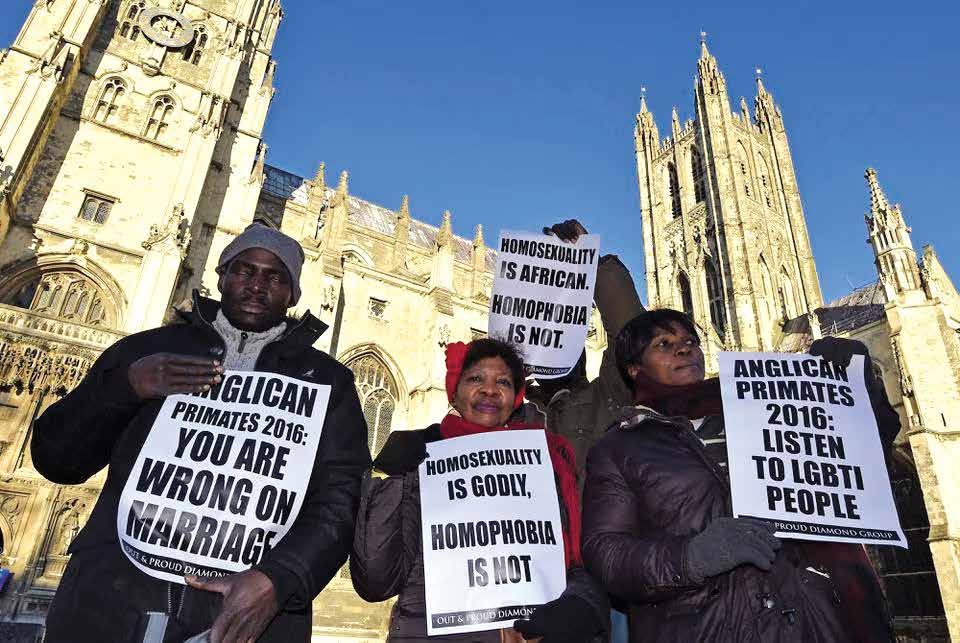
The Church of England has doubled down on its stance against same-sex marriage with a set of proposals that affirm, yet again, after five centuries of existence, that it will consider marriage a union between a man and a woman.
The proposals were drafted by bishops but have yet to be passed to the other twothirds of the church’s governing body in a
gathering of its General Synod next month.
“Same-sex couples would still not be able to get married in a Church of England church,” a statement from the bishops said.
And although the proposals would allow same-sex couples “prayers of dedication, [and] thanksgiving for God’s blessings on the couple” in church after a civil marriage, it also allows bishops room to refuse giving such a service.
“I am under no illusions that what we
are proposing today will appear to go too far for some and not nearly far enough for others, but it is my hope that what we have agreed will be received in a spirit of generosity, seeking the common good,” said Archbishop of Canterbury Justin Welby. Welby also said that Church of England bishops will be issuing a formal apology later this week to LGBTQI+ people for the “rejection, exclusion, and hostility” they have faced in churches.
Photo by Tami Chappell / Reuters
Christian Gay rights protestors in Canterbury – Photo by Toby Melville / Reuters
Episode 45: J.T. Seaton
It's the season 3 premiere! Ash & Lindsey talk about art and body positivity, have a frank discussion about the reinforcement of gender norms and its correlation with body image, and touch briefly on Tucker Carlson's obsession with M&Ms. Special guest J.T. Seaton chats with Ash about Queer horror and the Queer Screams Film Festival! Follow them on IG @queerscreams or find out more at www.queerscreams.com