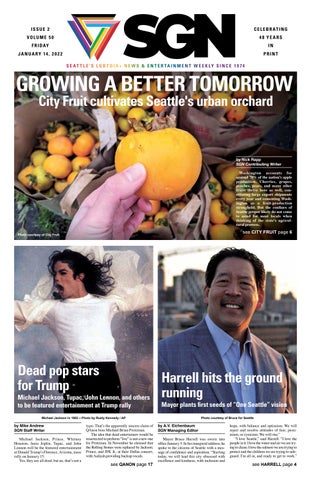
Michael Jackson, Tupac, John Lennon, and others to be featured entertainment at Trump rally
by Mike Andrew SGN Staff Writer
Michael Jackson, Prince, Whitney Houston, Janis Joplin, Tupac, and John Lennon will be the featured entertainment at Donald Trump’s Florence, Arizona, mass rally on January 15.
Yes, they are all dead, but no, that’s not a
by Nick Rapp SGN Contributing Writer
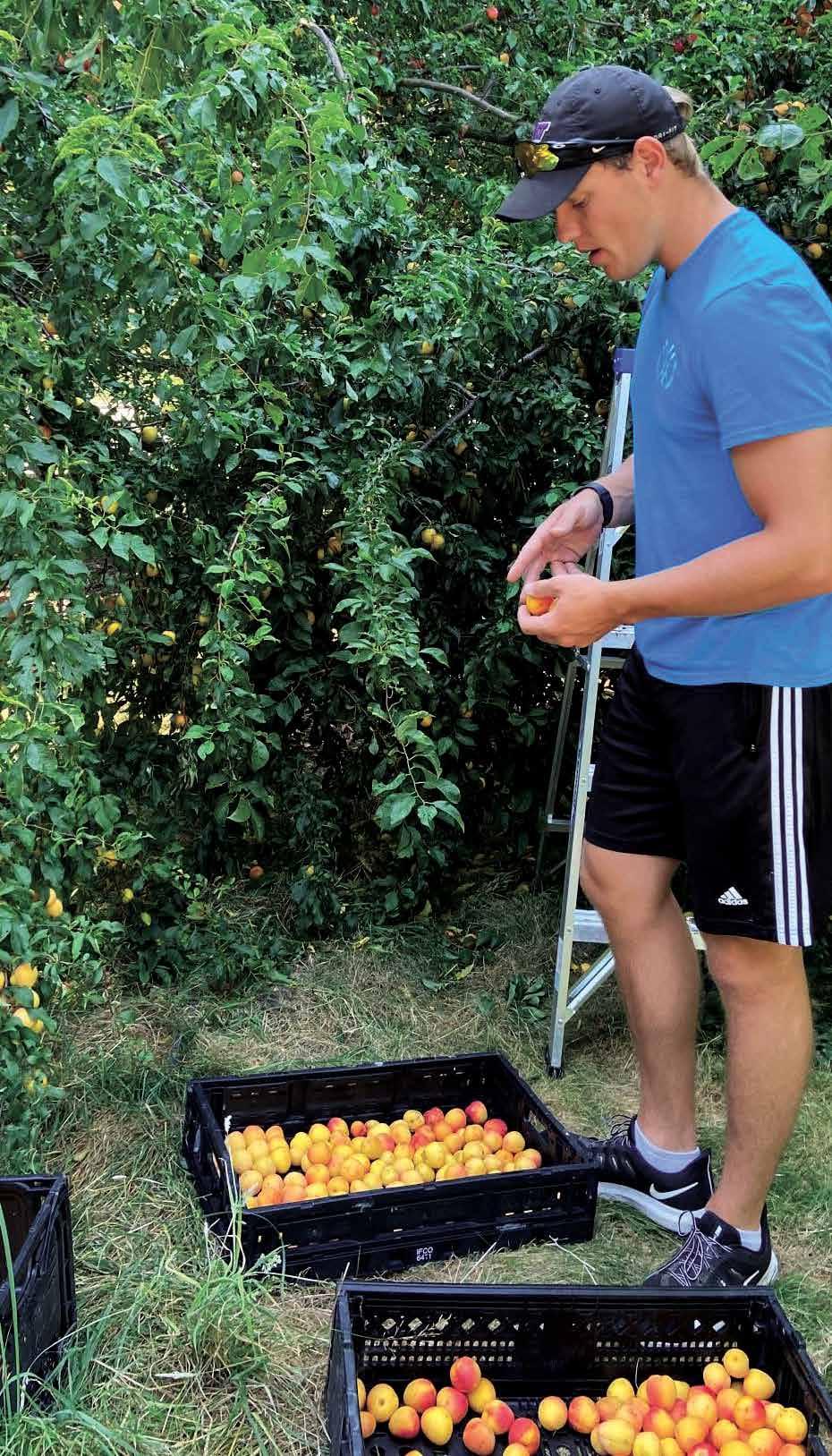
Washington accounts for around 70% of the nation’s apple production. Cherries, grapes, peaches, pears, and many other fruits thrive here as well, constituting large export shipments every year and cementing Washington as a fruit-production stronghold. But the confines of Seattle proper likely do not come to mind for most locals when thinking of the state’s agricultural prowess.
see CITY FRUIT page 6
typo. That’s the apparently sincere claim of QAnon boss Michael Brian Protzman. The idea that dead entertainers would be resurrected to perform “live” is not a new one for Protzman. In November he claimed that the Rolling Stones were replaced by Jackson, Prince, and JFK Jr., at their Dallas concert, with Aaliyah providing backup vocals.
see QANON page 17
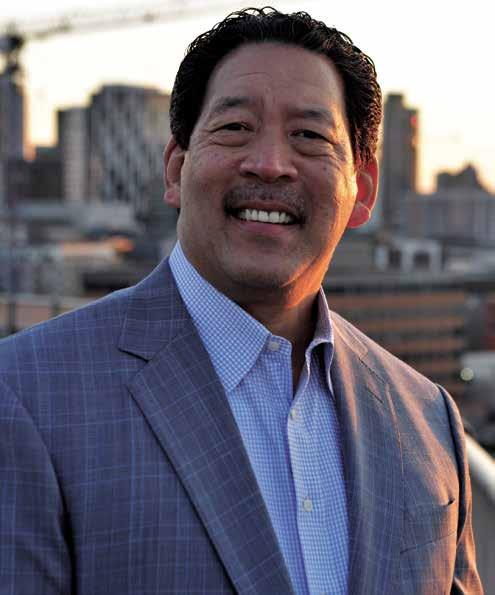
Harrell hits the ground running
Mayor plants first seeds of “One Seattle” vision
by A.V. Eichenbaum SGN Managing Editor
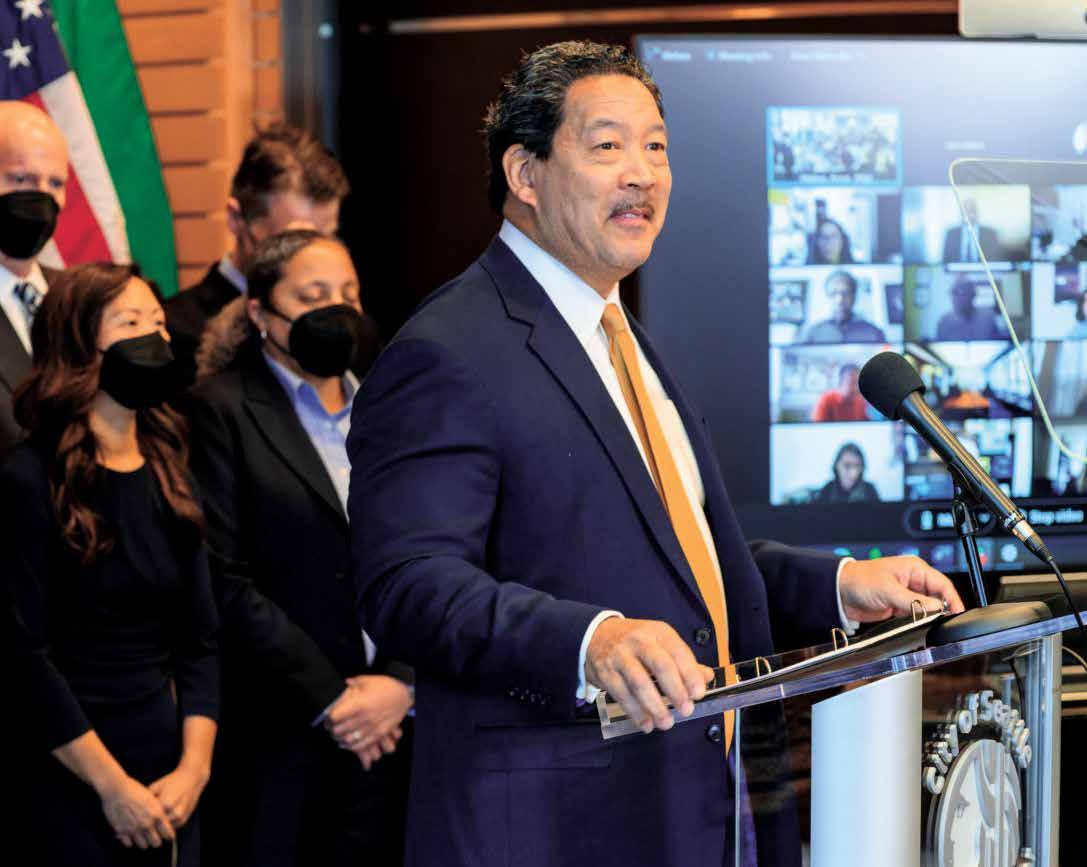
Mayor Bruce Harrell was sworn into office January 5. In his inaugural address, he spoke to the citizens of Seattle with a message of confidence and aspiration. “Starting today, we will lead this city obsessed with excellence and kindness, with inclusion and
hope, with balance and optimism. We will reject and resolve attitudes of fear, pessimism, or cynicism. We will rise.”
“I love Seattle,” said Harrell. “I love the people in it. I love the water and air we are trying to clean; I love the salmon we are trying to protect and the children we are trying to safeguard. I’m all in, and ready to get to work.”
see HARRELL page 4
Michael Jackson in 1993 – Photo by Rusty Kennedy / AP
Photo courtesy of Bruce for Seattle
Photo courtesy of City Fruit
Local News
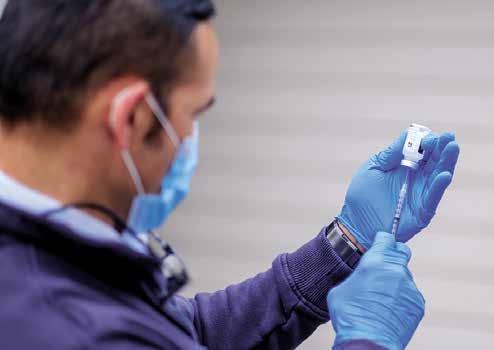
New vaccination resources for Seattleites
His first day in office, Mayor Harrell announced the opening of a new Virginia Mason clinic – open as of January 10 –along with expanded health care partnerships, as well as more mobile and pop-up vaccination opportunities through Othello Pharmacy.
“In the first week of my administration,” said Harrell in a press release, “I am making clear that Seattle will continue to tackle this pandemic by following the science.”
January is Human Trafficking Awareness Month
and that the mayor should extend it even further. “Over the next month, we will continue to track changing conditions and seek improved metrics to evaluate the effectiveness of the moratorium and aligned policies. Our actions will continue to be driven by data and our values, focused on preventing a rise in homelessness and supporting the tenants and small landlords most in need,” said Harrell in a press release.
What’s next?
The One Seattle vision Mayor Harrell laid out for the city is available in its entirety online via www.harrell.seattle.gov. Featured below are the main talking points for One Seattle as expressed in Harrell’s speech:
• In One Seattle, we all have health care.
• In One Seattle, we do not allow people to suffer on our streets and sidewalks.
• In One Seattle, we have affordable housing for all – and we support seniors, working families, and vulnerable people.
• In One Seattle, every child, from every neighborhood, will have opportunities for education and the future they deserve.
“One Seattle doesn’t mean ‘Seattle is number one,’” said Mayor Harrell. “Our place, our pride, our greatness, is not contingent upon the subordinate position of others. It is measured by the examples we set, and how we lift ourselves, and others.”
In the past two weeks, Harrell’s office has already made steps into Seattle’s better future, emphasizing the mayor’s campaign promise to “implement ideas that work.” Let’s look at some of Harrell’s decisions so far.
• In One Seattle we all have access to parks and open space – and we combat climate change.
In conjunction with City Councilmember Lisa Herbold and others on the Council, Harrell declared the month of January “Human Trafficking Awareness Month,” and January 11 to be the city’s “Human Trafficking Awareness Day.” According to a press release, “The proclamation sets forward the City’s intent to advocate public awareness and action against various forms of human trafficking.”
“People of color, young people, LGBTI people, and people vulnerable through socio-economic barriers, are disproportionately affected by trafficking,” said Councilmember Herbold.
For more information on this, readers are encouraged to visit Seattle Human Services Department’s Mayor’s Office on Domestic Violence and Sexual Assault (MODVSA) website.
Extended eviction moratorium
Harrell’s office announced a 30-day extension on Seattle’s eviction moratorium, pushing the end date to Valentine’s Day. Critics say this is not enough time,
Harrell has chosen a diverse group of qualified individuals to aid him in achieving his goals and appears to be gathering data first and foremost before moving forward with parts of the plan. His advisors and department heads come from a slew of backgrounds and though they share common values, Harrell’s office has emphasized that they are not homogenous. New hires include Maiko Winkler-Chin as Director of the Office of Housing, Andrew Myerberg as Director of Public Safety, and Hamdi Mohamed as Director of Immigrant and Refugee Affairs.
Turning back to his inaugural speech, let’s look at Harrell’s closing words to the press.
“As I close, and because I am physically looking at the members of the press, I want to recognize that you have a place in this too. The Journalist’s Creed, as written by Walter Williams in 1914, describes that you only write that which you believe to be true in your heart—that you be tolerant, never careless, self-controlled, patient and respectful. Those are important words for all of us. In One Seattle, we replace fear with love. We are stronger together.”
HARRELL
Photo courtesy of the City of Seattle
Bruce Harrell inauguration address on Jan. 5 – Photo courtesy of the City of Seattle
Food
Back to the “streateries”: The importance of outdoor dining spaces during Omicron and beyond
by Kylin Brown SGN Contributing Writer
Outdoor dining spaces took Seattle’s main stage last year as restaurants grappled with the paradox of returning to normal amid the COVID-19 pandemic. Sidewalk cafés and parking spots were transformed into dining spaces — dubbed “streateries,” equal parts “street” and “eatery” — quickly rose in popularity in 2020 and brought hesitant Seattleites out of the house once again.
As we endure our second winter of pandemia, with the ultracontagious Omicron variant infiltrating virtually every nook of the city, these strategic spaces will remain crucial for the safety of customers and the vitality of local businesses alike.
Parking spaces reimagined
Unbeknownst to many, the Seattle Department of Transportation (SDOT) first rolled out the concept of streateries several years prior to the pandemic.
In 2013, SDOT first encouraged local businesses and organizations to host “parklets,” a sort of miniature public park in right-of-way parking spaces. Streateries were then piloted in 2015 as a restaurantspecific opportunity to take advantage of limited outdoor space.
SDOT’s announcement of the program cited the success of Portland’s “Street Seats” Program, which began in 2012, and Montreal’s long-standing “Terrasses” program. Both examples were well received and beneficial to local businesses.
SDOT monitored the implementation of the Parklet and Streateries Programs in Seattle for over a year. The data concluded that these spaces activated our city streets, creating more vibrant neighborhoods, and overall promoted economic vitality for local restaurants and businesses. One hundred percent of participating business owners reported that a parklet or streatery space improved their business.
Pre-pandemic, the permitting process for streateries would cost a restaurant anywhere between $2,000 and $4,700 per year, depending on the size and zone of the parking spot. However, the City of Seattle began providing free temporary permits to eligible businesses upon the state’s reopening.
Introduced by Councilmembers Dan Strauss (District 6) and Lorena Gonzales (atlarge) in June 2020, the “Cafe Streets” legislation has allowed Seattle eateries to stay open safely and has been extended twice over the last year and a half. Councilmembers recently announced that they are seeking a path to permanency for the program.
This move would “provide businesses the certainty they need to invest in their outdoor spaces and the agility to remain open during changing public health guidelines,” according to Strauss. “This is how we create a more vibrant city,” he said.
The Cafe Streets legislation is expected to be heard in Strauss’s Land Use and Neighborhoods Committee on Wednesday, May 12, 2021.
Pandemic-era eating
Now that the pandemic has impacted Seattle for nearly two years, outdoor dining has become a strategic crisis-response move by bars and restaurants. It is now known that people are less likely to contract COVID-19 outdoors than they are indoors. Outdoor seating also accommodates physical distancing more easily than indoor spaces do.
Adapting to these new demands for safety has been a beneficial move for patrons and business owners alike. With fewer infections likely spreading from customer to staff, businesses with streater-
ies have been able to stay open much more consistently while others have faced staffing shortages. In late 2021, between the Delta and Omicron editions of the pandemic, people began to feel safer. Restaurants and small businesses saw a pre-holiday boom in profits. People were clubbing again. The seven-day average of new COVID-19 cases on November 28 was 206 per day for the whole of King County.
Then came Omicron. According to the King County COVID-19 dashboard, this
week’s seven-day average is upwards of 4,600 confirmed new cases per day. Some bars and restaurants are closing due for safety reasons.
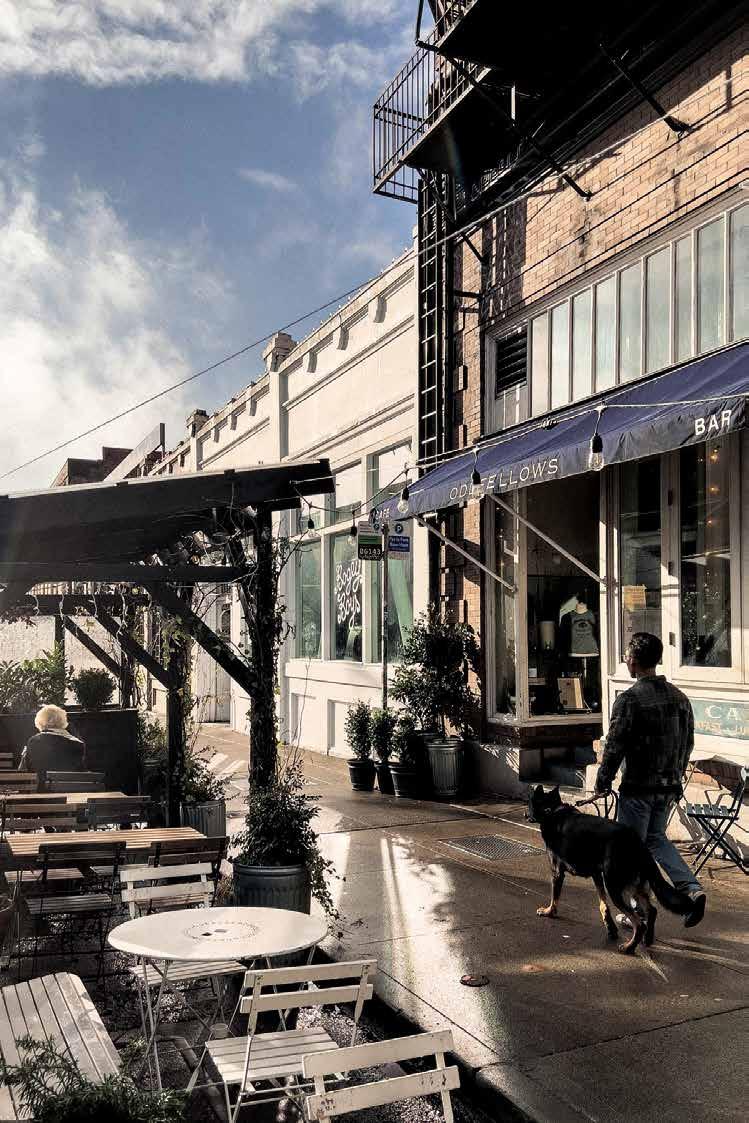
There is one thing sticking around, though: streateries. On Sunday, Ballard Avenue’s line of heated pergolas saw wait times of up to 45 minutes by lunch. Each streatery, featuring cozy decor, overhead heating, and room to breathe between tables, was bustling with food service and enjoyment.
Moving forward, restaurants with out-
door seating options offer the safest version of the dining experience for workers and customers. (And psst! Delivery is also an option.)
If you plan to go out for a bite, it’s time to hit some winterized streateries. Find a live list of heated streateries from the Seattle Met at www.seattlemet.com/eat-anddrink/seattle-restaurants-and-bars-withcovered-heated-and-tented-patios.
Oddfellows Café + Bar – Photos courtesy of The Derschang Group
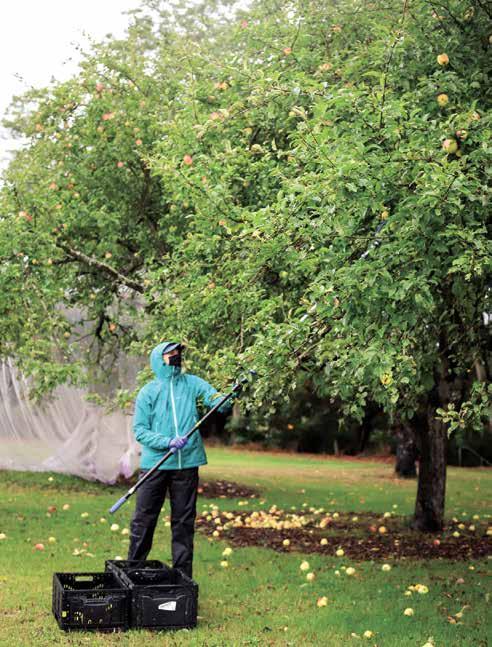
Photos courtesy of City Fruit
City Fruit is a nonprofit based in Fremont that grew from a small group of community-minded volunteers to an organization of more than 500 members, who see Seattle as an urban orchard of large ecological potential. The SGN had the opportunity to connect with CF’s staff and learn about the group’s mission, volunteer opportunities, and exciting “Master Fruit Tree Steward” program, beginning this spring.
City Fruit’s mission
Seattle’s temperate climate (exempting the extreme weather of the past year) tends to consist of “pretty mild winters and summers,” said Tiare Gill, CF’s community growth and impact manager.
“Seattle is unique in that there is so much variation in our urban fruit canopy,” she added. Many homeowners have fruit trees in their backyards, and additionally, Seattle is “home to public orchards located within public parks, community gardens, p-patches, and other types of green space.”
Gill believes that “the history of these existing orchards provides an important connection to the land for people.” She said that “especially today, when food justice efforts are rapidly growing, preexisting urban growing spaces can inspire the development of new ones and support communities in growing their own food in a hyperlocal and community-specific way.”
And CF assists with just this: lessons and group volunteering encompass pruning, pest management, tree identification, fruit harvesting, and many additional aspects of community tree care.
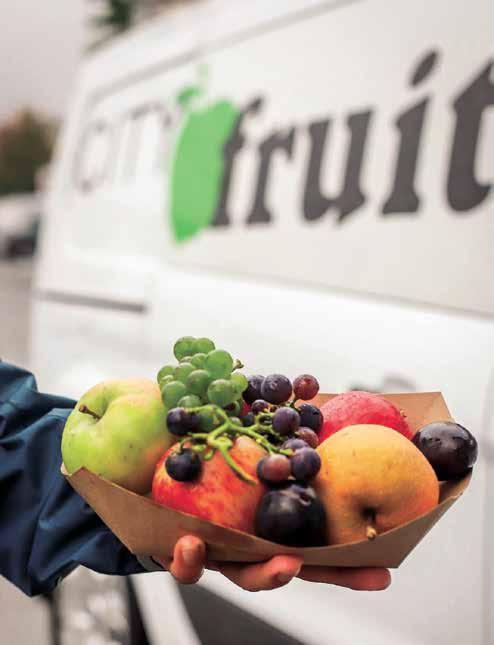
Access to fresh fruit is vital to every community, and to that end, CF serves as “the only organization in the city that consistently provides fresh fruit during the harvest season (July-October) to food banks and meal programs across the city,” said Annie Nguyen, CF’s executive director. The organization helps “tree owners grow healthy fruit, provide assistance in harvesting and preserving fruit, promote the sharing of extra fruit, and work to protect urban fruit trees,” according to its mission statement.
Master Fruit Tree Steward Program
CF’s Master Fruit Tree Steward Program consolidates many aspects of the organization’s daily work — educating community members and maintaining local fruit trees — into a comprehensive curriculum.
The program caters to participants’ interest in “becoming a steward either because they have fruit trees of their own and are interested in learning how to take care of them” or “to support the collective urban canopy,” said Gill. Lessons focus on “fruit trees that already grow in the Greater Seattle area, including cherries, apples, plums, pears, figs, peaches, grapes, persimmon, quince, kiwis, and pawpaws.”
The program’s workshops begin in March and run through October and are typically slated for the second Saturday of each month, usually from 10 a.m. to 2 p.m. They “cover one of the program learning topics: fruit tree grafting; pruning; mulching and companion planting; thinning, bagging, and netting; fruit tree ID; harvest; and orchard cleanup and cider press,” said Gill.
“For COVID safety, class size will be limited to 15 participants, and all classes will be held outdoors,” she added.
The lessons’ focus can be hyperspecific, a testament to the unique needs of certain local fruits. Stone fruit and non-stone fruit require individualized pruning methods; apple and pear trees necessitate special pest management to keep fruit pest-free, so the specifics of the workshops tie into CF’s goals of localized knowledge and community power in ecological stewardship.
Certain workshops skills lend themselves to larger conversations about “what plants pair well together and offer a mutually beneficial growing environment, but we can also discuss which plants people might enjoy for other reasons, such as aesthetics, medicinal uses, or other cultural significance,” explained Gill.
Volunteering
Though the pandemic initially put a halt to volunteer activities, CF has been running scaled-down events with limited participation (5-10 people) since September 2020.
“More families and individuals have found themselves in a position where they need access to food banks and meal programs,” said Nguyen, so the important work of volunteers is definitely needed to support operations.
In terms of demand, volunteer tasks vary depending on the season (off-harvest season is January to May).
Right now, CF has “a few hundred pounds of frozen fruit” that the staff hope to “make into jams, preserves, shrubs, chutneys, and more.” Volunteers can help create shelf-stable products.
CF is also working on outreach to community partners and groups. Part of this work includes publishing website materials for people that are non-native English speakers, vision impaired, and/or hearing impaired. Volunteers who “may have second-language experience and could help with either primary translations or secondary proof-reading of materials” are welcome.
For harvest-specific volunteering, more opportunities will arise come spring.
The registration fee for the MFTS program is $375, which covers all materials and a CF T-shirt. CF offers both full and partial scholarships. Applicants can apply at https://bit.ly/3FjM3o4, or can learn more by contacting tiare@cityfruit. org. More information on volunteering is available at www.cityfruit.org/volunteercity-fruit.
Photo courtesy of City Fruit
Arts & Entertainment
Sidney and Ghostface return for a fifth Scream
by Sara Michelle Fetters SGN Staff Writer
SCREAM
Theaters
It’s hard to imagine a Scream without the late Wes Craven at the helm. While he did introduce Freddy Krueger to the world with A Nightmare on Elm Street, and while films such as The People Under the Stairs, Red Eye, and The Serpent and the Rainbow have their devoted followings, the four-film Scream series is the celebrated filmmaker’s most consistently entertaining endeavor. Along with writer Kevin Williamson, it is Craven’s crowning achievement, and now that he’s gone, I can’t say I was excited when it was announced that a fifth entry was going into production.
Many of my worries have proved to be unfounded. Placing the series in the hands of Ready or Not directors Matt Bettinelli-Olpin and Tyler Gillett — aka Radio Silence — was the first solid choice. The second was making sure this was a direct sequel to Scream 4; screenwriters James Vanderbilt (Zodiac) and Guy Busick (Ready or Not) cleverly build on that 2011 entry’s foundation in ways that are moderately inspired. Best of all, the return of survivors/heroes Sidney Prescott (Neve Campbell), Gale Weathers (Courteney Cox), and Dewey Riley (David Arquette) feel genuine, and their placement in this new tale is thankfully justified.
That’s not to say that my overall reaction isn’t, sadly, mixed. As well-plotted and as engaging as much of this is, as captivating as a couple of the new characters are, and as refreshingly brutal as almost all of the kills end up being, I wasn’t always fully engaged in what was happening during this fifth
installment. While the pointed jabs at toxic fandom and franchise culture are spot-on, they can’t help but oddly mirror some of the same observations that were made in Scream 4 a decade ago.
This makes the film feel less prescient and not nearly as forward-thinking as the other entries in the series have proved to be. If anything, when the reveals come, they end up being a tad underwhelming. The motivations that have pushed this Ghostface killer to unsheathe their knife and start slicing and dicing a new crop of characters in hopes of catching the eye of Sidney, Gale, and Dewey don’t pack much of a punch. Worse, the identity reveal made zero impression on me, and no matter my small nitpicks with Scream 2, Scream 3, or Scream 4, that wasn’t one of them.
Don’t misunderstand me. I still enjoyed myself while watching Scream. Even if it does lamely have the same title as the classic 1996 initial entry in the series — a delightfully silly meta-joke made within this sequel itself, it should be noted — Bettinelli-Olpin and Gillett do pull out all the stops as far as their sinisterly thrilling staging of the key set pieces is concerned. Ghostface hasn’t been this deliciously vicious since Scream 2, and the sudden ruthlessness of their attacks is suitably shocking.
The other item of note is the introduction of the two new primary characters, estranged siblings Sam Carpenter (Melissa Barrera) and her younger sister Tara (Jenna Ortega). Both Barrera and Ortega are outstanding, and the reasons behind why they haven’t seen one
another in five years work amazingly well. The pair have incredible chemistry, which makes the joy and the pain of their reunion during such perilous circumstances all the more palpable. Even better, because I began to care about them so deeply, I both wanted each young woman to survive and was also moderately curious if that meant one of them was going to end up being behind this latest Ghostface killing spree.
Don’t expect any clues to that from me. Heck, I’m not even going to give much of a plot synopsis. All I’ll say is that a new Ghostface has decided to descend upon Woodsboro, and a fresh set of teenagers, including Tara; siblings Mindy MeeksMartin (Jasmin Savoy Brown) and Chad Meeks-Martin (Mason Gooding); Wes Hicks (Dylan Minnette), son of former deputy, now sheriff Judy Hicks (Marley Shelton); Liv McKenzie (Sonia Ammar); Vince Schneider (Kyle Gallner); and Amber Freeman (Mikey Madison), are all in the killer’s crosshairs. Once bodies start dropping, Dewey, Gale, and finally Sidney believe it’s their duty to get involved.
Look, I liked Scream. I had a lovely time watching it. I was also not anywhere near as enamored with the film as I have been with the previous sequels, most notably Scream 2 and Scream 4. This fifth installment has a lot of terrific moments. It also has its fair share of underwhelming ones. While Bettinelli-Olpin and Gillett certainly do Craven’s legacy proud with their confident and blood-smothered continuation of the story, they also don’t take it anyplace I found surprising. It didn’t slay me, and considering we’re talking about Ghostface here, that turn of events can’t help but be at least somewhat disappointing.
Terror invades the home in thrilling See for Me
by Sara Michelle Fetters SGN Staff Writer
SEE FOR ME
Theaters / PVOD
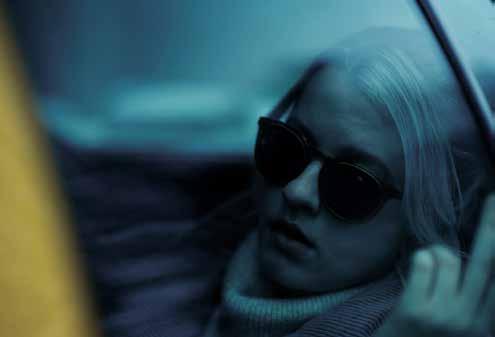
Sophie (Skyler Davenport) was a top skiing prospect with Olympic dreams. Now, after tragically being struck blind, she’s something of a professional pet sitter who occasionally steals bottles of expensive wine to clandestinely sell for a tidy profit. Her latest job is a last-second stint at a secluded mansion looking after a recent divorcee’s cat while she’s on vacation, and the wine cellar is stocked with pricey options she might pilfer.
On the first night there, things take a dangerous turn for Sophie. Three men have entered the home intending to drill into a hidden wall safe the homeowner does not know about. The young woman reaches out to Kelly (Jessica Parker Kennedy), a representative for “See for Me,” a new app that allows sighted volunteers to assist blind users when they’re in a situation involving unfamiliar surroundings. Together, they must find a way to stop the thieves from achieving their goal — and keep Sophie alive in the process.
It’s an interesting premise. Adam Yorke and Tommy Gushue’s screenplay does a great job developing this relationship between the two women. They’d hit it off when Sophie inadvertently locked herself out of the house and was forced to download the app to get back inside. Now the situation is even more perilous, and if her new friend is going to survive the night, Kelly will have to utilize her skills as a former member of the US military in a manner she’d never even faintly imagined.
Yorke and Gushue conceive this blossoming friendship in crisp, clean brush-
strokes. Their narrative efficiency is impressive, and I liked that Sophie and Kelly’s various character traits are showcased with such unfussy clarity. This makes the former’s readiness to trust the latter when things descend into chaos inherently believable. The same goes for Kelly, and her rapid wiliness to go into battle mode to help her new friend is refreshingly authentic.
Director Randall Okita handles the mechanics of this narrative with confident skill. The early bits with Sophie exploring the home for the first time allow the viewer to get familiar with the environment, so later on it’s easy to keep track of who is where at any given time. Cinematographers Jordan Oram and Jackson Parrell do an excellent job of showcasing these interior spaces. Especially impressive are the cellphone-camera POV sequences, a first-per-
son perspective that seats me firmly upon Kelly’s gaming chair as she attempts to get a feel for what’s happening and how best to navigate Sophie to safety.
Davenport is superb. As someone who has experienced adult-onset vision loss first-hand, it’s clear she’s pulling from her own real-life experiences to help ground Sophie, and it shows in her performance. There is a haunting truthfulness to what the character is going through that is extraordinarily personal. I loved how Davenport showcases Sophie’s resilience in the face of such overwhelming odds. There is a fierce determination to persevere born of unimaginable hardships already faced, and to see the young woman tap into these internal resources, even as paralyzing fear attempts to rip the rug out from underneath her, is glorious.
Kennedy does what she can with far more limited material, but the scene where Kelly vaguely speaks about her time in the military and why she’s now supplementing her income working as a “sight guide” for the app is breathlessly effective. Even stronger is a moment later on where she tries to calm Sophie down by going through a mixture of breathing exercises. Kennedy brings a singularly focused intensity to her performance that’s fitting, and even if she doesn’t rise to same heights that Davenport does, the actor still makes a lasting impression.
The majority of the men portraying the home invaders aren’t nearly as memorable. I can only imagine this is partly by design, as they are meant to be somewhat faceless, unknowable villains fleshed out only at the very margins of each individual’s personality traits (one is a thug, another is cool and collected, while the third is timidly uncertain about continuing with the operation once Sophie’s presence in the house is confirmed).
The exception is veteran character actor Kim Coates, making the most of what is essentially a cameo appearance. He comes close to stealing the film in a single scene, oozing a form of intoxicating, calmly disquieting menace that’s laced with an even more unwholesomely dangerous, hypnotic charm. His appearance got under my skin: uncomfortably sublime chills cascaded down my spine when Coates and Davenport face off.
Considering the nature of the story, I won’t say the outcome was ever in doubt. I had the ending pegged early on and was unsurprised to discover my guess was mostly spot-on. But See for Me works. It’s an entertaining little thriller featuring two strong lead performances and chilling sequences overflowing in suspense. I liked it a lot, and I’m curious to discover what the core creative team responsible for bringing the film to life has in store next.
Jenna Ortega in Scream (2022) – Photo courtesy of Paramount Pictures
Skyler Davenport in See for Me – Photo courtesy of IFC Midnight
Dungeons and Drag Queens! Invading Middle Earth for comedy
by Daniel Lindsley SGN Contributing Writer
Imagine, for a minute, a familiar scene: a vast mine dug deep into the heart of a mountain. The reclusive and stubborn Dwarves who built the place have been bewitched by a phantom noise from below, and the party of adventurers who intended to save them are now surrounded on the edge of a bottomless crevasse. The king of the Dwarves calls his people to vote, to either let these intruders go, or try to push them into the pit.
Yet this is not the ensemble cast of Tolkien’s Lord of the Rings. They’re drag queens, and according to Dungeons and Drag Queens! showrunner Paul Curry, they do things differently. On the way to saving these Dwarves, the adventurers had tried to pickpocket some, and inadvertently gotten others killed. And now, facing a small army of them, the queens took it a step further by pushing the Dwarven king into the pit first. And the crowd loved it.
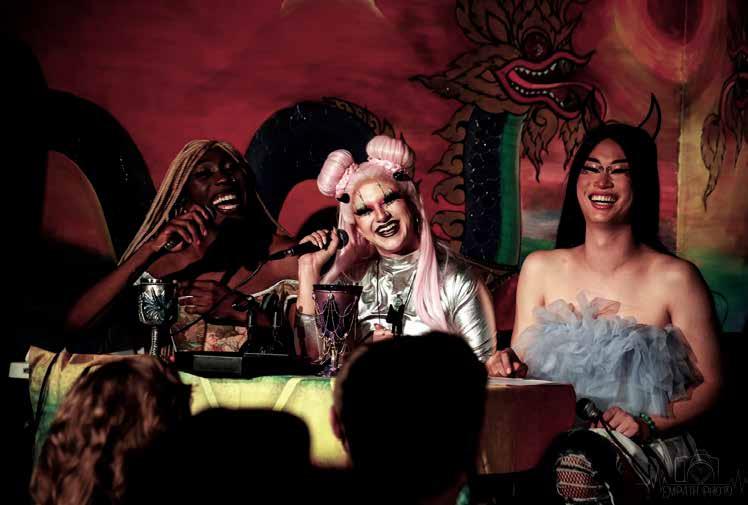
This is just one moment of many from Curry’s monthly in-person Dungeons & Dragons shows, in which Curry, the Dungeon Master, narrates and plays the supporting cast while three drag queens play the main characters in a comedic tabletop adventure.
Those familiar with Dungeons & Dragons have likely shared the table with a “wild card” — another player who, when the action slows down, will do something unexpected to keep things moving, for better or for worse. Curry says these queens “dial that up to 11,” which is comedy gold when he places them in a fantasy world that “plays itself semi-seriously.”
“Drag queens have… very powerful personalities,” Curry said of his reasoning for the idea.
Meanwhile, Curry plays the side characters in a “realistic” way, which means they often end up bewildered and confused by the queens’ sudden breaches in genre expectations. That contrast, and what Curry describes as a somewhat “antagonistic” relationship between the Dungeon Master and the players, also serves to “accentuate and elevate the voices of the queens, to make their voices more epic.”
And it wouldn’t be a comedy show without working the crowd a bit. The Dwarves in the scene described above weren’t just Curry. They were the audience at the venue, who were prompted, as the Dwarves, to either cheer or jeer for the drag queens. Between the queens, the audience, and the mood-setting music improvised live by Carson Grubb (Instagram @carsongrubb), the experience is richly layered, Curry said, and hilarious.
Curry also made it clear that Grubbs’s contribution couldn’t be overstated, since the energy onstage is “bound to the music,” and having to DJ from a laptop would be distracting and limiting. Canned music just isn’t versatile enough for an event with so much improv.
It’s no wonder, then, that the show has been a hit, even given the pandemic’s deep cut into the performing arts scene. One early showing actually oversold tickets, and feedback so far has been “all positive,” Curry reported.
The show’s usual venue is Jai Thai, located on Capitol Hill, which is fitting considering the district is a nexus for both drag shows and tabletop gaming.
For those interested, Curry says anyone unfamiliar with Dungeons & Dragons won’t have to worry about learning all the rules; the audience is given flyers that explain the basics well enough to enjoy the experience as much as any D&D veteran would.
The show started when Curry and two of his friends — drag queen Issa Man and
musician Carson Grubb — came together around the idea. Curry said he started playing D&D in college, and had run live sessions with comedians in the past. Adding the queens to the mix was just a matter of making the right connections.
As for the future, Curry said he is especially excited for a much larger show coming up, at Hale’s Ales Palladium on March 3. Tickets for that show and others can be purchased online from Comedy on Broadway’s Eventbrite page for $20.
With continued success, Curry says, he hopes to record the show for podcasts, and even partner with artists for animated segments.
High Risk Homosexual an affable memoir about the struggle to be yourself
He was 13 when he figured out that he was a problem to be solved. Edgar Gomez’ mother had left him in her native Nicaragua with his tíos, just for a while, because she had to return to Florida to work. He wasn’t there without her for long, but it took years for him to understand that his time with his uncles was meant to make him more masculine.
In retrospect, he says, nobody wanted him to be a man more than he did. He wanted to be liked by other kids, and so he told lies in school to make himself stand out. He wanted his mother to see his love of pretty things and say that it was okay. He wanted his brother to acknowledge that Gomez was Gay, and to tell him that he loved him.
Instead, after his brother left for college, Gomez got his first boyfriend, a boy he came out to but who couldn’t come out to himself. He was called names in school. He came out to his mother, who freaked out
about it. He befriended a drag queen, but “Princess” used him.
Things he wanted: A real boyfriend. Love. A ban on the stereotype of a macho Latino man.
Things he still had, while in college: His mother and older brother. A tormentorturned-mentor. A part-time job. His weirdness.
Things he wanted to lose, while in college: His virginity, but that wouldn’t happen until later, during a painful one-afternoonstand with a hot man who said he had a girlfriend. That hurt, both physically and emotionally, but like so many things at so many times, Gomez tried not to think about it.
If he never considered what he didn’t have, he says, “I wouldn’t miss it.”
In a way, you could say that High-Risk Homosexual is a book in search of a point. It’s really quite random and told (mostly) linearly, but not quite. It has its peaks, but also valleys. But you won’t care, because you’ll be enjoying every bit of it.
Yeah, this memoir is good: Gomez’s literary wandering makes it feel much like an honest conversation with readers. There are wince-worthy moments that allow for empathy, and experiences that are unique but oddly ubiquitous, that leave space for a sense of simpático. There are passages that are so wistfully uncomfortable that you might squirm, or start “snort-laughing,” or want to stop a moment and just think.
So take your time. High-Risk Homosexual is an affable book with just enough seriousness to make it worth a try.
Issa Man, Killer Bunny, Kylie Mooncakes – Photo by Kaleb Danko
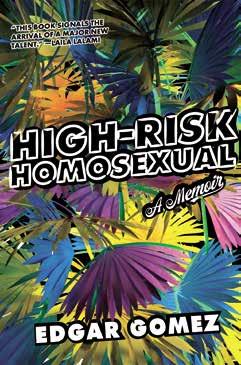
Image courtesy of Soft Skull
Author Edgar Gomez – Photo by Joseph Osborne
Books Mason Deaver brings Nonbinary representation to the YA literary world
by Lindsey Anderson SGN Contributing Writer
Over the past year, our book club has had the opportunity to explore Queer and Trans voices from across the globe, in stories that span different genres and periods. However, up until now, we have yet to read a Nonbinary romance.
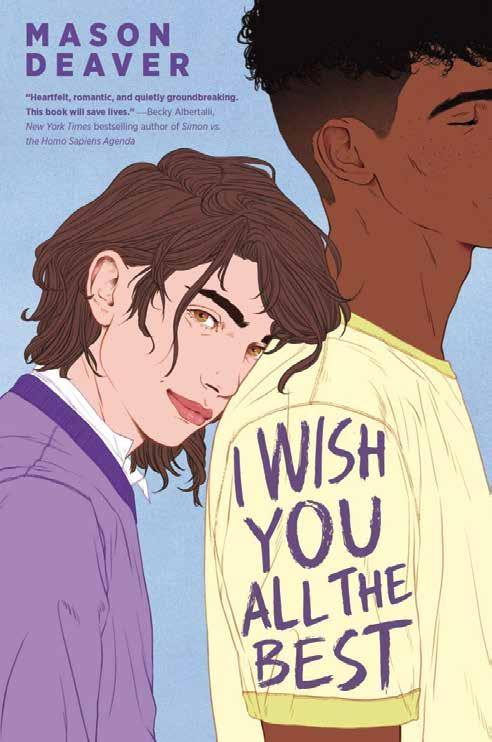
Pushed by a desire to create a unique story featuring a Nonbinary (or “Enby”) lead, author Mason Deaver produced their first novel, I Wish You All the Best. It tells the story of Ben, a Nonbinary senior in high school. After being forced to come out to their parents, they are kicked out of their home. The book received praise from New York Times best-selling author Becky Albertalli (of Simon vs. the Homosapiens Agenda), who called it “quietly groundbreaking.”
Deaver describes their second novel, The Ghosts We Keep, which came out in early 2021, as “the most personal book I’ll ever write.” It explores many heavy topics, and might be triggering to some readers. “It came from my personal experiences with grief and depression and PTSD,” they said. “It was a tough book to write, and an even tougher book to sit there and listen to the critique of. But I’m proud of it.”
An Enby pioneer
Deaver decided to write I Wish You All the Best “because there were no Nonbinary characters in YA at the time. Trans representation as a whole left a lot to be desired. Lots of cis writers creating harmful — or downright offensive — ways.”
For Deaver, writing a Nonbinary character was different than writing a cis character. Using their own experiences and feelings when creating Ben was essential. “There are intricacies that go into writing a Nonbinary character, things that cis characters won’t experience or can’t understand,” they said. Writing a Nonbinary character as a Nonbinary person was essential for providing accurate representation.
Once they began drafting the novel, the rest of the writing process moved quickly. Within four months, the first draft was complete.
They learned a lot about the writing process along the way. “Since first writing I Wish You All the Best, I’ve learned the benefits of planning out the entire novel before I start drafting,” they said.
After a few more months of editing, Deaver was ready to find a publisher. Unfortunately, many in the industry felt they weren’t ready to take on a book about a Nonbinary person. “During my querying stage, I was told by two agents that a book about a Nonbinary protagonist would never sell and that there was no readership,” Deaver said. “And around a year after publishing, a friend of mine who used to be an editor told me they wanted to acquire my book but were told they ‘already have a Trans book on the schedule.’ Honestly, it was expected.”
A novel of hope
Despite these setbacks, Deaver eventually found a publisher, and the feedback from readers proved that the world was not only ready for a Nonbinary book but desperately needed one. The messages of love and acceptance in I Wish You All the Best inspired readers to not only accept themselves but understand that there is no right way to be Nonbinary.
Deaver says, above all, that they hope their readers take away a message of hope. “I always want my books to end on a hopeful note. With I Wish You All the Best, I wanted readers to understand that bloodrelated family isn’t everything, that you can find and make a home for yourself with the people around you.”
Writing the book was also helpful in pushing back against stereotypes and expectations that some may have about being Nonbinary. “I hope that others understand that there is no one single way to be Nonbinary. There’s no way you’re supposed to look, or act, and this idea that Nonbinary people must be androgynous and thin and white with dyed hair [is not always accurate].”
Rom-com tropes
While I Wish You All the Best can be heartbreaking and raw, it is still a rom-com. Deaver included their favorite tropes in the novel, such as a sunshine/grump dynamic and a height difference. “One I find myself (accidentally) going back to all the time is a height difference. It’s great, especially with kissing scenes,” they said.
When it comes to rom-com tropes, they believe there is no such thing as an “overdone cliché.” However, Deaver said, “the clichés and tropes we know today have been explored to death by cis-het, white,
able-bodied writers, and that’s one of the reasons we’re tired of them — because they end up being the same stories over and over again. [But] I think there’s originality inherent to giving these tropes to marginalized voices… I believe that clichés and tropes still have the space to be explored by Queer, BIPOC, and disabled readers.”
What’s next?
Deaver has a busy 2022 planned. They contributed to the rom-com anthology Fools in Love, a celebration of all the best cheesy tropes with cleverly reimagined twists, which is available for preorder now. They are also currently working on short stories for Transmogrify!, an anthology created by Trans authors about Trans characters.
Their other upcoming projects remain mostly secret. “I prefer to keep my cards close to my chest,” they said. (But they were willing to spill exclusively to us that one revisits a character from a previous novel!)
Since publishing I Wish You All the Best, Deaver has explored several other genres, including horror in their book Another Name for the Devil. They admit this book was the most challenging to write. “Another Name for the Devil was a tough one to write. I had to figure out my main characters and their dynamics and where they fit into the spectrum of what I wanted to write.”
Yet rom-com still calls to Deaver. Their latest book, The Feeling of Falling in Love, is one of 2022’s most highly anticipated romance novels. “Now, this one is a romance,” they said of their latest release. “I think it’s a lot closer to I Wish You All
the Best in tone, so much so that I’ve been worried at points during the drafting that I’m plagiarizing myself. I think readers will appreciate that it’s more of a blend of I Wish You All the Best and The Ghosts We Keep It has the heavier emotional moments, it has the romance, but it also has things that are specific to it, that makes it special in its way.”
While their next few novels remain a secret, there’s one thing readers can take certainty in. “I only plan on writing Queer characters, actually,” Deaver said. “I think I want to stay with Trans characters, but beyond that, I’d love to explore sexuality.”
Deaver also said they will continue to feature diversity in their novels. “I think it’s ridiculous to have an all-white cast in a book, especially in contemporary [times,] where the book is meant to represent reality (though the same can be said for fantasy, where the author is creating a world from the ground up and just decides that this robust fantasy world similar to Earth only has white people).”
Fans of Mason Deaver have a lot to look forward to, with several books scheduled to be released in 2022 and 2023, as well as a possible movie adaptation for I Wish You All the Best. As readers cozy up with their novels, Deaver remains hard at work, drafting, editing, and plotting their latest ideas, all while surviving the bitter North Carolina winter.
I Wish You All the Best will be this week’s book club feature! Grab a copy, read along with us, and let us know your thoughts on Instagram @SGN_books.
Image courtesy of PUSH
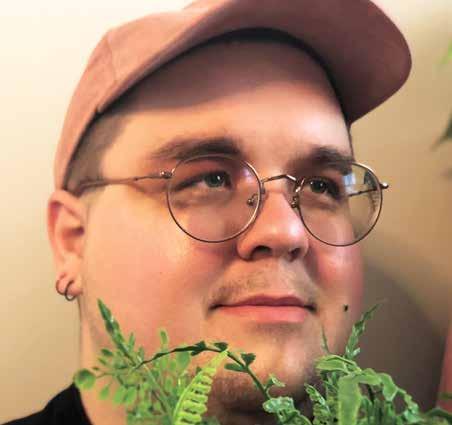
Mason Deaver – Photo by Photo by Trịnh Hồng Hương
Friend ’til the end: A final farewell to Betty White
by Mikey Rox Special to the SGN
Last Thanksgiving I spent by myself. I live in my van and travel full-time as a nomad, and I wasn’t near anyone I could celebrate with. Naturally, I was in my feels, lonely on a holiday. So I published this to Facebook:
“Need something to be thankful for today? We’re less than two months away from Betty White’s 100th birthday.”
Current events considered, that post didn’t age well over the course of a few weeks, certainly not as well as its subject had over her lifetime.
I know what you’re thinking: I killed Betty White.
Of course I didn’t, but when the news broke of the legendary actress’s passing on New Year’s Eve, I felt guilty for perhaps jinxing her chances of achieving centenarian status with my premature hopefulness. Thankfully, I’m not superstitious. The fact is, Betty White was old. Ninety-nine years old. It was her time.
There was something else I felt when I read TMZ’s report on 2021’s last hurrah: cheated.
Yes, I felt cheated. I don’t think I’m alone when I say that we all deserved — after enduring several years of mounting setbacks and increasingly terrible headlines — to see America’s grandmother reach a milestone birthday that less than 1% of the human population reaches. Nobody deserved it more than Betty herself, but we deserved it too. Still, her last-day-of-theyear death wasn’t altogether surprising. Chalk it up to one more way the 2020s are royally fucking us.
Blue-check Twitter user Qasim Rashid, Esq. managed to soften some of that blow, however. Hours after Betty’s death started trending, he offered a virtual Band-Aid for our collective hearts with this (unedited) tweet:
“On one hand she was 99 years 348 days old when she died. On the other hand she lived through 24 leap years, i.e., 24 extra days. All I’m saying is mathematically, it arguably checks out that she lived 100 years and 7 days.”
That declaration is hereby official as far as I’m concerned.
Digging a little deeper, what was it about Betty White that endeared us to her, perhaps more than any other Golden Girl our queer community quotes, imitates, and venerates?
That she was the last one left? Her singular dedication to animal welfare? Her Guinness World Record for the longestworking person in television? Those inevitable appearances on our lazy Sunday game show rerun marathons? Or maybe the way
she played Rose Nyland with such believable naivety?
There’s something to that last one.
Betty played plenty of memorable TV characters before Rose: the title character on Life with Elizabeth in the 1950s, making history as the first female producer of a sitcom; perpetually perky Sue Ann Nivens on The Mary Tyler Moore Show; and Ellen Harper Jackson on Mama’s Family
But Rose was different than any charac-
ter Betty had taken on before — and that’s exactly why she chose to play her.
Any homo worth his salt knows that Betty originally was offered the role of Blanche, and Rose was meant for Rue McClanahan. The former didn’t want to play another iteration of sex-charged Sue Ann — the part she was most famous for before the 1985 premiere of The Golden Girls — nor did McClanahan want to regurgitate the sweet-but-scatterbrained Vivian Harmon, whom she played on Bea Arthur’s previous vehicle, Maude. So they switched. And none of us can imagine it any other way.
The Golden Girls was popular among Queers then and now because we see ourselves in them. Among our own friends, we know a Sophia, Blanche, Dorothy, and Rose. We personally identify ourselves as one of those character types as well. Or a blend of two or more. Me? I’m a quickwitted, smart-mouthed Dorothy-Sophia hybrid. Proudly.
Betty wasn’t Rose, though. According to her friends, she was bawdy, a little bit crude at times. She enjoyed vodka and hot dogs. During World War II, she drove a PX truck as a member of the American Women’s Voluntary Services. She never had a single acting lesson.
While those first few characteristics make her relatable — especially for a celebrity who’s been one the entirety of most people’s lives still living on this planet — it’s the last detail that stands out for me. She never had a single acting lesson because she didn’t need one. She was a natural, but she also was genuine. We saw it and we felt it, in our homes and in our hearts, decade after decade. We didn’t have to meet her in person to know that, unequivocally, if we threw a party, invited everyone we knew, we would see…
You know where I’m going with this. Betty White — thank you for being our friend.
Mikey Rox is an award-winning journalist and LGBT lifestyle expert whose work has been published in more than a hundred outlets across the world. Connect with Mikey on Instagram @mikeyroxtravels
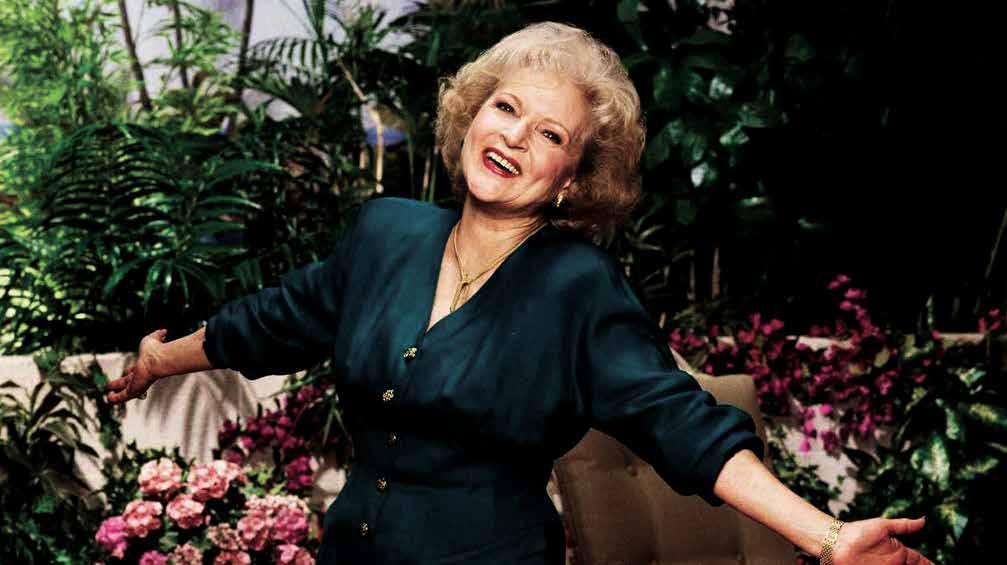
A young Betty White – Photo courtesy of ABC Photo Archives
Betty White on the set of The Golden Girls – Photo courtesy of NBC
Op-Ed
Whether it’s CRT, BIPOC, or LGBTQ, the Right continues to rally against representation
by Lindsey Anderson SGN Contributing Writer
It’s 2022, and conservatives across the United States continue their battle against learning materials they deem inappropriate and divisive. The trend amped up in mid2021, as students returned to schools, and parents began to question “critical race and ethnic studies” in public schools.
“Disguising hate” quickly became a dog whistle for right-wing correspondents like Tucker Carlson and Laura Ingraham who liken the understanding of the ways historical and systematic oppression have led to advantages for some and disadvantages for others to racism in itself.
Carlson, in particular, has become famous for inflammatory statements.
“When you hear people ascribe blood guilt to a specific racial group, when you hear them talk about the sin of ‘whiteness,’ what you’re watching is the death of our future as a country,” he ranted in 2021.
“Kids come home from school with assignments to talk about how all races are in fact, not equal, that some races are guilty or innocent, that some groups are oppressors, inherently, and others are inherently oppressed,” Carlson said, flipping the script and making it seem like educating youth about the oppressive history of Western civilization is racist in itself.
Language like this is powerful. He purposefully uses evocative words and phrases such as “blood guilt” and “sin” to trigger those already uncomfortable with the topic of critical race theory. They then associate their discomfort with personal victimhood instead of a lack of understanding of the subject matter.
Furthermore, tying in their sense of victimhood with a nod to Christianity evokes even more emotions and a sense of persecution that conservatives often ascribe to their identities.
Statistics from the 2020 Gallup poll and Grinnell College show that conservativeminded Americans are less likely to have more than a high school diploma. For most of
these people, critical race theory — which is a popular theory in universities — is a new idea they never encountered in a classroom.
Carlson is aware that his viewers may not have an accurate understanding of CRT. He even explains that the phrase is based on theories from higher education, saying on his show, “In the universities, this is called ‘critical race theory,’ so that’s just the term we go with.”
Critical race theory is not what has conservatives up in arms, though, as it is not what’s taught in public schools. Instead, what is being taught is a less white-centric, more historically accurate, and empathetic version of history. Children are now learning history that, like science, has evolved and changed since the 1960s.
Children in the 21st century are learning about race, gender, and sexuality in new ways, as society begins to accept that previous narratives around these topics were wrong. Schools no longer celebrate Columbus Day, they are open to the idea that families can have all sorts of parental makeups, and that sometimes our genders do not match up with those we were assigned at birth.
These are the lessons conservatives are fighting tooth and nail to abolish in public school systems. They are adamantly against their children learning anything different than what they did.
The controversy has engulfed not only topics of race and ethnicity but also conversations about gender, sexuality, and ability.
The war on books for youth
Despite the classic adage by philosopher George Santayana, “those who fail to learn history are doomed to repeat it,” conservative news outlets are determined to undermine educational practices grounded in accurate depictions of world history.
Conservatives oppose CRT with faulty equivocation fallacies, fearing a shift into oppression for the historically privileged class.
Carlson has gone so far as to disavow the term “reverse racism” when discussing the topic.
“It’s not critical race theory, it’s racism. Not neo-racism, not reverse racism. Those are meaningless terms. It is race hate,” he said in a June episode of his show, proving once again that those accustomed to privilege often see equality as a form of oppression.
The idea that advanced social theories with evidence grounded in psychology have somehow infiltrated the minds of America’s youth, and that this is to the detriment of our society, has caught on with “concerned parents.”
Asra Nomani, a mother from Virginia taking up the fight against CRT in schools, appeared on a recent CNN segment to discuss what she believes to be the greatest threat to American children.
“Schools should be teaching reading, writing, and arithmetic,” said Nomani. “They should not be radicalizing our kids, and unfortunately schools are now radicalizing our kids.”
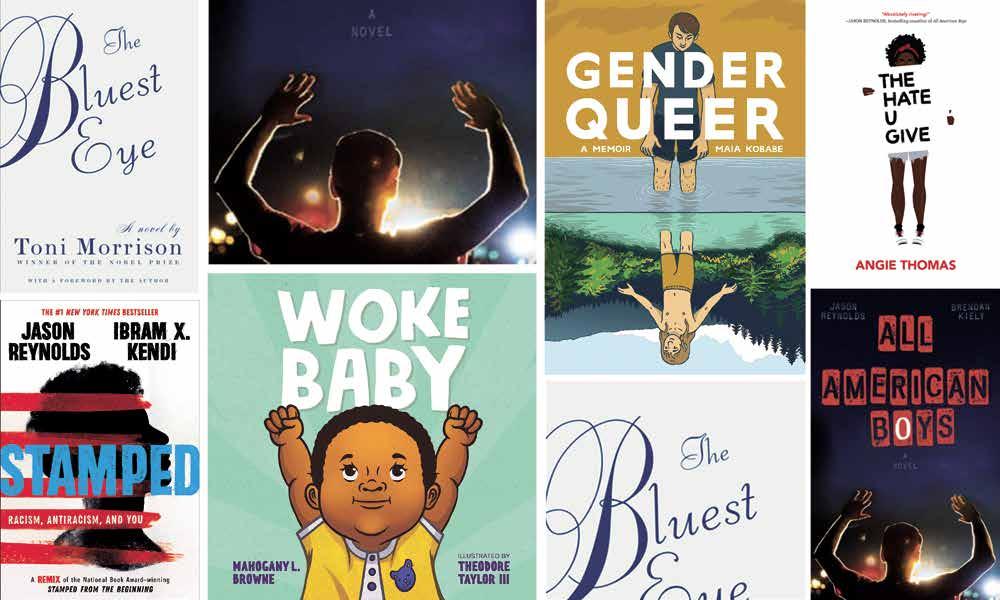
Later in the segment, Nomani held up a law school textbook on CRT and compared it to popular children’s and young adult literature. “It is trickling down into little books for children like Woke Baby and Gender Queer. In it, there is, unfortunately, a very graphic symbol of pedophilia and pornography,” she said of the latter title, the autobiographical graphic novel by Maia Kobabe.
Despite Woke Baby and Gender Queer both having white characters and the latter centering around the experiences of a white, gender-nonconforming protagonist, all books peddling a modern idea of equality and equity are now lumped under the catch-all of “CRT.”
The claims made by “concerned parents” further prove that they have little idea of what they are actually protesting. Not only does Gender Queer focus on the experiences of a gender-nonconforming person, it does not go into any further detail about race or ethnicity. I have since reread the graphic novel and can also confirm that there are no images of pedophilia.
The arguments coming from conservative parents are founded on fear alone,
proven by the fact that they cannot even bring themselves to read the books or understand the theories that they are trying so hard to shield their children from.
Even though their arguments are not founded on much logic or research, “concerned parent” groups are effectively challenging and banning LGBTQ books like Gender Queer under the guise that they perpetuate the dangerous ideology of CRT. Voices like Nomani’s and Carlson’s are leading school administrations to pull LGBTQ and BIPOC novels off shelves in droves.
In fact, in 2020, 8 in 10 of America’s “most challenged books” were LGBTQ titles. According to the 2021 “State of America’s Libraries” report, the most common reason cited for a request to pull a book from the shelves was LGBTQ content. The report also showed that 50% of all challenges of books came from concerned parents.
Banning LGBTQ books
The most recent report shows that the number one banned book in America continues to be George, a children’s book about a Trans child. Rounding off the list in 2021 was a myriad of books banned for “inciting anti-police sentiment” and discussing race and racism. The list of banned books include The Hate U Give, Stamped: Racism, Anti-Racism and You, All American Boys, and The Bluest Eye
Despite many of these titles being praised by critics, readers, and librarians alike, parents —indoctrinated by emotionally charged messages, such as Laura Ingraham’s take that “reading assigned to our children associates the white race with the devil” — continue to challenge them.
The results of censorship of literature can be very detrimental to children and young adults. For LGBTQ children growing up in unaccepting environments where internet access is often limited or monitored by parents, literature is the best way to learn about gender and sexuality.
According to a recent poll from the Trevor Project, 20% of Transgender and Nonbinary students had attempted suicide
Image courtesy of American Library Association
in the last 12 months. In schools where resources, such as books validating the experiences of LGBTQ+ youth, are available, the numbers were much lower.
While theories on the systemic oppression that has shaped our country and its institutions are taught at most colleges and universities, this knowledge is vital to forming empathy and understanding in our society, and therefore is especially important for young and impressionable minds. Reserving discussions and lectures on class, race, gender, and sexuality for only the highly educated reinforces harmful practices. Hoarding knowledge prevents those who are sometimes the most oppressed from learning about the systems they are actively fighting against their whole lives.
Regardless, conservatives like Carlson and Ingraham continue to call on their viewers to protest literature that promotes
views different from their own and go so far as to demand parents pull children out of classes that address racial oppression.
“If your children’s school teaches this nonsense, demand that your son or daughter be permitted to opt out in favor of, oh, I don’t know, those unaccomplished writers like Hemingway, Fitzgerald, Twain, Harriet Beecher Stowe, or other great American writers,” said Ingraham. “But remember, the goals are always shifting for the diversity, equity, and inclusion crowd.”
Seattle protects readers’ rights
Despite the numbers of book bans increasing nationwide, Washington remains one of the most progressive states for readers, with only 14 titles banned in the state over the last two decades.
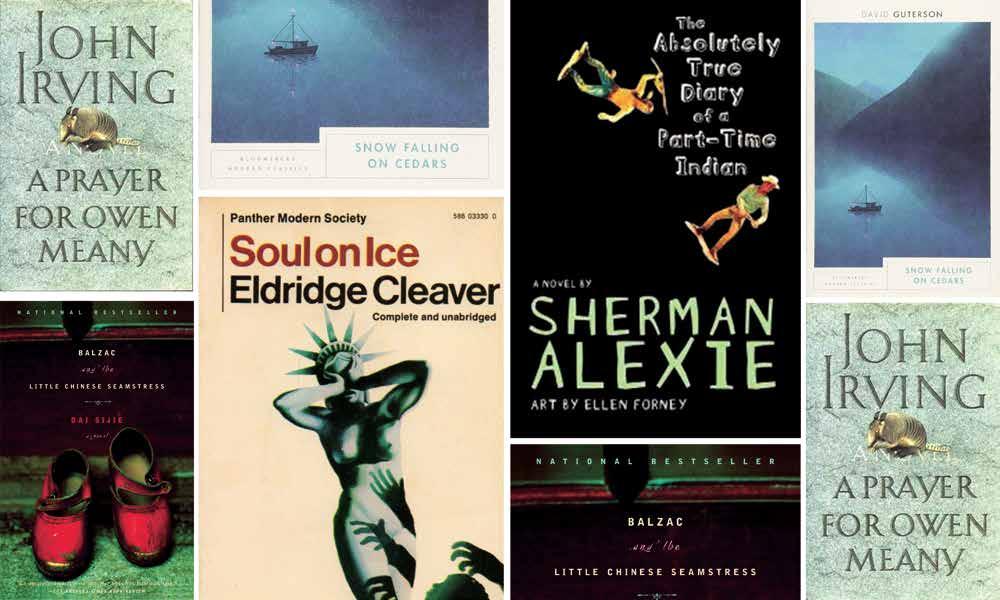
Some of the most banned titles in the state include The True Diary of a Part-
Of all the books currently banned somewhere in Washington state, none are from Seattle or King County.
Seattle’s public libraries are committed to remaining safe spaces for learning, expression, and the preservation of history. The Seattle Public Library catalog includes a section on banned books in stock and always offers them for checkout.
The SPL also recognizes that some of the books conservatives are waging war against might be vital for young readers.
For titles like Alex Gino’s George (which the author has requested all readers rename Melissa’s Story with “sharpie activism”), the library does not even require a library card to check them out. An orange sticker
on the front of these books indicates anyone can take them home, just as long as they are willing to return them once they are done reading them. This allows children with parents who may not be accepting of them to still have access to books that affirm who they are.
While conservatives continue to promote their fight against certain literature, readers must protect their access to knowledge by supporting local libraries and Queer authors. An increase in banned BIPOC and LGBTQ titles makes it harder for these authors to continue to find publishers willing to take on their stories. However, these stories can often mean the difference between life and death for the young people who need them.
Time Indian, Balzac and the Little Chinese Seamstress, Snow Falling on Cedars, Soul on Ice, and A Prayer for Owen Meany, all books that concern race and sexuality.
National News
The Insurrection one year later
What happened and what’s next?
by Lindsey Anderson SGN Contributing Writer
Last Wednesday, January 6, 2022, marked the first anniversary of what has been called one of the darkest days of US History: The Capitol Insurrection.
One year ago, hundreds of domestic terrorists stormed the US Capitol in Washington D.C., spurred on after a morning of speeches at a “Save America” rally by Trump supporters dissatisfied with the results of the November 2021 election. Former President Donald Trump encouraged rioters when he spoke at the rally moments before they stormed towards the Capitol building.
“We won this election, and we won it in a landslide,” Trump declared to a roaring crowd. “If you don’t fight like hell, you’re not going to have a country anymore.” His speech concluded with a direct order to his audience, “We are going to the capitol.”
And go they did. Amidst the chaos of applause and cheers, Trump’s supporters began to push their way through barricades until they breached the front doors of the historic Capitol building. Congress sheltered in place as Capitol police officers attempted to divert rioters away from the chamber floor. Over 140 police officers were injured, the historic building was vandalized, and, for the first time, the Confederate flag was flown in the United States Capitol Building.
Photographer Nate Gowdy was among the crowd that day. He had traveled to D.C. to document the MAGA rally for an upcoming book he is working on, and says despite attending several other Trump rallies, he could have never predicted what he was about to see.
“I’d attended 30 or so of Trump’s official campaign rallies and appearances, so I figured I’d get to see more red hats and hear more white grievances in Washing-
ton, D.C., on January 6. I never could have anticipated a deadly mob ransacking the U.S. Capitol. I still can’t comprehend what I saw,” says Gowdy.
In an excerpt from his upcoming book, Gowdy recalls the events he witnessed on that day, “In my short life, I’ve never witnessed such a strange mix of euphoric camaraderie and subversive rage. All afternoon, overcome with excitement and buoyed by the white Christian nationalism and nativism on full spread-eagle display, I kept hearing it: ‘This is the best day of my life!’ Feeling like part of something historically special while wedged together during a pandemic, their brains repeatedly defaulted to virtuously reciting prayer and The Pledge of Allegiance.”
Now, people who watched the chaos develop on live TV, as well as those in attendance that day, recall what they think happened.
A nation divided
“One year ago today, in this sacred place, democracy was attacked. Simply, attacked,” said President Biden in an address to the American people following the first anniversary of the capitol insurrection. While Biden may think the answer to what happened one year ago is simple, many disagree. Americans continue to remain divided on just what happened that day, what caused the violence, and whether or not our country can move beyond it.
According to a new poll out of NPR, 6 in 10 Americans believe democracy is failing. The concerns over the future of American democracy are bipartisan. Two-thirds of all people polled stated they believe democracy is more at risk now than it was a year ago. Follow-up interviews with Republicans showed an overall distrust of the American electoral process. Many feel distrustful of mail-in voting, and over half
stated they believe Joe Bide stole the 2020 election due to significant voter fraud. These concerns come despite documented proof that the election was not fraudulent. Republican Representative and top Republican on the Congressional Investigative Committee into the Insurrection, Liz Cheney, said in an interview, “we had over 60 courts in this country that ruled against the claims the former President was making, and yet he rejected those rulings and attempted to overturn the will of the people. That simply cannot happen in the United States.”
On the other side of the aisle, Democrats voiced concern over restrictions on voting rights passed by Republican legislators in the past year. In his January 6th address, President Biden noted these concerns, saying, “the election of 2020 was the greatest demonstration of democracy in American history. More of you voted in that election than have ever voted in all American history. Over 150 million Americans went to the polls and voted that day. Right now, in state after state, new laws are being written, not to protect the vote, but to deny it.”
In the year since the 2021 insurrection, 16 states have attempted to pass laws that would change election rules to give more power to state legislatures rather than elected officials and governors. At least 18 election deniers are running for positions of Secretary of State, and 71% of Republicans believe the election was stolen.
Despite the current political divide, no Americans think that what happened on January 6th was a “reasonable protest.” However, Republicans and Democrats are putting distinct spins on how they recollect the events of that day. More than half of the Democrats polled by NPR would call the events an “attempted coup” or “insurrection.” Republicans, on the other hand, are more likely to call it a “riot” that “just got out of control.”
In a similar poll out from the Washington Post, 60% of Americans believe Donald Trump is responsible for what happened on January 6th, whereas 38% think he is innocent.
“For the first time in our history, a President has not just lost an election, he tried to prevent the peaceful transfer of power as a violent mob reached the capitol,” Biden said. He did not shy away from placing blame on former President Trump, even if a sizable minority of the country refuses to do so.
Is Trump guilty of more than just ignorance?
According to Cheney, the investigative committee is likely to side with the majority. “We will be looking at [a potential criminal case against the President]. There are claims in front of the committee, such as whether or not, through his action or inaction, President Trump attempted to obstruct an official proceeding of congress attempting to delay the count of electoral votes,” said Cheney. “We also know, certainly, that it was a supreme dereliction of duty. When the President of the United States refuses to take action to stop a violent assault on the congress, to stop a violent assault on any of the coequal branches of government that’s a dereliction of duty.” New facts regarding how far Trump’s involvement goes are also coming to light. The committee now has subpoenaed evidence proving Trump called into the war room the night before the Capitol Riots. In the months leading up to the event, he had been pressuring Vice President Mike Pence in the Oval Office, asking him to publicly contest the results of the election.
“Former Vice President Pence was a hero on January 6th. He refused the pressure of the former President, he did his duty, and the nation should be very grateful for the actions that he took that day,” says Cheney.
Photo by Nate Gowdy
Despite her high praise for Pence, the investigative committee continues to question the motives behind Trump’s inaction during a moment of unprecedented chaos. 187 minutes elapsed between the time he instructed his followers to “march,” and when he finally put out a video telling them to go home.
“We know the President was watching television in his private dining room off the oval office. We know from personal testimony that he was watching the violent assault on the Capitol,” says Cheney. “We also know that he could have, at any moment, walked the few steps to the White House briefing room, he could have gone on the air and told the people who were his supporters assaulting the capitol to go home, he did not do that. And we are very focused on the minute-by-minute activities at the white house, what he was doing, that he was watching television and was refusing to ask people to stop.”
The threat continues
The committee continues to probe Trump’s motives, but many wonder when action will happen. Despite his ban from social networking sites like Facebook and Twitter, Trump continues to reach his audience with rants about how the election was stolen from him.
“The threat continues,” Cheney warns, “former President Trump continues to make the same claims that he knows caused violence on January 6th, and it’s very important, if you look at what’s happening today in my party, the Republican party, rather than reject what happened on the 6th, reject the lies about the election, and
make clear that a President that engaged in those activities can never be President again, unfortunately, too many of my party are embracing that former President and looking the other way or minimizing the danger. That’s how democracies die, and we simply cannot let that happen.”
Trump is not the only conservative peddling the “stolen election” message. Fox News correspondents also continue to spin the narrative around what happened on January 6th. Sean Hannity’s report of the events was that “the vast majority in Washington D.C. today [were] peaceful,” and Laura Ingraham declared the whole insurrection to be a hoax, saying, “this is one of the big lies that this was a coordinated insurrection.”
In response to the false narratives circulating conservative media outlets, Biden reminded listeners in his inaugural address, “This wasn’t a group of tourists. This was an armed insurrection. They weren’t looking to uphold the will of the people; they were looking to deny the will of the people. They weren’t looking to uphold a free and fair election; they were looking to overturn one. They weren’t looking to save the cause of America; they were looking to subvert the constitution.”
Police in the crowd
Biden also acknowledged the hypocrisy of the rioters, who attacked police attempting to defend the capitol. “A crowd that professes their love for law enforcement assaulted those police officers; dragged them, grabbed them, sprayed them, stomped on them. Over 140 police officers were injured,” he said. However, Biden
failed to acknowledge just how deep the hypocrisy goes.
Since last January, the FBI has continued to investigate all those who participated in the storming of the capitol. Over 700 arrests have been made, and 170 have pleaded guilty. In January 2021, 30 active duty police officers were arrested for involvement in the riots.
In August 2021, six active-duty Seattle Police Department officers were under investigation for involvement in the riots. SPD officers Alexander and Caitlin Everett were fired this summer by police chief Adrian Diaz after the search provided significant evidence that they had willingly participated in the riot.
“These two officers were present at an attack on the US Capitol, which was also an attack on our profession and every officer across the country,” Diaz said.
While SPD’s firing of officers involved is a small step towards justice, many are still waiting to see what happens as the FBI and Congressional investigations continue to unfold.
“I will stand at this breach, I will defend this nation, and I will allow no one to place a dagger at the throat of democracy,” Biden said with zest as he concluded his speech. His words spurred many emotions in Americans watching at home, but despite his promising remarks, worries remain. With a potential run for President in 2024, eyes are on Donald Trump, as many are left wondering, can our democracy endure an ever dividing country?
National news highlights
by Daniel Lindsley SGN Contributing Writer
Beverly Hills: First Trans win at the Golden Globes
Protzman was also the source of the widespread belief — among QAnon believers at least — that JFK and his son, John Jr., would make an appearance at Dealey Plaza in Dallas, on the anniversary of JFK’s assassination in 1963.
Hundreds of QAnon believers camped out in the plaza, hoping to see the Kennedys arrive and restore Donald Trump to the presidency — with JFK Jr. as his vice president, no less.
When that failed to occur, scores still remained camped on the plaza’s grass, and some reportedly remain there to this day.
Protzman’s obsessions don’t end with the Kennedys. In an audio chat on January 11, with over a thousand people listening, Protzman claimed that President Joe Biden was never inaugurated and hasn’t been living and working in the White House, but is actually part of a movie being filmed on a set in Culver City, California.
While these QAnon beliefs seem quaint, even bizarre, believers are expected to pack the Trump rally scheduled for January 15, and at least one of the QAnon faithful will be invited to address the crowd.
Mark Finchem, a GOP Arizona state representative whose campaign for Ari-
zona secretary of state — in which capacity he would be in charge of vote-counting in Arizona — is billed as a “special guest speaker” at the rally in Florence.
Finchem is an ardent Trump supporter who was present at the January 6 insurrection and was one of the loudest voices supporting the bogus election “audit” in Maricopa County.
He has also repeatedly shared QAnon
conspiracies on social media and on QAnon-friendly podcasts and media platforms, and last year he headlined a major QAnon conference in Las Vegas.
Trump is calling the rally “a continuation” of his “unprecedented effort to advance the MAGA agenda by energizing voters and highlighting America First candidates and causes.”
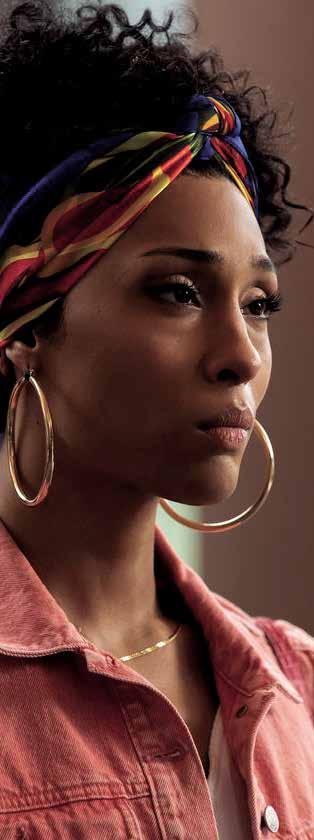
NBC News reported on January 9 that Michaela Jaé (Mj) Rodriguez has made history by winning the Golden Globe for best actress in a drama, making her the first Trans actor to win a Golden Globe. She was also the first Transgender actor nominated for a lead-acting Emmy. Rodriguez won the award for her role in Pose. Rodriguez commented on the win on Sunday: “Wow! You talking about a sick birthday present!” she wrote on Instagram. “This is… going to open the door for so many more young talented individuals.” NBC contributing writer Kait Hanson noted that other actors in Pose, a show with the largest Trans cast for a scripted series, have voiced their disappointment that the show hasn’t received more award recognition.
Texas:
Ted Cruz’s daughter comes out as Bisexual
LGBTQ Nation reported on January 10 that Caroline Cruz, daughter of Republican Sen. Ted Cruz, has come out as Bisexual and decried her father’s political views on TikTok. She has also added pronouns to her bio, told a story about her parents digitally editing a family Christmas photo to make her crop top look longer, and said that her father doesn’t know about her sexual orientation. LGBTQ Nation noted the stark contrast between this development and Ted Cruz’s history as “one of the most vociferously antiLGBTQ members of Congress.”
Photo by Jacquelyn Martin / AP
Michaela Jaé Rodriguez as Blanca in the final season of Pose – Photo courtesy of FX
Photo by Matt Rourke / AP
Nat’l & Int’l News International news highlights
by Daniel Lindsley SGN Contributing Writer
Melbourne:
First out soccer star decries homophobic abuse
Poll: Americans becoming less religious across the board
The Advocate reported on January 10 that out Gay Australian soccer player Josh Cavallo has responded to the homophobic abuse he experienced at a game on January 8, and on social media. “I’m not here to pretend that I didn’t see or hear the homophobic abuse at the game last night,” he said in an Instagram post. “There are no words to tell you how disappointed I was. This shouldn’t be acceptable, and we need to do more to hold people accountable. I will never apologize for living my truth and most recently who I am outside of football.” The Advocate added the context that Cavallo came out as Gay in October of last year, becoming the first active professional soccer player to do so. “Thank you [for] all the positive messages, love, and support,” Cavallo went on. “Seeing that far outweighs the negativity.” by
London:
Trans rights group protests the BBC
LGBTQ Nation reported January 9 on a protest held to object to the BBC’s allegedly biased and discriminatory coverage of Trans communities. Protestors gathered outside the organization’s headquarters in London, the fourth in a series of demonstrations in the last three months, after the BBC published a story by Caroline Lowbridge titled, “We’re being pressured into sex by some trans women.” The article cited a questionable survey by an anti-Trans organization, which claimed that Trans Lesbians commonly “pressure” cis Lesbians into sexual relationships.
Demonstrators had complaints about other articles as well. One protestor told Openly News, “I’m nonbinary…, and the BBC has been launching attacks on people like me and all these people out here today.” Twitter user @mimmyumm used Google Analytics to point out that, of the top six most engaged articles on Trans topics last year, three of them were by the BBC, and all of those three “framed Trans people in a negative light.”
Mike Andrew SGN Staff Writer
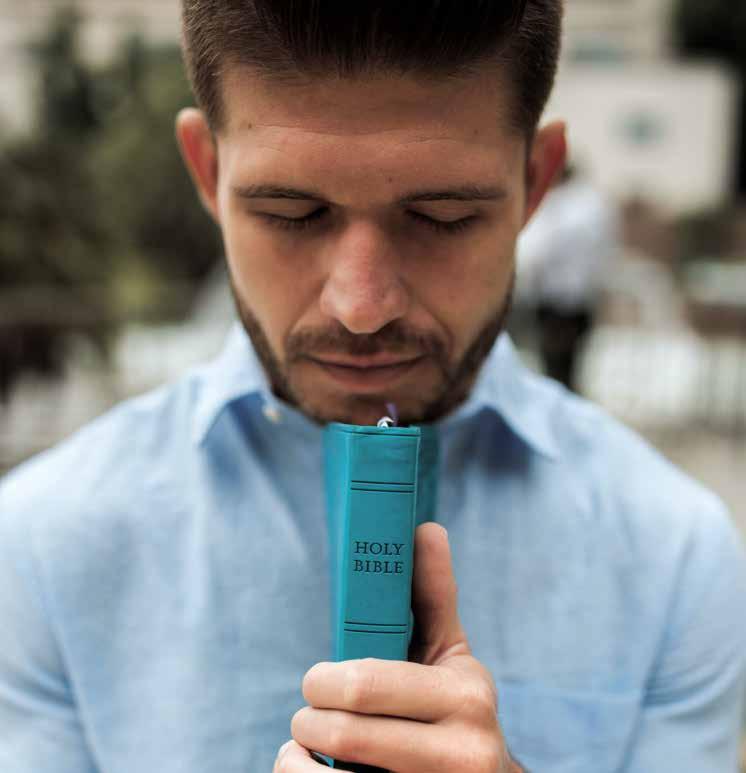
The US is becoming less Christian and less religious overall, according to a new study released by the Pew Research Center.
According to Pew, only 63% of the US population now describe themselves as “Christian,” down from 75% just 10 years ago. Thirty percent say they are religiously “unaffiliated.”
Washington state is one of the least religious states in the country, with only 45% of the population identifying with a religion.
King County is even less religious. Here a mere 35.07% say they are religious. Pierce County is only slightly more religious at 35.08%. The most religious county in the state is Garfield County, in the southeast corner of the state, where a whopping 60.1% of the people say they attend church services at least once a week.
Among the King County churchgoers, Roman Catholics make up the largest share, at 15.35%. Protestants of various denominations come next with 14.85%. Almost two percent are Jewish, 0.56% are Muslims, and 0.11% adhere to what are described as “Eastern religions.”
Washington state is not the most irreligious state, however. That title goes to Massachusetts and New Hampshire, each of which has only 33% religiously affiliated. The most religious state in the country is Mississippi, where 63% of the population attend church services regularly.
Religion in the rest of the world
While the religious population in the US — and other developed countries — is declining, almost everyone else in the world is religious, Pew found. According to the latest edition of Pew’s Religious Composition by Country, 2010-2050 report, some 7.7 billion out of 7.9 billion people in the world are affiliated with a religion.
This groundbreaking study considers the religious composition of 198 countries and how it is likely to change over almost four decades based on “differences in fertility rates and the size of youth populations among the world’s major religions, as well as by people switching faith.”
Based on Pew’s forecast for 2020 for the number of members of each group, Christianity ranks first with 2.383 billion people, out of a global total of 7.7 billion religious people.
The largest group of Christians is in sub-Saharan Africa (650 million), followed by Latin America (585 million), Europe (535 million), Asia and the Pacific (320 million), and North America (277 million).
Among the countries with the largest Christian populations are the United States (259 million), Brazil (185 million), Mexico (118 million), the Philippines (102 million), Nigeria (96 million), China (72 million), Ethiopia (62 million), Italy (48 million), South Africa (43 million), Uganda (40 million), Tanzania (39 million), France (37 million), Spain (36 million), and India (34 million).
Methodology
Pew’s report is based on several sources:
The 2021 National Public Opinion Reference Survey (NPORS), conducted online and by mail among a nationally representative group of 3,937 from May 29 to August 25, 2021.
The 2020 NPORS, conducted online and by mail among a nationally representative group of respondents. The survey was conducted among 4,108 respondents from June 1 to August 11, 2020.
The 2014 Religious Landscape Study (RLS), conducted by telephone (cellphones and landlines) among a nationally representative group of 35,071 respondents June 4 to September 30, 2014.
The 2007 RLS, conducted by landline telephone among a nationally representative group of 35,556 respondents from May 8 to August 13, 2007.
Estimates for 2008-2013 and 2015-2019 come from other Pew Research Center telephone surveys. Data on the country’s religious composition come from multiple political surveys conducted each year and then aggregated to produce yearly estimates.
The questions on prayer frequency and religion’s importance in people’s lives were asked less often in the Center’s telephone surveys, and those estimates are based on one or two surveys (if any) conducted in a given year.
Today, almost all of the center’s US polling is conducted online rather than by telephone.
Josh Cavallo – Photo courtesy of Adelaide United FC