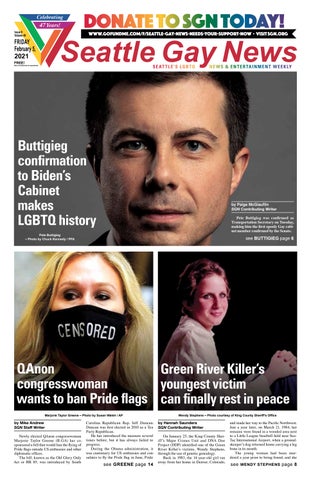
On January 25, the King County Sheriff’s Major Crimes Unit and DNA Doe Project (DDP) identified one of the Green River Killer’s victims, Wendy Stephens, through the use of genetic genealogy. Back in 1983, the 14-year-old girl ran away from her home in Denver, Colorado,
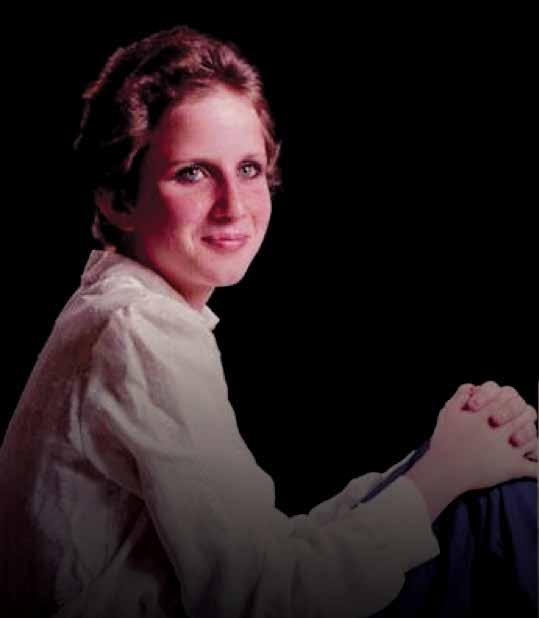
Stephens – Photo courtesy of
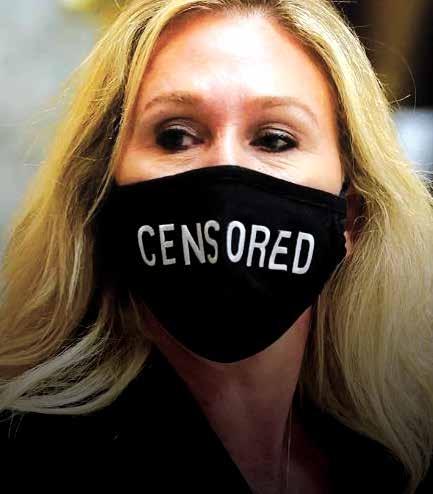
Sheriff’s Office Marjorie Taylor Greene – Photo by Susan Walsh / AP
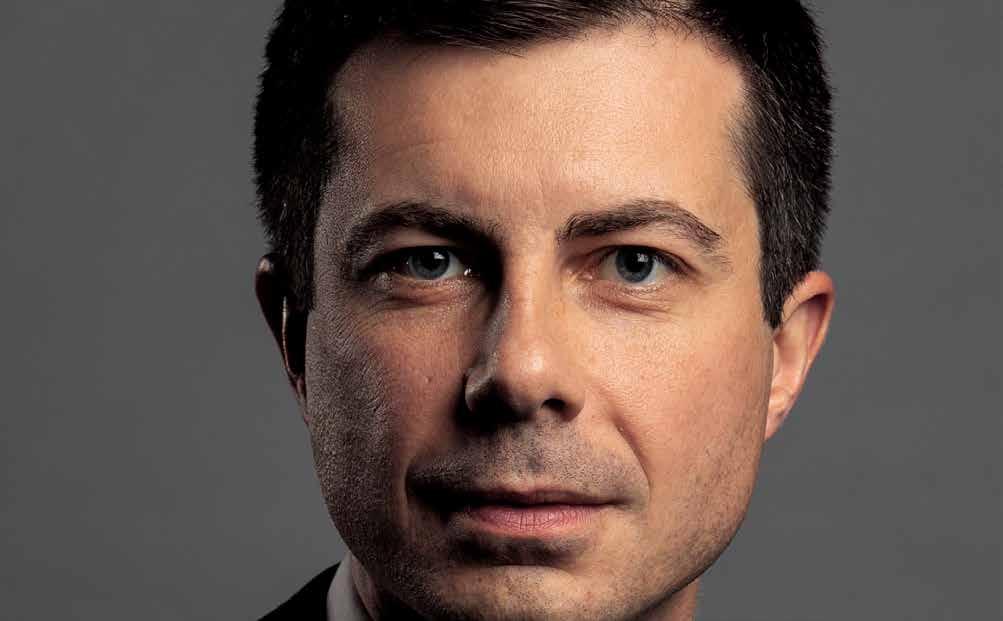
Buttigieg
Photo by Chuck Kennedy / PFA
OBITUARY
Former AFL-CIO president John Sweeney dies at 86
Chartered national LGBTQ labor organization Pride At Work
by Mike Andrew SGN Staff Writer
Former AFL-CIO President John Sweeney died February 1 at the age of 86. He led the federation of unions from 1995 until his retirement in 2009.
Sweeney was elected in 1995 at the head of a reform slate that promised to uproot union bureaucracy and put more resources into grassroots organizing.
As part of that agenda, he pledged to charter labor organizations that represented marginalized and excluded workers. One of those organizations was Pride At Work, representing LGBTQ workers, chartered in 1997.
In Seattle, LGBTQ workers had already come together to form Out Front Labor Coalition, which became the local Pride At Work chapter when the national organization was officially chartered by the AFL-CIO.
Sweeney is perhaps best known to Seattleites for his role in the massive anti-WTO demonstrations in November 1999. At the urging of Ron Judd, then head of King County Labor Council, Sweeney approved plans for a massive union mobilization and arrived to lead the union protests in person.
His successor as AFL-CIO president, Richard Trumka, said in tribute, “John Sweeney was a legend, plain and simple. He was guided into unionism by his Catholic faith, and not a single day passed by when he
didn’t put the needs of working people first.
“John viewed his leadership as a spiritual calling, a divine act of solidarity in a world plagued by distance and division. The son of Irish immigrants, he used work as a way to directly apply his values, consistently exhibiting grit over flash and pursuing progress instead of posturing…
“I was proud to join his insurgent ticket in 1995, which recommitted the AFL-CIO to worker organizing and collective power. As president, John was a great leader and true innovator, driving the labor movement forward. We stand on that foundation today as we take on the challenges of inequality, systemic racism, and much more.”
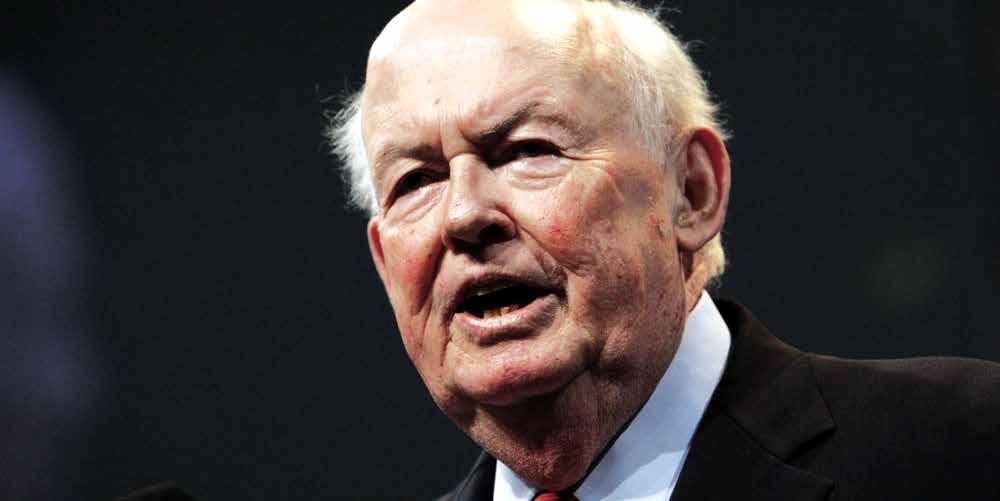
John Sweeney – Photo by Charles Dharapak / AP
Tent encampments are here to stay unless …
by Tim Burgess Seattle Forward, former City Council president and interim mayor
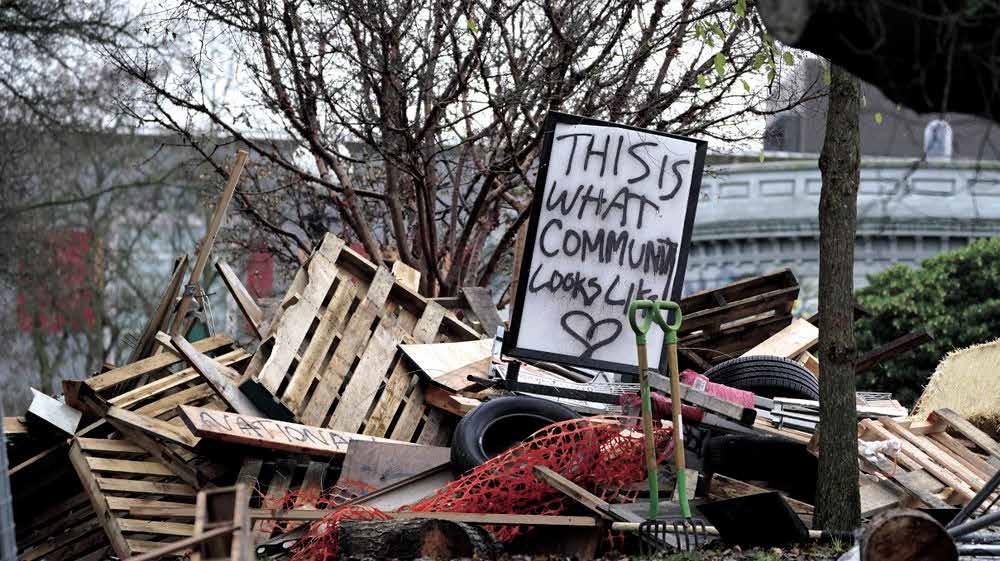
The tents, dilapidated vehicles, and piles of trash you see in almost every Seattle neighborhood have become an enduring fixture. So has the human suffering.
We should quickly prioritize addressing these tent encampments and follow the lead of other cities that have successfully tackled this issue. Since 2015, when the mayor declared a homelessness emergency, we have spent hundreds of millions of taxpayer dollars – and there are success stories to tell – but, tragically, there is no comprehensive plan to remove these illegal encampments or to help those living in them. Not now. Not any time this year or next. Not in five years. They are essentially permanent.
That’s because the City Council’s preferred approach has been one of tolerance and accommodation, evidenced by their elimination last fall, despite Mayor Jenny Durkan’s strong objection, of the navigation teams – outreach workers paired with police officers – that successfully nudged people in encampments to accept shelter and social services.
The City Council’s laissez faire approach furthers the terrible damage of substance abuse and mental health disorders for the majority of encampment dwellers. It’s also an approach that denies the public access to parks, sidewalks, and green spaces. It enables criminal behavior that harms neighbors, businesses, and other campers. It creates piles of trash and unsanitary conditions. It harms our tourism and hospitality industry, a key jobs-producing component of Seattle’s eventual economic recovery. It’s appallingly misguided, worsened by the Council’s convoluted and confusing rules and regulations designed to prevent, or at least delay, the removal of any encampment.
There is a much better, more humane way forward.
Let’s implement a specific plan that is both compassionate in meeting urgent human needs and fulfills city government’s public health and safety obligations. A plan designed to remove encampments and prevent their return, to restore access to our parks and public spaces for everyone’s enjoyment, to help campers by providing enhanced substance abuse and mental health services. A plan that no longer ignores or excuses the criminal behavior – assault, burglary of homes, businesses and cars, arson, theft – of some unsheltered individuals that has created chaos in parts of the city and shattered confidence in the city government.
Look at the facts.
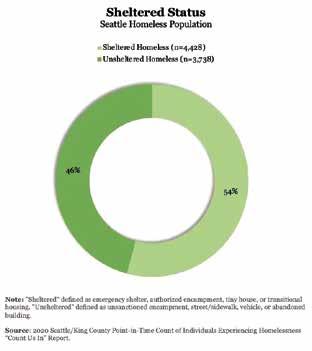
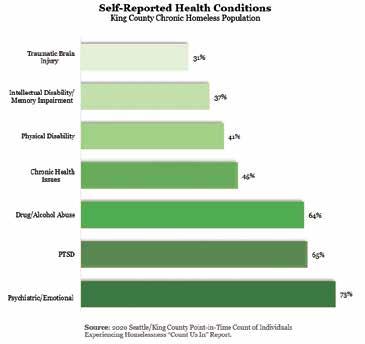
Our parks, sidewalks, streets, freeway rights-of-way, and green spaces have become “home” to an estimated 3,738 individuals, almost one-half (46%) of Seattle’s total homeless population, according to the latest (January 2020) point-in-time count. Most of the unsheltered population reports living with mental health or substance abuse challenges, often both.
It’s clear we need a new, more purposeful approach or the encampments will continue to grow in number. It’s important we move quickly to prepare for better weather and the decline of the COVID-19 pandemic when park usage will soar.
Here are some of the key elements this new plan should include.
The plan should meet the medical needs of campers – a major cause of their unsheltered living – by providing truly ondemand treatment for those with substance abuse disorder or mental health challenges. “On demand” means available the moment someone acknowledges a need for help: not next week or next month, not placement
on a waiting list, but right now. Treatment services – both inpatient and outpatient options – should follow the science of what works best based on rigorous, independent, published evaluations.
The plan should recognize that these services won’t provide a quick cure, yet a long-term commitment to a patient’s recovery is essential. These services should use whatever state and county government funding is available but recognize that repurposed city funding will be needed to serve the target population effectively. We should stop waiting for another level of government to step up; the cost of inaction is devastating.
The plan should speed up Mayor Durkan’s surge strategy, including this week’s announcement of a public-private partnership by Councilmember Andrew Lewis, to accelerate the creation of more enhanced shelter capacity, tiny houses, and rented hotel rooms to quickly move unsheltered people into safer, cleaner, warmer places.
Importantly, the plan must require written service plans for each unsheltered individual, a key success element endorsed by national experts and a dramatic shift from Seattle’s highly informal ad hoc outreach approach. The city recently funded additional outreach services but did not specify performance outcomes, allowing a dozen or so nonprofit organizations to use their own methodologies and success criteria. The plan should divide the city into service regions so
outreach teams have a specific geographic area of responsibility, a change that will significantly increase accountability.
The plan should use a focused deterrence, problem-solving approach to criminal behavior, employing a range of interventions including arrest and prosecution, if necessary. This is not, as some claim, “the criminalization of homelessness.” It’s a considered response to specific people who are engaged in destructive, ongoing acts of violence or persistent criminal behaviors that significantly harms others, including other unsheltered persons. It is behavior focused, not homelessness focused.
The plan should recommit city government to the new but not yet operational Regional Homeless Authority, acknowledging that homelessness and encampments are a regional problem that requires a shared response with high accountability measures and regular public progress reports.
The plan should require either acceptance of services – such as shelter, temporary housing, and treatment services – or removal, strongly encouraging people to choose but not allowing continued camping.
And, finally, the plan should acknowledge the importance of permanent, low barrier supportive housing – a “housing first” approach – because so many of the unsheltered are chronically homeless with serious addiction and mental health needs. To reestablish their lives, they need a safe,
warm, and welcoming place with supportive health and social services.
This new plan will be expensive – primarily because of the need to significantly increase access to treatment services – but it’s doable with a reallocation of existing city funds. But it won’t be as expensive as continuing to do nothing. However, it will require a fierce determination to achieve the desired outcomes and to resist the many competing interests that have crippled the city’s ability to successfully address the encampments.
Is this all a pie-in-the-sky fantasy? Could we actually serve our unsheltered and chronically homeless population better? The answer is absolutely “yes,” because other cities have already done it. Look at Bakersfield-Kern County, California. Or Bergen County, New Jersey. Or Abilene, Texas. Each of these jurisdictions – along with more than 75 others across the country – joined Community Solutions, a national nonprofit organization, and rigorously followed their step-by-step process to reduce the unsheltered homeless population. It is a successful model Seattle should follow, and quickly.
A plan like this can eliminate unsafe encampments and start hundreds of individuals on a path to safe, stable, and healthier lives. Wouldn’t that be worth it?
from
Reprinted
the Capitol Hill Seattle Blog
Photo by Ted S. Warren / AP
Images courtesy of CHS blog
History: the way they didn’t want you to see it
by Janice Athill SGN Contributing Writer
I think we can agree that history books should state the facts in a way that is honest about and relevant to the events being discussed, although, historically, this has been a running issue in our school systems. There is an unbelievable amount of suppressed information that haunts the “facts” of our history books, making them not only incomplete but sometimes bald-faced lies. Our past is littered with a long list of names we should know but would be unlikely to hear unless we chose to look for them.
For instance, not that many years ago it was common knowledge that Thomas Edison invented the light bulb. This infor-
JESSE’S JOURNAL
mation has begun to be corrected to state that Edison was the creator of the first highresistance incandescent electric bulb, and yet even that is still incomplete. While Edison had improved on old technology, it was still an unrealistic luxury that remained relatively unnecessary.
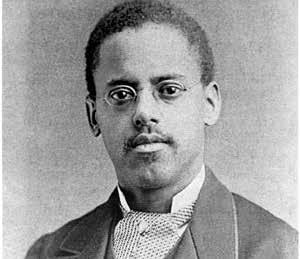
That is, until Lewis Latimer invented the carbon filament, which made light bulbs capable of being used for a longer period of time before burning out. Not only was this improvement practical for everyday use but also affordable for average households. This popularized the light bulb and electric lamps (something Latimer also had patents for).
Latimer was the son of a runaway slave, a Civil War veteran, and a self-
(Quick) tricks of the trade
by Jesse Monteagudo
SGN Contributing Writer
As everyone knows, the present pandemic forced many groups (queer or otherwise) to stop meeting in person. Instead, group members gather in front of their computers or other devices to attend virtual meetings or events.
One of those groups is Quick Tricks Duplicate Bridge Club (QTDBC), a “friendly gay” group of bridge enthusiasts. According to Dan Rosenblatt, publicity chair for the Ft. Lauderdale Bridge Club (FLBC), “prior to the pandemic we played Tuesday and Thursday nights at 6:30 p.m. and Saturdays at 12:30 p.m. Once the pandemic hit, everything changed. We shut down, and the leaders of the clubs in Fort Lauderdale, Key West, Pompano Beach, and Quick Tricks temporarily combined the clubs. While Quick Tricks does not currently exist as a separate club, members of each of the four clubs can play in these virtual games. We play online, and there are multiple games each day.”
According to Jim Miller, the club president, QTDBC was founded by Jack DeCrescente and the late Bruce Upson as a social gathering for Gay and Lesbian friends. It started at the Pride Center and then moved around before it settled down (pre-pandemic) with FLBC at their clubhouse in Holiday Park. During this time, it grew from a club with a handful of tables to one that hosted more than 50 tables at one seating. QTDBC is the largest LGBT club sanctioned by the American Contract
taught mechanical draftsman who had such a diverse catalog of scientific and engineering breakthroughs that the light bulb is not the only reason we should have had to learn his name. Having kept company with other household names, such as Hiram Maxim and Alexander Graham Bell, Latimer should have been noted for his direct involvement with the invention of the telephone.
Also notable is his 1886 patent for the “apparatus for cooling and disinfecting” used in his early air conditioning unit. However, the first air conditioning unit is credited to Willis Carrier, despite his 1902 version being an improvement on Latimer’s invention, in a similar fashion to Latimer’s improvement to Edison’s light bulb.
Bridge League and the only one in Florida.
But it is not the first club of its kind. In San Francisco, the late Tadd Waggoner founded Quick Tricks in 1978 to provide games for the city’s LGBT community. There are also clubs in Las Vegas (Sin City Gay Bridge), West London, and other places. Like Quick Tricks, these groups offer games and classes open to all.
Rosenblatt describes Quick Tricks as a “friendly gay club, because we don’t exclude players who are not gay (many working people play in the club because we play at night and on Saturday), but a fairly good majority of the members are gay.”
Prior to the Pandemic, Quick Tricks members played Tuesdays and Thursdays games that were limited to players with 1,750 masterpoints or fewer. On Saturday afternoon they played games that were limited to players with 2,000 masterpoints or fewer. The cost per game is $6 per player, though some special games may cost more. There is a mentor game on Wednesday when newer players (those who are not life masters) play with a life master (mentor).
The club also offers opportunities to learn or to improve one’s bridge skills.
Like other specialized interests, duplicate bridge attracts a small but devoted following. Many of them get together for tournaments, regional events, or sea cruises. LGBT bridge players are as devoted to their game as anyone else.
Those who currently limit their games to a small group of friends might consider Quick Tricks. Beginner classes begin in March, which might make it a good time for those of us who do not know a thing about bridge to get our feet wet.
Each year Quick Tricks donates several thousand dollars to local charities, including a thousand bucks to help feed hungry children.
For more information visit the Quick Tricks Bridge Club at www.bridgewebs. com/quicktricks or the Fort Lauderdale Bridge Club at www.ftlbc.com.
This article owes much to my friend Dan Rosenblatt, a lifelong bridge enthusiast.
Lewis Latimer was a member of the National Inventors Hall of Fame, and his is a name you should know.
So if Latimer is directly responsible for so many everyday things, how is it so many people haven’t heard of him? In a way, the answer correlates with the apology issued by McGraw-Hill in 2015, when it was brought to their attention that they had printed educational books for roughly a quarter of Texas’ 1,200 school districts with a map caption that described the Atlantic slave trade as the “immigration of workers.” Censorship* of history books is not limited to bald-faced lies but also the exclusion of information about the Black community that seems to infringe on the image of white heroes, and those who write the history books have never missed the opportunity to rewrite history in their favor. Since history provides no shortage of unsung heroines and heroes like Latimer, it’s necessary to have honest and reliable resources. For this reason, it’s wonderful to know that Washingtonians have resources like the Washington State Historical Society and the Washington State History Museum. Together, committed to real depictions of history, they are hosting a Facebook Live program about the impact of Black pioneers in Washington State. This free presentation will air on February 25 at 6:00 pm (PST) and will include relevant and entertaining information about the empowering Black history in the state of Washington.
* Censorship is when an authority (such as a government or religion) cuts out or suppresses communication. This may be done because it is considered wrong, harmful, sensitive, or inconvenient to the government or other authorities.
Lewis Latimer – Photo courtesy of Lighting Research Institute
Light bulb by Lewis Latimer, 1883
Museum of Science and Industry, Chicago
BUTTIGIEG
continued from cover
The former 2020 presidential candidate and South Bend, Indiana, mayor was nominated to the position by President Biden following an announcement on December 15.
Buttigieg was sworn after on an overwhelming 86-13 vote. He is the second openly Gay cabinet member, following Richard Grenell, who briefly served as acting Director of National Intelligence in 2020.
GLAAD President and CEO Sarah Kate Ellis was among several national LGBTQ advocates commending the historic moment for the LGBTQ community.
“Secretary of Transportation Pete Buttigieg is making history and moving our country forward as the nation’s first openly
LGBTQ Senate-confirmed cabinet member,” Ellis said in a press statement Tuesday. “The role of Secretary of Transportation requires an innovative thought leader, someone who understands all Americans’ needs and has the courage to create and form the road ahead. Secretary Buttigieg’s vision will improve all Americans’ lives and navigate toward needed change to serve communities on the margins.”
Buttigieg will preside over the Department of Transportation, which employs over 55,000 people and controls a budget of over $80 billion. He has pledged to utilize President Biden’s infrastructure vision to help revitalize the economy and address racial and economic disparities that have been undermined by past transportation policy.
“I believe that good transportation policy can play no less a role than making possible
the American Dream,” Buttigieg said at his January 21 confirmation hearing. “But I also recognize that at their worst, misguided policies and missed opportunities in transportation can reinforce racial and economic inequality, by dividing or isolating neighborhoods and undermining government’s basic role of empowering Americans to thrive.”
Buttigieg also took a moment to introduce and thank his husband, Chasten, who was with him at the hearing. “I’m proud to have him by my side, and I want to thank him for his many sacrifices and his support in making it possible for me to pursue public service,” Buttigieg said.
The introduction of Buttigieg’s husband alone was lauded by advocates as well. Ellis referred to the introduction as a “milestone for LGBTQ acceptance and representation.”
“The image of Pete at his confirmation hearing, with Chasten looking on, will be remembered in history books as a seminal moment in our movement to build LGBTQ political power,” the Victory Institute wrote in a press statement Tuesday. “His elevation to the president’s cabinet will be an inspiration to LGBTQ youth and is proof that LGBTQ people can reach the highest levels of government and serve in any capacity.”
Buttigieg made history last year as the first openly LGBTQ candidate to win the Iowa caucuses. He came out in 2015 while running for re-election as mayor of South Bend, where he served from 2012 to 2020.
“I’m honored and humbled by today’s vote in the Senate – and ready to get to work @USDOT,” Buttigieg tweeted following the confirmation.
Photo by Kevin Lamarque / Reuters
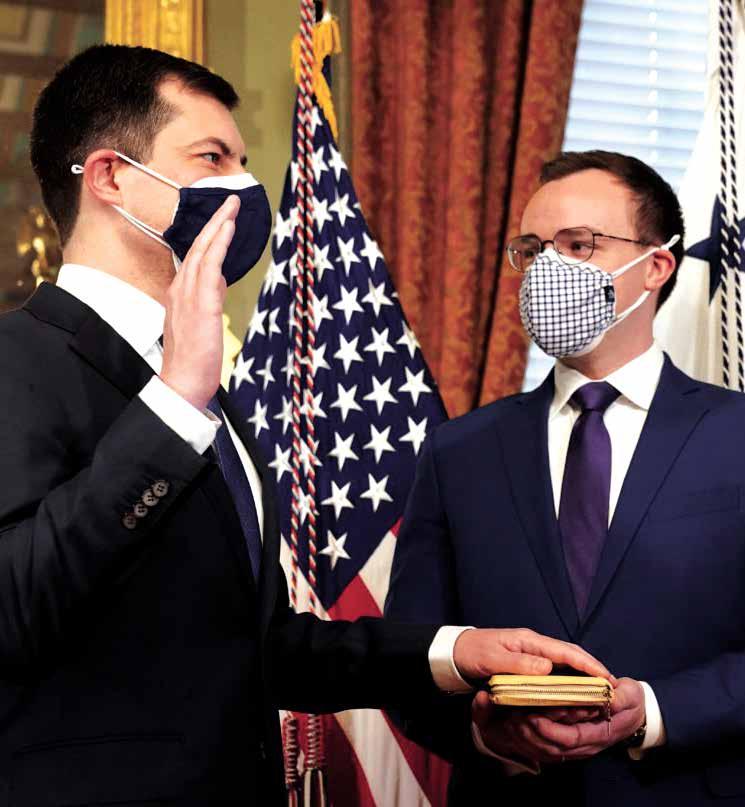
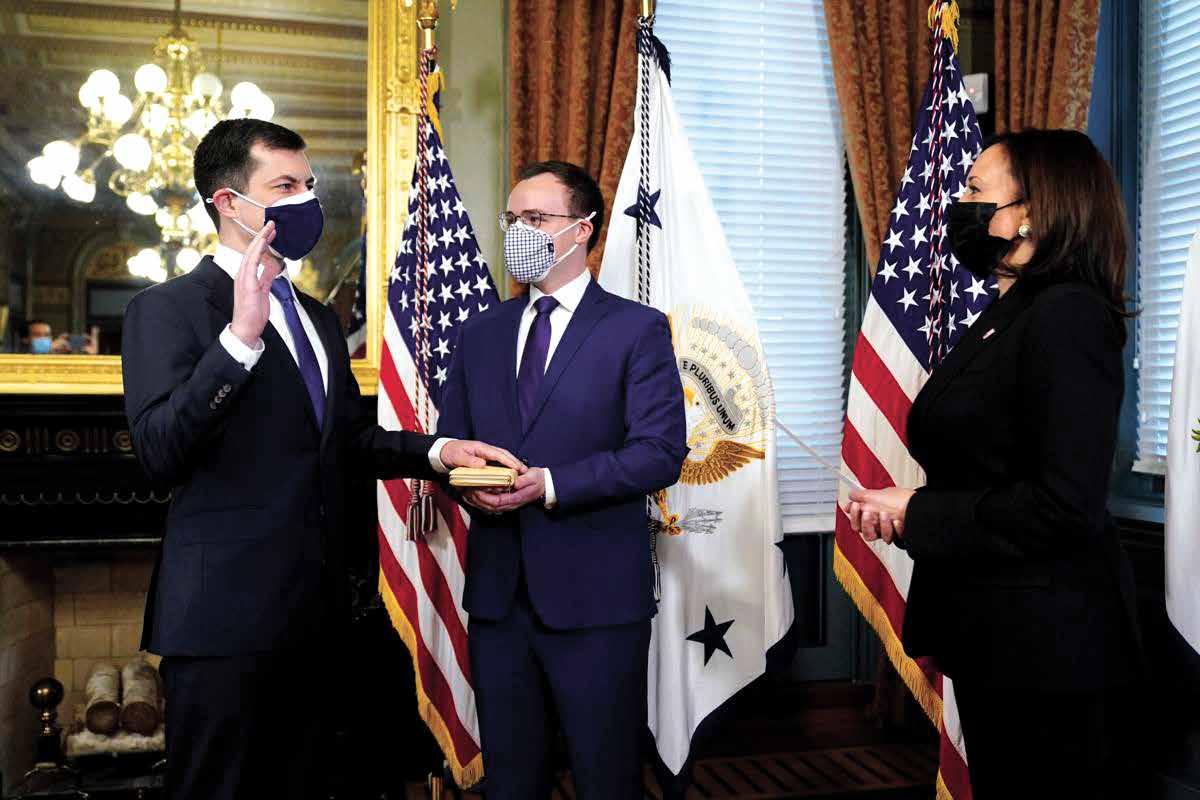
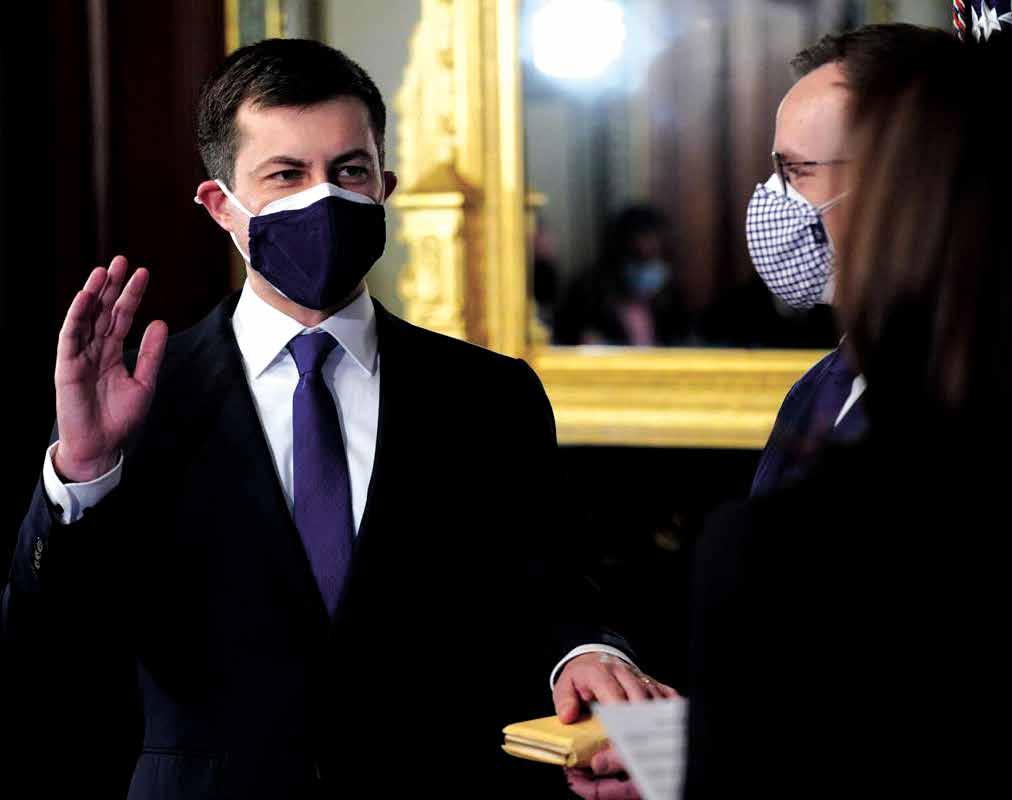
Pete Buttigieg, with his hand on the Bible held by husband Chasten Buttigieg, is sworn in as Transportation Secretary by Vice President Kamala Harris in the Old Executive Building in the White House complex in Washington, D.C. on February 3, 2021 – Photos by Andrew Harnik / AP
WENDY STEPHENS
is believed to be the Green River Killer’s youngest victim. She remained a Jane Doe for over three decades.
“I started working on the case when I was 31. I was assigned the first victim that was found in the Green River,” recalled Dave Reichert, who was lead detective with King County Sheriff’s Office (KCSO) at the time.
“The Green River Killer was such big news, so when bodies were found, I was called and would go out and look at the bones. Tom Jensen and another detective went to the house, and the dog led us back to a swampy area where the body was. I led the investigation of the crime scenes, managed the crime scenes. I helped recover her remains,” described Reichert.
Identifying the victim
It was in August of 2019 when the KCSO reached out to the DDP to work together on identifying the remains of the Green River Killer’s victims. The two departments began working on the Jane Doe who was discovered by the dog in 1984, whom the task forces identified as “Bones 10.” By April of 2020, her bone samples were sent to Astrea Forensics in Santa Cruz, Calif., where DNA was extracted through bone marrow. In June, the DNA was shipped in two small tubes with an ice pack to HudsonAlpha Discovery in Alabama for sequencing.
“They create a sequencing library and use PCR amplification to increase the amount of DNA available for sequencing. Then a shallow QC sequencing run is performed, kind of like a trial run,” stated Kevin Lord of Saber Investigations, the agency that worked on bioinformatics for this case.
Lord further explained how statistics are then displayed, such as the size of the DNA fragments and the percentage of DNA that connects to the human genome (rather than, say, bacterial contamination). He described how if everything checks out, they proceed with a full sequencing for a longer period of time to get the amount of data required.
HudsonAlpha Discovery posted the raw sequencing data for Lord to download and process, and on September 4, the bioinformatics were completed and uploaded to GEDmatch, a website where individuals can input their DNA to discover more about their heritage. According to the team leader of “Bones 10”, Cairren Binder, GEDmatch and Family Tree DNA are the only websites that allow law enforcement access to upload DNA data.
The DDP ran into a major issue while trying to find matches to their Jane Doe: in May 2019 GEDmatch changed its policy so users had to opt in to share DNA data with law enforcement. As a result, the number of matches dwindled from hundreds to dozens.
Earlier that year, one of Stephens’ parents had already uploaded their DNA to GEDmatch, but they were unaware of the policy change, and did not log in frequently.
“They did this to be matched in case their daughter was a Jane Doe, or some other outcome,” stated Binder. If this opt-in policy had not been put in place, Stephens would have been matched to her parents almost instantaneously.
At that point, the DDP was able to find third- and fourth-cousin matches. Binder described how they were working on these leads, but they weren’t hopeful of them being the big break they needed. The DDP then decided to upload Jane Doe’s DNA to Family Tree DNA to increase potential matches.
“Eventually we found a place where a lot of these different matches intersected. It can be called a smoking-gun couple, or a union couple: a couple married to each other [who] had kids on both the paternal and maternal sides,” said Binder.
With strong evidence of this couple having had a child together, the DDP then reached out to the National Center for Missing and Exploited Children (NCMEC) to pull up missing persons reports.
“We had them look up Wendy’s name and date of birth. They pulled up a missing person’s report from 1983 showing she ran away. At that point we were pretty certain we had the right person,” explained Binder.
On September 27, the DDP notified the KCSO about a match. From there on, detectives connected with Stephens’ family members and were able to obtain a reference sample that was needed in order to make this identification a 100% match.
“The use of DNA tech in cases like Wendy’s is less frequent,” stated Sgt. Tim Meyer of the KCSO, who went on to say that technology is becoming more prominent in current cases, such as sexual assaults.
According to Sgt. Meyer, Wendy Stephens’ remains will be sent back to her family, although that process has yet to happen.
As for Dave Reichert, who dedicated a great portion of his life to finding the Green River Killer and seeking justice for the victims, he mentioned that when he first found out, his initial thoughts were “with the family.”
“My thought was ‘This family finally has answers.’ My mind goes to what [the] site looked like where I recovered her body, what body parts were left. She was in a pretty muddy, boggy area, pretty decomposed,” described Reichert, who went on to say, “We didn’t give up, and we didn’t give up because we cared about the families.”
Three of the Green River Killer’s victims remain unidentified. As of now, the DDP is working to extract DNA from “Bones 20,” although Binder mentioned that the process has been more difficult. As of now, the Green River Killer investigation remains open.
Who was the Green River Killer?
Gary Ridgway was born on February 18, 1949, in Salt Lake City. His family relocated near SeaTac’s Pacific Highway, where decades later, he would commit numerous heinous murders.
Overall, Ridgway is described as having a normal upbringing, although one detail stuck out while being interviewed by the prosecution’s forensic psychologist after his arrest: Ridgway relayed that up until
Ridgway would be covered in markings, causing him to alter from manual strangulation to ligature strangulation.
Ridgway was never a smoker or gum chewer, but he would leave cigarette butt and gum wrapper droppings near the bodies to confuse detectives.
The Green River Killings took place from 1982 to 1998, although the majority occurred from 1982 to 1984. Detective Dave Reichert recounted working the case, where he saw “scores and scores of human bodies, mostly little girls.”
Ridgway murdered 49 women, although he is believed to have murdered up to 71; there is no confirmation of this however, because after a certain point, Ridgway lost count. Most of the bodies were disposed of along the Green River, occasionally in clusters. Some of the bodies were posed, and were usually found naked.
A later statement by Ridgway said that murdering young women was his “career.”
Downfall
King County investigators interviewed the notorious Ted Bundy, who was in custody at the time, to gain insight on the Green River Killer. Bundy suggested that the killer would return to the scenes of the crimes, most likely to engage in necrophilia with the bodies. He also suggested that if detectives found a fresh grave, that they should wait for the Green River Killer to return.
his early teenage years, he was a frequent bed-wetter, and he had vibrant memories of his mother cleaning his genitals after the incidents. (Experts believe these actions, and the creation of a pleasing but humiliating experience for an adolescent boy, could have triggered Ridgway’s motivation to kill.) Shortly after, he became sexually attracted to his mother, and described how he would daydream about killing her due to his sexual feelings toward her.
When he was approximately 16 years of age, Ridgway led a six-year-old boy into a wooded area and stabbed him. Luckily the boy survived, but he vividly remembers his attacker walking away from the scene, laughing hysterically. When interviewed, Ridgway stated that he wanted to see how stabbing worked, that he was interested in it due to his feelings surrounding his mother.
Ridgway never excelled in school, so after he finished high school, he went to fight in the Vietnam War. When he returned stateside, he got a job painting trucks, which he held onto for 30 years. In 1973, Ridgway married Marcia Winslow (his second wife) and had a son together two years later. It was during his marriage to Winslow that Ridgway discovered religion, and would spread the word of God wherever he went; he was even known to shed tears while reading the Bible and attending church sermons. Ridgway consistently complained about prostitutes in the area, while simultaneously paying for their services when no one was around.
Winslow divorced Ridgway in 1981 because she was fearful of his temper. She also claimed that on one circumstance, he had snuck up behind her and choked her.
A few years later, Ridgway remarried for the third and final time.
Killing spree
In 1982, Ridgway began prowling South King County, primarily Highway 99, for prostitutes and runaways. He enjoyed hunting women that fell into these categories, because they were on the street at night, and alone. In addition, Ridgway later mentioned that these women were easy to pick up, and unhurriedly reported missing.
The trust of his victims was initiated and gained by showing the women a picture of his son. Once out of sight from the public, Ridgway raped then strangled the women to death, but not without the victims fighting like hell. Often after a murder,
Bundy wasn’t wrong. The Green River Killer would occasionally revisit the crime scenes to have sex with the corpses due to fears of getting caught while picking up a new, living girl.
Reichert described how it was at the crime scene of Marcia Chapman and Cynthia Hinds in 1982 where the KCSO was able to collect spermicide samples from the killer. These samples were kept frozen in test tubes until advances in technology were made available.
“In March of 2001 a lab called and said, ‘We have the scientific ability to now examine the samples from the victims of 1982 found in the river, and the gauze that the suspect chewed on,” said Reichert. In September of 2001, detectives identified a match to the Green River Killer.
Arrest and conviction
On November 30, 2001, Ridgway was arrested at a truck factory under the suspicion of murdering four prostitutes twenty years prior. In August of 2003, he made a plea deal that stated that if he confessed to his murders and pled guilty, he would not receive the death sentence.
The trial took place in November of that year. Ridgway pled to 48 counts of aggravated first-degree murder (in 2011 he pled guilty to an additional murder, totaling 49) and was sentenced on December 18 to 48 life sentences without the possibility for parole. Another 10 years per victim were added for the tampering of evidence within each murder, totaling his life sentences to 480 years.
Gary Ridgway bounced around different prisons in Washington and Colorado, but as of 2021, he is living out his final days locked in the Washington State Penitentiary in Walla Walla.
• The Big Book of Serial Killers, by Jack Rosewood
• Green River Killer: Mind of a Monster (documentary)
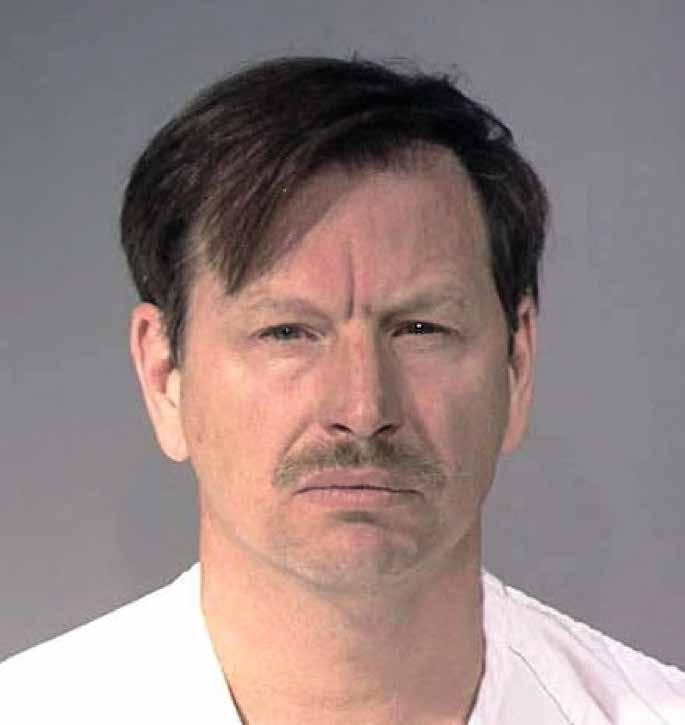
Gary Ridgway mugshot – Photo courtesy of Wikipedia
continued from cover
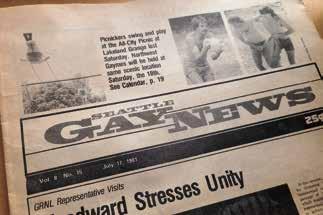
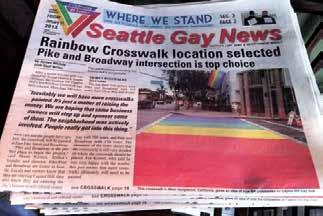
Volunteers are needed to sort through over 250 boxes of Seattle Gay News issues from the 1980s to the 20-teens.
Sorting involves identifying not more than 10 copies of each issue, putting the issues in chronological order and organizing by year. Non-SGN items will be separated out as well as copies that exceed ten per issue.
Boxes will be labelled and issue numbers will be identified per box. Once the boxes are arranged chronologically and we have a list of all the issues, the copies will be organized into complete runs with one copy of each issue in each set.
Volunteers need to be able to lift boxes up to 40 pounds, stand on a cement floor, and be willing to follow COVID-19 protocols which involve having your temperature taken as you enter the building and wearing a mask at all times.
The work takes place at Seattle City Hall, 600 Fifth Avenue, in the vault that holds records for the Seattle Municipal Archives.
Please
volunteer or to seek further information.
Grocery workers to get $4 per hour extra hazard pay
by Mike Andrew SGN Staff Writer
Beginning February 3, grocery workers in large Seattle stores will get an extra $4 per hour in hazard pay for working during the COVID-19 pandemic.
Seattle’s City Council passed the new rule 8-0 last week. Grocery workers did get extra hazard pay early on in the pandemic, but almost all employers canceled the benefit last summer.
The new Seattle ordinance applies to grocery businesses that employ 500 or more employees worldwide. Grocery businesses under the legislation are defined in two ways:
• retail stores in Seattle with more than 10,000 square feet that primarily sell groceries
• stores over 85,000 square feet with at least 30% of the sales floor going toward selling groceries
The legislation does not apply to convenience stores, food marts, or farmers markets.
The $4 hazard pay must be paid on top of an employee’s base pay. Under the legislation employers may not lower an employee’s pay to compensate themselves for the increase in hazard pay.
UFCW 21, the union representing grocery store workers, fought for months to get hazard pay reinstated.
“Grocery store corporations have continued to profit throughout this pandemic, and paying an additional $4 an hour hazard pay to all their workers is the right thing to do,” said Faye Guenther, president of UFCW 21.
“This relief is critical for a workforce deemed essential and who have been doing the risky work in stores since the pandemic began over a year ago.”
According to the union, one big local employer – PCC, or Puget Consumer Coops – pressured Seattle Mayor Jenny Durkan to kill the measure. In the end, Durkan signed the ordinance, however.
“A disproportionate number of people of color are essential workers, and Seattle must continue to lead the way to provide relief and respect to those that have served our community throughout this pandemic,” the mayor said in a statement.
“Grocery store workers have continued to work every day of this challenging time, and I am glad we are finally able to recognize and compensate the effort that has kept stores open and communities fed over the past year.”
City Councilmember Teresa Mosqueda, who sponsored the ordinance, said, “These measures truly reflect our city’s values: protecting vulnerable workers, building healthy communities, and building a prosperous economy for all Seattle residents.
“Hazard pay is only one piece of the puzzle, and I’ll continue fighting for essential workers who need early and equitable access to vaccines and other safety measures at their worksites.”
COVID-19 cases remain high across the
Puget Sound region, and public health officials worry about the spread of new variants of the virus that are thought to be more contagious.
Over the weekend, Public Health - Seattle & King County confirmed that the new B117 strain of COVID-19 was circulating in King County. The strain was already identified in Pierce and Snohomish Counties.
With 1,000+ doses expiring after freezer failure, Seattle U clinic part of overnight COVID-19 vaccination scramble
by Justin Carder Capitol Hill Seattle
SEATTLE (January 29, 2021) – The eligible. The connected. The lucky.
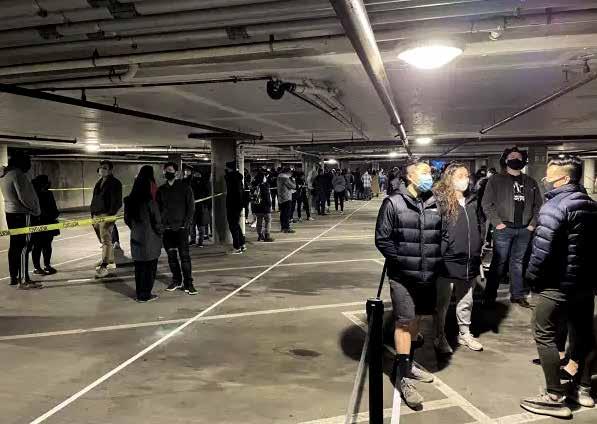
Late Thursday night, word spread across the city that one of those emergency COVID-19 vaccination events you’ve been hearing about was happening here in Seattle.
A freezer failure. A 5:30 a.m. expiration. A rush to dole out more than 1,000 doses.
Just after 11 p.m. Thursday, officials from the Swedish health system announced its community vaccine clinic at Seattle University was rushing into motion after shutting down earlier this week due to a lack of supply. “URGENT: We have 588 DOSE 1 MODERNA appointments available Jan. 28 11 p.m. to Jan. 29 2 a.m.,” the message read. The race was on to book an appointment.
Hundreds and maybe thousands lined up in sprawling crowds there and at UW Medicine, which was also activated for the emergency vaccination effort. In total, some 1,300 doses were at risk.
At first, Swedish insisted only those in the currently eligible first vaccination phase – health workers, those 65 and older, those 50+ living in multigenerational households
– were eligible. But the message varied through the night and rumors spread that eligibility – and appointments – did not matter.
Swedish later in the night announced that those with appointments would be vacci-
nated. Reports from the line detailed volunteers on the search for 65-year-olds and lastminute, middle-of-the-night success stories.
The Seattle Times reports a freezer failure in the Kaiser system set off the urgent
rollout, with officials turning to the few facilities, including the Seattle U clinic, that were already set up and ready to deploy at mass levels.
The last of the emergency vials was spent sometime around 3 a.m.
Many of the older seekers have been used to early morning hours. State and local officials have struggled to meet early goals for vaccine deployment as the federal system of distribution ramps up under the Biden administration, leaving many of those eligible in a nightly scramble to grab any available appointments as they come online.
Seattle’s scenes of emergency vaccine deployment follows other stories from across the country where medical teams and volunteers have rallied against odds to deploy shots when freezers fail, or roads are blocked.
It also arrives as the state has suddenly lowered the bar for reopening and social gathering, making its most populous region eligible for lowered restrictions starting Monday, even as fears grow of a more virulent strain of the virus.
Reprinted from the Capitol Hill Seattle Blog
Photo by Ben Margot / AP
Photo courtesy of CHS
National AIDS Memorial observes Black History Month with Memorial Quilt virtual exhibition honoring Black
SAN FRANCISCO (February 4, 2021)
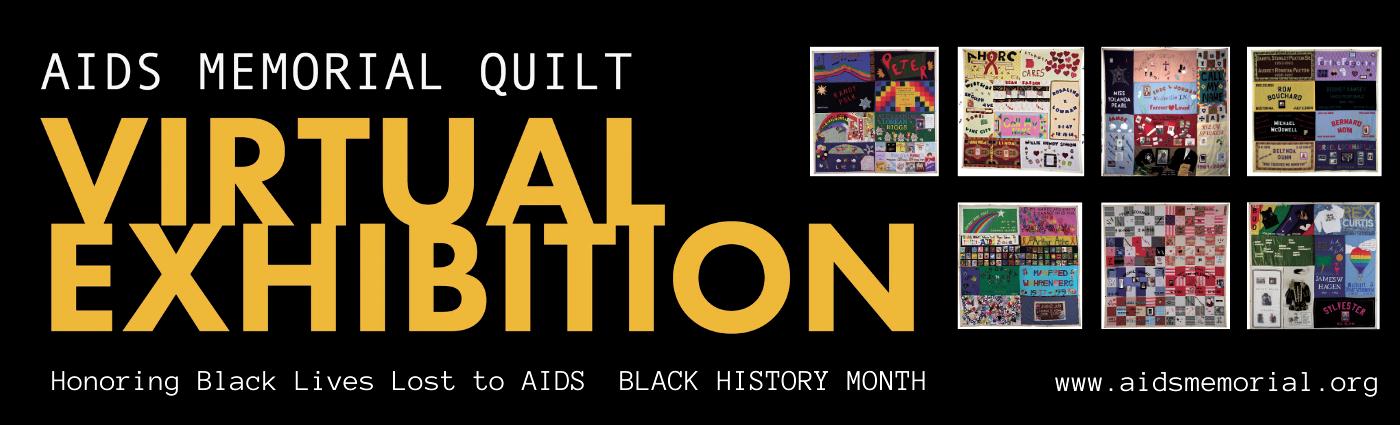
– During Black History Month, the National AIDS Memorial honors Black lives lost to AIDS with a specially curated selection of 56 blocks of the AIDS Memorial Quilt (the Quilt). The exhibition uses the beauty and power of the Quilt to bring to light stories of the countless men, women, and children who have died, and the impact AIDS has had on Black Americans.
“This virtual exhibition shares stories of hope, healing, and remembrance to honor Black lives lost to AIDS,” said John Cunningham, executive director of the National AIDS Memorial. “Our hope is that it helps raise greater awareness about the ongoing struggle with HIV and the impact systemic barriers have to positive health outcomes, particularly among the Black community.”
In the 40 years since the first cases of AIDS were reported, Black Americans and communities of color have been disproportionately impacted by AIDS. By 1993, HIV was the leading cause of death for Black men between the ages 25 and 44, and by 2004, HIV became the leading cause of death for Black women in the same age group. In 2018, Black Americans made up 42% of the nearly 38,000 new HIV diagnoses in the US, with half of those living in southern states. The Quilt is a powerful tool to reach these communities through its stories of resilience, healing, hope, and remembrance represented in each panel.
Partners for the Black History Month AIDS Memorial Quilt Virtual Exhibition include the Black AIDS Institute, Gilead
Sciences, and Vivent Health, national leaders in the fight against AIDS.
“Today, Black Americans face the highest impact of HIV/AIDS compared to all other races and ethnicities. This highlights the need to center Black and LGBTQ people in the fight to end the epidemic,” said Raniyah Copeland, president and CEO of the Black AIDS Institute. “By sharing these powerful stories from the Quilt, we can continue to advocate for Black people living with HIV, defy stigma, and create awareness around prevention and treatment options available today that can end HIV in Black communities over the next decade.”
In 2013, as part of ongoing awareness and educational efforts, a special Quilt program, “Call My Name,” was created to draw attention to HIV/AIDS in the Black community and the public health crisis that still exists today. The program aims to create a greater number of Quilt panels that reflect the impact of HIV/AIDS within the Black community and the effect stigma and prejudice have on increased infection rates.
“We selected Quilt panels for this exhibition that tell some of the many stories of Black Americans who lost their lives to AIDS, and whose loved ones honored them by stitching their stories, their memories, their hopes into the Quilt,” said Gert McMullin, National AIDS Memorial Quilt conservator. “These stories are of children, women, and men who we lost to AIDS and who all are remembered through the Quilt.”
Some of the featured stories in the exhibition include:
• Panels made as part of the Call My Name program, one of which honors Wandra, made by her hairdresser, who kept Wandra’s secret of being HIV-positive for ten years, until her death. She wanted to honor Wandra, a neonatologist in Atlanta, who “had a life of accomplishment” noting that her friend loved to ski and watch ballet.
(Block 5788)
• Black children who lost their lives to AIDS, including one panel that honors two-year-old Alexzandria that shows her photo, a teddy bear, Big Bird, and a poem written by her mother Charlene, who says she pours her grief into the poems and stories she has been writing since Alexzandria died. “I can be angry about it, but instead I soothe myself with my writing” (Block 2542). Another memorializes “Dougie,” who lost his life to AIDS at the age of eight. His mother lovingly made his panel, which includes a painting of him from a photo taken when he met musical artist Ice-T.
(Block 2268)
• Panels in memory of Black women who died of AIDS, such as Belynda, a Massachusetts AIDS activist who dedicated herself to helping organize Black churches in the fight against AIDS. According to her pastor, “within a few years, she had 45 Black churches doing prevention education...she helped us cross ideological and theological lines.” (Block 5718)
• Black celebrities – musicians, artists, designers, journalists – lost to AIDS, and, through their work and connection to people, brought awareness to the pan-
demic. A Quilt panel honors Sean Sasser, an AIDS activist who appeared on MTV’s The Real World: San Francisco, and who openly shared his relationship with Pedro Zamora, helping open hearts and minds to LGBT issues and those living with HIV/ AIDS (Block 5975). Another remembers the iconic “Sylvester” James, Eazy-E, Max Robinson, [Arthur] Ashe, and Willi Smith, with records, CDs, and photographs sewn onto it. (Block 5888)
• Several panels honor Black men who died of AIDS, including three that have military uniforms sewn into them to honor their service (Block 5976). Another honors George Gramby, who spent the last decade of his life helping people overcome substance abuse, forming a program called “Beginnings,” which still operates today. For more than 25 years, the town of Morristown, New Jersey, holds an annual day in his memory. (Block 5592)
The Black History Month exhibition coincides with National Black HIV/AIDS Awareness Day #NBHAAD on February 7, 2021. The exhibition is free to the public and can be viewed at www.aidsmemorial.org through March 31, 2021. Visitors to the site can also view all 48,000 panels of the Quilt and search for the names of loved ones who have a panel made in their memory.
“My daughter was crying, saying ‘Does God still love me?’”
by Bil Browning LGBTQ Nation
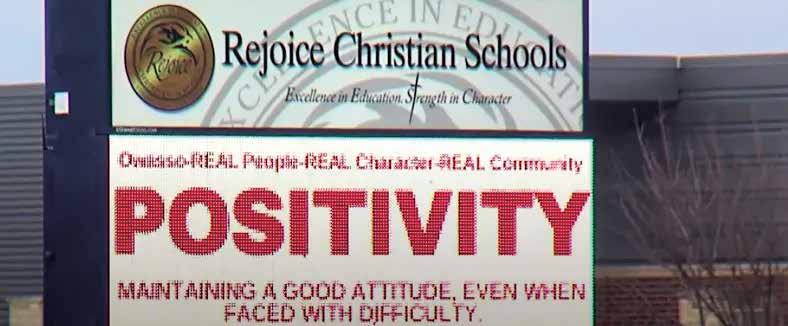
A second-grade student was expelled from Rejoice Christian School in Owasso, Oklahoma after she told another girl she had a crush on her.
“She said the vice principal sat her down and says the Bible says you can only marry a man and have children with a man,” Delanie Shelton, the girl’s mother, said. “My daughter was crying, saying ‘Does God still love me?’”
“The vice principal asked me how do I feel like girls liking girls and I said if we’re being honest, I think it’s okay for girls to like girls and she looked shocked and appalled,” Shelton added.
The school told local news that they didn’t condone boyfriend/girlfriend relationships at the school and pointed to the school’s handbook. It does not say that it is grounds for expulsion. The child did not break any of the school’s rules.
When that was pointed out, Superintendent Joel Pepin clammed up and would only say, “Due to privacy and other factors,
GREENE
continued from cover
Month, especially when their host countries were known to be hostile to local LGBTQ communities.
Some diplomatic facilities also flew Black Lives Matter banners in solidarity with the US African American community.
This practice was prohibited by Donald Trump, although embassies were still allowed to display Pride flags inside buildings.
Some embassies defied the order, with the US ambassador to South Korea, Harry Harris, displaying both the Pride flag and Black Lives Matter flag outside the Seoul embassy for a couple of days last summer.
The US Embassy in Moscow also dis-
it is the school’s policy to refrain from public comments regarding any particular student or family.”
The girl’s parents are now looking for a new school for their daughter.
played a Pride flag to highlight Russia’s demonization of its LGBTQ communities.
In January, President Joe Biden’s appointee as Secretary of State, Antony Blinken, said he plans to allow embassies to fly the Pride flag.
In a statement, Greene took exception to such initiatives, while also slandering the Black Lives Matter movement.
“In the past, rogue members of the State Department flew the flag of the radical Marxist group Black Lives Matter,” she wrote. “The domestic terrorists represented by that flag have burned down our cities with the mission of defunding our police. We should NOT be flying a flag of a group who wants to erase our history and bring mass destruction to our country through Communism.
“The federal government should only
“I don’t believe that my daughter should have been ripped out of the only school that they’ve known for the past several years,” said Shelton. But she’s sticking with her belief that all
be flying the flag that represents ALL people, the American flag. We need to bring back pride in our country and raise the Star Spangled Banner proudly. Old Glory represents our great American military and their sacrifices to ensure our freedom. This isn’t a political issue. This is about patriotism, and we need more of it.”
Although she’s only been in office one month, Greene has become one of the most controversial members of Congress.
An avid follower of the QAnon conspiracy theory – which alleges that the Democratic Party is led by a cabal of Satanist pedophile cannibals – her Twitter account has “liked” and reposted tweets calling for the murder of House Speaker Nancy Pelosi.
She has previously said the Sandy Hook and Parkland school shootings were staged, questioned whether any planes hit the
people are equal.
“Whatever makes people happy they should be allowed to do,” said Shelton.
Reprinted from LGBTQ Nation
World Trade Center on 9/11, and insisted the 2020 election was rigged.
Last month, old footage went viral of her chasing and harassing a Parkland massacre survivor, David Hogg, and telling him she was carrying a gun.
Even Senate Republican leader Mitch McConnell has rebuked Greene. While not naming her, McConnell issued a statement saying that “loony lies and conspiracy theories are cancer for the Republican Party and our country…Somebody who’s suggested that perhaps no airplane hit the Pentagon on 9/11, that horrifying school shootings were pre-staged, and that the Clintons crashed JFK Jr.’s airplane is not living in reality. This has nothing to do with the challenges facing American families or the robust debates on substance that can strengthen our party.”
Puerto Rico declares state of emergency over murders of multiple Transgender people
by Bil Browning LGBTQ Nation
(January 28, 2021) – Puerto Rican Gov. Pedro R. Pierluisi has declared a state of emergency as transgender people continue to be murdered on the island.
Attacks on transgender Americans rose at an alarming rate in 2020 – both on the mainland and in the US territory. The violence has continued through the first weeks of 2021.
“Gender violence is a social evil, based on ignorance and attitudes that cannot have space or tolerance in the Puerto Rico that we aspire to,” Pierluisi said in a statement.
“For too long vulnerable victims have suffered the consequences of systematic machismo, inequity, discrimination, lack of education, lack of guidance, and above all lack of action. It is my duty and my commitment as governor to establish a STOP to gender violence, and for these purposes, I have declared a state of emergency.”
In April of last year, three women were murdered in one week. At least a dozen transgender people have been killed in Puerto
Rico since January 2019; most were originally misgendered by police or journalists.
Samuel Edmund Damián Valentín was killed last week before his body was dumped in the middle of a highway. A driver accidentally hit Valentín’s body as it lay in the roadway and promptly called the police. He had been shot multiple times all over his body, indicating a crime motivated by rage.
“To eradicate gender violence we have to make concerted efforts between the state and society in which, in addition to a comprehensive plan, there is an educational approach to teach our children that every human being has to be respected, as well as empower to our next generations to eradicate this evil,” Pierluisi said.
The order establishes a commission of experts to review the crisis and make recommendations, plus increasing the amount of tolerance and identity education for school children, and working with employers and businesses to make workplaces more welcoming. Reprinted
Photo courtesy of LGBTQ Nation
Photo courtesy of LGBTQ Nation
Two men receive 77 lashes in public as punishment for having sex with each other INTERNATIONAL NEWS
by Alex Bollinger LGBTQ Nation
(January 28, 2021) – Two men in Indonesia were publicly caned 77 times each this afternoon after their neighbors reported them to Islamic religious police for having sex with each other.
The AP is reporting that several dozen people witnessed the caning of the 27-yearold and 29-year-old men in a public park in Banda Aceh, the capital of Indonesia’s extremely conservative Aceh Province, the only province in the Southeast Asian nation that practices shariah law officially.
The men were arrested this past November after neighbors broke into their rented room to confirm their suspicions that the two men were in a sexual relationship and allegedly caught them in the act.
Each man was sentenced to 80 lashes but three were taken off to account for time they already spent in jail. The maximum punishment allowed by law is 100 lashes.
Witnesses said that five “enforcers” wearing hoods and robes took turns caning the men, switching off every 40 strokes. The two men were reportedly wincing in pain throughout.
This is the third time men were sentenced to public caning in Indonesia for homosexuality since the punishment was implemented in 2015.
The raid is just the latest Indonesia’s continued crackdown on its LGBTQ com-
munity, which has worsened in the past few years. After publicly humiliating 141 men arrested in a gay sauna in 2017, the government banned all LGBTQ TV content, the country tried to shut down an international LGBTQ sporting event, and one region arrested 12 transgender women and shaved their heads to “make them men.”
A 2018 Human Rights Watch report said that homophobia is fueling an explosion in HIV transmission in Indonesia.
Reprinted from LGBTQ Nation
An Indonesian mayor recently called for increased raids against LGBTQ people. In one province, gay and trans prisoners face 100 lashes as punishment for being themselves.
The United Nations Human Rights Council has called on Indonesia to release people detained for their sexual orientation.
This 2011 file photo shows a Sharia law official whipping a man during a public caning in Jantho, Aceh province, Indonesia. – Photo by Heri Juanda / AP
Allyship - an organization of LGBTQ individuals fighting for economic and social justice. www.LGBTQAllyship. org, allyship@yahoo.com, (206) 279-8169.
American Veterans for Equal Rights - www.aver.us
Another Gay Social Club! - www.meetup.com/AnotherGay-Social-Club/ Bellingham/Whatcom County - www.theslowlane. com/guide.html
BiNet Seattle is a mixed gender, social group for Bisexuals, their partners & other Bi-friendly folks - www. binetseattle.org.
Bremerton/Kitsap County - www.outwestsound.org Capitol Hill Alano Club - www.chacseattle.org
Cascade Rainbow Community Center (Mount Vernon) - (360) 840-8499 and on Facebook. Central Washington University GALA Hotline: (509) 963-1994.
Channel Q 103.3 FM - LGBTQ+ Talk Radio NetworkNews and information, pop culture and music. radio.com COLAGE unites people with LGBTQ parents and caregivers into a network of peers and supports them as they nurture and empower each other to be skilled, self-confident, and just leaders in our collective communities - www.colage.org
DIFFA/Northwest (Design Industries Foundation Fighting AIDS). (206) 763-8885; www.diffanorthwest. org
DOMESTIC VIOLENCE & SEXUAL ASSAULT: Crisis Clinic, (206) 461-3222 (24 hour line); King County Sexual Assault Resource Center (KCSARC) - 24-hour crisis line for information, support, & medical & legal assistance: 1-888-99-VOICE; Northwest Networksupport & advocacy for Bisexual, Trans, Lesbian & Gay Survivors of Abuse & Dating Violence, (206) 568-7777 (voice), 517-9670 (tty), www.nwnetwork.org; Pierce County Domestic Violence Helpline: Teresa, (253) 798-4166; Seattle Counseling Service for Sexual Minorities - offers on-going support groups for men: 323-1768; Seattle Police Dept Domestic Violence Unit, (206) 684-0330; State Wide Domestic Violence Hot Line, 1-800-562-6025. In an emergency call 911 Report domestic violence and sexual assault. Equal Rights Washington - (206) 324-2570; www. equalrightswashington.org
Gay City promotes wellness in LGBTQ communities by providing health services, connecting people to resources, fostering arts, and building community. Gay City Health Project’s Wellness Center provides anonymous & confidential HIV/STD testing. 517 E Pike St. More info or to schedule an appointment, (206) 860-6969. www.gaycity.org
Gay & Lesbian National Hotline (GLNH): 1-888-THEGLNH (1-888-843-4564). Non-profit, peer-counseling, information & local resources telephone hotline for GLBT people across the country.
Generations Aging With Pride empowers elder LGBTQ adults to live with pride and dignity by promoting, connecting, and developing innovative programs and services that enhance belonging and support, eliminate discrimination, and honor the lives of older members of our community - (206) 393-3400; info@gapseattle.org; gapseattle.org
Greater Seattle Business Association (GSBA) - (206) 363-9188; www.thegsba.org
HIV/AIDS Program, Seattle/King County Dept of Public Health, provides confidential/anonymous information about & testing for HIV/AIDS. (206) 205-7837. For a comprehensive list of HIV/AIDS service organizations see the GSBA Guide or visit www.thegsba.org or call Lifelong AIDS Alliance, (206) 328-8979.
Imperial Sovereign Court of Seattle & the Olympic & Rainier Empire - www.facebook.com/ISCSORE; www. imperialcourtofseattle.com
Lambert House - (206) 322-2515; www.lamberthouse. org
LGBT Library - 517 E Pike St. Open Mon-Fri 2-8pm; Sat 2-5pm. A wide range of fiction and non-fiction for the LGBT community and allies can be borrowed free of charge.
LGBT MS Connection - (425) 785-8593; lgbtmsconnections@comcast.net. Support group for LGBT persons with MS and their partners and their caregivers. Sponsored by the National Multiple Sclerosis Society. Lifelong AIDS Alliance - (206) 328-8979, www.lifelongaids alliance.org Lion’s Main Art Collective - www.lionsmain.org
MEN: Gay City: (206) 860-6969, www.gaycity.org; Knights of Mantra: (206) 329-0886, www.jetchapterkofm.com; Mature Friends: Gay men & women 40 & over, www.maturefriends.org; Northwest Bears: www. nwbears.com; The Olympians: www.TheOlympians. net; POZSeattle: www.pozseattle.com; Q-Squared: www.qsquared.org; Rain City Jacks: www.raincityjacks. org; Seattle Gay Couples: www. seattlegaycouples.org; Seattle Men in Leather: www.seattlemeninleather. org; Seattle Prime Timers: Gay & Bi men 40 & over, www. seattle primetimers.org; Tacoma Older LGBT: www. tacomaolderlgbt.org. (See also listings under Bisexual, Parenthood, People of Color, Transgender.)
MUSIC: Diverse Harmony: www.diverseharmony. org; Rainbow City Band: 1-866-841-9139 ext 2126; rainbowcityband@onebox.com; www.rainbowcity band. com; Seattle Men’s Chorus and Seattle Women’s Chorus: (206) 388-1408, (206) 323-0750. www.seattlechoruses.org.
Northwest Lesbian & Gay History Museum Project - gayhistnw@aol.com
community resources
Northwest Rainbow Alliance for the Deaf - www. nwrad.org
Olympia/Thurston County - www.RainbowCenterOly. org
Out & Equal Workplace Advocates/Seattle Regional Affiliate supports the work of LGBT employees and the growing number of ERGs (Employee Resource Groups) making a difference within local companies, including Alaska Airlines, Amazon.com, Amgen, AT&T, Bank of America, Deloitte, Macy’s, Microsoft, Russell Investments, Safeco Insurance, Starbucks Coffee, Xerox. www.outandequal.org/affiliates/seattle
Out & Proud Grays Harbor Coalition - http://outandproudgh.org
PARENTHOOD: Families Like Ours provides a gateway for LGBT families interested in adoption & provides a network of safe placement agencies, training, support & resources: (206) 441-7602, www.familieslikeours. org; Family Works offers support, information & activities for LGBT families: (206) 694-6727, www.familyworksseattle. org; Gay Fathers’ Association of Seattle offers support groups & social activities: www.gfas. org; Proud & Loud Families - Northwest, www.meetup.com/proudand-loud-families-northwest, plfnorthwest@aol.com; Queer Parent Networking Dinners: (206) 568-7777, qpnd@nwnetwork.org, www.nwnetwork.org; Rainbow Families of Puget Sound: www.rainbowfamiliesps.org PFLAG is the national organization for parents, families, allies, and LGBTQ people united for equality with chapters in Seattle, Bellevue/Eastside, the Puget Sound region and across Washington state. PFLAG Seattle: (206) 325-7724, info@pflagseattle.org, and www.pflagseattle.org; PFLAG Bellevue/Eastside: (425) 483-6642, info@bellevue-pflag.org, http://community. pflag.org/PFLAGBellevue; PFLAG Pacific Northwest: www.pnwpflag.org; PFLAG Washington State Council: www.pflagwsc.org.
Peer Seattle (formerly Seattle Area Support Groups) is a non-profit organization that builds community and cultivates powerful, healthy lives by providing emotional support and personal development services to those affected by HIV/AIDS, the Queer communities, and those who love them. Our work is done in a spirit of safety, trust, inclusiveness, and celebration of individual differences. (206) 322-2437; www.peerseattle.org
PEOPLE OF COLOR: AARTH (African American Reach & Teach Health Ministry), (206) 850-2070, www.aarth.org; Asian/Pacific Islander Queer Network Program at API Chaya, (206) 467-9976; Center for MultiCultural Health, (206) 461-6910, www.multiculturalhealth.org; Entre Hermanos, GLBT Latinos/as, (206) 322-7700, www.entrehermanos.org; Ile LaiLai, (206) 781-3565, iya@ilelailai.org; Men of All Colors & Cultures Together (MACCT), (206) 923-8313, macctseattle@yahoo.com, www.macctsea.org; Northwest Two Spirit Society, https://www.facebook.com/ groups/nw2spiritsociety/, Nubian Pride Productions, nubianpride@gmail.com; People of Color Against AIDS Network (POCAAN) offers rapid HIV testing, M-F, 10am-5pm, (206) 322-7061, www.pocaan.org and on Facebook; QBASS - Queer Black Alliance of the South Sound, (253) 256-1846, weareqbass@gmail. com; Sistah 2 Sistah, LBT women of African descent, (206) 322-7061, (206) 255-8951; Somos Seattle, somosseattle.org; Trikone-Northwest, GLBT South Asians, (425) 985-4376, www.trikonenw.org; Two-Spirit Honor Project, 1-866-685-0164; U.T.O.P.I.A. Seattle, www.utopiaseattlewa.org; VietQ Greater Seattle, vietqorganization@gmail.com
Pierce County AIDS Foundation - (253) 383-2565; www.piercecountyaids.org
Pride Foundation - (206) 323-3318; www.pridefoundation. org
Pride Lives - www.facebook.com/PrideLives/ Pride Radio 93.3 HD2
Project NEON is a program of Seattle Counseling Service providing FREE information & services to Gay & Bi men to reduce health risks associated with methamphetamine use. (206) 323-1768. www.crystalneon.org
Public Health-Seattle & King County Online Comprehensive Health Information for Sexual Minorities: www.kingcounty.gov/healthservices/health/personal/ glbt.aspx
Q Law: The GLBT Bar Association of WA - (206) 682-6711; www.q-law.org
Rainbow Center - Resource Center for Tacoma/Pierce County LGBTIQA community. Through education, advocacy and celebration, the Rainbow Center expands resources, and safe space for the LGBTQIA community.
Sponsors Tacoma Pride Festival. (253) 383-2318, www. rainbowcntr.org
SEAMEC interviews, researches & rates candidates for public office on issues of concern to the LGBT community. www.voteseamec.org
Seattle Area Support Groups & Community Center (SASG) i- SEE LISTING for Peer Seattle. Seattle Bisexual Women’s Network - BiSeattle.wixsite. com/SBWN and on Facebook.
Seattle Counseling Service for Sexual Minorities is a community mental health service for GLBT persons & their families providing comprehensive mental health services on a sliding scale. (206) 323-1768. Seattle LGBTQ Commission - (206) 684-4503. www/ seattle.gov/lgbtq
Seattle Out & Proud - (206) 322-9561; www.seattlepride.org
Seattle Police Department Sexual Minorities Community Advisory Council: kim.bogucki@seattle.gov
Sex Workers Outreach Project - https://seattle. swopusa.org
Sisters of Perpetual Indulgence, The Abbey of St. Joan - (206) 860-3666; www.theabbey.org Snohomish Health District HIV/AIDS Program provides free confidential/anonymous HIV counseling & testing 9am-5pm Monday-Friday, until 7pm Tuesdays. (425) 339-5298.
South Sound Q Calendar - LGBTQ events in Tacoma, Olympia & Sound Puget Sound area; www.SouthSoundQCal.com Spokane/Inland Northwest - www.outspokane.com; www.stonewallnews.net
SPORTS & RECREATION: Bent Car Guys: www. bentcarguys.org; Border Riders Motorcycle Club: www.borderriders.com; Bottom Dwellers Scuba Club: www.bottomdwellers.org; Capitol Hill Cyclers: join their Facebook group or email capitolhillcycling@ groups.facebook.com or jordan.l.simonson@gmail.com; Cascade Flag Football: www.cascadeflagfootball.org; Cascade Flyers: www.cascadeflyers.org; Emerald City Mudhen Rugby: www.mudhenrugby.com; Emerald City Softball Association: www.emeraldcitysoftball. org, www.eteamz.com/womensecsa; Ethyl Forever Car Club: ethylforever@hotmail.com; Festival of the Babes: www.festivalofthebabes.com; Olympic Yacht Club: www.oycnw.org; OutVentures: outdoor education & recreation activities, www.outventures.org; Pacific Northwest Gay Rodeo Association: www.pacificnwgra.org; Puddletown Squares: www.puddletownsquares.org; Rain City Soccer: www.raincitysoccer.org; Rain Country Dance Association: a country-western dance organization catering to the LGBTQ community but open to all, www.raincountrydance.org; Sea Dawgs: LGBT ice hockey - SkateSeaDawgs@gmail.com and on Facebook; Seattle Frontrunners: www.seattlefrontrunners.org; Seattle Gay Basketball Association: www. seattlegaybasketballassociation.com; Seattle Orca Swim Team: www.orcaswimteam.org; Seattle Otters Water Polo: www.otterpolo.com; Seattle Quake Rugby: www.quakerugby.com; Seattle Tennis Alliance: www. seattletennisalliance.org; Seattle Unified Bowling Association (SUBA): magee98106@aol.com, www. teamseattle.org/bowling.htm, www.theprideleague. com, Century 21 League; Seattle Volleyball Club: www.seattlevolleyballclub.com; Ski Buddies: www. skibuddies.org; Team Seattle Gay Sports Network is an umbrella organization for a wide range of local GLBT sports activities, (206) 367-4064, www.teamseattle.org (see website for comprehensive list of sports clubs); Triangle Recreation Camp at Bender Creek: recreational camping for GLBT folks. Must be 21; ID required. trc@ camptrc.org, www.camptrc.org, 1122 E Pike St #1069, Seattle 98122-3934. Strength Over Speed - www.strengthoverspeed.org Tacoma/Pierce County - Rainbow Center, 2215 Pacific Ave, Tacoma, a resource center for the LGBTIQA community of Pierce County, (253) 383-2318, www. rainbowcntr.org
Three Dollar Bill Cinema - TWIST: Seattle Queer Film Festival; Translations: Seattle Transgender Film Festival; Outdoor Cinema at Cal Anderson Park. www. threedollarbillcinema.org
TRANSGENDER: Emerald City Social Club: (425) 827-9494; Gender Alliance of the South Sound: www. SouthSoundGender.com; Gender Diversity: www. genderdiversity.org; Gender Justice League: www.genderjusticeleague.org; Gender Odyssey: www.genderodyssey.com; Hermanos Trans Latino & Foreign-Born
Support Group: (206) 322-7700; Ingersoll Gender Center: (206) 329-6651, www.ingersollcenter.org; Lion’s Main Art Collective: www.lionsmain.org; The New BoyZ Club: www.olympiaftmgroup.webs.com; Olympia Trans Discussion Group: www.facebook.com/pages/ Olympia-Trans-Discussion-Group/262449878114; [trans] ACTION: Trans* & Gender Non-Conforming Sex Workers’ Support Group - a safe, peer-led space. mail@utopiaseattle.org; TRANSform Washington: transformwashington.com; Trans Resource & Referral Guide: kctransguide.org; Trans Women of Color Solidarity Network: Funding the collective liberation of Trans women of color – https://m.facebook.com/ TWOCSolidarityNW/; Washington Gender Alliance: (360) 445-2411, www.washington genderalliance.com
WOMEN: Aging Ballard Lesbian Exchange (A.B.L.E.): We are Lesbians 60 years (generally) and up, living (mostly) in the north half of Seattle. The purpose of the group is to connect, socialize and support each other. ruthemilyvogel@gmail.com; Aging Lesbians in South Seattle (ALISS) - Lesbian Group at the Southeast Seattle Senior Center. This is a gathering primarily for Lesbians but all are welcome to attend. Kate, (206) 722-0317; www.sessc.org; BABES: support groups for HIV+ women. (206) 720-5566, 1-888-292-1912; Coming Out Women Support Group of Tacoma: www. comingoutwomen.org; Festival of the Babes: www. festivalofthebabes.com; Mature Friends: Gay men & women 40 & over, www.maturefriends.org; Puget Sound Old Lesbian Organizing for Change: http:// psoloc.org, (253) 777-3357; Older Lesbians Organizing for Change/WA State Chapter: gloria@oloc.org, mary@oloc.org, www.oloc.org; Pacific Northwest Lesbian Archives: www.pnwlesbianarchives.org; RainshadowWomen: RainshadowWomen@aol. com; Seattle Bisexual Women’s Network: BiSeattle. wixsite.com/SBWN; Seattle Girls of Leather: www. sgol.org; Tacoma Lesbian Concern (TLC): www.tacomalesbianconcern.org; Tacoma Older LGBT: www. tacomaolderlgbt.org; Women of West Seattle (WOWS): a fun, member-driven social group for Lesbians, http:// groups.yahoo.com/group/womenofwestseattle; YWCA Women’s Health Outreach: providing low or no-cost mammograms for income eligible 40+ LBTQ individuals. Follow us at http://lbtqhealth-ywca.blogspot.com, twitter.com/ingridWHO or email lbthealth@ywcaworks. org, (206) 461-4493. (See also listings under Bisexual, Parenthood, People of Color, Transgender.)
YOUTH: B-GLAD (Bisexual, Gay, Lesbian, Trans & Questioning Adolescent Drop-In Group): Youth Eastside Services offers many programs for GLBT youth, including B-GLAD, (425) 747-4937; Coyote Central: www.coyotecentral.org; Diverse Harmony: www.diverseharmony. org; GLSEN/Washington State (Gay, Lesbian, Straight Education Network) & Washington State GSA (Gay-Straight Alliance) Network: GLSEN works to create safe schools for LGBT students. WA GSA Network supports youth-led GSA’s to fight harassment & homophobia in Washington state schools. (206) 330-2099; www.glsenwa. org; www.wagsa.org. GLOBE (GLBTQ Loving Ourselves, Becoming Empowered): a support group & HIV/STD prevention program for GLBTQ youth, 14-20, in Everett, (425) 263-2908, www. globeyouth.org; It Gets Better Project: www.itgetsbetter.org; Lambert House: an activities & resource center for LGBT youth, 14-22, 1818 15th Ave @ E Denny Way, with additional support groups organized in smaller towns throughout King County, (206) 322-2515, www. lamberthouse.org; Lifelong HEYO (Health Education Youth Outreach): for LGBTQ youth, ages 16-24: (206) 957-1665; www.llaa.org/HEYO; www.MatthewsPlace. com ; The Mockingbird Society: (206) 323-KIDS (5437), www.mockingbirdsociety.org; New Horizons: social services and shelter for homeless youth, 2708 3rd Ave (in Belltown), (206) 374-0866, http://namin.org; Oasis Youth Center: for GLBTQ youth, ages 14-25, in Tacoma, (253) 671-2838, www.oasisyouthcenter. org; OKAY! LGBTQ+ Outreach for Kent Area Youth: (253) 859-0699 ext 3034. OKAY! is an open support group for youth ages 13-19 who identify as LGBTQ+. A program of Kent Youth & Family Services; OUT There Adventures: www.outthereadventures.org; Parents, Family & Friends of Lesbians & Gays (PFLAG)/ Puget Sound: (206) 325-7724, www.seattle-pflag.org; Pizza Klatch: weekly lunchtime support groups for LGBTQ youth in Thurston County, www.pizzaklatch. org; Prism: for LGBTQ youth, 14-21, in PuyallupCherise.Alexander@ multicare.org; www.facebook. com/PuyallupPrism; Proud Out Wonderful (POW!): for LGBTQ youth, 13-21, in South King County, (206) 326-9112, www.facebook.com/proudoutwonderful; Q Youth Resources: in Kitsap County - (360) 698-3335; www.kchaf.org; Roots Young Adult Shelter: 1415 NE 43rd St., (206) 632-1635; www.rootsinfo.org; Safe Schools Coalition: www.safeschoolscoalition.org; (206) 451-SAFE, (206) 451-7233 (non-emergency), 1-877-SAFE-SAFE (1-877-723-3723) (crisis line); Seattle Young People’s Project (Queer Youth Resource Board): (206) 860-9606, www.sypp.org; Street Youth Ministries (SYM): (206) 524-7301 ext 111; www. streetyouthministries.org; Teen Link: (206) 461-4922, 1-888-431-TEEN; The Trevor Project: 866-4-U-Trevor; www.thetrevorproject.org; True Colors - Connecting LGBTQ Teens: in Shoreline, (206) 362-7282 x 8018, lbagley@chs-nw.org; The Vera Project: fuels personal & community transformation through collaborative youthdriven engagement in music and art. (206) 956-8372; theveraproject.org; Vista Youth Center: for LGBTQ, questioning and allied youth, ages 14-21, in Kennewick, (509) 396-5198, www.vistayouthcenter.org; YouthCare/ Isis Program (Transitional Living Home for LGBTQ Young Adults, 18-22): (206) 522-8412; YouthCare/ Orion Center Young Adult Shelter: 1828 Yale Ave @ Stewart St. (206) 622-5555; Youth in Focus: (206) 723-1479; www.youthinfocus.org; Youth Suicide Prevention Program (OUTLoud-GLBTQ): (206) 297-5922, ext 116, 1-800-273-TALK, www.yspp.org
ART AND CULTURE
The world gathers in 2021 for Seattle Center Festál
SEATTLE – Seattle Center Festál, 24 cultural festivals presented by Seattle Center in partnership with regional community organizations, returns for its 24th year in 2021. This unique and revealing series turned virtual in 2020 in response to the pandemic, and most Festál events will remain partially or fully online in 2021.
The Festál series highlights the cultures that help shape our region’s character, economy, and way of life. The festivals build cohesion and pride in their own communities, while connecting the broader community to their history, arts, rituals, traditions, struggles, and achievements. They offer music and dance, crafts, family activities, food demonstrations, and other types of learning experiences, while celebrating independence, the change of seasons or years, ancient civilizations, and contemporary influences.
The 2021 series theme, “Where the World Gathers,” captures the global makeup of the festivals, which represent cultures from Africa, Asia, Central and North America, the South Pacific, Europe, and the Middle East. The theme also reflects a serendipitous occurrence in 2020, worldwide viewership of the festivals. Moreover, some Festál producers included segments recorded especially for their events from different parts of the world –and will do so again in 2021.
Here’s the 2021 Seattle Center Festál line-up (dates subject to change):
• Têt in Seattle: Vietnamese Lunar New Year – Fri-Sun, February 12-14
• Irish Festival Seattle – Sat-Sun & Wed, March 13-14 & 17
• Seattle’s French Fest: A Celebration of French-Speaking Cultures – Sun, March 21
• Seattle Cherry Blossom & Japanese Cultural Festival – Fri-Sun, April 9-11
• Asian Pacific Islander Heritage Month Celebration – Sun, May 2
• A Glimpse of China: Seattle Chinese Culture & Arts Festival – Sat, May 8
• Spirit of Africa – Sat, May 15
• Northwest Folklife Festival – Fri-Mon,
May 28-31
• Pagdiriwang Philippine Festival –Sat-Sun, June 5-6
• Indigenous People Festival – Sat, June 12
• Festival Sundiata presents Black Arts Fest – Sat-Sun, June 19-20
• Seattle Iranian Festival – Sat, June 26
• Polish Festival Seattle – Sat, July 10
• Seattle Arab Festiva l – Sat-Sun, August 14-15
• BrasilFest – Sun, August 2
• Tibet Fest – Sat-Sun, August 28-29
• Live Aloha Hawaiian Cultural Festival – Sun, September 12
Bill Gates joins Seattle Arts & Lectures’ 2020/21 season
SEATTLE (January 5, 2021) – Seattle Arts & Lectures (SAL) announced today the addition of Bill Gates to its 2020/21 season lineup. Gates will be in conversation for an online-only event on Thursday, February 18, 2021, at 7:30 p.m. (PST), as part of the SAL Presents series of special events. Digital passes are on sale now, and all tickets (except student/25 & under and complimentary tickets) include a copy of Gates’ book, How to Avoid a Climate Disaster: The Solutions We Have and the Breakthroughs We Need. Books will be mailed to ticketholders by these local independent bookstores: Book Larder, Elliott Bay Book Company, Island Books, Phinney Books, Queen Anne Book Company, Secret Garden Books, Third Place Books, and University Book Store. The moderator for this event will be announced soon.
In the urgent, authoritative book How to Avoid a Climate Disaster, Bill Gates sets out a wide-ranging, practical – and accessible – plan for how the world can get to zero greenhouse gas emissions in time to avoid a climate catastrophe.
Bill Gates has spent a decade investigating the causes and effects of climate change. With the help of experts in the fields of physics, chemistry, biology, engineering, political science, and finance, he has focused on what must be done in order to stop the planet’s slide to certain environmental disaster. In this book, he not only explains why we need to work toward net-zero emissions of greenhouse gases but also details what we need to do to achieve this profoundly important goal. He gives us a clear-eyed description of the challenges we face. Drawing on his understanding of innovation and what it takes to get new ideas into the market, he describes the areas in which technology is already helping to reduce emissions, where and how the current technology can be made to function more effectively, where breakthrough technologies are needed, and
who is working on these essential innovations. Finally, he lays out a concrete, practical plan for achieving the goal of zero emissions – suggesting not only policies that governments should adopt but what we as individuals can do to keep our government,
• Sea Mar Fiestas Patrias – Sat-Sun, September 18-19
• The Italian Festival – Sat-Sun, September 25-26
• CroatiaFest – Sun, October 3
• Turkfest – Sat-Sun, October 9-10
• Diwali: Lights of India – Sat, October 23
• Día de Muertos Festival Seattle – SatSun, October 30-31
• Hmong New Year Celebration – Sat, November 6
Admission/viewing is free of charge. Find more information and viewing links at www.seattlecenter.com/events/featuredevents/festal or call 206-684-7200.
Seattle Center Festál highlights the culturally rich communities who help shape the character and course of our region. This enriching series of 24 ethnic cultural festivals on weekends throughout the year provides a forum for cultural groups to come together, virtually or in-person, where they can share their stories with the greater community and the world. The series began in 1997 to offer a central place, at Seattle Center, for festivals to invite the public to join in their unique cultural expression. Seattle Center Festál is produced with the generous support of KUOW 94.9 Public Radio, Coca-Cola, T-Mobile, Alaska Airlines, 4Culture, the City of Seattle, and the Seattle Center Foundation.
Courtesy of Seattle Center Festál
Bill Gates is a technologist, business leader, and philanthropist. In 1975, he cofounded Microsoft with his childhood friend Paul Allen; today he and his wife, Melinda, are cochairs of the Bill & Melinda Gates Foundation. He also launched Breakthrough Energy, an effort to commercialize clean energy and other climate-related technologies. He and Melinda have three children and live in Medina, Washington.
Ticket information
All digital passes are pay-what-youcan pricing and include a copy of How to Avoid a Climate Disaster: The Solutions We Have and the Breakthroughs We Need, shipped to the ticketholder by Seattle-area independent bookstores in the two weeks following the event (except student/25 & under and complimentary tickets).
• SAL Superhero Digital Pass & Book: $130
• SAL Hero Digital Pass & Book: $80
• SAL Pal Digital Pass & Book: $65
• Suggested Price Digital Pass & Book: $50
• Student of Life Digital Pass & Book: $40
• Student/25 & Under Digital Pass: $5. No book.
Tickets are available at lectures.org or by calling the SAL Box Office at 206.621.2230, ext. 10.
our employers, and ourselves accountable in this crucial enterprise.
As Bill Gates makes clear, achieving zero emissions will not be simple or easy to do, but if we follow the plan he sets out here, it is a goal firmly within our reach.
Founded in 1987, Seattle Arts & Lectures champions the literary arts by engaging and inspiring readers and writers of all generations in the Puget Sound region. SAL’s programs include the Literary Arts Series, Poetry Series, Women You Need to Know (WYNK), Journalism Series, SAL Presents, Hinge, Local Voices, Summer Book Bingo, the Youth Poet Laureate (YPL) program, and Writers in the Schools (WITS). For more information about SAL, visit lectures.org.
Courtesy of Seattle Arts & Lectures
Bill Gates – Photo courtesy of Seattle Arts and Lectures
Image courtesy of Seattle Center
U CALL WE HAUL
Construction Sites, Basements, Garages, Dirt, Wood, Concrete, Junk Removals, Washing Machines, Dryers, Stoves, Etc. Tidy, (206) 354-8949
JOANN’S NEAT & SWEET CLEANING
Our Crew Is Reliable & Trustworthy. Remember, Neat Is The Way To Go. (206) 841-7339 (Office) (206) 399-3281 (Cellular) 34/6
HANDYMAN SERVICES
Fences, Decks, Drywall, Painting & Repair, ETC. 25 Years Experience. References Available. 206-935-6730.