the first time in 10 years, Kshama Sawant will not be on the ballot for Seattle City Council in District 3. Her decision to
by Benny Loy SGN Contributing Writer
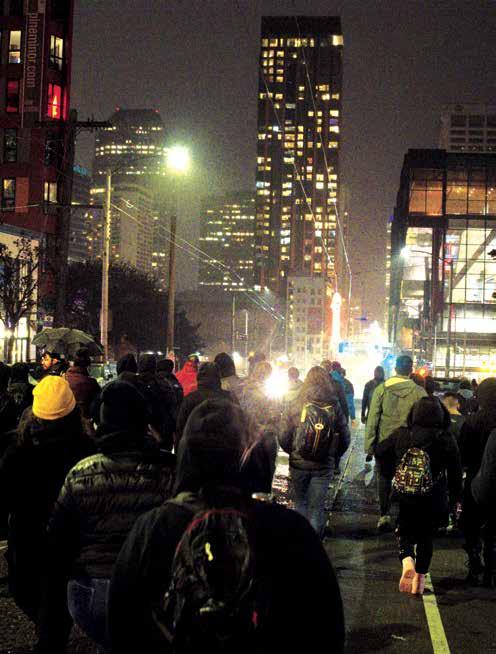
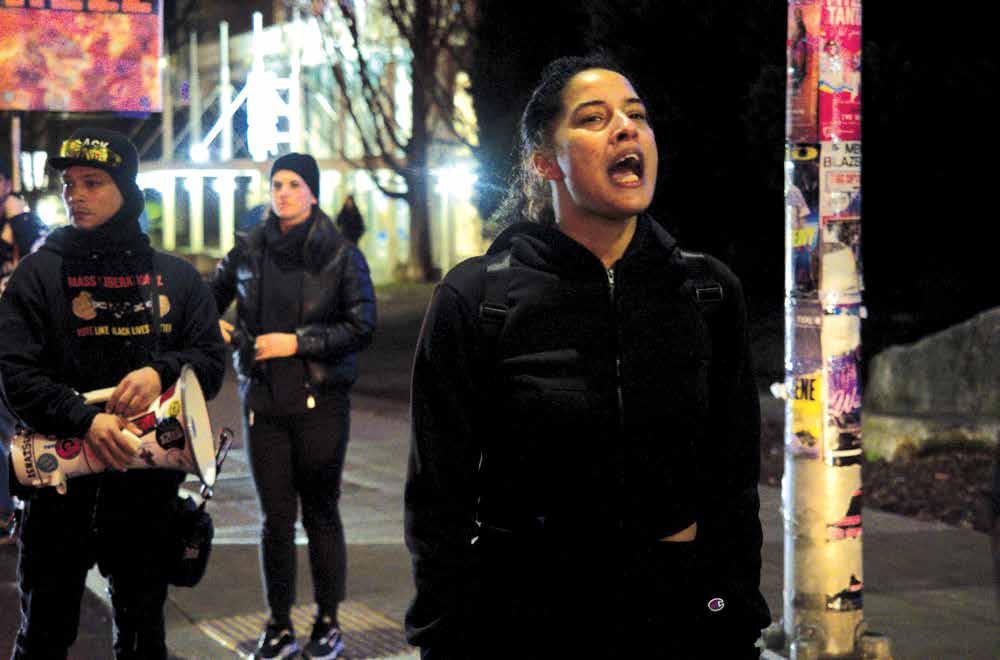
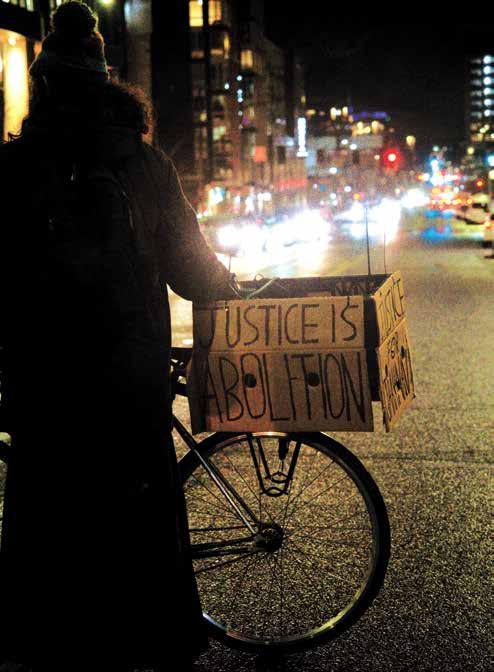
Friday night, January 27, in Cal Anderson Park, protesters gathered because of the brutal police beating in Memphis, Tennessee, that led to the death of Tyre Nichols, a 29-year-old Black father who expressed his creative side through skateboarding and photography.
Photo by Tara Winstead / Pexels
Photo by Lauren Vasatka
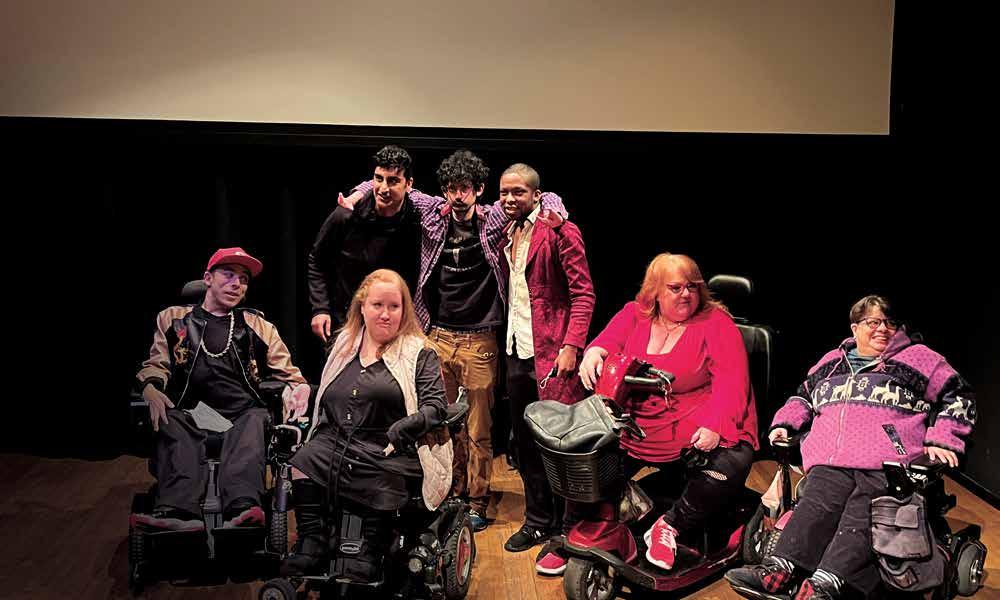
Photo by Lindsey Anderson
by Lindsey Anderson SGN Staff Writer
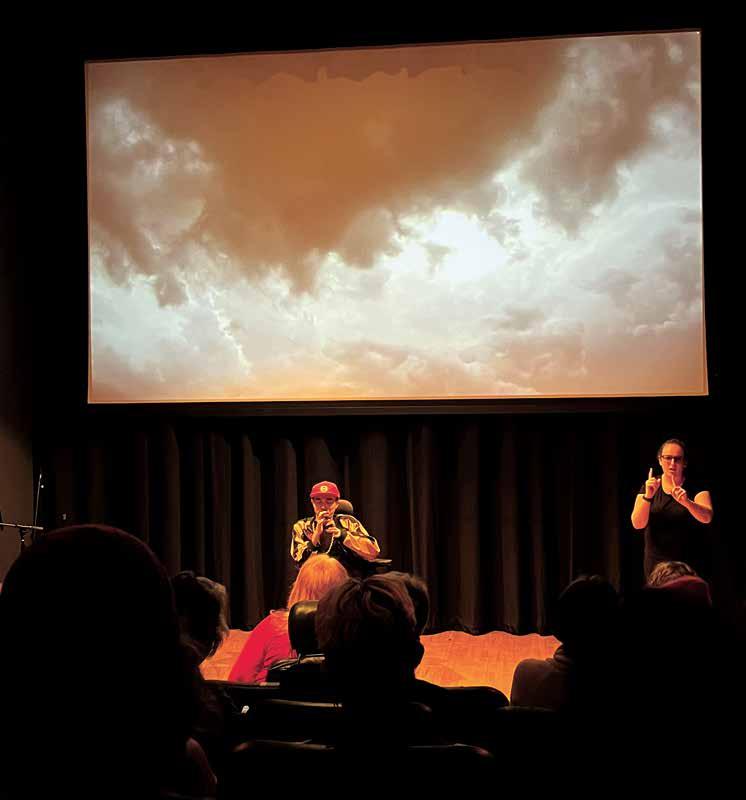
There was a packed house at the Northwest Film Forum Friday and Saturday as comedians and fans from across Seattle gathered for the Pacific Northwest’s first Disabled List Comedy Festival, which finally premiered after a year of sold-out bimonthly shows in a series of the same name.
Seattle Pride Spotlight
Legacy Washington celebrates ten years of marriage equality
by Lindsey Anderson SGN Staff Writer
Save the date of February 14! This Valentine’s Day, Legacy Washington will reveal its latest exhibit, a testimony to the strength of activism and the perseverance of love, featuring oral histories and firsthand accounts detailing the fight for marriage equality.
The idea for the exhibit arose nearly two years ago, as historians finished celebrating another landmark legislative anniversary. “We were looking for our next exhibit to bring in after COVID,” Legacy Washington historian Aaron Peplowski said. “Our previous exhibit was around the 19th Amendment, suffrage, and how Washington had several women who were deep into getting the women’s vote.”
“Washington [gave women the] vote in 1910, so we had this neat idea to connect that old history with the things that we do now,” he continued.
Previous exhibitions curated by Legacy Washington have wowed patrons with their use of firsthand accounts of historical events. The team knew they wanted to continue using stories from living people, so they decided to focus on legislative victories in recent history.
“The goal of the program was to use oral history,” Peplowski said. “Then COVID shut everything down. We knew when we reopened that we wanted to have something impactful and in line with the type of exhibits we’ve had before, but we also wanted to make sure that we went with the oral history.”
Washington marriage equality turns 10!
2022 was the 10th anniversary of Washington’s legalization of same-sex marriage. The topic was perfect for historians to craft an exhibit around.
“It’s all about the 10th anniversary of marriage equality,” Peplowski said. “We felt that that was a huge milestone, and Washington, in our old terminology, was
‘ahead of the curve’ on that. We weren’t the first, but we were in that big chunk of states that voted in 2012 on whether or not marriage equality would be legal.”
While the vote on marriage equality in Washington state happened in 2012, making 2022 the 10th anniversary, the exhibit curators knew they needed a little more time before they unveiled their project.
So they set the date for Valentine’s Day of 2023, while acknowledging that the fight for marriage equality did not have one specific start or end date.
“The first legislation that made it was in 2012… on February 13. It was put to a vote. On Election Day, voters [approved Referendum 74 upholding the law],” Peplowski said. “The first marriage licenses were signed on December 6, then there was a three-day waiting period. So December 9, 2022, was the 10th anniversary. We knew we weren’t going to have the exhibit done at that point, so we did our ‘save the date’ and made this video. That was our ‘Hey, this is our next thing, and it will be open on Valentine’s Day this coming year.’ We wanted to show something modern but also [with] a historic date attached to it.”
Learning through oral history
What sets this new exhibit apart from others is that marriage equality is still very recent in history. Even though it has only been 10 years since Washington legalized same-sex marriage, acceptance of LGBTQ+ people has become relatively normalized in American culture. Legacy Washington wanted to ensure that viewers know just how far we’ve come in such a short amount of time.
For that, the curators made panels from oral history interviews sculpted into profiles.
“What we want[ed] to do is attach a present state of mind to what people were thinking when they went through it,” Peplowski explained. “To go straight to the primary source in oral history, you can say, ‘This is what that person was thinking, to the best
of their memory, at that time.’ You get to collaborate and bring together all those voices. You get not only oral histories, if people want to see those directly, but …the narrative through it all.”
Focusing on recent history also meant the research process was different. Instead of focusing on written accounts of a specific time, the researchers spent most of their time talking with real people who experienced the struggles firsthand.
“We wanted to talk to the people we knew were specifically involved in [advocating for marriage equality] and have them guide us to the other people we needed to talk to,” Peplowski said. “We talked to people who were in the early stages of getting …bills passed, domestic partnership, and who was at the forefront of current issues. It’s cool to hear directly from them instead of going to the sources in the index of a book. You can talk to people who [were] living it. That’s the exciting thing about the projects we do.”
Local focus
Another thing that sets Legacy Washington’s exhibit apart from similar ones is that it focuses on the struggle for marriage equality in this state. Of course, it also notes the national movement, but the big players featured in the exhibit are local heroes.
“What we wanted to focus on, specifically, was the Washington experience,” Peplowski said. “We are a Washington program, and we have specific legislation that we can point to, whether it was the state bill passed by the legislature in 2012 and signed by then-governor Gregoire or Referendum 74, which is what the people voted on. … [The exhibit] does point to [national] things passed earlier on, because those too reflect the experiences of people we interviewed, going back to Stonewall and ‘Don’t Ask, Don’t Tell’ in the military, all sorts of different things that were points along the way for a collective movement. But we wanted to focus on how in Washington we got same-sex marriages.”
One of Peplowski’s favorite parts of the research was exploring how social trends in the United States led to a shift in ideas around LGBTQ people.
“Looking at the different trends of it, you could tell that there was a national movement towards accepting LGBTQ lifestyles reflected in pop culture. A lot of people referenced Ellen. When she first came out it, was this whole thing. Then her show got canceled, but not too long after that, Will and Grace specifically had multiple Gay characters from the start. So, you knew that attitudes were changing. National books, including The Engagement by Sasha Issenberg, were great ones that we referenced quite a bit. That details how culture changed, so we wanted to give what the Washington experience was, which nobody had done, specifically.”
After spending nearly a year fact-checking and aiding in research, Peplowski has learned a lot about the LGBTQ civil rights movement. One of the most inspiring things he discovered was how pivotal young people were, and continue to be, when it comes to advancing social change.
“The thing that I’ve noticed the most that is always heartwarming is the involvement of the youth in fighting for what they want, between climate activism or trying to do something about safety in schools, school shootings, and whatnot. It has the same feel as the student protests of the Vietnam War.
“If people keep those ideas and that willingness to gather and peacefully protest and change activism into legislation, I think we’re going to see the will of the young people can become the law of the land. There tends to be a lot more acceptance amongst the young. The comfort level that people have now about being out… I know it is still a struggle, but compared to when I was in high school, and then my parents even more so, it’s tracking in such a phenomenal way. I’m excited to see how people define themselves, how they fight to be defined in legal status,” he said.
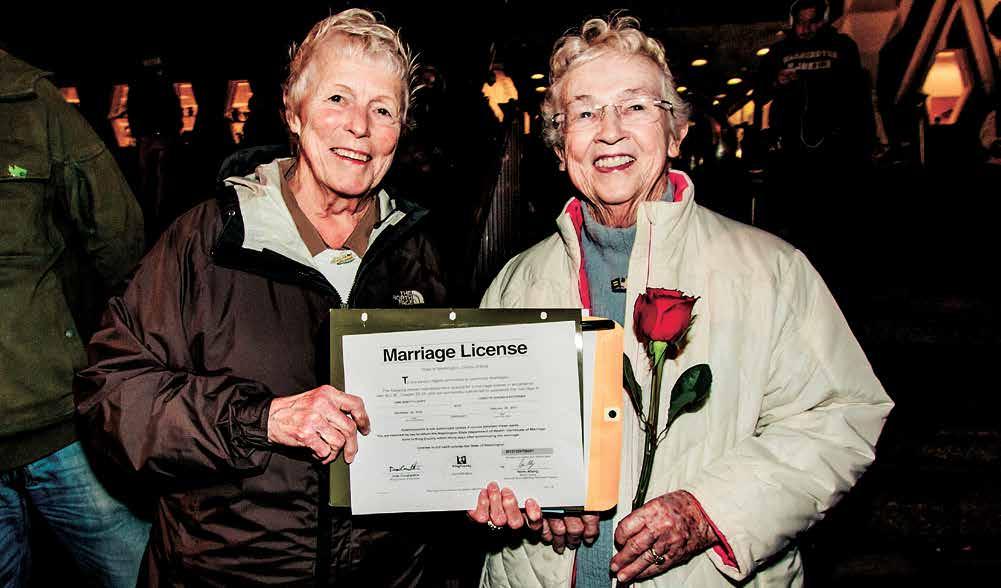
At midnight on Dec. 6, 2012, Jane Abbott Lightly, 77, and Pete-e Petersen, 85, became the first same-sex couple to receive a marriage license in King County, Washington. – Photo by Nate Gowdy
Exhibit opening details
The exhibit will be open to the public starting on February 14 at the State House in Olympia and will be on display for the year.
The researchers are all very proud of their work and can’t wait to see the unveiling of the final product.
“We’re now in the waiting period. We want to talk about it, but most of all, we want to unwrap our gifts on February 14. Hopefully, people will come. It’s a public exhibit. There will be a public opening from 3 to 5 p.m. on the 14th. It shouldn’t ruin anybody’s dinner plans. They can come, see this, have a lot of good moments, and enjoy the work we put in, and then some cool speakers will be there. It’s going to be a good celebration.”
Speakers for the event opening will include Gov. Jay Inslee, Secretary of State Steve Hobbs, Speaker of the House Laurie Jinkins, Sen. Jamie Pedersen, former Gov. Chris Gregoire, Washington LGBTQ Commission Executive Director Manny Santiago, and historian Stephanie Coontz. The event will also feature live music performed by the Seattle Supertonics, a mixed group of performers from the Seattle Men’s and Women’s Choruses.
“This has been a really exciting project all the way through, a labor of love,” Peplowski added. “I’m just really impressed with what our authors have come together to do. We’ve got a sharp-looking book, and the exhibit — all the photos for it — look great, and eventually, it will be on the wall there in the secretary of state’s office.
Future plans: online, book, touring
For people interested in viewing the exhibit but unable to make the trip to the capital, a virtual tour will also be launched
online the same day.
“Everything we have will be on sos. wa.gov/legacy, including all our previous exhibits and books. On February 14, front and center, the first image will likely be [for] the virtual exhibit, which will give the rundown of everything, what you can read online, all the people in it, and links to buy the book, donate, and support.”
For people outside of Olympia hoping to see the exhibit, Peplowski says there will be plenty of chances. “It will be up for at least a year, and then it will start moving
around, and we will keep you guys in the loop of where it might go, because it could wind up a lot closer to Seattle in some form or fashion.”
Legacy Washington will also release a more in-depth book, about the activists who worked hard to pass marriage equality in the state. The book will eventually be available online in PDF format and in all public libraries.
While financial support is always encouraged, the goal of Legacy Washington is to make history accessible to all.
“All our costs are covered by the 501(C) (3) foundation... While our salaries are covered, we still need a little boost to get our things out there,” Peplowski said. “Luckily we’ve had a little help from people like the SGN and the Greater Seattle Business Association.
“…More than anything else, we want to get these stories out there, because they’re extraordinary. We’ve been lucky enough to capture them while people are still alive to tell them. We want to continue to do that and get good ideas from the public of what they want to see.”
41 Years of SGN: Seattle Gay News (@SeattleGayNews) now online at Washington Digital Newspapers; historic content available free to the public. There are now 80,900 pages of SGN, that’s 7,915 issues from March 1977 through December 2018, of the influential LGBTQ newspaper available on the Washington Digital Newspapers website!
First published in 1974, the Seattle Gay News (now known as SGN) was one of only a few newspapers to report on state and national issues affecting the LGBTQ community in the Pacific Northwest. Longtime editor and activist, George Bakan, took on the role of publisher in 1984, until his death in 2020. News of his passing spurred a community effort to preserve the issues on print and microfilm and digitize the collection for public access. Thank you to our cultural colleagues at the Seattle Municipal Archives, Seattle Public Library, MOHAI, UW Libraries, SGN publishing and the concerned citizens who helped to make this online collection happen! Courtesy of Washington State Library
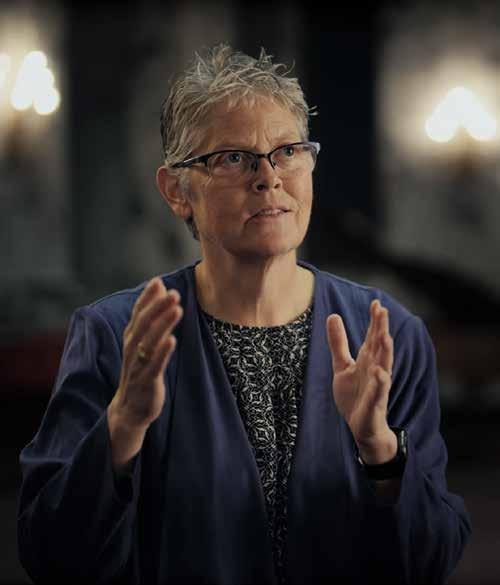
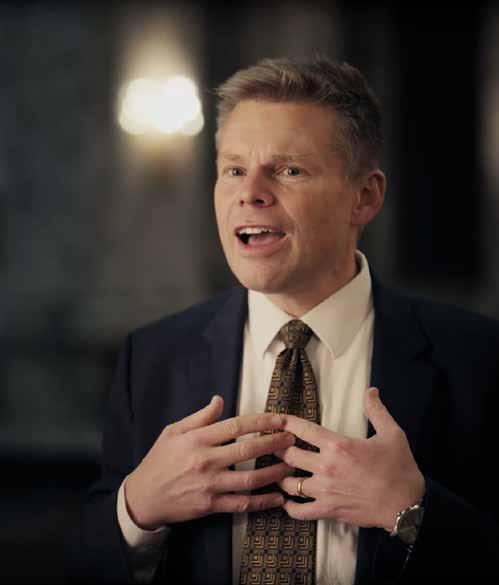
Speaker of the House Laurie Jinkins and Sen. Jamie Pedersen will feature among others as Love, Equally profile subjects – Images courtesy of Legacy Washington
Kix D’Ball Rockefeller Skyy Martini Ice Imperial Sovereign Court Of Seattle Letters of Intent Local News
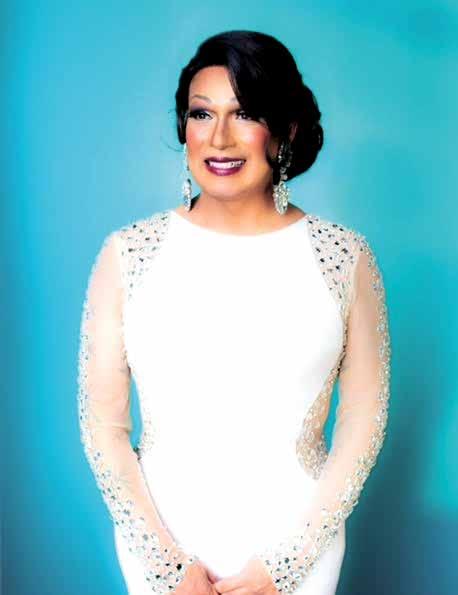
My earliest memory of drag is watching my mother getting ready to go out - mind you this was in the mid 1970’s - she’d be applying her make up, grabbing a wig from her collection out of the closet, choosing a beautiful outfit and heels to match. I’ve always remembered how fabulous she looked, and how fun it looked to play dress up. So of course, after she had left for the evening, I would pretend to be her, play dress up, and have my own disco party with my babysitter.
I’ve always been an admirer of The Imperial Sovereign Court of Seattle, and all the work they do for our community. Being born in Washington State and raised in Seattle, I am deeply rooted within the community.
Given my roots in the community, in 2019 when I ran for the prestigious title of Miss Gay Seattle, it seemed only fitting. As an ambassador for the Imperial Sovereign Court of Seattle and by extension to the International Court System, my primary fundraising efforts were to help address and reduce food insecurity in Seattle and Washington State.
As Miss Gay Seattle LVI, and as a representative of the Imperial Sovereign Court of Seattle, I have had the privilege of working with the statewide nonprofit organization Northwest Harvest, the leader in Washington State that provides healthy nutritious food to those who struggle with food insecurity. During my reign, I led a monthly volunteer team to assist at the SODO Community Market to help them fulfill their mission to eliminate hunger and I have continued that volunteering opportunity and partnership with Northwest Harvest and ISCSORE since I stepped down in November 2021.
I have also worked with smaller, mostly volunteer run nonprofit organizations throughout my reign. I did this by overseeing a quarterly 500 Strong Bag event, securing and distributing bags of food and hygiene products to Wheels, Teen Feed, Gay City, Friends of Youth and Entre Hermanos and Para Los Ninos.
Other community-centric activities that I was involved in during my reign as Miss Gay Seattle include: the creation of an annual sock drive; raising more than $24,000 for the Black Lives Matter Movement and many donation excursions to Camp Second Chance.
I didn’t do this alone, I was able to achieve my goals with the help my friends, family and wonderful donors and volunteers, so in other words, it was our “community” that made my reign as Miss Gay Seattle LVI – and mission – a huge success. Also, “Thank You” to my husband James Gibbs, for joining me and supporting me every step of the way.
As you consider my eligibility to pursue the prestigious title of Olympia 51, please know that I will continue my service to others in our community and to the Imperial Sovereign Court of Seattle and represent its mission all across the International Court System throughout my reign.
Sincerely,
Valentino Romero / Skyy Martini Ice
ISCSORE Vice President Miss Gay Seattle 56
I present this as my intention to run for the position of Rainier 48 of the Imperial Court of Seattle the Olympic and Rainier Empire.
If given the opportunity to be elected I hope to expand our membership outreach, grow our active membership, and raise a lot of money. I plan to do this by both keeping the greatness our existing events and bringing new and different kind of events to our organization. I would also like to assist the court in creating more automation for things like tracking membership, event submittals, create an SOP documentation guide to help future members, Titleholders be able to jump right in easier. I would also plan on working in conjunction with other organizations and courts throughout Washington and the Greater Seattle area to bolster the organizations’ visibility and reach. In addition to involve as many past title holders and members as possible and keep an open-door policy for suggestions and involvement. I have seen on numerous occasions when this community comes together there is nothing that we cannot accomplish.
To bolster my experience with this organization have been part of this organization in some form for about 8 years from just a member to serving on the board as well having the honor and joy of being Imperial Prince 45. I have developed a good understanding of our traditions and operations and can see what is possible for the organization.
If allowed to run for this title I hope to use my unique skills sets to expand the courts reach to the community at large as well as
create new connections to our organizations. My reach to other organizations is vast just to name a few. I am a co-founder of “Pride of the Sound” a subgroup of the ECS (Emerald City Supporters) ECS manages game day and fan support for the Seattle Sounders football Club. I was also a founding member of Seattle Pups and Handlers as one of the members that are still involved before the organization was incorporated.
If allowed to run for this role I will also bring my kindness and unique leadership style to empower our members and title holders. I find that through being inclusive, open minded, having strong communication, personal empowerment, and leading by example to be tantamount as being a good leader. My experience of being a payroll manager in my work life as well as my experience on this this organizations board and my previous title has given me and allowed me to know how to lead many different people as well as run events and get people to work with me to make things happen.
In closing I hope that I have shown myself to be worthy of the chance by this Organizations board and College of Monarchs to allow me to run for the Prestigious and historic Rainer title
Sincerely,
Kix D’Ball Rockefeller
Photo courtesy of Imperial Court of Seattle
Photo courtesy of Imperial Court of Seattle
beating were “Mom! Mom! Mom!” according to Nichols’s family’s lawyer.
On January 7, he was pulled over by police for allegedly recklessly driving. In the course of the initial arrest attempt, he fled. He was running toward his mother’s house nearby when the police eventually caught up and beat him. Nichols was taken to the hospital, where he died three days later as a result of his injuries. The last three words he said during the
After demands by the public to release the body cam footage of the incident, four videos confirmed the family’s lawyer’s description of that night as Nichols being treated like “a human pinata.”
The public now awaits the trial of the police officers that killed Nichols. But for many, the murder and kidnapping charges are not enough. Demands for institutional changes are being voiced, and it was the
hope of the protesters on Friday that not just the individuals responsible face accountability but the system itself.
At 7 o’clock, attendees began to arrive in Cal Anderson Park. A few had homemade signs, and one held a tablet playing the body cam footage in front of them. Some passersby approached and asked what was going on, and several decided to join. On his way home, a Black father stopped to find out more and expressed his approval. He later returned with his daughter to exercise their right to speak out.
Around 80 people had gathered by about 7:45 p.m., when Kyla Carrillo took the lead, who stated that she wasn’t an organizer and had never led a protest before. She said she had asked why there wasn’t any marching or chanting and decided to take charge. With that, others called out to the group to follow, and the procession began.
“Say his name!” she yelled out as the protesters moved through Capitol Hill, and a chorus of “Tyre Nichols!” boomed behind her.
It was raining, but this did not slow the march’s progress. On reaching South Lake Union, they walked down the middle of Dexter Avenue toward the Space Needle. Restaurant patrons looked up from their meals with curiosity. Strangers on the street filmed the protest, and drivers honked their horns in support. One van driver rolled down his window to give some of the marchers fist bumps as they passed.
That is not to say everyone was in favor: some onlookers threw expletives, and one mocked the chant of “Black Lives Matter” with a variety that included slurs. A counterprotester held a large sign declaring that everyone was going to hell. He followed the march, occasionally cutting into chants and speeches with statements about the Bible and Jesus. The protesters mostly ignored him, but sometimes, annoyed with his attempts to divert attention from the issue at hand, they responded with things like “Cool story, bro” and “What would Jesus say about cops killing people?”
Only one marcher sought to draw attention by knocking over a garbage can and a few traffic cones. Another with a megaphone told them not to do that and to pick it up. This was when Cody Kelly stepped up: they picked up anything knocked over by the one outlier. They also stood in the crosswalks, ensuring that it was safe to cross the
intersections. When asked whether they were an organizer, Kelly stated they were here on their own accord and wanted to emphasize the importance of nonviolence. Their commitment to peace and safety was appreciated by all involved.
The marchers continued until they reached the intersection of Thomas Street and Dexter Avenue, where a moment of silence was held at the site where 23-year-old Jaahnavi Kandula had died. She was using a crosswalk when she was struck and killed by a Seattle police car last week. That crosswalk was slated for safety improvements, but the potential changes were paused indefinitely due to a city budget shortfall last year. A shrine had been placed by the crosswalk with the young woman’s photo and name, and some protesters took a knee in front of it, mourning Kandula’s premature passing.
Making their way back up to Capitol Hill, the marchers gathered for their closing speeches in front of the Seattle Police Department’s East Precinct. In all, they had walked seven miles for the cause. They began to pass the megaphone around, giving each other a chance to share their experiences, grief, righteous anger, and hopes for a better world.
“We’re trying to practice our constitutional duty, even though it is a flawed document,” stated an organizer for Who’s Streets Our Streets Seattle, who goes by the name Renaissance. “We use it to protect our community by coming out here the right way: nonviolently. It’s our turn now. We have to come together as one people. To look the system in the eye and say that it’s not okay for people to be dying for the color of their skin.
“Every single person has the power to change this. We’re not separated by white, Black, Hispanic, Latina, or anything else. We are friends of every color and every creed. This generation knows how to get along. This generation knows how to love. All it takes is for all of you to look into your heart and to say, enough is enough.”
The father who had returned with his daughter stepped up and let his child take the megaphone. The young girl, timid at first, found her voice and led some chants, then returned to her father for a big hug.
“This is a perfect expression of Black joy,” said Renaissance. “The joy that grows in spite of pain. Joy that will never die, a joy that can never be taken away.”
Photos by Lauren Vasatka
Local News
District 3 includes Capitol Hill, the Central District, and parts of First Hill — all neighbors that voted solidly for Sawant in the past — as well as wealthier areas in Montlake and along Lake Washington.
So far, five candidates hope to succeed Sawant on the City Council. Of the five, four identify as Queer.
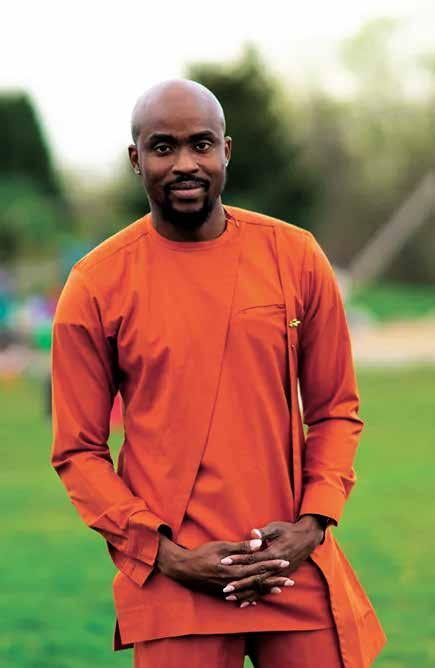
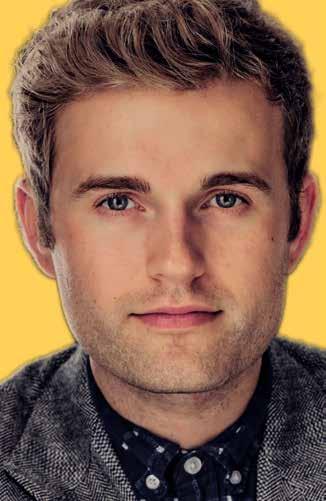
Seattle LGBTQ+ Commission Co-Chair Andrew Ashiofu ran last year for a seat in the state legislature representing the 37th District, and is now making his first run for the Seattle City Council. He notes that, if elected, he would be the council’s only Black member, the only out Queer member, the only openly HIV-positive member, and the only member to reveal that they were previously homeless.
According to Ashiofu, his family kicked him out of the house in 2010, after he told them he was Gay. Because he had no job, no prospects of finding one, and no money saved up, he became homeless. His only resource for finding work and housing was free internet access at a public library.
Not surprisingly, helping Seattle’s growing homeless population find permanent shelter is one of his top priority issues. His strategy is what’s known as the “housing-first” option — in other words, find permanent housing for the unhoused, then deal with any social or medical problems they may have.
“All I needed was one person to give me a roof and an opportunity to get myself together,” he told The Stranger in an interview. “I don’t buy into the ideology that homelessness is caused by drugs and mental health issues. Homelessness is due to housing affordability, due to housing accessibility, and housing availability.”
Ashiofu supports Seattle Initiative 135, which would authorize a Public Development Authority to plan and build government-owned-and-operated social housing. He refers to Amsterdam’s 40-40-20 rule, which requires new housing projects to consist of 40% social housing, 40% affordable housing, and 20% market housing.
Ashiofu portrays himself as the logical successor to Kshama Sawant. He supported her in 2019 over Egan Orion, he says, and he voted to retain her in the recall election in 2021. “Out of respect” for her, he adds, he waited to announce his bid for the District 3 seat until she formally announced she would not seek reelection.
A candidate who did not wait for Sawant to exit the race is Joy Hollingsworth, who
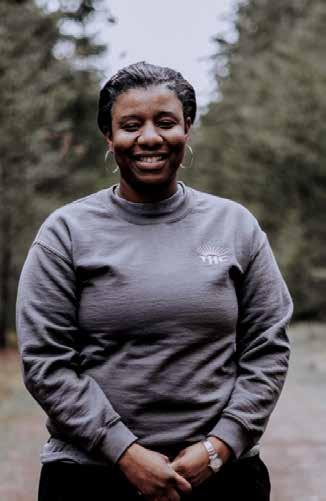
announced her bid on Martin Luther King Day. A third-generation resident of Seattle’s Central District, and granddaughter of civil rights leader Dorothy Hollingsworth, she said in her announcement that she was running to bring a missing Black and LGBTQ+ perspective to the City Council.
Hollingsworth is also interested in housing policy, but she insists that it must be adapted to the city’s communities. She says she wants to help the City Council think more critically about how legislation affects communities by involving stakeholders from those communities in the process.
“When you’re creating policy, you want a policy so embedded that it doesn’t have to be a policy anymore — it’s just a way of life. And we just haven’t figured that out yet,” Hollingsworth said.
She also calls for “rebuilding trust” between Seattle police and the communities they operate in. The first step, she says, would be to make sure that police officers are part of the communities they patrol. She wants officers to know the business owners, community leaders, and other neighbors in the area, as they did when she said when she was a kid, and people knew cops by
name, not by their badge.
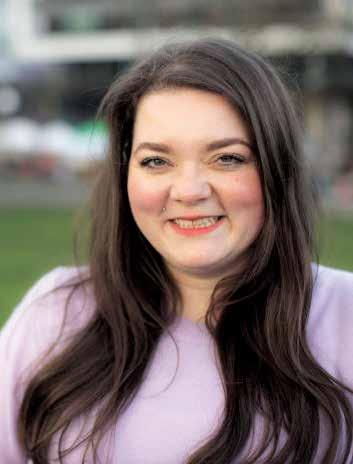
Ry Armstrong says on their website that they hope to be “the first gender-nonconforming, queer candidate to represent all of Seattle District 3.” Armstrong has appeared off-Broadway as an actor in Pete the Cat, and also developed the Indie Chameleon record label. They also founded the Queer Global Arts Fest, a pay-whatyou-can, annual festival dedicated to the empowerment of artists in the LGBTQIA+ community.
Armstrong says their campaign will focus on three goals. First, the “right to shelter,” giving unhoused individuals the resources they need to get back on their feet. Second, they want to make Seattle the first large carbon-neutral city. Third, they hope to reform Seattle police with “independent accountability and robust resources for both people of color and the SPD.”
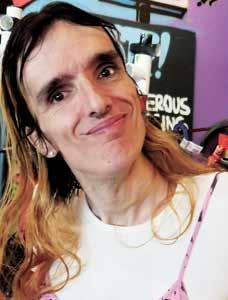
The fourth Queer candidate in the race is Asukaa Jaxx, who has run for a number of city offices. Jaxx typically runs an unfunded campaign, and is not expected to advance thru the primaries in August.
The fifth candidate in the race is Alex Hudson, executive director of Transporta-
tion Choices Coalition and former blogger for Seattlish
Hudson describes herself as an “urbanist at heart,” and is running on a program of developing public transportation, including reviving the downtown streetcar project shelved by Mayor Jenny Durkan, and expediting West Seattle and Ballard light rail linkups.
Hudson also believes the city needs to find alternatives for uniformed police. The City should not rely on cops to be mental health professionals, drug counselors, or housing connectors, she says. She hasn’t committed to channeling any of the current police budget to possible alternatives, however, and also won’t commit to raising taxes to fund alternatives.
She says Seattle’s government has not been serious enough about solving the city’s urgent problems.
“It’s my expectation that leaders in City Council are really, really serious about solving the city’s problems at the speed and scale of words like ‘crisis’ and ‘emergency,’ which I just don’t see,” she said.
Asukaa Jaxx – Courtesy photo
Alex Hudson – Courtesy photo
Andrew Ashiofu – Courtesy photo
Joy Hollingsworth – Courtesy photo
Ry Armstrong – Courtesy photo
D3
continued from cover
Arts & Entertainment
Double release jumps media railings at Northwest Film Forum
by Daniel Lindsley SGN Staff Writer
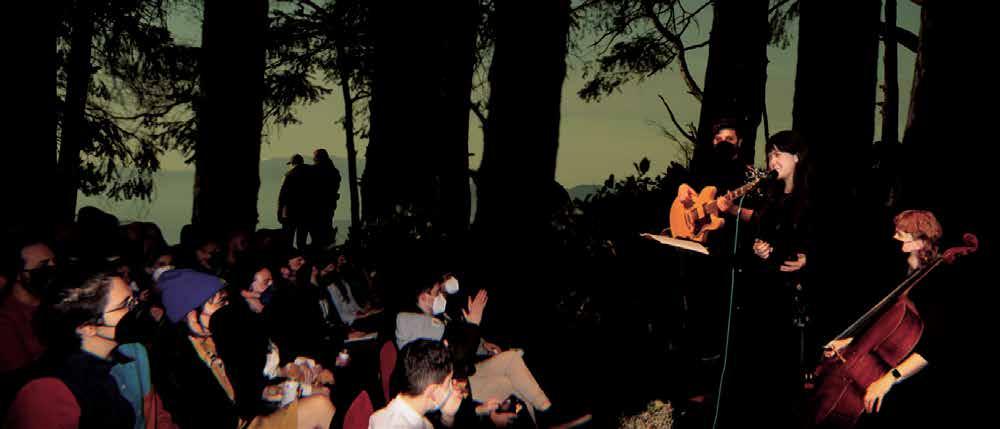
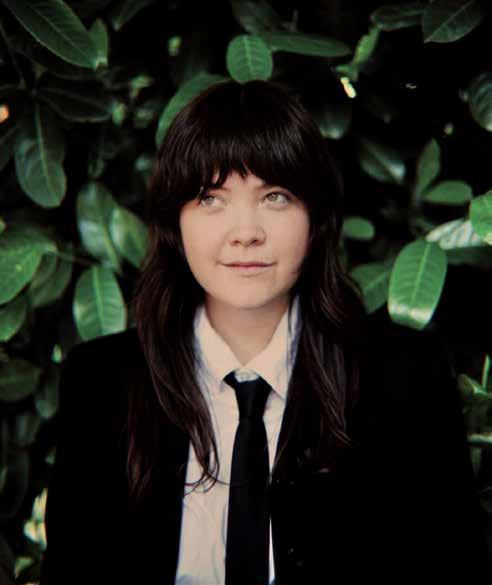
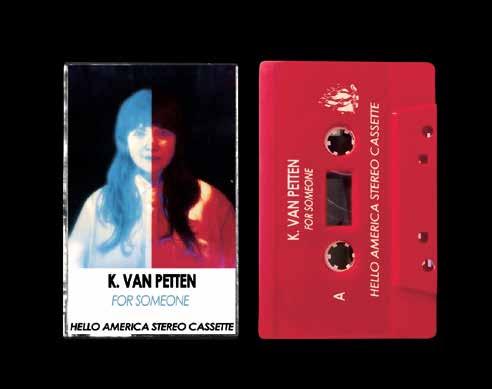
On Thursday last week, artists and allies gathered on Capitol Hill at the Northwest Film Forum (NWFF), for a double-release show of Seattle poet and songwriter K. Van Petten’s new video poem, titled “For Jumping,” and their new cassette tape, “For Someone.” The event was a buffet of hybrid media; four other artists played music, sang, and recited poetry as opening acts before the film.
Some who hear the phrase “hybrid media” might lose interest or even run the other way, having heard tales of (or experienced for themselves) cacophonies of clashing sounds and overwhelming images. This show was none of those things, but rather a healing experience both gentle and intense — for the performers, clearly, and for at least a few members of the audience.
For those who have never visited the NWFF, it’s a nonprofit movie theater (a “cinematheque”) that was founded in 1995. It has gone through rebrands, location changes, and pandemics in its mission to provide “a nesting ground for creativity, an inspiration, and cultural anchor for so many people.”
Its lobby signals that welcoming attitude right away. Armchairs rest before an oldfashioned TV, which plays black-and-white films. The concession counter and the ticket booth are one in the same. As of this article’s writing, a decorative cave has been constructed to promote the forum’s hosting of the upcoming Children’s Film Festival.
Far from a vast and barren area only crossed for a rushed bathroom break or overpriced candies, on the night of the release, that lobby was full of mingling people and their voices.
Theater 2 could have seated about 40, and though the show was sold out, a row or two in the back was empty. By a show of hands, for a good third of the crowd, it was their first time in the building. Many knew Van Petten and the other performers personally.
After a quick welcome and introduction by Van Petten, local poet B_Line_Dot presented a few of his works: short ones, which he said were “tweets, basically,” and a few longer ones. He recited them in a flowing poetic prose style, speaking of memories of childhood, growth, and love “like oxygen,” both as easy and as vital as breathing.
Singer-songwriter Connor Cash Colbert played a few of his own pieces on guitar. His vocals were beautiful, with a surprising range, and his lyrics were poems on their own. Again there were themes of a past left behind, this time in Illinois, where Colbert grew up.
Colbert was then joined onstage by master cellist Elena Denny and Van Petten for a live, collaborative performance of two
tracks from “For Someone.” The guitar and the cello blended dreamy notes with Van Petten’s smiling poetry and vocals, over a track of sounds sampled from Port Townsend.
The final piece of the night was the other release, “For Jumping,” a video poem written and voiced by Van Petten and edited by T.J. Hom. It was billed as a film about “coming into queerness” with the adventurous act of “jumping the railing” into unknown ground. It was short and sweet, but like any poem, a second time through yielded new depths of meaning and angles of interpretation.
This was true not only in a literary sense but in a visual one as well. “For Jumping” is a series of clips — “vignettes of memory” chosen to “serve the poem,” as Hom put it — with some of the verse appearing in bold to emphasize them as Van Petten recited. The images’ connection to the text isn’t always direct, but that just means it’s open to interpretation, as art should be.
“It all centers around that line, ‘Do you want to jump the railing?’” Van Petten said after the screening, “and around this idea of jumping a metaphorical railing and coming into your queerness, or your identity, whatever that railing might be for you.”
The film shows writers, travelers, paragliders — all sorts of people taking chances and trying new things in their own ways.
“What if we just went at it with that being the thesis?” Van Petten said of the project’s beginnings. “Not trying to tackle some narrative or ambitious comic, but treating it like a poem, where images are flickering in and out and we’re kind of just barely grasping at what’s happening. It felt right to give it those really loose — grainy-eyed, if you will — edges.”
Van Petten also praised Hom’s visual intelligence as an editor, especially in the realm of color.
“Poets get to talk about color, but we don’t often use it. …Color is so important to film, whereas color is only important up here to poets,” they said, tapping their head. “It was so fascinating for T.J. to have such a strong drive” in that area.
Van Petten added that being good friends with Hom, with a lot of trust between them, definitely helped.
“For Someone” is available for purchase online via Hello America Stereo Cassette, and at the Vera Project’s cassette tape vending machine. Prints of “For Jumping” can be purchased via donation to Centrum Residences, a nonprofit dedicated to building greater inclusion through the arts. You can find out more about showings and events at the Northwest Film Forum at https://nwfilmforum.org.
Photos courtesy of K. Van Petten
Arts & Entertainment
FESTIVAL
continued from cover
The festival was hosted and produced by local comedians Dan Hurwitz and Kayla Brown, who had originally brainstormed the idea back in 2018.
Before the show, Hurwitz said he was feeling both “nervous and excited,” as he greeted patrons and fellow comedians on the red carpet. “It’s the first time we’ve done something on this scale but it’s exciting. We sold out. What more could you ask for than that?” he said.
Important funding
The Disabled List was made possible by a generous grant to Hurwitz and Brown from 4Culture. “We got the grant in June of last year, but we’d been thinking about doing something like this since even before that, since even before the pandemic,” Hurwitz explained. “The grant gave us the funds to do something on this scale. Kayla and I have been planning this for the last seven months, but also about three years.”
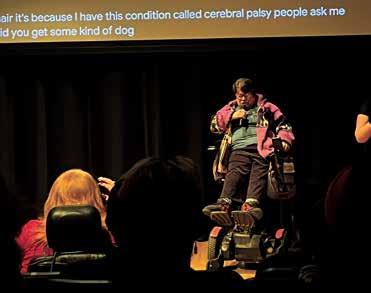
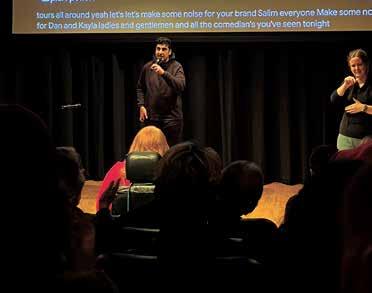
The grant provided them with the necessary funds to produce a full two-day festival with proper accessibility features and compensation for all the performers. Some of the accommodations included live captioning on a screen behind all the performers, a sign language interpreter, and two rows of wheelchair-accessible seating in the theater.
Of course, some accessible technology still has a long way to go. The live captioning program had a built-in filter, and would not display any expletives on the screen, which made some of the sets more difficult to understand for those who depended on the captions.
The Disabled List also asked all audience members regardless of vaccination status to mask up to accommodate those who may be immunocompromised. Audience cooperation on that end allowed all the performers to do their sets unmasked for the benefit of lip readers.
“Un-clamming” the room
The show started strong, with a hilarious set from local comedy big shot Andy Iwancio. Right away, Iwancio had the room cracking up with her jokes about life as an epileptic Trans woman. She performed with a sense of ease and comfort, as if sharing inside jokes with a room full of friends.
“Normally, I have to start my sets talking to folks without disabilities by breaking the ice, saying, ‘I’ve been having health problems,’ but this crowd understands that isn’t what has to be said,” Iwancio shared after her performance.
“People like [fellow Queer comedian Gretta Gimp], me and her will buddy up when we’re in spaces, because we’re traveling in spaces where people with disabilities aren’t as often,” Iwancio continued. “So once we start talking about it and people clam up, the idea is to try and ‘un-clam’ them. Sometimes it means we double down, but I try to make that distinction with that line. …It’s the most important line I feel that needs to be said about the humor we’re trying to convey.”
Iwancio was immediately followed in the lineup by Gimp, who delighted the room with her unfiltered stream of consciousness on topics from wheelchair jail to her sexuality. Often cracking herself up in the middle of her punchlines, Gimp was an immediate crowd favorite. After she finished, murmurs of “I wouldn’t want to follow that performance” could be heard.
While following Gimp and Iwancio was a difficult task, the third comedian on the Friday lineup, Michael Bellevue, hit a home run. Much like Gimp, Bellevue shared anecdotes, jumping from one topic to the next. His set felt like a conversation with a very funny friend as he shared his musings about social interaction as a person on the autism spectrum. The only groans that could be heard all night came when Bellevue finished his set, not from a joke gone wrong but from a room of people wishing he could have kept going.
Rappers, roasters, and race
After intermission, Hurwitz and Brown riffed with each other and warmed the crowd up with their special blend of dry and sarcastic humor. A highlight of the night came when Hurwitz roasted the South Seattle Emerald’s coverage of the event.
Local rapper King Khazm performed a mini-concert to kick off the second half. His music combined rap beats with nods to the ’90s and 2000s, with poetic lyrics about the ways disabled people are treated by society.
Following Khazm was the always hilarious Cheri Hardman, who brought the house down with jokes about wheelchair sex, married life, and what it’s like to be a boomer. One of her bolder moves was to spend several minutes roasting Gen Z, something that not only paid off but even got the youngest fans to laugh at their depreciation.
The final comedian of the night traveled from New York City to perform at the
Disabled List. Gibran Saleem, who rose to fame after being selected for both the NBC Late Night and StandUp NBC programs, took to the stage and killed it. His set was perfectly polished, transitioning from jokes about his mother and childhood growing up to jokes about racial stereotypes of Pakistani Americans. Saleem was the perfect closer for an unforgettable first night.
A fun spotlight
The first-ever Disabled List Comedy Festival offered a fun reprieve for disabled comedians to freely joke about topics that able-bodied crowds often don’t get. The show also offered a space for them to perform with proper accommodations, something most comedy venues in the city don’t do.
“I just hope we can spotlight all of these great local comedians, and we have a musician as well who is local,” Hurwitz had said before the show.
Not only did the festival spotlight some
amazing local talent, but it also showed that the lack of disabled comedians in the scene is not due to a lack of fans, but a lack of accommodations and opportunities.
The performers all had a great time and basked in the unique energy of the room.
“We’re trying to make fun of ourselves, and we’re trying to take away from the scariness and anxiety that disability has over our lives,” Iwancio said. “To be in a space where that’s understood and spoken by all the comics means we don’t have to say it in a preachy way. We all know that we’re doing it. We try not to feel like we’re a burden on people without disabilities. It’s, like, why we get funny sometimes. To be on a show where we all understand that puts us all at ease and more comfortable.”
The next Disabled List Show will be on April 14. Tickets can be found at https:// northwestfilmforum.org.
Photos by Lindsey Anderson
Shyamalan’s Knock at the Cabin an apocalyptic conundrum
by Sara Michelle Fetters SGN Staff Writer
KNOCK AT THE CABIN
Theaters
There is a lot to love about M. Night Shyamalan’s latest tale of terror and dread, Knock at the Cabin. The performances by Dave Bautista, Ben Aldridge, Jonathan Groff, Abby Quinn, Nikki Amuka-Bird, Rupert Grint, and newcomer Kristen Cui are all excellent. Shyamalan’s screenplay, co-written with Steve Desmond and Michael Sherman and adapted from Paul Tremblay’s best-selling book The Cabin at the End of the World, is smart, concise, and at times bone-chilling. The film is meticulously shot with disquieting precision by Jarin Blaschke and Lowell A. Meyer.
And yet, I was still disappointed. Having not read Tremblay’s novel, I cannot say if my reservation has more to do with the source material or with Shyamalan’s reworking of it. I can state that I do not believe the film earns its climax.
I know what Shyamalan is trying to say. I get what he is doing. But I don’t think it works, and considering how refreshing it is to see a story like this — one that revolves around two blissfully married men and the adopted child they love with every ounce of their souls — such a sentiment darn near breaks my heart.
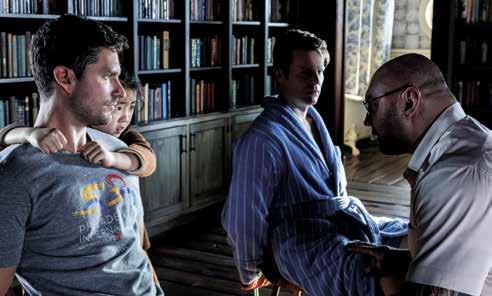
Eric (Groff) and Andrew (Aldridge) are on a relaxing weekend vacation with their daughter Wen (Cui). They have taken up residence in a secluded mountain cabin near a beautiful lake; everything could not be any more picturesque or perfect. It’s just what they all needed, and their collective happiness is beyond measure.
Things change with the arrival of Leonard (Bautista), Sabrina (Amuka-Bird),
Tomlin,
Ardiane (Quinn), and Redmond (Grint). They carry homemade weapons fashioned out of everyday items found in a garage or tool shed. But they claim they will not harm Eric, Andrew, and Wen. Instead, they tell the men that they have a horrible decision to make: one member of the family must willingly sacrifice themselves. If they do not, Armageddon will begin, and all life on earth will end save for their own, and the trio will be condemned to wander a barren wasteland alone until they too perish.
As scenarios go, this one certainly punches the viewer in the gut right from the jump.
Shyamalan cuts to the chase almost immediately, revealing the central conundrum facing this family, without the typical convolutions or sleight of hand viewers have come to expect from the maker of The Sixth Sense, Unbreakable, and Old The four strangers, led by Leonard, fully believe every syllable of what they’re stat-
ing. In turn, Eric and Andrew are equally inclined to treat them all as fanatical kooks who want to persecute them for being Gay. It’s pretty much that simple. Or is it? I like how the screenplay deftly weaves in the backstory of Eric and Andrew’s relationship, including their adoption of Wen. These brief snapshots marvelously flesh the pair out, making the unimaginable pain of the situation they suddenly find themselves in all the more palpable. Shyamalan has learned over the decades that less is more, and it’s nice to see him focusing more on his characters and their emotional vacillations than trying to deceive the audience in an attempt to conceal the type of climactic “twist” he’s long been known for.
As great as this may be, and no matter how progressive it may seem to have Eric and Andrew as the protagonists, there are pieces that refuse to sit well with me. Shyamalan’s
commentary on rightwing ideologues trampling over the civil rights of the LGBTQ community is commendably unsubtle, but where he eventually goes unintentionally feeds stereotypes and narratives that do not need any additional fodder.
Yes, the biblical implications are clear (think the story of Abraham in Genesis), but that does not make what transpires any easier to swallow. Things get taken to a place that borders on exploitive, and I almost wish Shyamalan would have gone full-on John Carpenter (or even The Cabin in the Woods) and fully apocalyptic.
Instead, we get ruminations on sacrifice, family, forgiveness, and faith that are all messily handled. The Queer trauma that is the foundation of so much of the film is never explored with any clarity or nuance. There is a didactic finality to this presentation that becomes increasingly unbearable as events build to their conclusion. As admirable as Shyamalan’s attempt at acceptance and inclusion may be, that it comes across like tin-eared window dressing instantly negates the majority of the film’s commendable aspects.
The acting is terrific, and Bautista is particularly outstanding; this may just be the best performance of his career. The film is also magnificently shot and edited, while composer Herdís Stefánsdóttir’s strong score offers up its fair share of symphonically unexpected permutations. But none of that was enough for me. The ending did not work, and the more distance I get from it, the more I can feel my anger grow. For every positive stride Shyamalan takes toward LGBTQ representation in Hollywood, there are almost as many going upsettingly backward, and I’m starting to think this was one cinematic rap on the door I should have left unanswered.
Fonda, Field, and Moreno are a dynamite team of all-stars in 80 for Brady
by Sara Michelle Fetters SGN Staff Writer
80 FOR BRADY
Theaters
80 for Brady proved to me two things, one of which I knew going in, while the other I can’t say I found surprising. The first item is that Lily Tomlin, Jane Fonda, Sally Field, and Rita Moreno are all so titanically talented that they can take pretty much any material, no matter how innocuous, forgettable, or silly, and make it feel Oscarworthy with their mere presence alone. The second is that, whatever the recently re-retired Tom Brady decides to do with his life after the NFL, please for the love of all that’s good and holy, let him not choose to become a professional actor.
The former is the one that matters. The latter is strictly an observation based on admittedly limited screen time. Either way, the only reason 80 for Brady (inspired by a true story) has value — and why it will likely be a moderate box office hit — has everything to do with its above-the-title superstar quartet. Tomlin, Fonda, Field, and Moreno make this harmless trifle sing, and watching them work their collective magic for 98 fast-paced minutes was an unexpected joy from the first second to the last.
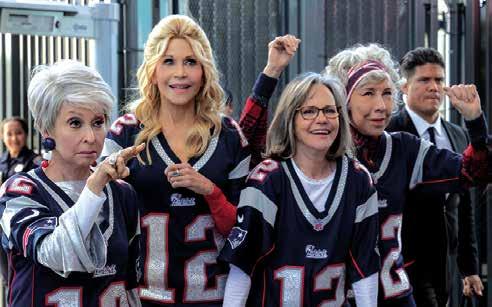
Best friends Lou (Tomlin), Trish (Fonda), Betty (Field), and Maura (Moreno) are big Tom Brady fans. They discovered their joint passion for football and the New England Patriots’ star quarterback the moment he entered a game to sub for an injured Drew Bledsoe and ended up leading the team to a Super Bowl. This fandom gave
Lou the strength to successfully beat back cancer, making these Sunday get-togethers something each woman treasures.
Now it is 2017, and the Patriots are on their way to another Super Bowl. They will face the Atlanta Falcons at NRG Stadium in Houston, Texas, and Lou thinks the four of them should attend. They all agree to enter a local radio contest to win tickets, never thinking they’d come out triumphant. But when Lou surprises Trish, Betty, and Mauro with the spoils of victory, off to Houston they go, each lady excited to see their favorite player perform his magic on the grandest of NFL stages.
Various bits of chaos and hilarity spring forth from there, but it isn’t as if Booksmart writers Emily Halpern and Sarah Haskins’
screenplay goes anyplace novel. The three octogenarians and one septuagenarian have a series of wild and crazy escapades, mingling with celebrities, attending wild pre-Super Bowl parties, and even finding themselves face to face with some of the Patriots’ star players. The bonds of their friendship will be strengthened, secrets will come out into the open, and new traditions will be born. That’s it. There’s not much more to it.
Tomlin and Fonda could do this sort of film in their sleep and still make it look like Shakespeare. The former gets the majority of the dramatic heavy lifting, as questions regarding Lou’s health form an underlying subplot that the script periodically spends a few moments dealing with. Fonda gets to
vamp it up as a former beauty queen and television commercial celebrity, and it’s clear she’s having a blast. Her flirtations with a former two-time Super Bowl champion (seductively underplayed by an engaging Harry Hamlin) are far more comically engaging than they have any right to be.
But the duo cedes center stage to Field and Moreno, and boy do the pair make the most of it. Field rips the screen to shreds, and whether she’s chomping down buffalo wings with Guy Fieri or dealing with the repercussions of a champagne hangover, everything the actor does is incredible.
As for Moreno, the 91-year-old superstar consistently shows why she’s the only EGOT up on the screen. I couldn’t take my eyes off her. She makes the comedy look easy and the drama real, and can even still show everyone a thing or two when it comes to dance. Moreno is fantastic, and even though it’s only February, I guarantee I’m going to be thinking fondly about her performance for all of 2023.
The outcome is never in doubt, mainly because what happened during the 2017 Super Bowl is a matter of historical record. It’s also not like Halpern and Haskins are going to suddenly take their sunny tale of female friendship down a dark path or like director Kyle Marvin (The Climb) is going to allow this slice of sitcom hokum to slip into hackneyed melodrama.
80 for Brady marches down the field, throwing passes composed of happiness, running between the tackles with a ball made out of amity. Even if the film doesn’t score a touchdown, it still kicks a gamewinning field goal, and as far as the entertainment scoreboard is concerned, that’s what matters.
Ben Aldridge, Kristen Cui, Jonathan Groff, and Dave Bautista in Knock at the Cabin – Photo courtesy of Universal Pictures
Rita Moreno, Jane Fonda, Sally Field, and Lily Tomlin in 80 for Brady – Photo courtesy of Paramount Pictures
Books
The Fresh Prince Project for fans only
by Terri Schlichenmeyer Special to the SGN
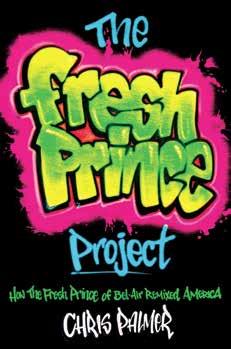
THE FRESH PRINCE PROJECT: HOW THE FRESH PRINCE OF BEL-AIR REMIXED AMERICA
Born to solidly middle-class parents in West Philadelphia, young Will Smith gained a reputation early for being something of a class clown. Though he tried, he was not athletic; instead, his talents lay in helping people have fun.
When he met Jeff Townes, it was a perfect match: DJ Jazzy Jeff spun the tunes, “Fresh Prince” Smith made the raps. Everybody wanted to be at their party. They made records and went on tour. Weeks before high school graduation, months before he turned 18, Smith was a
rich kid with a nice car and lots of friends. But “bubblegum” hiphop was on its way out; “hard-driving” rap was in. And Smith’s money dried up as fast as it had arrived. Seeking fame and fortune (part 2), Smith headed for California.
Writer Andy Borowitz was already there, cutting his teeth on Normal Lear projects and other television productions in Hollywood. When Brandon Tartikoff, who seemed to have a golden touch when it came to TV, asked Borowitz to work for him, the answer was yes. Tartikoff knew a lot of industry people, including Quincy Jones and music mogul Benny Medina, who was considering a step into the TV industry. At this same time, Will Smith was hanging around The Arsenio Hall Show backstage, hoping that fame might rub off on him.
On the afternoon that Smith met Medina, the young rapper had no idea who the elder man was. Medina, conversely, was well aware of Smith’s early career. And when he asked Smith if he could act, the young man
bluffed, as he had so many times before.
From the outset, The Fresh Prince Project tries too hard. Its earliest chapters are filled with 30-year-old language that feels forced, and allusions to some issues with Smith’s father that are never completely, satisfyingly explained. This unevenness doesn’t ever get much better as the book progresses: there’s a lot of backtracking, and the words “fish out of water” show up a ridiculous number of times.
And yet, if you can separate style from substance, author Chris Palmer does the job: his book shows how one TV comedy and the people who made it shaped Monday nights and everyday viewpoints. It’s also a great profile of a star with one foot in a job he loved, and the other foot firmly in film.
Overall, fans who can withstand the upand-downs of this book and don’t mind a little whiplash will want to hop on The Fresh Prince Project. If you like things freshly polished, though, this book might turn you off.
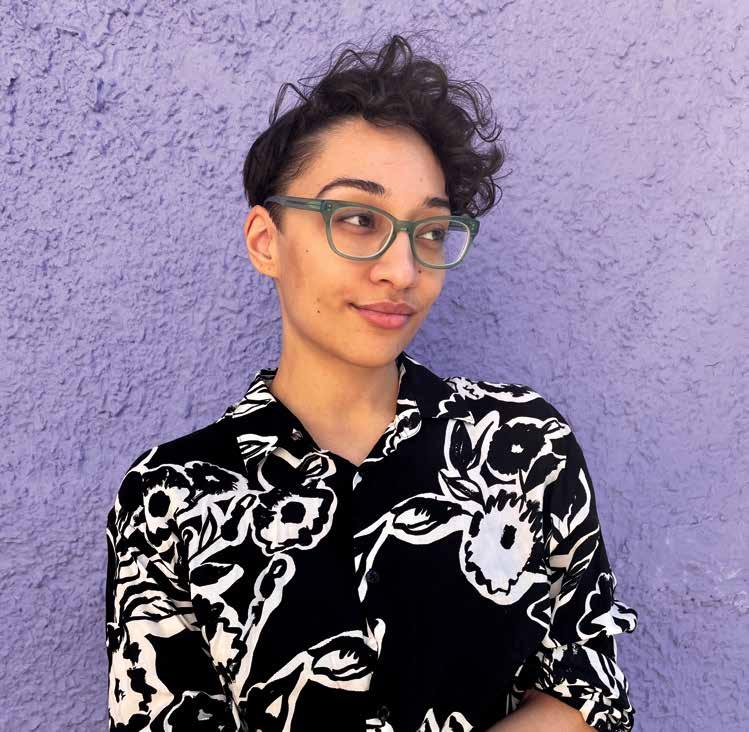
Jas Hammonds brings Black and Queer joy to teen readers in debut novel
by Lindsey Anderson SGN Staff Writer
Sometimes just existing in the world is hard. With news coming out every day about BIPOC and LGBTQ+ people being murdered by police, attacked by new legislation, and harassed on the streets, hope can be hard to find.
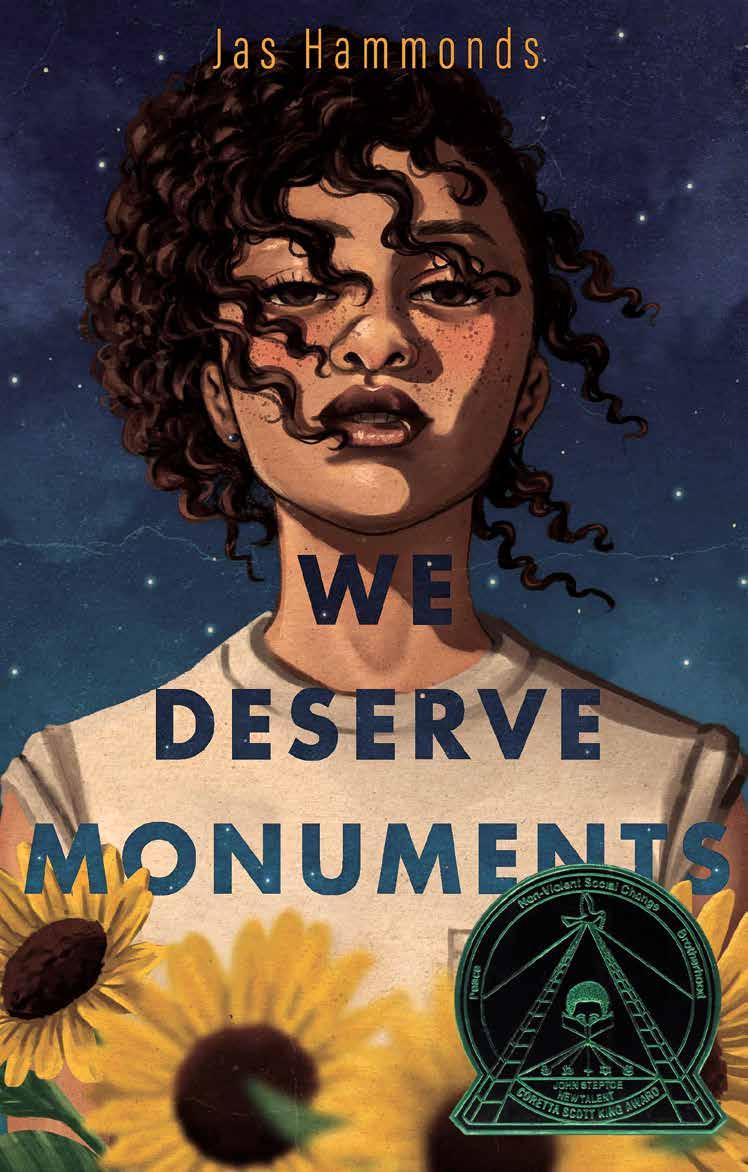
These were the thoughts going through debut author Jas Hammonds’ head when they first started to write We Deserve Monuments.
Giving young people hope
“I just really want readers to give themselves grace. That’s a theme that’s going on in the novel,” Hammonds said. “I think, especially for young people, the world can feel especially heavy these days. There’s always some horrible thing that’s happening on the news, [and] everything feels so pressing and so immediate. I wanted to write a story about a girl who’s just really learning to take a step back and realizing, ‘Okay, the weight of the world’s problems, they don’t have to be solved by me, alone.’”
Young readers, especially BIPOC and Queer readers, have connected with Monuments because of that message.
“I think that that’s important for young people to take away,” Hammonds said, “and I hope if they take away anything, it’s that you have time to be a teenager, to have fun, to uplift yourself. Surround yourself with the people who uplift your whole self.”
Hammonds wrote the book with Black readers in mind, and hopes to connect with those who might be feeling disheartened by the state of the world.
“For Black readers, in particular, the theme of We Deserve Monuments is bigger than just literal monuments. It’s not like saying, ‘Oh, I think Queer Black people deserve statues up all over the place.’ They do, but it’s just, like, on a deeper level than that. You deserve flowers, you deserve these places that are sacred, and you deserve community. I hope that that comes across in the book and it just feels like a warm hug if somebody needs it.”
The six-year journey
Before We Deserve Monuments was ready to be a love letter to the Black Queer community, it was just an idea Hammonds’ head.
“It’s been six years from the first draft to the last. I started writing it in 2016, and it took about 18 months to get a full first draft down,” they explained. “After I finished
that, I started applying to different workshops and residencies, just trying to join the writing community in any way that I could.
“I got accepted into Lambda Literary’s writing retreat for emerging LGBTQ voices. That turned out to be a major turning point in my writing career. I met some fantastic critique partners that inspired me to see it through to the end.
“The spring of 2019 is when I started quarrying agents. It wasn’t until the fall of 2020 that we got [a] deal [for] We Deserve Monuments [from] Roaring Brook Press MacMillan. So, the past two years have essentially been editing and promo and preparing to bring the book into the world. It’s been a long time on just this one story, but I’m happy it’s out.”
For Hammonds, writing is a journey that spans continents. “I’m a flight attendant, so my schedule is never really the same,” they said. “Day to day, I kind of just write in big chunks all at once. I’ll get in a great groove, and I can hammer out a lot of words in a week, and then I might not touch it again for a month. I’m not a ‘write everyday’ writer; it’s more whenever I have the energy for it.”
Jas Hammonds – Photo courtesy of the author
Image courtesy of Atria
Hammonds describes themself as a “wanderer.” They’ve spent their whole life moving around. It was this lack of roots that made Hammonds so enthralled by the idea of settings in novels.
“I grew up as a military kid, so I spent a lot of my childhood moving around from place to place,” they said. “I’ve always really been fascinated with the idea of home. When I’m writing and reading I love the setting. I love [homing] in on a setting. I like it when a setting feels like a character itself.”
Setting the scene
Hammonds’ attention to setting is evident in We Deserve Monuments. “In Monuments, the town of Bardell, Georgia, felt like its own character at one point. Because I’m a flight attendant, and I’ve spent so much time moving around, traveling, and going from place to place, I can focus on the small details of a setting, on what makes it special, what makes it quirkier.
“The setting is by far one of my favorite things to write, so I don’t think it would be the same if I had grown up in one place my entire life.”
Hammonds spend a lot of time focused not only on the setting but also how to bring to life the different identities their characters held.
“From the very first draft, I knew that Avery, my main character, was going to be Queer and incredibly proud of it,” they said. “She falls [into] a romance with the girl next door, and that’s been the same throughout every draft that I’ve written.
“As a Queer person of color, as a Queer Black writer, it’s always something that’s going to be woven into everything I write. It’s really important to me, and I think that I’m just really excited to join the canon of Queer writers of color in the young adult space, because I do think some fantastic novels are being published today.”
Unlike other depictions of LGBTQ and BIPOC characters, Hammonds’ books are written entirely for Queer and BIPOC audiences.
“For me, when I’m thinking about my audience, it’s always going to be for Queer young folks. When it comes to my young adult novels, I don’t concern myself with what a straight reader would think. Of course, straight people have read the book, they’ve liked it, and they’ve resonated with it, but ultimately this is a love letter for Queer Black girls.”
Still Queer, still swoony
Although Hammonds focuses on Queer storylines in particular, they don’t think it takes anything away from the romance in the plot.
“As a Queer writer, I don’t think I’d do anything different than a straight writer might. I just really focus on the honesty of a Queer relationship. The swoony, first-time, first-crush feelings that, to me, whether you’re straight or Queer, …can be universal. That feeling of first love, especially for Queer folks, there’s something about that first love. It’s the first time someone is seeing you for your full self. It can be vulnerable to come out; it can be very vulnerable to be in a relationship when you’re still closeted. I think those dynamics are maybe what I would focus on or be thoughtful of, maybe more so than a straight writer.”
Hammonds’ debut novel has been described by some readers as a Black and Queer version of the classic television series Gilmore Girls, due to its focus on family dynamics.
“Family is one of my favorite things to write about,” Hammonds said. “When I was growing up, I thought that my family was the only family in the world that had problems. I thought that everybody else just had this perfect Brady Bunch– ideal type of life. I thought I was the only kid who saw my parents fight, or saw addiction, and that was lonely, sometimes.
“I knew I wanted to write a story that focused on family and all the messy complexity that comes with it. I jokingly call this book Gilmore Girls but make it Black and Gay, just because of the central dynamics of a daughter and a mother and a grandmother, and the fights that occur between generations and the love that is ultimately there, bonding them at the end of the day.”
Exploring intergenerational experiences
For Hammonds, writing a multigenerational story is an exciting challenge.
“It’s fun to write about people that you think you know better than anybody, and then there are still ways for them to surprise you,” they said. “Ultimately, I just wanted it to be kind of an exploration of family and that specific coming-of-age moment when you realize there’s a lot more to your parents and your grandparents than you [thought]. It’s kind of a heartbreaking feeling when you realize your parents don’t have everything figured out, that they’re humans at the end of the day, with their traumas and ghosts.”
By adding a Queer plot to the intergenerational trauma, Hammonds was also able to explore the ways social progress can hinder those who may feel left behind.
“I think it’s really interesting, in particular, with three generations, to see how attitudes can change over time. An older generation, what they might have been uncom-
fortable with, or really against, like when they were younger. Maybe they’re more relaxed now: ‘So, back in the ’80s, I gave you so much grief because you were Gay, but now 30 years have gone by, and I’m a lot more relaxed, and that’s fine if my granddaughter is, but it wasn’t okay for you.’
“I think there can be a lot of resentment, especially for that middle generation that was like, ‘Oh, you weren’t cool with me doing that, but now all of a sudden it’s okay?’” Hammonds also explores the concept of chosen family, something Queer people often rely on.
“I love the concept of chosen family, because it is so important for us as Queer folks to not only lean on blood family. A lot of times we can’t relate to that, and I’ve experienced that in my way, and that’s why community is another theme that’s important in the book. Just finding your people, whether they’re blood or not, because sometimes the most important people in
your life are going to be your chosen family, and I’m just so grateful for that.”
Next project
Hammonds said everything they write will be Queer in one way or another. Their next project is another YA novel, set to be released in the summer of 2024.
“It is also a contemporary novel that is stand-alone,” they said. “It is more focused on friendship themes rather than family. It’s a story about a girl trying to get into a very exclusive sorority, and there are themes of toxic friendships and relationships and addictions and that feeling of completely losing yourself in search of the attention and affection of others. I think there is so much material that is ripe when you just throw a group of girls together.”
Hammonds’ debut novel, We Deserve Monuments, will be featured in this week’s SGN Book Club on Instagram.
Image courtesy of Roaring Brook Press
Travel
Have a three-way in the Queen City of the West
by Bill Malcolm Special to the SGN
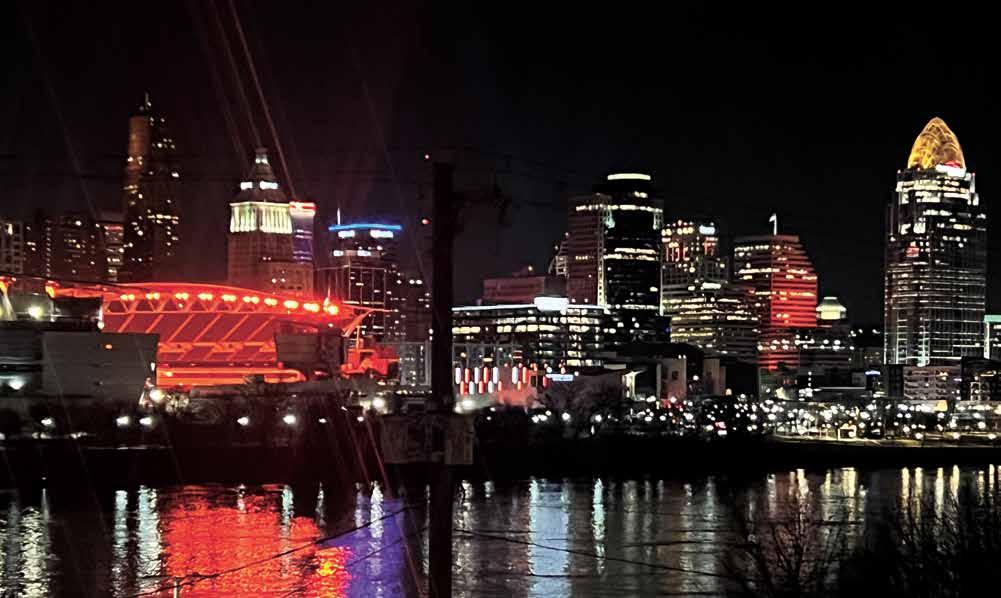
The historic Queen City of the West (aka Cincinnati, Ohio), founded in the 1700s, makes for an unexpectedly fun visit. It sits on seven hills bordering the Ohio River near Kentucky and Indiana.
What to do
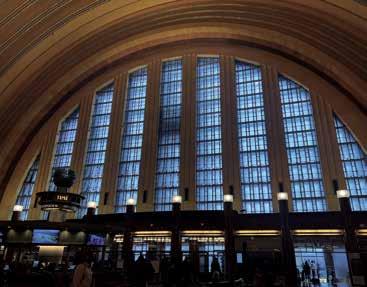
The Cincinnati Museum Center at Union Terminal (1301 Western) is located in a revamped Art Deco train station built in 1933. It includes the History Museum, Children’s Museum, and Museum of Natural History and Science, as well as a Holocaust and Humanity Center (not to mention an Amtrak station).
The Cincinnati Art Museum is found in Eden Park (953 Eden Park Drive) in the Mt. Adams neighborhood, on one of city’s seven hills. The museum just opened a new Georgia O’Keefe photography exhibit, the first ever to explore her little-known work as a photographer; it also includes several of her original paintings (https://www. cincinnatiartmuseum.org/art/exhibitions/ upcoming-exhibitions/georgia-o-keeffephotographer). Enjoy lunch in the Terrace Café. The #1 Metro bus from downtown provides frequent service to the museum for just $2 (or $4 for a 24 hour pass).
Downtown you will find the National Underground Freedom Railroad Center (voted by USA Today as the #1 history museum in the country), which showcases Cincinnati’s role in the underground railroad; in addition, the “From Slavery to Freedom” exhibit explores the American slave trade. You will find the museum downtown at 50 East Freedom Way near the Ohio River. Details at www.freedomcenter.org. Take the Southbank Shuttle trolley over the Ohio River to nearby Covington, Kentucky, for a $1. The old German city is very quaint. Check out the shops and restaurants at the historic Mainstrasse Village. While there, enjoy lunch or dinner at Mama’s on Main (https://www.mamasonmain.com).
Nightlife I liked Bar 901 (at 901 Race, downtown), which has a friendly crowd of local hotties.
Nearby is the Birdcage, which features drag shows (927 Race). Both are walkable from the Hyatt.
Across the Ohio River, in nearby Covington, Rosie’s is a lot of fun (643 Bakewell).
Across the street (and connected by a painted rainbow crosswalk), you will find Bar 32, which is also fun but allows smoking inside
There are also at least two LGBTQfriendly dive bars on Cincinnati’s Northside district, the unofficial gayborhood. Don’t miss Pride month, which includes the weeklong Cincinnati Pride as well as Cincinnati Black Pride, NKY Pride (Y’all Means All) held in Covington, and Sunday Funday Tea Dances.
Eats
Spicy if not hot, Cincinnati-style chili is celebrating its 100th year. It’s a Greek dish that is more like Coney sauce (no beans, no meat) than traditional chili. The dish contains 16–18 spices and is often served with spaghetti and topped with shredded cheddar cheese (called 3-way).
At the Gold Star Chili (various locations), I had the chili burger with Fritos and shredded cheese. Over at the other chili chain, Skyline Chili (643 Vine; also other locations), I tried the walking tacos (with chili and shredded cheese), although it too has a 3-way as well as a 4-way (which comes
with onions) and a 5-way (with beans). Who doesn’t love a three-way?
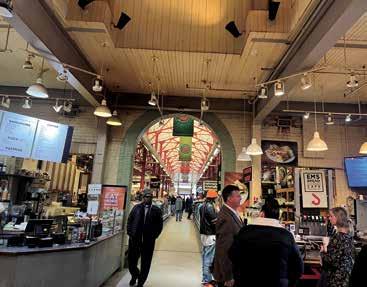
Take the new free streetcar, the Connector, from downtown to Findlay Market, the city’s public market, operating since 1852, which feature lots of food choices. It is in the historic Over the Rhine (OTR) neighborhood, which includes Washington Park.
For dessert, try the local Graeters Ice Cream chain (511 Walnut and other locations). I liked the peach flavor.
Around the corner from the Hyatt Regency, the new Paris Baguette Bakery Café (100 West Fourth) features a great pesto sandwich. Wash it down with an Americano. The croissants and other French bakery treats are excellent.
Where to stay
I stayed at the Hyatt Regency at 151 West Fifth, which had professional, friendly staff and nice rooms. It was perfect, including an indoor pool and a full gym, as well as a 24-hour grab-and-go market with delicious salads, locally roasted coffee, and gourmet sandwiches, not to mention local favorites like Hen of the Woods gourmet potato chips.
Have the New Riff straight Kentucky bourbon at the Red Roost Tavern (the hotel bar), since Cincinnati is the northern outpost of the Kentucky Bourbon Trail.
Getting there
Bar at Palm Court.
Cincinnati’s airport is in Covington, Kentucky (hence the airport code CVG) and has flights to/from everywhere, including many nonstops on Delta. Cincinnati is also not that far from most Midwest and midAtlantic cities, if you choose to drive. Or you can take Amtrak three days a week.
For more information
The alternative weekly, CityBeat, has lots of entertainment ideas. The destination marketing organization Visit Cincy (VisitCincy.com) is your source for where to go and what to do in the region and can help you plan your trip. I thank them for their travel tips.
You will be surprised by a visit to the Queen City of the West. Without the attitude of larger cities or even nearby Columbus, the scene is a lot of fun.
Bill Malcolm writes a syndicated LGBTQ+ travel column that appears throughout North America in select publications. Special thanks to Visit Cincy and the Hyatt Regency Cincinnati for their travel tips.
Across the street is the Hilton Cincinnati Netherland Plaza (35 West Fifth), an Art Deco treasure, and its
(above) Skyline, (below l-r) Cincinnati Museum Center at Union Terminal, Findlay Market – Photos by Bill Malcolm
When someone you know struggles with fear and anxiety
by Stan Popovich Special to the SGN
Do you know a friend or loved one who suffers from fear, anxiety, and depression but don’t know how to help them?
It can be frustrating to watch someone you know struggle with their mental health and not be able to do anything to relieve their suffering.
With this in mind, here are seven ways to help the person cope in these kinds of situations.
Learn and share as much as you can about managing anxiety and depression.
There are many books and much information on how to successfully overcome fear and anxiety. Share this information with the person who is struggling with their fears. The key is to get your friend to understand how important it is to seek some guidance when it comes to their mental health.
Be understanding and patient with the person struggling with their fears.
Maintaining depression and anxiety can be difficult, so do not add more problems than are already there. Do not get into arguments with your friend, who may be having a difficult time with their anxieties. Make an effort to listen to the person rather than making judgments.
Talk to the person instead of talking at them.
It is important not to lecture the person who’s having a hard time with anxiety and depression. Talk to them about their issues without being rude. Most people will listen if you approach them in a proper manner. Remember to treat others the way you would want to be treated if you were the one who was struggling.
Ask for some ideas from professionals.
Seek advice from a professional who can assist the person with their mental health issues. A counselor can give you some ideas on how one overcomes anxiety, fear, and depression. Getting help from a therapist is the number one priority in getting someone to do something about their problems.
Find out why the person won’t get assistance.
Many people who are struggling are fearful and frustrated. Try to find out the reasons why your friend won’t get the help they need, and then try to find ways that will overcome their resistance.
Remind the person of the consequences of not getting help.
Another way to convince someone who is struggling with fear and depression is to tell them what may happen if they don’t get some counseling. Anxiety and depression can make things worse and usually won’t go away by themselves.
Mental health usually can’t be managed all by oneself.
Many people think that they can overcome their mental health problems on their own. This is a mistake. A person’s fears and anxieties can be difficult to manage, and more than likely, your friend will need some help. The person should admit they have a problem and then seek treatment to get their life back on track.
Stan Popovich is the author of the popular managing-fear book A Layman’s Guide to Managing Fear. For more information about the book and to get some more free mental health advice, please visit http:// www.managingfear.com.
Photo by Polina Zimmerman / Pexels
Photo by cottonbro / Pexels
National/International News
National news highlights
by Daniel Lindsley SGN Staff Writer
FDA dials back donor restrictions
The Food and Drug Administration announced on Friday last week that it has drafted guidelines that would remove the three-month abstinence requirement for men who have sex with men and wish to donate blood.
Instead, donors would be screened with a questionnaire meant to evaluate their individual risk for HIV based on sexual behavior and other factors.
The development comes as the FDA is seeking to expand donor eligibility. The new policies’ impact would be greatest for Gay and Bisexual men in monogamous relationships, who would be able to donate blood for the first time in decades.
The draft would still exclude men who report having anal sex with new or multiple partners in the last three months, and women who have sex with Gay or Bisexual men.
“We feel confident that the safety of the blood supply will be maintained,”
Dr. Peter Marks of the FDA said.
“Current and former blood donation policies made unfounded assumptions about Gay and Bisexual men and really entangled individuals’ identity with their likelihood of having HIV,” said Human Rights Campaign member Sarah Warbelow.
FDA regulators will open comments on the proposal to the public for 60 days before beginning to finalize it.
International news highlights
by Daniel Lindsley SGN Staff Writer
Scotland reviews Trans inmate policies
Scotland has been moving on new measures regarding Trans inmates, with the intent to stop Trans people with a history of violence against women being placed in female prisons.
“We must not allow any suggestion to take root that Trans women pose an inherent threat to women,” said the Scottish justice minister, Keith Brown. “Predatory men are the risk to women. However, as with any group in society, a small number of Trans women will offend and be sent to prison.”
“I hope that the measures... will offer reassurance in the ongoing ability of the prison service to manage Trans individuals and ensure the safety of all prisoners.”
Brown added that the Scottish Prison Service’s policies had not been changed specifically by the passage of the Gender Recognition Reform Bill, which would have supported easier self-ID if the British government hadn’t blocked it.
North Dakota bill makes drag in public a misdemeanor
The bulk of the North Dakota House, 79-13, has approved a bill that would make it illegal to perform drag and cabaret shows in the presence of children or in public spaces, making such acts a misdemeanor with a penalty of up to 360 days in prison and a $3,000 fine.
Repeat offenders could face felony charges, with longer jail time and heftier fines.
Rep. Brandon Prichard of Bismarck said that he proposed the bill after learning of drag shows performed in front of children. Rep. Lori VanWinkle called such performers “perverts” and said the bill would protect children.
“We cannot let right and wrong be based on the subjective thoughts of our culture, which can apparently no longer differentiate what is moral behavior,” VanWinkle said, then promptly compared drag queens to pedophiles.
House Minority Leader Josh Boschee, an openly Gay Democrat, framed his counterargument in the context of parental rights.
“I hope that we leave this up to parents,” he said. “We already have laws that restrict where people can perform with nudity or without nudity, so this further expansion is nothing more than continuing to police morality.”
New Zealand national rugby frontliner comes out
Former professional rugby player Campbell Johnstone, of New Zealand’s national rugby union team, the All Blacks, came out as Gay in a TV interview with Hilary Barry on Seven Sharp, making him one of the first to do so for the team.
“If I can be the first All Black that comes
out as Gay and take away the pressure and the stigma surrounding the issue, it can actually help other people,” the former prop said.
“My view of an All Black was manly, strong, possibly with a wife and kids,” he went on. “I pushed that side of me down deeper and deeper... I may have had a bad game and blamed that side of me, you know, and it slowly starts to affect you.”
His advice to other closted athletes was this: “There’s no rule or law about coming out. You don’t have to come out. If you feel it’s not right for you, then don’t.
“The idea of an ideal rugby player is of an honest, strong person, and if you can make yourself stronger by relieving anxiety and stress, then you will fit that mold.”
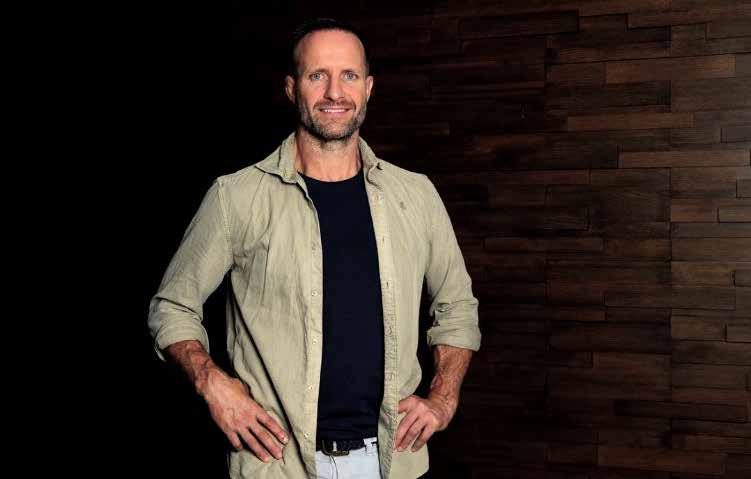
Campbell Johnstone – Photo courtesy of campbelljohnstone.nz / Instagram
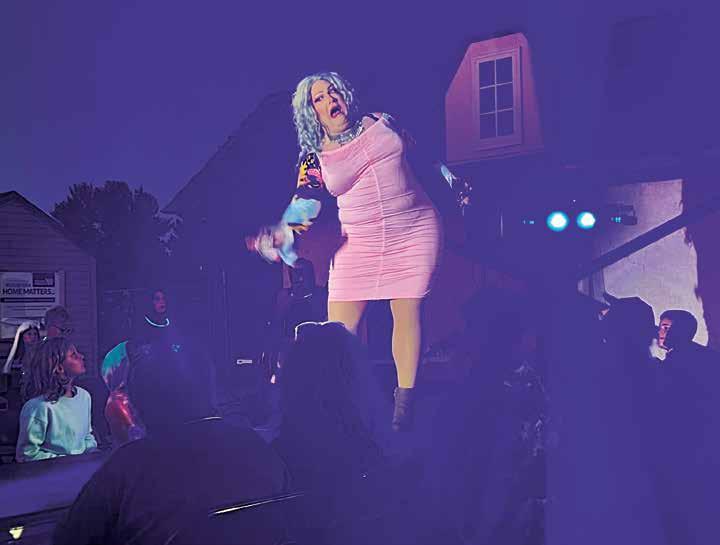
Photo courtesy of Tequila Mockingbird / Facebook
Episode 47: Ben Saenz
Ash & Lindsey try to keep it light in a tragic world. Pop Culture Corner makes its Season 3 debut and Can Can continues to dazzle. Also - Pope News! Special guest Ben Saenz discusses writing, life, listening, and God.
NEW EPISODES WEEKLY! FIND RADIO SGN WHEREVER YOU LISTEN TO PODCASTS!