IMPERIAL SOVEREIGN COURT CELEBRATES 50 YEARS AND NEW ROYALTY
by Gaysha Starr,
The Imperial Sovereign Court of Seattle, a 501(c)(3) nonprofit, held its 50th anniversary coronation last Sunday night at the downtown Seattle Westin Hotel, with the additional help of community volunteers from the Emerald City Softball Association and US Bank.

Sue Bird returns to Seattle Storm Texas AG: Gender-affirming treatment is child abuse
by Hannah Saunders SGN Contributing Writer
It was announced on Feb. 18 that Seattle Storm basketball star Sue Bird would be returning to play for the 2022 season, making it her 19th with the Seattle franchise. Bird is a four-time WNBA Champion and 12-time all All-Star who won her fifth gold medal competing for the USA in the Tokyo Olympic Games last summer.
“Sue is the best point guard to ever play our game, and we are so excited to have her back for another season,” said Noelle Quinn, Seattle Storm head coach. “What she’s done for the organization and city of Seattle is nothing short of amazing. Her leadership, competitive spirit, and passion for the game shines through every time she steps foot on the court.”
by Mike Andrew SGN Staff Writer
Texas Atty. Gen. Ken Paxton has issued an opinion that gender-affirming therapies for Transgender youth — including hormone therapy and puberty blockers — constitute child abuse. Paxton was asked by state legislator Matt Krause of Fort Worth to render a judgement on the matter. The attorney gen-
eral’s opinions do not have the force of law but are supposed to guide state agencies.
If Paxton’s interpretation of existing child abuse laws is implemented, Texas would become the state with the most restrictive rules about access to Trans health care.
“There is no doubt that these procedures are ‘abuse’ under Texas law, and thus must
Seattle Empress, Olympia 29 Special to the SGN
Sue Bird – Photo by Elaine Thompson / AP
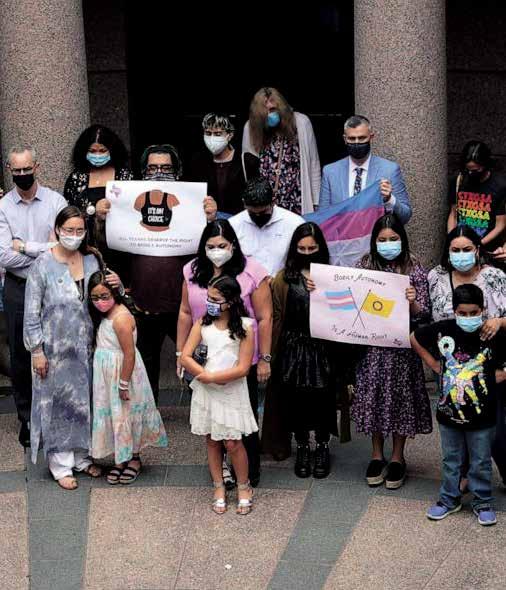
Photo by Eric Gay / AP
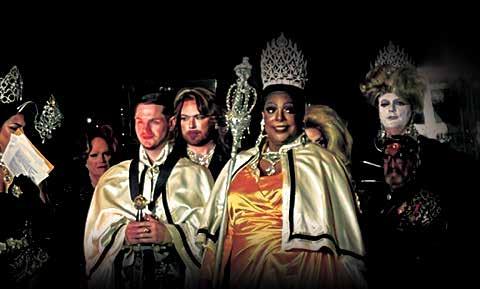
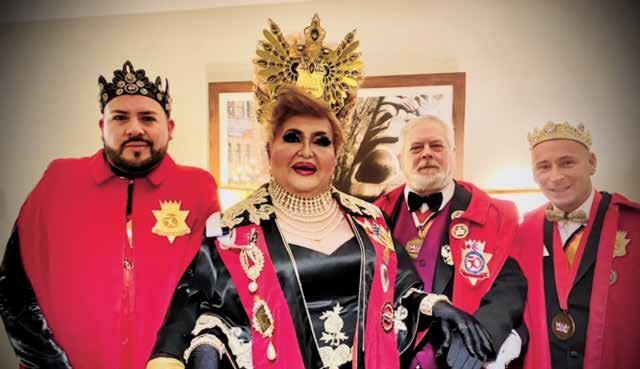
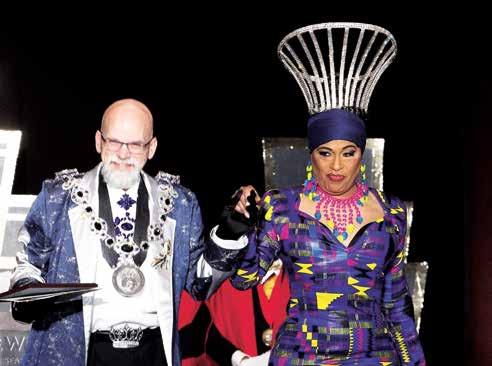
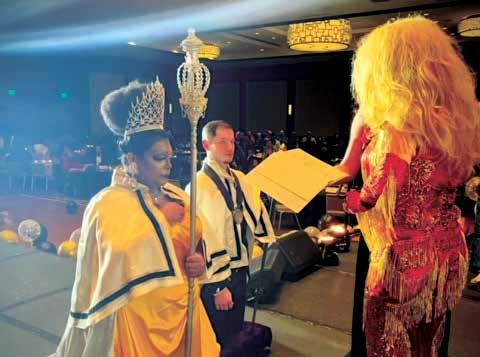
Newly crowned Monarchs, Rainier 47 Paul Paradisco and Olympia 50 Londyn Bradshaw – Photo Courtesy of Empress Kimberly Westwood of Portland, OR.









Local News
COURT
continued from cover
As this was the first in-person coronation the primarily drag social group was able to host since 2019, due to the pandemic, outgoing Emperor Rainier 46 Rob Haggard and Empress Olympia 49 Ladie Chablis were able to step down after a two-year reign, ending it by hosting over 250 guests, from as far as Florida and Georgia courts to local nonprofits and Seattleites.
After a three-week campaign and a community vote of 213 for the 50th empress, Londyn Bradshaw beat out the other candidate, Jessica Paradisco, and was crowned along with former Emperor Paul Paradisco.
“Paul and I have been friends since 2011… and now we are title partners,” said Londyn this week during their first interview. “We would like to get the community involved more than ever. We would also like to digitalize all of the history and preserve it this year, since we are the 50th reign, while keeping the court moving forward.”
The board of directors had the arduous task of planning nine events at six locations during the week. Even as late as last month, they were unsure if they were going to be able to hold the traditional event, due to the recent Omicron outbreak. Attendees had to adhere to safety measures, including temperature checks, showing proof of vaccination status, and keeping masks on.
As there were two sets of monarch anniversaries, the court was able to also add a special 50th Anniversary Gala at the Madison Renaissance on Saturday evening. Special moments included the celebration of the first empress, Scotty I, crowned in 1971, special lip-synch performances, heartfelt tributes, and video presentations. The evening was hosted by six former monarchs.
Another new event added to the week was an after-party following the coronation at the Westin on Sunday, featuring RuPaul
Drag Race stars Bebe Zahara Benet, Brita Filer, and Killer Queen from Spain, hosted by Anita Spritzer. They, along with over 13 drag entertainers from around the greater Puget Sound region, featured their best numbers in the grand ballroom on a 50-foot runway with professional lights and sound.
Ladie Chablis saiad, “Rob and I are amazed how amazing the week was. We are very honored how the Westin lit up the two top towers with the pride colors from Thursday to Sunday to honor the courts, and that we had guests from all over the country.”
Other highlights from Coronation 50 was the keynote address of Queen Mother of the Americas and Latinx activist Nicole from San Diego, as it was her 15-year anniversary since ascending to the leadership role of the Imperial Court system here in Seattle. She gave national awards to local leaders, including Joe Bento from GLSEN, Deaunte Damper of BLM/NAACP Seattle/King County, Dog House Leathers, Taffy Maenae from UTOPIA, and politician Nikkita Oliver.
“As I have always said, a community, indeed a movement, that does not know where it came from or whose shoulder it stands on, doesn’t know where it’s going,” Nicole began. “And since the 1970s, the Seattle LGBTQIA community has been able to count on the Imperial Court of Seattle and indeed stands on the shoulders of many emperors and empresses and pioneers of Seattle and the state of Washington.”
In addition, the Imperial Court of Seattle awarded $12,000 in scholarships to LGBTQIA students to help continue their education.
Emperor 47 Paul and Empress 50 Londyn will attend San Francisco’s Coronation this weekend and then return to start planning their year of fundraising, events, and community involvement.
For more information, visit www. imperialcourtofseattle.org
“Since the 1970s, the Seattle LGBTQIA community has been able to count on the Imperial Court of Seattle and indeed stands on the shoulders of many emperors and empresses and pioneers of Seattle and the state of Washington.”
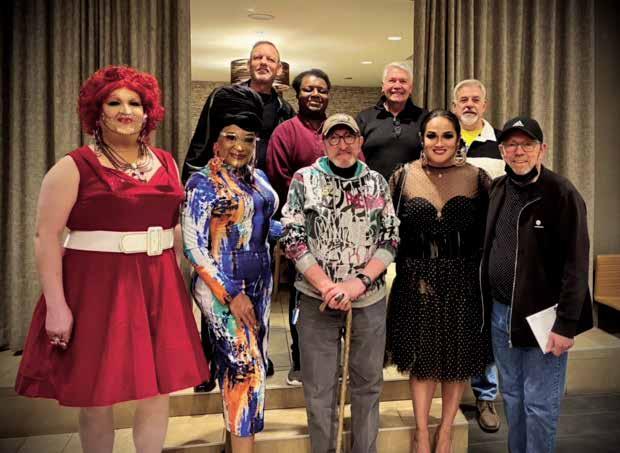
The Windsor Dinner at the Madison Renaissance Hotel with some of our Court Monarchs celebrating over 50 years of service and fundraising – Photo courtesy of Aleksa Manila
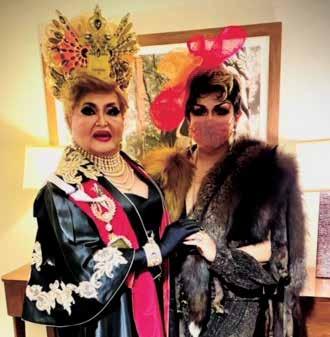
Queen Mother Nicole and Empress 35 Aleksa Manila of Seattle – Photo courtesy of Aleksa Manila


Some of our Emperors and Empress of Seattle at our final College Meeting of the year, the morning of the Coronation 50 – Photo courtesy of Aleksa Manila
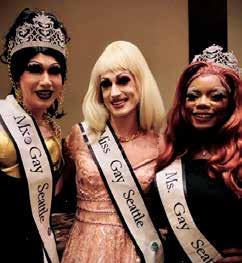
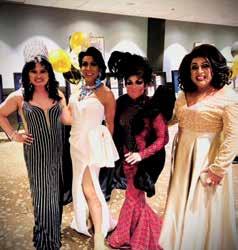
(clockwise) A memorial was held on Saturday AM at Evergreen Washelli for Empress 34, Asia Cache also known as Paul Malvas; The reigning Gay Seattle’s (l-r): MX. Seattle Miss Texas 1987, Miss Gay Seattle Cookie Couture and Ms. Gay Seattle Skarlet Dior Black; Empresses of Seattle (l-r): Gaysha Starr, Coco Vaughn, Aleksa Manila and Nina Maxwell; Board President and Miss Gay Washington Dutchess Drew Nightshade with this year’s scholarships award recipients as she awards $12,000 in monies – Photos courtesy of Aleksa Manila
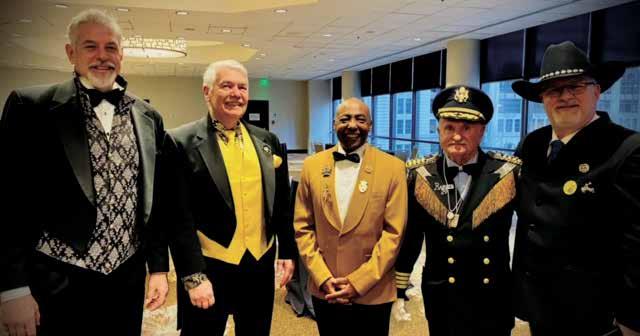
(l-r) Seattle Emperors John D., Michael D., Jerry Garrett, Arnie Norm and Larry Ryan Stewart at the Rainier Reception before Coronation – Photo courtesy of Aleksa Manila
Crowned of our New Empress Londyn Bradshaw and Emperor Paul Paradisco – Photo courtesy of Aleksa Manila
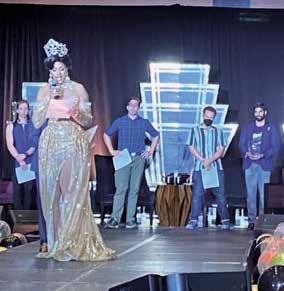
Emperor Rob Haggard and Empress Ladie Chablis during the award ceremonies – Photo courtesy of Aleksa Manila
Queen Mother Nicole with some of her Heir Apparents from across the United States – Photo courtesy of Aleksa Manila
Local News
Radical Women celebrates Black History Month, calling for comprehensive reproductive justice
by Kylin Brown SGN Contributing Writer
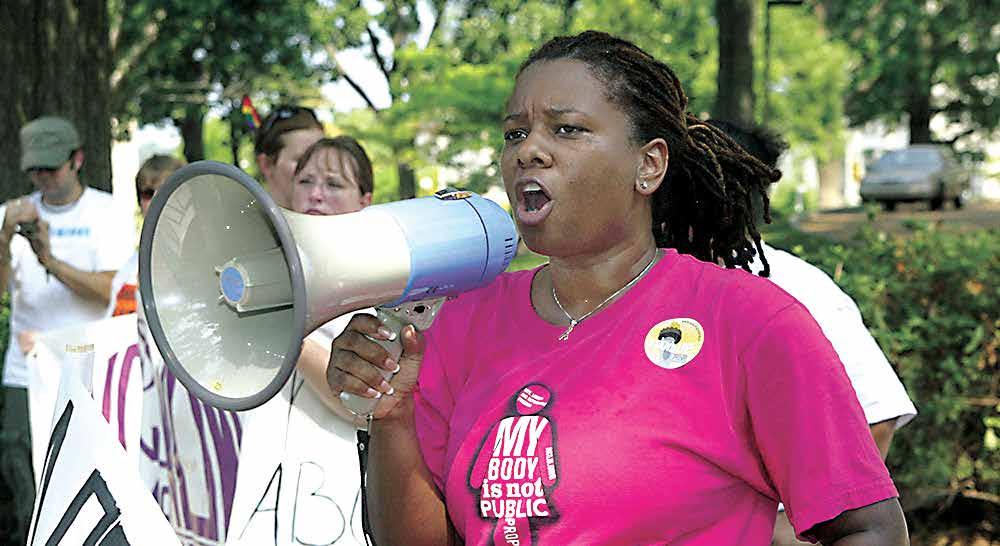
On Sunday, Radical Women’s Seattle branch joined with its national partners and the Freedom Socialist Party’s Comrades of Color Caucus to celebrate Black History Month in an event called “Black Women Fire Up the Movement for Reproductive Justice.”
With two 15-minute speeches by National Mobilization for Reproductive Justice organizer Irene Akingbade and Comrades of Color Caucus coordinator Kristina Lee, the event highlighted the interconnectedness of Black history and reproductive justice organizing.
Defining reproductive justice
To Akingbade, reproductive justice means more than vital access to abortion. It also means the end of disproportionately high pregnancy-related mortality for Black women, who have consistently died at three times the rate of white women, according to the CDC. It means the end of discrimination, like harmful medical racism. It means lifelong access to resources like healthcare, childcare, and education for Black mothers, fathers, and children.
“What I think gets left out, more often in mainstream conversations at least, is how [reproductive activism] is all connected to the ongoing history of this country attacking the bodily autonomy of women, Black people, Brown people, Indigenous people, Trans and Nonbinary people, people who are physically or mentally disabled, undocumented people, and other marginalized groups,” she said.
Similar frameworks of reproductive justice were first seeded by women-of-color organizations in the 1990s, who did not agree with the “individualist” approach of the mainstream pro-choice movement. Akingbade’s speech evoked the words of “Women of African Descent for Reproductive Justice,” a group of Chicago women who, in 1994, first coined the term “reproductive justice” itself. Their definition, a numbered list of rights
that extend beyond abortion and into human rights, cites confounding variables of oppression that exacerbate Black women’s circumstances, like lack of access to basic healthcare and reproductive education.
Bodily autonomy
This list of rights marked a major turning point for Black women activists and organizations, who cannot subscribe to the singleissue approach of pro-choice advocates, because their bodily autonomy is threatened on several fronts.
“For centuries, Black people have been denied the right to body autonomy,” said Akingbade. “It is unsurprising then — with so much at stake and for so long — that Black people, specifically Black women both cis and Trans, and Black Trans men, across the diaspora, have been at the forefront of the fight for reproductive justice since the days of enslavement.”
Akingbade also detailed the United States’ checkered history with eugenics studies on women of color, which persists today, evidenced by the case of nearly 150 incarcerated women in California prisons who were sterilized without their consent from 2006 to 2010.
California, like more than half of all US states, previously hosted eugenics programs, in which people of color were targeted for forced sterilization experiments that “sought to prevent social ills by seeing that those who caused them were never born,” according to an archival investigation by NPR.
In 2020, Dawn Wooten blew the whistle on the Georgia-based Immigration and Customs Enforcement (ICE) detention center where she worked as a nurse, exposing forced and coerced sterilization of women in ICE custody.
Injustices of this severity toward BIPOC women, Trans people, and other minority groups persist today, but are often uncovered or “shut out” by the mainstream reproductive justice movement, Akingbade said. Meanwhile, abortion access remains a core component of female bodily autonomy, though constantly under intense attacks from policymakers and pro-life lawyers.
Increasing reproductive restrictions
Attacks on reproductive rights have been ongoing in recent months, especially pertaining to the polarizing topic of abortion.
Last year’s Dobbs v. Jackson Women’s Health Organization, the first-ever case to explicitly petition for striking down Roe v. Wade and Planned Parenthood v. Casey, has made it to the Supreme Court with a decision expected by this summer.
In the meantime, in 2022 alone, 39 state legislatures have filed over 230 bills that would restrict abortion access. And they’re more likely to pass than ever before. Bills like Florida’s 15-week abortion ban, which passed that state’s House last Thursday, and Arizona’s version of the bill, which passed in its Senate last Tuesday, severely limit access and penalize healthcare providers and counselors involved in abortion services.
These bills will all disproportionately affect families and women of color, said Akingbade. “Non-cis Black people already are disproportionately experiencing body policing and medical discrimination, even compared to their cisgender Black counterparts,” she said.
“Without the reproductive rights we are fighting for right now, these injustices will not only continue, but they will accelerate.”
Following Akingbade’s speech at the Radical Women event, Lee, a selfdescribed “Queer rights activist,” added that the fight for reproductive rights “is essential for Black people and Queer and Trans people of color especially.”
A socialist feminist approach Lee began her speech echoing the framework laid out by Akingbade, before furthering the message by discussing the shared political goals of the Freedom Socialist Party and Radical Women, which call for broad anti-capitalist groundwork.
“Constant attacks on us mean that we cannot focus solely on the right to obtaining abortion and birth control,” she said. “Our life circumstances and identities affect not only the choices we have access to, but what we’re able to imagine for liberatory futures.”
While taking on all of the world’s problems at once seems like the main cause of Gen Z/millennial burnout, Lee offered a solution. Citing issues ranging from affordable housing and living wages, to LGBTQ+ rights and climate change, she explained the ways that one common “root cause” is involved: capitalism.
“We live in the belly of a massive capitalist beast that is full of resources. Our community should not be pitted against one another for the resources that we need to survive and thrive,” she said. “The struggle for Black liberation is inextricably linked with the struggle to end capitalism.”
Radical Women and the Freedom Socialist Party maintain a theory of radical integration, which requires the end of capitalism, because it “requires the exploitation of women and people of color.”
Black women’s position is at the core of multidirectional oppression in the United States, and this is why, Lee said, “the most radical demands have come from Black women.” Currently, women comprise 57% of the workforce, and are also core providers and organizers for several multiracial and multigenerational communities across the US.
“All of society benefits when the conditions of Black women are lifted,” Lee said as she finished her speech and called for mobilization.
“From abortions to doulas,” as Lee said, the group called for a comprehensive framework of reproductive justice centered upon basic rights to bodily autonomy for all. At the end of the Zoom event with just over 115 attendees, $4,935 were raised for the Freedom Socialist Party.
Find the Freedom Socialist Party at www.Socialism.com or on Facebook at www.facebook.com/fspUS. Connect with Radical Women via www.RadicalWomen. org, or find the Seattle branch at www. facebook.com/RWseattle.
Photo courtesy of Radical Women
Arts & Entertainment
The wedding bells are ringing: BenDeLaCreme’s solo tour is just around the corner
by Nick Rapp SGN Contributing Writer
As long-postponed theatre shows return from pandemic-induced stasis, a certain beloved Seattle drag queen is ready to bring her 2020 show to wider audiences throughout the summer.
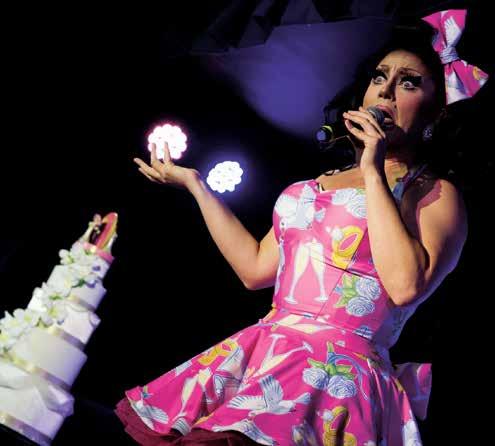
BenDeLaCreme’s Ready to Be Committed is beginning its US tour this April, promising narrative-cabaret shenanigans in a large production, with DeLa in full charge as the star and lead producer.
“After two long years of postponements, I’m OVER-FREAKING-JOYED to be bringing my new solo show back on the road! And I gotta tell you all: this one’s a doozy,” said DeLa in a press release.
The SGN previously reported on DeLa and local drag favorite Jinkx Monsoon’s holiday show, which was sadly canceled in Seattle due to the surge in Omicron cases.
For those who were looking forward to seeing DeLa in December of 2021, you’ll just have to wait until Ready to Be Committed’s six-day run in Seattle, July 5-10. Excitement has been brewing for the show since its sold-out debut performances in New York City and Provincetown in 2019.
Since her two-season run on RuPaul’s Drag Race, DeLa has secured more than a fair share of accolades and career advances. She has toured the world, premiering four solo shows to high critical praise offBroadway. The Jinkx & DeLa Holiday Special, also produced by DeLa’s company, BenDeLeCreme Presents, is available to stream on Hulu, alongside her cameo with Jinkx in The Happiest Season
On this tour, DeLa is shifting from holiday focus to love and marriage, in this “limited engagement about the limitations of engagement,” according to the press release.
This show is “the story of one queen who searches for love and finds a whole lot she never bargained for: bitchy brides, pervy Grindr guys, corpse-eating cats, song, dance, and more puppets than you ever thought you’d see at a wedding,” DeLa explained.
The range of the content and themes demonstrates her unique ability to approach high-brow theatre and emotional stakes with camp sensibility, winning over audiences with charm and humor in equal parts.
With the uncertainty of theatre and live performance succeeding in the midst of public health challenges these past few years, it is exciting to see the perseverance of local

artists in the face of the crisis. It seems only fitting that, after the slew of wedding postponements, DeLa’s wedding-centered tour is finally getting its chance to shine.
In a heavily Drag Race –inspired shift of focus on drag from local entertainment to ubiquitous art form, shows like this are now possible, given Queer art’s recognition in the mainstream. Drag queens now have the platform to share multifaceted performances about the Queer experience, while running production companies and still managing to return to their locales for more
intimate performances.
DeLa has always used this platform to stay true to her standards and carve her own path. She famously eliminated herself in her All Stars season of Drag Race, explaining in a Billboard interview from 2019 that “it was really powerful and it was cool to feel this experience, because you never feel like you’re in control, because someone else is running the show. It was amazing to feel fully in control of my own path.”
And she is definitely running her own show now. By going with her gut and leav-
ing when the time was right, she paved the way for a career of ambitious and confident decisions regarding her autonomy as a performer and her artistic merit. DeLa has been ready to commit for years, and it is thrilling to see her success in the face of adversity, all due to an ethos of care and a heathy dose of self-confidence.
Tickets for Ready to Be Committed are available at www.bendelacreme.com.
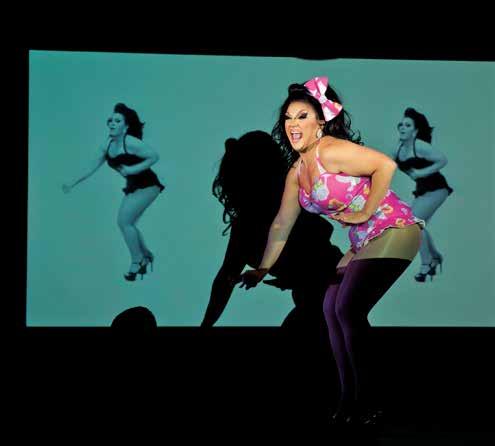
Photos by Liz Nicol
BenDeLaCreme – Photo by Eric Paguio
Arts & Entertainment
Game to Grow
A nonprofit using D&D for personal growth

by Daniel Lindsley SGN Contributing Writer
It’s a common refrain in the tabletop gaming community that Dungeons & Dragons isn’t a substitute for therapy. It usually applies to those players who breach the social contract, or even just load their heaviest emotional baggage onto their characters without warning a playgroup in advance.
But most players would also deny the notion that D&D is a medium incapable of exploring identity and self. Given the freedom to be whoever we want, and to experiment in safety, we may discover things about ourselves that would otherwise lie dormant, unseen, or unquestioned in the humdrum of the everyday.
Game to Grow (GtG) has taken this idea of safe exploration through play and turned it into an international nonprofit that uses games — from Minecraft to D&D — for “therapeutic, educational, and community growth.” It was founded in 2017 by Adam Johns and Adam Davis, who both have strong backgrounds in therapy. Having evolved from their Seattle-based Wheelhouse Workshop, it now works with around 150 youth and adults each week.
A large share of GtG’s services is its youth programs, which can take the form of small playgroups led by a therapist, educator, or community leader trained in the therapeutic applied use of D&D. According to Groups Coordinator Michael More, that is what the organization is best known for.
I spoke with More over Zoom about GtG’s work with Queer youth. A shelf of games, figurines, and other geek paraphernalia towered behind him. During our introductions, he said he and his husband of 15 years had moved to the Seattle area from British Columbia in 2018. More has been running games at GtG since then, and for the last year and a half, he has also worked full-time as the groups coordinator, guiding the organization in creating fun, welcoming spaces for its programs.

Queer youth, More said, were “forefront in our minds” when the organization started. “It wasn’t until September of this past year... that we started doing explicitly Queerfocused and Queer-only programming, but it’s been part of our conversation and our lexicon for a long time, since day one.”
“When our education and training program started, about in 2019,” More went on, “one of the models we tried to emphasize, when we teach mental health professionals and educators, is about incorporating a wide range of diversity in terms of gender and sexual identity, and also race and ethnicity, and language, and ability. So it’s really baked into our bones here at Game to Grow.” And that focus on diversity, More said, is reflected in both their staff and their participants.
Anyone familiar with D&D’s past and current failures in diversity and inclusion might be skeptical of the game’s use in this context. Even with the recent efforts by Wizards of the Coast to address the game’s problems, they have decades of material to retcon (revise retroactively), and like many giants in an industry, they’ve also been slow to respond to changes in the landscape.
For these reasons and others, GtG doesn’t use D&D fifth edition as is, opting instead for their own modified version

called Critical Core. To help matters, players and facilitators usually work together to build the world in which their adventures will take place, rather than adhering to the established, official lore of Eberron or the Forgotten Realms. For any Queer players in a group, facilitators have the tools to make the experience “for” them.
As mentioned before, though, GtG’s Queer-only group began only recently. In 2019, the organization worked with local research foundation Foundry 10 to evaluate its group programs with qualitative research. “We were trying to focus on BIPOC youth... [and] Queer youth,” More said of the study. “And as we were going through this research cycle, it became clear that a Queer-focused group would be a really valuable area to explore.”
Right now that group is in its third quarter, led by a Trans, Queer facilitator. More
described it as one of the “shining gems” of the program, “because of the warmth and camaraderie I’ve seen of the participants.” More observed the group in its first weeks. “Having seen lots of other groups,” he added, “I was really impressed [with their] making space for each other and asking questions,” not just about the game but about each other. More said the participants were also remarkably supportive and patient in other players’ moments of confusion or hesitation, even early on, when a group is typically more awkward.
As for the organization’s future, Game to Grow is making plans to expand this year, More said, which will include efforts to form more Queer-focused groups, and train more facilitators in running games for Queer people.
Michael More, Groups coordinator of Game to Grow
Photos courtesy of Game to Grow
A lot to love in Seattle Opera’s Orpheus & Eurydice


by Sharon Cumberland
SGN Contributing Writer
Orpheus & Eurydice
Music by Christoph Willibald Gluck
Seattle Opera’s Tagney Jones Hall
January 12, 2022 online
Seattle Opera presented a shortened version of Christoph Willibald Gluck’s opera Orfeo ed Euridice (1762) in the intimate Tagney Jones Hall for those lucky enough to see the sold-out performances in January, and streamed it for the rest of us to watch at home in February.
The cast for the streamed performance, led by Christopher Ainslie as Orpheus, Ariana Wehr as Eurydice, and Sharleen Joynt as Amore, was excellent. They were supported by three dancers, a small chorus, and ten members of the Seattle Symphony, conducted by Stephen Stubbs, the director of Pacific Music Works and a famous early music scholar and musician. The orchestra sat alongside the stage in view of the audience — a very appropriate visual presence for an opera about the power of music.
The myth of Orpheus, son of Apollo and demigod of music, has been made into more than 70 operas over the last five centuries, but Gluck’s remains the most popular. When Orpheus’s wife, Eurydice, dies from snakebite on their wedding day, he falls into such despair that he wants to kill himself and join her in the underworld. Amore, the god of love, appears and offers him a chance to bring Eurydice back from the underworld — as long as he doesn’t look at her until they’ve returned to the light.
Orpheus uses his music to charm the demons and spirits into allowing him to passage to the underworld, but when he finds Eurydice, she insists that he look at her. He succumbs, and she dies. In Gluck’s opera, and many other versions of the myth, Amore returns and revives Eurydice after all, in a gesture called the Triumph of Love. This production, however, has left out the conclusion as written, eliminating a good deal of beautiful music and leaving the viewer with an unresolved ending.
Ainslie, a countertenor with a virile, powerful voice, sang Orpheus with conviction and understated elegance. Joynt,

as the playful Amore, used her confident soprano and a charming stage presence to move Orpheus from despair to hope. I was sorry that the truncated ending of this production deprived Joynt of one of her biggest moments.
Wehr’s Eurydice had little to do in the first part of the opera (since Eurydice is already dead), and in most productions of this work Eurydice doesn’t even appear until Act 2. But Director Chía Patiño had the problematic idea of inserting a dream sequence into the middle of the opening funeral cortege, in which Eurydice rises from her bier and dances a tango with Orpheus. Not only was the tango a jarring anachronism, but Wehr was made to dance in spike heels and an overdone dress you might see at an Elvis wedding in Las Vegas. Wehr has a truly delightful smile, but it was the wrong time and the wrong place to look ecstatic, and Orpheus was unconvincing as he tried to execute tango moves to funereal music. That misstep was redeemed later, however, when Wehr sang her big aria in the underworld with power and passion.
One of the most successful aspects of
this production was the lighting design by Robert Aguilar and video projection design by S Katy Tucker. In a small area with no fly space, the illusions, made possible by lights and projected images, created a strange and weirdly beautiful underworld. Donald Byrd’s choreography was equally effective, making three dancers represent an entire army of gyrating otherness. Liesel Alice Gatcheco’s costumes for the three dancers, with their serpentine sleeves, were powerful embodiments of desperation.
I was moved and fascinated by this production almost to the end — except there was no end that resembled an actual conclusion. I was startled when Orpheus just walked out of the underworld, saying, in effect, “See you later,” and then the cast entered the stage to take their bows. It was very abrupt in terms of the action, and a big letdown in terms of the plot, to find out that love doesn’t triumph over death after all. I guess it’s the pandemic ending, or the cynical 21st-century ending. At any rate, I still think that love triumphs over death — and that music, as Shakespeare says in Twelfth Night, is the food of love.
Christopher Ainslie as Orpheus in in Orpheus & Eurydice – Photo by Bill Mohn
Ariana Wehr as Eurydice in in Orpheus & Eurydice – Photo by Philip Newton
Dancers Jaclyn Wheatley, Vincent Michael Lopez, and Kaitlyn Nguyen in Orpheus & Eurydice – Photo by Philip Newton
Food & Nightlife
Books for kids for Black History Month
by Terri Schlichenmeyer Special to the SGN
If you had a plate full of your favorite thing to eat, would you share it? In Sweet Justice: Georgia Gilmore and the Montgomery Bus Boycott by Mara Rockliff, illustrated by R. Gregory Christie (Random House, $18.99), you’ll read about Gilmore, whose resourcefulness in the face of racism helped finance a small part of the civil rights movement.
When Rosa Parks was arrested for a quiet act that launched a movement, Gilmore was working as a cook at a restaurant. She participated in the bus boycott, but she also felt that she could do more — and so she bravely began to collect money, quietly, right in front of the very people who could arrest her, too. For kids ages 5-7, this is a great introduction to this unsung heroine.
For children who want to know more individual stories of slavery, Seeking Freedom: The Untold Story of Fortress Monroe and the Ending of Slavery in America by Selene Catrovilla, illustated by E.B. Lewis (Calkins Creek Books, $18.99) is a book to find. It’s the true story of an escaped slave who played a silent but important part in the Civil War, the defeat of the Confederacy, and the end of slavery. Also for kids ages 5-7, this is an exciting tale and a great discussion-starter.
Slightly older children who have been following along with today’s news will enjoy Evicted!: The Struggle for the Right to Vote by Alice Faye Duncan, art by Charly Palmer (Calkins Creek, $18.99). It’s a story of the early years of Jim Crow, when sharecroppers could kick a family off their farm merely because the adults wished to register to vote. White shopkeepers wouldn’t do business with them anymore, either, leaving them with few options. This book explains what those sharecroppers had to do to cast their ballots. Duncan tells individual tales, placing them inside a larger narrative so that kids aged 7-12 will understand why voting is a precious right.
And finally, for the 3-to-5-year-olds who love a good fable, Mermaid Kenzie, Pro -
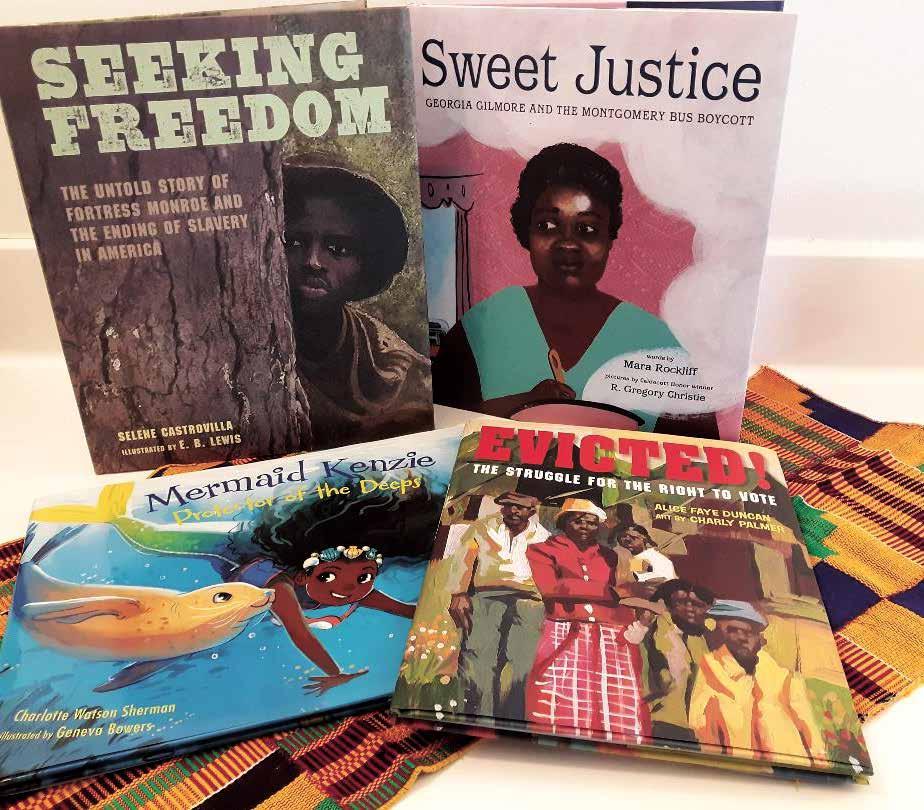
tector of the Deeps by Charlotte Watson Sherman, illustrated by Geneva Bowers (Boyds Mills Press, $17.99) is a book they’ll love. Mermaids are a big part of African folklore, and this cute book tells the story of a young girl who loves to swim and to
by Terri Schlichenmeyer
pretend that she protects everything in the sea. Imagine what happens when she learns that she really can help her underwater friends and the home in which they live...
If your child craves more or different Black history books, or if you’ve got an older
child who needs a good read, be sure to ask your favorite librarian or bookseller for help. They’ve got millions of ideas at their fingertips, including these special books.
Manhunt : Do you have the balls to fight?
by Terri Schlichenmeyer
Special to the SGN
MANHUNT
GRETCHEN FELKER-MARTIN
© 2022 Macmillan Nightfire
$17.99
304 pages
Beth sometimes wondered where the T. rex virus came from. Spreading it would have been easy: just a matter of leaving an open cannister by a heating vent somewhere or sprinkling it in a crowd. Who would do that, though? Who would release a virus that turned every postpubescent male into a crazed, deformed, wolflike killing machine?
Beth idly thought about it, as she and Fran tried to get back to their healer — and safety. The answers might never be known, but no matter: they were too busy harvesting as many testicles they could get from the men-creatures they eliminated, so their healer could make the estrogen they needed. They had to stay safe and alive. Kill or be killed.
Sometimes, Fran couldn’t help but feel sorry for Beth... and for herself, for that matter. Fran’s transition was almost complete when the virus began spreading — when husbands, sons, and brothers suddenly became monsters. There was no time for bottom surgery, but she was almost there, and at least she looked feminine. She might fool a TERF, but Beth never would.
Beth was big, blocky, and still boy-muscled; there was no way she’d ever be a girl.
Robbie always felt that he was better off on his own. He had supplies and was selfsufficient, as long as the TERFs — cisgender women who’d created a fierce army — didn’t catch him. Though he was still menstruating, a Trans man was a man.
And to the TERFs, a man, any kind of male had to die.
Manhunt by Gretchen Felker-Martin is not a novel for everyone. It’s not for anyone who can’t stand gruesomeness, or who hates having their heart seize due to explicit sex, surprises, cringy scenes, or jumpy scares. Don’t hand it off to anyone who can’t tolerate feminism or a happily-never-after.
This book is, though, for someone with a deep, affectionate fondness for all of the above plus pockets of plot brilliance, dark humor in a blow-them-all-to-pieces vein, buckets of blood and gore, moments that might make you urp a little, and monsters that live among us.
Some tolerance for plot holes is also needed for full enjoyment; Felker-Martin leaves readers with a few big whys hanging over her smoking armageddon, and while they’re mostly forgivable, they may still nag.
This book has the feel of a videogame your mother wouldn’t let you have, because it might give you nightmares. In this case, she was right: this truly is a keeps-you-upall-night story with streaks of modern-day. Indeed, Manhunt is worth a shot.
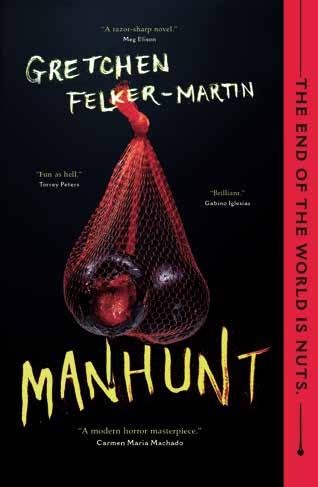
Photo
Image courtesy of MacMillan Nightfire








Books
Sophie Gonzales talks opposite-sex Queer representation
by Lindsey Anderson SGN Contributing Writer
As the LGBTQ+ community continues to grow, many are asking, “What does it mean to be Queer?” While a simple answer, such as “being in a same-sex relationship,” might have sufficed 20 years ago, we are now evolving to understand that Queer relationships come in many forms and sometimes may even appear, on the outside, as heterosexual.
Author Sophie Gonzales wanted to explore this side of queerness when she set out to write her third novel, Perfect on Paper, and so she decided to center the story on a Bisexual female-male couple. For Gonzales, the inspiration came from the backlash she received after writing a Bi side character who ends up in an oppositesex relationship in the end.
Fighting biphobia
“The main reason I wanted to focus on a male-female relationship in this book was that I had received a biphobic comment about another book that I had written, Only Mostly Devastated. There’s a Bi character in that who ends up with a guy in the end.
“When I was writing that plotline, I was like, ‘Yeah, that character fits her best. Great that that’s who she ends up with.’ But it became quite a bit controversial, and I was surprised,” Gonzales said.
“There was this biphobic opinion that the character is somehow less Queer if it’s a Bisexual character that ends up in a different-gender relationship. I have had people quarrel publicly about why the book is considered LGBT when there’s not a same-sex relationship front and center… You know, LGBT is not only the L and the G, and it’s not only Bi people, either. You can be a Trans person or a Nonbinary person or an Ace person who’s still in a male-female[-presenting] relationship. That doesn’t impact whether it’s an LGBT story, so that’s another misconception that I’ve seen come up quite a bit.”
Perfect on Paper follows the story of a Bisexual high schooler, Darcy, who runs a dating advice column out of her locker and gets blackmailed by a new student who wants to help him get his girlfriend back. As Darcy pines over the girl of her dreams, she starts to wonder if the scheming boy next door might be her perfect person all along.
From her initial conception of the book, Gonzales knew she wanted her main character to be Bisexual and to end up in a relationship with a boy. “It was pretty much from the start,” she said. “I had a conversation with my editor, and when I pitched the book, it was always going to be about a Bisexual character who ended up in a relationship with a guy. I said, ‘Is it better if I make this a sapphic romance?’ and my editor was like, ‘No, if you want it to be this kind of story, if that’s the kind of point you want to make, then that’s the point you should be making. Go forth.’”
Writing from the female perspective Perfect on Paper wasn’t just Gonzales’ first novel to tackle biphobia, it was also her first novel told from the point of view of a female protagonist. “My whole life I’ve been writing, but I’ve been writing from the male point of view,” she said. “Although, when I was younger, I usually wrote from the straight male point of view, so it was a really big change to write from the female perspective. It took me a little while to get into Darcy’s head.”
Gonzales says she grew up reading books with male protagonists most frequently. “That’s what I was exposed to,” she said. “I think when we’re exposed to things, often that becomes the default in our mind, and we become comfortable writing from that default perspective, even if it isn’t our perspective.”
Writing from the point of view of a


female lead was a challenge for Gonzales.
“I think there was an air of unfamiliarity there, which sounds ridiculous, but that’s definitely what I experienced. And there are different things you need to keep in mind when you’re writing… from the female perspective. Audiences, frankly, tend to view personality traits a little bit differently if they’re coming from a girl character, unfortunately. Usually, let’s be frank, in a negative way. So I think there was that extra layer of needing to be cognizant of how my readers might react to this character.”
A Queer author from Down Under Gonzales is a bit of a pro when writing stories set outside her lived experiences. She is from Australia but has yet to set a book in her home country.
“They’re always in America. The Law of Inertia wasn’t going to be set anywhere — I ended up setting it in the UK though, because I needed to set it somewhere… So far, I haven’t set anything in Australia.”
While fans of Gonzales may be surprised to find out she does not live in the US, she says writing stories set here isn’t as challenging as one might think. “I think in a lot of ways, it’s probably easier for me to write an American character than I would imagine it would be for an American author to write an Australian character, because, in Australia, so much of the media is American. We get American movies, American TV shows, American brands, music — you grow up knowing a lot about American culture.”
Despite considering herself an American enthusiast, Gonzales admits, there are still some things she just doesn’t understand about American culture. “There are certain things that I get wrong and will continue to get wrong. Sometimes there are words or phrases that I had no idea were only Australian, so I do get a lot of help from my editors or my American writing friends. Or sometimes there will be things that I straight up can’t wrap my head around, like the college system... I have to ask and have so much help there. Sometimes I do think it would be a much smoother writing process if I could write about the experience that I lived, certainly.”
A new kind of love story
Now, she’s trying to break away from writing the types of stories she read growing up. “I want to be able to use my voice to give these stories to the teenagers of today so that they can see themselves in books. I think that not only are they important stories, but they’re the stories that interest me. I love writing them.”
Gonzales first discovered her love of Queer stories when she decided to add an LGBTQ+ side character to one of her early, unpublished drafts. “The first time I wrote a Queer character, it was a side character in a novel I was working on, and I realized that I was much more preoccupied with what was going on with them than I was with the cis-het couple that the story was supposed to be about. So, I thought, how about if [in] the next book I focus on a couple of Queer characters. And it felt very right to be stepping into that space, and from then on, I never really looked back.”
Bisexual characters have become a staple of Gonzales’ writing. “I think that every book I have written so far has either had a Bisexual main character or love interest,” she said. Gonzales is always on the lookout for more Bi representation in literature, especially in the contemporary genre, but so far, there are still so few she cannot even pinpoint a common trope in Bi stories. “I would love for there to be enough rep that we could have a trope where it’s like, ‘This always happens! Every Bi book I read!’ That would be a lovely happy ending for me,” she said with a laugh.
If it tropes your boat
Gonzales is a huge romance fan and says she loves when classic tropes are written well. “I love ‘hate-to-love,’ and I’m a sucker for a well-done ‘there’s only one bed.’ I love ‘hurt comfort,’ [where] two characters grow closer because one character has gone through something difficult. I’m an absolute sucker for that.”
Her favorite trope is one close to many Australians’ hearts. “I do love the trope where there’s a nickname, or a different name until they become closer, because I’ve lived through that so many times. In Australia, it’s really common to give people nicknames, more common than it is to call people by their proper names, probably. So, it’s a thing in Australia, once you start dating someone, to call them by their given name, and it’s like once that happens, you’ve crossed a threshold.”
As a romance writer, Gonzales has seen it all and knows what she’d never like to see again. “I can’t stand a girl who needs saving. Like, I don’t personally love the girl who doesn’t believe in love, and a guy comes into the picture, and she’s like, ‘No, I can’t ever fall for anyone, because I’ve been hurt too many times!’ and he’s like, ‘I’ll make you believe in love!’ Not so much my thing, though I could probably get around a gender swap there.”
She also hates seeing catty girl-on-girl hate. “I hate an over-the-top villain, especially if it’s like a cheerleader villain, where she’s like super nasty, and it’s just this isn’t even a character, it’s a walking insult who comes on the page to say something nasty and then scream and run away,” she said with a laugh.
Gonzales’ least favorite thing to see in any book is forced outings. “I think that there can be harm done if it’s poorly handled,” she says. “When the couples have a difference that they can’t overcome, if the difference is that one of them isn’t ready to come out, then that needs to be handled carefully, so that the story isn’t framing the closeted person as a villain.”
Looking forward
Every book Gonzales has published includes LGBTQ representation, and she plans on continuing the trend with her newest releases as well. At the end of 2021, she released her latest Gay romance, If This Gets Out. The novel was co-authored by Cale Dietrich, who Gonzales says came up with the initial plot.
“It’s a… romance drama about two guys from America’s biggest boy band who fall for each other and start dating, but their management won’t let them announce their relationship to the world, so they have to stay closeted,” Gonzales explained. While the story might sound like something from a 2013 One Direction Wattpad page, Gonzales said Dietrich had no idea boy-band ships were so popular among teen fans.
“But I knew all about those fanfics,” Gonzales admits, “and I told him he had to read them before we continued writing,” she laughed.
Her next release will hit shelves in late 2022. “It’s called The One That Got Away It’s about a girl who gets invited onto a reality TV show where her cheating ex-boyfriend re-dates all of his ex-girlfriends, and she teams up with the girl that he cheated on her with to try to get to the finale and take him down on live television.”
While Gonzales admits she has tended to tackle dark topics in her rom-coms, her latest romances are pure fluff and fun. She hopes readers can take away from her work that Queer stories and Queer people do not have to look a specific way and that who you choose does not define your place in the Queer community.
Perfect on Paper and If this Gets Out are available now. The One That Got Away will be released on December 6, 2022. If you are interested in reading Perfect on Paper with the SGN Book Club, follow us on Instagram at @SGN_books.
Image courtesy of Wednesday Books
Sophie Gonzales – Photo by Melbourne Actors Headshots
Foo Fighters’ horror-comedy Studio 666 fails to rock
by Sara Michelle Fetters SGN Staff Writer
STUDIO 666
Theaters
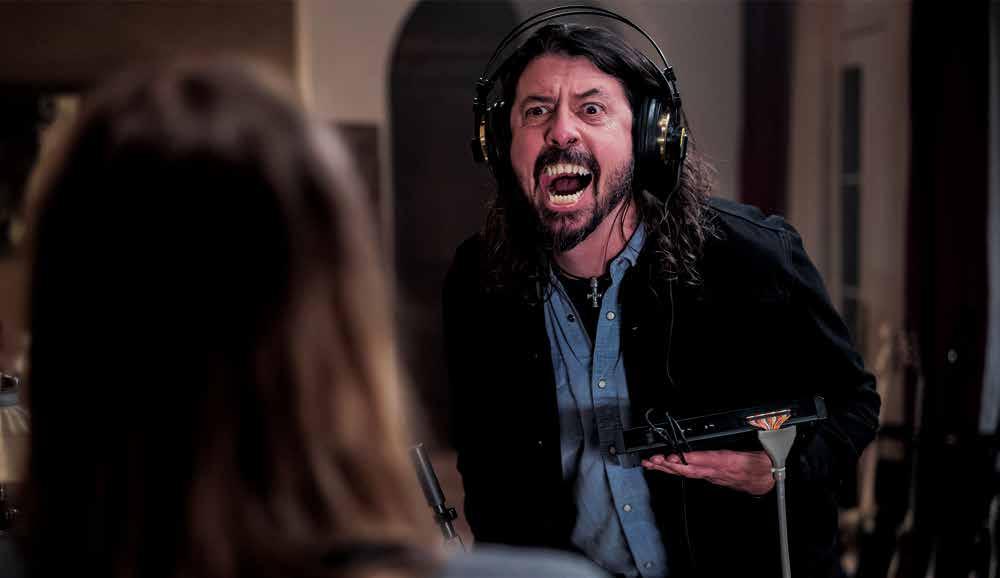
Needing them to get back to work, Foo Fighters manager Jeremy Shill (Jeff Garlin) urges the band to move into a vacant Encino mansion with a peculiar rock-and-roll history to get inspiration for their latest album. Though initially wary, after being impressed with the building’s otherworldly acoustics, lead singer-guitarist-songwriter Dave Grohl convinces his bandmates — bassist Nate Mendel, guitarist Pat Smear, drummer Taylor Hawkins, lead guitarist Christ Shiflett, and keyboardist Rami Jaffee — that they should all move in and immediately begin recording.
Unbeknownst to them, two decades prior, the house was the site of the brutal mass slaughter of another band. Dark forces reside in the building, and they are determined to possess Grohl and force him to record a song that will open the gates of Hell. It’s up to Mendel, Smear, Hawkins, Shiflet, and Jaffee to stop what’s happening before it’s too late and each ends up nothing more than a bloodstained footnote in the annals of rock-and-roll tragedy.
I was open to the idea of Studio 666, a rambunctious horror-comedy featuring the Foo Fighters as themselves battling an Evil Dead-like menace overflowing in gruesome practical makeup effects. The guys have showcased a deft, charmingly off-center presence in several of their more memorable music videos, and it’s clear they have an affable camaraderie that’s inherently infectious.
Had this been a short, or maybe even an episode on Shudder’s Creepshow, I think I’d have been satisfied what the Foo Fighters (Grohl is credited with dreaming up the story), director BJ McDonnell (Hatchet III ), and screenwriters Jeff Buhler (Pet Sematary) and Rebecca Hughes have crafted. As a feature, however, this is an unwieldy, mostly unfunny hodgepodge of tired horror conceits and winking, selfindulgent humor that ends up making next to no lasting impression whatsoever.
Some of the gore is great. There’s a bit with a chainsaw that outdoes the bus carnage

in the new Texas Chainsaw Massacre, while another involving a key piece of a drum set and half of an unsuspecting victim’s head gives off serious Wrong Turn vibes in all the right ways. There are a couple of decent visual gags that brought a smile to my face, and I appreciate how willing the band is to throw themselves into this lunacy with vigorous go-for-broke enthusiasm.
Grohl’s discovery of a mysterious book made out of human flesh and written in blood in a hidden basement room works rather well, but even with this set piece as one of its high-water marks, Studio 666 still quickly wears out its welcome. Once the possession angle kicks into gear, things oddly become less interesting. There is no sense of danger. There isn’t any tension. While the kills are imaginative and the gore is inventively utilized, that’s not enough when caring about who lives and who dies is impossible.
Of the Foo Fighters, even though Grohl has the largest part, it is Smear who cap -
tured my attention. His comic timing is frequently on point, the guitarist showcasing a multitude of inventive facial contortions that had me chuckling.
As for the remainder of the supporting cast, I’ve got little to say. I will mention that the usually funny Whitney Cummings shows up as the band’s next-door neighbor and fails to elicit a single laugh. There are also a pair of brief appearances from Jenna Ortega that bookend the film but frustratingly do little. I only hope she was handsomely paid for what had to have been less than a day’s work to stand around and look various stages of terrified or angry, depending on the situation, while wearing a ton of black eyeliner.
There’s nothing substantive about the film, not a single element that lasts beyond the moment it happens. There’s a point where the story reaches its climax and then goes on for another ten minutes. Problem is, this denouement is inelegantly shoehorned in, almost as if everyone in the writ-
ers’ room had an “oh crap!” realization that they’d forgotten about a couple of primary characters and needed to supply them with a resolution.
Horror movies about rock-and-roll are hardly a novel phenomenon. From ’80s stalwarts Black Roses to Trick or Treat (with Gene Simmons and Ozzy Osbourne, no less) and ’70s cult favorites Phantom of the Paradise to The Rocky Horror Picture Show, to more recent endeavors like the excellent The Devil’s Candy and the goofily phallic Deathgasm, these films are far more common than most mainstream viewers probably realize.
Pity that Studio 666 is so anemically subpar then. Considering it’s the Foo Fighters, who most assuredly know how to rock, that their foray into the genre sounds more like blood-soaked elevator music than “Everlong” or “Best of You” pretty much says it all. It’s not worthy.
Pat Smear in Studio 666 – Photo courtesy of Open Road Films
Dave Grohl in Studio 666 – Photo courtesy of Open Road Films
Visually chaotic Uncharted discovers disappointment

by Sara Michelle Fetters SGN Staff Writer
UNCHARTED
Theaters
Uncharted is a pale, oddly unimaginative adaptation of one of the most impressively plotted video game series I’ve ever had the pleasure to play. For fans of each of treasure hunter Nathan Drake’s incredibly convoluted adventures, this movie is likely going to feel like a bona fide disaster.
As inoffensive as I found much of it to be, I am still slightly angry at how everything turned out. It’s as if director Ruben Fleischer (Zombieland ) and his creative team watched the cut scenes from the games but never played any of them to get a feel for the characters, their relationships, or the stories that were being told.
Instead, they’ve come up with a half-
hearted mixture of Raiders of the Lost Ark, National Treasure, the most recent Tomb Raider adaptation, and the 1999 version of The Mummy. It goes through the motions and tries to hit all of the requisite beats, but does so without panache and with even less flair. Other than a novel idea to stage a climax on two pirate ships being flown to who-knows-where by a pair of giant helicopters, there wasn’t a single moment where I inched forward in my seat, intrigued by what was happening.
But even that giant set piece falls frustratingly flat. The characters swing around like second-rate Jack Sparrow wannabes. The villain’s primary thugs cackle with cartoonish, maniacal glee before doing nothing noteworthy. A primary character disappears so an obvious joke can be painfully delivered. There are no emotional stakes, making it difficult to care about any of the action-heavy theatrics.
The plot does not resemble any of the games. This is an origin story for young adventurer Nathan Drake (Tom Holland), showing how he gets involved in the world of treasure hunting and digging into his relationship with mentor and eventual best friend Victor “Sully” Sullivan (Mark Wahlberg). In this instance, the latter convinces the former to help him track down the resting place of the fabled lost treasure of explorer Ferdinand Magellan. He does this by dangling the possibility of a reunion with Drake’s older brother, as the pair have not seen one another for over a decade.
Soon Drake and Sully are trotting around the globe, joining forces with fellow hunter Chloe Frazer (Sophia Ali) while at the same time trying to stay a few steps ahead of businessman Santiago Moncada (Antonio Banderas) — whose family has historical ties to Magellan — and his lethal henchwoman Braddock (Tati Gabrielle).

There are puzzles to be solved, clues to be followed, and unforeseen speedbumps to be overcome. Through it all, Drake and Sully try to learn if they can trust one another, as the latter’s greed and the former’s selflessness are frequently at odds.
Gabrielle steals the film. If Braddock were a little better written, I think it would have been possible for the actor to make her a spectacular villain. As it is, this duplicitous assassin still makes a major impression. Gabrielle is having a blast reveling in the character’s ferocious nastiness, slinking around the screen as if she were a feral lioness stalking her prey.
The remainder of the cast? It’s as if they are all in different motion pictures. Ali comes out of the pack unscathed, but much of that is thanks to a combination of her effortless charm and the script barely having an idea what it wants to do with her. Banderas appears to be bored, stopping by for a paycheck and not much else. Holland is inexplicably in Peter Parker mode, which wouldn’t be so bad if he wasn’t a character inside an Indiana Jones–like scenario. Additionally, he and Wahlberg have zero chemistry, and every time they started bantering, the resultant noise was like listening to sharpened claws slowly screeching across a freshly cleaned blackboard.
Fleischer tries to emulate some of the game’s physics-defying action sequences, to mixed success. A central set piece involving Drake caught up in netting stringing a succession of giant freight boxes out the rear of a cargo plane initially impresses but quickly devolves into nonsensical visual chaos. It’s reminiscent of the director’s Venom in that Fleischer utilizes a cacophony of computer-generated effects but in a manner that causes the image to devolve into a headache-inducing blur.
As crazy as they may be, each Uncharted game still features a tightly structured narrative and complex characters. They generate exhilarating tension and suspense, which should translate nicely to the big screen in the form of a live-action adaptation. But this isn’t it, and as 2022 disappointments go, this is one I’ll be quietly fuming about for the remainder of the year.
Mark Wahlberg and Tom Holland in Uncharted – Photo courtesy of Sony
Tati Gabrielle in Uncharted – Photo courtesy of Sony
Russian doping scandal raises questions about the Olympics’ racial bias Sports
by Lindsey Anderson SGN Contributing Writer
In an all-too-familiar story, a Russian athlete at the 2022 Beijing Winter Olympic Games is facing an investigation for taking illegal performance-enhancing medication. Fifteen-year-old Russian figure skater Kamila Valieva tested positive for a combination of three heart medications: Hypoxen, L-carnitine, and trimetazidine, the last of which is a substance banned by the World Anti-Doping Agency (WADA).
Valieva claims she took the illegal substance by accident, saying she somehow consumed her grandfather’s heart medication, but professionals and commentators are not buying her excuse.
“As an Olympic athlete myself, you don’t take one thing that you don’t know what’s in it. You, we, understand everything that goes into our bodies. I’m not sure I bought it,” said former US Olympian Kaitlyn Weaver to CNN.
Valieva’s doping scandal
On Dec. 25, at the Russian national championship, Valieva took a drug test, as do all competitive Olympic athletes.
The test was administered by the Russian Anti-Doping Agency (RUSADA) but had to be sent to Stockholm, Sweden, as the Russian lab is still under suspension. RUSADA had been suspended in 2015 due to allegations it was helping to cover for Russian Olympians taking illegal substances.
While still waiting for the results of her drug test, Valieva competed in the Olympic figure skating team event. She became the first woman to land a quadruple jump in the Olympics, which helped earn Russia the gold for the event.
However, that same day, WADA announced that it had found a banned substance in her drug test. After these findings were released, RUSADA confirmed that Valieva had tested positive for trimetazidine but claimed it had not attempted to cover up the results. Instead, it insisted that COVID-19 had led to a delay that prevented them from accessing her test results until after WADA did.
Following the news, RUSADA suspended Valieva from participating in all Olympic events, and the International Olympic Committee postponed the team figure skating medal ceremony.
Just one day later, RUSADA lifted its suspension of Valieva.
Following formal appeals lodged by the IOC, the International Skating Union (ISU), and WADA against RUSADA’s decision, the Court of Arbitration for Sport (CAS) ruled that she would be allowed to compete in the women’s singles event.
The CAS decided that preventing her from competing “would cause her irreparable harm in the circumstances,” though any medals she won would be withheld pending the results of the continuing investigation into her doping violation.
The decision cited her young age, negative tests that followed the one on Dec. 25, and the delay in the results of that test.
The decision sparked outrage from the International Olympic Committee and WADA. Now, current and former Olympic athletes and coaches are speaking out against the decision to let Valieva compete.
Former champions weigh in “This situation is super unfortunate, and it’s also unprecedented that someone with a failed doping test is allowed to compete in the Games. It’s a complete slap in the face to every single athlete who comes here and competes clean,” said 2022 figure skating coach Adam Rippon. “It is so heartbreaking that there is a 15-year-old girl in the center of this. It is so not fair to her, but the people




around her completely failed her. That they find three different substances, one of them illegal in competition in her system, it just… makes you think and it makes you question everything that the ROC [Russian Olympic Committee] is doing here.”
Former Olympic pairs skaters Tara Lipinski and Johnny Weir also weighed in on the scandal. “Well, I strongly disagree with this decision… First, I would like to say that Kamila is only 15 years old, she is a minor, and I know first-hand what it’s like just competing at an Olympic Games at 15 years old,” Lipinski said. “I remember the overwhelming feelings and pressure that I felt, and for a young person, that’s a lot to deal with. But with that being said, clean sport is the only thing that matters at an Olympic Games. What we love about an Olympic Games is that we get to marvel at humans pushing athletic limits and doing the impossible, and doing it fairly and cleanly.”
“I have to condemn this decision with every ounce of my soul. The Olympics has to be clean, or it’s not fair. If you won’t play fair, then you can’t play,” Weir added. “It doesn’t matter how old you are, or the timing on when the test results have come in. You have to be responsible for what happens to your body to compete in the Olympics. This is a slap in the face to the Olympic Games, to our sport, and to every athlete that’s ever competed at the Olympics clean.”
The Sha’Carri Richardson scandal
However, the most poignant criticism of this decision comes from outside the figure skating community.
“Can we get a solid answer on the difference between her situation and mine?” asked American sprinter Sha’Carri Rich-
ardson on Twitter. “The only difference I see is I’m a black young lady.”
The 21-year-old sprinter was suspended from competing in the Summer Olympic games last year, after testing positive for marijuana use. While Richardson took full responsibility for her actions and accepted her punishment, she also noted that marijuana is not a steroid and was used as an antianxiety medication after she found out about the death of her biological mother.
Unlike trimetazidine, marijuana does not enhance physical abilities. However, it is still banned by WADA.
Richardson’s comments have sparked new concerns around how BIPOC athletes are held to different standards than white ones.
In 2009, before marijuana had been legalized in parts of the US, swimmer Michael Phelps was photographed using the substance. While Phelps did lose sponsorships after the controversy, he was still allowed to compete in the subsequent Olympic Games.
Soccer star and Olympic athlete Megan Rapinoe has also been public about her marijuana use, promoting her CBD brand, Mendi, which is marketed as a treatment for athletes recovering from muscle strain. Again, Rapinoe faced no repercussions from the WADA for her promotion and use of cannabis.
Banning natural testosterone
In 2015 World Athletics passed hormoneregulation rules, stating that female athletes must present testosterone levels below ten nanomoles per liter for at least 12 months before a competition. In 2019, that number was lowered to just five nanomoles.
These regulations were put in place to prevent Transgender women from competing in female athletics, a controversy that
has become hot in American politics over the last few years. However, the data used to determine what “regular” testosterone levels in women are were primarily collected by white women, and did not account for the fact that some cis and Intersex women can naturally have higher levels of testosterone. In 2021, four Black women were banned from competing in their events due to their hormone levels.
Caster Semenya, a two-time Olympic gold medalist from South Africa, was banned from competition in 2021 after refusing to take hormone-suppressant medications, which made her physically ill. She is now in a legal battle against World Athletics, challenging its discriminatory policies.
Kenyan runner Margaret Wambui was also banned from competition in 2021 due to her naturally higher levels of testosterone. “It would be good if [a] third category for athletes with high testosterone was introduced, because it is wrong to stop people from using their talents,” Wambui told BBC Sports.
Burundi’s Francine Niyonsaba and Niger’s Aminatou Seyni were banned from competing in their preferred events due to their hormonal levels and instead were placed in events they were less prepared for. When told to medically suppress their testosterone, again, both athletes refused. “I didn’t want to take any medical steps. My hormones are natural,” Seyni said to Reuters.
These women were excluded from the Games due to their refusal to alter their bodies with hormonal treatment.
Now, the newest Russian doping scandal has left many wondering why a young white girl was allowed to compete when Black athletes face numerous unnecessary hurdles every year.
Kamila Valieva – Photo by Toby Melville / Reuters
Sha'Carri Richardson – Photo by Ashley Landis / AP
Caster Semenya – Photo by Toby Melville / Reuters
Margaret Wambui – Photo by Jewel Samad / AFP
SUE
As the oldest woman in the WNBA at 41, Bird is the only player to compete in at least 500 games. Bird ranks second in career three-pointers made (945), fourth in steals (687), and seventh in points scored (6,561).
Bird is the WNBA’s all-time assist leader, with 3,048 overall career assists, which is 448 more than any other WNBA player.
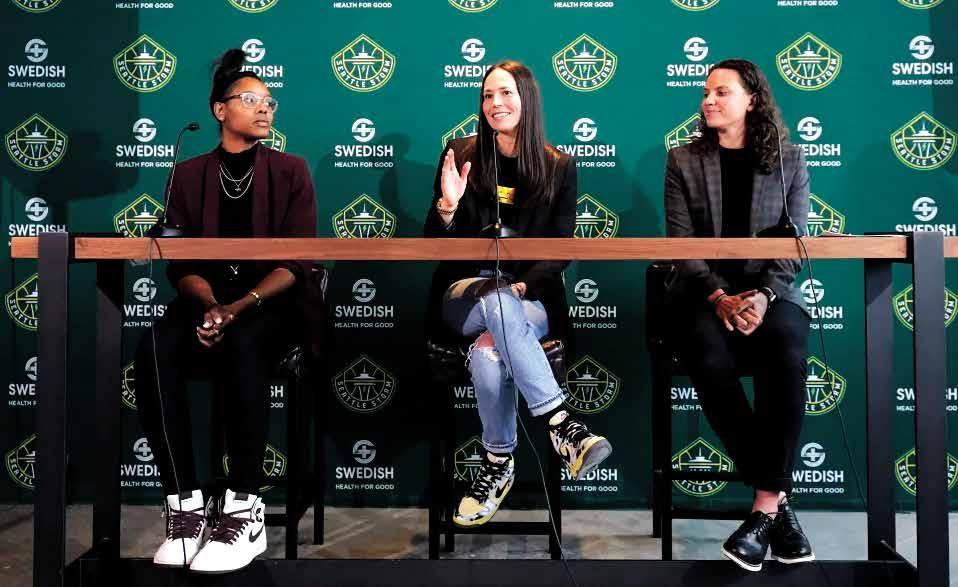
On Feb. 22, Sue Bird, Noelle Quinn, and General Manager Talisa Rhea gave a press conference about Bird’s return at the Pacific Science Center.
“We’re in our champion center, right next to the beautiful new arena… celebrating Sue coming back for the season in the
2022 year with the Storm,” said Rhea. “Sue is Storm basketball. She has been Storm basketball and really represents this franchise in so many different ways.
“On the court, she’s the best point guard in the league — in history. Everything she does from her individual ability, but also the way that she makes her teammates better, she makes our whole organization better, and really sets the standard for excellence and the championship culture that we have here with the Storm.”
Rhea also mentioned how Bird was one of the most decorated basketball players in history, and how she has assisted 27% of all Storm points (including the four years she was not on the court with the Storm). Bird’s high rate of assists shows the impact of empowering Bird’s teammates to become successful.
Head coach Noelle Quinn echoed the words of the general manager and talked about how excited she was for Bird to return to the Seattle Storm for another season.
“Just to be able to be alongside of her, coaching here in Seattle with her, it’s amazing to… understand what she’s done with her career,” said Quinn. “I’m extremely proud and honored to be a part of that, and… what she’s able to accomplish on the basketball court over the course of her career.”
Quinn continued: “She’s been an amazing example for me — for women in general — and for everyone who enjoys the sport of basketball… I know [this season is] going to be her finale, but I’m not even thinking about that. I’m thinking about how competitive she is, and how ready she is to get back on the floor and just get us back to where we need to be.”
When Bird spoke at the press conference, she described how it’s an honor to hear people talk about the city of Seattle and Storm basketball, and how she’s synonymous with the things the team has done both on and off the court.
Bird stated she was excited to be playing with the Storm for another season, and that she’s looking forward to playing in the newly renovated Climate Pledge Arena. Bird stated that the new arena was not the main reason for her return, although it may have motivated her. Additionally, her personal health was a factor in deciding whether to return.
“I think it’s assumed [this will] be my last [season], and I do believe all arrows are pointing in that direction for some reason,” said Bird.
Did the chant do the trick?
The 2021 WNBA basketball season was the first time Bird began toying with the idea of it being her last, and she began conversing with various athletes about their last seasons.
“When the final game [of 2021] came, and when the final buzzer went off, I knew immediately I was like, ‘That could’ve been it,’” said Bird.
“And then the fans chanted, and I think it just gave me this whole other perspective on things that, you know, I never thought that this was just about me, but that made me realize, this decision is not just about me.”
For three days following the final 2021 Storm game, Bird went back and forth about how she felt regarding returning to play again. She very quickly decided that she wanted to return; she contacted her trainer and informed the team about potentially returning, but she had a few months to decide if the decision felt right, which it did.
“The truth is, you know not to put it all on the fans, but if that chant hadn’t happened, I don’t know if I’d be sitting here, so I really want to make this about a celebration for everyone. It’s not just about me, and I don’t think my career has ever been just about me. So I would love for it to be a celebration of all things Seattle Storm,” said Bird.
The 2022 season for the Seattle Storm opens on May 6; they will play the Minnesota Lynx at the Climate Pledge Arena. For ticket information, visit ticketcentral.seattlestormbasketball.com.
Seattle Storm guard Sue Bird (center) talks about her return for one more WNBA basketball season as she sits with head coach Noelle Quinn (l) and general manager Talisa Rhea (r)
– Photo by Elaine Thompson / AP
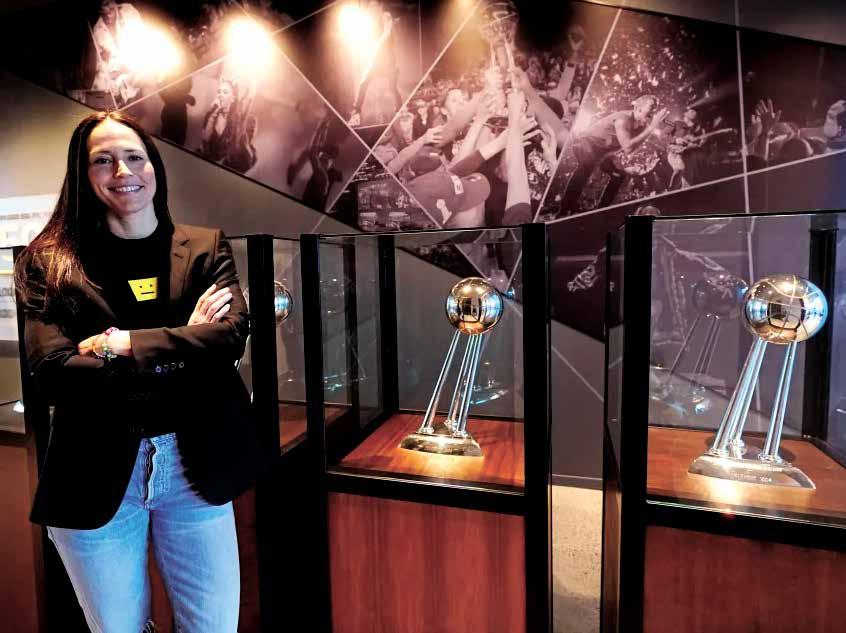
Sue Bird poses with Seattle Storm’s championship trophies – Photo by Elaine Thompson / AP
BIRD continued from cover
National News
National news highlights
by Daniel Lindsley SGN Contributing Writer

Missouri:
ACLU sues district for banning books
The Advocate reported on February 18 that the American Civil Liberties Union of Missouri has filed a lawsuit on behalf of the families of two Wentzville students, in order to prevent the removal of books about marginalized groups such as LGBTQ+ people and people of color.
The district removed eight books from the school’s library, including The Bluest Eye by Toni Morrison; Fun Home: A Family Tragicomic Paperback by Alison Bechdel; All Boys Aren’t Blue by George M. Johnson, and others.
According to the lawsuit, the books were banned “because of officials’ dislike of the ideas contained in the banned books and with the intent and purpose to prescribe what is generally or traditionally accepted as right or true in matters of opinion.” The suit also says that the books’ removal violated the students’ First Amendment rights.
Florida: Corporate donors to “Don’t Say Gay”
The Advocate reported on February 17 that several companies with public stances in support of LGBTQ+ people have donated to Florida politicians who are backing the state’s “Don’t Say Gay” bill, which would ban classroom discussions of sexual orientation and gender identity in the state’s public schools.
The news website Popular Information pointed out the discrepancy after reviewing campaign contributions after 2020 to the bill’s sponsors in the Florida state legislature. The bill’s chief Senate sponsor, Republican Dennis Baxley, has received donations from companies with high or perfect scores on the Human Rights Campaign’s Corporate Equality Index, such as Comcast/NBCUniversal and Duke Energy, who also donated to other sponsors of the bill, along with AT&T and Walgreens. Gov. DeSantis, who has indicated support but not officially committed to signing the bill, has received donations from UnitedHealth Group, AT&T, Duke Energy, and Walgreens. Other supposedly pro-LGBTQ+ companies supporting the bill’s sponsors include Anheuser-Busch, Charter Communications, Publix, and the National Association of Realtors.
New Gallup poll: Number of out LGBTQ people in US doubles over past decade
by Mike Andrew SGN Staff Writer
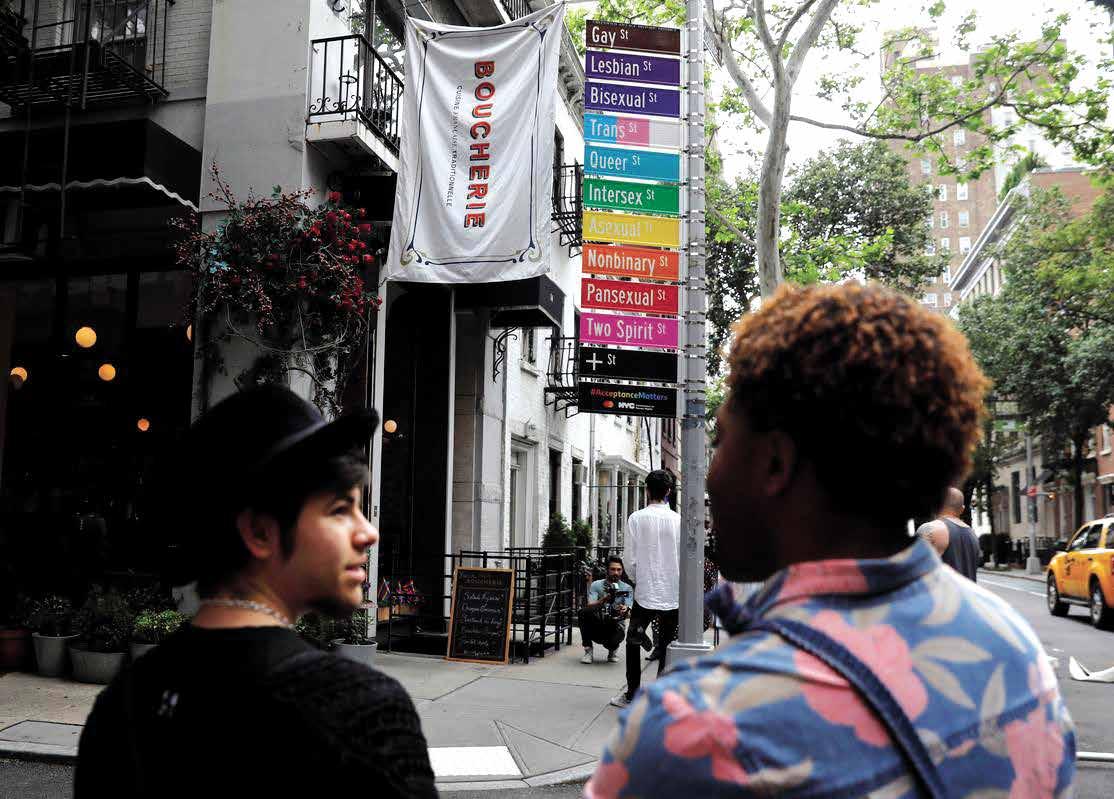
The number of Americans who identify as LGBTQ has doubled over the last decade, according to a new Gallup poll released on February 17.
Gallup found that 7.1% of US adults identify as something other than heterosexual. The numbers are based on interviews with more than 12,000 respondents interviewed over the last year.
Gallup began measuring sexual orientation and gender identity in 2012, finding that just 3.5% of respondents identified themselves as LGBTQ.
According to Gallup, the huge increase is largely due to members of Generation Z who have reached adulthood, while older generations, who are more likely to identify as cisgender and heterosexual, have died off.
Nearly 21% of Gen Z Americans who were at least 18 years old as of last year identify as LGBTQ. That’s nearly twice as many as millennials who identify that way (10.5%) and about five times as many as Generation X (4.2%).
TEXAS
continued from cover
be halted,” Paxton said in a February 21 press release.
“The Texas Department of Family and Protective Services has a responsibility to act accordingly. I’ll do everything I can to protect those who take advantage of and harm young Texans.”
In the same statement, Paxton said there are limits to parental rights to consent to gender-affirming treatments for their children.
“This general right to consent to certain medically necessary procedures does not extend to elective (not medically necessary) procedures and treatments that infringe upon a minor child’s constitutional right to procreate,” he said.
Only 2.6% of baby boomers identify as LGBTQ, and a mere 0.8% of the oldest cohort of Americans.
Another phenomenon that Gallup noted: Gen Z and millennials have been increasingly identifying as LGBTQ. Just 5.8% of millennials self-described as LGBTQ in 2012, and 7.8% of Gen Z members in 2017.
In contrast, older generations have remained relatively stable in the way they identify. Gallup noted that once more members of Gen Z reach adulthood, the overall percentage of LGBTQ American adults is likely to rise.
Among those identifying as LGBTQ, Bisexual adults form the largest group, at 57%, translating to 4% of US adults overall.
Twenty-one percent of LGBTQ Americans surveyed said they are Gay, 14% said they were Lesbian, and another 4% described themselves as something else, including queer and same-gender-loving. Ten percent said they are Transgender.
Identification as Bisexual is especially pronounced among the poll’s youngest cohort, with 15% of Gen Z adults reporting they are Bi.
Spokespeople for the Department of Family and Protective Services (DFPS) and Texas Health and Human Services said the agencies would be reviewing Paxton’s opinion.
Last year, Texas Republicans tried and failed to change state law to ban genderaffirming care for Transgender minors.
In August, after pressure from Gov. Greg Abbott, the DFPS changed its definition of abuse to include gender-affirming surgery for minors.
In November 2021, a Dallas-based clinic offering services to Trans minors, Genecis, stopped taking new patients.
Texas is not the only state to limit access to treatment options for Trans youth. Last year, Tennessee passed a law banning hormone treatment for minors who have not yet reached puberty. Arkansas also passed
Women of all generations are more likely to identify as Bi than men, at 6% versus 2%. Women were also more likely to identify as Bi than Lesbian, whereas men were more likely to identify as Gay.
Gallup noted that the increase in adults identifying as LGBTQ coincides with greater acceptance of the community, with record numbers of Americans supporting same-sex marriage and nondiscrimination protections, including most Republicans.
The trend in identification is expected to continue upward, with Gallup arguing, “With one in 10 millennials and one in five Gen Z members identifying as LGBT, the proportion of LGBT Americans should exceed 10 percent in the near future.”
Most Americans are also in support of Transgender servicemembers, although that number has dropped, from 71% in 2019 to 66% in 2021. However, most still say they believe that Trans athletes should be made to play only on teams matching their gender assigned at birth.
a law barring doctors from referring minors to specialists in gender-affirming therapies. All major state and national medical groups have opposed limiting access to gender-affirming care, however. The American Medical Association, American Psychiatric Association, and American Academy of Pediatrics all support ageappropriate gender-affirming medical care.
Last August, the Texas Pediatric Society sent the DFPS a letter urging the agency to make future decisions based on medical science.
“Medical care for Transgender children and adolescents is evidence-based and has proven effectiveness,” Dr. Seth Kaplan, the society’s then-president, wrote to DFPS Commissioner Jaime Masters.
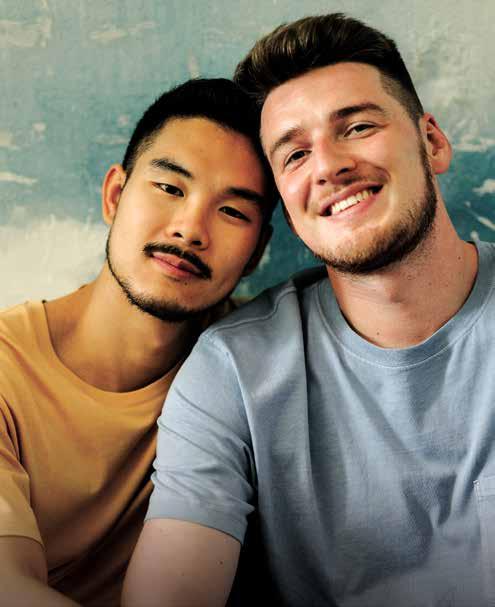
Photo by Redd via Unsplash
Photo by Shannon Stapleton / Reuters
International
“The world will hold Russia accountable” White House, global leaders react to Russian invasion of Ukraine

by A.V. Eichenbaum
SGN Managing Editor
Russian forces invaded Kyiv, Ukraine February 24, 2022. The military strike, which at press time has resulted in at least 40 civilian deaths, has been met with outrage, dismay, and economic sanctions against the Russian government from world leaders.
“Russia alone is responsible for the death and destruction this attack will bring, and the United States and its Allies and partners will respond in a united and decisive way,” said President Biden in a press statement directly after the attack. “The world will hold Russia accountable.”
According to Ukrainian Presidential Adviser Mykhailo Podolyak, in addition to the invasion of Kyiv, Russian forces have captured Chernobyl. The Ukrainian military reported that ballistic missiles were launched from Belarus into Ukraine as ground troops were deployed from Crimea. Ukrainians saw waves of denial-of-service and malware cyberattacks in tandem with the Russian incursion.
“Innumerable missiles and bombs have been raining down on an entirely innocent population,” said British Prime Minister Boris Johnson in a statement to UK citizens. “A vast invasion is underway by land, by sea, and by air.” Johnson called for a “massive package of economic sanctions designed in time to hobble the Russian economy” and stated that the UK was one of the first to send weapons to the Ukrainian people. “Our mission is clear,” said the Prime Minister. “Diplomatically, politically, economically – and, eventually, militarily – this hideous and barbaric venture of Vladimir Putin must end in failure.”
In the hours before the invasion, Volodymyr Zelensky, Ukraine’s President, revealed that he had made attempts to speak with Russian President Vladimir
Putin and was met with “silence.” Addressing the Russian people directly, Zelensky said “You are told that this flame will liberate the people of Ukraine, but the Ukrainian people are free.”
Many notable American conservatives, including Donald Trump, have lauded Putin’s tactics. In an interview with The Clay Travis & Buck Sexton Show, Trump called the invasion “genius.” “I said, ‘This is genius.’ Putin declares a big portion of the Ukraine of Ukraine. Putin declares it as independent. Oh, that’s wonderful. So, Putin is now saying it’s independent, a large section of Ukraine. I said, ‘How smart is that?’ And he’s going to go in and be a peacekeeper.”
Other right-wing proponents of Russia include former Breitbart editor and Trump adviser Steve Bannon, who, in an interview on conservative talk show The War Room, said we should support Russia because, “Putin ain’t woke. Putin’s anti-woke.” and “They don’t have the flags. They don’t have the Pride flags...”
Several prominent conservatives attending CPAC in Orlando expressed anti-Russian sentiment while also criticizing the actions of President Biden. K.T. McFarland, Trump’s former deputy national security advisor, said of Biden, “We have national leadership that I think at a certain point is criminally incompetent.
Senate Minority Leader Mitch McConnell also made a statement regarding the actions of the president. “The president should have exercised his extensive authorities to impose certain tough sanctions early enough to actually deter invasion and weaken Russia,” he argued.
House Speaker Nancy Pelosi, however, made sure to emphasize that the latest sanctions were “sweeping and catastrophic,” and will “continue to impose costs on Russia that will leave it weakened in every way.”
Overseas, allies are taking action. “Russia’s actions pose a serious threat to Euro-Atlantic security, and they will have geostrategic consequences,” said NATO Secretary-General Jens Stoltenberg. “We are deploying additional defensive land and air forces to the eastern part of the alliance, as well as additional maritime assets.”
The EU announced that 500 soldiers from its reserve forces are to be deployed over the next two weeks to reinforce its 600 troops already stationed in Ukraine. The EU also announced the intervention of newly-formed Cyber Rapid Response Team led by the Lithuanian Ministry of National Defense “to help Ukrainian institutions to cope with growing cyber-threats”
The United Nations allocated $20 million (USD) from the Central Emergency Response Fund (CERF) for humanitarian assistance to Ukraine. The fund is intended to support emergency operations in the eastern oblasts of Donetska and Luhanska, according to a UN press release. “The allocation will also support the prevention of gender-based violence and other protection-related services, as well as education, logistics and telecommunications,” read the release.
The Pentagon deployed 7,000 more troops to Europe as the fighting continued. “It’s our assessment that [Russian forces] have every intention of basically, decapitating the government and installing their own method of governance,” a Pentagon official said, according to a report by the US Department of Defense.
President Biden held a press conference to announce the intent of the US going forward. The plan includes “severe” economic sanctions on Russia. “Putin is the aggressor,” he told the assembly. “Putin chose this war, and now he and his country will bear the consequences.”
by Daniel Lindsley SGN Contributing Writer

Canada:
Elliot Page memoir next year
NBC News reported on February 18 that Canadian actor Elliot Page is working on a memoir. Titled Pageboy, it will cover Page’s film career and his becoming a prominent Transgender person. Flatiron Books says it will be published next year.
“The memoir will delve into Page’s relationship with his body [and] his experiences as one of the most famous Trans people in the world, and will cover mental health, assault, love, relationships, sex, and the cesspool that Hollywood can be,” Flatiron said.
NBC noted that Page came out as Trans in 2020, and is known for films like Juno and Inception, as well as starring in The Umbrella Academy on Netflix.
Australia:
Pop star wants film role to combat HIV stigma
Reuters reported on February 18 that Australian pop singer Troye Sivan of YouTube fame is taking on a major film role to help combat the stigma around HIV/AIDS. In Three Months, Sivan will play a 17-year-old high school senior who is exposed to HIV just before graduation and must wait three months before being diagnosed. The film is set in 2011.
Sivan told Reuters over a video call, “I think there’s a lot of, not necessarily misinformation, but a lot of kind of ignorance [around HIV]. I would love it if this movie plays a part in getting rid of the stigma around HIV and educates people on the fact that, with access to healthcare, this is not a death sentence at all anymore.”
Sivan has been publishing his work on YouTube since 2007, came out as Gay in 2013, and previously had smaller roles in Spud, a South African teen drama, and X-Men. Three Months is available on Paramount+.
Elliot Page – Photo by Evan Agostini / Invision / AP
An armoured vehicle drives along a street, after Russian President Vladimir Putin authorized a military operation in eastern Ukraine, in the town of Armyansk, Crimea on Feb. 24, 2022 – Photo by Stringer / Reuters