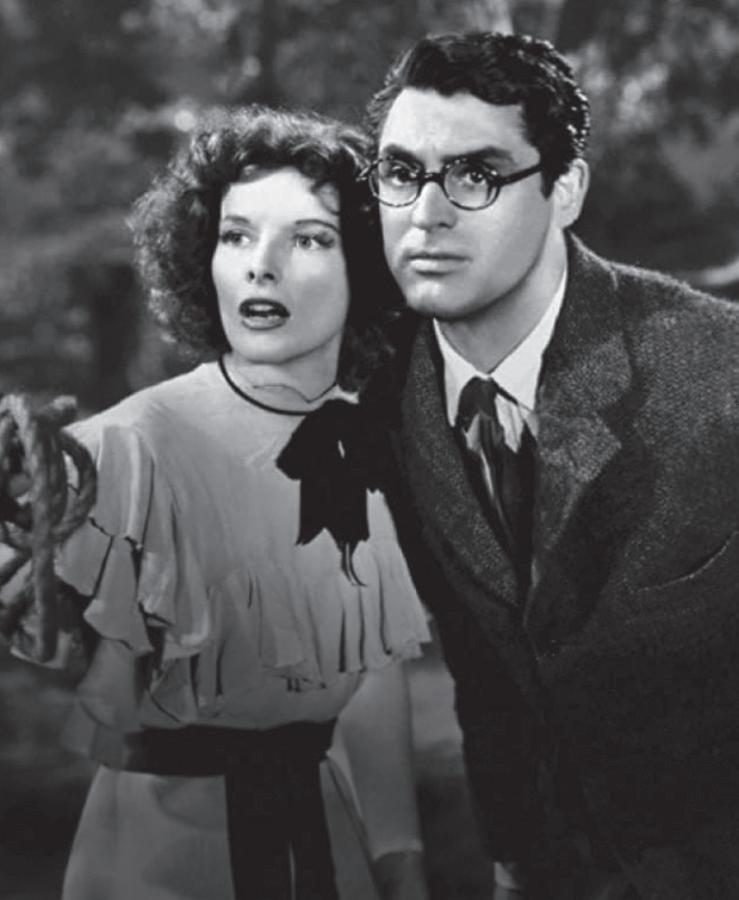
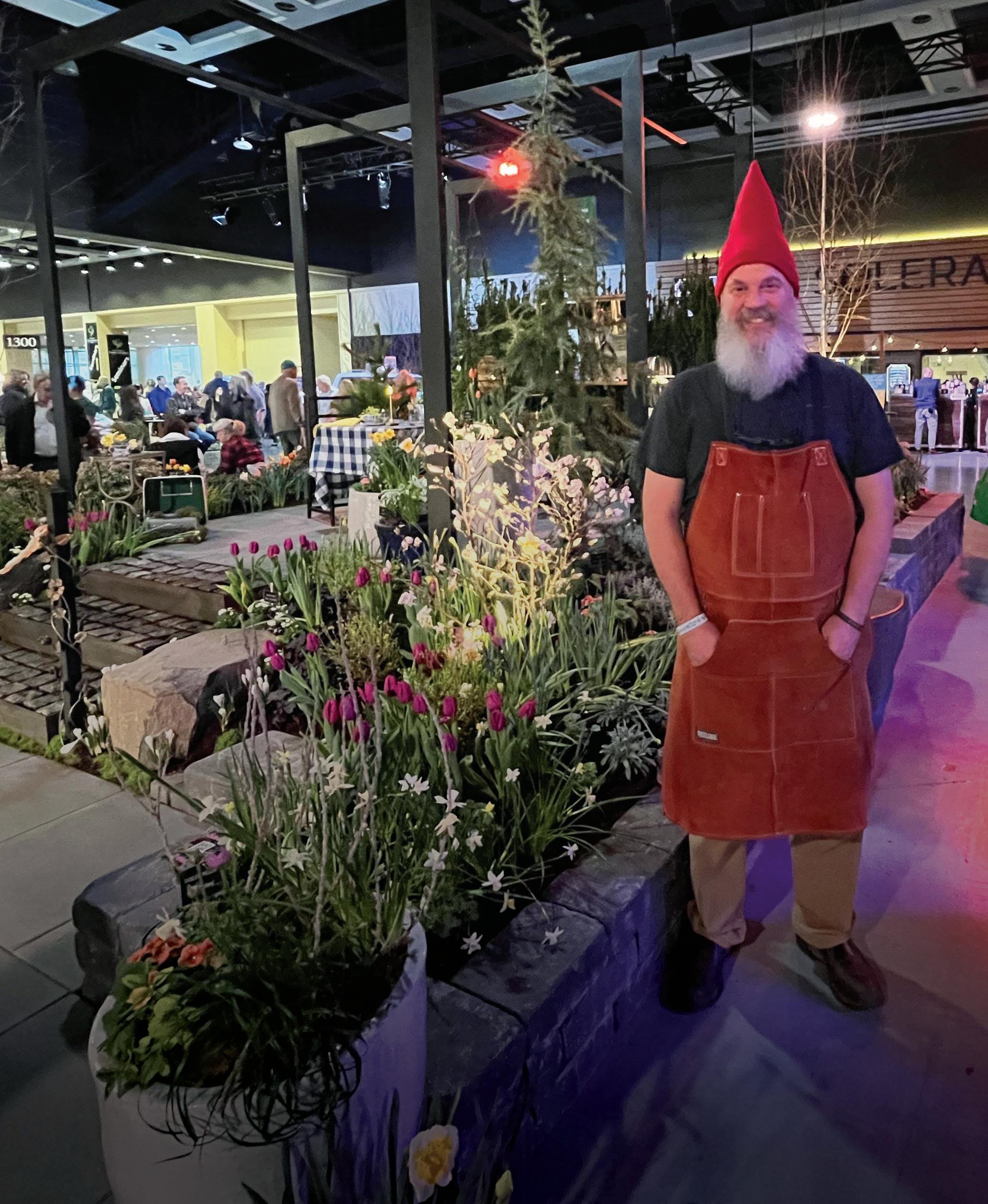
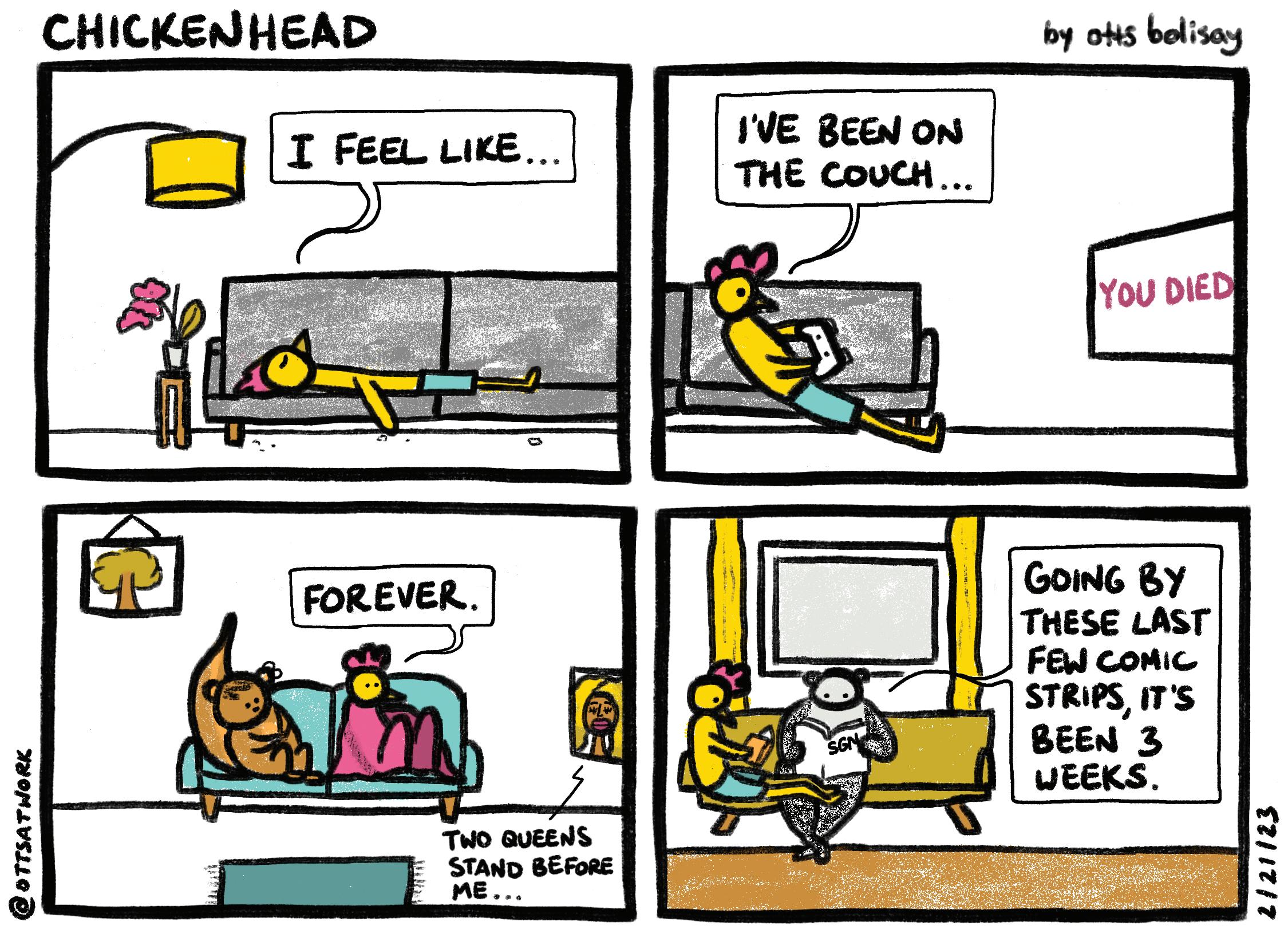
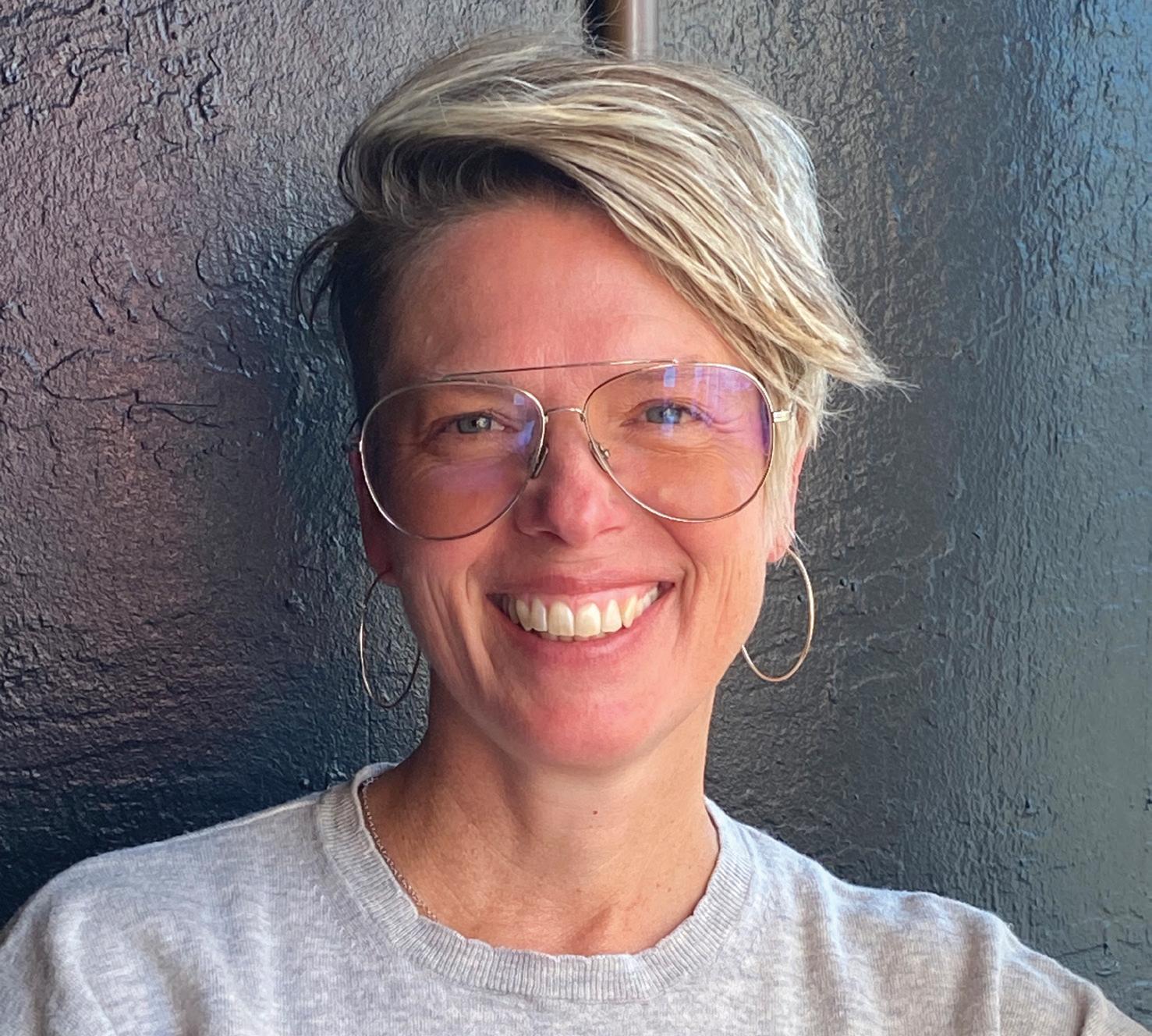
An attendee dressed as a garden gnome on the show floor – Photo by Daniel Lindsley Katherine Hepburn and Cary Grant in Bringing Up Baby – Photo courtesy of RKO Radio Pictures
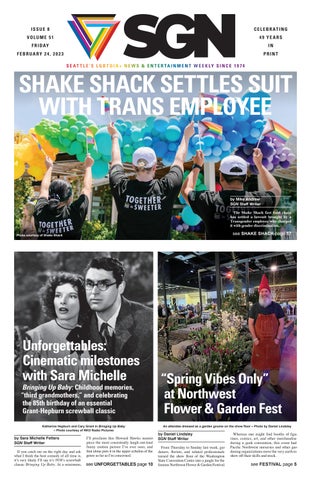
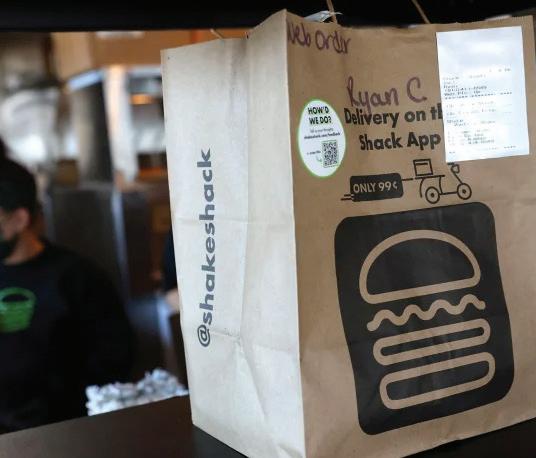
Photo courtesy of Shake Shack
by Mike Andrew SGN Staff Writer
The Shake Shack fast food chain has settled a lawsuit brought by a Transgender employee who charged it with gender discrimination.
SHACK
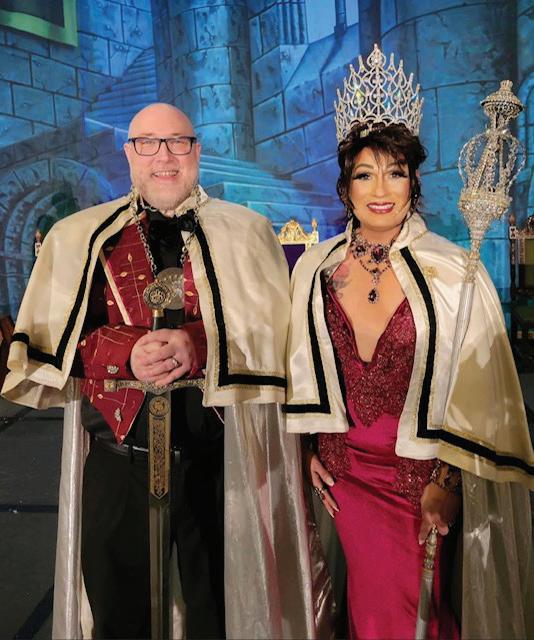
All hail the newly crowned Emperor and Empress of The Imperial Court of Seattle
by GS Matencio Special to the SGN
Last Saturday, February 18th, more than 300 guests attended The Imperial Sovereign Court of Seattle’s 51st Coronation at The Seattle Westin. The theme was Seattle Horror Story: Return To Coven and
marked the end of the reign of Emperor Paul Paradisco and Empress Londyn Bradshaw. They crowned Rainier 48 Kik D’Ball and Olympia 51 Skyy Martini Ice.
“The experience of stepping up was like one of the most memorable and amazing experiences in my life. Whether it was talking to the community during campaigning or being crowned in front I’d years of the organization. It was truly humbling and makes me want to reach higher to achieve goals and elevate the organization,” shared the newest crowned emperor.
organization to new arenas, using existing connections and creating new ones.”
They make their first public appearance representing Seattle at San Francisco Coronation this weekend.
“Part of my mission for the year would be to bring awareness to mental health as well as bringing a greater awareness of the
More information on The Court of Seattle can be found at https://www. imperialcourtofseattle.org
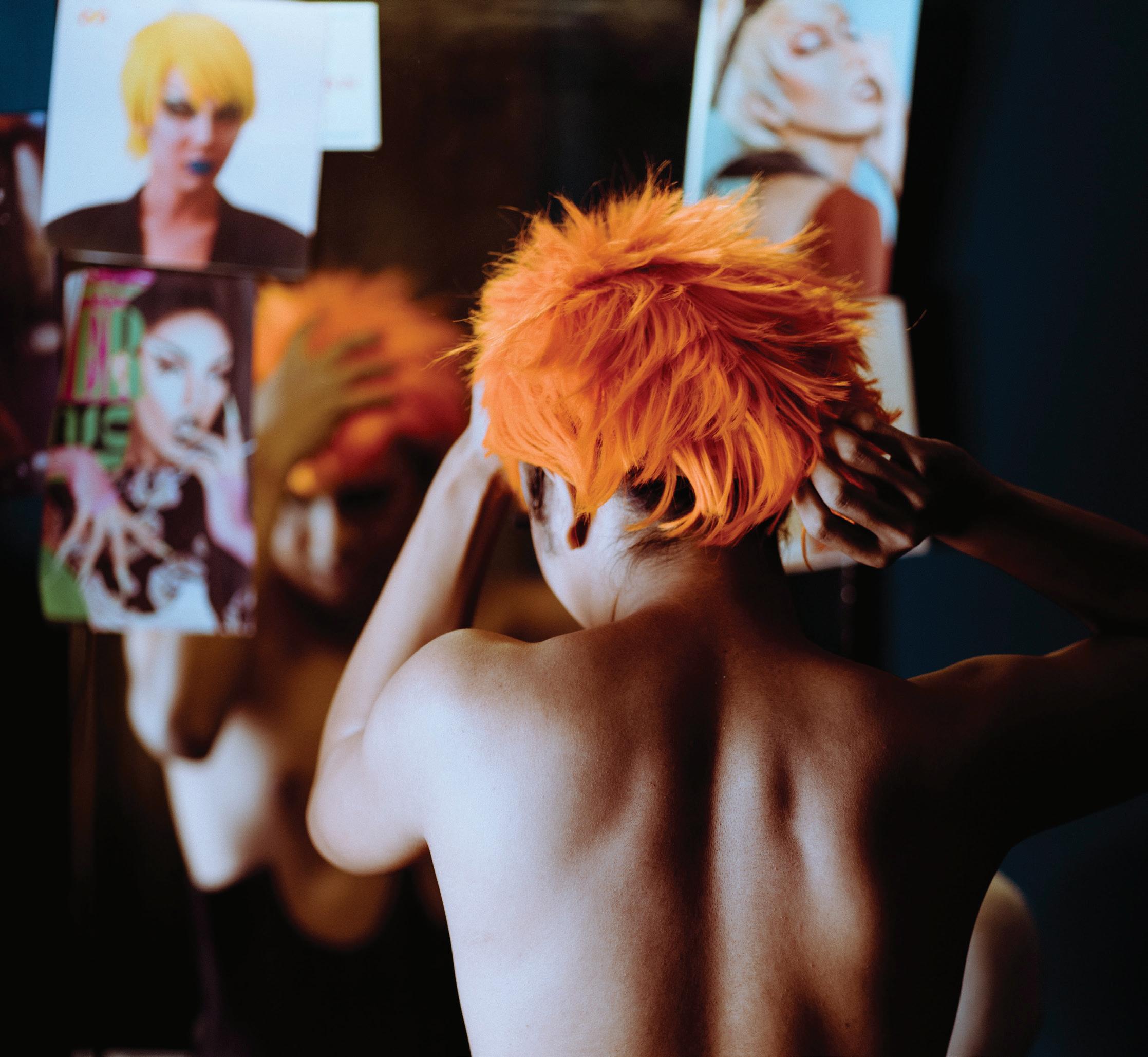
Rainier 48 Kik D’Ball and Olympia 51 Skyy Martini Ice – Photo courtesy of the Imperial Court of Seattle
FESTIVAL
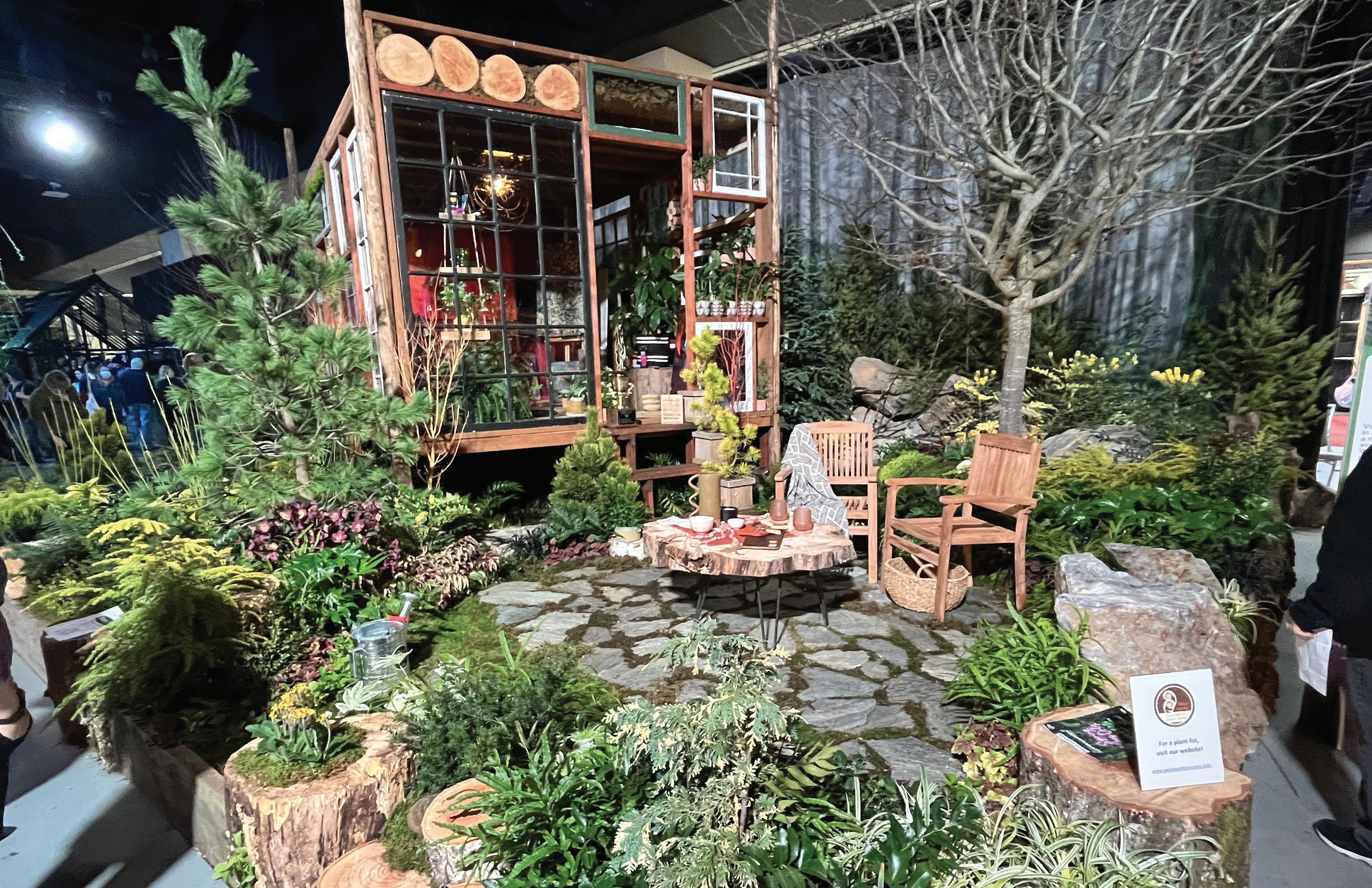
They didn’t just bring in potted plants and call it a week; in just three days, they hauled in real dirt, whole boulders, and living trees, along with greenhouses and small cabins, to build their displays.
Such extravagance might leave little room for surprise that the festival is the
largest flower show west of Philadelphia, and the second largest in the country. It began in 1989, and was the convention center’s first event.
Jeri, 65, spoke about watching the event “evolve” since she first attended it in its second or third year.
“It’s really grown in size and scope, but really it’s grown in depth,” she said.
“You know, in those early years, there were a lot of enthusiastic people.”
As more gardeners took notice, the festival’s roster expanded from enthusiasts to “real experts of their areas, that have been here from all over the world.”
Those experts weren’t just present in the 90 or so gardening seminars, either. They were all over the show floor, chatting with guests, and answering gardening questions with encyclopedic knowledge of the needs of each plant they tended — factors like humidity, temperature, soil acidity, and sun exposure.
Continuing education credits were a key development for this year’s show. Each hour-long seminar was preapproved in collaboration with Seattle University’s Master Gardener program. Yet the seminars, like the Pacific Northwest soil, were far from dry.
Kelly D. Norris, author of New Naturalism: Designing and Planting a Resilient, Ecologically Vibrant Home Garden, gave a lecture about a category of plants he called “generalists,” who thrive in a wide range of environments.
An artist as much as a horticulturist, Norris weaved metaphor and anecdote into scientific data about the odd places certain plants can be found.
“Our gardens... are not islands,” Norris said. “In fact, they’re quite porous. I think, often, of gardens as patches in a greater ecological quilt, in which the urgency of contemporary, uncertain times is to find a way to begin to stitch together those pieces, and hopefully end with a stronger fiber.”
He said he was exploring ways to “fuse the boundaries of sorts, increase that porosity of our gardens to the world around them, to reimagine what the interface of horticulture and ecology might look like in the nature of place that we are asked to come to work.”
He framed planting as something that should be done with a sense of where the plant comes from, and as an “anthropogenic” act, something done almost exclusively by humans, and perhaps something that defines them.
As an anecdote, he mentioned his husband — also a gardener — and that “I often value the time I spend being in my garden, whether I actually seem to get anything done or not. And maybe some of you feel the same way.”
Norris was right; Jeri and other attendees certainly shared the sentiment. Jeri said her favorite part of gardening was “being outside, hearing the birds and the bees, hearing the kids playing in the yard a block over, smell-
ing the soil, watching something first poke its little head out, and following it through the season and seeing how it changes.”
It can be meditative, she said, “as long as you don’t get caught up trying to make the perfect garden. That’s when it becomes work.”
In the vendors hall, which had everything from potted plants and statues to bamboo bedspreads and hot sauce, University of Washington grad student Abigail Steitz, 29, was running a booth offering a precise approach to gardening. So far, many people who did treat gardening as work had shown interest in her startup, the Lit Garden Project.
“Gardening is really my passion, and I have eight years in the software industry,” Steitz said. “I want to transition it into gardening. My project is for people to be able to map the sunlight in their yard using their phones.”
After getting her master’s in business, Steitz, who identified herself as a Lesbian, will even be competing in the Dempsey Student Startup Competition. That certainly sounds like work, but still, Steitz echoed Jeri and Norris:
“My favorite part of gardening is just sitting in the grass, and watching the sun, and watching the grass wave,” she said. “That’s really the best part.”
For those who might not have a yard, there was a seminar on taking care of potted plants. For those tempted by rascals, there was an entertaining presentation by gardening superstar Ciscoe Morris, about a troublemaker species he wished he’d never introduced to his yard.
On the main stage each morning, pairs of famous gardeners faced off in friendly battles of aesthetics in “Container Wars,” a competition about building a superior miniature garden in under an hour.
Any newcomers to gardening might look at the sheer variety of plants, and the level of mastery on display at the festival, and be overwhelmed. But everyone at the show, hobbyist or expert, had to start somewhere.
“I’ve worked in yards since the mid-’80s, and I got really serious about gardening when I bought my first home,” Jeri said. “And the yard was… you could tell someone loved it, but that it had been neglected for a very long time.”
The easiest point of entry, Jeri said, would be visiting any number of our wonderful local nurseries, where the staff can make plant recommendations and answer questions about gardening for newbies.
continued from cover
A cabin made from reused windows – Photo by Daniel Lindsley
The Wild Whimsy trailer in the vendors' hall – Photo by Daniel Lindsley
Seattle Pride Spotlight
Reconnect with nature at Pride in the Pow
by Lindsey Anderson SGN Staff Writer
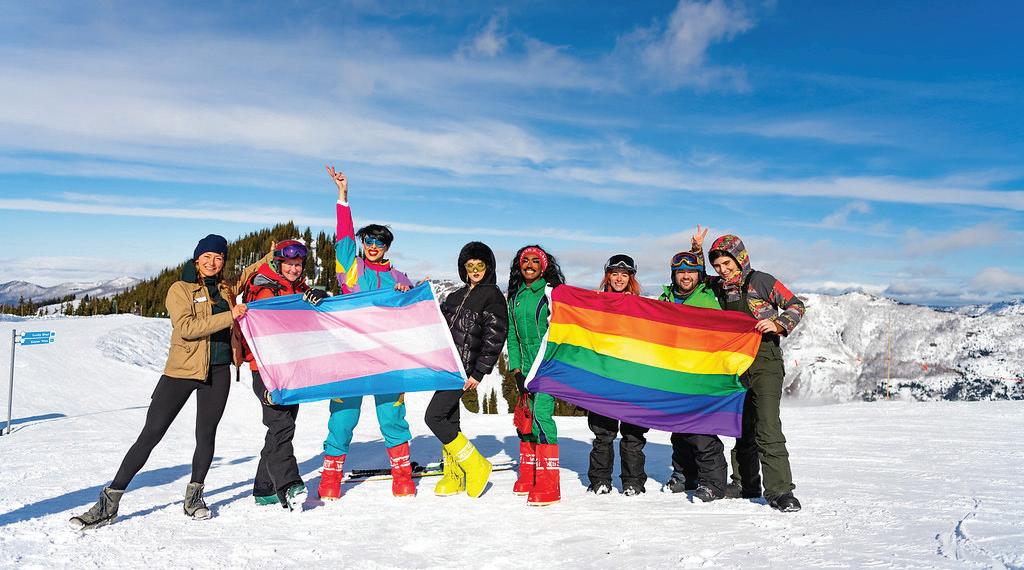
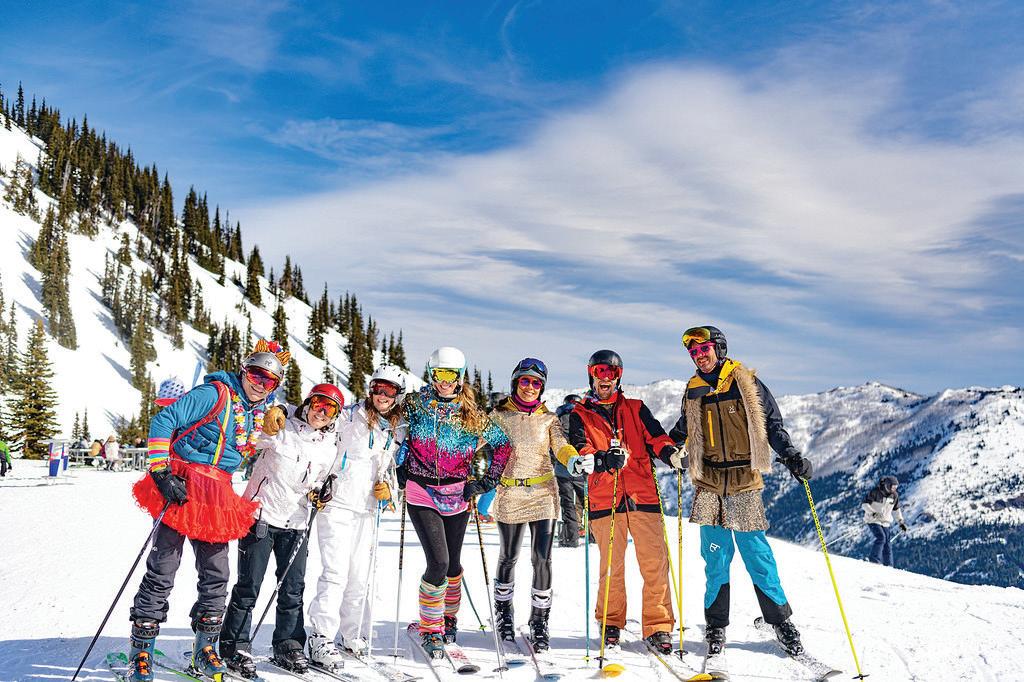
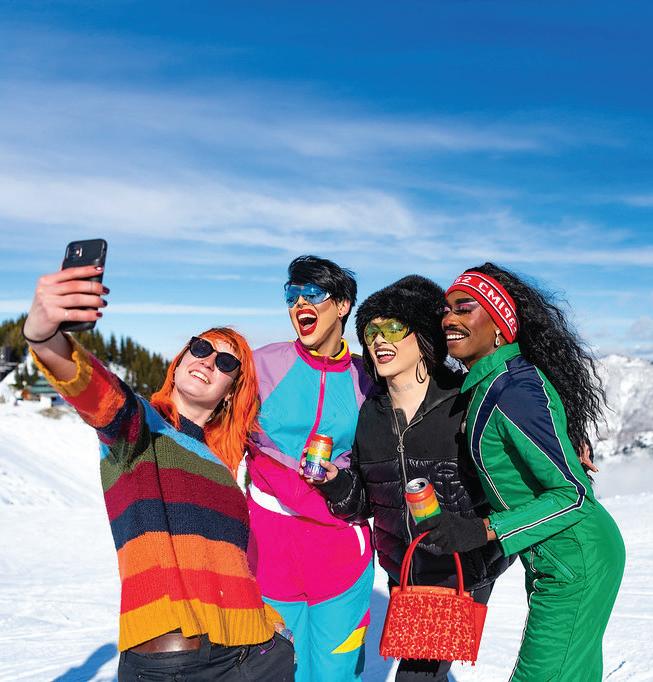
Pack your bags, the slopes are calling! Crystal Mountain, the largest ski resort in the state of Washington, is planning its second annual Pride in the Pow, March 17–19.
This year’s event will be the resort’s third LGBTQ+-specific one and the second winter extravaganza, following last year’s inaugural party.
“We did a summer Pride event two years ago, and then last year was our first winter [one], kicking off Pride in the Pow,” said Emma Brice, a PR specialist at Crystal. “We’re stoked. We’re bringing back some of the same performers we had last year, local to Seattle, and we’re partnering with Seattle Pride and QPOC Hikers to put on this event.”
The first Pride in the Pow last year was a huge success. The weather conditions were phenomenal for spring skiing and snowboarding. The sun was out for most of the weekend, and participants got gorgeous views of Mt. Rainer from the summit.
For the organizers, the best part was seeing Queer people connect with a bit of the most beautiful nature Washington state has to offer, and they want to reach even more people this year.
“It was a really fun event,” Brice said. “We are now continuing to promote that the mountain and the outdoors are for everyone, and just continuing to promote that space for the LGBTQIA+ community.
“We want it to be accessible, so we have a three-day lineup of beginner group lessons and snowshoe tours, all at discounted prices, just so folks can come up and feel safe and like they can have fun in the outdoors.”
Crystal Mountain is offering special discounts on gear and lessons throughout the weekend. While the resort does not provide transportation, there will be free parking for participants, though the resort does encourage those planning on attending to carpool.
Lowering barriers
Everyone at Crystal is enthusiastic about the outdoors. They believe beauty can be found in nature, no matter the season. However, they are also aware that outdoor activity groups can often be intimidating for people in marginalized communities. So with
the help of Seattle Pride, the resort is hoping to break the ice and pave the way for outdoorsy LGBTQ+ people to enjoy the winter.
“Our team is so passionate about this. We are grateful to get to work with Seattle Pride... It gives an extra layer of insight about how we …try and make [the event] feel inclusive and make it feel authentic. That’s the excitement for me,” Brice said. “…It’s not just a one-day or a one-weekend event that we put on. We’re trying to continue this through all our events. We want to make it so that this community can come up anytime and feel safe and welcome in the outdoors.”
Brice admits that barriers, such as high costs, have often kept some people from getting the chance to enjoy the feeling of flying down the slopes. “I think the outdoors, for a lot of communities, hasn’t been accessible. In the ski industry, especially, there’s a big barrier to entry. For the LGBTQ community,
there’s even an extra layer of not necessarily feeling welcomed,” she explained.
“It’s really important to us that Crystal… [be] a place where this community feels welcome. It’s a very uniting place, where a lot of people feel like their best selves. You get a sense of freedom and a chance to connect with nature. That’s just what we’re trying to do: we’re trying to open this space so this community can feel like that, too.”
A mountain of fun
Pride in the Pow has much to offer. For experienced mountaineers and thrill seekers, there will be discounted access to all the slopes. For beginners, Crystal will offer discounted group lessons, a great way to not only meet new people but also pick up a fun new skill.
Of course, skiing and snowboarding are just the tip of the iceberg.
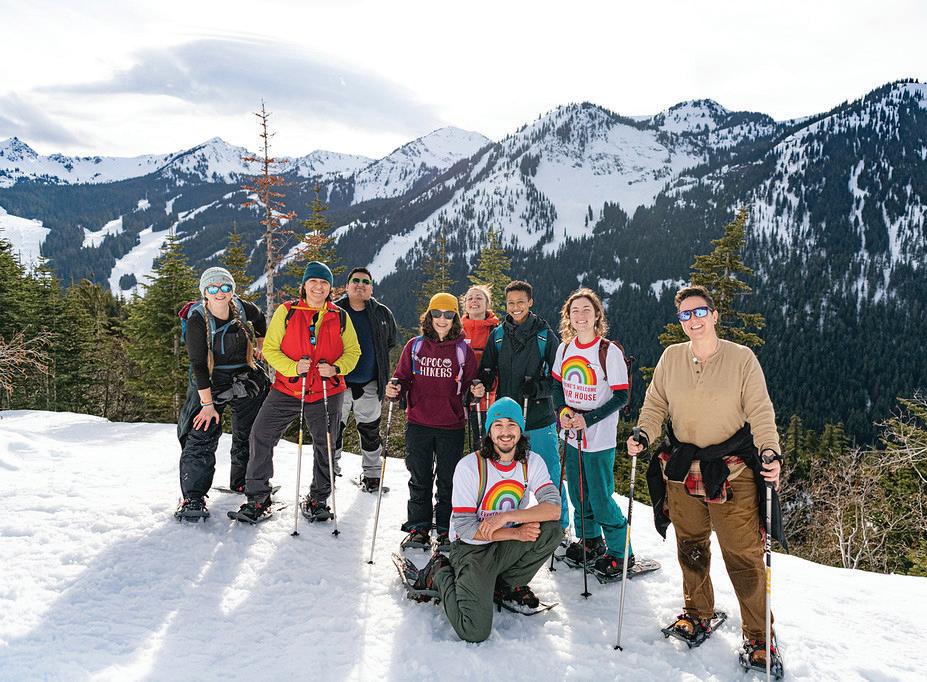
“The event starts Friday with a snowshoe tour, wine tasting, and dinner,” Brice said. The snowshoe tour will only be available to those who reserve tickets in advance but promises spectacular views and a serene trek through nature.
“Saturday, we’ll have …a morning mixand-mingle to get to know you, and then if people want to meet up and go skiing or snowboarding, they can do that. Otherwise, you can take a beginner group lesson at a discounted price that’s only for the LGBTQ community and allies,” Brice explained.
“Then we’ll have our midday party, which will have …drag queen performances and lip-sync contests,” she said. If the weather permits, the performances will be held at the top of the mountain. Some of the queens expected to give snow-melting performances include Rowan Ruthless, Miss Monday Morning, and Hoochie Papa.
Photos courtesy of Crystal Mountain
Brice added, “We’ll have an end-of-day party with dancing and music and fun times. We’ll do the same thing on Sunday, but instead of a lip-sync contest, we’ll have a catwalk contest.”
All the weekend events are optional. For those who may be intimidated by the thought of sailing down a mountain, Crystal offers other activities. All Saturday and Sunday, the lodge will offer guided snowshoe hikes for people of all ability levels. People are also free to enjoy some of the resort’s iconic gondolas, which will usher performers and audience members to and from the mountain’s summit.
“For folks who want to come up and just watch the contests and enjoy the scenery, you can do that. You don’t necessarily have to ski or snowboard if you don’t want to,” Brice said.
Crystal Mountain offers lodging for those hoping to make a full weekend out of Pride in the Pow. Guests can ski right up to their chalet condos. After a long day on the mountain, the resort offers heated pools and several restaurants within walking distance.
But Pride in the Pow is not exclusive to just lodge guests. Anyone can purchase a discounted day pass and drive up to the mountain to enjoy the festivities.
Something for everyone
For anyone who has been thinking about learning to ski or snowboard, but just hasn’t taken the plunge, Brice says Pride in the Pow is the perfect weekend to get out there.
“I think this is a great place to start,” she said. “We’re offering beginner group lessons, so it’s an opportunity to connect with other LGBTQ community members and allies. It’s a very inclusive space. No previous experience is required, and we’ll have discounted rentals... It’s a really good setting to be introduced to it.
“The advice I would give is [that] putting yourself out there and connecting with this community can be powerful. This is a great place to try it.”
Whether you want to make new snow friends, learn a new skill, or hit some of the best slopes in Washington, there’s something for everyone at Pride in the Pow.
Photos courtesy of Crystal Mountain
Arts & Entertainment
Meet Pete, the storyteller behind the Queer short film
by Lindsey Anderson SGN Staff Writer
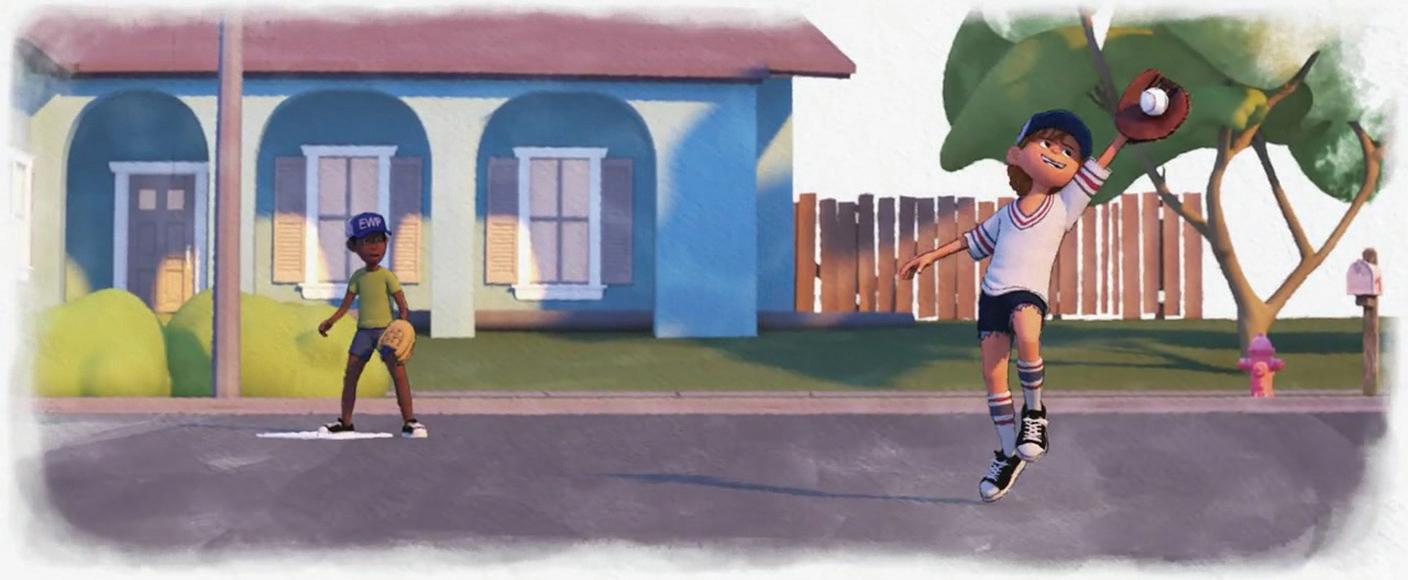
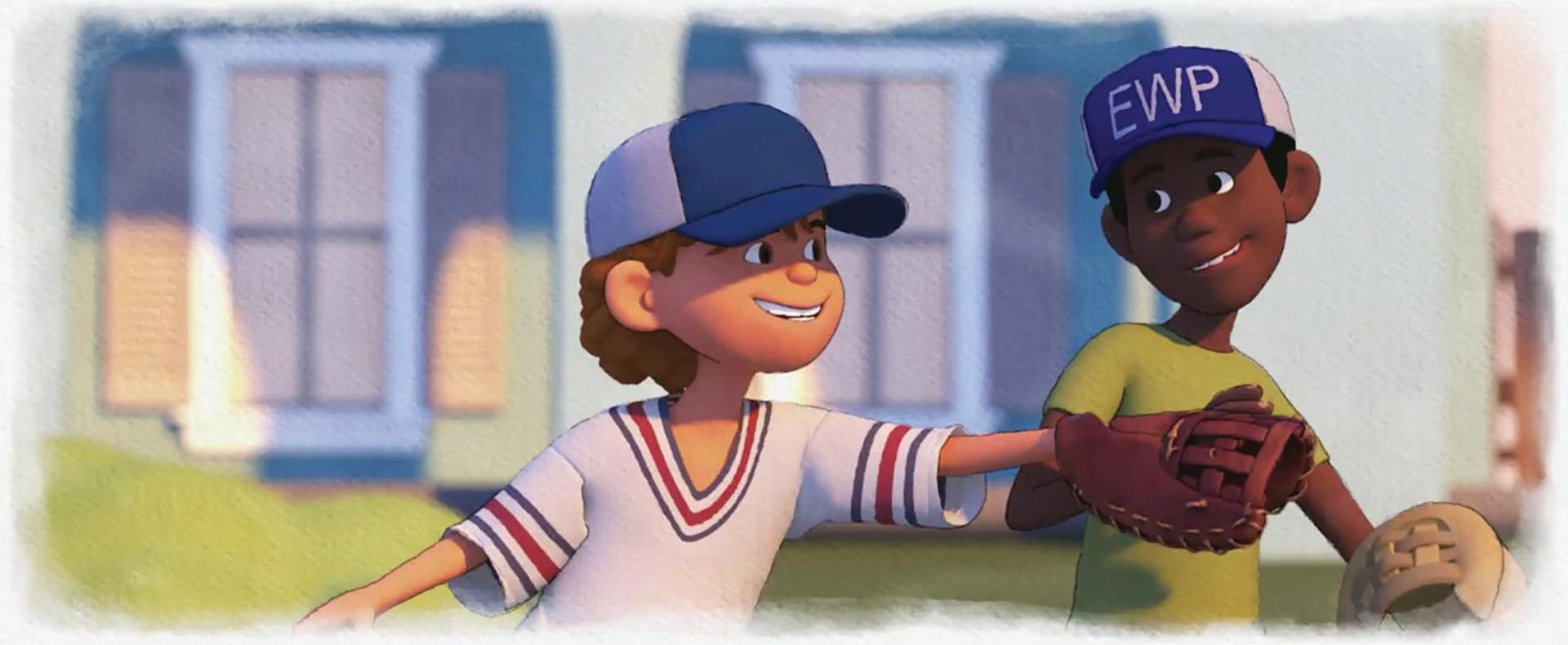
The year was 1975, and while other little girls were busy styling their Barbie dolls and wobbling their Weebles, Pete Barma was obsessed with playing baseball with all the boys in her cul-de-sac. The memories from the summer when she was eight inspired Barma and her wife, Bret Parker, to create their original animated short film, Pete
Playing ball
“The stories of my life are just one part of me, but this one in particular, in the time we were in, it just felt really important,” Barma said as she recalled the real-life events depicted in the film, which takes a look at the experiences of a Queer kid back in the 1970s, when ideas around gender expression and sexuality were different.
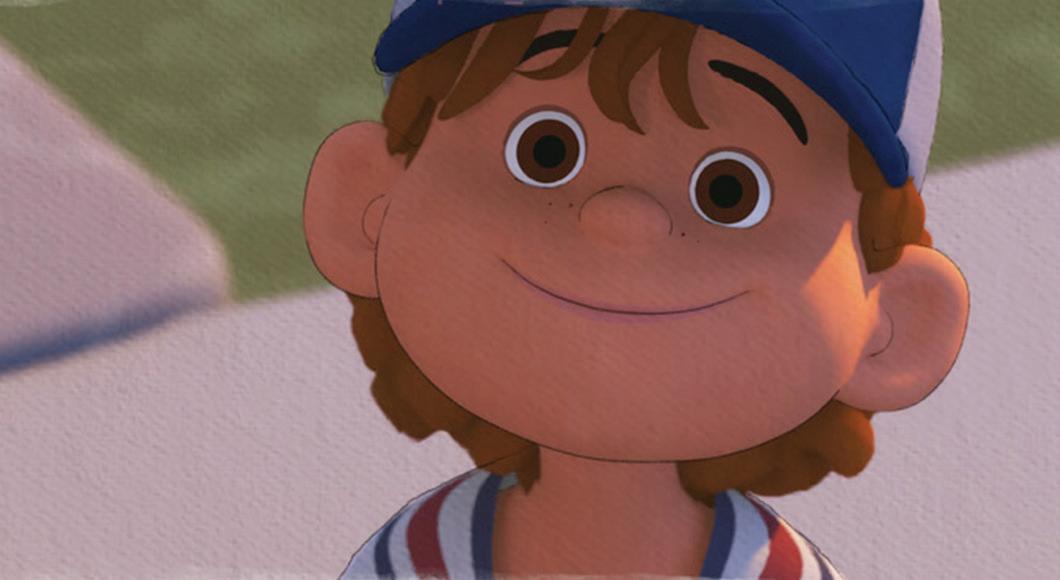
The movie follows eight-year-old Pete, a kid determined to play baseball with her friends. When she was sporting a short haircut and the traditional uniform, the parents didn’t have a problem with Pete playing on the team, especially not when she was scoring runs. However, once some realized Pete was not another little boy, the trouble began.
Even though Pete is set nearly 50 years ago, the theme at the heart of the film still rings true for young athletes, especially Trans athletes, today.
One of the points fans have praised Pete for hitting is that children are often much more accepting than we give them credit for. “What always resonated with me growing up, and even now [is that] kids are just rarely the problem,” Barma said.
Relating to the Trans community
While Barma uses she/her pronouns, she also recognizes that her story is one that many gender-diverse viewers have resonated with.
“That’s any one person’s journey. It’s a personal journey. My journey probably would have been very different if I was born in 1997 or 2005. I’m not sure where that… would have taken me. It’s upsetting to me when people are so angry about someone’s journey that has no impact on their life. It’s hard enough coming out today as Queer. It still comes with many challenges and risks, and then you add this layer, this visceral hatred spreading around. That’s why we picked this one,” she continued.
Before Pete premiered, Barma had some concerns that members of the LGBTQ+ community might take offense at her story because of her gender identity, which she admits reflects the world she grew up in.
“You don’t know until it’s out there what people will think. I had some reservations about it. I worried people might be mad that I still identify as she/her. That was my journey, but I think it’s important.
“Everybody’s been super supportive [though]. I think that people who do identify as Trans or Nonbinary understand that it is everybody’s journey. It’s not one for someone else to make or decide. It’s been a wonderful reception,” she said.
“Even today, even though I identify as she/her, it still was a journey I took. It was a journey I took to get here, and it might have been different at different times, but it was the one I took in the time I lived in. It didn’t come without challenges.”
Trailblazing mom
Pete is a love letter to anyone who is or was a Queer kid. But for many viewers, Barma’s mother is the real hero of the story, for defending her kid. When Barma looks back on the events of Pete, she realizes her mom was a trailblazer in her own right.
“Having my mom still alive — she just turned 82 last weekend — at a film festival, seeing herself, it’s pretty cool,” she said. “She thinks she’s a star.”
Barma’s mother, who voiced her character in the film, also contributed to the story-
Even though Pete is set nearly 50 years ago, the theme at the heart of the film still rings true for young athletes, especially Trans athletes, today.
telling process. Through interviews, Parker and Barma learned a lot more about the situation, which young Pete had been shielded from at the time.
“To be honest with you, there were things I didn’t know about the story,” Barma said.
“She kept me away from what had happened in the stands. She shielded me a bit. It was when we were interviewing her and doing her voicework that the memories came flooding out. She was able to tell it.
I was like, ‘Wow, they were really that mad?’
And she said, ‘Yeah, they were pretty angry.’
Some of them made their kids quit.”
While the film is pretty accurate to the
real-life events Barma and her mother experienced, it did change some facts, much to her mother’s disappointment.
“There are some loose interpretations. We used my father’s car [in the film] instead of my mom’s car. That bothers her. She says, ‘I would have never driven your father’s car,’ but I’m like, ‘Mom, it was a cuter car for a cartoon.’”
Super lucky
Barma has noticed that when the film shows at festivals, Queer and Trans audiences have a different reaction to it than their cis-het counterparts.
“It’s interesting when we show this to
Queer audiences or predominantly straight audiences, depending on the film festival. Straight audiences look at the child. They empathize with the child, and Queer audiences applaud the mom. It’s a very different reaction, and it makes me sad a little bit still, because it tells me that not everyone has that support yet.”
The reaction Queer viewers have to Pete’s mom in the film has only reinforced what Barma has known her whole life.
“My parents were ridiculous. They were so amazing. I don’t think you know it when you’re in it. It takes reflection now as an adult. Today I’m like, ‘Holy crap!’ My folks supported me at anything I wanted to do, any endeavor, any haircut, any look, anybody I brought home to meet them. I used to refuse to say I was lucky, because parents are supposed to be like that, but I’ve grown up. Now I can admit I was super lucky.”
“My mom and my father, both, are very different people. My mom is much more active. My dad was a much more shy man,” she said as she remembered her childhood. “…I still did the formal coming out..., but then my dad was like, ‘Are you hungry?’ and my mom was like, ‘We knew, it’s no surprise.’
“Growing up, I think why my journey, when I was so little, was so simple [was] because kids are awesome, and my parents were like, ‘Do what you want to do.’”
A lesson in vulnerability
Sharing the final product with friends and family was difficult for Barma.
“It was insane! It’s a way more vulnerable feeling than I had anticipated. We’d watched it a lot on a computer screen, and even that brings tears to my eyes,” she said. “There are two aspects of vulnerability, because you never know how someone will
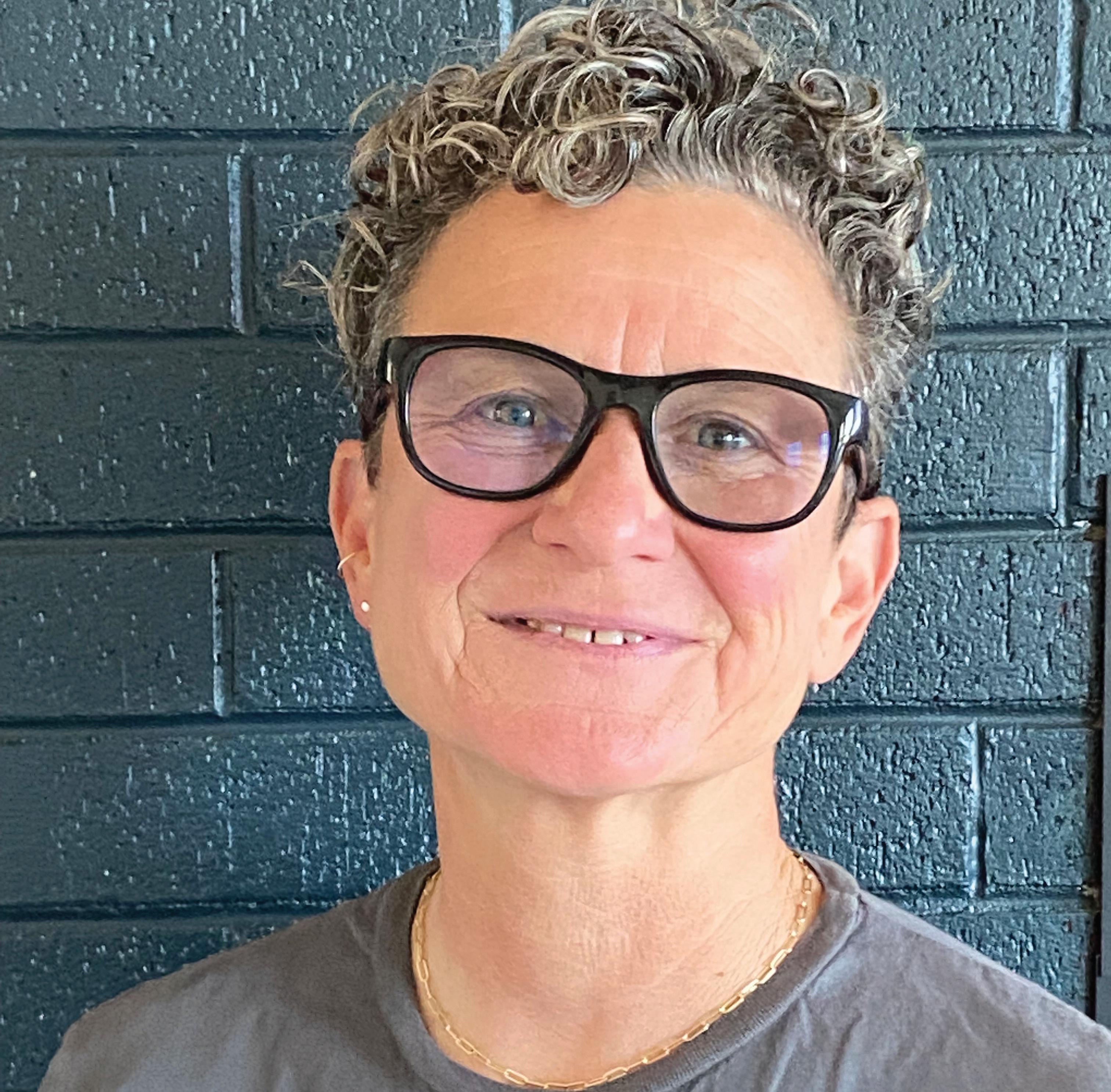
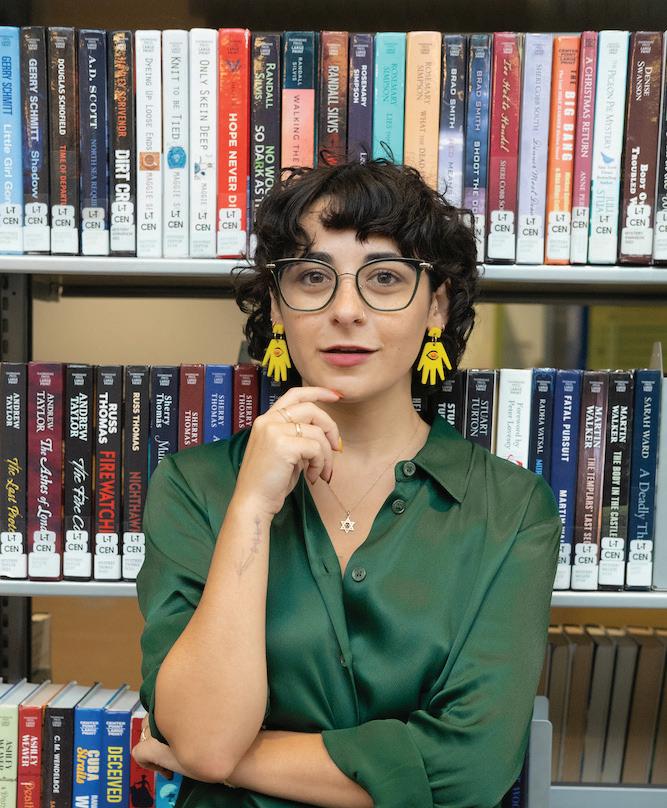
Pete Barma – Courtesy photo
Pete – Image courtesy of Artfarm Productions
receive something. It’s your life. That adds another layer of ‘oh my gosh, what if they don’t like it?’ …[Between] strangers and family, I don’t know which was harder. I think having people you know see it was more difficult, more nerve-racking. I’m past that now [though]. It seems to be going okay.”
Despite the nerves, Barma’s friends and family, especially her mom, are proud of the movie. The pride they always had for her is one of the reasons Barma felt like she could share her story with the world.
Pete’s epilogue
For those who wonder what happened next for the little kid in the cartoon, Pete continued her love affair with baseball until it eventually led to another passion.
“I played ball, and as it turns out, that theme held for the rest of my life,” Barma said. “I played through college. At first, I got an education degree, because it seemed like something that might include sports.
“When I first started teaching, it turned out I was a horrible coach. Not all things translate to the other side of the field.
I wasn’t very good at it, but I fell in love with teaching. I am just really good with kids. That stuck, and I fell in love with working with kids.”
Through teaching, Barma next found a passion for storytelling, she said. “I’ve always been a literature teacher. …Teaching literature was also kind of an accident. I was supposed to be an elementary school teacher but ended up being a high school
teacher. Storytelling is such a big part of the curriculum, not just with the subject matter but trying to keep the kids’ interest. I think I perfected this art of …oral storytelling. I’m just super interested in the world around me and making people laugh, things of that nature.”
It was a shared passion for storytelling that inspired Barma and her wife to work on an original film project.
“Our first film was about …the first Gay bar in the US with open windows to the public, back in ’72,” Barma said. “I was so fascinated by the people’s stories, the sitting customers going there. That was my first inspiration. I thought some stories need to be told. Especially in the LGBTQ+ community,… historically, they’re lost. A lot of people don’t have family, or community is [something] I just identified. That became the inspiration more than anything.”
Telling LGBTQ+ stories
Barma realized she, like many LGBTQ+ people, had stories to tell the world, too.
Once Parker and Barma decided to create another film project, this one an animated short, they got to work. They quickly learned that animation and documentary filmmaking are vastly different beasts.
“My wife, Bret, who is the director, is an animator. She’s been an animator for about 26 years. Her dream was to direct an animated piece... [Pete is about] the past, so it just lent itself to be an animated tale.”
Barma admits she had an easier job when it came to completing this film. “The difficulty was in Bret’s hands as the director,” Barma explained. “…We did this in people’s spare time. We had to get friends and strangers — people we had never met, during COVID — to volunteer after work.
“…[We] also …were trying to …make it look more 1970s, like Winnie the Pooh-ish, like having that watercolor vibe. So that was a huge technical challenge for Bret.”
“Nothing would get made without Bret. I’m the art of storytelling and relaxation, and Bret is the workhorse in the family,”
Barma added with a laugh. “It ended up being narrated by myself, which was hard, even though there were not many words. I just cried every single time. I’m not very good at saying words and not crying at the same time.”
More Pete?
The final draft came out beautifully. Pete has now been featured as an official selection at the Tribeca Film Festival and the Orlando Film Festival. Their success has inspired Barma and Parker to think about future projects too.
“We are in some conversations, but I can’t talk much about that now,” Barma said. “So far it’s about where Pete as a single entity goes. Hopefully, you’ll see it sometime around Pride. I am 100% hoping that larger audiences fall in love with it and kids like it, so we can write some more.
“We have about seven little Petes in the making. We’re excited about that. Pete doesn’t always stay seven years old. Maybe with that arc, people can start to understand that Queers grow up and become grown-up Queers, that they don’t just stop when they’re little... That would be our goal, and to have Bret at the helm directing it — I think she’s amazing.”
Barma has more childhood stories to share with the world. “There might be a story down the line where my mom feels the influence of society, where she wants to put me in a dress because other people are starting to influence her, but it [doesn’t] last,” she said.
“She had that age-old concern of ‘What’s the world going to do to me if I don’t fit in?’ She had missteps in my life, but it was mostly about what the world would do to me, not about their opinions. It was more about the unknown world and what cruelties could be unleashed.”
Ultimately, Barma and Parker hope to create more art to inspire people to see the world more like children do.
“If we left things to kids, man, we would have a much better world,” she said. “I hope [audiences] take away a big question, like: Why am I so mad at this? Why am I so angry at something that is just a kid, or a grown-up, or somebody just living their life?
“I hope it [gives people] pause. I hope, more than anything, it causes change, but on the way to change, there has to be a pause. There has to be a reflection. What is it? What is it that you’re mad about? What is it that you can’t wrap your head around? I’m well aware of it. I live in San Francisco now, and I have these great kids who couldn’t care less, and a wonderful family in the community of Orlando. It will forever dumbfound me as to the why. If someone can reflect on that, I’m down.”
Pete is a film for anyone who has ever wanted to exist in a space they weren’t supposed to. The film is a celebration of Queer and Trans kids, the allies who accept them, and the parents who should always fight for them. Now, more than ever, it is an important reminder that all kids deserve to play.
Bret Parker – Courtesy photo
Pete – Image courtesy of Artfarm Productions
Pete – Image courtesy of Artfarm Productions
Film
UNFORGETTABLES
But it’s the memories I associate with this farcical bit of goofy nonsense that makes the film so special. I remember watching this Cary Grant/Katharine Hepburn lark when I was still in elementary school. I was over at my elderly next-door neighbor Alice’s house (more than likely batting my eyelashes and fishing for some candy or an orange soda). The movie was on her television, and I sat down to watch it.
I can’t say if it was four-year-old me who adopted her or the other way around. Either way, Alice was like having a third grandmother. She became my mom’s confidant. She poked and prodded my dad in ways that continually brought a smile to his face, even on his down days. She was at the hospital when my little sister was born, even though she rarely left her house. She put me to work removing dandelions from her yard, mowing her grass, and shoveling snow off the sidewalk, all the while slipping candy bars or a random $5 bill into my pocket without my parents’ knowledge.
From the second we moved to Spokane and into the neighborhood, Alice was a de facto member of the family.
She always had her television on when I visited, but it wasn’t like she consistently watched certain channels or programs (other than The People’s Court; dang, she loved that show). Since she lived alone, I believe Alice liked having the background noise. She’s one of the few people I know who could voraciously read while having the TV or radio loudly blaring in the background. I feel like I picked that trait up from her, as I can do the same. I recollect heading over to Alice’s house one day after school. I had to have been in first or second grade, as this was long before I started regularly doing yardwork or coming up with “reasons” to pay a visit. No, I was young enough that I could show up, knock on the door, chirp out a happy “hi!,” give a quick hug, and then quickly skip across the driveway back to my house.
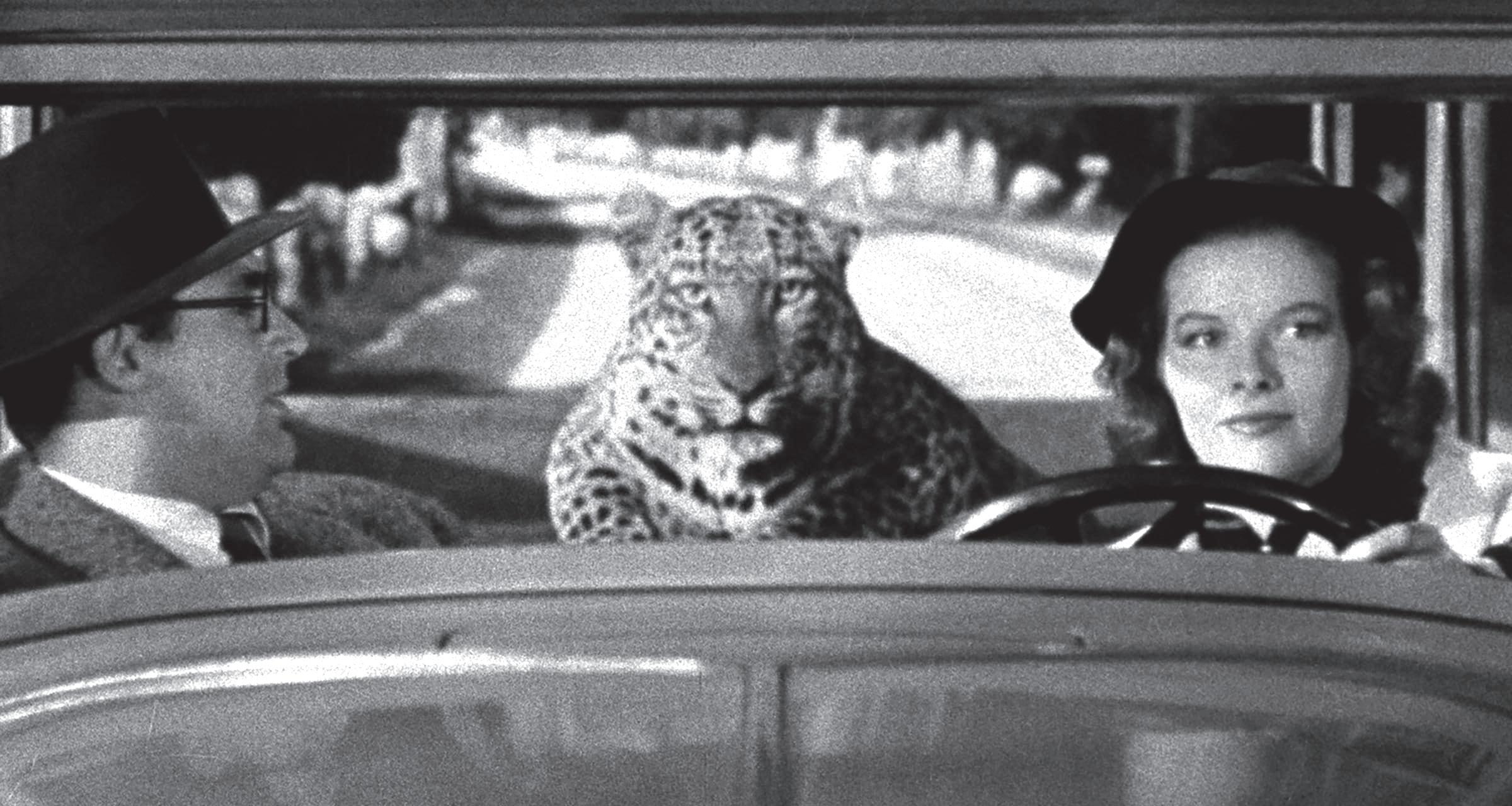
This time, when I went through the door, there was this crazy black-and-white movie on Alice’s television with two people chasing after a leopard (which I kept calling a tiger for some reason). This was the silliest thing I’d ever seen. There was a tiny dog frantically burying things in a yard, and everyone seemed to be trying to find a missing dinosaur bone. I sat down on
Alice’s crocheted rug, transfixed, giggling madly for the longest time. Eventually, my mom was at the door wondering what had happened to me, and I immediately began to babble nonstop about the “tiger,” the funny dog, the ridiculous people, a second “angry” tiger, and the giant dinosaur that collapsed into a million pieces.
This was my introduction to screwball comedy, and it unquestionably left a mark. When I got older and started snagging films out of the library on my own without needing my parents’ permission, Bringing Up Baby was one of the first I brought home. As a teenager, I watched it with fresh eyes. I could see how dynamically it was paced, the pinpoint comedic precision of the performances, and the dexterous creativity that drove Hawks’
confident direction. I found layers that went far beyond “two zany adults fall in love while trying to capture a tame leopard.”
It was an exquisite revisit, and from that second glance on, I knew the film would rank as one of the best I’d ever see, no matter how many thousands of features I’d watch in the decades to come.
The great thing about this experience is what seeing it again led to next. His Girl Friday, The Lady Eve, The Philadelphia Story, To Be or Not to Be, Sullivan’s Travels, Holiday, It Happened One Night — all of these and more I discovered in my early days of high school. The film made me fall in love with Cary Grant, and from The Awful Truth to I Was a Male War Bride to North by Northwest to Monkey Business
to Charade to Gunga Din, if I could find a picture with him in it, it was pretty much a guarantee I was going to watch it.
Much has been written about Bringing Up Baby and its undeniable greatness, notably how it was Hepburn who was labeled “box office poison” when it initially flopped and not Grant, and I don’t have anything new to add. There is a reason this comedy has withstood the test of time and why its humor hasn’t been diluted. Hawks, along with screenwriters Dudley Nichols and Hagar Wilde, deserve every ounce of credit they’ve received over the eight-plus decades since the film’s original release. Alice never had the passion for cinema that I did. I honestly don’t know if I ever saw another movie on her television, so this was an utterly random occurrence. As I grew older, she would, with a fascinated smile, kindly listen to me talk rhapsodically about whatever it was I had recently watched, but I always knew she was doing so out of kindness and love and not actual interest. It was that I was taking the time to share with her that mattered, and I don’t think I fully knew how important that was until I left for the University of Washington and could no longer make my random visits to her front door.
Unbeknownst to me, Alice read everything I wrote. When I became the first teen film critic for the Spokesman-Review, she collected all of the newspapers my stories and reviews appeared in. I had no idea. Before I left for college, she and my mom secretly collaborated on a project. They created a portfolio with each article, every piece carefully snipped out of the paper, laminated, and bound together as if it were a giant coffee table book. It’s magnificent. I treasure it to this day.
When Alice passed after almost a full century of living an extraordinary life, I think I watched Bringing Up Baby five or six times over a single weekend. I’m pretty sure my roommate at the time wanted to throttle me. No matter. As great as this comedy is, it is these personal connections that I treasure the most. It is my link to my beloved “third grandmother” that makes the film not just unforgettable but a vital piece of my heart I’ll hold on to for the rest of my life.
Now celebrating its 85th anniversary, Bringing Up Baby is available on Blu-ray and DVD and to purchase digitally on multiple platforms. It is currently streaming on HBO Max.
Cary Grant and Katherine Hepburn in Bringing Up Baby – Photo courtesy of RKO Radio Pictures
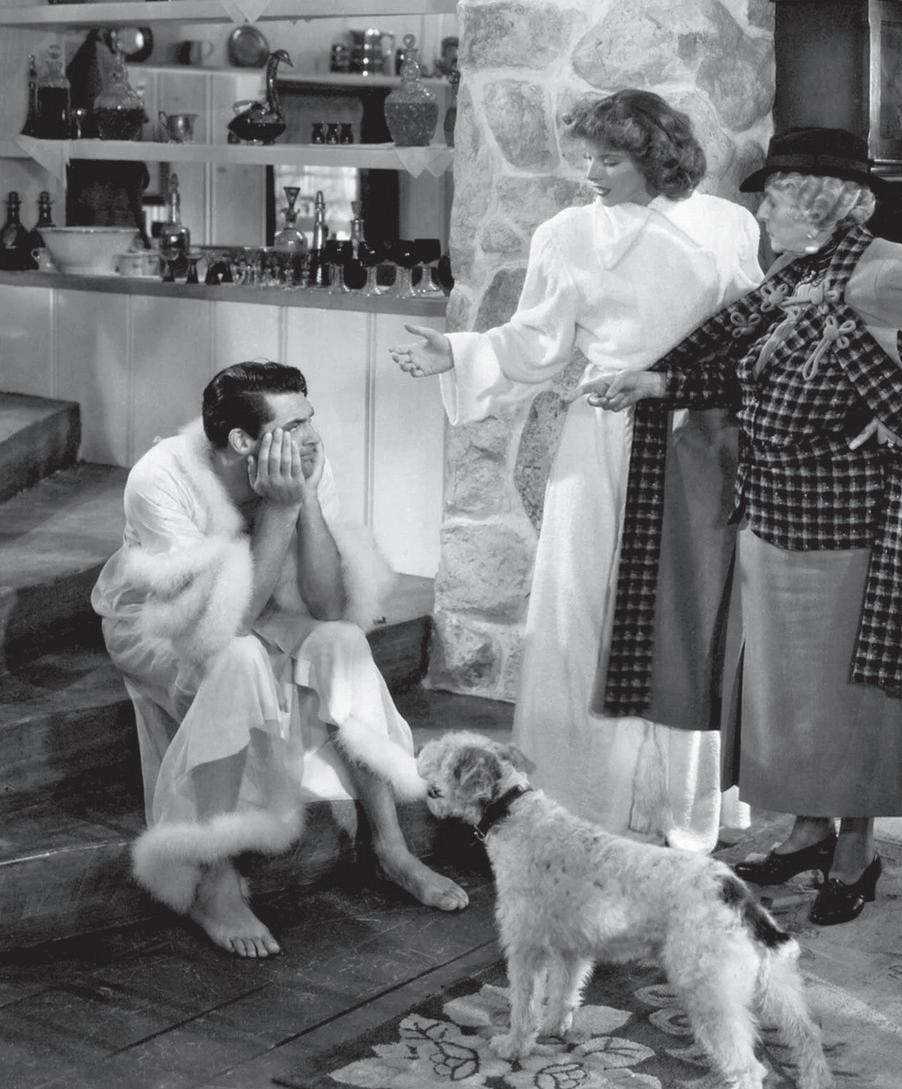
Cary Grant, Katherine Hepburn, and May Robson in Bringing Up Baby – Photo courtesy of RKO Radio Pictures
continued from cover
Addictively gory Cocaine Bear violently paws at the comedic jugular
by Sara Michelle Fetters SGN Staff Writer
COCAINE BEAR
Theaters
If nothing else, Cocaine Bear does not try to sell itself as something it is not. There is a bear. It is addicted to cocaine. It proceeds to kill several people. Gory, whacked-out weirdness transpires over an economical 95 minutes. That’s it. That’s the movie.
While it’s inspired by a true story, neither director Elizabeth Banks (Charlie’s Angels) nor screenwriter Jimmy Warden (The Babysitter: Killer Queen) appear to be remotely interested in telling some fact-based cautionary tale of nature run amok. Instead, this is a gleefully silly, unrelentingly violent lark filled with pulpy characters — good, bad, and various degrees of in-between — all caught in a situation that’s light-years beyond their control. It’s a schlocky dimestore novel from the grindhouse era given a neon-colored 1980s coat of paint, all delivered by a shockingly strong cast with a groovily deadpan aloofness reminiscent of Meatballs or Caddyshack
Needless to say, that sort of stylistic decision on Banks’ part isn’t going to sit well with everyone in the audience. For those who don’t jibe with her comedic sensibilities, it’s likely they’ll want to throw up their arms in exasperation and leave the theater less than halfway through. But I dug what she was doing here, and it’s clear her talented cast bought into this treatment of the material as well. I laughed. I groaned. I squirmed during a couple of the goriest parts. I smiled every time the bear ate a brick of cocaine and rolled back its eyes in delirium.
Set in 1985, there are basically three competing narratives happening all at once, each of them coming into contact with the homicidal black bear, who inadvertently develops a ravenous drug habit. The first involves a pair of 12-year-old kids, Dee Dee (Brooklynn Prince) and her best friend Henry (Christian Convery), playing hooky and taking an impromptu hike in the woods. The second concerns Dee Dee’s worried mother Sari (Keri Russell), who traipses off after them with a cantankerous National Parks ranger (Margo Martindale) and an animal rights activist (Jesse Tyler Ferguson) leading the way. The third follows low-level crooks Daveed (O’Shea Jackson Jr.) and Eddie
(Alden Ehrenreich), who are sent to the middle of nowhere by the latter’s powerful drug dealer father Syd (Ray Liotta) to find red gym bags filled with cocaine before authorities can get their hands on them. A few other characters come and go, most notably a determined detective (Isiah Whitlock Jr.) who’s been trying to take down Syd for ages and sees the missing drugs as an opportunity to finally get his man, never expecting a violent black bear would get in his way. But these supporting players are mostly fodder for the beast, around to get dismembered immediately or to put up a brief fight before also succumbing to this unstoppable furry force with a fondness for ripping out throats and disemboweling those that get in its way.
Of the primary ensemble, while everyone does a fine job, Jackson and Ehrenreich are the only actors who make any sort of lasting impression. They have an easygoing back-and-forth that’s undeniably genuine.
They’ve seen tough times, and while they want to be there for one another even during moments of inconsolable darkness, fear of saying or doing the wrong thing has made this difficult. Jackson and Ehrenreich bicker and banter as if they’ve been doing it all their lives, their Mutt-and-Jeff camaraderie so gosh-darn pure it’s almost exhilarating.
Banks isn’t a flashy director. After Pitch Perfect 2, Charlie’s Angels, and now this, I am finding it pretty clear she’s no fan of rapid-fire edits or overly complex visuals. Her style reminds me somewhat of Clint Eastwood’s in his early days behind the camera, with films like Breezy and Play Misty For Me, where less is more and in that she trusts her actors to do most of the heavy lifting. But I equally think it’s time she starts to challenge herself a bit more like he did (with the likes of High Plains Drifter, The Eiger Sanction, and The Outlaw Josey Wales), at least visually, and I’m curious to see if Banks will make that sort of creative leap.
I imagine there will be some who think she has done just that with this film. There are plenty of visual effects, and the film’s main character is a motion-capture creation performed by veteran stuntman Allan Henry (The Jungle Book, Avengers: Endgame). But Banks still keeps things rather subdued visually, more like an early Bill Murray or Chevy Chase comedy instead of a Peter Jackson or James Cameron special-effects extravaganza. While this approach works for this material more often than not, it can also suppress excitement and tension at annoyingly inopportune moments, most notably during the film’s strangely subdued climax. Not that it matters. Cocaine Bear did almost everything it set out to do. There was a bear. It did cocaine. There were numerous mutilations. A collection of goofy people did increasingly goofy things. I cringed. I smiled. I laughed. Most of all, I was entertained, and that’s all that really matters.
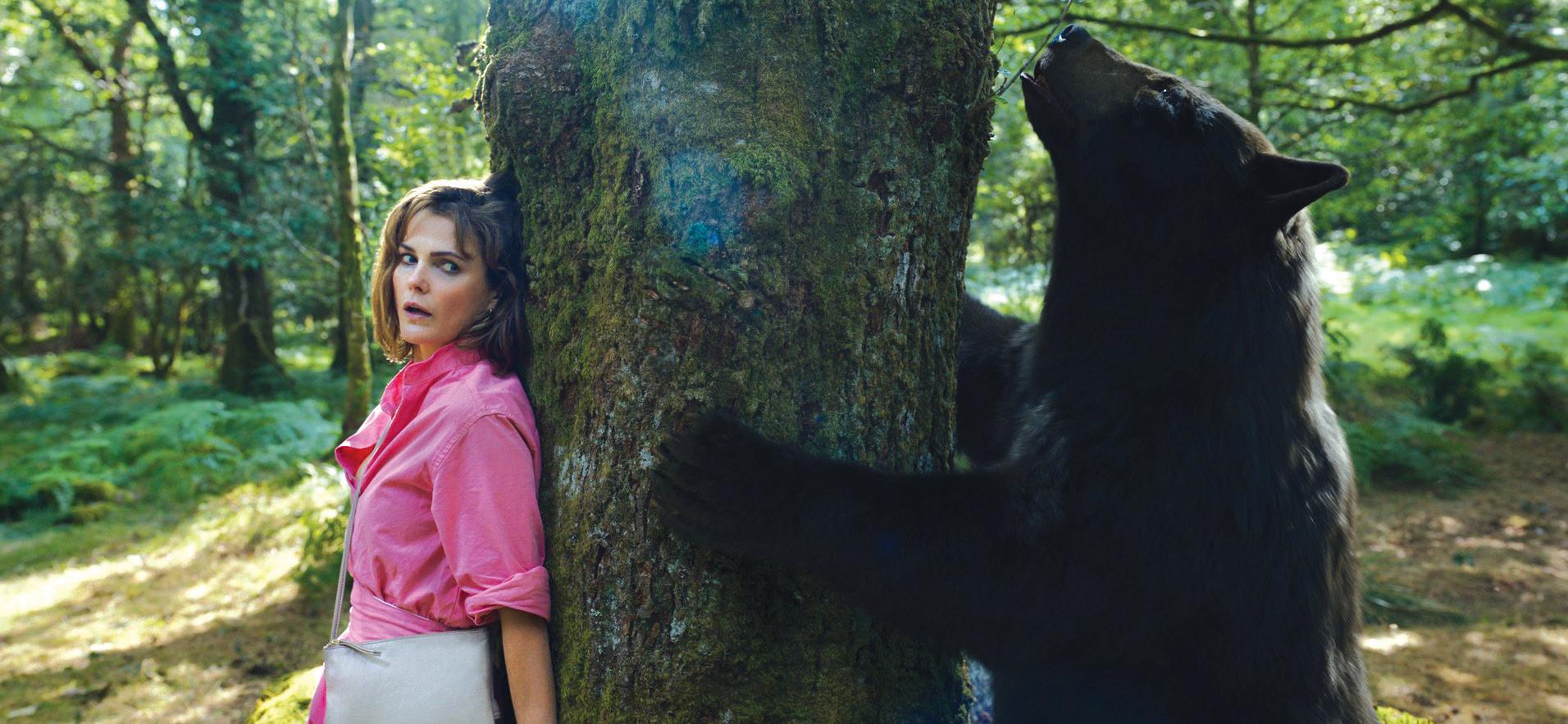
Keri Russell in Cocaine Bear – Photo courtesy of Universal Pictures
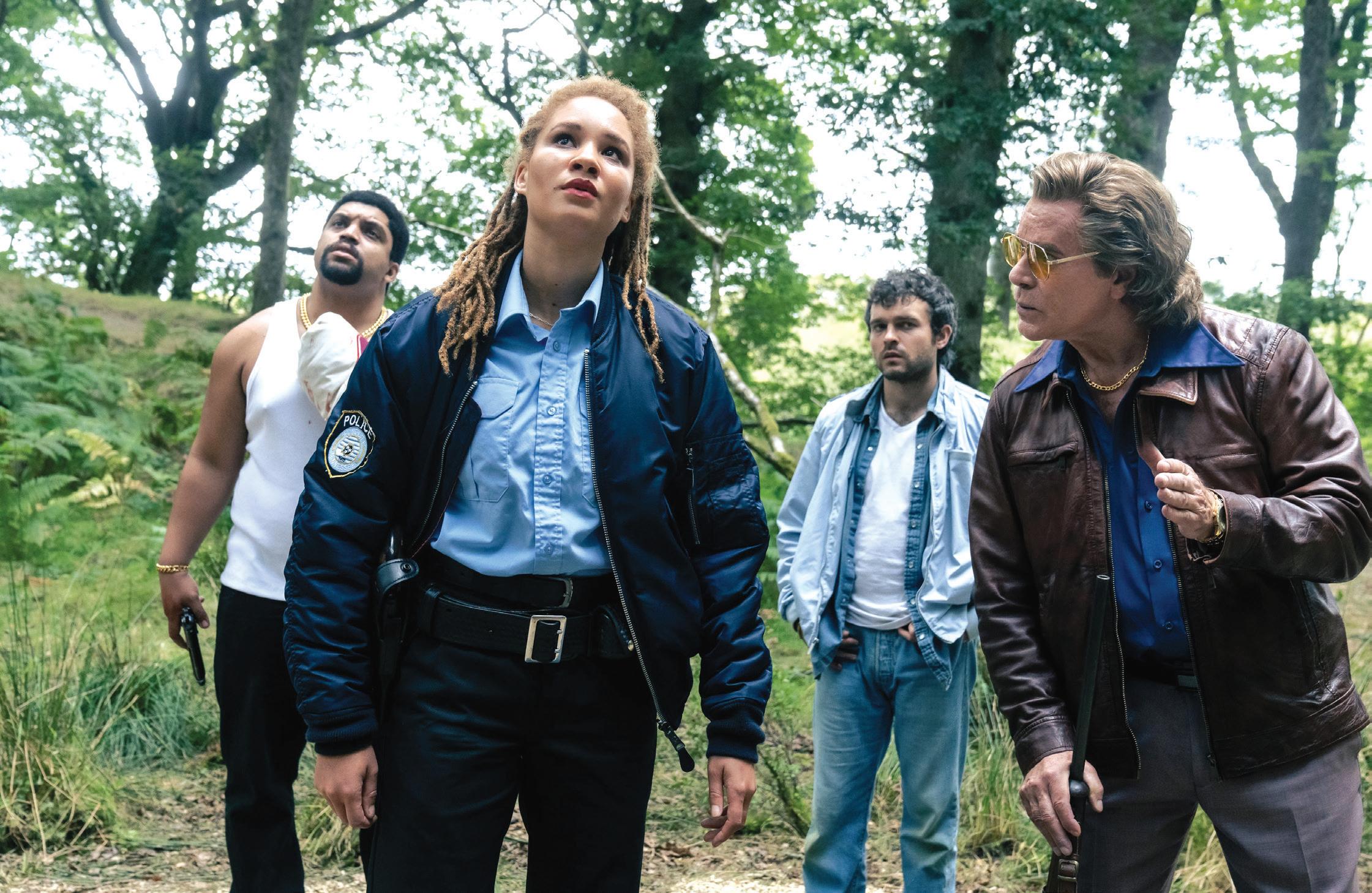
O'Shea Jackson Jr., Ayoola Smart, Alden Ehrenreich, and Ray Liotta in Cocaine Bear – Photo courtesy of Universal Pictures
Oscar Wars a star-studded blockbuster hit Books
by Terri Schlichenmeyer Special to the SGN
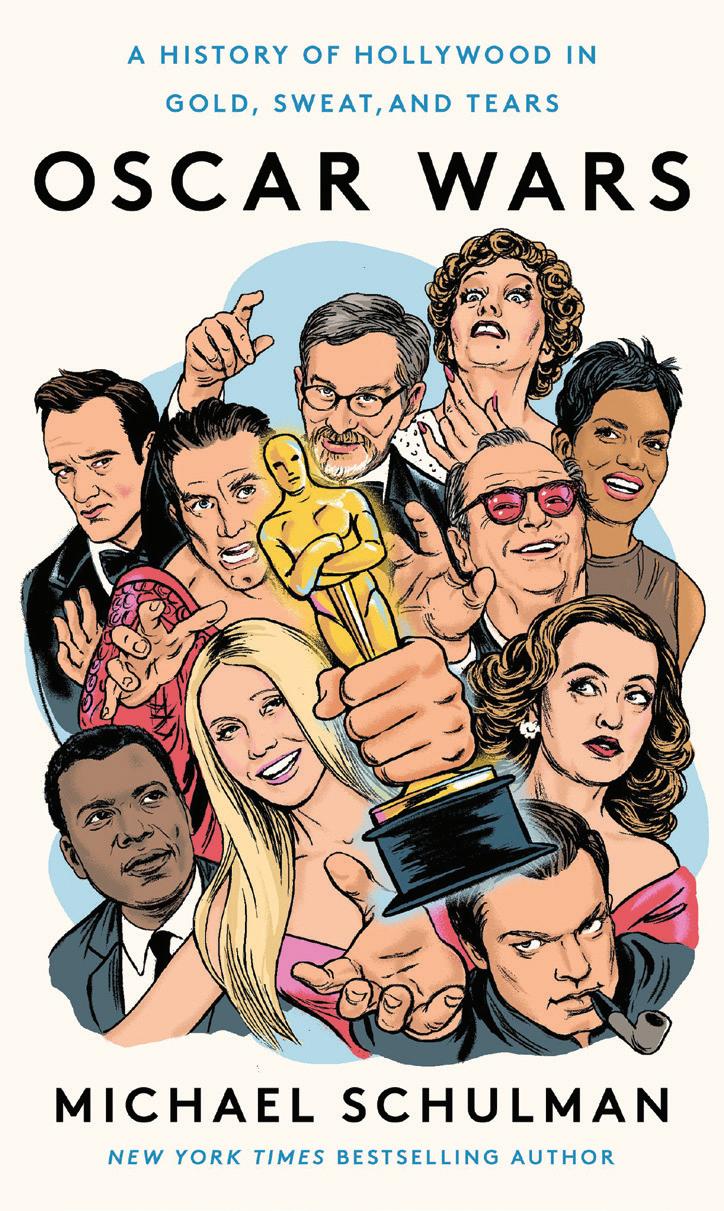
OSCAR WARS: A HISTORY OF HOLLYWOOD IN GOLD, SWEAT, AND TEARS
Nearly a year ago, you almost couldn’t go anywhere without hearing about The Slap. Everyone, it seemed, had an opinion about both the action and the Academy.
As for the latter, says author Michael Schulman in Oscar Wars, the Academy Awards are “a vaunted tradition celebrating a great modern art form. They’re an industry party... the closet thing America has to royalty... a marketing ploy... the Gay Super Bowl.”
And “they’re something else, too.”
The Oscars, in a way, are a battlefield where “it can take years to see what the real battle lines were.” There’s conflict in the Awards, cultural upheaval, and politics.
The movies hold up a mirror to our society, but what happens behind the scenes is
Adapting Anne
rarely known by the public.
The first Academy Awards ceremony was held quietly, because that’s how the Academy began: members at the first meeting were carefully chosen VIPs and bona fide stars, directors, and powerful studio owners. It’s also possible, Schulman suggests, that the first Academy Awards process was “rigged.”
Through the years, there were many times when the Academy was almost disbanded and the awards show deleted. And yet, it always rallied, because who didn’t want that statue gracing their mantle?
Frank Capra did everything imaginable to get one. So did Bette Davis, even going so far as to have an abortion. Dennis Hopper didn’t care if he had one or not, though, and Dalton Trumbo got his very, very late.
In the near-century of the Oscars, there were comebacks and come-from-behinds, a Red Scare and Snow White. Indeed, the ceremony has thrived despite a ratings system, racism, rock ‘n’ roll... and a slap heard ‘round the world.
As addictive as a large popcorn with extra butter, and more fun than a trailer for that next big flick, Oscar Wars is a starpowered fan’s book, all the way — but it
A graphic novelist takes on classic feminist literature
by Lindsey Anderson SGN Staff Writer
Classic literature is often hailed as some of the greatest works of all time. While many Queer bibliophiles enjoy iconic feminist works like Anne of Green Gables and Little Women, the only LGBTQ+ representation in them can be found in subtle subtext.
While scholars have spent decades arguing about whether or not the authors intended for characters like Little Women’s Jo to be Queer or not, one author has taken the story into her own hands.
Make it modern and make it Gay
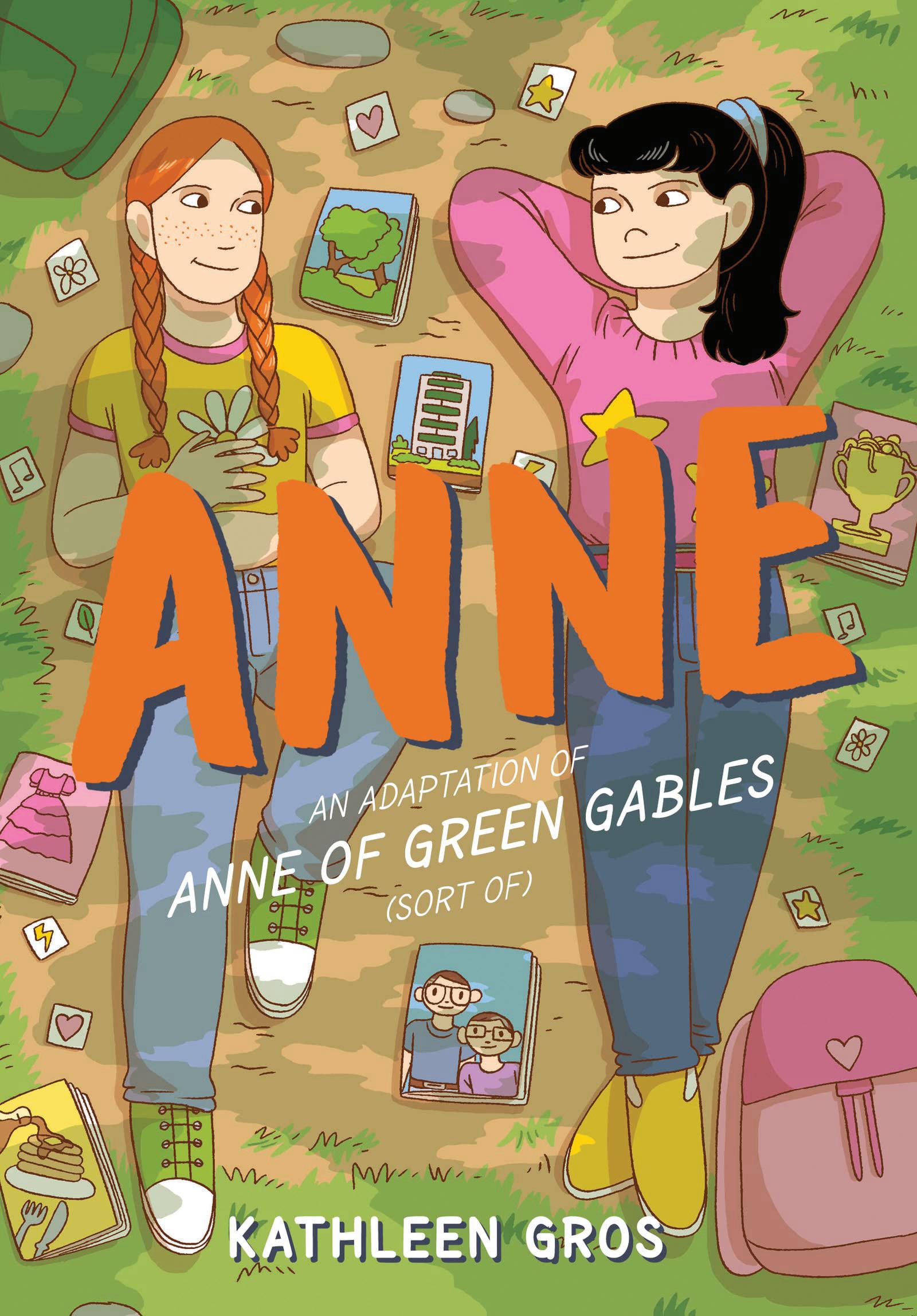
Kathleen Gros is the writer and artist behind Jo: An Adaptation of “Little Women” and, most recently, Anne: An Adaptation of “Anne of Green Gables.” The books take the beloved characters and plotlines of some of Gros’s childhood favorites and modernize them. Unlike the originals, they are also undeniably Queer.
“I love Anne of Green Gables. It is one of my absolute favorite books of all time,” Gros said. “I read it over and over again when I was a kid. Two years ago… Jo: An Adaptation of “Little Women” [came] out, which again, came from a love of that classic. My agent and I finished talking about potential other adaptations we could do. Anne of Green Gables came up immediately — it’s a book that I love.”
Gros, who also identifies as Queer, retells these classic stories through a Queer theory lens. She only adapts books that scholars have theorized have an LGBTQ+ subtext, which is often pretty obvious to her.
“The adaptations I do are through a Queer lens,” she said. “I look at classic literature that has been able to be interpreted through a Queer lens. Queer folks can kind of see themselves in the story, even if it’s not explicitly Queer in the text or the intention of the original author.”
Gros said she sees literature as a work of art, one that can be interpreted by the reader. “I think one of the joys of being in the audience is that you get to interpret the work however you like, and adaptations are kind of an avenue of reframing an original work or getting to have a dialogue with it in a way, and getting to bring in different ideas. For me, it was about getting to bring
“I look at classic literature that has been able to be interpreted through a Queer lens. Queer folks can kind of see themselves in the story, even if it’s not explicitly Queer in the text or the intention of the original author.”
in more personal experiences and women I know who have sort of seen themselves and maybe their first crushes in the relationship between Anne and Diana. Bringing that energy into the work and bringing that experience of the reader into the text felt important to me.”
also has something for notparticularly avid sometimes-watchers, too.
With a heavy tip toward Hollywood, Schulman adds history and pop culture to his stories, showing how world events affected the movies and vice versa. The Academy hasn’t always followed along, though, leaving fans screaming “WHAAAT??” at their televisions once a year on a Sunday. On this, Schulman subtly explains the unexplainable, in a way that anyone can appreciate. His anecdotes put the shiny, sparkly “tinsel” in these Tinseltown tales.
This is a hefty tome, but don’t let that be daunting: Oscar Wars is so much fun to read that you’ll barely notice its size. If you’re truly mad for movies, Hollywood, the red carpet, or cultural history, this book makes the cut.
P.S. It’s a natural question that everybody asks about the movies, and in But Have You Read the Book? by Kristen Lopez, you’ll learn about the stories that inspired the movies. What ones have been true to the original? How much has changed? This is a great companion to the Schulman book, and it’ll enhance your streaming and athome watching, too.
A drawn-out process
What sets Gros’s adaptations apart is that she not only reimagines the classic stories as modern and Queer, but she also recreates them into graphic novels. The process of writing and illustrating a full-length novel is long and difficult, but very worth it for Gros.
“Writing a graphic novel is interesting.
Everyone does it …differently, and I’ll do it differently with each project,” she explained.
“If I’m working with a big publisher, an editor, and an art director, my project is a lot more streamlined. There are very specific steps we have to hit. There are way more people looking at the work, trying to make it the best it can be.
“When I’m working on a personal project, that’s very loosey-goosey. I just do whatever I feel like.”
Gros’ adaptations add even more work, as she has to do her research to make sure her version of the story aligns with the original.
“Writing an adaptation is a lot different than doing any other kind of work,” she explained. “Even though I’ve read Anne of Green Gables several times, I read through it about three times [more] before I started writing the book. I wanted to have it fresh in my mind.
“I was thinking about what elements of the work resonated with me as a kid reading it, and what themes and scenes resonated with me as an adult reading it. I made a list of key themes that are important for the work and then key themes …for characters, like what’s the journey of the character in the broadest sense over the work.”
Modernizing a classic
Gros had the challenge of imagining settings for her modern adaptations that keep the same feelings and challenges of the original work but still encompass realistic parts of today.
“For Anne, her biggest arc is feeling out of place and finding a home,” she said. “I wanted to make sure that came into the new work, because it is integral to the original story. From there, once I get …the idea for key scenes and arcs, I have to figure out how to translate these into the 2020s. How do I think of these in a modern setting?”
For historical novels, like Anne of Green Gables and Little Women, the setting, clothing, and even transportation methods change the story immensely.
“A big one for me was thinking about insular communities,” Gros said. “Anne of Green Gables is set in Prince Edward Island in the original work, which is all small communities, like the small town of Avonlea.
see GROS page 14
Image courtesy of Harper
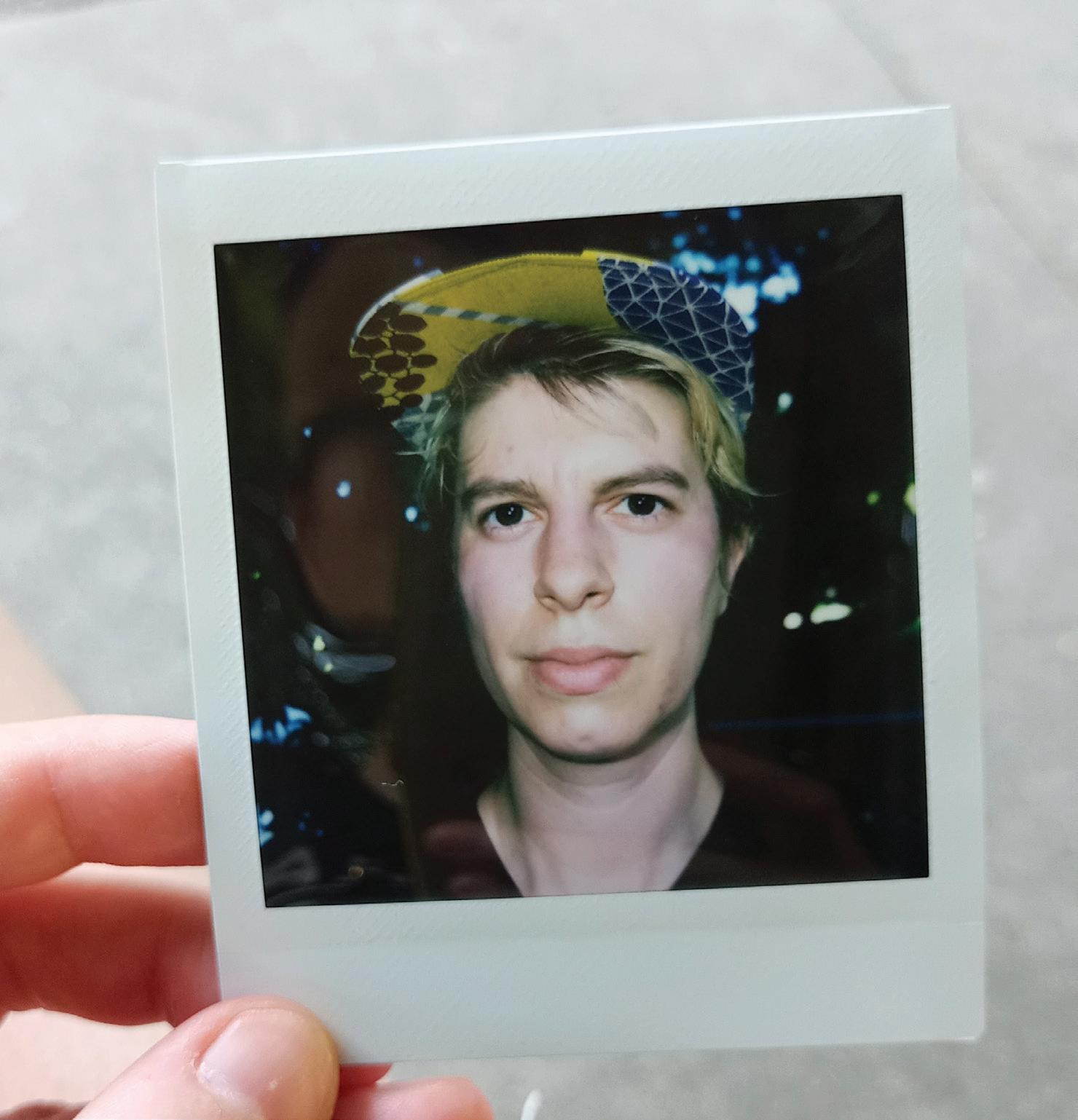
Kathleen Gros – Photo courtesy of the author
Books
GROS
continued from page 13
My personal experience is living in big cities. I grew up in Toronto, which is actually where L.M. Montgomery [author of Anne of Green Gables] spent a lot of her life. … So I was thinking about apartment buildings within the city and reimagined Avonlea the town as the Avonlea apartment building. It’s not super obvious in the art, but I was basing it off certain areas of Toronto a little bit.
“I also had to figure out how I was going to translate past stuff to today. One of my favorite elements of the original work is the story club that Anne makes with her friends, where they just get together and write these stories together. I kind of skewed that a bit in my retelling, just because I have a big love of zines and that …DIY mode of communicating and sharing thoughts and art. It feels very like Anne Shirley in a way, so I had her join a zine club... I believe L.M. Montgomery was also a huge scrapbooker, so it was just tying in little elements of different themes surrounding the work.”
Rewriting the classics
Once Gros established what changes she’d be making in her adaptation, she plotted out what events from the original books she would include in her graphic novel.
“I will write a synopsis. Essentially just looking at what the different beats are going to be in the story. This happens, then this happens, and it’s a couple of thousand words,” she explained. “From there I go and write a full script for the book. I write down all the actions, and all the dialogue, and break it down into pages and panels. That goes to my editor, and we do a couple of back-and-forths on it. Once my editor approves it, I go and start the work.”
The actual work of creating the novels is the most tedious part.
“I just sit down and knock out a bunch of pages every day for a couple of months,” Gros said. “Once we get the rough pages that go back and forth between the editor and the art director, then it comes back to me, and then I go into the final art. Front to back, it’s about two years of a process.”
And that process is also taxing in physical sense.
“Art is the process that is more challenging on my body, physically,” Gros said. “Cartoonists have to be careful about repetitive strain injuries and taking care of our bodies, because you can hurt yourself just sitting and drawing, which sounds goofy but it’s true. Drawing is really hard on the body.”
Not only is drawing physically exhausting, but it takes a lot more time than writing, she added. “With drawing I know I can sit down… and get a certain amount of work done [in a day]. I know I can just sit down and do it. Writing is challenging differently: you can’t necessarily sit down and write for eight hours in a day — at least I’ve found that I can’t. I have to take little detours, putter around the house a bit, let the brain work, and then sit down and get out about two or three good hours of writing.
“Writing takes a lot less time [than drawing]. I write the script for a graphic novel in about two to three months, and it takes twice that to draw it. Just to get the rough draft it takes me five or six months, and then that again to do the final art. It is a much more labor-intensive to draw. You can write, ‘They walked into a crowded room’ — and then that’s a full day…just to draw a crowded room. They’re both challenging in different ways, and gratifying in different ways.”
Unlike many modern graphic novel artists, Gros prefers to start all her artwork by hand.
“The first part of the process is I draw everything out on paper,” she explained. “I just like the way that pencil feels on paper. I find that on the computer, the ability to zoom in and out while you’re drawing messes with my sense of proportion. Other people are great at that, but for whatever
reason, it just doesn’t work with my brain. So I just do it on paper with pencil, and then I scan those in to do the final art.”
She used to ink all her work by hand, too, but found that with multiple edits, the computer was a quicker way to get the job done.
Weren’t they always a little Gay?
The least challenging work for Gros is finding the Queer subtext in her favorite pieces of literature.
“I don’t think the queerness of it was difficult at all,” she said. “It’s so incredibly easy to look at the original text and interpret it through a Queer lens, whether or not that was the original intent of the author, which I don’t think it was.”
Her latest novel, Anne, centers around the very romantic friendship between Anne and Diana. “There’s a certain kind of very intense friendship that a lot of Queer folks have when they’re very young that is reflected in Anne and Diana,” Gros said. “They exchange locks of hair and profess their love for each other. Anne has a full emotional tantrum accidentally imagining Diana growing up and marrying a man. I think a lot of Queer readers can relate to that sense of ‘oh, I love this person so much, and I don’t know if they feel the same way. I don’t even fully understand what these feelings are, because they haven’t been explained to me or presented in a way that I could recognize.’ So I don’t think that was the difficult part at all.”
Finding content is the easy part, but cutting things out is what Gros finds the most challenging. “The hardest part about an adaptation, going from a novel to a graphic novel, is everything you have to cut out. You just can’t fit everything in, and there are a couple of things where it’s too bad I couldn’t get it in,” she said.
Some of Gros’ favorite scenes from the original Anne of Green Gables that couldn’t make it in include the amethyst brooch and Anne and Diana’s tea party, the latter of which provides mountains of Queer subtext for the iconic character.
Despite having to cut out several great scenes, Gros is proud to say that all the major characters from Anne of Green Gables make
“So many Queer women can see themselves in Jo. So many people in general can see themselves in Jo,” Gros said. “She has this friction in her life — with the expectations set for her as a woman in 1800s society — and they’re so not in line with the things that she wants from her life. She plays the role of the son or the boy within her family, and I think a lot of Queer women can see that in themselves when they’re young.
“I think you can also see it through a Trans lens if you want, for sure. That whole way of being. Not to say this is every Queer girl’s experience, but it was my own and some of my friends’ — that friction of the expectations around you of how you have to act as a woman, and feeling real outside of that. …The doting brother role that she plays feels so Queer in so many ways.”
Rewriting Jo to be an explicitly Queer character gave Gros the space to add more dimensions to some of the character’s actions, including her iconic rejection of her love interest.
“[It’s] one of my absolute favorite scenes in Little Women,” she said, “and this is so controversial, because so many feel that Jo and Laurie should have been together, and it’s messed up that they’re not together at the end of the book, which is fine.
“[But] I love that they do not get together. One of my absolute favorite scenes in the original book is when Laurie professes his love to Jo and she says, ‘I cannot love you like that. I do not love you like that. I love you, but I do not love you like that.’ That very much can be [interpreted] through a Queer lens. I also think it’s a very powerful scene in general, especially for young girls.
appearances in the book. However, if readers are hoping to see nods to L.M. Montgomery’s other Anne books, they won’t find them in Gros’s adaptation. She admits she could never get through the sequels.
“I feel like Anne of Green Gables itself is just a complete work [such] that …going beyond that didn’t ever really resonate with me as much as the first book,” she said. However, Gros hopes readers not only make it through her adaptation of Anne but also enjoy the direction she’s taken the iconic character.
“I hope they have a good time reading it; that’s always what I hope. When I’m making something, I always want to create a little world where someone can go away in it for a little bit and enjoy just existing somewhere else for a moment. That’s the main thing that I hope readers take away from it.
“I’ve also snuck in a lot about zine making and telling your own story, so it would be cool if people could step away from that, too, and get inspired to create their own stories and art.”
Louisa May Alcott’s biggest fan
Gros first got the idea to adapt classic literature into graphic novels in high school.
“I’ve always had this idea in the back of my mind that it would be really fun to do a modern-day adaptation,” she recalled. “Back when I was a teenager, I thought this would be fun, because it has so many themes that could be transposed to any time and any person, really.”
Gros describes herself as a Little Women superfan. Even as a teenager, she knew she wanted to adapt the story someday.
“At its core, it’s about four sisters growing up and their different personalities,” she said. “Just by chance, I wound up connecting with an agent — who is now my agent — who had an interest in pitching a modernday Little Women graphic novel, and I was like, ‘Oh, I’ve always wanted to do that. I have ideas about that. Let’s talk.’ We sort of hit it off, and she’s been my agent ever since.”
The idea of making LGBTQ+-specific adaptations came to her after Gros analyzed the main protagonist of Little Women, Jo.
“I think we get a lot of narratives that are ‘Oh, if someone likes you, you probably like them back,’ but there’s a lot of power in being like, ‘Just because someone likes you or has feelings for you, you don’t have to reciprocate that, and that’s okay.’ You don’t have to step into a romantic relationship with them. You can stay really good friends if that’s how you feel.”
As far as other adaptations of her favorite books go, Gros doesn’t have plans to revisit classic literature anytime soon. Instead, she is content to rewatch Greta Gerwig’s Little Women, which she believes is one of the best adaptations of the novel yet.
“I think it is the best Little Women adaptation. It is very smart, I think it’s very fun. Just being a huge Louisa May Alcott fan, I know they did a bunch of stuff that nodded to [her] as a person.”
Writing an original story
While she won’t be adapting anything, Gros will be spending the next year focusing on an entirely new story she’s creating.
“I am working on another book right now,” she said. “I just finished the script... It is an original work, so it is not an adaptation. It’s called Carousel Summer, and it should be out in 2024.
“The story is about this girl who is stuck in the summer between grades 7 and 8 in this small town in rural Ontario. Her best friend has abandoned her for the summer by going away to …camp. They’re writing letters back and forth to each other to keep in contact and tell each other everything that’s happening. She’s ready for the summer to be super boring, the worst summer ever.
“Then this artist comes to town with her daughter who is about the same age as our protagonist. The artist has a grant from the Canadian government to reimagine and rebuild this historic carousel that used to stand by the harbor in town. Her daughter and the protagonist become friends, and a crush develops… which tells the story of their summer together. There’s [also] a subplot about developers coming to the town and gentrification and housing insecurity.”
While Carousel Summer still won’t be out for another year, fans of Gros’s works can always check out Jo and Anne, as well as her many self-published short comics at https://www.kagcomix.com.
Image courtesy of Quill Tree Books
Get your feet wet on Alaska’s Kenai Peninsula
by John McDonald SGN Contributing Writer
Alaska is big. So big, we’re not even going to try to give you guidance on the whole state. For starters, let’s focus on Anchorage and the Kenai Peninsula.
Anchorage is Alaska’s largest city and home to a hearty Queer population.
“I know lots of Queers that come up here for a vacation adventure and love this place,” said Anchorage Assemblyman Christopher Constant, a Gay man who migrated from the central California coast 25 years ago and fell in love with the northern lights.
With a population hovering around 300,000, Anchorage has all the things an urban dweller would desire. Mad Myrna’s (530 E. 5th Ave.) is the drag bar downtown, with dinner shows, and The Raven (708 E. 4th Ave.) is a nearby Levis-leather bar that oozes a bunkhouse feel for the more mature crowd.
Anchorage also offers an assortment of independent restaurants and cafés, a worldclass art museum, and a full range of hotels and bed-and-breakfasts. A scrumptious tundra omelet at the Snow City Café (1034 W. 4th Ave.) is a good way to fuel up for a day of exploring. Reindeer sausage can be found on a lot of menus, but you may have to answer to Santa Claus if too many go missing!
To immerse yourself in the community, drop by Writer’s Block Bookstore & Café (3956 Spenard Rd.), which has a nice selection of books, magazines, and small gifts and hosts a wide array of events. The food is homemade, and the pelmeni is delish!
Once you’ve seen the city, get a rental car at the Anchorage airport, because you will need it. Taking the Alaska Railroad down to Seward is an option, but for this story, we are sticking to the road.
There are several photographic pullouts on the Seward Highway. I recommend Potter Marsh for bird-watching and Beluga Point for a look into the gorgeous Turnagain Arm, a body of water that got its name from
notorious British explorer Captain James Cook, who, as the story goes, had to keep telling his crew to “turn again!” (While in Anchorage, be sure to peek inside the historic Hotel Captain Cook.)
Once in Seward, hop on one of the fascinating ocean cruise tours into Kenai Fjords National Park, where you can get an upclose look at huge glaciers and likely see a lot of marine mammals along the way. Orcas and humpback and gray whales frequent these waters, and harbor seals and sea lions can be spotted on the ice and rocky cliffs.
Seward is named after former New York Gov. William H. Seward, who served as President Abraham Lincoln’s secretary of state and negotiated the purchase of Alaska from the Russians shortly after the Civil War. Criticized at the time as “Seward’s Folly,” the deal has turned out to be anything but a dud, as Alaska is rich in natural resources. It is also now beginning to reassert itself as a top international travel destination in the postpandemic world.
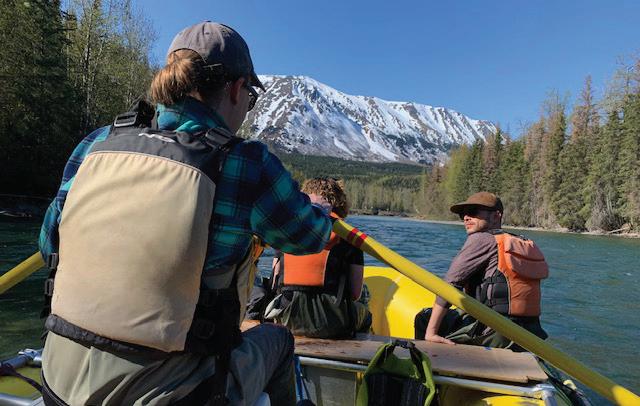
From Seward, motor north and hang a left onto the Sterling Hwy. This road takes you to Cooper Landing, where you can book rafting and fishing trips on the turquoise waters of the Kenai River, led by professional guides. We recommend Alaska Wildland Adventures (https://www.alaskawildland.com) for these activities due to the outfitter’s commitment to LGBTQ diversity and inclusion.
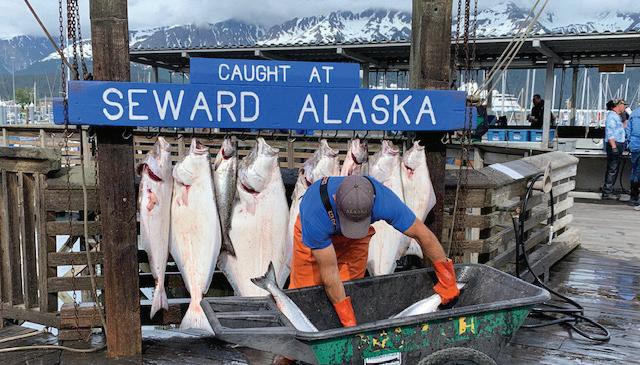
Along the Kenai River is where you’ll find anglers waist deep, hoping to reel in a sockeye salmon or rainbow trout. There are good hiking and mountain bike trails in this area too.
The Resurrection Pass Trail linking Cooper Landing to the gold-mining town of Hope is a two-day trek at the very least (be sure to book a cabin in advance at recreation.gov.)
The Cooper Landing area is also a good place to bunk down for the night, as it’s the halfway point between Anchorage and Homer; Alaska Wildland Adventures also operates three lodges and is the perfect host
for small groups. Some past guests include Presidents Jimmy Carter and Barack Obama. However, a huge highway construction project might make rooms scarce. Finish off your Kenai Peninsula experience by going all the way to the end of the road in Homer. This is a funky town with cute art galleries, interesting shops, and beautiful views of Kachemak Bay. Ferries and fishing boats leave from here, as do air tours to nearby islands and parks.
For example, you can take a day tour from Homer to Katmai National Park and Preserve, where you can see brown bears, up close, fattening up for the winter.
“…There’s a little six-foot-high waterfall that, during the month of July (the salmon run), bears stand on the lip of…, catching salmon as they swim upstream,” said retired NPS ranger Gary Bremen (https://www. thetravelingranger.com).
“People love the national parks for seeing wildlife, but that wildlife is often just a fleeting glimpse. At Katmai, you can stand for hours and watch the bears feed. You start to recognize their habits, and you can predict what they’ll do next. It’s absolutely extraordinary.”
Back in Home, the Spit — a four-mile road into the bay — is where all the tacky tourist traps are clustered, along with a campground typically packed with RVs and motorhomes. If you arrive in late June, the roadside is blossoming with purple lupine flowers.
Timing is important when planning your Alaska visit. The peak season runs from late May to early September, when the state truly becomes the home of the midnight sun. Alaska, Delta, and American Airlines all offer nonstop flights from Seattle to Anchorage.
For more information, discounts, and trip ideas, visit https://travelalaska.com.
John McDonald is a Queer Southern writer who has relocated to the Pacific Northwest. Listen to his podcast, Slice of Good Ol Boy Life, on Spotify.
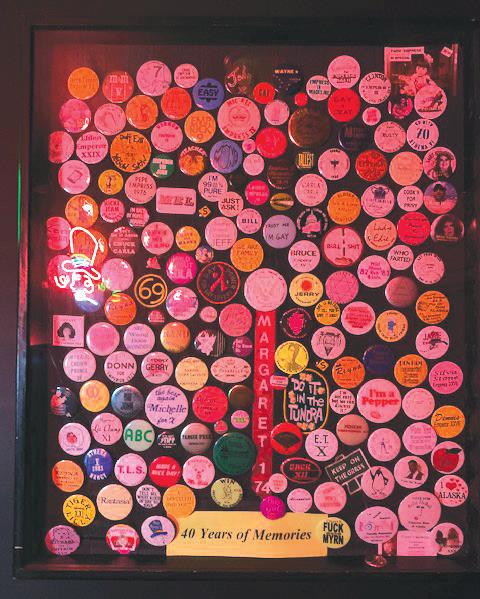
Mad Myrna’s memorabilia – All photos by John McDonald
Kenai Lake shimmers in the sunlight
Fish for dinner
Adventure awaits for LGBT travelers
Rafting with Alaska Wildland Adventures
Op-Ed
How to become a drag queen
Dear Izzy,
I’d really like to get into drag, but I’ve never done it, and I don’t know what the first steps are. I have a name and look, but where do I go from here? Is there a class for beginners I can take?
Dreaming of Drag
Dear Dreaming,
If you already have a name and a look, then you are already well on your way to reaching your dreams. Being a performer of any kind takes courage and passion, but in my opinion, drag queens are the bravest, most badass of people. So, bravo to you for wanting to use your creativity in this way!
According to Backstage, “the first step to becoming a drag queen is figuring out your personal concept, persona, and aesthetic in the privacy of your own bathroom or bedroom. Remember, drag can be any form of artistic expression that plays with gender stereotypes, so your goal does not necessarily need to be to realistically impersonate another gender.” Have you spent time on every detail of your look, makeup, hair, and costume?
Once you have perfected your ideal look and persona, it’s time to become familiar with the local drag scene. ‘“Go to the shows and watch the queens in your community,” says Lady Camden, who took second place on season 14 of RuPaul’s Drag Race. “Start by going out of drag, then maybe in drag when you feel more confident. Support the queens, get to know them, introduce yourself, and express your interest in performing. Be eager and excited and supportive — while being respectful — and let them get to know you.”’
Here are a few of the most popular bars and clubs in the Seattle area that host regular drag shows:
• The Comeback, 1950 First Ave. S., Seattle, WA 98134
• Julia’s on Broadway, 300 Broadway Ave. E., Seattle, WA 98102
• Kremwerk, 1809 Minor Ave., Seattle, WA 98101
• Pony, 1221 E. Madison St., Seattle WA 98122
• Queer Bar, 1518 11th Ave., Seattle, WA 98122
• Unicorn, 1118 E. Pike St., Seattle, WA 98122
Make the most of your time in the audience, watching veteran performers. “It’s important to learn from folks who have been doing this for a while, so watch the show with a critical eye and dissect what is working and what isn’t working, in a
by Isabel Mata SGN Staff Writer
Ask Izzy is a biweekly advice column about relationships, mental health, and sexuality. Written by Isabel Mata — a Seattle-based lifestyle writer, podcast host, and mental health advocate — Ask Izzy offers tangible expert advice so all readers can have stronger relationships, better sex, and healthier mindsets. Looking for some more guidance? Submit your question to info@sgn.org with the subject line: Ask Izzy Submission.
compassionate way,” said KaiKai Bee Michaels, a San Francisco drag queen, in an interview with Them
Once you have built up your confidence and are ready to step on stage, Lady Camden recommends finding a drag spot that you vibe with and offering your time and performance for free. “Be like, ‘Hey, I’ve never performed before. I’m looking for my first opportunity. Can I please perform for you and do a pop-up number for free?’” The worst they can do is say no! It doesn’t hurt to ask.
If all else fails, karaoke events and open mics are another way to practice your art in front of a live audience. A quick Google search of “open mic events Seattle” should do the trick.
Another tip is to follow your favorite local spots on social media to stay up to date on the happenings within the community.
Finally, to answer your question about a beginner’s class, City Academy, based in London, offers an online class called “Drag Up!” As well, popular drag queen Crayola routinely hosts online courses at their School of Drag — follow her on social media for the most up-to-date courses.
Last but not least, the famous RuPaul offers a masterclass on self-expression and authenticity. All are great options to grow your knowledge on the art of drag and performing.
The employee, who is not named in court documents, agreed to accept $20,000 and a promise for the company to update its policies in regards to retaliation, harassment, discrimination. and bullying.
The male employee was hired by the burger chain in 2020 and assigned to work at a Shake Shack in Oakland, California. There, he was subjected to constant harassment.
“The complainant, who was trained in San Francisco…, alleged that he was repeatedly misgendered by co-workers and that when he complained, management failed to take reasonable steps to correct the behavior,” his complaint reads.
According to court documents, the employee brought the issue to management, who told him repeatedly that “he would have to explain his gender to co-workers” rather than stepping in and correcting the discriminatory behavior. Company supervisors said it was his responsibility to convince his co-workers to stop harassing him.
Management’s failure to address the complainant’s concerns reportedly frustrated the worker to the point that he quit after only a month.
“California law prohibits intentional misgendering in the workplace,” Kevin Kish, California Civil Rights Department’s director, said in a press release. Washington state has similar anti-discrimination laws on the books.
“Intentional misgendering and other forms of discrimination based on gender identity and gender expression can be stressful and traumatic. CRD appreciates Shake Shack’s acknowledgement of its responsibility to provide a discriminationfree environment to its workforce,” he said.
When reached for comment, a Shake Shack spokesperson told TODAY.com that “creating a welcoming and fulfilling environment for all our employees and guests is critical. We are constantly taking steps to
National news highlights
by Daniel Lindsley SGN Staff Writer
Christian college cancels a capella performance over one member’s “lifestyle”
In Florida on Saturday, Pensacola Christian College announced that it had canceled the performance of a capella group The King’s Singers, over what it called concerns about one of its members’ “lifestyles.” The college later confirmed over Twitter that the cancelation was because “one of the artists openly maintained a lifestyle that contradicts Scripture.”
“It has become clear to us, from a flood of correspondence from students and members of the public, that these concerns related to the sexuality of members of our group,” the performers said in a statement.
Music, they said, should bring people together regardless of religious beliefs:
“This is the first time that anything other than bad weather, the pandemic, or war has caused a concert cancellation in our 55-year history. We hope that any conversations that follow might encourage a greater sense of love, acceptance, and inclusion.”
The school insisted, still, that the musicians were treated with respect.
from
LGBTQ rights go 2-1 in Virginia state legislature
The Virginia state legislature is one of many battlegrounds for LGBTQ rights, as in the last week alone, two progressive victories and one setback occurred in the capitol building in Richmond.
First, on Thursday, Senate Democrats defeated two bills targeting Trans students, one restricting their participation in school sports, and another that required officials to
notify parents if their child identifies as Trans.
“As we approach the end of a hardfought legislative session that saw two anti-Trans bills pass the floor of the House of Delegates, all bills targeting Trans and Nonbinary youth are official dead for the 2023 legislative session here in Virginia,” said Narissa Rahaman, executive director of Equality Virginia.
The next day, Republicans in the House of Delegates rejected a proposal to let vot-
ers decide through a referendum whether to amend the state constitution by removing language that prohibits same-sex marriage.
The panel voted 4-1 along party lines.
“It’s time to let the voters take action on this amendment — they and we have earned that right,” said Democratic Sen. Sam Ebbin, one of the resolution’s sponsors. Same-sex marriage was banned in Virginia via constitutional amendment in 2006.
Students
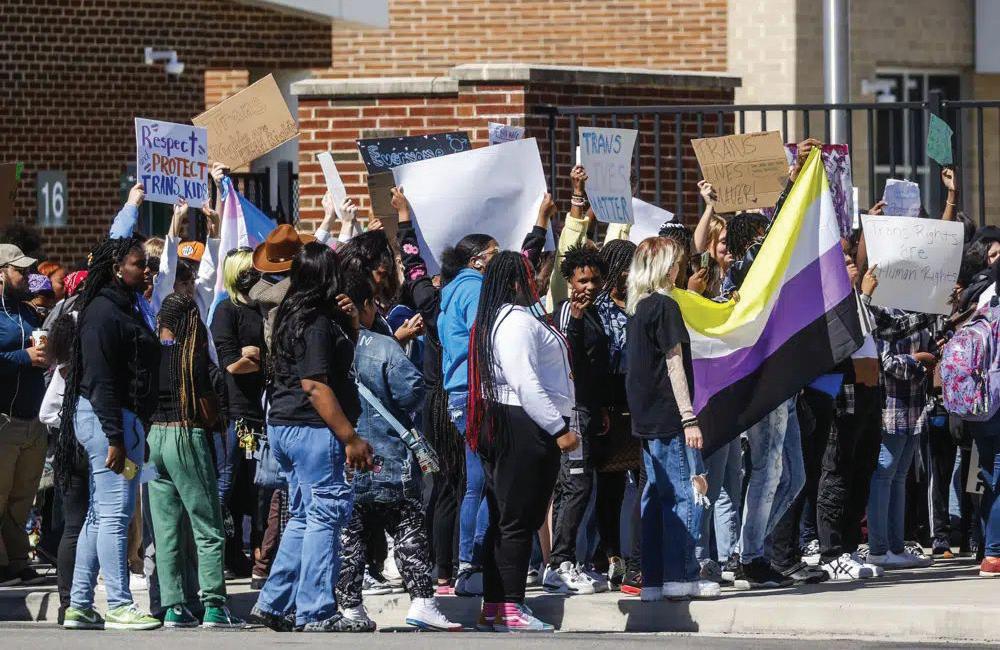
Henrico High School in Richmond, Va. hold a walkout in 2022 – Photo by Shaban Athuman / Richmond Times-Dispatch via AP
ensure our policies and culture reflect our commitment to diversity and inclusion in the workplace.”
According to a June 2022 report by One Fair Wage and the UC Berkeley Food
Labor Research Center, LGBTQ restaurant workers face higher levels of sexual harassment, homophobia, and transphobia than their non-LGBTQ peers, with 25% of LGBTQ people reporting discrimina-
tion based on sexual orientation or gender identity. Half of them also said it negatively impacted their work environment.
Photo by Andrew Kelly / Reuters
National/International News
Gay Congressman retires from politics
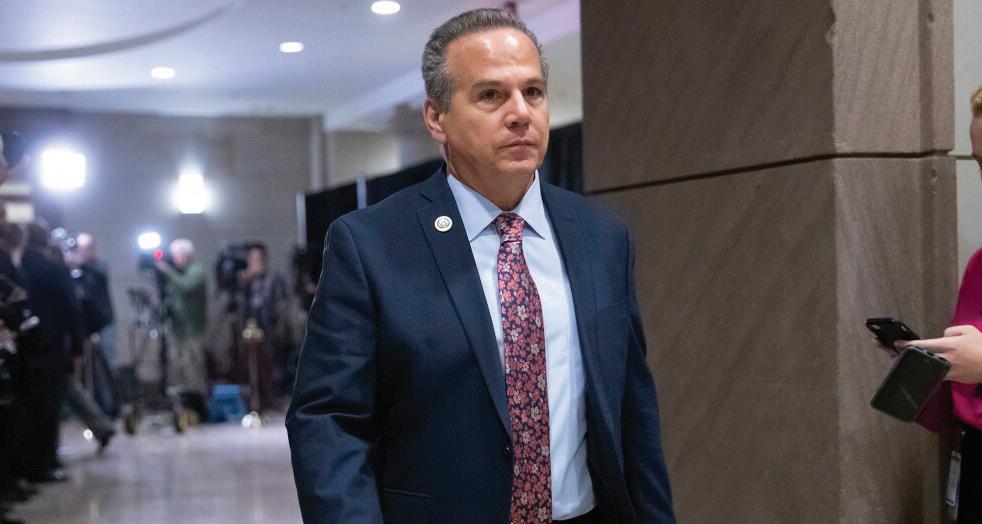
David Cicilline served six terms in the House
by Mike Andrew SGN Staff Writer
Rhode Island Rep. David Cicilline announced that he will retire from Congress effective June 1 to become president and CEO of the Rhode Island Foundation.
Cicilline has served in the US House of Representatives since 2010. Prior to that, he was a member of Rhode Island’s legislature and the first openly Gay mayor of Providence for two terms.
The Rhode Island Foundation is the state’s largest nonprofit, helping to fund dozens of smaller nonprofit social service organizations.
“Serving the people of Rhode Island’s 1st Congressional District has been the honor of my lifetime,” Cicilline said in a statement.
“As president and CEO of one of the largest and oldest community foundations in the nation, I look forward to expanding on the work I have led for nearly thirty years in helping to improve the lives of all Rhode Islanders.”
The foundation’s longtime CEO, Neil Steinberg, announced his intention to retire last year. Steinberg made the job one of the most influential positions in Rhode Island’s civic life. He congratulated Cicilline in a statement:
“I am thrilled with the choice of Rep. Cicilline as the next president and CEO of the foundation, having seen firsthand — over many years — his commitment to a better Rhode Island. He has the experience, the skills, the passion, and the network to ably lead the foundation.”
Cicilline did not say why he decided to leave Congress, but Steinberg earned over $1 million as foundation CEO last year.
International news highlights
by Daniel Lindsley SGN Staff Writer
Gay marriage legally recognized in South Korean court
At the end of a lawsuit that began in 2021, South Korean couple So Sung-wook and Kim Yong-min have won the country’s first legal recognition of same-sex marriage. On Tuesday, the Seoul High Court ruled that state health insurance should provide spousal coverage to the couple, overturning a lower court decision.
“We are delighted,” the couple said in a statement. “It is not only our victory but also a victory for many same-sex couples and LGBTQ families in Korea.”
According to their lawyer, Ryu Min-hee, the appellate court concluded that the spousal coverage system applied not just to families as defined by law, meaning that denying them coverage counted as discrimination.
“This is an important decision that moves South Korea closer to achieving marriage equality,” said Boram Jang, East Asia researcher for Amnesty International.
The National Health Insurance Service said it planned to appeal the decision, which would bring the case to the Supreme Court.
As mayor of Providence, Cicilline succeeded the notoriously corrupt Buddy Cianci, after the brief tenure of Acting Mayor John Lombardi, who took over when Cianci went to prison.
While he restored public confidence in the city administration, Cicilline still had to grapple with its financial problems. His first term in Congress was troubled by accusations of mismanagement in his previous terms as mayor, as Providence slid into financial crisis after his departure.
In Congress, Cicilline was often described
as a “rising star.” He ended up as chair of the Democrats’ Policy and Communications Committee, after an unsuccessful run for assistant Democratic leader.
Cicilline’s first run for Congress was challenging, but in subsequent elections, he outpolled his opponents by 40 or more percentage points. His unexpected departure from Congress leaves an opening for other Rhode Island politicians, and, predictably, there are at least five prominent contenders for the seat.
“I expect a very crowded Democratic primary field,” said TV political analyst
Joe Fleming. “It’s not very often in Rhode Island a congressional seat opens up, and I think a lot of Democrats are going to really take a strong look at this and decide if it’s feasible for them to run.
“It’s going to be a special election and special Democratic primary, so it’s going to be about name recognition and raising a lot of money to get the voters out,” he added.
Cicilline’s seat is in a reliably Democratic district, so the outcome will not change the balance of power in the US House.
Cops, gangs use Grindr for stings, extortion in Middle East
Human Rights Watch (HRW) has published a report showing that government officials in several Middle Eastern and North African countries have been using social media and dating apps to target LGBTQ people with extortion, harassment, detainment, and public outings.
The report contains dozens of cases from security agencies in Egypt, Jordan, Lebanon, Iraq, and Tunisia, which used
LGBTQ persons’ activity on Facebook, Instagram, and Grindr. Major tech companies, the report said, are on the hook for not investing enough in Arabic-language content moderation and protection.
“This type of social media frenzy really had implications on people’s lives,” said Rasha Younes, senior researcher with the LGBTQ Rights Program at HRW.
In one case, 27-year-old Yazid from Egypt said he was arrested and detained, then beaten until he would sign papers
that said he was “practicing debauchery.” According to Yazid, one of the officers impersonated a Gay man he met on Grindr. Other LGBTQ people in the report were extorted by private individuals and gangs, who threatened to out them to their families and the authorities if not paid. Many of the victims lost their jobs, Younes said, on top of the mental health consequences they suffered.
Participants wave rainbow flags during the Korea Queer Festival 2022 – Photo by Heo Ran / Reuters
Rep. David Cicilline – Photo by J. Scott Applewhite / AP
Episode 50: Diana Krishna
Ash & Lindsey discuss the New York Times controversy, surviving winter in the Emerald City, and declare the "official" bird of the LGBTQIA+ community. Special guest Diana Krishna shares the struggles she's faced as a Trans woman in the United States, her inspiration for joining community activists, and the upcoming Miss Island Goddess Pageant with UTOPIA Washington. For more information or to buy tickets, go to www.utopiawa.org
NEW EPISODES WEEKLY! FIND RADIO SGN WHEREVER YOU LISTEN TO PODCASTS!