


by Mike Andrew SGN Staff Writer
The Trump administration is moving decisively to dismantle all Obama-era policies supporting LGBT health care.
First, Trump’s Department of Health and Human Services (HHS) discontinued LGBTrelated health data collection, which provided a window into health status and discrimina-
see LGBT HEALTH page 13
by Mike Andrew SGN Staff Writer
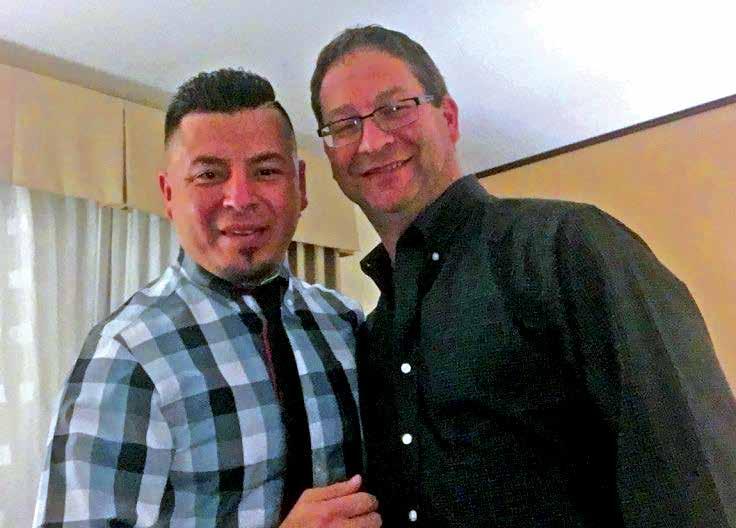
Immigration and Customs Enforcement (ICE) agents arrested a Gay man at his citizenship hearing in spite of the fact that he is
legally married to a US citizen. José “Ivan” Núñez, was detained by ICE after a hearing at the Philadelphia office of US Citizenship and Immigration Services
see ICE page 13

“Right now, for too many students in Rainier Beach and on Lake City Way and other parts of our city, getting to school or work means an unsafe trip or a long walk in the cold and rain. This is wrong. Here’s what is right: that each student in Seattle has access to affordable, reliable transportation.
“Councilmembers Rob Johnson and Mike O’Brien and others have worked to give free ORCA passes to young people. And last summer, King County Executive Dow Constantine launched a successful 50-cent youth fare pilot throughout the county. Let’s make that better. By this
see STATE OF THE CITY page 10

by SPJWash Board of Directors Special to the SGN
The Washington State Legislature is attempting to pass an emergency bill that essentially renders it impossible for report-
ers to ever appeal secrecy by our elected officials. Sens. Sharon Nelson and Mark Schoesler presented their case in Olympia Thursday to the dismay of professional
see SPJWASH page 11








®















Before starting TRUVADA for PrEP:
• You must be HIV-1 negative. You must get tested to make sure that you do not already have HIV-1. Do not take TRUVADA for PrEP to reduce the risk of getting HIV-1 unless you are confirmed to be HIV-1 negative.
• Many HIV-1 tests can miss HIV-1 infection in a person who has recently become infected. Symptoms of new HIV-1 infection include flu-like symptoms, tiredness, fever, joint or muscle aches, headache, sore throat, vomiting, diarrhea, rash, night sweats, and/or enlarged lymph nodes in the neck or groin. Tell your healthcare provider if you have had a flu-like illness within the last month before starting TRUVADA for PrEP.
While taking TRUVADA for PrEP:
• You must continue to use safer sex practices. Just taking TRUVADA for PrEP may not keep you from getting HIV-1.
• You must stay HIV-negative to keep taking TRUVADA for PrEP. Get tested for HIV-1 at least every 3 months while taking TRUVADA for PrEP. Tell your healthcare provider right away if you think you were exposed to HIV-1 or have a flu-like illness while taking TRUVADA for PrEP.
• If you do become HIV-1 positive, you need more medicine than TRUVADA alone to treat HIV-1. If you have HIV-1 and take only TRUVADA, your HIV-1 may become harder to treat over time.
• See the “How To Further Reduce Your Risk” section for more information.
TRUVADA may cause serious side effects, including:
• Worsening of hepatitis B (HBV) infection. TRUVADA is not approved to treat HBV. If you have HBV, your HBV may suddenly get worse if you stop taking TRUVADA. Do not stop taking TRUVADA without first talking to your healthcare provider, as they will need to check your health regularly for several months.
TRUVADA for PrEP is a prescription medicine used together with safer sex practices to help reduce the risk of getting HIV-1 through sex. This use is only for HIV-negative adults who are at high risk of getting HIV-1.
• To help determine your risk of getting HIV-1, talk openly with your healthcare provider about your sexual health.
Do NOT take TRUVADA for PrEP if you:
• Already have HIV-1 infection or if you do not know your HIV-1 status.
• Take certain medicines to treat hepatitis B infection.
• Take 1 tablet once a day, every day, not just when you think you have been exposed to HIV-1.
• Do not miss any doses. Missing doses may increase your risk of getting HIV-1 infection.
• Use TRUVADA for PrEP together with condoms and safer sex practices.
• Get tested for HIV-1 at least every 3 months. You must stay HIV-negative to keep taking TRUVADA for PrEP.
This is only a brief summary of important information about taking TRUVADA for PrEPTM (pre-exposure prophylaxis) to help reduce the risk of getting HIV-1 infection. This does not replace talking to your healthcare provider about your medicine.
TRUVADA can cause serious side effects, including:
• Those in the “Most Important Information About TRUVADA for PrEP” section.
• New or worse kidney problems, including kidney failure.
• Too much lactic acid in your blood (lactic acidosis), which is a serious but rare medical emergency that can lead to death. Tell your healthcare provider right away if you get these symptoms: weakness or being more tired than usual, unusual muscle pain, being short of breath or fast breathing, stomach pain with nausea and vomiting, cold or blue hands and feet, feel dizzy or lightheaded, or a fast or abnormal heartbeat.
• Severe liver problems, which in rare cases can lead to death. Tell your healthcare provider right away if you get these symptoms: skin or the white part of your eyes turns yellow, dark “tea-colored” urine, light-colored stools, loss of appetite for several days or longer, nausea, or stomach-area pain.
• Bone problems.
Common side effects in people taking TRUVADA for PrEP include stomach-area (abdomen) pain, headache, and decreased weight. These are not all the possible side effects of TRUVADA. Tell your healthcare provider right away if you have any new symptoms while taking TRUVADA for PrEP.
Your healthcare provider will need to do tests to monitor your health before and during treatment with TRUVADA for PrEP.
Tell your healthcare provider if you:
• Have or have had any kidney, bone, or liver problems, including hepatitis.
• Have any other medical conditions.
• Are pregnant or plan to become pregnant.
• Are breastfeeding (nursing) or plan to breastfeed. Do not breastfeed. If you become HIV-positive, HIV can pass to the baby in breast milk.
Tell your healthcare provider about all the medicines you take:
• Keep a list that includes all prescription and over-the-counter medicines, vitamins, and herbal supplements, and show it to your healthcare provider and pharmacist.
• Ask your healthcare provider or pharmacist about medicines that should not be taken with TRUVADA for PrEP.
• Know your HIV status and the HIV status of your partners.
• Get tested for other sexually transmitted infections. Other infections make it easier for HIV to infect you.
• Get information and support to help reduce risky sexual behavior, such as having fewer sex partners.
• Do not share needles or personal items that can have blood or body fluids on them.
• This is only a brief summary of important information about TRUVADA for PrEP. Talk to your healthcare provider or pharmacist to learn more, including how to prevent HIV infection.
• Go to start.truvada.com or call 1-800-GILEAD-5
• If you need help paying for your medicine, visit start.truvada.com for program information.




Dear Roger:
I first met you, more than 25 years ago, at a Seattle local meeting of the Black and White Men Together group.
Through you, I was introduced to the Red Cedar Circle, a spiritual gathering lead by Johnny Moses, a Native American story teller. Thank you.
We lost touch for a number of years, and re-connected, most often via e-mail, through your living in your last Capitol Hill apartment.
You had an intense interest in genealogy, keeping a vast pile of documents and communications with far-flung relatives, and librarians.
Primarily you focused on the Janvier (January) family (of Huguenot descent) who came to America, from France, in 1682. I knew about the documents because I often formatted and cleaned up the scans for you. You’re welcome.
You also were deeply concerned about racial and sexual orientation equality and legal protections. Thank you.
You often offered helpful advice for all your friends, whether requested or not. This was not a flaw.
The last years of your life were spent dealing with diabetes, and your growing loss of vision.
You were devoted to your dogs, Gray and Cognac, as is obvious from the photo I’m posting, which I took on May 26, 2015.
Your friend, Demian
PS – Roger, to find your missing files, click on the “Ctrl “and “E” keys at the same time. Search from that window.
by MK Scott SGN Contributing Writer
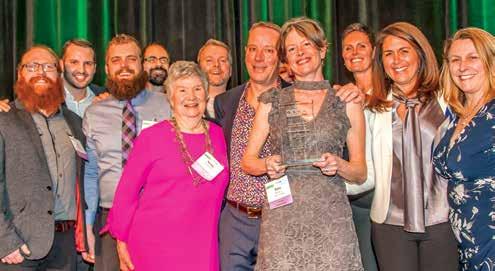
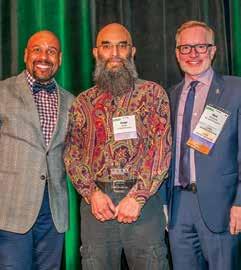
The wine was flowing, the food was delicious, and the sold-out room was packed at the 37th annual GSBA Business & Humanitarian Awards Dinner last Thursday, February 15 at the Seattle Marriott Waterfront.
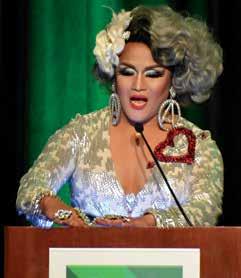
Followed by an incredible performance by Arnaldo! Drag Chanteuse, the awards ceremony began with host Gary Tucker, from the Pacific Northwest Ballet, introducing a variety of presenters.
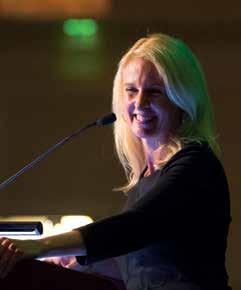
The event included special appearances by Governor Jay Inslee and Attorney General Bob Ferguson, and featured Keynote Speaker Jennifer Brown, an award-winning entrepreneur and diversity and inclusion expert, based in New York.
The highlight of the evening was the impassioned speech Aleksa Manila gave upon receiving the Community Leader of the Year award.
courtesy of MK Scott and Meryl Schenker Photography














SEATTLE – To help select a permanent Chief of Police to lead the Seattle Police Department, the City of Seattle is kicking off public outreach by launching an online Community Input Survey to allow Seattle residents to provide their input during
fall, we will put a free, year-round ORCA pass in the hands of every single one of the 15,000 high school students in Seattle Public Schools. We’ll do the same for our Seattle Promise scholars – so students can worry more about their grades and less about how they get places. So that working moms and dads can save some money each month and know their children are safe. It is the right thing to do. I look forward to working with our City Council to make this a reality for our students for years to come. The time is now. And we are making it happen….”
“Economic opportunity and fairness means we are going to keep protecting our workers through fair wages and fair rights. Seattle led the way on the $15 minimum
the search process. Seattle community members can visit http://www.seattle.gov/ policechiefsearch to complete the survey.
In the upcom ing weeks, a series of community events and workshops will be announced to allow Seattle residents to share their thoughts in person on the personal characteristics and professional experience that are most important for the individual leading our police.
“The next police chief must be able to lead our rank and file and be committed to an accountable, diverse police department focused on meaningful and lasting reforms and building trust in the community they serve,” said Mayor Jenny Durkan. “To find our next police chief, our Police Search Committee is committed to listening to all our residents, including those in communities that have the greatest distrust of police and the criminal justice system. The input
wage. Now, we need to lead the way on a Domestic Worker Bill of Rights, too. This year, I intend to work with Councilmember Teresa Mosqueda, employers, and others to make it a reality. The time for talk is over….”
“We must acknowledge that parts of our city do not feel safe and see too many young people taken by violence. All too often this is because of gun violence. We will NOT accept this. Seattle residents must be safe in their neighborhoods and in their homes. Our kids must be safe on the way to school and in their schools. Schools are meant for joy and learning, not lockdowns and mass shootings. Together we will fight for commonsense gun safety laws to protect our city, our neighborhoods, our schools, and our children….”
“We believe every person is born with dignity and promise, and deserves respect and real opportunity. That a person’s value is not based on your net worth. Or your
and leadership from Seattle neighborhoods and communities is critical to helping recruit the right chief, so I hope our residents will take this quick survey to ensure their voice heard.”
“The next police chief will be critical to the City’s ability to continue advancing critical public safety initiatives and police reforms, as well as continuing to build trust with historically underrepresented and overpoliced communities. Members of the Chief of Police Search Committee care deeply about the public safety and reform priorities of our community members. I strongly urge people from all backgrounds to complete this survey and tell us what you want to see in your next police chief,” said Councilmember M. Lorena González (Position 9, Citywide).
The 25-member Police Search Committee [comprises] of a broad range of commu-
country of birth. Or color of your skin. Or the gender of the person you love. We believe we are all better off when prosperity is shared, and is not just for the few. And we know that we are stronger when we are a truly inclusive place. Those are American – and Seattle – values. Seattle will stand up to be a safe and welcoming city – especially with Donald Trump as our president. Our immigrant and refugee neighbors believe in the promise of America – and we will deliver on that promise. All of our children should not just feel welcome here in our community, they should be given the chance to thrive here….”
“And unlike the other Washington, we believe in science and know climate change is real. We know that it’s hurting our economy, threatening this gorgeous place we love, and jeopardizing our children’s’ futures. Seattle has become a national leader in reducing carbon emissions, protect-
nity leaders, including many with extensive and unique experience in criminal justice reform and policing. Led by four co-chairs, this diverse search committee is leading a national search process to find the best candidate for Seattle’s next police chief and is working with a national search firm, Public Sector Search & Consulting, to gather and screen applications. Following the community engagement process, the Police Search Committee will conduct interviews with applicants, [and] the Search Committee will submit their recommendations to Mayor Durkan.
Courtesy of the Office of the Mayor
ing our environment, and boosting clean energy jobs. The City of Seattle is leading the way – we have one of the largest electric vehicles fleets in the entire country. But there is more we can – and must – do. That includes making sure our buildings are as green as possible. In the coming months, I’ll propose legislation to create a new, citywide pilot [program] to encourage the building of 20 of the most sustainable and efficient buildings. We’ll show it can be done on scale and create a new model for green cities. And we will not forget that the burdens of environmental disaster almost always fall on those who are most marginalized. True environmental progress means environmental justice and livable communities for people of color and for people who are struggling in our economy.”
Courtesy of the Office of the Mayor
by Mike Andrew SGN Staff Writer
“New Seasons will tell you everything you want to hear,” Terra Bosart warned. “But listen to their workers. Listen to the people who know what they’re like.”
New Seasons, a Portland-based grocery chain, is trying to break into the Seattle market, with one store open in Mercer Island, another almost ready to open in Ballard, and a third planned for 23rd and Union in Seattle’s Central District.
Bosart worked for the company for 12 years, until she was fired, she says, for trying to organize her fellow workers. Along with several other current and former New Seasons employees, she was in town recently to talk to Seattleites about working conditions there.
The company’s promotional materials describe it in glowing terms. A New Seasons store is “a happy place” where management is “firmly committed to environmental stewardship, to giving back to our community, and to providing a progressive workplace where our staff thrives,” the company website claims.
The reality is much different, Bosart

says, especially after New Seasons was acquired by Endeavour Capital, a venture capital outfit, in 2010. After former Starbucks exec Wendy Collie was installed as CEO in 2012, the company became even more corporate and started to crack down on employees.
“When I started [the glowing description] was true,” Bosart recalled. “There was a time when working for New Seasons was a badge of pride. No more. They kept saying the words but they didn’t deliver the reality.”
The situation became particularly bad for LGBT workers, Bosart says.
“I was asked to help facilitate trainings on transgender issues for managers
and staff,” Bosart says. “And management seemed genuinely pleased to know how to relate to their transgender employees.
“Later on, after Endeavour Capital came in, management became much more antagonistic. People noticed the difference in how management treats them.
“I think about it, and I’m so angry because of all our transgender employees who are now trapped in dead-end jobs where they’re never allowed to succeed because they’re different.”
Bosart’s colleague, Peter Szczepanek, added that Endeavour Capital has financial ties to Murdock Charitable Trust, which funds anti-LGBT groups, including one backing North Carolina’s anti-Trans legislation in 2016.
“I’m extremely disappointed,” Szczpanek said about New Seasons’ links to Murdock Trust. “No, I’m angry. Look, I’m bi. I moved from Michigan to be in a place where I could feel comfortable being who I am.
“To find out that their profits are funneled into homophobic hate groups… Anger, for sure.”
Szczepanek still works for New Seasons, and says that the company’s attempts to intimidate employees have
increased as in-store organizing has gained traction.
“It’s all scare tactics and bullying,” he says. “Most people are quietly supportive, but they don’t want to risk their jobs, so they feel they can’t be actively involved.”
In spite of the intimidation, employees have achieved some successes. The company recently agreed to raise base wages by 50 cents per hour and to provide paid parental leave.
Three complaints have also been filed with the National Labor Relations Board (NLRB), the federal agency charged with enforcing labor laws. One charges New Seasons with illegally firing Bosart. A second is based on the firing of another New Seasons worker, Adrian Mendoza. The third alleges that managers are interrogating and coercing workers to deter them from organizing.
Bosart, Szczpanek, and several other New Seasons workers appeared at a public forum at Casa Latina on February 22..
by Brian Hawker Commissoner Cascade Flag Football Association Special to the SGN
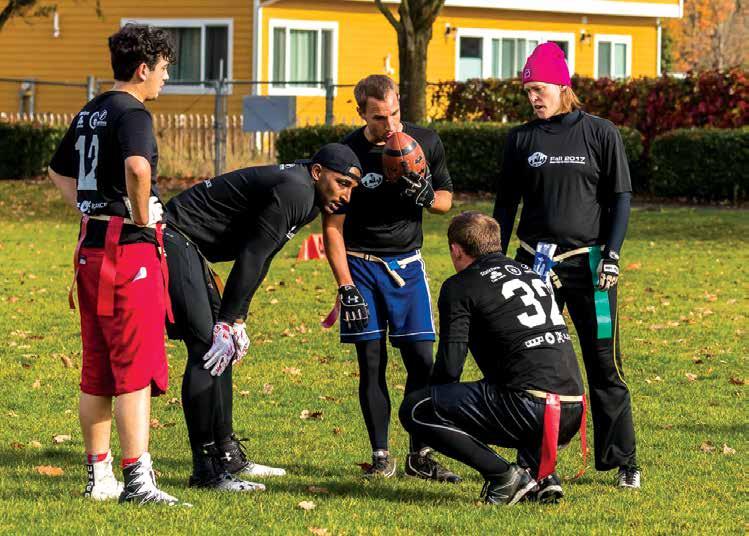
Registration for the Cascade Flag Football Association’s Spring 2018 season is now open through Friday, March 9. All players register as free agents and join teams through a blind draft, ensuring that each team has a good mix of skill, experience, and individual talents. For their fourth season of LGBTQA play, Cascade Flag Football is excited to bring its games to the Bobby Morris Playfield at Cal Anderson Park.
One of our goals from when we first started Cascade Flag Football in 2018 was to bring this fun, exciting, and competitive sport into the neighborhood that the majority of our players call home. By being in the heart of Capitol Hill we can exhibit the best of sportsmanship, skill, and community through a sport that has all too often been used to marginalize and demean LGBTQA individuals.
Give us a shot! We’re a community of players, referees, and fans, and think that regardless of what you bring to the field, you can find a new home with us.
Games for the Spring season will be on Saturdays, with preseason starting on March 25 and running through May 19. Regular season games will start at 7pm.
The league draft will happen on March 10, and teams will be announced later that same day.
On March 25 the league will host a Rookie Orientation, and on March 30 team jerseys will be handed out at the Jersey Party.
After the season closes on May 19, the league will host a Season Wrap Party and Awards Celebration on June 2. Times and
locations for all events will be announced later. Players can register at www. cascadeflagfootball.org Additional information can be found when people like our Facebook Page at www.facebook.com/cascadeflagfootball

Legendary local photographer Al Smith is being celebrated in an exhibition at the Museum of History and Industry. Join us for a local history discussion and see selections from more than 4,000 images not included in the museum exhibit. The discussion will take place on Tuesday, March 6 from 6pm to 7pm at the University Branch, 5009 Roosevelt Way N.E., 206-684-4063.
Presenters Stephanie Johnson-Toliver, Carol Peoples-Procter and Quin’Nita Cobbins will lead an open discussion and share stories around the history of how the black community and individuals contributed to the vitality of Seattle and the Northwest. They will also talk about what the Black Heritage Society of Washing-
ton State does to preserve and inform the public about this important local history. Library programs are free and open to the public. Registration is not required. Free parking is available in the branch parking lot.
This event is supported by The Seattle Public Library Foundation, author series sponsor Gary Kunis, media sponsor The Seattle Times and presented in partnership with Black Heritage Society of Washington. For more information, call the Library at 206-386-4636 or visit http://www.spl.org and select Ask a Librarian.
Courtesy of Seattle Public Library
journalism boards, including the Society of Professional Journalists Western Washington chapter, a group representing journalists from Tacoma to Bellingham.
“The Society of Professional Journalists Western Washington chapter urges lawmakers to vote ‘no’ on Senate Bill 6617,” the board said in a statement Thursday. “Passage of this bill would significantly harm Washington state journalists and the public’s right to know what goes on in their government. Furthermore, voters have a right to know what their elected officials are doing on public time.”
The bill would give the legislature the broad authority to decide what records they want to provide to the public, and to reporters. The bill allows elected officials to withhold any public record with no opportunity to appeal that decision in court. It would take an initiative to overturn this bill.
The Legislature is considering this bill after notifying the public less than 24 hours before announcing it to the public in a brazen move that silences opposition. The public was notified of the Thursday legislative work session on Wednesday after 4pm. The legislature intends to jam this bill through without meaningful public engagement or debate.
“Legislators clearly know this is bad policy and they’re trying to ram it through well after the cutoff for new bills last week,” the SPJ Western Washington board of directors said in their statement Thursday. “This is an abuse of process.”
The bill is retroactive, meaning that it would overturn a court case that journalists from Western Washington outlets won that would force public records laws to apply to the Legislature as well.
SPJ Western Washington joins the Washington Coalition for Open Government in opposing this bill.
“Please call and email your legislators to demand they vote NO on SB 6617, object to the abuse of process, and do everything in their power to kill it,” Washington Coalition for Open Government President Toby Nixon said. “And don’t hold back on your disgust.” This is a misguided slap in the face to all reporters and the public in Washington State.
SPJ Western Washington urges anyone who cares about government transparency to contact their elected officials today.




by Mike Andrew SGN Staff Writer
Renowned Catalan filmmaker Isabel Coixet will make a movie about Elisa Sánchez Loriga and Marcela Gracia Ibeas, a Lesbian couple married – unwittingly – by the Catholic Church in early 20th-century Spain.
Elisa, who used the name “Mario” at her wedding, and Marcela met and fell in love while living in A Coruña, Galicia, a region in northwestern Spain.
Because of family concerns about their relationship, Marcela was packed off to Madrid by her mother. Separated by hundreds of miles, both women studied to be schoolteachers.
On graduation, they were assigned to schools just a few miles apart in rural Galicia, and Elisa was able to walk to Marcela’s house every evening after classes.
At some point during this period, Marcela had sex with a man and became pregnant. The couple then decided to get married and raise the child as their own, and they hatched an elaborate plot to get a local priest to perform the ceremony.
First, they pretended that they had quarreled. Marcela announced that she was to marry Elisa’s cousin. Elisa then began to pose as “Mario,” a young man with family ties to A Coruña, but who said he’d been brought up in London by atheists.
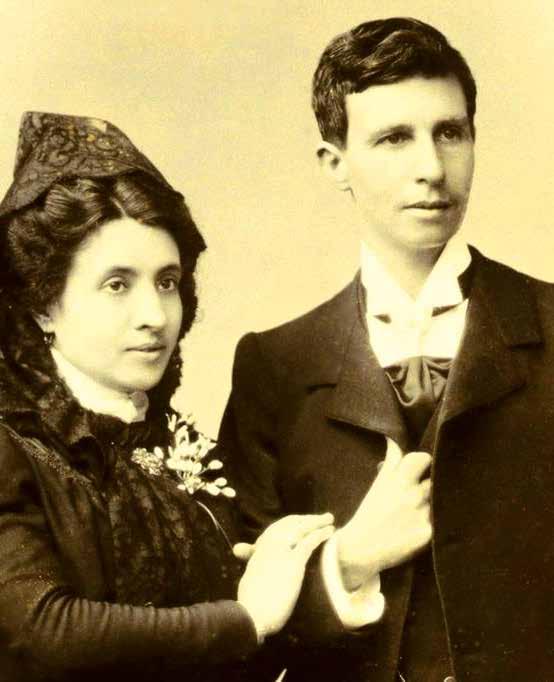
Posing in short hair and a morning suit as Mario, Elisa was duly baptized by the local priest and married to Marcela on the same day.
The couple did not live happily ever after, however. Their wedding portrait was published on the front page of the local newspaper, La Voz de Galicia, with the sensational headline “A wedding without a groom.”
The ensuing scandal made it impossible for Elisa and Marcela to make a living in Galicia, so they fled to Porto in Portugal, where Marcela gave birth to a daughter. Spanish authorities demanded their extradition, but the couple managed to escape to South
tion affecting the LGBT community.
“A lot of people think data are really boring. But data are fundamental, especially to public health,” said Kellan Baker, a researcher at the Johns Hopkins School of Public Health who worked with the HHS on LGBT issues for nearly a decade. “The only way to have the evidence you need to prioritize and spend wisely to address disparities is to have data about those disparities.”
The Trump administration swiftly froze a series of LGBT-friendly rules, including proposed new regulations to further ban discrimination in Medicare and Medicaid.
continued from cover
(USCIS), which was to recognize his legal marriage to Paul Frame, a US citizen.
Although USCIS did recognize Núñez’s marriage to Frame, Frame was ushered out of the hearing room and Núñez was arrested without his husband’s knowledge.
Núñez was charged with entering the US illegally in 2010.
A USCIS spokesperson told Pink News that it is “standard practice” for ICE agents
America, settling in Buenos Aires in 1902.
At one point Elisa married a wealthy Danish man, but he soon divorced her. In 1909 a newspaper story from Veracruz, Mexico, reported Elisa had committed suicide.
Spanish historian Narciso de Gabriel wrote a book about the couple on which
Coixet’s film will be based.
“When I think about these two women and the courage it took for one of them to pretend to be a man, it was unbelievably brave,” Coixet told the BBC.
“I was fascinated the first time I heard about the story, which almost raised more
questions than it has answers.
“We don’t know what happened to them in the end, and how did they think they would get away with it?”
Inmaculada Mujika Flores, a sociologist, psychologist, and director of the Bilbao-based LGBT association Aldarte, said the film offered a rare opportunity to make Lesbian relationships more visible.
“If this story had been about two gay men, I’m sure it would be better known,” she says. “We lesbians have virtually no role models in Spain among politicians, actresses, or artists.
“Even when there was repression under Franco, it was gay men who suffered, while we have always been invisible. Only when we started to protest in the 1980s did lesbians begin to exist in Spain.”
Mujika Flores says that the legal equality the LGBT community now enjoys in Spain helps to prevent the “pain of being a nonperson” experienced by Elisa and Marcela.
“But a law doesn’t automatically flick a society’s switch,” she warned. “There are still people who keep their sexuality secret, and others who marry, for example, but feel they cannot take the statutory leave from work due to embarrassment or a fear of being fired.”
Coixet said her intentions are not political.
“It’s true that there are very few stories about women in love. But this is not a manifesto,” she said. “For me it’s natural to write stories about women; then producers keep asking why.
“They never ask a male director why they want to make a film about Dunkirk. But I was asked, ‘Why do you want to make a film about two women who got married in Galicia in 1901?’
“Come on, that’s heroic, man!” Coixet recently completed the film The Bookshop, starring Emily Mortimer, Patricia Clarkson, and Bill Nighy.
A regulation that would have allowed Transgender HHS staff more protections when using the department’s bathrooms and other facilities also was ignored.
“It was signed and technically finished on Jan. 19, 2017, but not posted online,” said one staffer. “And the new administration considered it unpublished and pulled it back.”
The Trump administration also reinterpreted the ACA’s Section 1557 antidiscrimination mandate, with the White House declining to fight a court battle to enforce it and signaling that it would roll back the rule.
Then in January, the HHS established a new “religious liberty” division to defend health workers who have religious objections to treating LGBT patients.
to be notified if immigrants with deportation warrants are at USCIS offices, but Gonzalo Peralta, Núñez’s immigration attorney, said that it is rare for people to be arrested at immigration hearings.
Prior to the Trump administration, it was nearly unheard of for immigrants to be detained during proceedings, Peralta told Pink News
“You approve his marriage, but at the same time you’re trying to contact the very agency that would be in charge of trying to get him out of the country,” Peralta said.
“Prior to the Trump administration, we
The changes at the HHS represent “rapid destruction of so much of the progress on LGBT health,” Baker warned.
“It’s only a matter of time before all the gains made under the Obama administration are reversed under the Trump administration, for purposes that have nothing to do with public health and have everything to do with politics.”
This comes at a time when many LGBT individuals have less access to health care than their straight neighbors, according to a Health Affairs study conducted last year.
A Harvard-Robert Wood Johnson-NPR survey found that one in six LGBT individuals reported experiencing discrimination from doctors or at a clinic.
The policy reversals also come after
weren’t seeing very many people actually being sought and captured when they’re trying to go through these proceedings.
“It’s only been very recently, and with Ivan’s case that we’ve actually seen ICE go into USCIS offices.”
“I was trying to help him get a better life and move forward,” Frame explained.
“I had no doubt that morning that we were going to go in and come out and everything was going to be fine. I never thought that we were not going to be coming out together.”
He added that ICE’s tactics would likely
President Donald Trump repeatedly pledged during his campaign that he would support LGBT causes.
“Thank you to the LGBT community!” Trump tweeted in June 2016. “I will fight for you while Hillary brings in more people that will threaten your freedoms and beliefs.”
“The policies of the Trump administration are intended to improve the lives of all Americans, including the LGBTQ community,” White House principal deputy press secretary Raj Shah said in a statement.
“Through actions aimed at making health care more affordable, rolling back burdensome regulations, and combating the opioid crisis, the administration is working to ensure a healthier America.”
deter immigrants from attempting to go through the process legally.
“Who that is not legal is going to go through this process?” he asked. “I’d rather stay at home, and be safe and secure, and have him with me.”
Frame said he fears that if his husband is deported he will be killed because of his sexuality.
“That is the reason Ivan fled Mexico in the first place,” Frame said. “That’s his fear, that if he goes back to Mexico, that he’ll be killed for his sexuality.”