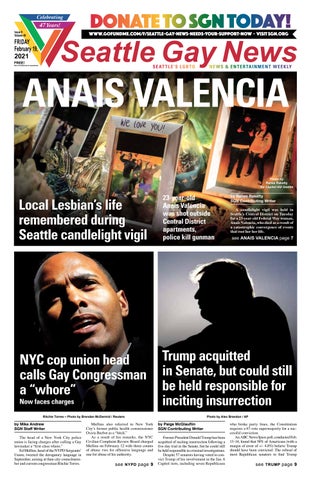
ANAIS VALENCIA
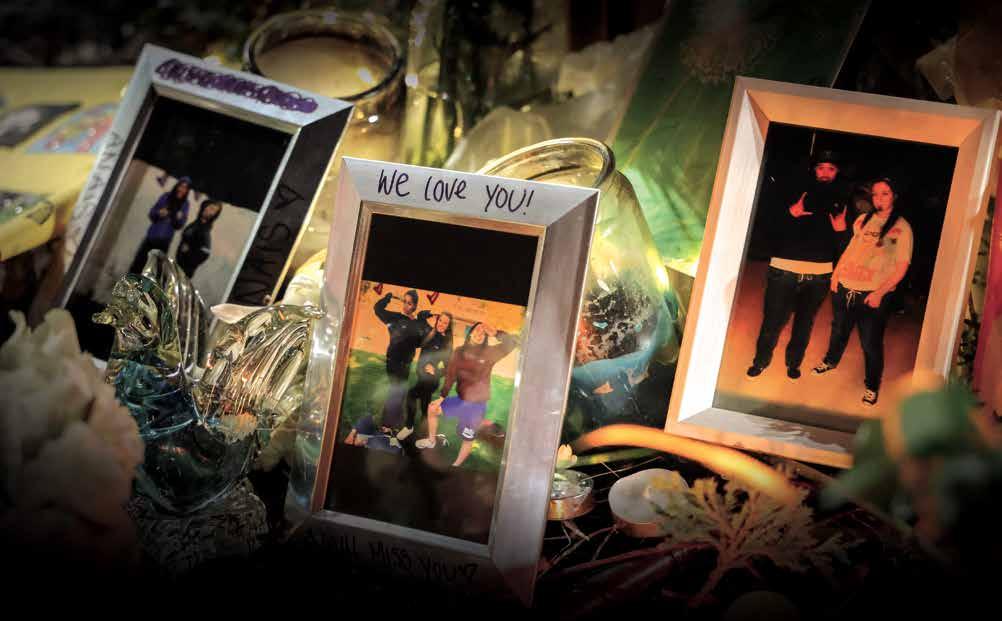
Local Lesbian’s life remembered during Seattle candlelight vigil
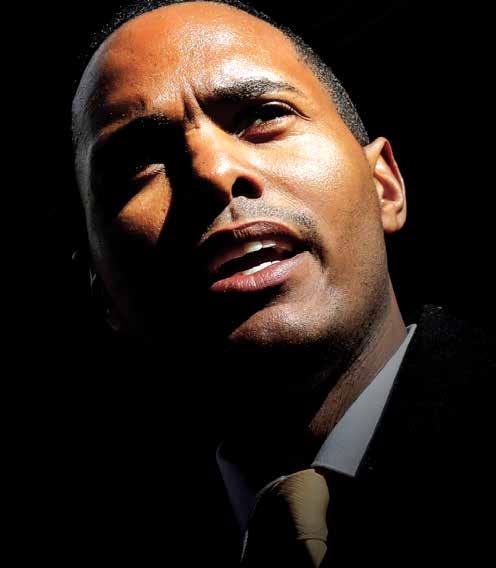
NYC cop union head calls Gay Congressman a “whore” Now faces charges
by Mike Andrew SGN Staff Writer
The head of a New York City police union is facing charges after calling a Gay lawmaker a “first-class whore.”
Ed Mullins, head of the NYPD Sergeants’ Union, tweeted the derogatory language in September, aiming at then-city councilmember and current congressman Ritchie Torres.
Mullins also referred to New York City’s former public health commissioner Oxiris Barbot as a “bitch.”
As a result of his remarks, the NYC Civilian Complaint Review Board charged Mullins on February 12 with three counts of abuse: two for offensive language and one for abuse of his authority.
23-year-old Anais Valencia was shot outside Central District apartments, police kill gunman
by Renee Raketty SGN Contributing Writer
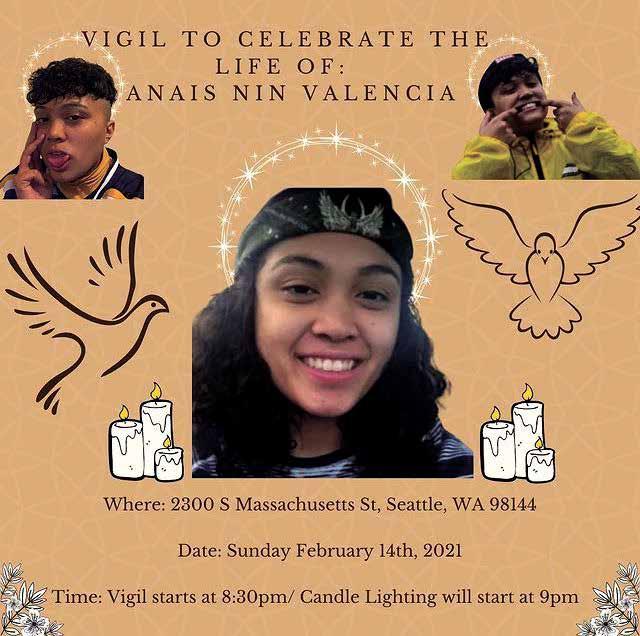
A candlelight vigil was held in Seattle’s Central District on Tuesday for a 23-year-old Federal Way woman, Anais Valencia, who died as a result of a catastrophic convergence of events that cost her her life.
see ANAIS VALENCIA page 7

Trump acquitted in Senate, but could still be held responsible for inciting insurrection
by Paige McGlauflin SGN Contributing Writer
Former President Donald Trump has been acquitted of inciting insurrection following a five-day trial in the Senate, but he could still be held responsible in criminal investigations.
who broke party lines, the Constitution requires a 67-vote supermajority for a successful conviction.
An ABC News/Ipsos poll, conducted Feb. 13–14, found that 58% of Americans (with a margin of error of +/- 4.8%) believe Trump should have been convicted. The refusal of most Republican senators to find Trump
see TRUMP page 9 see NYPD page 9
Despite 57 senators having voted to convict Trump of his involvement in the Jan. 6 Capitol riots, including seven Republicans
Photo by Alex Brandon / AP Ritchie Torres – Photo by Brendan McDermid / Reuters
Photo by Renee Raketty for Capitol Hill Seattle



THIS AD SPACE HAS BEEN GENEROUSLY DONATED BY KRISTIN COSTELLO IN MEMORY OF SGN PUBLISHER GEORGE BAKAN


Coronavirus Journal VIII: The quest for the COVID vaccine
by Jesse Monteagudo SGN Contributing Writer
The last time I wrote my coronavirus journal, it was still 2020, an “awful year” that I compared to Barbara W. Tuchman’s calamitous 14th century. When I wrote that essay, I realized that I was starting to repeat myself and that I could not continue writing this series without risking doing so more often. I vowed that that I would continue my journal if I (1) caught COVID-19 (perish the thought) or (2) acquired a COVID vaccine, which at the time was still being developed. Thankfully, not having had the virus invade my system (that I know of), I am writing about my experience taking a vaccine that could save my life.
At the time this was written, two COVID-19 vaccines were approved by the US Food and Drug Administration: the Pfizer-BioNTech vaccine (tozinameran) and the Moderna vaccine (mRNA-173). A third, Ad26.COV2.S, is now being developed by Johnson & Johnson.
After the vaccines were developed and approved, the next step was to distribute them to those who wanted them — in other words, practically everybody. Since demand vastly outpaced supply, government agencies had to decide who was going to get their shots first. Most agreed that health care personnel and long-term carefacility residents should get the vaccine first, which they did.
After that, vaccines were to be given to essential workers, senior citizens, and people with underlying conditions, depending on the state where they live. In Florida, Gov. Ron DeSantis decided, perhaps for political reasons, that essential workers are not as vulnerable as seniors and that preference be given to Floridians over 65, almost 4½ million people. This is where I came in. Like many of my friends, I am over 65 and thus eligible to receive the COVID-19 vaccine as soon as it is available. But when?

As supplies of the Pfizer and Moderna vaccines made their too-slow way into Florida (and other states), seniors who were mostly confined to their homes for almost a year did everything they could to get their liberating shots. They signed up for appointments online or by phone, queued for hours in the hot sun, and did everything short of highway robbery to get a vaccine. Though the powers that be promised that vaccine distribution would be fair, those seniors with more money and lighter skins were more likely to get their shots than those who were poorer and darker. In Palm Beach County, where Publix Supermarkets were given the exclusive right to administer the vaccine, seniors on the (mostly white) beachside communities near a Publix were more likely to get their shots than those who lived in the (mostly Black and Brown) western towns of South Bay, Belle Glade, and Pahokee near Lake Okeechobee.
As for me, I kept trying to get an appointment, by hook or crook, online or by phone. Not known for my patience, I bristled as my friends bragged on Facebook that they got their first or even their second shots.
However, as the Trump administration gave way to the Biden administration, more and more Pfizer and Moderna vaccines were manufactured and shipped to the various states. It was only a matter of time before I got a phone call from Broward Health, giving me the good news: Could I be at Broward Health North Hospital the next morning? Could I?! The next day I was up early, rearranged my schedule and drove across Broward County in quest of the Holy Grail.
Having heard horror stories about feeble seniors being stuck in their heated cars for most of the day, I took a book with me. Happily, my rendezvous with vaccine destiny was a more pleasant experience. After I parked my car at the hospital, I walked over to the building where the vaccine was being given. I gave the folks at the desk my name and other pertinent pieces of information, sat down with the other seniors, and filled out some more papers. Only a few minutes went by before I was summoned to go behind a screen, where a nurse was waiting to give me the first of two Pfizer vaccines.
With the vaccine in my system and my right arm bandaged, I was told to sit in the next room and wait 15 minutes in case I suffered a reaction. (This is where my book came in.) I was then sent home, where I did what everyone else does under similar circumstances: took a selfie and posted it on Facebook. (Excessive modesty is not one of my virtues.)
Having received my first vaccine, and written about it, I look forward to getting my second shot, while hoping that my friends who have not yet been vaccinated (including my boyfriend Ron, who is not yet 65) will soon get theirs. A new chapter begins!
Photo by Frank Augstein / AP
JESSE’S JOURNAL
Charlie Brydon, early LGBTQ rights leader, dies at 81
by Randy Beitel Special to the SGN
Charlie Brydon, an early LGBTQ rights leader, died February 9, 2021 at age 81 from complications of Alzheimer’s disease.
From the mid-1970s through the 1990s, Brydon tirelessly networked with political and community leaders in Seattle to establish the LGBTQ community as an important constituency group in the public fabric of Seattle. At key points, Brydon took leadership roles in obtaining anti-discrimination protections in Seattle, as well as defending against ballot initiatives in the late 1970s and mid-1990s that sought to repeal those protections.
Brydon also played a key role in organizing broad-based groups to further LGBTQ equality, resulting in organizations such as Seattle Municipal (now Metropolitan) Elections Committee (SEAMEC), the Greater Seattle Business Association (GSBA), the Northwest AIDS Foundation (later renamed Lifelong AIDS Alliance), and the Pride Foundation, as well as playing key roles in national organizations such as the National LGBTQ Task Force.
Born and raised in New Jersey, Brydon’s education included military prep school and college at the Citadel Military College, after which he enlisted in the US Army, serving in Vietnam, where he was awarded two Bronze Stars as an intelligence security officer.
Upon moving to Seattle in 1974, Brydon was determined to avoid the ideological battles he had seen elsewhere, preferring to build broad-based coalitions to accomplish specific goals for the LGBTQ community at large. Brydon was a master at networking and was soon taking officials on tours of Gay bars and holding luncheons where city officials got to know LGBTQ folks. Soon Mayor Wes Uhlman was a guest at one of the luncheons.
When Uhlman faced a recall effort in 1975, Brydon organized a fundraiser in the LGBTQ community for his campaign. Shortly thereafter, the luncheons were being held monthly, and Brydon and Pam Weeks of the Lesbian Resource Center incorporated the Dorian Group to focus on obtaining and defending LGBTQ civil rights. With Mayor Uhlman’s support, the City Council banned housing discrimination on the basis of sexual orientation in 1975.
In 1977, Brydon was instrumental in getting Mayor Uhlman for the first time to proclaim Seattle Gay Pride Week. In another first, in March 1977 Brydon was one of 14 Gay and Lesbian leaders invited to the White House to meet with President Carter’s staff regarding LGBTQ issues, where he, as a decorated veteran, advocated that the Pentagon end discrimination against Gays and Lesbians.
Also in 1977, Brydon was a driving force behind organizing SEAMEC to interview and rate candidates based on their stands on LGBTQ issues and to register voters in the LGBTQ community; SEAMEC is still active today.
Anti-LGBTQ groups twice attempted to roll back advances in LGBTQ equality, and each time Brydon played a key role in their defeat. As part of a nationwide wave of ballot measures in 1977 and 1978, inspired by Anita Bryant, Initiative 13 was put on the fall 1978 ballot to repeal Seattle ordinances prohibiting anti-LGBTQ discrimination. Brydon quickly put together Citizens to Retain Fair Employment (CRFE), a broadbased organization of political and community leaders, from within and without the LGBTQ community. CRFE was responsible for the bulk of the fundraising and polling as well as media messaging for the campaign. Initiative 13 was soundly defeated, winning in all of the quadrants of the city.
The defeat of the anti-LGBTQ measure in Seattle had national significance, because in all of the other cities, the anti-LGBTQ measures had passed by wide margins. The Seattle victory started to turn the tide on the wave of anti-LGBTQ ballot issues across the country and provided a model of how to launch a broad-based community effort to turn back the forces of bigotry.
Despite their resounding defeat in 1978, in 1994 the forces against LGBTQ equality made another attempt. An Oregon group led by Lon Mabon attempted a statewide initia-
tive in Washington to roll back and restrict LGBTQ rights. Brydon was the key leader in putting together Hands Off Washington, a broad-based organization to fight the initiative. With 22 chapters in cities all across Washington, Hands Off Washington was the first truly statewide LGBTQ rights organization, raising over $1 million to fund a media campaign to convince Washington voters not to sign the anti-LGBTQ initiative petitions. [Editor’s note: Bigot Busters independently conducted high-profile, on-theground, rapid-response voter education to
dissuade voters from signing the petitions. Anti-LGBTQ forces failed to get the necessary signatures, both in 1994 and 1995.]
In 1979 Brydon turned his attention full-time to national LGBTQ efforts, serving for two years as co-executive director of the National Gay Task Force (now renamed the National LGBTQ Task Force) in New York City. At the Task Force, Brydon focused on efforts to get the American Psychiatric Association to end its classification of homosexuality as a mental illness and get the federal government to end its ban on employing Gay and Lesbian people.
Preferring to be a citizen activist rather than a paid staffer, in 1981 Brydon returned to Seattle and opened his own insurance agency. As the owner of a small business, Brydon saw a need for an organization for LGBTQ business owners and professionals, and he helped found the GSBA.
In a letter to the GSBA membership on Brydon’s passing, Louise Chernin, the recently retired long-time CEO of the GSBA said: “A founder of most of our early LGBTQ organizations and leader in the fight for LGBTQ equality. Charlie Brydon is considered to be the ffather of the LGBTQ civil rights movement’ in Washington State. …Whether you knew him or not, your life has forever been changed because Charlie Brydon spent most of his adult life fighting for LGBTQ equality.”
In 1997 Governor Gary Locke appointed Brydon to the Washington State Liquor Control Board and in 2000 appointed him to the Washington Board of Tax Appeals. After his retirement in 2005, Brydon served for many years on the King County Board of Appeals and Equalization.
In 2018, when Brydon’s health started to decline, he moved to Oakland, CA, to live with his niece and her wife and their children. Brydon will be inurned at Lakeview Cemetery, next to his longtime spouse, David White, who died of AIDS in 2003.
Memorial donations may be made in Charlie Brydon’s name to the GSBA Scholarship Fund.
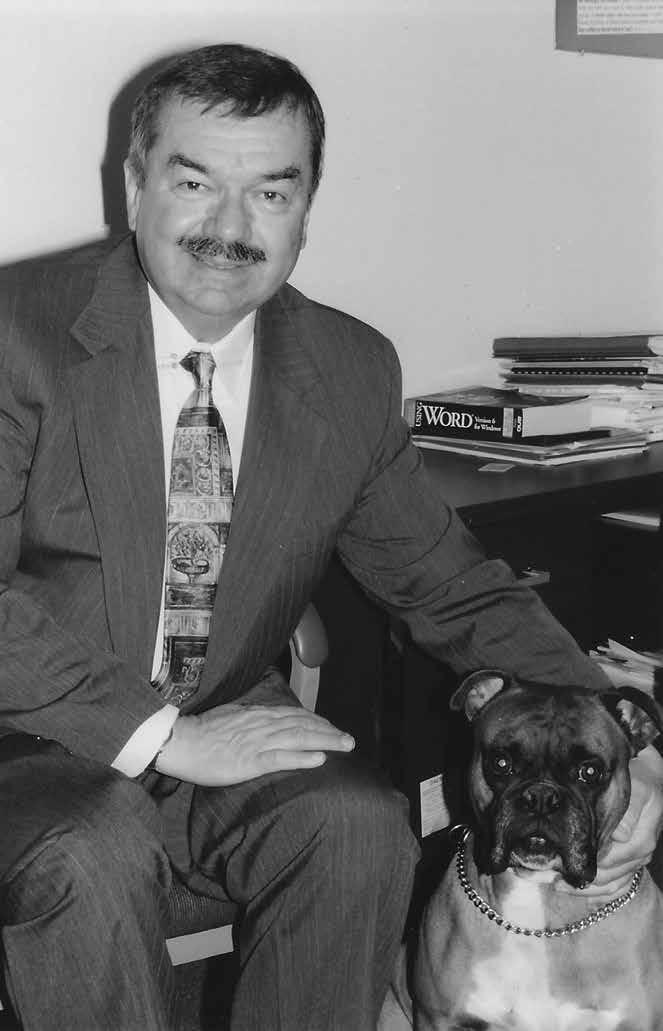
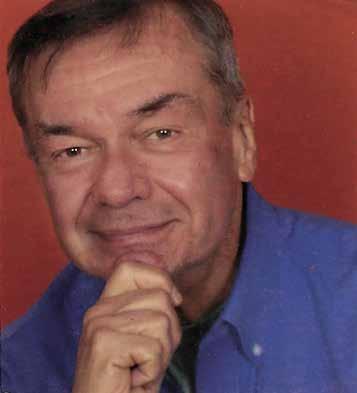
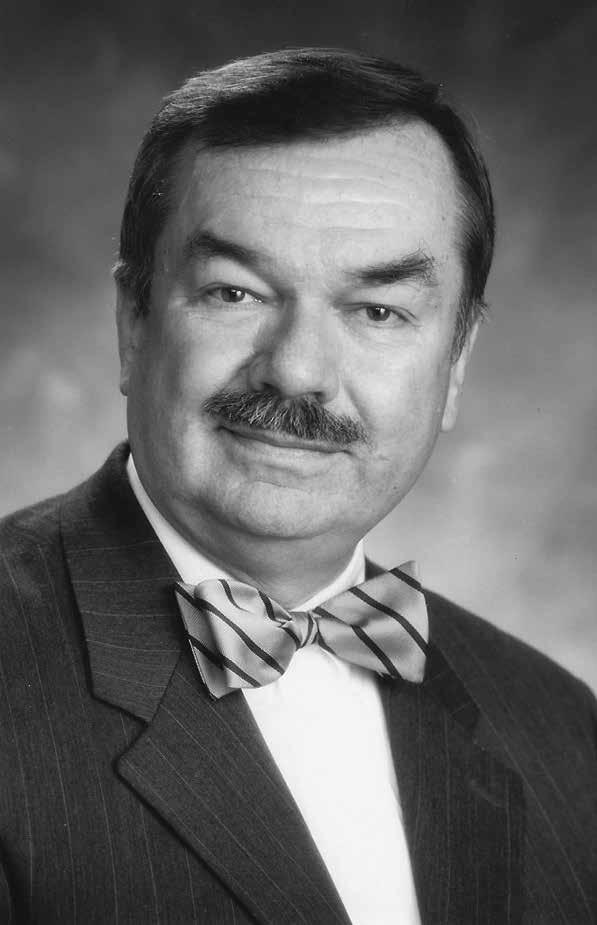
Charlie Brydon – Photo courtesy of The Brydon Family
Charlie Brydon – Photos courtesy of The Brydon Family
by Janice Athill SGN Contributing Writer
What began as Negro History Week in 1929 has blossomed into Black History Month. Over the last 92 years, this has provided schoolchildren, teachers, and other adults with information that would have otherwise gone unknown to them. People like Martin Luther King Jr., Rosa Parks, George Washington Carver, and Jackie Robinson continue to be household names for their contributions to the advancement of the Black community.
Unfortunately, the week that grew into a month is still too little time to focus on all the contributions, and some names are not as remembered as they should be. Time crunches have led educators to decide which individuals are the most important to discuss. This has caused a disconnect in Black history education across school districts and communities.
A very prominent name in the Black community is Madam C.J. Walker. Born Sarah Breedlove in 1867, she is credited as America’s first self-made millionaire, although her net worth was valued at only $600,000 by the time she died. She built a line of hair care products that lifted herself and the women she employed out of poverty and helped establish modern beauty standards. These are amazing accomplishments that deserve to be recognized.
However, it is disheartening to realize that the stories of other hard-working Black women who gave Madam C.J. Walker her start have been lost to history for many in our communities.
History: Big enough for all of us OBITUARY
help her sell her products door to door. She had also arrived just in time for the 1904 St. Louis World Fair, where she received positive reviews that helped take her business national.
During this time, one of her employees was Sarah Breedlove, soon to be well known as Madam C.J. Walker. Walker was a former washwoman who studied under Turnbo, and she went on to produce a similar line of hair care products after a disagreement between them. Walker also ran her business similarly to Turnbo’s, and although she is known as “the most successful Black entrepreneur of the early 20th century and founder of the Black beauty business in the United States,” historians acknowledge Turnbo as the first to develop her products and the door-to-door distribution system. To avoid confusion between her and Walker’s products, Turnbo trademarked Poro as the new name for her product and merchandising systems in 1906.
In 1916 Turnbo married Aaron E. Malone, and by the end of World War I, she was a millionaire. Together the couple manufactured hair care products — but they also provided a way for Black women to improve themselves during a time with few career opportunities.
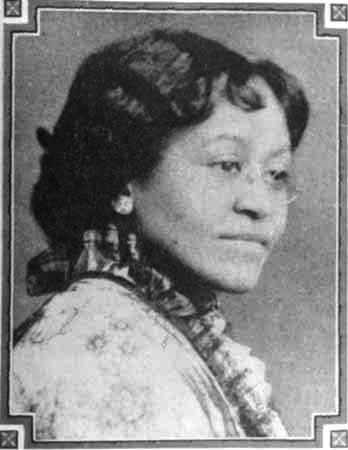
For example, Annie Turnbo Malone, born Annie Minerva Turnbo on August 9, 1869, in Metropolis, Ill., was a chemist, entrepreneur, philanthropist, and inventor who is also credited as one of America’s first millionaires. She developed a chemical that could straighten Black hair with less damage to the scalp than its predecessors, and she holds the patent for the pressing comb. She created a hair care line for Black women that catered to the needs of their straightened hair, which included Wonderful Hair Grower, one of the most popular items in her storefront.
Correction: Drew Griffin
In 1902 Turnbo moved her business to St. Louis, and although she was denied access to regular distribution methods, this motivated Black woman hired assistants to
In 1928 she built Poro College in St. Louis, which included a training center and facilities for many other functions Blacks were excluded from at the time. Valued at more than $1 million, the campus included classrooms, barber shops, laboratories, an auditorium, dining facilities, a theater, a gymnasium, a chapel, and a rooftop garden. The facility housed local and national organizations, and the training center provided cosmetology and sales training that taught students how to walk, talk, and behave in social situations.
Despite her wealth, valued at around $14 million by 1920 (a year after Walker’s death), Malone lived a conservative lifestyle, giving away much of her fortune to help the Black community. Considered one of America’s first major black philanthropists, she made what were the largest contributions at the time by a member of the Black community: $25,000 to Howard University Medical School, as well as the same amount to help build the St. Louis Colored YWCA. She made contributions to the Tuskegee Institute and several orphanages, including the St. Louis Colored Orphans Home. Malone educated her nieces and nephews, bought homes for her brothers and sister, and awarded her employees with expensive anniversary gifts, as well as incentives for attendance and punctuality. By 1926 Poro College employed 175 people; however, Malone’s international franchises in Africa, the Philippines, and North and South America employed over 75,000 women.
Annie Turnbo Malone was a prolific businesswoman and devoted philanthropist who proved that using your wealth to educate and uplift your community is mutually beneficial. Although Annie Malone and Madam C.J. Walker are both responsible for the whitewashing of Black women, their hair, and their personalities, what these two women did was the most logical path to acceptance at the time — we had to be accepted as a reflection of the white persona before we could be accepted as ourselves. However, despite their hard work and the opportunities they provided Black women and their families in the early 1900s, this was ultimately detrimental to the advancement of Black women in society and led to future struggles for the acceptance of the unaltered Black woman, natural Black hair, and unfiltered personalities. That being said, we would not have come this far without Annie Malone and Madam C.J. Walker.
Annie Malone – Photo courtesy of The Inquisitive Anthropologist
In last week's tribute to Drew Griffin, we neglected to add the 'by line'. The tribute was penned by Mac S. McGregor. We regret the error.
You Have a Right To Use the Toilet
To the Editor:
For several years, numerous Seattle businesses, including Capitol Hill’s two Kroger Foods chain QFCs in Seattle, have operated in violation of ADA (Americans with Disabilities) laws by refusing and/or not providing customer restroom facilities. Some QFCs have been told by their managers, “If it’s a mother with a baby we’ll let them use our private bathrooms or if they’re well-dressed,” they can use our bathrooms.
The Seattle stores are echoing the same story [as when] Kroger attorneys ordered the bar stools out of the stores so people can’t eat there, therefore they’re immune to providing restrooms. The Pike Street (Capitol Hill, Seattle) Kroger store, tells its customers to go across the street and use the Starbucks toilets. The Republican and Broadway store sends everybody to the public library at the rear entrance of the store. QFC/Kroger has no problem burdening Starbucks and the Public Library with their customers. It is an undue burden on other businesses caused by QFC/Kroger’s neglect and arbitrary decision making.
Under RCW 7.48 clearly QFC/Kroger is causing a public nuisance. I, and others, have pleaded with QFC/Kroger to open the bathrooms and have explained the laws that they intentionally neglect. They are now claiming that the King County Health Department has allowed them to close the bathrooms because they took the stools
To

away from the coffee stands.
Recently, Seattle’s downtown Whole Foods is [telling] elderly customers who walk in the store who need to use the bathroom before shopping [that] they must buy something first. They can only use the bathroom if they have a code that appears on their receipt. At certain times of the day, the checkout lines take too long (upwards of 10-20 minutes).
It is a growing trend for a number of Seattle businesses to close their bathroom facilities during this COVID crisis. However, arbitrary public restroom access, as was the case recently with a Starbucks customer [https://bit.ly/3amgi1E], inevitably has a negative impact on seniors and is discriminatory against those who have urgent
urinary problems. Worse, it is also in violation of UBC building and health codes.
A business with a place of assembly is bound by the American with Disabilities Act (ADA). Under the law, any Seattle business that fails to comply with ADA laws is subject to a lawsuit. There are number of ADA/nonprofit firms in Seattle that are seeking to prosecute such cases, given the fact that these firms are paid by the offending business. In some cases, history shows that they have successfully won treble damages [https://bit.ly/37nqRPY]. If you’ve been denied the usage of a restroom and you have received this letter please contact one of the law firms under the search term “ADA lawsuits.”
In 2005, the Restroom Access Act [https://bit.ly/2OBbrRG], otherwise known as Ally’s Law, was passed in Illinois, stating that anyone suffering from an eligible medical condition must be allowed to use the employee restroom. Ally’s Law has been adopted by the State of Washington.
In Washington state, even those without an eligible condition or documentation of such a condition also must be allowed to use an employee restroom if:
• Three or more employees of the retail establishment are working at the time.
• The retail establishment doesn’t normally make a restroom available to the public.
• The employee restroom is reasonably safe and isn’t located where providing access would create an obvious health or
safety risk to the customer.
• Customer access to the employee restroom doesn’t pose a security risk to the business or its employees.
The laws governing businesses do not adequately clarify a business’s duties toward the general public. However, it is clear that patrons must be provided with restroom facilities.
From Chapter 29 of the City of Seattle Building Code: [P]2902.3 Employee and public toilet facilities. Customers and visitors shall be provided with public toilet facilities in structures and tenant spaces intended for public utilization.
If you have been denied use of a bathroom in Seattle, or any place of business over 300 square feet selling food or drink, you will need to call the Director of Public Health, Patty Hayes. If you’re not in Seattle, please contact your local Director of Public Health.
Patty Hayes, Director of Public Health Seattle & King County 206-263-8409
If you cannot find an attorney that will not take your complaint for free, give us a call and we will direct you.
G. Martin Freeman Presiding Chaplain, ULCM george@georgefreeman.com
help address displacement in the Central District, Mount Zion’s affordable senior housing project taking
by Ari Cetron
Capitol Hill Seattle
shape on 19th Ave
SEATTLE (Feb. 15, 2021) — Mount Zion’s affordable senior housing development, hoped to help address displacement and gentrification, could begin construction as soon as this summer.
The property is on 19th Ave just north of Madison and is being developed by Mount Zion Housing Development, the housing arm of the nearby Mount Zion Baptist Church. The property is currently occupied by the Price Arms apartments on a lot shaped roughly like a triangle with one end cut off. The existing building, a two-story, four-unit apartment building that county tax records indicate was built in 1901, would be demolished. Mount Zion housing has owned the property for decades.
The project will add to a small wave of new housing for seniors in the area and could be part of a series of new buildings related to Mount Zion, as one of Seattle’s leading Black churches moves forward on long-held plans to develop its property holdings.
Plans for the senior housing project first began taking shape in late 2019 but have changed a bit as they’ve gone through review. Final plans call for six stories above ground and one below, according to Sam Cameron of Rolluda Architects. Inside there will be 61 units, including a mix of studio and one-bedrooms, with some of the units set aside for veterans. The plan also includes space for group meetings or activities, and a roof deck. The housing is going

to be rented at prices designed to be affordable to people making between 30% and 60% of the area median income.
Initial plans had called for two groundlevel spaces for retail uses, but those have been nixed, Cameron said. Instead there will be a ground-level community space and no commercial space along 19th Ave.
There was limited public comment during the review process, but the few written comments [concerned] parking. The building had been planned to have seven spots,
which commenters considered too few. They noted many in that age group still drive, and also that they might receive visitors who would need a place to park.
The new plans cut parking back even further, allowing for four spots to be used by service vehicles, Cameron said. City regulations do not require any parking for this project.
The building is for seniors, defined as people ages 55 and older. The developers plan for “culturally relevant and linguis-
tically competent” services to be available and to target the units to seniors who have been displaced or are at risk of being displaced because of gentrification. The design and colors are hoped to reflect the African diaspora.
It’s just behind another Mount Zion Housing project, McKinney Manor on Madison. The developer plans to use the adjacency to help link the two buildings.
Last spring, the project went through an administrative process as Seattle has moved affordable projects out of the standard — and longer — design review. The administrative process is typically faster than the standard process of going before the review board, and is permitted in cases like this one, which involve publicly funded developments. In this case, the project is drawing on funding from the city of Seattle Office of Housing, King County Housing, and the state Housing Trust Fund.
Cameron said they expect to begin construction in July and complete it by December 2022.
The 19th Ave. project could be part of a small wave of new development for seniors hoping to stay or become part of the Capitol Hill and Central District communities. Community Roots Housing is developing the “LGBTQ-affirming affordable senior housing project” The Eldridge on Broadway between Pine and Pike.
Reprinted from the Capitol Hill Seattle blog
Image courtesy of Rolluda Architects Image courtesy of HY-KO / Home Depot
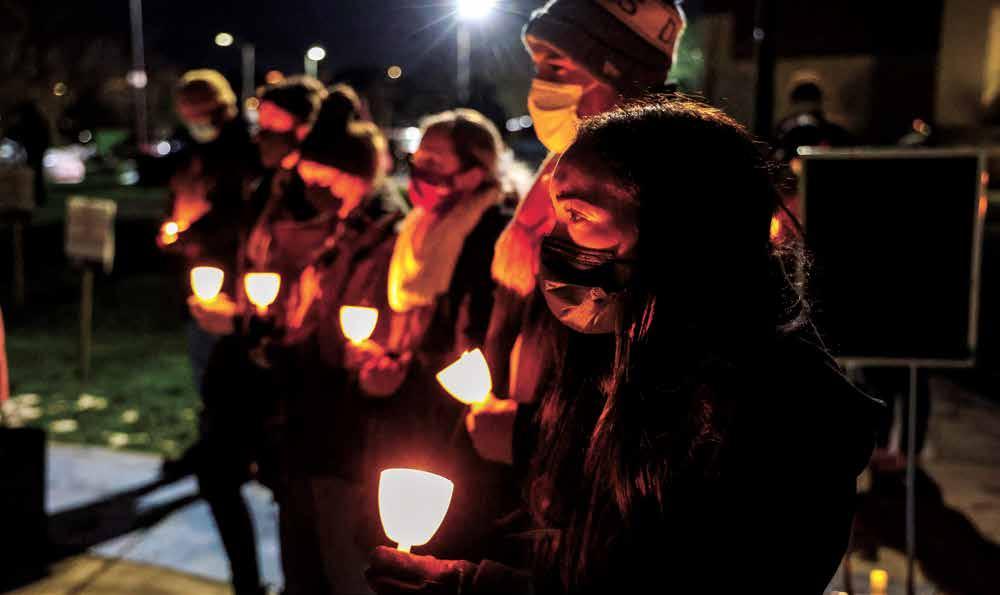
“It was just nice that people came and organized stuff, and cared,” Justice Quiamas, her teenage maternal cousin, told the Seattle Gay News after the vigil. “It really meant a lot to our family. It’s nice. It is really tragic, though. It’s hard to feel too happy about something when there’s such a sad undertone.”
On February 9, Valencia sat in her car in the parking lot of the Urban League Village Apartments at 2300 S. Massachusetts St. in Seattle while waiting for a friend to grab his laptop from inside the building when 45-year-old Gregory Taylor walked up to her vehicle, began pounding on the window with a gun and opened fire on those inside. Her longtime friend from high school was also shot but survived her injuries. The SGN has decided not to release her name.
The Seattle Police Department released audio of a 911 call from Valencia’s friend from inside the car. “My friend just got shot, me and my friend just got shot,” she said. “She got shot in the face, please come, please come… We just got shot. I’m going to die, we’re going to die!”
King County Chief Medical Examiner Richard C. Harruff, MD, PhD, told the SGN this week that Valencia died of “homicide” due to “multiple gunshot wounds.” Her friend was taken to Harborview Medical Center, where she received treatment for her injuries. According to a GoFundMe announcement by Kerry Troeppl on Facebook, her friend was shot five times, striking her in the wrist, shoulder, back, chest and stomach.
At a briefing on the night of the shooting, the SPD had suggested a possible relationship between the victims and the suspect. However, the department later issued a written correction. “As the investigation has progressed, it now appears that there is no connection between the victims and the suspect,” said a statement on the SPD Blotter.
An earlier 911 call by a resident of the apartment complex reported “a man outside in the park” prior to his attack on Valencia and her friend. Gunfire can be heard on the recording. “I think he’s… shooting. I see the gun in his hand.”
Taylor himself was shot and killed by responding SPD officers during a confrontation with police just moments following his rampage through the parking lot and
neighboring Jimi Hendrix Park. An investigation into the deadly use of force is being conducted by the SPD’s Force Investigation Team (FIT), with oversight from the Office of Professional Accountability and the Office of the Inspector General.
Residents of the Village Apartments have reported previous concerns about Taylor, who had resided on the property and did property maintenance. The apartments were developed by the Urban League of Metropolitan Seattle, but Coast Property Management manages the building.
“We follow our prescribed procedures for addressing any resident actions that violate our community standards,” said Susan Pickering, chief operating officer of Coast Property Management in a public statement. “Those procedures include alerting building ownership and law enforcement when necessary. We are cooperating with the Seattle Police Department to assist in the investigation of this issue.”
The SPD has released few details about the events of February 9, except to provide officer-worn body camera footage and private surveillance video.
“The investigations are still active and ongoing,” a spokesperson for the SPD told the SGN. “FIT and homicide detectives are still actively investigating, so we are limited in what information we can release.”
Quiamas said the family has a lot of unanswered questions. “The police aren’t telling us anything right now, but I think it’s probably their process or protocol they have to follow,” he concluded. “I just wish I had some more answers to be a little bit more at ease. I know they’re coming, and I’ll have the answers soon enough. We just have to be patient.”
He added that the constant media coverage of his cousin and the video that has been released by the SPD has been difficult to watch. “I think the hardest part was hearing the 911 phone call from her friend. It was just really hard,” he said. “The video
too was hard to watch. I hoped it would give me some closure. It didn’t.”
Valencia had started winter quarter of college to study veterinary medicine and was preparing to move to Bellevue to try life out on her own in the days leading up to her death, according to her cousin. “She had already packed up everything she was going to take and was ready for the road trip. She was ready to start her life and start enjoying herself,” he said. “She was finally ready to live life. It is really tragic that this happened, because I knew that her life was going to be beautiful.”
Quiamas said her death hit him hard because he saw her as a role model growing up. He remembered that she first came out to him in 2014 while on vacation in the Philippines.
“She was talking about how she was kissing her girlfriend,” he explained. “I was nine at the time… I was shocked, but it never really mattered to me because she’s still my big cousin; she’s always looking out for me.
“She was authentically herself, and she always encouraged me if I wanted to paint my nails or wear girly things. She just wanted me to be happy and to be myself. She is one of my heroes because of it.”
He added that Velencia looked forward to Pride each year, until the COVID-19 pandemic put a halt to in-person festivities. Her cousin described their family as being close knit, where cousins spent time at each other’s homes and gathered at grandma’s house on holidays. He adds that Valencia leaves behind two brothers and a sister on her mom’s side and two brothers and a sister on her dad’s side. Only two are older, and the younger siblings are having a hard time adjusting to her death.
“She was just really caring. She was always trying to do nice things for people,” said Quiamas. “She was just always smiling. You know? She just loved laughing — even if it was a bad situation... She just always had a positive outlook.”
A GoFundMe for Valencia’s funeral expenses had raised $10,000 toward a $15,000 goal as of Wednesday evening. The description says funds are being raised so that “funeral expenses are not even a thought for her family” and remembered Valencia as a special person who “knew exactly how to engrave a special place in your heart without even realizing it.” To donate, visit https://gofund.me/743332c4.
Image courtesy of PNW Revolutionary Afro Collective
Photo by Renee Raketty for Capitol Hill Seattle
2021 State of the City address
Mayor Durkan discusses plan for equitable vaccine distribution and the vision for Seattle on the other side of the pandemic
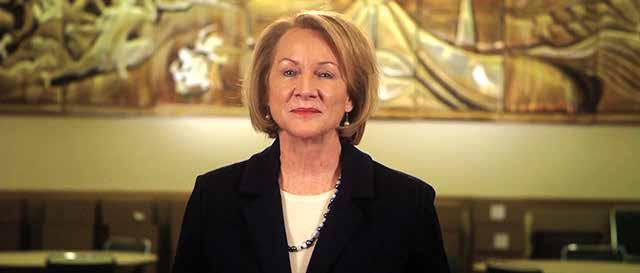
I’m joining you from the Filipino Community of Seattle. This community center and the families it serves were hit hard by COVID-19.
But like so many in Seattle, they stepped up and tripled the meals they served. Now, they’re joining the City’s efforts to vaccinate Seattle equitably. Soon, we’ll transform this very room into a one-day pop-up vaccination clinic for Filipino elders.
This past year changed everything for all of us: Masks, testing, isolation. Losing loved ones. Small business owners struggling every day to survive. Workers facing lost wages and jobs, and unable to pay their rent. Parents grappling with childcare, kids at home, and online learning.
And the pandemic disproportionately hit our Black, Indigenous, and Latinx communities.
The pandemic is our lifetime’s challenge. And it has amplified challenges we already had: Homelessness. Public safety. The climate crisis. And racial inequities in every system: health care, employment, education, and policing.
In the coming weeks, we’ll discuss and implement plans to continue progress on each of these issues, including the concrete steps
we’ll take together to recover and reopen downtown, steps we will take to improve the livability and safety of downtown.
We’ll open hundreds of shelter spaces and affordable homes to bring more neighbors inside from our streets and parks so they can get stability and services. We’ll address public safety, expand alternatives to policing, and have other responses. We’ll invest nearly $100 million in the health and resiliency of Black and other communities of color to address generational disparities.
This work will be hard. We will need all of us. We will have to focus on our shared goals.
Right now, our most important shared goal is getting through this pandemic and beating this virus. And vaccinations are the path to healing, recovery, and reopening. That’s how we beat this virus.
And how we can fully reopen our businesses and schools and bring workers back downtown. The health of downtown is so critical to the entire city and region.
To begin our vaccination process, our Seattle Fire mobile teams started working around the clock to vaccinate vulnerable and impacted neighbors, even when we got a foot of snow. They have provided more
than 4,400 vaccinations to workers at adult family homes, health care workers, grocery store workers, and elders in our hardest-hit communities. They are doing heroic work and are on track to vaccinate thousands of Seattleites.
But we need to do so much more at a time when the current supply and getting an appointment is beyond frustrating. Hopefully by spring, the federal government will increase supplies, and the City will be able to launch mass vaccination sites that are easily accessible in all parts of our city: Rainier Beach, West Seattle, Downtown, and multiple sites in North Seattle.
We’re ready.
I want us to be the first city in the country to vaccinate 70% of our adults. It is the most daunting and most important operation our city government has ever taken. It will take all of us, working together: government, health care, philanthropy, business, and you.
I know you have been through a lot and you have done all that you can. Each of us has a role to play. When you’re eligible, get your appointment and get vaccinated. Help family, friends or neighbors make or get to appointments.

And if you can, contribute to the new All in Washington Vaccine Equity Fund that we’ve established today. It’s a fantastic public-private partnership and we want to support vaccine efforts in our hardest-hit communities.
We pulled together at the beginning of the pandemic to support our neighbors in need. And we can do it still. I know everyone is just so tired.
But we are so close. We have sacrificed and been through so much. We can’t let our guard down now. Not until we get enough people vaccinated.
We must still wear masks, physical[ly] distance, and not gather. We just can’t let up.
In closing, I won’t sugarcoat it: We have a tough road ahead. But there is hope on the horizon.
We will equitably vaccinate our community.
We will continue to support our neighbors with assistance for rent, meals, childcare and small businesses.
We will bring workers back downtown.
We will open many new affordable homes, many that I just announced these last three years.
We will bring more people from our parks and streets into permanent supportive housing and new 24/7 spaces and tiny homes.
We will forge a more equitable economy with programs like the Seattle Promise, which gives our public school graduates free college and a pathway to opportunity.
We will be able to gather again and we will open our new, world-class Climate Pledge Arena to watch our championship Storm and release the Kraken.
Seattle, we are writing the final chapters of this generational challenge.
The state of our city is resilient. We are fatigued but determined. We are challenged yet compassionate. Never bet against Seattle.
This year, we will continue to be tested, but we will begin to recover and rebuild — more equitably.
Thank you and please remember, mask up and stay safe.
Courtesy of Mayor Jenny Durkan
Photo courtesy of Seattle Channel
Image courtesy of the City of Seattle
Biden extends foreclosure moratorium
Renters not covered, but OK through March
by Mike Andrew SGN Staff Writer
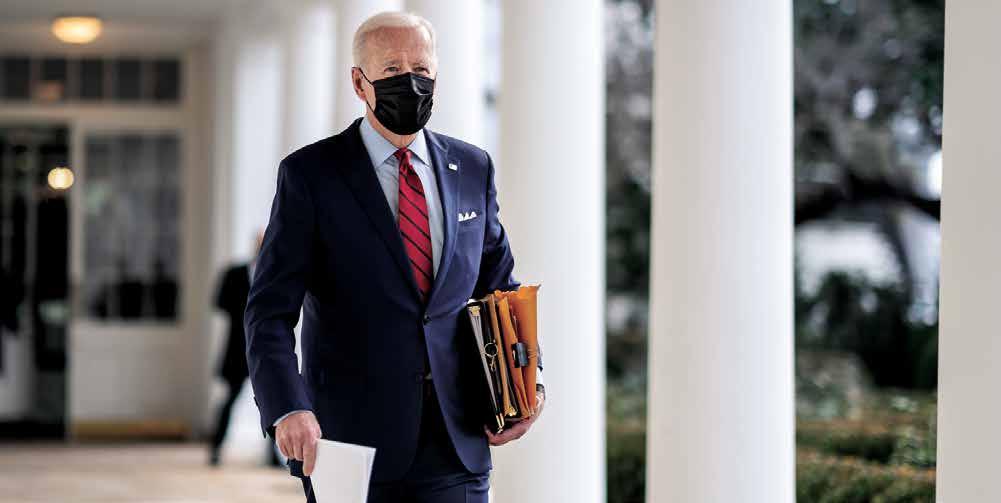
There is good news out of Washington, DC for people struggling to pay their mortgages: President Biden extended the ban on mortgage foreclosures to June 30.
NYPD
continued from cover
Torres is Afro-Latino and Gay. Barbot is of Puerto Rican descent. Mullins has a long history of racist remarks, and once appeared on Fox News displaying a QAnon coffee mug.
Mullins doubled down on his remarks in a February 15 letter to his union members. In the letter, which was obtained by the New York Post, Mullins declared, “I WILL NEVER BE SILENCED.”
“I rightfully called him a ‘first-class whore’ for his unscrupulous moral values and selling out our safety for his political ambitions. My comment was in direct response to Torres’ political campaign against the men and women of the NYPD,” Mullins wrote.
Mullins continued, “It came at a time of tremendous turmoil in this City when
TRUMP continued from cover
guilty on Saturday was condemned by several Senate Democrats, including Patty Murray (D-Wash.), who said her colleagues across the aisle “chose fear instead of justice.”
“I want to assure everyone in Washington state and across the country that I will never let fear or intimidation stop me from doing my duty to you and to our nation,” Sen. Murray said in a statement Saturday. “I will continue working every day in the Senate, using my words and my vote, to stand up for our democracy and secure a fairer and brighter future for our state and our country.”
The acquittal formally declined to find Trump responsible for the riots that left five dead, and the failure of both houses of Con-
Census Bureau figures show that almost 12% of homeowners — or 10 million people — were behind on their mortgage payments.
Biden’s action did not extend a moratorium on rental evictions, which is due to expire March 31. The Washington state eviction moratorium is also due to expire at
members of this department were the targets of bottles and bricks being thrown at them. Nor shall we forget police vehicles being firebombed and overturned,” Mullins wrote in reference to Black Lives Matter protests last year.
“Make no mistake,” he continued, “I stand by my words. Nothing has changed. And I offer no apology!”
Like other police forces — including Seattle police — the NYPD was criticized for excessive use of force during the BLM protests following the murder of George Floyd last March. Torres was one of the department’s vocal critics.
Before being elected to Congress in November, Torres represented a Bronx City Council district populated largely by people of color. In the November election, he defeated and anti-LGBTQ Pentecostal minister, Ruben Diaz, Sr., to replace retiring Rep. Jose Serrano.
gress to convict Trump allows him to seek federal office in the future.
Despite voting to acquit Trump of the charges, Senate Minority Leader Mitch McConnell (R-Ky.) said court proceedings were more appropriate avenues than a Senate conviction.
“President Trump is still liable for everything he did while he was in office, as an ordinary citizen, unless the statute of limitations has run,” McConnell said after the vote on Saturday. “He didn’t get away with anything yet.”
There are still several possibilities that Trump could be found responsible for inciting insurrection by Congress or federal and state courts. Some avenues, like a censure from Congress, are less likely to happen than criminal indictments.
The idea of a censure vote has been
the end of March.
The White House announced on February 16 that coordinated actions by the Departments of Housing and Urban Development, Veterans Affairs, and Agriculture will:
• extend to June 30 the enrollment window for borrowers who want to request mortgage payment forbearance — in other words, a pause or reduction in payments, and
• provide up to six additional months of forbearance for borrowers who entered forbearance on or before June 30 of last year.
The White House says that Biden’s actions are to help keep people in their homes amid “a housing affordability crisis” triggered by the COVID-19 pandemic. “[H] omeowners will receive urgently needed relief as we face this unprecedented national emergency,” the White House added.
Biden’s administration says extending forbearance policies “will provide critical support to homeowners of color, who make up a disproportionate share of borrowers” having trouble paying their loans because of hardships related to the pandemic.
Washington state renters
Washington Gov. Jay Inslee extended the state’s moratorium on evictions at literally the last minute — just as it was about to expire on January 1. The moratorium now extends through the end of March.
floated in the Senate, including from Sen. Tim Kaine (D-Va.) but was ultimately dropped due to a lack of support. Speaker of the House Nancy Pelosi also dismissed the idea of censuring Trump, calling it “a slap in the face of the Constitution.”
“We censure people for using stationery for the wrong purpose,” Speaker Pelosi said at a House press conference following the Senate vote. “We don’t censure people for inciting insurrection that kills people in the Capitol.”
Trump and his team remain at risk of being found responsible for the insurrection in criminal investigations. The Justice Department, led by Michael Sherwin, acting US attorney for the District of Columbia, has begun investigating what transpired Jan. 6 and those who may be responsible for the riots.
In the days following the Jan. 6 riots,
“COVID-19 has had a significant financial impact on Washingtonians over the last nine months,” Inslee said.
“I know this moratorium has been critical for many families and individuals as they cope with the impacts of this virus. People need certainty about whether the moratorium will be extended, and it is important that I provide that certainty today while we work out the final details of the moratorium.”
The eviction moratorium began in March 2020 and has been extended three times since. The moratorium bars landlords, property owners, and property managers from serving evictions due to unpaid rent, unless there is “a significant and immediate risk to the health, safety, or property of others created by the resident.”
While tenants are still on the hook for any rent payments they skipped during the moratorium, the governor’s order requires landlords to offer rental re-payment plans that are “reasonable based on the individual financial, health, and other circumstances of that resident.”
It is unclear whether Inslee will extend the eviction moratorium yet again. If he does not, the state may see a landslide of evictions, as landlords try to get rid of tenants left unemployed by the pandemic.
District of Columbia Attorney General Karl Racine announced his office was considering looking into Trump’s involvement in the insurrection as well. Racine’s investigations would be limited to local codes in the District, meaning most of the prosecutions would fall under the Justice Department.
Trump and his team are already facing civil suits alleging involvement in the Capitol riots. Rep. Bennie Thompson (D-Miss.) was named as the plaintiff in a suit against Trump and his personal lawyer Rudy Giuliani filed in the US District court in Washington, DC on Tuesday.
Possibilities of criminal prosecutions extend beyond the January events at the Capitol, too. Trump is facing more possible indictments in the District of Columbia, as well as in New York and Georgia.
President Joe Biden – Official White House Photo by Adam Schultz
THIS WEEK IN SGN HISTORY
FROM FEB. 10, 2006:
Clark unveils “contract” with the people of Seattle at swearing-in ceremony
[Editor’s note: Over 47 years, the Seattle Gay News has covered thousands of stories that still resonate today. This week we look back at two of them, one from February 2006 and the other from February 2011. We also offer updates on each story.]
by [Renee] Raketty SGN Staff Writer
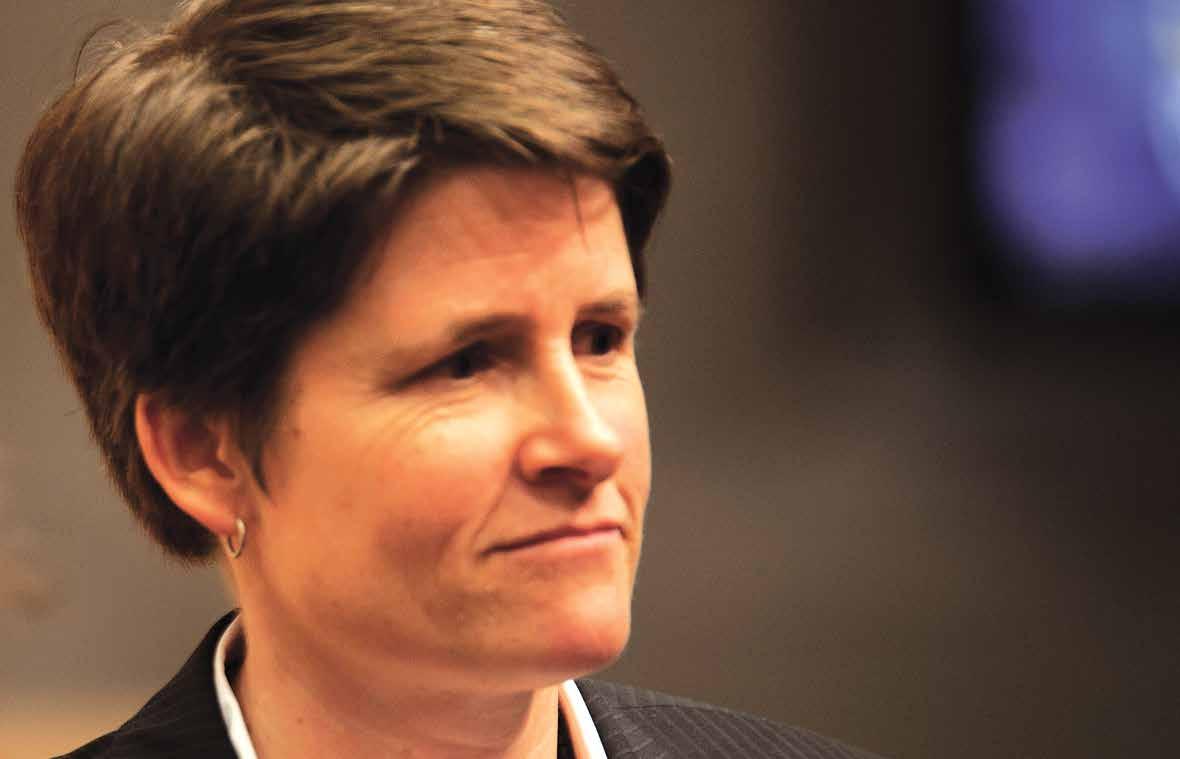
Sally Clark, the third Lesbian to serve on the Seattle City Council, was sworn in by her partner of nine years, Liz Ford, during a special ceremony on Monday, February 6. Clark wasted no time in laying out her agenda, which she called “a contract between myself and the people of Seattle.”
She pledged to be the “most ardent advocate” for neighborhoods. “I will be out of the office and in the neighborhoods working and listening,” said Clark.
As the chair of the Neighborhoods and Economic Development Committee, she said she will “push for living wage jobs” in Seattle. “Our communities need jobs that allow people to buy groceries, pay their rent, clothe their kids, and go to the doctor when they need to.”
Clark hopes to “decrease disparities in learning” and put forward “proposals to increase the workload” of women- and minority-owned businesses, because the city is “failing to meet our rhetoric in this area,” she said.
Clark also acknowledged the arduous and fast passed process, which began with over a hundred applicants seeking to fill the City Council position vacated by Jim Compton. The multilayered selection process took less than a month and resulted in Clark’s selection — to the pleasant surprise of many.
“I stand before you now — as one of you have described — as the Council ‘survivor.’ While I was made a little uneasy about that analogy, I wish that with this appointment came immunity in the next election,” Clark joked.
Clark’s 11-month Council term will require her to seek election next fall and then again in 2007 before she can receive a full four-year term. Tom Rasmussen, the city’s first openly Gay male councilmember, said Clark will have little time to worry about her reelection.
“We have a lot of work to do, and Sally is going to be a great member of the team,” he said. “I am confident that when the people of Seattle get to know Sally, they are going to be really happy with the person we selected for the Council.”
In addition to her position as the chair of the Neighborhoods and Economic Development Committee, Clark will be the vicechair of the Housing, Human Services, and Health Committee.
Rasmussen, who chairs the Housing, Human Services, and Health Committee, said he looks forward to working with her to reduce the incidents of new HIV/AIDS infections, an area in which Clark has some expertise. Before coming to the Council, she had worked for the Chicken Soup Brigade (1994–1997) — which supplied meals to people living with HIV/AIDS — and, more recently, as the community resources director at Lifelong AIDS Alliance (2004–2006).
Clark was appointed on January 27, the same day the Anderson-Murray Civil Rights Bill passed the Senate. The bill prohibits discrimination based on sexual orientation and gender identity. Coretta Scott King, wife of Dr. Martin Luther King Jr.,
also passed away only a couple of days after Clark took office. She said the two events reminded her of the power of an individual to “make a difference in our communities and in the world.”
“Passage of this bill marked a culmination of 30 years of work, much of if it championed by the late Cal Anderson, who died of AIDS-related cancer in 1995. Cal worked for the Seattle City Council before his election to the state legislature,” she said. “As a young activist, I had the privilege of watching and helping Cal’s work. He was a relentless pursuer of civil rights protections, but he was also simply an active, brilliant, and good-humored politician. And I will think of his legacy as I work in communities all over Washington to defeat a referendum and initiative put forward by Tim Eyman to repeal the Anderson-Murray Civil Rights Bill this fall.”
About King’s passing, she said, “I am one of a growing number of Seattleites who have no personal memories of Dr. King. I was two years old when he was slain, and while I am inspired by the work and legacy of Dr. King, it was Mrs. King who I actually watched. Mrs. King carried her husband’s legacy forward, and she recognized the ongoing struggle for equal treatment under the law, and she made Gay and Lesbian equality part of her work. She went so far as to support equal marriage in 2004. Mrs. King’s death has called all of us to move forward — not only her husband’s legacy but also her own.
“We must recognize that too many in our communities still experience discrimination.”
Former Councilmember Sherry Harris became the nation’s first openly Gay
2006 This Week in SGN History
African-American woman elected to office in 1991 when she won a seat on the Seattle City Council. In 1995, Tina Podlodowski became the second Lesbian to be elected to the City Council. Clark, who follows in their footsteps, had worked as an aide to Podlodowski from 1997 to 1999 and again worked with Podlodowski at Lifelong AIDS Alliance, when Podlodowski became executive director.
“I just think it is a great day for the citizens of Seattle. Sally is just a terrific advocate for everyone in the City,” said Podlodowski. “It is especially nice to have an openly Lesbian elected official in the state of Washington again, given everything that has happened with the passage of House Bill 2661. I think she is the only one right now.”
On Monday, Clark publicly thanked Podlodowski. “I really appreciated working with you here at the City Council and also at Lifelong AIDS Alliance. I tremendously value your friendship and support,” she said.
Clark also worked for King County Councilmember Bob Ferguson in 2004 and as the neighborhood development manager for southeast Seattle from 1999 to 2002. In the early 90’s, Clark was the editor of the Lesbian Resource Center News (1991–1993) and the Seattle Gay News (1993–1994).
UPDATE: Sally Clark (the SGN editor in the early 1990s) served nine years as a Seattle City Councilmember before resigning in 2015 to take the position of director of regional and community relations at her alma mater, the University of Washington. Clark was the last LGBTQ member to serve on the Council.
Sally Clark – Photo by Kathleen Nacozy


Volunteers are needed to sort through over 250 boxes of Seattle Gay News issues from the 1980s to the 20-teens.
Sorting involves identifying not more than 10 copies of each issue, putting the issues in chronological order and organizing by year. Non-SGN items will be separated out as well as copies that exceed ten per issue.
Boxes will be labelled and issue numbers will be identified per box. Once the boxes are arranged chronologically and we have a list of all the issues, the copies will be organized into complete runs with one copy of each issue in each set.
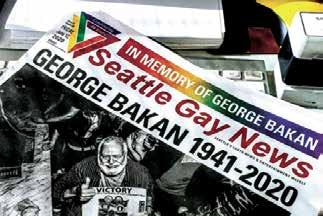
Volunteers need to be able to lift boxes up to 40 pounds, stand on a cement floor, and be willing to follow COVID-19 protocols which involve having your temperature taken as you enter the building and wearing a mask at all times.
The work takes place at Seattle City Hall, 600 Fifth Avenue, in the vault that holds records for the Seattle Municipal Archives.
Please
to volunteer or to seek further information.






THIS WEEK IN SGN HISTORY
FROM FEB. 18, 2011:
SPU rejects LGBT student group Haven’s right to meet
This Week in SGN History
2011
by Shaun Knittel
SGN Associate Editor
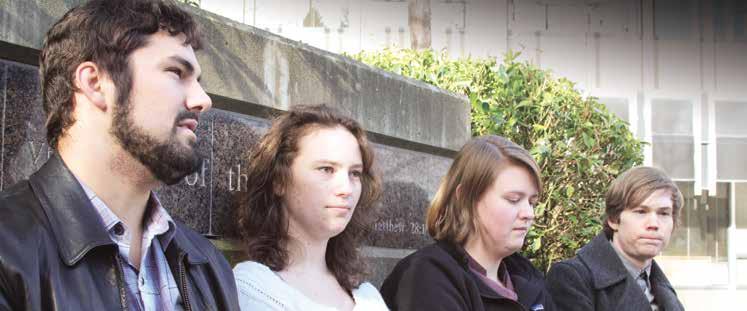
The [effort] of Haven, a student-led group at Seattle Pacific University dedicated to discussing sexuality and LGBT issues, to get official club status from the school’s administrators has left the confines of the campus and is now in print, online, and all over the news radio broadcasts.
A little over a week ago, news of the students’ fight for recognition appeared in The Falcon, the campus newspaper of the Christian university of liberal arts, sciences, and professions. Almost overnight, the story picked up speed and has already resulted in dozens of SPU alumni criticizing the administration for its January 25 decision to deny Haven the right to meet on campus.
Haven was formed four years ago as a result of the LGBT Equality Ride movement that came to campus. Since that time, Haven leaders have sought official Associated Students of Seattle Pacific club status, only to be denied.
Then, on January 25, they received the worst news yet from Associate Vice President for Academic Affairs Jeff Jordan. The group was told they will no longer be granted the right to reserve rooms on campus for group meetings. In addition, Jordan told the students he would no longer discuss the possibility of official club status for Haven.
Despite the setback, Haven leadership assured the SGN, “Haven will not disappear.”
Campus trouble
Haven has always been in a fight to exist. The group has never been officially recognized as a student club or organization, as far as the administration is concerned. Nevertheless, according to Haven leadership, the group is well known on campus.
“Haven has roughly 15-20 people that regularly attend our weekly meetings,” Aaron Roberts, co-leader of SPU Haven, told the SGN
Roberts says he joined Haven because he wanted a place on campus where he didn’t have to “feel like a deviant because of my sexuality.”
“Haven is the one time a week that I can be around people who understand or can sympathize with my struggles, being Gay, and going to SPU and society in general,” he said. “In essence, it is a time when I can be open with people who really care.”
SPU student Joy Bethune, Haven’s leader, told the SGN, “Haven has meant more to me than I could ever express in words. I have made friends through Haven that have changed my life for the better. It has restored my faith in humanity and
Photo by Emily Stock / The Falcoln
connected me to like-minded people. And because of the people involved in Haven and in support of Haven, I am confident that I will never regret going to SPU.”
Bethune says she feels honored to be able to be associated with Haven because of “what the group has been able to provide SPU students for the past four years: a place for the silence to end and discussion to thrive at SPU.”
So what seems to be the problem?
“The issue that the administration points to is our purpose statement,” Caleb Richmond, Haven co-leader, told the SGN “However, this is not the root of the issue. Haven has given dozens of carefully written statements to the administration for the last four years. [The administration was] never without an idea of what Haven stood for. Since we refused to affirm their stance on homosexuality as our starting place, they have accused Haven of promoting a lifestyle that is in opposition to their beliefs. On the contrary, Haven has tried to uphold the university’s ideals of ‘engaging the culture’ by discussing the controversial topics of sexuality at SPU.”
In other words, homophobia is the elephant in the room. To gain a better understanding of where Jordan and the administration are coming from on the issue, the SGN repeatedly made an effort to contact SPU officials. All phone messages and emails were left unanswered.
Jordan tried to explain himself in SPU’s newspaper, The Falcon. “I don’t think we have, in some way, said, ‘Stop talking about sex.’ We haven’t done that, nor do we want to do that.”
He went on to say that “no one believes we shouldn’t have conversations about sexuality. Some of these things — conversations about sexuality — are happening in many places on campus as it is.”
But what Jordan never says once, in the two major articles written by The Falcon staff over the last two weeks, are the words “homosexuality” or “LGBT.” He dances around the topic completely, citing, like Richmond pointed out, the issue of the Haven mission statement and the makeup of the group’s pastor panel.
‘We were operating without an idea of Haven’s purpose — at least the administration didn’t have one,” said Jordan. “So there was a good-faith effort that I felt like I was doing on behalf of the university and administration to say, ‘We will give you space, but we also need this to be worked on.’”
According to Haven leadership, that is exactly what they began to do. They set about revising their mission statement to address what they wanted to be as a group.
According to its statement of purpose, “Haven recognizes that SPU has a Statement on Human Sexuality that defines the university’s position. Haven will ensure that the content of this statement is clearly presented in our activities. Because Haven exists to promote safe and respectful conversations, however, Haven will ensure that all views, even those in disagreement with SPU’s Statement, are presented fairly and impartially.”
Haven submitted its new mission statement in January in vain. They were ultimately told that they would not be recognized and that they could meet, but it would have to be informally and unofficially, and held in public space.
That is not good enough, say Haven leadership, as the personal nature of Haven discussions requires privacy since the main goal is for it to be a safe place for discussion on campus. “When we don’t have a safe place that is our own,” said the group, “it compromises our ability to be a safe space.”
SPU students show support
“I haven’t personally faced any problems from other students from being a part of Haven,” Becky Jennings, Haven co-leader, told the SGN. “The student body is generally very supportive.”
Jennings says there is some misconception that all the students who are part of Haven identify as LGBT, when really it is a mix. “My perception of the student body is that, by and large, they are supportive of Haven.”
“I think it is very important to say that SPU is not a bad school,” adds Roberts. “Some of the most supportive people in my life have been my professors. Haven has a ton of support from the student body. The problem at SPU is not the faculty and it is not the majority of students; it is the administration. It is sad that a university [that] touts this idea of engaging culture is so afraid of LGBT people. We are a part of the world out there, yet the university likes to pretend that we don’t exist.”
Roberts says he definitely feels discriminated against by the administration. “Haven is not simply an LGBT group,” he said. “We are a discussion group. However, the discussion is focused on the LGBT experience, and the university doesn’t like that. As a Gay man, it is hard not to ask myself what is so wrong with me and others like me that my university would try so hard to prevent students from talking about how someone like myself experiences the world. What is so wrong with LGBT people that we’ve become a topic undeserving of, at the very least, discourse, if not full acceptance?”
“To me,” agreed Bethune, “it feels,
smells, looks, sounds, and tastes just like homophobia.”
“We can speculate about the political reasons within the institution as to what is stopping them from giving us the respect and recognition that other student groups get almost automatically, but at the core of all the speculations is always homophobia,” she said. “It seems like many Christian communities have been having trouble facing their own fears and deciding to love and accept everyone equally, which is what I think is happening here at SPU.”
“I also think that the administration is frustrated with us because no matter how many times they say no, we will not go away — and we never will,” she said.
Bethune says she wants everyone to know that there are Gay students at SPU who are in the closet because they are scared to come out.
Still, Bethune says that there are a number of reasons why LGBT students may attend SPU. “The faculty at this institution are some of the most brilliant, supportive, passionate, encouraging, intelligent, and caring of any faculty I know of,” she said. “They are a huge part of why I go here.”
Support Haven
“Haven is a unique club in many ways,” explained Richmond. “We meet weekly, more often than any of the other clubs I know of.”
He said there are other clubs that focus on social justice and other topics that are approved and are very essential. Sophia, the feminist club on campus, has very strong discussions in a Christian context. There are many conversations being had on the SPU campus about difficult topics — “this helps eliminate the stigma,” said Richmond. “Haven wants to help eliminate that kind of stigma around sexuality. We do not all have to agree, but we should be talking about this openly.”
Haven has held a steady goal for the last four years. Haven is about creating a safe space on campus to talk about sexuality and LGBT topics in an informative and respectful way.
Richmond says that Haven “would love to work with SPU to make the whole school a safer and healthier place for all students, straight or Gay.”
According to Richmond, the only thing the university has to do to provide a safe space is allow Haven to begin using classrooms for meetings, as they did before. “It would be preferable that they also allow us to publicize on campus,” he added. “Ideally, they should abide by the system and rules that they set up on campus for club status. We are primarily fighting for club status because that would guarantee us rights like rooms and publicity.”
Haven leadership told the SGN that they will work to provide a safe space for the SPU students whether or not the administration recognizes the group.
UPDATE: A week after our story, The Stranger printed a letter from the SPU's vice president for academic affairs, Dr. Les Steele, who sent an email to university staff, asking for forgiveness and saying that Haven leaders were being invited to talk with school administrators about "a way forward." Haven still exists today and can be found on the university’s website under intercultural clubs. However, as we published in our January 29, 2021 issue, SPU is in the news again, due to a lawsuit by openly gay nursing professor Je'aux Rinedahl, who is suing the university for being denied a full-time position.
It’s a Sin really wants somebody to blame
by Mark S. King Special to the SGN
The promise of a new, ambitious television series about “what happened” to Gay men in the 1980s is tremendously exciting for long-term HIV/AIDS survivors like myself, starved as we are for representation in the media and for another chronicle of our history to be told. It is often a promise unfulfilled.
Already, the British limited series It’s a Sin is being discussed in the same breath as
It’s a Sin isn’t a documentary, and art is subjective. But the characters Davies created and the choices they make can have a very real impact on an audience who may know little about HIV/AIDS history. As well intentioned as it may be — and it does scratch a certain itch for those of us looking to hold up a candle and have a good cry — its faults are too glaring to be overcome.
The series opens in 1986 and follows a collection of young Gay men and their gal pal through the early 1990s. It’s hardly a spoiler to say that some of them die, and
— and the 1980s were not a time of great sexual austerity, despite the emergence of AIDS — but It’s a Sin lazily trots out the tired stereotype of the dangerously selfish, promiscuous Gay man.
The obsession with sex extends even to deathbeds, which is as disturbing as it sounds. One doomed character, swept up in dementia and sexual revelry, begins masturbating in his hospital bed in front of shocked family and friends. Another, on the final night of his life, regales his stunned mother with explicit stories of his sexual conquests.

Angels in America, which is, sadly, akin to equating To Kill a Mockingbird to My Cousin Vinny, because they’re both about lawyers.
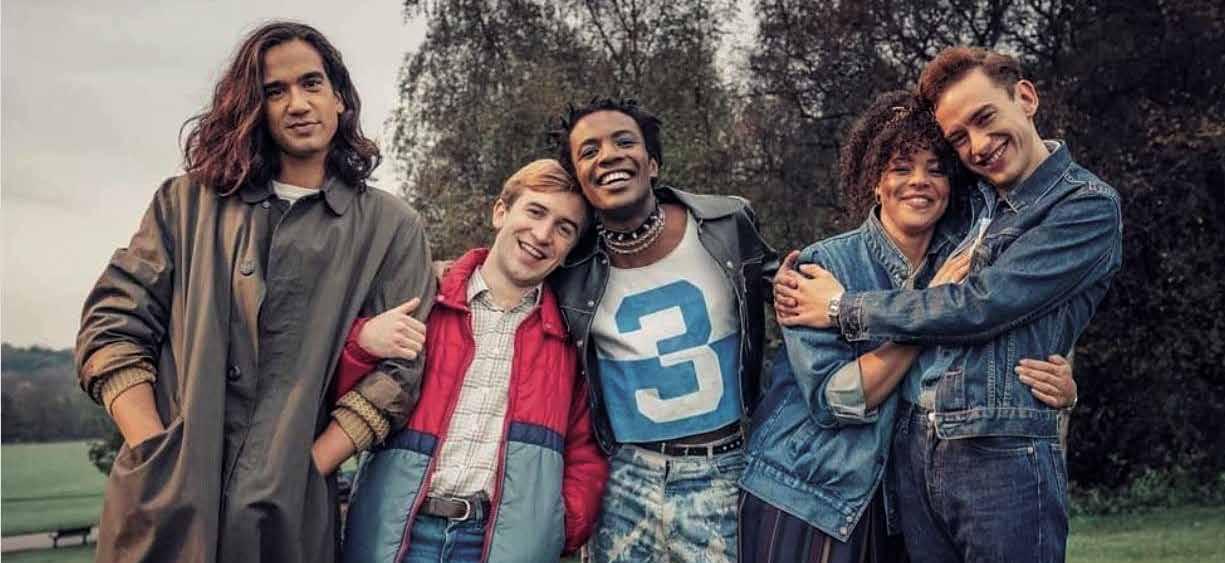
It’s a Sin focuses on the lives of a group of young gay men in London during the dawn of the AIDS pandemic. It is the work of writer-producer Russell T. Davies, the creator of the original Queer as Folk in the UK. Davies never addressed HIV/AIDS in Queer as Folk, surprisingly, and has said that the largely autobiographical It’s a Sin is meant to correct that.
Davies needn’t have bothered. While It’s a Sin boasts gorgeous production values and terrific performances (and record-breaking viewership during its recent broadcast in the UK), it also reinforces dangerous, stereotypical myths about Gay men in general and people living with HIV in particular.
trust me when I tell you that it is not pretty.
Any Gay man of a certain age will respond viscerally to the emotional triggers in It’s a Sin. Simply depict a tray of cold food left uncaringly outside a room in an AIDS ward or a young man discovering his first cancerous skin lesion and we collapse into a sea of mournful, familiar tears. Our shared trauma is an old friend.
The lives (and deaths) of Davies’ characters, though, include unsettling and misleading tropes that the LGBTQ community – and those of us living with HIV – could really do without.
The Gay characters of It’s a Sin have an overriding fixation on sex that becomes more unsettling as the series, and the pandemic, plays on. Certainly any coming-ofage tale will deal with sexual awakenings
It’s a Sin reduces these men to deviants, grasping tightly to the only thing they valued in life, right up to their last breaths. Their lone female friend is better equipped to control herself, evidently, becoming an AIDS activist while her Gay friends dither.
I suppose we are meant to see series creator Davies as terribly bold for unmasking Gay men as constitutionally incapable of protecting themselves if it meant changing their sexual behaviors. Except that narrative isn’t true, and Davies ignores our heroic history to perpetuate it.
With the introduction of condom use in the mid-1980s, Gay men engaged in perhaps the greatest example of group behavioral modification ever seen, using prevention methods we had never considered before, while becoming the drivers of massive cam-
paigns of HIV peer support and education. Davies stubbornly chooses to focus on a main character, Ritchie, who does quite the opposite. And then he ratchets up his mystifying disdain by portraying Ritchie as a suicide bomber trying to take out as many other queers as possible. “I wonder how many I killed?” Ritchie ponders, while exalting his sexual exploits.
There’s more, including an absolutely mortifying speech in which the supposedly enlightened female activist blames the AIDS death of a friend on homophobia in society (um, okay) and then turns her blame to her dead friend’s emotionally reserved mother. To her face. While she is grieving. The day after her son dies. I don’t know what psychology book produced this Blame the Mother angle, but here’s betting it was a first edition copy from 1953.
Our female activist goes on to say (she has a lot to say because the Gay characters are frozen into inaction, dead, or completely lack self-determination) that her dead friend, who continued having sex after learning he was HIV positive, was “ashamed of himself… and then he killed people!”
Give me a minute to breathe through this one. Okay. I’m better.
The ignorant notion of people living with HIV roaming the countryside looking for victims to murder is the reason unjust HIV criminalization persists. Right now, thousands of people are serving prison sentences for no other crime than “sex while HIV positive.” In many cases, defendants used protection or had no HIV viral load and did not transmit the virus to anyone. Still, many people living with HIV have been prosecuted and sentenced to decades in prison.
None of this keeps It’s a Sin from targeting nearly every character with blame (and its crushing counterweight, shame) for maximum emotional damage. We know this tactic well in the real world, even if it’s a terribly useless weapon. While we engage in blaming others, the virus plods along, doing what viruses do.
In the end, It’s a Sin blames everything but HIV itself. Meanwhile, the virus just keeps right on replicating, right now just as it did then, utterly unconcerned with the judgments of humankind.
Reprinted from My Fabulous Disease
Nathaniel Curtis, Callum Scott Howells, Omari Douglas, Lydia West, and Olly Alexander in It's a Sin – Photo courtesy of HBO Max
Neil Patrick Harris and Callum Scott Howells in It's a Sin – Photo courtesy of HBO Max
Wright’s picturesque survivalist adventure Land enjoyably lightweight
by Sara Michelle Fetters SGN Staff Writer
LAND
Theaters
Land is a perfectly enjoyable survivalist adventure. It also didn’t leave much of an impression on me. As handsomely mounted as actress Robin Wright’s feature-length directorial debut is, the core basics of Jesse Chatham and Erin Dignam’s screenplay are
painfully obvious. There isn’t a lot of emotional weight to anything that transpires during the film’s briskly paced 89 minutes, making the finished product frustratingly lightweight.
That does not mean Land is a waste of time. Wright’s performance as protagonist Edee Holzer is terrific, her hushed intensity as a grieving woman self-secluding in the wilds of Wyoming difficult to resist. There is also a sublime supporting turn from Demián Bichir that somewhat snuck up on
me, his delicately stoic gravitas growing in magnitude as events progressed.
The early bits of Chatham and Dignam’s narrative are instantly captivating. The script thrusts the viewer right into the middle of Edee’s fractured psychological landscape with pugnacious ferocity. Wading through oceans of grief after the death of her husband and child, before we even have a sense of who this woman is and just how expansive her pain might be, she’s suddenly purchasing a cabin in the woods and
trekking off to live there alone in isolation. Impeccably shot by cinematographer Bobby Bukowski (Irresistible), Wright presents much of Edee’s early struggles to survive in absolute silence, with only the sounds of nature at its most austere and mysterious to be heard. This woman’s refusal to deal with her grief is stifling her ability to do what she must to go on living. It becomes an open question as to whether her lost battles against the elements are more a series of self-inflicted wounds than they are inevitable due to her big-city ineptitude, and I did wonder if Edee’s desire to be alone in the wilderness was her clandestine way of slowly committing suicide.
Problem is, as fascinating as those questions are, it quickly becomes apparent Land isn’t interested in exploring themes and concepts anywhere near that hauntingly complex. Instead, the film evolves into your basic story of a lost soul learning to reconnect with her humanity, with Edee discovering that cutting oneself off from civilization is no way to deal with soul-crushing grief. The resolution is boringly perfunctory, and if not for Wright and Bichir, it’s doubtful I’d have cared anything about this one at all.
But those performances are indeed lovely, and Bichir’s delicate turn as a gruffly empathetic mountain man who helps nurse Edee back to health after she almost starves to death is particularly wonderful. Wright is equally luminous, especially during that nearsilent opening act. The actress throws herself into the physical and emotional miseries of Edee’s exertions, as the backbreaking magnitude of what she is up against out in the pristine nowhere is mesmerizingly colossal. There is something to be said about the hopeful altitude to which this film attempts to ascend, battling an assortment of melodramatic platitudes and genre clichés as it does so. Does it conquer them all? No, not in my opinion, but that doesn’t make its more inspiring aspects any less enchanting. For many, this will be more than enough to make Land worthwhile. For me, I’ll just give it a polite pass and move on to my next cinematic adventure.
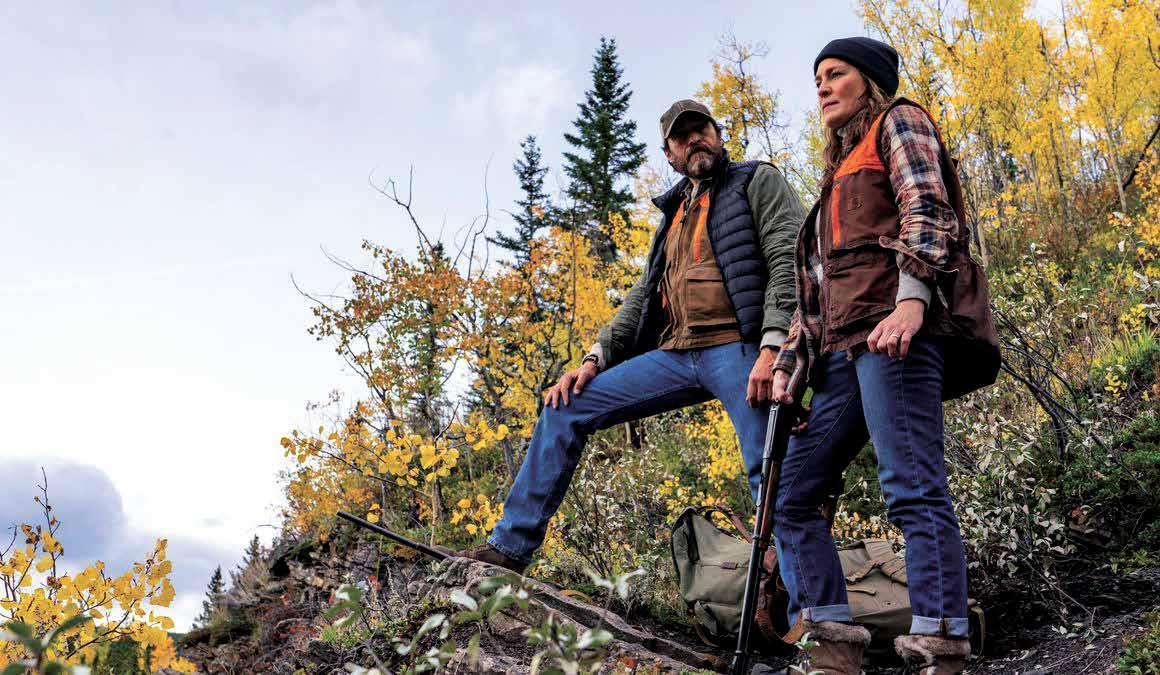
Demián Bichir and Robin Wright in Land – Photo courtesy of Focus Features
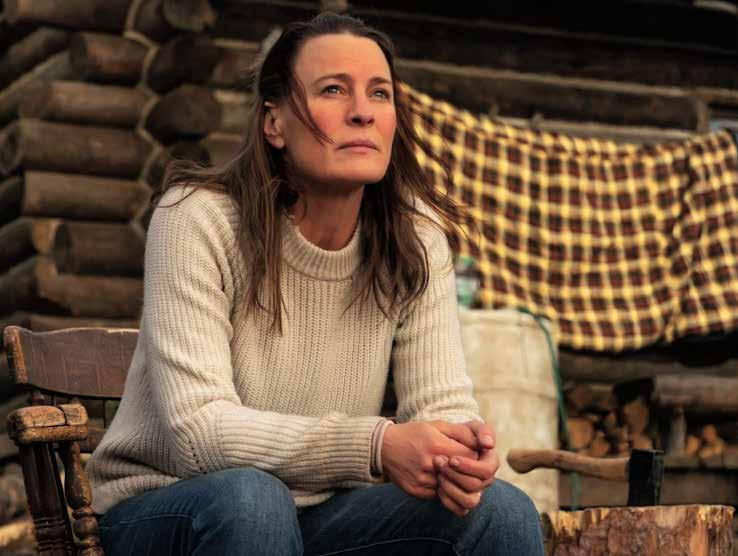
Robin Wright in Land – Photo courtesy of Focus Features
LAPD officers accused of sharing George Floyd Valentine’s
Day photo that reads “You
take my breath away”
by Zack Linly The Root
(Feb. 14, 2021) — Valentine’s Day is a time for couples and lovers of all walks of life to celebrate their bonds through the exchanging of flowers, candy, spa days, hotoil massages, and the like — it’s a day to commemorate love. In fact, officers with the Los Angeles Police Department are reportedly so into the festivities that they decided to celebrate their first true love: dead and brutalized Black people.
KTLA 5 reports that the LAPD has launched an internal investigation into a complaint from one officer that other officers had circulated a photo of George Floyd formatted like a Valentine’s Day card that read, “You take my breath away” — a reference to Floyd telling officers “I can’t breathe” before he died after a cop kneeled on his neck for nearly nine minutes.
LAPD Chief Michel Moore confirmed that he received the complaint from the unidentified officer.
From KTLA: “Moore said the officer who made the complaint is set to be inter-
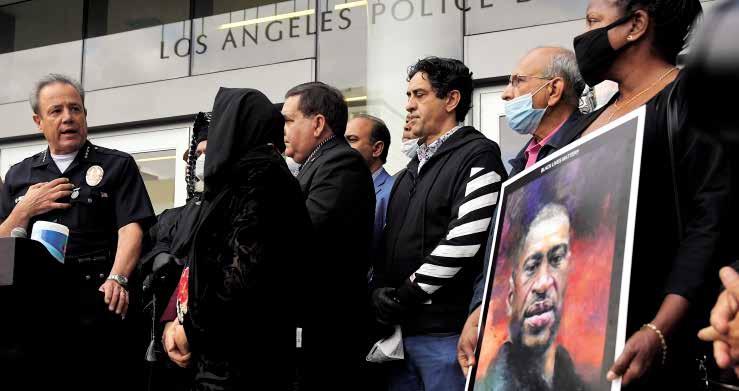
viewed Monday, and the department’s goal is to determine exactly where and how the image may have come into the workplace, online or otherwise, and who may have been involved. ‘Our investigation is to determine the accuracy of the allegations while also reinforcing our zero tolerance for anything with racist views,’ the chief
said. If the department confirms officers were circulating the image, ‘people will find my wrath,’ Moore said.”
It wouldn’t be the first time police officers shamelessly mocked victims of police brutality in what they thought was behind closed doors.
This story is reminiscent of the time
Aurora, Colo., police officers circulated photos among themselves of cops reenacting the police chokehold that led to the death of Elijah McClain — photos that they took near a McClain memorial.
There’s also the former Florida police officer who got fired over bigoted Facebook posts, including a meme with the words “BLM Activists in Wisconsin paint street mural in support of Jacob Blake,” next to a photo of a handicapped parking spot — a reference to Blake being paralyzed from the waist down after being shot by a Kenosha, Wis., police officer.
When “back the blue” people push the “only a few bad apples” narrative, they’re not including cops like these in the bunch. But if a cop will celebrate or display willful indifference towards police brutality, then they’ll also commit it, as far as a lot of Black people are concerned. Shit like this is disgusting, and officers who engage in it should not be patrolling our streets.
Reprinted from The Root
Is the hype over Lady Gaga’s limited-edition Oreos worth it? The internet decides.
by Ed Gunts LGBTQ Nation
(Feb. 13, 2021) – A “family size” package of Oreo cookies typically sells for $4 to $5 at the grocery store, but one version of Oreo cookies is selling for $15 on Amazon and up to $199.95 on eBay. Multiple packs are currently running up to $500.
Why the markup? These are Lady Gaga Oreos, designed to please her hungry little (cookie) monsters.
More specifically, they are “Lady Gaga Limited Edition Chromatica” Oreos, created in honor of the out entertainer’s pandemicdelayed Chromatica album from last year. Instead of black-and-white colors, the cookie is made of two pink wafers with green crème filling, packaged in a shiny wrapper.
In case you’ve been under a rock the last hundred-plus years, Oreos are a “sandwich” cookie introduced on March 6, 1912, consisting of two wafers with a sweet crème filling. It’s the best-selling cookie brand in the United States, sold here by the Nabisco division of Mondelēz International.
They now come in more versions than they did a century ago, including “Double Stuf,” “Mega Stuf,” “Most Stuf,” “thin,” chocolate-coated, and white chocolatecoated. Around the world, the filling has more than 85 flavors, including chocolate, mint, strawberry cheesecake, red velvet, golden, gingerbread, Peeps, Swedish Fish, kettle corn, PB&J, carrot cake, wasabi, hot chicken wings, mango, blueberry, and key lime pie.
In this rendition of the American classic cookies, the packages come in different Chromatica -themed designs, with three embossed, Chromatica -related symbols. They taste like the Golden Oreos, although some say they detect the green dye in the filling. Others have said they taste a hint of meat, possibly in tribute to the raw beef meat dress that Gaga wore at the 2010 MTV Video Music Awards.
Gaga’s Oreos have another twist: They

have a QR code on the package that customers can scan to hear “musical messages of kindness” from Gaga herself, such as “I’d share my cookies with you,” “Inside we are really made the same,” “Kindness rules all,” and “Keep looking for Wonderland.”
Some packages tout a contest that offers a chance to win a “meet and greet” with Gaga, which “may be virtual.”
The connection to Gaga (aka Stefani Joanne Angelina Germanotta), in addition to the limited-edition label, has people hoarding these cookies and putting them on eBay for much more than they cost at the supermarket. In certain areas they’re hard to find, making her cookie monsters want them even more.
This is where the internet, eager for any crumbs from Gaga, does its thing.
On Reddit, some users just want to know what the fuss is all about.
“First jockstraps, now this?” wonders Redditor contrahall, referring to the neon pink Chromatica jockstraps that sell for $30 each on Gaga’s website. (Besides the jockstrap, other Chromatica-themed items
on ladygaga.com include a $15 bar of soap, a $15 bandanna, a $20 thong, $25 briefs, a $25 coffee mug, $35 T-shirts, a $55 pillow, $70 hoodies, $75 sweatpants, $120 rain boots, and a $150 bomber jacket.)
“Going for that crème-filled vibe I guess,” answers throwaway963963963.
“[Is] Gaga the next Oreo spokeswoman?” suggests GaleZepher.
“I really just don’t know what to do with her anymore,” sighs BlackJesus420.
Others focus on the money angle and Gaga’s built-in fan base.
“Nothing says capitalism like people hoarding and selling Lady Gaga Limited Edition Chromatica Oreos,” says Facebook poster Tim W., showing the screenshot of an eBay listing that’s getting approximately 72 views per hour.
“You already know someone is going to keep a moldy, unopened stale package of these for like 30 years to make a quick buck down the line,” concurs ChandelierwAtermelon on Reddit.
When fans combine the cookie with another item, they can post messages such
as this one from SilverMind9: “Going to eat this in my jockstrap.”
“She knows the gays will eat up whatever content she give us,” says Redditor OgianttoadO.
“Abandoning my gluten-free diet to eat these,” confesses lifeislife3.
“Somebody out there’s gonna pull a Vince McMahon and eat an entire box at once for their weekly cheat meal,” predicts 2RINITY.
But by far the most vocal commenters on the internet are the dozens of YouTubers who have posted reviews of the cookies and weighed in on the cultural significance of a world that contains Lady Gaga Oreos.
People such as Leeko Rae, a social influencer from California who appears in and out of drag for an 11-minute review, have a lot to say about Gaga’s cookies.
“If you would have told me a full year ago that Chromatica was going to be one performance and an Oreo release, I would have called you a bitter Madonna fan, but a full year later, here we are.” Leeko says, stressing he has nothing against the cookies themselves. “I mean, if you can find them, good for you. I don’t think this is something that you have to like run out to the store to go get.”
As he takes a bite, he adds, “It’s cute though. This is nice. You just put them on your little bookshelf with your Chromatica vinyl and jockstrap and turn the party. The Oreos taste great, and I guess that’s all that matters at the end of the day, right?”
Most online commenters seem happy for Gaga and her Chromatica tie-ins. Many say they’re likely to try her cookies before they disappear — and judging by the buzz they’re getting, it’s doubtful this will be the last of the performer-cookie collaborations.
After all, if Lady Gaga Oreos can cause such a commotion, can Adele Thin Mints or Orville Peck Twizzlers be far behind?
Reprinted from LGBTQ Nation
Los Angeles Police Chief Michel Moore (l) – Photo by Mark J. Terrill / AP
Photo courtesy of Oreo
Nomadland named Best Picture of 2020 by Seattle Film Critics Society FILM
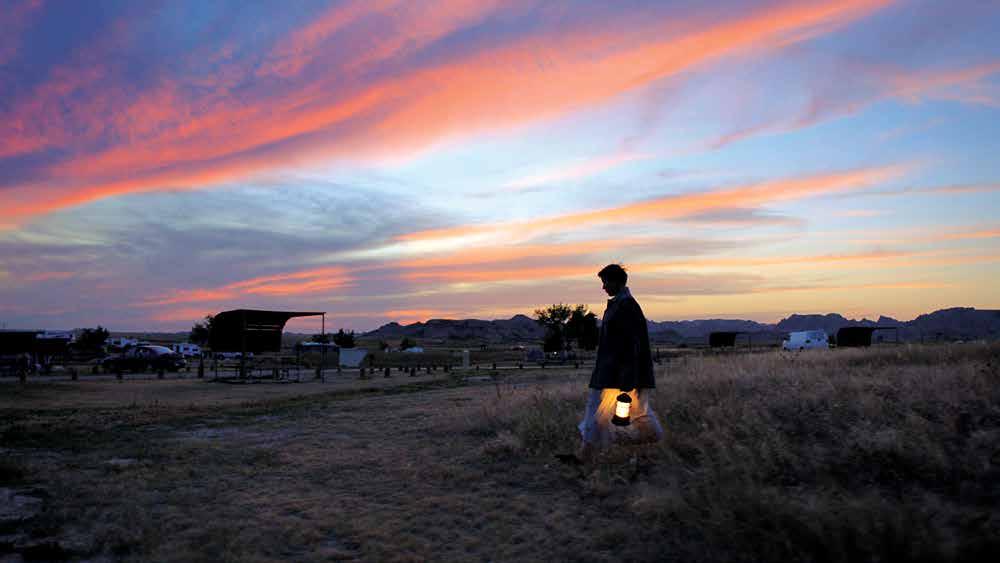
SEATTLE (Feb. 15, 2021) — The Seattle Film Critics Society (SFCS) announced the winners in 20 categories for [its 2020 awards today].
Chloé Zhao’s Nomadland proved the big winner this year, landing five awards, including Best Picture of the Year. The film, documenting one woman’s turn to a modern-day nomadic lifestyle following the 2008 economic recession, also earned Zhao the Best Director award and a win for Best Film Editing. Frances McDormand was named Best Actress in a Leading Role, while Joshua James Richards’ work behind the camera secured a win for Best Cinematography.
“As we continue to encounter challenges with COVID-19, movies have become more accessible to audiences. A movie like
Nomadland is as beautiful and emotionally resonant as any film in recent memory,” said SFCS President Erik Samdahl. “Nomadland highlights how, though we may be more physically apart from one another, a sense of community and knowing we are not alone in the world can bring us all together.”
Lee Isaac Chung’s Minari, a semiautobiographical drama about a Korean-American family’s pursuit of “The American Dream” in 1980s Arkansas, led all films with eight nominations, winning three SFCS awards: Best Film Not in the English Language, and Best Youth Performance, honoring 7-year-old Alan Kim’s role as David, the family’s youngest child often tasked with dealing with his eccentric grandmother, played by Best Supporting

Actress recipient Yuh-jung Youn.
Riz Ahmed was named Best Actor for his powerful work as Ruben in Sound of Metal, portraying a punk rock drummer forced to deal with the rapid onset of hearing loss and changes in his life he seemingly cannot control.
Daniel Kaluuya’s blistering work as civil rights activist Fred Hampton in Judas and the Black Messiah earned him the Best Supporting Actor prize.
Emerald Fennell’s Promising Young Woman earned the first-time writer-director the Best Screenplay award. Christopher Nolan’s Tenet earned two awards for Best Action Choreography and Best Visual Effects.
Jon Bois’ unique and innovative 220-minute YouTube documentary, The History of the Seattle Mariners: Supercut Edition, won the Best Documentary Feature prize. Bois’s collaboration with writer and producer Adam Rubenstein received wide acclaim from sports and non-sports fans alike.
Other winners include: Wolfwalkers, which won Best Animated Feature; Soul for Trent Reznor, Atticus Ross and Jon Batiste’s genre-bending original score; Da 5 Bloods for Best Ensemble Cast; Mank for Best Production Design; and Ma Rainey’s Black Bottom for Best Costume Design.
The Villain of the Year was awarded to the title character in The Invisible Man, portrayed (in human form) by Oliver Jackson-Cohen.
After formation in the fall of 2016, The Seattle Film Critics Society officially became a nonprofit organization in 2017, with a membership now consisting of 31 film critics, representing print, broadcast, podcasting, and online film criticism. This year’s awards are the fifth to be held under the banner of the SFCS, honoring the best films and performances of the year.
The full list of recipients of the 2020 Seattle Film Critics Society Awards are as follows:
• Best Picture of the Year: Nomadland (Searchlight Pictures)
• Best Director: Chloé Zhao - Nomadland
• Best Actor in a Leading Role: Riz Ahmed - Sound of Metal
• Best Actress in a Leading Role: Frances McDormand - Nomadland
• Best Actor in a Supporting Role: Daniel Kaluuya - Judas and the Black Messiah
• Best Actress in a Supporting Role: Yuhjung Youn - Minari
• Best Ensemble Cast: Da 5 Bloods - Kim Coleman, casting director
• Best Action Choreography: Tenet
• Best Screenplay: Promising Young Woman - Emerald Fennell
• Best Animated Feature: WolfwalkersTomm Moore, Ross Stewart, director
• Best Documentary Feature: The History of the Seattle Mariners: Supercut EditionJon Bois, director
• Best Film Not in the English Language: Minari - Lee Isaac Chung, director
• Best Cinematography: NomadlandJoshua James Richards
• Best Costume Design: Ma Rainey’s Black Bottom - Ann Roth
• Best Film Editing: Nomadland - Chloé Zhao
• Best Original Score: Soul - Trent Reznor, Atticus Ross, Jon Batiste
• Best Production Design: Mank - Donald Graham Burt (Production Design); Jan Pascale (Set Decorator)
• Best Visual Effects: Tenet - Andrew Jackson, Andrew Lockley, Scott Fisher, Mike Chambers
• Best Youth Performance (18 years of age or younger upon start of filming):: Alan Kim - Minari
• Villain of the Year: The Invisible Man/ Adrian Griffin - The Invisible Man - portrayed by Oliver Jackson-Cohen
Courtesy of the Seattle Film Critics Society
Alan Kim and Yuh-jung Youn in Minari – Photo courtesy of A24
Frances McDormand in Nomadland – Photo courtesy of Searchlight Pictures
Allyship - an organization of LGBTQ individuals fighting for economic and social justice. www.LGBTQAllyship. org, allyship@yahoo.com, (206) 279-8169. American Veterans for Equal Rights - www.aver.us
Another Gay Social Club! - www.meetup.com/AnotherGay-Social-Club/ Bellingham/Whatcom County - www.theslowlane. com/guide.html
BiNet Seattle is a mixed gender, social group for Bisexuals, their partners & other Bi-friendly folks - www. binetseattle.org.
Bremerton/Kitsap County - www.outwestsound.org Capitol Hill Alano Club - www.chacseattle.org
Cascade Rainbow Community Center (Mount Vernon) - (360) 840-8499 and on Facebook. Central Washington University GALA Hotline: (509) 963-1994.
Channel Q 103.3 FM - LGBTQ+ Talk Radio NetworkNews and information, pop culture and music. radio.com COLAGE unites people with LGBTQ parents and caregivers into a network of peers and supports them as they nurture and empower each other to be skilled, self-confident, and just leaders in our collective communities - www.colage.org
DIFFA/Northwest (Design Industries Foundation Fighting AIDS). (206) 763-8885; www.diffanorthwest. org
DOMESTIC VIOLENCE & SEXUAL ASSAULT: Crisis Clinic, (206) 461-3222 (24 hour line); King County Sexual Assault Resource Center (KCSARC) - 24-hour crisis line for information, support, & medical & legal assistance: 1-888-99-VOICE; Northwest Networksupport & advocacy for Bisexual, Trans, Lesbian & Gay Survivors of Abuse & Dating Violence, (206) 568-7777 (voice), 517-9670 (tty), www.nwnetwork.org; Pierce County Domestic Violence Helpline: Teresa, (253) 798-4166; Seattle Counseling Service for Sexual Minorities - offers on-going support groups for men: 323-1768; Seattle Police Dept Domestic Violence Unit, (206) 684-0330; State Wide Domestic Violence Hot Line, 1-800-562-6025. In an emergency call 911 Report domestic violence and sexual assault. Equal Rights Washington - (206) 324-2570; www. equalrightswashington.org
Everett/Snohomish Cty - www.gaysnohomish.org
Freely Speaking Toastmasters - www.freelyspeaking.org
Gay City promotes wellness in LGBTQ communities by providing health services, connecting people to resources, fostering arts, and building community. Gay City Health Project’s Wellness Center provides anonymous & confidential HIV/STD testing. 517 E Pike St. More info or to schedule an appointment, (206) 860-6969. www.gaycity.org
Gay & Lesbian National Hotline (GLNH): 1-888-THEGLNH (1-888-843-4564). Non-profit, peer-counseling, information & local resources telephone hotline for GLBT people across the country.
Generations Aging With Pride empowers elder LGBTQ adults to live with pride and dignity by promoting, connecting, and developing innovative programs and services that enhance belonging and support, eliminate discrimination, and honor the lives of older members of our community - (206) 393-3400; info@gapseattle.org; gapseattle.org
GLSEN/WA - Gay, Lesbian, Straight Education Network - (206) 330-2099; www.glsenwa.org
Greater Seattle Business Association (GSBA) - (206) 363-9188; www.thegsba.org
HIV/AIDS Program, Seattle/King County Dept of Public Health, provides confidential/anonymous information about & testing for HIV/AIDS. (206) 205-7837. For a comprehensive list of HIV/AIDS service organizations see the GSBA Guide or visit www.thegsba.org or call Lifelong AIDS Alliance, (206) 328-8979.
Imperial Sovereign Court of Seattle & the Olympic & Rainier Empire - www.facebook.com/ISCSORE; www. imperialcourtofseattle.com
Lambert House - (206) 322-2515; www.lamberthouse. org
LGBT Library - 517 E Pike St. Open Mon-Fri 2-8pm; Sat 2-5pm. A wide range of fiction and non-fiction for the LGBT community and allies can be borrowed free of charge.
LGBT MS Connection - (425) 785-8593; lgbtmsconnections@comcast.net. Support group for LGBT persons with MS and their partners and their caregivers. Sponsored by the National Multiple Sclerosis Society. Lifelong AIDS Alliance - (206) 328-8979, www.lifelongaids alliance.org Lion’s Main Art Collective - www.lionsmain.org
MEN: Gay City: (206) 860-6969, www.gaycity.org; Knights of Mantra: (206) 329-0886, www.jetchapterkofm.com; Mature Friends: Gay men & women 40 & over, www.maturefriends.org; Northwest Bears: www. nwbears.com; The Olympians: www.TheOlympians. net; POZSeattle: www.pozseattle.com; Q-Squared: www.qsquared.org; Rain City Jacks: www.raincityjacks. org; Seattle Gay Couples: www. seattlegaycouples.org; Seattle Men in Leather: www.seattlemeninleather. org; Seattle Prime Timers: Gay & Bi men 40 & over, www. seattle primetimers.org; Tacoma Older LGBT: www. tacomaolderlgbt.org. (See also listings under Bisexual, Parenthood, People of Color, Transgender.)
MUSIC: Diverse Harmony: www.diverseharmony. org; Rainbow City Band: 1-866-841-9139 ext 2126; rainbowcityband@onebox.com; www.rainbowcity band. com; Seattle Men’s Chorus and Seattle Women’s Chorus: (206) 388-1408, (206) 323-0750. www.seattlechoruses.org.
Northwest Lesbian & Gay History Museum Project - gayhistnw@aol.com
community resources
Northwest Rainbow Alliance for the Deaf - www. nwrad.org
Olympia/Thurston County - www.RainbowCenterOly. org
Out & Equal Workplace Advocates/Seattle Regional Affiliate supports the work of LGBT employees and the growing number of ERGs (Employee Resource Groups) making a difference within local companies, including Alaska Airlines, Amazon.com, Amgen, AT&T, Bank of America, Deloitte, Macy’s, Microsoft, Russell Investments, Safeco Insurance, Starbucks Coffee, Xerox. www.outandequal.org/affiliates/seattle
Out & Proud Grays Harbor Coalition - http://outandproudgh.org
PARENTHOOD: Families Like Ours provides a gateway for LGBT families interested in adoption & provides a network of safe placement agencies, training, support & resources: (206) 441-7602, www.familieslikeours. org; Family Works offers support, information & activities for LGBT families: (206) 694-6727, www.familyworksseattle. org; Gay Fathers’ Association of Seattle offers support groups & social activities: www.gfas. org; Proud & Loud Families - Northwest, www.meetup.com/proudand-loud-families-northwest, plfnorthwest@aol.com; Queer Parent Networking Dinners: (206) 568-7777, qpnd@nwnetwork.org, www.nwnetwork.org; Rainbow Families of Puget Sound: www.rainbowfamiliesps.org PFLAG is the national organization for parents, families, allies, and LGBTQ people united for equality with chapters in Seattle, Bellevue/Eastside, the Puget Sound region and across Washington state. PFLAG Seattle: (206) 325-7724, info@pflagseattle.org, and www.pflagseattle.org; PFLAG Bellevue/Eastside: (425) 483-6642, info@bellevue-pflag.org, http://community. pflag.org/PFLAGBellevue; PFLAG Pacific Northwest: www.pnwpflag.org; PFLAG Washington State Council: www.pflagwsc.org.
Peer Seattle (formerly Seattle Area Support Groups) is a non-profit organization that builds community and cultivates powerful, healthy lives by providing emotional support and personal development services to those affected by HIV/AIDS, the Queer communities, and those who love them. Our work is done in a spirit of safety, trust, inclusiveness, and celebration of individual differences. (206) 322-2437; www.peerseattle.org
PEOPLE OF COLOR: AARTH (African American Reach & Teach Health Ministry), (206) 850-2070, www.aarth.org; Asian/Pacific Islander Queer Network Program at API Chaya, (206) 467-9976; Center for MultiCultural Health, (206) 461-6910, www.multiculturalhealth.org; Entre Hermanos, GLBT Latinos/as, (206) 322-7700, www.entrehermanos.org; Ile LaiLai, (206) 781-3565, iya@ilelailai.org; Men of All Colors & Cultures Together (MACCT), (206) 923-8313, macctseattle@yahoo.com, www.macctsea.org; Northwest Two Spirit Society, https://www.facebook.com/ groups/nw2spiritsociety/, Nubian Pride Productions, nubianpride@gmail.com; People of Color Against AIDS Network (POCAAN) offers rapid HIV testing, M-F, 10am-5pm, (206) 322-7061, www.pocaan.org and on Facebook; QBASS - Queer Black Alliance of the South Sound, (253) 256-1846, weareqbass@gmail. com; Sistah 2 Sistah, LBT women of African descent, (206) 322-7061, (206) 255-8951; Somos Seattle, somosseattle.org; Trikone-Northwest, GLBT South Asians, (425) 985-4376, www.trikonenw.org; Two-Spirit Honor Project, 1-866-685-0164; U.T.O.P.I.A. Seattle, www.utopiaseattlewa.org; VietQ Greater Seattle, vietqorganization@gmail.com
Pierce County AIDS Foundation - (253) 383-2565; www.piercecountyaids.org
Pride Foundation - (206) 323-3318; www.pridefoundation. org
Pride Lives - www.facebook.com/PrideLives/ Pride Radio 93.3 HD2
Project NEON is a program of Seattle Counseling Service providing FREE information & services to Gay & Bi men to reduce health risks associated with methamphetamine use. (206) 323-1768. www.crystalneon.org
Public Health-Seattle & King County Online Comprehensive Health Information for Sexual Minorities: www.kingcounty.gov/healthservices/health/personal/ glbt.aspx
Q Law: The GLBT Bar Association of WA - (206) 682-6711; www.q-law.org
Q Law GLBT Legal Clinic - (206) 235-7235. Queer Geek! - queergeekseattle.org
Rainbow Center - Resource Center for Tacoma/Pierce County LGBTIQA community. Through education, advocacy and celebration, the Rainbow Center expands resources, and safe space for the LGBTQIA community.
Sponsors Tacoma Pride Festival. (253) 383-2318, www. rainbowcntr.org
SEAMEC interviews, researches & rates candidates for public office on issues of concern to the LGBT community. www.voteseamec.org
Seattle Area Support Groups & Community Center (SASG) i- SEE LISTING for Peer Seattle. Seattle Bisexual Women’s Network - BiSeattle.wixsite. com/SBWN and on Facebook.
Seattle Counseling Service for Sexual Minorities is a community mental health service for GLBT persons & their families providing comprehensive mental health services on a sliding scale. (206) 323-1768.
Seattle LGBTQ Commission - (206) 684-4503. www/ seattle.gov/lgbtq
Seattle Out & Proud - (206) 322-9561; www.seattlepride.org
Seattle Police Department Sexual Minorities Community Advisory Council: kim.bogucki@seattle.gov
Seattle PrideFest - www.seattlepridefest.org
Servicemembers Legal Defense Network - (202) 328-3244; www.sldn.org
Sex Workers Outreach Project - https://seattle. swopusa.org
Sisters of Perpetual Indulgence, The Abbey of St. Joan - (206) 860-3666; www.theabbey.org Snohomish Health District HIV/AIDS Program provides free confidential/anonymous HIV counseling & testing 9am-5pm Monday-Friday, until 7pm Tuesdays. (425) 339-5298.
South Sound Q Calendar - LGBTQ events in Tacoma, Olympia & Sound Puget Sound area; www.SouthSoundQCal.com Spokane/Inland Northwest - www.outspokane.com; www.stonewallnews.net
SPORTS & RECREATION: Bent Car Guys: www. bentcarguys.org; Border Riders Motorcycle Club: www.borderriders.com; Bottom Dwellers Scuba Club: www.bottomdwellers.org; Capitol Hill Cyclers: join their Facebook group or email capitolhillcycling@ groups.facebook.com or jordan.l.simonson@gmail.com; Cascade Flag Football: www.cascadeflagfootball.org; Cascade Flyers: www.cascadeflyers.org; Emerald City Mudhen Rugby: www.mudhenrugby.com; Emerald City Softball Association: www.emeraldcitysoftball. org, www.eteamz.com/womensecsa; Ethyl Forever Car Club: ethylforever@hotmail.com; Festival of the Babes: www.festivalofthebabes.com; Olympic Yacht Club: www.oycnw.org; OutVentures: outdoor education & recreation activities, www.outventures.org; Pacific Northwest Gay Rodeo Association: www.pacificnwgra.org; Puddletown Squares: www.puddletownsquares.org; Rain City Soccer: www.raincitysoccer.org; Rain Country Dance Association: a country-western dance organization catering to the LGBTQ community but open to all, www.raincountrydance.org; Sea Dawgs: LGBT ice hockey - SkateSeaDawgs@gmail.com and on Facebook; Seattle Frontrunners: www.seattlefrontrunners.org; Seattle Gay Basketball Association: www. seattlegaybasketballassociation.com; Seattle Orca Swim Team: www.orcaswimteam.org; Seattle Otters Water Polo: www.otterpolo.com; Seattle Quake Rugby: www.quakerugby.com; Seattle Tennis Alliance: www. seattletennisalliance.org; Seattle Unified Bowling Association (SUBA): magee98106@aol.com, www. teamseattle.org/bowling.htm, www.theprideleague. com, Century 21 League; Seattle Volleyball Club: www.seattlevolleyballclub.com; Ski Buddies: www. skibuddies.org; Team Seattle Gay Sports Network is an umbrella organization for a wide range of local GLBT sports activities, (206) 367-4064, www.teamseattle.org (see website for comprehensive list of sports clubs); Triangle Recreation Camp at Bender Creek: recreational camping for GLBT folks. Must be 21; ID required. trc@ camptrc.org, www.camptrc.org, 1122 E Pike St #1069, Seattle 98122-3934. Strength Over Speed - www.strengthoverspeed.org Tacoma/Pierce County - Rainbow Center, 2215 Pacific Ave, Tacoma, a resource center for the LGBTIQA community of Pierce County, (253) 383-2318, www. rainbowcntr.org
Three Dollar Bill Cinema - TWIST: Seattle Queer Film Festival; Translations: Seattle Transgender Film Festival; Outdoor Cinema at Cal Anderson Park. www. threedollarbillcinema.org
TRANSGENDER: Emerald City Social Club: (425) 827-9494; Gender Alliance of the South Sound: www. SouthSoundGender.com; Gender Diversity: www. genderdiversity.org; Gender Justice League: www.genderjusticeleague.org; Gender Odyssey: www.genderodyssey.com; Hermanos Trans Latino & Foreign-Born
Support Group: (206) 322-7700; Ingersoll Gender Center: (206) 329-6651, www.ingersollcenter.org; Lion’s Main Art Collective: www.lionsmain.org; The New BoyZ Club: www.olympiaftmgroup.webs.com; Olympia Trans Discussion Group: www.facebook.com/pages/ Olympia-Trans-Discussion-Group/262449878114; [trans] ACTION: Trans* & Gender Non-Conforming Sex Workers’ Support Group - a safe, peer-led space. mail@utopiaseattle.org; TRANSform Washington: transformwashington.com; Trans Resource & Referral Guide: kctransguide.org; Trans Women of Color Solidarity Network: Funding the collective liberation of Trans women of color – https://m.facebook.com/ TWOCSolidarityNW/; Washington Gender Alliance: (360) 445-2411, www.washington genderalliance.com
WOMEN: Aging Ballard Lesbian Exchange (A.B.L.E.): We are Lesbians 60 years (generally) and up, living (mostly) in the north half of Seattle. The purpose of the group is to connect, socialize and support each other. ruthemilyvogel@gmail.com; Aging Lesbians in South Seattle (ALISS) - Lesbian Group at the Southeast Seattle Senior Center. This is a gathering primarily for Lesbians but all are welcome to attend. Kate, (206) 722-0317; www.sessc.org; BABES: support groups for HIV+ women. (206) 720-5566, 1-888-292-1912; Coming Out Women Support Group of Tacoma: www. comingoutwomen.org; Festival of the Babes: www. festivalofthebabes.com; Mature Friends: Gay men & women 40 & over, www.maturefriends.org; Puget Sound Old Lesbian Organizing for Change: http:// psoloc.org, (253) 777-3357; Older Lesbians Organizing for Change/WA State Chapter: gloria@oloc.org, mary@oloc.org, www.oloc.org; Pacific Northwest Lesbian Archives: www.pnwlesbianarchives.org; RainshadowWomen: RainshadowWomen@aol. com; Seattle Bisexual Women’s Network: BiSeattle. wixsite.com/SBWN; Seattle Girls of Leather: www. sgol.org; Tacoma Lesbian Concern (TLC): www.tacomalesbianconcern.org; Tacoma Older LGBT: www. tacomaolderlgbt.org; Women of West Seattle (WOWS): a fun, member-driven social group for Lesbians, http:// groups.yahoo.com/group/womenofwestseattle; YWCA Women’s Health Outreach: providing low or no-cost mammograms for income eligible 40+ LBTQ individuals. Follow us at http://lbtqhealth-ywca.blogspot.com, twitter.com/ingridWHO or email lbthealth@ywcaworks. org, (206) 461-4493. (See also listings under Bisexual, Parenthood, People of Color, Transgender.)
YOUTH: B-GLAD (Bisexual, Gay, Lesbian, Trans & Questioning Adolescent Drop-In Group): Youth Eastside Services offers many programs for GLBT youth, including B-GLAD, (425) 747-4937; Coyote Central: www.coyotecentral.org; Diverse Harmony: www.diverseharmony. org; GLSEN/Washington State (Gay, Lesbian, Straight Education Network) & Washington State GSA (Gay-Straight Alliance) Network: GLSEN works to create safe schools for LGBT students. WA GSA Network supports youth-led GSA’s to fight harassment & homophobia in Washington state schools. (206) 330-2099; www.glsenwa. org; www.wagsa.org. GLOBE (GLBTQ Loving Ourselves, Becoming Empowered): a support group & HIV/STD prevention program for GLBTQ youth, 14-20, in Everett, (425) 263-2908, www. globeyouth.org; It Gets Better Project: www.itgetsbetter.org; Lambert House: an activities & resource center for LGBT youth, 14-22, 1818 15th Ave @ E Denny Way, with additional support groups organized in smaller towns throughout King County, (206) 322-2515, www. lamberthouse.org; Lifelong HEYO (Health Education Youth Outreach): for LGBTQ youth, ages 16-24: (206) 957-1665; www.llaa.org/HEYO; www.MatthewsPlace. com ; The Mockingbird Society: (206) 323-KIDS (5437), www.mockingbirdsociety.org; New Horizons: social services and shelter for homeless youth, 2708 3rd Ave (in Belltown), (206) 374-0866, http://namin.org; Oasis Youth Center: for GLBTQ youth, ages 14-25, in Tacoma, (253) 671-2838, www.oasisyouthcenter. org; OKAY! LGBTQ+ Outreach for Kent Area Youth: (253) 859-0699 ext 3034. OKAY! is an open support group for youth ages 13-19 who identify as LGBTQ+. A program of Kent Youth & Family Services; OUT There Adventures: www.outthereadventures.org; Parents, Family & Friends of Lesbians & Gays (PFLAG)/ Puget Sound: (206) 325-7724, www.seattle-pflag.org; Pizza Klatch: weekly lunchtime support groups for LGBTQ youth in Thurston County, www.pizzaklatch. org; Prism: for LGBTQ youth, 14-21, in PuyallupCherise.Alexander@ multicare.org; www.facebook. com/PuyallupPrism; Proud Out Wonderful (POW!): for LGBTQ youth, 13-21, in South King County, (206) 326-9112, www.facebook.com/proudoutwonderful; Q Youth Resources: in Kitsap County - (360) 698-3335; www.kchaf.org; Roots Young Adult Shelter: 1415 NE 43rd St., (206) 632-1635; www.rootsinfo.org; Safe Schools Coalition: www.safeschoolscoalition.org; (206) 451-SAFE, (206) 451-7233 (non-emergency), 1-877-SAFE-SAFE (1-877-723-3723) (crisis line); Seattle Young People’s Project (Queer Youth Resource Board): (206) 860-9606, www.sypp.org; Street Youth Ministries (SYM): (206) 524-7301 ext 111; www. streetyouthministries.org; Teen Link: (206) 461-4922, 1-888-431-TEEN; The Trevor Project: 866-4-U-Trevor; www.thetrevorproject.org; True Colors - Connecting LGBTQ Teens: in Shoreline, (206) 362-7282 x 8018, lbagley@chs-nw.org; The Vera Project: fuels personal & community transformation through collaborative youthdriven engagement in music and art. (206) 956-8372; theveraproject.org; Vista Youth Center: for LGBTQ, questioning and allied youth, ages 14-21, in Kennewick, (509) 396-5198, www.vistayouthcenter.org; YouthCare/ Isis Program (Transitional Living Home for LGBTQ Young Adults, 18-22): (206) 522-8412; YouthCare/ Orion Center Young Adult Shelter: 1828 Yale Ave @ Stewart St. (206) 622-5555; Youth in Focus: (206) 723-1479; www.youthinfocus.org; Youth Suicide Prevention Program (OUTLoud-GLBTQ): (206) 297-5922, ext 116, 1-800-273-TALK, www.yspp.org
ARTS
Seattle Art Museum presents Jacob Lawrence: The American Struggle
SEATTLE (Feb. 16, 2021) – The Seattle Art Museum (SAM) presents Jacob Lawrence: The American Struggle (March 5–May 23, 2021), reuniting the artist’s revolutionary 30-panel series Struggle: From the History of the American People (1954–56) for the first time since 1958. This is the only West Coast stop of the exhibition’s five-city national tour.
Created during the civil rights era by one of the greatest narrative artists of the 20th century, the series depicts pivotal moments in early American history, with an emphasis on the experiences of Black people, Native Americans, and women. New work created for the exhibition by Derrick Adams, Bethany Collins, and Hank Willis Thomas reinforce the timeliness of Struggle by engaging themes such as democracy, justice, truth, and the politics of inclusion.
Reunited for the first time in more than 60 years, the Struggle series brings American history to life through energetic, expressive paintings that explore the boundary between figuration and abstraction. For this reunion, 26 of the Struggle paintings are accounted for, including one, Panel 16, which was discovered only recently while the exhibition was on view at the Metropolitan Museum of Art in New York. Four panels still remain unlocated; of these, the known works are presented alongside reproductions of the missing paintings, as well as those too fragile to travel.
Lawrence’s visual style conveys the physical, emotional, and ideological struggles inherent to the country’s founding. He saw American history as a complex shared experience and his paintings sought to create a broader, more encompassing narrative that celebrated prominent historical figures alongside those unsung and underrepresented. The American Struggle presents Lawrence’s paintings in dialogue with new work by contemporary artists Derrick Adams, Bethany Collins, and Hank Willis Thomas; their work, also informed by deep engagement with historical research, powerfully asserts that America’s struggles continue in earnest today.
Born in 1917, Lawrence broke through the color line of New York’s segregated art world when, at the age of 23, he created the Migration Series, a historical narrative of the Great Migration that was instantly recognized as a masterpiece and became the first work by a Black artist to be acquired by the Museum of Modern Art. The series was exhibited at SAM from January 21 through April 23, 2017; the museum welcomed over 10,000 visitors during its three-day free opening weekend alone.
“Lawrence’s Migration Series opened at SAM the day after the 2017 presidential inauguration, and its message of determination in the historic fight for racial justice proved especially relevant for our audiences at the time,” says Theresa Papanikolas, Ann M. Barwick Curator of American Art. “Today, we present Struggle at another watershed moment, as the fight for justice gains urgency. Exploring and revealing history’s resonance in the present is one of Lawrence’s great strengths as an artist. In centering not just the history’s heroes but a variety of participants in the narratives that make up our nation’s story, he reminds us that the struggle for freedom belongs to all of us.”
Inspiration and Process
Jacob Lawrence (1917–2000) was one of the most prominent and celebrated Black artists of the 20th century. His artistic training was fostered by the luminaries of the Harlem Renaissance and inspired by the stories he heard from elders about the abolitionist movement, Black heroes, and familial struggles. Because of the lack of Black his-
We have
property!
tory taught in American schools, Lawrence chose in his early work to depict iconic figures like abolitionists Frederick Douglass and Harriet Tubman. With a style that was expressive and symbolic in form, Lawrence combined realism and abstraction to create pared down compositions brimming with vitality and graphic strength. Lawrence went on to create compelling, often metaphorical stories of the Black experience and the history of the United States.
A Revolutionary Story
By mid-century, Lawrence had perfected his narrative invention of using modestly scaled panels to tell a sweeping epic. In 1949, the national political climate was fraught, freedoms were under threat, and the civil rights movement was gaining momentum. In this context, Lawrence began his research for Struggle: From the History of the American People, a narrative that sought to visualize a more complete — and more complex — version of American history. His goal was to “depict the struggles of a people to create a nation and their attempt to build a democracy.” Lawrence spent countless hours at the 135th Street branch of the New York Public Library (now the Schomburg Center for Black Research and Culture) in Harlem, poring over historical texts that included firstperson accounts, letters, and coded messages from individuals on all sides of the American Revolution. For more than five years, he read and researched, and then, in May 1954, just as the Supreme Court ruled to desegregate
American schools, he began to paint.
Lawrence’s often-lengthy captions that accompany the panels in the Struggle series feature excerpts from famous speeches as well as reports, letters, and petitions from anonymous soldiers and enslaved people. Panel 8 depicts the image of clashing soldiers in the Battle of Bennington in 1777, accompanied by the caption “...again the rebels rushed furiously on our men,” which is from an account written by a Hessian mercenary (German soldiers who served as auxiliaries to the British Army). The viewer is left to consider the fate of the Hessians, as well as the fate of other mercenaries, such as Black soldiers who fought in the war. Ironically, after the war, the Hessian soldiers would be granted citizenship long before the descendants of Black people who fought and died in the American Revolution.
The Struggle Continues
The struggle for democracy is as relevant today as it was during Lawrence’s life. Artists Hank Willis Thomas (b. 1976), Bethany Collins (b. 1983), and Derrick Adams (b. 1970) add their contemporary perspectives to the exhibition through the presentation of recent work.
Hank Willis Thomas excerpts images from the vast visual archive of history and reproduces them in new ways. By combining historical research with technological processes, he pushes the boundaries of photography. Visitors can take flash photography of Turbulence (2018) and My Father Died for
this Country Too / I Am an American Also (2017) on their cell phone cameras to illuminate images that are “hidden” beneath the surface, such as a protester resisting arrest in Alabama and a demonstration at a “whitesonly” beach in Florida. For Rich Black Specimen #460 (2017), Thomas used archival “runaway slave” advertisements to create a dynamic, larger-than-life, three-dimensional version that injects personhood into the otherwise cruelly anonymous form.
Between the 18th and 20th centuries, American songwriters rewrote the lyrics to the melody of “My Country ‘Tis of Thee” (also called “America”) in support of varying American causes, including revolution, temperance, suffrage, abolition, Native sovereignty, and slavery. Bethany Collins’s America: A Hymnal (2017) is a laser-cut special-edition artist book that unifies 100 versions of the song to show how words and meanings change over time. As the laser cut pages of this book are turned, the work is gradually destroyed. An a cappella recording of the hymns being sung accompanies this installation.
Derrick Adams’ video, Saints March (2017), pays homage to past and present cultural influencers of New Orleans, capturing the footwork of local dancers who use Decatur Street as their stage. As Lawrence did in the Struggle series, Adams plays with vantage points, zooming in and out to create portals that energize and transport us to see the past, present, and future anew through the motions of others. For his mixed-media installation, Jacob’s Ladder (2020), Adams imagines Lawrence’s studio as a quiet selfreflection space by using materials from Lawrence’s personal archive, such as the artist’s photographs and armchair. Referencing the biblical story, a ladder ascends directly from the chair to Adams’ original portrait of the elder artist. To Adams, this artistic homage represents, “the continuous progression of Lawrence’s life journey and the most magnificent manner in which he expressed his ideas and vision.”
The 31st Panel SAM’s presentation of The American Struggle will include a gallery dedicated to art by today’s youth imagining the “31st panel” of Lawrence’s series. Twelve works will be on view, all by artists between the ages of 13 and 21 who were invited by SAM to submit artwork considering the themes of the series and depicting the contemporary and ongoing American struggle. Submissions were reviewed by SAM’s Teen Arts Group, an intensive program for high school–aged youth who are interested in leadership and want to make SAM fun and engaging for teens.
Exhibition Organization and Support Jacob Lawrence: The American Struggle is organized by the Peabody Essex Museum, Salem, Massachusetts. It is cocurated by Elizabeth Hutton Turner, professor of modern art at the University of Virginia; and Austen Barron Bailly, formerly Peabody Essex Museum (PEM)’s curator of American art, with support from Lydia Gordon, PEM’s associate curator of exhibitions and research. This project is supported in part by the National Endowment for the Arts.
• Presenting Sponsor: Microsoft
• Lead Sponsor: Boeing
• Supporting Sponsor: Baird
• Generous Support: Bette and David Sprague Exhibition Endowment
Courtesy of the Seattle Art Museum
no
We have no wives! No children! We have no city! No country! —petition of many slaves, 1773, Panel 5, 1955, Jacob Lawrence, from Struggle: From the History of the American People, 1954–56, Collection of Harvey and Harvey-Ann Ross, © 2019 The Jacob and Gwendolyn Knight Lawrence Foundation, Seattle / Artists Rights Society (ARS), New York.





U CALL WE HAUL
Construction Sites, Basements, Garages, Dirt, Wood, Concrete, Junk Removals, Washing Machines, Dryers, Stoves, Etc. Tidy, (206) 354-8949
JOANN’S NEAT & SWEET CLEANING
Our Crew Is Reliable & Trustworthy. Remember, Neat Is The Way To Go. (206) 841-7339 (Office) (206) 399-3281 (Cellular)
34/6
HANDYMAN SERVICES
Fences, Decks, Drywall, Painting & Repair, ETC. 25 Years Experience. References Available. 206-935-6730.
37/6