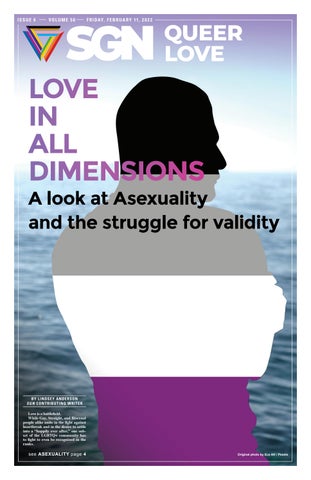
LOVE IN ALL DIMENSIONS A look at Asexuality and the struggle for validity QUEER LOVE
BY LINDSEY ANDERSON SGN CONTRIBUTING WRITER
Love is a battlefield.
While Gay, Straight, a nd Bisexual people alike unite in the fight against heartbreak and in the desire to settle into a “happily ever after,” one subset of the LGBTQ+ community ha s to fight to even be recognized in the ranks.
QUEER LOVE
“Asexuals have been fighting for visibility within the community for 40 years,” said Aubri Lancaster, an Asexual sex educator.
“The problems of ma rginalization of asexuality come in a few di fferent forms,” La ncaster explained. The most basic form ma rginalization is rooted in the fact that ma ny fa il to understand what asexuality is Just as humans tend to do when they don’t understand something, ma ny pretend that it doesn’t exist.
“So, in the sense of the frameworks of sexual or ientation, we don’t ex ist,” La ncaster explained. “You k now, we’re the ‘A,’ so we have to define ou rselves in ter ms of the frameworks available to us today. So, in the sexual or ientation framework that asks, ‘W ho are you at tracted to?’ ou r answer is ‘no one.’”
What is Asexuality?
Asexuality is much more complex than just a lack of sexual at traction. According to Lancaster, the label “Asexual” can work as both an or ientation and an identity. As an or ientation, asexuality is simple it is the absence of attraction.
However, as an identity, it is complex. “T here are also people who consider it as an identity more so than an or ientation, because it is, for them, [more] about their lifestyle and their relationship to sex… than their relationship to at traction,” La ncaster sa id. “So it ca n be a little bit of both.”
At traction ca n be separated into two different forms: romantic and sexual. One who does not feel a sexual desire for ot hers but does experience romantic attraction would ty pically be considered Asexual (or Ace). On the ot her ha nd, one who fe els sexual at traction but do es not have the desire to form romantic connections or at tractions with others would be Aromantic (or Aro).
Someone who experiences sexual attraction at a ny level would be considered “Allosexual” (or Allo) just as someone who does experience romantic at traction would be considered “A lloromantic.”
“I am Al loromantic, so I do experience romantic attraction, but I do not experience sexual attraction,” La ncaster added.
“Romantic at traction is a ki nd of li merence,” La ncaster explained. “It’s about feeling a need for reciprocation of feelings and love. So, you can have a long-term relationship of either a platonic nature or a coupled nature or a multirelation, and it ca n build into a ki nd of love that we ca ll ‘a ffection-
As an orientation, Asexuality is simple — it is the absence of attraction. However, as an identity, it is complex.
ate bonding,’ a nd that doesn’t have to come th rough the experience of li merence. You ca n grow to love someone without going th rough that per iod of falling in love.”
For some members of the Asexual community, sex ca n st ill be enjoyed and even desired. Th is is because asexuality, li ke any other identity, exists on a spectrum.
“Of course, there’s going to be [places] in between,” said Lancaster. “Some people will experience sexual attraction but either rarely or only under cer tain specific conditions. Demisexuality is somebody who experiences sexual attraction only after an emotional connection has been made. So, they need to have an emotional bond with somebody to experience sexual attraction, [though] an emotional connection does not guarantee sexual attraction. Similarly, some people need intellectual attraction to experience sexual attrition that’s sapiosexuality.”
Often people who identify as somewhere along the sp ectrum of Asexual to Al losexual fall under the umbrella term “Greysexual.” Wh ile some may find these labels confusing, they’re a va luable way for people to communicate their needs a nd boundaries and find community.
For someone li ke La ncaster, who identifies sp ecifically as Asexual, dating, love, and romance are cer tainly not off the table, even if sexual attraction is However, discovering her identity and learning how to communicate her preferences was not a n easy journey. “As a n A lloromantic Asexual, I spent a lot of time when I was young not understanding any of it and just falling for different people in a typical way. It wasn’t until t he relationship moved on beyond the falling-in-love stage and into ‘how are we going to continue to have th is relationship,’ what’s going to be involved, and the expectations of sex around that that I started to h it difficulties.”
Amatonormativity
Societal expectations around sex and love exposed a gap for people li ke La ncaster, who felt love and at traction but did not necessarily connect those fe elings to sex. “We put a lot of emphasis in ou r society on
romantic sexual relationships,” she sa id. “T here’s a term for that. It’s called ‘amatonormativity.’”
Amatonormativity is a ter m coined by Elizabeth Brake, professor of philosophy at Rice University. “It says that our society creates a hierarchical structure that pr ioritizes sexual and romantic relationships over all others and assumes that everybody wants a sexual and romantic relationship, and to have a happy and healthy life you need to have that, and it needs to be exclusive and monogamous,” Lancaster explained.
Brake’s social theory elaborates on the idea that society va lues romantic and sexual relationships so much that platonic relationships are of ten overlooked and undervalued for their importance for ou r mental health and well-being.
“The assumption t hat valuable relationships must be marital or a morous devalues fr iendships and ot her ca ring relationships, as re cent ma nifestos by urban tr ibalists, quirkyalones, polyamorists, and Asexuals have insisted. Amatonormativity prompts the sa crifice of ot her relationships to romantic love and ma rriage and relegates fr iendship a nd solitudinousness to cultural invisibility,” Brake says.
Brake built her philosophy on the foundation of the widely accepted idea of heteronormativity the assumption that all people are straight until proven otherwise, typically by coming out. “Amatonormativity overlaps with heteronormativity,” said Brake. “Like heteronormativity, it can be found throughout social life, and it can be understood concerning other systems of oppression, for example, in its relation to gender roles.
“Heteronormativity ca n be understood by considering what counts as violating it: the subversion of gender roles or displays of same-sex sexuality. Violations of a matonormativity would include dining a lone by choice, put ting fr iendship above romance, bri nging a fr iend to a formal event or attending alone, cohabiting with fr iends, or not searching for romance.”
La ncaster experienced amatonormativity firsthand. “I was ma rried for seven years to my ex-husband, a nd we had very different
levels of sexual desire,” she sa id. “It was a lot of pressure and a lot of feeling broken. So, when I got out of that relationship, I de cided I wa nted to find somebody that was tr uly intellectually compatible with me before I let my heart fall in love with them. And to put it out there that sex is not the most important th ing for me.”
Ace dating
After her divorce, Lancaster entered the dating world again. This time, she was more aware of what she was looking for. “You can fall in love with somebody without wanting to have sex with them,” she said.
However, she added, “I am sex favorable, wh ich mea ns that I am open to the idea of sex, basically for f un a nd as a way to bond and be emotionally close. It feels good, but I don’t need it, and my idea of frequent is not ‘typical.’”
Wh ile there is no “r ight” way for Asexual people to meet and date, Lancaster suggests using dating apps that center on personality instead of more superficial swiping apps li ke Tinder and Gr indr.
“I found my [current] husband on OkCupid, and I made sure that I found somebody that I matched with intellectually, so when I was sure that I had that kind of match, I was able to kind of let myself fall in love,” she says.
Lancaster, like many other members of the Ace community, is in a relationship with an Allosexual pa rtner. She says relationships with Allosexuals can work, but both parties need to communicate their needs.
“It’s important to be able to understand that you don’t owe your pa rtner sex, ever. Relationship dynamics are di fferent from person to person, but finding other ways to connect that don’t center sex in the relationship is important. Some people are going to be more receptive to that than ot hers. It ca n be an emotional conversation or several conversations,” she sa id.
As fa r as dating advice go es, La ncaster is aware that dating for Ace and Aro people ca n be di fficult. For one, there are no good Ace dating apps on t he market at t he moment. “Most are just full of bots,” La ncaster sa id. “Honestly, people dismiss it, but I swear by OkCupid. I met my husband there 13 years ago,” she laughed.
Wh ile OkCupid is La ncaster’s app of choice, she says there are specific steps Asexual people should ta ke when using the app. “The biggest thing is you need to answer at least 500 questions, if not more, and only look at other people who have also answered 500 questions and have a 90% match rating, otherwise don’t tr y and have a relationship with somebody that you haven’t
Original Photo by Euvgene PH / Pexels
The main issue Asexual people face when trying to assimilate into the LGBTQ+ community is the hypersexualization that comes with Queer pride. It can be hard to fit into a group that unites over sexual preference when you, yourself, do not have one.
had the chance to vet,” she said. “And only respond to personalized messages. If it could be copied and pasted, delete it. It’s spam.”
The most important dating tip she has for any circumstance, either on line or in real life, is to “be up-front and honest about your or ientation, because if that’s a deal breaker, let them weed themselves out. You deserve somebody who will see your asexuality as a feature, not a challenge.”
La ncaster a lso suggests doing some selfreflection to figure out how you feel attraction outside of amatonormativity. “Because it is assumed that sexual at traction and romantic attraction are inseparable, a lot of people wi ll sp end their li fe li ke I did, not realizing that they’re Asexual because they don’t know that those th ings ca n be separate for some people. So, it is an issue of the amatonormativity, compulsory sexuality, and society telling us t hat to be human we have to experience sex and love.”
Allyship and mental health
For people who want to be a better ally to Asexuals, reframing the way we view romantic relationships and attraction as pillars of adulthood and humanity is a good start.
“Being able to step back and recognize that there are aspects of these experiences that we don’t share and being able to visualize what a happy and healthy li fe might look li ke without those th ings is a major challenge,” sa id La ncaster. “It is a huge cause of st ress for Asexual and Aromantic people, and, according to the Trevor Project, Asexual people have a higher suicide rate than any other or ientation.”
The statistics about asexuality and mental health are staggering. One of the reasons it ca n be so hard for Asexual people to come
out is a lack of acceptance a nd understanding, both from heterosexual and LGBTQ+ communities.
“I find that there are a couple of major responses that I’ll get. Either people wi ll have an alternative suggestion as to a reason [for my asexuality], such as a hormonal problem, low libido, or sexual dysfunction, or they’ll wa nt to fix it,” La ncaster sa id.
Being viewed as a problem instead of validated for their identity causes extreme stress and negativity for ma ny. “T hey dismiss asexuality as a potential option for themselves or others based on past experiences that don’t necessarily have anything to do with attraction. So, they will assume that if somebody has had sex or enjoyed sex that they can’t be Asexual. And that’s not true.”
Labels
Another issue younger Asexual people face is a war against labels. “There are people who worry that taking on a label, especially the younger generation, will prevent them from exploring their sexuality and relationship options. But the truth is, labels are tools. They are tools to help us communicate our needs and boundaries and find community.”
Often people are averse to labels because they se e them as per manent, but as communities, especially Queer ones, begin to accept fluidity, th is notion is also changing.
“We know labels ca n change; we don’t need to be reminded that they ca n change, be cause we realized they could change the mi nute we realized we were Asexual. Because in a heteronormative society, we are assumed to be heterosexual until proven ot herwise. Ta king on an Asexual label is al ready a change.
“Taking on microlabels that help us
to di fferentiate ou r sp ecific relationship with sex and find communities within the [wider] community is valid. When it comes to labels, the best th ing a person ca n do is lean in and fig ure out what it is that that label is helping that person communicate about their needs.”
Intersectionality
Another issue Asexual people face is in the intersections of their identities. Because sexuality is of ten ascribed to people and assumed by ot hers, it ca n be ha rder for some people to identify as Asexual.
“T he intersectionality of people of color, who are of ten oversexualized or desexualized depending on what stereotypes apply to them and their cu lture, adds another layer to the di fficulty [of identifying] as Asexual. You have to translate it th rough a Western, heteronormative, wh ite perspective that a lot of these th ings are in itially presented th rough.”
Because sex a nd sexuality a re often associated with maturity, Asexual people sometimes have to fig ht against in fantilizing stereotypes. “Asexual people a nd A romantic people are in fantilized a lot in general. Once again, it’s forgotten a nd ignored t hat attraction does not equal action. We’re still adults, we still have adult experiences, a nd our relationship to sex does not define that,” La ncaster sa id.
In fantilization impacts more than just the Asexual community. Often people with disabilities and neurodiverse people face si milar issues. Embracing sexuality ca n be a way disabled people fight these stereotypes, but for disabled people who are Asexual, it ca n be ha rd to distinguish one identity from the other.
“Disabled pe ople are of ten desexualized, and I’ve even heard that issue referred to as assuming disabled people are Asexual. The problem is, some disabled people are Asexual, and disabled people who are Asexual have to fight the [desexualizing] st ereotypes that are placed up on them,” La ncaster explained.
In the Queer community
Despite “LGBTQ+” functioning as an umbrella term that includes asexuality, many feel excluded from Queer spaces as well.
“Suggesting that Asexuals are going to sterilize a Queer space of all sexual content is just not tr ue,” La ncaster sa id. “A nd to say that Queer communities are only about sex is also not tr ue. There’s a lot of overlap that ca n work for both groups.”
The ma in issue As exual pe ople fa ce when trying to assimilate into the LGBTQ+ community is the hy persexualization that comes with Queer pr ide. It ca n be ha rd to fit into a group that un ites over sexual preference when you, yourself, do not have one.
“T here’s, of course, the oversexualization of pe ople in Queer communities. I know some Asexual Gay men who ta lk about being dismissed in their Gay identity because of their asexuality,” Lancaster said. There is also the issue of st raight-passing couples excluded f rom Queer spaces, which La ncaster ca n attest to “[Some couples] are told that if you a re cisgender a nd heteroromantic and Asexual, or cisgender heterosexual and Aromantic, that those cis and hetero aspects preclude you f rom the community, without understanding that there is still a different experience of sexuality and romance that tr uly queers the nature of sex and romance in a la rger scope.”
For Asexuals, love, romance, connection, and community are boundless and do not necessarily require sex or a matonormative relationships.
“We have to break outside of that boundary and that box that they have created for all of society and say some of us don’t want those things,” Lancaster said. “Some of us value platonic relationships equally, and there can be relationships that are perfectly happy and fulfilling without sex or romance.”
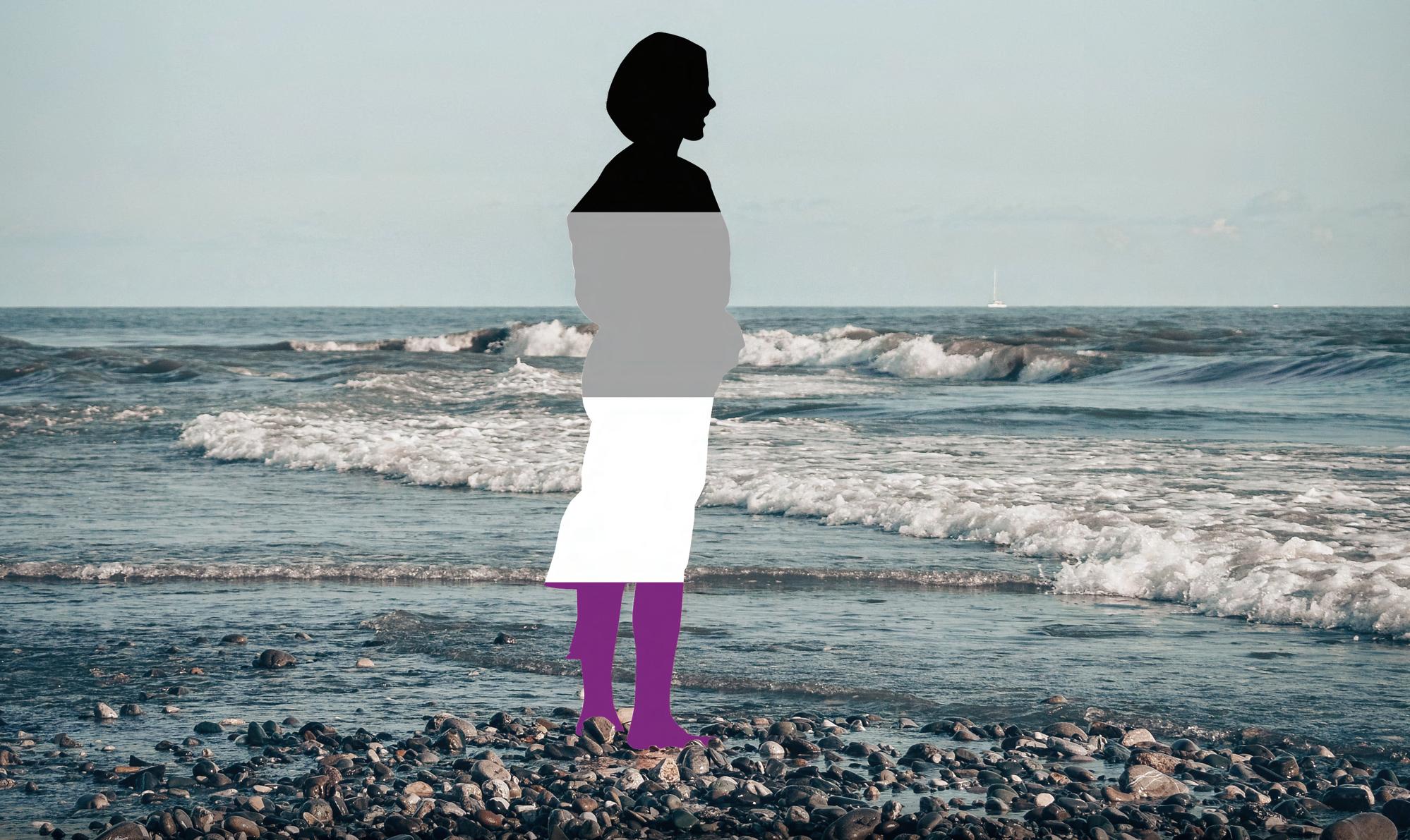
Original photo by Pavel Danilyuk / Pexels
QUEER LOVE
ALL THAT YOU DESIRE AND MORE Spend Valentine's Day weekend with your one true love — food
BY KYLIN BROWN SGN CONTRIBUTING WRITER
Some say food is love. Some don’t, but they probably should. This Valentine’s Day weekend, Seattle’s eateries are buttoning up to get you unbuttoned in satiated bliss and nothing gets pants off faster than a romantic meal!
Whether you’re ta king someone out or ordering in for a “self-love Sunday,” upgrade your V-Day weekend with these LGBTQ+ restaurants’ special offers and events.
Wildrose’s brunch show
an Afternoon Delight
On Saturday, Feb. 12, at noon, enjoy a romantic th ree-course brunch from “h igh femme Queer” cook Andrew J. Montaño of High Femme Foods. Dining at Wildrose is a ra re opportunity, and the ba r, known for its shows and dr inks, wi ll be supplement the meal with live bu rlesque performances and champagne ser vice. Per formers wi ll include Moonyeka, Velicity Dior Black, Porcelain, Nox Falls, and DJ Toya B, so you’re su re to be delighted. Tickets are $60 per person; two-person and four-person tables ca n be reserved. Fi nd tickets at https://bit.ly/336eCIK.
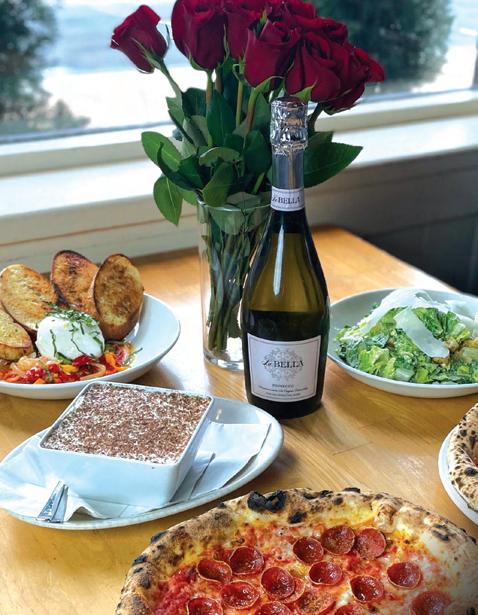
Date the chef at Tutta Bella It alian comfort-food sp ecialist Tutta Bella has locations th roughout Seattle and in Issaquah, and all of them will be ser ving a four-course evening mea l for Va lentine’s Day st arting on Fr iday night. Get st arted with an indulgent bu rrata ap eritivo, followed by a classic Caesar, your choice of two pizzettas, and their renowned ti ramisu, served with an optional bottle of La Bella Prosecco. Book your reservation on line at www.tuttabella.com/reservations.
Hawaiian desserts to marinate in your mouth
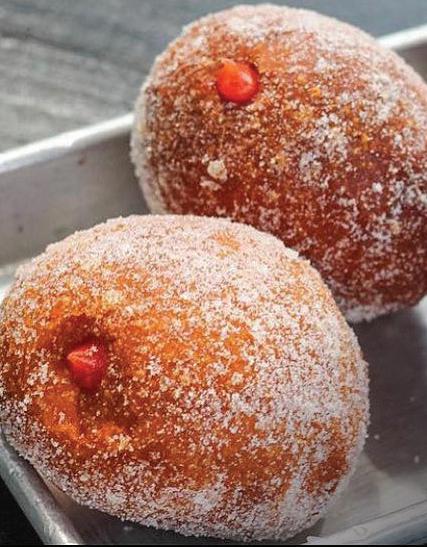
Marination LLC is ru nning a round-up of li mited dessert offerings at their awardwinning eateries th is we ekend. On Su nday, they’ll be offering Ba nana Ma lasadas at Ma rination Ma Ka i in West Seattle and sl ices of chocolate macadamia Swiss rolls at Super Six in Columbia City.
Keep your heart healthy at Café Flora
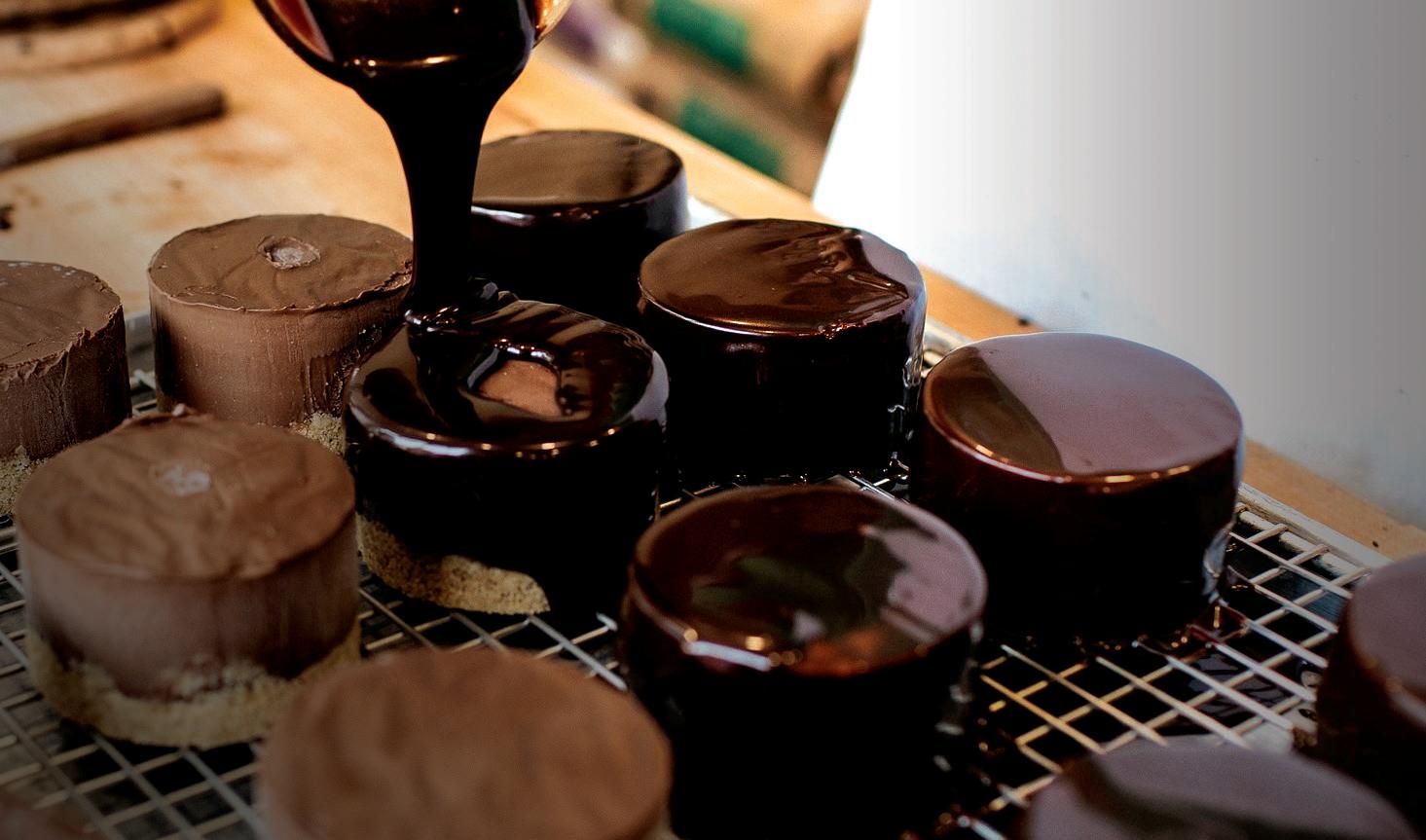
Trans-owned favorite Café Flora is set to inspire true love this Sunday with its vegan, gluten-free, four-course dinner spread. From starter to dessert, the restaurant is dishing out unprecedented creations that can only be experienced at this Valentine’s Day dinner.
The prix fixe menu is also available for preordered pickup to enjoy at home. Find Cafe Flora’s full Valentine’s Day menu details at ca feflora.com/valentines-day-home-2/ or make a reservation at (206) 325-9100.
Whether you’re taking someone out or ordering in for a “self-love Sunday,” upgrade your V-Day weekend with these LGBTQ+ restaurants’ special offers and events.
Night market and chill?
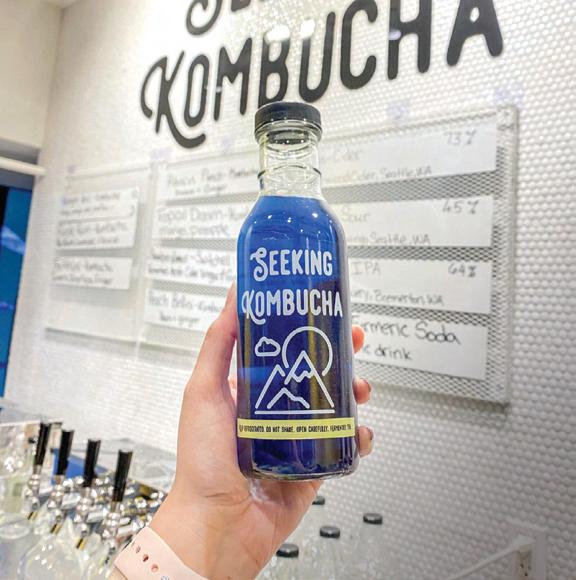
A suggested donation of $10 will get you into the Se eking Kombucha taproom for a Va lentine’s Day Night Ma rket tonight (Friday) from 4 to 8 p.m. Vendors such as Healthy Creations pat isserie, tea-infused ice cream pop-up Mi lk + Leaf Col lective,
11, 2022
and Malaysian pop-up expert Masakan will serve up their creations, alongside local a rtists such as Deycha Nhtae and Boma Jewelry. Tap into th is event at 1091 Thomas St., Suite A, in South Lake Union.
“All happiness depends on a leisurely breakfast”
This John Gunther quote lives in the heart of (hungover) br unch-goers across Seattle. That’s why Saint John’s Eatery said, “We’re op ening ou r doors, nothing crazy,” when asked ab out what they’re doing for th is year’s lovers’ day. Their usual menu should suffice, if hot biscuits and gravy are all your heart desires.
Anti-Valentine’s si ngles and la zy daters, rejoice. It’s time for us to support our favorite LGBTQ-owned business by celebrating business as usual. I’ve made the ca lls for you, and it seems ma ny ot her eateries are operating normally th is weekend.
Un less you feel as intrigued by “chocolate tower for two” on Ca fe Flora’s V-Day menu as I do They may never ser ve it again. So don’t be af raid to get out there! Good food will always love you back.
Cafe Flora
Marination Ma Kai
St. John’s
Seeking Kombucha
Tutta Bella
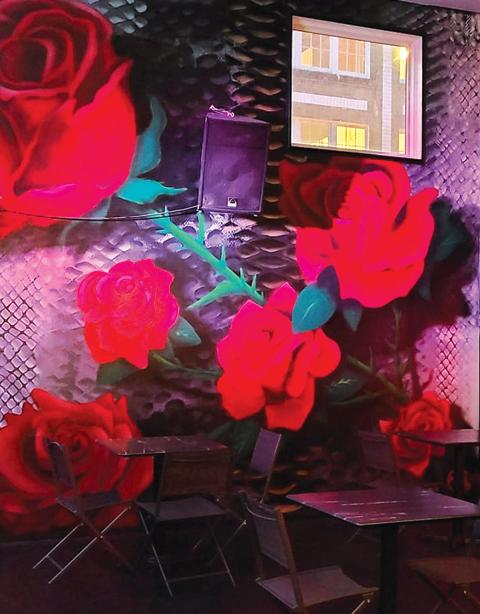
Wildrose
LOOKING FOR LOVE IN THE EMERALD CITY
BY NICK RAPP SGN CONTRIBUTING WRITER
Dating in Seattle isn’t the easiest. Be it ra in, sprawl, general social coldness, or the looming presence of te ch monotony, the city does not quite lend itself to meet-cutes. Add the pandemic to the mix and it seems the only reliable way to meet others right now is on the apps. Then you have to deal with users predominantly boredom-swiping with no intention of actually reaching out, conflicting preferences for online versus inperson interaction, and the inevitable graveyard of dating-app matches because of it all.
Then, if you do decide to reach out or respond, so often the only ideas that come to mind are grabbing coffee, getting drinks, or going for a walk. Not that any of these are bad options! But if you’re searching for some plans to shake things up, look no further than this personally biased and incredibly random list of (probably, hopefully) relatively low-cost and free activities to suggest to a new flame.
Southgate Roller Rink
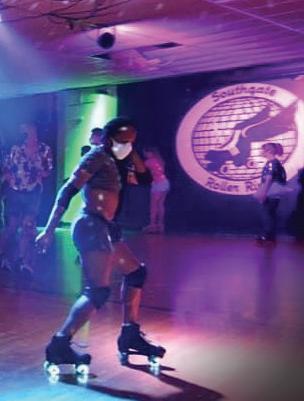
At 9646 17th Ave. SW lies a n inconspicuous building with a shockingly shiny i nterior and the promise of fun, regardless of experience level.
The Southgate Roller Ri nk fe els li ke a relic of the past reminiscent of sharing a m ilkshake with two straws or coyly twirling the cord of a la ndline. Plus, roller skating fe els li ke a queerer version of a romcom ice skating date. Or maybe I’m just Gay a nd like to roller skate.
Either way, the space is pe rfect for embarrassing yourself at just the right level in front of a new person. Also, Southgate ha s a skate-in ba r at the back, wh ich is novel (a nd also seems li ke a liability!).
The r ink has different events every night of the week, with va rying pr ices for rentals and entry. I would recommend the Wednesday “21+ LGBTQIA+ Pr ide Skate Night,” obviously because this is the SGN, but also be cause there are fewer kids zigzagging around a nd the r ink is easier to navigate.
Volunteer Park Conservatory
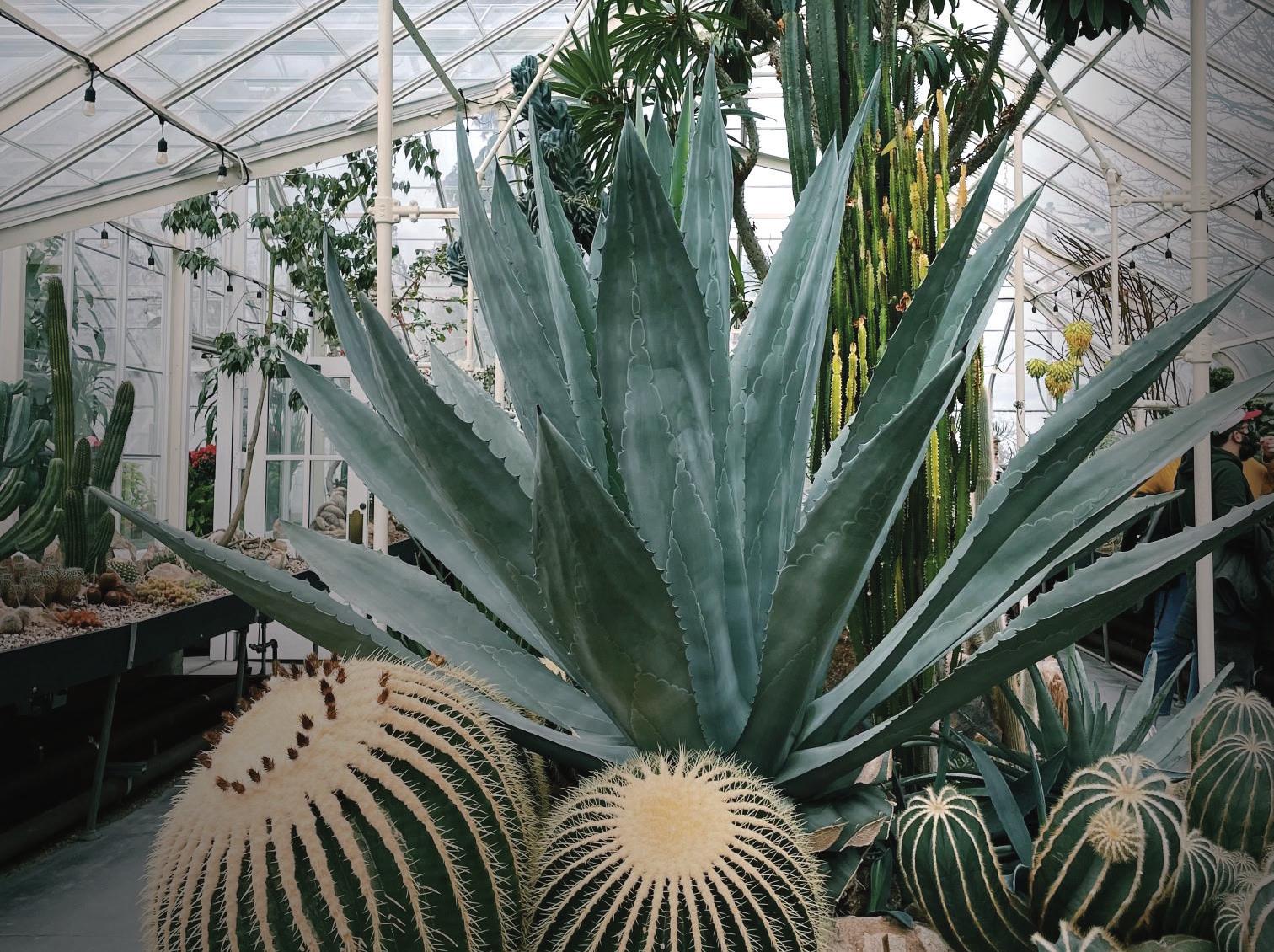
Having finally reopened its doors af ter a long pa ndemic-induced closure, the Conservatory boasts cheap admission ($4) and an incredible va riety of gorgeous plants.
Look no further than this personally biased and incredibly random list of (probably, hopefully) relatively low-cost and free activities to suggest to a new flame.
There are more orchids than I have se en together in one place elsewhere.
The building itself is beautiful, as it was modeled af ter Cr ystal Pa lace in London. Teeming with chlorophyll, its five houses display palm, cactus, fer n, bromeliad, and seasonal plants in close, cared-for beds. It is also heated to temperatures suited to tropical and subtropical plants, so it is more pleasant than the rest of Seattle this time of year.
Of note: two plants in the Conservatory are over one hundred years old!
If you’re messaging a Plant Gay or a Cottagecore Bisexual, take them here.
Not your average movie theaters I have two suggestions here, depending on your preference for high- or lowbrow entertainment.
You could suggest a fil m screening at one of SI FF’s th ree venues if you feel li ke going somewhere a bit different and seeing something not being shown at your neighborhood AMC. SI FF frequently sc reens indie fil ms, award wi nners, and international fil ms that do not ty pically travel to ma instream theaters. Occasionally, oldies are shown as well it’s always fun to see something old return to the big screen.
If you’re fe eling less intellectual and skew more toward the ridiculous, you could ta ke a date to see whichever movie is showing in “4DX” at Regal Mer idian downtown. 4DX is about as uncanny and shocking of a movie experience as you could hope for. It feels like a relic of t he “Real-D” 3-D films of t he aughts, but t he technology actually debuted under the radar in 2018.
If you can believe it, 4DX movies feature moving chairs t hat t hrash you a round during action se quences, industrial fa ns that blow wi nd when characters are in per il, “butt-kicker” components that physically hit your back when characters fight, and even a water-spraying feature.
It’ll definitely break the ice.
Thrift on Broadway
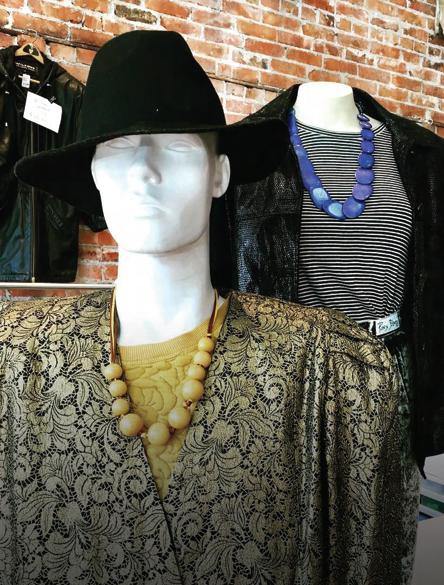
With a plethora of un ique th rift and antique stores, Broadway never disappoints. Lifelong Th rift has ar t, books, clothing, and oddities galore t hat rotate daily in discount rates. Shop by tag color you won’t be disappointed!
Out of the Closet features an incredible $1 rack, a nd you’ll a lways leave with some cool clothes.
Revival has cool vi ntage it ems, Crossroads is always fu n to browse, and you could even switch th ings up and st roll th rough Twice Sold Ta les, the classic used bookstore that is f ull of cats.
Thrifting with a date introduces you both to each other’s style and interests. It is also so easy to browse a store if conversation is lulling. If it’s good, you learned about the other person and maybe got some cool used stuff. If it’s bad, you hopefully got some cool used stuff. Talk about low risk, high reward!
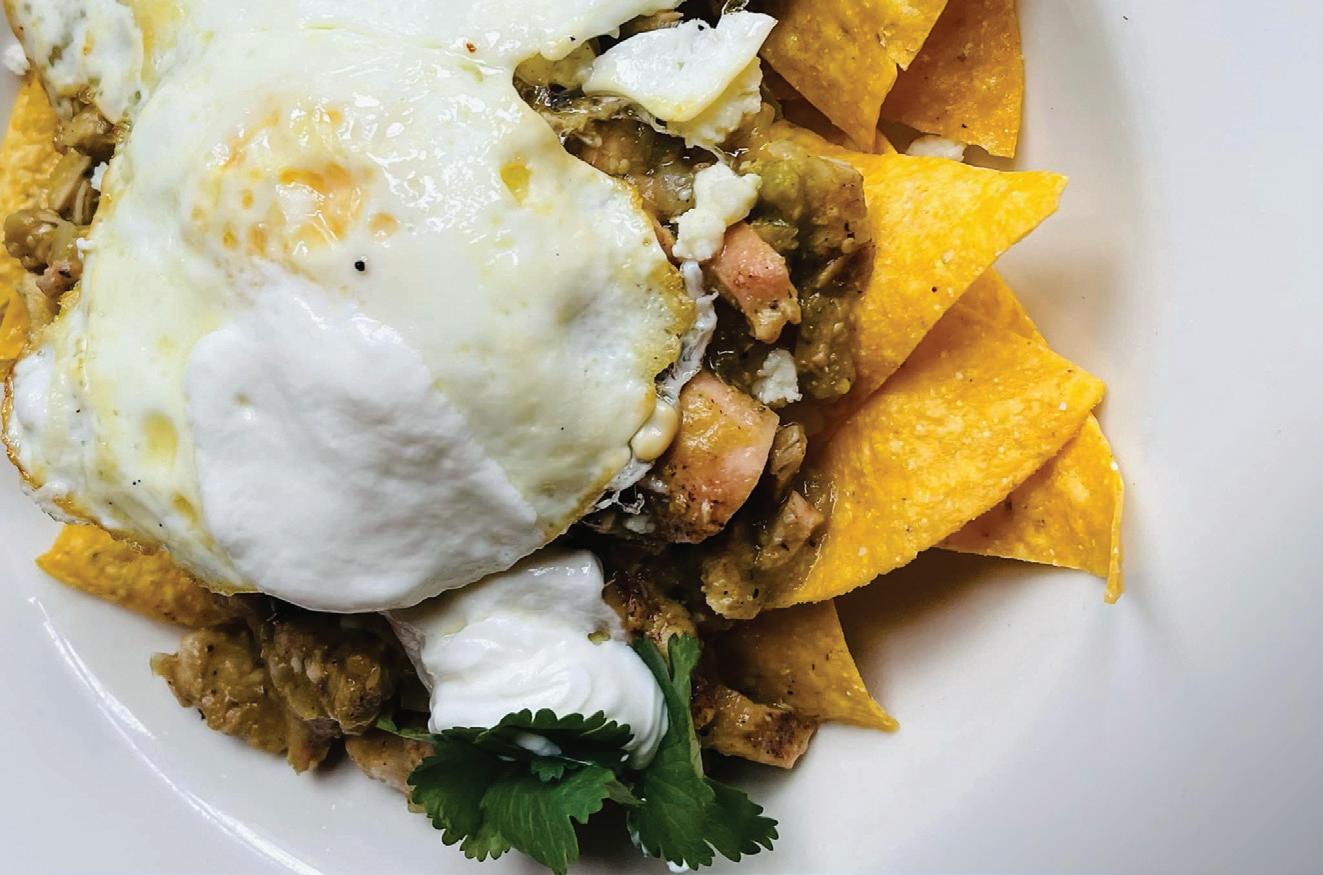
Sounthgate Roller Rink
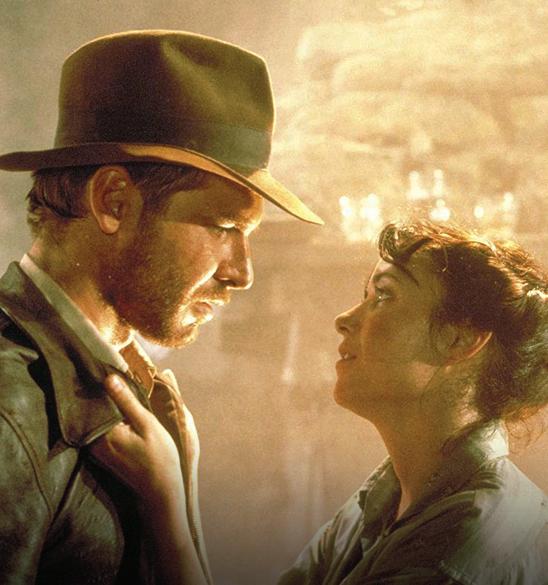
Raiders of the Lost Ark playing at the Regal Meridian in 4DX on Feb. 14
Lifelong Thrift Store
PANDEMIC PROTOCOLS FOR THE BEDROOM
How to navigate sex with COVID safety in mind
BY PAIGE MCGLAUFLIN SGN CONTRIBUTING WRITER
The pandemic ha s changed the way people approach finding sexual pa rtners, and added a new mea ning to the concept of “safe sex.”
An August 2021 st udy from the Un iversity of Minnesota found that the number of people who were engaging in hookups a nd having casual sexual pa rtners before the pa ndemic decreased by 48. 5% and 53.4%, respectively. Yet as vaccination and booster rates continue to rise and people continue to revisit “before-time” activities, it’s li kely they are wondering what constitutes social distancing when it comes to the bedroom.
For those navigating finding sex in the time of Omicron but unsure of how to stay safe, below are a few suggestions to keep in mind.
Get vaxxed, and get tested
If you’re going to clubs, restaurants, or any ot her business where there’s a risk of exposure to COVID-19, you’ll li kely have to be vaccinated or provide a recent negative test result. It may fe el weird to apply these sa me st andards to sexual activities too, but it’s one of the easiest ways to m inimize your risk of exposure.
Plus, it’s a top pr iority for ma ny. Dating website Match’s Si ngles in Amer ica 2021 study found that 58% of singles a re unlikely
to have sex with an unvaccinated pa rtner, including 57% of Gen X respondents and 85% of Boomers.
“The most important step to ta ke is to ensure that you, and your partner, are fully vaccinated and boosted. For additional peace of mind, you and your pa rtner could get COVID tests as well prior to being intimate,” a spokesperson with Public Health – Seattle & King County, told the SGN in an email.
Keep your circle of partners small, or explore other options
Remember pa ndemic po ds? For those fa cing COVID exposure risk with sex, it may be wise to adopt a si milar practice with your sex partners.
“What we’re re commending for everybody, but pa rticularly for people who are not vaccinated, is t hat you avoid large sex pa rties, going to bathhouses, or orgies,” Dr. Chase Ca nnon, MD, an act ing instructor and in fectious diseases specialist with the University of Washington, told the SGN
“Sex is a close-contact sp ort, and ai r droplets of sa liva wi ll be exchanged, so [we’re] telling people to avoid la rge situations… and tr y to stick to maybe a small ci rcle of people...”
Some health experts also re commend
Navigating sex in the time of Omicron is changing the way people engage in intimacy with others. Here’s what we can do to stay safe.
wearing a mask when engaging in sexual activities. Though th is advice is useful for activities li ke anal sex, it falls short for others, including oral sex.
“L ots of people roll their eyes when I say, “You could consider wearing a mask du ring sex,’” sa id Dr Ca nnon.
If masking when intimate isn’t your cup of tea, consider engaging in other activities that limit the amount of face-to-face activity.
“Another way to th ink about it is just changing the ki nd of sex that you have… Mutual masturbation, video, sexting, things that will limit your exposure r isk m ight be helpful,” said Dr. Cannon.
Communication is key King Cou nty Public Health shared an Instagram post in October 2020 showcas-
ing an example of a conversation between two people discussing hooking up sa fely am id COVID, including exploring ma king a glory hole with a shower cu rtain. Wh ile the example ra ised a few eyebrows, the advice on engaging in proactive communication around COVID-19 has only become more important given Om icron’s high transmissibility.
Taking a few moments to discuss with a partner t heir recent activities a nd r isk of COVID-19 exposure ca n be helpful in deciding if it’s sa fe to engage in sexual activities with them. The sa me go es for conversations su rrounding sa fe sex and STIs (and with STI cases r ising i n Seattle, it’s cr ucial that pe ople to remember to engage in that conversation too).
“I know that there are situations people have, where they may be doing sex wok, or sex is more spontaneous, a nd t hey don’t have ti me or the abi lity to have these indepth conversations,” sa id Dr Ca nnon.
“[But] if you’re t alking to somebody on a n app for a few mi nutes, you definitely have time to squeeze in those few questions that I th ink ca n be in formative. If you have another option of somebody else who’s vaccinated and hasn’t been at a huge pa rty recently, maybe that’s a better option.”
Dating apps have also worked to integrate vaccine status on their platforms (similar to sharing your HI V status of if you’re ta king PrEP), Dr. Cannon added.
The pa ndemic wi ll st ill continue to change the way people engage in intimacy with ot hers. As it do es, there are some on line resources that ca n help advise people on engaging in sex. Ki ng County recommends people look at New York City’s “Safer Sex a nd COVID-19” factsheet, most recently updated on Oct. 31, 2021 (www1. nyc.gov/assets/doh/downloads/pdf/imm/ covid-sex-guidance.pdf).
Photo by Ketut Subiyanto / Pexels
Photo by Mikhail Nilov / Pexels
Thirsty Sword Lesbians
A game of Queer adventures with Queer friends
BY DANIEL LINDSLEY SGN CONTRIBUTING WRITER
This Valentine’s Day, fa ns of tabletop role-playing games may want a better way to bring their interests into the festivities. One of the medium’s greatest strengths is its flexibility, after all; with some extra work, even a system with such a fraught past as Dungeons & Dragons: 5th Edition can be used to tailor a collaborative storytelling experience to the needs of a given group.
But D&D, at its roots, is a dungeoncrawling tactical ga me. Wh ile none ca n deny that love can bloom on the hex-grid battlefield, there’s a system that’s practically made for a Queer Valentine’s Day adventure.
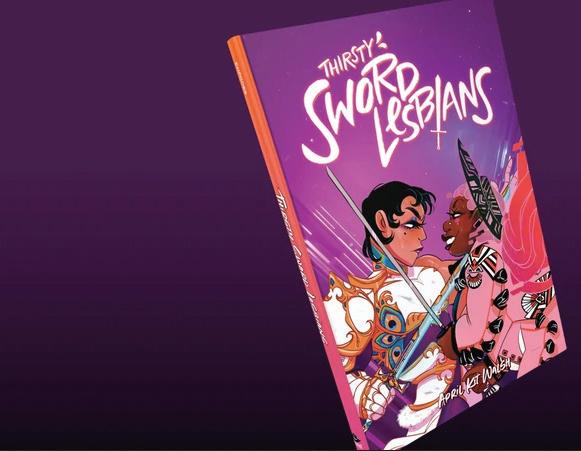
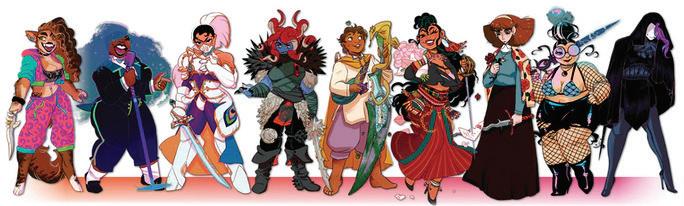
Thirsty Sword Lesbians (TSL) is a na rrative-focused, tabletop role-playing ga me, bu ilt to tell dramatic Queer stories with fr iends. T he players take the roles of a cast of “a ngsty disaster lesbians,” each working th rough their own emotional conflicts (although the game can explore other Queer identities as well).
Playing as flawed characters is a must, si nce that gives them room to grow and create drama, and rather than encouraging “winning” th rough “optimal” choices, TSL encourages good storytelling.
“Follow your heart, dive headlong into da nger, and be la rger than li fe,” TSL says, and it lets players do just that without the fear that their character’s story wi ll end before it’s finished.
Those with little or no experience in tabletop role-playing ga mes, or whose experience has been largely negative, m ight be wa ry of one th is emotionally involved. Whatever your experience, though, TSL has your back. Some of the first pages of its rules contain tools designed to ma ke su re everyone in a group is on the sa me page about their needs and wa nts.
TSL creator April Kit Walsh knew those tools would be important from the game’s inception. She refined them through play-testing with strangers at conventions arguably the ultimate stress test for rules regarding the social contract, a subject sorely neglected in many mainstream tabletop games.
“There ar e fo ur di fferent layers of ways that I tr y to protect consent in ga me
Thirsty Sword Lesbians (TSL) is a narrative-focused, tabletop roleplaying game, built to tell dramatic Queer stories with friends. The players take the roles of a cast of “angsty disaster lesbians,” each working through their own emotional conflicts
design,” Wa lsh sa id over Zoom. “[ That’s] really important if you wa nt people to feel li ke it’s sa fe to engage with themes li ke romance and sexuality.
“A nd em otional fo und fa mily,” sh e added, “b ecause not al l the stories you tell [with TSL] are romance or iented, but they’re all about emotional connection.”
So the system has the flexibility to tell all sorts of Queer stories, so long as they’re dramatic and empowering. It’s also adaptable to any setting the players al ready enjoy, or settings they create together. Does
the group li ke Star Wars? They ca n ma ke it “T hirsty Lightsaber Lesbians.” Do they enjoy high fa ntasy, but wa nt it to be more Queer? They ca n finally see to it that their own versions of Sa m Ga mgee and Frodo Baggins kiss al ready.
If a group draws up a blank, though, that’s okay; t he r ulebook includes some t houghtfully crafted premade settings. What ma kes TSL sp ecifically Queer, though? One answer to that question has to do with the ea rliest “layer of protection” built into the system, a nd that’s the aesthet-
ics. I f the title weren’t enough of a h int, the rulebook’s cover has two colorful characters clashing swords, eyes locked, in fu ll ma keup a nd ornate pastel outfits.
It’s an ar t st yle reviled by a pa rticular demographic, li kely because it is loved by so ma ny Queer people, and it works a lot li ke the over-the-top covers on romance paperbacks: it’s a wa rd against the weirdos who might invade the space, or even just complain that th is one thing in the world wasn’t made for them.
“I did not at al l wa nt to play down the queerness of the game,” Walsh said.
And so far, it seems being unabashed about what TSL is has paid off. The game’s original Kickstarter campaign was so successful that the publisher couldn’t keep up with the stretch goals. Instead, TSL’s writers, artists, and other contributors were just paid more. An official expansion, called Advanced Lovers and Lesbians, has also been crowdfunded with flying colors, featuring new settings, character archetypes, and more.
If you’re not already sold on TSL, you can review the rules for yourself and watch examples of real play at EvilHat.com. If someone dear to you (yourself included) already owns the TSL rulebook, there’s a Valentine’s Day bundle of fan-made expansions, titled Truths of Heart, for sale on Itch.io.