
GAY CITY’S FRED SWANSON PASSES THE TORCH
by Daniel Lindsley
Contributing Writer
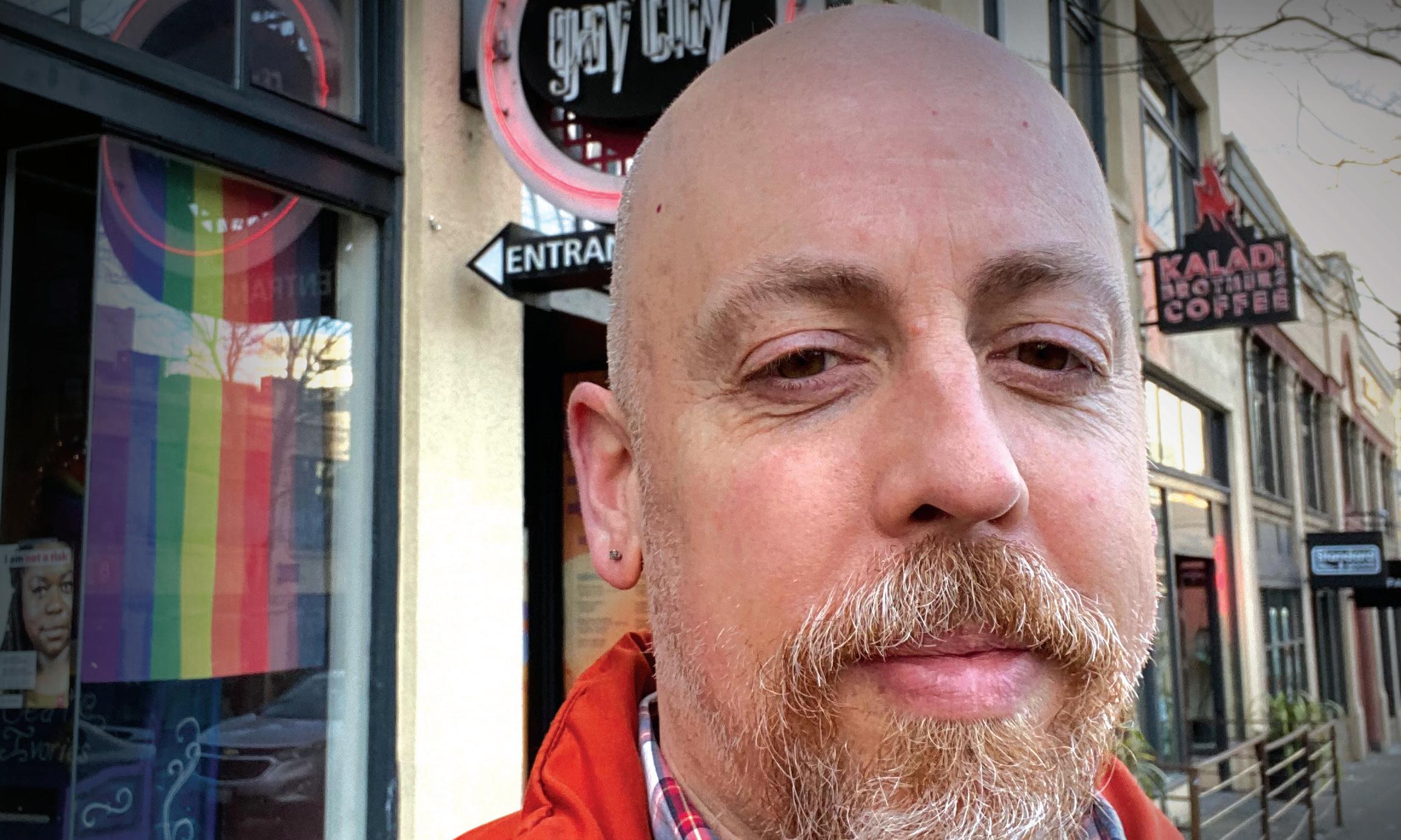
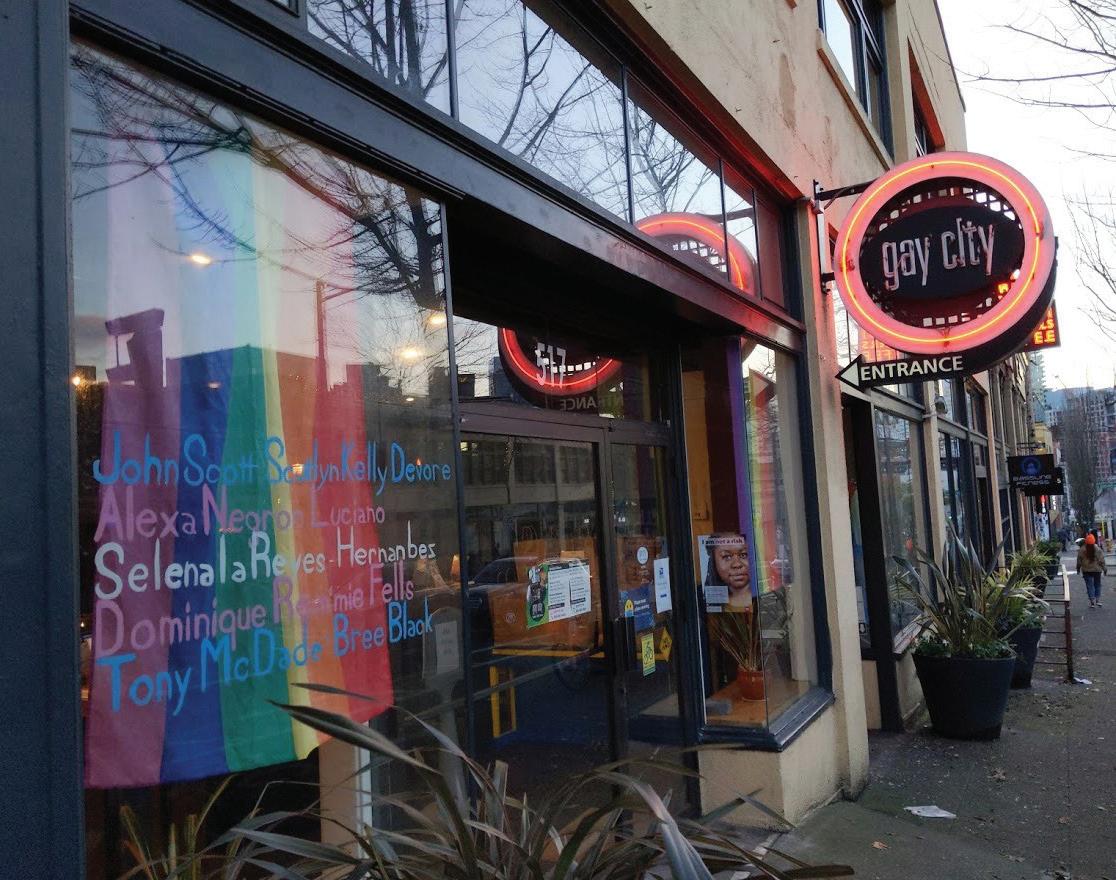
After over two decades of running the local LGBTQ organization and community center Gay City, Fred Swanson is stepping down from his role as executive director and passing the torch to a new generation of community leaders, a press release from the organization said.
see GAY CITY page 5
Virginia Republicans kill marriage equality, voting rights measures
by Mike Andrew SGN Staff Writer
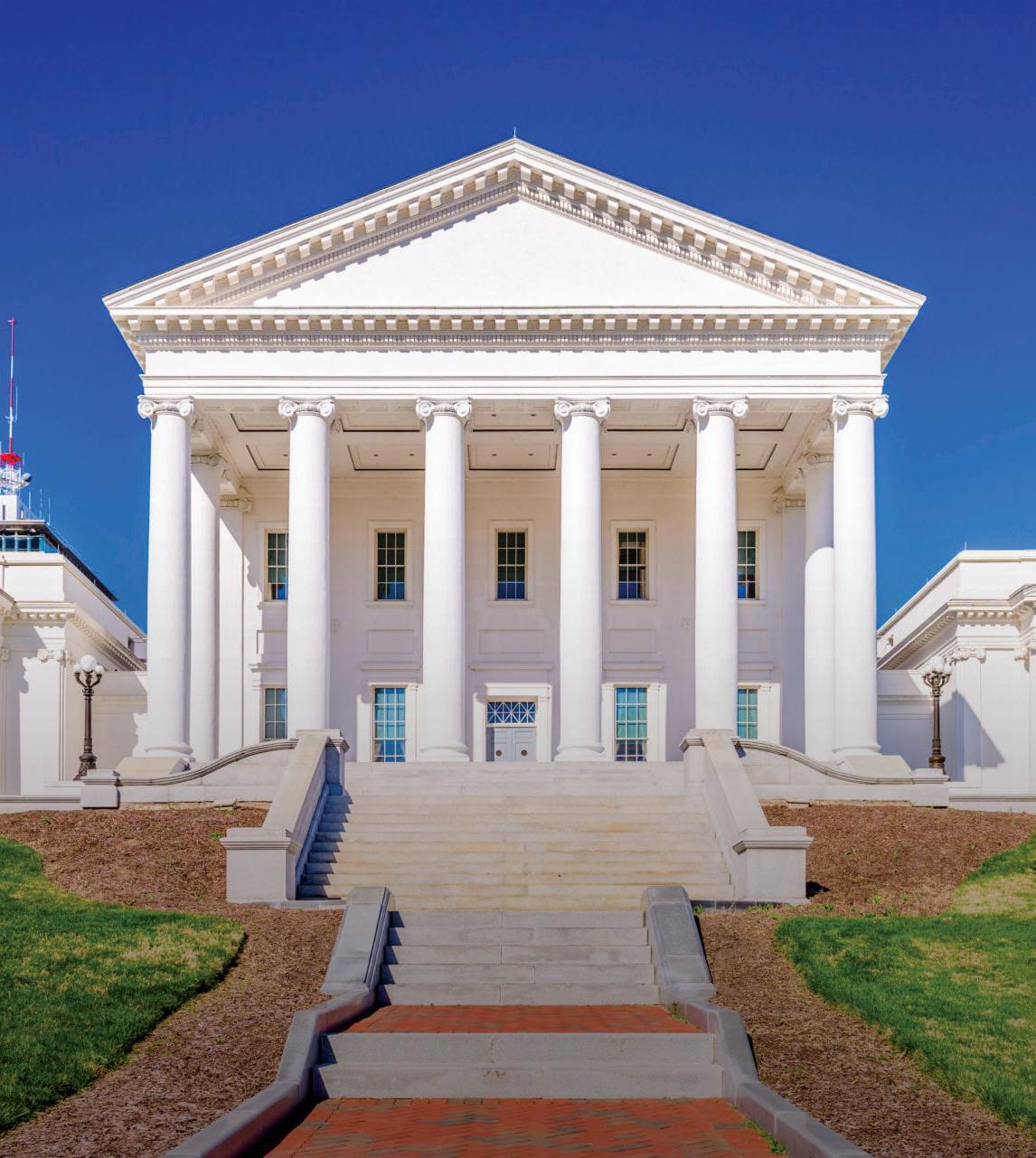
Republicans in Virginia’s General Assembly killed proposals to strip legally outdated language barring same-sex marriage from the state’s constitution and to restore voting rights to felons who have served their prison terms.
Both proposals passed the Virginia legislature last year when Democrats controlled the body and there was a Democratic gover-
nor. According to Virginia law, they needed to be passed a second time in order to be put before voters for a final decision.
This year, with Republicans in political control of the state, and on a straight partyline vote, the General Assembly rejected both measures.
Virginia’s constitutional ban on samesex marriage dates from 1997. It was already banned by statute since 1975. Since the US Supreme Court decision in Obergefell, those
see VIRGINIA page 17

by Lindsey Anderson SGN Contributing Writer
Capitol Hill residents are distressed this week after news that three local raccoons are to be trapped and euthanized by animal control.
The issue started on January 26, when Homer Park resident Teddy Rozz posted, “I just found out a group of raccoons (3 of them) will be trapped and removed from our neighborhood next week. The neighbor that called
the removal service let me know that they will be euthanized. I am really sad about this.”
Concerned neighbors flooded to the comments of Rozz’s post, hoping to get more answers and offer better solutions to the raccoon problem. Some suggested calling PAWS animal rescue, a rehabilitation and relocation program that does not euthanize innocent wildlife. Others suggested Rozz trap the raccoons and release them himself before animal control gets to them.
SGN
Photo by Ilya Naymushin / Reuters
Photo courtesy of Virginia Association of Counties
Fred Swanson –Photo courtesy of Gay City






Local News
Seattle Starbucks workers get support from City Council
Kshama Sawant’s resolution passes unanimously
by Mike Andrew SGN Staff Writer
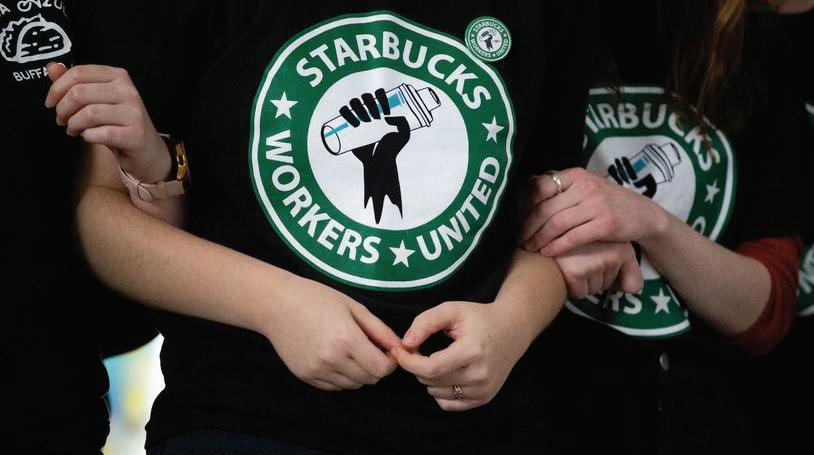
Seattle Starbucks workers organizing to unionize their workplaces won a victory February 8 when the Seattle City Council voted unanimously to express solidarity with them.
“Today’s YES vote by the City Council on this resolution from my office makes Seattle the first city to demand that Starbucks corporate executives and billionaires stop their shameful union busting, intimidation, and firings of courageous workers, and accept majority union votes at their stores,” Councilmember Kshama Sawant said in a statement released after the vote.
The actual vote was 7-2, with more conservative councilmembers Sara Nelson and Alex Pedersen abstaining, after publicly questioning the propriety of taking sides in a labor dispute.
“I was not elected to take votes on issues that fall beyond the purview of city business. And I believe that a vote on [Sawant’s resolution] would be just merely symbolic,” Nelson said. “This is an external labor issue, and we have no authority [over] Starbucks and its employees.”
The resolution comes at a time when the Starbucks corporation is playing hardball with workers across the country trying to unionize their stores.
In Minneapolis, the company fired several workers who are members of the local union organizing committee. In Seattle, Starbucks is using so-called “captive audience” meetings, where workers are required to attend sessions in which company representatives make anti-union presentations.
“We are dealing with meetings and intimidation; I personally have received
RACCOONS
continued from cover
Unfortunately, Rozz, or any other concerned raccoon lover, cannot legally trap and relocate a neighborhood raccoon on their own without a permit. According to the Washington Department of Fish and Wildlife’s regional office, a hunting and trapping license is required for all civilians hoping to trap raccoons during an open hunting season. An additional license is required for anyone to trap a raccoon and relocate it off the property where it was originally found. (However, the Department of Fish and Wildlife specifies that a property owner, their immediate family, employee, or tenant is allowed to trap or kill a raccoon if there is evidence they are causing property damage or pose a threat to anyone on the property.)
However, Rozz says the raccoons are not living on the neighbor’s property, as they wander throughout the neighborhood.
According to Rozz, the animal control organization his neighbor contacted refuses to relocate raccoons because they have not acquired this second permit.
“They all talk about humane capture, but they never talk about what happens after. Why can’t they obtain the permits to relocate?” Rozz asked.
The great raccoon controversy raised a sharp debate among Capitol Hill residents about whether or not the animals are helpful neighbors or dangerous nuisances. “It’s my understanding raccoons help keep the rat populations in check,” said Leschi resident Nancy Sharma. “It’s a food source for them.”
“There are often parasitic roundworms in their poo,” fellow Leschi resident Linda McBlane replied.
“This is a ridiculous and heartless policy. There must be a process for relocating ‘nuisance’ raccoons to some forested area
a final written warning for union activity, and they will continue to escalate,” Sydney Durkin, a worker at the Broadway and Denny Starbucks told the City Council.
“[Starbucks] is trying to push the envelope of what they can get away with in their union busting, and they will continue to do this unless there is intense public outcry…
“The more solidarity we have, the more community support we have, the better fighting chance we have in this fight against those who seek to destroy what we are fighting for.”
Gianna Reeve, one of the Buffalo Starbucks workers who kicked off the wave of union activity, also spoke to the Council.
“We need to stand together,” she said.
“We cannot do this divided…
“We need to be here to demand this resolution. [Starbucks] will do exactly what they did in Buffalo, where they are closing stores, threatening partner benefits — they will do this anywhere. They take pride in Seattle being their hometown, but they will absolutely rake their partners through the mud unless we tell them NO. So let’s do it.

rather than kill them as the only course of action to take?! That’s inhumane and makes no sense there isn’t a legal alternative,” said Capitol Hill resident Levi Johnson.
What to do when wildlife invades
WDFW policies against raccoon relocation exist because the animals do not “relocate well” and may carry diseases that could spread to other raccoon populations.
While the WDFW declined to comment on any raccoon-related issues over the phone, they directed me to their website, which warns against releasing animals outside their original habitat since those have higher mortality rates. They also warn that distant relocation can lead animals to harm or be harmed by those in their new habitat.
The best way to prevent raccoons from roosting near your home is to avoid feeding them. Even those who enjoy wildlife may be doing a disservice to raccoons if they provide food for them. This creates a false sense of trust between the raccoons
and people and may lead them to wander further into city areas, where they face many dangers.
Before trapping a “nuisance” animal, the WDFW suggests attempting several alternatives, including removing vegetation on buildings (which raccoons can climb), installing a barrier, or applying a scare tactic.
Raccoons can also be deterred by keeping lids on garbage cans secured. They are notorious dumpster divers and will remain where they can get easy access to food. For those with pets, experts recommend feeding them indoors and making sure any access points are locked after dark to prevent raccoons from entering homes.
Because trapping can cause harm to both the animal and the trapper, it should be considered a last resort. “It is rarely a permanent solution if other animals are in the area, and food and shelter remain available to them,” the WDFW says.
The department also warns never to trap an animal caring for dependent offspring. It
We cannot stand for this anymore.”
In addition to Starbucks workers from other cities, Seattle workers were supported by speakers from a number of local unions: PROTEC17, UAW 4121, WFSE 1488, CWA 7800, and the Bookworkers Union.
The Starbucks workers are organizing under the auspices of Workers United, an affiliate of the Service Employees International Union (SEIU), one of the country’s largest unions.
urges all those considering trapping wildlife to check for young, even if it is outside the species’ usual birthing season.
The WDFW also warns never to trap an animal during poor weather events, such as a cold snap, as the experience of being trapped causes the animal to panic and expend large amounts of energy that are necessary for winter survival. Most animals trapped and released in the winter months do not retain the necessary energy to survive.
The WDFW also warns against attempting to care for abandoned baby animals. While orphaned wildlife will likely not survive without a mother, it is dangerous and illegal to care for them without the proper permit. The department suggests contacting a local wildlife rehabilitation center if you or someone you know has found an injured or orphaned animal. While the WDFW condones euthanasia for “nuisance” animals once trapped, it also explains that this is the last resort, and animals often specified as problems are usually innocent. “When a conflict exists between humans and animals, it is usually because the animal is only doing what it needs to do to survive. It is simply following its instincts, and intends no harm or discomfort,” the WDFW says.
It also notes that as long as raccoons are kept out of people’s homes, not cornered, and not treated as pets, they are not dangerous. Raccoons are also not considered pack animals, so a group of three traveling together is likely a mother and large kits. The trapping and euthanasia of such would not be legal under WDFW restrictions.
Regardless of differing opinions on the furry food bandits, experts from the WDFW want all Washington residents to remember that raccoons are wildlife, and that any encounters are likely due to a loss of their habitat. With minor lifestyle changes, humans and raccoons can safely and happily coexist, even on Capitol Hill.
Photo courtesy of Humane Wildlife Removal
Photo by Joshua Bessex / AP
Gay City was founded in 1995 by a group of community activists during the height of the AIDS crisis, “with a bold vision of building a community stronger than HIV while centering Queer voices,” its website says. It has remained King County’s leading HIV/STI tester, and continues to host a growing number of resources for the LGBTQ community.
One such resource is its wellness center, a dedicated clinic that provides PrEP, testing for both COVID-19 and STIs, and many other services at no cost. Another is its arts program, which includes an annual festival, arts mentorship programs for both youth and adults, and large exhibitions like Shann Thomas’s Gender Gems
This winter, Gay City plans to open a new community center on Capitol Hill, at the intersection of Pine Street and Bellevue Avenue. It will include a youth space, a large meeting space for rental, a pharmacy, and a library with new furniture.
Most, if not all, of these programs have coalesced and evolved with Swanson’s oversight since he was hired at the end of 2001. “I was a fan of Gay City at the time,” Swanson said of his hiring. “[It] was one of the handful of organizations really well known in what was called the Gay men’s health movement.”
Before he got the call, he had met Gay City’s then-executive director, John Leonard, and other Gay City staff at the National Gay Men’s Health Summit in Boulder, Colorado.
For a better sense of the time that has passed since then, this was just after 9/11. Swanson said he remembered wondering if his flight to Seattle, for the job interview, would even happen.
Through all the changes in the country since then, Swanson said, he has made a lot of connections in the field of national
LGBTQ nonprofits and activism. For that reason and others, he described his feelings about stepping down as “complicated.”
“Having moved [to Seattle] for this job, and having only had this job for 20 years, every aspect of my identity in Seattle is somehow linked to this role,” Swanson
said. “On the other hand, [stepping down] is also really liberating, and it feels really good to reflect on 20 years of a thousand different changes that have happened here, and a thousand different ways that we’ve tried to move, and grow, and respond. And to no longer have to carry that, and to go
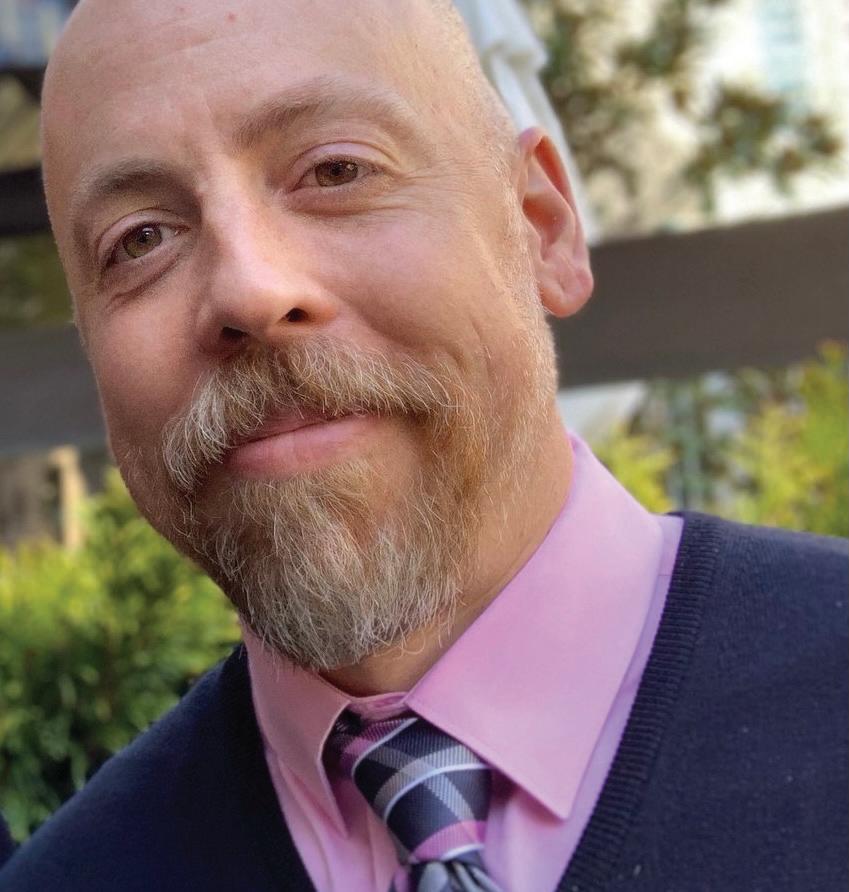
back instead to just kinda being a dude — that also feels good.”
Being a dude, in Swanson’s case, includes being a dad. His focus now, at least for the summer, will be spending time with his three sons, two of which are in middle school, and one of which will be touring college campuses before his senior year of high school.
After that, plenty of doors are open. While Swanson promises to remain a fan and supporter of Gay City, he said he doesn’t plan to go into another job with an LGBTQ nonprofit. He’ll be looking at other types of nonprofits, or government work, and potentially exploring writing, but nothing’s set in stone yet.
“The real joy of being in this job for 20 years, for me, has been the people. We’ve had such incredible volunteers, and staff, and board members, and community that have supported me.”
Swanson will remain with Gay City until June 1, 2022, to help with the transition, during which a “leadership model task force” will work together to decide on the organization’s future structure. They may phase out the traditional executive director role entirely, opting for co-directors, or something new.
Swanson said he was “excited” to see how the organization would evolve, and that he was glad to be leaving it in a good place.
For the interview’s last word, Swanson expressed his thanks:
“The real joy of being in this job for 20 years, for me, has been the people. We’ve had such incredible volunteers, and staff, and board members, and community that have supported me. Mentors, fellow executive directors — both national leaders and the LGBTQ movement, who have been resources for me, as well as local leaders... — I’m grateful for all of the mentorship and support that I’ve received... as well as Gay City has received. ”
Photo courtesy of Gay City
Fred Swanson – Photo courtesy of Gay City
Arts & Entertainment
“Strange magic”: Wunderground’s mushroom
coffee
is a ritual recipe for self-love
by Kylin Brown SGN Contributing Writer
Coffee is a dearly treasured daily ritual in the Pacific Northwest, in all of its rich simplicity. Seattleites and Portlanders vie for the “Best Coffee City” title year after year (FYI, Portland is currently in the lead, according to data from WalletHub). Newer Seattle coffee shops offer stand-out specialty brews and vegan menu items in the already-competitive local market.
Jody Hall, founder of Cupcake Royale and the Goodship Company, took this into consideration when she used her decades of food and drink experience to concoct a new take on coffee that means even more than caffeination.
Hall says she “grew up at Starbucks,” where she worked for ten years and cultivated major company growth at a time when the coffee giant only had 20-30 locations. Last June, after spending nearly three years tinkering with 30 test recipes for her bold new twist on tradition, she made her return to coffee. Harnessing the power of highly concentrated yet undetectable adaptogenic mushrooms, she launched her most contemporary venture, Wunderground.
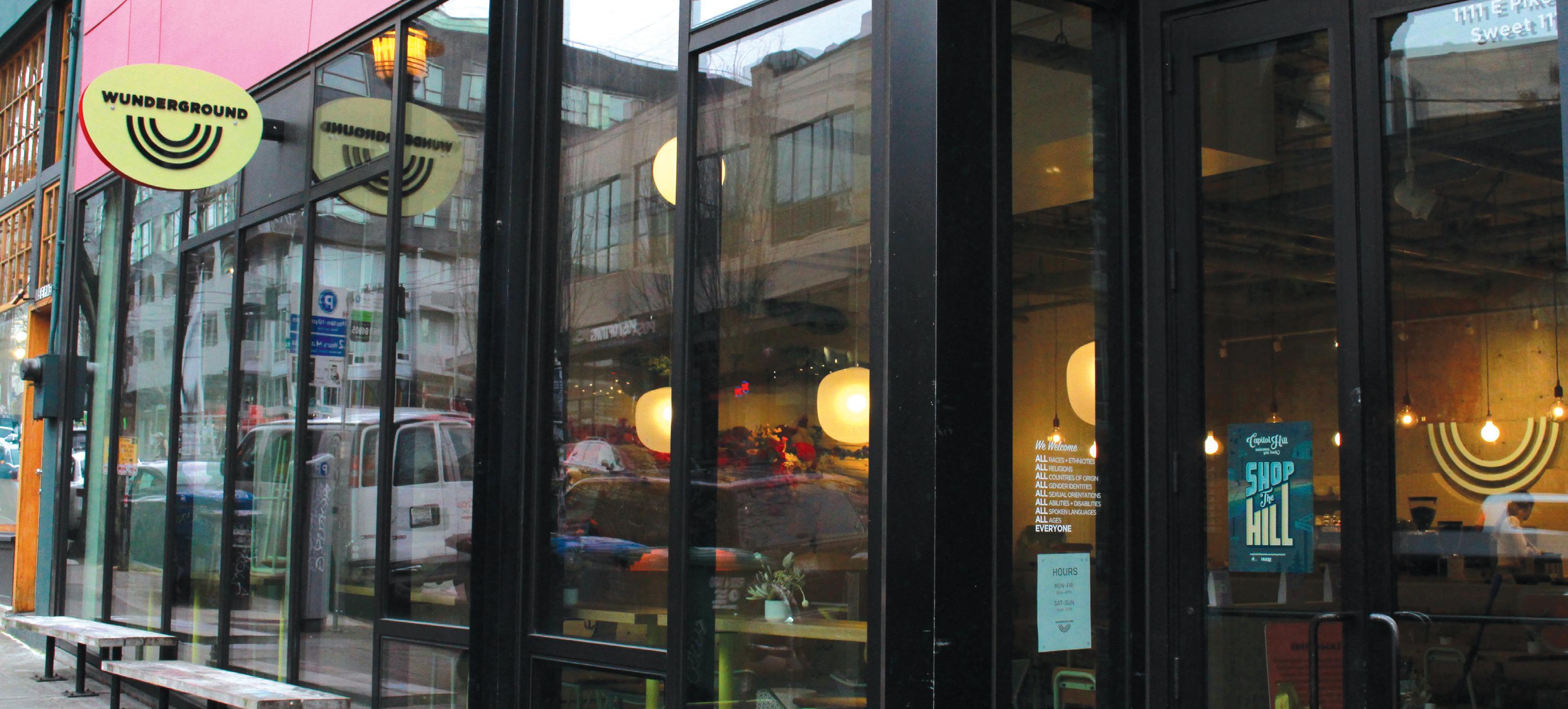
Her products were a hit in the evolving at-home coffee market, and she wanted to bring the brand to life here in Seattle. Through online sales and collaborative pop-ups, Hall was able to trial the brand in Seattle and beyond before acquiring an airy spot for Wunderground Café at 1111 E. Pike in the fall.
Here, she says she has the privilege of offering “the world’s most delicious and adaptogenic mushroom coffee and tea,” along with healthful plates and fantastic pastries.
Since opening, the café’s cute, pastelminimalist interior has become a popular space for laptop-wielding WFH coffee addicts and curious foodies alike. Tables are typically full just before and just after noon.
And yes, customers are aware that it’s mushrooms, not Folgers, in their cup.
A bit of “Wunder” in every cup Wunderground’s high concentrations of adaptogenic mushrooms are very intentional for Hall, who has also partnered with Seattle-based farms and brands to complement the earthy ideals of the company and bring “Wunder” to her customers through
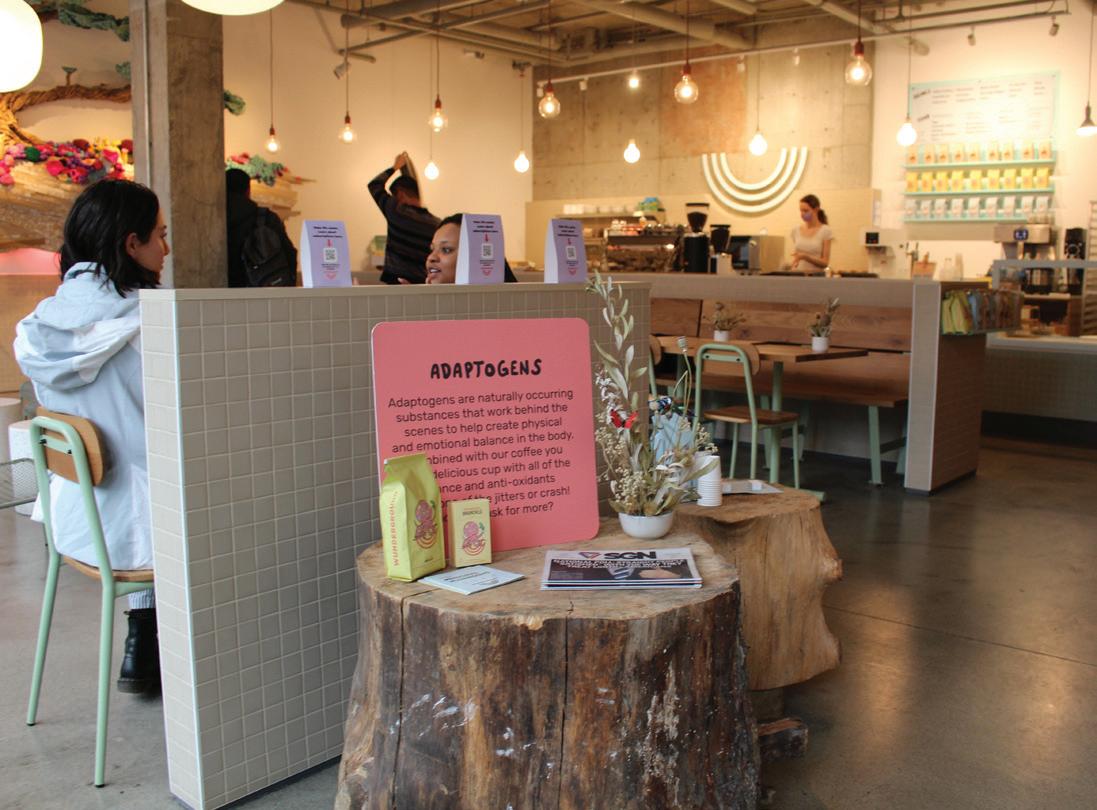
other fresh and fairly sourced ingredients.
“Wunderground is the culmination of everything I’m passionate about,” Hall said.
“I am all about creating positive experiences and using good ingredients to inspire others.”
Mushroom coffee sprouted as an idea following Hall’s previous endeavors into the food and cannabis industries. These customer-first businesses offered her a glimpse of Seattle’s larger community. Her biggest takeaway? We’re all just looking for connection.
In 2010, Hall designed the now-famous Cupcake Royale cupcake “The Gay,” to benefit Dan Savage’s It Gets Better project. She was always open about her Lesbian identity, but beyond Pride events, had never included it in her business before. In the month of June that year alone, she raised $10,000 in memory of Tyler Clementi, a teenager who committed suicide after being outed online. “The Gay” has stuck around ever since, and Hall has noticed a community forming around her cupcakes and their unequivocal message of pride and solidarity.
At the Goodship Company, Hall promoted the responsible use of marijuana as a conduit for community building. She designed elegant edibles and founded the Goodship Academy of Higher Education, a 2015 sold-out lecture series for stoned audiences to engage with big ideas. Not only did weed seem “more classy,” as reported in the Stranger in response to the programming, but people were coming together over Hall’s organic microdoses to participate in
mini TED talks and discussions.
She wouldn’t have it any other way.
Now, Wunderground is a burgeoning test kitchen for Hall and her love for homeopathic and alternative medicines. Unlike the Goodship, Wunderground’s products don’t have any inebriating effects (no, you won’t find any psilocybin here). Hall said they do have “major neuroprotective and immune-boosting health benefits,” though.
Get mushy, says the science
While a Western focus on modern medicine has prompted great innovation and life-saving technologies recently, timeless mushrooms have been proven to possess anti-allergic, anti-cholesterol, anti-tumor, and anti-cancer properties.
In adaptogenic mushrooms, these properties are courtesy of beta-glucans and triterpenes, which have been proven to help regulate stress and cortisol. When something stressful arises, these adaptogens step in to prevent bodily stress from building up.
According to Hall and her peer-reviewed sources, this provides more room for thinking clearly and being creative. “Adaptogens are amazing for clearing brain fog,” she said. “Especially in the concentrations we have here.”
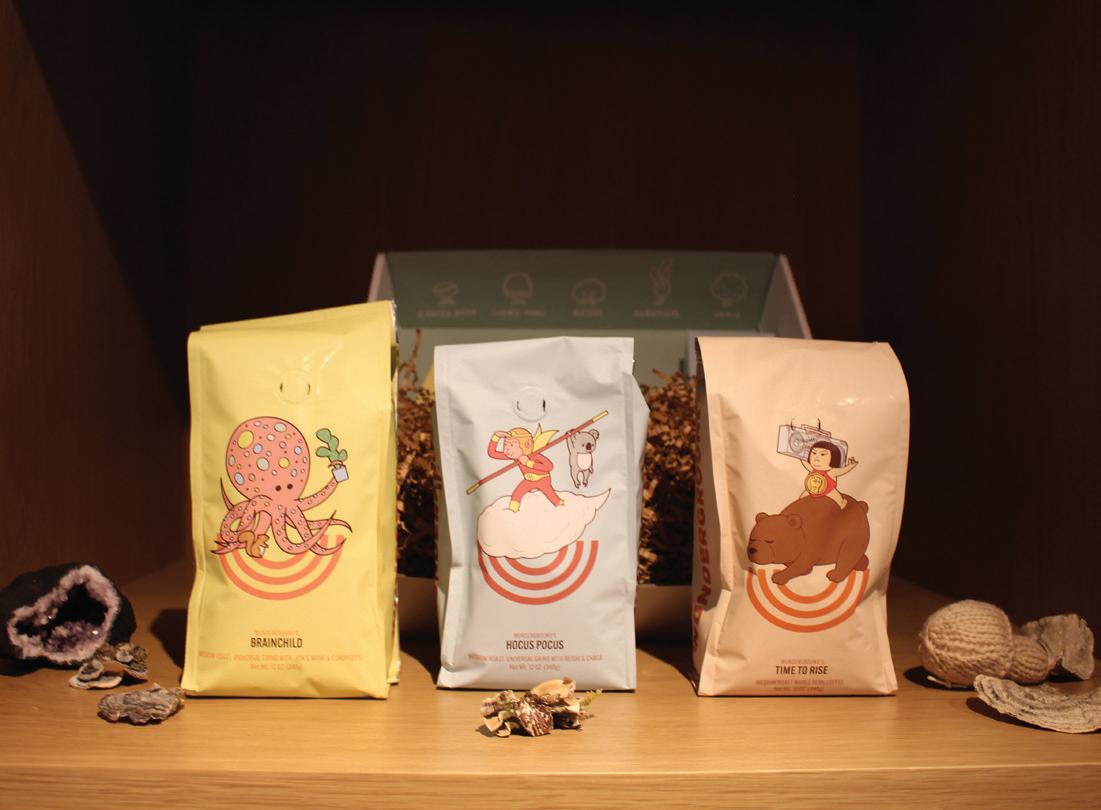
Adaptogenic mushrooms are held to be helpful for immune and nervous system health as well, and in Wunderground’s formulas, they make for a masterful cup of joe. Her most popular blends are “Brainchild,” made with 200mg of lion’s mane and cordyceps, whose adaptogens especially boost cognitive function; and the immunity-focused “Hocus Pocus,” with
200 mg of chaga and reishi.
Additionally, Wunderground also sells instant coffee and tea sticks, which feature an even higher concentration of mushrooms per serving, and the café offers addons in its takes on the traditional vanilla latte and mocha.
“We wanted to bring authentically crafted beverages,” said Hall. “Our premium, efficacious mushroom products are really brought to life at the café.”
For a mocha, order the “Strange Magic” to give yourself (and your immune system) some love. Or, if you’re focused on staying focused, clear your mind with the “Brainwash,” a creamy vanilla, mushroom syrup–infused latte. Both options bring an additional 500 mg of mushrooms along with their delicious caffeine-and-sugar buzz. And yes, you can get that with (organic) oat milk.
Wunderground Café also offers a standalone whole bean that maintains its “Wunder” through ethical sourcing and its notes of chocolate.
For those who turn their nose up at the word “mushrooms,” fear not. Wunderground’s are hidden in the lofty aroma and taste of the coffee.
The food also makes for a worthwhile lunch on its own. The café is currently working on new and elevated food and pastry recipes.
Note: Head in to Wunderground Café and mention the SGN during the month of February to get a filter coffee with your blend of choice for free.
Photos by Kylin Brown
Five-night festival celebrates eight years of cutting-edge fun at Kremwerk
by Nick Rapp SGN Contributing Writer
Among the expanding options for a night out on the town in Seattle, one venue continues to stand out as a singular, industrial gateway to the world beneath the city.
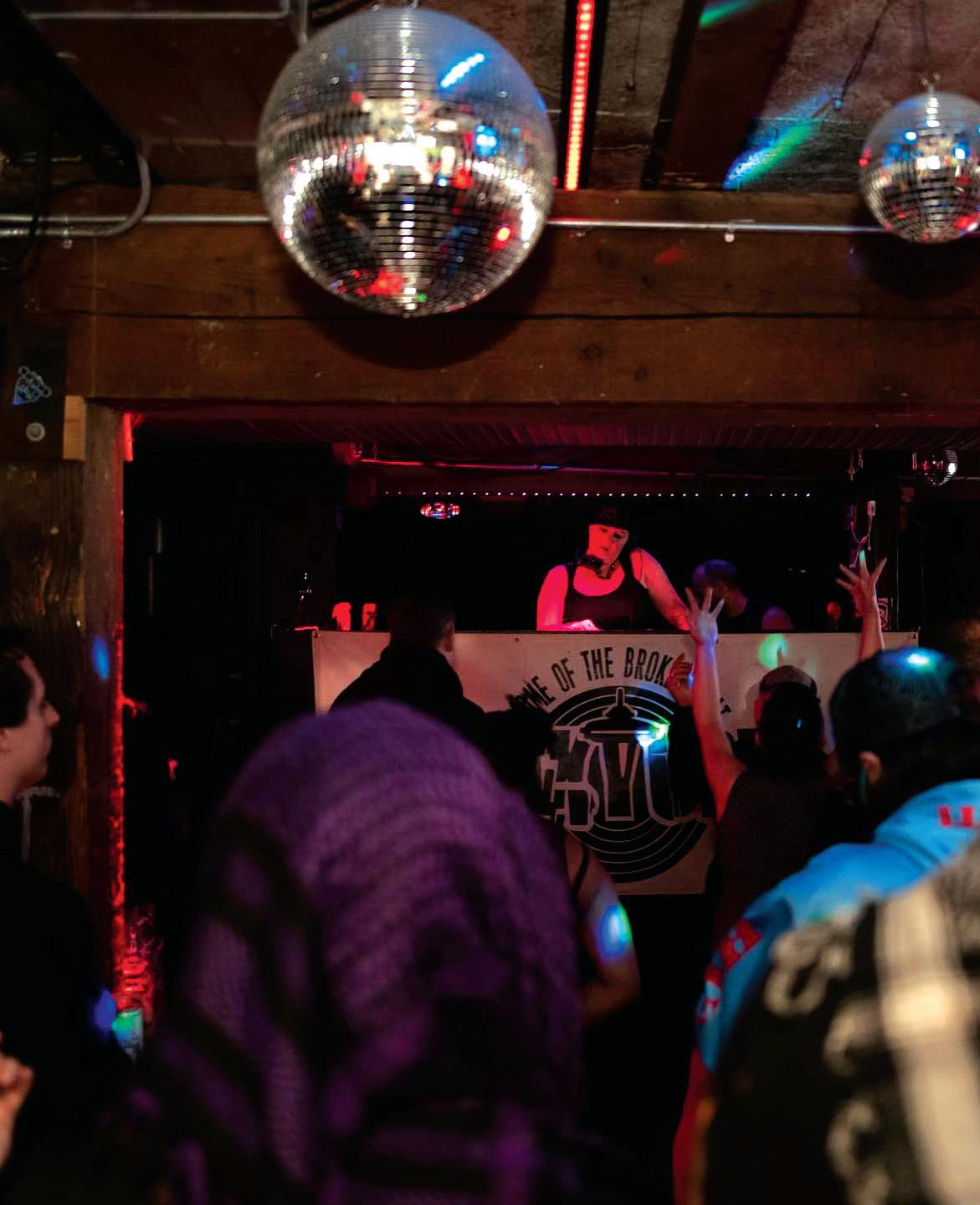
Originating as an unpretentious techno bunker in what used to be a creamery, Kremwerk has steadily grown in event ambition and venue space since its opening in 2014. The Timbre Room (a 2016 addition to “The Complex”) brought patrons from the underground space into an upstairs venue with a patio, larger event capacity, and a disco ball.
This Wednesday, February 16, Kremwerk is celebrating its eight-year anniversary with the kickoff of a five-day festival and the grand opening of the nightclub’s newest space: Cherry.
Atmospherically, Cherry will feature “an open floor plan, vaulted ceilings, a chill-out space nicknamed the Cherry Pit, a brandnew Danley sound rig, and metal accents,” explained Lauren Taylor, a representative of The Complex. The goal was to design a more immersive dance floor where “you are transported to a space where the only things that matter are the music and what is directly in front of you,” she added.
“In Cherry we will continue to serve the underground and forward-thinking sectors of electronic music, live music, and drag,” said Taylor. “What is different about Cherry from Kremwerk and Timbre Room is the scale of events we are able to throw.” Tech specs include “a larger room, larger sound, and cutting-edge light installations,” which foster The Complex’s ability to “bring our community the larger artists they want to see in the safe space they deserve,” she added. Special attention is paid to anonymity and personal freedom to let loose, as demonstrated by a strict no-phones policy reminiscent of the club scene in Berlin.
And The Complex is committed to providing a safe space in all its Queer-owned, Queer-centric venues. Signs are posted throughout prohibiting bigotry, racism,
sexism, transphobia, homophobia, bodyshaming, misogyny, and ableism. They emphasize mandatory consent, detailing the venue’s policy and banning for life those patrons caught harassing others.
This refreshing and comprehensive harassment policy aligns with owner Nicole Stone’s vision for the entirety of The Complex since she purchased the plot of land in 1999. Cherry is “the fruition of that vision that has been in motion for over two decades,” said Taylor.
“As the area around The Complex continues to be built out by developers and the skyscrapers arounds us get taller, we know we must dig ourselves deeper into the foundation of Seattle. Over the past eight years, the need for a venue like The Kremwerk/Timbre Room/Cherry Complex has grown,” Taylor
continued, since the “growing tech sector has forced the hand of other Seattle clubs to succumb to the mainstream.”
In expanding, “the most important thing about our club is what has stayed the same: supporting emerging artists, pushing boundaries, and creating a safe space for anyone to let loose.”
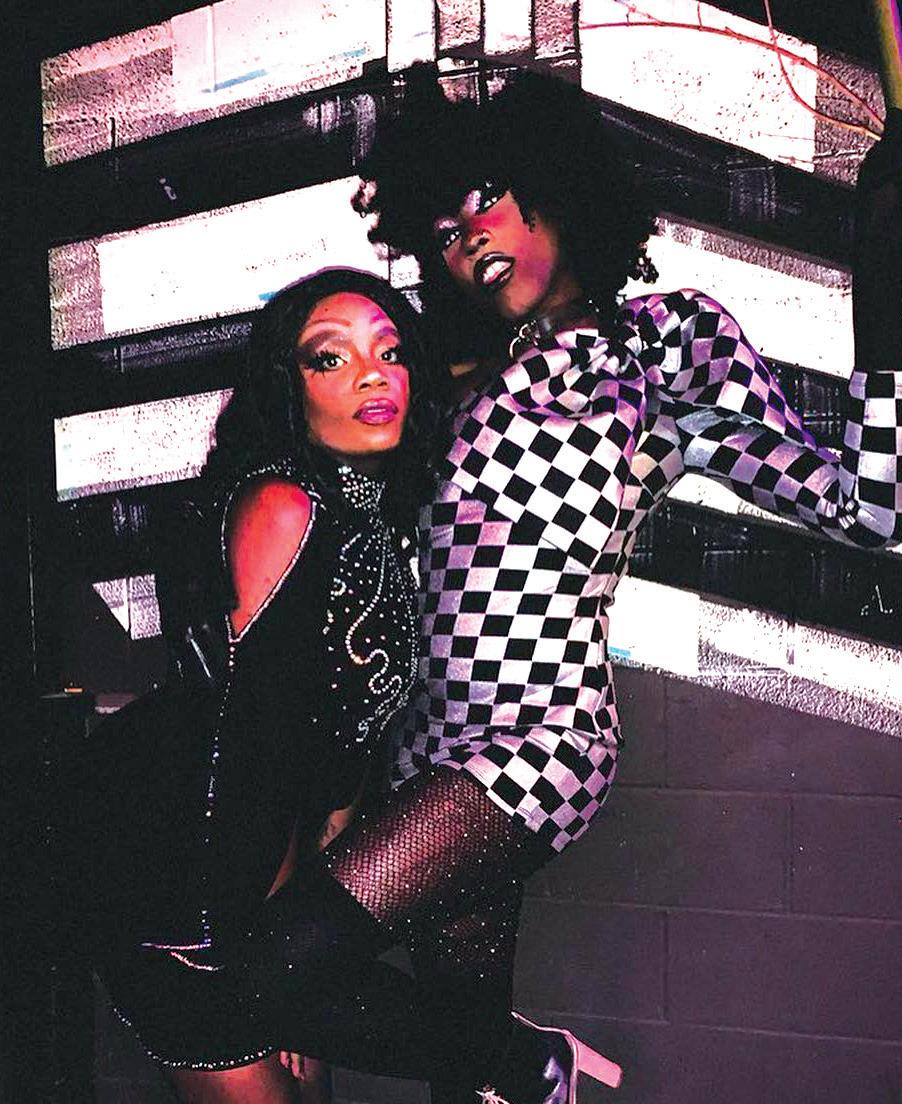
Headliners for the festival include Britt Hansen, Dee Diggs, Goth Jafar, and Hiroko Yamamura, to name a few, but the full, impressive lineup features over 20 performers, curated by electronic and live music bookers Dani Loose and Lizz Slabaugh from a wide range of local and traveling talent. Each night has its own pockets of DJing, live music, and drag performances split among the three venues at The Complex.
The Complex has always been avant-
garde, with a concrete, no-nonsense aesthetic that feels at once futuristic and timeless. Its coupling of respect for patrons with unapologetic risks in bookings means you’ll never know what you will experience inside, but you can feel free to be yourself and enjoy the ride.
Festival showcases begin at 8 p.m. on Wednesday and Thursday, then 9 p.m. Friday and 10 p.m. Saturday and Sunday. Sets end around 2 a.m. on average, but you could sign up for a long night on Friday and Saturday, with some wrapping up as late as 4 a.m. Single-day tickets and full-festival passes range from $20 to $70 and can be purchased in advance at bit.ly/CherryKrem8YearTicket or at the door. All tickets include full access to the three rooms all night.
Ricky Tucker jumps in with both feet in engaging Category
by Terri Schlichenmeyer Special to
the SGN
AND THE CATEGORY IS...:
INSIDE NEW YORK’S VOGUE, HOUSE, AND BALLROOM COMMUNITY
RICKY TUCKER
© 2021 Beacon Press
$25.95
248 pages
The culture known as “ballroom” is a little hard to define. It’s not about a song, although you can’t have ballroom without music. It’s not one specific place; you can attend ballroom classes in many places and dance wherever there’s a ball.
Ballroom is instead “a thriving artsbased culture founded over a century ago by LGBTQ African American and Latinx people of Harlem.” And it’s “a freedom, a fearlessness... in deconstructing and reinventing oneself in front of a crowd.”
“In so many ways, house-Ballroom culture is... the invisible creating visibility for
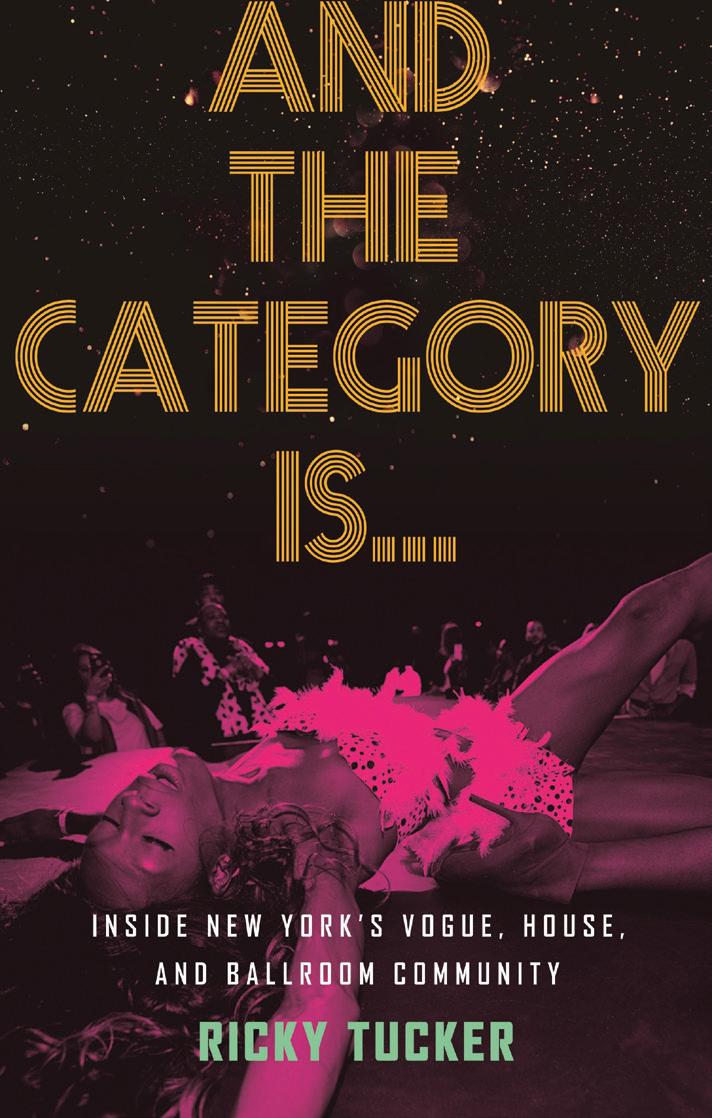
Image courtesy of Beacon Press
themselves,” says author Rickey Tucker in And the Category Is...
In his eyes, ballroom is “smart, innovative, loving, and funny...” At its very base, it’s pageantry, masquerade, and glitz. Hand movements are graded, as are spins, dips, and the way one walks; what you wear is as important as how you dance. Awards are given in various categories that exhibit “realness.”
And yes, taking a ballroom class is better than making a fool of yourself and bringing shame to your house. (That, by the way, could be a literal home with a created family for anyone who might need one, led by a house mother or father.)
Ballroom gives Trans and Gay people a safe place to be themselves and maybe win a trophy for it. It also offers Black dancers a chance to unite “under one cause: freedom” and to display “a powerful performative act of defiance” toward rich, straight, white cis people (though there are many cis people who are Ballroom fans).
There are two ways of approaching And the Category Is...: one if you’re a Ballroom
follower or participant; another if you’re not. Aficionados of ballroom will devour every page of this personal memoir mixed with cultural history. They’ll love Tucker’s breathlessly told tale of finding ballroom, and himself in it; his experiences of learning how to dance properly; and the insider sense that he lends overall.
Readers will also enjoy Tucker’s extensive interviews with LGBTQ BIPOC: organizers, activists, house parents, his own “fathers,” and other ballroom participants and “legends.” There, and in his analysis of the interviews, we see how defying racism is a large part of the essence of ballroom, how HIV activism fits in, and how ballroom has been appropriated for wider audiences.
On the other side of the dance floor, if you’re not into ballroom, this book will take some getting used to. Tucker jumps in with both feet; there is very little preamble to prepare readers unfamiliar with ballroom culture. But stick around; you’ll get it eventually, if you have patience.
Photos courtesy of Kremwerk
Books
Trans love stories don’t have to be sad
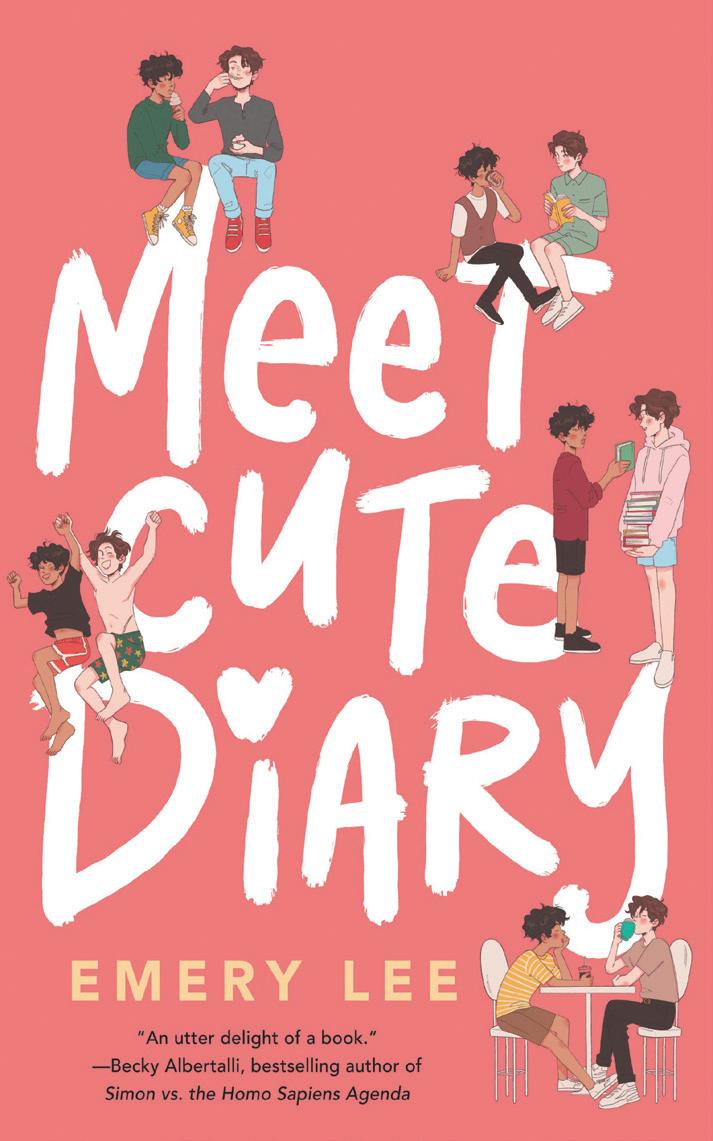
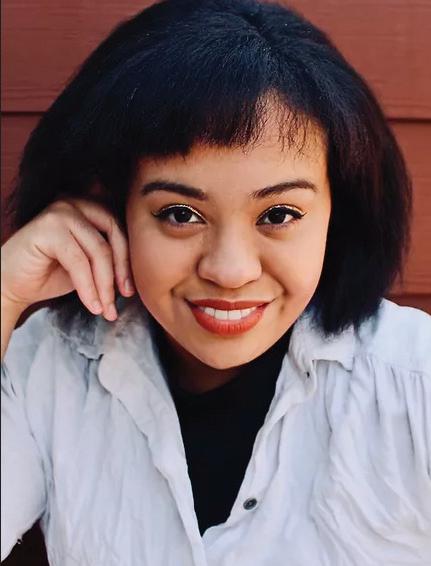
Emery Lee talks Meet Cute Diary
by Lindsey Anderson SGN Contributing Writer
Valentine’s Day is a time for love, a time to celebrate all the great love stories we secretly hope we can one day live out. We want a Mr. Darcy, a Jack from Titanic, a Harry or Sally to remind us that we are worthy of attention.
But what if there were no great romances to aspire to? What if you had never seen someone like you get their dream person? How do you hold out hope for something you’ve never actually seen happen?
This is the primary question Noah Ramirez faces in Meet Cute Diary by Emery Lee. As a Trans teen, Noah has never seen an epic Trans love story, so he decides to make one up. He soon finds himself running a popular internet blog, The Meet Cute Diary, where he features different Trans love stories submitted by readers. The only catch is they’re all fake. Once haters start to get suspicious and call Noah out, he weaves the ultimate lie that he, himself, is in a happy relationship.
The chaos behind the craft I sat down with author Emery Lee to discuss fake dating, the importance of having Trans love stories, and how to craft a chaotic yet loveable character. (Note: Lee uses the neopronouns e, em, and eir.)
While Meet Cute Diary is Lee’s first officially published novel, e had already drafted eight other manuscripts prior to it. “I’ve been writing since I was in elementary school,” e said, “but I was unsure of what I wanted to do or what I wanted my career to look like.”
E ultimately began networking with publishers and other writers and sent Meet Cute Diary out as a test. The story was compelling and got Lee eir first publishing deal.
Agents were initially very interested in a Trans story, but once they realized Lee’s book was a light-hearted rom-com and not a tragic coming-out story, they were skeptical. “I think the reception was warmer with readers than it was with agents,” Lee said. “At first I got a lot of interest, and then I noticed that interest tended to shrivel up a little bit in terms of agent rounds, because people were expecting it to be a much more serious book, an issue book exploring the Trans experience, which it’s not. It’s a rom-com book.”
Despite the concerns of publishers, Meet Cute Diary became an instant hit, especially with Trans readers, who desperately wanted to see their stories reflected in fun and lighthearted adventures. “Readers seemed happy about [the lightheartedness]… one of the most common praises I get is that readers are excited about a Trans book that’s a rom-com and not following the coming-of-age plotline,” e said. Despite the book breaking ground as one of the first Trans rom-coms, e admits, writing an LGBTQ story wasn’t even on Lee’s radar when e first began writing. “I didn’t even explore my own identity until later,” e said. “When I first started writing books, I just mirrored the stuff I would read. All the characters were straight, white, able-bodied characters. It wasn’t until maybe college that I started finding more diverse books and involving myself with more diverse readers. That was when I realized I could explore identity, and that was when I started writing more diverse books.”
When Lee finally sat down to write Meet Cute Diary, eir hope was to create a classic, trope-heavy rom-com. “I knew I wanted to write a rom-com, and I knew I wanted it to be very tropey and very genre immersed. I didn’t want it to be a coming-of-age story. I wanted to lean into the comedy,” e said. While e hoped to write a very conventional rom-com, the process of getting from conception to final draft was anything but. Lee describes the writing process as “abso -
lute chaos.” E said e does not plan well when it comes to drafting novels.
“I don’t plot and I rarely plan. I tend to just kind of have vibes, and I’ll start with a playlist or make a Pinterest board or even throw around thoughts and feelings, and at some point, I’ll be like, OK, let me just sit down and start typing. Sometimes it will be a cohesive story out of the gate; other times it’s a complete disaster. I just follow what energy the story is giving me,” e said with a laugh.
Seeing emself on the page
The idea that Noah would be Trans came to Lee later. “I was playing around with the concept of the story, and I just thought, ‘Let me make this character as similar to myself as I feel I can,’” e said. “At the time, I was… exploring my gender for the first time.”
E decided to make the main character triracial, Gay, and Trans, “so that I could do a self-insert into a rom-com story,” e laughed. “How fun would it be to take the character I was in high school and throw him into all these scenarios? I feel like it made it easy to write, because a lot of stuff I didn’t think through — his reactions to things were the first thought in my head, because he is me.”
While putting emself into the story made the writing flow more smoothly for Lee, it also meant the editing process was much harder. “It made it harder when it came time to revise and market the book, because it reached a point where it became ‘how much of what I’m putting out is fiction versus how much of it is myself, and am I handing myself out to other people to critique?’” Lee said.
Despite the challenges that came with creating a much more personal story, Lee felt the result was more natural and authentic than if e had written a cis-het character. E also admits that, despite the book being a journey of personal growth for em, e never intended for it to be a “life-changing” book for anyone else.
“Ultimately, I don’t want [readers] to feel like this has to be the book that changes their life, that it means something super special to them, because it’s just one book,” e admits. “I wrote it so that Trans characters can have fun like cis and straight characters so often do. So, all I want readers to take away is a good time, and if they aren’t having a good time, it’s not the book for them, and that’s fine. My goal was never to be a lesson to Trans readers on how they should live or what they should be. It’s just to have a good time.”
To maximize the good vibes in Meet Cute Diary, Lee tried to cram in as many of eir favorite rom-com tropes as possible. “I love meet-cute and fake dating. I think they’re
…“[P]eople were expecting it to be a much more serious book, an issue book exploring the Trans experience, which it’s not.”
a lot of fun,” e said. “I’m also a big fan of anything involving enemies-to-lovers. I also love a good second-chance romance or anything with forced proximity.”
E also thinks that writing a Queer romcom can make writing tropes easier. “I feel like any forbidden romance, like Romeo and Juliet or like rivals-to-lovers… I just feel like Queer stories do that better, because they’re better at understanding the complexities of why two people might not be able to be together,” e said.
“I also think second-chance romance is better when it’s Queer. For instance, a Trans character before and after: that’s a different person, so that second chance is so much stronger.”
Future projects
While Lee wasn’t able to put every trope in Meet Cute Diary, e does hope to include more Queer romance in upcoming novels. E also hopes to branch out and explore more types of Queer representation in the future.
“I want to write more Aro [Aromantic] and Ace [Asexual] stories as well as more sapphic stories. I would also like to write more Trans and Nonbinary characters. I feel like with Meet Cute Diary, it was a very specific type of experience, and now I’m trying to move past that and write a different type of Trans and Nonbinary stories.”
Lee also wants to explore protagonists who use the same neopronouns e does, but e understands that publishers might not be ready for those conversations just quite yet. So for now, e is sneaking in neopronouns where e can.
“I have a character in Meet Cute Diary
who settles on the same pronouns as me, and I have another character that also uses neopronouns. I tend to restrict my neopronouns to side characters, because I think to a certain extent it’s something [that] publishers haven’t caught up with it yet,” e said.
Lee’s next book, Café Con Lychee is scheduled to hit the shelves in May 2022. Like Meet Cute Diary, it is a Queer rom-com, but this time Lee centers Nonbinary teen Theo in a delicious enemies-to-lovers plot.
Following that release, Lee will have several short stories featured in upcoming fiction anthologies. “I have a short story in the All Signs Point to Yes anthology,” e said, “and I also have another short story in the anthology Transmogrify that comes out in 2023.”
With so much exciting work on the horizon, Lee is very busy, but e can still find time for fun with friends. As Valentine’s Day quickly approaches, e took a moment to reflect on some favorite Valentine’s Day activities.
“I actually used to do an anti-Valentine’s Day party where I got together with my friends, and we’d all celebrate the fact that we’re single,” e laughed. “It would just be a lot of jokes and puns… talking about being single and making fun of romance, and it was a very middle finger to the love-holiday event,” e said.
For readers out there who are single and looking for a perfect meet-cute story to warm their hearts this Valentine’s Day, swing by your local bookstore and pick up a copy of Meet Cute Diary Café Con Lychee will be out May 10, 2022.
Image courtesy of Harper Collins
Emery Lee – Photo courtesy of the author



JOB OPPORTUNITY
SALARY: $29.03- 30.09 Hourly. Full Time.
LOCATION: Various - Seattle area
CLOSING DATE: 2.22.22 - 4:00pm
JOB RESPONSIBILITIES:
Provide regular and ongoing care, preparation, and maintenance for parks and outdoor facilities.
Minimum Qualifications: 6-months to one year of experience performing general laboring/ manual work involving the construction, installation, repair, and maintenance of
ities
of
and

Film Unforgettables: Cinematic milestones with Sara Michelle
Cabaret
: A decadent tale of sex, friendship, music, and fascism that’s as vital now as it was 50 years ago
by Sara Michelle Fetters SGN Staff Writer
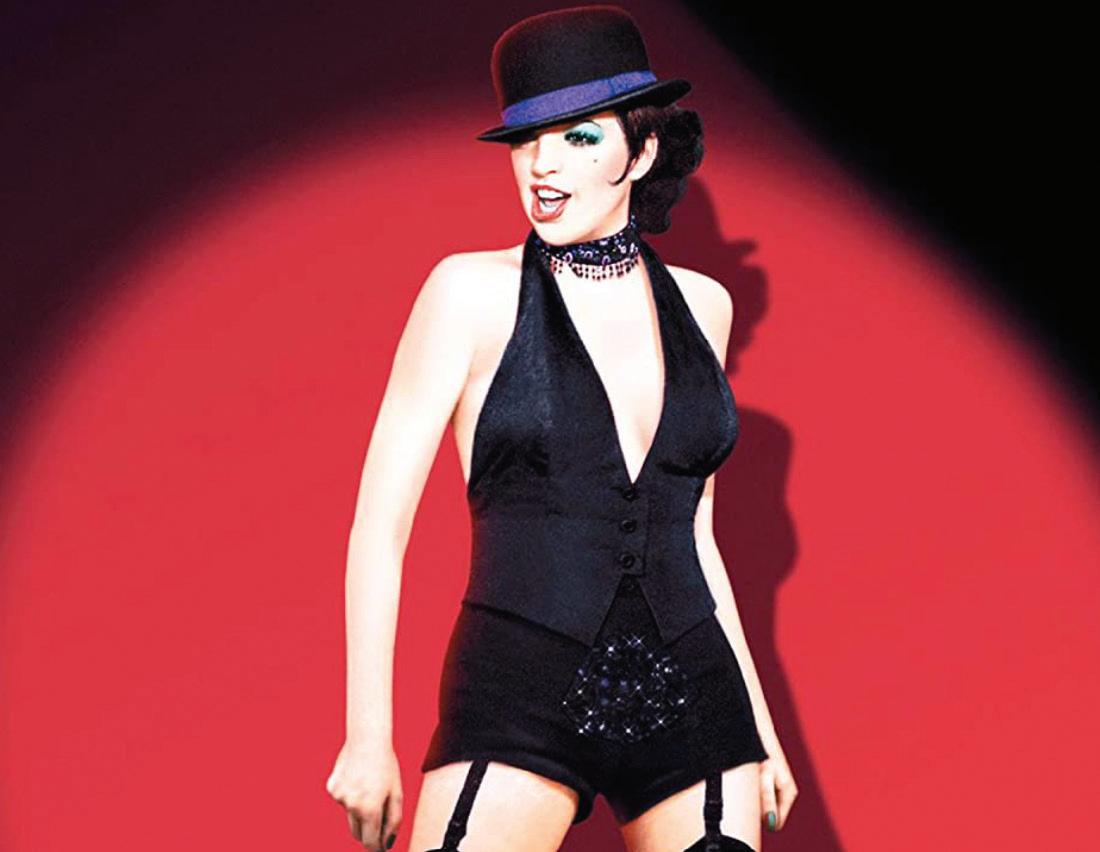
I don’t know when my parents introduced me to Bob Fosse’s 1972 classic Cabaret. I do remember when we grabbed it from the video store. They’d seen it before, of course, but for whatever reason, they’d decided on a rewatch, even though my dad isn’t a huge fan of musicals and my mother doesn’t care for stories revolving around warfare — no matter how ephemeral — or for the film’s Academy Award–winning star Liza Minnelli.
The whys of my first viewing aren’t all that important, though. It’s that initial reaction that sticks with me. Why was this dolllike woman working in a German nightclub? Were those men dressed as girls her backup dancers? What was with the club’s emcee? Why was he so girly? Was that sort of thing allowed?
Watching Cabaret, I felt like I was looking at something dangerous, that maybe if my parents had thought about it a little more, they’d have sent me to my room to read. These people couldn’t possibly be real. The world they were inhabiting had to be an illusion. I was old enough to know Nazis were bad and that WWII was about to break out across Europe — I’d seen The Sound of Music multiple times by this point — but the story being depicted here was so strange, so perversely bedeviling, it had to be some sort of fantasy. It just had to be. Right?
I was wrong about that. After a little digging, it wasn’t very difficult to discover that John Van Druten’s play and Joe Masteroff’s Broadway adaptation, as well as Jay Allen’s screenplay, were inspired by the works of author Christopher Isherwood. Heading to the library, I was quick to find Goodbye to Berlin, Isherwood’s 1939 novel from which Cabaret was born. As my mom didn’t care what the heck I read just as long as I was reading, it was easy to get her permission to check the book out — the librarian insisted for some reason — and it’s not altogether surprising that my evolving middle school mind was proverbially blown by the tales on those pages.
I’m not saying Fosse’s stunning motion picture, celebrating the 50th anniversary of its original release this month, made me realize I was Transgender. That wouldn’t be true at all. But it did get me to question a heck of a lot of things. Why was I so fascinated with Sally Bowles? Why was I more attracted to Michael York than I was the divine Miss Minnelli? Why was I so excited watching the musical numbers set in the decadent Kit Kat Klub?
It’s hard not to wonder how a film, so blatantly and overtly alive in its undeniable queerness, could become such a critical and popular smash. Even for the risk-taking 1970s, with the Hollywood studio system crumbling and the new guard of maverick filmmakers starting to take over, this exami-
nation of Bisexual relationships and gender ambiguity feels way ahead of its time and uncompromisingly bold in a variety of ways.
I imagine it helps that Sally Bowles, so beautifully portrayed by Minnelli, is an inherently tragic figure, or that her lover, Brian Roberts, fearlessly brought to life by York, doesn’t quite get the happy ending he’s openly longing for. Furthermore, it does not hurt that the rise of German fascism and the growing terror of the Nazis is the true villain of the piece.
This gives viewers an outlet for their fury, rage, and insecurities and tears their attention away from other elements they may have been uncomfortable with. If anything, it almost makes the sexual aspects of this tale feel positively boring in comparison. Almost.
Cabaret won eight Academy Awards, and even though it lost Best Picture to Francis Ford Coppola’s The Godfather, its prizes for Fosse’s direction, Minnelli’s and Joel Grey’s superlative performances, and five additional Oscars loudly — and proudly — speak for themselves. But awards aren’t the reason the film has so resolutely stood the test of the time. It’s the way it makes the viewer feel. It’s the complexity and brutal forcefulness of the questions it asks. The music is great, yes, but it is the themes at the center of Isherwood’s remembrances that hold the most power.
Grey’s master of ceremonies says it best:
“Willkommen! Bienvenue! Welcome!” he sings with giddily malevolent glee, urging all of us to come inside the film, to sit in the Kit Kat Klub audience and see what shocking surprises will be performed up on the stage. Outside? Life is troubling. Inside? Life is beautiful. The girls are beautiful. Heck, even the orchestra is beautiful. Is that an illusion? Is it subterfuge? Or is our crafty emcee speaking a truth we cannot know the veracity of until the entire story has played to a conclusion? This is the world of Cabaret. These are snapshots of a life Isherwood lived and wrote about with such spine-tingling clarity.
But it could also be here and now, and if we don’t open our eyes to the truth, we could all end up being Sally Bowles. Our troubles will no longer be left outside the front door. Instead, they’ll be staring straight back at us, and like an immaculately made-up face clownishly distorted by a cascading waterfall of tears, that won’t be beautiful at all. In fact, it would likely be downright terrifying.
Now celebrating its 50th anniversary, Cabaret is available on Blu-ray and DVD from Warner Home Entertainment and to purchase digitally on multiple platforms. It is also currently streaming on HBO Max.
Liza Minelli in Cabaret – Photo courtesy of ABC Pictures
Essential Catch the Fair One is a brutal, uncompromising knockout
by Sara Michelle Fetters SGN Staff Writer
CATCH THE FAIR ONE
Theaters | PVOD
Kaylee “K.O.” Uppashaw (Kali Reis) is a washed-up champion boxer who is barely scraping by. She’s working a dead-end job at a local diner and sleeping in a women’s shelter. Unbeknownst to her mother Jaya (Kimberly Guerrero), she has also been secretly trying to track down her missing younger sister Weeta (Mainaku Borrero), who disappeared two years prior. Now Kaylee has a line on the men responsible for abducting her, and she’s willing to do whatever it takes to bring her sibling home.
Catch the Fair One is not the film you think it’s going to be. Based on an original story co-written with Reis, screenwriter and director Josef Kubota Wladyka’s powerful dark drama hits hard and refuses to pull a single punch. Reminiscent of Costa-Gavras’ Oscar-winning 1982 classic Missing, this is a sparse, bracingly topical thriller that has a heck of a lot on its mind, shining a light on a subject that deserves a great deal more attention than it sadly gets.
Kaylee and Weeta are of mixed Indigenous heritage. As such — and as is far too often the case — when the latter disappeared, practically no one cared, and authorities barely spent any time investigating what happened. Weeta ends up being one of the countless indigenous young women who go missing or are murdered each year.
Kaylee blames herself for not having protected Weeta. She had been determined to keep training at the gym, and even though their mother wanted them to stay together — especially at night — she allowed her sister to walk home unaccom-
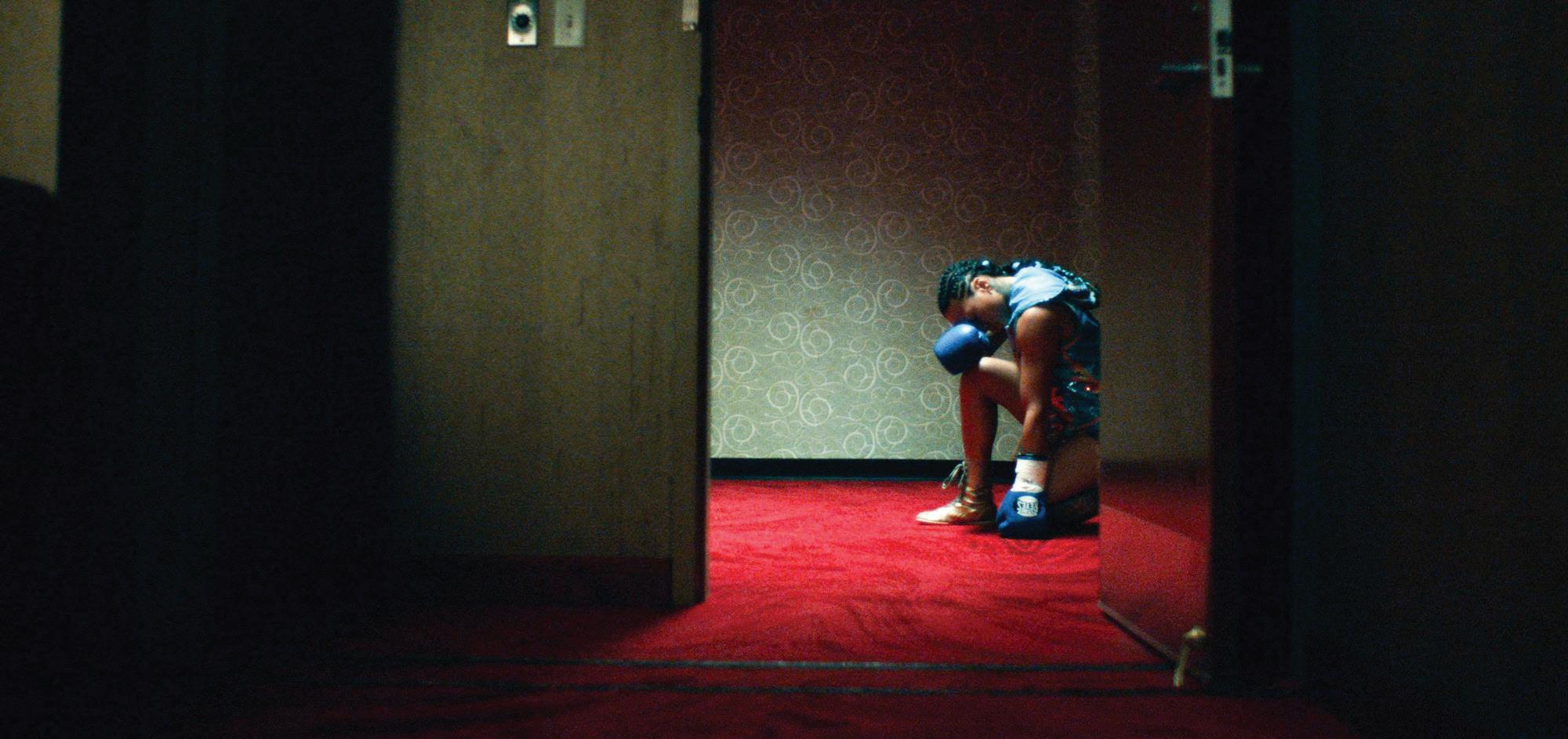
panied. Now Kaylee is obsessed with finding Weeta, no matter what the cost .
This is nasty, gut-wrenching stuff, and Reis — a WBC middleweight world champion and a passionate advocate for Indigenous rights — and Wladyka do not paint a rosy picture. This is not a female-driven Taken variation or an Americanized take on the pulse-pounding Vietnamese action spectacular Furie. Instead, the pair have constructed a minimalistic character study that’s as nasty as it is necessary. If anything, the bleakness is by design.
Every beat, every moment, every step Kaylee takes and every stone she ends up overturning all matter in ways that kept me on the edge of my seat as I also fought back tears. There are no false moves; things happen with a violent ferocity that left me
nearly as bruised, battered, and bloodied as the main character. Wladyka never flinches from the darker aspects of this story. Catharsis is close to impossible and happy endings are nothing more than a bedeviling illusion, all of it revealing an inhuman reality that’s unconscionably inexcusable.
The scenario Reis and Wladyka have concocted is maybe too vague at times. They leave a lot for the viewer to piece together without their aid, and the ending is an ambiguous brain-buster that refuses to answer a single question, leaving the fate of a few key characters purposefully unknown. They present issues as clearly as they can and then resolutely refuse to offer solutions, doing so with an angry resilience some may find off-putting.
I hope that most do not, however. Much
like the family members and friends of the Indigenous women who for generations have gone missing, audiences do not get to know what happens next. They do not get answers. Instead, we are forced to wonder if Kaylee’s search was in vain and if her actions will produce any noticeable change. While her heroism is never in doubt, the woman’s deeds in pursuit of a potentially unknowable truth aren’t always justifiable, and the lengths she goes to achieve her goal color her hands red — not all of which is from the blood of the guilty.
Catch the Fair One is essential. It is also a brutal knockout worthy of multiple viewings. Here’s hoping it ends up getting the attention from receptive audiences it unquestionably deserves.
Kravitz is an energetic powerhouse in Soderbergh’s thrilling Kimi
by Sara Michelle Fetters
SGN Staff Writer
KIMI
HBO Max
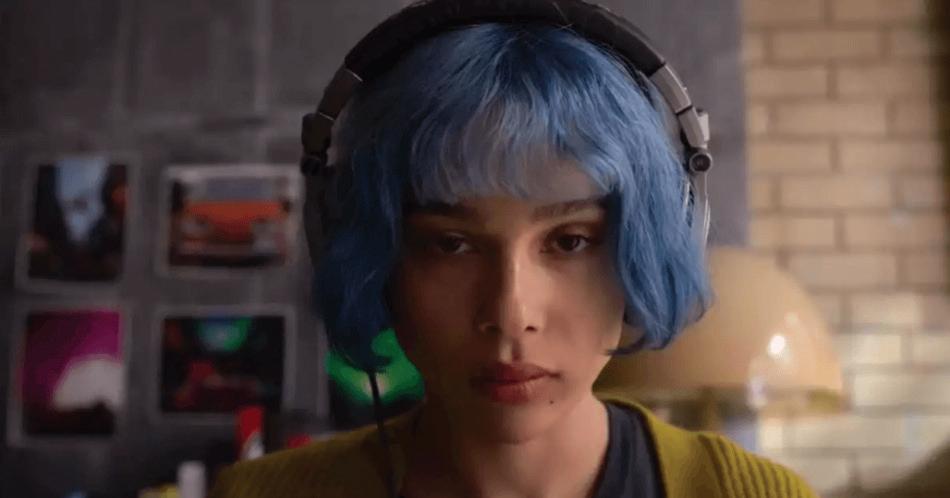
Angela (Zoë Kravitz) isn’t much of a people person. She’s a tech worker living in Seattle who analyzes audio errors for her company’s top product, “KIMI,” a digital home assistant in the vein of Amazon’s Alexa or a Google Assistant. Since she’s a bit agoraphobic, COVID-19 lockdowns have only acerbated her situation, so much so that she can’t even leave her apartment to share a breakfast sandwich with the sexy lawyer (Byron Bowers) who lives across the street, with whom she has an on-again, off-again relationship.
While analyzing audio streams, the young woman runs across one she believes contains sounds of a sexual assault. Researching things further, Angela uncovers an unthinkable crime, one that could rock the foundations of the very company she works for. She immediately becomes the target of some shady figures who’d rather this information not go public, and they’re willing to take lethal action to ensure her silence.
Director Steven Soderbergh and writer David Koepp join forces for the intense, fast-moving thriller Kimi, and the results are exactly what I’d hoped for. Like a visceral mishmash of the latter’s goofily entertain-
ing bicycle messenger gem Premium Rush and the former’s playfully superb Haywire, this is a well-paced jolt of adrenaline that remembers to put character first, all without skimping on a single ounce of suspense.
Kravitz is excellent. The young actor commands the screen, building Angela’s character with nervy precision. So much of who this woman is and what she has already endured in her life is kept close to the vest, with only snippets of her backstory sporadically revealed. Kravitz brings a jittery physical intensity to her performance that’s augmented by an emotional complexity I found mesmerizing. It’s spectacular work.
The topical aspects don’t work quite
as well as Soderbergh and Koepp probably intended. There’s something to be said about these personal assistants invading every aspect of our day-to-day lives, potentially recording what’s happening in our households — whether we’ve given them permission to do so or not. There is an attempt to say something about how privacy is an illusion that has evaporated almost entirely, with the full participation of society at large, but those ideas remain too ephemerally nondescript to register with the horrifying authority they deserve.
That this ends up not being a problem is hardly shocking. Soderbergh is a master at generating suspense, and once the clock
begins ticking and Angela realizes her life is in danger, my pulse started racing and my heart instantaneously jumped into my throat. Without any big set pieces and with precious little action, the director pulls off his Hitchcockian game of subterfuge, misdirection, and chaos with superlative ease. The last 30 minutes crackle with continuous electricity, all of which makes the brutal, violently acrobatic climax well worth the wait.
There’s not a lot more to it, other than to say this is one of the rare Seattle-set Hollywood productions that actually feels like it was shot here by people who know the city, and not by tourists who only want to show the Space Needle every time someone goes outside. I also appreciated that there is no rain in the film. Instead, Soderbergh revels in the region’s sunshine, his cinematography — once again under his alias, Peter Andrews — evincing a colorful, eye-popping vitality that’s sublime.
Other technical aspects are equally outstanding, not the least of which is Soderbergh’s crackerjack editing, the spirited score by Cliff Martinez (Drive), and the inventively stripped-down production design by Philip Messina (mother!).
But, as already stated, it is Kravitz who makes all of this work. She is the engine who powers Kimi to the finish line, and although it’s only February, I have a sneaky suspicion I’ll be talking rhapsodically about her performance for the rest of the year.
Kimi – Photo courtesy of Warner Bros.
Catch the Fair One – Photo courtesy of IFC Films
Travel Pride Journey: Palm Beach

by Joey Amato special to the SGN
On my recent visit to The Palm Beaches, I wanted to explore parts of the region I hadn’t had the chance to visit when I lived in the area a little of a decade ago. Palm Beach County encompassed dozens of cities and towns, each with its own unique charm and attractions. While most people think of Florida’s beaches as the main attraction in the Sunshine State, Palm Beach County stretches all the way to the Everglades in the west and has developed into one of the top agri-tourism destinations in the country.
I began my trip in Delray Beach, the town I
used to live in. One of Delray Beach’s hidden gems is Morikami Museum and Japanese Gardens. Guests get to experience authentic Japanese culture and stroll through acres of lush trails transporting them to a different land. I didn’t even feel as if I was in Florida as I spent time at the reflection pond, the bamboo forest, or the old museum. While in Delray Beach, head to the Pineapple Grove arts district, a stretch of downtown devoted to art galleries, cafes, and boutiques. Swing by City Oyster on Atlantic Avenue for lunch and try order the Lobster Roll. You will not be disappointed.
From Delray Beach, head north on I-95 –or jump on the Tri-Rail to West Palm Beach
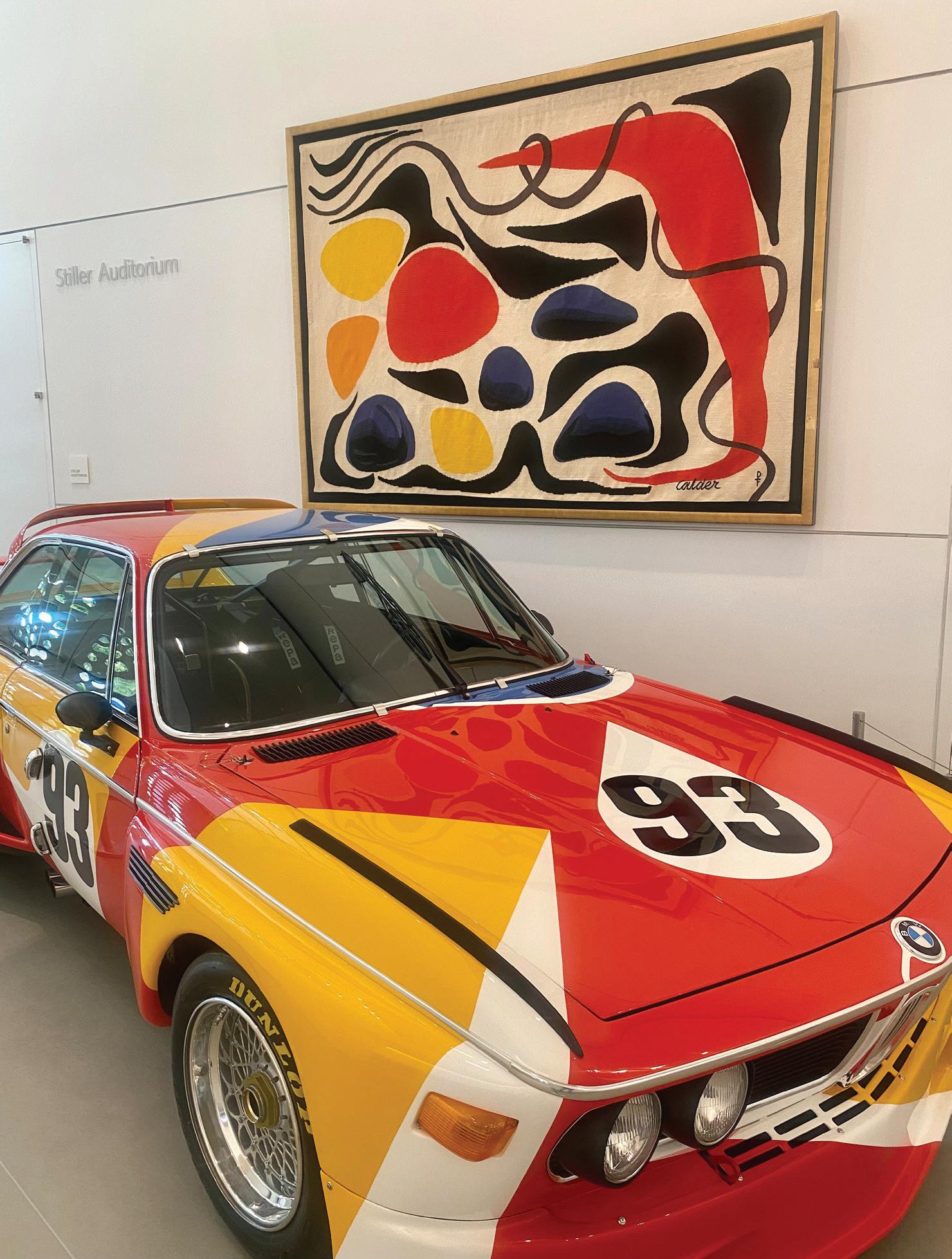
and visit the Norton Museum of Art. During my visit, the museum was exhibiting Origin Stories: Photography of Africa and Its Diaspora, a collection that confronts the intertwined relationship between identity and colonialism in communities across the African continent. The museum also contains a permanent collection of Asian and European artwork.
After the museum, take a walk along Clamatis street, the dining and entertainment hub of West Palm Beach or journey over to Palm Beach Island, where the world’s wealthiest people go to play during the winter months. Mansions and sprawling estates surround the island which includes many historic properties including the Flagler Museum, The Breakers and Mar-a-Lago, which was originally built for cereal company heiress Marjorie Merriweather Post.
There are many hotels located on Palm Beach, but they can get a bit pricey depending on the time of year you visit. A great option is the Hilton West Palm Beach, located across the street from Rosemary Square and within walking distance to many of the area’s main attractions. The luxurious property features a grand lobby, large fitness center and massive outdoor pool, perfect for a nice relaxing dip after a long day of sightseeing.
Grab dinner at Table 26, one of West Palm Beach’s most popular LGBTQ-owned restaurants. My guest and I began our meal with the Squash Blossoms and Burrata & Tomato salad, a simple yet delicious selection that is always a favorite of mine. For dinner, we wanted to order something a little on the lighter side, so we opted for the Zucchini pasta prepared with roasted heirloom tomatoes, pine nuts, basil pesto and shaved parmesan. If you are in the mood to grab some cocktails, head to The Mad Hatter lounge located in Lake Worth, a town known for its thriving LGBTQ culture. Lake Worth is also home to Compass, the area’s LGBTQ community center.
After grabbing a morning coffee, head to Jupiter, about a 20-minute drive north from the hotel to the Busch Wildlife Sanctuary. The free attraction relies on donations to help maintain the property and support its animals. Last year alone, the sanctuary cared for over 6,000 animals who arrived to the facility, which was established to care for sick, injured and orphaned wild animals, while promoting wildlife and habitat conservation. All of the animals at Busch Wildlife Sanctuary are native to Florida.
While in Jupiter, head to Lucky Shuck for lunch and grab a table with a view of the
intracoastal waterway. The restaurant offers wonderful service, fresh and simple food, and a relaxed island time environment. I decided to try the Ceviche Trio, prepared three different ways and was so surprised at the differences between each of the preparations. For dessert – yes, I had dessert for lunch – try the Key Lime pie served with a coconut meringue and passion fruit glaze. It was one of the most delicious items I had on my entire visit. After lunch, jump on the Love Street Outdoor Center PonTiki Cruise a few steps from the restaurant, for a 30-minute or hour-long cruise around Jupiter inlet before heading back to the Hilton for some R&R before dinner.
Although it is easy to navigate West Palm Beach via public transportation, I would recommend renting a car if you really want to explore the destination and some of its most popular attractions including McCarthy’s Wildlife Sanctuary. The guided tours are so informative, and guests learn the stories of each animal and how they arrived at the Sanctuary. Whereas Busch Sanctuary only cares for animals local to the region, McCarthy’s is home to a variety of animals from all corners of the globe including Amur leopards, Bengal Tigers, lions and even a snow leopard. Many of these animals were illegally owned and taken in by the sanctuary as they can’t be allowed into the wild.
All of the animals are well cared for and were quite friendly and playful. The jaguar was purring during our entire visit and the beautiful white tiger was rubbing up against the encloser seeking some attention from us. In addition to big cats, the sanctuary also houses exotic birds, lemurs, and a feisty fox.
No trip to Palm Beach would be complete without a shopping spree or stroll along Worth Avenue. High-end boutiques such as Gucci, Louis Vuitton, and Akris line the street. Even if you don’t want to shop, it is still a fun experience to window shop and watch the parade of exotic cars that drive up and down the avenue.
It takes a good week to explore the destination, especially if you want to visit numerous cities and attractions. One of my favorite times to visit Florida in general is the spring and fall, as the weather is divine.
To book your West Palm Beach gaycation, visit www.Orbitz.com/pride
Photo by Joey Amato
Palm Beach – Photo courtesy of Visit Florida
Op-Ed
All the best rappers are Lesbians, and no, I’m not talking about Drake
by Lindsey Anderson SGN Contributing Writer
Over the last decade, Queer women have taken the music world by storm — but it may not be in the genre you’d expect.
Thanks to popular apps like TikTok, snappy hip-hop riffs and rap beats can quickly blow up into viral dance trends, often appropriated and popularized by white influencers. Now, for the first time, teenagers and young adults are blowing up music charts, not with the new songs they’re finding on the radio but with obscure hits popping up on their FYP (that’s “For You Page” for any of you old millennials).
TikTok is shaping the music industry TikTok trends have led to the popularization of many up-and-coming SoundCloud artists, including Doechii, Ashnikko, and Dreya Mac. Along with them, prominent feminist rappers Princess Nokia and Angel Haze have also grown their fan base, as hiphop fans embrace the new age of Queer rap stars.
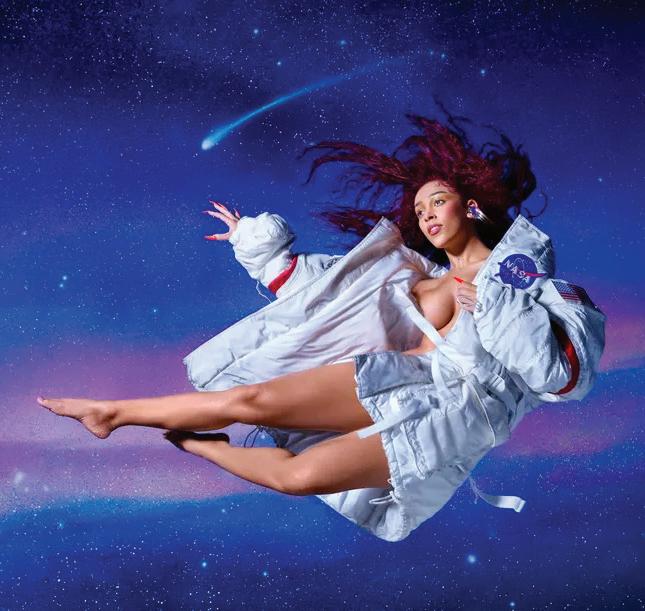
The most popular Queer female artist to explode on TikTok over the last few years was Doja Cat. Her first claim to FYP fame was with “Candy” in 2019. Then she burst onto the scene with the “Say So” dance in early 2020. For weeks, every family unfortunate enough to be on lockdown with a teenage girl was subjected to learning the steps and hand gestures.
Doja Cat was then featured again on the uber-popular “Best Friend,” an ode by Saweetie to female friendship and power that became an instant viral success, with everyone using the sound to highlight their favorite ladies. In summer 2021, Doja Cat released her latest album, Planet Her, officially making her a household name. However, her claim to fame isn’t that far off from other Queer women and Nonbinary people in the rap industry. Doja Cat, Princess Nokia, and up-and-comer Doechii all first gained traction after leaving school to pursue careers on SoundCloud. They were given guidance by their first record producers and instructed on what to write, sing, and wear. And each of their careers barely got off the ground.
Doja Cat signed her first record deal at 17. Over the next few years, she struggled to find her voice. The release of her EP “Purrr!” and her debut album Amala were quiet, and she feared she’d fall into oblivion. In 2018, while taking a break from recording, she decided to release a homemade music video for her absurdist song “Mooo!” It became a viral sensation, and fans demanded a release of the single.
Introducing Princess Nokia
Princess Nokia also found a way to break into the industry. Growing up immersed in New York’s Queer scene, the Nonbinary Bisexual rapper got their start performing in Queer clubs. After releasing their first album, Metallic Butterfly, in 2014, they decided to change their image and stage name to “Princess Nokia,” their alter ego.
Princess Nokia decided to lean into their angsty feminist riot grrrl edge and began writing rhymes that reflected social issues they cared about: urban feminism, homophobia, and rape culture. It wasn’t what the industry wanted, and many worried their new message wouldn’t resonate with the hip-hop community. But Princess Nokia didn’t care.
“I know who I am, I like what I like, and I do what I do. I’m wonderful and comfortable with myself. I got that strength from the [LGBTQ] world, where it’s okay to be different,” they said to Out
In 2019, their song “Sugar Honey Iced Tea” became a summer hit. In 2021 they
So, why is it that LGBTQ women and fem-presenting Nonbinary artists are taking the hip-hop world by storm? They are just as sexual, if not more, in some of their songs than their Queer male counterparts who have gotten flak.
released their first single produced by a major record label, “It’s Not My Fault,” and began blowing up charts with “I Like Him,” an instant TikTok smash.
Another 2021 TikTok sensation came from Queer-girl rapper Doechii. Her hit single “Yucky Blucky Fruitcake” from 2019 earned her a spot on Rolling Stone’s Breakthrough 25 list in April 2021.
Despite concerns from industry experts, silly songs like Doechii’s “Fruitcake” and Doja Cat’s “Mooo!” are working for Queer women, and their careers are skyrocketing.
An industry of misogyny
So, why is it that LGBTQ women and fem-presenting Nonbinary artists are taking the hip-hop world by storm? They are just as sexual, if not more, in some of their songs than their Queer male counterparts who have gotten flak.
Lil Nas X, for example, has faced significant harassment — from online trolls and industry elites like Da Baby — whenever he discusses his sexuality, but women like Ashnikko can discuss “cunnilingus on the couch” without so much as a PTO uproar.
For starters, cis-het men still dominate
the rap industry. While toxic masculinity tends to feign feeling threatened by Queer men — out of a fear that Queer men might pursue them the way they pursue women — it does not treat female-presenting people the same way. Often, Queer women are fetishized and exoticized by these men, who not only allow them to create sapphic artwork but encourage it.
Rappers like Drake, Dope Cashh, Young Thug, and Eminem have all fetishized Lesbians in particular with their lyrics. In fact, “Lesbian” is the most searched-for word on Pornhub. Men, it seems, can’t get enough of the idea of Queer women as the ultimate challenge to their masculinity — one they can’t lose. It reflects the power men have been taught to hold over women.
This fetishization of Queer women can be seen in many of these female rappers’ trending sounds on TikTok. Straight men have used everything from Doja Cat’s “Tia Tamera” to Ashnikko’s “Slumber Party” to film thirst-trap videos. Straight girls have used the former to film themselves with their friends but censored the word “cunnilingus” from their lip-synchs to make sure their audience knew they were, indeed, straight.
Marketing
While the intended audience for Doja Cat, Princess Nokia, and Doechii is women, particularly Queer women, the industry continues to try and market them to the male consumer, who, it seems, is always the target audience when it comes to hip-hop music. Producers were not concerned when music was perpetuating slut shaming, rape culture, and sexual assault, because they can sell that to men, but when Queer women’s music deviates from sex and toward other forms of female empowerment, labels start to worry it’s less marketable.
Even though the most popular Queer-girl songs gain commercial success when they play up sexual scenarios, these hits depict sex refreshingly and respectfully. Simple lines like “ask politely” center the female experience and celebrate women’s bodies instead of just objectifying them. Straight men may just learn something.
Women are capable of presenting so much more than just sex in their music, and Queer women are proving this again and again. Princess Nokia’s “Versace Hottie” details the struggles they faced growing up in the foster system amid an AIDS epidemic that killed their mother. Doechii’s “Yucky Blucky Fruit Cake” pays homage to her ’90s and early 2000s childhood with nostalgia and humor. Doja Cat’s “Mooo!” is pure chaotic hilarity, proving that women can be funny, sexy, and cows, all at the same time. While Queer rappers face an uphill struggle lined with toxic masculinity and gross fetishization, they continue to pave the way for the next generation and show that there are no rules when it comes to hip-hop.
Doja Cat – Photo courtesy of RCA
National & International News

VIRGINIA
continued from cover
bans are no longer enforceable, and samesex couples are able to marry in Virginia just as they are everywhere in the US.
Virginia Democrats sought to modernize their state’s constitution by removing the old, legally unenforceable language, but Republicans insisted on retaining it to express their continuing opposition to marriage equality.
International news highlights
by Daniel Lindsley
SGN Contributing Writer
Beijing:
Record-setting
LGBTQ turnout in Winter Games
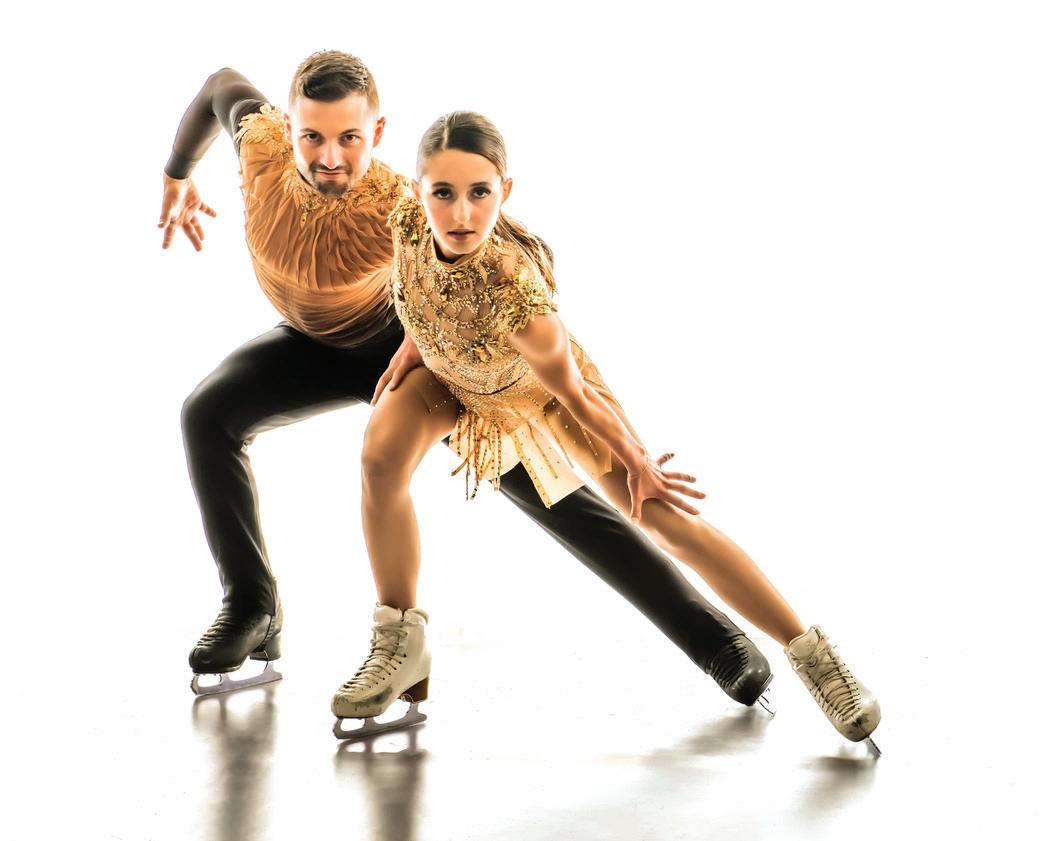
Outsports reported on February 7 that a record-setting 35 out LGBTQ athletes are competing in the Beijing Winter Olympics, more than all previous Winter Olympics combined. Hailing from at least seven different countries, the athletes will participate across nine different sports, with most in either figure skating or ice hockey.
Figure skater Lewis Gibson from Team Great Britain said of being an out Olympian, “It’s honestly a privilege to feel part of a community, and one that is pushing boundaries like no other. Every four years the numbers skyrocket up and up, and it’s so great to see and so great to be a part of.”
Brazil’s Nicole Silveira shared a similar sentiment. “Knowing that I can step on the big stage, the Olympics, as a known LGBTQ member and be able to bring out more visibility and help athletes be who they want to be, it brings me a lot of joy,” she said. “I hope I can be that person that helps lift that weight off someone else’s shoulder.
In addition, The Advocate pointed out that out speed skater Brittany Bowe was the flag bearer for Team USA in the games’ opening ceremony this year.
The proposed amendment never even reached the floor of the Assembly for debate. They were struck down in committee on a 6-4 vote, with all Republicans voting against and all Democrats voting for.
Advocates who spoke for the measure said it remains undignified and hurtful for the current outdated and anti-LGBTQ language to remain in place. Lobbyists for faith-based organizations argued against the measure.
Josh Hetzler, counsel for the Family
Foundation of Virginia, warned that the measure would open to the door to polygamy “and other types of marriage” because it did not include language limiting marriage to two people.
Delegate Dawn Adams, committee member and an out Lesbian, said in an emotional speech that it was offensive to lump committed same-sex couples in with polygamists.
“This matters to people,” she said.
India:
Defense Ministry blocks film about Gay soldier
The Washington Blade reported on February 7 that Indian filmmaker Onir has criticized the Indian Defense Ministry’s decision to not approve his film about a former soldier who quit the military after coming out as Gay.
Onir said ministry officials told him over the phone that the main character’s status as both Gay and a soldier — which is illegal in the Indian Army — made the film ineligible for clearance, on grounds of a 2020 policy that asks the Information and Broadcasting Ministry to get approval from the Defense Ministry for any film depicting Army personnel. The
National news highlights
by Daniel Lindsley SGN Contributing Writer
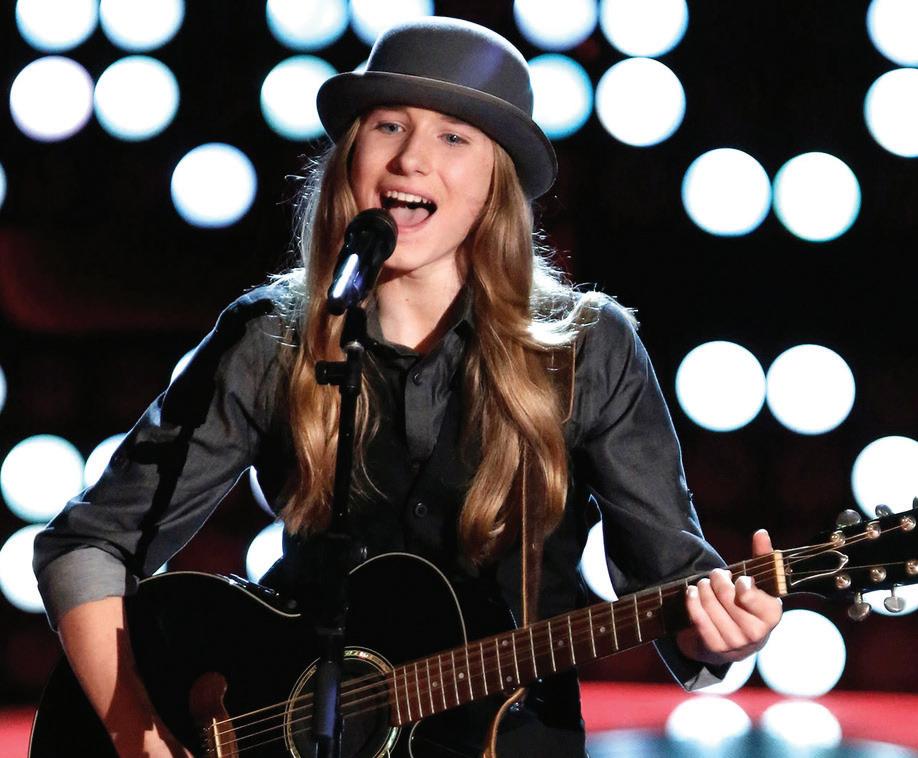
United States: 2016 winner of The Voice comes out as Bi
The Advocate reported on February 7 that singer-songwriter and The Voice winner Sawyer Fredericks has come out as Bisexual on Instagram.
“Hey everyone. It is time for my #Truthfultuesday,” he said. “Since I have not publicly said this in a post, I wanted [to] say that I am Bisexual.”
“When I was younger I thought I was straight, because I was more attracted to women,” he went on, “and I didn’t know there were more options beside Gay and Straight.”
Although The Advocate called the feedback so far positive and supportive, Fredericks’s post also said that he would “probably lose some fans over this point, but that’s fine with me.”
Fredericks won his season of The Voice at age 16, and now, six years later, he’s living with a partner, according to an interview with The Daily Gazette
Washington, DC: Fired director sues Human Rights Campaign Reuters reported on February 3 that the former president of the Human Rights Campaign, Alphonso David, has sued the organization for racial discrimination. David, who was the organization’s first Black president, alleges that his firing last year was racially motivated, as opposed to the HRC board’s statement that he was fired for advising former Gov. Andrew Cuomo about sexual harassment allegations.
David tweeted on the subject,
vetting process is supposed to prevent film producers from showing army men in a “derogatory manner.”
Onir told the Washington Blade, “There are 56 countries across the world where the LGBTQI community is accepted as part of the military. Anyone, irrespective of their sexuality, should be evaluated for their work, skill, patriotism, or intelligence. Sexuality does not define anyone’s skill in the army or anywhere else, and so LGBTQ people serving the country are equally heroes.”
Onir has since sent an appeal to the defense secretary, but he has said he doesn’t plan to go to court if the appeal isn’t granted, preferring to find other ways to make the film possible.
“Today, I am filing a lawsuit for the millions of Black and Brown people who face discrimination every day but fear retaliation or lack the resources to challenge it.” A copy of David’s complaint, also on Twitter, said that the HRC’s own employees had described it as a “white men’s club” that marginalizes, tokenizes, and denies promotions to nonwhite staff.
HRC interim president Joni Madison said the board’s reasons for David’s firing remained the same as before, and that David’s complaint was “riddled with untruths.” “We are confident through the legal process that it will be apparent that Mr. David’s termination was based on clear violations of his contract and the HRC’s mission, and as president of the HRC, he was treated fairly and equally,” Madison said.
Lewis Gibson (l) with his skating partner Lilah Fear – Photo courtesy of British Figure Skating
Virginia Del. Chris Head (R-Botetourt) listens to a colleague during the House session at the Capitol, Tuesday Feb. 8, 2022, in Richmond, VA. Head is the chairman of the Privileges and Elections committee that killed a bill calling for a referendum on gay and voting rights.
– Photo by Steve Helber / AP
Sawyer Fredericks on The Voice – Photo courtesy of NBC








THIS AD SPACE HAS BEEN GENEROUSLY DONATED BY KRISTIN COSTELLO IN MEMORY OF SGN PUBLISHER GEORGE BAKAN