





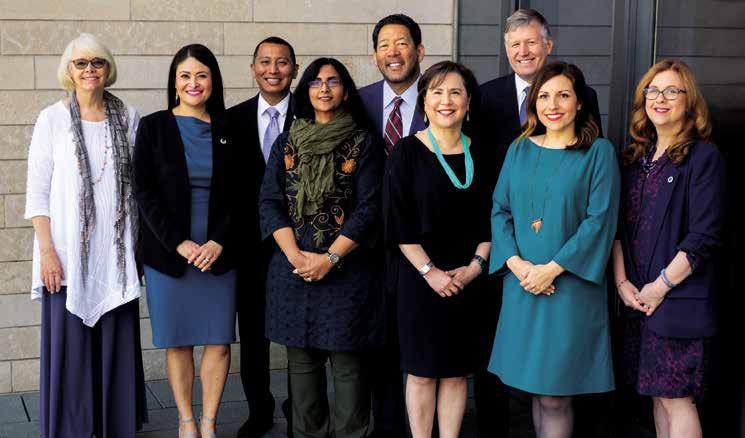
Jane Noland, Margaret Pageler, and Martha Choe. And later Tina Podlowdowski, Sally Clark, and Sally Bagshaw.

Election Day. We voted for folks who demonstrate empathy and compromise, while not compromising their principles. Tough leaders not maxed out on testosterone.
We elected women.
We elected women, most of whom have a talent for conflict resolution and tamping down oversized egos.
Ideology doesn’t have a gender lens, we know. There’s no male-versus-female policy debate on transportation solutions or homelessness in Seattle. But there is a difference in the tools we pick up and the way we communicate.
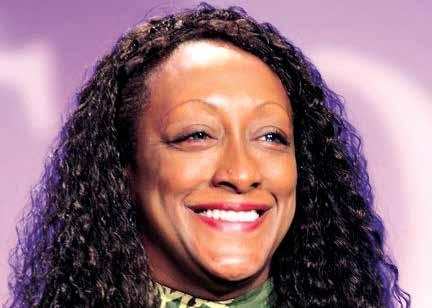
The Northwest’s surge of female political power was regarded as a curiosity when I was elected Seattle’s first African American and first openly gay female city councilmember in 1992. That also was the first year that women gained a majority on the council. We recall their names because each exhibited vision, creativity, and knew how to get things done: Leaders such as Cheryl Chow, Sue Donaldson, Jan Drago,
Things have changed considerably since then. On Nov. 25, Seattle City Councilmember Teresa Mosqueda returned from parental leave to vote on the city’s $6.5 billion, 2020 budget. From the dais, she nursed her newborn child. Next year, Mosqueda and Councilmember M. Lorena González join newly elected Councilmember Tammy Morales, along with re-elected Councilmembers Lisa Herbold, Kshama Sawant, and Debora Juarez on a majorityfemale city council.
Step back and Seattle’s rich diversity comes into focus. Most of Seattle is represented in Congress by Pramila Jayapal, a first-generation American who emigrated from India at age 16. Jenny Durkan is mayor of Seattle. And women hold sway in a range of key appointed positions. Marilyn Strickland, a former Tacoma mayor, is president and CEO of the Seattle Metropolitan Chamber of Commerce. Seattle Police Chief Carmen Best, an African American Army veteran succeeded Seattle’s first female police chief, Kathleen O’Toole. An
article earlier this year noted that women lead police departments in King County cities as varied as Black Diamond, Kirkland, Bothell, Redmond, and Sammamish. And, of course, the King County Sheriff, Mitzi Johanknecht, is a woman.
Today, gender and racial diversity is embroidered into Seattle’s social and political fabric. But political power doesn’t operate in a vacuum. It requires organizing finesse, fundraising savvy, and sweat equity. All the while, women rarely have the political and business connections of Seattle’s privileged white-male majority. When I first ran for office a generation ago, I didn’t benefit from institutional support. Today, grassroots organizers understand the tools required to elect qualified women to political office. Organizations such as Emerge Washington help recruit and train women to run and serve. (If only they had been around during my political baptism.)
Have we shattered Seattle’s glass ceiling? There’s work to do, and complacency is the enemy; still, we can begin to trace the lines. It’s a woman’s world, at least in the Emerald City.
This week [The Durkan Digest dated December 20, 2019], we ushered in the start of a new, historic era for our entire region.
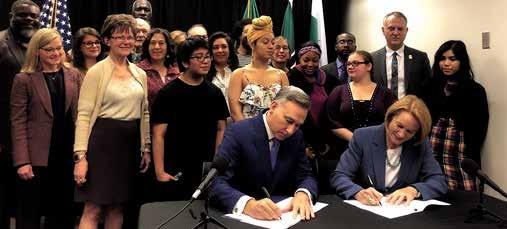
After years of talk, we are finally making good on creating one unified system that has the governance, authority, and resources to address our region’s homelessness crisis. [https://kingcounty.gov/ elected/executive/constantine/news/ release/2018/December/19-governancehomeless.aspx?utm_medium=email&utm_ source=govdelivery] This is a monumental achievement: We have designed a truly regional response which was made stronger, thanks to the invaluable input from all stakeholders throughout the region.
We know that this crisis doesn’t stop at the City’s borders. Its impacts are seen throughout every community in our region. It’s critical to our long-term success that we provide services in every community so that we can allow people to remain in the communities they’ve known.
We also know we must do more to tackle the disproportionate impacts of homelessness. According to this year’s One Night Count [http://allhomekc.org/wp-content/ uploads/2019/09/KING-9.5-v2.pdf?utm_ medium=email&utm_source=govdelivery], the majority of our neighbors experiencing homelessness are people of color. This tells a heartbreaking story of our failure to make significant investments in the health and stability of communities most impacted by institutional racism. But with our guiding principles, we are centering, and accountable to, our historically underserved and
marginalized communities.
This new authority won’t solve the homelessness crisis overnight, and it won’t prevent everyone from falling into homelessness in the first place.
But it’s a historic moment to advance region-wide practices that we know are working, and that we know are helping our neighbors in crisis move inside. I believe the creation of this Authority will help do more to prevent homelessness, to serve people experiencing homelessness, and to center race and social justice in everything we do.
Now, we are embarking on a new journey, as a region and as a community, to address this crisis with the compassion needed to drive change.
As always, please continue to write me at Jenny.Durkan@seattle.gov, reach out via Twitter and Facebook, and stay up-todate on the work we’re doing for the people of Seattle on my blog [https://durkan. seattle.gov/?utm_medium=email&utm_ source=govdelivery].
And finally, Happy Holidays from all of us in the Mayor’s Office. We hope you have the opportunity to spend time with your loved ones.
Sincerely,
Jenny A. Durkan
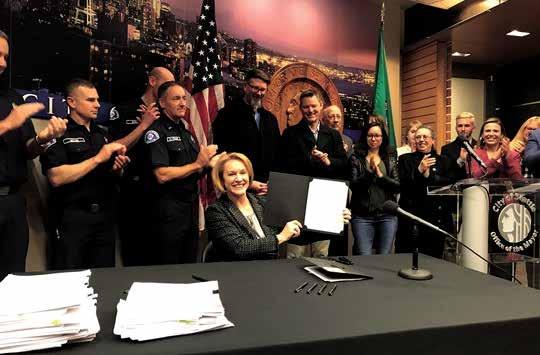
SEATTLE (December 16, 2019) –Standing alongside labor leaders and City employees, Mayor Jenny A. Durkan today signed new Collective Bargaining Agreements (CBA) for Seattle firefighters and City employees represented by the Coalition of City Unions. The agreements were approved by the Seattle City Council on December 9, 2019.
“Seattle is a national leader in ensuring our workers are treated fairly, and we must make sure our hard-fought protections are available for City employees, who come to work every day looking to help our residents build a better life for themselves and their loved ones,” said Mayor Durkan. “The new Collective Bargaining Agreements with Seattle firefighters and represented City employees are about honoring their work and ensuring they have the support they need to thrive both in the workplace, and out in their communities. I’m grateful to all the bargaining teams who worked so hard these last several months to reach these agreements.”
“Our agreement demonstrates the value of our collective bargaining process to deal with tough, complicated issues that we face as a large metropolitan city and a world class fire department,” said Kenny Stuart, President of Seattle Fire Fighters Union, IAFF Local 27. “It will support public safety, improve training for fire fighters and Paramedics, and ensure that the residents of our city continue to receive the first-class service that they both expect and deserve from the Seattle Fire Department.”
“As Co-Chairs of the Coalition of City
Unions, we are proud to represent thousands of City of Seattle employees as they work to improve the lives of Seattle communities,” said Mark Watson and Shaun Van Eyk, Co-Chairs of the Coalition of City Unions Bargaining Team. “We’ve spent over a year bargaining these new CBAs, and we’re confident they include important worker protections and benefits enhancements that will help City employees better serve Seattle. Thank you to the Mayor, City Council, and our bargaining teams for ensuring Seattle’s strong labor history continues.”
“I want to share how extremely proud I am of our Labor Relations team’s commitment to working with our labor partners to reach agreement on these contracts. On behalf of all City employees, I want to thank this team for rising to the challenge to close out nearly all the City’s contracts in one quarter. The long days and nights of calculations and drafting language got us a long way in record time,” said Seattle Department of Human Resources Director, Bobby Humes. “I strongly believe that we have a unique opportunity with a team this talented. For the first time in a long time we
can improve our training of collective bargaining agreement language and ensure we honor the intent of agreements negotiated at the table. We can also increase our value to departments by leveraging our commitment to shared governance to refine labor management as a practice across the City.”
The three-year agreement with the Coalition of City Unions includes a cost-ofliving increase that is retroactive to December 26, 2018. Major tenets of the CBA also include the City’s first-ever Language Premium, which provides City employees who provide bilingual, translation, or interpretation services a $200 per month premium for their services; a Work Life Support Committee to develop lasting strategies about City employee health and well-being; and the expansion of paid bereavement leave from two days to five days, to help ensure City employees who may experience tragedy are better supported.
The three-year agreement with Seattle Fire Fighters IAFF Local 27 includes a cost-of-living increase that is retroactive to December 26, 2018, to help ensure Seattle firefighters can afford to live in the same city as the residents they protect. In addition, the new CBA includes premiums for Seattle firefighters who conduct some of the department’s most dangerous work, including a one percent premium on top of base wages for firefighters who serve on the hazmat team and the rescue swim team.
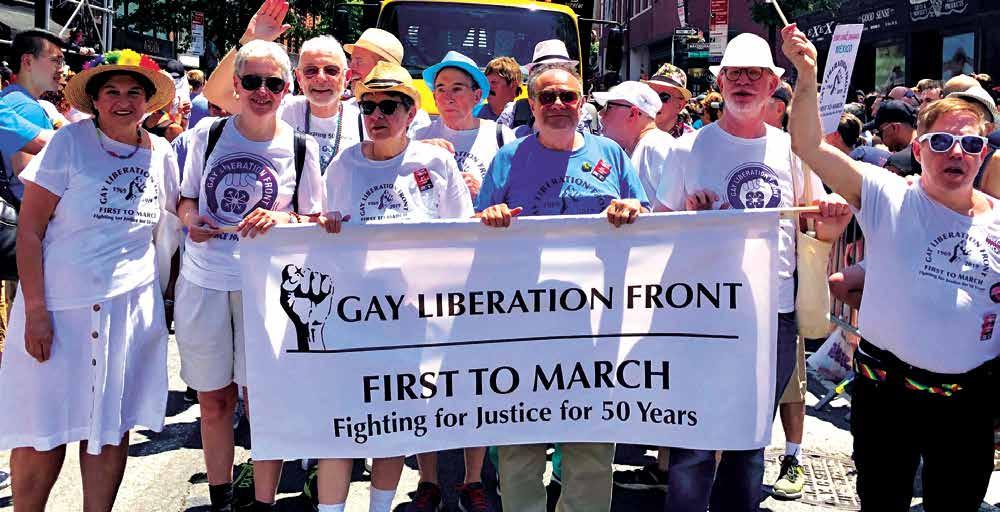
applause, a thank you for the work they began fifty years ago, work that led to the LGBTQ community we know today.
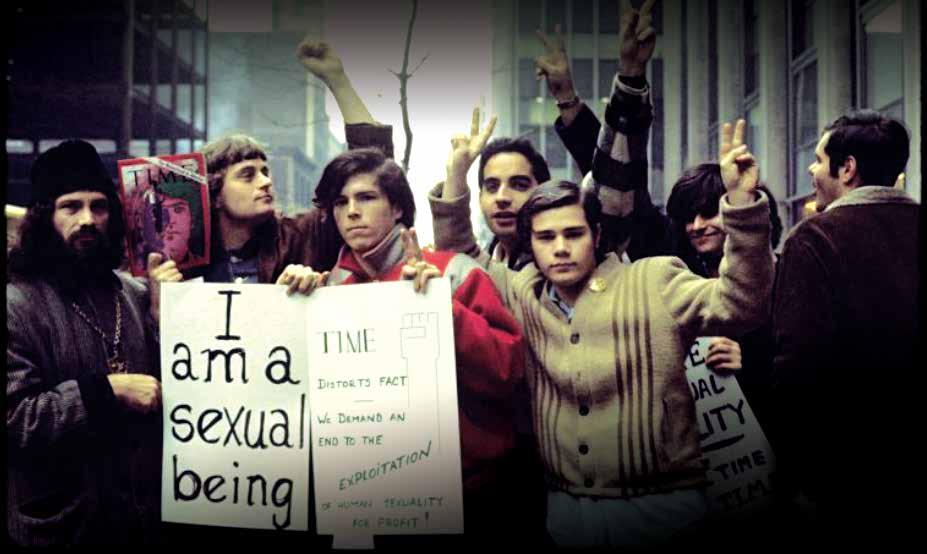
Their ages ranged from late-60s to mid-80s. They wore matching t-shirts with their slogan. Some carried photo buttons of friends long departed. And as they walked downtown towards Christopher Street and the Stonewall, onlookers greeted them with thunderous
“It was an absolute highlight of my long life,” Ellen Broidy said. “I was especially thrilled to be able to share it with my spouse of 40 years!” Broidy co-created the very first pride parade, called the Christopher Street Liberation Day March, which occurred in June of 1970 and had several thousand par-
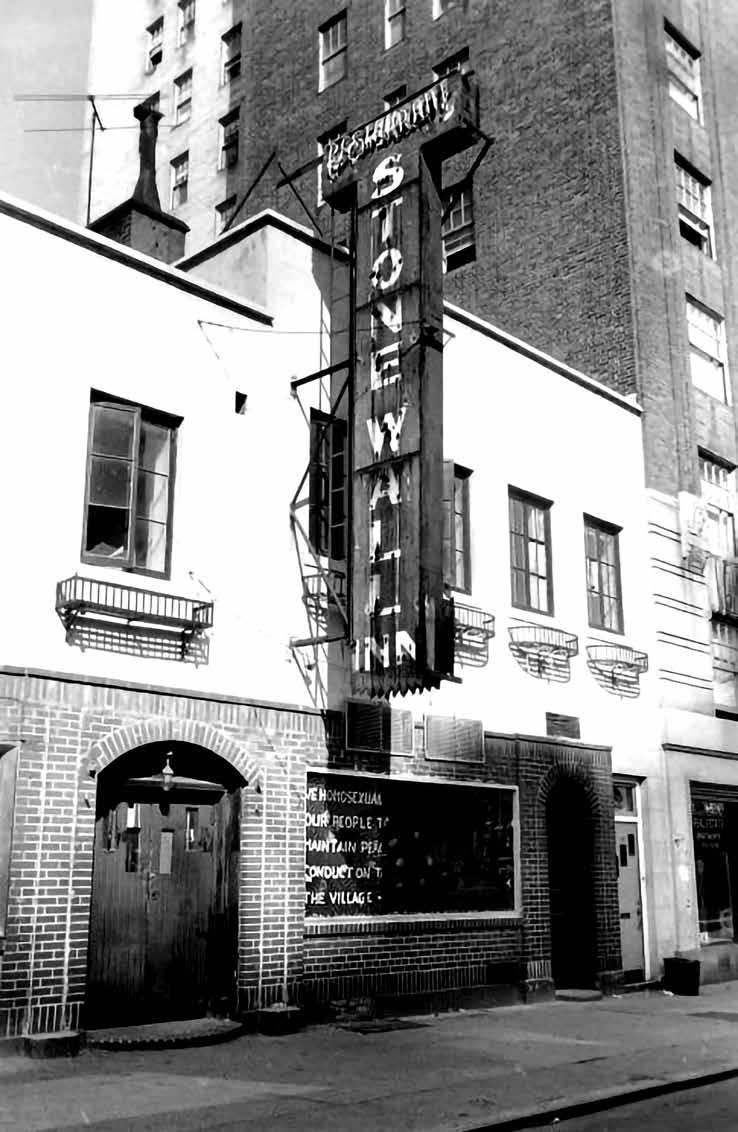
ticipants. Like Broidy, everyone in the 2019 Gay Liberation Front contingent played a part in the movement that began with a spark and ignited around the world.
GLF were Grand Marshals of the parade, a title they shared with Monica Helms, the creator of the transgender flag, Phyll Opoku-Gyimah, who co-founded UK Black Pride, The Trevor Project, and the cast of the FX television series “Pose.” They were among the first of 695 contingents to march in the largest-ever pride parade in America. For twelve hours, onlookers watched marching bands, politicians, big banks, religious groups, tourism agencies, skincare brands, candy conglomerates, queer motorcycle clubs, healthcare companies, civil rights groups and every other type of organization walk the city in honor of the rebellion – and the people –that jumpstarted the entire equality movement. They all walked, in a sense, to honor groups like Gay Liberation Front.
GLF came together in the weeks following the Stonewall Rebellion as a means of capitalizing on the newfound empowerment and visibility the event had spurred. Members met at churches and the Alternate U. center on West 14th Street. They organized marches, wrote newsletters and hosted fundraiser dances all the while trying to understand, to make real, the possibilities of what a gay community could be. They came from all parts of the country with all different points of view, the latter sometimes a cause for tension in their consensus-run meetings, but overall, the group was a family. Many lived together and helped each other emotionally and financially. They understood the strength in solidarity. They wanted equal rights, basic respect, to be treated with decency.
They wanted those things for others, too. They supported and marched with the Black Panthers, same with the Young Lords and the women’s and anti-war movements. Most of them came of age in the civil rights era and brought with them lessons learned from pacifists and radicals alike. They understood, as has been shown throughout history, that they were greater together than they were apart.
Although the fight for equality was a serious business, it was a joyful one too. Lifelong friendships were made. Birthdays were celebrated, movie marathons attended, late-night conversations had on the stoops of Christopher Street brownstones. They were, as you’d imagine, reminiscent of any group of the young and young-at-heart. They jammed to popular music of the era like the
Beatles and the Supremes. They supported each other’s art. They watched out for each other. And, like the headstrong members of bands they idolized, they ultimately went their separate ways.
That GLF New York disbanded relatively early in the struggle for gay civil rights meant that their history was ceded largely to the less radical, more politically correct organizations that came up after them. But although the group ceased activity in 1973, its members continued to rush forward. Michael Lavery co-founded Lambda Legal. Perry Brass was one of the founders of the Gay Men’s Health Project Clinic. Rita Mae Brown and Barbara Love were original members of the Lavender Menace. Gay Liberation Front was part-think tank, partuniversity and part-community hub that fostered a family of like-minded people who decided to change the world.
For the entire month of June, people were reminded of that and much more. On what seemed like every hour of every day, GLF members were on TV, at events, and in print telling the story of Stonewall and the years that followed.
“I think this summer was just the start of people beginning to look seriously at our history,” said Mark Segal, an early member of GLF and publisher of the Philadelphia Gay News. “Mainstream media wanted to know more about the connection between Stonewall and the first gay pride. We made people realize that the first year after the riots was primarily GLF realigning the whole community, making it intersectional, and making it diversified. That’s what we did back then, and that’s what I hope people took away from all the media and events of Stonewall 50.”
The Thursday before the parade, members of GLF held a standing-room-only panel discussion at the LGBT Community Center on 13th Street. The event was a stark contrast to the corporate-sponsored concerts at Pier 97 (dubbed “Pride Island”) or the glitzy opening ceremony at Brooklyn’s Barclay Center. In the early evening, elders, young people, families and a film crew packed into the nondescript, 3rd-floor auditorium, the same space where funerals have been held for fellow pioneers, many of whom were GLF members themselves.
The panelists spoke about their work with gay immigrants, how they handled police, their experiences in the aftermath of Stonewall. They talked about the 1970 Snake Pit incident, in which police raided the bar and one person, fearing deportation, jumped out a window and was impaled on a
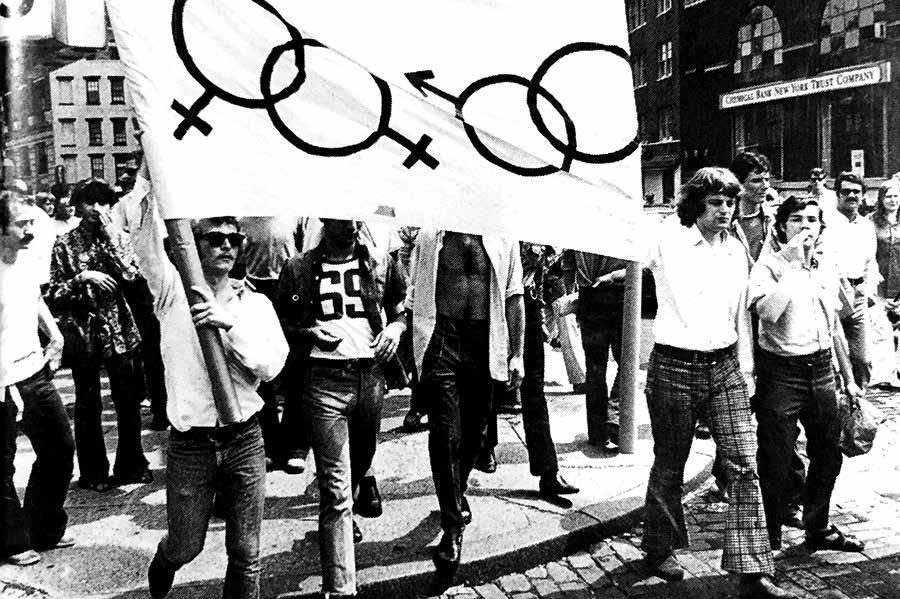
fence. These were the real stories of Stonewall direct from those that lived them. For ninety minutes, they gave a history lesson available no place else.
“It was great that there was such a diversity of ages in the audience,” said GLF member John Knoebel, who told the crowd about his meeting with Black Panther leader Huey Newton. “There were people who’d been with us fifty years ago, but there were also a great many young people who seemed to be soaking it up like a sponge. There’s a segment of today’s LGBTQ youth that really wants to learn their history and feel that they don’t get it in their schools.”
Passing on the history of Stonewall was an important part of the 50th anniversary celebrations. One of the lesserknown events that occurred during Pride week was an intergenerational gathering between members of GLF and students from across the country. The two groups met in a classroom and shared stories about their lives. The teenagers learned about the group Radicalesbians; the pioneers learned acronyms like TERF (trans-exclusionary radical feminist). The teenagers asked the pioneers about heroes like Marsha P. Johnson and Sylvia Rivera, about what it was like to live in a time they knew only secondhand. The pioneers were eager to know how young queer people define themselves today. Both sides came away from the discussion with mutual respect and an appreciation for the history still being made.
Some members of GLF were at the first night of the Riots on June 28, 1969; some joined the second, third and fourth nights. But it’s the work that they did as a group in the weeks and months that followed, holding protests and dances, providing medical alerts and legal advice, leafleting on the street, that took the momentum of Stonewall and ensured that it wouldn’t be another flash in the pan protest, another night of rage that subsided by morning.
GLF ultimately disbanded because the group splintered off into factions with separate priorities. Fifty years later, that forgeyour-own-path mentality presented itself again. On Pride Day, some members chose to forgo being Grand Marshals in the official
parade (organized by the nonprofit Heritage of Pride) and participate in the alternative Queer Liberation March, which used the same route as the first pride march, starting at the Stonewall Inn and ending at Central Park. The march, created by the Reclaim Pride Coalition as a grassroots effort free of corporate floats and police, culminated in a rally reminiscent of the 1970s, with speakers including Larry Kramer, Masha Gessen, and Martha Shelley.
used to make those advances happen.
“I just hoped that what I had to say would reach some of them, be remembered and acted upon when they got home – to continue the fight, and to make alliances with other progressive groups.”
Cities across the world commemorated the 50th anniversary of the Stonewall Riots. Berlin, Taipei, Tel Aviv. But it’s fitting that the largest occurred in New York, where it began. Five million visitors packed the city.
“Mainstream media wanted to know more about the connection between Stonewall and the first gay pride. We made people realize that the first year after the riots was primarily GLF realigning the whole community, making it intersectional, and making it diversified. That’s what we did back then, and that’s what I hope people took away from all the media and events of Stonewall 50.”
- MARK SEGAL
Shelley, one of the founders of GLF, addressed a similarly energized crowd fifty years ago at the culmination of a July 1969 protest march. She and activist Marty Robinson stood on the Christopher Park water fountain, across the street from the Stonewall, and spoke to 400 people “who on that day had shown the courage to appear as openly gay in the sunshine instead of hiding their faces.”
In 2019, the crowd of 45-thousand in Central Park numbered far greater than the 400 at Christopher Park, a testament to the cultural and political shift spurred by the early activists. Shelley shared with them some of the successful strategies that GLF
All week long people made pilgrimages to the Stonewall, now a national historic monument and feature of school field trips, hoping to catch some of the verve that circled the air so long ago, to feel the joy that seeped into the veins of those who took a stand. By the time the parade kicked off on Sunday, the crowd – and the people they cheered – felt the gravity of the moment.
Mark Horn walked the route with his fellow Gay Liberation Front members, holding one side of the banner as he has done in many New York pride parades. He marveled at how much participation has grown from the first march in 1970. Walking in those first pride parades meant see-
ing many familiar faces, people who had the courage back then to “come out of the closets and into the streets.” Today, with millions marching and in the crowd, it’s more difficult to spot people you recognize. This is especially true for early activists like Horn, who endured the death of many in the ‘80s and ‘90s.
“As I walked with my GLF friends, I was both happy and sad. I felt the loss of so many friends and lovers to the HIV crisis. But I was buoyed by the crowd. The entire route, when people saw our sign, the applause got louder, and you could hear people calling out ‘Thank you!’ over and over. I marched with a broken heart that was filled with the gratitude and love of the crowd.”
Members of Gay Liberation Front, and all activists from that time period, are growing older. Their numbers are dwindling. It’s an unavoidable fact. Jerry Hoose, who organized GLF’s reunion for the 40th anniversary of Stonewall, passed away in 2015. Same with Sidney Abbott, who worked with the National Organization for Women to establish the NOW Task Force on Sexuality and Lesbianism. Angela Douglas, Arthur Evans, Bertha Harris, all gone. The ability to paint a full, contextual picture of what Stonewall was, what GLF was, and what the movement was, is rapidly diminishing. This 50th Anniversary year, with all the stories recounted and all the people honored, showed an incredibly wide, though ultimately incomplete swath of that history.
Near the end of the parade, when the GLF contingent approached the Stonewall, they stopped to take a photo in front of where it all began, the place where they took the rage of an enough-is-enough moment and changed the world. Police tried to usher them along, commanding them to keep walking. The parade had many more groups to go, after all. But they stood their ground and soaked it all in. And what they said to the officers recalls that night in June, 1969: This is our place, and we’re not going anywhere.
Courtesy of Mark Segal and Philadephia Gay News





continued from cover
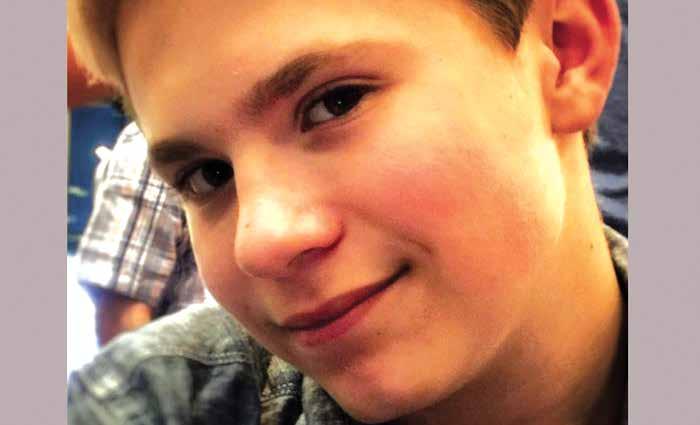
mother, Marcy Peterson, he was expecting acceptance but instead was “bullied, harassed, and even threatened.” The bullying was reported to school authorities and even observed by teachers and staff, but authorities took no action to protect Tristan, the suit charges.
The school superintendent, the principal of Woodruff Middle School, and several
teachers, counselors, and district anti-bullying officials are named defendants in the suit.
NBC News reports that the suit accuses defendants of negligence, wrongful death, and creating a hostile learning environment. The defendants are also accused of violating New Jersey’s anti-discrimination law.
Tristan and his mother complained multiple times about the bullying, but staff failed to intervene to prevent the abusive behavior.
“The defendants had a duty to provide for the safety and security of students,” the suit says.
According to court documents, Tristan’s mother contacted school officials on multiple occasions to report the mistreatment of her son. The suit describes a specific incident that occurred days before Tristan’s death, when he was “specifically subject to threats from another student or students at the Woodruff School related to his sexual orientation.” The incident was witnessed by a Woodruff staff member and reported to administrators, according to the suit.
According to GLSEN’s 2017 National School Climate Survey, LGBT students in
New Jersey routinely face physical and verbal harassment.
Sixty percent of LGBT students in New Jersey reported verbal harassment because of their sexual orientation, while 20% reported physical harassment – including shoving and pushing – and 9% reported physical assaults, including punching, kicking, and even injuries caused by weapons.
The national numbers are worse, with 87.3% reporting harassment or assault. Of those, 12.4% reported physical assaults.
More youth in foster care to participate in Graduation Success program thanks to $500K from the Bill & Melinda Gates Foundation

Treehouse, a Seattle-based nonprofit organization which gives kids in foster care a childhood and a future, will support the ongoing statewide expansion of their Graduation Success program with a $500,000 general operating grant from the Bill & Melinda Gates Foundation, they announced on Thursday, December 19.
“Treehouse has been a leader in partnering with children and youth in foster care for a long time, and the results speak for themselves,” said David Bley, Director, Pacific Northwest at the Gates Foundation. “Successfully navigating the educational system is key to a stable and opportunity-laden future, and we’re proud to back Treehouse in that effort and in everything they do for kids.”
Nationwide, only about 50 percent of youth in care graduate from high school. For those engaged in Treehouse’s Graduation Success program, 69 percent graduate on-time and 77 percent graduate within five years. The program started in King County in 2012 and now serves youth in nine counties. More expansion is planned annually. Treehouse’s goal is that by 2022, youth in foster care statewide will graduate from high school at the same rate as their peers, with support and a plan to launch successfully into adulthood.
“The Gates Foundation has been an unbelievable ally through a variety of projects, and this is an unexpected and transformative gift,” said Janis Avery, CEO at Treehouse. “We could not do this work without community support from the foundation and thousands of others. There is much more to do, and Treehouse looks forward to the day when youth in foster care experience graduation equity.”
In addition to this award, the Gates Foundation has selected Treehouse as a “Foundation Cares” community partner, a program that makes it easier for the foundation’s 1,200 Seattle employees to connect with local nonprofits. Their employees have organized multiple volunteer events, backto-school drives and holiday drives for Treehouse, and every donation of volunteer time or money is matched by the foundation. Treehouse also was chosen to receive a $40,000 grant from the foundation through a collaboration with Challenge Seattle and

the Road Map Project, which brings in high school students from South King County and teaches them about philanthropy and the grantmaking process.
About Treehouse
Founded in 1988 by social workers,
Treehouse is Washington’s leading nonprofit organization addressing the academic and other essential support needs of more than 8,000 youth in foster care. We’re committed to youth in care statewide achieving a degree or other career credential, living wage job and stable housing at
the same rate as their peers. With fierce optimism, we fight the structural inequities that impact all of us. Learn more at www. treehouseforkids.org.
Courtesy of Treehouse
Fentanyl has been making headlines recently, this is because the incredibly potent chemical has been contributing to the increase in overdose deaths across America. Most people however do not know much about the chemical. For instance many don’t know that one of the things that makes fentanyl so dangerous is the fact that it can be absorbed into the system through skin contact. Meaning getting it on your skin could cause a potentially fatal overdose.
To learn more about Fentanyl visit: https://www.narcononnewliferetreat.
org/blog/what-you-need-to-know-aboutfentanyl.html
ADDICTION SCREENINGS
Narconon can help you take steps to overcome addiction in your family. Call today for free screenings or referrals. 1-800-431-1754.
Courtesy of Gay City and Narconon
Vaping has become almost more common today than cigarettes. Originally marketed as being more safe than other tobacco products recent events have made it clear that this is not the full story. One study found that those who vape the equivalent to a pack of cigarettes a day had a 70% higher risk of stroke. This is only one of the health risks that can arise from vaping. For more information visit: https://www.narcononnewliferetreat. org/blog/vaping-linked-to-serious-healthproblems.html
ADDICTION SCREENINGS
Narconon can help you take steps to overcome addiction in your family. Call today for free screenings or referrals. 1-800-4311754.
Courtesy of Gay City and Narconon
by Mike Andrew SGN Staff Writer
The US State Department recalled its ambassador to Zambia on December 23, less than a month after he criticized a Zambian court decision sending two Gay men to prison.
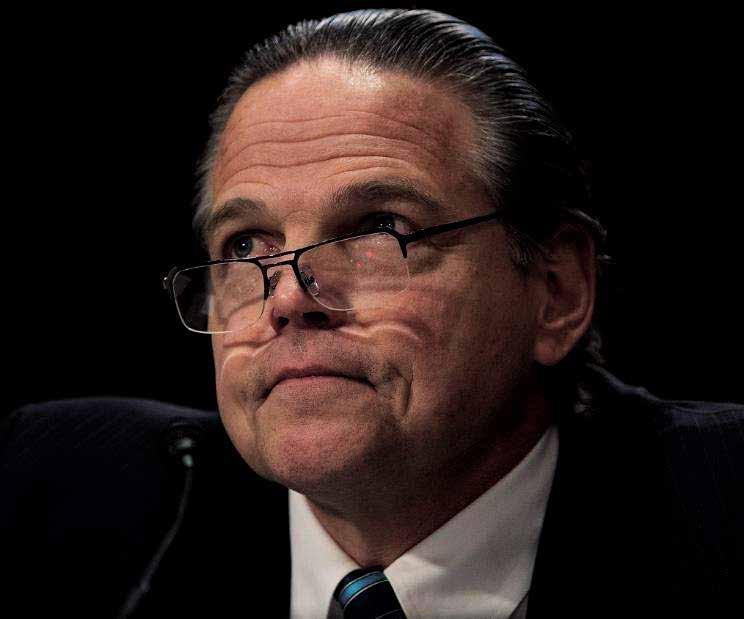
Ambassador Daniel Foote had represented the US in Zambia since 2017. State Department sources said he no longer had a working relationship with the Zambian government and there was no point keeping him in the country.
Foote earned the ire of Zambia’s government after telling officials he was “horrified” to learn that a Gay couple had been sentenced to 15 years in prison when they were accidently observed having sex.
Japhet Chataba and Steven Samba had booked a room in a resort, but a passing hotel worker saw them having sex through an open window. She then called other workers to watch. Police were notified and arrested Chataba and Samba for having sex “against the order of nature.”
Foote expressed his “horror” at the severity of the sentence through diplomatic channels, and then, after blowback from the Zambian government, issued a public statement on December 2.
The men’s relationship hurt nobody, he said in his statement, while at the same time, “government officials can steal millions of public dollars without prosecution.”
Foote also said he’d been subjected to hateful comments online since condemning the sentencing last week.
“I was shocked at the venom and hate directed at me and my country, largely in the name of ‘Christian’ values, by a small minority of Zambians. I thought, perhaps incorrectly, that Christianity meant trying to live like our Lord Jesus Christ,” he wrote.
“I am not qualified to sermonize, but I cannot imagine Jesus would have used bestiality comparisons or referred to his fellow human beings as ‘dogs,’ or ‘worse than animals,’ allusions made repeatedly by your countrymen and women about homosexuals.
“Targeting and marginalizing minorities, especially homosexuals, has been a warning signal of future atrocities by governments in many countries. In my heart, I know that real Zambian values don’t merit your country’s inclusion on that list, ever.”
Zambian President Edgar Lungu replied
on December 15, saying that Zambia had sent a protest letter to Washington over the remarks by Foote and was awaiting a response.
Foote said he was merely expressing “my belief about a law and a harsh sentencing I don’t agree with.” He warned of a “decaying relationship” between the two nations, and said the Zambian government wanted diplomats “with open pocketbooks and closed mouths.”
A US embassy source told Reuters news service that the US State Department had decided to recall its ambassador because
it was now too difficult for him to work in Zambia.
“Since Lungu says he does not want to work with Foote, there was no point of him remaining. Also don’t forget that there are security issues so Washington wants their man back,” the source said.
“The US cannot be paying a salary to someone who cannot work because the hosts don’t want him,” a second US embassy source said.
Foote has been a career diplomat, having held a number of State Department posts since 1997. Zambia was his first
ambassadorship, but he previously worked in Afghanistan, Iraq, Haiti, and the Dominican Republic.
The State Department said it continues to oppose anti-LGBT actions by foreign governments.
“The United States firmly opposes abuses against LGBTI persons. Governments have an obligation to ensure that all people can freely enjoy the universal human rights and fundamental freedoms to which they are entitled,” a State Department spokesperson said.