SABLE ARMY UNITES
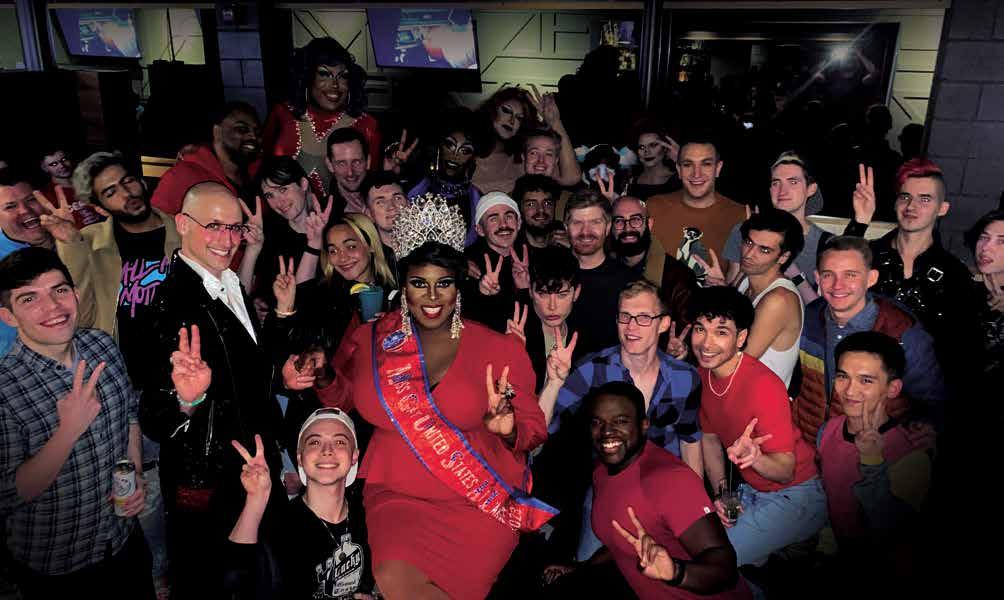
Seattle’s Sable Jones St. James brings message of unity to Miss Gay United States title

Seattle’s Sable Jones St. James brings message of unity to Miss Gay United States title
Motive under investigation
by Cameron Martinez
SGN Contributing Writer
On the night of Saturday, Nov. 4, the Seattle Fire Department was called to put out a blaze inside Belltown’s Taqueria Cantina, an LGBTQ+-owned business that has garnered a reputation for its drag brunches. No one was injured, but the building sustained damage.
The folks at Cantina have set up a GoFundMe to help with the damage.
“We are asking [for] help from our community,” the site reads. “As you may know, our Belltown location was broken into and set on fire. We are working on the logistics to do all the necessary repairs, and we know this will take weeks or even months to do so. One of our biggest concerns is our staff members. This is a very difficult time for them to enjoy the holidays as they will
by Teddy MacQuarrie SGN Contributing Writer
A busy night at the Union Seattle bar sees her dressed to the nines in a bright red outfit. She towers over the patrons, surrounded by her Sable Army, as she celebrates a win she seeks to share with the whole community.

by Teddy MacQuarrie SGN Contributing Writer
In each stage of the HIV/AIDS epidemic, messages of shame, discrimination, and stigma have seemed to shout louder than reason, understanding, and liberation. This is a deadly mix.
Yet to focus on pleasure in an epidemic seems counterintuitive, even irresponsible and indulgent. In the fight against new
HIV infections, however, it is nonetheless indispensable.
Long concentrated on risk and prevention, the fight against HIV must turn to the use of pleasure as a tool in its armory. When approached responsibly and inclusively, it is a powerful force for both ending the HIV/AIDS epidemic and shaping healthier and more resilient communities.






by Jerry Bock
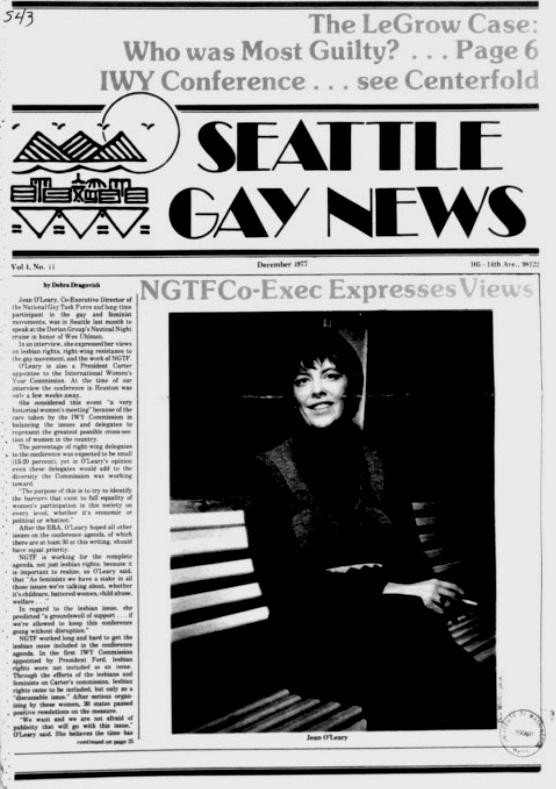
Having attended Dave Kopay’s recent speech at the Masonic Temple in Seattle’s First Hill District. I was left with the sensation of having heard very little of interest to me. A colleague and I approached Mr. Kopay after the talk and requested an interview for SGN, which he politely refused. Then I realized how miscast I was in trying to be a part of a Dave Kopay audience: he was speaking not with Gay individuals who consider themselves active in the Gay liberation movement, but rather with interested non Gays or those who are insecure with their own homosexuality. The purpose of the talk seemed to be for Kopay to show how well he could still blend in with all his past kicker buddies.



Kopay has undeniably been helpful to Gay liberation in some ways. He has ventured forth from a bastion of straight society (or so they thought), pro football. Though his own motives in publicly coming out are not clear, this move forced homophones to reassess their stereotyping. Individuals who had no previous contact with Gay people were exposed to a person to whom they could not attribute the characteristics they ignorantly felt all Gay persons possessed. The true value of Kopay’s revelation may lie in a lessened fear and/or hatred from those most removed from Gay life.

My key objections to Kopay’s talk are related to his seeming indifference to some human rights issues, an indifference which underscores his separation from the central laminar flow of the Gay rights movement. Anyone supportive of the feminist and anti agist movements felt their ears cringe when Kopay teased about great looking gals or pathetic, rounding forty year olds.
Though his speech was oddly overconcerned with descriptions of his sex life and attitudes, his attempts to inject a “love” theme through poetry and letter reading were awkward, to say the least. Despite all, he was decently well received, probably because to most of the audience it was so “nouveau” just to be there.
How much a part of the Gay liberation movement is Dave Kopay, or should his public speaking and writing attempts he more succinctly classified as the “Date Kopay liberation movement?” Such a discussion brings up the question of how much one owes to oneself as opposed to the Gay movement as a whole. Certainly Gay people are a legitimate minority, and we peons expect to be able to cling when one of our kind manages to make the hit parade with the general populace. Gay people, however, are for the most part acutely aware of individual rights, and to saddle Kopay with unwanted reigns of leadership may be overstepping the boundaries.

continued from cover
now be waiting for us to reopen the restaurant and funds will be limited on their end. This resource will alleviate some of the process and allow us to help them as much as we can to make this a little easier during this time.”
Currently, the GoFundMe has raised $795 of the $25,000 goal.
It is currently unknown if the fire was a hate crime.
“The goal was to create a safe environment so everyone could be able to experience what drag is, regardless of identity or age,” Cantina’s website reads.
To support Taqueria Cantina’s GoFundMe, visit https://www.gofundme. com/f/taqueria-cantina-team-fundraiser or visit its downtown Seattle location.
continued from cover
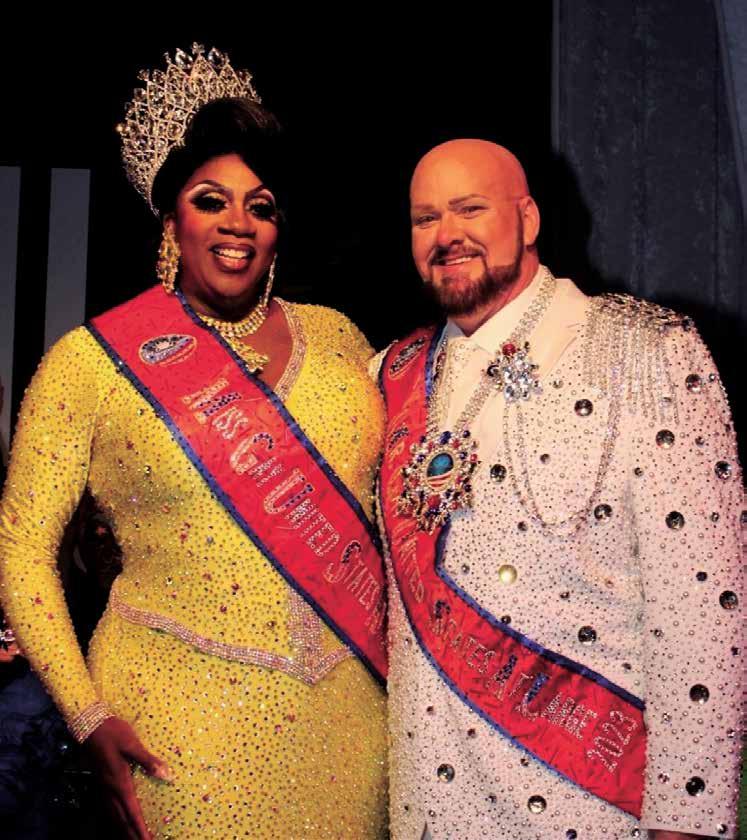
She is Seattle’s own Sable Jones St. James, the newly crowned Miss Gay United States at Large. Just one week prior, on November 10, she won the crown that glitters on her head during the Gay United States Pageantry in Ohio.
Saying of herself that she “like[s] to get to the meat of the issue,” the 18-year drag veteran known as Seattle’s “First Lady” shared with the SGN her message of unity, community, and the significance of pageant drag.
Passion for drag pageantry as a platform
Sable found herself in Seattle in 2020 during the COVID lockdown, competing virtually in GUSP as Miss Michigan. With ties all over the country, there’s not a major city in the US she’s a stranger to.
Except for Seattle.
“I sometimes struggle with people understanding my perspective in the world of Queer show business [here],” she said. “I recognize that my style of drag is not exactly prevalent in this region. I believe it drove my passion to showcase [it] in its highest form every chance I [get] to an audience who may not be accustomed to seeing that every weekend.”
Originating in the southeast US, Sable’s tradition of “pageant drag” is inspired by Black and Brown pop culture icons such as Diana Ross, Aretha Franklin, and Celia Cruz, and informed by characters from such cultural touchstones as the TV series Dynasty
“I like to present that aesthetic to any space that I’m in,” she explained.
Pageant drag is not a tradition with which native Seattlites tend to be comfortable. Describing the resistance she has found locally, Sable said, “I have been given a lot of different names [by] others, like elitist, or anti-Black — but I’m an African American male from Jacksonville, Florida!”
Sable’s advocacy for the relevance of drag pageantry is passionate. For her, its value is that both the title holders and the contests can be highly visible platforms for important issues facing the community, which is the heart of everything Sable does. “If someone walked away from their first experience with me and then saw me again in five years, I would hope that the feeling that they had — that she is one who believes in the power of community — never changes.”
Her passion shows in her role as a drag mother for her Sable Army.
“I am honored to represent them in these Queer spaces as their mother… The fact that I have 43 and growing basically Gay kids here in Seattle is extremely uncommon for this region. They are amazingly supportive of everything I do, and that’s just how I was raised Queer-wise, from another part of the country.”

Proclaiming a message of unity
Sable is not shy about highlighting racial divisions and disparities in among Seattle Queer people. From her perspective, she said, “In current times you don’t see Black and Brown Queer people leading the community in Seattle. It’s not like they’re absent.”
Sable calls on the community to live out its values on the ground level. “To change what we see now, we need to see people actively living dialogue expressed on social media about community,” she said.
“I believe that being united is the intentional act of togetherness,” she added, “but we oftentimes see the scene engaging in cancel culture when it benefits just a small group of usually non-POC people.”
In her view, these issues carry far beyond Seattle, and far beyond Queer show business. “If you’re looking at where we are as a culture and how rights are being stricken from people, it’s because we are not united as one unit. We are so incredibly separated.”
Her message is to give more space and well-deserved attention to drag artists of
different racial, cultural, and gendered backgrounds. “Please, please, please go out of your way to support Queer artists, more specifically Black and Brown and Trans artists of Seattle!”
In the end, that’s what most motivates Sable in her work as a pageant queen. While Miss America may wish for world peace, in the words of Sable Jones St. James, “Miss Gay United States plans to unite the country, dammit!”

by Cameron Martinez SGN Contributing Writer
Have you ever considered trying drag? Perhaps you’ve been given the opportunity, but you’re not old enough to perform at the local venue, or you know nothing about makeup and choreography. Students at Western Washington University have found
a solution to these dilemmas: the Royal Gambit Drag Club.
“[Ash Germino] really wanted to create a space for under-21 drag artists, because in Bellingham there really aren’t a lot of opportunities for any … from the ages of 18 to 20, because a lot of drag is in bars or 21+ spaces,” WWU senior Sol Vandeman (aka Sage Valentine) said.
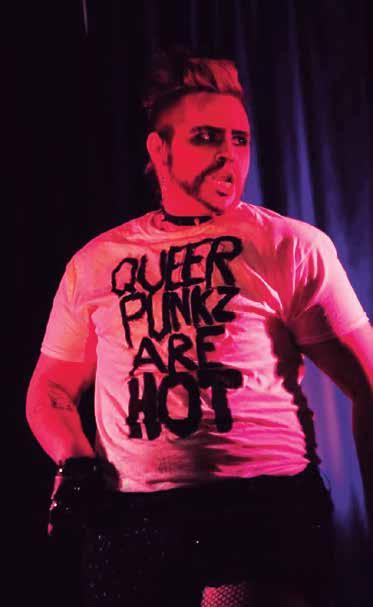
The Royal Gambit Drag Club is studentrun, with an estimated total membership of 150. It puts on performances twice a quarter on campus. It was founded by WWU graduate Germino (aka Axe Andros) with the help of Vandeman in 2022.
So far, the club has been a massive success, with each performance selling out quickly.

Since many of the members are new to drag, there is an emphasis on outside-thebox thinking to help performers come up with their personas or spruce up their preexisting ones. One of the ways they promote creativity is by having a set theme for each show that the participants must work with.
“It’s a great way for newer drag artists to try different things,” Vandeman said.
“For example, back in when the club first started…, we had a Halloween show and then a country shows, and so that gave… the newer artists [an opportunity] to try out maybe more of a country theme or try out a more of a spooky or Halloween thing…
“[A theme is] a great way … for our drag artists to explore different music genres or styles of drag, and … even for the people who are more established, like myself. It helps me go outside the box sometimes and show the newer artists that even when you’ve been doing drag for like four or five years, you can still try new things.”
Members are also given the opportunity to learn more about wigs, choreography, and the most challenging part for most newbies: makeup. The strategy for this is to provide feedback when people ask for it, as well as having meetings dedicated to certain aspects of performing.
Not all members are performers either. Since only 14 to 15 people can participate in each show, there is an emphasis on helping with the events in other ways.
“We’re very big on the technical aspect of the shows,” Vandeman said. “So, we have quite a few people who do tech for our shows, whether that’d be collecting tips, picking up props between the numbers, helping us backstage, helping with decorating the place... So, we have a lot of people who want to do drag, want to learn more about drag, or even want to just do tech.” Overall, Vandeman emphasized that the club is a fantastic place to not only learn about drag but to make lifelong friends.
The Royal Gambit Drag Club plans to have its next production in early February. Shows are 18+ and cost $1. For more information, follow @wwudragclub on Instagram.

by Lindsey Anderson SGN Staff Writer
What with shorter days and snow falling in the pass, Benji and I decided to find a trail nearby. After searching articles and maps, we settled on Coal Creek Trail, a moderate to easy hike just outside Bellevue. It is situated over rich natural resources and winds along some of the most beautiful moss and greenery I’ve seen in the state.
We arrived at the trailhead after an easy 25-minute drive from Seattle. Though it was cold and muddy, we came prepared this time, as Benji and I wore hiking boots and layered sweatshirts. As we made our way down the trail, I was instantly aware of how stinky it was. The first half mile smelled like a decaying animal corpse mixed with human feces. Benji loved it.
The closer we got to the creek, the more rank the air grew. I started to worry that perhaps Coal Creek doubled as a dumping ground for serial killers, but my nerves dissipated as we climbed in elevation and away from the stinky creek. I can only imagine how it smells during the summer heat waves.
Despite this trailhead starting just feet from a busy road, once we got going, we couldn’t hear any cars. The sounds of small sparrows and chickadees filled the air. The path was well maintained for the most part. We only passed a few fellow hikers while on our trek, though I’m sure the cold weather keeps plenty of explorers home.
The mud made the trail slick, and I found it difficult when the path narrowed along a steep incline. There were several wooden bridges for us to cross. Benji is usually a very confident hiker, but the bridges at Coal Creek did make him nervous. The last one we crossed creaked as we stepped onto the slick wood. I tried not to look down at the ten-foot drop below us and quickly pressed on.
Throughout our adventure, I was delighted by the gorgeous varieties of moss. In some patches, it grew so thick on tree trunks that small mushrooms sprouted out of it. The moss seemed to thrive in the cold weather, becoming more varied and thicker the higher we got.
Small bits of frost dotted patches of mud at the beginning of our hike, reminding us that we are now close to the winter season. As we continued, the frost became more plentiful, decorating tall grasses and branches in the shade of trees with sparkling crystals.
If there was a grand finale to this trail, we did not find it. Unlike the last few hikes we’d gone on, which led to alpine lakes and secret beaches, Coal Creek Trail just ended. We followed the signs for the 2.7mile loop, but instead of walking in a circle, we ended up at an entrance to a neighborhood. I assumed the trail must be an outand-back, so we turned around and started following the signs backward. This led us to a YMCA.
Cold and tired, we sat inside the lobby of the Y and recalculated our next move. The ache of frost that had settled on my toes left me pondering if there was any way to avoid continuing on the trail. There was not. Armed with my iPhone’s maps app (I will never cave and download Google Maps), Benji and I re-entered the trail. He led the way past the familiar trees he’d peed on, the ice-lined branches, and the verdant moss.
We took the walk back slowly, watching our steps through the mud. As we rounded a steep corner, Benji let the inertia of gravity quicken his pace and took a tumble off the trail. He was okay but will need more practice hiking in his winter boots.
Though I can’t say I was thrilled to enter the stinky portion of the hike once again, I knew that it meant we were only half a mile from our car. We dashed past the river, not stopping to take pictures as we had the first time. When we finally reached the car, we were both relieved. Benji was thrilled to take off his boots, and I was ecstatic to turn the car’s heat to full blast!
All in all, Coal Creek was a fun hike with lots of natural greenery. I enjoyed looking for ice crystals along the path, even if it may have led us astray. The smell may keep me from visiting again soon, but Benji would give it four muddy paws up.


by Lindsey Anderson SGN Staff Writer
Pet owners are rattled by the news of a mysterious dog illness with COVID-19like symptoms. First appearing in Oregon in the middle of August, this disease has now spread to over 14 states, including Washington, and cases continue to rise. Oregon has seen over two hundred cases in just the last four months.
The contagion begins with a cough, similar to Bordetella (commonly known as “kennel cough”). However, unlike that, the cough is not easily treated by antibiotics and worsens within 24 to 48 hours. Several owners have reported that their healthy, active dogs faded into lethargy within a day. Some required respirators. Several fatalities were also reported, though the exact numbers are unknown, because most states do not track them. Those who have died showed signs of severe pneumonia. Vets have also noted that dogs with preexisting conditions, older dogs, and those who are overweight are the most vulnerable.
There is little known about the disease, but vets are trying to understand it as quickly as possible. Although they still don’t know how it spreads, professionals suspect close contact with other dogs is the reason for the disease’s rapid advancement. They anticipate a spike in cases as the holiday season and travel continues.

The Oregon Department of Agriculture (ODA) released a statement earlier this year addressing the disease and what scientists know about it. According to the ODA, the disease begins with a mild to moderate cough, which can last from six to eight weeks and does not improve when antibiotics are used. Symptoms also include sneezing, nasal and eye discharge, lethargy, trouble breathing, wheezing, and blue or purple gums (a sign of poor oxygen circula-
by Teddy MacQuarrie
SGN Contributing Writer
One year after Club Q shooting, Colorado Springs continues to heal
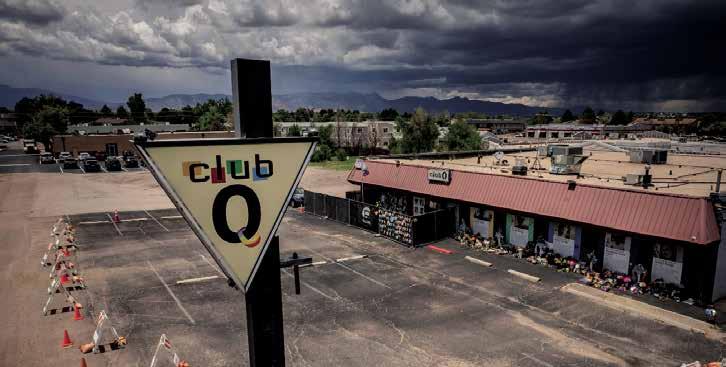
One year after the shooting at a Queer bar that claimed the lives of five people and left 19 others injured, Colorado Springs continues to grapple with its effects on the largely conservative community.
The shooting took place just before midnight on November 19, 2022, when the gunman opened fire into the club with an ARstyle rifle. The attack was stopped when a Navy officer grabbed the barrel of the suspect’s rifle, burning his hand, and an Army veteran helped subdue and beat the shooter until police arrived, authorities said.
The Colorado Springs Police Department identified the five victims as: Raymond Green Vance, Kelly Loving, Daniel Aston, Derrick Rump, and Ashley Paugh.
In the immediate aftermath, community leaders and city officials offered their support to the club and the victims. However, as Matthew Haynes, the owner of Club Q, seeks to reopen in another location, it’s become clear that Colorado Springs, infamous for its anti-Queer attitudes, is still stuck in its Queerphobic ways.
Letters sent to Haynes read something like: “We don’t want those type of people here.” In an elevator, Haynes said someone told him, “This will happen over my dead body.”
“It’s a reminder that there’s still intolerance,” said Haynes.
The city has worked to be more inclusive since the shooting. Speakers at an anniversary gathering on Sunday included the district attorney, the former and current mayors, and Colorado Gov. Jared Polis, who was the first openly Gay man to be elected governor in the US.
A new Queer resource center is set to open in Colorado Springs, where an independent candidate surprisingly defeated a longtime Republican office holder to become the first Black mayor of the city, which has a metro area of roughly 480,000 people.
tion). The disease can progress to chronic, antibiotic-resistant pneumonia. In the most severe cases, the pneumonia can become fatal in as little as 24 to 36 hours.
Because vets still don’t know what this disease is, they don’t have a treatment. The best most infected dogs can get is mitigation of symptoms through oxygen therapy, nutrition, and antibiotics.
The best course is prevention. Veterinary professionals warn that dog owners should avoid heavily trafficked areas, such as dog parks, grooming salons, pet stores, and boarding facilities. They also suggest ensuring that all pets are up to date on vaccines, especially Bordetella.
For people who live in congested areas, such as apartment buildings, where contact with other dogs may be unavoidable, experts recommend bathing pets more often, wiping their paws down after trips outside, and limiting walks as much as possible.
Limiting outdoor time and walks can be difficult, especially for owners of energetic, young dogs. Visiting less frequented parks or investing in puzzle toys is a safe way to keep active dogs busy while vets attempt to understand this mystery disease.
If your dog shows symptoms of the illness, vets recommend bringing them in as soon as possible and not allowing them to interact with other animals in the house. Isolation may be hard for multipet families, but if one dog contracts the disease, the best way to keep all other pets safe is to keep them away from each other.
Dogs are social animals and won’t understand why they need to stay distant from their favorite places and friends. Providing them with at-home enrichment, giving extra cuddles, and continuing to prioritize vaccines, a healthy diet, and exercise when you can is the best way to keep them happy and healthy through this scary time.
Yet some Queer community members still worry for their safety, including Jackson Oliver, 15, who’s Transgender. After watching the big names address the large crowd, Oliver was wary of how much was political posturing. Speaking to the Associated Press, he said, “I would love to believe that they genuinely cared, but I’m not too sure.”
At his high school, Oliver and his boyfriend had three other students throw stones and slurs their way. Sometimes they stop holding hands and step apart to avoid harassment. At the local Queer organization for youth, protestors picket outside.
“It’s hard knowing that simply by existing... me and my boyfriend are at risk,” said Oliver.
Conservative outlet 1819 News under fire after outed Ala. mayor’s death
The Alabama community and nationwide media are scrutinizing the conservative blog 1819 News following its controversial coverage of Smiths Station
Mayor F.L. “Bubba” Copeland before his tragic death.
1819 News came under fire after publishing stories about Mayor Copeland’s secret online persona, through which he explored his gender identity in femalepresenting clothing and makeup. The day before Copeland’s funeral on Thursday, 1819 News released a podcast episode in which CEO Bryan Dawson and editor-inchief Jeff Poor discussed their rationale for covering Copeland’s private affairs.
According to The Daily Beast, Poor, who also writes for the far-right outlet Breitbart News, defended the decision, stating that Copeland’s actions warranted public scrutiny as a public figure and worship leader.
Unapologetic for the reporting, Dawson said that he “100 percent” stood behind their work, emphasizing 1819 News’s commitment to “tell the truth, no matter what.”
Following the reports, Copeland fatally shot himself. The incident sparked a heated debate over media ethics and the
public interest in a person’s private life, especially in sensitive matters such as gender identity.
Copeland’s suicide on a road as Lee County deputies attempted a welfare check sparked a social media backlash against 1819 News. The debate centered around whether the articles served the public interest or were merely sensationalist fodder for cultural wars over gender identity. Experts have noted that a single event rarely causes suicide, but the timing in this case led to significant public backlash against the news outlet.
In a statement to AL.com, 1819 News referred to Copeland’s “victims” while sharing “thoughts and prayers” for the community, the church, and Copeland’s family.
This framing of Copeland as having victims in his private activities was met with criticism, particularly in the context of Alabama’s current legislative stance against Transgender rights.
by Teddy MacQuarrie SGN Contributing Writer
India’s Queer community holds Pride march in wake of marriage equality defeat
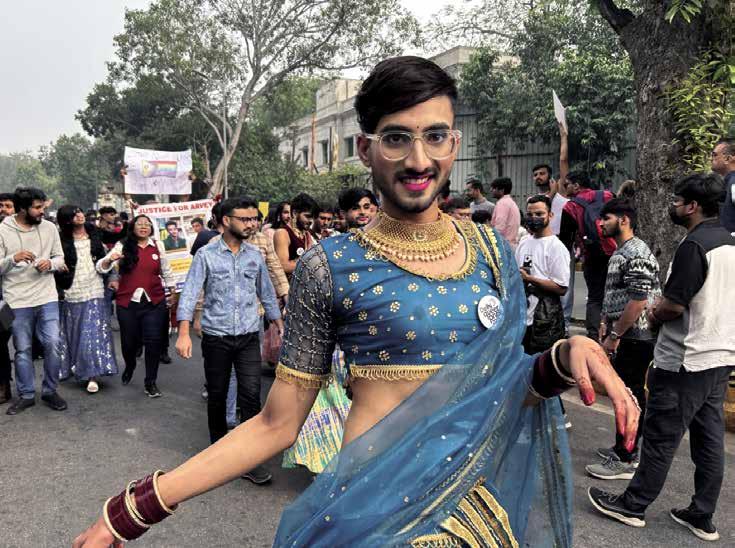
More than two thousand people took part in a Gay pride event in New Delhi, waving rainbow flags and multicolored balloons as they celebrated sexual diversity in India but also raised concerns over the country’s restrictive laws.
Dancing to drums and music, the participants walked for more than two hours to the Jantar Mantar area near India’s parliament. The annual event comes after the top court refused to legalize same-sex marriages in an October ruling that disappointed campaigners for Queer rights in the world’s most populous country.
One of the volunteers organizing this year’s event, Noor Enayat, told the Associated Press, “It’s not about marriage. It’s about equality. Everybody should have the same right, because that’s what our constitution says.”
Earlier this year, the Supreme Court’s fivejudge bench heard 21 petitions that sought to legalize same-sex marriage in India.
The justices called for steps to raise awareness among the public about Queer identity and to establish hotlines and safe houses for those who are facing violence. They also urged the state to make sure same-sex couples don’t face harassment or discrimination in accessing basic needs, like opening a joint bank account, but stopped short of granting legal recognition to same-sex unions.
In 2018, the top court struck down a colonial-era law that had made Gay sex punishable by up to 10 years in prison and expanded constitutional rights for the Gay community. The decision was seen as a historic victory for Queer rights.
Despite this progress, Prime Minister Narendra Modi’s Hindu nationalist government resisted the legal recognition of same-sex marriage and rejected several petitions in favor of it. Some religious groups, too, had opposed same-sex unions, saying they went against Indian culture.
According to a Pew survey, acceptance of homosexuality in India increased by 22 percentage points, to 37%, between 2013 and 2019. Same-sex couples, however, often face harassment in many Indian communities, whether Hindu, Muslim, or Christian.
Skepticism greets announcement of Mexican Nonbinary magistrate’s cause of death
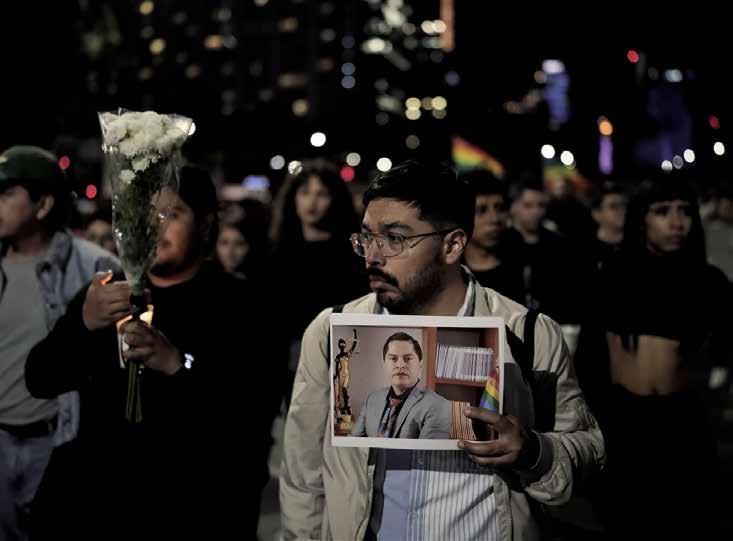
The lead prosecutor investigating the killing of Jesús Ociel Baena, Mexico’s first Nonbinary magistrate, said they were not the victim of a hate crime but instead slain in a razor blade murder-suicide at the hands of their lawyer and model boyfriend, Dorian Herrera.
“It may seem like a not very credible hypothesis to many, but we’re being very careful to leave a record and preserve all evidence,” Aguascalientes state prosecutor Jesús Figueroa Ortega told local Spanish-language Radio Formula.
Baena was a leading figure in Mexico’s Queer community and was granted a special security detail due to having received multiple death threats. Many initially suspected the two men were the victims of a hate crime, but the state prosecutor said all the evidence at the scene, including the wounds to the bodies, pointed to a murder-suicide at the hands of Herrera.
Federal authorities, however, urged caution in the investigation. Félix Arturo Medina, an official with Mexico’s Interior Ministry, said that “it’s important to not
throw out any line of investigation.” He said federal officials hoped to coordinate with state authorities to investigate the deaths.
Members of the Queer community greeted the news from investigators with skepticism. Alejandro Brito, director of the Queer rights group Letra S, told the Associated Press that state prosecutors are “loaded with prejudices” against the community.
“In these types of homicides, they always try to disqualify or belittle,” Brito said. “These statements that the prosecutor is giving, what they’re doing isn’t clarifying the acts, they’re adding fuel to the
fire of these prejudices.”
Víctor Espíndola, executive director of the nonprofit Movement for Equality in Mexico, told Courthouse News that the couple had sounded upbeat when they spoke with members of Baena’s family that evening. He also disputed Ortega’s version of events, suggesting that investigators are jumping to a predetermined conclusion, and called for a federal investigation.
“There is no evidence to support the attorney general’s version, because there are no cameras in the house and there were no witnesses,” Espíndola said in a phone interview with Courthouse News
“It would appear that they would like to close this case as quickly as possible, so we and several other organizations are calling on the federal attorney general’s office to take the case, because what the Aguascalientes attorney general is declaring is not trustworthy.”
Baena was an inspirational figure in the Queer community. They were the first to receive a Nonbinary designation on their birth certificate and passport. They were also recently the first to receive a genderneutral magistrate title, a significant step in the culturally conservative country.

In the context of the global west, where HIV disproportionately impacts Queer communities, pleasure is a game-changer in the pursuit of a world without new infections. Recognizing and embracing the diverse ways in which people experience it allows us to create targeted, effective strategies that go beyond mere risk reduction.
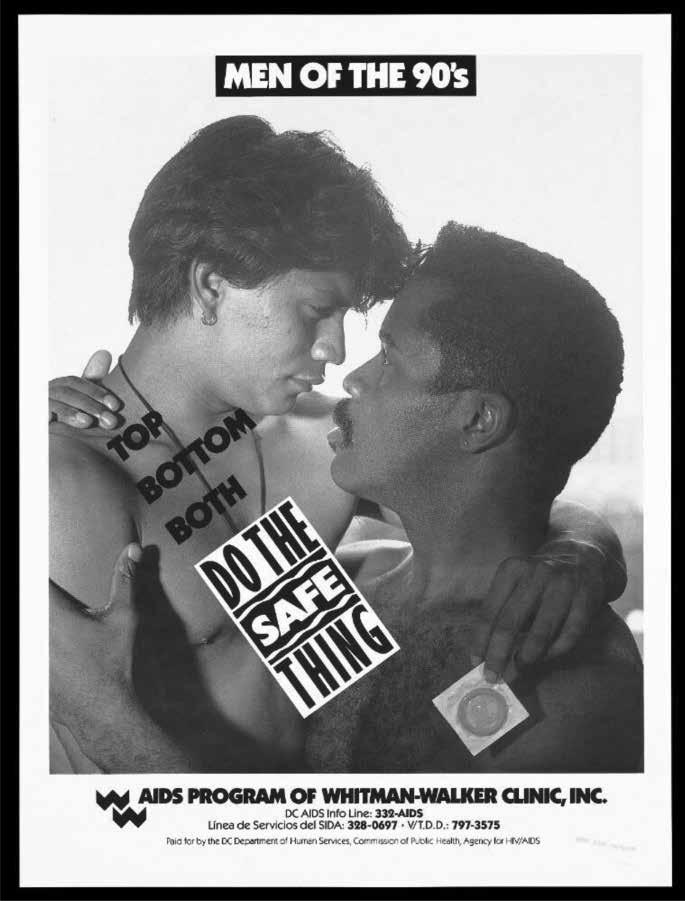
Pleasure and safety are not mutually exclusive
In response to the AIDS crisis in the 1980s and 1990s, community leaders and public health officials homed in on the role that sexual behaviors play in transmitting HIV. Community-based activism and work led to the development of safer sex practices, including pushing for unyielding condom use, and making experimental drugs available to AIDS patients. These efforts were heroic and life-saving.
However, the landscape of medical science around HIV has changed over the last five decades. Traditional prevention strategies focus on restraint, with messaging that encourages partner reduction and barrier forms of protection, which, however wellmeaning and seemingly straightforward, can reinforce the shame, stigma, and guilt Queer people have already had thrust on them. The answer to a sexual health crisis, these approaches seem to say, is to hold sexuality itself in suspicion.
Instead, a pleasure-inclusive approach looks different depending on the community and individual, but they deemphasize specific “mandatory” behaviors and allow people to craft prevention strategies that fit their sexual lives.
For example, those who see condoms as a barrier to sexual enjoyment may find their needs better fit through pre-exposure prophylaxis (PrEP, the use of an antiretroviral to prevent HIV infection), a newer strategy called doxy-PEP (the use of a common antibiotic to prevent bacterial STI infection after an unprotected encounter), and frequent STI testing. Those who prefer having multiple sexual partners are given the information and tools needed to make decisions concerning their sexual health and well-being.
An embrace of sexual enjoyment has a profound impact on behavior. Pleasurefocused approaches acknowledge that people are more likely to adopt and maintain safer practices when they align with their desires and preferences.
For instance, a 2017 study published in The Lancet HIV found that those who perceived PrEP as enhancing sexual enjoyment were more likely to adhere to the regimen.
Pleasure-centered approaches to PrEP outreach ensure that people understand how this tool enhances satisfaction and minimizes anxiety. Research conducted by the National Agency for AIDS Research (ANRS), in its 2015 community-based IPERGAY trial across France and Canada, demonstrates that interventions emphasizing pleasure can lead to more sustainable changes in sexual behavior.
These results appear in a 2022 systematic review of 16 studies on HIV prevention in the Journal of Sex Research called “Pleasure and PrEP,” which argues that “a primary message to persons who are at elevated risk for HIV has been to focus on risk reduction, sexual risk behaviors, and continued condom use, rarely capitalizing on the positive impact on sexuality, intimacy, and relationships that PrEP affords.”
When the conversation around HIV prevention takes pleasure into account, it becomes an inclusive and affirming dialogue, not a top-down list of rules and restrictions to follow. It uses an embrace of Queer sexuality as a starting point, fostering an environment in which people feel supported in seeking testing, treatment, and prevention options.
A pleasure-inclusive future
Ultimately, embracing pleasure as a core component of HIV prevention is not just about promoting healthier sexual practices but about recognizing the inherent dignity and agency of those in the Queer community.
We must acknowledge that pleasure — including sexual enjoyment — is an indispensable aspect of the human experience. By incorporating it into HIV prevention outreach, we create a more inclusive and empowering narrative, one that resonates with the lived experiences of those most affected by the epidemic.
Through a pleasure-centered approach, we can forge a path toward a future in which new HIV infections are a thing of the past, grounded in the resilience, strength, and joy of the communities most impacted.
Teddy MacQuarrie is a PhD student in human sexuality at the California Institute of Integral Studies and a resident of Seattle. His research focuses on the social impacts of trauma in Gay communities.
by Isabel Mata SGN Staff Writer
Ask Izzy is an advice column about relationships, mental health, and sexuality. Written by Isabel Mata — a Seattle-based lifestyle writer, podcast host, and mental health advocate — Ask Izzy offers tangible expert advice so all readers can have stronger relationships, better sex, and healthier mindsets. Submit your question today by scanning the QR code below.


When checking the submissions for the column this week, I was surprised to find not one, not two, but three separate questions asking how to navigate dating after a breakup. The first one asked how to muster up the courage to date again after having your heart broken, the second one about how soon is too soon to start dating again, and the third about not wanting to repeat past mistakes that led to the breakup in the first place.
While there is no one-size-fits-all guide to dating after a breakup, I will do my best to provide insight that could be helpful to navigating this murky territory.
When I first started dating my now-husband Richard, I was fresh out of an unhealthy relationship. Only a few months had passed, and I was acutely aware that I probably shouldn’t be dating anyone quite so soon.
The mere mention of my ex’s name sent me into a tailspin and gave me anxiety that only a sound bath and Klonopin could unwind.
Given all that, I knew Richard was spe-
Photo by cottonbro / Pexels
cial and that I wanted to give it a try. It was terrifying, because I knew it could end in heartbreak, but I also knew that there was a chance that it wouldn’t. So instead of running away, I was very up front with him about my situation. While he could have dipped the second he learned of all my baggage, he didn’t. He was patient, kind, and supportive of my healing journey. I had hit the jackpot.
The reason I share this story is to make it clear that relationships can be messy, and with that messiness comes a complexity on how to move forward. But humans are incredibly intuitive, meaning that on some level, you will know what the best course of action is for you. It’s the same gut feeling that told me I wasn’t ready for a relationship that told me when I was.
If you are worried about what future partners will think about you dating so soon after a long-term relationship has run its course, be transparent. There is no perfect amount of time to wait, but it could poten-
tially cause problems if you jump in before you are ready. In the case of my Richard, there was more than one occasion where I overshared and broke a few boundaries that ended up causing some tension in our relationship, all because I was worried I would lose him if I needed more time alone. If I had just trusted my gut from the get-go, I probably could have saved us some tears. But then again, I wouldn’t be where I am today (married!) without taking that risk. The answer that all these questions about dating after a breakup have in common is that it all comes down to self-reflection. Before dating again, I would take some time to journal about your romantic intentions, making a list of things you want in your next partner, and even the things you learned from your last relationship. If there are certain behaviors of yours that went into your last relationship not working out, reflect on them. Ask yourself why you behaved a certain way, and maybe even try and identify potential triggers for the future.
If upon doing this you realize that you are totally ready get your heart broken again, then by all means reactivate the app of your dreams and swipe away! But if you feel like one rejection could send you over the edge and right back into your therapist’s chair, it might be worth it to wait a bit. Do what feels best, and the rest will fall into place.












by Lindsey Anderson SGN Staff Writer
For the last 20 years, Rafael Soldi has been working with mixed digital media to create art that makes people reconsider the world around them. His latest project, a collection featured at the Frye Art Museum, tackles an issue that’s affected him since long before he picked up a camera.
“Soft Boy is an exhibition at the Frye Art Museum that includes three different projects that come together to talk about identity, specifically my identity as a Queer person growing up in Latin America,” Soldi said. “[It navigates] a space that was pregnant with toxic masculinity and thinks about what it meant to attend an all-boys Catholic school and to navigate this set of rules and social frameworks that required you to be a certain type of man to fulfill a certain societal standard.”
Soldi grew up in Peru, where the culture of machismo was present everywhere, especially on the playground. As a boy, he experienced violent coming-of-age rituals, which involved shoving, dog-piling, and other forms of physical abuse. At the time, it just seemed like the typical bullying that sensitive kids came to expect. However, as he looked back as an adult, Soldi saw the rituals as something deeper.
“I think, looking back now as an adult, that it was also used as a way for us to touch each other. It was used for us to access that kind of intimacy,” he said.
Soft Boy examines how cultures of toxic masculinity hinder the upbringing of boys and what lessons they learn when they feel they can’t physically express intimacy with one another. “I look at, specifically, how men are often isolated from touch, how men, especially young men growing up, are not allowed to experience intimacy with each other because it’s ‘Gay,’” Soldi said.
“What that creates is an environment in which we often invent violent rituals that allow us to access touch and intimacy with each other,” he continued. “You see it in sports and all kinds of violent interactions and aggression. I think it’s important for us to take a moment to understand the frameworks we’ve built for ourselves in society, to realize that they’re all constructed, and

to realize that we don’t have to invent a contact sport to touch one another.”
Soldi also found that toxic masculinity culture has even more specific effects on Queer boys who grow up with added shame around their desires for male closeness.
“This, in particular, impacts young Queer people,” he said. “If you are a young Queer person who is craving some intimacy with your peers — and I’m not even referring to sexual intimacy, just intimacy — and you’re made to believe that you can only access that through violence, then we’re telling kids that violence is a path to intimacy, and that’s not true.”
Magic in the darkroom
Soft Boy holds a special meaning to Soldi, who describes himself that way. He never felt like he quite fit in at his school in Peru. While other boys were roughhousing, he was always looking for a quiet escape, which he found in the photography lab.
“They were offering an after-school photography program, and I was the only one who signed up for it,” he recalled.
“It was taught by a computer teacher, but he loved photography,” he added. “There was this small dark room, and I found that as someone who felt they never quite fit in, that time in the darkroom was magical for me. As a young Queer person who relied heavily on world-building and imagining a world for myself that was different, that was special, that was magical. I felt that the darkroom represented that magic. It allowed me to go out with my camera and create worlds and images of things I loved that made me happy, and then bring them into the darkroom and watch them appear in this magical way in the paper with the chemicals. Having that space to be safe, to be alone, and to create my images now, looking back as an adult, was important.”
Finding a space where he could be sensitive and embrace his emotions set Soldi

on a path toward becoming a professional artist. Today, his works combine his passion for photography with unique pieces of video and other forms of digital media. Aside from photos, Soft Boy also includes a digital short Soldi created in which young boys re-create the recess rituals he recalled from his childhood. The final piece combines an old-school printing technique with modern videos from YouTube.
“I went into YouTube and looked for videos to see what I could find, and what I found was quite a lot of videos that were posted in the early 2000s — 20 years ago — by young Peruvian teens enacting this game that I remembered,” he said. “In a way, it was powerful to see just online, on the internet, and on YouTube, which is such a huge part of our lives, a representation of what I remembered. In some ways, I think the media was important in realizing that I couldn’t be gaslit, that my memories were real.”
Soldi took screenshots of the videos and printed them using a 19th-century technique. “I was looking for moments where I felt that the bodies on the screen were vacillating between torture and pleasure,” he said, “where I felt they were communicating this moment of confusion where the viewer wasn’t entirely aware as to whether they were looking at something sinister and violent or something playful and maybe even sensual.”
The result is a project that has left many people reconsidering what it means to be a man and the lengths society goes to break the softness out of boys. Though the piece is powerful and thought-provoking, Soldi says his purpose isn’t to change anyone’s mind about masculinity.
“I’m hesitant to hope for anything. If anything, I hope they come out feeling — not differently — I’m not looking to change their minds. I hope they come out questioning what they know and think about masculinity, tenderness and intimacy, memory, and how we raise young men,” he said.
“I hope people come out of the exhibition questioning the social norms that rule how we interact with each other and realize that everything is constructed. Everything is a construct, and we have the power. Nothing has to be the way it is.”
The Soft Boy exhibit is at the Frye Art Museum (704 Terry Ave., Seattle) through January 7, 2024. Details are at https:// fryemuseum.org/exhibitions/rafael-soldisoft-boy.

by Lindsey Anderson SGN Staff Writer
Nothing brings people together quite like an action-packed game. Last fall, families around the world streamed the smash hit Squid Game, a Korean action-drama series following down-on-their-luck citizens who choose to participate in a competition involving deadly children’s games. Now, thanks to Sandbox VR, superfans can immerse themselves in a high-tech virtual reality simulation.
The experience allows up to six participants at a time to enter. A player begins by choosing an avatar, which is what the others see when you move around inside the game room. Sandbox offers a variety of avatars, but for personal reasons, I chose to play as the Old Man. True fans understand.
Before the game begins, a Sandbox team member helps everyone in the group gear up. As one of the leading VR experiences in the nation, Sandbox has several pieces of equipment for each player to wea: movement trackers for one’s ankles and wrists, a weighted vest to provide the fullbody sensations the characters would feel in the game, and a VR headset with gaming headphones. The gear may be heavy for smaller players, but once the experience begins, most forget they’re wearing it.
During the activity, players can see each other’s avatars and hear their voices through the headsets, but also, the onceplain room becomes something completely different! In the Squid Game experience, we were instantly transported to the colorful and whimsical playgrounds of the show, with various nods to the original series, from scenes in the bunkroom to nonplayer characters getting in tricky fights and allegiances. Luckily, our group made it to the end without any backstabbing.

Although the action happens within the confines of a small, empty room, safety procedures are laid out to ensure that players don’t run into walls or each other. Still, being aware of your surroundings is something to remember. The realistic graphics can be so convincing that it’s easy to forget that there is limited space in real life. On a few occasions, I bumped into fellow players, though that may say more about my spatial awareness than the game itself.
Many of the experiences at Sandbox VR
are story-driven. Players compete or work together to survive a zombie attack, complete a mythical quest, or, as in Squid Game, win the (virtual) cash prize. This particular adventure set us up as competitors. We played several games from the series, including Red Light, Green Light and the Glass Bridge. There were also others the series hadn’t included, some of which were my favorites, such as Four Corners.
While the experience was virtual, the special effects and attention to detail made
everything feel real. At one point, every member of my group staggered or fell to the ground in real life after a virtual platform broke beneath our feet. Beforehand, the game attendants had warned us that we might feel such a realistic falling sensation, and that anyone uncomfortable with that could activate a setting that would disable the feature.
It was easy to get lost in the fun. Although my group was all adults, by the end, we were laughing, sweating, trying not to fall, and teasing each other like children. After nearly an hour, our experience wrapped with a freestyle dance party. The incredible experience had us raving for days to come.
The Squid Game offering was great for my group, which consisted of adults of various ages, sizes, and abilities. Those with glasses could still wear their spectacles under the headset without any issues. Everyone came prepared with comfortable clothes and running shoes, but none of us were quite ready for the workout we got in. For anyone hoping to try out the Squid Game experience, bring something you wouldn’t mind sweating in!
Play is one of the most essential ways humans connect. Sandbox VR is changing how adults do so by transporting them to places they haven’t experienced since childhood. Embracing the silliness and imagination that once came so easy to us as youngsters feels natural here, thanks to the lifelike illusions.
While the game only lasted a relatively short time, my group left with photos, videos, and fun memories to last a lifetime.
Tickets for Squid Game (or other experiences) at Sandbox VR start at $50 Monday through Thursday ($55 on weekends). Groups should book ahead of time. There are various locations in the Seattle area.
by Daniel Lindsley SGN Staff Writer
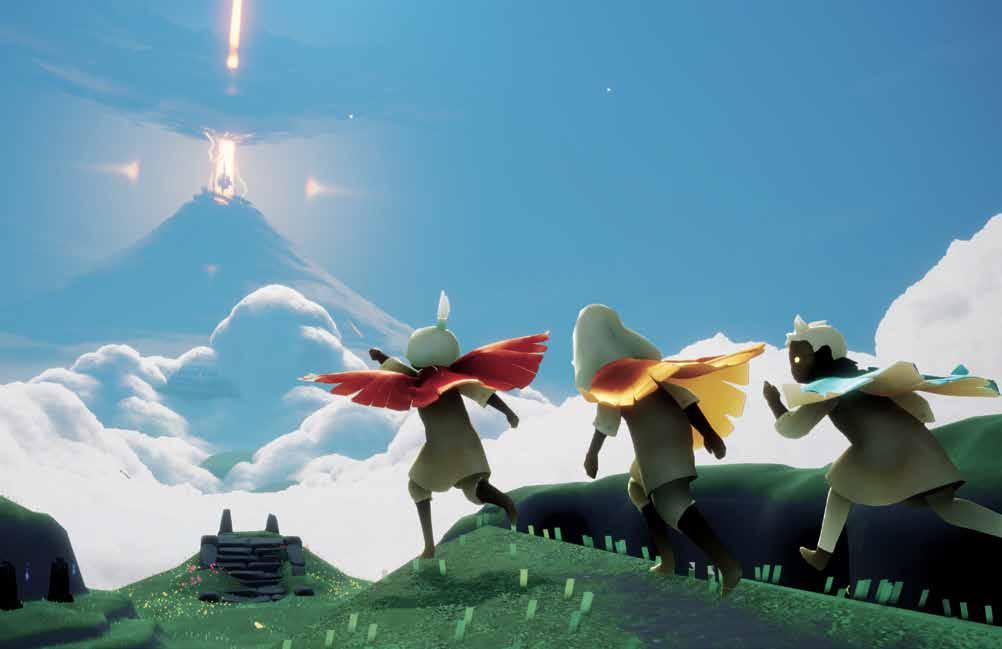
Sky: Children of the Light is ThatGameCompany’s first and latest project since the award-winning Journey, but for a few years, it was exclusive to mobile devices, having been released on iOS in 2019 and Android in 2020, and then moving to home consoles like the Nintendo Switch and Playstation 4 by 2022.
However, with its PC release on the horizon, Sky could see a surge of new and returning players. The demo alone, on the digital gaming platform Steam, has had a 24-hour peak of around 1,200 players over the last few weeks — a pittance compared to the likes of many MMOs, but likely enough to maintain its status as a cult classic, and further establish it as a unique choice in the sphere of “social games” specifically.
For many titles in the social game genre, the world around the players is little more than set dressing. It might be quite pretty, but people tend to interact with the in-game chat more than the world — in other words, with each other. Any gamer knows that that can be a mixed bag, especially on its own. Sky sets itself apart by being a social game about exploration as much as interacting with other players. Its “base” content is a series of themed worlds — the ruins of a mystical kingdom — culminating in an ascent through the treacherous “Eye of Eden.”
Along the way, players use their magical capes to glide through windswept plains, snow capped mountains, ancient temples, and other scenic locales, searching for the kingdom’s lost spirits and guiding them to their homes among the stars.
The game’s movement controls might take some getting used to on a touch screen, and it doesn’t have controller support on PC just yet. But with some practice, flying can feel truly dreamlike, and the game does a good job easing players into it.
Other players can help out, too. The farther you progress in the content, the more upgrades you find for your cape, meaning that veteran players can fly farther and higher than someone just starting out.

They’re also likely to know where more of these upgrades can be found.
This is arguably where the Gayest feature of the game comes in: one player can propose a friendship with another by offering them a candle (another of the game’s collectibles), after which the two can hold hands and fly together.
Not that you have to be exclusive about it. It’s common to see three or even four player characters all holding hands, while one of them guides the others to places they might not reach on their own. Other player characters are sources of “warmth,” after all, which means they can gradually replenish each other’s ability to fly by huddling up.
Some readers, being Seattleites, might balk at the notion of having to make friends with strangers, but much of the interaction between players in Sky is nonverbal and
fairly low-stakes. With every spirit they rescue, the player learns a gesture, like a short bow, a wave, a stomp, or a tittering laugh.
By default, players can’t even see the others’ text chat unless they sit down together at particular spots in the world, so each person can be as open or solitary as they choose. No direct interaction is forced on you, though it is encouraged.
Like any MMO, the genders of the other players are ultimately a mystery, but Sky takes that another step and never really makes the player choose a gender for their avatar, either. There’s no initial character creation screen; everyone starts the same way, as an androgynous, almost featureless figure who can collect more options for their appearance as they explore.
Sky is free to play, and most of the game’s world is available without paying a cent. It
makes money through a season system, in which new content is added each quarter, and some of it — usually cosmetic options — is gated behind a paid season pass.
For me, this is Sky’s only big wrinkle. Monetary models like this are often designed to leverage FOMO (fear of missing out), and on its own, the pass doesn’t grant you all of the premium cosmetics. It merely gives you the opportunity to earn them by completing simple challenges each day.
Of course, ThatGameCompany has to keep the lights on somehow, and whatever a player doesn’t snag during a specific season will rotate back in eventually, without requiring a pass. And overall, it’s not the cosmetics that make it worth a try. Sky: Children of the Light is everything that made Journey good, with a lot more people to share it.

by Sara Michelle Fetters
SGN Staff Writer
SILENT NIGHT
John Woo is a living legend. The Hong Kong filmmaker is best known for transforming action cinema as we know it with the onetwo punch of The Killer and Hard Boiled, but he made an equally permanent mark with the likes of A Better Tomorrow, Once a Thief, and the devastatingly brilliant Bullet in the Head Woo journeyed to Hollywood in the early 1990s and unleashed Hard Target, Broken Arrow, Face/Off, and Mission: Impossible II in quick succession.
It’s hard to say what happened after that. Hollywood endeavors like his WWII historical epic Windtalkers and his loopy sci-fi programmer Paycheck failed to click with audiences, and while both are deserving of reappraisal, it’s still easy to see why Woo eschewed working for any of the major studios and instead returned to Hong Kong. There he would tackle several personal
projects, most notably the masterful, almost five-hour historical epic Red Cliff (released in the US in a truncated, if still outstanding, 148-minute cut in 2009).
Talk has been brewing about Woo returning to Hollywood for years. But every time his name was attached to a project, that seemed more like wishful thinking on the part of the director’s fans than anything substantive. This changes with the Christmas Eve–set Silent Night. Told completely without intelligible dialogue, this tale of merciless bloody revenge hits all the themes of brotherhood, faith, honor, and family Woo has built his career upon, and it’s easy to see why the iconoclastic auteur was inspired by the project.
If only this all led to better news. While it’s nowhere near a bad movie, Silent Night is nonetheless still disappointing. After a strong opening and a superb slow-burn build to the climax, the last hour of this thriller moves in frustrating fits and starts. There are moments of that old Woo magic, but sadly not enough of them. It feels more like a straight-to-VHS 1990s retread that would
litter the aisles of your neighborhood video store, with only a little Woo panache sprinkled in here and there, and that’s too bad.
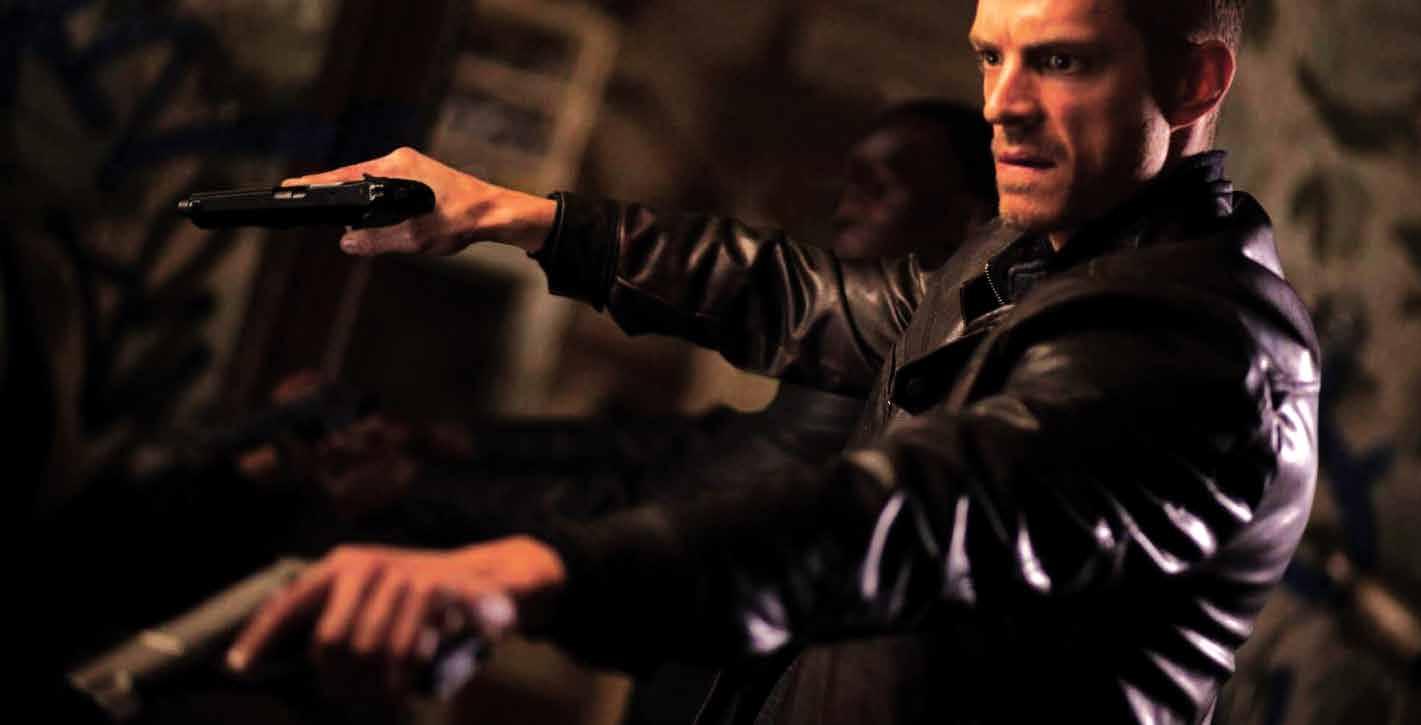
I do love the setup. After a goofily masterful prologue of sound and fury showcasing protagonist Joel Kinnaman’s futile attempt to go after feuding gang members who inadvertently killed his only son (and getting himself shot in the throat for his efforts), the next third is all pained melodramatic angst as Woo sets the foundation for the main event. Kinnaman and former Academy Award nominee Catalina Sandino Moreno (Maria Full of Grace) channel their inner John Gilbert and Renée Adorée, the pair intimately showcasing the tragic devolution of a marriage under unfathomable circumstances as the former crumbles under the strain of their grief and the latter heartbreakingly has to walk away to save what’s left of her own sanity.
Things go pretty much as expected from there. The father transforms his grief into rage, getting himself into tip-top fighting shape while also learning everything he can about the drug cartel responsible for his son’s murder. On the one-year anniversary
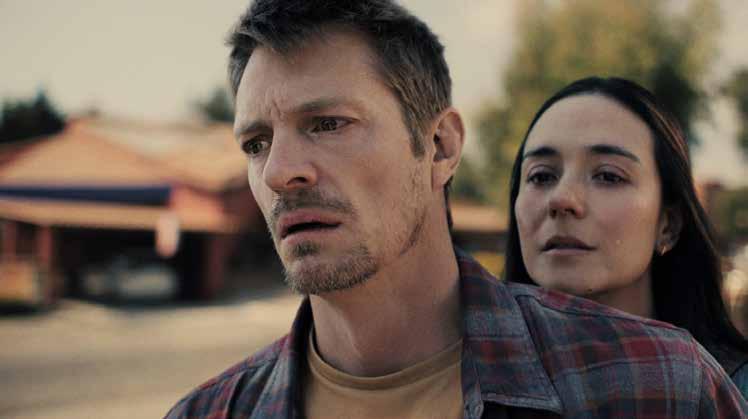
of the shooting, he heads into the night and proceeds to start a one-man war that will leave the inner-city streets covered in blood, everything building to a final confrontation with the Big Bad (Harold Torres), who runs things with the requisite iron fist (and an army packing automatic weapons).
The zero-dialogue concept is intriguing and, as already stated, Kinnaman and Moreno are more than up to the challenge of conveying a variety of complex and competing emotions with only their facial expressions and body movements. But the emotional impact of this stylistic approach is oddly lessened once the action starts. Robert Archer Lynn’s screenplay is sprinkled with numerous good ideas (like the unintended consequences and collateral damage caused by this angry father’s machinations), but there’s not really any way to dwell on or deal with very many of them. It’s strangely irritating.
Another issue is that the supporting characters, most notably Torres’ ferocious villain and Kid Cudi’s noble police detective, don’t get much to do other than show up, fire their guns, engage in some fisticuffs, and ultimately not much else. They make precious little of an impression, which is perplexing, all things considered. In one of these instances, we’re talking about an evil antagonist who caused the death of a child, after all, so for Torres to be so forgettable is an obvious problem.
Those moments of Woo magnificence are admittedly something else, however, and to be treasured. There’s a stairwell climb that rekindles some of that Hard Boiled virtuosity, while a fight between Kinnaman and one of the baddie’s most unkillable assassins is a thunderous, bone-breaking treat. It’s during these sequences that the film comes sparklingly alive, and I happily reveled in each and every one of them.
Granted, this only makes Woo’s US return all the more vexing. These blasts of violent inspiration are a bullet-riddled reminder of what the director is capable of and makes all of the film’s shortcomings feel even more egregiously infuriating than they actually are. But even if Silent Night is lesser Woo, it’s still nice to have the Hong Kong titan flexing his action muscles in Hollywood again, and all I want for Christmas is an announcement that he’ll have another present for us to unwrap in the very near future.

by Sara Michelle Fetters
SGN Staff Writer
NAPOLEON Theaters
From the standpoint of pure visual spectacle, Napoleon is right up there with anything director Ridley Scott has ever made. From the frigid battle at Austerlitz to the burning of Moscow to the French emperor’s final defeat at Waterloo on June 18, 1815, this is an astonishing epic of a petulant man’s rise and fall showcased on the grandest scale imaginable.
But Scott’s latest, a whirlwind of big ideas and lofty ambitions, is severely hampered by a frazzled structure and editing style that likely has everything to do with a much longer, nearly four-hour director’s cut that will be premiering on Apple TV+ in the next few months. While it’s somewhat strange to call a 156-minute motion picture “truncated,” that is exactly the case. Scenes do not fit together. Transitions are at best inelegant and at worst downright awkward. The relationship between Napoleon Bonaparte and Joséphine de Beauharnais never gels, and their whole journey from initial meeting through eventual divorce (for the good of France, naturally) is depicted in laborious fits and starts. This disjointedness makes the film’s humor stand out for all the wrong reasons. It seems clear that Scott holds Bonaparte in contempt. This makes his flippant personality, wild mood swings, Three Stooges–like antics, and gluttonous appetites perfectly natural. But the problem is that, because the tone swings so violently from one scene to the next, there is no cohesion to how the character is depicted. It makes these bursts of comedy appear as if they are entirely out of left field, almost as if Scott is making this a Mel Brooks–style satire and not another one of his sprawling historical epics to sit alongside Gladiator or Kingdom of Heaven
Because I do think the satirical largesse is by design, I’m much more open to the zany theatricality of star Joaquin Phoenix’s performance than I might have been. There is real magic to be found in his buffoonish grotesquerie, the slithery depravity of his emotional and petulant machinations juxtaposed nicely with his robust physicality and cutthroat battlefield demeanor. It’s an exuberantly self-indulgent star turn, and Phoenix holds nothing back, his cartoonishly virile venality consistently spellbinding.
I wish I felt the same about Vanessa Kirby as Joséphine. Her character is hurt the most
by the film’s current iteration. She takes a more grounded approach to the material, and while this does help the audience relate to her more fully from an emotional standpoint, it also keeps Joséphine strangely distanced from Napoleon in ways that have little to nothing to do with the actual evolution of their romantic relationship. There are several instances where it is as if Kirby and Phoenix as in two completely different motion pictures, and that’s unfortunate. It does all look incredible. Scott fills the screen with painterly massive images that are a sight to behold. Historians may scoff
at how accurate these reenactments are in relation to those tumultuous early years of the 19th century, but dang does the director nevertheless stage each one with a level of extended magnificence that’s extraordinary.
The Austerlitz sequence is out of this world. Scott’s action choreography is crisp, clean, and bracingly visceral. Editors Claire Simpson (Platoon) and Sam Restivo keep things coherent yet still overflowing with adrenaline. The visual effects and the stunt work are exceptional, while cinematographer Dariusz Wolski (News of the World ) crafts riveting images that are
like something out of a beauteously gutwrenching battlefield nightmare.
The question is, does any of that matter if I didn’t care about the people involved or have even a minimal personal investment in the outcome? While I could appreciate the technical virtuosity on display, the whole is never as interesting or entertaining as many of the pieces are. By his own admission, this incarnation of Napoleon is only a cracked shell of what Scott originally wanted to deliver, so that it does not fully work is hardly a surprise.

“There’s a hole if you’re not around” Kelly Farmer on her feel-good holiday novel
by Lindsey Anderson SGN Staff Writer
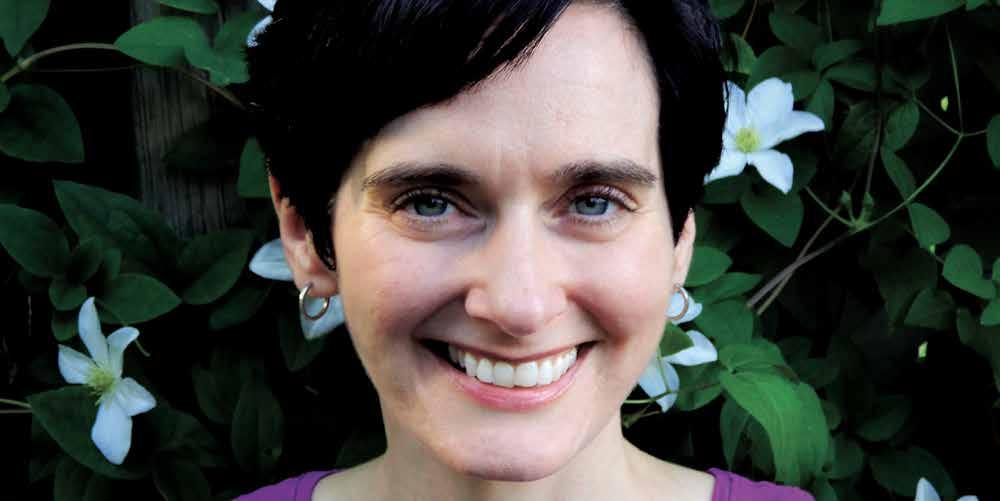
Kelly Farmer knows to be careful what to wish for! After completing her Out on the Ice series set in the world of women’s ice hockey, she decided to write a more festive environment.
“We live in our worlds for months and months at a time, and I just wanted to live in a happy world,” she said. “I got to the point where I just wanted to write something light and fluffy, where nothing bad happens, like a Hallmark movie [in which], even though there’s conflict and drama, you know nothing bad will happen. You know the family Christmas ornament store isn’t going to close.”
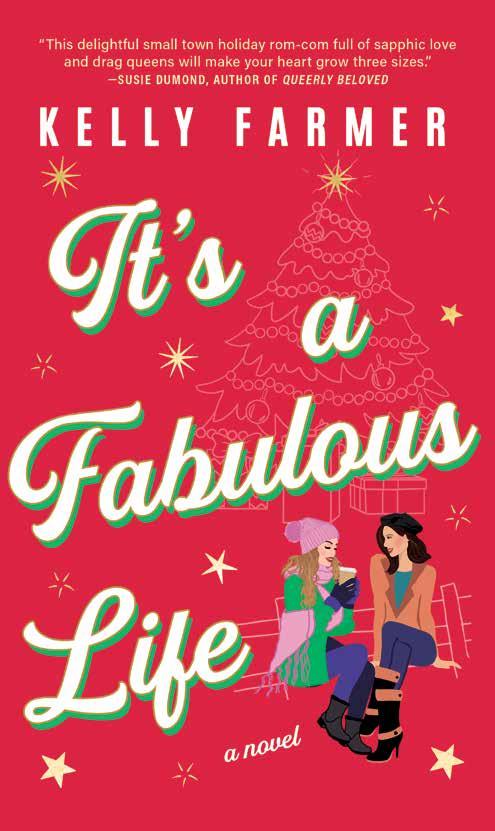
Her latest book, It’s a Fabulous Life, is set in a town that takes Christmas a little too seriously. “I based [Lanford Falls] on the typical small towns in Hallmark or Lifetime or any of the made-for-TV-[movies],” she admitted. Writing a story set in such a small place was a fun getaway for Farmer, but as the months went on, she found it difficult to stay jolly.
To keep herself in the holiday spirit, Farmer listened to Christmas music all year long — even in the 90-degree August heat! “I would listen to different types of Christmas music, so at least I shook it up a little,” she said. There were the classics like ‘Rudolph’ and ‘White Christmas,’ and then I would do classical Christmas, or jazzy Christmas to shake it up. I did that as much as I could tolerate, but eventually it was like, ‘No, I can’t! No more!’”
A Queer retelling
What kept Farmer motivated was the heart at the center of her book. It’s a Fabulous Life is a modern, Queer retelling of the classic film It’s a Wonderful Life
“I’ve been a fan of the movie since high school, and it’s always been in the back of my head that it would be fun to do a retelling,” she said. “I loved the idea of what the world would be like if you had never been born. That was something I wanted to write about. Day to day, we all think, ‘Oh, no one would miss me if I was gone,’ or ‘I’m not making a big enough difference in the world,’ or ‘Anyone could do my job.’ The usual things like that. It’s just really important to show that every single person matters and that we all touch so many lives that we’re often not even aware of.”
Validating everyday life was especially
important as anti-LGBTQ+ sentiment rose in the United States. “In making the town extremely Queer friendly, especially as a small town, that was just so important, writing a place where all are welcome,” Farmer said. It’s a Fabulous Life replaces the classic tale’s angels with drag queens because, as Farmer said, “Who better to help you improve your life than a fabulous drag queen?”
“One of the things that was important for writing It’s a Fabulous Life is that the drag queen angels are living humans, they’re not dead people or angels,” she added. “The angels needed to be alive, especially with how the world is now. There are some people out there who are trying to take away Trans rights and far worse things than that, so I definitely wanted the drag queens to be alive.”
When she first started writing, Farmer couldn’t imagine how controversial it would become. “When I drafted it a few years ago, there were a few things in the book that were not controversial whatsoever, so it just blew my mind that by the time the book came out, that drag queen story hour and public performances were all of a sudden hot-button issues for some people.”
Now, more than ever, Farmer hopes LGBTQ+ readers can find joy and a festive escape in the pages of It’s a Fabulous Life She also hopes they can leave the story with the affirmation that their lives matter.
“You matter and your life matters very very much. Period. If you’re going through a tough time, you stick around. You should be here,” she said. “There is a line in the movie... ‘Strange, isn’t it? Each man’s life touches so many lives. When he isn’t around, he leaves an awful hole, doesn’t he?’ That line, in particular, has stuck with me for many years. It’s gotten me through some tough times even. Just remember that there’s a hole if you’re not around.”
The holiday season can be especially difficult for members of the Queer community who may not live in such an accepting place as Lanford Falls. Farmer hopes anyone looking for a place to belong this year can find it in It’s a Fabulous Life
“You’re making a difference whether you know it or not. In particular, for the Queer community, the holiday season can be very tough for a lot of people, so I wanted to show a world where you are loved exactly for who you are. You are beautiful and awesome,” she said.
by Clar Hart SGN Contributing Writer
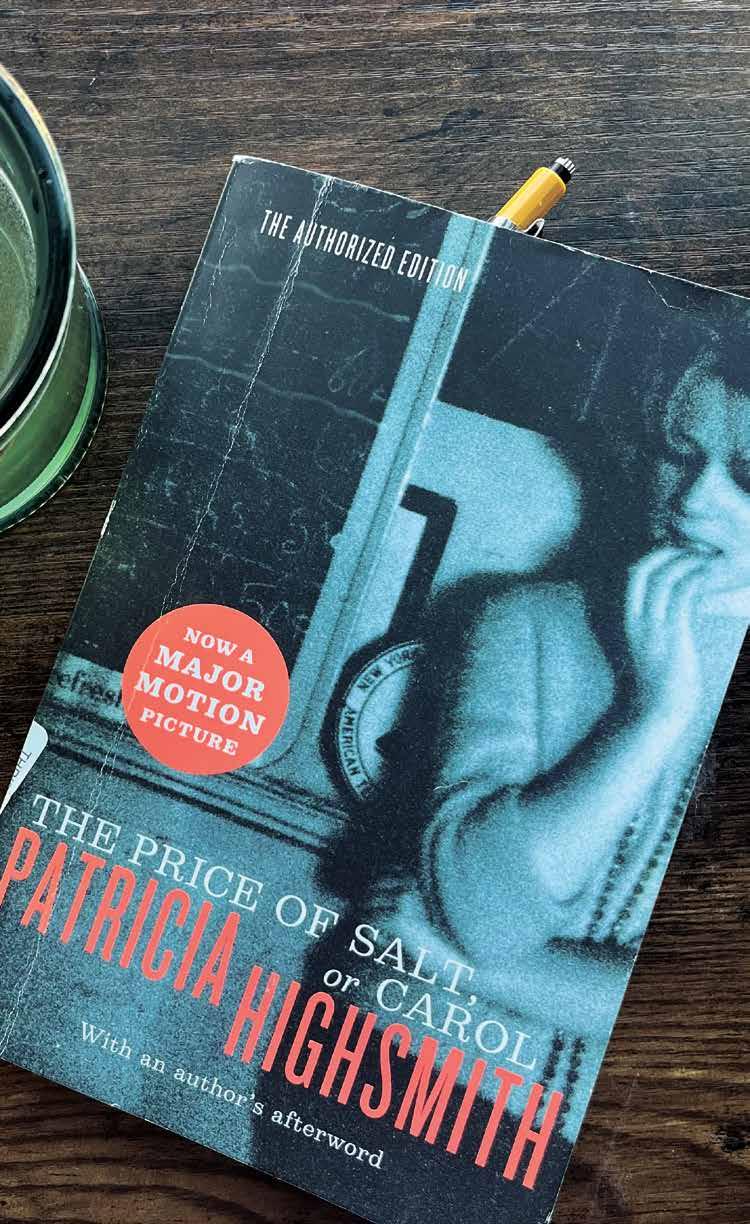
THE PRICE OF SALT PATRICIA HIGHSMITH
© 1991 W. W. Norton & Company
$19.95
292 pages
Trigger warning: Homophobia
Queer Christmas is over, which means we’re on to much-inferior regular Christmas. Holiday Queer movie options are several delightful Hallmark trainwreck romance movies, or Carol. Oh Carol Nobody forgets their first time. Mine was when I was forced to watch this by a woman I “hung out” with for three months without ever knowing whether or not we were dating. Let’s just say the two hours of Sapphic yearning hit a little too close to home. Moreover, most of my Queer life was already spent mooning over straight women I wished were Gay, so I did not relish paying a $12 movie ticket for it, even if that straight woman was Cate Blanchett.
The 1952 Lesbian thirst trap by Patricia Highsmith that inspired the movie was the first Lesbian novel to have a “happy” ending (spoiler: not that happy). It’s also the first to feature a “stereotype-defying” relationship, i.e., femme for femme.
To summarize, Therese is an aspiring set designer working at a toy store. She meets Carol, a hot blonde ten years her senior going through a messy divorce. After a single “let’s not define this” date, Therese, who is struggling financially and has just pawned her jewelry for pennies, spends $70 on a purse for Carol (about $800 today). After two dates, they embark on a multistate road trip.
Unfortunately, midway, they find out they’re being tailed. Their hotel rooms have been bugged by a detective hired by Carol’s husband so he can gain full custody of their daughter. Carol breaks up with Therese, as it’s the only chance she has of being able to see her daughter. Unfortunately, she fails. Her husband gains full custody, and she receives only occasional, supervised visits.
With nothing left to be taken from her, she finds Therese, who is initially bitter that Carol chose her daughter over her (yes, Therese sucks), but eventually they decide to try their relationship again.
The best part of this book is the chase scene, when Carol and Therese are on a cross-country race as they flee the detective. It’s not perfect (we’re blue-balled by a Chekhov’s gun that Carol brings with her but never uses), but it’s the only time I found myself reading rather than skimming. The detective is an utterly despicable villain who’s the most fun in the entire thing. Highsmith is also known for Strangers on a Train and The Talented Mr. Ripley, and this brief suspense scene shows her chops better than anything else in the book.
Highsmith has described this novel as semiautobiographical, and it seems to fall into a common folly of such works. When writing a self-representational character, authors often put in their worst traits. Makes sense: those are what we are all most desperate to see loved. Unfortunately, they then sometimes forget to include anything redeemable.
That seems to be the case with Highsmith’s Therese (based on the author), who accuses her mother of killing her father (he died of a heart attack) and refuses to speak to her because she remarried. When Therese’s mother brings along a new half-brother to introduce them, Therese is affronted and immediately interprets it as a slight.
Moreover, whenever an older woman tries to be nice to her, she is disgusted and fixates on how ugly they are. She has a boyfriend who she “likes better than anyone else,” but only because she hates everyone
else. He writes her love letters on her road trip, but she ghosts him, merely assuming “he’ll get the message.” She inexplicably has another man, Danny, and a sexy actress caught in her orbit. I’m assuming Therese is crazy hot, because her personality is certainly not the draw. At one point, Carol tells Therese that she should start considering other people’s feelings. Therese doesn’t take her up on it.
Carol, despite being the eponymous character, is not particularly fleshed out. She can write exorbitant checks, is blonde, and has a daughter and an omnipresent emotional support ex, Abby.
Therese is alternatively bratty and spoiled around Carol, who orders her around, dispenses spending money, and puts down Therese for naps while bringing her warm milk. Therese is jealous
that Carol chooses her own child over her. In brief, there’s a reason Nabokov found inspiration here for Lolita
If there’s one takeaway, it’s Therese’s description of milk: the “taste of bone and blood, of warm flesh, or hair, saltless as chalk yet alive as a growing embryo.” Queers: Making Cow’s Milk Gross Again since 1952.