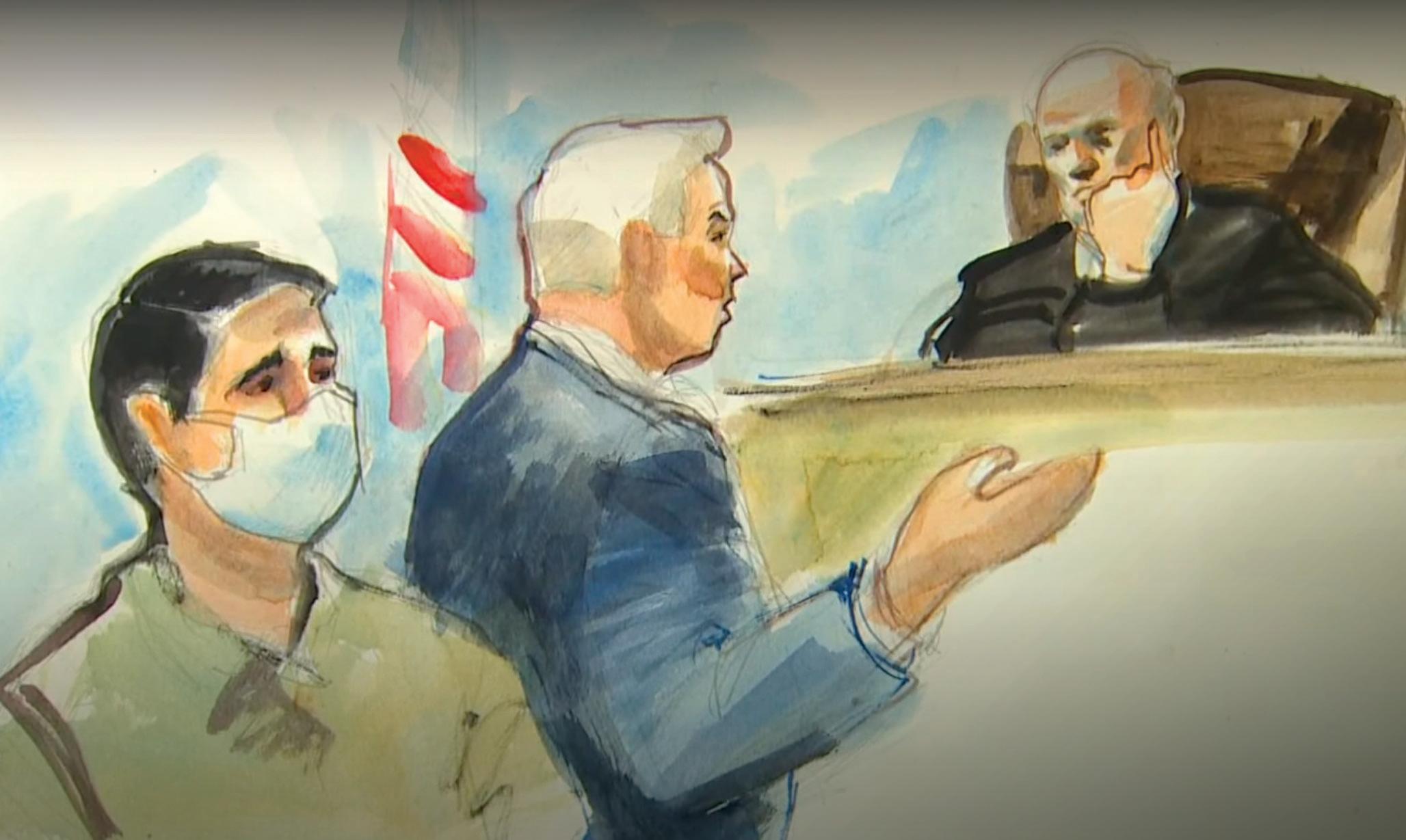
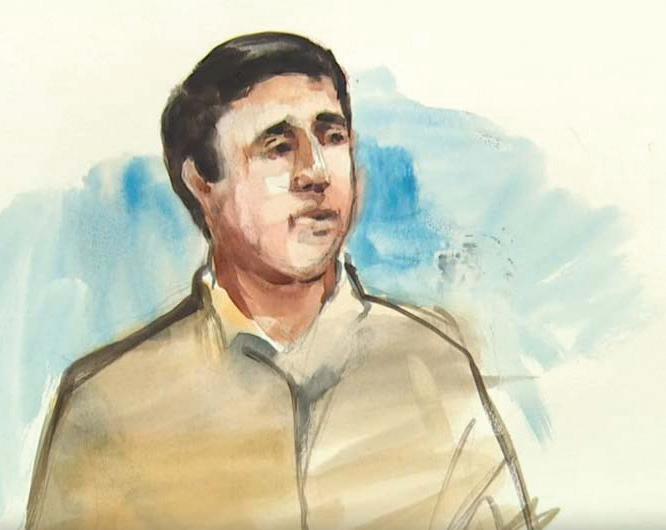
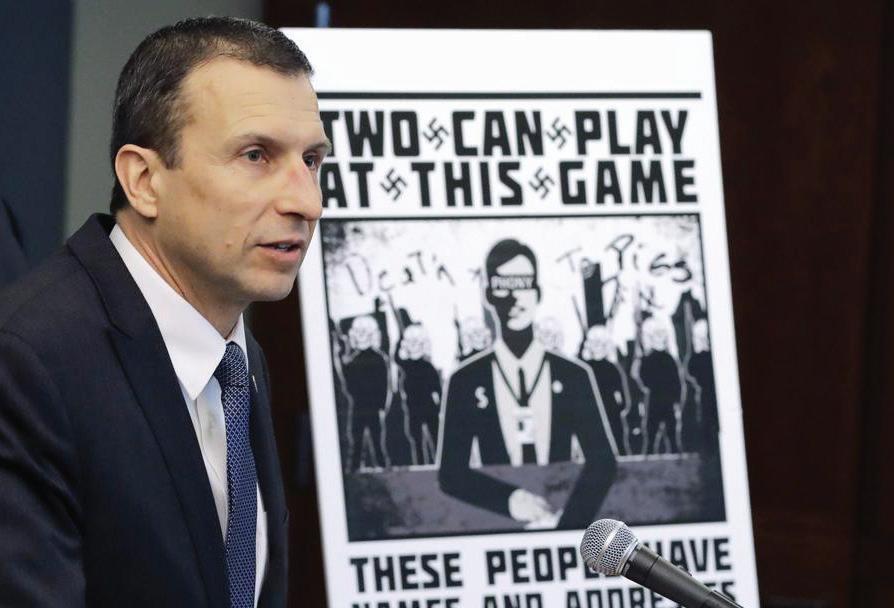
Local Nazi Cameron Shea, affiliated with the Texas-based Atomwaffen Division, was sentenced to three years in federal prison on August 25. Shea was convicted on conspiracy and hate crime charges — specifically, threatening journalists and anti-fascist activists.
see LOCAL NAZI page 5
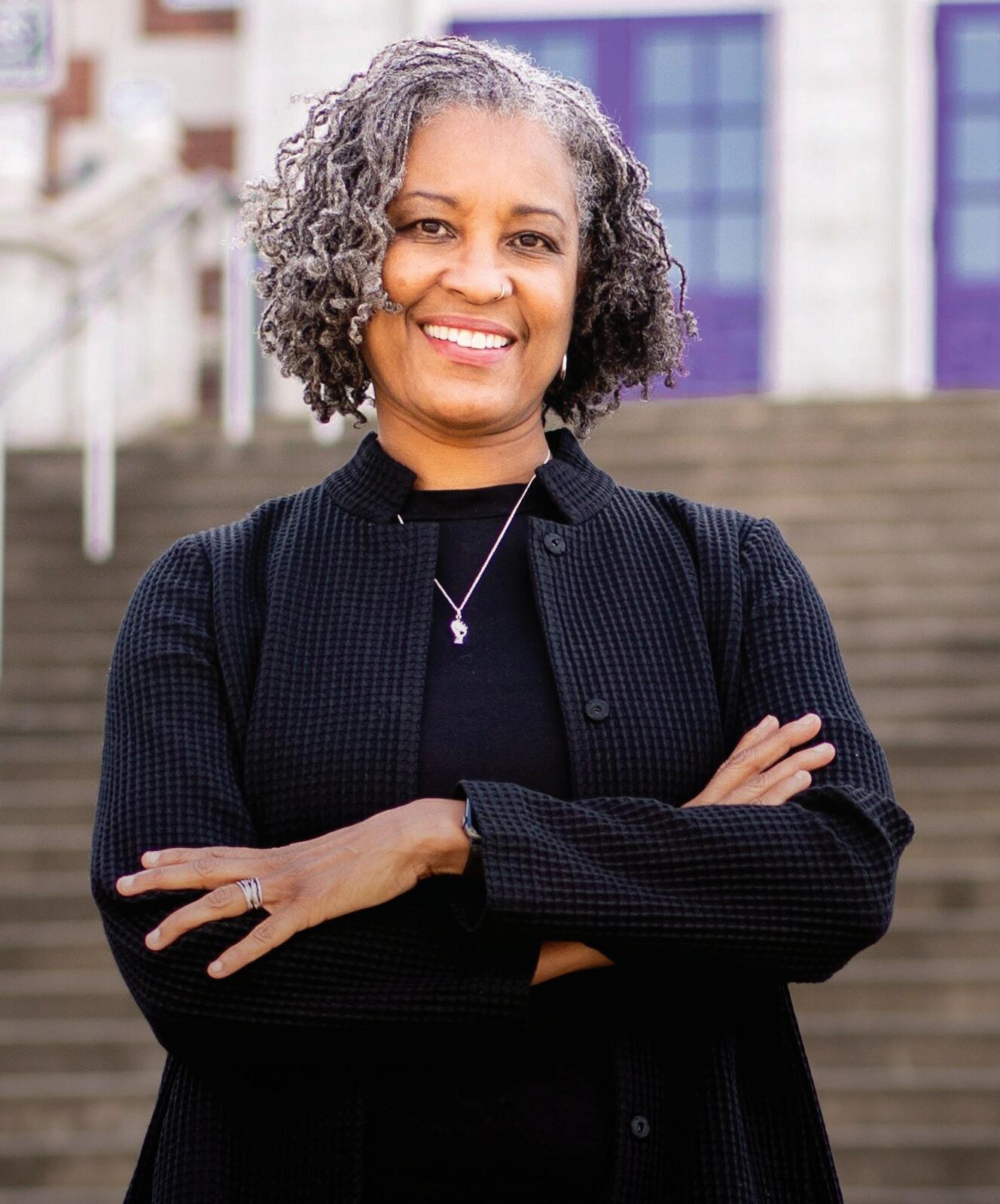
Michelle Sarju An interview with the candidate for Seattle School Board Position 5 LGBTQ+ adults aren’t hesitant about the
by Daniel Lindsley
SGN Contributing Writer
Michelle Sarju was the winner by a landslide in the primary race this month for School Board Position 5 , garnering just over 85% of the vote — far ahead of her opponents, Dan Harder and Crystal Liston, who received around 10% and 3%, respectively.
In the primary, these votes came only from the districts Position 5 serves, namely Capitol Hill, the International District, First Hill, Leschi, Madison, Downtown, and the Central District. In contrast, the general elections in November will see all of King County voting on each school board position. But Sarju is, without a doubt, off to a great start.
by Hannah Saunders SGN Contributing Writer
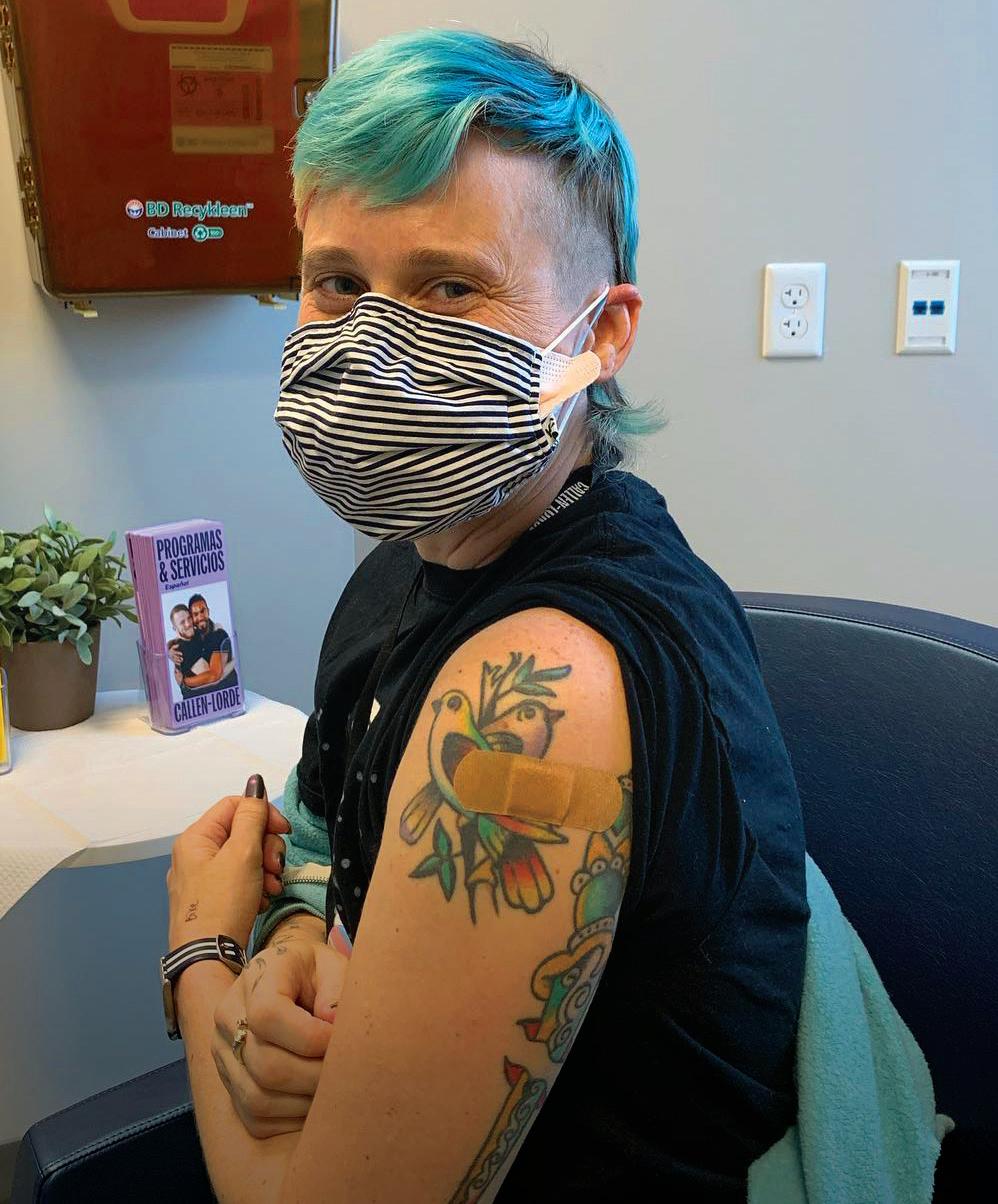
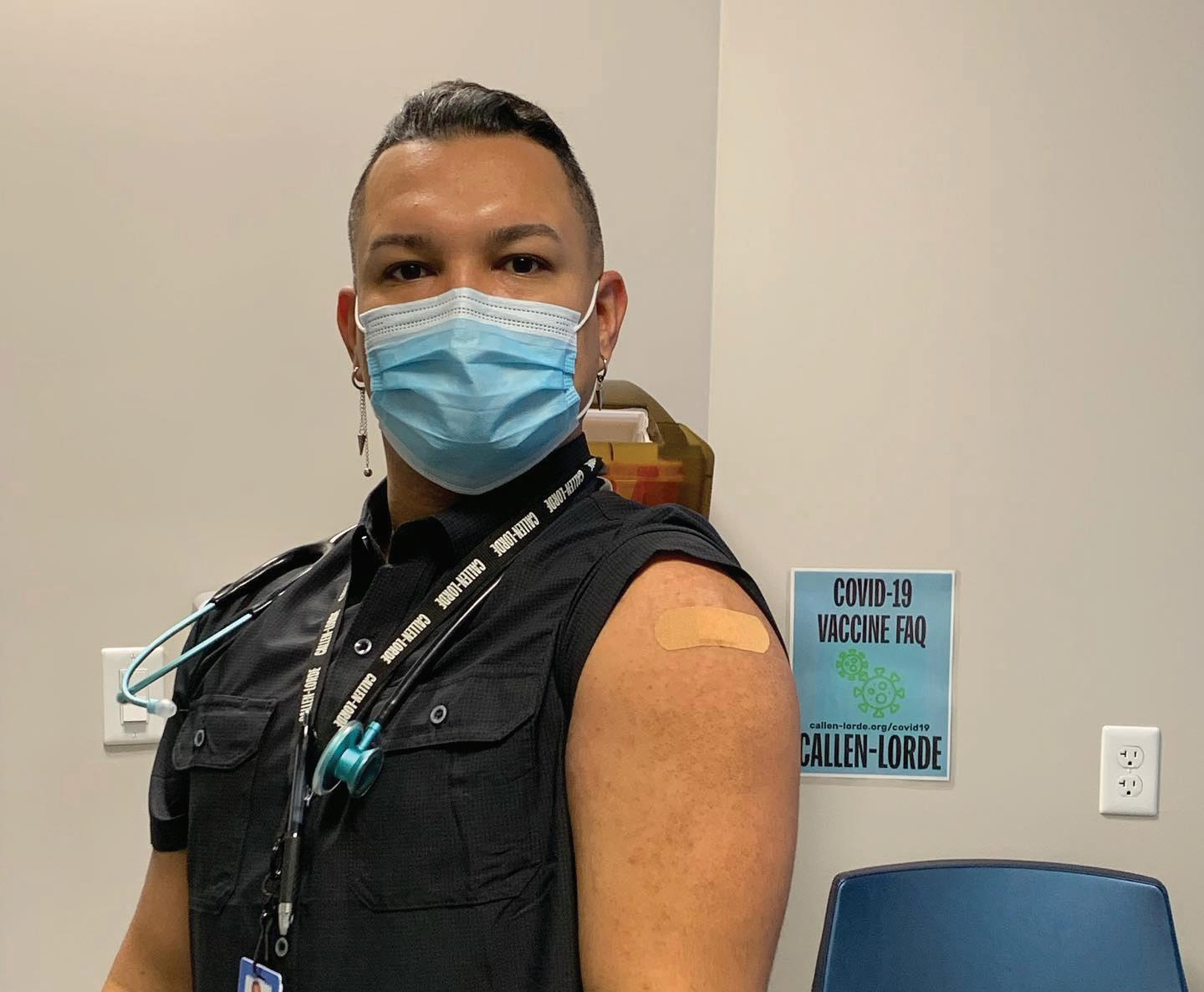
On August 12, 2021, the Human Rights Campaign Foundation (HRC)—which focuses on understanding and encouraging the lives of LGBTQ+ individuals globally—released survey data showing that 92% of LGBTQ+ adults living in the United States have received at least one coronavirus vaccination dose.
The 2021 LGBTQ Community Survey, generated by the HRC Foundation, Wells Fargo and CMI Media Group, gathered data from approximately 15,000 self-identified LGBTQ+ respondents in the US. This
page 19
Photo courtesy of Sarju for Seattle Schools
Photo courtesy of Callen-Lorde Community Health Center
Image courtesy of King5 / Youtube
group to identify journalists and activists they wanted to target in retaliation for the victims’ work exposing anti-Semitism.
guns and Molotov cocktails, and threatening messages, to deliver or mail to the journalists or advocates the group targeted.
Acting US Attorney Tessa M. Gorman charged Shea and three co-defendants with conspiring via an encrypted online chat
The group focused primarily on Jewish people and people of color. According to the charges, the group created posters featuring Nazi symbols, masked figures with
Shea messaged the group that he wanted Atomwaffen members in different locations to place posters on their victims’ homes on the same night in order to catch
journalists off guard and accomplish a “show of force.”
The posters were delivered to victims in Seattle, Tampa, and Phoenix. Shea also mailed posters to several victims, including a poster sent to an official at the AntiDefamation League (ADL) that depicted a grim reaper – like figure wearing a skeleton mask and holding a Molotov cocktail, with the text “Our Patience Has Its Limits . . . You have been visited by your local Nazis.”
At the sentencing hearing, US District Judge John C. Coughenour said, “This conduct cannot be tolerated. This kind of conduct has consequences… It is so serious that it requires a serious sentence.”
“The Justice Department will continue to aggressively prosecute threats motivated by religious intolerance, and to prosecute defendants like this one who threatened violence against individuals who work to end discrimination,” said Assistant Attorney General Kristen Clarke for the Justice Department’s Civil Rights Division.
“The Justice Department is committed to prosecuting to the full extent of the law, violent neo-Nazis and other perpetrators of hate crimes.”
Two of Shea’s co-defendants previously pled guilty to the conspiracy charge and were sentenced. A fourth defendant pled not guilty and is awaiting trial in September 2021.
Atomwaffen Division — also known as the National Socialist Order — was founded in 2015 and has expanded across the US. It also has branches in Canada, the UK, Germany, and Estonia.
Judge Coughenour was appointed to the federal bench by Ronald Reagan, and he has past experience trying alleged terrorists, both foreign and domestic. He is the author of the 2007 New York Times article “How to Try a Terrorist.”
Cameron Shea – Image courtesy of King5 / Youtube
In this Wednesday, Feb. 26, 2020 file photo, Raymond Duda, then-FBI Special Agent in Charge in Seattle, speaks as he stands next to a poster that was mailed earlier in the year to the home of Chris Ingalls, an investigative reporter with KING-TV, during a news conference in Seattle. – Photo by Ted S. Warren / AP
Arts & Entertainment
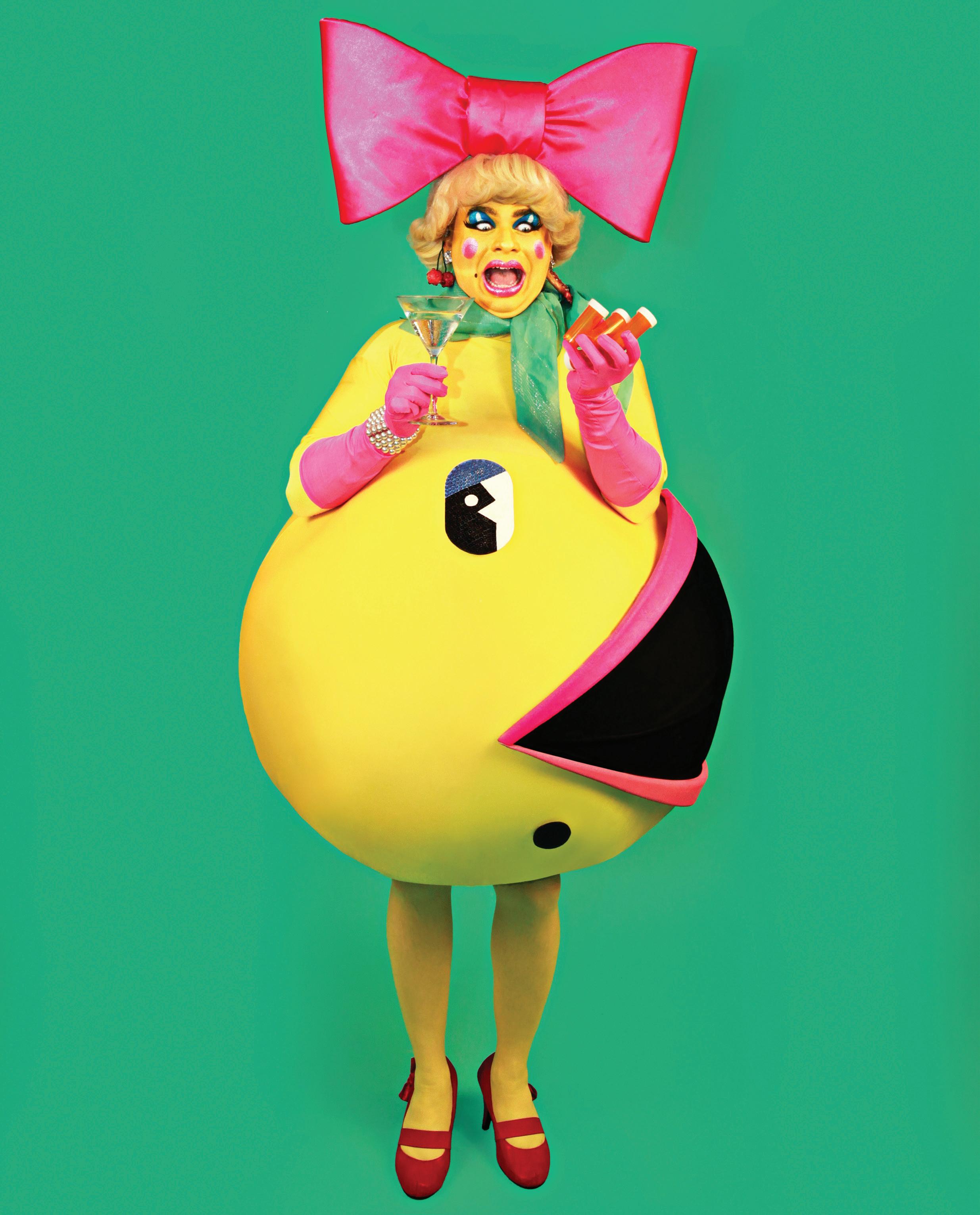
Ms. Pak-Man sings again!
Live performances coming to Odd Fellows in September
by Miryam Gordon SGN Contributing Writer
Scott Shoemaker’s been performing in Seattle for the last 15 years, starting in small acting gigs, then in Ian Bell’s Brown Derby series. “That became a place I could get my comedy chops honed,” he said.
Then “[my partner] Freddy [Molitch] came up with the Ms. Pak-Man idea, thinking it would be funny to be the washed-up diva, eating power pellets,” he added.
“This [performing as Ms. Pak-Man] was a big part of our life since 2014,” but like virtually every other performer, Shoemaker’s life abruptly shut down in March 2020. “And our home base, Re-Bar, shut down for good!”
“She sings! She dances! She drinks! She might black out! There’s a chance she won’t remember the show, but you will!”
But they came up with a Christmas show through The Stranger: a streaming platform with pay-per-view option. “It helped keep us connected with that part of our lives and careers,” Shoemaker said.”
“We had to learn more about film and figure out how to make a feature-length video in front of a green screen, so our cast didn’t have to be at the same place at the same time. We did all the filming separately, and edited everyone into the scene together.
Freddy and I had to learn how to do all that. But there wasn’t the response coming from a live audience, and it didn’t feel the same at all.”
When it seemed like live performances were going to be okay again, Shoemaker was excited to bring back the next (his sixth!) iteration of his cabaret performance of the iconic messy, chaotic Ms. Pak-Man of the 1980s. “She sings! She dances! She drinks! She might black out! There’s a
chance she won’t remember the show, but you will!” says the PR.
The plan, COVID-emergency shutdown excepted, is to follow all required safety precautions for the performances. But they are already selling out some of the shows in their four-day stand, so if you’re ready to cabaret, get your ’80s on in a hurry! (But call ahead before you leave the house!)
Ms. Pak-Man: Breakout! by Shoes and Pants Productions will be at Odd Fellows West Hall, September 9–12, 2021. Proof of vaccine and masks will be required. Get tickets at https://tinyurl.com/j926wbcw.
Photo courtesy of Scott Shoemaker
Britney Spears’s father to step down as her conservator after 13 years
by Hannah Saunders SGN Contributing Writer
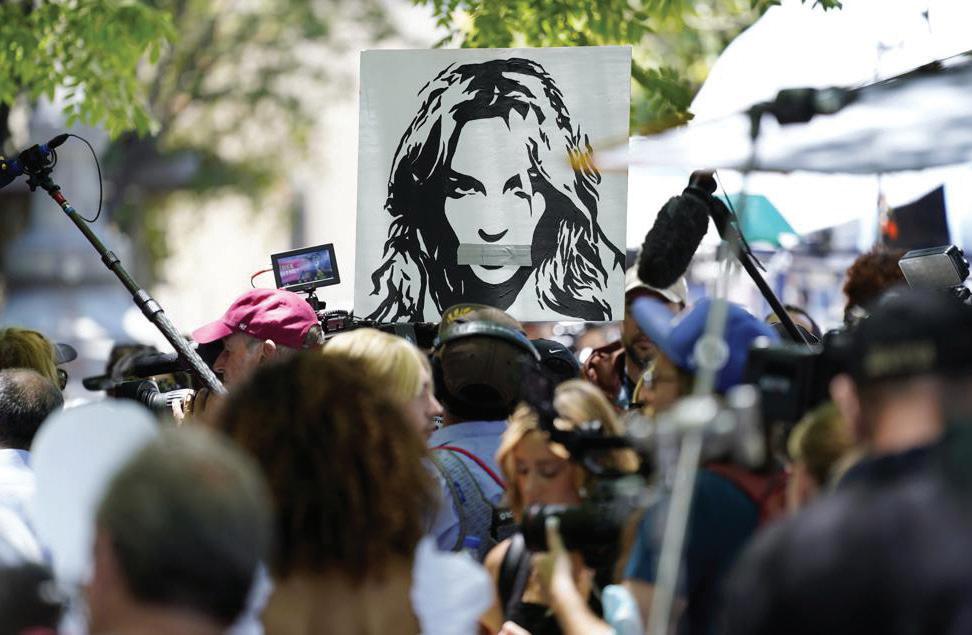
On August 12, 2021, Jamie Spears filed a legal document with the Los Angeles Superior Court stating that he agreed to vacate the role of conservator of his daughter, singer Britney Spears. This announcement comes shortly after the 39-year-old Princess of Pop filed a petition for her father’s removal on the grounds of conservatorship abuse: the singer accused her father of controlling her and using her financial earnings to advance his own personal finances.
A conservatorship is a legal arrangement in which a judge appoints an individual or an organization, known as the “conservator,” to care for an adult — known as the “conservatee” — who is unable to care for themselves, known as the “conservatee.” A conservatorship is usually permanent.
“Mr. Spears is willing to step down when the time is right, but the transition needs to be orderly and include a resolution of matters pending before the court,” wrote Vivian Thoreen — Jamie’s attorney — in the legal documents.
Thoreen also noted there were “no actual grounds for suspending or removing” Jamie as conservator and that it was “highly debatable” whether his removal would be in Britney’s best interest. Furthermore, Thoreen said Jamie was “the unremitting target of unjustified attacks” and that a public legal battle with his daughter was not in her best interests.
Currently, there is no timeline for Jamie Spears’s departure.
On July 26, 2020, the singer’s lawyer, Mathew Rosengart, filed to have Jamie immediately removed from overseeing her finances after having “profited handsomely.” Jamie is accused of paying himself $16k per month—which is $2k more than Britney receives—in addition to another $2k per month for office expenses. He is also accused of taking 1.5% of the gross earnings on her Las Vegas estate and a 2.95% commission for her 2011 “Femme Fatale” tour (approximating $500k), even though he was neither her agent nor her manager.
“We look forward to continuing our vigorous investigation into the conduct of Mr. Spears, and others, over the past 13 years, while he reaped millions of dollars from his daughter’s estate, and I look forward to taking Mr. Spears’s sworn deposition in the
by
near future,” said Rosengart in response to Jamie’s decision to step down.
“I don’t feel like I can live a full life.”
In June of 2021, in front of the L.A. court, Britney spoke out about the conservatorship abuse she has endured at the hands of her father. She brought attention to how, in 2008, she was placed on Lithium—a mood stabilizer that is commonly used to treat bipolar disorder—against her will. Spears has never confirmed having a mental illness.
“I felt drunk. I couldn’t even stick up for myself. I couldn’t even have a conversation with my mom or dad about anything,” said the star.
In addition to being medicated against her will and having her finances controlled, Britney claimed that she was not able to see her friends or ride in her boyfriend’s car. She described how the rules of the conservatorship are preventing her from doing what she wants most in life right now: to marry her boyfriend, Sam Asghari, and have a baby with him.
“I wanted to take the IUD out so I could start trying to have another baby, but this so-called team won’t let me go to the doctor to take it out because they don’t want me to have children, any more children,” she said.
A look at how it began
February 2006: Britney is photographed driving with her infant son her on lap, stating that she “made a mistake” but that the media was “physically aggressive.” Questions such as “Is Britney a bad mom?” start to circulate in the tabloids.
September 2006: Britney gives birth to her second child. The paparazzi flock to the new mom.
November 2006: Britney and husband Kevin Federline file for divorce and both file for sole custody of the children.
February 2007: Britney smashes a photographer’s car with an umbrella after begging for privacy. She also walks into a salon where a hairdresser refuses to shave her head; she picks up clippers and shaves it herself.
January 3, 2008: Britney is placed on a psychiatric hold for a mental health evaluation after a child custody disagreement between her and her ex-husband. Britney reportedly refused to give her children to Federline’s bodyguard and locked herself in a room with
servatorship battle while also highlighting Britney’s mental health struggles. Britney’s boyfriend speaks out about Jamie, calling him “a total dick” and saying that Jamie tries to control their relationship.
June 2021: Britney recounts the horrors she’s endured during her father’s conservatorship.
July 2021: L.A. Judge Brenda Penny allows Britney to choose her lawyer for the conservatorship abuse case against her father. Rosengart petitions to have Jamie replaced.
#FreeBritney
The #FreeBritney movement got underway at the beginning of her conservatorship when fans became concerned about Jamie’s role in her financial and personal affairs. Then momentum spiked in 2019, in response to a single podcast episode.
On the Britney’s Gram podcast, co-hosts Tess Barker and Barbara Gray jokingly discuss Britney’s Instagram posts. One day in 2019 they received an anonymous phone call stating that Britney had been placed in the mental facility against her will.
one of her children. An hour later police were called and arrived on the scene.
February 2008: Jamie Spears—who petitioned for temporary conservatorship following the psychiatric hold—is named Britney’s conservator. Attorney Andrew Wallet is made co-conservator of her estate.
July 2008: L.A. Judge Reva Goetz extends the conservatorship until the end of the year.
October 2008: Judge Goetz makes the conservatorship permanent due to Britney’s “being susceptible to undue influence” and the inability of her to manage her affairs.
November 2008: Britney releases her sixth studio album, Circus, which comes in at number one on the Billboard 200.
March 2011: Britney releases her seventh studio album, Femme Fatale, which hits number one on the Billboard charts.
November 2013: Britney releases her eighth album, Britney Jean
August 2016: Britney releases her ninth album, Glory, which is number three on the Billboard 200.
March 2019: Wallet resigns. “The conservatorship is engaged in numerous ongoing business activities requiring immediate attention and it therefore is in the best interest of the conservatee that the acceptance of Wallet’s resignation and the issuance of amended letters of conservatorship of the estate occur immediately and without delay,” read the legal documents.
May 2019: Jamie files to expand the conservatorship to Hawai’i, Florida and Louisiana.
September 2019: Jamie steps down due to health-related issues, and Jodi Montgomery—Britney’s care manager—becomes a temporary replacement.
August 2020: L.A. court extends the conservatorship until early 2021.
September 2020: Britney files to have her case made public while objecting to her father’s filing to have Wallet return as coconservator.
November 2020: Britney asks for the removal of her father as co-conservator and expresses that she will not perform if her father remains in charge of her career.
December 2020: Britney’s conservatorship is extended through September of 2021.
February 2021: The New York Times releases Framing Britney Spears, a documentary that brings attention to the con-
In response, Barker and Gray investigated Britney’s conservatorship in their favored fashion, by dissecting her Instagram posts—where they thought something seemed off. Why did Britney have so much income yet so little control over it? Furthermore, why was a hard-working pop star still in a conservatorship? And was she sending hidden Instagram messages about wanting to be set free?
The “#FreeBritney” episode blew up on social media. From that point on, casual Britney fans and even the public at large began paying attention.
Why the LGBTQ+ community loves Britney
During the 2003 MTV Video Music Awards, Britney shared a kiss with fellow popstar Madonna, showing everyone how to embrace different sexualities wholeheartedly. From that moment on, Britney has been an advocate for the LGBTQ+ community, and the admiration has been mutual.
A Britney mega-fan told her that her music had helped him come out of the closet and overcome suicidal thoughts. Britney wrote back to let him know how courageous he was and to “keep smiling.”
In July 2016, Interscope Records released the song “Hands,” performed by multiple artists, including Britney. The song brought attention to the lives that were lost during the mass shooting at Pulse, a Gay nightclub in Orlando.
In 2017, Britney wrote an open letter opposing two anti-LGBTQ+ bills that targeted trans youth in Texas. That year during Pride Month, she also wrote a letter for Billboard Pride in which she described how the loyalty and acceptance of her LGBTQ+ fans encouraged and inspired her.
Britney was honored at the 2018 GLAAD Media Awards with a Vanguard Award for her LGBTQ+ support and allyship. She was acknowledged for standing up for LGBTQ+ youth and for helping to promote GLAAD’s anti-bullying campaign.
Will the legal system finally free Britney?
It’s difficult to say whether Britney will be set free. Her next court date is set for September 29. Jamie has announced that he will step down when “the time is right.” Even if he does step down, the possibility of another individual taking his place as Britney’s conservator remains.
Ask yourself this: Should Britney Spears—a star who has been consistently dropping albums while uplifting the LGBTQ+ community every step of the way—continue to have so little power over every aspect of her life?
Photo
Chris Pizzello / AP
Film
Terrifying Candyman a name to remember
by Sara Michelle Fetters SGN Staff Writer
CANDYMAN
Theaters
There are things about Nia DaCosta’s 2021 movie Candyman that I will not talk about. A direct continuation of Bernard Rose’s 1992 horror favorite, the movie is a superbly unsettling piece of psychological suspense. This insightful account of a descent into madness ambitiously tackles themes ranging from economic inequality to systemic racism, all while scaring the bejesus out of the audience.
The screenplay by DaCosta, Win Rosenfeld and Jordan Peele has twists I refuse to discuss in a review. What I will say is that every surprise is character-driven, and each turn of the screw issues from narrative necessity, not contrivance. Nothing happens by accident, and even seemingly insignificant moments have greater meaning when taken in context.
Ghosts of a violent past
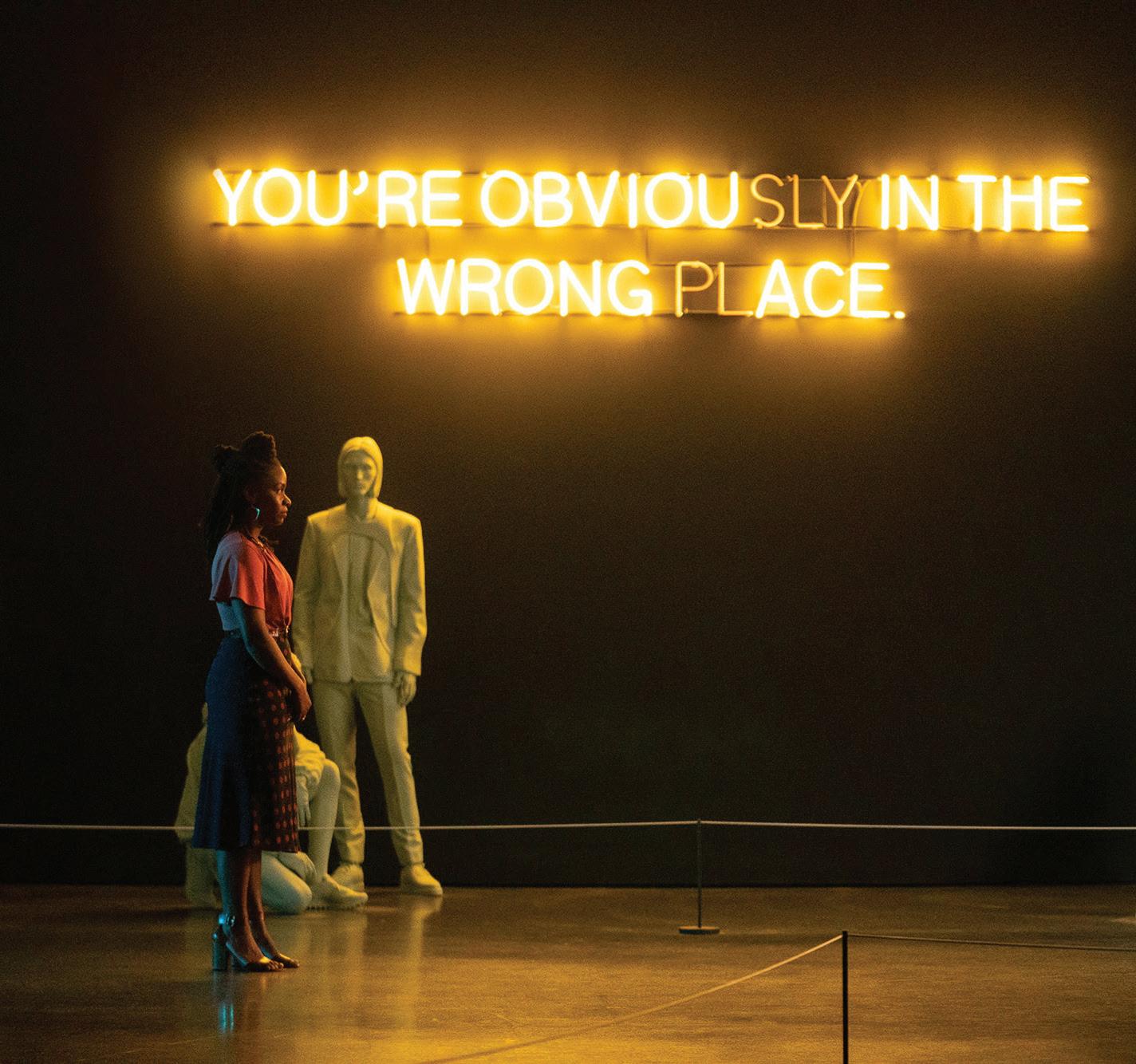
Artist Anthony McCoy (Yahya AbdulMateen II) and his art dealer girlfriend Brianna Cartwright (Teyonah Parris) have just moved into a posh new apartment located on the remnants of Cabrini-Green, a former housing project in Chicago. Now thoroughly gentrified, the community retains a trace of its violent past. Investigating, Anthony is drawn to a small, dilapidated church and a few remaining rows of tract housing, all of it condemned and scheduled to be demolished.
Old-timer William Burke (Colman Domingo) tells Anthony the tale of Candyman, an urban legend borne out of unspeakable tragedy and death reaching all the way back to the late 1800s. Inspired by these stories, Anthony creates an interactive art project that proves to be unintentionally lethal. It also springboards him into the spotlight, even as he digs deeper into the Candyman myth.
Anyone who has seen the 1992 version already knows that investigating Candy-
man leads to no end of throat-slicing trouble. That’s how it is for Anthony and his girlfriend, Brianna, as they’re dropped into a world of nerve-jangling terror from which there may be no escape. The neighborhood has changed, transformed from rundown, burnt-out housing projects into expensive, high-rise condominiums, swanky restaurants and snobbish art galleries, but the ghosts haunting the darkened streets remain, perpetuating a cycle of violence without end.
Jump scares with emotional depth
With 2018’s Little Woods, DaCosta proved herself to be a confident filmmaker possessed of a hypnotic visual style. That she ups her game from a stylistic standpoint with Candyman is hardly a surprise. DaCosta grounds the story’s more outlandish happenings in genuine emotions and authentic human interactions. Her characters come first, and Anthony’s sojourn into the deepest recesses of identity and selfexpression is breathlessly disquieting. Vanessa Williams is spellbinding in a
brief appearance, reprising her 1992 role as Anne-Marie, a former Cabrini-Green resident intimately connected to the Candyman legend. Abdul-Mateen is also wonderful as Anthony, his jittery descent into obsessive psychosis perfectly fitting the overall mood. But it is Parris, as Brianna, who impressed me the most. The way in which she becomes the focal point is masterfully accomplished, the actor delivering a subtly complex performance that builds to a striking crescendo.
There is power in a name. Saying it aloud, hearing it uttered again and again throughout the ages can give this name resonance that stretches into eternity. Some names are comforting. Other names strike fear into the hardest hearts, leaving the listener cowering in a corner like a frightened child. You don’t need to say “Candyman” five times while looking into a mirror to know this film’s title has inherent power, and I wouldn’t recommend you do so. As for DaCosta’s film, however, see it at once. It’s magnificent.
Candyman – Photo courtesy of Universal Studios
Schlocky Protégé is a blast of tastily goofy rubbish
by Sara Michelle Fetters SGN Staff Writer
THE PROTÉGÉ Theaters
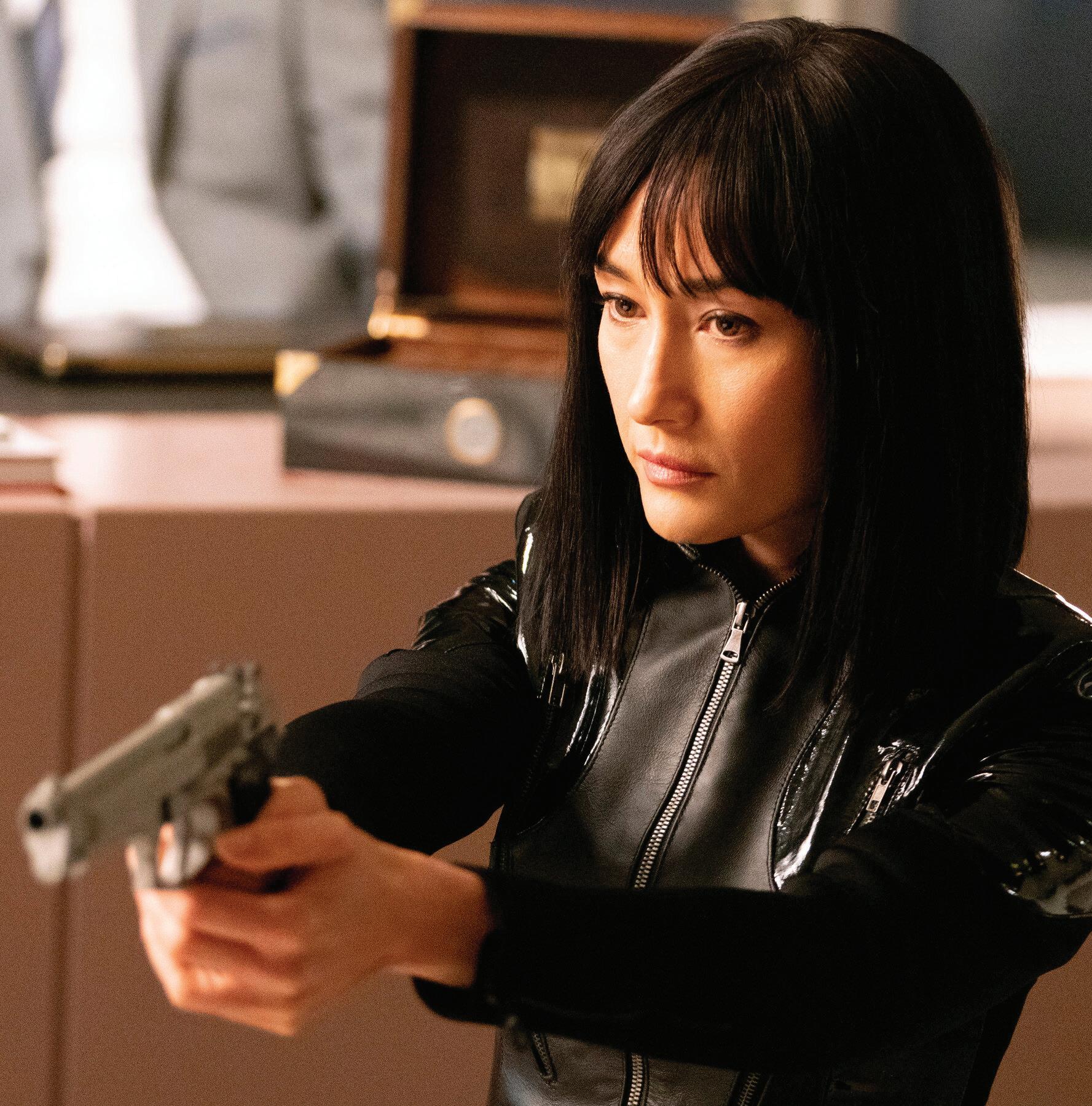
Contract killer Anna ( Maggie Q) and her fatherly mentor Moody (Samuel L. Jackson) only kill bad people. At least that’s what they tell themselves so they can sleep at night. But after Moody’s latest research effort leads straight back to the same blood-soaked corner of Vietnam he rescued Anna from 30 years prior, it becomes immediately clear some ghosts aren’t interested in remaining dead. Worse, they rise from the grave carrying shotguns and high-powered automatic rifles. Forced to return to a homeland she never wanted to set foot in again, Anna demands answers. Moreover, she’s seeking vengeance, and she’s certain the charmingly cavalier Rembrandt (Michael Keaton) has insight into exactly why a powerful, nameless, faceless nobody is willing to use so many expensive resources to have her killed.
The Protégé plays out like a schlocky throwback to the 1980s heyday of Cannon Films, when formerly great directors like John Frankenheimer or Bryan Forbes could gleefully go slumming, making entertainingly disposable programmers like 52 PickUp or The Naked Face. That’s what seems to be happening here for filmmaker Martin Campbell, the man behind two James Bond favorites (Goldeneye, Casino Royale), a classic Zorro adventure (The Mask of Zorro), and a pair of all-time great BBC miniseries (Reilly: Ace of Spies and Edge of Darkness). This is an aggressively nasty actioner that fearlessly mucks around in the mud while embracing practically all of its cartoonishly pulpy attributes. Richard Wenk (The Equalizer, 16 Blocks) delivers a suitably hard-boiled script that sticks to the basics and doesn’t spend a ton of time fleshing out its primary characters. Each backstory is barely explored, and only in minimalist terms — Anna, Moody, and Rembrandt are each defined more by their actions and their interactions with others than by anything distinctly concrete.
That’s fine. While there are numerous unanswered questions, most of them are so silly that I found myself audibly laughing about them instead of feeling any sense of annoyance or frustration. Campbell directs with such confident artistry that it’s strangely easy to overlook a lot of the film’s numerous missteps. The action sequences have punch, and even with aging icons like Jackson and Keaton taking part in the handto-hand theatrics, the filmmaker, along with cinematographer David Tattersall (Speed Racer) and editor Angela M. Catanzaro (Five Feet Apart), still finds a way to keep the visual language clear, concise, and free from a multitude of unnecessary cuts.
Keaton is particularly — and somewhat surprisingly — effective. Whether he looked at this motion picture as a way to get into training for his ballyhooed return to portraying Batman after three decades away from the character, or whether he thought it would be fun to inhabit the façade of an aging horndog assassin who’s typically the smartest guy in the room, the Oscar nominee for Birdman is outstanding.
His scenes with Maggie Q have an amorously enthusiastic volatility that’s weirdly amusing, the duo playing dirty in a way that’s far more fun and much less uncomfortably juvenile than their interactions frankly have any right to be.
The villain pulling the strings is a disaster, though. Their identity inconsequential and delivered with banal fanfare. The plan allowing Anna to infiltrate his lair to start the climactic boulder rolling downhill is so opaque that it might as well be nonexistent. But, as already stated, none of this causes nearly as much trouble from an entertainment standpoint as should by all rights be the case.
Like Frankenheimer and Forbes before him, Campbell knows what he’s doing. The Protégé may not be the director’s finest hour, but that doesn’t make what he’s cooked up any less enjoyable. I had a blast: this jolt of goofily tasty rubbish is the type of engagingly lazy matinee fodder I’d happily devour whenever given the opportunity.
The Protégé – Photo courtesy of Lionsgate
Take a spiritual journey with Quest Bookstore
by Lindsey Anderson
SGN Contributing Writer
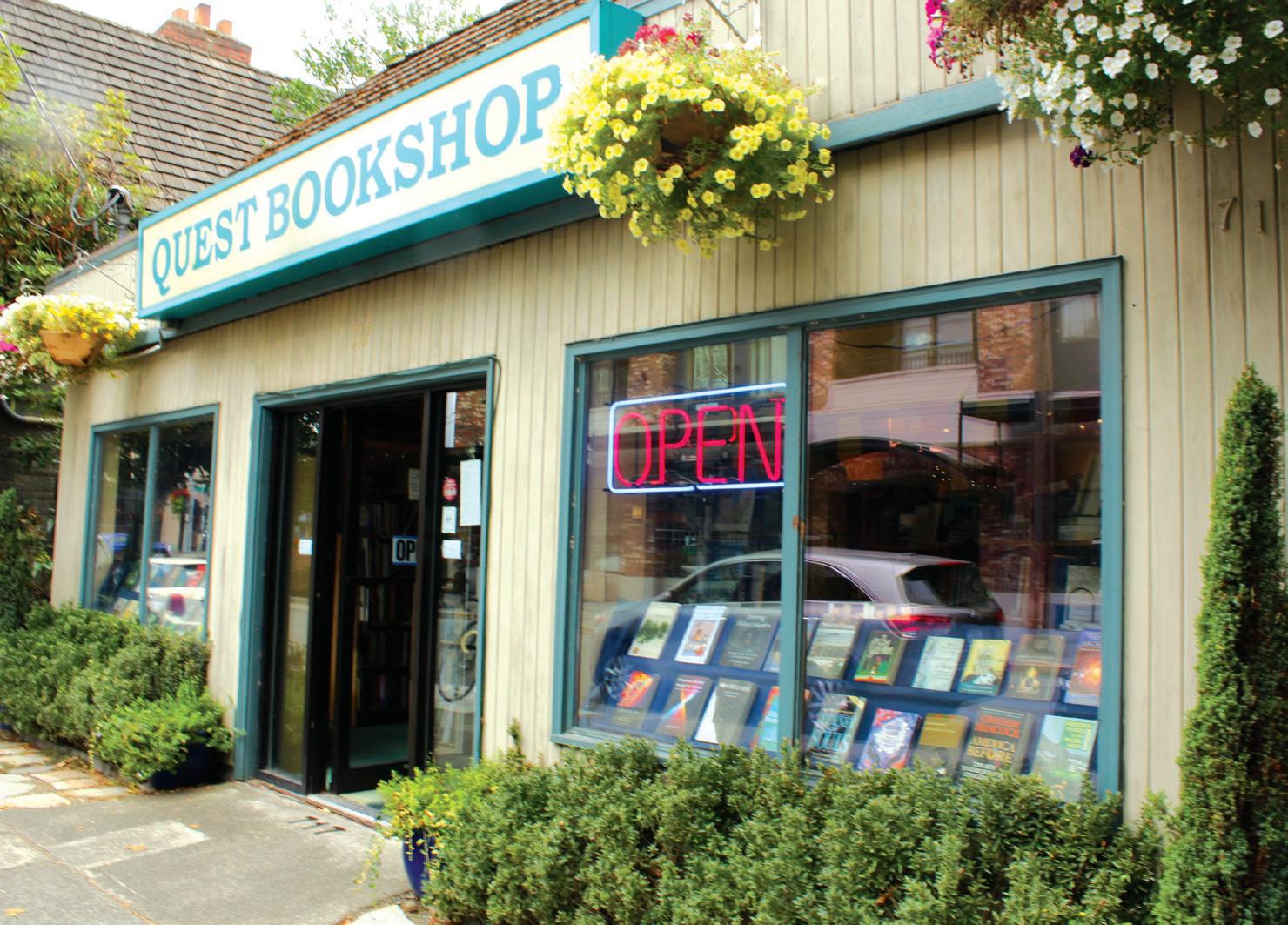
Sometimes the greatest journeys are the ones we take through our own psyches. If you’re looking to travel through the inner workings of your soul, Quest Bookstore in Capitol Hill is your destination! Run by the Theosophical Society, the bookstore has been operating in Seattle since 1969. For more than half a century, the peaceful music and mystical vibes of Quest Bookstore have been people discover more about themselves and how to connect to the world around them.
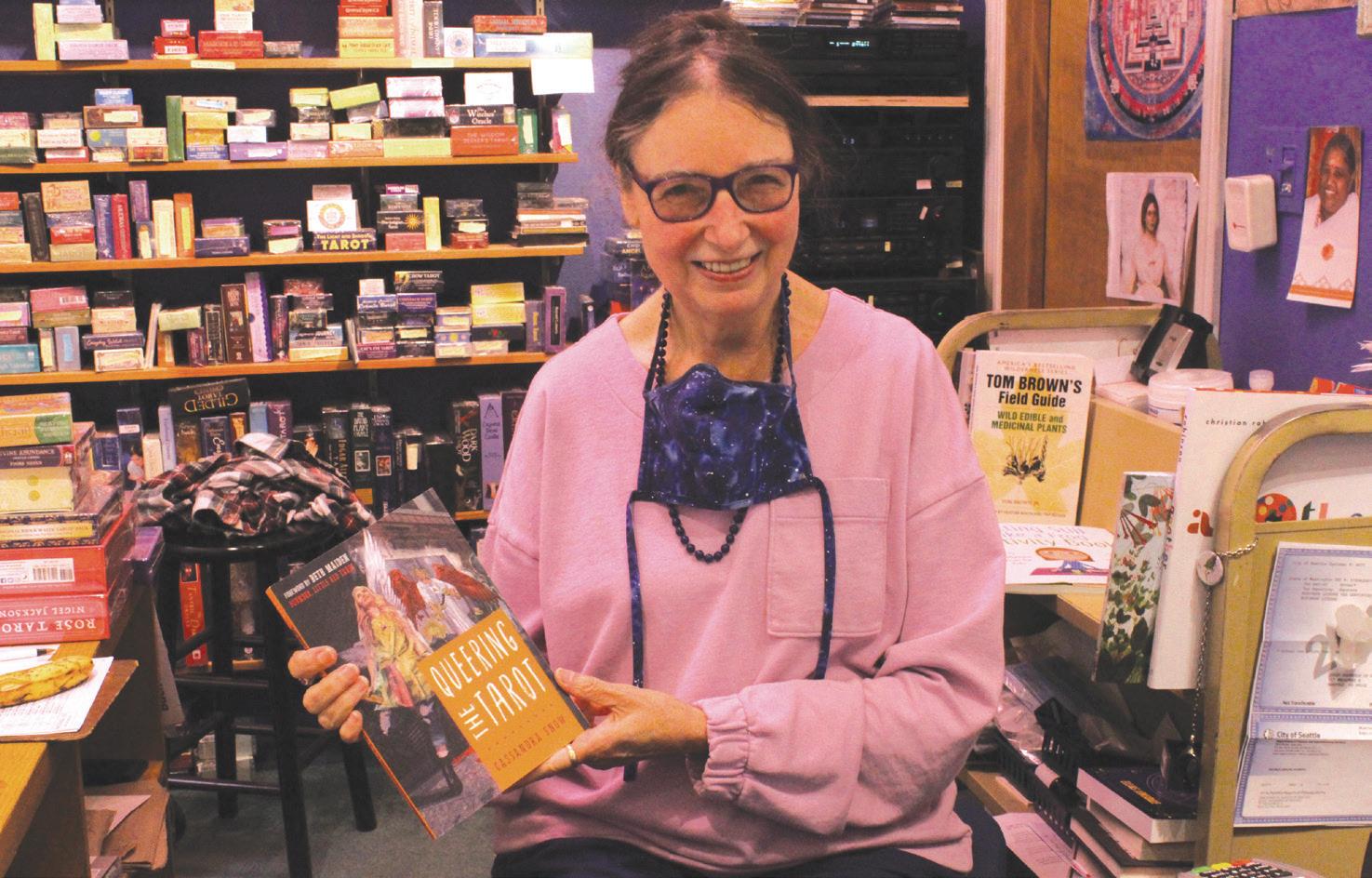
Linda Shields, acting manager of the store for decades, had never planned on becoming a bookseller. “I was already a member of the Theosophical Society, of which the bookstore is a part. I just knew whatever I did in my life, I wanted to be of service.” A friend told Shields that the bookstore needed a manager, saying, “Linda, that’s the job for you.” At first Shields demurred, thinking that she lacked experience. She proposed a cautious sixmonth probation period, but it turned out to be unnecessary. “After one day in the bookshop, I knew it was a fit. That was ‘85, and I’ve continued to be here ever since.”
Curiosity about theosophy leads many to check out the store, while others who have never even heard of the practice also
wander in. “Theosophy is not a religion,” Shields explains. “What theosophy does is it presents a cosmology and a worldview that sheds light on the purpose of life, why we’re here. It doesn’t have a dogma, but it has a whole body of teaching. So, it has teachings about karma and reincarnation, about who we are as human beings, what makes up, not only our physical bodies, but also our etheric, astral, mental, and so on.” Shields has become something of a spiritual guide for customers who come in without knowing what they are seeking. “People sometimes come in and are like ‘Where do I begin?’” Shields says she often answers with a question about what they want, “so I can see where they want to go. One can enter the spiritual path from multiple directions.”
Not only does she guide readers and spiritual seekers on their quests, Shields also chooses every book, tarot card deck, and crystal for sale in the shop. She is selective, eschewing books on black magic — “That can be found in other places, but I choose not to have that. Those things that promote hatred in any way, I would not have.” Instead Shields looks for books and other items that can help customers grow spiritually and develop their consciousness.
“What I choose to carry are things that seem to promote the good.”
Good vibes seem to flow throughout Quest Bookstore. From the peaceful music
Run by the Theosophical Society, Quest bookstore has been operating in Seattle since 1969. For more than half a century, the peaceful music and mystical vibes of Quest Bookstore have been people discover more about themselves and how to connect to the world around them.
playing in the background to the faint smell of burning incense, it is hard not to feel calm when browsing the store. Adding to Quest’s peaceful vibe is the unique bamboo garden located through a door in the middle of the shop. The garden provides visitors with a quiet and lush space in which to read, meditate, and just reflect, away from the noise and bustle of the outside city. The garden is open for anyone who is interested in finding a space to relax and take a breath.
Planted in 1969, the Bamboo Garden is tended by the bookstore staff, who make sure it continues to thrive.
The store has seen an understandable increase in foot traffic over the last few months, as people look for answers about their future or their fate in an uncertain world. Tarot cards and oracle cards, Shields says, have been “really popular” since the outbreak
of the COVID-19 pandemic; some of Quest Bookstore’s young LGBTQ+ customers are drawn to the cards, having been influenced by Tik Tok trends encouraging spiritual exploration through divination decks.
The store has adjusted its stock to accommodate new trends in spirituality. “We have demos out there of all of our decks so people can look through them,” says Shields, and the store also has seen an uptick in books by Brené Brown, along with the store’s perennial favorites, books and items in “the whole metaphysical area.” Whether you are looking for spiritual guidance, inspiration, or just a calm place to take a break for a moment, Quest Bookstore is the place to begin what may be the most important journey you’ll ever take — the one through your own mind.
Photos by Lindsey Anderson
Books
More Than Halfway to Somewhere a look at modern colonial ignorance
by Lindsey Anderson SGN Contributing Writer
MORE THAN HALFWAY TO SOMEWHERE JOHN BURBIDGE
Wordswallah
$14.99
187 pages
In his autobiographical novel More Than Halfway to Somewhere, John Burbidge shares travel stories from his exciting life working for global organizations. While glamorous and full of adventure on the surface, Burbidge’s novel also provides valuable insight into the ways colonization has shaped the globe, and how settler colonialism still shapes the mindset of white travelers who have enough privilege to take cultural vacations. Unfortunately for Burbidge, he often provides this insight unwittingly, in his unreflective or privileged commentary.
Burbidge’s introduction to the novel highlights an experience of alienation: “I was a stranger in a strange land, trying hard to fit in when so clearly I didn’t. This would become a defining motif in my life. Indeed, it always had been.” Here Burbidge seems to comment on the fact that he often finds himself, a white Australian man, traveling to countries decimated by colonization.
But the feeling of alienation is actually limited to Burbidge’s own experiences as a Gay man at home and abroad, ostracized because of his sexuality. This combination — insight into his social alienation as a Gay man plus ignorance of his white privilege — makes for an unsettling read.
Burbidge describes the ways travel liberated him, allowing him the freedom to explore his sexuality while he explored other cultures, ones where gender roles were not treated rigidly. Of India, he writes, “It is acceptable for young males to show affection for one another in public, in contrast to the macho Australia in which I grew up.” This observation is highly insensitive, as it does not acknowledge the role colonization played in creating “macho Australia.” Burbidge had spent several years working with the Aboriginal people there, but he still regarded Australia’s culture as that of its white European settlers alone, ignoring the contributions of Aboriginal culture. Likewise, when observing the freely affectionate men in India, Burbidge seems unaware that India is marked in other ways by the same colonialism as Australia.
Burbidge’s descriptions of Indigenous people and people of color show the appalling scope of his privilege, and his inability to understand that this is indicative of the ways he uses his sexuality to cast himself in the role of victim. When talking about the Indigenous people of Australia’s history of institutionalization, their cultural genocide, and the lasting affects it has had on Indigenous people, he writes, “Most of the population [had] to relocate to the nearby town, where they succumbed to alcohol abuse, violence and prostitution.” There is no acknowledgment of the responsibility white Australians had in creating the fate of the Aboriginal people; rather, he describes their conditions as if they issued from a flaw of moral character.
Burbidge continually uses culturally insensitive language when referring to the BIPOC communities he encounters throughout his travels. In the first chapter, he describes his first experiences in America while working in a largely Black community in Chicago. He uses the phrase “ghetto” to describe the neighborhoods Black people live in. Burbidge focuses
the narrative on himself as a white savior, helping to “transform the image of ghetto kids as a ‘lost cause’ into one in which they could take care of their lives and carve out a positive future.” He believes that the people who face systemic racism and generational poverty are responsible for improving the conditions they were born into. Tellingly, he describes his work as “helping the world’s poor pull themselves out of poverty.”
Burbidge’s travel stories read like the Facebook posts of Christian white girls who take mission vacations to Black and Brown countries, use little BIPOC children as props in their photos, and then leave, doing no real work to help communities that have been struggling to recover after hundreds of years of colonial damage. He describes the people he encounters with a jovial sentiment but uses no critical thinking to question why they have come to live the way they do.
In the second chapter, Burbidge recounts a story of his experiences hitchhiking across southern Africa. He makes no acknowledgement of the privilege his gender alone gives him, allowing him to travel across foreign lands in the company
of strangers, never fearing sexual assault, rape, or being sold into sex slavery. In fact, he even acknowledges the existence of the sex industry, briefly writing of “Zambia’s bustling sex industry, fueled by the constant flow of truck drivers and migratory agricultural workers. Girls as young as 12 offered their services, often in exchange for food or a bar of soap.” No emotion, no recognition, not even a moment to pause and wonder what it must be like for these children to sell their bodies in order to survive. Instead, he continues on his journey, coming to a plantation-style home where his white travel companion blithely accepts the ministrations of his servant, a Black woman. She does not speak; her stories are told by the white men who converse together. She exists as a background character, as all the main stories revolve around Burbidge and his white audacity.
Throughout the novel, a weight seems to be hanging over Burbidge when he encounters strangers and new friends. He often wonders what they think of him, or what they would think of him if they knew about his sexuality, but in those seemingly abject
or insecure moments, readers see the flaws in his privileged and egotistical thinking. Yes, to be Gay in many of these countries is very hard. No matter where you are in the world, it is a genuine struggle to have to hide a part of yourself, to feel like you won’t be loved or accepted for who you are. But it’s also a privilege to be able to hide a part of yourself. Burbidge can pass as straight and thus appear like any other white male traveler. He can hitchhike, he can work any job he wants, he can talk to whomever he wants and be taken seriously. He can write a whole book about his experience without once thinking about the women, the Trans folks, and the people of color he has passed by, and how all the racial, gender, and sexuality biases and “isms” that must be overcome are a product of colonialism, a system that Burbidge’s travels proves is still very much alive and flourishing today.
John Burbidge is a writer and traveler who lives with his husband in Washington State.
More Than Halfway to Somewhere is his sixth book.
Image courtesy of Wordswallah
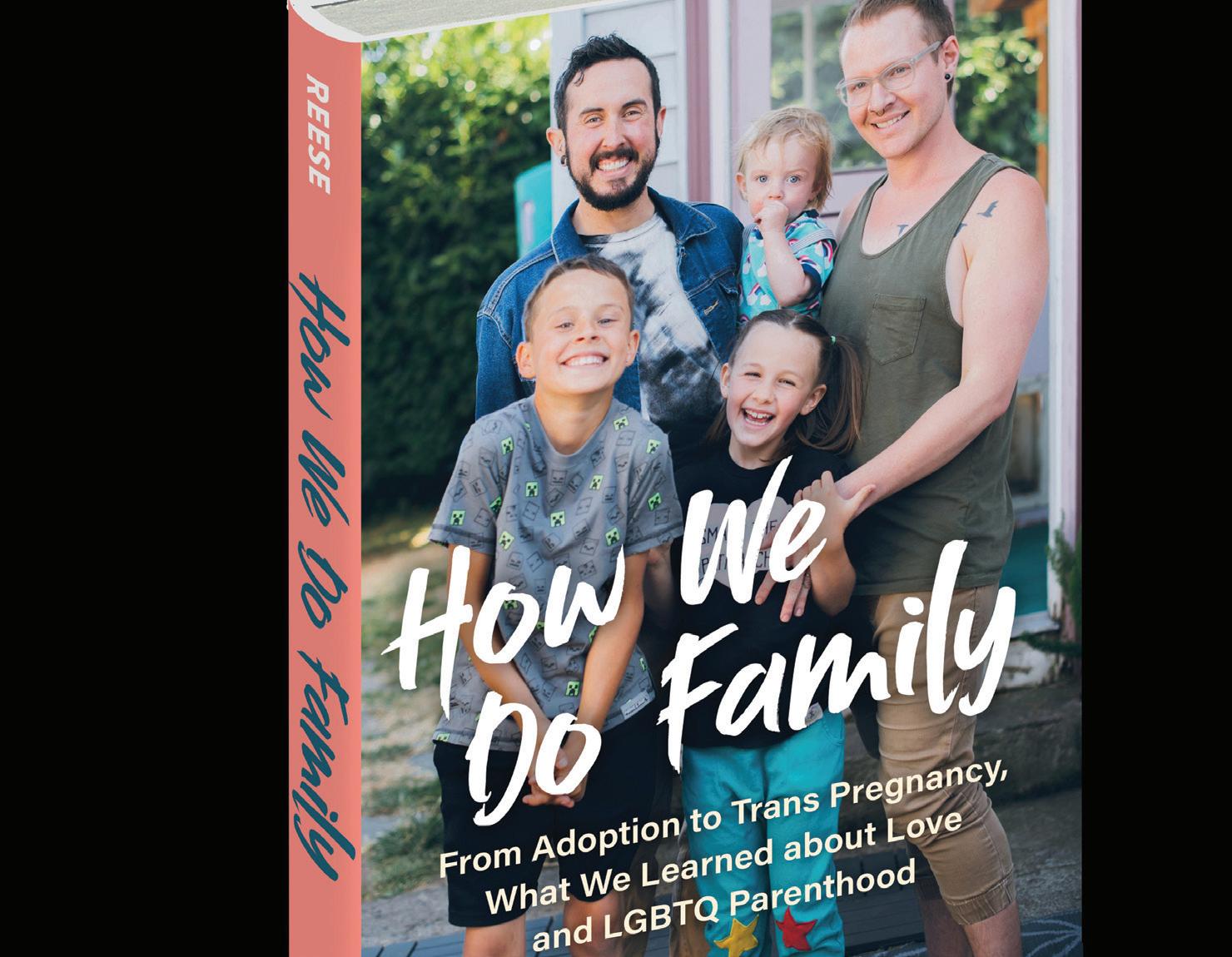
How We Do Family: DIY family memoir from a Trans man who’s been there
by Terri Schlichenmeyer Special to the SGN
HOW WE DO FAMILY: FROM ADOPTION TO TRANS PREGNANCY, WHAT WE LEARNED ABOUT LOVE AND LGBTQ PARENTHOOD TRYSTAN REESE
There is no picket fence in front of your house. There’s no singing milkman to bring your breakfast, and the next-door neighbor doesn’t coffee-klatsch with you every morning after your 2.5 kids go to school. There’s not, in fact, one 1962-normal thing about your home or your family. But, as in the new memoir, How We Do Family by Trystan Reese, what you’ve got is better. Parenthood was never on the table for Reese. Finding love seemed hard enough, perhaps because he came out as Transgender at age nineteen and hadn’t had “any models for healthy non-heterosexual relationships.” Still, Reese knew he “was a boy who liked other boys,” and he “fell in love... almost immediately” with a man named Biff. They decided to weigh their relationship deliberately — no rushing — but there ended up being a complication: Biff’s sister was having problems, and his baby niece and toddler nephew were caught up in the
adopting the kids and then settling down into a happily-ever-after.
And yet, there was something nagging at Reese. He’d always dreamed of a darkeyed baby that was meant to be his. And though he’d been a Trans man for about a decade, it was still possible for him to give birth. He’d have to convince Biff, but... baby? Maybe?
Not to be a spoiler, but you know the answer. The story itself might even be familiar, too. When there are so many Trans-man-gives-birth books on the shelves today, why should you read How We Do Family?
Because author Reese goes beyond.
This isn’t just an angsty, tizzied, nervous story of boy-meets-boy, boom-instant-family. It’s also somewhat of a guidebook, with hints and reminders for LGBT parent-caretakers and pages of advice snuck between chapters in a gentle, non-intrusive manner that feels like an arm around the shoulder. This, plus Reese’s unabashed willingness to be frank and his work as an activist, gives readers the ability to trust the veracity of what they read. Win-win.
But the longer the kids were with them, the deeper in love Reese fell for them, and for Biff. The two men got engaged in the middle of a small concert, and although marriage wasn’t legal where they lived, they married anyway before formally
situation. Though Reese and Biff were living together in a non-childproof apartment after having been dating only for about a year, there was no questioning what to do. They stepped in to care for both children. It was not all instant Mary Poppins. Biff’s niece had a nasty case of diaper rash. His nephew was “profoundly traumatized” and couldn’t handle loud noises. Communication was basically via hand signal.
One thing: be warned. Reese details his first pregnancy, which ended in miscarriage, and the account follows the rest of the book’s no-holds-barred frankness. It’s graphic, but it’s a part of the story — maybe your story. So if you’re doing family your own way, then pick this up.
Photo courtesy of The Experiment
Dicks in a box: An Uptown mystery
by Lindsey Anderson
SGN Contributing Writer
Queen Anne is a classy neighborhood full of families and older Seattle residents who enjoy some of the finer aspects of the city: theater, a good book paired with a cup of coffee, and a cozy night in. Perhaps some enjoy that last one a bit more than you might expect.
On Monday, August 16, residents of a charming co-op in Lower Queen Anne were surprised to find an interesting package left near their mailroom: a box of realistic-looking dildos: two unpackaged, and possibly used ones, as well as “one very large one still in its wrapper.” And some competition frisbees.
While the co-op is looking to go more meat free, this might not be what they had in mind.
“Who let the cocks out?!” wrote Queen Anne resident Ruth Matson on a popular neighborhood website, Nextdoor. “Good morning, Queen Anne! It appears that some poor soul has been separated from
their play toys? Did you or someone you know lose a box of cocks?”
When asked about her reaction to the mysterious package, Matson laughed. “Oh, I thought it was hysterical. My co-op neighbor [had] texted me and said, ‘If you want to have a good laugh, go out to the mailboxes right now.’”
She found the box, in all of its glory, and snapped a picture that has now been shared all across the website. “I just had to post it to Nextdoor, because it’s so uptight, especially here in Queen Anne.”
It seems like the dildos are helping loosen all kinds of things up in Queen Anne, one-liners in particular, as so far, most residents have responded to the post in good humor. “A lot of Dickens going on in Queen Anne,” Matson contributed, as the comments and jokes flooded in.
“You’re allowed to have hens but not cocks within the City of Seattle. Or so I’ve been told,” posted resident Rebecca Blanton. “Sorry if you got stuck between a cock and a hard place,” quipped Phinney resident Cheryl Meyers.
Others ostensibly worried about physical danger, like Domino Hawks of West Woodland, who wrote, “Heavens!... Someone could trip and fall on one of those,” to which Alan Brown of Capitol Hill responded, “Repeatedly.”
Some residents were concerned about neighborhood safety; after all, organizing neighborhood clean-up days can be a pain in the ass. Also, the box was left next to a park with lots of traffic, leading to concerns about hard parental conversations if children were to have spotted the toys.
Others suggested that the box could be connected to a robbery in Ballard; apparently, an adult store was the victim of a breaking and entering a few weeks back. Matson was quick to dismiss those concerns however, saying she did not believe the two events were connected. After all, nobody in Queen Anne has a boner to pick with the Ballard neighborhood.
While the origin of the phallic toys remains a mystery, Matson does have her theories as to how they might have found their way to Queen Anne. “Some poor soul,
their burden must have been too heavy and they had to drop it or abandon it. Maybe they were being chased by a tiger? Or maybe it was one of Queen Anne’s many rabbits?” Nor does she have any idea who left it. “What a gift, right?” she chuckled. And the fate of the toys? If you or a loved one have been looking for your lost dildos, this news may be hard to swallow. We regret to inform you that they have been put in the trash. Since they were originally left by the mailboxes, Matson and other residents worried that the friendly Queen Anne postman might not find the present as funny as they had, so the toys were moved elsewhere, surely to be found and repurposed by some very adventurous dumpster divers.
Who would have thought a box full of cocks would be just what the neighborhood needed to find camaraderie and a good laugh? And who knows? Maybe Amazon is erecting a new promotion. “Alexa, I said socks not cocks!” Matson called toward her virtual assistant.
Photo courtesy of Nextdoor
National News
VACCINE
continued from cover year’s version, the 15th since the survey began, is the first one to include a focus on LGBTQ+ individuals and coronavirus vaccination data.
Survey respondents reported high rates of vaccination. The percentages of those who reported receiving at least one dose of the coronavirus vaccine were:
• 93% of cisgender gay and bisexual men
• 92% of transgender and nonbinary individuals
• 92% of cisgender lesbian and bisexual women
“There are many reasons why LGBTQ+ vaccination rates may be higher than the general population, including higher percentages of the LGBTQ+ community being liberal, living in blue states, and living in urban areas,” stated CMI Senior Director of Research, David Paisley. “We also see that COVID isolation significantly impacted LGBTQ+ people, which may have motivated quick vaccination to reenter the community.”
LGBTQ+ community and isolation
Isolation hit members of the LGBTQ+ community particularly hard during COVID: Many inclusive spaces were shut down due to lack of funding, and individuals were unable to interact with their support systems on a consistent basis. Further, LGBTQ+ individuals have higher rates of underlying health conditions that can make
them more susceptible to contracting the virus, and caution about infection may have led to further isolation.
Out of the survey respondents, 59% said COVID-19 made them feel socially isolated, while 50% said that the coronavirus pandemic has impacted their mental wellbeing. A desire to reconnect with others (as well as the world) could be a reason as to why members of the LGBTQ+ community in the US are getting vaccinated at such astonishingly high rates.
Finances? Finances! Finances.
If your financial situation hasn’t been impacted by the coronavirus pandemic, consider yourself one of the lucky ones (or quit lying to yourself). A large portion of members of the LGBTQ+ community work in the service industry, which was hit hard in the spring of 2020. The economic road to recovery is a long one—let’s take a look at the rates of LGBTQ+ survey respondents who were negatively financially impacted by the pandemic:
• 33% of Native American/Alaskan, Middle Eastern or North African LGBTQ+ respondents said their finances were negatively impacted.
• 26% of Asian/Pacific Islander respondents were negatively financially impacted.
• 26% of Latinx respondents were negatively financially impacted.
• 25% of Black respondents were negatively financially impacted.
• 22% of white respondents were negatively financially impacted. There’s no doubt that members of the
LGBTQ+ community have struggled with the financial impact of the pandemic in the last year and a half. Strong vaccination rates may indicate a desire to reenter the workforce after job loss, and even a will to survive.
It hits close to home
The LGBTQ+ community has seen tremendous loss when it comes to those they care about the most. Out of the respondents, 21% reported that a close friend or family member had died from COVID-19 while 36% reported that a friend or family member had become extremely sick from the virus. Protecting loved ones has been a key reason for people to get the coronavirus vaccine.
Delta variant causes about 98% of new cases in WA
On August 19, 2021, the Washington state Department of Health (DOH) released new information regarding coronavirus in the state. COVID-19 cases and hospitalizations are at their highest numbers to date, and the increasing trend is predicted to continue for the next month.
“Both total beds and intensive care unit (ICU) beds occupied by COVID-19 patients have increased sharply, exceeding the previous high point of winter’s third wave,” stated the DOH.
Hospitalizations are becoming more frequent in younger age groups, particularly 20- to 30-year-olds, which has added to the strain on hospital staff. In addition, the DOH states that unvaccinated individuals
between ages 16 and 64 are ten times more likely to be admitted to hospitals than fully vaccinated individuals in that age group. Because of the new surge, the DOH advises unvaccinated individuals to get vaccinated immediately, in addition to taking further preventative measures. The DOH report mentions that those who gain immunity solely from a previous coronavirus infection develop only 15.5% protection from reinfection; the Pfizer vaccine, by contrast, provides 95% protection against serious illness with COVID-19. These numbers show how critical the vaccines are.
Washingtonians age five and older— regardless of vaccination status—are now required to wear a mask in indoor public spaces, in accordance with the mandate announced by Governor Jay Inslee. The DOH also strongly recommends that children ages two to four wear a mask in public spaces. The department also strongly advises that if you feel symptomatic or have a known exposure, you should get tested.
As of August 21, 2021, 66.6% of individuals in Washington state have received at least one dose of the coronavirus vaccine, while 59.4% of the population is fully vaccinated. If you’re already vaccinated and wondering what you can do, talk to friends and family members who aren’t vaccinated about getting vaccinated—especially your straight friends. Help schedule their appointments, drive them to the appointments and redirect all questions they may have to their healthcare providers.
Photo courtesy of Callen-Lorde Community Health Center
National & International News
National news highlights
by Daniel Lindsley SGN Contributing Writer
Oregon:
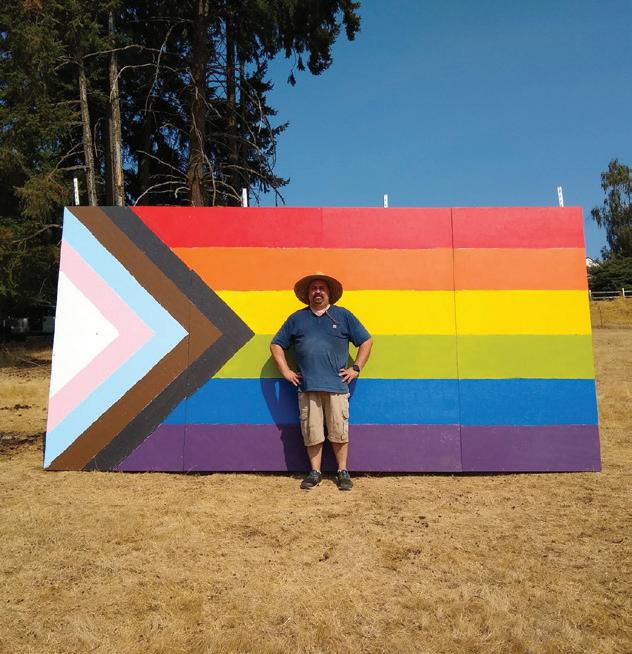
Giant Pride sign sends a message to school district
NBC reported August 20 on the giant Pride sign Oregon residents built in response to the Newburg Public Schools’ decision to ban such symbols from its campuses. The sign stands on a hilltop, visible from one of the Newburg campuses, and its construction was funded and performed by members of the community. The ban’s advocates say it will prevent division, anger, and other conflicts over politics on campus. The ban’s critics say the symbols aren’t political at all, and can provide wellneeded comfort for LGBTQ students.
Washington, DC:
Biden administration tells Trans students they’re not alone
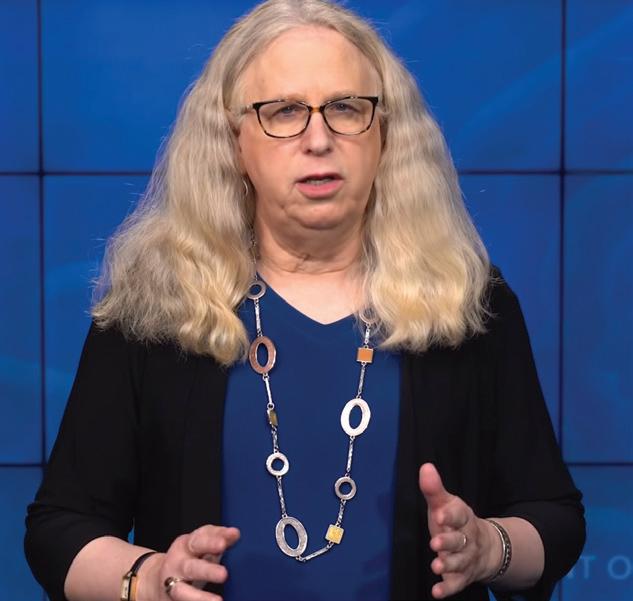
NBC reported August 19 on the Biden administration’s message to trans students returning to school this fall. The message was delivered by allies and “nation firsts” in government: Acting Assistant Secretary of Education for Civil Rights Suzanne Goldberg, a Lesbian; Assistant Secretary General Kristen Clark, the first woman to lead the Civil Rights Division of the Justice Department; and Dr. Rachel Levine, the first openly Trans official to serve in a presidential administration. They all stated the federal government’s “unequivocal” support of Transgender students, promising to continue fighting the wave of anti-Trans state bills.
Josephine Baker inducted into France’s Panthéon
Bisexual artist honored as resistance fighter
by Mike Andrew SGN Staff Writer
American-born French performance
artist Josephine Baker will be entered into Paris’s Panthéon mausoleum, making her the first Black woman to receive the honor.
Baker died in 1975 and is buried in Monaco, so she will not actually be interred in the mausoleum but will instead be honored on November 30 with the installation of a plaque.
The Panthéon is a burial place for some 80 French national heroes, such as scientist Marie Curie and writer Victor Hugo. Baker will be just the sixth woman to be so honored.
French President Emmanuel Macron approved Baker’s induction after a campaign led by her family and a petition with about 38,000 signatures.
Born in St Louis, Missouri, in 1906, Baker initially performed in segregated vaudeville venues in the US, becoming one of the leading lights of the Harlem Renaissance.
In 1925, Baker got her big break — she was signed by La Revue Nègre, an all-Black French production playing at the Théâtre des Champs-Elysées. Throughout the 1920s and ’30s, she wowed French audiences with her provocative dance routines.
After touring Europe in 1926, she returned to Paris to star in the famous Folies Bergère. Her performances were consciously sexy and exotic. On one occasion, she performed the Danse Sauvage in
a costume that consisted only of a string of artificial bananas.
She adopted a pet cheetah, Chiquita, who appeared with her in a diamond-studded collar. Chiquita often slipped her leash and jumped into the orchestra pit, terrorizing the musicians and adding an extra dimension to Baker’s performances.
In 1936, Baker returned to the US to star in the Ziegfeld Follies but played to bad reviews and was replaced by Gypsy Rose Lee. Heartbroken — and frustrated by a still-segregated America — Baker returned to Paris in 1937, married a French citizen, and acquired French citizenship herself.
During the German occupation, she actively supported the French Resistance, using her celebrity to gather information about German troop movements and military installations, which she passed along to Allied intelligence. Baker also sheltered Resistance supporters and helped them acquire visas, so they could join the Free French forces in Britain.
For her wartime contributions, Baker received the Croix de Guerre and the Rosette de la Résistance military medals, and was made a Chevalier of the Légion d’Honneur, France’s highest award.
Although she remained a French citizen, Baker traveled to the US after the war and was shocked to find herself denied accommodation in no less than 36 American hotels because of her race.
In 1951 Baker was refused service at the
Club
Manhattan.
Kelly — who was at the club at the time — rushed over, took Baker by the arm, and stormed out of the club with her entire party in protest. Baker and Kelly remained friends for the rest of their lives.
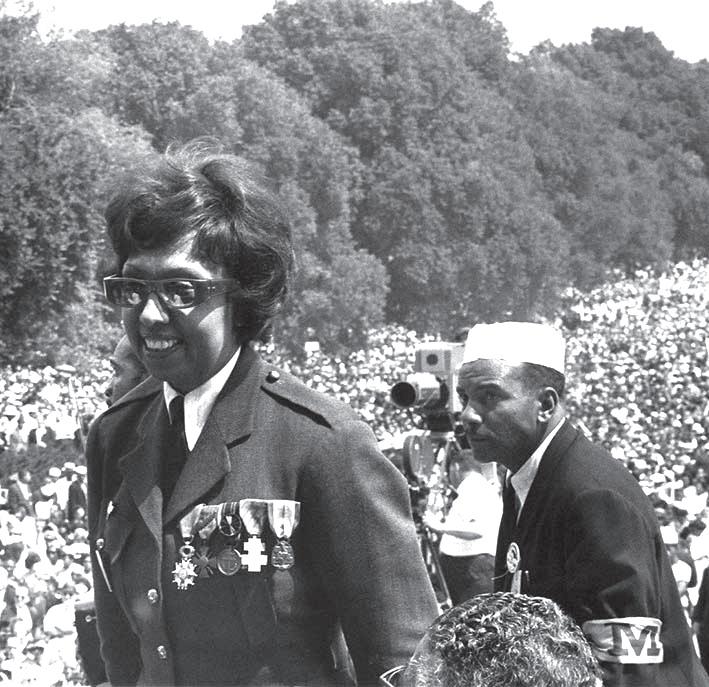
In response to the pervasive racism she encountered, Baker wrote a series of articles and gave several lectures in historically Black colleges on the emerging civil rights movement. In 1963, Baker was the only official woman speaker at the March on Washington. She delivered her speech in her Free French uniform.
After Martin Luther King, Jr.’s assassination, his widow, Coretta Scott King, reportedly approached Baker to replace her late husband as leader of the movement. Baker declined on the grounds that her children were too young to lose their mother. Baker was legally married four times, and at the time of her death was in a longterm relationship with a fifth male partner. She also had relationships with several women.
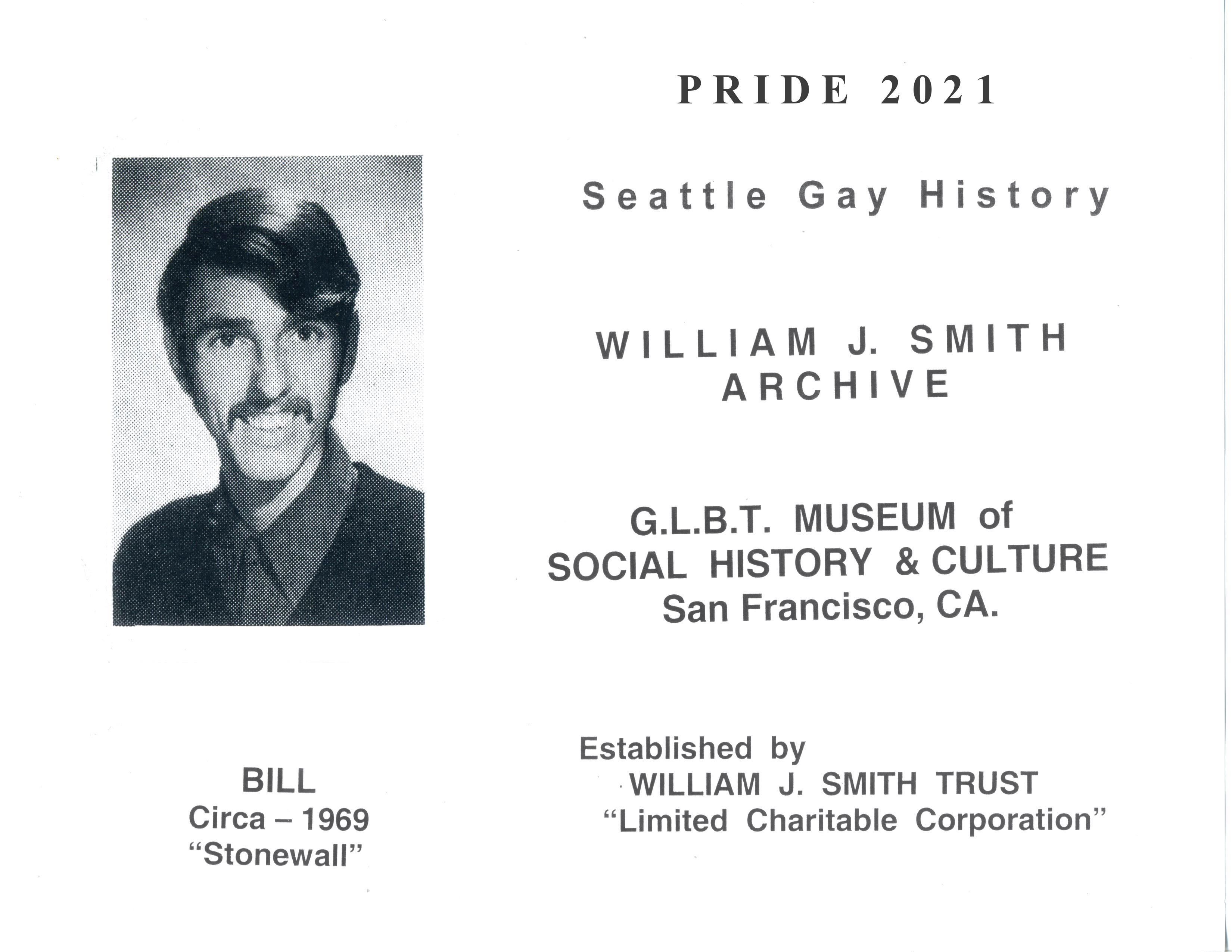
In her early days in Paris, Baker was with American-born Ada “Bricktop” Smith, a jazz singer, dancer, and owner of the Chez Bricktop nightclub. Later, Baker dated the famous French novelist Collette. Baker was also linked romantically to Bisexual Mexican painter Frida Kahlo, notably in the 2002 film Frida
historic Stork
in
Film star Grace
Josephine Baker at the March on Washington, Aug. 28, 1963 – Photo courtesy of BlackPast
Jaybill McCarthy and the flag – Photo courtesy of Twitter / @Jaybill McCarthy
Photo courtesy of
The US Department of Justice / Youtube
Montreal’s famed Black & Blue turns 30
by Richard Burnett Special to the SGN
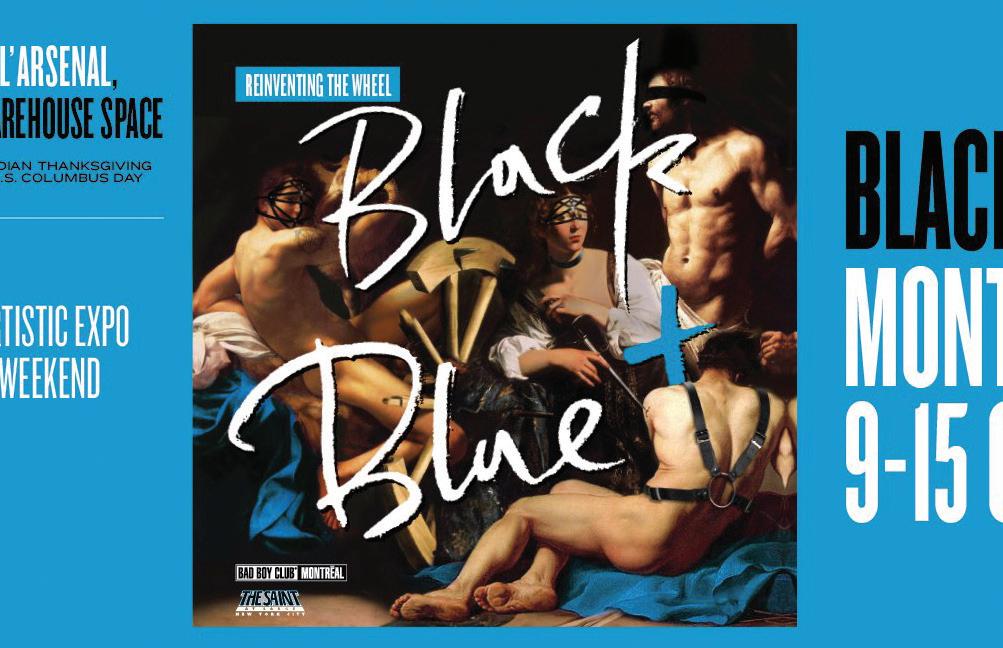
Montreal will let laisser les bon temps rouler again when the Bad Boy Club Montréal, aka BBCM Foundation, hosts the 30th edition of its world-renowned Black & Blue Festival, from October 7 to 11, during the long Canadian Thanksgiving weekend (US Columbus Day weekend).
After this anniversary edition was postponed in 2020 because of the COVID-19 pandemic, the festival’s organizing committee began working with municipal authorities and Quebec public health officials to plan for all possible 2021 event scenarios, so as to make sure they conform to all COVID-19 pandemic sanitation measures and ensure the safety of all partygoers and employees.
Canada reopens to tourists
Since August 9, fully vaccinated citizens and permanent residents of the United States are eligible to enter Canada. Visitors must upload proof of vaccination status through Canada’s ArriveCAN system before their trip. Other foreign nationals who qualify as fully vaccinated will be eligible for entry into Canada beginning in September.
However things are changing quickly due to the Delta variant. For the latest updated information about traveling to Canada, visit mtl.org.
“We hope the situation in October will allow us to hold as many face-to-face events as possible,” said BBCM Foundation president and founder Robert J. Vézina. “That’s why we’re setting up different scenarios for each activity, so that we can adapt to the reality of the moment when we’ll know exactly what to expect.”
“Breath of fresh air”
If anybody can pull this off, it is Vézina. Over three decades, with his sure hand at the helm, BBCM and the Black & Blue Festival have overcome many obstacles, big and small.
After the violent July 1990 Montreal police raid (widely considered to be Montreal’s Stonewall) on the Sex Garage, an underground loft party, Vézina came up with the idea to host an all-night dance party.
“Montreal needed a breath of fresh air back then, especially in the gay nightclub scene,” Vézina said. “We first wanted to create a new, fun, and thematic event in Montreal, and we invited our friends from Toronto, Boston, and New York to join us at the beginning.
“But we made sure we had the approval of the police to do an after-hours, with all our permits, in order to avoid the problems encountered at the Sex Garage. After the first two Black & Blue events in 1991 and 1992, we knew we had a successful formula and decided to do it on an annual basis.”
After drawing 800 revelers to their first dance party in an abandoned bank in 1991, Black & Blue quickly became one of most successful circuit parties on the planet, filling many of Montreal’s legendary and iconic venues over the years, like Olympic Stadium, MTELUS, and the Palais des Congrès (Montreal Convention Centre).
The Black & Blue all-night main event dance party soon anchored the Black & Blue Festival of sociocultural activities and events, which have generated more than $500 million in local economic and tourism spinoffs over three decades.
Supports HIV/AIDS and LGBTQ organizations
In addition, the registered nonprofit BBCM Foundation’s simultaneous goal is also to support organizations that provide direct assistance to people living with HIV/ AIDS, as well as to help LGBTQ community groups.
The first Black & Blue party raised $3,500 for AIDS Community Care Mon-
treal in 1991, and the BBCM Foundation has since helped various HIV/AIDS and LGBTQ organizations with donations and free ticket allocations for various groups to use for their own fundraising activities, as well as promotional support, for an overall value well above $2 million.
This is no mean feat for BBCM, which — unlike many other prominent cultural promoters — is chronically underfunded by all levels of government.
“We continue to draw tourists from around the world and help support local community organizations,” says Vézina, who in 2007 was also founding vice-president of Fierté Montréal Pride, organizers of the largest Pride in the Francophonie [French-speaking world]. “But getting government support and private sponsors is still a constant battle,” explained Vézina.
All-star DJs and entertainers
Meanwhile, BBCM spends what is necessary to ensure its Black & Blue main event is of the highest quality, earning accolades for its high production values from such publications as the New York Times and The Advocate. Perhaps the most remembered installation is the 25,000 lit candles that greeted partygoers in the outfield of Olympic Stadium at the 2000 edition of the Black & Blue main event.
Performers over the years have included pop and dance legends like the Human League, Martha Wash, Ultra Naté, Loleatta Holloway, and Kristine W., while all-star DJs have included Danny Tenaglia, Victor Calderone, David Morales, Hernan Cattaneo, Susan Morabito, Angel Moraes, Roger Sanchez, and Chus & Ceballos, as well as Montreal’s own Misstress Barbara and Mark Anthony — Vézina’s fave DJ over the years — who has spun for at least half of the Black & Blue main events over 30 years, including the very first party.
“This is partying on a grandiose scale!” Mark Anthony said in 2010. “My favorite moment occurred during Black & Blue 1999 at noon, the end of the party, at the end of my set. After the last song, I looked down to the dance floor from the DJ booth, which was two stories up! A sea of bodies still stood there, clapping and cheering for more music! When the lights came on, I was blown away to see about 15,000 people still assembled on the dancefloor. It was a very magical and surreal moment.”
Where Gays and straights mix
Another key reason for Black & Blue’s longevity is that it no longer is just a Gay party. While it remains predominantly Gay, longtime BBCM organizing committee member Caroline Rousse said, “The Black & Blue dance floor is one of the rare places where nobody cares what your sexual orientation is — except when you want to pick someone up! This is the really special aspect of the Montreal crowd: gays and straights mingle together, and there is no homophobia. We also encourage gay tourists — surprised to see many straights
at our party — not to discriminate against heterosexuals. Everyone is accepted and equal at our event.”
“The gay core is still very present, especially in the middle of the dance floor,” Vézina added, “but it’s a big celebration for everyone. Young ravers and many gayfriendly beautiful people attend.”
Dance to the music
While some circuit parties have been criticized over the years for widespread drug use that can lead to unsafe sex practices, BBCM works with local organizations to promote safer sex and responsible drug use, so that the music-oriented Black & Blue experience can be safely enjoyed by all.
Vézina also points out that sex on the Black & Blue premises is a rarity and not officially permitted. “Starting with our performers, we don’t allow frontal nudity,” he says. “There is cruising on the dancefloor, but sex on the premises is very rare. You’d have to find a very dark corner for a very short time because our roaming yet friendly security [team] is present everywhere all night. In any case, this event is about the music, the special effects, the shows, and community spirit.”
While it’s true that Black & Blue has become a well-oiled machine over the past 30 years, Vézina has also come to expect the unexpected. When asked for his festival’s worst moment, Vézina didn’t miss a beat: “When the Hell’s Angels strangely showed up in a huge uniformed gang in an attempt to enter the main event in 1996. Our event is obviously not the style for such criminals… We had to close the doors for quite a long time — nobody could come in or out — until the police got them to leave, and they have never come back!”
Choice destination and new Carnival Black & Blue remains one of the world’s iconic circuit parties, but after decades of boffo box office — in 2002, more than 80,000 people from all over Canada, the US, Europe, Australia, and South America attended the many Black & Blue Festival activities — Vézina said, “We’ve decided to adapt our events to the present-day realities of the circuit party scene, as well as the changing priorities.
“That is why in 2018 we launched the Carnaval des Couleurs (Carnival of Colors) as a new, innovative part of the festival. The Carnaval is a series of musical and mainly ‘live’ activities — hence not DJ-oriented — that are totally free and open to everyone, with the goal of bringing together the LGBTQ and multiethnic communities, to celebrate diversity and inclusion and also to help to fight racism and homophobia.”
Expect some surprises to mark the 30th edition of Black & Blue, whose main event is titled XXX for its three decades of success. The festival will also host its popular Party Twinkle, Leather Ball, and Uniform Party, as well as the Carnaval des Couleurs (October 9–10) in the Village.
International news highlights
by Daniel Lindsley SGN Contributing Writer
Robert
Poland:
Region could lose billions of euros to stay “LGBT-free”
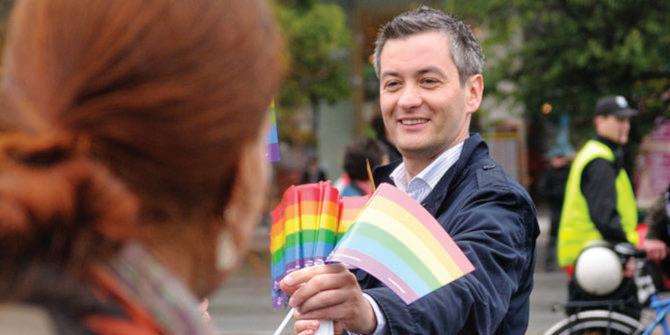
Reuters reported August 19 on the Polish regional council of Malopolska voting to remain a declared “LGBT-free zone,” despite warnings from the European Union that such continued discrimination would result in a loss of over 2.5 billion euros in funding. The council’s head says the declaration, which comes among a number of others like it in other regions, has been misunderstood and should be rewritten rather than repealed completely. Reuters added that religious conservatives in Poland often say they have nothing against LGBT people, despite believing that “LGBT ideology” is a threat to Christian values. Meanwhile Robert Biedron, Poland’s most prominent openly Gay politician, says that the conservative Law and Justice Party has put hatred above the good of its people once again.
Afghanistan: Gay man in Taliban-occupied city fears the worst
On August 19, the BBC broadcast the voice of a Gay man living in Afghanistan during the Taliban’s takeover. Abdul, whose name has been changed for his safety, had already been closeted to his friends and family. Afghanistan has laws that could put him in jail for homosexuality. But the Taliban, he says, will kill LGBTQ people “on the spot.” Although the war had taken friends and family from Abdul in the past, he had been studying, spending time with his boyfriend, and having lunch with friends before the Taliban arrived in the city. Lately he has been spending most of his time inside, looking for opportunities to escape the country.
“We get the most beautiful people from around the world in Montreal during Black & Blue,” Vézina says. “Our reputation as a fun, thematic, and sexually charged event started in 1991 when we invited our goodlooking friends to attend our very first party. That’s how we got our bad-boy reputation. It was a bit obnoxious, but it worked. But the whole team, including myself, we’re still taking this all one year at a time.”
For more info, visit bbcm.org and carnavaldescouleurs.org.
Dubbed “Mr. Montreal” by CBC Arts, Richard “Bugs” Burnett (twitter.com/ bugsburnett) is an arts and culture journalist and columnist for various media in Canada. Burnett has been covering Black & Blue for more than 25 years.
Biedroń – Photo by Kuba Bożanowski
Image courtesy of Bad Boy Club Montréal Foundation