Lauper on Trump, #MeToo, and touring with

Lauper on Trump, #MeToo, and touring with

by Mike Andrew SGN Staff Writer
The Foundation for Moral Law – a group founded by former Alabama Supreme Court Justice Roy Moore and now run by his wife –has filed an amicus brief in the US Supreme Court urging it to protect religious liberty from Transgender activism.
by Mike Andrew SGN Staff Writer
The August 23 brief was filed in the
The figure is 22% among Latinx millennials
by Mike Andrew SGN Staff Writer
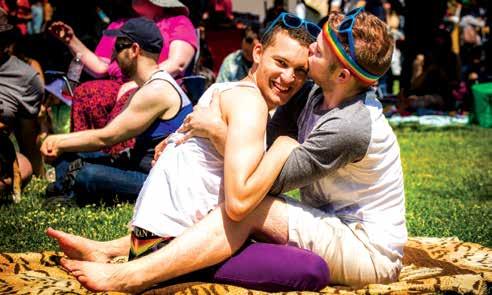
Fourteen percent of millennials identify as LGBTQ, according to a new study by the GenForward Survey project at the University of Chicago. The study also found that a higher proportion of Latinx millennials identify as LGBTQ than is true for other ethnic groups. The new data challenge previously held ideas about the size of the LGBTQ populasee SCOTUS page 9 see MILLENNIALS page 8
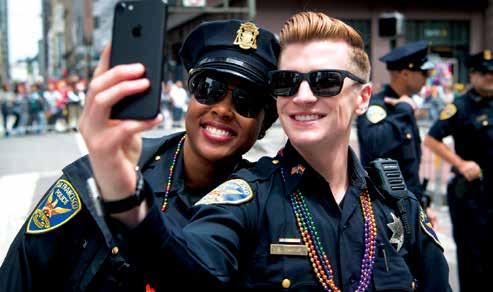
San Francisco may be Gay Mecca, but a San Francisco police officer is suing his department, charging the San Francisco Police Department (SFPD) with
Stunning legal wins in Costa Rica, Lebanon, Bulgaria & more
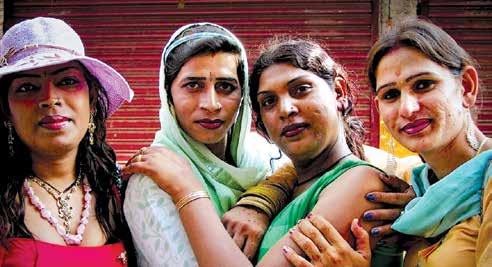
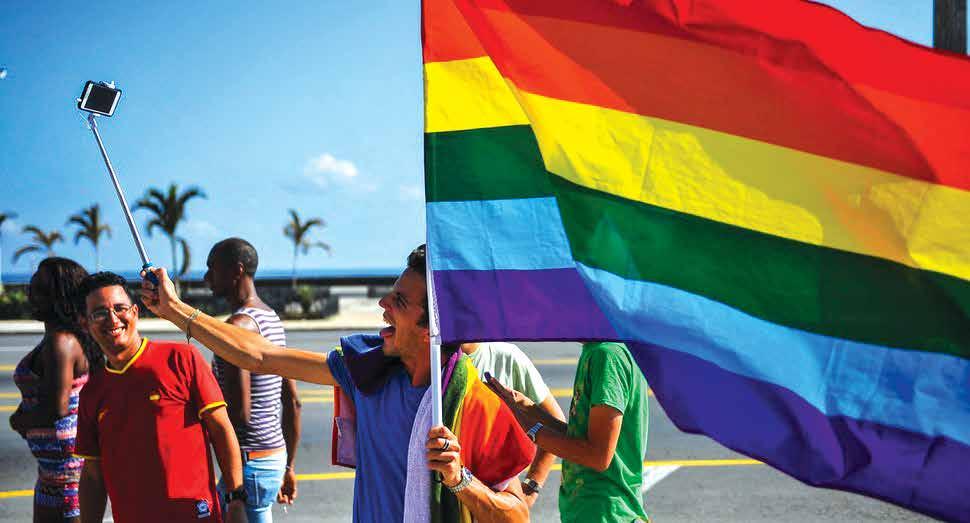
LONDON, UK (20 August 2018) – On 26 June 2015, the US Supreme Court struck down same-sex marriage bans as unconstitutional, effectively bringing marriage equality to all 50 states. It was seen, and rightly so, as a massive step towards equality and is arguably the most famous LGBTQ+ judicial win so far. But hold on. India’s Supreme Court is expected to decriminalise same-sex acts by repealing Section 377 – an old colonial-era homosee GLOBAL LGBTQ page 8











tion. A 2016 Gallup survey found only 4.1% of the general population identifying as LGBTQ.
The GenForward study is also “the first of its kind,” the researchers say, because it “pays special attention to the ways race and ethnicity influence how young adults or millennials experience and think about the world.”
“Given the importance of race and ethnicity for shaping the diverse perspectives and lived experiences of young people, we believe researchers make a mistake when they present data on young adults in a manner that assumes a monolithic millennial generation and young adult vote,” researchers explained.
The data come from a nationally representative survey of over 1,750 young adults ages 18-34 conducted bimonthly.
Speaking to NBC News, researcher Vlad Medenica said, “We were excited that the differences emerged. Often millennials are talked about as a monolithic or homogeneous group where everyone is more or less the same.
“One of the aims of our survey is to dig a bit deeper and see how race and ethnicity shape people’s experiences. The fact that Latinx millennials are least likely to identify as straight is a reflection of how important exploring this difference is.”
While 14% of millennials identify as LGBTQ, 22% of Latinx millennials identify in that way, a much larger proportion than for African-Americans (14%), whites (13%), and Asian-Americans (9%).
For millennials as a group, regardless of sexual orientation or gender identity, about 21% identify as Latinx, Latina/o, or Hispanic, 14% as black or African-American, 7% as Asian-American, and 56% as white.
In addition to a greater propensity to
identify as LGBTQ, large majorities of millennials across racial and ethnic categories report knowing someone who is Gay or Lesbian, while somewhat smaller numbers report knowing someone who is Transgender. White millennials are the most likely to report knowing a Transgender person (36%) compared to other racial/ethnic groups (about 22%).
Other key findings of the GenForward study include the following:
Discrimination in the country: Large majorities of millennials across race/ ethnicity report they believe there is “some” or “a lot” of discrimination against LGBTQ people in the United States. Millennials are more likely to say there is a lot of discrimination against Transgender people compared to Lesbians and Gays (46% vs. 34%).
Discrimination against Lesbians and Gays in racial communities: Majorities of Asian-Americans (53%) and Latinxs (61%) say there is “a lot” of discrimination against
phobic law imposed by Britain in the nineteenth century – which makes homosexuality unlawful. This will have a liberating impact on almost one fifth of the world’s LGBTQ+ people. It will be the biggest judicial ruling for LGBT+ equality ever!
At the Peter Tatchell Foundation, we have noticed that the courts are increasingly stepping in and supporting LGBTQ+ human rights. Look at the list so far this year:
Costa Rica’s Supreme Court rules marriage equality must be law by 2020.
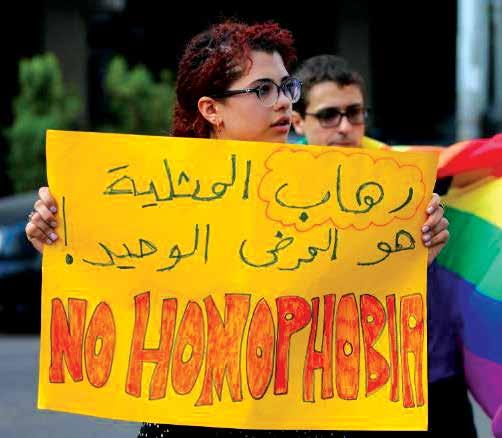
A top court in Lebanon says homosexuality is not a crime.
Bulgarian courts recognise the marriage of a same-sex couple.
Romania’s Constitutional Court affirms the right of residence of same-sex married couples if one of the spouses is an EU citizen.
Bermuda’s courts rule the government ban on same-sex marriages is illegal.
Trinidad and Tobago’s judiciary strikes down the criminalisation of homosexuality.
And in 2017:
The European Court of Justice ruled that EU countries may not obstruct the freedom
Lesbians and Gays in their racial community, compared to 43% of African-Americans and 27% of whites.
Discrimination against Transgender people in racial communities: Majorities of African-Americans (58%) and AsianAmericans (64%) and significant numbers of Latinxs (49%) and whites (47%) say there is “a lot” of discrimination against Transgender people in their racial community. Racial tensions in the LGBT movement: Majorities of African-American (53%) and Latinx (50%) millennials believe that the issues confronting LGBT individuals in communities of color are very different than the issues being promoted by mainstream organizations. In contrast, the majority of Asian-American (54%) and white (58%) millennials believe that all LGBT individuals benefit when mainstream LGBT organizations fight for basic rights.
of residence of an EU citizen by refusing to grant residence rights to their non-EU same-sex partner.
The UK Supreme Court declared that the discrimination against same-sex couples in pensions rights needs to end immediately.
Courts around the world are now playing an important role in protecting LGBTQ rights.
Earlier this year, Bermuda was the first nation to overturn its own marriage equality law. The island’s courts saw sense and restored the legality of same-sex marriage.
In Trinidad and Tobago, judges struck down a law outlawing “buggery,” and in Lebanon the courts declared that homosexuality is not a crime. Both judgments look set to have a wider impact in the Caribbean and in the Middle East, respectively.
Judges are now playing an important and increasing role in the battle for LGBTQ+ equality. They are showing leadership where politicians too often display weakness and cowardice.
The courts are fast becoming our friends and allies. Long may that continue.

LOS ANGELES (August 21, 2018) – A new report supported by the Williams Institute at the UCLA School of Law finds that transgender-inclusive policies and support systems on college campuses provide transgender students a greater sense of belonging and more positive perceptions of the campus environment.
The report reviews previous research on the experiences of transgender students and presents new findings from interviews, surveys, and focus groups conducted with transgender students.
“The majority of transgender students arrive at college having endured harassment and bullying in secondary school, which research shows ha[s] a negative impact on their academic performance and mental health. This cycle may be compounded by further adverse treatment and institutional invisibility at college,” said author Abbie E. Goldberg, former visiting scholar at the Williams Institute at the UCLA School of Law. “However,
through relatively small changes, faculty and administrators can make a world of difference in the lives of transgender young adults.”
The current research focused on the institutional structures and interpersonal interactions at colleges and universities that either enforce biases or serve as sources of support for transgender students. The report concludes with ten recommendations to institutions of higher education on how to create more transgender-inclusive campus communities.
The key recommendations are:
• Colleges and universities should explicitly include gender identity and expression in their nondiscrimination policies.
• College curricula should address gender identity and specifically transgender identities and experiences.
• Students should be provided with education/training to enhance their understanding and acceptance of gender diversity.
• Faculty/staff should be exposed to
mandatory training on gender identity issues.
• Students should be able to list their preferred name on campus records, and alternatives to male/female should be provided.
• All university literature and publications should use gender-inclusive language.
• Gender-inclusive or single-stall restrooms should be readily available on campus.
• Universities should provide trans-inclusive/trans-accommodating housing options.
• Counseling and health services staff should receive training on trans-inclusive and trans-affirming practices, and health insurance coverage should be inclusive of trans students.
• Trans-specific spaces and/or groups should be created with sufficient resources to support programming and events.
“A growing body of research indicates that gender, including gender identity, expression, and gender norms, plays a key
role in academic, health, and economic outcomes,” said Kerith J. Conron, the Blachford-Cooper Distinguished Scholar and Research Director at the Williams Institute. “Colleges should engage students and faculty in conversations about gender and examine policies, including those related to information systems, through a comprehensive gender lens. This would have the potential to improve campus safety and promote academic success for all students.”
Read the report [at https://williamsinstitute. law.ucla.edu/wp-content/uploads/1808-TransHigher-Ed.pdf].
The Williams Institute at the UCLA School of Law, a think tank on sexual orientation and gender identity law and public policy, is dedicated to conducting rigorous, independent research with real-world relevance.
Courtesy of the Williams Institute
case R.G. & G.R. Harris Funeral Homes, Inc. v. EEOC
The case revolves around Aimee Stephens, who worked for seven years at Michigan’s R.G. & G.R. Harris Funeral Homes before getting sacked when she came out as Trans. Stephens complained to the Equal Employment Opportunity Commission (EEOC), the federal agency charged with enforcing civil rights laws in the workplace, but her former employer refused arbitration, setting off a court battle.
At issue is the meaning of Title VII of the federal Civil Rights Act of 1967. The EEOC says the law’s ban on discrimination on account of sex protects gender identity.
Stephens’s employer, Thomas Rost, says it does not. Rost, who is represented by the right-wing Alliance Defending Freedom, also alleges that his First Amendment religious rights are compromised by employing Stephens, who he persists in describing as a “cross-dresser” instead of a Transgender woman.
Although the trial court found for the employer, the US Court of Appeals for the 6th Circuit held that Title VII’s prohibition of sex discrimination does, indeed, apply to Transgender individuals and that the funeral home owners’ religious objections did not protect them from liability.
On behalf of the court, Judge Karen Nelson Moore wrote that “discrimination against employees, either because of their failure to conform to sex stereotypes or their transgender and transitioning status, is illegal under Title VII.
“The unrefuted facts show that the

Funeral Home fired Stephens because she refused to abide by her employer’s stereotypical conception of her sex, and therefore the EEOC is entitled to summary judgment as to its unlawful-termination claim.”
On Rost’s “religious freedom” claims, the court ruled that “Rost proclaims ‘that God has called him to serve grieving people’ and ‘that his purpose in life is to minister to the grieving.’
“[However] the Funeral Home is not affiliated with a church; it does not claim to have a religious purpose in its articles of incorporation; it is open every day, including Christian holidays; and it serves clients of all faiths.”
The Religious Freedom Restoration Act – a federal law cited by Rost – “provides the Funeral Home with no relief because continuing to employ Stephens would not, as a matter of law, substantially burden Rost’s

religious exercise, and even if it did, the EEOC has shown that enforcing Title VII here is the least restrictive means of furthering its compelling interest in combating and eradicating sex discrimination.”
The brief filed by Moore’s group revisits the “religious freedom” claim rejected by the 6th Circuit.
“Religious liberty is an unalienable right given by God. The courts cannot force the funeral home owners in this case to surrender that right,” Foundation President Kayla Moore said in a statement.
Foundation Senior Counsel John Eidsmoe added, “By allowing a funeral director to cross-dress, the 6th Circuit forgot about the rights of the deceased’s family members, who often want a funeral to be conducted in accordance with their religious beliefs or the religious beliefs of the deceased. When saying goodbye to a loved
one, family members should not have to face an additional issue that could cause tension.”
In October 2016, the US Supreme Court had granted certiorari to consider whether Title IX – another federal civil rights law covering schools – required public schools to allow Trans students to use genderappropriate restrooms.
When the Trump administration came to power in 2017, it reversed the Obama administration guidelines, and told schools that they may segregate students based on the sex they were assigned at birth rather than their gender identities.
At that time, the Supreme Court declined to hear cases on bathroom laws. Now, however, the Supreme Court, with a potentially enlarged right-wing majority, is being asked to consider the rights of Transgender Americans in the workplace instead of in schools.