LGBTQ+MONEY

by Josephine Baird & Nate Gowdy
by Finbarr Toesland Special to the SGN
It’s no secret that LGBTQ+ people face a range of financial challenges that heterosexual people simply don’t need to contend with. Less discussed are the effects of financial discrimination on building LGBTQ+ generational wealth. The stereotypical view of a wealthy Gay couple with no children and a sizable disposable income is just that — a stereotype.

by Janice Athill SGN Contributing Writer
by Renee Raketty SGN Contributing Writer
Twelve years ago, I purchased a beautiful lakefront condo in Seattle. However, my first home purchase turned out to be a real roller coaster ride, full of ups and downs. The developer went bankrupt, leaving the project unfinished, and the bank that financed the project was taken over by the FDIC. These turned out to be just the beginning of a series of unfortunate circumstances that — at one point — reduced me to tears.
Today, I’m about to cash out on that investment and refinance at historically low rates.
The truth is that real estate in Washington state is one of the best investments you can make and may actually save you money in rent over time. According to the state’s Office of Financial Management, the medium home price in 2020 was $452,400, an 80.7% increase over 2009 values. A median-priced home during the third quarter of 2020 in Washington sold 18.5% higher than a year earlier, according to an analysis from the Center for Real Estate Research at the University of Washington.

Building equity, generating wealth
A real estate transaction is one of the biggest decisions a household can make — fraught with potential complications — but
You might think that, from the end of slavery to now, the racial wealth gap would have decreased but in actuality, to this day, white Americans have an annual income substantially higher than Black Americans. The median household income (as of 2018), when you add savings and assets and subtract debt, is $171,000 for whites and $17,000 for Blacks.
Why is this gap still so large? Everything goes back to slavery.
When Special Field Order No. 15 was issued by Union Gen. William T. Sherman in January 1865, America had the opportunity to become a different place. This order seized roughly 400,000 acres of land, from Charleston, South Carolina, 245 miles south to Jacksonville, Florida. This land was intended for newly emancipated slaves.
President Lincoln signed the bill that made these plans official. However, a few weeks later he was murdered, and his successor, Andrew Johnson — who complained about discrimination against whites, “in favor of the negro” — quickly backtracked on these plans, evicting thousands of slaves whose families had spent hundreds of years creating wealth for slave owners.
This mindset has prevailed throughout history. The moment equal rights become widely discussed in favor of Blacks, the backlash from whites always comes: “What about our rights?” This is something we have seen again recently in response to the Black Lives Matter movement, with some whites proclaiming, “All Lives Matter” — disregarding the fact that not all lives are equally in danger.
White Americans have had a 300-year head start in acquiring and building wealth, with compounding interest as a benefit they have been able to take advantage of that has contributed exponentially to the growth of the wealth gap.
Furthermore, the US government has allowed Blacks to be excluded from one of the most lucrative paths for compounding interest (outside of the stock market): the real estate market. In this century, more than half of middle-class wealth has been acquired through homeownership. This has determined the jobs you can access, your
also a common and proven strategy to build wealth.
Danny Perez, a real estate broker at Coldwell Banker Bain, moved to Seattle
The truth is that real estate in Washington state is one of the best investments you can make and may actually save you money in rent over time.
from Dallas, Texas, in 2016 with his husband. He has helped many same-sex couples buy their first home. He says that buying a home is the best way to begin investing money in something that will gain value over time.
“Renters are basically paying their landlord’s mortgage for them, and the landlord is the one that is building equity in the property that the renter occupies. If someone is in a position to buy a home and live there for at least a few years, they can slowly begin to build equity in the home,” explained Perez.

In 1968 housing discrimination was outlawed, but that doesn’t mean it stopped. Real estate agents still went out of their way to keep Blacks out of white neighborhoods, and years of discrimination left a huge homeownership gap that the government realized it could take advantage of.
members of their families, who will then ask for help financially, and of course the graduates will give it. White graduates, on the other hand, are more likely following in their families’ footsteps, and are not burdened by the obligation of helping them survive.
safety, and the quality of your children’s education.
When Franklin Roosevelt signed the New Deal during the Great Depression, which gave mortgage credit to the American people, the Federal Housing Administration (FHA) wouldn’t approve mortgages in “high-risk areas,” and the way the risk was determined was by race. Redlining — by which the FHA would outline areas they wouldn’t provide mortgages for, which, of course, were those with more Black families — made sure that Blacks didn’t have access to any of the benefits of homeownership afforded to whites. This, coupled with being paid less than their white counterparts for the same work, has resulted in Blacks making far less money annually and being far more likely to be unemployed.
This racism became justification for more racism. It became widely believed that Black families would lower property values, so real estate agents kept them out of “white neighborhoods.”\
In the ’90s, the government made a push to open up the mortgage market with subprime loans, targeting Black churches. Banks made agreements with pastors to give donations for each parishioner who got a mortgage.
These loans would start out cheap and become much more expensive over time, especially for those with bad credit. Yet, one in five borrowers with good credit would only be offered subprime loans, despite having an 800+ credit score. This irresponsible lending fueled by greed led to the stock market and housing crash of 2008, as well as the Great Recession, which cost Black communities 53% of their wealth.
For a long time, it was thought the wealth gap was correlated to a gap in education. However, Black women have become the most educated group of people in our country — and that still barely lowers the wealth gap. In fact, a white college graduate will have a dramatic increase of wealth over a couple of decades, while contemporaneous Black college graduates will see their wealth decrease.
The primary reason for this is how they spend their money. Black college graduates have often been the most successful
So how do you close this huge wealth gap between Blacks and whites? Even the term sends ripples of disgust and dismay through white communities, who act out what Dr. Martin Luther King Jr. stated: “Whenever the issue of compensatory treatment for the Negro is raised, some of our friends’ recoil in horror. The Negro should be granted equality, they agree, but he should ask nothing more. On the surface, this appears reasonable, but it is not realistic.”
He goes on to say, “A society that has done something special against the Negro for hundreds of years must now do something special for the Negro.”
And that special thing would be reparations.
It would be the fastest way to fight back against government policy that keeps perpetuating the racial wealth gap, and yet the Black community doesn’t push for it. Black men earn $0.87 for every dollar earned by a white man, and so equal pay for equal work, equal rights, and fair treatment is all that has truly been asked of our country. But still, when these topics become widely discussed, whites prove their racism and desire to be superior with the same backlash, “What about our rights?”
In reality, the “American Dream”— buying a home, getting married, having kids, finding a good job, and investing in a 401(k) — is out of reach for many LGBTQ+ people, according to a survey by TD Ameritrade. Almost two-thirds of LGBTQ+ millennials say they are unlikely to achieve these goals by age 40, compared to fewer than half of straight millennials. The same survey found that while the average annual income for a straight household is $79,400, the average LGBTQ+ household earns just $66,200 a year.
LGBTQ+ people are being left out of generational wealth for many reasons, including family rejection, systematic barriers, and a lack of financial education. With almost half of LGBTQ+ adults saying they have been excluded by a family member or close friend as a result of their sexual orientation or gender identity, according to a study by the Pew Research Center, a lack of familial financial support is a common problem for many in the community.
This combination of unique financial barriers that LGBTQ+ people face is what has led to generational wealth gap. It’s a problem that will only affect more Queer people if we don’t address it now.
Legacy financial exclusion
At every stage of life, it’s not uncommon for LGBTQ+ people to encounter financial challenges that their heterosexual counterparts won’t face. Being kicked out of their homes as teens due to unaccepting parents, not receiving financial support from family for college, being removed from an inheritance — the financial cost of being LGBTQ+ can be substantial.
With the average inheritance reaching close to $177,000 according to an HSBC survey, and Cerulli Associates forecasting that up to $68 trillion will trickle down to younger generations within 25 years, LGBTQ+ heirs could collectively lose trillions through inheritance exclusion.
“Even much smaller amounts could help folks pay off debt, pay off a home, send their own kids to college, and help them with their own retirement. Many LGBTQ+ kids aren’t getting these benefits,” explains John Auten-Schneider, the co-owner of The Debt Free Guys blog and host of the Queer Money podcast, a leading blog and podcast for the LGBTQ+ community he runs with his husband, David.
Raising a deposit for a house or apartment can be a difficult task for all people, but without financial support from family, many would not be able to fund a deposit. And just because David and John are LGBTQ+ financial experts doesn’t mean they don’t deal with many of the same challenges that impact other members of the community. For example, when David’s parents pass away, David’s sister will likely inherit upwards of $1,000,000. Yet, David says, he won’t receive any of this money, solely because he’s Gay. “His parents have every right to do with their money what they want,” says John, “but it’s a particular disappointment that they’ll do this only because he’s gay. This, of course, means we need to plan differently for our retirement than his sister does.”.
Younger LGBTQ+ people also face challenges directly related to their sexuality or gender identity. A disproportionately high number of young people experiencing homelessness identify as members of the LGBTQ+ community. According to research from the Williams Institute, between 20% and 45% of homeless youth identify as LGBTQ+. Lacking access to basic housing or financial support from family can set up a young person up for economic disadvantage before they even graduate from high school.
LGBTQ+ students also shoulder a larger student debt burden than their straight peers, to the tune of an extra $16,000. “This has been attributed, in part, to LGBTQ+ college students assuming more debt simply to leave hostile home lives. In some

LGBTQ+ people are being left out of generational wealth for many reasons, including family rejection, systematic barriers, and a lack of financial education.
A lack of familial financial support is a common problem for many in the community.
cases, parents may forgo helping their queer children in favor of helping their straight children,” explains John.
Knowledge is power
At the start of 2020, Michigan-based Lexa VanDamme was at her financial rock bottom. Stuck at work after a 70-plushour work week, with no money in her bank account, bills due the next day, and a broken-down car, she decided to make a change. “I realized that I needed to face my financial situation,” says VanDamme. “I dove deep into the online world of personal finance to learn about budgeting, debt payoff methods, saving, and investing.”
After her crash course in finance, VanDamme refinanced her credit card debt into a lower-rate personal loan, created a workable budget, and started a side hustle to make extra income. There were a few bumps on her journey: “I actually cycled back into credit card debt three different times. I would pay it off, then eventually max it out a few months later,” says VanDamme. Still, she managed to pay off her debt by following the financial rules she had set for herself.
While trying to learn about personal finance on her own, VanDamme realized there was a need for accessible and relatable content that appealed to a wide range of people. She decided to create the Avocado Toast Budget (ATB). Starting out as a blog just over a year ago, the ATB now counts more than 400,000 followers on Tiktok.
“For the longest time, the loudest voices in the personal finance community were cis, straight white males and, as a queer woman, I wanted to share information and tips that were often overlooked by those creators,” says VanDamme.
Like many LGBTQ+ people, after spending so long hiding who she really was, she wanted to live as true to herself and be as free as possible. “This led to me ignoring my spending habits and being stuck in the paycheck-to-paycheck cycle. Airing my financial dirty laundry brought up similar feelings of anxiety and concern I felt when first coming out. How would people react? What would they think?” VanDamme said.
There is already a heavy stigma around talking about personal finances, especially when you may be struggling financially.
“Since queer people often spend our lives fighting for the world to accept us and our queerness, we may be less apt to talk about our financial insecurities and struggles,” says VanDamme.
Genuine representation goes beyond just diversifying the financial content creators who receive media platforms; the advice given by these experts also needs to be fully inclusive. “Advice tended to ignore how systems of oppression affect people of color, women, the LGBTQ+ community, and more. We know statistically that it’s easier for some to build wealth than others,” she adds.
VanDamme has an ongoing series on Instagram focused on the intersectional nature of many financial issues. The series helps shed some light on the economic realities that often contribute to minoritycommunity challenges. From financial inequality that disproportionately impacts disabled people to wealth inequity and racism and the cycle of poverty, VanDamme works to educate her audience on pressing topics that matter to them.
“It’s especially important to talk about the financial challenges that trans people in our community face. This includes increased reports of lower wages, limited and more expensive housing options, and twice the rate of unemployment. This heavily impacts their ability to build wealth,” she explains.
Intersectional challenges
While being LGBTQ+ can underpin unique money issues, Queer people of color and Queer women often experience additional difficulties around financial matters.
In addition to the financial barriers faced by LGBTQ+ people, Queer people of color also face a racial wealth gap. Employment discrimination, systematic inequalities, and disparities in financial education all contribute to this unequal financial playing field. According to research from the Federal Reserve, the average white family’s wealth is eight times higher than that of an average Black family.
The gender pay gap also contributes to excluding women from building generational wealth, according to the latest statistics compiled by Pew Research, which show that women earned 84% of what men earned in 2020.
Carmen Perez, creator of Make Real Cents, a personal finance blog dedicated to helping people achieve financial independence, believes it’s important to have experts who are more representative of the people they’re speaking to. “I heard a quote a while ago: ‘You can’t be what you can’t see.’ I think that’s really important, because eventually, if you don’t have a model to follow, either you have to be the first, or it’s never going to happen,” she says.
As a woman of color and Lesbian, Perez knows firsthand how important it is to address the absence of representation in financial education. “It’s definitely one of the things we have to step back and look at in the LGBT community,” says Perez. “There’s a compounding effect, because not only am I part of the LGBT community as a lesbian but I’m also a minority, and I’m also a woman, and there’s a lot of hurdles up against a lot of folks in this space,” she adds.
With more than 60,000 people following her Make Real Cents account, Perez is playing a part in democratizing access to finance. There, she does everything from break down the cost of credit to explain 401(k) company matches with easy-to-read graphics and Insta stories. Her methods are a world away from the complexity of some traditional financial advisors and tools.
“Millennials are starting to change the money game, because we’re delivering advice in a way that isn’t super technical. It can be so overwhelming to watch CNBC, with all these screens and tickers that don’t mean anything to you personally,” says Perez.
Increased representation in the finance space means a light can be shone on vital issues, resulting in deeper conversations that make money less taboo. “We’re finding instances where people who have historically been locked out of the finance industry, by design, are speaking up — unlike some traditional financial advisors that give out all this jargon and talk in all these terms that many may not understand,” says Perez.
Despite the long-standing barriers LGBTQ+ people face in gaining access to financial education and financial services, LGBTQ+ personal finance content creators now offer a way for many to improve their financial literacy in more convenient ways than ever before. While investing early and regularly is one of the most effective ways to secure a financially comfortable retirement, it’s never too late to build wealth and support for the next generation of LGBTQ+ people.
“[You can] create legacy wealth within the LGBTQ+ community by setting up your estate plan to donate to LGBTQ+ causes that will help homeless youth and [by] giving to local, younger LGBTQ+ folks you know personally,” adds John.
Negotiating the LGBTQ+ generational wealth gap is no small feat. But continuing the discussion around both financial literacy and taking steps to combat systematic financial issues can go a long way to address the financial challenges impacting the LGBTQ+ community.
“The stronger we are as LGBTQ+ individuals and allies, including our financial strength, the stronger we are as a community,” concludes John.
Finbarr Toesland is an award-winning journalist committed to illuminating vital LGBTQ+ stories and underreported issues. His journalism has been published by NBC News, BBC, Reuters, VICE, the HuffPost, and The Telegraph

by Matthew J. Petersen, CTFA, AIF® Special to the SGN
Social justice advocacy and activism of all stripes is nothing new in the United States. Over the last year, we have seen some of the strongest pushes for social justice in decades gain traction and score results throughout our nation.
The continued and growing dialogue for impactful change has stretched beyond the visible and organized advocacy covered in national media outlets. People are starting to look for ways to effect global change in many different aspects of their lives. What has grown is an expectation that how we spend our money should reflect our values.
Socially responsible and sustainable investing is nothing new. It has been around much longer than media headlines lead us to believe. The difference now is changes in technology, social and cultural environments, and the expectation that these options need to be available to increase investor participation.
Socially responsible investing (SRI) and sustainability investing (SI) have until recently been relative outsiders n the investment landscape. These options were primarily utilized by organizations that have a social cause and/or mandate to exclude certain exposures to companies that directly conflict with the mission or belief structure of the organization. An example of this would be the American Cancer Society not investing in tobacco companies (American Cancer Society, INC, 2019). Excluding companies from an index fund was initially very costly, and it brought with it the risk of underperformance when factoring in the overall net cost to operate the investment.
In many cases, the minimum required amount to invest in this way was a significant barrier for the retail investor. As technology improved, though, the cost of operating specialized investments that consider different kinds of social and sustainable environmental exclusions began to decrease, which resulted in the expansion of such options. In addition, as interest in social and environmental impacts grew beyond organizationally specific exclusions, a more unified and far-reaching scoring system for companies needed to be developed.
To spare the reader from parsing the lengthy history of this development, I’ll fast forward to the formation of environmental, social, and governance (ESG) investing.
The creation of an ESG scoring system did not immediately result in broad options for the average investor. Most likely, the term ESG was not known by the average person in 2006. Asset inflow was minuscule compared to traditional investing, and in some years, there were more outflows from than inflows into ESG-related investments. (In the world of investing, inflows are crucial to grow and maintain a voice within the financial sector.)
People are starting to look for ways to effect global change in many different aspects of their lives. What has grown is an expectation that how we spend our money should reflect our values.
In 2019, ESG investing made a giant step to the mainstream, with an inflow of $20.6 billion (compared to $5.5 billion in 2018) (Atkins, 2020). This momentum increased in 2020, with over $51 billion in net inflows, and we are seeing the momentum continue in 2021 (Jon Hale, 2021). It is safe to say that the financial markets have taken note that people want to invest based on their values, and that the demand for options is not going away anytime soon.
If you have made it this far in the article, then you most likely have some interest in value-based investing that utilizes ESG criteria. If so, there are some things you should know. There are two routes you can take when looking to invest with ESG criteria: on your own or with a financial advisor.
Investing in ESG on your own
Unfortunately, the financial industry is not as transparent as we would all like — and that’s coming from someone who works in the industry. So there are certain things to keep in mind when looking to put
your hard-earned money into a vehicle that will make it grow.
As with most things, cost is important. We have seen the rollback of most major brokerage houses’ trading costs (Schwab, TD Ameritrade, Fidelity, etc.), but that does not always apply. When researching the right investment vehicle, be sure to check if there are trading costs associated with investing in a mutual fund or ETF (exchange-traded fund).
To elaborate, all investments have internal costs called “expense ratios.” These pay the people that manage and operate the fund. You do not see these expenses, but they are taken out of the net performance of the investment. The higher the expense ratio, the lower the net return you will receive, compared to a lower-cost counterpart. You can research expense ratios of investments using online tools, such as Morningstar, or on the investments’ websites.
The number of holdings in an investment is important, too. If the fund has less than 100 holdings, it might be riskier and less diversified than other options out there.
The same holds true with the fund’s inception. If it has been around for less than three years, then it might not have the track record and longevity that is appropriate for your investment needs.
There are other factors to keep in mind, and I highly recommend that if you choose to invest on your own that you take the time to do the research and fully understand all the risks involved with capital market investing.
In my opinion, the two most important factors to ensure that your financial advisor is aligned with your best interests are being a fiduciary and being a fee-only advisor.
If you are trusting a professional with your hard-earned money, they should be required to be a fiduciary, that is, act in your best interest at all times. Some financial advisors have the ability to choose when they operate under a fiduciary standard or a suitability standard, and I strongly recommend only working with someone that always has to act as a fiduciary.
A fee-only advisor is different than a fee-based one. A fee-only advisor can only assess a fee based on the assets that they manage, and they should not be charging commission or receiving financial kickbacks from companies to provide their
product and/or services.
Not all advisors have familiarity and experience with ESG investing. Entrusting someone with your money requires a lot of trust and confidence, so you should take the time to determine if they have the experience in the type of investing that reflects your values.
The initial dialogue with an advisor to determine if the relationship is the correct fit should be free and without pressure. If the initial consultations cost money or you feel like you’re pressured to decide in that moment, that is a good indication you should explore other options.
Investment activism is nothing new. What we have seen with the rise of ESG investing over the last few years, however, is that a new activist investor is emerging, one looking to put their money into companies that reflect the changes they want to see in this world, and they wish to do this with an expectation of accountability.
You now have the option to make significant changes with your investments, and corporate America has taken notice.
Works cited:
• American Cancer Society, INC. (2019). Financial Statements. Retrieved from https://www.cancer.org/content/dam/ cancer-org/online-documents/en/pdf/ policies/2019-Consolidated-FinancialStatements.pdf
• Atkins, B. (2020, June 8). Demystifying ESG: Its History & Current Status. Retrieved from www.forbes.com: https://www.forbes.com/sites/betsyatkins/2020/06/08/demystifying-esgits-history--current-status/?sh=312ad0912cdd
• Jon Hale, P. C. (2021, January 28). A Broken Record: Flows for U.S. Sustainable Funds Again Reach New Heights. Retrieved from www.morningstar. com: https://www.morningstar.com/ articles/1019195/a-broken-record-flowsfor-us-sustainable-funds-again-reach-newheights
Matthew Petersen is senior wealth advisor and chief compliance officer at Petersen Hastings, an independent feeonly advisory firm that provides fiduciarycentered advice. Those interested in engaging with a financial advisor regarding ESG investing can contact Petersen Hastings at petersenhastings. com, or Matthew Petersen directly at MatthewP@petersenhastings.com.
continued from page 4
“Usually, the longer they stay, the more likely they are going to increase the amount of money they will get, if and when they do decide to sell. Renting tends to be better for someone who needs to remain relatively mobile, especially if they are in a career that may require them to relocate often.”
Jeanne Sickel, a mortgage loan originator at Homebridge Financial Services in Seattle, agrees. She has been helping samesex couples finance homes for over 10 years. “I absolutely love it when I can help a Gay couple buy their first home, because I know it will provide stability for a long time,” said Sickel. “I might be biased, but I think buying a home is the best thing you can do… People don’t really do the math, but if you pay $2,200 in rent a month, in three years, you’re out $79,200. You can buy a house with as little as 3% down, and then you can stop time — meaning your payment pretty much stays the same going forward. Your house increases in value, and you usually get paid more over time. So, living in your home becomes more affordable.”
In addition to cost savings, real estate can be a stepping stone to growing your net worth. Sickel shared her own experience buying her first home with her wife and how they turned it into an investment property, generating wealth for her family.
“We bought our first home in 2010, and now we rent it and cash flows. We used the equity growth to buy our second home, and now that has gained equity too,” she said. “If I continued to rent, I’d be paying the same as I do in my mortgage payment, not have a tax write-off, be subject to further rent increases, and, most importantly, wouldn’t have gained hundreds of thousands in equity.”
Financing a home
Unfortunately, housing affordability in Washington is falling as home prices continue to rise. The Center for Real Estate Research found that housing affordability fell for all buyers, including for first-time buyers, during the first quarter of 2021 over the previous quarter. The least affordable county is San Juan County, while Lincoln County is the most affordable. Thirty-two counties, especially in the central Puget Sound area, present affordability issues for newcomers.
Nonetheless, Sickel warned not to be disillusioned by the statistics.
“I love seeing first-time home buyers or people who didn’t think they could buy a home buy a home. I look at this as a foothold to their financial future,” she said. “This year, I helped a family get into their first home with 5% down. It was really tough in this competitive market, but we did it. They never thought they could do this. I know it will change their young daughter’s life. Her parents created stability and an investment that they can use as she gets older if they need to.”
The Washington State Housing Finance Commission (WSHFC) offers assistance for first-time home buyers who earn up to $160,000 a year. Many local municipalities also have their own programs. The City of Seattle’s Office of Housing provides downpayment assistance, up to a maximum of $55,000, for households at or below 80% of area median income making open-market purchases.
“Down-payment assistance is our most powerful tool for helping home buyers. Many people can afford a mortgage payment but don’t have a lot of savings or family to provide that kind of gift. Our down-payment assistance can bridge that gap,” said Lisa DeBrock, director of homeownership at the WSHFC. “Homeownership is increasingly out of reach for families in Washington as home prices keep going up. But it is still possible for those with moderate incomes to buy a home with a little help.”
DeBrock suggests working with a loan officer familiar with their programs and taking one of their free home buyer education classes. More information can be found at www.heretohome.org.

“Renters
are basically paying their landlord’s mortgage for them, and the landlord is the one that is building equity in the property that the renter occupies. If someone is in a position to buy a home and live there for at least a few years, they can slowly begin to build equity in the home.”
Being ready in a competitive
housing market
Affordability is only one obstacle facing homebuyers in Washington state. Although the rate of sales has yet to eclipse the 2003 high, the seasonally adjusted annual rate of existing home sales rose 7.1% when compared to the first quarter of 2020. Perez described the real estate market in Seattle as “unbelievably fast-moving and competitive.”
According to the state Office of Financial Management, the state’s population grew steadily in 2021, with most of the growth concentrated in larger cities. Despite a drop in migration due to COVID-19, new households moving to Washington continue to be the primary driver behind the growth. Therefore, the market is expected to remain hot for some time to come.
One common mistake new homebuyers make is to approach the market without a real estate agent, he said. “So many buyers today are very-self reliant, and they usually do lots of research on their own. Online tech resources are great tools, but a buyer or seller is making the wisest decision when they work with an agent,” he said.
“By getting help from an agent, a buyer can potentially keep from offering too much for a property. We can point out any red flags. We can help home sellers to potentially see a higher net from the sale, if they take the advice of an agent on how to best prepare and market the property. Ultimately, a real estate agent is the best possible advocate and advisor a buyer or seller can have.
“First-time home buyers may not know that it costs them nothing to enlist the help of an agent, since the agent commission is paid by the seller of a property.”
Perez also advises new clients to first pull their credit reports from all the major credit bureaus and make sure the information is accurate. Your credit score will be used to determine the mortgage rate, and negative items on your report could cost
you a lot of money over the term of your loan. He says to gather bank statements and previous year’s tax returns.
“The first and biggest piece of advice to first-time home buyers is to get their finances in order,” he said. “Ask themselves if they have an adequate down payment. If they plan on getting their down payment as a gift from a family member or if it is tied up in an investment account of some sort, they need to get the process of getting that money into their account.
“All of this is to prepare for that meeting with the mortgage broker... In the current housing market, sellers will expect a buyer to be preapproved, otherwise their offer may not even get a second look.
“If they need help finding a mortgage broker, reach out to friends, family, or a real estate agent for a good referral.”
Sickel added that the “market has been exceptionally competitive over the last several years” and “moves fast.” She believes buyers “need to make a plan on how to make [their] offer more competitive than the next guy.”
“This is where a good realtor and lender team can play a critical role,” she said.
Financing real estate
Sickel says there are several considerations when choosing a lender, but first and foremost, you want a mortgage company with a “good reputation” for closing loans. “If you have a good realtor, they will recommend a good lender, because their sale depends on the lender,” she said. “Then, I’d talk to a few and go with the person who [you] feel the most comfortable with. If you follow the rate, you could be disappointed.
“Remember, the lender is the person who takes you from signing the contract to closing your loan on time. Think of it like a relay race: you want your last runner to be amazing.”
Perez says “big box” banks may not work well for many first-time home buyers because they “will probably not give them the personalized attention and service they will likely need.”
“Big bank mortgages are usually handled by several different departments all working on the same loan,” he said. “It can sometimes be difficult to find the ‘one person’ who has a complete grasp on what’s going on with their file. The same thing goes for online-only mortgage companies.
“Smaller lending institutions tend to have one point of contact for a customer loan and usually can get the process done with fewer or no hiccups along the way.”
Sickel recommends using a local mortgage lender to help streamline the process.
“A lot of people try to use credit unions or out-of-area banks, and they just don’t have the same platform that a real mortgage bank has. In this market, you have to move fast and efficiently, and a ‘first come first serve’ mentality doesn’t work,” she said.
If you’re looking to refinance your home, lower your rate, or cash out your equity to pay down debt, now is the time to meet with a lender, says Sickel. “It’s a great time to refinance — partly because rates are so low, but we’re seeing a lot of appraisal waivers. We can remove mortgage insurance and get a
better rate,” she said. “Not having to do an appraisal is a big lift.
“As far as [those] struggling to pay the mortgage, there are several government agencies or nonprofits around the Seattle area that have programs to help, but talking to a mortgage lender should be the first step to finding out [your] options.”
The values of your lender may be important to some, said Sickel. She encouraged borrowers to ask those questions if that is a concern for them. “The company I work for, Homebridge, has a diversity-and-inclusion advisory board, and one of the topics that came up was how to get loans to marginalized communities,” she said. “They recognized that to make loans to BIPOC and LQBTQ+ communities, you have to hire loan officers from these communities, because loan officers do loans for people in their communities and for people they know.”
Other considerations
When calculating a monthly payment you can afford, Sickel says not to forget to include the annual property tax assessment and to remember that your tax liability can change each year. She says buyers from California often make this mistake.
Unmarried same-sex couples should consider how to hold the title on their property, suggested Sickel. “I bought my first house with my partner — we’re now married — and we chose a 50/50 approach and held it as ‘tenants in common.’ When we bought our second house, we were married, so we held the title as ‘a married couple.’” Sickel offered one last consideration when financing real estate. “When you go to get a loan, the lender gets to know a lot about you, so, make sure you’re comfortable with that lender.”
Getting help
It’s not easy asking for help when you are underwater on your mortgage or are facing foreclosure. However, there are resources available.
The Washington Homeownership Resource Center is a great place to start. It seeks to educate current and future homeowners. Its website offers links and information on a wide variety of topics. Visit www.homeownership-wa.org.
The Washington State Department of Commerce offers free housing counselors and a Foreclosure Fairness Program, which includes civil legal aid and foreclosure mediation. Call 1-877-894-HOME (4663) for more information.
The Washington State Office of the Attorney General has information about protections for homeowners in the face of the COVID-19 pandemic. You can learn more about the CARES Act, which provides protections for homeowners with federally backed loans, and the foreclosure moratorium www.atg.wa.gov/foreclosureand-mortgage-assistance.
The Washington State Department of Financial Institutions has also launched a hotline for homeowners in distress at 1-877-RING-DFI (746-4334). They can help to contact your mortgage servicer and to discuss your options.
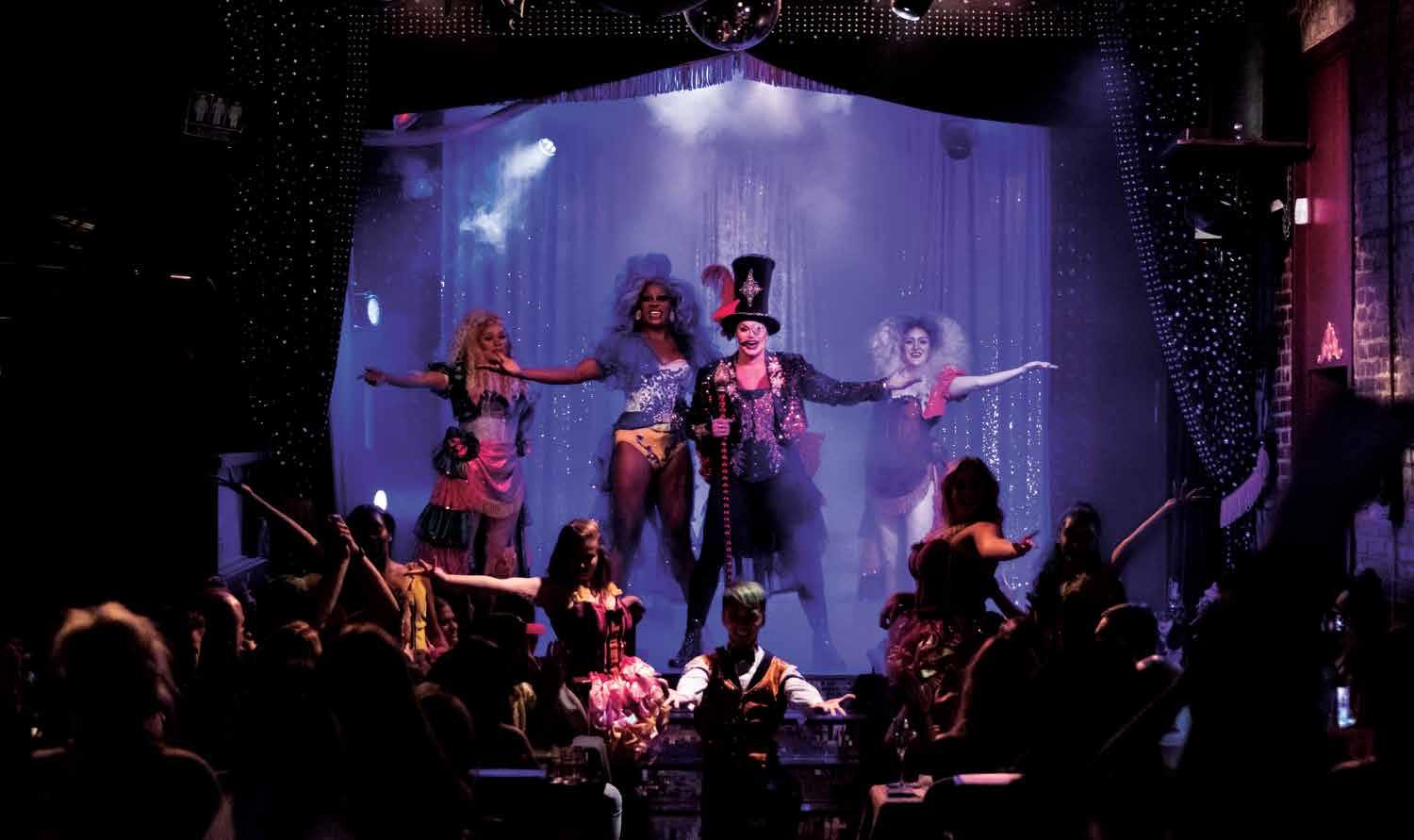
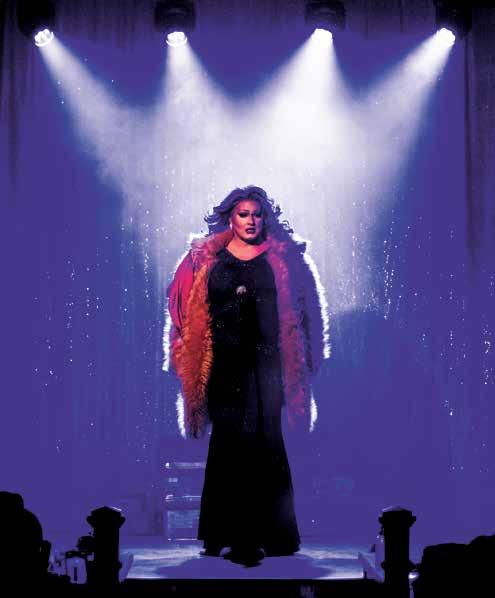
recently dismissed queens claimed to be each making $100 per show.
Issues regarding pay have not only involved regular employees but also guest hosts, such as Benjamin Putnam, aka BenDeLaCreme. Prior to Putnam’s own appearances on the sixth season of RuPaul’s Drag Race and the third season of RuPaul’s Drag Race: All Stars, they co-hosted weekly viewings of Jinkx Monsoon’s fifth-season winning stint on Drag Race in 2013. Putnam had negotiated a fee in advance, specifically linked to drink sales, which offered “the potential to make more from getting butts in the seats.” Unfortunately, Putnam erred in not getting the agreement with Preciado in writing.
The viewings were ultimately a huge success, Putnam said. “Jinkx and I were the only performers on stage most nights, packed out, line around the block, and two weeks in, I got my first paycheck, and it was only my minimum.”
Putnam recalls Preciado had agreed to the financial terms well in advance but claimed his business partner “didn’t agree to it, and he’s the money man, not me. So we aren’t paying that amount.”
Because Putnam was committed and didn’t want to bail on Jinkx, they continued to co-host the weekly events for the “very small fee.” But then came frustrating news: “We were told they couldn’t pay us more, because it was a free event. Two months later, Jinkx and I find out he was charging a cover the entire time. Eladio is a snake.”
“Everyone’s replaceable”
The SGN also spoke with six former “Le Faux” queens who are uninvolved in the recent labor dispute. Each shared examples of alleged mistreatment in the workplace, from Eladio’s repeated refrain of “everyone’s replaceable” to body shaming.
Lily Wicke, aka Fraya Love and a cast member of “Le Faux” from 2013 until the end of 2015, said Preciado liked to use the cast as his personal Barbie dolls. She remembers being “forced into two corsets, forced to perform a full dance Gaga number, fainting, and Preciado not batting an eyelash.”
Brian Peters, well known as Mama Tits and host of “Le Faux” for one year, stresses that the experience taught him a lot about his own limits and boundaries.
“The almost ‘sister wives’ connection of us backstage was like a bunch of beaten children walking on eggshells, avoiding the
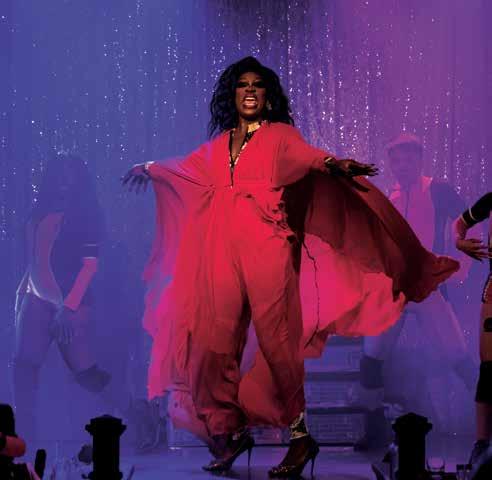
next blowup,” Peters said. “He was verbally abusive and never flinched about underpaying or simply coming up with a reason to dock pay or not pay at all.”
Preciado acknowledges problematic behavior while he was experiencing a divorce about five years ago. “I was difficult to deal with. I was just trying not to fall apart,” he said. He believes his management style has improved since then and credits it to leadership counseling, saying, “I’ve had my moment, but I came back from it.”
That feeling isn’t shared by the six past performers the SGN spoke with on the record. “I didn’t see a large change in him, or at least it wasn’t drastic enough,” Zello said.
Isaac Scott, a “Le Faux” performer of 13 years minus a few short hiatuses, said that between “the shady money issues, the manipulation, the threats, and the way Preciado always tried to make you feel like garbage so you’ll stick around, it’s something I never wish to experience again.”
Scott added: “I worked for him in the restaurant, not just the show, and he does the same things to all his employees, which is
why I left last summer. He was not paying me what he was supposed to, and expected me to tip him out, even though I was running all the breakfast and lunch shifts by myself, as well as dealing with all his vendors, because he didn’t know what he was doing.”
A different perspective
But for others, the workplace environment wasn’t a deal breaker. Brittany Mattox, current “Le Faux” choreographer and a Julia’s employee of 10 years, said, “Every time I’ve had a concern, I’ve gone to Eladio and worked it out.” Although Mattox doesn’t want to speak for the rest of the cast and doesn’t want to discredit what the former employees feel, she does allow that “there have been plenty of times when this type of action has been warranted.” However, she didn’t believe the recent labor dispute was necessarily one of those instances.
According to Mattox, Preciado was open and honest about the pay situation post-lockdown and how it would be less than normal due to limited capacity. She said each employee was informed of the
state of affairs at a company-wide meeting.
“After we returned from the pandemic, there was a different energy and sense of unity. I think that is why this is more hurtful.”
Because she and other non-drag performers weren’t made aware of the walkout, they shared Preciado’s feelings of being blindsided. Mattox chalks up much of the issue to being “communication based.”
Mattox has played a huge role in getting the show running following the six queens’ departures. “We’ve had to rework an entire show, picking up the pieces that are left.” One of the hardest parts for her has been seeing the “bullying and social media slander” directed toward new and old staff. According to her and Preciado, one new cast member even ended up in the hospital due to the mental strain of the alleged bullying.
While this time has been difficult for Mattox and the rest of the crew, she said that “experiencing what this new cast is like is a light. I’m really excited for the community to see these performers shine.”
Following the exodus of its drag lineup en masse, “Le Faux” reopened the evening of Saturday, August, 8, with its revamped cast. A picket protest was initially planned but ultimately canceled.
According to Andrew Scott, aka Queen Andrew, “We as a team (former Julia’s girls) canceled the picket because it was pulling our energy in more ways than necessary. While we understand the importance of public demonstration, we value our mental and emotional health more.”
In light of that, the former employees are now ready to move on from Julia’s and to “let the establishment do what it wants.” Scott added, “We told our story, and that’s all we can do without it becoming overwhelming. At the end of the day, we made the right decision and are thankful we did. Now, it is time to move forward.”
Since their departure, the former Julia’s queens have been booking various events. They have teamed up with the Deluxe Bar and Grill and the First to Give Back Foundation, debuting a weekly brunch show called “Friends with Benedicts.” Not every cast member will perform on a weekly basis; they’ll rotate through to offer more opportunity.
According to Queen Andrew, they are even being paid per performance what they asked for at Julia’s.
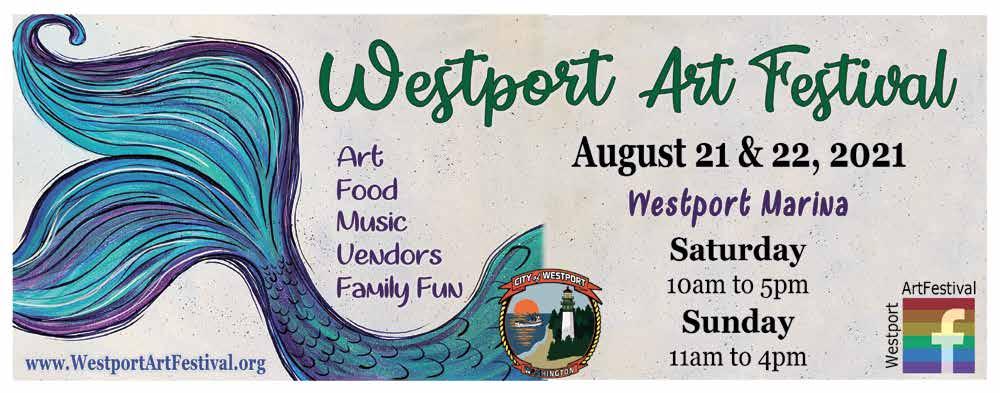








The festival returns August 17-19 at the Triple Door
by Carter Hemion SGN Contributing Writer
This August, What the Funk?! returns with a cast of all BIPOC performers from across the continent putting on shows at the Triple Door and giving classes at the Give Inn.
The festival will showcase 30 performers over three days and is co-produced by Mx. Pucks A’Plenty and Rebecca Mmm Davis. It’s the first time it’s at the Triple Door and is one of the venue’s first all-BIPOC events.
Founder Mx. Pucks A’Plenty discussed the performers, classes, and stories behind the festival, and what makes it different from other burlesque shows. “We’re honored to be [at the Triple Door], but I also think that they are honored to have it there too — there’s definitely a reciprocal feeling that this is good for everyone.” They also mentioned that the venue helped ensure that tickets are accessible, so the festival’s prices are lower than others in the area, from $20 to $35 for each day. Mx. Pucks added, “I have felt really strongly that accessibility isn’t just physical access; it’s also financial access.”
Performances at the Triple Door will feature 30 performers, many of whom are from Seattle. On the third day, there will be a competition for the title of Grand Master Funk, last held by Twirlisha Devine.
The headliners from Seattle are Moscato Extatique and Ms. Briq House. Other headliners are GiGi Holliday (an award-winning performer from Washington, DC) and Samson Night (also known for his work on Broadway and in film performances).
The other performers over the weekend include Pacific Northwest favorites like Willy Nilly, Ava D’Jor, Lola Coquette (who is creating a database of worldwide Latin and Hispanic burlesque performers), and Monday Blues (who performed at the first festival).
What the Funk?! will also bring in nationally known and award-winning guests RedBone, Jeez Loueez, and Foxy Tann. RedBone will emcee the opening night. Jeez Loueez has been known for two years as the world’s number one burlesque performer, and Foxy Tann is a titleholder
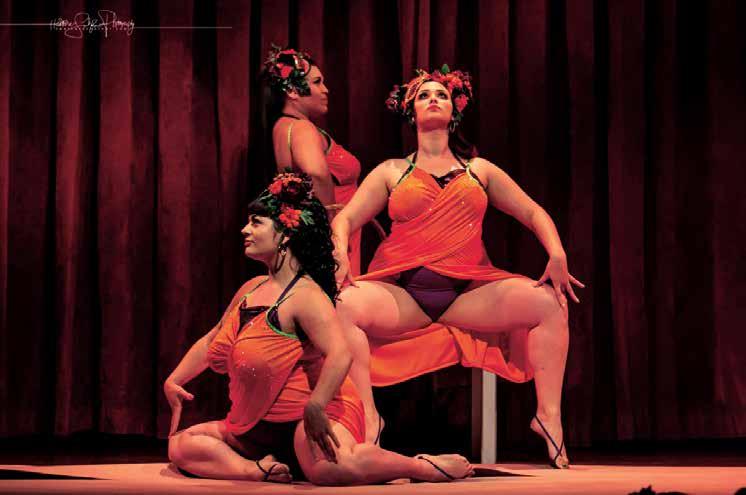
from the 2006 Miss Exotic World Pageant.
As for classes, the Give Inn will host eight workshops with performers on the Friday and Saturday of the festival. The workshops, said Mx. Pucks, are open to anyone, adding, “If you’ve ever thought ‘Oh, I really want to try it,’ this is a really good time to try it.” Classes will cover movement to funk, makeup skills, twerking, and more. Each class runs at 90 minutes and costs $25, and the entire fee will go directly to the burlesque performer teaching it.
The festival’s history
What the Funk?! was created in 2018 by Mx. Pucks A’Plenty. While working on
a classic burlesque project, they were told that their funk songs, “Superstitious” by Stevie Wonder and “Use Me” by Bill Withers, were not appropriate or allowed. Being told that was a catalyst for organizing what is now a three-day festival.
“Especially for people of color, especially for Black folks,” Mx. Pucks said, “there are a lot of memories attached to funk music.”
Funk music can be a soundtrack for Black joy, which Pucks notes is often scrutinized.
In their own life, funk music is reminiscent of family. Mx. Pucks has a challenging relationship with their father and no longer talks with him, but still associates funk music with him.
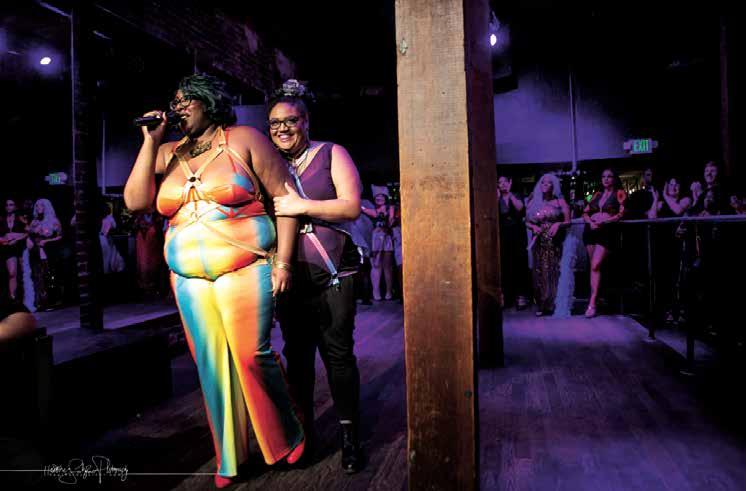
“All the happy memories that I have [of him], like my dad showing up in my life and being present — funk music is the soundtrack of that,” Mx. Pucks said. “It’s the only time that I remember seeing my dad and his brothers, my uncles and stuff being, like, relaxed and not having their guard up. I think about family barbecues.”
Recognizing the importance of funk music in burlesque to them, Mx. Pucks decided to produce What the Funk?!. It began in 2018 as a two-night show at the Rendezvous, with Café au Lait Olé and Rebecca Mmm Davis emceeing and spICE! headlining.
Mx. Pucks then decided it needed to be a full festival, and was approached by Davis to help turn that into a reality. Said Mx. Pucks, Davis “has what I call ‘big auntie energy,’ and so she just kind of wraps you up and she’s like, ‘Here, let me help support what you’re doing.’” Mx. Pucks also worked with other people of color in the community, including artist Lori Collins, who designed the mascot AfroDite.
Reflecting on the festival, they added, “Most people of color don’t want to keep being in the position of making history by being the first or the only. We want to make it so… when [our kids and our kids’ kids] do these amazing things… it’s not this earth-shattering thing. Striving for excellence is exhausting for people of color, especially Black folks.”
What the Funk?! has become important to the community. The festival relies on community support to run and is sponsored by Shunpike. They are still working to reach their fundraising goal and looking for continued support to run the festival. As Mx. Pucks said, “This is an opportunity for folks to put their money where their mouth is in terms of how you’re choosing to show up for your community.”
For tickets and more information, go to www.whatthefunkfest.com. To support the festival, donate at www.poweredbyshunpike. org/c/PBS/a/puckduction.
by Lindsey Anderson SGN Contributing Writer
Making friends as an adult can be hard. There are no recess games to bond over, sharing food is kind of weird, and if you wear a tutu out in public, odds are you’re gonna get some strange looks. Maybe the fear comes from the ways we learn to judge others, for their looks, their interests, how they choose to express themselves, and how they love.
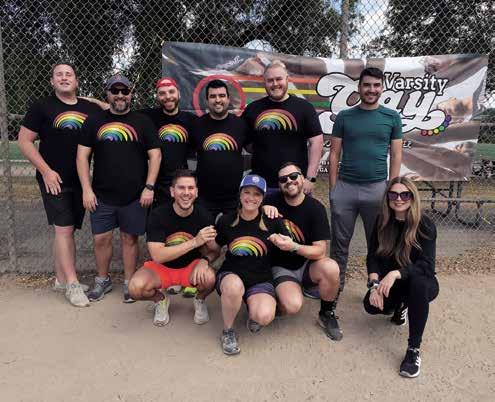
Whatever the reason, one Seattle organization is working to make it a little easier. The Varsity Gay League knows that some of our best friendships and communities are built through play and sports, so it has set out on a mission to create a fun and friendly environment where LGBTQ adults in Seattle can bond over a playground classic: kickball.
“This is another way of fighting ‘the Seattle Freeze’ for some of us,” says Jose Lopez, director of the VGL’s Seattle division. “Many people find long-term friends. I started playing in 2018, and now it’s 2021 and I’m still on the same team. They’ve become really good friends of mine, and it’s through a game you’d play in fourth grade.”
Humble beginnings
Since 2018, the Varsity Gay League has organized a competative kickball league for members of Seattle’s LGBTQ community. It started out with humble beginnings but has quickly grown. “The very first season there were four teams,” said Lopez. “The season we just finished has been our most successful yet — we had 12 teams. Currently, for the one that is going to start next month, we already have 12 teams signed up.”
The Varsity Gay League is a national organization that started in Los Angeles. Down in California, the league is so popular that multiple sports with multiple divisions have been introduced. In Seattle, however, with just 12 teams competing, the kickball scene is much more intimate.
“So far, for us, we just have kickball, [but] we are in the process of bringing indoor volleyball. The hope is to do a winter and fall league,” explained Lopez.
The kickball league currently runs in the spring, summer, and fall, with games on Saturdays and Sundays in the fall. As interest in the league grows, the hope is for volleyball to begin in the winter months.
Weekend games are hosted at Montlake Park. “We’re utilizing Montlake playfield, and that’s through Seattle Parks and Rec. We had really good feedback from players that they really like Montlake: it has good
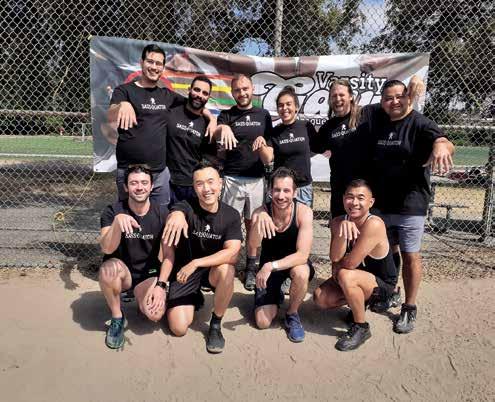
The importance of creating spaces for LGBTQ people to come together is one of the driving reasons behind Varsity Gay Leagues.
parking, it has lots of space, and you have the option of playing on the grass or the softball field. So we are sticking to Montlake for that,” Lopez explained.
The real win is community
The season runs for six weeks, with two games per team on the weekend. At the end of the season, the league hosts a tournament, with two divisions of double-elimination play. While the tournament can get competitive, the goal for most teams is to just have fun and make friends.
“Sometimes folks stay to cheer on other people and just hang out. Or they finish and then they go and socialize. Our sponsor bar is Madison Pub, and if [people] choose to, they go over there, and you see all their posts after the games. They go to the park, they go to the beach, they go to brunch.”
The real win for most participants is just the friends and connections they are able to make. “I talked to people who moved in 2020 — it was stressful for them, they didn’t know anybody, and then they finished the season and they said, ‘I cannot see myself not doing this again.’ The sport is a part of it, but at the end of the day it’s the community aspect,” said Lopez.
The league is open to players of all skill levels, from those who haven’t played kickball since fifth grade to those who have moved from competitive areas like Phoenix and LA and are used to bringing home tournament trophies.
Anyone can make a team or join as a free agent, as long as they are over 18, and preferably vaccinated. Some teams are made up of groups of friends who are interested in getting out for a little physical activity; others are made up entirely of strangers looking to meet new people in Seattle.
This past season, Lopez put together two teams of free agents. “One of the things I implemented this season was to host an

unofficial play day,” Lopez explained, “to bring in those free agents, people who literally just moved to Seattle and don’t know anybody, and give them an opportunity to get to know people, interact with other players from other teams, and maybe find a team. So that worked out well.
“This last season, we had two teams of free agents, because the other teams were full. We gave them opportunities to get to know each other beforehand, and that worked out really well, because by the time the games started, they all knew each other.”
Whether players come in with existing friend groups or are looking to expand their social lives a little, the Varsity Gay Leagues has room for everyone. The league is open to all members of the LGBTQ community and allies, as long as they are willing to have a conversation with league organizers about why they are interested in joining.
“People ask, ‘Why don’t you just open it up to everyone?’” Lopez said. “It’s because those spaces are already out there. There are leagues for everyone, and in those specific places, you can see yourself changing. When you’re there, you’re there just for the sport. But here, you come for the sport and also for the community.”
LGBTQ spaces
The importance of creating spaces for LGBTQ people to come together is one of the driving reasons behind Varsity Gay Leagues.
“As a member of the LGBTQIA+ community, there is a need for these places, for many many reasons,” Lopez said. “You [may] have to be a different person at work, you know, in different spaces. When you go into a league where it’s pretty much [straight], then you have to adapt to that community.
“These spaces are there because, for many of us, this is the space where we
can be the most honest and the most true to ourselves without doing a code switch. These specific leagues are needed everywhere. They’re needed nationwide, and I do believe, based on what I’ve read, that is the reason, especially in LA, why this league started.”
One of the main reasons Lopez believes LGBTQ spaces are vital in cities like Seattle is because many communities can find themselves dwindling under gentrification. While allies are well meaning, they can intrude upon Queer spaces, fetishize certain members of the community, and end up making LGBTQ folks feel unwelcome in the very locations that were made just for them. For this reason, the league is wary of accepting people outside of the LGBTQ community, but is willing to make exceptions.
The experiences players have had in Seattle’s kickball league have been overwhelmingly positive. For those new to Seattle, the league has provided them with opportunities to make new friends and discover parts of the city’s rich LGBTQ community. For long-time residents, the league offers new opportunities to participate in sports without the often overwhelming and toxic heterosexual enviornment.
“If you ever have a chance to go in and experience it, there is a different level of energy. You know that everyone there is a part of our community, and everyone is understanding of who you are and who you want to be, in that space and that moment. It’s so inclusive and you take advantage of that,” said Lopez.
The Seattle Varsity Gay League will be registering teams and free agents until August 20. For more information about joining, visit www.varsitygayleague.com/ seattle.

by Sara Michelle Fetters
SGN Staff Writer
If you took TRON and TRON: Legacy, threw in a dash of Ready Player One, The Truman Show and The Last Starfighter, and then added a gentle dollop of The LEGO Movie before throwing it all into a blender, it’s likely something similar to Free Guy is what would get poured into the glass.
Writers Matt Lieberman (The Christmas Chronicles) and Zak Penn (The Incredible Hulk) have come up with a playful bit of nonsense that pretty much dares the audience not to enjoy themselves. The latest from director Shawn Levy (Real Steel, Night at the Museum) might be the most unexpectedly entertaining movie I’ve seen so far this year. A freewheeling yarn of identity filled with charming moments, well-staged action sequences, and a bevy of strong performances from Jodie Comer, Lil Rel Howery, Joe Keery, and Utkarsh Ambudkar, this one is a great deal of goofy fun. I had a blast, and even Ryan Reynolds at his most Deadpool-esque Ryan Reynolds-ness wasn’t enough to erase the happiness I felt for most of this one’s nicely paced 115 minutes.
I’m struck by how gosh-darn nice the film is. Lieberman and Penn’s story is a celebration of goodness, its main character a champion of hopeful resilience who refuses to back down at any roadblock, no matter
how massive. This is an amiable, oddly lifeaffirming journey that only grows in happy intimacy as it goes along, and while there are few shocks as far as the outcome is concerned, that still didn’t make getting to the destination any less enjoyable.
Guy (Reynolds) is a teller at Free City’s largest bank. He’s best friends with security guard Buddy (Howery). He puts on the same blue shirt every morning and has the same cup of coffee at the start of each day. But while he and Buddy are lying on the floor having a pleasant conversation during his bank’s latest robbery — which happen three or four times during business hours — Guy begins to wonder if there isn’t more to life.
Enter Millie (Comer). She’s the girl of Guy’s dreams, and even though she’s wearing sunglasses — he and the rest of Free City’s residents aren’t supposed to converse with the sunglasses people — he’s sure that if the two of them were to meet, sparks would fly. He’s so sure of himself that he decides today is the day he’s going to take a chance and try and say hello to her. Heck, he’ll even get himself a pair of sunglasses if that will speed things up between them.
The trick is that Guy isn’t a “guy” at all. He’s an NPC (a “non-playable character” for those unfamiliar with the acronym).
This happy-go-lucky do-gooder is nothing more than a random video game character living inside a cybernetic world he is supposed to have zero control over. Players come into this wildly popular landscape to loot, pillage, have adventures, and do damage to their heart’s content. Guy is pro -
grammed to let them do it, so the fact he’s gone off script and become “the good guy” is understandably bewildering to those responsible for his creation.
There’s not a lot more to it. Millie is running around Free City because, back in the real world, she’s a programmer who believes the man who owns the studio that put out the game stole some of her groundbreaking code to bring it to life. Initially, she thinks Guy is a fellow player who for whatever reason is flirting with her. When she learns the truth, it’s confirmation that her code is part of the game. It’s also a realization that, after the release of the sequel, Guy and the other citizens of Free City will be permanently erased, just at the precise moment their artificial intelligence has begun to blossom and take on a life of its own.
Comer is a delight. Her camaraderie with both Reynolds and with Keery (as Millie’s former programming partner who took a job with the company that manufactures the game) is sensational, in particular with the latter. It’s a surprisingly strong performance, showcasing the type of shrewdly magnetic spunk that could make an actor an instant star.
Reynolds has played several characters similar to this one, and I can’t say he’s doing much I haven’t seen from him before. His performance as Guy isn’t exactly revelatory, and as good as he is, there are moments where it felt like he was channeling a familyfriendly version of Wade Wilson more than displaying anything different or new.
There are exceptions, though. The actor
has a couple of killer scenes with Howery, each celebrating themes relating to friendship and free will, that are close to perfect. There’s also a stellar moment with Comer after Millie reveals the truth of this world to a gobsmacked Guy, as Reynolds goes through a tsunami of emotional permutations in the span of 15 seconds with a mournfully relaxed grace that’s lovely.
Taika Waititi is a shockingly forgettable villain as the game magnate trying to stop Millie and Guy from completing their quest to find the code that will reveal him as a thief and a fraud, while a third-act compendium of self-referential gags — which I can’t talk about without issuing a dossier full of spoiler alerts beforehand — strangely fall flat. The actual ending didn’t register as strongly as I hoped it would, and as pleasant as the last scenes were, they also conspicuously avoided many of the more complex ideas the film had been explicitly exploring up to that point.
Even so, Free Guy works. The fact that it’s so concerned with kindness, so obsessed with the idea that doing the little things in one’s everyday life can have a profound and meaningful impact on the world at large, is so unabashedly wonderful that it’s hard for me to get too angry over any of its more noticeable missteps. While I’m no gamer, this is one breezily intoxicating expedition into the unknown that I wish I could pick up a controller and play for myself, and that’s a compliment.
by Sara Michelle Fetters SGN Staff Writer
RAGING FIRE
Theaters
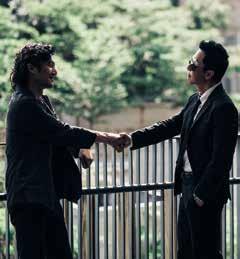
Raging Fire is the final film of Hong Kong maestro Benny Chan (Who Am I?, Call of Heroes). While this brawny policier owes a huge debt of gratitude to Michael Mann’s Heat, that does not mean this bruising slugfest isn’t something special in its own right. Stars Donnie Yen and Nicholas Tse go memorably head to head, while Chan stages some of the more ferociously pugnacious action set pieces of his illustrious career.
The plot isn’t especially groundbreaking: Veteran Hong Kong detective Bong (Yen) is hunting a lethal crew of thieves responsible for the deaths of several police officers when an after-hours heist at a downtown mall goes sideways. Ngo (Tse) is a former detective who was railroaded into prison after his superiors threw him under the bus when a dockside interrogation went tragically wrong.
Bong and Ngo used to be the best of friends and the most trusted of co-workers. Now they are at one another’s throats. This combination doesn’t leave a lot of room for surprises, and the final outcome is never in doubt.
Not that it matters. Chan’s script is a master class of pitiless wit and eviscerating
brevity. Even at just over two hours, time flies by in the blink of an eye, and the compulsive beat of the merciless drum moving Bong and Ngo closer to their climactic confrontation is impossible to resist. The fists are fast, the bullets hit their targets, and the kicks land with concussive ruthlessness. There is no quit to this film’s deadly march to its finale, with Chan delivering an explosively exhilarating juggernaut I can’t wait to watch again.
What’s amazing is how emotionally multifaceted all of this is. The narrative is built on a foundation poured from the
blood, sweat, and tears that Bong and Ngo’s long relationship has inadvertently produced. It is only by a cruel twist of fate that the former didn’t find himself wearing the shoes of the latter, and it is that haunting realization that compels the detective to be the one who stops his former protégé in his pursuit of revenge-fueled carnage.
Funny enough, for a picture overflowing in spectacular stunt work and stunning action sequences, it is a quiet moment between hunter and prey in a cold interrogation room that ends up delivering the most combustible wallop. Much like the fabled coffee shop scene in Heat, this bit between Yen and Tse showcases both actors at the top of their respective games. They play off one another with beauteous ease, the pair so in sync that their performances come astonishingly close to being symbiotic.
Much of the extraneous stuff falls a little flat. Bong’s veteran team of fellow officers more than deliver during the violent moments, each handling themselves magnificently, whether in the middle of a dangerous shoot-out or fighting members of Ngo’s crew one-on-one. But none get a signature moment that might allow any of their characters to stand out from the crowd, and because of that, they all become rather faceless drones that are difficult to care about one way or the other, especially at the end, when all bets are off and anyone could die at any second.
The same can be said about most of Ngo’s men, all also fellow former police officers who were bulldozed into prison alongside their boss. They get a little more to do than Bong’s team does, but even when they’re asked to do something murderously ugly, it’s only to service a future plot development. They are chess pieces, pawns really, and as skillfully as Chan moves them around the board, that still only makes them cannon fodder, existing solely to be maliciously sacrificed and nothing more.
That none of that is a big deal has everything to do with the virtuoso performances of Yen and Tse, as well as the superb action that’s arguably the best I’ve seen in all of 2021. Car chases. Shoot-outs. Brutal fights, many of them between multiple adversaries wielding clubs, knives, and all sorts of slice-and-dice weaponry. It’s all here, and every instant is glorious.
Chan was diagnosed with nasopharyngeal cancer not too long after shooting on this picture wrapped, and succumbed to the disease in August of last year. The film is unsurprisingly dedicated to him, and his confident handling of the material is beyond reproach. For a career cut short right in the middle of its apparent prime, this might just be the director’s finest hour, and while I mourn his passing, I’m nonetheless ecstatic that with the release of Raging Fire, we get to celebrate his excellence at the exact same time. Bravo.
by Terri Schlichenmeyer Special to the SGN
MAIDEN VOYAGES
SIÂN EVANS
© 2021 St. Martin’s Press
$28.99 / higher in Canada
368 pages
What would you do if you won the lottery?
Pay some bills, or splurge on a vehicle perhaps. Eliminate a school loan, donate to charity, and then take a vacation, maybe a cruise to somewhere exotic. That’d be a nice change. Although, as in the historical nonfiction book Maiden Voyages by Siân Evans, ocean travel also used to be a chance to change lives.
A hundred years ago, if great-grandma wanted to travel overseas, whether as an immigrant or for pleasure, it’s likely that she had just one option: she went to a port, bought a ticket or got a job, and boarded a ship. It took planning and guts and sometimes weeks, but there was simply no other way to transverse the ocean then.
Once there was a time when it was rare to find a woman on a ship. Aside from the occasional captain’s wife, stowaways, or gender-hiding adventure-seekers, few crews tolerated a feminine presence. By the turn of the last century, though, women were not only welcome on ocean liners, but they found employment there, assisting the growing number of seafaring ladies who may or may not have brought their personal maids.
One of those stewardesses was Violet

Jessop, who started her career in 1908, at the age of 21. Born in Ireland and raised in Argentina, Jessop went to sea to support her siblings and her widowed mother. Her career might have drawn little attention, if not for her experiences on the Titanic and the Britannic, both of which sank, both of which Jessop survived.
Evans also writes of women who supported the troops in World War I and how they changed the world of work — and the way the Royal Navy operated — when the Great War ended.

Ocean-going women were also the reason formal luggage was invented. They helped escort new immigrants to new opportunities. And they brought glitz and glitter, amusement and scandal to both sides of the ocean.
In a nearly instant world where we can often have things seconds after we decide we want them, Maiden Voyages is an interesting perspective-shifter. How it shifts you will depend on how you approach this book.
First, there’s the travel aspect: Evans writes of protracted journeys that, depending on the traveler, could mean weeks of tight quarters, tainted food, and zero amenities — all information that’s surprising in its depth. You can expect to read about
the opulence and prestige and the wealth aboard the ocean liners, but Evans also relates the realities of the steerage passengers. That puts the whole idea of earlytwentieth-century ocean travel into very sharp focus.
On the other hand, there’s the history, as Evans tells of determined women who went to work at a time when most women didn’t, doing jobs they often had to forge themselves. It’s a fierce chapter in women’s history, and you’ll be impressed.
Be aware that this book sometimes dives a little too deep and you may need to come up for air sometimes. Still, if you love unique peeks at history (and vacations!), Maiden Voyages will steer you on the right course.
by Terri Schlichenmeyer Special to the SGN
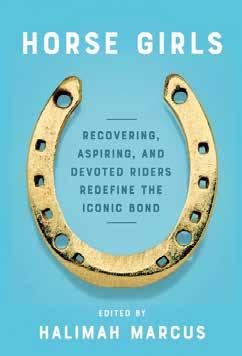
HORSE GIRLS: RECOVERING, ASPIRING, AND DEVOTED RIDERS REDEFINE THE ICONIC BOND
HALIMAH MARCUS, editor © 2021, Harper Perennial
$17.00 / $21.00 Canada
304 pages
You were determined not to get bit.
But in a totally different meaning of the word, you were equally determined that your horse would accept one. Without a bit in his mouth, he wouldn’t turn, slow down, or stop when you wanted to ride — and of course, the ride’s the thing.
Or is a sense of freedom the best part of owning a horse? Many girls think so, while others just want their very own Flicka or Ginger or Pie.
Whatever it is, editor Halima Marcus says in Horse Girls, a collection of essays on the subject, there’s a difference between “horse girls” and “horsewomen.” The latter, she writes, are “tough, no-nonsense... riding every day... unsentimental about horses but devoted to them for life” — unlike many of the women in this book, who gave up riding in their youth and re-established their love for it later in life.
But what makes a horse girl?
Marginalization, in the stories here. These horse girls often felt shame for not fitting the norm, for being Queer, Black, “chubby,” or poor — but they still loved
horses. Some of the writers are Lesbians, but they didn’t understand it until their girlhoods were over.
Horse girls also worry. A lot. They worry about where their horses went after they were sold or given away. On the day she got it, Adrienne Celt worried about how she was going to bury her horse if it died. They worry about disappointing horse-loving parents, and they fret about the best way to introduce their daughters to riding. They ride with joy. They met spouses through horses. They remember the smell
of a box that once contained a plastic horse — because, says T Kira Madden, “the thing about a horse is, it’s never about the horse.”
Nope, it’s also about stories. Fifteen of them, to be exact. If you’re not the horsey type, or didn’t grow up in a saddle, or your shelves never held plastic 1:9-scale equines, you can just mosey along. Because in that case, you’ll haaaaate this book — and that’s okay. It’s not for you anyhow.
If any of that sounds like you, though, pommel, stirrup, and all, then Marcus offers stories you’ll devour, stories of loving horses, even when (especially when!) doing so made you an anomaly. There’s strength in that — but loss also looms large here, particularly loss of childhood, innocence, or imagination.
C. Morgan Babst writes of cruelty and
anorexia, a two-pronged part of her childhood. In addition, Alex Marzano-Lesnevich writes of cross-dressing cowboys in history; Sarah Enelow-Snyder writes about how Black riders fit into Texas horse culture and of “curly Afros shoved into unaccommodating cowboy hats.”
Fortunately for many of these storytellers and for the readers invited along on this ride, though, recollections are resolved, reasons for them are reconciled, and the endings are mostly satisfying.
If you ever trotted around the yard, pretending to be a horse, or if you actually spent your girlhood in a saddle, Horse Girls will bring back memories. It’s a book you won’t want to miss, not even a little bit.
by Daniel Lindsley SGN Contributing Writer

The Philadelphia Gay News reported August 3 on South Florida Pride groups learning from the mistakes of the Pride festivals of the last few months. Notably, Boston Pride dissolved after community pressure regarding the organization’s lack of diversity and inclusion. Miik Martorell, president of Pride Fort Lauderdale, says diversity and inclusion are part of his community’s lived experience, as he himself attended a high school with Hispanic, Black, and white students. The board chair of Miami Beach Pride, Bruce Horwich, said the first step to approaching the issue is to have a board that represents the community.
Texas: Anti-Trans legislation halted for the moment
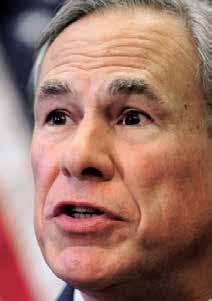
LGBTQ Nation reported August 8 on Texas Gov. Greg Abbott’s order that GOP legislators pass legislation banning young Trans athletes from school sports. Democrats responded to the governor’s call for a special session by not showing up, which deprived the state legislature of enough votes and halted the attempt for the full 30 days it took for the session to end. Gov. Abbott has expressed his intention to call another special session with the same laws in mind.
by Mike Andrew SGN Staff Writer
The influential American Medical Association (AMA), the country’s largest organization of medical doctors, says that “male” and “female” gender markers should be removed from birth certificates.
In a report written in June and now being reported by the Washington Post, the group says that assigning children a gender at birth “fails to recognize the medical spectrum of gender identity.”
“Participation by the medical profession and the government in assigning sex is often used as evidence supporting this binary view” of gender, the report continued. Not only does that stifle a person’s ability to express and identify themselves, it can lead to “marginalization and minoritization.”
For LGBTQ advocates, the AMA recommendation may be a significant step in acknowledging Transgender and nonbinary people. But some activists urged caution.
Moving away from sex designations, as the AMA recommends, is “deeply exciting,” according to V. Varun Chaudhry, an assistant professor of women’s, gender and sexuality studies at Brandeis University.
Removing gender markers from birth certificates doesn’t just acknowledge the “diversity of bodies” that exist on the gender and sex spectrum, they said, but it could also remove a major barrier gender-nonconforming people confront when trying to participate in society.
Chaudhry pointed specifically to children growing up now whose identities don’t align with their birth certificate.
Removing gender markers from birth certificates doesn’t just acknowledge the “diversity of bodies” that exist on the gender and sex spectrum, but it could also remove a major barrier gender-nonconforming people confront when trying to participate in society.
Nevertheless, “people are still really committed to a binary sex model,” Chaudhry warned.
This includes conservative lawmakers who have moved to ban Trans and nonbinary children from receiving health care and participating in youth sports, they added.
“The recommendation may say sex is not important for something like a birth certificate, but if people are still committed to a binary sex model, they find other ways
to determine those things,” Chaudhry said.
In fact, the report itself has become the object of a social media campaign by rightwing forces condemning the AMA.
For example, former United Nations Ambassador Nikki Haley, a possible Republican presidential candidate in 2024, tweeted that it was “the most ridiculous thing I have ever heard.”
Rep. Mary Miller (R-IL) also responded, tweeting, “Is this ‘The Science’ we are supposed to be trusting?”
Birth certificates are issued by medical providers and not the government, but they play an important role in establishing a person’s identity and allowing them to work, travel, or get married.
They are required to get passports or driver’s licenses, and for registering for school, adoptions, employment, or marriage.
This is a problem for nonbinary or Trans people, whose gender identities don’t match the sex assigned on their birth certificate. According to a study released in June by the Williams Institute at the UCLA School of Law, about 1.2 million nonbinary LGBTQ adults live in the United States.
Most states allow for people to change the gender markers on their birth certificate to reflect their gender identity, but the process can vary greatly from state to state. Fifteen states allow people to use a genderneutral “X” when a baby is born.
Even if amending a birth certificate isn’t costly, it can be time-consuming, and often requires institutional knowledge — being familiar with the process or knowing someone who can guide you through it.
by Hannah Saunders SGN Contributing Writer
During a media briefing on August 4, 2021, the World Health Organization (WHO) requested that wealthy nations cease the distribution of COVID-19 booster shots due to worldwide vaccine inequality.
This request comes shortly after rich countries around the world, such as Germany, France, and Britain, initiated a booster shot campaign beginning in September. Israel has already begun rolling out COVID booster shots.
Meanwhile, in many low-income nations, those at highest risk have not yet received their first dose of the vaccine.
“We need an urgent reversal from the majority of vaccines going to high-income countries, to the majority going to lowincome countries,” stated WHO Director General Tedros Adhanom Ghebreyesus, who asked for a two-month pause in order to allow the world to meet his goal of vaccinating 10% of each country’s population by the end of September, a goal known as “the Sprint to September.”
More than four billion doses of coronavirus vaccines have been administered globally. Over 80% of those doses have been administered to high- and upper-middleincome countries, which account for less than half of the world’s population.
Tedros described how low-income nations “need vaccines urgently, especially healthcare workers, older people, and other vulnerable groups. And yet even while hundreds of millions of people are still waiting for their first dose, some rich countries are moving toward booster doses.”
Many wealthy nations across the globe are considering COVID booster shots as the Delta variant spreads rapidly, although as of now, the number of nations that are considering it outweigh the number already administering it.

The UNDP is a prominent organization within the United Nations that fights to end poverty, inequality, and climate change, and has come out with information regarding COVID vaccine inequality. If there is one thing we know, it’s that countries with slower vaccination rates are more susceptible to variants of the virus, a surge in cases, and slower economic recovery.
A surge of COVID-19 cases in lowerincome nations also brings with it a disruption to supply chains and economic growth, as well as financial and governmental instability.
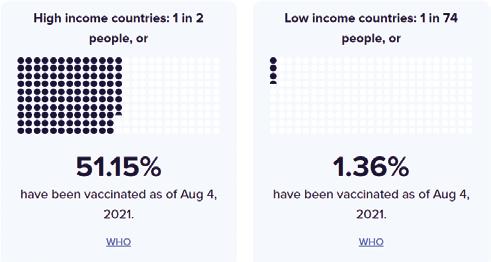
“I understand the concern of all governments to protect their people from the Delta variant. But we cannot accept countries that have already used most of the global supply of vaccines using even more of it, while the world’s most vulnerable people remain unprotected,” said Tedros, who explained how wealthier nations have given almost 100 doses for every 100 people, while less wealthy nations have given approximately 1.5 doses per every 100 people.
“Accordingly, WHO is calling for a moratorium on boosters until at least the end of September, to enable at least 10% of the population of every country to be vaccinated,” Tedros said. He went on to explain how the course of this pandemic was dependent on October’s G20 Summit, which addresses issues related to the global economy. Tedros mentioned that he will meet with the G20 Summit health ministers in one month, and will request for them to make concrete commitments in support of the WHO’s global vaccine goals.
Vaccine inequality is shaped by conflicting factors, including political, economic, and social ones. On average, high-income countries began vaccinating their citizens two months earlier than lowincome countries.
Some of the vaccine inequality stems from the fact that the United States is home to the pharmaceutical companies (Moderna, Pfizer, and Johnson & Johnson) that have made the vaccines, as well as the most innovative manufacturing facilities. This has placed the US at the head of the race to normalcy: while many Americans resume inperson activities, healthcare workers in lowerincome nations have yet to receive a vaccine.
According to UNICEF and Gavi, the Vaccine Alliance, the cost per each individual COVID vaccine dose ranges from USD $2 to $40, while the estimated distribution cost is USD $3.75 per individual vaccinated with two doses. Looking at low-income countries, the median health expenditure per capita is USD $41.
by Daniel Lindsley SGN Contributing Writer

Additional data from a UNDP survey, WHO, and UNICEF shows that lowincome nations would have to raise their healthcare spending by about 56.6% to cover the vaccination costs for 70% of the population, while high-income nations would only have to increase their healthcare spending by about 0.8%.
Another problematic scenario that arises with the increased interested in boosters shows that COVID vaccines may be a recurring expense. Long-term, this is worrisome, and could potentially align with the HIV crisis in terms of having the treatment and preventive care to save lives, yet it not being easily accessible to those who need it most. If the world is unable to start vaccinating greater portions of low-income nations against the coronavirus, how many more people will die? How many more times will it mutate and spread?
The US federal government tries to right its wrongs of bulk buying
At the White House on August 3, President Biden announced that the United States is set to deliver 110 million doses of COVID vaccines to 65 countries, while also acquiring an additional 500 million Pfizer doses that will be donated to lowerand middle-income nations by the end of the month.
“This is about our values. We value inherent dignity of all people... In times of trouble, Americans reach out to offer a helping hand. That’s who we are,” said Biden.
“We’re always going to have enough doses for every American who wants one,” Biden remarked. At the start of the year, the United States bought enough COVID doses to vaccinate the population three times over, but as of August 4, only 50.3% of the country is fully vaccinated
He also dived into the issue of some Americans who refuse to get the vaccine and described how states were offering financial incentives in order to get more shots in arms. North Carolina, for example, is offering $100 for those who are willing to step up and become protected against the coronavirus. So far, the financial incentives have been a moderate success.
Biden believes that other prosperous nations should set aside enough doses to fully vaccinate their population, and then donate remaining doses or money to assist
South Africa: Trans beauty contestant Reuters reported August 2 on Miss South Africa’s first Transgender contestant, Lehlogonolo Machaba, who joined up after the contest opened to Transgender contestants in 2019. While South Africa is the only country in Africa with LGBTQ rights enshrined in its constitution, including the right to change one’s legal identity, violence against LGBTQ people is rising there, with over 10 such people killed in attacks this year. Machaba says she expected backlash, however, and that the killing of her close friend in a hate crime gave her greater determination.
Russia: Athletes mocked
The Philadelphia Gay News reported on August 4 that Russian state television has been openly mocking LGBTQ athletes, compete with terms like “abomination” and “perversion” being used on talk shows, among other offensive terms for Gay men and Trans people. Transgender weightlifter Lauren Hubbard and Gay British gold medalist Tom Daley were among those specifically targeted. Since the broadcasts, the International Olympic Committee has reiterated its support of LGBT+ athletes.
lower-income nations. Furthermore, Biden mentioned how he would be working to increase vaccination manufacturing both nationally and internationally.
“The virus knows no boundaries. You can’t build a wall high enough to keep it out. There is no wall high enough or ocean wide enough to keep us safe from… COVID-19 in other nations,” he said.
The path to getting out of this pandemic remains fragile, and if one thing is for certain, it’s that vaccines save lives. And while those at greatest risk overseas beg for a COVID vaccine supply as their hospitals overflow, you should be out scheduling an appointment if you haven’t already. We’re privileged to be living in a nation where a life-saving shot is both accessible and free: take advantage of the opportunity, because others who cannot are dying as a direct result.









BI-WEEKLY! FIND US WHEREVER YOU LISTEN TO PODCASTS!