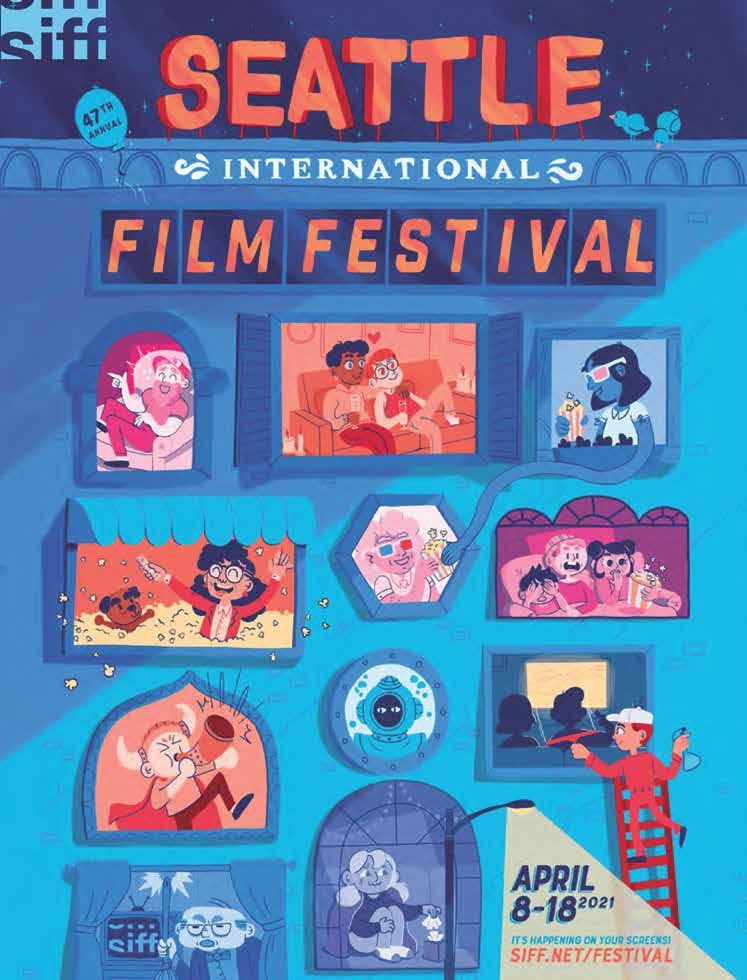
After one year’s forced hiatus courtesy of COVID-19, the Seattle International Film Festival (SIFF) returned last night with a gala digital screening of the Australian neo-noir murder mystery The Dry staring Eric Bana. Running through April 18, this year’s SIFF showcases 92 features and 126 shorts from 69 countries. It will be a virtual festival utilizing the brand new SIFF Channel, found at watch.siff.net or on Amazon Fire TV, Android TV, Apple TV, or Roku as a downloadable app.
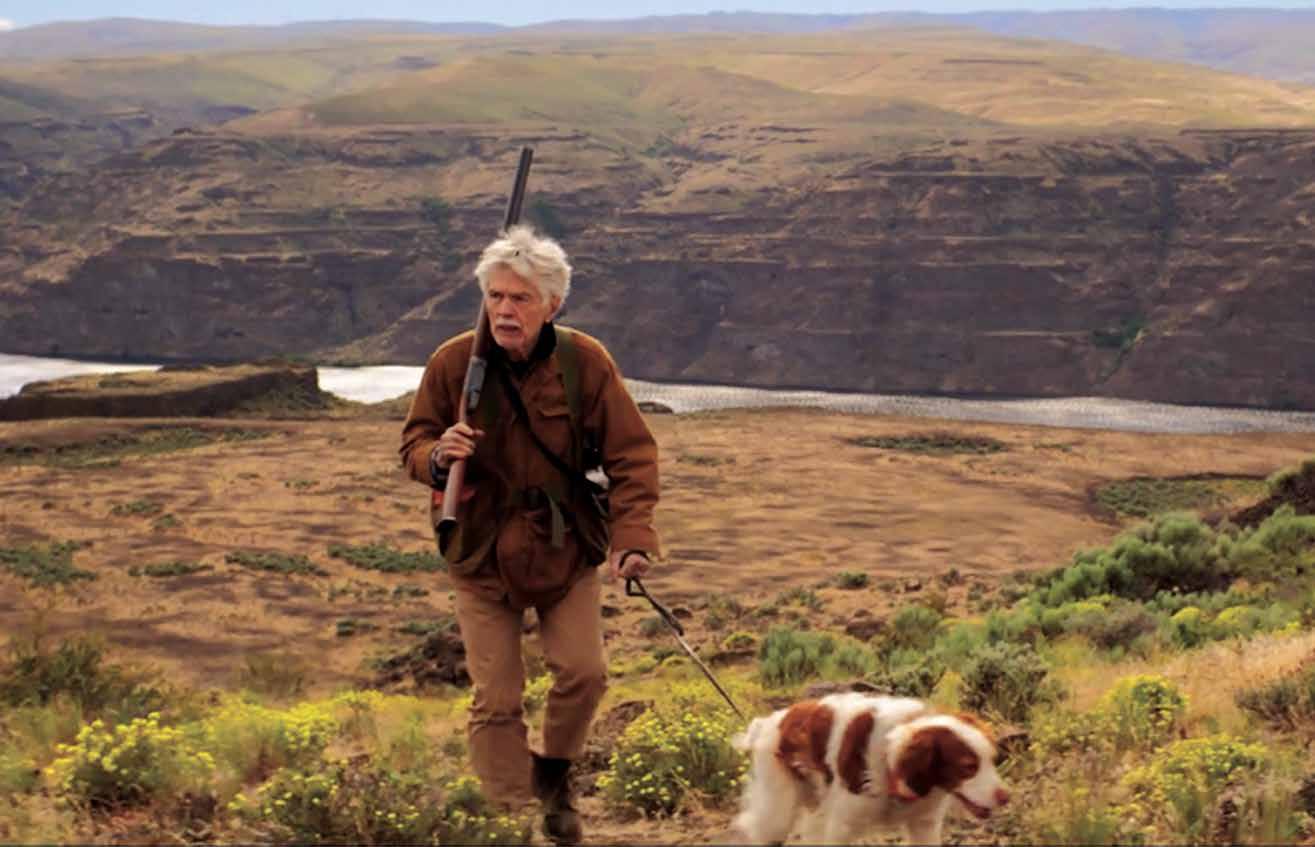
Festival favorite programs like “Northwest Connections,” “Films4Families,” “Asian Crossroads” and “WTF” are all returning, while a number of events, forums, and roundtables dot the calendar, which attendees can be a vital interactive part of via Zoom. Additionally, on April 15, SIFF is honoring the life, legacy, and career of local icon Tom Skerritt, the star of Alien, M*A*S*H*, Top Gun, Singles, A River Runs Throughout It, and so many other favorites. SIFF is also premiering his latest picture, the drama East of the Mountains, based on
Arkansas legislature overrides governor’s veto on anti-Trans bill
Vote to
block medical
treatment for Trans minors
by Mike Andrew SGN Staff Writer
The Arkansas state legislature has voted to override the governor’s veto of a bill that would bar doctors from providing medically necessary gender-affirming treatments to Transgender youth.
by Janice Athill SGN Contributing Writer
Clear and rigorous battles have been fought against both racism and sexism since the abolishment of slavery and the adoption of the 14th Amendment to the Constitution. Slaves went to war, damn near freeing themselves, and women grabbed America by its Constitution and demanded equality. While there are still many battles to fight, many battles have been won. But what do you do if the wins should offer you protection, but the current state of justice lets you fall through the cracks?
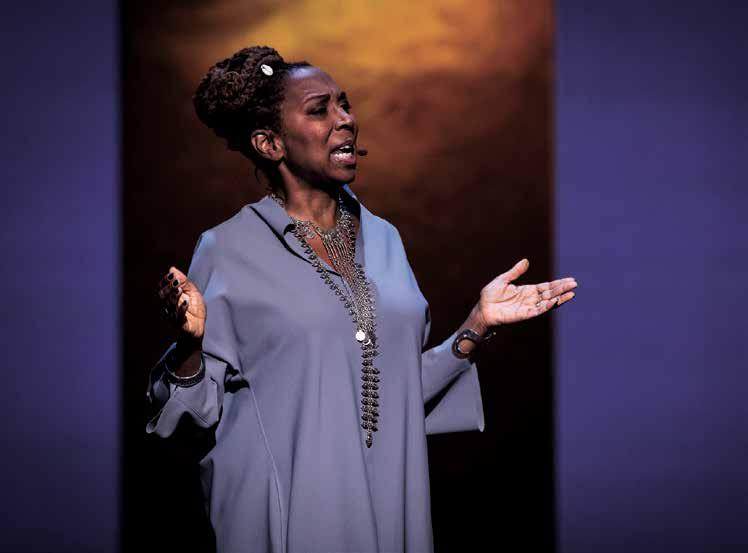
For Black women, where they fall in social priority has affected their ability to receive justice more than for Black men and white women who fought the same battles. Black women stand at the intersection of being Black and a woman, finding themselves subject to forms of oppression that have shown to be difficult to prove. This is a summarized version of the term “intersectionality,” coined by Kimberlee Crenshaw. In her 2016 TED talk, she discusses this term, as well as a case that sheds light on this form of oppression that
JANICE ATHILL page
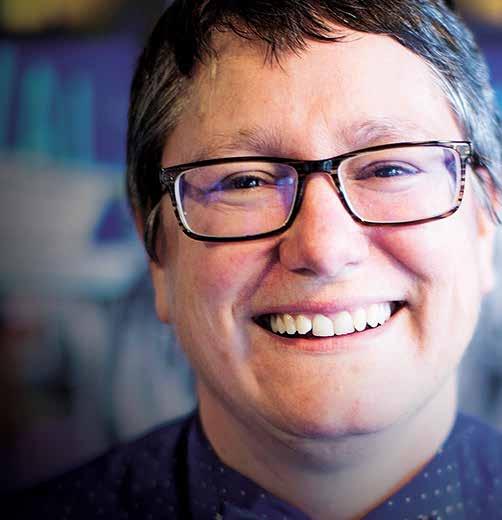
SIFF Artistic Director Beth Barrett – Photo courtesy of SIFF
Photo courtesy of AAUP
Photo courtesy of ACLU Arkansas
THIS AD SPACE HAS BEEN GENEROUSLY DONATED BY KRISTIN COSTELLO IN MEMORY OF SGN PUBLISHER GEORGE BAKAN
Local News
Inslee expands vaccine eligibility ahead of COVID’s fourth surge
by Hannah Saunders SGN Contributing Writer
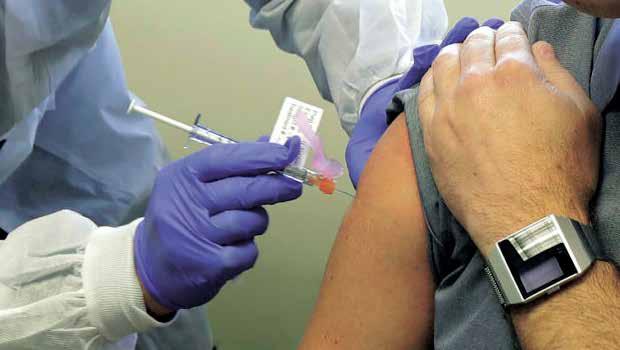
On Wednesday, March 31, Gov. Jay Inslee announced that all Washington residents aged 16 and older will be eligible to receive a COVID-19 vaccine beginning on April 15. This announcement came as an effort to stem a recent surge in statewide cases.
“Current COVID-19 trends across the state are concerning, and we must do everything possible to ensure we keep cases down. Now is the time to stay diligent. We’re not out of the woods yet. Opening up full eligibility will be another crucial tool in our fight against this virus,” said Inslee in a tweet. Another weet described how 3.3 million Washingtonians have received their first dose of the vaccine, 1 million of which are fully vaccinated. Inslee also touched on the continued use of mask wearing and social distancing.
On the same day, Seattle Mayor Jenny Durkin announced that the City of Seattle would be partnering with the Seattle Visiting Nurse Association and North Seattle College to open a community vaccination hub. The hub at the college plans to initially administer 1,170 doses per week, but if supply increases, they will be able to administer 6,400 doses per week.
Currently, the demand for vaccinations outweighs what the state can supply. As a result, vaccination appointments can be hard to come by. A slow rollout of vaccinations overseas has led to increased cases and sent France back into full lockdown; the recent surge in coronavirus cases throughout the United States shows that this nation might be headed in the same direction, unless vaccines can get into as many arms as quickly as possible.
How is COVID impacting King County?
“This week’s forecast shows increasing storm clouds on the horizon. Over the past week, 250 new cases were reported daily, up 26% from last week and almost 80% from when the latest rise began in February,” stated Health Officer Jeff Duchin during his pandemic press conference on April 2.
Cases are increasing across all age groups under 75 years old, predominantly among 18- to 24-year-olds. There has been a significant drop in cases among longterm healthcare facilities, but an increase
in retail, childcare, and manufacturing settings. Cases linked to travel have also doubled since the last surge. An increase in cases is also linked to events such as weddings and family get-togethers.
In addition, COVID variant 14-29 (first identified in California) is currently the variant of most concern in King County.
“At the moment the virus is spreading more quickly than we can vaccinate,” stated Duchin, who went on to explain how the combination of travel, activities, and variants has been a huge propellant in the number of cases we are now seeing.
and Drug Administration. The vaccines reduce extreme symptoms of the virus, reduce the risk of hospitalization (which takes a load off of our healthcare heroes) and death, and are effective at preventing recipients from contracting the virus. In general, the vaccines increase the number of those protected from getting COVID, making it harder for the virus to spread.
Types of vaccines
There are three authorized COVID-19 vaccines being distributed in Washington: Pfizer-BioNTech (Pfizer), Moderna, and
How do they work?
The Pfizer and Moderna vaccines are MRNA vaccines, and both require two doses. The vaccine teaches the body’s cells to produce a harmless COVID spike protein, which triggers an immune response, which allows the body to create antibodies. The recipient of the vaccine is then able to build antibodies without first getting sick with the virus.
J&J is a viral vector vaccine, which means that a weakened version of a virus — not the virus that causes COVID — is used to help produce a COVID spike protein, thus trig-
To prevent COVID spread and illness, Duchin emphasized the continued use of masks and social distancing, increasing ventilation, and avoiding crowded spaces. Most importantly, people should get vaccinated as soon as they become eligible.
Why should I get the vaccine?
The benefits of receiving a coronavirus vaccine greatly outweigh the negatives. All three vaccines on the US market were authorized for emergency use by the Food
Johnson & Johnson (J&J). The Pfizer vaccine provides 95% protection from COVID; the Moderna vaccine provides 94% protection; the J&J vaccine provides 74% protection. The single-dose J&J vaccine requires recipients to be 18 years of age or older, while the Pfizer and Moderna vaccines require recipients to be 16 years or older. Full protection against the virus occurs two weeks after the second vaccination dose (or for J&J, the one and only dose).
gering the immune response that helps create COVID antibodies.
Where do I begin?
It’s important to know that COVID19 vaccines cost $0, and you do not need health insurance to receive a vaccination dose. Appointments can be scheduled by visiting https://vaccinelocator.doh.wa.gov/. A vaccine can only be received when one is eligible, but by April 15, eligibility should no longer be an issue for Washingtonians.
WA Governor Jay Inslee – Photo by Ted S. Warren / AP
Photo by Ted S. Warren / AP
37th District town hall centers economic, environmental justice
by Daniel Lindsley SGN Contributing Writer
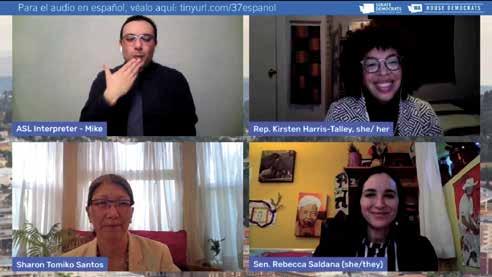
The representatives of Washington state’s 37th Legislative District gathered virtually for an hour on Wednesday to take questions from voters and lay out their priorities for 2021. Present were long-time incumbent Rep. Sharon Tomiko Santos, Sen. Rebecca Saldaña, the newly appointed Rep. Kirsten Harris-Talley, and several ASL interpreters.
Economic and environmental justice were themes for the evening, and representatives approached them from several angles. Saldaña stated her intention to move the transportation committee away from simply building roads, and focus instead on cleaner transportation and higher regional mobility. She also addressed some of environmental justice advocates’ concerns about the Washington Strong and Carbon WA bills, which “didn’t... center environmental justice principles or our communities.” The Climate Commitment Act, Saldaña said, is one of the first bills to address and put a price on co-pollutants.
Santos addressed the topic of education funding during the pandemic, explaining that using current headcounts and property taxes is no longer a reliable or equitable way to allocate funding. The Enrollment Stabilization bill, which was introduced separately in both the House and the Senate, would rely on 2019–2020 headcounts instead. She explained also that another bill in the Senate would allow greater flexibility in school districts’ use of funds for learning assistance programs, specifically when applied to COVID recovery.
The Working Families Tax Credit bill is moving through the legislature as well. Sen. Saldaña stated that the Members of Color Caucus has made the bill a priority, and that it should be on the governor’s desk soon. Harris-Talley added that the bill’s funding this year was timely, and that she was “excited to be part of the legislature to... see the amount of equity that was added to the improvement of the bill this year.”
On the topic of the budget, Santos explained that two versions of the budget currently exist in the House and the Senate, with “different investment choices that will be ironed out.” She described the state government’s approach to the budget as “cautiously optimistic,” given the lack of the predicted $9 billion shortfall, but she was not yet confident answering whether
spending would increase or decrease compared to last year. She also acknowledged the positive effects of the federal stimulus on the state economy.
Saldaña said that the state government should increase its efforts to financially support those who may have not received relief, with Harris-Talley adding that a capital gains tax is a favored method of raising funds to help certain sectors recover, including small businesses and undocumented neighbors who wouldn’t see federal relief. This capital gains tax would be part of clearly stated efforts to fix Washington’s “upside-down” tax system.
Santos responded to a question about how the 37th planned to support LGBTQIA+ business owners, citing the tax-exempt status of federal relief
as an example. She supported efforts to “strengthen the equity components” of a bill meant to grant women and minorities better pathways to starting businesses and growing from there through public contracts. These contracts would be supported, in part, by a capital funding bill intended to foster more construction jobs.
Harris-Talley assured attendees that an upcoming bill banning open-carry weapons at protests was being approached with a lens of racial equity, meant to balance First and Second Amendment rights. On a similar note, she announced that a bill banning private prisons in the state would be in effect as soon as the governor signed it. Other upcoming bills, such as the Police Tactics bill, would include reform measures such as demilitarization, restrictions on dog use, and a ban on chokeholds and no-knock warrants. Saldaña added that “a slew” of bills on police accountability and criminal justice reform have been introduced. Santos also expressed her intent to make police accountability include diversity training.
Saldaña signed off with a call to action on the transportation bill, asking for voters to push over the next three weeks for “a package... that actually is prioritizing safety, mobility, environmental stewardship, [and] equity.” Santos reinforced her support for her seatmates, and their value on all legislative fronts. Harris-Talley returned the sentiment and reiterated her intent to continue working with communities.
A recorded live-stream of the event can be found at https://youtu.be/JUemGyNCedA.
Washington prepares to celebrate Earth Day
by Josephine Baird SGN Contributing Writer
After a full year of being indoors due to the pandemic, Earth Day, April 22, is a great reminder to get outside and take advantage of our beautiful planet.
According to Earthday.org, the first Earth Day was first recognized and celebrated over 50 years ago, in 1970. It continues, “Today, Earth Day is widely recognized as the largest secular observance in the world, marked by more than a billion people every year as a day of action to change human behavior and create global, national, and local policy changes.”
Since the original Earth Day, in which 20 million Americans called for more protections for our planet, the celebration has exploded. Since then, billion of individuals have participated in Earth Day mobilizing events, in over 190 countries.
Local events
Friends of Lake Sammamish State Park is hosting various activities to “support conservation and the environment in honor of Earth Day, Arbor Day, and Audubon Day” from April 20 to May 2, including “Celebrate the Earth,” a family-friendly self-guided walk during which attendees can learn about the park’s wildlife and natural habitat.
On April 24 and 25 from noon to 4 p.m., the organization will also be hosting a habitat restoration and landscaping event, which aims to involve people in the important process of caring for the local ecosystem. Volunteers will take part in weeding, mulching, and planting, and will receive free native seeds to plant at home. There will also be a giveaway near the all-access playground to help promote conservation efforts: the City of Issaquah and Cascade Water Alliance have contributed water-saving devices, including a sprinkler education DVD, water-reducing showerheads, kitchen faucet aerators, and even shower timers.
Michael’s Subaru of Bellevue has also donated free seeds, gloves, and blossom kits for the event. Sign up at www.lakesammamishfriends/events.
Locals can also sign up for virtual events, including gardening classes; volunteer to help “Keep Issaquah Beautiful” through plantings and trash pickups; and register to receive a free compost bin or rain barrel. Recology, an organization working toward a world without waste, will also be hosting a webinar about how to properly sort recycling and reduce waste, as part of the “What Goes Where?” event. For more information on these events, go to www.issaquahwa.gov/calendar.aspx.
Other local events include free entrance into any national park on the first day of National Park Week, anytime from dawn to dusk on April 17; a free day at Washington State Parks (no Discover Pass required) on Earth Day, April 22; and Metro Parks Tacoma Appreciation Day on April 24,
when volunteers can help beautify Tacoma parks by grooming grounds, trimming limbs, combing beaches, and maintaining restoration areas.
For those who can’t attend in person or don’t quite feel comfortable yet doing so, there are many changes you can make from the safety of your own home to help celebrate and care for our world. Here are some recommended by King County:
Gardening:
• Planting mostly native plants. They won’t need as much water and overall care, and they won’t require pesticides.
• Using the Garden Hotline, open Monday-Saturday 9:00 a.m.-5:00 p.m., for any and all gardening questions.
• Learning about noxious weeds by checking out King County’s list at https:// kingcounty.gov/services/environment/animals-and-plants/noxious-weeds.aspx.
Forest health:
• Learning more about trees that are native to Washington state.
• Removing plants that are invasive to the area, which will help restore Seattle’s urban forest.
Local food and markets:
• Contributing to the Good Farm Fund, a grants emergency relief fund for farmers dealing with the negative financial impacts of the pandemic (www.goodfarmfund.org).
• Supporting local farms by buying local.
• Using the King County Local Food Finder to help find fresh, local produce (https://bit.ly/3wIrPSa).
Recycling and waste reduction:
• Learning how to recycle properly.
• Reducing food waste by composting if possible.
• Using King County recycling activities to teach children and students about the importance and the process of recycling (www.kingcounty.gov/services/environment/stewardship/being-green/events. aspx).
(Visit Earthday.org for more information on online events.)
Another great option for those who are unable to attend in-person Earth Day events is to simply interact with the Earth in a conscious way, whether it be a long hike or a short neighborhood walk, planting a garden or caring for an indoor potted plant, taking the extra time to recycle or pick up trash on the side of the road.
Take Earth Day as a reminder to care for our precious planet. After all, this is the only one we’ve got.
Image courtesy of Washington House Democrats
Photo courtesy of the Earth Day Network
Local News
A peek at Vashon Bioenergy: The world’s first “food-to-fuel” farm opens on Vashon Island
by Kylin Brown
SGN Contributing Writer
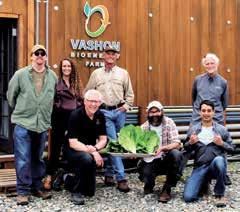
After being led through a thicket of blackberry bushes, walking just above the mud on makeshift wooden trails, I looked up to find I had arrived at the site of a climate solution unlike any the world has seen so far.
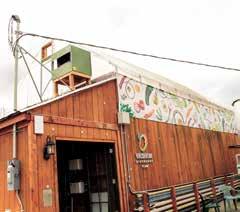
A small building topped by a full greenhouse, a spherical object that looked as though a hot air balloon had been buried halfway underground, and several friendly crew members awaited my arrival. It was the site of Vashon Bioenergy Farm, where local engineering and agricultural tech have combined forces to create a mechanical digestion system for food waste to go in and for fuel — in various forms — to come out, all while maintaining net carbon neutrality.
A partnership like no other
Erik Cutter, president and CEO of Alegría Fresh, refers to himself as an urban farmer, biochemist, and nutritionist. He partnered with Jan Allen, founder of Impact Bioenergy, he says, to find a food waste solution for his farm, because he wanted it to achieve a negative carbon footprint.
“Jan and I met and we had a little talk, and we went, ‘Hmm, you’re doing that out on a limb and I’m doing this out on a limb. What if we put this together? What if we created the world’s first carbon-negative food production system that recycles all of its own stuff?’ And then we looked at each other and we said, ‘Wait — we got it!”
Allen’s lifelong career in engineering has given him the skill to develop machin-
ery that does just this. Like a large-scale, high-tech compost bin, his “digesters” take in food waste and ferment it to create fertilizer, which can then create a nutrient- and mineral-dense soil mixture for farming. This system puts your countertop compost bucket to shame — unless you fuel your cars and six-acre farm with it, too.
At VBF, for every 8,000 pounds of food waste that go into the bioenergy farm — an achievable daily number, what with the Island Fresh soy plant as their next-door neighbor as well as various partners — the equivalent of 90 gallons of renewable gas and 950 gallons of organic probiotic fertilizer are produced.
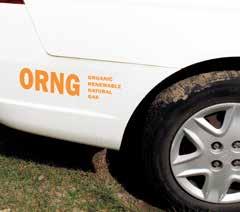
According to Allen, the spherical balloon structure is the part of the project. It is a biogas refinery, which, alongside several compressors, takes the methane from the food matter and refines it into renewable natural gas that can then go into cars. (A Honda Civic parked at the site boasted a “RENEWABLE NATURAL GAS” sticker on its side.)
“Really, what we are about is full-circle carbon management,” said Allen. “Taking that ‘waste’ carbon and repurposing it completely,” added Cutter.
The system prevents food waste from eventually decomposing in landfills. In the US, landfill emissions are multiplying, and typically over 100 million tons of CO2 equivalent are sent into our atmosphere each year.
According to the EPA, municipal solid waste (MSW) landfills are the third-largest source of human-related methane emissions in the United States, accounting for approximately 15.1% of these emissions in 2018.
Vashon and the vision
Allen’s digesters are designed to be completely modular, meaning they can be easily scaled to exist on a farm anywhere. This eliminates the need for transportation and could allow farms to produce on-site soil amendments and clean fuel to transport their own food product or supplies.
VBF performs this locally at the community scale with its digester system, named “Nautilus,” to prevent food waste from being ferried off the island to landfills.
Cutter and Allen look toward solutions that not only halt carbon emissions but also sequester carbon, or draw it back down from the atmosphere. The estimated carbon drawdown of the VBF project totals 12,500 metric tons of carbon dioxide equivalent per year. This is like taking 2,710 cars off of the road, nearly neutralizing Vashon’s own annual car emissions.
“Our company decided that there’s lots of large-scale applications of this [technology], but somebody needs to communityscale it, somebody needs to scale it down and find the equipment or invent it. And that was a heavy lift, because we had to create that. What’s new here is that we scaled it,” said Allen.
Tasting the dark-green romaine grown in Alegría Fresh’s “SoxxBoxx Gro Systems,” which are full of regenerated soil mix in the greenhouse, I couldn’t help but wonder who gets to eat the produce grown at VBF. It was rich — and likely the most nutrient-dense fresh produce I have ever tasted, since our food products on average travel over 1,500 miles before they reach our carts.
Regarding current local distribution, Allen said, “We’ve already delivered [food] to three universities, two corporate campuses, and farms, so we are at the point now where there is no reason this can’t go far and wide.” The team also mentioned deliveries to Ballard Ave. restaurants and the University District food bank so far.
“We’re providing an incredibly disruptive system that disrupts food, fuel, and fertilizer,” said Cutter. “That’s our biggest achievement… [People] can’t keep transporting food 1,500 miles or more. We’ve got to have local access. We have to build community resiliency. The idea that food is medicine is real, but for it to be true, people have to have access to these tremendous amounts of foods that farmers like me have access to.”
These partners peer toward a grim climate future for “people of my generation,” as they called it. “We have passed the tipping point,” asserted Cutter.
They believe that community-level solutions are going to be the key to overcoming the climate damage we have done so far, and they are starting here and now.
More information about Impact Bioenergy can be found at https://impactbioenergy.com More on Alegría Fresh can be found at https://alegriafresh.com.
Photos courtesy of Kylin Brown
Arts & Entertainment
Rain City Rock Camp
by Paige McGlauflin SGN Contributing Writer
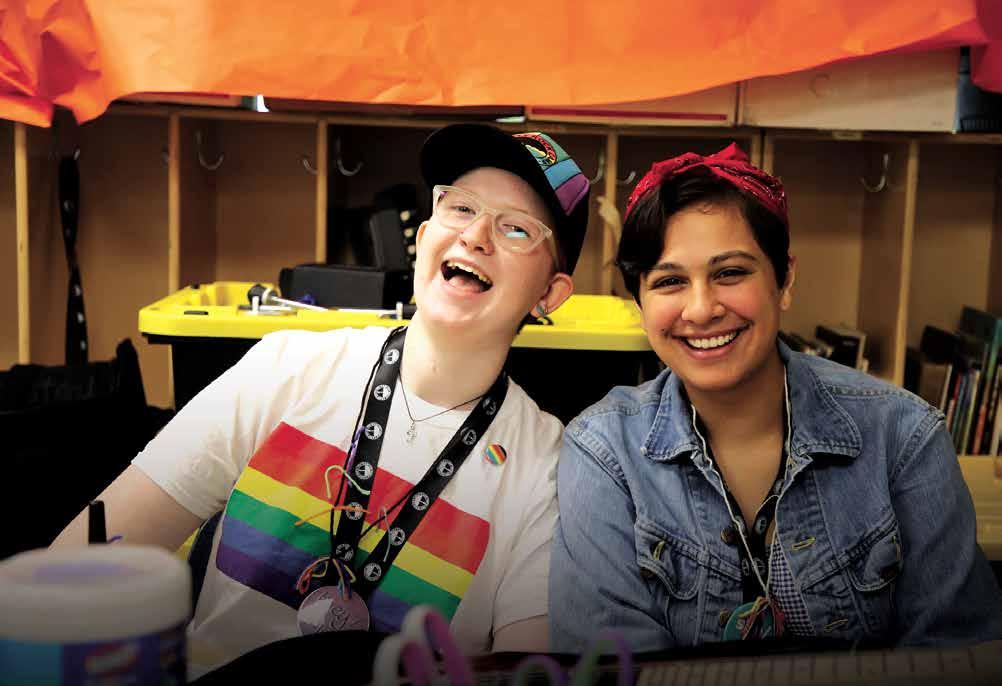
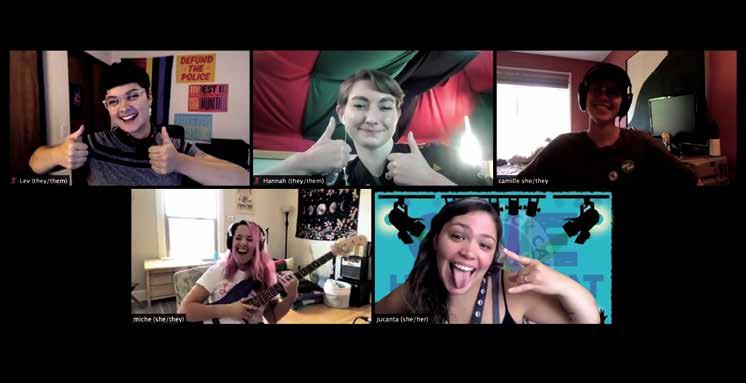
Rain City Rock Camp has formally changed the names of one its programs to be more inclusive of participants that identify beyond the gender binary. Though all programs were already inclusive of gender-expansive individuals, the camp announced Feb. 17 that its Ladies’ Rock Camp would henceforth be called Adult Rock Camp.
see ADULT ROCK CAMP page 8 A closer look:
by Hannah Saunders SGN Contributing Writer
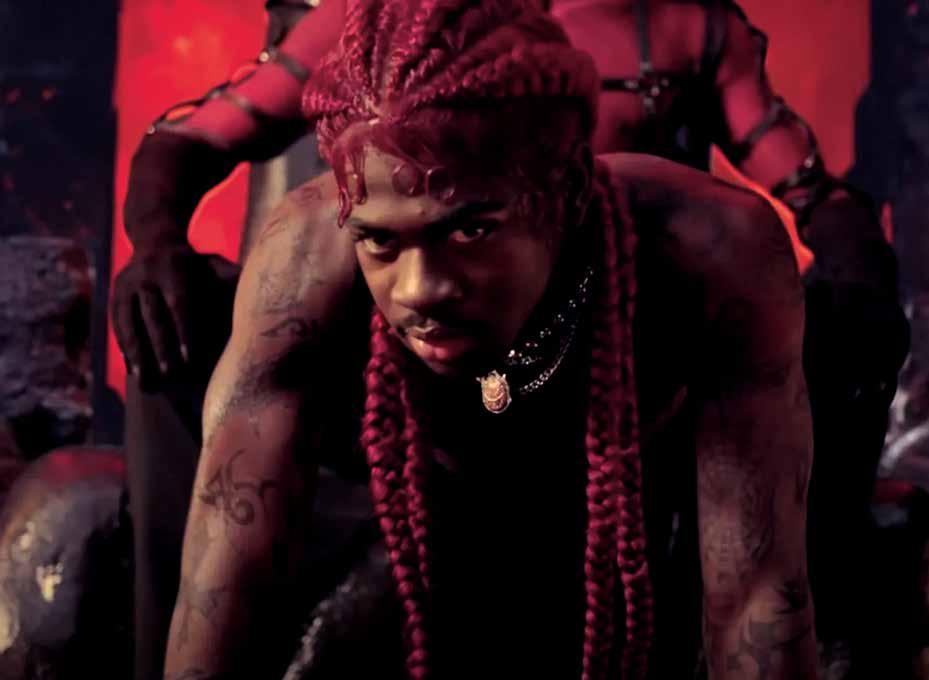
Rapper Lil Nas X has stirred up those with anti-LGBTQ+ sentiments with the recent release of his music video “Montero (Call Me by Your Name),” which dropped on March 26. Two days later, he also released blood-infused Nike sneakers, in keeping with the satanic theme of his new song.
LIL NAS X page 9
Photo courtesy of Rain City Rock Camp
Photo courtesy of the artist
Arts & Entertainment
LOCAL CREATOR SPOTLIGHT
Moss Bosch, the multifaceted “ciscore anthropologist”taking the internet by storm
by A.V. Eichenbaum SGN Associate Editor
The world can be an absurd place: Wine mom culture. Aggressively gendered bodywash. Target. These are the things that permeate daily American life.
And, as happens with most things, burgeoning experts arise in the most unusual of places.
Though they would balk at being called an “expert,” or even an “influencer” (“The word chills me,” they laughed when asked), podcaster, tabletop role-playing game (TTRPG) designer, and TikTok creator Moss Bosch has become exactly that: an examiner of the unobserved and an inquirer into strange objects that many take for granted, broadcasting to thousands daily.
Using a keen sense of the ridiculous and an educator’s background, the Seattlebased Bosch developed a cult following on TikTok with their account @beatingthebinary, where they often discuss topics that fall under “ciscore anthropology” (a term Bosch coined), a tongue-in-cheek study of the bizarre and sometimes toxic ways gendered marketing displays itself in late capitalist society.
How did this come about? How did one individual find themself in the middle of such a niche area of observation? They took the time to discuss the topic with me over Zoom on a Friday afternoon.
“If you are a person with a marginalized experience,” said Bosch, sipping something red from a mason jar, “part of the process of survival in a world where you don’t fit its norms is to be at least a little bit versed in those norms and to know how to respond to them and weave around them. For me, queerness and transness — and also being from a lower-income background — all affect how I move through the world and what I notice.”
Initially, there was some confusion as to the purpose of these lighthearted videos on TikTok. The first one, which calls out wine mom culture as problematic, garnered an
ADULT ROCK CAMP
continued from page 7
“That was the result of many years of having gender-diverse or non-womenidentifying participants attending camp, just recognizing it as a space for them to be empowered and safe and supported outside of the mainstream boys’ club of the music industry,” Iris Pavitt, Rain City’s administrative coordinator, told the SGN.
Rain City Rock Camp has been in operation since 2008, providing music education and gender-responsive, socially conscious programming to all participants.
“Music is really the vehicle for social change,” Pavitt said. “So much of what we talk about is media impact on self-image, and understanding the music industry through a social justice lens.”
The Eastlake-based nonprofit offers six programs, including youth and adult camps, all of which have been gender inclusive since 2017, according to Pavitt. Youth Summer Camp participants are given pronoun buttons to wear for the two-week duration of the program, a practice that Pavitt says encourages them to experiment with and shift their understanding of gender.
“Being very aware of pronouns and respecting a campus gender identity, or something that they’re experiencing in a new
didn’t want to mock people for having addiction issues; that’d be fucked up. It’s weird that there’s merchandise making jokes about those issues and normalizing them.”
Bosch’s videos also take a harder look at several brands whose use of gendered items borders the realm of the surreal — including Cracker Barrel, Manly Bands, and even Signature Care laxatives — but that’s not everything up the 27-year-old’s sleeve.
They also have a podcast called Queerly Yours, in which they and their partner, writer Angela Lemus-Mogrovejo, discuss dating and relationships from a Trans, nonbinary, polyamorous perspective. The show is a delightful walk through issues not often covered on dating advice shows, including top surgery, bisexuality, and the basics of a healthy poly relationship.
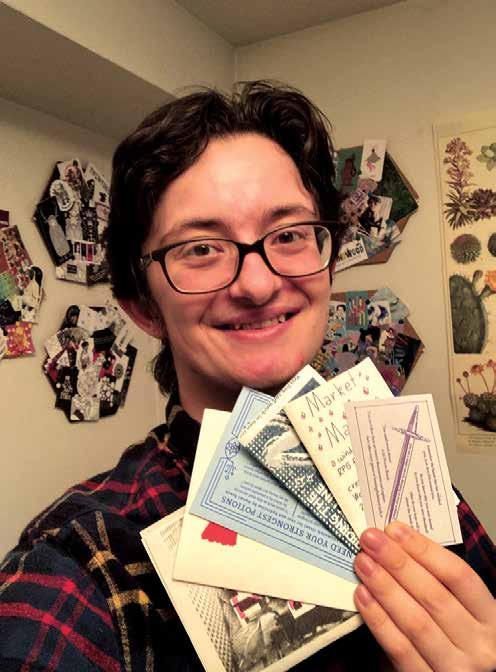
Looking for interesting, non-D&D TTRPGs to play alone or with your friends? They make those, too. Among the titles they’ve released are Riding the Ley Line — “a formatted daydream for public transit” — and This Party Sucks, a three-player RPG about a Queer twentysomething badly processing a recent breakup. “There’s a really great indie tabletop game scene on Twitter, surprisingly enough,” they elaborated, holding up a small, greeting cardsized title, I Need Your Strongest Potions, a gamified guide to staying hydrated.
In their daily life, Bosch is an educator and wildlife activist. When they have time, they write zines about their day-today experience, the first of which, Street Band Super Hero¸ explores their time in a cross-generational activist street band in high school and how it informed their politics and helped them figure out some things about their gender identity.
Truly a they/them with something for everyone.
You can visit Bosch’s website, www. queerlyyourspodcast.com, follow them on Twitter @adanarama, or experience their particular brand of brand critique on TikTok @beatingthebinary.
way, is a really big part of how volunteers and fellow campers can support an individual’s learning about gender in our safe and supportive environment,” Pavitt said.
The camp’s programs have been operated virtually since the beginning of the
pandemic and will continue to be
through July.
person programming beyond that point hasn’t been determined yet but will be reassessed as more reopening guidelines are implemented.
For now, sign-ups are still available for both the Adult Rock Camp this spring and Youth Camps this summer. More information on sign-ups can be found at www.raincityrockcamp.org.
especially strong response. “A few of [the comments] thought I was making light of it in a way that I didn’t want to. I did a follow-
up video that talked about resources if you or someone in your life is having a wine mom experience and drinking to cope… I
virtual
Pavitt told the SGN that in-
Image courtesy of Rain City Rock Camp
Image courtesy of Moss Bosch
What was his intent? To embrace and celebrate his sexuality, while simultaneously refusing to accept societal shame for his sexual orientation.
In a tweet posted following the video release, Lil Nas X stated, “i spent my entire teenage years hating myself because of the shit y’all preached would happen to me because i was gay. so i hope you are mad, stay mad, feel the same anger you teach us to have towards ourselves.” This was in response to the conservative viewers, many of which stated that the music video was corrupting children due to its satanic nature and eroticism. Is it truly corruption, or rather embracing those to accept and love who they are no matter what their religious beliefs may be?
Who is Lil Nas X?
Lil Nas X, whose birth name is Montero Hill, is a 22-year-old (as of today, April 9) raised in Georgia. His parents divorced when he was six years old, and he moved to the Bankhead Courts housing projects in Atlanta with his mother and grandmother. Three years later, he moved to a smaller town, Austell, to live with his father.
The rapper describes himself as being a reclusive teenager; he was a huge fan of internet memes, and got heavily involved in Twitter, where most of his social interactions took place. It was during his teenage years when Lil Nas X struggled with his gayness. He didn’t want to accept being Gay and hoped it was just a phase. He knew a few kids who came out as Gay in high school; he saw the bullying and homophobia they experienced and didn’t want that to happen to him. Around the age of 16 to 17, he began to accept the fact that he is Gay.
After finishing high school, the rapper attended the University of West Georgia with a major in computer science. While putting off coursework one day, he wrote his first song, “Shame.” After about a year,
Coming out
Having kept his
Lil Nas X dropped out of university to pursue music, and began living at his sister’s place in Atlanta, sleeping on her floor.
Why is he famous?
In 2018, while still attending university, Lil Nas X continued songwriting, and began recording the lyrics in his closet. His country-rap song, “Old Time Road,” released on December 3, 2018, brought the rapper to stardom almost overnight.
He had anonymously purchased the beat for “Old Town Road” through Dutch producer YoungKio for only $30. Being heavily involved in social media, Lil Nas X created internet memes to assist in promoting his song.
TikTok — a social media short-video platform with 689 million users that appeals to a young demographic — was a major factor in lifting the song off the ground. The short-form videos TikTok users create are frequently looped with songs, and many got wind of Lil Nas X’s “Old Town Road.” The song then went viral in early 2019 due to the #YeeHaw challenge, in which TikTok users would post videos of themselves dressed as cowboys and cowgirls with “Old Town Road” playing in the background.
The song instantly became a hit and made it to #19 on Billboard’s “Hot Country Songs” chart.
In March of that year, Billboard removed the song from the chart, saying it didn’t “embrace” enough elements from modern-day country music, without ever listing what those specific elements were. Many attributed this removal to racism within the country music industry.
Long-time country musician Billy Ray Cyrus supported “Old Town Road,” and the two teamed up to release a remix featuring Cyrus in April of 2019. The remix was again a massive hit, and made it to #1 on Billboard’s Hot 100; the song held onto that position for 18 weeks.
Funny how the song remained at #1 (and wasn’t removed) after a renowned white country star came into play.
whether his fans would stick by his side if he came out publicly.
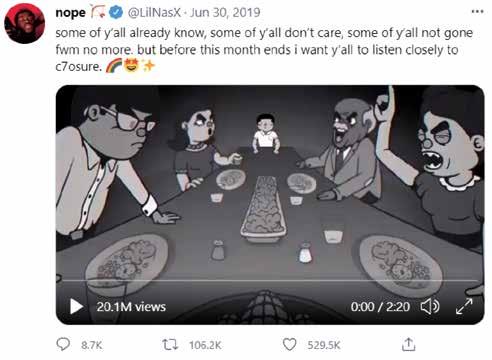
On the last day of LGBT Pride Month, Lil Nas X made this tweet:
Some of the song lyrics from “C7osure” include, “Ain’t no more actin’, man that forecast say I should just let me grow. No more red light for me, baby, only green, I gotta go.” Lil Nas X never came out and directly said on Twitter at that time that he was Gay, but he did follow it up with tweets such as “deadass thought i made it obvious” when the public began questioning if this was a coming out song.
Over the next several days, the musician readdressed his sexuality. Overall, he received positive response from his fans yet also experienced a huge homophobic backlash on social media, part of which emerged from the hip-hop community.
kids!!” Lil Nas X’s response? “Damn I look good in that pic on god.”
Homophobia in the music industry
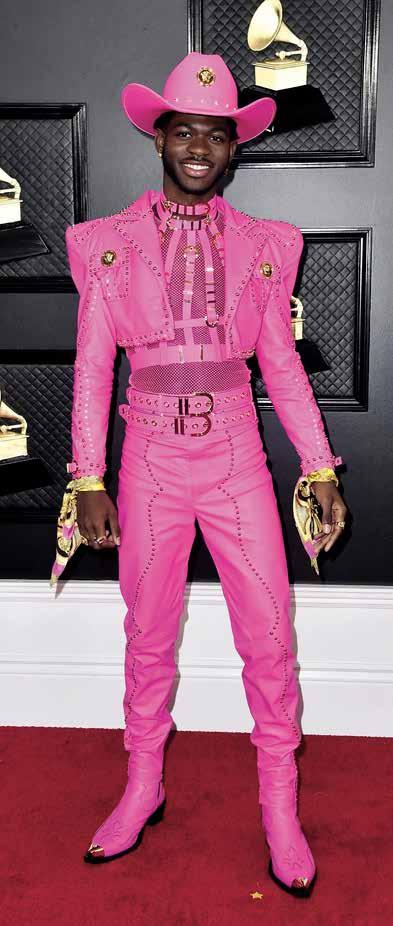
The rap/hip-hop scene has a history of using homophobic lyrics, and that still exists today. Eminem frequently uses the word “faggot” in his tracks, while Migos said, “I cannot vibe with queers” in his song “Offset.” In January of 2020, homophobic remarks were made by rapper Pastor Troy in regards to Lil Nas X’s Grammy Awards outfit. A photograph of the young musician wearing his pink leather Barbie cowboy suit was posted on Pastor Troy’s Instagram page with a caption that included: “ Welp, Guess I won’t be winning a GRAMMY...If this what I gotta wear” and “They love to push this sh-- on our
Black queer music isn’t widely abundant, particularly when it comes to the country and rap genres, but Lil Nas X is challenging the limits of modern music. Generally speaking, Gay musicians aren’t as sexually explicit as straight musicians, and much of modern queer music is created by women. Not only that, the industry is accepting of woman-with-woman lyrics yet uneasy about man-with-man lyrics. It has improved over time, but there’s still plenty of room for growth.
A Gay icon for the 21st century
Not only does Lil Nas X break barriers within the industry and produce astounding queer music but he also inspires and empowers his fans to wholeheartedly
accept and love themselves for who they are — and to never be ashamed of being Gay. “Montero” was Lil Nas X’s letter to his younger self, but he’s also stated that it’s a reminder that “this will open doors for many other queer people to simply exist.”
The young LGBTQ+ community adores the musician because he represents the intersectionality that America needs. He normalizes being a Black Gay man in the music industry, as well as in everyday life. He does not attempt to hide his sexuality, and he is unapologetically Gay. He is a fashion trendsetter with his bold and playful gender-bending outfits. He is groundbreaking in every way, shape, and form. And most importantly? He wants to represent the LGBTQ+ community and is making strides doing so.
Lil Nas X’s rocks a hot-pink Versace outfit at the 2020 Grammy Awards. – Photo courtesy of The Recording Academy
gayness to himself for years, Lil Nas X was finally ready to come out. In early June of 2019, the artist told his father and his sister, but he was uncertain
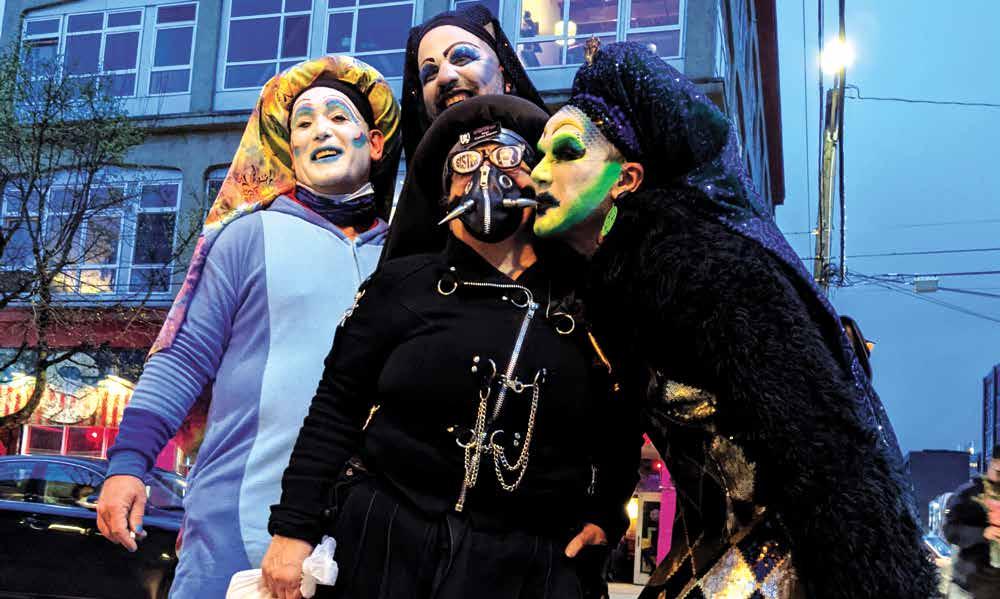
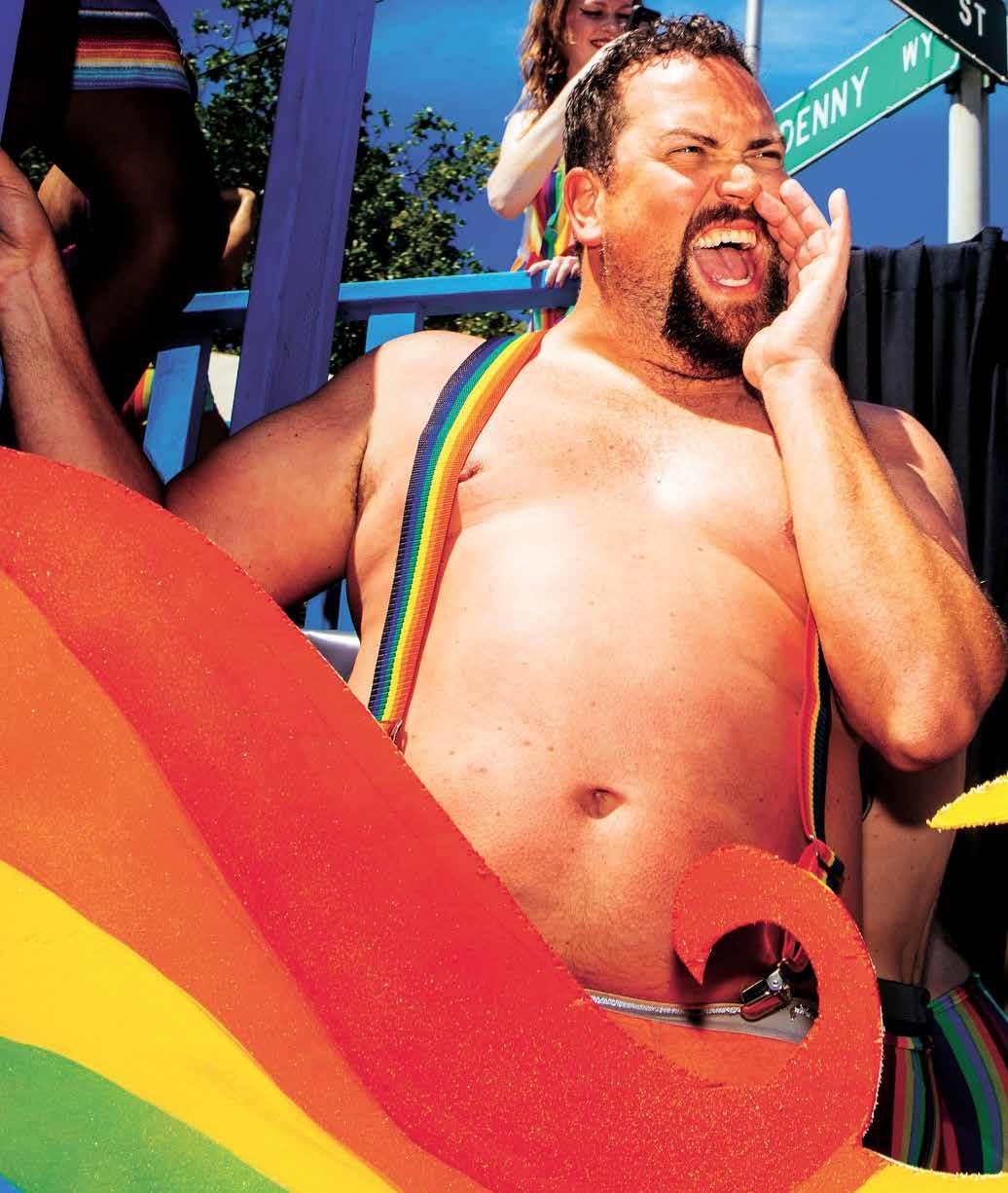
Easter is officially the anniversary of the Sisters Of Perpetual Indulgence as an organization, and the nuns of the Abbey Of St. Joan were out and about Saturday night, spreading
Sisterly joy. L to R: Sr. Hillda Billy, Sr. Berna Bush, Sr. Castrata Stigmata BananaFana Fo- Fata, and Sr. Medusa Oblongata. – Photo courtesy of the Sisters of Perpetual Indulgence
the novel by local author David Guterson and filmed in Eastern Washington.
I had the opportunity to engage in a brief back-and-forth with longtime SIFF Artistic Director Beth Barrett about this year’s festival. Here’s what she had to say:
Sara Michelle Fetters: And we’re back! Maybe a little earlier in the year than normal, and probably not exactly in the way you initially hoped, but we’ve got a Seattle International Film Festival all the same. What are your feelings right now?
Beth Barrett: I am really excited to be launching the festival this week, and to share these incredible films with not just Seattle but SIFF fans across the country! Though it looks and feels different, the key mission of connecting films and audiences is there, and still at the center of what we do.
SMF: What was the decision-making process like for this year’s festival? What difficulties were there for you and your team to overcome as you set about programming for this 11-day event?
BB: Every year, the decision-making is hard — there are always more great films than we can include, and this year it had the added challenge of being half of our traditional size and lineup. It was interesting though; it focused our attention as programmers on finding that one film that spoke to us so deeply we couldn’t let it go. We didn’t want to slim down the regions and genres we were representing, so we had to slim down the number of films that would have to carry that category. It definitely made for some lively conversations in those final weeks!
SMF: No surprise, all things considered, that all of this year’s forums, talks, and events are digital, most of them utilizing Zoom, while a handful will also be screened on the SIFF Channel. Were these difficult to program this year? How do you hope and envision attendees will be able to interact when those opportunities arise?
BB: Live Q&As and roundtables — with the ability for the audience to participate via chat with their questions — are really exciting. We know that so much of the amazingness of a festival is that interaction of the filmmakers and the audience, and being digital has actually allowed us to broaden the reach for those interactions.
Filmmakers have been really excited to participate in live Q&As and roundtable discussions, as well as prerecorded Q&As. This year, we are able to do Q&As with directors we wouldn’t have been able to bring to the festival in person, and how to carry that forward into the future — both in the festival and year-round cinema and education — is something that we will be incorporating.
I think that people want to connect, and the new familiarity with Zoom might allow us to keep those conversations going, or to be able to bring filmmakers to SIFF in new and engaging ways in the future.
SMF: At the same time, I imagine there were also unexpected advantages to programming a digital festival. What surprised you the most?
BB: Beyond the help my cats are able to give on the programming from home, we have had the advantage of learning from our fellow festivals, and our timing also meant that filmmakers and distributors had already set some parameters for their virtual engagement, so we didn’t have any big surprises. The film industry is incredibly innovative, and able to shift in order to connect films and audiences, and we are grateful for it!
SMF: The “How to Fest” tab on the SIFF website is pretty helpful as far as explaining how to navigate through this year’s festival. Still, if you were attempting to try and give attendees advice on how to plan their viewing schedule, what would you tell them?
BB: I would say to prioritize the films you need to see, then the want to see, and throw a couple of short film packages in
Images courtesy of SIFF
SIFF continued from page 11
there! Since there aren’t time restrictions on most of the titles, the timing and pacing is up to you. But remember to keep hydrated and that popcorn can only be the dinner of champions a couple times during the festival!
SMF: With every digital festival, there always seems to be a tiny bit of grumbling that there is not an unlimited volume of “tickets” for each screening. For attendees who still don’t get why that is, could you try and explain why there are caps on how many people can view any one film during the festival?
BB: Sure! Most of the distributors who participate in the festival screenings are still planning a Seattle-based theatrical run after the festival run is over, and as our partners, we want to help them get good reviews and word of mouth about their films, while not taking all of the audience for any given film. In much the same way that no in-person screening has an unlimited number of seats and screenings in the [in-person] festival, no virtual screening will have unlimited views.
SMF: You’re celebrating the life and career of local great Tom Skerritt. Why Tom? What made him perfect for this unique year?
BB: This year is the perfect time to honor an actor who has delivered some of the truly iconic roles for decades. Tom is constantly reinventing himself, never sitting back on his laurels, and with SJ Chiro’s world premiere East of the Mountains, he steps into that leading-man role with gusto! He is a deep supporter of film in Washington and the Pacific Northwest, and with this film shot in Eastern Washington, based on the novel by local author David Guterson, it really allows the Pacific Northwest to shine.
SMF: As great as it is to have SIFF back as a yearly festival, I know the big question for a lot of Seattle residents is when we can expect the SIFF Uptown, Egyptian, and Film Center to begin their
reopening. Any word on that?
BB: We are starting to talk about plans, but nothing is set. We are still very much following guidelines, and keeping the health and safety of the staff and audience at the core as we talk about reopening. I will say that I can’t wait to be in the cinemas again!
SMF: Back to the festival, what about this year’s slate of shorts, features, documentaries, events, and forums makes you the proudest? When you sit there quietly on your own, what makes you smile?
BB: The festival this year spans 69 differnt countries of production, more than 55% of our filmmakers are female identifying, and 66% of the films are from first- or
second-time filmmakers. These are the voices that SIFF brings to Seattle, and to be able to keep bringing them this year on our virtual SIFF Channel makes me giddy with pride! The discoveries that you make as part of festival are all still here…
SMF: What’s next? Where do things go from here?
BB: That is a great question. We continue to live our mission of creating great experiences around film, increasing accessibility to great independent and international films, being able to engage with audiences and filmmakers, and setting the stage for those discoveries you can only make through film. As the world starts to open back up, how do we carry that ethos into the next stage? How do we keep that increased
accessibility both in-person and virtually? I think that is a question for all of us, especially in the arts, but even in general. How do we shift how we think about engagement with other people and the arts going forward? How do we support and nurture the artists and organizations that saved our souls in this last year? How do we think about setting the stage for the next generations? Big questions!
The year’s Seattle International Film Festival runs through April 18 and showcases 92 features and 126 shorts from 69 countries. Information on tickets, passes, and “How to Fest” can be found at www. siff.net.
Steel Magnolias – Photo courtesy of TriStar Pictures
A River Runs Through It – Photo courtesy of Columbia Pictures
Top Gun – Photo courtesy of Paramount Pictures
East of the Mountains – Photo courtesy of SIFF
Poison Ivy – Photo courtesy of New Line Cinema
Film Voyagers a sci-fi trip into the emotionally twitterpated unknown
by Sara Michelle Fetters SGN Contributing Writer
After a somewhat rushed and lumpy start, Neil Burger’s science fiction thriller Voyagers, an interstellar Lord of the Flies, rights the ship and ends up in an emotionally satisfying place. While almost none of what transpires is a surprise, the film is solidly crafted and features a handful of strong
be Richard (Colin Farrell), a scientist with no family, who has raised all of these kids from the moment of their conception.
The majority of the story takes place roughly a decade later. The kids are all inquisitive teenagers diligently carrying out their various jobs, with Richard as their fatherly mission commander answering their questions and trying to keep adolescent problems to a minimum. Two things
performances from its mostly young cast of relative newcomers.
The Earth is slowly dying — and there is nothing humanity can do about it. After discovering a planet in a distant galaxy capable of sustaining human life, plans are made to build and launch a ship capable of making the long journey. It is determined that the crew will be made up of genetically engineered children who will have no concept of the Earth they are leaving behind.
Why? The trip will take 86 years. Those initially at the controls will be grandparents (if they are still alive at all) by the time their expedition ends. Not only will their job be to ensure that the vessel reaches its intended destination, they will also be the ones who will make sure that the human race carries on. In fact, the only adult joining them will
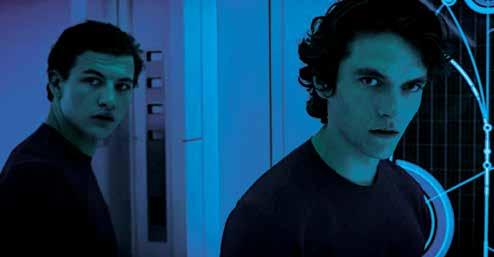
destroy the relative calm: The first is the discovery by two crewmembers, Christopher (Tye Sheridan) and Zac (Fionn Whitehead), that part of their daily meal is being drugged. The second is a mysterious tragedy that leaves them without a leader.
It’s not hard to figure out what happens from there. The crew splits into two dueling camps, one led by the kindhearted Christopher, the other following Zac, who is drunk on power and determined to do whatever it takes to keep it. No longer drugged, the kids find their libidos going into overdrive and their emotions jumping from high to low and all points in between, without any guardrails to keep them from careening out of control. It’s a mess, and unless a solution is found, their entire mission will be in mortal jeopardy.
Burger’s career has been a series of notable successes (The Illusionist, The Lucky Ones) and calamitous misfires (Divergent, The Upside) and not much else. That Voyagers inhabits some sort of reasonably entertaining middle ground is relatively new for the filmmaker. He stages a couple of terrific set pieces, not the least of which is a dangerous spacewalk by Richard and Christopher to fix a broken trans-
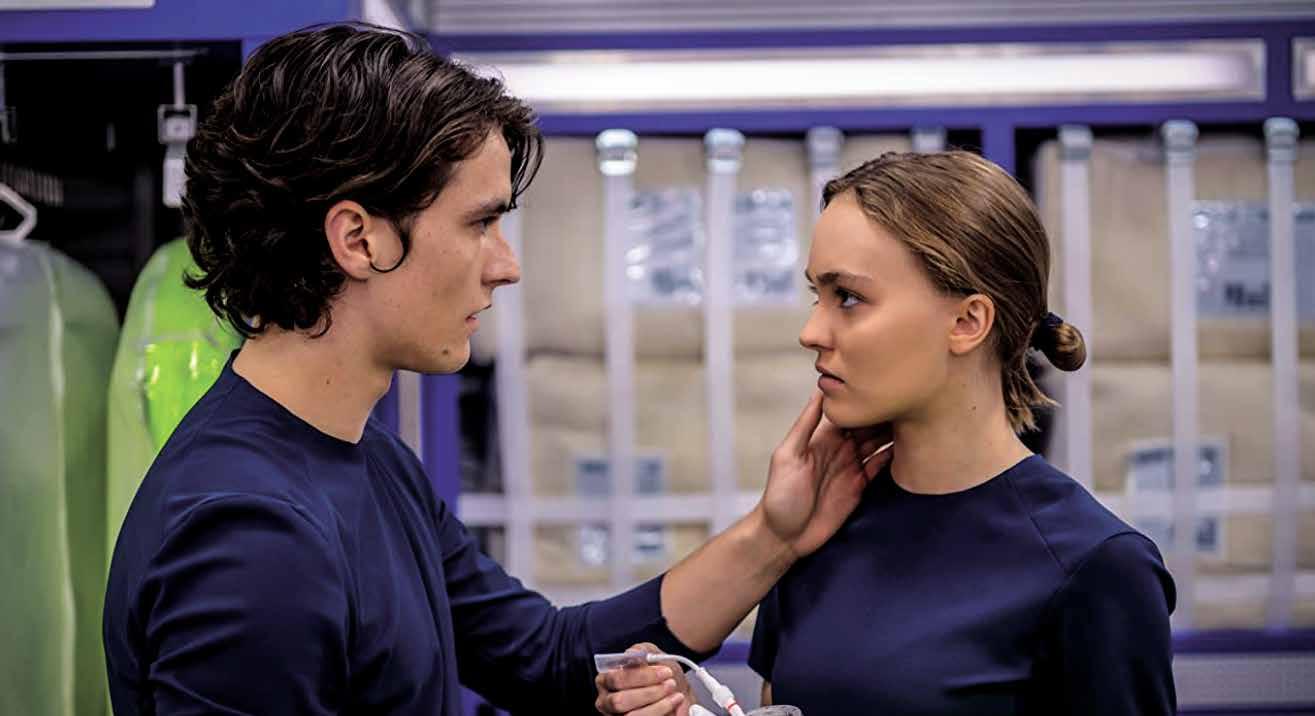
handed moralizing or the heteronormative didacticism of the relationships. With all these raging teenage hormones, that there is no experimentation happening beyond the binary is unfortunate. Burger does create something of a “lust” triangle between Christopher, Zac, and the ship’s medical officer Sela (Lily-Rose Depp), but even that relies far too much on the threat of forced intimacy between the parties that’s tiredly
mitter (queue up “Thus Spoke Zarathustra”). Burger also comes up with a mystery involving a potential alien menace inhabiting the ship, and the way Zac manipulates many of his fellow shipmates by utilizing their fear of this indescribable “other” is relatively well done.
The visual effects are outstanding, and the thunderous score by Trevor Gureckis (The Goldfinch) borders on perfection. The production design by Scott Chambliss (Star Trek) reminded me a bit too much of the somewhat thematically similar Passengers, but it still fits the bill well enough that I can’t hold it against the finished film. Almost all of the technical facets are exceptional, and from a purely visual perspective, I found it hard not to be impressed.
What I did not care for was the heavy-
reductive and boringly exploitive.
That I can somewhat look past this has a lot to do with how Burger stages many of the more dramatic and suspenseful sequences. It is also due to the performances of the primary cast, and not just Sheridan, Whitehead, and Depp. There are some nice moments from a bevy of diverse fresh faces, most notably Chanté Adams, Quintessa Swindell, and Archie Madekwe, all of whom do a fine job of making their brief appearances meaningful.
Is all of that enough to warrant the price of a matinee ticket? I think so, but while those iffy elements do substantively weigh on me, the positives come close to being out of this world, which for me made this trip with Voyagers into the emotionally twitterpated adolescent unknown worthwhile.
Fionn Whitehead and Lily-Rose Depp in Voyagers – Photo courtesy of Lionsgate
Tye Sheridan and Fionn Whitehead in Voyagers – Photo courtesy of Lionsgate
Chanté Adams in Voyagers – Photo courtesy of Lionsgate
Books Book review: From Archie to Zack
by Terri Schlichenmeyer Special to the SGN
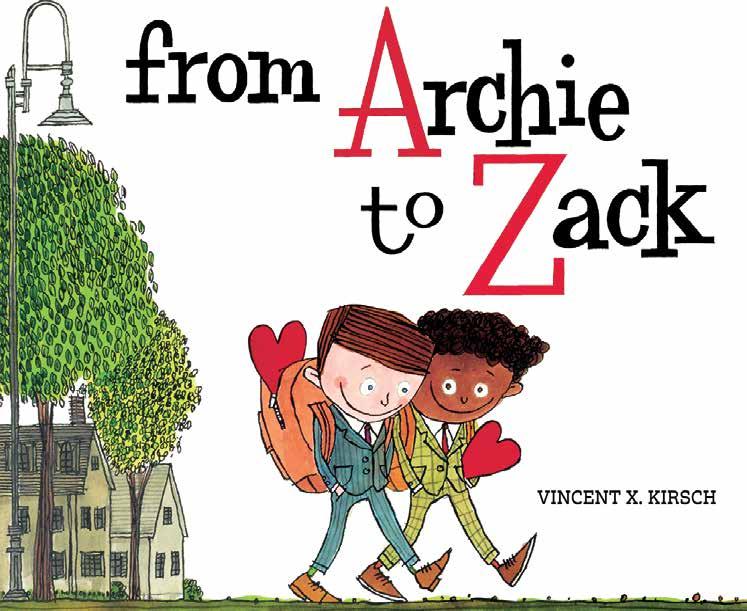
FROM ARCHIE TO ZACK
VINCENT X. KIRSCH
Abrams Books for Young Readers
$17.99 / $22.99 Canada
40 pages
The girl who sits right behind you at school is really nice.
She shares her things if you ask nicely, and she likes to make you laugh. She seems very smart and polite, and she never says mean things to anyone, even if they deserve it. All the kids in your class like her; you like her. But in the new book From Archie to Zack by Vincent X. Kirsch, there might be someone you like just a little more.
There was no doubt in anyone’s mind. Everybody knew it: Archie loved Zack and Zack loved Archie. The two boys were happiest when they did everything together, but the funny thing was, neither of them could say, “I love you.”
Oh, but you can bet they both really wanted to say it. Very much so. And then one day, Archie wrote Zack a note that said, “From A. to Z. It’s true. I love you.”
Archie read the note to himself and it really made him smile.
But that note wasn’t quite right, so he hid it in a tree, and Zack was still his best friend.
He wrote another note, kind of the same. He read it to himself but it just wasn’t quite right. He hid the second note in his band case, and he and Zack were still best friends.
Just before Halloween, Archie wrote another note, with just a little more oomph, and he read it to himself many times. What he wrote finally seemed right this time. He loved Zack! But for some reason, he couldn’t give the note to him, so Archie hid it in his desk at school.
Then one day, Zuzella found a note in a desk. Zinnia found one in band class. Zelda found one in a tree trunk. And all three girls knew who wrote them. They delivered the notes to Zack and that made him smile, because he’d been working on a note that wasn’t quite right.
One that said the truth that everybody already knew.
Nothing unusual.
That’s not normally what you want to hear about a new book on the list of Lambda Award finalists. You probably want to hear enthusiastic things like WOW! — but that’s not what you’ll find here. From Archie to Zack tells young readers a sweet story in a calm, even, nothing-unusual manner.
The lack of drama is where unusual comes into play.
Author-illustrator Vincent X. Kirsch lets kids know that Archie and Zack can love one another and it’s okay. The children in their class don’t make fun of anyone. They barely even comment; in fact, they seem to think it’s wonderful, a lesson that pulses like a heart here.
Even the action-rich illustrations tell
a story here, a story about kids that also serves as a surprisingly grown-up conversation-sparker about love, whether it’s between friends, classmates, neighbors, or a child’s two favorite uncles.
Perfect for anytime reading, kids ages 4 to 8 will love this book best. For them and for you, From Archie to Zack is a book to get behind.
Image courtesy of Abrams
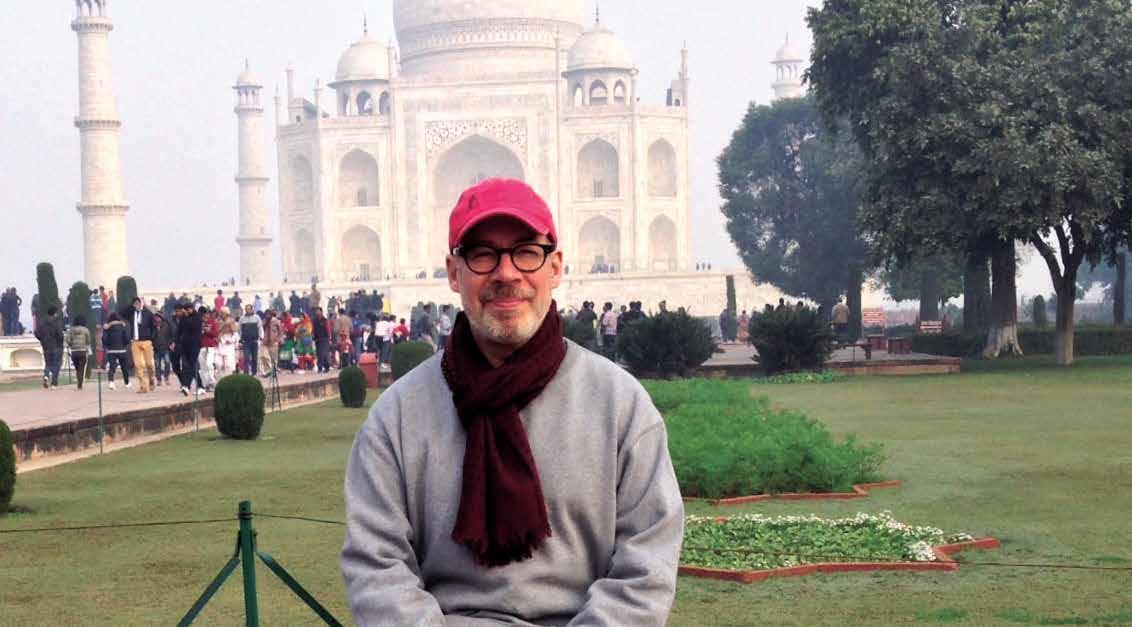
Vincent X. Kirsch – Photo courtesy of the author
Allyship - an organization of LGBTQ individuals fighting for economic and social justice. www.LGBTQAllyship. org, allyship@yahoo.com, (206) 279-8169. American Veterans for Equal Rights - www.aver.us
Another Gay Social Club! - www.meetup.com/AnotherGay-Social-Club/ Bellingham/Whatcom County - www.theslowlane. com/guide.html
BiNet Seattle is a mixed gender, social group for Bisexuals, their partners & other Bi-friendly folks - www. binetseattle.org.
Bremerton/Kitsap County - www.outwestsound.org Capitol Hill Alano Club - www.chacseattle.org
Cascade Rainbow Community Center (Mount Vernon) - (360) 840-8499 and on Facebook. Central Washington University GALA Hotline: (509) 963-1994.
Channel Q 103.3 FM - LGBTQ+ Talk Radio NetworkNews and information, pop culture and music. radio.com COLAGE unites people with LGBTQ parents and caregivers into a network of peers and supports them as they nurture and empower each other to be skilled, self-confident, and just leaders in our collective communities - www.colage.org
DIFFA/Northwest (Design Industries Foundation Fighting AIDS). (206) 763-8885; www.diffanorthwest. org
DOMESTIC VIOLENCE & SEXUAL ASSAULT: Crisis Clinic, (206) 461-3222 (24 hour line); King County Sexual Assault Resource Center (KCSARC) - 24-hour crisis line for information, support, & medical & legal assistance: 1-888-99-VOICE; Northwest Networksupport & advocacy for Bisexual, Trans, Lesbian & Gay Survivors of Abuse & Dating Violence, (206) 568-7777 (voice), 517-9670 (tty), www.nwnetwork.org; Pierce County Domestic Violence Helpline: Teresa, (253) 798-4166; Seattle Counseling Service for Sexual Minorities - offers on-going support groups for men: 323-1768; Seattle Police Dept Domestic Violence Unit, (206) 684-0330; State Wide Domestic Violence Hot Line, 1-800-562-6025. In an emergency call 911 Report domestic violence and sexual assault. Equal Rights Washington - (206) 324-2570; www. equalrightswashington.org
Gay City promotes wellness in LGBTQ communities by providing health services, connecting people to resources, fostering arts, and building community. Gay City Health Project’s Wellness Center provides anonymous & confidential HIV/STD testing. 517 E Pike St. More info or to schedule an appointment, (206) 860-6969. www.gaycity.org
Gay & Lesbian National Hotline (GLNH): 1-888-THEGLNH (1-888-843-4564). Non-profit, peer-counseling, information & local resources telephone hotline for GLBT people across the country.
Generations Aging With Pride empowers elder LGBTQ adults to live with pride and dignity by promoting, connecting, and developing innovative programs and services that enhance belonging and support, eliminate discrimination, and honor the lives of older members of our community - (206) 393-3400; info@gapseattle.org; gapseattle.org
Greater Seattle Business Association (GSBA) - (206) 363-9188; www.thegsba.org
HIV/AIDS Program, Seattle/King County Dept of Public Health, provides confidential/anonymous information about & testing for HIV/AIDS. (206) 205-7837. For a comprehensive list of HIV/AIDS service organizations see the GSBA Guide or visit www.thegsba.org or call Lifelong AIDS Alliance, (206) 328-8979.
Imperial Sovereign Court of Seattle & the Olympic & Rainier Empire - www.facebook.com/ISCSORE; www. imperialcourtofseattle.com
Lambert House - (206) 322-2515; www.lamberthouse. org
LGBT Library - 517 E Pike St. Open Mon-Fri 2-8pm; Sat 2-5pm. A wide range of fiction and non-fiction for the LGBT community and allies can be borrowed free of charge.
LGBT MS Connection - (425) 785-8593; lgbtmsconnections@comcast.net. Support group for LGBT persons with MS and their partners and their caregivers. Sponsored by the National Multiple Sclerosis Society. Lifelong AIDS Alliance - (206) 328-8979, www.lifelongaids alliance.org Lion’s Main Art Collective - www.lionsmain.org
MEN: Gay City: (206) 860-6969, www.gaycity.org; Knights of Mantra: (206) 329-0886, www.jetchapterkofm.com; Mature Friends: Gay men & women 40 & over, www.maturefriends.org; Northwest Bears: www. nwbears.com; The Olympians: www.TheOlympians. net; POZSeattle: www.pozseattle.com; Q-Squared: www.qsquared.org; Rain City Jacks: www.raincityjacks. org; Seattle Gay Couples: www. seattlegaycouples.org; Seattle Men in Leather: www.seattlemeninleather. org; Seattle Prime Timers: Gay & Bi men 40 & over, www. seattle primetimers.org; Tacoma Older LGBT: www. tacomaolderlgbt.org. (See also listings under Bisexual, Parenthood, People of Color, Transgender.)
MUSIC: Diverse Harmony: www.diverseharmony. org; Rainbow City Band: 1-866-841-9139 ext 2126; rainbowcityband@onebox.com; www.rainbowcity band. com; Seattle Men’s Chorus and Seattle Women’s Chorus: (206) 388-1408, (206) 323-0750. www.seattlechoruses.org.
Northwest Lesbian & Gay History Museum Project - gayhistnw@aol.com
community resources
Northwest Rainbow Alliance for the Deaf - www. nwrad.org
Olympia/Thurston County - www.RainbowCenterOly. org
Out & Equal Workplace Advocates/Seattle Regional Affiliate supports the work of LGBT employees and the growing number of ERGs (Employee Resource Groups) making a difference within local companies, including Alaska Airlines, Amazon.com, Amgen, AT&T, Bank of America, Deloitte, Macy’s, Microsoft, Russell Investments, Safeco Insurance, Starbucks Coffee, Xerox. www.outandequal.org/affiliates/seattle
Out & Proud Grays Harbor Coalition - http://outandproudgh.org
PARENTHOOD: Families Like Ours provides a gateway for LGBT families interested in adoption & provides a network of safe placement agencies, training, support & resources: (206) 441-7602, www.familieslikeours. org; Family Works offers support, information & activities for LGBT families: (206) 694-6727, www.familyworksseattle. org; Gay Fathers’ Association of Seattle offers support groups & social activities: www.gfas. org; Proud & Loud Families - Northwest, www.meetup.com/proudand-loud-families-northwest, plfnorthwest@aol.com; Queer Parent Networking Dinners: (206) 568-7777, qpnd@nwnetwork.org, www.nwnetwork.org; Rainbow Families of Puget Sound: www.rainbowfamiliesps.org PFLAG is the national organization for parents, families, allies, and LGBTQ people united for equality with chapters in Seattle, Bellevue/Eastside, the Puget Sound region and across Washington state. PFLAG Seattle: (206) 325-7724, info@pflagseattle.org, and www.pflagseattle.org; PFLAG Bellevue/Eastside: (425) 483-6642, info@bellevue-pflag.org, http://community. pflag.org/PFLAGBellevue; PFLAG Pacific Northwest: www.pnwpflag.org; PFLAG Washington State Council: www.pflagwsc.org.
Peer Seattle (formerly Seattle Area Support Groups) is a non-profit organization that builds community and cultivates powerful, healthy lives by providing emotional support and personal development services to those affected by HIV/AIDS, the Queer communities, and those who love them. Our work is done in a spirit of safety, trust, inclusiveness, and celebration of individual differences. (206) 322-2437; www.peerseattle.org
PEOPLE OF COLOR: AARTH (African American Reach & Teach Health Ministry), (206) 850-2070, www.aarth.org; Asian/Pacific Islander Queer Network Program at API Chaya, (206) 467-9976; Center for MultiCultural Health, (206) 461-6910, www.multiculturalhealth.org; Entre Hermanos, GLBT Latinos/as, (206) 322-7700, www.entrehermanos.org; Ile LaiLai, (206) 781-3565, iya@ilelailai.org; Men of All Colors & Cultures Together (MACCT), (206) 923-8313, macctseattle@yahoo.com, www.macctsea.org; Northwest Two Spirit Society, https://www.facebook.com/ groups/nw2spiritsociety/, Nubian Pride Productions, nubianpride@gmail.com; People of Color Against AIDS Network (POCAAN) offers rapid HIV testing, M-F, 10am-5pm, (206) 322-7061, www.pocaan.org and on Facebook; QBASS - Queer Black Alliance of the South Sound, (253) 256-1846, weareqbass@gmail. com; Sistah 2 Sistah, LBT women of African descent, (206) 322-7061, (206) 255-8951; Somos Seattle, somosseattle.org; Trikone-Northwest, GLBT South Asians, (425) 985-4376, www.trikonenw.org; Two-Spirit Honor Project, 1-866-685-0164; U.T.O.P.I.A. Seattle, www.utopiaseattlewa.org; VietQ Greater Seattle, vietqorganization@gmail.com
Pierce County AIDS Foundation - (253) 383-2565; www.piercecountyaids.org
Pride Foundation - (206) 323-3318; www.pridefoundation. org
Pride Lives - www.facebook.com/PrideLives/ Pride Radio 93.3 HD2
Project NEON is a program of Seattle Counseling Service providing FREE information & services to Gay & Bi men to reduce health risks associated with methamphetamine use. (206) 323-1768. www.crystalneon.org
Public Health-Seattle & King County Online Comprehensive Health Information for Sexual Minorities: www.kingcounty.gov/healthservices/health/personal/ glbt.aspx
Q Law: The GLBT Bar Association of WA - (206) 682-6711; www.q-law.org
Rainbow Center - Resource Center for Tacoma/Pierce County LGBTIQA community. Through education, advocacy and celebration, the Rainbow Center expands resources, and safe space for the LGBTQIA community.
Sponsors Tacoma Pride Festival. (253) 383-2318, www. rainbowcntr.org
SEAMEC interviews, researches & rates candidates for public office on issues of concern to the LGBT community. www.voteseamec.org
Seattle Area Support Groups & Community Center (SASG) i- SEE LISTING for Peer Seattle. Seattle Bisexual Women’s Network - BiSeattle.wixsite. com/SBWN and on Facebook.
Seattle Counseling Service for Sexual Minorities is a community mental health service for GLBT persons & their families providing comprehensive mental health services on a sliding scale. (206) 323-1768.
Sex Workers Outreach Project - https://seattle. swopusa.org
Sisters of Perpetual Indulgence, The Abbey of St. Joan - (206) 860-3666; www.theabbey.org Snohomish Health District HIV/AIDS Program provides free confidential/anonymous HIV counseling & testing 9am-5pm Monday-Friday, until 7pm Tuesdays. (425) 339-5298.
South Sound Q Calendar - LGBTQ events in Tacoma, Olympia & Sound Puget Sound area; www.SouthSoundQCal.com Spokane/Inland Northwest - www.outspokane.com; www.stonewallnews.net
SPORTS & RECREATION: Bent Car Guys: www. bentcarguys.org; Border Riders Motorcycle Club: www.borderriders.com; Bottom Dwellers Scuba Club: www.bottomdwellers.org; Capitol Hill Cyclers: join their Facebook group or email capitolhillcycling@ groups.facebook.com or jordan.l.simonson@gmail.com; Cascade Flag Football: www.cascadeflagfootball.org; Cascade Flyers: www.cascadeflyers.org; Emerald City Mudhen Rugby: www.mudhenrugby.com; Emerald City Softball Association: www.emeraldcitysoftball. org, www.eteamz.com/womensecsa; Ethyl Forever Car Club: ethylforever@hotmail.com; Festival of the Babes: www.festivalofthebabes.com; Olympic Yacht Club: www.oycnw.org; OutVentures: outdoor education & recreation activities, www.outventures.org; Pacific Northwest Gay Rodeo Association: www.pacificnwgra.org; Puddletown Squares: www.puddletownsquares.org; Rain City Soccer: www.raincitysoccer.org; Rain Country Dance Association: a country-western dance organization catering to the LGBTQ community but open to all, www.raincountrydance.org; Sea Dawgs: LGBT ice hockey - SkateSeaDawgs@gmail.com and on Facebook; Seattle Frontrunners: www.seattlefrontrunners.org; Seattle Gay Basketball Association: www. seattlegaybasketballassociation.com; Seattle Orca Swim Team: www.orcaswimteam.org; Seattle Otters Water Polo: www.otterpolo.com; Seattle Quake Rugby: www.quakerugby.com; Seattle Tennis Alliance: www. seattletennisalliance.org; Seattle Unified Bowling Association (SUBA): magee98106@aol.com, www. teamseattle.org/bowling.htm, www.theprideleague. com, Century 21 League; Seattle Volleyball Club: www.seattlevolleyballclub.com; Ski Buddies: www. skibuddies.org; Team Seattle Gay Sports Network is an umbrella organization for a wide range of local GLBT sports activities, (206) 367-4064, www.teamseattle.org (see website for comprehensive list of sports clubs); Triangle Recreation Camp at Bender Creek: recreational camping for GLBT folks. Must be 21; ID required. trc@ camptrc.org, www.camptrc.org, 1122 E Pike St #1069, Seattle 98122-3934. Strength Over Speed - www.strengthoverspeed.org Tacoma/Pierce County - Rainbow Center, 2215 Pacific Ave, Tacoma, a resource center for the LGBTIQA community of Pierce County, (253) 383-2318, www. rainbowcntr.org
Three Dollar Bill Cinema - TWIST: Seattle Queer Film Festival; Translations: Seattle Transgender Film Festival; Outdoor Cinema at Cal Anderson Park. www. threedollarbillcinema.org
TRANSGENDER: Emerald City Social Club: (425) 827-9494; Gender Alliance of the South Sound: www. SouthSoundGender.com; Gender Diversity: www. genderdiversity.org; Gender Justice League: www.genderjusticeleague.org; Gender Odyssey: www.genderodyssey.com; Hermanos Trans Latino & Foreign-Born
Support Group: (206) 322-7700; Ingersoll Gender Center: (206) 329-6651, www.ingersollcenter.org; Lion’s Main Art Collective: www.lionsmain.org; The New BoyZ Club: www.olympiaftmgroup.webs.com; Olympia Trans Discussion Group: www.facebook.com/pages/ Olympia-Trans-Discussion-Group/262449878114; [trans] ACTION: Trans* & Gender Non-Conforming Sex Workers’ Support Group - a safe, peer-led space. mail@utopiaseattle.org; TRANSform Washington: transformwashington.com; Trans Resource & Referral Guide: kctransguide.org; Trans Women of Color Solidarity Network: Funding the collective liberation of Trans women of color – https://m.facebook.com/ TWOCSolidarityNW/; Washington Gender Alliance: (360) 445-2411, www.washington genderalliance.com
WOMEN: Aging Ballard Lesbian Exchange (A.B.L.E.): We are Lesbians 60 years (generally) and up, living (mostly) in the north half of Seattle. The purpose of the group is to connect, socialize and support each other. ruthemilyvogel@gmail.com; Aging Lesbians in South Seattle (ALISS) - Lesbian Group at the Southeast Seattle Senior Center. This is a gathering primarily for Lesbians but all are welcome to attend. Kate, (206) 722-0317; www.sessc.org; BABES: support groups for HIV+ women. (206) 720-5566, 1-888-292-1912; Coming Out Women Support Group of Tacoma: www. comingoutwomen.org; Festival of the Babes: www. festivalofthebabes.com; Mature Friends: Gay men & women 40 & over, www.maturefriends.org; Puget Sound Old Lesbian Organizing for Change: http:// psoloc.org, (253) 777-3357; Older Lesbians Organizing for Change/WA State Chapter: gloria@oloc.org, mary@oloc.org, www.oloc.org; Pacific Northwest Lesbian Archives: www.pnwlesbianarchives.org; RainshadowWomen: RainshadowWomen@aol. com; Seattle Bisexual Women’s Network: BiSeattle. wixsite.com/SBWN; Seattle Girls of Leather: www. sgol.org; Tacoma Lesbian Concern (TLC): www.tacomalesbianconcern.org; Tacoma Older LGBT: www. tacomaolderlgbt.org; Women of West Seattle (WOWS): a fun, member-driven social group for Lesbians, http:// groups.yahoo.com/group/womenofwestseattle; YWCA Women’s Health Outreach: providing low or no-cost mammograms for income eligible 40+ LBTQ individuals. Follow us at http://lbtqhealth-ywca.blogspot.com, twitter.com/ingridWHO or email lbthealth@ywcaworks. org, (206) 461-4493. (See also listings under Bisexual, Parenthood, People of Color, Transgender.)
YOUTH: B-GLAD (Bisexual, Gay, Lesbian, Trans & Questioning Adolescent Drop-In Group): Youth Eastside Services offers many programs for GLBT youth, including B-GLAD, (425) 747-4937; Coyote Central: www.coyotecentral.org; Diverse Harmony: www.diverseharmony. org; GLSEN/Washington State (Gay, Lesbian, Straight Education Network) & Washington State GSA (Gay-Straight Alliance) Network: GLSEN works to create safe schools for LGBT students. WA GSA Network supports youth-led GSA’s to fight harassment & homophobia in Washington state schools. (206) 330-2099; www.glsenwa. org; www.wagsa.org. GLOBE (GLBTQ Loving Ourselves, Becoming Empowered): a support group & HIV/STD prevention program for GLBTQ youth, 14-20, in Everett, (425) 263-2908, www. globeyouth.org; It Gets Better Project: www.itgetsbetter.org; Lambert House: an activities & resource center for LGBT youth, 14-22, 1818 15th Ave @ E Denny Way, with additional support groups organized in smaller towns throughout King County, (206) 322-2515, www. lamberthouse.org; Lifelong HEYO (Health Education Youth Outreach): for LGBTQ youth, ages 16-24: (206) 957-1665; www.llaa.org/HEYO; www.MatthewsPlace. com ; The Mockingbird Society: (206) 323-KIDS (5437), www.mockingbirdsociety.org; New Horizons: social services and shelter for homeless youth, 2708 3rd Ave (in Belltown), (206) 374-0866, http://namin.org; Oasis Youth Center: for GLBTQ youth, ages 14-25, in Tacoma, (253) 671-2838, www.oasisyouthcenter. org; OKAY! LGBTQ+ Outreach for Kent Area Youth: (253) 859-0699 ext 3034. OKAY! is an open support group for youth ages 13-19 who identify as LGBTQ+. A program of Kent Youth & Family Services; OUT There Adventures: www.outthereadventures.org; Parents, Family & Friends of Lesbians & Gays (PFLAG)/ Puget Sound: (206) 325-7724, www.seattle-pflag.org; Pizza Klatch: weekly lunchtime support groups for LGBTQ youth in Thurston County, www.pizzaklatch. org; Prism: for LGBTQ youth, 14-21, in PuyallupCherise.Alexander@ multicare.org; www.facebook. com/PuyallupPrism; Proud Out Wonderful (POW!): for LGBTQ youth, 13-21, in South King County, (206) 326-9112, www.facebook.com/proudoutwonderful; Q Youth Resources: in Kitsap County - (360) 698-3335; www.kchaf.org; Roots Young Adult Shelter: 1415 NE 43rd St., (206) 632-1635; www.rootsinfo.org; Safe Schools Coalition: www.safeschoolscoalition.org; (206) 451-SAFE, (206) 451-7233 (non-emergency), 1-877-SAFE-SAFE (1-877-723-3723) (crisis line); Seattle Young People’s Project (Queer Youth Resource Board): (206) 860-9606, www.sypp.org; Street Youth Ministries (SYM): (206) 524-7301 ext 111; www. streetyouthministries.org; Teen Link: (206) 461-4922, 1-888-431-TEEN; The Trevor Project: 866-4-U-Trevor; www.thetrevorproject.org; True Colors - Connecting LGBTQ Teens: in Shoreline, (206) 362-7282 x 8018, lbagley@chs-nw.org; The Vera Project: fuels personal & community transformation through collaborative youthdriven engagement in music and art. (206) 956-8372; theveraproject.org; Vista Youth Center: for LGBTQ, questioning and allied youth, ages 14-21, in Kennewick, (509) 396-5198, www.vistayouthcenter.org; YouthCare/ Isis Program (Transitional Living Home for LGBTQ Young Adults, 18-22): (206) 522-8412; YouthCare/ Orion Center Young Adult Shelter: 1828 Yale Ave @ Stewart St. (206) 622-5555; Youth in Focus: (206) 723-1479; www.youthinfocus.org; Youth Suicide Prevention Program (OUTLoud-GLBTQ): (206) 297-5922, ext 116, 1-800-273-TALK, www.yspp.org
JANICE ATHILL
many of those who are not affected by it have trouble seeing.
Crenshaw begins by reasoning how difficult it is to solve a problem you cannot see, then states the names of Black women who have been murdered by cops but received no media coverage. She then discusses how the missing “frames” (media representation) of the different injustices against Black women are overshadowed by the violence, brutality, and discrimination done to Black men or white women.
She then discusses the case of DeGraffenreid v. General Motors Assembly Div., in which a Black woman named Emma DeGraffenreid claimed employment discrimination based on gender. However, because the company could prove it hired and promoted Black men for hard labor as well as white women for their front office, her claim was dismissed. That day, the courts chose not to protect Emma DeGraffenreid.
The courts could not see where the intersection between racism and sexism created a unique form of oppression for Black women: passion is perceived as anger and timidity as unfriendliness, and the need to acclimate presses aggressively into their subconsciousness.
Black women are viewed as stronger and in less need of protection, and because of this, the violence against them goes relatively unrepresented.
Intersectionality is not a term exclusive to Black women. There can be many overlapping intersections. In fact, most women of color are subject to this discrimination, and when you consider members of the LGBTQ community, you find that Black
Trans women — or any Trans women of color for that matter — find themselves with a network of intersections working against them.
In order to combat this injustice, we must stop relying on social justice laws
to flow downward and cover everyone. Women hoped that the 14th Amendment would ensure their freedom and equality in 1868, but then the Equal Rights Amendment failed three states short of being ratified in 1982. To this day there is nothing in
the American Constitution that mentions equal rights for women, although 85% of the 192 UN member states mention gender equality in theirs.
Stepping into the city: A writer’s journey toward understanding Seattle
by A.V. Eichenbaum SGN Associate Editor
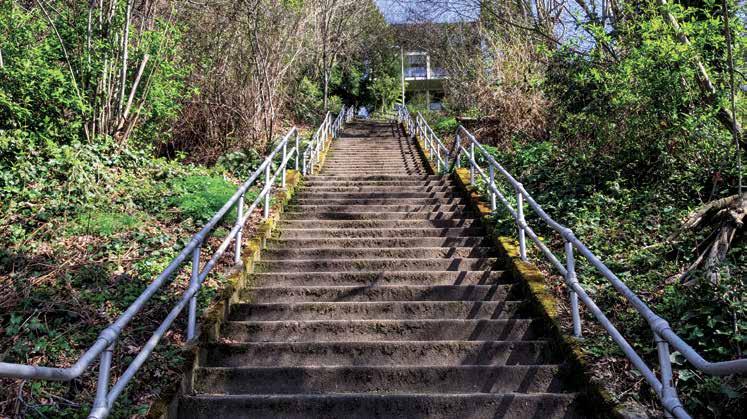
I take the Howe Street steps to work.
Several days a week, you can see me there, sweating up those stairs right alongside the soccer moms, joggers, and health nuts. I see these people nearly every day. Presumably they’re neighbors, although I don’t know any of them by name.
Like a lot of Seattleite life, it’s an isolating shared experience.
I’ll be the first to admit it: I’m a transplant. I grew up near the central coast of California in a little town that specializes in garlic. Over the last few years, as every born-and-raised Seattle local likes to tell me, there’s been an enormous influx of transplants like me to this area. It’s changed the city in a lot of ways, and for every person who bemoans that fact, there are at least two who are new enough not to notice.
It’s not kosher to talk about the Seattle Freeze. Locals say it doesn’t exist, or it’s perpetuated by transplants who don’t know how to talk to new people, or it’s a sign of the oversensitivity of younger generations. But the fact is, life in Seattle can be lonely.
Living in Eastlake — a hidden gem of a neighborhood — has buffered me from some of the effects of the Freeze, but that doesn’t mean I’ve made a lasting friend group in the last four years. I introduced myself to a new neighbor recently only to hear, as I walked away, “What was that all about? So weird.” I once had an elderly woman scream in shock when I wished her a good morning.
Guys, I’m not that ugly. I swear.
Seattle has always struck me as a unique
city struggling to find its identity. As a masc-presenting nonbinary person, I can relate to that. I see the beauty here. I love the fact that it’s rapidly changing and becoming something new. I see that reflected not only in myself but also in my work life, and my personal life as well. There’s a constant stream of change as the city’s soul becomes something other. And what is a city’s soul if not the people and dreams that inhabit it? You can’t buy that on Amazon.
As we begin to emerge from our pandemic burrows and return to the world, I plan to step out into the community and learn what it is that makes Seattle tick. I’m looking for that super special je ne sais quoi that says, “This is Seattle, this is who we are — and it’s not just that our baseball team needs work.”
It’s a perfect opportunity to learn about a changing city, the world being in flux as it is. And as the weeks turn into months, I hope
you’ll be right there with me.
It’s going to be a massive undertaking. There are so many things I feel I don’t know about this city I love, even after living here for nearly half a decade. But if trekking those stairs has taught me anything, it’s that all it takes is one step to get started. Oh, and watch where you’re going. I learned that the hard way.
Kimberlee Crenshaw – Photo by Marla Aufmuth / TED
Photo courtesy of A.V. Eichenbaum
National News
ARKANSAS
continued from cover
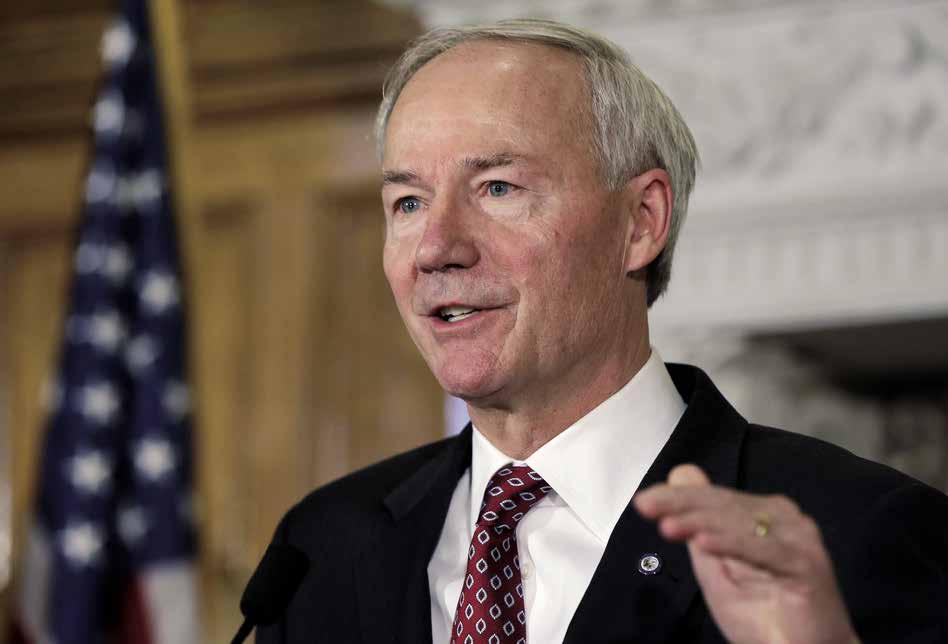
Arkansas Gov. Asa Hutchinson vetoed the bill on April 5, calling it “well-intended but off course” and “overbroad.”
On April 6, the legislature decided to reaffirm support for the bill, with the Senate voting 25-8 to override the veto, and the House voting to override by a vote of 71-24.
The measure prohibits doctors from providing gender-confirming hormone
treatment, puberty blockers, or surgery to anyone under 18 years old, and bars them from referring patients to other providers for the treatment.
The new law will take effect 90 days after the Arkansas General Assembly recesses on April 30. Opponents of the measure say they will sue to block the ban before it takes effect this summer.
Hutchinson said he expected lawmakers to override his veto but urged them to come up with a “more restrained approach” to Trans medical care.
“We are creating new standards of legislating interference for physicians and parents as they deal with some of the most complex and sensitive matters involving young people,” the Republican governor said in a news conference.
Anti-Trans bills in many states
The Arkansas bill is only one among several proposals that have been put forward this year targeting Trans people — especially youth.
According to NPR, at least 20 states are
considering similar legislation. Alabama, Arkansas, Mississippi, and Tennessee have already enacted measures barring Trans students from competing in school sports teams consistent with their gender identity.
On April 2, Hutchinson signed a separate bill that would allow doctors to refuse to treat a potential patient because of religious or moral objections. Human rights activists charged that the new law would be used to turn away LGBTQ patients.
Tennessee Senate passes sex-ed opt-out bill
Parents can take kids out of instruction about sexual orientation and gender identity
by Mike Andrew SGN Staff Writer
The Tennessee State Senate voted on April 5 to require school districts to notify parents in advance of any instruction dealing with sexual orientation or gender identity, and to allow them to take their children out of such classes.
The measure now goes to the State House. Both Senate and House are controlled by Republicans.
Backers of the bill argue that the measure strengthens parental rights, but critics counter that it could further alienate already marginalized students.
According to the bill, school districts would have 30 days to alert parents or guardians of upcoming instruction on sexual orientation or gender identity. Families could then opt their student out of the learning without being penalized.
The sponsor of the measure, Republican Sen. Paul Rose, said that his bill reinforces parental choice.
“Currently, an opt-out option with respect to matters provided as family life/ sex education
curriculum is provided, but no such right extends to sexual orientation or gender identity. This bill just intends to correct that and include that,” Rose said.
“In addition, this merely applies the same standards in any program and instruction involving sexual orientation or gender identity, which would give parents a much-needed voice.”
Democratic senators who voted against the bill said it stigmatizes LGBTQ students.
“When you say that parents can opt their children out of a lesson or part of the curriculum, you are saying there’s something wrong with that part of the curriculum,” said Democratic Sen. Sara Kyle.
“But it goes beyond an idea in this case — it hits at the identity of a group of people,
LGBTQ people, and it is therefore stigmatizing.”
“The type of curriculum that we’re talking about is not a ‘how to’,” said Sen. Raumesh Akbari, also a Democrat.
“It’s not saying this is how you transition, or this is how you decide how you identify. It is merely providing information that this exists. And quite frankly, I think that instead of trying to shield students from this, they need to be prepared for the world that they exist in.”
Democratic Sen. Heidi Campbell asked Rose if he had contacted any members of the LGBTQ community when he drafted the legislation. Rose said he had not.
The measure is one of several LGBTQfocused bills that have been filed in Tennessee this year.
During the same session on April 5, state senators tabled the vote for another LGBTQ+ bill. If passed, that bill would allow cisgender students to take legal action against the school if they aren’t allowed “reasonable accommodation” when they refuse to share a bathroom with Transgender students.
Photo by Max Fischer from Pexels
Arkansas Gov. Asa Hutchinson – Photo by Danny Johnston / AP
International News International News Highlights
by A.V. Eichenbaum SGN Associate Editor
Belgium –
Politicians speak on Grindr attacks
Belgian politicians have spoken out against a brutal, homophobic, and violent hate crime carried out by three teenage boys in the city of Beveren. David Polfiet was found beaten and stabbed to death in a city park on March 29 after reportedly being lured there by the teens under the pretense of a date arranged via Grindr. The teenager turned themselves in after the incident, claiming they intended to rob Polfiet, but not to murder him. The victim was badly beaten and stabbed; his body having been found by a cyclist the next morning. One of the assailants openly belongs to a group of “gay bashers” that use dating sites to ambush and assault gay men, according to Belgium’s De Standaard newspaper. This is one of many recent attacks utilizing Grindr as bait around the world.
Japan –
LGBTQ+ activists demand equal rights before Olympics Activists submitted a petition with over 106,000 signatures on April 1st to Japan’s predominant political party calling for an LGBTQ equality law to be put into action prior to the Tokyo Olympic Games. The movement contends that Japan has a responsibility as a host nation to uphold the Olympic charter banning gender and sexual discrimination. More pressure has been put on Japan’s leading politicians to address LGBTQ issues following March’s marriage equality victory wherein a district court declared a ban on same-sex unions unconstitutional.
Poland –Senior judge under fire for endangering Trans child
A judge in Warsaw is accused of putting a Trans student in danger by tweeting about her. Krstyna Pawlowics, a conservative justice on the Polish Constitutional Tribunal, tweeted an image of the child blatantly misgendering her and stating her strong disapproval of the school’s decision to honor the child’s identity. After outrage from opposing political and parent groups, the tweet has been removed.