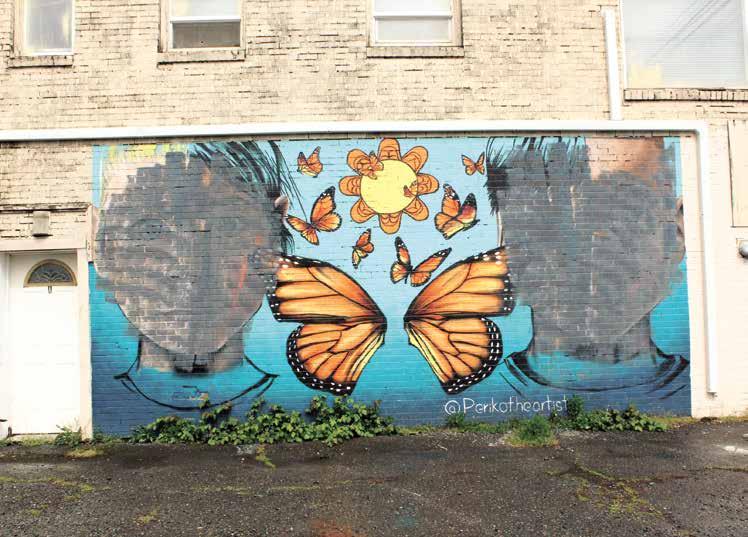
Tacoma was disheartened this week after news broke that the iconic “I Am Tacoma” mural was vandalized. The mural, which depicts four faces of children of different races together, was vandalized with black paint last week.
In the artist’s own words
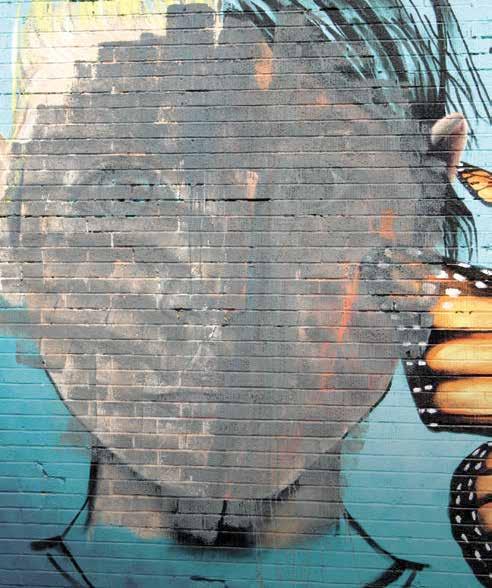
“They first painted over the black boy and then came back 4 days later with someone else and painted over the rest of the faces,” artist Gerardo Pena said in a statement on Instagram.
According to Pena, the culprit has been identified as a man “known in the community for calling people racial slurs.”
see VANDAL page 5
by A.V. Eichenbaum SGN Managing Editor
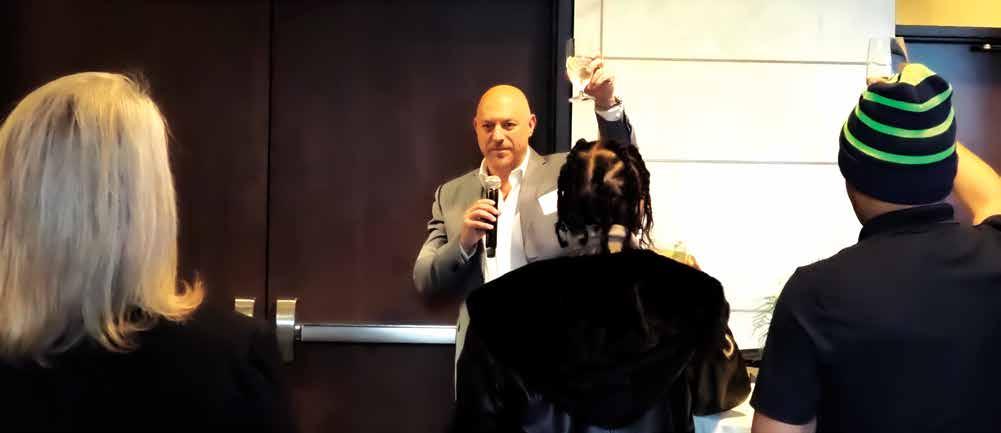
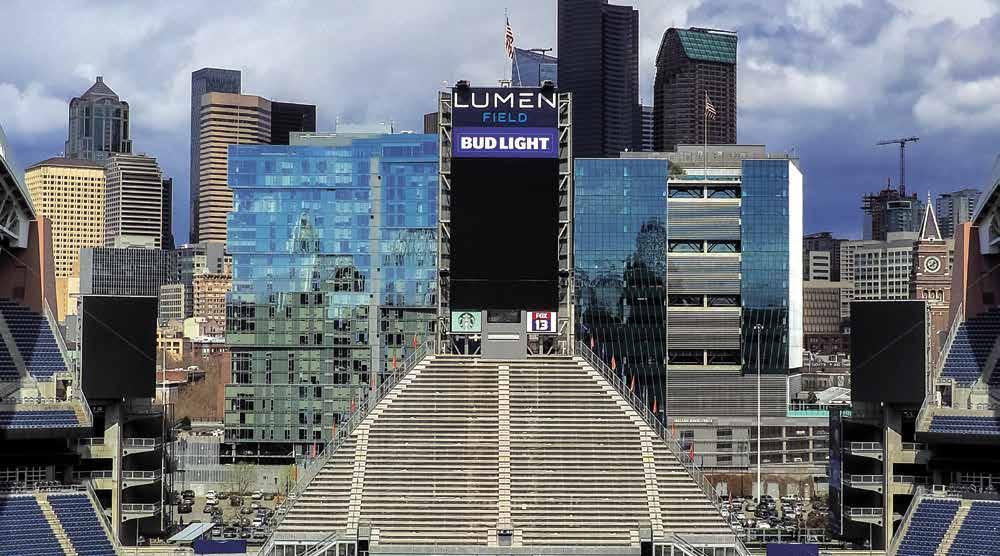
LGBTQ+ sports teams, advocates, startups, and allies met at Lumen Field Monday, April 4 for a two-day summit to discuss how best to promote and support the community and each other. The summit, hosted in partnership with Compete Sports Diversity and the Seattle Seahawks, was attended by representatives of nationally renowned Seattle teams and smaller local sports organizations alike.
Eric Carlyle, diversity advocate and CEO of Compete Sports Diversity, based out of Arizona, also served as an MC for the event, introducing speakers and hosting panels the first day. Participants came from a variety of backgrounds across the gender and sexuality spectrum, each bringing a new perspective to their respective discussions. “It takes a lot of diversity to make diversity happen,” said Carlyle.
firefighter sues NYC Fire Dept. over conversion therapy recommendation
by Mike Andrew SGN Staff Writer
A Gay New York City firefighter is suing his department, the City of New York, and the fire department lieutenant who served as the department’s diversity officer, charging them with harassment based on his sexual orientation.
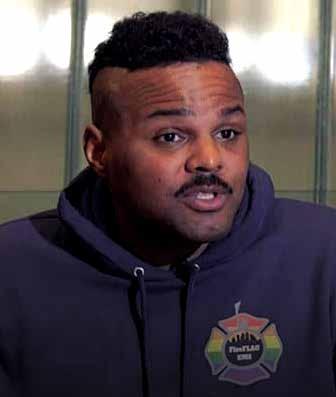
Firefighter Corey Boykins said he faced anti-Gay discrimination and was the target of slurs from the very first day of his employment at the Fire Department of New York (FDNY). Boykins said that he tolerated some questionable firehouse dynamics, but felt it crossed a line when anti-Gay slurs were hurled at him directly.
Corey Boykins – Photo courtesy of Spectrum News NY1
Detail of the vandalized mural – Photo by Lindsey Anderson
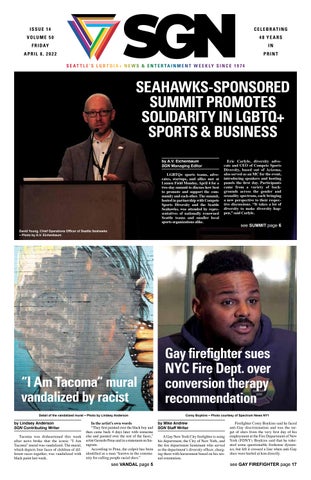
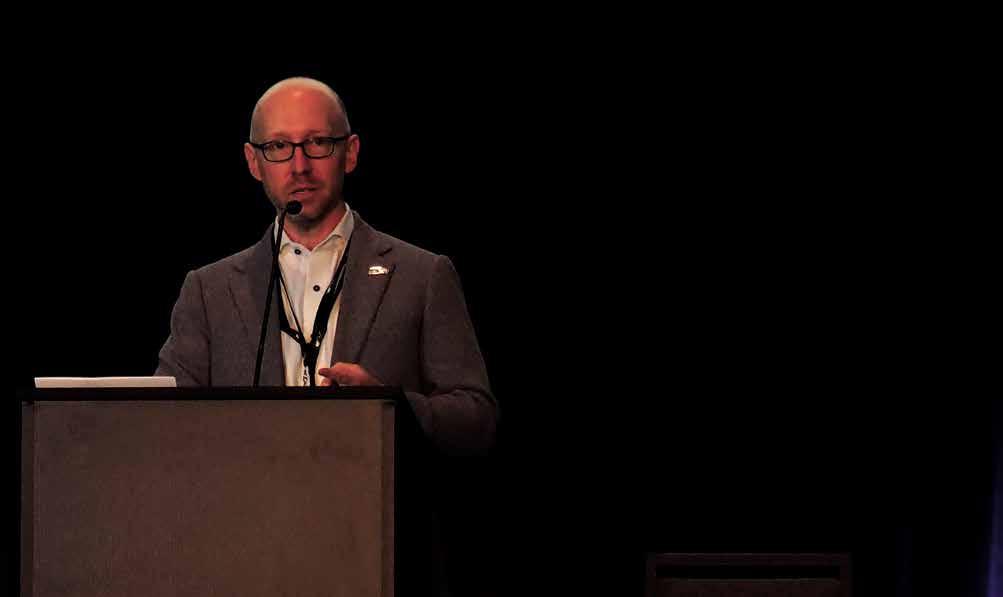
David Young, Chief Operations Officer of Seattle Seahawks
– Photo by A.V. Eichenbaum
Remembering Lester Gruner
July 22, 1947–March 9, 2022
We celebrate the life of Les Gruner in gratitude for the light and joy he brought to so many of us. Above all, Les was an entertainer, whether working in theater, teaching an IT class, hosting a party in his backyard, or spinning tales around a campfire.
His journey began while growing up in the suburbs of St. Louis, later graduating from Webster Grove School and Webster College before doing graduate work at Purdue University.
When the Midwest grew too slow for him, Les moved to the faster beat of New York City, the lights of Broadway, and the pulsating sound of discos. He loved dancing under the spinning lights of the disco ball. For several years, Les enjoyed the work he did on many Broadway and off-Broadway shows.
After driving across the country with three friends in 1982, Les settled into a
Local News
house on Capitol Hill in Seattle, where his sense of humor and sharp wit won him numerous friends. Those of us who coaxed the city boy into taking his first back-country camping trip still recall the naivete and awe Les had when learning to carry a heavy backpack or to set up a tent. Years later, he even tested his Northwest skills whitewater rafting on the Methow River and regaling us with tales of narrow escapes around the campfire at night.
In Seattle, Les launched a new career in marketing, working for GNA, GE Capital, and Washington Mutual. From 2010 until his retirement in 2021, Les worked for the University of Washington Medical Center in information technology education, serving as clinical information educator, EPIC project manager, and supervisor of curriculum design.
During this time, he also volunteered with the Pride Foundation as part of a team that screens and selects scholarship applicants. Retirement gave Les time to spend with his pets always two cats and one Great Dane.
Les is preceded in death by his mother in St. Louis, his father in Georgia, his life partner Mike Welter, and several friends lost during the AIDS pandemic. Les’s friends recall the beautiful friendship and love he and Mike shared, whether relaxing at home or hiking on Mt Rainier.
Numerous friends in Seattle, Portland, New York, and St. Louis already miss his presence: his laughter, and the ways in which he taught and entertained us.
Donations in memory of Lester Gruner can be made to the Pride Foundation, Youth Care, or the Dane Rescue Program.
Pink petals everywhere: Cherry blossom season celebrations return
by Kylin Brown
SGN Contributing Writer
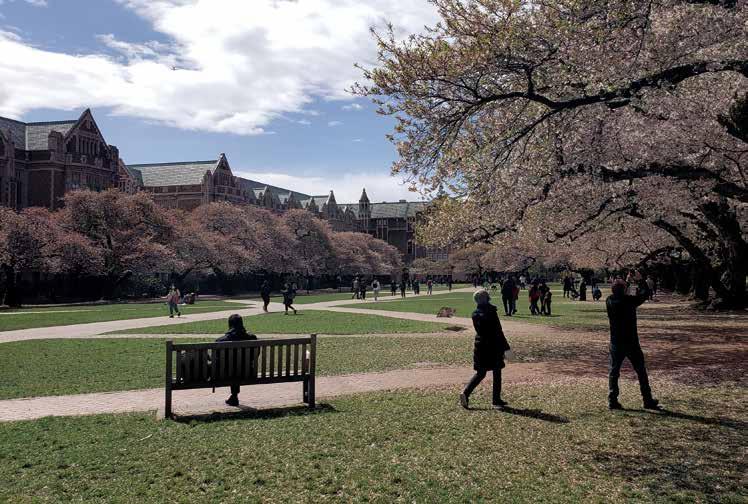
At the University of Washington, wind whips through the Quad’s 29 iconic Yoshino cherry trees to the delight of dozens of visitors. Beneath every baby-pink canopy, a young family, touristy photoshoot, or hanami picnic ensues.
Across town, in Seward Park, Seattle’s first cherry trees have revealed their 93rd bloom since being given to the city by Japanese delegates in 1929.
Now, over a thousand of these fleetingly beautiful trees represent our city’s friendship with Japan and a welcome change in season. Due to the COVID-19 pandemic, celebrations to honor the arboreal event are returning in person this year for the first time since 2019.
Seattle Cherry Blossom and Japanese Cultural Festival
On Friday, April 8, the Seattle Cherry Blossom and Japanese Cultural Festival will commence at the Seattle Center Armory and Fisher Pavilion. The festival is the largest and oldest of its kind in the Pacific Northwest, having been founded in 1976, when Japan’s former prime minister, Takeo Miki, gave Seattle a thousand cherry trees in commemoration of the friendship between the people of Japan and Washington state.
This festival, hosted by Japan America Center Seattle, invites visitors to engage with several Japanese traditions, in addition to learning the significance of hanami (花見), or cherry blossom flower-viewing. Head to Seattle Center on Friday from 11 a.m. to 4 p.m. for the event’s kickoff, which includes feature-film screenings in the Armory, and shodo calligraphy demonstrations, tea ceremonies, and sake tastings and a discussion in Fisher Pavilion.
On Saturday and Sunday, visitors can expect music and dance performances, as well as lessons on important Japanese ceremonies, such as the sixth-century art of ikebana (ritualized flower offerings) and tea ceremonies.
Each day’s festivities are ongoing from 11 a.m. to 4 p.m., leaving plenty of spring daylight hours to engage in hanami afterward. That is, once you understand its intense importance.
“Hanami is a reminder to celebrate life,” reads the festival’s website. More specifically, writes author and accomplished
doctor of ethnic studies Tamiko Namura, “it is an intense awareness and appreciation of the fragility and transience of beauty.”
The Seattle Cherry Blossom and Japanese Cultural Festival is sure to help cultivate that awareness. Learn more about the festival or find the full schedule of events at https://cherryblossomfest.org.
The U District Cherry Blossom Festival
Meanwhile, a new festival has arrived in Seattle to engage businesses in celebrating the sakuras (cherry blossoms) in their own culinary or artistic forms.
One of the major cherry blossom attractions in Seattle is the Yoshino collection planted in the UW’s Quad. This is the 61st year the iconic cherry trees, which are mostly around 90 years old, have bloomed there.
The school asks anyone who visits to not climb on the trees or shake the branches to
protect the blossoms. Those who don’t want to visit the campus can check out UW’s live webcam overlooking the Quad.
To pay homage to the trees, the U District Partnership has gotten neighboring businesses involved in the first annual Cherry Blossom Festival, which started on March 25 and continues through Sunday, April 10.
Participating eateries are offering special sakura -inspired menu items, from flavorful cherry beverages and pastries to trendy pink cherry blossom boba. Leon Coffee House, for example, is serving cherry-filled croissants, cherry-flavored Italian sodas, and a cherry mocha topped with its usual super cute milk designs.
If you find cherries too tart, some eateries and cafés are offering tamer but still very pink flavors, like Time Bistro’s sakura choux cream puff, which is strawberry filled.
Drink specials extend into the night
thanks to bars and dinnertime restaurants surrounding campus, from the College Inn Pub’s Rum Blossom Bomb or Sapporo beer special to Supreme Pizza’s Hanami Sunset Cocktail.
Shopping venues like the University Bookstore and Woolly Mammoth Shoes are participating as well, offering specials, from cherry blossom art prints to discounted spring collections. Find the full list of participating businesses at https://udistrictseattle.com/cherryblossomfestival.
As cherry blossoms fall down to the earth in the coming days and weeks, the time to celebrate is upon us. Learn about the history and significance of these trees in Seattle and their Japanese roots, or enjoy innovative pink food and drink to honor their beauty.
Photo courtesy of friends of Lester Gruner
Yoshino Collection in the University of Washington Quad – Photo by Kylin Brown
West Seattle celebrates Trans Day of Visibility
by Daniel Lindsley SGN Contributing Writer
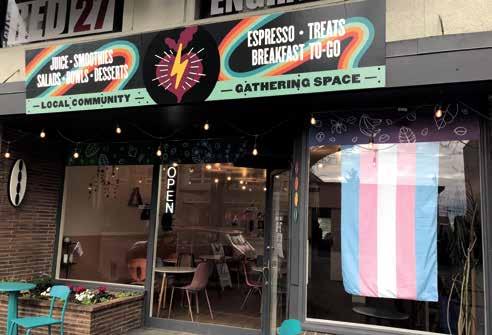
The Diversity Alliance of the Puget Sound (DAPS) held a gathering on Thursday last week, for this year’s Trans Day of Visibility (TDOV). DAPS board chair and the SGN “Seattle’s Best” Award winner Oliver Webb ran the event in the community space next door to Queer-owned HeartBeet Organic Superfoods Café in West Seattle.
There were soft drinks, snack foods with vegan options, stickers and pins for sale, and board games on every table. The merch was designed by DAPS members and Queer artists funded by stipends from the organization’s artist-in-residency program. One of the most popular designs, Webb said, was his own: a cartoon cactus with glasses in a flower pot labeled “THEY/THEM.”
Only a handful of people showed up to enjoy the amenities; most either lived in the area or had made the long trek through SoDo to cross the bridge over the Duwamish. It was generally agreed that West Seattle had been an island even before the main bridge was closed, but now the traffic was inexorable.
Webb said he was happy with the turnout, though, and had worried about the place being overcrowded. There was seating for no more than 20 people, after all, “and nobody RSVPs for anything.”
The attendees, ranging from young to middle-aged, chatted at socially distanced
VANDAL
continued from cover
Security footage shows the man pulling up in front of the mural in a white SUV in broad daylight. He appears to be an older white man. In the video, he was joined by another older white man. Tacoma police have not yet released his identity.
Pena created the mural on the side of Unity Christian Ministries Youth Center in 2020 as a part of a community revitalization project known as “Tacoma Creates Month.” He was inspired by winged murals in other communities, which often encourage photography. At the center of the artwork are two butterfly wings for people to pose between, and on either side of them are the faces of four children, each forming half of two heads.
In his dedication of the mural, Pena said, “We are all monarch butterflies fluttering, coming together, all with different cultures and ancestries, but this ground is where we come together to honor our past and celebrate our present and our future as Tacoma under one sun and on this native land. As you become one with the butterfly, you become one with Tacoma.”
Since the mural was finished in October 2020, it has become a hot spot for photo ops as tourists and locals pose in front of the larger-than-life monarch wings. This is the first time the mural has been vandalized.
The owner of the building is pressing charges and has asked Pena to restore the mural. Pena plans to start the project soon and predicts it will be done by summer.
“We are hoping he will get fined so we can restore [the mural]. Unfortunately, we don’t know how long that’ll be or if he’ll even pay any damages yet,” Pena said on Instagram.
The Tacoma police have yet to confirm whether or not the vandalization of the “I Am Tacoma” mural is the result of a white supremacist organization or just the actions of an individual.
The investigation is still pending, and no fines have been issued, but as of Friday, April 1, Pena has reached his fundraising goals for the restoration project.
Tacoma rallies around mural
However, the vandalization was a hateful act of racism. Now the community is rallying around Pena and making it clear that hatred has no place in Tacoma.
The City of Tacoma has provided funds for the restoration through its “Tidy Up Tacoma” program, which received an influx of donations in response to the vandalization of the mural.
tables about their troubles and triumphs. For one person, a milestone gender-affirming surgery was just months away. A couple had recently gotten married, and someone’s workplace had observed TDOV.
When the subject of Capitol Hill came up, most agreed it wasn’t very Queer anymore; “tech bros” had priced the Queer community out, and White Center was picking up the slack.
Many told tales of bizarre encounters with transphobia in the everyday, both abroad and locally, though the tone remained lighthearted throughout. “This isn’t group,” as Webb said. “We can just chill and talk.”
During lulls, Webb talked about what DAPS had been up to. He said there were “big plans” for Trans Day of Remembrance in November this year, and that they’d be
at ten different Pride celebrations. The organization had started committees to help local governments serve LGBTQ+ constituents, and certain Gay and Lesbian bars Pony, Madison Pub, the Cuff had reached out to DAPS for help on “being better” with the Trans community.
DAPS also has plans to expand its services into more areas of Seattle, Webb said, after other LGBTQ+ organizations went under during the pandemic. Future events will include picnics, barbecues, brunches, and the like.
Beyond the island that is West Seattle, the arches of the Pacific Science Center were lit up with the colors of the Trans flag for a second year in a row. Webb said he was thrilled about that, given how visible those arches are all over the city. He also said he wanted more places to follow suit.
“I called around to get people and organizations to raise the flag for TDOV,” Webb said. “But they should do it anyway, for the Trans people in their lives. Y’know, their siblings, their children, their spouses, and their friends.”
You can find out more about DAPS services at diversityallianceofthepugetsound.org, where you can download a community calendar for use on most calendar apps.
Reactions from saddened Tacoma residents have been pouring in. Joe Zinn commented on Pena’s original post, writing, “Hey man, I seen this down the street... It’s one of my favorite things in the whole community.”
Jorge Mota, another Tacoma resident added, “We need that mural back up.” Others, like Chelsea Joyce, gave sympathy to Pena, saying, “This is enraging. This is one of my favorite community murals. I am so sorry for the destruction of your beautiful work.”
“I never expected this kind of support,” Pena said. “Once the investigation starts to settle a little, I’ll be back to paint ASAP.”
A community divided?
Despite the powerful messages of support Pena has received, other Tacoma residents have let it be known that the hatred that inspired the vandalism is not isolated to just one person.
KING-5 News broke the story of the vandalization of “I Am Tacoma” but received mixed reactions on Facebook to its reporting. After posting the story to its page,
KING-5 garnered hundreds of responses indicating sadness and anger at the news. However, 12 people responded with a laughing reaction, including Dave McMullan, the chairman of the Pierce County Republican Party.
McMullan has a history of supporting right-wing neo-Nazi organizations. In 2019 he publicly endorsed the founder of fringe extremist militia “Washington 3%,” Matt Marshall, for the Eatonville school board.
The SGN reached out to McMullan and the Pierce County Republican Party for comments on the vandalization of the mural. McMullan clarified that his reaction to the news was the result of a technology mix-up.
“Quite simply it was an accident, I meant to hit the ‘wow’ emoji but, on my phone, I hit the wrong one and didn’t notice,” he said. “I don’t like vandalism of any kind and wish people would respect others’ property.”
Some have voiced concerns that the vandals may be associated with the white supremacist group Patriot Front, which is known to deface public artwork. The hate
group was formed after the 2017 “Unite the Right” rally in Charlottesville and is led by Thomas Rousseau, who helped lead members of Vanguard America at the rally, according to the Southern Poverty Law Center.
In the years since 2017, Rousseau has worked to rebrand the group away from Nazi memorabilia and toward American patriotism; its manifesto calls for a “white ethnostate.” The group has been associated with the vandalization of the Arthur Ashe mural in New York City’s Battery Park and the Hmong Cultural Center in St. Paul, and the defacement of a George Floyd statue, also in New York City.
The hate group is not concentrated in one place but has members spread throughout the country. According to NPR, one in six Patriot Front applicants have ties to the US military. Its latest confirmed link to Washington state is its involvement at a protest against abortion rights in January of this year.
Photo by Lindsey Anderson
HeartBeet Organic Superfoods Café in West Seattle – Photo by Daniel Lindsley
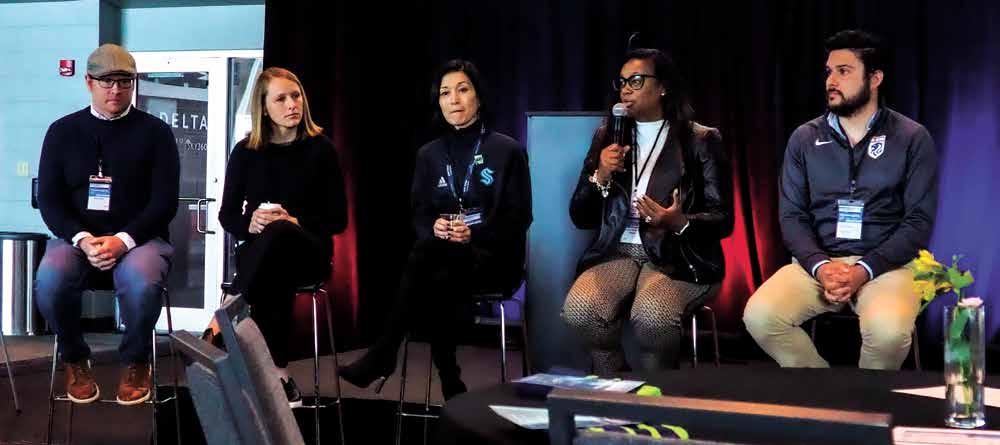
(from top) Pro Sports panel (left to right) Kenny Dow, Kimberly Aigner, Mari Horita, Karen Williams-Mickey, Santiago Gallo Villamizar; Seattle Seahawks President Chuck Arnold toasts the crowd during the silent auction; Lumen Field – Photos by A.V. Eichenbaum
SUMMIT
Day 1: Building and strengthening a community
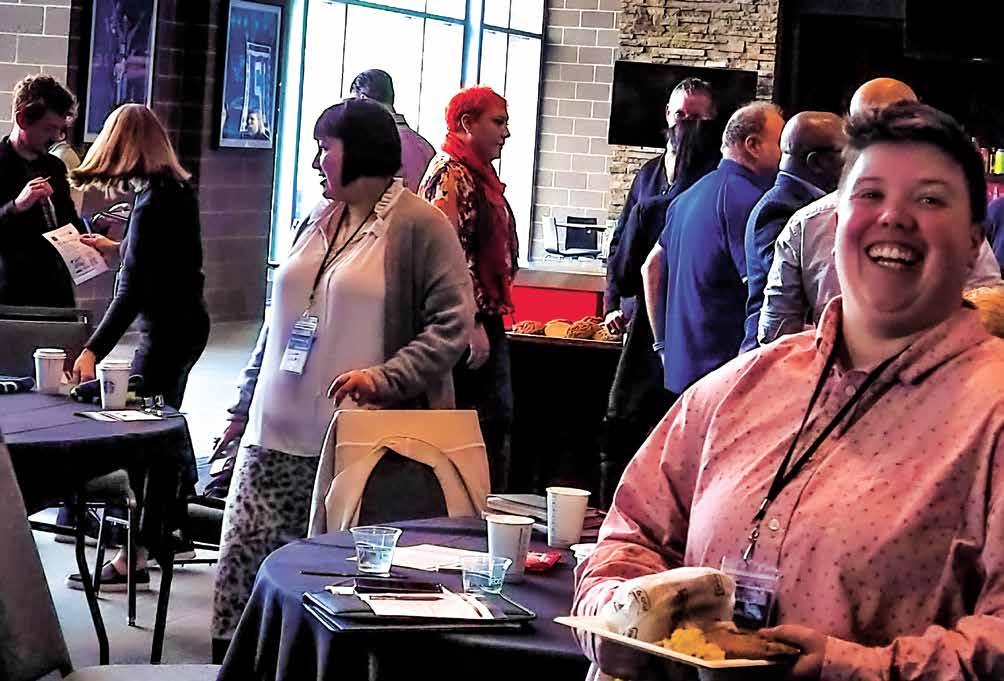
The mood was bright among summitgoers Monday morning in the Delta Sky360 Club lofts at Lumen Field. Topics such as gender identity, representation, pronoun etiquette, and more were discussed with an air of levity and sense of humor grounded in the knowledge and shared lived experience of attendees.
“Dignity, worthiness, and value are our birthrights as human beings,” said Carlee Hoover of Rainbow City Softball, who opened the event with a passionate pitch for the importance of using someone’s correct pronouns in every setting. “Support people’s rights to how they want to be addressed.”
David Young, chief operating officer of the Seattle Seahawks, followed this by recognizing the importance of having a spot on the national stage.
“We recognize the broad impact we have to our community here in the Pacific Northwest and across the country,” said Young.
Other speakers Monday included Connor Shane of USA Racquetball an ally giving a presentation on productive allyship and John “Jay Jay” Defee, commissioner of the NAGAAA Board of directors and self-described “out, proud, Gay Latino,” who spoke on his life’s trials and how he found community playing softball. “As leaders of our organizations and communities, we have an opportunity to change perceptions…” he said. “We all want to create an environment where people can be comfortable with who they are.”
A moral and business imperative
Panelists on the first day spanned the spectrum of Seattle sports teams. Representatives from the Kraken, Seahawks, OL Reign, Sounders, and Storm gave their voice to allyship in athletics. “It is the moral imperative and the business imperative,” said Mari Horita, vice president of community engagement and social impact for the Kraken. “It’s the right thing to do.”
“Seattle fans are the best in the world,” she added later. “Hands down.”
Karen Williams-Mickey, VP of diver-
Representatives from the Kraken, Seahawks, OL Reign, Sounders, and Storm gave their voice to allyship in athletics. “It is the moral imperative and the business imperative,” said Mari Horita, vice president of community engagement and social impact for the Kraken. “It’s the right thing to do.”
sity, equity, and inclusion for the Seahawks, shared her strategy: amplify the stories of Seahawks employees. “The first place I wanted to start was our people,” she said.
“My goal is that, by sharing these stories, others will become compassionate.”
Kenny Dow, the Seattle Storm’s VP of marketing, spoke out about the support and compassion the WNBA team has for Trans youths. “We support them, we’re behind them, and we want them to play.” The Storm also announced their continued involvement with political campaign Rock the Vote.
Seattle’s pro teams plan to march with the Washington Interscholastic Activities Association in the Pride parade on June 26.
“We want to leave a better place for the next generations,” said Santiago Gallo Villamizar, the associate general manager of OL Reign, “in the field and out of the field.”
“We want to make Washington the most inclusive, safest place for gender-diverse sports in the community,” added the Sounders’ VP of social impact, Kimberly Aigner. “We believe the right to play is a human right.”
Representing local LGBTQ+-focused teams on another panel were Jayla Watje of Queer City Sports, Andrew Gorman of Cascade Flag Football, Amanda Bonfield of Emerald City Softball, and Mark Hedelund of CHEER Seattle.
The LGBTQ+ sports scene in Seattle is “a safe space where anyone is welcome and made to feel welcome,” said Bonfield. “I’m encouraged beyond belief.”
The talks were cap-ended with a series of roundtable talks led by Feisty Media founder Sara Gross, wherein the attendees
were encouraged to share their thoughts on QTBIPOC representation and inclusion, representation in women’s sports, and strategies for amplifying voices within their organizations.
“Sometimes, being uncomfortable is okay,” said Mashonda Gilmore, founder of the Lynn Lewis Foundation, who organized one of the discussions, “as long as you’re learning.”
Monday’s event ended with a happy hour and silent auction that raised $2,000 for the Lavender Rights Project and United Sports Seattle.
Day 2: Down to business
The shorter of the two days began with a business-and-education-oriented talk centered around gender identity, proper conduct, and biases, followed by two panels and a tour of Lumen Field.
The first panel focused on the LGBTQ+ experience in sports, with speakers Rabecka Salisbury of Rainbow City Softball; the director of DEI for Cascade Flag Football, Bella Bowman, CHEER Seattle board member Beau Bradley; and the executive director of US Quidditch, Mary Kimball. The conversation quickly turned to Transphobia and Trans representation in sports, as most of the panelists identified as Trans and/or Nonbinary.
“Trans women have always been in sports,” said Bradley.
“If you’re a good athlete, you’re a good athlete.” added Bowman. “Gender identity doesn’t really matter.”
“I get so angry,” said Kimball, talking about Quidditch and its association with
famed transphobe J.K. Rowling. “I don’t always feel as if I’m doing enough,” she added later.
“We have to be conscious that not every city is as open as this one,” said Salisbury. “Not every region is as open as this one. We’re in a bubble on the West Coast, but even so, some of the worst treatment I’ve gotten has been here on the West Coast.” Salisbury also announced that Rainbow City Softball’s hopes to bring the Softball World Series to a more Trans-friendly city, like Seattle.
The following panel, on the importance of supporting LGBTQ+ businesses, was led by entrepreneur Sam Lehman. “Capitalism is alive and well,” said Lehman.
Panelists included CEO Elise Lindborg of Brand Pride; President Michael Yerkovich of PridePays; the GSBA’s training and consulting manager, Toraya Miller; and Trayer Martinez. Topics included branding strategies and the power of standing against rainbow-washing, a practice in which nonLGBTQ+ owned businesses add rainbow and Pride-themed products and statements to their public image but do not actually support the LGBTQ+ community in any way.
“Capitalism is alive and well,” repeated Lehman near the end of the panel.
Why does this matter?
To many, a meeting of the minds connecting local LGBTQ+ community leaders and representatives from major sports teams may seem inconsequential, but much of the nation looks to athletes and sports teams as role models, and many people find a home in sports. “I believe that [playing] sports is the biggest form of social inclusion,” said Shane.
The sentiment was echoed by summitgoers at every level.
“Our players are passionate, and we follow our players,” said Dow.
Perhaps more important than the enthusiasm or a summit like this encourages is the message it spreads.
“These summits bring all of us together,” said Rainbow City Softball’s Tori Jacobson to the SGN between talks. “We already have these conversations in everyday life, but now we can take what we’ve learned and bring the conversation back home.”
continued from cover
Rainbow City Softball’s Tori Jacobson smiles at the camera during a break – Photo by A.V. Eichenbaum
Arts & Entertainment
Celebrate nature, culture, and history in Federal Way
by Nick Rapp SGN Contributing Writer
About 20 minutes south of downtown on I-5, at exit 143 toward Federal Way, rests a hidden gem: the Pacific Bonsai Museum. But that’s not all the Rhododendron Species Botanical Garden is directly adjacent to the museum.
These botanical havens are both part of what used to be the Weyerhaeuser corporate campus, a property five times the size of Disneyland, according to KUOW. When you exit the freeway, you’ll glimpse the main building of the now-closed campus, an architectural relic worth checking out as well.
The PBM and RSBG were both previously owned by Weyerhaeuser and eventually given to a nonprofit and leased a permanent garden site, respectively. Now, the two thrive alongside one another as potentially the best spot for a cute date in the greater Seattle area.
The PBM is unlike any museum I have ever been to. Walking through it is an
astonishing juxtaposition of natural scale: small bonsai exhibits are nestled underneath towering forests. The various histories of cultural significance, artistry, and care that play into each bonsai’s growth fascinate, alongside the aesthetic perfection of each exhibit.
The museum’s collection is one of two in the US solely devoted to bonsai. They rotate trees seasonally, with 60 (out of a total 150) on display at a time. Placards at each tree describe its unique grafting source, caretaker, and age, with many boasting incredible facts about the tree’s history.
One tree is over 200 years old, having survived moves across various countries and subject to the care of multiple owners it has outlived. This trident maple was moved from Japan to the Panama-Pacific International Exposition in San Francisco in 1915, then purchased by a Japanese immigrant and nursery owner named Kanetaro Domoto. It remained in his family for over 70 years, surviving various hardships during the Great Depression and World War II, including the imprisonment of multiple
caretakers in internment camps. It was given to the PBM by the third generation of Domotos in the ’90s when caring for the tree became too exhausting for the family.
After browsing the bonsai collection, you can stroll among the rhododendrons, which are beginning to bloom beautifully, and will continue to do so through May, their peak.
The RSBG’s 22-acre property is so diverse that, at my best estimate, you would need at least ten visits to see it all. Shades of pink, purple, yellow, and red dot the trails, pulling visitors in every direction to explore.
The gardens have the largest collection of rhododendron species in the world, with many other botanical varieties interspersed. At the center, a gazebo overlooks the flowers and foliage, perfectly positioned for a lunch picnic or afternoon with a book.
In addition to the brambly, weaving trail system, the gardens are home to a large conservatory, a stumpery (a stump- and log-heavy area with moss and fern growth), an azalea collection, a pond garden, and a magnolia grove, among other features. Each area demands at least a day’s tour.
The bonsai collection and rhododendrons change with the seasons, and both facilities are hosting monthly events through the changes.
The RSBG has rotating weekend vendors selling plants at the nursery and occasionally hosts events with guest speakers during the summer. The PBM hosts a “Bonsai Basics” class most months and World Taichi Day on April 30, celebrates “Bonsai Fest” on Mother’s Day weekend, and rings in the summer solstice by staying open until 9 p.m. on June 18.
There are plenty of ways to enjoy both spaces alone, with friends, or with a date and both sites offer welcome respite from the busy city.
The PBM and the RSBG are open Tuesday to Sunday from 10 a.m. to 4 p.m. Visit their websites for more information on events: pacificbonsaimuseum.org and rhodygarden.org.
Photos courtesy of Nick Rapp
Sister Sledge featuring Kathy Sledge
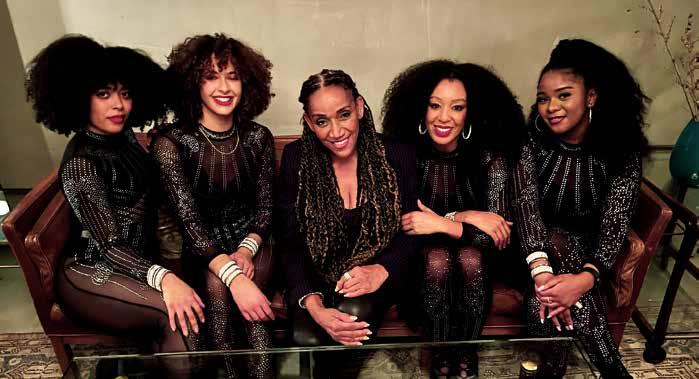
Legendary and contagious joy-bringers, Sister Sledge featuring Kathy Sledge are supported by a formidable ensemble of talented musicians and performers who blow the roof off with energized renditions of their classic dance floor hits including “We Are Family,” “Lost in Music,” “He’s the Greatest Dancer” and “Thinking of You” while also journeying through the spectrum of their musical inspirations, delving into jazz, soul and gospel music as well.
April 28 - May 1, 2022
Show times Thu & Sun at 7:30pm Fri & Sat at 7:30pm & 9:30pm Tickets jazzalley.com or 206-441-9729 for reservations
THIS AD SPACE HAS BEEN GENEROUSLY DONATED BY KRISTIN COSTELLO IN MEMORY OF SGN PUBLISHER GEORGE BAKAN
SGN reads the most dangerous book in America Books
by Lindsey Anderson SGN Contributing Writer
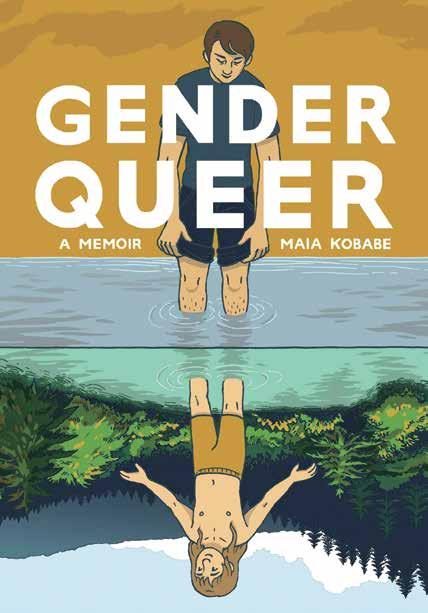
Gender Queer has made history this year as one of America’s most banned books. Across the South, conservative parents and legislators have used the autobiographical graphic novel as evidence that LGBTQ+ literature is corrupting children and should not be allowed in public school libraries. It was the perfect choice for our spring book club.
Gender Queer is a beautifully illustrated novel that depicts the life story of comic writer and art teacher Maia Kobabe (e/em/ eir). E begins the novel with eir childhood, growing up in rural Northern California. Kobabe’s choice to include stories from eir early childhood gives a subtle nod to the ways children are raised to experience and internalize gender norms from a young age. The stories also foreshadow Kobabe’s future struggles with gender identity.
A love letter to Trans and Nonbinary kids
Kobabe’s book is a love letter to Trans and Nonbinary children, an acknowledgment that they are valid.
Kobabe’s book shares stories of a Genderqueer childhood, stories that can resonate with Trans and Nonbinary children who may not have adults or peers in their life with similar experiences. As of 2021, 60% of Trans children faced rejection by their families. Trans kids are also statistically nine times more likely to attempt suicide before the age of 18.
Activist Leslie Feinberg famously said, “Gender is the poetry we write with the language we are taught.” Gender Queer is an artistic masterpiece showcasing one individual’s journey to discover the language to explain eirself to the world. Kobabe leaves nothing out, describing eir encounters with sexual attraction, masturbation, and especially questioning. E also shows the love and support e had at home throughout eir growing-up years. Kobabe’s parents were always accepting of their children, even if eir mother struggled to understand what being Nonbinary meant at first.
Kids do know about gender
Angela Kade Geopferd, a gender-diverse pediatrician, explained in their 2020 TED Talk that, despite common misconceptions by adults, children do conceptualize gender. “From the age of about two, kids can understand gender differences,” Geopferd said. Kobabe demonstrates this in the first pages of the graphic novel when e talks about older children pointing out the differences between Kobabe, who was born female, and eir close childhood friend, Galen, a little boy.
Geopferd explained that by the age of three or four, children understand where they fit in the gendered categories society presents to them. Around this time, they also start to become socialized to understand what expectations they will face based on their gender.
“They have figured out their place in the world, and they are claiming it,” Geopferd said of this time in early childhood development. “It shouldn’t surprise you then that some Transgender kids are claiming their identities as young as three and four years old. They know the categories, they know how they should feel inside, based on their anatomy, and they also know that the way that they see themselves doesn’t line up with those expectations.”
“[Children] are first figuring out what they like,” Geopferd said of this age, “and then, is it okay or not?”
Kobabe’s experience
Kobabe depicts early childhood confusion around gender and societal messages about it. Despite being born and treated as a girl, e had interests often associated with boys, such as snakes. E was free to enjoy activities and styles often associated with boys and even took pride in the shoulderlength hair that left many classmates wondering what gender e was.
But in one panel, Kobabe illustrates the all-too-familiar experience of “cooties,” the childhood plague that would forever separate em from close male friends, like Galen.
Kobabe also illustrates the experience of a child figuring out what it is e loves and then the repercussions of realizing society is quick to punish those who do not love the “right” things.
“By the time most kids are six and seven years old, they are conforming to traditional gender roles,” Geopferd explained. “Girls are becoming more feminine, boys are becoming more masculine, they’re starting to conform their hairstyles, the way they dress, the toys they play with, their peer groups to what society expects of them, based on their gender identities.”
While this was happening to Kobabe’s peers, e had different experiences. Eir parents were liberal and did not conform to all gender expectations. E grew up in a warm and accepting household that allowed em to dress, play with, and enjoy whatever e wanted.
However, Kobabe did receive messages about gender expectations from outside sources, like a teacher who punished em for playing without a shirt on in third grade.
“Kids who violate our expectations on
gender are punished for doing so,” Geopferd said. “The number one reason why kids are bullied at school is for gender-nonconforming dress or behavior.”
Kobabe demonstrated this with eir own experiences of shame and confusion when e was told to wear a shirt when swimming and shave eir legs and underarms.
As Kobabe depicts eir adolescence and teenage years, more gendered issues e encountered surface, such as bras, periods, and crushes. A common theme throughout eir childhood was confusion because e did not have the language to describe where e fit on the spectrum of gender and sexuality. Eventually, e learned about Transgender people, but this only led to more confusion. E did not feel like a girl, but e also did not necessarily want to be a boy.
This experience is common among Nonbinary children. “I didn’t think of myself as a boy,” youth activist Audrey MasonHyde said, “but anything that was identified as female felt uncomfortable to me.”
This reflects much of the same sentiment Kobabe packs into Gender Queer It is the story of a person coming of age and discovering just how nuanced gender may be.
Throughout the graphic novel, Kobabe laments eir naivety. From wearing deodorant to reading, e always felt like everyone else got the memo first when it came to growing up. However, a liberating childhood free from forced gender expression allowed Kobabe to grow and discover what e loved without as many influences from society.
Supportive family and neopronouns
Perhaps the most touching relationship
in Gender Queer is the one Kobabe shares with eir younger sister, who is also Queer and supported her older sibling by giving em haircuts, introducing em to other Trans people, and even buying em eir first binder. Kobabe’s positive depictions of a supportive family provide hope for other Trans and Nonbinary children and can work as an instruction manual for family members curious about how to better support the LGBTQ+ person in their life.
E also shows the process of discovering LGBTQ+ vocabulary, but still not feeling like e fit into a particular box when it came to gender or sexuality. Even when e finally discovered the language to tell the world e was Nonbinary, “they/them” pronouns didn’t feel right. Eventually, after becoming more enmeshed in the LGBTQ+ community, Kobabe learned about neopronouns and found that “e/em/eir” fit nicely.
The section leaves readers with the conclusion that as language and understanding continue to evolve, Genderqueer people can find a better vocabulary to express who they are to the world.
Gender Queer is a delightful book full of beautiful illustrations. It is no wonder conservatives oppose the book so strongly: in the right hands, it can be very dangerous to their agenda, as it provides hope, validation, and discourse for Trans youth. Gender Queer tells the reader, whoever they may be, that their existence is valuable to this world and does not require assimilation into fixed boxes. It is an essential read for any young child who may find themselves questioning where they fit in the world.
Image courtesy of Oni Press
Conversations with People who Hate Me makes a case for facing the haters
by Terri Schlichenmeyer Special to the SGN
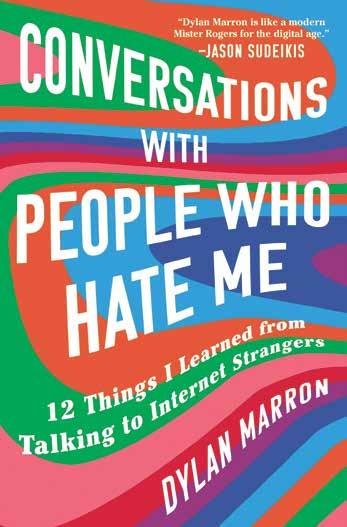
CONVERSATIONS WITH PEOPLE WHO HATE ME: 12 THINGS I LEARNED FROM TALKING TO INTERNET STRANGERS
The fact that Dylan Marron had a “HATE FOLDER” in his email should speak volumes.
As a Gay man and a writer-performer, he expected a certain amount of negativity online; that’s the nature of the internet. But as a creative employee of Seriously.TV, the emailed hate, death threats, and homophobia just got to be too much.
Before his job there, he’d acted, reported, waited tables, and cultivated a “prompt” that served him well. “What am I going to do about it?” is what he asked himself every time he was faced with something that bothered him. This time, the answer was a series of conversations with haters who’d commented.
He began to mine the HATE FOLDER for people to talk with.
The first was “Josh,” a decent guy who was a lot like Marron. Their conversation, done remotely, was a hit with fans and it gained Marron a lot of “points.” In a small way, it gained him a friend, since he and Josh came to an understanding. Marron was happy with that, and with subsequent “conversations.”
But after he quit his job at Seriously. TV to go it alone, he found himself at an impasse. The old way of conversing needed to expand to include a wider angle and different guests. Marron imagined himself bringing together hater and target on bigger subjects. He’d learn more about people and in the process, he’d learn more about himself.
The lesson was underscored a few Sundays ago: something huge happened, something loud, and everybody’s got an opinion. Conversations with People Who Hate Me helps show that we can talk civilly about issues without insults.
But will haters the people who presumably need this book be willing to read it?
Surprisingly, in one part of this book, author Dylan Marron shows that that’s entirely possible: once he approached his interviewees, many people who hid behind the net rued their actions and words. Granted, the haters he hosted were highly, carefully curated, but Marron’s approach shows hope.
The other part of the book teaches tolerance and a sort of Zen approach when you’re the target of a troll. Haters gonna hate, as they say... but with enormous grace and thoughtfulness, Marron offers better ways to perceive it.
Readers looking for another way to invite open dialogue, and those who are aghast at spewing commenters on social media, will love this book. If you want to do better, Conversations with People Who Hate Me could help build happy bridges.
Image courtesy of Atria
Film
Toothless Morbius lacks bite
by Sara Michelle Fetters SGN Staff Writer
MORBIUS Theaters
Morbius isn’t a bad movie. It also isn’t a particularly memorable one.
But its primary issue is that, much like so many non-Twilight and The Hunger Games YA adaptations from the 2000s and 2010s, titles like Eragon, Cirque du Freak: The Vampire’s Assistant, and The Mortal Instruments: City of Bones, it is engineered more to set up future tales than it is in building three-dimensional characters worth caring about. It is the dreaded prequel-to-a-sequel-that-will-never-come, and even though in this instance it’s safe to say that Dr. Michael Morbius (Jared Leto) will undoubtedly return, I remain certain that my meaning is clear.
Based on the comic book character created by writer Roy Thomas and designed by penciler Gil Kane, the film by director Daniel Espinosa (Safe House) gets credit for a bit more visual ingenuity than we’ve seen from most Sony-produced Marvel properties of late (Spider-Man: No Way Home, Venom: Let There Be Carnage). There are some boldly colorful flourishes, especially how the main character’s various unearthly powers are portrayed, and I found them suitably impressive.
I also found the unintentional initial transformation of Morbius into his bloodthirsty superhuman alter ego to be surprisingly effective. Espinosa leans into the same kinetic, go-for-broke tenacity he brought to his 2017 sci-fi horror yarn Life, a demonic otherworldly assault on a team of heavily armed mercenaries aboard darkened container ship aggressively realized with hushed intensity.
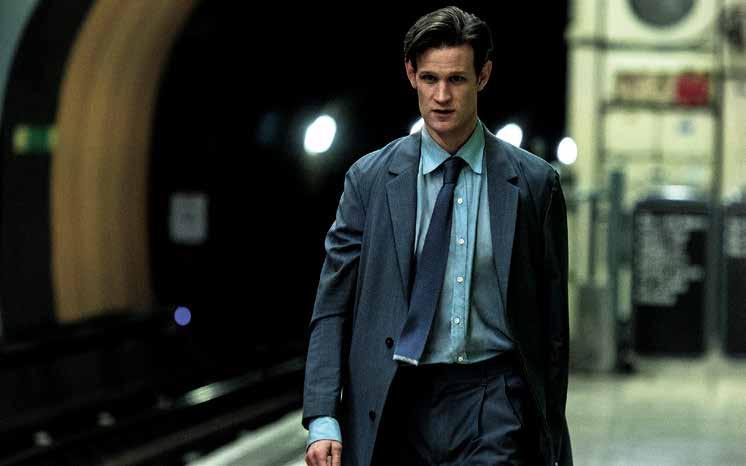
Finally, there’s a splendidly loopy supporting turn from Matt Smith that had me grinning ear to ear. The former Doctor Who star, who plays Dr. Morbius’s childhood friend Milo, is a looney hoot, greedily gobbling up each scene he appears in with malevolent, carnivorous relish. He brings energy to moments where it wouldn’t oth-
erwise exist, doing such a fine job that he almost makes the film worthy of the matinee ticket price all by himself.
The basic plot is still your standard comic book superhero origin story, only with a few vampiric flourishes. Afflicted with a rare blood disorder that causes his body to grow increasingly frail and will one day kill him, the brilliant Morbius is on the verge of a cure. By combining vampire bat and human DNA, he believes he has created a serum that will restore him to perfect health.
With the aid of his assistant Dr. Martine Bancroft (Adria Arjona) and with Milo’s financial backing, Morbius tests his theories on himself in the secluded safety of international waters. That way, if anything goes wrong, no one can be held legally responsible if he were to inadvertently take his own life. But things go haywire in ways
the physician couldn’t have anticipated: the serum leaves him seemingly cured of his affliction, possessing superhuman strength, and having an almost unquenchable thirst for human blood.
All of this would be fine if either Espinosa or his screenwriters Matt Sazama and Burk Sharpless (The Last Witch Hunter) appeared to care what was going on or spent a bit more time fleshing out these characters instead of being overeager to race on to the next big thing. Morbius’s relationship with Bancroft happens the way it does because it has to for the plot to progress. The great Jared Harris pops in to add a hint of class and to vomit up some moralistic exposition, but that’s pretty much it. As for Tyrese Gibson and Al Madrigal as a pair of bumbling FBI agents, the less said about them, the better.
No, other than showing who Michael Morbius is and the tightrope suspended between healer and destroyer he must perilously walk, everything that transpires is like some feature-length coming-attractions reel. It’s all fragmentary sentences and annoying cliffhangers, and while there is a climactic battle between once-familial friends now turned mortal enemies, even that is an unfinished symphony, with first and second movements but only the smattering of a third, and it’s frustratingly lacking an allegro.
For all its stylistic flourishes, Morbius doesn’t have any bite. Considering this character’s background, that’s not a small issue. Heck, I’d go so far as to call it a bloody big one.
Matt Smith in Morbius – Photo courtesy of Sony Pictures
Jared Leto in Morbius – Photo courtesy of Sony Pictures
Nat’l & Int’l News
National news highlights
by Daniel Lindsley SGN Contributing Writer
Kentucky:
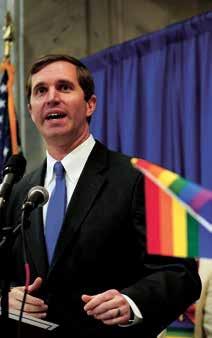
Gov. Andy Beshear vetoes Trans girls sports ban
The Associated Press reported April 7 that Kentucky’s Democratic governor vetoed a GOP-backed bill that would bar Transgender girls and women from taking part in school sports matching their gender identity from middle school through college. Under the bill, a student’s gender would be determined by the “biological sex” indicated on the student’s birth certificate as issued at the time of birth.
Upon issuing the veto, Beshear said its backers had failed to present a “single instance” of an athlete gaining a competitive advantage because of a “sex reassignment.” He also said in his veto message that the measure “most likely” violates the US Constitution’s equal protection rights.
Oregon:
Game designer raises $400K for Trans rights
NBC News reported on April 2 that Trans game designer Rue Dickey of Oregon has helped raise over $400,000 for Trans rights in Texas, after officials in the state had begun to investigate the parents of Trans children for what Gov. Greg Abbott called “child abuse.”
Dickey (he/they) put together a bundle of tabletop role-playing games on indie game website Itch.io. The site regularly sells games in discounted bundles to fundraise for social justice and humanitarian relief. Dickey’s bundle included 493 games from 300 designers, valued at more than $2,700, but available for $5 until April 3.
The fundraising goal was just $1,000 but reached $11,000 by the next day, concluding at $406,476. The money is going to two small Trans advocate groups in Texas, the Transgender Education Network of Texas and the Organización Latina de Trans en Texas.
NYC to LGBTQ community: If
Florida doesn’t want you, move here
by Mike Andrew SGN Staff Writer
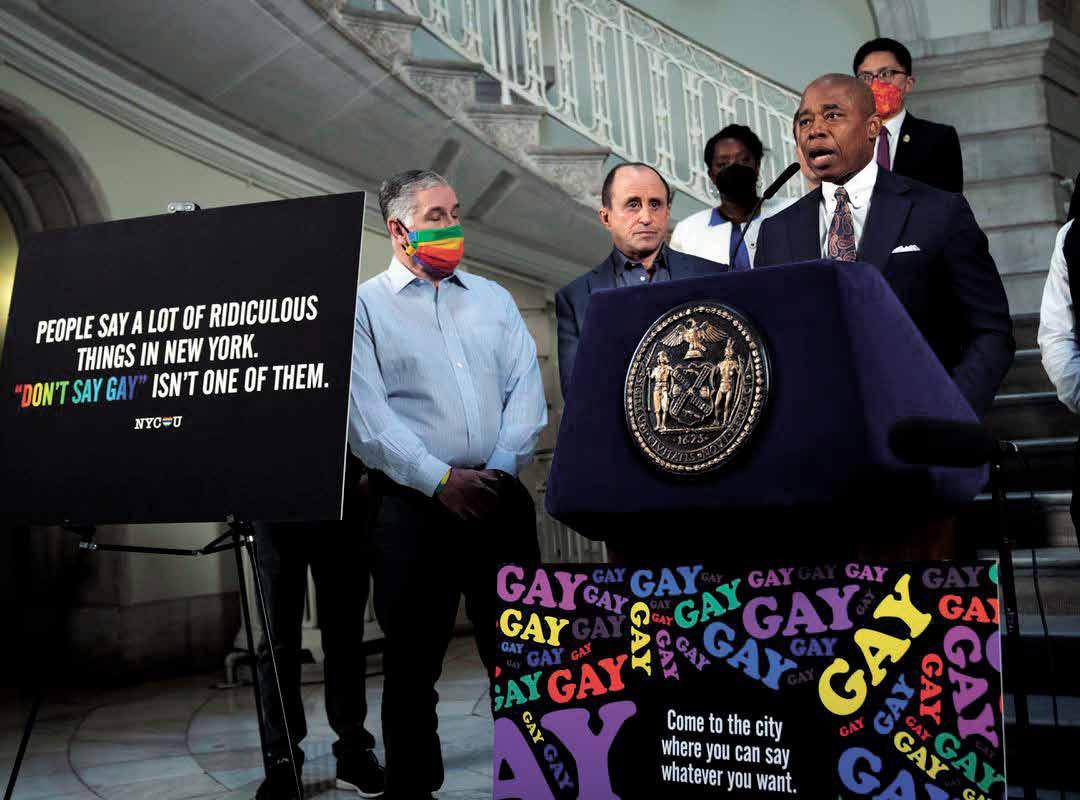
New York City Mayor Eric Adams has launched an online ad campaign inviting Florida’s LGBTQ community to move to his city in the wake of Florida’s new “Don’t Say Gay” law.
In response, Florida Gov. Ron DeSantis and his spokespeople seem only too eager to see LGBTQ folks depart for New York.
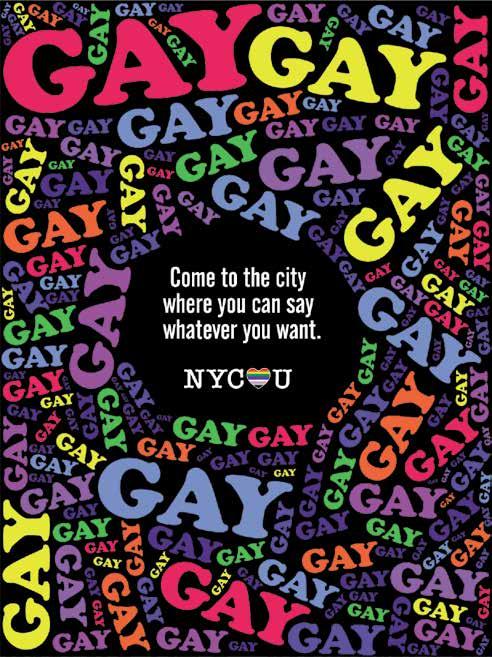
New York’s ad campaign launched by Adams is running in five Florida markets, Fort Lauderdale, Jacksonville, Orlando, Tampa, and West Palm Beach, through the end of May. It includes a social media component featuring a collage of the word “GAY” and an invitation to move to New York City “where you can say whatever you want.”
“We [New York City] are proud to talk about how you can live in a comfortable setting and not be harassed, not be abused not only as adults but also as young people,” Adams added at an April 4 press conference.
DeSantis responded on April 5 with a post on his social media accounts, directly challenging Adams.
“They [New York City] are saying ‘you can say whatever you want,’ but they will force a mask on your face & muzzle you in public,” DeSantis wrote.
“They just fired somebody who was criticizing the mayor for masking toddlers in New York. So if you speak up for the kids, they fire you from your job,” said DeSantis.
The governor was referring to a city Law Department attorney who was fired after sneaking into an Adams press conference posing as a reporter and ranting at the mayor.
The governor’s spokesperson, Christina Pushaw, was even more blunt.
“If anyone is so opposed to @GovRonDeSantis defending parental rights that they leave for a crime-ridden dystopia, Florida will be better off without them,” she tweeted on April 5. “Countless NYers have moved here since the pandemic. I doubt many will leave due to our lack of K-3 gender theory instruction.”
The Florida “Don’t Say Gay” law, offi-
or developmentally appropriate for students.”
cially known as the Parental Rights in Education Act, bans instruction “about sexual orientation or gender identity in primary grade levels or in a manner that is not ageappropriate
Adams was elected mayor of New York City last year. DeSantis has been governor of Florida since 2019, and is known to be considering a run for the Republican presidential nomination in 2024.
Image courtesy NYC Office of the Mayor
NYC Mayor Eric Adams – Photo by Ed Reed / AP
Kentucky Gov. Andy Beshear speaking at Gay rights rally in February of 2020
– Photo by Bryan Woolston / AP
“Don’t Say Gay” bill: Students protest Florida’s bigoted legislation
by Margaret Viggiani Special to the SGN
For a brief moment in March, it looked like demonstrating students would stop Florida from passing a bill targeting LGBTQ+ youth. They spoke out, walked out, wrote op-ed pieces, and protested at the state capital in Tallahassee. The politicians ignored them. The bill passed. As of March 15, it sits on the governor’s desk. DeSantis says he supports the bill.
One lost battle perhaps. But students organized broad support and it is growing into a larger movement.
Deceit exposed
The legislation officially entitled “Parental Rights in Education” got little public attention at first. But by renaming it the “Don’t Say Gay” bill, defenders of queer and trans rights effectively took control of the message, publicized the truth, and exposed a relentless far-right campaign against LGBTQ+ youth.
The bill makes it illegal for teachers K-12 to discuss sexual orientation or gender identity and allows parents to sue teachers and schools. It requires parental notification of students seeking school health services or counseling. It is not about parents’ rights, but bigotry and vigilantism, and denial of students’ free speech rights.
“Don’t Say Gay” is not the only attack on Florida’s youth. In 2021, the state passed a ban on Transgender girls and women in public secondary schools and colleges from participating on girls and women sports teams. And in March 2022 a bill passed that bans teaching about race in public schools if it makes any student feel “uncomfortable.”
These bills leave LGBTQ+ students, particularly youth of color, more isolated and at-risk.
Going viral for justice
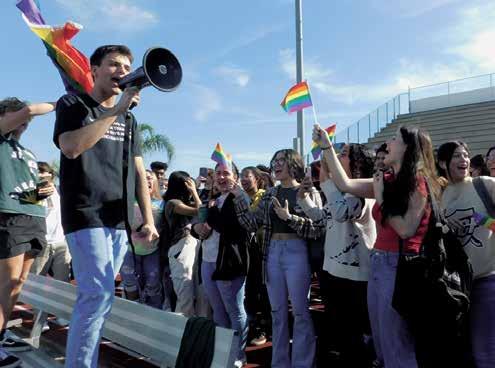
When “Don’t Say Gay” went public, the young LGBTQ+ community used social media to spread the message with trending hashtags like #Dontsaygay #SayGay and #DSGwalkout On Friday, March 4, people streamed out of classrooms in over twenty schools. Twitter was awash with students who proudly captured the action at their school
GAY FIREFIGHTER
continued from cover
Boykin told NY1 TV News that he followed department procedures and took his complaint to Lt. Darius Dorsett, then the department’s diversity officer.
“I was at my lowest,” Corey Boykins told NY1. “I was kind of just trying to still have respect for the job, because I do love the job. I do love the job. I was trying to navigate how I could stop this without losing my job.”
His discussion with Dorsett only made things worse, Boykins said. He was told that he should sleep with both men and women and that others had been “cured” of their homosexuality.
“Immediately, the first thing was: I don’t belong in the firehouse and… basically being Gay was a choice, having sex is about procreation,” Boykins said. Dorsett even offered him “hand diagrams” demonstrating heterosexual intercourse.
Boykins said the harassment took a physical toll that led to a mental breakdown. In his suit, Boykins seeks an apology and damages, but he still says he does not want to leave the FDNY.
“I would risk my life for any civilian or one of my brothers, one of the firefighters,” he told NY1.
Boykins said the FDNY should require training on how to interact with colleagues of different races and sexual orientations, and on when they’re crossing the line in harassment.
with videos and photos. Some claimed half of their peers walked out that day.
Seventeen-year-old Jack Petocz, an openly Gay junior, was the local organizer at Flagler-Palm Coast High School. He was suspended for handing out pride flags during the walkout. “We must let our politicians know that no matter how hard they try, they cannot suppress our identities or silence our voices,” he declared. “Gen Z will not stand idly by as our rights are stripped from us.” Public pressure, including an online petition that gathered over 7,500 signatures, got Petocz’s suspension lifted within a week.
Outside of Florida, people signed petitions, posted support on social media and did what they could to support the effort. Kronk@LeggNora posted, “Today a group from my school marched in the courtyard with pride flags, chanting ‘We don’t live in Florida, but we stand with those of you who do.’ Keep fighting!!!”
The next stage The backlash against Florida’s senate vote for the bill is building. Public pressure forced CEO Bob Chapek to break Disney’s silence on the bill. He has stated Disney
will “pause” political donations in Florida. Meanwhile, Disney workers, disgusted by the slow response from corporate headquarters, continue to stage regular walkouts in solidarity with the students.
The Pivot Conference, a major technology and media event slated for Miami, has announced it will move its 2023 conference out of Florida if DeSantis signs the bill into law.
That the right-wing Florida legislature is targeting everyone who challenges the status quo queer, trans, women, people of color is no surprise. Such politicians are desperate to reassert patriarchal norms and their attendant racist, sexist, heterosexual bigotries.
But young LGBTQ+ folks have no intention of going back into the closet. They are ready and willing to defend their rights. And they are not alone. The fight in Florida is far from over.
This piece was originally published in Freedom Socialist, Vol. 43, No. 2, AprilMay 2022. Reprinted with permission. Send comments to FSnews@socialism. com.
“This is making me feel some kind of way, like I’m taking this home,” he said. “And the only thing I should take home is something bad at a fire or I saw someone passed away. Those are things I’d be OK taking home.”
When contacted by NY1 News, the FDNY spokesperson referred the issue to New York City’s Law Department. A spokesperson there told NY1, “There is no room for discrimination or retaliation at any agency. The complaint is being carefully reviewed.”
International news highlights
by Daniel Lindsley SGN Contributing Writer
United Kingdom:
Parliament flip-flops on conversion therapy
Reuters reported on March 31 that the UK government walked back a plan to ban LGBT conversion therapy in the country, instead limiting the ban to therapy targeting Gay or Bisexual people in England and Wales, and leaving Transgender people out of it. The decision was announced just hours after the government confirmed a report saying that it would not introduce such a ban, but a swift, angry response from LGBT groups and lawmakers seems to have changed their minds.
Reuters added that Prime Minister Boris Johnson’s government has been under pressure to ban conversion therapy as part of a broader effort to eradicate “abhorrent practices which can cause mental and physical harm,” as was intended by former leader Theresa May, and stated in last year’s post-pandemic parliamentary agenda.
Qatar:
Official says rainbow flags a threat to safety
NBC News reported on April 1 that a Qatar police official has said that fans at the World Cup could have any rainbow flags confiscated, to protect such fans from being attacked for promoting Gay rights. While the official went on to say that LGBTQ couples would be welcomed during the event, same-sex relations are criminalized in the country, carrying a penalty of up to five years’ imprisonment.
Chris Paouros of the English Football Association’s inclusion advisory board, who is also trustee with the antidiscrimination group Kick It Out, was skeptical. “This inconsistency and the continued lack of detail in terms of how [an inclusive tournament] will be provided beyond the rhetoric of ‘everyone is welcome’ is concerning, to say the least,” he said.
Lt. Dorsett has been removed as diversity officer and reassigned to another position in the department. He did not respond to requests for comment.
The FDNY has been sued several over gender and racial discrimination. A landmark settlement in 2014 with the Vulcan Society of Black firefighters compelled FDNY to diversify its ranks and create the diversity officer position.
FARE executive director Piara Powar said of the development, “The idea that the flag, which is now a recognized universal symbol of diversity and equality, will be removed from people to protect them will not be considered acceptable. I have been to Qatar on numerous occasions and do not expect the local Qatari population or fans visiting for the World Cup to be attacked for wearing the rainbow flag. The bigger danger comes from state actions.”
Photo by Andrew Winning / Reuters
Photo courtesy of FDNY
Photo courtesy of @Jack_Petocz / Twitter
BI-WEEKLY! FIND US WHEREVER YOU LISTEN TO PODCASTS!
Discover Europe.
Offering year round nonstop flights from SEA-TAC International Airport to Frankfurt, Germany with easy connections to many European cities including Munich, Paris and Amsterdam and other worldwide destinations.
Condor is also a partner and member of the Alaska Airlines Mileage Program. Earn miles on every Condor and Alaska Airlines flight. Enjoy Business, Premium or Economy Class and let your next adventure begin with Condor.