
SEATTLE TRANS COMMUNITY UNITES IN JOYFUL REBELLION


by John McDonald
by Lindsey Anderson SGN Staff Writer
by Daniel Lindsley SGN Staff Writer
Contributing Writer
Photo by Megan Jelinger / Reuters
Photo courtesy of Clarion West
Photo by Lindsey Anderson



April 15 - 16, 2023 ~ Langley, WA
Help us Welcome the Whales with Orca Network’s annual parade & festival on Saturday, April 15th & Sunday, April 16th.
Activities will include costume-making, parade, waterside ceremony, & educational presentation on Saturday.
Beach clean-up & whale-watching cruise to follow on Sunday.

While in town, visit the Langley Whale Center for a fun, free experience for all ages.
~ Educational exhibits on local marine life
~ Unique ocean-themed gifts
~ Kids Room
Follow Langley Whale Center on Facebook for information on free youth zooms & events.
Follow the Orca Network to view and report whale sightings. Visit www.orcanetwork.org for educational information and to donate or shop online.


by

Photo
Cindy Hansen







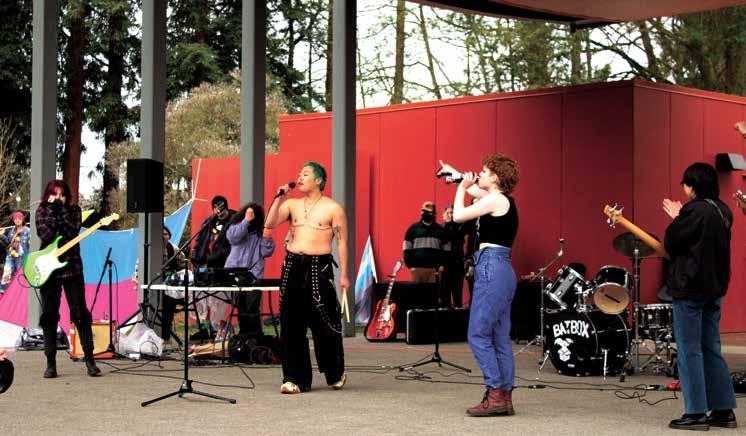



Photos by Lindsey Anderson
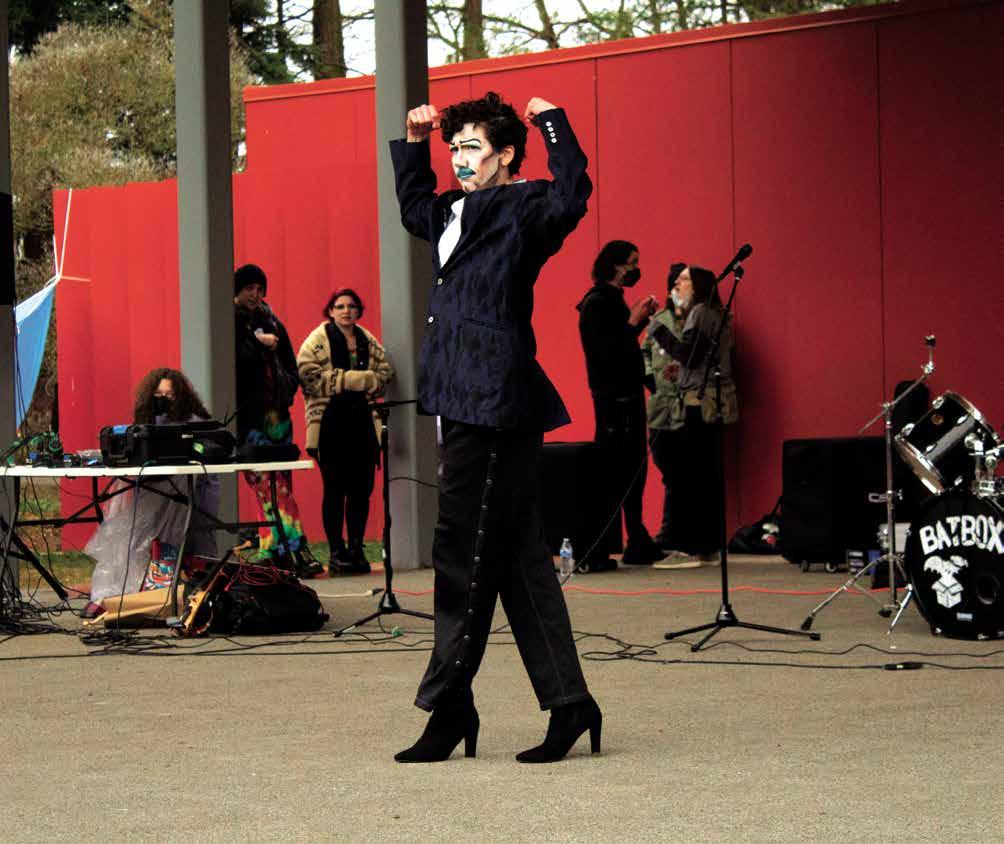
Performers with purpose
Trans people of all ages gathered at the park to celebrate and be with one another. Event organizer Lotus set the tone for the evening and reminded attendees that the simple act of Trans joy is a statement in “a country where 47 states introduced 490 bills that attempt to make [life] a living hell, particularly for Trans youth.”
“This country is legislating hate into our laws, and we are here to prevent that from happening,” Lotus continued. “We are also here to celebrate. We are here to celebrate our resilience and joy as active resistance.”
The festivities began with a live performance by Devorah the Maccabee, a Trans-Jewish anarchist who led the crowd in chants of “Hey, hey fuck the police.” Gleeful Trans kids rushed to the front of the stage to sing along with the catchy tunes.
The next performer was Aleyanna Grae. With a voice as sweet as honey, they soothed the crowd with enchanting songs about selfcare, sexual hygiene, and community love. Young people joined hands to spin and sway along. The venue was full of smiles by the time Grae, who sounded like Ariana Grande with better pitch, left the stage.
“I want to live my life and be happy” With the crowd fully pumped, it was time to ignite the rage that boiled under the surface of every Trans person and ally in attendance. Local activist Bryn captivated everyone with their strong words and a reminder of what’s at stake. “I’ll be honest, I don’t want to be up here. I don’t want to march. I don’t want to have to fight for my rights. I want to live my life and be happy,” they said.
Bryn’s speech intentionally drew paral-
lels to the Nazi regime. They included a swift call to action for Gov. Jay Inslee to publicly stand against “rampant anti-Queer legislative action in the US… [and] establish Washington state as a refugee state for people fleeing hateful laws, [and provide] accessible gender-affirming healthcare protections… for all healthcare workers.”
Bryn wrapped up their speech by calling on all non-Trans people to pay attention. “If you’re not Trans but you are Queer and support these bills, I ask you, who do you think they will come for next? If you are a woman and support these bills, along with everything else that has already been forced upon you, what do you think they will do when they’re done with us?”
The Trans kids are all right
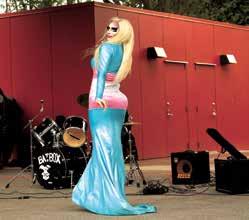
After their powerful words, the music started up again, with performances by some of Seattle’s best drag artists. First, Siren St. James did a hilarious and political lip-sync to “What’s Going On?” She was followed by an effervescent ballad by Solana Solstice. Finally, crowd favorite king Sid Seedy brought an energy only matched by a group of theater kids with too much Red Bull. Seedy was a hit among the Trans youth, one of whom called out, “I love your gender!” as the entertainer pranced across the stage.
The children in attendance were enthralled by all the drag performers. One young child stood at the corner of the stage and looked on adoringly as Solstice sashayed around in glitter and frills. The child’s parents had to hold them back from rushing the stage to join in. Older kids whooped and hollered for every hair flip, costume change, and middle finger held up to the GOP. Their star-struck reactions to all the performances (which rivaled any Harry Styles or Taylor Swift show) proved
“We, as a community, have been targeted and harassed on a regular basis. It’s time that we not only take a stand but make it known that we’re not going anywhere.”
that LGBTQ+ youth deserve to see more Queer and Trans role models in their lives.
After the show wrapped up, local punk band Gender Envy rocked the park. The band had everyone excited before they even started playing when the drummer, Archie, ripped off his shirt. Lead vocalist Cass encouraged all the Trans kids to form a mosh pit and led the gathering in a cathartic scream during their final number. Gender Envy’s performance was a pivotal moment for any young Gen Z and Gen Alpha kids in the crowd who may have missed the emo craze of the 2010s.
Fighting for their community
Molly Vaughn, watched as the young people celebrated with a smile on her face.
“We’re here because the future that my generation thought they were building for Trans youth is being erased and destroyed,” she said. “We have to fight and be visible in order to push back against the bigotry, the transphobia, and the hatred that is being spewed at us by certain members of our society. Children’s lives are on the line. Families are on the line. We have to fight for them.”
Everyone showed up to the party with determination. “I am here today to stand
with my Trans siblings in collaboration, to work against and voice our issues with our current state in the United States,” Sunny Shanjani added. “We, as a community, have been targeted and harassed on a regular basis. It’s time that we not only take a stand but make it known that we’re not going anywhere. We’re here, we’ve been here for a million years, and we’ll be here for a million years. There’s no way this is the end.”
Following the event, Lotus led everyone in a march to Cal Anderson Park. Trans people and allies chanted together, lifted their flags and signs, and called out to let everyone know that they will always exist. While the March for Trans Lives recognized the dangerous reality of Trans people in the US, the sorrow did not last long. In one breath, speakers mourned the loss of murdered Trans siblings, and in the next, they screamed, danced, and laughed with one another.
Showing love for each other and themselves, the Trans community united on Friday, March 31. At Volunteer Park, Trans kids were celebrated, Queer couples held hands, punk bands jammed, everyone chanted “Fuck the police,” and the world kept turning.
Photo by Lindsey Anderson
Local News
Spring 2023 is abloom with cherry blossoms


by Lindsey Anderson SGN Staff Writer
As far as the eye can see, blooms stretch out in a swirling sea of pink and white hues — the annual Cherry Blossom Festival is here! From March 24 to April 10, the University of Washington welcomes visitors from all over the world to walk around its beautiful quad and take in the gorgeous sights — and smells — of one of the state’s largest collections of cherry blossoms.
A very pink history
The festival coincides with the National Cherry Blossom Festival, held in Washington, DC, each spring since 1934. The tradition started as a symbol of friendship between the United States and Japan. In 1910, 2,000 cherry blossom trees, to be planted along the Potomac, arrived in Seattle by boat before they were shipped to the other Washington via train.
Shortly thereafter, the US Department of Agriculture discovered insects and diseases in the trees and recommended torching the whole collection! This led to great

controversy and nearly a diplomatic crisis. Ultimately, a few of the trees were spared, but then another shipment of over 3,000 trees was sent from Japan in 1912.
Cherry blossoms are typically shortlived plants. On average, they only last between 15 and 20 years. However, the trees featured at the University of Washington are known as Yoshino. These have been around for 90 years and typically flower quickly when the weather warms. This variety was deemed perfect for our often-unpredictable spring, as they can still bloom when it’s cold — it just takes a little longer.
Today, cherry blossoms are revered all over the world as a symbol of spring and rebirth. They are so sacred that, in Washington DC, it is considered vandalism of federal property to break a branch off one of the nation’s collections. Those who dare snip a bloom could face harsh fines or even arrest.
Cherry blossoms come to Seattle
Despite their names, cherry blossom trees do not typically produce fruit. The tasty summertime treat comes instead from cherry trees, which bear fruit between May and

July, though not until their fourth year of life. While it is unlikely that visitors to the UW will find fresh fruits growing on the trees, the petals of cherry blossoms are edible. They are used in traditional Japanese sweet teas and desserts. Sneaky blossom pickers won’t face severe penalties at the UW, either.
Twenty-four years after the first cherry blossom trees arrived in DC, Washington state got its own collection. Japan’s prime minister, Takeo Miki, donated the trees in 1936. They were planted at the Washington Park Arboretum. In 1964, to make way for the opening of State Route 520, the university arranged to transplant the trees to its quad.
The trees have become so beloved that some Washington state residents decided to clone them in 2005. Using trimmings from the 90-year-old trees, botanists from the Skagit Valley have begun growing new saplings on the lawn outside Parrington Hall.
The trees have become a staple of the UW community, so much so that the university started a Twitter page for them! Now, the trees can speak for themselves, which they do almost daily at @uwcherryblossom.
Look out for the Japanese Cultural Festival
The University of Washington isn’t the only location in the city hosting a cherry blossom Festival this spring. The Seattle Center is also hosting the Cherry Blossom & Japanese Cultural Festival April 14-16 at the Armory Food & Event Hall and the Fisher Pavilion between 11 a.m. and 5 p.m.
The celebration will focus on Japanese culture and the relationship between the people of the Pacific Northwest and Japan. Some of the events being featured include martial arts, ikebana (flower arranging), the tea ceremony, dressing in kimonos, koto music, and taiko drumming.
Whether bloom lovers attend the cultural festival at Seattle Center or just stroll through the beautiful gardens at the University of Washington, those flowers are sure to put a smile on the faces of everyone who sees them. You can’t help but feel hopeful when you take in the sweet smell of fresh cherry blossoms!
Photos by Lindsey Anderson
Arts & Entertainment
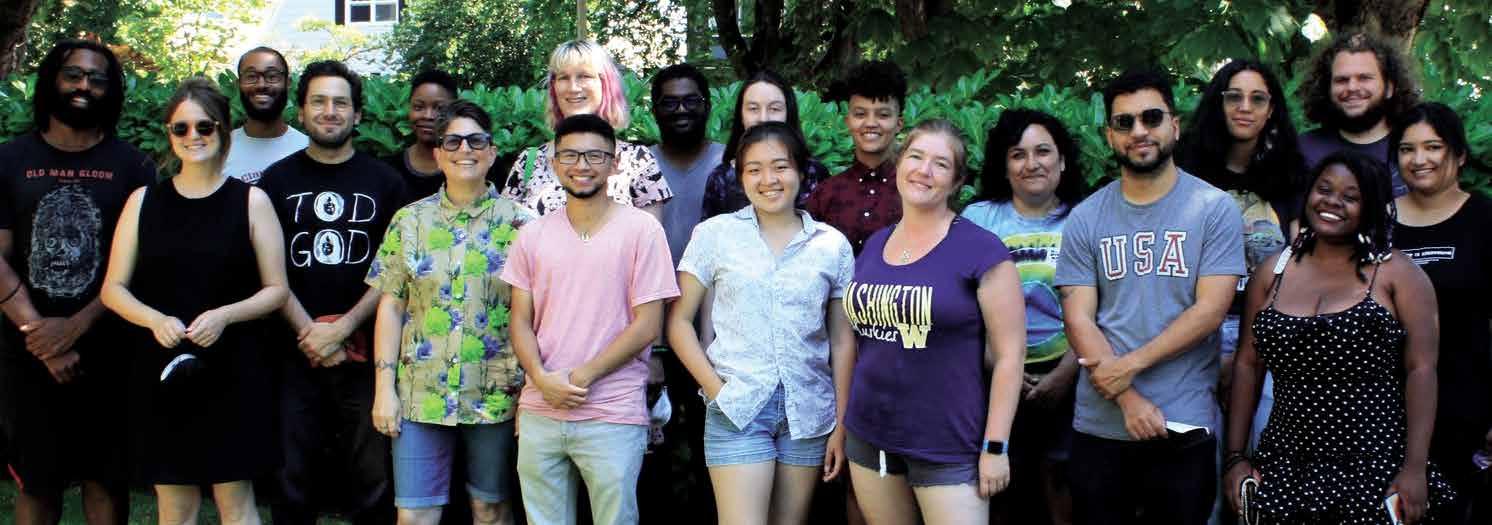
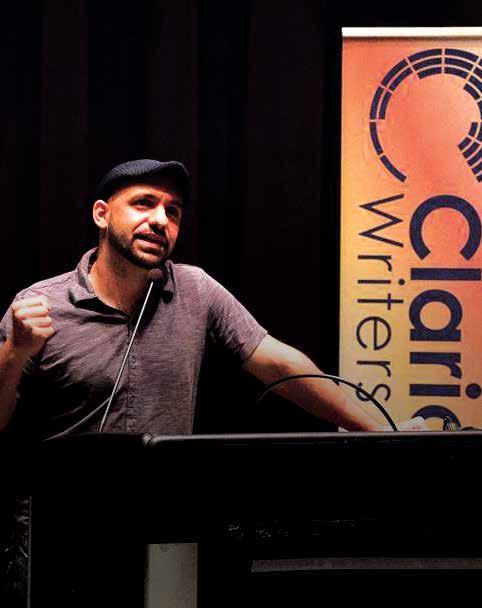
very globally diverse group of instructors who come through,” said Development and Outreach Coordinator Evan J. Peterson.
length-oriented classes and workshops. But the plan ... is to write one story a week. Just crank it out, rough draft, get feedback on it.”
At its core, Clarion West has its six-week Summer Workshop. For the rest of the year, it runs less selective events, some for free, and others with admission costs between $35 and $275. In every case, it brings in professional writers from all over the globe, and offers discounts, scholarships, and other financial aid for students who would otherwise struggle to afford the cost.
“To us that is a minimum, as is having a
“They don’t all look alike; they’re not all from the same hemisphere.”
Peterson, like many other staff members, is both Queer and an alumnus of the Summer Workshop. He attended a few years after earning his MFA, and has since had his work published in video games, escape rooms, poetry anthologies, and short story magazines, among other things.
“We focus on short fiction,” Peterson said. “We’re trying to slowly build up more book-
Clarion West has a long list of success stories, but the summer program is for learners, or “people who will grow from the workshop, not people who are already just, absolutely, one hundred percent ready to publish,” Peterson said. “Emerging as opposed to established, someone who does not have a career in speculative fiction.”
That last bit is part of what sets Clarion West apart in Seattle, and the rest of the country.
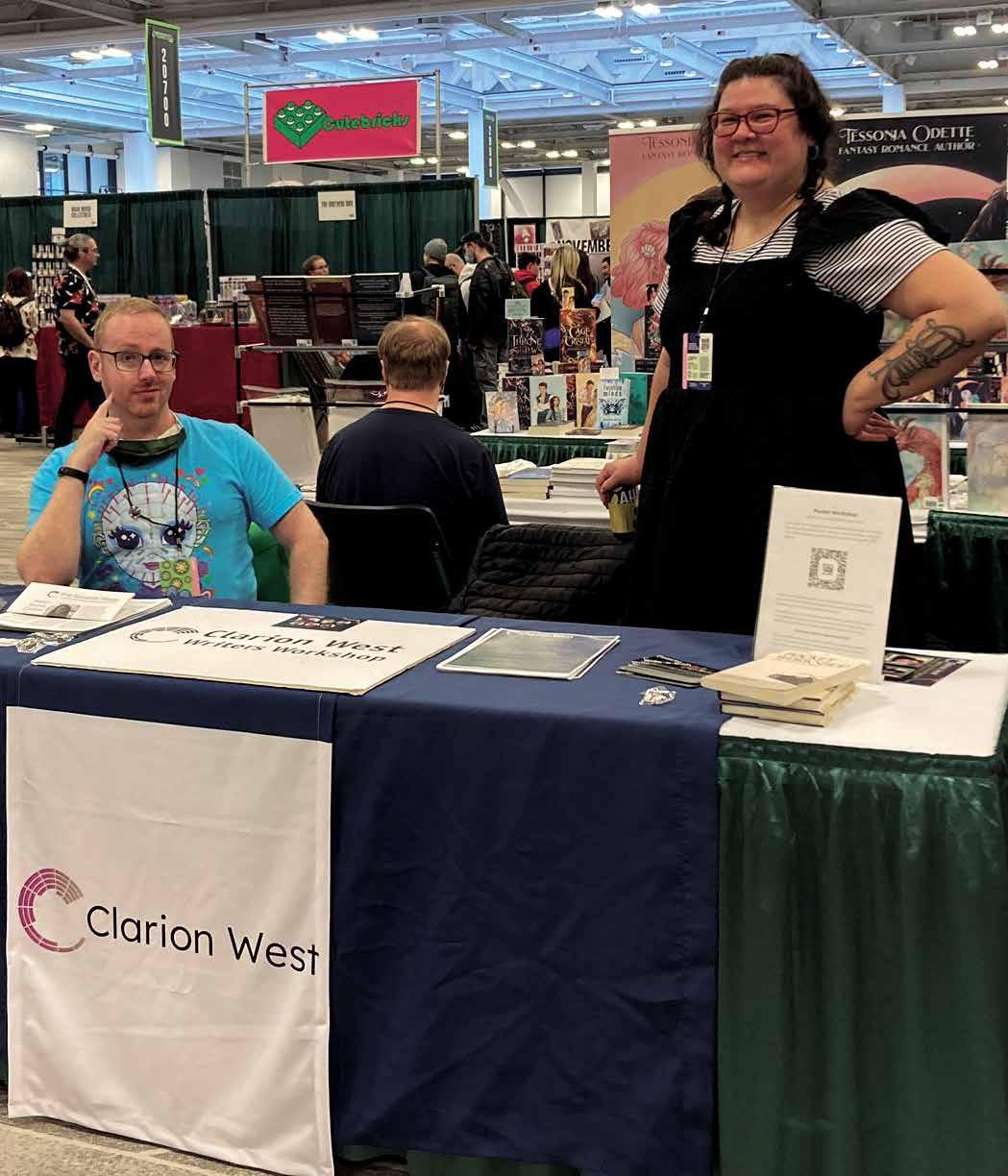
“We focus on speculative fiction, which most writing programs and schools do not,” Peterson said. “In fact, many of them shun speculative fiction, even though [it] is inextricable from the English literature canon.”
He cited Mary Shelley’s Frankenstein as a good example, and questioned whether there were any hardline differences, really, between fantasy and magical realism. He also argued that speculative fiction isn’t just more fun but also more profitable than the genres more popular with academics.
“I’ve seen both worlds, and I really prefer the commercial speculative fiction world,”
“We focus on speculative fiction, which most writing programs and schools do not.”
he said. “This is a world where we actually get paid for what we write,” whereas in academia, you write to get a teaching job.
Academic writing programs also tend to be rooted in structures of white supremacy, Peterson said. A particular workshop style called the “Milford method” has remained popular with American writing programs since its creation in 1956. In a Milford-style workshop, students sit in a circle, having all read the same manuscript and prepared written feedback for the work. The author of the manuscript listens in silence to each student’s feedback. When everyone has spoken, the author is allowed to say thank you, and then ask clarifying questions.
It’s “an extremely common method for writers’ workshops,” Peterson said. But it’s also “easy for the Milford method to become a very Western, white, Englishspeaking-dominated system, and we want to prevent that.”
Proponents argue that the Milford method and its offshoots simulate the way a text is received by a reader who picks it up off the shelf. The text has to stand strong on its own, they might say, without any defense or explanation from the author. Problems become apparent, though, when a person with a marginalized identity is put on the spot like that. When a text is required to “stand strong on its own,” there’s little incentive for critics to educate themselves on unfamiliar experiences. And that can lead to marginalized experiences themselves being criticized as unbelievable, which is far from constructive.
If that wasn’t enough, “For a long time there has been pressure put on writers
Arts & Entertainment

CLARION WEST
continued from page 7
to define any terms that are not written in English, or even things that are written in dialect and patois,” Peterson said.
“We have had research, and a whole equity team and committee that met for a while to restructure the culture of the workshop. Because the Milford method does leave people out. Not every culture is comfortable with [it].”
Clarion West spent spring of last year testing more equitable workshop methods, so writers interested in attending any of its future events can look forward to the results.
Speaking of which, the nonprofit has an annual Write-a-thon, with affinity groups — one of which is Queer-oriented, and run by Peterson, along with a weekly “kiki” meetup online.
Some writers might still wonder, for good reason, if Clarion West would give them the business and networking knowledge they need to make it in the industry. Business and craft are in fact both important topics at Clarion West.
“When I went through [the Summer Workshop],” Peterson recalled, “I was very, very impressed that we were introduced to various editors who were in town for various reasons.” He also said that the program prepared him for game writing, and a few alumni have gone on to work for local game companies, like Wizards of the Coast.
You can find out more about Clarion West’s upcoming events, application process, and new workshop methods at https://www.clarionwest.org. On May 5, the nonprofit will be running “Steamy in Seattle,” a tea party discussion about paranormal romance fiction, with authors Gail Carriger and Piper J. Drake.

Photos courtesy of Clarion West
Musical biopic Spinning Gold a stereophonic disaster
by Sara Michelle Fetters SGN Staff Writer
SPINNING GOLD
Theaters
I try to refrain from being hyperbolic when I don’t care for a motion picture, but there were moments during the restless musical biopic Spinning Gold when I felt like it was attempting to physically assault me. This hagiographic mess is a blizzard of bewildering visuals, nonsensical editing choices, and threadbare characterizations that make caring about anyone in the story next to impossible. I loathed the majority of it, and it’s the first film in ages where I wanted to flee the theater in hopes of maintaining my sanity.
What makes it worse is that there are moments that work, brief scenes of emotional insight and dramatic inspiration that hint at the story’s potential. More importantly, the music is undeniably awesome.
It is all from the songbooks of a cavalcade of iconic superstars: Donna Summer, KISS, the Isley Brothers, Gladys Knight, Bill Withers… The list goes on and on. Even though it has all been rerecorded by the actors portraying those characters, these songs still speak for themselves, so as bad as this film is, it will likely still boast one of the best soundtracks of 2023.
But these plusses frustratingly only augmented my disgust. While writer-director Timothy Scott Bogart undeniably intends the feature to be a cinematic love letter to his father, Casablanca Records founder Neil Bogart, what he and his siblings have delivered is a pummeling explosion of musical theatre exaggeration that goes out of its way to thump an audience into submission. It’s an endurance test, one that no amount of epically phenomenal music from the 1960s, ’70s, and early ’80s can make worthwhile.
The crux of the story takes place between 1967 and 1977 and follows Bogart, played
by Tony-nominated Jeremy Jordan, as he continually reinvents himself while leading a core group of friends on a raucous journey filled with highs and lows. He bets big on the likes of KISS, Donna Summer (Tayla Parx), Giorgio Moroder (Sebastian Maniscalco), and Parliament, only to initially come up snake eyes across the board. But he sticks with all of them, come what may, and this results in Casablanca becoming the most successful independent record company of all time.
What’s the problem? There are more than I can count, but the major two involve the filmmaking and the script, the latter being the more problematic. You have a plethora of characters who are vital to making Bogart and Casablanca the toasts of Los Angeles, but if you asked me to remember anything about the lot of them that didn’t involve stereotype or caricature, with rare exception, I could not do it. The talented ensemble includes Michelle Monaghan, Jason Isaacs, Peyton List, Lyndsy Fonseca,
Vincent Pastore, Dan Fogler, Michael Ian Black, and Jay Pharoah — and not one of them registers for more than a millisecond. Monaghan, as Bogart’s first wife, Beth Weiss, is particularly left out to dry, stranded in a throwaway, thankless role that does her no favors. It’s a testament to her skill that she makes it through unscathed, still emerging as the supremely versatile and underrated talent that she is. But Monaghan can only do so much with so egregiously little, and many of the moments between her and Jordan reek of second-rate soap opera platitudes that are so misogynistically banal, they’re almost offensive.
As for the actual filmmaking, I don’t know where to begin. It’s as if the director and all his creative partners sat down and watched Goodfellas, Stop Making Sense, The Last Waltz, Gimme Shelter, tick, tick… BOOM!, a few Baz Luhrmann films, and All That Jazz and learned all the wrong lessons. The narration is obtrusive and hackneyed. The camera swirls, whirls, and goes this with and that, but with no poetry and even less intent or meaning. The editing is crazily haphazard because it can be, not because there is a purpose behind the cuts or in how the scenes are assembled to achieve an emotional goal. It’s chaos for the sake of chaos, and because of that, everything led to my developing a massive headache.
In fairness, one thing the filmmakers do get right is the casting of all the legendary musicians. Newcomer Parx steals every scene she’s in as Summers. Jason Derulo, Wiz Khalifa, Casey Likes, and Sam Nelson Harris all slay as, respectively, Ronald Isley, George Clinton, Gene Simmons, and Paul Stanley. Best of all is Ledisi as Gladys Knight, whose scenes fleshing out and then performing “Midnight Train to Georgia” deservedly bring down the house.
Yet none of this is enough. Spinning Gold is a disaster. While I fully believe Neil Bogart’s story is as fantastic — and as fantastical — as this film desperately tries and convince the viewer it is, that doesn’t make this monstrosity feel less forced, unpolished, and most of all false. The whole thing is a stereophonic onslaught of sound and fury that annoyingly signifies nothing, and no matter how terrific the music was, all I wanted to do was turn the radio dial and listen to something — anything — else.
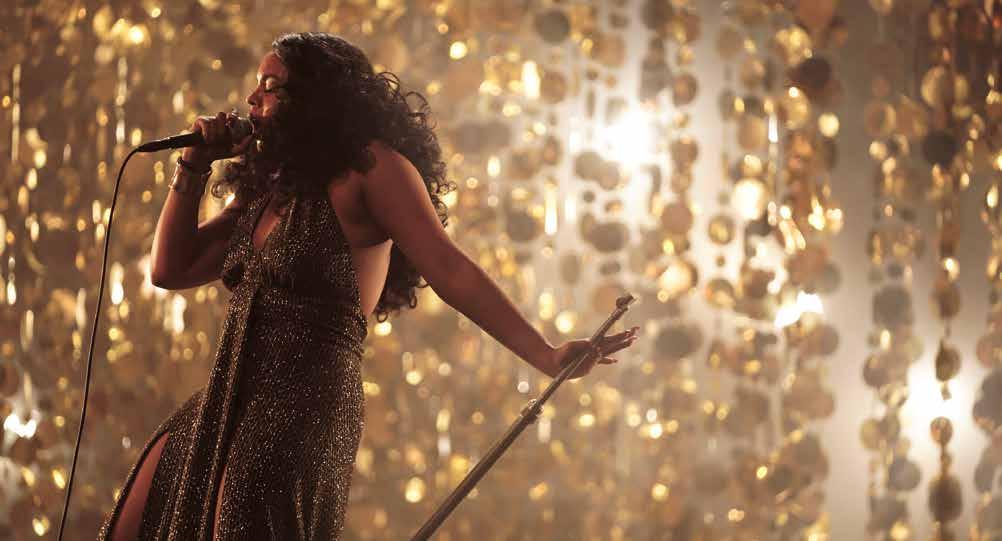
Tayla Parx in Spinning Gold – Photo courtesy of Hero Entertainment
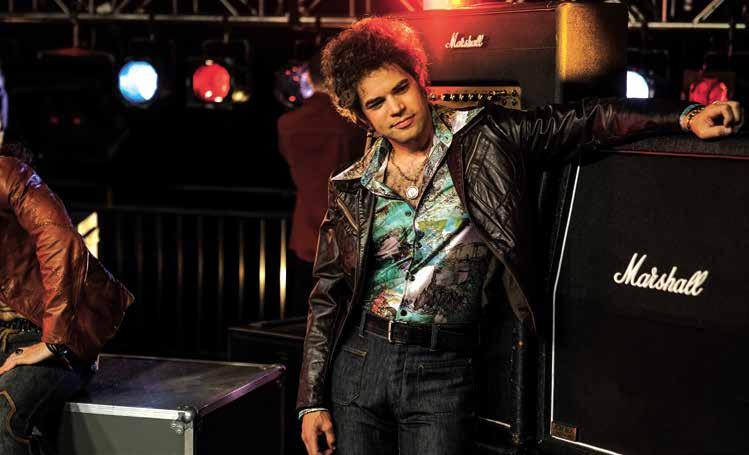
Jeremy Jordan in Spinning Gold – Photo courtesy of Hero Entertainment




Film
It’s game over for The Super Mario Bros. Movie

by Sara Michelle Fetters SGN Staff Writer
THE SUPER MARIO BROS. MOVIE
Theaters
I am not the target audience for The Super Mario Bros. Movie. I’ve played a few of the games (namely the first three installments, along with pretty much every iteration of Mario Kart), but I’m hardly an expert. I also haven’t played anything Mario-related in at least a decade, so I’m hardly doing joyous backflips when I watch an animated adventure overflowing with surprises and Easter eggs superfans will go gaga over.
Writer Matthew Fogel (Minions: The Rise of Gru) and directors Aaron Horvath and Michael Jelenic — veterans of the massively popular Teen Titans GO! — have gone out of their way to make sure their animated spectacle is aimed directly at kids. It’s colorful and fast-paced, and revels in silly visuals. There are so many jokes per minute that if one or two in a row fall flat, there are a good six or seven more in quick succession trying to pick up the slack. So the 10-and-under set are going to adore this movie whether they’re Mario fans or not — and there’s nothing wrong with that whatsoever.
My reaction? Let’s just say I was not impressed. Jack Black as the voice of Bowser is innocent. As is composer Brian Tyler (Scream VI ), who works overtime reconfiguring and expanding on maestro Koji Kondo’s signature Nintendo themes. Anya Taylor-Joy makes a surprisingly good Princess Peach for the most part, and early on, it appears that Keegan-Michael Key is going to make a great Toad — and then the film all but forgets to utilize the character, so that’s disappointing.
But the rest? Yeesh. I get that adapting the games into anything resembling a cohesive narrative would be difficult, but it frequently feels like no one is trying. It’s all a collection of random ideas and nonsensical sequences thrown into a blender and mixed together until the resulting milkshake is nothing more than tasteless sludge. Before the film was halfway through, I could feel a splitting headache coming on. By the time it concluded, said migraine was roughly ten times worse than I feared.
I will say that Fogel’s plot is no worse
than your standard 1980s Saturday morning cartoon scenario. A pair of Brooklyn plumbers, brothers Mario (Christ Pratt) and Luigi (Charlie Day), are sucked into a strange green pipe while investigating a mysterious leak deep underneath the city’s sewer system. They are transported to a strange, magical world filled with talking creatures, floating boxes containing bewildering power-ups, and entire civilizations under the threat of annihilation by the allpowerful king of the Koopas, the nefarious fire-breathing Bowser.
Mario teams up with the Mushroom Kingdom’s Princess Peach, there’s a brief fight with Donkey Kong (Seth Rogen), and, after investigating a seemingly haunted castle, Luigi ends up being held captive by Bowser. There’s a go-cart battle between the Kongs (along with Peach, Mario, and Toad) and the Koopas on the Rainbow
Road, and the final confrontation begins in Bowser’s floating fortress, only to culminate in a different world the games themselves have never (to my knowledge) journeyed to before — one Mario and Luigi are intimately familiar with and eager to defend.
It’s all fairly nuts, and never for a second does anything make a lick of sense. As annoying as that may be, I could live with it if I felt like the majority of the talented vocal cast were attempting to do anything interesting, amusing, or unexpected. But, outside of the aforementioned Black (who is excellent), Taylor-Joy, and Key, this is sadly not the case. Most of the ensemble is overpowered by the perplexing lunacy of the material, and there were times that veterans Pratt, Day, and Rogen — who should be able to knock something this inane out of the comedic park — all sound like
they’re monosyllabically reading their lines straight out of a phone book.
Should I even be reviewing The Super Mario Bros. Movie? I do not know the answer. What I can say is that I have always felt that good family-friendly motion pictures — no matter what they are, who they are aimed at, or what source material they are based upon — work for everyone in the audience. The great ones go far beyond that, resonating on multiple levels, with kids and adults alike enjoying themselves immensely, even if for vastly different reasons.
That is not the case here. Kids may have the time of their lives watching The Super Mario Bros. Movie, but for most adults, this is game over, and I have no wish to try and sit through this bit of psychedelic craziness ever again if I can possibly help it.

The Super Mario Bros. Movie – Photos courtesy of Universal Pictures
Books
It started with a question
Robert Jones Jr. explores Queer Black history in debut historical novel
by Lindsey Anderson SGN Staff Writer
Robert Jones Jr. fell in love with writing when he was six years old and his father bought him a Wonder Woman comic. “I wrote my first story as Wonder Woman’s sidekick, and I had so much fun using my imagination in that way that I just kept writing,” he remembered.
As a young adult, writing was a passion and a hobby, but Jones never felt he could pursue it professionally. “I had never seen a Black writer before,” he explained. Everything changed the day he read Terry McMillion’s debut novel, Mama. “I had an epiphany that I could start writing about my own experiences and life. I took writing more seriously, but not seriously enough that I thought I could become a published writer,” he said.
Like many great American writers, Jones had stories in his heart that needed to be told. The desire to become a professional writer never left. In his thirties, he returned to college to study creative writing. “I realized it was my purpose,” he said. Still, becoming a published writer was not an easy task. Passion doesn’t pay the bills, and Jones had to find time to write while working multiple jobs and attending school.
“I was working three part-time jobs [as an] undergrad. I was working two part-time jobs in grad school. When I finally graduated, I had a full-time job. It was difficult to find time to write,” he recalled. “I was writing, as Toni Morrison once put it, ‘On the edges of the day.’”
Writing at 3 a.m.
Jones was determined to make his dreams come true, so he pushed himself to make time for his craft. He would write on his commute to work but found that still wasn’t enough.
“I could no longer keep treating my art as secondary and not primary, so I made a deal with myself. I said, ‘Set the alarm for 3 a.m., write for at least an hour, go back to sleep at 4 or 4:30, and then set the alarm again for 6:30 to go to work. If you are a writer like you say you are, you will commit to this.’”
Every morning, even Saturday and Sunday, he would get up at 3 a.m and write, he said. “Whether it was one sentence, one paragraph, or one page. I would sit and write for one hour.”
Jones admits writing so early every day was physically and mentally draining, but he felt he owed it, not only to himself but to his ancestors, to finish his novel.
“I spent six years in school for this express
“I read a tremendous amount of wonderful works by Black authors, but I was curious and a bit perplexed about why Black Queer figures didn’t start to show up until the 1920s.”
purpose of honing my artistic talent, so I did not want it to go to waste,” he said.
After 14 years, two degrees, and countless very early mornings, Jones finally finished his debut novel, The Prophets.
Critics have compared him to Toni Morrison, a writer he aspires to emulate. “Every time I set pen to paper, I am striving to be as good as Toni Morrison was,” he said.
Aside from Morrison, some of his favorite writers are James Baldwin, Zora Neale Hurston, Wallace Thurman, Alice Walker, Gale Jones, Gloria Naylor, Jean Toomer, and Chinua Achebe. “I owe [them all] a great debt for inspiring me to write, teaching me how to write, showing me how to write,” he said.
“What about love?”
His inspiration for The Prophets came from a question formed in his African studies courses. “My work always comes from a question I want an answer to. I weave my way through these words until I come to some conclusion, if not a complete answer,” he explained. “I read a tremendous amount of wonderful works by Black authors, but I was curious and a bit perplexed about why Black Queer figures didn’t start to show up until the 1920s.”
The earliest references to Black Queer people were in the 1929 book The Blacker the Berry by Wallace Thurman. “That raised a question for me: did Black Queer people just not exist before then?” he wondered.
see JONES page 14
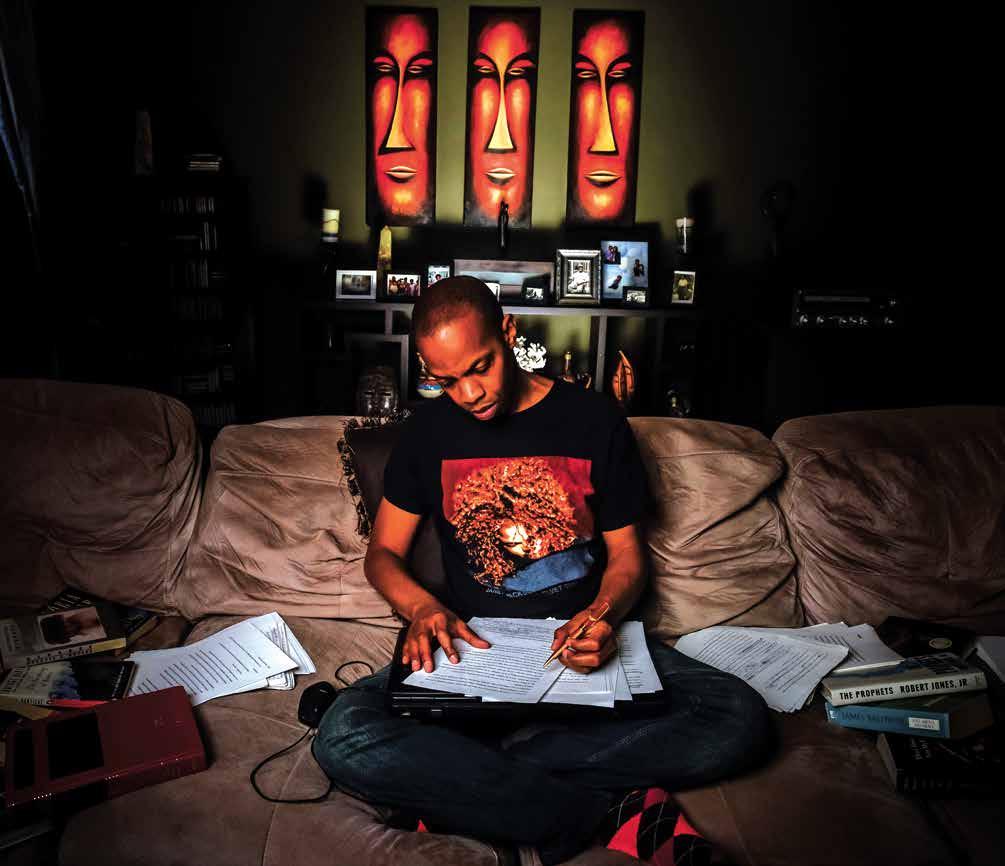
Robert Jones, Jr. – Photo by Al Vargas for RainRiver
Books
Pat in the City fits just right
JONES
continued from page 13
Jones began researching historical accounts of Black Queerness to answer his questions. “I kept finding references to sexual assault between two males or rape between a slave master and an enslaved person, and that brought another question for me: what about love?”
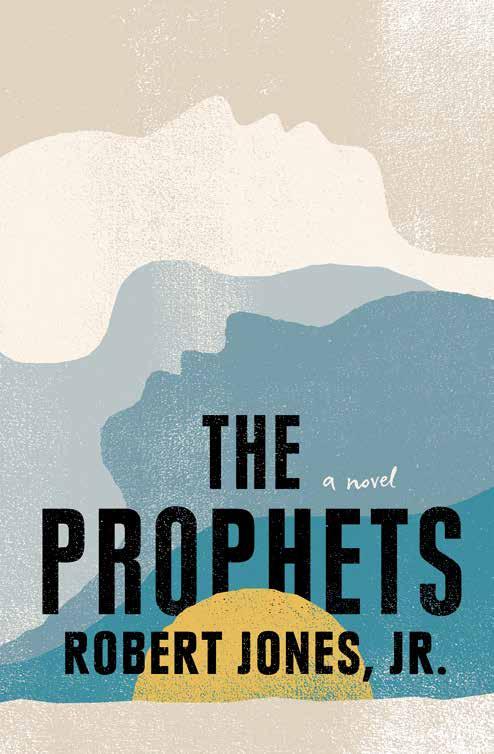
Jones concluded that the heteronormative imagination could not hold room for two Black men in love before the Harlem Renaissance. “They could only imagine Queer sexual encounters through the lens of rape culture,” he said. “So, I said I wanted to write a love story about two enslaved young men on a plantation in Mississippi, where it’s love and not the result of some trauma or pathological construct. These are just two young men who genuinely love each other.”
Full of striking contradictions, The Prophets shows the power and beauty of Queer love to overcome even the most horrific episodes of human cruelty. When asked why he set a novel about Black Queer joy against the backdrop of American slavery, Jones said, “The reason why is because I wanted to strike back at this false notion that Black American people are Queer because slavery corrupted us. I wanted to show that slavery did not make us Queer. Queerness is just a natural part of the human experience. In fact, what slavery and colonialism introduced us to, truly, is antiQueerness and anti-Transness.”
Uncovering the truth about Indigenous Queer and Trans identities
The Prophets is a novel grounded in years of research. Jones spent just as much time writing the book as he did researching precolonial ideas of gender and sexuality in Indigenous American and African nations.
“I drew upon all of the canonical works I was reading as an African studies minor, so slave narratives and stuff of that nature. I also read anthropological works of sociologists and anthropologists investigating the ideas of gender, gender identity, sex, and sexuality, particularly on the African continent,” he explained.
Of course, colonization and white supremacy have led to the destruction of many crucial histories of Indigenous peoples across the globe. This made Jones’ research particularly challenging. He relied on oral histories and sociological studies to make his fictional world feel authentic.
Through his research, Jones discovered some surprising things about LGBTQ+ history.
“The biggest surprise for me was the discovery that all of these Indigenous peoples,
by Terri Schlichenmeyer Special to the SGN
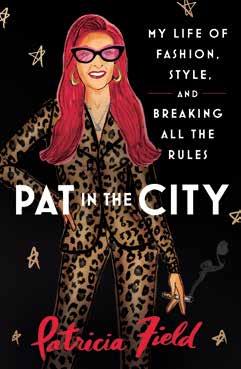
PAT IN THE CITY: MY LIFE OF FASHION, STYLE, AND BREAKING ALL THE RULES
PATRICIA FIELD
© 2023 Dey Street Books
$35.00
272 pages
Almost from the time she was born, little Patricia Haig (later Field) knew that clothing made a statement. She knew it while wearing her cowgirl outfit to play, when she clothes-shopped with her aunts, and when recalling her father, who was “handsome, sweet, and mild” and who died when she was small. Adoption later changed her surname, but not her love of clothing.
Working in her mother’s dry-cleaning store as a kid, Field learned all about fabrics; her aunts’ forays into fashion taught her even more. Field “always had beautiful clothes,” although a pair of men’s-style
pants discovered in a small boutique in the mid-1950s was life-changing. Field entered college and landed dual degrees in philosophy and political science, though she says “style came easy to me.” By then, she’d turned away from ‘50s femininity, preferring an androgynous look. She also learned that she preferred women as partners.
One of them was a also partner in Field’s first business, a small shop near NYU that opened in 1966. In 1971, they opened a larger store, calling it “Patricia Field.”
Partly due to her contacts with designers, Field sold inventive, trendy, “nouveau glamour” outfits to clubbers who made Studio 54 the “high-octane” place it was then. Field dressed a lot of celebrity clubbers, too, which led her to the ballroom scene, where she became a house “father” and a part of vogueing history. And then someone suggested to someone else that Field would make a great costumer for an upcoming movie...
If you could somehow take two books by a good author and smash them together to
“I wanted to write a love story about two enslaved young men on a plantation in Mississippi, where it’s love and not the result of some trauma or pathological construct.”
make one, that’s what you’d have with Pat in the City. This book is divided almost clean in two, and almost with separate audiences. In the first part, Field shares her biography, her childhood, her formative years, and the awakening of her personal sense of style. Fashionistas won’t be able to put those pages aside, nor will anyone who attended any New York City club with any regularity back in the day. This half of Field’s book drips with disco lights and ballroom “reads.”
Celebrities stretch into the second half, as Field writes about being the costumer for Sex in the City, the friendships she struck up with its cast, and how the iconic opening scene came to be. This part — likewise glittering with big names and big productions — is for younger readers and Hollywood watchers.
Reading this book is like time-travel to the ‘70s, and a backstage peek at your favorite show. If you love clothes and people who love fashion, then Pat in the City will fit you to a tee.
villages, cities, and tribes had such modern ways of thinking about gender and sexuality,” he said. He was shocked to learn that in ancient Nigeria, people did not use gendered pronouns, nor were children assigned a gender at birth. Adults would determine their own gender. In other African tribes, the word “king” was used to describe a ruler of any gender.
“In one African tribe, the Dagara people of Burkina Faso, if you were born Queer, you were special, because you occupied this liminal space. You had access to the afterworld,” Jones explained. “So you would be the emissary, the missionary, the guardian between the here and the hereafter, and you could commune with the ancestors and the gods.”
Learning about the ways precolonial African nations viewed gender and sexuality changed the way Jones saw his own identity and challenged the idea that “Africa is a homophobic place.”
“That’s all I had ever heard growing up, so discovering these new things — true things -— about the African continent was such a surprise,” he said. “Indigenous people had a broader understanding of gender and sexuality, such that a Trans person wasn’t unusual or strange, or something that even needed its name to separate itself from cisgenderness. It was all a part of the human experience. Discovering that helped me to push back at these false ideas and to open the door for this story.”
What’s next?
The Prophets was released in 2021 to wide critical acclaim and quickly became a New York Times bestseller. The novel’s success has allowed Jones to become a fulltime writer, something he does not take for granted.
“It feels so fulfilling to now have all the time in the world to commit to my art,” he said.
He is working on his second book, another historical novel about Black Queer people in America.
“All I can say about it now is that it takes place in the late ’80s and early ’90s in New York City. It, too, stems from a question — a question I won’t reveal just yet,” he said. In the meantime, Jones is working on several essays and preparing to give a lecture at Marygrove Conservancy on his experiences at a predominantly white master’s program.
For anyone who would like to keep up on Robert Jones Jr.’s speaking tours, newsletter, or essays, visit sonofbaldwin.com. Jones’s debut novel, The Prophets, is out now, so read along with us at the SGN Book Club!
Image courtesy of Peguin Random House
Image courtesy of Dey Street Books
Puget Sound Pronouns show that sports are for everyone Sports
by Brittney Miller Special to the
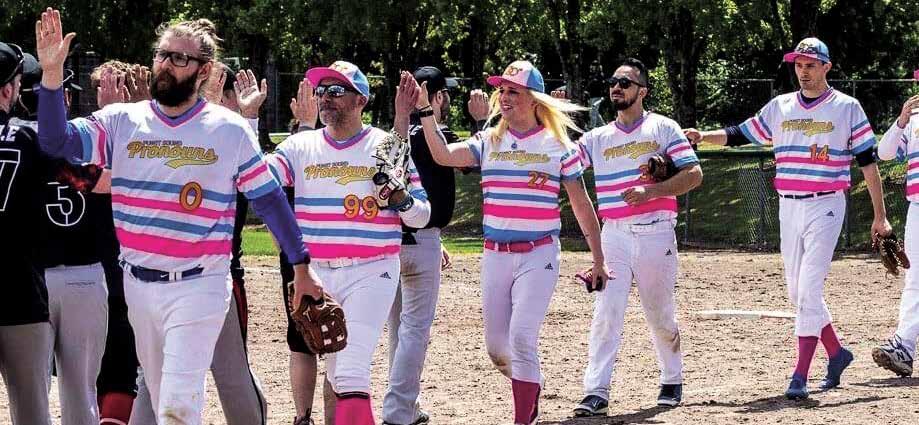
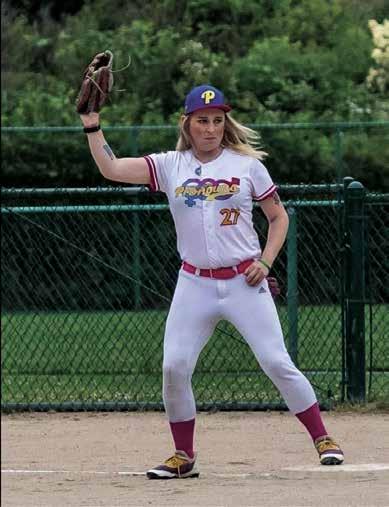
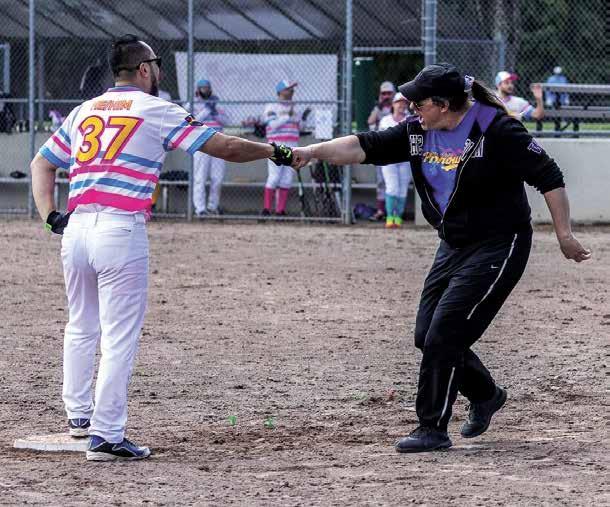
Hello, SGN readers! I’m extremely excited to share the story of the Puget Sound Pronouns, an LGBTQIA+ softball team and 501(c)(3) charity dedicated to encouraging Trans and Nonbinary sports participation. We are honored to grace the SGN ’s pages and have their sponsorship for the 2023 season.
Being a Trans woman, I noticed that Queer spaces most often cater to Gay men and cis Lesbians. I’d found community in those spaces, but there was a need for something directly and unapologetically Trans-inclusive, and thus the Pronouns were born.
Sports are often hypermasculine places that are hostile to our community. That often denies us the positive outcomes associated with sports: better grades, teamwork skills, and opportunities to build and nurture relationships. For Trans kids, their very right to participate is at risk around the country.
I came out as Trans in July of 2020, and my path is an example of why sports participation is so important. Sports led me out of the closet.
I joined the Emerald City Softball Association (ECSA), Seattle’s Gay league, 12 years ago — at the time believing I was a cisgender straight man. The ECSA peeled away years of repression and introduced me to a community I didn’t know I needed.
The league’s yearly drag fundraiser provided my first opportunity to show my feminine self to the world, opening the door for me to ask and answer tough questions about my gender. Owing much of my coming out to the ECSA, I wanted to give back, expanding the league’s reach with a team that is explicitly Trans-inclusive.
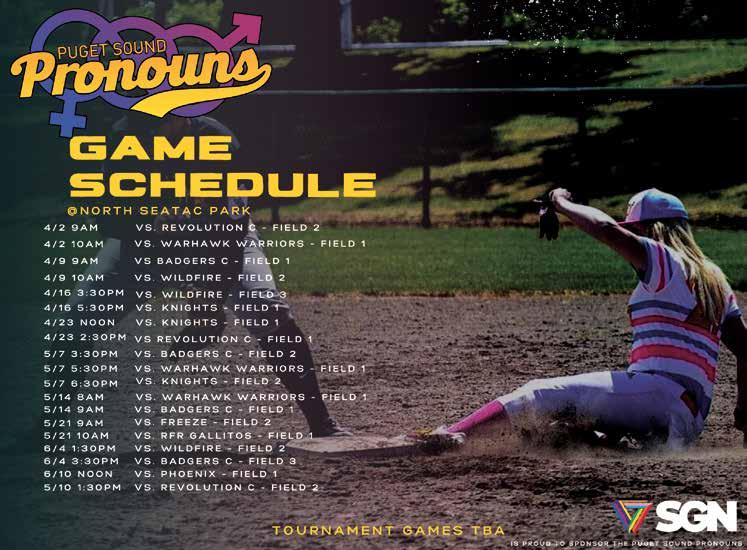
It’s important that the Pronouns show that upper-division play is for everyone, not just Gay men with advanced athletic experience. (The ECSA divides its divisions by skill level, ranging from E for beginners, to A for advanced players.) We compete in the C Division, and demonstrated we belonged there immediately by winning both of our games in 2022, including a 11-1 romp over
Being a Trans woman, I noticed that Queer spaces most often cater to Gay men and cis Lesbians. I’d found community in those spaces, but there was a need for something directly and unapologetically Trans-inclusive, and thus the Pronouns were born.
one of the teams that eventually represented the C Division for the ECSA at the Gay Softball World Series. Community outreach is also at the core of our mission: had I seen positive Trans representation as a child, I wouldn’t have put off coming out for over three decades. Last August, we held our first Youth Softball Skills Clinic, teaching kids softball skills while demonstrating that Trans and Nonbinary players can do anything their cis peers can. All of the event’s proceeds were donated to Trans Lifeline. Had this event existed when I was young, I’d have
shaved my denial beard off years ago. The Pronouns season runs from April 2 through June 10. The games are played at North SeaTac park — also the location of our second annual Youth Softball Skills Clinic on August 13. We welcome supporters to watch us represent the community with pride, sportsmanship, and passion. We can’t wait to make the community proud again in 2023, on and off the field!
For more information about the team or ECSA events, email brittney@pugetsoundpronouns.org.
SGN
Photos courtesy of Puget Sound Pronouns
Op-Ed

curb separation anxiety for the anxiously attached
Dear Izzy,
My partner and I pretty much U-hauled during the pandemic and have not spent more than a few days apart from each other. I love them so much, but I am going to be traveling soon, and I can’t bear the thought of leaving them. How can I make the separation feel easier when we are apart without seeming too clingy?
— Attached and Anxious
Dear Attached,
There are several parts to your question that I resonate with fully. Like you, I am entirely obsessed with my partner and can’t go mere hours without drawing them close. While yes, their personality and beautiful smile are inescapable, it’s also because we moved in with each other a few months preCOVID. When the pandemic hit, everything shut down, and our separate lives turned to one.
Like you, we have spent every single day together for the last three-plus years. The first time my boo went out of town for a weekend, I cut my own hair and had a meltdown on the bathroom floor. Safe to say, we don’t travel separately anymore.
All that is to say that I understand how you are feeling. It’s really scary! And anxiety-inducing, especially depending on your attachment style.
But the idea that a person can be too clingy is nothing more than pop culture slang.
The word “clingy” to describe a person was coined in the 1970s by Dr. John Bowlby, a developmental psychologist and psychiatrist best known as the originator of attachment theory. He used the word to describe children who were too emotionally attached to their parents and unwilling to be separated from them.
But the use of the word to describe romantic partners took off in the early 1990s. Like most things that came from ’90s internet culture, the use of the word “clingy” is misogynist and sexist, usually appearing alongside words like “needy” or “high maintenance” to describe a person in a relationship. There was a popular 2012 meme, Overly Attached Girlfriend , that parodied “clingy” behavior, and it was not a meme you wanted in your DMs.
Thankfully, the year is 2023, and it is not cool to shame someone based on their emotional needs, and that includes us. When I first started dating my partner, I was worried about being “too needy,” because this was something I had heard about in relationships before. It was only when I started to reflect on this core narrative — that I could have too many needs
by Isabel Mata SGN Staff Writer
Ask Izzy is a biweekly advice column about relationships, mental health, and sexuality. Written by Isabel Mata — a Seattle-based lifestyle writer, podcast host, and mental health advocate — Ask Izzy offers tangible expert advice so all readers can have stronger relationships, better sex, and healthier mindsets. Looking for some more guidance? Submit your question to info@sgn.org with the subject line: Ask Izzy Submission.


— did I realize that it wasn’t true. I had just been loving people who didn’t reciprocate the affection.
Has an ex of yours ever described you as too clingy? In reading your question again, one can assume that you and your partner are on the same page about how much you love each other. This makes me believe that nothing you could do or say would make it seem like you are “too clingy.” Or even if you are, who cares?! To cling is a wonderful thing.
Luckily, there are things you can do to make the separation a bit easier for both of you.
1. Bring an item of their clothing to sleep in while you are away, and give them one of yours.
When I was a little kid, my parents got divorced. I was severely attached to my mom and would get a panic attack anytime I had to leave her side. To make the transition to my dad’s a little easier, she gave me a T-shirt of hers to sleep in. To this day, I still have that shirt and sleep in it when I need a little extra comfort.
2. Hide a few love letters around the house for your partner to find.
Sticky notes work great.
Before my husband left for his first trip without me, I wrote him a bunch of little love notes and tucked them into his backpack and suitcase. It made me feel better
knowing that he was bringing a little piece of me with him. And in return, he left me a few notes of his own.
3. Communicate how you are feeling and be honest.
It may seem scary to tell your partner how much you are going to miss them, because there is room for rejection. But I am like 95% certain they will be smitten to hear about it.
Before you go, it might also be a good time to talk about your attachment styles, if you haven’t already. Knowing your attachment style is so helpful to communicating clearly in the relationship. Peep at the resources below for a great book to read.
During this conversation, talk about expectations for communication while you travel. Do you want to talk every night on the phone before bed? Text throughout the day? Discuss the details. The more you anticipate, the better the trip will go for your anxiety.
4. Make some fun plans for when you return.
It always helps to have something to look forward to when you return. Maybe a nice date night or takeout from your favorite place to celebrate your return. When you are away on your trip and missing your love, just imagine how sweet the reunion will be after some time apart.
5. Use your self-care toolkit when you are all up in your feels.
When my husband was off traveling, it was easy for me to fall into old thinking patterns. If he didn’t answer my text immediately, I worried he was ignoring me. If he didn’t call me exactly when he said he would, my mind went to the darkest place. But thanks to therapy, I have a set of tools to use when my cognitive distortions start to get too loud.
In your case, I would think about what acts of self-care you can do while you are away. Maybe bring a favorite book to read in moments like this? Or a mantra to repeat over and over when you start to spiral? Try “my partner loves me, and I am enough.”
Reader, it can be really hard to not let anxiety get the best of you, but I believe in you. Now all you need to do is believe in yourself and your relationship. You got this, friend.
Resources: Levine, A., & Heller, R. (2012). Attached: The New Science of Adult Attachment and How It Can Help YouFind — and Keep — Love. Tarcher Perigee. Overly Attached Girlfriend. Dictionary.com. https://www.dictionary.com/e/ memes/overly-attached-girlfriend/ Dijken, S. van. John Bowlby. Encyclopedia Britannica. https://www.britannica. com/biography/John-Bowlby
Photo by Cup of Couple / Pexels
National News
TRANS RIGHTS
continued from cover
Labeling such treatment as child abuse, Republicans have crafted bills that outlaw the practice and, in some cases, make it a felony for doctors to prescribe puberty blockers or hormones.
“If you are Trans, particularly if you are targeted by legislation like this, I have one request for you: please stay alive,” Montana Rep. Zooey Zephyr pleaded from the House floor.
Zephyr, a Trans woman, acknowledged the pain caused by debating the issue and offered lifelines to those struggling with their identities.
“Stay alive, lean on your community in these times. If you are in crisis, call 988 or go to the Trevor Project for support. We will be there for one another through this, and ultimately we will win this fight in the end,” she said.
Thirteen states — Alabama, Arizona, Arkansas, Florida, Georgia, Iowa, Kentucky, Mississippi, South Dakota, Tennessee, Texas, Utah, and West Virginia — have passed bans on gender-affirming care for Trans youth. Politicians in Kansas, Oklahoma, South Carolina, and Texas floated bills that would bar this kind of treatment up to the age of 26.
In Florida, where Republicans hold a supermajority, a bill that would restrict gender-affirming care for adults is rapidly advancing.
“It’s sad that we have to say this, but our children are not guinea pigs for science experimentation,” Gov. Ron DeSantis declared in his State of the State speech.
On a different path
Meanwhile, there are states on a different path. A bill in the Washington legislature, HB 1469, would make the Evergreen State a sanctuary for doctors and patients. In Oregon, lawmakers may include genderaffirming care procedures, such as laser hair removal and facial feminization surgery, on state Medicaid plans.
In public testimony, Dr. Christina Milano
National news highlights
by Daniel Lindsley SGN Staff Writer
Kansas Democrat flips, Kelly’s veto overruled Republicans in the Kansas state legislature have outvoted Gov. Laura Kelly’s most recent veto of a bill restricting Trans people’s access to school sports. The law is set to take effect on July 1 this year, and would prevent Trans athletes from partaking in girls’ and women’s sports up through the college level.
The bill passed the day after Kansas lawmakers passed a separate bill restricting bathroom access, and its supporters are falling in line with other GOP-majority state houses, aiming to end genderaffirming care for minors as well.
“It’s a scary time to be raising a Trans child in Kansas,” said lifelong Kansas resident Cat Poland. “We may face the very real threat of having to move, and it’s heartbreaking.”
“They just keep taking …the next step, the next step, until where are Trans people supposed to go? Where can they exist to be safe and live happy and fulfilling lives?”
Eighth-grade cross-country runner Alex Poland said legislators are pursuing “bills against children” who “haven’t done anything to harm anyone.”

of Oregon Health & Science University, refuted accusations of coercion and said a small percentage of Transgender youth make it to the surgery stage.
“I hear a panic that we are opening up the gates, allowing young patients to come in and cajoling them and pressuring them to start pubertal suppression and pursue surgical procedures,” Milano said, adding “Our teams work with exquisite caution and thoughtfulness.”
A measure like the one proposed in Oregon is already law in Washington, where public and private health care insurers are required to cover counseling, voice therapy, and puberty blockers.
Long history
Advocates for gender-affirming care note that it has a documented history dating back the early 1950s, when actress Christine Jorgensen became one of the first
It’s the adults, Alex said, who “care so much about what the Trans kids are doing,” while the children on the actual school sports teams just don’t.
The bill’s supporters couldn’t have succeeded in overriding Gov. Kelly’s veto without the vote of one Democrat, Rep. Marvin Robinson of Kansas City. Robinson said he prayed for guidance before the vote.
Theater troupe sues, blocks ban on drag Saturday, April 1, would have marked the beginning of Tennessee’s ban on drag shows in public space, were it not for a federal court order by Judge Thomas Parker.
“If Tennessee wishes to exercise its police power in restricting speech it considers obscene, it must do so within the constraints and framework of the United States Constitution,” Parker wrote. “The Court finds that, as it stands, the record here suggests that when the legislature passed this Statute, it missed the mark.”
The Memphis-based LGBTQ theater group Friends of George’s, Inc. sued over the law, arguing it was unconstitutional.
The group’s motion for a restraining order read, “This law threatens to force a theatre troupe into a nightclub, because Tennessee legislators believe they have the right to make their own opinions about drag into law. Plaintiff’s other option is to proceed as planned, knowing that the Friends of George’s drag performers could face criminal — even felony — charges.”
The troupe also pointed out that if a cheerleader and drag queen both performed in front of children, only the drag queen would be breaking the law.
Their lawyers wrote, “Thus, the prohibited speech is defined by the identity of
Americans to undergo gender reassignment surgery. Dr. Milton Edgerton is credited with opening America’s first Transgender clinic at Johns Hopkins University in 1966, where drugs such as estrogen and progestin were prescribed.
“The first Transgender medical clinic opened in the United States nearly 60 years ago,” tweeted Chris Mosier, a Trans athlete sponsored by Nike. “When politicians today refer to gender-affirming care as new, ‘untested,’ or ‘experimental,’ they are ignoring the long history of Transgender medicine in the United States.”
In Idaho, medical students have spoken out against plans to ban gender-affirming care that Republicans wrapped in a bill called the Vulnerable Child Protective Act. In an op-ed in the Idaho Statesman, Ari Garabedian, Ian Holland, Marisabel Reinhardt, and Sara Meotti, students at the University of Washington in the Idaho
WWAMI regional program in Moscow, warned that denying care is dangerous, considering the high rate of suicide consideration (82%) and attempts (40%) by Trans adolescents.
Additionally, bans on gender-affirming care permit politicians to intrude on the sacred doctor-patient relationship, the students wrote. The American Medical Association, the largest and only national association that convenes 190+ state and specialty societies and other critical stakeholders, concurred.
“We believe it is inappropriate and harmful for any state to legislatively dictate that certain transition-related services are never appropriate and limit the range of options physicians and families may consider when making decisions for pediatric patients,” wrote AMA CEO James L. Madara in a letter to US governors titled, “Stop interfering in health care of transgender children.”

the drag performer — and the message he conveys.”
“We won because this is a bad law,” said Mark Campbell, president of the board of directors for Friends of George’s.
“We look forward to our day in court, where the rights of all Tennesseans will be affirmed.”
Hayley Williams and a Nashville Drag Queen performs in Nashville, Tenn this year – Photo by Ed Rode / Invision / AP
Dr. Kara Connelly, director of the Oregon Health & Science University’s Doernbecher Gender Clinic, discusses medication options with 16-year-old Ethan and his mother, Melissa. – Photo by Lindsey Wasson / Reuters
National/International News
Progressive elected to Red State Supreme Court
by Mike Andrew SGN Staff Writer
In a contest watched all over the country, a progressive candidate has easily won election to Wisconsin’s Supreme Court, defeating her right-wing opponent by 11 percentage points.
Janet Protasiewicz, currently a judge on Milwaukee County’s Circuit Court, easily defeated Dan Kelly, a Trump supporter who was involved in the plot to return fake electors from Wisconsin in the 2020 presidential election.
Protasiewicz campaigned on her support for abortion rights and her skepticism of the state’s legislative maps, which Democrats charge are gerrymandered to favor Republican control of the state’s legislature. Kelly refused to say how he would rule on abortion rights, but he was endorsed by several antiabortion organizations.
“Our state is taking a step forward to a better and brighter future, where our rights will be protected,” the winner said at an election night event. “Today I’m proud to stand by the promise I’ve made to every Wisconsinite: that I will always deliver justice and bring common sense to our Supreme Court.”
Protasiewicz was endorsed by the Democratic-leaning Emily’s List, Hillary Clinton, former Attorney General Eric Holder, and several other prominent Democrats.
Democrats in the state, and nationally, described the race as the most important one in the country this year and focused their messaging on emphasizing abortion rights and fair elections.
The Milwaukee Journal Sentinel described the election results as “instantly reshaping politics in the Badger State by putting the state laws most celebrated by conservatives at risk of being overturned — including a 19th century-era ban on abortions.”
Protasiewicz’s win is seen as confirming a strategy adopted by the national Demo -
International news highlights
by Daniel Lindsley SGN Staff Writer
Companies warn Uganda that discrimination hurts profits
On Wednesday, Microsoft and Google joined a coalition of international companies in denouncing Uganda’s recent bill calling for harsher persecution of LGBTQ people. The companies warned that such laws would harm the East Africa country’s economy by lowering investment, deterring tourists, and throwing a wrench in recruitment efforts.
In particular, the Open for Business coalition mentioned the bill’s requirement for companies to report people suspected of being LGBTQ, putting them “in an impossible situation,” said the group’s Kenya director.
“Either they violate the law in Uganda or they are going against international standards of corporate responsibility as well as human rights laws of the countries in which they are headquartered,” she said.
The coalition also pointed to a study they conducted in 2019, which indicates that Kenya loses up to 1.7% of its GDP annually as a result of anti-LGBT discrimination. The same group has also condemned the actions of countries like Hungary.

cratic Party last year to fend off an expected “red wave” in the House and keep control of the Senate. Her win suggests that the strategy continues to pay off for the party — a data point national Democrats will be all but certain to rely on heading into next year’s presidential election.
This was Kelly’s second loss in a campaign for the state Supreme Court. He was appointed to fill a vacancy on the high court by then-governor Scott Walker in 2016, and was subsequently defeated for reelection in
2020 — also losing then by 11 points. His 2020 opponent, Jill Karofsky, said the result left her speechless. Karofksy attended Protasiewicz’s election night party.
“I am so happy for the people. I am so happy for the state of Wisconsin,” Karofsky said. “I think they spoke loudly. I think that the case Janet made for taking back our state, for the rights of the people, really resonated, and the people made it clear they do not want Dan Kelly.”
For his part, Kelly refused to call his
opponent to concede the race, saying he respected the voters’ decision but not her.
“I wish in a circumstance like this I would be able to concede to a worthy opponent. But I do not have a worthy opponent to which I can concede,” Kelly told supporters at a campaign event, calling Protasiewicz a “serial liar.” “I wish Wisconsin the best of luck, because I think it’s going to need it.” He called Protasiewicz’s campaign “dishonorable and despicable,” and said he was concerned for the future of the state.

Hong Kong government drags feet on gender ID changes
A small group of Trans people in Hong Kong gathered on Friday last week to protest delays in authorities changing gender identities on official documents, which was mandated in a landmark court ruling in February.
Before the ruling, Trans people had to undergo a risky, intrusive transition surgery to get such documents changed. Two
months afterward, Transgender Equality Hong Kong founder Henry Tse is still waiting.
“The government is using administrative tactics to deliberately delay the whole process,” Tse told Reuters.
Protester Emery Fung said he had asked authorities for a timeline on the change multiple times but hadn’t gotten a clear answer.
Reuters got the same treatment when
the Immigration Department said it was studying the ruling carefully, and aimed to wrap up its policy review “in a reasonable time.”
“Any delay potentially undermines their dignity and perpetuates discrimination and marginalization,” said Kelley Loper, a human rights law expert at the University of Hong Kong.
Henry Tse protesting in Hong Kong, China – Photo by Tyrone Siu / Reuters
Photo by Evelyn Hockstein / Reuters



56: Tilly Bridges
This
Website: http://birdguest.com/