
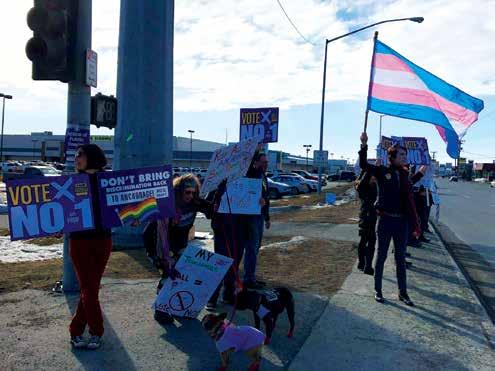
Anchorage voters defeat anti-Transgender Prop 1
by Tim Peter SGN Contributing Writer
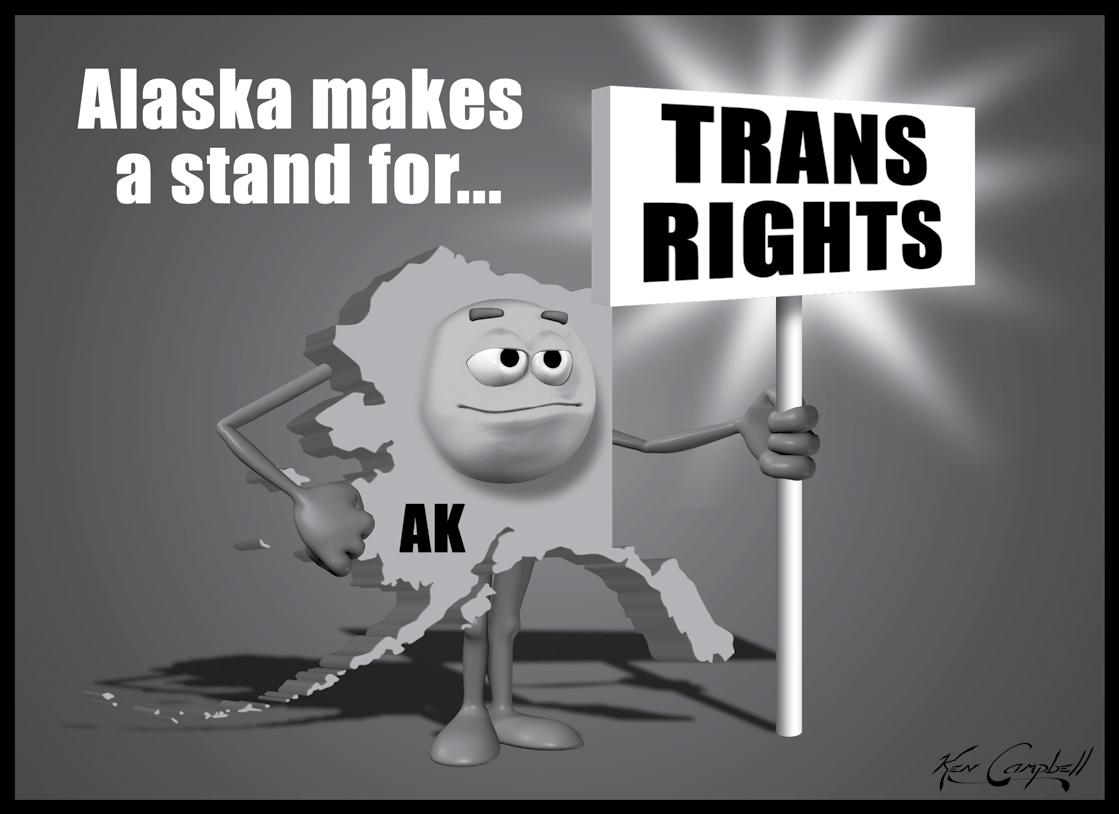
On Tuesday, April 3, voters in Anchorage, Alaska strongly defeated a local initiative, Prop 1, that sought to discriminate
against Transgender citizens by forcing them to use the restrooms of their assigned sex at birth.
At press time, Fair Anchorage, the group opposing Prop 1, was leading with see ANCHORAGE page 13
by Mike Andrew SGN Staff Writer
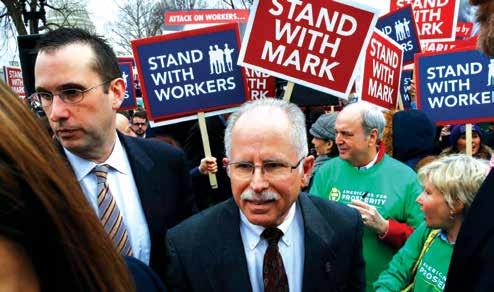
Masterpiece Cakeshop v. Colorado Civil Rights Commission is not the only US
Supreme Court case that could have a catastrophic impact on LGBT equality. Janus v. AFSCME is another case that could set LGBT rights back decades. see SCOTUS page 12
King County grant
GSBA contributions focus on entrepreneurship and model employment policies
SEATTLE – Led by Ingersoll Gender Center, the Transgender Economic Empowerment Coalition has been awarded a twoyear grant of $550,000 by King County as part of the Communities of Opportunity
page 4
partnership. The coalition will address the economic barriers transgender and gendernonconforming communities and LGBTQ people of color experience as a result of see TRANS COALITION page 4






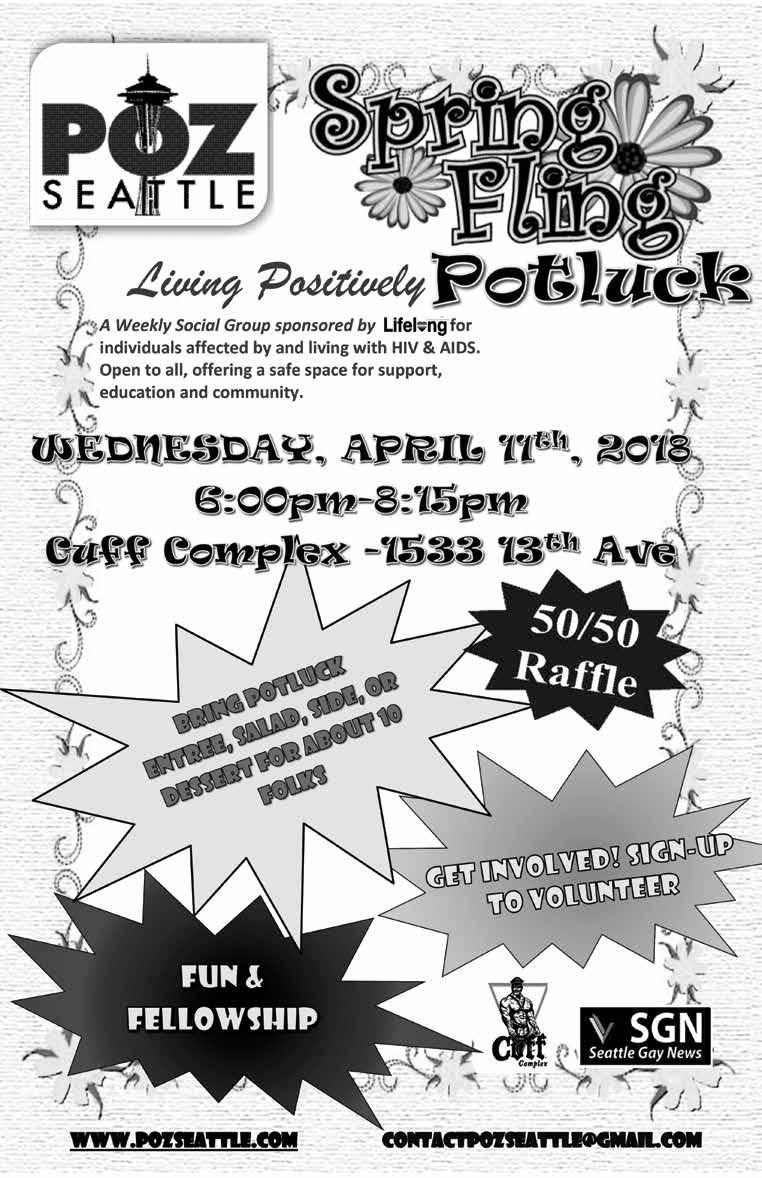
POZSeattle and Living Positively: A Weekly Social Group sponsored by Lifelong, for individuals affected by and living with HIV & AIDS are please to present their combined 2018 Spring Fling Social & Potluck on Wednesday, April 11, from 6-8:15pm at The Cuff Complex, 1533 13th Avenue (13th & E. Pine St.) in the downstairs bar where tables will be set up to host a great potluck meal, for socializing, to catch-up with old friends, to make new ones, and a whole lot of fun.
This being a potluck, please bring an entrée/main dish, side dish, salad, or a dessert – enough for 8-10 folks. Suggestions include: Spiral Cut Ham, Mashed Potatoes, Sweet Potatoes, Veggies, and Desserts. Non-alcoholic beverages will be provided by The Cuff.
This event is FREE as always (except for the cost of adult beverages from the bar), but a suggested donation of $5 would be gladly accepted to offset the cost of organizing this event. This event is supported by your donations; however, no one is ever turned away due to lack of funds.
This event, and all others that we offer, is for all HIV-Positive men and our friends, family, and support networks, (HIV-Positive or not), regardless of age, shape, size, origin, citizenship, color, sexual orientation, gender expression or identity or any other protected characteristic protected under applicable federal, state, or local laws.
POZSeattle is a social organization run by and for Seattle-area HIV-Positive guys that is committed to planning and promot-
ing fun, social activities. If you have questions or for more information about this event, to plan your own social event, to be added to our event promotions email list, or to be added to our Facebook private group, please visit our website at www.pozseattle.com or email contactpozseattle@gmail.com.
Living Positively is a weekly social group sponsored by Lifelong for individuals affected by and living with HIV & AIDS. The group meets Wednesdays from 5-7pm at Lifelong (1016 E. Pike St., 3rd Fl.). The group is open to all, offering a safe space for support, education and community.
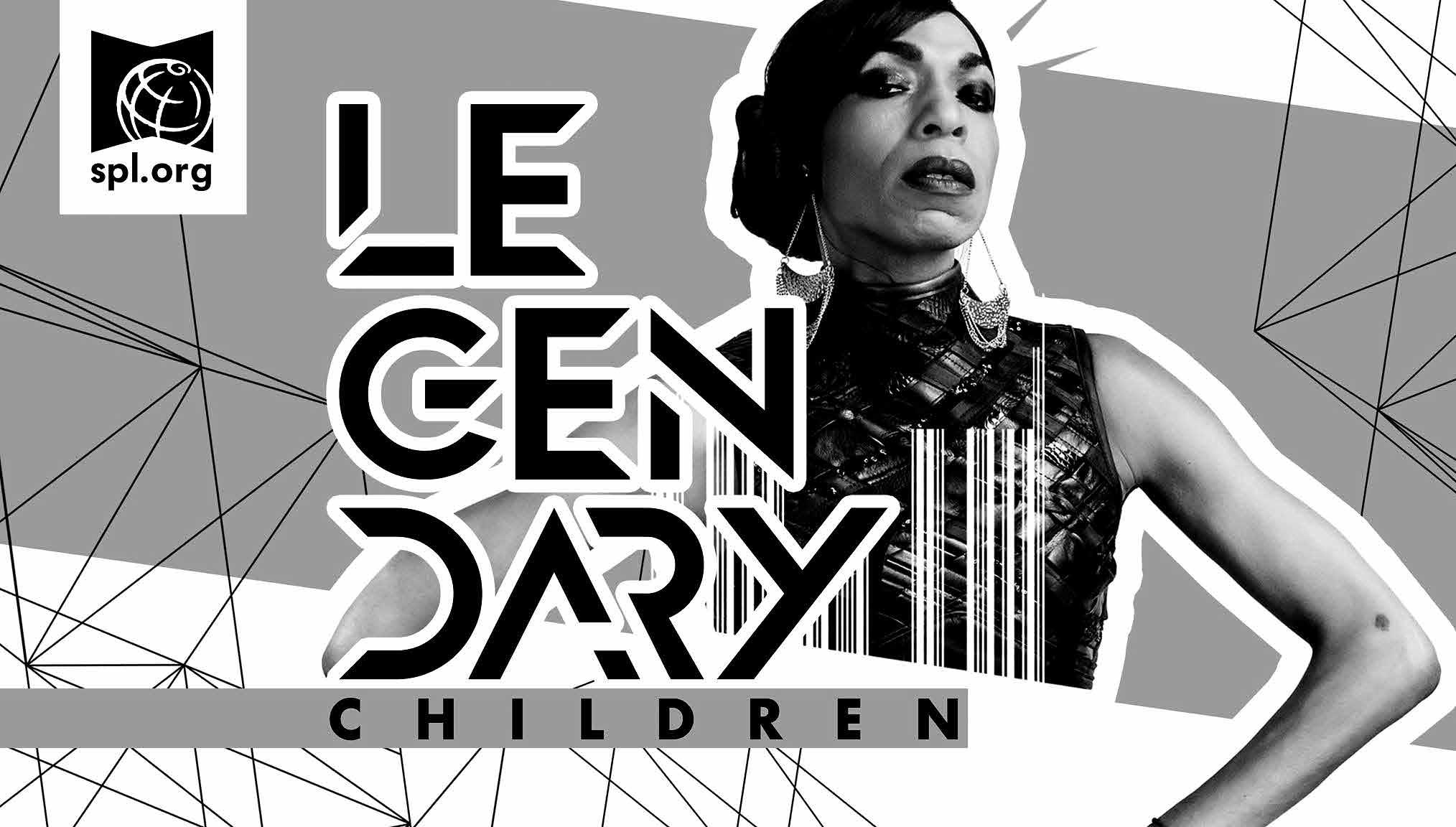
The Seattle Public Library will host “Legendary Children,” an evening of representation, dance, empowerment, art and social justice that celebrates queer and transgender people of color on Saturday, April 14, from 8pm to 11pm at the Seattle Art Museum (1300 1st Avenue).
This event is FREE, although drinks
and food are not, and everyone is welcome. You must have ID to drink. Facebook registration is encouraged.
“Legendary Children” will have live performances and DJs, alongside art by some of the Pacific Northwest’s most talented queer artists. Everyone is invited to join in the conversations sparked
continued from cover
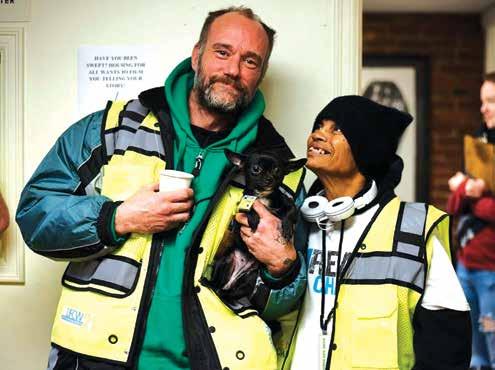
Guide will be published at least annually. A release event [was held] at 8:30 a.m., Wednesday, April 4, at the 86 S. Main Real Change Vendor Center in Pioneer Square.
With the assistance of a $20,000 Seattle Human Services Department Innovation Grant and support sponsorships from a wide variety of partners, Real Change is distributing 40,000 copies of the guide this week through human service agencies, first responders, and the Seattle Public Library.
The Emerald City Resource Guide complements online service listings that already exist by making the information
immediately accessible to those who lack consistent access to electronic media, and includes resources for help with LGBTQ resources, culturally specific services, and assistance with immigration issues.
Real Change vendors will also distribute the guide on a peer-to- peer basis, and [received] copies on Wednesday morning.
“Getting on-line should not be a barrier to finding the help you need,” said Real Change Director Tim Harris. “We want a Resource Guide in the pocket of anyone who needs this, and are grateful to all the partners who made this work possible.”
Courtesy of Real Change
by SAM’s special exhibition “Figuring History: Robert Colescott, Kerry James Marshall, Mickalene Thomas,” which will be open and free during this event. Curated highlights from the Library’s collection will also be available for check out.
This event is made possible by The Seattle Public Library Foundation. It is
continued from cover
transphobia, homophobia and racism. The Coalition will build leadership development programs and engage area employers to develop model employment policies.
As the largest LGBT and allied chamber of commerce in North America, the GSBA will focus on entrepreneurship and fostering the creation of small businesses run by transgender and gender-nonconforming people. Additionally, the GSBA will work with Coalition partners to create a model employment policy, provide training, and produce a business toolkit to be used by businesses to ensure that they are treating their employees with the dignity and respect they deserve.
“As a coalition of community-led organizations, we have been working together for decades to support and advocate for our communities. We are excited to receive this funding because it will expand our capacity to think bigger and develop a bolder vision of policies and programs to interrupt the systemic poverty our communities face –making a profound impact on the lives of transgender and LGBTQ communities of color,” said Karter Booher, executive director of Ingersoll Gender Center.
“We applaud King County for making a significant investment in addressing the enormous disparities faced by our transgender community, which suffers significant underemployment and lack of access to economic opportunities. GSBA is thrilled to be one of the named partners included in the Communities of Opportunity grant awarded to launch our commu-
presented in partnership with Seattle Art Museum, The University of Washington Q Center, Pride Asia and La Sala. For more information, call the Library at 206-386-4636 or visit https://www.spl.org.
Courtesy of Seattle Public Library
nity’s first Transgender Economic Empowerment program,” said Louise Chernin, president and CEO of the GSBA.
Coalition partners represent a broad swath of King County’s LGBT population, including Ingersoll Gender Center, the GSBA, UTOPIA Seattle, POCAAN, Gay City: Seattle’s LGBTQ Center, Seattle Counseling Service, the Pride Foundation, and Gender Odyssey.
Communities of Opportunity – a partnership between King County, Seattle Foundation, and community partners – is expanding efforts to help neighborhoods and cultural communities build partnerships that contribute to better health, safe and affordable housing, economic opportunity, and stronger community connections for residents.
Established in 1981, the Greater Seattle Business Association (GSBA) is the largest LGBT and allied chamber of commerce in North America. The GSBA represents over 1,300 small business, corporate, and nonprofit members who share the GSBA’s values of promoting equality and diversity in the workplace. The GSBA proudly serves as a connector across the region, bringing the community together through business while advocating for civil rights and small business, promoting LGBT tourism with its Travel Out Seattle initiative, and investing in the next generation of leaders through the GSBA Scholarship Fund. For more information, visit www.theGSBA.org.
16, 1959 – April 2, 2018
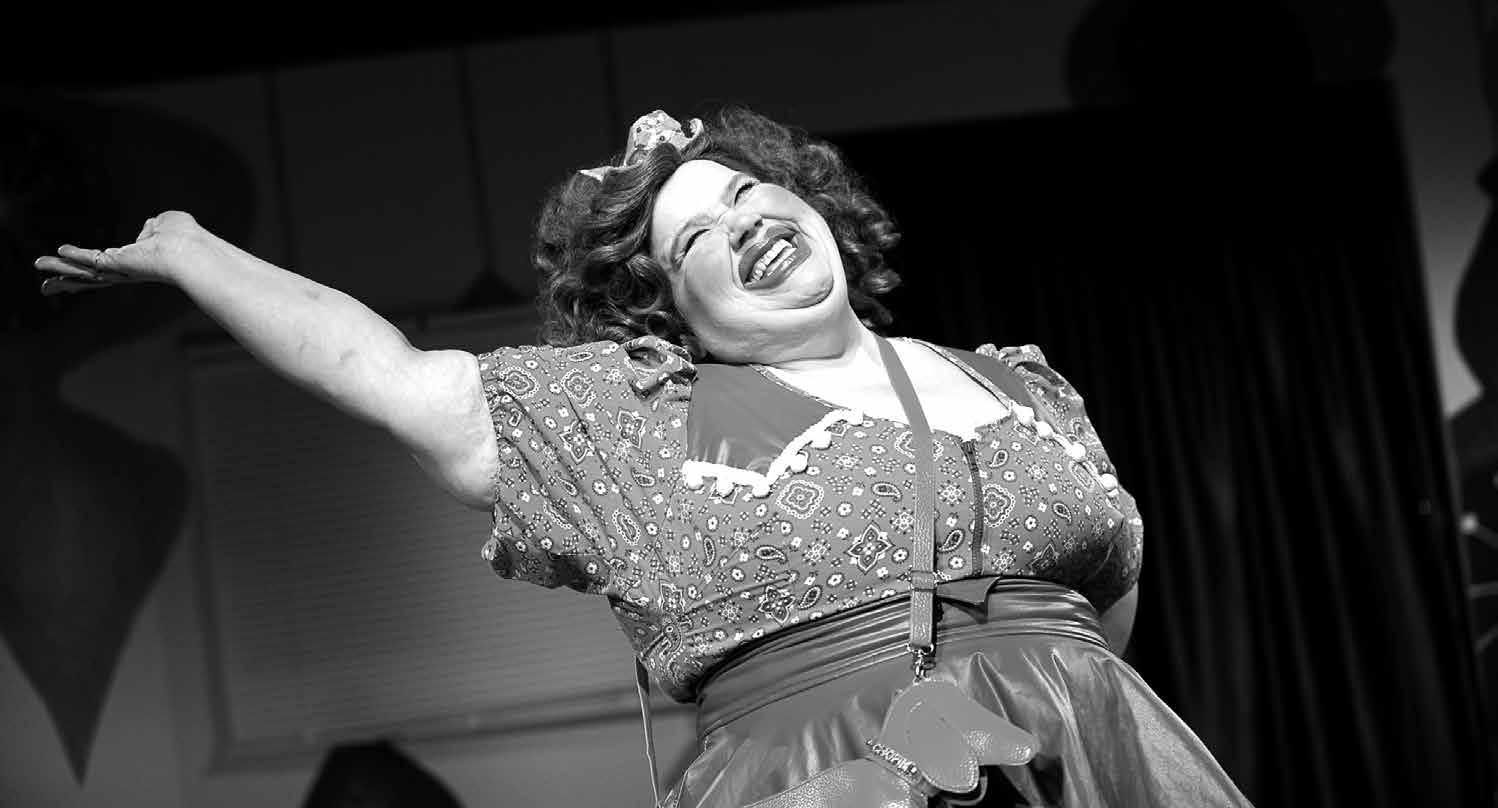
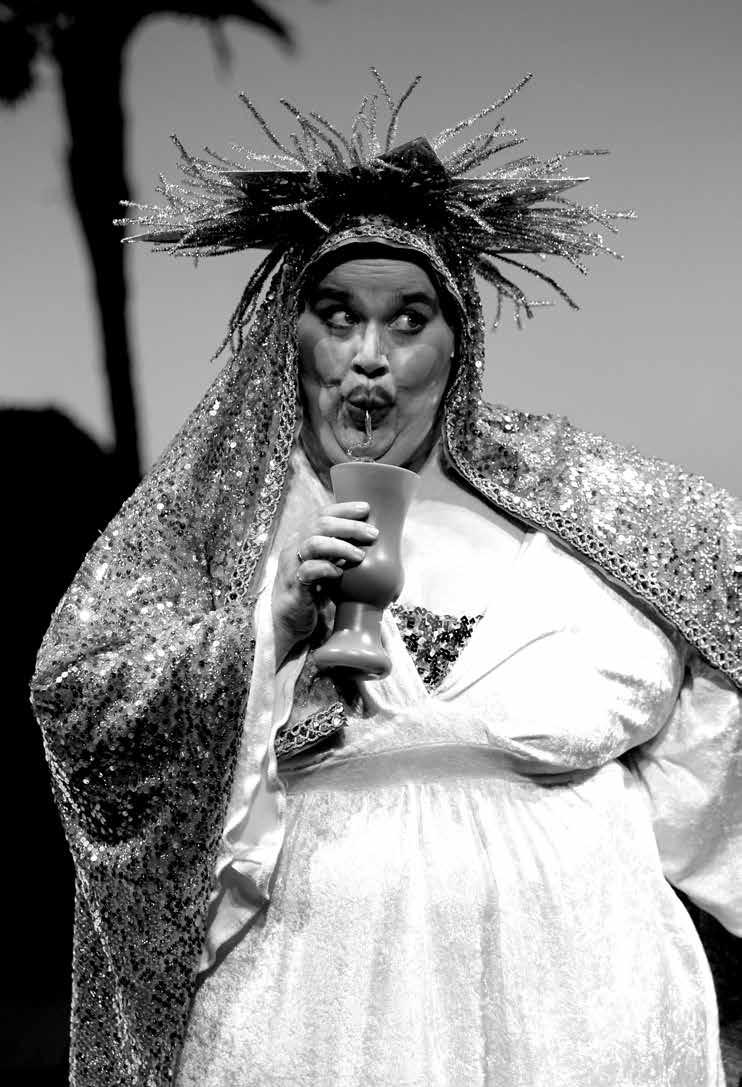
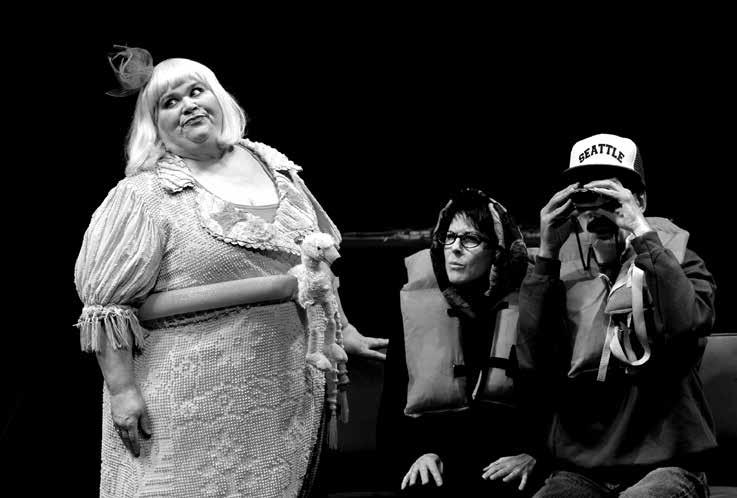
Seattle icon and veteran comedian Peggy Platt died on Monday, April 2nd, 2018, at the age of 58. Best known as half of the comedy duo Dos Fallopia with Lisa Koch and their annual iteration of “Ham for the Holidays,” Platt’s comedic timing regularly slayed audiences with characters such as Mama Euomi Spudd, Toby from The Sequim Gay Men’s Chorus, and the slam poet, Vision.
Platt began entertaining local audiences as a teenager touring with One Reel Vaudeville, and over her 40+ year career, she graced numerous local stages, including ACT, Empty Space, SCT, TAG, and TheatreSports. She was also a long-time collaborator at the gay/lesbian Alice B. Theatre, co-scripting such hits as “The Holiday Survival Game Show” and “The Gay Deceivers.”
As a standup comic, she opened for Cyndi Lauper, Jay Leno, Jerry Seinfeld, Kathy Griffin and the Puppetry of the Penis, dominating the local comedy scene throughout the ’80s. She was selected as
Seattle Weekly’s Best Comic nine times and in 1985, she became the first and only woman to win the Seattle International Comedy Competition.
Often called a great collaborator, Peggy also wrote and performed numerous solo and personal performance pieces including “Fat-Girl Follies” at On The Boards, as a regular contributor to Sandbox Radio, and a personal memoir piece for the Solo Performances Festival at Theatre-Off-Jackson. It was in these more emotionally raw pieces where Peggy’s vulnerability and depth of character really showed through.
Besides her performing career, Peggy was an outspoken supporter of LGBTQ rights, Women’s Rights, and other civil liberties causes, lending her talents to emceeing for numerous benefits and fundraisers.
A memorial is planned for Monday, April 16th, 2018, at 7:30pm at ACT Theatre (700 Union St.) in the Falls Theatre. In lieu of flowers or gifts, please make donations to Planned Parenthood.
The Seattle branch of the Black Panther Party was the first chapter formed outside of the state of California. A year and a half before the start of the Seattle chapter, the Black Panther Party was born in Oakland, California.
The Seattle Chapter of the Black Panther Party was founded by a collection of Seattle activists including brothers Aaron and Elmer Dixon in 1968, and at one point, the Chapter membership approached 300. The Chapter founding raised the level of struggle, resistance, and Black consciousness in the city.
To celebrate the 50th Anniversary of the
9 am FREE COMMUNITY BREAKFAST
10:00 – 10:45 am OPENING SPEAKER
11:00 am – 12:15 pm
LELO-45 YEARS FIGHTING RACISM
From a Labor & Employment Law Offices to Legacy of Equality, Leadership & Organizing
11:00 am – 12:15 pm Portland Chapter – Serving the People Body and Soul in Portland
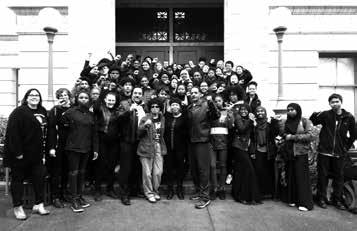
Seattle Chapter founding, 3 days of events have been planned. The conference events will take place in Seattle’s Central Area at two historic locations: Washington Hall, and Langston Hughes Performing Arts Institute (104 17th Ave. S.) and Washington Hall (1350 E. Fir St.)
“Organizers in Seattle along with former comrades currently residing outside Seattle came together under a single vision to create this 50th Anniversary celebration,” stated Elmer Dixon. “That vision incorporates our dedication to remembering our history, connecting to current issues and efforts, and setting the stage for the future,” he continued.
Thursday, April 26, 2018
“Our goal is to cement the legacy, history and accomplishments of the Seattle Chapter in the hearts and minds of the people of Seattle as an example of effective struggle for future revolutionaries.”
• Yesterday is meant to recognize, remember and celebrate our work and accomplishments.
• Today is meant to connect the influence of our programs with the current realities of racism and oppression while rising to challenge and resist it.
• Tomorrow is meant to inspire the youth to strategic action with a renewed vision created by them based on knowledge and history.
The celebration begins on Thursday, April 26, with a free community breakfast at Langton Hughes Performing Arts Institute, followed by a keynote speech by internationally acclaimed actor Danny Glover. The day continues with noteable social, political, historical and cultural discussions and conversation followed by an evening
In recognition of the early free breakfast programs offered by the Seattle Chapter Black Panther Party, the Chapter hosts this free community breakfast to kick off the conference celebration.
DANNY GLOVER
Film actor, producer and activist, explores the significance of the Black Panther Party in the Pacific Northwest.
Presentation led by GARRY OWENS
As a labor organizer, the impact of the late Tyree Scott’s efforts continue to resonate in today’s labor movement. Hear his story and learn about the collaboration between Black construction workers and multiple other entities
Presentation led by KENT FORD, Organizer and Captain of the Portland, OR Chapter, the only chapter in the country to organize a free dental clinic, still in operation.
Friday, April 27, 2018 – WASHINGTON HALL
10:15 – 11:30 am CONVERSATION WITH ERICKA HUGGINS
11:45 am – 1:00 pm THE ANGOLA 3 & POLITICAL PRISONERS
1:30 – 2:45 pm AN ARTISTIC ENCOUNTER BETWEEN BLACK PANTHERS AND ZAPATISTAS
3:00 – 4:15 pm SCHOOL TO PRISON PIPELINE Moving Away From The School To Prison Pipeline Towards Freedom: Rethinking School Curriculum
3:00 – 4:15 pm
HEARTS OF THE HOMIEZ, Project OPEN
7:00 – 7:45 pm Growing Up Panther
7:45 – 11 pm
HIP HOP CONCERT featuring Fred Hampton, Jr.
Moderated by NIKKITA OLIVER
A conversation around current events, women’s issues and concerns.
Over 100 Years In Solitary Confinement!
Moderated by MARY FLOWERS w/ ALFRED WOODFOX, ROBERT KING, SEKOU ODINGA, AND MARK COOK
EMORY DOUGLAS AND CALEB DUARTE
Emory Douglas, Former Minister of Culture, Black Panther Party, Caleb Duarte, Artist in Residence La PeNa Cultural Center & Founder EDELO
Presentation led by KENT FORD, Organizer and Captain of the Portland, OR Chapter, the only chapter in the country to organize a free dental clinic, still in operation.
Presenters – JACK JACKSON, HANIF WYNN, NICHOLE WELCH, KIMYA JACKSON YOUNG.
Formerly incarcerated people and former gang bangers in New Jersey have formed a group inspired by the Black Panther Party and its 10-Point Platform & Program.
Presented by FRED HAMPTON JR., POLICE
MURDERS OF BLACK PANTHERS AND BLACK PEOPLE
The son and only child of Black Panther Party Illinois Chapter Deputy Chairman Fred Hampton, who was assassinated by the FBI at the age of 21, will discuss growing up in the shadow of his father’s assassination and his own efforts to organize a new generation of combatants against police brutality.
1:00 – 2:15 pm From AIM (American Indian Movement) To Standing Rock: Indigenous People’s Struggle for the Earth and All Humanity
2:30 – 3:45 pm
The Young Patriot Party Poor And Working Class Whites With Black Panthers
4:00 – 5:15 pm Hip Hop Activism
7:00 pm
PARTY PEOPLE
Performance (excerpts from original production, 60 minutes)
Universes, Steven Sapp, Mildred Ruiz Sapp & William Ruiz. Original direction by Tonyaward nominee, Leisl Tommy
celebration. Events continue on Friday, April 27, at Washington Hall with more noteable social, political and historical presentations and discussions. Events continue on Saturday, April 28, at Langston Hughes Performing Arts Institute, and culminate Saturday evening with a 50th Anniversary Celebration Dinner at Washington Hall. All events and presentations are FREE and all events are ticketed. For complete information, visit https://www.seattlebpp50.com
All 50th Anniversary events are FREE, thanks in part to generous sponsors and partners, including: LANGSTON, Langston Hughes Performing Arts Institute, Northwest African American Museum, Washington Hall, Carolyn Downs Medical Clinic, Swedish Medical Centers, CD Forum, Hidmo Cypher, Northwest Film Forum, 206 Zulu, King County Councilman Larry Gossett, 4US Collective, and a Neighborhood Matching Fund award from Seattle Department of Neighborhoods.
Presentation by MICHAEL VENDIOLA, Prof. Western Washington State College will lead a discussion on (AIM), from the Coalition with the Black Panther Party, to Standing Rock.
Presentation by HY THURMAN Co-Founder, Young Patriots, Chicago, Ill, CHUCK ARMSBURY, Eugene, Oregon, Young Patriot Party
KHAZM, 206 ZULU NATION, AND HIP HOP ARTISTS discuss various ways in which Hip Hop has been and is being used as a platform for civic service, education and activism.
UNIVERSES, the award-winning ensemble known for their fusion of theater, poetry, jazz, hip-hop, politics, down home blues and Spanish boleros, present an explosive work about the complicated legacies of the original Black Panther Party and the Young Lords Org/Party.
Saturday, April 28, 2018 – LANGSTON HUGHES PERFORMING ARTS INSTITUTE
9:15 – 10:30 am
Creating Spaces To Educate, Empower, Allow Fellowship, Generate Jobs and Economic Sustainability In African-American Communities Nationwide http://ceapittsburgh.org
10:45 am – 12:00 pm
The Palestinian Boycott, Divest, & Sanction Movement
12:15 – 1:30 pm THE YOUNG LORDS & CHICAGO BPP
1:45 – 3:00 pm
SEATTLE CHAPTER BLACK PANTHER PARTY
3:15 – 4:30 pm
The Genius of Huey P. Newton
7:00 pm
50TH ANNIVERSARY CELEBRATION DINNER
Presented by T. RASHAD BIRDSONG
Former member Black Panther Party, Tacoma Chapter and CEO of Community Empowerment Association (CEA), a unique community-based organization.
Presented by SUNAINA MAIRA, Prof, UC Berkeley, Davis, on the Palenstine People’s call for solidarity with the BDS Movement (Boycott, Divest, Sanction) as well as the academic and cultural boycottmovement, which is the focus of this workshop.
Presented by JOSÉ (Cha-Cha) JIMENEZ, Founder Puerto Rican Revolutionaries United with the Black Panther Party
AARON DIXON, ELMER DIXON AND FORMER MEMBERS OF THE SEATTLE CHAPTER
A panel discussion on organizing this Chapter, FBI assaults and murders, internal strife, legal trials, battles with police, and what it was like being a member of the Seattle Chapter and serving in the Survival Programs of the BPP.
ELAINE BROWN, Former Minister of Information and Chair, Black Panther Party, putting theory to practice, Newton shaped the Party’s agenda. Brown will examine the thoughts of Huey P. Newton as they were applied to the Party’s work and agenda.
WASHINGTON HALL
THE 50TH ANNIVERSARY CELEBRATION DINNER FEATURES: Tribute to fallen comrades, Journalist of the decade award, Keynote by Elaine Brown, Performances and Party entertainment.






by Peter Tatchell Peter Tatchell Foundation
This article first appeared in The Independent – London, UK – 4 April 2019. Read and comment: https://ind.pn/2GyOTly
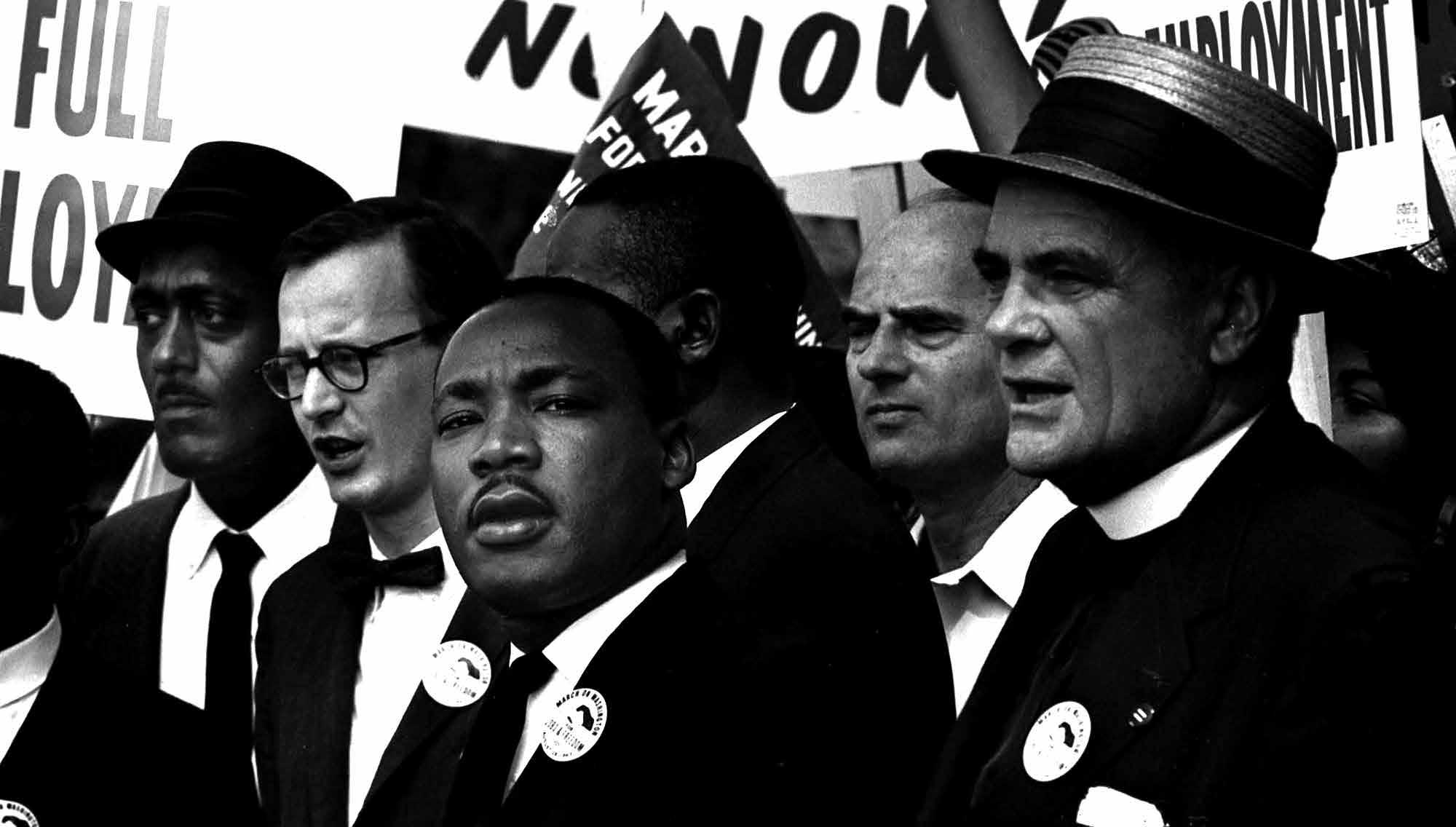
In the decades since his assassination on 4 April 1968, the US black civil rights leader, Martin Luther King Jr, has been sanitised and sanctified; co-opted and embraced by the American establishment as a bland, unthreatening saint of racial equality.
In truth, he was a radical dissenter who challenged the political, economic and military status quo at least as much as African American militants like Huey Newton of the Black Panthers and Malcolm X of the Nation of Islam. Hence the FBI’s obsessive, relentless attempts to discredit King and those around him, including smears that he was a communist, traitor, adulterer and pervert.
Nowadays, many people think of King solely as a black rights champion. But he was much more than that. He opposed the US war in Vietnam, supported striking workers and demanded economic justice for poor Americans, black and white. No wonder Washington insiders saw him as a dangerous radical and a threat to the social order.
King’s civil rights campaign played a pivotal role in ending racial segregation and the denial of voting rights to African Americans in the southern states. It also created a cultural shift in attitudes on race issues in much, but not all, of the US.
In the Deep South, long after race equality was secured in law, statues commemorating pro-slavery Confederate leaders remained on their plinths and new ones were added. The Confederate flag continued to be flown from many public and private buildings. This was proof that changing the law to end racist discrimination and voter suppression was not enough.
The focus of the black civil rights movement was legal equality. While this was understandable and the immediate priority, it also had a downside. Once official discrimination was ended and formal legal
equality won, the movement dissipated. The direction, coherence, dynamism and coordination that were its great strengths, and powered its many successes, were lost. Moreover, racism was not vanquished. It continued to plague the lives of African Americans. Civil rights was not the panacea that many had assumed.
This illustrates the danger inherent in any struggle that is pivoted on the sole and limited goal of equal rights. King understood this limitation. That’s why, post legal equality, he wanted to move the movement into a new phase focusing on economic injustice, which he saw as the other major factor holding back African Americans. He also saw this agenda as a means to transcend the racial divide by uniting disenfranchised black and white people in a common struggle for economic emancipation.
Half a century after the end of racially discriminatory statutes in the US, we see the stark limitations of mere equality. The informal segregation of black and white communities in some parts of the US is almost as great as it was back in Dr King’s day. While the black middle class has gained hugely since the 1960s, millions of poor black people are just as locked out of economic upliftment as they were prior to the start of the civil rights era.
Too many black districts of major cities and rural communities remain blighted by slum housing, unemployment and sub-standard education and health care. The racist bias in the criminal justice system means that black people continue to account for 40% of the prison population, despite being only 12% of the population overall. All this is further evidence that the legal equality striven for, and won, by the heroic civil rights activists was, by itself, insufficient. Indeed, today, King’s legacy looks shaky and some fear it is being reversed. In a throwback to Jim Crow discrimination, recent US elections have been marred by voter registration and ballot rules that are biased against African Americans. Percentages of black people working in senior posts in federal agencies have
recently declined. The repeated, ceaseless police killing of unarmed black people is, to some, another form of lynching. And, as in the pre-civil rights days, few officers have faced disciplinary action.
This has fueled the Black Lives Matter movement, which many see as the civil rights movement, Mark 2. They cite the need to continue what King began but, cut short by an assassin’s bullet, never finished – the dream of a non-racial America.
My personal memories of Martin Luther King Jr. stretch back to 1963, when I was 11 years old and at school in suburban Melbourne, Australia. I read a news report about the Ku Klux Klan bombing of a black church in Birmingham, Alabama, when four young girls about my own age were murdered. How could anyone kill another innocent human being, I thought, let alone four little girls in church on Sunday morning?
It prompted my interest in, and support for, the freedom struggle of African Americans and, in particular, the work of Dr. King. Given my then devout Christian upbringing, I readily related to him as a Baptist pastor. To me, he was fulfilling the love and compassion of the Gospels.
When I began my first campaign, aged 15 in 1967, I looked to Martin Luther King and the black civil rights movement as a model for how to do effective activism. They became my template. I adapted their ideals and methods to my early campaigns for Aboriginal rights, repeal of the death penalty and conscription, Australian withdrawal from the Vietnam war, LGBT liberation –and all my subsequent human rights work.
I was 17 when I realised I was gay in 1969. There were no LGBT organisations, not even any helplines, in Melbourne. So I took my inspiration from the black civil rights movement. I reasoned that just as black people were an oppressed minority, so were LGBT people and that we had a similar claim to human rights. If people in power ignored our just claim, it was, I argued, morally justified and politically necessary to resort to non-violent direct action and civil disobedience, in the footsteps of Dr. King.
I have applied this rationale in my 50-plus years of LGBT and human rights campaigning, involving over 3,000 protests and more than 100 arrests.
This I owe Martin Luther King. I learned from him how to make social change, as he learned from Mohandas Gandhi via his fellow civil rights activist, Bayard Rustin, who introduced King to Gandhi’s ideas and non-violent tactics of passive resistance. Indeed, Rustin was a key thinker, strategist and organiser of the black civil rights movement but selflessly chose to stay in the shadows because he feared that this homosexuality and left-wing views would be used by the media, politicians and the FBI to discredit the movement.
As we reflect on this fiftieth anniversary of Martin Luther King’s assassination, there is no doubt in my mind that his enduring legacy is the continued relevance of his ideals and methods to every movement for social change, worldwide. He fought a specific struggle with a universal applicability.
His model of non-violent resistance was echoed in the Greenham Common anti-nuclear protests, OutRage! direct action against anti-LGBT laws and, further afield, the Czech “velvet revolution” that ended communist tyranny and the “people power” demonstrations that brought down the Philippine’s dictator Ferdinand Marcos. Right now, King’s aspirations are being played out in the Black Lives Matter movement, which is a continuation of what he began. And all across every corner of the Earth – from Russia to Iran, Ethiopia, West Papua, Balochistan and China – people yearning for freedom are challenging despotism using similar non-violent methods. Martin Luther King Jr. is 50 years dead. But his vision lives on and will remain a potent inspiration for global social activism for decades to come. Bravo!
Courtesy of the Peter Tatchell Foundation
by Mike Andrew SGN Staff Writer
Support for Donald Trump is largely driven by “white Christian nationalism,” according to a new study by a team of sociologists published by the journal Sociology of Religion
“The more someone believed the United States is – and should be – a Christian nation, the more likely they were to vote for Trump,” study authors Andrew L. Whitehead, Joseph O. Baker, and Samuel L. Perry write in a Washington Post article explaining their research.
The study used data from the prestigious Baylor Religion Survey taken in phone interviews from February 2 through March 24, 2017. Some 1,501 American adults were surveyed.
“This data set is unique in its size, time of collection, and the measures it contains,”
Masterpiece Cakeshop is about the Christian Colorado baker suing to set aside penalties imposed by Colorado civil rights officials for refusing to serve a same-sex couple ordering a wedding cake. If the high court rules that the bakers have a First Amendment right to refuse LGBT customers, all businesses would have a constitutionally protected pretext for anti-LGBT discrimination.
Mark Janus is an Illinois social worker who is suing to avoid paying a fee to AFSCME (the American Federation of State, County, and Municipal Employees) to cover the cost of representing him. The court is considered likely to rule that employees covered by a union contract can’t be forced to pay the union for the costs of negotiating their employment contract if they disagree with the union’s political agenda.
While it might seem like these two cases have little in common, the truth is that both cases revolve around the same flawed legal argument – the idea that money equals speech.
Both of these cases rest on the dangerous precedent set by the Supreme Court in 2010 in Citizens United. That case allowed corporations to bankroll political campaigns under the argument that campaign contributions equal free speech, and therefore corporations have an unlimited First Amendment right to “speak” with their money.
The plaintiff in Masterpiece is arguing that accepting payment for a wedding cake, or any public accommodation, is the same as endorsing the beliefs of the customer. The plaintiff in Janus claims that payment for a service – the maintenance of his union contract – is an implicit endorsement of the political actions of his union.
While the impact of Masterpiece on the LGBT community is pretty obvious, the consequences of Janus will be no less severe.
In most states in the country, the only legal protection LGBT people have at the workplace is a union contract. There are thousands of LGBT teachers, custodians, office workers, and those in state and local government who will be directly impacted if their unions are weakened. Unions were the first national institutions to offer workplace protections to LGBT, people as well as the first to call for those protections to be enshrined in law.
Unions are also a major funding source for progressive causes – including, in this state, ballot measures that protected domestic partner benefits and established equal marriage rights. In the 2012 Referendum 74
the authors maintain.
To measure Christian nationalism, they combined responses to six separate questions asking respondents to agree or disagree with these statements:
“The federal government should declare the United States a Christian nation.”
“The federal government should advocate Christian values.”
“The federal government should enforce strict separation of church and state.” (This one is “reverse coded,” meaning agreement would be contraindicative of Christian nationalism.)
“The federal government should allow the display of religious symbols in public spaces.”
“The success of the United States is part of God’s plan.”
“The federal government should allow prayer in public schools.”
The researchers also examined many
other common explanations of support for Trump, including economic dissatisfaction, an index of attitudes on gender, an index of anti-black prejudice, a measure of respondents’ attitudes toward illegal immigrants, and an index of bias against Muslims.
Finally, the study’s statistical models also accounted for religious affiliation, religious beliefs, and a variety of religious behaviors; political measures, including party affiliation and political ideology; and sociodemographic predictors, including age, gender, race, education, income, marital status, and residential context.
Researchers found that in all cases, Americans who agreed with the various measures of Christian nationalism were much more likely to vote for Trump, even after controlling for other influences, such as political ideology, political party, and other cultural factors proposed as possible explanations.
Even when holding constant a host of other explanations, a Democrat at the higher end of the index was three times more likely to vote for Trump than a Democrat at the lower end of Christian nationalist ideology.
For independents, the probability of voting for Trump increased moving across the range of the Christian nationalism scale. Likewise, Republicans scoring low in Christian nationalism were significantly less likely to vote for Trump than those scoring high on the index.
The study also found that Americans’ religious beliefs, behaviors, and affiliation did not directly influence voting for Trump. In fact, once Christian nationalism was accounted for, other religious measures had no direct effect on how likely someone was to vote for Trump. These measures of religion mattered only if they made someone more likely to see the United States as a Christian nation.
campaign for marriage, SEIU (the service employees union) and UFCW (the food and commercial workers union) alone contributed well over $200,000 to the campaign. UFCW 21 also housed the campaign in its Georgetown headquarters.
In every election, working people in unions spend hundreds of millions of dollars to elect politicians who support their issues, but they also pour thousands of hours of volunteer time into those political campaigns. Weakening unions weakens the whole progressive movement.
Public sector jobs – government workers, teachers, social workers, and firefighters, for example – have the highest union density in the country, at about 35%, while only about 7% of private sector jobs are unionized. That’s why Republican Party operatives and their allies on the Supreme Court are targeting public sector unions with the Janus case.
The Supreme Court opened a huge can of worms when it ruled that money equals speech in Citizens United. Working people in unions and LGBT people are just the latest targets to be undermined by this decision.
Already, unions in Washington state are organizing to fight back against the expected decision in Janus. In Febru-
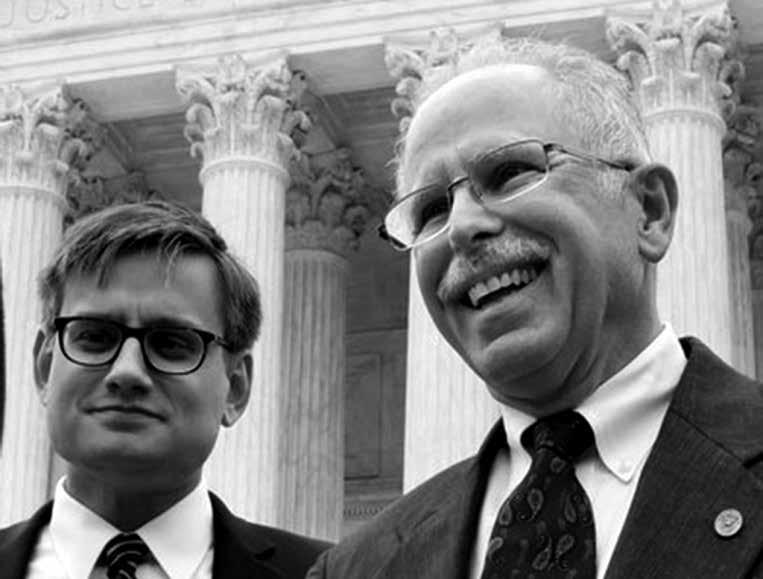
ary, the Washington State Labor Council convened a meeting of more than 500 union and community activists to share ideas about how to cope with court-mandated