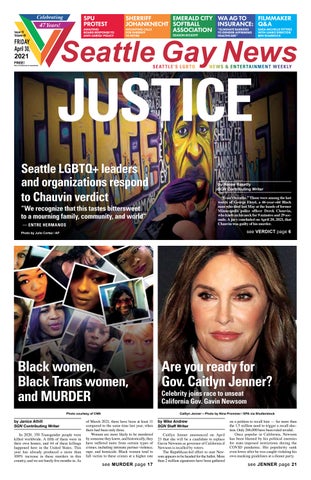
JUSTICE
Seattle LGBTQ+ leaders and organizations respond to Chauvin verdict
“We recognize that this tastes bittersweet to a mourning family, community, and world”
by Janice Athill SGN Contributing Writer
by Renee Raketty SGN Contributing Writer
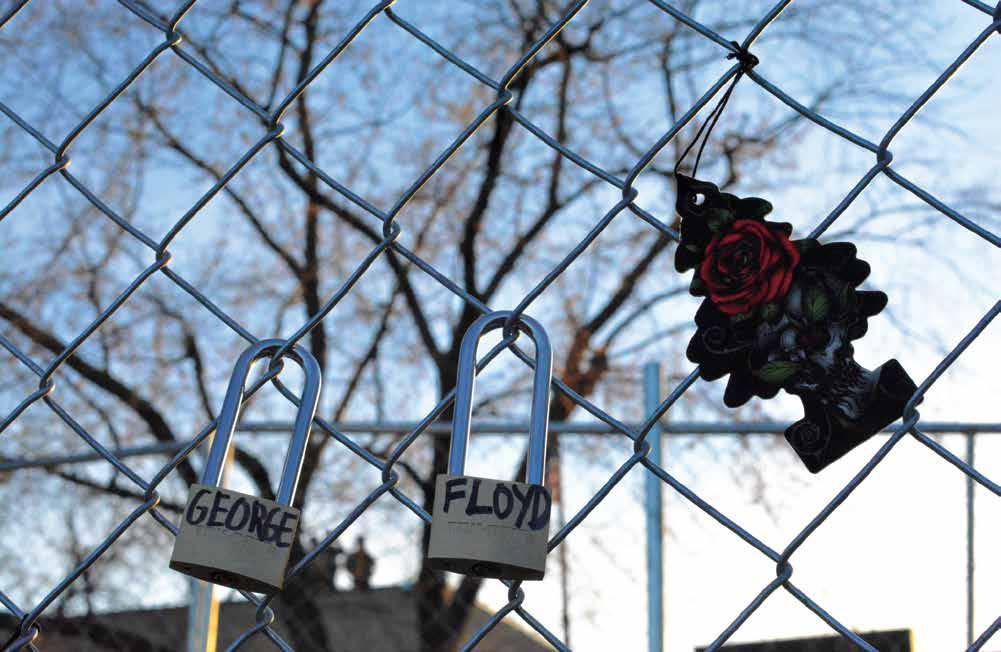
“I can’t breathe.” Those were among the last words of George Floyd, a 46-year-old Black man who died last May at the hands of former Minneapolis police officer Derek Chauvin, who knelt on his neck for 9 minutes and 29 seconds. A jury concluded on April 20, 2021, that Chauvin was guilty of his murder.
by Mike Andrew SGN Staff Writer
Women are more likely to be murdered by someone they know, and historically, they have suffered more from certain types of crimes, including intimate partner violence, rape, and homicide. Black women tend to fall victim to these crimes at a higher rate
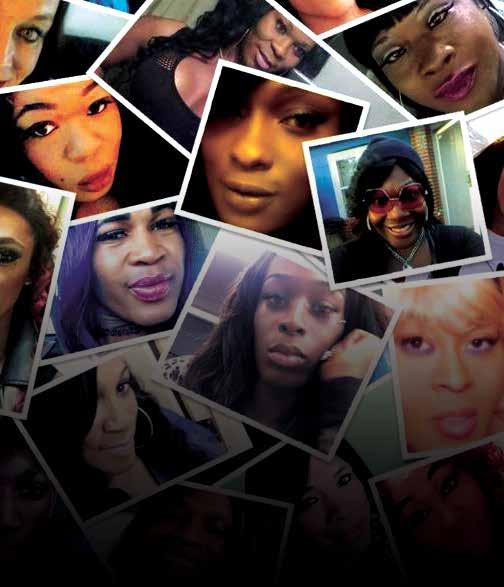
In 2020, 350 Transgender people were killed worldwide. A fifth of them were in their own homes, and 44 of these killings happened here in the United States. This year has already produced a more than 100% increase in these murders in this country, and we are barely five months in. As of March 2021, there have been at least 11 compared to the same time last year, when there had been only three.
see MURDER page 17
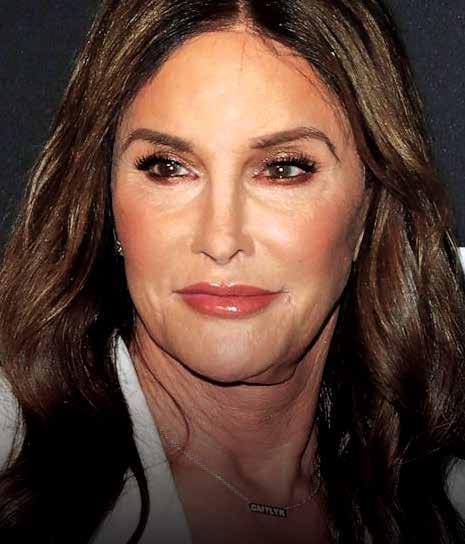
Caitlyn Jenner announced on April 23 that she will be a candidate to replace Gavin Newsom as governor of California if Newsom is recalled by voters.
The Republican-led effort to oust Newsom appears to be headed for the ballot. More than 2 million signatures have been gathered
on a petition to recall him — far more than the 1.5 million need to trigger a recall election. Only 266,000 have been ruled invalid. Once popular in California, Newsom has been blamed by his political enemies for state-imposed restrictions during the COVID pandemic. His popularity sank even lower after he was caught violating his own masking guidelines at a dinner party.
Caitlyn Jenner – Photo by Nina Prommer / EPA via Shutterstock
Photo courtesy of CNN
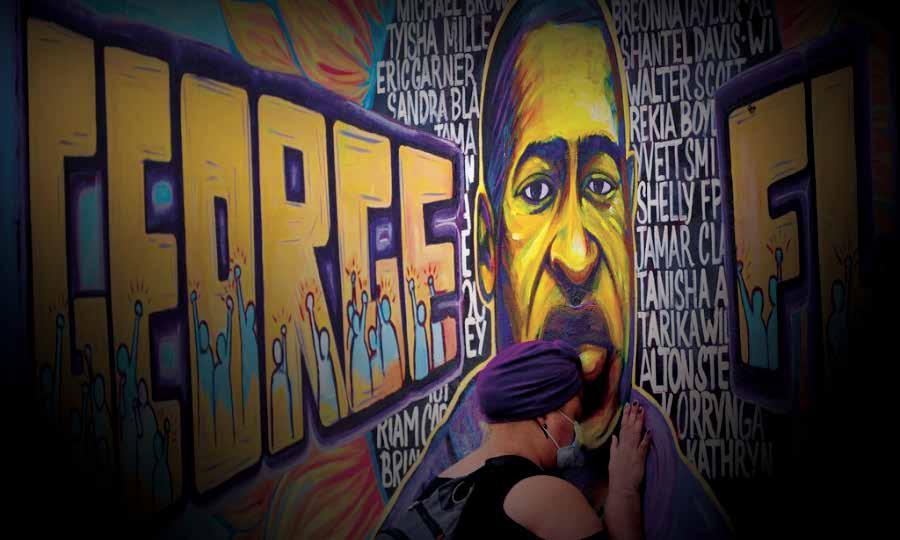
Photo by Julio Cortez / AP




THIS AD SPACE HAS BEEN GENEROUSLY DONATED BY KRISTIN COSTELLO IN MEMORY OF SGN PUBLISHER GEORGE BAKAN



Local News
Faculty, staff, students, and alumni eagerly await SPU board response
by Josephine Baird SGN Contributing Writer
On Friday, April 23, Seattle Pacific University students, faculty, staff, alumni, and community members gathered to protest in response to the SPU Board of Trustees’ decision to uphold the hiring policy that excludes LGBTQ+ individuals from becoming fulltime employees.
The policy has received more scrutiny this year, due to a recent lawsuit filed by Jéaux Rinedahl after being denied a fulltime position in SPU’s nursing program last summer, due to his status as a Gay man, which conflicts with two university policies on sexuality.
The first of those policies is SPU’s Statement on Human Sexuality (2005): “We believe it is in the context of the covenant of marriage between a man and a woman that the full expression of sexuality is to be experienced and celebrated and that such a commitment is part of God’s plan for human flourishing. Within the teaching of our religious tradition, we affirm that sexual experience is intended between a man and a woman” (para. 5).
The second is SPU’s list of “Employee Lifestyle Expectations,” which views sexual behavior that is not consistent with biblical standards as immoral.
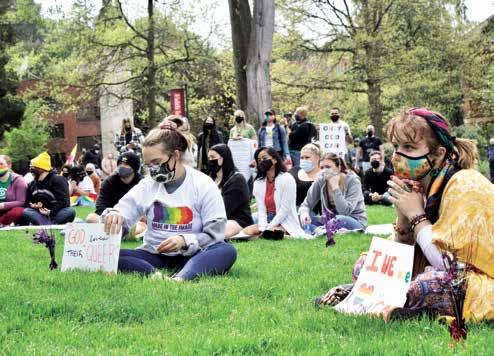
Frustration, anger, and support
The decision to uphold these policies has frustrated and angered many. It prompted a no-confidence vote from faculty, which garnered 70% approval from the 90% that voted. In their statement, the faculty included four concerns: the board’s lack of
engagement with the community, the decision’s misalignment with the perspective of the community majority, the apparent dismissal of harm, and the legal, financial, and psychological ramifications.
In order to create a community of support for LGBTQ+ students and faculty and
Mounting calls for Sheriff Johanknecht’s resignation
by Kylin Brown
SGN Contributing Writer
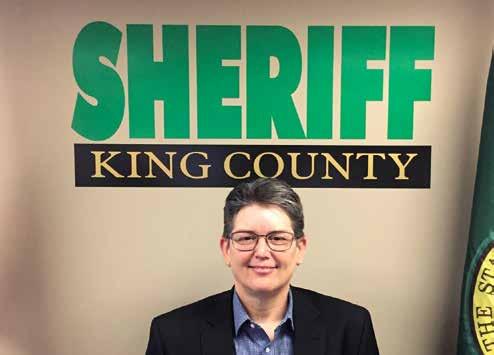
After serving in the King County Sheriff’s Office for 32 years and running against incumbent John Urquhart, Mitzi Johanknecht made history in King County in 2017 as the first woman and openly Gay person to be elected to the position of sheriff, a sensational moment for the LGBTQ+ community.
However, Johanknecht is now facing numerous demands from King County officials to resign.
A recently surfaced internal email sent by the sheriff has put her fitness to lead the KCSO into question. The message regards her response to the $5 million settlement between her office and the family of Tommy Le, a 20-year-old Vietnamese American student who was shot and killed by then-deputy Cesar Molina on the day Le was set to graduate from South Seattle College’s Career Link program.
Major discrepancies still remain between the KCSO’s internal investigation, eyewitness testimonies, and an analysis of the evidence by the Le family’s legal team. Deputy Molina and his partner allege that Le was wielding a weapon, thought to be a knife, when they arrived at the scene. Crime scene photos indicate no presence of any potential weapon, other than a ballpoint pen on the ground over 20 feet away from the victim.
An external investigation of the case previously found that Le was shot from behind and likely was falling or already down when he was fatally shot.
On March 24, the Le family held a press conference announcing their settlement with the KCSO. Within hours, Sheriff Johanknecht emailed employees of the office, stating, “This case is not a reflection of how I view the actions of Deputy Molina in this incident,” adding that she “just spoke with Deputy Molina.”
“He made the tough decisions that some-
times must be made in our profession. Deputy Molina attempted using other means of protecting the civilians who called for help, before he fired his weapon that day,” the email reads.
Those calling for Johanknecht’s resignation believe this response was wholly inappropriate.
County Councilmember Joe McDermott represents District 8, where the shooting occurred. His 2010 election was similarly as empowering for the community when he became the first openly Gay person to be seated on the council.
McDermott’s press release said, “This was a tragedy, and a tragedy that too many communities of color know too well,” adding that Johanknecht’s email “ignored this reality and was, in the most charitable light one might muster, disrespectful to the young person who was killed, to his family, and to
our entire community.”
Via Zoom call, McDermott told the SGN that he felt he and Johanknecht had “a solid foundation for building a relationship upon common ground” when she was elected because of their Gay identities. He believes they have both been able to benefit the LGBTQ+ community in their positions.
Despite sharing these identities, McDermott said that the sheriff’s response demonstrates “complete disregard and lack of understanding of what we expect in policing,” and that he has lost confidence in her because of it.
McDermott called for comprehensive improvements to oversight and accountability in the Sheriff’s Office overall, especially in regard to BIPOC communities and police violence.
“Officer accountability and equitable policing practices are paramount,” he said.
their allies, several SPU students have led the charge. Event organizers Reena Sidhu, Laur Lugos, Sierra Choe, Leah Duff, and Raegan Figgins spearheaded Friday’s rally, as well as a candlelight vigil the week before. According to the organizers, the goal of this event and others has been to motivate the board to “remove the discriminatory clauses within the statement of human sexuality and the related hiring practices at SPU” by May 1.
Figgins said, “The majority of people at SPU support this movement. It is just the few in charge who don’t. Which is frustrating, because they take an oath to listen to the majority, and instead they are refusing to listen without explanation.”
While the board’s decision has discouraged many Queer students and their allies, on the other hand, seeing the response by faculty and staff has done the opposite. Beau Denton, a graduate student in SPU’s MFA program, said, “My experience here has not been represented by this decision. Everybody has been affirming since day one, [though] I was kind of nervous coming here because I’m a gay man.” While the board’s decision has been disappointing to him, events such as this rally have encouraged him. “I hope this is an energy that can be sustained until this issue is resolved,” he said.
see SPU page 7
“We need to have better-equipped people as the first responders to crisis, people with awareness of community need and public safety.”
Several other councilmembers agree with McDermott’s call for the Sheriff to resign. King County Executive Dow Constantine has reportedly “urged [Johanknecht] to consider retiring immediately” as well [www.seattletimes.com/seattle-news/king-county-executive-dow-constantine-urges-sheriff-mitzi-johanknechtto-retire], and the Le family’s legal team has communicated their agreement.
These officials are the latest to join in this demand, following the lead of Not This Time! — “a community organization focused on reducing fatal police shootings, reducing violence, changing the laws that govern the use of force, and rebuilding trust between our communities and the police” — who say they are asking for “the resignation of Sheriff Mitzi Johanknecht, based upon her failure to treat racism with the seriousness it requires in her position.”
Johanknecht’s intentions to decrease disparities in public safety, reporting, and police relations for the LGBTQ+ community and immigrant communities were covered by the SGN in 2018 [www.sgn.org/ sgnnews46_15/page3.cfm]. In contrast, her hollow response to this high-profile tragedy, as well as her walking out of a 2020 Council meeting regarding the 2017 police killing of Mi’Chance Dunlap-Gittens, as reported by The Emerald [https://southseattleemerald.com/2021/04/01/a-failed-leadermomentum-builds-in-demands-for-sheriffjohanknechts-resignation], are indicative of notable deficiencies in her equity priorities.
The sheriff’s term is set to end this winter, and she currently says she will not be resigning. Johanknecht could also likely be the last elected sheriff in King County after last November’s vote to make the position an appointed one.
Photo by Josephine Baird
Mitzi Johanknecht – Photo by Jordan Duncan / The Seattle Lesbian
Emerald City Softball Association celebrates opening day of the 2021 season
by Josephine Baird SGN Contributing Writer
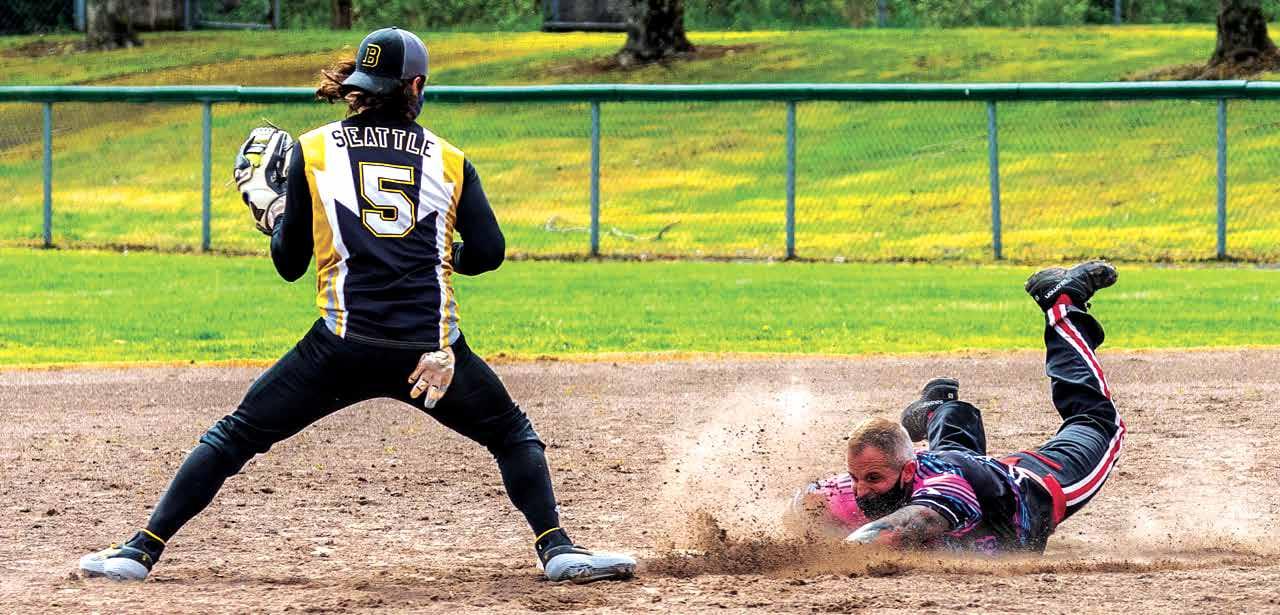
On Sunday, April 25, the Emerald City Softball Association held its first games in over a year, a delay due to the coronavirus pandemic.
The league made up of 25 teams is Seattle’s LGBTQ+ and allied softball league, with participants anywhere from age 18 to their sixties. The ECSA has a strong legacy in Seattle, with a history dating back 42 years.
According to Van Yean, director of marketing and communications and player for eight years, the league has served many purposes: “It has served as a place of connection outside of the normal LGBTQ+ city life. The league has also helped members maintain their mental health and break the stigma that gays can’t play sports.”
Jon Ericson, who undertook the role of commissioner last year, had been on the board for ten years before taking the reins. Even though the workload was different than pre-COVID seasons, he was still busy, doing what he refers to as “just trying to keep the league together.” Although the league has
taken a hit, with about ten fewer teams than usual, the remaining 25 teams are still more than enough to create a healthy spirit of fun and competition for the 2021 season.
from all of the players, in a great spot over the fence just past third base. She added, “After a year without it, it feels great that we can come outdoors and do this.”
“This league has helped many people meet more members of the local LGBTQ+ community and given them chances to really get to know each other.”
Although this year looks very different than past seasons, with barely any fans sitting in the now-caution-taped bleachers, opening day did have at least one in attendance, as she has been for the past seven years. Her name is Annette Lei-Sam, who could be seen cheering on her husband Rod, a Wolf Pack team member. Annette said, “He’s excited to be back out there after not having a season last year.” She came prepared with her own folding chair and a mask (a required safety measure for all in attendance) and socially distanced herself
Bringing people together
Since its beginnings, the league has brought together members of the Gay community and their allies with one common link: a love for the game of softball. Many members come from very different backgrounds and might not strike up a natural friendship if it wasn’t for the league.
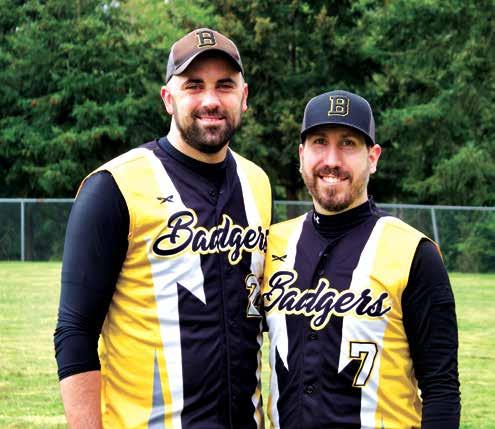
As Erickson said, “The league is a great community that has many interesting stories.” One such story is that of Noah Busha, a hair stylist, and Jay Harris, director of philanthropy at Swedish Medical Center Foundation, who struck up not only a friendship but a relationship through their involvement with the league. They have been dating for four years now. Harris said, “It is amazing to be able to play the game you love with the person you love.”
When they started playing in the league, they were on different teams. Now they play together on the Honey Badgers and thoroughly enjoy being able to integrate a competitive spirit with their relationship. But as Busha said, “We leave our home life at home and leave competition on the field.”
The ECSA’s director of events, Howard Russell, a league member for 17 years and Hall of Fame inductee, said, “This league has helped many people meet more members of the local LGBTQ+ community and given them chances to really get to know each other.” (Russell is not only an ECSA legend but also a well-known local drag queen, Lady Chablis, who serves as the reigning empress of the Imperial Sovereign Court of Seattle, a local nonprofit.)
Not only does the league bring together local softball lovers but each team has its own sponsors, bringing local businesses into the mix. One such sponsor, the Sunnydale Saloon, located in SeaTac near where the league frequently plays, is a favorite “watering hole” for players after games.
The relationship between players and sponsors is often symbiotic, with both parties feeling supported and satisfied.
Inclusivity
While the league contains mostly Gay players, it welcomes people with an inclusive spirit and a love for the game. Part of its attraction is that it has been hailed the “most organized” softball league in the area. This year, the league has 25 teams and four brackets. Those interested in playing go to a skills clinic where they can play with current members. After that, they are placed with a team based on their skills, which leads to an appropriate level of competition and fun for each player and team.
The ECSA Board of Directors consists of nine elected members and nine appointed members, all passionate volunteers. This year, the board added a new position, the diversity and inclusion director, filled by José Vazquez. Yean said, “This is a position that we’ve known we have needed.”
Looking ahead
The 2021 season will run from April to July. After that, the league will prepare for the Gay Softball World Series, run by the North American Gay Amateur Athletic Alliance. According to the NAGAAA website, it is “the largest annual, LGBTQ+, singlesport, weeklong athletic competition in the world” and includes teams from 46 member cities across North America, including Seattle. The 2021 Gay Softball World Series is scheduled to be held from August 29 to September 4 in Columbus, Ohio.
With membership down due to the coronavirus pandemic, the ECSA hopes to gain more members for next season. The ECSA prides itself in being “both fair and safe,” as Membership Director Holden Knecht describes it, and the league will be looking for opportunities to increase its numbers in the future. Commissioner Ericson believes that next season, membership will continue to climb, since many who opted out of this year have expressed their excitement and eagerness for getting back to it after they feel it is safe enough to do so.
If you or someone you know might be interested in joining the league, go to emeraldcitysoftball.org or email Holden Knecht at membership@emeraldscitysoftball.org for more information.
Jay Harris (l) and Noah Busha, a couple who plays for the Honey Badgers – Photo by Josephine Baird
Honey Badgers vs. Warhawks – Photo by Robin Thompson
Local News
VERDICT
continued from cover
Chauvin heard the verdict in Minnesota’s 4th Judicial District Court, where he was found guilty on all three charges: second-degree unintentional murder, thirddegree murder, and second-degree manslaughter. Judge Peter A. Cahill has yet to hand down a sentence in the case.
Chauvin is expected to appeal the verdict.
Eyewitness videos of Floyd’s murder viral on the internet and set off a national and international firestorm of protests demanding systemic reforms and an end to police brutality and institutional racism. Seattle saw almost daily protests and was the focus of an international spotlight after the formation of the Capitol Hill Organized Protest, which led to the Trump administration to declare the city an “anarchist jurisdiction.”
Reactions to the verdict:
Mayor Durkan
Seattle’s LGBTQ+ organizations and individuals almost unanimously praised the jury’s decision. In a written statement, Seattle Mayor Jenny Durkan, a Lesbian, said that “the cruel and degrading murder of Mr. Floyd shook our nation” and that “the jurors and our system of justice have confirmed what we saw with our own eyes.”
“George Floyd was murdered, and Derek Chauvin violated his most solemn duty to protect lives and uphold the law,” she said. “True justice demands that we admit, recognize, and work to address those systemic inequities. True justice would have meant that George Floyd, Breonna Taylor, Eric Garner, and countless others [would have] never suffered this fate.
“Though this trial is over, and we await justice to be served at the time of sentencing, the work to dismantle institutional racism in our country has far to go. Just as John Lewis and others trying to cross a bridge in Selma decades ago galvanized a nation, the murder of George Floyd showed too clearly how much was left undone…
“Our country must acknowledge and work to dismantle the reality of institutional racism and its insidious impacts on all aspects of our society, including policing. Our country must work to ensure that the promise of America really is available to all Americans…
“Our
country must acknowledge and work to dismantle the reality of institutional racism and its insidious impacts on all aspects of our society, including policing. Our country must work to ensure that the promise of America really is available to all Americans”
— JENNY DURKAN
“We have made some systemic changes in Seattle, including new alternatives in policing and historic investments in Black, Indigenous, and people of color communities. That work will continue.”
Joey Wieser
Joey Wieser, a Gay man who has been documenting the protests over the last year on social media, told the Seattle Gay News this week that “the protests ignited a new wave of white consciousness with respect to grappling with the racist history, form, and function of policing in the United States” and that “mounting public pressure forced elected officials to stop relying on downstream ‘quick fixes’ to solve the problems experienced by historically looted communities (e.g, youth jails, private prisons, [and] racist policing) and instead invest in upstream determinants of a healthy society (e.g., land ownership, restorative justice, [and] education).”
Wieser cited the closure of both Seattle’s youth jail and Tacoma’s immigrant detention center by the year 2025 as “two concrete arguments for the effectiveness of sustained protests.” However, he warned that “400 years of racist practices won’t be undone in a summer, or even several summers, but if even one Black or Brown life is saved by holding police officers and elected officials accountable, then the unrest was certainly worth the effort.”
“The way I see it, there are two sides to justice: accountability, followed by change. Chauvin’s conviction was the accountability. The jury is still out on the latter,” said Wieser. “If you look at 2021, the police have already killed 320 people this year and on average kill nearly 1,100 Americans annually. The
“No matter how open-minded, socially conscious, and anti-racist we think we are, we still have old, learned, hidden biases that we need to examine. It’s our responsibility to check ourselves daily for our stereotypes, prejudice, and ultimately, discrimination.”
— JOEY WIESER
highest number of officer convictions ever recorded in a given year is 11. You can’t tell me all other 1,089 shootings are justified year after year when other wealthy countries such as Canada, Australia, or Germany have only 36, 21, and 11 police killings, respectively. This is a uniquely American problem, and the struggle is far from over.
“Going forward, I hope the Queer community can ground ourselves in our history and remember that the first ‘Gay Pride’ was a riot against police brutality. And, let’s be clear: last summer, we all collectively choked down tear gas on top of the rainbow
crosswalks during the first week of Pride — under the authority of a Lesbian mayor — all because we believe Black Lives Matter.
“No matter how open-minded, socially conscious, and anti-racist we think we are, we still have old, learned, hidden biases that we need to examine. It’s our responsibility to check ourselves daily for our stereotypes, prejudice, and ultimately, discrimination.
“But as they say: if you want to go fast, go alone. But if you want to go far, go together. That’s why the alphabet mafia that is LGBTQIA+ has been so successful politically in recent years: when you build a coalition of struggle that transcends race, class, gender, or sexual orientation, you can literally change the world.”
Gay City
Fred Swanson, the executive director of Gay City, added that this verdict could not have happened without the “collective outrage, demonstration, activism, and public pressure that was placed on the media, the Minneapolis Police Department, and government officials,” according to a written statement.
“This verdict is not the end though. What has transpired is but a winning footnote in the greater fight for equity and the dismantling of white supremacy and other systemic oppressions.”
— GAY CITY
“Many of us were bracing for the worst today, as history has shown us time and time again that police are rarely held accountable for their actions, most especially when their victims are Black and Brown adults and children,” he said. “Gay City celebrates the accountability repre -
Photo by Becki Thorley / IG @beckithorley
sented by three guilty verdicts in the murder of George Floyd, even as we reflect on the countless other lives lost without justice or accountability. May this be a turning point, and may those who have worked tirelessly to fight for justice take a moment to reflect on the impact of their work. The work is not finished, but today is a rare and important sign of progress.
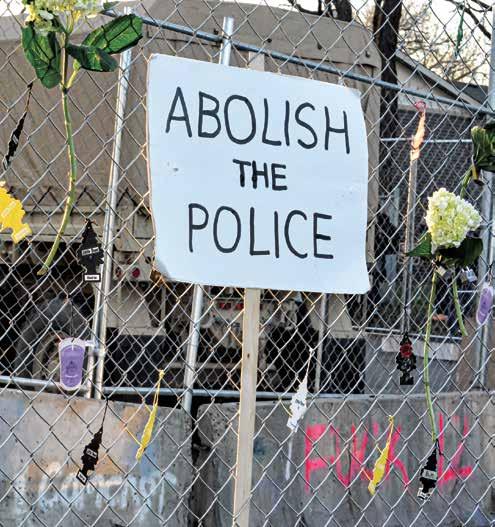
“This verdict is not the end though. What has transpired is but a winning footnote in the greater fight for equity and the dismantling of white supremacy and other systemic oppressions. We again demand that the City of Seattle divest from the Seattle Police Department, and 50% is just the least. We also uplift the passing of the George Floyd Justice in Policing Act by the US Senate.”
LGBTQ Allyship
LGBTQ Allyship, a Seattle-based nonprofit seeking to build power among LGBTQ communities and allies in Washington state to work toward economic, racial, and gender justice, also issued a brief statement on its Facebook page, which said the organization was “reaffirming its commitment to fighting for racial justice,” adding that the LGBTQ+ community “didn’t need the state to confirm that he is a murderer” and that “George Floyd should be alive.”
SPU
continued from page 5
Lawsuits mount
The discrimination lawsuit filed by Rinedahl is not the only one involving SPU these days. SPU alum Spencer Vigil has recently joined a nationwide class-action lawsuit by the Religious Exemption Accountability Project, which aims to hold accountable those religious institutions that receive federal funding but deny LGBTQ+ individuals Title IX rights.
Spencer decided to add his name to the list that includes students and alumni from religious academic institutions across the US, in order to hold SPU accountable for the mistreatment and discrimination he claims he faced in 2019, his senior year at SPU, when he came out as Transgender. Spencer was also in attendance for Friday’s event and continues to be an alumni leader on this subject.
A unique year spurs change
This issue has been a topic of great concern for students attending SPU in the 2020-
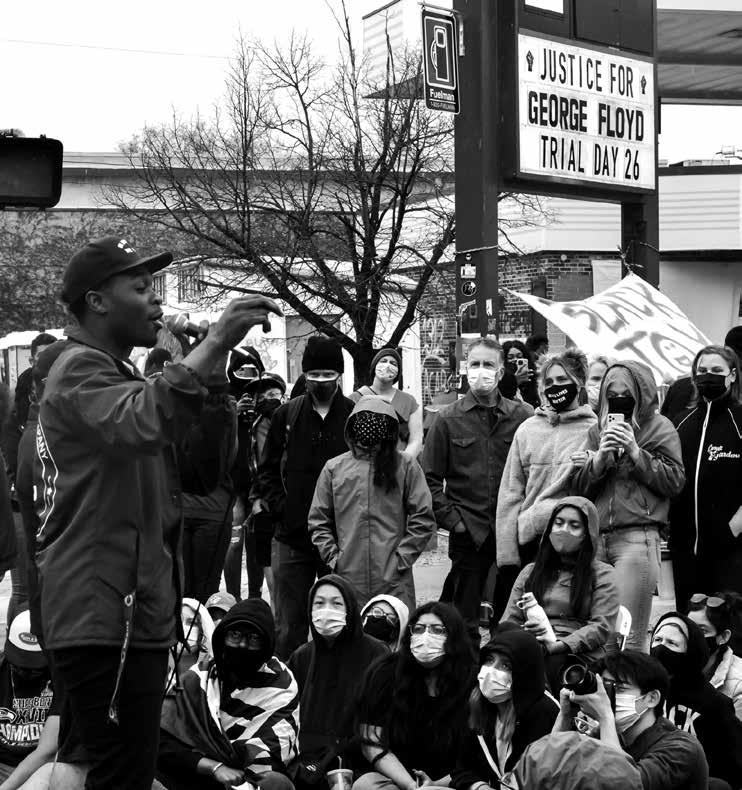
“We didn’t need the state to confirm that he is a murderer. George Floyd should be alive. We're sending love to Black communities, and reaffirming our commitment to fighting for racial justice.”
— LGBTQ ALLYSHIP
“As long as the system is a broken, racist machine, there will be no true justice,” said the LGBTQ Allyship statement. “But this is a consequence, something that the police have gone far too long without.”
The GSBA
The GSBA, Seattle’s LGBTQ+ chamber of commerce, called on its members to “assert throughout their lives and businesses that Black Lives Matter, and identify the role they can play in... combating antiBlack racism.”
“Small businesses are the cores of our communities, the cores of neighborhoods — they should ensure that they are part of the solution as well,” said a joint statement from Jay Petterson, the GSBA’s board
2021 academic year and has impacted the already unique year on campus, due to the oddities created by the pandemic.
Student body president José Flores, a communications and theology senior, said, “There has definitely been a big culture shift this year. In the past, we’ve been discouraged by the ‘no.’ Now we are impassioned by it.” Although there are many lessons to be learned, José said this was the biggest of all: “Don’t mess with students who love one another. Even though this might not fully affect each of us the same way, we are all working to dismantle it.”
Student leaders have been working closely with supportive faculty and staff, as well as with alumni, who they believe might have more rank to pull at this point in time.
A decision was reached
Protest organizers were hoping that the board would change the policy in light of the faculty vote of no confidence.
While they were eagerly awaiting the board’s decision before May 1, it didn’t take that long. Instead, the board responded within a couple of days after an emergency
chair, and Mark Rosen, the acting president and CEO. “We again commit ourselves to practice active allyship as a historically white-led organization, listen and practice accountability, and to always find ways to do more to change this racist system.”
“We again commit ourselves to practice active allyship as a historically white-led organization, listen and practice accountability, and to always find ways to do more to change this racist system”
— GSBA
Entre Hermanos
Entre Hermanos, Seattle’s LGBTQIA+ Latino organization, also issued a announcement on its website “in solidarity with our brothers, sisters, and siblings of color in this moment.”
“We breathe, and we release an exhale of frustration,” the statement reads. “We recognize that this verdict tastes bittersweet to a mourning family, community, and world. We recognize that convicting a man who used a police badge as a license to murder
meeting on Saturday, just a day after the rally. The result was what organizers and supporters feared — a refusal to change.
Cedric Davis, SPU board chair, sent an email to faculty on Monday to alert them of the decision. He said that despite the fact that the board will not change the decision, “The Board cherishes this institution and sincerely regrets that we appear out of touch to so many.”
The email didn’t go into detail on the decision because of “the existence of active litigation against the University has a significant impact on what the Board can share.”
Some see the lack of further comment as a cop-out, due to the fact that, according to an article in SPU’s student newspaper (April 27), “Jeaux Rinedahl’s representatives have offered the University a deal that would assure [that] nothing the University shares with the community regarding the lawsuit will be used against them in court” (para. 4).
Next steps
Event organizer Raegan Figgins was frustrated by the response and said, “What made it worse is that we didn’t have our
to [prison] is a cruel irony, and little balm to a community that has been so victimized by the criminal justice system and the systemic use of imprisonment against [them].
“We also recognize that it is the first time anything like justice has been seen for Black people murdered by police in a very long time.
“We recognize that, as with any moment that feels like a victory, the real work begins now once more. We recommit. We stand with those who still have gotten no justice.
“We breathe, and we inhale precious oxygen that will empower us to continue to strive for true justice for our community and for all communities.”
— ENTRE HERMANOS
“We breathe, and we inhale precious oxygen that will empower us to continue to strive for true justice for our community and for all communities.”
hopes up; we had our defenses up. I think we knew it would be a no.” But that doesn’t mean they weren’t disappointed.
Even though the board has already responded to the vote of no confidence, the SPU Alumni Coalition is still asking that the University’s Statement on Human on Sexuality be removed by May 1. If it isn’t, the Alumni Coalition has the following plan of action: “to continue to encourage our vast alumni and community networks to withhold contributions to the University; to not recommend SPU as a safe, educational environment for future generations of students, and so will begin an active campaign to discourage enrollment” (SPU Alumni for LGBTQIA+ Instagram, April 26).
Although many members of the SPU community are saddened by the decision, they are prepared to fight for this issue that is near and dear to so many on campus and beyond. As Figgins said, “The decision hurts, but we’re still working on it.”
Protesters gather outside the Hennepin County Government Center in downtown Minneapolis, Minnesota, during the trial of Derek Chauvin, who was later convicted for the murder of Geroge Floyd. – Photos by Becki Thorley / IG @beckithorley



Quietly intimate Limbo a humorously truthful marvel
by Sara Michelle Fetters
SGN Staff Writer
LIMBO Theaters
Limbo sticks with you long after the screen fades to black. For my part, I knew I enjoyed the sophomore feature-length outing by writer-director Ben Sharrock (Pikadero); I just didn’t realize how much until a couple of days later. I couldn’t get facets of this drama out of my head, and certain sequences were so eloquently masterful that it’s likely they’ll be burned into my brain forever.
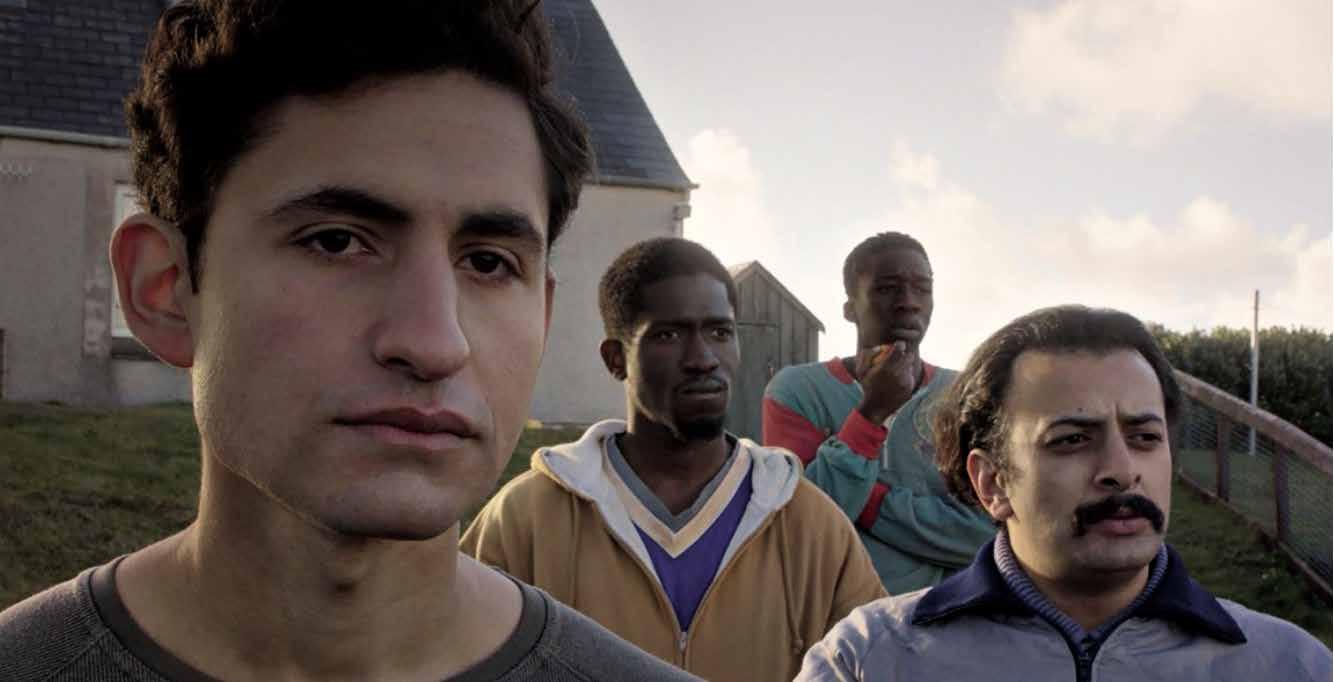
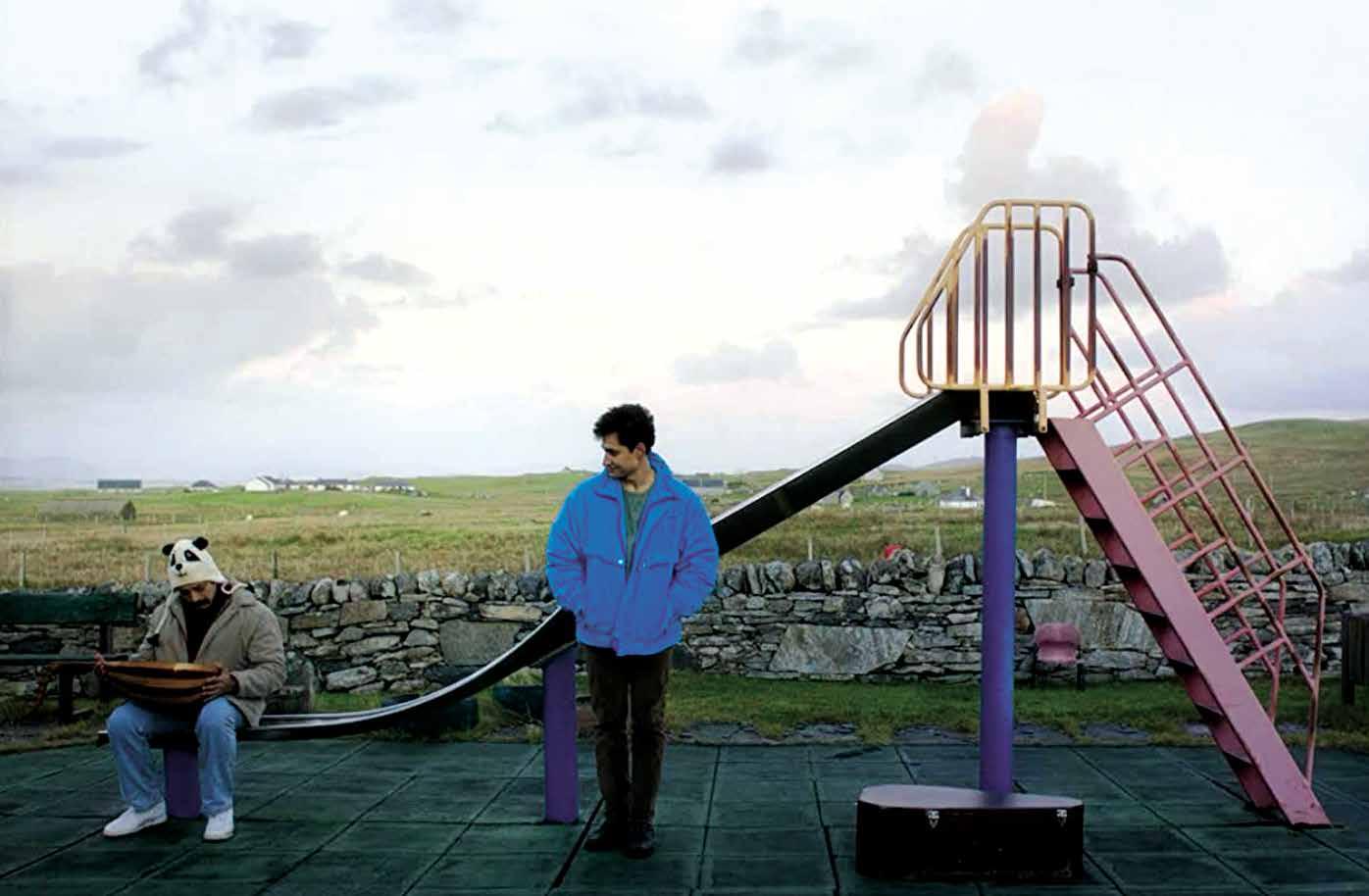
Musician Omar (Amir El-Masry) is a Syrian refugee who has escaped to Britain and is now stationed on a lonely, sparsely populated Scottish island, waiting to hear from the government if he will be granted asylum. He is not allowed to work, and along with all of the other male migrants, he must attend daily classes on the best ways to assimilate and eventually become a productive member of British society.
It’s all reminiscent of the opening narration of Casablanca. These lonely men, all of whom have escaped their homelands for a variety of personal reasons, many of them tragic, are trapped in a remote and desolate locale where they must wait — and wait… and wait… and wait — until they find out if they have received the proper papers to be released from their virtual imprisonment.
What in lesser hands could have either become something unrelenting bleak or heavy-handedly didactic, Sharrock has instead fashioned into a dryly funny, intimately personal character study that recalls the great works of filmmakers like Bill Forsyth (Local Hero, Housekeeping) or Hal Ashby (Being There, Harold and Maude). There is a lived-in allure to Omar’s travails that are fascinating, and as each layer of his metaphorical onion is peeled away, new, cozily universal truths are fastidiously revealed with magnetic precision.
As funny as it all might be at times, rest assured this is not a comedy. The inherent dramatics surrounding Omar’s travails hit with a sudden, nakedly raw ferocity that’s frequently surprising.
Moreover, Sharrock does not skimp on the backstories of many of the other resi-
dents trying to make the best of their forced isolation. While their stories aren’t front and center, each of the men still has a large part to play in the proceedings, and how they affect Omar is key to the constantly evolving puzzle the director asks the audience to piece together. A supporting performance from Vikash Bhai as a fellow refugee who forces his friendship on Omar (whether he likes it or not) is delightful, while almost all of the classroom scenes have a dryly acidic sense of truthful humor that’s shockingly sublime.
The Scottish locale where the film was almost entirely shot quickly becomes another character fighting for the viewer’s attention. Omar goes from being a stranger in a strange land, teased and made fun of by the locals, to someone who eventually knows each rocky outcropping and windswept hill like the back of his hand. He even assists when a sudden snowstorm devastates the island and puts the livestock in jeopardy, whereupon residents treat him like another trusted member of the community and not as an outsider intruding where he isn’t welcome.
El-Masry, a recognizable character actor who has popped up in key roles in everything from television series like Jack Ryan and The Night Manager to feature films like Star Wars: The Rise of Skywalker, is given his best role to date. He makes the most of the opportunity and then some. Sporting a dingy, pink-colored cast for the majority of the film that he uses like a metaphorical crutch to avoid difficult conversations, El-Masry displays a haunting physicality that I honestly did not expect.
There is so much more going on, all of it building to a conclusion that had me broadly grinning and giggling even as I reached for tissue after tissue to wipe away a tsunami of tears.
But Sharrock’s film is worth discovering with as little foreknowledge as possible. Limbo resonates because, even though it ends up where I thought it would, the road there is so bewilderingly unique and imaginative that having any facet of that spoiled would be an outright travesty. It tells a quiet tale of sacrifice, forgiveness, and courage that’s divine, and Omar’s search for truth and acceptance in an uncertain, ever-changing world is as harrowing as it is lovely.
Trust and collaboration: Filmmaker
Ben Sharrock on rising to the challenge with his hard-hitting refugee drama Limbo
by Sara Michelle Fetters SGN Staff Writer
Ben Sharrock’s Limbo is a work of ethereal beauty. Funny, charming, moving, tragic, and emotionally pure, this marvelous gem of an immigration drama is as irresistible as it is unforgettable.
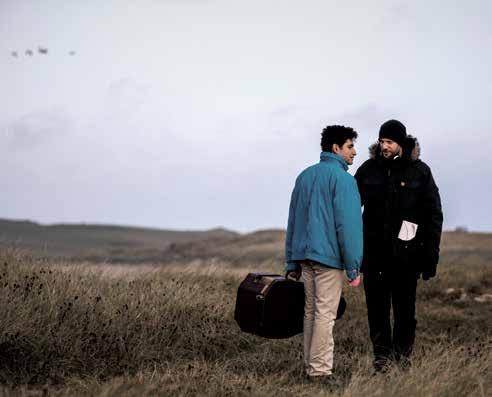
Centered on Syrian musician Omar, magnificently portrayed by Amir El-Masry, the film follows a large cadre of refugees stranded on a deserted, windswept Scottish island, waiting for word from the British government whether or not they can stay.
None of them are allowed to work. All of them are forced to attend classes on how to fit into British society and are given the
bare minimum to subsist on during the long months waiting for the outcome of their asylum claims.
Limbo is nakedly raw in how it showcases these characters and the world in which they are forced to live as the months tick by, never knowing until the last second whether they will be allowed to stay or will instead be shipped back to their country of origin. Sharrock balances a dry sense of humor with hard-hitting dramatics, most of which leave a lasting impression. It’s stupendous stuff, the picture having scored two BAFTA nominations, including one for Outstanding British Film of the Year.
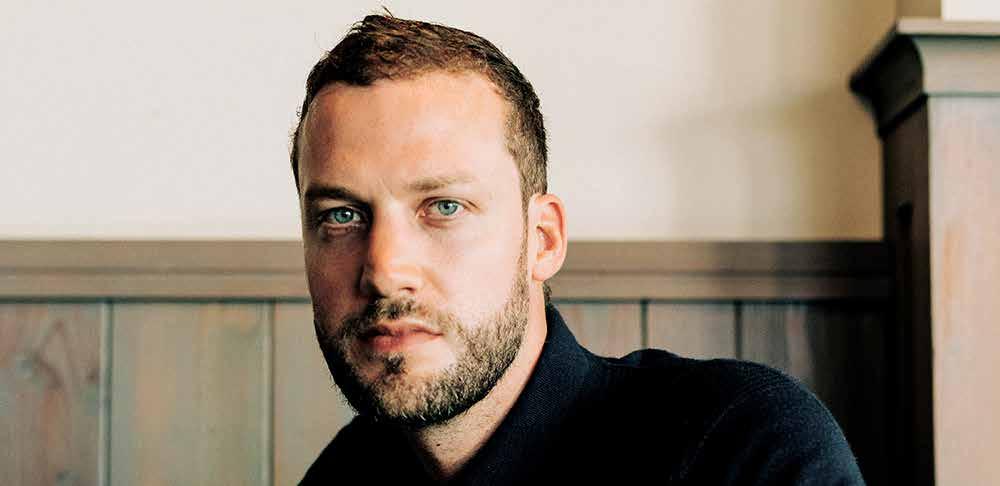
Ben Sharrock (r) on the set of Limbo – Photo courtesy of Focus Features
Limbo – Photo courtesy of Focus Features
New Mortal Kombat a brutal and bloody disappointment
by Sara Michelle Fetters SGN Staff Writer
MORTAL KOMBAT
Theaters / HBO Max
There is a moment in the new Mortal Kombat where I wished I could have watched the film in a sold-out auditorium on opening night. There’s this beat that happens right before the titanic confrontation everyone has been waiting for. An iconic catchphrase is delivered with pinpoint precision. The suitably thunderous score by Benjamin Wallfisch (It) kicks in the familiar notes of the video game’s classic theme music for the first time. The image pops, not just with an overabundance of color and icily frozen wonderment but also the inherent promise of the glorious bone-crushing carnage to come.
The audience will go nuts, and I cannot tell you how much I long to be smack-dab in the middle of the theater when something like that transpires. Making it even better is that what happens next was worth the wait.
The throwdown between deadly enemies Sub-Zero (Joe Taslim) and Scorpion (Hiroyuki Sanada) is everything fans hope it is going to be and more: Violent. Thrilling. Expertly staged by director Simon McQuoid and his crackerjack stunt team. Kinetically shot by cinematographer Germain McMicking (Partisan). Seamlessly cut by editors Scott Gray (Daffodils) and Dan Lebental (Bad Boys for Life). It’s perfect, and there’s nothing more that needs to be said.
If only I felt the same about the rest of Mortal Kombat. This new adaptation of the popular video game series known for its bloodshed isn’t much fun. Unlike Paul W.S. Anderson’s cheeky, intentionally goofball (and still wildly popular) 1995 version, McQuoid’s take didn’t do much for me. Overstuffed with too many characters and taking itself way too seriously, this is a dour and visually drab adventure that’s only occasionally enlivened by a creative jolt of garishly over-the-top bloodletting.
The plot follows a route similar to Anderson’s effort and one that is moderately fashioned after the video game’s core mythology. A group of disparate warriors from all over the globe has been chosen to fight in a secret tournament called “Mortal Kombat,” the fate of the Earth (also known as “Earthrealm”) resting on the outcome. They will train together at the temple of Lord Raiden (Tadanobu Asano), a powerful god who protects humanity but is not allowed to offer assistance once the tournament begins.
Evil sorcerer Shang Tsung (Chin Han) is the leader of the fighters from Outworld (a dystopian parallel dimension to Earth), and, on the cusp of ultimate victory, he has no intention of playing by the rules. He orders his most brutal assassins, most notably the unstoppable Sub-Zero, to find all of Earthrealm’s champions and kill them before the tournament starts.
The cast of eccentric personalities introduced throughout this adventure includes video game fan-favorites Sonya Blade (Jessica McNamee), Kano (Josh Lawson), Major Jackson “Jax” Briggs (Mehcad Brooks), Liu Kang (Ludi Lin), Kung Lao
Books
(Max Huang), Mileena (Sisi Stringer), Nitara (Mel Jarnson), Kabal (Daniel Nelson), and the four-armed giant Prince Goro (voiced by Angus Sampson). Also in the mix is mixed martial artist Cole Young (Lewis Tan), a new character created specifically for the film.
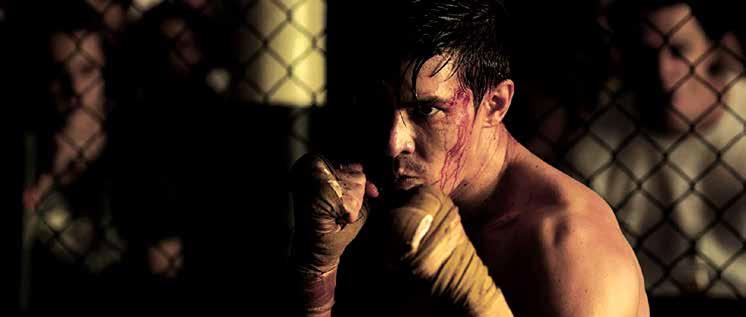
Young plays the biggest role, his connection to the tournament being far more personal than he is initially aware. After him, Sonya has a fairly large part to play, but her storyline is too tired and uninspired for it to matter. As for the actors, McNamee and Brooks do have a couple of somewhat nice scenes, and it’s difficult not to imagine both of them making more of an impression had the writing been a little sharper.
Honestly, the only principal who does linger in one’s memory is Lawson. He’s the lone actor who appears to be having a good time, his broad performance as the cartoonishly thuggish Kano showcasing an uncouth bravado that’s equal parts amusing and purposefully offensive. It isn’t until the brute starts dolling out sexist and racist stereotypes like they were Halloween candy that his schtick grows stale. Even then, though, Lawson’s enthusiasm remains
infectious, and it’s a shame more of the actors didn’t follow his lead.
There is also a superb prologue set in the early 1600s, where a grudge is born in the lush green nowhere of feudal Japan. It is here we’re introduced to Hanzo Hasashi and Bi-Han, two powerful warriors whose fervent hatred for one another will allow them to travel through the centuries on a determined quest to destroy the other, no matter what the cost to their immortal souls.
If Mortal Kombat lived up to the beauteous butchery of its bookends, this would be the greatest videogame-to-film adaptation ever made. Taslim and Sanada are the real deal, and it’s clear McQuoid knows it. Their encounters are the only ones that feel alive, and the electrifying devastation left in the wake of their encounters is nothing less than sensational.
The rest of the movie? It’s a waste of time, making it about as far removed from a “flawless victory” as one can quite possibly get.
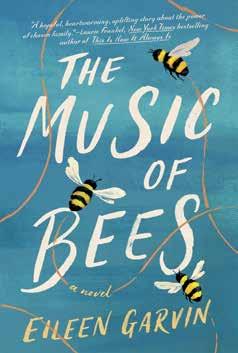
Music of Bees a pleasant buzz with no sting
by Terri Schlichenmeyer Special
to the SGN
THE MUSIC OF BEES: A NOVEL
EILEEN GARVIN
© 2021 Dutton
$26.00 / $35.00 Canada
336 pages
An Oregon spring always put Alice Holtzman in a good mood.
Not only was the weather better but this year, there was so much to look forward to: her beehives from last year were healthy enough to split, and another dozen new one were planned. By this time next year, Alice thought she might have 150 hives, and the extra money would be nice.
Life was good for the 44-year-old — at least most of the time, even if she couldn’t bear to think about the past.
And then she almost ran over Jake Stevenson, a 18-year-old in a wheelchair, for whom there were many times when he thought about what might have been. What if
he’d been a better student? Or if he’d fought harder for the scholarship his father had cruelly denied him? What if he hadn’t been horsing around at that party and fell, broke his back, and ended up a paraplegic? What if he hadn’t lost his dog or had better parents?
And then, what if Alice Holtzman hadn’t almost run him over? Jake would never have left home then, never would have met Alice’s bees, never would have discovered beekeeping.
As for Harry Stokes, when he read the help-wanted ad for a beekeeper’s handyman, it seemed like a job he could do. He was good with tools and knew how to fix things, so he applied, hoping that the employer wouldn’t ask about his past. He’d surely never volunteer that he’d spent time in prison.
Now, with two new employees, a pending promotion at her day job, and a beekeeping business that was humming, the future again looked bright for Alice.
And then a killer moved into the area and the bees started to die...
Reading The Music of Bees by Eileen Garvin is like coming home from work, putting on your slippers, and claiming your favorite chair: it’s comfortable. It doesn’t make waves or raise your heart rate, and it won’t make you emotional. Garvin infuses a bit of social commentary, but it fits with the story in a non-rabble-rousing way.
Sweet: that’s this book, with no big sting to make you want to run. There’s a minor bit of profanity, nothing you haven’t heard before; the plot is believable; and Garvin’s writing is smooth, like a refreshing green glade with cool, soft grass. Bonus: if you knew nothing about bees before, you will when you’re done.
Start The Music of Bees. You can’t help but like it. In fact, this is a book you won’t mind sharing. Recommend it to your book group, and watch the buzz grow. Or pass it to the next reader who enjoys soft drama. As in the novel, both givers and recipients can benefit.
Image courtesy of Dutton
Lewis Tan in Mortal Kombat – Photo courtesy of Warner Bros.
SHARROCK
continued from PAGE 9
I sat down with the talented Sharrock over Zoom to chat about his critically acclaimed sophomore feature. The following are some excerpts of what he had to say:
Sara Michelle Fetters: What’s this experience been like for you? The reactions to the film, the BAFTA nomination, everything happening seemingly all at once. Can you talk about those feelings?
Ben Sharrock: It’s been amazing. I think it is also quite bittersweet. That’s the word that jumps out, because we’ve had all of this amazing recognition. It feels so great. But at the same time, I’m stuck in this room. We don’t get to go to the Royal Albert Hall and experience the BAFTAs. We don’t get to do any of that.
So, it’s really strange. But we’re so pleased how the film has been received. Yeah, it would be great to sort of get the field experience, to get out there. Maybe at some point it’ll happen. I don’t know. But this has still been great. Definitely.
SMF: It’s obvious watching the film how personal and how much of a labor of love all of this was for you. But how difficult was it putting all of this together and then watching it come to fruition as you were filming?
BS: It was a real challenge. This was not an easy film to make. Starting from the subject matter. It’s huge, and I have this real desire and passion for the subject. But there’s also the pressure that goes with making a film about this. This was something that affects so many people’s lives. Also, taking this approach to this subject, to utilize humor, using comedy to talk about a serious topic. It was challenging to make sure that I got it right, that I could do justice to this story.
We shot the film on a remote Scottish island. That was also a massive challenge. I’d already been through the scriptwriting process, where I was wrestling with the material and trying to get it right. Then [we were] on this island, where we were shooting in close to gale-force winds on a regular basis, constantly at war with the elements. It was a challenge all the way through.
We didn’t make it easy for ourselves, but I was so dedicated to getting everything right. I put everything I had into it and just worked incredibly hard for a really, really long time.
SMF: I want to ask a question now that I was going to save until later. But just so that we don’t run out of time, I want to ask about the collaboration process between you and the actors. Because it’s obvious that this had to have been something that you all did in tandem with one another to make this feel so real and so visceral.
came together in this really cohesive way. We were all striving for the same vision. I think that those things added up to balancing that tone. We were all together on this remote Scottish island and knuckled down. It was a huge amount of work.
SMF: Talk to me about your lead actor, Amir El-Masry. Isn’t he just fantastic? It’s such a quiet performance. You almost don’t realize how much he is just capturing your entire heart until that very last moment.
making its way out there for people to see. It’s not getting the push that high-profile indie efforts like this one typically have received in the past. But it is getting seen, and it’s going to be seen by even more people after its general US domestic release on April 30. What do you hope these audiences, no matter how they get to watch the film — whether it’s PVOD, in a theater, or later on via Blu-ray, DVD, or digital download — take away from the experience of sitting down and watching Limbo?
But about the balance of the humor and the drama, how were you able to pull that off? Because this is a very funny movie, but it’s also emotionally devastating. How do you balance those extremes and make it feel so real?
BS: I think that question ties into that collaboration with the actors and with the rest of the team. We had a really good rehearsal period with the actors, and we built a good, strong relationship of trust and collaboration. I’m very particular about my sort of vision as a filmmaker. I also work so closely with them, so they trust me and I trust them. We all became really good friends and
BS: He’s so brilliant. Amir put so much work into this. He was brilliant from the point we auditioned him. He understood the character at a deep level. He just brought so much to it.
Amir is very different from Omar as a person. He really embodied that character when we were there on the island. He was Omar. He carried the weight of Omar’s struggle on his shoulders all the way through that film. I think that you can tell. It all comes out in his brilliant performance.
SMF: We only have a couple minutes left, so I want to ask you, in large part because of the pandemic, the film is slowly
BS: I think what I really want is… for people to feel close to these characters. I think that with refugees in the media, they’re often kind of boiled down to statistics and numbers. What I would really like is for audiences to spend an hour and 40 minutes with these characters and feel close to them. To look at them on the screen and relate in ways they are not expecting. To find parts of themselves in them. I want them to hold these characters inside themselves after they’ve left the building and carry them around for a little bit as well. That would be terrific.
Ben Sharrock – Photo by Leire Unzueta
Limbo – Photo courtesy of Focus Features




93rd annual Academy Awards: a night of surprises and history making wins in an uneven telecast
by Sara Michelle Fetters SGN Staff Writer
I’m all but certain most people are aware of how the 93rd annual Academy Awards turned out this past Sunday. Nomadland walked away with Best Picture. Chloé Zhao became only the second woman after Kathryn Bigelow (The Hurt Locker) and the first woman of color to win Best Director in Oscar history. Frances McDormand now has three Best Actress wins, trailing only Katharine Hepburn, who has four.
But the biggest news of the night came right at the end, and it’s the one moment everyone is talking about the most: Anthony Hopkins taking home the Best Actor award for his performance in The Father. He beat Ma Rainey’s Black Bottom’s late male lead, Chadwick Boseman, the supposed frontrunner in the category ever since the film debuted on Netflix back in December.
The moment was memorable for a variety of reasons, almost none of them positive. Best Actor was, for the first time in decades, maybe ever (I’d need to do more research), the last award of the evening to be given out. But the 83-year-old Hopkins was not in attendance, and because the producers of this year’s telecast had instituted a “no Zoom” mandate, the actor was asleep in his bed in Wales when his name was announced.
That means there was no acceptance speech. No ovation from those in attendance. No chance for Hopkins to honor any of his fellow nominees or speak about Boseman. Just dead air, then credits, then a sudden fade to black right before ABC cut away to its post-Oscar telecast celebrating the evening’s winners.
It was a blah, stupefyingly insulting end to an evening that had up until that point been far more entertaining and interesting than it maybe had any right to be. Director Steven Soderbergh was brought on board as

one of the producers to drastically reinvent the Oscar telecast for this year’s event, and that he did with invigorating, if not always successful, gusto.
The opening credits featuring Regina King strutting into Los Angeles’ stunning Union Station was a thing of regal beauty. The attendees, all socially distanced, were instructed to treat the evening as if they were on a movie set. When the cameras were off, masks were to be on. When cameras were on, masks could come off. Otherwise, they could have a great time and enjoy the night.
And the night proved to be worth enjoying. The show celebrated the year in cinema in ways that frequently surprised. Soderbergh and his team gave the evening’s winners more freedom to speak than any year in recent memory, refusing to play them off (even when maybe they should have) as they gave their acceptance speeches. There was a laidback, loosey-goosey feel to the telecast that was infectious, all of it fueled
by music impresario Questlove, brought in to score the night’s events as if it were a motion picture and not an awards show.
There was also plenty of history made, including Yuh-Jung Youn becoming the first Korean to win an acting award, picking up the Oscar for Best Supporting Actress for her spellbinding performance in Minari. Additionally, Jamika Wilson and Mia Neal became the first individuals of color, male or female, to win for Makeup and Hairstyling, the pair scoring a victory for Ma Rainey’s Black Bottom alongside collaborator Sergio Lopez-Rivera. Veteran costume designer Ann Roth, now 89 years young, also snagged her second Oscar for her work on that film, making her the oldest woman to ever win an Academy Award.
But for everything the producers of the telecast got right, there were several headscratching decisions sprinkled throughout, all of which became even more noticeable for all the wrong reasons, thanks to the
massive egg laid by the evening’s climactic event. While it was understandable that all of the Best Song nominees had their performances pre-recorded, relegating them to the Oscar preshow was a mistake. The lack of clips for the majority of the show was also bizarre, especially in the acting categories — for a night dedicated to celebrating cinema, there was precious little of it showcased throughout the festivities. Yet the biggest calamity came in the decision to rejigger the order of the awards. Having Best Director announced around the midpoint wasn’t a problem, as Zhao delivered a heartfelt, emotionally empowering speech that will be remembered for quite some time. But relegating Best Picture third to last and leaving Best Actress and Best Actor for the end was a major misfire. Not only did it dilute and minimize Nomadland’s victory but it also significantly cheapened both McDormand’s and especially Hopkins’ wins in their respective categories. Hopkins arguably gives the performance of his career (which is saying something) in The Father. His victory was well deserved. But the show’s producers had plainly engineered the entire night on the assumption that Boseman was going to win. The actor’s wife Taylor Simone Ledward was in attendance to give the acceptance speech, and one can only imagine what the emotional magnitude of that moment would have been had she risen to the stage to honor her late husband. It was a horrible end to the evening, and it should never have happened. While I get trying to shake things up, show producers betting on an outcome they had no control over bit them in the butt in a way that boggles the mind. While it proved no one other than the accountants who tabulated the results know what was inside those Oscar envelopes, that doesn’t make what happened to Hopkins, Ledward, or to Boseman’s memory any more forgivable.

Chloé Zhao, the first woman of color to win Best Director – Photo courtesy of AMPAS
Op-Ed
Mother’s Day: celebrate Mom and good union jobs

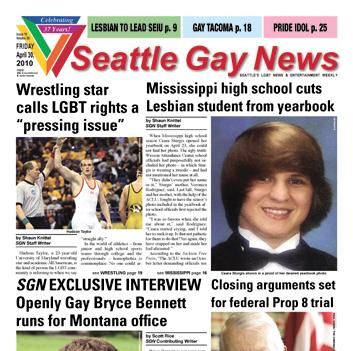
Straight ally: In 2010, Hudson Taylor was a 23-year-old college wrestler from the University of Maryland and a self-labeled “straight Ally.” Then– SGN Associate Editor Shaun Knittel spoke exclusively with Taylor on his message of acceptance to closeted high school and college athletes. “The rights of LGBT persons are important to me for so many reasons,” said Hudson, who was ranked in the top three in the country for his NCAA weight class. “Equal rights for the
by Mike Andrew SGN Staff Writer
Your mom worked hard to raise you, and if she’s like most modern moms, she also worked hard at a job to help feed you and keep a roof over your head.
Honor her and her hard work — and honor the work of millions of moms like her – by making sure to buy her some union-made candy this Mother’s Day.
Many top-grade chocolates are made by workers represented by the Bakery, Confectionary, Tobacco Workers, and Grain Millers (BCTGM) and the United Food and Commercial Workers (UFCW).
Ghirardelli, Hershey’s, Russell Stover, and See’s chocolates are all union-made.
Since we’re still not doing big family gatherings, you can send Mom the chocolates with the help of union workers at the US Post Office or UPS.
If Mom lives nearby, you can buy her some flowers too, and drop them off on her porch. Many union markets have floral sec-
This Week in SGN History
2010
gay community is important to me as an American, as a member of a larger society, as a person brought up with a strong social ethic and sense of moral responsibility, and as a regular person in a loving, open relationship with my life partner… I have been blessed with opportunities to publicly support LGBT equal rights… I will continue to be an adamant supporter of equality in my private life, and I will pursue any and all opportunities to continue advocating in the public domain.”
Yearbook photo erased: High school senior Ceara Sturgis had her photo and name omitted from her yearbook because she wore a tuxedo. Shaun Knittel reported: “‘They didn’t even put her name in it,’ Sturgis’ mother, Veronica Rodriguez said. Last fall, Sturgis and her mother, with the help of the ACLU, fought to have the senior’s photo included in the yearbook after school officials first rejected the photo.” School officials noted a federal precedent as a reason for the omission. “Rodriguez said she expected the district to attempt to downplay her daughter’s presence but not attempt to erase it entirely. She said the officials’ position runs counter to the more accepting opinions of Sturgis’ classmates.”
Gay 25-year-old runs for Montana office: Bryce Bennett was only 25 years old when he spoke to SGN contributing writer Scott Rice. On his age, he said, “It’s a weird juxtaposition, because a lot of my friends are a little more carefree, and they’re able to do things a little more easily without thinking about the consequences. It’s always in the back of my mind, and in the front a lot of times, too.” On co-founding Forward Montana: “We work with young people across the state on issues like LGBT equality and renewable energy to move our state forward and get young people involved in the political process.” On misconceptions: “I don’t
Neo-Nazis vandalize local activist office: The Washington Community Action Network (WCAN) was vandalized by a group called “RAHOWA 88.”
According to the police report, WCAN workers left the building at about 8:00 p.m. on Saturday, April 24, 2010, and returned at 10:00 a.m. the next day to find their front window was broken and two
know if I could pick just one misconception. When you travel outside the state, people go, ‘Oh, do you ride horses to school?’ and all this sort of stuff. I think that people have a misconception that Montana is this backwoods, redneck, super-super-conservative state, and while there are pockets of that, Montana for a long time has been a very progressive state.”
UPDATE: Bennett won his seat and served in that position until January 2019. In 2015-16, Bennett served as the majority whip in the Montana House. In 2019, Bennett moved to the state Senate.
WCAN vehicles vandalized. The tires of one car had been slashed. The insulating foam had been sprayed into the exhaust pipe of a van. Both vehicles had been spray-painted with the words “RAHOWA 88”: “RAHOWA” is neo-Nazi shorthand for “racial holy war,” and 88 stands for HH — H being the eighth letter of the alphabet — i.e., “Heil Hitler.”
tions, and they’ll be happy to help you.
The same markets will have bakeries for Mom’s favorite cake, and deli sections to make up a basket of goodies you can drop off with the flowers.
You can find a full list of union grocery stores in Western Washington at the UFCW 21 website: www.ufcw21.org/shop-union/
If you are traveling to see Mom, be sure to observe all the safety precautions. You can find union-made masks and protective gear at Ethix Merch: https://ethixmerc. com/made-usa-safety/
You’ll also need a place to stay for your visit. UNITE HERE has a list of union hotels at www.fairhotel.org.
Finally, if you want to get Mom a special gift, Macys, Macys Furniture Gallery, Del-Teet Furniture, and Woodside Braseth Gallery are all union shops. So is C. C. Filson if she’s the outdoorsy type. By the way, the unions that will help you celebrate your mom are also leaders in the fight for a democratic and inclusive union movement that defends LGBT rights.
This week in SGN history: 11 years ago
Over 47 years, the Seattle Gay News has covered thousands of stories that still resonate today. This week we look back at Volume 38, Issue 18, published on April 30, 2010.
South Park murder: The rape and murder of Lesbian Teresa Butz in the South Seattle neighborhood stunned the country in 2009, and in April 2010, news came that the murder suspect would not get the death penalty, as reported by Shaun Knittel. “According to prosecutors, [Isaiah Kalebu] raped, tortured, and stabbed the women during a 90-minute attack that left the city of Seattle horrified. Butz fought back and jumped out a window… and later died from injuries she sustained during the attack. Butz is... hailed as a hero within the LGBT community for fighting back, and is credited for saving her lover’s life.
UPDATE: In 2016, Eli Sanders, formerly a writer at The Stranger, released his book While the City Slept, detailing this incident and the loopholes that released Kalebu. As he said in an interview on the PBS Newshour on April 27, 2016: “I believe that if you just look at this one case of Isaiah Kalebu in Washington state — [which] is, in the end, a microcosm of the failures of our nation’s mental health and criminal justice systems… — you can see how relatively little, potentially, it might have cost to steer him or forcefully nudge him in a different direction much earlier on.”
In A&E news:
RuPaul’s Drag Race crowns season 2 queen: In Season 2, Tyra Sanchez walked away with the crown. As reported by SGN contributor Bebe Zahara Benet, “Despite all this talent in the finale, there could only be one winner. ‘I was just in a state of shock,’ Tyra said of hearing her name called by RuPaul. ‘I didn’t know what to think. I just wanted to cry. I didn’t want to do anything but cry and thank God.’”
UPDATE: In 2016, Sanchez replied to a tweet from a fan who called her annoying, saying, “Girl kill yourself.” This was met with backlash and outrage, with Sanchez calling victims of suicide “selfish
Return of the Washington Blade: The country’s oldest LGBTQ weekly was owned by Window Media LLC, and that company’s major investor, Avalon Equity Fund, filed for bankruptcy, forcing the Blade to cease operations in November 2009, as reported by SGN Staff Writer Mike Andrew. Since then, former Blade staff members have produced a new publication under the name DC Agenda, which is owned by Brown Naff Pitts Omnimedia Inc., representing former Blade publisher Lynne Brown, editor Kevin Naff, sales executive Brian Pitts, and other former Blade employees. Brown, Naff, and Pitts acquired all the assets of the former Blade, including rights to the name, from a federal bankruptcy court in Atlanta. The deal also included the newspaper’s entire 40-year archive. Naff and Brown said the decision to return to the Washington Blade name followed a survey of readers, which showed a solid majority in favor of the restoration.
cowards.” In 2017, there was more controversy and a feud with Morgan McMichaels. In 2020, Sanchez announced her retirement from drag.
Archie’s gay friend: Kevin Keller made his debut in 2010. As Shaun Knittel first reported, “‘Kevin’s debut is part of Archie Comics’ larger efforts to update the characters’ world. The introduction of Kevin is just about keeping the world of Archie Comics current and inclusive. Archie’s hometown of Riverdale has always been a safe world for everyone. It just makes sense to have an openly gay character in Archie Comic books,” Archie Comics co-CEO Jon Goldwater said in announcing the news.”
Image by J. Howard Miller
Compiled by MK Scott SGN Contributing Writer


than women of other races, and many of these deaths go unreported. This has created an unawareness of the problem and allowed it to bleed acceptance into every representation of its primary victims.
Last year, 98% of murders of Transgender people happened to Trans women or Trans-feminine people, and following last year’s trend, more than half of this year’s victims have been Trans women of color. Black women make up 20% of the women fatally shot by the police and are three times more likely to be killed by men, typically past or present lovers; this seems to be a curse our Black Transgender sisters have inherited in their fight to be themselves.
Where most women have gone wrong is
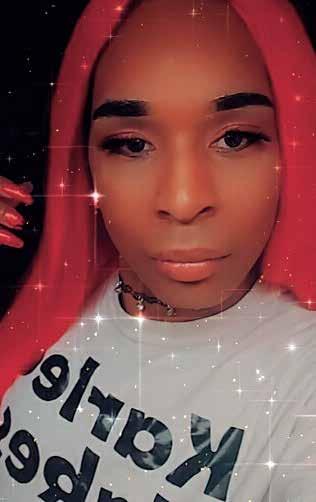
putting their trust in the wrong man, a circumstance that is very similar to the situation of 21-year-old Fifty Bandz, a Black Transgender woman who was shot and killed this January in Baton Rouge, Louisiana. Her death was misreported by the media, but she is said to have been murdered by a man she had been dating for over a year, someone she trusted.
In typical crime-of-passion fashion, Bianca “Muffin” Bankz, also a Black Transgender woman, was the victim of a murder-suicide while inside her home in Atlanta, Georgia. The former foster child had just moved into her new home and begun her transition.
Activist Dominique Jackson, an active member in the Mississippi chapter of the Human Rights Campaign, was shot while driving. Two days before she was found in her car, which had crashed into a pole,
No matter your sexual orientation or birth gender, our country has allowed presenting as a Black woman to become a target for violence and brutality.
Dominique had been reported missing. She was last seen with an unknown man.
All three of these women who were killed in January of 2021 were victims of crimes predominantly committed against
Black women. The murders of these young women illustrate that Black women are victims of these intimate types of crime at disproportionately high rates.
The accurate number of Transgender victims is difficult to pin down due to misgendering and media announcements using their deadnames. This alone lets us know that the number of murders could be much higher.
For this reason, the National Center for Transgender Equality would like for the Department of Justice to conduct a comprehensive study of the violence suffered by Transgender members of the LGBTQ community.
However, one thing this certainly shows is that no matter your sexual orientation or birth gender, our country has allowed presenting as a Black woman to become a target for violence and brutality.
Search for the Soul of Seattle: Homecoming
by A.V. Eichenbaum SGN Associate Editor
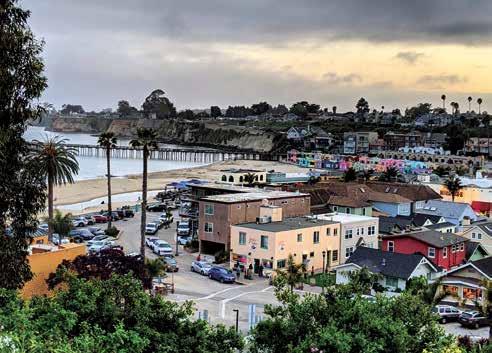
I flew home last weekend. I needed to get out of Seattle and clear my head, so I booked a last-minute flight to California and spent four days in Santa Cruz with the people I care about most. Thank God for pandemic pricing.
It had been over a year since I’d visited — partially for financial reasons, partially because I’ve been trying to escape who I used to be there: a walking nicotine addiction with a penchant for chaos, an explosion of paisley, absinthe, and broken hearts.
I loved every miserable moment of it. But it was killing me.
So, in 2017, I moved to Seattle, a more subdued city. Largely, it was for love. But I have to admit now that I was running from my problems.
When I worked in Pike Place Market that first summer, a co-worker invited me to an underground poker tournament. To my own surprise and the joy of my partner at the time, I turned them down. Thus began my version of “the quiet life.”
My life became my work and my relationship, each wearing me down in their own special way. I picked up writing for The Eastlake News about the joys of Little Free Libraries in a city where the sky bears down on you like a cement quilt, the same color as the buildings being constructed at increasingly claustrophobic intervals.
This may be news to some, but having
no life outside of work and a romantic relationship gone sour is detrimental to one’s health. That relationship of six-and-a-half years ended very recently, and I started to see the beauty in the Emerald City again. But it’s not home.
Let me tell you some of the differences between Santa Cruz and Seattle. They’re not good or bad. One’s not better, objectively, than the other. Although I do like that the fog usually burns off in Santa Cruz around noon.
In Santa Cruz, I waved at a neighbor walking her dog. She smiled and said, “Good morning! Nice day!” It was so unnatural to me after years of Seattleites’ confused glances that I could only stammer, “Uh, yeah! Wow! Hey!”
Her smile faded and she quickly jogged away. I’m roughly six feet tall, often with dark circles around my eyes and an unshaven face. So I don’t blame her.
Also, there is a resilience to the Califor-
nian spirit. You have to have it when your home is often on fire, granted, but there’s more to it than that. Santa Cruz is Surf City. There’s a very basic philosophy that permeates the psyche: sometimes you’re going to get pulled under the waves, but you can always get back on your board another time.
This is not the case in Seattle. My colleagues over the years try to keep a positive attitude, but there’s always that sardonic sentiment at the back of everyone’s mind: winter’s just around the corner.
That’s one thing that both places have in common, though: locals love to complain about the weather.
My entire trip, it was slightly cloudy and 65 degrees. My whole family kept apologizing for the terrible weather, and all I could do was laugh. We grew up spoiled.
I started this search for the soul of Seattle out of an ever-present sense of loneliness and some optimistic notion that maybe it’s not as sad, deep down, as everyone keeps saying it is. There’s so much life and wonder to be found here, after all.
The truth is, though, I’m a fish out of water. I know where I belong. It isn’t here.
Maybe I just haven’t found the right pond yet.
Where would you like to see explored? Tweet suggestions @photondetective or contact me directly at aveichenbaum@ gmail.com.
Fifty Bandz – Photo courtesy of HRC Bianca “Muffin” Bankz – Photo courtesy of SisTers PGH
Dominique Jackson – Photo courtesy of SisTers PGH
Photo by A.V. Eichenbaum
Allyship - an organization of LGBTQ individuals fighting for economic and social justice. www.LGBTQAllyship. org, allyship@yahoo.com, (206) 279-8169. American Veterans for Equal Rights - www.aver.us
Another Gay Social Club! - www.meetup.com/AnotherGay-Social-Club/ Bellingham/Whatcom County - www.theslowlane. com/guide.html
BiNet Seattle is a mixed gender, social group for Bisexuals, their partners & other Bi-friendly folks - www. binetseattle.org.
Bremerton/Kitsap County - www.outwestsound.org Capitol Hill Alano Club - www.chacseattle.org
Cascade Rainbow Community Center (Mount Vernon) - (360) 840-8499 and on Facebook. Central Washington University GALA Hotline: (509) 963-1994.
Channel Q 103.3 FM - LGBTQ+ Talk Radio NetworkNews and information, pop culture and music. radio.com COLAGE unites people with LGBTQ parents and caregivers into a network of peers and supports them as they nurture and empower each other to be skilled, self-confident, and just leaders in our collective communities - www.colage.org
DIFFA/Northwest (Design Industries Foundation Fighting AIDS). (206) 763-8885; www.diffanorthwest. org
DOMESTIC VIOLENCE & SEXUAL ASSAULT: Crisis Clinic, (206) 461-3222 (24 hour line); King County Sexual Assault Resource Center (KCSARC) - 24-hour crisis line for information, support, & medical & legal assistance: 1-888-99-VOICE; Northwest Networksupport & advocacy for Bisexual, Trans, Lesbian & Gay Survivors of Abuse & Dating Violence, (206) 568-7777 (voice), 517-9670 (tty), www.nwnetwork.org; Pierce County Domestic Violence Helpline: Teresa, (253) 798-4166; Seattle Counseling Service for Sexual Minorities - offers on-going support groups for men: 323-1768; Seattle Police Dept Domestic Violence Unit, (206) 684-0330; State Wide Domestic Violence Hot Line, 1-800-562-6025. In an emergency call 911 Report domestic violence and sexual assault. Equal Rights Washington - (206) 324-2570; www. equalrightswashington.org
Everett/Snohomish Cty - www.gaysnohomish.org
Freely Speaking Toastmasters - www.freelyspeaking.org
Gay City promotes wellness in LGBTQ communities by providing health services, connecting people to resources, fostering arts, and building community. Gay City Health Project’s Wellness Center provides anonymous & confidential HIV/STD testing. 517 E Pike St. More info or to schedule an appointment, (206) 860-6969. www.gaycity.org
Gay & Lesbian National Hotline (GLNH): 1-888-THEGLNH (1-888-843-4564). Non-profit, peer-counseling, information & local resources telephone hotline for GLBT people across the country.
Generations Aging With Pride empowers elder LGBTQ adults to live with pride and dignity by promoting, connecting, and developing innovative programs and services that enhance belonging and support, eliminate discrimination, and honor the lives of older members of our community - (206) 393-3400; info@gapseattle.org; gapseattle.org
GLSEN/WA - Gay, Lesbian, Straight Education Network - (206) 330-2099; www.glsenwa.org
Greater Seattle Business Association (GSBA) - (206) 363-9188; www.thegsba.org
HIV/AIDS Program, Seattle/King County Dept of Public Health, provides confidential/anonymous information about & testing for HIV/AIDS. (206) 205-7837. For a comprehensive list of HIV/AIDS service organizations see the GSBA Guide or visit www.thegsba.org or call Lifelong AIDS Alliance, (206) 328-8979.
Imperial Sovereign Court of Seattle & the Olympic & Rainier Empire - www.facebook.com/ISCSORE; www. imperialcourtofseattle.com
Lambert House - (206) 322-2515; www.lamberthouse. org
LGBT Library - 517 E Pike St. Open Mon-Fri 2-8pm; Sat 2-5pm. A wide range of fiction and non-fiction for the LGBT community and allies can be borrowed free of charge.
LGBT MS Connection - (425) 785-8593; lgbtmsconnections@comcast.net. Support group for LGBT persons with MS and their partners and their caregivers. Sponsored by the National Multiple Sclerosis Society. Lifelong AIDS Alliance - (206) 328-8979, www.lifelongaids alliance.org Lion’s Main Art Collective - www.lionsmain.org
MEN: Gay City: (206) 860-6969, www.gaycity.org; Knights of Mantra: (206) 329-0886, www.jetchapterkofm.com; Mature Friends: Gay men & women 40 & over, www.maturefriends.org; Northwest Bears: www. nwbears.com; The Olympians: www.TheOlympians. net; POZSeattle: www.pozseattle.com; Q-Squared: www.qsquared.org; Rain City Jacks: www.raincityjacks. org; Seattle Gay Couples: www. seattlegaycouples.org; Seattle Men in Leather: www.seattlemeninleather. org; Seattle Prime Timers: Gay & Bi men 40 & over, www. seattle primetimers.org; Tacoma Older LGBT: www. tacomaolderlgbt.org. (See also listings under Bisexual, Parenthood, People of Color, Transgender.)
MUSIC: Diverse Harmony: www.diverseharmony. org; Rainbow City Band: 1-866-841-9139 ext 2126; rainbowcityband@onebox.com; www.rainbowcity band. com; Seattle Men’s Chorus and Seattle Women’s Chorus: (206) 388-1408, (206) 323-0750. www.seattlechoruses.org.
Northwest Lesbian & Gay History Museum Project - gayhistnw@aol.com
community resources
Northwest Rainbow Alliance for the Deaf - www. nwrad.org
Olympia/Thurston County - www.RainbowCenterOly. org
Out & Equal Workplace Advocates/Seattle Regional Affiliate supports the work of LGBT employees and the growing number of ERGs (Employee Resource Groups) making a difference within local companies, including Alaska Airlines, Amazon.com, Amgen, AT&T, Bank of America, Deloitte, Macy’s, Microsoft, Russell Investments, Safeco Insurance, Starbucks Coffee, Xerox. www.outandequal.org/affiliates/seattle
Out & Proud Grays Harbor Coalition - http://outandproudgh.org
PARENTHOOD: Families Like Ours provides a gateway for LGBT families interested in adoption & provides a network of safe placement agencies, training, support & resources: (206) 441-7602, www.familieslikeours. org; Family Works offers support, information & activities for LGBT families: (206) 694-6727, www.familyworksseattle. org; Gay Fathers’ Association of Seattle offers support groups & social activities: www.gfas. org; Proud & Loud Families - Northwest, www.meetup.com/proudand-loud-families-northwest, plfnorthwest@aol.com; Queer Parent Networking Dinners: (206) 568-7777, qpnd@nwnetwork.org, www.nwnetwork.org; Rainbow Families of Puget Sound: www.rainbowfamiliesps.org PFLAG is the national organization for parents, families, allies, and LGBTQ people united for equality with chapters in Seattle, Bellevue/Eastside, the Puget Sound region and across Washington state. PFLAG Seattle: (206) 325-7724, info@pflagseattle.org, and www.pflagseattle.org; PFLAG Bellevue/Eastside: (425) 483-6642, info@bellevue-pflag.org, http://community. pflag.org/PFLAGBellevue; PFLAG Pacific Northwest: www.pnwpflag.org; PFLAG Washington State Council: www.pflagwsc.org.
Peer Seattle (formerly Seattle Area Support Groups) is a non-profit organization that builds community and cultivates powerful, healthy lives by providing emotional support and personal development services to those affected by HIV/AIDS, the Queer communities, and those who love them. Our work is done in a spirit of safety, trust, inclusiveness, and celebration of individual differences. (206) 322-2437; www.peerseattle.org
PEOPLE OF COLOR: AARTH (African American Reach & Teach Health Ministry), (206) 850-2070, www.aarth.org; Asian/Pacific Islander Queer Network Program at API Chaya, (206) 467-9976; Center for MultiCultural Health, (206) 461-6910, www.multiculturalhealth.org; Entre Hermanos, GLBT Latinos/as, (206) 322-7700, www.entrehermanos.org; Ile LaiLai, (206) 781-3565, iya@ilelailai.org; Men of All Colors & Cultures Together (MACCT), (206) 923-8313, macctseattle@yahoo.com, www.macctsea.org; Northwest Two Spirit Society, https://www.facebook.com/ groups/nw2spiritsociety/, Nubian Pride Productions, nubianpride@gmail.com; People of Color Against AIDS Network (POCAAN) offers rapid HIV testing, M-F, 10am-5pm, (206) 322-7061, www.pocaan.org and on Facebook; QBASS - Queer Black Alliance of the South Sound, (253) 256-1846, weareqbass@gmail. com; Sistah 2 Sistah, LBT women of African descent, (206) 322-7061, (206) 255-8951; Somos Seattle, somosseattle.org; Trikone-Northwest, GLBT South Asians, (425) 985-4376, www.trikonenw.org; Two-Spirit Honor Project, 1-866-685-0164; U.T.O.P.I.A. Seattle, www.utopiaseattlewa.org; VietQ Greater Seattle, vietqorganization@gmail.com
Pierce County AIDS Foundation - (253) 383-2565; www.piercecountyaids.org
Pride Foundation - (206) 323-3318; www.pridefoundation. org
Pride Lives - www.facebook.com/PrideLives/ Pride Radio 93.3 HD2
Project NEON is a program of Seattle Counseling Service providing FREE information & services to Gay & Bi men to reduce health risks associated with methamphetamine use. (206) 323-1768. www.crystalneon.org
Public Health-Seattle & King County Online Comprehensive Health Information for Sexual Minorities: www.kingcounty.gov/healthservices/health/personal/ glbt.aspx
Q Law: The GLBT Bar Association of WA - (206) 682-6711; www.q-law.org
Q Law GLBT Legal Clinic - (206) 235-7235. Queer Geek! - queergeekseattle.org
Rainbow Center - Resource Center for Tacoma/Pierce County LGBTIQA community. Through education, advocacy and celebration, the Rainbow Center expands resources, and safe space for the LGBTQIA community.
Sponsors Tacoma Pride Festival. (253) 383-2318, www. rainbowcntr.org
SEAMEC interviews, researches & rates candidates for public office on issues of concern to the LGBT community. www.voteseamec.org
Seattle Area Support Groups & Community Center (SASG) i- SEE LISTING for Peer Seattle. Seattle Bisexual Women’s Network - BiSeattle.wixsite. com/SBWN and on Facebook.
Seattle Counseling Service for Sexual Minorities is a community mental health service for GLBT persons & their families providing comprehensive mental health services on a sliding scale. (206) 323-1768.
Seattle LGBTQ Commission - (206) 684-4503. www/ seattle.gov/lgbtq
Seattle Out & Proud - (206) 322-9561; www.seattlepride.org
Seattle Police Department Sexual Minorities Community Advisory Council: kim.bogucki@seattle.gov
Seattle PrideFest - www.seattlepridefest.org Servicemembers Legal Defense Network - (202) 328-3244; www.sldn.org
Sex Workers Outreach Project - https://seattle. swopusa.org
Sisters of Perpetual Indulgence, The Abbey of St. Joan - (206) 860-3666; www.theabbey.org Snohomish Health District HIV/AIDS Program provides free confidential/anonymous HIV counseling & testing 9am-5pm Monday-Friday, until 7pm Tuesdays. (425) 339-5298.
South Sound Q Calendar - LGBTQ events in Tacoma, Olympia & Sound Puget Sound area; www.SouthSoundQCal.com Spokane/Inland Northwest - www.outspokane.com; www.stonewallnews.net
SPORTS & RECREATION: Bent Car Guys: www. bentcarguys.org; Border Riders Motorcycle Club: www.borderriders.com; Bottom Dwellers Scuba Club: www.bottomdwellers.org; Capitol Hill Cyclers: join their Facebook group or email capitolhillcycling@ groups.facebook.com or jordan.l.simonson@gmail.com; Cascade Flag Football: www.cascadeflagfootball.org; Cascade Flyers: www.cascadeflyers.org; Emerald City Mudhen Rugby: www.mudhenrugby.com; Emerald City Softball Association: www.emeraldcitysoftball. org, www.eteamz.com/womensecsa; Ethyl Forever Car Club: ethylforever@hotmail.com; Festival of the Babes: www.festivalofthebabes.com; Olympic Yacht Club: www.oycnw.org; OutVentures: outdoor education & recreation activities, www.outventures.org; Pacific Northwest Gay Rodeo Association: www.pacificnwgra.org; Puddletown Squares: www.puddletownsquares.org; Rain City Soccer: www.raincitysoccer.org; Rain Country Dance Association: a country-western dance organization catering to the LGBTQ community but open to all, www.raincountrydance.org; Sea Dawgs: LGBT ice hockey - SkateSeaDawgs@gmail.com and on Facebook; Seattle Frontrunners: www.seattlefrontrunners.org; Seattle Gay Basketball Association: www. seattlegaybasketballassociation.com; Seattle Orca Swim Team: www.orcaswimteam.org; Seattle Otters Water Polo: www.otterpolo.com; Seattle Quake Rugby: www.quakerugby.com; Seattle Tennis Alliance: www. seattletennisalliance.org; Seattle Unified Bowling Association (SUBA): magee98106@aol.com, www. teamseattle.org/bowling.htm, www.theprideleague. com, Century 21 League; Seattle Volleyball Club: www.seattlevolleyballclub.com; Ski Buddies: www. skibuddies.org; Team Seattle Gay Sports Network is an umbrella organization for a wide range of local GLBT sports activities, (206) 367-4064, www.teamseattle.org (see website for comprehensive list of sports clubs); Triangle Recreation Camp at Bender Creek: recreational camping for GLBT folks. Must be 21; ID required. trc@ camptrc.org, www.camptrc.org, 1122 E Pike St #1069, Seattle 98122-3934. Strength Over Speed - www.strengthoverspeed.org Tacoma/Pierce County - Rainbow Center, 2215 Pacific Ave, Tacoma, a resource center for the LGBTIQA community of Pierce County, (253) 383-2318, www. rainbowcntr.org
Three Dollar Bill Cinema - TWIST: Seattle Queer Film Festival; Translations: Seattle Transgender Film Festival; Outdoor Cinema at Cal Anderson Park. www. threedollarbillcinema.org
TRANSGENDER: Emerald City Social Club: (425) 827-9494; Gender Alliance of the South Sound: www. SouthSoundGender.com; Gender Diversity: www. genderdiversity.org; Gender Justice League: www.genderjusticeleague.org; Gender Odyssey: www.genderodyssey.com; Hermanos Trans Latino & Foreign-Born
Support Group: (206) 322-7700; Ingersoll Gender Center: (206) 329-6651, www.ingersollcenter.org; Lion’s Main Art Collective: www.lionsmain.org; The New BoyZ Club: www.olympiaftmgroup.webs.com; Olympia Trans Discussion Group: www.facebook.com/pages/ Olympia-Trans-Discussion-Group/262449878114; [trans] ACTION: Trans* & Gender Non-Conforming Sex Workers’ Support Group - a safe, peer-led space. mail@utopiaseattle.org; TRANSform Washington: transformwashington.com; Trans Resource & Referral Guide: kctransguide.org; Trans Women of Color Solidarity Network: Funding the collective liberation of Trans women of color – https://m.facebook.com/ TWOCSolidarityNW/; Washington Gender Alliance: (360) 445-2411, www.washington genderalliance.com
WOMEN: Aging Ballard Lesbian Exchange (A.B.L.E.): We are Lesbians 60 years (generally) and up, living (mostly) in the north half of Seattle. The purpose of the group is to connect, socialize and support each other. ruthemilyvogel@gmail.com; Aging Lesbians in South Seattle (ALISS) - Lesbian Group at the Southeast Seattle Senior Center. This is a gathering primarily for Lesbians but all are welcome to attend. Kate, (206) 722-0317; www.sessc.org; BABES: support groups for HIV+ women. (206) 720-5566, 1-888-292-1912; Coming Out Women Support Group of Tacoma: www. comingoutwomen.org; Festival of the Babes: www. festivalofthebabes.com; Mature Friends: Gay men & women 40 & over, www.maturefriends.org; Puget Sound Old Lesbian Organizing for Change: http:// psoloc.org, (253) 777-3357; Older Lesbians Organizing for Change/WA State Chapter: gloria@oloc.org, mary@oloc.org, www.oloc.org; Pacific Northwest Lesbian Archives: www.pnwlesbianarchives.org; RainshadowWomen: RainshadowWomen@aol. com; Seattle Bisexual Women’s Network: BiSeattle. wixsite.com/SBWN; Seattle Girls of Leather: www. sgol.org; Tacoma Lesbian Concern (TLC): www.tacomalesbianconcern.org; Tacoma Older LGBT: www. tacomaolderlgbt.org; Women of West Seattle (WOWS): a fun, member-driven social group for Lesbians, http:// groups.yahoo.com/group/womenofwestseattle; YWCA Women’s Health Outreach: providing low or no-cost mammograms for income eligible 40+ LBTQ individuals. Follow us at http://lbtqhealth-ywca.blogspot.com, twitter.com/ingridWHO or email lbthealth@ywcaworks. org, (206) 461-4493. (See also listings under Bisexual, Parenthood, People of Color, Transgender.)
YOUTH: B-GLAD (Bisexual, Gay, Lesbian, Trans & Questioning Adolescent Drop-In Group): Youth Eastside Services offers many programs for GLBT youth, including B-GLAD, (425) 747-4937; Coyote Central: www.coyotecentral.org; Diverse Harmony: www.diverseharmony. org; GLSEN/Washington State (Gay, Lesbian, Straight Education Network) & Washington State GSA (Gay-Straight Alliance) Network: GLSEN works to create safe schools for LGBT students. WA GSA Network supports youth-led GSA’s to fight harassment & homophobia in Washington state schools. (206) 330-2099; www.glsenwa. org; www.wagsa.org. GLOBE (GLBTQ Loving Ourselves, Becoming Empowered): a support group & HIV/STD prevention program for GLBTQ youth, 14-20, in Everett, (425) 263-2908, www. globeyouth.org; It Gets Better Project: www.itgetsbetter.org; Lambert House: an activities & resource center for LGBT youth, 14-22, 1818 15th Ave @ E Denny Way, with additional support groups organized in smaller towns throughout King County, (206) 322-2515, www. lamberthouse.org; Lifelong HEYO (Health Education Youth Outreach): for LGBTQ youth, ages 16-24: (206) 957-1665; www.llaa.org/HEYO; www.MatthewsPlace. com ; The Mockingbird Society: (206) 323-KIDS (5437), www.mockingbirdsociety.org; New Horizons: social services and shelter for homeless youth, 2708 3rd Ave (in Belltown), (206) 374-0866, http://namin.org; Oasis Youth Center: for GLBTQ youth, ages 14-25, in Tacoma, (253) 671-2838, www.oasisyouthcenter. org; OKAY! LGBTQ+ Outreach for Kent Area Youth: (253) 859-0699 ext 3034. OKAY! is an open support group for youth ages 13-19 who identify as LGBTQ+. A program of Kent Youth & Family Services; OUT There Adventures: www.outthereadventures.org; Parents, Family & Friends of Lesbians & Gays (PFLAG)/ Puget Sound: (206) 325-7724, www.seattle-pflag.org; Pizza Klatch: weekly lunchtime support groups for LGBTQ youth in Thurston County, www.pizzaklatch. org; Prism: for LGBTQ youth, 14-21, in PuyallupCherise.Alexander@ multicare.org; www.facebook. com/PuyallupPrism; Proud Out Wonderful (POW!): for LGBTQ youth, 13-21, in South King County, (206) 326-9112, www.facebook.com/proudoutwonderful; Q Youth Resources: in Kitsap County - (360) 698-3335; www.kchaf.org; Roots Young Adult Shelter: 1415 NE 43rd St., (206) 632-1635; www.rootsinfo.org; Safe Schools Coalition: www.safeschoolscoalition.org; (206) 451-SAFE, (206) 451-7233 (non-emergency), 1-877-SAFE-SAFE (1-877-723-3723) (crisis line); Seattle Young People’s Project (Queer Youth Resource Board): (206) 860-9606, www.sypp.org; Street Youth Ministries (SYM): (206) 524-7301 ext 111; www. streetyouthministries.org; Teen Link: (206) 461-4922, 1-888-431-TEEN; The Trevor Project: 866-4-U-Trevor; www.thetrevorproject.org; True Colors - Connecting LGBTQ Teens: in Shoreline, (206) 362-7282 x 8018, lbagley@chs-nw.org; The Vera Project: fuels personal & community transformation through collaborative youthdriven engagement in music and art. (206) 956-8372; theveraproject.org; Vista Youth Center: for LGBTQ, questioning and allied youth, ages 14-21, in Kennewick, (509) 396-5198, www.vistayouthcenter.org; YouthCare/ Isis Program (Transitional Living Home for LGBTQ Young Adults, 18-22): (206) 522-8412; YouthCare/ Orion Center Young Adult Shelter: 1828 Yale Ave @ Stewart St. (206) 622-5555; Youth in Focus: (206) 723-1479; www.youthinfocus.org; Youth Suicide Prevention Program (OUTLoud-GLBTQ): (206) 297-5922, ext 116, 1-800-273-TALK, www.yspp.org
National News
Discrimination in health care raises LGBTQ+ concerns over COVID-19 vaccine
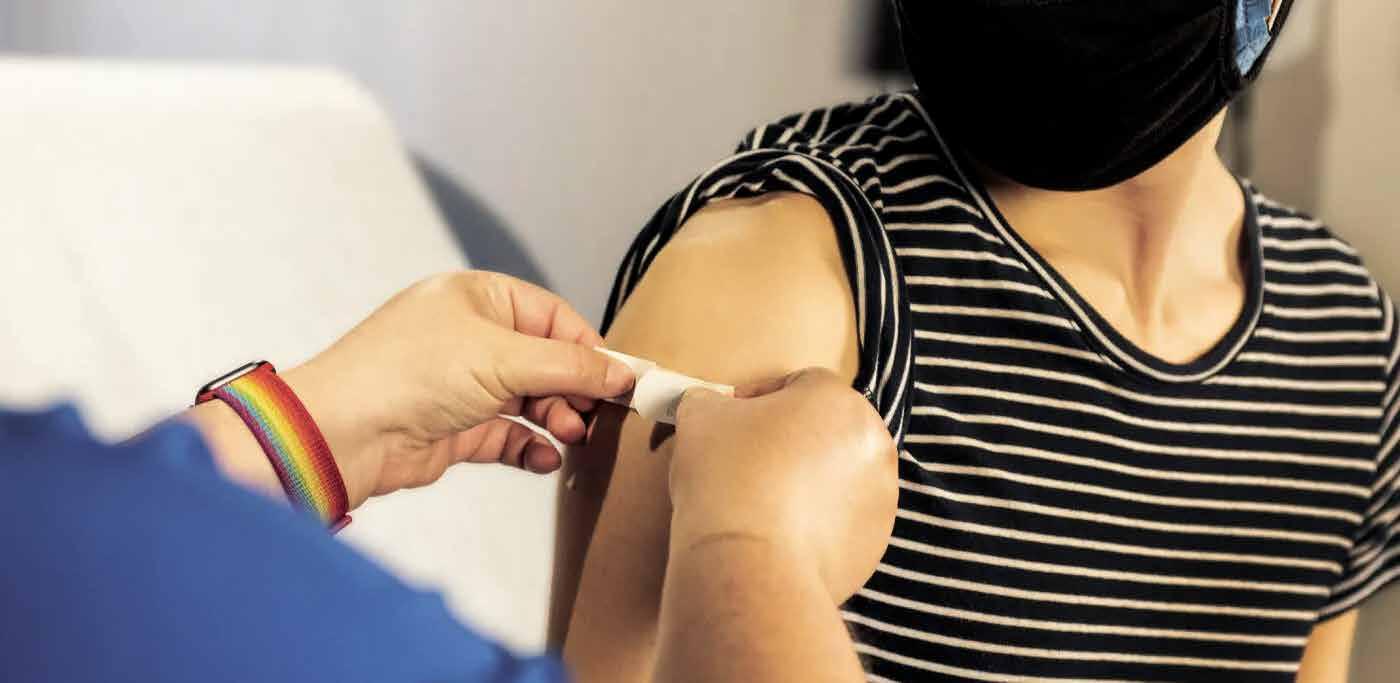
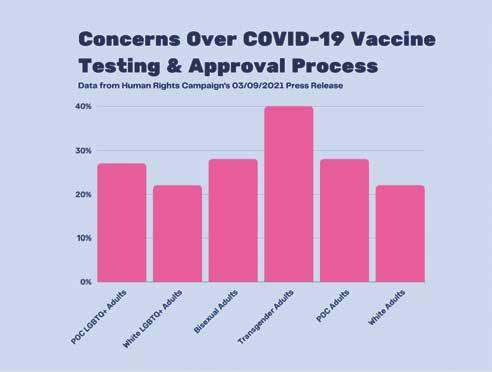
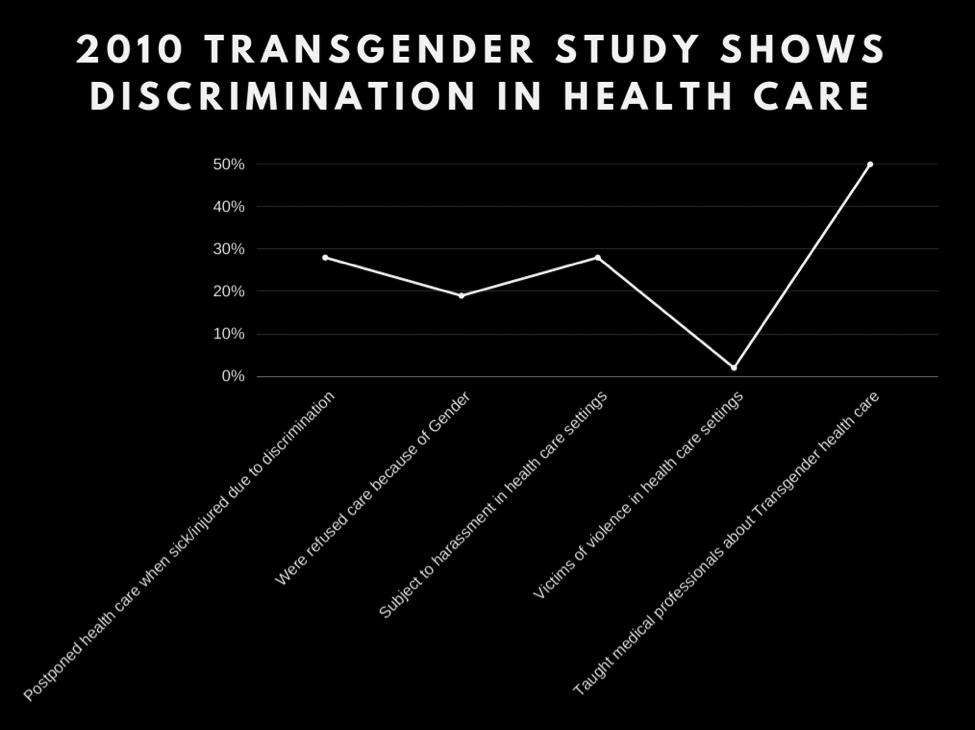
by Hannah Saunders SGN Contributing Writer
For over a year now, the LGBTQ+ community in the United States has in particular struggled with the coronavirus pandemic. Financial and racial inequalities, as well as discrimination in health care settings, have all been evolving issues for several decades now, and they have continued to weave their way through this pandemic.
Most importantly, during the midst of some of the toughest days in modern history, these inequalities have clearly displayed how a broken system has hit those who are most vulnerable the hardest.
On February 2, 2021, the Centers for Disease Control and Prevention issued a report stating, “Sexual minority persons in the United States have higher self-reported prevalences of several underlying health conditions associated with severe outcomes from COVID-19 than do heterosexual persons, both in the overall population and among racial/ethnic minority groups.”
These underlying health conditions include obesity, type 2 diabetes, and smoking. As a result, members of the LGBTQ+ community have greater rates of cancer, asthma, stroke, heart disease, and chronic obstructive pulmonary disease (COPD) — all of which are health conditions associated with severe COVID-19-related outcomes.
In addition, the report described how those who are both racial and sexual minorities are at the highest risk for severe outcomes from the coronavirus, due to immense financial and environmental inequalities.
Overall, those who are sexual minorities are at a greater risk for illness because of the abundance of barriers that taint our society.
In March of 2021, the Human Rights Campaign (HRC) released a data analysis as part of the HRC Foundation’s educational vaccine campaign, “For Ourselves, For Each Other: Getting to the Other Side of the Pandemic.” The campaign’s goal is to educate the LGBTQ+ community, particularly LGBTQ+ people of color, when it
comes to COVID, in order to address any medical mistrust, and to answer any questions community members may have.
Part of the data analysis the HRC presented contained the rates and concerns of LGBTQ+ members in relation to receiving one of the coronavirus vaccines. (See Fig. A)
The mistrust of the testing and approval process for COVID-19 vaccines stems from a history of discrimination and inadequate care in the health care setting. Unfortunately, not every city in the United States is as accepting of the LGBTQ+ community as Seattle is, and in many parts of the country, transphobia, homophobia, and racism are all too abundant in health care facilities.
In 2010, the National Center for Transgender Equality and the National Gay and Lesbian Task Force conducted a study called the “National Transgender Discrimination Survey Report on Health and Health Care.” The research found that many individuals who are Transgender or nonbinary frequently and consistently experienced discrimination while accessing health care, including disrespect, harassment, violence, and the denial of services. Study participants even reported barriers to preventive medicine, routine medical care, and emergency medical care — in addition to a lack of Transgender-related services, and ignorance when it comes to Transgender medical needs. (See Fig. B)
While that research is over a decade old, health care discrimination against members of the LGBTQ+ community has recently been aggravated by an increase in anti-Transgender bills introduced across the US. This year, Arkansas was the first state to prohibit medical treatment for Transgender minors, and it most likely will not be the last state to do so.
The politicization of health care and visible discrimination in health care settings continues to affect 14 million LGBTQ+ adults and 2 million LGBTQ+ youth in the United States: Is it really still such a mystery as to why some LGBTQ+ people are hesitant to receive a COVID-19 vaccine?
Fig. A – Image courtesy of HRC
Fig. B – Image courtesy of HRC
Photo courtesy of HRC
National news highlights
by Daniel Lindsley SGN Contributing Writer
Kansas Reuters reported that Democratic Kansas Gov. Laura Kelly has vetoed a GOP bill that aimed to ban Transgender girls from participation in school sports. This comes amid a wave of similar bills being pushed by Republicans across the country. Kelly framed the decision as one of inclusiveness for all families and children, noting also the possibility of boycotts from corporations should the bill become law. As the votes stand in the Kansas Senate and House, the veto is unlikely to be overridden.

Georgia
Tim Cwiek of Philadelphia Gay News reports that Ashley Diamond, a trans inmate in Georgia, has the support of the Department of Justice in her attempts to transfer to a women’s prison. The DOJ’s court document considers the issue a matter of safety and constitutional rights, less concerned with the specific facts of Diamond’s case but “[requiring] prison officials to conduct individualized assessments that lead to reasonably safe conditions of confinement of confinement and adequate medical care for all prisoners.” Two organizations’ senior staff attorneys—Beth Littrel at the Southern Poverty Law Center, and Chinyerie Ezie at the Center for Constitutional Right—praised the DOJ’s statement, saying its impact across the country will be significant. They also stressed its importance for Diamond, who has been assaulted by other inmates. Ezie said, “We just want the Georgia Department of Corrections to treat Ashley like the woman she is.”
National News
Biden orders $15 per hour for federal contract workers
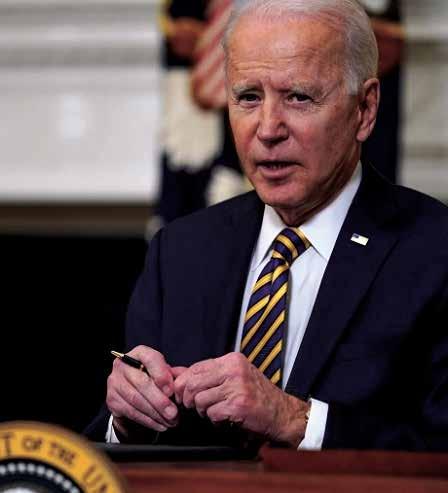
by Mike Andrew SGN Staff Writer
President Joe Biden issued an executive order on April 27 increasing the minimum wage for federal contract workers to $15 per hour.
The current minimum for the federal government’s contract workers is a mere $10.95.
Biden’s order also eliminates the discount for tipped workers by 2024. They are now guaranteed only $7.65 per hour, on the theory that their tips will bring them up to $10.95 per hour.
Federal contract workers with disabilities will also receive a minimum of $15 per hour.
Federal agencies are instructed to incorporate the $15 minimum wage in new contract solicitations starting January 30 and to implement the wage threshold in new contracts by March 30.
Agencies must implement the higher wage in existing contracts when they are extended, which often happens annually.
The wage will be adjusted yearly based on the increase in inflation.
Biden’s order will provide a big pay hike to a wide range of workers who are not direct employees of the federal government, but employees of companies that provide services at federal facilities and projects.
Among those getting a raise will be cleaning professionals and maintenance workers, nursing assistants who care for veterans, cafeteria and other food service workers, and laborers who build and repair federal infrastructure.
According to the White House, Biden’s executive order will not lead to reduced employment or hurt the businesses that hire federal contractors and will not result in increased costs for taxpayers.
The wage increase will enhance worker
productivity and generate higher-quality work by boosting workers’ health, morale, and effort, the White House said, and will lower turnover, absenteeism, and supervisory costs.
The pay raise also will help reduce decades of income inequality and improve families’ economic security, particularly for women and people of color, according to a fact sheet distributed by the administration.
Biden had hoped to include an acrossthe-board $15 minimum wage in his COVID relief package but was stymied when the US Senate parliamentarian ruled that the provision could not be passed by reconciliation. That meant the president’s bill would have to win the approval of 11 Senate Republicans — an impossible task. Seattle and other Washington cities have passed local $15 per hour ordinances, and the state minimum wage now stands at $13.69 per hour.
President Joe Biden – Photo by Evan Vucci / AP
Ashley Diamond – Photo courtesy of SPLC
Washington AG to insurance companies: eliminate barriers to gender-affirming care
by Mike Andrew SGN Staff Writer
Washington state Attorney General Bob Ferguson has warned insurance companies that they should “eliminate invisible barriers to gender-affirming care.”
“We urge you to review and ensure that your policies and medical guidelines interpret medical necessity for gender-affirming care as broadly as possible to ensure the well-being of each patient,” Ferguson said in April 28 letters to 12 insurance companies.
Ferguson warned the companies that Washington State Insurance Commissioner Mike Kreidler took administrative action against at least one insurance provider for failing to cover breast augmentation services following a medically necessary mastectomy.
“Even so,” Ferguson continued, “the Attorney General’s Office continues to receive complaints of barriers to receiving the medically necessary gender-affirming care that every Washingtonian is entitled to.”
Washington state law requires coverage of medically necessary gender-affirmation services, and Ferguson noted that Aetna — a major insurance company — will cover gender-affirming augmentation for transfeminine members in most of its commercially available health plans.
“This change followed conversations with the Transgender Legal Defense and Education Fund and transgender women
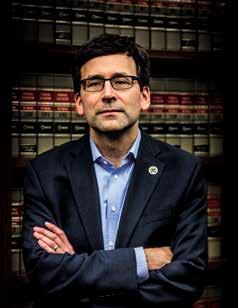
who were denied medically necessary care,” Ferguson noted.
“This change by Aetna at a national level is an important step toward equity in the provision of health care.”
According to Ferguson, many health insurers have excluded breast augmentation surgery and other essential treatments — like facial electrolysis — as cosmetic, rather than medically necessary.
“[W]e recommend you review claims denied as ‘cosmetic’ and whether the medi-
cal procedure was prescribed to a transgender, nonbinary, or gender-diverse person as medically necessary,” the attorney general told the insurance companies.
“These denials are harmful to transgender Washingtonians, and it is disproportionately harmful to transgender Black, Indigenous, and people of color communities. Adults who identify as Black, Latinx, or of another race or ethnicity are more likely than white adults to identify as transgender.
“In a 2015 report by the National Center for Transgender Equality, one-third of these communities, as well as transgender people with disabilities, reported negative experiences when they saw a health care provider, including being refused treatment or having to teach the provider about transgender people in order to get appropriate care.”
Ferguson’s letter was co-signed by Entre Hermanos, Equal Rights Washington, the Gender Justice League, Gay City, the GSBA, Legal Voice, the QLaw Association, the QLaw Foundation, and the Rainbow Center.
It was sent to Bordeaux Anthem, Berge CHPW, Fathi-Molina, Daniels-United Healthcare, Johnson-Coordinated Care, Broussard-Humana, Blackledge-Mutual of Omaha, Hochman-Providence, CordaniCigna, Mullaney-Kaiser, Verity-Regence Blue Shield, and Roe-Premera Blue Cross insurance companies.
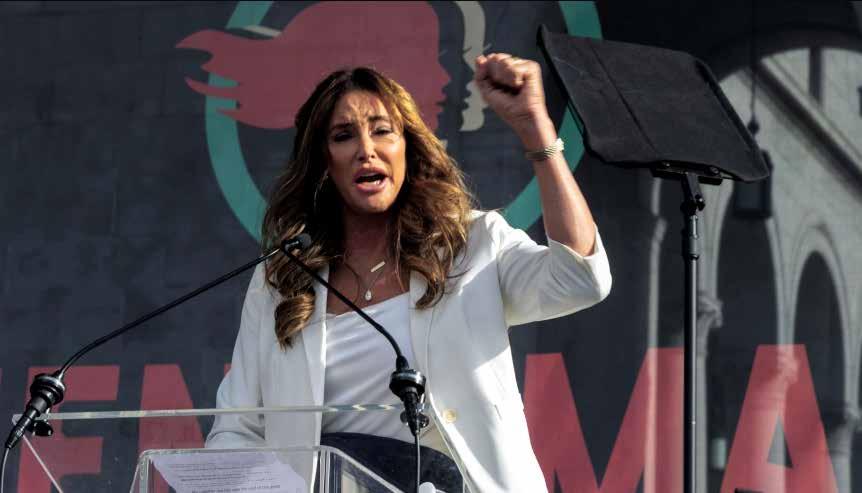
JENNER
continued from cover
“I am a proven winner and the only outsider who can put an end to Gavin Newsom’s disastrous time as governor,” Jenner said in a statement. “Californians want better and deserve better from their governor.”
Jenner criticized Newsom for “overrestrictive lockdowns” and high taxes.
“This isn’t the California we know,” Jenner said in her statement. “This is Gavin Newsom’s California, where he orders us to stay home but goes out to dinner with his lobbyist friends.”
Jenner, well known to older voters as an Olympic athlete and to younger ones as a reality TV star, is running as a Republican. She describes herself as “socially liberal and fiscally conservative.”
Her campaign faces many obstacles, not least of which is that the “socially liberal” piece no longer fits in a Republican Party dominated by Trumpism, QAnon conspiracy theories, and Christian nationalism. Jenner previously supported Trump, and her campaign staff includes many former Trump lieutenants, including campaign manager Brad Parscale and pollster Tony Fabrizio. She walked back her support, however, in response to Trump administration attacks on Transgender people.
According to a recent poll by the Public Policy Institute of California, only about 40% of California voters support a recall vote, and Newsom has launched a fullfledged “Stop the Republican Recall” campaign.
If the recall qualifies for the ballot, Californians will have to answer two questions: Do they want to recall Newsom, and, if so,
International news highlights
by Daniel Lindsley SGN Contributing Writer
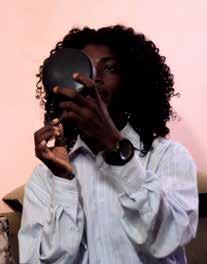
Cameroon:
Persecution and prosecution
Reuters this week followed up on the ongoing persecution of LGBT individuals in Cameroon with a piece on Bandy Kiki, a lesbian activist and social media influencer who emigrated from Cameroon to Britain a decade ago. Kiki has been highlighting the arrest, trial, and incarceration of two Transgender women who were arrested in February and have now been charged with “attempted homosexuality,” which can carry a sentence of up to five years.
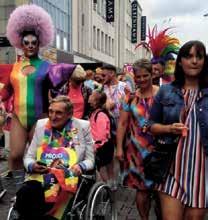
United Kingdom: Bristol Pride in person
who do they want to replace him?
Actually removing Newsom from office takes a simple majority of voters. Winning the election to replace him takes only a plurality. Since there’s no limit to how many candidates can run, someone could be elected governor of California with only 20% or 25% of the vote.
“It’s an expensive, distracting pain in the ass for Californians if it happens,” Newsom spokesperson Dan Newman told Vox magazine. “In the Davis recall we had 135 candidates, and it was a total circus. Some people think we could have 10 times as many candidates this time around.”
In addition to Jenner, previous Republican gubernatorial nominee John Cox, who lost to Newsom in 2018, is in the running, as is former San Diego Mayor Kevin Faulconer, also a Republican.
The BBC reported that Bristol Pride will be held in person this year, on July 3-16. Pride Day itself, parade and all, is scheduled for the July 10. In contrast to last year’s event, which was moved online, this year will feature a food market, live performances, and other gatherings and events.
Australia: Low rates of HIV
The UK-based charity NAM reported that a recent study shows breakthrough lows in rates of HIV among gay men in Australia. Though condom use is down, the use of PrEP and HIV treatment — part of a rapid rollout in HIV prevention in the country — has made Australia a world leader on this front, NAM’s Roger Pebody says.
Caitlyn Jenner – Photo by Damian Dovarganes / AP
Shakira, 23, a transgender woman does her makeup as she visits her friend Nkwain Hamlet, a gay-rights activist in Douala, Cameroon. – Photo by Chantal Edie / Reuters
Photo courtesy of BBC
WA state Attorney General Bob Ferguson – Photo by Nate Gowdy