FRIDAY
APRIL 29, 2022

FRIDAY
APRIL 29, 2022
by Lindsey Anderson SGN Contributing Writer
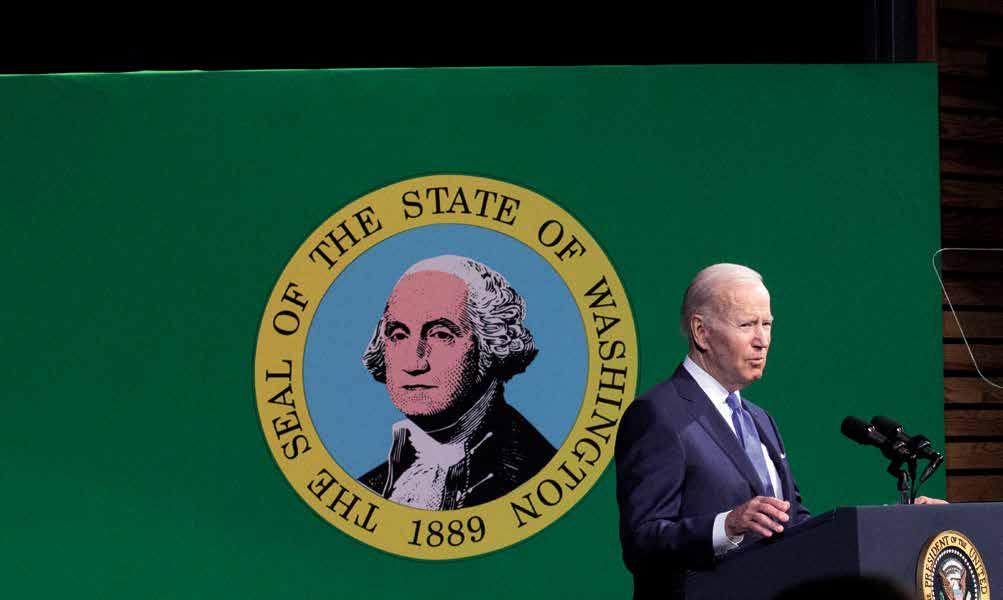
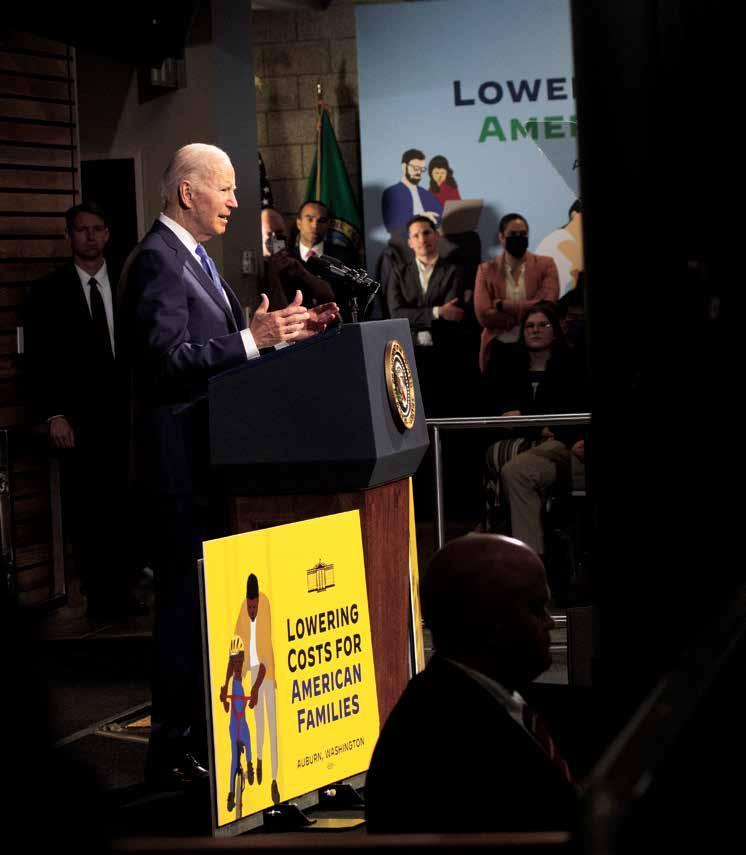
All eyes were on Green River College on Friday, April 22, as staff and students alike frenzily prepared for the well-anticipated visit from the 46th president of the United States, Joe Biden. The patriotic banners were steamed, the press elbowed one another for just the right shot, and students were ushered to their seats, all awaiting just a glimpse of the leader of the free world.
see BIDEN page 6

Nesbians at the Neptune Nina Nesbitt steals the show on opening night
by Kylin Brown
SGN Contributing Writer
Scottish songstress Nina Nesbitt introduced herself to Seattle’s Neptune Theatre stage with only her voice, a guitar, and keys last week, delighting the audience with penetratingly heartfelt melodies. Opening for English X Factor star James Arthur’s North American tour, Nesbitt offered the perfect introduction to a sentimental night of love-letter pop.
Nesbitt, who first started writing and
producing her own music as a young teenager, commenced the show with songs from her most recent album, The Sun Will Come Up, The Seasons Will Change & The Flowers Will Fall from 2019. The 27-year-old’s soulful vocals opened up like an envelope, and the whole audience was invited into her diary, her burn book, and her heart.
Sharing her nostalgia for live performances, charming banter, and jokes about ultra-expressive “hecklers,” the artist’s

by Mike Andrew SGN Staff Writer
The Seattle City Council decided on April 26 to extend protections for those who owe back rent due to the COVID pandemic.
In a 7-to-1 vote, the council mandated “reasonable” repayment plans, supplementing previous legislation that required landlords to offer their tenants a “reasonable” amount of time to pay off back rent.
The COVID pandemic and consequent social distancing restrictions put many
people in public-facing occupations out of work. State and city eviction moratoriums prevented landlords from putting them out on the street, but they left many renters with huge debts to their landlords.
In May 2020, the City Council passed an ordinance requiring landlords to offer three-to-six-month repayment plans to people with past-due rent. Because of the length of the pandemic, even that schedule proved burdensome for many.




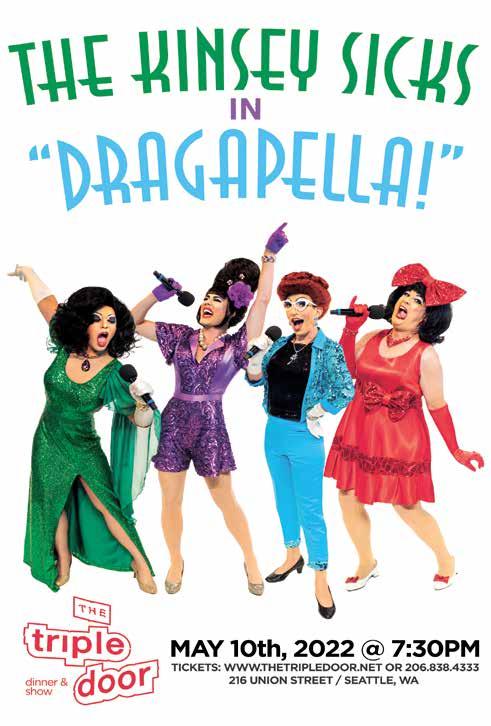







by Mike Andrew SGN Staff Writer
Hundreds of Starbucks workers and supporters rallied at Cal Anderson Park on April 23, dealing yet another blow to the coffee giant’s efforts to stave off a unionization drive.
On April 21, workers at Starbucks’ flagship Reserve Roastery on Pike Street voted to join the Starbucks Workers United union. They are the second Starbucks location in Seattle to unionize, after the Denny and Broadway location.
At least six other Seattle Starbucks stores have active union organizing going on. Twenty-six Starbucks locations nationally have voted to join the union, and dozens of others are waiting to file for union elections.
Previous efforts to unionize Starbucks in 2008 and 2010 failed when the company was able to stall union elections by dragging out negotiations with the National Labor Relations Board (NLRB), the federal agency that supervises union elections.
Rally organizers said they hoped to build on the momentum of the new organizing drive and prevent the company from using similar tactics this time.
“The rally is really to continue to build momentum and boost morale,” activist Sydney Durkin, one of the union leaders at the Starbucks Roastery, said, “[and] to increase visibility and increase pressure on Starbucks by just saying, ‘Hey, we’re out in the streets. We’re really passionate about this, we have a lot of people behind us, we see what’s going on, we’re involved, and we are going to hold you accountable.’”
Meanwhile, yet another Seattle location

announced its intention to unionize. On letterhead that featured union logos in rainbows and the pink and blue of the Trans community, workers at the Starbucks store at 800 Fifth Ave. informed Starbucks CEO Howard Schultz that they were forming a union.
After telling Schultz that they liked their jobs, they added that “corporate does not hear us on our calls for expanded healthcare coverage, comprehensive mental healthcare benefits, increased sick time, adequate staffing, and livable wages.”
“Our attempts to speak up have been met with retaliation and hostility,” they added, a universal complaint by union activists at Starbucks. “Partners [Starbucks’ corporate name for its employees] are being written up and fired for false and

extrapolative reasons as soon as they are part of a movement to unionize.”
As if to prove the point, Starbucks has filed unfair labor practice charges against the union, alleging “a consistent pattern of disturbing behavior from some union organizers that has increased and become more aggressive since last fall.”
In an April 20 letter to employees, CEO Howard Schultz said he was “heartbroken” by union tactics and had filed the charges against the union “to protect the physical safety and emotional well-being” of Starbucks workers.
He did not detail what threats to employee safety and emotional health he noticed. Union organizers have charged the company with many specific acts of retali-
ation against union activists, including firings and loss of hours.
In related news, Seattle City Councilmember Kshama Sawant, whose district includes the two unionized Starbucks stores, announced at the April 23 rally she will donate $20,000 to Amazon workers who are also in the midst of a national unionization campaign.
Sawant only accepts a portion of her City Council salary. The rest she puts in an organizing fund to support unions and community organizations. According to her staff, she immediately flew to New York to be with Amazon workers after attending the Starbucks rally.

continued from cover
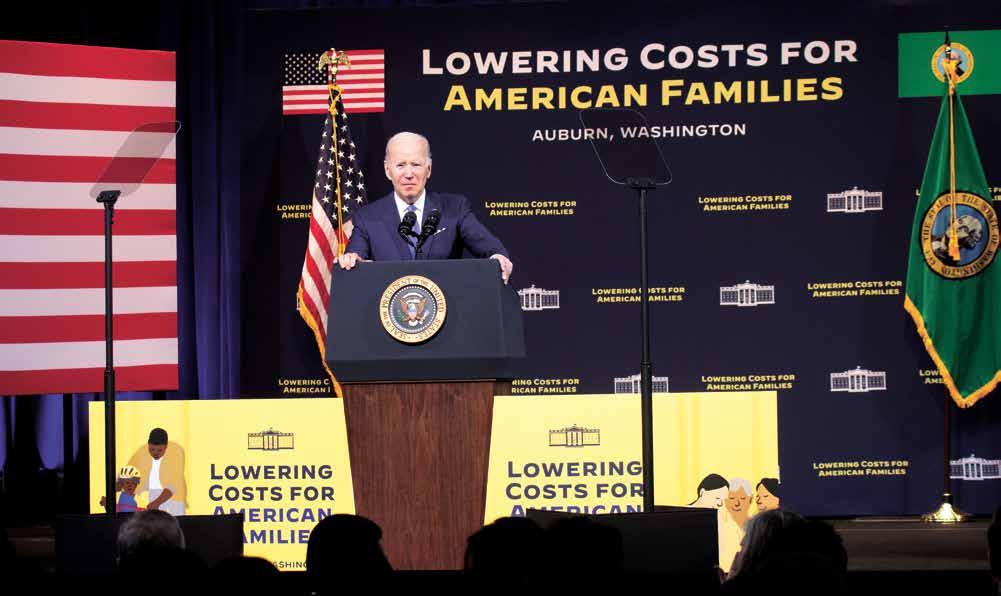
Biden finally arrived at the small auditorium nearly 45 minutes behind schedule, after finishing a speech on forest protection and environmentalism in Seward Park with Gov. Jay Inslee. Before taking to the stage, Sens. Maria Cantwell and Patty Murray and Rep. Kim Schrier spoke to the crowd about the topic of Biden’s address: “Lowering Costs for American Families.”
Murray on childcare and healthcare
Senator Sen. Murray discussed lowering the costs of childcare and healthcare for the American people and informed those in attendance that doing so would improve the lives of the poor and working-class and boost the economy, bettering the lives of all Americans. She explained that the high cost of childcare “is not just a problem for [the working class], it’s a problem for our small businesses who can’t fill their positions, it’s one less link in our supply chain to get things moving along, and ultimately, it is just one more strain on our economy.”
Murray praised President Biden for supporting recent legislation she has introduced to Congress that will lower the cost of childcare by thousands of dollars a year and increase the wages of those who work in childcare. “And, by the way, that plan is fully paid for by making sure that the very wealthiest pay their fair share,” she said to a roar of applause.
Murray then brought up the second part of the plan to lower costs for American families: lowering the cost of healthcare and prescription drugs. “For years now, drug costs have been skyrocketing,” Murray continued. “I have heard from so many people here in our state, from Seattle to Spokane, who work hard, play by the rules, [and] save their money, but they still have to make impossible choices to afford the lifesaving medicine that they need. And that’s the thing, lifesaving medicine doesn’t save any lives if people can’t afford it.”
“Now, I’m gonna keep fighting for all of this,” Murray reassured the Washington families in attendance. “I know President Biden will as well, which is why I am so grateful to have him here with us today and in the White House fighting to help us bring
down costs on everything from prescription drugs to childcare and bring some relief to our families here in Washington state.”
Schrier talks insulin prices Rep. Schrier, from Washington’s 8th District, also noting that increases in drug prices have had deadly consequences for those dependent on insulin. “The cost of insulin has skyrocketed,” Schrier said, noting that as a type 1 diabetic herself, she has seen firsthand the effects inflation has had on others with her condition. “This tiny two-teaspoon bottle that I use used to cost $40. Now it costs over $300. And most of us need more than one bottle per month,” she said as the crowd gasped.
“And here’s the thing,” Schrier continued, “when people can’t afford insulin, they try to make that bottle last as long as it possibly can, so they ration their insulin, taking just enough to stay alive but not enough to keep them healthy, and that is dangerous — not just dangerous, that is sometimes deadly. And no one should ever have to make that choice.”
Washington state recently passed a new law that will cap insulin prices at $35 a month for 2023, inspiring the rest of the state and the country to follow suit. Rep. Schrier introduced a similar bill in Congress in 2019.
Hopeful words from Gov. Inslee
“I want to share with you and with the President some of the good work we are doing here in the state of Washington,” Gov. Inslee said, following the congresswomen on stage. “We are leading the country in the ability to keep healthcare costs down in a variety of ways. I am proud that our state is the first to limit insulin costs to $35. I am proud of that,” he gushed, referencing Sen. Schrier.
The governor spoke with an air of optimism and hope, first addressing the importance of the presidential visit coinciding with Earth Day. “What a great Earth Day in the state of Washington to have a president of the United States who understands that one of the best ways to afford healthcare costs is to prevent our kids from getting asthma,” Inslee began. “And this is a president who is fighting climate change so our kids don’t have to breathe pollution. That’s a great president, and we are so happy with him being here.”
“We just met up at Seward Park, among the old-growth trees, where he laid out a
comprehensive strategy… to prevent our kids from having to breathe pollution,” Inslee continued. “He has done some incredible stuff fighting climate change, and now won’t it be great if Congress sends him another bill so he can continue this effort?”
He wrapped up his speech by recognizing Washington’s work to lower the costs of childcare and prescription medication and leading the country’s efforts to create lower costs for American families.
President Biden was finally introduced by Sammamish high school student Juliana Graceffo, who has lived with type 1 diabetes since she was 4. Graceffo explained the importance of insulin, showing the crowd her pump, and detailed all the work she has done as a youth advocate lobbying congressmembers in DC to lower the costs of the lifesaving drug.
Biden strolled onto the stage amid a fanfare of patriotic tunes blasting from the auditorium speakers. With Graceffo proudly standing at his side, he thanked her, the Washington congresswomen, and Gov. Inslee for their warm welcome and nonstop dedication to the people of Washington.
Increasing Pell grants for community college students
Biden began his address by bringing up his wife, Dr. Jill Biden, who he noted is the only First Lady to continue working full-time. Dr. Biden is currently working at Delaware Technical Community College and has provided her husband with a firsthand look at the need for more affordable higher education opportunities, especially for those seeking nontraditional routes to a college degree.
“They’re coming back because they want to better their lives,” he said of his wife’s students, most of whom are returning to school after taking years off to work or start a family. “The average age of my wife’s students is 28,” he continued, “and the cost — no matter how the states try to control it —still matters. …I didn’t do all I wanted to do, but I signed a new budget bill that increases the Pell grants by $400 a year. But we have to do more,” he said as the crowd applauded.
Lowering the cost of childcare
As Biden prepared to introduce his second talking point, he praised Washington’s
congressional delegation. He also gave a special shout-out to Sen. Murray for her work passing the Recovery Act, which helped reduce child poverty in America by 40%. He elicited cheers from the audience as he praised Murray for her tireless work providing for America’s children.
“She talked about it earlier, about the cost of childcare,” Biden said. “I was a single dad for five years when my wife and daughter were killed in an automobile accident, and I commuted every day, 270 miles a day, from Delaware to Washington DC, on Amtrak. Everyone thought I did it because I just wanted to be home. That’s true, but I also did it because I couldn’t possibly afford childcare,” he explained to an utterly silent room.
“I was a United States senator, and I [gained] a distinction for 36 years as the poorest man in the Senate, but I was making a lot of money as a senator, from my perspective. I didn’t think I should be making any more money other than my salary,” he explained. “And I could not possibly afford [childcare], even back in 1972 and ’73... That’s why I went home every single night. Over a hundred thousand miles over the course of my career.
“We can do all that Patty and I talked about, and not one person in America making less than $400,000 a year will see a single solitary increase in their taxes, not one. Not a single increase,” he said, referencing Sen. Murray’s childcare plan, which was proposed to Congress in September 2021 as a part of the Build Back Better bill.
“And folks, you know, I’m sometimes called a lot by my interesting Republican friends… Democrats are all socialists,” he said with a chuckle. “And I’m far from it.” Despite Republicans often referring to Biden as a “socialist,” the president has never advocated for nationalizing industries. His politics tend to fall into the moderate camp, as far as Democrats go.
“I think that if you can make a billion dollars, a million dollars, a hundred million dollars, you should be able to do it,” Biden continued. “But pay your fair share,” he whispered into the microphone as the room erupted in cheers and whistles.
He continued to explain that 40 of the top Fortune 500 companies got away with paying $0 in taxes in the last fiscal year. “It’s not right, it’s just not fair. All they gotta do is just pay a fair share,” he repeated.
By fairly taxing the wealthiest in the country, Biden plans to allocate funds to help families access modern necessities, such as the internet. “If we’re going to outcompete the rest of the world, we’re going to have to have access to information,” he told the crowd. “Think about it. During the pandemic, how many of you parents had to drive your kids into a McDonald’s parking lot to get any internet to be able to do their homework? Not a joke. This is the United States of America, for God’s sake, the United States of America.”
He explained that his plan will bring high-speed internet access to all parts of the country — rural, urban, and suburban.
Making healthcare accessible
Biden then continued, addressing financial issues in the healthcare industry. He noted that the country is still undergoing a nursing shortage due to COVID-19 burnout and the fact that nurses are not paid enough. “I think [nursing] is the single most underrated profession in the United States of America, I mean it,” he said, praising those in attendance who were studying to receive their degree in the field.
After another applause break, Biden was ready to tackle the main focus of his address. “Folks, we’re all laser-focused on lowering the costs for you and your families across the board, and I think we can do that as long as we lower the cost of healthcare… and prescription drugs,” he said.
He recalled his fight as vice president to help bring the Affordable Care Act to the American people 12 years ago, inspired by “the idea that American healthcare should be a right, not a privilege.” He boasted of the lasting impact of Obamacare, which extended coverage to millions of Americans and withstood four years of the Trump administration attempting to tear it down.
Inspired by the determination of President Obama and the passage of the ACA, Biden formulated the American Rescue Plan to address the national health and economic crisis that awaited him when he took office in 2021, and to help build on the ACA.
“Within the first months of my administration, we passed the landmark American Rescue Plan. Not only did that help us get COVID-19 under control and get the economy back on track, but it also got millions of people more insured under the Affordable Care Act. It made it easier for people to sign up for coverage in the middle of the pandemic.”
He admitted that while the ACA has been beneficial to the American people, it is not without flaws, but that, unlike the previous administration, he is working to improve them. Having noticed holes in the ACA that disproportionately affect working mothers, the administration is working to increase coverage. “With this change, it is estimated that 200,000 previously uninsured Americans will gain coverage, and nearly one million Americans will see their coverage become more affordable,” he said as the crowd roared its approval.
Despite Biden’s efforts to improve the ACA, Republicans are still coming after affordable healthcare, and have vowed to repeal the law if they gain power in the next election. “Pay close attention,” Biden warned. “If they have their way, that means a hundred million Americans with preexisting conditions once again denied healthcare, denied health programs. A high [percent], that’s a fact, will be denied healthcare coverage by their insurance companies. That’s what the law was before Obamacare. Tens of millions of Americans will lose their coverage, including young persons who will no longer be able to be covered by their parents’ plans but to age 26. Premiums are going to go through the roof. There’s a lot at stake.
“I’ve got a better idea: instead of destroying the Affordable Care Act, let’s keep building on it,” Biden said, urging Americans support the American Rescue Plan, which would help those who are currently out of ACA coverage. The plan will also allow ACA insurance to negotiate drug prices, making prescription medications more affordable in the United States.
Fighting prescription drug inflation
The inflation of prescription drug costs is an issue unique to America, Biden explained. “The anticancer drug treatment
“I’m
more optimistic about America today than I’ve been in my whole life and whole career, because I see a future within our grasp. We’re the only nation on earth — think about this now — we’re the only nation on earth that has always come out of every crisis we’ve ever met stronger than we went in it. No other nation in the world can say that. It’s because of you. Because of the ingenuity and determination of the American people. We’ve looked at the opportunity, and we’ve seized it. That’s exactly what we’re doing today.”
for leukemia and lymphoma costs $14,000 a month in the United States. Some of you may know that. The same exact drug, the same exact company, same distribution, costs $6,000, not $14,000, in France,” he said. “Same company. American company. Same exact amount. It’s unconscionable.”
The impact this has on the American people is disastrous. “Today, one in four Americans needing prescription drugs struggle to afford them. Nearly 30% of people need essential drugs that they’re supposed to take, and 30% skip their doses because they want to extend the life of the drug they need. Many others use overthe-counter drugs instead, cut pills in half because they can’t afford them, and others simply cannot fill prescriptions at all. For God’s sake, this is the United States of America! What are we doing?”
Biden’s passion continued to rise as he brought the room back to the topic of insulin. “Look, do you know what we’re talking about? Do you know how much it costs to make that… insulin? $10. T-E-N. $10. A condition that affects millions of Americans, including a congresswoman, but some have to pay hundreds of dollars a month, some even
over a thousand,” he said, noting that the average cost of insulin is $683 a month.
“Imagine what it’s like if you don’t have insurance and you don’t have the cash, to look at your child, knowing what they need, and knowing there’s not a damn thing you can do about it,” he continued, his voice shaking. “Not wanting your child to be put in jeopardy, you’re deprived of your dignity. How do you look at your child and deal with it? There is no excuse, none!
“We’re not asking drug companies to do anything they can’t afford. You think it doesn’t affect you — it does. Everyone has less money in their pocket today because of the high cost of healthcare. Over the past decade, healthcare costs have gone up 50%!” he exclaimed.
“A major reason for that increase is the cost of drugs.... Folks, we may not agree on everything, [but] it’s safe to say… whatever our background, where we live, [we] agree that prescription drugs are outrageously expensive.”
With the energy in the room at a high, Biden outlined his next proposition: a national cap on insulin, following Washington state’s lead, at $35 a month.
He also called for drug companies to be held accountable for their contribution to nationwide inflation. “When drug companies increase their prices faster than the rate of inflation, they should have to face a steep tax,” he stated.
His final proposition was for a cap on out-of-pocket medical costs for seniors. “If you’re on Medicare, you won’t have to spend more than $2,000 out of pocket, which is a lot of money, and that’s more than $175 a month, no matter how many prescription drugs you take. Medicare will take care of the rest.”
“I see a future within our grasp” Biden closed out his address by reminding the voters present of all his latest victories, including reducing the deficit by $350 billion and creating 7.9 million “goodpaying jobs” for Americans. “When I took office, [we saw] the fastest decline in unemployment at the start of any presidency ever recorded,” he added.
Before leaving the stage, Biden took a moment to praise the American people and provide a message of hope. “I’m more optimistic about America today than I’ve been in my whole life and whole career, because I see a future within our grasp,” he said to enthusiastic cheers.
“We’re the only nation on earth — think about this now — we’re the only nation on earth that has always come out of every crisis we’ve ever met stronger than we went in it. No other nation in the world can say that. It’s because of you. Because of the ingenuity and determination of the American people. We’ve looked at the opportunity, and we’ve seized it. That’s exactly what we’re doing today.”
As the president took his leave, the room erupted in applause.
by Lindsey Anderson SGN Contributing Writer
On Saturday, April 22, Cal Anderson Park on Capitol Hill hosted the Mutual Aid Spring Fair. People sprawled out in the sunshine, hung flags and banners, and set up tents, all to share skills, information, and resources with other members of the community.
Trans and rainbow flags welcomed visitors to the park, where activists set up camps to share aid, such as seeds, clothing, and other supplies. Those in attendance also received free food, water, and zines. Friendly socialists swapped stories and discussed the importance of Queer spaces, climate activism, and small-scale cultivation.
“It’s for everyone,” said one of the organizers, who preferred to remain anonymous. “At the end of the day, it’s a community event for everyone.”
The organizers’ goal was to spread love, materials, and information to those in need. “I’m out here doing a zine distro, also called an infoshop. We’re out here trying to spread good ideas and make a positive impact in this world,” said Rosemary, a booth attendant.
“All these zines are available for free online,” she added. “There are literally thousands of online infoshops where you can get all kinds of literature, good and bad. What’s more important than anything is just getting people to think critically about what’s going on and their position in this world and the things that they can actually go and do. Direct action gets the goods.”

Also present at the event was the Starbucks’ Worker’s Union, which has been actively picketing, postering, and protesting throughout Seattle, advocating for employees to be able to unionize. Before the fair, the union held a solidarity rally with speakers, including City Councilmember Kshama Sawant, who denounced the union-busting

activities of the corporate giant.
The Mutual Aid fair comes at an important time for Capitol Hill. With warmer weather leading to more outdoor activities, Seattle police have been cracking down on homeless encampments in parks.
Just last week, Tashkent Park — an “international symbol of goodwill”
between Seattle and sister city Tashkent, Uzbekistan — was cleared of all tents and persons by the SPD. Sweeps of local parks often leave houseless people displaced from their communities and belongings. The fair provided a brief bit of respite for those affected by recent sweeps, as well as services and community to those in need.

continued from cover
The new legislation requires landlords to accept repayment plans that may go longer than six months, so that renters would not have to repay more than one-third of their monthly rent every month. The new ordinance would cover back rent accumulated up to six months after the end of the city’s civil emergency order.
For example, if your rent is $1,500, the most your landlord can ask you to pay is $2,000 per month — your current rent plus one-third, i.e., $1,500 + $500. If you owe
ten months’ back rent, you’ll pay it off at that rate in 30 months.
Councilmember Dan Strauss, who sponsored the bill, said the new ordinance is necessary because of the unexpected length of the pandemic.
“[In March 2020] we believed that the pandemic would only last two weeks, and then two months, and we definitely did not foresee it lasting two years or more,” Strauss said.
“We did know then, when everything was shut and many people’s line of work froze, that people needed time to address the debt incurred during that close-down.”
Strauss described the bill as a “technical
correction” that would bring the city’s rule closer to the state legislature’s 2021 payment plan requirement. Strauss said the new policy was the best option for both property owners and tenants behind on rent.
“The bill before us today helps us ensure that landlords are made whole and tenants have a reasonable time to repay their debt,” Strauss said. “The tenant does remain responsible for repaying any and all debt they’ve incurred.”
The ordinance was supported by renters’ rights advocates and opposed by landlord groups.
“This is unnecessary [and] confusing and will leave Seattle housing providers guessing
which state or city laws apply to them, making it more difficult to ensure they are fully in compliance with city and state law,” said Daniel Bannon, a representative of the Rental Housing Association of Washington.
“We must prevent further isolation of Seattle’s rental housing policy that is forcing small housing providers out of the city at unprecedented rates,” he added.
Only Councilmember Sara Nelson voted against the bill. Councilmember Kshama Sawant was out of town.



pixie femme who moved to Bellingham for college she filled the room with cool-girl energy as she sang.

him, tell him, tell him, tell him / I got somewhere else to be.”
between-song charisma shined just as bright as her independent talent on the Neptune stage.
Nesbitt, who first entered my world as a Tumblr, side-bangs girlfriend in Ed Sheeran’s 2012 “Drunk” music video (weren’t we all UK-obsessed once?), looked entirely reborn. Donning a purple dress coat with black lace fingerless gloves think: the
Through a series of breakup bops and self-love anthems, Nesbitt’s set enlivened the majority-female audience, regardless of partner status. Addressing her viral hit
“Loyal to Me” to “anyone who has ever dealt with a fuckboy,” the singer-songwriter had the whole floor active. “If he ain’t tagging you on the ‘Gram / Take your heart and turn around while you still can,” she lilted over staccato guitar strums. “And tell
After enamoring the audience with her boldness, Nesbitt switched over to piano to play the tragic, ghostly “Is it Really Me You’re Missing.” From then on, notes to lost lovers and relationships in turmoil went straight for the hearts of the audience.
Toward the end of the set, she performed a song released the day prior. “Dinner Table” is a departure from Nesbitt’s usual love songs — well, romantic love, that is — as the track details the singer’s admiration for her mother

Photos by Kylin Brown
and grandmother, taking the listener through time to meet all three generations of women in small-town Scotland. Her electrifying voice riffed right up the balcony during the slow-churning song, while the tamer half of the audience cried into their masks.
Seattle marked the first stop of Arthur and Nesbitt’s tour, so the artists were fresh off a London flight, like the Beatles. Prior to performing, Nesbitt ignored her jet lag and spent the afternoon out on the town. Taking recommendations from local fans via Instagram poll, she found herself up and down the University District’s “Ave,” even snagging her stage outfit for the night from Red Light Vintage & Costume. Before the pandemic, Nesbitt had just toured North America for the first time in support of her album.
Nesbitt has become a fierce LGBTQ ally over the years, performing at Pride events across the UK, and encouraging fans to express their true selves through her music and online. Her hit “Colder” was featured on Billboard’s selective “LGBTQ+ and allied artists” Pride playlist in January 2019.
Though her fans are called “Nesbians,” Nina has not discussed her own sexuality beyond the men she has dated and the times she’s thoroughly enjoyed being single in between. I spoke with her after the show to see if she had a quick word for readers of the SGN.
“Sending my love to all of my LGBTQ fans,” she said with cheer. “I hope you enjoy Pride month, and I love you all very much!”
Nina Nesbitt and James Arthur will wrap up their North American tour in NYC on May 20. You can find her @ninanesbitt on Twitter and Instagram, and stream her music on Spotify, Apple Music, and YouTube.

by Lindsey Anderson
SGN Contributing Writer
SGN Book Club explores LGBTQIA+ literature, new and old, from the fresh perspective of a Gen Z book enthusiast. Fun Home was originally published in 2006.
Alison Bechdel has become somewhat of a household name among Queers. Whether you associate her with the ’90s comic strip “Dykes to Watch Out For,” are familiar with the feminist “Bechdel test,” or know her as a 2014 recipient of a MacArthur “Genius Grant,” odds are you’ve heard her name. This week, our book club is looking at the Alison behind her years of successful writing, awards, and legacy by reading her graphic memoir Fun Home: A Family Tragicomic
Packed with philosophical and literary references and at times humorous and fun, Fun Home is the illustrated story of Bechdel’s wacky childhood, in which she walks readers through the unique locations of her early life — from the antique house her father meticulously kept to the funeral home her family spent most of their time working in. Despite the gilded (and at times morbid) locations she grew up in, Bechdel notes that childhood was not always carefree and fun. She brings readers into the reality of living under her father’s strict tyranny. From the vantage point of an adult, Bechdel provides some leniency toward her father’s strange hobbies, but at the same time condemns him as a monster for the secrets he kept.
While she takes her time revealing the central conflict of her memoir, Bechdel ultimately informs her readers that her father died, likely of suicide, only a few months after she came out to him. As she delves further into her relationship with him, Bechdel reveals that he was a closeted homosexual himself, a factor that likely played a role in his death.
Bechdel analyzes her father’s life from several different perspectives. At times, she sees his existence as a tragedy and wonders who he might have been if he had been able to live his life authentically. She recalls her own early experiences with Gay men and wonders if her father would have been happy living in post-Stonewall New York. However, most of her analysis of her father is critical. Early on, she notes that he was a predator. A high school teacher, he preyed on vulnerable young boys, sleeping with his students, his children’s male babysitter, and old friends from the army. She sees her father as a coward, afraid of those who might prey on him if he were to have left the closet, but simultaneously preying on others.

As she analyzes her childhood through adult eyes, Bechdel also develops a sense of pity for her mother. While she discloses that she does not actually know whether her father was Gay or Bisexual, his relationship with her mother was convoluted. In letters the two exchanged while he was away at war, it seems Bechdel’s father may have truly loved his wife. However, Bechdel often wonders whether he loved her or the idea of romance, something he may have never gotten to truly experience.
Bechdel questions not only her father’s capability to love his wife but also her own relationship with him. She recalls a childhood of gender nonconformity. In her illustrations, she is always seen with a boyish crew cut, matching those of her younger brothers. In one panel, she recalls her father’s anger and violence when she, at just four years old, refused to wear a barrette in her hair.
Bechdel often wonders whether her father loved her as his daughter, or as a way for him to perform femininity through her as a surrogate body. Through this interpretation, the antique house Bechdel lives in becomes a metaphor for young Alison’s identity.
The fun home, a metaphor for autonomy
In the first chapter, Bechdel shows readers that her father was the czar of the home, never letting anyone else choose how they would decorate their spaces. Her room was full of antique decorations and furniture, feminine wallpaper, and old-fashioned outfits. Any attempt she made to decorate her space with items of her own interests was met with punishment.
The repercussions of her father’s policing of Bechdel’s gender expression left her confused about her own identity and desires. Toward the middle of the book, she recalls an encounter at a diner. While getting lunch with her father, young Alison spots a butch Lesbian for the first time and becomes enamored of her. Her father expresses disgust toward the woman and accuses his daughter of wanting to be like her.
The disdain her father shows for the masculine woman is reflective of a greater sense of misogyny and lesbophobia expressed by the Gay community at the time. It also reflects a sense of shame he projected onto other members of the LGBTQ+ community for their ability to be out. This sense of shame was harbored by Alison, especially
in the years following her father’s death, as she wondered just how her own coming out may have influenced his emotional state. While the book focuses on Bechdel’s relationship with her father, she also discusses how her mother responded to her coming out. After writing a letter home from college telling her parents she was a Lesbian, her mother was upset. On the surface, her mother’s disdain and rejection could be interpreted as homophobia. However, Bechdel takes readers deeper into the dynamics of her family, revealing the mistreatment her mother received at the hands of her father, as well as his infidelity. Through her beautiful illustrations and in-depth storytelling, Bechdel explores the complexities of queerness. Despite the lack of colors in her novel, she demonstrates that no action is entirely black or white. She leaves her readers to form their own opinions about her family and shows that each adult she grew up with was full of their own complexities.
Fun Home is an essential read for anyone who finds themselves intrigued by the historical legacy of queerness, the dynamics of family, or the complexities of identity.













by Sara Michelle Fetters SGN Staff Writer
THE UNBEARABLE WEIGHT OF MASSIVE TALENT
Theaters
Some roles an actor waits their entire career for. For others, it takes an entire career for an actor to have the ability, the acumen, and the courage to play them. For Nicolas Cage, The Unbearable Weight of Massive Talent is a combination of those two concepts. The multitalented actor was born to play the title role in this film. It also offers the type of mindblowing challenge he’s been waiting decades to sink his teeth into.
But it took a wide-ranging career filled with flamboyant turns coupled with a period of being a bona fide action megastar, which just as suddenly spiraled into a series of strange, barely released, and mostly non-theatrical endeavors — for Cage to be able to pull off such an audacious challenge
as the one presented to him by director and co-writer Tom Gormican (That Awkward Moment). The Leaving Las Vegas Academy Award winner is portraying a character named “Nick Cage,” a talented actor with a sizeable ego and a fading career who is starting to wonder if it’s time for him to retire, and one with a filmography that’s the mirror image of Cage’s real one.
It’s an audacious balancing act, one that marvelously melds fact and fiction and satirizes modern Hollywood and the current state of cinematic media with insightful authority. Gormican and co-writer Kevin Etten are having an obvious blast brazenly playing with convention and subverting audience expectations, while Cage throws himself into the proceedings so completely that he ends up giving one of the finest comedic performances of his entire, justly celebrated career.
Nick Cage is at a crossroads. He’s not getting the parts he used to and is starting to feel that roles like those in Face/Off, Moon-
struck, and Adaptation will never come his way again. The actor is equally upset he’s not been a great father to his teenage daughter Addy (Lily Sheen), and his loving if exasperated ex-wife Olivia (Sharon Horgan) wonders if he’ll ever put his family’s needs first before it’s too late.
Things take a strange turn when Cage is invited to the birthday party of wealthy superfan Javi Gutierrez (Pedro Pascal) and is offered a $1 million appearance fee. It’s too great a sum to turn down. But what he expects will be nothing more than a brief weekend getaway at a secluded island estate turns out to be something far more complicated. The US government has Javi under surveillance, believing he’s the powerful leader of a brutal crime syndicate. So a perky CIA agent, Vivian (Tiffany Haddish), wants Cage to infiltrate the man’s household and extract vital covert information.
Suffice it to say, things get even stranger. No one is who they say they are, and Cage’s family unintentionally ends up in the mid-

dle of a life-and-death situation with international implications. Nick channels some of his most legendary and memorable roles to survive and, in the process, discovers a reason to keep on acting — and develops a close friendship with Javi, even though he may be a ruthless killer hiding behind a charmingly dopey façade.
I’m not going to say how this works out. While Gormican and Etten don’t go out of their way to conceal their bigger secrets, there’s still a great deal of fun to be had in discovering on which side of the proverbial fence Javi resides. Identity is a big part of the proceedings, and I’m not about to spoil any of the bigger reveals the filmmakers somewhat attempt to conceal.
It is watching Cage and Pascal work together where the true magic lies. The pair generating have a magnetic chemistry and make beautiful music together. Had this been nothing more than a Before Sunrisetype, dialogue-heavy drama with the duo walking around a sunny locale talking about everything from Vampire’s Kiss to Guarding Tess, that would have been perfectly fine with me.
There is a point where things get a bit more surrealistically serious. In the last third of the picture, the bullet and body count rise, and the action slides into the spotlight and pushes many of the comedic elements off to the side. While effectively staged and not without merit, this portion of the tale is far less interesting than the goofy bromance that came before it, and my interest did wane during the tiresquealing chaos.
But Gormican rights the ship nicely, supplying a climax that had me grinning ear to ear. Cage sells it all with superlative aplomb. His willingness to go for broke — while at the same time delivering on the emotional core of his character’s internalized journey to self-actualization — is sublime. The actor’s manic enthusiasm (at times in dual roles) is infectious, as is his yearning to be a decent human being and an even better father. Cage knocks it out of the park, making The Unbearable Weight of Massive Talent the triumphant culmination of a career that’s hopefully far from over.
by Sara Michelle Fetters SGN Staff Writer THE NORTHMAN Theaters
Based on a piece of Norse mythology that inspired William Shakespeare’s Hamlet, Robert Egger’s brutal, mud-splattered Viking saga The Northman showcases the talented The Witch and The Lighthouse filmmaker at the top of his creative game. This is a suitably violent revenge epic, one overflowing in striking imagery and impressionistic flights of surrealist fancy that frequently impress.
But the film, as strong as it may be, is equally not always the sum of its impressive parts, as the overall simplicity of its story makes the 136-minute running time noticeably onerous. A sensory triumph more than an emotional one, it is nonetheless an enthralling endeavor, with everything building to a crushing finale of senseless masculine bravado that’s as gut-wrenchingly beautiful as it is tragically heartbreaking.
For two decades, Prince Amleth (Alexander Skarsgård) has been living in seclusion in the hopes he will return to his homeland to avenge the death of his father King Aurvandil War-Raven (Ethan Hawke) at the hands of his uncle Fjölnir the Brotherless (Claes Bang) and rescue his kidnapped mother Queen Gudrún (Nicole Kidman). When he learns that the clan has moved to a desolate stretch of Iceland in the shadow of a malevolent volcano, Amleth smuggles aboard a ship and disguises himself as a slave slated to work on his uncle’s farm.
While there, he joins forces with the beautiful Olga of the Birch Forest (Anya Taylor-Joy), a cunning Slavic slave who claims to have the power to warp the minds of men. The two quickly fall in love, their unbridled passion forcing Amleth to reconsider his plans for revenge.

The film cost a reported $90 million, and every dollar of the production budget is up on the screen. Egger and his crack technical team, most notably production designer Craig Lathrop (The Empty Man), costume designer Linda Muir (Exotica), and director of photography Jarin Blaschke (Down a Dark Hall ), have done an exquisite job of breathing life into this 10th-century world. The film also features unsettlingly flawless sound design, seamless visual effects, and a masterful score, with composers Robin Carolan and Sebastian Gainsborough delivering musical compositions that euphorically reverberate from one corner of the auditorium to the other.
All the same, those expecting a brawny, Viking-era twist on 1982’s Conan the Barbarian or 1958’s The Vikings will have another thing coming. While the violence
is harsh, the swordplay fierce, the nudity rampant, and the action furious, Eggers is by nature an introspective filmmaker who likes to take his time. He attempts to get to the nuts and bolts of a character and find the byzantine quirks that make them tick.
Along with his co-writer, the famed Icelandic author Sjón (Lamb), the director also wants the viewer to feel drenched in the same mud, guts, and feces Amleth often finds himself covered in. Eggers wants this world to come alive. He wants his audience to live inside of it the same way all of his characters are.
Even the fantastical bits, the flights of metaphorical, supernatural fancy where the angry, vengeance-seeking prince learns more about his fate from an ethereal witchlike creature (stunningly brought to life by
by Sara Michelle Fetters SGN Staff Writer
BAD GUYS
Theaters
After a heist at a gala honoring guinea pig philanthropist Prof. Marmalade (voiced by Richard Ayoade) goes south and results in his entire gang being arrested, the big, bad Mr. Wolf (Sam Rockwell) comes up with an ingenious plan. He convinces Mayor Diane Foxington (Zazie Beetz) to release him and his compatriots Mr. Snake (Marc Maron), Ms. Tarantula (Awkafina), Mr. Shark (Craig Robinson), and Mr. Piranha (Anthony Ramos) into the kindhearted Marmalade’s care.
Why? Mr. Wolf bets the professor that, if anyone could show this notorious band of thieves and reprobates the value of “going good,” it would have to be him. But what is initially a ruse to get out of going to prison turns into something else entirely. Maybe being bad isn’t all it’s cracked up to be? Maybe going good is — egad! — the right thing to do?
Based on the popular books by author Aaron Blabey, the new comedy The Bad Guys is an awful lot of fun, inventively animated to mirror the visual stylings of the source material. Director Pierre Perifel and screenwriter Etan Cohen (Tropic Thunder) do a bang-up job bringing this rambunctious silliness to life, but it is the vocal talents of Rockwell, Beetz, and Maron who ultimately make it worthwhile, as the trio give robust comedic performances that are nothing short of perfect.
It is a small wonder I ended up enjoying it as much as I did. The opening bank heist introducing Mr. Wolf and his crew quickly got on my nerves and made me worry the
Björk in an all-too-brief cameo) are played with cold solemnity. But while this does allow Eggers the freedom to make this world concrete and authentic in a manner a more salicaceous presentation never could, it also creates a strange distancing effect that lessens the emotional connection between the viewer and what is transpiring in the theater. This is unfortunate, because the melodrama is ripely theatrical in ways that should be inherently gripping. This is a larger-than-life world populated by even bigger characters. For Amleth, nothing in Fjölnir’s kingdom is what he expected. While he is willing to kill just about anyone — especially those standing in the way of his ultimate goal — circumstances regarding both his new love Olga and his kidnapped mother Gudrún suddenly have him second-guessing himself.
But while the performances are outstanding (Kidman and an unrecognizable Bang are particularly strong), I can’t say I grew attached to any of these people long enough to care about who would live or die. Save for a shocking moment near the end minutes before the savage climax between Amleth and Fjölnir — hacking it out to the death wearing nothing but their birthday suits at the base of the volcano — nothing caused me to gasp. Each narrative beat was oddly perfunctory, and that this isn’t fatally problematic is a testament to Egger’s directorial skill as well as the confident determination of his talented all-star ensemble. Is the movie worth seeing? Yes. Unquestionably. I can say that with zero hesitation. Yet, even though it’s a visual marvel that is also a primal, poetic journey into the ancient past, Eggers’ latest still failed to engage with me the same way his two previous, equally ambitious cinematic endeavors did. I’m enamored with large chunks of The Northman, and I do urge interested parties to give it a look, but whether or not I’ll give it another go myself is an open question.

film was going to be a hyperactive chore. The staging is loud, obnoxious, and far too cynically self-aware, and it wasn’t until events slowed down and Mr. Snake and Mr. Shark had their first conversation about sharing a frosty push pop that I began to suspect things may turn out all right. This is about the point where Rockwell takes over. His smooth delivery and charismatic demeanor are intoxicating. Mr. Wolf makes bad look good and, by the time things accelerate toward their explosive climax, he makes good look downright extraordinary. Rockwell adds a hint of sly menace to his performance mixed with a small bit of shocked trepidation, and the usually confident thief is left psychologically adrift when he realizes doing the right thing offers unanticipated rewards far more valuable than ill-
gotten gains locked inside a bank vault. When the film revels in its easygoing bravado, that is when it is its most effortlessly amusing. There’s an extended gag involving a kitten stuck in a tree and Marmalade tasking the group of thieves to coax it down without tricks, plots, or anything that could be considered even somewhat nefarious. I also loved almost all of the conversations between Mr. Wolf and Mr. Snake, the naturalistic cadences of their frequent interactions revealing a lasting, deep-rooted friendship that’s seen its share of ups and downs.
The freneticism of the climax — oddly reminiscent of Disney’s Big Hero 6, only with hordes of rampaging guinea pigs instead of tiny cubes of nanotechnology — is a little obnoxious, but I seriously doubt the intended audience of youngsters is
going to mind all that much. Besides, the messaging is sincere and the morals at the heart of the story are undeniably worthwhile. Best of all, Perifel and Cohen deliver it all with stylistic panache, the witty silliness of their scenario and the visual creativity of the finished picture covering up the majority of the film’s flaws. I have no idea if The Bad Guys will spawn a new series for DreamWorks. In this current marketplace, it’s hard to tell what will click with audiences and what they’ll decide they can skip and wait to watch at home at a later date. But this is the best animated film from the studio since How to Train Your Dragon: The Hidden World, and here’s my hope it does well enough that we see what sort of antics Mr. Wolf and his crew get up to next.


by Sara Michelle Fetters SGN Staff Writer
If I were forced to state my favorite comedic moment in cinema history, without hesitation I’d mention 1952’s Singin’ in the Rain. Widely regarded as one of the greatest — if not the greatest — movie musical of all time, this treasure trove of perfect moments is still often forgotten when people talk about great comedies, and that’s inexcusable. To put it bluntly, this is one of the funniest films ever made.
But there is one scene that stands out above all of the others. Silent film stars Don Lockwood (Gene Kelly) and Lina Lamont (Jean Hagen) are about to debut their first “talking picture” to a sneak-preview audience so studio head R.F. Simpson (Millard Mitchell) can gauge the response. To say it goes disastrously would be the mother of all understatements.
The audience is already laughing at the picture, not with it, thanks to the terrible dialogue and Lamont’s high-pitched, incomprehensible squeal. Rough technical issues during production resulted in conversations fading out completely, while a woman tenderly grasping the pearls dangling around her neck creates a sound that echoes through the theatre like a thunderstorm threatening to break down the doors.

All of this is terrifically amusing, but then the magic happens. An audio problem causes the soundtrack to suddenly go out of synchronization. “No! No! No!” screams Lamont, only the words are inexplicably coming out of another actor’s mouth. “Yes! Yes! Yes!” responds this character, only it is Lamont’s lips moving up on the screen. It’s a catastrophic moment for everyone involved (although Lamont loves it), the howls of laughter from the audience reverberating throughout the packed auditorium.
Admittedly, this wasn’t a new idea. Films since the advent of sound have utilized this same device to generate laughs. Countless after have done likewise. Heck, even the upcoming Downton Abbey: A New Era uses a more dramatic version of this moment, putting a very prim and proper British spin on a tried-and-true bit of comedic trickery, and with beguiling aplomb.
Yet no one has delivered a sequence like this with as much full-throttle hilarity as Singin’ in the Rain. Co-directors Kelly and Stanley Donen stage the moment brilliantly. They revel in its absurdity. The sheer, simple lunacy of what is transpiring is never overplayed. There is nothing heavy-handed. Best of all, it plays just as hilariously for a 4-year-old as it does a 40-year-old and as it likely would for a 400-year-old.

It always somewhat shocks me that when people talk about this classic, they tend not to focus on this particular scene very much, if at all. I do get it. The core musical numbers are some of the best ever staged — notably the deliriously acrobatic “Make ‘em Laugh” with Donald O’Connor at his clownish best; the sublime “Good Morning,” in which an enchanting Debbie Reynolds shockingly blows Kelly and O’Connor off the screen; and the undeniably awesome performance of the title tune with Kelly charismatically bringing down the house. Also, and maybe even more importantly, the climactic sequence “Broadway Rhythm Ballet” is extraordinary. The color. The sets. The staging. The costumes. Kelly’s choreography. Even after 70 years, not a second of it feels dated. It’s an exhilarating visual feast, and the only similar type of number I think may top it is “The Girl Hunt” ballet from 1953’s The Band Wagon with Fred Astaire and Cyd Charisse, but that’s debatable. (Granted, that one’s my favorite musical, so I may be biased.)
That disastrous promo screening, though, encapsulates everything Kelly and Donen were attempting to do with so much clarity it’s remarkable. It solidifies the relationship between Lockwood and Lamont, clearly showing who they are and what they stand for. It makes the actor’s bond with best friend
Cosmo Brown (O’Connor) all the more unbreakable. Most of all, it allows the burgeoning romance between Lockwood and bubbly chorus girl and aspiring actress Kathy Selden (Reynolds) to have more of an authentic, beautifully sincere emotional clarity. There are lots of reasons Singin’ in the Rain still charms viewers of all ages the same way now as it did wide-eyed audiences seven decades ago, when it first debuted this very week in April. But as terrific as the music is, and wondrous as the performances are (Reynolds steals the picture, with Hagen right on her heels), and as eternally memorable as Gene Kelly dancing in that the rain with that umbrella may be, this little comedic moment is why I think this timeless marvel of Hollywood showmanship continues to earn new fans every day.
I say “Yes! Yes! Yes!” every time the opportunity to watch it arises, and “No! No! No!” to anyone who refuses to give it a look. I suggest you do the same.
Now celebrating its 70th anniversary, Singin’ in the Rain is available on 4K UltraHD, Blu-ray, and DVD from Warner Home Entertainment and to purchase digitally on multiple platforms. It is also currently streaming on HBO Max.

by Daniel Lindsley SGN Contributing Writer
Seattle is not in California. The weather makes that clear enough, even if the rolling hills of single-family homes in North Admiral and Alki would have us believe otherwise. The weather is somewhat less convincing of this fact during the summer, aside from the longer days and the shorter, colder nights.
But what defines California for me, a Californian, has less to do with weather and neighborhood; such qualities are significant but hardly limited to my hometown of Santa Cruz. West Seattle shares much with that city’s West Side.
Indeed, what I miss most about California is the smell of Mexican food. It’s everywhere. Whether you’re in a small town or a big city, California has about as many taquerias as Japan does vending machines. Asking a Californian about their favorite Mexican restaurant prompts an account so nuanced and complex that it might as well be its own TED talk.
What I mean to say is that I know Mexican food, and I know taquerias. It’s one of the few things in my life I can say with confidence. So when I approached El Chupacabra on Alki Beach, I knew I was encountering something else.
Taquerias back in California have a very particular set of qualities. First, they often have an open kitchen and a line to order at the register. If there’s seating, you seat yourself after you get your number. If there isn’t, you get your food to go. The portions are big (and bigger if you speak fluent Spanish), with humble presentation. And the food — if you find the right place, which isn’t difficult — is hearty, rich, and well worth the price.
On the outside, El Chupacabra on Alki has the fortune of occupying a charming beachfront building that might have once been a duplex, given the stairs to a balcony overlooking Elliot Bay.
Inside, the first floor has a fully stocked

bar and booths for seating. It was noon when I arrived and only a few people were dining or drinking, so I was told to sit wherever I wanted. The lighting, largely from round paper lamps with sugar-skull designs, was dim and red. Blurry art of stylized skeletons decorated the walls, and a sign made from the fragments of Guerrero state license plates read, “SAVE WATER, DRINK TEQUILA.”
El Chupacabra’s selection isn’t purely Mexican food, though. It’s Tex-Mex, which
I am unfamiliar with, since Californians are forbidden by law from learning anything about Texas that isn’t the Alamo, George W. Bush, or the existence of its capital city (Oslow or something, I can’t remember).
Wikipedia tells me that Tex-Mex is basically Mexican food with a lot more cheese. I have a feeling there’s more to it, but I ordered something I could give a more informed opinion about: tortilla chips with guacamole and salsa, three al pastor tacos, an horchata, and rice and beans on the side.

The chips weren’t so fresh that they were warm, but they were crisp and not stale, which is what matters most in life. The guacamole was wonderful but unfortunately wasted on someone with a graze-as-you-go appetite; I wished, as it was placed before me, that I had brought a more voracious friend or two to help eat it. The salsa was good, if a little more liquid than solid, but I admit the guacamole overshadows it greatly in my mind.
The horchata came next. It wasn’t as sweet as the stuff back in California, but it wasn’t bland either; it might suit adults without sweet tooths a bit better. It came with an excess of crushed ice, and some cinnamon sprinkled on top, which wouldn’t have made it into the mix without my stirring.
Then the tacos arrived, with a bizarre dressing I had never before witnessed. They were on a plate, as usual, but tortilla chips had been piled in between and on top of them — as if the larger mound of chips in the basket to my left weren’t enough. I was puzzled. Was this a peace offering? Was the kitchen trying to get rid of any excess chips before they went stale in the evening? In addition, three chunks of lime were provided, as if there were one for each taco.
I was given a selection of three sauces on the side: a honey-based sauce, a salsa verde, and a third one spicy enough to offend my white-boy palate (as I am weak and didn’t taste more than a smidgen, I don’t remember its name). The honey sauce was the definition of mild, and I had to apply far more than a dribble to get a good amount of flavor from it. I have no complaints about the salsa verde. Lime juice and sauces aside, for me, a good al pastor taco lets the meat speak for itself. It’s meant to be tender, dripping, richer than life, and even richer for the presence of onions and cilantro. On that front I wasn’t as impressed. The meat was fairly dry and less tender than I like, though it was certainly fresh. Maybe what they use there is too lean for what I was seeking. Still, I finished the meal feeling full and satisfied. The refried beans and rice were a tasty supplement. I may not be the biggest fan of this al pastor taco, but I wouldn’t be a Californian if I said that that was the beall and end-all for El Chupacabra. Every taqueria has its best dish. I’ll have to go there again to find out about theirs, and it’s likely I will.

by Nick Rapp
SGN Contributing Writer
Playing pool is incredible, because even if you are terrible, it feels so good to make one perfect shot. And if you’re a pool shark, every shot feels great! It is a win-win activity and a lovely addition to a night out with friends.
It is my personal opinion that pool is best enjoyed in a no-frills, low-light establishment with cheap drinks. The kitschier the chandeliers, the better. I want a broken jukebox in a room full of fervent regulars waiting to challenge me to a game.
So, without further ado, here is a list of some of the most budget-friendly and charming in which bars to play pool in Seattle.
Hillside Bar – Capitol Hill
Sitting in a booth at Hillside will make you feel like the sitcom friend group at their local bar. This place has friendly staff, lots of whisky, and perfect lighting. Its game selection includes darts, pinball, Skee-ball, and board games. Hillside is home to one pool table in the corner, ripe for friendly competition. Also, pool is free on Sundays!
1520 E. Olive Way, Seattle, WA 98122
2 p.m.–2 a.m. every day
Madison Pub – Capitol Hill
I couldn’t make this list without including Madison Pub. This Queer sports bar has two pool tables, darts, pinball, and an assorted crowd with jukebox picks that give you whiplash with their variety. It’s never too tough to get a spot at a pool table, but as the night progresses, games get more cutthroat.
1315 E. Madison St., Seattle, WA 98122
12 p.m.–2 a.m. every day
Eastlake Zoo Tavern – Eastlake
Maximalist decorations, dark walls, and a huge papier-mâché dragon instill quirkiness into this long-time favorite haunt. As Eastlake changes, the Zoo stays the same. It has lots of table-top games, a handful of pool tables, and loads of personality. This is a great spot for unintimidating pool playing.
2301 Eastlake Ave. E., Seattle, WA 98102
3 p.m.–2 a.m. Monday to Friday; 1 p.m.–2 a.m. weekends

Temple Billiards – Pioneer Square
While I would not call Temple a dive bar, its deals — and sheer capacity — make it a welcome addition to the list. There are eight pool tables and a full bar on the main floor; downstairs is home to a fancier cocktail bar called “The Pharmacy.” At Temple, you tell the bartenders you would like to play, and they come grab you when a table is ready. Pool is paid for by the hour, and the abundance of tables makes it easier to stay and play for a while than in other, more crowded establishments.
126 S. Jackson St., Seattle, WA 98104
11 a.m.–1 a.m. Monday to Friday; 3 p.m.–1 a.m. on weekends
Red Onion Tavern – Madison Park A true hidden gem, the Red Onion fulfills every possible dive-bar wish: cheap drinks, loyal regulars, greasy food, and free pool. Situated at the northernmost tip of Madison Street, this place is great for a
summer visit post-beach. It has two pool tables and many kind folks waiting to play.
4210 E. Madison St., Seattle, WA 98112
11 a.m.–2 a.m. Monday to Saturday; closes at midnight on Sundays
Billiard Hoang – Columbia City
For my hungry, daytime pool players, Billiard Hoang is the place to be. This pool hall is home to phenomenal Vietnamese food (I’d recommend the lemongrass beef vermicelli) and a large array of tables. It is never too crowded for a game, and its daytime hours make for a chill lunch break.
3220 S. Hudson St., Seattle, WA 98118
10 a.m.–9 p.m. Wednesday to Monday; closed on Tuesdays
Reservoir Bar & Grill – Maple Leaf
If you’re looking to switch up your summer hangout spots, look no further. The bar is right across the street from the adorable Maple Leaf Reservoir Park, one of the
city’s best picnic spots. It has a large patio space with bench tables and a covered TV in a Seahawks-themed shed. Grab a very, very stiff drink and enjoy the two pool tables, shuffleboard, pinball, and arcade games.
8509 Roosevelt Way NE, Seattle, WA 98115
12 p.m.–2 a.m. Tuesday to Friday; 12 p.m. to 12 a.m. Sunday and Monday
The Monkey Pub –University District
This busy karaoke bar is a U District favorite. Its interior is endearingly crammed, there is graffiti everywhere, and photos of bar-goers from years past line the walls. The drinks are very cheap, and the pool is cheaper.
5305 Roosevelt Way NE, Seattle, WA 98105
5 p.m.–2 a.m. every day
by Daniel Lindsley SGN Contributing Writer
Florida:
Senate plans siege of Disney World Reuters reported on April 20 that the Florida Senate has passed a bill that would remove Walt Disney World’s self-governing status, in response to the company’s public opposition of the state’s infamous “Don’t Say Gay” bill that limits discussion of LGBTQ issues in schools. Disney had previously paused its political donations to Florida after a public outcry.
Losing its self-governing status would mean Disney World would no longer have its own special tax district, complete with its own services such as fire fighting, power, water, and roads, as well as tax relief. The change would go into effect in June of 2023.
The bill first needs to clear Florida’s House before it can reach Gob. Ron DeSantis for signing. DeSantis himself signed the “Don’t Say Gay” bill last month, and according to Reuters, he is a potential candidate for the Republican party’s presidential nomination in 2024.
Tennessee:
House passes protections for teachers who misgender
NBC reported on April 26 that the Tennessee House has passed a measure, SB 2777, which would allow teachers and public school staff to refuse to “use a student’s preferred pronoun when referring to the student if the preferred pronoun is not consistent with the student’s biological sex.” It would also protect educators from “civil
by Daniel Lindsley SGN Contributing Writer
British Antarctic Territory:
British Gay couple first to wed in Antarctica
NBC reported on April 26 that British sailors Eric Bourne and Stephen Carpenter have become the first same-sex couple to wed in the British Antarctic Territory. After traveling the world together for 20 years, Bourne and Carpenter held the ceremony on the helideck of the RSS Sir David Attenborough, a polar research ship on its maiden voyage.
Carpenter commented in a statement issued by his employer, the British Antarctic Survey: “Antarctica is such an incredible place. It felt like the perfect place for us to finally tie the knot! We’ve even had the coordinates of the wedding location engraved into our rings.”
“It was such an honor to be officiating Eric and Steve’s wedding,” Captain Will Whatley said of his role in the event. “The RSS Sir David Attenborough is not only our place of work but also our home, and it is a privilege to help two integral members of our crew celebrate their special day.”
The couple will have a reception with about a hundred staffers on the Rothera Research Station, the largest British Antarctic facility, on May 8.
Russia:
Court shuts down LGBTQ NGO
NBC reported on April 26 that a court in St. Petersburg is effectively shutting down the Charitable Sphere Foundation, Russia’s largest LGBTQ rights organization, after a representative from the country’s Justice Ministry claimed the entity illegally “carried out political activities using foreign property” with charity as a cover for try-

liability and adverse employment action” for doing so.
Advocates, such as the bill’s authors, have argued that it is necessary to protect school staff from “coerced speech” and cited the lawsuit in which a professor and evangelical Christian, Nicolas Merriwether, sued
his employer, Shawnee State University, after it criticized him for refusing to refer to a student by their preferred pronouns.
The bill needs to pass the state Senate before it reaches the governor’s desk. The Tennessee General Assembly’s Fiscal Review Committee has warned that the
bill could violate federal law and “jeopardize federal funding,” citing the US Department of Education’s interpretation of Title IX as protecting LGBTQ students from discrimination.

ing to change legislation. The ministry also accused the group of spreading “LGBT views” and threatening “traditional values.”
Former director of the Russian LGBT Network Igor Kochetkov criticized the decision. “It should be clear that the ministry and the court made this decision not on
legal but on ideological basis,” he wrote on Facebook. “No Russian law prohibits the activity of organizations that ‘do not correspond’ to any values.”
“There is simply no such basis in the law for the liquidation of NGOs,” Kochetkov went on. “In this sense, the decision of the
court is iconic — mandatory state ideology has returned. It is now official.” Charitable Sphere Foundation spokesperson Dilya Gafurova said that in spite of the court’s ruling, the group is not backing down any time soon.