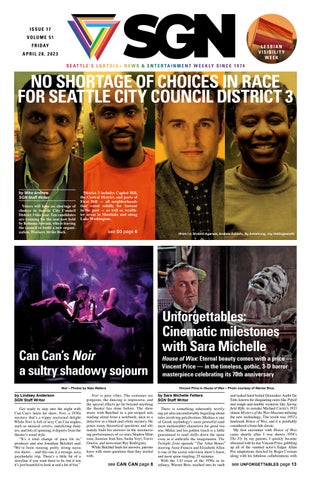
Voters will have no shortage of choices in Seattle City Council District 3 this year. Ten candidates are running for the seat now held by Kshama Sawant, who is leaving the council to build a new organization, Workers Strike Back.
District 3 includes Capitol Hill, the Central District, and parts of First Hill — all neighborhoods that voted solidly for Sawant in the past — as well as wealthier areas in Montlake and along Lake Washington.
see D3 page 6
by Lindsey Anderson SGN Staff Writer
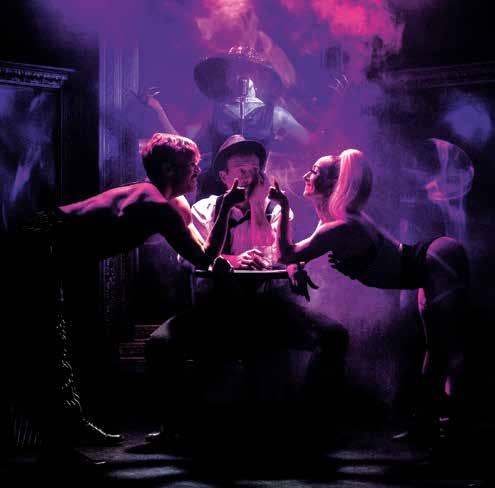
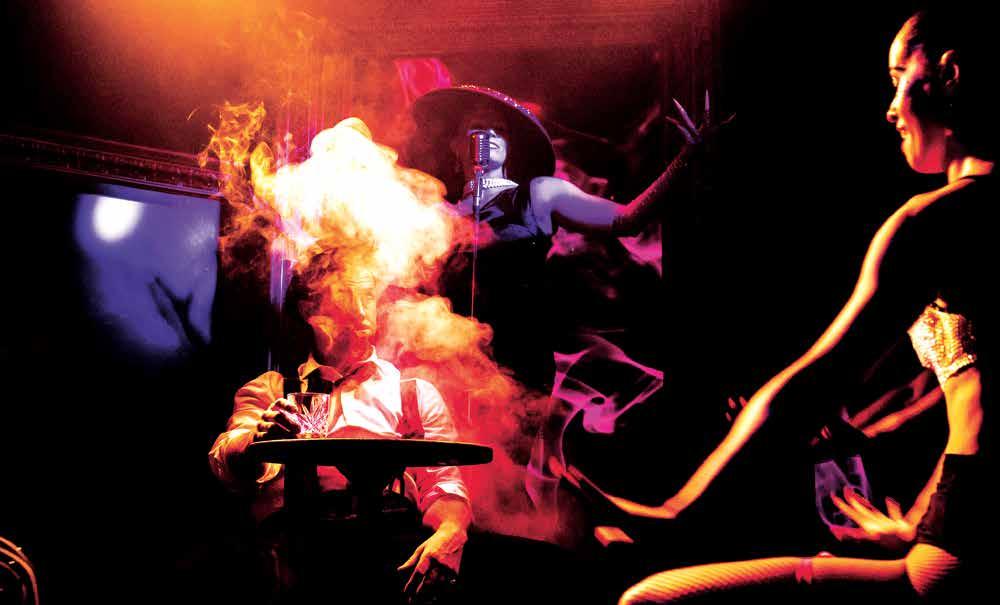
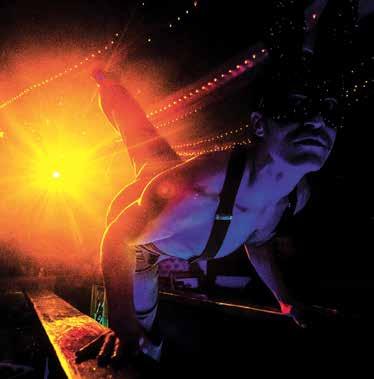
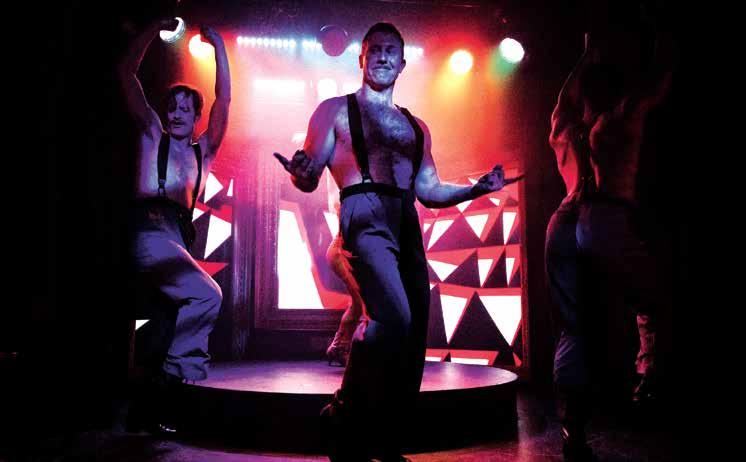
Get ready to step into the night with Can Can’s latest hit show, Noir, a 1930s mystery that’s a trippy nocturnal delight. While Noir is full of sexy Can Can staples, such as musical covers, tantalizing dancers, and lots of spinning, it departs from the theater’s usual style.
“It’s a total change of pace for us,” producer and star Jonathan Betchtel said. “We’ve been running pretty strong narrative shows …and this one is a strange, sexy, psychedelic trip. There’s a little bit of a storyline if you want there to be, but if not, it’s just beautiful to look at and a lot of fun.”
NO SHORTAGE OF CHOICES IN RACE FOR SEATTLE CITY COUNCIL DISTRICT 3
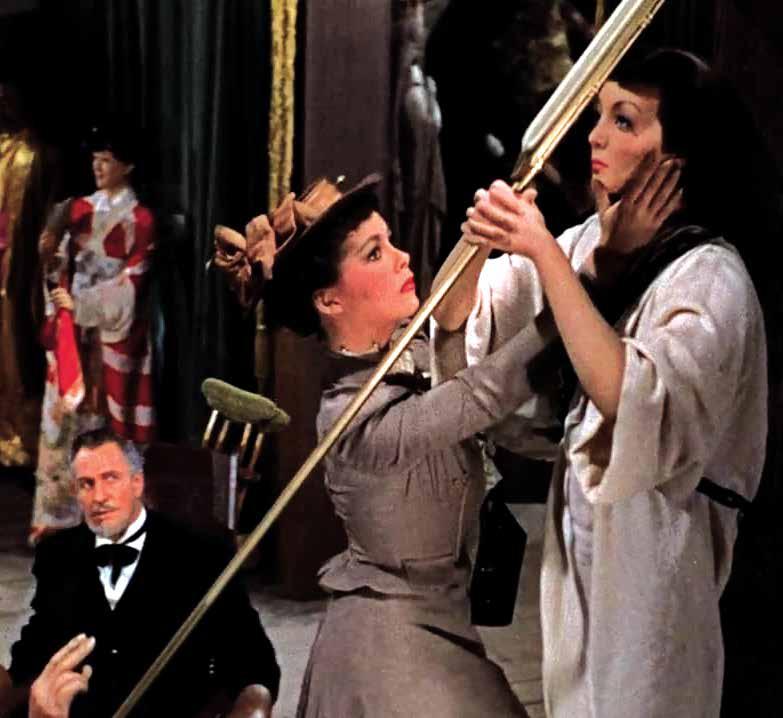
House of Wax: Eternal beauty comes with a price — Vincent Price — in the timeless, gothic, 3-D horror masterpiece celebrating its 70th anniversary
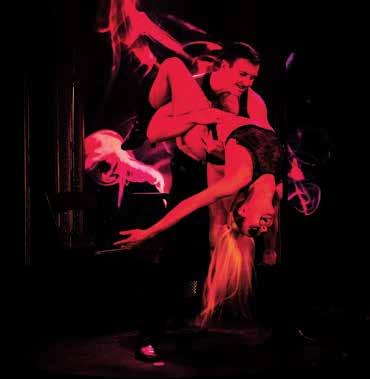
Noir is pure vibes. The costumes are gorgeous, the dancing is impressive, and the special effects go far beyond anything the theater has done before. The show starts with Betchtel in a pin-striped suit, reading aloud from a notebook, akin to a detective in a black-and-white mystery. He poses many theoretical questions and ultimately finds his answers in the mesmerizing performances of co-stars Shadou Mintrone, Jasmine Jean Sim, Sasha Voyt, Travis Guerin, and newcomer Rey Rodriguez.
While Betchtel finds his answers, patrons leave with more questions than they started with.
by Sara Michelle Fetters SGN Staff Writer
There is something inherently terrifying yet also uncomfortably beguiling about tales involving petrification. Medusa is one of Greek mythology’s most powerful (and most memorable) characters for good reason. Midas and his golden touch is a fable guaranteed to send chills down the spine even as it enthralls the imagination. The Twilight Zone episode “The After Hours” starring Anne Francis and Elizabeth Allen is one of the iconic television show’s finest, and most spine-tingling, 25 minutes.
With the 3-D craze of the 1950s in its infancy, Warner Bros. reached into its vault
and tasked hard-boiled filmmaker André De Toth, known for disquieting noirs like Pitfall and rough-and-tumble westerns like Springfield Rifle, to remake Michael Curtiz’s 1933 classic Mystery of the Wax Museum utilizing the new technology. The result was 1953’s landmark House of Wax, and it is justifiably considered a bona fide classic.
My first encounter with House of Wax came shortly after I was shown 1958’s The Fly by my parents. I quickly became obsessed with its star Vincent Price, gobbling up all of the vaunted actor’s Edgar Allan Poe adaptations directed by Roger Corman along with his fabulous collaborations with
see UNFORGETTABLES page 13
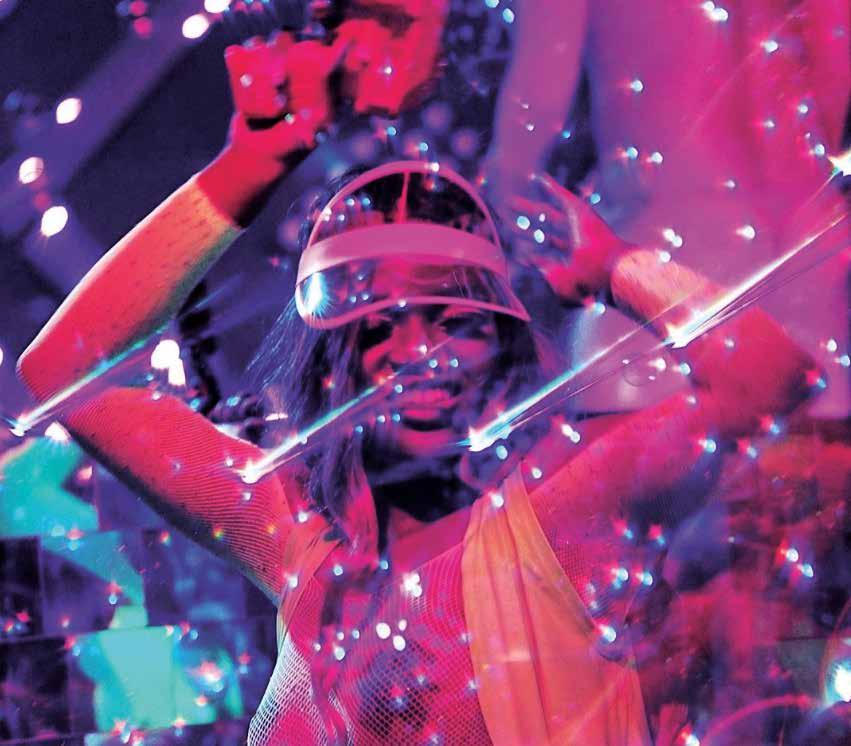
Noir – Photos by Nate Watters
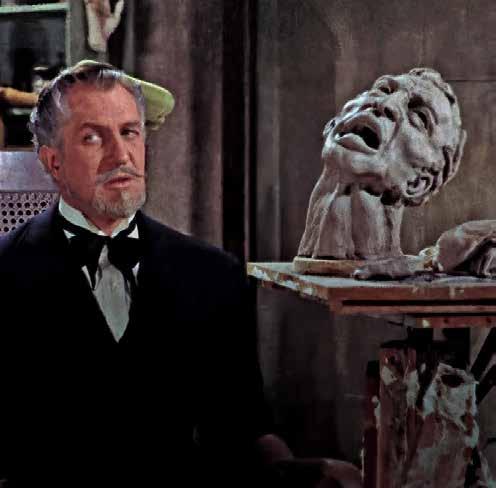
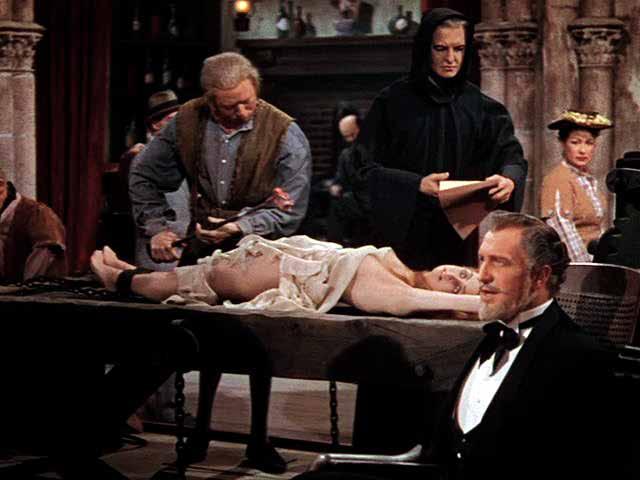
Vincent Price in House of Wax – Photo courtesy of Warner Bros.
(from l-r) Shobhit Agarwal, Andrew Ashiofu, Ry Armstrong, Joy Hollingsworth
Seattle Pride Spotlight
Seattle Pride launches Galactic Love at Supernova
by Lindsey Anderson SGN Staff Writer
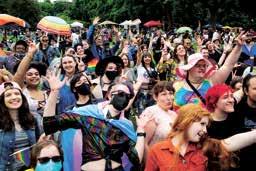
It may only be April, but Pride Month is already top of mind for those working with Seattle Pride. The organization is getting ready to kick off the festivities early with a preview of all the fun at Supernova’s “Galactic Love” bash on Saturday, April 29.
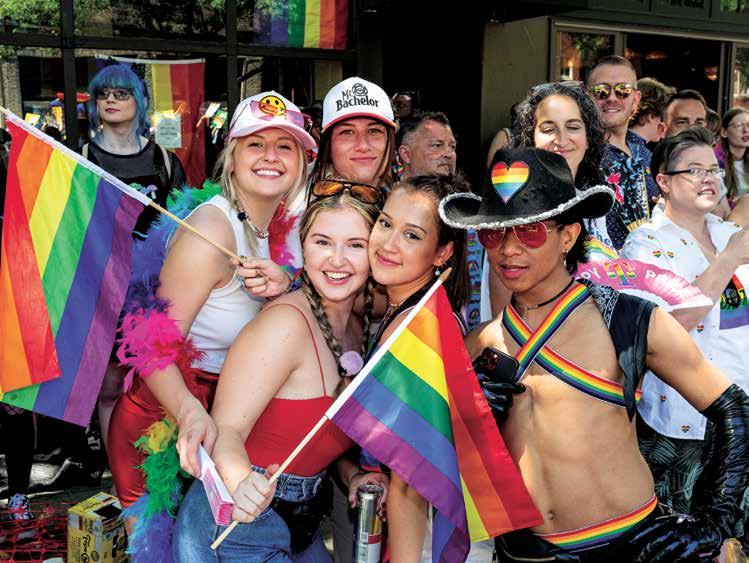
“It’s going to be the party of the season, and it serves as a sneak peek into what folks will be experiencing at Seattle Pride in the Park and Seattle Pride Parade this June,” said Seattle Pride Programs Coordinator Nick Albritton.
Supernova kicks Pride off early
The Supernova nightclub has partnered with Seattle Pride to help bring energy to this summer’s Pride in the Park event and the Pride Parade. The Galactic Love party will showcase many of the same performers slated to appear at both. It will be hosted by Monday Mourning and include performances by Hoochie Papa, Deejay Hershe, DJ Orion, and DJ Tony Burns.
“Folks at that … party can expect to experience drag queens, roller disco, [and] DJs playing all night long,” Albritton said.
Galactic Love is just the beginning of Supernova’s partnership with Seattle Pride, and in fact, all of this year’s events will have a “galaxy” theme.
“Galactic Love was on brand this year,” Albritton said. “We thought it also spoke to something deeper for us. Galactic Love is our theme for this year’s Pride Month, so it’s not just one event — it’s our entire month together, and it’s all about celebrating [our LGBTQIA community] as one big beautiful, extravagant galaxy.
“We encourage folks to come dressed in their galactic best to make sure that they stand out among the stars. At the Supernova event, we’re going to make sure that happens. Per usual, for Supernova, there’s going to be a glitter bar available to help folks get the extra sparkle they need to shine the night away.”
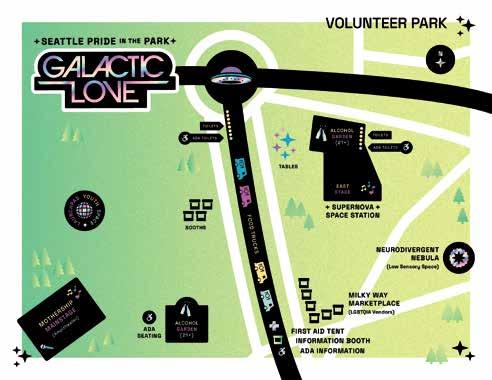
All aboard the Supernova Space Station Seattle Pride is excited to announce it is making many changes to its happenings this summer. One of the biggest will be the addition of a second stage, sponsored by Supernova, at Pride in the Park, which will happen on June 3.
“We’re excited to bring that Supernova magic to [the event] this year,” Albritton said. A bit of background for this change: For the last few years, Seattle Pride has struggled to figure out how to balance the energy, sex positivity, and party vibes that many feel at Pride while also being inclusive of families and children who may be attending for the first time or exploring their own identities. This year, it hopes to meet the needs of everyone by having two different stages.
“We’ve traditionally only had one stage, where we feature live music, and we [have] some DJ sets, some performances,” Albritton explained. “There was this moment last year where everyone was dancing in the rain, and we realized that we want both of those energies at our event. So, we have this family-friendly live music feel this year that will be happening at our Mothership Mainstage. Then our second stage is going to be all dance focused. Supernova is the host of that space.”
The second stage, dubbed the “Supernova Space Station,” will include an alcohol garden for participants 21 and older and provide all the fun party vibes many childfree adults have come to expect from Pride Month. This stage will be located on the east lawn of Volunteer Park, just north of the Seattle Asian Art Museum.
“We focus on bringing local LGBTQIA+ performers and artists to our events,” Albritton said. “We love showcasing the talent that’s right here in our city and region, so our headliner for this year is Moon Palace. We have performances from CarLarans, Brittany Davis, and more.”
“Galactic Love is our theme for this year’s Pride Month, so it’s not just one event — it’s our entire month together, and it’s all about celebrating [our LGBTQIA community] as one big beautiful, extravagant galaxy.”
The Supernova Space Station will also include drag performances by Cookie Coutour, Macy Marcs, Hot Pink Shade, LuChi, and Cali Foxtail.
Family-friendly fun awaits at the Mothership Mainstage
This year’s Pride in the Park will have something for everyone. The “Mothership Mainstage” will be at the Volunteer Park amphitheater. This location will have fun,
family-friendly offerings, including a drag queen story hour hosted by Cookie Coutour. This stage will also host a Disneythemed performance from the Supersonics, a combination of the Seattle Men’s Chorus and the Seattle Women’s chorus.
The area will also have a youth space, co-hosted by Seattle Pride interns and the Seattle LGBTQ Center, for older kids to hold dialogues about important LGBTQ+ topics and create crafts and zines.
“We hired Queer young people to plan spaces for Queer young people, which is very exciting,” Albritton said.
Many artists will feature on both stages, including Mase III, SuperCoze, and Stephanie Anne Johnson.
“Our event isn’t just about music,” Albritton added. “We’re going to have booths there, we’re going to have food trucks, and we’re adding an all-new LGBTQ+ vendor marketplace called the Milky Way Marketplace,” a space for local LGBTQ+ makers, craftspeople, and artists to sell their goods.
The marketplace is a first for Pride in the Park, which usually hosts booths for local businesses and organizations but has never made a specific space for Queer vendors.
“It’s in alignment with our passion to make avenues and pathways to ensure that our resources flow back into our community as well,” Albritton said of the marketplace.
Photos by Nate Gowdy / Seattle Pride
Photo courtesy of Supernova
A space for everyone
Another change coming to Pride in the Park is a new focus on accessibility. This year, it will also have a “Neurodivergent Nebula,” a space designed specifically for people who want to come out and enjoy the day without experiencing sensory overload. The Arc of King County is hosting the Neurodivergent Nebula, which includes low sensory decompression activities, ear plugs, and resources for people who are looking to be there but also have their needs met.
Seattle Pride also ensures ADA seating for those who need it at the Neurodivergent Nebula and the Mothership Mainstage. An accessibility consultant from the University of Washington was used to ensure that everyone can enjoy the event.
“One big change we’ve made at Pride in the Park — and this was very difficult to find — is affordable accessibility mats that can be placed on grass,” Albritton said. “Folks who use mobility devices and mobility chairs can get out to a place where they can see the stage well, so we’ll have those placed at ADA seating and the Neurodivergent Nebula.”
ADA seating will also be available at the Pride Parade. “It essentially allows for one person with accessibility needs and two of their counterparts, so you can still be with your people and get accessible seating as needed,” Albritton added. ADA seating for the Seattle Pride Parade is limited; it needs to be reserved ahead of time, as will any grandstand bleacher seating.
Listening to our voices
Many of Seattle Pride’s changes for 2023 are because of community input. Organizers like Albritton have spent the entire year listening to what people want to see at this summer’s happenings.
“We’re doing things like listening to community voices to figure out what kind of talent they want to see, we’re securing our vendor booths, finding Queer makers in the Seattle area, and inviting them to come to join us, all the way down to the logistics of planning on where people are going and how they’re getting there,” he said.
Aside from expanding Pride in the Park, Seattle Pride has also increased the area for the parade.
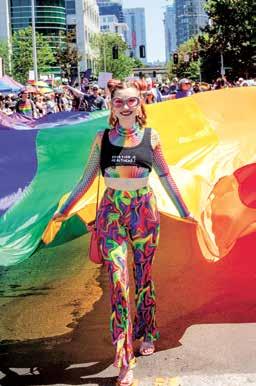
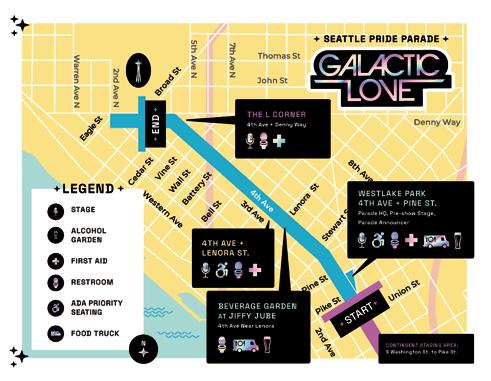
“At the Pride Parade, we have some exciting changes,” Albritton explained. “We’ll have three stages along our parade route… one at Westlake, one at Fourth and Lenora, and one at the ‘L’ corner, Fourth and Denny Way. The main change is that the second stage will be at Fourth and Lenora: it’s a bit more spacious of a block, and it will allow us to have ADA-priority seating and bleachers right near the stage, as well as our Jiffy Lube alcohol garden — very classy.”
“We’re also going to have some of Seattle’s favorite LGBTQIA performers serving as announcers along the parade route at our stages,” Albritton continued. “We’ll have Ceasar Hart, Versace Doll, DonaTella Howe, Kylie Mooncakes, Sable Jones St. James, and Goddess Bricq House.”
Each stage will also include DJs. The stacked lineup promises performances by Kween Kaysh, LGSP, DJ Ramiro, Harmony Soleil, and DJ Orion.
The Pride Parade has also expanded the Westlake alcohol garden. This year, patrons will be able to access prime parade viewing spots from the garden.
Introducing Seattle Pride’s 2023 grand marshals
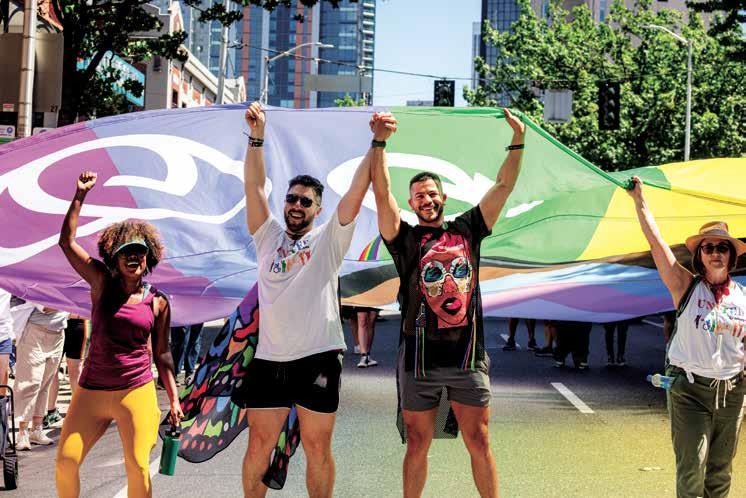
Seattle Pride is also excited to announce this year’s Parade grand marshals. Leading the way will be renowned Nonbinary burlesque performer, producer, sex educator, and body-positivity advocate Mx. Pucks A’Plenty. Joining them will be the Lavender Rights Project and activist and author Ijeoma Oluo.
“We are so excited to have them at the front of our parade this year, showing all the beautiful pieces of our community and who they are and what they stand for,” Albritton said.
Seattle Pride is packing a punch into June, with events scheduled for LGBTQ+ people of all ages and abilities, highlighting local artists, both on stage and behind the Milky Way Marketplace. This year’s Pride Month is going to be out of this world!
Staying Alive: Galactic Love at Supernova is on Saturday, April 29, from 9 pm to 4 am. Tickets are available at https://www.venuepilot.co/events/73484/
orders/new. Pride in the Park will be at Volunteer Park on Saturday, June 3, starting at noon. Admission is free. The Seattle Pride Parade will be on Sunday,
June 25, starting at 11 am along Fourth Avenue in downtown Seattle.
Photos by Nate Gowdy / Seattle Pride
Local News
Five of the ten candidates openly identify as members of the LGBTQ+ community on their campaign websites.
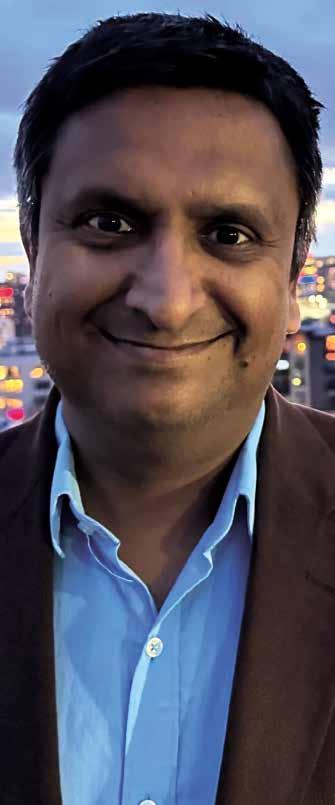
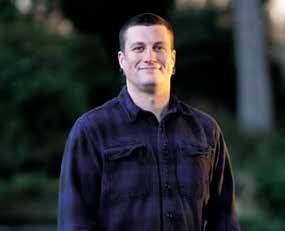
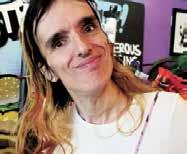
Shobhit Agarwal, the latest entry in the race, lives on Capitol Hill with his husband, movie reviewer Matthew McQuilkin. According to his website, Agarwal’s platform focuses on expanding green infrastructure, especially electrical vehicles and public transit; making housing affordable; expanding small businesses; engaging minorities in policing; and supporting minority and women’s rights.
Andrew Ashiofu is co-chair of Seattle’s LGBTQ+ Commission, and made a run for a state legislative seat representing the 37th District last year. If elected, he would be the council’s only Black member, the only out Queer member, the only openly HIV-positive member, and the only member to reveal that they were previously homeless.
According to Ashiofu, his family kicked him out of the house in 2010, after he told them he was Gay. Consequently, he says, helping Seattle’s growing homeless population find permanent shelter is one of his top priority issues. His strategy is what’s known as the “housing-first” option — in other words, find permanent housing for the unhoused, then deal with any social or medical problems they may have.
Ry Armstrong is an actor and musician known for their appearances in Uncut Gems, The Curious Incident of Everett Wilder, The Plot Against America, and The Gilded Age
According to their website, they hope to be “the first gender-nonconforming, queer candidate to represent all of Seattle District 3.”
Armstrong says their campaign will focus on three goals: the “right to shelter,” giving unhoused individuals the resources they need to get back on their feet; making Seattle the first large carbon-neutral city; and reforming Seattle police with “independent accountability and robust resources for both people of color and the SPD.”
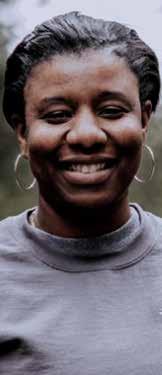
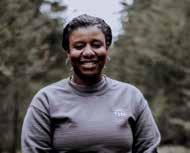
Joy Hollingsworth is the only candidate born and raised in District 3. A thirdgeneration resident of Seattle’s Central District, and granddaughter of civil rights leader Dorothy Hollingsworth, Hollingsworth says she is running to bring a missing Black and LGBTQ+ perspective to the City Council.
Like other candidates, Hollingsworth is also interested in housing policy, but she insists city policy must be adapted to the city’s communities. She says she wants to help the City Council think more critically about how legislation affects communities by involving stakeholders from those communities in the process.
Asukaa Jaxx has run for a number of city offices. Jaxx typically runs an unfunded campaign and is not expected to advance through the primaries in August.
These are the candidates who don’t publicly identify as LGBTQ+:
Alex Cooley says he was raised in an environment of physical, emotional, and substance abuse. His father succumbed to alcoholism when Alex was 14 years old. Thereafter, he was raised by his mother, who, he says, “worked her ass off as a UFCW member at Macy’s to put both of her sons through college.”
Although he got a degree in education, a hiring freeze at Seattle Public Schools led Cooley to turn his pot-growing hobby into a business. Remembering his mother’s struggles as a UFCW union member, Cooley then invited the union to organize workers at his retail store, Solstice.
If elected, Cooley says he’ll work to legalize drugs and build one million square feet of housing for unhoused individuals.
Robert Goodwin describes himself as “the only candidate for District 3 that is committed to prioritizing cleaning up this City!” — a promise to eliminate graffiti in District 3. “If I am elected,” he says, “I promise you will see a dramatic reduction in graffiti in our district — because I don’t need a consensus, just time and paint!” Goodwin is also campaigning against shortterm rentals and ticket scalping.
Efrain Hudnell is a former US Army intelligence officer and current deputy prosecutor in King County’s Mental Health Court. He says he wanted to become a prosecutor because he “wanted to use the law as
a tool to fix systemic problems, rather than to maintain outcomes of unjust systems.” Hudnell stresses the need for noncriminal intervention and for greatly expanding behavioral health services and supply of affordable housing.
Alex Hudson is currently the executive director of Transportation Choices Coalition, and former blogger for Seattlish, who describes herself as an “urbanist at heart.” She is running on a program of developing public transportation, including reviving the downtown streetcar project shelved by Mayor Jenny Durkan, and expediting West Seattle and Ballard light rail linkups.
Hudson also believes the city needs to find alternatives for uniformed police. The city should not rely on cops to be mental health professionals, drug counselors, or housing connectors, she says. She hasn’t committed to channeling any of the current police budget to possible alternatives, however, and also won’t commit to raising taxes to fund alternatives.
Theo Mostert is a medical technician who says his medical experience has shown him the “effects of crime and homelessness firsthand.” “Seattle is in trouble, and our current leadership is digging us even deeper in the hole,” he warns on his website.
Mostert is campaigning on a program of “improving public safety and…improving first responder training and working conditions.”
Shobhit Agarwal
Robert Goodwin
Joy Hollingsworth
Andrew Ashiofu
Efrain Hudnell
Asukaa Jaxx
Ry Armstrong
Alex Hudson
Alex Cooley
Theo Mostert
Arts & Entertainment
The Doubleclicks teach a robot to love in new musical
by Daniel Lindsley SGN Staff Writer
GenCon, the mother of all tabletop gaming conventions, is still a few months (and more than a few states) away, but the geeky music duo The Doubleclicks have been gearing up for this year’s event for a while now with a breakthrough addition to their usual repertoire.
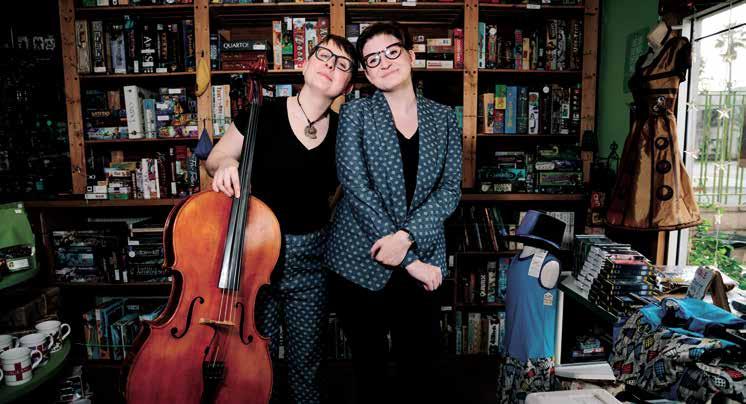
Since the early 2010s, the pair have written and performed songs about “dinosaurs, cats, anxiety, and Queer feelings” in thematic venues like comic book shops and game stores in the United States, Australia, and Europe. Along the way, they’ve rubbed shoulders with the likes of actor and writer Wil Wheaton and the comedic musical team Paul and Storm. Their YouTube channel boasts over four million views.
One half of the group, Laser Webber, said that the Doubleclicks were formally founded soon after his sister, Aubrey Turner (the other half), graduated college and followed him out to Portland, Oregon.
“She was all over the open mic scene, playing her cello everywhere,” Webber said over Zoom. “And she encouraged me to pick up a guitar and start writing little songs.”
At the time, Webber had been writing poetry and comedy anyway, so adding in some music wasn’t too much of a stretch.
“And those early songs were, like, breakup songs about World of Warcraft, [and] songs about falling in love and playing Dungeons & Dragons,” Webber said. “And we were just very different from what everyone else was doing, and it was really fun.”
Getting bigger
The year 2011 marked the “official” beginning of the Doubleclicks, and as the duo gained recognition, it became apparent that they would need more content if they were to perform at bigger venues.
“We started a YouTube channel, just as a way to keep writing more music, because we were starting to get booked on more shows, and we were like, ‘We don’t have 40 minutes — we need to write more songs.’”
It was after that that they got their first “big break,” not through some hot shot producer attending one of their performances but in the digital realm, where geek culture was already abundant.
“My friend Brad Jonas, who is an incredible artist, went off on his own and made a music video for one of our songs,” Webber said. “Without me even knowing, he made an animated video, and that video went kind of viral, especially in the D&D community. I sent that along with an email to Paul and Storm, and they invited us to open for them... That was the first really big show we got to do.”
The Doubleclicks’ digital presence has only broadened since then. They’ve been featured on the Geek and Sundry web series TableTop, which was hosted by Wil Wheaton and Felicia Day until its end in 2017. More recently, Webber in particular has streamed and played in the all-Trans RPG show Strumpets and Flagons on Twitch and published it on Spotify.
Writing a musical
Since Turner is taking a break from touring, GenCon 2023 will be the last stop on a tour of Webber’s solo act, Laser the Boy.
His focus for the last year has been on writing musicals, and the first in line is Teaching a Robot to Love
“I’ve wanted to write a musical for a while,” Webber said. “I’ve seen my friends do it, and I was very impressed.”
“ Teaching a Robot to Love,” he explained, “is a show about this girl who creates a robot. She wants to teach it how to be a person, but she herself doesn’t know how to be a person, like many of us.”
Its regional debut will be performed at GenCon by the ACORN Players of Lafayette, Indiana. Webber said of the theater
group, “I’m really excited for the energy these people are bringing to the show, especially because Indiana isn’t known for being a state that’s super open to Trans and Queer art, or Trans and Queer people.”
Of course, a musical is a lot more demanding than a song, or at least it demands different things. Before Webber was a songwriter, he was educated as a journalist, another kind of storyteller.
“Prior to this, any story I told never needed to be longer than five minutes,” Webber said of musicals. “Instead of trying to fit a lot of words into a short article, you’re trying to fit a lot of ideas into a song.”
“But that’s also what makes it so rewarding,” he added, “because it’s a story not just told by one or two people. It’s a story told by this whole creative team who bring their own things to the show. And that has been just absolutely incredible. I feel like we’re able to tell ... so many different stories at once.
“I have been fortunate that the people who are attracted to working on this show are generally this group of really loving Queer folks who are excited to tell a positive story about transness and queerness that isn’t trauma-based. So generally, it’s just a whole lot of fun. The costumes we get are very brightly colored and very shiny.”
Webber also teased his next theatrical project, titled A Shark Ate My Penis, inspired by his research into Trans men throughout history, and by his own transition. Webber said the play will explore those topics with much of the same quirky humor as his previous work.
You can read more about The Doubleclicks at www.thedoubleclicks.com, and get notified about Laser Webber’s future streams at www.twitch.tv/lasertheboy. Webber is @ lasertheboy on Instagram.
Photo by Adam Isaak
Photo by Kim Newmoney
Arts & Entertainment
CAN CAN
continued from cover
These questions include: How do Minetrone, Sim, and Voyt change from one stunning outfit to the next in nearly no time? How does Betchtel spin on a homemade contraption for the entirety of a musical cover without vomiting into the front row? If this is Rodriguez’s first show with Can Can, how come they already dance like a pro?
While Noir takes viewers on an artistic journey, the lack of plot is sometimes confusing for returning fans of the popular burlesque venue. “I think people don’t quite know what to think at the start,” Betchtel said. “By the end, they’re hooting and hollering and having a great time.”
Each performance brings something new and exciting to the room, from beautiful renditions of classic songs to a sensual shadow dance performed entirely behind a curtain. The show also encourages audience participation with fun and light comedy before the intermissions.
Of course, Can Can is a culinary experience. While patrons can view the show on an empty stomach, it is much better with a delicious plate of food and a beverage in front of them. The menu is crafted by chef Jerry Lariz, who selects each ingredient from local vendors at Pike Place Market. For those who can eat dairy, the gnocchi mac and cheese is a must-try. The gooey dish featuring famous Beecher’s cheese is the perfect comfort food to enjoy while watching some of the best performers in town. Most menu options can also be prepared vegan upon request.
No Can Can experience is complete without an order of beignets. The delicious dessert comes in two varieties: classic and croissant style. While the latter has fewer pastries, they are much larger and worth it. The classic versions are just as delicious and come with enough to share. Both options are accompanied by delicious berry and caramel sauces. Can Can is best enjoyed with friends or a group. It’s a great opportunity for bachelor or bachelorette parties, friend reunions, or birthday celebrations. Right now, there’s also a special package for Mother’s Day: 10% off tickets for May 14.
Noir is running through June 25. Tickets are available now at https://tickets. thecancan.com.
Noir – Photos by Nate Watters
2023 National Film Festival for Talented Youth preview
Chatting about the future of cinema with Marketing Director Krupa Kanaiya and Festival Director Amy Williams
by Sara Michelle Fetters SGN Staff Writer
The 16th annual National Film Festival for Talented Youth (NFFTY) kicked off last evening with a gala at SIFF Cinema Uptown. Showcasing a wide variety of short films, ranging from experimental and animation to documentary and narrative (and everything in between), NFFTY has slowly grown into the world’s largest film festival for emerging directors age 24 and under.
With in-person screenings through Sunday, April 30, and an online component for an additional week ending on May 7, this year’s festival is an astonishingly imaginative grab bag certain to thrill, bewilder, perplex, move, and amaze. It’s a terrific opportunity for audiences to discover the next generation of filmmakers taking their first steps into the cinematic firmament. Even better, attending NFFTY is just a heck of a lot of fun.
I sat down with NFFTY’s marketing director, Krupa Kanaiya, and Festival Director Amy Williams to chat about this year’s event. Here’s an edited transcript of what they had to say:
Sara Michelle Fetters: I’m going to start with the question that I imagine pretty much everybody always asks first: What is NFFTY and why is it important?
Krupa Kanaiya: That’s a great question. NFFTY — pronounced “nifty” — is a youth film festival. One of the things I like to describe NFFTY as is this is content created by youth, but it’s for a general audience. It’s really about giving these filmmakers the platform and allowing them the opportunity to redefine what cinema is going to be. If there is a prediction as to where cinema goes in the future, this is where we start.
Amy Williams: Exactly. NFFTY, being the National Film Festival for Talented Youth, is about community building. When I fell into the NFFTY age range a few years back, I didn’t have access to anything like it. It would’ve changed my life. Because of that, I feel very honored getting to work here and support this nonprofit that gives that opportunity to other filmmakers and shines a light on their work and their stories.
SMF: What’s been the biggest challenge of making sure that this festival keeps going, especially through COVID? Not only making sure that the festival happens, but that these talented youth actually have the facilities and the capabilities to [make] the films.
AW: For sure. For the last several years — from when we had to shift to virtual in 2020 to getting …back to our first physical festival in 2022 — that two-year period was really tough. We invested in trying to spark creativity with our community in whatever ways we could. We have a whole “Level Up” challenge hub that we do quarterly challenges with, trying to give people …really accessible tools, and partnering with people who can provide free software, so participants can make films, be creative, and have fun.
We’ve also found that, through our virtual festivals and reestablishing and trying to maintain our community through virtual means for several years, we’ve really invested our time into reconnecting with our alumni. This is our 16th year, so we have hundreds of thousands of filmmakers that have found their way through NFFTY at one point or another. When we were locked down at home, it felt like the time to reconnect, to touch base with people, and see where they were right now. It was time to bring them back into the NFFTY fold and have them teach the current class what they’ve learned and how they’ve navigated the industry.
We found that this is a really interesting access point for our current filmmakers, to work with somebody just a couple rungs up
“If there is a prediction as to where cinema goes in the future, this is where we start.”
the ladder. It’s a little more accessible than a huge Hollywood producer that maybe doesn’t have the same experience as a lot of our filmmakers [when reflecting] upon how they got there. That path’s going to look a lot different.
SMF: How cool is it to have 16 years of knowledge for the current crop of filmmakers to tap into? I imagine these returnees get reinvigorated as well, working with these talented kids who were in similar shoes not so long ago.
KK: From a marketing standpoint, I love it, because everything is digital, and it means that our younger filmmakers who are so active on social media get to experience a little bit of this fun and glitz that our older filmmakers never did. Our oldest filmmakers come from MySpace and the early days of Facebook. This interaction is so different for them, and having them come back and teach a class is so invigorating.
SMF: I’m in my forties. I have been doing this for over 20 years. What I love about NFFTY is that it makes me feel like a kid again. Every time I attend the festival, there is an energy and a spontaneity and a burst of imagination that is completely different than every other festival I cover. Do you guys feel that?
AW: Absolutely.
KK: A hundred percent. I’m so excited.
Opening night at a festival is always so fun, and I’ve preplanned some outfits. Amy and I were talking about it. I said, this year, I want at least two outfits that made me feel like the type of icons I wanted to see back in the day. If no one else gets to do it, at least I get to do it at NFFTY. [laughs]
AW: It truly is incredible. Every year I’m blown away. I’ve seen every film in the lineup. I know who all the filmmakers are. Maybe they don’t know who I am, but I love it. I’ll go up to them, see their badge, and just know everything about their film and everything about them. They’re like, “How do you know who I am?” But I just get so excited to meet the filmmakers behind these stories. It’s one thing to sit behind my computer and watch 300 shorts a year. It’s another getting to meet the people behind those stories that I have been thinking about for months. Just getting to see them, and then to see them watch their film on the big screen, almost always for the first time? It’s incredible.
SMF: How great is it to be back at SIFF Cinema Uptown for the entire inperson run of the festival?
AW: It’s special. We have been working with SIFF for so long, and they’re such great partners, and we love their staff. We love working with them. SIFF is a Seattle icon, and NFFTY being in Seattle, I think this is so special. It’s perfect.
NFFTY is the largest youth film festival in the world, and not being in New York or LA, that feels really special. And then we get to do all of this with SIFF and at SIFF theaters? How could you not love that?
A lot of filmmakers that have reached out already and said, “This is my first festival. This is the first time I’m getting to see this film in a theater.” We hear from our filmmakers how important and how great it is to have that opportunity. We’re just relieved that we get to offer it to them again, really. SIFF helps makes this possible.
SMF: But you also did keep a virtual component again this year, and the viewing window is actually far longer than the festival itself is. For these filmmakers, I imagine that this is important, too, getting that extra bit of exposure.
AW: For sure. We have so many films that we cram into a four-day weekend — people can’t see them all, and so we we’ve getting feedback forever of, “Man, I wish I could watch some of these that I missed.” When we were able to shift to virtual and maintain that hybrid element last year, we were like, why get rid of it? If our filmmakers are down and they want to opt in and want this extra audience, we’re so down to provide that infrastructure and platform. We’ve got it. Let’s do it.
SMF: I admit that I have not had a chance to watch everything. But I’m really blown away by the craziness of some of the submissions this year. You’ve got some inspired, out-there, freethinking forms of cinema that are truly extraordinary. What did you think when looking through these submissions, and how did you whittle it all down?
AW: We had over a thousand submissions. I personally screened three hundred. It is a gigantic task to whittle that down. But we have a great team, and we all have our little corners of it, …what kind of genres and categories that we like to dig into. We’re always limited by theater time and space, and can only play so much. It’s very much like putting a puzzle together. How many shorts we can fit in all of the time that we’ve got, and what makes the best program? It’s tough, but I feel great about this year.
SMF: The diversity of this year’s selections is also exceptional. Not just from a racial or a cultural standpoint but the whole spectrum. You all have always done a fairly good job on this front, but it seems like this year, you get the entire panoply of the human experience. Was that the goal?
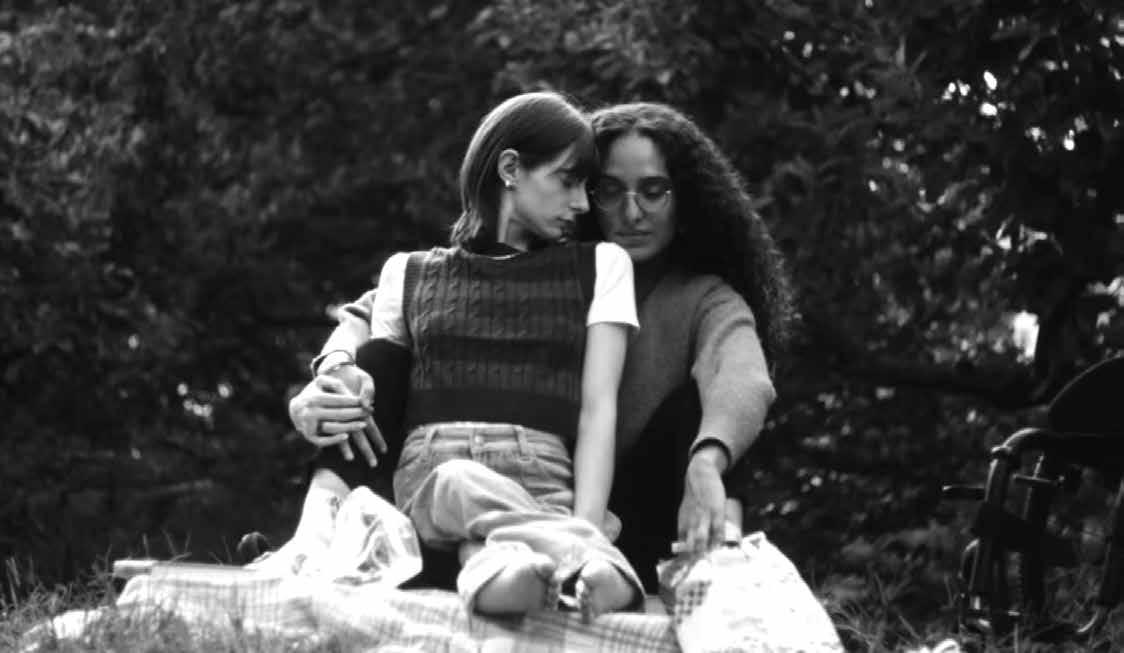
As You Are – Photo courtesy of NFFTY
Krupa Kanaiya, NFFTY Marketing Director Amy Williams, NFFTY Festival Director
Film
Action throwback The Best Man is harmlessly forgettable
by Sara Michelle Fetters SGN Staff Writer
THE BEST MAN
Theaters / PVOD
The Best Man is a 1990s-style, directto-video action throwback featuring genre stalwart Dolph Lundgren in a key role. Its premise also bears a strange similarity to Amazon Studios’ Shotgun Wedding starring Jennifer Lopez and Josh Duhamel, released back in January — just obviously without the same production values or megastar performer in the lead role. Instead, this is a routine, relatively harmless thriller, barely 90 minutes, that is too blandly forgettable to make much of a lasting impression. It’s also quite boring.
At a remote New Mexico resort, a group of what appear to be well-armed terrorists have kidnapped a drunken millionaire, Chuck (Chris Mullinax), and taken an entire wedding party hostage. Still on the loose are his daughters Brook (Nicky Whelan), the bride; and Hailey (Scout Taylor-Compton), his company’s CFO.
Also stalking the hallways are three estranged best friends, Cal (Luke Wilson), Bradley (Brendan Fehr), and Anders (Lundgren), and they are determined to do whatever it takes to set things right. The three were once mercenaries who rescued Brook a year earlier from kidnappers, losing two
NFFTY
continued from page 9
AW: Yes. It’s always the goal. Frankly, we value having our programming be a reflection of the submissions that we receive, and we’ve got an incredible community telling incredible stories that really do span the whole human experience. So that is high praise. That is our goal. That is what we want. We want people in the audience to feel seen by the stories that they’re seeing on the big screen and to have the access to those filmmakers and those young people telling those stories.
SMF: I want people to be surprised and I want them to experience these films without me giving too much away about any of them, so I’m going to try and avoid spoilers. What I will say is, some of the ones I’ve watched, they could not be any more important to see right now. They are so reflective of so many of the things that we are going through. Much like we’re seeing a lot of this generation rise up in places like Tennessee, these stories reflect that energy. These films give me hope that we’re going to be able to tackle some hard, tough issues that, frankly, my generation and the millennials have not done as a good job of handling as I’d have hoped twenty years ago. Do you get that feeling as well when you watch some of these films?
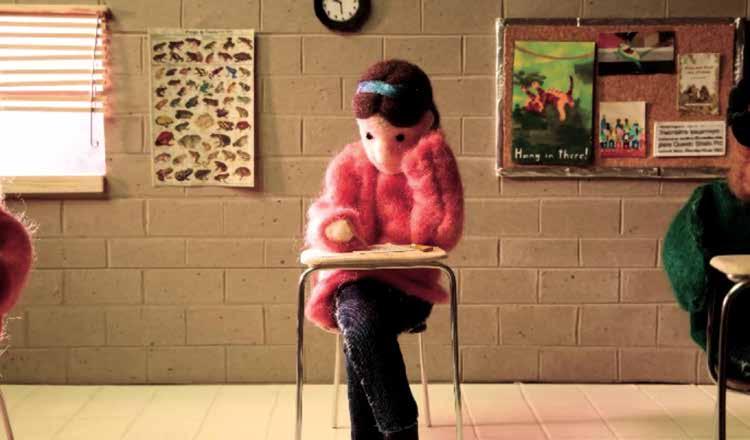
AW: I do. I’ve really been blown away by the optimism and resilience I’ve been seeing in these stories. One of my programmer’s picks is Sophia Spinelli’s Frog in My Throat. It’s this short little stop-motion animation. I adore that film, and it’s only three minutes and so efficient. When I finished watching, I was like, “I feel good.” And this is a brutal depiction, a very honest depiction of what it’s like to struggle with your mental health! Still, at the end of it… “I feel good.” That was my response. That’s so impressive to me. Just a breath of fresh air. I love it, and I’ve been seeing that throughout this year’s films, too, this air of optimism and resilience. Perseverance. It is really, really nice.
SMF: Say I’m a young kid. I want to make a film. How do I get involved with NFFTY? How do I submit? What do I have to do?
KK: Honestly? Show up in our DMs. We are so accessible. In true youth culture,
other members of their team in the process. This was enough for the trio to call it quits.
But Cal and Brook hit it off — and it’s their wedding this mysterious group of gunmen has crashed. Bradley is the groom’s cousin and he’s here as the best man, while Anders, who has allowed himself to drift into the early stages of alcoholism, has only made the trip to reunite with his former compatriots.
Halloween II veteran Taylor-Compton (who deserved to become a far bigger star) comes off the best here, her performance
having an authentic complexity that’s surprisingly endearing. Whelan also makes a lot out of precious little, and it’s nice that director Shane Dax Taylor allows the two primary female characters to have their own agency and not just be formulaic damsels in distress. I can’t say Fehr did a lot for me. He’s rather stiff as the lead heroic figure, and while he handles the action scenes well enough, I got the strange sensation he’d rather have been doing anything else than sharing a dramatic scene or delivering a few lines of expository dialogue.
Thankfully old pro Lundrgen is around, and while he’s clearly going through the motions, the actor still brings a level of stoically knowing gravitas that the majority of the production irritatingly lacks. He even gets a few moments of craftily bumbling seduction when a slightly inebriated Anders puts the moves on the resort’s piano player. Lundgren knows what he’s doing, and Taylor rightly makes the most of every scene he’s in.
Wilson gives it a worthy effort in his first go as an action hero, but Bruce Willis (or even Martin Kove or Jeff Speakman) he is not.
Still, his laconic delivery and easygoing presence is certainly unusual for a B-grade Die Hard clone, and if he were to try this sort of thing again, maybe he could figure out how to make a similar performance work.
Look, I don’t have a lot of nice things to say about The Best Man. It isn’t very good. The pacing is sluggish, most of the action scenes are poorly shot and edited (with some notable exceptions), and although the film was primarily shot at the Mescalero Apache Tribe’s Inn of the Mountain Gods in New Mexico, frustratingly, Taylor doesn’t do much with this undeniably picturesque setting.
But as I’ve already said, the finished film is more or less harmless. There’s little reason for me to come down too hard on it, so I’m just going to say it wasn’t for me and then call it a day.
NFFTY does a good job of [that]. If you email our staff, if you DM our staff, whatever way you can get in touch with us, we will respond. There are so many opportunities and ways to get involved. We do paid internships for youth of all ages. It’s really important to our mission that kids are not only getting these opportunities, but they get paid for them. It’s so great to be on this team and just watch this happen. One of my favorite things is seeing kids have the opportunity to not struggle, that we get to help make it a little easier.
As for making a film, you can start with your phone if need be. Get involved with one of our challenges, grab a mobile device, and our partners or sponsors will usually give some sort of software or audio help. They can work within those parameters. Our age range is so broad as far as our “youth” goes, and that is also really nice. We don’t judge them all the same. A film by a five-year-old does not get the same critique level as a 24-year-old. That’s important to us. We’re super transparent about that judging process.
But potential filmmakers are always wel-
come to ask us, “Hey, how do I know I’m not going to get beat out by someone in high school?” We’ll show them the documentation. We want them to know they have a fair shot at this festival. It’s something that other film festivals do not do that I can pridefully say that we will.
SMF: And for adults, whether they’re in their late twenties or in their early hundreds, how can they get involved? What can they do to support NFFTY?
KK: We have spaces on our board and in our industry advisory sectors. We’re always looking for members of the community who care, whether they want to be involved in the day-to-day of NFFTY or become a patron or a sponsor... But we are actively looking for community members who are willing to be participants, in whatever capacity.
AW: Really the most important thing you can do for NFFTY is show up. Show up for us and come out to the theater. There is such a special energy being in that physical space that, if you can, we highly recommend it. It’s really hard to translate and describe until you are in there at the SIFF
Uptown. All of the films are amazing, so you can’t go wrong with whatever program you decide to check out.
SMF: With that in mind, what do you want audiences to take away from this year’s NFFTY? When the dust is settled, what do you hope people are talking about?
KK: That’s an incredible question. Gosh. Personally, I want them to come and experience the films with us. Come laugh with us, cry with us, and get scared with us in the theater. It’s such a broad range of emotion this year. There really is something special to come and see. Like you said, we have that broad age range, and it shows. The diversity of film is incredible. The nicest of cultural experiences are here: LGBTQ spaces, kids of all ages, all backgrounds, all races, all genders. I’m in awe.
AW: It’s just good storytelling and the future of film. If you want to hear the voices and see the stories of the next generation, this is where you find them. Join us!
Find out more about NFFTY at https:// www.nffty.org/nffty-2023.
Luke Wilson, Nicky Whelan, and Dolph Lundgren in The Best Man – Photo courtesy of Saban Films
Frog in My Throat – Photo courtesy of NFFTY
Gory, go-for-broke Evil Dead Rise a groovy good time
by Sara Michelle Fetters SGN Staff Writer
EVIL DEAD RISE
Theaters
Much like they did with director Fede Alvarez’s 2013 take on Evil Dead, producers and franchise originators Rob Tapert, Sam Raimi, and Bruce Campbell have the good sense to let writer-director Lee Cronin (The Hole in the Ground ) do his own thing with Evil Dead Rise. Like Alvarez, Cronin also more than rises to the challenge. His go-forbroke horror extravaganza is a gorily gonzo roller-coaster ride that is as ruthless as it is exhilarating. I pretty much loved it.
After an earthquake opens up a mysterious hole in their building’s underground garage, siblings Danny (Morgan Davies), Bridget (Gabrielle Echols), and Kassie (Nell Fisher) make a fantastical discovery. They bring their find to their unit on the 13th floor, where their devoted mother Ellie (Alyssa Sutherland) and somewhat immature aunt Beth (Lily Sullivan) — who only arrived this very night for a surprise visit — are both understandably worried and ecstatic they are all okay.
Danny’s find, of course, is one of the three copies of the Book of the Dead we first saw way back in 1992’s Army of Darkness. While neither he nor Bridget can read from it, it goes without saying that playing the three vinyl records that were found with the tome is going to prove to be a very bad idea. Nevertheless, the ancient words are said aloud, and the entire 13th floor is instantaneously isolated from the rest of the building, whereupon a demonic presence begins hunting for a human host to take possession of.
Let the carnage begin…
After a prologue misdirect, Cronin takes the franchise out of its familiar isolated “cabin in the woods” setting and drops it smack-dab in the middle of a dilapidated Los Angeles apartment complex. He also adds both a pair of estranged sisters dealing with their own emotional dilemmas and, for the first time, a trio of children (aged 11 to 16) into the mix. This gives things a fresh vitality, so when the Deadites finally come calling, it’s a legitimate question who is going to get possessed, who is going to get
dismembered, and who — if anyone — is going to make it to dawn alive.
While I do not think any of the performances come close to Jane Levy’s tour de force turn in the 2013 film, I’m tempted to say this is the strongest cast in any Evil Dead entry yet, from top to bottom. Everyone is excellent — Sutherland, Sullivan, and pint-sized newcomer Fisher in particular. All of them make these characters real. I could relate to and understand where each was coming from. More importantly, as their fear grew, as the horror of their situation became more aggressively apparent, I could feel each and every insidious sensation right along with them.
The technical facets are incredible. Nick Bassett’s production design, Nick Connor’s art decoration, and Gareth Edwards’ set decoration (each a veteran of Ash vs. the Evil Dead ) deliver the goods. The apartment interiors and the underground park-
ing garage are sinisterly ominous labyrinths that grow in unsettling mystery as events progress. The film is edited with pinpoint precision by 2013 Evil Dead returnee Bryan Shaw, while cinematographer Dave Garbett — who also worked on Ash vs. the Evil Dead — manufactures disquieting images of chaotically unhinged terror that are eye-popping in their gruesomely delectable visual majesty.
The practical effects are stunning, and the increasingly disgusting makeup effects even more so. I was also entirely won over by the sequel’s inspired sound design. Cronin not only employs auditory tidbits that recall all of the previous films in the series (even 1981’s ultra-low budget initial entry), but he also unleashes a plethora of imaginatively unsettling new ones that give his take on the material a hallucinatory aura that’s uniquely its own.
I could go on and on. There are dialogue
callbacks to Evil Dead 2 that are so giddily perfect that I couldn’t help but silently squeal in happy appreciation. Cronin also does a terrific job foreshadowing massive climactic set pieces early on, craftily using the entire frame to subtly show the viewer a series of implements and machinery that will unquestionably be utilized by surviving heroes against the Deadites.
Look, anyone walking into Evil Dead Rises should hopefully know what they’re getting themselves into. This is just short of 100 minutes of blood, guts, and mayhem on an almost unimaginable scale. But it’s also got a sense of humor, has a collection of characters worth rooting for, and delivers a rip-roaring climax that will have enthusiastic audiences sitting on the edge of their seats, ready to cheer.
I bet anyone reading this review knows what I have to say about all that: Groovy.
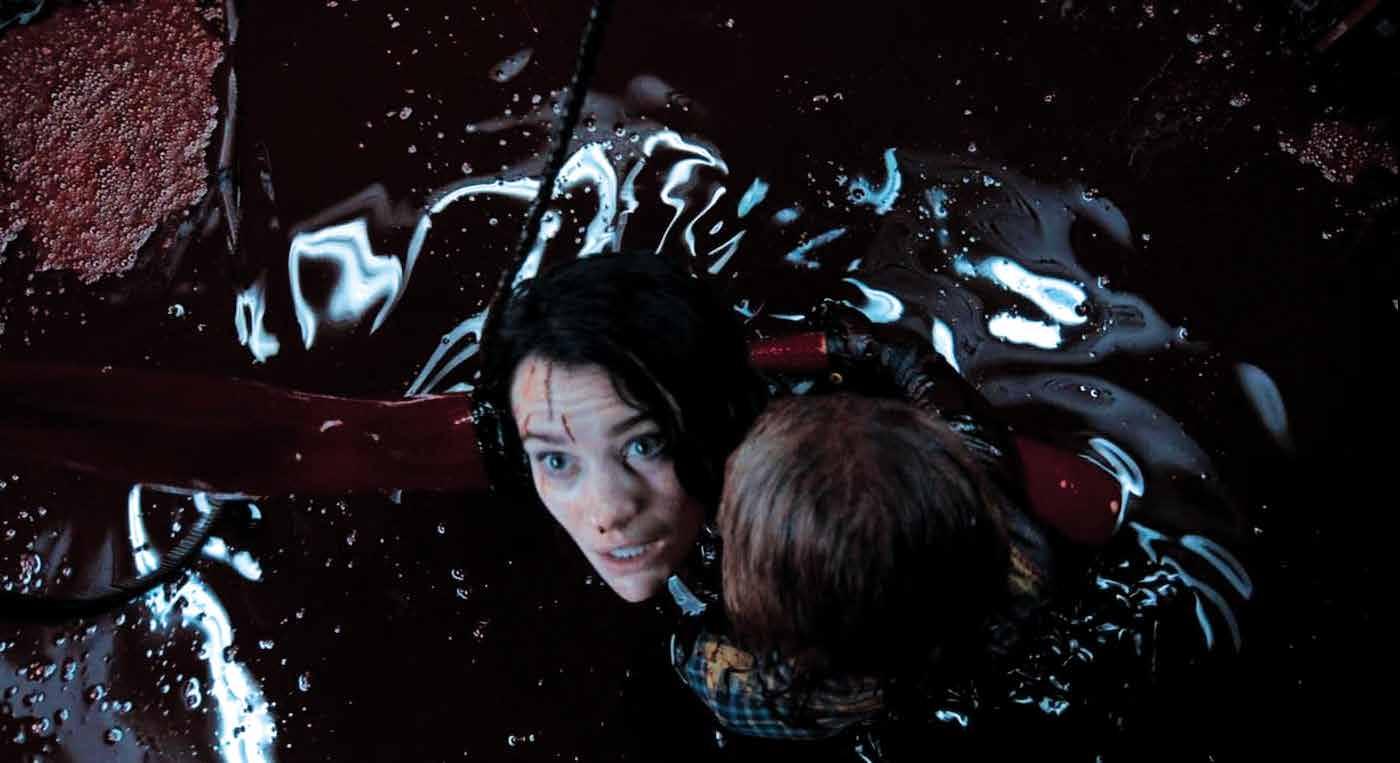
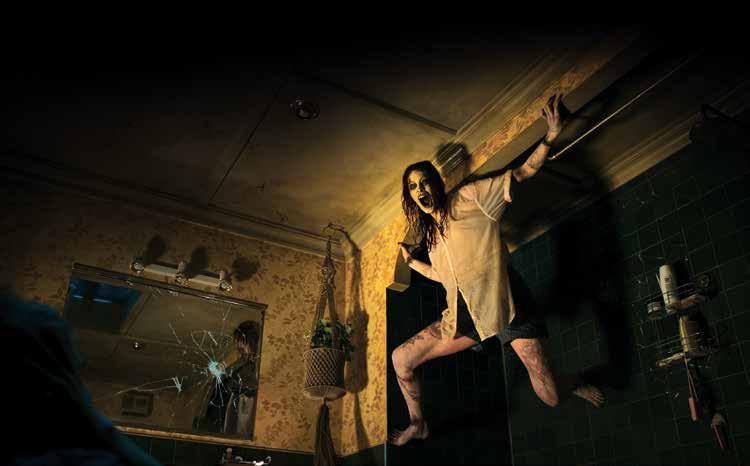
Alyssa Sutherland in Evil Dead Rise – Photo courtesy of Warner Bros.
Lily Sullivan and Nell Fisher in Evil Dead Rise – Photo courtesy of Warner Bros.
UNFORGETTABLES
William Castle, House on Haunted Hill and The Tingler. I loved them all.
It was my grandmother who urged me to seek this one out. Not sure why it was so hard to get my hands on, but I remember finally discovering a copy at the downtown Spokane library. I was far from disappointed.
It is the story of a promising sculptor, Prof. Henry Jarrod (Price), who is known for his eerily lifelike wax sculptures. But he is betrayed by his greedy business partner (Roy Roberts) and is left for dead underneath the flaming rubble of a massive fire. Miraculously resurrected nearly two years later but now saddled to a wheelchair and without the use of his hands, Jarrod reopens his House of Wax utilizing the talents of his new disciples: a lumbering deafmute (Charles Bronson, then still known as Charles Buchinsky) and an alcoholic excon (Nedrick Young).
The place is an immediate hit. The museum’s salacious depictions of murder, death, and other devilish occurrences packs the place with wide-eyed, slack-jawed customers. The kicker? Most of the displays aren’t wax dolls whose creation was supervised by Jarrod and meticulously completed by his pupils. They are instead quite dead, each figure the body of the recently deceased covered in a thin layer of wax and brazenly showcased for all to see.
Watching this as a youngster was admittedly strange. Not because De Toth’s macabre masterwork was so much fun or because Price’s villain was a hypnotically sinister hoot (although both items are undeniably true), but more because of which facets of the thriller were drawing so much of my attention. I had trouble figuring out who I related to more. Plucky heroine Sue Allen (Phyllis Kirk), whom Prof. Jarrod is intent on transforming into his beloved Marie Antoinette? Or was it Cathy Gray (Carolyn Jones), the gorgeous — yet kind — gold digger tragically destined to become a part of the devious sculptor’s wax menagerie as his treasured Joan of Arc? It shouldn’t have been a question. Who wants to be converted into a lifeless statue,
after all? But as a youngster dealing with their gender identity and realizing they were likely never going to see their outside match all they were feeling internally, the thought of being magically blessed with eternal beauty for all to see and covet was unnervingly appealing. I could not help but be drawn to Cathy’s transformation, and much like other similar stories in which people are transmuted from one form to another — and even though the touch of Prof. Jarrod’s evil hands was deathly permanent — I was still greedily fascinated all the same. But the same went for Sue Allen. While she does ultimately end up the proverbial damsel in distress, as portrayed by the pluckily resil-
ient Kirk, Sue still has her own agency. She investigates Prof. Jarrod even when no one else believes her that something horrible is going on. She knowingly flirts with danger, because she is determined to get justice for her murdered friend. Yet Kirk never loses an ounce of her femininity and, because of this, she’s that rare 1950s gothic horror heroine who doesn’t have to change who she is or take on a more masculine countenance while searching for the truth.
De Toth directs the heck out of House of Wax, and it’s one of the only 3-D offerings of the period that doesn’t rely entirely upon its visual gimmick to shock its audience. There is sublime depth to the imagery, and
not nearly as many “gotcha!” sequences in which items or limbs are thrust or thrown out toward the viewer as one would expect (the famous carnival barker postintermission scene notwithstanding).
Instead, De Toth and his talented technical team do a stupendous job filling the frame back to front with exquisite details. This allows the feature to work whether or not it is viewed in 3-D. Items linger throughout the frame. Prof. Jarrod’s museum appears to be far larger and more expansive than it actually is. It also allows for the villain’s henchman, a marvelously memorable Bronson in one of his first credited roles, to slink in and out of the shadows with creepy dexterity. The building tension as he silently stalks a clueless Sue during the climax is divine.
Price would not become a full-blown horror icon until the release of The Fly, but the seeds for his makeover from underutilized if supremely talented character actor — prepare to be amazed at 1944’s Laura, 1946’s Dragonwyck, and 1951’s His Kind of Woman — to above-the-title superstar were certainly planted here. You can see it all click, like a switch has been turned on, the malevolent gleam hiding within his mesmeric eyes soon to be put to spectacular use, most notably by the aforementioned Corman and Castle.
Yet I keep finding myself returning to House of Wax again and again, mainly due to my continual fascination with its two female leads. Do I long to be more like Sue, feisty and selfless? A free thinker and a good friend? Someone who fights with every ounce of her heart, no matter what the cost, for the things she believes in and for those she loves? Or would I give it all up to be an inanimate statue, a timeless paragon of feminine beauty all would gaze upon in awe and desire, more or less a lifesized Barbie doll?
As an adult whose life has seen numerous twists and turns, I know the answer to those questions, and it’s unlikely anyone would be surprised by them. But the genius of House of Wax is that, with every viewing, for a few brief moments, this all becomes a deliciously disturbing question mark once again, and I’m lost in De Toth’s ominous saga of revenge, creation, terror, and resilience as if I were watching it for the first time. If this isn’t the mark of greatness, then I’m not sure what would be.
Now celebrating its 70th anniversary, House of Wax is available on Blu-ray, DVD, and to purchase digitally in HD on multiple platforms. It is also currently streaming on (HBO) Max.
House of Wax – Photo courtesy of Warner Bros.
Vincent Price and Phyllis Kirk in House of Wax – Photo courtesy of Warner Bros.
Books
Knowing What We Know is a book worth understanding
by Terri Schlichenmeyer Special to the SGN
KNOWING WHAT WE KNOW: THE TRANSMISSION OF KNOWLEDGE FROM ANCIENT WISDOM TO MODERN MAGIC SIMON WINCHESTER
Sometimes, you know things because you just do. You learned through osmosis, the grapevine, an elder, or a peer. Someone said something and bingo! you were enlightened, informed, made aware.
In fact, starting just a few weeks after you were born, you became an information sponge, and so you remained for about the first twelve years of your life. You learned from teachers and parents in a “generational food chain.” After a while, learning came slightly harder; still, no matter what your age now, you have the capability to learn.
“The arc of every human life,” says author Simon Winchester, “is measured... by the
Get a kick out of Isaac
ceaseless accumulation of knowledge.”
But how?
In the beginning of time, knowing was a matter of social skills: we learned, and shared what we knew. Writing was invented, coincidentally, in two places on the globe at about the same time, and the ability to preserve information on tablet, parchment, or vellum led to the creation of repositories for that information. Schools were founded, testing was established.
While Plato and Socrates thought about how we learn, their knowledge about it was limited. For a long time, knowledge was based in the heavens, until Voltaire shook things up and aimed big thinkers at facts, rather than religion.
In the meantime, Indigenous peoples and the illiterate passed down their knowledge in stories and songs, which worked because, as Winchester says, “people tell people things... in a thousand ways” Societies began to understand that swapping knowledge with other groups helped spread information. Books were invented, newspapers and magazines followed, then came the telegraph, radio, telephones, television, and the internet — which causes Winchester to wonder if
we might forget how to learn and remember when we don’t need to do so?
It happens to the best of us: those embarrassing moments when a fact is just out of reach inside your brain and you flounder. You might not be able to say exactly what you want to say, but after reading Knowing What We Know, you’ll see how you may have learned it.
In examining the vast catalog of human knowledge, we must look at almost every study that’s ever been tackled, and here, Winchester does the heavy work of separating what’s important from what’s not so much. While this still might be too much information for some readers — and Winchester touches on TMI — it helps to see that knowledge is a layered thing that can also be slippery, easily manipulated, and dangerous. He goes on to sound a plaintive alarm at our reliance on conveniences: many of us don’t remember phone numbers anymore, and addresses are elusive things. What’s next?
Readers who are concerned about libraries, banned books, the disappearance of language and societies, and fake news will appreciate this book immensely. Knowing What We Know is good — and now you know.
Fitzsimmons’ debut novel
by Lindsey Anderson SGN Staff Writer
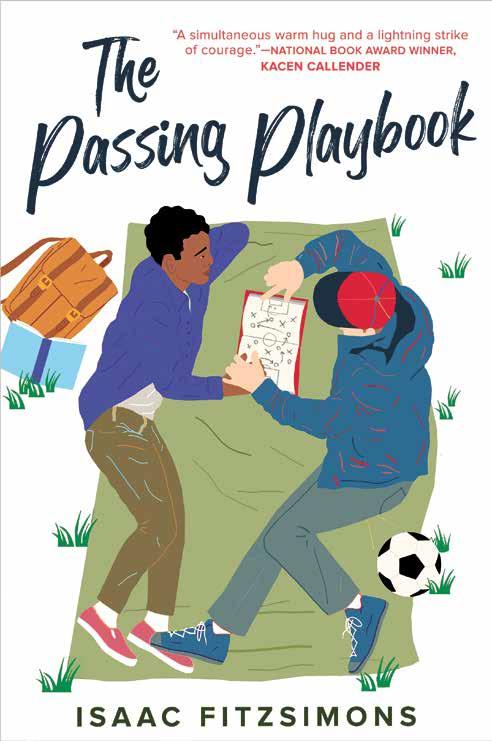
When author Isaac Fitzsimmons first decided to write his debut young adult novel, The Passing Playbook, he wanted to write something unpredictable. What he ended up with was a story so unexpected, it even surprised him!
Inspired by tenderness
The idea for The Passing Playbook came to Fitzsimmons well before he was published. “I was doing data entry, and because it’s boring, I would listen to the radio or audiobooks,” he recalled. One day, he was listening to a story about a boy who learned to play “Can’t Help Falling in Love” from another boy at a military school.
“I just loved this image of a boy teaching another boy to play a love song on guitar at a military academy, and I was like, ‘I need to make this into a story, and I need to make this Gay,’” Fitzsimmons said.
The story began with the image of two boys sharing a tender moment in a hypermasculine setting. “I started drafting it, thinking I would do it at an art academy or a summer camp, because you had a guitar, but it wasn’t working. I knew I wanted a setting like a military academy, where there was a hierarchy and that masculine energy that would also have that softness that I wanted to put in,” he continued.
Throughout the summer of 2016, Fitzsimmons toyed with the image he couldn’t get out of his head. “That summer was the Olympics or the World Cup, something like that, where there were multiple international soccer tournaments that I would watch. I decided to set it on a soccer team,” he said.
Looking for an arsonist
Once he knew the setting for his story, the rest came quickly. “There’s this great saying that ‘If you have a love interest who is a firefighter, then your main character needs to be an arsonist,’” Fitzsimmons said. “It’s the idea that things need to be opposite, so there needs to be a real reason why these two can’t be together.”
Using the firefighter theory, he came up with his first character: Justice, a soccer star struggling with religious trauma. “I really liked the idea of a kid from this conservative family who uses religion as a weapon to try and control others, and then he uses soccer to try and escape from that,” he explained.
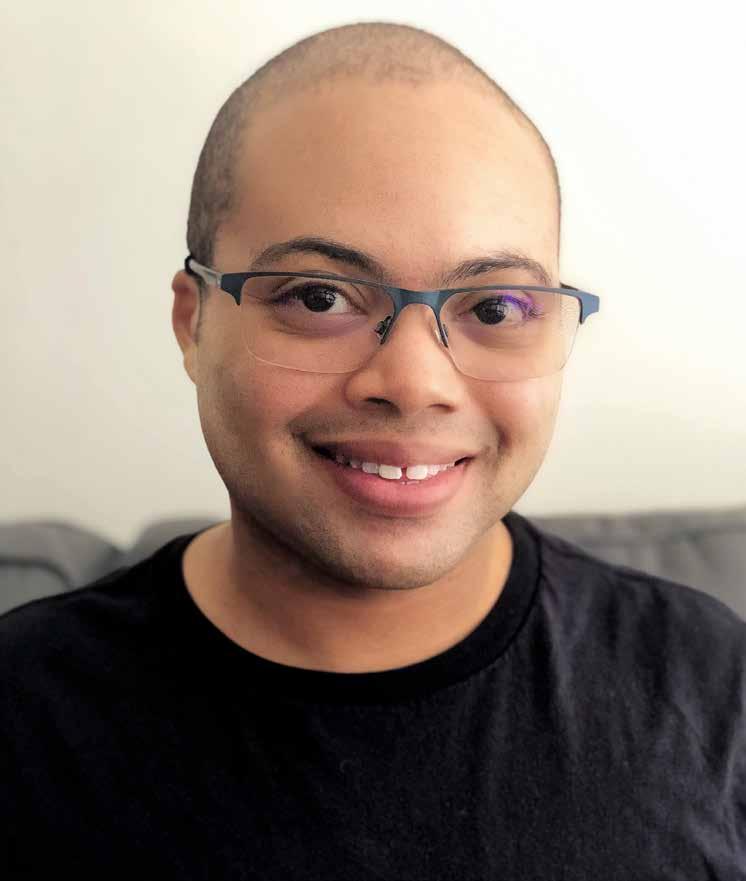
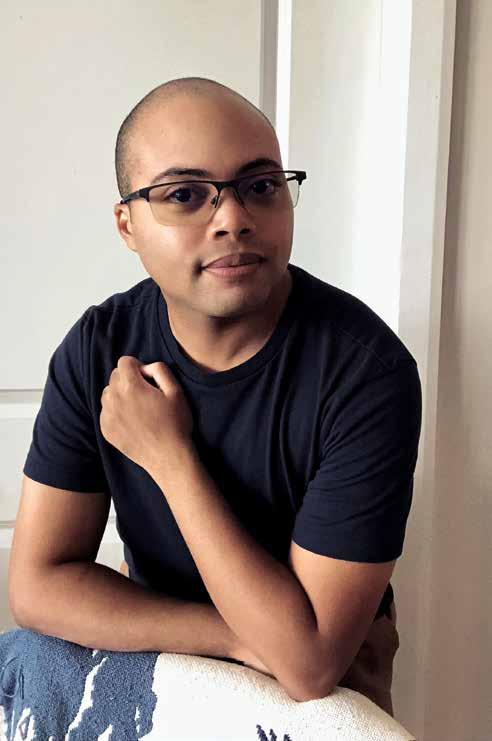
Isaac Fitzsimons – Photo by Raquel Toledo
Image courtesy of Harper
As Fitzsimmons continued to develop Justice’s character, he started to think about who the “arsonist” would be in his story. “That’s where the idea came in: he has to be Trans. He has to be Queer. He has to be a soccer player.”
Although the character of Spencer, a Queer, Trans soccer player, started as the ideal love interest for Justice, it soon became clear The Passing Playbook was his story to tell. The story evolved from Justice’s point of view to a dual POV, eventually becoming Spencer’s story.
Writing a Trans story
Despite being a Trans man himself, Fitzsimmons didn’t want his debut novel to be a Trans story. However, the more he thought about Spencer, the more he realized his perspective needed to be shared.
“I knew it was going to be Queer, yes. I didn’t know it would be Trans,” he recalled. “I wanted to make a Trans book because I am Trans. I didn’t think it was going to be my debut. I was scared when I realized it had to be. I couldn’t have written the book without Spencer, and Spencer wouldn’t be Spencer if he was not Trans. So, I was scared about starting to write this book and putting more of myself on the page than I initially wanted.”
The risk paid off. The Passing Playbook’s debut delighted readers and critics. Some have even reached out to Fitzsimmons to share how much the book meant to them.
“I have heard nice feedback from Trans readers who have said this is the first time they have seen themselves represented, especially if they are people of color,” he said. “I’ve also received messages from parents and grandparents who have said they bought this book for their child who was Trans and loved it.”
One note Fitzsimmons gets about the book is how happy people are to see a Trans story with supportive parents. One parent of two Trans kids felt particularly represented by Spencer’s parents in the book.
“She said she loved how I portrayed the parents, because I didn’t make them vil-
“Some people have described it as a fairytale, because it’s not realistic… I wanted to write this nice world where good things happen for Trans people, because that’s not the world we necessarily live in.”
lains. They’re imperfect, but they’re trying their best, which is what all parents should aim for,” Fitzsimmons said. “That’s what I want to see for Trans kids. I don’t want parents who don’t support them, even though that does happen. I think it’s important for Trans kids who aren’t out yet to see that maybe [they] can come out, and [their] parents will be accepting.”
“I didn’t expect to see where we are now”
When he decided to write about a high school soccer team, he hadn’t even considered the topic would become fodder for political debate. But writing a book can be a slow process — it took Fitzsimmons four years to complete The Passing Playbook During that time, he watched as the rhetoric around Trans participation in sports evolved into yet another thing he hadn’t expected.
“What’s funny is that when I was writing it, it wasn’t that huge of a deal,” he remembered. At the time, individual cases were popping up in which Trans kids were benched when wanting to play sports, but the national push to create laws that would bar them from participating had yet to begin.
“I didn’t expect to see where we are now,” Fitzsimmons said. “What I expected was to see more politicians standing up for Trans rights and to protect Trans youth in sports. I didn’t expect to see this big push against it, to see us go on the defensive.”
Fitzsimmons also acknowledges that Trans women are often the most discriminated against in sports. Many of the issues Spencer faces in the story affect Trans women, but his privilege as a boy also sets the story apart from many real political issues.
A contemporary fantasy
While Fitzsimmons is delighted to hear from Trans kids and their families about how they connected with the book, he also hopes they understand that it leaves out a lot of the real challenges Trans athletes face today.
“Some people have described it as a fairytale, because it’s not realistic,” he said. “Things get wrapped up nicely in the end. I wrote that purposefully. I wanted to write this nice world where good things happen for Trans people, because that’s not the world we necessarily live in.”
He also hopes that readers take to heart messages about coming out. “We don’t owe
it to anybody to come out, and you should wait until you are safe and supported, both emotionally and physically,” he said. “That’s an important message for Trans youth. I don’t want them to think that if they don’t come out they’re disappointing anybody. Cis people have to prove to Trans people that they are safe to come out to. The pressure shouldn’t be on the Trans people to come out — it should be on cis people to create an environment where Trans people feel safe to come out.”
What next?
Fans of Fitzsimmons’ work will be excited to know he’s keeping busy. Following the release of The Passing Playbook, he has published short stories in the anthologies Game On and Cool. Awkward. Black. Fitzsimmons is also working on multiple full-length novels, which are expected to hit shelves sometime in 2024.
“I’m working on another Queer YA contemporary, which does have a music setting,” he said with a laugh. “Some of the scenes I wrote the beginning of The Passing Playbook, when I thought it might be set at a music academy school, are actually in the next book. It’s Gay. I love it. It’s a lot of fun.”
He’s also working on a middle-grade fantasy novel. While this one, written for younger audiences, does not have overt Queer themes, he includes subtle LGBTQ+ representation.
“In all of my books, I make sure to include secondary characters that are Queer and Trans and not make a big deal out of it,” he said. “One of the characters uses ‘they/them’ pronouns. It’s a fantasy not set in this world, but it’s also not announced. It’s just that this character uses they/them pronouns.”
For readers looking to keep up with all of Fitzsimmons’ latest projects and find links to purchase any of his books, he announces everything on his website: Isaacfitzbooks. com.
Isaac Fitzsimons – Photo by Raquel Toledo
Image courtesy of Dial Books
Op-Ed
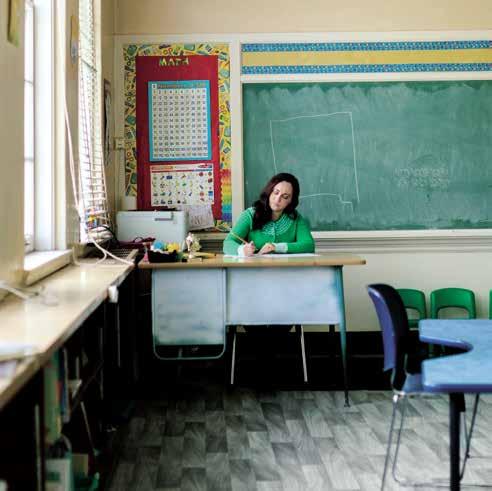
Teaching while Queer
A call for submissions from Queer educators
by Todd Bohannon Special to the SGN
Twenty years ago, I decided to become a teacher. I was motivated by two main factors: first was my genuine love for working with kids, and second, I passionately wanted to create a safe space for Queer youth in our public schools, something I never experienced in my own youth.
While attending a graduate teaching program with a stated focus on social justice, I learned about a host of problems in the public school system, including systemic underfunding, the racist school-to-prison pipeline, and white supremacist curricula. Unfortunately, the challenges I would face as a Queer educator were never addressed by my teacher certification program, nor were they in any of the dozens of districtprovided professional development offerings I have attended.
On the surface, our educational institutions may appear to be more and more welcoming, perhaps even safe. But this could not be further from the truth. Over my years of teaching in public schools, I have found there to be a number of unique challenges faced by Queer educators, challenges that are often hidden from view, including the following:
• Targeted harassment by students, families, administration, the right wing, social media, and other teachers
• Heteronormative work environments that traumatize and oppress Queer staff
• The classroom closet that teachers are often forced to live in, which provides no actual protection, and the long-term trauma
this inflicts
• Zero support for the emotional toll and career risks carried by Queer teachers who attempt to support their Queer students
• The effects of tokenization of Queer
people in the school environment, the emotional labor and work load we are often asked to carry, as we are requested (and often expected) to participate in any and all equity initiatives
• School-based equity teams often placing Queer teachers in the spotlight, causing homophobic and transphobic backlash that forces Queer educators to leave their jobs
The truth is, Queer educators exist in a precarious space in our school communities, one that leaves us dangerously open to attack. The discourse around our specific conditions is extremely limited, while the few LGBTQ stories that are highlighted fail to represent the complexity of the obstacles we face. The stories shown most often uplift successes predicated on surface reforms, such as diversity and inclusion initiatives, rainbow stickers, and Pride posters.
Sadly, these reforms have obscured the fact that no structural protections have actually been instituted for Queer teachers.
Together we can challenge this oppressive narrative, by uplifting the authentic and diverse experiences of Queer educators across the country, stories that often intersect with other marginalized identities, including race, class, gender, and disability.
This is a call to action: to highlight the need for systemic changes and radical rethinking, to bravely share the many ways we encounter systemic oppression in our school communities, and to open up a space for discourse that will help to dismantle those systems and continue the work of envisioning a future of Queer liberation.
This is a call for personal essays, poetry, and interviews, intended for a broad audience, of up to five thousand words. The submission deadline is August 1, 2023. Please email me directly at toddbohannon@hotmail.com.
Photo by Rodnae Productions / Pexels
National News
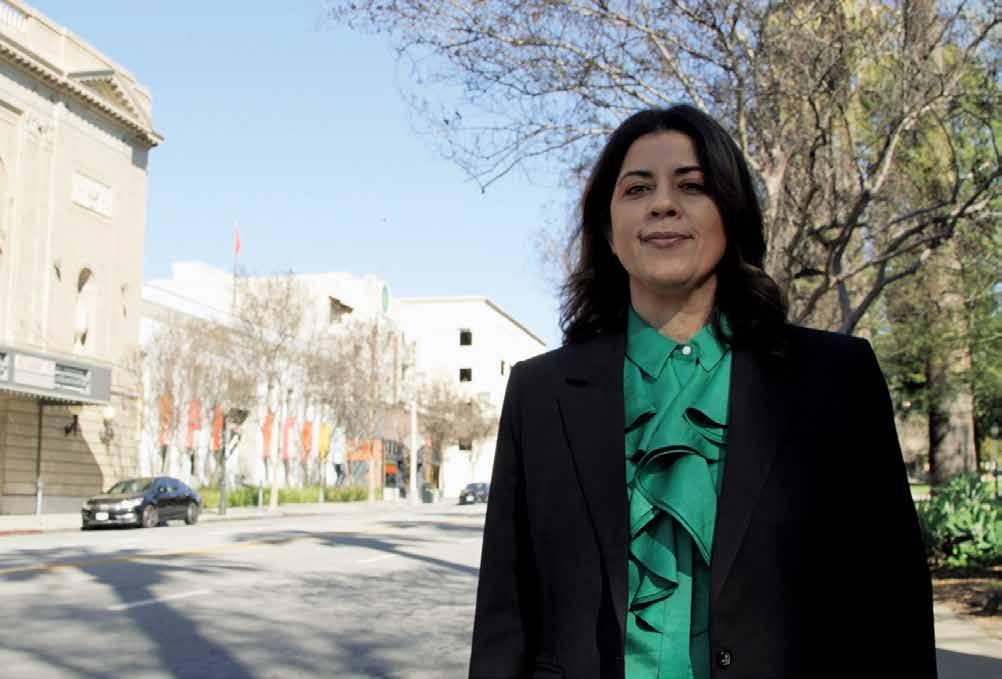
West Hollywood mayor has dreams of Congress
by John McDonald
SGN Contributing Writer
On a date during her sophomore year in college, Sepi Shyne had what would turn out to be a fateful brush with oppression.
“It was a very scary experience, and it kind of shifted me into activism,” she recalled.
Shyne was sitting with her girlfriend drinking lattes at a coffee shop in San Jose, California, when the manager, accompanied by a police officer, approached their table.
“The next thing I know, they are standing over us, and the police officer looks down and says, ‘You two need to get up and leave. The manager doesn’t want your kind in this establishment.’”
The manager then blew a kiss and winked as Shyne and her girlfriend beat a hasty retreat.
“We got up and ran out of there in tears,” she said. “We were both immigrants and scared of authority figures who were abusing their power.”
The incident strengthened the women’s resolve to get their law degrees and fight injustice. Two decades later, Shyne is now the mayor of West Hollywood, California, and campaigning for a seat in Congress.
“West Hollywood has and always will be on the right side of history: on the side of human rights, a sanctuary city for the LGBTQ+ community and immigrants,” she said. “We are a small city with a big heart, and that’s actually what we need to create in Congress — bring the heart back to Congress — and I hope to do that.”
Elected to the West Hollywood City Council in 2020, Shyne became the first Lesbian of Iranian descent in the world to hold public office. She was a two-year-old when the Iranian Revolution erupted and transformed the country into an Islamic republic.
“We didn’t have a full democracy; we had
a monarchy, but we had a lot of freedoms, And then I saw women’s rights just be obliterated, and for a little girl it, felt like a blink of an eye,” she said.
Three years later, Shyne’s family fled Iran with her and arrived in America to start a new life.
Finding a home in WeHo
Shyne’s more than 20 years of civil rights work culminated with her election to the West Hollywood City Council, where she rotated into the mayor’s seat in January. In the last two years, she said, the council has passed more than 60 items that bring much needed change to what’s dubbed “the Creative City.”
“I was immediately impressed with her sincere determination, her specific improvement plans for the city, and her progressive values,” said Vic Gerami, an activist and documentary filmmaker. “Unlike a lot of elected officials, Sepi is a doer. She does what she says and follows through with her promises.”
Gerami, an Armenian-American, said Shyne is a brave fighter for underserved communities. “She is fearless and does not succumb to developers, special interests, and the politics of respectability.”
The changes Shyne has ushered in are designed to make West Hollywood more affordable, such as raising the minimum wage to $19.08 an hour — the highest in the country — while giving workers paid time off and sick time.
Shyne also spearheaded improved tenant protections, secured federal funding for a behavioral crisis response unit, and reduced homelessness by 60%. The last item she credits with keeping her eye on the ball during the COVID-19 pandemic.
“When I got into office, I got on the homelessness subcommittee, and we kept monthly meetings during the pandemic,” Shyne said. “We felt it was really important to keep an eye on things as stewards
“It’s incredible to be mayor of one of the best cities in America that’s all about human rights, LGBTQ equality, women’s rights, and a safe haven for immigrants.”
and leaders of the city. We got updates from staff, gave direction on what improvements needed to be made, and made sure our social service providers were moving swiftly. And we were able to house more than 60% of our unhoused residents. I attribute that to accountability and doing my job.”
Topping her list of current priorities is bringing public restrooms to the city that are accessible 24 hours, seven days a week.
“Being unhoused is not 9-to-5. It is 24 hours, and we have to shift our thinking to be more compassionate,” she said, adding that tourists, on whom West Hollywood heavily relies, need somewhere to use the bathroom too.
Out and proud
Shyne came out to her mother in high school, and when the incident at the coffee shop in San Jose happened, she decided to become more vocal and visible in her advocacy efforts.
“I told my ex, ‘I’m tired of feeling powerless. We need to go to law school, learn the law, and stop this from happening to others,’” Shyne said.
Shyne’s reputation as a civil rights advocate landed her a guest appearance on CNN. It was after that that she realized she could no longer return to Iran.
“LGBTQ people that are out are killed,
and I would have been killed,” she said.
So she has settled in West Hollywood with her fur babies — two cats and a dog — and is dedicated to keeping the city a sanctuary for those seeking a better life.
“It’s incredible to be mayor of one of the best cities in America that’s all about human rights, LGBTQ equality, women’s rights, and a safe haven for immigrants,” she said.
Campaigning for Congress
When US Sen. Dianne Feinstein announced her upcoming retirement earlier this year, it set off a chain reaction in the Democratic ranks. US Rep. Adam Schiff quickly announced his intentions to seek the Senate seat, leaving Congressional District 30, which includes West Hollywood, up for grabs.
So, inspired by the Iranian “Woman, Life, Freedom” movement, Shyne said she felt called to step up and run for the congressional seat being vacated in order to fight for the American dream she represents.
“I am literally a product of the American dream myself,” Shyne said. “I was an undocumented immigrant when I fled Iran. I was undocumented until I was 16, and now I’m the mayor of West Hollywood, and I want to make sure our democracy remains, and I’m going to fight for that.”
Sepi Shyne – Courtesy photo
National/International News
National news highlights
by A.V. Eichenbaum SGN Editor-in-Chief
San Francisco to repeal boycott of anti-LGBTQ+ states
San Francisco’s Board of Supervisors voted Tuesday, April 27, to repeal a ban on city-funded travel to 30 states that restrict LGBTQ+, abortion, and voting rights.
The boycott has been in place since 2016 and initially only applied to states the City said restricted the rights of the LGBTQ+ population.
A report released last month concluded that the boycott was raising costs and administrative burdens for the City and has had no measurable or cited effect on states with restrictive LGBTQ rights, abortion policies, or voting rights.
In the wake of this decision, the state of California is reconsidering its ban of state-funded travel to 23 states with antiLGBTQ+ legislation.
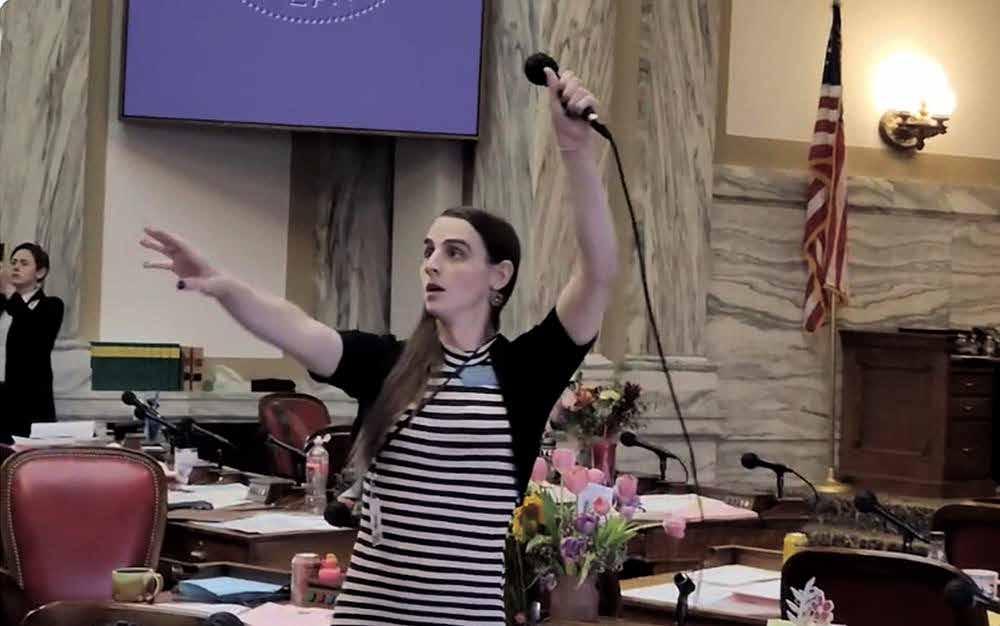
Zooey Zephyr silenced by Montana Republicans for breaking decorum
Trans activist and Democratic legislator Zooey Zephyr was barred from the Montana statehouse floor in a 68-32 vote, due to her statements regarding Senate Bill 99, which would ban Transgender healthcare treatments for minors in the state.
“If you vote yes on this bill and yes on these amendments,” said Zephyr during open debate, “I hope the next time there’s an invocation when you bow your heads in prayer, you see the blood on your hands.”
The motion allows her to continue to vote remotely in House decisions but bars
her from entering the House floor, anteroom, or gallery for the remainder of the legislative session, which is scheduled to end on May 10.
Zephyr is the first openly Trans legislator in the state of Montana.
The motion also stipulates that Zephyr
International news highlights
by A.V. Eichenbaum SGN Editor-in-Chief
LGBTQ orgs in Japan push for equality ahead of G7 summit
Japanese activist groups delivered a statement to the government on Friday, April 21, urging that the country legalize same-sex marriages and enact an antidiscrimination law before the G7 summit in May.
Japan will be hosting the summit and is currently the only country in the Group of Seven that doesn’t recognize same-sex unions or provide other equal protections for the LGBTQ+ community.
Prime Minister Fumio Kishida faced backlash in February when he said he wouldn’t want to live next to LGBTQ+ people. In the aftermath of public outrage, Kishida’s government has focused on preparing legislation that would promote but not mandate LGBTQ+ rights.
“Enactment of awareness promotion is far from the global standard,” said Yuichi Kamiya, executive director of the Japan Alliance for LGBT Legislation.
The American Chamber of Commerce in Japan followed the activists’ statement on Friday with one of its own. “Japan’s lack of LGBTQ+ protections makes it a less attractive option for some of the best talent in the world in an era when companies operating in Japan cannot afford to lose talent to their global competitors,” it said.
Wales schools to receive guidance on supporting Trans students
As part of its LGBTQ+ Action Plan, the Welsh government will publish national guidelines for schools on gender education topics and supporting Trans students in the coming academic year.
“This is a complex area of policy which requires extensive consultation
would be allowed to speak in the chamber again if she apologized for her comments.
“When the speaker asks me to apologize on behalf of decorum, what he is really asking me to do is be silent when my community is facing bills that get us killed,” Zephyr told the Associated Press. “He is
asking me to be complicit in this legislature’s eradication of our community. And I refuse to do so.”
The motion has garnered national attention and sparked a protest by Zephyr’s supporters in the statehouse.
with experts, practitioners, and the public, as well as children and young people themselves,” a spokesperson for Wales told the BBC.
The guidelines will be distributed over the summer. Members of the Welsh Conservatives have called the decision a “deli-
cate subject” that is “vital” to get right, according to Wales Online.
“The guidance should allow teachers to focus on teaching and not pander to identity politics and culture wars,” said Laura Anne Jones, a spokesperson for the Welsh Conservatives, in a statement.
Rocio Cifuentes, children’s commissioner for Wales, released a statement saying she expected “the Welsh government’s upcoming national trans guidance for schools to act as a comprehensive and practical tool to help schools to confidently respond to pupils’ needs.”
Democratic state Rep. Zooey Zephyr hoists a microphone into the air Monday, April 24 as her supporters interrupt proceedings in the state House in Helena, Mont., by chanting "Let Her Speak!" – Photo by Amy Beth Hanson / AP
Participants march during the Tokyo Rainbow Pride parade, celebrating advances in LGBTQ rights and calling for marriage equality, in Tokyo, Japan, April 23, 2023 – Photo by Issei Kato / Reuters