NIKKITA OLIVER
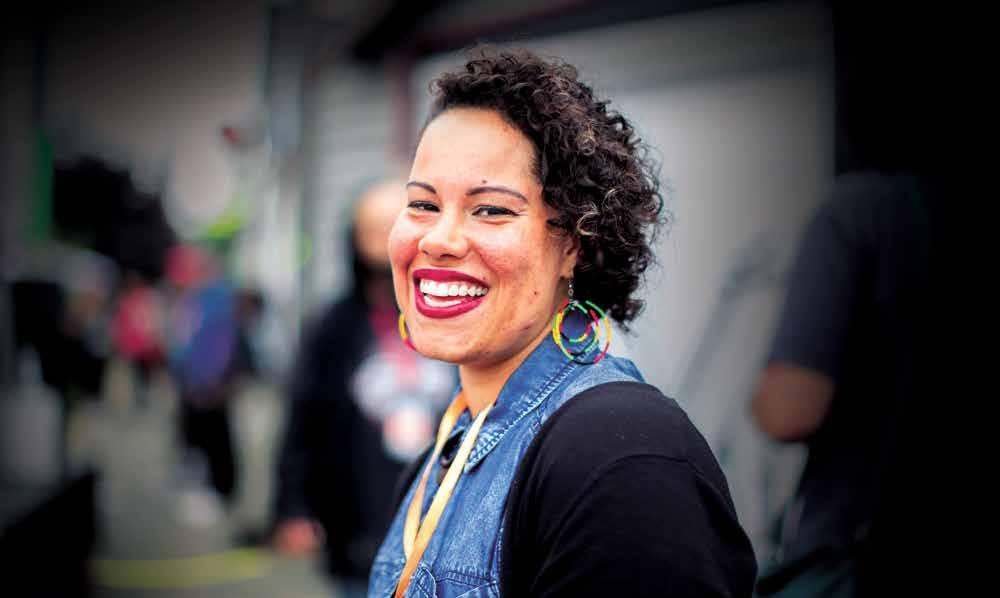
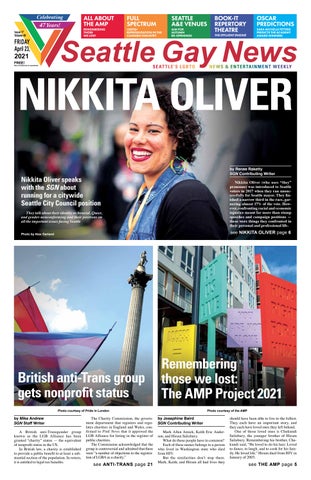
Nikkita Oliver speaks with the SGN about running for a citywide Seattle City Council position
They talk about their identity as biracial, Queer, and gender-nonconforming and their positions on all the important issues facing Seattle
by Mike Andrew SGN Staff Writer
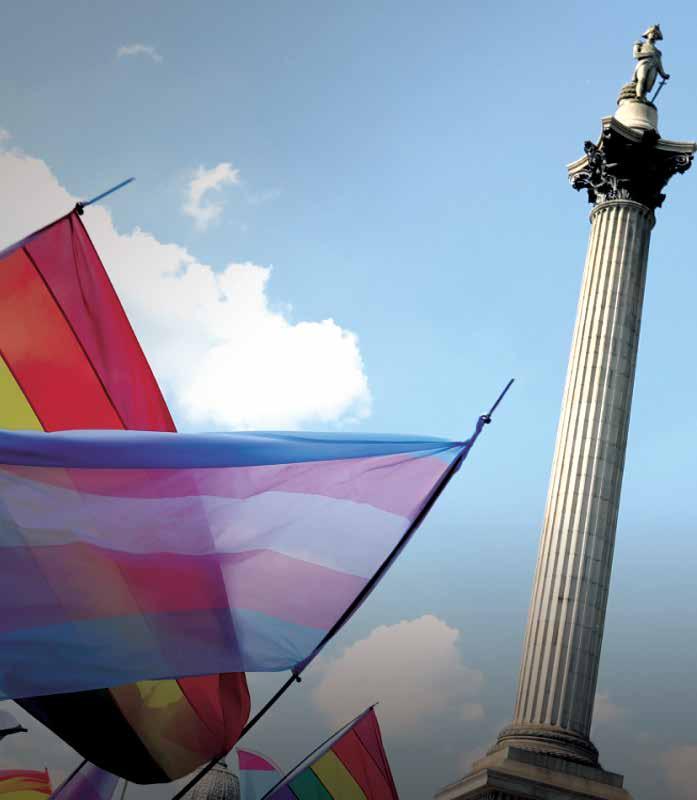
A British anti-Transgender group known as the LGB Alliance has been granted “charity” status — the equivalent of nonprofit status in the US. In British law, a charity is established to provide a public benefit to at least a substantial section of the population. In return, it is entitled to legal tax benefits.
The Charity Commission, the government department that registers and regulates charities in England and Wales, confirmed to Pink News that it approved the LGB Alliance for listing in the register of public charities.
The Commission acknowledged that the group is controversial and admitted that there were “a number of objections to the registration of LGBA as a charity.”
see ANTI-TRANS page 21
by Renee Raketty SGN Contributing Writer
Nikkita Oliver (who uses “they” pronouns) was introduced to Seattle voters in 2017 when they ran unsuccessfully for Seattle mayor. They finished a narrow third in the race, garnering almost 17% of the vote. However, confronting racial and economic injustice meant far more than stump speeches and campaign positions — these were things they confronted in their personal and professional life.
by Josephine Baird SGN Contributing Writer
Mark Allen Amick, Keith Eric Anderson, and Hiram Salisbury.
What do these people have in common?
Each of these names belongs to a person who lived in Washington state who died from HIV.
But the similarities don’t stop there. Mark, Keith, and Hiram all had lives they
should have been able to live to the fullest. They each have an important story, and they each have loved ones they left behind. One of those loved ones is Chukundi Salisbury, the younger brother of Hiram Salisbury. Remembering his brother, Chukundi said, “He loved to do his hair. Loved to dance, to laugh, and to cook for his family. He loved life.” Hiram died from HIV in January of 2005.
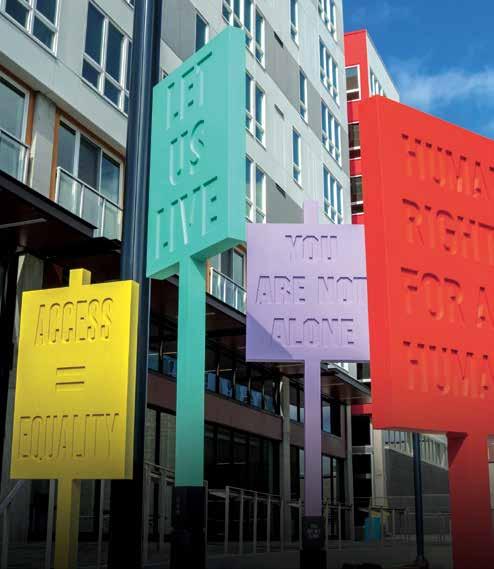
Photo courtesy of the AMP
Photo courtesy of Pride in London
Photo by Alex Garland




THIS AD SPACE HAS BEEN GENEROUSLY DONATED BY KRISTIN COSTELLO IN MEMORY OF SGN PUBLISHER GEORGE BAKAN





Local News
LGBTQ+ cannabis organization fights for representation in the industry
by Hannah Saunders SGN Contributing Writer
“The representation was and is still a bit lacking. This is a newer industry, and so it’s unfortunately overrun by cisgender straight white men, and so there’s not a whole lot of diversity of many types,” stated Neil Lequia, for whom it took years to break into the cannabis market. And by the time he did, he began wondering why there were plenty of cannabis organizations for women and people of color, yet nothing for the LGBTQ+ community.
So in the fall of 2018, Lequia founded The Full Spectrum — a Seattle-based organization of LGBTQ and allied cannabis industry professionals — to tackle the lack of diversity he was seeing within the industry.
A 2018 National Survey on Drug Use and Health stated that sexual and gender minorities are more than twice as likely to consume cannabis in comparison to their straight counterparts. They are also more likely to drop out of school, face harassment, and get kicked out of the home as a youth — and many turn to marijuana as a way of coping with being ostracized.
“Honestly, I feel like queers and cannabis go hand in hand, and we wouldn’t be where we are with legalization if it weren’t for the AIDS crisis and gays,” said Lequia, who explained how “the father of weed is a Gay man.”
During the 1980s AIDS epidemic, patients did not have access to adequate medications, and were instead given ineffective drug cocktails, becoming sicker as a direct result. HIV/AIDS ran rampant across the queer community in the US for years before President Reagan finally spoke out and took any kind of action.
Mary Jane Rathbun (also known as Brownie Mary) was a volunteer at the San Francisco General Hospital during the AIDS epidemic, and baked cannabisinfused brownies to give to patients. Mary
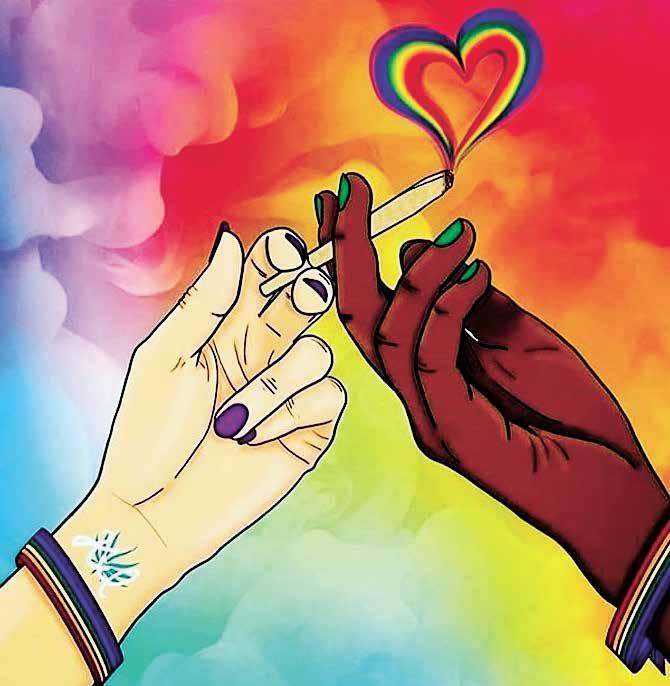
Jane’s pot brownies helped keep AIDS victims alive: they helped combat wasting syndrome, they took away severe pain, they helped the sick regain an appetite, and they led to a better quality of sleep. The proven benefits cannabis had on AIDS victims propelled the legalization of the substance within the United States.
Responding to today’s challenges One of the challenges regarding diversity in the modern cannabis industry stems
from the growing abundance of companies. Lequia explained how many cannabis companies are essentially start-ups, and generally do not have a large staff or payrolls, and very few have human resources departments. “This can create a breeding ground for activities where people can’t thrive,” said Lequia.
A way in which The Full Spectrum is tackling this issue is by providing a cannabis-focused business resources page, where individuals can gain learn to navigate the
workplace. Some topics on the page include: a nondiscriminatory policy outline, gendered vs. nongendered language, a code of ethics outline, and conflict resolution. Lequia created this resource with intention of keeping the conversation as open as possible for those in other industries.
In addition to providing educational materials, The Full Spectrum prides itself in volunteer work and supporting fellow Queer cannabis professionals. LGBTQ+ industry members and “budtenders” are routinely showcased on the organization’s Instagram page.
The Full Spectrum has also been tracking down Queer-owned cannabis companies across the globe, with the goal of creating a database on its website. So far, they have found about 65 companies.
Since the start of the coronavirus pandemic, the organization has had to switch all its events from in person to online, which has assisted with connecting LGBTQ+ cannabis industry professionals and allies across the country. Every April 19 the organization hosts an event to celebrate the work of industry members, since the day after (4/20) is extremely busy and much more customer focused. At the most recent smoke session, people from states such as Illinois, Texas, and New Jersey were able to join, since distance was no longer a barrier.
With Pride Month again being held virtually in Seattle, The Full Spectrum plans to host an online drag show, in addition to a viewing party for a two-hour Vice documentary about the 40th anniversary of the AIDS epidemic, featuring Lequia.
The Full Spectrum’s other short-term plans include the development of a database for cannabis companies, as well as turning the organization into a certified 501(c)(3) nonprofit organization.
To learn more or get involved, visit http://thefullspectrumnetwork.com/.
by Mike Andrew SGN Staff Writer
Democrats love us, Republicans hate us. That’s the conclusion of a new poll by YouGov, an international internet-based research firm.
Washington state ranked seventh in popularity among all US states when Democrats were questioned, but forty-fifth among Republicans.
The survey was conducted between March 12 and March 15, based on a sample of 1,211 adults, weighted to reflect US demographics.
Respondents were shown the names of two US states and told to pick which one they felt was better. Each respondent saw seven head-to-head matchups, and no one saw the same state twice.
The word “better” was not defined by the pollsters, so each respondent was free to use their own criteria.
After the whole sample had been questioned, the results were averaged. Washington came out number 15 overall.
No surprise: states that typically vote blue — Washington included — tended to be very well liked among Democrats, and equally disliked by Republicans.
an 82% winning record against competing states.
However, even Republicans like Hawaii well enough, ranking it 18th. And Florida was also in the top half for Democrats, in 21st place.
In the overall rankings, Hawaii came out on top, and Florida was third. Colorado — another blue state — came in second place.
In addition to Hawaii and Colorado, the states that Democrats nationwide prefer to Washington are California, Oregon, Virginia, and New York.
Among Republicans, only five states plus Washington, DC are more hated than Washington: Massachusetts, Oregon, Wisconsin, New Jersey, and California.
While Washington had one of the biggest likability gaps in the survey, no state is more polarizing than California. Democrats love the Golden State, ranking it second best behind Hawaii. And Republicans hate it, ranking California dead last at number 50.
The survey data also shows that Americans feel a strong sense of loyalty to the state they’re from, or where they currently live, regardless of politics. Participants chose their home state 77% of the time it was shown in matchups, and they selected their current state of residence 79% of the time.
On the other hand, states that typically vote red elicited approval from Republicans, and scorn from Democrats.
Democrats’ first choice was Hawaii, which won in 80% of its head-to-head matchups. Republicans’ top pick was Florida, with
Image courtesy of Full Spectrum
Photo by Andre Jenny / Alamy
Through The AMP Project: AIDS Memorial Pathway, Chukundi has been able to channel his grief into a way to remember his brother and the hundreds of others who have lost their lives to HIV/ AIDS. Chukundi, who is a Black, cisgender male ally to the LGBTQ community, believes this project is especially important in the age of COVID-19.
He says that this project and our current health crisis can serve as a reminder that no one is “immune” from unfortunate circumstances, and that they should serve as a wake-up call to the Black community.
“When there is a health crisis in the Black community, we need to take these things seriously,” Chukundi said.
According to the Center for Infectious Disease Research and Policy (2020), “Black Americans are infected with COVID-19 at nearly three times the rate of white Americans” and twice as likely to die from it.
Highlighting and remembering people, such as those above, has been what The AMP has been working toward since 2015. It was created by a passionate group of community leaders and volunteers, including people living with HIV, people of color, and LGBTQ community members. It has three goals: to use public art to create a space specifically for reflection and remembrance, to use technology to share stories of the epidemic and the diverse community response to the crisis, and to provide a call to action to end the stigma and discrimination that surrounds HIV/AIDS.
The project got its start in 2015, when Seattle City Councilmember Tom Rasmussen was finishing his last term and dreamed that a portion of the city’s planning money could be used to create a memorial to educate the public on the history of the AIDS
crisis in Seattle. With the help of Leonard Garfield, executive director of the Museum of History and Industry, which acted as a sponsor, the City contracted with MOHAI for a planning study. After confirming the location — an area newly developed around the Capitol Hill Light Rail Station — the planners were excited that The AMP would “be in a neighborhood long considered to be the heart of the LGBTQ community, and one greatly impacted by HIV and AIDS.”
After collecting fiscal sponsors, recording the stories of those impacted by HIV/ AIDS, selecting the artwork that will be featured, and awarding grants (through the state Department of Commerce, King County, 4Culture, the Seattle City Council, and the Mayor), the project was finally able to move into fabrication and installation. However, the pandemic moved the completion date from the end of 2020 into 2021.
The artworks
The pathway will have four exhibits. The first will be andimgonnamisseverbody, located in the central plaza. This will be a 20’ x 20’ sculpture, created by the artist Christopher Paul Jordan, acting as a portal into the spaces of “radical gathering, hospitality, celebration, and care that have arisen throughout the history of AIDS” (the descriptions are adapted from theamp.org).
The next stop is We’re Already Here, located in three different locations in the plaza and the park. These pieces are a series of tableaus by Civilization that mimic protest signs and their messages in order to evoke historic and iconic moments of public convergence. They will be strategically placed to help lead visitors through The AMP.
The Ribbon of Light, located in Cal Anderson Park, comes next. This piece, created by Horatio Hung-Yan Law, will be three human-size laminated glass sculptures placed along a landscaped path next to the main trail. These pieces were inspired
by poets who were impacted by the HIV/ AIDS epidemic.
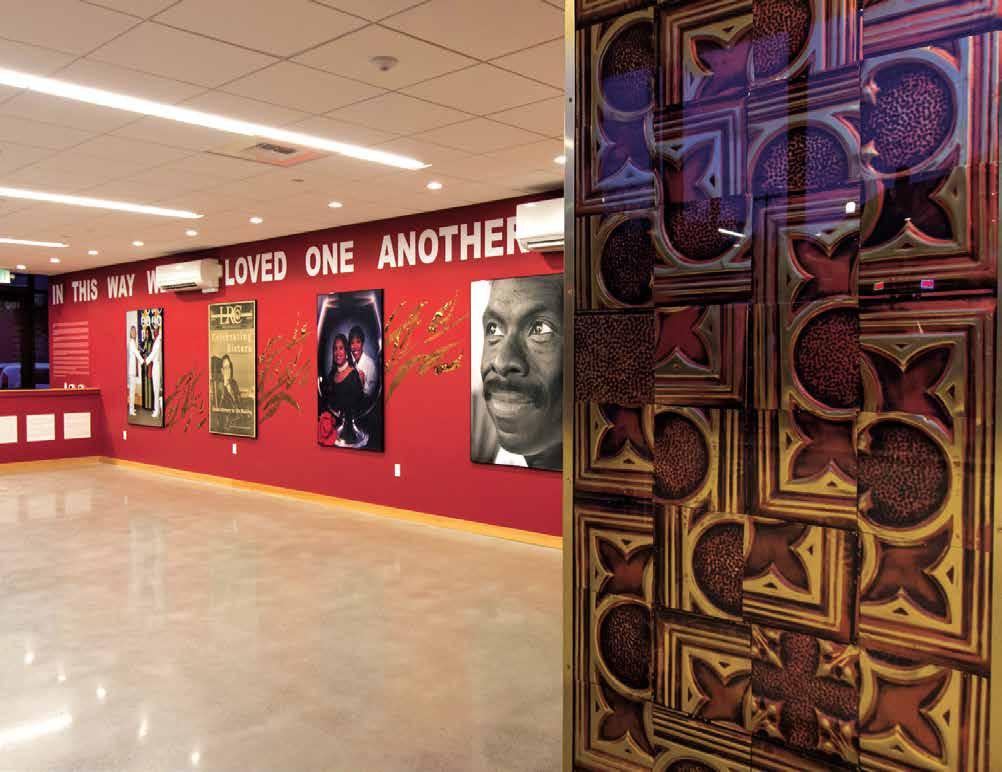
The last stop, In This Way We Loved One Another by Storme Webber, will be placed in the Cathy Hillenbrand Community Room in the Station House Building. This piece is dedicated to restoring the fartoo-long-absent narratives of working-class people of color and women who have been living with and dying from AIDS, through visual storytelling and text. Because of these portraits, viewers have the opportunity to discover the ways in which everyday people have found collective power in unity and have made change together.
Other efforts
There is currently an augmented-reality app being developed by Novaby that will accompany viewers through the entire pathway. The app will be used to access interactive experiences as well as additional information related to HIV/AIDS in our region.
A huge and important part of The AMP project has been to collect the history of HIV/AIDS in Seattle, King County, and Washington state. These stories include those of organizations and individuals alike. The project hopes that by sharing these stories in the collection, it will be able to promote historical awareness and education, as well as encourage empathy and help eventually end the stigma and discrimination surrounding HIV/AIDS.
If you have a story to share, go to theamp. org for more information. If you have a name that you would like to add to help The AMP in its efforts to remember those connected to Washington state that have been lost to HIV/ AIDS, go to same website to do so.
HIV today
According to the World Health Organization (2020), HIV/AIDS “continues to be a major global public health issue, that has
claimed almost 33 million lives so far.” For reference, as of April 19, 2021, COVID-19 has claimed almost 3 million lives (New York Times, 2020).
Although HIV/AIDS is not curable at this point in time, it is treatable. With increasing access to HIV/AIDS prevention, diagnosis, treatment, and care, it has become a manageable chronic health condition. Thanks to these medical discoveries, people living with HIV/AIDS are able to live long, healthy, and full lives.
Final stretch
The AMP Project Manager Jason Plourde, who has been working full-time to bring this project to life since 2018, said, “I have been blown away by the near-universal acceptance for this project. Everyone we have spoken to has been very supportive, generous with their donations, and constantly thinking about how they can help.” Through this project, Plourde and the huge team of committee member volunteers hope “not only to memorialize the epidemic but to show how its history is relevant.”
The project is in the final stretch and will be open for public viewing in June 2021. To get to that point, it is down to raising the last $35,000. Those who donate will make it onto the contribution wall and will ultimately help bring this project —years in the making — to the finish line.
The project will host a debut event in the afternoon of June 26 (details pending), during which viewers will be able to tour the artwork and speak to its creators. To donate to The AMP and help in its quest to remember those lost to HIV/AIDS and in their mission to educate the public, go to theamp.org.
Photo courtesy of the AMP
Local News
Oliver was born to biracial parents in Indianapolis, Indiana. Their father was in and out of the criminal justice system for failure to pay child support. While attending Seattle Pacific University, they began community organizing for justice and equity. It was here that they say they became “radicalized,” according to a 2016 profile in SPU’s Response Magazine, and where they “began to see racism, sexism, classism, capitalism, neoliberalism, homophobia, etc.” They also came to be involved with the Black Lives Matter movement in Seattle.
In the wake of the death of George Floyd, Oliver called upon city leaders to engage with protesters and minority communities to seek solutions to the racial and economic disparities that had become so pervasive that many Seattleites failed to realize they exist. Oliver even met with Seattle Mayor Jenny Durkan and Police Chief Carmen Best. Although those efforts were less than fruitful, their words took on new life as the COVID-19 pandemic and its financial impact further threw the issues into stark relief.
Since moving to Seattle in 2004, Oliver has served as a community support and cultural worker with Urban Impact, the Union Gospel Mission’s Youth Reach Out Center, the Urban Youth Leadership Academy, the Seattle Urban Academy, Who’s Next?, Year Up, and Writers in School. Currently, they are the executive director of Creative Justice, an arts-based restorative justice program for at-risk youth, and adjunct faculty at the Seattle University School of Law.
Oliver earned a degree in sociology in 2008 from Seattle Pacific University. In 2015, they were awarded a juris doctor from the University of Washington. In 2016, they earned their master’s of education from the University of Washington College of Education. Oliver was also recognized by the City of Seattle’s Human Rights Commission in 2015, when they received the Artist Human Rights Leader Award, and by Seattle Magazine, which named Oliver one of Seattle’s Most Influential Seattleites in 2017.
While Oliver has not been embraced by Seattle’s political establishment, they have gained the endorsements of powerful local politicians, such as Seattle City Councilmember Tammy Morales (Pos. 2), former Seattle City Councilmember Mike O’Brien, and several members of the state House of Representatives.
The Seattle Gay News partnered with Malcontent News to bring you this interview with Oliver, who identifies as both Queer and nonbinary. In the interview, they express their views on a wide array of issues, such as HIV/AIDS and hate crimes, and those specific to LGBTQIA youth; Transgender; and Black, Indigenous, and people of color.
They are seeking the citywide Seattle City Council Position 9.
A recording of this interview aired during the Malcontent News program “Happy Hour” earlier this week, which is available on Facebook, YouTube, and Twitch or at MalcontentNews.com.
Renee Raketty: The rate of HIV infections among Black, Indigenous, and people of color in King County, especially among men who have sex with men and people who are Transgender, remains high when compared to the general population. How would you as a member of the city council help to reduce these rates?
Nikkita Oliver: I think the first thing is destigmatizing the conversation. I have family members in my own family who have HIV and have been afraid to talk about it with our family and have seen firsthand how stigmatizing folks in our communities who have HIV actually pushes people closer toward dying from HIV. How can we destigmatize, open the
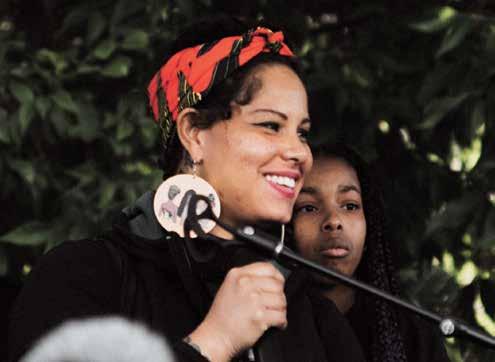
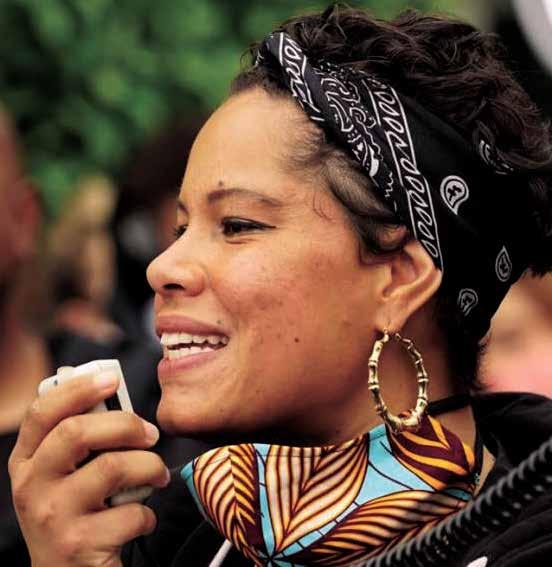
Nikkita Oliver, who is seeking the citywide Seattle City Council Position 9, speaks to the SGN about HIV/AIDS and hate crimes, and those specific to LGBTQIA youth; Transgender; and Black, Indigenous, and people of color.
conversation, [and] make this something that we understand we’re able to engage in community — at the dinner table — so that people actually can access the resources that [are] available? As a case manager, I worked with lots of young people and actually took them to places like Gay City to get tested and have seen the value that institutions that are already doing this work play or put into our community.
How can we be investing in and expanding those resources? Our city has had billboards up recently in the last year or two, trying to expand that conversation, bringing cultural normativity to it. I think that’s really powerful. I think we could do more.
How are we having conversation in such a way that people not only know that this is a conversation we can have that destigmatizes it but also know that there are resources available, and then really thinking about how are we as a city invested in seeing full-spectrum, gender-affirming healthcare available to everyone?
The county does have some investments in healthcare — be that in our schools and in some other community-based health clinics. I think the city needs to partner with the county to see that become more of reality within the city and then find ways to make sure that those resources are better known, better supported, and really be doing the work.
I cannot emphasize this enough — just because of my own personal experience with my family. We have to destigmatize this conversation. This is a real thing, and it’s happening, but there are also lifesaving drugs and lifesaving opportunities that folks living with HIV can access. So long as we live in a place where we treat this like it’s something that we have to be quiet about, we’re causing people to actually reach their deaths rather than receive lifesaving medical care and supports that do exist and we could actually be better investing in.
Raketty: As you know, Transgender individuals such as myself face hate and hostility on a regular basis. Last year was the deadliest year on record for the Transgender community, especially Black, Indigenous, and people of color women who are Trans. How would you address this as a member of the city council?
Oliver: So this is something that I feel really passionate about and also am very honored to be in relationship with the Black
actually started talking about having some way of certifying [that] places are safe for Transgender folks. Some of the things we’ve heard from [the] Black Trans Task Force is having trainings that folks have to go through — ensuring that people have to go through yearly certifications, [and] challenging issues around employment.
What would it look like for the Office of Labor Standards and Office of Civil Rights to actually do more enforcement around ensuring that Transgender folks are safe in employment spaces and addressing the fact that we already know that [they] face so much brutality in employment spaces, in everyday life, and moving through our city. What would it look like to actually have a way of saying here are safe spaces and, if you want to be a safe space, these are the things that you need to do? These are the trainings you need to go through; this is the proof that has to happen. That has been one idea that’s come up as a way of building some structure around ensuring the safety of our Transgender loved ones.
Raketty: As you know, an independent press is vital to a free democracy, yet local newspapers are being swallowed up by large corporations. And community newspapers, such as the Seattle Gay News, are facing unprecedented financial pressure as a result of the pandemic. What can be done on the city level to strengthen and encourage our independent press in Seattle?
Trans Task Force. Prior to announcing our campaign, we already knew that talking about Trans liberation is a key part of the work we want to do. We can’t talk about Black liberation without talking about Trans liberation.
And to be honest, we can’t talk about a world beyond prisons and police without also talking about Trans liberation. When we think about Stonewall, which was a riot against police, it was led by Marsha P. Johnson and Sylvia Rivera. So [we understand] that the fight to have safe communities is something that our Transgender community members have been doing for a very long time. We have been building and in conversation with the Black Trans Task Force, hearing [about] what the needs are.
What could be the policy solutions? What are the budget allocations that need to happen? What are the changes within the city that would make our city a space for Trans liberation — not only to see our Transgender community be safer and feel safer but also have authoritative leadership roles in the way that we do things? I deeply believe that those most impacted by an issue should not just simply be bringing their intellectual capital to us, to tell us the solutions, but to actually be in the leadership roles implementing those solutions.
In the next few weeks we will actually be rolling out a document outlining some ideas and commitments and some visions that have been built in partnership with conversations with the Black Trans Task Force — understanding that when Black Trans women are safe and well cared for, that actually means that all Trans folks will be safer and well cared for.
…A few things that have come up is visibility of Transgender community members, whether that’s in media or in leadership in the city. Visibility is a really important way to shift the culture and be gender affirming, and to do that in leadership roles. So ensuring that our Transgender folks have leadership roles in our city — making decisions about the way that we work as we move toward a city that is making different investments in public safety, centering Transgender voices in that process — is going to be key to seeing a city that actually is built on an agenda of Trans liberation.
Another idea that has come up has been about how we have safe places for young people. What would it look like if the city
Oliver: First of all, I love our independent press. I have to shout out folks like Converge and the South Seattle Emerald, that have amplified the stories of communities that often do not get told or amplify the fact that there are good things happening in South End. It’s not just what you see on mainstream media. I am very appreciative of our independent papers and the ones that are neighborhood based that really amplify the stories that are happening on the ground.
I think ways that we can continue to support that is by amplifying those voices, acknowledging those journalists. I think that sometimes elected officials or folks in spaces of power do not always receive those requests for comment or reach out to our independent media as platforms that actually have viability in places that we can be speaking to. So, actually doing those interviews, having those conversations, is one way to help amplify and support.
I think there are ways that the city could also be investing in our local journalism. One way I see those investments happening is [for] the Seattle Youth Employment Program or other programs that help young people get into future careers or partnering with our local journalism groups to actually get young people internships or opportunities in those spaces that are paid, so that they can be learning the craft of being a local journalist and helping build up these papers. I think young people getting into this work, telling their own stories is a really powerful way to create that access. Youth are also the ones that are accessing so much media online. So I think that that will draw attention and engagement. It also provides an educational opportunity. We also have the Seattle Promise Program that moves through our Seattle Community College network.
I’m thinking about apprenticeships. So not just in terms of this area of the question, but also thinking about our trades. There are so many opportunities that we could be building space into industries that young people, especially young Black and Brown people, low-income youth, could be getting into that I think would then make those industries thrive even more, because we would see a strong workforce developing in those spaces.
So I think getting young people involved, continuing to support and show up — amplifying those news agencies — and also doing interviews are great ways to support our independent media and journalism. Raketty: I know that you use they/them
Photo by Jake Gravbrot
pronouns. I wanted to give you an opportunity to express why it’s important for you to use those and what role that you see yourself playing in the LGBTQIA community — if you associate with that label?
Oliver: I absolutely associate as a part of the LGBTQIA+ community, as a part of the Queer community, and also a part of our nonbinary community.
Gender has actually been a real journey for me. I grew up in Indianapolis, Indiana. I was born and raised in a very religious household. To this day, I still cringe when I think about coming out to my mom and having to have a conversation with her about my pronouns and… hearing her sharing with me the reflections that she and my family have: reading articles that use they/them pronouns and the questions that she gets. It still kinda makes me cringe a bit, just in the sense that I know where I grew up.
At the same time, I also know the person that I am, and growing into feeling able to be open about my identity has been just a very significant and powerful but also painful thing.
I identify with our Queer, nonbinary community and what it means to have to navigate a world that isn’t necessarily built to receive you as you know yourself, as you experience yourself, and to move through how do you present yourself in the world. What clothes do I put on my body? What makeup or jewelry or whatever is acceptable for me to wear? Am I nonbinary enough? Am I Queer enough? These have all been things that I have moved through.
One thing that I hope to bring is just space for folks to know how divine and wonderful we are. I think seeing people being open and honest and authentic about our identities is really empowering for one
“I
spends over one billion dollars per year in public and private investment in support of approximately 12,500 houseless people with disappointing results. If you are elected to the City Council, what would you advocate and support to address this crisis?
Oliver: [We] have a lot of work to do. We’ve been in a state of emergency around the housing crisis and supporting our loved ones who don’t have homes since 2015.
A major part of the crisis is we just simply have not built enough housing. We have not actually invested ourselves in that. While we might be spending, in our region, lots of money on services, if we provide services but have nowhere for people to
absolutely associate as a part of the LGBTQIA+ community, as a part of the Queer community, and also a part of our nonbinary community… One thing that I hope to bring is just space for folks to know how divine and wonderful we are. I think seeing people being open and honest and authentic about our identities is really empowering for one another.”
another. I’ve already had lots of young folks reach out to me and say how inspiring it is to see someone using they/them pronouns, being public about who they are.
Honestly, that makes me feel even more passionate about just being myself and feeling less and less of that question of “Am I enough?” I really deeply want to be a listener though. It does not fly over my head that I’m light-skinned or that I have a lot of educational credentials that afford me lots of privilege. It also means that I do get to walk in the world with a sense of privilege in certain spaces.
I have also experienced the hate mail — people sending me really horrible emails about my gender. I just don’t understand how you have time at 2:00 a.m. to send that. I want to be able to balance the privilege and the experience of oppression and be in a space of connectivity and relationship and listening with our LGBTQIA+, Trans, nonbinary, gender-fluid community, to be able to hear all the experiences that we’re having. We don’t all experience this world the same way. We have intersectional identities.
How can I be willing to take steps back and be a listener rather than always be the voice, which I think is a challenge. Anytime you run for office, people expect that you have all the answers. I think one way that we could actually make politics better is by saying, “I don’t have all the answers.” I do share some lived experience. I’m also here to listen. I think is really important.
Raketty: Seattle is facing an ongoing crisis related to unhomed peoples. Washington state experienced a 6.2% increase in homelessness during 2019 and 2020. King County
come inside who want to, then what we’re doing is basically saying, “We’ll give you some services to survive, but we’re not going to support you getting into housing where you’ll have opportunities to thrive.”
A huge priority is looking at Seattle’s comprehensive plan for 2024 and addressing issues around exclusionary zoning. The fact [is] that we’ve only been developing density on 12% of the land. And we need to address the fact that single-family zoning — as the way our city is set up now — is not going to allow us to develop enough housing in order to ensure that our loved ones who want to come inside can and to be able to provide enough housing for the missing middle. Displacement and gentrification is also a part of the crisis that we’re facing. This is the reason why we spend money but it continues to be ineffective. Some answers to this is Seattle getting into housing — actually building social housing that is affordable, that is also nice. People want to live in nice homes [that meet] the needs of our community members. So [we have to continue] to make more investments in social housing. We can’t continue to rely upon the private market to be our answer to the housing crisis. There’s just not a real incentive for the private market to actually respond to the need.
So we need to be willing to actually drive some of the development if we’re going to build $400 million a year for 10 years of affordable housing. We need to figure out how our regional plan really works. I think for a lot of folks, they felt like Seattle saying we are part of a regional plan has been a little bit of a cop-out, and putting the
majority of the work on the county or other cities to respond.
I think the city needs to level up. We have a $6.2 billion budget. We have over 800,000 residents. It is time that we really take accountability and responsibility for the ways in which development and our city and growth have actually been a part of exacerbating the housing crisis.
We also need to deal with the fact that our tax structure — the way in which we generate revenue — is very regressive. It ends up putting the burden of the cost of this new development and the services that we absolutely need to be providing on the backs of those who already pay the most in taxes. Those who pay the least, and honestly have benefited the most from the development and growth, continue to not really have to be invested in seeing our city become the healthiest city that it can be.
We are also, probably, going to face a massive eviction crisis. So in addition to the crisis we were already in — COVID-19, the recession, and many people not being able to pay rent or mortgages — [this] means that we also need to figure out how we stabilize folks who are still in their homes but may be facing eviction. Continuing to find ways to either cancel rent or do rental support or mortgage support to keep people in their homes — there is going to have to be a combination of responses that come from the city.
This is going to require us to really think about our priorities as a city. Are we willing to prioritize people being able to stay home and stay healthy? The way that we do that is going to be investing in things that keep people from losing their homes and investing and building housing rapidly. I know that it’s been a challenge for our city to prioritize this in the past but I think that — with the right folks committed to seeing the interest of our city as a whole be served, we can actually move in that direction.
Raketty: As a result of the ongoing COVID pandemic, economic recovery and development — as well as addressing Seattle’s crumbling transit infrastructure, such as the West Seattle Bridge — is of great importance. Moreover, some are expressing concern that businesses are leaving Seattle and workers will not return post-COVID. The question then is: How does the council address crumbling infrastructure and aid in economic recovery and development as we move beyond COVID? What concerns do you have about the loss of businesses, both large and small, and a loss of jobs in Seattle?
Oliver: I think what we really have to grapple with as a city is that we cannot recover back to normal. We actually need to grapple with the fact that our social and economic safety net for most people is ineffective. As a result, that’s why we are seeing such a huge economic crisis, because we have not ensured that all people have access to healthcare. We have not ensured that all people have access to affordable housing, and we have really failed to ensure that workers are protected.
So [we have to] really think about how we ensure that any employment that the city is involved in are union, prevailing-wage
jobs, [think] about the contracts we have, not just in terms of development and construction but also expanding the conversation about prevailing wages and unionization to other industries that touch the city. There are tons of industries that we do contract work with that we could be pushing… to actually treat workers right, to have the right working conditions, hazard pay, and to ensure that people have high-wage jobs.
This is a really important part of knowing that disasters are going to come. This is not the last time that we’ll see this. As a result, if we’re going to build a social and economic safety net that works for everyone, anything that the city is invested in needs to push contractors or industries that we work with to make sure that people have high-wage jobs that pay healthcare and benefits. That’s just thinking forward in terms of protecting us, protecting people, protecting workers, when additional an crisis does come.
The West Seattle Bridge and other bridges, other infrastructure in our city, is of huge concern. The Move Seattle levy expires in 2024. This was a 2015 levy, and in many ways, it’s actually fallen short of the promises that taxpayers voted for.
So the first thing that I think the city actually has to do when it comes to our crumbling infrastructure is explain why that levy did not fulfill the promise that we made to voters. That explanation [should be] a pathway toward saying, “Is it possible to continue this levy? Will you all vote for it again? Here’s the explanation of why it fell short. Here’s how we will address those shortcomings in the future.”
Getting our infrastructure up to par is important for a number of reasons. It’s not just about safety… it’s also understanding that if we want to be able to keep our maritime and port industries healthy — which are significant jobs in our region and also an important part of moving goods, not just through Seattle but to other regions in Washington state, including… the eastern part of the state, the fruit basket — then we need to ensure that the infrastructure around the port is solid so that freight can move in and out without issue.
This is also about our environment. When freight is backed up and not able to move through the port in a timely manner, we’re seeing way more pollution, both in terms of exhausts [and] also noise pollution in neighborhoods that already face some of the highest levels of pollution. So this is also a health concern.
Addressing our crumbling infrastructure touches a myriad of areas of life, from environment [and] industry and economic wellbeing to the health of communities that many of these industries are moving through.
…It’s not just the West Seattle Bridge. It’s also thinking about North Seattle and east-west buses, and sidewalks for safety. It’s looking at the bridges in other areas of our city that are also deteriorating. We don’t want to see them in the same situation
see NIKKITA OLIVER page 8
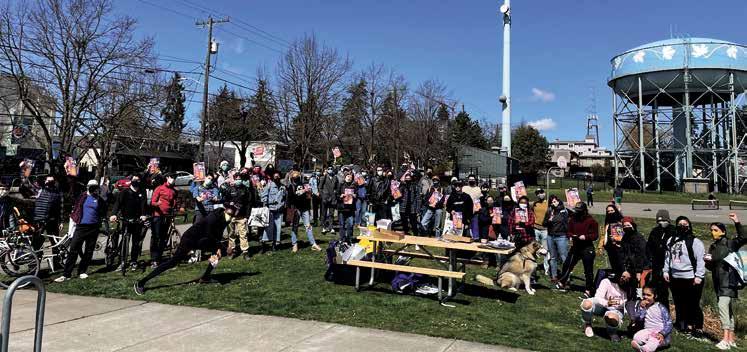
First Canvas: Photo is from April 11, 2021. “It was our first canvas day in North Seattle where 50 people came out.”
– Photo by Shaun Scott
Local News
NIKKITA OLIVER
continued from page 7
that the West Seattle Bridge is, where it’s been closed down for almost a year.
Then, we need to [think] about how this impacts our transit infrastructure. The transit infrastructure also plays a major role in thinking about the well-being of workers, [and] the ability to move through the city or in and out of the city in a way that doesn’t require you to spend two hours of your day doing that. Most of our families cannot afford to do that.
We have to understand that transit and the accessibility of our city is also tied to the economic well-being of folks. My concerns are about many of our small businesses, small businesses that are owned by Black, Indigenous, and people of color who really have suffered through the pandemic without having access to all of the things that allow their businesses to [be sustained].
I’m also thinking about folks who are freelancers, some of whom have been able to get access to unemployment, but for many of whom it took a very long time to get that access to unemployment. So maybe they’ve become backed up on rent or other types of bills that they’re later going to have to find ways to pay. This is where canceling rent or having rental support programs, finding ways that maybe mortgages can be canceled or mortgage support programs, having rent stabilization on commercial properties is going to be huge.
The city has taken emergency measures that have been really significant in allowing small businesses to continue to function. One of these is folks being able to run their small businesses out of their homes if they have particular detached units. This is a creative option that has not been allowed to exist prior to the pandemic.
One thing the pandemic has shown us is that there are things that we could have done long before that we didn’t do because we said we couldn’t. Then we found out that in a state of emergency that we could. Sustaining some of those measures is going to be key to ensuring that small businesses and freelancers are able to thrive.
Then, moving forward, how are we ensuring that our folks that work in tech — I’m thinking about our Uber drivers or folks that are delivering food, who are a part of our gig economy — what are we doing to ensure that those folks are able to get access to healthcare and benefits? We’ve seen through the pandemic that has not been possible for a lot of folks. We need to keep talking about what it looks like to have a gig-workers package that ensures those safety measures: hazard pay, healthcare benefits. So that again, when disaster does come again — because this is not going to be the last thing we face, the climate catastrophe is really upon us — we need to make sure that people are prepared and they have access to the social and economic safety nets at work.
Raketty: As a result of protests related to the murder of George Floyd, police violence, and ongoing racial inequality, Seattle has earned a national reputation as crime ridden, dirty, and unsafe. At one point, the city was labeled by the previous presidential administration as an anarchist jurisdiction. Do you agree with this view?
Oliver: I do not agree with this view. I think in many ways this view is created by mainstream media outlets not telling the whole story. I think it’s really important that we tell whole stories, acknowledge what’s really been happening in our city — which is actually drastically different than that. I’m not sure if you want more detail but I certainly have lots of thoughts in that area.
Raketty: Absolutely. We want to know, how are we going to shift perceptions?
Oliver: We shift perceptions by building the city we want to see. We don’t con-
trol mainstream media, but what we do control is the way in which our city continues to move and develop.
Some of our elected officials need to actually take accountability for statements that they made during the protest that were then leveraged by media outlets, both locally and nationally, to paint a picture of a city in crisis. That’s not what was happening in our city.
I understand that there were things that happened in CHOP that caused a lot of pain for people. In fact, those things were happening in other areas of our city — in terms of folks being shot and killed. When we make that issue about just one area of our city, we actually miss the underlying issues that are the reasons why certain types of gun violence are happening. These are economic reasons. These are social reasons.
We have areas in Seattle that have been redlined historically, that have experienced
We have communities, though, who have been historically and currently disenfranchised from the access to that opportunity, while the wealth of white folks and our region has continued to grow. Those communities continue to have access to higherearner jobs. The wealth of Black communities has actually continued to decrease. There is a huge gap between who is gaining in the areas of income and wealth.
Poverty has an extreme impact upon the likelihood of violence or “crime” in an area. So if we really want to be about public safety, if we really want to be about addressing historical racial trauma and harm and anti-Black policies, then what we will do is figure out how to uproot and undo the issue of poverty. We will invest in communities. We’ll invest in Black communities. We will invest in Native communities in the ways in which we know actually begin to alleviate and end the crisis of poverty.
“That’s the vision I have for Seattle. One where we grapple with racism and white supremacy and one where we do the work of dismantling, addressing, and uprooting poverty so we can have that safe Seattle we envision.”
exclusionary zoning, are overpoliced, and lack social services. Many of them are also food deserts. They’re not what we would call — in the urban development sphere — communities of opportunity. I mean, these neighborhoods are lacking economic opportunity, educational opportunity, and the services that ensure that people can thrive.
So while some areas of our city are growing into these urban villages that have grocery stores that have great produce or [afford] access to medical facilities, and access to social services, there are other areas of our city that are being inequitably developed and are not receiving that same attention and growth to ensure that we do the things that actually prevent violence.
This is not conjecture, and it’s not me just making up a story. We know that through social science, when people have their basic needs met and they have access to economic and educational opportunity, then violence decreases substantially.
and what is your position? How, as a member of the city council, do you restore community trust in the SPD?
Oliver: “Defund the police” is also “invest in community.” I think it’s really important not to separate those two from each other.
I think it’s also important to acknowledge that our current system of public safety does not create safety for everyone. In fact, there are many communities that are actually less safe when they call the police. There are communities that are actually afraid to call the police when they’re actually in need of support.
I think we also have to acknowledge that we do not have the myriad of services that we need to ensure that people are safer. Police are not typically doing what we think. I think a lot of folks have it in their minds, maybe from movies or TV, that police are all day responding to violent crime and violent calls. The reality is that a lot of what police officers are doing is responding to things involving property or maybe parking issues or even noise complaints. That is the majority.
In Seattle, I think 1.3% of the calls that come through 9-1-1 are “violent crime.” So that’s actually a very small percentage. I think we’ve also seen — and I know you’ve seen this, having been out at the protests — there will be an obscene [number] of police officers at the protest, and then later we’ll find out that something else was happening in the city, but the Seattle Police Department will say that they had very slow response times. I would wonder how are they prioritizing what’s important for their presence to be at.
That being said, I do have to go back to the underpinning thing here: our system of public safety is not one that works for everyone. We’ve heard this time and time again; it’s not new information. It’s not new as of 2020. In fact, these are conversations that people have been having for a long time about public safety and what really makes community safe.
An 18% defund of a police department that has one of the highest budgets in the entire United States really is not that much. The SPD’s budget prior to this last budget cycle was $410 million. They often actually spent over that budget and would [ask] the council for additional dollars, in addition to receiving money from groups like the Seattle Foundation [that gave] dollars to the Police Foundation that then gave money to the department to buy more equipment. There’s also additional dollars, including federal dollars, that come into the SPD on a regular basis. So I don’t believe that they’re actually hurting for money.
That’s what we need to be willing to address if we want to get to a safer, healthier, more holistic Seattle. That’s the vision I have for Seattle. One where we grapple with racism and white supremacy and one where we do the work of dismantling, addressing, and uprooting poverty so we can have that safe Seattle we envision.
Raketty: When compared to the West Coast cities of Portland, San Francisco, San José, Sacramento, Oakland, and San Diego, Seattle has the second-highest cost per police officer, tied with Oakland, and the secondhighest number of officers per capita, behind San Francisco. Additionally, the average officer makes $153,000 a year before benefits, according to the Seattle Times. Despite this large force and supporting budget, Seattle Police report slow response times and claim the issue is a lack of staff. The budget was cut approximately 18%, and staffing levels were adjusted to support roughly 1,325 officers. How would you define “defund the police,”
What is hurting for financial resources are community-based responses to intervening [in] harm and responding to harm when it happens. I’m thinking about what people do when they’re in domestic violence situations and they do not believe that calling the police is going to make it safer. This was my own life at one point in time with a partner of mine. I did not feel like I could call the police for support because — at the time — I was dating a six-foot-seven Black man and did not think that calling the police was going to make our situation any better. In fact, it worried me that something might happen to him and his life if I did that, and is that a burden I wanted to carry?
I am not the only Black person who has ever been in that situation and thought about that. I’m certainly not the only person. There are families who also are afraid to call the cops when their loved ones are having mental health crises. We know that this is happening. We also know that the police are ill equipped to respond to these types of situations. Why aren’t we investing more of our public safety budget in ensuring that we have the resources that can meet a multiplicity of needs, knowing that most of the things that people call 9-1-1 for actually do not need an armed officer to come to the door?
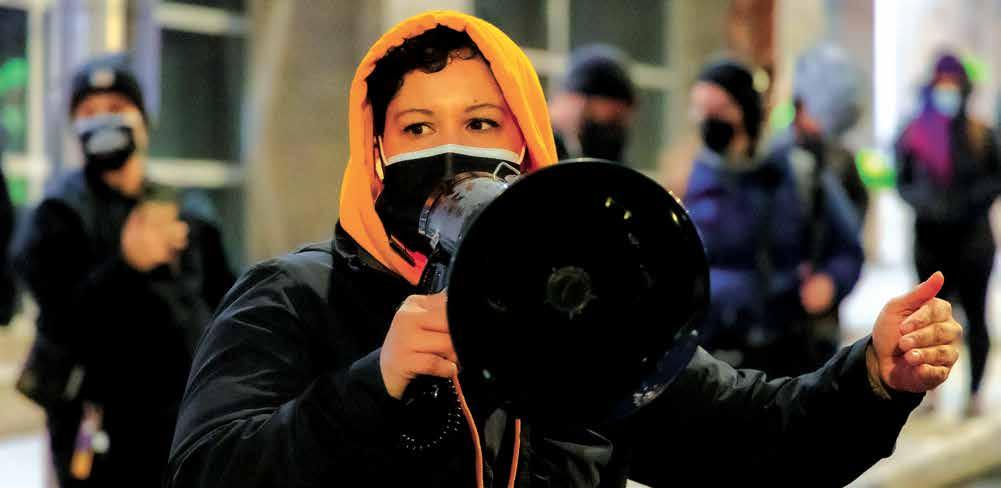
Photo by Susan Fried / South Seattle Emerald
My goal — my hope as a city council member — is that we can actually continue building upon the things that we know work: mental health supports, people who can respond to mental health crises. I’m thinking right now about Tommy Le, whose family just received a big settlement but will never receive Tommy back, who was in the midst of a mental health crisis. Charleena Lyles was in the midst of a mental health crisis. Charleena could still be here with us if we had had the right support.
How are we doing the work of learning from these tragedies to actually doing the things that we know work for community members? That’s my goal — prioritizing our public safety budget to actually do the things that make community safe in terms of our ability to respond to mental health crises, domestic violence, to intervene and stop violence before it occurs — because that would be the ideal. This is the last part of this. Police are often called after harm has already occurred. So it is already a reactionary measure to public safety.
What would it look like if we had a city where we built the priorities of our public safety system around preventing and intervening in harm, rather than responding once it’s already happened? We could actually keep a lot of people out of the criminal punishment system, which is a broader system that needs to be addressed in relationship to policing. We could prevent a lot of harm to families and people in our city if we approach public safety from that place instead.
Raketty: I’m glad you brought up mental health. Let’s talk about that for a second, because I do think it’s an important issue. One of many things that COVID has shed light on is the ongoing mental health crisis in this country. Seattle is not exempt from this of course. Recently, a man in the throes of a mental health crisis was fatally wounded by the SPD near the Seattle waterfront. Washington state has consistently ranked toward the bottom for public health services for the mentally ill. What would you do as a member of the city council to address this mental health crisis?
Oliver: The incident you mentioned hits close to home because he was a student at Seattle University, where I teach. I think people read these stories and they forget that folks are actually in our communities that are having crisis and then have deadly encounters with police.
What can we do? So as we continue the work around defunding and investing — divesting and investing in structures that work — we can actually invest in mental health professionals and intervention services that actually work. I’ve had to call for a county mental health professional before, and it’s taken 24 hours before that MHP has
been able to respond to the crisis that I’ve been in with a client. Often what this means is that I or family members of this person ended up having to stay with them 24/7, and in some instances, following them around the city to try to keep them safe or avoid an interaction with police. Sometimes it still ends up in an interaction with police.
The fact that we invest so much money in a system that is not able to actually respond to the needs we know are most emergent is not only fiscally irresponsible but also socially irresponsible. So I think finding ways financially to beef up our mental health professional options — [like] looking at programs like Crisis Assistance Helping Out On The Streets. I’m not saying specifically CAHOOTS, because that model was developed in a particular context, and all models that develop one place cannot just be transferred to another place. We need to be thoughtful about how we develop more mental health supports in the city.
That’s what defunding is actually about. It is about finding the thing to invest in that actually will do the work that we need. We know that mental health has always been something that people need response to, but the recession and the pandemic have certainly exacerbated the mental health crisis that we’re facing.
We do have organizations that are able to support folks in crisis, but we certainly don’t have enough of them. When you have to wait 24 hours or more before someone is able to meet you, what that likely means is that your loved one has probably spun out much farther than they were 24 hours prior. It’s even harder to do the work of mitigating harm and ensuring that that person gets support.
The other thing is I think we need to work better with our hospitals. I’ve gone to the hospital with folks wanting to admit themselves for support. The process of doing that comes with a lot of stigma. It’s a very cumbersome process. You often have to prove that you are suicidal or other things that will make them want to bring you into the hospital. So we need to change that process. If someone comes to you saying they need help, we should just get them help.
The third issue that is attached to that, though, is that we just simply do not have enough beds, mental health professionals, or mental health supports in our region. So when people do go to the hospital saying they would like to get support, they’re often told there isn’t a bed for them. How can we be providing more of those spaces within the city using the budget we have to do that and actually investing in the things that work. The last thing I would say, I keep coming back to healthcare, but we don’t have full spectrum healthcare for some folks. As a result, when they seek out mental health
supports, they’re not able to pay for it. Is there a way for the city — and I would put the county in there to partner, because the county does do a lot of public health work… can we be developing ways that people can access mental health supports prior to being in crisis that doesn’t require them to have health insurance? [We know] that ultimately, when we can get people mental health supports early on, we actually make everyone, including that person, much safer.
Raketty: Housing affordability is a major problem for Seattle. Eight-eight percent of Seattle’s land that is zoned for housing is zoned for single-family units. Over the last five years, most of the new construction has been centered in the 12% that supports high-density housing. Developers and builders are focused on small-footprint properties with minimal parking and luxury appointments.
Oliver: I know most people probably wouldn’t believe this, but this is actually one of the issues I’m most excited to work on. I think a lot of folks see me as just the police person.
To be honest, our legacy of exclusionary zoning is contributing to so many of the problems that we’re facing in the city. There’s a book called The Color of Law that really digs into how housing is a determinant of how people thrive. It’s a determinant of whether or not communities experience high rates of violence. It’s a determinant of whether or not communities are overpoliced. Housing plays a big role in that. We have really chosen not to turn and face our legacy of exclusionary zoning.
Our current zoning pattern has created a bifurcated city. Two-thirds of our residential land is not accessible to any but those who have the highest incomes, which is a serious issue. So we need to be changing our zoning as we approach this 2024 comprehensive plan, to be building a mix of housing and residential patterns that allows more people to live in more places throughout the city.
There are a number of reports that have come out that have actually recommended us addressing our zoning issues. I think it’s very important that we do it. There are examples of cities like Portland, which has a residential infill project, in which they have basically relegalized the missing middle or missing-middle housing citywide. This allows for a diversity of housing structures to exist in the city.
Seattle has committed itself, in a lot of ways, to building urban villages. So we need to both expand our current urban villages but also be strategic about the places where we build new ones. There is transit infrastructure being built throughout the city, and there are areas that need more
transit infrastructure. Those would be areas that would be right for urban villages, but it cannot continue to happen on the same 12% of land. We have 85% of the developing happening on 12% of the land, which is just really unacceptable.
We also cannot do it in our industrial lands. There’s been some talk about building affordable housing in our industrial lands. There are place-based industries that happen in those spaces that cannot happen anywhere else. So it doesn’t make sense to build there, not to mention our industrial land areas are also very much food deserts. We don’t know about the toxicity of [these areas] and the long-term impacts that would have on folks.
I’m really excited to work on our comprehensive plan for 2024. It is a huge chance to do zoning reform, to make significant strides on housing affordability. It is also an opportunity to address our climate crisis. With all the new housing that we would build, we can build it green. We can be thinking about our sustainable infrastructure. We can be building transit in a way that helps us reach our climate goals. Having more people being able to travel within the area that they live — by foot or by bike or by bus or by light rail — will make a significant decrease in the things that we’re facing with the climate crisis.
So I’m really excited to work on this particular issue... This is something, again, we have to grapple with: [housing] has been highly racialized based on who is getting the wealth and income gaines in our city, who’s getting access to high-earner jobs.
The last part of this is also anti-displacement and anti-gentrification strategies that ensure that people can stay in place. I’m thinking about our seniors who, as property taxes increase, cannot afford to keep their homes. I’m thinking about young people who have grown up here, who may not be getting into those pipelines in the higher end of jobs and, as a result, will either spend the rest of their life as renters — though many of them cannot afford that — or will never get to have any type of home ownership.
So we also need to think about co-op models, community land trust, as ways of ensuring that people can also build equity. Equity is how a lot of white folks have been able to build their legacies, and send their children to college. Many Black, Native, and Latinx folks have been excluded from building equity through home ownership. So thinking about co-ops and community land trust is also a huge opportunity to be able to open up that opportunity for equity and wealth-building that many communities based on race have been excluded from.
see NIKKITA OLIVER page 10
Photo by Renee Raketty
Local News
NIKKITA OLIVER
continued from page 9
Raketty: Do you support changing zoning rules for ADUs and more dense construction to alleviate the housing crisis? How dense, and where would you support ADU development?
Oliver: ADUs are an opportunity to build [more] diversity of housing and build housing for the missing middle, but that cannot be our only answer. There has to be a [greater] diversity of housing options that we’re doing the work of presenting. So, you know, [I’m] thinking of quadplexes and other things that can be built.
I know that a lot of folks then will push back and say, “What about the character of our communities?” I understand that, and also we’re in the midst of a huge affordability and housing crisis. If we continue to allow things to go the rate we’re going, then we’re going to be building a city just for a few and then excluding the many.
Accepting that density is going to be something that equitably needs to be taken on by all neighborhoods is just a really important factor in building our city in a just and equitable way that is accessible to everyone. Having areas that are just fully excluded for some people is not acceptable. That’s not an inclusive city. That is not a city that has a race and social justice initiative.
We need to be reckoning with the fact that our very first comprehensive plan that was put in place in the 1920s was done so in collaboration with someone by the name of Harland Bartholomew. Harlan Bartholomew was a known segregationist and basically helped us develop our first version of these exclusionary zones that went
in place. And then in the 1980s, we did a huge down-zone that then prevented even more families moving into certain places. So if we’re going to have a city that makes it so everyone who works here can live here, then we’re going to have to take density on equitably.
Raketty: How do you combat gentrification while meeting housing needs?
Oliver: I think it’s about how you build, and it is about acknowledging who doesn’t have access to the housing. There are antidisplacement strategies we can put in place. This is where co-op models and community land trusts are important.
This is also where the city getting into housing is key. We have many reports: the Seattle Growth Strategy white paper and the Neighborhoods for All executive summary actually all outlined for us that we know which neighborhoods are most at risk of gentrification and displacement. Yet we still have started our building, the places that we build density, we have built there first. So our strategy is off. We need to be starting in spaces where we know we will have the least amount of impact while simultaneously doing those things that help keep people in place. This is where thinking about our seniors and the rising cost of property taxes is really important.
What are we doing to help folks on fixed incomes be able to maintain their homes? How are we doing one-to-one replacement of housing? So if we tear down a building that is affordable, are we putting up that one-to-one ratio of affordable units and ensuring that people can come back?
Now, that is also really challenging. I know they’ve said at Yesler Terrace that there’s a 100% rate of people returning, but that’s of those who wanted to return. Many
Landmark Trans rights ruling: [Staff Writer] Mike Andrew wrote, “In a ruling that Lambda Legal described as ‘a gamechanger,’ a panel of the 4th Circuit Court of Appeals ruled on April 19 that federal law requires school districts that receive money from the US government — in other words, almost all of them — to allow Transgender students to use restrooms that conform to their gender identity.”
“Wowie, yowie, zowie!!!” Lambda Legal national legal director John Davidson exclaimed on Facebook. “The Fourth Circuit just ruled that Title IX obligates schools that receive federal financial assistance to allow transgender students to use the restroom that matches their gender identity. This is a game-changer. Congrat-
people, when they left Yesler Terrace, when we literally sold off public land — which I don’t think we should have done — had to move. You know that they’d already moved somewhere else, started living in that place, and then chose not to move back because it wasn’t necessarily the best decision for them at that time.
So really thinking about when we tear down buildings that are affordable, are we doing our best job to ensure that folks have a real ability to move back into that space? Are we preserving our public lands so that we, as a city, can continue to get involved in that? Are we doing the anti-displacement work of addressing rising property taxes and supporting people staying in their homes?
Again, this is where the development needs to be taken on more equitably. We know where folks are living that are most at risk of being displaced. Why do we as a city continue to build density in those areas first, rather than prioritizing other areas of the city where, when development is received, people likely won’t be displaced?
Raketty: Seattle has a reputation for having high taxes compared to other Washington cities. A number of initiatives through the years have added incremental taxes to fund transit, homeless programs, education, and the general fund. These taxes are small on paper. A number of one-tenthof-one-percent taxes have been passed by voters and supported by the Council as an example. Most of these taxes are regressive, due to Washington state’s tax structure. Will you pledge no new taxes on the citizens of Seattle? What programs would you want to see cut if you are on the Council?
Oliver: I don’t think I can 100% pledge no new taxes on all of the citizens of Seattle
2016 This Week in SGN History
ulations to Josh Block at the ACLU, who argued the appeal, and to everyone who worked on this case… For those of you who don’t know, North Carolina is within the Fourth Circuit and governed by this decision. Bye-bye HB 2.”
Update: In December 2020, the fight was ignited again when North Carolina’s HB 2 bill expired and they had to start all over again. Just last month, North Carolina lawmakers put forward three bills that repeal HB 2, prohibit many forms of discrimination, and ban conversion therapy. This past Tuesday, another bill, SB 514, banning healthcare for Trans teens, was pulled before a vote.
Lambert House at risk: Mike Andrew also wrote, “Lambert House, which has been Seattle’s LGBT youth center for the past 35 years, must either buy its iconic old house at 15th Avenue and Denny Way or find a new location, according to executive director Ken Shulman. “We have to come up with $2 million before the end of the year,” Shulman told the SGN, “if the organization wants to buy its current location.”
Update: We caught up with Shulman this past week and he told us that they were able to get a loan and buy the house in December 2016. Since then they have launched a capital campaign and have $650K left to raise by September 2021. To contribute, visit www.lamberthouse.org/giving.
— or all of the residents, I should say. There are wealthy folks in our communities that don’t pay their fair share in taxes. There are corporations that don’t pay their fair share in taxes. I think that there are taxes to be put in place. I think it’s important for those folks to be paying.
What I can commit to is doing the work of not putting more taxes on those who already pay more and finding ways to eliminate our regressive tax structure, which requires that the City of Seattle actually be a part of pushing our state legislature to make those changes, but also do it in a way that doesn’t remove the ability of cities or localities to continue to put in place their own taxes on big business or the wealthy. Our tax structure is very regressive, and the wealthiest amongst us pay anywhere from zero to 2% in taxes. Those who have the least pay somewhere from zero to 17%. I just don’t think that that is acceptable. We need to do the work of addressing our regressive tax system. There are taxes that we can continue to address around big business that could be augmented or grown. I think we should grow those taxes, because our city does need to generate more revenue to meet the immense number of social needs that exist. We know that when we meet those social needs, our city as a whole will be safer.
Raketty: Nikkita, I want to thank you so much... I’m so glad that our [readers] will have a chance to hear your positions, understand them more fully, and be able to make a decision in this election.
Oliver: Thank you. I appreciate sharing space with you. Thank you so much.
SPD Safe Place campaign officially launched in Seattle Public Schools: Shaun Knittel [then-SGN Associate Editor] wrote, “On Wednesday, April 20, Seattle Mayor Ed Murray, along with Seattle Police Chief Kathleen O’Toole, Seattle Public Schools Superintendent Larry Nyland, more than 20 youth from Garfield High School’s Gay and Straight Alliance (GSA), Social Outreach Seattle (SOSea), and Seattle Police LGBTQ Liaison Officer Jim Ritter, announced that the Seattle Police Department’s (SPD) ‘Safe Place’ program will expand to all 98 Seattle Public Schools.”
Update: Safe Place founder Jim Ritter, the SPD’s LGBTQ liaison officer, officially retired in June 2020.
Seattle resident honored by Sen. Patty Murray: Joe Krumbach was presented with the Golden Tennis shoe award by Sen. Murray. Shaun Knittel wrote, “[Krumbach] recently made history for taking on the Department of Veterans Affairs and ultimately beating them in court for benefits he says were entitled to him after his husband died.”
New $20 bill: It was announced that Andrew Jackson would be replaced by Harriet Tubman on the twenty-dollar bill.
Update: In 2019, the Trump administration halted the change until 2024. In January 2021, the Biden administration resumed the efforts.
In A&E news:
Albert Rodriguez mourned the passing of a legend, Prince: “Prince was both masculine and effeminate; that in itself was groundbreaking, especially for black musicians who up until then had fallen into the stereotypical macho mold.”
Albert Rodriguez reviewed Paul McCartney at Key Arena: “Noticeably, on a few numbers, you could hear a slight strain in McCartney’s voice, and at the age of 73, for as many performances as he’s given, there’s nothing unusual about it. Despite this minor observation, he’s still in peak form and gives fans every bang for their buck.”
Miryam Gordan reviewed ACT’s Stupid F**king Bird: “I may well have enjoyed the entire production more if I knew I was going to be watching The Seagull, so in order for you to have a better experience, I offer that information to correctly set your expectations and perhaps improve your enjoyment of the play. There is a lot of very, very smart dialogue to enjoy, also.”
Sharon Cumberland called PNW Ballet’s production of Coppelia “fabulous!”
Compiled by MK Scott SGN Contributing Writer
[Editor’s note: Over 47 years, the Seattle Gay News has covered thousands of stories that still resonate today. This week we look back at issue Vol 44, Issue 17, published on April 22, 2016.]






St. Patrick’s Catholic Church Welcomes LGBTQ Community Members!
St. Patrick’s Church is a welcoming, evolving Catholic Church located at the north end of Capitol Hill, 2702 Broadway E.
We embrace all people as children of God and would like to invite LGBTQ community members to worship with us.
As a parish, we have a strong emphasis on social justice and inclusion.
This includes outreach to a women’s shelter, a supportive relationship with a faith community in El Salvador, weekly sign language interpreted Mass for the deaf and deaf-blind community, and welcoming developmentally disabled adults from the L’arche community.
Our choir and dance troupe are an integral part of our expression.







Arts & Entertainment
Seattle-area venues aim for autumn opening
by Paige McGlauflin
SGN Contributing Writer
Some Seattle-area venues are planning to open their concert halls again in the fall, one and a half years since their doors were shuttered by the COVID-19 pandemic. With 27.5% of Washington’s population now fully vaccinated, there is a glimpse of hope that people can see their favorite acts on stage again.
But a looming fourth surge in the state and various counties vacillating between Gov. Inslee’s Phase 2 and 3 reopening guidelines also highlight the uncertainty of what autumn will look like for local venues.
“If someone is looking at buying a concert ticket, remember that the governor can change [phases] at his discretion,” Dr.
Mr.
by John Stein Special to the SGN
In celebration of Sunday’s Academy Awards, Mr. Man proudly presents the Manatomy Awards, the only award ceremony to shine a spotlight on the past year’s naked male achievements in film and TV.
“We refer to it as the nude Oscars,” says Phil Henricks of MrMan.com, the world’s leading online library of every male nude scenes in the history of film and television. “The Manatomy Awards honor the fine actors who dared to bare all in 2021.”
Winners of the 7th Annual Manatomy Awards were chosen by the editorial and marketing teams at Mr. Man and are available now at www.mrman.com/manatomyawards-2021. They include the following:
• Best Picture: The Prince
• Best TV Show: Industry
• Best Full Frontal: Tom Mercier, We Are Who We Are
• Best Nudecomer: Paul Mescal in Normal People
• Best Butt: Nicholas Hoult in The Great
• Best Gay Scene: Paapa Essiedu and Samson Ajewole in I May Destroy You
• Best Gay Makeout: Andrew Rannells and Matt Bomer in The Boys in the Band
• Best Pool Party: Jim Parsons in Hollywood
• Best Wet Peach: K.J. Apa in Songbird
• Lifetime Achievement: Mark Ruffalo
Paul Pottinger, professor of medicine and infectious diseases at UW Medicine, told the SGN. “Three counties were told to go back to Phase 2; this could happen in King County any minute. And we are really worried that we’re getting close to that situation, because of increasing numbers of transmission in our county.” Pottinger advises ticket buyers to purchase insurance, should events be canceled again.
Dire economic straits
The first to close and last to reopen, small venues across the country were hard hit by the economic crisis left in the pandemic’s wake. The Shuttered Venues Operator Grant, passed in December, granted $15 billion to small venues across the nation, but frustration over a holdup in
the emergency funding has made national news, as venue owners’ desperation grows.
“We’re in a really interesting spot right now with not knowing what to do. Most venues, promoters, and agents have been pretty focused on the SVOG, as we’re focused on trying to save our businesses,”
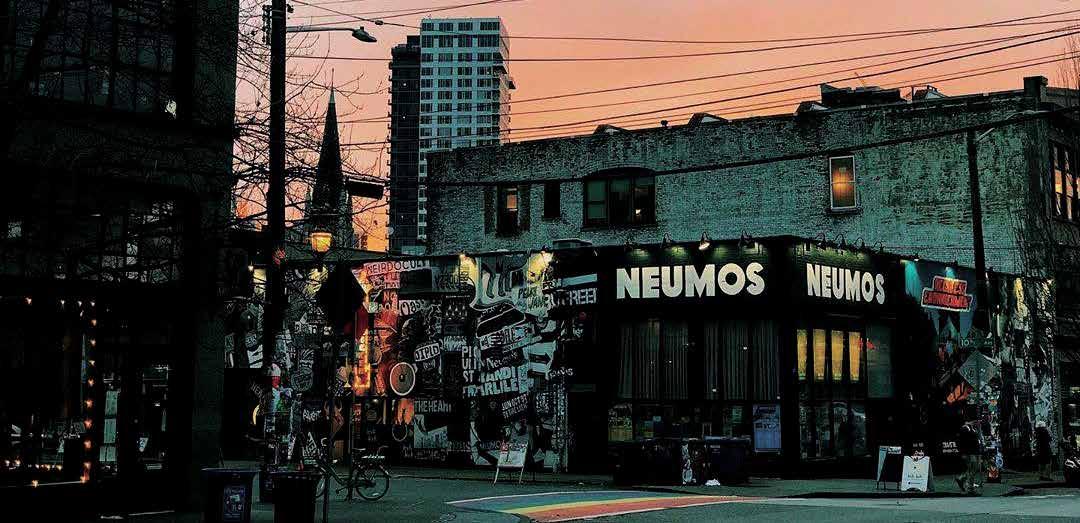
Steven Severin, co-owner of Neumos and co-organizer of the Washington Nightlife & Music Association, told the SGN. “That [site] opened a week ago and immediately crashed and was taken down in a few hours, and we still have no idea when it’ll open. Meanwhile we still have bills due.”
Seattle is one of 11 cities participating in the Reopen Every Venue Safely initiative, a national campaign to develop plans for reopening, launched by Music Cities Together. Severin told the SGN that final
touches are being made on the guidelines which will be pushed out to venue operators soon.
Next steps
For the Pacific Northwest Ballet, reopening in the fall will likely look like socially distanced attendance limited to its subscribers.
“We’re currently taking a ‘wait and see’ approach to announcing anything regarding protocol guidelines for the Pacific Northwest Ballet audience, although we are hopeful that we will be able to welcome a limited number of attendees to our fall performances,” Gary Tucker, the PNB’s director of communications, told the SGN. These performances will likely only be available to subscribers, Tucker said. “We’re hoping to have some sort of season subscription announcement in May — quite a bit later than usual, but better to err on the side of caution.”
When it comes to assuring and maintaining safety at these live events, Dr. Pottinger believes that vaccination passports of some variety will be a crucial tool when vaccination rates grow and the tool can be rolled out equitably.
“I’m very much in support of some sort of passport,” Pottinger said. “If you want to go to Latin America, Africa, (you) need to show that you’re immunized against yellow fever, for example. It’s a small price to pay.” In order to get to that point, Pottinger emphasized how important it is for peers to encourage others to get the vaccine.
“My humble request is that people talk about this, and not just read about it, not just doom-scroll, but have a conversation,” Pottinger said. “Talk to them and tell them about your experience and how you hope that they will do the same to take care of themselves.”
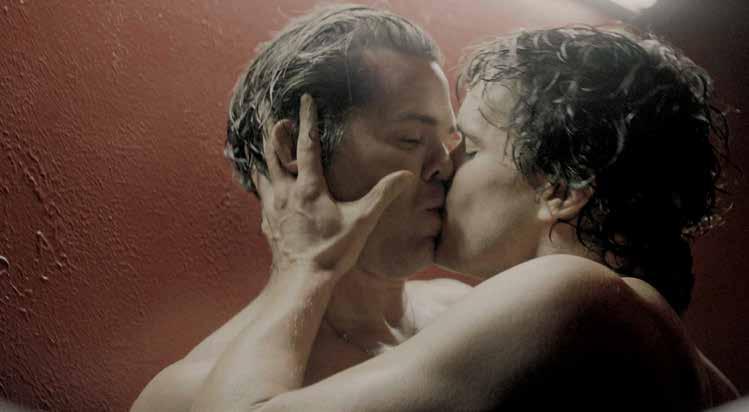
ing his long-anticipated debut nude scene,”
Best Pool Party and Best Wet Peach are new categories for 2021. “The Best Wet Peach category was specifically created as a way to honor K.J. Apa for finally deliver
Henricks explains. “We also felt the pool party in Hollywood deserved a special recognition.” Mark Ruffalo won the coveted Lifetime Achievement award for his revealing
work in films like The Normal Heart and The Kids Are All Right, and his full-frontal scene in 2003’s In the Cut
Andrew Rannells and Matt Bomer in The Boys in the Band – Photo courtesy of Netflix
Photo courtesy of Washington Nightlife Music Association
Gory County Hell is a goofy good time
by Sara Michelle Fetters SGN Staff Writer
BOYS FROM COUNTY HELL Shudder
The claim to fame for the tiny Irish township of Six Mile Hill is that it is the fabled gravesite for Abhartach. Local lore is that this demonic villain was the true vampire that inspired Bram Stoker to write Dracula
But to developer Francie Moffat (Nigel O’Neill), this burial mound is nothing more than a pile of old stones. When he’s contracted to remove them to prep the land for some new construction, that’s exactly what he intends to do.
The raucous Boys from County Hell from director Chris Baugh (Bad Day for the Cut) is a delightfully goofy horrorcomedy filled with its fair share of blood and guts. It also balances a big heart with a handful of large laughs, and while it never reaches Grabbers levels of greatness, the film still left a happy smile planted upon my face long after it had come to an end.
While it takes a little while to get there, ultimately this is a father-son tale told through the lens of a supernatural menace threatening to wipe out all of Six Mile Hill. For reasons left suitably vague yet still made clear enough to easily comprehend, Eugene Moffat (Jack Rowan) is estranged from his dad Francie. His nightly visits to the local pub make it readily apparent he’s unhappy to be back working for his father, and his orders to destroy Abhartach’s supposed resting place are just the tip of a massive iceberg that has left the two at odds for quite some time.
Baugh does have some trouble integrating his game ensemble into the proceedings, but Louisa Harland and Michael Hough do make memorable enough impressions, especially during the climac-

tic act when things take a decided turn for the gruesome worst. The film also isn’t quite able to sustain its humor for long periods, and I got the feeling the director felt more at home orchestrating the dramatic and the horror sequences than the comedic ones.
But the laughs he does deliver are substantial, especially during the more outlandish sequences of eye-popping violence and mayhem. He also crafts a strong human story for Eugene and Francie. As mentioned, their relationship is the beating heart at the center of all this ghoulish craziness. They have to find a way to reconcile their past if either of them is going
to save the town from being sucked dry by an undead monster, and it’s the way they are forced to work together that helps make Baugh’s uncouth and ribald vampire flick resonate.
It should also be noted that the creature effects are excellent. Baugh waits until the very end to finally unleash Abhartach in all his fearsome glory, and I must say his appearance is well worth the wait. This is one of the best vampire designs in recent memory, and the first time this demon stepped fully into the frame, I’m not exaggerating when I say that chills instantaneously ran up and down my spine.
There’s not a heck of a lot more to add.
Haunted house drama The Banishing a supernatural disappointment
by Sara Michelle Fetters SGN Staff Writer
THE BANISHING
Shudder
Can a 30-second scene right at the tail end of a motion picture derail what had been up to that point 90 minutes of solidly creepy, emotionally authentic, old-school haunted house fun? Christopher Smith’s suitably atmospheric supernatural suspense yarn The Banishing sure made me ponder that exact question.
The director behind such ghoulish and unsettling gems like Severance, Triangle, and especially Black Death may have delivered his most ambitious genre mash-up yet. It also might be his most disappointing.
With Britain on the verge of war with Germany, Reverend Linus Forster (John Heffernan) has been posted to a small town with orders to try and renew the lapsed faith of a disenchanted citizenry. He, his wife Marianne (Jessica Brown Findlay), and their daughter Adelaide (Anya McKennaBruce) move into a massive house, clueless to its sinister past or its horrifying secrets.
Strange things begin to happen. Adelaide starts talking to an imaginary trio of friends in the form of three ghoulish dolls. Marianne has visions of violence and rage, most involving a blinded woman shrieking in pain. Linus starts questioning his wife’s
faithfulness. Topping it off, calmly severe stranger Harry Read (Sean Harris) urges the entire family to leave the house immediately, warning them of psychosis and almost certain death if they remain.
Smith skillfully handles most of the mechanics of this haunted house tale with requisite aplomb, and while he doesn’t offer anything unique to the genre, the director still stages several spookily suspenseful sequences that insidiously dug under my skin. He also gets a strong performance from Findlay, and while Marianne is somewhat underwritten, the talented actress playing her brings an internalized complexity that’s consistently intriguing.
But even if this tale is inspired by true events, the screenplay by David Beton, Ray
Lines, and Dean Bogdanovich is a muddled jumble that never coalesces into something meaningful or memorable in its attempts to juggle a variety of themes, including faith, feminism, and fascism. None take root.
The elements alluding to British officials in the Church secretly working to keep the country out of a war with Germany fall flat, while an entire subplot involving Marianne’s volatile pregnancy with Adelaide and the involvement of the enigmatic Bishop Malachi (John Lynch) is frustratingly vague.
Yet I was relatively okay with a lot of this, because the mood of the piece was so spot-on and the performances were universally strong. Cinematographer Sarah Cun-
Boys from County Hell is wild, ridiculous, and not without its oddball, out-of-left-field moments that don’t necessarily fit comfortably inside this genre-hybrid shell. There are some noticeable pacing issues, especially early on, and many of the supporting players do not get the opportunity to fully flesh out their characters in ways that might make whether they survive the night something worth worrying about.
But Baugh delivers on the horror aspects. Better yet, he also brings the dramatic ones home with somewhat surprising emotional ferocity. This comedic Irish take on vampire mythology has bite, and that’s all there is to it.
ningham (Haingosoa) does a wonderful job casting an ominous visual spell, while composers Toydrum (Prevenge) provide a terrifically disquieting score that’s almost certain to be one of 2021’s best. Additionally, Smith paces the film with discomforting precision, and even if the resolution to this human tale of horror and tragedy isn’t surprising, the emotional honesty of where the director takes things is.
It’s all undercut, however, by a brief epilogue that makes almost all of the preceding 90 minutes of drama and mystery pointless. It makes no sense. It has the slimmest of relationship to everything that has transpired. It left me with mouth agape, wondering what the heck the filmmakers were thinking when they decided to keep it in the finished film. Worst of all, it makes all the minor missteps sprinkled throughout feel all the more egregious and impossible to dismiss.
Is it unfair that I want to write off The Banishing because of this one, undeniably brief sequence? Maybe, but because it’s basically the last thing we see before the screen fades to black, I don’t think it’s as unjust as it may initially appear. Endings matter, even those last-second stingers that ask the viewer to question all they’ve watched or potentially see events in a new light.
In this case, said light is an unflattering one, and I can’t help but wish Smith and his team had refrained from turning it on.
Jessica Brown Findlay in The Banishing – Photo courtesy of Shudder
Jack Rowan in Boys from County Hell – Photo courtesy of Shudder
Anyone’s guess: 93rd annual Academy Awards predictions
by Sara Michelle Fetters SGN Staff Writer
Roughly two months later than normal, the 93rd annual Academy Awards are finally happening this Sunday, and anyone who claims to know for certain the outcome in all 23 categories is flat-out lying. Other than probably Best Director and maybe Best Actor, this is the most wide-open Oscar race that I can recall in my lifetime. While I can make some fairly educated guesses in regards to most of the races, this is not the year I’d take my prediction ballot to Vegas and expect to walk away holding the winning hand.
But what else did everyone expect? After a 2020 during which most spent their time in isolation on lockdown, studios were forced to embrace streaming platforms, and consumers learned new acronyms like “PVOD,” a year during which the longterm health and continued viability of the theatrical experience was put in serious jeopardy, to paraphrase Jurassic Park, cinema found a way to survive.
More motion pictures were eligible for Best Picture this past year than at any time since the 1970s, and this voluminous excess has produced a competitive atmosphere for this year’s ceremony that I find genuinely exciting.
Yes, Chloé Zhao is almost certainly going to become only the second woman after Kathryn Bigelow (The Hurt Locker, 2010) to win Best Director. This feels close

predicting it to win one Academy Award (Best Production Design), and it wouldn’t surprise me at all if it took home none. This feels like another year where the celebrated filmmaker is going to come up short. Granted, as I didn’t care for this fictionalized piece of what-if Hollywood history all that much, I’m perfectly okay with that. But that’s just me.
After a 2020 during which most spent their time in isolation on lockdown, studios were forced to embrace streaming platforms, and consumers learned new acronyms like “PVOD,” a year during which the long-term health and continued viability of the theatrical experience was put in serious jeopardy, to paraphrase Jurassic Park , cinema found a way to survive.
to inevitable at this point, and that’s just fine with me, as Nomadland was unquestionably my favorite film from last year. That being the case, Zhao’s haunting drama starring Frances McDormand is unquestionably the Best Picture frontrunner, but with Minari, Promising Young Woman, and The Trial of the Chicago 7 lurking quite close in the background, I wouldn’t say it’s got a very comfortable lead.
The only other category that looks like a lock at this point is the late Chadwick Boseman for Best Actor. There will be those who say his tragic death early last year from cancer is fueling the passion for his victory. I would counter by saying that his tremendous performance in Ma Rainey’s Black Bottom would be next to unbeatable no matter what. My gut tells me that only Anthony Hopkins, equally titanic in The Father, has the chance to pull off the upset, but that possibility feels so remote I’m not sure why I’m even considering it in the first place.
Best Actress is where everything is up in the air. Any of the five nominated women — McDormand, Carey Mulligan for Promising Young Woman, Viola Davis for Ma Rainey’s Black Bottom, Andra Day for The United States vs. Billie Holiday, and Vanessa Kirby for Pieces of a Woman — could pick up the win here, and all of them would be richly deserving of the Oscar. There’s no consensus, none at all, and if the Academy ever released vote totals, I’d take bets that this would be one of the closest and most competitive races in the 93-year history of these awards.
David Fincher’s Mank has the most nominations going in with ten. I’m only
I’m equally curious to see how Netflix’s other major contender, Aaron Sorkin’s The Trial of the Chicago 7, ends up fairing as well. One’s overall feelings of the film itself notwithstanding (I enjoyed it quite a bit but did not love it), in any other year this would feel like the most traditional “Oscar-y” movie out of all the Best Picture contenders. But this isn’t a normal year, and it’s hard to figure out how it wins any of the other five categories it is nominated in (Best Supporting Actor, Best Original Screenplay, Best Editing, Best Cinematography, Best Original Song). The last time a motion picture took Best Picture and Best Picture alone? Grand Hotel way back in 1932.
Anyhow, here are my predictions for this year’s Academy Awards. Normally I’d tell you to trust me on these and that at worst I usually end up around 19 or 20 correct out of 23 categories. This year? You’ll probably do just as well to put the nominees in a hat and pick your winners randomly. Needless to say, my confidence level in regard to my picks ain’t especially high.
BEST PICTURE
Nominees: The Father, Judas and the Black Messiah, Mank, Minari, Nomadland, Promising Young Woman, Sound of Metal, The Trial of the Chicago 7
Prediction: Nomadland
BEST DIRECTOR
Nominees: Chloé Zhao (Nomadland ), David Fincher (Mank), Emerald Fennell (Promising Young Woman), Lee Isaac Chung (Minari), Thomas Vinterberg (Another Round )
Prediction: Zhao
BEST ACTOR
Nominees: Anthony Hopkins (The Father), Chadwick Boseman (Ma Rainey’s Black Bottom), Gary Oldman (Mank), Riz Ahmed (Sound of Metal), Steven Yeun (Minari)
Prediction: Boseman
BEST ACTRESS
Nominees: Andra Day (The United States vs. Billie Holiday), Carey Mulligan (Promising Young Woman), Frances McDormand (Nomadland ), Vanessa Kirby (Pieces of a Woman), Viola Davis (Ma Rainey’s Black Bottom)
Prediction: Mulligan
BEST SUPPORTING ACTOR
Nominees: Daniel Kaluuya (Judas and the Black Messiah), LaKeith Stanfield (Judas and the Black Messiah), Leslie Odom, Jr. (One Night in Miami…), Paul Raci (Sound of Metal), Sacha Baron Cohen (The Trial of the Chicago 7 ) Prediction: Kaluuya
BEST SUPPORTING ACTRESS
Nominees: Amanda Seyfried (Mank), Glenn Close (Hillbilly Elegy), Maria Bakalova (Borat Subsequent Moviefilm), Olivia Colman (The Father), Yuh-Jung Youn (Minari)
Prediction: Youn
BEST ORIGINAL SCREENPLAY
Nominees: Judas and the Black Messiah, Minari, Promising Young Woman, Sound of Metal, The Trial of the Chicago 7 Prediction: Promising Young Woman
BEST ADAPTED SCREENPLAY
Nominees: Borat Subsequent Moviefilm, Nomadland, One Night in Miami…, The Father, The White Tiger Prediction: Nomadland
BEST ANIMATED FEATURE
Nominees: Onward, Over the Moon, A Shaun the Sheep Movie: Farmageddon, Soul, WolfWalkers Prediction: Soul
BEST DOCUMENTARY FEATURE
Nominees: Collective, Crip Camp, The Mole Agent, My Octopus Teacher, Time Prediction: My Octopus Teacher
BEST INTERNATIONAL FEATURE
Nominees: Another Round, Better Days, The Collective, The Man Who Sold His Skin, Quo vadis, Aida?
Prediction: Another Round
BEST CINEMATOGRAPHY
Nominees: Judas and the Black Messiah, Mank, News of the World, Nomadland, The Trial of the Chicago 7 Prediction: Nomadland
BEST EDITING
Nominees: The Father, Nomadland, Promising Young Woman, Sound of Metal, The Trial of the Chicago 7 Prediction: The Father
BEST PRODUCTION DESIGN
Nominees: The Father, Ma Rainey’s Black Bottom, Mank, News of the World, Tenet Prediction: Mank
BEST COSTUME DESIGN
Nominees: Emma., Ma Rainey’s Black Bottom, Mank, Mulan, Pinocchio
Prediction: Ma Rainey’s Black Bottom
BEST SOUND
Nominees: Greyhound, Mank, News of the World, Soul, Sound of Metal
Prediction: Sound of Metal
BEST MAKEUP & HAIRSTYLING
Nominees: Emma., Hillbilly Elegy, Ma Rainey’s Black Bottom, Mank, Pinocchio
Prediction: Ma Rainey’s Black Bottom
BEST ORIGINAL SCORE
Nominees: Da 5 Bloods, Mank, Minari, News of the World, Soul Prediction: Soul
BEST ORIGINAL SONG
Nominees: “Husavik” (Eurovision Song Contest: The Story of Fire Saga), “Fight for You” (Judas and the Black Messiah), “Io Sí (Seen)” (The Life Ahead ), “Speak Now” (One Night in Miami…), “Hear My Voice” (The Trial of the Chicago 7 )
BEST VISUAL EFFECTS
Nominees: Love and Monsters, The Midnight Sky, Mulan, The One and Only Ivan, Tenet Prediction: Tenet
BEST DOCUMENTARY SHORT
Nominees: A Concerto Is a Conversation, Colette, Do Not Split, Hunger Ward, A Love Song for Latasha Prediction: Hunger Ward
BEST ANIMATED SHORT
Nominees: Burrow, Genius Loci, If Anything Happens I Love You, Opera, Yes-People Prediction: If Anything Happens I Love You
BEST LIVE ACTION SHORT
Nominees: Feeling Through, The Letter Room, The Present, Two Distant Strangers, White Eye Prediction: Two Distant Strangers
Image courtesy of AMPAS
Allyship - an organization of LGBTQ individuals fighting for economic and social justice. www.LGBTQAllyship. org, allyship@yahoo.com, (206) 279-8169. American Veterans for Equal Rights - www.aver.us
Another Gay Social Club! - www.meetup.com/AnotherGay-Social-Club/ Bellingham/Whatcom County - www.theslowlane. com/guide.html
BiNet Seattle is a mixed gender, social group for Bisexuals, their partners & other Bi-friendly folks - www. binetseattle.org.
Bremerton/Kitsap County - www.outwestsound.org Capitol Hill Alano Club - www.chacseattle.org
Cascade Rainbow Community Center (Mount Vernon) - (360) 840-8499 and on Facebook. Central Washington University GALA Hotline: (509) 963-1994.
Channel Q 103.3 FM - LGBTQ+ Talk Radio NetworkNews and information, pop culture and music. radio.com COLAGE unites people with LGBTQ parents and caregivers into a network of peers and supports them as they nurture and empower each other to be skilled, self-confident, and just leaders in our collective communities - www.colage.org
DIFFA/Northwest (Design Industries Foundation Fighting AIDS). (206) 763-8885; www.diffanorthwest. org
DOMESTIC VIOLENCE & SEXUAL ASSAULT: Crisis Clinic, (206) 461-3222 (24 hour line); King County Sexual Assault Resource Center (KCSARC) - 24-hour crisis line for information, support, & medical & legal assistance: 1-888-99-VOICE; Northwest Networksupport & advocacy for Bisexual, Trans, Lesbian & Gay Survivors of Abuse & Dating Violence, (206) 568-7777 (voice), 517-9670 (tty), www.nwnetwork.org; Pierce County Domestic Violence Helpline: Teresa, (253) 798-4166; Seattle Counseling Service for Sexual Minorities - offers on-going support groups for men: 323-1768; Seattle Police Dept Domestic Violence Unit, (206) 684-0330; State Wide Domestic Violence Hot Line, 1-800-562-6025. In an emergency call 911 Report domestic violence and sexual assault. Equal Rights Washington - (206) 324-2570; www. equalrightswashington.org
Everett/Snohomish Cty - www.gaysnohomish.org
Freely Speaking Toastmasters - www.freelyspeaking.org
Gay City promotes wellness in LGBTQ communities by providing health services, connecting people to resources, fostering arts, and building community. Gay City Health Project’s Wellness Center provides anonymous & confidential HIV/STD testing. 517 E Pike St. More info or to schedule an appointment, (206) 860-6969. www.gaycity.org
Gay & Lesbian National Hotline (GLNH): 1-888-THEGLNH (1-888-843-4564). Non-profit, peer-counseling, information & local resources telephone hotline for GLBT people across the country.
Generations Aging With Pride empowers elder LGBTQ adults to live with pride and dignity by promoting, connecting, and developing innovative programs and services that enhance belonging and support, eliminate discrimination, and honor the lives of older members of our community - (206) 393-3400; info@gapseattle.org; gapseattle.org
GLSEN/WA - Gay, Lesbian, Straight Education Network - (206) 330-2099; www.glsenwa.org
Greater Seattle Business Association (GSBA) - (206) 363-9188; www.thegsba.org
HIV/AIDS Program, Seattle/King County Dept of Public Health, provides confidential/anonymous information about & testing for HIV/AIDS. (206) 205-7837. For a comprehensive list of HIV/AIDS service organizations see the GSBA Guide or visit www.thegsba.org or call Lifelong AIDS Alliance, (206) 328-8979.
Imperial Sovereign Court of Seattle & the Olympic & Rainier Empire - www.facebook.com/ISCSORE; www. imperialcourtofseattle.com
Lambert House - (206) 322-2515; www.lamberthouse. org
LGBT Library - 517 E Pike St. Open Mon-Fri 2-8pm; Sat 2-5pm. A wide range of fiction and non-fiction for the LGBT community and allies can be borrowed free of charge.
LGBT MS Connection - (425) 785-8593; lgbtmsconnections@comcast.net. Support group for LGBT persons with MS and their partners and their caregivers. Sponsored by the National Multiple Sclerosis Society. Lifelong AIDS Alliance - (206) 328-8979, www.lifelongaids alliance.org Lion’s Main Art Collective - www.lionsmain.org
MEN: Gay City: (206) 860-6969, www.gaycity.org; Knights of Mantra: (206) 329-0886, www.jetchapterkofm.com; Mature Friends: Gay men & women 40 & over, www.maturefriends.org; Northwest Bears: www. nwbears.com; The Olympians: www.TheOlympians. net; POZSeattle: www.pozseattle.com; Q-Squared: www.qsquared.org; Rain City Jacks: www.raincityjacks. org; Seattle Gay Couples: www. seattlegaycouples.org; Seattle Men in Leather: www.seattlemeninleather. org; Seattle Prime Timers: Gay & Bi men 40 & over, www. seattle primetimers.org; Tacoma Older LGBT: www. tacomaolderlgbt.org. (See also listings under Bisexual, Parenthood, People of Color, Transgender.)
MUSIC: Diverse Harmony: www.diverseharmony. org; Rainbow City Band: 1-866-841-9139 ext 2126; rainbowcityband@onebox.com; www.rainbowcity band. com; Seattle Men’s Chorus and Seattle Women’s Chorus: (206) 388-1408, (206) 323-0750. www.seattlechoruses.org.
Northwest Lesbian & Gay History Museum Project - gayhistnw@aol.com
community resources
Northwest Rainbow Alliance for the Deaf - www. nwrad.org
Olympia/Thurston County - www.RainbowCenterOly. org
Out & Equal Workplace Advocates/Seattle Regional Affiliate supports the work of LGBT employees and the growing number of ERGs (Employee Resource Groups) making a difference within local companies, including Alaska Airlines, Amazon.com, Amgen, AT&T, Bank of America, Deloitte, Macy’s, Microsoft, Russell Investments, Safeco Insurance, Starbucks Coffee, Xerox. www.outandequal.org/affiliates/seattle
Out & Proud Grays Harbor Coalition - http://outandproudgh.org
PARENTHOOD: Families Like Ours provides a gateway for LGBT families interested in adoption & provides a network of safe placement agencies, training, support & resources: (206) 441-7602, www.familieslikeours. org; Family Works offers support, information & activities for LGBT families: (206) 694-6727, www.familyworksseattle. org; Gay Fathers’ Association of Seattle offers support groups & social activities: www.gfas. org; Proud & Loud Families - Northwest, www.meetup.com/proudand-loud-families-northwest, plfnorthwest@aol.com; Queer Parent Networking Dinners: (206) 568-7777, qpnd@nwnetwork.org, www.nwnetwork.org; Rainbow Families of Puget Sound: www.rainbowfamiliesps.org PFLAG is the national organization for parents, families, allies, and LGBTQ people united for equality with chapters in Seattle, Bellevue/Eastside, the Puget Sound region and across Washington state. PFLAG Seattle: (206) 325-7724, info@pflagseattle.org, and www.pflagseattle.org; PFLAG Bellevue/Eastside: (425) 483-6642, info@bellevue-pflag.org, http://community. pflag.org/PFLAGBellevue; PFLAG Pacific Northwest: www.pnwpflag.org; PFLAG Washington State Council: www.pflagwsc.org.
Peer Seattle (formerly Seattle Area Support Groups) is a non-profit organization that builds community and cultivates powerful, healthy lives by providing emotional support and personal development services to those affected by HIV/AIDS, the Queer communities, and those who love them. Our work is done in a spirit of safety, trust, inclusiveness, and celebration of individual differences. (206) 322-2437; www.peerseattle.org
PEOPLE OF COLOR: AARTH (African American Reach & Teach Health Ministry), (206) 850-2070, www.aarth.org; Asian/Pacific Islander Queer Network Program at API Chaya, (206) 467-9976; Center for MultiCultural Health, (206) 461-6910, www.multiculturalhealth.org; Entre Hermanos, GLBT Latinos/as, (206) 322-7700, www.entrehermanos.org; Ile LaiLai, (206) 781-3565, iya@ilelailai.org; Men of All Colors & Cultures Together (MACCT), (206) 923-8313, macctseattle@yahoo.com, www.macctsea.org; Northwest Two Spirit Society, https://www.facebook.com/ groups/nw2spiritsociety/, Nubian Pride Productions, nubianpride@gmail.com; People of Color Against AIDS Network (POCAAN) offers rapid HIV testing, M-F, 10am-5pm, (206) 322-7061, www.pocaan.org and on Facebook; QBASS - Queer Black Alliance of the South Sound, (253) 256-1846, weareqbass@gmail. com; Sistah 2 Sistah, LBT women of African descent, (206) 322-7061, (206) 255-8951; Somos Seattle, somosseattle.org; Trikone-Northwest, GLBT South Asians, (425) 985-4376, www.trikonenw.org; Two-Spirit Honor Project, 1-866-685-0164; U.T.O.P.I.A. Seattle, www.utopiaseattlewa.org; VietQ Greater Seattle, vietqorganization@gmail.com
Pierce County AIDS Foundation - (253) 383-2565; www.piercecountyaids.org
Pride Foundation - (206) 323-3318; www.pridefoundation. org
Pride Lives - www.facebook.com/PrideLives/ Pride Radio 93.3 HD2
Project NEON is a program of Seattle Counseling Service providing FREE information & services to Gay & Bi men to reduce health risks associated with methamphetamine use. (206) 323-1768. www.crystalneon.org
Public Health-Seattle & King County Online Comprehensive Health Information for Sexual Minorities: www.kingcounty.gov/healthservices/health/personal/ glbt.aspx
Q Law: The GLBT Bar Association of WA - (206) 682-6711; www.q-law.org
Q Law GLBT Legal Clinic - (206) 235-7235. Queer Geek! - queergeekseattle.org
Rainbow Center - Resource Center for Tacoma/Pierce County LGBTIQA community. Through education, advocacy and celebration, the Rainbow Center expands resources, and safe space for the LGBTQIA community.
Sponsors Tacoma Pride Festival. (253) 383-2318, www. rainbowcntr.org
SEAMEC interviews, researches & rates candidates for public office on issues of concern to the LGBT community. www.voteseamec.org
Seattle Area Support Groups & Community Center (SASG) i- SEE LISTING for Peer Seattle. Seattle Bisexual Women’s Network - BiSeattle.wixsite. com/SBWN and on Facebook.
Seattle Counseling Service for Sexual Minorities is a community mental health service for GLBT persons & their families providing comprehensive mental health services on a sliding scale. (206) 323-1768.
Seattle LGBTQ Commission - (206) 684-4503. www/ seattle.gov/lgbtq
Seattle Out & Proud - (206) 322-9561; www.seattlepride.org
Seattle Police Department Sexual Minorities Community Advisory Council: kim.bogucki@seattle.gov
Seattle PrideFest - www.seattlepridefest.org Servicemembers Legal Defense Network - (202) 328-3244; www.sldn.org
Sex Workers Outreach Project - https://seattle. swopusa.org
Sisters of Perpetual Indulgence, The Abbey of St. Joan - (206) 860-3666; www.theabbey.org Snohomish Health District HIV/AIDS Program provides free confidential/anonymous HIV counseling & testing 9am-5pm Monday-Friday, until 7pm Tuesdays. (425) 339-5298.
South Sound Q Calendar - LGBTQ events in Tacoma, Olympia & Sound Puget Sound area; www.SouthSoundQCal.com Spokane/Inland Northwest - www.outspokane.com; www.stonewallnews.net
SPORTS & RECREATION: Bent Car Guys: www. bentcarguys.org; Border Riders Motorcycle Club: www.borderriders.com; Bottom Dwellers Scuba Club: www.bottomdwellers.org; Capitol Hill Cyclers: join their Facebook group or email capitolhillcycling@ groups.facebook.com or jordan.l.simonson@gmail.com; Cascade Flag Football: www.cascadeflagfootball.org; Cascade Flyers: www.cascadeflyers.org; Emerald City Mudhen Rugby: www.mudhenrugby.com; Emerald City Softball Association: www.emeraldcitysoftball. org, www.eteamz.com/womensecsa; Ethyl Forever Car Club: ethylforever@hotmail.com; Festival of the Babes: www.festivalofthebabes.com; Olympic Yacht Club: www.oycnw.org; OutVentures: outdoor education & recreation activities, www.outventures.org; Pacific Northwest Gay Rodeo Association: www.pacificnwgra.org; Puddletown Squares: www.puddletownsquares.org; Rain City Soccer: www.raincitysoccer.org; Rain Country Dance Association: a country-western dance organization catering to the LGBTQ community but open to all, www.raincountrydance.org; Sea Dawgs: LGBT ice hockey - SkateSeaDawgs@gmail.com and on Facebook; Seattle Frontrunners: www.seattlefrontrunners.org; Seattle Gay Basketball Association: www. seattlegaybasketballassociation.com; Seattle Orca Swim Team: www.orcaswimteam.org; Seattle Otters Water Polo: www.otterpolo.com; Seattle Quake Rugby: www.quakerugby.com; Seattle Tennis Alliance: www. seattletennisalliance.org; Seattle Unified Bowling Association (SUBA): magee98106@aol.com, www. teamseattle.org/bowling.htm, www.theprideleague. com, Century 21 League; Seattle Volleyball Club: www.seattlevolleyballclub.com; Ski Buddies: www. skibuddies.org; Team Seattle Gay Sports Network is an umbrella organization for a wide range of local GLBT sports activities, (206) 367-4064, www.teamseattle.org (see website for comprehensive list of sports clubs); Triangle Recreation Camp at Bender Creek: recreational camping for GLBT folks. Must be 21; ID required. trc@ camptrc.org, www.camptrc.org, 1122 E Pike St #1069, Seattle 98122-3934. Strength Over Speed - www.strengthoverspeed.org Tacoma/Pierce County - Rainbow Center, 2215 Pacific Ave, Tacoma, a resource center for the LGBTIQA community of Pierce County, (253) 383-2318, www. rainbowcntr.org
Three Dollar Bill Cinema - TWIST: Seattle Queer Film Festival; Translations: Seattle Transgender Film Festival; Outdoor Cinema at Cal Anderson Park. www. threedollarbillcinema.org
TRANSGENDER: Emerald City Social Club: (425) 827-9494; Gender Alliance of the South Sound: www. SouthSoundGender.com; Gender Diversity: www. genderdiversity.org; Gender Justice League: www.genderjusticeleague.org; Gender Odyssey: www.genderodyssey.com; Hermanos Trans Latino & Foreign-Born
Support Group: (206) 322-7700; Ingersoll Gender Center: (206) 329-6651, www.ingersollcenter.org; Lion’s Main Art Collective: www.lionsmain.org; The New BoyZ Club: www.olympiaftmgroup.webs.com; Olympia Trans Discussion Group: www.facebook.com/pages/ Olympia-Trans-Discussion-Group/262449878114; [trans] ACTION: Trans* & Gender Non-Conforming Sex Workers’ Support Group - a safe, peer-led space. mail@utopiaseattle.org; TRANSform Washington: transformwashington.com; Trans Resource & Referral Guide: kctransguide.org; Trans Women of Color Solidarity Network: Funding the collective liberation of Trans women of color – https://m.facebook.com/ TWOCSolidarityNW/; Washington Gender Alliance: (360) 445-2411, www.washington genderalliance.com
WOMEN: Aging Ballard Lesbian Exchange (A.B.L.E.): We are Lesbians 60 years (generally) and up, living (mostly) in the north half of Seattle. The purpose of the group is to connect, socialize and support each other. ruthemilyvogel@gmail.com; Aging Lesbians in South Seattle (ALISS) - Lesbian Group at the Southeast Seattle Senior Center. This is a gathering primarily for Lesbians but all are welcome to attend. Kate, (206) 722-0317; www.sessc.org; BABES: support groups for HIV+ women. (206) 720-5566, 1-888-292-1912; Coming Out Women Support Group of Tacoma: www. comingoutwomen.org; Festival of the Babes: www. festivalofthebabes.com; Mature Friends: Gay men & women 40 & over, www.maturefriends.org; Puget Sound Old Lesbian Organizing for Change: http:// psoloc.org, (253) 777-3357; Older Lesbians Organizing for Change/WA State Chapter: gloria@oloc.org, mary@oloc.org, www.oloc.org; Pacific Northwest Lesbian Archives: www.pnwlesbianarchives.org; RainshadowWomen: RainshadowWomen@aol. com; Seattle Bisexual Women’s Network: BiSeattle. wixsite.com/SBWN; Seattle Girls of Leather: www. sgol.org; Tacoma Lesbian Concern (TLC): www.tacomalesbianconcern.org; Tacoma Older LGBT: www. tacomaolderlgbt.org; Women of West Seattle (WOWS): a fun, member-driven social group for Lesbians, http:// groups.yahoo.com/group/womenofwestseattle; YWCA Women’s Health Outreach: providing low or no-cost mammograms for income eligible 40+ LBTQ individuals. Follow us at http://lbtqhealth-ywca.blogspot.com, twitter.com/ingridWHO or email lbthealth@ywcaworks. org, (206) 461-4493. (See also listings under Bisexual, Parenthood, People of Color, Transgender.)
YOUTH: B-GLAD (Bisexual, Gay, Lesbian, Trans & Questioning Adolescent Drop-In Group): Youth Eastside Services offers many programs for GLBT youth, including B-GLAD, (425) 747-4937; Coyote Central: www.coyotecentral.org; Diverse Harmony: www.diverseharmony. org; GLSEN/Washington State (Gay, Lesbian, Straight Education Network) & Washington State GSA (Gay-Straight Alliance) Network: GLSEN works to create safe schools for LGBT students. WA GSA Network supports youth-led GSA’s to fight harassment & homophobia in Washington state schools. (206) 330-2099; www.glsenwa. org; www.wagsa.org. GLOBE (GLBTQ Loving Ourselves, Becoming Empowered): a support group & HIV/STD prevention program for GLBTQ youth, 14-20, in Everett, (425) 263-2908, www. globeyouth.org; It Gets Better Project: www.itgetsbetter.org; Lambert House: an activities & resource center for LGBT youth, 14-22, 1818 15th Ave @ E Denny Way, with additional support groups organized in smaller towns throughout King County, (206) 322-2515, www. lamberthouse.org; Lifelong HEYO (Health Education Youth Outreach): for LGBTQ youth, ages 16-24: (206) 957-1665; www.llaa.org/HEYO; www.MatthewsPlace. com ; The Mockingbird Society: (206) 323-KIDS (5437), www.mockingbirdsociety.org; New Horizons: social services and shelter for homeless youth, 2708 3rd Ave (in Belltown), (206) 374-0866, http://namin.org; Oasis Youth Center: for GLBTQ youth, ages 14-25, in Tacoma, (253) 671-2838, www.oasisyouthcenter. org; OKAY! LGBTQ+ Outreach for Kent Area Youth: (253) 859-0699 ext 3034. OKAY! is an open support group for youth ages 13-19 who identify as LGBTQ+. A program of Kent Youth & Family Services; OUT There Adventures: www.outthereadventures.org; Parents, Family & Friends of Lesbians & Gays (PFLAG)/ Puget Sound: (206) 325-7724, www.seattle-pflag.org; Pizza Klatch: weekly lunchtime support groups for LGBTQ youth in Thurston County, www.pizzaklatch. org; Prism: for LGBTQ youth, 14-21, in PuyallupCherise.Alexander@ multicare.org; www.facebook. com/PuyallupPrism; Proud Out Wonderful (POW!): for LGBTQ youth, 13-21, in South King County, (206) 326-9112, www.facebook.com/proudoutwonderful; Q Youth Resources: in Kitsap County - (360) 698-3335; www.kchaf.org; Roots Young Adult Shelter: 1415 NE 43rd St., (206) 632-1635; www.rootsinfo.org; Safe Schools Coalition: www.safeschoolscoalition.org; (206) 451-SAFE, (206) 451-7233 (non-emergency), 1-877-SAFE-SAFE (1-877-723-3723) (crisis line); Seattle Young People’s Project (Queer Youth Resource Board): (206) 860-9606, www.sypp.org; Street Youth Ministries (SYM): (206) 524-7301 ext 111; www. streetyouthministries.org; Teen Link: (206) 461-4922, 1-888-431-TEEN; The Trevor Project: 866-4-U-Trevor; www.thetrevorproject.org; True Colors - Connecting LGBTQ Teens: in Shoreline, (206) 362-7282 x 8018, lbagley@chs-nw.org; The Vera Project: fuels personal & community transformation through collaborative youthdriven engagement in music and art. (206) 956-8372; theveraproject.org; Vista Youth Center: for LGBTQ, questioning and allied youth, ages 14-21, in Kennewick, (509) 396-5198, www.vistayouthcenter.org; YouthCare/ Isis Program (Transitional Living Home for LGBTQ Young Adults, 18-22): (206) 522-8412; YouthCare/ Orion Center Young Adult Shelter: 1828 Yale Ave @ Stewart St. (206) 622-5555; Youth in Focus: (206) 723-1479; www.youthinfocus.org; Youth Suicide Prevention Program (OUTLoud-GLBTQ): (206) 297-5922, ext 116, 1-800-273-TALK, www.yspp.org
Audiobook review: The Effluent Engine: Espionage, Lesbian romance, and the Haitian Revolution Arts & Entertainment
by Janice Athill SGN Contributing Writer
THE EFFLUENT ENGINE
Author: N.K. Jemisin
Release date: April 15, 2021
Book-It Repertory Theatre
(book-it.org)
Adapted & directed by Jéhan Òsanyin
Full-length play: $15; class pass: $30
Length: 1:14:47
In 1791 the only successful slave rebellion in history began in the wealthy and flourishing French colony of Saint Domingue, located on the Caribbean island of Hispaniola. More than half a million African slaves revolted and by1804 had gained their freedom — and with it, they won the struggle for the independence of the Black republic of Haiti.
In 1825, following the success of the revolution, the French king Charles X demanded indemnity in exchange for recognition of Haiti’s independence, declaring 150 million francs as the price (estimated to be over $20 billion in today’s dollars), as well as compensation to the French colonists for the loss of slavery revenue. With French war brigs having accompanied the deliverer of Charles X’s demands, Haiti was extorted into a payment agreement that it, the French, and the rest of the world knew it could not uphold.
New York Times-bestselling author N.K. Jemisin has now released an audio version of her short story The Effluent Engine, set in New Orleans during the 1800s, after the fight for Haiti’s independence and amid its financial struggles. This creative and smart tale follows Jessaline, a Haitian spy (and possible descendent of revolutionary leader Toussaint Louverture), in her fight to help
Books
by Terri Schlichenmeyer Special to the SGN
WORLD TRAVEL: AN IRREVERANT GUIDE
Author: Anthony Bourdain and Laurie Woolever
(c) 2021 Ecco
$35.00 / $43.50 Canada
480 pages
Throw a dart at a map.
After the last year, I’m sure you’ll be happy to go wherever it sticks. This continent, overseas, Down Under, in the middle of the ocean — it all sounds good. So pack your bags, and don’t forget World Travel by Anthony Bourdain and Laurie Woolever.
In early 2017, when they began kicking around the idea of another project, Woolever noted that Bourdain was already awfully booked. He was traveling, writing, and working on TV, and he had a new publishing imprint. Was another travel guide really necessary?
She’d been his assistant for some eight years by then, and she couldn’t turn him down when he started talking about this book. They met once to plan it before he died.
In the two years since his death, she started to see that, indeed, the world needed one final word from Bourdain. Though this book was meant to be different from the others, consisting of memoir-essays he would write, she began to understand that she had everything she needed to finish what he’d envisioned, through TV clips, past books, notes, and interviews with friends.
And so World Travel came to be. Starting with Argentina, Bourdain says he found “more headshrinkers per capita [there] than anywhere else in the world.” He was prepared to dislike Vienna, but did not. He explains why Cambodia surprised him, and why he was totally enchanted by Cuba. He describes massages and saunas in Finland; bespoke shoes in London; unique, unforgettable smells in Vietnam; racism in Kenya; driving alongside wildlife in the Serengeti; gambling in Macau; and why Americans don’t “love” Mexico more.
her country gain financial security as well as rid itself of toxic waste left over from the distillation process for rum.
The Effluent Engine is realistic and entertaining for reasons that go beyond its impressive science-fiction aspects and the Black female protagonist. The progression from subtle hints at the main character’s lesbianism to her direct flirtation with the
wealthy Creole scientist Eugenie was bold, relatable, and spicy!
Of course, the success of the interaction of these women is as much a credit to the voice actors playing these roles in the audiobook as it is to Jemisin’s writing. What began as my conflicted feeling over the accent Naa Akua chose to voice Jessaline became appreciation for her acting ability when I learned that she was intentionally trying to imitate a New Orleans French accent over a Haitian Creole one.
The chemistry between these two women is electric to listen to and makes up for other details that seem to be missing from the audio adaption. When they discuss designing the blueprints for the methane extraction mechanism Jessaline would like to use to help Haiti, their exchanges are empowering. And their secret exchange under the cover of the willow tree is tantalizing, to say the least.
There is a also moment when Jessaline touches Eugenie’s collarbone that is both sweet and provocative, as well as an illuminating insight into her feelings when Eugenie accepts Jessaline’s advances. Their daydream of a life together is a funny and heartwarming.
Although the end of the story is rather anticlimactic and more enjoyable to read than to listen to, The Effluent Engine is an intelligent and much-needed story of Black excellence and historical same-sex attraction.
He writes of eating Sichuan cooking in Australia, and says that food was a big reason for his going to Montreal. He writes of dancing at a chop bar in Ghana, enjoying doubles in Trinidad, and sampling the world’s cuisine in Atlanta, Los Angeles, Chicago, Massachusetts, Montana, New Orleans, Miami, and his beloved New York.
Though not every spot in the world has its own entry in this book, it’s close. Not every gustatory delight that Bourdain ever enjoyed gets a mention, but you’ll find enough to satisfy your appetite, including the names of the places you’ll find those dishes (a good-thing-bad-thing, as Woolever writes in her introduction).
While you might find this book in your library or bookstore in the biography section or maybe with the travel guides, the fact is that World Travel is really more of a celebration.
The festivities really get going when the late author’s friends, family, and colleagues remember him. Those pages feel like a literary memorial service or the after-gathering, when everybody gets together to share stories and toast the deceased.
Mostly, though, in the bulk of this book, you’ll find encouragement to seize every chance you get to roam the world, to see what Bourdain saw, and to challenge your taste buds with cultural cuisine.
Overall, this is a no-brainer for Bourdain fans. It’ll please any cook, any foodie, any world traveler, any been-home-toolong roamer. For anyone who eats or travels, World Travel is on point.
Image courtesy of Ecco
Image courtesy of Book-It Repertory Theatre
Photo courtesy of CNN
National news highlights
by Daniel Lindsley SGN Contributing Writer
Oklahoma: Trans woman denied vaccine
LGBTQ Nation reported on April 19 that an Oklahoma Trans woman was denied a COVID-19 vaccine because of a “mismatched ID,” when the name on her ID didn’t match the name on her other paperwork. Freedom Arizona, an LGBTQ advocacy group, stepped in via Twitter to inform the Oklahoma Department of Health soon after the incident. The woman in question was reportedly vaccinated the next day.
Arizona: Parental consent for sex ed
NBC reported that a powerful conservative group is proposing a “revision” to sex education in Arizona, requiring parental consent for teaching topics like gender identity, sexual orientation, or HIV/AIDS in sex ed classes. In its current form, the proposal would include topics like the history of Gay rights movement. Critics are calling the Arizona measure erasure. Meanwhile, other states, such as Montana, Missouri, and Tennessee, have been pushing for similar (if less strict) measures, all within the frame of “parental rights.”
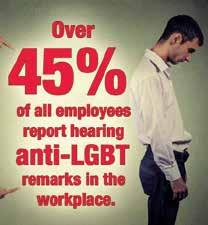
US: Workplace discrimination study
The Williams Institute has released a study showing that antiLGBT discrimination is still a very real problem in the United States. The report is called “Public and Private Sectors Employees’ Perception of Discrimination Against LGBTQ People,” and it asked workers about discrimination in various institutions such as work, school, law enforcement, and health care. Notably, the study found that LGBTQ people were twice as likely to notice antiLGBTQ discrimination compared to non-LGBTQ people, even in government-sector jobs.
Op-Ed
Search for the Soul of Seattle: South Lake Union
by A.V. Eichenbaum SGN Associate Editor
South Lake Union isn’t the place to go to when you’re feeling lonely.
Sitting in the sun, drinking coffee with my aunt, I’m uncomfortable in my seat, somehow feeling as though I’m being watched and being actively ignored by passersby at the same time. It creates an itching sensation at the back of my neck.
My aunt’s lived in SLU for over a decade. Her apartment building is one of the few holdovers from a time before tech companies and expensive high-rises started sprouting untamed in the neighborhood. She doesn’t have a lot to say on the subject, so I don’t press it. “I hardly have to leave SLU these days,” she says.
“It feels like people around here aren’t really trying to know their neighbors,” I say. I sip my coffee and try fight against the prickling anxiety I always feel here.
She shrugs and nods, and we talk about other things.
The structures of South Lake Union blend new luxury apartments and higherend cafés with older brick buildings covered in graffiti, the constant construction a reminder of the city’s constant evolution.
After coffee, I find one of countless hidden nooks and attempt to picture it as an overgrown garden — the old being eaten
by the new being eaten by the newer until it’s barely recognizable. The anxiety subsides as I realize SLU is a great place to be left alone, a positive attribute for the many members of the bustling tech community as they go about their daily lives.
It’s fitting that SLU and nearby Eastlake, another neighborhood struggling with growing pains, are two halves of what’s still marked by a sign as “The Cascade – The Heart of Seattle.” They embody that oldschool-vs.-new-school mentality both in their relationship to one another and within themselves.
People don’t talk much about the history of South Lake Union. They don’t talk about The Monastery or life before Bezos. People are always talking about what comes next. What’s the new building going up? What’s the new business going in (where such-andsuch used to be)? It’s a neighborhood with its eyes set on distant horizons in a city that feels like it’s forgetting where it came from.
It leads me to wonder: Is this what I’ve been searching for? Yes, the people are in a hurry and are absolutely disdainful of eye contact. They have places to go, and tight schedules for their high-paying jobs in an expensive city. That’s what people see from the outside looking in.
But among the art installations and hiding in the alleys, I’m looking at a symbol of progress and change. Even if I’m not totally comfortable walking around
with my ratty sneakers, broken heart, and discount glasses, I have to admit that this neighborhood feels hopeful and lively. Seattle’s techie district has beautiful parks and places to sit and not be bothered, which seems like a Seattleite’s dream.
Also nestled in South Lake Union is Lake Union Village, a group of tiny homes opened in 2018 and meant to aid the houseless while they try to get by. Hope for a better life seems to be the underlying theme of everything here, on all levels of ideology. That is in turn challenged by the rest of the city, which sees the changes here as an unsustainable creature fueled by corporate greed.
Is the interplay between change and those against change the only thing that unifies Seattle’s residents? It’s the reason I started this search in the first place, having noted that, even in the five or so years I’ve been here, things have become very different. Even my job here at the SGN is defined by the constant back and forth of what is, what was, and what it could be.
Maybe that’s the nature of Seattle’s soul. But I’ll have to do some more digging. I’m just unsure where to go next.
Which neighborhood should I explore next? Tweet suggestions, critiques, or flatout insults @photondetective for the next installment of Search for the Soul of Seattle.
Image courtesy of the PGN
Photo by A.V. Eichenbaum
International News
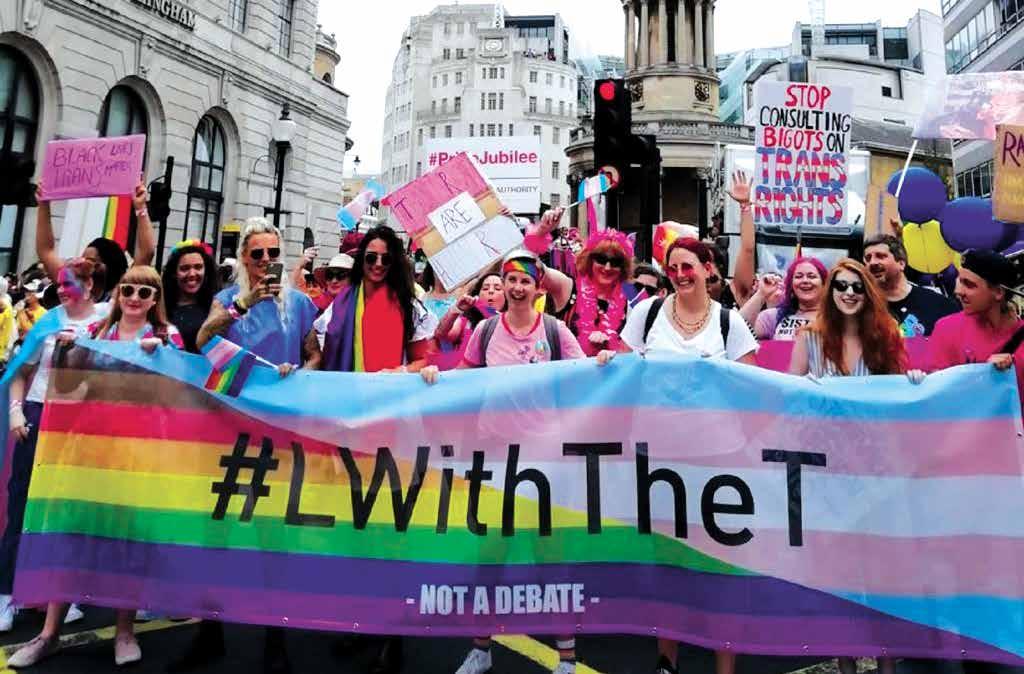
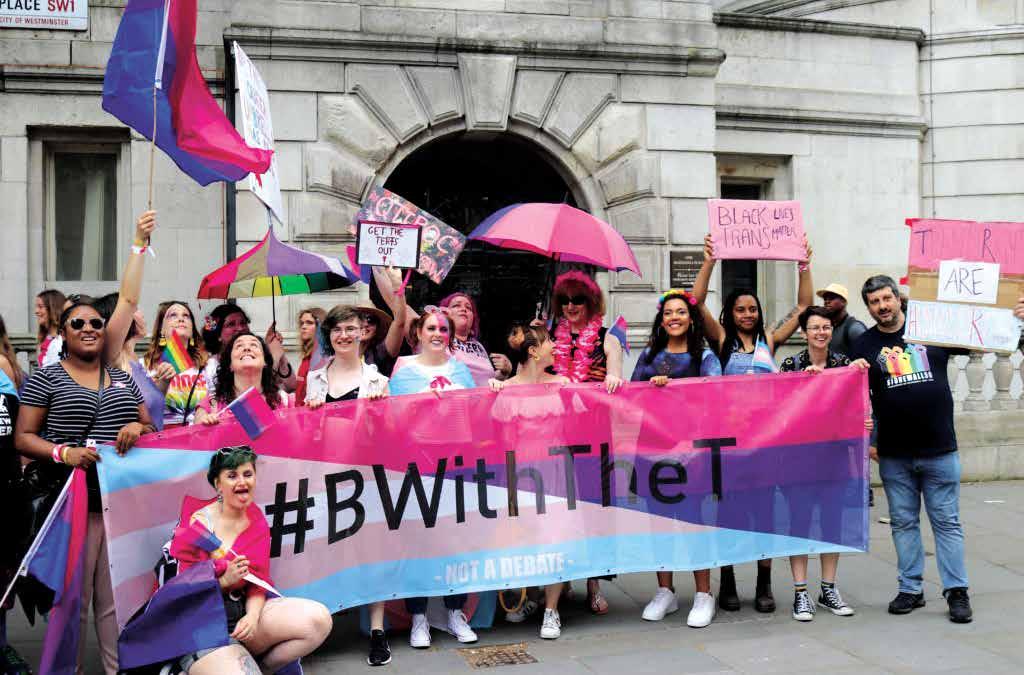
attend and speak at the meetings it has held, and has spoken publicly about its commitment to equality and respect for transgender people.”
Some 35,000 people signed a petition urging the Charity Commission to reject the LGB Alliance’s application on the grounds that it is an anti-Trans hate group.
“The commission looked at whether LGB Alliance’s purpose inevitably involves the denigration of the rights of transgender people and considered that it did not,” the Charity Commission reported in its official decision.
“The commission noted that LGB Alliance asserts that it engages constructively and respectfully with representatives of the transgender community, has a number of supporters within the transgender community, invited transgender supporters to
Since its creation in October 2019, the LGB Alliance has been branded a “hate group” by many in the LGBTQ activist groups, including Pride in London, the Labour Campaign for Trans Rights, and the LGBT+ Lib Dems.
The group has also been criticized for refusing to denounce its neo-Nazi and homophobic supporters.
LGB Alliance co-founder Bev Jackson works with the US-based right-wing group the Heritage Foundation, as well as with anti-choice groups.
LGB Alliance director Malcom Clark has said that British schools should not have LBGT+ clubs because of “predatory
gay teachers.”
As a charity, the LGB Alliance’s “position will be there are only two sexes and gender is a social construct, and that this perspective should form part of the discussion about these issues,” the Charity Commission said.
“LGB Alliance explains its position on the basis that it seeks to protect women and young people in particular. It argues, for example, that some spaces should be limited to biological women where they are potentially at risk.
“LGB Alliance is also concerned about the support and after-care that is provided for young people who are uncertain about their gender identity and when applying for a Gender Recognition Certificate.”
International news highlights
by Daniel Lindsley SGN Contributing Writer

Germany: Charges for Chechen officials
The Guardian’s Phillip Oltermann reported on April 18 that a German NGO has filed charges against five Chechen officials for crimes against humanity related to the Chechen government’s abuse of at least 150 people on the basis of their sexual orientation. The Chechen government has rebuffed accusations of LGBT persecution in the past by denying that Gay people exist in the country. Should the case be taken on by the general prosecutor, the Chechen officials could face arrest the next time they enter Germany again.
England: Puberty blockers
NHS England announced on April 16 that an independent group of reviewers will be formed to assess the need to prescribe puberty blockers to children with gender dysphoria, the BBC reports. This follows a ruling in March that allows parents to consent to puberty blockers on behalf of children under 16 years of age, and though the NHS is vague about the details, it is likely that future prescriptions will require approval from the child, their parents, their doctor, and the review group. For now, at least one major clinic has paused referrals until a more concrete decision is made.
Magomed Daudov – Photo by Mikhail Klimentyev / TASS Protesters lead the 2019 Pride in London parade – Photo by Amy Ashenden / Pink News