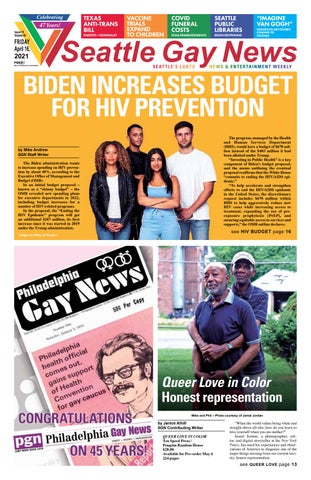
BIDEN INCREASES BUDGET FOR HIV PREVENTION
by Mike Andrew SGN Staff Writer
The Biden administration wants to increase spending on HIV prevention by about 40%, according to the Executive Office of Management and Budget (OMB).
In an initial budget proposal –known as a “skinny budget” – the OMB revealed new spending plans for executive departments in 2022, including budget increases for a number of HIV-related programs.
In the proposal, the “Ending the HIV Epidemic” program will get an additional $267 million, its first increase since it was started in 2019 under the Trump administration.

The program, managed by the Health and Human Services Department (HHS), would have a budget of $670 million instead of the $403 million it had been allotted under Trump.
“Investing in Public Health” is a key component of Biden’s budget proposal, and the memo outlining the eventual proposal reaffirms that the White House “commits to ending the HIV/AIDS epidemic.”
“To help accelerate and strengthen efforts to end the HIV/AIDS epidemic in the United States, the discretionary request includes $670 million within HHS to help aggressively reduce new HIV cases while increasing access to treatment, expanding the use of preexposure prophylaxis [PrEP], and ensuring equitable access to services and supports,” the OMB outline declares.
see HIV BUDGET page 16
Queer Love in Color
representation

“When the world values being white and straight above all else, how do you learn to love yourself when you are neither?”
Jamal Jordan, a photographer, editor, and digital storyteller at the New York Times, has used his experiences and observations of America to diagnose one of the major things missing from our current society: honest representation.
see QUEER LOVE page 13
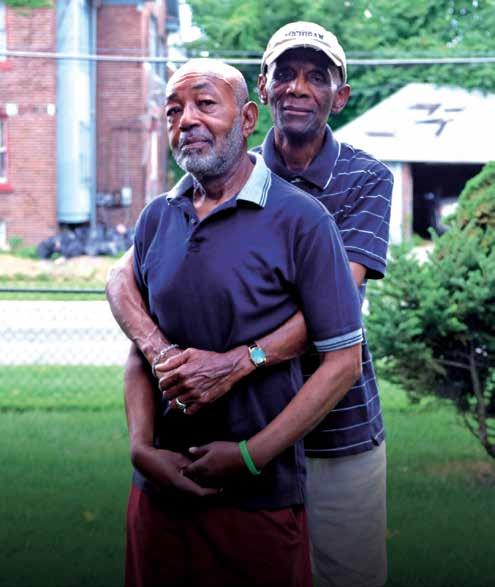
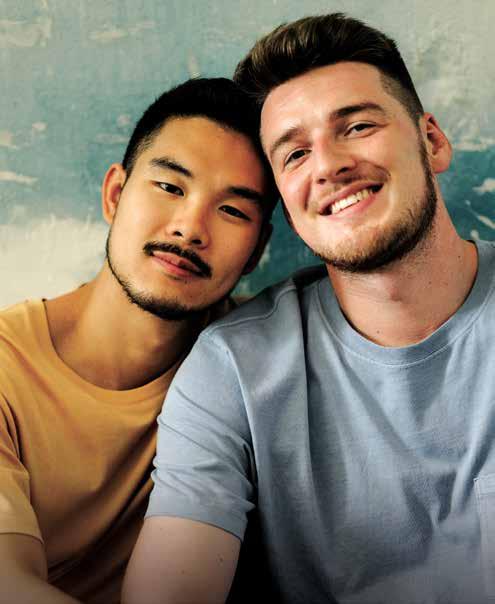
Mike and Phil – Photo courtesy of Jamal Jordan
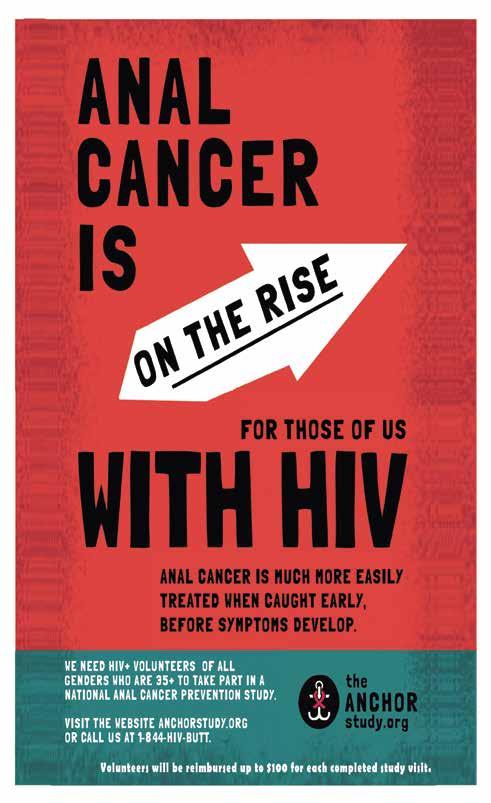
Image courtesy of hiv.gov



THIS AD SPACE HAS BEEN GENEROUSLY DONATED BY KRISTIN COSTELLO IN MEMORY OF SGN PUBLISHER GEORGE BAKAN




Local News
“Safety-conscious planning”: Seattle Public Libraries begin the reopening process
by Paige McGlauflin SGN Contributing Writer
The Seattle Public Library announced earlier this month that three branches would soon reopen at 25% capacity Tuesdays through Saturdays, allowing patrons to work or study in 90-minute intervals.
The announcement is another move in the library’s reopening plans, after it had to cease all in-person services on March 13 of last year due to social distancing guidelines.
Laura Gentry, SPL’s interim communications director, told the SGN that much of the system’s reopening plans have been informed by the participation of over a hundred staff members.
“It’s actually a massive effort to come up with what I call a safety-conscious plan for reopening that everybody at the library hopefully can feel good about, because they’ve all had an ability to shape it in some way,” Gentry said.
The three branches set to reopen on April 27 are the Beacon Hill, Lake City, and Southwest locations. The reopening plan falls in line with Gov. Jay Inslee’s Phase 2 guidelines. Though most of the state is within Phase 3 guidelines (50% capacity), the library decided to remain in Phase 2 in case services need to be scaled back again.
Unfortunately for library card holders, the option to peruse shelves or use study rooms won’t be available in the three reopening branches yet. Other services, including the restroom, computer use, Wi-Fi access, and printing, will all be available
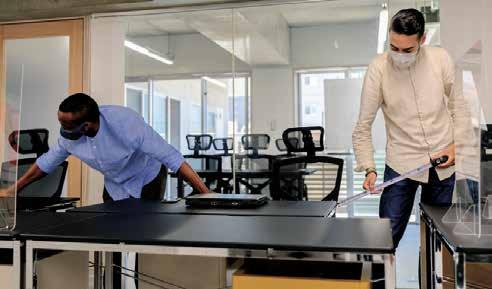
with social distancing measures in place.
SPL has identified the first seven branches it plans to open but won’t be able to share which ones have been chosen in case the plans have to shift.
“We have decided to be very cautious in how we’re sort of rolling this information out, because we don’t want to disappoint anybody,” Gentry said, noting that anything from staff to health data changing could affect the branches that have been selected for reopening.
For those who need to check out books, curbside pickup is available at 15 of SPL’s 27 branches, and can be scheduled on the website (www.spl.org).
“It’s an extremely isolating time for people, and we want to make sure that however we can fill that gap, we’re helping.”
Despite all branch doors being shuttered for over a year, the library has been quick to find ways to support those who need its services the most. Within weeks of closing due to
the city’s safety guidelines for the pandemic, the library introduced several new socially distanced services, including the option to obtain a library card and attend events online, many of which will likely remain after inperson services fully resume. For example, the “2020 Pictures of the Year” event held in coordination with the Seattle Times saw over a thousand virtual attendees. (The auditorium the event is usually held in can only hold a few hundred people.)
“It certainly has opened our eyes in terms of the potential for those kinds of services moving forward, even when we get back into building and start doing our legacy services that people are used to us doing,” Gentry said.
The largest obstacle SPL had to overcome was providing access to patrons who rely on the library for internet use. So it offered over a thousand hotspots patrons could check out for the short or long term. In June, the library received a loan from its foundation to provide an additional 75 hotspots to communities that need greater internet access.
“People really rely on us for things like computer and technology access,” Gentry said. “If they’re inequitably resourced, they can still connect to the internet. It’s an extremely isolating time for people, and we want to make sure that however we can fill that gap, we’re helping.”
For further information on SPL’s reopening plans and other socially distanced services, please visit www.spl.org/ hours-and-locations/road-to-reopening.
FEMA to reimburse COVID-19-related funeral costs
by Hannah Saunders SGN Contributing Writer
The Federal Emergency Management Agency (FEMA) recently announced that it will provide financial assistance for COVID-19-related funeral costs that took place after January 20, 2020.
This reimbursement operation went into effect on April 12 2021, under the Coronavirus Response and Relief Supplemental Appropriations Act of 2021 and the American Rescue Plan Act of 2021. The announcement also came after the US COVID-19 death toll exceeded 500,000 American residents, and it continues to climb.
FEMA, which operates under the US Department of Homeland Security, said in its statement, “The COVID-19 pandemic has brought overwhelming grief to many families. At FEMA, our mission is to help people before, during and after disasters. We are dedicated to helping ease some of the financial stress and burden caused by the virus.”
FEMA mentioned that it will be teaming up with stakeholder groups for advice on how to best provide assistance, which includes outreach to families and communities that may have been affected by a COVID-related death.
How do I know if I’m eligible?
In order to receive financial assistance through FEMA, one must meet the eligibility requirements. First, the death attributed to COVID-19 must have occurred in a state, territory, or tribe within the United States. The applicant, whose identity will need to be verified, must be a US citizen, non-citizen national, or qualified alien; there is not

a requirement for the decedent to have fallen under these three categories, however. It is also important that the medical examiner listed on the death certificate that COVID19 played a role in the person’s death.
“If COVID-19 played a role in the death, this condition should be specified on the death certificate. In many cases, it is likely that it will be the underlying cause of death, as it can lead to various life-threatening conditions, such as pneumonia and acute respiratory distress syndrome,” read FEMA’s press release.
FEMA said it accepts death certificates with phrases such as “may have been caused by” and “was likely a result of” COVID-19 — any wording that indicates that the coronavirus played a likely role in the individual’s death is acceptable.
(Last year, the CDC produced the Vital Statistics Reference Guidance Number 03 (April 2020), which laid out guidelines for COVID-19-related death certificates.)
Finally, applicants who had funeral expenses covered through other sources such as funeral and burial insurance, voluntary agencies, or governmental programs will not receive duplicate assistance through FEMA. Still, those who received only some financial assistance from other sources are encouraged to apply.
What documents should I have ready?
FEMA will review documentation regarding COVID-19-related funeral expenses before sending the applicant reimbursements.
First and foremost, those who believe they may be eligible should have the COVID-19-related death certificate of the decedent ready. Other documents needed are proof of expenses, such as receipts and funeral home agreements. These expenses include burial plots and cremations, officiant services, and the transfer of the remains. These documents should show the applicant’s name as the responsible party for the deceased, the name of the deceased, the total amount of funeral costs, and the date the funeral expenses were made.
Funeral and burial insurance and other funeral benefits information should also be kept ready. If funeral funding was received via other outlets, that information and documentation needs to be provided as well.
What benefits might I receive?
Qualifying applicants will be able to receive up to $9,000 in reimbursement for each COVID-19-related funeral they were responsible for. Payments will be sent in two ways — via a check in the mail or via direct deposit — depending on what the applicant prefers.
How do I apply?
As of now, there are no online applications available for FEMA’s COVID-19-related funeral reimbursements. Applications will be accepted through FEMA’s call center line at (844) 684-6333, which operates from Monday through Friday from 8:00 a.m. to 8:00 p.m. CT.
For more information regarding FEMA’s COVID-19-related funeral assistance, visit www.fema.gov/disasters/coronavirus/economic/funeral-assistance.
Photo by Brynn Anderson / AP
Photo courtesy of SPL
Op-Ed
Search for the Soul of Seattle: Eastlake
by A.V. Eichenbaum SGN Associate Editor
When you come to a city, you quickly get a sense of its energy. Visiting San Francisco, you can feel the history in its old Victorians and radiating in its winding streets. When in New York, every borough, no matter how different, has a unique New Yorkness to it, Anthora cups and all. Even Portland quickly defines itself upon entry, with an energy I’d best describe as “uncomfortable, but working it.”
Then we have Seattle. Outside of the city limits, Seattleites are referred to as cold, passive, elitist. Inside the city limits, it’s said that newcomers often experience the “Seattle Freeze.”
Its citizens are quick to jump to their own defense, however, when an outsider such as myself attempts to verbalize a unitary city feeling. The “freeze” phenomenon is oft denied by born-and-raised Seattle residents, who have been known to say, “If you’re experiencing The Freeze, maybe you’re the problem.”
Seattle often feels disjointed in its aesthetic, a feeling aided by the large tech corporations and rapidly sprouting developments around every other corner. I’m not the first to observe that its many neighborhoods often feel like their own small towns.
So, with that in mind, I started to wonder: What is the soul of Seattle? How do we define Seattle-ness? If we can define that, is it rooted in the perceived coldness of its residents? Surely there’s more to it.
My search began with the neighborhood I’ve called home for the last four years.
Eastlake hugs a stretch of road roughly a mile in length between South Lake Union and the University Bridge. Its highlights include the houseboats from Sleepless in Seattle, an abundance of street art, and, in my opinion, its people.
For three years, I worked at the quaint little shop known by Eastlakers as the heart of the neighborhood, Lake Union Mail. I lucked into the job after struggling for months at a deli in Pike Place Market during tourist season, and from the moment I started, I was able to interact with and observe Seattleites of all stripes from behind the counter.
Eastlake has its own political scene, including a community council, quarterly newsletter, and an online social club. Unlike neighboring South Lake Union, Eastlake is described as “warm” and “welcoming” by those who visit and is quietly overlooked in many conversations about the city. It shares borders with Capitol Hill, Portage Bay, and the University District, but over the years, I’ve come to find that many people in those neighborhoods don’t recognize Eastlake as its own locale, giving the neighborhood’s slogan “Seattle’s Hidden Gem” more weight than it would have otherwise.
It’s here that I’ve been largely shielded from The Freeze, and so it’s here I start asking my questions.
And who better to ask than “the Mayor of Eastlake” himself?
Jules James is a well-liked but controversial figure in neighborhood politics. He’s amicable, neighborly, and quick with a joke or a laugh. He’s been so nicknamed for his involvement in everything from zoning law campaigns to school functions to renegade Little Free Libraries and more. His knowledge of Seattle’s history is second to none, and if he doesn’t know the answer to your question, he knows someone who knows.
Jules is the reason Lake Union Mail is the heart of the neighborhood, having run it for nearly 30 years before stepping back and selling it to one of his customers. To this day, people come in to LUM to get

Photo by A.V. Eichenbaum
their gossip, political opinions, and restaurant recommendations while they’re shipping packages to their loved ones or returning Amazon purchases. When it comes down to it, you can’t have a conversation about Eastlake without having a conversation about Jules James.
The man said my journey to categorize Seattle’s soul was nuts.
But he was open to talking about the old days.
I’ve got the Mayor of Eastlake on the phone on a Friday. “The hallmark of this neighborhood is, and has always been, change... We were able to change so many things and so many issues [through Lake Union Mail] just by talking to people. By connecting with them.”
Jules attributes a lot of the neighborhood’s warmth and sense of community to its history. In the old days, Eastlake was a combination of low-rent housing, houseboats, dive bars, and single-family housing, separated from the rest of the city on either side. This created, he posits, something of an “island mentality,” citing many of the older Eastlake residents’ laid-back attitude.
“Now,” he says, “the Amazonians out there are coming in — they’re often good people, the best and brightest — but they’re not coming here to put down roots.”
Change has come here much in the same way it has to the rest of the city, and while Jules doesn’t begrudge people doing their jobs and living their lives, you can sense a note of sadness in his voice as he talks about the future.
“I don’t know,” he says, “I just don’t know. Eastlake has always been a place for people who just want to live their lives.
They don’t have to prove anything to anyone; they just have their lives and their dreams, and things go on.”
That sense of a dreamer’s humility was something that caught my attention living here as well. In the shop, people talking about their hopes was just as regular as complaints about the weather.
Artists and writers of all types, as well as students and travelers from all over, call Eastlake home. But I wanted to talk to someone a little newer to Eastlake. Someone who, like me, was a transplant from out of state. Enter Scott Méxcal, an arts educator and transplant from New Mexico.
Scott responded to my inquiry in Eastlake’s community Facebook group, the Eastlake Social Club. Before moving to the neighborhood, he lived in the Central District with his partner. “The short answer is I love living in Eastlake,” he said, the sound of freeway traffic rumbling in the background. “But historically, demographically, it’s a very different sort of neighborhood.”
Scott is Mexican American, and living in a majority-white neighborhood was definitely an adjustment.
“I love that it’s a neighborhood that’s always communicating, and I think that, for the most part, people do look out for one another. I think that’s a characteristic of a community where I feel comfortable, where I want to live. But it’s not perfect, not by a long shot.”
The conversation turned to the Eastlake Social Club.
“Mostly, it’s my neighbors, and it’s a great group of people, but over the summer, some very frightening things were being posted.”
Along with questions looking for hairstylist recommendations and announcements of things for sale, the Eastlake Social Club is often riddled with posts about packages being stolen, strangers walking around “looking suspicious,” and the type of raw, angry political discourse you don’t see in person — especially in Seattle, where people tend to keep their opinions close to their chest. The Eastlake Social Club is a window into a very different type of neighborhood.
Eastlake is described as “warm” and “welcoming” by those who visit and is quietly overlooked in many conversations about the city.
Scott’s main worry was racial profiling and groupthink. A Mexican American walking at night in a hoodie might draw the wrong type of attention, as much as it pains us to admit. The anger and fear in the Eastlake Social Club extends to the houseless and the poor. I, a moderately tattooed individual who often wears ripped jeans and tank tops, was once filmed taking the trash out of my apartment building by a neighbor who assumed I was digging through it instead of disposing of it. When I made eye contact with him and let myself into the building, he quickly put his phone away. But is this the spirit of this neighborhood? Or is this something else? Seattle’s anti-homeless sentiment is nothing new, and people tend to think of it as a predominantly white city. Scott and I talked about the historical class divide, from the houseboats built in defiance of wealthy landowners to the recent rallying cry against public transit. But that didn’t change either of our opinions of a place where the sense of community outweighs any feeling of unease.
“I think the beautiful thing and what I love about this neighborhood,” he said, “is that there is a dialogue [in Eastlake] . Ultimately, I felt heard. It’s important here for people who don’t always have a voice to have a voice.”
In his online interactions, he has brushed up against Jules James as well, and while they don’t see eye to eye on every issue, it’s a trademark in Eastlake to offer an olive branch at the end of a disagreement. “Even after all of our interactions, Jules has offered to buy me a beer so we can really hash things out. And that’s something you just don’t see in other places around Seattle.”
What it comes down to is this: I’m starting to think maybe Seattle doesn’t have one definable soul. Maybe here it’s neighborhood first, city second. Maybe the boundaries, cultural and physical, between the neighborhoods have, in fact, created microcosms of their own to be explored as they change and find themselves.
Or maybe it’s something I’m not seeing. Maybe the lens of fear some use to look at change — whether it’s newcomers, new generations, or new companies — defines this city in a deeper way. We won’t know for certain, but I’m going to keep searching one neighborhood at a time.
Next week, we’ll be exploring South Lake Union in our continuing series Search for the Soul of Seattle.
Op-Ed
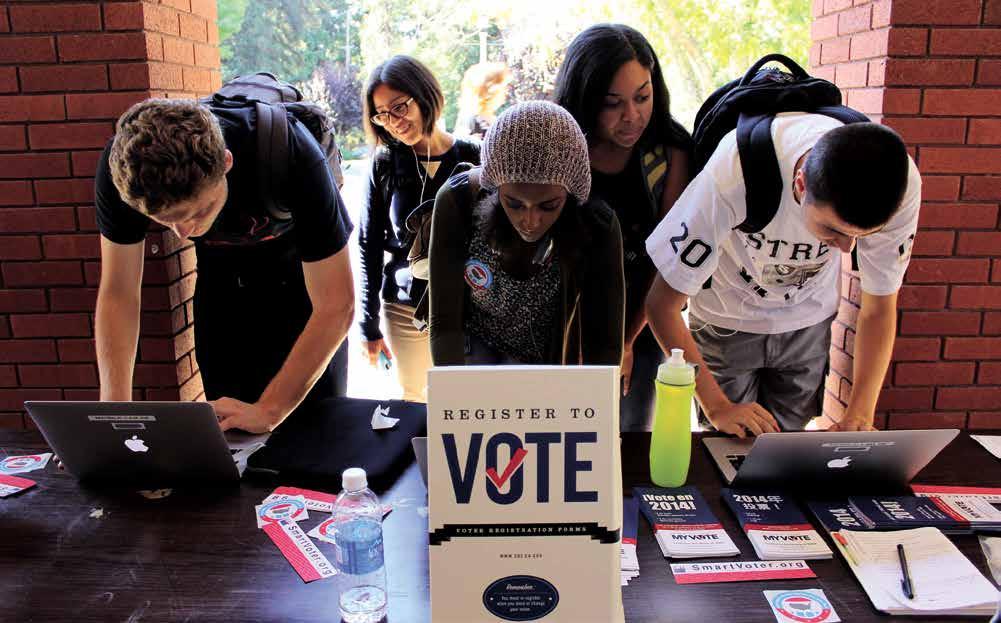
by Dave Mulryan Special to the SGN
The 2018 mid-term elections and the 2020 general elections saw a massive surge of voting, as many people, especially the young, voted at the highest rate since 1900. This huge increase showed, with some unexpected results, that the care and feeding of the world oldest and most important democracy really does rest on just one thing: voting.
If one looks only at the young vote, Arizona, which birthed Barry Goldwater and has long been a conservative bastion, would turn blue (editor’s note: as it happens, it did anyway). Texas would too. That this can be attributed to the young vote is hardly a surprise.
Although this uptick was welcome, we still have a crisis of voting, in that not enough of us do it.
Why? The Founders, the white men who wrote the Constitution and muscled its adoption by the warring factions that made up the original 13 colonies, made compromises to get the necessary two-thirds, including that there would be no federal oversight of voting — the states would be in charge of all elections, even federal ones.
Plus, the small colonies were concerned that they would be overwhelmed by the large ones, so they insisted on equal numbers of senators (two each) and used the House of Representatives for proportional representation.
They also restricted voting to white men with property, and had state legislators choose senators (direct election of senators would not take place until 1913). Voting was for elites, and echoes of that still resonate today.
There has been progress: women got the vote in 1920, and President Johnson pushed through the Voting Rights Act and the Civil Rights Act in the 1960s. He failed to get the voting age lowered to 18, though: Oregon and Texas used the federal courts to delay
its implementation until President Nixon brokered a deal, after which the Constitution was amended.
So there has been progress, yet voting remains anemic. Most federal elections are decided by 50% of eligible voters; some, like mayoral races and school board elections, can be decided with as few as 6% of eligible voters.
tration from an active endeavor (requiring effort by the voter) to a passive one. Oregon, with its automatic voter registration, is showing how this can work. Vote-by-mail elections also seem to increase participation. Yet the adoption of these methods nationwide seems to be a ways off, and in the meantime, we need to register these voters now.
We have listened closely to those that
We are now facing a huge bulge of potential new voters, the millennials, and their numbers are astounding. They can determine every future election — if they choose to register and vote. The $64,000 question is: Will they?
We are now facing a huge bulge of potential new voters, the millennials, and their numbers are astounding. They can determine every future election — if they choose to register and vote. The $64,000 question is: Will they?
In New Mexico, Everybody Votes and the New Mexico Voter Group focus on the nuts and bolts of registering voters: setting up tables, getting young voters to register, then getting the forms to the county clerk. Yet we despair that we are not doing enough. Many eligible voters, especially young ones, breeze by us, muttering something about “not voting.”
We have registered a huge chunk of voters, with few resources, so we know that it can be done. Yet we are not efficient: we need to scale this effort, we need to bring voter registration to the fore all over the country. Clearly we could use resources and money, but we also believe that we need a revolution in how people register to vote. How do we do this?
In short, we need to move voter regis-
we do register, as well as to those that don’t want to register. Although we are reluctant to draw definitive conclusions, because there was no formal research study (it was simply observational), there was enough data for us to draw some preliminary ones.
The person who registers someone to vote is the very first contact that people have with the mechanics of democracy. This voter registration agent (VRA) needs to be prepared to both register the voter and give that person a reason why to register, and why they need to vote. That is asking a lot, but it seems to be a requirement to have a successful encounter.
Few states require any training for people that want to register voters. New Mexico, which does require a training class, is one of the strongest. Its training, handled by the county clerk, requires an understanding of the registration form, and the formal issuance of a voter registration number. The state also issues a VRA certificate with a number, which allows it to track the activities of the agent.
In New Mexico, a huge number of people have taken the VRA training. Yet we have few who actually do it. In other words, it appears that many people are willing to register others to vote — but then after taking the class, they fail to do so. We hypothesize that many of VRAs feel ill equipped to register voters, even after the class, so they don’t.
We have a huge task ahead of us. We have proven, as evidenced by the turnout in the 2020 elections — the best in 120 years — that voting is key. We need to continue to train VRAs and make sure that they feel prepared.
We need a complete curriculum that teaches people to register voters. They need to know when the next election is. They need to know what issues are coming up in the near term that the new voter will have to weigh in on.
They also need to be able to explain the role of the voter in the democratic process. They need to be able to rebut conventional wisdom, such as “my vote doesn’t count,” and explain how that everyone’s vote does count.
Stacy Abrams, who led a group that registered 800,000 voters in Georgia, shows what can be done with leadership and political will: she, and her group, will helped the balance of power in Washington, giving the Biden administration a chance to govern.
We need resources, we need direction, we need to scale. We can and have identified the problem, and we need to quickly implement the solution. We can do it, if we want to. Do we, as citizens of the world’s oldest and most important democracy, have the will to do this? I hope we do. I believe we can.
Dave Mulryan is the co-founder of Everybody Vote, a group that registers high school seniors to vote. He is president of Mulryan/Nash Advertising, Inc.
Photo courtesy of League of Women Voters
IMMERSIVE “Imagine Van Gogh”
COMING TO TACOMA

by Josephine Baird SGN Contributing Writer
Tickets for the
anticipated
an
to
more than
Tacoma stint of the highly
“Imagine Van Gogh,”
immersive experience of the works of Van Gogh, are now on sale. The event, which brings
life
200 of the Dutch artist’s paintings, will make its West Coast debut at the Tacoma Armory on S. Yakima Ave. on December 18. see VAN GOGH page 12
Photo by Laurence Labat
Film
Six Minutes to Midnight a serviceable historical thriller
by Sara Michelle Fetters SGN Staff Writer
SIX MINUTES TO MIDNIGHT PVOD / Theaters
There is a finishing school on the south coast of England, the Augusta-Victoria College, run by the haughty headmistress Miss Rocholl (Judi Dench), that has caused a minor stir back in the London war office: it is 1939, and this institution caters to the daughters of high-ranking Nazis. With current events being what they are, some in the government wonder if such a place promoting British-German relations is in the best public interest.
Educator Thomas Miller (Eddie Izzard) has come to the school at a difficult time. His predecessor died under mysterious circumstances, and Miss Rocholl is understandably nervous about bringing in a newcomer, no matter what his credentials. But in large part due to his half-German heritage, she decides to keep Miller on for a trial period, and in no time he manages to both charm the students and ingratiate himself with fellow teacher — and former student — Ilse Keller (Carla Juri).
Even if the story at the heart this motion picture isn’t one I can say I’ve seen before, the pre-WWII suspense-thriller inspired by true events still hits its fair share of familiar beats. It goes without saying that
Miller isn’t who he claims to be. Additionally, there’s something sinister happening at the Augusta-Victoria College that Miss Rocholl has made a potentially conscious decision to remain entirely clueless about.
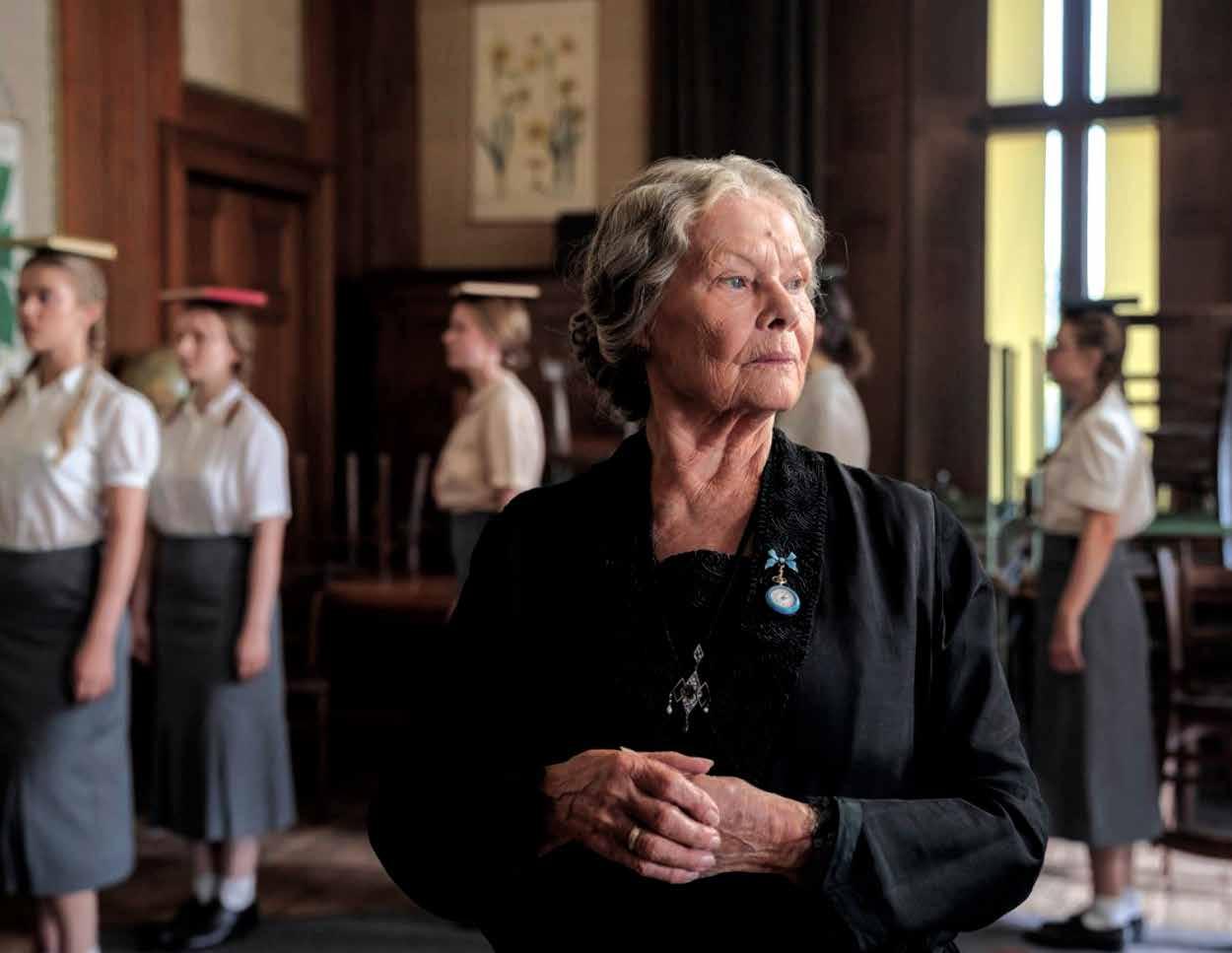
Dench is the film’s not-so-secret weapon. Even with limited screen time, she still dominates almost every second her character is around.
What might that be? Why are these girls so important? The German government knows they can be used as leverage against their parents by the British. Worse, they might be taught ideas and beliefs contradictory to Nazi ideology. Wanting these young ladies out of England, high-ranking officials are willing to do whatever is necessary to ensure they are returned to German soil or, if that proves impossible, to order their execution by the operative secretly working under Miss Rocholl’s nose.
There are additional bits of intrigue, including a secret list of German agents and a bit of nonsense involving British officials working against Miller who believe it’s in the country’s best interest to appease Hitler. Mostly, though, it’s a lot of watching Izzard run. Run across the open hillsides. Run through windswept fields. Run along gravel roads apparently going nowhere. Make no mistake, it’s a lot of running.
The script, co-written by Izzard, director Andy Goddard (A Kind of Murder), and Celyn Jones (The Vanishing), is polished and never insults the audience’s intelligence. Still, even though there are a handful of well-dressed red herrings, the identity of the main German operative is easy to ascertain within the first 15 or 20 minutes. There aren’t a lot of shocks, and even if I did feel like the trio revealed their cards much too early in the game, leaving the outcome never in doubt, I can hardly blame them for trying to make their antagonist a bit more fleshed out and somewhat easier to empathize with.
Dench is the film’s not-so-secret weapon. Even with limited screen time, she still dominates almost every second her character is around. There is a divine complexity to Miss Rocholl that’s telegraphed solely in how the actress contorts her body or cocks an eyebrow. Dench has a sublime scene with Izzard, in which the headmistress tries to explain away Nazi salutes and exclamations,
and it’s obvious through her wavering vocal inflections and jittery movements that she’s having difficulty believing a single word she’s so fervently uttering.
As for Izzard, he’s a strange choice to be playing a stiff-upper-lip spy straight out of a John le Carré novel. For every scene in which I felt he was perfect, there were two or three others where I didn’t believe him in the role. But he does have a few wonderful moments sprinkled throughout, not the least of which is a tense face-off with a pair of detectives (impeccably portrayed by James D’Arcy and Celyn Jones) who believe he’s a murderer. Their scenes have an electrifying tension that’s welcome, D’Arcy, in particular, showcasing a stoically upright menace that’s moderately bone-chilling.
It’s unfair of me to put it this way, but had I viewed Six Minutes to Midnight on PBS, I’d probably have felt it was just fine. However, as handsomely mounted and professionally acted as it might be, I was never as captivated by any of what was happening as much as I would have liked. There’s nothing all that wrong with Goddard’s thriller; there just isn’t all that much that’s exceptional about it, either. It’s serviceable and passes the time, but that’s it, making the film hard to recommend, even if watching it is anything but a chore.
Judi Dench in Six Minutes to Midnight – Photo courtesy of IFC Films
Niceness prevails in heroically silly Thunder Force

by Sara Michelle Fetters SGN Staff Writer
THUNDER FORCE
Netflix
Thunder Force is not a great movie. Heck, I still can’t decide if I even want to call it a good one. What I will say is that this labor of love for producer and star Melissa McCarthy and her husband, writer-director Ben Falcone, made me giggle. Their latest collaboration is thankfully more like 2018’s politely endearing Life of the Party than it is their other three calamitous misfires — Superintelligence, The Boss, and Tammy — and that’s a positive I’m willing to champion.
I think what struck me most while watching this one is how nice it is. For a superhero comedy aiming to deconstruct modern Marvel and DC aesthetics, it has an easygoing grace that’s oddly winning. I was charmed by the relaxed nonchalance of what was taking place, and it was refreshing to watch a story about superpowered individuals where the stakes felt far more minutely personal and not so gargantuanly unrelatable.
After interstellar cosmic rays transform a select few genetically predisposed to evil into unstoppable villains dubbed “Miscreants,” scientist Emily Stanton (Octavia Spencer) makes it her life’s work to come up with a way to bring these evildoers to
justice. On the night of her 25th high school reunion and on the verge of a major breakthrough, former childhood friend Lydia Berman (McCarthy) makes a surprise visit to Emily’s new, technologically advanced Chicago headquarters, hoping to convince her to go to a party.
Though at one point they were inseparable, a silly argument during their senior year of high school tragically severed their unbreakable bond. After Lydia inadvertently takes a series of injections that give her super strength originally meant for Emily, the duo is forced to put the past behind them and work together for the greater good. They will become the superhero team “Thunder Force,” battling Miscreants to better the lives of all Chicagoans living in fear of these powerful baddies.
There’s not much more to it. Emily will find a way to give herself the power of invisibility, and Taylor Mosby and Melissa Leo pop up in key supporting roles as, respectively, the scientist’s whip-smart 15-yearold daughter Tracy and her trusted assistant Allie (they’re basically a dueling pair of Alfreds). They will all face off against the sinister mayoral candidate William “The King” Stevens (Bobby Cannavale) and his pair of henchmen, the amoral killing machine Laser (Pom Klementieff) and the begrudgingly bad, aptly named thief The Crab (Jason Bateman).
The rest is all a series of brief vignettes of Lydia and Emily learning how to use their powers as they figure out how to become crimefighters. They battle a few
While McCarthy’s uncouth, sarcastic side is still on full display, there is a selflessly openhearted generosity driving her performance that’s wonderful.
evildoers, foil a robbery, and become popular Chicago celebrities. Old wounds are healed. Friendships are renewed. Faith in society’s inherent decency is restored. A celebratory pickle is consumed, and uncooked chicken is greedily slurped down as if it were pasta.
Not all of the jokes land, and as is par for the course in these McCarthy/Falcone collaborations, there is a loosey-goosey feel to things that makes the film come across
as it if it were slapped together in the editing room at the last second with no concern with how one scene connects to the next. Characters are introduced and then forgotten about for long stretches, only to be reintroduced for no real reason other than to remind the audience they’re still around, and significant plot points are summarily dismissed for no logical reason.
What keeps things from falling to pieces is that it’s just so pleasantly affable. While McCarthy’s uncouth, sarcastic side is still on full display, there is a selflessly openhearted generosity driving her performance that’s wonderful. Lydia is a good person, and that doesn’t change after she gets her superpowers. Even though it’s been 25 years since their falling out, her sisterly affection for Emily hasn’t diminished.
This kindness permeates every cell of the picture, giving things a strange, comforting benevolence I was unapologetically drawn to. McCarthy and Spencer are a terrific pair, each playing off of the other with such loving adoration that they could have sat for 90 minutes on a park bench chatting about ’80s hair bands and I probably would have enjoyed every second of the conversation. Without them, I seriously doubt I’d have liked this film at all. With them, I almost can’t imagine a world where Thunder Force doesn’t exist.
Melissa McCarthy and Octavia Spencer in Thunder Force – Photo courtesy of Netflix








Arts & Entertainment


The exhibition, first held in Paris in 2017, was an instant hit with those familiar to Van Gogh’s works and newbies alike. It made its way across Canada in 2020, where it sold over 500,000 tickets. It has so far captivated audiences all over the globe, and the coordinators hope that it will do the same for PNW locals.
The concept of “Imagine Van Gogh” is unique in itself. According to imaginevangogh.com, the exhibition, held in partnership with Tandem Expositions and Encore Productions (France), is the creative brainchild of Annabelle Mauger and Julien Baron, who are well known for their collaboration on and creation of immersive
events at the Cathédrale d’Images in Les Baux-de-Provence, using the Image Totale concept conceived by Albert Plécy. They used the advanced technologies of multiprojection and immersive audio in order to “add emotional depth to each image, allowing us to live and feel the creative energy of the esteemed artist.”
Visitors are given a rare chance to wander among giant versions of one of history’s most famous artists, affording them an opportunity to explore every detail of some of his best-known works, all painted between 1888 and 1890 in Provence, Arles, and Auvers-sur-Oise, France. According to the website, “Immersed in an extraordinary experience where all senses become fully awakened, viewers will be truly moved by such spectacular beauty.”
After a year of canceled events and stay-
Books
ing home, this exhibit will be a great option for those ready to experience some much needed culture in a safe way, because it is by design set up as a contactless experience. It will be held in a space large enough to host a setup that requires 24,000 square feet, and the number of guests will be limited and allowed in on a timed-entry basis. Hand sanitizer stations will be provided, six feet of physical distancing will be required, and masks will be mandatory.
With the safety of guests, employees, and the community at large as the highest concern for the administrators, the exhibit will not open until December in order to remain in accordance with the public safety efforts of Pierce County and Washington State.
There has been some confusion about the event and its ticketing process, even prompting the Better Business Bureau to
Book Review: First, Become Ashes
by Kylin Brown
SGN Contributing Writer
FIRST, BECOME ASHES
K.M. SPARZA
Tordotcom
$28.00
299 pages
Note: This novel contains explicit sexual content, including graphic scenes describing sadomasochism and consent violations and assault.
K.M. Szpara wields fantasy and imagination to tackle traumatic origins and highlight the nonlinear nature of healing for the protagonists of this queer mini-epic. In a skillful brew of queer pop culture and low fantasy, two different earthly worlds combine for “a fucking quest” that readers won’t find anywhere else.
First, Become Ashes sets out on an enthralling, unsettling, and occasionally steamy journey that we might all be able to relate to in some way, led by four protagonists in narratives from the past and present.
The novel begins with a short-lived vignette of life in the Fellowship of the

Anointed’s commune, where Lark and Kane have one goal thus far: to harness magic in preparation for their “mid-cen-
tury” quests at age 25, in which they will slay monsters in the outside world and convert the rest of humanity to believe in their cult’s abusive leader, Nova. Their magic training in The Fellowship has involved both enduring and inflicting severe pain at Nova’s command, and so their narratives are marked by trauma. After one of their confessions leads to infiltration by the FBI, which steps in to take down Nova, they are thrown into the outside world, and both of their lives completely unravel.
Deryn, on the other hand, serves as a “fellow” on the commune, constantly undervalued in comparison to Lark and Kane. Deryn is on a separate quest for self-worth and discovery as they leave the commune with an openness to a new world where fewer limitations will be placed on them.
Our fourth protagonist, Calvin, might sound more familiar (or more boring, depending on the reader). He first appears as a LOTR cosplayer getting ready for a convention. He lives in Baltimore and has an avid Patreon fanbase. His desire for fantastical adventure is rooted deep in him already when he meets Lark and becomes invested in his magic quest to find a monster and slay it.
issue a warning on March 10. According to the Seattle Times, the warning was issued due to nearly 200 complaints against a ticketing company, Fever, that is coordinating a similar event, called “Immersive Van Gogh.” Confused customers who accidently purchased tickets for that have been frustrated with the company’s no-refund policy.
To avoid making this understandable mistake, those interested in “Imagine Van Gogh” should purchase tickets directly from imagine-vangogh.com.
The exhibit will run from December 18, 2021, until January 20, 2022, at the Tacoma Armory. Tickets start at $41.00 (including service fees). This is expected to be a popular exhibit, so those interested in attending should consider buying tickets as soon as possible.
Throughout the plot, Lark’s journey to truth and healing remains stubbornly faithful to the world he knew. This loyalty to his cause is contagious for Calvin, and they form one of many thoroughly enjoyable character combinations—like a D&D party on a campaign.
There becomes a clear arc in Lark’s character development, as his trauma response shifts from pure masochism and denial of pleasure and joy to eventual, though reluctant, trust through the unforeseen companionship of these “outsiders” on his quest.
Each of these narratives are arranged in a thrilling manner that keeps the reader vying for answers throughout, though some chapters are not appropriate for everyone, as traumatic pasts are integral to characters’ overall transformation.
Published January 26, 2021, First, Become Ashes makes the thus-far short list of American literature mentioning gender pronouns and gender beyond the binary. It also hints at the power of the mind and reflects a universal yearning for truth, belonging, and magic.
Image courtest of Tordotcom
“Imagine Van Gogh” – Photo by Laurence Labat
VAN GOGH continued from page 7
There may be those who disagree, but a large number of us are well aware of the gross lack of representation for people of color and the LGBTQ community in our country.
When a child has only white and straight representations of love to aspire to, how can they truly feel capable of being loved when they don’t meet those requirements? When your people are only displayed stereotypically in cinema and on television, how do you escape the mindset that that’s all you can be?
The answer again is: honest representation.

In a world finally breaking away from strictly slave and Black-pain movies, as well as strictly eccentric and over-the-top displays of homosexuality (not that they aren’t also fabulous), Jordan has taken Gay love and made it realistic, relatable, and honest. His book Queer Love in Color is as much a beautiful collage of photography as it is a heartwarming depiction of honest love and (as he says in the book) resilience for people of color.
Jordan mentions Dr. Kali Cyrus, MD, professor of psychiatry at Johns Hopkins Medical School, and her research noting the lower levels of mental disorders in white memebers of the LGBTQ community (although this could be in part to the Black community’s resistance to psychiatric evaluations). However, her research does highlight that Queer people of color tend to use their identity as a source of strength, unlike cisgender‐heterosexual minorities or white LGBTQ members.
In this double dose of representation and romance, you get to see the faces of these inspiring multiracial couples, feel the love in their eyes, and read how their stories began. Jordan has taken an art form typically reserved for white straight couples and diversified it immensely, with stories even straight people can relate too.
A favorite of mine is that of Dani and Katie from Cape Town, South Africa. The couple initially met as rivals at high school track meets, never speaking a word to each other. After years of crushing and slight Facebook-stalking (we’ve all been there), Dani got up the nerve to speak to Katie during a chance meeting at a bar. Although she metaphorically ran for the hills immediately afterward, causing their progress to stall, Dani eventually worked up the nerve to express her feelings, and within a year they were married.
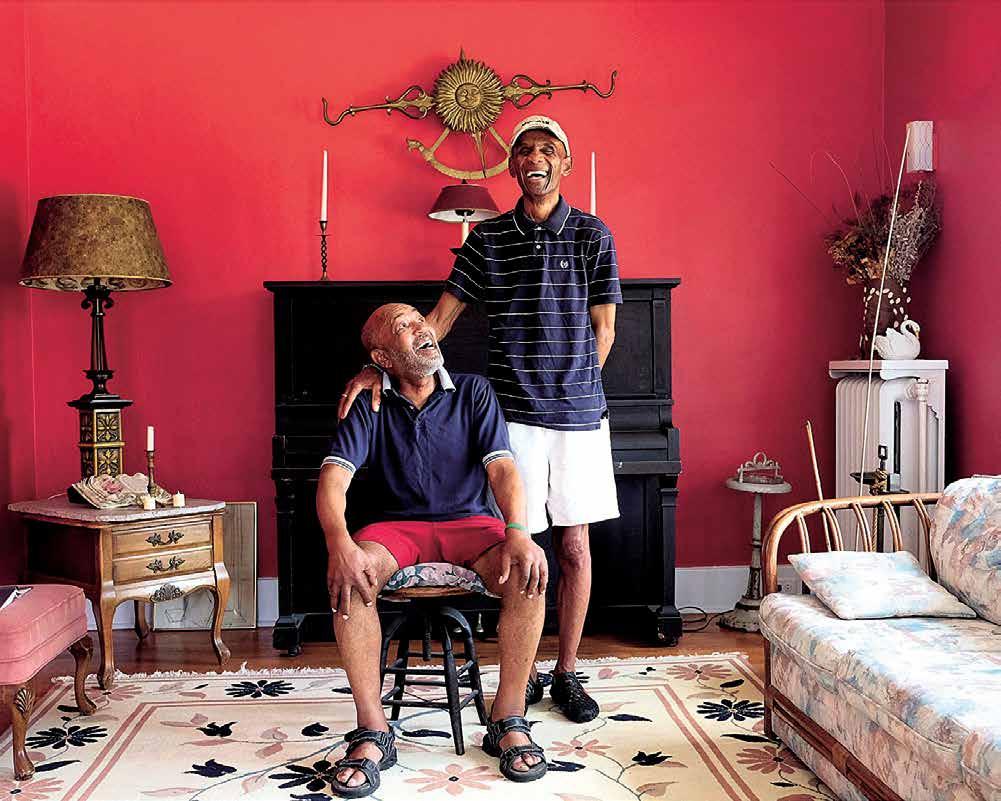
Mike and Phil, who met at church on Easter Sunday, definitely have a heartwarming story. Jordan does a beautiful job of expressing how the purity of their love seems to have slowed time in their home. They tell contrasting stories of their childhood. Phil had a family that accepted his homosexuality, and he had never had to be closeted. He was teased, but, as he says in the book “The few times anyone ever made fun of me, it rarely impacted me, because being gay was affirmed by the people in my life who meant the most to me.” This shines a huge light on the mental development of Gay youths and the part their family plays in their self-confidence.
Phil, on the other hand, was raised in a homophobic city where he grew up repressed. Moving to Detroit in 1966 was a life-changer for him — and it also led him to Mike. When asked if there was a detail they wanted to make sure was included in their story, Phil said, “Remember to mention that we’ve spent every night together for over forty years.” Considering the number of couples any one of us can think of who spend months apart, be it by choice or for work, the purity of this everyday, 365-days-for-40-years love cannot be denied.
For too long the ideal image of love has resonated more in the image than the devotion it should embody. Members of the LGBTQ community have had whirlwind romances that have lasted a lifetime, as well as devoted relationships that ended in tragedy from cancer or ALS, in which one is by their lover’s side until the moment they depart.
Jamal Jordan’s book Queer Love in Color is a lovely reminder of what true love looks like in any shade or preference.
Image courtesy of Ten Speed Press / Penguin Random House
Mike and Phil – Photo courtesy of Jamal Jordan
continued from cover
Allyship - an organization of LGBTQ individuals fighting for economic and social justice. www.LGBTQAllyship. org, allyship@yahoo.com, (206) 279-8169. American Veterans for Equal Rights - www.aver.us
Another Gay Social Club! - www.meetup.com/AnotherGay-Social-Club/ Bellingham/Whatcom County - www.theslowlane. com/guide.html
BiNet Seattle is a mixed gender, social group for Bisexuals, their partners & other Bi-friendly folks - www. binetseattle.org.
Bremerton/Kitsap County - www.outwestsound.org Capitol Hill Alano Club - www.chacseattle.org
Cascade Rainbow Community Center (Mount Vernon) - (360) 840-8499 and on Facebook. Central Washington University GALA Hotline: (509) 963-1994.
Channel Q 103.3 FM - LGBTQ+ Talk Radio NetworkNews and information, pop culture and music. radio.com COLAGE unites people with LGBTQ parents and caregivers into a network of peers and supports them as they nurture and empower each other to be skilled, self-confident, and just leaders in our collective communities - www.colage.org
DIFFA/Northwest (Design Industries Foundation Fighting AIDS). (206) 763-8885; www.diffanorthwest. org
DOMESTIC VIOLENCE & SEXUAL ASSAULT: Crisis Clinic, (206) 461-3222 (24 hour line); King County Sexual Assault Resource Center (KCSARC) - 24-hour crisis line for information, support, & medical & legal assistance: 1-888-99-VOICE; Northwest Networksupport & advocacy for Bisexual, Trans, Lesbian & Gay Survivors of Abuse & Dating Violence, (206) 568-7777 (voice), 517-9670 (tty), www.nwnetwork.org; Pierce County Domestic Violence Helpline: Teresa, (253) 798-4166; Seattle Counseling Service for Sexual Minorities - offers on-going support groups for men: 323-1768; Seattle Police Dept Domestic Violence Unit, (206) 684-0330; State Wide Domestic Violence Hot Line, 1-800-562-6025. In an emergency call 911 Report domestic violence and sexual assault. Equal Rights Washington - (206) 324-2570; www. equalrightswashington.org
Everett/Snohomish Cty - www.gaysnohomish.org
Freely Speaking Toastmasters - www.freelyspeaking.org
Gay City promotes wellness in LGBTQ communities by providing health services, connecting people to resources, fostering arts, and building community. Gay City Health Project’s Wellness Center provides anonymous & confidential HIV/STD testing. 517 E Pike St. More info or to schedule an appointment, (206) 860-6969. www.gaycity.org
Gay & Lesbian National Hotline (GLNH): 1-888-THEGLNH (1-888-843-4564). Non-profit, peer-counseling, information & local resources telephone hotline for GLBT people across the country.
Generations Aging With Pride empowers elder LGBTQ adults to live with pride and dignity by promoting, connecting, and developing innovative programs and services that enhance belonging and support, eliminate discrimination, and honor the lives of older members of our community - (206) 393-3400; info@gapseattle.org; gapseattle.org
GLSEN/WA - Gay, Lesbian, Straight Education Network - (206) 330-2099; www.glsenwa.org
Greater Seattle Business Association (GSBA) - (206) 363-9188; www.thegsba.org
HIV/AIDS Program, Seattle/King County Dept of Public Health, provides confidential/anonymous information about & testing for HIV/AIDS. (206) 205-7837. For a comprehensive list of HIV/AIDS service organizations see the GSBA Guide or visit www.thegsba.org or call Lifelong AIDS Alliance, (206) 328-8979.
Imperial Sovereign Court of Seattle & the Olympic & Rainier Empire - www.facebook.com/ISCSORE; www. imperialcourtofseattle.com
Lambert House - (206) 322-2515; www.lamberthouse. org
LGBT Library - 517 E Pike St. Open Mon-Fri 2-8pm; Sat 2-5pm. A wide range of fiction and non-fiction for the LGBT community and allies can be borrowed free of charge.
LGBT MS Connection - (425) 785-8593; lgbtmsconnections@comcast.net. Support group for LGBT persons with MS and their partners and their caregivers. Sponsored by the National Multiple Sclerosis Society. Lifelong AIDS Alliance - (206) 328-8979, www.lifelongaids alliance.org Lion’s Main Art Collective - www.lionsmain.org
MEN: Gay City: (206) 860-6969, www.gaycity.org; Knights of Mantra: (206) 329-0886, www.jetchapterkofm.com; Mature Friends: Gay men & women 40 & over, www.maturefriends.org; Northwest Bears: www. nwbears.com; The Olympians: www.TheOlympians. net; POZSeattle: www.pozseattle.com; Q-Squared: www.qsquared.org; Rain City Jacks: www.raincityjacks. org; Seattle Gay Couples: www. seattlegaycouples.org; Seattle Men in Leather: www.seattlemeninleather. org; Seattle Prime Timers: Gay & Bi men 40 & over, www. seattle primetimers.org; Tacoma Older LGBT: www. tacomaolderlgbt.org. (See also listings under Bisexual, Parenthood, People of Color, Transgender.)
MUSIC: Diverse Harmony: www.diverseharmony. org; Rainbow City Band: 1-866-841-9139 ext 2126; rainbowcityband@onebox.com; www.rainbowcity band. com; Seattle Men’s Chorus and Seattle Women’s Chorus: (206) 388-1408, (206) 323-0750. www.seattlechoruses.org.
Northwest Lesbian & Gay History Museum Project - gayhistnw@aol.com
community resources
Northwest Rainbow Alliance for the Deaf - www. nwrad.org
Olympia/Thurston County - www.RainbowCenterOly. org
Out & Equal Workplace Advocates/Seattle Regional Affiliate supports the work of LGBT employees and the growing number of ERGs (Employee Resource Groups) making a difference within local companies, including Alaska Airlines, Amazon.com, Amgen, AT&T, Bank of America, Deloitte, Macy’s, Microsoft, Russell Investments, Safeco Insurance, Starbucks Coffee, Xerox. www.outandequal.org/affiliates/seattle
Out & Proud Grays Harbor Coalition - http://outandproudgh.org
PARENTHOOD: Families Like Ours provides a gateway for LGBT families interested in adoption & provides a network of safe placement agencies, training, support & resources: (206) 441-7602, www.familieslikeours. org; Family Works offers support, information & activities for LGBT families: (206) 694-6727, www.familyworksseattle. org; Gay Fathers’ Association of Seattle offers support groups & social activities: www.gfas. org; Proud & Loud Families - Northwest, www.meetup.com/proudand-loud-families-northwest, plfnorthwest@aol.com; Queer Parent Networking Dinners: (206) 568-7777, qpnd@nwnetwork.org, www.nwnetwork.org; Rainbow Families of Puget Sound: www.rainbowfamiliesps.org PFLAG is the national organization for parents, families, allies, and LGBTQ people united for equality with chapters in Seattle, Bellevue/Eastside, the Puget Sound region and across Washington state. PFLAG Seattle: (206) 325-7724, info@pflagseattle.org, and www.pflagseattle.org; PFLAG Bellevue/Eastside: (425) 483-6642, info@bellevue-pflag.org, http://community. pflag.org/PFLAGBellevue; PFLAG Pacific Northwest: www.pnwpflag.org; PFLAG Washington State Council: www.pflagwsc.org.
Peer Seattle (formerly Seattle Area Support Groups) is a non-profit organization that builds community and cultivates powerful, healthy lives by providing emotional support and personal development services to those affected by HIV/AIDS, the Queer communities, and those who love them. Our work is done in a spirit of safety, trust, inclusiveness, and celebration of individual differences. (206) 322-2437; www.peerseattle.org
PEOPLE OF COLOR: AARTH (African American Reach & Teach Health Ministry), (206) 850-2070, www.aarth.org; Asian/Pacific Islander Queer Network Program at API Chaya, (206) 467-9976; Center for MultiCultural Health, (206) 461-6910, www.multiculturalhealth.org; Entre Hermanos, GLBT Latinos/as, (206) 322-7700, www.entrehermanos.org; Ile LaiLai, (206) 781-3565, iya@ilelailai.org; Men of All Colors & Cultures Together (MACCT), (206) 923-8313, macctseattle@yahoo.com, www.macctsea.org; Northwest Two Spirit Society, https://www.facebook.com/ groups/nw2spiritsociety/, Nubian Pride Productions, nubianpride@gmail.com; People of Color Against AIDS Network (POCAAN) offers rapid HIV testing, M-F, 10am-5pm, (206) 322-7061, www.pocaan.org and on Facebook; QBASS - Queer Black Alliance of the South Sound, (253) 256-1846, weareqbass@gmail. com; Sistah 2 Sistah, LBT women of African descent, (206) 322-7061, (206) 255-8951; Somos Seattle, somosseattle.org; Trikone-Northwest, GLBT South Asians, (425) 985-4376, www.trikonenw.org; Two-Spirit Honor Project, 1-866-685-0164; U.T.O.P.I.A. Seattle, www.utopiaseattlewa.org; VietQ Greater Seattle, vietqorganization@gmail.com
Pierce County AIDS Foundation - (253) 383-2565; www.piercecountyaids.org
Pride Foundation - (206) 323-3318; www.pridefoundation. org
Pride Lives - www.facebook.com/PrideLives/ Pride Radio 93.3 HD2
Project NEON is a program of Seattle Counseling Service providing FREE information & services to Gay & Bi men to reduce health risks associated with methamphetamine use. (206) 323-1768. www.crystalneon.org
Public Health-Seattle & King County Online Comprehensive Health Information for Sexual Minorities: www.kingcounty.gov/healthservices/health/personal/ glbt.aspx
Q Law: The GLBT Bar Association of WA - (206) 682-6711; www.q-law.org
Q Law GLBT Legal Clinic - (206) 235-7235. Queer Geek! - queergeekseattle.org
Rainbow Center - Resource Center for Tacoma/Pierce County LGBTIQA community. Through education, advocacy and celebration, the Rainbow Center expands resources, and safe space for the LGBTQIA community.
Sponsors Tacoma Pride Festival. (253) 383-2318, www. rainbowcntr.org
SEAMEC interviews, researches & rates candidates for public office on issues of concern to the LGBT community. www.voteseamec.org
Seattle Area Support Groups & Community Center (SASG) i- SEE LISTING for Peer Seattle. Seattle Bisexual Women’s Network - BiSeattle.wixsite. com/SBWN and on Facebook.
Seattle Counseling Service for Sexual Minorities is a community mental health service for GLBT persons & their families providing comprehensive mental health services on a sliding scale. (206) 323-1768.
Seattle LGBTQ Commission - (206) 684-4503. www/ seattle.gov/lgbtq
Seattle Out & Proud - (206) 322-9561; www.seattlepride.org
Seattle Police Department Sexual Minorities Community Advisory Council: kim.bogucki@seattle.gov
Seattle PrideFest - www.seattlepridefest.org Servicemembers Legal Defense Network - (202) 328-3244; www.sldn.org
Sex Workers Outreach Project - https://seattle. swopusa.org
Sisters of Perpetual Indulgence, The Abbey of St. Joan - (206) 860-3666; www.theabbey.org Snohomish Health District HIV/AIDS Program provides free confidential/anonymous HIV counseling & testing 9am-5pm Monday-Friday, until 7pm Tuesdays. (425) 339-5298.
South Sound Q Calendar - LGBTQ events in Tacoma, Olympia & Sound Puget Sound area; www.SouthSoundQCal.com Spokane/Inland Northwest - www.outspokane.com; www.stonewallnews.net
SPORTS & RECREATION: Bent Car Guys: www. bentcarguys.org; Border Riders Motorcycle Club: www.borderriders.com; Bottom Dwellers Scuba Club: www.bottomdwellers.org; Capitol Hill Cyclers: join their Facebook group or email capitolhillcycling@ groups.facebook.com or jordan.l.simonson@gmail.com; Cascade Flag Football: www.cascadeflagfootball.org; Cascade Flyers: www.cascadeflyers.org; Emerald City Mudhen Rugby: www.mudhenrugby.com; Emerald City Softball Association: www.emeraldcitysoftball. org, www.eteamz.com/womensecsa; Ethyl Forever Car Club: ethylforever@hotmail.com; Festival of the Babes: www.festivalofthebabes.com; Olympic Yacht Club: www.oycnw.org; OutVentures: outdoor education & recreation activities, www.outventures.org; Pacific Northwest Gay Rodeo Association: www.pacificnwgra.org; Puddletown Squares: www.puddletownsquares.org; Rain City Soccer: www.raincitysoccer.org; Rain Country Dance Association: a country-western dance organization catering to the LGBTQ community but open to all, www.raincountrydance.org; Sea Dawgs: LGBT ice hockey - SkateSeaDawgs@gmail.com and on Facebook; Seattle Frontrunners: www.seattlefrontrunners.org; Seattle Gay Basketball Association: www. seattlegaybasketballassociation.com; Seattle Orca Swim Team: www.orcaswimteam.org; Seattle Otters Water Polo: www.otterpolo.com; Seattle Quake Rugby: www.quakerugby.com; Seattle Tennis Alliance: www. seattletennisalliance.org; Seattle Unified Bowling Association (SUBA): magee98106@aol.com, www. teamseattle.org/bowling.htm, www.theprideleague. com, Century 21 League; Seattle Volleyball Club: www.seattlevolleyballclub.com; Ski Buddies: www. skibuddies.org; Team Seattle Gay Sports Network is an umbrella organization for a wide range of local GLBT sports activities, (206) 367-4064, www.teamseattle.org (see website for comprehensive list of sports clubs); Triangle Recreation Camp at Bender Creek: recreational camping for GLBT folks. Must be 21; ID required. trc@ camptrc.org, www.camptrc.org, 1122 E Pike St #1069, Seattle 98122-3934. Strength Over Speed - www.strengthoverspeed.org Tacoma/Pierce County - Rainbow Center, 2215 Pacific Ave, Tacoma, a resource center for the LGBTIQA community of Pierce County, (253) 383-2318, www. rainbowcntr.org
Three Dollar Bill Cinema - TWIST: Seattle Queer Film Festival; Translations: Seattle Transgender Film Festival; Outdoor Cinema at Cal Anderson Park. www. threedollarbillcinema.org
TRANSGENDER: Emerald City Social Club: (425) 827-9494; Gender Alliance of the South Sound: www. SouthSoundGender.com; Gender Diversity: www. genderdiversity.org; Gender Justice League: www.genderjusticeleague.org; Gender Odyssey: www.genderodyssey.com; Hermanos Trans Latino & Foreign-Born
Support Group: (206) 322-7700; Ingersoll Gender Center: (206) 329-6651, www.ingersollcenter.org; Lion’s Main Art Collective: www.lionsmain.org; The New BoyZ Club: www.olympiaftmgroup.webs.com; Olympia Trans Discussion Group: www.facebook.com/pages/ Olympia-Trans-Discussion-Group/262449878114; [trans] ACTION: Trans* & Gender Non-Conforming Sex Workers’ Support Group - a safe, peer-led space. mail@utopiaseattle.org; TRANSform Washington: transformwashington.com; Trans Resource & Referral Guide: kctransguide.org; Trans Women of Color Solidarity Network: Funding the collective liberation of Trans women of color – https://m.facebook.com/ TWOCSolidarityNW/; Washington Gender Alliance: (360) 445-2411, www.washington genderalliance.com
WOMEN: Aging Ballard Lesbian Exchange (A.B.L.E.): We are Lesbians 60 years (generally) and up, living (mostly) in the north half of Seattle. The purpose of the group is to connect, socialize and support each other. ruthemilyvogel@gmail.com; Aging Lesbians in South Seattle (ALISS) - Lesbian Group at the Southeast Seattle Senior Center. This is a gathering primarily for Lesbians but all are welcome to attend. Kate, (206) 722-0317; www.sessc.org; BABES: support groups for HIV+ women. (206) 720-5566, 1-888-292-1912; Coming Out Women Support Group of Tacoma: www. comingoutwomen.org; Festival of the Babes: www. festivalofthebabes.com; Mature Friends: Gay men & women 40 & over, www.maturefriends.org; Puget Sound Old Lesbian Organizing for Change: http:// psoloc.org, (253) 777-3357; Older Lesbians Organizing for Change/WA State Chapter: gloria@oloc.org, mary@oloc.org, www.oloc.org; Pacific Northwest Lesbian Archives: www.pnwlesbianarchives.org; RainshadowWomen: RainshadowWomen@aol. com; Seattle Bisexual Women’s Network: BiSeattle. wixsite.com/SBWN; Seattle Girls of Leather: www. sgol.org; Tacoma Lesbian Concern (TLC): www.tacomalesbianconcern.org; Tacoma Older LGBT: www. tacomaolderlgbt.org; Women of West Seattle (WOWS): a fun, member-driven social group for Lesbians, http:// groups.yahoo.com/group/womenofwestseattle; YWCA Women’s Health Outreach: providing low or no-cost mammograms for income eligible 40+ LBTQ individuals. Follow us at http://lbtqhealth-ywca.blogspot.com, twitter.com/ingridWHO or email lbthealth@ywcaworks. org, (206) 461-4493. (See also listings under Bisexual, Parenthood, People of Color, Transgender.)
YOUTH: B-GLAD (Bisexual, Gay, Lesbian, Trans & Questioning Adolescent Drop-In Group): Youth Eastside Services offers many programs for GLBT youth, including B-GLAD, (425) 747-4937; Coyote Central: www.coyotecentral.org; Diverse Harmony: www.diverseharmony. org; GLSEN/Washington State (Gay, Lesbian, Straight Education Network) & Washington State GSA (Gay-Straight Alliance) Network: GLSEN works to create safe schools for LGBT students. WA GSA Network supports youth-led GSA’s to fight harassment & homophobia in Washington state schools. (206) 330-2099; www.glsenwa. org; www.wagsa.org. GLOBE (GLBTQ Loving Ourselves, Becoming Empowered): a support group & HIV/STD prevention program for GLBTQ youth, 14-20, in Everett, (425) 263-2908, www. globeyouth.org; It Gets Better Project: www.itgetsbetter.org; Lambert House: an activities & resource center for LGBT youth, 14-22, 1818 15th Ave @ E Denny Way, with additional support groups organized in smaller towns throughout King County, (206) 322-2515, www. lamberthouse.org; Lifelong HEYO (Health Education Youth Outreach): for LGBTQ youth, ages 16-24: (206) 957-1665; www.llaa.org/HEYO; www.MatthewsPlace. com ; The Mockingbird Society: (206) 323-KIDS (5437), www.mockingbirdsociety.org; New Horizons: social services and shelter for homeless youth, 2708 3rd Ave (in Belltown), (206) 374-0866, http://namin.org; Oasis Youth Center: for GLBTQ youth, ages 14-25, in Tacoma, (253) 671-2838, www.oasisyouthcenter. org; OKAY! LGBTQ+ Outreach for Kent Area Youth: (253) 859-0699 ext 3034. OKAY! is an open support group for youth ages 13-19 who identify as LGBTQ+. A program of Kent Youth & Family Services; OUT There Adventures: www.outthereadventures.org; Parents, Family & Friends of Lesbians & Gays (PFLAG)/ Puget Sound: (206) 325-7724, www.seattle-pflag.org; Pizza Klatch: weekly lunchtime support groups for LGBTQ youth in Thurston County, www.pizzaklatch. org; Prism: for LGBTQ youth, 14-21, in PuyallupCherise.Alexander@ multicare.org; www.facebook. com/PuyallupPrism; Proud Out Wonderful (POW!): for LGBTQ youth, 13-21, in South King County, (206) 326-9112, www.facebook.com/proudoutwonderful; Q Youth Resources: in Kitsap County - (360) 698-3335; www.kchaf.org; Roots Young Adult Shelter: 1415 NE 43rd St., (206) 632-1635; www.rootsinfo.org; Safe Schools Coalition: www.safeschoolscoalition.org; (206) 451-SAFE, (206) 451-7233 (non-emergency), 1-877-SAFE-SAFE (1-877-723-3723) (crisis line); Seattle Young People’s Project (Queer Youth Resource Board): (206) 860-9606, www.sypp.org; Street Youth Ministries (SYM): (206) 524-7301 ext 111; www. streetyouthministries.org; Teen Link: (206) 461-4922, 1-888-431-TEEN; The Trevor Project: 866-4-U-Trevor; www.thetrevorproject.org; True Colors - Connecting LGBTQ Teens: in Shoreline, (206) 362-7282 x 8018, lbagley@chs-nw.org; The Vera Project: fuels personal & community transformation through collaborative youthdriven engagement in music and art. (206) 956-8372; theveraproject.org; Vista Youth Center: for LGBTQ, questioning and allied youth, ages 14-21, in Kennewick, (509) 396-5198, www.vistayouthcenter.org; YouthCare/ Isis Program (Transitional Living Home for LGBTQ Young Adults, 18-22): (206) 522-8412; YouthCare/ Orion Center Young Adult Shelter: 1828 Yale Ave @ Stewart St. (206) 622-5555; Youth in Focus: (206) 723-1479; www.youthinfocus.org; Youth Suicide Prevention Program (OUTLoud-GLBTQ): (206) 297-5922, ext 116, 1-800-273-TALK, www.yspp.org
National News
Vaccine developers expand trials in children

by Hannah Saunders SGN Contributing Writer
Since the start of the pandemic, Washington has seen 350,940 confirmed cases of COVID-19, and throughout the state, those ages 0 to 19 years old make up 17% of cases and 2% of hospitalizations. With coronavirus variants sweeping across the nation, vaccine developers are hoping to assist with global herd immunity by initiating vaccination trials in children.
Pfizer-BioNTech
Currently, the PfizerBioNTech vaccine is authorized for use in individuals ages 16 and up.
On April 9, 2021, the American pharmaceutical company Pfizer and the German biotechnology company BioNTech requested an expansion of the US Emergency Use Authorization (EUA) for their COVID-19 vaccine, which would allow adolescents aged 12 to 15 years to become vaccinated. This announcement came shortly after the companies received Phase 3 trial data that showed that the vaccine had 100% effectiveness and the ability to create an antibody response in those in that age group. Participants in the study, who will be monitored for two years following their second dose, reportedly experienced side effects similar to those in the 16-to25-year-old age group.
In March of 2021, Pfizer and BioNTech also vaccinated healthy children whose ages range from 6 months to 11 years in order to see if even younger children respond well to the vaccine. During this study, pediatric participants were separated into age groups (5 to 11 years old, 2 to 5 years old, and 6 months to 2 years old) and will be given two doses that are 21 days apart.
The goals of this study are to evaluate the safety of the vaccine and to evaluate recipients’ ability to develop an immune response from the vaccine. Approximately 4,644 children across the United States and
Europe are part of this vaccination trial. The results are expected in the second half of 2021, and depending on whether it’s safe and authorized, Pfizer and BioNtech are hoping to start vaccinating this age group by early 2022.
In addition, the companies also mentioned that children under 6 months of age may eventually be evaluated in future vaccine trials.
Johnson & Johnson
A statement from April 2, 2021, relayed that Johnson & Johnson has already begun vaccinating children ages 12 to 17 in an ongoing Phase 2a clinical trial.
The Johnson & Johnson vaccine will initially be tested on a smaller number of candidates aged 16 to 17 years, but will then be expanded to include a larger group of younger children. The study is actively enrolling participants in the United Kingdom and Spain, with a plan of including those in the US, the Netherlands, Canada, Brazil, and Argentina. Currently, the Johnson & Johnson coronavirus vaccine is authorized to use in those ages 18 and older.
According to Vice Chairman of the Executive Committee and Chief Scientific Officer at J&J, Paul Stoffels, MD, “The COVID-19 pandemic has had a profound impact on adolescents, not just with the complications of the disease but with their education, mental health, and well-being. It is vital that we develop vaccines for everyone, everywhere, to help combat the spread of the virus with the goal to return to everyday life.”
More recent news regarding the vaccine came on April 13, 2021, when the principal deputy director of the CDC, Dr. Anne Schuchat, and the director of the FDA’s Center for Biologics Evaluation and Research, Dr. Peter Marks, issued a joint statement after reviewing data on six reported cases of a rare yet severe blood clot following a Johnson & Johnson vaccine.
According to the statement, the blood clot, cerebral venous sinus thrombosis (CVST),
was apparent in those who also had low blood platelet levels. The cases all involved women 18 to 48 years old, who began feeling symptomatic 6–13 days after getting vaccinated. Symptoms of CVST include an excruciating headache, stomach pain, leg pain, and shortness of breath; the CDC recommends that anyone feeling symptomatic following a Johnson & Johnson vaccine should contact their medical provider.
With coronavirus variants sweeping across the nation, vaccine developers are hoping to assist with global herd immunity by initiating vaccination trials in children.
The CDC called a meeting with the Advisory Committee on Immunization Practices on April 14, in order to further review the six cases. “Until that process is complete, we are recommending a pause in the use of this vaccine out of an abundance of caution,” read the joint-statement.
Johnson & Johnson issued a press release on April 13 that restated the information provided in the CDC and the FDA’s joint statement. The company described how it was aware of the extremely rare but dangerous cases of CVST, and how the safety and well-being of those who receive the vaccine is their top priority.
“In addition, we have been reviewing these cases with European health authorities. We have made the decision to proactively delay the rollout of our vaccine in
Europe,” the company said in the press release.
As of April 13, patients can still receive the Johnson & Johnson vaccine if they feel as though it is more beneficial than consequential to their personal health, and the company has not made any mention of halting its vaccine trials.
Moderna
On March 16, 2021, the biotechnology company Moderna stated it had already dosed the first participants in the Phase 2/3 “KidCOVE” study, which included children aged 6 months to 11 years. In the first part of this two-part study, those 2 to 11 years old will receive one of two doses of the vaccine, and those 6 months to 1 year old will receive one of three doses. An interim analysis prior to completion will take place and assist in determining which dose participants will be used in phase 2 of the study.
Approximately 6,750 participants across the US and Canada have been a part of this study, and they will be followed over 12 months after their second vaccination dose in order to determine the effectiveness of the vaccine.
As of now, the Moderna vaccine is authorized in adults ages 18 and above.
“It is humbling to know that 53 million doses have been administered to people in the US. We are encouraged by the primary analysis of the Phase 3 COVE study of mRNA-1273 in adults ages 18 and above, and this pediatric study will help us assess the potential safety and immunogenicity of our COVID-19 vaccine candidate in this important younger-age population,” said Chief Executive Officer Stéphane Bancel of Moderna.
None of the three vaccines being distributed in the United States are approved by the US Food and Drug Administration (FDA), but they are authorized for emergency use by the FDA under the abovementioned EUA.
Photo courtesy of American Academy of Pediatrics
National News
National news highlights
by Daniel Lindsley SGN Contributing Writer
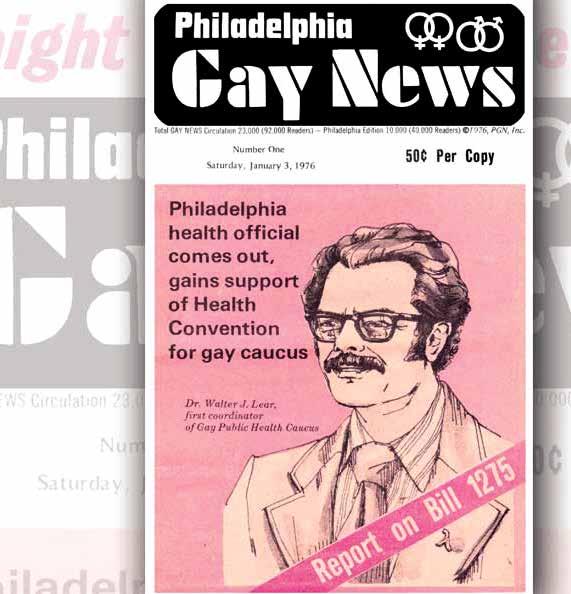
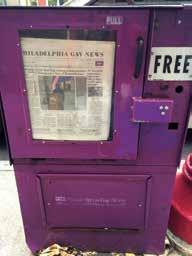
The Philadelphia Gay News is celebrating 45 years of existence with a number of articles looking back at the highs and lows of the paper and the lives of its writers. The PGN ’s editor, Jason Villemez, crafted a timeline spanning from the paper’s beginnings to the present day, listing a positive headline for each year. In another article, veteran LGBTQ+ journalist Sebastian Fortino recounted his “first encounter” with the PGN, and how it influenced his journey as a writer and journalist. More articles on the subject can be found under the “PGN45” tag at epgn.com.
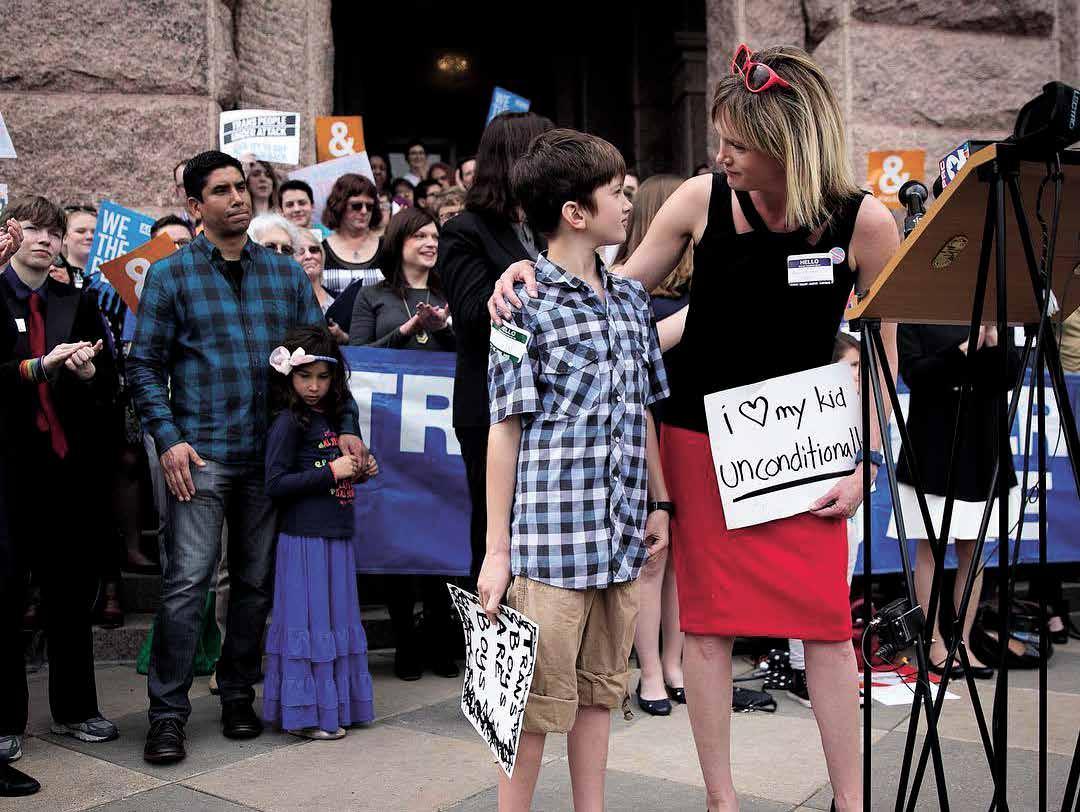
NBC News reports that a Texas bill would make gender-affirming care for children — such as hormone therapy, gender-reassignment surgery, and puberty blockers — a felony for parents who consent to it. Testimonies include 10-yearold Kai Shappley, a Transgender girl from Austin, who voiced her fear and frustration over the state’s repeated targeting of Transgender individuals. NBC’s Dan Avery notes that this bill follows a similar measure that recently passed in Arkansas. The Texas bill will be voted on by the committee before it goes to the full state Senate floor.
NBC meanwhile reports that the NCAA Board of Governors announced their support of Transgender athletes on Monday. The NCAA cited its “long-standing policy” of inclusivity, but qualified the statement by reiterating its requirement that competing Transgender women athletes undergo testosterone suppression. NBC’s Jo Yurcuba placed the statement in the context of a wave of state bills seeking to limit the participation of Transgender athletes across the country.
HIV BUDGET
Additional funds would go to the Centers for Disease Control and Prevention (CDC), the Health Resources and Services Administration (HRSA), the Indian Health Service (IHS), and the National Institute for Health (NIH), which are supposed to spend them on initiatives that “aim to reduce new HIV cases aggressively.”
The executive branch has a discretionary budget appropriated by Congress every year, with two major components: defense
spending and non-defense spending.
For his first full fiscal year, Biden will propose a major increase in non-defense funding and a minimal change in defense spending.
$769 billion is being asked for in nondefense funds, which would be a nearly 16% increase from the fiscal year 2021 budget, passed under the Trump administration last year.
$753 billion would go to national defense programs, which is less than a 2% increase, according to Acting OMB Director Shalanda D. Young.
Healthcare activists were cautiously optimistic about the new budget proposals.
“While it falls short of what the community has requested, if this funding is realized, it will continue the momentum already created and make further progress in ending HIV in the US,” HIV+Hepatitis Policy Institute Carl Schmid said to the Washington Blade
“Efforts to end HIV will help eradicate an infectious disease that we have been battling for the last 40 years and help correct racial and health inequities in our nation.”
Are parents who consent to gender-affirming healthcare for their children criminals?
Texas bill says yes
by Mike Andrew SGN Staff Writer
A newly introduced bill in the Texas Senate would make it a crime for parents to consent to gender-affirming medical treatments for their Transgender children.
Texas Senate Bill 1646 was filed on March 11 and had its first hearing on April 12. The measure is now in the Texas Senate State Affairs Committee.
Under the bill’s provisions, parents who assist their children in transitioning are defined as “child abusers.”
The bill states that a person will be considered guilty of child abuse by “consenting to or assisting in the administering or supplying of a puberty-suppression prescription drug or cross-sex hormone to a child, other than an intersex child, for the purpose of gender transitioning or gender reassignment…”
Also criminalized would be “performing or consenting to the performance of surgery or another medical procedure on a
child, other than an intersex child, for the purpose of gender transitioning or gender reassignment.”
The bill places Texas parents consenting to gender-affirming care for their Trans kids in the same legal category as those who create child porn, sexually abuse children, give illegal drugs to children, or facilitate forced child marriages.
Penalties for child abuse in Texas include jail time, fines, and removal of the child from parents’ custody.
American Civil Liberties Union (ACLU) staff attorney Chase Strangio tweeted that “this bill in Texas, SB1646, would remove trans kids from their homes if a parent affirms their gender. Truly barbaric.”
In a following tweet, Strangio noted that “33 states have introduced anti-trans laws in 2021.”
The organization Doctors For Change wrote an open letter to Texas Sen. Bryan Hughes, chair of the Texas Senate State Affairs Committee, condemning the bill.
The group wrote that its “more than 1,000 healthcare provider members… vehemently oppose SB 1646.”
“We care for Texans of all ages,” their letter continues, “including Transgender and nonbinary children, youth, and adults, and we are appalled by the blatant intention of SB 1646 to characterize the provision of our compassionate, evidence-based care as ‘child abuse’ and to levy criminal penalties against providers who are putting the health and well-being of patients first, as is our duty to do, as well as parents/guardians who are properly ensuring [that] their children receive necessary care.”
The group also pointed out that because of mandatory reporting of child abuse, the bill would “mandate [that] any healthcare provider report minors receiving certain care which would irreparably damage the trust and confidentiality of patient-provider relationships.”
Doctors For Change said it “strongly urged” committee members to reject this “harmful” bill.
Photo courtesy of the Philadelphia Gay News
Texas mom Amber Briggle (r) with son Max, who is Transgender, in 2019. This week, Briggle testified before the Texas legislature as Republicans try to pass Texas Senate Bill 1646. – Photo courtesy of Amber Briggle








by Daniel Lindsley SGN Contributing Writer
Reuters staff this week boosted a signal from Human Rights Watch, shedding light on Cameroon’s continued persecution of LGBT+ persons. The Central African country’s authorities have targeted a minimum of 24 people since February, with abuses ranging from threats to assault and detainment. Reuters noted that this is nothing new for Cameroon, as other mass arrests of this kind have occurred over the past few years.
Reuters writer Mariya Gordiyava described the ripple effect of an attack on Miraziz Bazarov, a nonGay, pro-LGBT blogger in Uzbekistan, who called for LGBT gatherings at holy sites. An “angry mob” attacked several others who planned to attend one of Bazarov’s events, and now, many members of the Uzbek Gay community have retreated from public, fearing further homophobic backlash. One of Bazarov’s supporters says that he only “[spoke] out about the inevitable,” but some the Gay people Reuters spoke with — including a human rights activist — blame Bazarov for threatening their security for the sake of “hype.” A number of public figures in the country have since publicly condemned homosexuality.
Shakiro Loic and Patricia Roland, two Trans women in a Douala prison. © Private, Douala, Cameroon, March 2021
Equal rights Activist Miraziz Bazarov shortly after being assaulted – Photo courtesy of Timur Karpov