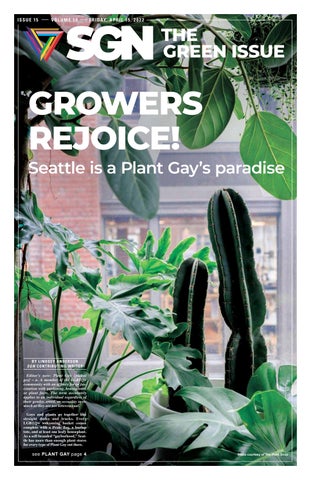
GROWERS REJOICE! Seattle is a Plant Gay’s paradise THE GREEN ISSUE
BY LINDSEY ANDERSON SGN CONTRIBUTING WRITER
Editor’s note: Plant Gay [plahnt gey] – n. A member of the LGBTQ+ community with an affinity for or fascination with gardening, houseplants, or plant facts. The term accurately applies to an individual regardless of their gender, creed, or sexuality insomuch as they are not heterosexual.
Gays and plants go together like straight dudes and trucks. Every LGBTQ+ welcoming basket comes complete with a Pride flag, a burlap tote, and at least one leafy houseplant. As a self-branded “gayborhood,” Seattle has more than enough plant stores for every type of Plant Gay out there.
see PLANT GAY page 4
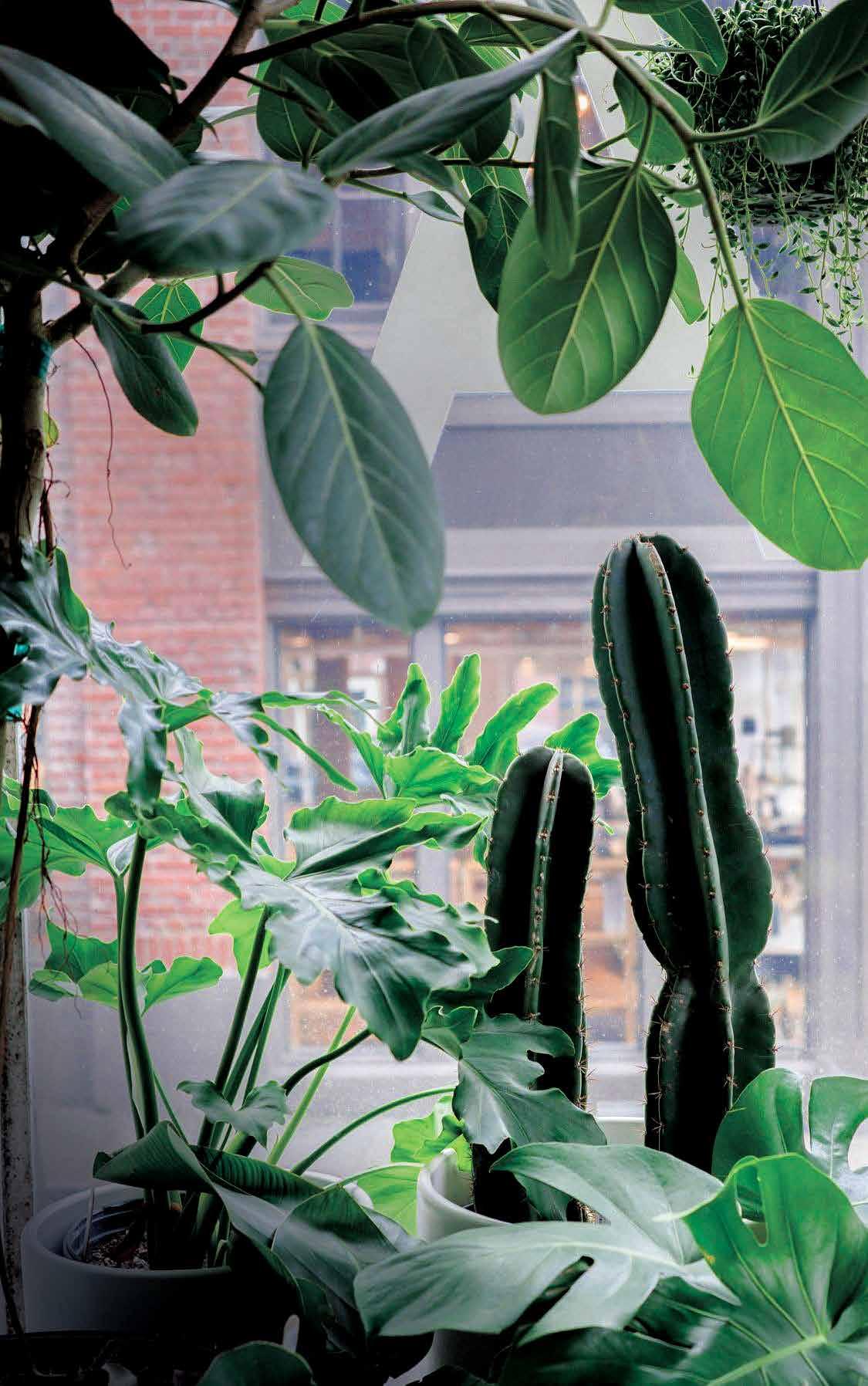
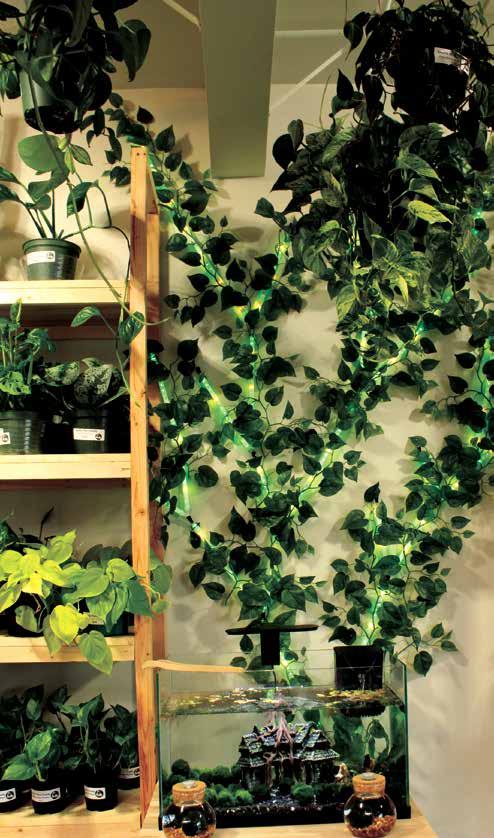
Photo courtesy of The Plant Shop
THE GREEN ISSUE
PLANT GAYS
continued from cover
The Plant Shop
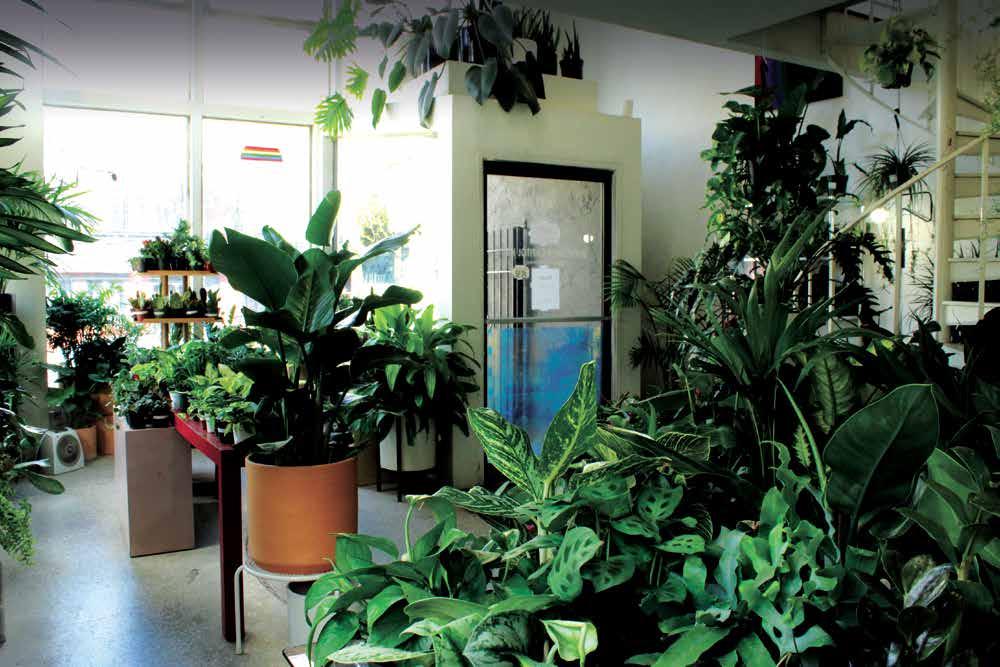
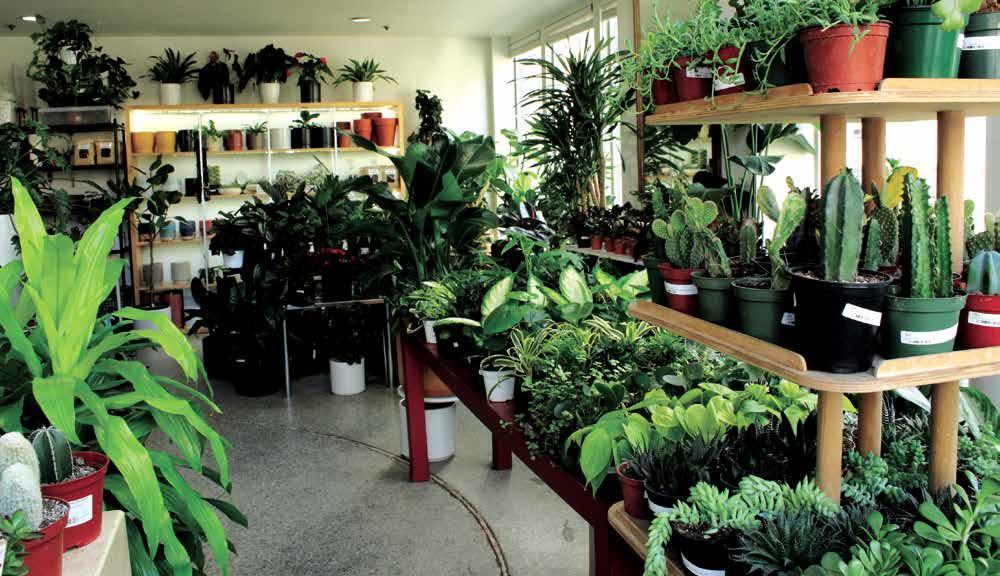
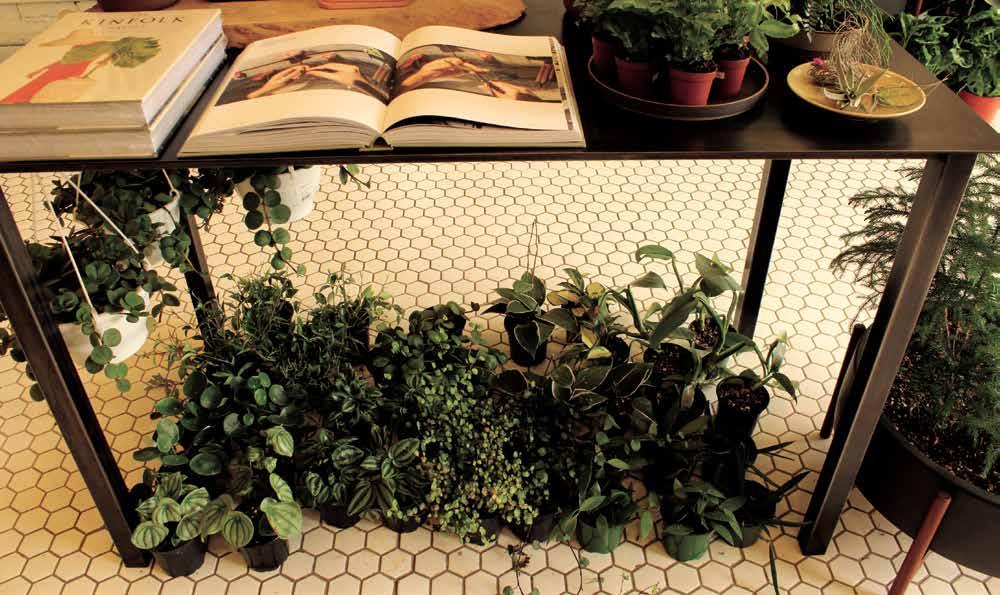
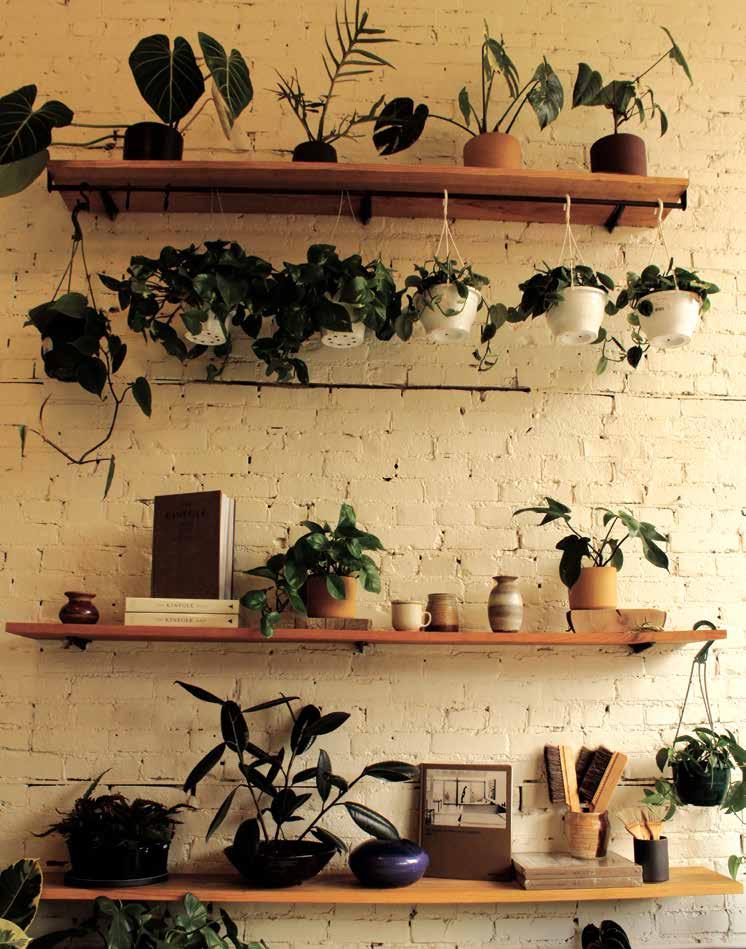
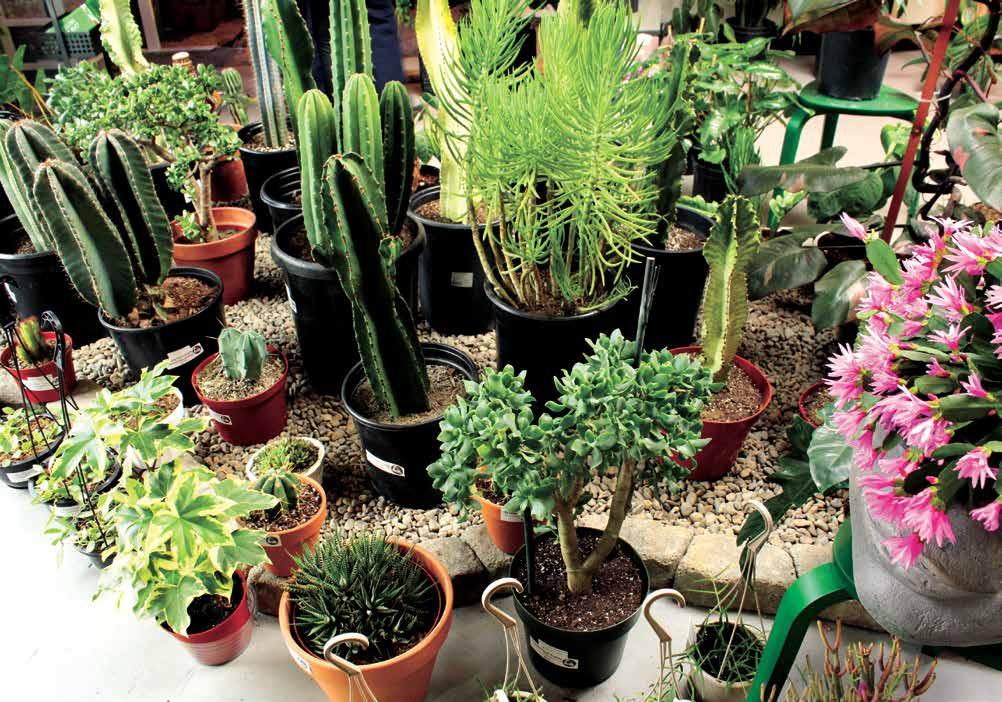
Nestled in the middle of Capitol Hill sits a small urban plant shop. Nearly every square inch of the store is covered in potted houseplants, ranging from the smallest succulents to large indoor trees. Like a small jungle in the middle of one of Seattle’s historic neighborhoods, the Plant Shop is crawling with surprises for those willing to search for them.
One of its most charming surprises is plant tender Emilia Glaser, who has been with the store for six months. Working there has been a source of joy for Glaser since they moved to the city earlier this year.
“I’d been working in restaurants for a long time, and I’ve always just really loved plants, and I just really needed a change of pace,” they said. “I started working here, and it’s just been nice to have a very different vibe in my life.”
One of Glaser’s favorite parts of The Plant Shop is the affordability of the products. “I feel like our prices are fair compared to a lot of places. We have a handful of collector plants, but I feel like we try to have stuff in all price ranges, so people can have access to them, which is cool,” Glaser said. “We have our discount plant section, so we try to find stuff that everybody can work with.”
Up the twisting industrial staircase, shoppers can find the discount plant section, where those in need of a little extra TLC are marked down in price, but of course, not in value. The
Plant Shop also offers great prices for beginner plants like philodendrons.
Glaser has seen their fair share of new plant parents at the store and laughed as they recalled some of the questions. “I mean, people frequently ask, ‘Do all plants need light?’… Photosynthesis is a part of their life, so yeah.”
Still, The Plant Shop is always ready to help concerned plant parents. Whether it’s providing unique soil blends, new or vintage pots, or helping diagnose an issue (which is usually overwatering), the plant lovers at store are always there to help the Capitol Hill Plant Gays.
When it comes to the perfect plant for the herb-loving homosexual, Glaser says the shop has a variety of LGBTQ plants to choose from.
“I feel like calatheas are a Gay-vibe plant because they’re so colorful and patterned. The Makoyana, the ‘peacock’ one, and also the Triostar, the pink one. I just feel like they’re bright and colorful,” they said as they pondered.
“Also, there’s this one called the Warscewiczii, they’re like velvet, and I feel like they’re such a rich texture. I love calathea, and the Plant Gays know how to take care of [them], but a lot of people can’t,” Glaser said.
The Plant Shop is at 411 E. Pine and online at plantshopseattle.com.
The Plant Shop – Photo by Lindsey Anderson
The Plant Shop – Photo by Lindsey Anderson
Urban Earth Nursery
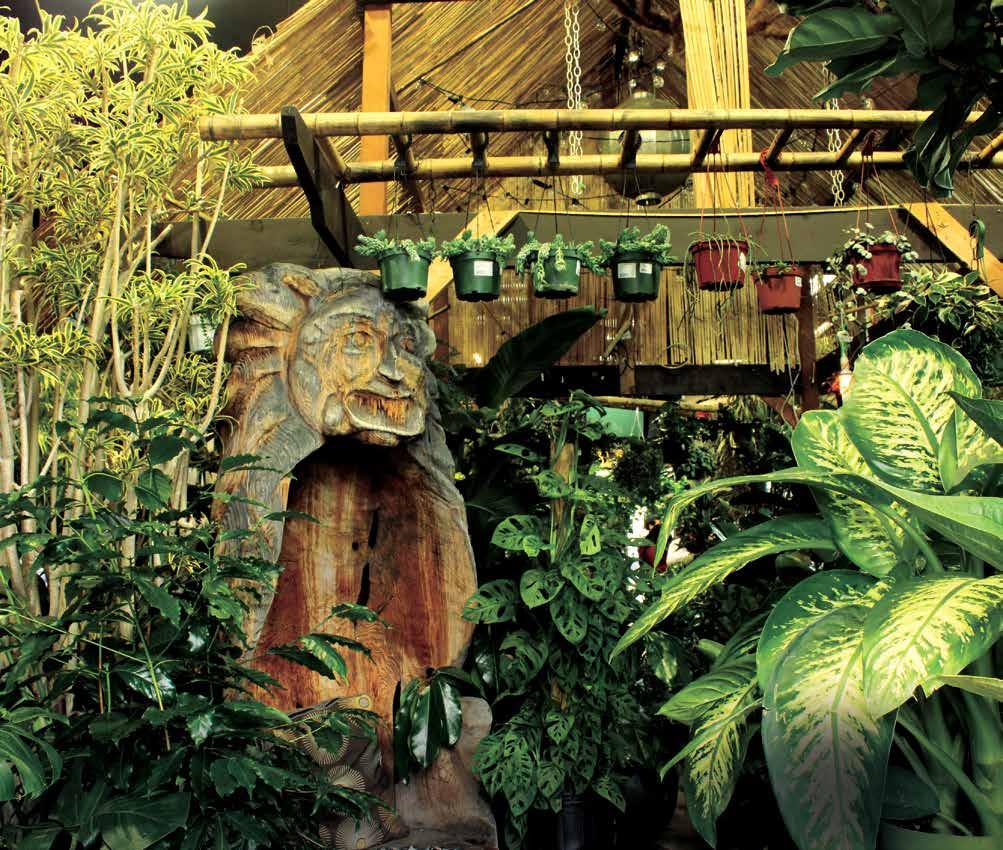
Perhaps the most magical space in the fairytale neighborhood of Fremont is the Urban Earth Nursery. Entering the garden gates takes plant lovers far from the noisy gray of the city and into a utopia of colors, smells, and spring surprises.
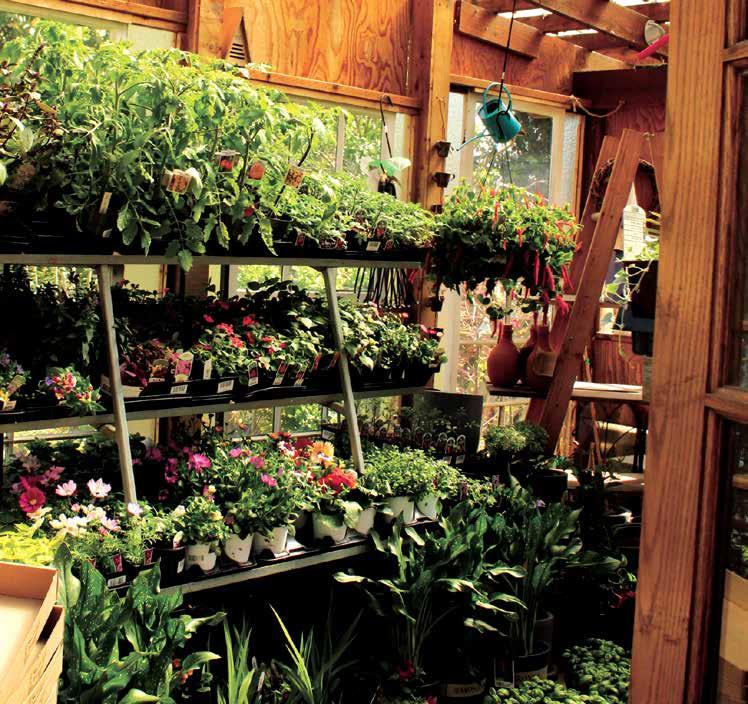
The paths at Urban Earth Nursery take twisting turns through outdoor gardens, into small greenhouses full of fruits and veggies, and under lush arches of sweet
roses and peonies. At the very end of the path sits a small cabin, where smiling, fairy-like faces await each explorer.
One of those belongs to Sydni, who has been working with Urban Earth Nursery for nearly two years. She describes the place as “a really enjoyable, rich work environment, where my day consists of tending to things and connecting with other plant enthusiasts, who happen to be some of the best people I know.”
Urban Earth Nursery is a unique space that provides plants for any grower. “[There are] all types of plant enthusiasts or beginners. Lots of people come here looking for indoor plants, so we can help pretty much anyone… from a Seattle basement apartment to a full house with a big backyard, and everywhere in between,” Sydni said.
Because much of the shop’s inventory is outdoors, it tends to carry many seasonal plants. However, classic houseplants are
always available inside as well. “Indoors, it mostly stays the same, but we [also] bring in new and exciting products. That’s the fun thing about being a small shop: We like to keep our product diversity, and we can bring in what excites our customers,” Sydni said.
“For outside, it’s very seasonal, so we can carry what’s in season, what will thrive at the time of year when people are buying plants.”
As spring blooms into full force, Urban Earth Nursery is seeing a spike in herb sales. “Herbs and veggies are always really popular right now,” said fellow Urban Earth plant enthusiast Natasha. “Sun gold tomatoes are a hot commodity right now.”
“Just this morning I sold a lot of strawberries. So fun, easy to grow, and delicious!” Sydni added.
The women at Urban Earth Nursery also answer many beginner questions. “Those are my favorites!” Sydni said with a laugh.
“One of my old co-workers was asked to replant a plant… with the ashes of her bunny… Later she was like, ‘Why did I say yes to that?’” Natasha said.
“We also got one of these little plants, it was a string of watermelon, and someone said, ‘Is that real watermelon?’” she added. “It was a little indoor succulent, and they thought it was real watermelon.
“But that’s why we’re here: to translate. If you don’t spend time looking at… plants, sometimes you forget where… or how things grow.”
They say some of the biggest mistakes new plant owners make is overwatering. “I think when people start, it’s just so exciting,” Sydni said. “You want to water, but the most common mistake I see when I come through here is people are overwatering their plants. That can end up hurting them more than helping them.”
The Queerest plant Urban Earth Nursery carries, according to Sydni and Natasha, is the fittonia plant, an evergreen perennial native to South America. “They’re colorful,” Natasha said with a laugh.
“Everyone should own plants,” Sydni said. “They make you happy, they help you focus, and learning how to care for something is just so great, and so healing for me and my life path and journey. I recommend it for everyone.”
Urban Earth Nursery is at 1051 N. 35th, and online at www.urbanearthnursery.com. see PLANT GAYS page 6
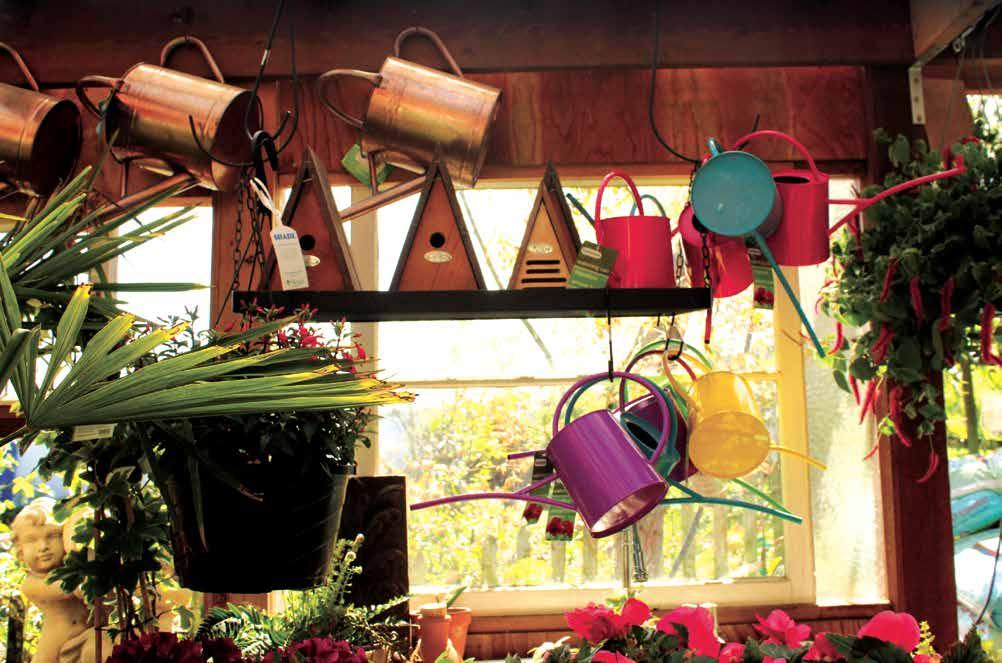
Urban Earth Nursery – Photo by Lindsey Anderson
Urban Earth Nursery – Photo by Lindsey Anderson
THE GREEN ISSUE
PLANT GAYS
continued from page 5
Root
There is perhaps nothing more quintessentially “Seattle” than Root. The unique Ballard combination coffee and plant shop offers a constantly changing selection of international roasts and a thoughtfully curated collection of tropical plants.
Emily Harman, one of Root’s many skilled baristas, has been with the store for the last year but says there’s nothing like it. “I’ve been a barista for four years at this point. I love coffee, and also, recently, in the last couple of years, have gotten more into having houseplants. The opportunity to do coffee, which is a skill that I have, and then also learn more about plants and teach other people about plants… has just been fun.”
Because the business is so unique, Harman says they often get people in with questions about the nature of the store. “We get a lot of people who ask if the plants are for sale, which is not a weird plant-specific question. But we are a plant and coffee shop,” she said.
Because the selection at Root tends to be a bit more exotic, most plant buyers enter with experience under their belts. But that hasn’t stopped a few from asking some odd questions. Harman was once asked “if a cactus needs sunlight,” to which she informed them that cacti, as well as all other plants, do require sunlight.
Root is the definition of aesthetic, from the beautiful handmade lattés to the simplistic wall art and, of course, the stunning plants. The largest in the store sell for several hundred dollars, and from their expert maintenance to their monumental size, they appear to be worth every penny.
As a plant-oriented store, Root offers seasonal workshops for gardeners 21 and over to get their hands dirty and enjoy some wine tasting. Its last event, a foliage garden workshop, was on miniature gardens, design, and care.
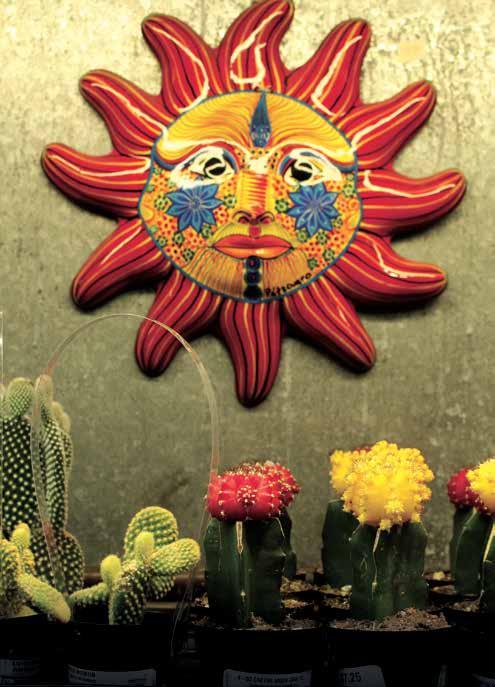
The Gayest plant offered at Root, Harman said, currently would be “maybe just one of the super phallic cacti?” directing me to the window of these beautifully groomed plants.
Aside from just selling plants, Root is an experience sure to liven up your Instagram feed and wire your day with some of Seattle’s best coffee.
Root is at 5000 20th Ave. NW and online at www.root-plants.com
Root – Photo by Lindsey Anderson
Root – Photo by Lindsey Anderson
If you’re searching for variety in your garden, look no further than the Indoor Sun Shoppe. One of the largest and oldest indoor nurseries in the city, it has a wide selection of plants, gardening tools, and accents that will make your home and yard pop this spring.
Open since 1970, it’s a family-run business that isn’t afraid to answer tough plant questions. Gardener Hailey Murphy has been working at the store for a year and a half but has always thought of it as a family home.
“The original owner is my grandfather, so I started working here as a little bit of a necessity,” Murphy said. She left her job in veterinary medicine to help with the family business when it was hit hardest by the COVID-19 pandemic.
“I originally started just being the person watching the door and essentially being a hostess for the plant shop. I didn’t know that much about plants, because I had grown up around them — I had become desensitized to them almost… I have a unique perspective on plant parenthood, because I didn’t learn anything about plants until being immersed in this environment,” she said.
Murphy has seen a spike in interest in plants since the start of the pandemic, which she credits to the internet. “There’s a lot of information out there [on] the internet and Tik Tok and that kind of thing,” she said, which has led to some people being a bit misinformed about plant care.
“We are open to answering anybody’s questions. Sometimes we’ll discourage specific things that people might see recommended on the internet. We cater the plant care to make it simpler and a little more how you might want to take care of a plant in Seattle versus in California or something like that,” she added.
“There’re all sorts of crazy things I see out there in terms of how to take care of
plants, but we’re always happy to take any questions if people are confused about it. We’re not going to shame people for not knowing otherwise.”
One thing Murphy has learned in her time at the Indoor Sun Shoppe is that you can’t be afraid to mess up. “Don’t be afraid to ask questions, especially of someone locally who grows plants here. [And] don’t be afraid of killing plants. Start small and cheap. Know [that] everybody kills plants — even people who have been growing plants for years and years and years kill plants. It’s one of those things where you have to be hands-on with it and try it, and, yeah, you have to kill a few plants to learn, so don’t be afraid to [do so].”
The Indoor Sun Shoppe gets its plants from all over the state and even flies some in from as far as Florida. “Our air plants and succulents come from farther out,” Murphy said.
Recently, the store has begun handselecting plants again, thanks to COVID restrictions being weakened.
Because of the store’s large variety of hand-chosen plants, Murphy has the perfect LGBTQ+ plant for any Plant Gay who may enter the store. “The Tradescantia Nanouk would probably be my answer,” she laughed. “One time someone came up and said it was the most Bisexual plant they’ve ever seen, and that just stuck in my memory forever, and now that’s what I see when I look at that.”
The Indoor Sun Shoppe is for all plant lovers. “We’re welcoming of people of all identities, and we just want people to feel welcome in the store and… able to talk to us about any questions they have,” Murphy said.
The Indoor Sun Shoppe is at 160 N. Canal St. and online at indoorsun.com.
see PLANT GAYS page 10
Indoor Sun Shoppe – Photo by Lindsey Anderson
Indoor Sun Shoppe – Photo by Lindsey Anderson
Indoor Sun Shoppe
THE GREEN ISSUE
PLANT GAYS
continued from page 7
The Seattle Plant Daddy
If you’re looking for pure, Queer, leafy fun, the Seattle Plant Daddy is a muststop. The sexy little shop in Wallingford is dedicated to providing exotic plants at affordable prices. It gets its vibe from fun and kinky plant lovers who give back to the store in their own special ways.
On the wall separating the back room from the main entrance sits a small Polaroid camera; several NSFW plant photos line the walls. It’s the wall of “Naughty Plant Pics” provided by growers and showers from across Seattle.
“That is all Joe,” said plant lover and store patron Lacee Crosby. Joe, Lacee’s brother, is the owner of The Seattle Plant Daddy, and she says the risqué plant pictures were all his idea. “We had some people in the old store want to come in and do some photo shoots… so we were just like, ‘Sure, go ahead, enjoy, be one with nature, have fun,’” she said, laughing.
Crosby has been working at her brother’s shop for a year now and says she loves it, “because I think it’s just free therapy in general. You can come in and have a bad weekend, and it’s just therapy being with the plants. We have people who come in on their lunch breaks and be one with them for a minute.”
The Seattle Plant Daddy offers a wide selection of house plants, including moss balls, succulents, and every leafy plant imaginable. This spring’s popular plant is the easy-to-care-for philodendron Pink Princess. “The Pink Princesses were very hot there for a while. People were coming from all different states to get them, because we had great prices. So that’s always a hot one for people,” Crosby said. Crosby recommends that one or any in the philodendron family for new plant parents hoping to dip their toes in the soil. “Anything philodendron is great for beginners. You can’t miss out on that. If you’re somebody who doesn’t like to water or forgets to water, we have so many cacti, so that’s great, too. We try to keep a wide variety for the collectors and the beginners, which makes us pretty unique as well,” she said.
Aside from the plant diversity, Crosby
believes customers also love the local appeal of each Seattle Plant Daddy plant.
“I think that this store’s just been great, because it’s owned locally, it’s got all the love and care from my brother in it. He works in the store 90% of the time, so there’s not a bunch of employees. So really, it’s his blood, sweat, and tears that go into every ounce of it. I think that makes for better-quality plants. We’re that one-onone with our whole neighborhood and the community,” she said.
Some of The Seattle Plant Daddy’s plants travel to great lengths to make it to its shelves. “We get them from growers all over. Some of our stuff comes from growers in Brazil, so he works with growers all over. He also has greenhouses where he’s propagating and growing things,” said Crosby, who also contributes her skills to the store.
“I own a farm in Snohomish, so I am more of the outdoor part of it. I do all the organic produce and things. So between the two of us together, he’s the expert, [but] I bring that part of it to it.”
For a store that decorates with NSFW Polaroid pictures, it is no surprise that The Seattle Plant Daddy had already selected and displayed the Gayest plant in a place of honor. Crosby could not choose just one, so went with two: “The penis cactus and the booby Cactus,” she said proudly. While the store has tragically run out of the booby cactus, Crosby showed off the elegant penis one, and also pointed out the Gayest plant, possibly to ever exist: the double-penis cactus, which proudly sits in the highest place in the store, basking in the sun.
“They’re awesome, and they sell out so quickly! A lot of times they’re a bit wider,” she said.
Regardless of what Gay plant you’re looking for this spring, Seattle’s growers have them all! From colorful fairy gardens to Bisexual botanicals to the ever-erect penis cactus, each of these lovely gardens is just waiting for you! It’s no secret plants bring an unexplainable joy, a pop of color, and a whiff of the outdoors to every Queer home. Pick up a pot and head on down to your local garden today!
The Seattle Plant Daddy is at 1325 N. 46th St., and online at www. seattleplantdaddy.com.
The Seattle Plant Daddy – Photo by Lindsey Anderson
The Seattle Plant Daddy – Photo by Lindsey Anderson
Give back at Volunteer Park this spring
BY NICK RAPP SGN CONTRIBUTING WRITER
A stroll through Volunteer Park offers just about anything one could possibly aesthetically desire: water features, an art museum, a tower with sweeping views (and an additional exhibit), a tennis courts, an amphitheater, and a conservatory, as well as large trees, abundant birds, and neatly landscaped flower arrangements throughout. There is not a single unintentional square foot of space.
But it doesn’t stay this way on its own. The neat tree beds, plants, and flower plots demand meticulous attention to detail and outside care. At the ready for the park’s maintenance needs is the Volunteer Park Trust, a local group of passionate park conservationists who strive to uphold the park’s long history of community enrichment and leisure.
The Trust runs monthly “Second Saturday Work Parties,” along with committee meetings and occasional large volunteer events. It has an extensive track record of utilizing donor funding to integrate beloved features into the park and works with community members to ensure Volunteer Park’s legacy as a quintessential Olmstead Brothers’ project.
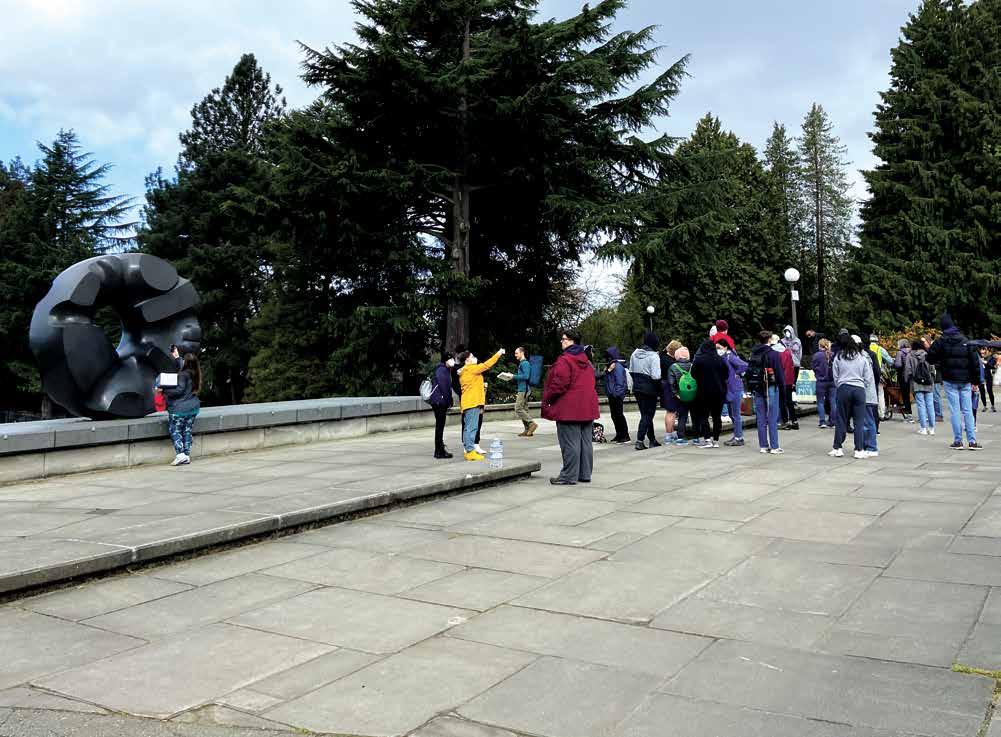
This past Saturday, April 9, over 60 volunteers gathered for a Second Saturday Work Party, at which the Trust typically accommodates around 20 volunteers. A group of 40 high schoolers signed on to help out at the last minute, though, so the Trust found a way to utilize the giant cohort.
In front of the “Black Sun” sculpture, Landscape Committee Chair Brooks Kolb addressed the group, explaining the nature of work parties and giving the rundown on what needed some attention in the park. Wheelbarrows of rakes and shovels sat next to water, soda, snacks, and gloves. The group buzzed with eager energy; volunteers of all ages gathered, awaiting group assignments. Kolb thanked everyone for joining and assured them that there would be tasks for all, even those who were unfamiliar with landscaping specifics.
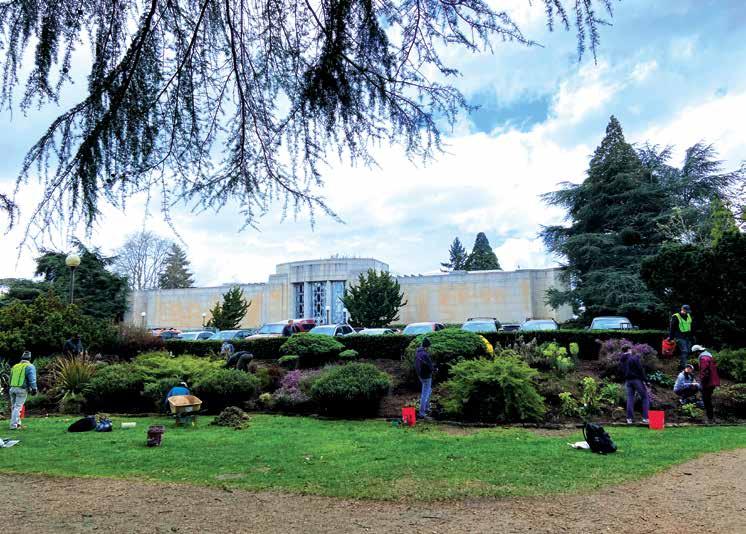
The groups split off, each led by a member of the Trust. The main task of the day was weeding in various flower and tree beds throughout the park. Teams of high
schoolers, young children, young adults, middle-aged folks, and even a dog worked together to rake aside fallen leaves in search of invasive weeds.
When volunteers became unsure of their next tasks, Trust members guided them toward areas in need of help. Over the course of the two-hour session, there was a visible difference in the tidiness of the park.
The Trust members also delivered fascinating talking points on Volunteer Park’s history and maintenance objectives. One claimed the group “has been trying to remove the fence around the reservoir for years,” as it no longer functions as a main water supply for the city. It is merely maintained in case of emergency these days.
Different city departments have their own agendas for the best use of the water, making it difficult for anyone to stake a claim on its future.
Other Trust decisions are made from a place of love for the community members that have given so much to Seattle’s parks over the years. The Trust’s co-founder, Douglas Bayley, passed away in January of this year. In his memory, the Trust planted 25,000 daffodil bulbs, now visible all over Volunteer Park. In fact, a Trust member told me the daffodils proliferated far beyond the expected yield for the year.
For those interested in helping out with landscaping, the Trust has some exciting events on the horizon. The Second Satur-
day Work Parties continue monthly, and chances are they will not be quite as packed as April’s surprise turnout.
In addition, the annual Spring Restoration Day falls on April 23 this year. It is one of the group’s larger volunteer gatherings. The four-hour day will include “weeding, removing invasive plants, improving gravel paths, and mulching garden beds for a beautiful summer,” according to the Trust’s website.
Sign up for events and read more about the Volunteer Park Trust at volunteerparktrust.org.
Photos by Nick Rapp
Hidden memorials & ACAB sentiment Geocaching still a verdant subculture on the Hill
BY DANIEL LINDSLEY
SGN CONTRIBUTING WRITER
Capitol Hill isn’t as Queer as it used to be. Articles by The Stranger, KUOW, Eater Seattle, and other outlets, going back as far as 2014, have observed a mass migration from what was once the city’s “premiere gayborhood.”
These days, the popular culprits for this exodus are tech bros and their girlfriends. Marcus Wilson, manager of the Gay bar Pony, told KUOW in 2014 that Capitol Hill has gone the way of Pioneer Square: “It has become so overwhelmingly popular with young, straight twentysomethings. They have this ‘attack, dominate’ mentality, and they don’t even necessarily know what this place is.”
KUOW also spoke with Amin Ghaziani, an associate professor of sociology at the University of British Columbia. He agreed that Queer people were being priced out. But he also argued that younger generations of Queer people don’t make sexual orientation the “central, defining aspect of their self,” and that a common sentiment nowadays is that all of Seattle is the gayborhood.
So, aside from holdouts like Pony and the Wildrose, Capitol Hill seems to be losing its edge as a gayborhood.
Geocaching on the HillBut unknown or unacknowledged by most, there’s a movement operating in the shadows, under the very noses of the tech-bro gentrifiers. And its headquarters is just across Lake Union. For the uninitiated, geocaching is the act of hiding or seeking containers of stuff using a GPS-enabled device. It’s a lot like recreational treasure hunting. When you find a cache, it’s customary to sign a list and exchange a trinket inside for one of your own.
In the hopes of finding and documenting Queer artifacts of a pre-Amazon era, I went hunting for caches in Capitol Hill on a sunny Thursday afternoon. In Cal Anderson Park, a band played punk by the fountain, and the green was busy with picnics, beer pong, and frisbees.
I wrongly assumed that geocaching was a fad of the past, and that old, forgotten urban caches would hold the Queer relics I sought. But the nature of geocaches is constant change. In an urban environment, they can easily go missing, and the contents of a cache large enough to hold trinkets are slightly altered each time they are found, as seekers take one thing and leave behind another.
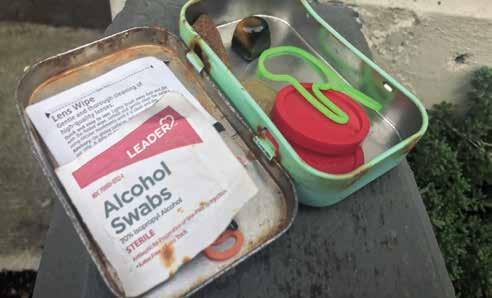
So most of what I found was irrelevant to my quest — plastic poker chips, packaged alcohol wipes, colorful rubber bands, and Japanese coins — in caches from no earlier than 2019. Any older than that were “logonly,” meaning they held just the standard log of names and dates, and were about the size of a tiny matchbox, if not smaller.
The search wasn’t entirely a bust, though. Each cache has a name and description in the app, for hints, jokes, or anything else the creator might want to mention. That’s where I found the most heart. All the caches I visited on Capitol Hill were dedicated to someone, or made to commemorate a historical event.
One cache was placed in the memory of user samwhys’s husband, nicknamed Brad, who passed in 2019. Brad and samwhys met at a bar just a block away from the cache, the description said, and Capitol Hill was “his playground, where he met so many of his dearest friends here in Seattle.” Whether Brad and samwhys were Queer is up for speculation, but given that the latter’s profile picture is a drag queen, it’s likely.
Another cache was hidden at the former site of the Publishing Arts building at Seattle Central Community College. Before the building was turned into a gravel lot, it had housed screen-printing presses and letterpress machines, and the cache’s creator, user Calderoo, reminisced in the description about printing their own wedding invitations there. The only thing in the cache was a single penny, which felt fitting, given the impact of the digital age on print publishing.
The most brazen cache commemorated the Capitol Hill Organized Protest (CHOP) zone from 2020 and the events surrounding it, in full view of the police precinct on Pine and 12th. It highlighted the racial disparities in hospitalizations and deaths during the COVID-19 pandemic, as part of a “series” of caches that marked pandemic milestones.
I may not have found precisely what I was looking for in the time I had, but Capitol Hill has so many places still dear to the Queer community. It’s in our hands, then, to create more of these hidden shrines, to honor the past and cherish the present, and have a little fun treasure hunting in the process.
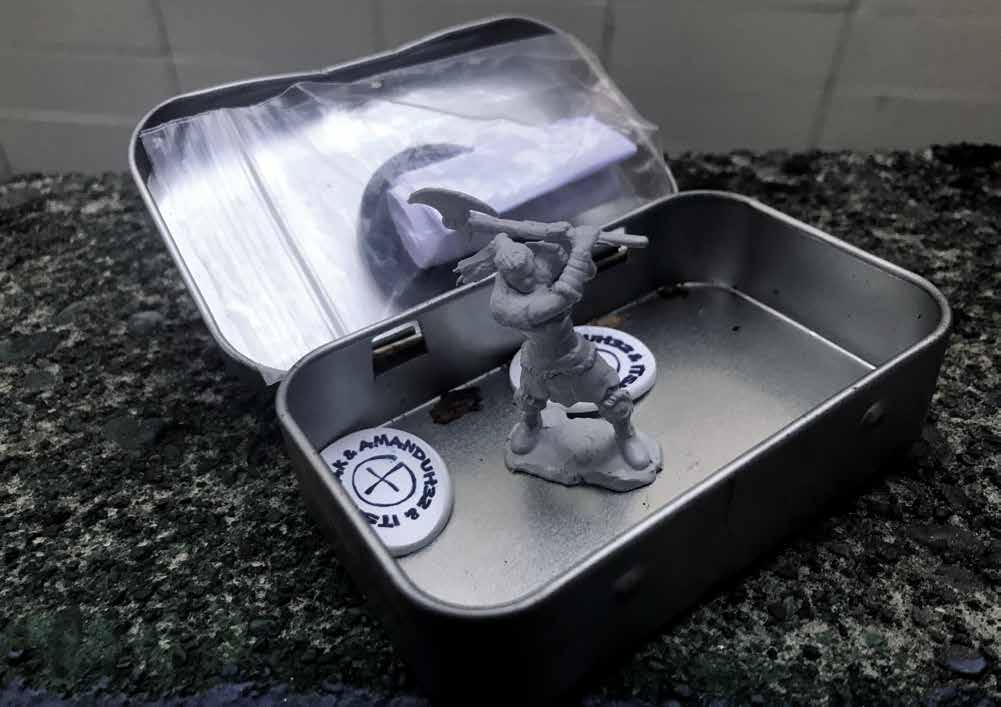
For any who pick up where I left off, I left a Dungeons & Dragons miniature in the cache named “Scott,” after user samwhys’s father.
A despondent sign at a roundabout – Photo by Daniel Lindsley
A mighty barbarian beside tokens and checker pieces – Photo by Daniel Lindsley
Trinkets in a Geocache – Photo by Daniel Lindsley
BIPOC-led urban farming efforts plant yesterday's gardens to save tomorrow
BY KYLIN BROWN SGN CONTRIBUTING WRITER
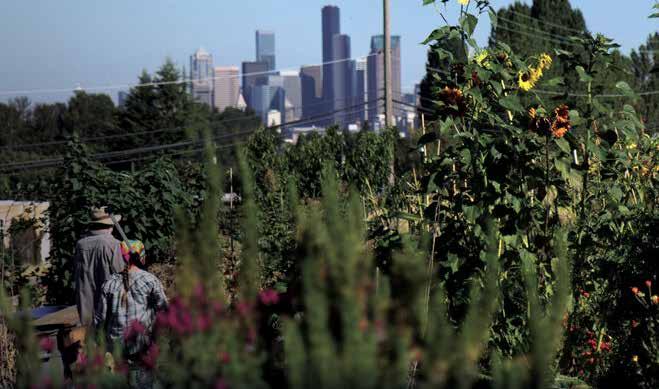
Around the world, more and more cities are showing interest in a long-forgotten possibility: local, publicly grown foods (think: foraging). It’s the time of year that gardens across Seattle begin to blossom with green leaves and perennials, and some private gardens look like homesteads. If you haven’t noticed this about Seattle yet, it’s the time of year for a long walk.
While you venture out on this hypothetical walk, let’s go back in time. Imagine for a moment that all of the houses, grassy lawns, and sidewalks are gone. What would there be instead? What was here before?
Before Himalayan blackberry bushes were brought to conquer sidewalk medians and hillsides, and local food production became private gardening, food used to be ubiquitous here.
Getting back to our roots
Before European settlement, this unceded traditional land of the Duwamish and Coast Salish peoples was host to a plethora of biodiversity. Its forest, grassland, and estuarial ecosystems maintained themselves and their
nutrients from “time immemorial,” according to Indigenous belief.
In this environment, land and nutrient-rich fresh foods native to the area grew abundantly. Camas, wild carrots, golden currants, and various berry species inhabited this land among and between 13 prominent Indigenous villages. It was like a “food forest,” where humanity cohabitated with ecology.
According to the United Nations, our current food systems account for over onethird of global greenhouse gas emissions, mainly due to large-scale monoculture farming in the global north. The latest harrowing report from the Intergovernmental Panel on Climate Change also points directly to colonialism as an ongoing phenomenon detrimental to both Indigenous peoples’ health and the climate.
If we were to prioritize Indigenous voices now, my four years of environmental studies education conclude, we would never reach 1.5 — or the latest projection of 2 — degrees of warming from greenhouse gas emissions.
Indigenous farming practices, implemented by Indigenous people or with their
help, are the top global solution to climate change, addressing soil health, nutrition (hunger), ecology, water, and land usage. That’s why urban farmers across Seattle and the world are stepping up to honor their land and its traditional peoples once again.
Seattle’s Beacon Food Forest
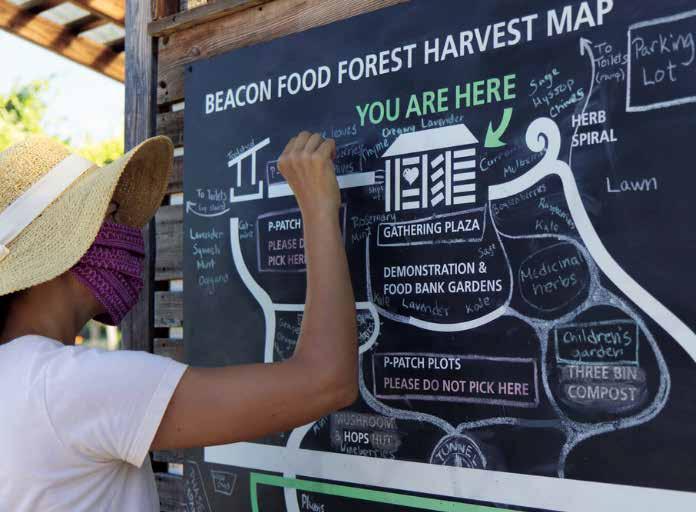
In April of 2021, Beacon Hill resident Cherry Liu decided to dig in and launch new programming at Beacon Food Forest, a ten-year-old urban farming project in her neighborhood. It was founded with aims of providing free fresh food to the community.
“A food forest is designed to create an ecosystem that mimics the relationships that are beneficial to humans, animals, plants, and insects in a natural forest,” said co-founder Jacqueline Kramer in a video about the project’s launch, which was later played at the United Nations Conference on Sustainable Development, Rio+20.
Edible landscaping initiatives like this have been launched around the world since, but Liu says that Beacon Food Forest was the first and remains the largest of its kind.
Now, it is also one of the only urban farms and food forests that offers up its own land to social growth and Indigenous teachings, as well as seasonal food production.
Liu started working as the food forest’s sole staff member last year, taking great inspiration from Leah Penniman, the activist farmer who authored Farming While Black and who, in 2010, founded Soul Fire Farm in upstate New York.
Liu followed Penniman’s lead and learned from Black and Indigenous farmers across the city. She toured meet-and-greets and volunteer events at other local BIPOC farms like Nurturing Roots Farm, Black Farmers Collective, Common Acre, and Black Star Farmers to learn from gardening managers and community members.
“What I was hearing was not that people needed gardening classes or lessons or skills,” she said. “It was mainly about access to land, to water, to compost or wood chips. I quickly realized that we had those privileges and resources that sometimes we didn’t know what to do with.”
To address this surprising revelation, Liu began piloting the Garden Mentorship Program this year, which invites other BIPOC community groups to the seven acres of the Beacon Food Forest.
The program allows knowledge sharing between groups who have historically had their right to land taken from them, and has opened the door at the Beacon Food Forest to more potential for growing culturally relevant foods through partnerships with organizations based in Beacon Hill and the Central District, such as Percussion Farms, a Nonbinary, Black-led urban farming group, and Asian Counseling and Referral Services.
“Our BIPOC Community Garden which will provide delicious and nutritious food for our Beacon Hill neighbors. These include gai lan, collards, cabbage, mizuna, Chinese cabbage, and Japanese mustard. We also planted some rhubarb, strawberries, comfrey, flower bulbs, artichoke, camas, and herbs such as thyme, oregano, and parsley in guilds around our wonderful fruit and nut trees,” reads a recent Instagram post.
“It’s not just about growing food, it’s about connection with nature, connection with the land and with where we all come from,” said Liu.
You can find the Beacon Food Forest in Seattle’s North Beacon Hill area, adjacent to Jefferson Park at 16th Ave S. and S. Dakota St. Follow @beaconfoodforest on Instagram for updates, contact info, and more.
Photo courtesy of Food Forest Collective
Photo by Maddie Price / Courtesy of Food Forest Collective
THE GREEN ISSUE
Nourish flourishing minds with these Earth Day picks for kids
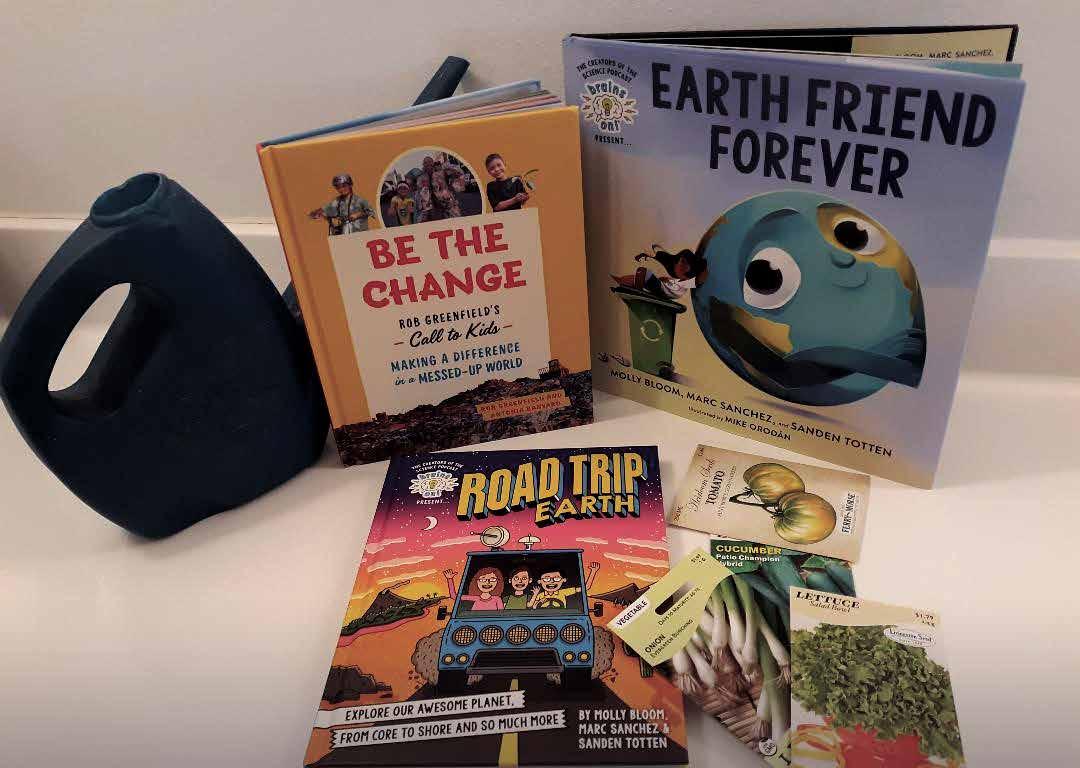
How would you like to be someone that the Earth can count on, in a pinch? In Earth Friend Forever by Molly Bloom, Marc Sanchez, and Sanden Toten and illustrated by Mike Orodan (Little, Brown, $17.99), the creators of the science podcast “Brains On!” will show you how to be the buddy the planet needs most.
Like every good friendship, there’s some give and take when you’re pals with the Earth. You pick up litter; the planet gives you the ingredients for pizza. Nice trade, huh? Yep, but now there’s an emer-
gency and it’s serious business. With this cute book, kids ages 4 to 7 will learn to be good stewards of the Earth, and they’ll be spurred to take action in ways that are doable for even the youngest.
Also from the creators of “Brains On!,” there’s Road Trip Earth by the same authors (Little, Brown, $18.99). Part adventure, part science, this book takes young readers around the planet and inside it, in bite-sized segments that teach them about the environment but also touch upon geology and geography, as well as climatology and light chemistry. But you shouldn’t for a minute think that this book is stuffy or unapproachable.
Imagine, for instance, a match-up between two large, famous bodies of water. Who would win? Learn, for example, what lives beneath your feet. Visit a cave, drop in on the desert, check out some “bizarre” creatures that live in weird places, learn about snow and rocks, and then take a trip to outer space and see what’s up there. For science-minded kids, ages 9 to 14, or for young environmentalists who crave a bit of literary adventure, this book could be irresistible.
Young environmental warriors can be serious about their work, though, and if your child is one who’s laser-focused on the environment, you’ll want Be the Change:
Teaching children how to protect birds in your backyard
SPECIAL TO THE SGN VIA STATEPOINT
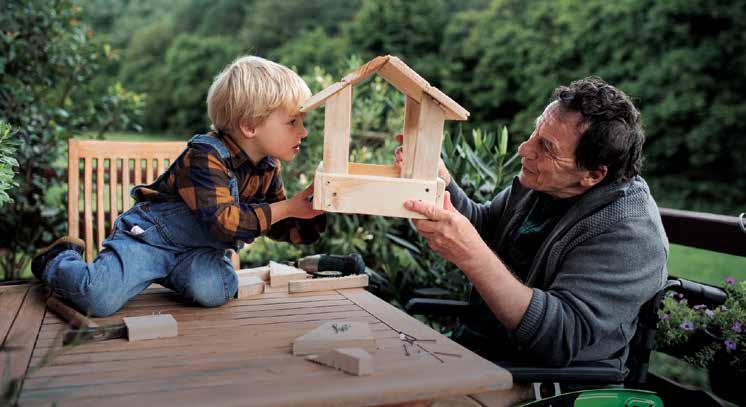
Part of being a good environmental steward is passing on this wisdom to the next generation. Here are three hands-on ways parents and grandparents can teach children to protect the birds in their very own backyard.
Build a bird feeder
Build bird feeders using natural or recycled materials to teach two earth-friendly
lessons in one: the importance of reducing waste and the need to take care of local wildlife.
Bird feeders can be crafted from milk cartons, tin cans, mason jars, or even natural materials like pine cones. As you decorate your bird feeders, talk to your kids about how birds are not just beautiful but also a vital part of the ecosystem and how you are offering these creatures a chance to rest and refuel.
Fill your finished products with birdseed and choose a safe spot to hang them. Experts recommend bird feeders be positioned either closer than three feet or farther than 30 feet from windows.
Protect flight Birds in flight are prone to strike windows. Fortunately, there’s an easy home project you and your children can com-
Rob Greenfield’s Call to Kids: Making a Difference in a Messed-Up World by Rob Greenfield and Antonia Banyard (Greystone Kids, $18.95, to be released April 19). Filled with jaw-dropping pictures; real statistics; solid, adult-caliber information; and ideas for being green, this book is perfect for kids 10 and up, especially if they’re keen on making their lives and your home as zero-waste as possible. If your child wants more information, or if these books don’t quite fit what you’re looking for, be sure to ask your favorite librarian or bookseller for help. They can instantly put their fingers on books that will help your kid help make this world a better place.
plete together that will help prevent this from happening. Applying decals that reflect ultraviolet sunlight to your home’s windows — particularly windows that are highly reflective of open sky — has been proven to substantially reduce the likelihood of bird strikes. Those from WindowAlert feature patterns that give the appearance of slightly frosted, translucent glass but glow like a stoplight for birds. Kids can help select from fun decal designs like snowflakes, butterflies, and maple leaves. The brand also makes a high-tech UV liquid that offers even greater protection when applied between decals. To learn more, visit WindowAlert.com.
Keep a log
Now that you’ve invited birds to your yard and have taken steps to protect them, inspire young naturalists to keep a log of flying visitors. Kids can draw pictures of the birds they see and note their observations. Visit Audubon for Kids at audubon. org for a birding guide, activities, games, and additional projects that can help kids learn to identify various species by sight and sound.
“Environmental stewardship starts in your own backyard and people of all ages can get involved, including kids,” says Spencer Schock, founder of WindowAlert. “The good news is that turning your home into a refuge for birds is fun, easy, and something parents, grandparents, and kids can work on together.”
Photo courtesy of Halfpoint / iStock via Getty Images Plus
Photo by Terri Schlichenmeyer
Discover Europe.
Offering year round nonstop flights from SEA-TAC International Airport to Frankfurt, Germany with easy connections to many European cities including Munich, Paris and Amsterdam and other worldwide destinations.
Condor is also a partner and member of the Alaska Airlines Mileage Program. Earn miles on every Condor and Alaska Airlines flight. Enjoy Business, Premium or Economy Class and let your next adventure begin with Condor.