


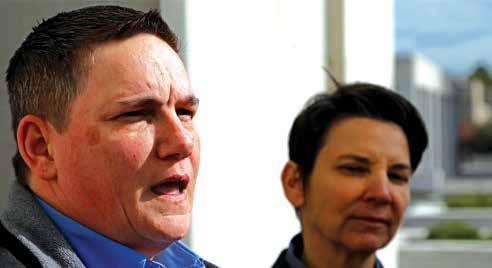
Chris Strickland (l) with attorney Beth Littrell – Photo by
by Mike Andrew SGN Staff Writer
The Mississippi Supreme Court ruled on April 5 that a Lesbian has parental rights
to the nonbiological child of her former marriage. The decision gives same-sex couples the same rights as opposite-sex parents.
see MISSISSIPPI page 13
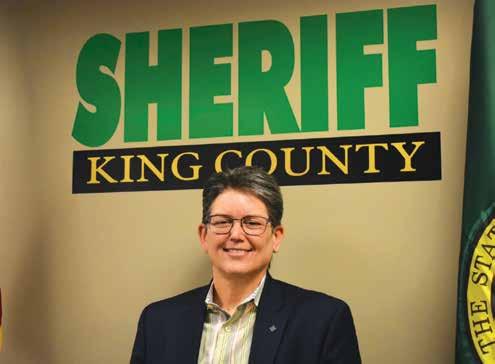
by Miryam Gordon SGN Staff Writer
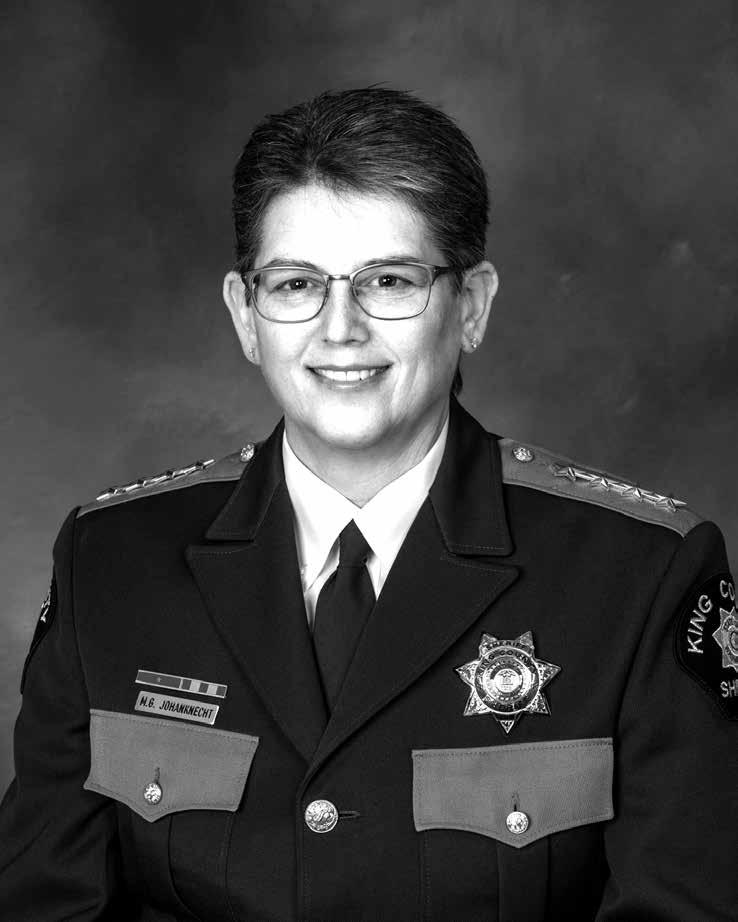
Our new Sheriff seems to be part of Team Social Justice. Sheriff Mitzi Johanknecht has been on the job since her swearing in on January 2nd, 2018, and her priorities and focus for her department are beginning to take shape. She spoke to SGN recently about her 33-year career in King County law enforcement and her plans now that she has been elected to the highest law enforcement position in King County.
see SHERIFF page 4

by Tim Peter SGN Contributing Writer

Imagine being so afraid and so oppressed as a Trans person in your own country that you would flee to Russia for refuge.
That’s exactly the fate of Trans people in Kyrgyzstan, according to BBC reporter Katie Arnold. In 2014, Kyrgyzstan – a former Soviet
see KYRGYZSTAN page 13







by Scott Larsen
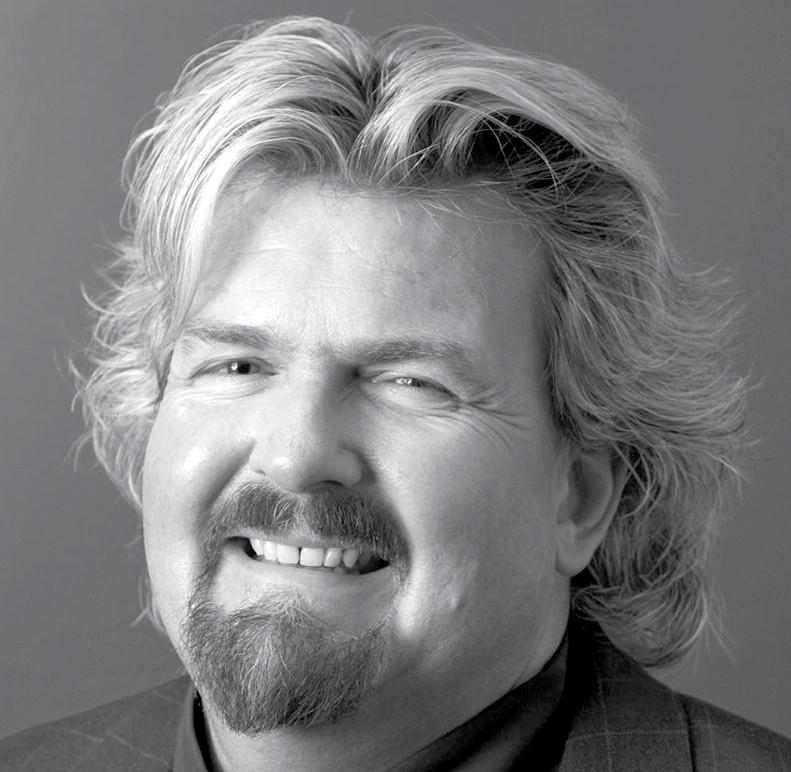
Long time West Seattle resident John Eric Rolfstad died at the University of Washington Hospital on April 4 after a short illness. He was 59.
Because “John wanted a green burial” wrote his brother on Facebook, “he had to be buried quickly” on April 6 at the Meadows Natural Burial Grounds in Ferndale, WA.
While John Eric was a big guy, his heart was even bigger, as well as his zest for life. No one could mistake John’s booming, hearty laugh.
Born in North Dakota, he attended the University of Jamestown in Jamestown, ND; University of North Dakota in Grand Forks, ND; and the University of Washington, Seattle, obtaining business, law, and social work degrees respectively.
His ties to the Seattle community were numerous. From once singing in the Seattle Men’s Chorus to serving on boards like Companis Seattle, Green Burial Council, Extraordinary Lutherans Ministry, and ReconcilingWorks (formerly known as Lutherans Concerned). Only this past January did John Eric join the board of trustees of his alma mater, University of Jamestown.
Rolfstad became known across Washington state giving interviews after becoming executive director at End of Life Washington. The organization was instrumental in getting Initiative 1000 on the ballot in 2008. The so-called Death With Dignity Act, which was passed into law by voters.
Later, John Eric became executive director of People’s Memorial Association, a funeral education and advocacy group in Seattle. While there, he was instrumental in the society setting up its own funeral business.
“When I was just beginning work with AIDS CareTeams in Seattle, he was the first social worker to refer his clients to me,”
wrote Trudy James on Facebook. “He was always real, exuberant, funny, and caring.”
John Eric loved to boat, hike, and camp and nothing could widen his smile more than to be out on Lake Washington or Lake Chelan with friends in his boat or sharing a meal together.
He was a long time social worker in Seattle, working at Providence Health & Services, case manager at Harborview Medical Center, and oncology social worker at Seattle Cancer Care Alliance.
For a number of years, John Eric organized a weekend retreat for Lutherans
Concerned, the LGBT ministry, at the Lutheran retreat center in Holden, WA, located high in the Cascade Mountains. A formal funeral/celebration of life will take place on June 2 at Seattle’s First Baptist Church, 1111 Harvard Ave., and another one in his hometown of Williston, North Dakota on August 12.
Survivors include his brother Thomas Rolfstad of Mesa, Arizona; sister Dorothy Rolfstad, aunt Dora Rolfstad, a niece and nephew, all of North Dakota.
Her bio on the website says:
“Born and raised in King County, Mitzi Johanknecht has served her community for 33 years and is an experienced, progressive law enforcement leader. She began her law enforcement career when she joined the King County Sheriff’s Office on January 8th, 1985. Through her history of dedication and hard work, along with a strong sense of honor and respect, she worked her way up through the ranks and was elected to the position of Sheriff on November 7, 2017.
“ Mitzi started as a deputy in the North Precinct and was promoted to the rank of Sergeant before having ten years on with the department. A quick four years later she was promoted to the rank of Captain. She has served in leadership roles in every division and location in the Sheriff’s Office. As a deputy, she was the first to work with a multi-disciplinary team in King County housing. She collaborated with other agencies, community groups and residents to build relationships and trust, promoting public safety. Mitzi was the first woman to command TAC-30, the King County Sheriff’s Office SWAT team.
“Mitzi and her wife, Maureen, live in West Seattle. She volunteers on the board of Companis, a local non-profit, and does production assistant work for the Seattle Men’s and Women’s Choruses. Their adult daughter, Sydni, and son-in-law Scott live in New York City.”
[http://www.kingcounty.gov/depts/sheriff/about-us/biographies.aspx]
My first question was “Why did she want to do law enforcement? Why sheriff and not city-type policing?” She describes how she found out about jobs in the Sheriff’s Department.
“I went to university at UW to play basketball and got a great education out of it. I continued [my schooling] at WWU [toward] a BA in Education to become a teacher. I didn’t finish my BA. It wasn’t required to join the Sheriff’s Office. As I was finishing, I had a softball coach who was the first woman to be a field officer in the Dept. of Corrections in Washington state. She suggested I look at going into law enforcement as a career.
“At that time I had friends I’d played sports with and one of my dear friends worked for the King County Sheriff’s office. I went on a ride along with her. Six months later, I was in the police academy –WA State Criminal Justice Training Center (which provides all training for basic police academy work for everyone except the State Patrol). The reason for the Sheriff’s office in particular relates to the type of work. Within the Sheriff’s Office, you’re serving anywhere from urban to rural to the mountains and so you have more autonomy and you have more time to do community related things. “Social justice” or as it’s known now, community policing.
“I’ve worked in every division and in every precinct in a lot of different jobs. My favorite job? Aside from being Sheriff, I got to work as the first King County deputy to work in public housing as their community officer. I was the officer for two different housing complexes and those were in my district and I worked hand-in-hand with youth up through the more seasoned residents. That was a fun experience.
“I’ve been allowed to do so many things from search and rescue and operations to criminal investigations division where I oversaw the drug unit and court protection (including court houses and members who come to court and/or work inside).”
of those issues that she campaigned on and how is that going?
“There were things I talked about while campaigning and some of those promises are starting to be able to deliver,” Sheriff Johanknecht says. She speaks about her perception that the department had suffered in certain ways under the prior administration and that “the department is healing as we start coming together and folks are feeling safer to do their work rather than come under unfair investigations.” She emphasizes that she wants to ensure that her administration treats people with “dignity and respect.” So, clearly, having said that, she feels that the prior Sheriff did not do this for the department. However, that’s all the specifics I got.
Sheriff Johanknecht did get into some very specific actions she is taking right this minute to roll out change in ways big and small.
She says, “We’re just about ready to train our folks on the use of naloxone and get that information out to all our operations so we can save people’s lives.” Public health officials and studies from around the country have pointed to the use of naloxone and the readiness to have a shot available can mean the difference between life and death to someone having an overdose reaction.
She clarifies that “there are about 40 deputies already trained” in using naloxone, but she is determined to making it part of the standard kit or issue that every deputy first-responder has – expanding to about 300 more, including, for instance, court marshals. Any uniformed personnel who are in first responder roles would be included.
the skin.”
People may disagree about the idea of adding a less lethal firearm being a form of de-escalation, but most of the people in this county might like the idea that our deputies have more options to prevent killing folks when they’re acting out. There are logistics regarding how many pieces of equipment one deputy can successfully carry and manage, so that might be a concern.
As for the big plans, the main direction the Sheriff is going is toward developing a strategic, multifaceted plan for the near term. She says that the Sheriff’s Office does not have one. She indicated that there wasn’t one in place from the past administration, so she’s basically starting from scratch and thinks it will take six to nine months to fully develop. The scope is comprehensive.
“[One of the areas] we’re looking at [is] officer and deputy wellness and being thoughtful about types of uniforms and vehicles so they’re providing good officer safety and are healthier, reducing costs for health care,” Sheriff says. “An example is: we have taller and taller people [as deputies] and fitting them into some department cars makes it tough for a 6’ 4” or 6’ 9” person getting into and out of cars [that have] limited seat areas with consoles in the middle. When the officers have to get out quickly, it can be difficult [bumping knees or straining backs or hitting heads]. So, good work spaces for deputies in cars.
“[Similarly, there is] the gear we ask them to carry on their gun belts and taking care of officers backs. Also, professional staff in the office – we’re looking at sit-stand desks for people, for instance, in our communication center. [We’re focused on] longer term employee health. We have an aging workforce and when people are working later into their lives you want to take care of people’s health.”
and married Lesbian and if that would make any specific difference to her work or to the Sheriff’s Department, Sheriff Johanknecht is clear that making sure the department treats everyone with respect is a top priority. She says, “I think we need to continuously work on making it safer for protected classes and immigrant populations to report to the police. They should want to report to the police and we should thoroughly investigate their concerns. I don’t have specific numbers, it’s not data you ask or collect, but I have heard stories and also hear about fear of reporting. How do you capture that data if people don’t report [crimes to the police] in the first place?
“We’re working on staffing a new section – instead of a general focus, we’ll have a section that will actually have that community engagement, including relations, recruiting, encouraging LGBTQ folks to become members of the Sheriff’s Office and having a community liaison approved in a supplemental budget to add staff to the Sheriff’s Office. That is just an initial staffing up and it will be overseen by my chief of staff, Liz Rocca. That’s a priority for me.”
[The] Sheriff’s plan is to apply for funding to add two additional members to the media relations office, currently a staff of one – a community liaison officer in charge of equity and social justice strategic planning and doing community outreach, and a recruiter, who would also focus on recruiting from diverse and less-represented communities for staff jobs.
I asked about the perception that some police out there are reluctant to admit they might have implicit biases or that those biases might impact the way they do their jobs. Sheriff Johanknecht immediately responded. “When I got into office oversight, I had all our upper command attend a threehour overview from a gentleman who does implicit bias training all over the United State. We are working to expand that training and bring him back to train the entire department on implicit bias.
“We’re always cycling through antiharassment, anti-discrimination [issues and trainings], but this was given a thumbs up by all the staff because it was done differently than other trainings. We’re also looking forward to [the changes required by the passage of] Initiative 940 and what training will be required and what changes will happen at the police academy. We want to stay current in any trainings that help break down distance between communities and the Sheriff’s Office.
“Part of that is going [out] to listen to the communities and we’re starting to set up listening sessions to try to break down barriers that members of the community point to. [We’re looking at] everything from coordinated efforts in working with other county department or the County Council where they’ve already planned to go out and have these sessions, or the Sheriff’s Office going out to learn. I don’t want to talk at people; I want to listen to people.”
Now that she’s Sheriff, having seen how the whole department works from just about every angle, Johanknecht clearly has plans to change, refine, and focus aspects of department function. So, from what she spoke about on the campaign trail to digging in and making actual plans, what were some
Another effort underway is to complete acquisition on “less lethal shotguns so less lethal options can be used in the field.” Sheriff Johanknecht says, “We’ve purchased about 80 shotguns and people are being trained to use them. We have other tools: pepper spray, Tasers and those are the two less lethal weapons before our firearm. This is another tool that can be used before lethal force to allow us to deal from a distance with people in crisis. Tasers are close in and if they don’t work, you start to run out of options. These shotguns shoot a bean bag round. It hurts and is distracting for pain compliance, but typically does not penetrate
That’s one way to focus on long-term strategy. The other major area the Sheriff is working on is implementing the Executive Equity and Social Justice strategic plan. This is a plan that already existed but she says that the Sheriff’s Office wasn’t engaged into that process, which is apparently a Countygovernment-wide effort to bring it into the Sheriff’s Department.
Asked about the fact that she is an Out
I couldn’t resist asking for a personal “How did you meet?” story! Apparently, the Seattle Choruses (the Seattle Men’s Chorus and Seattle Women’s Chorus) became matchmakers! The Sheriff has volunteered for the Choruses for years now, and many people might guess that it’s because her wife, Maureen, has been a long time singer. It appears it’s the other way around – the Sheriff was already a Chorus supporter. “[Maureen and I] met at the Chorus Auction on 3/17/01. I was there as a guest and so was she. Little did we know that people who hosted our table were deliberately setting us up to meet each other. So it was a semi-blind date. And we’re still together after all these years!”
SGN celebrates the election of Sheriff Mitzi Johanknecht and her focus on strengthening social justice in our County! We look forward to the fruition of her plans and applaud her focus on these needed changes. SHERIFF
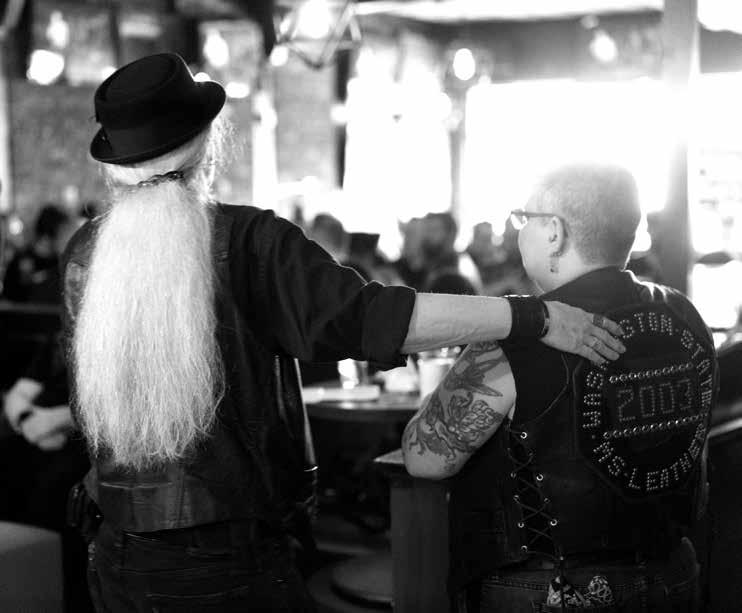
On Sunday March 25th, Purr Cocktail Lounge was the host venue for the 2018 Washington State Leather Emerald Wards with Emcees Lainy Spock & Panther Berg. The Washington State Leather Community was represented by groups, organizations and clubs including the Bellingham Sex Positive Center, Everett Leather Alliance, Wolf Pack Leather Clan, Leather Azimuth of Yakima, South Sound Leather Alliance, Leather Archives of Chicago, WSMLO, SML, SWOL, Sbol, Sgol, SeaPah & the Imperial Sovereign Court of Seattle to name a few.
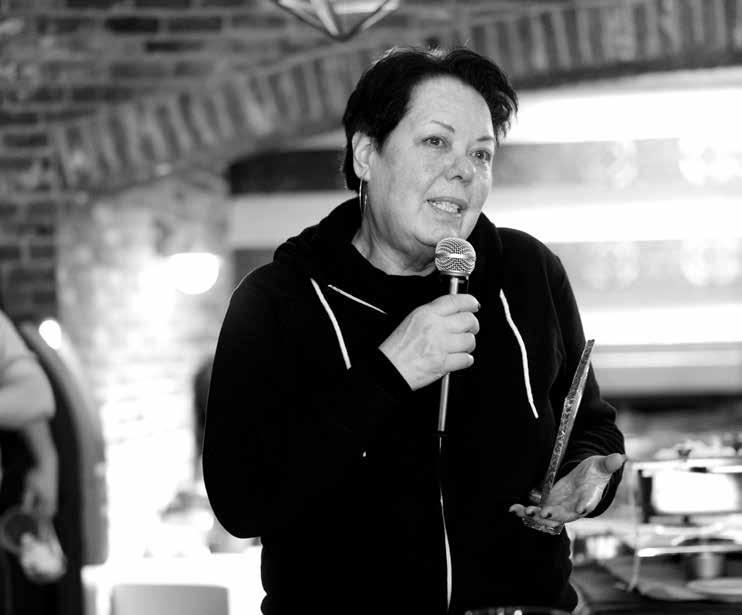
Julia Kaplan has been involved in the Seattle Leather scene since the late ’80s. She is a founding member of Outer Limits, the long-running Seattle Leatherdyke club; a founding member and co-originator of Powersurge, the first International Leatherdyke conference, which was held in Seattle; owner of Venus, a Seattle alternative clothing store; and she ran S, a Leatherdyke bar and club in Seattle.
“Talk Gender to Me” What is gender considerate language in the workplace?
Capitol Hill restaurants commit to LGBTQ safety and welcomeness in using gender considerate language
On Thursday April 19, LGBTQ Allyship is kicking-off their Talk Gender to Me project designed to educate and support Seattle restaurant workers to utilize gender considerate language with co-workers, managers, restaurant owners and customers. Tito’s Handmade Vodka is supporting the Talk Gender to Me Kick-Off and Coastal Kitchen (429 15th Ave. E.) from 3pm-6pm, the Wildrose Bar (1021 E. Pike) from 4pm-8pm and Bar Vacilando (405 15th Ave. E.) from 4pm-6pm are all hosting a “Talk Gender to Me” Happy Hour on Thursday, April 19.
This project is geared towards Seattle restaurant workers as a professional development opportunity that encourages respecting all workers and customers around their gender identity, gender expression and gender.
All too often LGBTQ customers are unintentionally misgendered at restaurants, which can be a jarring experience. Redwolf Painter, a mixed blood trans resident says, “I am often misgendered in restaurants and don’t feel safe correcting folks. I leave angry and vowing to not return to that establishment. I’m so grateful to Allyship for starting this dialogue and training to restaurant staff! I love the idea of restaurants taking the “Talk Gender to Me” pledge and I look forward to places I can eat or drink without worry.”
Many restaurants on Capitol Hill serve LGBTQ customers and are committed to preserving an LGBTQ friendly culture on the Hill. Co-owners Shelley Brothers and Martha Manning of the Wildrose Bar state,

“We have seen a lot of changes over the years. The hill has become less welcoming to the LGBTQ community, but many LGBTQ individuals still come here to drink, eat, seek community and be visible. Being gender considerate in your establishment is respectful, inclusive and builds your customer base. We hope more restaurants commit to taking the “Talk Gender to Me” pledge.”
General Manager, Christine Kennerly, at Coastal Kitchen sums up their commitment to “Talk Gender to Me,” “We at Coastal Kitchen are a safe place for the LGBTQ community and want everyone to feel
comfortable; this includes not misgendering – but we admit we’re far from the goal on this as it’s purely habitual for a server to greet with “Hi ladies, etc.” We’ve had situations arise when misgendering a guest has caused upset for both staff and guest. This is a bummer for all involved. We desire to give exceptional food and beverage experience – regardless of gender – so it’s time we educate our team and make the stance.”
The “Talk Gender to Me” Kick-Off also includes a free hospitality training on April 16th from 1pm-3pm for restaurant staff and managers at Youngs Market Express
Store in SODO, 2960 4th Ave. Tito’s Homemade Vodka has generously provided the venue. The training will include professional development on gender considerate best practices in the industry and information on the 6 Labor Standards in Seattle. Addressing gender and workers’ rights in the workplace is important for LGBTQ staff and all restaurant staff.
“Talk Gender to Me” is also sponsored by Restaurant Opportunities Center Seattle (ROC – Seattle), Greater Seattle Business Association (GSBA), Entre Hermanos, POCAAN, Capitol Hill Eco District Committee and Seattle Area Support Groups (SASG).
For more information, please visit our website at http://www.lgbtallyship.org, or contact Debbie Carlsen at 206-930-6668 or debbie@allyship.org.
About LGBTQ Allyship LGBTQ Allyship is a social and economic justice organization in the Puget Sound area. We serve over 3000 individuals and work on access to affordable housing, economic equity, and eliminating youth and senior homelessness in the LGBTQ community through education, advocacy, research and community organizing. For more information go to LGBTQAllyship.org.
Courtesy of LGBTQ Allyship
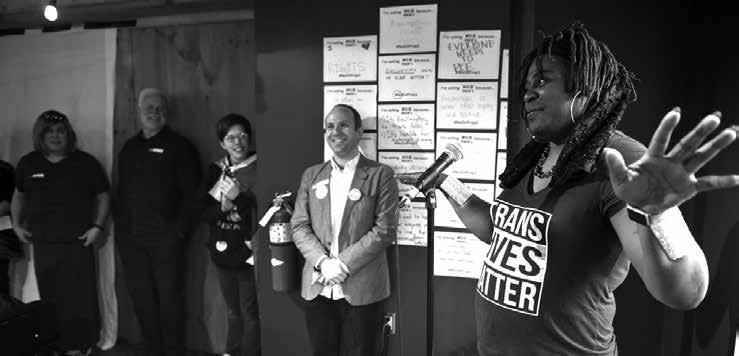

rooms based on their own gender perceptions.
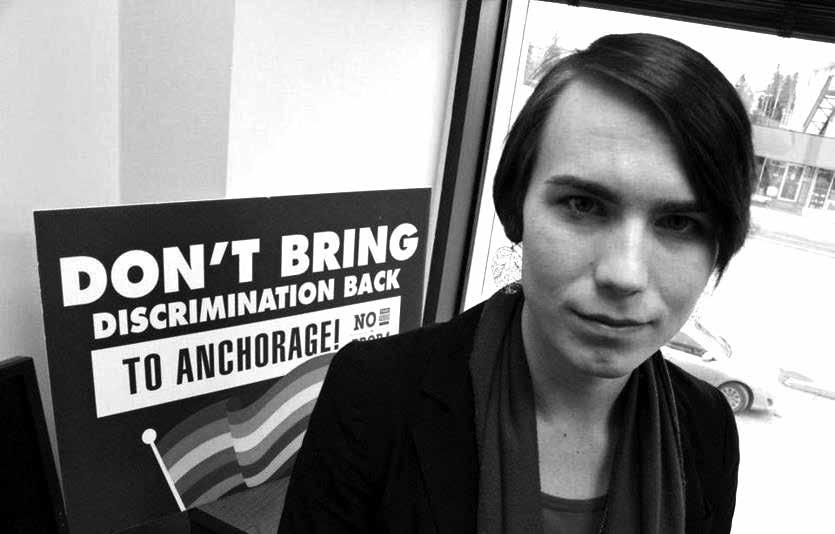
This fight began after Anchorage City Council passed a broad non-discrimination ordinance in 2015, which protected LGBT people. In January 2016, Alaska Family Council created a ballot initiative for the City of Anchorage hoping to overturn protections for Transgender people. The campaign, entitled Yes on One – Protect Our Privacy, wanted voters to believe that allowing people to use the restrooms of their own choosing would be harmful to
the public, particularly children. The reality is that there are very few, if any, reports of LGBT persons doing anything against others in public facilities; meanwhile many LGBT people have been attacked, beaten and murdered simply because of who they are and whom they love.
“Our opponents thought it was not about Transgender people when in fact it was a direct attack against us,” said Lillian Lennon, Field Organizer for Fair Anchorage, the organization opposing Prop 1.
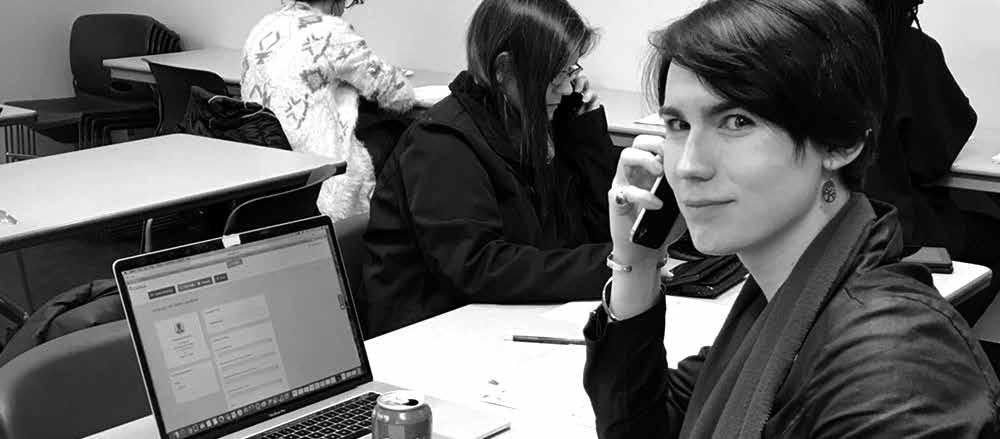
“A lot of our work had to do with voter outreach and educating about this important issue. We made sure to stay visible. Before the campaign, many people in Anchorage and Alaska didn’t know Trans-
gender people. We were able to change that, to show the horrible effects that it would have on the community.”
“I was nervous about winning,” she added, “yet very confident in what we were doing. No matter the outcome, we’d done something big. We organized the community of Transgender people, their families and business leaders. When I heard the preliminary results on election night, I was overwhelmed with joy! The Anchorage community came together to make this happen.”
Lennon added that this was a coalition effort with help from many sponsors, big and small. Some of those sponsors included Human Rights Campaign, ACLU of Alas-
ka, Planned Parenthood of the Great Northwest and Hawaiian Islands (PPGNHI), Alaska Airlines. The campaign also relied on support from Identity, Inc., the LGBT community support center in Anchorage. Fair Anchorage out spent Prop. 1 supporters $800,000 to $123,000, according to the Anchorage Daily News
“We all came together to fight for equality in Alaska,” Lennon said. “Of course, it was local to the Anchorage community, yet it will having lasting effects throughout the state of Alaska and across the United States.”





















I am writing from Tasveer on behalf of the 4th South Asian International DocuFest (SAID), the only South Asian documentary festival in the country! SAID offers thought-provoking documentaries that
shed light on a number of issues relevant to South Asia and its diaspora.
We would like to invite your organization to be a community partner for the 4th SAID. This is a free opportunity to promote
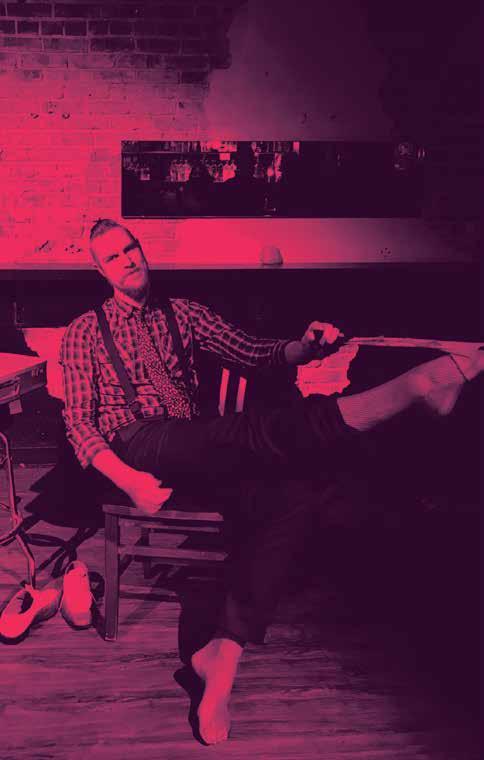
your organization and the festival all at the same time! One of the movies that we will feature at SAID is I Am Bonnie, a documentary film about a transgender man - the titular Bonnie - living in India attempting
Dear All –
I’m really excited to share with you all that LGBTQ+ and friends basketball is returning to Seattle. We have re-united and established a board of directors with the mission of building a sustainable LGBTQ+ and friends basketball organization. We plan to hold league play yearround complemented with fun tournaments and social gatherings. We want to be more than just a basketball league, we want to build community and provide for safe and welcoming space for folks to get active,
meet new people, and enjoy basketball.
As Seattle has continued to grow over the past few years, obtaining gym space had become a barrier for LGBTQ sports organizations. When the Asian Resource Center changed ownership and closed the gym to us, we were left without a place to play. Several attempts at using community centers and local schools failed as other organizations and leagues took precedent on the schedule.
That all changed when a new facility in Renton opened and invited us to be an anchor tenant with a permanent time slot
on Sunday’s from 6pm to 9pm. The Lair Courts (3405 Lind Ave SW, Renton) is a 30,000 sq ft sporting facility that has up to 6 volleyball courts or up to 4 basketball courts. Our sister organization – The Seattle Volleyball Club ran into the same issue with gym space and they are now holding their league play Friday nights and their numerous tournaments at The Lair Courts. We welcome players from all walks of life and playing ability. We’ll help you learn the game of basketball and get you on the court in a fun, competitive way.
Spring League begins this Sunday,
to live in dignity within society.
The full schedule and tickets are available at said.tasveer.org
Courtesy of Tasveer
April 15, 6pm-9pm, at The Lair Courts (3405 Lind Ave SW, Renton). Registration is now open (and filling up fast)! For more information on joining one of our leagues or our special events, visit http://www.seattlebasketballclub.org.
Cheers, Ted Hanson Seattle Basketball Club

General Milley: “Precisely zero reports of issues of cohesion, discipline, morale”

SAN FRANCSICO – Army Chief of Staff General Mark Milley today called into question a key claim of the Defense Department’s recent report on transgender military service: that allowing transgender service risks undermining cohesion, privacy, fairness and safety.
Asked by Sen. Kirsten Gillibrand if he had heard of any problems with unit cohesion arising from open transgender service, Gen. Milley responded, “I have received precisely zero reports of issues of cohesion, discipline, morale, and all those sorts of things.”
Palm Center Director Aaron Belkin called Gen. Milley’s remarks significant.
“It is telling for the Army Chief of Staff to acknowledge there have been ‘zero’ problems with cohesion, discipline, or morale just weeks after a DoD report, ostensibly based on months of research, insisted that transgender troops pose a risk to cohesion, discipline, and morale.”
The Defense Department report called into question the medical fitness of transgender troops, but the American Medical Association, the American Psychological Association, the American Psychiatric Association, and retired US surgeons general have stated that the Pentagon’s medical data and reasoning are misleading and unpersuasive.
Below is an excerpt of the exchange between Sen. Gillibrand and Gen. Milley: Sen. Gillibrand: Are you aware of any problems with unit cohesion arising... Have you [heard] anything about how transgender service members are harming unit cohesion?
Gen. Milley: No, not at all. We have a finite number. We know who they are, and it is monitored very closely because I am concerned about that and want to make sure that they are in fact treated with dignity and respect, and no, I have received precisely zero reports of issues of cohesion, discipline, morale, and all those sorts of things. No.
The Palm Center is an independent research institute committed to sponsoring state-of-the-art scholarship to enhance the quality of public dialogue about critical and controversial issues of the day. Its research has been published in leading social science journals and extensively consulted and cited by US military leaders. The Palm Center seeks to be a resource for scholars, policymakers, journalists, opinion leaders, students, and the public at large. For more information, visit www.palmcenter.org.
Courtesy of the Palm Center