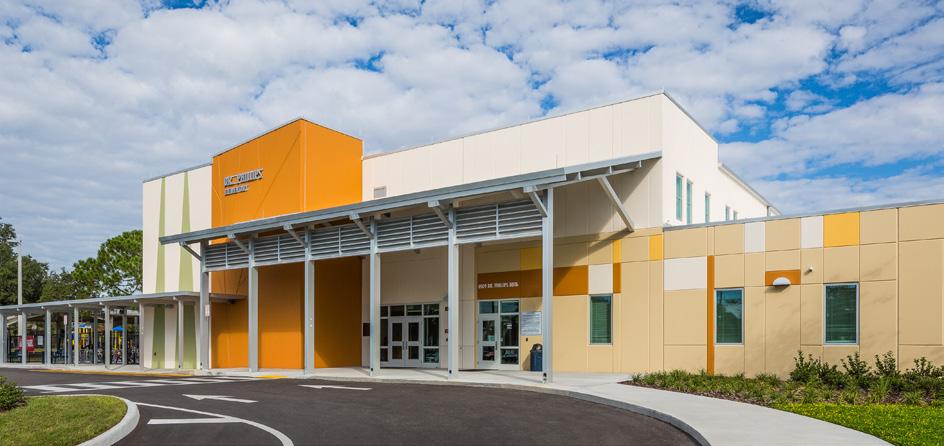
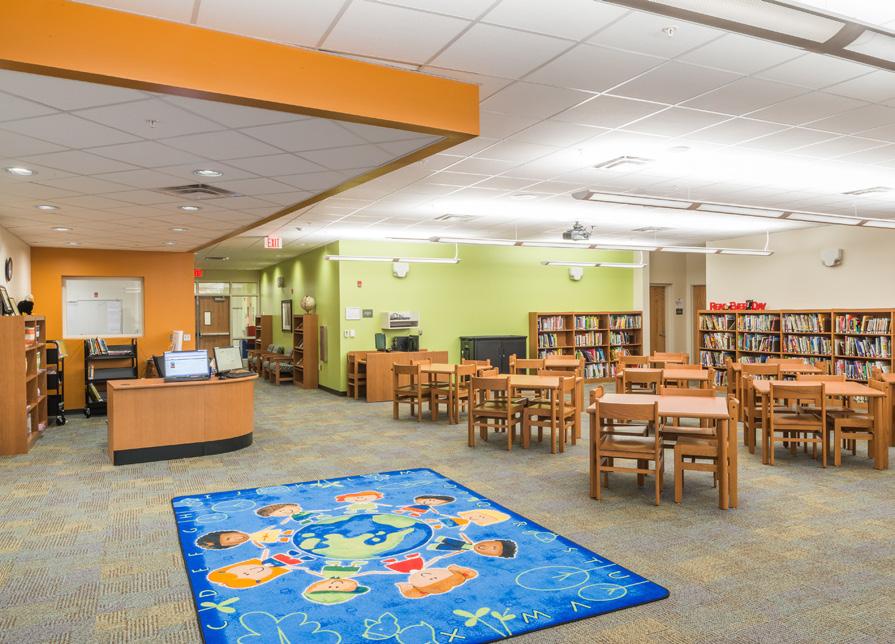
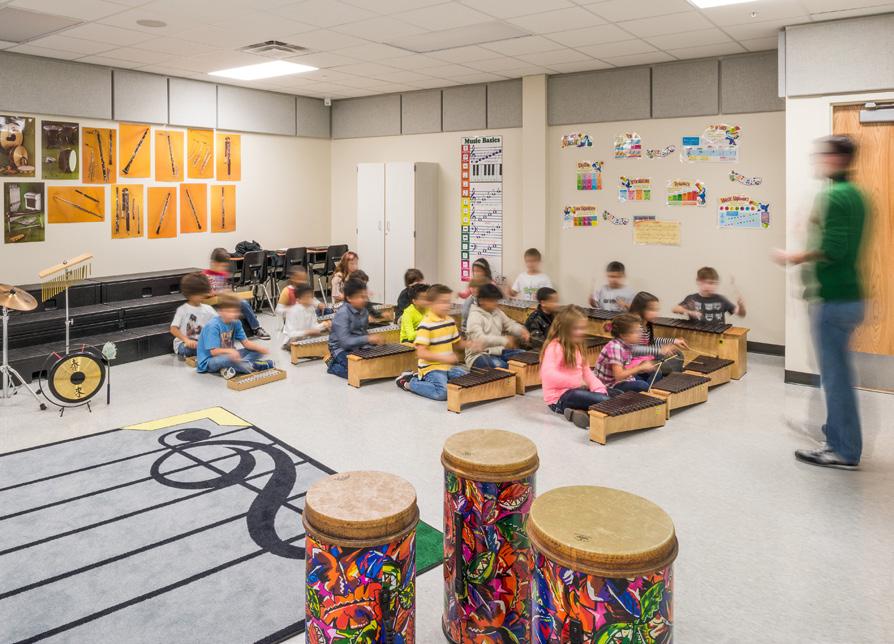
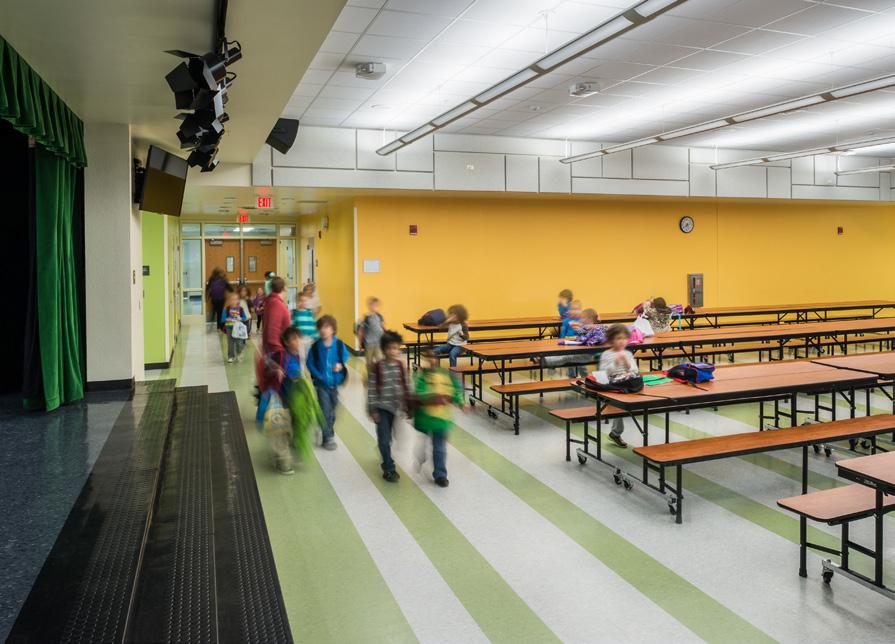
Years of Experience in Master Planning, Architecture & Interior Design
400+ Professionals
25+ LEED® Accredited Professionals
200+ Sustainable & LEED® Projects
500+
Schools including the “Safest in the World” DODEA 21st Century Schools
45+
FEFPA Award Wins from 1999-2025
DESIGNING FOR FLORIDA’S FUTURE
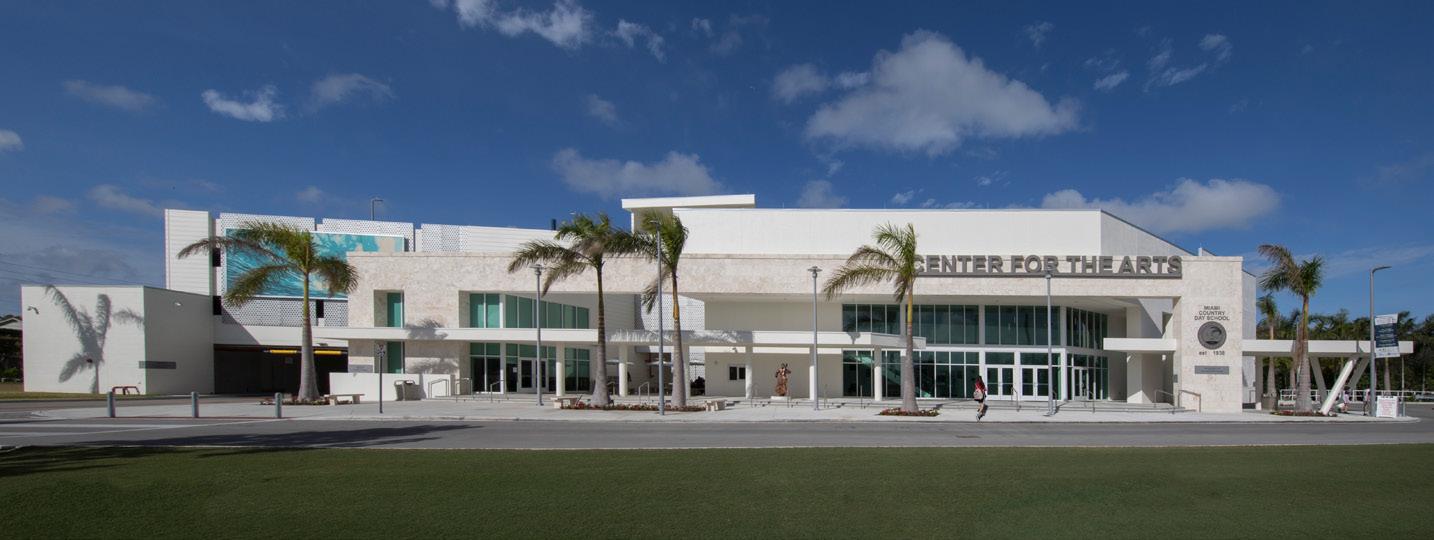
Zyscovich has spent more than 40 years shaping Florida’s educational landscape—creating facilities that support academic achievement, community engagement, and enduring design. Our Educational Studio’s experience spans billions of square feet of constructed space, from campus master plans to prototype development and signature learning environments.
Our longstanding involvement in the Florida Educational Facilities Planners’ Association (FEFPA) showcase has resulted in more than two decades of recognized excellence. Each of the projects featured earned FEFPA awards, judged by architects and facilities professionals who understand the needs of today’s schools.
In 2022, Zyscovich became a part of Stratus Team, LLC, marking the beginning of a transformative chapter. During this time C.T. Hsu and Synalovski Romanik Saye also united under the Zyscovich brand, bringing with them a wealth of
Services
Architectural Design
Facility Planning
Strategic Site Planning
Sustainable Design
Historic Preservation
Program Management
Land Planning
expertise and an expanded portfolio.
Now as we sunset the Zyscovich brand, we proudly move forward as Stratus Team.This evolution marks more than a name change—it reflects our continued growth, expanded capabilities, and unwavering commitment to excellence. Our core team remains intact, now bolstered by enhanced services, integrated engineering expertise, and a broader group of dedicated professionals. Together, we carry forward a legacy of innovation, delivering forward-thinking design and engineering solutions that shape the future of educational environments.
As one, we remain committed to one clear goal: Improving student outcomes through design.
Facility Master Planning
Zoning and Land Use
Development Regulations
Innovation in Master Planning
Design
Interior Design
Programming
Strategic Facilities Planning
Work Flow Analysis
Space Planning
Branding and Wayfinding
Lighting Design
FF & E Specification
Decades of Impact. A Future of Possibility.
For a quarter century, it has been our honor to collaborate with Florida’s education leaders to design learning environments that inspire. These award-winning projects have not only shaped campuses but also advanced how students engage with their education—better spaces, better outcomes.
Zyscovich is now becoming Stratus Team, LLC. While the name is new, our people, values, and commitment to excellence remain unchanged. What’s new is that we are now part of a broader team—a multidisciplinary collective of architects, engineers, and consultants—that strengthens our ability to deliver even more for Florida’s schools.
You’ll see the same familiar faces, the same thoughtful designs. But now, they’re backed by a deeper bench of talent and expanded services. As we look to the future, we do so with optimism and a renewed ability to serve you—still focused on design that improves student outcomes and elevates communities.
Same people. Same relationships. Same talent. Same innovation. Now with even more to offer.
As the Stratus Team, Zyscovich brings together multidisciplinary expertise in architecture, engineering, planning, and consulting to deliver transformative educational facilities. From early learning centers to major university campuses, we combine our signature design approach with Stratus’ fullservice project delivery to meet evolving educational needs.
Extended Capabilities with the Stratus Team
Architecture
Civil Engineering
Commissioning
Electrical Engineering
Environmental
Fire Protection
Interiors
Mechanical Engineering
M/E/P
Process Engineering
Structural Engineering
Surveying
Urban Planning
400+ Experienced Professionals
44 STATES Professional Registrations
2025 FEFPA
Improving student outcomes through design
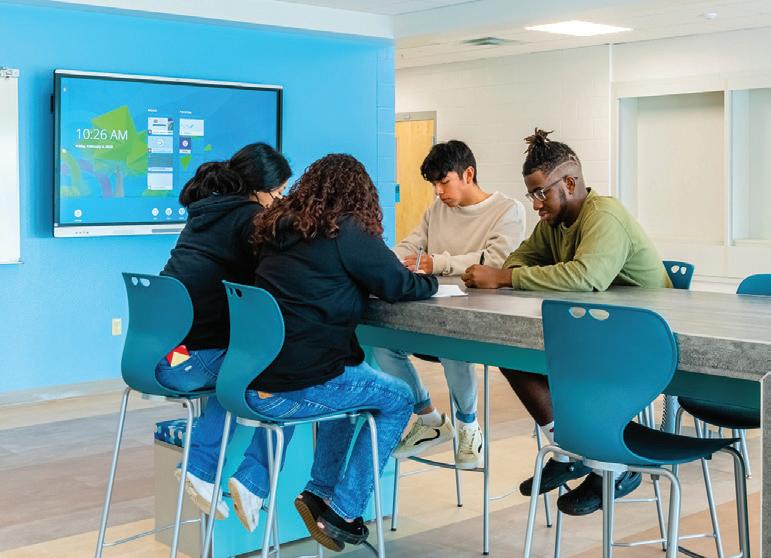
INNOVATION HIGH SCHOOL
A SEED OF INNOVATION: CULTIVATING A COMMUNITY OF LEARNERS
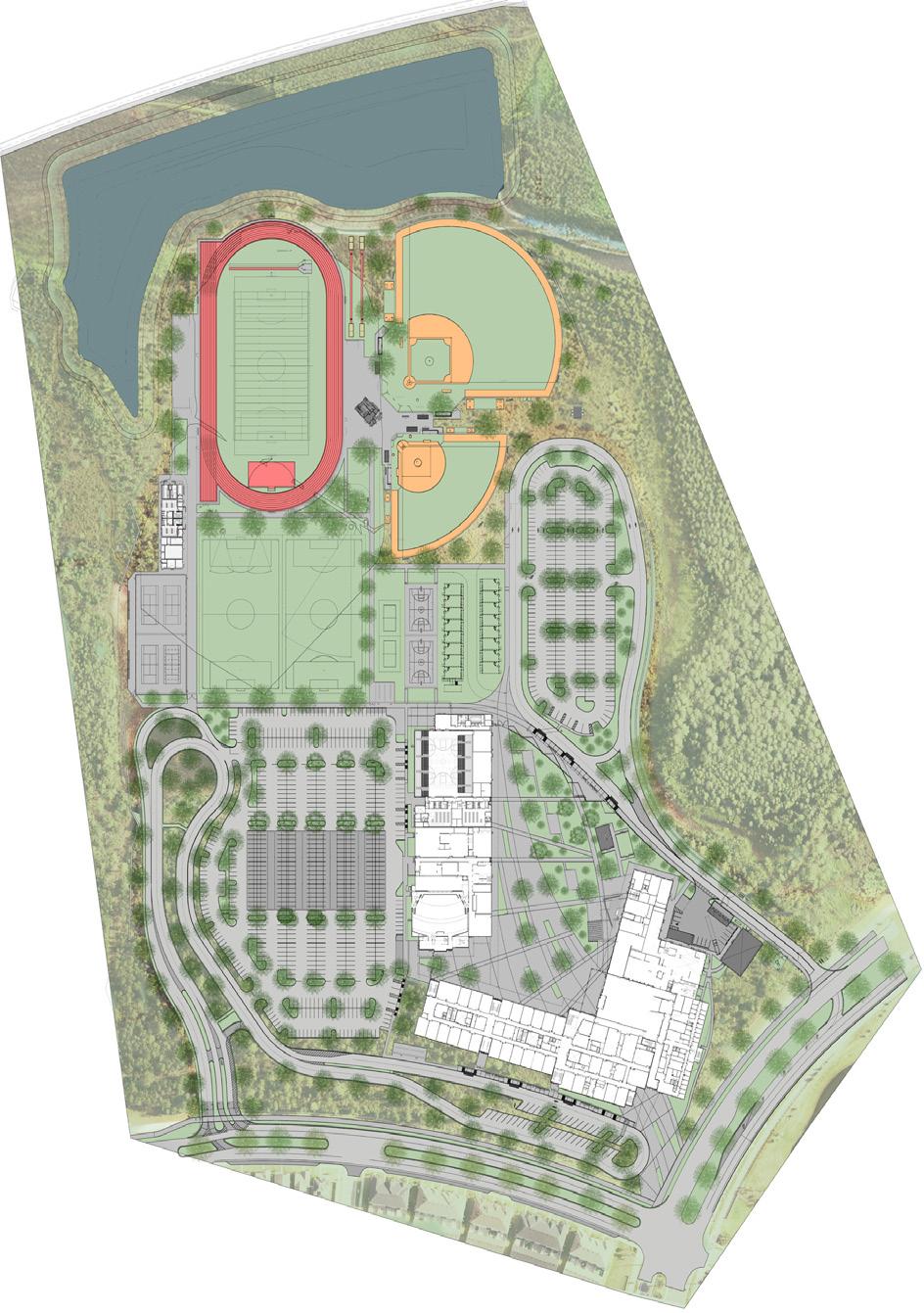
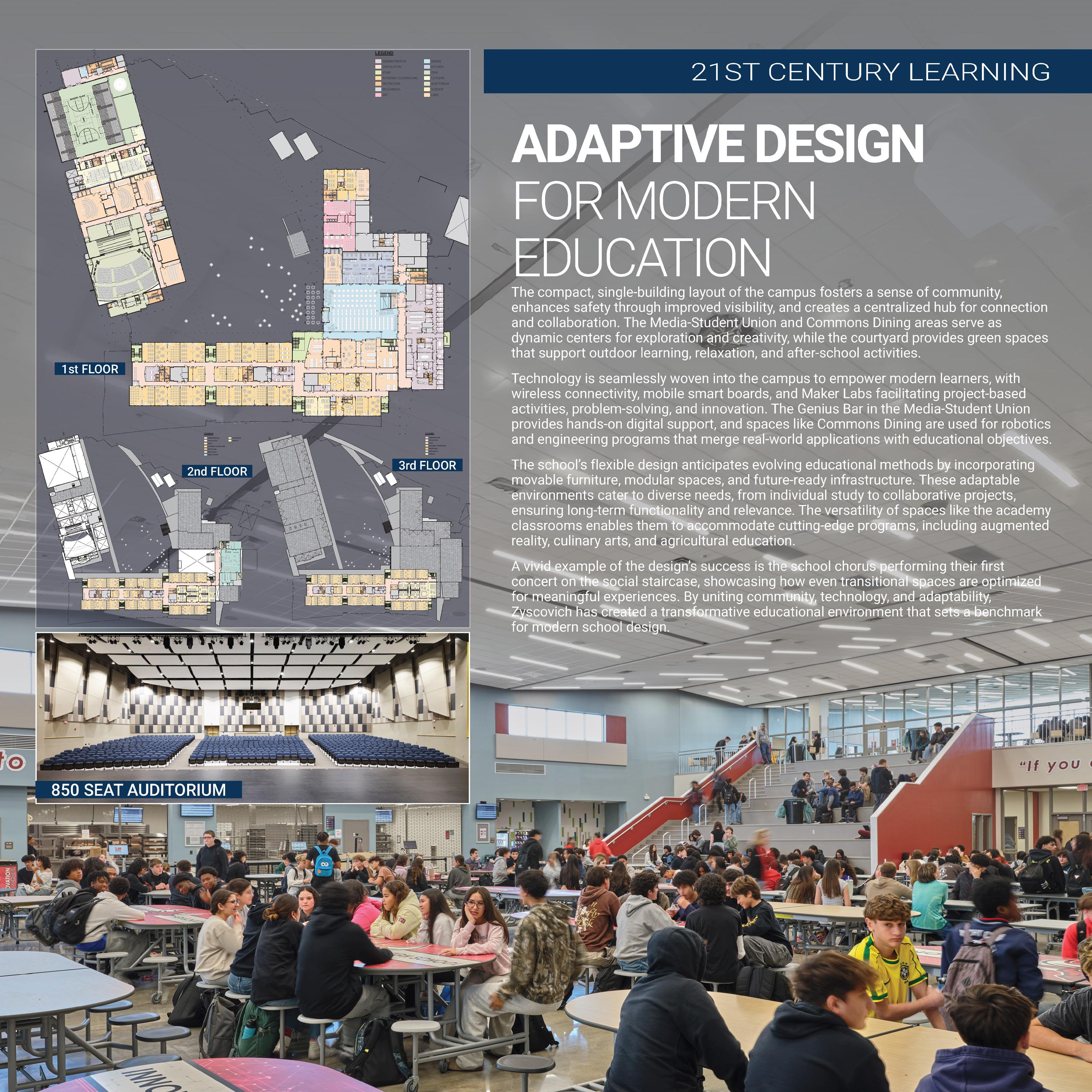
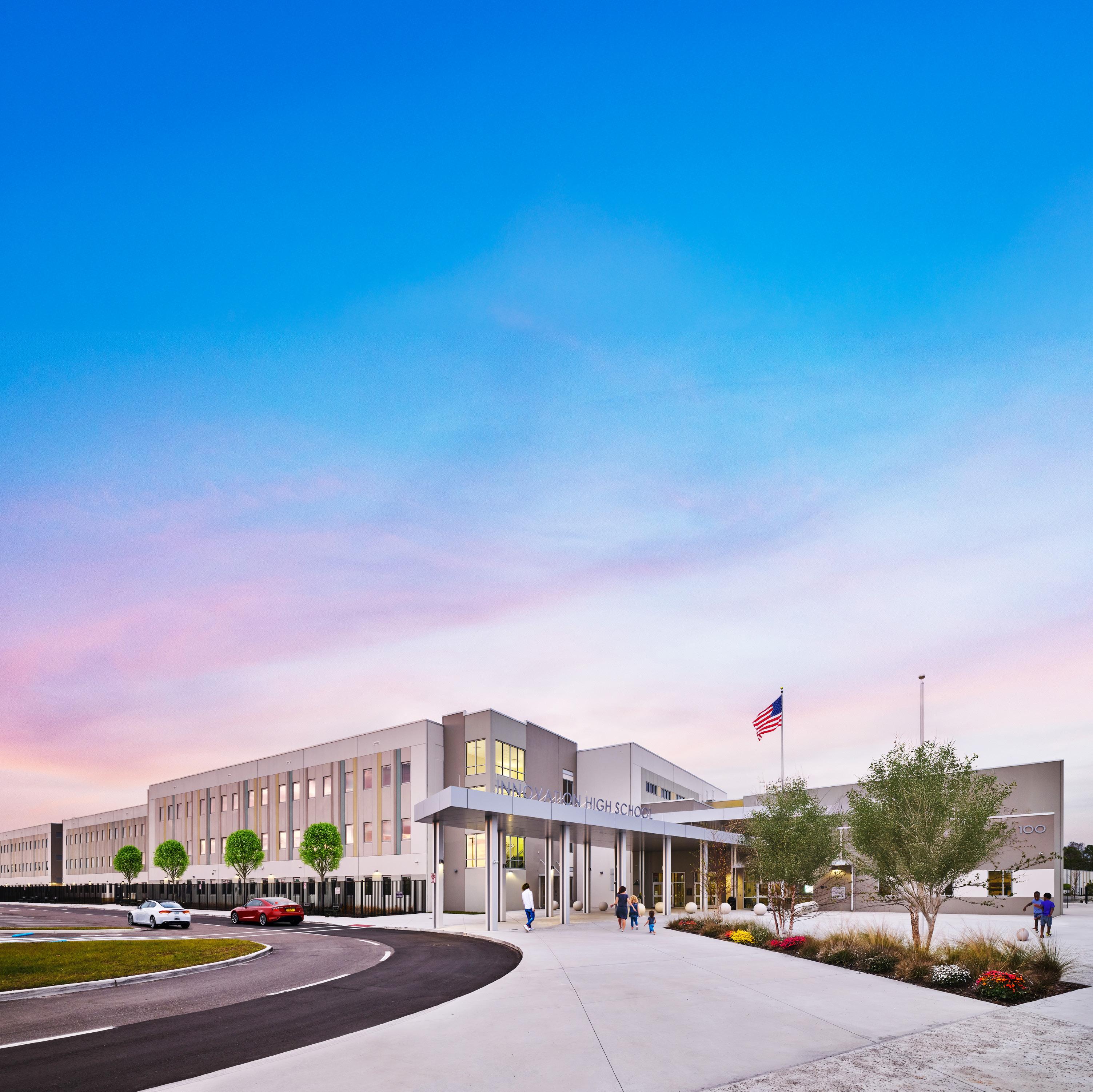
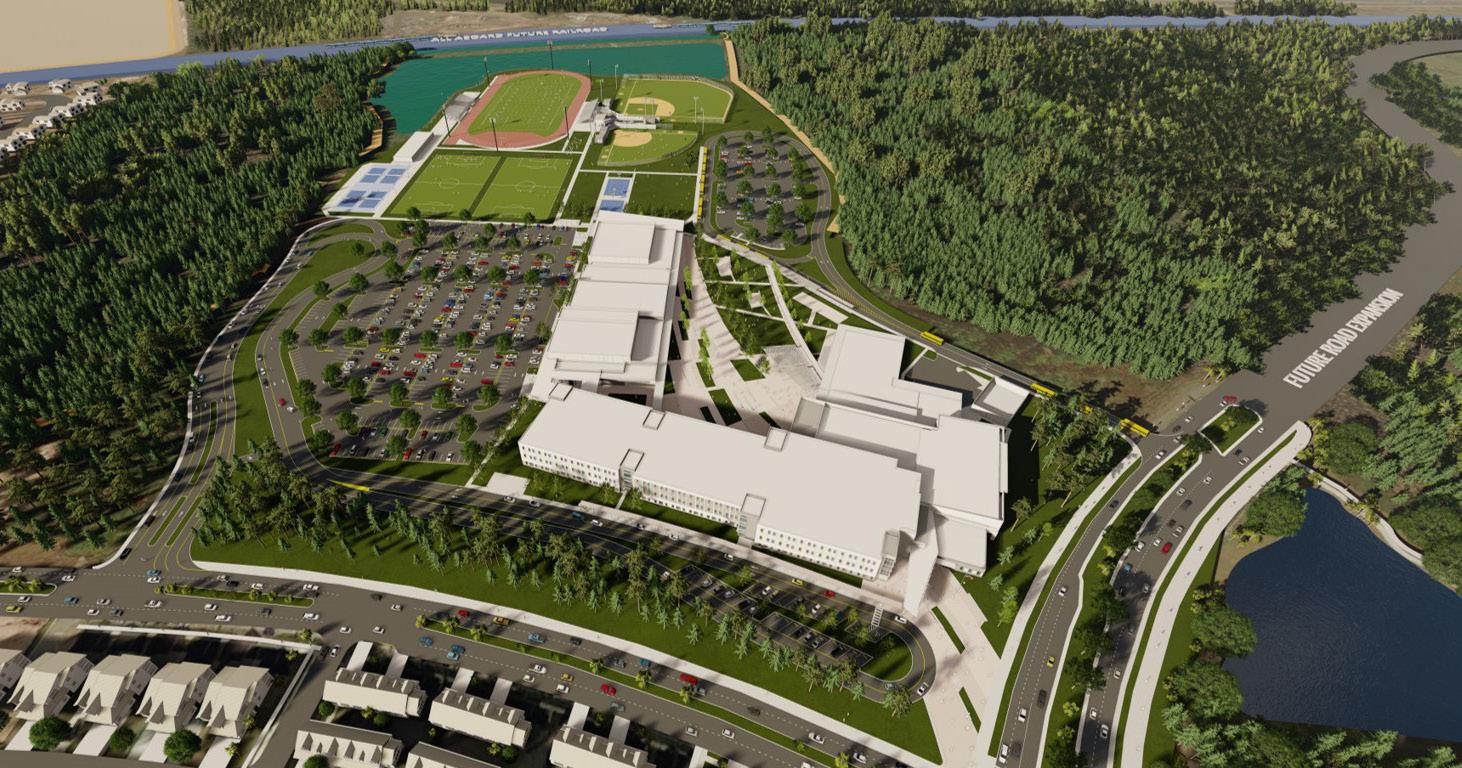
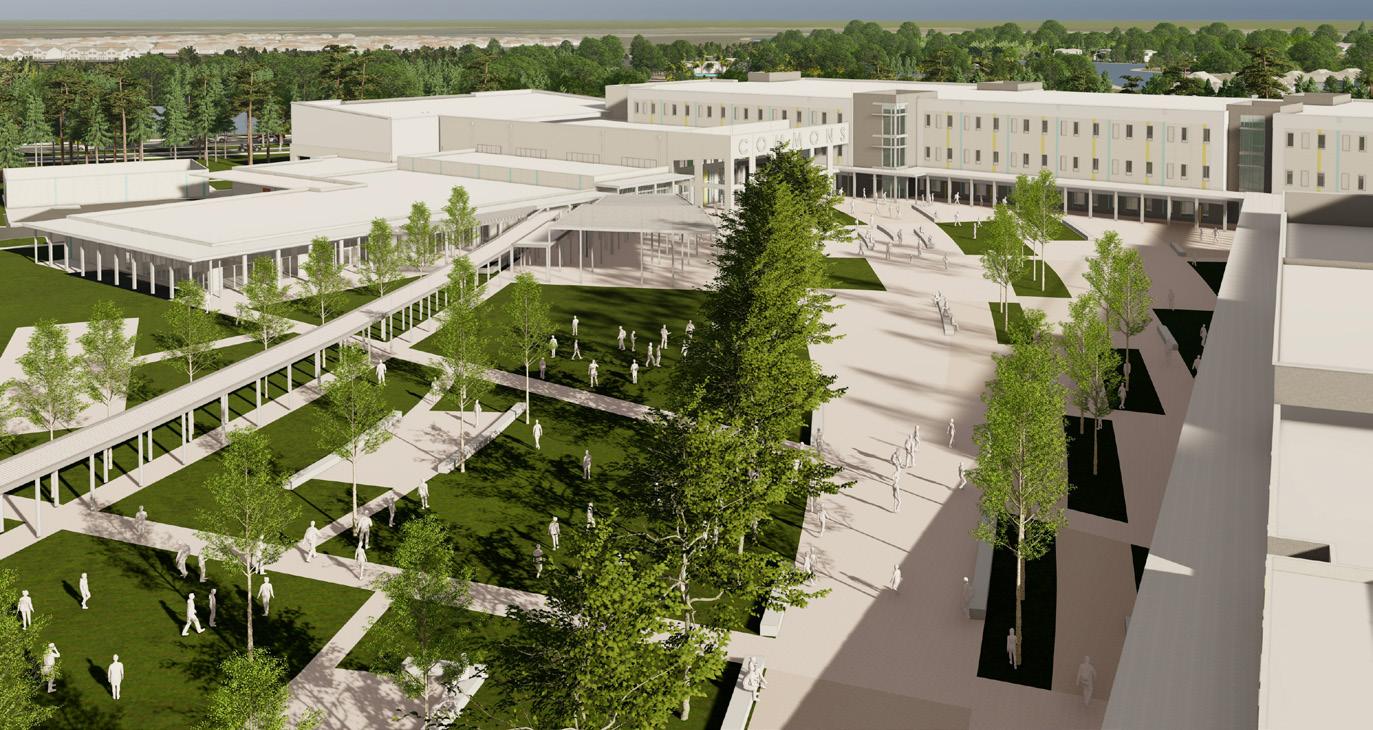
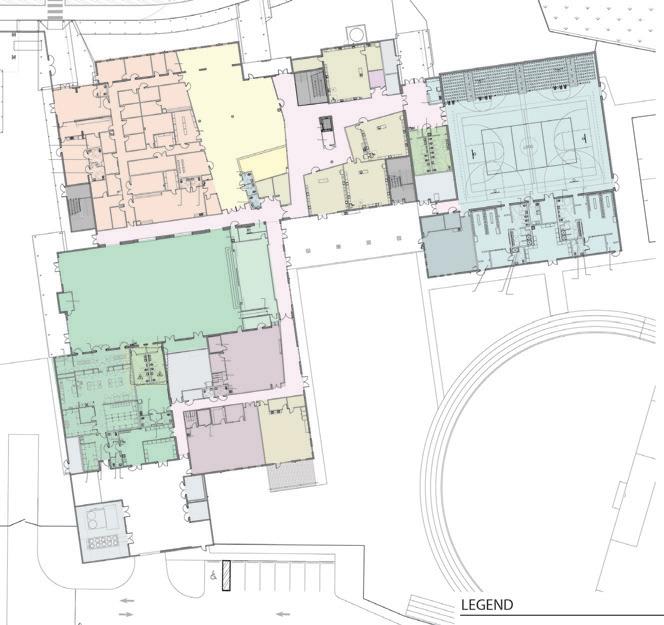
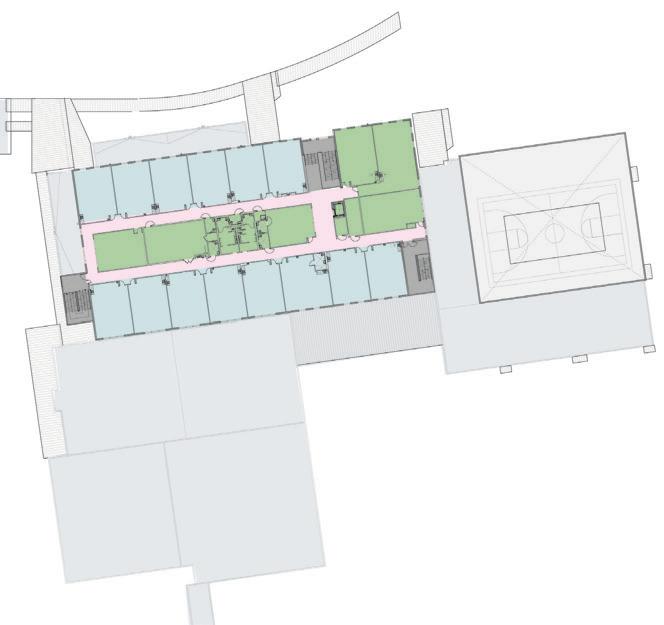
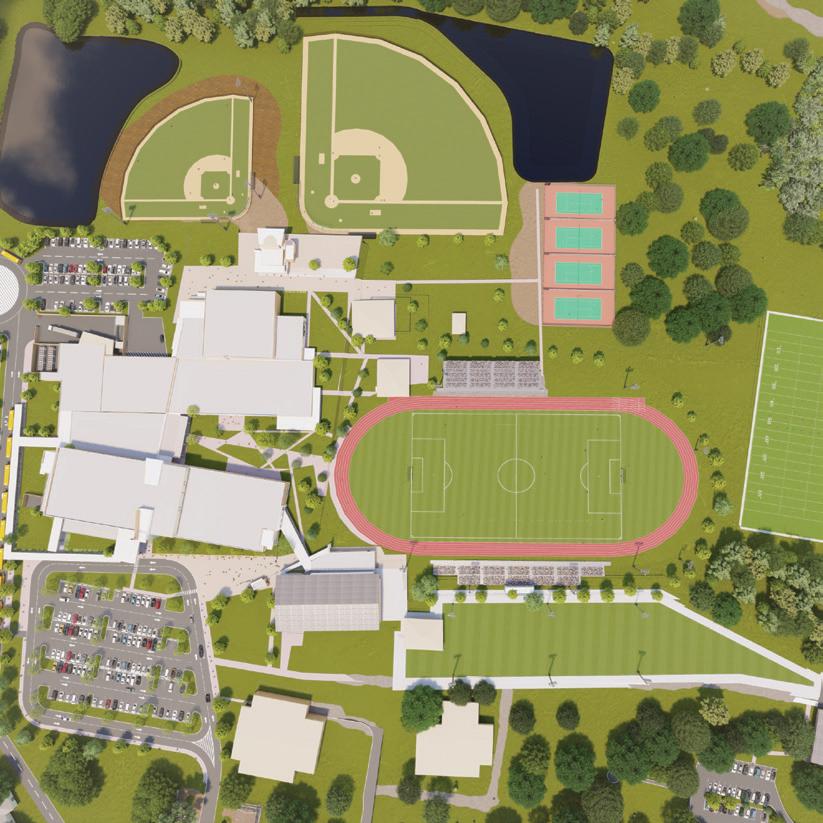
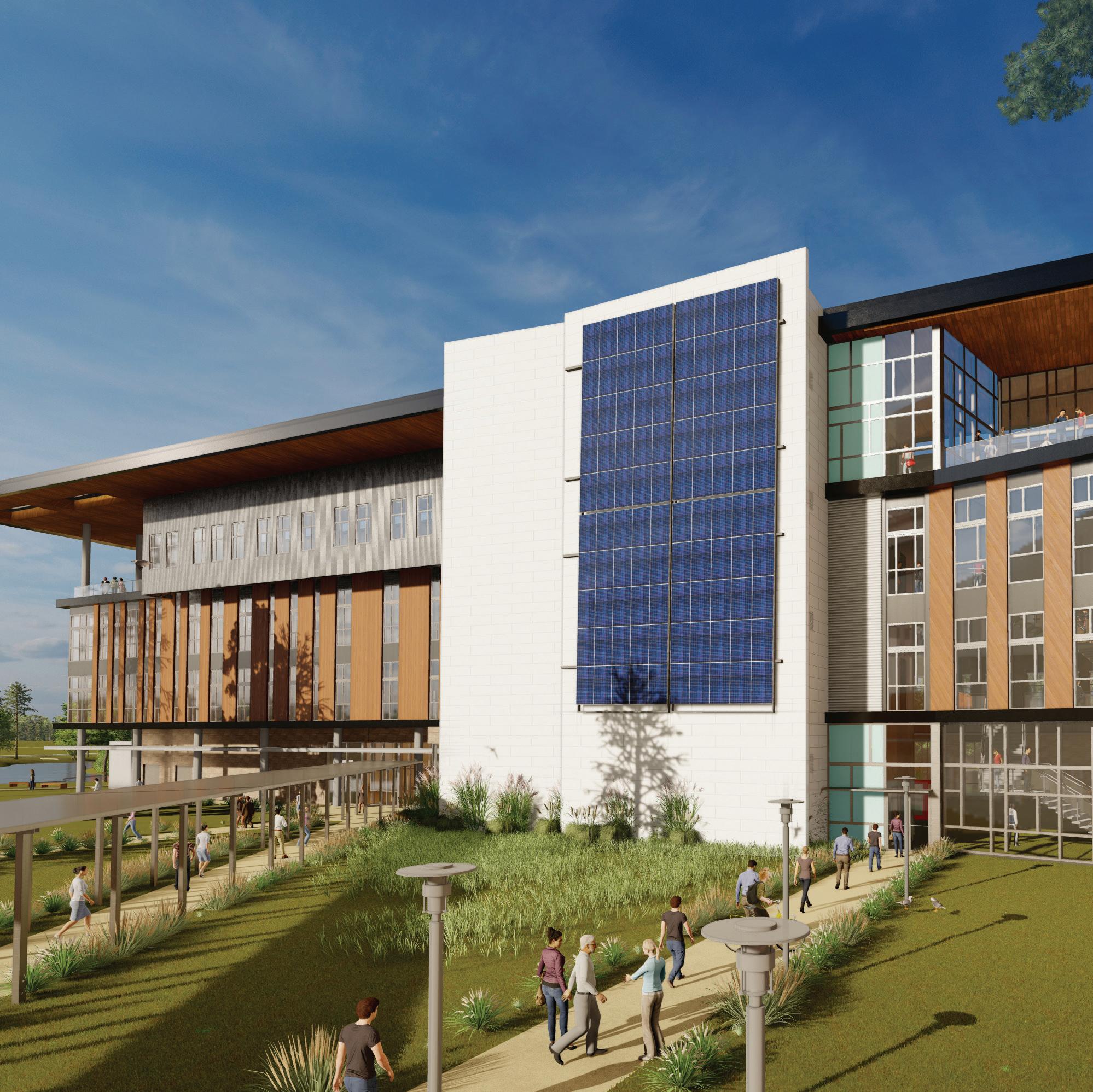
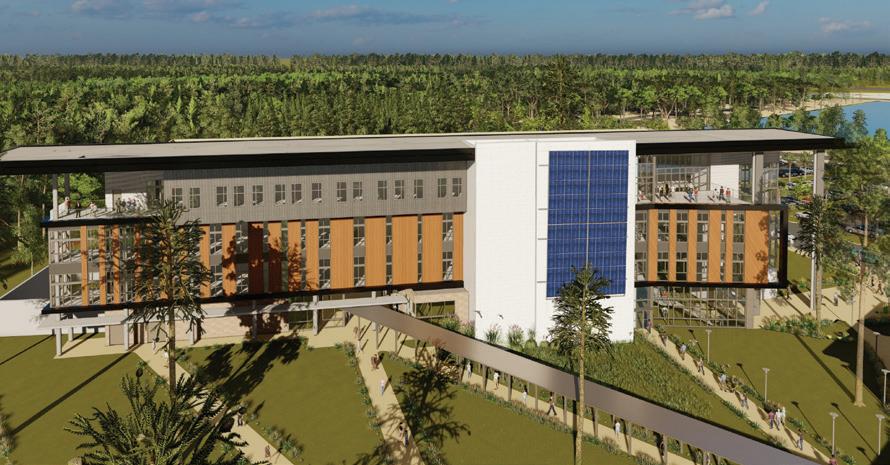
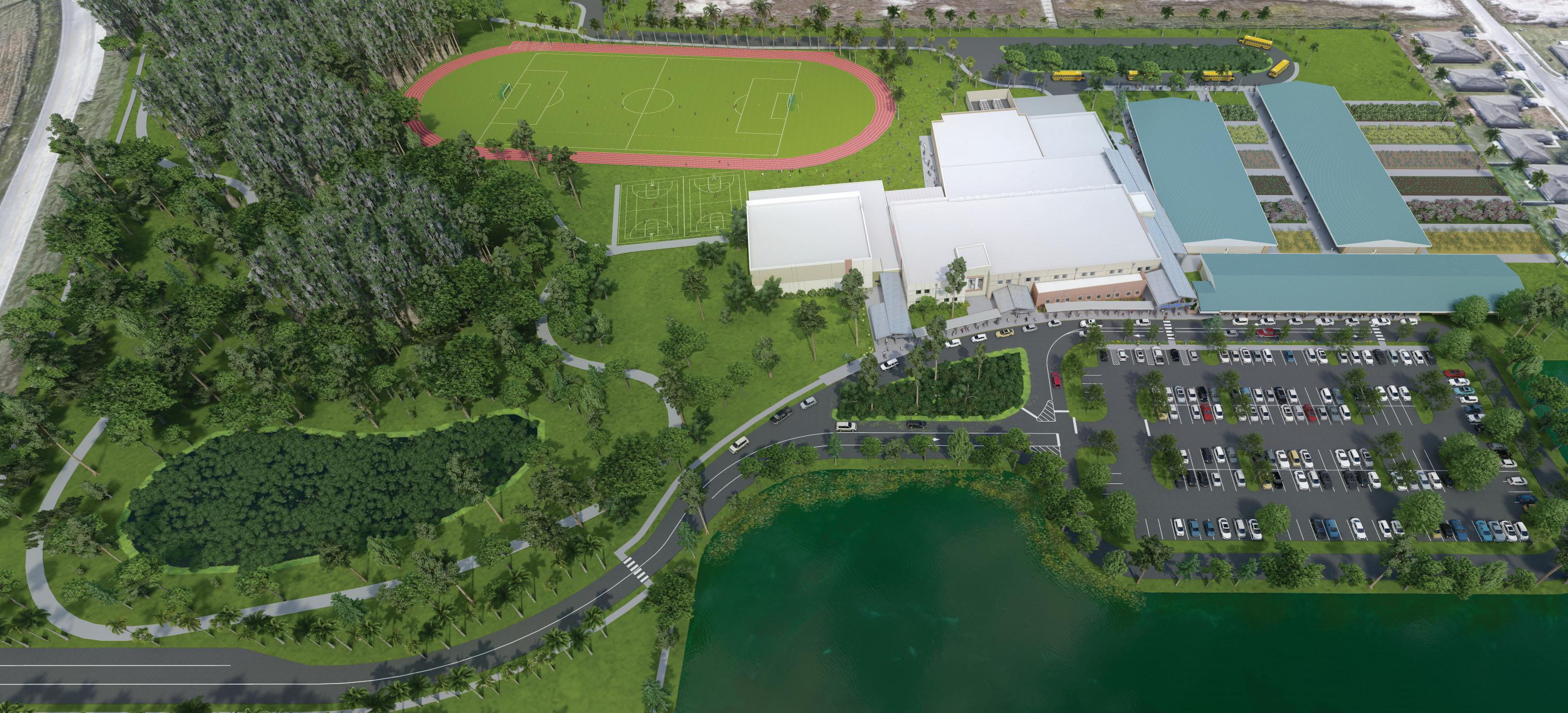
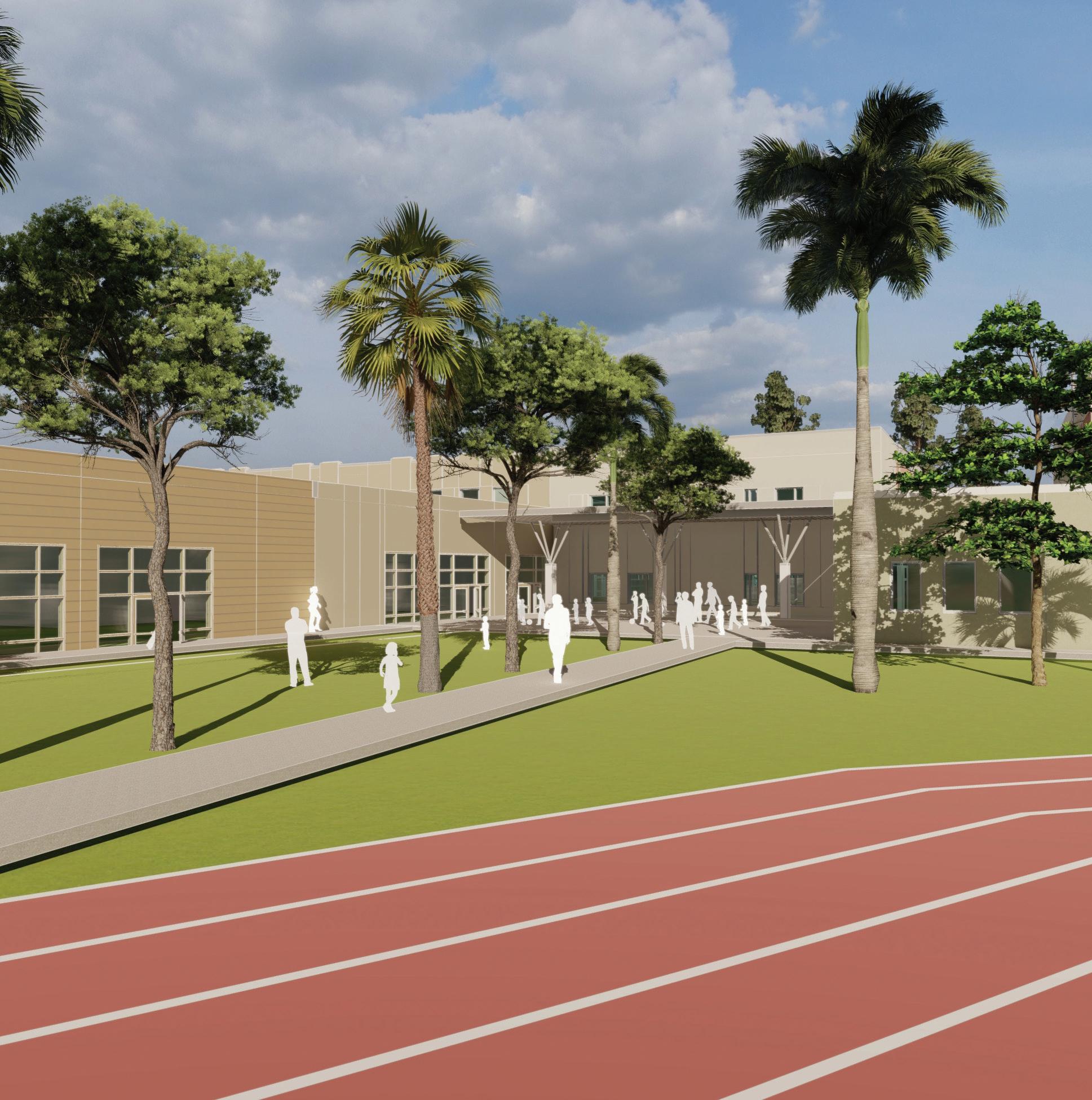
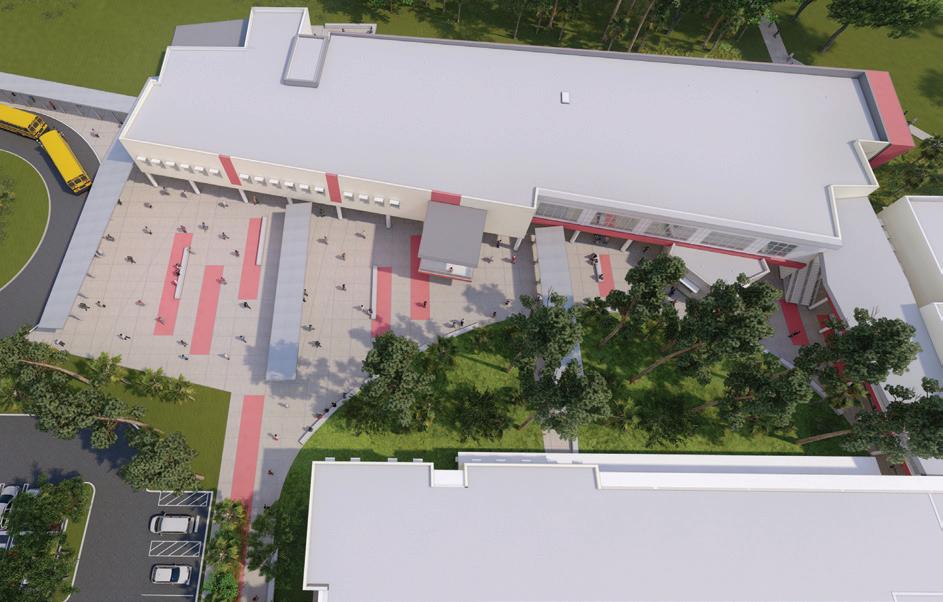
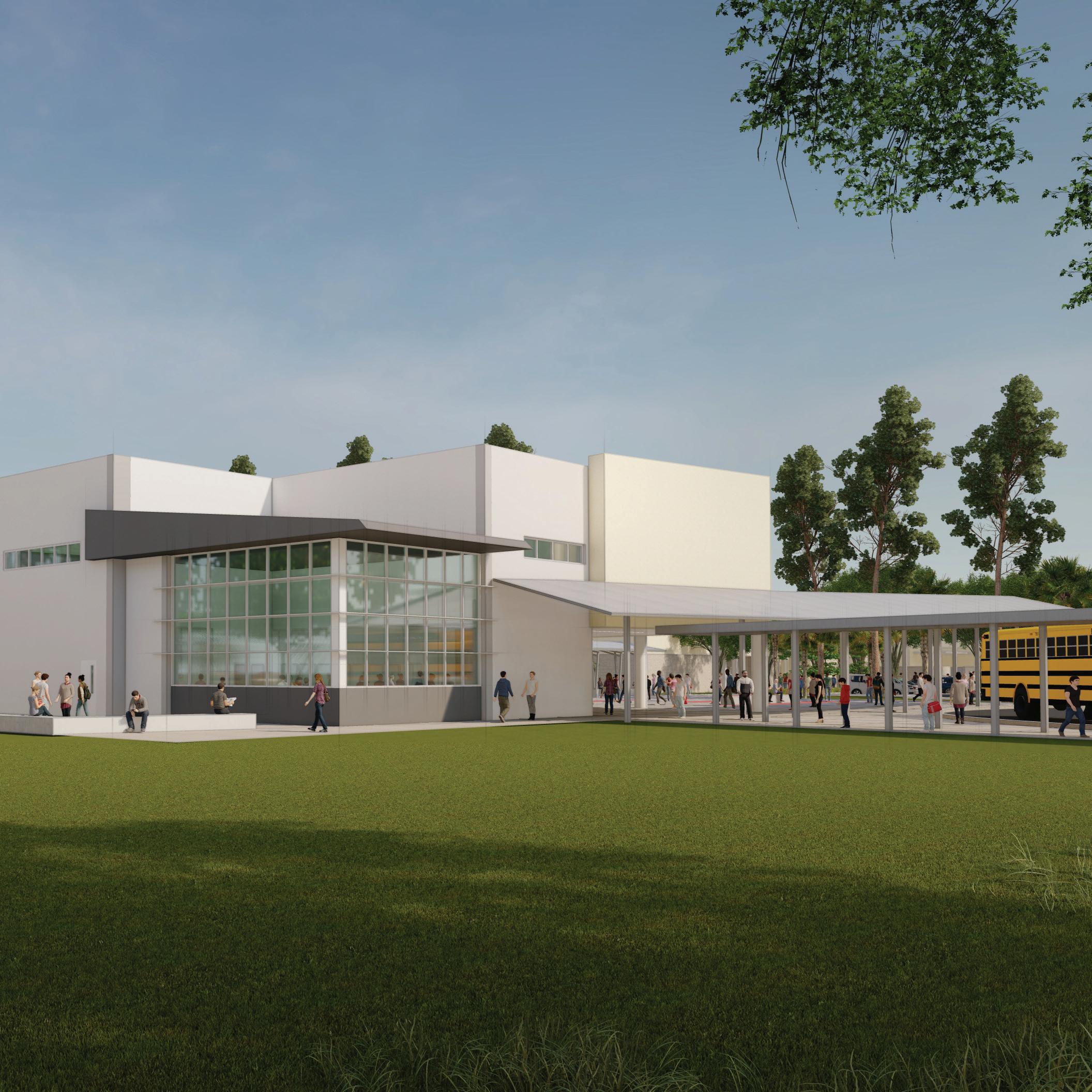
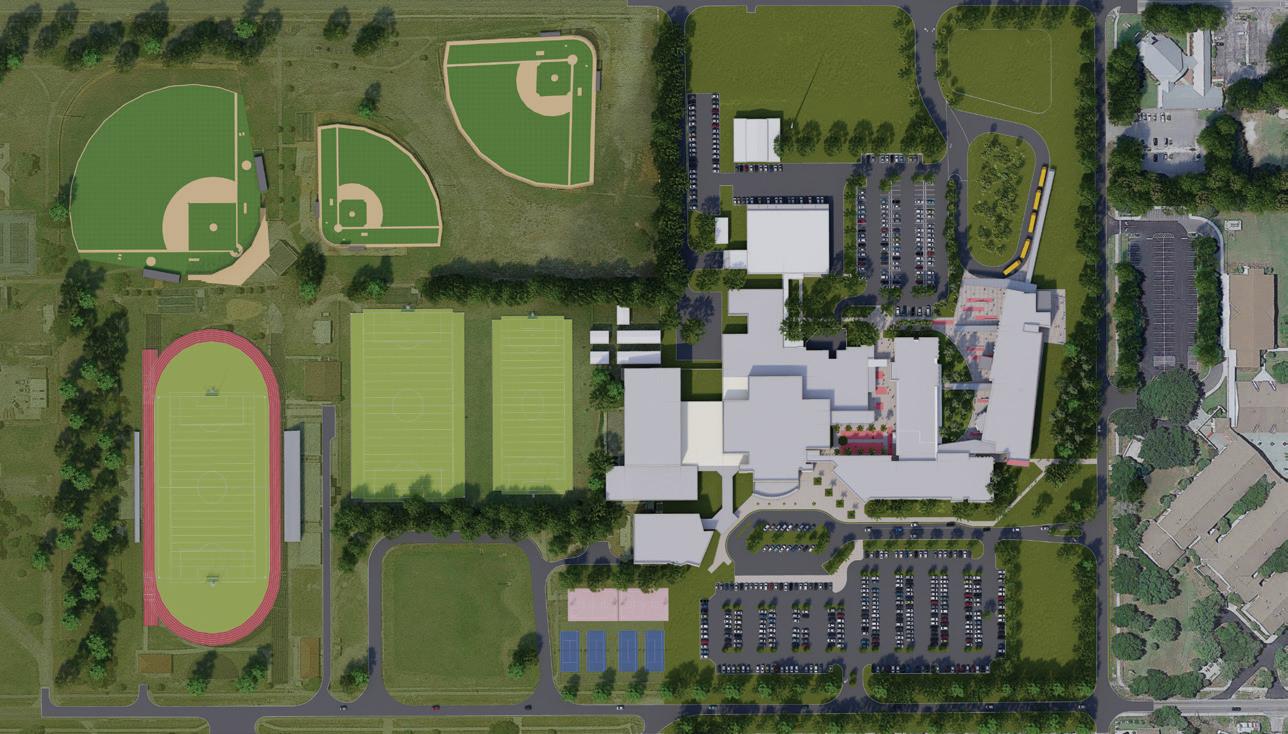
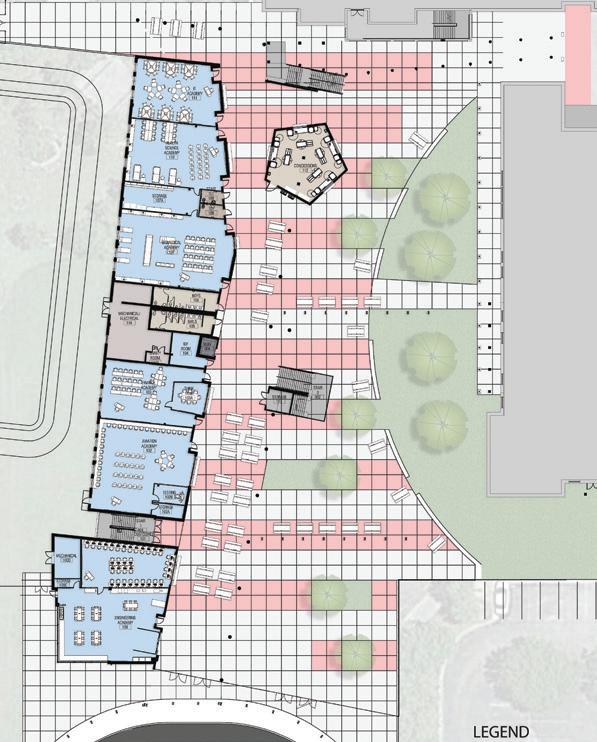
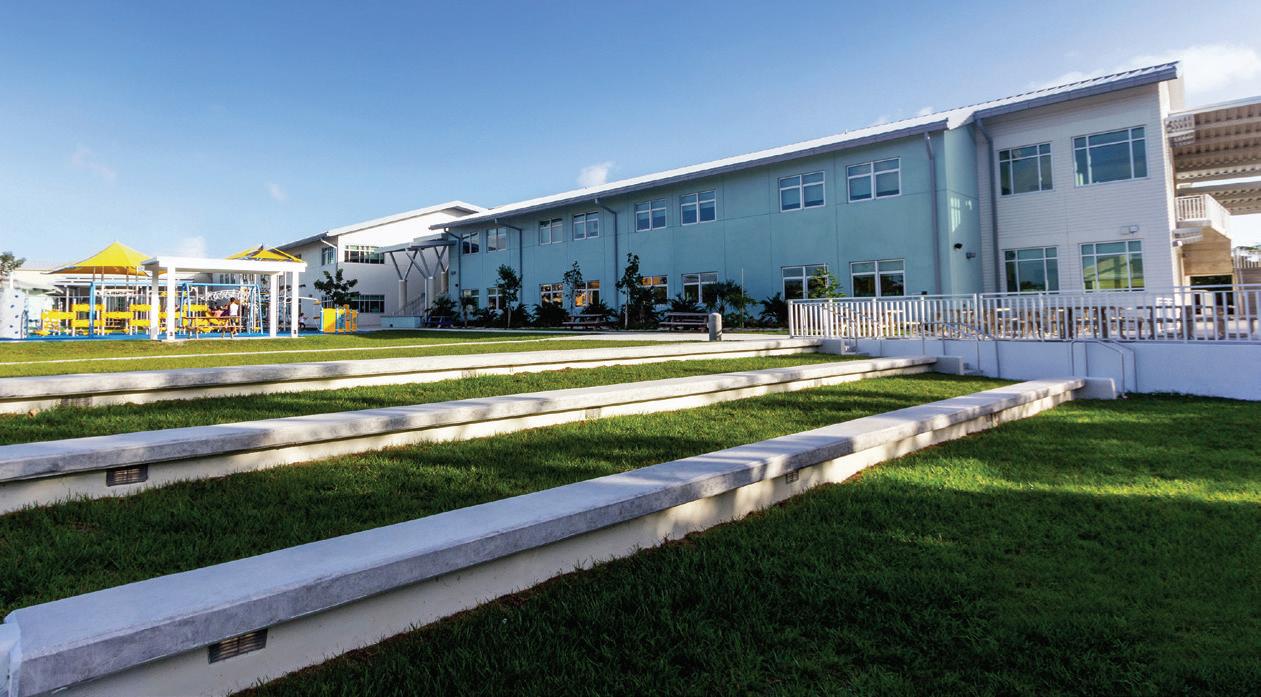
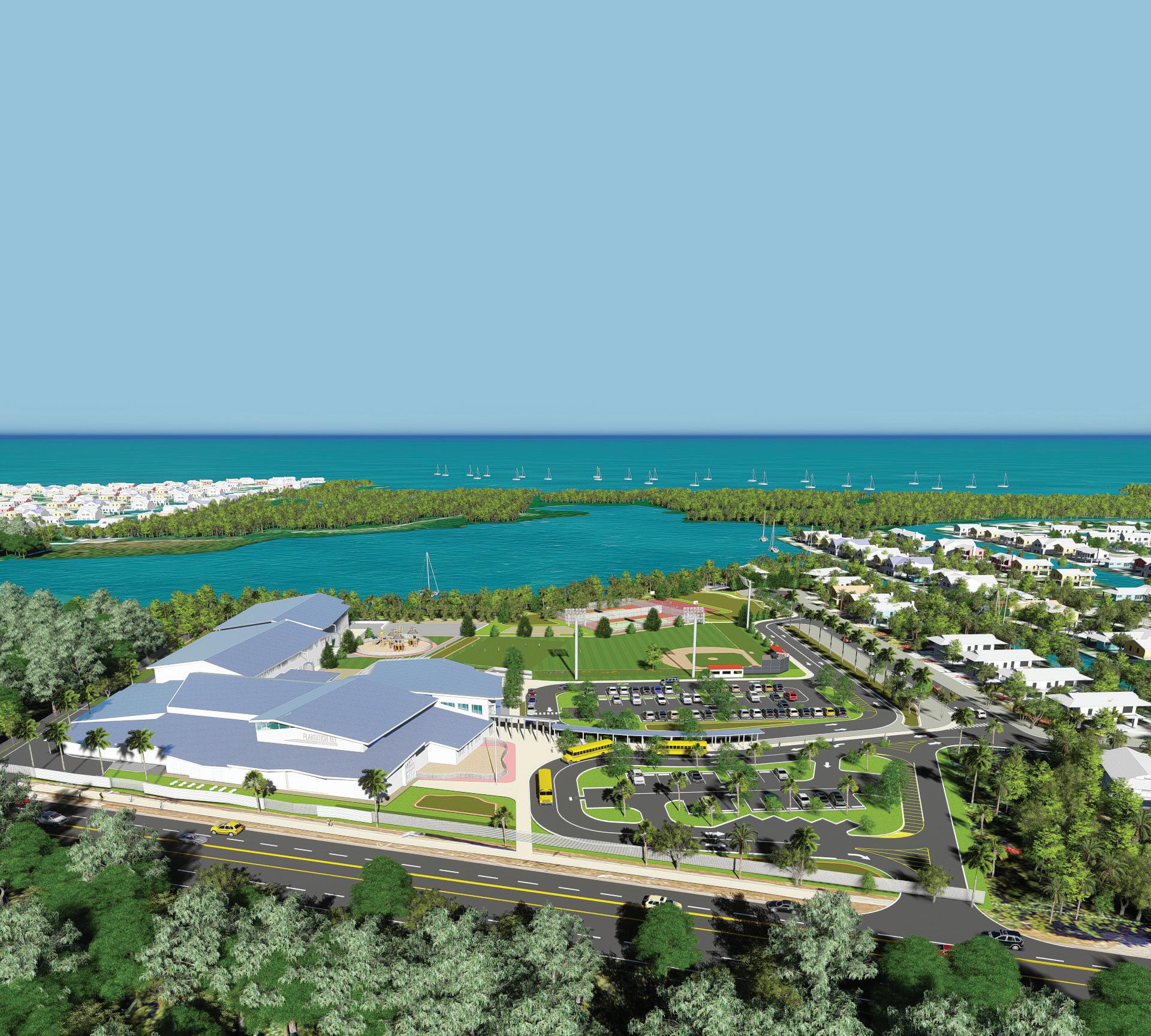
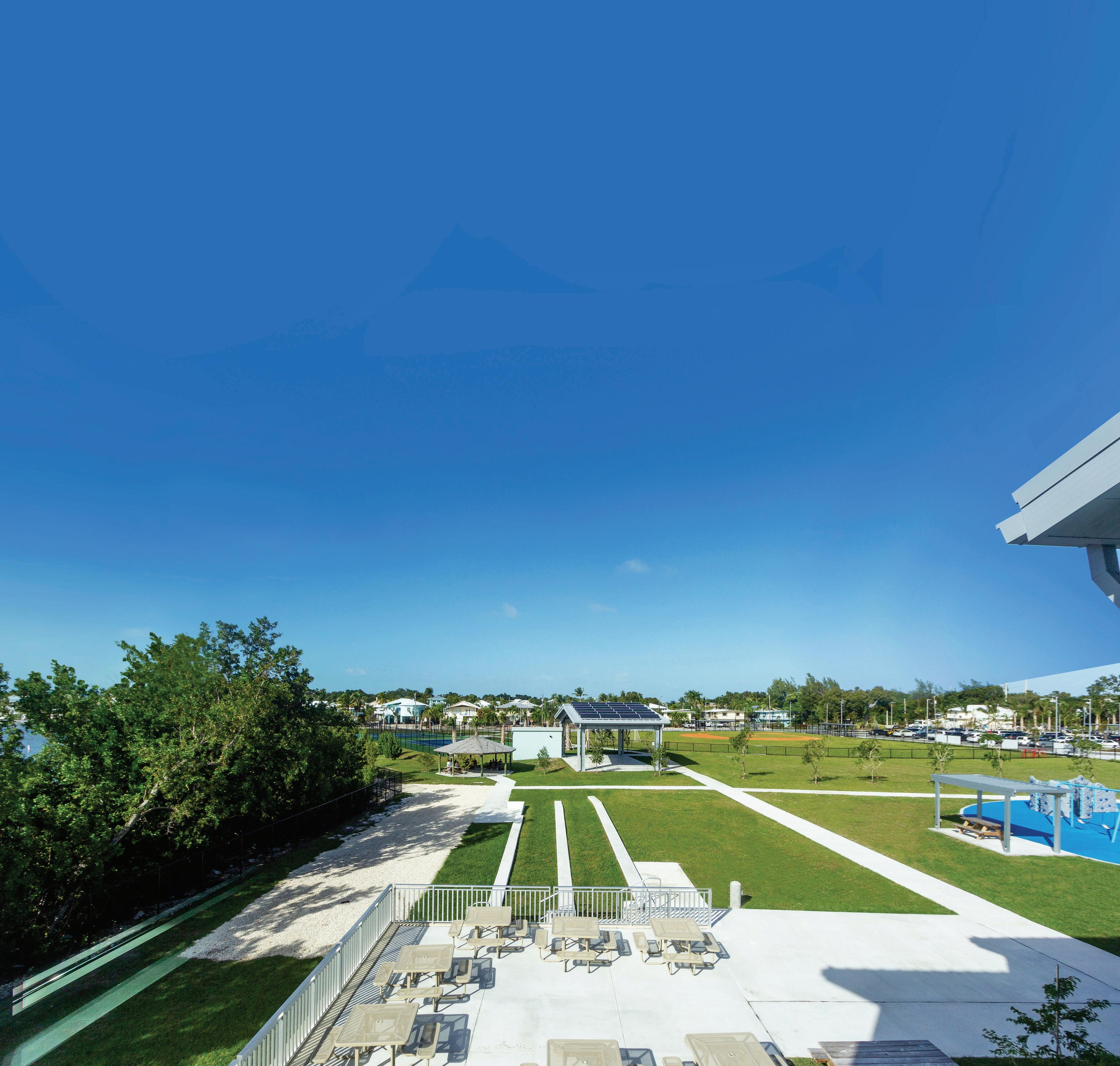
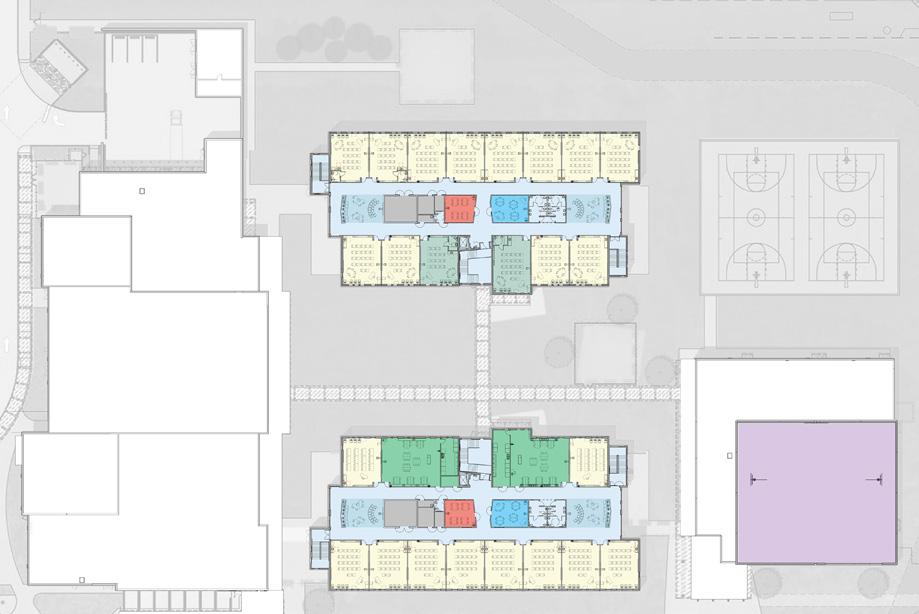
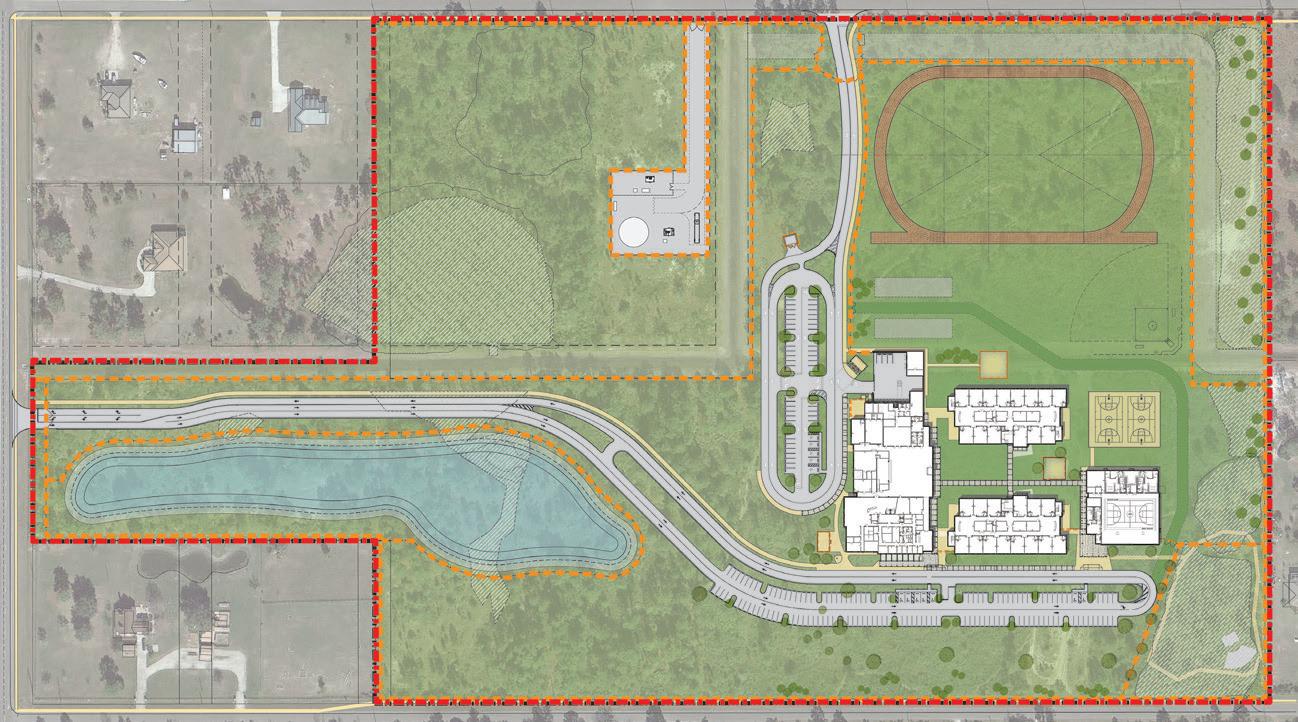
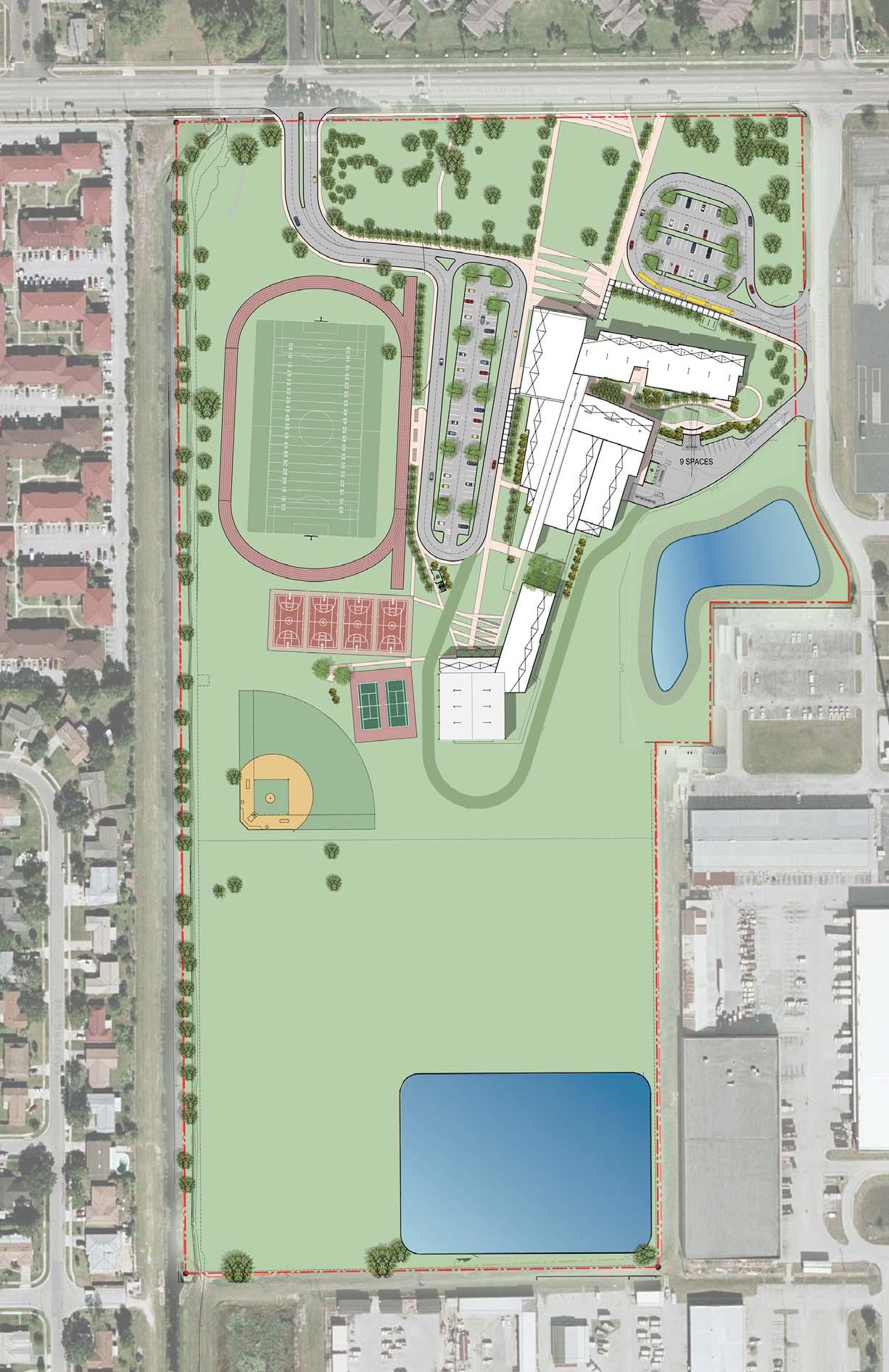
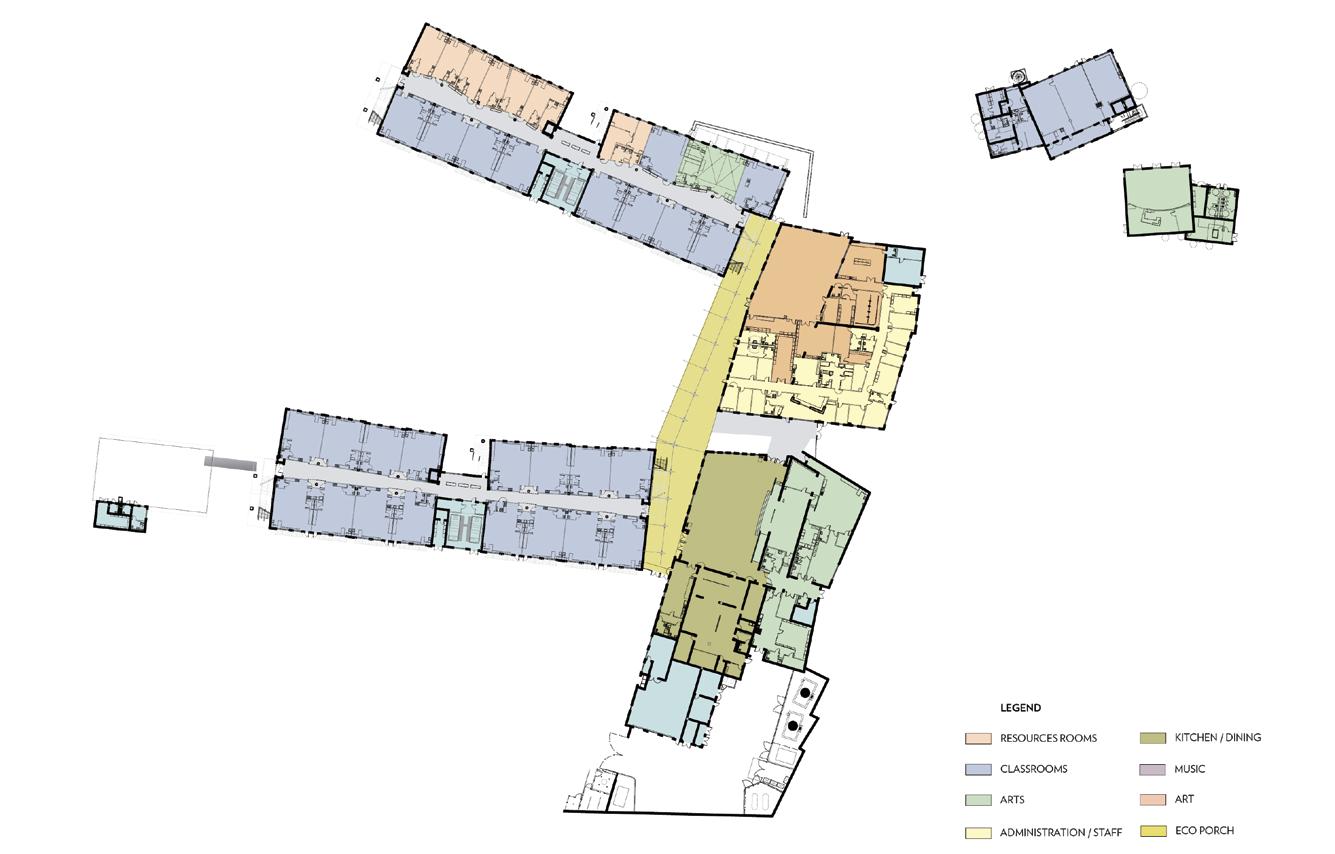
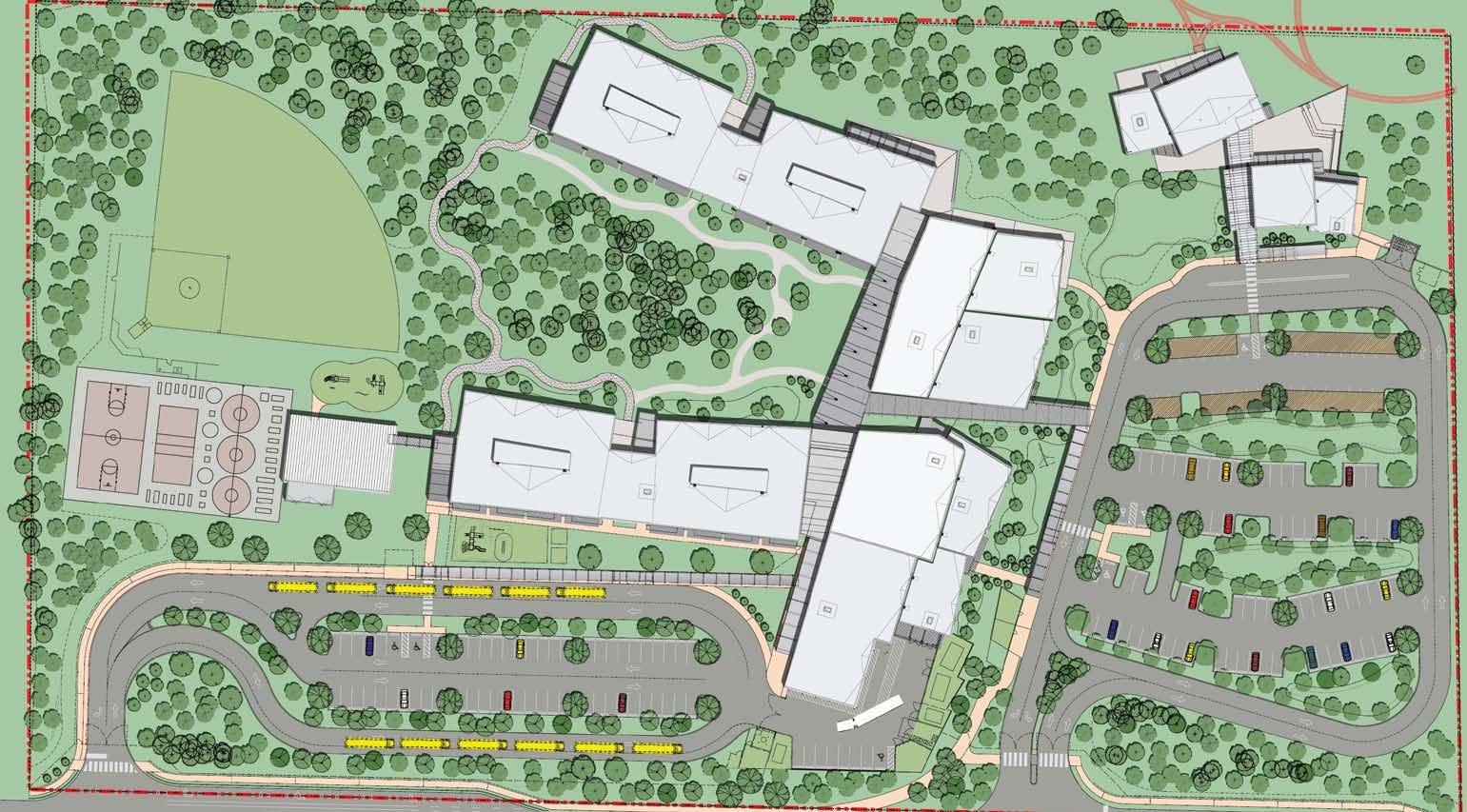
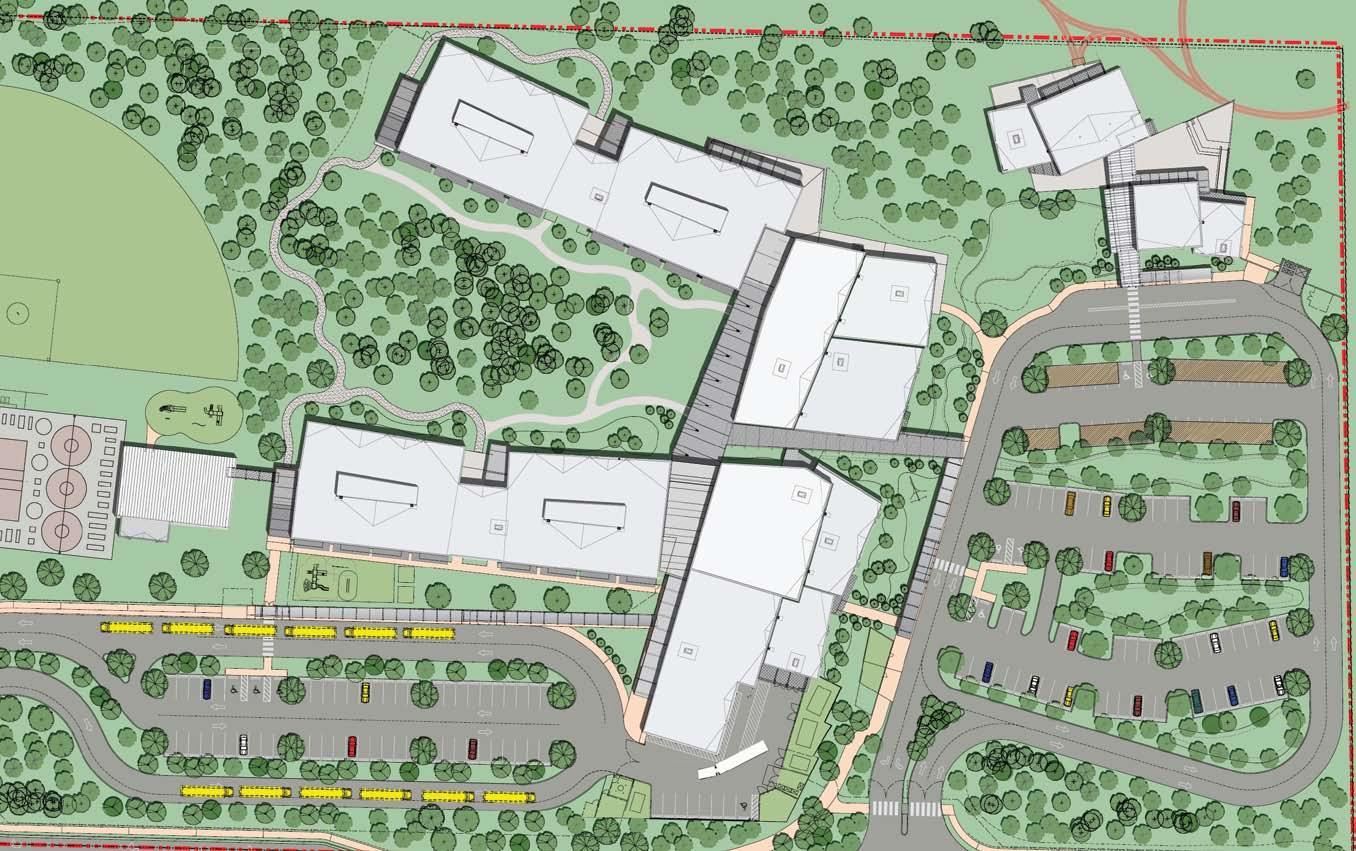
In the heart of Orange County’s growing Meridian Parks, Innovation High School stands as a symbol of thoughtful design, community engagement, and educational excellence. Situated on a 61.5-acre site that respects its natural surroundings, the school blends sustainability with a welcoming, safe environment. At its core lies a vibrant central courtyard and outdoor learning spaces that seamlessly extend classrooms into nature, encouraging collaboration and fostering a strong sense of belonging. Clear zoning and a secure single-point entry ensure that students and community members feel both welcomed and protected. More than just a facility, Innovation High School inspires curiosity and creativity, nurturing the next generation of leaders who will shape the community’s future and beyond.
INNOVATION & COMMUNITY AT THE CORE
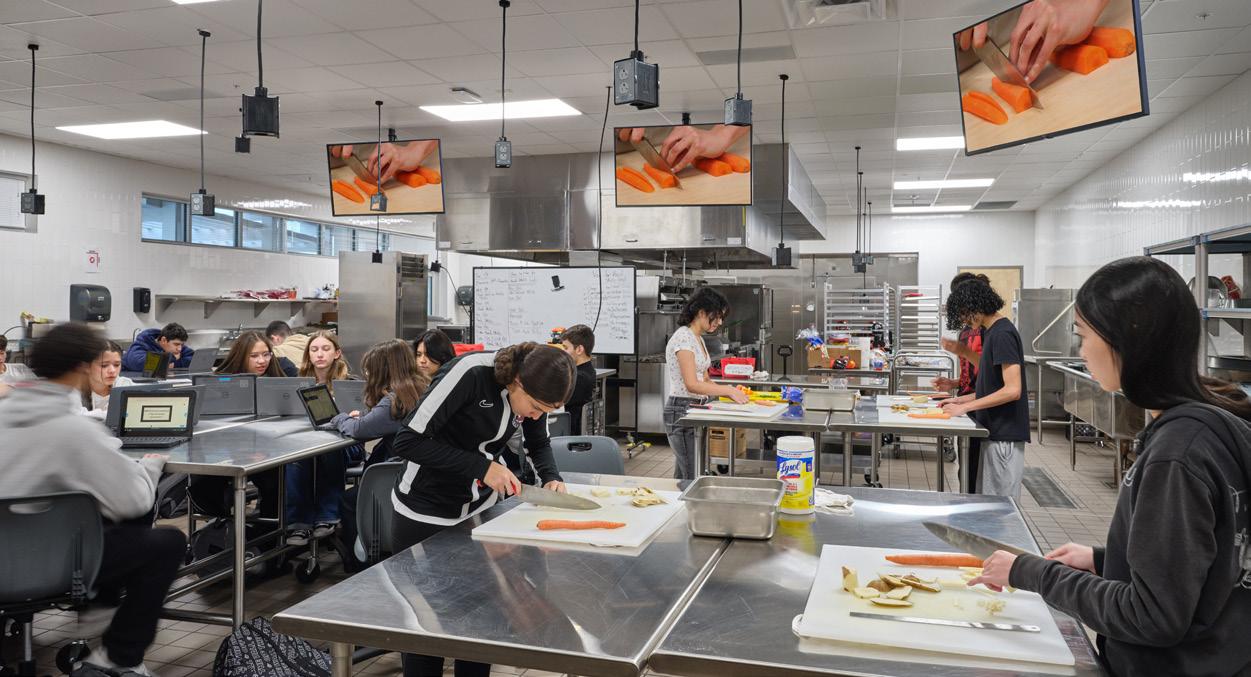
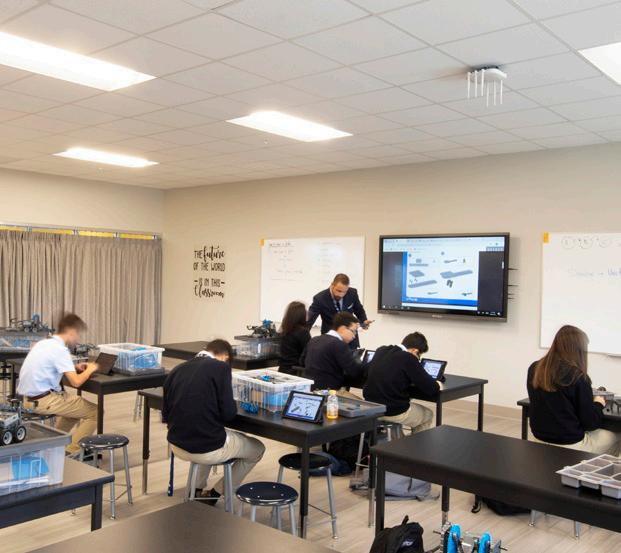
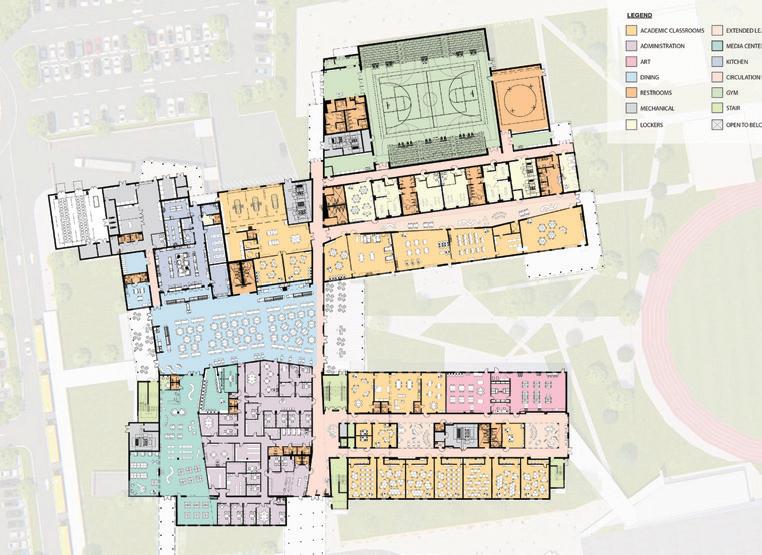
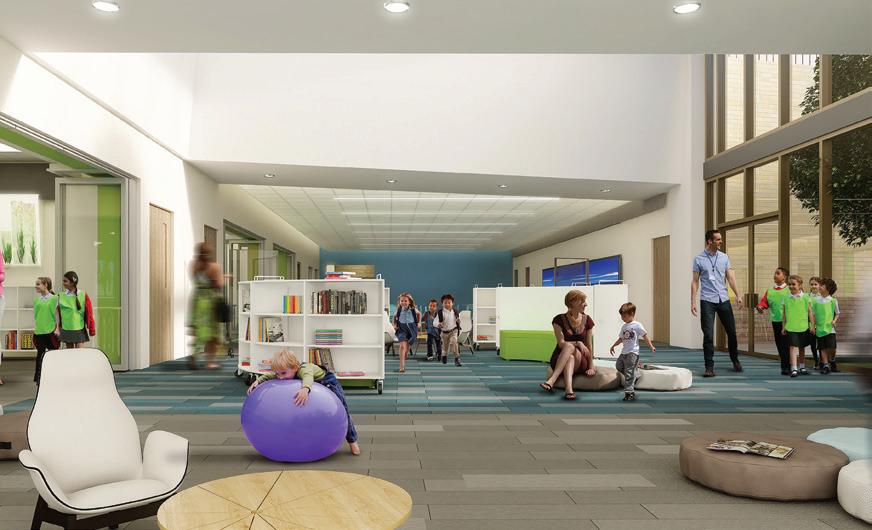
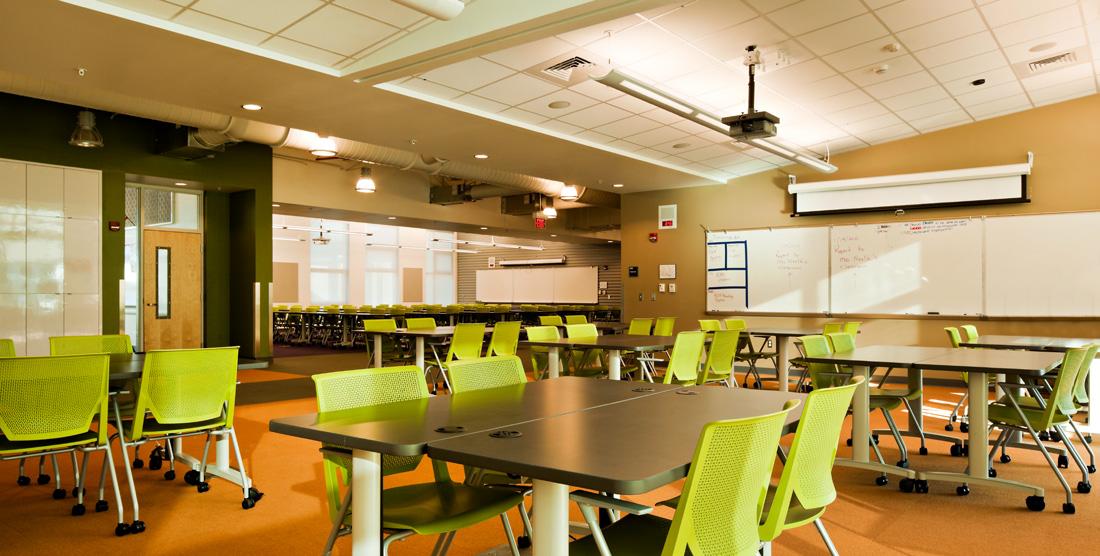
The design of Innovation High School in Orlando, Florida, embodies a forwardthinking approach to education, combining modern infrastructure with strategies that prepare students for 21st-century success. Flexible learning spaces, cuttingedge labs, and specialized career and technical education facilities in fields like robotics, biomedical, augmented reality, and culinary arts provide hands-on opportunities to build essential skills.
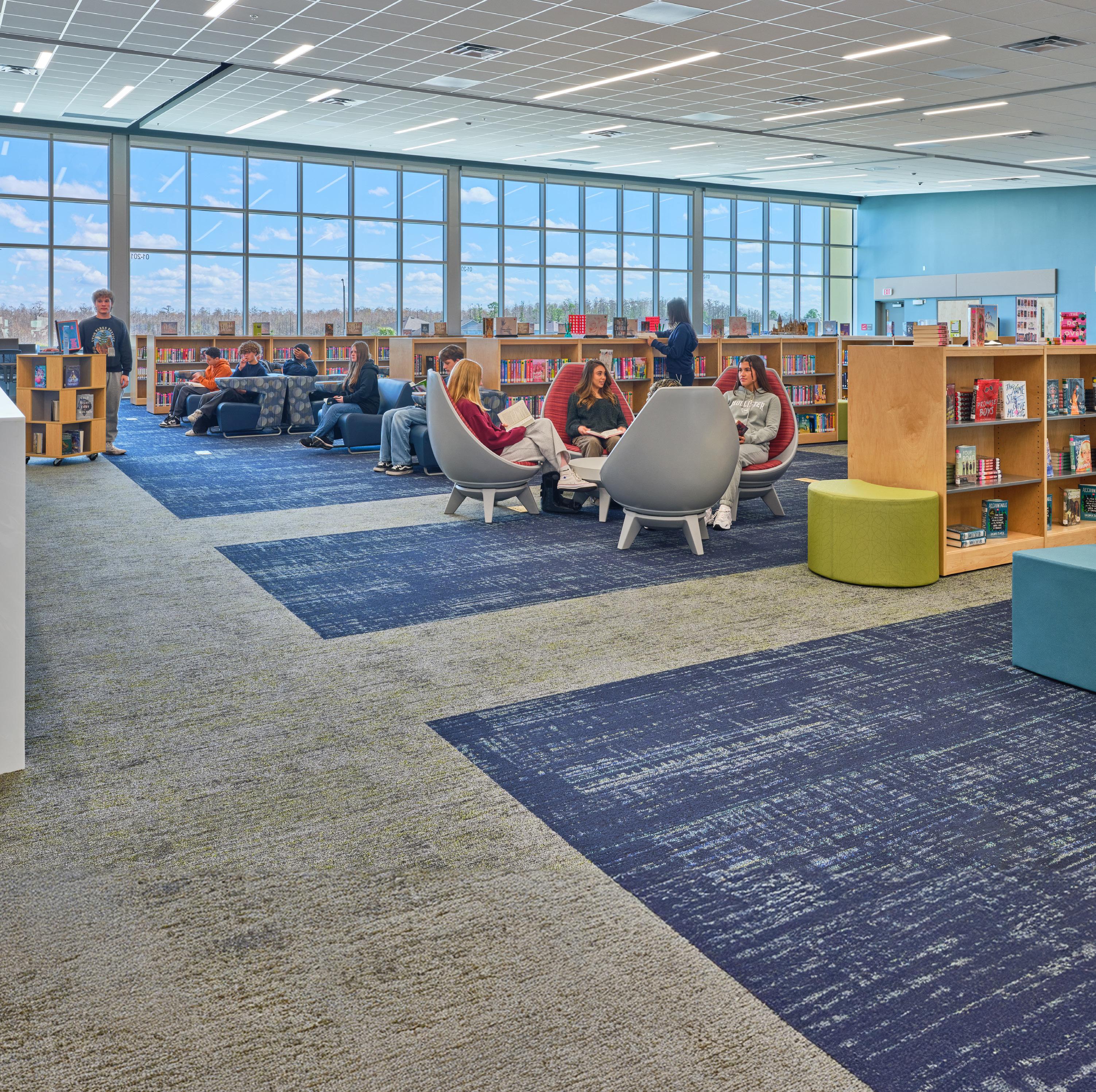
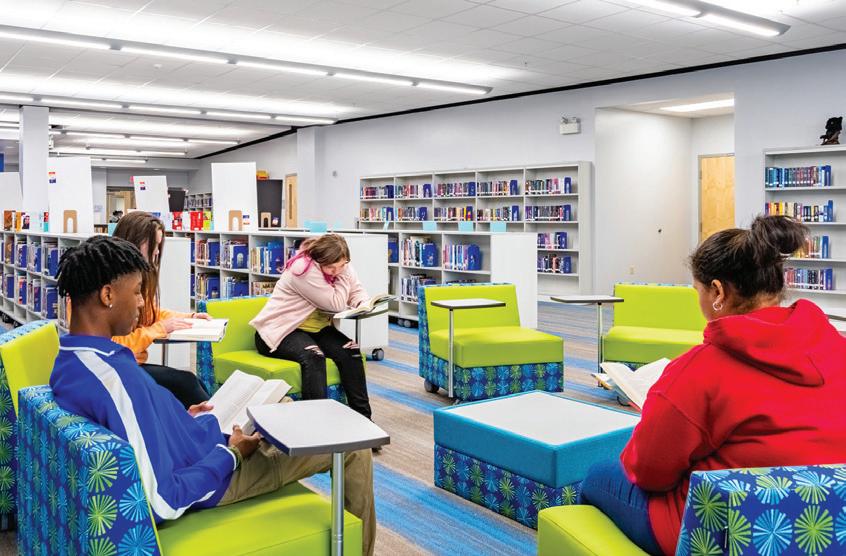
The campus includes outdoor learning areas, athletic facilities, and creative spaces such as art labs, performing arts venues, and a media center. These adaptable environments promote collaboration, real-world readiness, and the pursuit of college or career goals.
By aligning its design with personalized learning, career readiness initiatives, and Workforce Innovation and Opportunity Act (WIOA) partnerships, the school delivers an inclusive, future-focused educational experience that inspires lifelong learning.
The school’s creation was rooted in community collaboration. Through workshops and forums, district staff, students, parents, and community members contributed insights that shaped its design and programs, ensuring the facility reflects their shared vision for a modern and adaptable educational environment.
Zyscovich has created a high school that not only prepares students for future success but also strengthens ties between the school and its community.
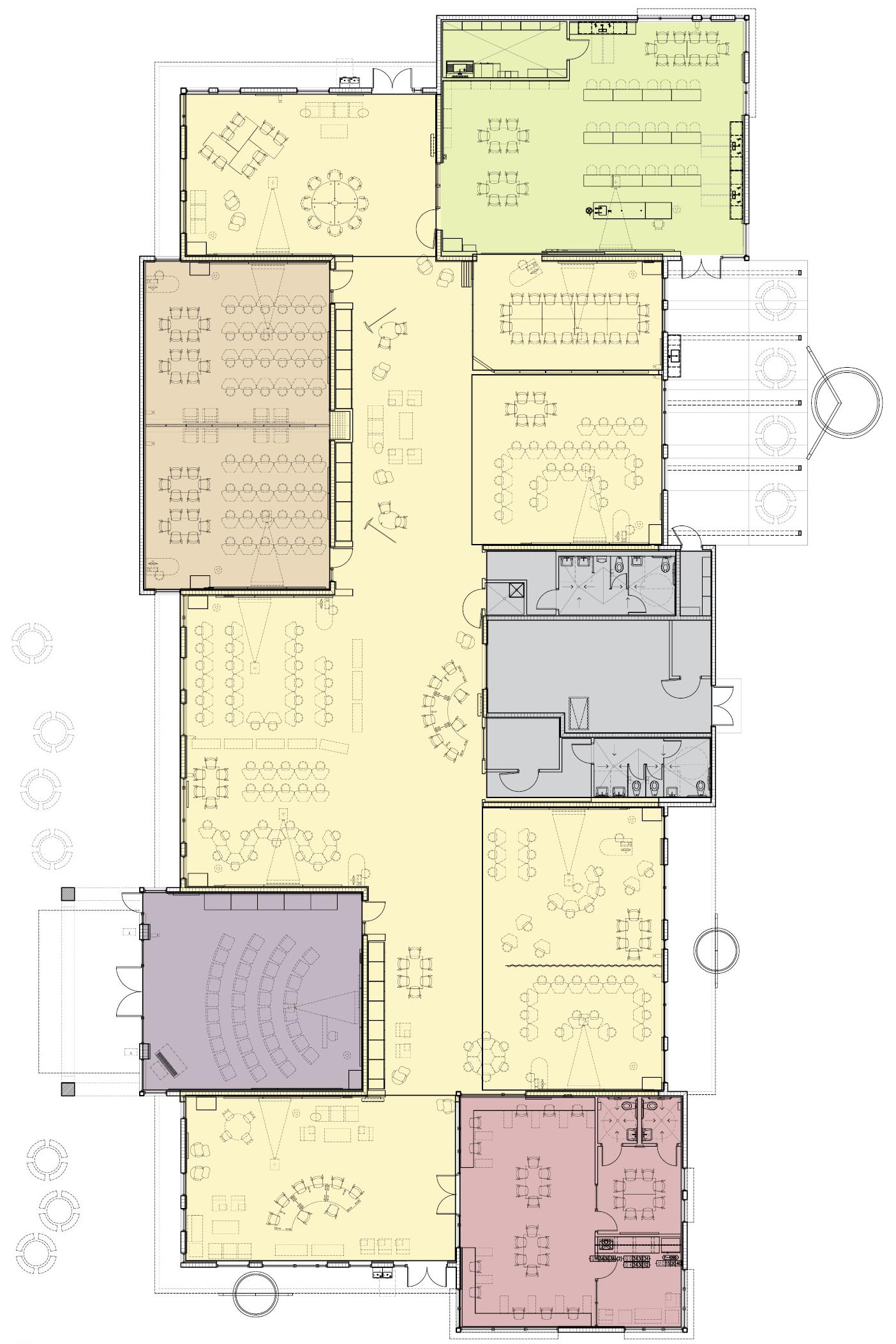
CULINARY ARTS LAB
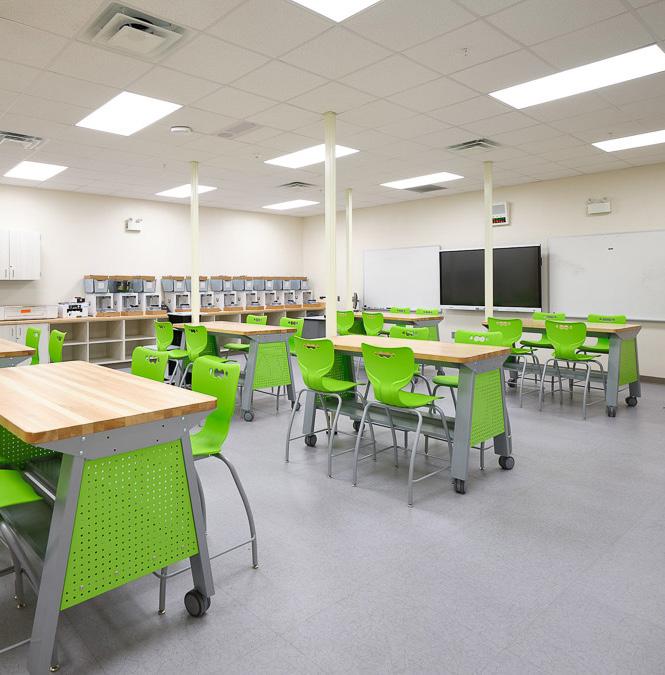
STEM LAB
SUSTAINABLE INITIATIVES
DURABILITY THROUGH RESILIENCE AND LONGEVITY
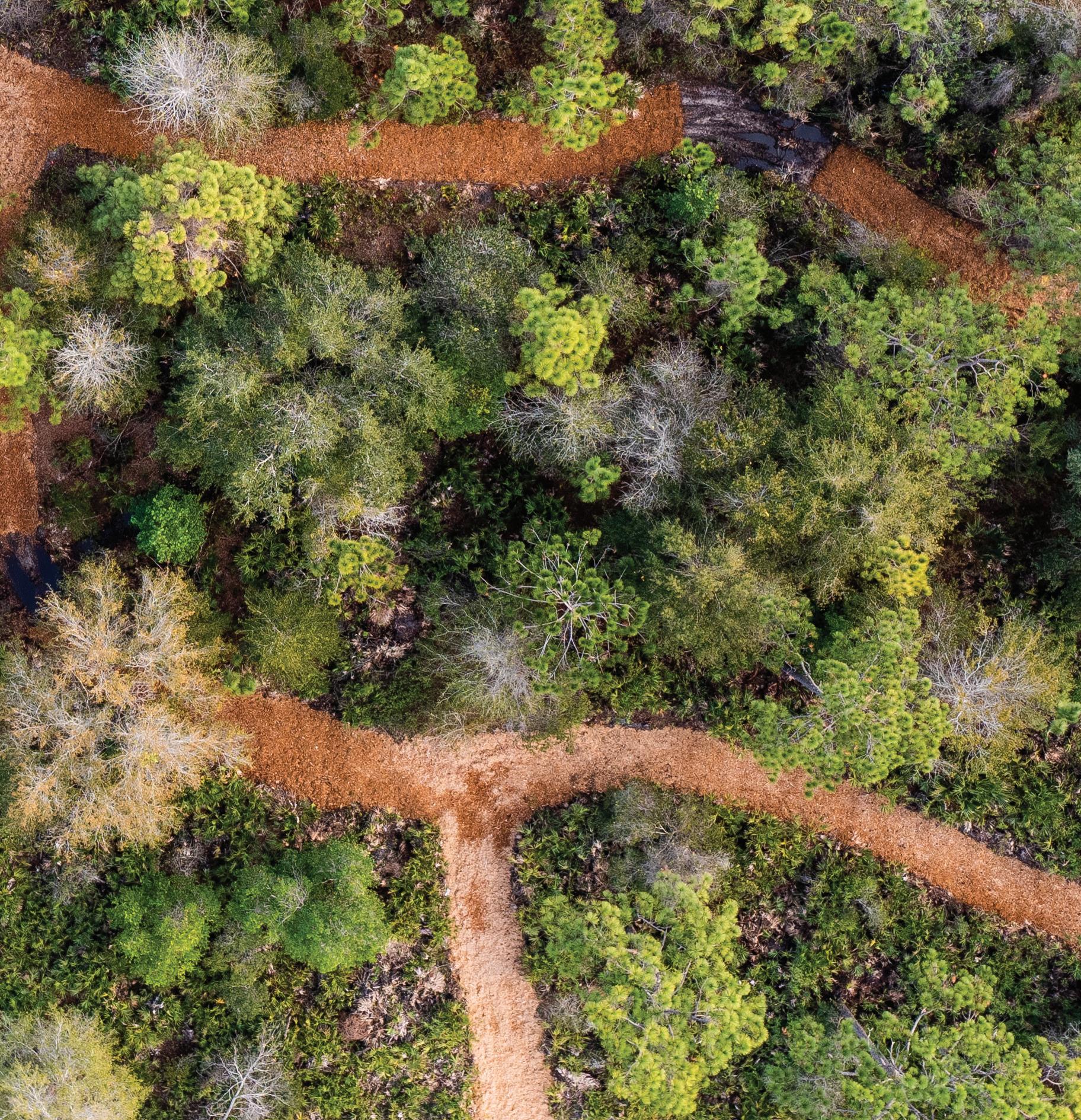
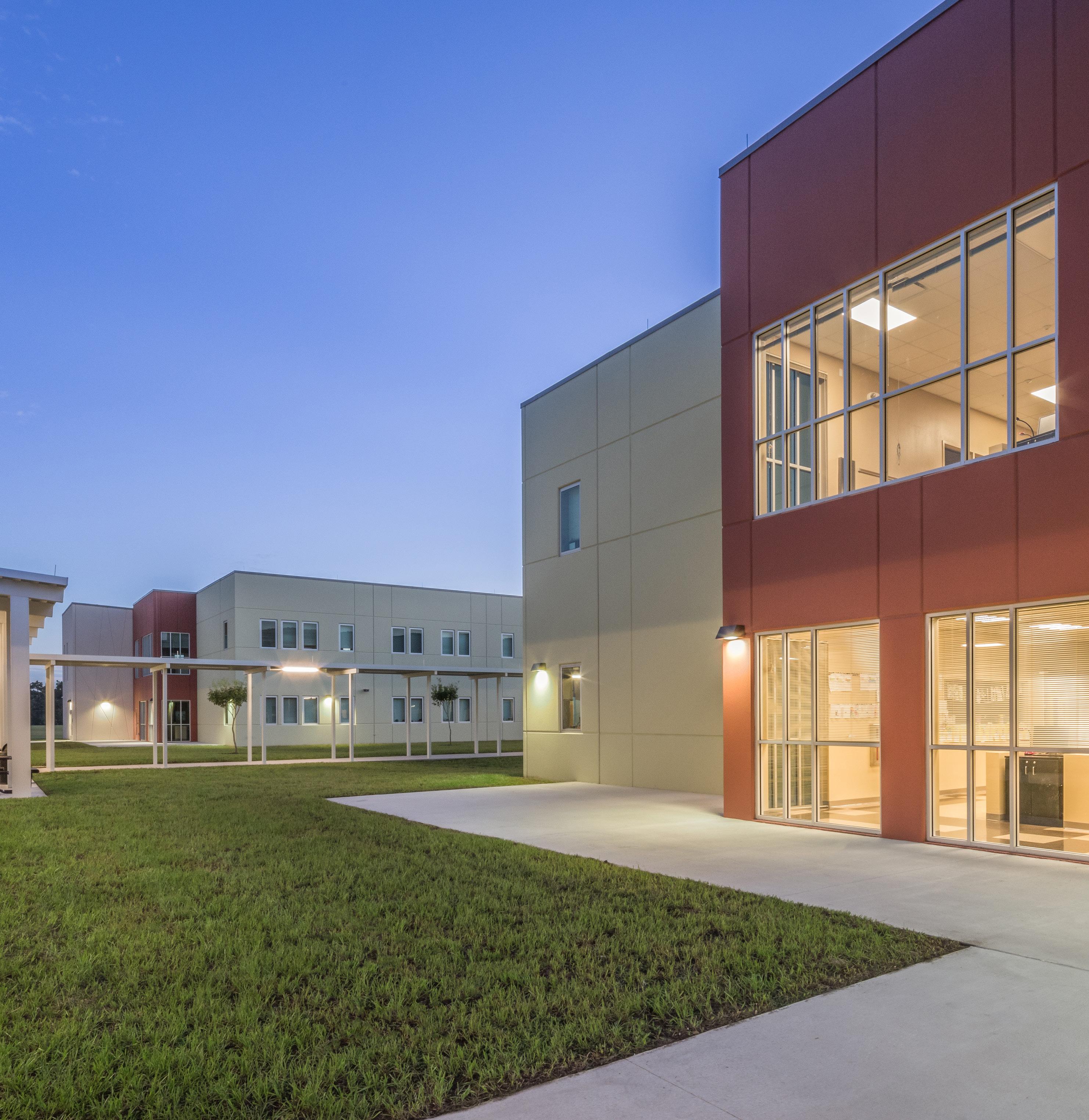
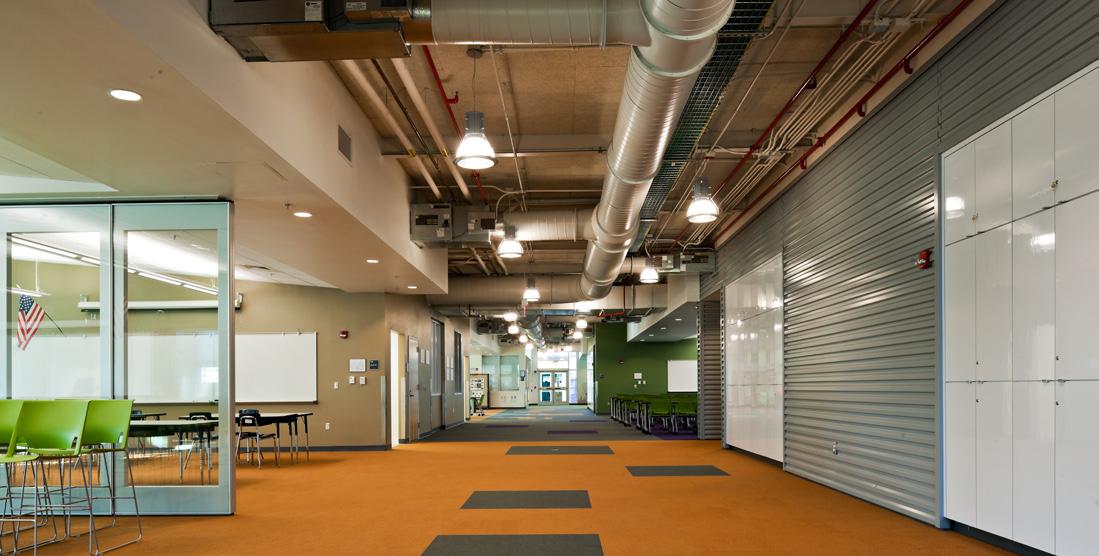
Innovation High School was designed as a compact, multistory campus that minimizes site disturbance while preserving native areas, serving as a living example of environmental stewardship. The building features state-of-the-art labs and classrooms with exposed systems to enhance learning, polished concrete floors for low maintenance, and large glazed openings offering daylight and views of native wetlands. Emphasizing sustainability and resilience, the design incorporates tilt-up concrete walls with insulated glazing, uses high-quality, easy-to-maintain materials, and meets Florida’s Enhanced Hurricane Protection Area standards. With input from OCPS, staff, and consultants, the project achieved a 3 Green Globes rating, reflecting its commitment to sustainability, health, and resilience.
THE BOLLES SCHOOL
SANCHEZ FENDER CENTER FOR INNOVATION
INNOVATING EDUCATION AT THE RIVER’S EDGE
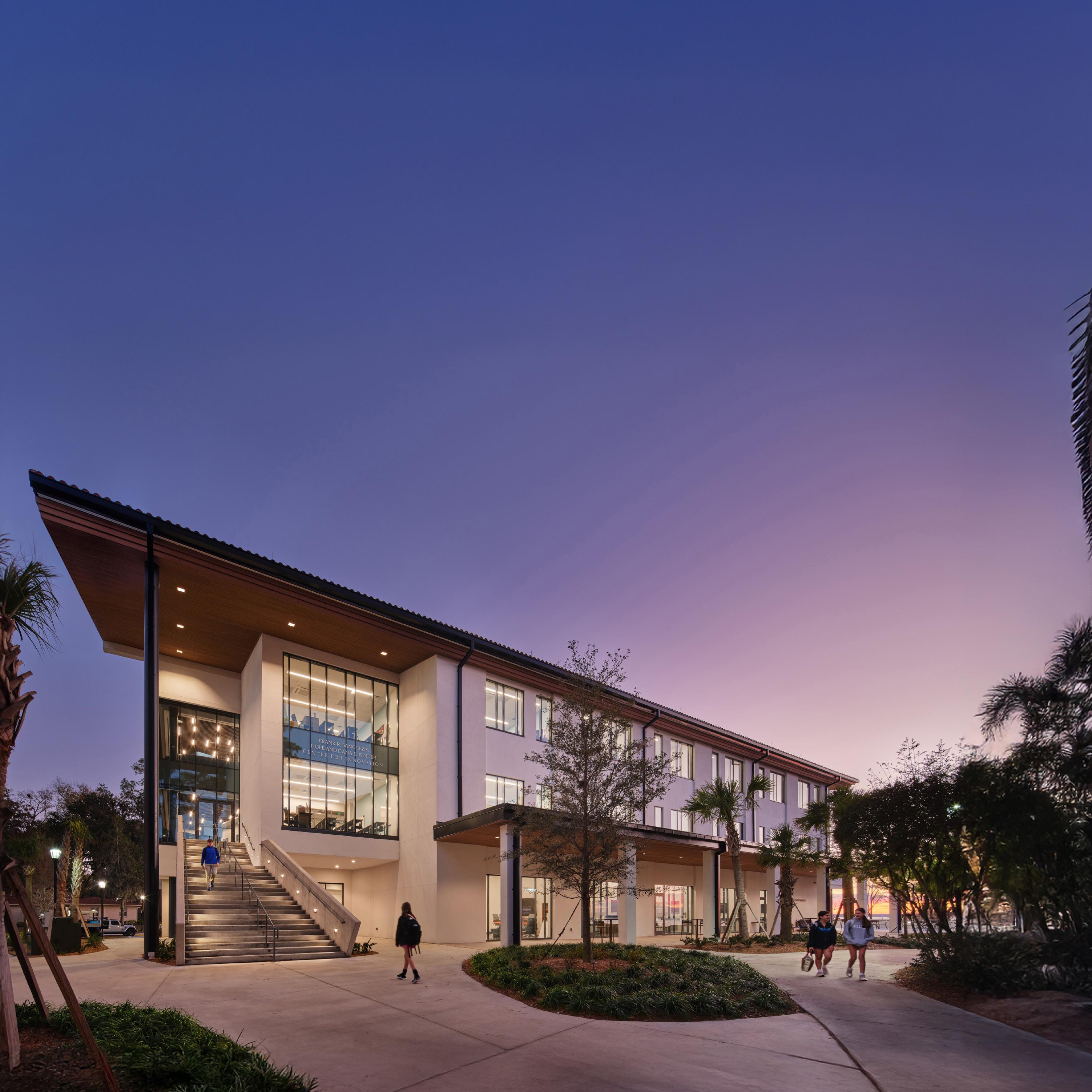
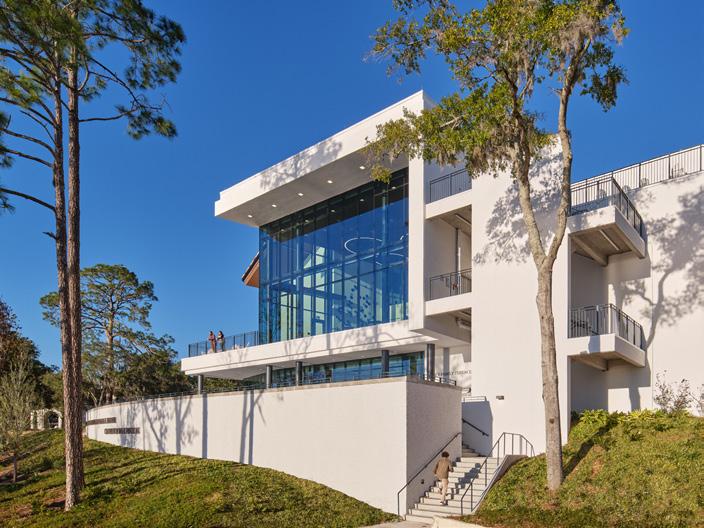
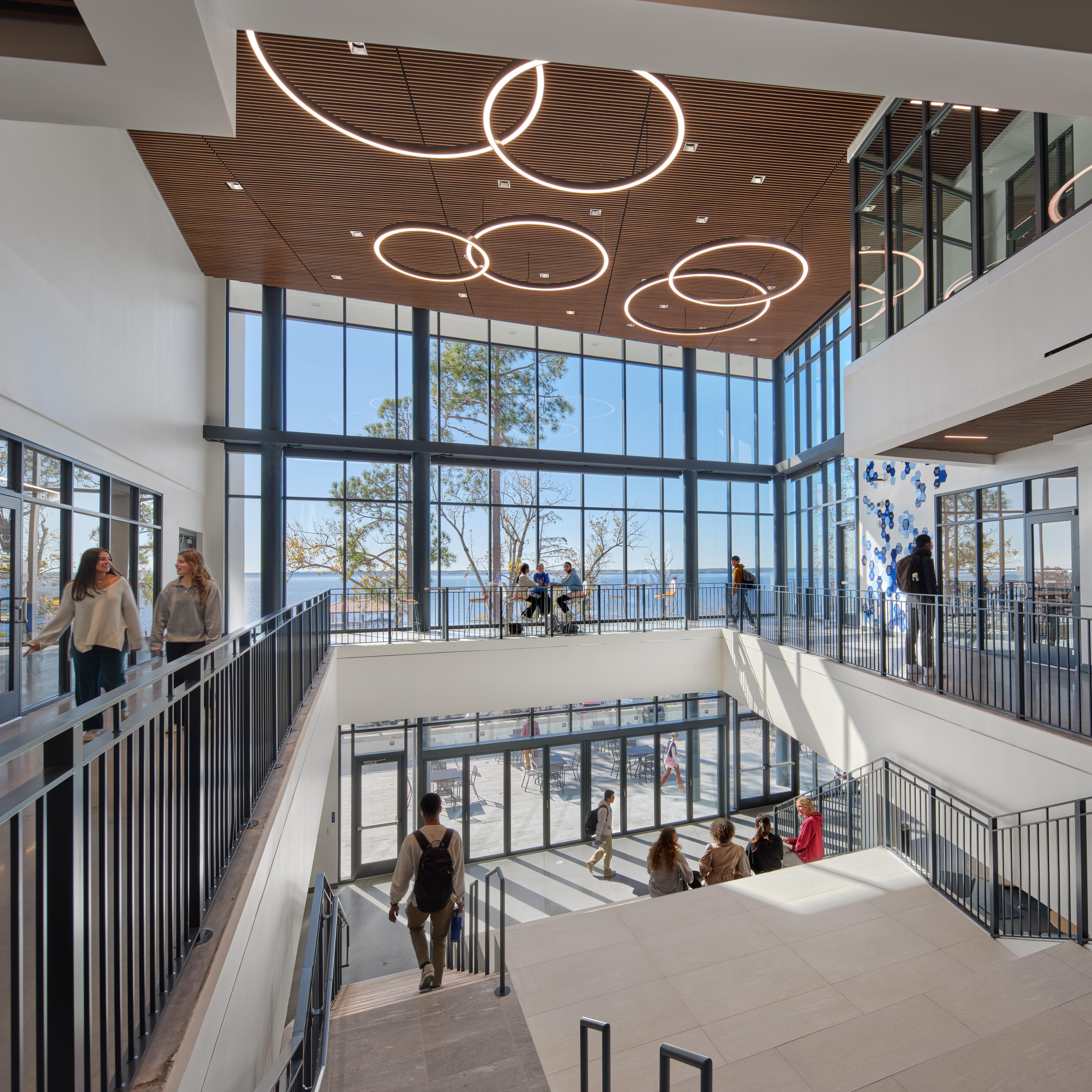
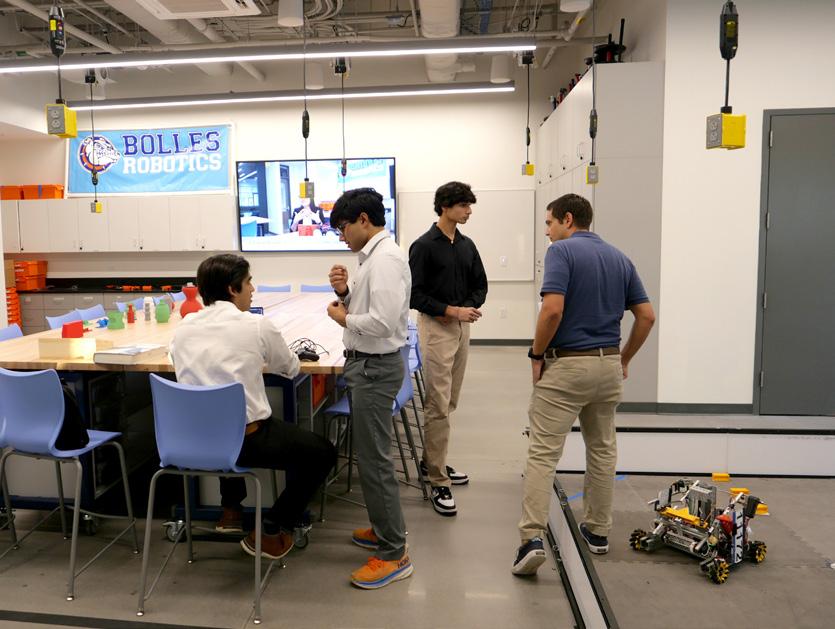
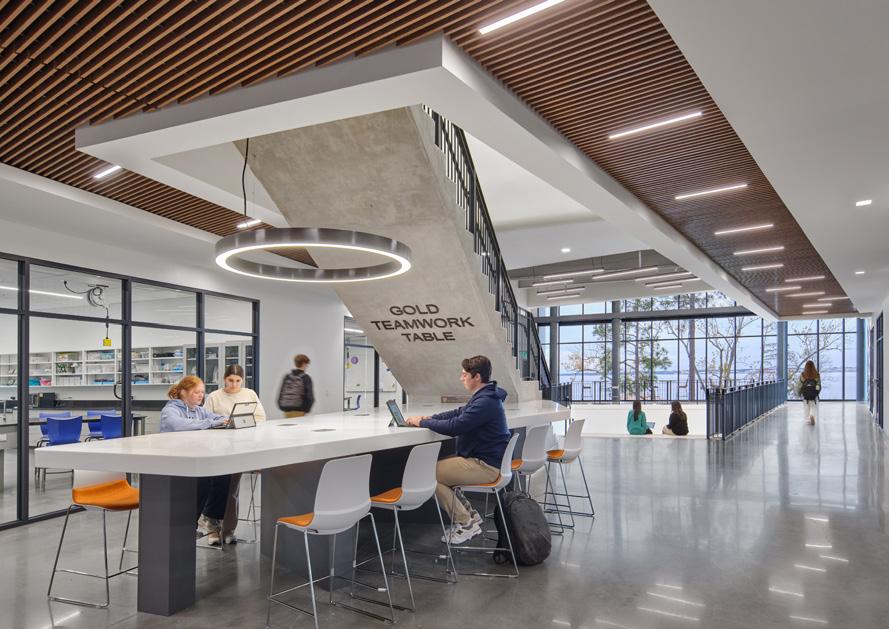
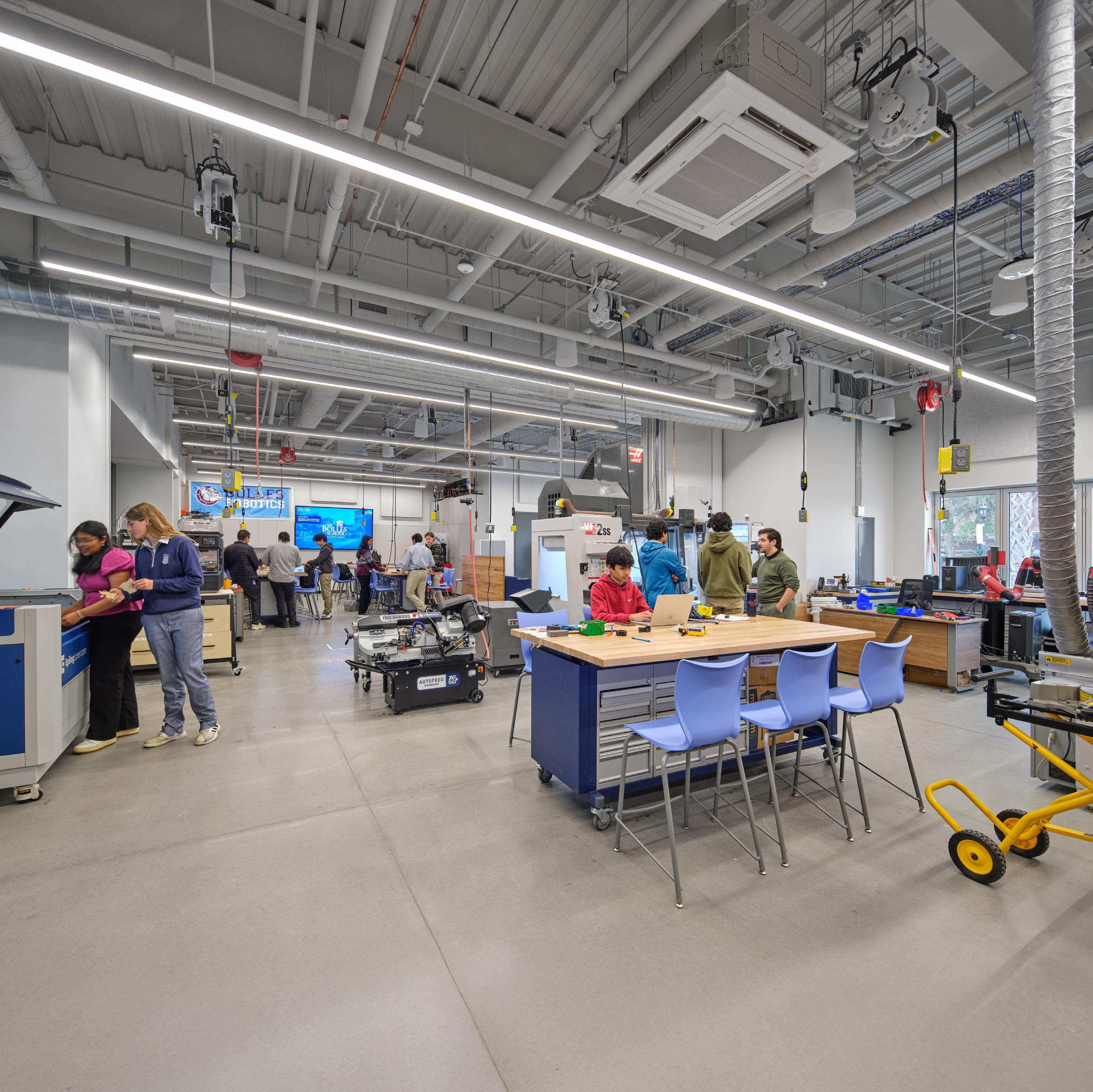
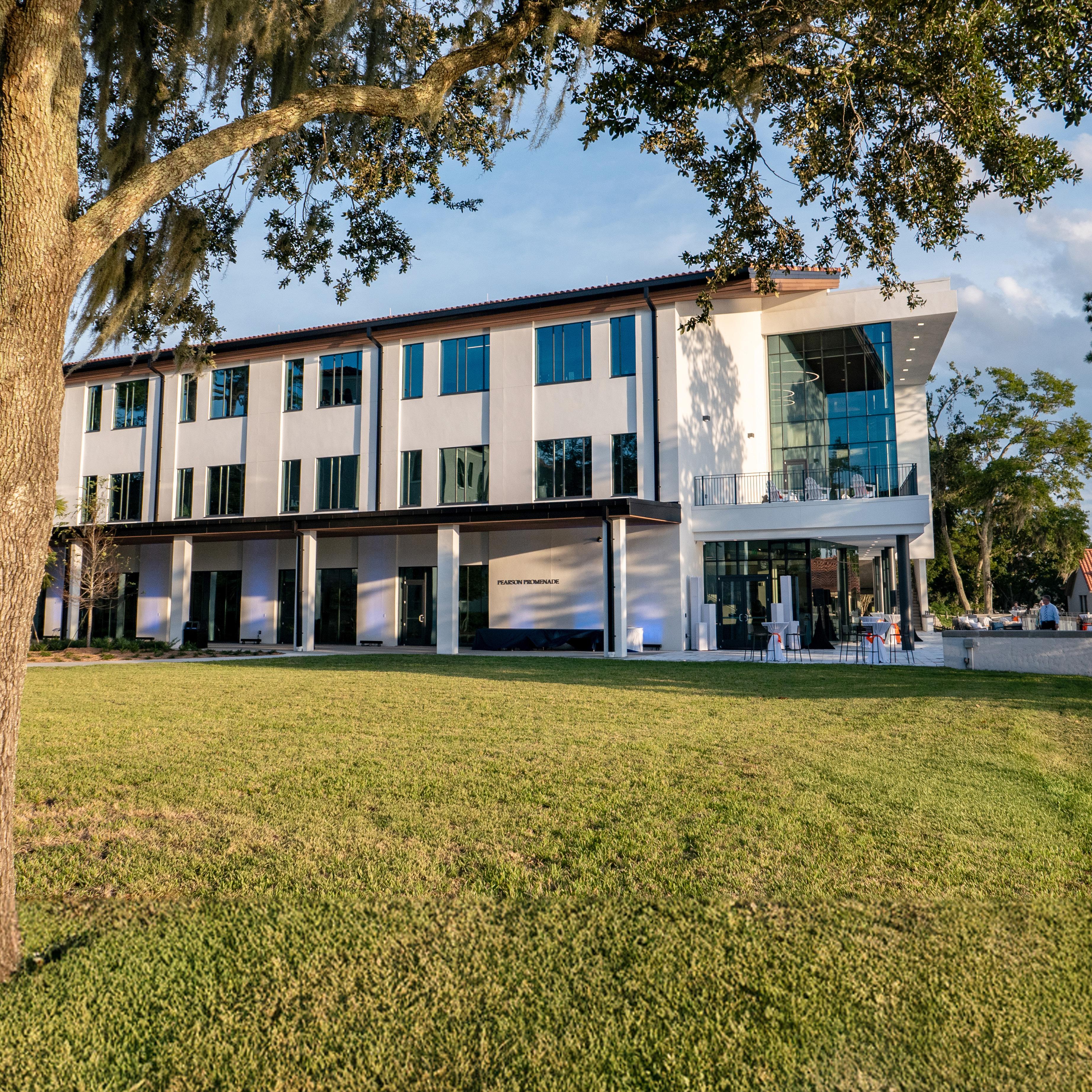
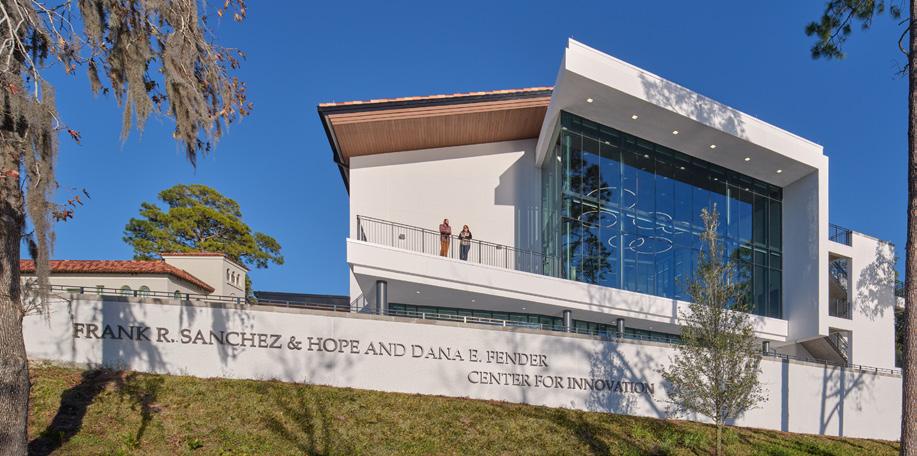
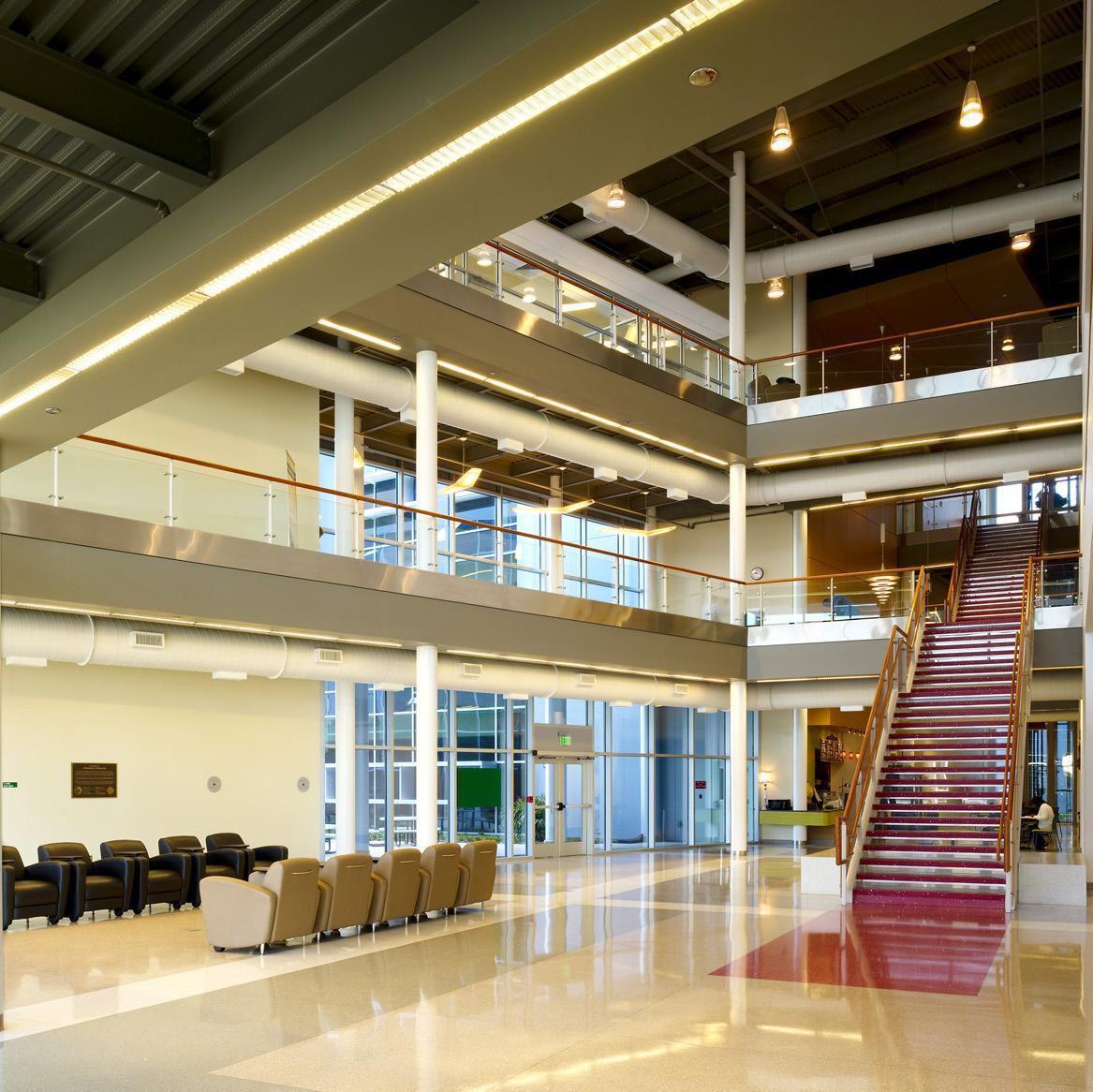
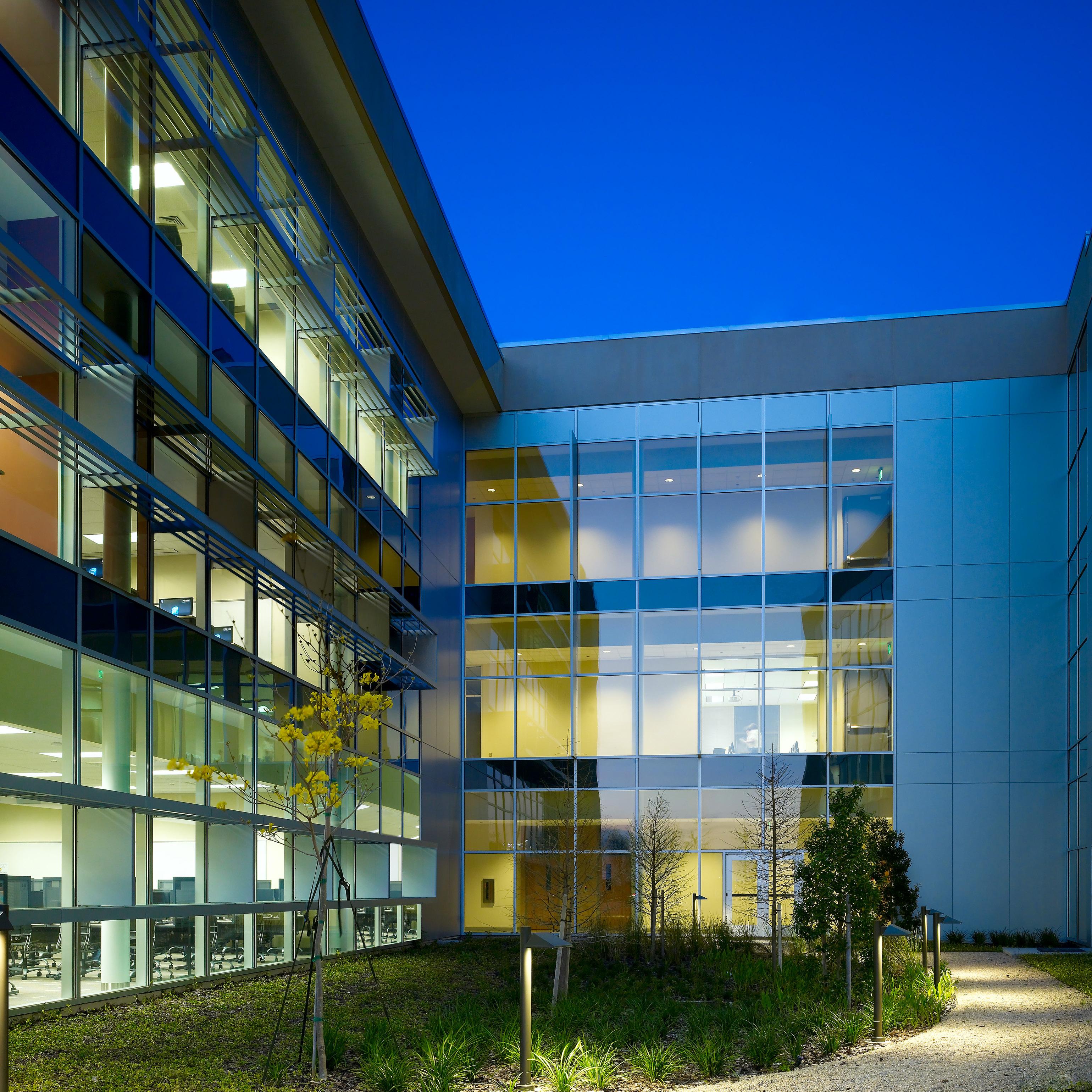
The new Sanchez Fender Center for Innovation (CFI), a 3-story collegiate-style facility at the heart of the campus overlooking the beautiful St. Johns River, is already transforming how science, math, and technology are being taught at the Bolles Upper School San Jose Campus. The building has doubled the campus’s labs and provides students with more space for collaboration and enhanced tools for exploration. From Robotics and Engineering to Math and Life Sciences, students can now explore and combine their many interests all in one building.
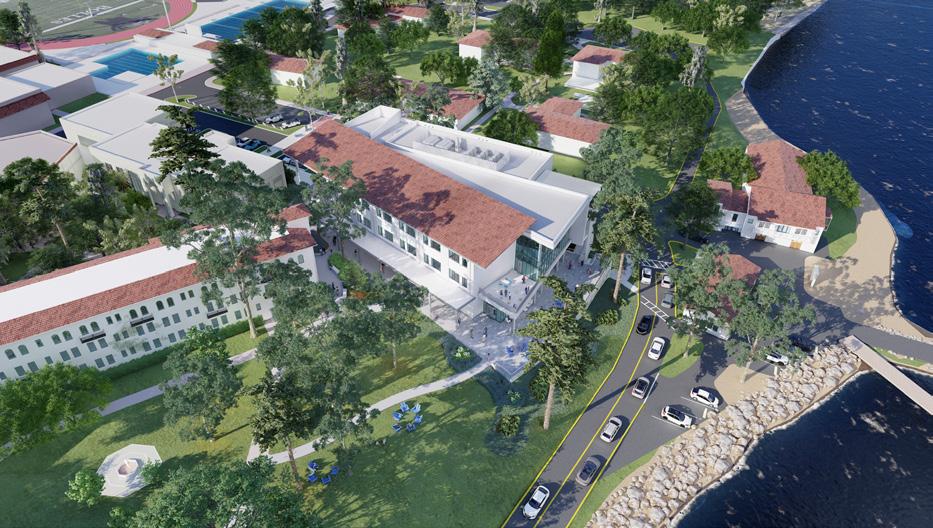
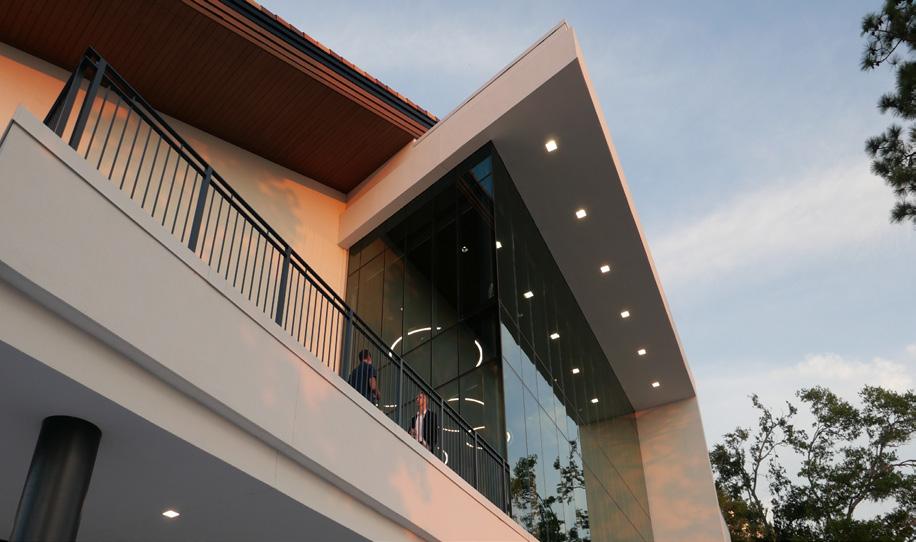
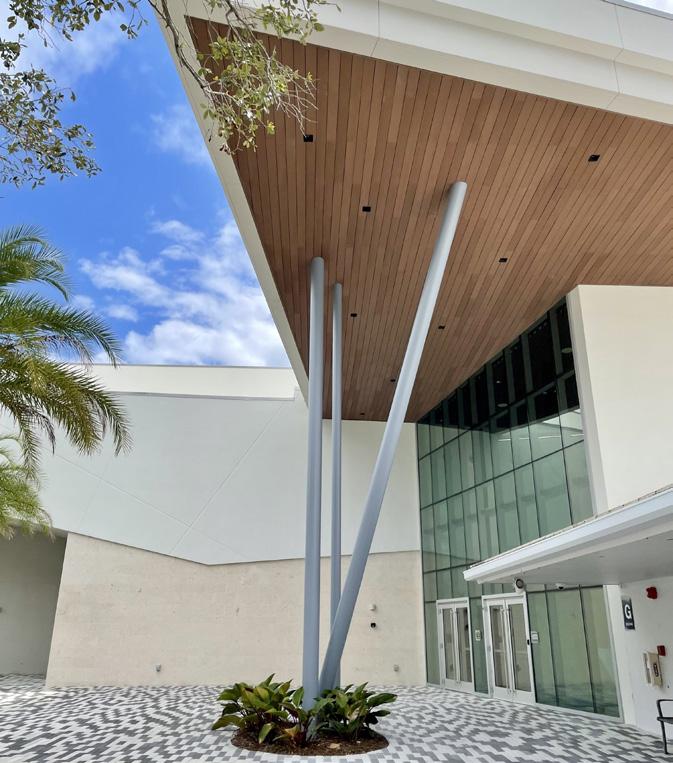
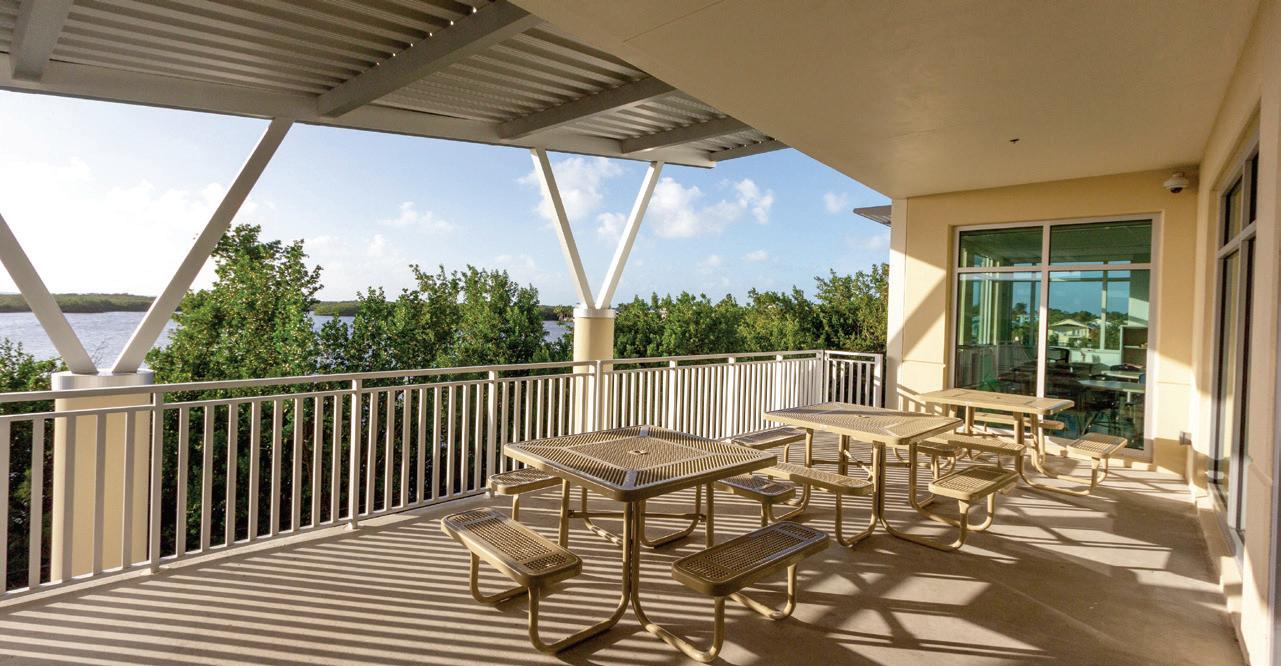
The siting provides an iconic placement of the CFI building at the bank of the St Johns River and to the north of the National Historic Register-listed Bolles Hall. The new CFI acknowledges the historic attributes of its Mediterranean Revival context with the incorporation of sloped roofs, wood overhangs, barrel tile, and white stucco while still providing a forward-looking Innovation center with sweeping overhangs and multi-story expanses of glazing overlooking the river. West facing terraces at each floor allow students to pause from their studies and connect with the old-growth oaks trees surrounding the building and the river beyond.
LOCATION: 7400 San Jose Blvd. Jacksonville, FL 32217
ARCHITECT: Zyscovich
CONSTRUCTION MANAGER: Stellar Construction
BUDGET: Withheld
COMPLETION: October 2024
SIZE: 47,000 square feet
CAPACITY: 672
INNOVATIVE ENHANCEMENTS REIMAGINING SPACE FOR DYNAMIC COLLABORATION
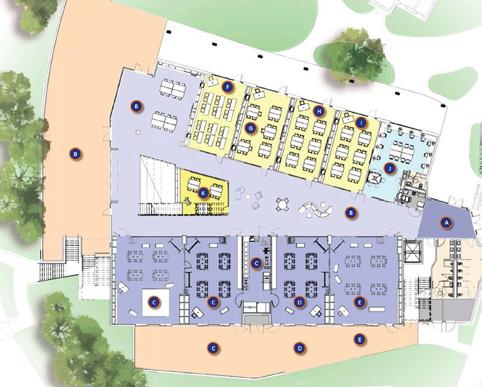
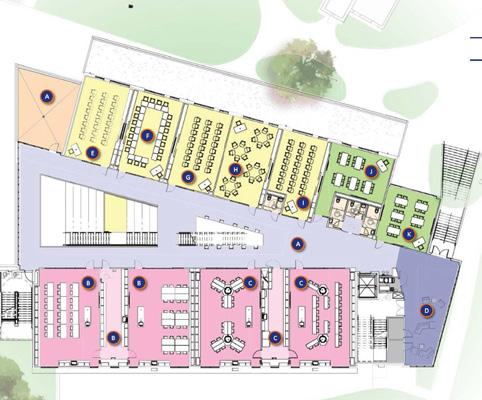
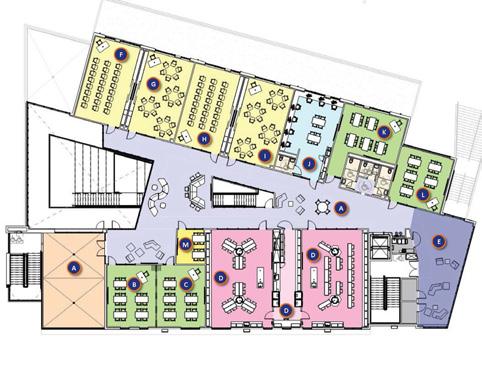
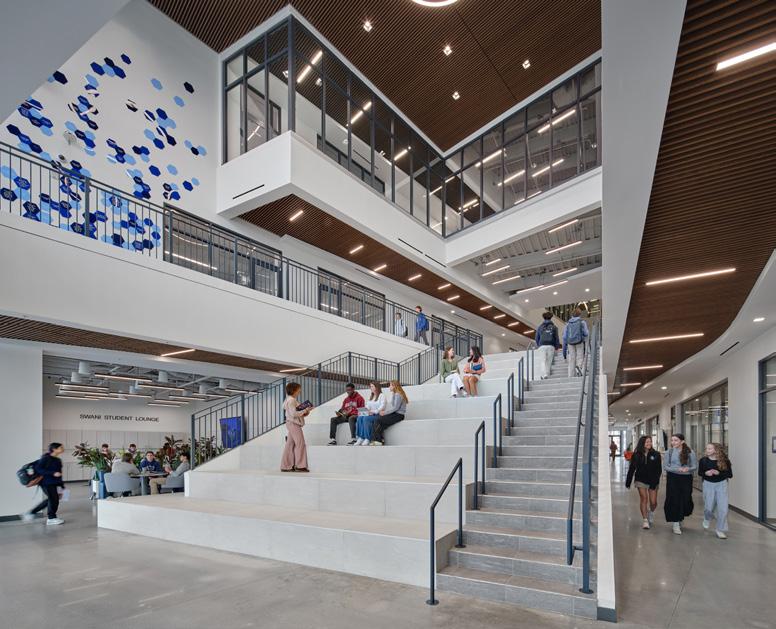
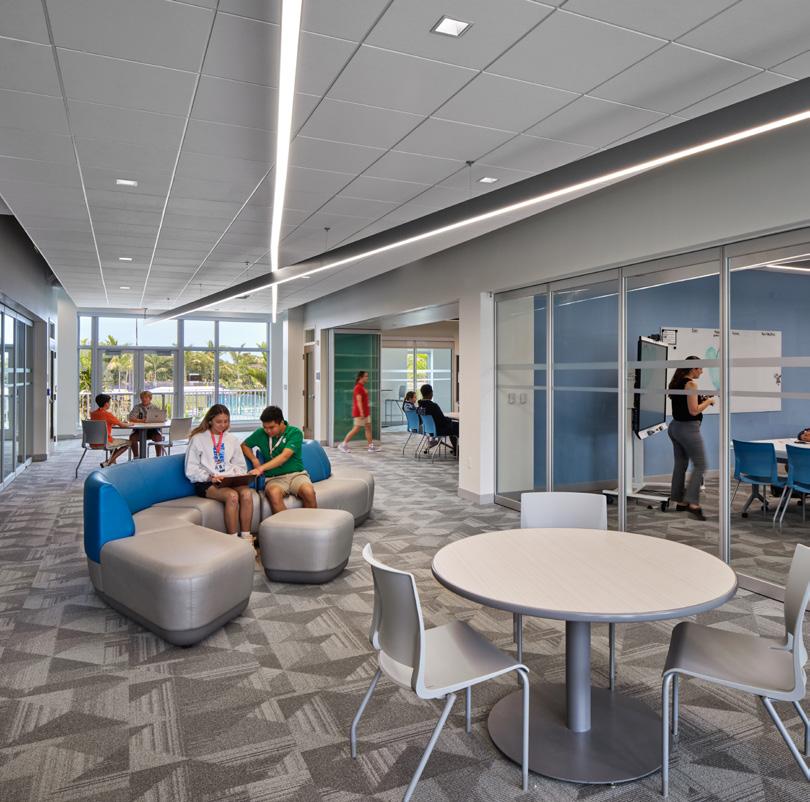
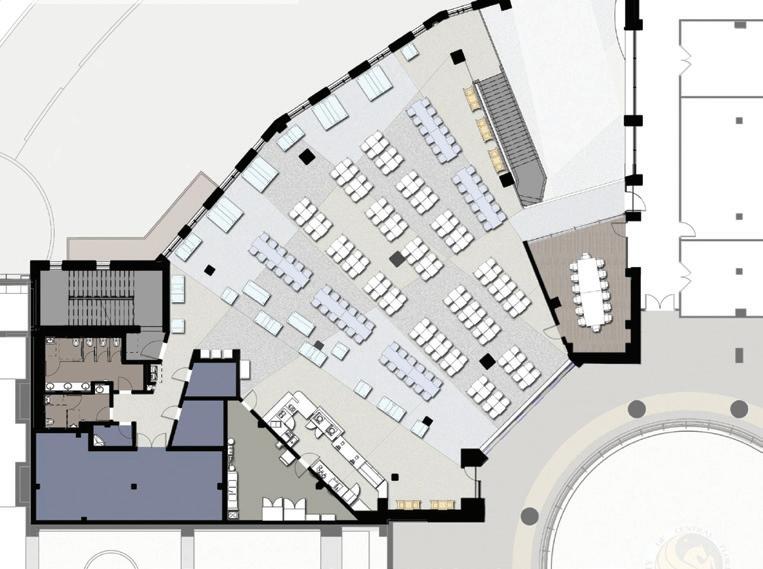
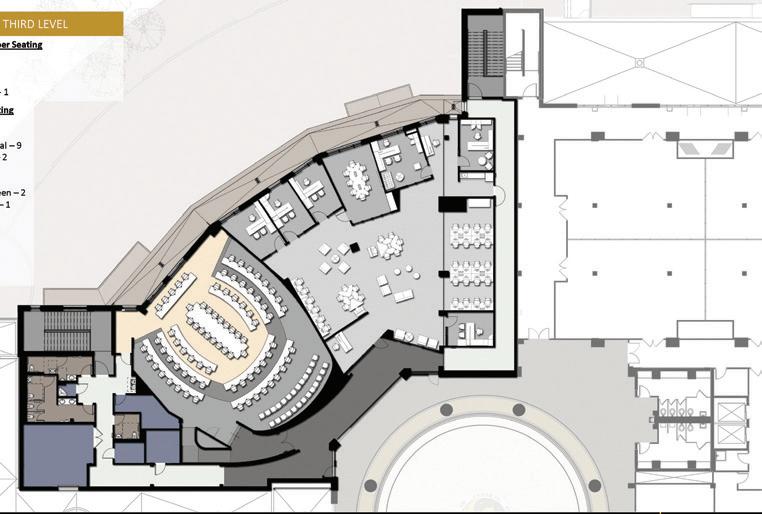
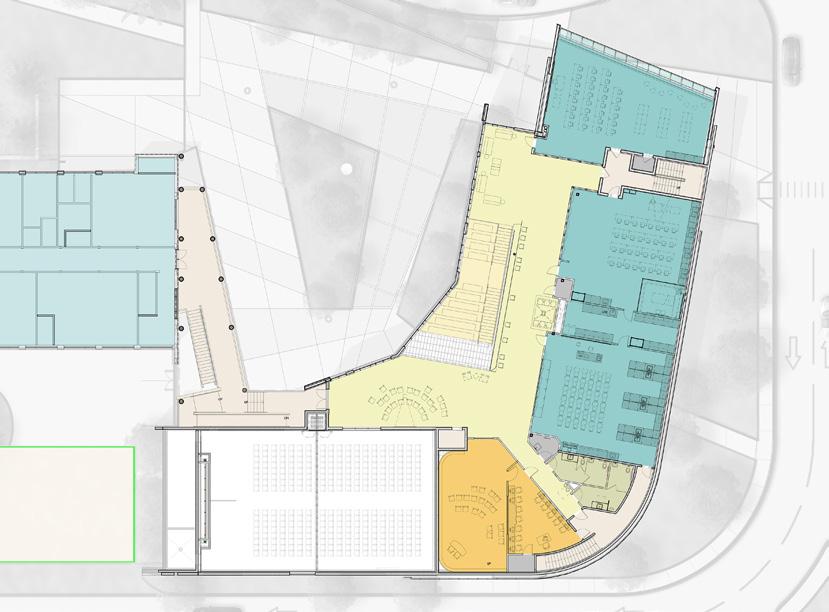
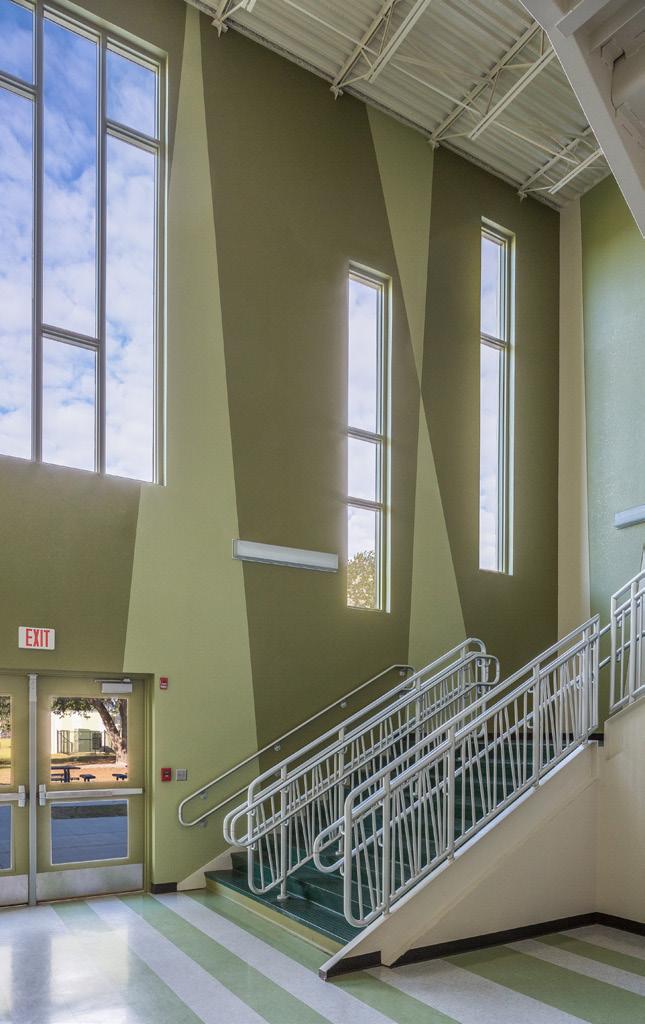
The new Sanchez Fender CFI is designed to draw learning out of the classrooms and labs into the wider circulation, the social stair and the commons areas at each floor. Collaboration is a unifying force, cultivating social-emotional awareness, empathy and a lasting regard for and loyalty to a school. Broadening the approach to learning in this way will allow teachers to orient instruction toward engrossing hands-on, project-based cross-departmental learning experiences and the new flexible facilities are a key element to support this.
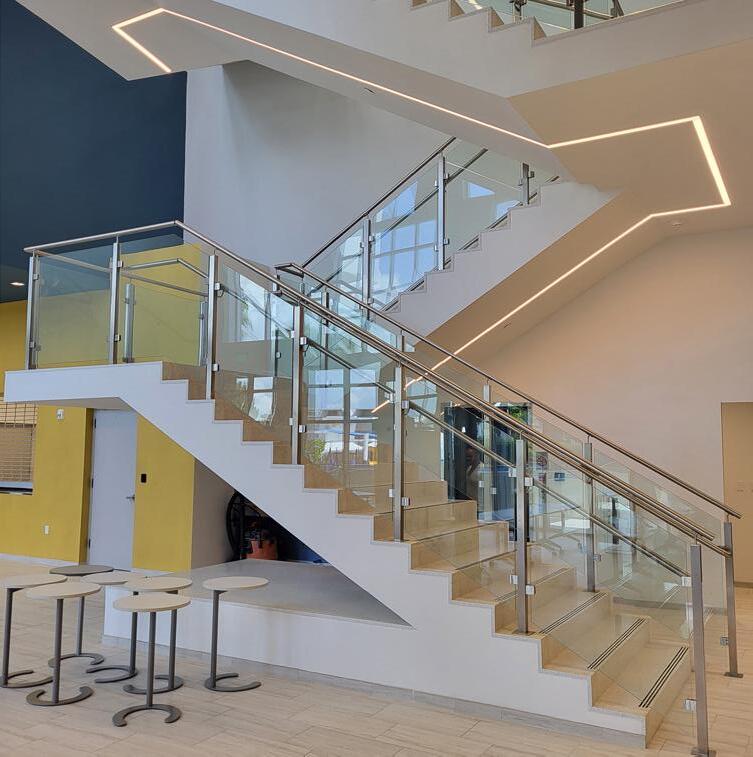
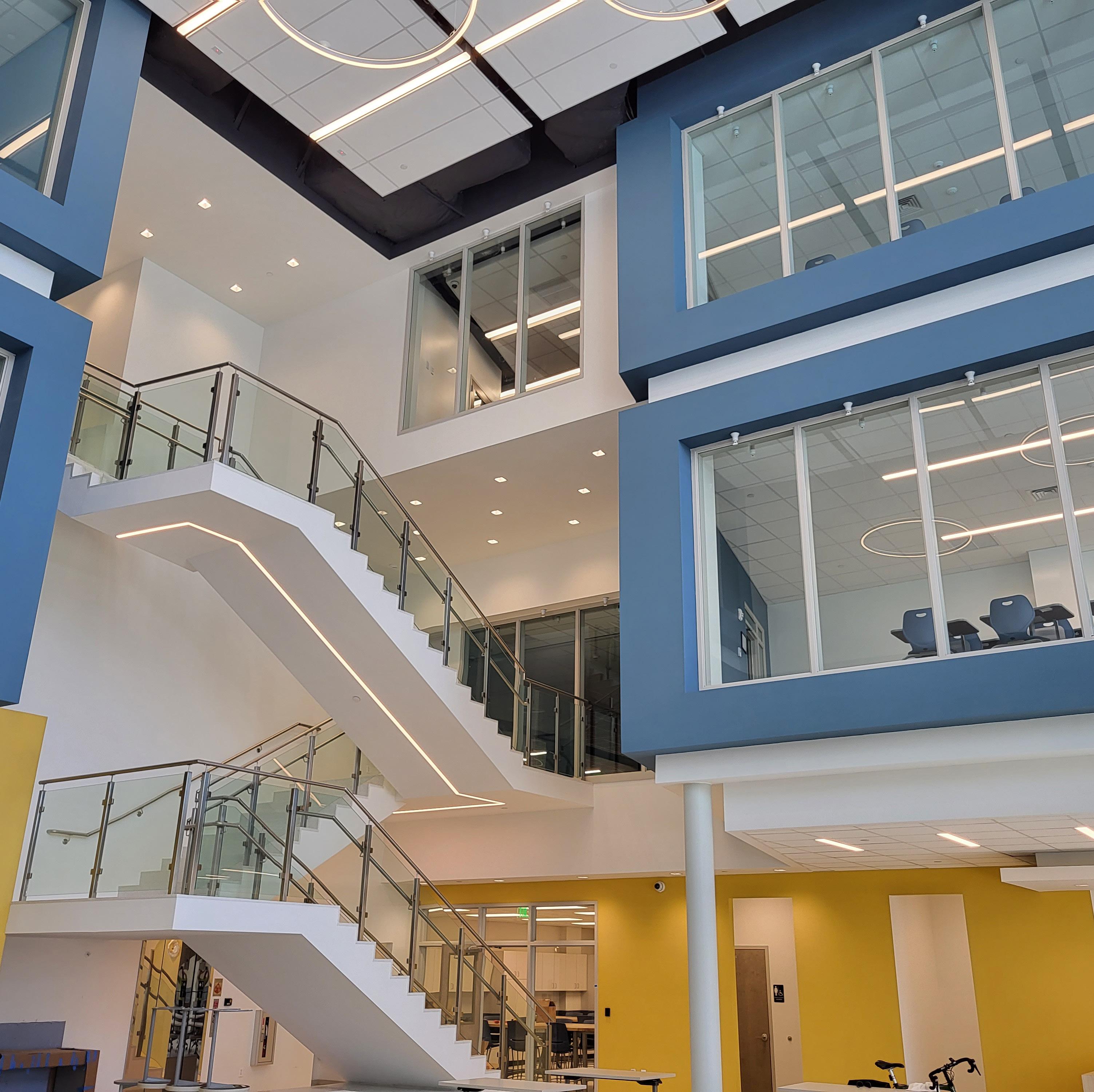
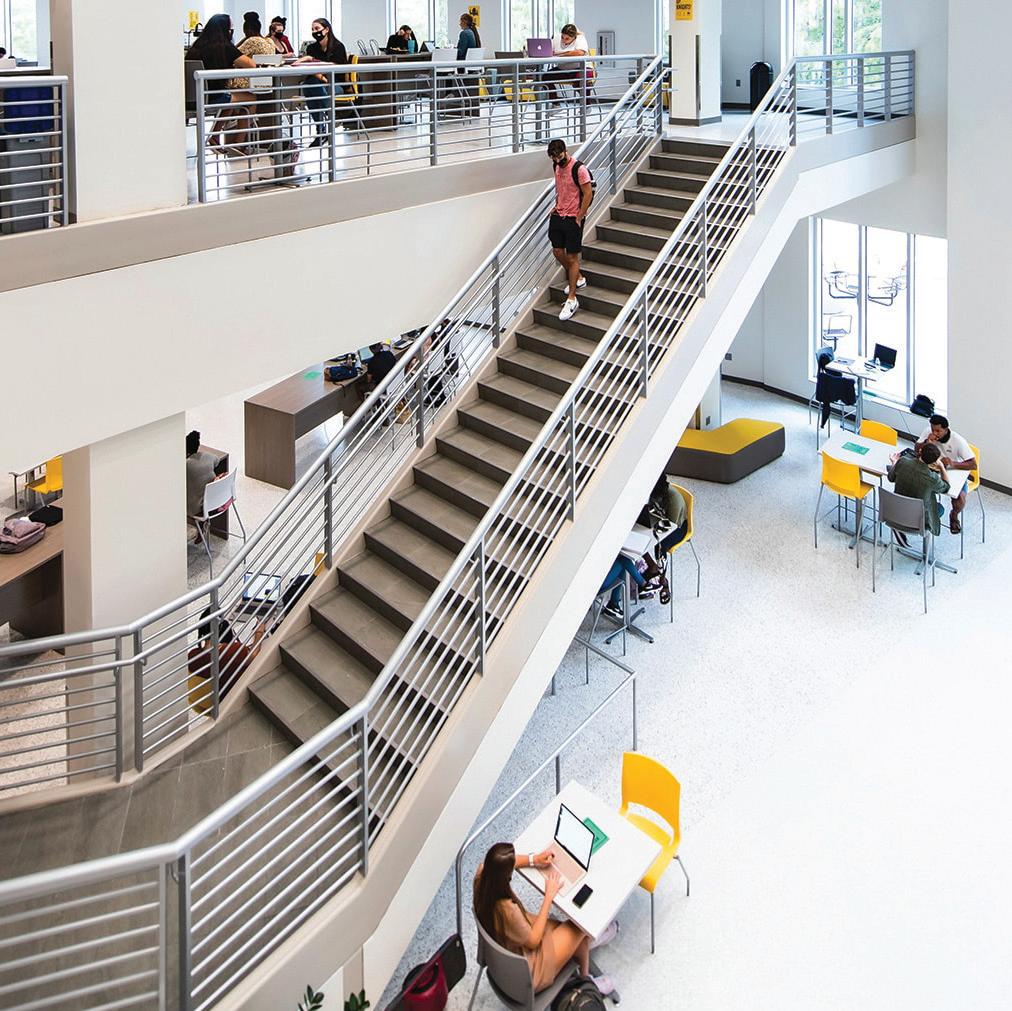
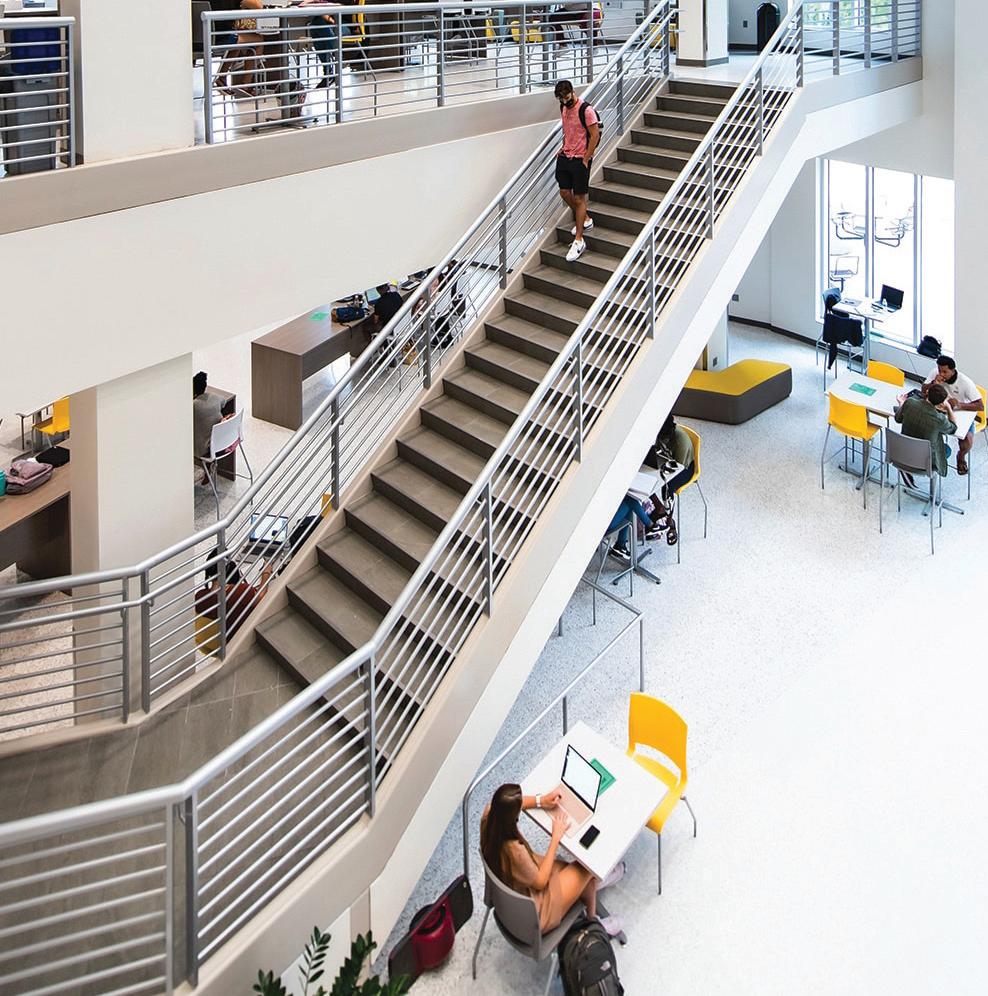
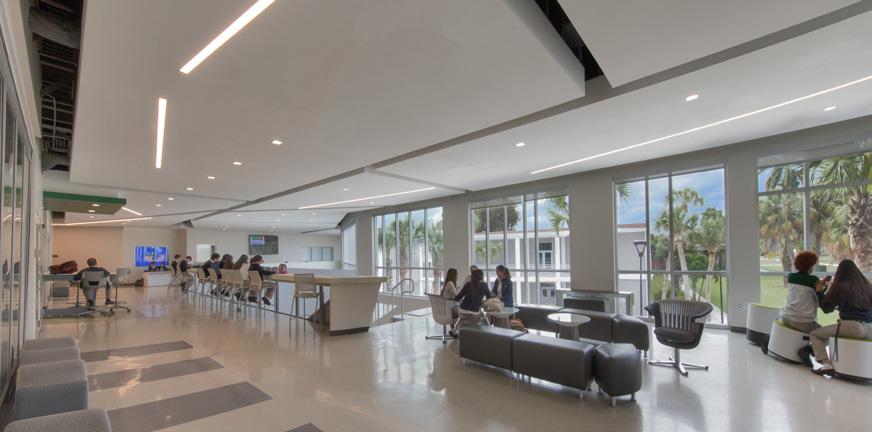
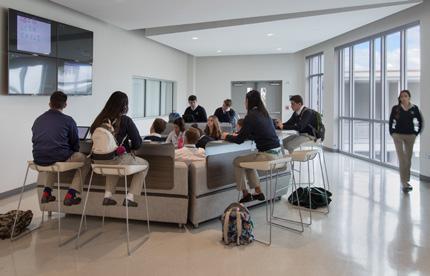
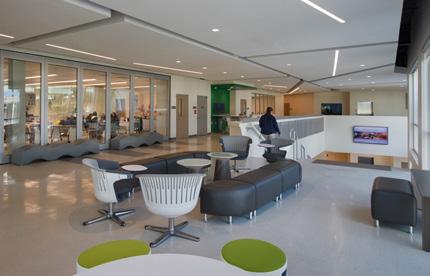
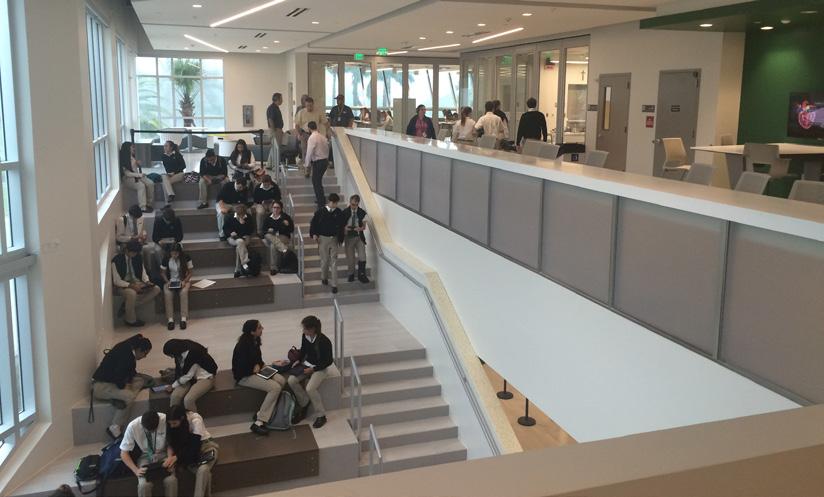
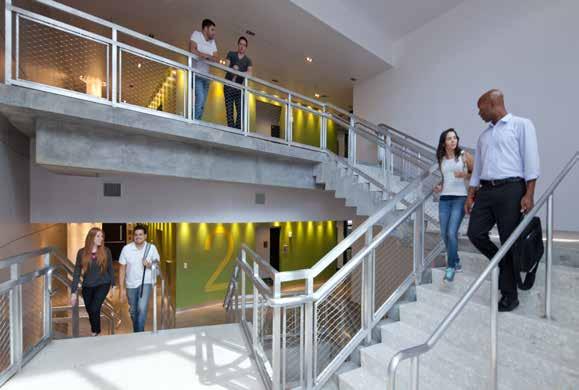
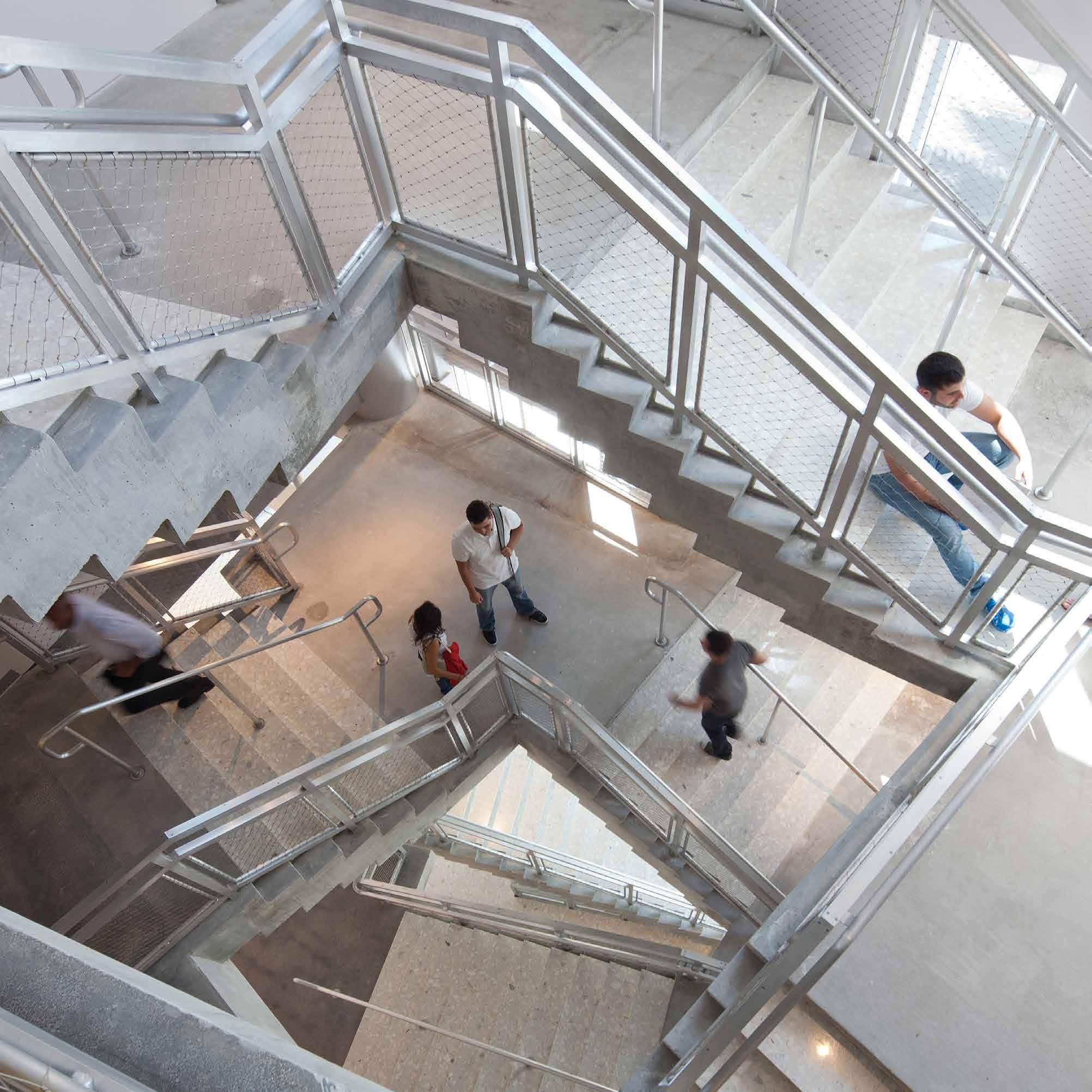
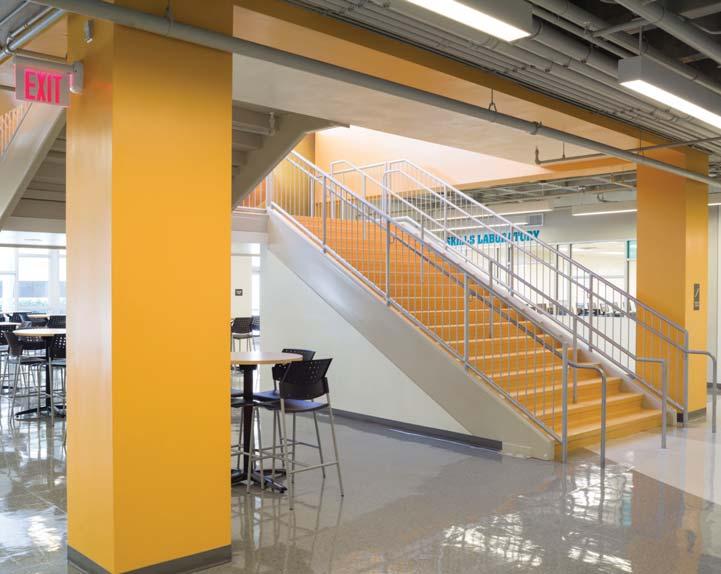
The new social stair serves as the heart of the CFI, providing a venue for educational, cultural, social, and leadership programs that are integral to the adjacent academic experiences. It also serves as the ideal place for getting to know and understand one another through associations outside of the classroom. This space will offer opportunities to strengthen community by creating a venue not just for “feeding” information but also for engaging the student body with debates, speeches, and special events for the larger school-family community.
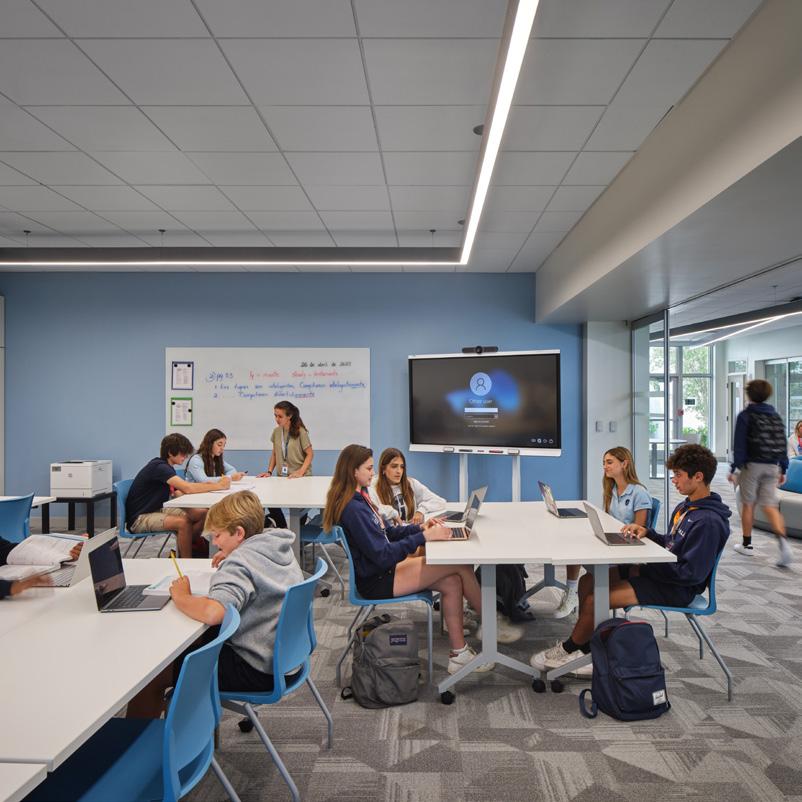
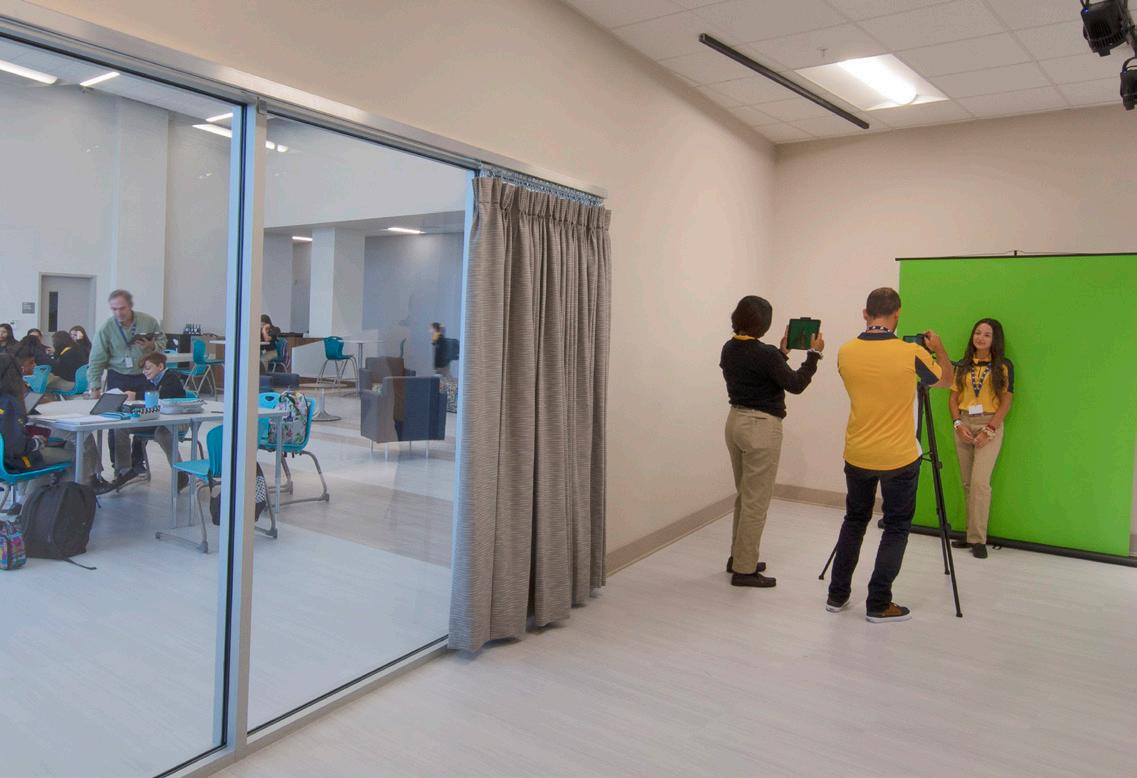
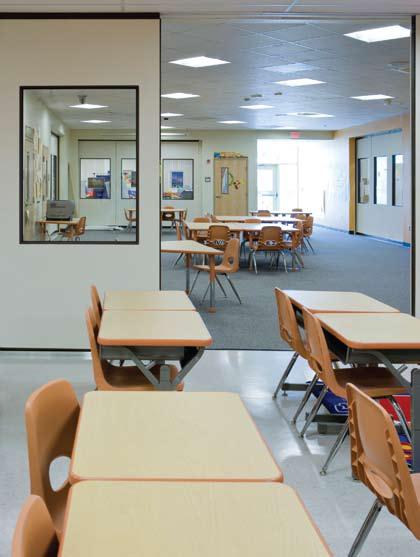
Labs and classrooms are provided with moveable partitions at six locations to allow for transformative spaces and various collaborations. Flexible furnishings have been provided throughout the rooms to allow for easy reconfigurability. Lastly, integrated technology at every corner of the building allows for interconnectivity to personal devices with classroom equipment and display media throughout the building.
21ST CENTURY LEARNING
POWERING LEARNING THROUGH
TECHNOLOGY
Technology rich classrooms and presentation areas make it possible for students to invent, share and analyze the challenges of tomorrow. In these new 21st century classrooms, teachers will have the opportunity to connect learning more explicitly to the outside world. The learning environment will extend beyond the walls of the classroom building to the collaboratoriums and outdoor learning spaces so that students can engage in real-life problem solving discussions. Designated instructional studios can be divided by an operable partition, intending to allow for many forms of teaching and learning to be explored.
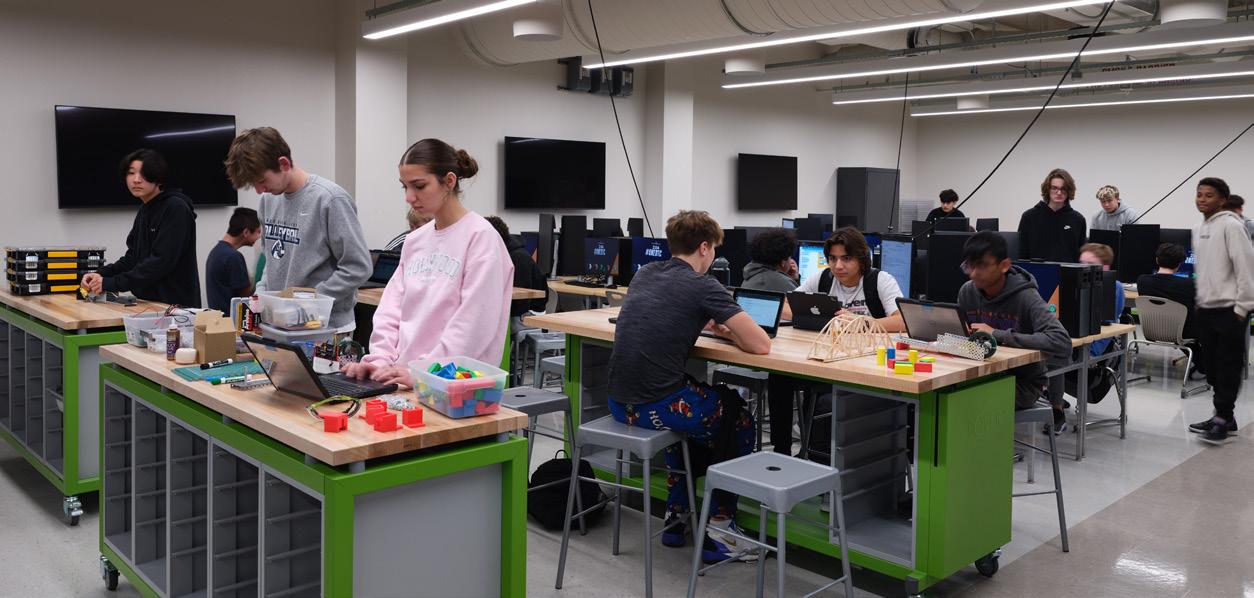
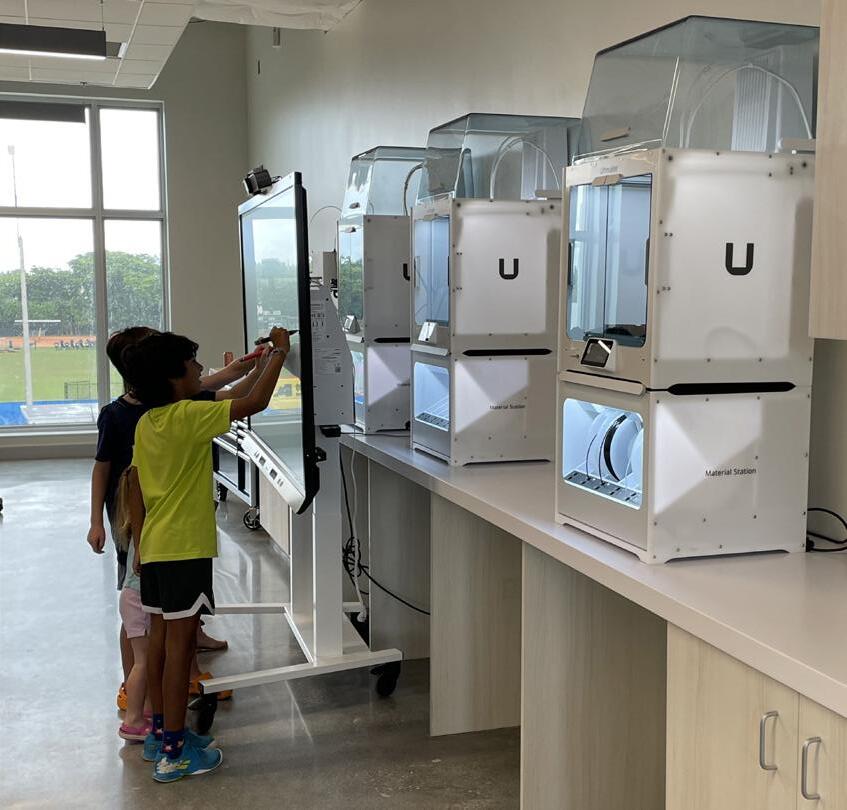
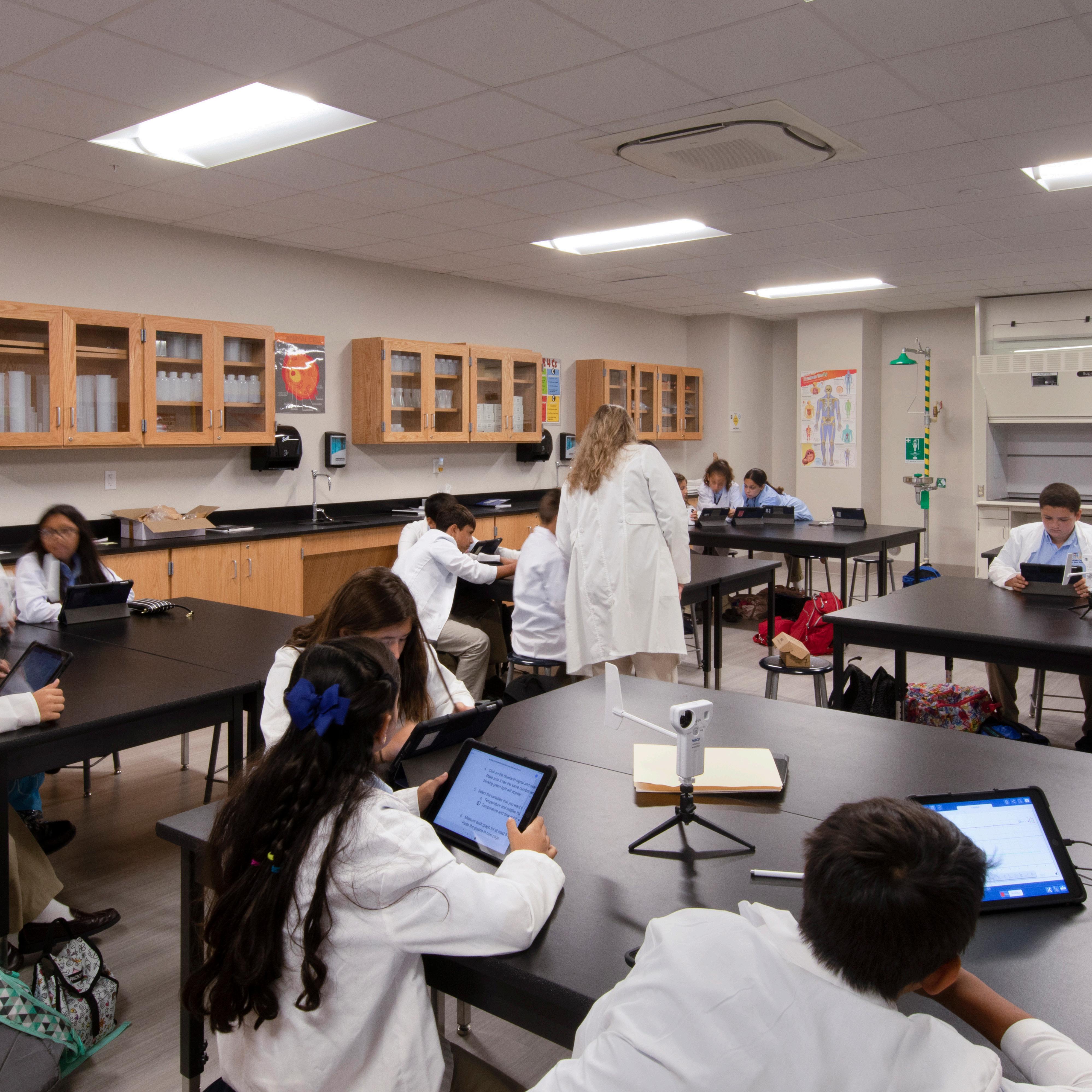
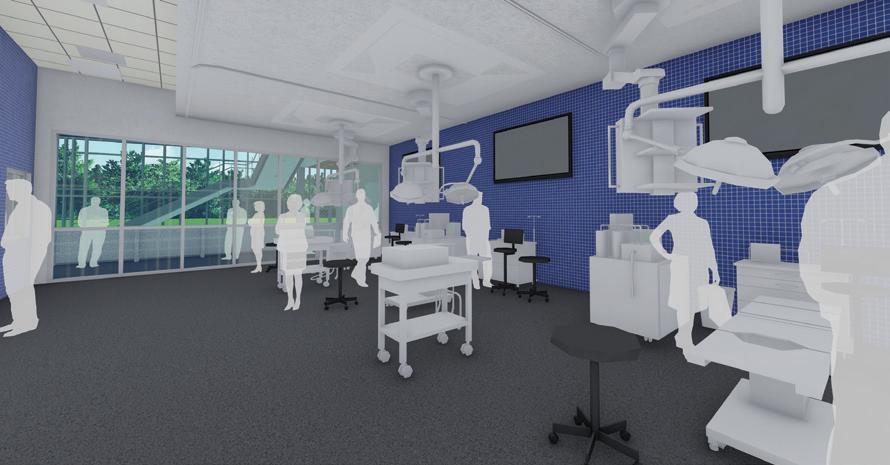
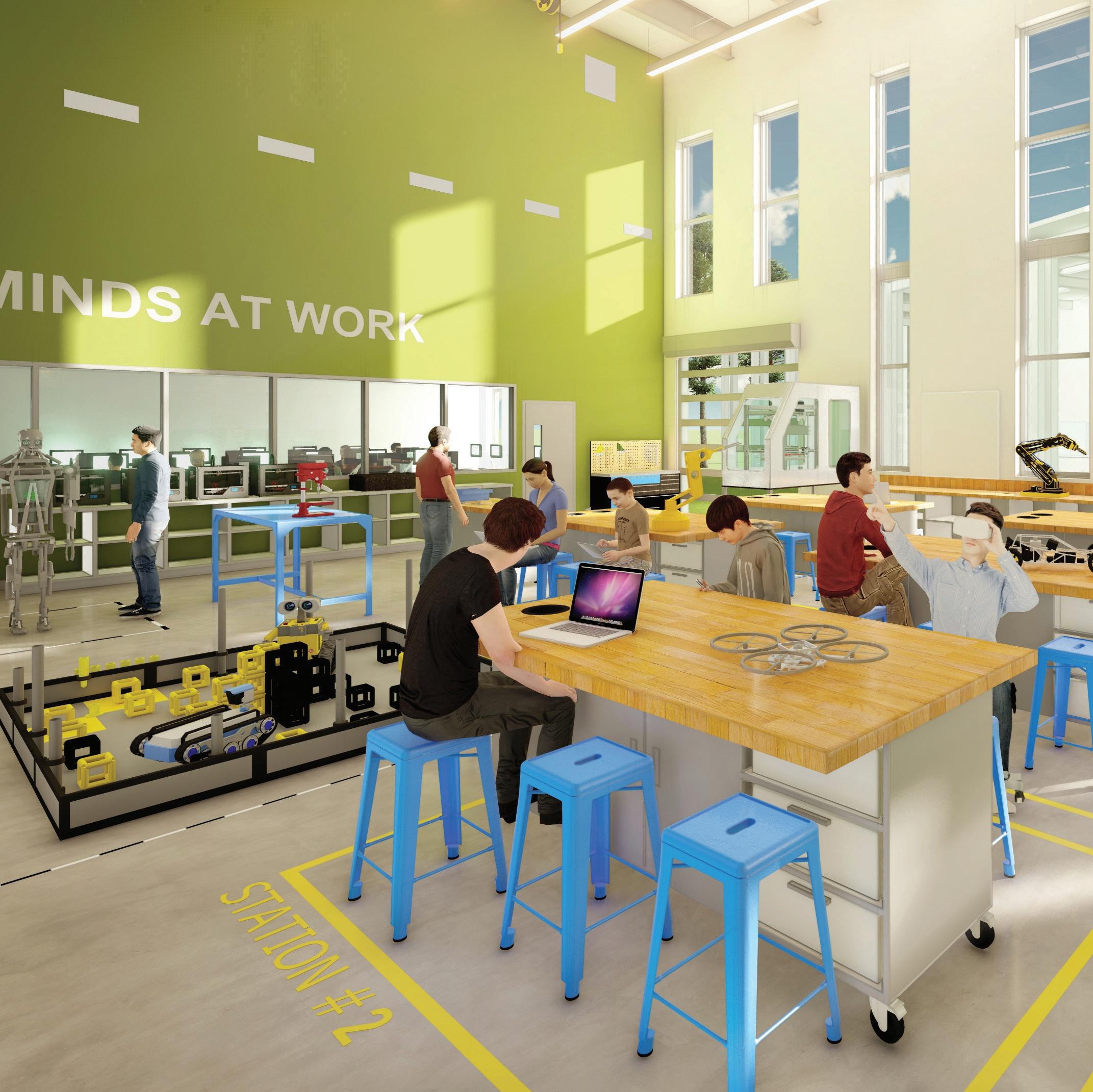
The new Kappaz Fabrication Lab (Fab Lab) is a flex lab for any faculty member who wants to incorporate fabrication into their class. The lab allows students to have access to tools not usually available where they can work on Capstone projects or engineering assignments or where the robotics team can even create custom parts for their devices. The lab has CNC mills and routers, multiple 3-D printers for both Resin and FDM printing, a laser cutter, an in-progress welding machine and programmable robotic arms to learn about manufacturing and fabrication. The lab is used by multiple classes such as CAD Modeling, Engineering, Robotics, and 3D Art. The goal is to allow students to use the lab in their free periods for other forms of creativity as well. It has also provided art students with advanced equipment to explore new mediums in their work.
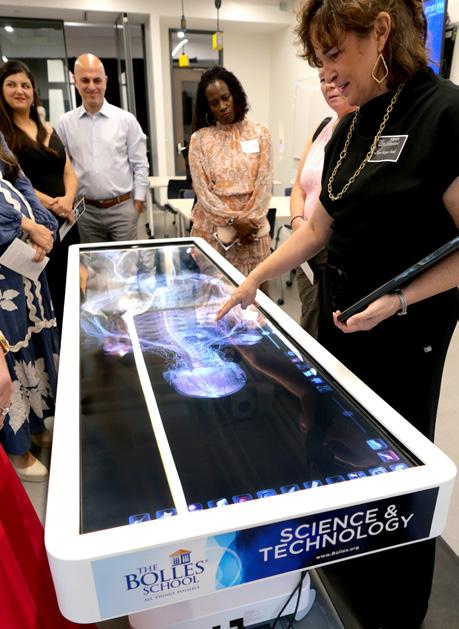
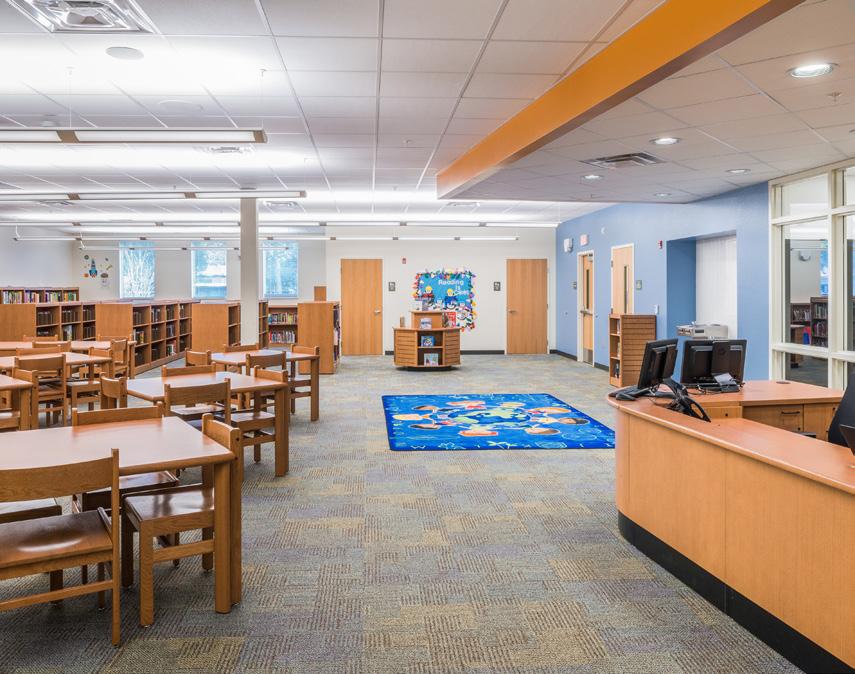
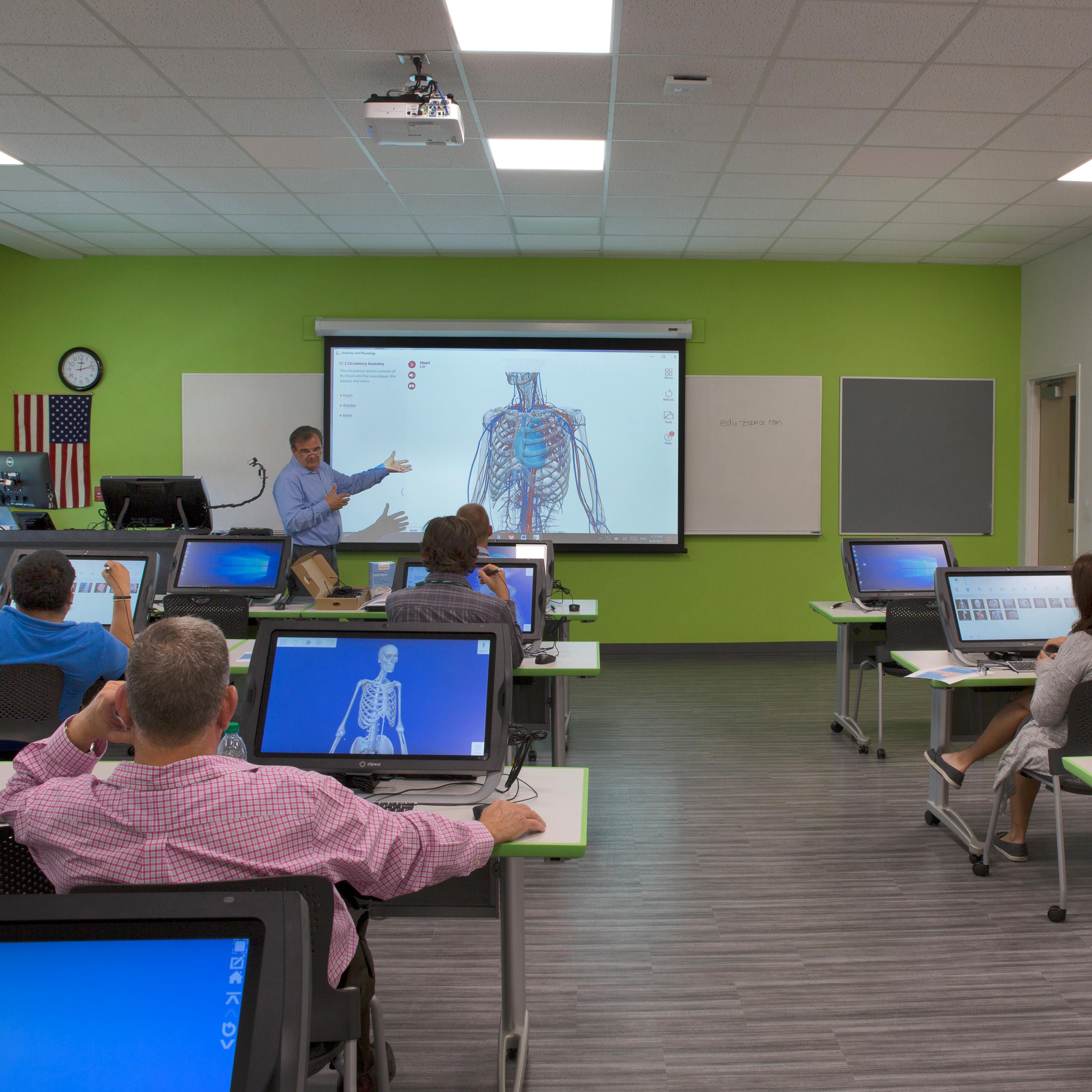
The new Anatomage table in the Biology Lab significantly enhances the classroom by providing an interactive and immersive learning experience that traditional models and textbooks cannot match. This digital anatomy table allows students to explore the human body in three dimensions, facilitating a deeper understanding of complex structures and systems. High-resolution imaging and detailed anatomical representations enable students to manipulate and examine various organs and tissues, promoting active engagement and critical thinking
SUSTAINABLE INITIATIVES
MINDFUL MATERIALITY
Materiality can affect the visual and mental perception of space. In the contemporary architectural language of the Sanchez Fender CFI, wood is incorporated because it is associated with coziness, harmony and simplicity. Large fields of glazing are intended to not only conjure a futuristic vision into the 21st century but also extend views through the building towards the idyllic St. Johns River, drawing nature into the building and flooding the facility with natural light. The thoughtful selection of materials also contributes towards a healthy and harmonious environment while connecting to the historic context of the site.
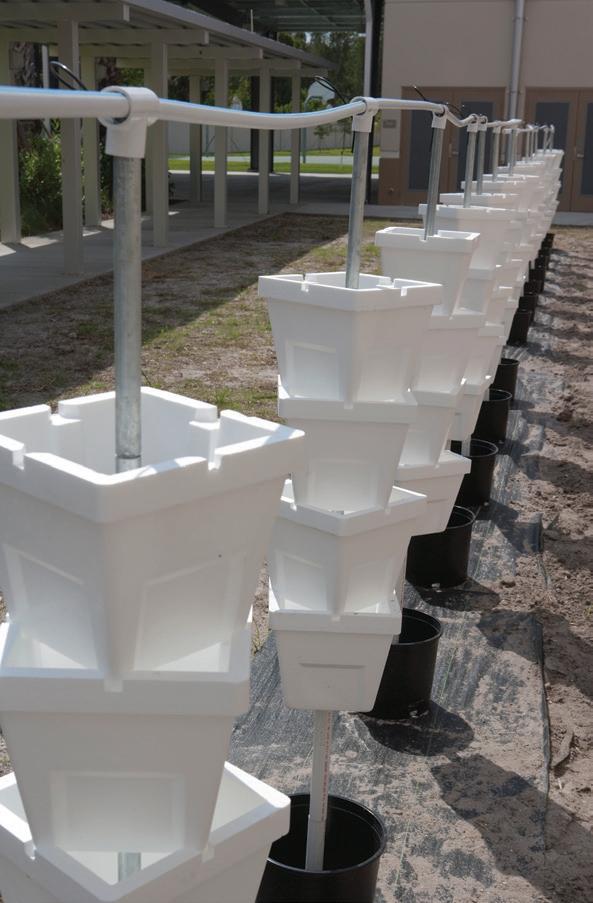
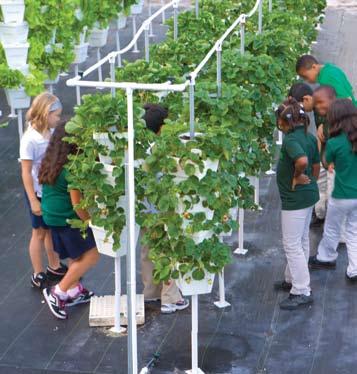
Two new hydroponic rooftop tower gardens are located on the third floor. This garden provides an engaging and hands-on learning experience for students, enhancing their understanding of environmental sustainability. By cultivating plants without soil, students explore topics such as plant biology, nutrient cycles, and water conservation in a practical setting.
The facility utilizes a high-performance building envelope optimizing energy efficiency and minimizing environmental impact. By incorporating materials with superior insulation properties and high-performance glazing, we limited thermal bridging and air leakage, which can lead to energy loss. By promoting natural daylighting and improving indoor air quality, a high-performance building envelope such as this not only reduces operational energy consumption but also creates a healthier, more comfortable living and working environment.
Due to lack of available site area for a solar farm on campus and through a generous donation in 2021, the Bolles School launched a purchase power agreement (PPA) which allows Bolles to buy into a shared solar system. The historic Bolles Hall was the first fully solar energy dependent building on campus and now the Sanchez Fender CFI is the next.
AN “AGRIHOOD”-INSPIRED DESIGN WHERE LEARNING GROWS
LOCATION: 19830 Cane Field Tr, Loxahatchee, FL 33470
ARCHITECT: Zyscovich
CONSTRUCTION MANAGER: Moss & Associates SIZE: 95,900 GSF
CAPACITY: 971 Student Stations
BUDGET: $41.7 Million
CONSTRUCTION BEGAN: May 2024
COMPLETION: July 2025
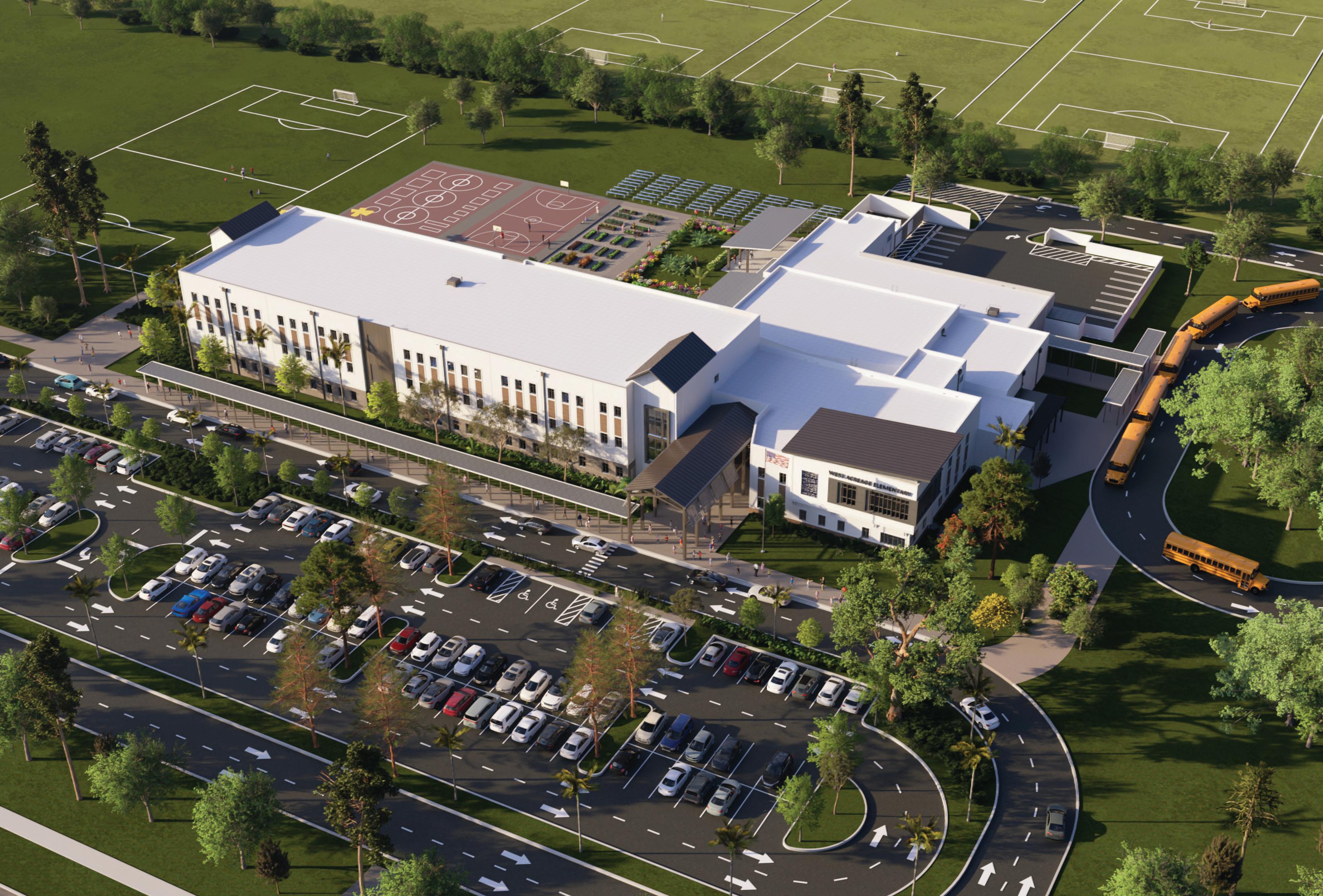
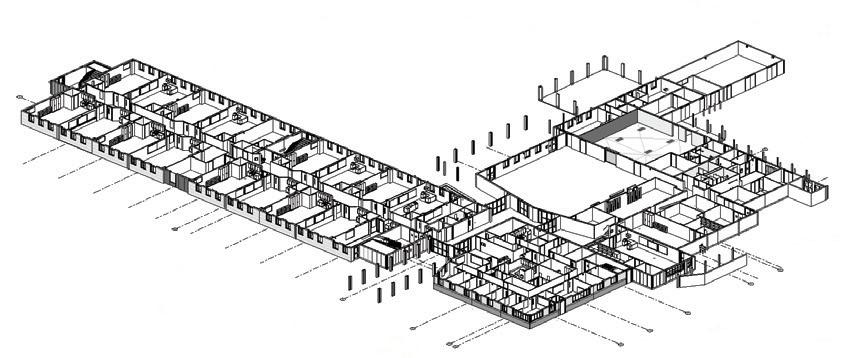
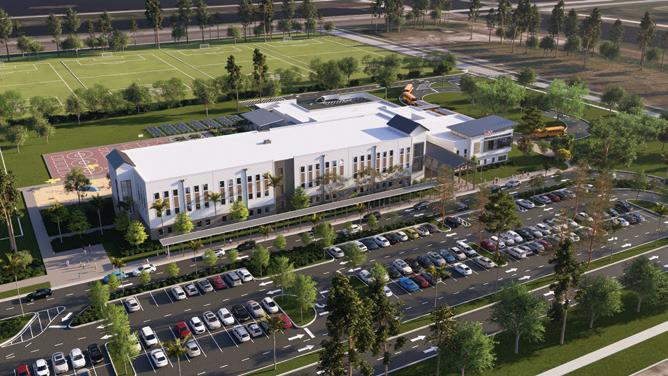
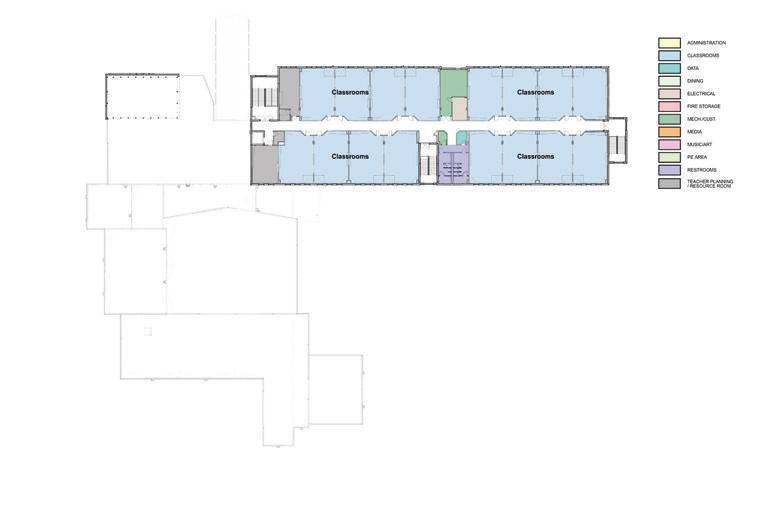
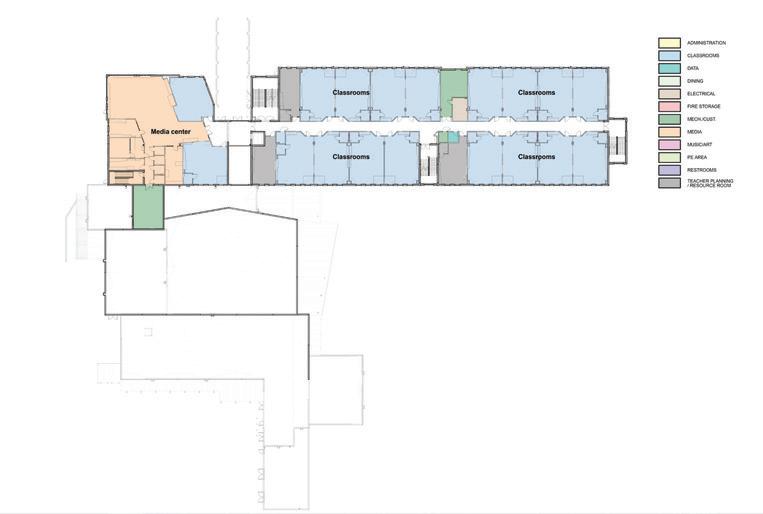
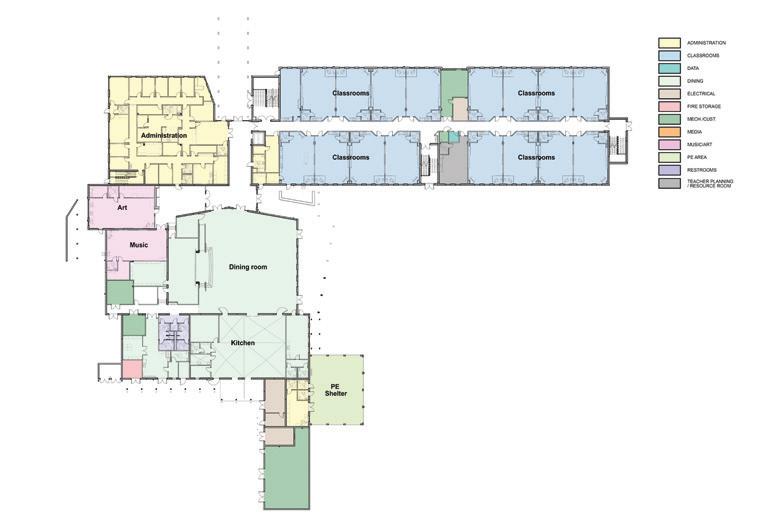
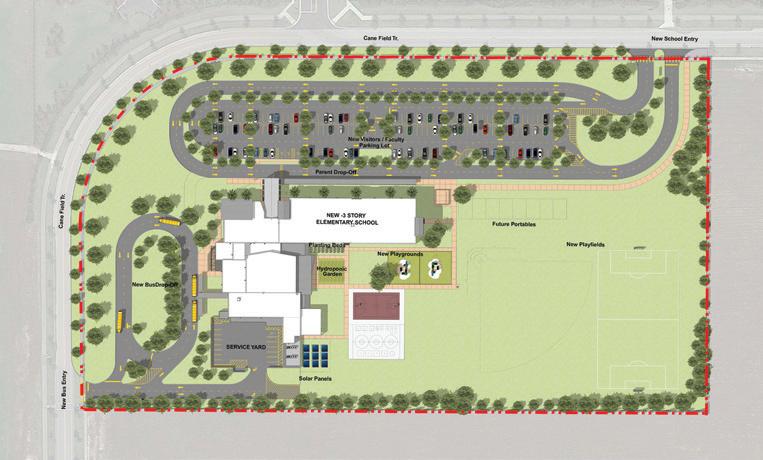
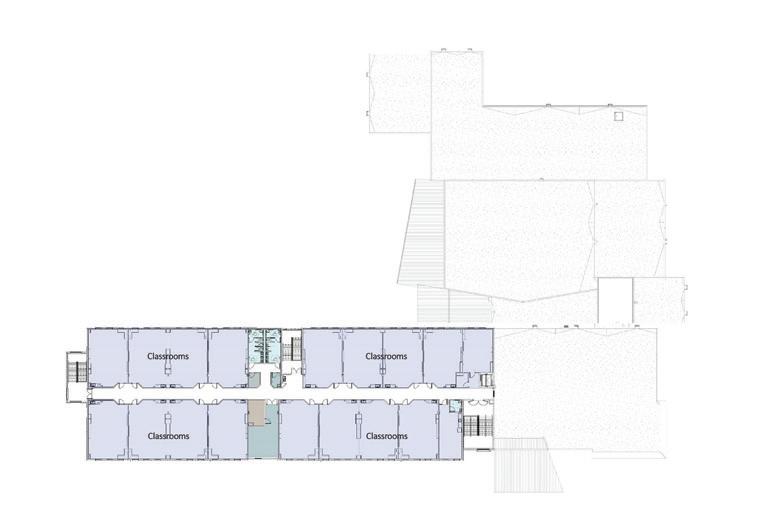
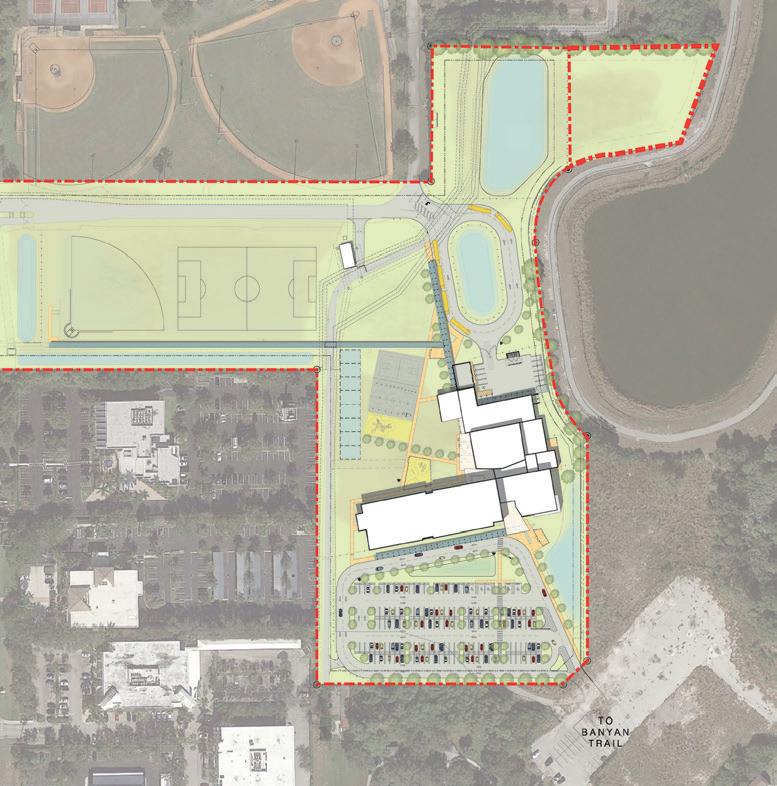
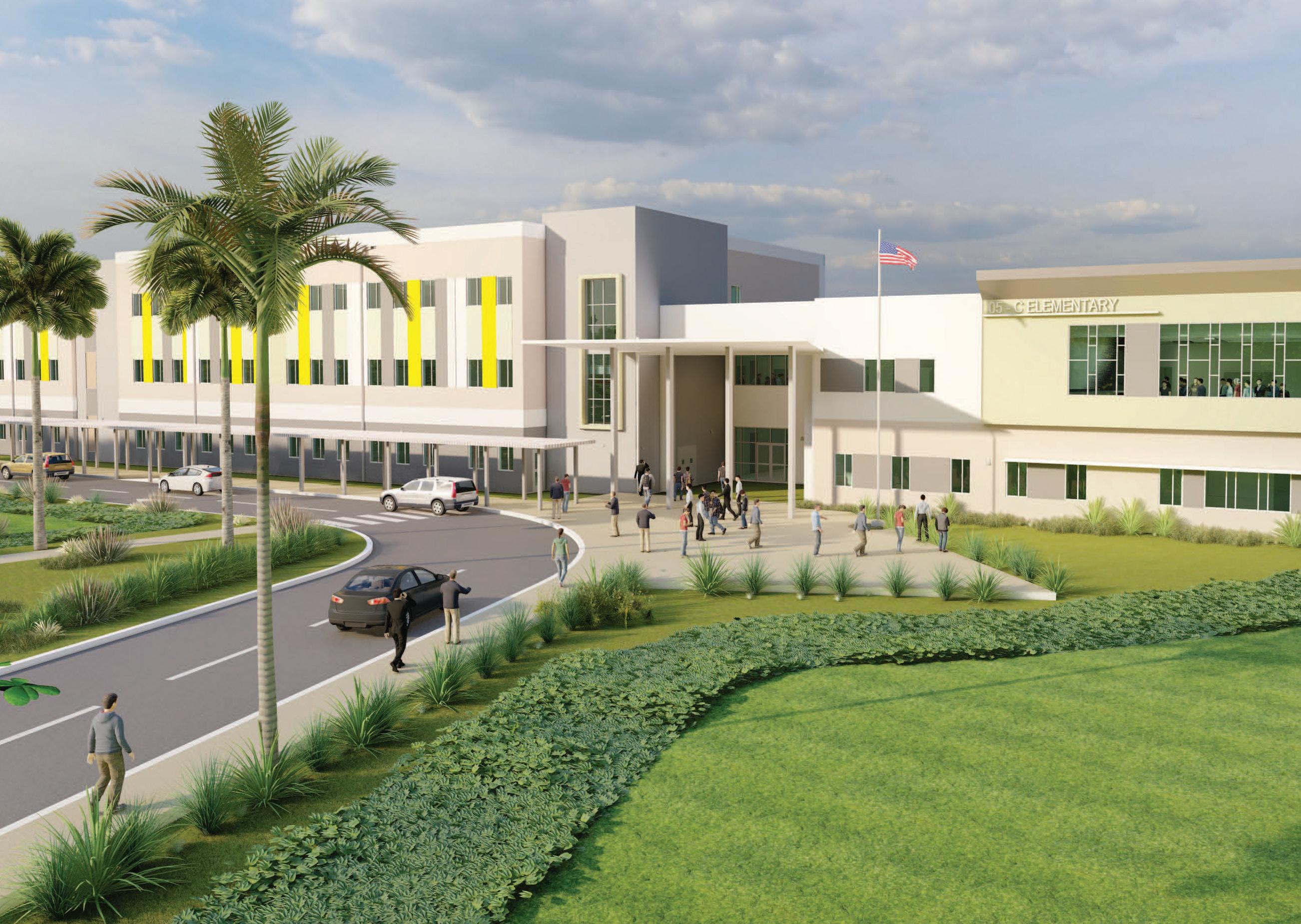
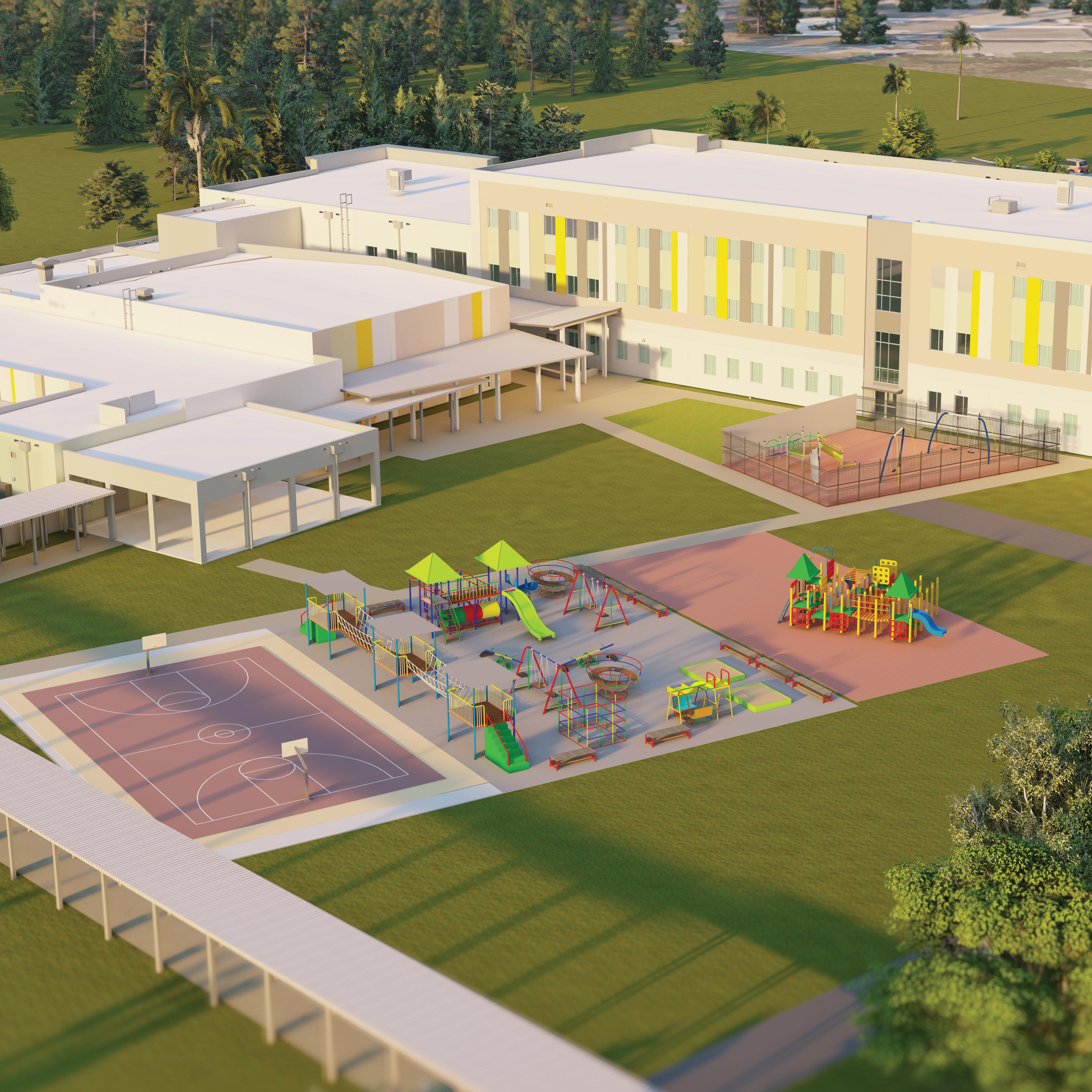
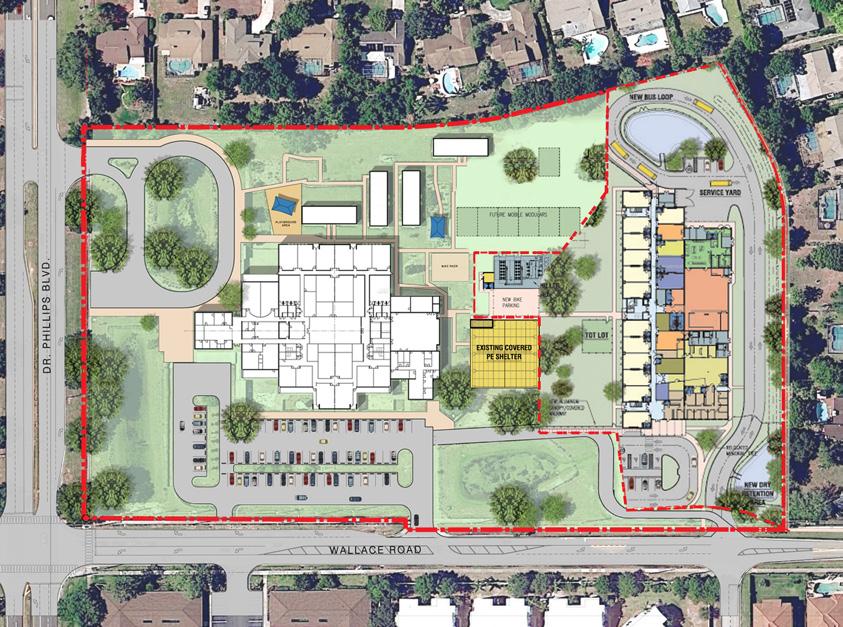
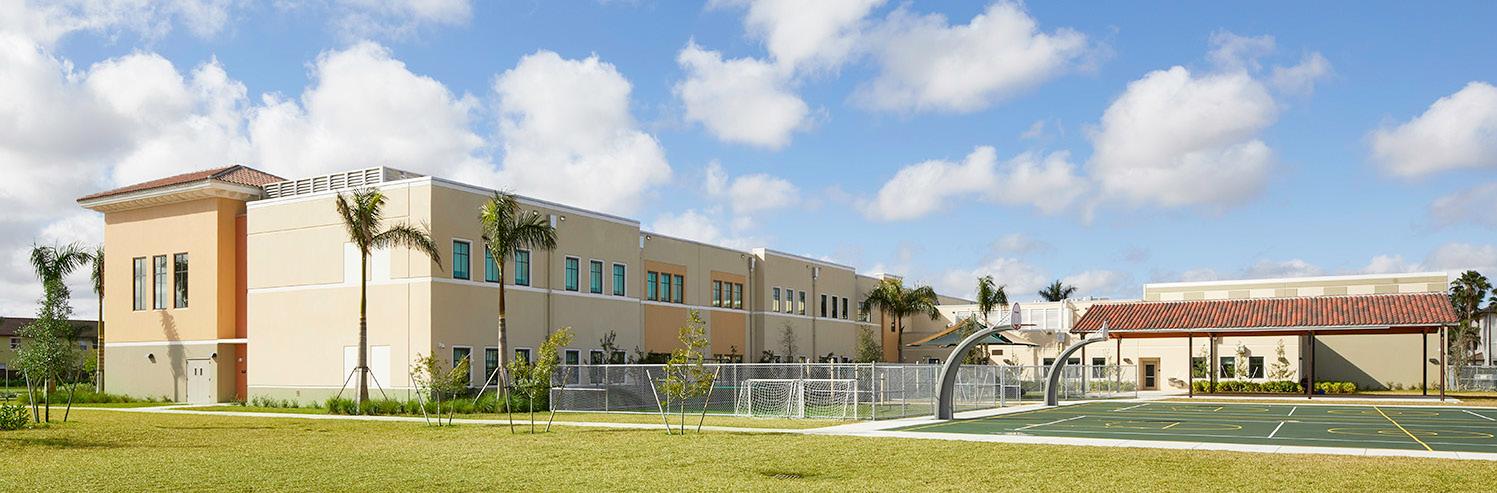
School districts across Florida are facing land scarcity issues. At Saddle View Elementary School, we were again challenged to work within a super compact site. In order to accommodate the desired student population on this site an extremely efficient layout was devised with a very low square 97 square foot-per-student station ratio. The design was also mindful of creating an easy to build/ easy to operate facility in order to target construction in under 300 days. Most importantly this campus will be safe and secure or all future students with it’s secure perimeter and single point of entry.
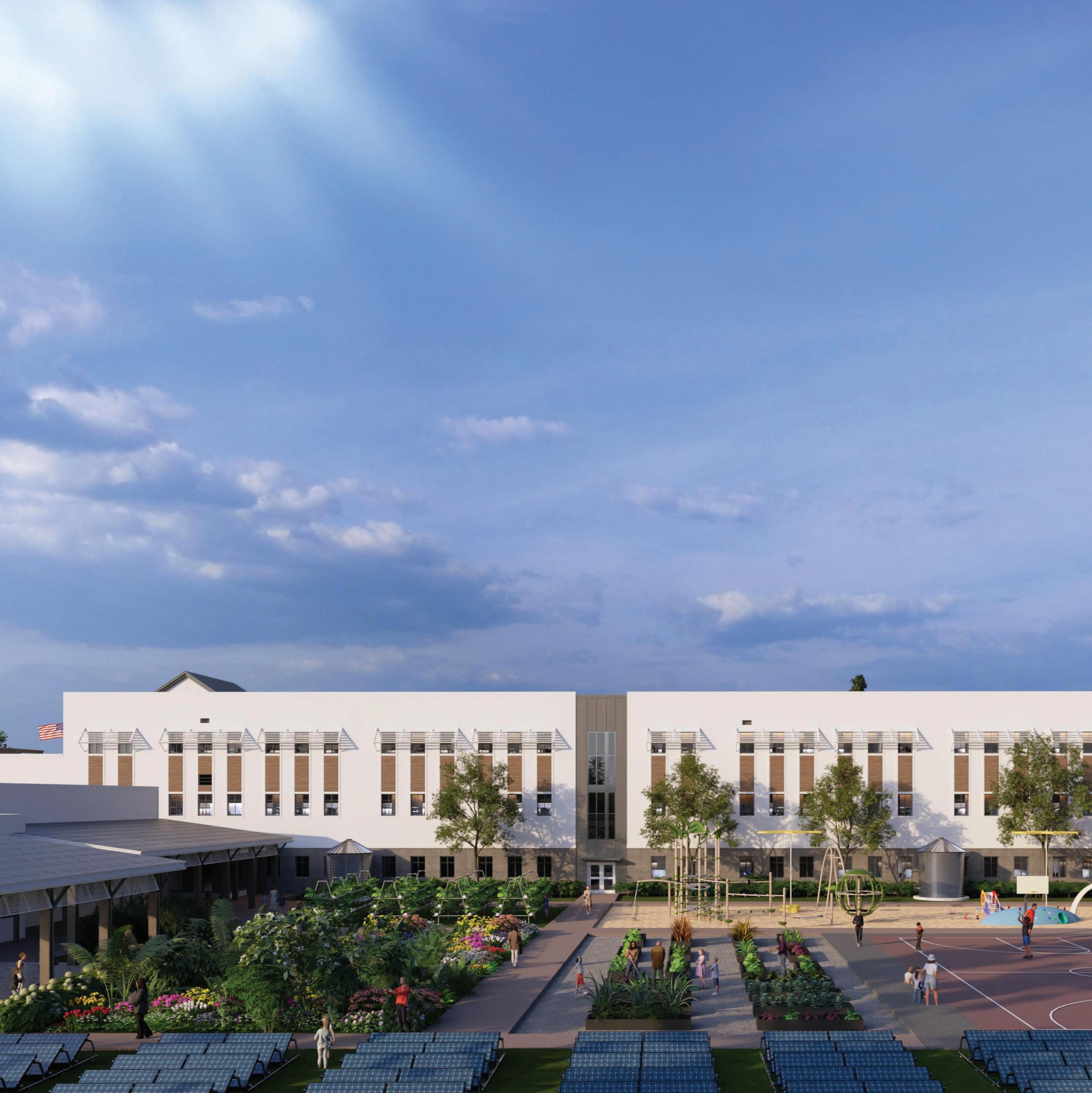
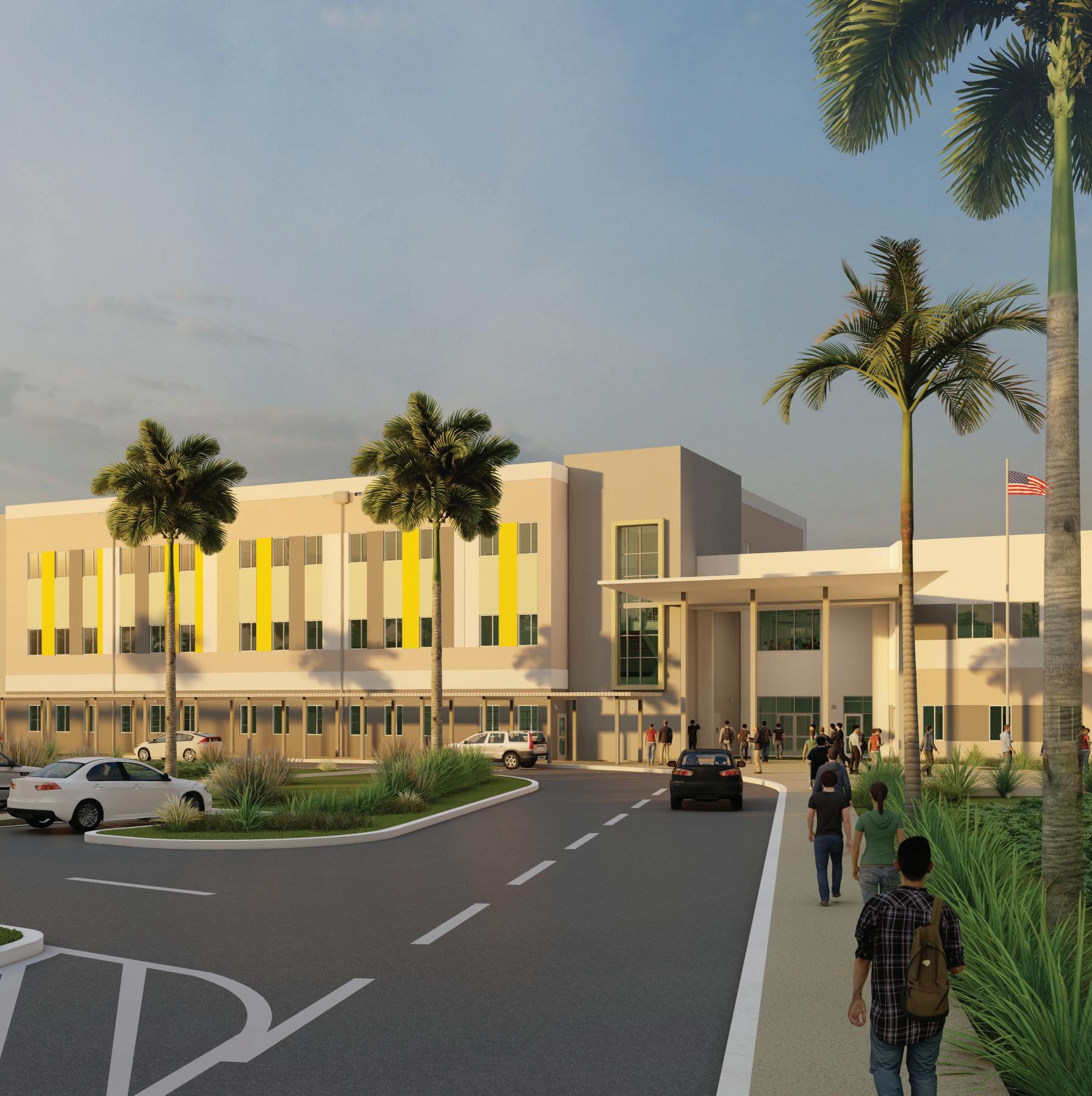
The siting of the new elementary school in close proximity to the Arden Community Farm and Lakeside Clubhouse contributed significantly to the design and material palette of the new school: neighborhood context was a key factor in the design. Arden’s community Barnhouse is surrounded by sustainable agriculture and community living. An “agrihood” like Arden’s integrates agricultural practices into the community layout, promoting local food production and environmental stewardship. The Barnhouse in this community typically serves as a central hub for activities, events, and gatherings, embodying the rustic charm of the area. Residents often engage in community farming, gardening, and other eco-friendly practices, fostering a close-knit environment focused on sustainability and shared resources.
SADDLE VIEW ELEMENTARY
POWERING LEARNING THROUGH TECHNOLOGY
INNOVATIVE ENHANCEMENTS
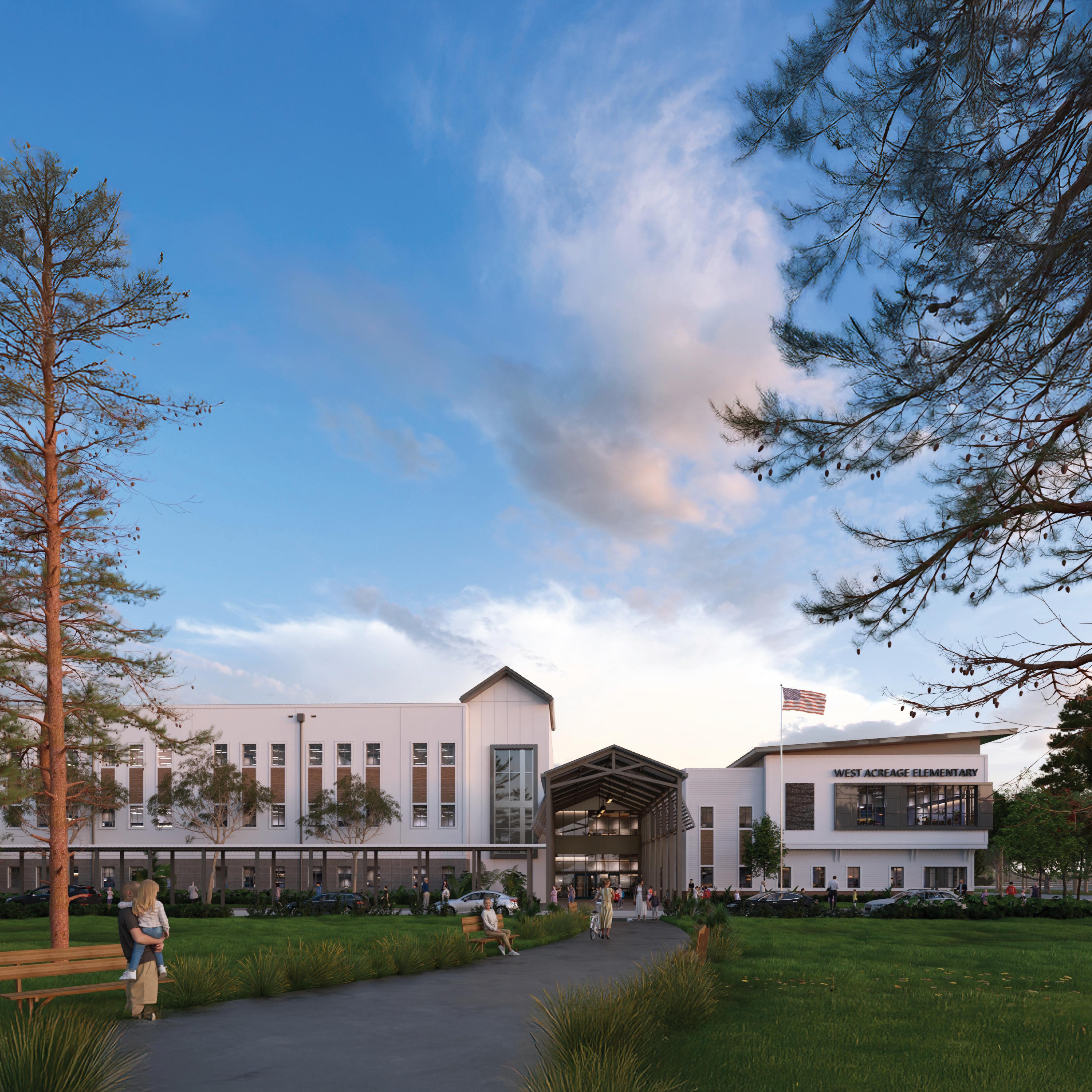
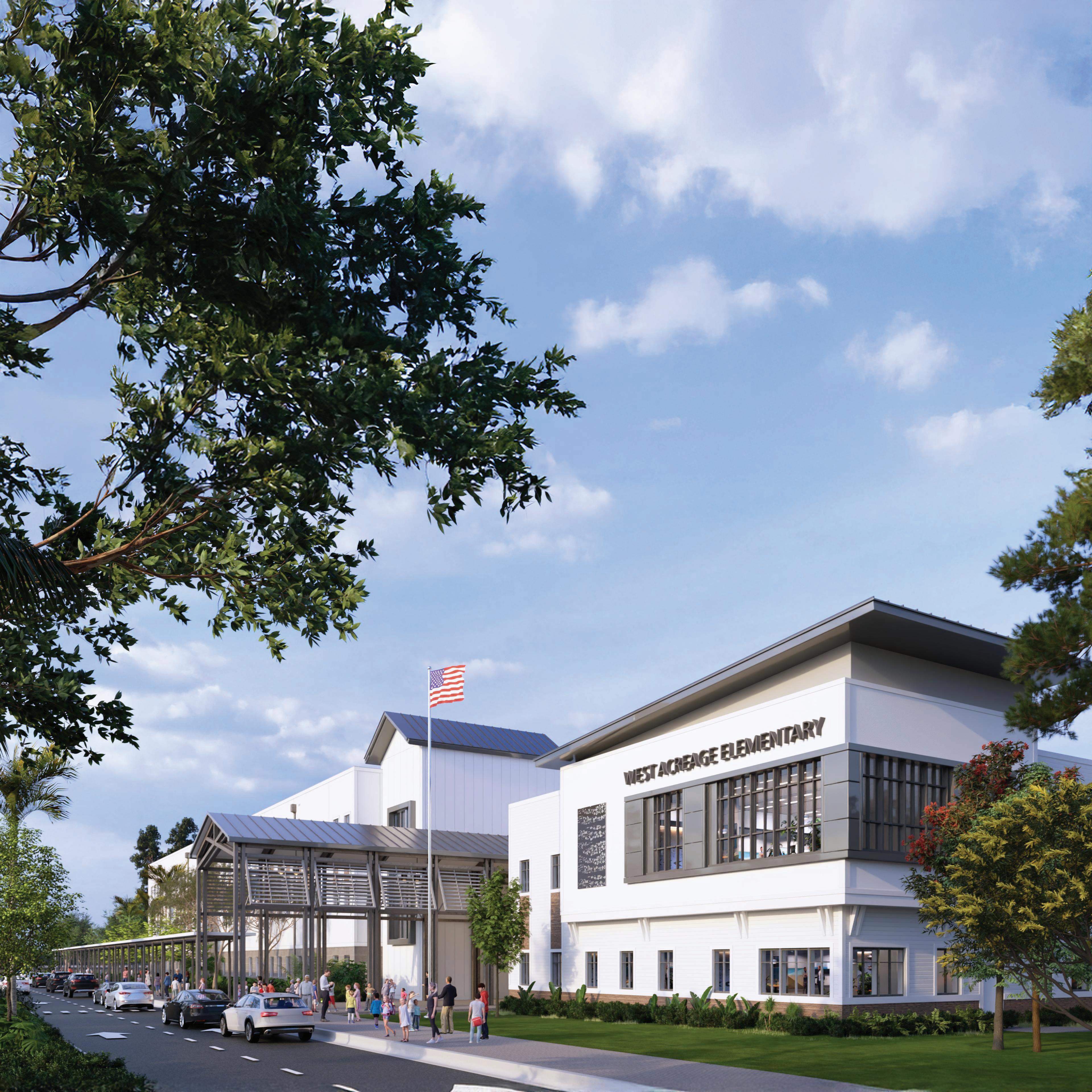
West Acreage Elementary School incorporates several innovative features designed to enhance the educational experience. Key elements include:
• Flexible Learning Spaces which are adaptable for various teaching methods, allowing for collaborative work and individual study.
• Large windows and skylights to maximize natural light, creating a more inviting and productive environment.
• Use of solar panels, energy-efficient systems, and sustainable materials to reduce the school’s carbon footprint.
• Outdoor Learning Spaces that connect students with nature, such as gardens or outdoor classrooms.
• Classrooms equipped with smartboards, high-speed internet, and access to digital resources to enhance learning.
GARDEN & SHARED SPACES INSPIRE LEARNING
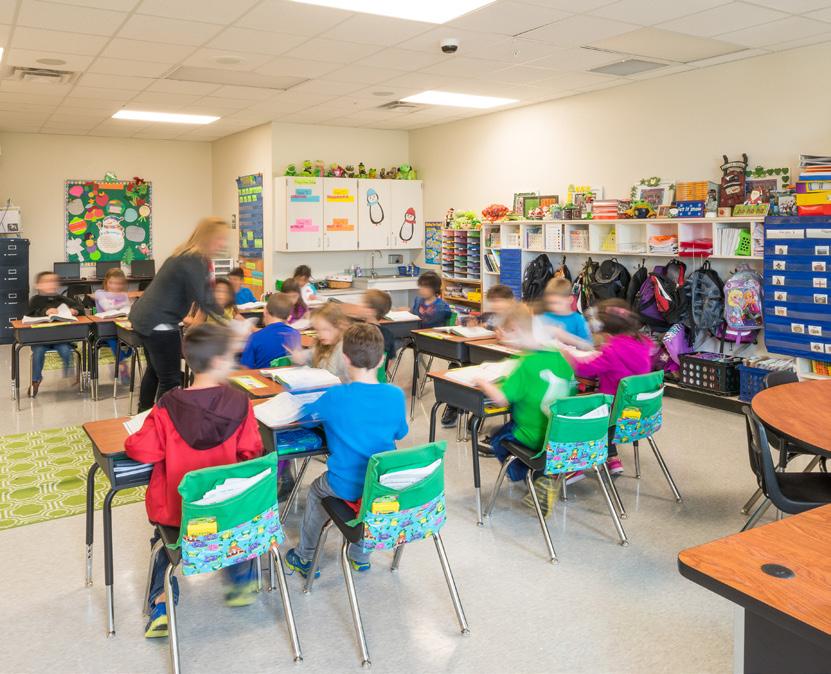
West Acreage Elementary School aims to provide a challenging and comprehensive education that fosters hands-on learning and a commitment to the whole child. The design of the new elementary school supports West Acreage’s program through several key features:
• Classrooms are designed to be adaptable, allowing for various teaching styles and collaborative learning. This flexibility supports the inquiry-based approach.
• The school includes state-of-the-art technology, promoting digital literacy and enhancing research capabilities.
• Common areas and collaborative spaces encourage teamwork and community engagement.
• Environmentally friendly design elements align with a focus on sustainability and responsibility towards the environment.
• The plan allows for spaces which cater to diverse learning needs, ensuring all students can engage fully with the curriculum
SUSTAINABLE INITIATIVES
FLEXIBLE, SUSTAINABLE SPACES FOR MORE MODERN EDUCATION
West Acreage Elementary School is designed to meet Green Globes sustainable building standards. Sustainable features include:
• Native/low water plants – reduce water consumption
• Low Impact Design (LID) stormwater design
• 10% more energy efficient than ASHRAE 90.1 standard
• High Efficiency Chillers (8% energy reduction)
• Light colored roof to reduce heat gain and improves energy performance
• Energy Star rated equipment
• Water saving toilets, faucets, and fixtures
• 95% of instructional spaces have natural daylighting
• Thermal efficient windows/glazing
• Fully automated building controls system
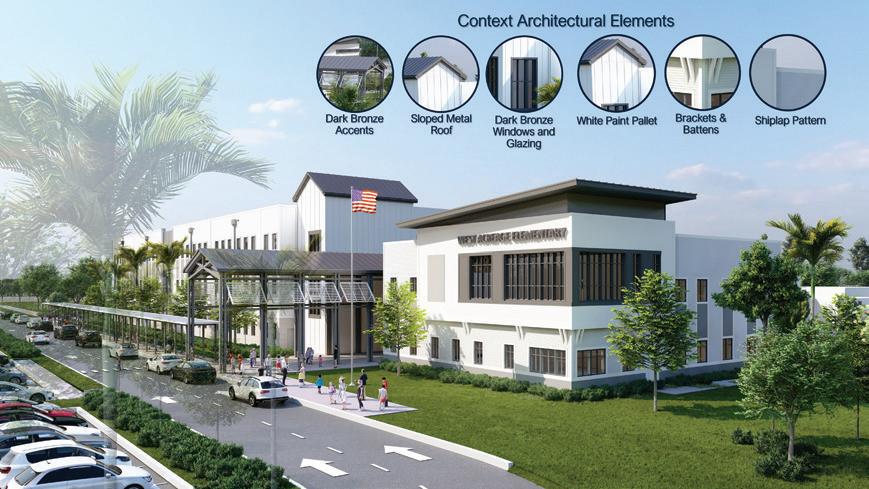
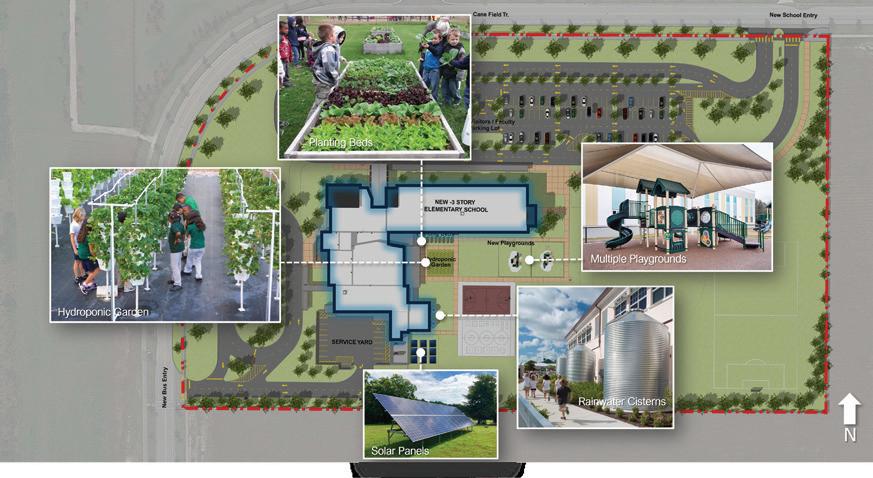
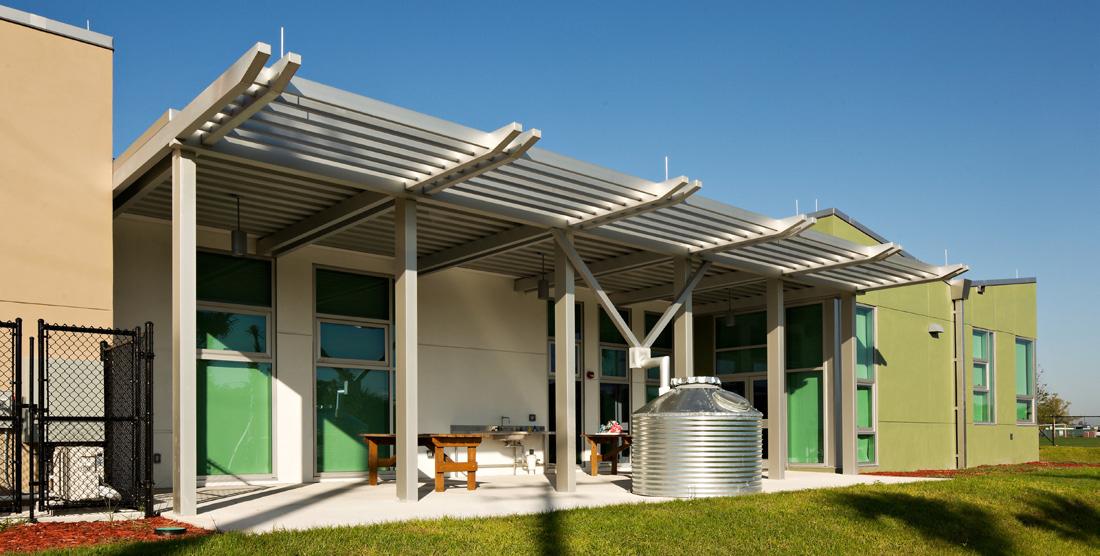
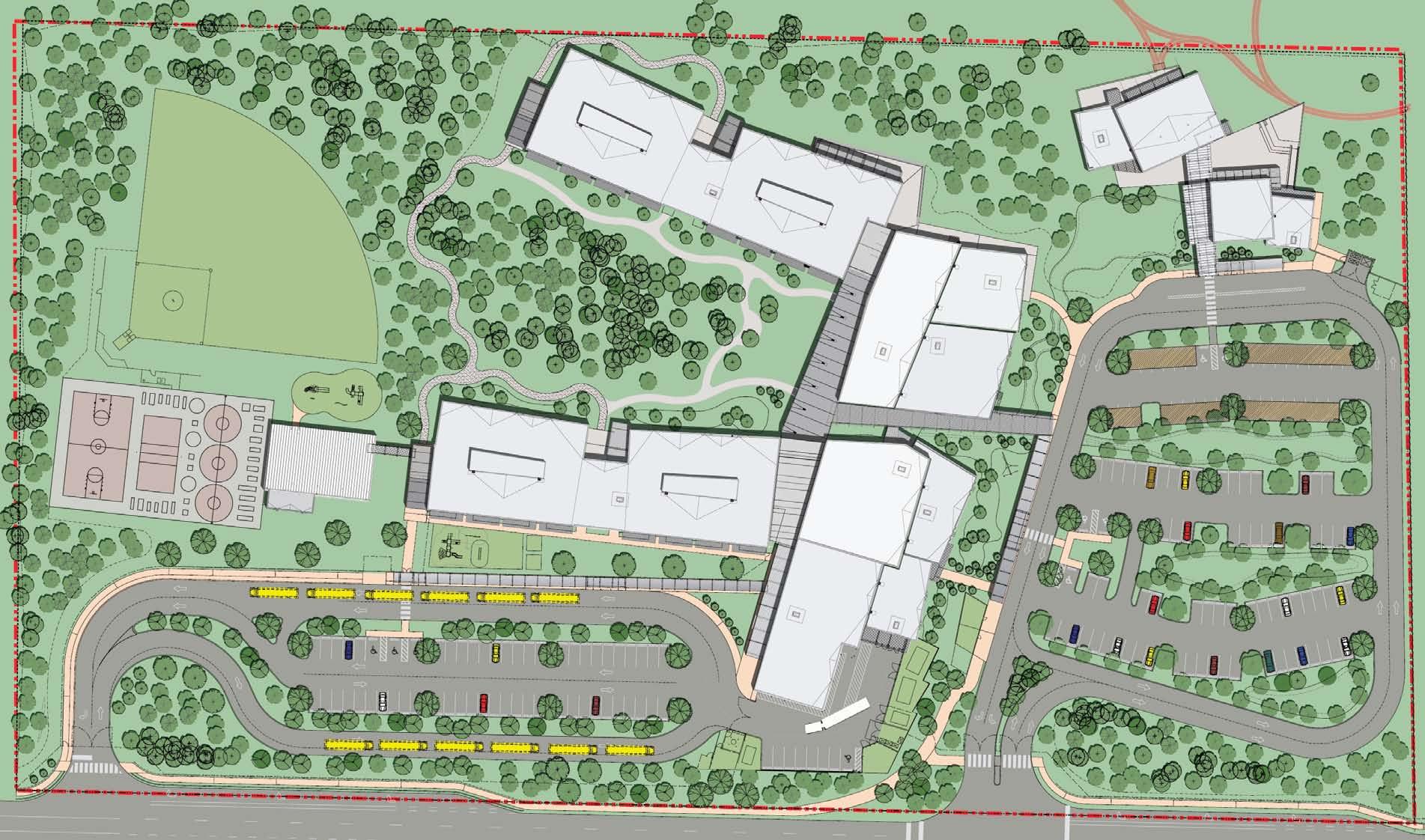
The “Agri-hood” site concept incorporates key site features such as planting bed areas, rainwater cisterns, a solar panel farm, and butterfly as well as hydroponic garden. Materiality was selected in context of the surrounding community and incorporates features such as brackets and battens, sloped metal roofs, soft paint palettes, dark bronze frames and accents, and shiplap.
HERBERT A. AMMONS MIDDLE SCHOOL
SUPER COMPACT URBAN MIDDLE SCHOOL
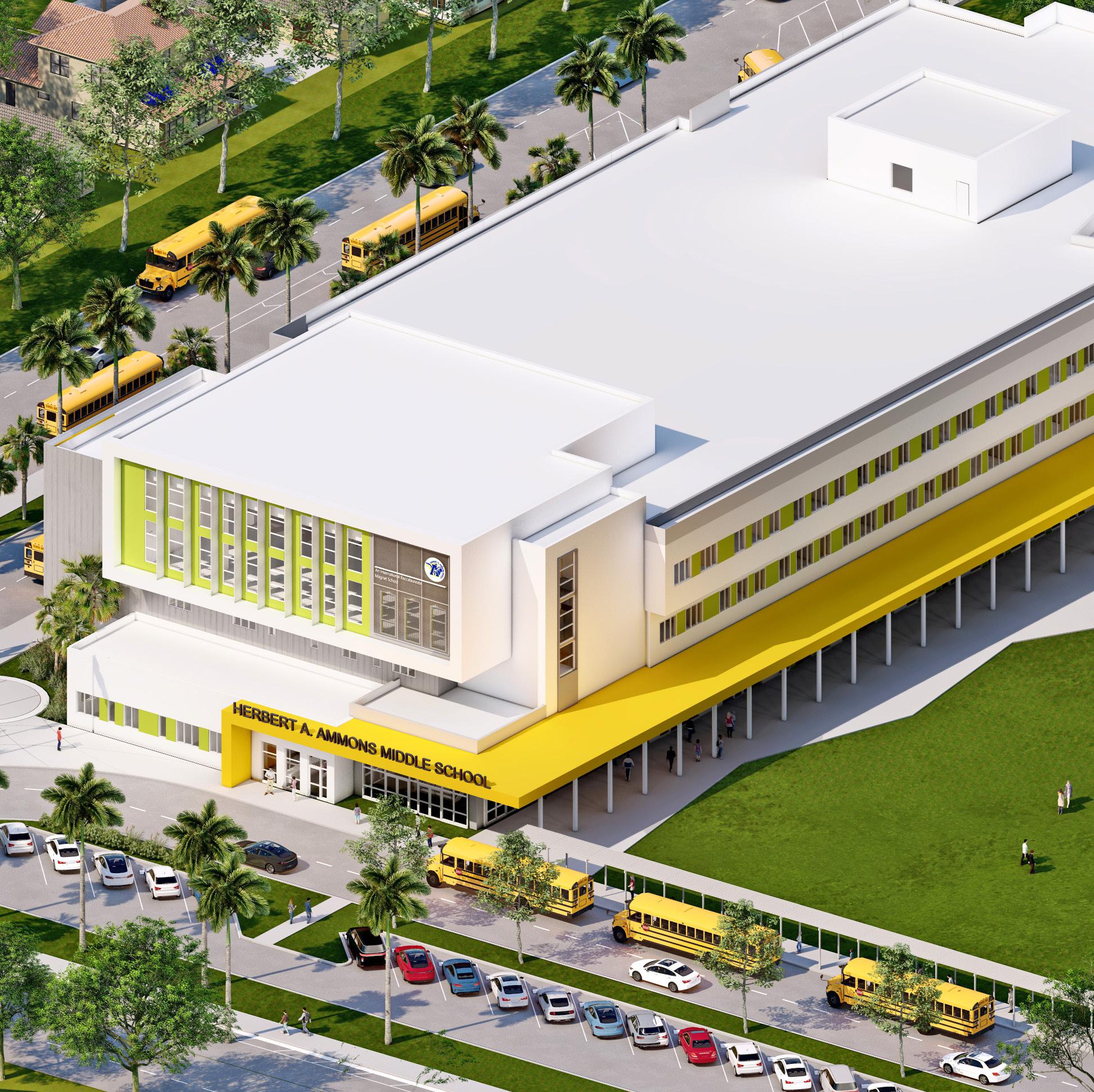
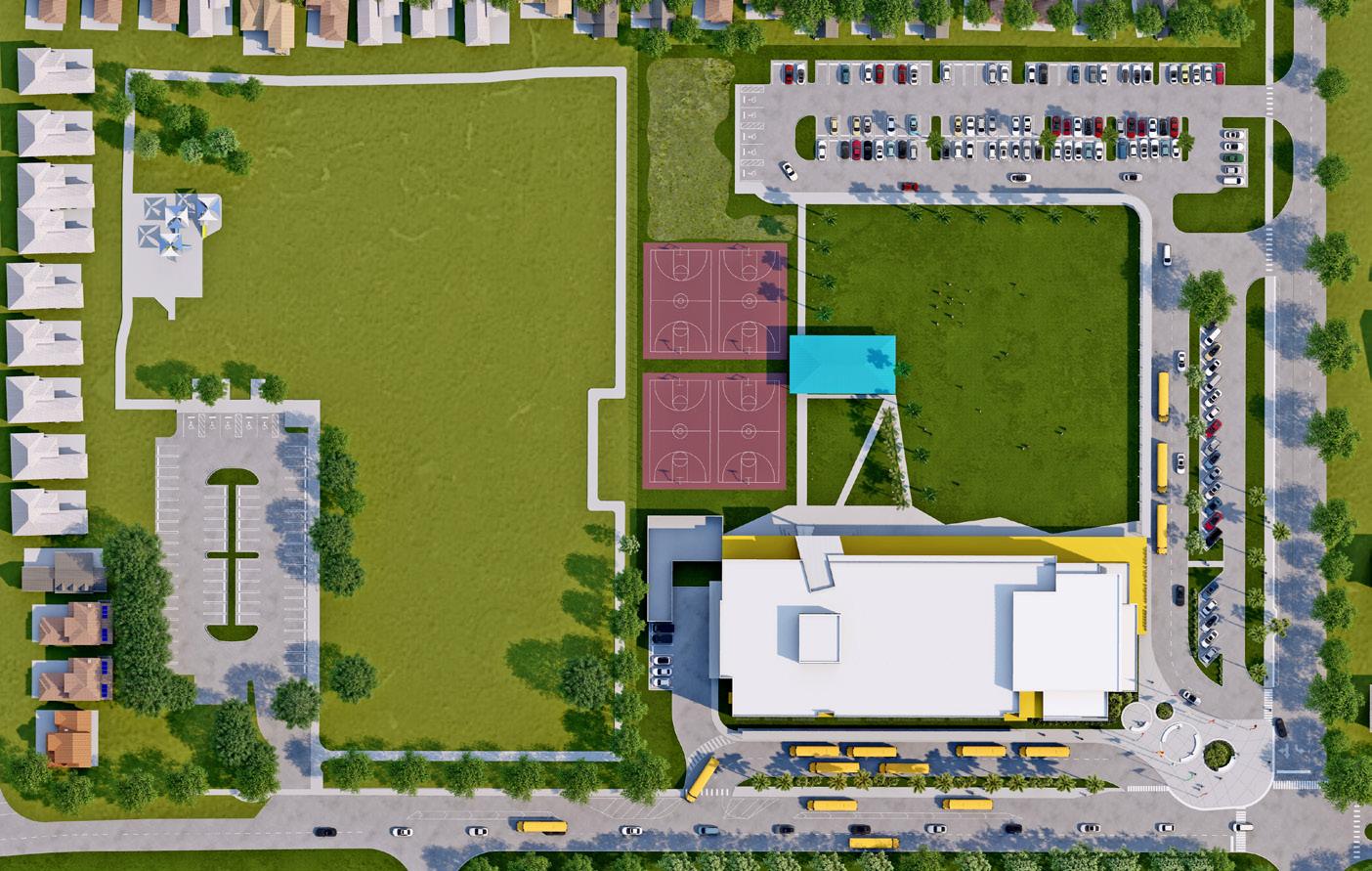
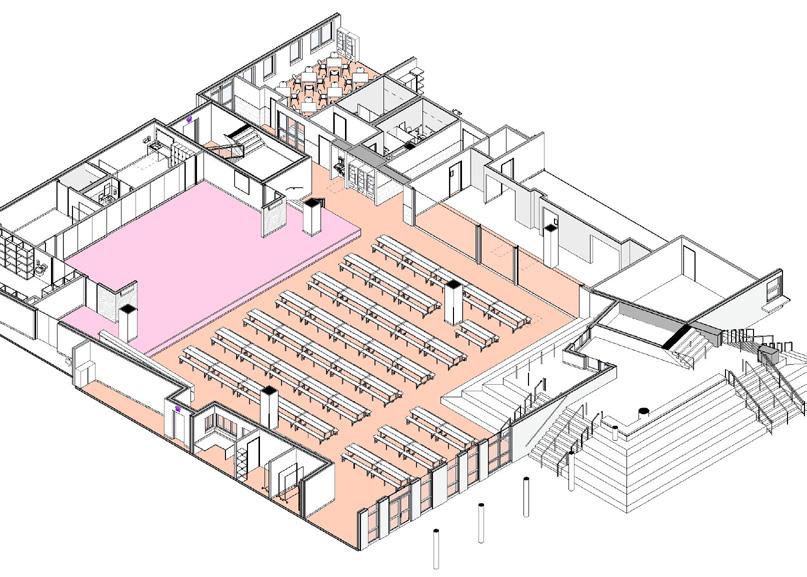
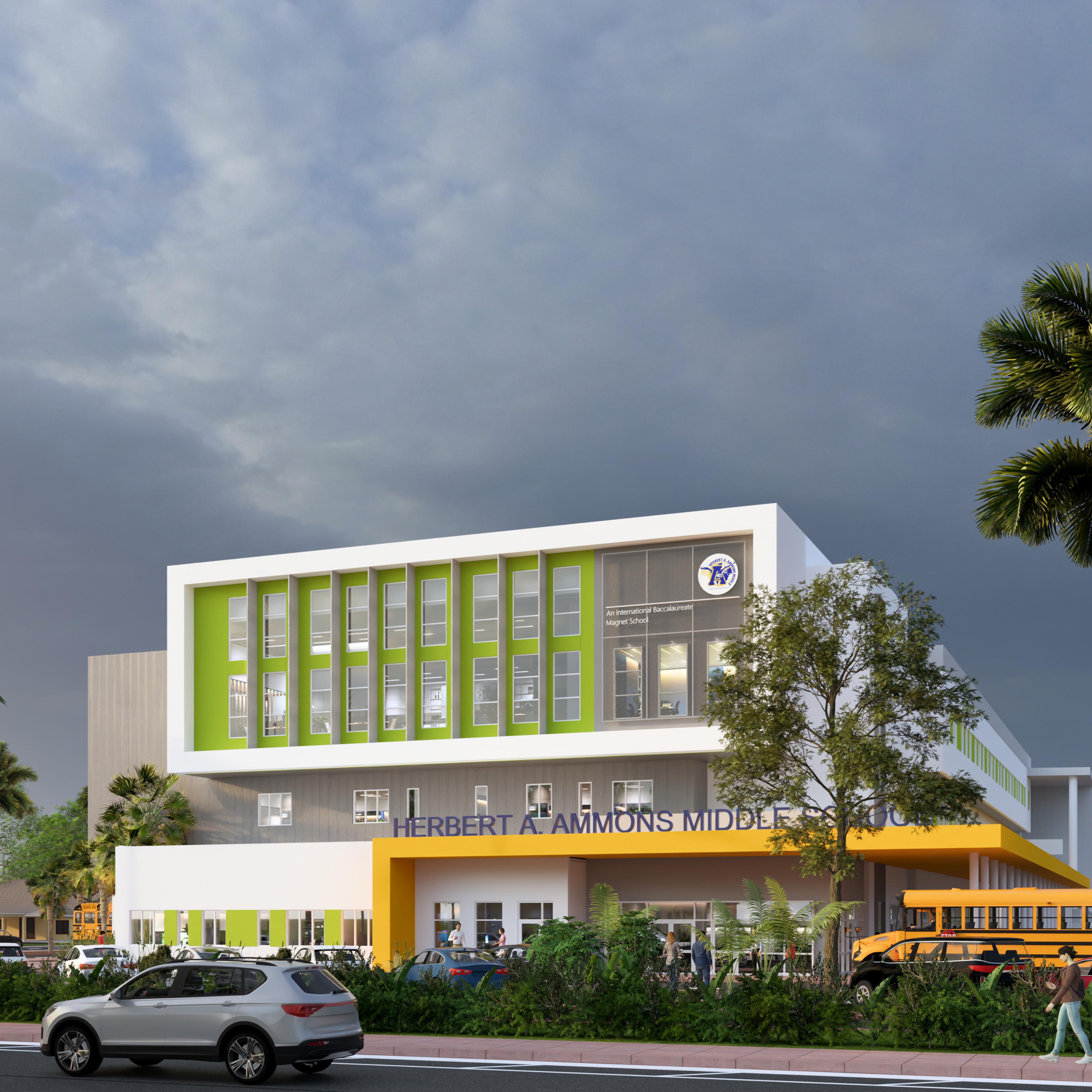
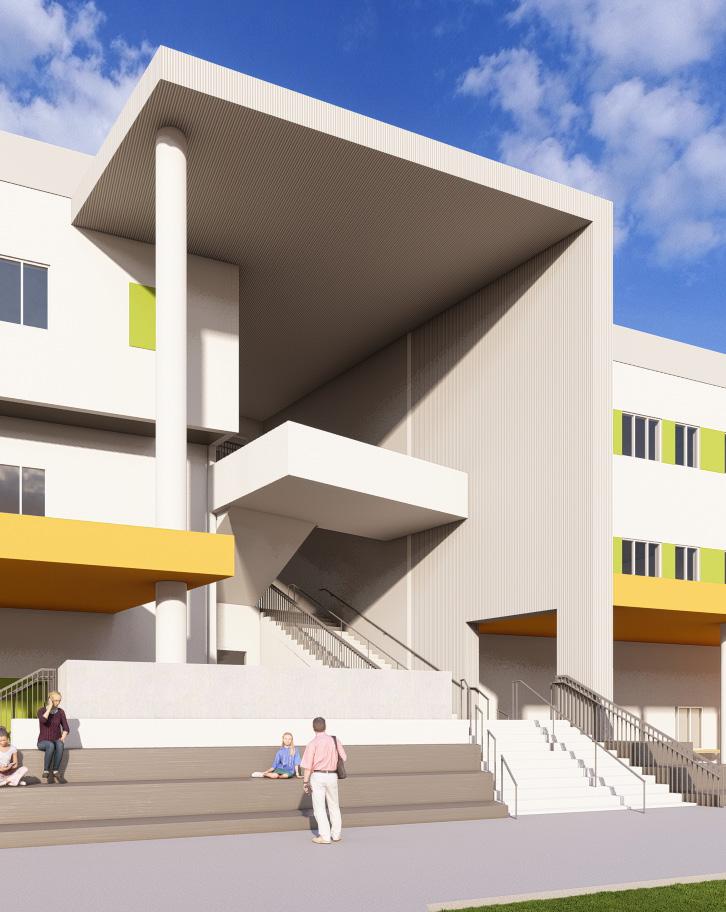
School districts such as Miami-Dade are facing land scarcity issues county wide. At Herbert A. Ammons Middle School, we were again challenged to work within a super compact site of only 6.5 acres. In order to accommodate the desired student population on this site an extremely efficient layout was devised with an 84 square foot-perstudent station ratio. The design was also mindful of creating an easy to build facility in order to target construction in under 300 days. Zyscovich was also able to create a net-zero ready school which will be easy to operate. Most importantly this campus will be safe and secure or all future students with it’s secure perimeter and single point of entry.
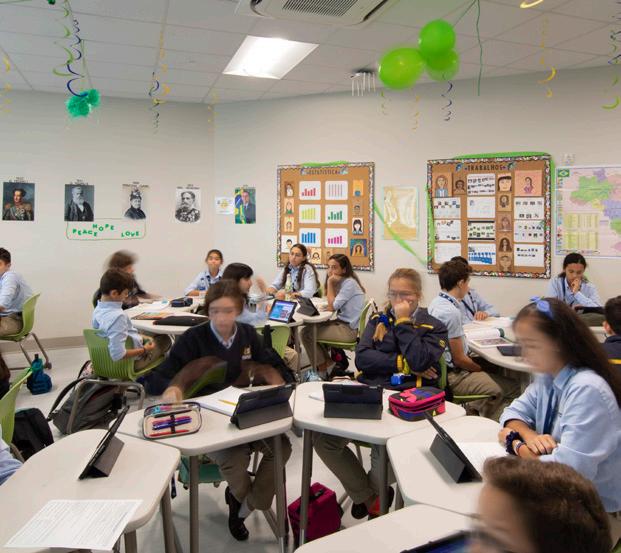
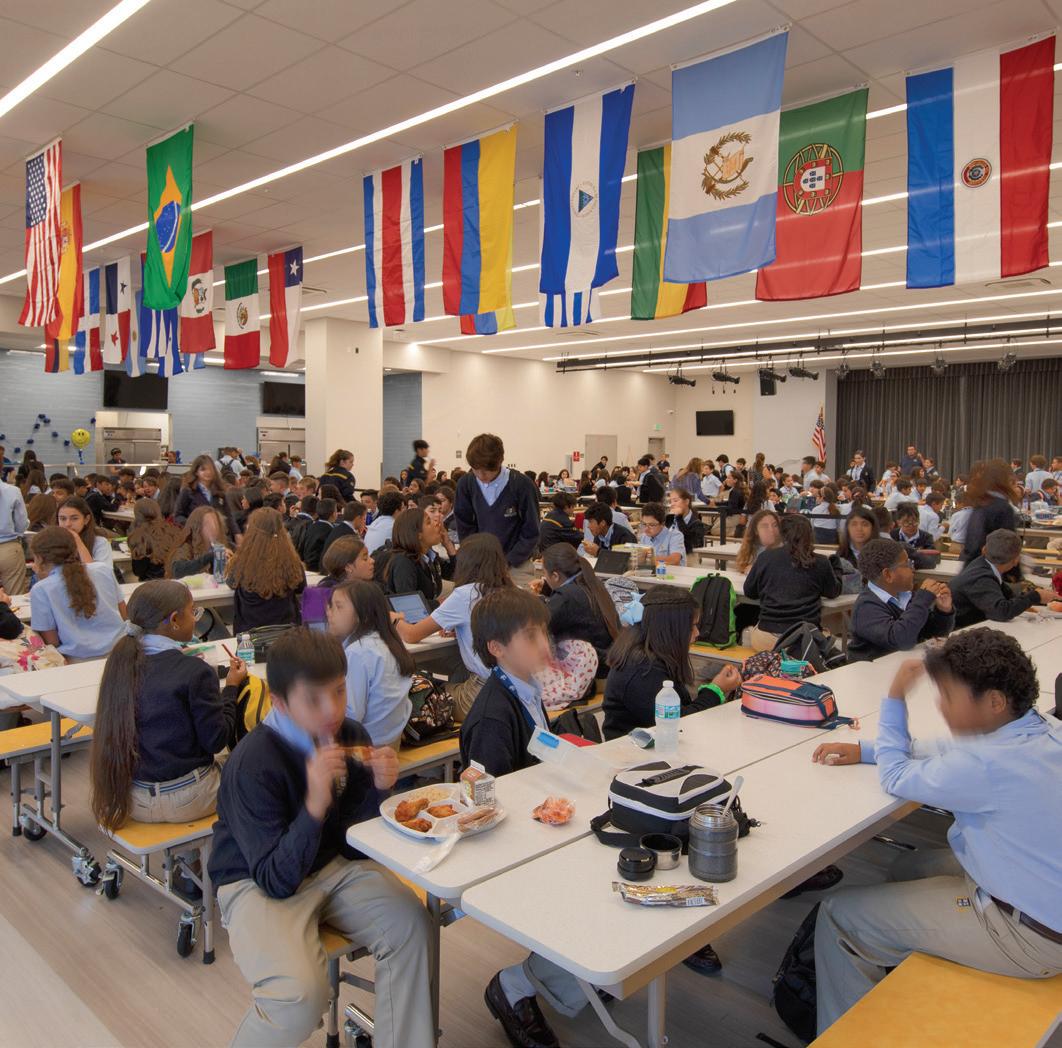
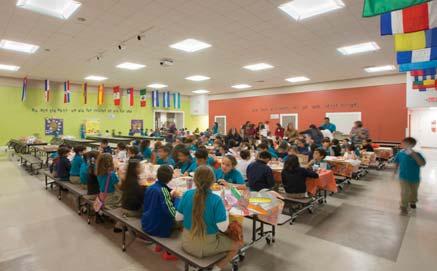
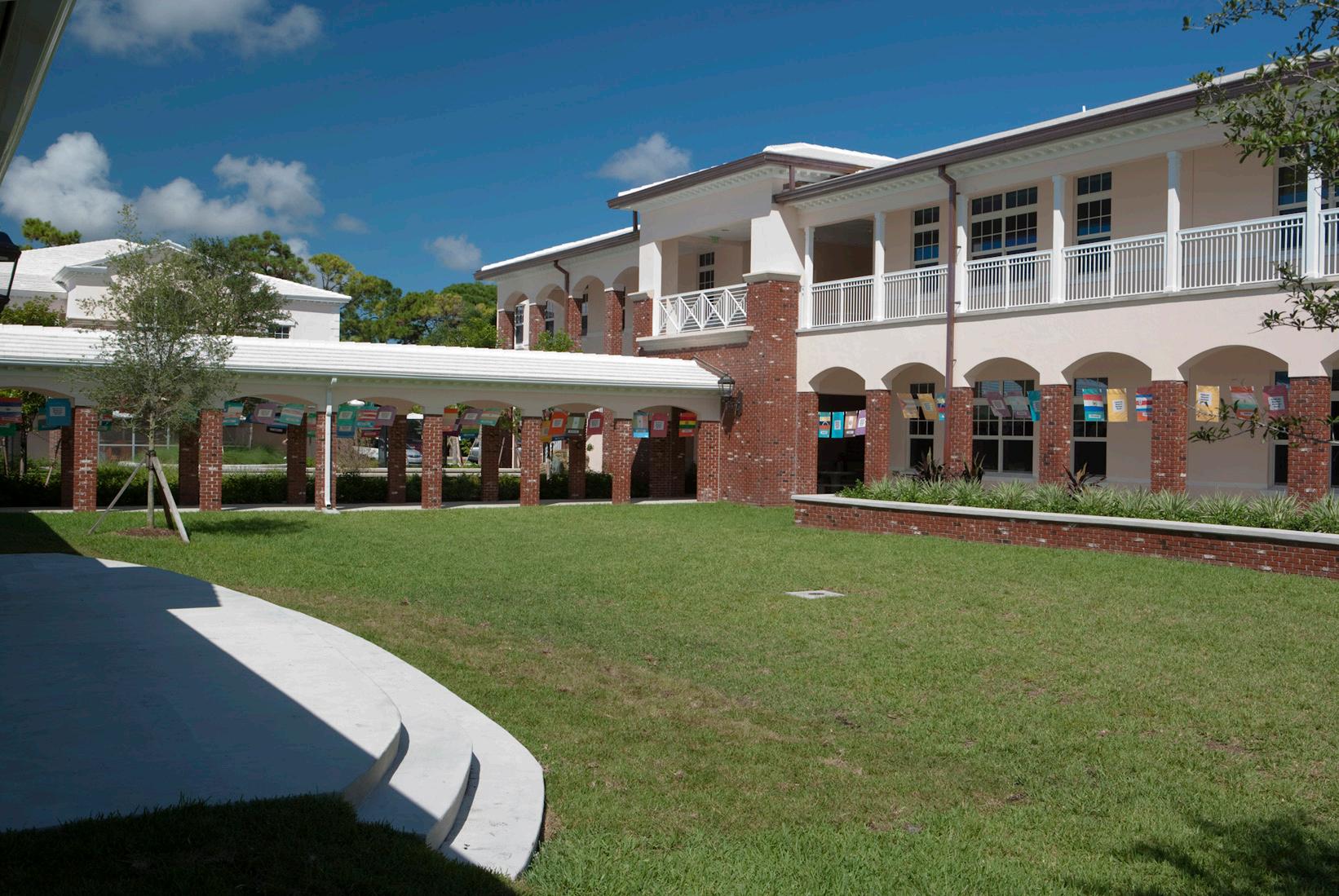
International Baccalaureate® students are forever curious, fully engaged citizens who both embrace their own culture and are open and responsive to other cultures and views. Herbert A. Ammons Middle School was the FIRST authorized IB Middle Years Program in Miami-Dade County. The new school buildings will promote intercultural understanding and respect, not as an alternative to a sense of cultural and national identity, but as an essential part of life in the 21st century. The siting of the new middle school had to account for many factors including keeping the existing school operational during construction.
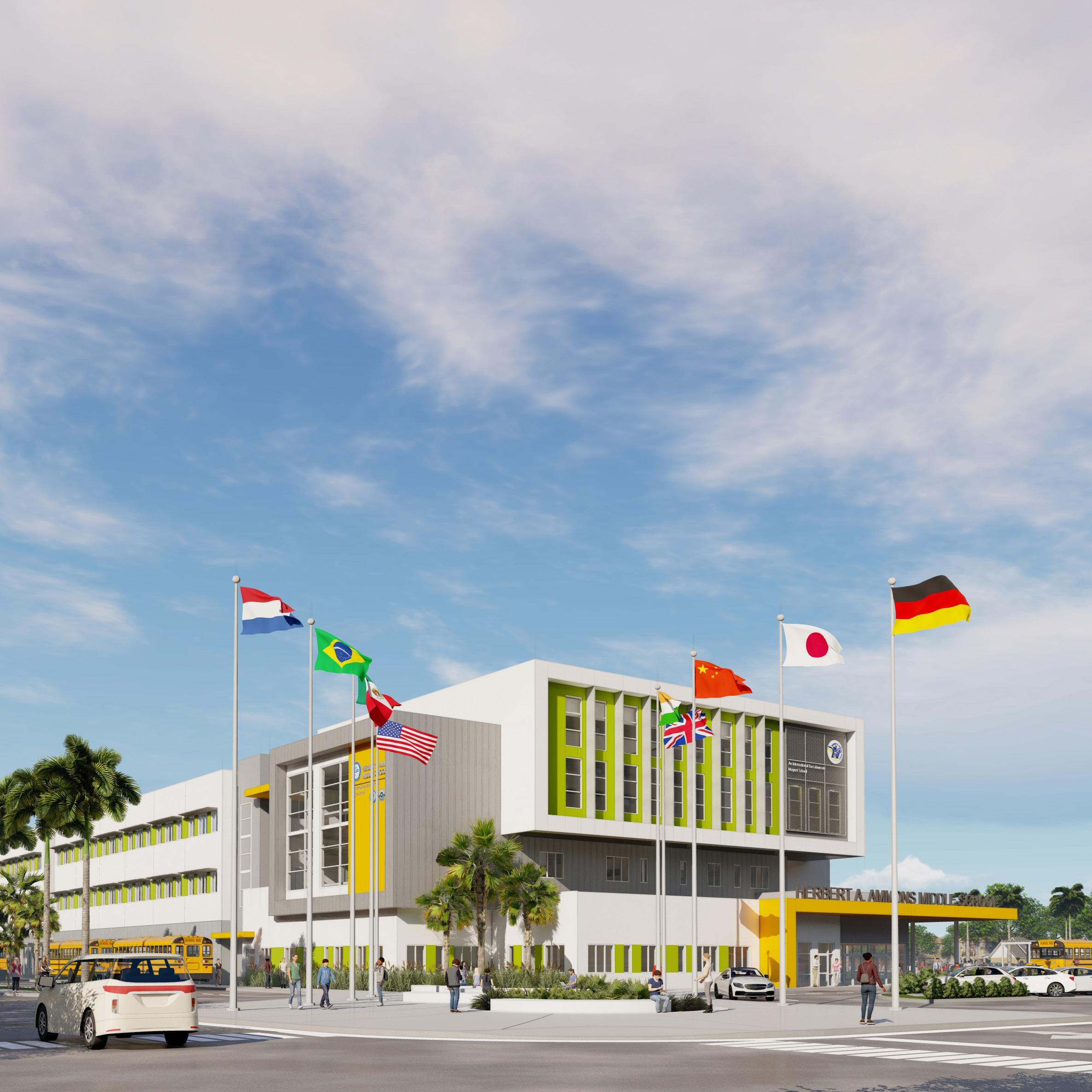
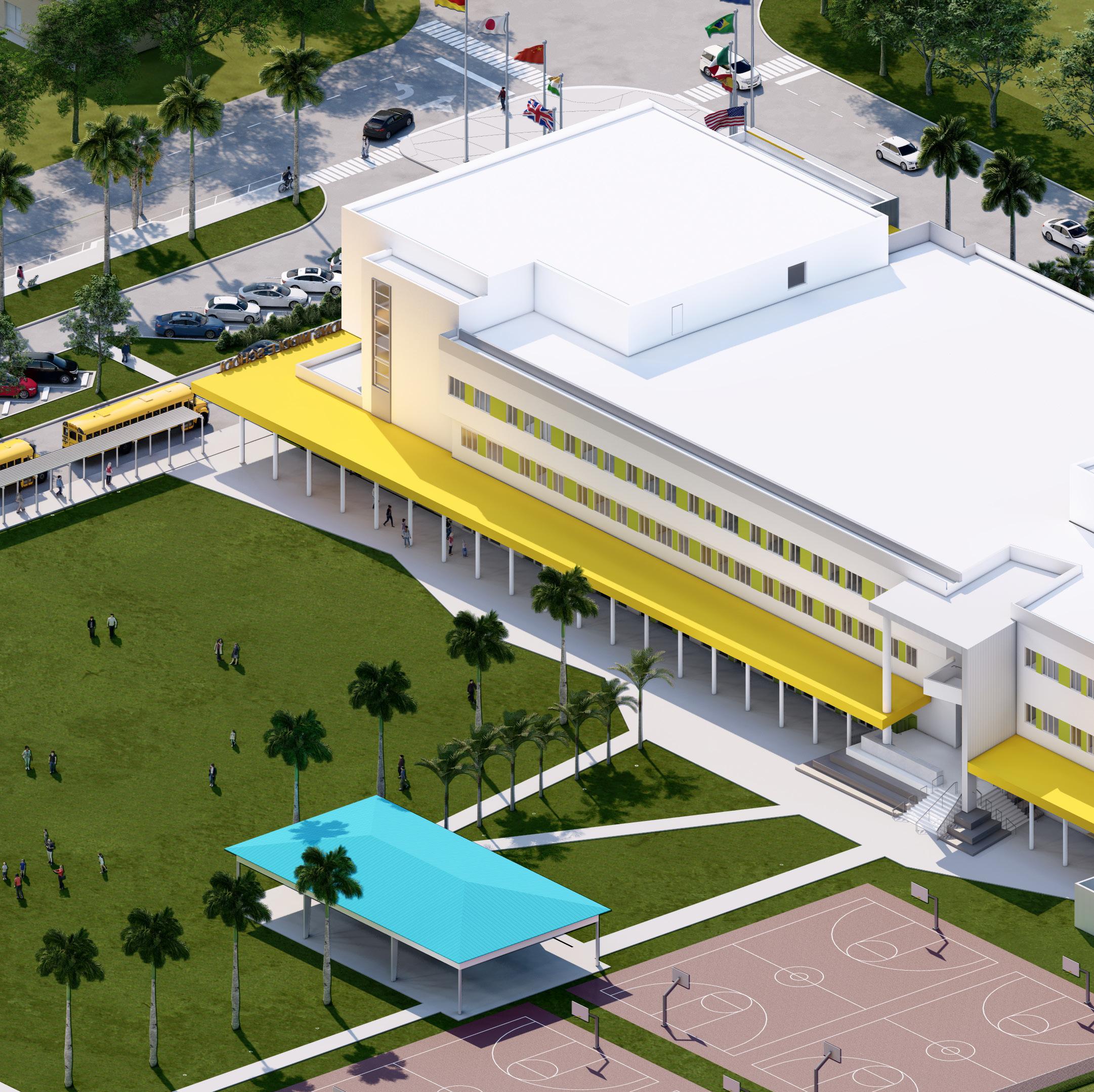
The thoughtful integration of flags in the school’s site design enhance both the aesthetic appeal and the educational mission of the institution. The international flags play several important roles:
1. Symbolism: Flags often represent national pride and unity. Displaying them can foster a sense of community and belonging among students and staff.
2. Cultural Awareness: Flags from various countries can promote diversity and inclusivity, encouraging students to learn about and appreciate different cultures.
LOCATION: 17999 S.W. 142 Ave, Miami, FL 33177
ARCHITECT: Zyscovich
CONSTRUCTION MANAGER:
BUDGET: $25 Million
COMPLETION: 2025
SIZE: 1,337 student stations
6.51 acres
113,000 GSF
PARAMETERS: Compact Multi-Story Courtyard Campus Safe and Secure Campus
21st Century Learning Design
INNOVATIVE ENHANCEMENTS
POWERING LEARNING IB LEARNER PROFILE
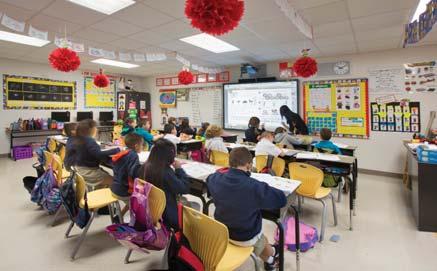
Ammons Middle School aims to provide a challenging and comprehensive education that fosters international mindedness, a commitment to service and responsible citizenship. The design of the new Middle School supports its International Baccalaureate (IB) program through several key features:
• Classrooms are designed to be adaptable, allowing for various teaching styles and collaborative learning. This flexibility supports the inquiry-based approach of the IB program.
• The school includes state-of-the-art technology, promoting digital literacy and enhancing research capabilities, both essential components of the IB curriculum.
• Common areas and collaborative spaces encourage teamwork and community engagement, reflecting the IB’s emphasis on global citizenship and collaboration.
• Environmentally friendly design elements align with the IB’s focus on sustainability and responsibility towards the environment.
• The plan allows for spaces which cater to diverse learning needs, ensuring all students can engage fully with the curriculum, a core principle of the IB philosophy.
• Overall, the school’s design fosters an environment conducive to the holistic education that the IB program advocates.
21ST CENTURY LEARNING
Ammons Middle School incorporates several innovative features designed to enhance the educational experience and promote sustainability. Key elements include:
1. Flexible Learning Spaces which adaptable for various teaching methods, allowing for collaborative work and individual study.
2. Large windows and skylights to maximize natural light, creating a more inviting and productive environment.
3. Use of solar panels, energy-efficient systems, and sustainable materials to reduce the school’s carbon footprint.
4. Outdoor Learning Spaces that connect students with nature, such as gardens or outdoor classrooms.
5. Classrooms equipped with smartboards, high-speed internet, and access to digital resources to enhance learning.
These features aim to create a modern, engaging, and sustainable learning environment for students.
SUSTAINABLE INITIATIVES
NET ZERO READY
International Baccalaureate (IB) programs emphasize holistic education and global citizenship, making sustainability a natural focus within their curriculum. The following passive design elements and energy efficient features have been included in the sustainable approach utilizing the metrics of the Collaborative for High Performance Schools (CHPS) 2014 Standard.
• Floor elevation and electrical equipment and controls are elevated min. 1’ above FEMA flood criteria.
• R-20 Roof Deck insulation with high-albedo roofing membrane for envelope efficiency and reduced heat island effect.
• Solar ready roof deck and conduit distribution for future PV installation
• Details for sealed air barrier membrane wrapping to all door and window openings to reduce infiltration / exfiltration
• All exterior walls have continuous an R13 R-Value for reduced energy consumption
• Extended covered entrances are included for solar and rain protection.
• LED lighting fixtures throughout, where multi-occupant interior spaces use occupant sensor controls and exterior LEDs are specified with timeclocks.
• HVAC design exceeds code minimum, incorporating the use of an ice storage system
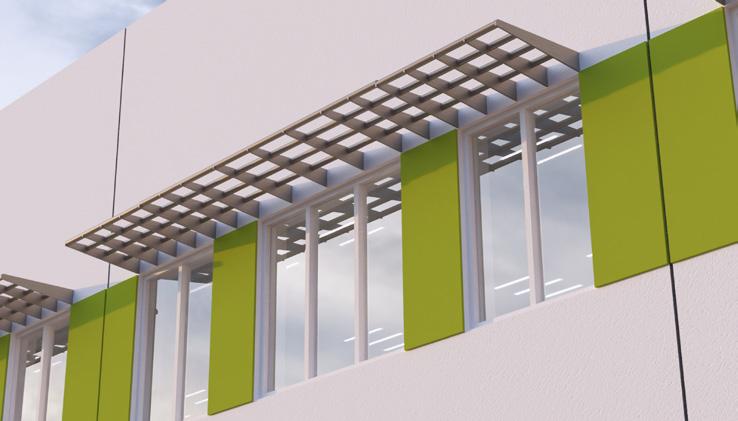
• Laminated Insulated tinted low E-glazing with low solar heat gain coefficient for reduced energy use
• Class A interior finishes that are durable, low to no VOCs, and utilize recycled content where feasible.
• Energy efficient (Energy Star) electrical instant-hot water heaters , and hand dyers at group toilets
• Systems & Energy Interactive display areas for enhanced student learning located at the ground floor Dining area and 2nd & 3rd floors Intervening areas
• Low water usage plumbing fixtures, lavatories have auto shut-off faucets
• Sub-metering for all utilities for closer monitoring
2024 FEFPA
Improving student outcomes through design
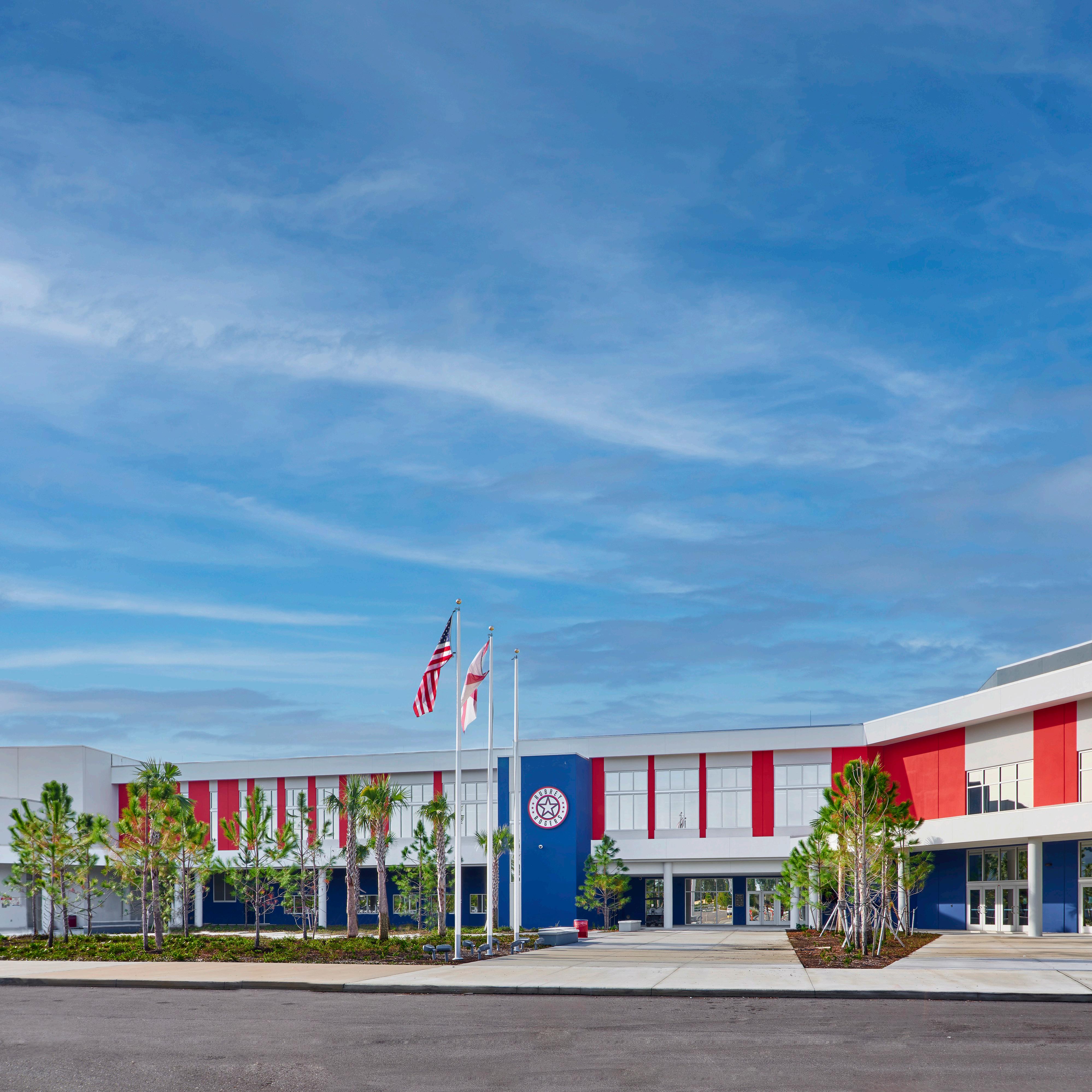
AUBREY ROGERS HIGH SCHOOL
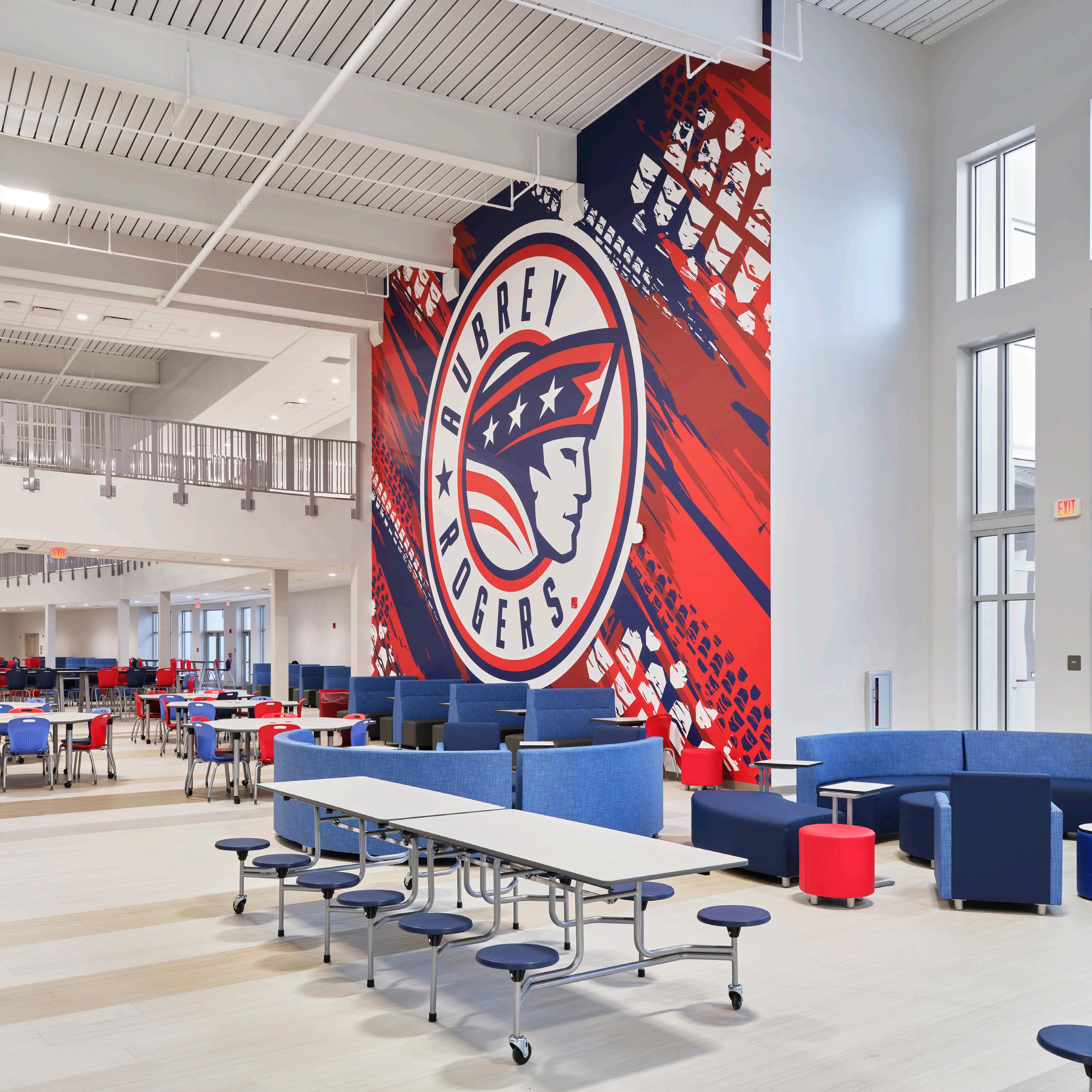
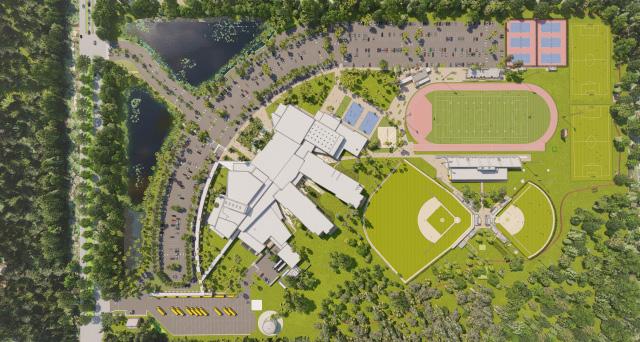
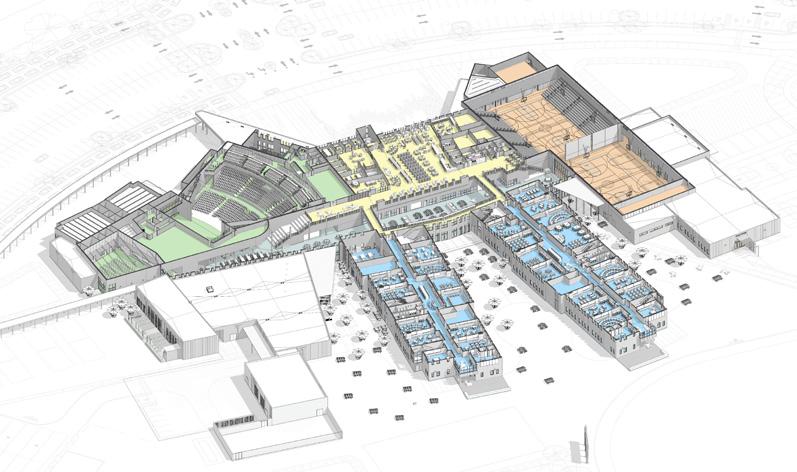
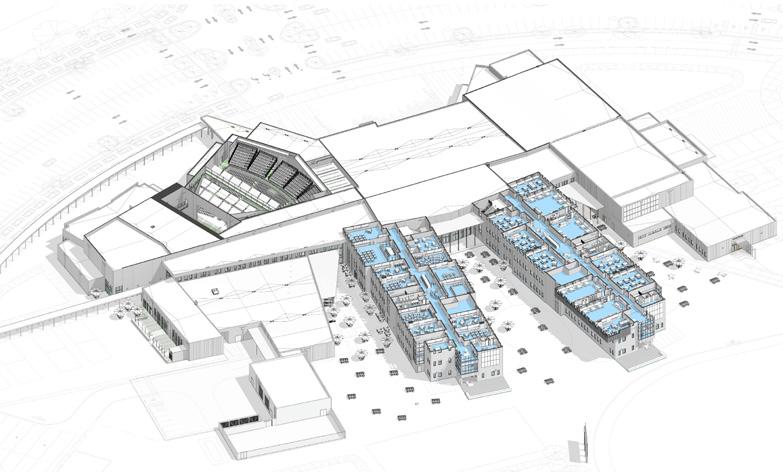
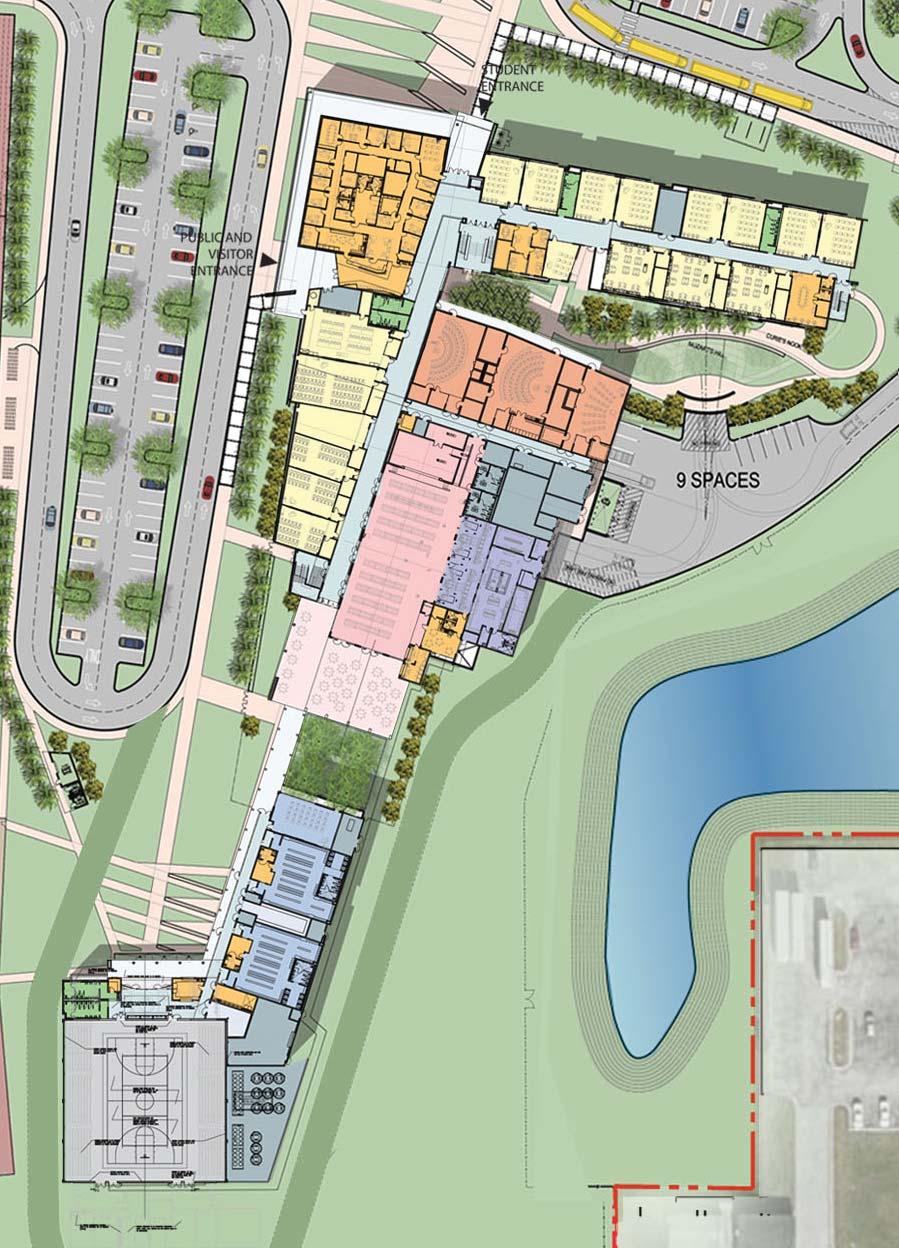
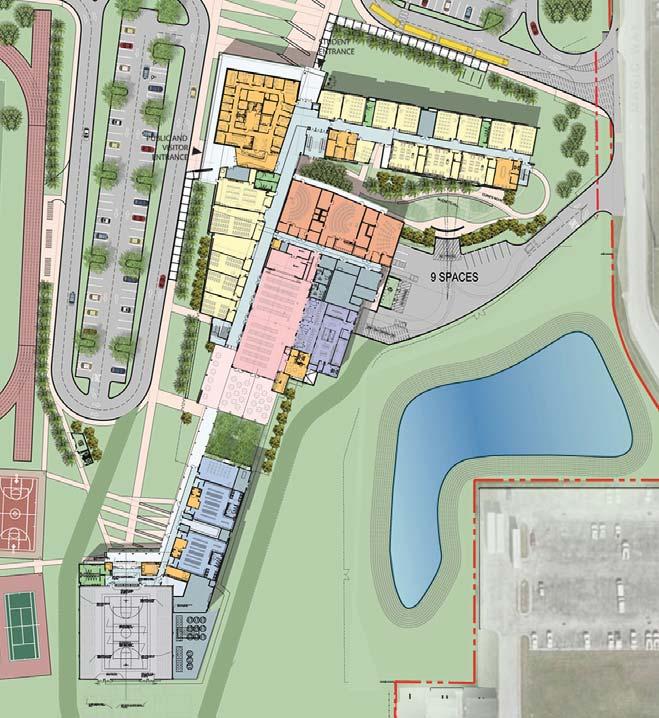
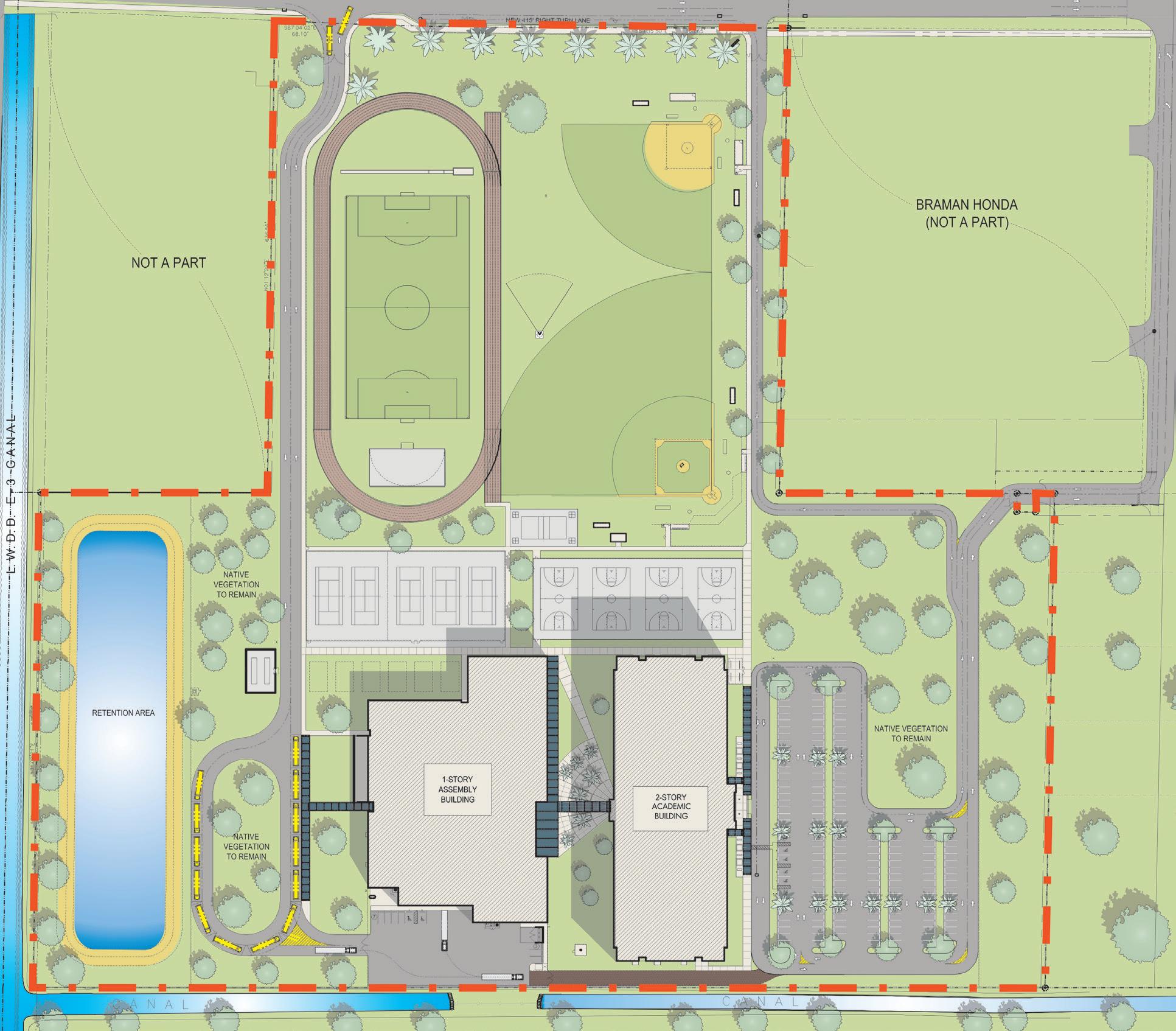
The site for this new school was a pristine 60-acre sampling of Florida ecology, containing picturesque wetlands and wildlife. While placing the school within this sensitive site was challenging, it provided students with a unique opportunity for environmental science curriculum unlike any other.
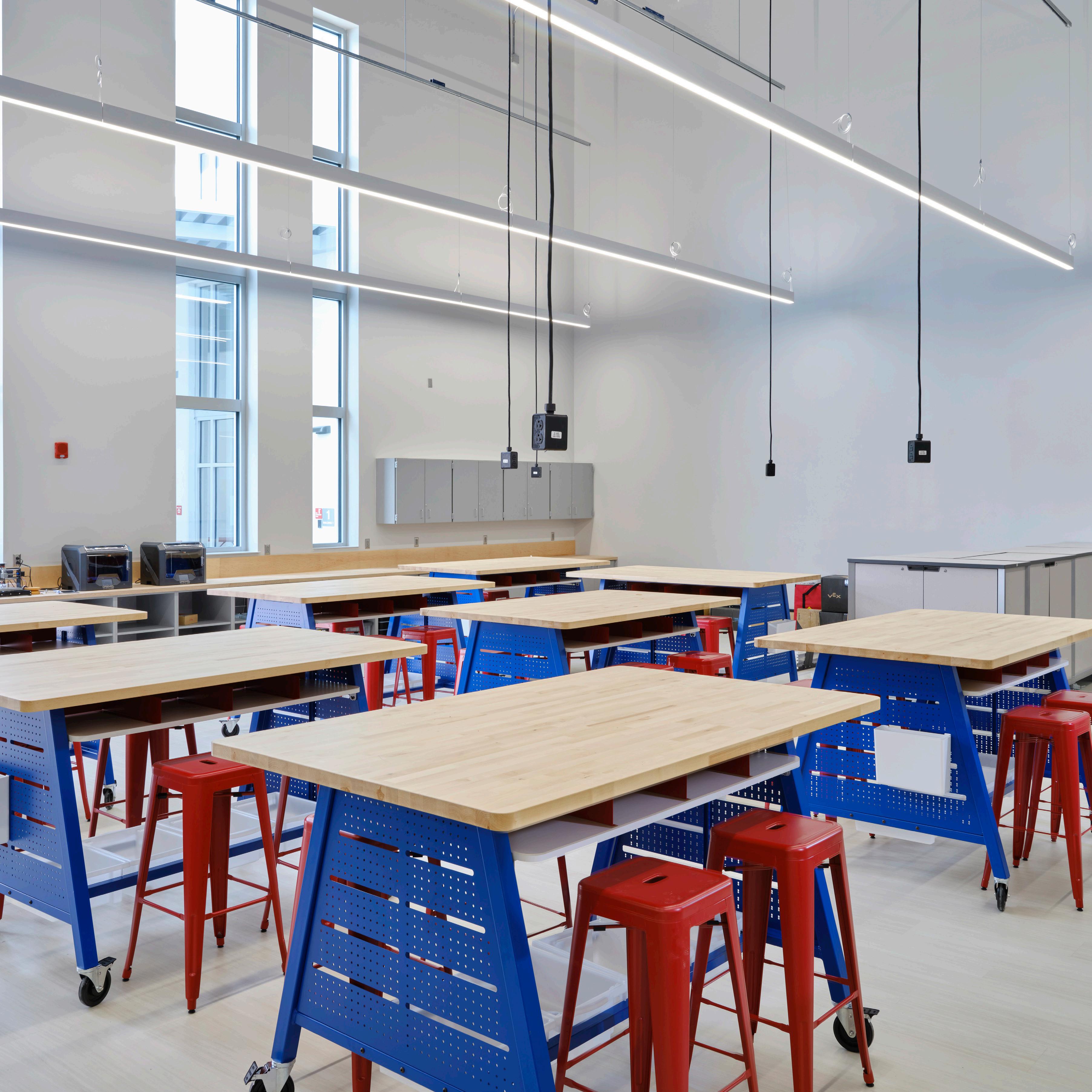
Academies will be the signature academic programs in the school and will serve as places to foster teamwork and creativity. The academies will provide “Real-World” authentic and relevant learning experiences for students to engage their passions and interest. The academies for the school will include:
Engineering Academy; Health Science; Finance & Entrepreneurship Academy; Law Studies / International Studies Academy; Information Technology Academy.
With safety and security as a primary focus, Zyscovich created a single-building campus with clear and identifiable wayfinding for students, staff and visitors. The design team provided a secure single-point entry system to the school with a well-lit, safe and easy to navigate campus at night. Clear zones were created in the facility, differentiating public spaces shared with the community from private spaces for student learning. Doors were provided with integrated electronic access control systems.
The building will serve as a living textbook by highlighting sustainable features, helping teach students to be good stewards of the environment they are inheriting.
INNOVATION ENHANCEMENTS AND COMMUNITY ENGAGEMENT
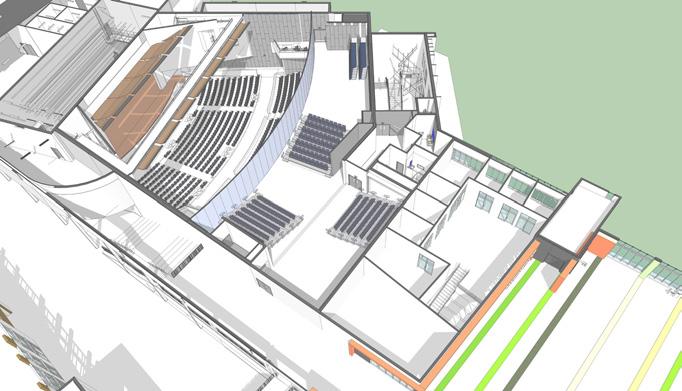
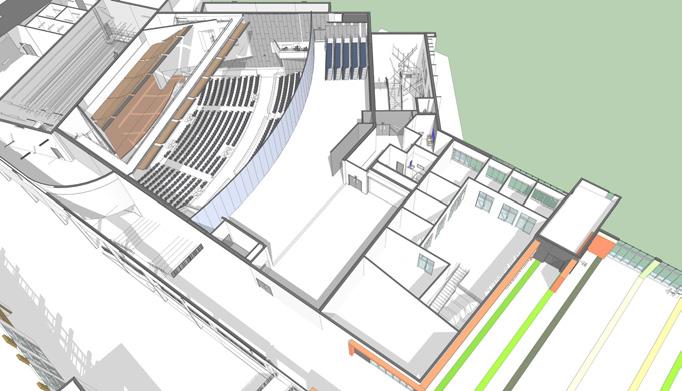
The creation of the Educational Specification was a collaborative process with the architects and the many passionate, experienced and dedicated professional staff of Collier County Public Schools to create the future environments and learning experiences which will inspire students to thrive. Charrettes and workshops were the format of this process, and were organized around visioning presentations, discussions and exercises with all curriculum departments to identify a common shared vision for the new school. These charrettes and workshops included across-section of district leadership, staff and curriculum departments both individually and collectively. In a series of exercises and discussions, the team examined emerging trends and best practices as well as analyzed individual hopes and concerns. This new High School is intended to create unique learning experiences to foster these new 21st century literacies through innovative learning environments, progressive pedagogies, collaborative settings and real-world relevant learning experiences for future generations of lifelong learners. Several innovative signature spaces were created such as a “Student Union/Media Center” central hub that provides the sense of a learning community for the entire school and reflects the changing nature of information technology, while still providing a literacy-rich environment. In the same way that information is now available through-out the modern school through wireless technology, the new student union will extend beyond the traditional container and will flow out into the public areas of the school, distributing access and resources to be more readily available. Other innovations include a separable top auditorium tier allowing the performance space to feel more intimate when in “performance mode” versus “assembly mode”.
This new educational complex will enable the following 21st Century Learning key features:
Flexible and Adaptable Facilities: Facilities designed in such a way that instructional spaces can be quickly and easily transformed by teachers and students to accommodate for their teaching and learning strengths.
Facility as a teaching tool and Teaching Environment: Building Systems and Architecture are used to illustrate and compliment science, technology, engineering, and math (STEM), as well as the arts.
Differentiated Learning/ Multiple Modalities: cater to each student’s unique learning needs by providing various layouts and atypical learning spaces; facilities must adapt to different spatial, furniture, and learning arrangements both inside and outside the educational facility.
SUSTAINABLE INITATIVES, AESTHETICS, & USE OF MATERIALS
During the charrettes and workshops, members of the community defined sustainability goals for the project, including minimizing carbon footprint, promoting green energy use with solar resources and ensuring protection of the two adjoining watersheds. Trails and paths were provided throughout the existing native planted areas. An environmental buffer of existing vegetation will be maintained along the perimeter of the site buffering the adjacent residential community while also influencing the curriculum. As the first Net Zero school in the district, Aubrey Rogers will be a model for sustainability, a paramount focus to the school district. The building was designed with High Performance Systems to minimize energy, water use, and resources. Other sustainable design initiatives at Aubrey Rogers included creating a compact-multistory single building campus to minimize site disturbance while also creating a facility that teaches students, staff and the community how to be good stewards of the environment. The faceted geometry of the building also provides a healthy environment through ample access to fresh air and a façade with abundant daylighting.
MIAMI BEACH HEBREW ACADEMY
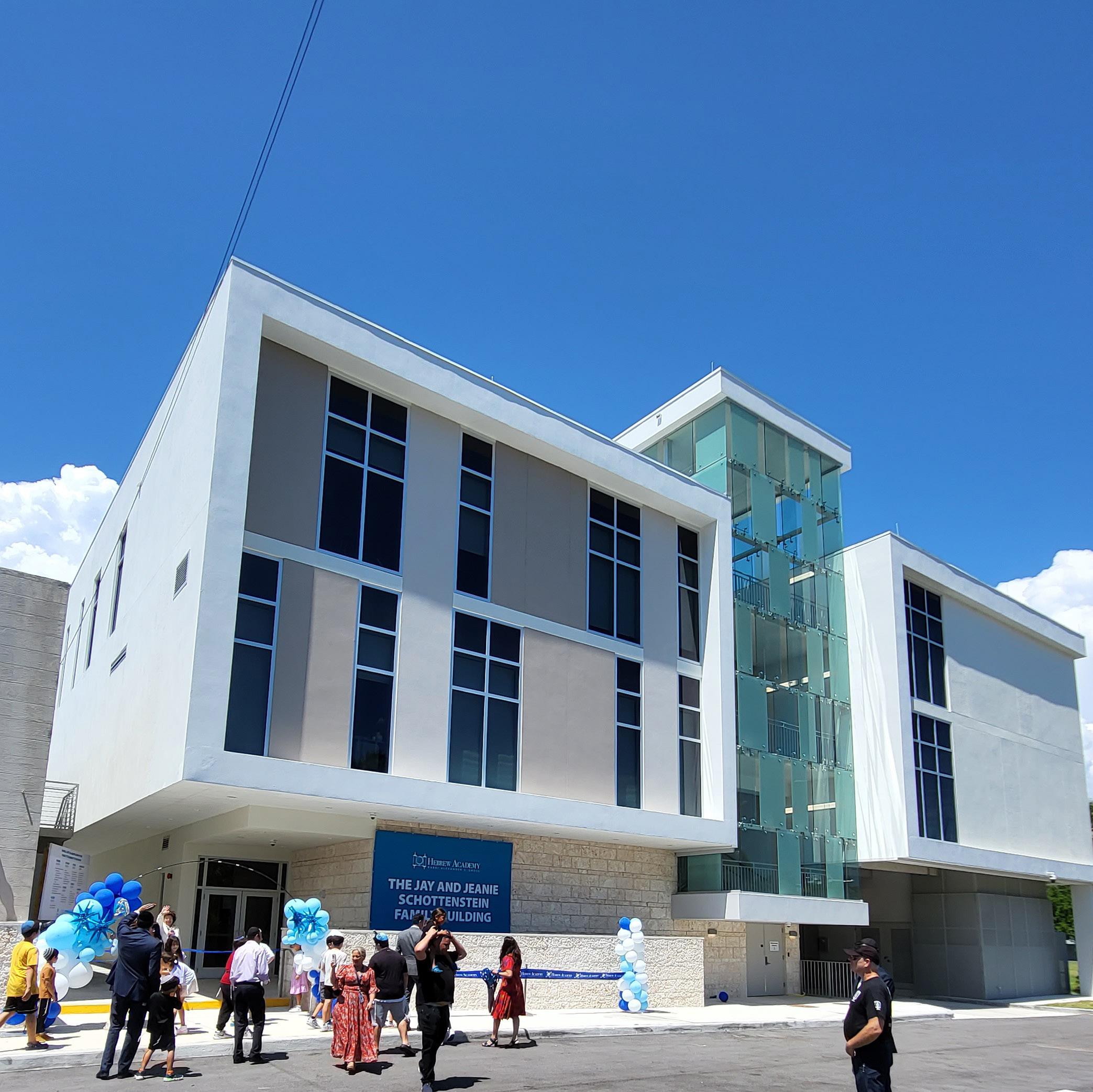
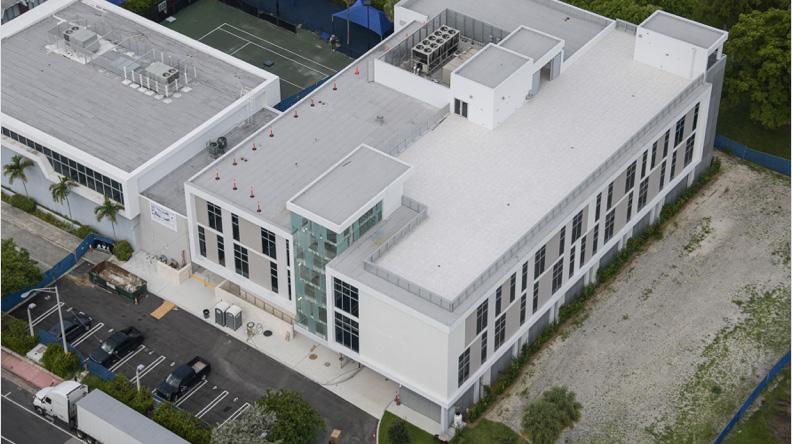
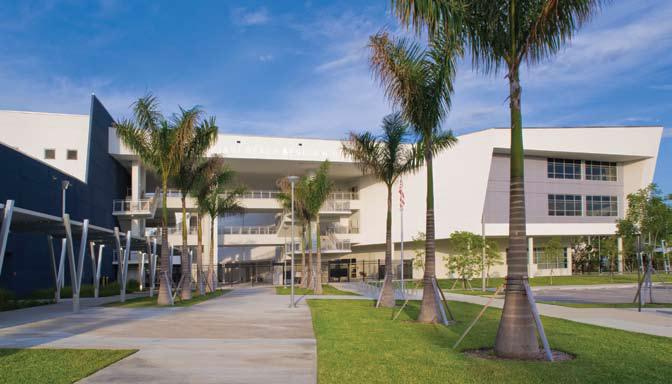
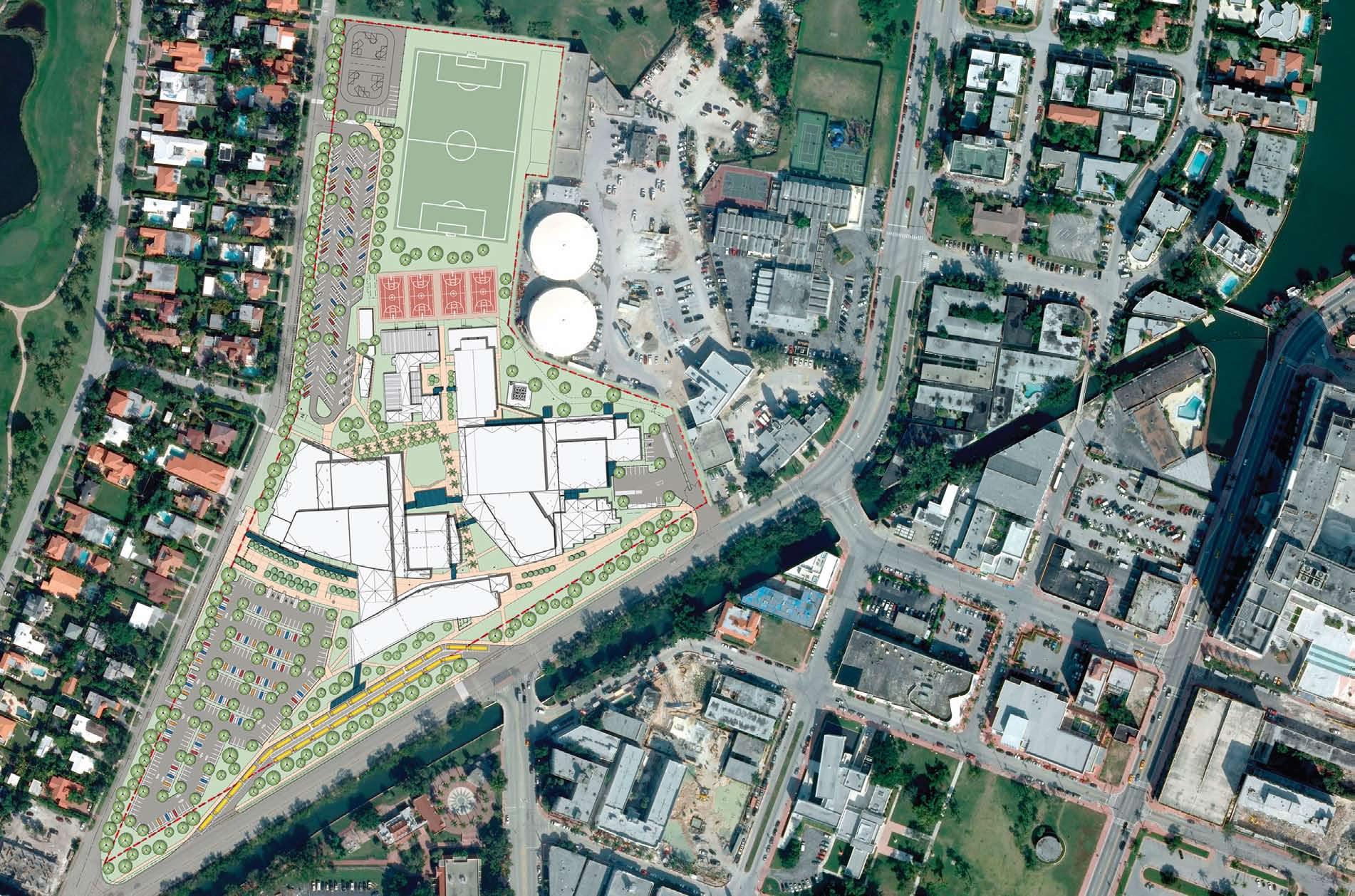
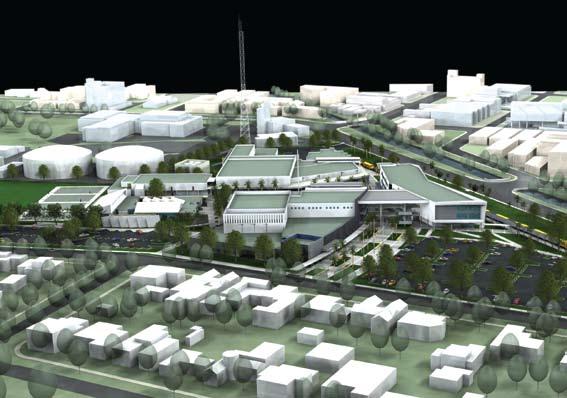
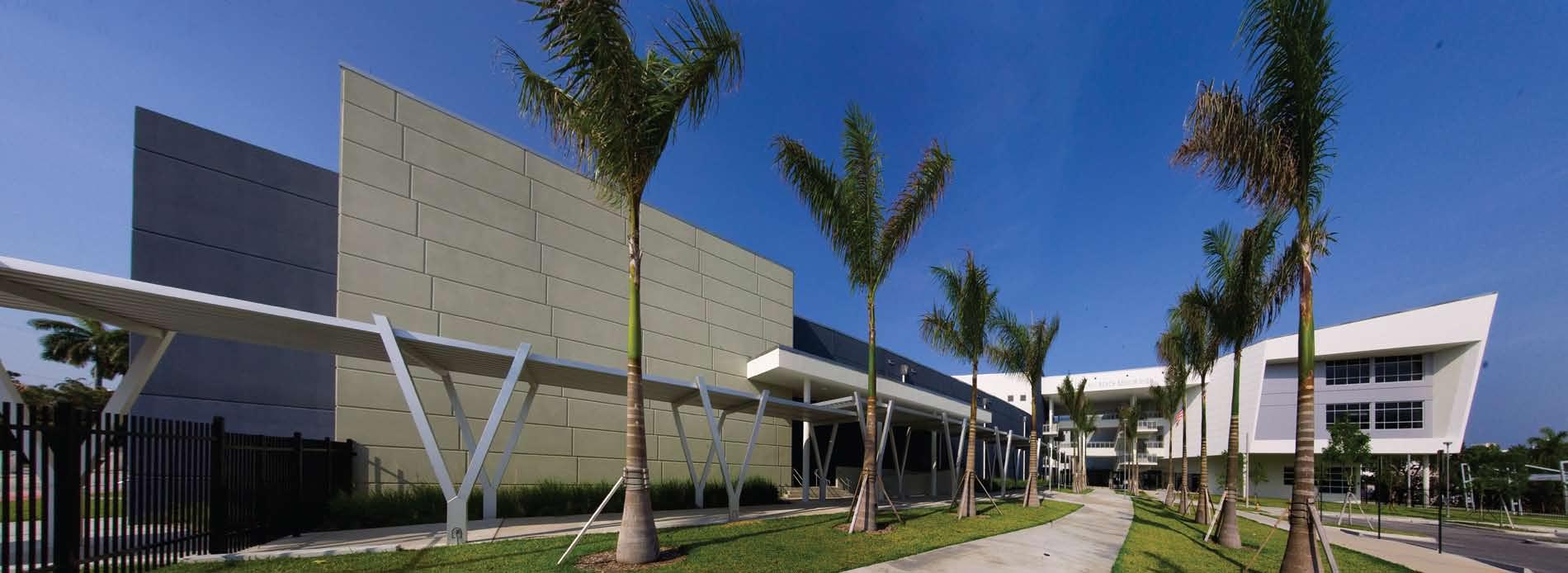
The Rabbi Alexander S. Gross Hebrew Academy provides a comprehensive, holistic program of PK-12 education that incorporates general and Judaic teaching practices. Originally created in 1947 to create a learning environment that would combine Hebrew, Judaic and college preparatory programs in equal measure, preparing students for success in both worlds, that vision is still prevalent today and guides the design of the new Middle-High School. The new addition is composed of three basic elements: 1) Shared Areas: Lobby, Beit Midrash, Media Center, Arts, and Student Life Areas; 2) High School: Learning Studios (classrooms), Labs and Administrative Areas; and 3) Middle School: Learning Studios (classrooms), Labs and Administrative Support Areas. Safety is our priority in design. Security reinforcement is applied to the ground floor and interior glazing throughout the building ensuring a visual connection while maintaining a high level of security. The school occupies the full lot width at the northern end of the campus. This was strategically designed to effectively enclose the rest of the campus to the south, creating a secure and controlled court for the student activities. By defining the boundaries of the campus in this manner, the school will enhance safety and provide a protected environment.
INNOVATION ENHANCEMENTS & COMMUNITY ENGAGEMENT
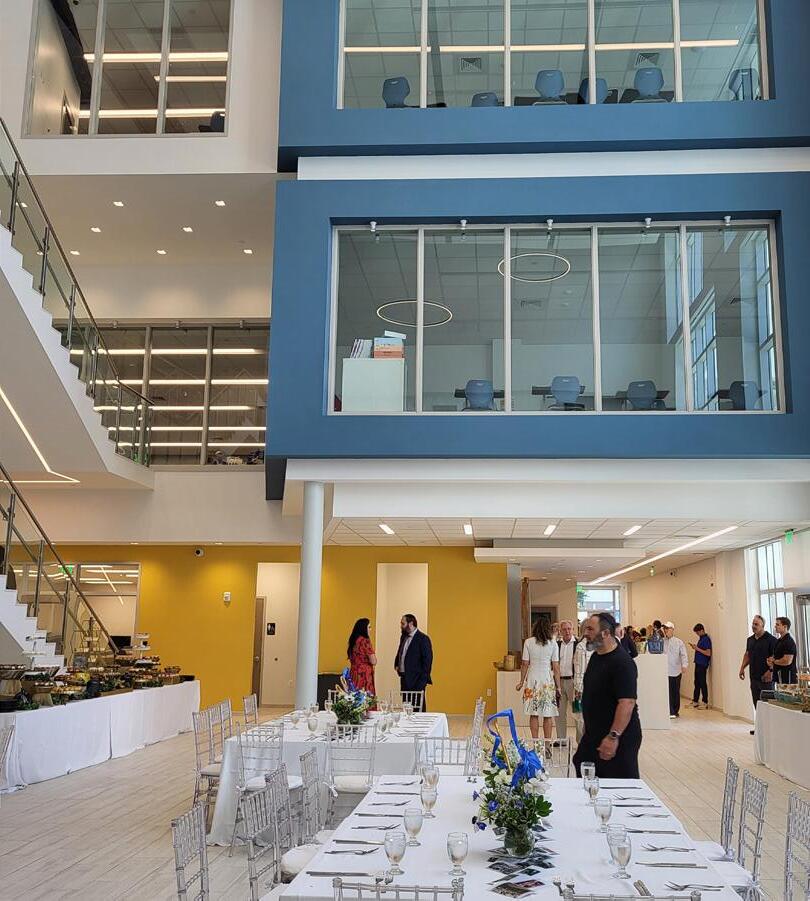
The school’s architectural design consciously incorporates spaces that promote community use and engagement. The Beit Midrash, a hall dedicated to the study of the Torah, and the main dining hall were intentionally designed to accommodate both religious and celebratory events, fostering a sense of community within the school and extending to the broader Miami Beach community. The roof of the building is developed as an open-air terrace. This provides a versatile space for various activities hosted by the school and community. In addition to these spaces, a broad, outdoor covered entry plaza flanks the Dining Hall and the Beit Midrash serving as an extension of interior assembly areas. This space was strategically designed to expand the possibilities for community engagement as needed by the school. The school features innovative enhancements in its educational program, including interactive displays for teacher-student presentations and flexible furniture arrangements for different learning scenarios.
21ST CENTURY LEARNING, TECHNOLOGY, & DESIGN FLEXIBILITY
Prioritizing technology integration to enhance the learning experience was a key consideration of the design. The educational spaces are equipped with the latest interactive displays, promoting engagement among the entire student body. Connectivity by both LAN and WAP networks throughout the interior and exterior spaces allow students to participate in breakout workshops in various areas of the school offering students opportunities for collaborative learning and adaptability in their educational experience. The school prioritizes fostering student engagement through a variety of scales in its learning spaces. This includes individual and dual learning pods, providing personalized learning experiences. Additionally, Harkness Rooms are incorporated for breakout discussions, offering students collaborative environments for more interactive learning. Classroom learning studios are designed to cater to traditional teaching methods, while collaboratoria are dedicated spaces for group learning activities in collective settings. This diverse range of learning environments aims to enhance student engagement and accommodate different teaching and learning styles. The Ground Floor religious study space is divisible by operable partitions separating the Beit Midrash from the Media Center Library as necessary, and the study space from the main Dining Great Hall, allowing for various scales of collective engagement and celebration. A pair of the High School Learning Studios are connected by operable partitions providing the opportunity to have a unique space of combined student communities.
SUSTAINABLE
INITATIVES, AESTHETICS, & USE OF MATERIALS
Through thoughtful design choices, sustainability initiatives were incorporated throughout the school. Substantive fenestration in the classrooms flanking the North façade was designed to maximize daylight and provide exterior views without excessive glare. This approach promotes energy efficiency by reducing the need for artificial lighting and contributes to a healthier, more stimulating indoor environment for the students. The larger scale spaces on the exterior, such as the plaza and roof levels, are designed to encourage outdoor activities, fostering a connection with nature and promoting physical well-being among the students. Enhanced double low-e laminated glazing is employed to ensure acoustical privacy both from the exterior and interior adjacent spaces.
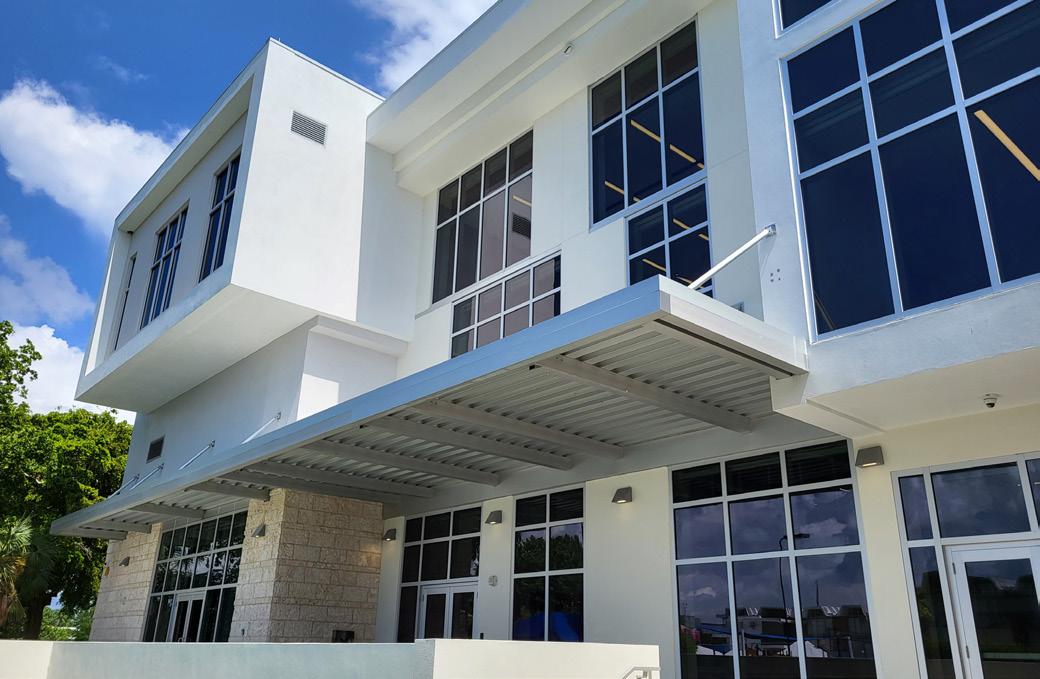
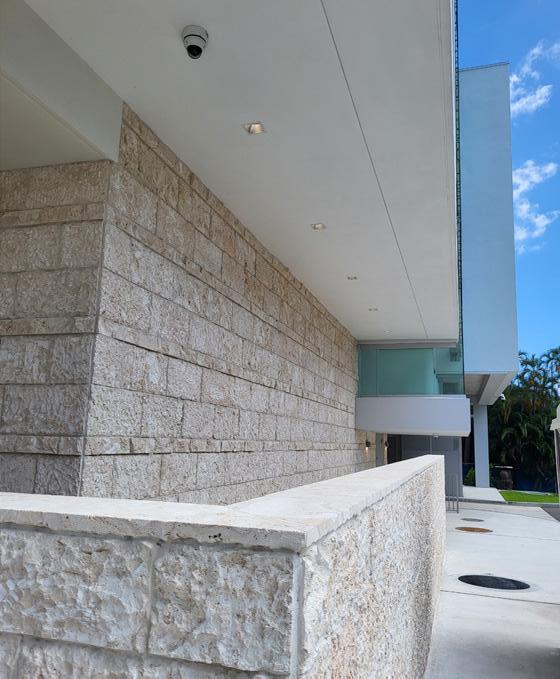
The aesthetics and use of materials in the school’s design hold cultural significance. The building’s base is clad in rusticated chiseled coral, reflecting the local substrate of South Florida and the golden tones of Jerusalem Stone, emphasizing Jewish identity.
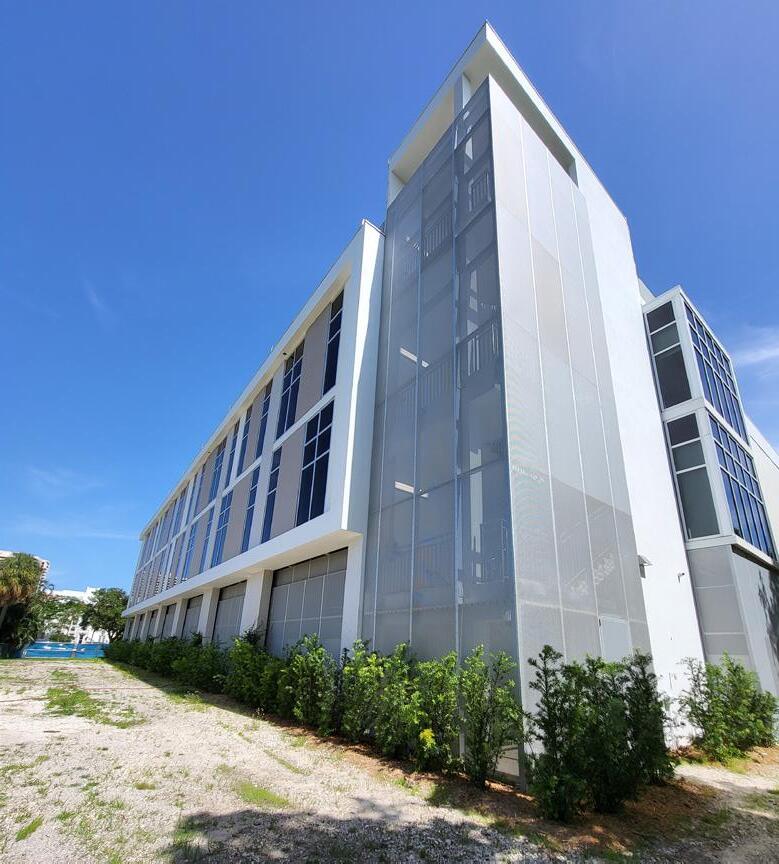
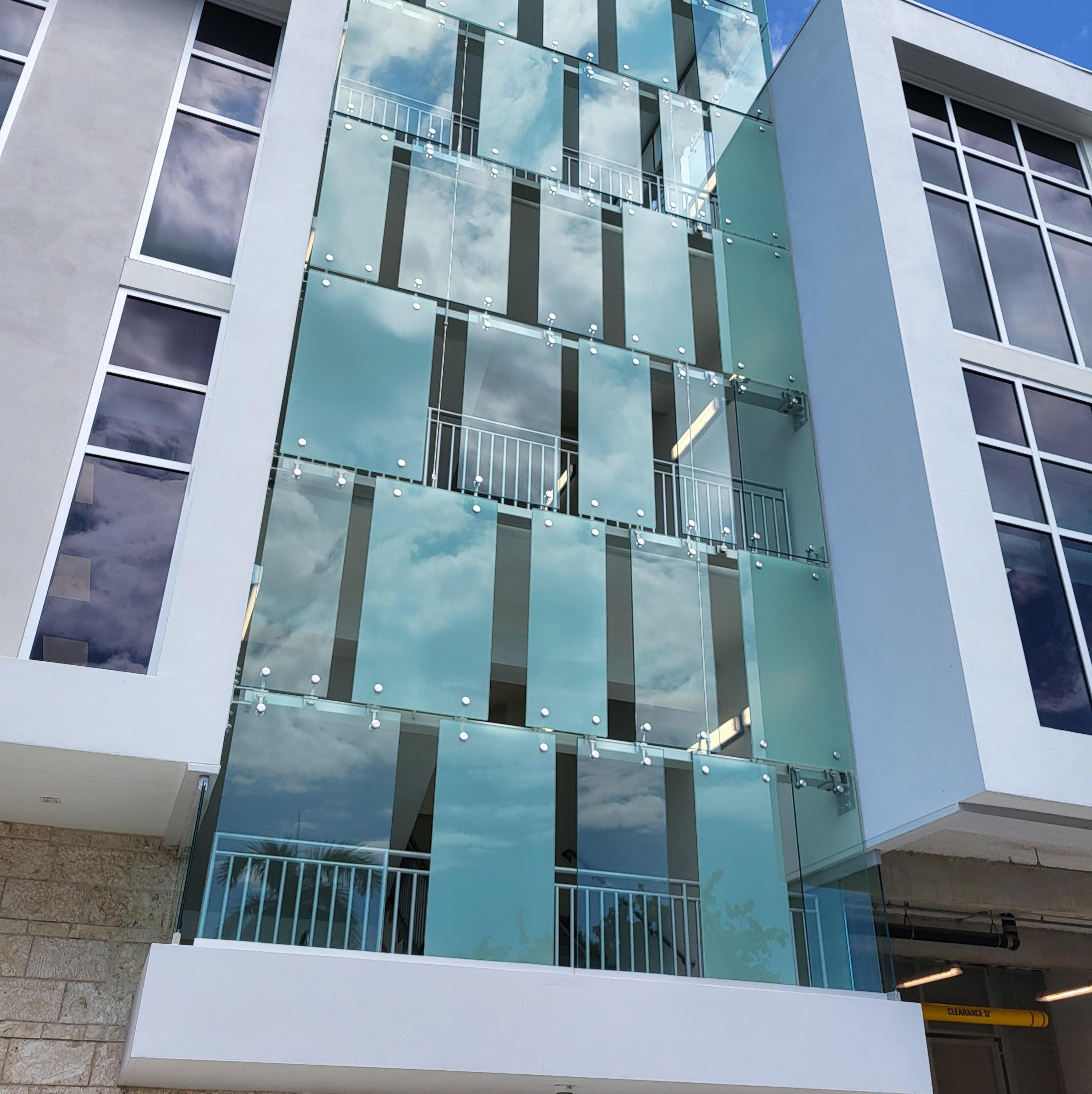
The exterior color palette complements the original 1961 Morris Lapidus School buildings. It references elements such as pre-cast concrete, exposed aggregate pebble-dash stucco, and brick veneer, connecting the new structure with the historical aesthetic of the original buildings. Randomized patterns of glass are incorporated to break down the scale of the overall building form. The design choice aims to evoke a sense of the individual with the whole. Perforated aluminum screening is strategically used to secure the parking base of the building as well as the connective stairway and rooftop railings. This ensures security and expresses the openness of light and air. The overall aesthetics integrate cultural elements, historical references, and functional aspects of the facility.
CENTER FOR STUDENT LIFE
12595 RED ROAD, CORAL GABLES, FL 33156
PROJECT OWNER: Gulliver Prep
ARCHITECT: Zyscovich LLC
CONTRACTOR: NV2A Group
STUDENT CAPACITY: 600
57,885 SF
BUDGET: $ 37.1M
COST: $ 40M
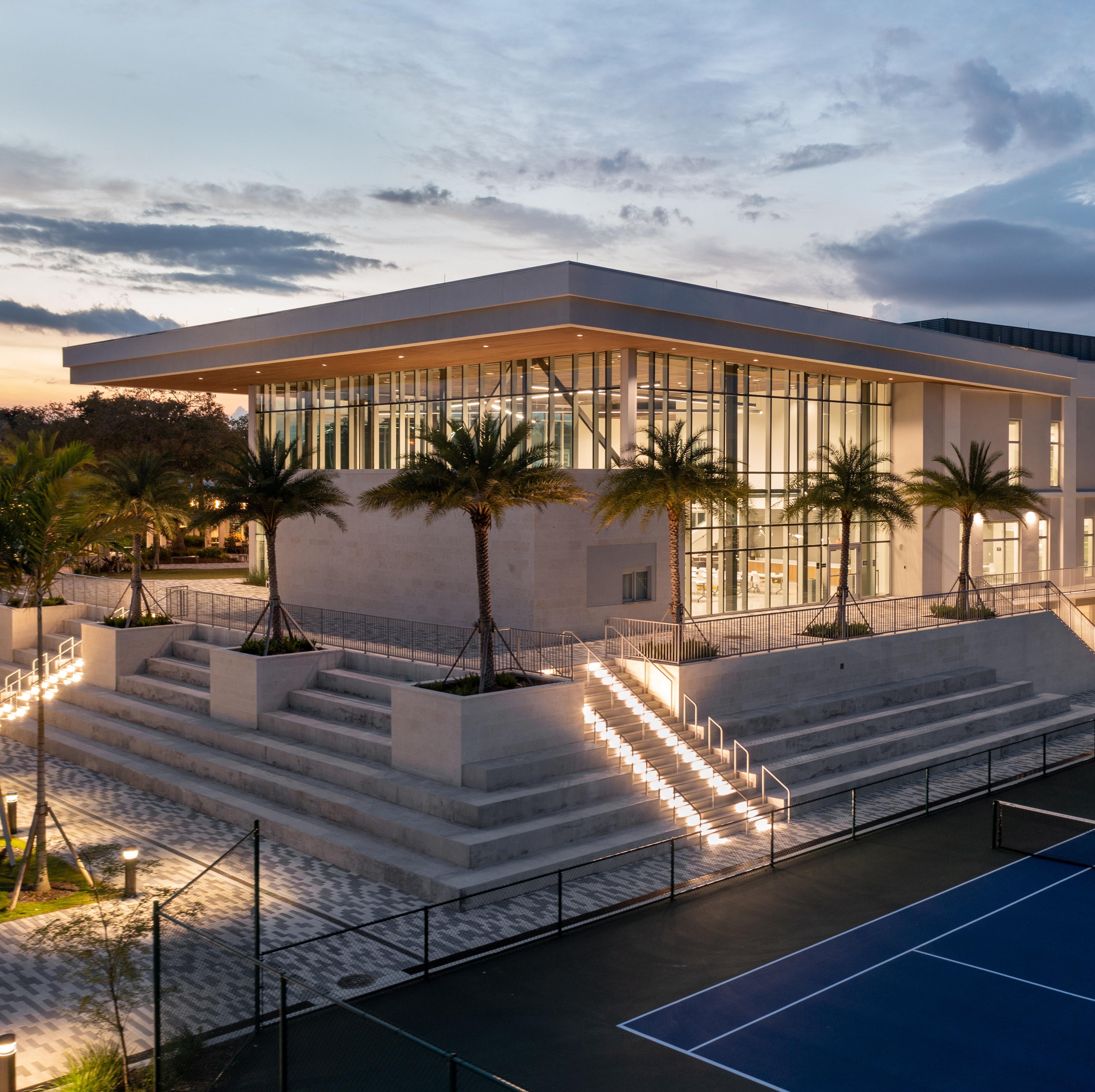
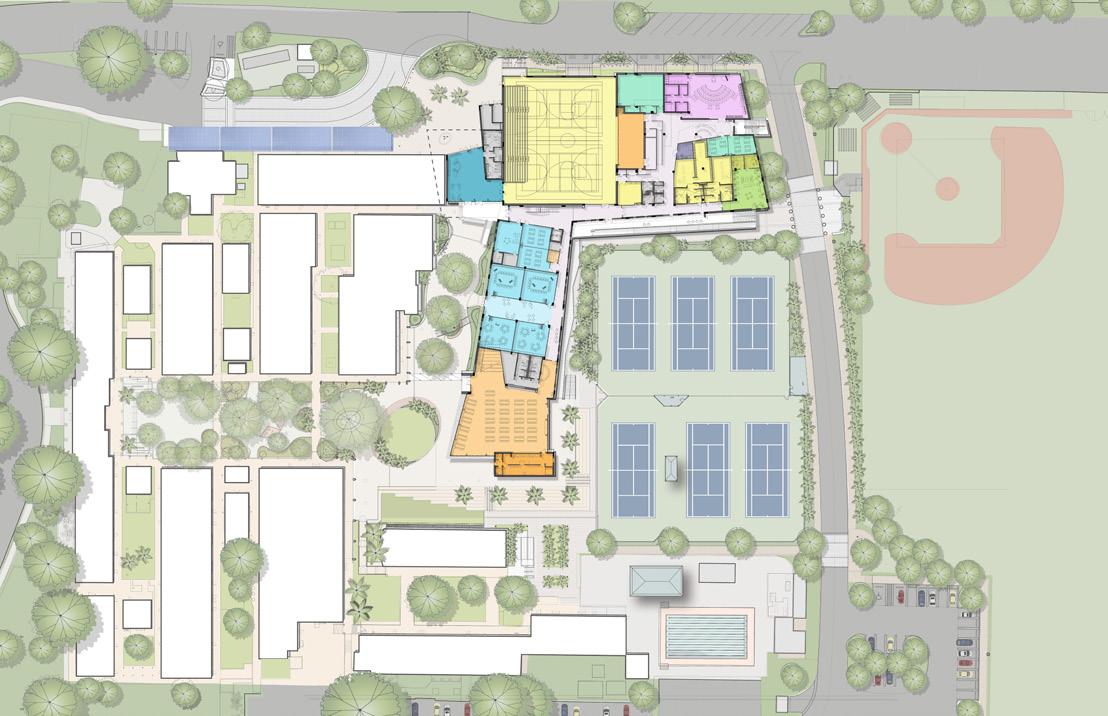
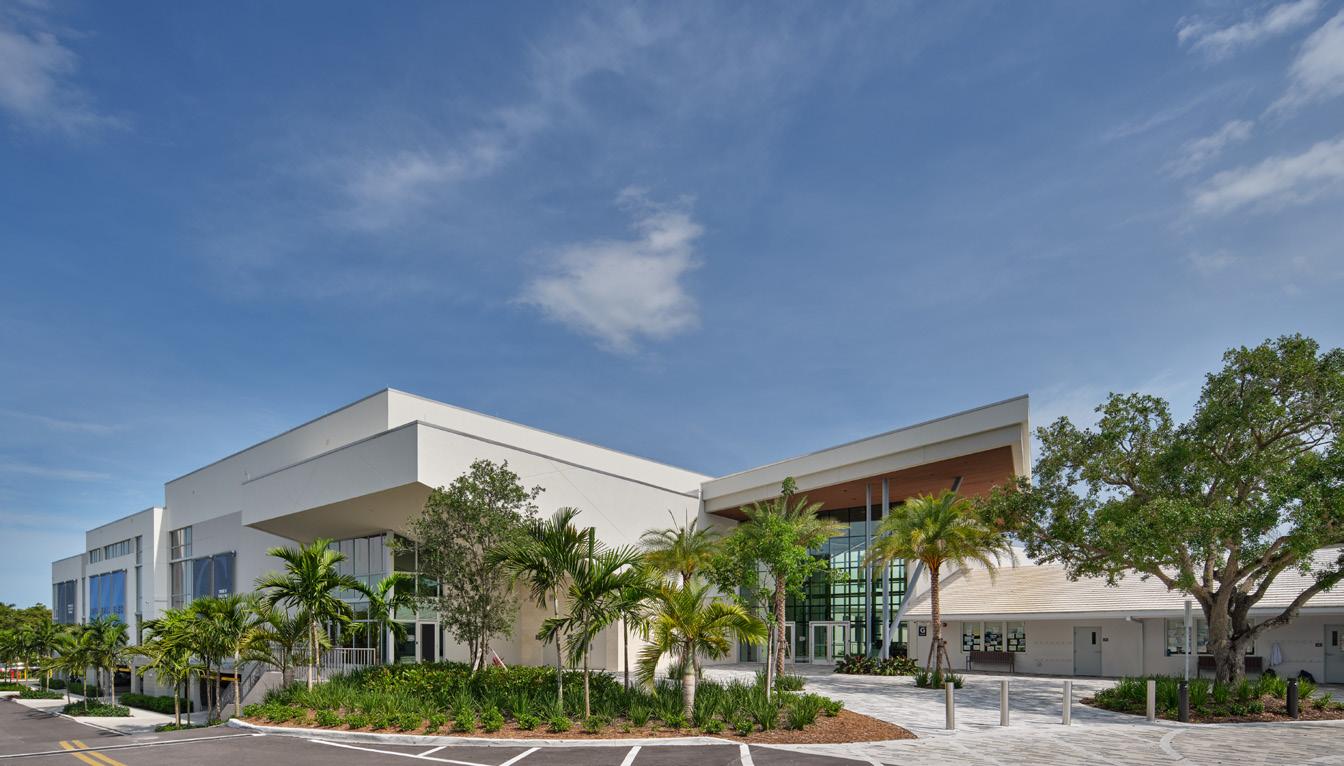
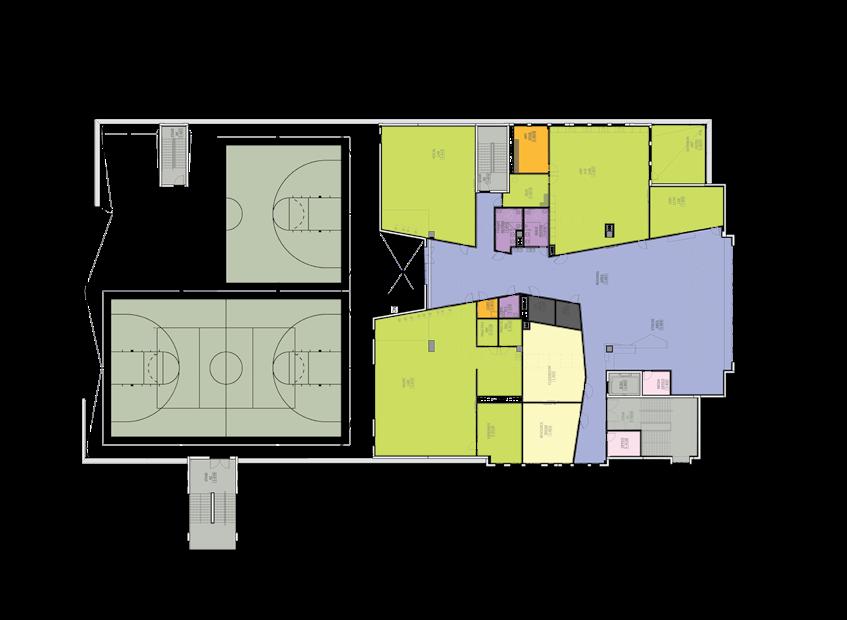
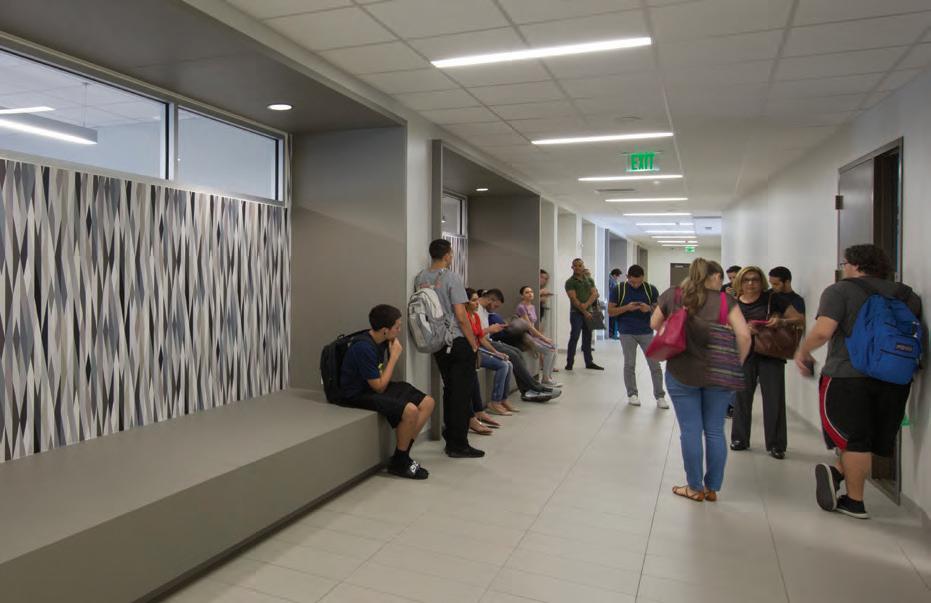
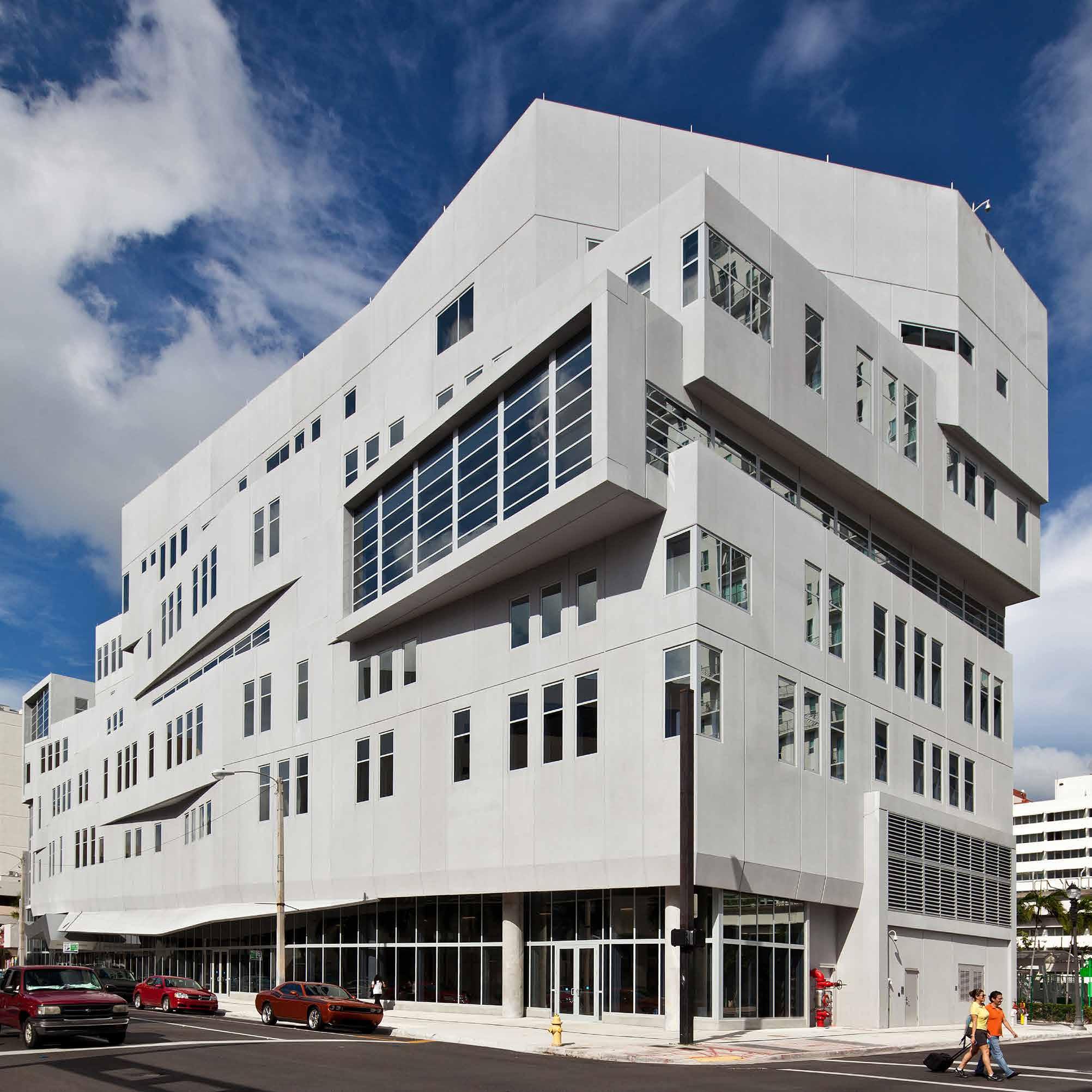
The new Center for Student Life is the heart of student life and learning at the Gulliver PK-8 Campus, and its 57,885 sf features a gymnasium, performing arts space, dining hall/meeting space, flexible labs, next generation classrooms, and more. From robotics and engineering, to athletics and the arts, students can now explore and combine their many interests, all in one building. The site design provides an iconic placement of the building at the end of the existing main courtyard which will redefine the center of the campus creating a space for dining, gathering, assembly and learning. The first-floor level contains the new secure, single-point-of-entry campus lobby, as well as flexible classrooms, dining, a dining server, band, drama, the gymnatorium, locker rooms for PE, Tennis and Baseball, as well as an administrative coach’s suite. The Zyscovich-designed, award winning, LEED Silver-Certified Center for Student Life minimizes the building footprint in order to maximize open spaces for outdoor learning and preserving views to the pastoral campus all while providing the needed support to the existing campus facilities with opportunities for flexible, collaborative, personalized and authentic learning experiences in a stimulating, safe and welcoming educational community environment.
INNOVATION ENHANCEMENTS & COMMUNITY ENGAGEMENT
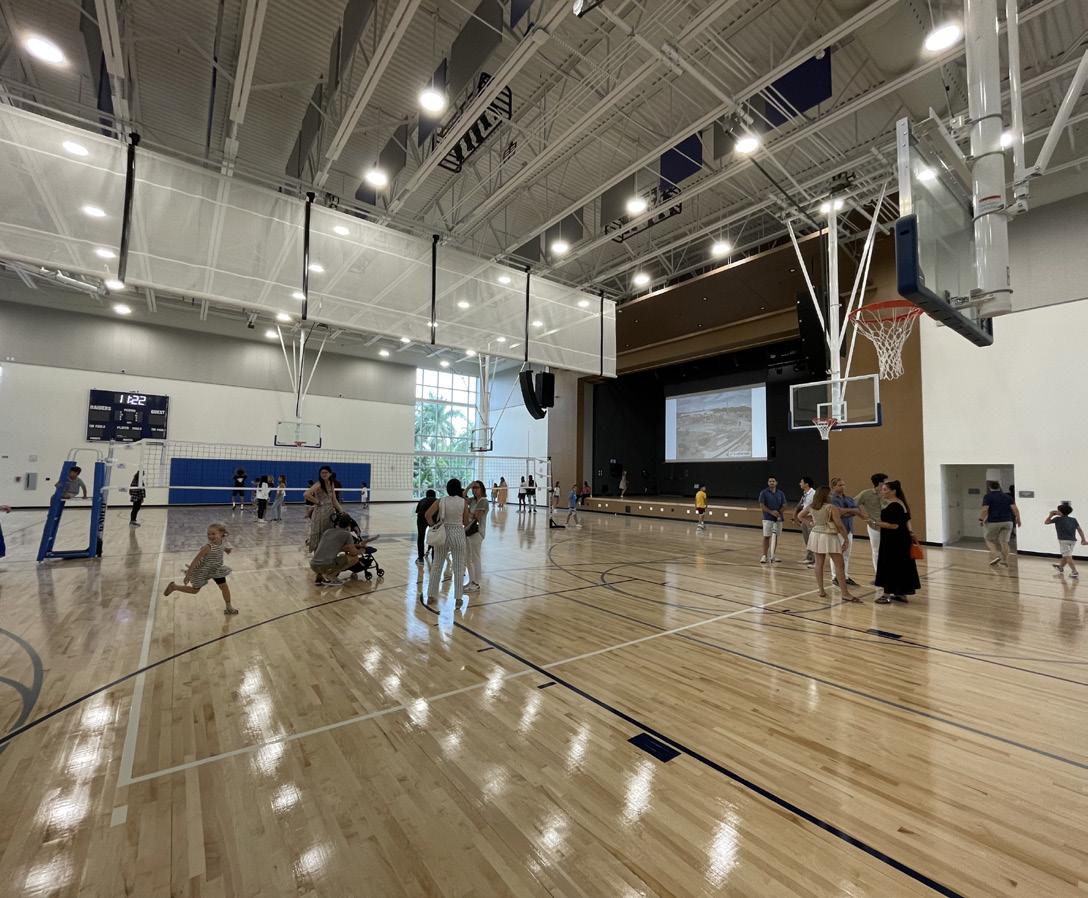
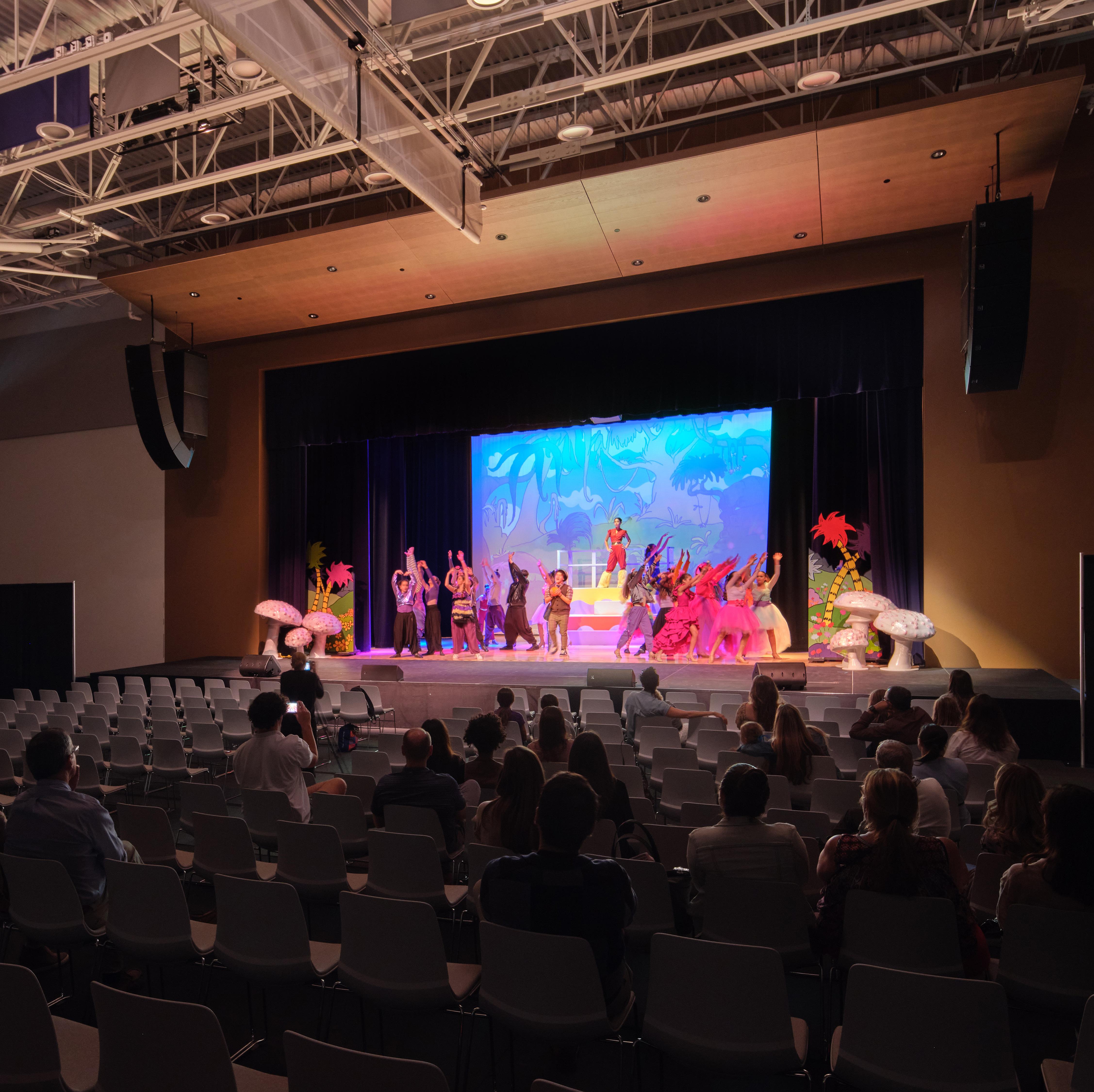
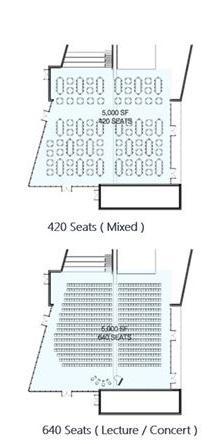
The new multipurpose gym space will accommodate a performance venue, featuring flexible seating, staging and learning spaces. The facility will have a seating capacity for more than 1,000. During the daytime Physical Education classes, the stage can be closed via a full moveable partition, preserving scenery and allowing for additional rehearsal space.
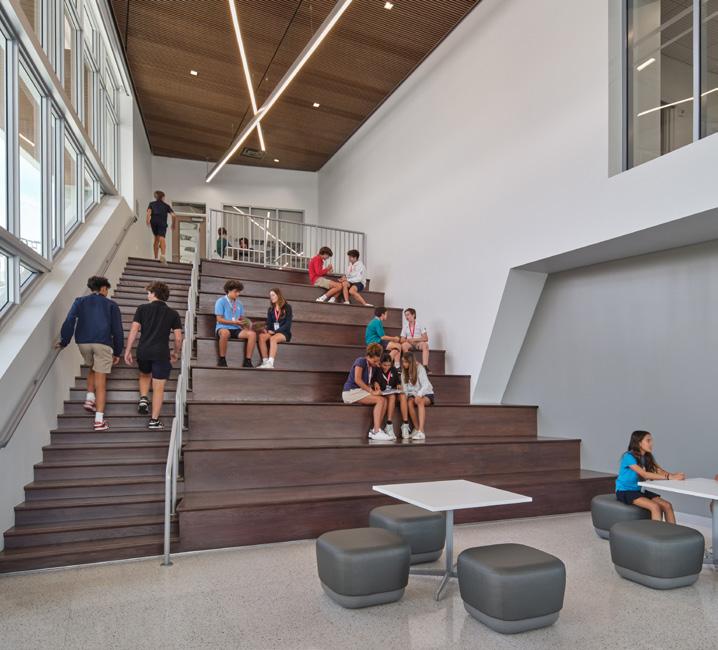
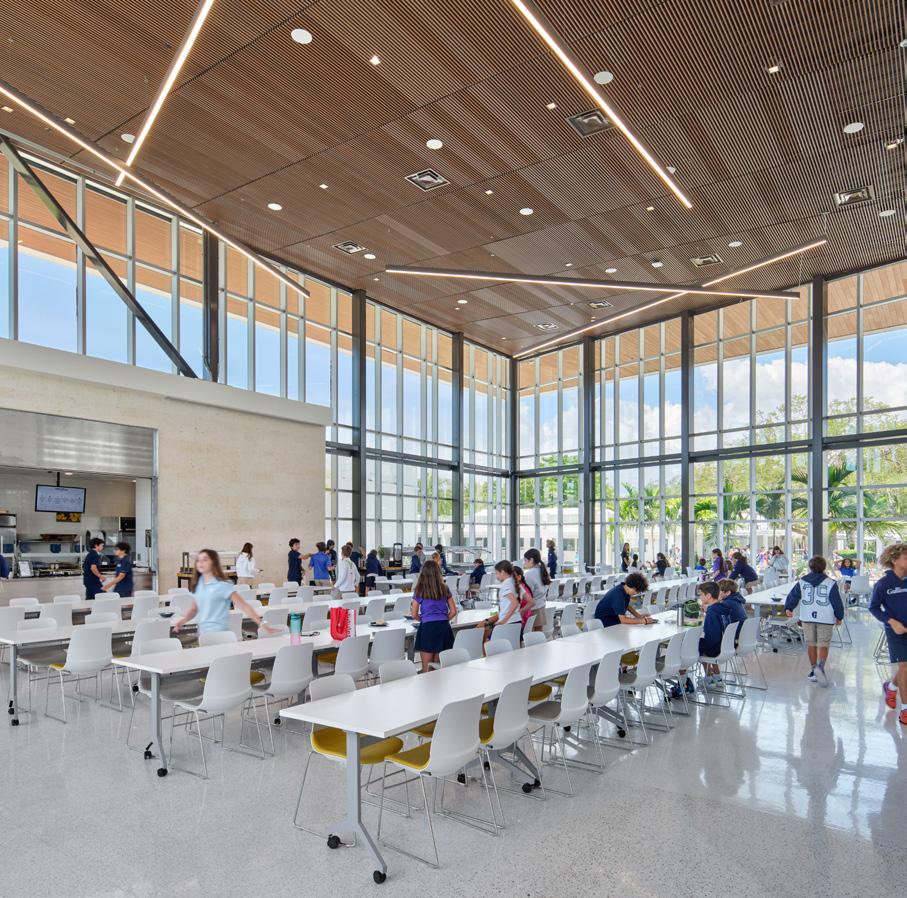
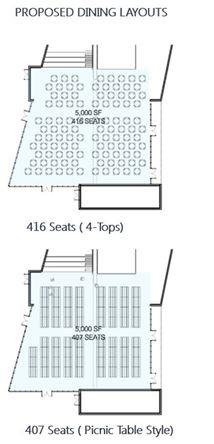
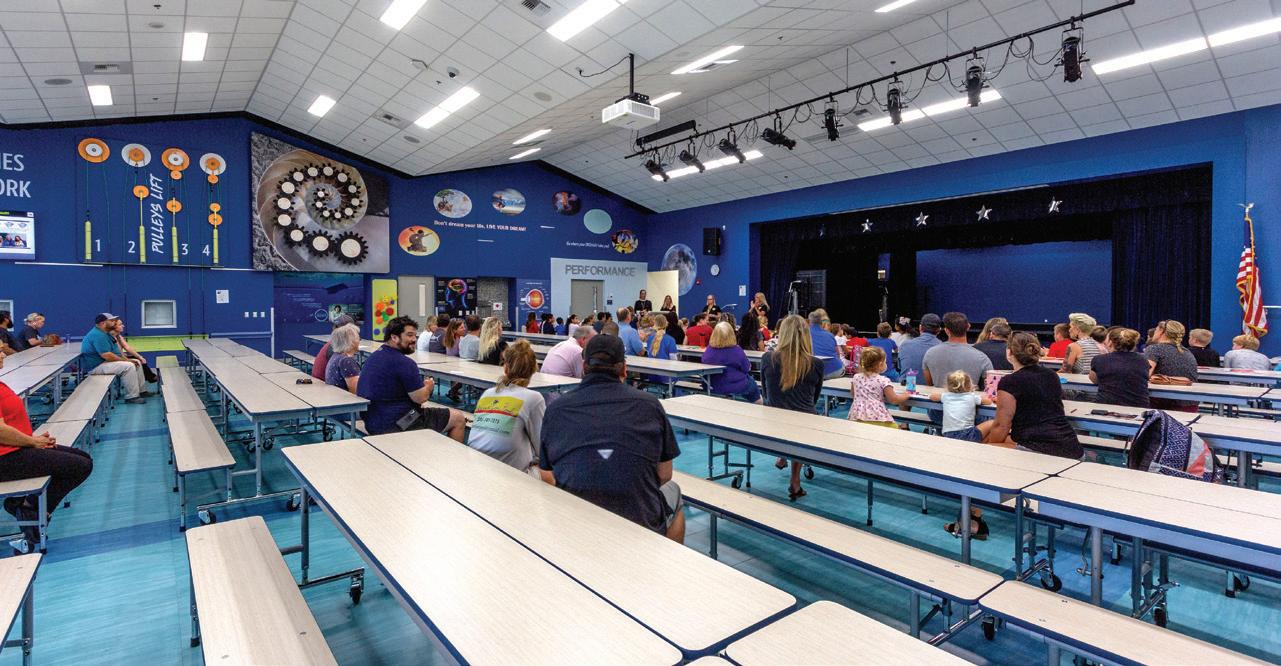
The Dining Space or “Student Union” is the heart of any campus. It serves as the center for campus life providing educational, cultural, social, recreational and leadership programs and services that are integral to the academic experience. As the “living room” of a school, it also provides services and amenities for the entire school community and serves as the ideal place for getting to know and understand one another through association outside the classroom. The new dining component of the building will also provide an environment for relaxation, social interaction, and opportunities exchange of thought. This room will offer opportunities to strengthen community by creating a venue not just for “feeding” but also to engage the student body with debates, speeches, plays, musicals, and concerts. Framing the Dining space to the north will be the Social Stair which will provide students with a college like experience preparing them for the future. It also gives the school the opportunity to host lecture classes as well as seminars, workshops, conferences, and special events for the larger school-family community.
21ST CENTURY LEARNING, TECHNOLOGY, & DESIGN FLEXIBILITY
The new educational suites in the CfSL are designed to draw learning out of the classroom to wider circulation, social stair and student dining/commons areas. These spaces provide an environment for relaxation and social interaction, and opportunities for exchange of thought. Collaboration is a unifying force, cultivating a lasting regard for and loyalty to a school. Students will share what they know using a variety of electronic media. Broadening the approach to learning will allow teachers to orient instruction toward engrossing hands-on, projectbased cross-departmental learning experiences. Flexible facilities are a key element to support this mission. Technology rich classrooms and presentation areas make it possible for students to invent, share and analyze the challenges of tomorrow. In these new 21st century classrooms, teachers will have the opportunity to connect learning more explicitly to the outside world. The learning environment will extend beyond the walls of the classroom building to the collaboratoriums and outdoor learning spaces so that students can engage in reallife problem solving. Select areas such as the music and science rooms have dedicated functions yet are intended to be multipurpose to support various project and teaching methods that will be invented and tested at the School. Designated instructional studios have been provided in a fixed area which can be divided by an operable partition, intending to allow for many forms of teaching and learning to be explored.
SUSTAINABLE INITATIVES, AESTHETICS, & USE OF MATERIALS
In order to achieve Silver, the project had to meet and exceed several energy efficiency standards which included the use of insulated impact glazing while maintaining ample natural day lighting and visual connection to the exterior.
Other key sustainable features include:
A new covered parking area beneath the building accommodating 90 vehicles and 15 of these spaces are EV ready, which is in addition to the 7 EV spaces also provided at the front of the building.
The landscape design emphasizes the use of native and adaptive vegetation.
Outdoor space are pedestrian-oriented and utilize paving and/or turf areas with physical site elements that accommodate outdoor social activities, a recreation-oriented paving or turf area with physical site elements that encourage physical activity,
Heat island reduction was accomplished by using light colored pavers throughout as well as highly reflective roof materials and sports court paints.
A new central energy plant allowing expansion capacity for future tie-in of the existing campus.
Renewable energy was achieved by incorporating a 200 linear foot solar canopy which doubles as a covered drop-off are for children in inclement weather.
Materiality can affect the visual and mental perception of space.At the Center for Student Life, the use of coralina stone cladding was meant to invoke a connection to the “Silver Bluff” coral ridge upon which the building was sited. In the contemporary architectural language of the building, wood is incorporated in the large shady overhangs because it is associated with coziness, harmony and simplicity. Thirdly, large fields of glazing are intended to not only conjure a futuristic vision into the 21st century but also extend views through the building towards the playing fields to the east. Thoughtfulselection of materials for a design will contribute towards a healthy and harmonious environment.
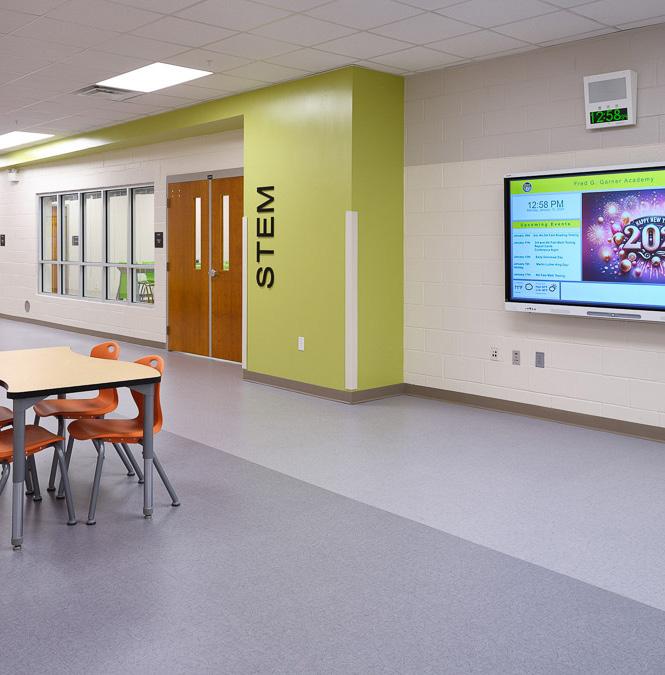
FRED G. GARNER ACADEMY
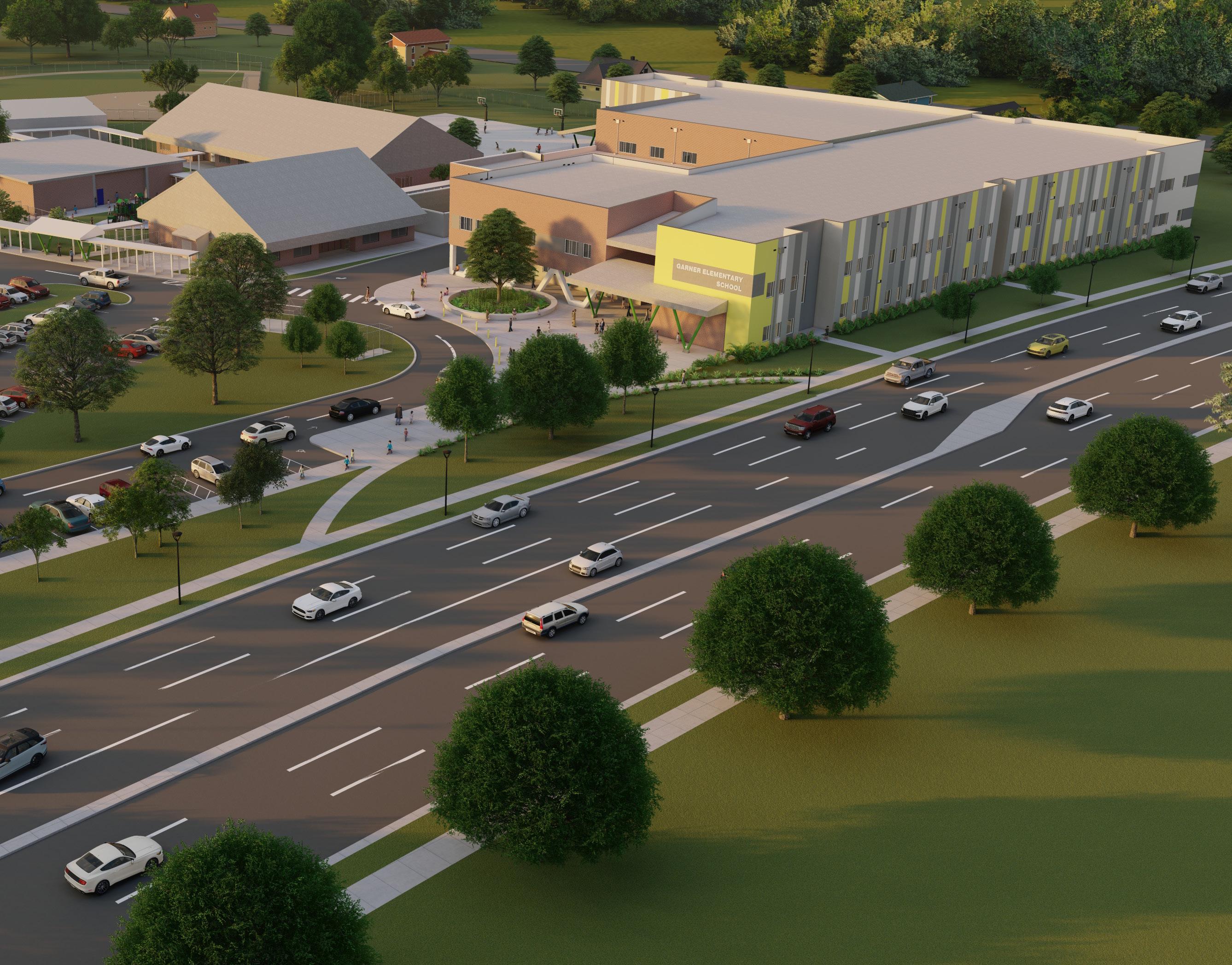
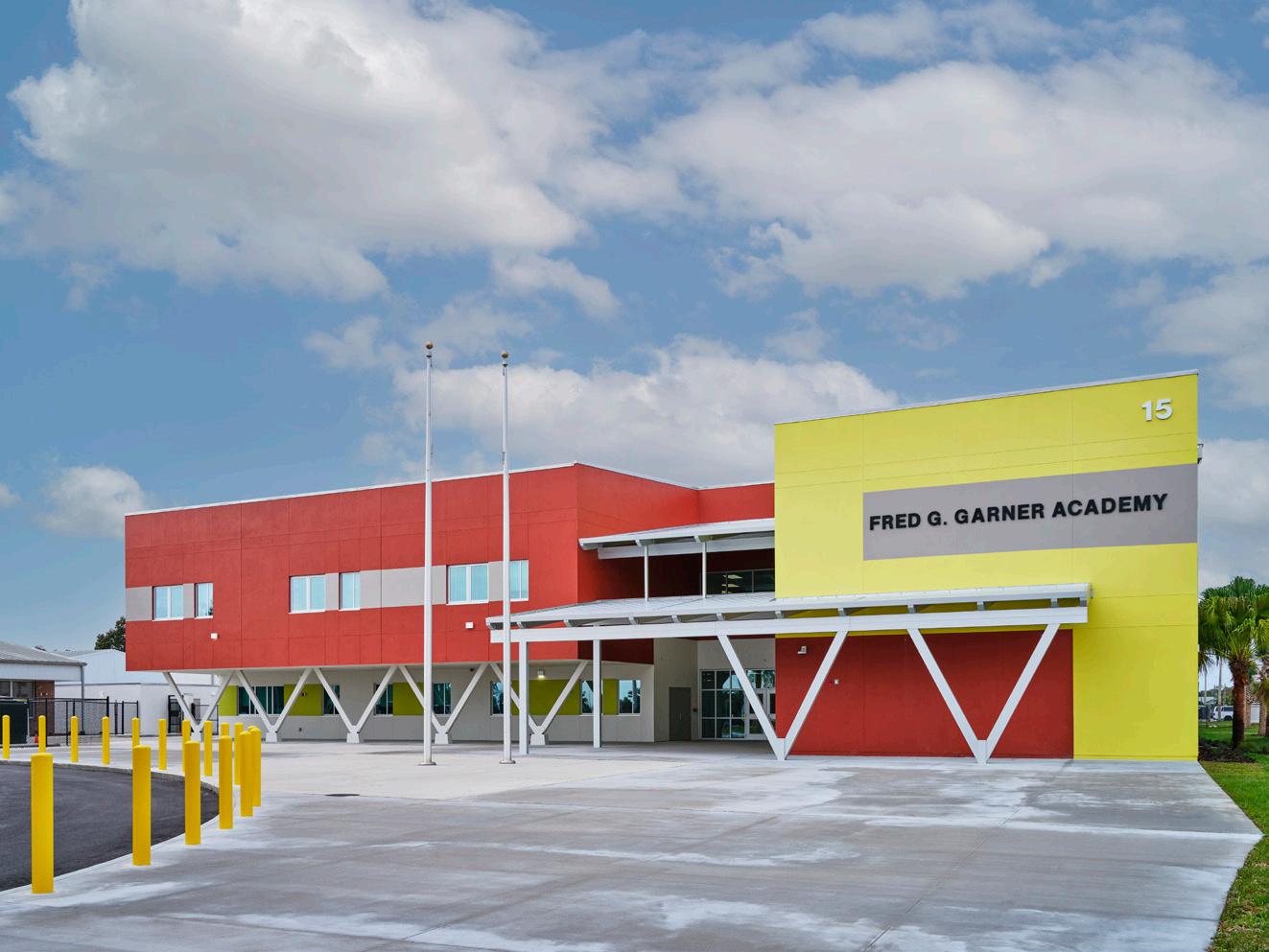
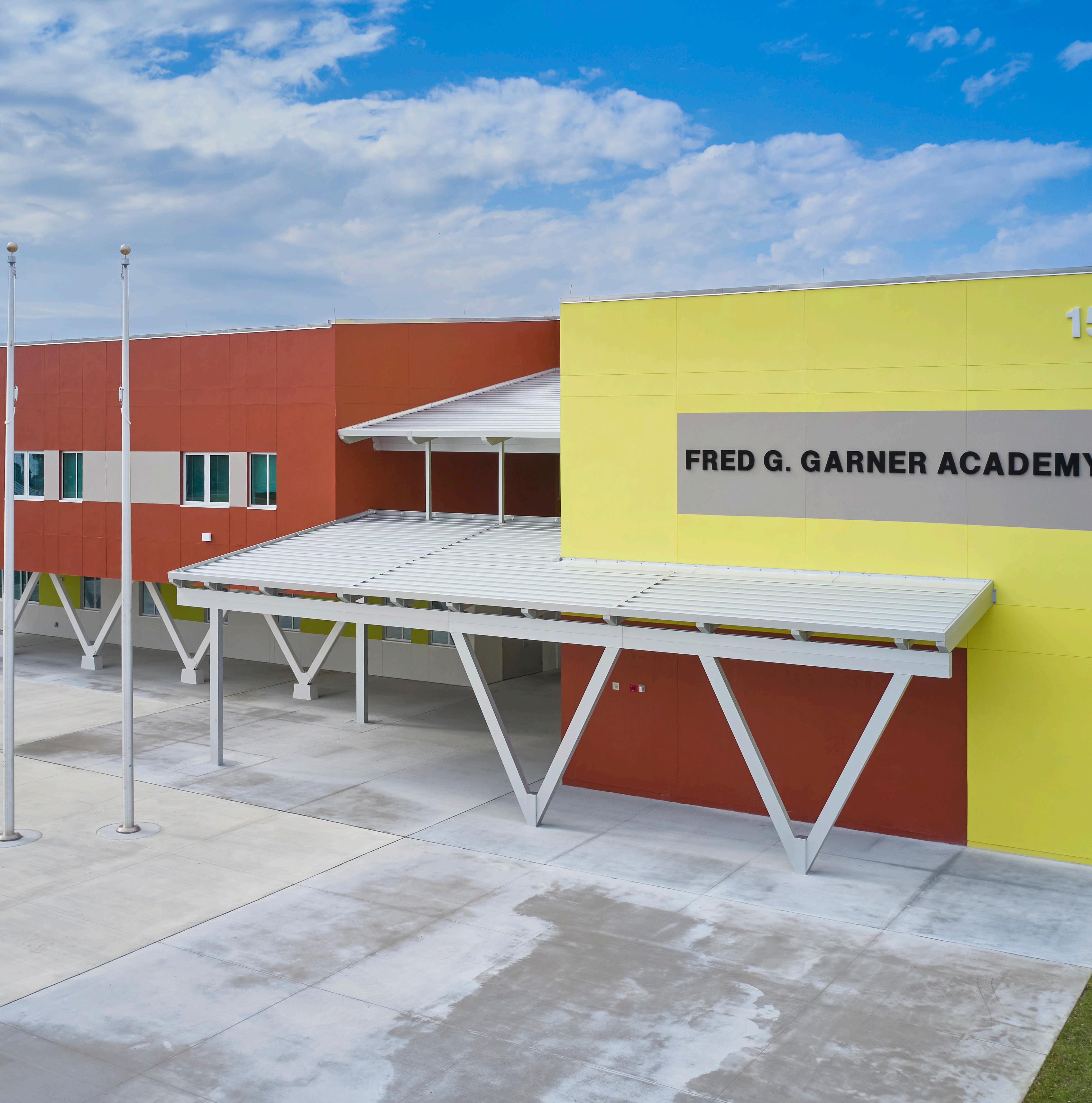
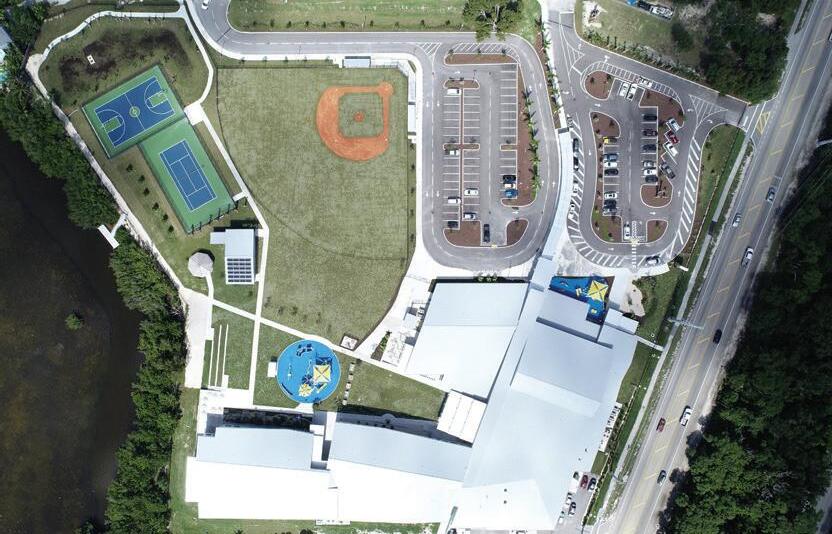
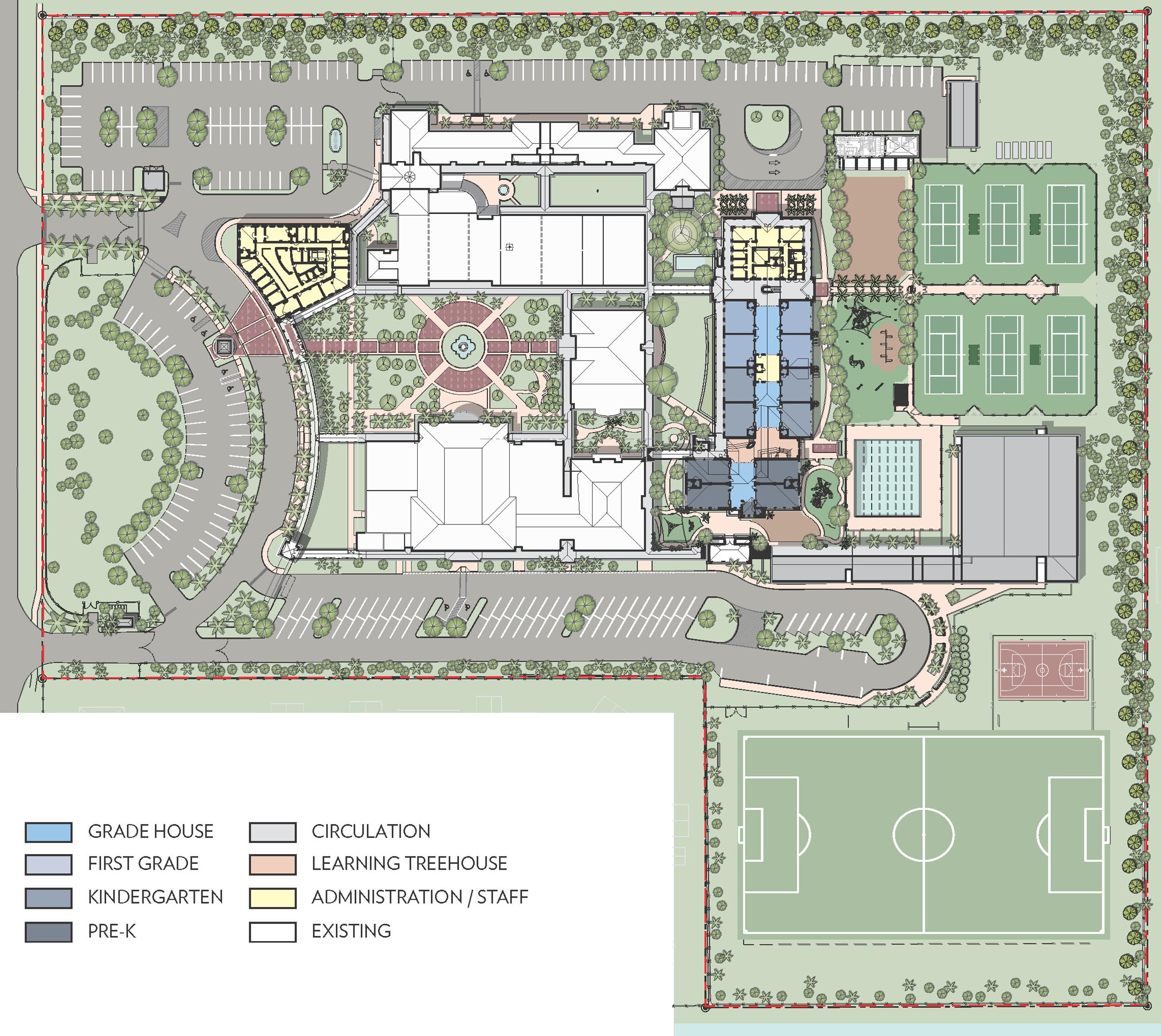
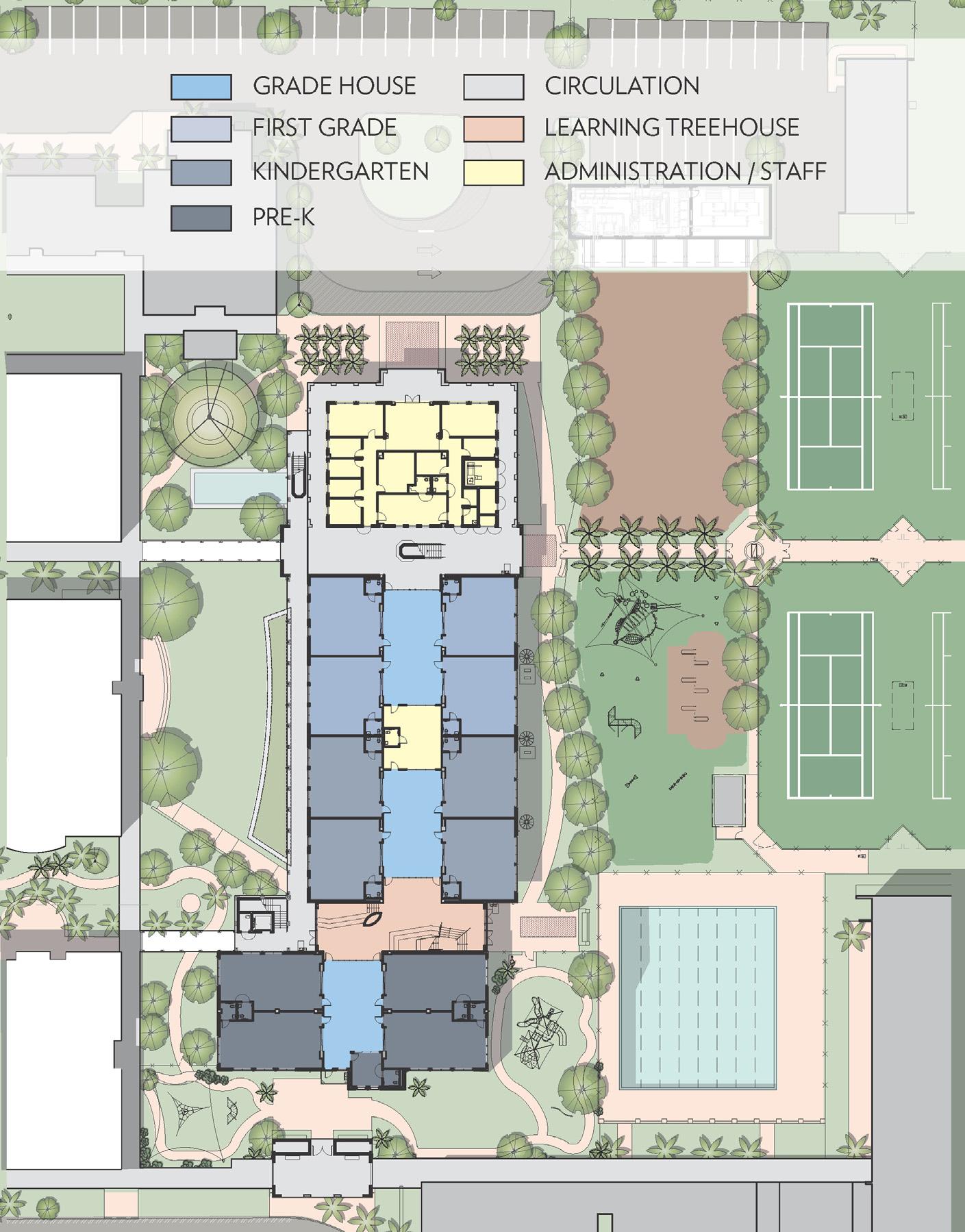
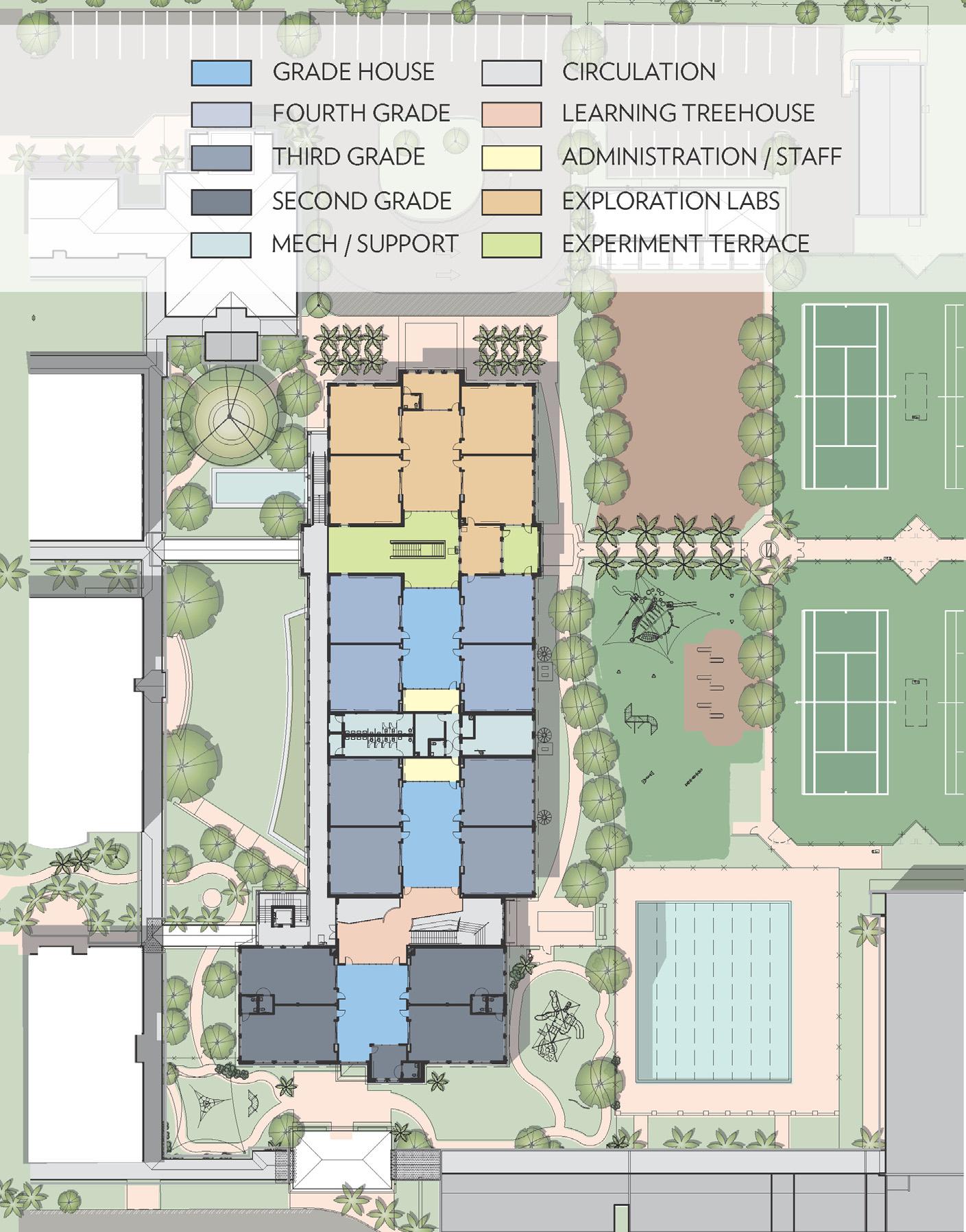
The Garner Elementary School project was a 21st Century transformation of an existing vintage 1950’s elementary finger school in Polk County. Students at Garner Elementary School are excited about learning by connecting with their world in ways that are fun and personally meaningful. Formerly an underperforming school, the new Garner mission is to “promote innovative thinking through discovery of real-world opportunities that foster collaborative problem solving to pursue excellence in student achievement and preparedness for success in a technologically complex global society.” The design of the 21st century learning facility focuses on using space innovatively to create Community Commons so that the entire school can gather and celebrate their major events. The renovation portion of the project transformed approximately 35,000 SF of outdated classrooms and the media center to accommodate 21st century learning modalities and technologies, with emphasis on incorporating state-of-the-art instructional spaces for including simulation technology.
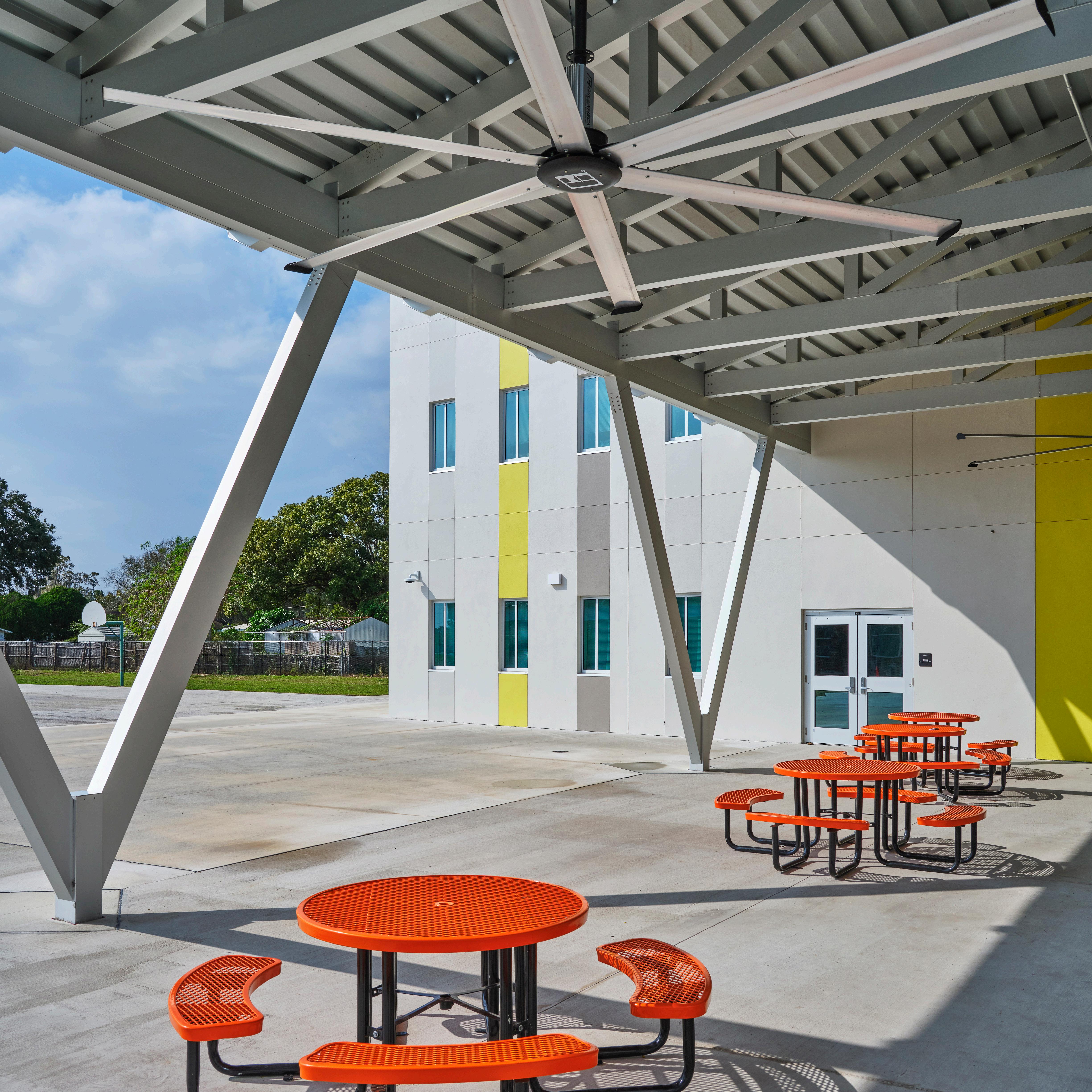
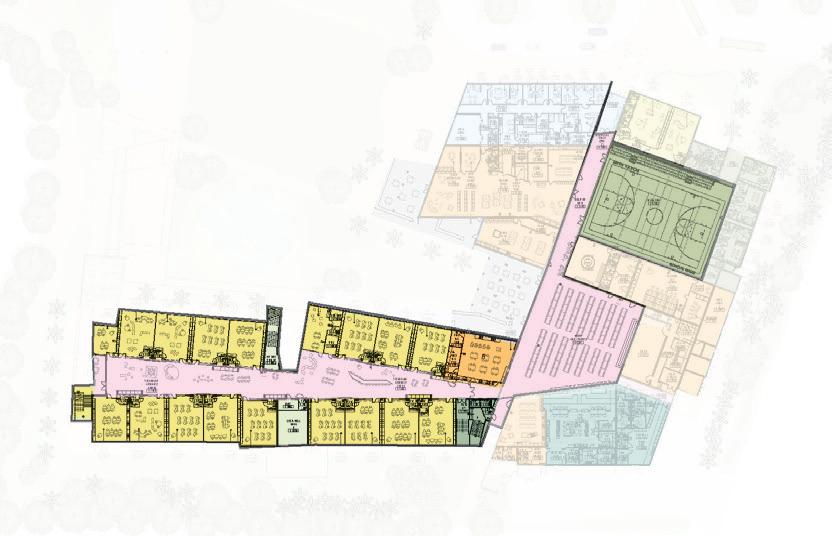
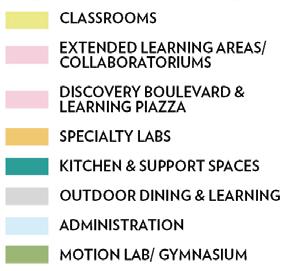
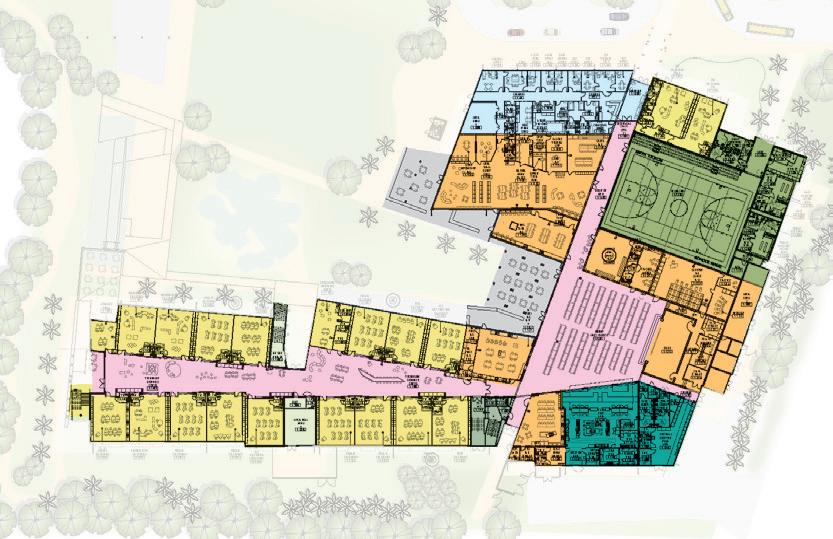
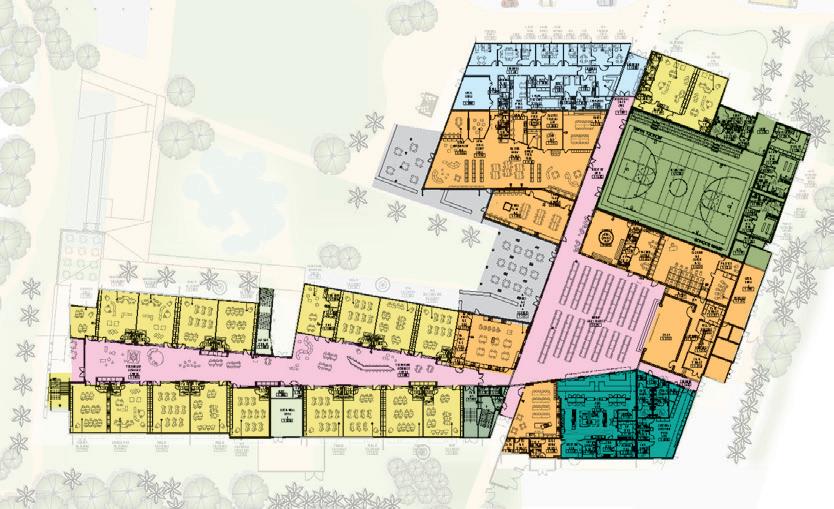
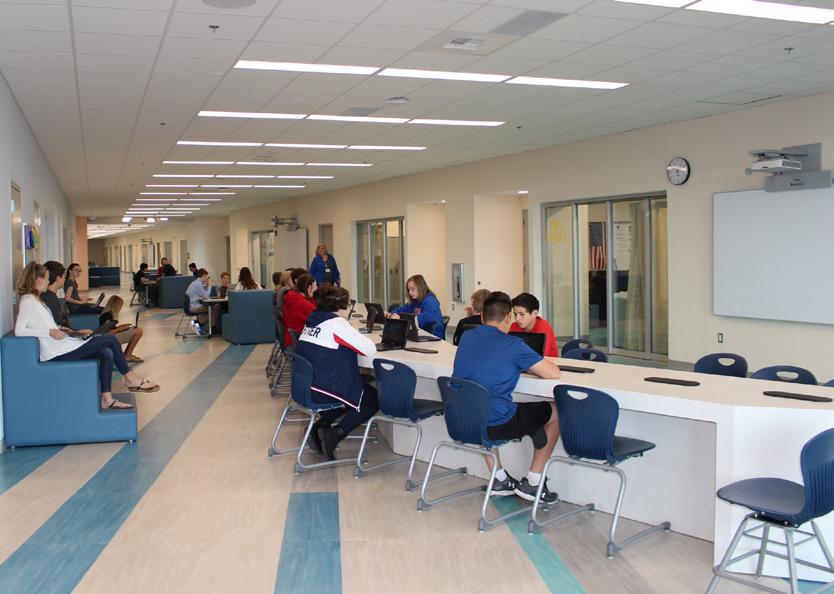
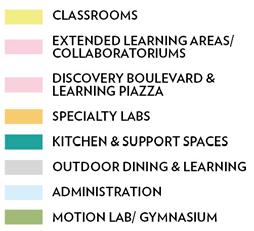
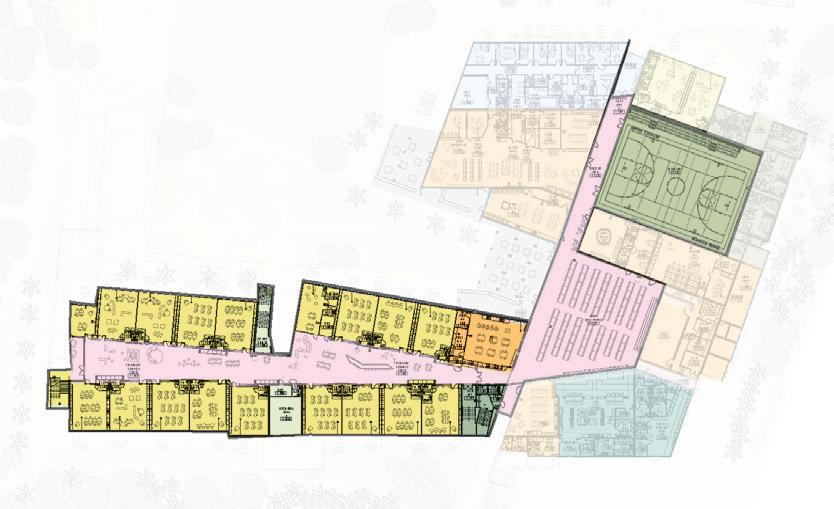
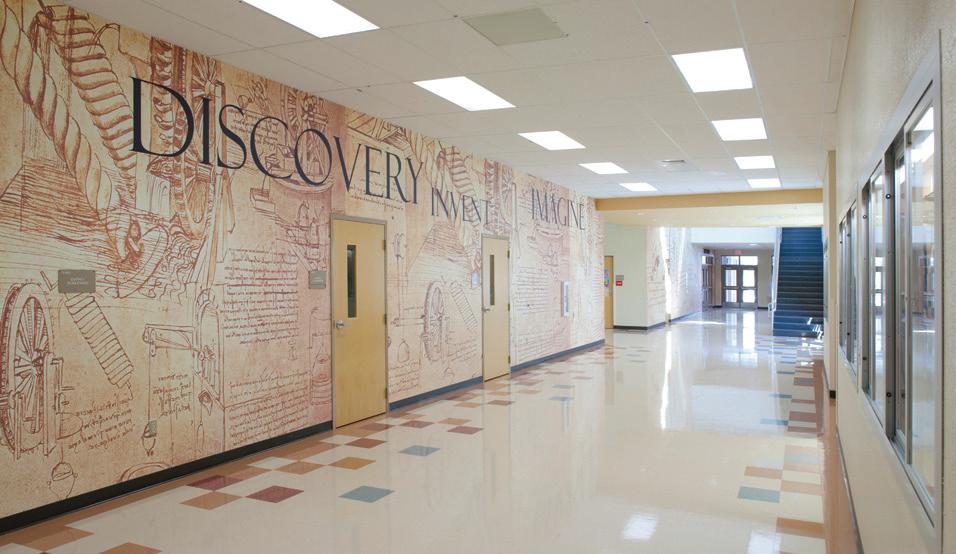
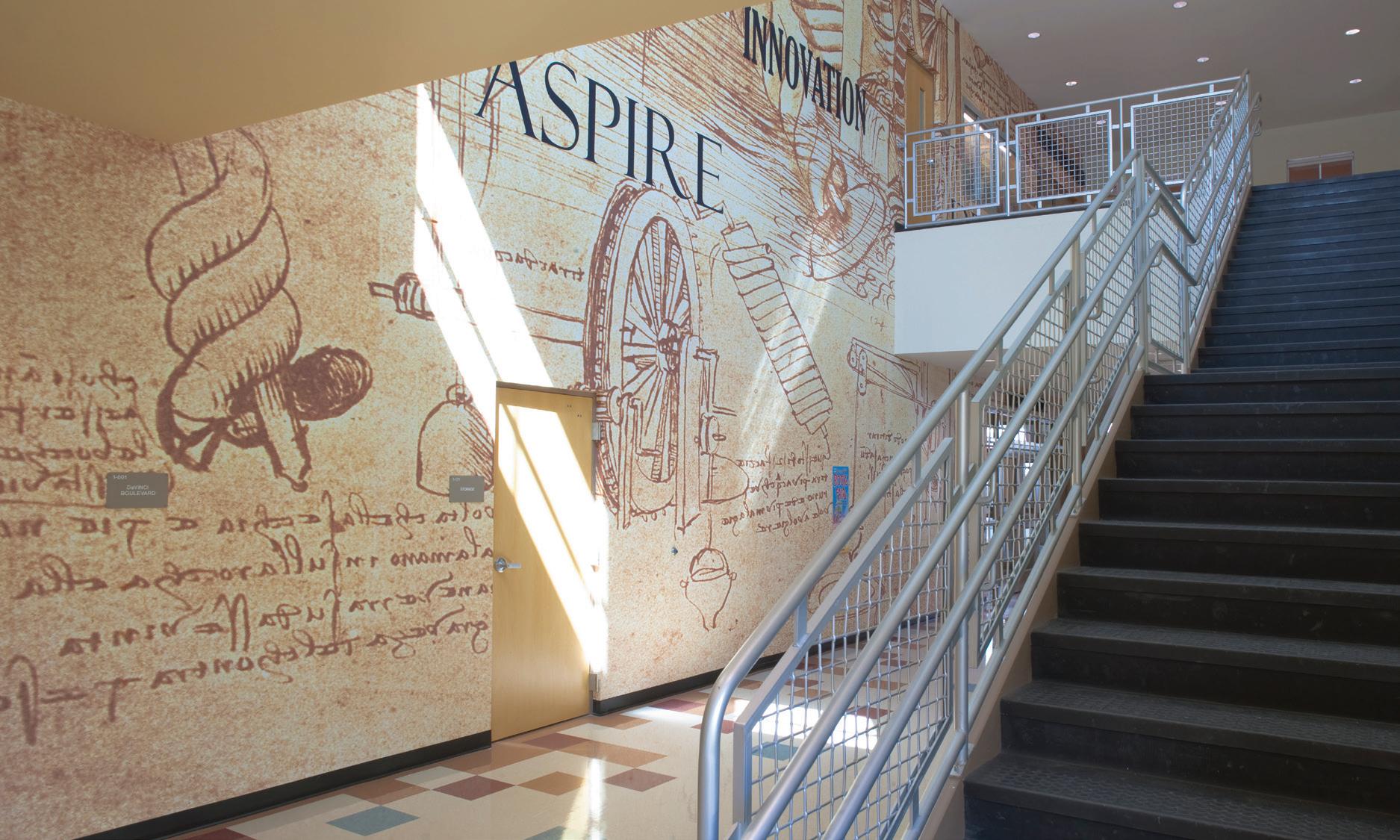
Originally constructed in the 1970’s, the school comprised several buildings on the 18 acres site with exterior circulation connected by covered canopies. The renovations and addition support the school’s transformational journey included keeping the campus operational while all the new construction takes place. In short, the majority of school was rebuilt with a focus on collaboration and active, engaged learning. The approximately 104,000 SF of additions consolidate with internal circulation, known as the “Discovery Boulevard ,” which functions as a collaboration space for students to work together on projects and make presentations of their work. This space culminates in the Learning Commons (the cafetorium) to form a main community space for the school.
INNOVATION ENHANCEMENTS & COMMUNITY
Educating a generation that understands what teamwork, collaboration and technology are and their importance to our society and our world will help children discover their passion on the road to success. Project-based instruction within the coloration Discovery Boulevard builds on students’ natural problem-solving skills to prepare a future generation of critical thinkers. Students learn how to navigate challenges by imagining, designing, creating, failing and improving their projects and then trying some more. The school is designed to create a strong sense of community by linking all classroom wings to the Discovery Boulevard and Learning Commons, where large group projects, assemblies and celebrations takes place to foster a culture of innovation and engagement throughout the school. The focal point of the school is the Learning Commons, adjacent to the exterior courtyard, where the exterior Project Based Learning Lab/Collaboration Space, Art, STEM and Robotics Labs are shared by the entire school, working in a flexible environment to solve real world problems. Here, learners engage in challenges which are designed to build core knowledge and develop 21st century skills. These engaging, hands-on activities make learning relevant and fun. The new facade rebrands the school to the community and creates a civic presence. The location of the cafetorium/arts suite, administration, Learning Commons and Discovery Hub allow the core spaces of the school to be used after-hours by the community while leaving the classroom wings secure.
21ST CENTURY LEARNING, TECHNOLOGY, & DESIGN FLEXIBILITY
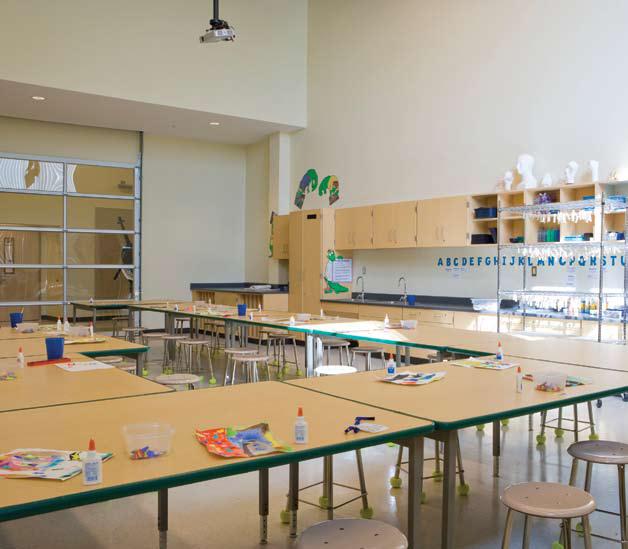
The school features fully integrated educational technologies throughout, including interactive 60” flat screen touch interactive monitors in every classroom Wireless technology connects students’ and teachers’ iPads and laptops to instructional programs. In the Science and Art Lab, there is constant opportunity to solve problems and purposefully awaken students’ sense of wonder. The innovative expansion plan addresses project based learning, collaboration, multiple intelligences, individual student studio/computer space, shared common flexible space, centralized administration and guidance, a variety of indoor/outdoor teaching venues, and ease of separation for public spaces and administration. The optimized learning environments maximize student achievement through 21st century learning concepts, the psychological use of color, interior lighting, and views. The minor addition leaves plenty of space on site for integrated future expansion.
SUSTAINABLE INITATIVES, AESTHETICS, & USE OF MATERIALS
The building was designed utilizing Green Globes metrics, and its systems were exposed and labeled as learning opportunities for the students. The new internal circulation increases Indoor Air Quality while reducing the higher thermal loads associated with exterior classroom doors. The interiors feature sustainable, recycled-content materials with low VOC and direct and indirect lighting. A new high efficiency chiller plant with thermal ice storage not only cools the school, but serves as a learning tool for students. A new facade rebrands the school to students and the community at large, as does the interior color scheme, which doubles as a wayfinding system. The new building integrates in the colors and textures of the existing buildings creating one seamless campus identity. In addition to the application of color theory to interior spaces, sufficient green space, and unique programmatic collaboration areas, the technical aspects of making a space more efficient and comfortable have been addressed. Natural light is provided in all student-occupied spaces, and highly-durable, low maintenance finishes create continuity in the spaces while reducing maintenance and long term operational costs.
2023 FEFPA
Improving student outcomes through design
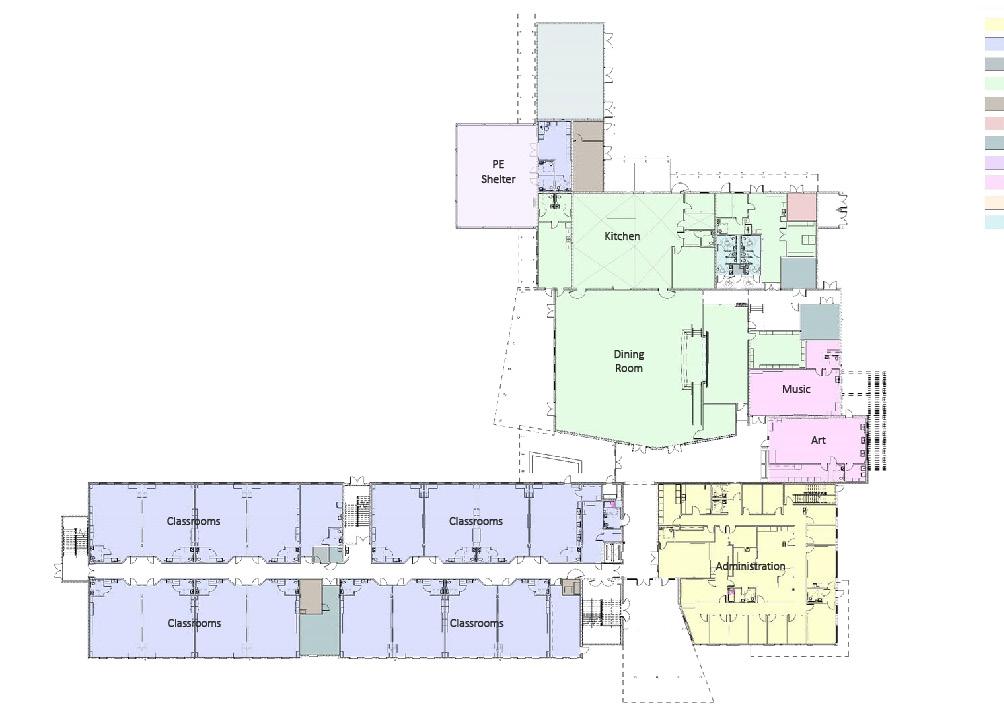
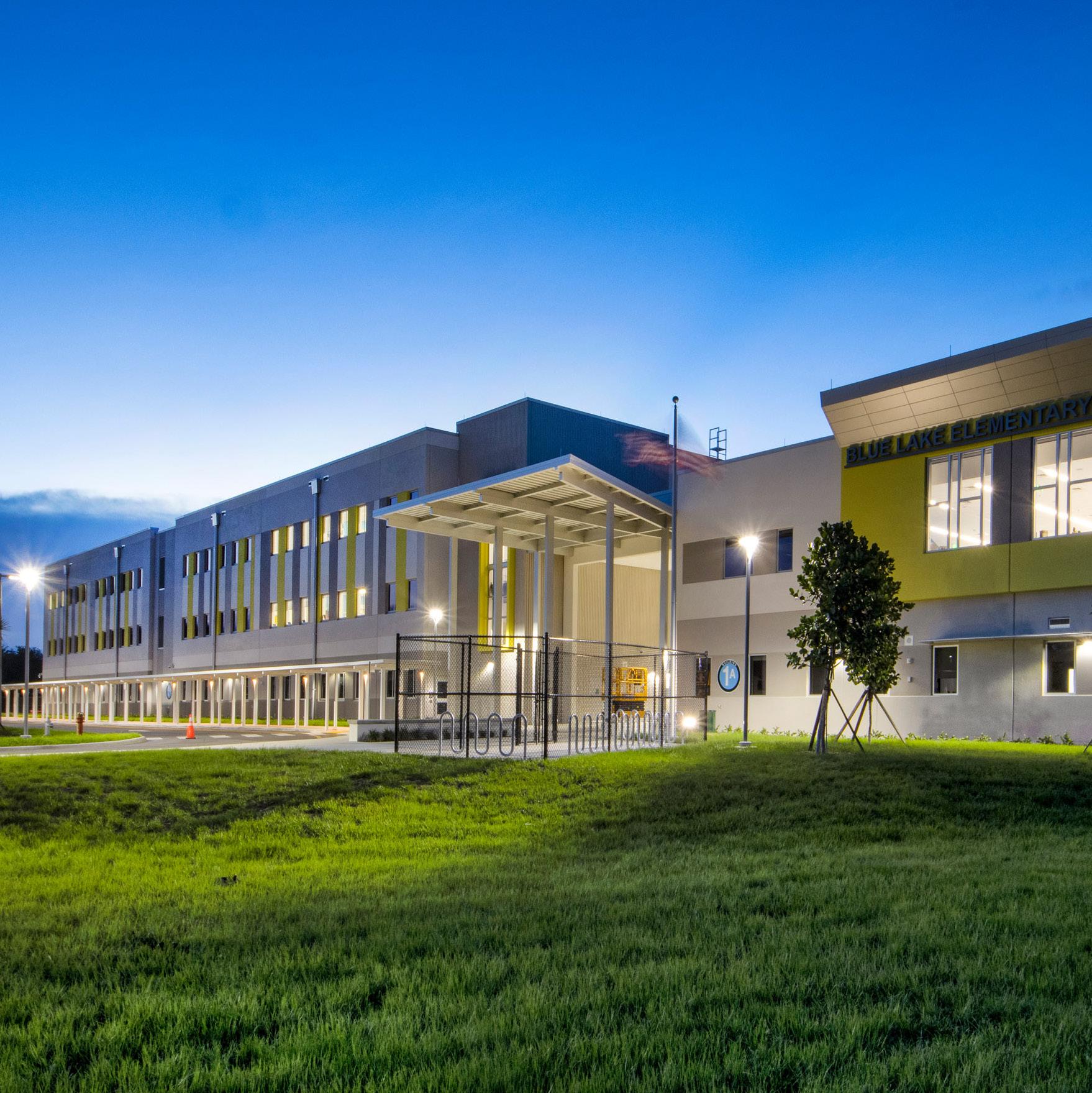
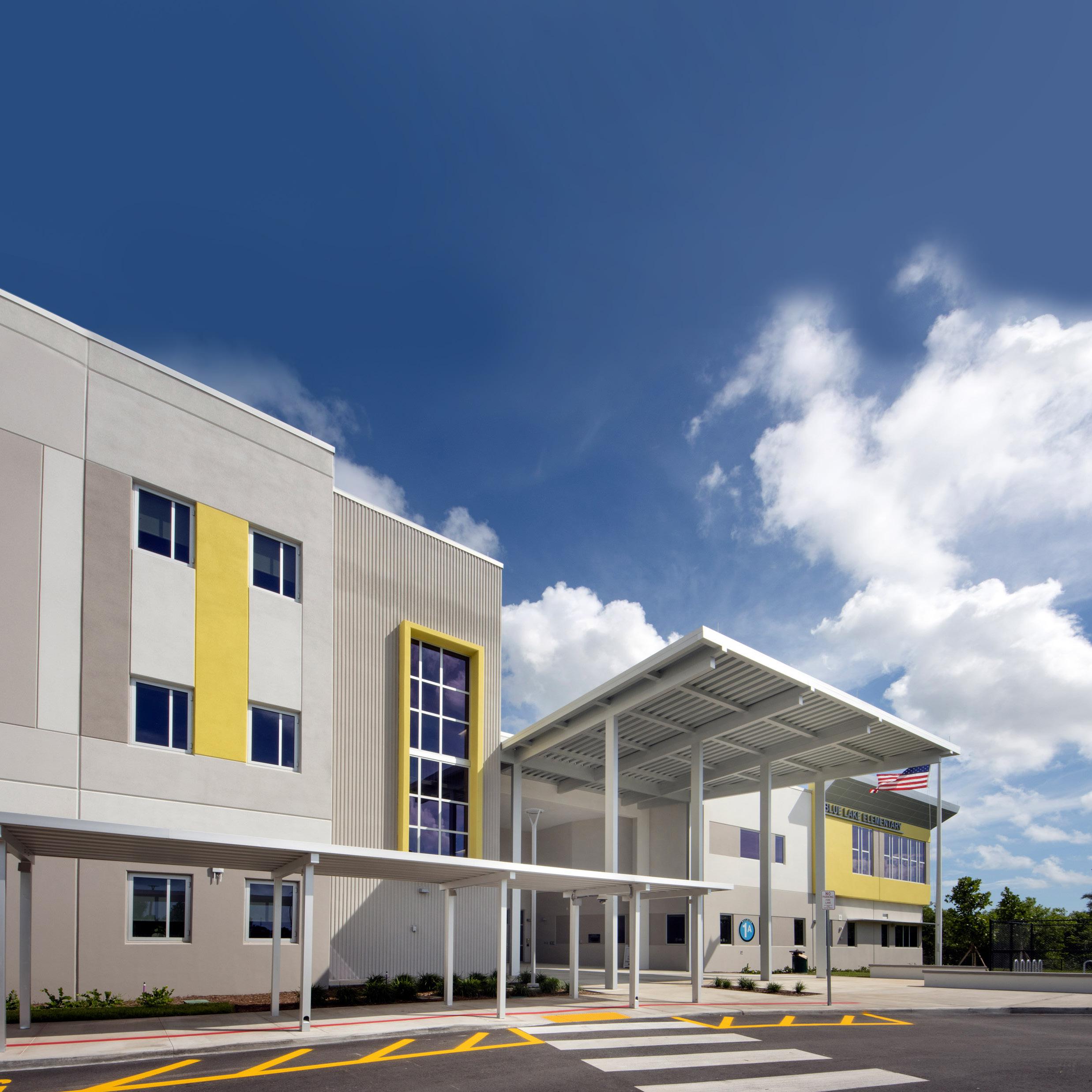
BLUE LAKE
ELEMENTARY SCHOOL
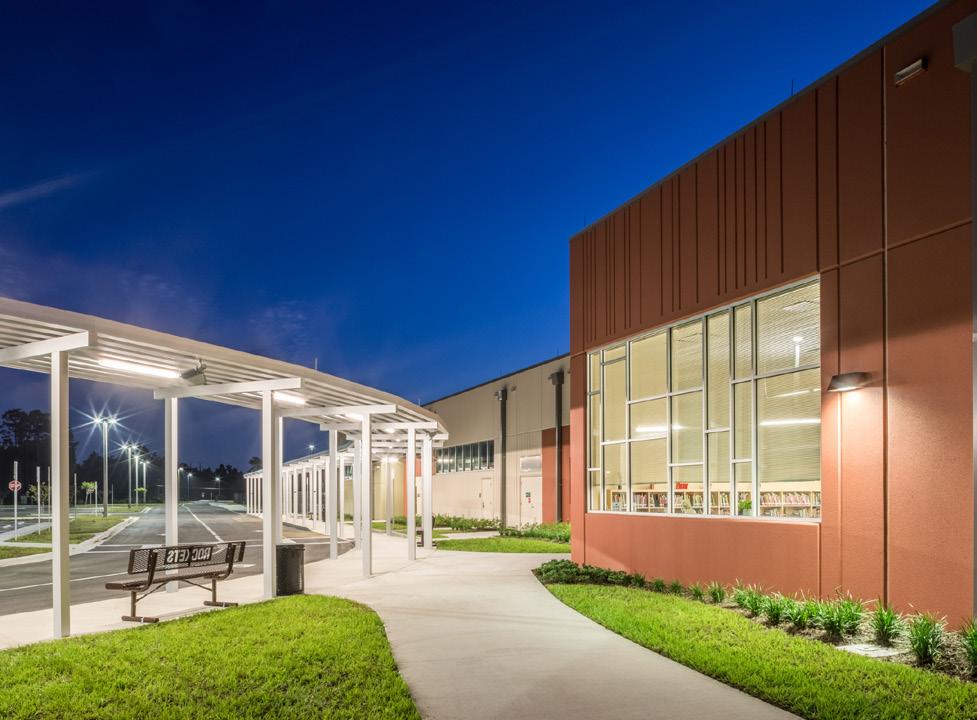
3300 N. Military trail, Boca Raton, FL
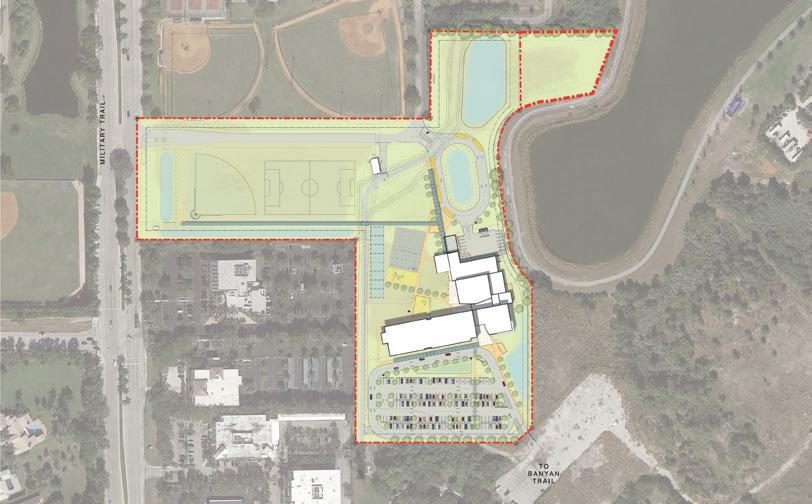
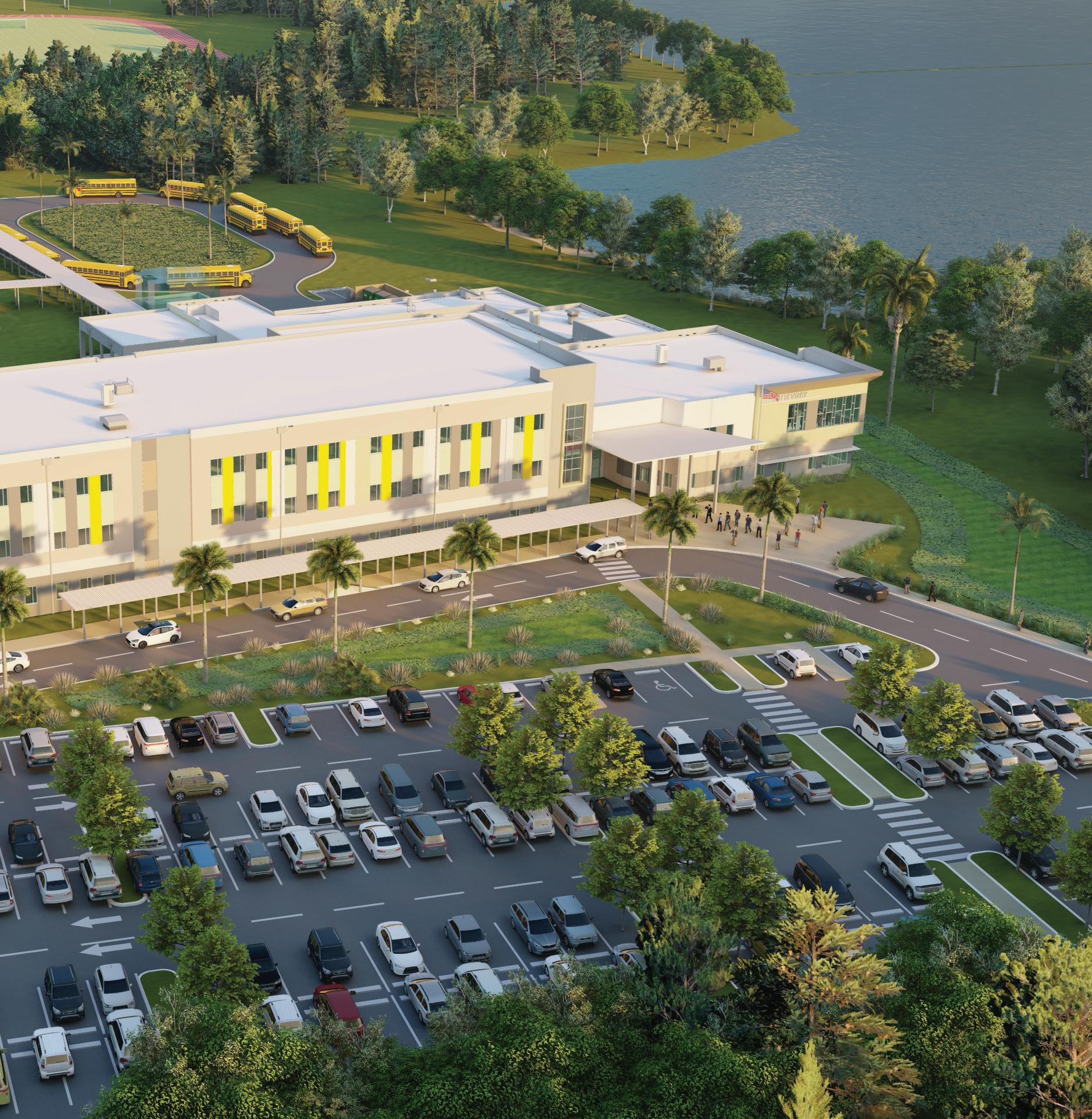
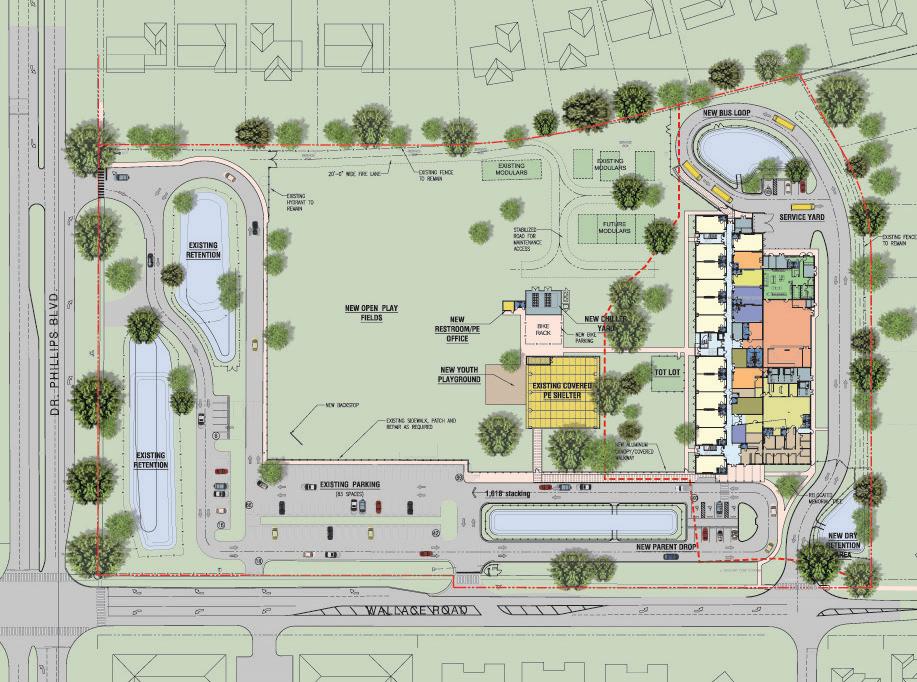
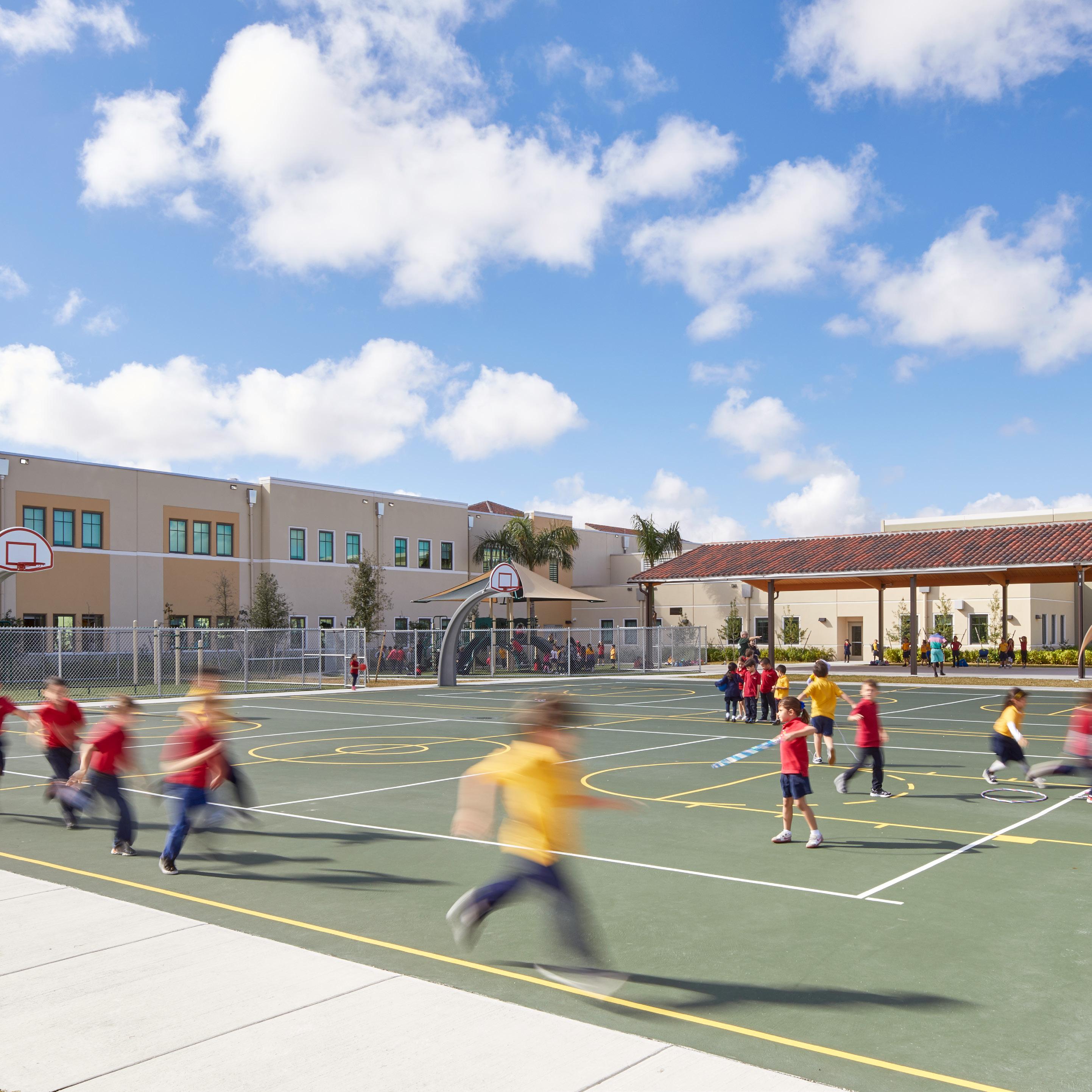
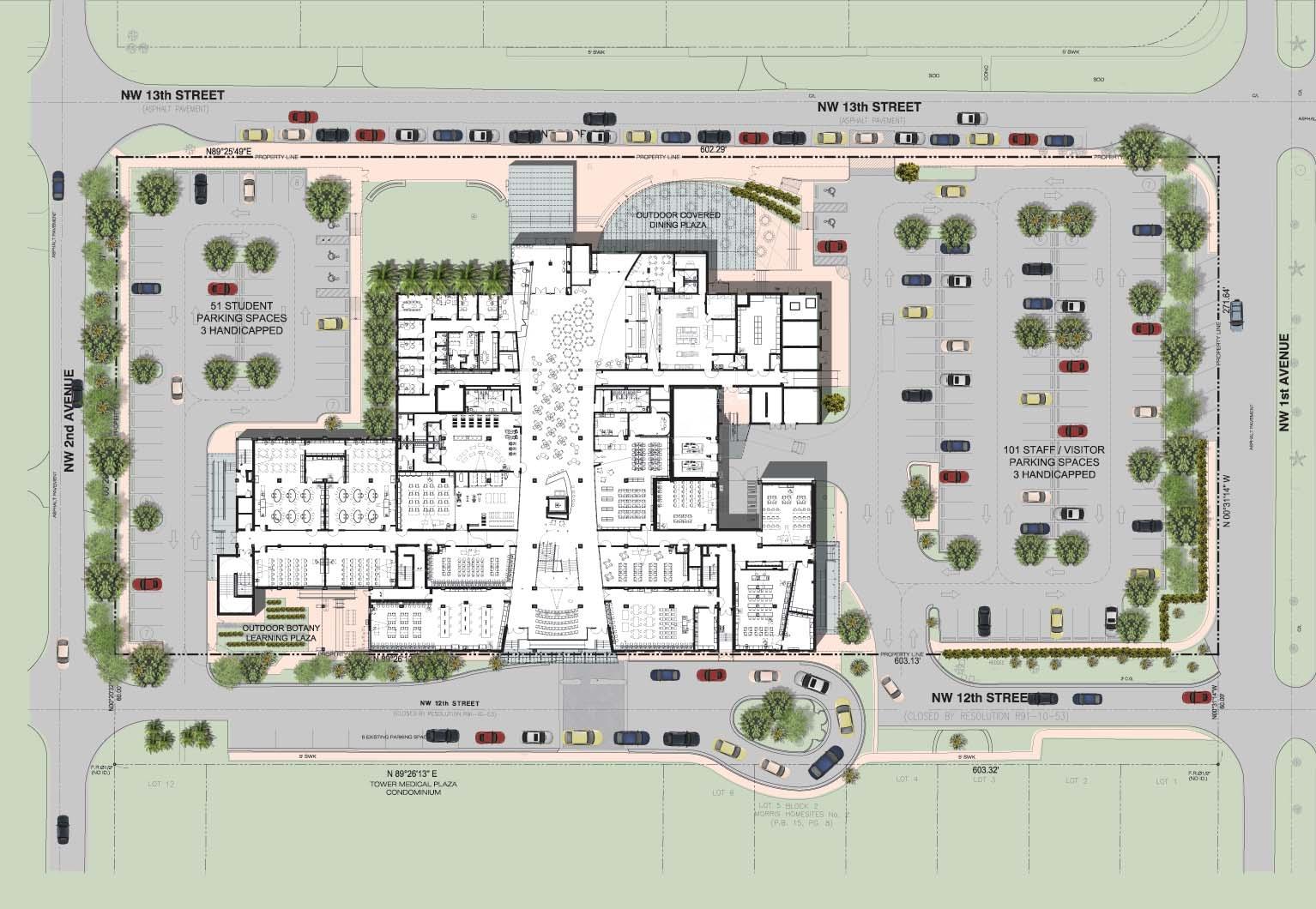
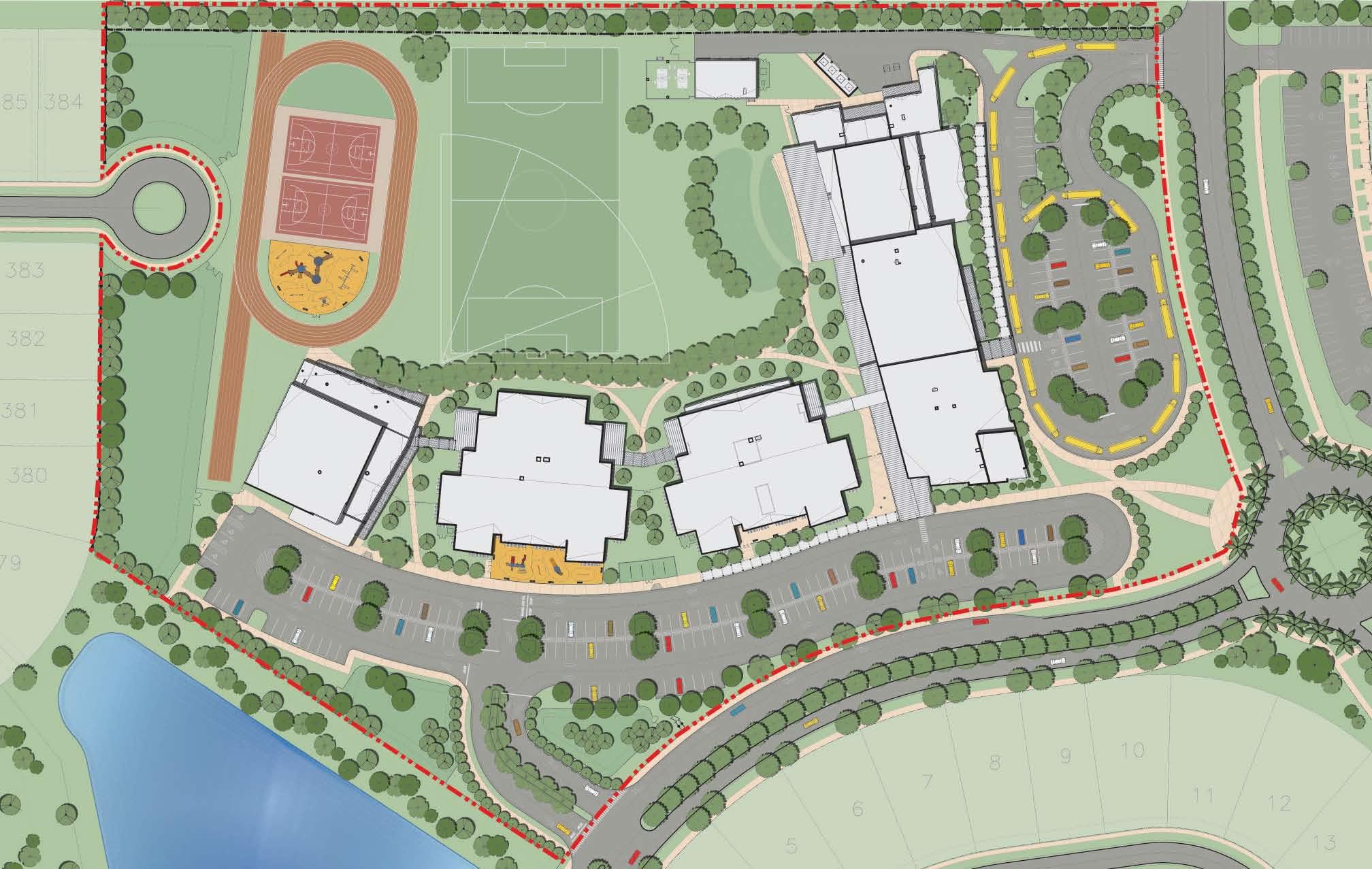
The School District of Palm Beach County and the City of Boca Raton collaborated on developing a new elementary campus in the heart of Boca Raton. The City carved out a +/- 15 acre parcel from and undeveloped portion of its Spanish River Athletic Park adjacent to Don Estridge High Tech Magnet Middle School campus, and worked closely with the District to mitigate utilities, well, site, and traffic considerations so as to relieve severe school over-crowding in the neighboring community schools. Additionally, the design responds to a complex and uniquely shaped site with a compact foot-print and vertical educational solution. The placement on the site accommodates over 3 acres of restricted land cutting through the site for required utilities, and provides for all of the amenities required for a K-5 academic campus including exterior dedicated playgrounds, playfields, room for expansion, 156 parking spaces, and 1,850 feet of queuing.
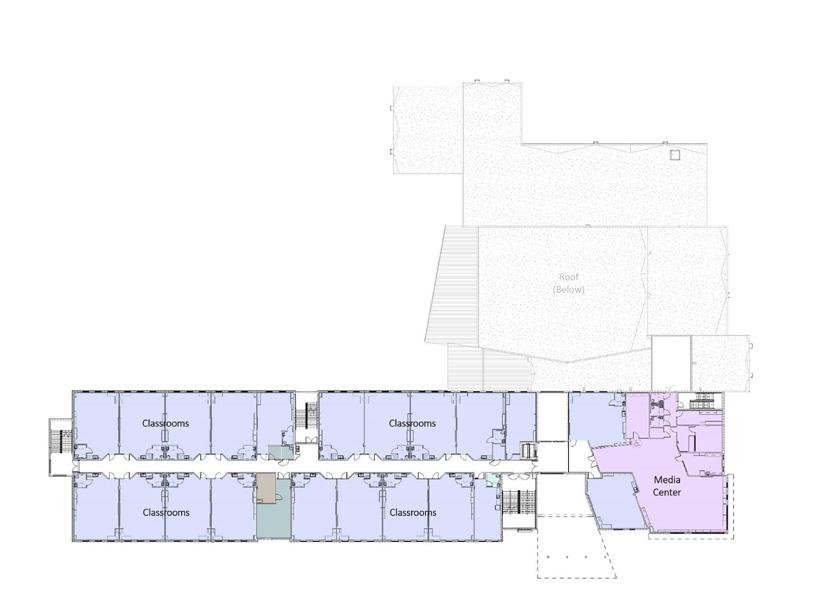
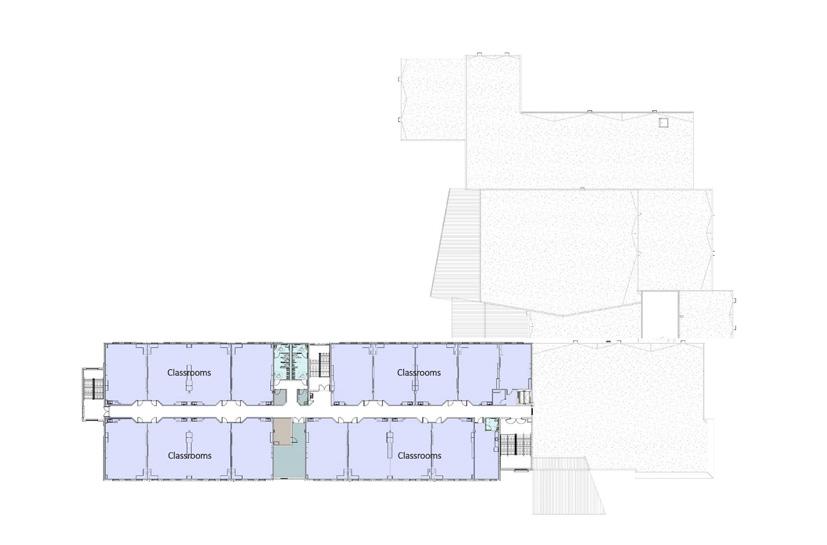
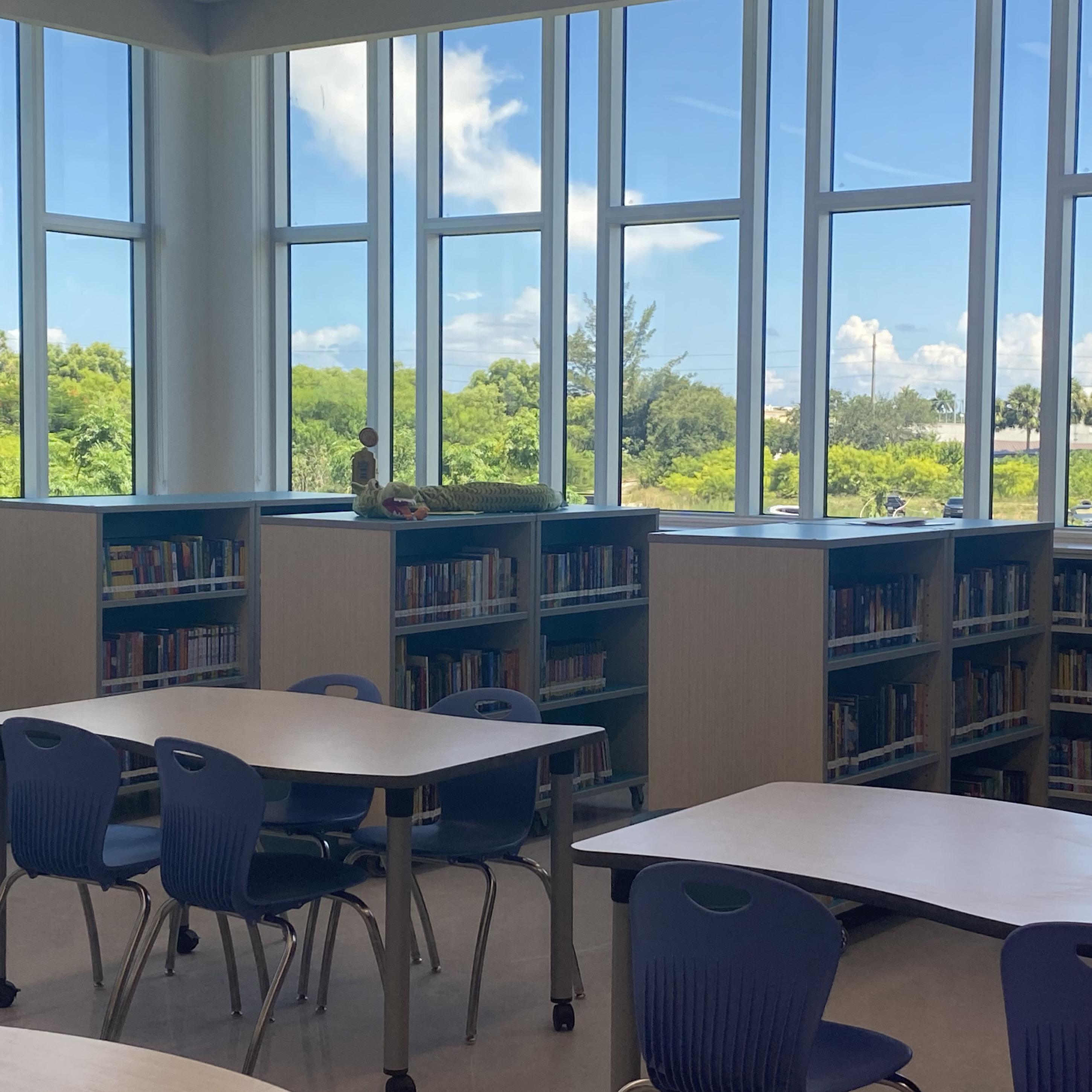
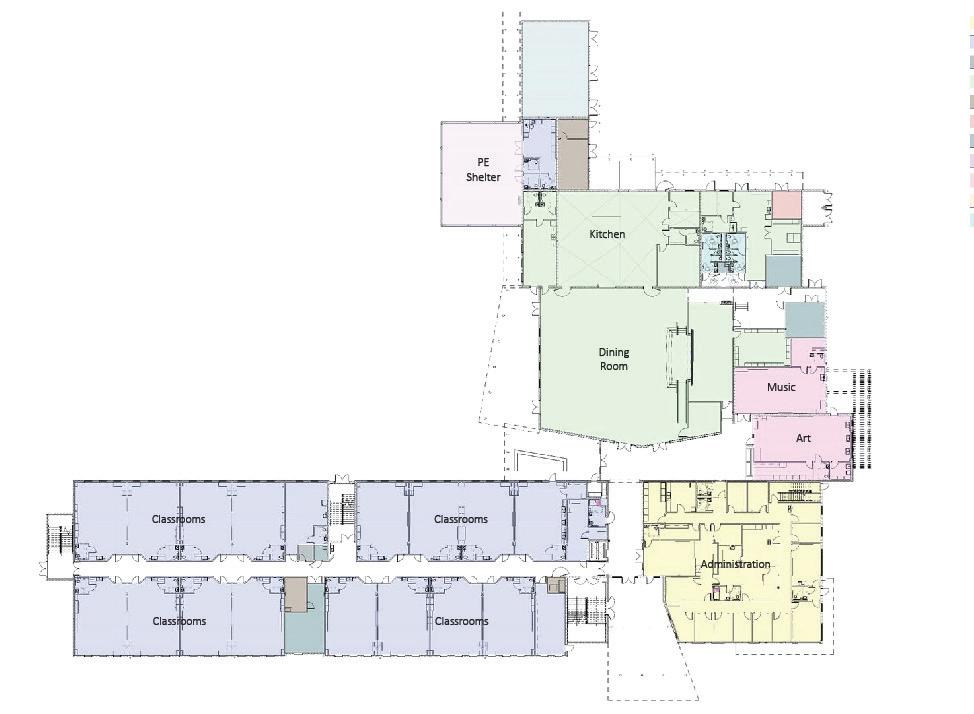
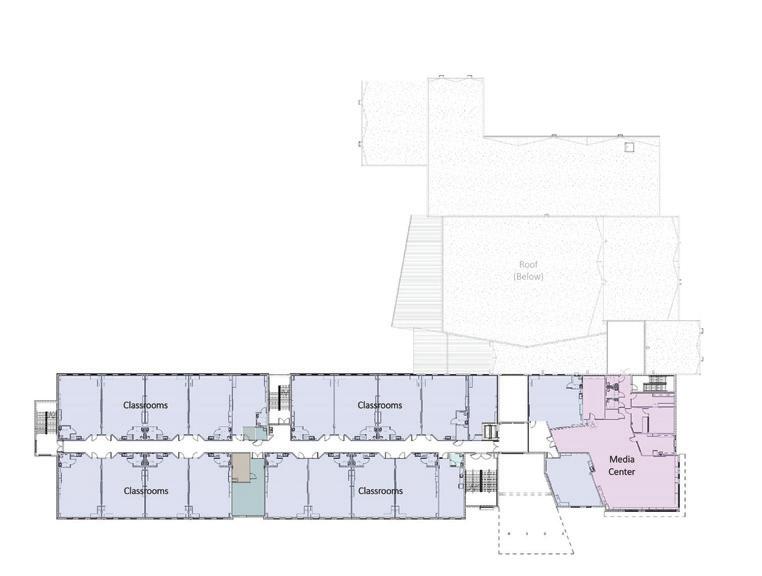
Due to the restricted size and configuration of the site compact and efficient new K-5 Elementary school was programmed and designed to accommodate 972 student stations, in a three-story, 92,000 SF facility. Thanks to expert educational programming and master planning the project was “right-sized” through balancing educational programmatic needs with available systems and market pricing, while still able to be below Florida Dept. of Education Student Station Construction Cost requirements. The new facility was developed with site-driven vertical approach, and incorporates an central Arts Boulevard with a Music and Art suite adjacent to the multipurpose performance dining room, an integrated second floor STEM Media (Center) Lab and distributed Exceptional Learning Spaces at each level. The 21st Century Learning environment is planned to accommodate flexible group, peer-to-peer, and individualized learning activities where young people become more curious, innovative, and engaged. Moveable furniture and equipment will allow for learning to happen in flexible and adaptable classrooms and labs.
DESIGN, SAFETY, AND SECURITY
A key development factor of the site design is that the school presents itself to parents as they approach through the adjacent community park with visible recreational amenities, landscape buffers at parking and drives, and a view of the prominent school entry. The school has developed two layers of fenced security boundaries, one at the perimeter and one at the play areas so as to direct visitors to a single point of secure entry. Student areas are further protected from the assembly function areas with classroom wing and suite separations, along with access control coordinated with the District’s latest safety and security guidelines. Circulation areas have been planned to maximize visual access and campus safety. The campus has separated parent and bus drop-offs, abundant shared parking spaces, and ample queuing space designed to keep all school traffic on-site. The central parking area is planned to incorporate landscaping to complement the adjacent park and act as a resource for both the school and after hours use by the community. A landscape buffer is included on the east side of the property to the public walk and park areas, as well as to the south and the neighboring community dog park. All the while the site improvements are purposely designed to allow for the existing below ground utility lines of the community water wells to be preserved, protected, and maintained.
Flexibility and adaptability within the community context were key in the development of the design. This unique learning environment houses elementary school students from grades Kindergarten through Fifth Grade, the premium years in a child’s social and intellectual development. To facilitate a positive learning environment with appropriate social interaction, Blue Lake is divided into smaller learning communities, or “nests.” These Nested Learning Communities are more personal and differentiated with coordinated finish colors offering a sense of “smallness within largeness.” Teachers and children can personalize their areas through gallery walls, tackboards, and display cases, creating a sense of ownership and pride among students. Each grade’s area of the building has been designed to be flexible to meet the specific needs of their educational curriculum goals while providing a place of safety, identity, and ownership. Flexibility is extended to the site planning as the facility anticipates potential program expansion with dedicated utility stub out connection points and coordination of site circulation.
SUSTAINABILITY
Zyscovich’s extensive experience with sustainable school design was advantageous to Blue Lake Elementary’s planned operations and the health, safety, and comfort of its students and teachers. Zyscovich is committed to the incorporation of sustainable principles in our designs. Sustainable educational facilities provide highly-efficient operational systems, healthy environments for the occupants, and buildings that enhance the learning process never has this been more important that now. As a post-pandemic school, this new state-of-the-art facility features scalable ventilation, controlled air flow and return air design, compartmentalized HVAC systems, and increased air filtration. Conventional systems are designed and implemented with additional care and awareness of creating enhanced indoor air quality, filtration and control.
Sustainable features include LED lighting fixtures at the exterior and interior, water-conserving plumbing fixtures, and materials with low to no VOCs are used in the interior environment. Energy reducing measures include an efficient and compact building envelope, placement of the building on the site to minimize solar heat gain and creating an enhanced building envelope and closure. Other enhancements include a light-colored roof reduces heat gain and improves energy performance, Energy Star rated equipment, faucets, and fixtures, thermal efficient windows / glazing and an automated building controls system. The building, including its envelope, HVAC systems, service water heating, power, and plug-load lighting systems were all designed to consume energy at 30% below that of a baseline building.
AESTHETICS AND MATERIALS
The form and orientation of the new compact building minimizes solar exposure, while also creating a clear separation of access and private / secure areas for students. The site design includes generous playgrounds and playfields with features appropriate for the different age groups, native drought tolerant landscape, and a variety of covered and open-air learning and play areas such as a covered play shelter and an art patio.
On-site traffic patterns were carefully designed to minimize cross-traffic, excessive queuing, and potential accidents by separating students, faculty, and parents from buses. The design of the school is purposefully compatible with the vernacular of the adjacent buildings and integration with the community park, while maintaining an expression of its time and mission to excite students about becoming educated for the future. This is achieved primarily with materials and colors such as stepped cantilevered forms, sloping standing seam metal roofing mansard, porches, scored tilt wall panels, and glass for transparency, particularly at the entry-facing entry elevation which is visible from the moment of approach. The compatibility is further accomplished by breaking up the massing of building segments and rooflines—long unbroken roof and wall planes were avoided.
21ST CENTURY LEARNING
Collaborative learning, a 21st Century Learning pedagogy, is dependent on flexible and adaptable teaching and learning environments. All learning environments in the school accommodate flexible group, peer-to-peer, and individualized learning activities by minimizing built-in furniture, cumbersom equipment, and physical and technological obstructions. Flexible furniture and technology connectivity will allow for learning be accommodated in each environment. Varied sizes of learning and collaboration spaces facilitate project-based learning, team teaching, and large group assembly. In addition, the planned facility provides spaces such as the STEM Media Lab Collabratorium designed to celebrate and promote projectbased learning, collaboration, STEM, multiple intelligences, individual student studio /computer space, and flexible common areas.
The Nested Learning Community (NLC) vertical design implemented in the new multi-story elementary is an important feature for a 21st Century elementary school. The classroom wing’s compact floor areas allow students and teachers to develop and maintain intimate learning relationships, enhanced by the infusion of 21st Century Learning modalities that simplify the acclimation and social development process through project-based learning. This creates opportunities for the peer-to-peer academic collaboration, and the social learning reinforcement necessary to strengthen the cohort and to acclimate the child to new learning styles and academic curricula while they learn and grow in a nurturing educational environment.
All learning studios at Blue Lake Elementary School include an interactive flat panel display, audio / voice amplification, and instructional computers. The school is fully equipped with wireless technology both inside and outside to allow students and teachers to use their tablets in more organic ways.
COMMUNITY USE AND ENGAGEMENT
The community components are arranged in inviting and accessible locations and include the receiving arts suite, multi-purpose dining / performance area, STEM Media Center + Maker Lab, administration area, and shared site amenities. Through this unique partnership with the City of Boca Raton, the school’s parking area and select site amenitiies and gathering spaces will have afterhours use by the community and adjacent park. Likewise, the City is planning for additional park improvements and amenities that further support the school and community.
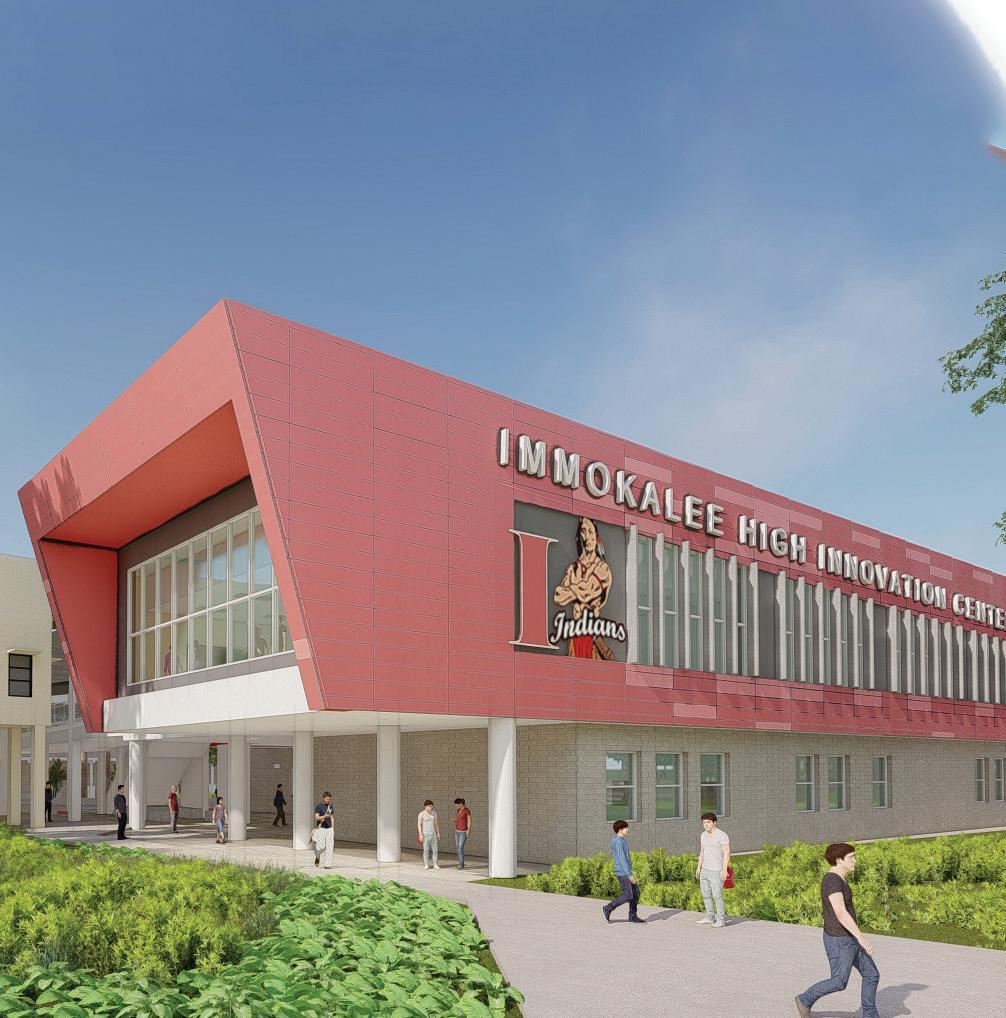
IMMOKALEE HIGH SCHOOL
701 Immokalee Dr, Immokalee, FL 34142
INNOVATION & EDUCATION
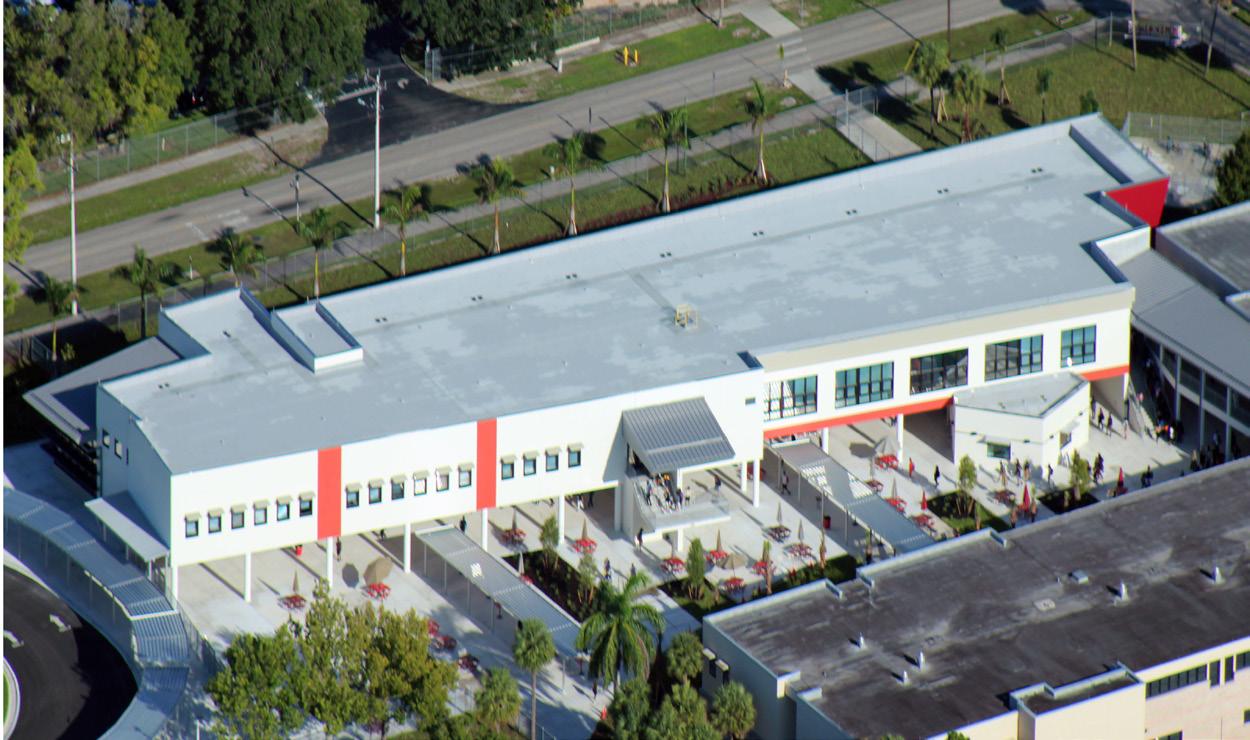
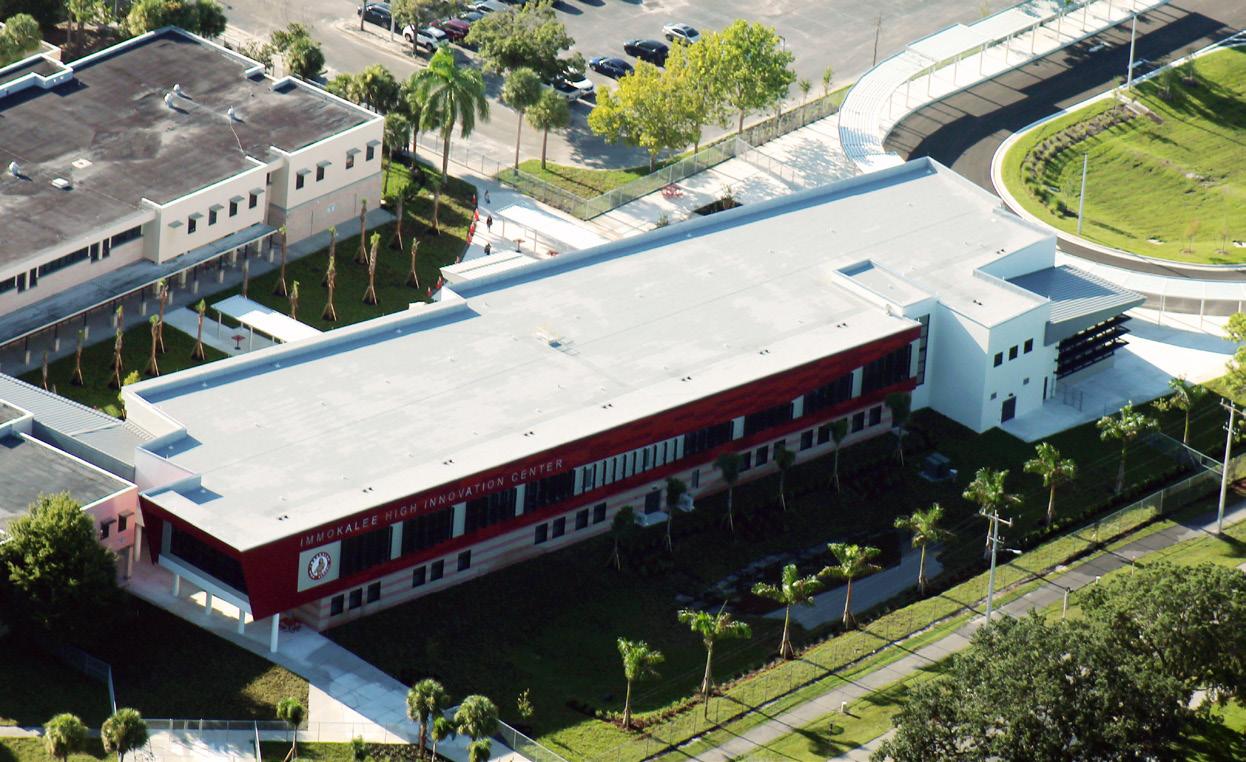
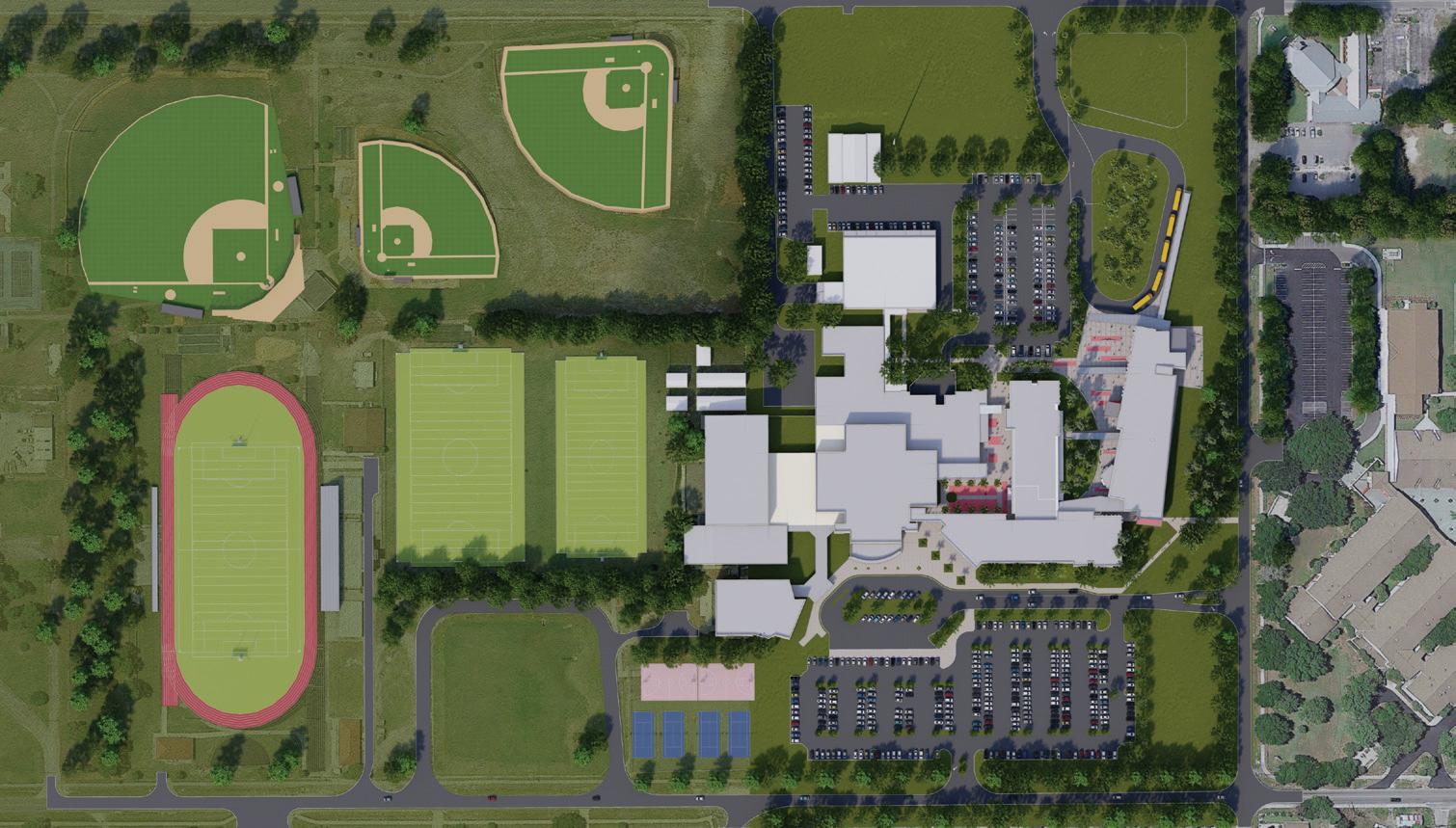
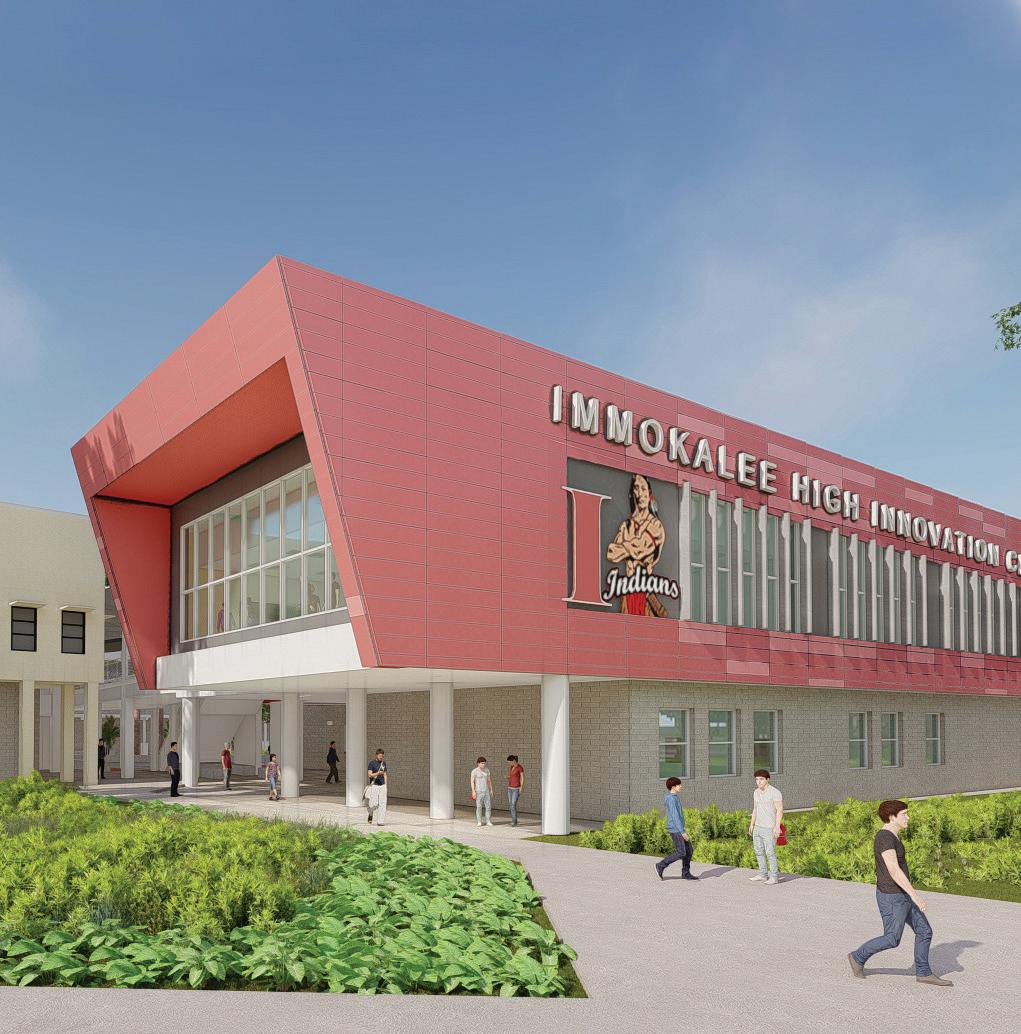
Immokalee, Collier County’s largest non-coastal community, has long been associated with sprawling cattle ranches and a thriving agricultural economy. As the demographics and needs of the area have evolved, so have the needs of the community and Immokalee High School, the only public high school in this area. In response to current and future demand of the surrounding community, Collier County Public Schools (CCPS) set out to expand its current facilities at Immokalee High School, resulting in a new two-story, compact classroom building addition that will expand the school’s capacity to 500 and renovations to the existing facilities. This classroom addition is much more than the standard instructional spaces; it is an Innovation Center that has a distinct energy, purpose, and accessibility, and is intended to inspire and support the entire campus. By grouping all the academies in a single building, strategically placing a new “innovations courtyard” at the heart of the campus, and dressing the building with dynamic architecture, this building becomes an educational catalyst for the entire school. Our team collaborated with the CCPS and gained a deep understanding of how to create functional spaces that accommodate site, structure, uses, and systems rather than a series of independent challenges. We brought our expertise in 21st Century Design to the process, which helped us quickly identify opportunities to implement agile spaces that differentiated learning with the multiple teaching modalities using movable walls, modular furniture, and fully accessible technology. The team’s unique approach led to innovative ways to craft student focused facilities that foster collaboration, curiosity, creativity, and critical thinking. Zyscovich created a unique educational program by working with district staff and school faculty to customize a learning environment to inspire and motivate students to explore, create and learn.
21 ST CENTURY LEARNING
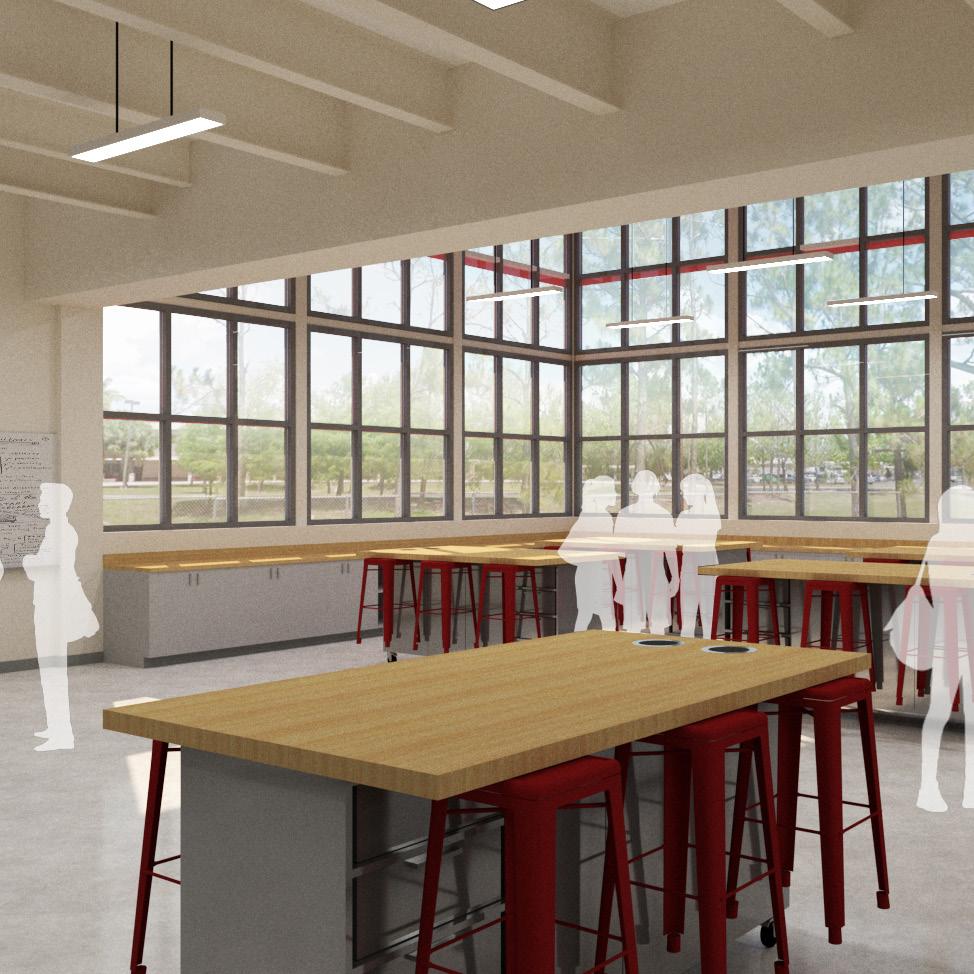
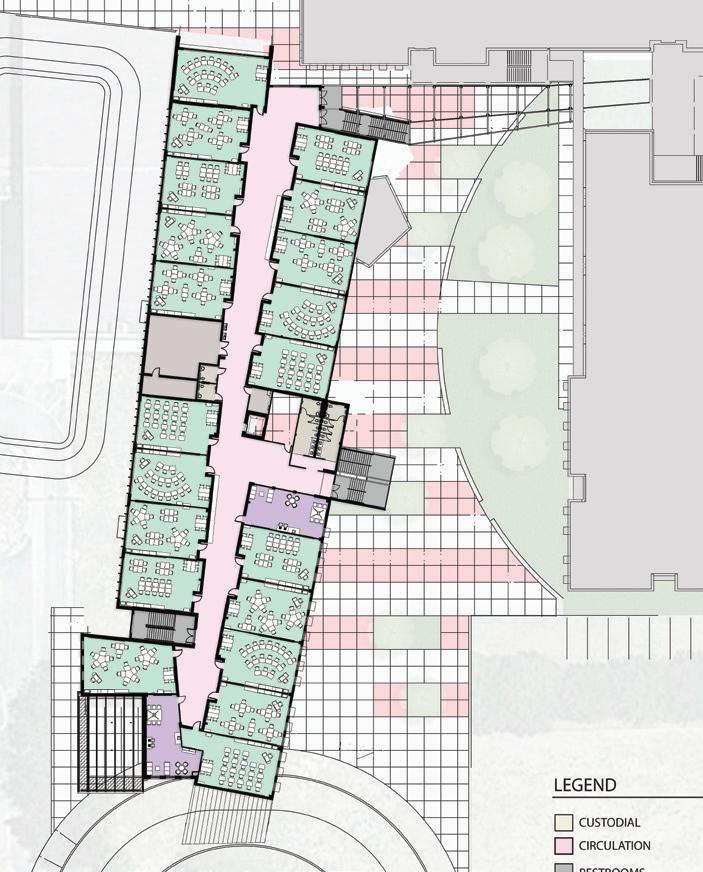
“In Pursuit of Excellence” – that is the motto and guiding vision of Immokalee High School. It is also the foundation of Collier County Public Schools to deliver academic excellence while at the same time preparing students for the 21st century. As academic missions transform to accommodate technological advances and the need for relevant skills development, educational habitats have changed from passive learning environments to highly activated spaces. The school’s academy programs will serve as a platform for future technical and professional careers along with twenty classrooms and support spaces on the second floor. The academy program labs are comprised of STEM engineering, aviation, finance and entrepreneurship, health sciences, crime scene investigations, and computer science labs. The classrooms on the second floor will provide flexible layout and furniture for a variety of pedagogical environments from group to individual learning within the same educational studio.
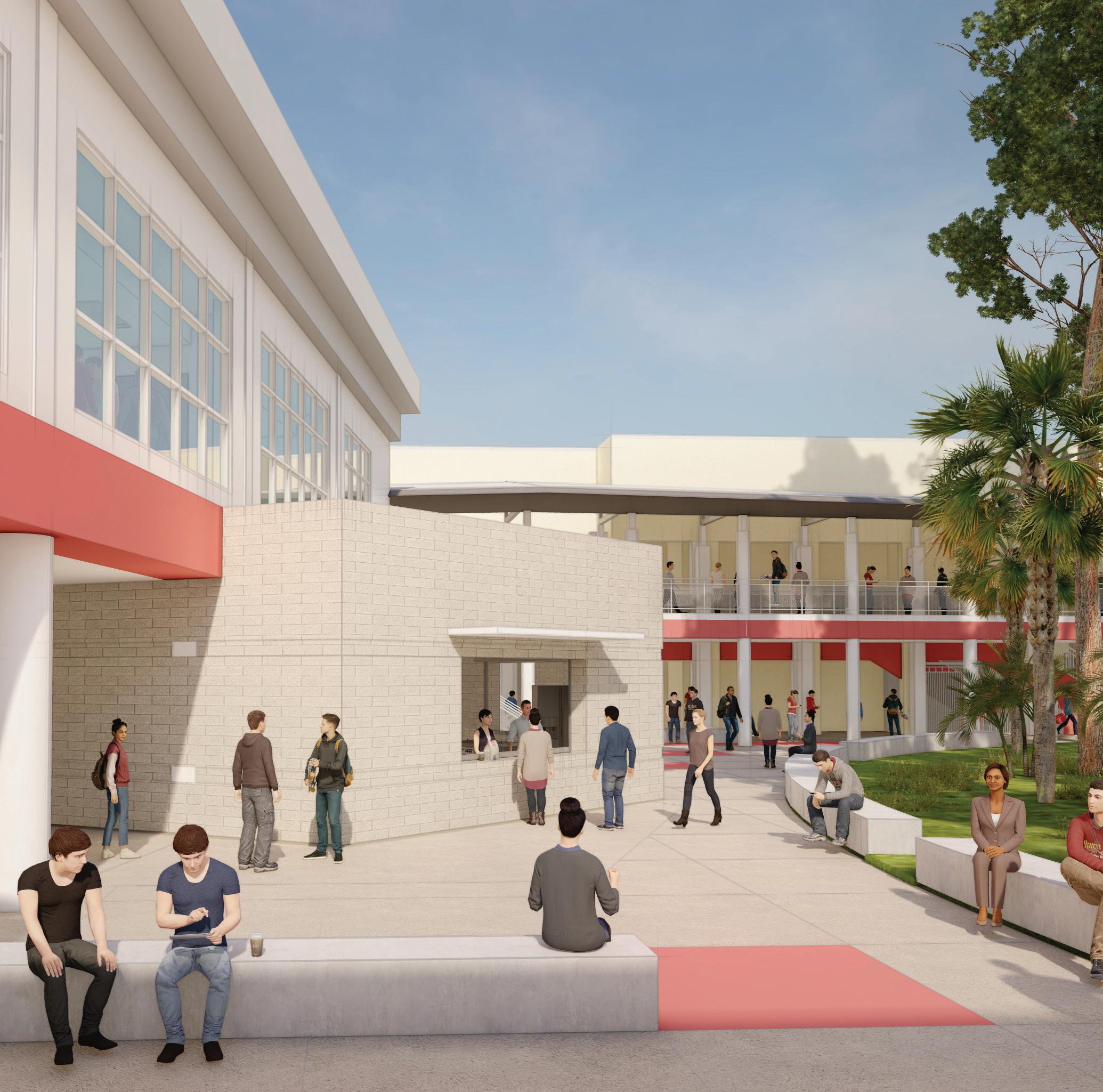
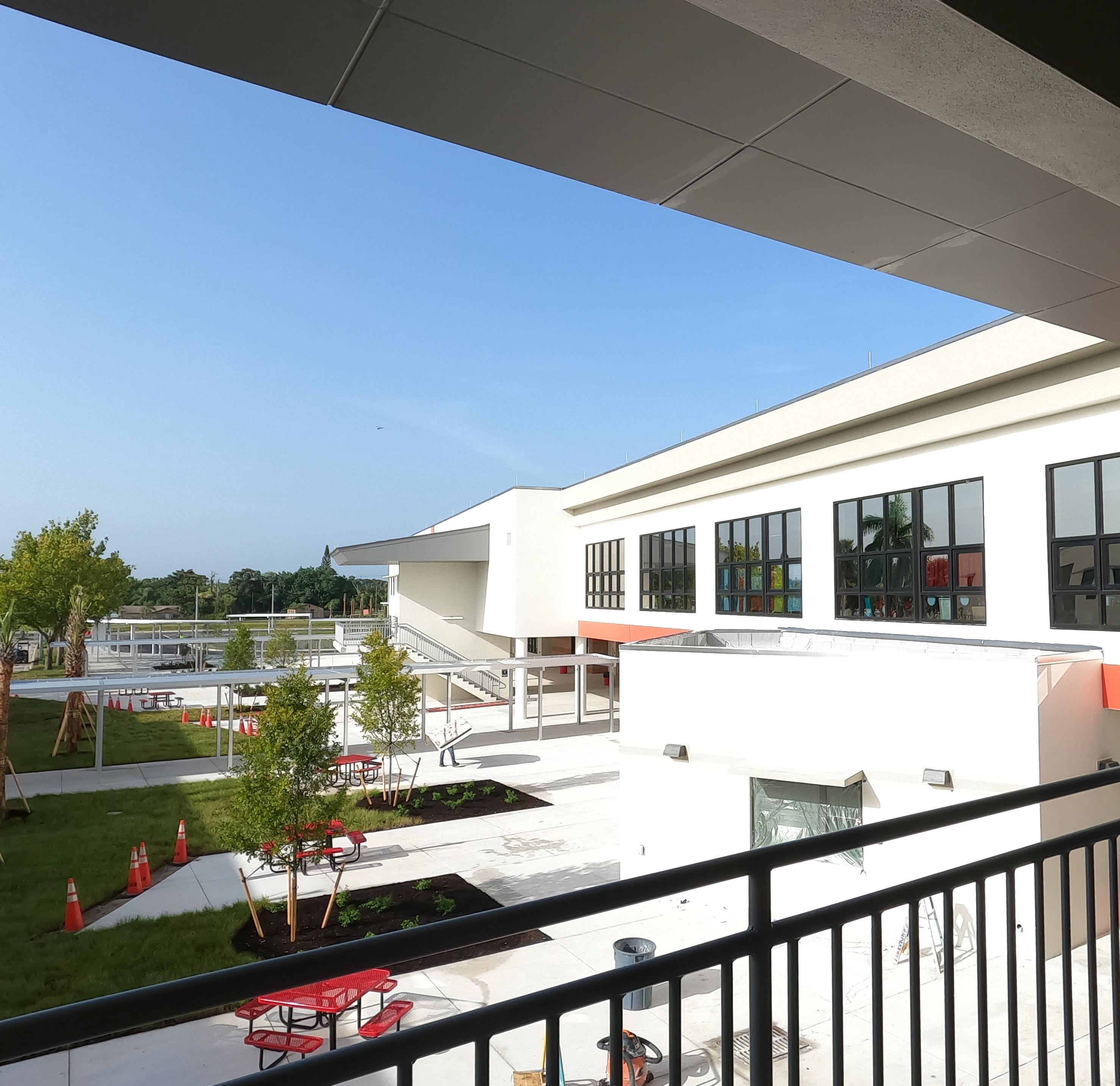
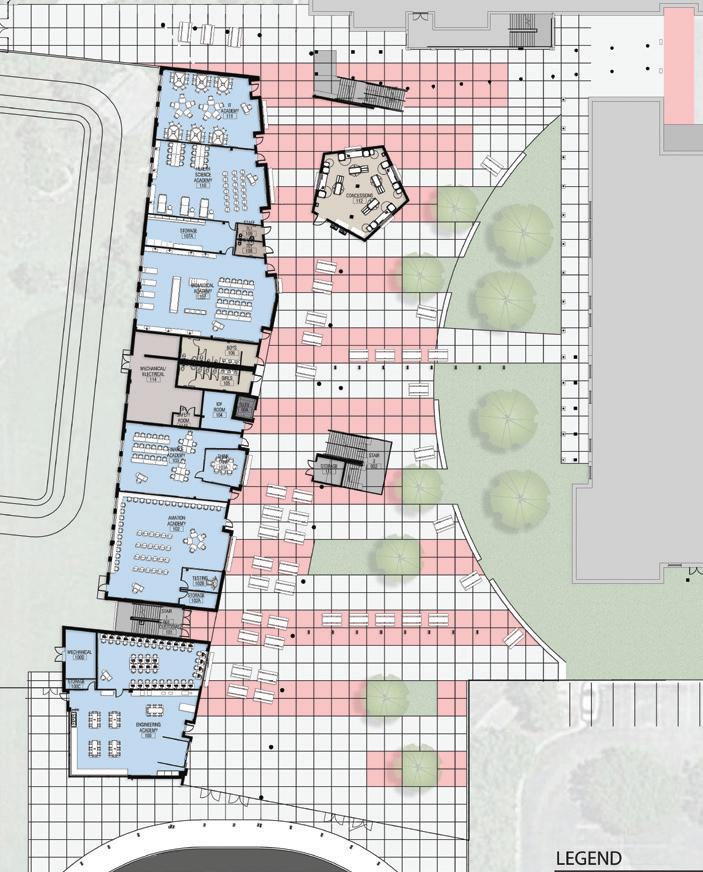
The new building is strategically placed crate an inviting and accessible entry for students coming from the bus dropoff area, as well as foster a sense of “school community” through the creation of an “Innovation Courtyard”. To support CCPS’s single extended lunch period for the entire school, Zyscovich designed the “Innovation Courtyard” to provide a “High-Tech” Café with two serving lines to accommodate the volume of students that will us it at once. In addition, this space is an extended learning area for the five signature academies flanking the west side of the courtyard. The academies include Aviation, Engineering, Medical, Entrepreneurship and Law. The open spaces between the new building and the existing campus will be the place to invigorate a new generation of life-long learners.
The renovation included improvements to the clinic and dining area, the connection of the first and second floor walkways, the expansion of the administration office, and the creation of a professional development center.
COMMUNITY ENGAGEMENT
Adjacent to the newly defined bus loop and walkway is the Engineering and Robotics Academy, with large sun-louver protected storefront facing the neighbouring community and the elementary school across the street. The full-height operable overhead door opens up to the courtyard allowing students to showcase and test out their latest innovations.
SITE PLANNING
Zyscovich performed all related site planning work to determine the right solution for vehicle parking, the bus loop relocation, and water management. The location of the new addition addressed various challenges at the existing campus while keeping its connectivity to the ground and second floor. On the ground floor, the existing school central courtyard is complemented by the outdoor space between existing building #2 and the new addition. The resulting outdoor space creates a new relief courtyard space for students and staff to enjoy during lunch time that features covered and landscaped areas. A four point of service concession stand at the ground floor provides grab-andgo food options for students, while the expanded covered area in front of the academies offers a showcase of the variety of academic programs offered at the school. The new addition relocates the existing drop off area to the south, where a new bus loop is now located in by the Engineering Academy. The current engineering curriculum develops a solar car, and the bus loop will provide for the ideal test ground for the student’s solar car project.
SUSTAINABILITY + TECHNOLOGY
Zyscovich is committed to the incorporation of sustainable principles in our designs. The new classroom addition is designed with energy efficient systems for HVAC, lighting, and building envelope natural light sensors support daylight harvesting and an air-tight building envelope minimizes energy loss. All plumbing fixtures are ultra-low water consumption fixtures. The project design incorporates a high-performance exterior envelope enhancing air-infiltration performance improvement to help minimize building operational cost.
All Classrooms have been adapted with the newest infrastructure and educational Display monitors, and capable of further expansion in the future as technologies and pedagogies evolve. What were once chalk-boards have swooshed past “smart” boards to interactive displays, which allow both teachers and students to communicate literally at the touch of a finger on the 8 foot wide screen.
GREAT DESIGN NEW ADDITION
It is the firm’s belief that great design is not only aesthetically pleasing, but complements, enhances, and respects its surroundings. The project addresses the challenge of expanding an existing campus while maintaining a distinctive identity of the innovation programs it houses by borrowing the materiality of the existing building features at the school while incorporating fresh, high-performance materials and architectural methods. The addition is constructed of split face masonry walls around the ground floor façade. The second-floor fenestration has modern construction materials, representing the potential innovative of the future opportunity students will have with the instruction received in the academic programs offered within the addition. The upper floor geometry and facade presents dynamic lines, large windows for added natural light into the classrooms and the innovative use of fiber reinforced concrete panel cladding with various tones of reds, the school colors. The south end of the addition anchors the popular engineering academy at the school while the north end leads into what might be the next educational level for some at the Immokalee Technical College. The hardscape floor pattern at the new courtyard pulls the geometry and colors of the existing courtyard as if the color patterns extend out under the existing building #2 and visually links the new to the existing. The second-floor classroom wing is directly connected to existing classrooms at buildings #1 and #2 through a new covered connecting bridge.
DOWNTOWN DORAL UPPER ACADEMY SCHOOL
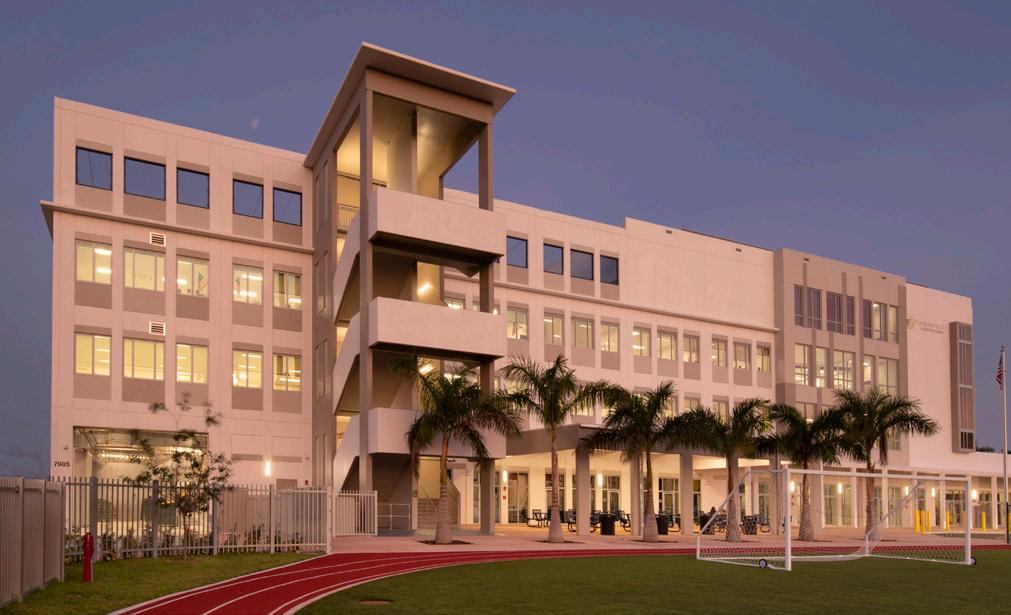
7905 NW 53rd Street, Doral, FL 33166
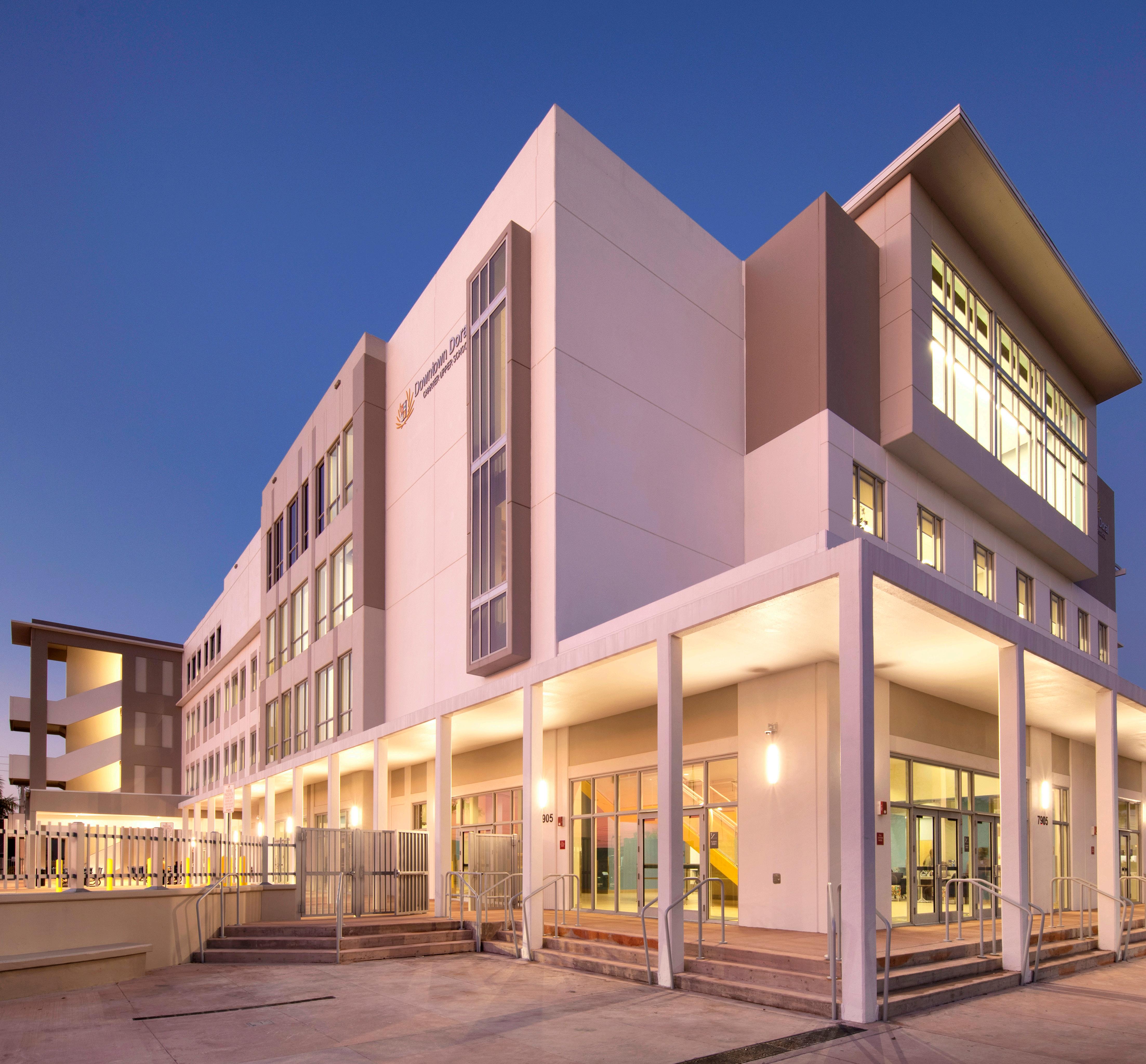
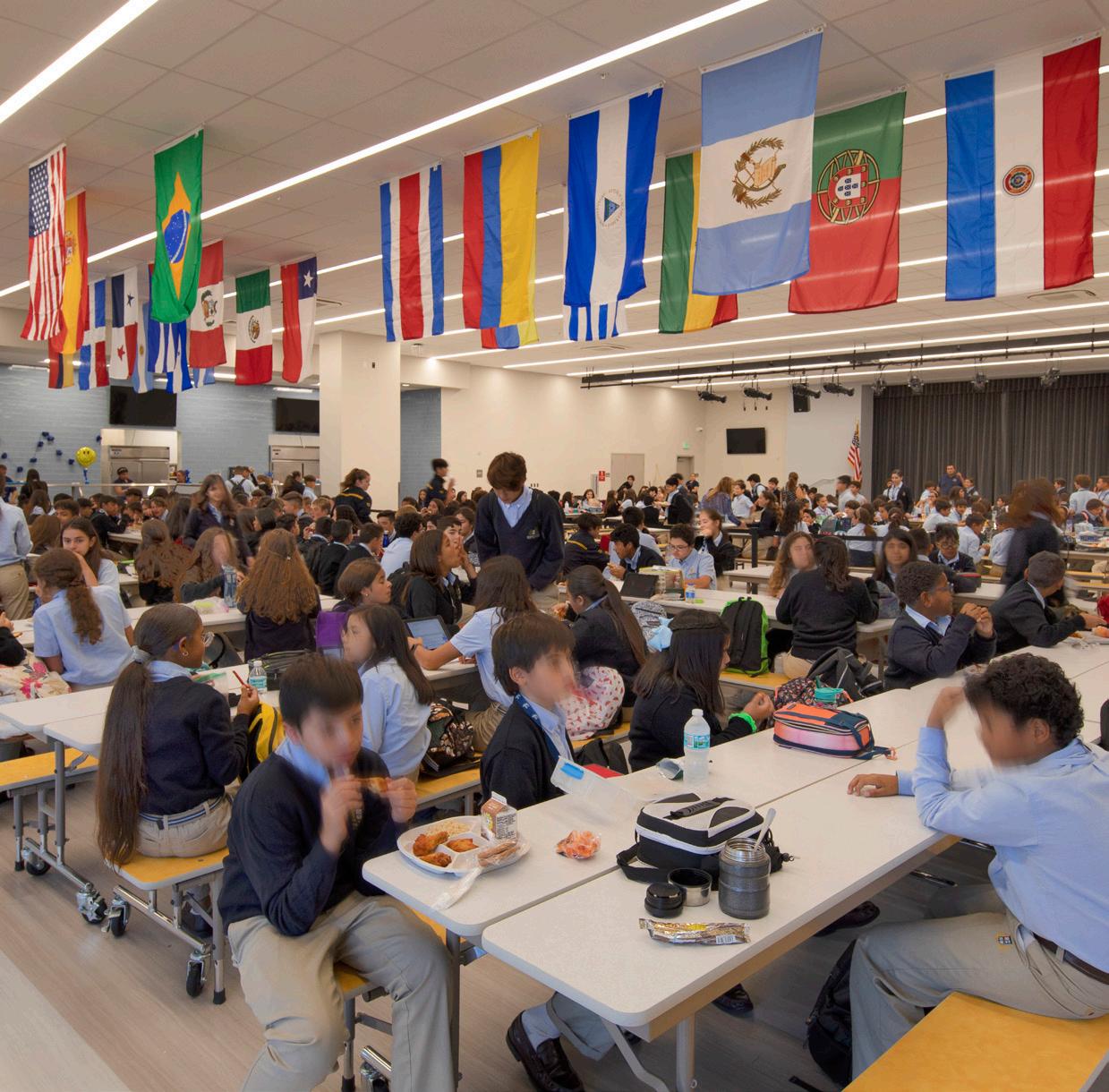
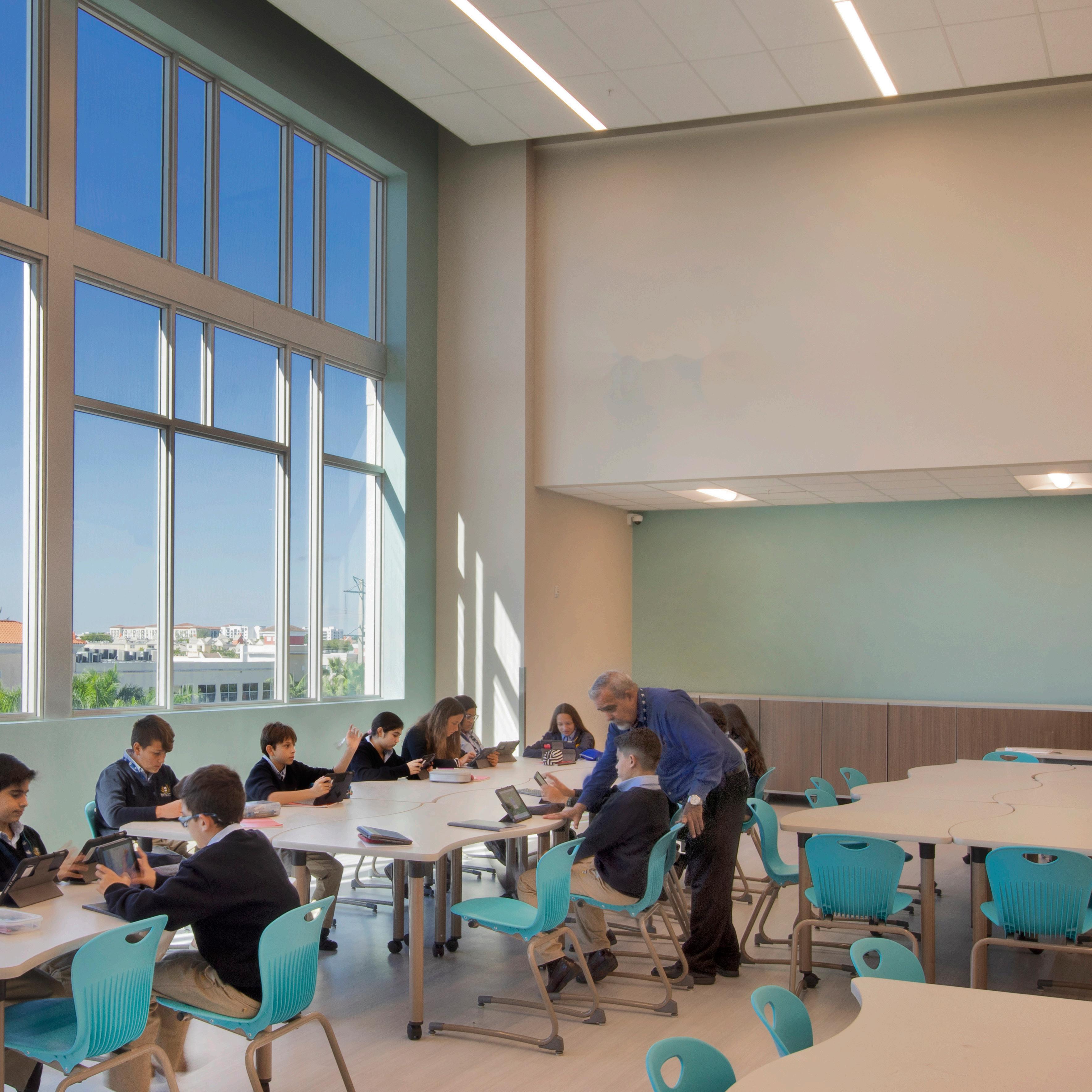
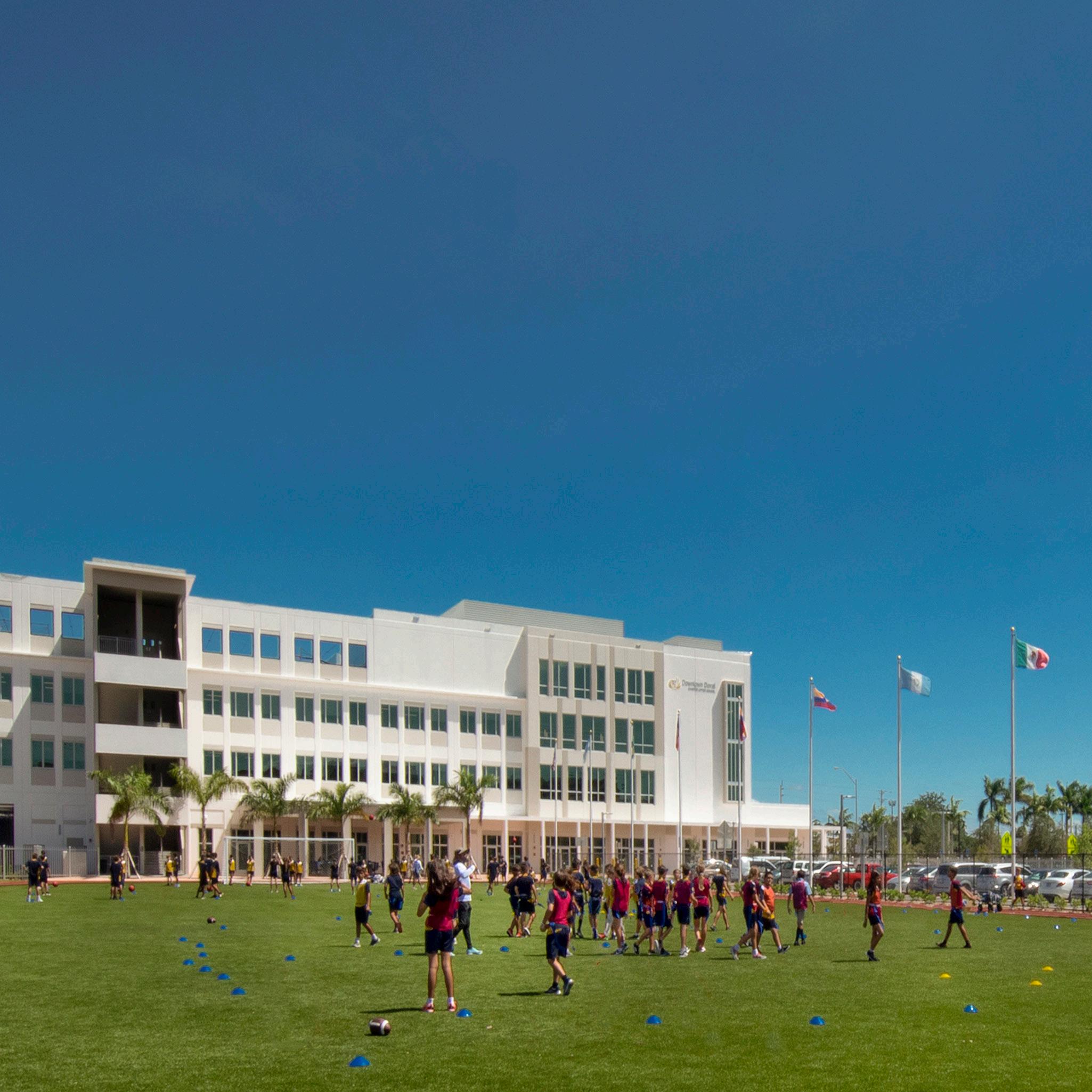
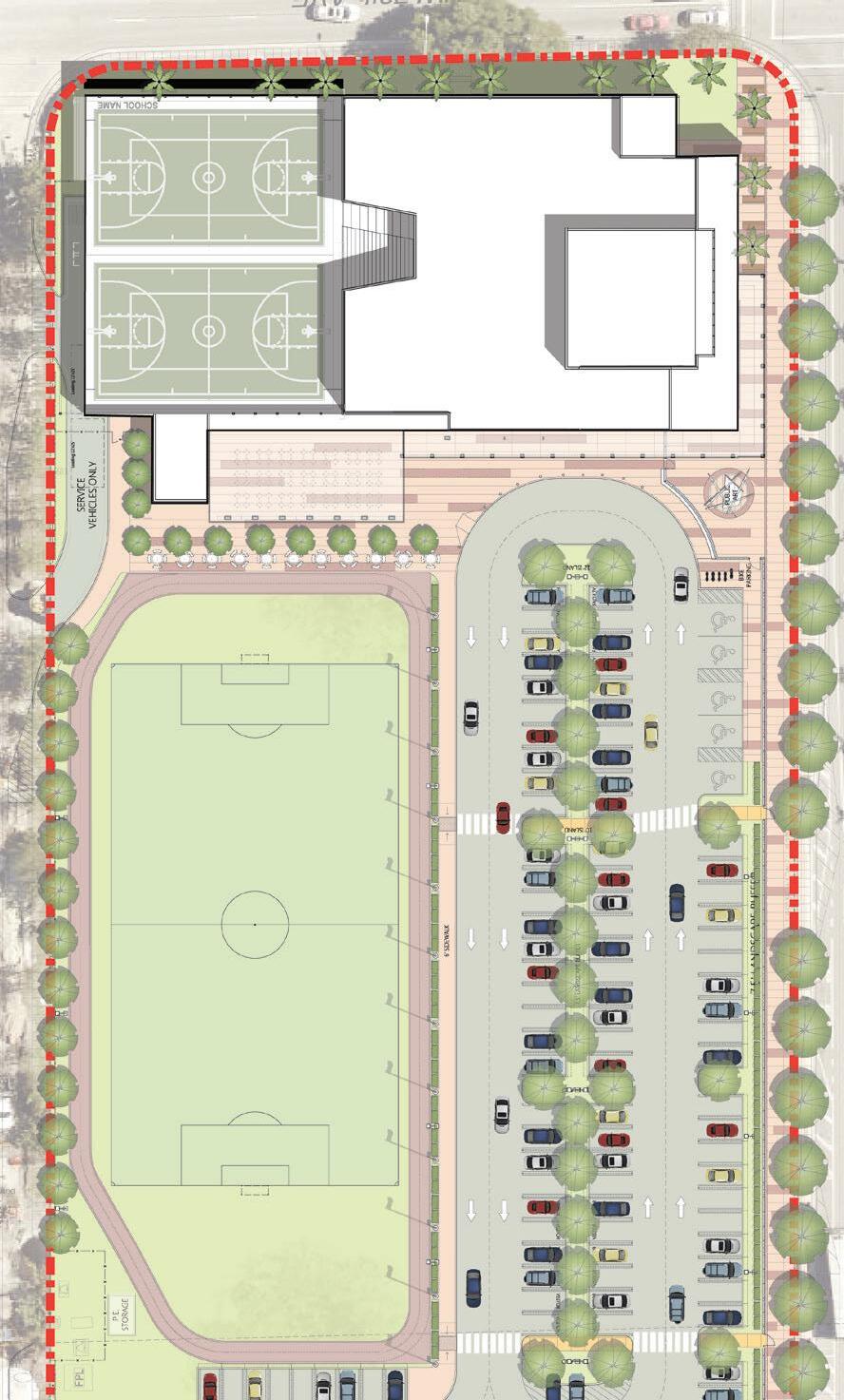
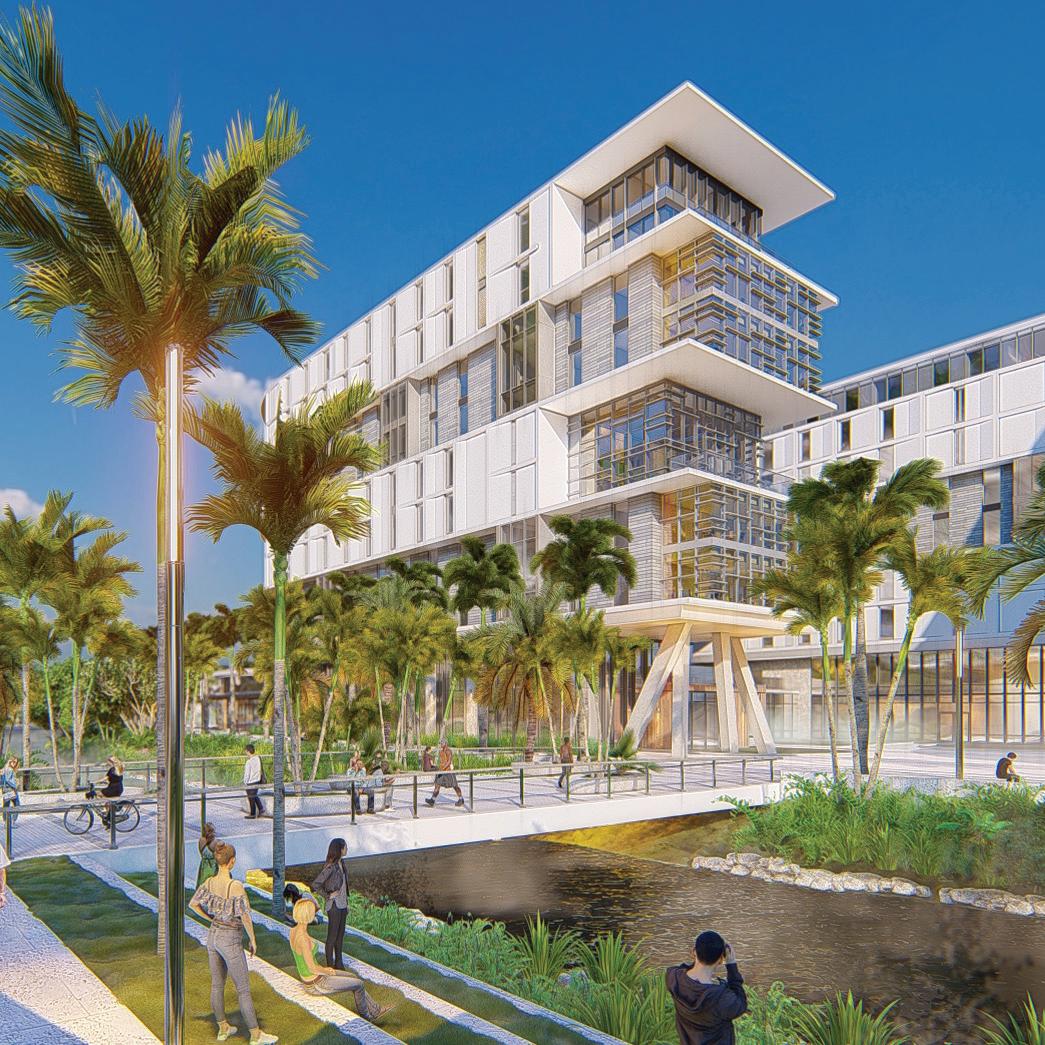
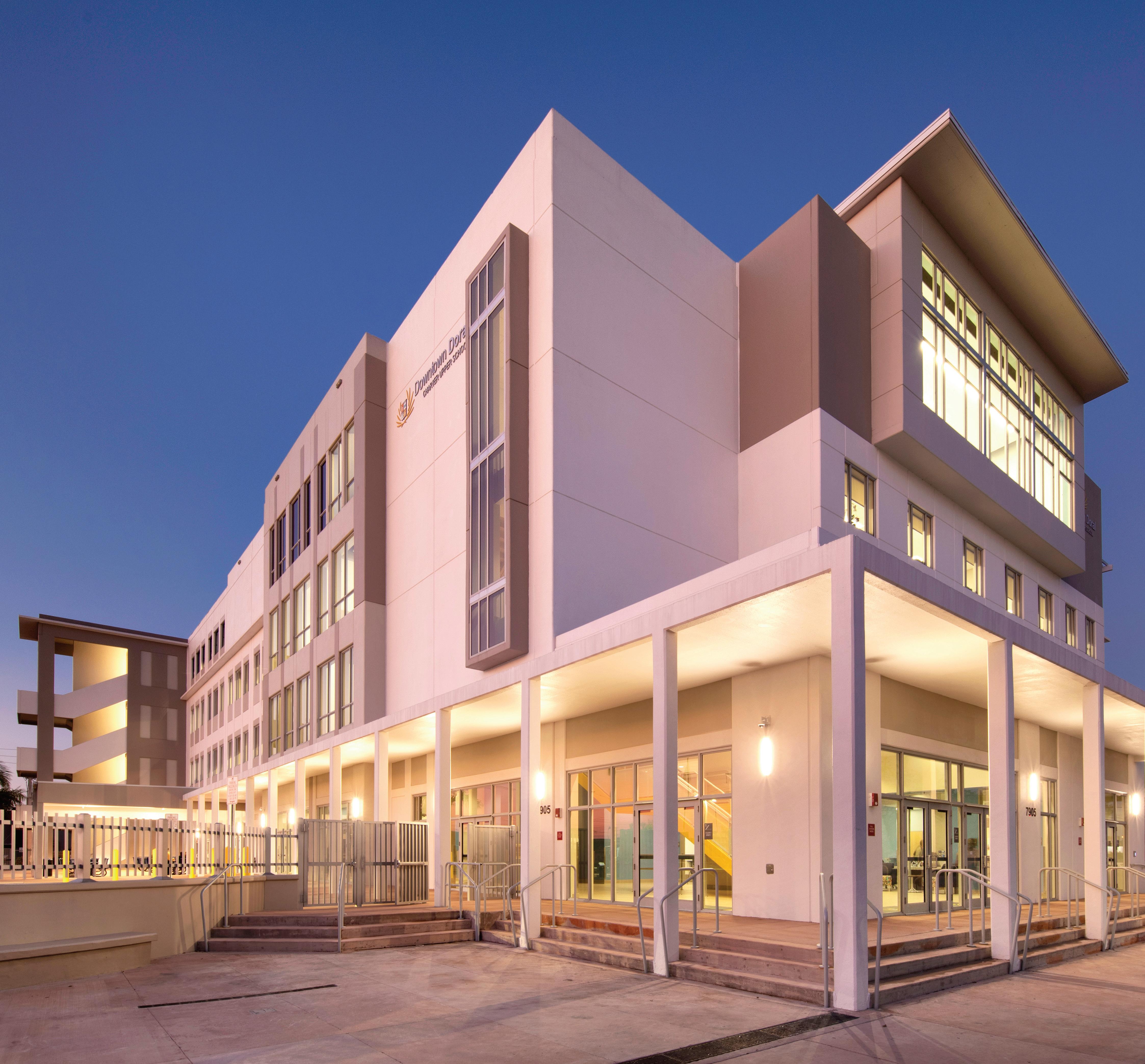
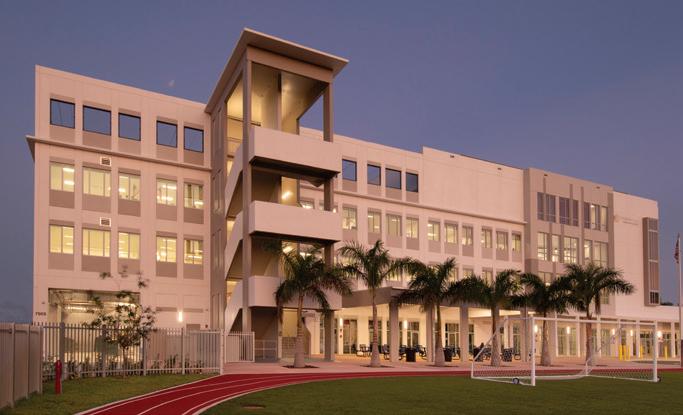
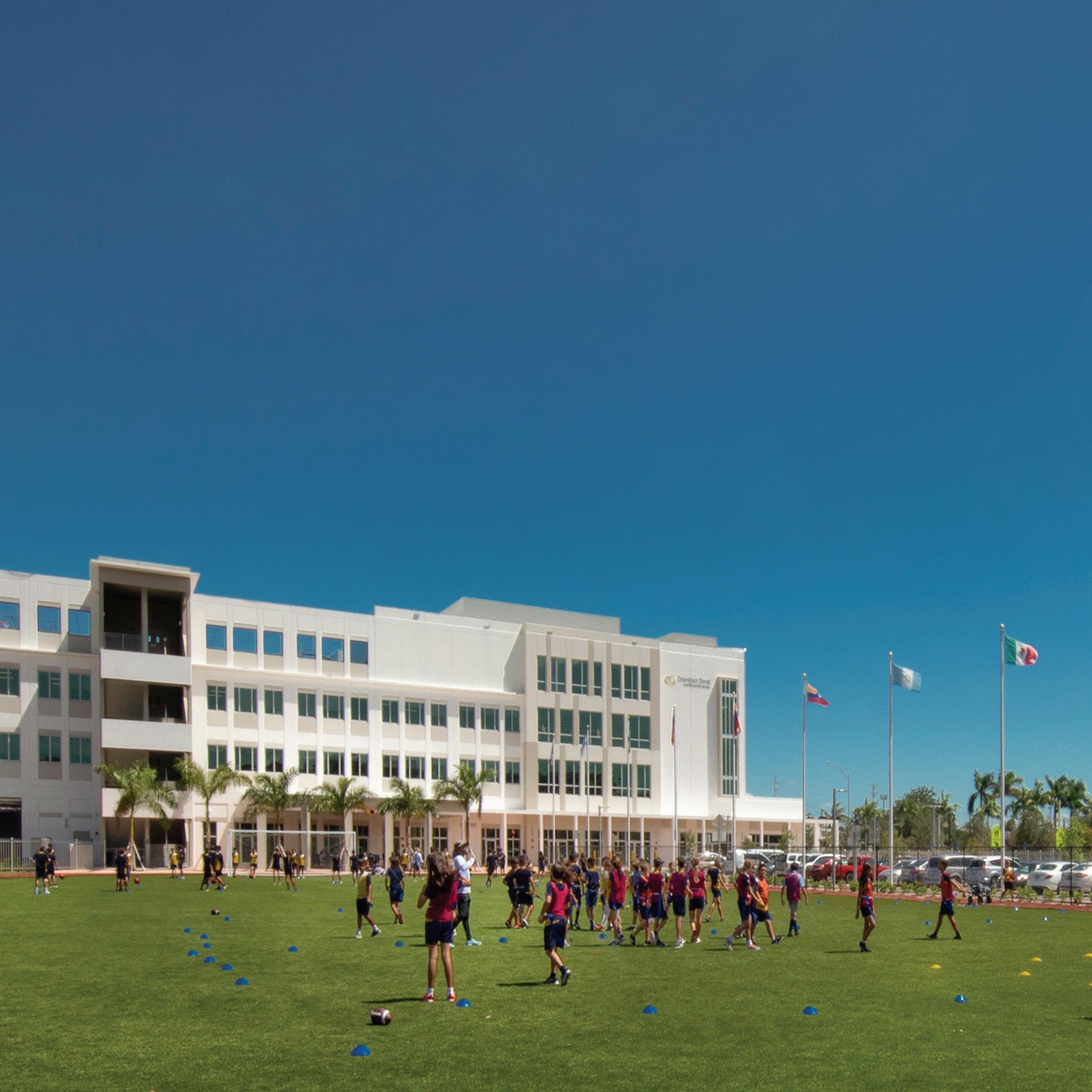
At the heart of Downtown Doral a vibrant 250-acre community of culture and commerce offering a new quality of life is Downtown Doral Upper Academy. The four-story, high-performance building houses latest design and innovation in flexible 21st Century Learning spaces, technology, and safety and security. Just blocks from the Zyscovich-designed, award-winning Downtown Doral Elementary School, the new Upper Academy offers students, parents, teachers, and staff a beautiful environment that provides Doral’s sixth through 12th graders with a comprehensive multicultural curriculum through language acquisition and innovative programs.
The school is was created with a unique partnership between Miami Dade County Public Schools and Codina Partners, LLC to offer students the highest quality educational facility and programs available to them. Zyscovich provided educational programming; campus planning; traditional A/E services; interior design; and selection, procurement, and installation of all furniture, equipment and technology, as well as comprehensive services that went beyond that of traditional architects. Our team lead the way from concept to final fit out using “reverse design” and “integrated systems,” saving time and money—the school was built by Campus Construction Group in only 300 days for just $152/SF in 2019 on a compact site.
UPPER ACADEMY
MULTICULTURALISM
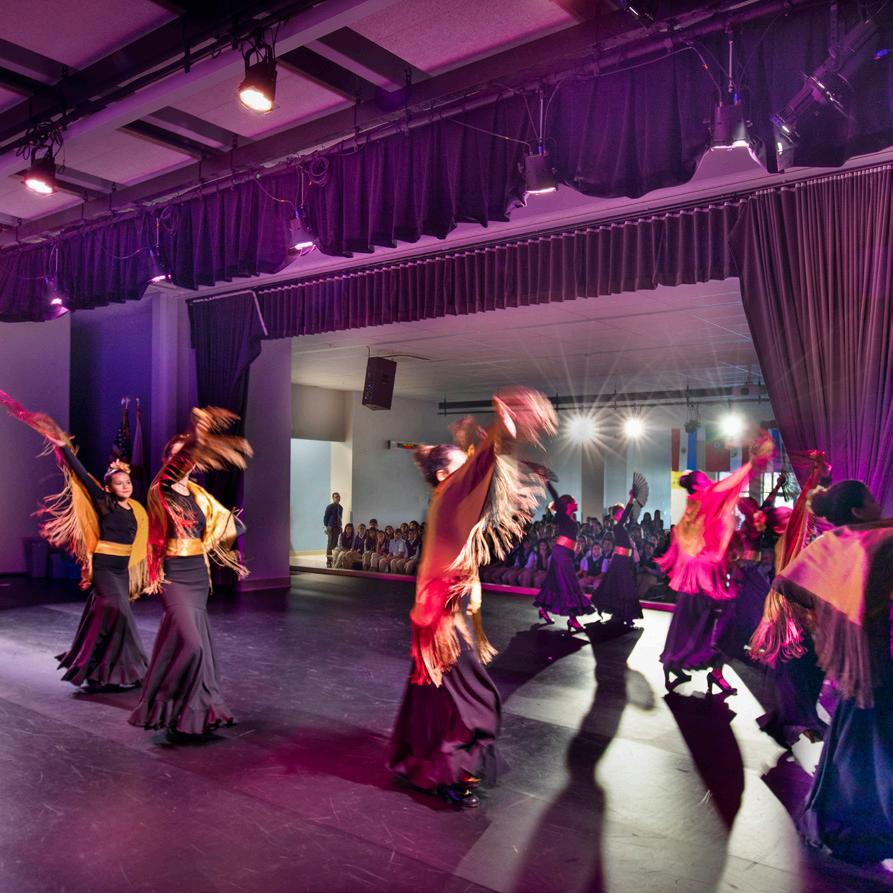
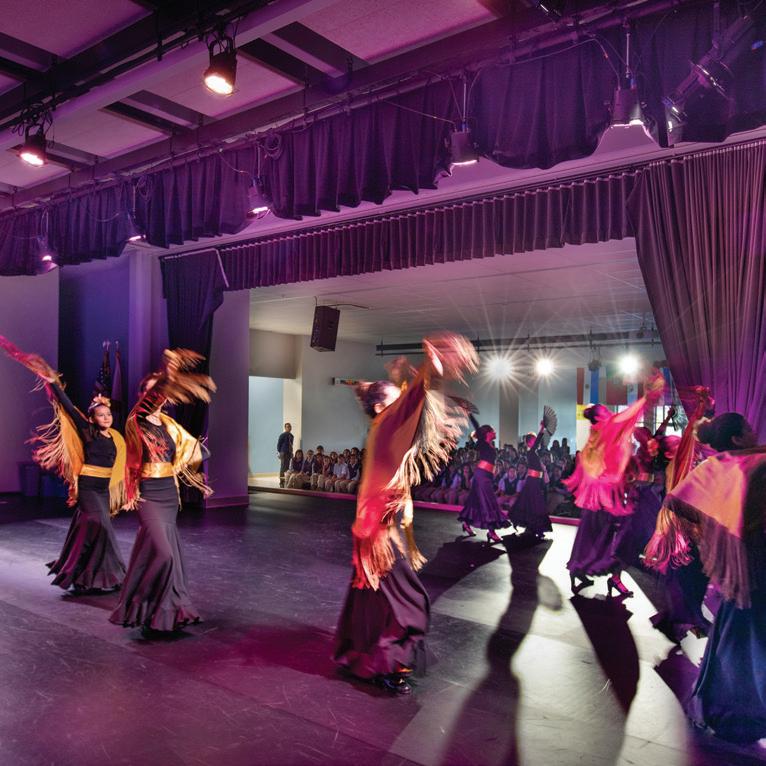
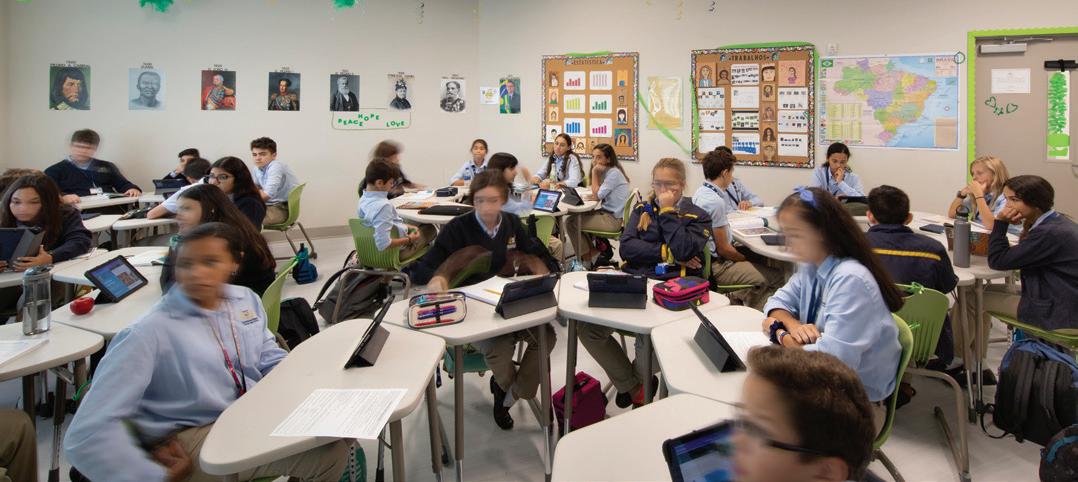
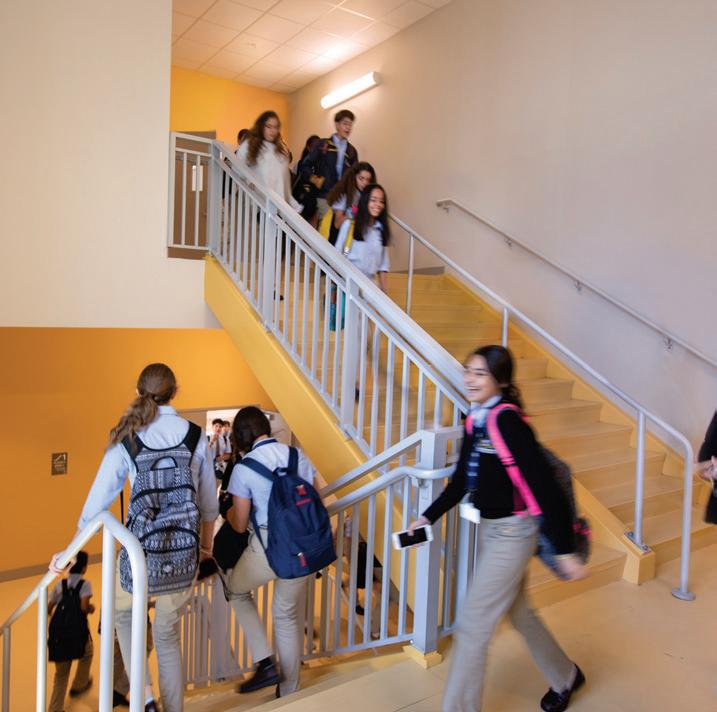
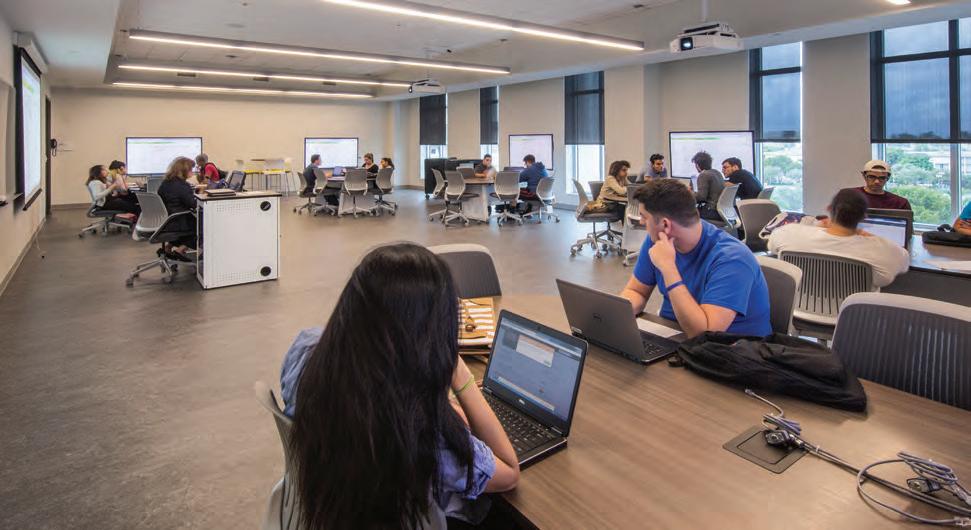
The unique academic mission provides students with a comprehensive, multicultural, and multilingual (English-SpanishPortuguese) education. This facilitates a unique academic and social environment that required specific programmatic and design elements to enhance the benefits and mitigate the obstacles. Interaction and collaboration amongst students, as well as with students and faculty is a key driver in the school’s academic mission. Flexible learning and support spaces, as well as advanced technology and security systems were incorporated to facilitate new methods of teaching and to enhance student learning and social experiences. Zyscovich carefully created environments where students achieve their maximum potential in an engaging, inspiring, and challenging learning environment.
Flexible learning and support spaces, as well as advanced technology and security systems were incorporated to facilitate new methods of teaching and to enhance student learning and social experiences. Zyscovich carefully created environments where students achieve their maximum potential in an engaging, inspiring, and challenging learning environment.
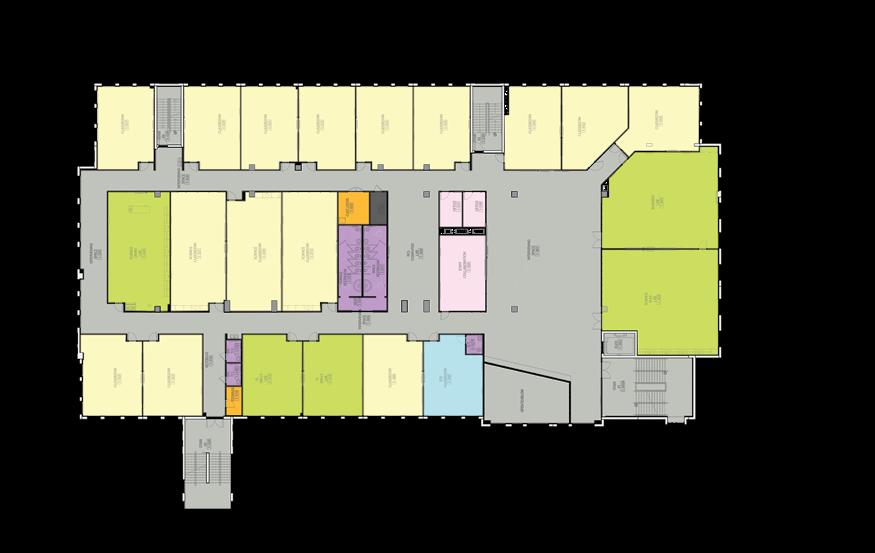
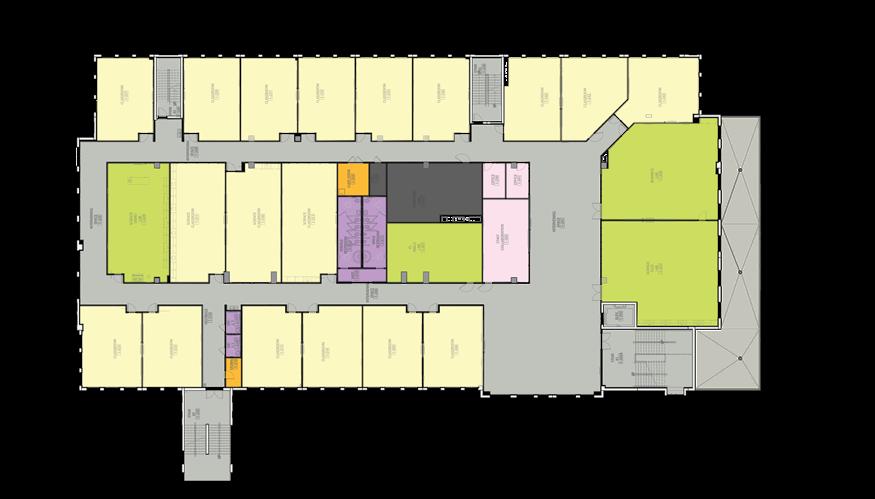
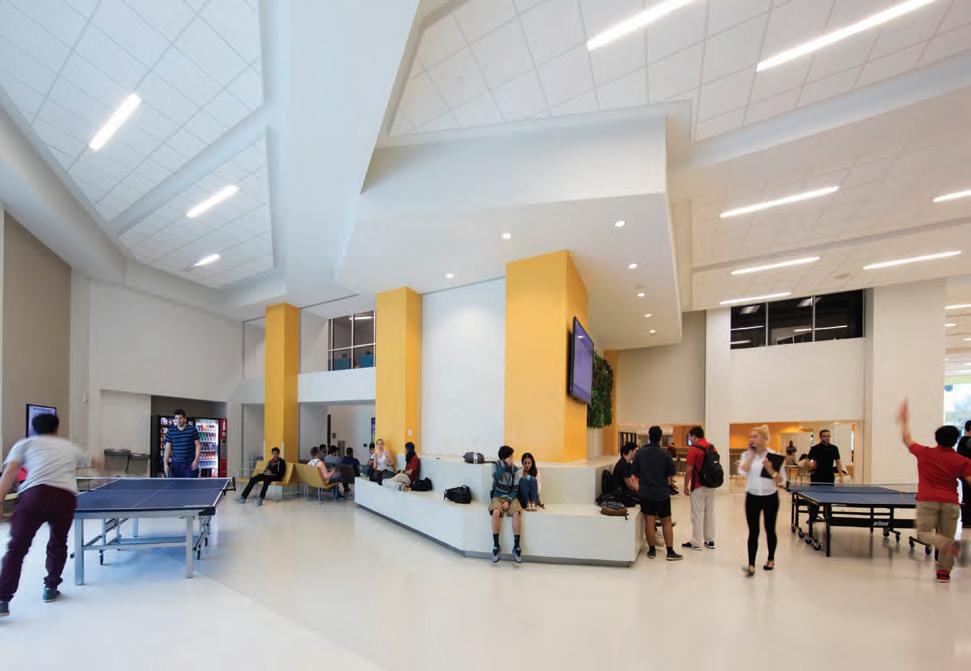
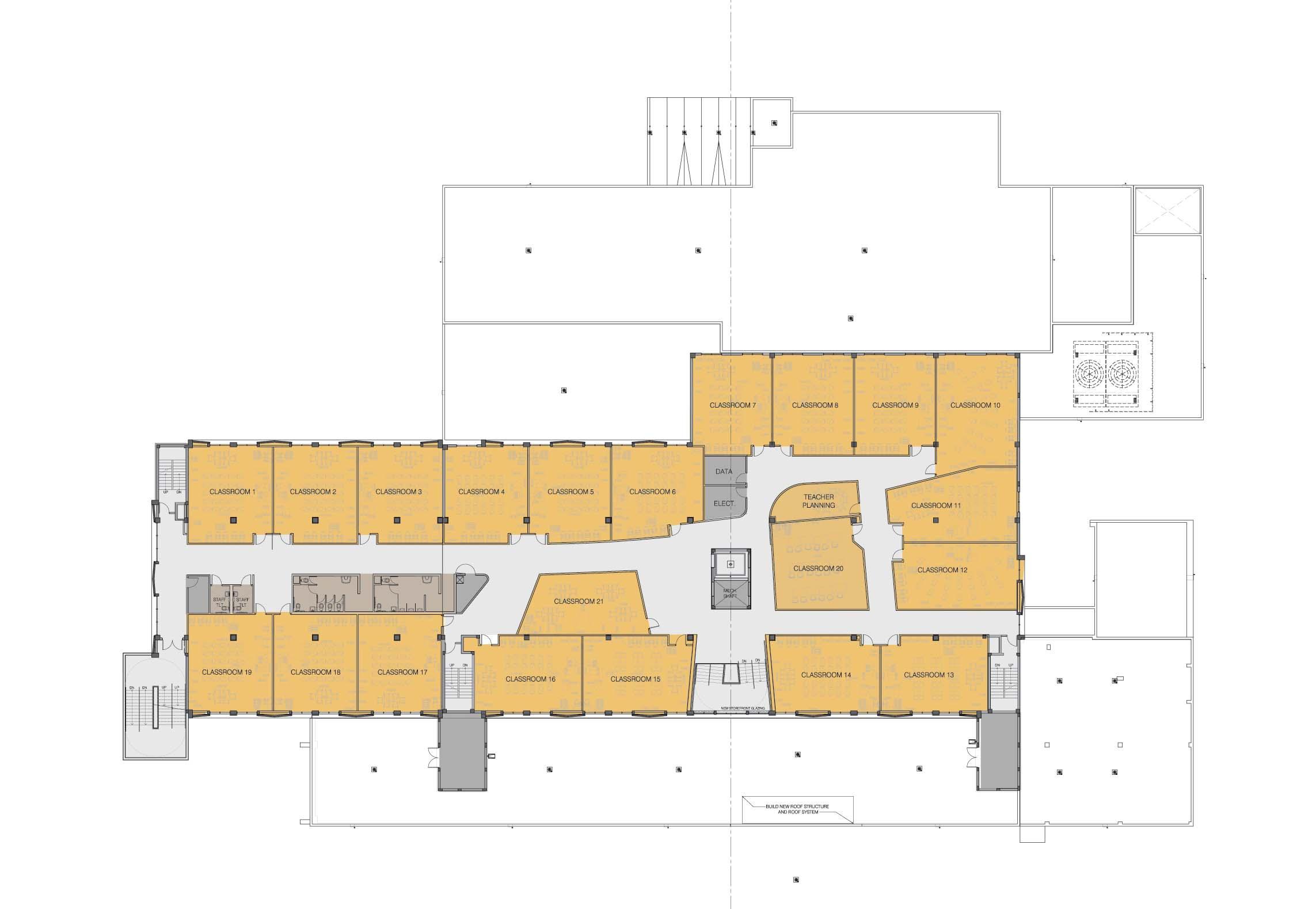
The middle two floors comprise the core of the middle and high school learning studios and labs, strategically sandwiched between the top and bottom floors featuring rich amenities and extra-curricular enrichment programs for arts, wellness, and innovation, resulting in a complete college preparatory experience.
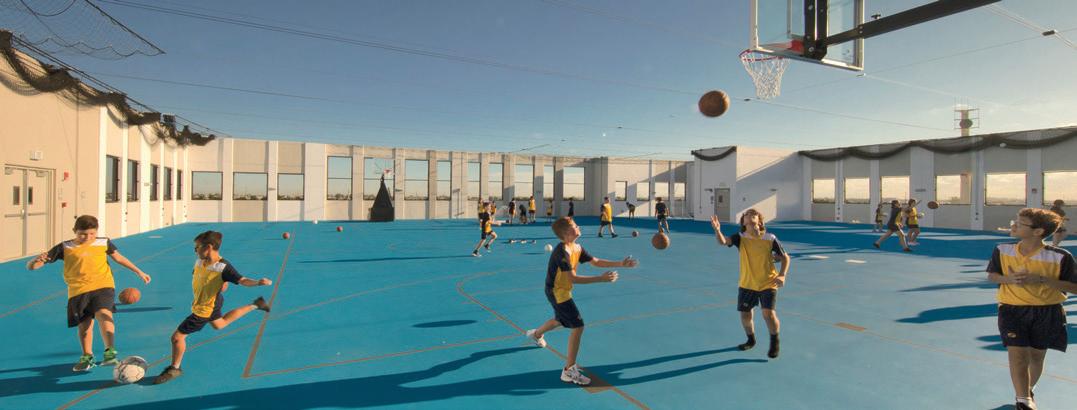
Rooftop “Sky Play” areas can host basketball or volleyball practices and matches, evening music concerts, or innovation centres (think digital, cloud-based libraries), while “Grand Salons” become dining rooms, social halls, performance theatres or wellness labs.
TECHNOLOGY
Downtown Doral Upper Academy’s educators know that the use of the latest technology can transform a classroom and allow students to be more active participants in their own educational process while connecting with other cultures. Downtown Doral Upper Academy is equipped with next generation technology—as students don’t carry textbooks but instead utilize iPads, which connect each student to the world.
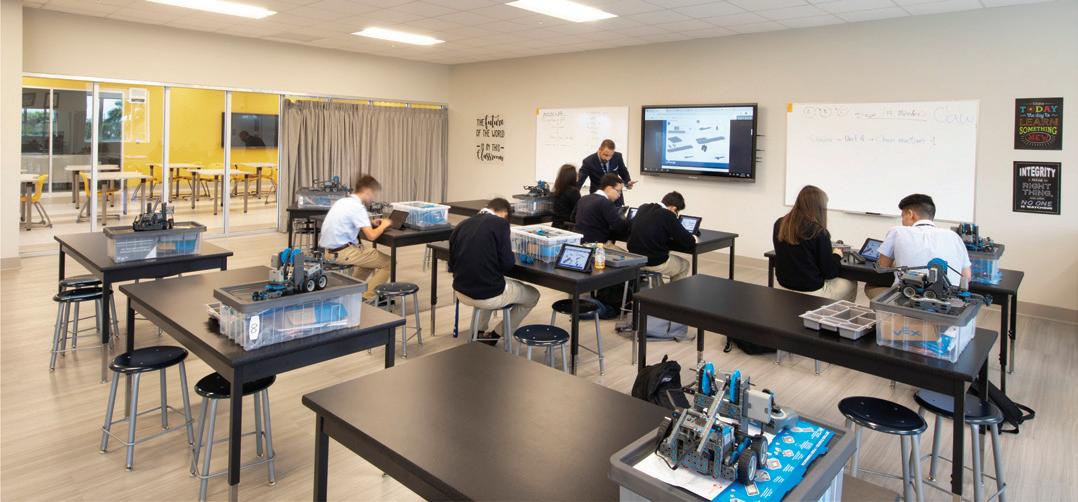
With 21st Century Learning labs the school’s STEM program already has had an auspicious start. Before the end of its first semester the school became a Florida State Finalist in the Samsung Solve for Tomorrow Contest, a $3 million nationwide competition that encourages 6-12th grade students to creatively use STEM skills to solve a community challenge. From a pool of more than 2,000 entries nationwide, only 300 schools were selected as a State Finalist–and Downtown Doral Upper Academy was one of them.
Science
Intervening
View From Media
CCTV Studio
SUSTAINABILITY SAFETY
Downtown Doral Upper Academy’s high-performance strategies and features led to improved operations, health, safety, and comfort, for students and faculty, and earned the school an official certification from the Florida Green Building Coalition. The concrete tilt-up construction design incorporated an intelligent approach to energy by safeguarding water resources, minimizing waste, and maximizing reuse during all stages of the building’s life cycle. The variable refrigerant flow (VRF) system varies the flow of refrigerant to indoor air conditioning units based on demand. This ability to control the amount of refrigerant that is provided to fan coil units located throughout the building reduces energy costs by 30% and, because there wasn’t a need for a labyrinth ductwork system, saved eight weeks of build time, further decreasing construction costs.
Zyscovich worked to mitigate any potential safety and security obstacles that could potentiallty arise given the school’s location in a metropolitain center. Our team brough our extensive experience at the forefront of the discussion and application of security and safety systems into learning environments. Our work with agencies such as Department of Defense Education Activity (DoDEA) gives us a window into the latest and greatest innovations and methods for student safety and academic facility security. We implemented the same Safe Havens International standards as those used at the new Marjory Stoneman Douglas High School—which Zyscovich designed in response to the Parkland, Florida tragedy.
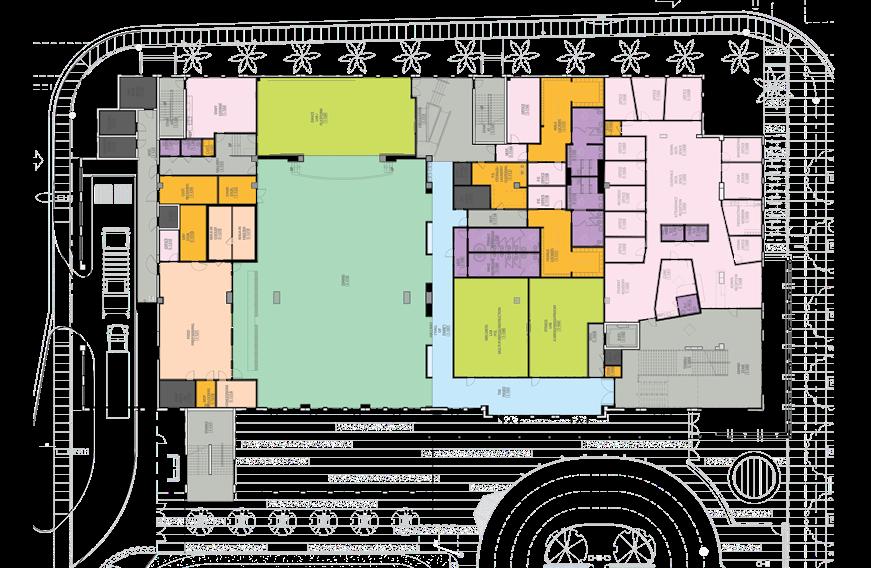
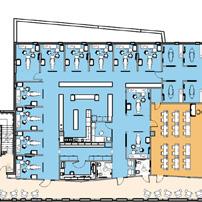
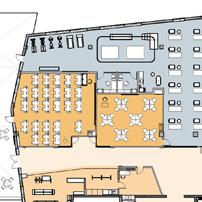
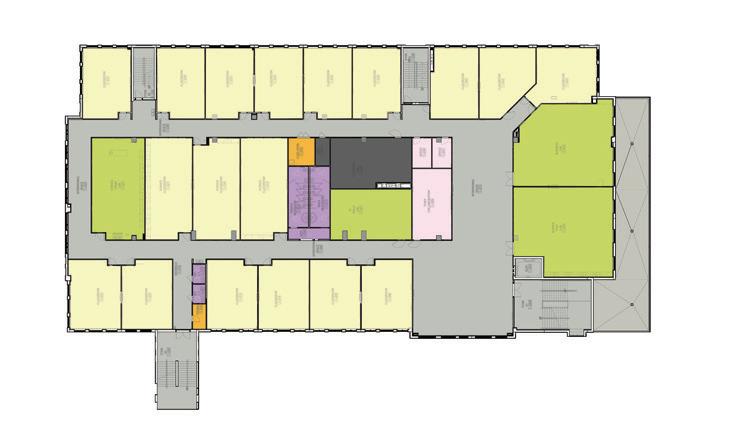
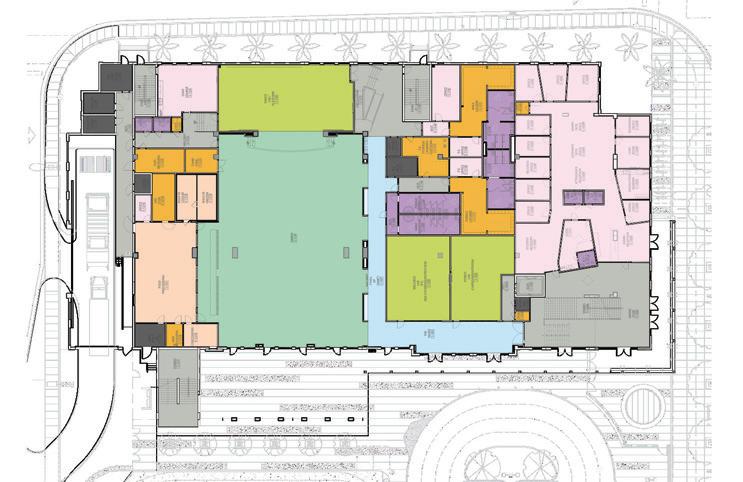
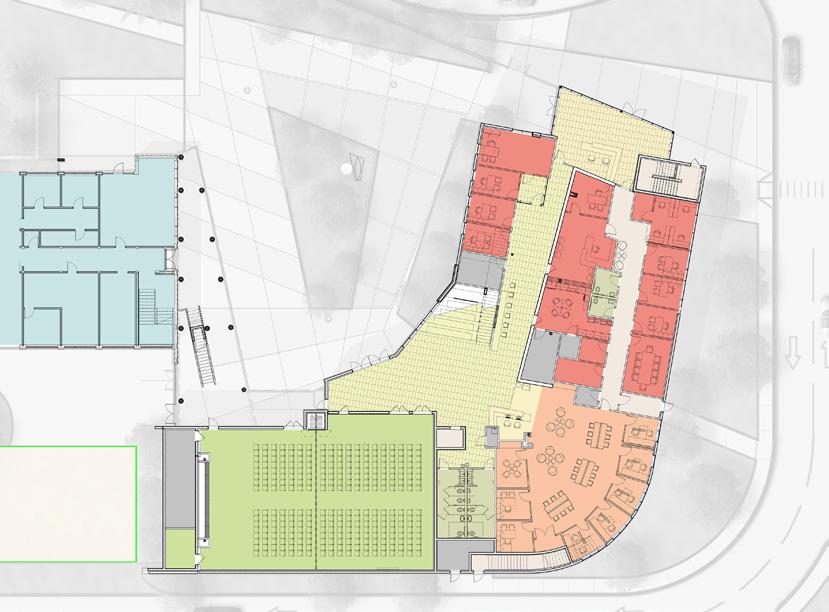
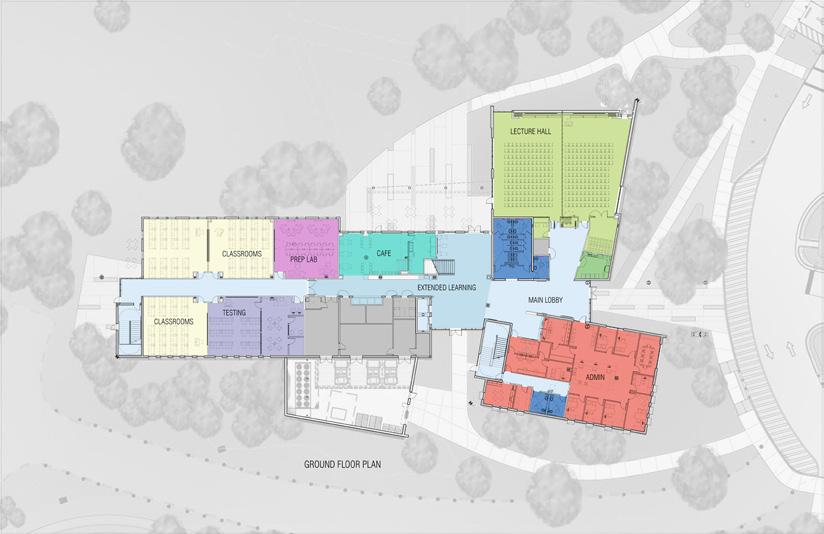
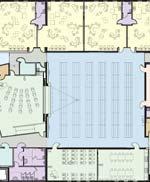
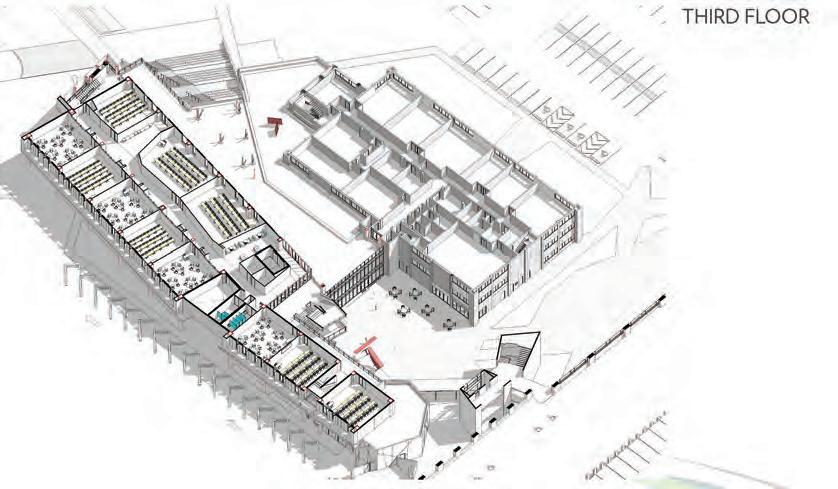
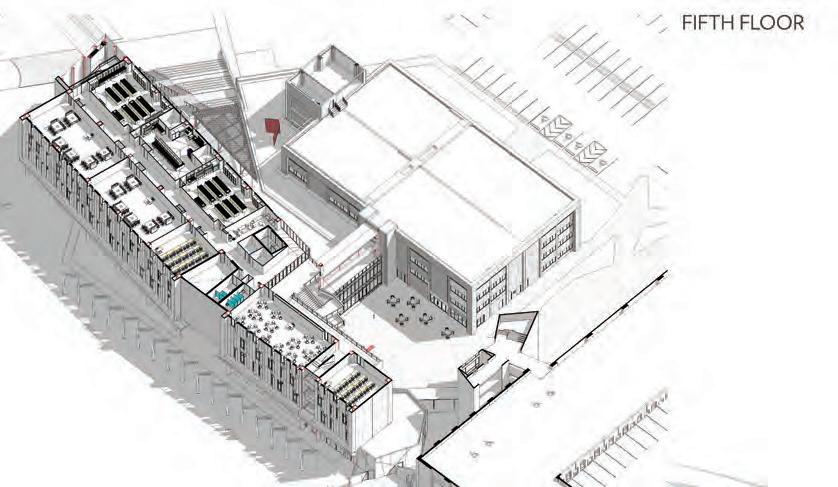
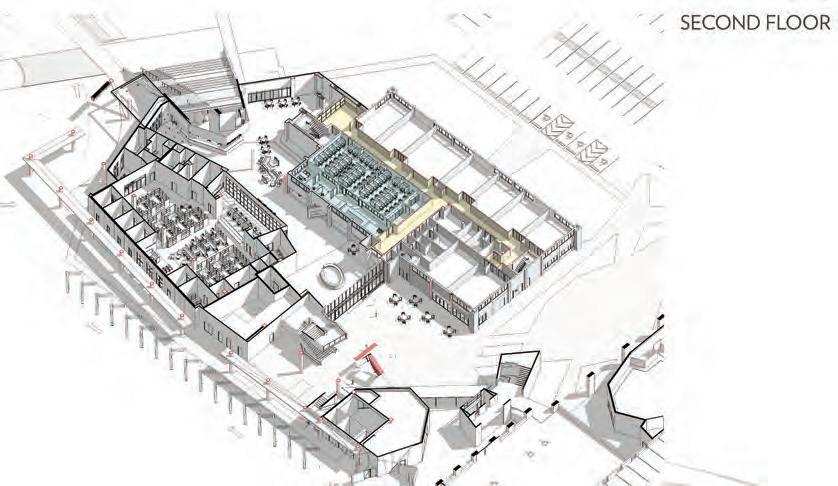
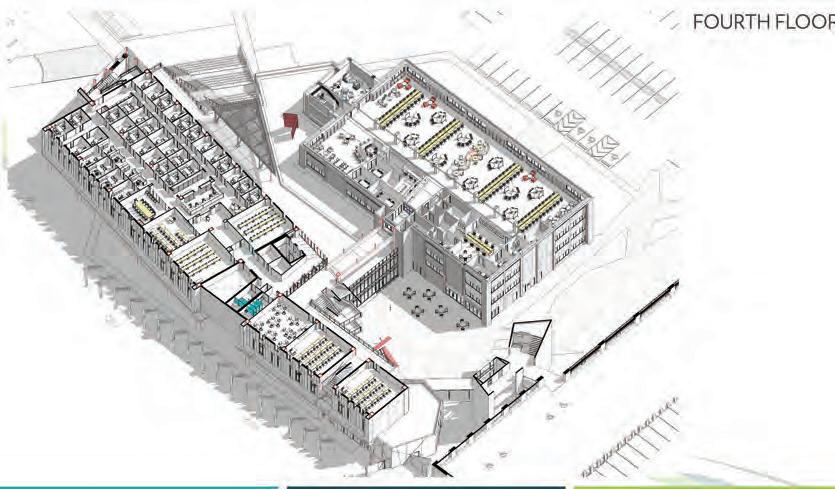
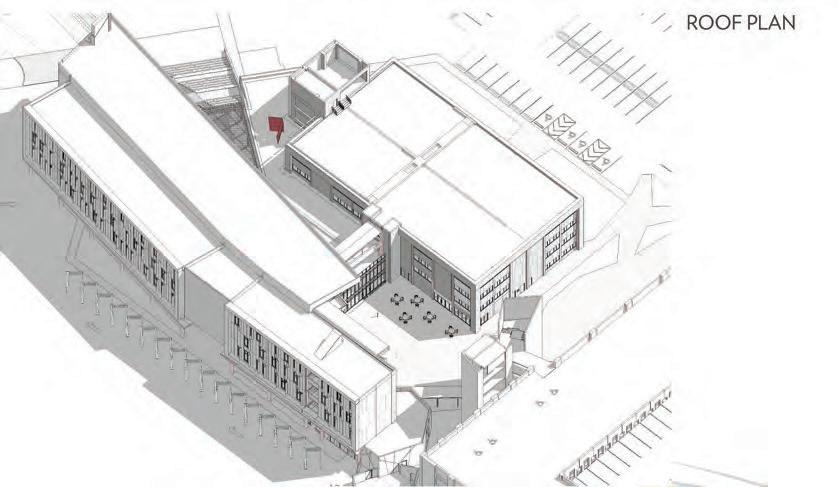
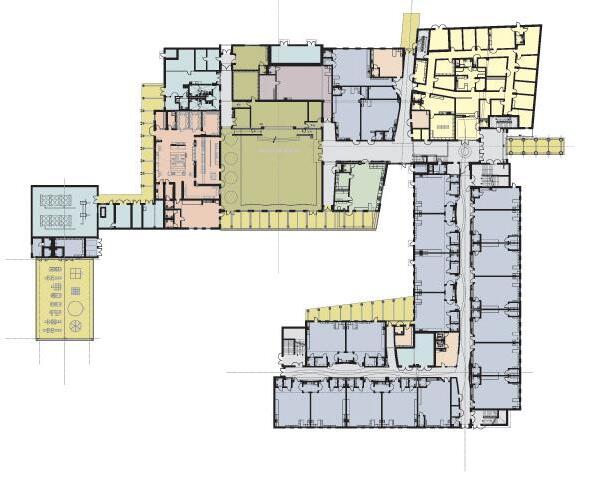
GROUND FLOOR
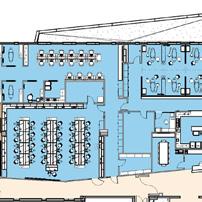
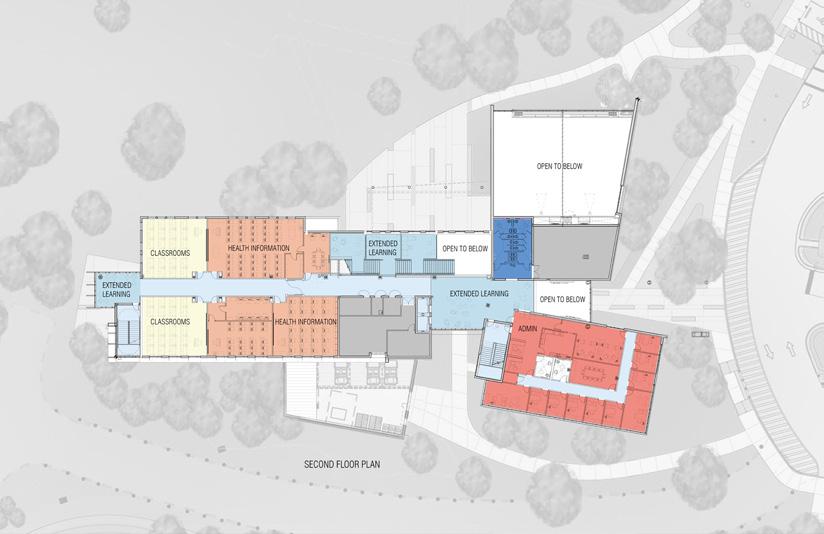
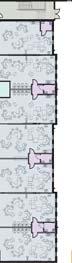
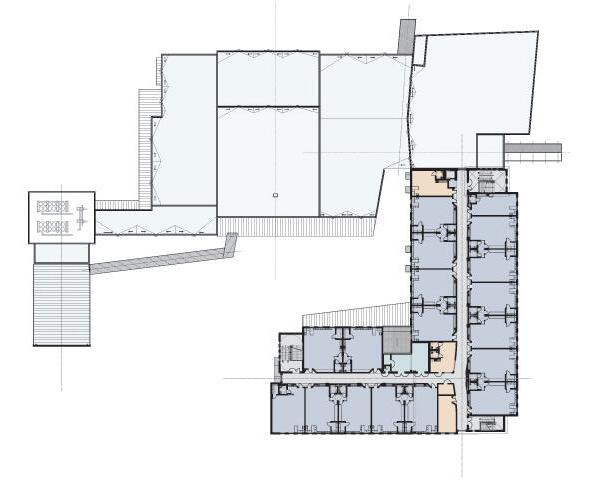
SECOND FLOOR
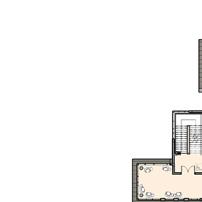
ROOFTOP
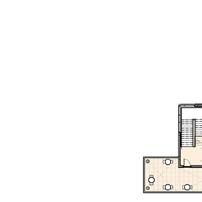
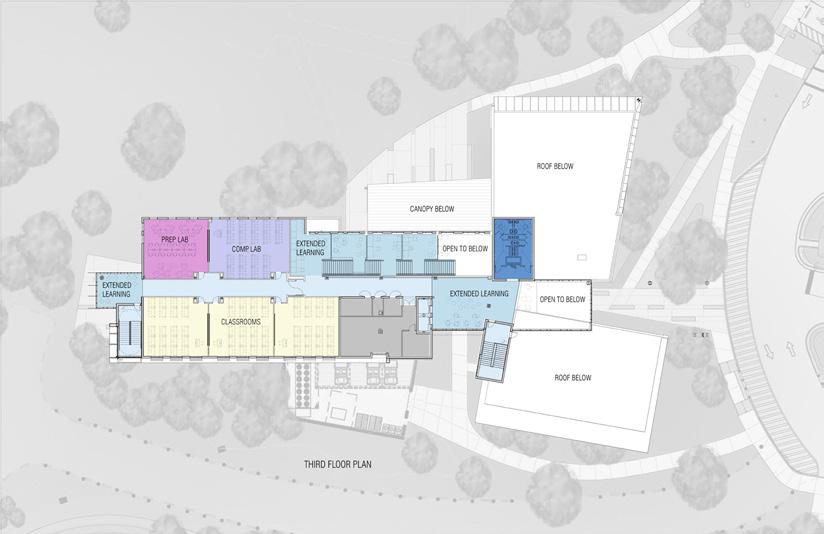
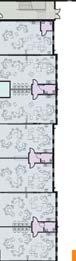
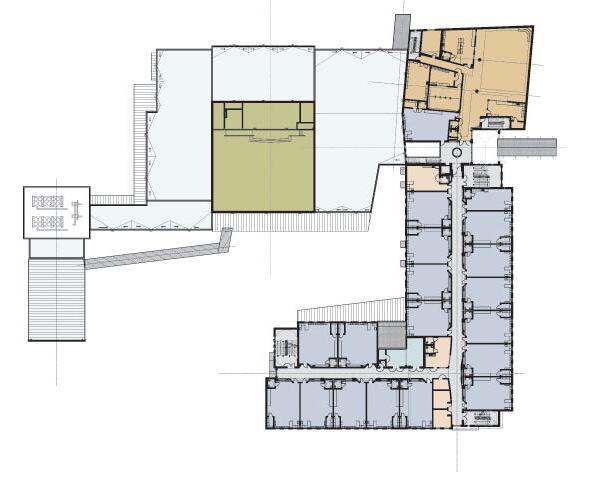
THIRD FLOOR
SENIOR HIGH SCHOOL
MIAMI PALMETTO
MIAMI PALMETTO
SENIOR HIGH
SCHOOL
MASTER PLAN, RENOVATION, & ADDITIONS
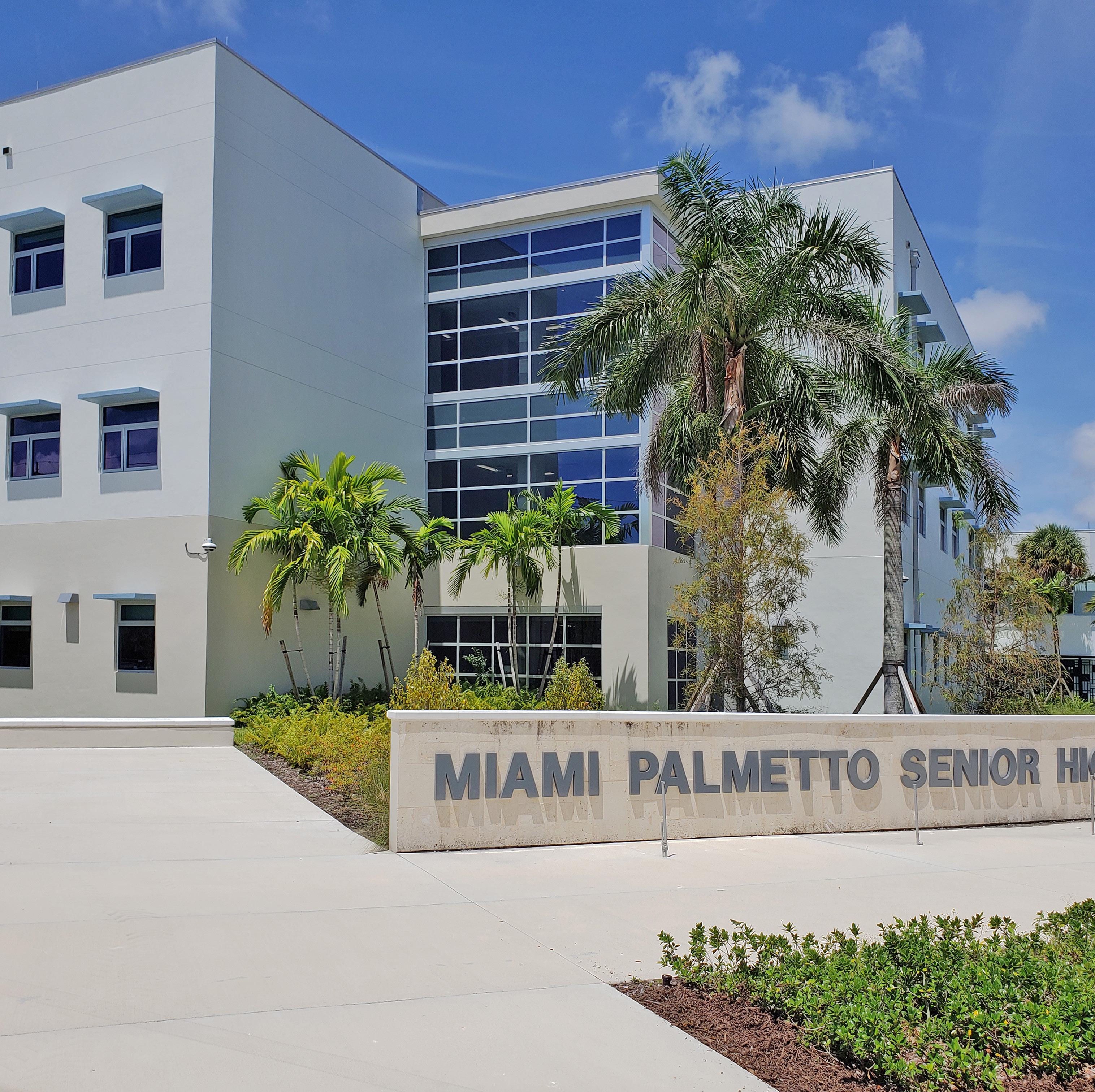
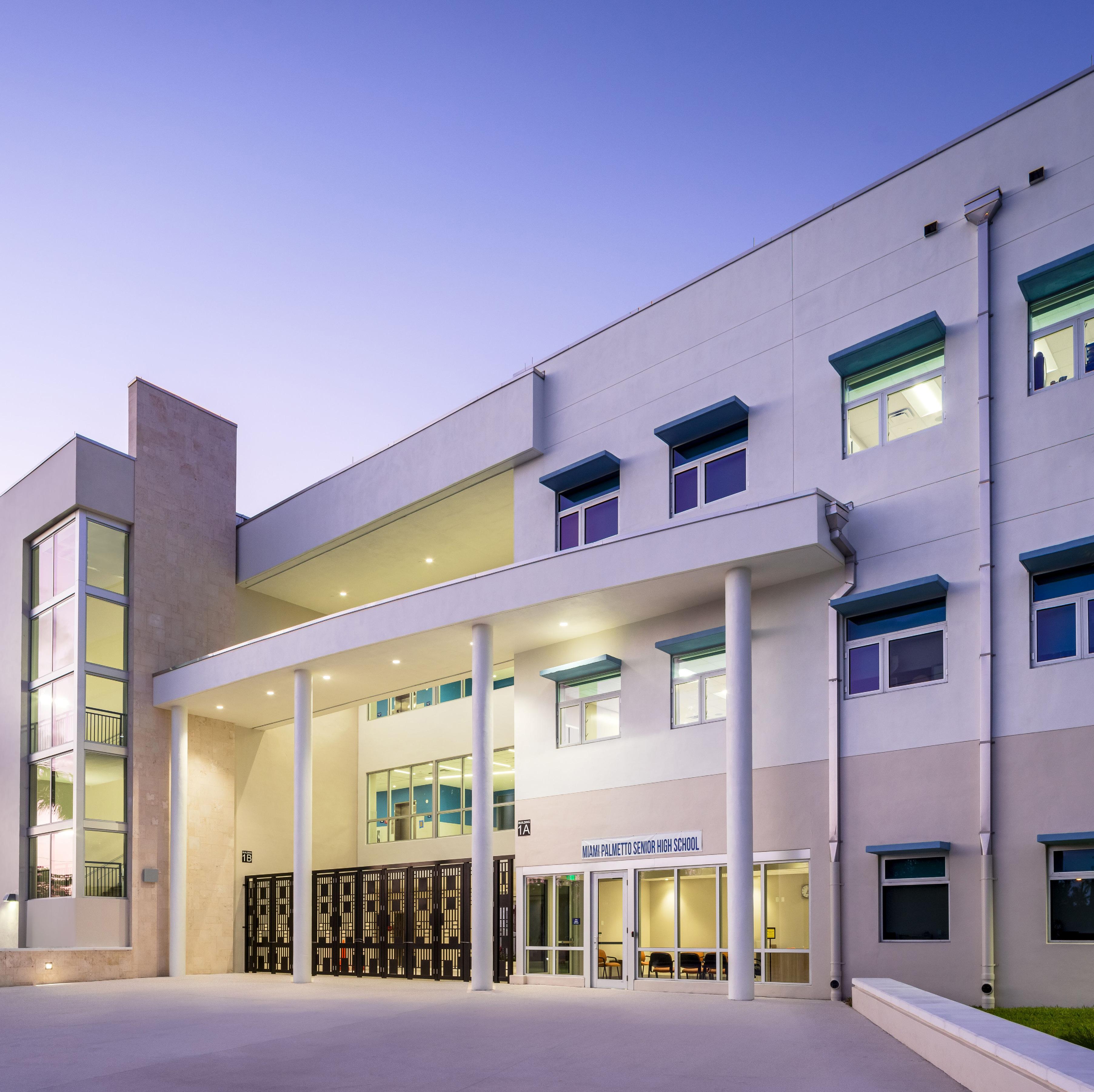
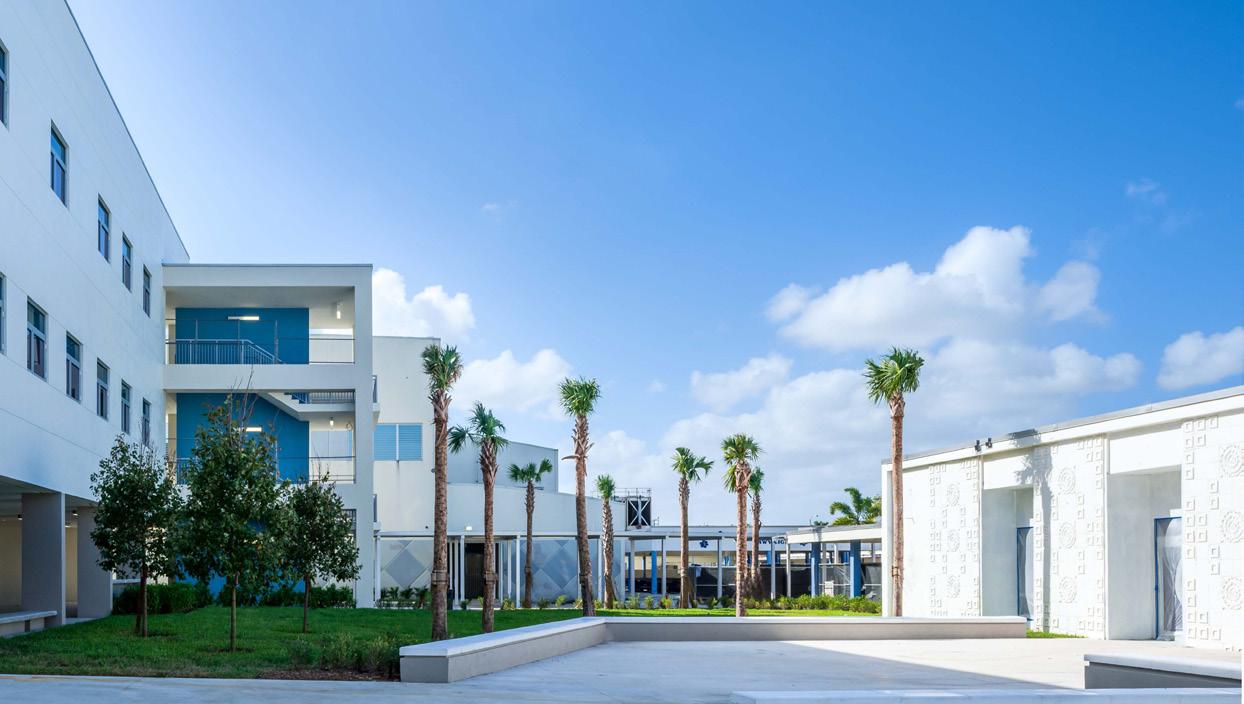
As a result of the new campus master plan, the campus would have a new main entrance, two new state-of-the art classroom buildings featuring 21st Century Design elements and the latest in educational technology, a new Arts building adjacent to a new cafeteria, and a new black box theater which sits adjacent to the auditorium which required a gut renovation. One of the existing classroom buildings was relocated to the north corner of campus and now serves as the gateway into the campus. This transformed the breezeway that was previously situated between the two classroom buildings on the south end of the campus. The new open green space offers the more than 3,000 students a place to gather and study in between classes. The new green space also acts as an amphitheater with the newly constructed black box theater sitting at the east end which includes a small outdoor stage that faces the green.
The new administration and classroom building anchors the campus at the southeast and helps form the street wall of buildings to give a greater sense of security to the exterior, and greater community space of the courtyards within the enclosed campus. Executing a comprehensive master plan and phased replacement, including additions, removals, renovations, and rehabilitation of existing buildings and utilities was a challenge to positively transform the campus while operating at full capacity.
One of the principal planning efforts was the reorganization of the public connecting spaces and outdoor negative space, which was originally conceived as a rid of walkway paths between rectilinear buildings, and now creates a series of landscaped courtyards as open collective places between the individual educational buildings. The new administration and classroom building anchors the campus at the southeast and helps form the street wall of buildings to give a greater sense of security to the exterior, and greater community space of the courtyards within the enclosed campus. This building is divided into wings to help define a more human scale, and is flanked by exterior stairs and a portico accessing the courtyard, Media center, and walkways to the other points of campus.
TECHNOLOGY
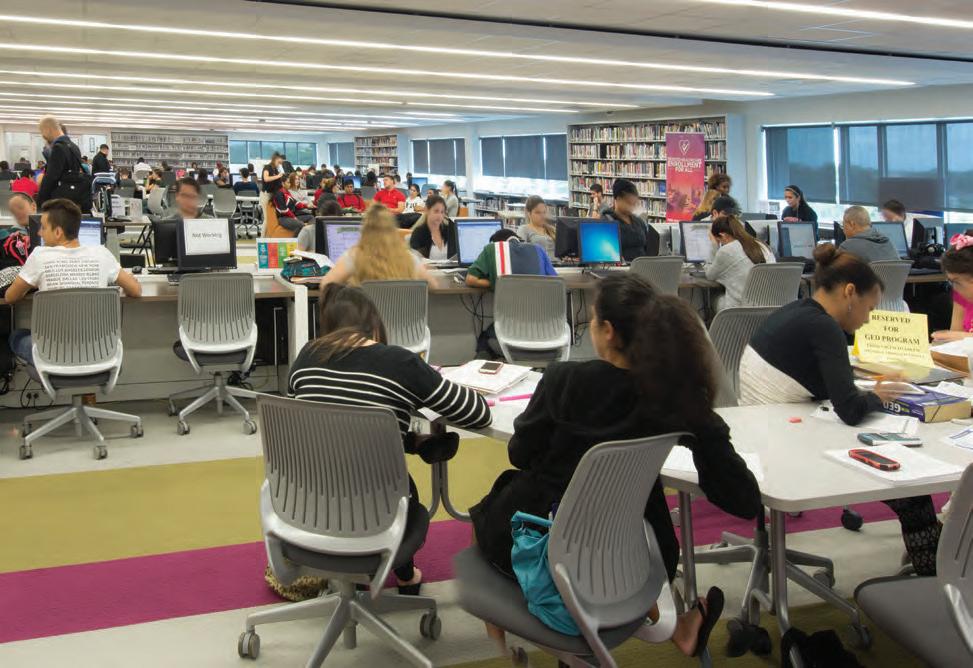
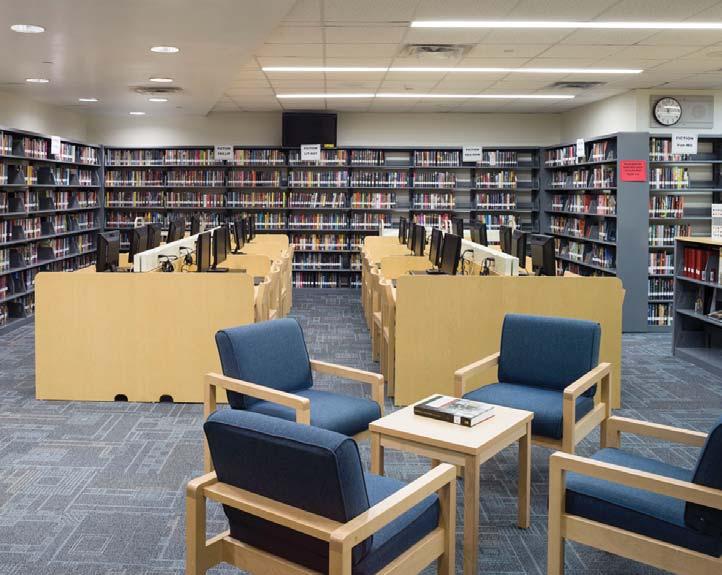
Many of the upgrades and additions included the transformation of the school’s infrastructure and distribution from analog systems to digital. The renovation of the central Media Center building took advantage of the original building’s unique architectural detailing and volume, adding comprehensive computer labs, testing facilities, and media systems, while still maintaining book stacks periodical displays and reading nooks.
AESTHETICS & USE OF MATERIALS
The buildings and their color palette bring the campus into the 21st Century with clean modern forms, while alluding to and complementing the materials and colors of the vicinity: Coral stone, warm whites, and earth tones of the residential neighborhood and the cool blues of the school colors. The new Arts wing has large, glazed openings to the north for natural ambient lighting, and the new Black box theater faces a large berm lawn which can act as outdoor amphitheater with the overhead coiling door opening as a proscenium.
COMMUNITY
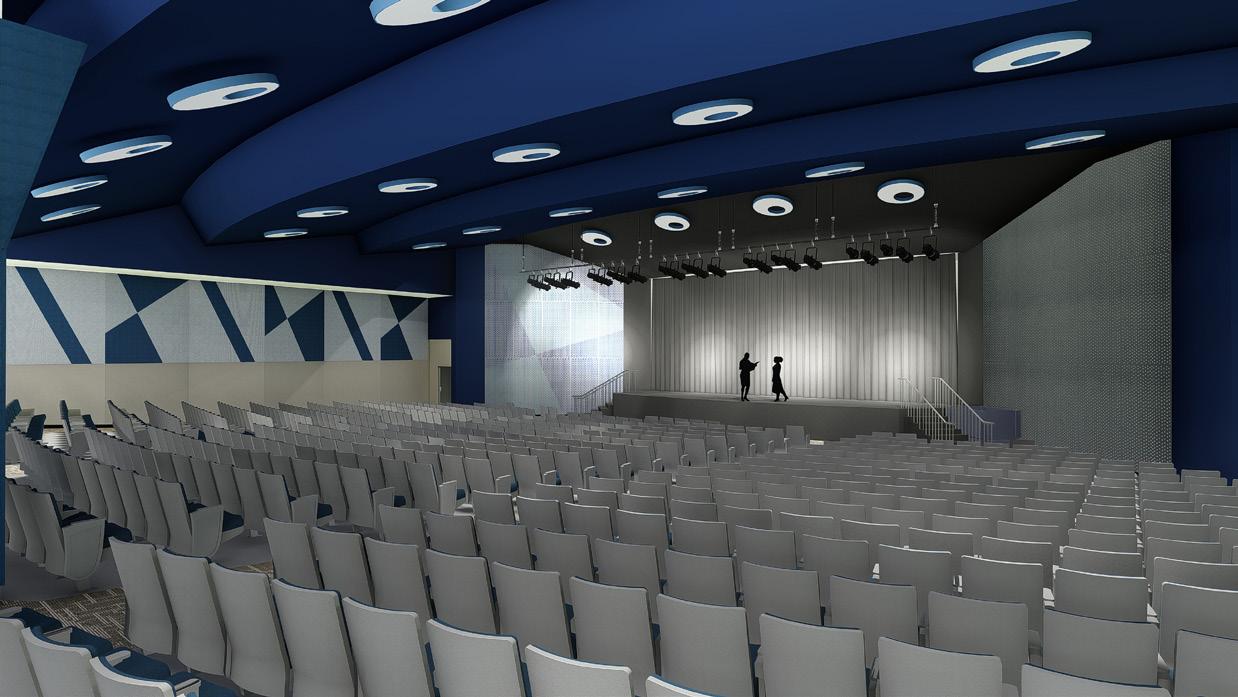
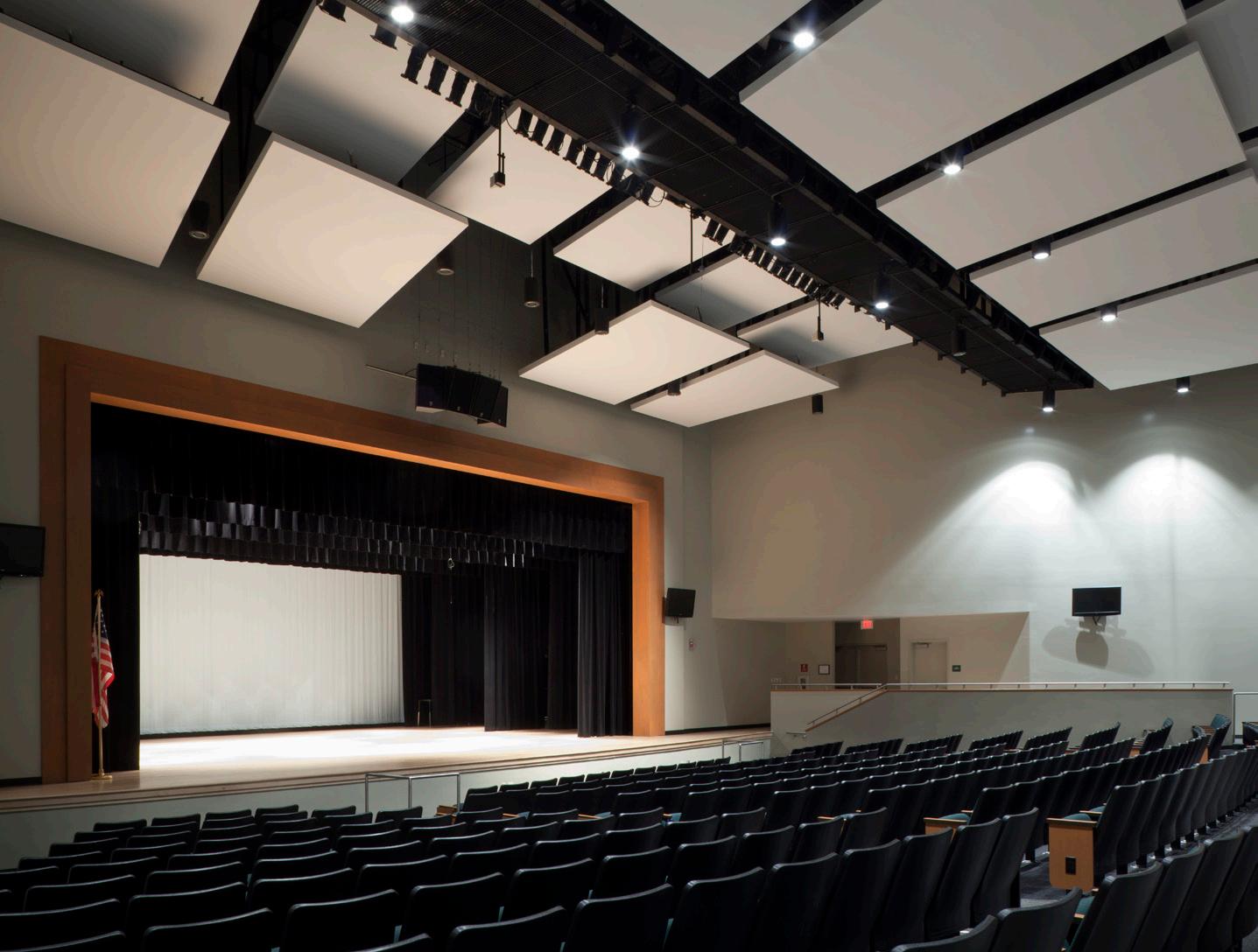
As the key link to the community, the Auditorium has undergone a major renovation, including state-of-the-art LED theatrical lighting, screens, audio, and acoustic finishes. In all the renovated and new buildings, there has been a focus on energy efficiency, environmental quality, and student performance: the Air conditioning systems include state-of-the-art electronic bi-polar ionization high efficiency filters to clear contaminants, and the lighting system upgraded with occupancy sensors and maximizing daylight with either large north openings or south-facing overhangs and light shelves.
sustainability - LED lighting systems - provisions for future implementation of PV panels - occupancy sensors for energy efficiency
2022 FEFPA
Improving student outcomes through design
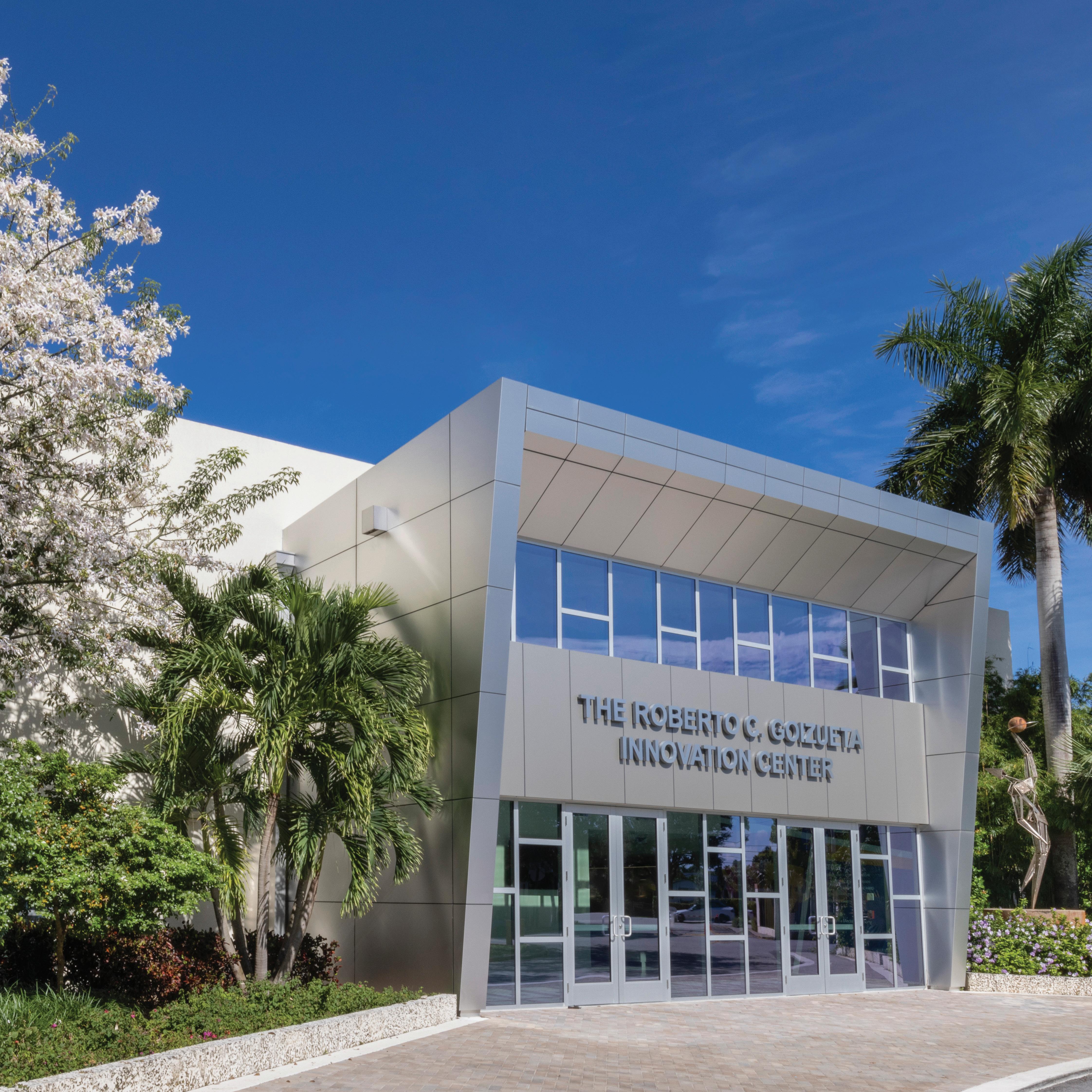
THE ROBERTO C. GOIZUETA
INNOVATION CENTER
INNOVATION CENTER
Belen Jesuit Preparatory School was founded in 1854 in Havana, Cuba by Queen Isabel II of Spain. The task of educating students was assigned to the priests and brothers of the Society of Jesus (the Jesuits), whose teaching tradition is synonymous with academic excellence and spiritual discipline. In 1961, the new political regime of Cuba confiscated the school property and expelled the Jesuit faculty. The school was re-established in Miami the same year, and over the next decade, continued to grow.
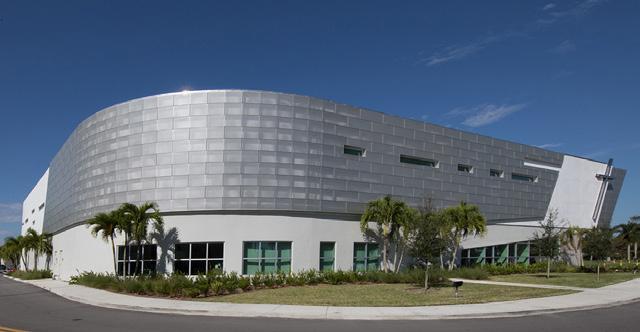
Today, Belen Jesuit Preparatory School is a Middle/High School on a 33-acre site in western Miami-Dade County. The Innovation Center is a signature program was funded, in part, by a generous gift made by The Goizueta Foundation. Roberto Goizueta graduated from Belén in 1949 and immigrated to the United States in the early 1960’s. His career in chemical engineering led him to Coca-Cola where he become CEO and turned Coca-Coal into one of the most recognizable brands in the world. Through it all, he never forgot his alma mater,” said school President Jesuit Father Willie García-Tuñón ’87. This new gift will help implement the vision for Belen’s future and echo Goizueta’s love for Belen and commitment to a great education.”
21 ST CENTURY LEARNING
The school’s STEAM (Science, Technology, Engineering, Arts and Mathematics) Program aims to spark an interest and lifelong love of the arts and sciences by enabling students to combine subjects known to increase critical thinking and problem-solving skills through unique handson learning opportunities. Housed in a state-of-the-art Innovation Center, students are not just taught the subject matter but how to learn, how to ask questions, how to experiment, how to create, and how to collaborate.
The new Innovation Center features flexible classrooms with mobile walls and furniture, and outdoor learning experiences with a covered drone launch pad. The school’s role as a regionally renowned center for science and technological excellence will be aided by tech-enabled educational tools, fabrication and maker labs, and labs for earth sciences, biology, chemistry, physics, and robotics, forming a center for ideas exchange and the exhibition of new projects. Breakout areas further enhance opportunities for collaboration and inter-disciplinary learning.
The facility provides indoor (and outdoor tbc) collaboration areas to enhance team-based learning and to promote an environment of thought leadership, experimentation, and creativity. Flexibility and adaptability are key drivers for the scheme, with movable walls, furniture, and services. An entire system of solar PVs provides energy for the facility.
21st Century learning programs enable students to master content while producing, synthesizing, and evaluating information from a wide variety of subjects and sources, and with an understanding of and respect for diverse cultures. This enables them to learn the skills to succeed in 21st century jobs.
TECHNOLOGY
Advancing technologies and changing pedagogies are influencing how best to teach a new generation of learners who have never known a world without smartphones or tablets. Specialized innovation centers require specific design strategies to optimize real-world learning. In creating this dynamic teaching facility for STEAM and 21st Century Learning, our team attempted to understand the needs of today’s students while envisioning how learning will continue to advance so that we created a structure and spaces that will support new teaching methods and educational missions as they evolve.
The Roberto C Goizueta Innovation Center gives students access to a wide selection of tools and technologies that truly bring learning to life, from 3D printers to laser cutters and powerful computers with professional design software. State-of-the-art teaching spaces like the Robotics lab make computers, soldering irons, workbenches, tools and equipment available for students to use as well as maker spaces and demonstration stations to design robots, work on hardware, exhibit solutions and take notes.
The Innovation Center provides inspiring and productive educational spaces equipped with tools commonly used in industry to support students as they investigate concepts and ideas related to Industrial Robotics, Industrial Internet of Things, Virtual and Augmented Reality, Artificial Intelligence, and Advanced Manufacturing.
In the design of the Roberto C Goizueta Innovation Center, safety is a critical feature. Not only do students learn about programming, but they also gain experience with real-world safety protocols.
High quality, durable and child safe tools and equipment are vital. The need for security fencing is a key feature of demonstration spaces for robotics equipment because industrial robots can be incredibly powerful machines, and security fencing is critical to ensure student and teacher safety.
The equipment storage room is separate from the rest of the lab so that teachers may supervise access to equipment closely before and after use by students.
(Only enclosed area in the floor plan)
Providing a safe workspace where young minds can give shape to their ideas in a hands-on, do-it-yourself learning mode was critically important to the design of this project. Young children are given access to tools and equipment so they may experience and understand various educational concepts through experiential learning, project-based learning and activity-based learning. Oversight of their activities is essential.
SAFETY
CANOE CREEK K-8 E-STEM SCHOOL
REMODEL, RENOVATION & NEW CONSTRUCTION
The School District of Osceola County is pushing boundaries with their new 138,963 SF Canoe Creek Academy. The facility is redefining the approach for prototype schools by leveraging previous work and obtaining the sustainability and wellness goals that our communities expect and deserve. The design was based on a re-use of one of the school prototypes, a kitof-parts prototype which is flexible to accommodate only the components necessary for school expansion but versatile to adjust for future growth. The current project accommodates 1,200 student stations, as well as core and flexible support spaces such as administration, “sciencetorium,” gymnasium, media, and arts suite for music, orchestra, and visual arts. These new buildings provide Canoe Creek students access to the most modern tools, labs and fine arts and athletic facilities. The addition of these new amenities offers students a campus that is ripe with opportunities for exploration and inquiry.
It is essential to recognize the many unique innovations and enhancements integrated into the E-STEM school. As the District’s premier environmental E-STEM school, Canoe Creek ensures academic excellence through a hands-on, minds-on approach to learning that immerses students in learning environments to foster critical thinking and problem-solving skills necessary for the 21st century.
Since school building’s operational cost is one of the costliest prices for a school district, Canoe Creek Academy was also designed for optimal efficiency in performance and cost-effectiveness. By providing comprehensive architectural and engineering services for the remodel, renovation, and new construction at Canoe Creek, Zyscovich created an innovative, cutting-edge facility with High Energy Performance building, in a comprehensive state-of-the-art environmentally focused school campus setting.
21 ST CENTURY LEARNING
Throughout Canoe Creek, technology is used to enhance the student learning experience, particularly to amplify the science and math curriculum for all grade levels. The Media 2.0 (library) is a technology-vast media center with a STEM/Robotic lab. The furniture is mobile featuring an agile media shelving for easy reconfiguring and flexibility. A Level 1 “Sciencetorium” supports digital collaborative exploration for student projects between the science labs, and the exchange of group ideas. Enhanced school security was a paramount consideration in the expansion of this school. An integrated, high performance security system was integrated for student safety.
Improving student outcomes through design
NET-ZERO READY DESIGN
First and foremost, drastic energy reduction for Canoe Creek K-8 was established as the project focus, including the kitchen, dining area, and gymnasiums. The high-performance building was designed for future renewable energy installation to become both Zero Energy and carbon neutral, to save energy and protect the environment for future generations and address the health and wellness of students and faculty.
The prototype school’s transformation took five months and required integrative design charrettes and a genuinely collaborative team. The project team had a clear understanding that there is no magic bullet to achieve a high-performance building, but rather an analytical result and knowledge of all components in the building and their significance in being part of the solution. The goal is to utilize ~ 70% less energy than a traditional school.
The facility capitalizes on the site’s natural amenities and improves air quality and ventilation which is especially helpful with developing concerns for student and staff wellness, safety, and security for a post-pandemic future.
The HVAC system utilizes enhanced filtration recommended by ASHRAE, including more efficient ventilation filtration (MERV 13).
The heat pumps that condition the spaces use UV lights for coil cleaning, and the bipolar ionization is incorporated in the HVAC units to serve the gym, cafeteria, and DOAS.
When addressing viral concerns, Canoe Creek utilizes a dedicated outside air system to get 20% more than code of filtered fresh
air directly to the classrooms. Studies, including Harvard’s green buildings impact study, demonstrate CO2 levels directly impact performance and cognitive function. Student performance is the true essence of the educational facility, and air quality is a critical factor in achieving student goals.
Light is a regulator for the sleep-wake cycle. The building utilizes 4,000-degree Kelvin LED lights. LED lights are crucial for energy savings and provide the blue in the light spectrum for alertness in the daytime and support circadian rhythm. All of level one southfacing windows are located under canopies that maximize daylight, views, and reduce the solar gains for reduced energy consumption.
Beyond the design’s health and wellness, all energy performance steps were incorporated through the integrated design process. The building envelope was evaluated to eliminate potential infiltration, and a 3D mock-up will provide validation with the contractors for the construction.
The number of roof penetrations was reduced from 22 in the prototype to zero. The decrease reduces the risk of infiltration, saves energy, and provides future maximization opportunities for the roof area’s renewable energy. The roof is enhanced to allow the installation of renewable energy Photovoltaics (PV. In the event, the school district invests in a future carbon-neutral goal since no combustibles are used in building. The Electrical Distribution is PV ready with conduit pathways and PV panel ready for connection to future inverters.
Energy savings strategies - such as eliminating the Type 1 hood, providing a ventless dishwasher with energy recovery, and increasing insulation for the freezers and coolers - are incorporated in the high-performance kitchen design. Finally, the refrigeration watercooled compressor rack is UL tested to perform at 50% less energy consumption.
The domestic water system is a water-cooled heat pump that is approximately five times more efficient than a typical electric water heater. The system also cools the heat pump water loop, saving HVAC energy consumption.
The HVAC design incorporates a DOAS with energy recovery through an energy recovery wheel that captures sensible and latent energy instead of exhausting from the building. The heat pump design eliminates reheat and saves substantial energy while utilizing hot gas reheat for dehumidification and maintaining humidity below the 60% RH. The DOAS cools the air utilizing a water-cooled heat pump as stage 1 cooling before using the less efficient existing chiller. This helps reduce energy and less run time for the noisy chiller to improve acoustics at the school.
The lighting design incorporates a reduction in light fixture quantity to .008 Light fixtures/SF. The Lighting Energy is less than 0.3 w/SF compared to code of 0.87 W/SF. The exterior lighting occupancy sensors reduce lighting energy consumption and highlight movement in the area to enhance security.
ENVIRONMENTAL-STEM PROGRAMS
Canoe Creek K-8 provides an enhanced learning experience for students by leveraging site environmental preservation to amplify the science and math curriculum for all grade levels. A campus-wide E-STEM curriculum is integrated into the site and buildings.
The project was provided with a unique opportunity to re-imagine the school’s brand and promote and support E-STEM by maximizing the use of the site’s natural amenities and providing flexible spaces and outdoor classroom opportunities. Key site development enhancements included the following:
• Eco-Trail: Utilizes the site and wooded preserve as an outdoor learning lab for earth sciences and environmental science curriculum.
• Eco-Garden: Utilizes water harvesting cisterns and student agroecology garden as an outdoor learning lab for earth sciences and environmental science curriculum.
• Eco-Dining Porch: Serve as an outdoor classroom for outdoor science experiments.
• Eco-Courtyard: Outdoor covered learning lab for science/robotic projects adjacent to science suites.
• Bio-swales: Agroecology water retention areas at the school expanded for parent drop-off zone.
• New wellness track: New four-lane regulation track for PE and Wellness programs.
UNIVERSITY OF CENTRAL FLORIDA
M
The Student Union at the University of Central Florida (UCF) opened in 1997 when student enrollment included only 28,000 students. Now, with 66,000 students, University officials decided to ease the long lines, the filled tables, and the crowding in the busiest place on campus—the Student Union—as well as deliver a 21st century Student Union space to its student body. The four-phase renovation and expansion of the UCF Student Union solved the University’s immediate problem while at the same time offered new opportunities to expand services. Zyscovich developed an Advanced Schematic Design package for the renovation and expansion of the Student Union and provided a preliminary design solution to increase the seating capacity and address the issues of overcrowding within the facility. Zyscovich provided several options identifying potential gains and losses for each preliminary scheme which informed the final scope and facility program. Ultimately, the design would provide UCF with flexible options to assist the growing UCF community continue to have a space to study, eat, host campus and community events, celebrate traditions and socialize. The scope was strategically phased in order to minimize the impact on student union operations and the surrounding natural preserve habitat during construction.
NEW OPPORTUNITIES
The project comprised of the addition of 32,794 square feet and approximately 700 additional dining and multipurpose seats to the facility – doubling the seating capacity – which also increased the amount of study spaces and gathering options for non-diners.
The new Student Union was designed to house the first dedicated Student Government Senate Chambers, including permanent electronic voting and modern audiovisual systems, as well as 9,000 square feet of office and flexible meeting spaces for students and University staff to enjoy.
A renovated outdoor seating area addressed the needs of students outside the classroom and assists in fostering an environment for meaningful and social interactions.
While the main portion of the Student Union remain unchanged, Phase I and 2 of the renovation relocated the back-of-the-house and completely redesigned the existing food court to accommodate 10 food vendors, including five national-brand restaurants in the brand new, state-of-the-art food court. The expansion opens opportunities for student
employment and campus jobs. Consideration of the interface with the existing building was important to the success of the project. Through enclosing the South Patio area, 2,200 square feet of dining, kitchen and support spaces were possible to be created. Two steel-framed entry canopy features and an exposed “monumental” staircase provide unique aesthetics for the expansion.
Phase 3 and 4 of the renovation added an additional 15,000 square feet to the “Heart of Campus” to accommodate the ever-expanding university. The addition looks to extend the wall outward and add a second floor, nearly tripling available seating for students in the Union from 400 to 1,150 and from 315 seats to 700 in the food court alone, power outlets, and a second floor to the food court was completed with this project. The addition includes a double-height, two-story food court area with a glass wall overlooking the University’s marquee nature preserve and Cypress Dome located in the center of campus. A third-floor space was added and offers offices and a Senate Chamber for the Student Government Association.
SITE DEVELOPMENT
Pegasus Circle contains the Student Union, which is the center of the campus, with the John C. Hitt Library located directly to the south of it. The boardwalks allow for pedestrian traffic between the Union and Memory Mall. At the heart of the UCF Campus is a Cypress Dome Environmental Preserve. This preserve is a high-quality, beautiful amenity which joins the original campus to the new UCF Campus building. North of the Student Union building. The new addition is design with a curved facade providing panoramic views to the Cypress Dome beyond. On the ground floor, the dining experience extends outdoors to the umbrella table patio, where students can enjoy the canopy of the majestic cypresses. This building addition has become the social, learning and dining hub for the entire campus
SUSTAINABILITY
There were many important factors that went into deciding what to include in the expansion. High performance buildings play an integral role in UCF’s learning environment. As the University continues to grow, their objectives include reducing the impact of buildings on the environment and human health. The UCF Collective Impact Strategic Plan highlights “the importance given to ensuring that the university strengthens its commitment to healthy environments and sustainable practices in everything it undertakes.” LEED®’s evolving stringent standards, paired with aggressive energy strategies, can ultimately transform UCF into a healthier campus.
Throughout the process Zyscovich and UCF staff collaborated to select the most cost-efficient solution. The project designed to achieve LEED Silver, comprises a three-story expansion to facilitate the most compact design on the site due to adjacent wetland areas and to reduce the operational burden of a sprawling facility, ultimately reducing costs.
Whether it’s to eat or study, Zyscovich had a keen eye on providing UCF with innovative, architectural design that addressed the student needs of an everexpanding university campus.
BLUE LAKE ELEMENTARY SCHOOL
BLUE LAKE
ELEMENTARY SCHOOL
3300 N. Military trail, Boca Raton, FL 33431
The School District of Palm Beach County and the City of Boca Raton collaborated on developing a new elementary campus in the heart of Boca Raton. The City carved out a 15 acre parcel from and undeveloped portion of its Spanish River Athletic Park adjacent to the Dos Estridge High Tech Magnet Middle School campus, and worked closely with the District to mitigate utilities, well site and traffic considerations to so as to relieve severe crowding in the neighboring communities. Additionally, the design responds to a complex and oddly shaped site with a compact foot-print and vertical educational solution. The placement on the site accommodates over 3 acres of restricted land cutting through the site, however provides for all of the amenities required by a typical K-5 campus including — exterior dedicated playgrounds, playfields, room for expansion, 156 parking spaces, and 1,850 feet of queuing.
Due to the restricted size and configuration of the site a compact and efficient new K-5 Elementary school was programmed and designed to accommodate 972 student stations, in a three-story, 92,000 SF facility. Thanks to expert educational programming and master planning the project was “right-sized” through balancing educational programmatic needs with available systems and market pricing and still able to be below Florida Dept. of Education Student Station Construction Cost requirements. With a vertical approach required, the design incorporates an Arts Boulevard with a Music and Art suite adjacent to the multipurpose performance dining room, an integrated second floor STEM Media (Center) Lab and distributed Exceptional learning spaces at each level. Everything about the new Blue Lake Elementary is innovative, from programming, to systems, to design of the learning environments. The 21st Century Learning environment is planned to accommodate flexible group, peer-to-peer, and individualized learning activities where young people become more curious, innovative and engaged. Moveable furniture and equipment will allow for learning to happen in flexible and adaptable classrooms and labs.
DESIGN, SAFETY, AND SECURITY
A key development factor of the site design is that the school presents itself to the parents as they approach through the adjacent community park with visible recreational amenities, landscape buffers at parking and drives, and a view of the prominent school entry. The school has developed two layers of fenced security boundaries, one at the perimeter and one at the play areas so as to direct visitors to a single point of secure entry. Student areas are further protected from the assembly function areas with classroom wing and suite separations, along with access control coordinated with the District’s latest safety and security guidelines. Circulation areas have been planned to maximize visual access with the minimum of supervision.
The campus has separate parent and bus drop-offs, abundant shared parking spaces, and ample queuing space to keep all school traffic on-site. The central parking area is planned for landscaping to complement the park and act as a resource for both the school and after hours use by the community. A landscape buffer is included on the east side of the property to the public walk and park areas, as well as to the south and the neighboring community dog park recently constructed. All the while the site improvements allow for the existing below ground utility lines of the community water wells to be preserved, protected and maintained.
Throughout the three stories of this new elementary — flexibility and adaptability within the community context were key in the development of the design. This unique learning environment houses students from five to eleven years of age, the premium years in a child’s social and intellectual development. To facilitate a positive learning environment with appropriate social interaction, Blue Lake is divided up into smaller learning communities, or “nests.” These Nested Learning Communities are more personal and differentiated with coordinated finish colors, offering a sense of “smallness within largeness.” Teachers and children can personalize their areas of the building through gallery walls, tackboards and display cases, creating a sense of ownership and pride among students. Each grade levels area of the building has been designed to be flexible to meet the specific needs of their educational curriculum goals while providing a place of safety, identity and ownership. Flexibility is extended to the site planning as the facility anticipates potential program expansion with dedicated utility stub out connection points and coordination of site circulation.
SUSTAINABILITY
Zyscovich’s extensive experience with sustainable school design was advantageous to Blue Lake Elementary’s planned operations and the health, safety and comfort of its students and teachers. Zyscovich is committed to the incorporation of sustainable principles in our designs. Sustainable educational facilities provide highly-efficient operational systems, healthy environments for the occupants, and buildings that enhance the learning process. Never ha this been more important that now. As a post-pandemic school, this new state-of-the-art facility features scalable ventilation, controlled air flow and return air design, compartmentalized HVAC systems, and increased air filtration. Standard systems are designed with additional care and awareness of creating enhanced indoor air quality.
Blue Lake Elementary is designed to maximize efficiencies and reduce the use of energy and water, starting with the landscaping, which uses native, low-water plants to reduce water consumption and a Low Impact Design (LID) stormwater system. Sustainable features include LED lighting fixtures at the exterior and interior, water-conserving plumbing fixtures, and materials with low to no VOCs are used in the interior environment. Energy reducing measures include an efficient and compact building envelope, placement of the building on the site to minimize solar heat gain and creating an enhanced building envelope an closure. Other enhancements include a light-colored roof reduces heat gain and improves energy performance, Energy Star rated equipment, faucets, and fixtures, thermal efficient windows/glazing and an automated building controls system. The building, including its envelope, HVAC systems, service water heating, power, and plug-load lighting systems were all designed to consume energy at 30% below that of a baseline building.
MATERIALS
The form and orientation of the new compact building minimizes solar exposure, while also creating a clear separation of access and private / secure areas for students. The site design includes generous playgrounds and playfields with features appropriate for the different age groups, native drought tolerant landscape, and a variety of covered and open-air learning and play areas such as an covered play shelter and an art patio.
On-site traffic patterns were carefully designed to handle on-site queuing for parent drop-off and pick-up, minimizing traffic impact to the surrounding roadways. Traffic patterns separate students, faculty, and parents from the buses, minimizing cross-traffic and potential accidents. The design of the school is purposefully compatible with the vernacular of the community while maintaining an expression of its time and mission to excite students about becoming educated for the future. This is achieved primarily with materials and colors such as stepped cantilevered forms, sloping standing seam metal roofing mansard, porches, scored tilt wall panels, and glass for transparency, particularly at the entry-facing entry elevation which is visible from the moment of approach. The compatibility is further accomplished by breaking up the massing of building segments and rooflines—long unbroken roof and wall planes are avoided.
21ST CENTURY LEARNING
Collaborative learning, a 21st Century Learning pedagogy is dependent on flexible and adaptable teaching and learning environments. All learning environments in the school accommodate flexible group, peer-to-peer and individualized learning activities by minimizing built-in furniture, equipment and obstructions. Flexible furniture and technology connectivity will allow for learning be accommodated in each environment. Varied sizes learning and collaboration spaces facilitate project-based learning, team teaching, and large group assembly. In addition, the planned facility provides spaces such as the STEM Media Lab Collabratorium designed to celebrate and promote project-based learning, collaboration, STEM, multiple intelligences, individual student studio/computer space, and flexible common areas. The Nested Learning Community (NLC) vertical design implemented in the new multi-story elementary is an important feature for a 21st Century elementary school. The classroom wing compact floor areas allow students to develop and maintain intimate relationships with a small group of students and respective teachers. Further, the infusion of 21st Century Learning into the school simplifies this process of acclimation and social development through projectbased learning, creating the peer-to-peer collaboration, and the social learning reinforcement necessary to strengthen the cohort and to acclimate the child in the new school environment while they learn and grow in a nurturing educational environment.
All learning studios at Blue Lake Elementary School will include an interactive flat panel display, audio/voice amplification, document camera and instructional computer. Wireless technology in classrooms and all spaces interior and exterior to the building have been increased to allow for the use of tablets and laptops within the spaces as well as a charging and software updating space.
COMMUNITY USE AND ENGAGEMENT
The community components are arranged in inviting and accessible locations and include the receiving Arts suite, multi-purpose dining / performance area, STEM Media Center + Maker Lab, administration area and shared site amenities. Through this unique partnership with the City of Boca Raton, the school’s parking area, play shelter, playgrounds and play fields will have afterhours use by the community and adjacent park. Likewise, the City is planning for additional park improvements and amenities that further support the school.
HIGH SCHOOL
Owner Polk County Public Schools
Architect Zyscovich, Inc.
Contractor
Rodda Construction
Budget
$40.0 M; increased due to owner requested changes
Construction Cost
$46.2 M
Square Footage
177,600 SF
Student Capacity
1,750
Completion Date
August 2022 (est.)
MULBERRY HIGH SCHOOL
EXPANSION AND REMODEL
1 Panther Place, Mulberry, FL 33860
Mulberry High School underwent a $46 million transformation, building a new compact modern campus on the old baseball field and then tearing down everything that was built in the 1950s. The only original structures that will remain are two classroom buildings and the auditorium, which were built about 15 years ago. “This is going to be almost a complete replacement of the existing school,” said Jose Murguido, vice president of Zyscovich Architects. “The existing school was designed about 65 years ago, and of course it prepared kids for a whole different world that doesn’t exist anymore. So what this school is doing is providing a 21st-century learning environment for the kids.” The new school is described as a single building super safe school with signature academies that include robotics, engineering, automotive lab and a world-class agricultural lab. It will have a dining hall that serves as the school commons which that opens up into a courtyard so that students can eat outside as well as a breakfast porch for early morning arrivals.
Zyscovich planned and designed this substantial modernization and security enhancement of the 65-year-old Mulberry High School so that it can manage the addition of several hundred students efficiently as the local population grows, while also helping students meet their personal and academic goals.
The project replaces an aging school with a state of the art 21st century learning facility while modernizing and expanding the school’s program to incorporate a STEAM approach to learning, and offer engineering, robotics, agriculture, and automotive studies to the next generation of students.
Once the new buildings are complete, the low, one-story structures built in the 1950s will all be torn down.
INNOVATION
The modernized Mulberry High School introduce a new series of learning experiences for the students. The school Innovation Hub will feature an expanded educational curriculum providing learning experiences in Science, Technology, Engineering, the Arts and Mathematics (STEAM) in a collaborative setting allowing for project-based learning guiding student inquiry, dialogue, and critical thinking.
The design of the new campus will support the expanded program through the development of new automotive, health, engineering, robotics, and agriculture labs providing specialized learning facilities, and open, collaborative workspaces that facilitate the integration of the STEAM disciplines. New classrooms that are easily reconfigured to the needs of different sizes of learning groups will also be a feature.
21 ST CENTURY LEARNING
The school’s 21st Century Learning approach focuses on the development of three key skills: creativity, communication, and collaboration. The school’s design incorporates each of these concepts through the development of open, collaborative work (collabortoriums) and social spaces where students may engage in critical thinking, team-working and problem-solving. These spaces help foster hands-on learning and empowering students to develop their own skills and competencies through collaboration with other students.
The new STEAM labs and collaborative workspaces will feature flexible, movable furniture which can easily be configured to the needs of learning groups of different sizes.
SITE DEVELOPMENT
The new main building was designed to fit in a compact area roughly on the footprint of the original baseball field. The super compact design approach minimizes the need to accommodate displaced student in portables during construction and saved the district hundreds of thousands of dollars to temporary facilities. any portables to allow sufficient space on the existing campus for future expansion. In addition, future school expansion is anticipated in the design with a designated landbank south of the new classroom building. The future expansion (if necessary) will seamlessly integrate into the school circulation and security as if it were originally built with the school.
Our design team have taken their cue for the aesthetics of the new campus from existing buildings on the site, most notably the current auditorium. The same brick color and pattern have been incorporated into the new buildings to unify the campus and help retain the school’s connection to the community. The school’s unique branding elements have been weaved contextually into the design throughout the site to reinforce the school’s identity, encourage an emotional connection to the campus and academics, and foster a sense of belonging, pride, and loyalty to the school.
COMMUNITY
without interrupting one another. This was an important planning consideration to maintain the community engagement with the school.
Technology Integration. Technology is ubiquitous throughout the school. The school is intended to facilitate learning anytime/ anywhere thereby collabortoriums are located throughout the classroom building and Innovation Hub to accommodate student led learning and collaboration. the new school features the latest technologies integrated into classrooms, the media center, and signature academies, which may be leveraged by teachers to create an engaging but personalized learning experience for students.
This new high school is also designed as a community center. As the City’s namesake school where many alumni still call home, the school is designed to facilitate several simultaneous community functions by planning easy afterhours separate access and parking for each venue. The Gymnasium, Auditorium and sports fields can all accommodate simultaneous events
SAFETY AND SECURITY
The architectural layout and design of a school campus plays a key role in ensuring that students are safe. The modernized Mulberry High School features a single point of entry to the school through a single, supervised location in the main building with multiple exit points. Enhanced security for the campus is provided by secure perimeter fencing, video surveillance technology, intrusion detection systems, communication systems, clear signage, and bright exterior lighting.
We designed the school’s entrance to ensure administrators had unencumbered visibility over the point of entry, with open sightlines, glass walls and windows providing areas of refuge while minimizing distractions.
Providing a safe workspace where young minds can give shape to their ideas in a hands-on, do-it-yourself learning mode has been critically important in the design of Mulberry High School’s labs. Young children are given access to tools and equipment so they may gain experience in, and understand better, various educational concepts through experiential learning, project-based learning, and activity-based learning. Oversight of their activities is essential.
High quality, durable and child safe tools and equipment are vital in such environments. As are precautionary design elements, such as security fencing in demonstration spaces which ensure student and teacher safety when dealing with powerful technologies like robots.
A separate equipment storage room away from the rest of the lab so that teachers may supervise access to equipment closely before and after use by students. (Only enclosed area in the floor plan).
The new campus has been designed to meet Green Globes sustainability standards set forth by State of Florida statute, enabling school to operate using significantly less energy - and much more costeffectively - than the school has done in the past. State-of-the-art HVAC systems offers more advanced and efficient air filtration across the campus offering improved health benefits for all users and visitors to the school.
A new greenhouse will provide opportunities to teach students about plants, food, sustainability, and environmentalism, as well as encourage students to consider agricultural career paths. Outdoor classes and walking trails in a secure campus environment will also help place an emphasis on natural world while fostering enduring habits which promote health wellness, be it physical, mental or spiritual.
A new gym will ensure the school’s sports teams and athletes have access to a state-of-the-art facility with the most modern fitness equipment. football field and stadium will be fully renovated, and there will be sports facilities including tennis courts, a softball field, baseball field, track, soccer, and multipurpose fields.
Finally, a new dining hall will overlook the courtyard so that students eat outside when the weather is inclement.
2021 FEFPA
Improving student outcomes through design
NEW SCHOOL FACILITY
SCHOOL
GRADES 6-8 & WORKFORCE HOUSING
This New School Facility is the first of its kind in more than one way, a new highly efficient and cost effective 21st Century Public School in Miami-Dade County. The mixed-use facility combines integrated housing for teachers with a multi-story middle school (grades 6-8) provides a unique opportunity to address the need for both affordable housing and primary education in Miami’s Brickell/Downtown neighborhood.
Miami-Dade County Public Schools commissioned Zyscovich, the leading architectural firm in South Florida for K-12 projects, as the architect/engineer of record for this high-profile, pioneering project.
With the unprecedented levels of construction that has occurred in Miami’s Brickell area, it has become abundantly clear the need for additional educational facilities. The brand new, state-of-the-art facility with a 632-student station capacity, includes general purpose classrooms (English, Mathematics, and Social Studies), Science Demo Classrooms, Exceptional Student Education (ESE) classrooms, Health Education, Art, Music and Physical Education facilities, a Skills Development Lab, Media Center, Administration offices, Reception Area, Clinic, Conference Room, Food Service, and other support spaces for Textbook Storage, Student and Staff Restrooms and Custodial Areas.
The two levels of Workforce Housing units dedicated for teachers will be independently operated and separated from school functions, complete with its own parking and independent entrances and exits.
WORKFORCE HOUSING
Zyscovich’s extensive expertise aligning curriculum developmental objectives, safety concerns and the physical design of schools is exemplary, and their innovation in creating 21st Century learning environments have served as the District’s model for best practices. The overall expression of the building as a new learning environment capturing the spirit of its local as in the center of world commerce and cultures has led to its branding as a “World School.” The interior and exterior finishes, systems and components are intended to meet the District’s requirements for longevity, low maintenance and cost effectiveness while also conveying this exciting new option for excellent public education in the downtown corridor.
All design and construction will follow State Requirements for Educational Facilities, the Florida Building Code, the National Fire Protection Association, Florida Fire Prevention Code (Life Safety Code), barrier-free design guidelines, Florida statutes and MiamiDade County Public Schools (M-DCPS) Standards and policies. The residential component is designed in incompliance with U.S. Department of Housing & Urban Development (HUD), Uniform Federal Accessibility Standards (UFAS) and MiamiDade County requirements for design and construction of affordable and/or workforce housing units.
TECHNOLOGY
With an impressive portfolio of sustainable, high performance facilities and longtime institutional sustainability mentor to many school districts, Zyscovich designed the New School Facility as the first Net-Zero ready school (EUI<25) for the District. The New School design aims to foster collaboration, curiosity, creativity, and critical thinking in a technology laden environment to reinforce the world-class curriculum for the leaders of tomorrow. The facility will be equipped with a state‐of‐the‐art technology infrastructure as per MDCPS specifications for 21st Century learning environments along with an innovative media center, “collaboratoriums,” integrated dining/media center and rooftop play area. The dining facility will be a “landing/warming” kitchen with limited production capabilities as most food will be prepared remotely and delivered to the campus.
Mindful design principles incorporate passive design elements and low-energy equipment into the systems development of the new facility. The Harvard School of Health and Sustainable Energy & Water Conservation Principals are part of the sustainable approach. The project utilized the roof-level penthouse for HVAC systems.
SITE DEVELOPMENT
The new facility is within Miami-Dade County Public Schools’ Central Region, located on the northeast corner of the intersection of SW 10 Street and SW 3 Avenue, on a 0.344acre, vacant site shared with an adjacent housing development.
The permanent single multistory building is a new design custom to the site conditions and latest District standards with a total of 100,000+ GSF. Due to the site conditions and vertical nature of the development, there will be no ability for expansion of the facility. The site amenities are limited to a ground floor entry with covered drop off (within the building) and potential for off-site parking.
The school will have a separated, vertical development of ten (10) work force housing units constructed with the new building. Independent, access, circulation, parking (10 spaces), systems and security will be provided in the design of the building.
All related ancillary, support and Mechanical/Electrical equipment spaces for each area; Roof-level Play Area, PE equipment space(s), and hard courts; Ground-level service drive(s) and drop-off(s); and all required on-site and offsite improvements.
Palm Beach State College
Architect Zyscovich, Inc. Contractor
PALM BEACH STATE COLLEGE
From its humble beginnings with 41 students in a building next to Palm Beach High School, Palm Beach State College has grown to become the largest institution of higher education in Palm Beach County, serving 49,000 students annually. Over time, the College's mission has become more comprehensive to serve the educational needs of Palm Beach County residents offering bachelor’s degrees, associate degrees, professional certificates, career training and lifelong learning. Established in 1933 as Florida's first public community college, Palm Beach State today offers more than 130 programs of study at locations in Lake Worth, Boca Raton, Palm Beach Gardens, Belle Glade and Loxahatchee Groves.
EXPANDED PROGRAMS
The current building is not only a training site for students, but it also provides continuing education for about 200 local dentists who are members of the Atlantic Coast Dental Research Clinic, which has been a partner of the College since 1964. Participating dentists of the nonprofit clinic provide low-cost dental treatment, including fillings, implants, and oral surgery, to patients in the community, which also provides the required clinical training for the dental assisting students.
After a fascinating storied past, Palm Beach State College committed to provide the community with an attractive and functional physical environment that is equally innovative as well as sustainable, partnered with Zyscovich to design a new Dental and Medical Services Technology Building. This new state-of-the-art interdisciplinary science and medical facility is the next step in the development of a medically focused academic campus on the 75-acre Loxahatchee Groves campus. The new facility would fit with that motif.
The expanded Dental Assisting and Hygiene programs will continue their rich and successful relationship with the Palm Bach Atlantic Dental Clinic with enlarged clinical areas, enabling expanded capacity for the community dental care program where students are able to complete their practical training. A centrally located multipurpose lecture and classroom space has been incorporated with operable partitions to facilitate flexible use. The programs are the only such programs in Palm Beach County accredited by the American Dental Association's Commission on Dental Accreditation, and graduates have been a mainstay of the dental health workforce in the county for decades.
The new building also includes additional flexible educational facilities which will be used by the entire College, including flexible wet STEM labs for chemistry, biology, anatomy and physiology, and earth science and physics. Faculty will model this interdisciplinary approach with shared office suites for faculty, adjuncts and staff. Student collaboration spaces are provided throughout the facility with the incorporation of student lounges, flexible seating and nooks in circulation areas, exterior study porches, and a central plaza tied to the new central courtyard quad and an overlook to the cypress dome preserve. The new building incorporates a new Physical Therapy Assisting Program to the PBSC curriculum. The PTA suite consists of a new practical lab with stateof-the-art equipment and a flexible classroom divided by movable partitions to allow for easy transitions between the classroom and lab. A new Surgical Technology suite allows for the relocation of the current PBSC current program to a new a state-of-the-art practical lab with three “operating rooms” for training. It will also include a new sterilization suite to allow the college to provide a new sterilization certificate program, enhancing their students’ education.
Site improvements include expanded previous parking areas, a convenient main drop off for students, visitors and patients with electrical vehicle charging stations; a campus loop road drive connection; native xeriscape landscaping; recharge storm drainage connections; night sky friendly site lighting; smart site utilities, and the extension of the campus utility infrastructure development for HVAC, electrical, and data systems. The building also has been sited to allow for solar panels on the southwestern facade to provide renewable energy for the campus.
The project is being designed to the International Green Building Code, which required some unique approaches to the utilities for the campus. To minimize the number of batteries required in the building and to avoid the need for a generator, PBSC elected to provide a redundant power feed to the campus from the local utility company. The new building has been designed with a central air-cooled chiller plant that will be connected to a new campus mini-loop. The mini-loop will allow for the new and existing building to be tied together to deliver chilled water efficiently to the campus AHUs, as well as providing redundancy, and also allows for connections for future buildings on campus.
SITE DEVELOPMENT
COMMUNITY USE
In addition to education, Palm Beach State College is known for offering community dental health services. Dental hygiene students provide low-cost preventive dental care, including cleanings, as well as dental screenings and dental health educational workshops through outreach initiatives. The College also has a longstanding partnership with the Atlantic Coast Dental Research Clinic. For example, they collaborate with the Palm Beach County School District to provide dental education in all public elementary schools. Dentists affiliated with ACDRC provide restorative dental needs, including fillings, implants and oral surgery, at a reduced rate to those without insurance, while PBSC dental assisting students gain valuable experience.
FLEXIBILITY
Owner
Completion
M
CANOE CREEK K-8 E-STEM SCHOOL
REMODEL, RENOVATION & NEW CONSTRUCTION
The School District of Osceola County is pushing boundaries with their new 138,963 SF Canoe Creek Academy. The facility is redefining the approach for prototype schools by leveraging previous work and obtaining the sustainability and wellness goals that our communities expect and deserve. The design was based on a re-use of one of the school prototypes, a kit-of-parts prototype which is flexible to accommodate only the components necessary for school expansion but versatile to adjust for future growth. The current project will accommodate 1,200 student stations, as well as core and flexible support spaces such as administration, “sciencetorium,” gymnasium, media, and arts suite for music, orchestra, and visual arts. These new buildings will provide Canoe Creek students access to the most modern tools, labs and fine arts and athletic facilities. The addition of these new amenities will offer students a campus that is ripe with opportunities for exploration and inquiry.
It is essential to recognize the many unique innovations and enhancements integrated into the E-STEM school. As the District’s premier environmental E-STEM school, Canoe Creek ensures academic excellence through a hands-on, minds-on approach to learning that immerses students in learning environments to foster critical thinking and problem-solving skills necessary for the 21st century.
Since school building’s operational cost is one of the costliest prices for a school district, Canoe Creek Academy was also designed for optimal efficiency in performance and cost-effectiveness. By providing comprehensive architectural and engineering services for the remodel, renovation, and new construction at Canoe Creek, Zyscovich created an innovative, cutting-edge facility with High Energy Performance building, in a comprehensive state-of-the-art environmentally focused school campus setting.
21 ST CENTURY LEARNING
Throughout Canoe Creek, technology is used to enhance the student learning experience, particularly to amplify the science and math curriculum for all grade levels. The Media 2.0 (library) is a technology-vast media center with a STEM/Robotic lab. The furniture is mobile featuring an agile media shelving for easy reconfiguring and flexibility. A Level 1 “Sciencetorium” supports digital collaborative exploration for student projects between the science labs, and the exchange of group ideas. Enhanced school security is a paramount consideration in the expansion of this school. An integrated, high performance security system was integrated for student safety.
Improving student outcomes through design
NET-ZERO READY DESIGN
First and foremost, drastic energy reduction for Canoe Creek K-8 was established as the project focus, including the kitchen, dining area, and gymnasiums. The high-performance building was designed for future renewable energy installation to become both Zero Energy and carbon neutral, to save energy and protect the environment for future generations and address the health and wellness of students and faculty.
The prototype school’s transformation took five months and required integrative design charrettes and a genuinely collaborative team. The project team had a clear understanding that there is no magic bullet to achieve a high-performance building, but rather an analytical result and knowledge of all components in the building and their significance in being part of the solution. The goal is to utilize ~ 70% less energy than a traditional school.
The facility capitalizes on the site’s natural amenities and improves air quality and ventilation which is especially helpful with developing concerns for student and staff wellness, safety, and security for a post-pandemic future.
The HVAC system utilizes enhanced filtration recommended by ASHRAE, including more efficient ventilation filtration (MERV 13). The heat pumps that condition the spaces use UV lights for coil cleaning, and the bipolar ionization is incorporated in the HVAC units to serve the gym, cafeteria, and DOAS.
When addressing viral concerns, Canoe Creek utilizes a dedicated outside air system to get 20% more than code of filtered fresh
air directly to the classrooms. Studies, including Harvard’s green buildings impact study, demonstrate CO2 levels directly impact performance and cognitive function. Student performance is the true essence of the educational facility, and air quality is a critical factor in achieving student goals.
Light is a regulator for the sleep-wake cycle. The building utilizes 4,000-degree Kelvin LED lights. LED lights are crucial for energy savings and provide the blue in the light spectrum for alertness in the daytime and support circadian rhythm. All of level one south-facing windows are located under canopies that maximize daylight, views, and reduce the solar gains for reduced energy consumption.
Beyond the design’s health and wellness, all energy performance steps were incorporated through the integrated design process. The building envelope was evaluated to eliminate potential infiltration, and a 3D mock-up will provide validation with the contractors for the construction.
The number of roof penetrations was reduced from 22 in the prototype to zero. The decrease reduces the risk of infiltration, saves energy, and provides future maximization opportunities for the roof area’s renewable energy. The roof is enhanced to allow the installation of renewable energy Photovoltaics (PV. In the event, the school district invests in a future carbon-neutral goal since no combustibles are used in building. The Electrical Distribution is PV ready with conduit pathways and PV panel ready for connection to future inverters.
Energy savings strategies - such as eliminating the Type 1 hood, providing a ventless dishwasher with energy recovery, and increasing insulation for the freezers and coolers - are incorporated in the high-performance kitchen design. Finally, the refrigeration water-cooled compressor rack is UL tested to perform at 50% less energy consumption.
The domestic water system is a water-cooled heat pump that is approximately five times more efficient than a typical electric water heater. The system also cools the heat pump water loop, saving HVAC energy consumption.
The HVAC design incorporates a DOAS with energy recovery through an energy recovery wheel that captures sensible and latent energy instead of exhausting from the building. The heat pump design eliminates reheat and saves substantial energy while utilizing hot gas reheat for dehumidification and maintaining humidity below the 60% RH. The DOAS cools the air utilizing a water-cooled heat pump as stage 1 cooling before using the less efficient existing chiller. This helps reduce energy and less run time for the noisy chiller to improve acoustics at the school.
The lighting design incorporates a reduction in light fixture quantity to .008 Light fixtures/SF. The Lighting Energy is less than 0.3 w/SF compared to code of 0.87 W/SF. The exterior lighting occupancy sensors reduce lighting energy consumption and highlight movement in the area to enhance security.
ENVIRONMENTAL-STEM PROGRAMS
Canoe Creek K-8 provides an enhanced learning experience for students by leveraging site environmental preservation to amplify the science and math curriculum for all grade levels. A campus-wide E-STEM curriculum is integrated into the site and buildings.
The project was provided with a unique opportunity to re-imagine the school’s brand and promote and support E-STEM by maximizing the use of the site’s natural amenities and providing flexible spaces and outdoor classroom opportunities. Key site development enhancements included the following:
• Eco-Trail: Utilizes the site and wooded preserve as an outdoor learning lab for earth sciences and environmental science curriculum.
• Eco-Garden: Utilizes water harvesting cisterns and student agroecology garden as an outdoor learning lab for earth sciences and environmental science curriculum.
• Eco-Dining Porch: Serve as an outdoor classroom for outdoor science experiments.
• Eco-Courtyard: Outdoor covered learning lab for science/robotic projects adjacent to science suites.
• Bio-swales: Agroecology water retention areas at the school expanded for parent drop-off zone.
• New wellness track: New four-lane regulation track for PE and Wellness programs.
IMMOKALEE HIGH SCHOOL
701 Immokalee Dr, Immokalee, FL 34142
ADDITIONS & RENOVATIONS
Immokalee, Collier County’s largest non-coastal community, has long been associated with sprawling cattle ranches and a thriving agricultural economy.
As the demographics and needs of the area have evolved, so have the needs of the community and Immokalee High School, the only public high school in this area. In response to current and future demand of the surrounding community, Collier County Public Schools set out to expand its current facilities at Immokalee High School. As Architect of Record, Zyscovich is providing professional design services for the new two-story, compact classroom building addition that will expand the school’s capacity to 500 and renovations to the existing facilities. This classroom addition is much more than more of the same instructional spaces; it is an Innovation Center! What is the difference? The difference is the “vibe” of innovations; it is intended to create and permeate the entire campus. By grouping all the academies in a single building and strategic placement creating new “innovations courtyard” and dressing the building with dynamic architecture, this building becomes an educational catalyst for the entire school.
Throughout the collaboration with the District, Zyscovich has demonstrated a deep understanding of how to create functional spaces that accommodate site, structure, uses and systems rather than a series of independent challenges. As experts in 21st Century Educational Environments they identified opportunities for agile spaces that differentiated learning with the multiple teaching modalities using movable walls, modular furniture, and fully accessible technology. The team’s unique approach led to innovative ways to craft student focused facilities that foster collaboration, curiosity, creativity, and critical thinking. Zyscovich created a unique educational program by working with district staff and school faculty to customize a learning environment to inspire and motivate students to explore, create and learn.
1,751 (Current Enrollment)
Completion Date Summer 2022
21 ST CENTURY LEARNING
“In Pursuit of Excellence” – that is the motto and guiding vision of Immokalee High School. It is also the foundation of Collier County Public Schools to deliver academic excellence while at the same time preparing students for the 21st century. As academic missions transform to accommodate technological advances and the need for relevant skills development, educational habitats have changed from passive learning environments to highly activated spaces. The school’s academy programs will serve as a platform for future technical and professional careers along with twenty classrooms and support spaces on the second floor. The academy program labs are comprised of STEM engineering, aviation, finance and entrepreneurship, health sciences, crime scene investigations, and computer science labs. The classrooms on the second floor will provide flexible layout and furniture for a variety of pedagogical environments from group to individual learning within the same educational studio.
The new building is strategically placed to invite into the campus students arriving from the bus drop-off area, as well as foster a sense of “school community” through the creation of an “Innovation Courtyard”. All high schools in Collier County School District are unique in that there is a single extended lunch period for the entire school. This event creates the need for large gathering spaces and courtyards for the school and thereby the “Innovation Courtyard”. This courtyard will be provided with a “High-Tech” Café with two serving lines to accommodate the extended lunch period on this side of the campus. In addition, this space is an extended learning area for the five signature academies flanking the west side of the courtyard. The academies include Aviation, Engineering, Medical, Entrepreneurship and Law. The open spaces between the new building and the existing campus will be the place to invigorate and new generation of life-long learners for the exciting future which lays before them.
The renovation portion of the project included renovating the clinic, dining area, connecting first and second floor walkways, and the expansion of the administration office. Existing building alterations include clinic, dining area, administration office expansion, connecting walkways on the first and second floors, including the creation of a professional development center. An Educational Programming Study will be performed with District and school staff to define the specific spaces and educational requirements of the new building. The project also consisted of a variety of non-instructional spaces (restrooms, corridors, mechanical and custodial rooms).
SITE PLANNING
Zyscovich performed all related site planning work to determine the right solution for vehicle parking, the bus loop relocation, and water management. The location of the new addition addressed various challenges at the existing campus while keeping its connectivity to the ground and second floor. On the ground floor, the existing school central courtyard will be complemented by the outdoor space between existing building #2 and the new addition. The resulting outdoor space creates a new relief courtyard space for students and staff to enjoy during lunch time that features covered and landscaped areas. A four point of service concession stand at the ground floor will provide grab-and-go food options for students, while the expanded covered area in front of the academies will provide a showcase of the variety of academic programs offered at the school. The new addition will displace the existing drop off area south, where a new bus loop will be built within proximity to the Engineering Academy. The current engineering curriculum develops a solar car, and the bus loop will provide for the ideal test ground for the student’s solar car project.
Zyscovich is committed to the incorporation of sustainable principles in our designs. Experience with Green Globes sustainable school design improved operations, health, safety, and comfort, and earned DDCUS official certification from the Florida Green Building Coalition. The classroom addition is designed with energy efficient systems such as HVAC efficient units, LED lighting with natural light sensors for daylight harvesting, air-tight building envelope to minimize energy loss. All plumbing fixtures are ultra-low water consumption fixtures. The project design incorporates a high-performance exterior envelope enhancing air-infiltration performance improvement to help minimize building operational cost. Building Pressurization Testing (BPT) is specified to drastically improve the building envelope performance and reduce the size of mechanical and electrical equipment for the new school addition.
It is the firm’s belief that great design is not only aesthetically pleasing, but complements, enhances, and respects its surroundings. The project addresses the challenge of expanding an existing campus while maintaining a distinctive identity of the innovation programs it houses by borrowing the materiality of the existing building features at the school. The addition will have spit face masonry walls around the ground floor facade. The second-floor fenestration will have modern construction materials, representing the potential innovative of the future opportunity students will have with the instruction received in the academic programs offered within the addition. The upper floor geometry and facade presents dynamic lines, large windows for added natural light into the classrooms and the innovative use of fiber reinforced concrete panel cladding with various tones of reds, the school colors. The south end of the addition anchors the popular engineering academy at the school while the north end into what might be the next educational level for some at the Immokalee Technical College. The hardscape floor pattern at the new courtyard pulls the geometry and colors at the existing courtyard as if the color patterns extend out under the existing building #2 and visually links the new to the existing. The secondfloor classroom wing is directly connected to existing classrooms at buildings #1 and #2 through a new covered connecting bridge.
GREAT DESIGN NEW ADDITION
UNIVERSITY OF CENTRAL FLORIDA
The Student Union at the University of Central Florida (UCF) opened in 1997 when student enrollment included only 28,000 students. Now, with 66,000 students, University officials decided to ease the long lines, the filled tables, and the crowding in the busiest place on campus—the Student Union—as well as deliver a 21st century Student Union space to its student body. The four-phase renovation and expansion of the UCF Student Union solved the University’s immediate problem while at the same time offered new opportunities to expand services. Zyscovich developed an Advanced Schematic Design package for the renovation and expansion of the Student Union and provided a preliminary design solution to increase the seating capacity and address the issues of overcrowding within the facility. Zyscovich provided several options identifying potential gains and losses for each preliminary scheme which informed the final scope and facility program. Ultimately, the design would provide UCF with flexible options to assist the growing UCF community continue to have a space to study, eat, host campus and community events, celebrate traditions and socialize. The scope was strategically phased in order to minimize the impact on student union operations and the surrounding natural preserve habitat during construction.
NEW OPPORTUNITIES
The project comprised of the addition of 32,794 square feet and approximately 700 additional dining and multipurpose seats to the facility – doubling the seating capacity – which also increased the amount of study spaces and gathering options for non-diners.
The new Student Union was designed to house the first dedicated Student Government Senate Chambers, including permanent electronic voting and modern audiovisual systems, as well as 9,000 square feet of office and flexible meeting spaces for students and University staff to enjoy.
A renovated outdoor seating area addressed the needs of students outside the classroom and assists in fostering an environment for meaningful and social interactions.
While the main portion of the Student Union remain unchanged, Phase I and 2 of the renovation relocated the back-of-the-house and completely redesigned the existing food court to accommodate 10 food vendors, including five national-brand restaurants in the brand new, state-of-the-art food court. The expansion will open opportunities for student
employment and campus jobs. Consideration of the interface with the existing building was important to the success of the project. Through enclosing the South Patio area, 2,200 square feet of dining, kitchen and support spaces were possible to be created. Two steel-framed entry canopy features and an exposed “monumental” staircase provide unique aesthetics for the expansion.
Phase 3 and 4 of the renovation added an additional 15,000 square feet to the “Heart of Campus” to accommodate the ever-expanding university. The addition looks to extend the wall outward and add a second floor, nearly tripling available seating for students in the Union from 400 to 1,150 and from 315 seats to 700 in the food court alone, power outlets, and a second floor to the food court was completed with this project. The addition includes a double-height, two-story food court area with a glass wall overlooking the University’s marquee nature preserve and Cypress Dome located in the center of campus. A third-floor space was added and offers offices and a Senate Chamber for the Student Government Association.
SITE DEVELOPMENT
Pegasus Circle contains the Student Union, which is the center of the campus, with the John C. Hitt Library located directly to the south of it. The boardwalks allow for pedestrian traffic between the Union and Memory Mall. At the heart of the UCF Campus is a Cypress Dome Environmental Preserve. This preserve is a high-quality, beautiful amenity which joins the original campus to the new UCF Campus building. North of the Student Union building. The new addition is design with a curved facade providing panoramic views to the Cypress Dome beyond. On the ground floor, the dining experience extends outdoors to the umbrella table patio, where students can enjoy the canopy of the majestic cypresses. This building addition has become the social, learning and dining hub for the entire campus
SUSTAINABILITY
There were many important factors that went into deciding what to include in the expansion. High performance buildings play an integral role in UCF’s learning environment. As the University continues to grow, their objectives include reducing the impact of buildings on the environment and human health. The UCF Collective Impact Strategic Plan highlights “the importance given to ensuring that the university strengthens its commitment to healthy environments and sustainable practices in everything it undertakes.” LEED®’s evolving stringent standards, paired with aggressive energy strategies, can ultimately transform UCF into a healthier campus.
Throughout the process Zyscovich and UCF staff collaborated to select the most cost-efficient solution. The project designed to achieve LEED Silver, comprises a three-story expansion to facilitate the most compact design on the site due to adjacent wetland areas and to reduce the operational burden of a sprawling facility, ultimately reducing costs.
Whether it’s to eat or study, Zyscovich had a keen eye on providing UCF with innovative, architectural design that addressed the student needs of an everexpanding university campus.
2020 FEFPA
Improving student outcomes through design
CENTENNIAL VILLAGE
Gables, FL 33149 PHASE
Life on campus provides universities with a singular opportunity to integrate the living and learning environments of diverse groups of students into their mission. It is an experiment in young adults learning to live together, engaging with one another in situations both cerebral and humdrum, growing and expanding amid those daily interactions with others. The University of Miami wanted to welcome its first-year students into a safe, secure, healthy and environmentally friendly residence complex nestled along the shores of Lake Osceola at the heart of “The U’s” gorgeous Coral Gables campus. The framework needed to support the community at all levels and scales by intertwining campus, village, college, home, and floor life for impassioned students eager to take their first steps into the wonderful, awe-inspiring university experience. The innovative response was University of Miami’s Centennial Village—architecture designed by Zyscovich Architects and VMDO—a magnetic destination and compelling home for firstyear students. The 573,000 SF lakefront residential village is a case study in gestalt design laws comprising an eclectic mixture of organic, sustainable, holistic residences that create a place—a home away from home—that embraces social and individual harmony within a diverse cultural higher education tapestry.
HEALTHY
LIV ING
On-campus learning extends far beyond the classroom. Students learn to appreciate the “other” as they encounter new perspectives and beliefs through living with peers representing different races, cultures, and lifestyles as they develop a fuller understanding of diversity, forming deep lifelong friendships.
The holistic approach to the development of young minds was the impetus of incorporating wellness-based technology into the residences. Zyscovich Architects and VMDO have extensive educational facility design experience. Zyscovich and VMDO utilized its experience to safeguard the residences with an abundance of fresh air, excellent water quality, sound isolation techniques, and lighting that responds to the circadian rhythms of sleep cycles. Situating the buildings in a way that connects students with the natural world augments student wellbeing and performance. Scientific data prove that these enhancements enable undisturbed sleep, better health, and improved student performance. Aside from technological and engineering advances, this approach to wellness incorporates passive techniques to encourage physical activity and to fight sedentary behavior through the placement of stairwells in obvious and enticing well-lit locations to encourage their use— instead of elevators. Additionally, providing easy access to the state-of-the-art Wellness Center and intramural fields, coupled with wellness enhancements, has the added benefit of enhancing athletic recruitment.
FLEXIBILITY
Creating a good habitat for people in the modern built environment satisfies their inherent need for beneficial contact with nature. Benefits include: students have higher test scores, are less absent and show better attention; contact with nature makes buildings more functional and beautiful, promoting feelings of connection to the natural world; and it provides an ecological and cultural connection to place.
Interior layouts foster others-focused collaboration, curiosity, creativity and critical thinking among new students at “The U.” Agile spaces accommodate interdisciplinary learning with modular furniture and fully accessible rich technology. The state-of-the-art residences incorporate innovative and flexible spaces that facilitate good study habits and enhance both student learning and social experience, developing students into lifelong learners and global leaders throughout their lifetimes. Complete with common amenities, the new student complex will also have multi-function spaces where partnerships with local businesses and organizations will provide art, technology, theater, hospitality, and enrichment.
Passively, the building organization, site features and façade are utilized to create “ambient conditioning” for the Village, creating shaded outdoor areas. Additionally, encouraging air movement and taking advantage of summertime prevailing winds assists in mitigating the effects of humidity. The lush landscaping will also absorb radiant energy to make outdoor areas feel cooler. Strategies to address internal comfort include appropriately insulated envelope components, natural daylighting with space lighting controlled using daylight harvesting, light emitting diodes with the correct Color Rendering Index and circadian lighting.
SUSTAINABILITY
The latest Green technology is incorporated into Centennial Village and is enhanced with thoughtful movement towards the realm of “future proofing,” for true and lasting sustainability. At a minimum, the project will target LEED Gold Certification and meet the intent of the International WELL Building Institute’s standards.
On the natural and passive side of sustainable design, we have situated the buildings to take advantage of natural breezes, optimal solar orientation, and utilization of the space between buildings in such a way that the design encourages outdoor activities. Natural daylighting and occupancy control lighting sensors reduce the reliance on artificial lighting, enhancing health while reducing operational costs.
PERSHING K-8 SCHOOL
K-8 SCHOOL
1800 E. Pershing Avenue, Orlando, Florida 32806
Orange County, the ninth-largest school district in the country, needed a functional and efficient K-8 school to meet future needs in this thriving area of Orlando. Having only had experience with K-5 schools, the County needed guidance into 21st Century Learning literacies, systems and standards for K-8. Zyscovich Architects, which has master-planned and designed more than 20 K-8, 21st Century Learning campuses on or under budget, helped Orange County Public Schools (OCPS) with the process. Flexibility and adaptability to community contexts were key requirements in the design of the Pershing K-8 School.
The bright, sustainable, collaborative and expandable school replaced two aging ones—Pine Castle and Pershing Elementary School—and merged student populations into one learning environment with flexible instructional spaces that promote interdisciplinary teaching, collaboration, and development.
The new campus, designed for 1,346 student stations, consists of a three-story, 160,000 SF facility with 18,000 SF gymnasium. Thanks to expert master planning it was completed $1,000,000 under budget on a compact, urban campus. Zyscovich was able to place this large school on a 14.8-acre lot with all the amenities required by a typical K8— a 400-meter track, playfields, room for expansion, 179 parking spaces, and 4,400 feet of queuing.
Everything about the new Pershing K-8 is innovative. The 21st Century Learning environment accommodates flexible group, peer-to-peer, and individualized learning activities where young people become more curious, innovative and engaged. Moveable furniture and equipment allow for learning to flow effortlessly from studios to collaboratoriums to larger salons for all-school events. While the new facility was under construction at the Pershing Elementary site, students attended Pine Castle Elementary—which underwent renovations designed by Zyscovich to serve as a swing school.
PROGRAMMING COMMUNITY
Throughout the three stories—a first for OCPS—flexibility and adaptability within the community context were key in the development of the design of the Pershing K-8 School. This unique learning environment houses students from four to fourteen years of age, the premium years in a child’s social and intellectual development. To facilitate a positive learning environment with appropriate social interaction, Pershing is broken up into smaller learning communities, or “neighborhoods.” These regions are more personal, offering a sense of “smallness within largeness.” Teachers and children can personalize their areas of the building through gallery walls, tackboards and display cases, creating a sense of ownership and pride among students. Each grade level’s area of the building has been designed to meet the specific needs of their educational curriculum goals while providing a place of safety, identity and ownership.
The community components are arranged in inviting and accessible locations and include the media center, dining/ assembly area, the gymnasium, and administration area. There is a smooth and relaxing flow from the school building to outdoor parking areas and ultimately out of—and into—the lot to ease the stress of arrivals and departures before and after the bell rings, and for after-hour activities. The campus has separate parent and student drop-offs, abundant parking spaces, and ample queuing space to keep all school traffic on-site.
MASTER PLANNING SUSTAINABLE
Zyscovich’s extensive experience with Green Globes sustainable school design was advantageous to the Pershing K-8’s operations and the health, safety and comfort of its students and teachers. Zyscovich is committed to the incorporation of sustainable principles in our designs. Sustainable educational facilities provide highly-efficient operational systems, healthy environments for the occupants, and buildings that enhance the learning process.
Pershing K-8 is designed to meet Green Globes sustainable building standards, starting with the landscaping, which uses native, low-water plants to reduce water consumption and a Low Impact Design (LID) stormwater system.
Green features include LED lighting fixtures interior and exterior, waterconserving plumbing fixtures, and materials with low to no VOCs are used in the interior environment. Other enhancements include a light-colored roof reduces heat gain and improves energy performance, Energy Star rated equipment, faucets, and fixtures, thermal efficient windows/glazing and an automated building controls system.
The building, including its envelope, HVAC systems, service water heating, power, and plug-load lighting systems were all designed to consume energy at 30% below that of a baseline building.
The air handling unit (AHU) design incorporates the use of bi-polar ionization (BPI) systems that energize the air to form bi-polar (positive and negative) air ions that are distributed through the airflow to interact with particles and cause them to be attracted together, called agglomeration. The particles become larger in size and weight and are drawn in by the return airflow to be filtered more efficiently—or particles drop from the breathing space to the floor. With the increase in the quality of the room air, the outside air quantity that is required to meet the indoor air quality can be reduced, saving energy yearround due to decreased outside air requirements. Additionally, the design provides an air handling unit layout that’s separated based on building, floor level, type of area served and occupancy schedule for greater comfort and efficiency.
GROUND FLOOR
SECOND FLOOR
THIRD FLOOR
21 ST CENTURY LEARNING
Characterized as collaborative learning, a 21st Century Learning pedagogy is dependent on flexible environments. All learning environments in the school accommodate flexible group, peer-to-peer and individualized learning activities by minimizing built-in furniture, equipment and obstructions. Flexible furniture and technology connectivity allow for learning to flow effortlessly from studios to collaboratoriums. Connection between the learning studios and the collaboration spaces facilitate project-based learning, team teaching, and large group assembly. In addition, the plans indicate spaces such as the central collaboratorium designed to promote project-based learning, collaboration, STEM, multiple intelligences, individual student studio/ computer space, and flexible common areas.
The Nested Learning Community (NLC) design is key for a 21st Century Learning K-8 school. The classroom wings allow new students to maintain the more intimate relationships they are accustomed to with a smaller group of students, teachers and their vice-principal, while adjusting to new teachers and the rotational curriculum. The infusion of 21st Century Learning into the school simplifies this process through project-based learning, creating the peer-to-peer collaboration, and the social learning reinforcement necessary to strengthen the cohort and to acclimate the child to the new school environment.
All learning studios at the Pershing K-8 School include an interactive smart board with projector, audio/voice amplification, document camera and instructional computer. Network connections to the projection system allow the principal to manage the classroom content and control the projectors from a remote location. Wireless technology in classrooms has been increased to allow for the use of tablets and laptops within the spaces as well as a charging and software updating space.
DOWNTOWN DORAL UPPER ACADEMY
ACADEMY
SCHOOL
Downtown Doral is a vibrant 250-acre community of culture and commerce offering a new quality of life, and the crown jewel at the heart of this brand new community is Downtown Doral Upper Academy, which makes the town complete. The latest in flexible 21st Century Learning spaces, technology, and security are in a safe, environmentally friendly four-story building. Blocks from the Zyscovich-designed award-winning elementary school, the new Upper Academy is a beautiful environment that provides Doral’s 6th through 12th graders with a comprehensive multicultural curriculum through language acquisition and innovative programs. This school is a unique partnership between Miami Dade County Public Schools and Codina Partners, LLC. Zyscovich provided comprehensive services that went beyond that of traditional architects: educational programming; campus planning; traditional A/E services; interior design; and selection, procurement, and installation of all furniture, equipment and technology. Zyscovich lead the way from concept to final fit out using “reverse design” and “integrated systems,” saving time and money—the school was built by Campus Construction Group in only 300 days for just $152/SF in 2019 on a compact site.
MULTICULTURALISM
The unique academic mission provides students with a comprehensive, multicultural and multilingual (English-Spanish-Portuguese) education, so interaction between students and other students and teachers is key in the collaborative, flexible learning spaces. Technology and security also are features of this environmentally-friendly school. Innovative and flexible spaces facilitate new methods of teaching and enhance student learning and social experiences.
A group of students were named as finalists in a national STEM competition during the first semester. Students achieve their maximum potential in an engaging, inspiring and challenging learning environment.
The middle two floors comprise the core of the middle and high school learning studios and labs “sandwiched” between the top and bottom floors featuring rich amenities and extra-curricular enrichment programs for arts, wellness, and innovation, resulting in a complete college preparatory experience.
Rooftop “Sky Play” areas can host basketball or volleyball, evening music concerts or innovation centers (think digital, cloud-based libraries), while “Grand Salons” become dining rooms, social halls, performance theatres or wellness labs.
TECHNOLOGY
Downtown Doral Upper Academy’s educators know that the use of the latest technology can transform a classroom and allow students to be more active participants in their own educational process while connecting with other cultures. Downtown Doral Upper Academy is equipped with next generation technology—as students don’t carry textbooks but instead utilize iPads, which connect each student to the world.
With 21st Century Learning labs the school’s STEM (science, technology, engineering, and math) program already has had an auspicious start. Before the end of its first semester the school became a Florida State Finalist in the Samsung Solve for Tomorrow Contest, a $3 million nationwide competition that encourages 6-12th grade students to creatively use STEM skills to solve a community challenge. From a pool of more than 2,000 entries nationwide, only 300 schools were selected as a State Finalist–and Downtown Doral Upper Academy was one of them.
Science Classroom
Intervening Collaboration Area
View From Media Center
CCTV Studio Lab
SUSTAINABILITY
Experience with sustainable school design improved operations, health, safety and comfort, and earned official certification from the Florida Green Building Coalition. The concrete tilt-up construction design incorporated an intelligent approach to energy by safeguarding water resources, minimizing waste and maximizing reuse during all stages of the building’s life cycle. The variable refrigerant flow (VRF) system varies the flow of refrigerant to indoor air conditioning units based on demand. This ability to control the amount of refrigerant that is provided to fan coil units located throughout the building reduces energy costs by 30% and—because there wasn’t a need for a labyrinth ductwork system—saved eight weeks of build time, further decreasing construction costs.
SAFETY
While having an international staff and multicultural student body—and residing within a metropolitan statistical area with a population in excess of six million people—Downtown Doral Upper Academy is also a safe and secure environment for students, teachers and visitors. That’s because Zyscovich is at the forefront of the discussion and application of security and safety systems into learning environments, as evidenced by its work with the Department of Defense Education Activity (DoDEA).
The same Safe Havens International standards implemented at the new Marjory Stoneman Douglas High School—which Zyscovich designed in response to the Parkland, Florida tragedy—are in place at the school.
GROUND FLOOR
SECOND FLOOR
ROOFTOP
THIRD FLOOR
100 Lake Road Tavernier, FL 33070
PHASE II
With innovative programming from the start of the Plantation Key School, Zyscovich Architects created a new way of learning in the subtropical island environment of the Florida Keys. The delicate ecosystem is at the mercy of climate change and economic development, and after 40 years of service the original Plantation Key School (PKS)—nestled in a quiet residential neighborhood on Florida Bay at mile marker 90—was scheduled for replacement. The new school was built directly adjacent to the existing school, which was then removed to make way for new recreational facilities and parking. In 2019 a stunning new and unique PKS opened to the delight of the community. Nevertheless in 2019 Phase II of the stunning and unique Plantation Key School opened to the delight of the community, with a park-like campus that provides much-needed green space for the neighborhood.
Because the Florida Keys are a case study in attaining balance to achieve sustainability, the new school is set up to address this with interactive flexible spaces that reflect the ever-changing outdoor environment surrounding the campus. Students enter a modern, inviting foyer and stroll down “Discovery Boulevard,” with its 16’ high interpretive graphic wall. This leads to a flexible “Learning Piazza” (cafetorium) with interactive science exhibits. Lab spaces open onto these two grand spaces, revealing students at work on the marine and earth sciences; engineering and technology; hospitality and nutrition; and the performing and visual arts. The building blends with the Keys’ relaxed style, yet provides technologically advanced, adaptable spaces that aid the project-based learning curriculum and stimulate a love for learning. The program and curriculum take advantage of its privileged location, where the economy is based on both environmental stewardship and vibrant hospitality.
KEY SCHOOL PLANTATION KEY SCHOOL
Classroom Wing Learning Porch
The entry and lobby at Plantation Key School is both inviting, recalling the lobby of a charming Keys hotel, and secure. The School Resource Officer is located off the lobby, and the reception desk is visually connected through a second set of glass security doors that lead to the spine of the building—Discovery Boulevard.
All eight labs along Discovery Boulevard have windows or sliding doors, which provide expansive sightlines when open for activities and privacy for testing when closed.
The Learning Piazza is the multi-purpose cafetorium that grows out of Discovery Boulevard – light penetrates to the stage from the generous outdoor dining pavilion and courtyard.
The Learning Piazza’s high-ceiling space displays interactive exhibits and graphics developed from the curriculum and the work of the school community.
The Keys Café Lab exposes students to the world of culinary arts and prepares them for potential career paths in hospitality management or nutrition science. It’s a combination hospitality / nutrition lab, where lessons on health and cuisine are augmented by visiting local chefs and gardeners. Just outside is a hydroponic teaching garden.
The Artistry Lab is connected to a kiln room and outdoor art patio – further engaging children in the performing and visual arts.
Specialty Labs on Discovery Blvd.
COLLABORATION
Plantation Key School’s Science On a Sphere® (SOS) Lab’s computerized video projectors teach curricula modules (with over 6,000 possible subjects) onto a six-footdiameter sphere, becoming a giant animated globe. Researchers at NOAA developed SOS as an educational tool to help illustrate Earth System science to people of all ages. Complex environmental processes are portrayed in a way that is simultaneously intuitive and captivating.
The Motion Lab (the gym) has bleacher seating, a climbing wall, and its own separate entrance to facilitate after-hours community events without opening the entire school to the public. Physical activity is addressed with multiple court configurations. Natural light infuses this space from above.
The Maker Lab for engineering and design focuses on a “design/model/build” approach to problem solving across all curriculum areas. The Media Lab is equipped with a 3-D computer teaching system, a 17’ digital presentation wall, a small CCTV studio and an outdoor trellis-covered reading porch. The Think Tank Lab and Performance Lab complete the list of specialty labs.
All Learning Studios in the classroom wing are equipped with ClearTouch interactive flat screen computers, ample windows, LED lighting and “Fat Walls” for organized storage. PKS is considered a 1-to-1 campus because it provides individual computer access to all students, with more than 500 laptops, iPads or desktop computers for use by students and staff. All teachers have wireless tablet computers and students have laptop computers for their daily use.
Outdoor activities were designed for community use. An existing pavilion was improved as the science gazebo. Nearby, a waterfront viewing platform (secured for supervised use only) was added on the salt water cove. There are two separate age-appropriate marine-themed playgrounds, courts for tennis and basketball, a little league field, and a PE Shelter with solar PV system on the roof. An amphitheater facing the mangroves is the start and end of a nature trail around the recreational area.
Learning Piazza
Classroom Wing Learning Porch
Main Entry and Kindergarten Playground
Amphitheater & Classroom Wing
Plantation Key School was built to withstand Category 5 hurricane winds and to meet the Green Globes assessment standard for sustainable building design, construction and operation. Green features abound— a rooftop photovoltaic array provides solar energy; heat recovery from the air conditioning systems heat water used in the kitchen and bathrooms; shades on the south and west elevations protect and cool the structure; impact-resistant insulated windows with Low-E coating provide strength and energy efficiency; and LED lighting with daylight sensors reduce energy consumption. Concrete panels use accents of shiplap siding. Deep roof overhangs fit well with the Key’s aesthetic. The school presents itself to the neighborhood as a community park, with visible recreational amenities, landscape buffers, and a view of the prominent entry and sloping metal roofs. After school and on weekends the school doubles as a park to create more green spaces for the neighborhood.
The view from the Overseas Highway (US 1) is open towards the front of the school, then buffered with landscaping along the balance of the site. The shoreline setback on the west side is a zone of educational interest, complete with a shoreline trail and teaching areas, one of which includes a terraced amphitheater. The site design includes generous ship- and marine-themed playgrounds with features appropriate for the different age groups, locally-native drought and salt tolerant landscape, and a variety of covered and open-air learning areas.
On-site traffic patterns were carefully designed to significantly increase on-site queuing for parent drop-off/pick-up and reducing overflow traffic impact to the surrounding roadways, which was an issue for the old school. The design maintains an expression of its time and mission to excite students about their educational path toward the future.
MASTER PLANNING
2019 FEFPA
Improving student outcomes through design
ST. BRENDAN HIGH SCHOOL
2950 SW 87th Avenue Miami, FL 33165
Completion
INNOVATION CENTER
St. Brendan High School’s mission is to provide its students with an authentic Catholic educational experience characterized by a safe and diverse environment of academic excellence, mutual respect, and the holistic development of the individual—intellectually, physically, socially, and spiritually. The new STEM Center, dubbed The Innovation Center, will help students grow in both self-awareness and the awareness of our complex and global world, becoming college and career ready in the 21st century through the use of the latest educational resources and cutting-edge technological tools available. The design of the Innovation Center therefore had to reflect the school’s unity through a lived experience of faith, culture, innovation, and charity. By combining a world class faith-based curriculum with a sustainable 21st century school design of student-focused facilities that foster collaboration, curiosity, creativity and critical thinking, SBHS students will be poised to become the leaders of tomorrow.
Due to site constraints on the occupied campus, the building is constructed of structural steel and CMU, with futuristic metal composite panels and perforated aluminum cladding skinning the building. Insulated impact glass provides natural light and views throughout the facility, while an 18’ cross celebrates and reflects the student body’s faith. The iconic and prominent swooping building design communicates the institution’s new, 21st century brand to students, staff and the community, “slingshotting” them into their future careers. All construction materials are environmentally friendly, with recycled content and low-VOC finishes, low-flow fixtures, high-efficiency HVAC equipment, occupancy sensors, and LED lighting throughout.
St. Brendan High School has four academies that put students on a path to specific careers in business and law, medicine, visual and performing arts, and the STEM fields—science, technology, engineering and math. The first phase of redevelopment comprised a new Innovation Center with state-of-the-art STEM laboratories and classrooms, a student commons, an auditorium/flex space, a CNN lab, administration, the guidance department, and various site improvements. The state-of-the-art Innovation Center fully supports the school’s mission by incorporating innovative and flexible spaces that facilitate new methods of teaching and enhance the student learning and social experiences. To facilitate cross-curricular and project-based learning objectives, the specialized STEM labs feature movable double-glass partitions to expand the teaching spaces into the commons, which incorporate sound-absorbing acoustic wall and ceiling treatments into the design.
The Medical Lab, located within the Biology Lab, has operable glass partitions surrounding the patient treatment area, where HAL, the school’s hospital-grade Advanced Multipurpose Patient Simulator, resides. All featuring commercial grade lab casework, the Biology Lab is connected to the Chemistry Lab via a chemical and equipment storage/teacher prep area, keeping these items safely stored away.
The technology-rich, 21st century educational environments with agile spaces accommodate differentiated learning and facilitate the delivery of the unique curriculum. All students are equipped with iPads that link to the school’s technology systems and sync with the teacher’s lessons, therefore WiFi and charging stations are provided throughout. All spaces are equipped with interactive LED monitors and SMART short throw projectors, bringing the world into the classroom.
The Genius Bar, Student Commons, and Grand Social Stair, with comfortable bleacher-like seating, are prime campus gathering spots for group projects, private study time and socialization. Lounges and study areas of varying sizes with comfortable seating on all levels provide students with comfortable places to meet and study and make spending time on campus more enjoyable. All are equipped with interactive presentation technology and are used for classes as well as student downtime.
Careers in science, technology, engineering, and math are among the fastest growing fields in the U.S. In its new home in the Innovation Center, the STEM Academy offers a curriculum designed to help meet this increasing demand. Here, students gain exposure through partnerships with local universities, businesses, and engineering firms, field trips, competitions, and involvement in honor societies and clubs, including the STEM, Robotics and Technology clubs. Students who love video games have the opportunity to create and program their own. Engaging courses in this academy include drone operation, rocket and bridge building, computer programming, artificial intelligence seminars, aeronautic and marine engineering, architectural/engineering design, satellite imagery, environmental research, and space exploration, and the classrooms, labs and flex space in the Innovation Center easily accommodate all of these activities.
Guidance Center, located off the
and between Administration and the
for college counseling,
and other student services.
The Flex Space/Auditorium, which can be closed off from the rest of the school for community events, is highly changeable and is used for everything from assemblies, career/college fairs, and testing to a class’s court room mock-up or hosting private and alumni functions and events. A massive 23’ x 11.5’ PVP X3 LED display with an integrated Crestron AirMedia system evokes the IMAX experience. The CNN Lab also features high-end, professional-grade equipment.
Celebrating Past and Future: The History Wall leading from the main entry to the Student Commons celebrates SBHS’ history via a timeline beginning with its founding and terminating with a monitor showcasing SBHS’ future plans and student endeavors.
The
Commons
Flex Space/Auditorium, provides a place
SAT prep,
SECOND FLOOR
GROUND FLOOR
St. Brendan Catholic High School is a co-educational private Roman Catholic high school situated on a shared site with the St. John Vianney College Seminary. The overall design objective of the campus master plan was to provide an engaged environment for students and faculty to learn, interact and participate in creative programs to enhance their educational experience in the pursuit of becoming life-long learners. The unique, underlying challenge was to respect and enhance the two schools’ autonomy while acknowledging that certain commonalities and connections should and will occur. The site and future building designs emphasize the design of the total campus entity rather than the individual buildings. The “Sacred” or revered central axis of the Entry-Reflecting Pool and was respected and accentuated.
In order to accommodate technological advances and relevant skills development in each of the self-contained academies, significant campus updates, renovations and additions were required as identified in the 26-acre campus master plan prepared by the firm, to be accomplished in three phases. Phase I included the new STEM Center and various site improvements. Phase II includes the new construction of a Classroom Building and an Athletic Center with fields for soccer, lacrosse, baseball, softball, and track. Additionally, two classroom buildings will be renovated, the Cafetorium will be renovated and expanded, and a secondary entry to the campus will be added, as well as additional parking and site improvements. The final phase of development will include the renovation of the remaining Classroom Building, the existing pool, and the new construction of an Auditorium/Fine Arts Building.
FREDERICK DOUGLASS
ELEMENTARY SCHOOL
The Frederick Douglass Elementary Modernization project involved the replacement of an existing PK-5 school on an urban, three-acre site in Historic Overtown, one of Miami’s earliest historically black communities. The firm designed the District’s newest prototypical, 276-student station “micro-school” utilizing a Small Schools by Design (SSD) framework. The modular, two-story prototype responds efficiently to the requirements of its intended compact, urban sites and the educational challenges faced by urban community schools, allowing surgical insertion of the building onto tiny sites in historic, well-developed neighborhoods. The micro-schools’ size positively affects staffing and operations by providing a more intimate educational setting, facilitating more personal relationships between students and teachers and increasing parental involvement. It also allows greater administrative responsiveness to community needs, as modular “plug-in” program spaces can be added as needed. The prototype and plugins were designed in conjunction with community partners to provide services that are currently lacking within the surrounding neighborhood, such as medical and speech therapy clinics, ESOL classes, specialized ESE programs, and even a “Learn to Swim” program. The prototype also allowed for accelerated project delivery within a lean budget.
Expanded Community Clinic
Itinerant: Parent & Student Services
Concierge Desk
The school is a 24/7 community resource, functioning as part of a community space focused on arts, music and supportive programming. The site is bordered by I-95 and train tracks to the south and west, therefore the school engages with the community to the north and east, creating a much larger community resource area when combined with the adjacent Gibson Park, the Culmer-Overtown Library, the Overtown Youth Center, and several community resource centers and music/performance venues. The civic façades address urban placemaking, walkability and the surrounding architecture. At the park (north) side of the site, the musical composition of forms to break up the building masses and the bright, tropical colors pay homage to Overtown’s rich history of black music and the Bahamian and Caribbean residents who made the city. Back then, national stars and their bands jammed with local musicians, trading riffs and ideas. Soul legends Sam and Dave started there; a young Lena Horne lived there; Sam Cooke and James Brown made Overtown a second home; and Ray Charles made his first records in Overtown. People sang doo-wop on the corner. Jazz flourished, and the blues resounded. The festive open space not only promotes wellness and fitness, but becomes the backdrop for community music festivals like the Overtown Music and Arts Festival. Community music and art programs, as well as adult education, were also integrated into the school.
The new building program includes music and art classrooms, a Media Center 2.0 that includes a Maker Lab for creating content, a CNN Lab and a more traditional research area, administrative and student services, a dining/multipurpose cafetorium, a Head Start Center, a kitchen and serving area, and all related ancillary and support spaces. Traditional programmatic spaces were designed to promote 21st century collaborative learning aimed at increasing attendance and achievement rates. Students produce daily broadcasts in the state-of-the-art CNN Lab incorporated into the media center. The studio opens to an expanded circulation area, allowing passing students to witness the daily broadcasts.
The school features an expanded administration and student services suite next to a signature stair with several itinerant spaces for community resource agencies to provide support to parents and students, an expanded clinic, and a concierge desk for easy assistance. The building design centers on connectivity, with all program areas organized along the cultural spine of the facility, the “Learning Street,” which features transparent walls at the double-height core spaces on the ground floor and balconies/oversight windows at the second floor. This animates the school, promoting the celebration of activities, performances, and students’ work in the Media Center, Art and Music Suites, and Cafetorium.
To maximize the space within the compact building footprint, the music room is elevated and has an operable partition that opens to the dining area, creating a flexible stage-like performance space while conserving square footage. The use of this flex-space is extended to the surrounding neighborhood for community events and adult education programs.
Fully integrated, educational technologies are included throughout and allow flexibility for a variety of educational, meeting, and conferencing events. Every classroom is equipped with computers and a Promethean Smart Board and sound system. Fully integrated, educational technologies are included throughout, and wireless technology connects students’ and teachers’ iPads and laptops to instructional programs.
Transparent “Learning Street”
Music Suite & Cafetorium
Located in the heart of Historic Overtown, the existing PK-5 school consisted of two buildings built in the 1950s. Three portable classrooms also occupied the school’s three-acre urban site. Students were temporarily relocated to a nearby school while the replacement prototype was constructed. The compact building footprint leaves room for enhanced outdoor areas that are also be shared with the neighborhood, to include a physical education shelter with storage, a primary play area, a playground equipment area, hard courts, a play field, a service drive, drop-offs, and staff and visitor’s parking, as well as sidewalk, paving, and landscape improvements. Designed as a community resource the site fully engages the surrounding community.
The prototype was designed utilizing LEED metrics to create a building that is more efficient, reduces waste, and has a positive impact on health, safety and community welfare. Life Cycle Cost Analysis was performed on the building’s selected systems and materials to increase energy efficiency and to reduce maintenance and operational costs, allowing more dollars to go towards education. The interiors feature modern interpretations of highly-durable, low-maintenance materials and sustainable, recycled-content materials with low VOC. Designed in accordance with Crime Prevention Through Environmental Design (CPTED) principles, the facility features open views, transparency, abundant site lighting, group gathering spaces, and central controls.
Site Plan
Learning Studio
Media Center 2.0 Maker Lab
Media Center 2.0
Transparent Learning Street View into Media Center 2.0
PLANTATION KEY SCHOOL
100 Lake Road Tavernier, FL 33070
PHASED REPLACEMENT
Plantation Key School is being replaced by a new pre-K through 8th grade school constructed directly adjacent to the existing school built in the 1970s. The design takes advantage of the evolving educational context of the 21st century. Kindergarten and 1st grade students starting at PKS on opening day will enter the job market in the mid-2030s, a time so distant that we can’t predict with certainty the pedagogies and educational technologies that will be used.
What is certain is that PKS will be unlike any other school throughout its life. This begins with a design and program attuned to the reality of the unique waterfront site and community in the Florida Keys. Learning in a subtropical island environment present benefits and challenges, ranging from a flora and fauna unlike any other in the US to an acute awareness of the effects of hurricanes and storm surge. The Keys are a case study in attaining balance to achieve sustainability. The delicate ecosystem is at the mercy of powerful forces such as climate (hurricanes and storm surge) and economic development (a growth in tourism and rising property values). The school is set up to address this, with lab spaces that engage students in the marine and earth sciences, hospitality and nutrition, and the performing and visual arts. The Maker Lab focuses on engineering but introduces a “design/model/build” approach to problem solving across all curriculum areas.
The design blends cohesively with the Keys vernacular style and provides technologically-advanced, adaptable spaces to aid the projectbased learning curriculum, stimulating a love for learning at young ages. The program and curriculum take advantage of its privileged location in the Florida Keys, where the economy is based on both environmental stewardship and a vibrant hospitality community.
Plantation Key School has several specialty labs to facilitate the new project-based learning curriculum, including a Maker Lab for engineering and design. The Think Tank Lab for environmental and marine science has a large touch tank for students to interact with marine life in the classroom. The Science on a Sphere Lab presents high-resolution video on a suspended globe to better represent global phenomena. Animated images of atmospheric storms, climate change, and ocean temperature are shown on the sphere to explain these complex environmental processes. The Performance and Artistry Labs make children excited about the performing and visual arts. There is also an outdoor science gazebo with a waterfront viewing platform on the salt water cove, marine-themed play areas and recreational courts.
The two-story classroom wing is designed as four separate, transparent learning communities for kindergarten, primary, intermediate and secondary grades. All Learning Studios can open their 10’ sliding glass doors, when not testing or in quiet instruction, to the Learning Street, featuring a furnished collaborative work area/corridor, or collaboratorium, on each floor. These two long spaces are fed with daylight at the middle and ends and are equipped with digital presentation walls, a genius bar of computer work stations, and small group breakout areas. At the center of each floor’s collaboratorium, with a strategic view of the courtyard and shoreline beyond, is a Curriculum Innovation Center for teachers to plan new curricula in support of the school’s mission.
Despite the custom-designed school, the overriding theme is maximum flexibility to accommodate the future. The furniture is moveable and multi-purpose, and the technology can be easily replaced with the next big thing in several years. The school building, curriculum, and activities are designed to become a whole system, integrated and evolving with the larger “labs” of the site and community of islands. It is a perfect fit to the Plantation Key School community.
Learning Studios themselves are equipped with ClearTouch large, interactive flat screen computers, ample windows, LED lighting with automatic dimming of the zone by the windows when there is sufficient daylight, and “Fat Walls” for organized storage. A key technology hub of Plantation Key School is the Media Lab designed to incorporate ever-changing educational technologies. Strategically located in the heart of the school, the Media Lab includes a CNN Lab to expose students to CCTV equipment for communications and to generate educational content for the students.
Ground Floor
Performance Lab
Science on a Sphere Lab
Transparent “Learning Street”
Second Floor
Collaboratorium
Collaboratorium
Classroom with ClearTouch Screen
Entry to Plantation Key School is secure yet transparent and inviting— the reception/concierge space recalls the front desk of a charming Florida Keys hotel. Reception is visually connected through a second set of glass security doors to the spine of the building—a long, wide hallway with a tall ceiling termed Discovery Boulevard. This spine terminates at the Keys Café Lab, which exposes students to the world of culinary arts and prepares them for potential career paths in hospitality management or nutrition science, and the back door to a hydroponic teaching garden. On the way, the Boulevard opens into the Learning Piazza, a multipurpose cafetorium with a stage, infused with daylight from the generous outdoor dining pavilion and courtyard beyond. Like Discovery Boulevard, the Learning Piazza’s highceiling space displays interactive exhibits and graphics developed from the curriculum and the work of the students and school community.
Also located along Discovery Boulevard are the school’s two other large spaces. Providing resources for the large group labs is the Media Lab, with a captivating view to the mangroveedged shoreline. The Media Lab is equipped with state-of-the-art features including a 3-D computer teaching system, a 17’ digital presentation wall, a small CCTV studio, or CNN Lab, and an outdoor reading porch with a vinecovered trellis. On the opposite side of the hall is a regulation gymnasium, rebranded as the Motion Lab, which has natural light, a climbing wall, and its own separate entrance to facilitate after-hours community events without opening the entire school to the public. All seven labs along Discovery Boulevard have windows or sliding doors into the spaces so students can see the activities, but they can still be closed for testing.
Learning Piazza/ Cafetorium
Learning Piazza Exhibitry Media Lab
Discovery Boulevard & Motion Lab Motion Lab with Climbing Wall
Keys Café Lab
Administration with Secure, Funnel Entry Access
A cornerstone of the site design is that the school presents itself to the neighborhood north of Lake Road as a community park, with visible recreational amenities, landscape buffers at parking and drives, and a view of the prominent school entry and sloping metal roofs. The view from the east on Overseas Highway is open to the front entry of the school, then buffered with landscape along the balance of the site down to the opening for the service drive. A landscape buffer is included on the south side of the property against the wooded parcel zoned Native Residential, with a larger setback than required.
The shoreline setback on the west side is a zone of educational interest, complete with a shoreline trail and teaching areas, one of which faces a terraced amphitheater descending from the elevated school and central courtyard. The site design also includes generous ship- and marine-themed playgrounds with features appropriate for the different age groups, locally-native drought and salt tolerant landscape, and a variety of covered and open-air learning areas such as an amphitheater and an art patio.
On-site traffic patterns were carefully designed to significantly increase on-site queuing for parent drop-off and pick-up, reducing overflow traffic impact to the surrounding roadways, which was an issue at the existing school. Traffic patterns separate students, faculty, and parents from the buses, minimizing cross-traffic and potential accidents.
The new school was built to withstand Category 5 hurricane winds and according to the Green Globes assessment standard for sustainable building design, operation and management. Sustainable design elements include cisterns to capture rainwater to irrigate a hydroponic garden, a solar photovoltaic demonstration project on the roof of the PE shelter, heat recovery from the air conditioning systems will heat water used in the kitchen and bathrooms, sun shades on the south and west elevations, impact-resistant insulated windows with Low-E coating for strength and energy efficiency, and LED lighting with daylight sensors, along with other energy and water saving strategies.
The design of the school is purposefully compatible with a Keys/Conch vernacular, maintaining an expression of its time and mission to excite students about becoming educated for the future. This is achieved primarily with materials such as sloping standing seam metal roofing, porches, “shiplap” tilt wall panels, and adequate glass for transparency, particularly at the north-facing entry elevation which is visible from the highway and residential neighborhood. The compatibility is further accomplished by breaking up the massing of building segments and rooflines—long unbroken roof and wall planes are avoided. The new building has been strategically shaped to create a central courtyard as landscaped open space with a view corridor to the water.
Phase 2 Site Plan
DR. PHILLIPS ELEMENTARY
6909 Dr. Phillips Boulevard Orlando, FL 32819
SCHOOL MODERNIZATION
The Dr. Phillips Elementary School Campus Modernization project was a phased replacement of the existing facility on an occupied site. The completed project provides a new 67,000 SF elementary school, a renovated 8,100 SF covered play structure, relocation and expansion of the playfields, demolition of the existing facility, and removal of all existing portables. It also comprised an adaptation of Orange County Public School’s prototype elementary school standards to include state-of-the-art technology in classrooms, the media center and the cafetorium/kitchen. The compact, single building solution houses administrative offices, classrooms, music and art rooms, a media center and a cafetorium/kitchen. An additional new building houses the central energy plant, PE Storage and PE restrooms. Dr. Phillips presented a design challenge in that the project budget was reduced from the original $12.5 million that was allocated and needed to bid near the $10 million of available funds. As such, Dr. Phillips was one of the District’s first public schools modeled on private sector development. We worked with the District to incorporate the latest cost saving innovations in programming and design and to lean the systems and standards to provide an enhanced educational experience in an exceptionally low-cost facility. It’s the leanest, most-compact facility in the OCPS toolbox and has the latest contributions from all OCPS departments built into the solution. In the end, the building came in at under $150 a square foot.
The school’s design is cost effective in terms of being as “lean” as possible. The main premise of the design is a rectangular bar building, avoiding unnecessary perimeter wall construction to keep the design and construction as straight forward as possible. Corridors were designed as double-loaded corridors, bisecting the building as a spine with classrooms flanking each side. The two-story component houses the administration suite at the entrance with classroom stacking on the first and second floor. The one-story portion houses the specialized spaces with varying ceiling heights, including the Media Center, Cafetorium, and the kitchen/back of house.
Through the course of our research and experience, we have learned that 21st century pedagogy as applied to the elementary school grades is quite different. Many children entering elementary schools today will live into the 22nd century and will be required to adapt to many changes in work and society. Students whose experiences are positive and whose social and emotional needs are met will have a better chance of academic success at every level of their journey through the educational system. Moving into an elementary school means that a child is entering a new setting; if this setting is designed appropriately, children are more likely to find similar experiences that allow them to begin in their new setting with the confidence that they can accomplish certain tasks. Going from a known, comfortable environment (home or a previous school) to one that is different and unfamiliar can be very stressful. The young, elementary school children encounter many new experiences: separating from family; adjusting emotionally and socially to a new environment; learning more structured routines at home and at school; developing relationships with new adults; interacting with other children in a classroom setting; taking care of self and personal belongings; and learning new rules. Not only is this a critical time in a child’s life which impacts later success in school, effective transitions increase academic performance and may even contribute to decreases in discipline problems in later years. The flexible, 21st century design is therefore programmed to accommodate changing educational objectives, social experiences and safety concerns with agile spaces that accommodate differentiated learning and multiple teaching modalities, resulting in a student-focused facility that fosters collaboration, curiosity, creativity and critical thinking. The infusion of 21st century pedagogy into the school facility creates the peer-to-peer collaboration and social learning reinforcement necessary to strengthen the cohort and to acclimate the child to the elementary school environment.
A 21st century learning pedagogy is dependent on flexible environments. All learning environments in the school accommodate flexible group, peer to peer and individualized learning activities by minimizing builtin furniture, equipment and obstructions. Flexible furniture and technology connectivity allow for learning to flow effortlessly, facilitating project-based learning, team teaching, large class group assembly, and any other type of future pedagogy. The design is focused on the creation of a “culture of inquiry.” The spaces are inspirational and engaging to encourage innovation and discovery, and they are flexible to allow for multiple teaching styles, including project-based learning, traditional lecture style classes and interactive virtual classroom activities. The facility also includes educator collaboration space. Through the incorporation of technology and collaborative spaces within the facilities, students can communicate, function and create change personally, socially, economically and politically on local, national and global levels.
All Learning Studios include an interactive smart board with projector, audio/voice amplification, document camera and instructional computer. Additional items include audience response interactive technology, portable or stationary, that links students to the interactive system from their seat. Network connections to the projection system allow the principal to manage classroom content and to control the projectors from a remote location. Wireless technology in classrooms has been increased to allow for the use of tablets and lap tops within the spaces, as well as a charging and updating space.
The site, a 12.33-acre parcel located on the corner of Dr. Phillips Blvd. and Wallace Rd., was master planned and phased to maintain school operations while the new facility was constructed and renovations of the covered play area and site were completed. Site access and on-site traffic were reconfigured to provide separate bus and parent drop-off queuing, with over 1,600 LF of parent drop-off stacking on the compact site. These modifications were accomplished while expanding the open/play areas and maintaining safe pedestrian access to the site.
The building design uses durable, easily maintainable materials, finishes and surfaces. It is weatherproof, with minimal roof penetrations and building intersections. The signature elements of the design are composed around safety and security and developed as an iconic civic building. The administration area, media center and school commons make up the main entry, which is designed to provide a defined entry point and a clear sense of organization to the site. “Funnel entry” access through the main administration area creates natural access control and increased security and safety. The school’s design captures the essence of the relationship between the physical environment and the school’s users. In addition to the application of color theory to interior spaces, sufficient green space, and unique programmatic collaboration areas, the technical aspects of making a space more efficient and comfortable have been addressed. The school was designed utilizing efficient mechanical and electrical systems, lightshelves, and direct and indirect lighting and is designed to achieve Two Green Globes if third party certified.
The site, open playfields, playground, and covered dining area were master planned to create a community park facing the main thouroughfare, Dr. Phillips Boulevard. The building setback creates an enormous open space, and the building facade itself was painted to resemble a “Thicket of Trees,” creating a backdrop to the playfields, play equipment and landscaping.
The community components are arranged in an inviting, easily-accessible location in the building, to include the administration, media center and dining/ assembly areas. Each community component has direct access from the exterior without entering the academic areas. In addition, parking is conveniently located nearby to facilitate after-hour activities.
“Thicket of Trees” Building Facade Enhances Park-like Setting Park-like Setting for Shared Community Use
2018 FEFPA
Improving student outcomes through design
DR. TONI BILBAO
8905 NW 114th Avenue, Doral, FL 33178
PREPARATORY ACADEMY
Dr. Toni Bilbao Preparatory Academy (DTBPA) is a new K-5 school, planned for phased future expansion to a K-8 as enrollment grows, with a Cambridge Language Immersion program that provides an enriched and diverse learning environment for all students. The 21st century prototype is the ultimate in meeting Cost per Student Station Compliance. At just $14,533 per student station, the school cost over 36% less than the State-established maximum of $22,896 per student station. The school was right-sized and leaned to be one of the most efficient public schools being built today, while fully supporting and enhancing the 21st century curriculum. The prototype was so successful and there is such a need for additional student stations to accommodate the new residential communities in western Miami-Dade County, that another repeat of the facility is being currently constructed in the west Kendall area.
Dr. Toni Bilbao Preparatory Academy was designed to provide an enriched and diverse learning environment for students and to reflect the various backgrounds and cultures of the community. DTBPA is committed to spirited learning, growth, development and fun, with programs intended to empower students to tackle challenges and to take on experiences that may be new to them. The mission of DTBPA is to provide each student a diverse education in a safe, supportive environment that promotes self-discipline, motivation, and excellence in learning. By combining a world class curriculum with a 21st century school design of a student-focused facility that fosters collaboration, curiosity, creativity and critical thinking, the students of Dr. Toni Bilbao Preparatory Academy are poised to be the leaders of tomorrow.
Dr. Toni Bilbao Preparatory Academy’s educational curriculum includes a Cambridge Language Immersion program. Research has proven that early exposure to two world languages results in significant cognitive benefits. To prepare students to excel in a complex and ever-evolving global society, all students receive Spanish instruction in curriculum standards such as Language Arts, Social Studies and Mathematics, and ESOL strategies have been incorporated into the core curriculum and facility design. This will be very beneficial to students, with core instruction being taught sixty percent in English and forty percent in Spanish. This bilingual instruction will help students to think globally, in addition to helping them be college and career ready in the competitive international market.
The brand new, state-of-the-art facility incorporates innovative and flexible spaces that facilitate new methods of teaching and enhance the student learning and social experiences. The design firm successfully created technology-rich, 21st century educational environments with agile spaces that accommodate differentiated learning and facilitate the delivery of this dual-language curriculum.
The assembly spaces including the cafetorium, Media Center 2.0 and administration provide after-hour and weekend community access while leaving the classroom wing secure via locking doors in the Learning Street.
The “Learning Plaza” cafetorium, designed with colors, patterns and textures reminiscent of vibrant Spanish “Plazas” provides a communal gathering space that enriches and supports the curriculum while functioning as an assembly, performance and dining space. Students painted a mural with a local artist.
A happy child is a child that learns. Students enter school each day to find a warm, welcoming environment, a place where they are loved, encouraged, and supported. Within a small classroom setting, students’ individual learning styles are addressed. The Phase 1 K-5 building includes administrative offices, 37 spacious classrooms with state-of-the-art, integrated technology, a Media Center 2.0 that includes a Maker Lab, a CNN Lab and a more traditional research area, a DaVinci Lab (arts), a Mozart Lab (music), skills labs, a full-service “Learning Plaza” cafetorium, multiple educator collaboration spaces, and covered outdoor dining, physical education and art patio.
The Discovery Lab (science) features microscopes, a Promethean board, and stateof-the-art equipment. Dedicated DaVinci and Mozart Labs provide ample space for outstanding visual arts and music programs. The design firm added wonderment and enrichment areas at the DaVinci, Mozart, and Discovery Labs to complement the dual language curriculum. The advanced Language/ Computer Lab and Extended Learning Areas offer comfortable seating and the latest technology to facilitate student collaboration and the curriculum. The “Spanish Steps” lead to the second floor.
Every classroom is equipped with computers and a Promethean Smart board and sound system, bringing the world into the classroom. Fully integrated, educational technologies are included throughout, and wireless technology connects students’ and teachers’ iPads and laptops to instructional programs.
Mozart Lab
“Spanish Steps”
The exterior architectural characteristics of the building are compatible with City of Doral design guidelines and are in harmony with the surrounding neighborhood. Attending school is a young child’s first experience being independent outside of the home, therefore the design mirrors the colors, shapes and textures of the surrounding residential community to ease this transition. The compact, six-acre site is already planned to accommodate the phased expansion to a K-8 program as grade enrollment progresses in the new boundary with regard to building placement, parking and queuing, utilities, and stormwater management. The school site amenities include a service drive, two soccer fields, basketball courts, a physical education shelter, a tot lot playground, drop-offs, and staff and visitor parking with landscaped areas, as well as all required on-site and off-site utilities and improvements.
The prototype was designed utilizing LEED metrics to create a building that is more efficient, reduces waste, and has a positive impact on health, safety and community welfare. Life Cycle Cost Analysis was performed on the building’s selected systems and materials to increase energy efficiency and to reduce maintenance and operational costs, allowing more dollars to go towards education. The building features highly-durable, low-maintenance materials including sustainable, recycled-content materials with low VOC. Designed in accordance with Crime Prevention Through Environmental Design (CPTED) principles, the facility features open views, transparency, abundant site lighting, group gathering spaces, and central controls.
SITE PLAN
Future Expansion
Future Parking Expansion
HAMILTON ELEMENTARY
1501 E 8th Street, Sanford, FL 32771
SCHOOL OF ENGINEERING & TECHNOLOGY
Students at Hamilton Elementary School of Engineering and Technology, a magnet school focusing on science, technology, and robotics, are excited about learning by connecting with their world in ways that are fun and personally meaningful. Formerly an underperforming school, the new Hamilton Magnet’s mission is to “promote innovative thinking through discovery of real world opportunities that foster collaborative problem solving to pursue excellence in student achievement and preparedness for success in a technologically complex global society.” In order to support the school’s Vision to provide all students with the necessary tools to “Think Like an Engineer” and solve problems independently, the new facility design engages students with exciting and meaningful experiences to help children discover the joy, excitement, and mystery of learning. The design of the 21st century learning facility focuses on using space innovatively to create the wonderment of science so that the entire school becomes a teaching tool. The renovation portion of the project transformed approximately 65,000 SF of outdated classrooms, administration, dining and the media center to accommodate 21st century learning modalities and technologies, with emphasis on incorporating state-of-the-art instructional spaces for the science, engineering and technology programs, including STEM and Robotics Labs.
Children are born engineers—they are fascinated with designing their own creations, with taking things apart, and with figuring out how things work. Educating a generation that understands what engineering and technology are and their importance to our society and our world will help children discover their passion on the road to success. Engineering instruction builds on students’ natural problem-solving skills to prepare a future generation of critical thinkers. Students learn how to navigate challenges by imagining, designing, creating, failing and improving their projects and then trying some more.
The school utilizes Engineering is Elementary (EIE), the nation’s leading elementary engineering curriculum, to build students’ science and math skills as well as to integrate science, engineering, and technology with the core curriculum. Developed by the Museum of Science in Boston, this fun, flexible, inquiry-based curriculum is the heart of the Magnet Program and engages students in hands-on, cross-disciplinary activities that pose realworld challenges to boost 21st century skills like creativity and teamwork.
Originally constructed in 1984, the school comprised four main buildings with exterior circulation connected by covered canopies. The renovations and addition support the school’s transformational journey and the engineering and technology magnet focus. In short, the entire school was gutted and rebuilt from the inside out with a focus on technology and active, engaged learning. The approximately 14,000 SF of additions connect all four buildings together with internal circulation, known as the “Discovery Hub,” which functions as a collaboration space for students to work together on projects and make presentations of their work. This space combines with the Library Learning Commons and Milty’s Recharge Station (the cafetorium) to form a mini-children’s science museum with interactive exhibits and displays, including a giant Roller coaster Exhibit, the Water Cycle Wall, a Pulley Station, a Digital Star Lab, and graphics and displays on physics, nature, and other specialties of the school. The Discovery Hub addition, which includes a Teacher Planning area, creates a safer campus with better indoor air quality by internalizing all circulation. In addition, both the Administration and Arts Suite were expanded.
Robotics Lab
Discovery Hub (New Addition)
Renovated Learning Studio
Library Learning Commons
The school features fully integrated educational technologies throughout, including interactive 60” flat screen touch interactive monitors in every classroom. The state-of-the-art Robotics and STEM Labs integrate cutting edge technology, including 3D printers and scanners, to encourages appropriate risk taking and to capture students’ imaginations to create deep thinkers. Wireless technology connects students’ and teachers’ iPads and laptops to instructional programs. In the Robotics Lab, there is constant opportunity to solve problems and purposefully awaken students’ sense of wonder. Students work together to progress through missions such as utilizing robots to ensure human survival in space, building sturdy houses to keep the Three Little Pigs safe, and constructing roller coasters that will successfully travel from the beginning to the end of the track. This approach provides a path for students to pursue their unique interests and talents.
The school is designed to create a strong sense of community by linking all classroom wings to the Discovery Hub and Learning Commons, where large group projects, assemblies and celebrations takes place to foster a culture of innovation and engagement throughout the school. The focal point of the school is the Discovery Hub, adjacent to the Library Learning Commons, where the Project Based Learning Lab/Collaboration Space, STEM and Robotics Labs are shared by the entire school, working in a flexible environment to solve real world problems. Here, learners engage in challenges which are designed to build core knowledge and develop 21st century skills. These engaging, hands-on activities make learning relevant and fun. In the Discovery Hub’s Project Based Learning Lab, students collaborate in teams to develop innovative solutions to problems--from designing an electrical circuit to illuminate a light bulb as a reminder to feed farm animals to building a strong, stable bridge to enable a river crossing. Students utilize the Engineering is Elementary curriculum and the Engineering Design Process (EDP) of ask, imagine, design, create, and improve to conquer the proposed challenges.
Milty’s Recharge Station/ Cafetorium with Exhibits
Discovery Hub (New Addition)
The building was designed utilizing Green Globes metrics, and its systems were exposed and labeled as learning opportunities for the students. The major renovation project is the epitome of green design— wherein the existing structure was re-used instead of being sent to a landfill. The new internal circulation increases Indoor Air Quality while reducing the higher thermal loads associated with exterior classroom doors. The interiors feature sustainable, recycled-content materials with low VOC and direct and indirect lighting.
A new high efficiency chiller plant with thermal ice storage not only cools the school, but serves as a learning tool for students.
Hamilton Elementary was fully occupied during construction and required extra care with project phasing. In conjunction with Hamilton Elementary administration and staff, Seminole County Public Schools staff, and the construction manager, a detailed project phasing plan was created to maintain a functional campus during construction via swinging to portables, temporary classrooms, and other usable space within the existing school. Careful consideration was given to maintaining parent, bus, staff and service access to the site during construction, with dedicated construction staging areas and access located to maximize student safety and to minimize disruptions. Site development was limited on this major renovation project to repaving and re-striping the existing parking lots into a more efficient layout to increase the parking count.
A new facade rebrands the school to students and the community at large while creating a civic presence, as does the interior color scheme, which doubles as a wayfinding system. The location of the cafetorium/arts suite, administration, Learning Commons and Discovery Hub allow the core spaces of the school to be used after-hours by the community while leaving the classroom wings secure. In addition to the application of color theory to interior spaces, sufficient green space, and unique programmatic collaboration areas, the technical aspects of making a space more efficient and comfortable have been addressed. Natural light is provided in all student-occupied spaces, and highly-durable, low maintenance finishes create continuity in the spaces while reducing maintenance and long term operational costs.
The innovative expansion plan addresses project based learning, collaboration, STEM, multiple intelligences, individual student studio/computer space, shared common flexible space, centralized administration and guidance, a variety of indoor/outdoor teaching venues, and ease of separation for public spaces and administration. The optimized learning environments maximize student achievement through 21st century learning concepts, the psychological use of color, interior lighting, views, etcetera. The minor addition leaves plenty of space on site for integrated future expansion.
Student Viewing Window at Chiller Plant
MIAMI COUNTRY DAY SCHOOL
601 NE 107th Street, Miami, FL 33161
$25.5 M
Construction Cost Center for the Arts: $17,656,800 (includes structural piles, required site mitigation, and full audio, visual and theater lighting and rigging package)
Garage: $6,335,900
Total: $23,992,700
Square Footage Center for the Arts: 43,515 SF
300-Car Garage: 116,000 SF
Student Capacity
133 Student Stations
636-Seat Auditorium
Completion Date
Center for the Arts: March 2017
Café: September 2017
Parking Garage: August 2016
CENTER FOR THE ARTS
The modernization of the Miami Country Day School campus began with a market and programming analysis to enable the historic, elite private school to remain on the cutting edge of the educational market. Miami Country Day School has a unique approach to education which distinguishes it from other learning institutions. The School is founded on the development of the “whole child” based on the six pillars of character. The process of developing a program and master plan recognized the impact that the school’s learning approach and core beliefs have on its curriculum and resulting facilities. The design team balanced this need to define a 21st Century educational facility program to satisfy the school’s learning mission while recognizing the desire for a sustainable design on a limited site and with fund raising challenges facing all private schools.
The master planning process generated a development vision for the campus to capture the unique learning community at this school. The new additions to the campus include a new Media Center and Center for Learning Resources, a new Center for the Arts, Performance Auditorium and parking garage, a new STEM Center, and expansion of the Athletic and Student Services Center. The new facilities are designed to create a new direction the School, focused on project-based learning and engaging all of the “six pillars” of a student’s development. Engaging students in collaborative environments for learning is core to their beliefs and to the developed curriculum.
The coral façade and light color scheme harken to the school’s history and its distinctly Miami locale while maintaining the progressive architectural style of the new campus. The coral façade creates a shaded porch to shield the glass into the gallery lobby from heat gain and to create a shaded gathering space.
The new Center for the Arts provides the needed space for development of an already high achieving arts program for the campus. At the center and end of the art studio wing, on each of the two floors, the typical hallway expands to become an informal project-based learning center and gallery—one for art and one for performing arts/music. Students and teachers come together in these flexible environments that encourage interactive learning in ways beyond a typical classroom and lab environment. The Art Studios and Labs are arranged to connect to the exterior environment and to become a nexus for integrating the arts with all areas of the curriculum. The campus gardens create a naturalized connection between the Arts Center and the greenhouse, organic garden, and the rest of the campus. A new social café is located off the Performing Arts center to provide snacks to students at the north end of the campus and to service performances.
The new Arts Center creates a new experience for the middle and upper school grades, approximating a more collegiatelike setting with elevated finishes. It is intended to foster greater opportunities for socialization and preparation for post-secondary education. All systems and equipment are planned to enable flexible uses and preparation for multiple simultaneous events. The Art Studios feature enhanced natural lighting via clerestory windows. Polished concrete floors are highly durable and low maintenance for cleaning spills while maintaining a thoroughly modern aesthetic.
The new Center for the Arts provides space for all of the arts educational components on the campus including a 636-seat professional performance auditorium and working stage, dressing rooms, stage craft and production areas, a high-tech control room, and a gallery lobby; middle- and upper-level Drama Studios that combine via operable partitions to create a black box theater; a Dance Studio; a Music Suite with studios for lower, middle and upper classes, an ensemble room, practice rooms, and the “Agora,” which houses a Steinway piano for impromptu performances; and Arts Suites for lower, middle and upper classes and Digital Arts and Ceramics Labs. The interior showcases an all wood stage with a removable stage to create an orchestra pit and wood-paneled acoustic wall and ceiling treatments.
Performing Arts Center
Stage Craft / Production
Stage Craft / Production
State-of-the-Art Control Room
Gallery Lobby
The new buildings complement the campus while visibly demonstrating that this is a new era at Miami Country Day School with state-of-the-art, student-friendly, modern building designs, replete with accessible, rich technology throughout. The state-of-the-art Digital Arts Lab features the absolute latest and greatest in hardware and software and is “future approved” to allow technology and future generations to stay at the forefront of current standards. The professional theater features professional-grade sound, LED lighting, audio/visual systems, and rigging systems (with manual rigging and line sets and full fly loft) and a midseating catwalk. The facility has become the new activity hub for students, which incorporates interactive student learning, project based curriculum and facilitates board member, trustee and parent ability to educate their children. At the heart of the building is a central gathering space serving as the gallery lobby and a mixing valve for all areas creating a “synergy space” for collaborative and community learning and engagement in the arts. The Dance Studio features a wood-sprung floor, and all Music Studios, Labs, Performance Spaces and Practice Rooms feature elevated finishes and acoustic treatments.
Dance Studio
Drama Studio/ Black Box Theater
Digital Arts Lab
Lower Music Studio
Ensemble
Art Studio
“Agora” & Gallery Walls
Ground Floor Plan
Second Floor Plan
The new site design accommodates the greatly-needed parking garage and expanded arts educational facilities while increasing the landscaped areas and providing more outdoor courtyards, social and recreational spaces. The compact, vertical garage design minimizes site impact and allows the Art Studios to have direct access to exterior Art Patios and views to the canal and natural areas, which are landscaped with native vegetation to create a buffer as well as to inspire students. In the future, the art and music wing is able to grow to the north along the same circulation spine at the newly-acquired property to the north. The master planning and programming has resulted in a more cohesive and integrated educational environment; as important to the development of the School facilities and programming are the spaces and adjacencies created between the new buildings. The new MCDS campus is activated by appropriate relationship of exterior active spaces, purposed circulation and the exterior learning rooms for recreation, socialization and gathering. No space is left unconsidered for its role in education and student learning.
The professional-grade theater with catwalk and full fly and manual rigging was designed to be used as a professional community theater as well as for student performances. The parking garage was located adjacent to the Center for the Arts (CFA), and a new, separate secure entry drive was created to provide direct access to the CFA. The floor plan design allows the classroom areas to be securely locked off during after-hours and weekend use, and the main gallery lobby space will host shows by local professional and student artists. The garage façade is used for “Art in Public Places,” and currently features mural banners created by Shepard Fairey to clearly identify the Center for the Arts and to screen the garage from the community.
In alignment with the school’s curriculum, the facility was sustainably designed with LEED for Schools Metrics to integrate the curriculum into building and site design, as well as to target the highest energy efficiency and resource conservation. Energy reduction initiatives, energy modeling, and energy audits during the design process have resulted in a highly-efficient facility that minimizes site impact. Sustainable elements include a high-albedo roof, elevated finishes of sustainable materials with low VOC, direct and indirect lighting, and LED lighting. A high efficiency chiller plant with thermal ice storage not only cools the building, but serves as a learning tool for students.
Site Plan
Gathering Space & Social Café
Art Patio
PALM BEACH STATE COLLEGE
DR. DENNIS P. GALLON CAMPUS
The new Palm Beach State College Dr. Dennis P. Gallon represents a pivotal moment in the College’s history as it brings high-quality, affordable education to the west-central areas of Palm Beach County. Designed as a sustainable and future net zero campus, the overall approach to development is to preserve the rural, natural beauty of the site and the community. The master plan was designed in concert with the three existing wetlands and pristine areas of cypress trees and virgin woodlands, which will be protected and incorporated into the overall campus development as environmental assets. The master development plan was developed collaboratively with the local municipality in support of the concept of smart growth, recognizing the importance of the right campus setting to foster lifelong learners who are successful and responsible citizens in a global society.
The first phase of the campus development included an academic, administrative and assembly building which has the responsibility of housing all program spaces required to initiate a new campus, of creating a sense of place, and defining a new, modern and contextual architectural expression for PBSC. The Phase 1 building is nestled on the beautifully master planned 75-acre site with preserved wetlands, virgin woodlands and cypress trees. This first building phase included a 48,000 SF three-story, mixed-use educational building containing classrooms, laboratories, collaborative areas, flex spaces, a 250-seat multipurpose lecture hall, a café, student services, faculty and administrative offices, and student gathering and study spaces, along with auxiliary facilities, a central energy plant and facilities support services.
As the first building on the new campus, this building needed to be a “Fusion Building,” housing all programmatic spaces required to initiate a new college campus including student services, administration, offices, classrooms, labs, the multi-use lecture hall, food service, maintenance, and storage, etcetera. The building was specifically designed to be flexible and adaptable so that as new campus buildings are added, the existing spaces can be reworked to accommodate the College’s changing needs.
At the center of the facility and campus is a grand social staircase connecting all three stories with break-out areas for students to gather, collaborate and socialize while encouraging the active use of the vertical circulation. Additional small group and personal spaces are created in the circulation areas, optimizing each square foot of the facility to support learning.
The building was designed with modern interpretations of classic materials to be contextual yet forward thinking and cutting edge, like the education that takes place on the campus. It features sustainable, recycled-content materials with low VOC, recycled wood siding, metal wall and roof cladding, simulated stone, insulated impact resistant glazing, and exterior shades and screens. Highly-durable, low maintenance finishes “dress up” the spaces while reducing maintenance and long term operational costs. Designed in accordance with Crime Prevention Through Environmental Design (CPTED) principles, the facility features open views, transparency, abundant site lighting, group gathering spaces, and central controls.
“Tree House” Independent Study Area
Student Gathering & Study Spaces
Grand Social Stair & Collaboration Space
Café
Multipurpose Lecture Hall/Assembly
Main Entry & Student Services
This fusion building was specifically designed to support the College’s mission to provide a unique educational, cultural and social experience for its students. The needs of the community the College serves includes all age groups and levels of education. The campus location allows for remote western areas of the county to have access to higher education opportunities, professional support, and training, and creates a new community resource for meeting and conference facilities. Fully integrated, educational technologies are included throughout and allow flexibility for a variety of educational, meeting, and conferencing events. A curriculum focus on medical training required state-of-the-art simulation and medical technology labs. The floor plan maximizes the use of every square foot of space in a highly collaborative and flexible facility, giving commuter students and staff a home (or office, in the case of adult and professional learners) away from home. The building planning is tied to the site design concept: the public/common areas such as administration, the lecture hall, and café are located toward the building entry and connect to the “spine” of the social stair, which in turn connects to the learning spaces and “Tree House” independent study area located at the back portion of the building. Break out spaces for individual, small and large group areas are provided throughout the facility, along with a multitude of social common areas for students to use on the commuter campus. The campus infrastructure easily accommodates future expansion.
GROUND FLOOR
SECOND FLOOR
THIRD FLOOR
Beginning with due diligence studies and site analyses for a multitude of potential campus locations, the design team determined with PBSC which campus location would be the best to meet the requirements to allow for remote western areas of the county to have access to higher education opportunities. After an extensive community engagement process with the College and the Town of Loxahatchee Groves, the site and premier building were designed to be a good neighbor to the surrounding community and rural areas. The “Cars to Crickets” master plan approach creates circulation as a spine to the overall campus design at the east side of the campus, allowing parking to be placed at the center of the campus, and all buildings to be placed along the western and northern edges of the campus, fully engaging the natural landscape and allowing fantastic views. All campus buildings are planned with vertical density to minimize building footprints and the impact to the site’s natural areas.
The greenfield site is filled with native and natural areas featuring wetlands, uplands, and pinelands which were preserved in the master plan. Stormwater retention areas for the campus and surrounding community were planned and initiated in the first phase of campus development. The entire campus is planned to become a net zero campus with a central energy plant, centralized utilities, and utilities corridor planning for “smart growth” phased expansion into the future. This increases operational and energy efficiency, allowing more dollars to be put towards education.
In addition to the future planning for a net zero campus, the new campus was designed under the new International Green Construction Code (IgCC). This new code creates buildings which are more efficient, reduce waste, and have a positive impact on health, safety and community welfare. Palm Beach State College will continue to lead the way with the development of the new Loxahatchee campus to achieve the highest standard of green construction and energy efficiency possible. Life Cycle Cost Analysis was performed on the building’s selected systems and materials to increase energy efficiency and to reduce maintenance and operational costs, allowing more College dollars to go towards education. View to “Tree House” Independent Study Area
2017 FEFPA
Improving student outcomes through design
WEDGEFIELD SCHOOL
3835 Bancroft Blvd, Orlando, FL 32833
Wedgefield School represents a new generation of learning environments in Central Florida as the prototype school is the first to introduce the latest in 21st century learning pedagogy, as well as a new K-8 grade configuration, into Orange County Public Schools. The school design was influenced by the cutting–edge research of Dr. Thornberg on Primordial Learning Environments, the cornerstone of 21st century learning pedagogy. In addition to innovative Studio Learning Environments, the school features Campfire Spaces (groups), Watering Holes (peer) and Cave (individual) learning environments throughout.
Research has indicated that K-8 grade configured schools enhance study performance by an average of 18% over conventional middle schools by eliminating the “School Transition” during a vulnerable time in students’ lives. The grades are configured around Small Learning Communities (SLCs) where a central Collaboratorium space provides the central learning environment shared by the Learning Studios. The school is designed to create a strong sense of community by linking all the SLCs to a Learning Piazza, where large group projects, assemblies and celebrations takes place to foster a culture of innovation and engagement throughout the school. The focal point of the Learning Piazza is the Wonderment Center, where the STEM Skills Labs are shared by the entire school. This fusion of 21st century learning environments and the new K-8 enhanced student performance findings provides a state-of-the-art school that is practical, easy to build and low cost.
To support the District’s new project-based learning pedagogy and cross-age group interaction, the school contains break-out project rooms, Collaboratoriums and alcoves, story-telling areas and wet areas. Flexibility was key in locating these collaboration areas so they can be used jointly by different classrooms, allowing for the sharing of resources and the optimum use of space. Natural light is provided in all student-occupied spaces. To expand the size of the facility, the entire campus can be used as an interactive learning tool, with exterior Back Porch spaces and patios used to swell the classrooms and to stimulate the students. The state-of-the-art Media Center 2.0 is custom designed to provide exceptional experiences for all ages: from a small learning library and story-telling area that will appeal to the youngest children all the way to a more sophisticated space that matches the needs of a 14-year-old 8th grader preparing for high school.
The innovative floor plan designs address project based learning, collaboration, STEM, multiple intelligences, individual student studio/computer space, shared common flexible space, centralized administration and guidance, a variety of indoor/outdoor teaching venues, and ease of separation for public spaces and administration. The optimized learning environments maximize student achievement through 21st century learning concepts, the psychological use of color, interior lighting, views, etcetera.
COLLABORATORIUM
All of the Learning Studios include an interactive teaching display and presentation station, audio/voice amplification, a document camera and instructional computers. Wireless technology in classrooms was increased from District standards to allow for the use of tablets and lap tops within the spaces, as well as a charging and updating space.
The building, including the building envelope, HVAC systems, service water heating, power and lighting systems, were designed to achieve a non-plug load energy consumption of at least 30% below the consumption of a baseline building. The innovative air handling unit (AHU) design incorporates the use of bi-polar ionization (BPI) systems. These systems energize the air to form bi-polar (positive and negative) air ions that are distributed through the airflow to interact with particles and cause them to be attracted together, called agglomeration. The particles become larger in size and weight and are drawn in by the return airflow to be filtered more efficiently or particles drop from the breathing space to the floor. With the increase in the quality of the room air, the outside air quantity that is required to meet the indoor air quality can be reduced, saving energy year-round due to decreased outside air requirements. Additionally, the design provides an air handling unit layout separated based on building, floor level, type of area served and occupancy schedule for greater comfort and efficiency.
The signature elements of the design are composed around safety and security and are developed as an iconic civic building. The administration area, media center and school commons make up the main entry, which is designed to provide a defined entry point and a clear sense of organization to the site. Funnel Entry access through the main administration area creates natural access control and increased security and safety. The school’s design captures the essence of the relationship between the physical environment and the school’s users. In addition to the application of color theory to interior spaces, sufficient green space, and unique programmatic collaboration areas, the technical aspects of making a space more efficient and comfortable have been addressed. Designed to achieve Two Green Globes, the prototype was designed utilizing efficient mechanical and electrical systems, lightshelves, and direct and indirect lighting.
To avoid the cookie-cutter syndrome that many prototypes fall into, the plan allows a wide variety of site configurations, materials, colors and fenestrations. These “Choice Menus” feature interchangeable materials and façades, allowing the schools to blend with the environmental context and communities in which they are located. The Kit-of-Parts design allows the prototype to be adapted to virtually any site size and configuration, as well as student station count to allow phased future expansion in developing areas. The building design uses durable, easily maintainable materials, finishes and surfaces.
2016 FEFPA
Improving student outcomes through design
In a highly unique public-private partnership (P3), Miami-Dade County Public Schools (M-DCPS) embarked on a tri-party collaboration with the City of Doral and the Doral Development Company to build and manage a PK-5 charter elementary school in the Downtown Doral District. Part of a 120-acre Codina Partners project of luxury condo towers, shops and restaurants, the school is privately controlled and fi nanced but publicly managed by the District, representing M-DCPS’ first foray into the charter school business. The Developer agreed to deliver the 3.42-acre urban site to the District vacant and ready to build. Through effective programming, space utilization and creative multi-use spaces, the school is highly effi delivered at an exceptional cost of $147 per square foot and just $9,400 per student station. The project was so successful and the need for new student stations in the area so high, that another P3 development deal has been executed to develop a new K-8 charter school for the community.
21st Century
The educational curriculum is a true immersion program with a choice of two tracks: Spanish or Portuguese. Research has proven that early exposure to two world languages results in significant cognitive benefits. In addition, math, science, and social studies are also taught in both English and the foreign language. Upon completion of 5th grade, students will read, write, and speak the language fluently. They will have a comprehensive understanding and appreciation for the traditions and cultures of Spanish and Portuguese speaking countries. Multi-lingual and culturally aware, DDCES students will be opened to a wider world, and to greater success within it. The school also off ers students ample opportunities to learn and explore academic subjects, the arts, athletics, and numerous extracurricular offerings. DDCES’s enrichment and after school care program compliment the day program with exciting course off erings such as musical theater, chess, soccer, martial arts, ballet, robotics, and many more.
The Discovery Lab (science) features microscopes, a Promethean board, and state-ofthe-art equipment. A dedicated DaVinci Lab and Mozart Lab provide ample space for an outstanding visual arts program. The advanced Language/Computer Lab and Extended Learning Areas offer comfortable seating and the latest technology to facilitate student collaboration and the curriculum. The ‘Spanish Steps’ lead to the second floor.
The ‘Learning Plaza’ cafetorium, designed with colors, patterns and textures reminiscent of vibrant Spanish ‘Plazas’ and Portuguese ‘Praças’ provides a communal gathering space that enriches and supports the curriculum while functioning as an assembly, performance and dining space.
Every classroom is equipped with computers and a Promethean board and sound system, bringing the world into the classroom. Upper-level students are provided with their own tablet or laptop which syncs with classroom lessons.
The school’s unique dual language curriculum prepares students to excel in a complex global society. The school comprises four pre-kindergarten classrooms, seven kindergarten classrooms, 21 primary classrooms housing grades 1-3, 10 intermediate classrooms housing grades 4-5, a ‘Learning Plaza’ cafetorium, multiple educator collaboration spaces, a covered outdoor dining, physical education and art patio, an administration office suite, a kitchen and other ancillary areas. During the program validation phase, the firm updated the intended facilities list with educational enrichment areas for 21st century learning while remaining in full compliance with the prescribed PK-5 elementary curriculum. The design firm added wonderment and enrichment areas at the DaVinci, Mozart, and Discovery Labs to complement the dual language curriculum, all while cutting over 18,500 SF from the facility. The project’s scope and program, along with the successful collaboration amongst all the various stakeholders, provides 21st century learning for students while delivering a highly cost-efficient facility.
GROUND FLOOR
SECOND FLOOR
A happy child is a child that learns. Students enter school each day to find a warm, welcoming environment, a place where they are loved, encouraged, and supported. Within a small classroom setting, students’ individual learning styles are addressed. The exterior architectural characteristics of the building are compatible with City of Doral design guidelines and are in ha rmony with the surrounding community. The school site amenities include a service drive, playfields, hard courts, a tot lot, drop-off s, and staff and visitor parking with landscaped areas, as well as all required on-site and off-site utilities and improvements. The project’s scope and program, along with the successful collaboration amongst all the various stakeholders, provides 21st century learning for students while delivering a highly cost-efficient facility.
MIAMI DADE COLLEGE
HIALEAH CAMPUS
MASTER PLAN, ADDITIONS & REMODELING
The project included a new campus master plan, the phased replacement an outdated building with a new academic facility, Building 1790, and the renovation of the existing student support facility, Building 1780.
At the end of the campus entrance boulevard that runs parallel to a large green space, a dynamic beacon rises high above the landscape and is visible from the main urban corridor. Expansive illuminated glass wraps four stories that overlook the campus entrance boulevard, the monumental stair and the College Green. School events are publicized on the large-scale LED display system that overlooks the monumental stair, ensuring that all students stay informed.
The space created below the projecting building creates a covered drop-off area at the end of the campus entrance boulevard that continues through the interior of the new building as a social and collaborative learning corridor that unifies the various programmatic spaces.
The new 75,000 SF Building 1790 includes classrooms, science labs, student services and faculty staff offices. A grand stair that doubles as a seating and gathering area for students and is suitable for reading, lounging and performing leads to an open plaza on level two. The plaza is framed by the new and existing buildings and a bridge that connects level three of both buildings at the southern end of the plaza. The bridge and the plaza overlook a ground level courtyard that serves as an outdoor commons area. An enclosed commons area is beneath the plaza and opens up to the courtyard, which is also framed by the two buildings as well as a new six-story parking garage to the south. A single story gallery in the southwest corner of the courtyard is used for community events. The project incorporates the college’s new prototypical learning environment planning principles. The renovated ground floor of the existing 55,000 SF, four-story Building 1780 includes a café, a student commons area, an enlarged campus security office, a bookstore and a quick copy center. Outdated classrooms were converted into a new testing center on level two. The fourth level was converted into a student learning resource suite which includes library stacks, computer research areas and quiet study rooms. The renovation also includes updated HVAC, electrical and plumbing systems, new elevators, lighting and acoustics, as well as updated room finishes, furniture and equipment.
A variety of Flexible Student Life spaces are off of the social and collaborative learning corridor that runs beneath the plaza, making the first level the heart of the new building.
On level three, computer labs and large and medium sized classrooms are located with views to the plaza in both the new and renovated buildings.
The fourth level of the existing building was converted into a student learning resource suite which includes library stacks, computer research areas and quiet study rooms. Faculty and administrative offices are also on level four of the new building. Innovative teaching labs and science labs are on the fifth level of the new building.
GROUND FLOOR
THIRD FLOOR
FIFTH FLOOR ROOF PLAN
SECOND FLOOR
FOURTH FLOOR
Flexible Student Life
Flexible Classrooms & Labs
Student Learning Resource Suite
The west facade of the new building features concrete columns and precast panels that set the rhythm for the placement of the windows, reflecting the scale and patterns found in the adjacent residential neighborhood. The campus master plan greatly increased landscaped areas, providing much needed 'green' outdoor courtyards and social and recreational spaces.
The open plaza overlooks the outdoor student common area. A new bridge connects the fourth levels of the buildings. Tinted, energy-efficient Low-E glass minimizes solar heat gain while allowing for natural daylight.
The College Green is a popular gathering space that continues through the project site, transforming into an extra-wide monumental stair with seating for performances, a plaza and finally a courtyard that is punctuated by a community gallery space that abuts the new parking garage. A 'green roof' serves as another gathering spot for students.
InTEGr ATIOn wITh ThE ExISTInG , OpEr ATIOnAL C A mpuS & nEIG hBOrhOOD
A variety of student gathering and recreational spaces make the commuter campus feel like a home away from home. A multitude of student services are easily accessible from a grand lobby, and the reception area is easily accessible from the outdoor commons and the parking garage. The indoor commons offers food services and café style seating. Corridors are extra-wide and feature niches for students to gather and socialize. Gathering spots of varying shapes and sizes throughout the facility encourage student collaboration. A bright orange partition with a built-in bench marks the place where the new and existing buildings meet. The extrawide social and collaborative learning corridor is an internalized extension of the boulevard that begins at the entrance to the urban campus.
Lounges of varying sizes with comfortable seating on all levels of the buildings provide students with comfortable places to meet and study and make spending time on the commuter campus more enjoyable.
2015 FEFPA
Improving student outcomes through design
MIAMI DADE COLLEGE
STUDENT SUPPORT CENTER
WOLFSON CAMPUS
Since 1973, the Wolfson Campus has hosted an array of cultural and educational events and has served as a forum for civic engagement for both students and the downtown Miami community. Today the area’s rapidly growing diverse population has given rise to a new renaissance in downtown Miami, and Miami Dade College is evolving to meet the needs of the community. The college recently transitioned from a two-year institution to a four-year college, adding several new Bachelor Degree programs. The new Student Support Center is designed to bring together a variety of facilities and services under one roof to serve both students and the community. The design of the facility demonstrates state-of-the-art green building technologies that reinforce Miami Dade College’s commitment to meet educational challenges in a changing global environment.
In contrast to the austere and rigid geometry of the 70s era campus, the new Student Support Center is sculptural and inviting. Directly across the street from Building 1, which levies an entire city block and is rotated away from the city grid to create expansive plazas, Building 8’s design features an extra-wide sidewalk, activates the street and reinforces the city grid. The large facility was efficiently fit to its highly compact, urban site adjacent to active Metromover rails, which required additional safety considerations to be built into both the design solution and construction phasing plans. A contorted canopy that penetrates the building along the street level facade shades the sidewalk and draws pedestrians into the multipurpose facility. Creating a more pedestrian friendly streetscape is an Active Design Guideline that contributed to the project’s LEED Silver certification.
Kyriakides Plaza, north of Building 1, was also redesigned with a new paver system that links to the paver system installed across NE 2nd Avenue. This natural traffic calming tool not only creates a safer pedestrian environment, but contributes to the unified campus design.
Five levels (plus a mezzanine) of diverse programmatic spaces are clad in cool-gray, fluctuating, interlocking pre-cast concrete panels that hover over the glass encased ground floor that defines the edge of the block. The layered, horizontal expression of the acid-etched cladding skillfully interprets the multitude of uses that are distributed throughout the six story building. The facility provides approximately 119,000 gross square feet of academic and support spaces that include: a multipurpose meeting area, flexible classrooms, an art and stage production room, an archival film library, meeting and conference rooms, flexible work rooms, a student newsroom, a student union, and a fitness and wellness center. Extra-wide corridors are lined with social gathering niches where students can meet to collaborate or study. These spaces provide a university feeling to the commuter campus.
A custom wall graphic was designed for the lobby and corridor to the archival film library, which doubles as event space.
The sustainable mission of the project was expanded to promote the physical well-being of the building’s occupants by incorporating Active Design Guidelines into the LEED Silver sustainability objective. A specific LEED Physical Activity Credit that invites building users to walk up the stairs and avoid taking the elevators was created. The wellness center was placed on the top floor. Measures such as making the stairs a more inviting and prominent design feature, while strategically locating the elevator in a less prominent area, is a design strategy intended to increase daily physical activity and decrease the building’s energy consumption. The extra-wide, light-filled open staircase creates a visible primary active vertical circulation path of travel that fuses many student life activities together. Miami Dade College recently held the first annual Fit City Conference at the Student Support Center, where they demonstrated how thoughtful yet inexpensive Active Design Guidelines can be used in buildings and city planning to increase physical activity and improve the environment.
NORTH MIAMI SENIOR
NORTH MIAMI, FLORIDA
Initially, the N ORTH M IAMI Se NIOR H I g H phased replacement project was to utilize the original site of 16.5 acres. The existing school covered approximately 60% of the site, leaving a relatively small footprint in which to construct the 3,200-student station replacement school and virtually no room for construction staging. The firm recognized these challenges and came up with an out-of-the-box planning solution that would both benefit the high school program and minimize the impact of construction on the surrounding community.
As the City of North Miami was simultaneously planning major redevelopment on several adjacent parcels to the high school, the firm worked closely with District and City staff and local developers in master planning the area such that both the District’s and City’s projects capitalized on the concurrent development, creating a community resource center that is greater than the sum of it parts. The overall solution includes the new high school on a larger site, the replacement of an existing middle school with a new K-8 facility, a new Olympic Training Facility and Public Library and a relocated City park. A parking garage and health care clinic are provided to accommodate both school and community use
NORTH MIAMI SENIOR
NORTH MIAMI, FLORIDA
Improving student outcomes through design
NORTH MIAMI SENIOR
NORTH MIAMI, FLORIDA
NAM e AND LOCATION
North Miami Senior High School
Phased Replacement
(State School BBB-1)
North Miami, Florida
Ow N e R
Miami Dade County Public Schools
CONTRACTOR
Suffolk Construction Company
S T u D e NT C APACIT y 3,200 Student Stations
Squ AR e F OOTA ge
385,000
Bu D ge T AND C OST
Budget: $88 M
Cost: $85.6 M
LEGEND
GYMNASIUM
CLASSROOMS
ADMINISTRATION / STAFF
MECHANICAL / SUPPORT
AUDITORIUM / MUSIC
KITCHEN / DINING
ARTS/MUSIC
RESTROOMS
CIRCULATION
NORTH MIAMI SENIOR
NORTH MIAMI, FLORIDA
2014 FEFPA
Improving student outcomes through design
GALAXY ELEMENTARY
A 21 ST CENTURY SCHOOL
Galaxy Elementary is the first CHOICE (magnet) elementary school specifically designed to provide E3 learning to the District’s underprivileged and minority populations. The 21st century school curriculum is themed on Energy, the Environment and Engineering and includes a focus on science and math. To complement the STEAM curriculum, the school is designed to be the first LEED Platinum certified school in the country to integrate the curriculum into the building and site design. A new generation of state-of-the-art DaVinci Studios (elementary science labs), Learning Studios (classrooms), and Wonderment Spaces (skills labs) is evolving the new curriculum. The project involved the master planning, programming, urban design, modernization and construction of a replacement elementary school and included the replacement of an adjacent 4-acre city park facility and associated public realm improvements.
The plan utilizes the biggest room in the school, the corridors, to teach. The project is especially innovative as it includes the Galaxy Wonderment Center (GWC), a 12,000 SF interactive children’s science museum to complement the school’s curriculum, which doubles as event space. This exciting space provides opportunities for hands-on learning with active exhibits, including technological, mechanical, and biological, as well as passive displays of graphics and photography. These teaching aids are mounted to walls, incorporated into floors, and suspended from the ceiling. Most of the GWC’s interior spaces are double-height, which increases opportunities for the exhibits and also the overall sense of drama and excitement that is achieved.
Some of the exhibits in the Wonderment Center and school include: the Rocket and Parachute Display to learn about gravity, how human invention and engineering defies gravity and how the air itself can be used in machines built by humans to defy the pull of gravity; the Pulleys Display to learn how the use of pulleys make it easier to lift various weights; the Roller Coaster Display to learn about the conversion of potential energy to kinetic energy, as well as gravity, inertia and centrifugal force, and how these forces may be counteracted; the Pendulum to learn that the energy of a falling weight makes a pendulum swing, but it will lose energy to friction and move more slowly through smaller and smaller arcs; and Science on a Sphere, a room-sized, global display system that uses computers and video projectors to display planetary data onto a sphere, analogous to a giant animated globe.
FISH TANK ENTRY
WONDERMENT WALL
DISCOVERY BLVD.
LEARNING PIAZZA
COLLABORATORIUM
The Field of Dreams Terrace and Green Roof support Galaxy’s educational mission to not only stimulate the curiosity and intellectual growth of the students, but also to develop their social awareness and an understanding of their ethical responsibility to the world they are inheriting. Galaxy students will walk out from the Science Skills Labs onto the “Field of Dreams” Terrace between the green roof and a standard white reflective roof. There, students will see how their green roof replaces habitat lost when their new school was built. The students will see that the traditional roof, while white and heat reflective, does not go as far as the green roof to provide valuable “ecosystem services.”
The “DaVinci Courtyard” and Outdoor Classroom includes a hydroponic garden irrigated by a large rain harvesting cistern. A food garden directly opposite the hydroponic garden is planted by the students. The Geology Walkway, containing mineral, shells & fossils embedded in the concrete surface serves as an exterior floor exhibit and offers many small discoveries. Wind turbines, PV panels and conservation area all support the E3 curriculum.
SITE PLAN
GREEN ROOF
OUTDOOR CLASSROOM
PINE CREST UPPER SCHOOL
A 21 ST CENTURY SCHOOL
Learning opportunities abound in the new Upper School with innovative spaces such as classroom-like breezeway-porches, outdoor courtyards, and corridor galleries. High performance school design principles were incorporated into the LEED Silver-certified facility’s design to reduce first-time costs and operating expenses, preserve the environment and improve the performance, comfort, health and safety of students, staff and visitors. The new school building and site modifications have redefined and enhanced the quality of campus life. The firm worked closely with school administrators to re-create and re-program the campus to extend the educational philosophy of the project-based learning methodology Lower School to a more advanced age group, for whom autonomous rather than nurtured learning must be ingrained. The school’s curriculum is highly departmentalized and structured, therefore creativity must occur in the “in-between spaces.” These spaces are designed to support and encourage creativity within the students’ flow, as they are talking, texting, listening to music, and on the computer with numerous windows open and the TV streaming.
2014 FEFPA Architectural Showcase, Award of Merit, High School
The firm provided a series of circulation spaces, organized enfilade in keeping with the formality of the existing Georgianstyle architecture, and filled them with opportunities for both solitary and group gathering to accommodate the tight site constraints. Thus, the “pull areas”, where self-directed rather than didactic learning occurs, are ubiquitous. These spaces— corridors, niches, loggias, and a handsome student union for socializing and learning— are equipped with seating, dry-erase walls and boards, and WiFi. Furniture is movable. Room divisions are flexible. Classrooms open to project rooms. Conversation and questioning occur everywhere, and the pursuit of curiosity is promoted throughout. The school is also rich in exterior learning environments, including socially-amenable courtyards and a landscaped quad.
PROJECT METHOD ROOM
COLLABORATORIUM
COLLABORATORIUM
The creation of a new commons creates a transformative learning environment for the entire campus. The Upper School building is located at the southern border of the site presenting a new face for the campus, while serving to define the campus edge and refocus the hierarchy of the campus to the Bell Tower and Huizenga Science and Library building forms. The architecture and form celebrate the rich tradition and history of the campus. The master plan enables visitors and guests of the school to be received in a formal manner and directed to the campus main administration. The new entry court exemplifies the existing Pine Crest campus character and provides a central point of connection to the Lower School, Middle School, and Upper School quads, which are passive in their design to allow for simple yet formal crossings to experience the traditional architectural language and layout of the campus. The Upper School lawn is landscaped and shaded with native species vegetation to create generous areas for student circulation and gathering. To the east of the new facility is a technology court where students can circulate to the new drop-off/pick-up drive, the Student Center and the Huizenga Science and Library Building. While this court area is open to the sky, with the shade trees provided and scale of the buildings surrounding the court, an intimate outdoor space with human scale is provided for entry, a meeting with a professor or simply waiting for a sibling.
The classroom wings are on the east-west and north-south axes to create a central court and provide extended exterior covered porches. The building massing is arranged with the main entrance dividing the two major volumes fronting the plaza, oriented to create an entry and shared spaces for student gathering. The classroom wings are arranged asymmetrically, yet are organized into ‘houses’ corresponding to department areas. Provided at each department house is a centrally located teacher planning area. These areas are designed to encourage staff interaction as well as permit teaching spaces to be flexible as personal space is provided for each staff. The new classrooms vary in size to facilitate more flexibility in the scheduling of the variety of curriculum offerings. There are also exterior areas dedicated to student use for social and educational interactive dialogue with staff, professors and other students. These new exterior “learning living rooms” are revealed from the student’s —right outside the northern, western and eastern-facing windows and covered walks of the school.
INTEGRATION
GROUND
2013 FEFPA
Improving student outcomes through design
EWESTRIDGE
“The project includes working closely with the school district to develop new educational models and to test cutting-edge materials and systems.”
C O L L A B O R A T I O N
The master plan includes modifications to the traffic patterns on campus that successfully separate bus, parent, and delivery traffic, as well as provide safe access for students who walk or ride bicycles to school. New exterior spaces include courtyards, parking and vehicle access, sidewalks, and physical security. Additionally, new interior spaces include classroom buildings, a multi-purpose room media center, an administration suite and new entry. The project also brings new technology and sound enhancement in all educational spaces, security cameras, and new electrical and mechanical systems, including thermal ice storage. Project phasing includ es the use of the existing middle school as an elementary swing school for one year while a new elementary replacement school is constructed. During this time the campus will house two independently functioning campuses. At the conclusion of the year, the existing school and related facilities will be removed and a new track, courts, and site amenities will be constructed.
“The final comprehensive design will bring the facility up to OCPS prototype and Department of Education standards, while creating a unique campus for the Westridge Middle School students, faculty, and community.”
PROGRAMMING
Improving student outcomes through design
FLOOR PLANS
NameofOwner: Name of Owner: Orange County Public Schools
Name ofArchitect: of Architect: C.T. Hsu + Associates, P.A.
NameofContractor: Name of Contractor: Mills Gilbane
Stdt Cit Capacity: 2,427
Square Footage: 408100 408,100
Budget & Cost (less land, fees, and furniture):
School Budget: $68,200,000 N $,,
Actual Budget: $55,298,022
SITEPLAN SITE PLAN
Educational Program:
• 180 Instructional spaces
h
• Grades 10‐12 and 9t Grade Academy
• 750 Seat Auditorium
• 1600 Seat Gymnasium (EHPA) 1,600
• 500 Seat Cafeteria Commons
• Central Kitchen –Serving Multiple Schools
• Engineering & Science Magnet Programs Programs
Design Concept:
The design for this new urban high school reinterprets the large open courtyards so prevalent in Florida p high schools today by collapsing the open space and turning it vertically to form an internalized academic spine.
h hd b h T e spine is anchored by the gym and music facilities at one end and the administration and auditorium at the front of the school, on the it d t id ‘ft oppos e end to provide a door ’ on Main Street Street.
At the center of the three‐story day‐lit ti i th atrium is the campus commons with the media center overlooking the cafeteria and outdoor dining spaces below.
Three story classroom wings are g organized along the axis, allowing all instructional spaces to receive natural light
The compact concept optimizes l d interna communication and supervision while maximizing exterior space for on‐campus community events, athletic facilities, d ki an parking.
Technology Provisions:
• Integrated audio/visual enhancement in all classrooms
• Advanced programmable lighting and sound system in the auditorium
Improving student outcomes through design
2012 FEFPA
Improving student outcomes through design
S T
The new Homestead High School for Medical Arts for Science and Technology (MAST) is a flagship project representing a new generation of high schools for the fourth largest school district in the nation. MAST High School is both unique and innovative, incorporating an intensive science and mathematics curriculum as well as small schools career academies. MDCPS commissioned the firm to convert the old Homestead Hospital into this new exciting high school. The school’s curriculum is informed by its industry and community partners, including Baptist Hospital and the MDC College of Nursing, to prepare students for post-secondary education and work in the fields of medicine, research and pharmacology.
Located off the Main Learning Street are Magnet labs: a Pharmacology Lab with an adjacent outdoor horticulture garden used to grow medicinal herbs and other plants which the students use to create different chemical compounds; a Physical Therapy Lab with an adjacent Fitness Center; and a Biomedical Lab focusing on computer simulations. The Labs are transparent to create engagement in the different programs and excitement about future careers. At the center of the Learning Street is a Genius Bar, where students engage in self-directed learning, are assisted with technology and can access information any time of the day.
The Library 3.0 is no longer a static book repository with a librarian directing students to “Shhhhh,” but it is a highly energetic and active space, facilitating content creation, content access and content distribution with the most advanced technology available.
C O L L A B O R A T I O N
Improving student outcomes through design
The facility is home to one of the most innovative curricula in Miami-Dade County, integrating the study of Pharmaceutical, Bio-Medical Sciences, and Physical Therapy into a singular secondary educational experience that will allow students to be ready to enter college (or the workforce) primed with a skills and knowledge experience in these fields. Within the existing structure of the hospital, the firm integrated a medically oriented STEM school with a focus on the biosciences, an emerging industry in South Florida. This facility goes beyond 21st Century Learning, utilizing the emerging Robust Learning Model, where students must become teachers themselves in order to fully master the newly invented curriculum. Every space in the building has dual functions to accommodate different types of learning or social experiences at different times of the day.
SITE PLAN
“The project was realized under an extremely aggressive fast-track schedule.”
M A S T E R P L A N N I N G
I NTEGR
The main Learning Street transforms to accommodate a series of functions. It is a large Student Union where social interaction, self-directed learning and student-to-student learning occur. It also functions as overfl ow space from the adjacent library and labs to accommodate team teaching. It also functions as the school assembly space for student gatherings and performances, as well as the dining hall. Students also facilitate community presentations on subjects including Diet and Nutrition, Health Fairs, Citizenry, Diabetes, Heart Health, and Fitness to complement the Robust Learning Model of curriculum.
ONPROGRAMMING
The second floor of the facility contains Learning Studios organized around an active Learning Commons, and the third floor, not yet complete pending funding, is designed as a multi-disciplinary Simulation Hospital, which will be jointly used by the School Baptist hospital and the Miami Dade College School of Nursing.
VALENCIA UNIVERSITY CENTER
VALENCIA UCF
CTH+A provided master planning, architectural, and construction administration services for this 101,000 GSF building. The program calls for 1,704 total student stations, utilized in a mixture of general classroom spaces, nursing labs and classrooms testing labs, and computer labs. Space is also allocated for office and administrative functions and a multi-purpose orientation space. The project implements a new architectural vocabulary for West Campus, while respecting the existing campus context. Materials consist of a three story steel frame structure with exterior walls constructed using architectural pre-cast concrete panels, composite metal panels, and curtain wall window systems.
S Kirkman Rd Building 11, Room 104, Orlando, FL 32811
DESIGN FOR OPTIMAL LEARNING
SUSTAINABILITY
To accomplish the project’s sustainable design goal of a USGBC LEED NC 2.2 Silver rating, the building mass was divided into a series of three-story classroom modules linked by a linear “spine”. This minimizes solar heat gain on the east and west elevations, while creating opportunities to utilize daylighting along the north and south sides of the classroom modules. The building geometry creates exterior courtyardsand connects existing pathways in the surrounding campus infrastructure. The roof system was selected for its durability and designed to support photovoltaic arrays, which Valencia may add as part of the electrical engineering program. A reflective cap sheet is specified to reflect UV rays. Daylight and occupancy sensors for lighting control, recycled content material, low-flow fixtures, CO2 monitoring and low VOC materials are specified. Mechanical systems include energy recovery units that serve each mechanical zone. Project deliverables were developed entirely with building information modeling. Project earned a GOLD LEED rating.
2012 FEFPA AWARD OF MERIT
2011 FEFPA
Improving student outcomes through design
FAU A .D. HENDERSON
BOCA RATON, FLORIDA
The F LORID A ATLANTIC U NI ve R s IT y A.D. h e ND e R s ON U NI ve R s IT y sC h OOL is a lab school for the FAU College of e ducation. As such, its mission to explore innovative and new learning modalities to enhance the teaching profession and provide the highest level of learning to its students has required the expansion of the Middle s chool facilities to enable new practices for learning to be investigated. Through the process of multiple meeting discussions and the exploration of various concepts for instruction as well as learning, the firm was provided direction to push the envelope of possibilities and to assist in transforming the programmed spaces to meet the current and future needs of the school.
FAU A .D. HENDERSON
BOCA RATON, FLORIDA
NAM e AND LOCATION
A.D. h enderson University s chool Addition
Boca Raton, Florida
Ow N e R
Florida Atlantic University
CONTRACTOR
Pirtle Construction Company
sTUD e NT C APACIT y
250 s tudent s tations
s q UAR e F OOTA ge
16,000
B UD ge T AND C O s T
Budget: $4.75 M
Cost: $3.24 M
Improving student outcomes through design
FAU A .D. HENDERSON
BOCA RATON, FLORIDA
FAU A .D. HENDERSON
BOCA RATON, FLORIDA
A.D. h e ND e R s ON UNI ve R s IT y s C h OOL is facilitating project-based cooperative learning methodologies within the development of a L ee D ® certified facility. This addition brings the required expansion to the Middle s chool grades. The new location redefines the center of the campus creating a space for circulation, gathering, assembly and teaching. This area also allows for the mixing of various grade levels to share experiences and grow as a student body. The project includes master planning, programming, L ee D ® design, enhanced learning environments, music and science labs, movement programs, and joint use spaces shared with the existing elementary facility.
The school has been submitted to the USGBC for LEED ® Gold certification.
NEW LOWER SCHOOL BOCA
RATON, FLORIDA
P IN e C R es T sC h OOL has been a pioneer in the nationwide direction for schools by implementing a projectbased learning methodology within the development of a L ee D® certified facility.
This school’s program objectives are innovative for several reasons. The first is that through the re-creation of the campus, new exterior learning spaces have been created and students’ ability to interact with natural areas and the environment has been enhanced. The existing school’s 22-acre site maintains native species and enhances a conservation buffer at the north and east sides of the site. A second innovation is evidenced in Pine Crest administration’s commitment to the environment. For the first time, a policy to pursue L ee D® Certification for all facilities has been adopted.
The Lower School project is LEED ® Gold Certified.
NEW LOWER SCHOOL
BOCA RATON, FLORIDA
NEW LOWER SCHOOL BOCA
sOM e OF T he s P e CIFIC “g R ee N ” COMPON e NT s OF T he PROje CT INCL u D e cisterns, photovoltaic panels, solar hot water and exterior shading of the windows. There are touch-screen monitors throughout the campus that allow the students to check building metrics such as energy and water usage, which can also be monitored via the internet.
Learning opportunities abound in the new Lower s chool with innovative classroomlike spaces in breezeway-porches, outdoor courtyards, and stairway teaching galleries. In addition, there are exterior areas dedicated for the exploration of science, art, and media. These new exterior classrooms are only steps from the students’ indoor desks— right outside the western facing windows and the walkway. To facilitate the project-based learning objectives, classrooms were created as pods: four classrooms joined together and separated by glass folding walls.
RATON, FLORIDA
g RO u ND FLOOR
se COND FLOOR
NEW LOWER SCHOOL
BOCA RATON, FLORIDA
NORTH MIAMI SENIOR
NORTH MIAMI, FLORIDA
Initially, the N ORTH M IAMI Se NIOR H I g H phased replacement project was to utilize the original site of 16.5 acres. The existing school covered approximately 60% of the site, leaving a relatively small footprint in which to construct the 3,200-student station replacement school and virtually no room for construction staging. The firm recognized these challenges and came up with an out-of-the-box planning solution that would both benefit the high school program and minimize the impact of construction on the surrounding community.
As the City of North Miami was simultaneously planning major redevelopment on several adjacent parcels to the high school, the firm worked closely with District and City staff and local developers in master planning the area such that both the District’s and City’s projects capitalized on the concurrent development, creating a community resource center that is greater than the sum of it parts. The overall solution includes the new high school on a larger site, the replacement of an existing middle school with a new K-8 facility, a new Olympic Training Facility and Public Library and a relocated City park. A parking garage and health care clinic are provided to accommodate both school and community use
NORTH MIAMI SENIOR
NORTH MIAMI, FLORIDA
Improving student outcomes through design
NORTH MIAMI SENIOR
NORTH MIAMI, FLORIDA
NAM e AND LOCATION
North Miami Senior High School
Phased Replacement
(State School BBB-1)
North Miami, Florida
Ow N e R
Miami Dade County Public Schools
CONTRACTOR
Suffolk Construction Company
S T u D e NT C APACIT y 3,200 Student Stations
Squ AR e F OOTA ge
385,000
Bu D ge T AND C OST
Budget: $88 M
Cost: $85.6 M
LEGEND
GYMNASIUM
CLASSROOMS
ADMINISTRATION / STAFF
MECHANICAL / SUPPORT
AUDITORIUM / MUSIC
KITCHEN / DINING
ARTS/MUSIC
RESTROOMS
CIRCULATION
NORTH MIAMI SENIOR
NORTH MIAMI, FLORIDA
2010 FEFPA
Improving student outcomes through design
Hope-Centennial e lementary S CH ool , the first three-story elementary school in p alm Beach County, was designed in multiple floors in order to fit its required educational program into its compact urban site. Built in the midst of a somewhat blighted neighborhood, the new school will be key in the area’s revitalization and will provide numerous opportunities for public and community use. t he school is registered for lee D® Gold and the certification process is now underway.
FEFPA Architectural Showcase, 1st Place, Elementary School
t he program includes an extensive arts, music and science wing and incorporates a “DaVinci Corridor” which uses the Fibonacci Spiral as a design element. t his theme is used in other elements of the design, such as the corridor floor design, and brings in the Fibonacci numbers, ratios and spiral that is used in much of l eonardo DaVinci’s work. a lthough working with a compact site, the design incorporates numerous green elements that allow a curriculum of hands-on environmental education with items such as a butterfly garden, a hydroponic garden, a sundial, and a native vegetation hammock. i n addition, advanced technology brings audio enhanced classrooms and WiFi throughout the school.
l ooking to the future, the site’s master plan incorporates consideration for a 9,195 GSF, 100-student station classroom addition. t he design incorporates all of the requirements set forth in the Board approved e ducational Specifications, Florida Building Code, Florida a ccessibility Codes, District m aster Specifications, Design Criteria and all other applicable specifications.
NAPLES, FLORIDA
Commissioned to revitalize the prestigious and historic N APLES H I g H S CHOOL , the firm developed a new campus master plan, a state-of-the-art gymnasium addition, and a new efficient central energy plant. The campus master plan incorporated the analysis of existing facilities, utilities, infrastructure, circulation patterns and facility program to determine the most efficient and appropriate implementation of current and future development on the site. While the project is not LEED® certified, all of the green standards adopted by The District School Board of Collier County have been implemented into its design.
NAPLES, FLORIDA
NAPLES, FLORIDA
The new gymnasium, designed as the first phase of development, has been located so as to take full advantage of the synergies created with the site’s athletic amenities and to create a new signature entry to Staver Stadium. Located at the west side of the site adjacent to the existing stadium, the facility allowed all school operations and functions to be maintained during the existing facility’s phased replacement. The existing structure was replaced with a campus green which has created a new sense of place and a gathering area for all students.
Donations from the school’s Athletic Boosters allowed the addition of a wide variety of upgrades usually only found in professional facilities. The gymnasium, locker room and weight room incorporate the latest technologies for sports amenities, including a main game court, separate practice courts, remote-controlled retracting bleachers with stadium operation, operable basketball and volleyball standards, specialized athletic floors, physical education and varsity locker rooms, and state-of-the-art training equipment. In addition, the special amenities incorporated into the Hall of Fame area create a signature space for the facility.
The entry, hall of fame and gym design provide for extensive natural lighting, enabling Naples High School’s proud tradition of excellence to be displayed with flair. While optimally providing for the school’s program needs, the design of the new Campus and g ymnasium Addition enhances the architectural character and civic presence of the school. The campus and facilities are designed to be easy to operate and maintain and to provide the students, staff and community with an attractive and exciting educational and sporting environment.
NAPLES, FLORIDA
2009 FEFPA
Improving student outcomes through design
PINE JOG ELEMENTARY SCHOOL & THE FAU PINE JOG ENVIRONMENTAL EDUCATION CENTER
WEST PALM BEACH, FL
TH E SCH OO L DIS TRIC T O F PA L M B E ACH CO U NT Y and FLO RI DA ATL A NTIC
UNIVER SIT Y are pioneering a new direc tion for high per formance schools in Florida Their respec tive missions will be to inspire and excite Palm Beach Count y children and residents in the science and ar t of restoring the natural landscape and promoting our role as responsible citizens in safeguarding the planet’s natural resources Collec tively the par tners are integrating the curriculum by combining both traditional and built environmental education to provide a comprehensive program of ecological awareness and stewardship The entire 150-acre parcel was master planned to ser ve as an outdoor classroom and the t wo adjacent facilities will share numerous site, building system synergies and design features Both the replacement EEC and the elementar y school will be LEED®-Gold cer tified The buildings were designed to make many of their environmental benefits obvious to the occupants and teachers – the buildings themselves teach
f ili ies as student teaching sites. The intention is to enrich both the FAU College of Education and Jog K-5 curricula while training teachers who can intern in the Pine Jog facilities and relocate her schools and distric ts, carr ying the message of high per formance schools, green building environmental stewardship to other children around the countr y In turn, the elementar y ol will augment the universit y-based communit y-oriented educational mission of the EEC , h will come through shared use of program areas such as food ser vice and CC T V facilities tudent teaching oppor tunities
PINE JOG ELEMENTARY SCHOOL & THE FAU PINE JOG ENVIRONMENTAL EDUCATION CENTER
WEST PALM BEACH, FL
PINE JOG ELEMENTARY SCHOOL & THE FAU PINE JOG ENVIRONMENTAL EDUCATION CENTER
PROJEC T LOC ATION 6301 Summit Boulevard West Palm Beach, FL
OWNER
The School Distric t of Palm Beach Count y/ Florida Atlantic Universit y
CONTR AC TOR Pir tle Construc tion, Inc
STUDENT C APACIT Y Elementar y School: 960 EEC : 80
SQUARE FOOTAGE
Elementar y School: 128 , 291 EEC : 17,105
BUDGET AND COST
Elementar y School: $25 5 M
EEC : 17,105: $ 4.5 M
WEST PALM BEACH, FL
PINE JOG ELEMENTARY SCHOOL & THE FAU PINE JOG ENVIRONMENTAL EDUCATION CENTER
WEST PALM BEACH, FL
ALLAPATTAH FLATS K-8 SCHOOL
ALL APAT TAH FL ATS K-8 SCHOOL’ s unique learning environment houses students from 4-14 years of age the premium years in a child ’ s social and ntellec tual development To facil tate a pos tive learn ng environment with age-appropr ate socia nterac tion, the K-8 is broken up into smaller learning communit es, called pods Each floor of each pod conta ns smaller learning ne ghborhoods flex ble four-classroom groupings with a shared ex tended learn ng area and science ab All of the c assrooms have large sliding h de-away doors that allow any or al of the classrooms to be combined w th the ex tended learning area to create a large break-out projec t space, prov d ng for serendipitous learn ng through projec t-based learning, collaboration team teaching and student-teacher interac t on, which cater to various learn ng st yles and enrich each student s experience The techno ogy rich school is fully w red with state-of-the-ar t technology that goes beyond the school-w de w reless connec tion for laptop computers Ever y classroom is fit ted with a $6,000 technology package that has audio enhancers, a d g tal scanner and projec tion system, and teleconferencing capab lities
The schoo is designed to be a h gh-per formance learn ng environment, as we l as a commun t y resource The signature elements of the design are composed around safet y and securit y and are developed as an conic civic building The state-of-the-ar t media center s custom designed to learners lifelong create to and ages l a for experiences exceptional de prov from a sma l learning ibrar y and t ered stor y-te ling area appeal ng to the youngest chi dren to a more sophisticated and technologically-rich space that matches the needs of a 14-year-old 8th grader preparing for high school
The F ne Ar ts and Dining bui d ng inc udes a Boulevard of the Ar ts work students the celebrate to light with flooded walls y ler ga th w Huge garage doors open from the fine ar ts classrooms to show the exhibit space to combine the earning spaces, corridor and the out of doors, and to a low these spaces to be shared with the communit y The aud ter a is essentia ly a per forming ar ts space to accommodate school per formances and communit y events Food ser vice is prov ded as a food cour t st yle “ c yber café ” with al fresco d ning that ex tends the café to the outs de engaging the outdoor environment The assembly areas of the build ng can be opened to the surrounding commun t y for af ter-hours and weekend use whi e securely maintaining the rest of the school facility,
communit y use
One of the goals for the school s design was to use the entire schoo campus as an interac t ve earning tool, stimu ating the students n an engaging manner As such, a major design concept incorporated into the build ng is the school s relationship with the ex terna environment A s open green space is at a prem um n these high y urban commun ties the cour t yard design w th numerous Exterior Learning Environments brings the outside in and vice versa, and there are natura light and views in al student-occupied spaces To expand the size of the facil t y the entire campus can be used as an interac tive learn ng tool, with exter or “ Back Porch ” spaces and patios that can be used to expand the classrooms and to stimu ate the students and a wetland/retent on area used as a “3-D tex tbook ” to teach students about native flora and fauna
ALLAPATTAH FLATS K-8 SCHOOL
PORT ST LUCIE, FL
ALLAPATTAH FLATS K-8 SCHOOL
PROJEC T LOC ATION 12053 NW Copper Creek Dr Por t St Lucie, FL
OWNER St Lucie Count y Public Schools
CONTR AC TOR
STUDENT C APACIT Y 1800
SQUARE FOOTAGE 214,000 SF
BUDGET AND COST Budget: $35 M Cost: $31 5 M
ALLAPATTAH FLATS K-8 SCHOOL
PORT ST LUCIE, FL
SECOND FLOOR PLA
T N HIRD FLOOR PLAN
MIAMI BEACH SENIOR HIGH SCHOOL
MIAMI BEACH, FL
MIAMI BE ACH SENIOR HIGH phased replacement is situated on a small but prominent urban site with limited access. The master planning included the analysis of 14 buildings, the phased replacement of 10 buildings, and the renovation/remodeling of an additional three buildings, all while more than 2300 students were on campus at tending classes
The architec ture celebrates the replacement of the original institution with a new invigorating and enriching facilit y This t wo-phased projec t includes the construc tion of a new stateof-the-ar t librar y, communit y black box theater and auditorium, as well as other program spaces Phase I of construc tion will include state-of-the-ar t classrooms and labs as well as the librar y, auditorium and fine ar ts suite, followed by Phase II, which will include a “ Food Cour t” food ser vice area and a “ Health Club ” physical education facilit y
MIAMI BEACH SENIOR HIGH SCHOOL
MIAMI BEACH, FL
MIAMI BEACH SENIOR HIGH SCHOOL
MIAMI BEACH, FL
MIAMI BE ACH SENIOR HIGH phased replacement is situated on a small but prominent urban site with limited access The master planning included the analysis of 14 buildings, the phased replacement of 10 buildings, and the renovation/remodeling of an additional three buildings, all while more than 2300 students were on campus at tending classes
The architec ture celebrates the replacement of the original institution with a new invigorating and enriching facilit y This t wo-phased projec t includes the construc tion of a new stateof-the-ar t librar y, communit y black box theater and auditorium, as well as other program spaces Phase I of construc tion will include state-of-the-ar t classrooms and labs, as well as the librar y, auditorium and fine ar ts suite, followed by Phase II, which will include a “ Food Cour t” food ser vice area and a “ Health Club ” physical education facilit y
AVENTURA WATE R WAY S K -8 CENTE R
2008 FEFPA
Improving student outcomes through design
1 D.D. Eisenhower Elementary School
D.D. Eisenhower Elementary School is an adapted reuse of the firm’s two‑story elementary school prototype. Its design is based on the schools within a school house concept, dividing kindergarten, primary, and intermediate classrooms into separate learning villages. Central commons area allows students to engage with peers and adults.
A natural preserve located east of the new school will be used as an outdoor classroom where students can learn about indigenous plant and animal life. The site plan is designed in a way that accommodates after‑hours
and weekend use of the park and play fields while keeping the school facility secure, thus allowing for optimal physical activity and community interaction. This compact school will serve as both the educational and recreational centerpiece of its community. An existing facility, remaining open for a period of time after the new school iscompleted, will share the campus. The construction plan is designed accordingly in two phases.
D.D. Eisenhower Elementary School Eisenhower 2
Improving student outcomes through design
D.D. Eisenhower Elementary School 3
D.D. Eisenhower Elementary School 4
School
Arts / MusIc
MedIA
cIrcul AtIon
stor Age
MechAnIcAl / suPPort
1 Glades Middle School
Glades Middle School Organized according to the house concept, this 2100+ student station prototype middle school is arranged around a grand central courtyard. The new courtyard becomes the center of student activity, as students cross paths in their commute to and from classes at the two academic or fine arts and assembly buildings. Defined with a single point of entry, the two academic buildings contain the general classrooms, as well as the skills, health, consumer science, business and science labs, administrative suite, and media center, while the fine arts/assembly building houses the music and art labs, gymnasium, locker rooms, and multipurpose/ dining rooms.
The architecture encourages and easily accommodates after‑hours community use, without having to grant access to the entire school facility. With a clear sense of entry and organization the site enhances community coherence and security. The compact design enables additional field and green areas be provided for use in conjunction with the City of Miramar parks located immediately adjacent to the east and west sides of the school site. Together, the central courtyard, open green spaces, and future park settings provide numerous extended learning opportunities for the students and local community.
Glades Middle School
2 Glades Middle School
Glades Middle School
Glades Middle School
Project Location
16700 SW 48th Court
Miramar, FL
Owner
The School Board of Broward County
Contractor
James B. Pirtle Construction Co., Inc.
Student Capacity 2,105
Square Footage 248,428
Budget and Cost
$39,940,671
Glades Middle School
Glades Middle School
Glades Middle School
CTH+A was engaged to master plan Valencia’s public safety campus and design its new Criminal Justice Institute building. Although planned under the motto ‘one campus - two sites’ referring to its proximity to the East Campus, the public safety campus needed to be planned as an independent facility. Planning included identifying maximum student capacities, required parking, water management strategies and phasing.
INNOVATION ENHANCEMENTS & COMMUNITY ENGAGEMENT
As the first building on the 58 acre site, the 77,000 GSF Criminal Justice Institute building sets the tone for future phases. It serves over 4,000 local and regional police officers, corrections officers, and new recruits per year enrolled at the College for criminal justice degrees, advanced law enforcement and police academy training. The building features classrooms, labs, tactical training spaces and fitness rooms. The master plan includes an outdoor running track, a practice field, a K-9 training facility, and a vehicle driving range.
SUSTAINABLE INITATIVES, AESTHETICS, & USE OF MATERIALS
2007 FEFPA
Improving student outcomes through design
LC Swain Middle School
LC Swain Middle School was built to relieve a severely overcrowded school and therefore had a very aggressive schedule. This prototype middle school is designed for quick construction through the use of a tilt wall construction system and simple geometry. As acquiring the full site was initially a challenge, the design adapted to it by situating the school building on the parcels of land that would first become available, at the rear of the site, so that design and construction could begin immediately. The playfields were delivered later on the last parcels of land the School District acquired at the front of the site. This site configuration also mitigated traffic concerns in the community. The full length of the site is used to queue parent and bus dropoff traffic, eliminating congestion on the surrounding roadways.
The approach to the exterior architecture was to integrate the school with the surrounding communities through the use of similar color and materials. The Spanish barrel roof tiles and organic paint colors are harmonious with the woodsy setting created by the large number of pine preserves located on the site. The large preserves were saved and integrated into the facility’s site design to create outdoor learning areas for use by teachers and students.
The school’s compact design is composed of a two-story classroom building, which contains administration and the media center, as well as all classrooms, labs and resource rooms arranged in “houses.” Each “house” is arranged to service a grade level population and contains its own mini-administration suite and magnet academy. The school is light and open and has windows in all student-occupied spaces. Every classroom is completely computer accessible and adaptable for future wireless application and there is barrierfree accessibility throughout.
The assembly spaces, such as the gymnasium, dining hall, and fine arts suites, are located in an adjacent building across a landscaped courtyard, which serves as a central organizing space from which administration can supervise all student movement and oversee the main access points of the school using minimal staff. The assembly building can be used for afterhour school or community functions without opening the entire school to the public. This flexibility facilitates an interlocal agreement for the school’s ball fields, track and gymnasium to be used by the public after school hours while all classroom spaces remain secure.
LC Swain Middle School
Location Green Acres, FL
Owner
The School District of Palm Beach County
Contractor
Suffolk Construction Company, Inc.
Student Capacity
1500 Students
Square Footage 195,508
Project Budget
$22,850,000
Total Project Cost $22,617,000
LC Swain Middle School
LC Swain Middle School
SD Spady Elementary School
The phased replacement of SD Spady, among Florida’s oldest elementary schools, required particular attention to its site plan in order to protect and preserve the historic vegetation and memorials from the original 1920s site. The sensitive siting, as well as the innovative response to the school’s education program, created a very special campus.
The firm’s design connects the Montessori students to the out-of-doors with courtyards, gardens, covered walkways and open settings. For example, the multipurpose dining facility incorporates outdoor seating in an amphitheater setting. Barrier-free accessibility
was designed at all points of entry and throughout the campus. The design’s flexibility allows the adjacent community center and the community at large to enjoy public areas of the school, such as the dining room, for special events.
The firm designed a system of color application to the interiors that both differentiates and integrates age groups. The unique design for each classroom uses a specific color on accent walls to distinguish age groups and all the colors are brought together in the dining room via patterning of the vinyl floor.
SD Spady Elementary School
Location
Delray Beach, FL
Owner The School District of Palm Beach County
Contractor
CR Klewin Building Company
Student Capacity
643 Students
Million
SD Spady Elementary School
SD Spady Elementary School
2006 FEFPA
Improving student outcomes through design
2005 FEFPA
Improving student outcomes through design
2004 FEFPA
Improving student outcomes through design
MIAMI BEACH SENIOR HIGH SCHOOL
MIAMI BEACH, FL
MIAMI BE ACH SENIOR HIGH phased replacement is situated on a small but prominent urban site with limited access. The master planning included the analysis of 14 buildings, the phased replacement of 10 buildings, and the renovation/remodeling of an additional three buildings, all while more than 2300 students were on campus at tending classes
The architec ture celebrates the replacement of the original institution with a new invigorating and enriching facilit y This t wo-phased projec t includes the construc tion of a new stateof-the-ar t librar y, communit y black box theater and auditorium, as well as other program spaces Phase I of construc tion will include state-of-the-ar t classrooms and labs as well as the librar y, auditorium and fine ar ts suite, followed by Phase II, which will include a “ Food Cour t” food ser vice area and a “ Health Club ” physical education facilit y
MIAMI BEACH SENIOR HIGH SCHOOL
MIAMI BEACH, FL
MIAMI BEACH SENIOR HIGH SCHOOL
MIAMI BEACH, FL
MIAMI BE ACH SENIOR HIGH phased replacement is situated on a small but prominent urban site with limited access The master planning included the analysis of 14 buildings, the phased replacement of 10 buildings, and the renovation/remodeling of an additional three buildings, all while more than 2300 students were on campus at tending classes
The architec ture celebrates the replacement of the original institution with a new invigorating and enriching facilit y This t wo-phased projec t includes the construc tion of a new stateof-the-ar t librar y, communit y black box theater and auditorium, as well as other program spaces Phase I of construc tion will include state-of-the-ar t classrooms and labs, as well as the librar y, auditorium and fine ar ts suite, followed by Phase II, which will include a “ Food Cour t” food ser vice area and a “ Health Club ” physical education facilit y
2003 FEFPA
Improving student outcomes through design
2002 FEFPA
Improving student outcomes through design
BOONE HIGH SCHOOL
1000 E Kaley St, Orlando, FL 32806
BOONE HIGH SCHOOL
Owner
Mr. Davin Ruohomaki, Sr. Director of Planning, Engineering and Construction, Formerly with OCPS
Architect
C.T. Hsu
Construction Cost
$29,239,092
Square Footage
Renovations: 150,250 GSF
New: 125,000 GSF
Completion Date 2004
A joint master plan was developed for Boone High School (Boone) and neighboring Blankner K-8 on an expanded 70-acre site. The plan reoriented the Boone campus to give it a new front entrance and transform the 1950’s school into a modern facility with new spacious courtyards. New buildings were sited on the perimeter of the campus, providing a fresh image to the surrounding streets. A New Music Suite was developed as part of the administration/classroom building at the front of the school. Four New Art Studios frame the main entrance to the school, sharing a glazed lobby designed to serve as a gallery. Science and Math Labs in a new two-story classroom building define one edge of the cafeteria courtyard. For the Athletics Program, an existing weight room was incorporated into a new field house containing locker rooms, multi-purpose rooms, and a wrestling room. The project incorporated OCPS’ standards for technology, including a minimum of six computer stations per classroom, smart classroom design and fiber optic data cabling.