
TERM 2, 2026



Welcome to Term 2. A Message from our Director of Teaching School.
Dialectics in Practice: Teaching School at the SPCC Debating Day
CARLIE BOYLE JOEL EDWARDS
A Partnership Shaped by Providence
Alumni Journey: Where Are They Now?
SAMANTHA VAN DER MORTEL CARLIE BOYLE
Our Theology Statement
MATT STACKHOUSE
Regional Partnership Spotlight: Growing Something that Lasts in the ACT
DARLENE ERIEAU
Mentor Coachable Moments Enable Trainee Self-Efficacy
LIZ HUTCHISON
Insight (Revisioned): Forming Confident, Christ-Centred Educators
DARLENE ERIEAU

The Power of Christian Education in Inspiring the Next Generation
BRIGHT
Known by Name: Connect Groups
JACKSON STEELE
Fron the Field: Semester 1 Professional Experience. What They Learned. What Surprised Them. What They Want You to Know.
NICKEY BRIGHT
CARLIE BOYLE
St Philip’s Director of Teaching School
Welcome to the Term 2 edition of The Third Space.
Term 2 arrived with a gift we had been looking forward to for some time. The gift of gathering.
Earlier this term, our community came together for two significant events.
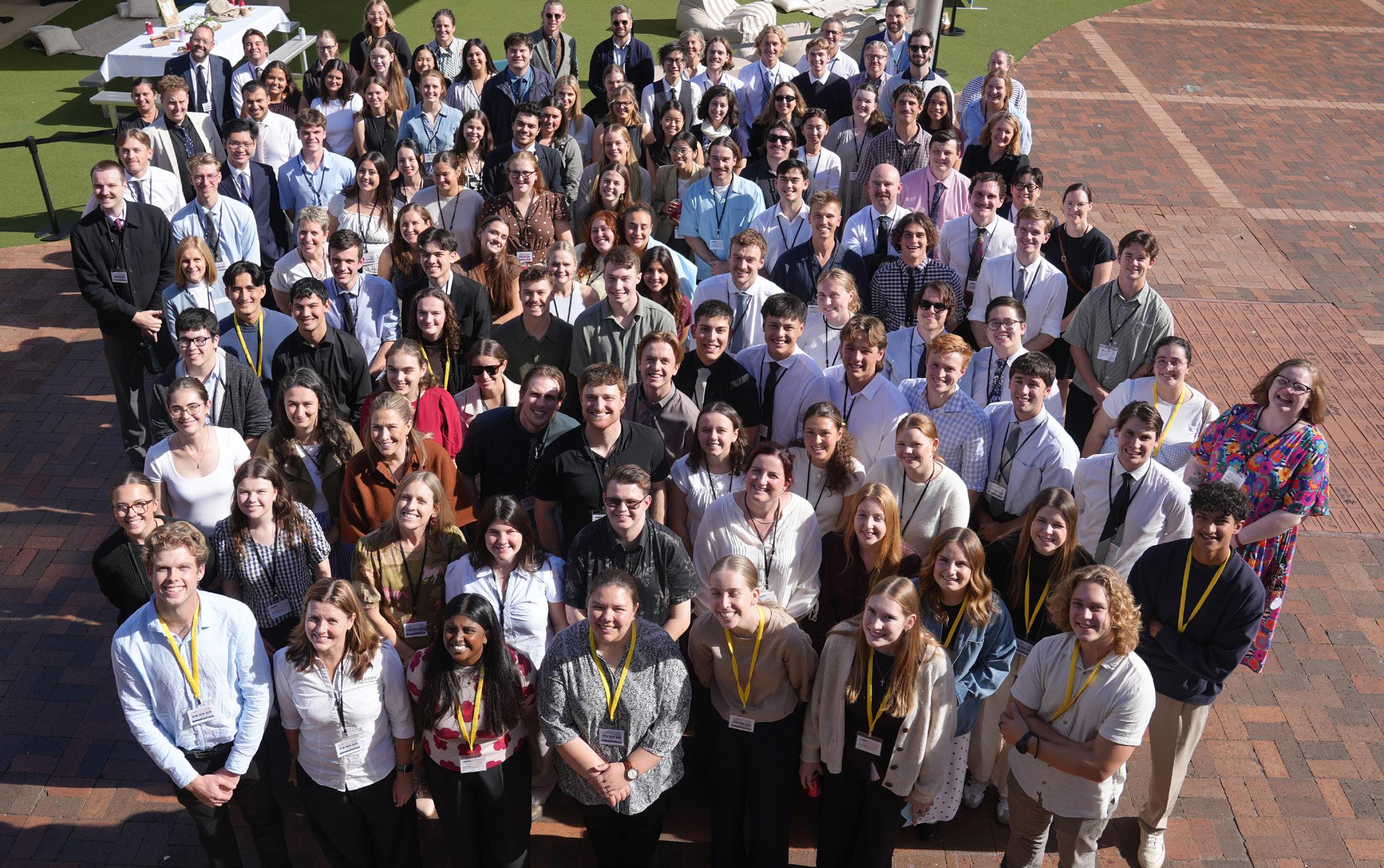
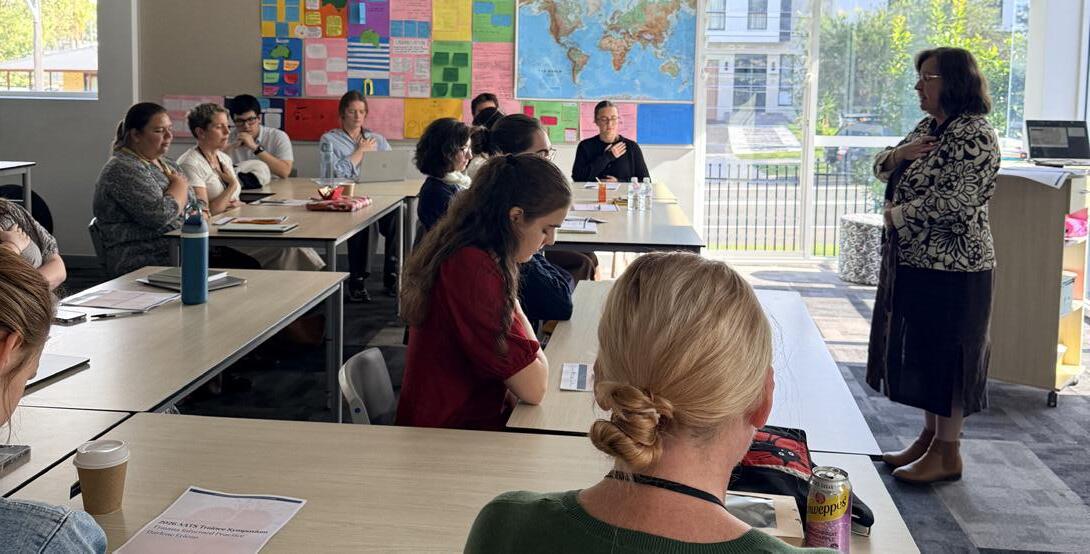
The AATS Trainee Symposium brought trainees, mentors and graduates from across our nationwide network into a day shaped by the theme of The Way of Love. Dave Benson, Executive Director of Australian Christian Schools, opened with a provocation that stayed with me. Your calling to teach is secondary to being an image bearer of God. Before you are a teacher, you are God’s child. That is your first identity and nothing that happens in a classroom can take it from you.
We all know the moments that make that truth hard to hold. The lesson that fell completely flat. The day you drove home wondering whether you are cut out for this at all. The student you could not reach, no matter how many times you tried. Whether you are a trainee finding your footing, a mentor carrying a full teaching load while investing in someone else’s growth, or a teacher who has been in the classroom for twenty years, those moments find all of us. Dave’s invitation was to let our identity be settled somewhere more secure than our best lesson or our worst day. You are loved before you are capable. That is the foundation we want every person in our community to stand on.
Sam Burrows, Director of Professional Learning at Christian Education National, then helped us pay closer attention to the students in our classrooms and the world they are living in, a world, he observed, that is
beginning to buckle under the weight of postmodernity and reach for something more than itself. Christian schools, he suggested, are in a more significant moment than we sometimes realise.
“...let our identity be settled somewhere more secure than our best lesson or our worst day. You are loved before you are capable. That is the foundation we want every person in our community to stand on.”
The following day brought a different room and a different conversation. The AATS Leadership Symposium gathered directors, coordinators and tertiary partners for an honest conversation grounded in 1 Corinthians 12. The question on the table was not simply how we build a better system. It was how we love each other across the layers of a complex body. We did not arrive at easy answers. But we arrived at something better: a shared willingness to be openhanded. To flourish together. To bless one another across every layer of this work.
What struck me across both days was how naturally the theme of Providence ran through everything. Nobody planned it that way. But as people named the mentors who had seen something in them before they saw it themselves, and as leaders sat honestly with how hard it is to love across institutional distance, the same quiet recognition kept surfacing. God was at work in this before any of us arrived.
That is what Providence means. Not that every thread has been neat. But that the hands weaving this are not only ours. Paul writes in Romans 8:28 that God works through all things. Viewed from the back, a tapestry looks knotted. God sees the finished design.
As we turn toward Term 3, our trainees will return to their classrooms, and our mentors will continue the quiet, faithful work of formation beside them. Our Teaching School
Coordinators will be visiting, observing and pressing in. Every part of this body is needed. Every part is placed here intentionally. Not just useful. Not just present. Placed, by God, just as he wanted it to be. This is the village at work.
In these pages you will find stories of that village in motion. I pray that as you read, you see what I keep seeing. The hands weaving this were never only ours.


SAMANTHA VAN DE
MORTEL
St Philip’s Executive Principal Tertiary Education
A new partnership with SCEA is strengthening the Teaching School model in Western Australia, with a shared vision to raise up the next generation of Christian educators.
We have been blessed with a wonderful start to 2026 at the St Philip’s Teaching School, and already I am seeing the outworking of our theme, Providence, in ways that bring both encouragement and gratitude for God’s faithfulness. There are seasons when God’s leading becomes especially clear, when vision aligns, relationships deepen, and doors open at just the right time. Our partnership with the CHARIS Teacher Training School (SCEA) in Western Australia is a clear expression of that reality.
This partnership marks an exciting new chapter, as SCEA prepares to launch the CHARIS Teacher Training School in 2027, based on the St Philip’s Teaching School model established in 2018. This triangulated model of Christian teacher formation brings together a Christian tertiary provider, immersive schoolbased experience, and the Teaching School as a third space within a trainee’s journey. To see this approach embraced and contextualised across SCEA schools is deeply encouraging.
“There are seasons when God’s leading becomes especially clear, when vision aligns, relationships deepen, and doors open at just the right time.”
At the heart of this initiative is a shared vision to raise up a new generation of Christian teachers who are equipped to teach, confident and grounded in biblical truth. Through
CHARIS, trainee teachers will be embedded within Christian school communities, supported by trained mentors and immersed in the life of the school as they learn what it means to teach Christianly. This integration of theory and practice creates a powerful formation experience preparing graduates not only for teaching, but for a life of meaningful Gospel-centred impact.
At the St Philip’s Teaching School, our commitment is to continue supporting the growth of Teaching Schools across Australia, establishing a sustainable pipeline of Christian educators to serve schools and communities, and enabling schools to become Teaching Schools. In Western Australia, this vision has already been taking shape through The King’s College, which established a partnership with the St Philip’s Teaching School over two years ago. Under the leadership of Teaching School Coordinator Teresa Cheney and Principal Laurelle Cotto, this work has been faithfully led, laying important foundations for the growth and expansion of the Teaching School model in Perth. We are grateful for this ongoing contribution, which reflects commitment and a shared sense of purpose in strengthening Christian teacher formation. In a time of increasing need, our partnership with CHARIS represents this vision in action across
Western Australia, grounded in collaboration and a shared calling to Christian education.
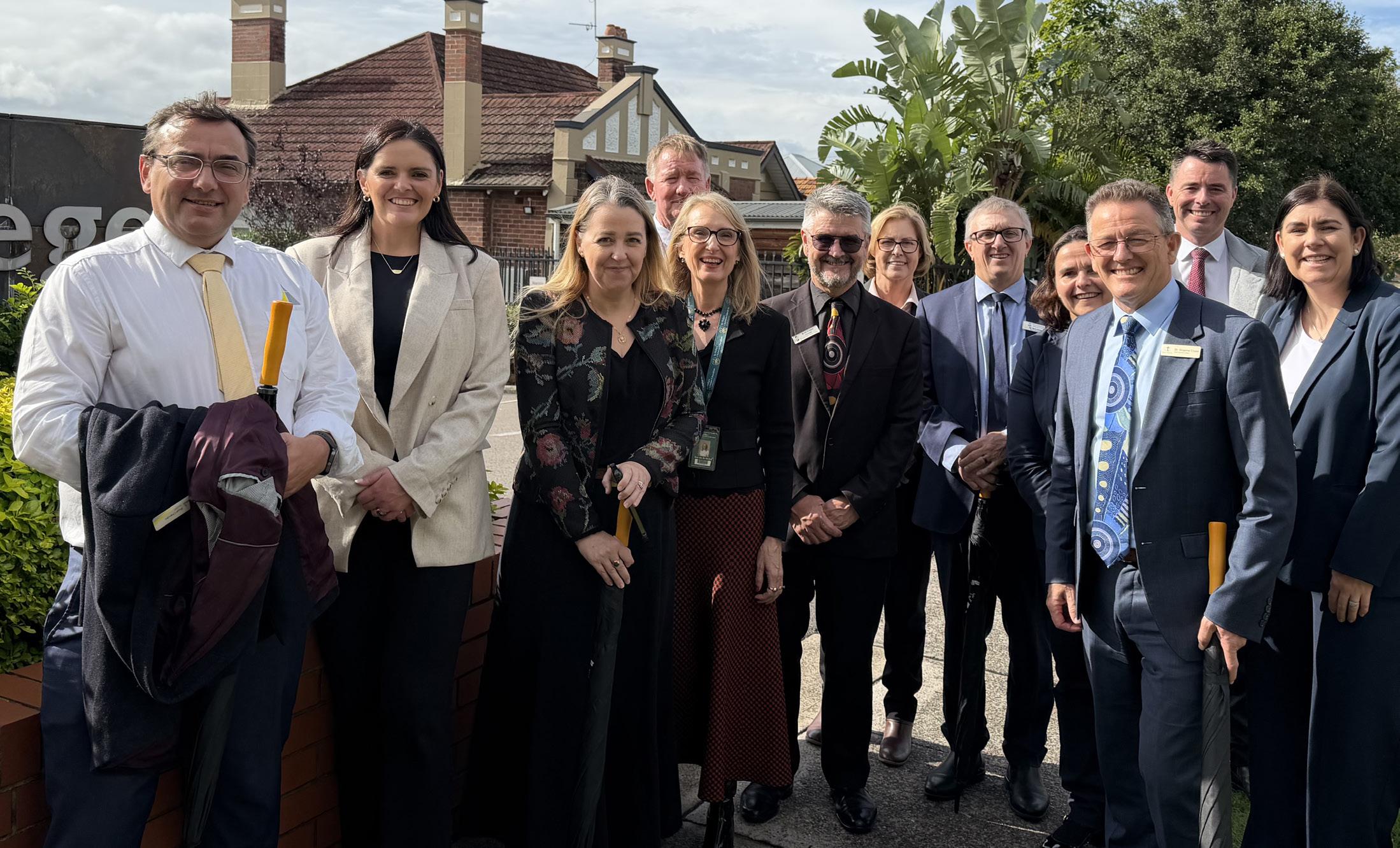
We were delighted to host Melissa Meloni, Head of the CHARIS Teacher Training School, and her team earlier this year, spending time together exploring the vision and practical outworking of the model. More recently, it was a joy to welcome SCEA CEO Dr Graeme Cross and a team of senior leaders as they continue their preparation for the 2027 launch. These visits have been significant not only for planning and alignment, but also for strengthening the partnership.
There is a strong sense of shared purpose underpinning this work. As Christian school communities work together with mutual trust, we are not simply implementing a program; we are building something that has the potential to shape the future of Christian education in a meaningful and lasting way. At the St Philip’s Teaching School, we are grateful to contribute to the ongoing development of the Teaching School model, entrusted by God to Christian education, and to experience a strong sense of shared purpose and partnership marked by a spirit of generosity and unity.
This partnership reflects a broader truth; the call to develop and support Christian educators is a collective endeavour. By working together, we are stronger and better positioned to respond with clarity and effectiveness. Partnerships ensure schools are resourced with teachers who faithfully integrate faith and learning while maintaining excellence in their practice.
As I reflect on this season, I am reminded of God’s faithfulness. The alignment of vision, the strengthening of relationships, and the timing of each step speak to His provision. While much preparation remains ahead of 2027, there is a deep confidence in what lies ahead. It is a privilege to walk this journey with the CHARIS Teacher Training School. Together, building on the faithful work already taking place across Western Australia, we look forward to seeing this vision take shape and to the many lives, classrooms, and communities that will be impacted for Jesus in the years ahead.
“We are building something that has the potential to shape the future of Christian education in a meaningful and lasting way.”

MATT STACKHOUSE
St Philip’s Christian Education Foundation, Lead Specialist Spiritual Formation
There is a temptation in any school, especially one shaped by faith, to treat its guiding words as something to agree with rather than something to live from. Our Theology Statement (OTS) seeks to resist that temptation. It is not merely a document to be understood, but a life to be entered.
At its heart, the OTS reminds us that truth is not first an idea, but a person. Christ does not hand us a system and step aside. He draws near, speaks, forms, interrupts, and restores. So the purpose of the OTS is not to produce uniformity of language, but to cultivate a shared attentiveness to Him. It gives us a common centre so that, in the complexity of classrooms, staffrooms, and leadership decisions, we are not left guessing what matters most.
Importantly, this clarity did not emerge from a small group in isolation. The OTS began as a whole-school act of discernment. Kara Martin, co-author of Keeping Faith, led all SPCC staff through a workshop where hundreds of staff contributed, highlighting the topics they believed mattered most for a faithful expression of Christian education in our context. This breadth of contribution is not a footnote, it is foundational. The statement carries the weight of shared ownership because it was born from shared listening.
From there a representative team, drawn from across campuses, took on the work of shaping what had been gathered. We met, deliberated, drafted, refined, and edited. What emerged was not a hurried summary, but a carefully discerned framework of seven interconnected themes: a theology of Christian education, Kingdom-building partnerships, whole-of-life formation, belonging, care and serving others, leadership, and purpose and vocation. Each theme reflects both the richness of the original contributions and the discipline of sustained theological reflection.
This is where the process itself becomes quietly powerful. The OTS is not implemented through force or urgency, but through formation. It asks us to slow down enough to notice what we love, what we assume, and what we are becoming. In this sense, it behaves less like a policy and more like a trellis. It does not produce fruit directly, but it supports the kind of growth that makes fruit possible.
There is a kind of relief in that. We are not being asked to perform theology, but to be shaped by it. To let it question us before we use it to answer others. To allow it to move from paper into posture. This takes time. It takes conversation. It takes the humility to admit that what we say we believe and how we actually live are not always aligned.
And yet, this is precisely where grace meets us. Not at the point of polished agreement, but in the honest work of becoming. The OTS gives us language, but more importantly, it gives us direction. It gently reorients us toward a vision of education that is deeply human and deeply divine, where students are not problems to solve, but people to be formed, and where staff are not simply deliverers of content, but participants in God’s ongoing work.
So we return to it, again and again. Not to tick it off, but to be drawn in. To let it shape our instincts, our decisions, and our imagination. Because in the end, the goal is not that we would master the statement. It is that, together, we would be mastered by the truth it points to.

It gently reorients us toward a vision of education that is deeply human and deeply divine, where students are not problems to solve, but people to be formed, and where staff are not simply deliverers of content, but participants in God’s ongoing work.

DARLENE ERIEAU
St Philip’s Teaching School, Lead Specialist Professional Learning Development
There is something taking shape in the ACT.
It is not fully formed yet, but it is clear. It is being built through relationships, between schools, between mentors, and with trainees who are choosing to stay and become part of these communities.
Spending time across Trinity Christian School and Emmaus Christian School, what became evident is that this is no longer contained within individual schools. It is becoming shared.
At Trinity, the partnership with the Teaching School sits within the everyday work of the school. It is part of how trainees are supported and how teachers continue to grow.
Karina Luke, the Teaching School Coordinator at Trinity Christian School, reflected on the partnership across the ACT, with her insights shaping the following:
“This partnership has been highly beneficial for all involved… It has been wonderful to see trainees supported through the various aspects of the program, as well as having the ability… to connect… for guidance, questions, and ongoing support.”
What this shows is the role the partnership plays in providing ongoing access: to support, to thinking, and to people.
There is also clarity about what underpins the work.
“It is particularly valuable knowing that the program is grounded on the cornerstone of Christ and seeing how Christian theology can inform, strengthen, and enrich our teaching practice.”
This foundation shapes how teaching is understood. It moves beyond practice alone and into purpose.
FROM PLACEMENT TO PRACTICE
This is where the impact becomes visible.
At Trinity, their first SPTS graduate has moved into a teaching role. What stands out is not just capability, but readiness.
“She demonstrates confidence in both her teaching practice and her interactions with the broader community.”
That confidence has been built over time.
“Being embedded within the community throughout her training has helped her feel connected from the outset…”
This changes the starting point. It means the move into teaching is not a beginning, but a continuation.
“…she is now enthusiastic about being an active and contributing member of our community.”
This is the shift. Graduates are not entering schools as new additions. They are already part of the community they are stepping into.
WHAT IS BEGINNING TO FORM
Across Trinity and Emmaus, there are early signs of something more collective.
Mentors are connecting across schools. This matters because the work of mentoring is no longer isolated within individual contexts. It is being shared, strengthened, and made consistent.
Trainees are also experiencing this differently. Through symposiums and shared events, they are learning alongside one another and seeing their journey as connected.
This extends into practice. Trainees are completing professional experiences in one another’s schools. This broadens their understanding, but it also strengthens their connection to the region.
At the same time, schools are beginning to contribute back into the program.
Staff at Trinity are delivering Insight sessions, sharing their expertise through digital presentations. This shifts the role of schools from participants to contributors.
Trinity is also piloting the Mentor Formation PD for the Teaching School.
Taken together, these are small developments, but they point to something more. This partnership is not one-directional. It gives and receives. This is what allows it to grow.
WHERE THIS IS HEADING
There is a clear sense of direction emerging.
“I am excited to see the program continue to expand in our area.”
“As it becomes increasingly challenging to recruit exclusively Christian staff, it is important that we continue investing in emerging Christian teachers…”
Part of that growth is connection.
“We are focussing on fostering stronger connections with our other local schools and create opportunities for our trainees to come together for events, insight, and school exchanges.”
This is how a hub begins. Not through structure first, but through relationships that are built consistently over time.
There is also a clear understanding of the need.
“As it becomes increasingly challenging to recruit exclusively Christian staff, it is important that we continue investing in emerging Christian teachers…”
This work responds to that need directly.
“…equipping them with the skills and support needed to thrive in this profession.”
It does not just respond—it builds capacity.
WHAT THIS SHOWS
This is not simply a partnership being implemented. It is a community learning how to grow its own teachers. It is schools working with one another, not just alongside each other. It is trainees becoming teachers who are already connected, and choosing to stay.
It is early. But it is steady. And that is what makes it significant.
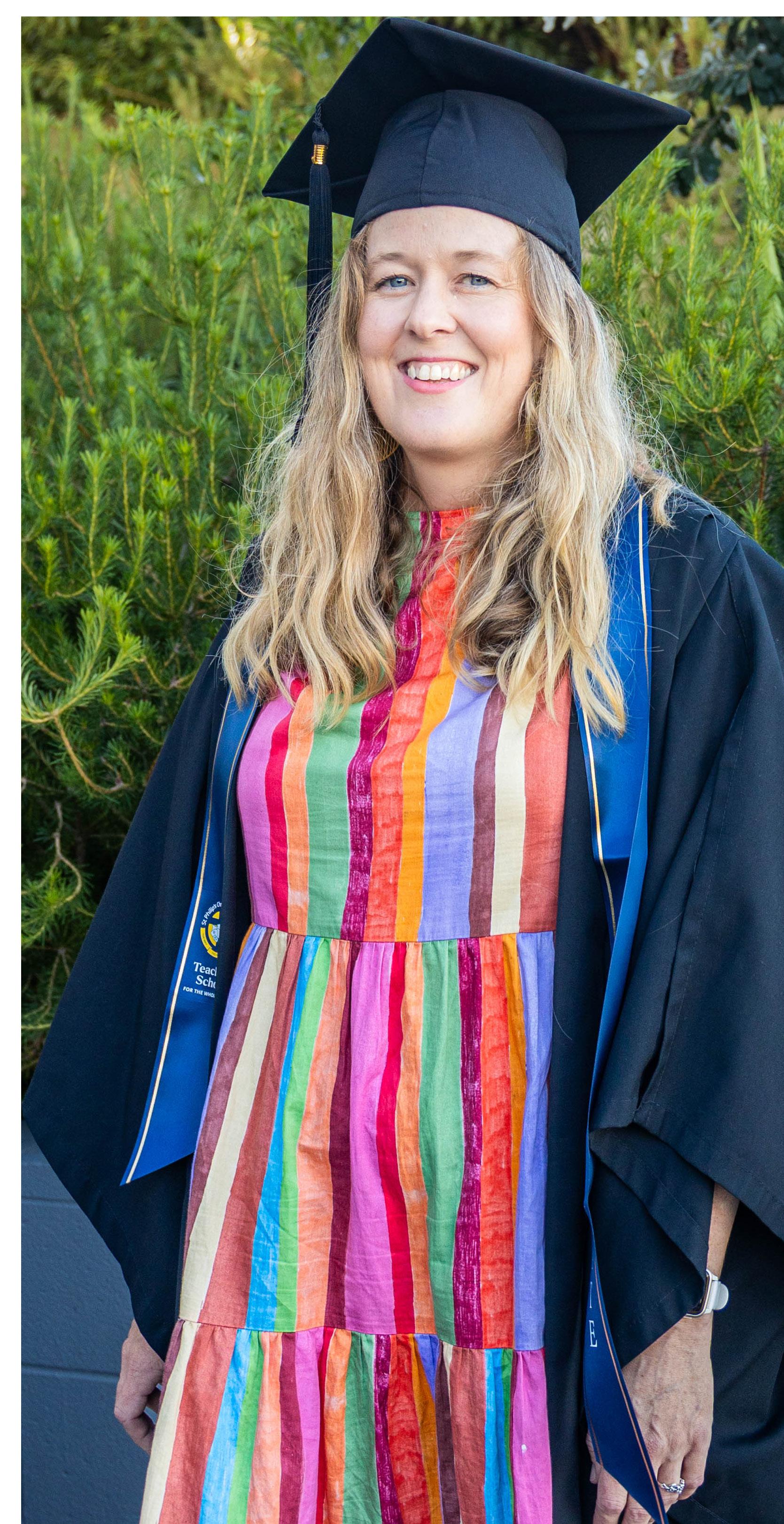
TRINITY CHRISTIAN SCHOOL’S FIRST SPTS GRADUATE, ANNIKA DE HOOG

LIZ HUTCHISON
St Philip’s Christian Education Foundation, Lead Specialist - Higher Education Development and Research
After observations, it can be tempting for mentors to move quickly to advice, especially when time is limited and improvement feels urgent.
Several years ago, when I became an in-school educational coach, I was introduced to and trained in cognitive coaching, a “nonjudgemental, developmental, reflective model” that builds dispositions and selfdirectedness in others (Costa & Garmston, 2016, p. 4). The Thinking Collaborative’s (2025) foundational and advanced courses
were among the most impactful professional learning experiences I have undertaken, significantly shaping the way I support educators by mediating their thinking.
When Teaching School mentors maximise coachable moments, they are well positioned to nurture trainee self-efficacy. Drawing on cognitive coaching principles, mentors can shift conversations from being directive to mediative by attending to three key factors: (1) posture, (2) proficiency, and (3) processes.
POSTURE
As mentors build rapport while supporting and appropriately challenging trainees over time, they draw on three support functions to nurture development: coaching, collaborating, and consulting. Coaching mediates thinking rather than making value judgements; collaborating involves mentor and trainee working together; and consulting is advice-giving. Skilful mentoring lies in selecting the support function that best meets the trainee’s in-the-moment needs. However, if the goal is to empower trainee self-directedness, defaulting to the coaching stance is essential, honouring the trainee as an agentic image bearer.
When coaching, mentors recognise that while lesson observations provide useful reference data, trainee thinking remains unknown until it is expressed. Conversations that intentionally unpack trainee thinking become invitational moments or
spaces of reflection that can catalyse growth. Being fully present and attentive to what trainees say, what they do not say, and how they communicate, such as through pace, tone, hesitations, and emotional cues, guides mentor coaching moves and deepens understanding.
PROFICIENCY
Mentor coaching proficiency is demonstrated through intentional moves such as posing mediative questions, holding purposeful pauses, and paraphrasing. Mediative questions invite deeper thinking; they are purposefully framed and may attend to the classroom environment or the trainee’s internal thought processes. Pausing opens space for reflection, communicates respect, allows processing time, and increases cognitive engagement. Paraphrasing acknowledges what the trainee may be thinking and feeling; as Costa and Garmston note, “a well-crafted paraphrase communicates ‘I am trying to understand you and therefore I value what you have to say’ ” (p. 48).
Mentors can continually refine their coaching proficiency, increasing the level of support that leads to meaningful growth. Because lasting behavioural change follows shifts in thought and perception, mediating trainee thinking supports deeper formation rather than surface compliance. Reflection often generates “aha” moments that enable behavioural transformation. Alongside developing coaching skills, mentors can also draw on consistent well-designed coaching processes.
PROCESSES
When coaching with intention, mentors can structure conversations before and after an observation to support trainee reflection
and agency. A pre-observation conversation establishes the trainee’s learning focus and clarifies what data will be collected. This conversation guides the mentor’s observation, shaping data collection, written descriptions, and mediative questions.
During the observation, mentors record descriptive, non-evaluative data aligned to the agreed focus, noting key moments and possible prompts for later reflection. This data becomes a third point, a neutral anchor that helps “reference information and depersonalize ideas” during the post-observation conversation (Thinking Collaborative, 2017). Mediative questions, though prepared in the moment, are used in the post-conversation. Recording data in this way allows the lesson to unfold naturally while capturing learnable moments.
In the post-observation conversation, mentors listen for readiness, rather than perfection. Drawing on coaching skills, they invite trainee reflection, introduce descriptive data as a third point, and pose mediative questions that support the trainee in exploring their thinking, emotions, and actions, as well as what may have been occurring in the classroom. Often, the conversation begins with one carefully

crafted question anchored in the trainee’s learning focus, supporting trainee agency and gradually releasing dependence on the mentor. In this way, the mentor’s authority is exercised not through control or correction, but through stewardship; this creates space for the trainee to discern next steps with confidence.
When observation becomes an invitation rather than an evaluation, mentoring participates in the slow, faithful work of forming reflective practitioners who can think, decide, and grow with integrity.
GUIDING
How does my mentoring posture reflect what I believe about how God forms people over time?
Am I aiming for improved teaching behaviours, or for renewed professional judgement that sustains faithful practice under pressure?
How am I stewarding my influence so that ownership increasingly rests with the trainee rather than with me?
Costa, A. L. & Garmston, R. L. (2016). Cognitive coaching: Developing self-directed leaders and learners. Rowman & Littlefield.
Thinking Collaborative. (2017, August 7). Using a third point in a calibrating conversation. Thinking Collaborative. https://www. thinkingcollaborative.com/ stj/using-a-third-point-in-acalibrating-conversation
Thinking Collaborative. (2025). Seminars & Services.
Thinking Collaborative: Maximizing Capacity in Individuals and Organizations. https://www. thinkingcollaborative.com/ seminars-services


St
Philip’s Teaching School, Lead Specialist Professional Learning Development
WHY INSIGHT NEEDED REVISION
Research continues to highlight consistent challenges for early career teachers: the gap between theory and practice, classroom management, inclusive education, and navigating the complexity of real classrooms.
Alongside this, trainee feedback identified areas needing greater development:
• Biblical literacy and worldview integration
• Student engagement strategies
• Inclusive education approaches
• Responding to contemporary challenges in Christian education
• Practical classroom management tools and strategies
are practising, and who they are becoming as educators.
OUR VISION: FORMING AUTHENTICALLY CHRISTIAN TEACHERS
At the centre of Insight is a commitment to forming educators who understand their identity as God’s children and who seek to see every student as image bearers of Him.
Through intentional discipleship, a Christ-centred community, and the integration of theory and practice, trainees are supported to grow into teachers who serve with clarity, purpose, and skill.
In practice, this includes:
• Planning and teaching grounded in a Christ-centred understanding of each learner
• Mentoring relationships that support reflection, accountability, and growth
Insight has been reshaped through both research into Initial Teacher Education and the lived experience of our trainees. Together, these have highlighted the areas where greater clarity, structure, and support are needed.
What has emerged is a deliberately structured program designed to build connection, strengthen practice, deepen understanding, and grow confident educators. Insight is not simply about delivering content. It is about formation: professional, relational, and spiritual.
While these areas are not new, they require more intentional structure and support. Insight has therefore been reshaped to respond clearly to these needs, not just by informing, but by forming teachers for the reality of the classroom.
This formation matters. The way teachers understand their role and see their students shapes the culture of their classrooms, and ultimately the lives of those they teach.
WHAT INSIGHT IS NOW
Insight is now a dedicated time and space, shaped by research and trainee voice, where learning is intentionally built and applied.
It ensures a clear connection between what trainees are learning, what they
• Opportunities to practise and refine teaching before stepping fully into the classroom
HOW INSIGHT WORKS
Insight is built around four connected components that together create a clear line from learning to practice.
A consistent space for trainees to reflect, be known, and be supported within a Christian community. This is where identity is nurtured and formation is sustained.
One trainee reflected on the significance of this space:
“Each man shares about his week… Together you laugh, you sigh, you mourn. A brother carries the hopes of another. Closing in prayer … you praise His faithfulness.”
Offers authentic Christian community where trainees are known, supported, and spiritually strengthened in their teaching journey.
Creates growth through strategy learning, program updates, and intentional reflection that helps trainees track and own their development.
Focused, practical sessions led by experienced teachers from across the Teaching School network. These are designed to be clear, relevant, and immediately useful.
Examples include:
• Managing Transitions and Routines
• Behaviour as Curriculum
• Silent Signals
• Explaining Assessment
Through these sessions, clarity begins to shift understanding. One trainee reflected after a session on routines:
“Classroom management is about the impact on student learning.”
Another noted the impact of precision in instruction:
“When I said, ‘Dry artworks on the left, wet artworks on the right,’ the flow in the room changed immediately. There was no confusion.”
Provides the theological, pedagogical, and professional foundations that form the mind and practice of a Christian educator.
Workshops that move learning into practice. Trainees rehearse, apply, and reflect in a supported environment.
Examples include:
• Teaching a classroom routine: Explain, Model, Practise, Reinforce
• Moving from outcomes to lesson intentions: Examination, Application, Reflection
These opportunities create space to try, adjust, and understand what effective practice looks like before it is required in real time.
Structured conversations between mentor and trainee connect Insight directly to the classroom. These are intentional and grounded in real situations.
Guides mentors in sharing the everyday habits, routines, and structures of teaching life, creating space for intentional conversation, modelling, and the gradual handover of practice to the trainee.
Examples include:
• Observing and discussing complex parent interactions from initial contact through to resolution
• Practising responses to real parent emails, with a focus on communication and child advocacy
• Co-creating report comments that reflect progress while encouraging growth
• Practising a routine developed in Insight and receiving targeted mentor feedback
One trainee reflected:
“Being a trainee who contributes requires initiative and humility… enabling me to grow professionally and understand how collaboration strengthens practice.”
Another shared:
“Watching my mentor teach, trying new ways, reflecting, and refining… built my confidence and enabled me to take the next steps.”
Together, these elements ensure there is a clear line between what is taught, what is practised, and what is implemented in the classroom. These reflections are not incidental, they point to a growing clarity in how trainees understand their role and their impact as teachers.
THE THIRD SPACE
Insight functions as a Third Space: situated between university learning and classroom practice.
It is here that knowledge is tested, practice is shaped, and identity is formed. Rather than existing as separate experiences, learning, teaching, and faith are brought together in a way that is deliberate and connected.
WHAT THIS HAS LOOKED LIKE IN PRACTICE
Across the year, Insight has been structured to build deliberately over time.
Term 1 has focused on foundationsdeveloping clear routines, strengthening instruction, and building an understanding of how teaching practice directly shapes student learning.
Term 2 has built on this, increasing complexity and responsibility. Trainees are now applying these foundations in real classrooms, navigating behaviour, diversity, communication, and the wider demands of teaching with growing confidence.
The hope of Insight is that these trainees will not only enter classrooms prepared but formed. Teachers who act with clarity, reflect with purpose, and see their students with consistency and care. It is this kind of teacher who shapes not just learning, but lives.
WHAT HAS CHANGED
The revisioning of Insight has introduced several key changes:
• Presentations aligned to each stage of university study
• Focused one-hour sessions to support clarity and engagement
• Workshops that prioritise application and practice
• An accelerated pathway for full-time Master of Teaching students
• Bridge conversations aligned through Mosaic to strengthen mentoring
• Termly training for Connect Leaders
These changes ensure Insight is structured, practical, and intentionally formative.
WHAT WE ARE AIMING FOR Insight is designed so that trainees:
BE KNOWN
Trainees are known within a village that walks with them in life and practise.
KNOW
Key teaching practices and how they connect to a Christian understanding of education
DO
Plan, teach, and reflect with increasing confidence through practice and feedback
BECOME
Christ-centred educators who are prepared, thoughtful, and committed to the students they serve
LOOKING AHEAD
This revisioning is ongoing. It will continue to be shaped by feedback, experience, and the needs of those entering the profession.
The hope of Insight is that these trainees will not only enter classrooms prepared but formed. Teachers who act with clarity, reflect with purpose, and see their students with consistency and care. It is this kind of teacher who shapes not just learning, but lives.
Thank you to the trainees, mentors, and leaders whose insight has contributed to this work. The strength of Insight lies in this shared commitment to forming teachers who will, in turn, shape the lives of their students.
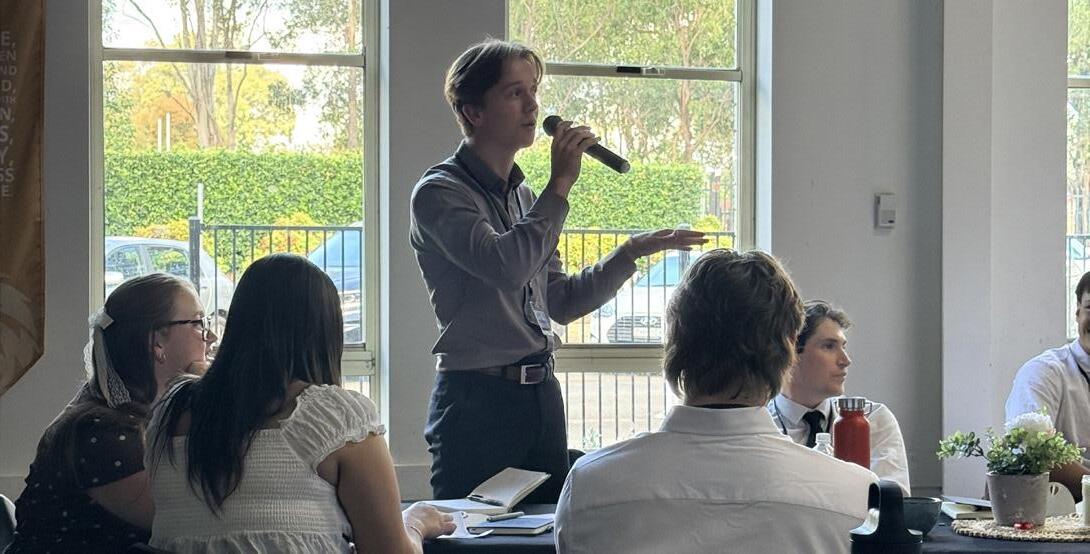
Scribbling pens rushed over notes. Palm cards littered the floor. The air was thinly strung – the tension was palpable. Students had come to Waratah from the corners of the Earth (that is, Port Stephens, Gosford, and Cessnock) to have their hand at the perennial art of debate. I, among other Teaching School trainees, found myself preparing to adjudicate the imminent debates.
To be transparent with you, I found the SPCC Debating Day a total joy in 2 ways. Firstly, as a Teaching School Trainee among my peers. It was a delight to travel to Waratah and encounter several of my companions from within the Teaching School, not only with the familiar collegiality to which we are accustomed, but in a professional setting. No longer were we studying and learning together; we were working together. This speaks to one of the distinctive traits of the Teaching School system. As Trainees, we get to engage with our practice with our mentors, yes, but also with one another, as experienced in our time at the debating day.
Second, as a Trainee as an individual. Having the opportunity to find some more of my own voice as a teacher in such a dynamic setting proved to provide me with two key opportunities. First, I had the joy of developing rapport with some of my own students, who had won their debates. It was wonderful to be able to celebrate their
victories with them and encourage reflection for their capacity for growth. Second, I had the occasion to adjudicate a debate. The debate I adjudicated was quite eventful, including the fact that I had never adjudicated before, that students had gone to the wrong room, and that there was a student breaking down into tears halfway through his speech. Truly, an excellent moment for me to deeply appreciate the flexibility demanded of a teacher; things often don’t go according to plan, and, by the grace of God, we still foster growth in our students.
Ultimately, the SPCC Debating Day was more than just a competition – it was a microcosm of the teaching profession itself. It served as a vivid reminder that while our lesson plans and similar structures provide a necessary framework, the heart of education
“The heart of education lies in the unscripted, genuine moments”

JOEL EDWARDS St Philip’s Teaching School, Trainee
lies in the unscripted, genuine moments—the shared celebration after a win, the quiet encouragement offered to a struggling student, and the seamless collaboration with colleagues on the move.
As I move forward in my training, I carry with me a renewed confidence in my own voice and a deepened appreciation for the beautiful, chaotic, and transformative nature of the classroom.
CARLIE BOYLE
St Philip’s Director of Teaching School
Every year, a new group of trainees steps into the Teaching School. They are excited and nervous, all at the same time. They are watching mentors, taking notes, teaching their first lessons. Then, one day, they graduate. They get classrooms of their own. And they are ready.
What happens next is the part we do not always get to see.
For this edition, we tracked down one graduate from each of our graduating cohorts and asked them the same six questions. The answers surprised us. They moved us. And more than once, they sounded like something we needed to hear too.
They are not just surviving out there. They are flourishing.
Here is where they are now.
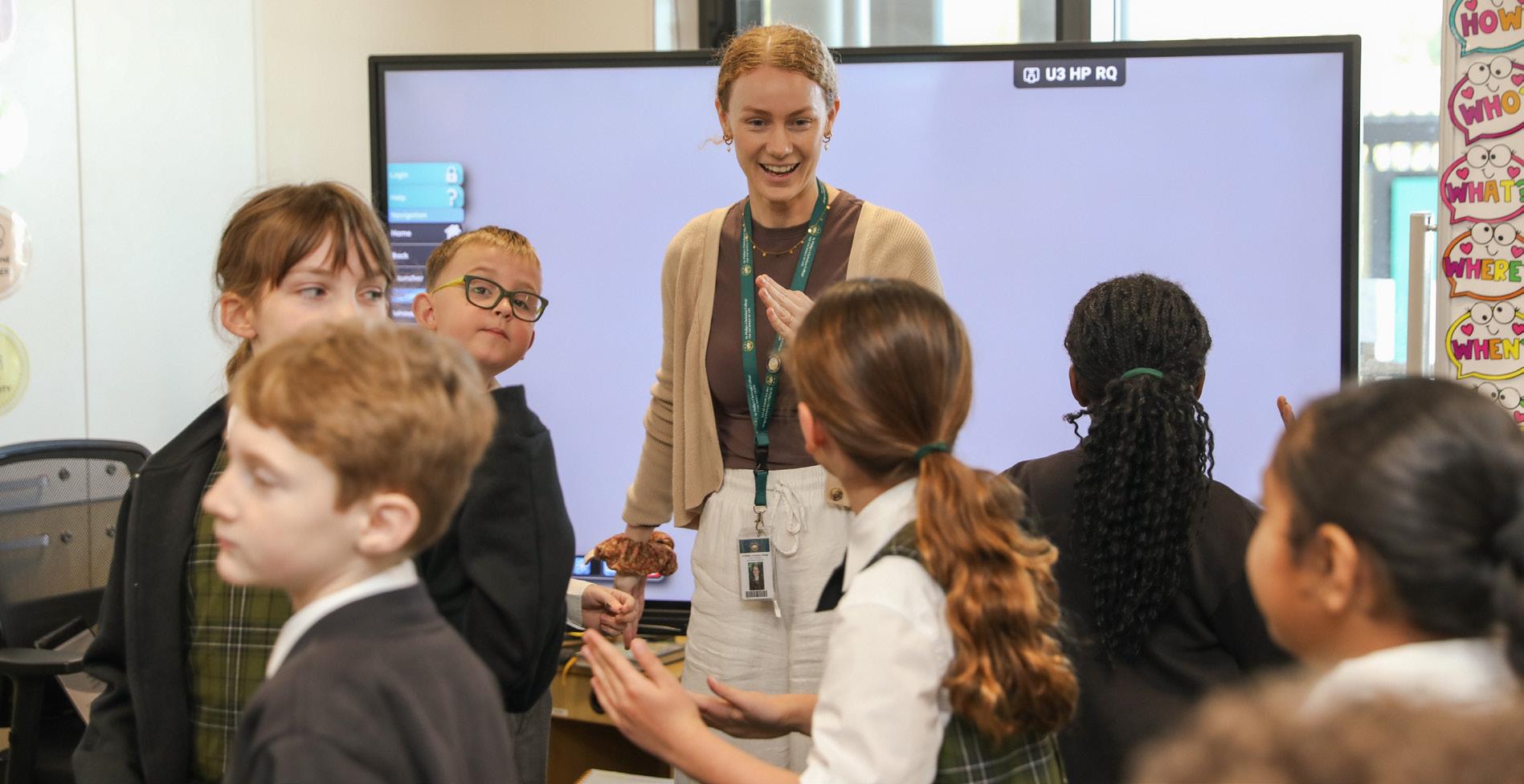

Caleb’s turning point came in a Year 9 History class. He had spent weeks trying to crack this group open. They were disengaged. Nothing was working. Then, one lesson, something shifted. He was teaching propaganda from World War One.
“I don’t even remember the activity, but I remember watching each group genuinely absorbed. In that moment, I knew this was the career I wanted.”
His first year also brought a student who taught him something about patience. A Year 1 student, during a handwriting lesson. Halfway through a letter, this student would simply stand up, wander the room with a blank expression, come back, and start a new letter. The unfinished one sat there. It kept happening. Each time, Caleb noticed himself grow a little calmer and more patient.
He came to believe God was using those moments to develop his patience in ways that no lesson plan could have produced.
One thing SPTS gave him that surprised him: the interpersonal rhythm of a school. Early in the term, the staffroom hums. Students take risks. Then assessments arrive and everything narrows. Students contract. Colleagues go quiet. Reading that rhythm, he says, is a skill entirely its own.
The advice that stayed with him? Routines are everything. Lining up. Entering quietly. Starting with reading. A predictable structure gives students a sense of safety, and many rely on it even when they do not realise it.
Right now, Caleb is teaching Year 11 Extension English for the first time and loving it. He is also building programs and resources for Year 12, taking on the additional responsibility that comes with that season of a teaching career.
His word for new graduates: stop chasing fun. Simple and effective is also good teaching. The effort you pour into one lesson needs to earn its impact. Balance matters more than novelty.
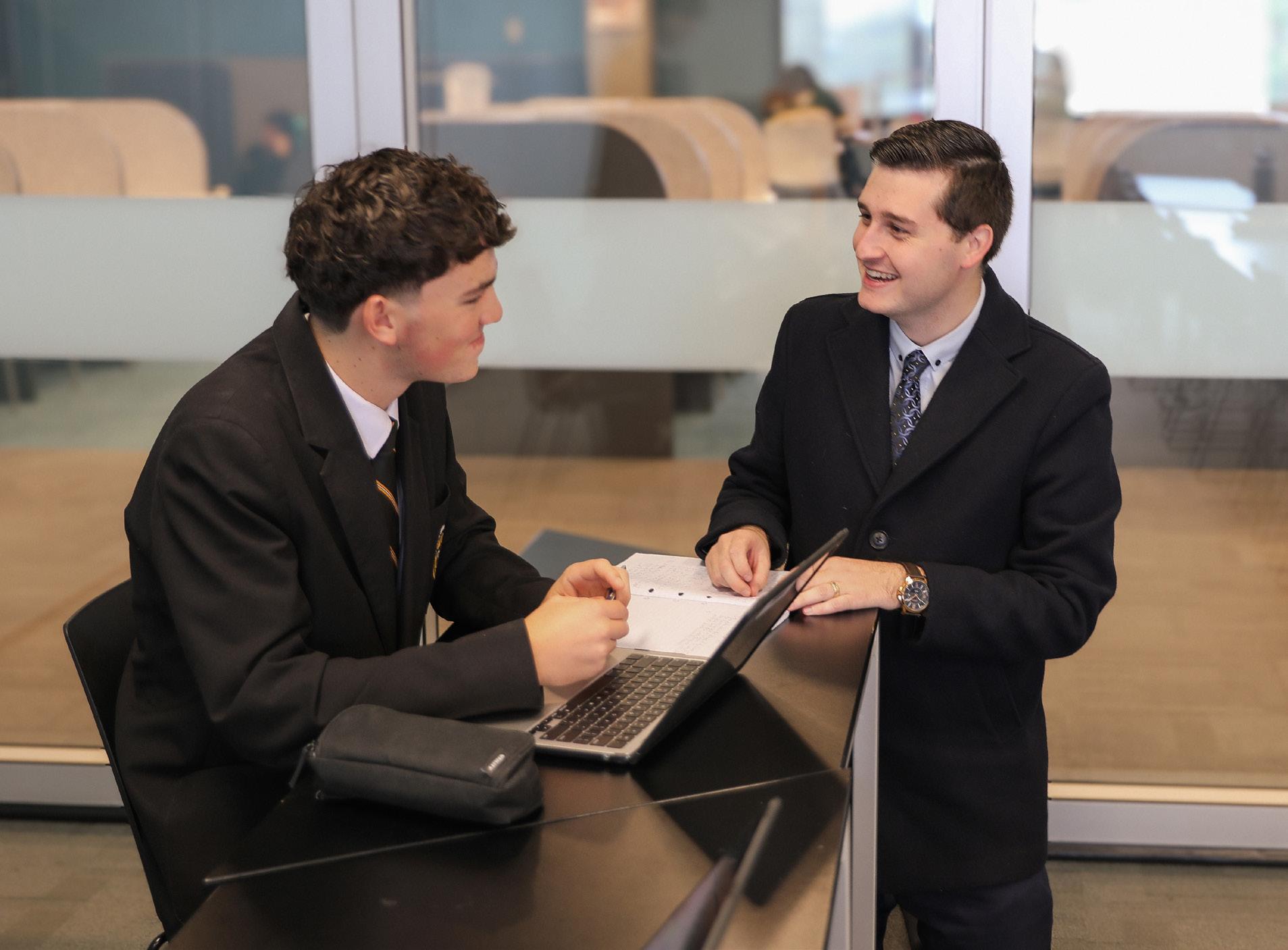

There is a particular kind of moment that lives in every teacher’s memory. The moment the doubt lifts. For Olivia, it came during an observation visit. Samantha sat in on her lesson, and in the debrief afterward with her mentor, said something that Olivia remembers well:
“I can just see that you have found your teaching voice.”
That was the moment. Not a perfect lesson. Not a standing ovation. Just
someone with wisdom who could see what Olivia was becoming.
In her first year, a student reshaped the way Olivia understood her own anxious tendencies. This student was terrified. Of camp. Of crowds. Of new things. She sat with Olivia on the bus in tears. By the end of camp, she was glowing. Her mum found Olivia at presentation night and said she had gotten her daughter through the year.
It reframed everything. What Olivia had once seen as a weakness turned out to be the very thing God used to reach a child who needed someone who understood.
The lesson SPTS gave her that no textbook could? Every day will throw new things at you. And that is okay.
Samantha used to speak about school having rhythms. Learn the rhythm, and the term stops feeling like an overwhelming wave. Olivia still uses that. She breaks the term into sections and takes them as they come. Laptop away in the holidays. Always.
Now in her fifth year, Olivia teaches Year 6. She loves the age. Students at that stage are forming their identities, working out who they are and what they believe. She also runs the worship team, sings at staff chapel and is mentoring her own trainee this year.
What does she wish someone had told her in year one? Her final mentor did tell her, as it happens. The advice was that the first year would feel like she was not going to make it, and then she would, and it would get better. She clung to that. She also wishes she had known sooner that challenging student behaviours were not a reflection of her teaching, and that asking for help, as often as she needed it, was never a burden.
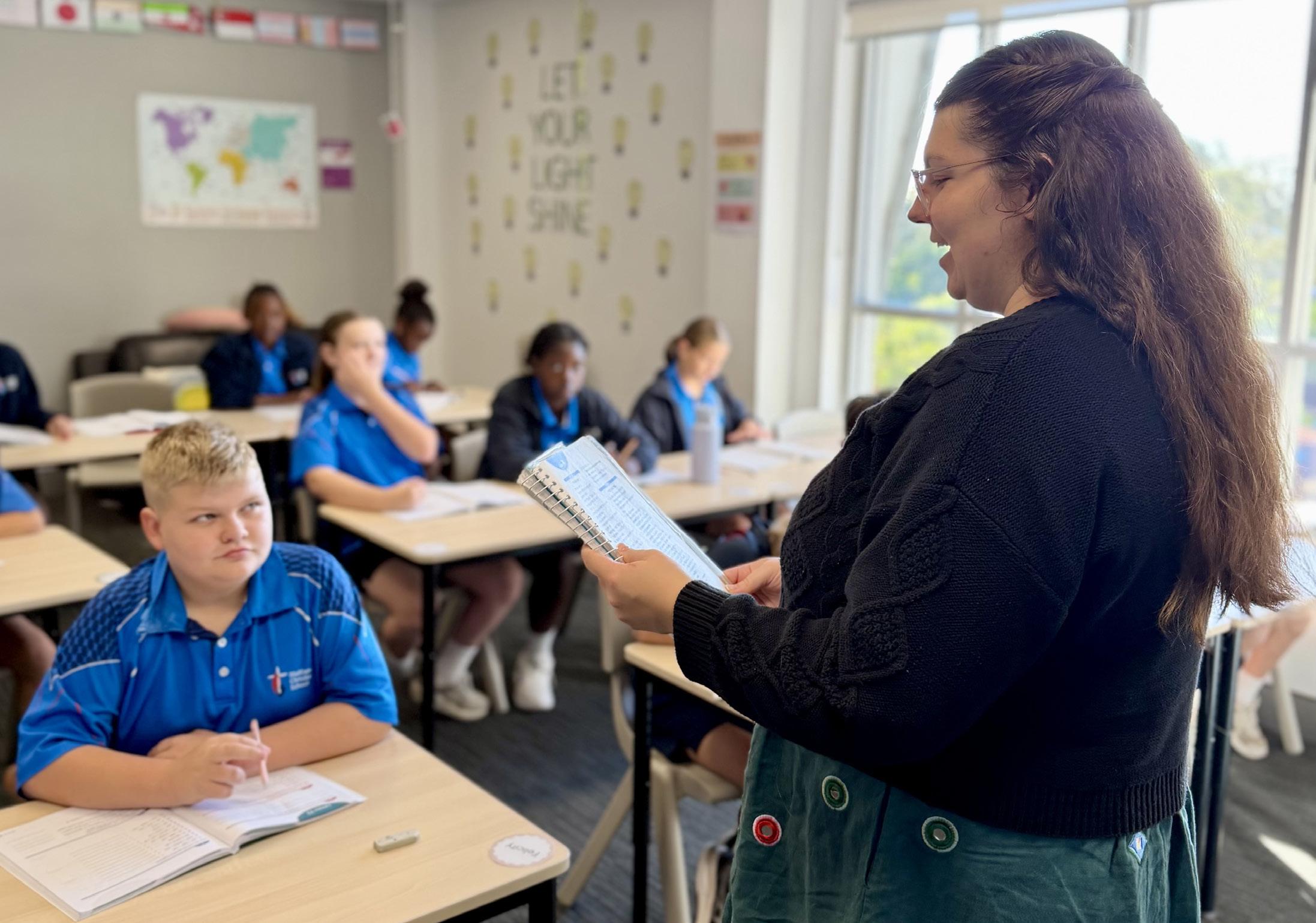

Andrew’s moment did not come in a classroom. It came on a drive to work.
It was January 2022. His first casual teaching day as a newly accredited teacher. PE load for the day, a subject outside his Industrial Technology background, at a school he had not taught in before. He had every reason to feel uncertain. He did not.
“I drove in feeling excited, confident, and not an ounce of trepidation about the day to come. More importantly, I drove home with the same feeling, and excited to come back the next day for more.”
That was the moment. Not a lesson that went well. Not a mentor’s words in a debrief. Just a quiet internal register: I am ready for this.
His most memorable student from his first year was a Year 7 boy who struggled. Relationally with peers. Academically with the work. Over the semester Andy taught him, he worked steadily at building rapport. It was slow. It was worth it. The following year, Andy moved to a different school. A few months later, the same student turned up at his youth group on a Friday night and set himself on the right path.
Some things happen outside the classroom. Some of the most important ones do.
What SPTS gave him that no textbook could? He does not hesitate. Experience. Getting into the classroom and seeing how educational theory holds up at the coalface of adolescence. Lectures, videos, books and conversations with experienced teachers all have their place. None of them come close to the real thing.
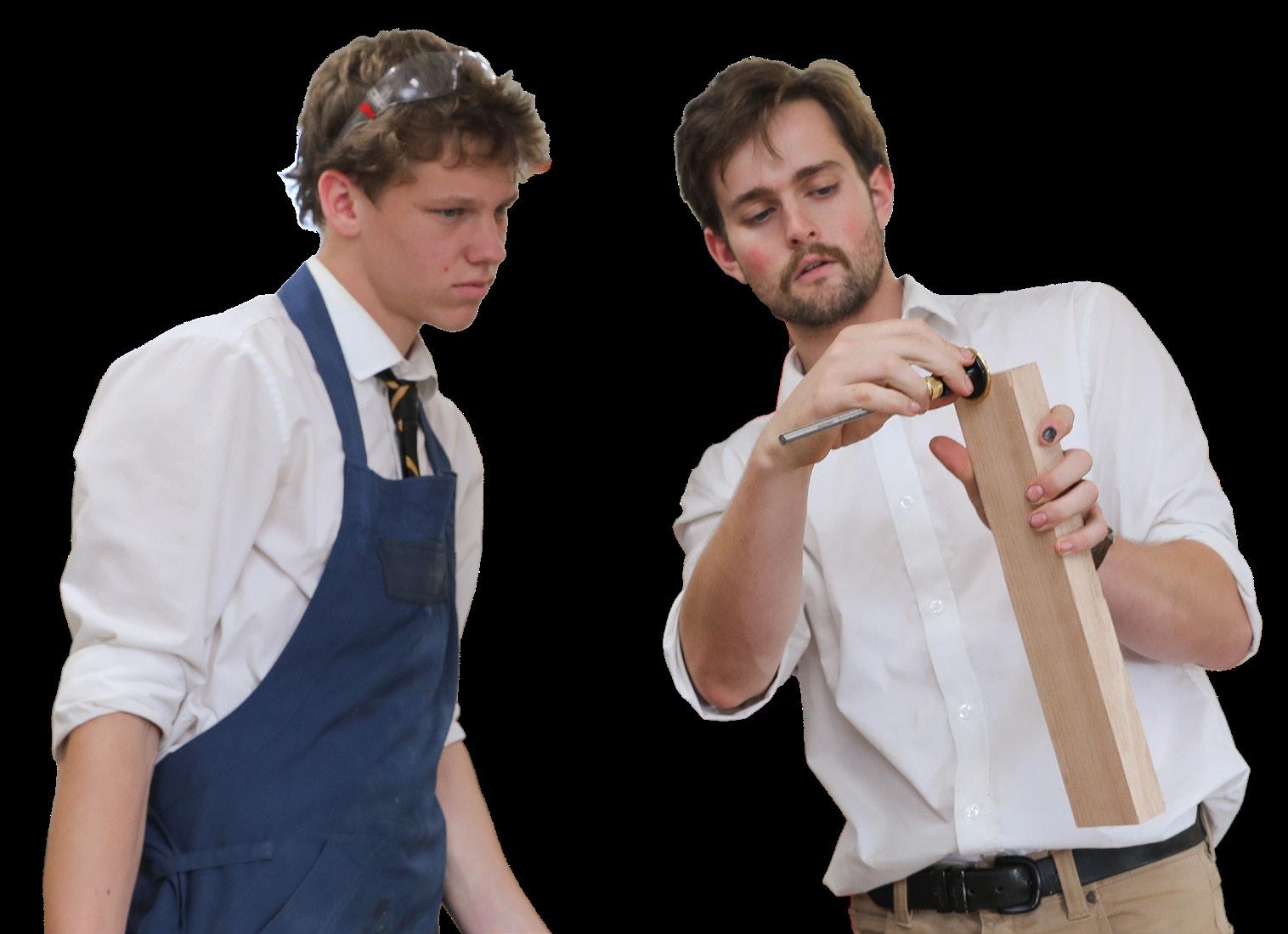
The phrase that has stayed with him from his time in the Teaching School is five words: you teach out of who you are. He still uses it. It still holds.
Right now, Andrew teaches Engineering Studies and Industrial Technology. He loves the smaller senior classes, students deeply invested in what they are learning and watching them work through the senior years to emerge at the other end as kind, intelligent and confident adults.
What he wishes someone had told him in year one: take it a day at a time. Keep turning up. Keep learning from whatever you can. Go on every camp, every excursion. Sit in on lessons from every faculty at every age. Schools, he says, are amazing places.
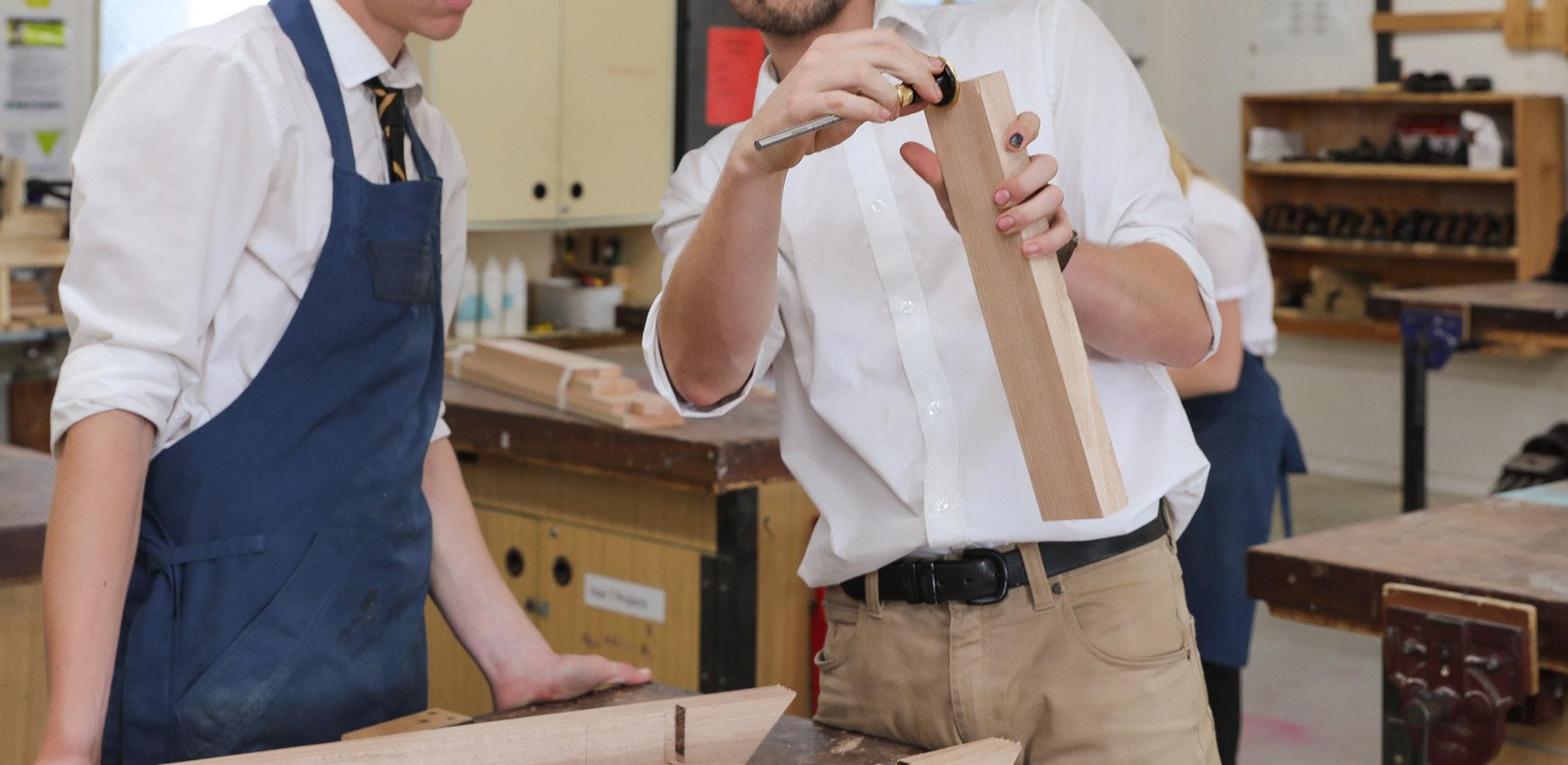

Eternity’s confidence did not arrive in a single moment. It came during her second year of teaching, when she had the opportunity to step into her passion areas of Maths and Science. She spent time observing expert teachers. Each one different. Each one drawing on their own strengths. And then something became clear: she did not need to teach like them. She could take their strategies, add them to her own tool belt and make them her own.
“Once I was given opportunities to practise this myself, everything began to click. I could teach confidently, relationally and intentionally.”
Her first year brought a student she will not forget. Year 7 Maths. She called out. She talked. She sought attention in disruptive ways. Eternity moved her. Isolated her. Gave gracious warnings. Nothing changed. The class grew frustrated. She felt stuck.
Then she felt God prompt her to look past the behaviour to the heart.
One lesson, after a warning, Eternity asked her to step outside while the class continued working. She followed her out and gently asked: “I notice you keep calling out, and you always apologise afterwards. What’s going on for you? Are you okay?”
She told Eternity her mum had recently passed away. When asked about her stepmum, she shared how hard the adjustment had been. That she felt alone. Eternity realised that isolating her had deepened that loneliness.
Together they made a plan for her to re-enter the classroom, sit with a peer at the front, and work toward three clear learning and behaviour goals. She held the standard. But now she knew Eternity was on her side. Her behaviour transformed.
“This experience surprised me,” she says simply.
What SPTS taught her that no textbook could? Teaching is not to be done alone. There are days you are supporting others. There are days they are supporting you. Together, you are one body building something that matters.
The idea from a WalkThru session that has stayed with her: positive relationships are maintained through fair expectations. Signal. Pause. Insist on attention. Students thrive when expectations are communicated clearly and upheld consistently.
Eternity is in her second term of her second year. She is seeking God’s will throughout each day and reflecting on ways to improve her teaching practice after every lesson. Her days are full: admin, teaching, laughter, meetings, surprise changes to routine, student questions about Jesus, and the quiet joy of seeing progress in students who often feel unseen or unworthy in the classroom.
Her word for new teachers: you will wear many hats as a teacher. Set healthy boundaries before you need them. Protect the passion and joy that comes from the Lord in this calling.
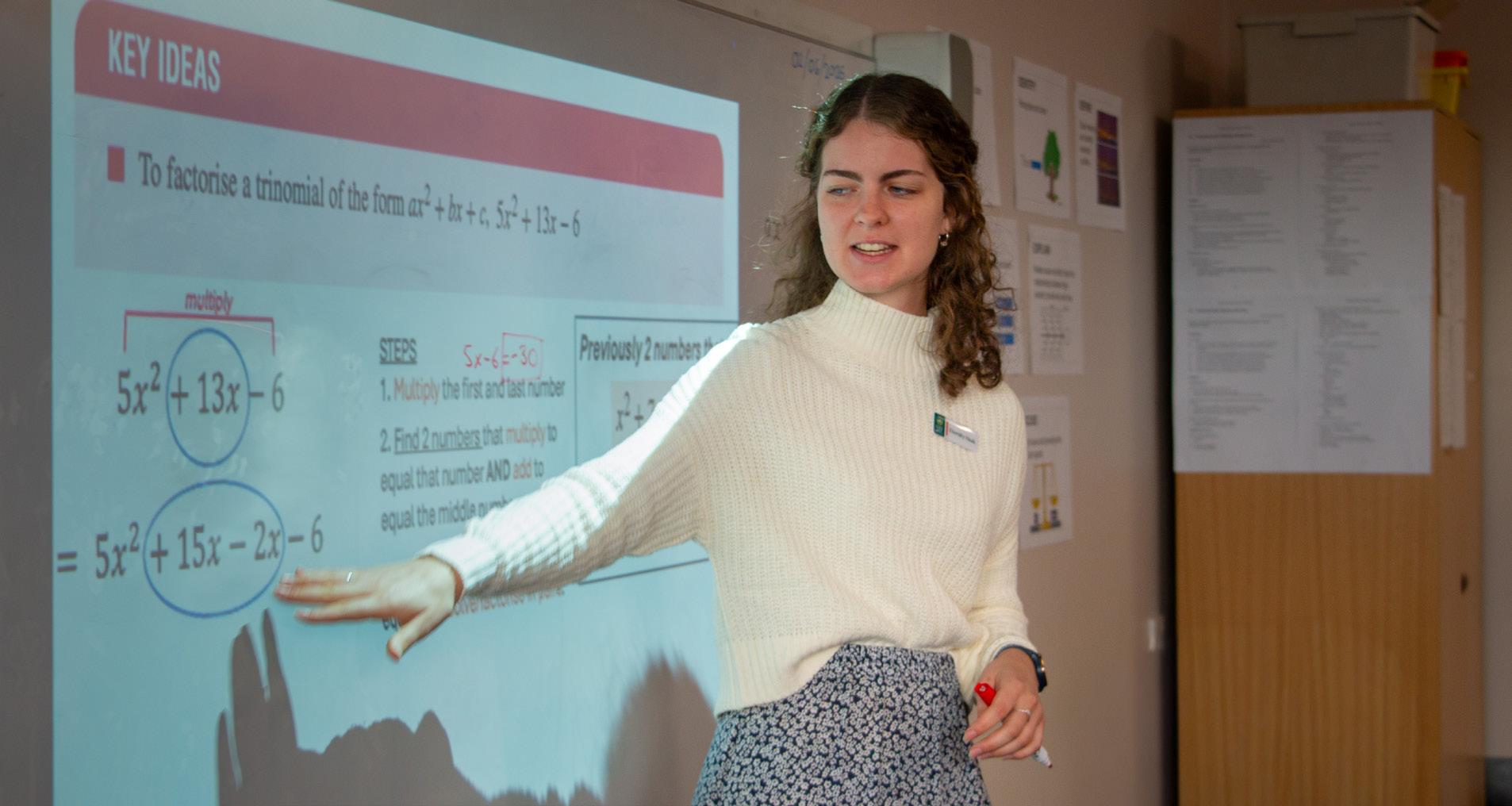

Primary Teacher, St Philips Christian College | Graduating Class 2024
Chloe’s confidence did not arrive in one moment either. It grew. She spent her first year observing her mentor teacher carefully. How he taught. How he managed behaviour. How he built relationships. She built rapport with the class slowly, from the edges. Then came her first four-week university practicum at another school. She had to take on more lessons each week. It was harder. When she returned to her mentor class, something had changed.
She was more ready than she had been before.
A student from her first year reminded her that engagement does not always look the way you expect. During explicit teaching, this student would often be colouring or doodling. Chloe assumed disengagement. Then she asked a question. The student explained the concept completely.
“It reminded me that students do not all learn in the same way, and that engagement does not always look as you expect.”
What SPTS taught her that no textbook could? The village. She has learned, and is still learning, from the wisdom, encouragement and practical advice of experienced teachers around her. She also carries the value of proactive, positive parent communication. Strong relationships with families, she says, shape a student’s learning in ways that go far beyond the classroom.
The phrase she has taken into her own classroom came from her final mentor teacher: “We are all good at different things.” She says it regularly. She wants her students to know they are valued, capable and uniquely created by God.
Right now, Chloe is job-sharing a Year 3 class at SPCC Port Stephens. She describes it with characteristic warmth as the best school in the Southern Hemisphere. What lights her up is watching students grow in confidence: grasping a concept they have struggled with, stepping out of
their comfort zones, and learning about God’s love and how to pray, read the Bible and build a personal relationship with Him.
What she wishes she had known earlier? Her first mentor told her there is no such thing as a perfect lesson. A later mentor reminded her that students will still learn even when things do not go exactly as planned. She held onto both. They helped her let go of perfectionism and fix her eyes on what actually matters: relationships, growth, consistency, reflection and making learning fun.
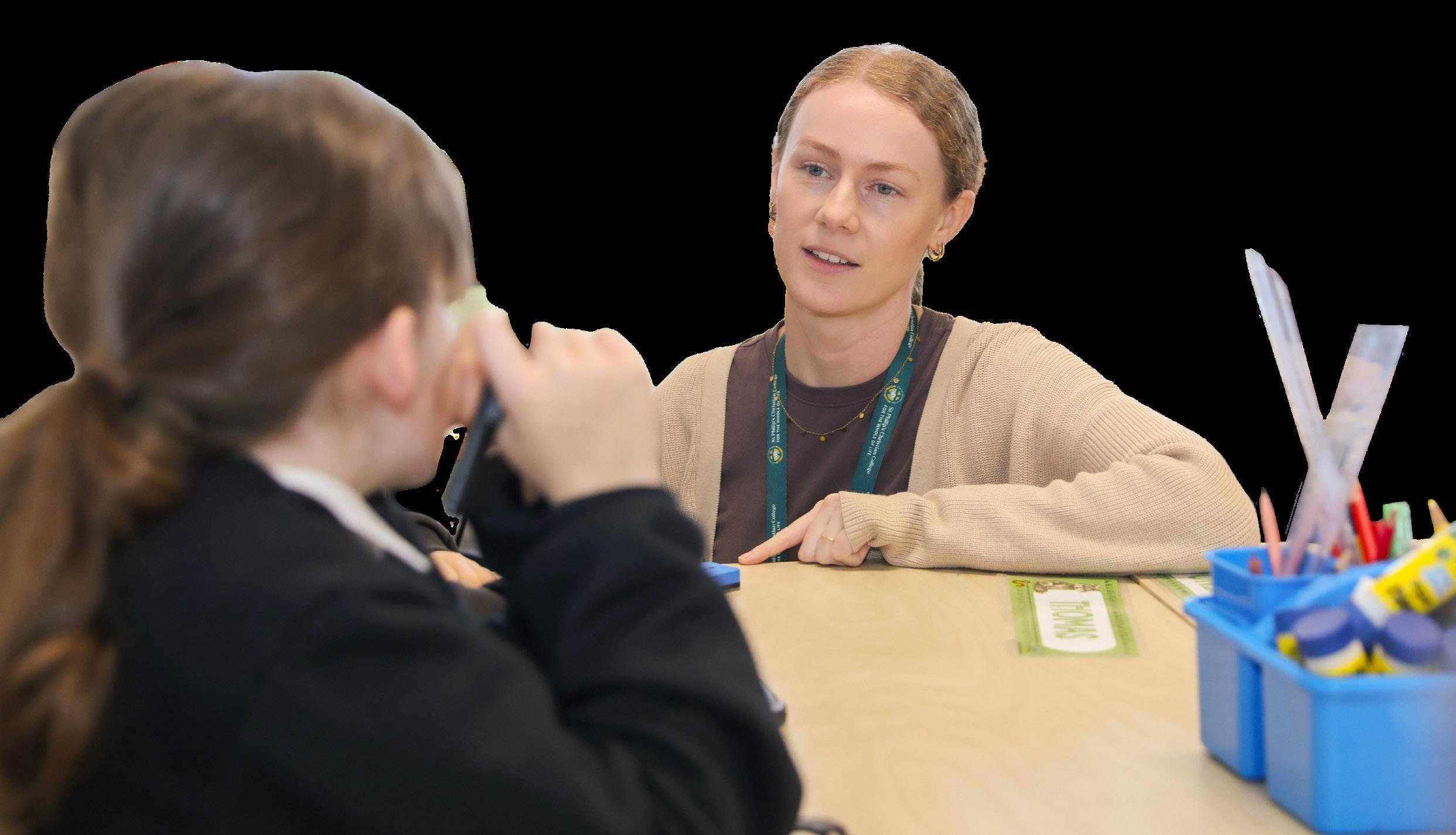

Tom’s moment came at the end of his final prac. It was a public school placement, and he had been quietly worried. Different context. Different culture. Was the traineeship enough? Then his supervising teacher looked at him after his first lesson and said, in the most matterof-fact way:
“Oh, you’re fine. You can teach.”
Simple words. But Tom says the traineeship had prepared him better than he had realised. Hearing it said aloud made it real.
His most memorable student moment came not from a breakthrough, but from a challenge. A student told him, in front of the whole class, that what he was explaining was not making sense. Tom found it confronting in the moment. But he took it seriously. Now he regularly stops mid-lesson and asks his class:
“Have
I explained that ok?”
The student gave him something he has used ever since.
What SPTS gave him that no textbook could? The classroom itself. The actual experience of being in a school, watching real teachers and then doing it himself. No university subject comes close to that.
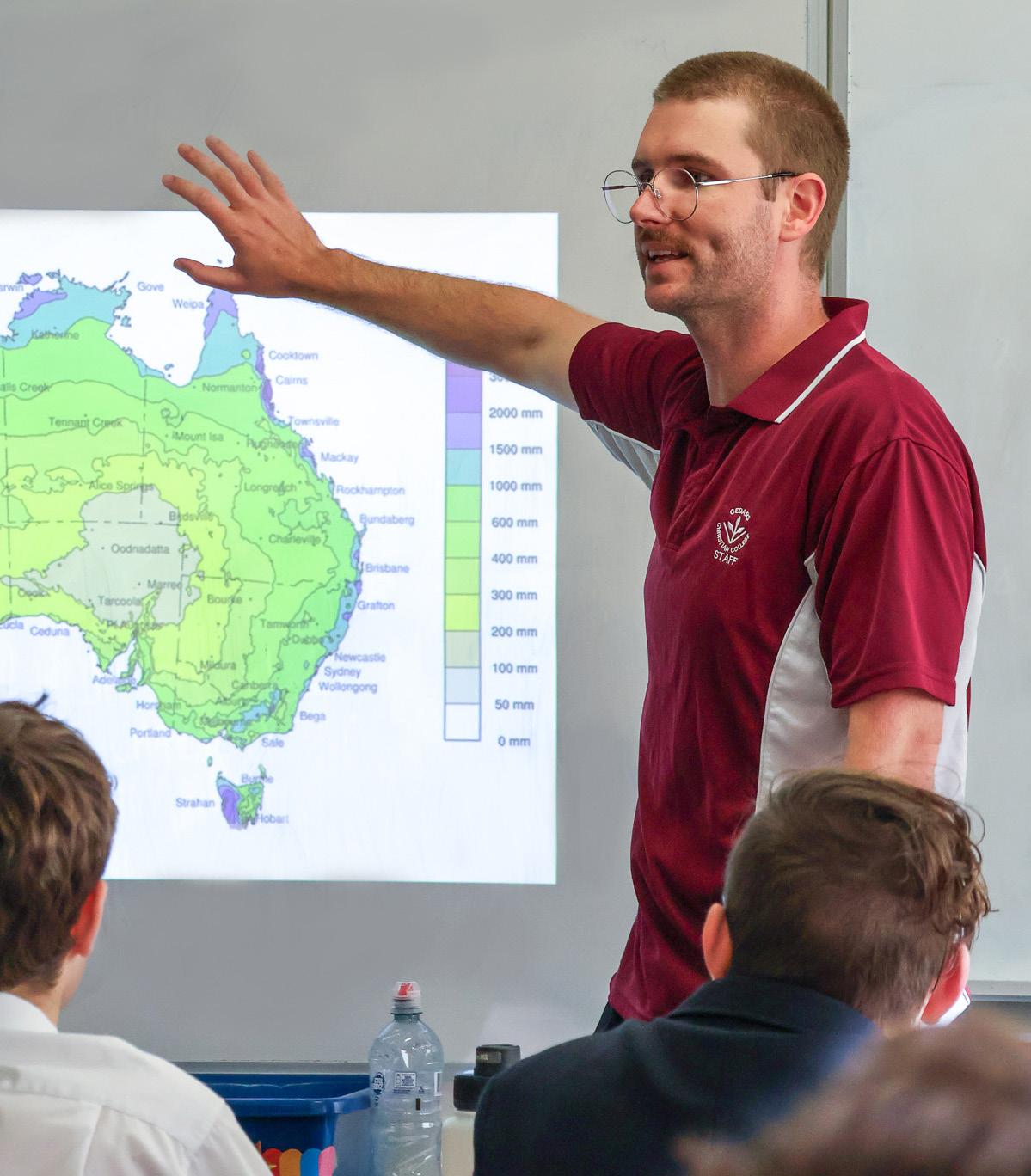
The phrase that has followed him from traineeship to staffroom: it is what it is. He and his fellow trainees used to say it in the depths of the hard weeks. Now they are all teachers. You will still hear them saying it to each other in the staffroom.
Tom is Science-trained but mostly teaches Maths now and loves it. He is also mentoring his own trainee this year. He says it is a joy to watch her grow in confidence and realise how good a teacher she already is.
What he wishes he had heard more clearly in year one: have grace for yourself. It is easy to beat yourself up for not being where you want to be yet. But over time, you will get better. He suspects someone told him this. He wishes he had listened better.
Nine years of the Teaching School. Nine years of trainees formed in classrooms, shaped by mentors and trusted with classrooms of their own. This is the fruit of that faithfulness. Teachers planted in who they are in Him, flourishing in schools across the region, bearing fruit in the lives of the students in front of them.
We are grateful they took the time to share it with us.
To current trainees reading this: trust in His providence. The work He has begun in you, He will complete.

“I drove in feeling excited, confident, and not an ounce of trepidation about the day to come. More importantly, I drove home with the same feeling, and excited to come back the next day for more.”
ANDREW BELL
NICKEY BRIGHT
St Philip’s Teaching School, Lead SpecialistOperations and Strategy
Each year, the Teaching School welcomes a diverse group of aspiring educators as they step into the calling of teaching. Some arrive straight from their HSC, others bring years of experience from the workforce, while some are continuing their studies through postgraduate pathways. Most begin this journey on their own, quickly building new connections along the way.
But this year, in a Teaching School first, three best friends applied together and were all accepted. We spoke to Sam Goldsworthy, Jacob Troyer and Will Neppl, graduates of Belmont Christian College Class of 2025, about what it has been like going from schoolmates to trainee teachers together.
The trio shared that their time at Belmont showed them what made Christian education distinctive. “It was not just the curriculum, but the way teachers genuinely invested in students. Relationships were formed naturally, and care was evident in everyday interactions. Teachers were intentional, creating an environment where students felt known and valued.”
That culture left a lasting impression, quietly planting seeds that would later grow into a shared calling.
A defining moment for the three came in October 2022 at a week-long Gospel Tent gathering in Maitland.
For Jacob, who had grown up in a Christian home, this experience marked a renewed and deeply personal encounter with faith. For Sam, who arrived hesitant and carrying anxiety, it became a turning point that reframed his perspective
on life, shifting it toward a Christ-centred view filled with meaning and purpose. For Will, who had not grown up in a Christian household but had been invited to church years earlier, the experience was entirely new and transformative. It was the first time faith felt real in a profound way.
Returning to school, the three friends carried a sense of conviction that what they had experienced was not meant to stay with them alone. They began simply, starting a small Bible study group of six students. Within a short time, that group grew to twenty. Soon after, they initiated a lunchtime worship gathering in the school theatre, drawing around thirty students. What began as a small step of obedience became something much larger, as they encouraged one another and created space for others to explore faith.
The impact of Christian teachers played a crucial role in shaping their journey. Each of the three can point to individuals who influenced their decision to pursue teaching. Jacob and Will were both inspired by Mrs Stewart, whose intentionality, kindness and encouragement changed how they saw themselves and their futures. Sam reflects on a primary school teacher, Mr Reed, who modelled care and consistency, only later realising how significant that example had been in shaping his aspirations. Through these educators, teaching was revealed not merely as a profession but as a platform to shape lives.
Choosing the Teaching School felt like a clear and purposeful step. They loved that the program offered immediate immersion into the classroom, allowing them to learn through experience from the very beginning. The strong mentorship and Christ-centred framework not only align with their values but also mean they are being formed both professionally and spiritually.
Only a few months into the program, each is already experiencing the rewards and challenges of teaching. Jacob is building authentic connections with students at SPCC Cessnock Dynamic Learning, discovering how relationships can transform engagement
and learning. Sam has developed a genuine love for primary teaching at Dynamic Learning Wararah, finding joy in the enthusiasm of younger students and the opportunity to help lay strong foundations. Will is navigating the transition from student to teacher, supported by mentorship and growing in confidence as he builds meaningful relationships in the classroom at SPCC Gosford.
Looking ahead, their hopes are clear. They want to become teachers who integrate faith naturally and authentically, who prioritise
“It was not just the curriculum, but the way teachers genuinely invested in students. Relationships were formed naturally, and care was evident in everyday interactions.”
relationships, and who help students discover purpose and identity. They aspire to be the kind of educators who influenced them, those who led with sincerity, compassion and a deep sense of calling.
The story of Sam, Jacob and Will is a powerful reminder of the ripple effect of Christian education. A teacher’s investment can shape a student’s path. A moment of faith can ignite transformation. What begins in one classroom can flow outward, influencing lives in ways that extend far beyond what can be seen.



JACKSON STEELE
St Philip’s Teaching School, Trainee
“What’s your name?”
Three magic words. Three words that, without saying much, seem to say a lot.
“I am interested in you, and I will listen to you because I want to know you.”
I am sure you’ve realised the power of your name. You’ve felt the tug of a smile when it gets dropped in conversation, or the warm surprise when it’s cradled by a stranger in the playground... You didn’t think you were that close!
Because a name is special, it holds stories – some happy and some sad. It’s the old rusty gate that lets you into an abundant garden. To know someone, it is good to know their name.
And that is the vision of Connect. Here at the St Philip’s Teaching School, trainees are purposefully placed in groups of guys or girls. Each Thursday morning, they spend an hour in these Connect Groups; chatter and laughter bounce through the rooms, resting in moments of prayer and reflection. It’s in these moments that stories are shared – the gate is opened.
Eight years ago, the Teaching School community was small. Everyone knew everyone, and it was hard to hide. But we’ve grown! Now, our space is loud and bustling and joyful, a constant thrum of movement and conversation fills the air. But in this space, it’s easy to step into the background. In this space, it can be hard to step into the room. It can be hard to be known.
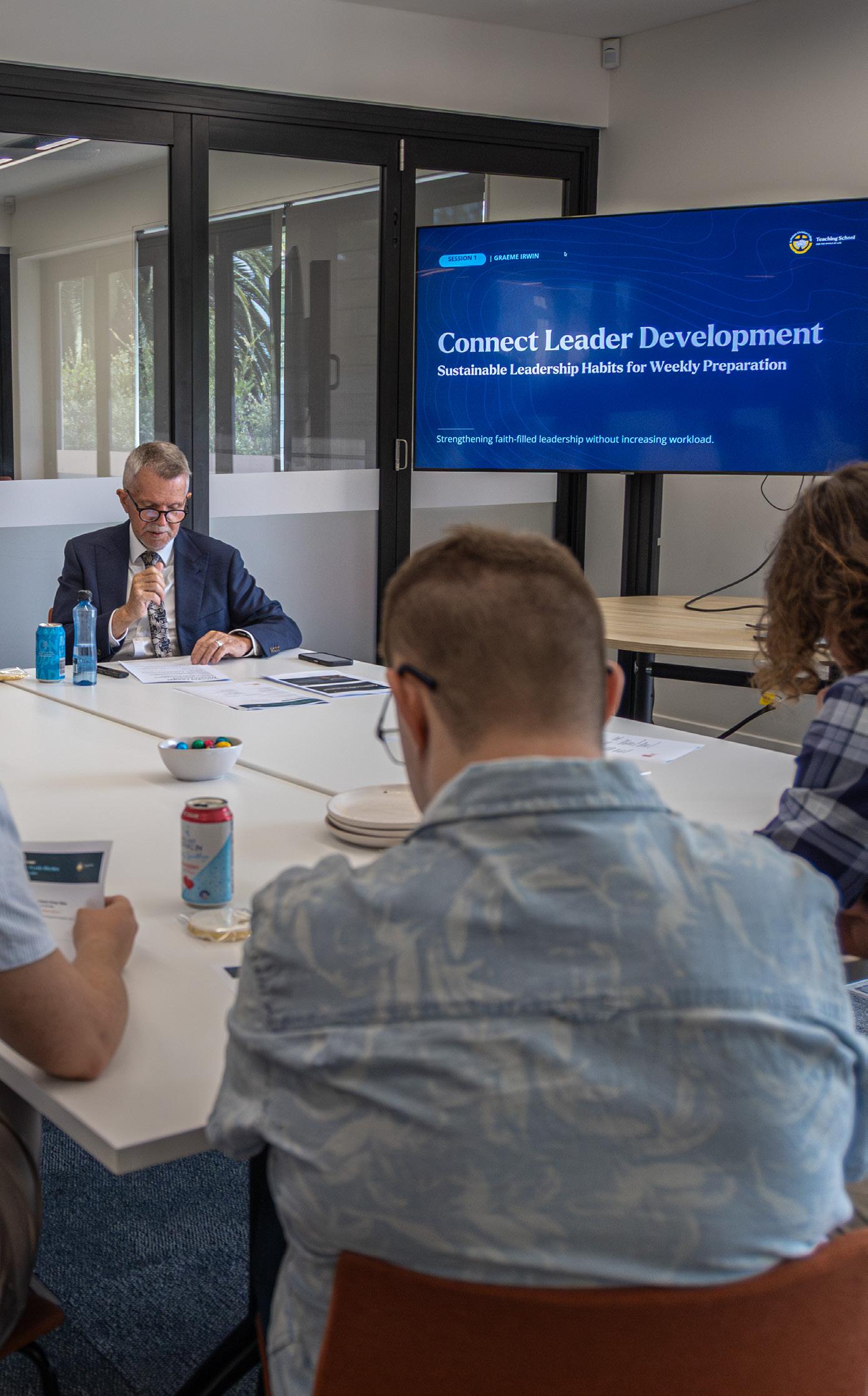
So, we’ve invited trainees to be Connect Leaders. They lead their groups in Connect time and care for the trainees in their
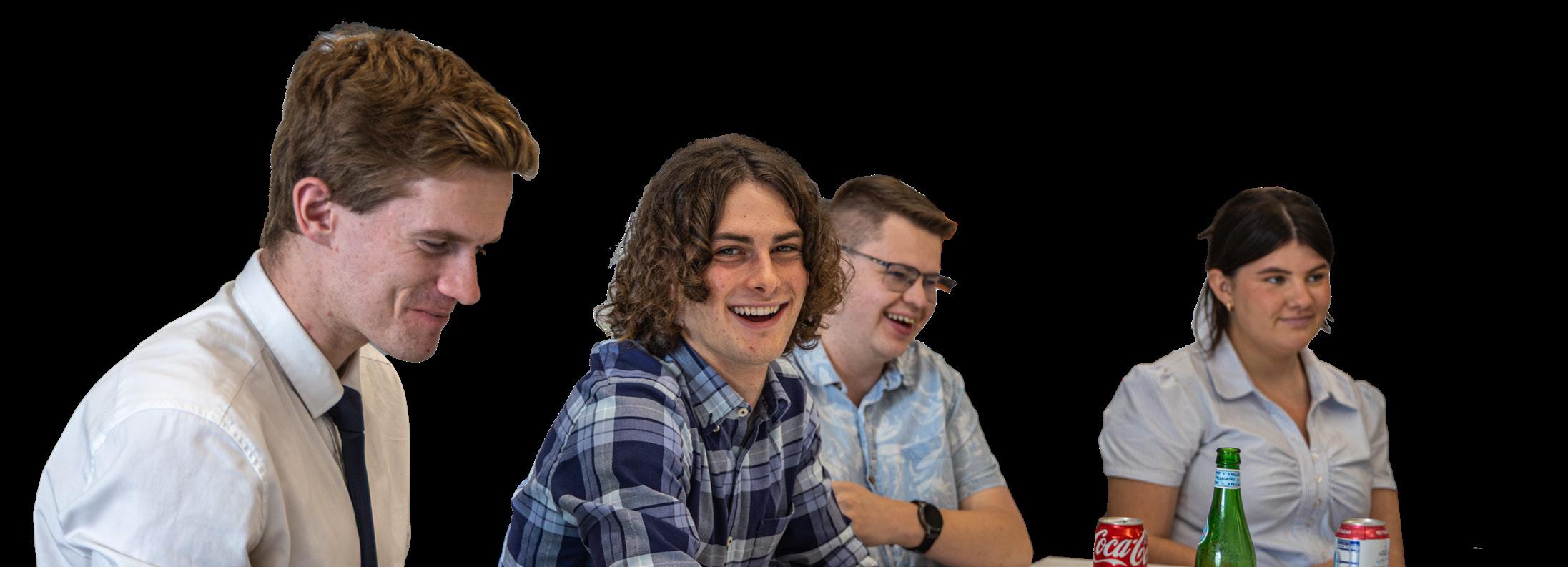

groups. Every term, Christian principals and leaders join our Connect Leaders in the Lead Program, empowering and equipping them to care for our trainees in the Teaching School. To become leaders who call people in and meet them where they are.
When I think about Connect, I am reminded of the Bible story of Naomi and Ruth. We hear of Naomi, recently widowed, and because she is older, no prospects for a future marriage, destitute. But her daughterin-law Ruth had a chance! To build a family, to have children, to live. Yet she chose Naomi. She chose Naomi in her poverty and said, “Where you go, I will go.” I am with you in this.
Connect makes connection possible. It places people with people in a smaller space. It’s not about getting rid of that joyful noise but making it heard by everyone. It’s about meeting trainees where they’re at and walking with them. There is one thing that I ask of our Connect Leaders each week: to hear from every trainee and to pray for one another. Because to be known is more than a name. It’s a walk through that abundant garden. And for that, you need time and space.
So, I urge you, don’t stop at the gate.
You don’t need a title or to be a Connect Leader; Ruth was a widow herself. Walk with one another, because by empowering walks through the garden, Connect Time is shaping the Teaching School community to point to the love and grace of God. Stepping through those doors should be like stepping into the loving embrace of Jesus Christ.
“Connect makes connection possible. It places people with people in a smaller space. It’s not about getting rid of that joyful noise but making it heard by everyone.”
NICKEY BRIGHT St Philip’s Teaching School, Placement Coordinator
When you’re studying teaching, professional experience placements are part of the deal. These are important weeks where theory meets the real world of classrooms. But for Teaching School trainees, stepping into a classroom isn’t a new or daunting experience. From day one (often even before their first uni class!), they’re already immersed in school life.
What makes placements special, though, is the chance to take what they know and test it somewhere new. This might mean experiencing the pace and culture of a public, Catholic, or independent school, and getting a fresh perspective on how teaching
looks across different contexts. These block placements (ranging from 3 to 6 weeks!) give trainees the opportunity to settle into the full rhythm of teaching across an entire school week. Thank you to each school and mentor that put up their hand to support the formation of these trainees!
This semester, 38 of our 80 trainees headed out on carefully selected placements, many for the very first time. Others made the most of the new embedded pracs, remaining in their regular classes while meeting professional requirements. So, what did they learn? What surprised them? And what advice would they give? We caught up with trainees fresh from their pracs to hear their insights, reflections, and classroom wisdom.
38
Trainees on Placement 620 Days of Placement 2-6 Weeks per Block Placement Babies-Yr 12 Stages Spanned
THE FIRST DAY
We asked our trainees to cast their minds back to day one. What was the moment that caught them completely off guard?

“On day one, my prac teacher said the next two weeks were also learning for her. She said that hosting a student teacher makes her examine how and why she does things.”
— Melissa Jackson, Year 4, Campbell Primary School
“Kindergarten keeps you laughing with their outrageous anecdotes which they deliver with such sincerity. On my first day, during roll call, one student informed me that he had flown to France on the weekend.”
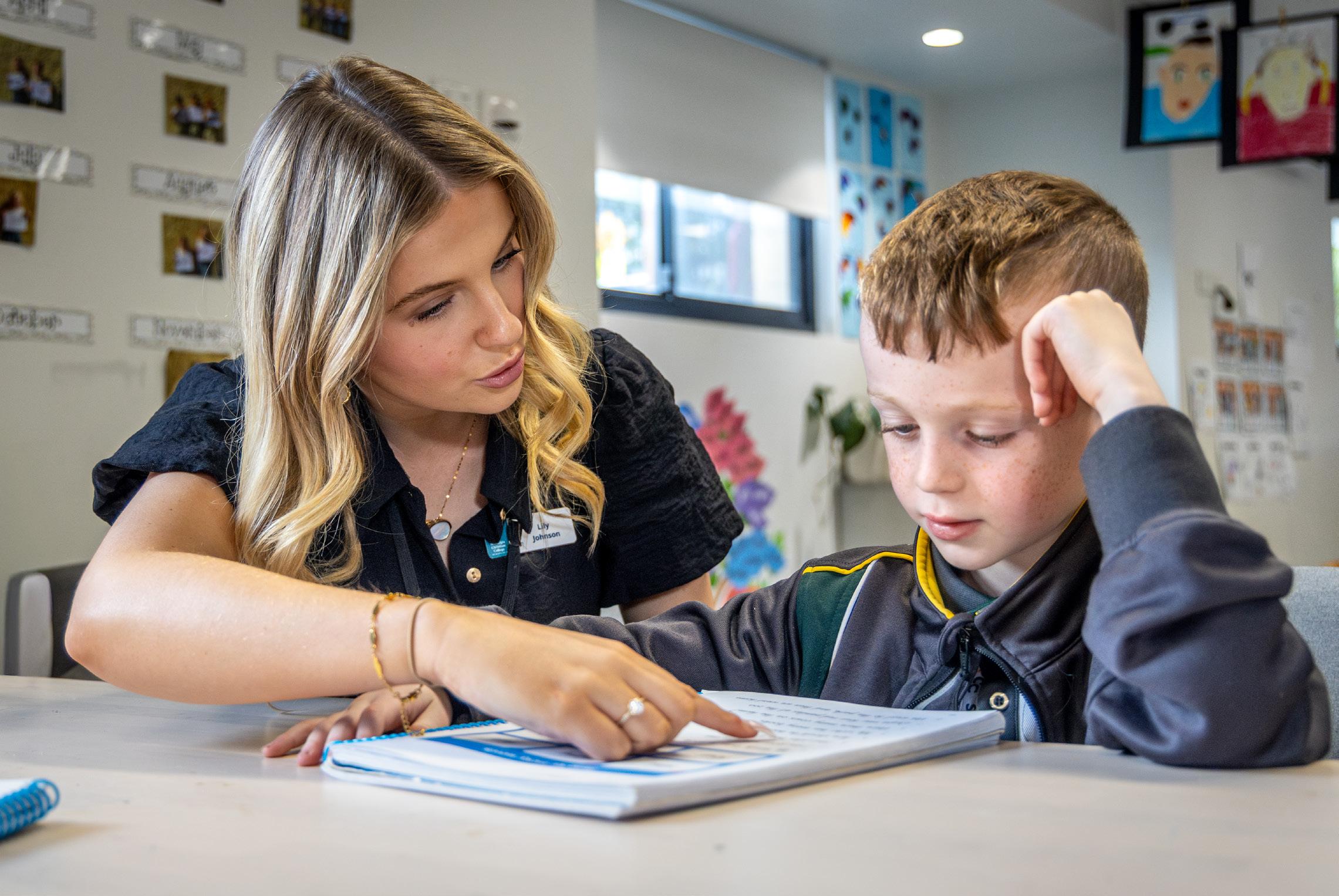
— Lily Johnson, Kindergarten, Charlestown South Public School

THE STUDENTS

“All the teachers I saw had something around their neck. You might be thinking, of course, a teacher’s lanyard. No! They all had harmonicas. It was moments after this realisation that I noticed they use the harmonica as a ‘Signal, Pause and Insist’. How creative!”
— Caleb Mills, Year 1/2, Carrington Public School
Not what they expected the students to struggle with. Not what they expected them to know. Just the small surprises that come from spending real time with real children.

“I was surprised by the diversity of my students’ personalities and interests. As I got to know them better, I learned about their passions in different things such as bike racing, horses and the games they play, which allowed me to build connections with them through the conversations we have.”
— Esther Shen, Year 6, Charlton Christian College
“Even though there were only 13 students in the class I was placed on, they were a handful! I was surprised by how many dynamics were happening all at once, and found that it took a few lessons to feel like I was keeping up with them all.”
— Shania Bekker, Kindergarten, Gunnedah Public School


“Despite a lot of them coming from rough backgrounds, they were really respectful and well behaved towards all staff, including me. They were more appreciative of the support they received than other students I had worked with. It was really nice how they expressed genuine thanks for any help that I gave them.”
— William McLennan, Fraser Public School
“Never ever leave your sense of humour at home.”
— LILY, KINDERGARTEN
We asked our trainees to finish this sentence: I would never go on prac without… What came back was less a packing list, more a portrait of what gets you through. Pack accordingly.
Staying hydrated keeps your energy up so you can bring positivity into the classroom.
— Esther
Never ever leave it at home. Also, coffee. And panadol.
— Lily
To fill with resources, feedback, and drawings students have gifted you.
— Lily
Something to eat during breaks means you can sustain the energy needed to create fun learning experiences.
— Esther
For your lower primary friends. A simple incentive that goes a long way.
— Shania
Replacing my music with prayer on my commute was such a game changer. Thirty minutes remembering God, and that He was with me, genuinely got me through.
— Will
School life is dynamic. It changes day to day, sometimes session to session. The ability to pivot is a must.
— Melissa
Having a space to keep all my sheets of paper and requirements was super helpful for both my mentor and me.
— Caleb
Every trainee picked something up that they wished they had known on day one. Here are three things worth borrowing.
“Treat your prac school like it is your school. Volunteer for jobs, join in with school activities, and chat with colleagues in the staffroom. I did this and felt very much a part of the staff.”
— Melissa Jackson, Year 4, Campbell Primary School
“Always have a backup activity or booklet just in case students finish their task early. Having a fast-finisher task or a game prepared helps the classroom stay settled. Students respond really well to competition, so involving challenges or games into lessons is a great way to engage and increase motivation.”
— Esther Shen, Year 6, Charlton Christian College
“Jump in and get involved as soon as you can. The quicker you get involved, the quicker you can begin building relationships with the students so that, when it is your turn to teach, they have a familiar face in front of them.”
— Shania Bekker, Kindergarten, Gunnedah Public School
WHEN IT WENT SIDEWAYS
We asked every trainee what they were most nervous about before they went, and whether it actually happened. Some said no. Some said yes…
ESTHER’S OBSERVATION DAY
Esther went into prac most nervous about behaviour management. She had never taught Year 6 before and was not sure how she would form relationships with the students or handle challenging behaviour respectfully. Then her lecturer came in to observe.
“During my lecturer’s observation day, my students were particularly unsettled. However, I am grateful I went through this experience, as both my lecturer and mentor provided practical advice that I could immediately apply to my teaching practice. They were incredibly supportive and encouraging, which helped me reflect and learn from this experience.”
“Sometimes I will encounter setbacks, but it is how I respond and learn from this experience that allows me to grow.”
— Esther Shen, Year 6, Charlton Christian College
“I was most nervous about the paperwork, and it did happen! The thing that helped me work through the mountain of paperwork was clearly setting out an achievable calendar with my mentor, noting on what day I would be completing each observation or lesson.”
— Caleb Mills, Year 1/2, Carrington Public School
IF YOU COULD GO BACK
If our trainees could go back to the morning they walked in, this is what they would say.
“There is absolutely nothing to be worried about. You are going to end up loving prac, and the hardest part will be having to leave at the end! Also, that pen marker stain does not come out, so whatever you do, do not wear your white pants in Kindergarten.”
— Lily Johnson, Kindergarten, Charlestown South Public School
“Just relax, be yourself, and take every opportunity to encourage and build up the students as much as possible before you go. Some of them really need it!”
— William McLennan, Fraser Public School
“Don’t worry, your prac teacher loves coffee as much as you do. And there is a great café a short walk away that you will visit every morning teatime. Also, don’t forget your hat!”
— Melissa Jackson, Year 4, Campbell Primary School
“Be confident that God places you in spaces for a reason. I knew this going into prac, but after seeing how God moved through this experience, I feel He continues to encourage me in this, in His perfect plan for our lives.”
— Caleb Mills, Year 1/2, Carrington Public School
Every story above was made possible by a school that opened its doors. Yes to a trainee in the classroom, yes to a mentor giving up their planning periods, yes to the slightly chaotic, hugely rewarding work of forming the next generation of teachers. Thank you.
All Saints College Maitland
Belmont Christian College
Bertram Primary School
Carrington Public School
Cedars Christian College
Charlestown South Public School
Charlton Christian College
Emmaus Christian School
Fraser Public School
Green Point Christian College
Gunnedah Public School
Maitland Christian School
North Nowra Public School
Nowra Christian School
To our trainees, thank you for the honesty in these reflections. To our mentors and host schools, thank you for opening your classrooms and your staffrooms. And to Nickey, thank you for holding it all together with such care.
To anyone reading this with prac on the horizon, take heart. You are not starting from scratch. You are carrying everything you have already learned, into somewhere new. That is what makes this program what it is.
St Bede’s Catholic College
St Philip’s Christian College Cessnock
St Philip’s Christian College Gosford
St Philip’s Christian College Port Stephens
St Philip’s Christian College Snowy Mountains
St Philips Christian College Waratah
Tomaree High School
The Friends Long Day Child Care Centre
Denman Village Early Learning Centre
Trinity Christian School
Trinity Christian School Early Learning Centre
MidCoast Christian School
Vincentia High School