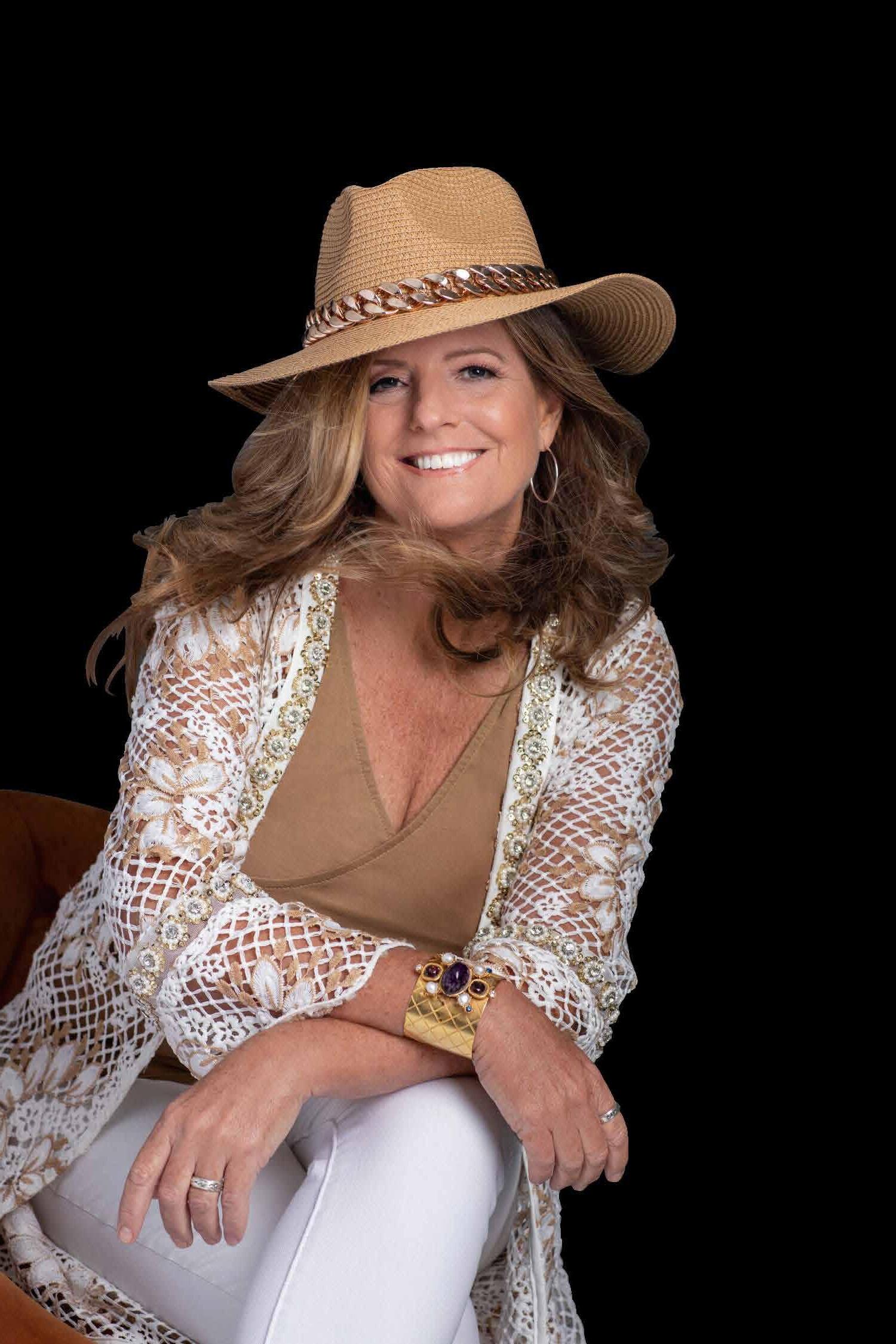
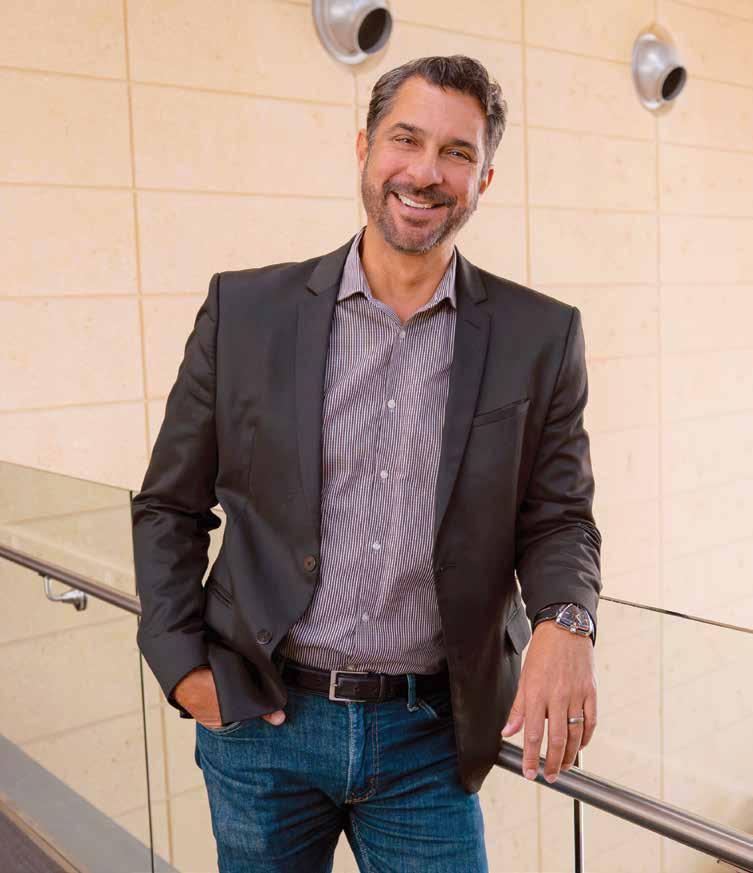
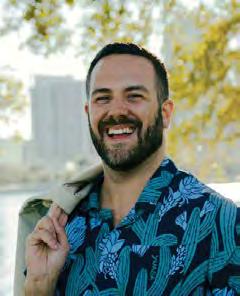
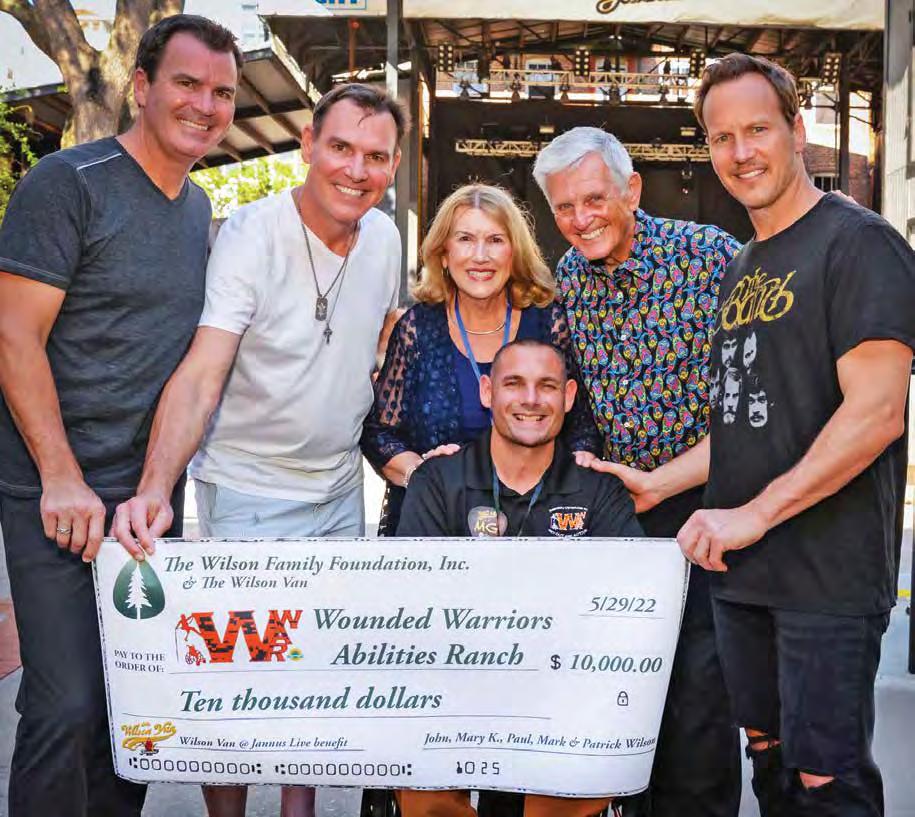
concert with his brothers in their band, The Wilson Van.
We tapped the ultimate insider in
A
Learning mahjong took our writer all over town and she found community at every turn.
The
Expert
When we think about what it means to live your best life, we believe it starts with living intentionally—creating a life that feels authentic, fulfilling and aligned with your personal values rather than defined by societal expectations. It means investing in yourself, your well-being and your personal growth in a way that is both proactive and kind to yourself, allowing you to reach your full potential.
We’re also mindful that many of us are carrying a lot right now and navigating a reality that can feel overwhelming—it’s a shared experience in 2026. Exper ts point to a growing state of chronic mental overload, where the brain has too many tabs open and the body is constantly “on.”
We are choosing to embrace what some are calling the “Small Steps Movement,” focusing on sustainable growth and manageable actions. It’s about making choices that lead to long-term fulfillment rather than temporary gratification. It means recognizing that the journey isn’t about perfection or having everything figured out, but about managing the highs and lows while continuing to move forward.
Most importantly, it means investing in yourself in a way that protects your energy and supports your mental, emotional and physical health.
Another issue many are facing is the growing epidemic of loneliness and social isolation—now widely recognized as a serious public health concern in the United States. The U.S. Surgeon General has noted that roughly half of American adults experience loneliness, a reality that, when combined with chronic stress, can have significant mental and physical consequences. While the causes are complex, research continues to show that meaningful connection and social support are essential to overall well-being.
The common thread running through this issue is our desire for connection—whether it’s found on a sidewalk or in a museum, during a workout, around a mahjong table or over a great cup of coffee from a local maker. At its core, living your best life is about choosing those moments—engaging with the people and places that make you feel connected and part of something larger than yourself. We hope you’ll find an inspiring entry point to do just that within these pages.
BETH ANN DRAKE Publisher bdrake@stpetelifemag.com
NICK STEELE Editor-In-Chief editor@stpetelifemag.com
PUBLISHER/CEO
Beth Ann Drake
EDITOR/CREATIVE DIRECTOR
Nick Steele
GRAPHIC DESIGN/PRODUCTION
Design2Pro
COPY EDITOR
Susan Smiley-Height
ADVERTISING
Ed Barry
Ad Director / Photographer
Betsy Phillips Senior Account Executive
Debbie Radsick Account Executive
CONTRIBUTORS
Joey Clay
Alex Davis
Allison Lynn
Tara MacIntyre
Misha Pokusa
Nitish S. Rele
Susan Smiley-Height
Daniel Taylor N.J. Vallone
Dana Wood
EXPERT CONTRIBUTORS
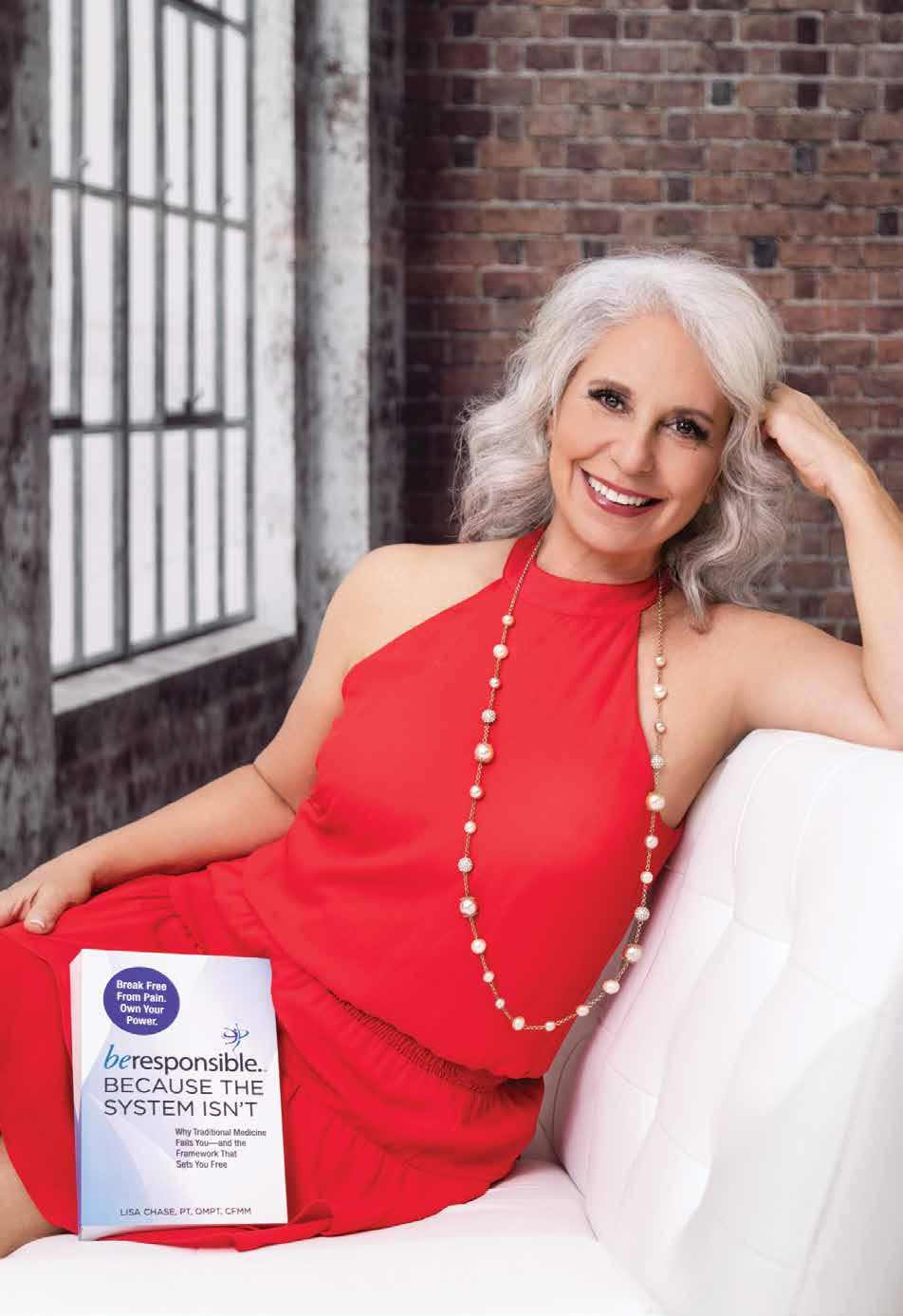
Lisa Chase
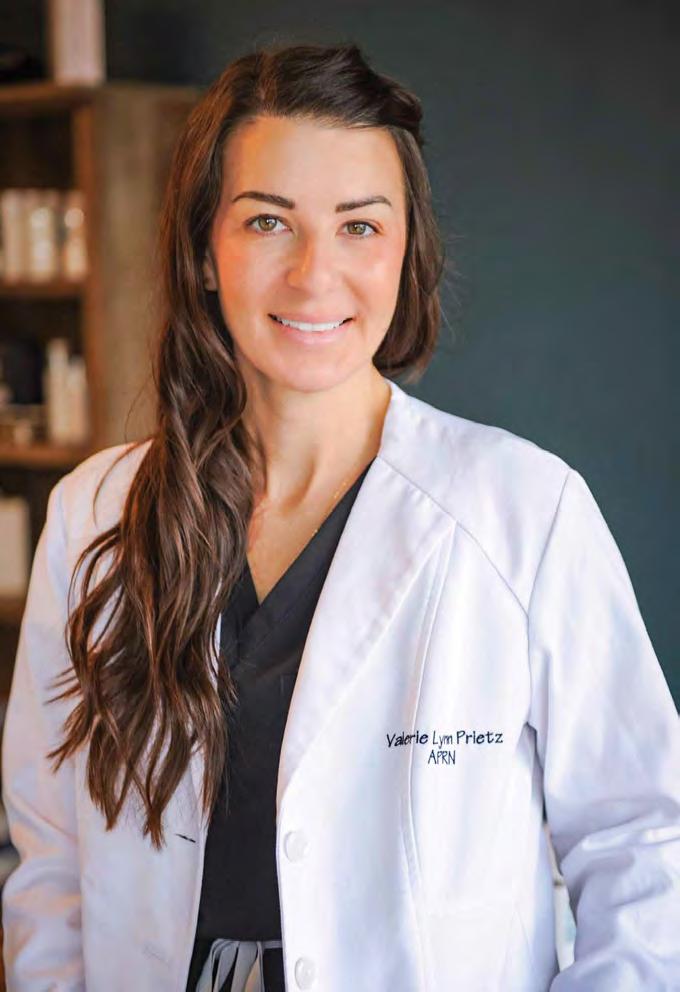
Valerie Prietz
Roshni Ranjit-Reeves, MD
Susanne Van Selow
CO-FOUNDER/BUSINESS MANAGER
Ralph Zuckerman
Home delivery: stpetelifemag.com/subscribe
260 1st Avenue S. Suite 200-151 St. Petersburg, FL 33701
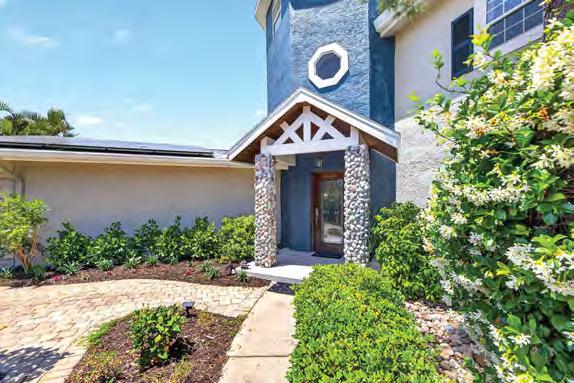
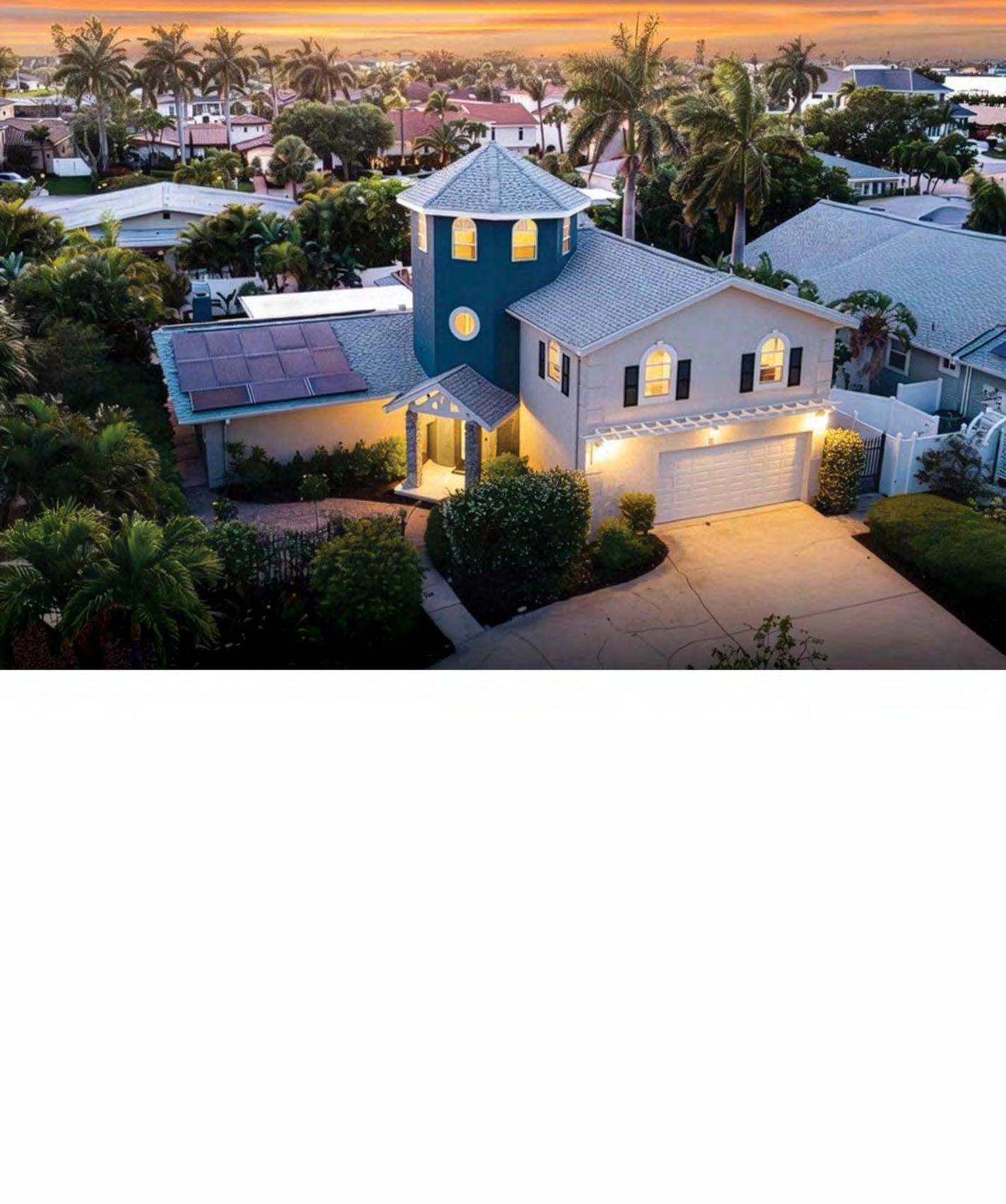
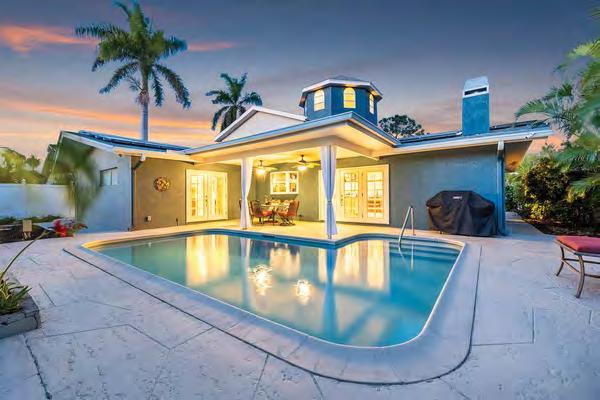
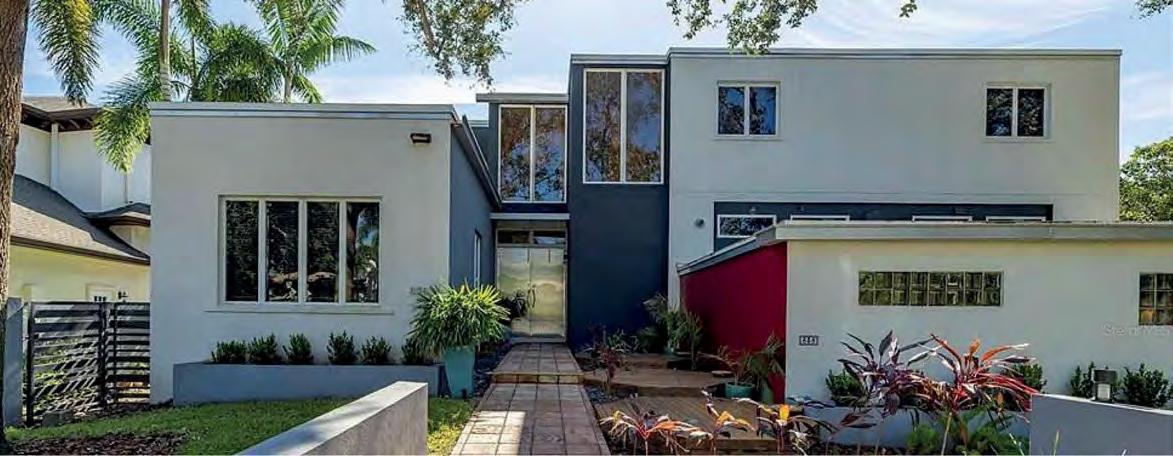
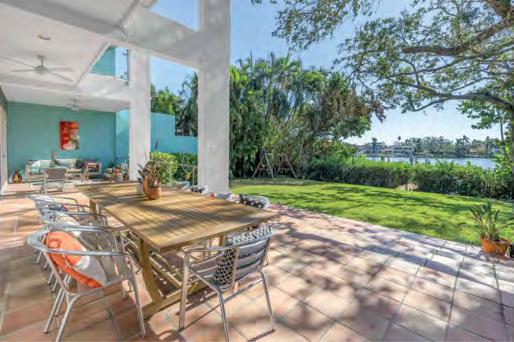
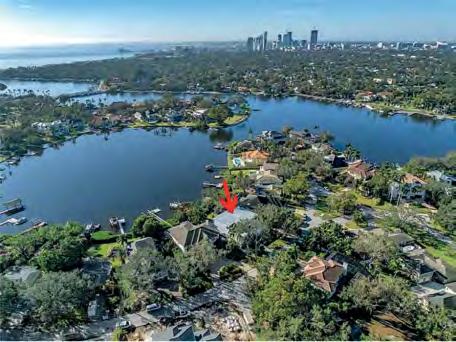
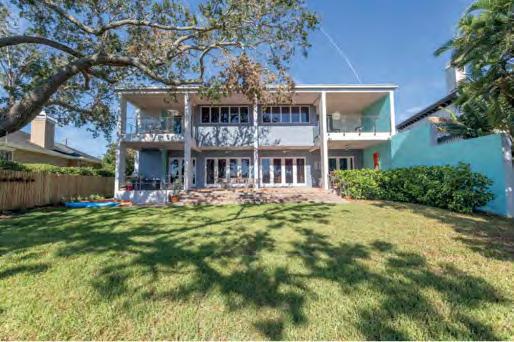
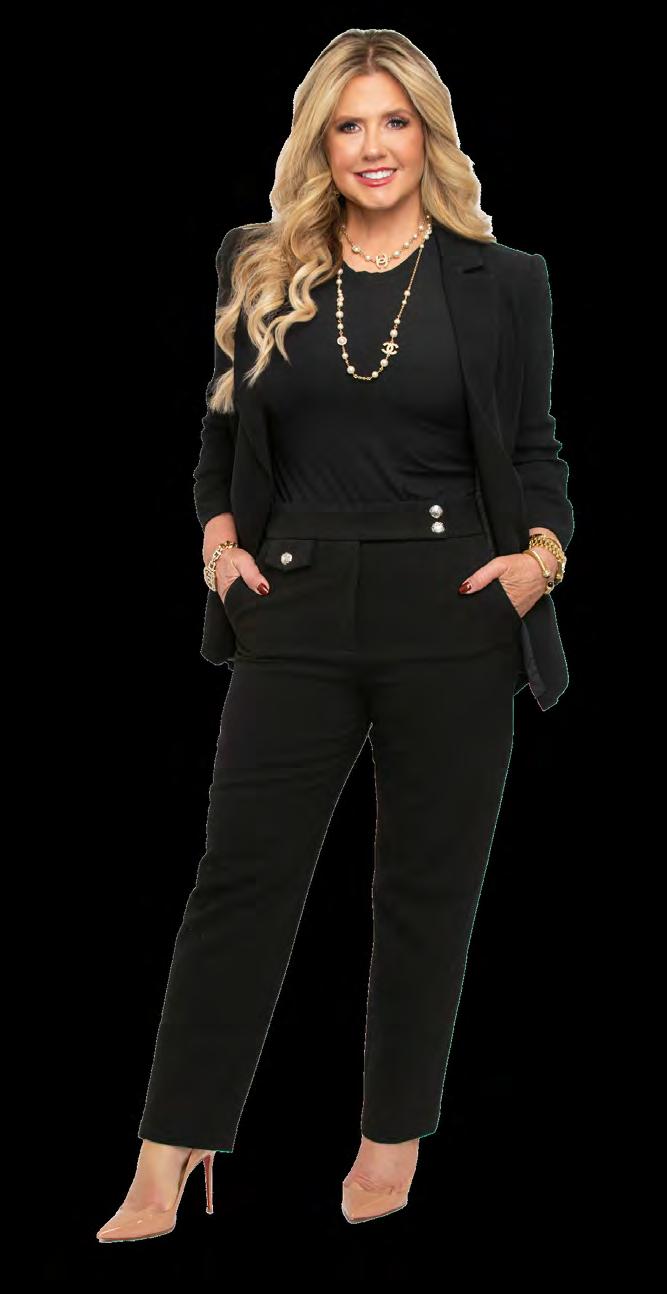
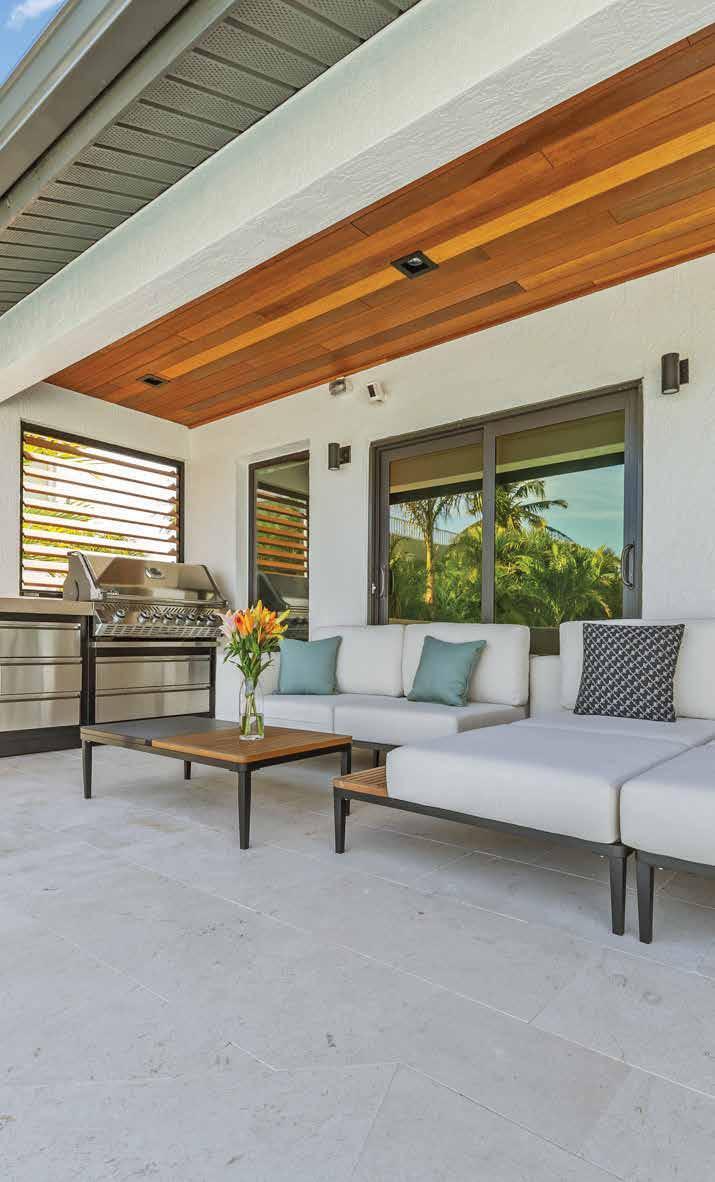
ELEVATED LUXURY ON SNELL ISLE, BUILT ABOVE THE FLOOD ZONE
LISTED EXCLUSIVELY BY BILLY HARVAR
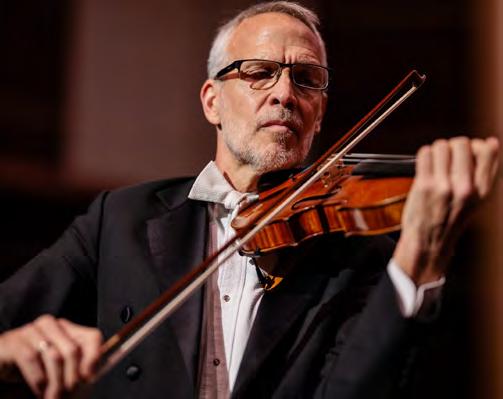
FEATURING JEFF MULTER FOR DVORAK'S VIOLIN CONCERTO
May 15 - 17
AMERICA 250 RHAPSODY IN BLUE
$20 TICKETS IN ADVANCE FOR KIDS
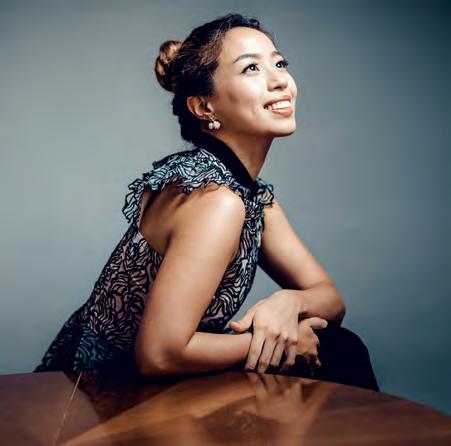
Salute the very best of America in music. Featuring George Gershwin’s jazz-infused classic, with pianist Michael Chertock. Bob Bernhardt conducts.
Fri, May 22, 8 pm, Straz Center Sat, May 23, 8 pm, Mahaffey Theater
BRAHMS' SYMPHONY NO. 4 RACHMANINOFF’S PIANO CONCERTO NO. 2
INDULGE IN LUSH, ELECTRIFYING MELODIES
May 29 & 30
Straz | Mahaffey | Ruth Eckerd Hall RAYMOND JAMES POPS
Straz Center | Mahaffey Theater
DEFYING
GRAVITY:
THE MUSIC OF STEPHEN SHWARTZ & FRIENDS
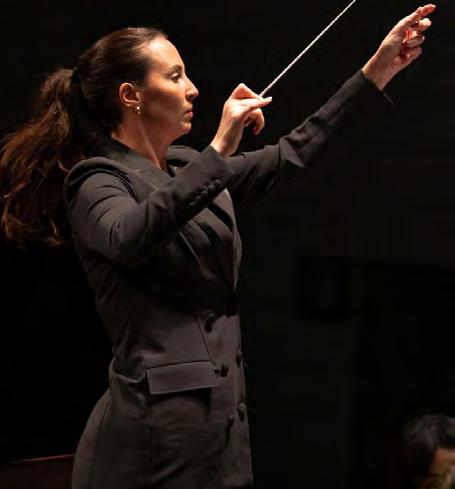
CHELSEA GALLO CONDUCTS
June 7 Straz Center
HOUGH FAMILY FOUNDATION MASTERWORKS
HOUGH FAMILY FOUNDATION MASTERWORKS
RAYMOND JAMES POPS
Michael Francis, Music Director
WHAT MY CLIENTS ARE SAYING
“If you want results, look no further than Becky and Taylor! This was our fourth time working with Becky, and she continues to exceed expectations. Her advice on prepping our home and hitting the right price point was spot on. Taylor’s video marketing was top-tier, generating massive interest the moment we went live. We were on the market for just two days before the offers started pouring in. Becky’s insight into the pros and cons of each offer made the closing process seamless. We couldn’t be happier and wouldn’t dream of using anyone else in the future. Highly recommended.”
- Susan Pollard
good
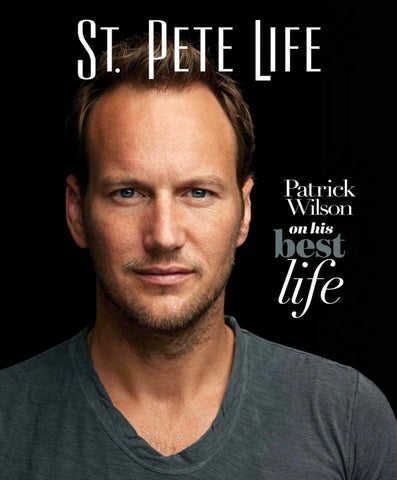
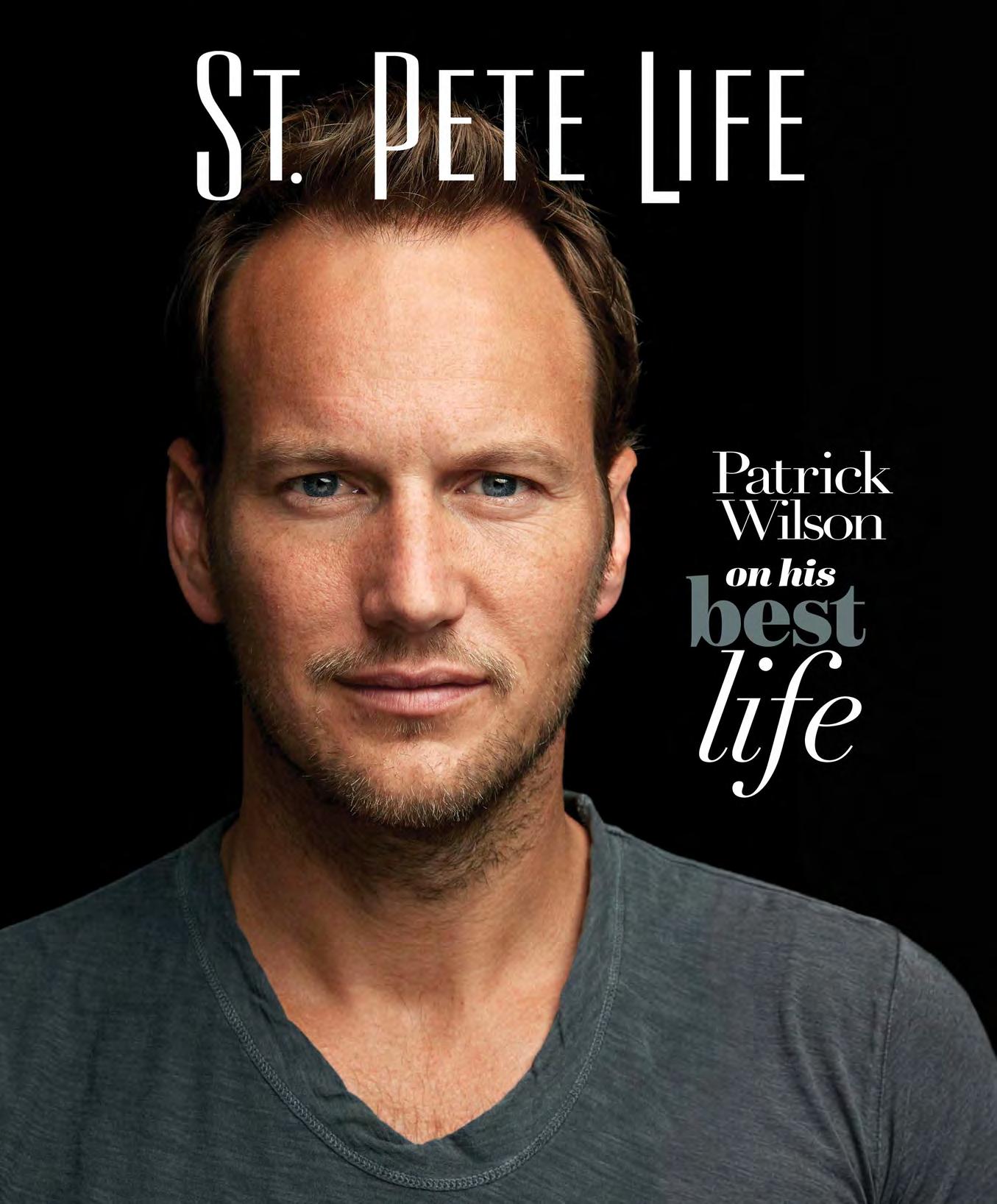
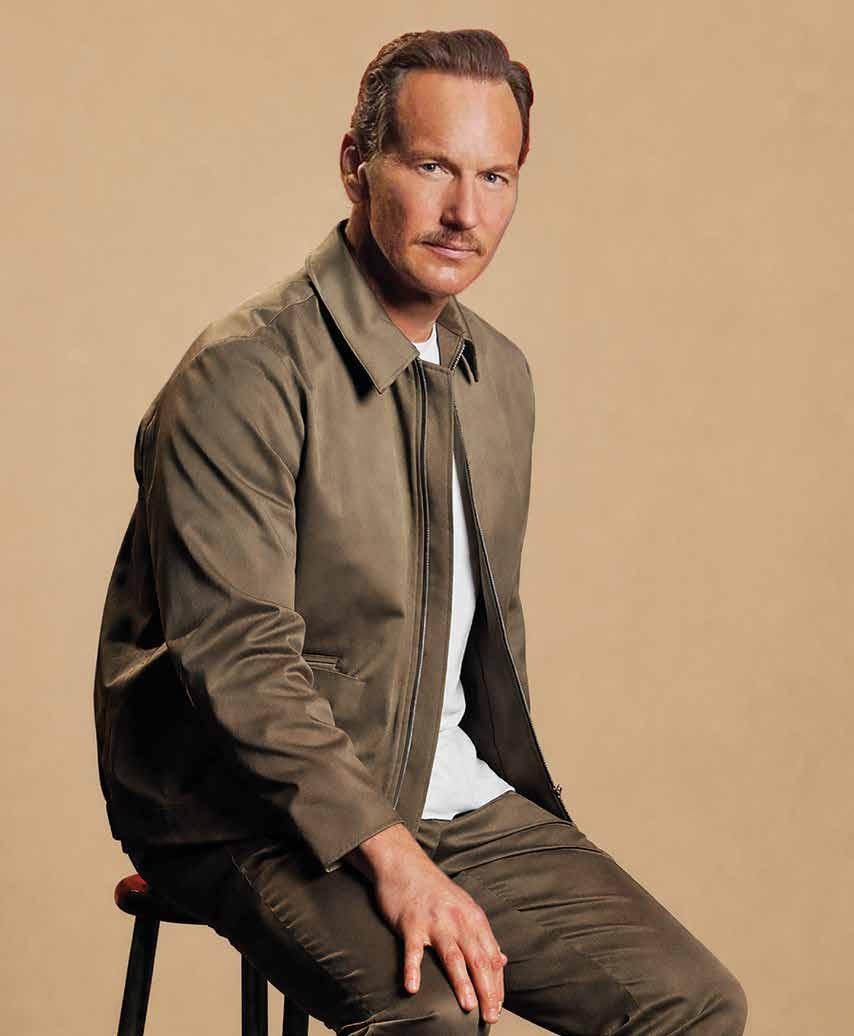
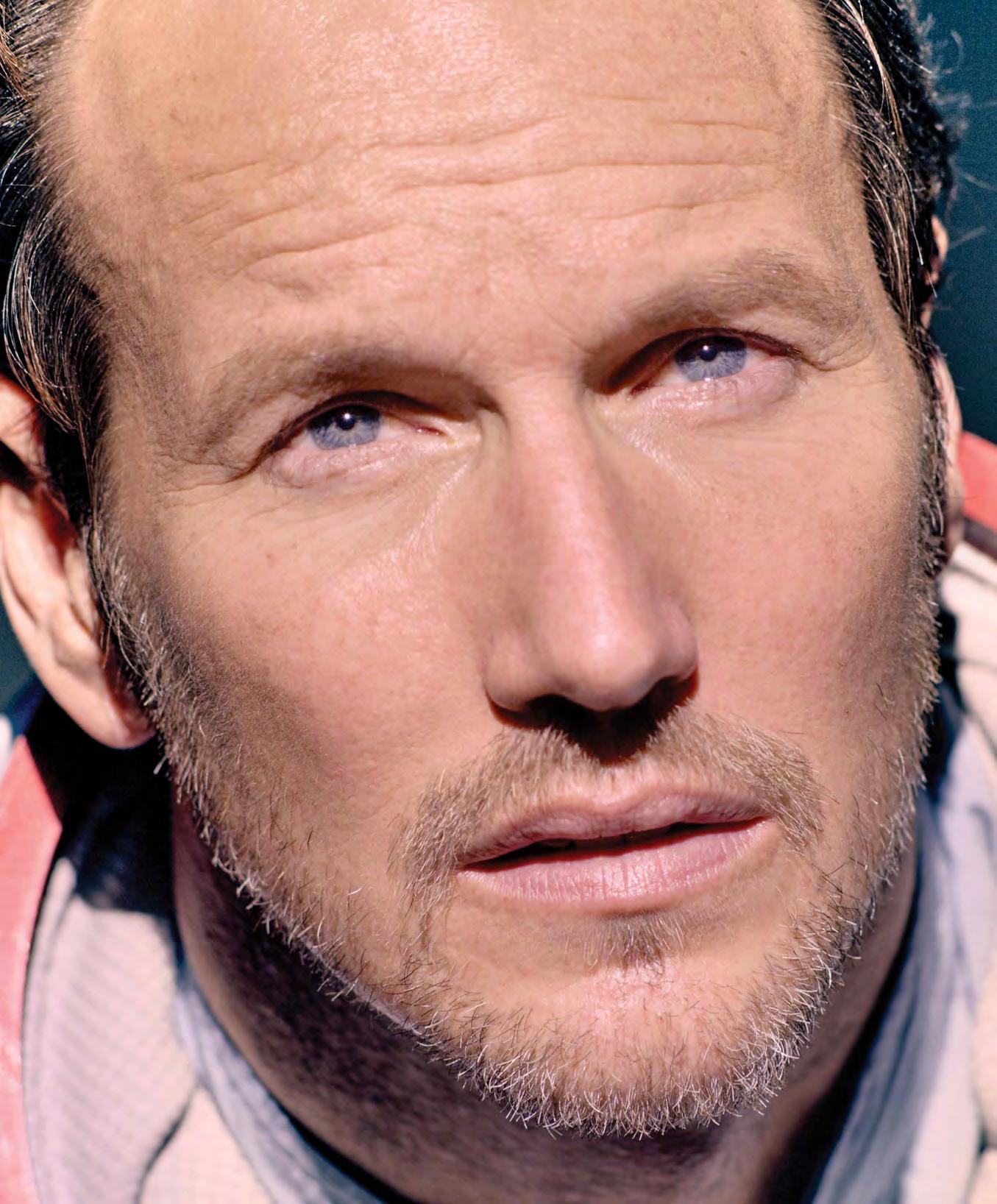
WITH A HIT MUSICAL ON BROADWAY, AN EAGERLY ANTICIPATED NEW TV PROJECT PREMIERING IN JUNE AND A LIVE PERFORMANCE IN ST. PETE THIS MONTH, PATRICK WILSON MANAGED TO CARVE OUT TIME TO CHAT ABOUT WHAT DRIVES HIM AND WHAT KEEPS HIM GROUNDED. BY NICK STEELE
The guy
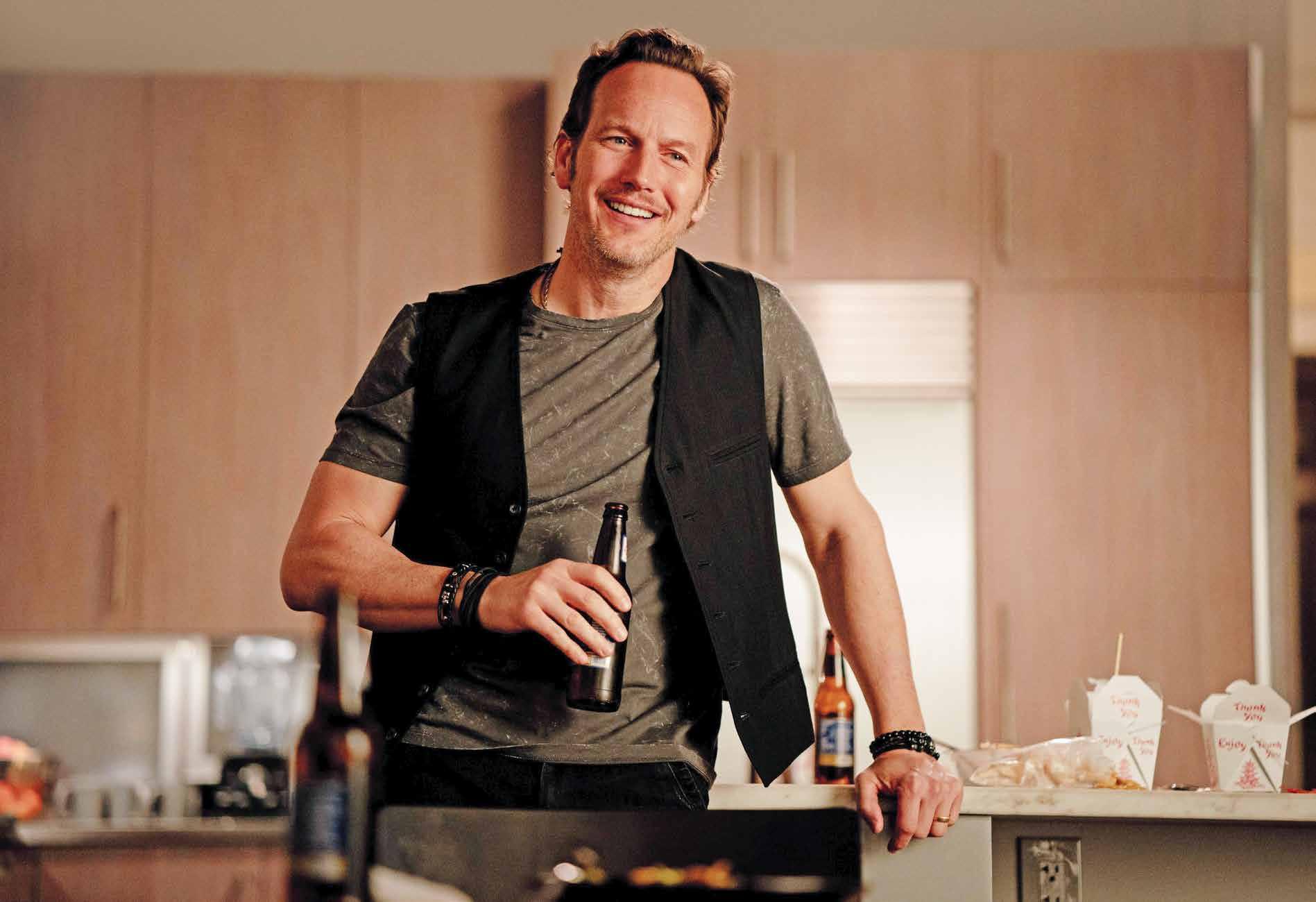
Last year, Patrick Wilson appeared in the Netflix film Jay Kelly, directed by Noah Baumbach, in a small but pivotal role among an ensemble of powerhouse performers including George Clooney, Adam Sandler and Laura Dern.
In the film, Clooney plays a renowned movie star whose best days are behind him, who is coming to grips with the impact his career has had on his personal relationships and the kind of legacy he will leave behind. It is ultimately an examination of the movie star phenomenon and the consequences of fame.
Wilson por trays a younger star who has had a less explosive career trajectory, but who has a robust family life. The 52-year-old character creates an interesting counterpoint to Clooney’s Kelly, who exists in a kind of celebrity snow globe of reality curated by handlers and is recognized by the public everywhere he goes.
Wilson describes the film as a "meta" experience that mirrors the machinations of the Hollywood machine, but says
he believes there are valuable lessons about our personal choices and the complexity of our emotions that make the film’s message universal.
It also creates a natural parallel to Wilson's own life and career, how he has become a highly recognizable performer and the degrees of fame.
Like many other actors, he likes to joke about being mistaken for other actors from the “squint and you can kind of see it” types like Chris Pratt and Will Arnett to some implausibly hilarious ones.
“Paul Newman, George Bush and Pat Boone all in one week,” Wilson recounts of some of his oddest instances of mistaken identity. “Really, it's true.”
It’s something many of the world’s most famous performers deal with daily, but Wilson believes while recognizable, people may struggle to know where they know him from.
“Let me put it this way. I've been out with people who are on TV sitcoms and because you're in their living room every week, they feel like they know you,” he explains. “But that's
not my kind of fame. Now to horror fans, I am super famous because of The Conjuring and Insidious and they're so nice and appreciative, but I don't get hounded by or have the whole screaming girls running down the street type of fame.”
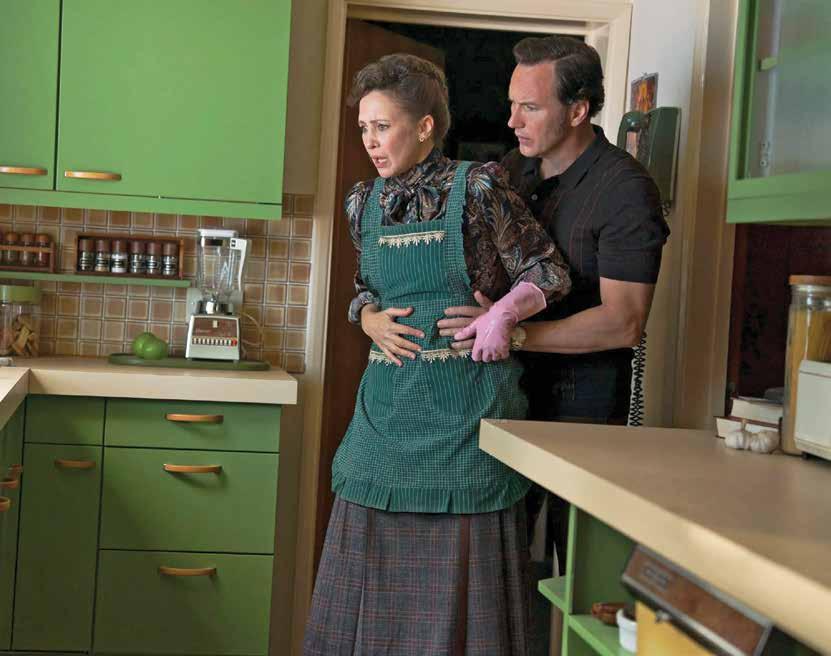
Perhaps not, but he does still regularly gets recognized for two iconic early lead roles that he originated, namely Jerry in the Broadway musical The Full Monty and Joe Pitt in the acclaimed HBO miniseries Angels in America.
Even though he occupied those characters over 20 years ago and, as he says, is probably now more famous currently for his big box office success in the horror film genre, people still mention them. And therein lies one key factor that makes him difficult to place—different audiences have different reference points for him based on the given project you know him from.
The second factor is that although he has striking leading man good looks, Wilson has been celebrated as a versatile everyman actor who is often praised for his versatility and ability to transform for a role, garnering praise from such recent collaborators as Clooney, who says he has maintained a friendship with Wilson for "20-some years."
“He's good!" Clooney says. “Every time he's in something.”
Director James Wan, who has worked with Wilson on six films, is equally effusive in his praise.
“I just love Patrick. He is such a great leading man,” Wan says. “Such a great actor!”
Over the course of his career, he's appeared in over 50 film and television projects, although the classically trained performer actually got his start on the stage. Notable film roles include The Phantom of the Opera, Watchmen, Little Children, Hard Candy Aquaman and he has shared the screen
with the likes of Al Pacino, Samuel L. Jackson, Kate Winslet, Rachel McAdams, Halle Berry, Charlize Theron, Harrison Ford and Meryl Streep.
He achieved a different level of visibility and mainstream recognition with The Conjuring, which made history as the biggest-ever opening for a horror movie, and Insidious, both of which went on to launch massively successful horror franchises. Those projects positioned him as a central figure in one of the most commercially successful genres in modern film, while underscoring his ability to lead a blockbuster.
But Wilson did not start out dreaming of becoming a household name.
“When I got into the business I didn’t have any grand plans. I grew up singing in my mother’s church choir, but as a kid I never really studied drama. I did musicals in high school, but I never dreamed I’d be singing and dancing on Broadway,” he recalls. “I always knew music would be a part of my life. I never had any grand plans of wanting to be in a band, whether it was a boy band or a rock band. That was never really my vibe, but I always knew that music would be a part of my life. I didn't really decide on musical theater until I was in college.”
But the seeds of his love of music and performing can be traced back to his childhood.
“We did grow up in a real musical household. My mom was a choir director and my parents sang together
quite a bit,” Wilson shares. “When we were kids, we all played an instrument, Mark was violin, Paul was trumpet and I started playing drums. I guess I was probably 11 or 12. Then Mark transitioned from violin to guitar. We really gravitated towards Van Halen because we loved the music. That’s when we started playing together. And for me as the youngest brother, the way to be able to play with your brothers, I loved It. It was always a way to spend time with my family. I'm four and a half and six years younger than those two, but I knew if I could be a decent drummer, they would be like, ‘Okay, you're allowed in.’ We really gravitated towards Van Halen because we loved the music. I remember we used to do these like lip syncs and air guitar competitions and stuff, before we could actually play the stuff. We just acted like we could. We were three boys growing up in the ‘80s, so most of our days were either church music or listening to a lot of Van Halen. Then we go off and we have our lives and our careers and our families, but we had this idea for Mark's 40th birthday.”
“We really just kind of wanted to show Mark off,” he recalls. “We rolled through 30 songs that we had not played since high school. We felt like, for guys that are just screwing around this is pretty good. It was really organic. There wasn't some grand plan. Like, in our 40s we're going to start a band. It just kind of happened.”
And so, together with his brothers, Mark, who is a local Emmy award-winning news anchor and Paul, who owns the advertising, marketing and public relations firm Wilson Media, formed The Wilson Van and perform benefit concer ts when their schedules allow. And what started as a shared love of music has become an ongoing way to give back and raise money for such organizations as Paws for Patriots, the St. Petersburg Free Clinic and the Johns Hopkins All Children's Hospital.
On May 24th they will perform at Ferg’s Concert Pavilion, with proceeds supporting the foundation’s work. The show will include guest performers and collaborators from within their extended musical circle.
His crowning moment as a singer, however, came ten years ago when he found himself being summoned to work with none other than Barbra Streisand who asked him to perform a duet of "Loving You" from the musical Passion with her for her album Encore: Movie Partners Sing Broadway.
“Patrick Wilson sings with such passion,” Streisand shared. “It was a joy performing with him. He’s not only a TV and movie star, but he’s also an accomplished Broadway actor with a really amazing voice.”
“It started as, ‘Hey, she's putting together this album. She'd love for you to sing on it… they'd like to fly you out.’ So I go out there and I absolutely loved working with her, singing with her, spending time with her. She has one of the greatest voices in the modern era. It was really special. And then it was like, actually, we think we want to bring you out again because we want to do it with the orchestra. Then they said, she's going to do a couple concerts, would you want to do it? So I did two shows at the Barclay Center and I did a show in Miami with her. And then it was like, ‘So she's gonna do a town hall for Sirius, and she'd like you to moderate.’ And I was like, what is happening right now? It was like the gift that kept on giving. It was a really great time of my life and certainly a high point in my career.”
When the subject turns to the inevitable nerves that come with working with such heavy weights, he chuckles and leans in.
“Of course I'm nervous, but it's like, those are the nerves that you want. It's like, let's go, let's go…here we go,” he enthuses. “I've always been the type of person. I guess that's
self-assurance and I don't know where that comes from, but I love it. I love digging in with those types of people. I try to take advantage of the opportunities in front of me and I always try to push myself to do something new every year.”
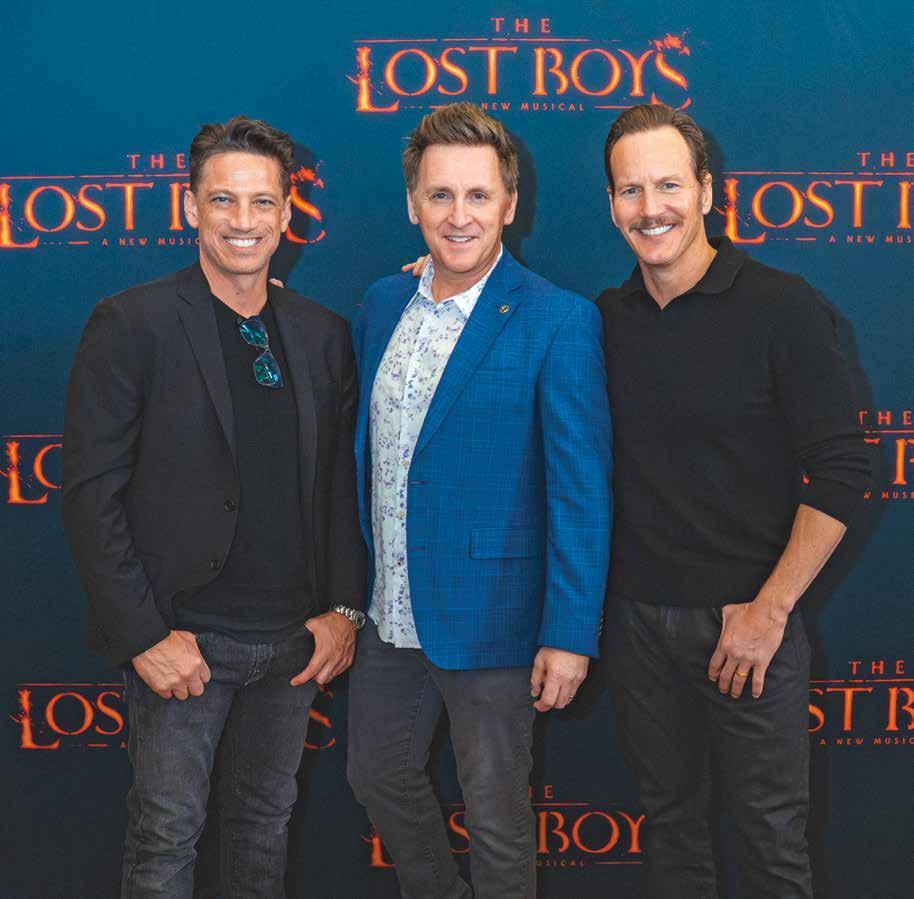
Even now, as Wilson’s career continues to move in multiple directions simultaneously, it is that impulse driving it. Wilson is currently producing the Broadway production The Lost Boys at the Palace Theatre with two college friends Marcus Chait and James Carpinello. And he’s starring in a new adaptation of Cape Fear alongside Javier Bardem and Amy Adams on Apple TV, which will premiere on June 5th.
It’s clear he’s enjoying the current moment and doesn’t plan on slowing down any time soon. Unlike Jay Kelly, Wilson has found a way to navigate fame without losing that everyman quality that makes people feel like they know him even if they can’t always recall from where.
Visit tinyurl.com/WilsonVanBenefit for tickets and find The Wilson Family Foundation on Facebook.
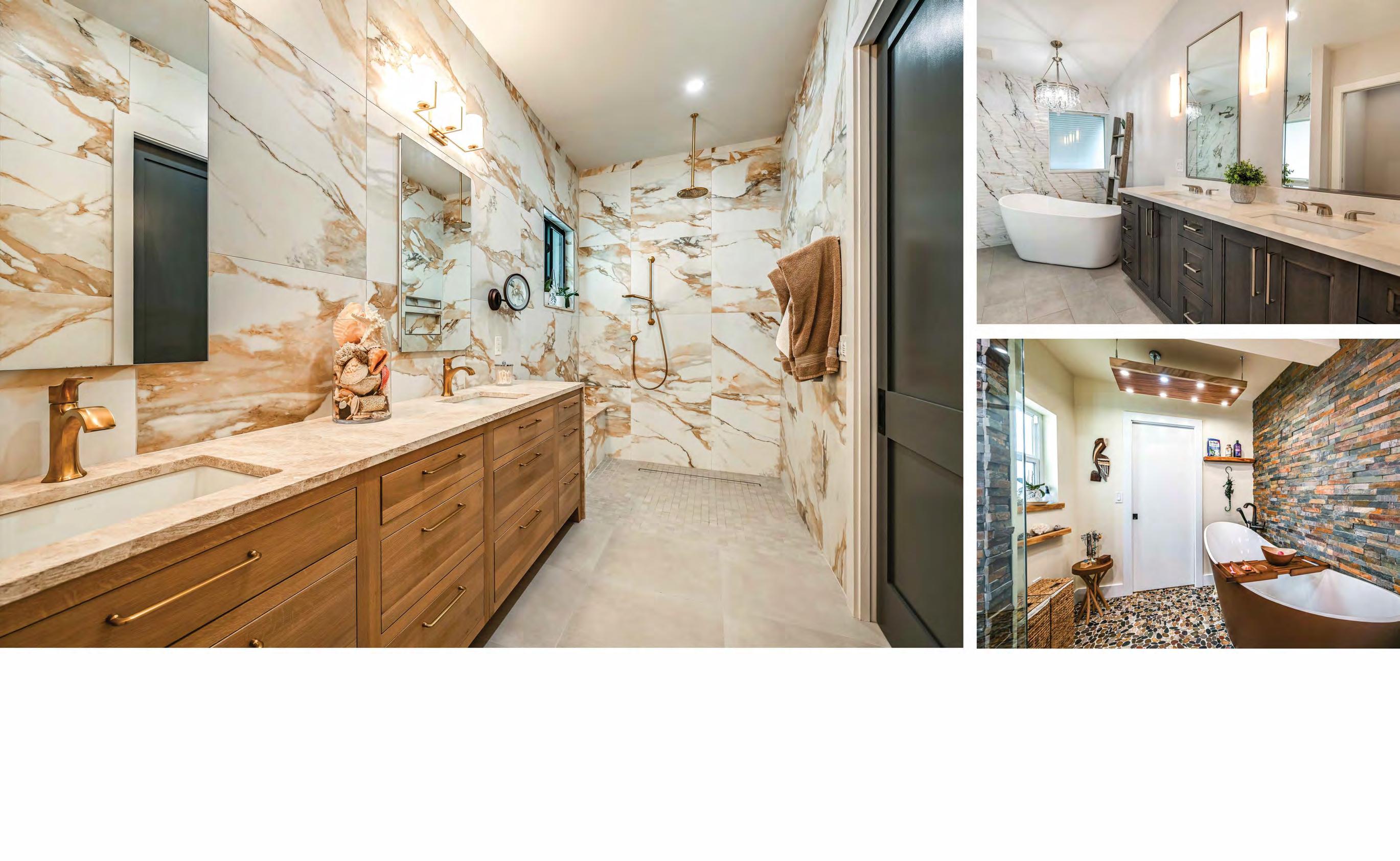
A curated collection of award-winning homes from NARI Tampa Bay’s Remodeler of the Year (RotY) Awards—recognizing the region’s most exceptional remodeling projects where thoughtful design and expert craftsmanship come to life.
SPA THAT LIFE
AS THE ULTIMATE INSIDER IN WELLNESS, BEAUTY AND SPA CULTURE, WE CONNECTED WITH ST. PETE-BASED JOURNALIST DANA WOOD, WHOSE WORK HAS APPEARED IN THE WALL STREET JOURNAL, W MAGAZINE AND INSIDER’S GUIDE TO SPAS, TO EXPLORE THE RITUALS, DESTINATIONS AND RESULTS-DRIVEN TREATMENTS SHAPING HER APPROACH TO WELLNESS AROUND OUR AREA AND BEYOND.
Healthy Habits
Wood says her on-repeat St. Pete beauty and wellness go-tos balance recovery and indulgence. As an avid tennis player who is on the cour t at least four times a week, her regular routine is focused on recovery to manage all that wear and tear. Northeast Park Shopping Center anchors her local wellness routine, where she visits MassageLuXe Spa for Swedish bodywork and attends hot yoga sessions at Crunch Fitness, led by Daiva Di Vito.
“Both hurt a little but in a really good way,” Wood offers.
Visit massageluxe.com and crunchfitness.com to learn more.
Face First
For more targeted skincare work, she turns to iConcierge, where her approach is fully customized through the medspa’s No Add-On Facial, featuring Epicutis products.
“My esthetician chooses the optimal glow-getters for exactly where I am in that moment,” Wood explains. “Do I need exfoliation? Hydration? A little of both? No matter the service, we wrap up with a cooling biocellulose mask and sculpting ice globes to reduce redness, ensuring I have the option to head straight out to dinner afterward.”
Visit iconciergemedspa.com to learn more.
Local Knowledge
For visitors seeking a defining local spa experience, Wood recommends Spa Oceana at The Don CeSar.
“With 16 private rooms, it feels expansive, especially if you book one of the ‘Gulf view seaside’ treatment suites,” she explains. “A standout from the services menu is the Ocean Voyages collection, themed around the Indian, Pacific and Atlantic oceans. They weave-in all manner of indigenous ingredients and inspirations, from the Hamsa Healing Ritual featuring Tibetan singing bowls and the Hawaiian Lomi Lomi Massage, to a sweet tea- and beach grass-infused body scrub.”
Visit doncesar.com to learn more.
Hair Apparent
Following a similar philosophy of maintenance, even her hair appointments include sensory wellness.
Wood recently started going to Leaf AVEDA for hair color, which she playfully refers to as “re-blonding.”
“Talk about an elevated salon experience. Not only has my hair never been healthier, but as soon as I check in, I’m given a menu of gratis add-on mini spa services to choose from. I always opt for the scalp massage, but toggle among the others,” Wood shares. “On my last visit, it was an aromatherapy treatment with one of the brand’s seven Chakra Balancing Pure-Fume Mists. I chose Wisdom, which targets the crown chakra with a heady mix of angelica and olibanum. So good!”
Visit leafavedasalonspa.com to learn more.
Pleasure Trip
A short drive south, the Spa by JW at JW Marco Island Beach Resort offers an accessible and indulgent wellness getaway.
Home Rules
At home, Wood’s spa philosophy is centered on water as a reset point.
“I make it my business to recharge in hot tubs, in both the one on my back patio and the smaller one in my guest bath,” she shares. “When I’m opting for an indoor soak, I like to play amateur bath salt mixologist. I have so many beloved brews, but my (pruney) hands-down favorite is the Deep Sleep Beauty Soak by UK wellness brand This Works. Another salt I seriously love is Kourtney x Barker Wellness Calm Magnesium Bath Flakes. These salts are formulated to ease tension, support recovery, promote overall well-being and are wildly relaxing.”
Visit us.thisworks.com and barkerwellness.com to learn more.
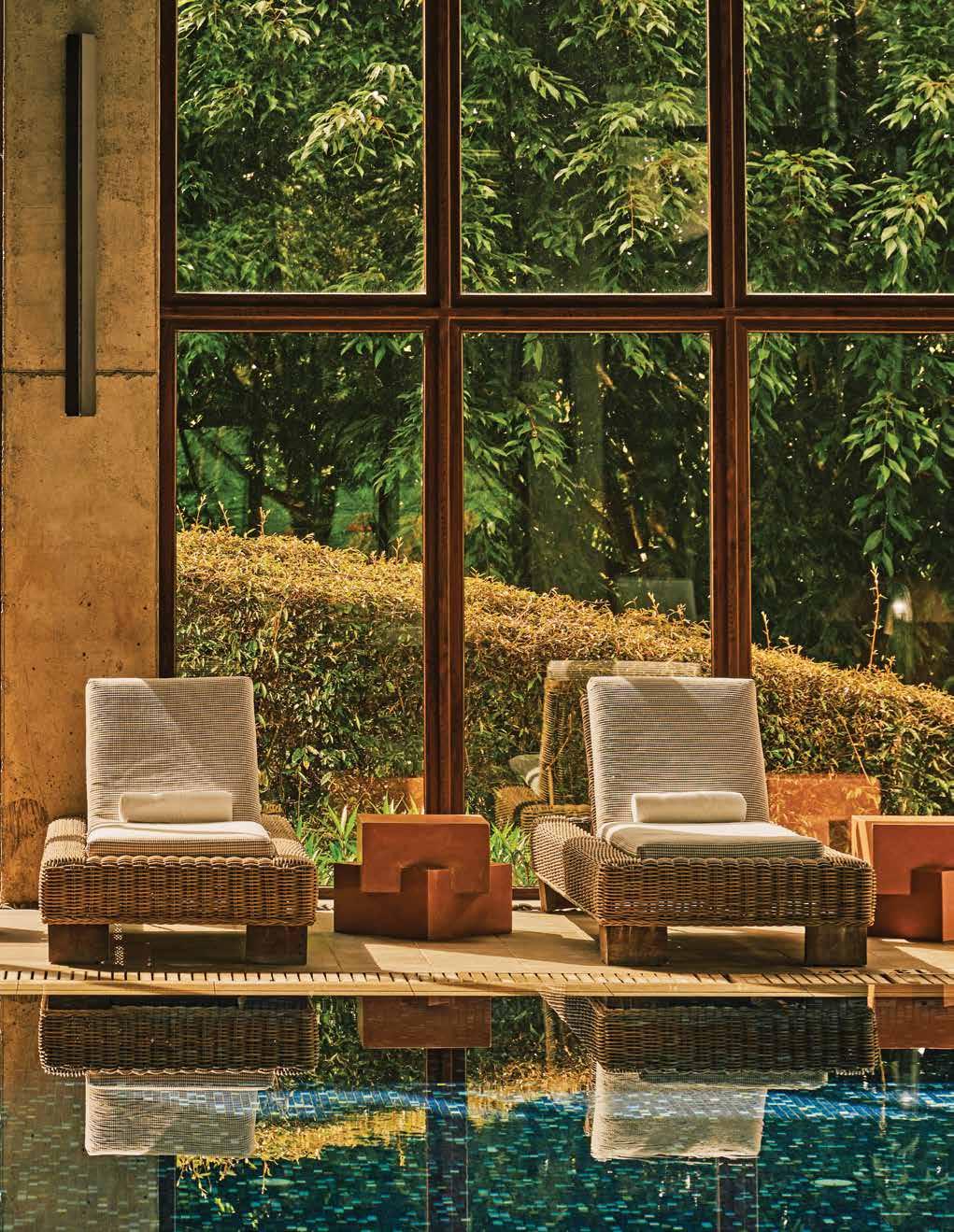
“Call me a super-fan,” Wood enthuses. “Tucked away in the north end of the resort, the sprawling 24,000-squarefoot facility is home to not only umpteen treatment rooms, but a fully equipped fitness facility with its own separate pools and relaxation lounges–plural. Why have one pool and relaxation lounge when you can have several?”
She explains that the treatments and itineraries are booked around four main “end-goal-in-mind” concepts: Calm, Nourish, Invigorate and Renew. Signature offerings include the 50-minute DTR (Deeply Transformative Relaxation) massage and facials built around the BABOR skincare line, including the Rose Quartz Gua Sha Facial with HSR (High Skin Refiner), a lifting formula designed to address the visible signs of aging—specifically wrinkles and loss of firmness.
The surrounding natural beauty enhances the experience, creating a sense of restorative wellness that defines the overall vibe.
“You look out the treatment room window and all you see is sand and water,” she shares. “If that doesn’t say luxury spa setting, I don’t know what does.”
Visit spabyjwmarco.com to learn more.
Seasoned Perspective
Wood’s approach to self-care and spa culture is defined less by indulgence and more by intention.
“Resist the temptation to book back-to-back services. Instead, build downtime in your day. Whether you’re just lounging in the relaxation room, sipping cucumber-infused H20 or bouncing between the sauna, steam room and an icy plunge pool, really soak up that spa ambience,” she advises. “And leave your phone in your locker. If you want photos for social media, take them either before or after your treatments.”
Wood notes that there is no need to feel pressured to purchase the products used during services, but adds that if you truly loved a particular cream or essential oil, those small indulgences are an ideal way to bring the spa experience home.
Far Flung Getaway
For a more ambitious escape, Wood points to Hacienda AltaGracia in Costa Rica, set in the mountains of Pérez Zeledón within the San José Province, a wildly lush and remote region threaded with coffee farms.
“It’s quite the trek from Florida and you’ll need to be okay with a short flight in a tiny prop plane to access the main property, which is stretched out over 18 acres,” she offers. “The 50-casita resort is, in a word, spectacular, but it’s the spa, especially the jaw-dropping Casa de Agua, that’s the true must-visit. It and the Estée Lauder Skin Longevity Institute are not to be missed.”
At its center, Casa de Agua serves as a sculptural spa environment defined by glass walls, elevated thermal design and immersive hydrotherapy spaces. The entire space feels designed around slowing the body down, from heated marble beds to mineral mud treatments that feel almost elemental. The Estée Lauder Skin Longevity Institute adds a modern counterpoint, offering “state-of-the-ar t facials” and marks the brand’s first such institute in the Americas.
Visit auberge.com/Altagracia to learn more.
The Social WORKOUT
ON THE SANDS OF ST. PETE BEACH, 727FIT TRANSFORMS A WORKOUT INTO A SHARED RITUAL WHERE CONNECTION, PLAY AND COMMUNITY TAKE CENTER STAGE.
By Tara MacIntyre | Photos by Emily Will
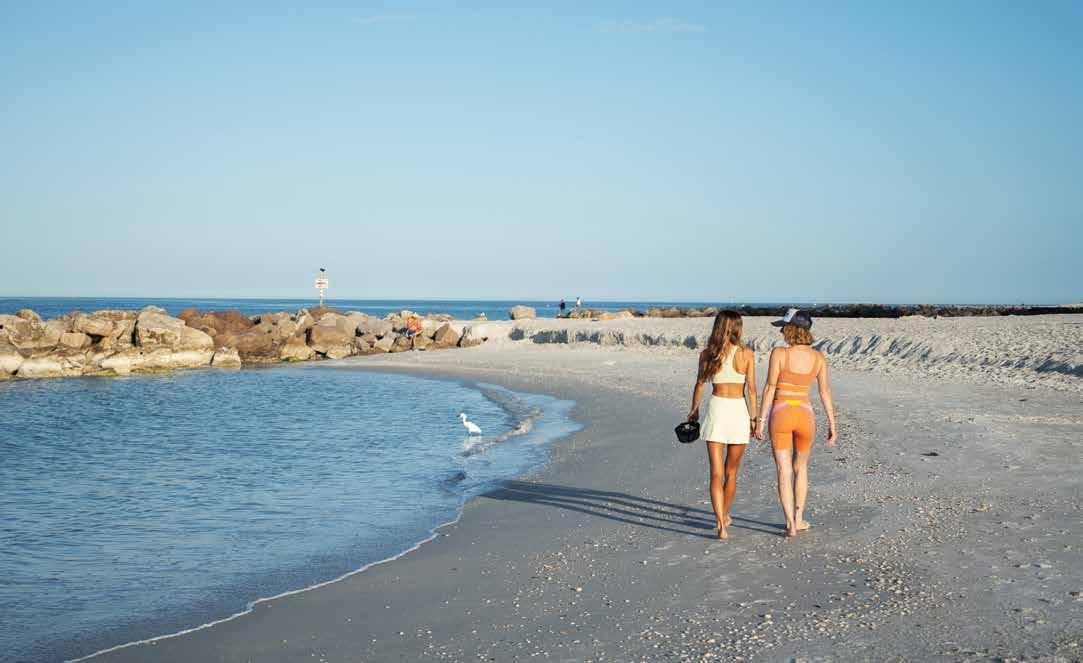
The sun smiles down on Upham Beach as reggae beats drift through the salty air. Barefoot early risers gather in small groups, stretching in the morning light. At first, many linger quietly, still waking up as the beach comes to life around them. At 9am, a whistle cuts through the air and the action begins. The warm-up starts with a popular variation of the childhood game Sharks and Minnows, where "sharks" stand along the shoreline and attempt to tag a larger group of "minnows" as they sprint from one side to the other.
Following the playful warmup, participants gather in small huddles to introduce themselves before the main workout begins.
They move through quick challenges—snake runs, wheelbarrow relays and bursts of jumping jacks between rounds. Loose sand adds resistance under foot as teammates cheer one another on by name.
The format is a cross between a beach olympics and a middle school field day, where competition meets camaraderie and fitness feels a little more like play.
That energy defines 727FIT, a beach fitness meetup founded by Sydney Gault and Ava McGuire last Spring.
McGuire, who designs the group’s workouts, followed her parents to the Gulf Coast from Wisconsin. She has since established herself as a local coach while pursuing graduate studies in sport and performance psychology for athletes. Gault, who attended high school in St. Pete and works in marketing, manages the group’s branding and social media presence.
The two crossed paths at a beach workout in Sarasota in 2025. Over brunch afterward, they started talking about how the beaches around St. Pete might be the perfect setting for something similar, less about performance and more about bringing people together
So, they decided to give the idea a trial run.
“I said, ‘Invite 10 of your friends and I’ll invite 10 of mine,’” McGuire recalls. “We just wanted to see if people would enjoy it.”
Word spread quickly. Friends told friends and word of mouth met its modern match on social media.
727FIT was simply launched through an Instagram account to promote their activities—no traditional website, just posts about upcoming workouts alongside photos and videos of the group hitting the sand, splashing into the water and enjoying an opportunity to socialize.
Gault says capturing that energy through this specific channel was an essential part of their strategy.
“With our age range, people check social media before they go to something,” she explains. “So, we wanted people to see exactly what it looked like. When you look at the photos and videos, everyone’s smiling and laughing.”
“We wanted people to feel like they were a kid on the playground again,” McGuire says. “Just having fun.”
That element of playfulness is why the workouts intentionally start with games, which the pair say help newcomers relax and
ease the pressure often associated with fitness culture. Both 25, they are keenly aware of the expectations to appear perfect, flawless, or "unreal" on social media, a phenomenon often called socially prescribed perfectionism.
“In today's world, you see people that just look unreal all the time,” Gault shares. “We’re all out here sweating in the sand. Just be comfortable and no one's gonna care.”
“It’s not a beauty pageant,” McGuire echoes.
The twice-monthly workouts draw those seeking a more social way to stay active than a typical gym can offer. Most attendees fall somewhere between their early 20s and mid30s, though the workouts are open to anyone interested in attending. Participation is typically free, though some workouts are donation-based or carry a small $5 fee to help fund equipment for future events. They have also hosted special fundraising workouts for local groups like the Children’s Dream Fund, raising $600 for a local nonprofit that fulfills dreams for children and youth with life-threatening illnesses through experiences, gifts and trips.
For regulars like Ava Moncayo, who has been attending since the beginning, the workouts have become something of a Sunday Funday.
“You wake up, run into the water, get those ocean vibes and already feel accomplished,” Moncayo says.
That’s exactly the feeling the founders hoped to create.
“Technology is taking over and we're trying to help people get away from their phones and get outside. Be in the sun, feel the sand, enjoy the environment that St. Pete gives us,” Gault enthuses. “For anyone who's putting themselves out there or moving to the city, it's so hard to actually meet people in person. We really want to foster a community that allows people to just come, be themselves and have a good time.”
“It’s intimidating to walk into a fitness setting. You don’t know what to wear or what people might think,” McGuire offers. “Here you just come to the beach. You either love fitness or you love the beach—and you're going to meet 20 other people who feel the same way.”
That openness is part of the draw for participants like Kemper Reback, who makes the drive from Tampa to attend.
“I’ve made several new friends here,” Reback offers. “Everyone feels welcome.”
Isaac Martin, a Massachusetts transplant now living in Pinellas Park, says the beach workouts offer a refreshing break from the usual indoor fitness routine.
“I have a gym background, but in Florida my gym is my backyard and the beach,” Martin shares.
Partners and sponsors are also part of the mix. This morning they are partnered with the Reggae Rise Up festival with a drawing for tickets up for grabs and attendees refuel with protein muffins from Ideal Nutrition.
These added elements keep the atmosphere light while giving participants another reason to stay engaged.
Looking ahead, the founders hope to expand 727FIT with pop-up workouts in downtown St. Pete and other beach towns across the region.
Plans are also taking shape for a special 727 Day workout in July as part of the annual citywide celebration of St. Pete’s community spirit.
As the morning winds down, some attendees stay for an impromptu beach day, cooling off in the surf or mingling with new friends, while others drift toward nearby coffee shops or the Corey Avenue Market.
Connections continue online and in person as participants share photos, tag teammates and make plans to return for the next meetup.
While reflecting on the community they’re building, the pair share how they live their best lives by intentionally pursuing what sparks joy for each of them.
“I’m stepping out of my comfort zone continuing to learn and challenge myself—and to find joy in failure,” McGuire says reflectively. “That has been really, really big for me.
I also think there's a shift from, ‘This is what you should do, this is what is normal to do,’ to ‘This is actually what I want to do and this feels a lot better.’ There’s power in choosing yourself. It's not selfishness. When you're choosing yourself and doing the things that make you feel good, you can show up for the people in your life more positively.”
“Life is meant to be lived every day,” Gault adds. “It's up to you to decide what that life is going to be. There are going to be good things and bad things that happen to you. At the end of the day, it's how you deal with those things. I choose living in the moment and doing things that make me feel like the most positive, happy, real version of myself.”
Follow @727fit on Instagram to learn more.
TIME TILE
Mahjong newbie Dana Wood has followed the game all over town and found a community along the way.
For many, Mahjong is a pastime inherited from grandparents, a centuries-old tile game that’s been played for generations in communities around the world.
Boasting a long, intricate backstory, the tile-based game originated in China’s Yangtze River Delta region and traveled across cultures, changing as it went. In the U.S., the version popularized by the National Mah Jongg League introduced structured hands, annual cards and the now-essential joker tile,
creating a faster, more social style of play. For decades, it held a strong foothold in Jewish communities, where the game became as much about gathering as gameplay.
Today, that same social energy is appealing to a more diverse group of players, where it’s as much about conversation, snacks and laughter as the tiles themselves. For me, it was something entirely new—discovered at card tables tucked into church halls, cafes and clubhouses, then carried home and shared again.
I can thank Lynn Denson, a former neighbor, for getting me into “Mahj,” as I call it. After texting to invite me to a no-cost, four-week beginner program she was starting on behalf of our church, I couldn’t get to Monsignor Caverly Hall fast enough. I’m a joiner. Joiners aren’t intimidated by a roomful of card tables strewn with mountains of mysterious tiles.
Sure, I stumbled. One week I even ended up with six jokers and still didn’t manage to call Mahjong. But the missteps were part of the fun and the social energy in the room made every session feel like a party disguised as a lesson.
As soon as that class wrapped, I typed “St. Pete Mahjong tutor” into a search engine and up popped Gaia Banovich. Like me, she’s a transplant from New York City. Unlike me, she’s a Certified American Mahjong Instructor and has crafted her own “Mahjong Made Simple” teaching method. I happily splashed out on her “Intro to Mahjong” and “Mahjong 102” semi-private lessons and then bravely ventured into an organized competition she was putting together under the auspices of The Mahjong League.
Yes, mere months after I’d racked my first tile, I signed up for the first-ever Tampa/St. Pete chapter of this national-in-scope league. For eight weeks—give or take a session or two I missed for work-related travel—I parked my tush at the beginners table in the back room of Pour & Décor on Central Avenue and dove in.
of vino off the tiny table and send it crashing to the floor, I decided the Sauvignon Blanc could wait for later.
Players
of different ages and backgrounds gathered at tightly spaced tables, learning the rhythms of the game together.
I honestly didn’t care that I was always—always!—at the bottom of the weekly league leaderboard. I was learning, my fellow players were hilarious, and Pour & Décor has some delicious baked goods to snack on. Wine, too, of course. But after seeing one gal elbow a glass
Around me, the room told a bigger story. Players of different ages and backgrounds gathered at tightly spaced tables, learning the rhythms of the game together. Some were longtime enthusiasts. Many, like me, were brand new. What we shared was less about skill level and more about the draw of the experience itself. That mix— gameplay, conversation, a little food and a little chaos—is what makes Mahjong so appealing. It’s structured enough to be challenging but open enough to invite personality, in a city that thrives on connection. Recently, my Mahj journey has led to my very own dining room, where I hosted the beginners’ group from the Crescent Heights Neighborhood Association. I also play regularly at my home-awayfrom-home, the Racquet Club of St. Petersburg. The weekly gathering started by Darcy Giroud takes place at the club’s restaurant, Root + Clay. It is a melting pot of disparate playing styles. While the National Mah Jongg League has issued rules we’re supposed to follow, rest assured there’s plenty of rogue activity at tables all over town.
Just like the multiple spellings of Mahjong, there clearly isn’t one “correct” way to learn this centuries-old game. I’m just happy that I did kinda sorta learn it, even if I’ve only gleefully shouted “Mahjong” once in this entire first year. Every time I play, I dial in just a little bit more.
A few months ago, I tore open the envelope from the National Mah Jongg League bearing my 2026 card—the cloak-and-dagger details of which had been filling my Instagram feed for weeks—and I was shocked at how far I’d journeyed over the past year, from clueless newbie to borderline-cocky newbie.
TOP DOCS
Staying healthy is key to living your best life, and that’s why having the best care team is so important. Doctors are indispensable anchors of health and wellness—supporting not just how we feel, but how we live. We are fortunate to have an abundance of skilled health professionals throughout our community, including the talented providers who have chosen to participate in this sponsored section. They are dedicated to supporting your health and well-being at every stage of life.
Dr. César A. Lara
Leader in Weight Loss, Wellness, and Preventive Medicine
With over 35 years of medical experience, César A. Lara, M.D. has dedicated his life to helping patients achieve healthier, longer, and more fulfilling lives. A board-certified Fellow in Obesity Medicine, Dr. Lara combines
A Holistic Approach to Modern Weight Loss and Age Management
include medically supervised, highly personalized weight-loss programs, advanced metabolic optimization—including peptide therapies—and cutting-edge treatments such as low level laser fat reduction. As a national medical educator for Erchonia, Dr. Lara specializes in the use of the FDA market-cleared Emerald Laser™, the only laser technology certified for full-body fat reduction, as well as targeted treatments for areas like the chin and arms.
clinical expertise with a deeply rooted passion for prevention and health optimization—making him a trusted authority within the community.
At his weight-loss and wellness clinics, Dr. Lara offers a comprehensive, concierge-level approach that goes beyond traditional care. His services
In addition, Dr. Lara holds advanced certification in bioidentical hormone replacement therapy, helping patients restore balance, improve energy, and enhance overall vitality. He is also a trained Four Winds Society Energy Medicine healer, integrating holistic practices into his care to support both physical and emotional well-being. Known for his compassionate approach, Dr. Lara views medicine not just as a profession, but as his life’s calling. Outside the clinic, he remains active in nonprofit organizations and enjoys running marathons—reflecting his commitment to health in every aspect of life. Patients seek him out not only for his expertise, but for his genuine dedication to their long-term wellness.
Dr. Roberto Macedo DDS
MS PhD
RM Advanced Center for Cosmetic Dentistry
Born in Brazil into a third generation dental family, Dr. Macedo came to the United States with a vision: to elevate what dentistry could be.
His vision led him through years of advanced training, a Masters degree, a PhD, and a prosthodontic residency. All centered on one pursuit: creating naturally beautiful, lasting smiles.
With more than 25 years of clinical experience, Dr. Macedo has restored and transformed thousands of smiles, building a reputation that extends far beyond St. Pete. He lectures nationally and internationally, sharing his experience with clinicians around the world
His work is defined by a rare balance of art, science, and advanced technology. This balance is seamlessly
integrated with the human touch, including an in-house laboratory where master ceramists handcraft each restoration.
Dr. Roberto Macedo DDS MS PhD
Every veneer, every crown, every detail is thoughtfully designed. Not mass produced but individually crafted for one face, one expression, one life.
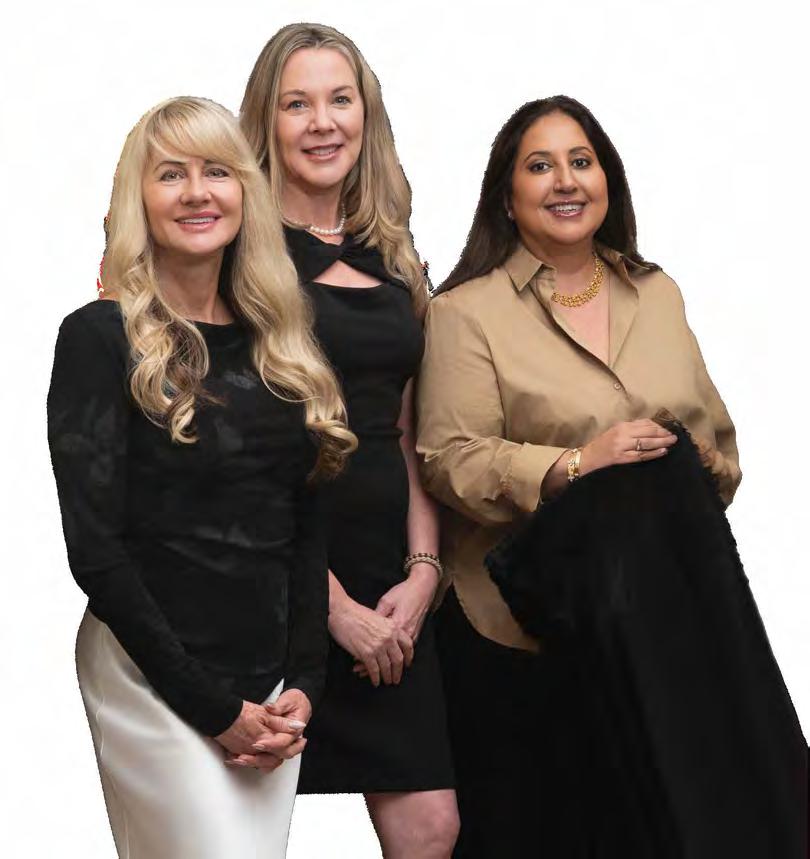
Dr. Gina Brar
and Shellie Mast, RN, the Amani brand is built on a foundation of integrity, innovation, and natural-looking results.
Gina Brar
true success is helping each patient look and feel their absolute best. Guided by a strong medical foundation,
every treatment at Amani Med Spa is delivered with a refined approach that places safety, education, and patient confidence at the center of care. Their clinical expertise ensures that each service, from injectables to skin rejuvenation, is performed with precision and care, while also bringing years of hands-on experience, artistry, and a deep understanding of client needs. . What distinguishes Amani is its dedication to enhancing natural beauty across all skin tones and ages, never altering, only refining what is uniquely yours. Each consultation is tailored, focusing on individual goals and long-term results. Clients are not just treated, they are guided through a journey of self-confidence and wellness. Rooted in the St. Petersburg community, Amani continues to redefine the standard of modern aesthetics. Established in Valrico in 2010, the brand has evolved from a trusted local destination into a growing presence in St. Petersburg. More than a collection of treatments, Amani embodies a philosophy grounded in authenticity, empowerment, and an unwavering commitment to excellence.
Images by Moormanphoto,com
Dr. Lorenzo O. Hernandez
Board Certified Family Physician
Board-certified family physician Lorenzo O. Hernandez, MD, has affiliated with MDVIP, the national leader in personalized healthcare. His new practice opened March 31 at 5901 Sun Boulevard, Suite 204 in St. Petersburg and is now accepting patients.
Dr. Hernandez, who has practiced family medicine for eight years in the St. Pete area, went to medical school at the Florida State University College of Medicine in Tallahassee and did his residency at Mayo Clinic in Jacksonville.
In his new MDVIP-affiliated practice, Dr. Hernandez will see fewer patients than most primary care doctors, giving him more time to focus on preventive care and offer conveniences that aren’t available in most practices such as same- and next-day appointments and availability after hours for urgent issues.
“Family medicine to me is the best specialty – it really allows you to practice the full scope of medicine and be a big part of people’s lives,” Dr. Hernandez says. “You get to focus a lot on preventing disease versus just treating disease, which you can’t do in a lot of other specialties.”
He is a member of the American Academy of Family Physicians, the American Medical Association, the American College of Sports Medicine and the American Medical Society for Sports Medicine.
Dr. Lorenzo O. Hernandez
“This new MDVIP program is for everybody,” Dr. Hernandez says. “If you’re younger and trying to prevent disease, we have time for that. If you’re in a later stage in life, this program offers them a partnership in managing their health.”
MDVIP Affiliated Physician Practice located at 5901 Sun Boulevard Suite 204
Dr. Hernandez and his wife have lots of pets – four dogs and two cats. They’re also involved with St. Petersburg pet rescue organizations and occasionally foster dogs. He is also into golf and cycling.
Dr. Rosemarie Márquez Dr. Jenna Malone
St. Pete Oral Health Center
What makes your practice unique in St. Pete?
We take the time to know our patients as people, not just as cases. Treatment plans are tailored to each individual's goals, concerns, and whole-person health, not just their
Dr. Rosemarie Márquez
Dr. Jenna Malone
What led you to where you are?
Dr. Márquez and Dr. Malone bring over 38 years of combined experience in dentistry, and both were driven by something deeper than just a career choice. Their paths are a purpose, not just a profession.
What do you love about what you do?
There's a real artistry to dentistry, the blend of precision, problem-solving, and aesthetics, and we love that every patient brings a new opportunity to make a difference. Whether it's the creative side of restoring a smile or the science behind how oral health connects to overall wellness, this field continues to inspire us.
What is the most rewarding part of your job?
Transformation. Helping patients understand the connection between oral health and overall wellbeing is incredibly fulfilling. And then there's the moment a patient sees their smile and feels like themselves again. That confidence, that pride, is why we do what we do.
Image by Moormanphoto.com
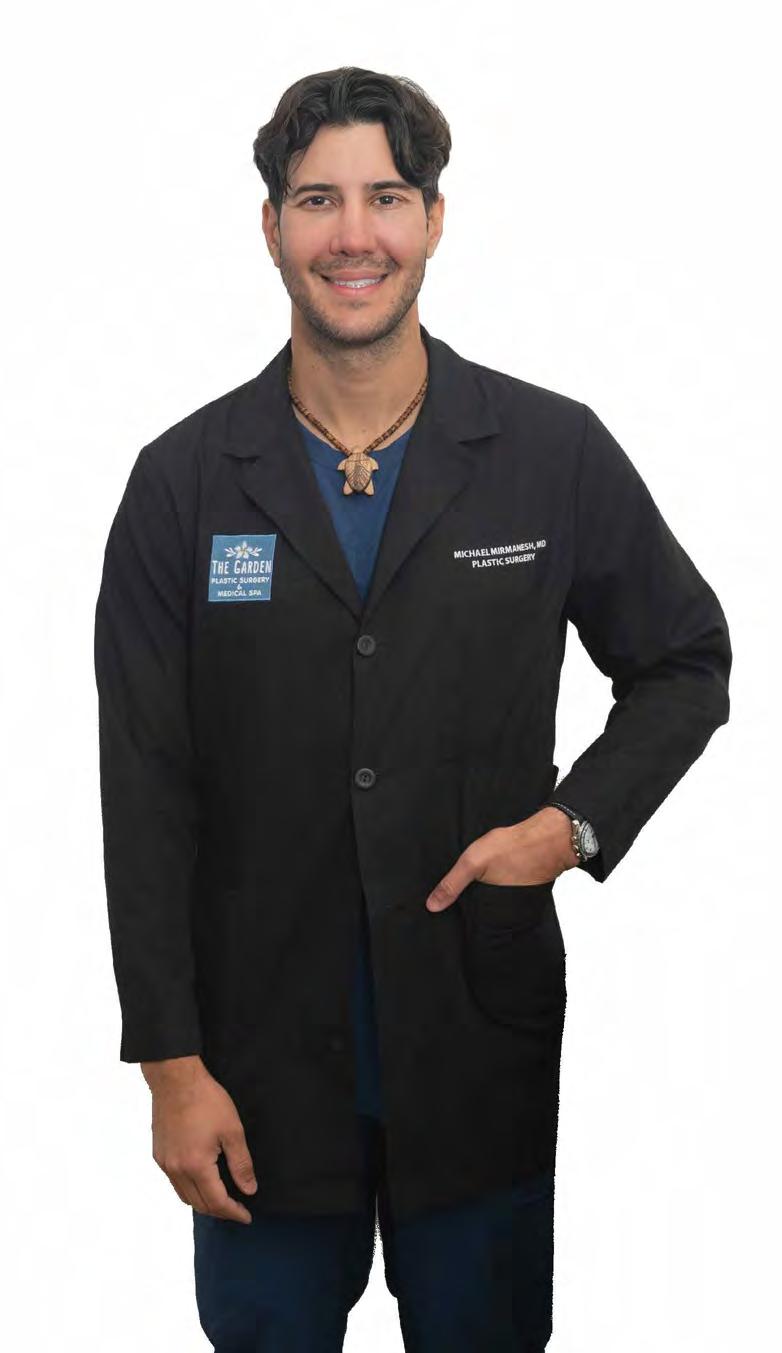
Dr. Michael Mirmanesh MD
The Garden Medical Spa
Dr. Michael Mirmanesh is a renowned plastic surgeon and the founder of The Garden Medical Spa, a premier multi-state aesthetic practice spanning Florida and New Jersey. Widely recognized as one of the most trusted names in modern aesthetics, Dr. Mirmanesh is known for delivering refined, natural-looking results through a highly customized, results-driven approach.
What sets Dr. Mirmanesh apart is his ability to strategically combine surgical and non-surgical treatments within the same treatment plan to achieve superior, synergistic results. As one of the few plastic surgeons specializing in this integrated approach, he enhances procedures such as facelifts and blepharoplasty with advanced energy-based treatments to optimize outcomes and elevate overall rejuvenation.
A recognized leader in laser and aesthetic technology, Dr. Mirmanesh is the driving force behind signature treatments including SmoothGlo™, TriLift™, and LipGlo™, setting a new standard for non-surgical rejuvenation. His philosophy is simple: No Fluff, Just Results™.
Dr.
Michael Mirmanesh MD
Image by Moormanphoto.com
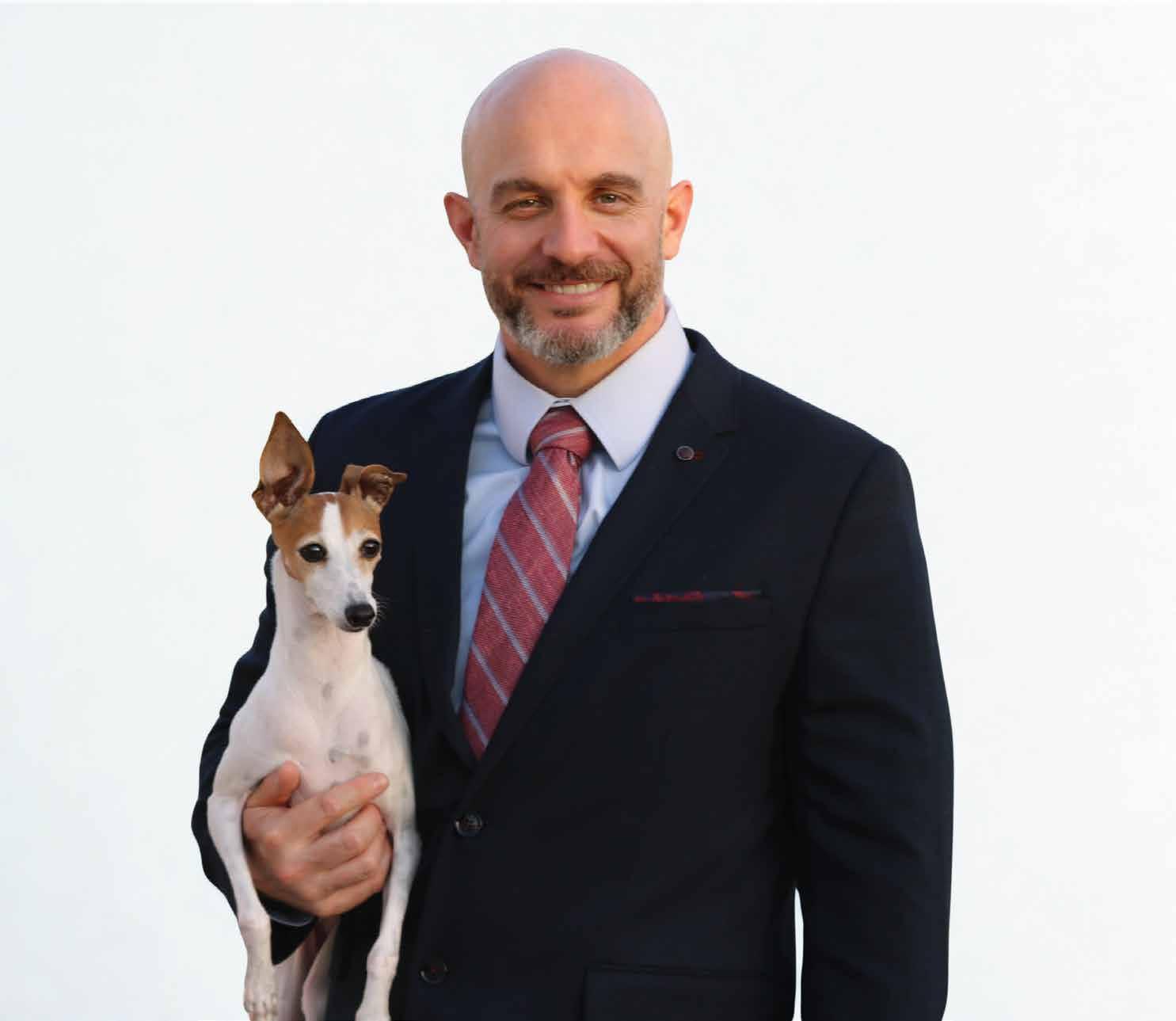
Dr. Sherberg with Bayway Dental’s therapy dog, Mare
Dr. Sherberg, DMD founded Bayway
Dental to provide a “One-Stop-Shop” concierge dental experience. With advanced training across multiple dental disciplines, he offers comprehensive care that is uncommon in today’s highly segmented dental landscape.
Q: What is a Concierge “One-Stop Shop”?
Specialization in medicine is great, however, it has made treatment fragmented. Patients get overwhelmed seeing multiple dentists to solve complex issues. I can typically perform most, if not all, treatments in my office. When necessary, I refer to carefully vetted colleagues. I will even attend the
offsite procedure to ensure the work fits into the overall plan.
Q: How Do You Approach Full Smile Makeovers?
Some patients think removing all of their teeth and getting implants – often marketed as “Same Day Teeth or New Teeth Now” is their only option. While this approach can be appropriate in certain cases, sometimes there are better options.
Since we have many “tools” in our toolbox for fixing smiles, we can explore whether preserving natural teeth is an option. We often get patients who are surprised to learn that their teeth are able to be saved.
Q: What About Dental Anxiety?
Fear of the dentist is very common, and we built our practice catering to that fact. We offer a full range of Dental Sedation options, including IV sedation administered by an anesthesiologist. We ensure each patient feels calm, comfortable, and fully supported throughout their care.
Q: What is Your Typical Patient Like?
Most have dental problems that would typically require multiple specialists to treat. Many have been avoiding the dentist for years. We see many retirees with busy lives who need efficient care. They want to push that “Easy Button” with a trusted advocate who says “Here’s what’s going on, here are your options, let’s figure out what works best for you and let’s rock this.”
Dr. Adam Scheiner
Laser Eyelid & Facial Cosmetic Surgery
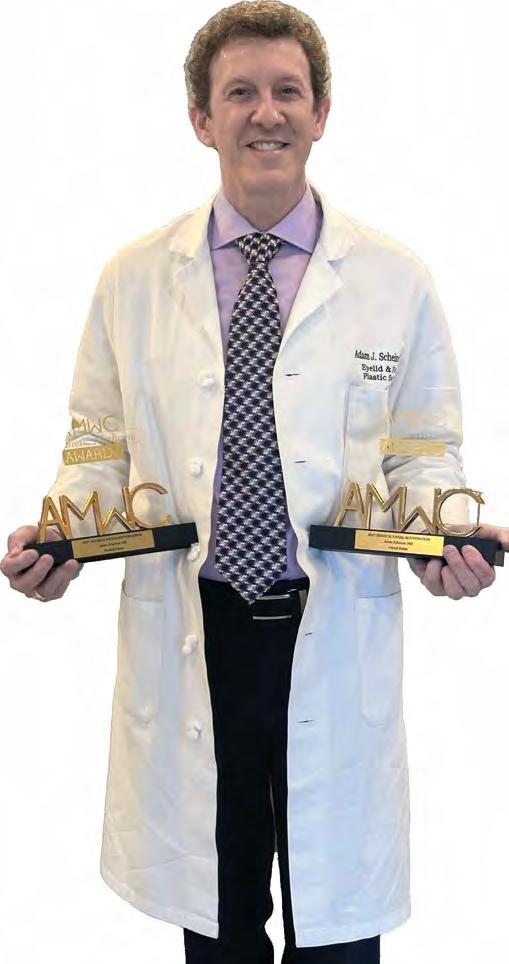
Dr. Adam Scheiner is a world-renowned laser eyelid and facial cosmetic surgeon, international speaker, expert trainer and Wall Street Journal bestselling author of The True Definition of Beauty. He is the inventor of The Better Blepharoplasty® and the founder of Reset® Festoons, both groundbreaking innovations that have redefined outcomes in eyelid rejuvenation.
This innovative work was recently honored with the 2026 AMWC Award for Best Surgical Facial Rejuvenation at the largest aesthetic and anti-aging medical world conference. Dr. Scheiner won this award in 2025 too, making him the only U.S. winner across all categories in those two years. In addition, Dr. Scheiner has won the Castle Connolly award for many years which recognizes the top 7% of doctors in the country.
Patients travel from across the country and around the world to seek his expertise and advanced laser-based surgical approach to eyelid and facial rejuvenation.
For more than 25 years, Dr. Scheiner has delivered natural, lasting results to thousands of patients with his proprietary techniques that combine laser eyelid surgery with advanced surgical laser skin resurfacing. As the festoon and malar bag expert, Dr. Scheiner’s Reset® procedure has transformed his patients, creating natural refreshed results as part of their rejuvenation
journey. His expertise and research led to the invention of The Better Blepha roplasty®, a comprehensive two-step procedure that includes a laser eyelid blepharoplasty and surgical laser skin resurfacing to smooth out the skin for
a more youthful appearance.
Dr. Scheiner continues to innovate and help his patients to Restore. Reveal. Reclaim.® their confidence and younger self during their rejuvenation
Dr. Adam Scheiner
CHARTING The CENTURY
In 2027, St. Pete will host one of the world’s most demanding offshore races, a milestone for a city defined by wind, water and a deep-rooted maritime culture. Anchored by the St. Petersburg Yacht Club and supported by a broader community of sailors, scientists and enthusiasts, the event marks the latest chapter in a story that has long unfolded on Tampa Bay.
Long before foiling yachts and international regattas, the St. Petersburg Yacht Club helped shape a vibrant boating culture. Founded in 1909 by a small group drawn to Tampa Bay’s waters, the club began with a handful of vessels and a shared vision. By 1917, it had established a permanent waterfront home, creating a hub for social gatherings, spirited competition and a love of sailing.
A CENTURY OF SAILING
The club’s early years were defined by ambition as much as camaraderie. Fish Class sailboats, 20-foot gaff-rigged keelboats introduced in 1919, became a fixture of the bay, providing a level playing field for racers and a platform for junior sailors to learn the spor t. These boats were rotated across regattas, fostering fair competition while strengthening bonds
among Gulf Coast clubs. Through the Fish Class, St. Pete quickly became a center for organized racing, eventually connecting with the Gulf Yachting Association (GYA) and its regional championships.
By 1930, the club was pushing beyond Tampa Bay. Its first race to Havana, a 284-mile offshore challenge, announced St. Pete to the wider sailing world. Participation in the Lipton Cup and GYA competitions followed. Local sailors like Lou Schowe and George W. Rifley helped establish the club’s reputation for excellence. This race preceded the Regata del Sol al Sol, which celebrates it’s 53rd edition this year, connecting St. Petersburg and our sister city Isla Mujeres, Mexico.
“There’s always been a sense that sailing here is both competitive and deeply social,” Commodore Christian Bergstrom notes. “Each generation of sailors built on the last, expanding programs for youth, adaptive sailing and competitive crews.”
CONTINUING THE TRADITION
On any given weekend, the bay is a patchwork of sails—from junior sailors learning the basics to seasoned racers trimming for speed just offshore.
“While the Fish Class has long been retired, its legacy endures in how the club trains sailors, organizes regattas and fosters community,” Bergstrom shares. “Every new program, whether a junior fleet, an adaptive sailing initiative or an international clinic, reflects that commitment.”
A GLOBAL CHAPTER
In May 2027, St. Pete will welcome a leg of The Ocean Race, formerly the Volvo Ocean Race, sending crews on a 4,500-nautical-mile journey to Cascais on the Portuguese Riviera. The event will bring global attention to the city’s downtown waterfront and the St. Petersburg Yacht Club, marking the next chapter in a story that has been unfolding for more than a century.
The race village, interactive exhibits and docking of 60-foot IMOCA racing yachts will bring international
“Each generation of sailors built on the last, expanding programs for youth, adaptive sailing and competitive crews.”
—Commodore Christian Bergstrom
attention while reinforcing values already central to St. Pete sailing: stewardship of the bay, collaboration and the pursuit of excellence.
The event will also offer something new for locals to experience, bring a surge of activity to local shops and restaurants, and fur ther highlight St. Pete as a great place to live and visit.
THE THROUGHLINE
When the starting signal sounds in May 2027, the fleet leaving St. Pete will carry more than crews and equipment. They will take with them a piece of the city’s sailing history, from early races to Havana to the traditions of junior programs and Fish Class regattas. It’s a continuation of something already in motion on the bay—one that reflects the city’s sailing heritage while signaling its growing presence on the global stage, bringing new attention, opportunity and momentum to the area.
To learn more, visit spyc.org
IN THE FRAME
Executive Director and CEO Klaudio Rodriguez opens up about his vision for leading the Museum of Fine Arts, St. Petersburg into an exciting new chapter.
BY NICK STEELE PRINCIPAL PHOTOGRAPHY BY EMILY WILL
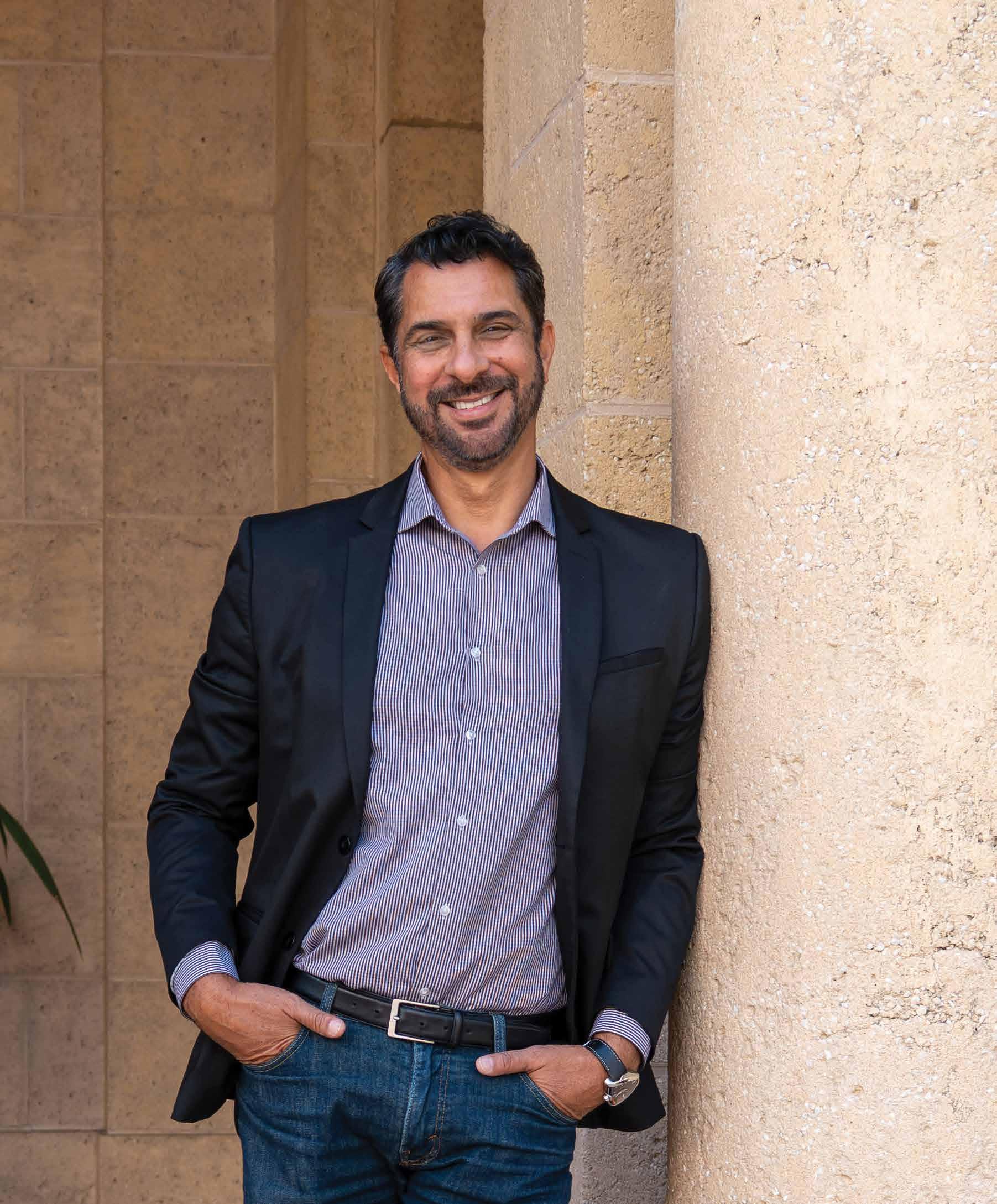
On Beach Drive, a playful 30-foot sculpture marks a decisive moment for St. Pete’s oldest art museum. With the unveiling of Magic Grasshopper by Chicago-based artist Yvette Mayorga in front of the museum’s facade in late March, the Museum of Fine Arts (MFA) enters a new phase—one that offers a glimpse into the vision of Executive Director and CEO Klaudio Rodriguez, who has spent the last year reexamining what a historic yet contemporary art institution can be and shaping the museum’s future trajectory.
The campy aspects of the sculpture, which made its debut in New York City’s Times Square in late 2025, cloak the artist’s politically charged commentary on migration, feminized labor, colonial history and the pursuit of the American Dream.
“St. Pete just got a sugar rush…bold, pink and impossible to miss—like a fairytale carriage dipped in frosting,” one local posted on social media . “But look a little closer… it’s not just sweet. It’s a story about hustle, identity and what it really takes to chase a dream. Only in St. Pete—where art hits you in the eyes and the soul.”
To the casual passerby, it can read less like a statement and more like a convenient selfie backdrop. But for Rodríguez, who inherited a full slate of planned exhibitions when he came on board, recent projects like this public ar t installation, on display through July 26, reflect his emerging influence and his desire to engage visitors in new ways.
THE VISIONARY
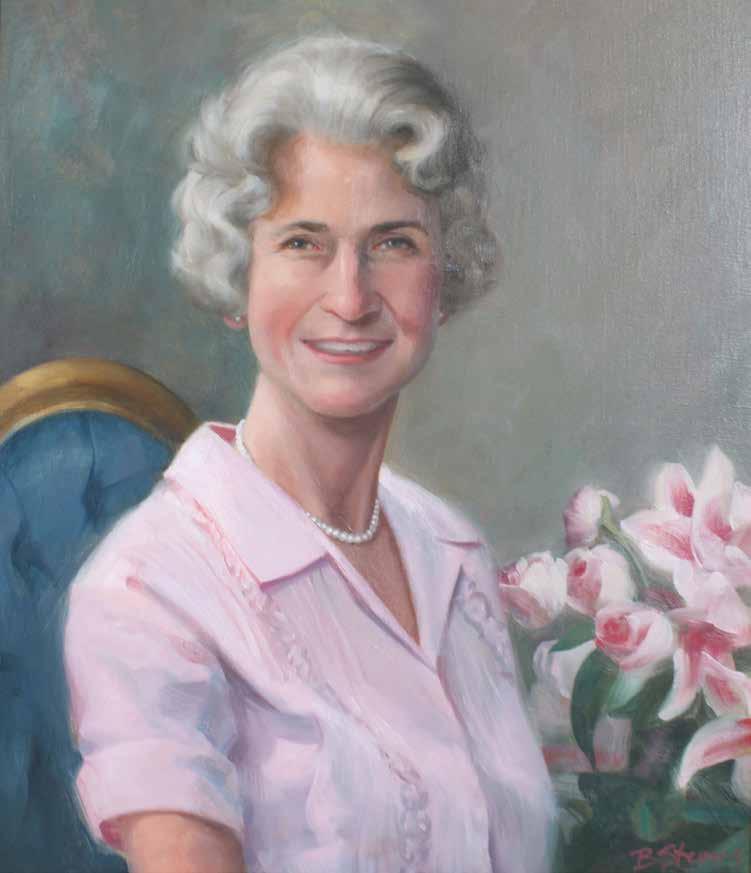
The founder of the MFA, Margaret Acheson Stuart (1896–1980), was a passionate art collector and philanthropist. A cultivated woman of means, she traveled frequently, was well acquainted with major museums across the globe and built a significant personal collection of European and American art. She believed those works should be shared with the broader community rather than kept privately, shaping a vision for an accessible museum where world-class art could be experienced free of charge in an intimate setting.
In 1961, at age 65, she approached city officials with a bold proposal to establish a major art museum, committing $150,000 toward construction, a $1 million endowment and at least $10,000 annually for operating costs. She requested the museum not be named for her so it would feel fully open to the public. The City of St. Petersburg provided the four-acre waterfront site at Beach Drive and Second Avenue Northeast.
At the time, St. Pete was still far from established as an arts destination. Bringing the museum to life required more than funding—it meant building credibility from the ground up and convincing the public of its value in shaping the city’s cultural identity. The MFA was incorporated later that same year and Stuart also donated significant works from her personal collection.
Due to construction delays, the museum did not open until early 1965.
THE OPENING GAMBIT
Despite her passion, Stuart did not have enough art to fill the museum beyond her own collection, nor the resources to acquire major works at scale. Instead, she and founding director Rexford Stead leveraged relationships with leading institutions—including the Museum of Modern Art, the Guggenheim, the Museum of Fine Arts, Boston and the National Galler y of Art—to secure works of art on loan.
In total, 80 public and private lenders contributed nearly 100 works, valued at approximately $3 million, bringing artists such as Monet, Rembrandt and Whistler to St. Pete. The success of the inaugural exhibition generated strong interest and support, allowing the museum to begin building its permanent collection.
In 1970, Stuart donated an additional $300,000 to complete the original plans, including a sculpture garden where her ashes were later interred. Following her death, the museum continued to expand, adding a second floor in the 1980s and introducing admission fees in the 1990s, ending nearly two decades as one of the country’s few free museums.
In 2008, the $21.2 million Hazel Hough Wing was added, designed to complement the original 1960s building while
Photos courtesy of MFA, St. Pete.
introducing a modern glass-and-concrete structure. The expansion added more than 30,000 square feet, doubling the museum’s footprint and creating space for both the permanent collection and traveling exhibitions. A two-story glass conser vatory connects the buildings, offering a community gathering space with views of the bay. Rodríguez’s office overlooks the scene, which he has grown to appreciate after something of a tumultuous start.
THE ARRIVAL
Like a plotline of a Hollywood disaster film, Rodríguez found himself at the heart of an epic storm when he began his new position in October 2024. In the wake of the devastation wrought by Hurricane Helene, residents faced further threats from the impending arrival of Hurricane Milton, leading to mass evacuations. He arrived within the two-week period just before that second historic storm was about to strike St. Pete. As the museum team worked to move artwork to higher ground, Rodríguez volunteered for sandbag duty.
He was admittedly nervous about the prospect of spending the night at the B&B he had rented—a 1920s wooden structure with lots of windows—so when staff asked if they could ride out the storm at the museum, he joined them.
“We had a night at the museum. We projected movies on the walls and slept here,” he explains. “It was a fun way to get to know some of the staff.”
Although the hurricanes caused widespread destruction, the MFA, which turned 60 last year, weathered the storm unscathed.
Rodríguez was joined by his wife, Emilie, along with their daughter a short time later and they have settled in Old Northeast. If he’s encountered storms of any other kind since taking over, he’s keeping them close to his chest.
THE STEWARD
On a crisp spring afternoon, I am ushered along the quiet corridor of the museum’s administrative suite on the second floor of the original building. I am greeted warmly by Rodríguez at his office door and we settle in for a chat. He is charismatic, polished and a seasoned communicator who peppers the conversation with key talking points—a reflective stream of consciousness in which he moves assuredly between ideas, often bridging topics mid-thought, shaping a narrative arc in real time.
As I watch and listen, my thoughts drift to the fact that just below us is a grouping of antiquities from the ancient world, including an Egyptian funerary mummy mask, a mar-
Margaret Acheson Stuart
ble sculpture of the Roman Emperor Augustus and works from the Olmec, Maya and Aztec civilizations—faces from history that engage museum visitors with their backstories.
Before me is the institution’s other public face, his features similar to those used by classical sculptors to convey dignity and intellect. But he is a modern man of his own making, with a compelling backstory of his own, one shaped by early upheaval and leading to an opportunity for reinvention.
Born to a Nicaraguan father and Croatian mother who met in Rome, Italy, his parents settled in Nicaragua until political turmoil there forced them to flee to Miami.
“I was 6 years old,” Rodríguez shares. “The only things we had came in the suitcases that we brought with us.”
With limited opportunities in their new home, his father worked as a security guard at a hotel in Miami Beach while his mother worked nights as a cashier at Walgreens. Rodríguez credits his mother for sparking his fascination with histor y and the world of art through experiences they shared when he traveled with her to visit their extended family abroad. But he recalls that, from a very early age, both his parents made a point of instilling in him an appreciation for the arts and for the community they came to call home— something that has shaped how he sees the world to this day.
“We didn’t have much,” he confides. “But they knew the value of arts and culture so any time there was a free museum day or an event at a library, we went.”
As a child, he told his parents he wanted to be a bus driver because he thought it would be cool to go places and meet all kinds of people. By high school, he knew he wanted something creative and connected to history. For a time, he considered becoming a historian or educator, but Rodríguez studied art and architecture before realizing those areas were not his calling. He instead focused on art history, where he began to see himself as someone who could help guide artists along their journey and make their work more accessible to the public, eventually leading him toward curatorial work.
Throughout his professional career, Rodríguez advanced through a series of roles that moved from the technical side of collections cataloging for an art storage company into formal museum work.
He spent 10 years as chief curator at the Frost Museum in Miami, followed by seven years as executive director of the Bronx Museum of the Arts. In that role, he oversaw institutional vision and strategy, educational and outreach initiatives, research resources, the collection and exhibitions, as well as an ambitious $43 million capital project.
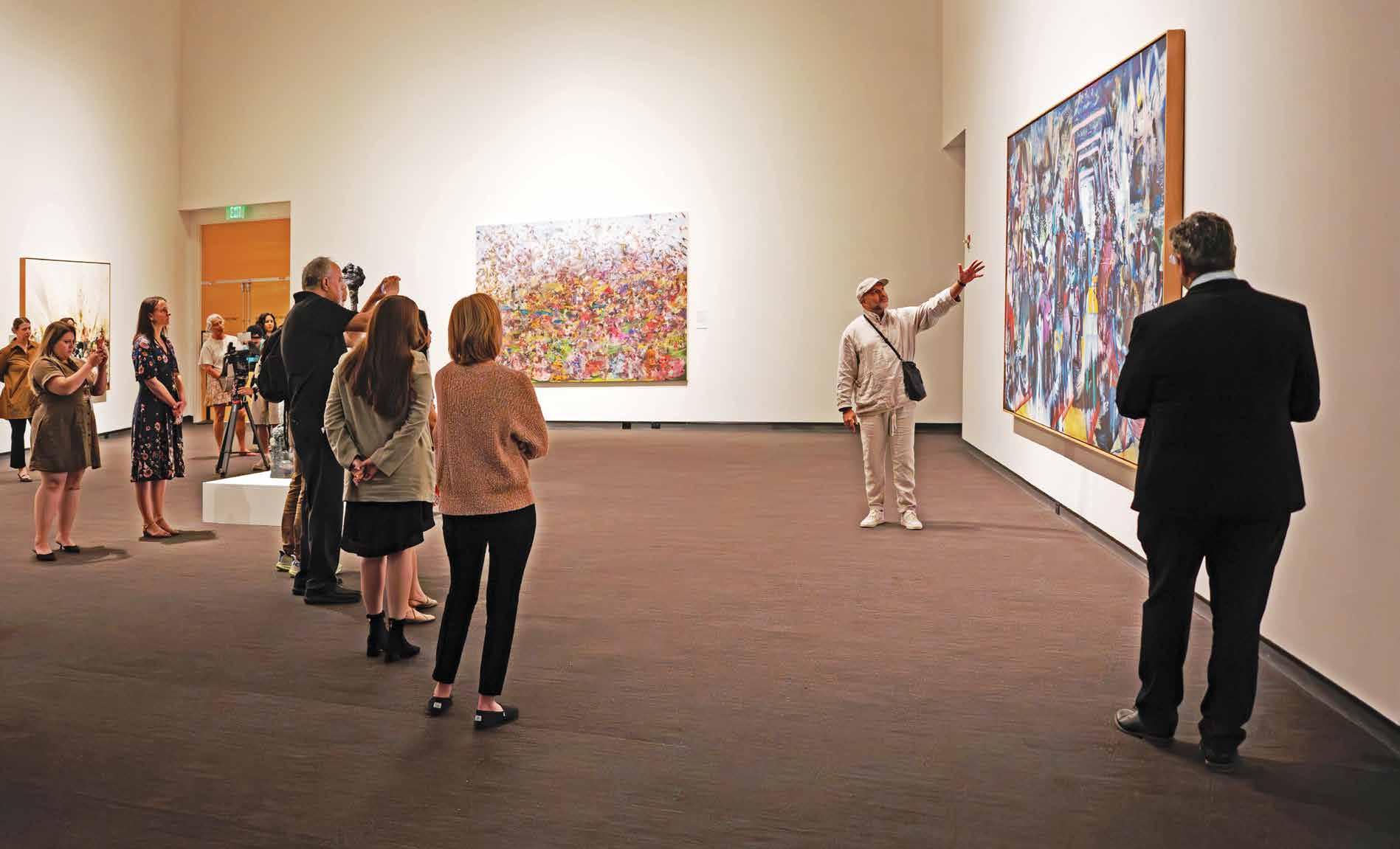
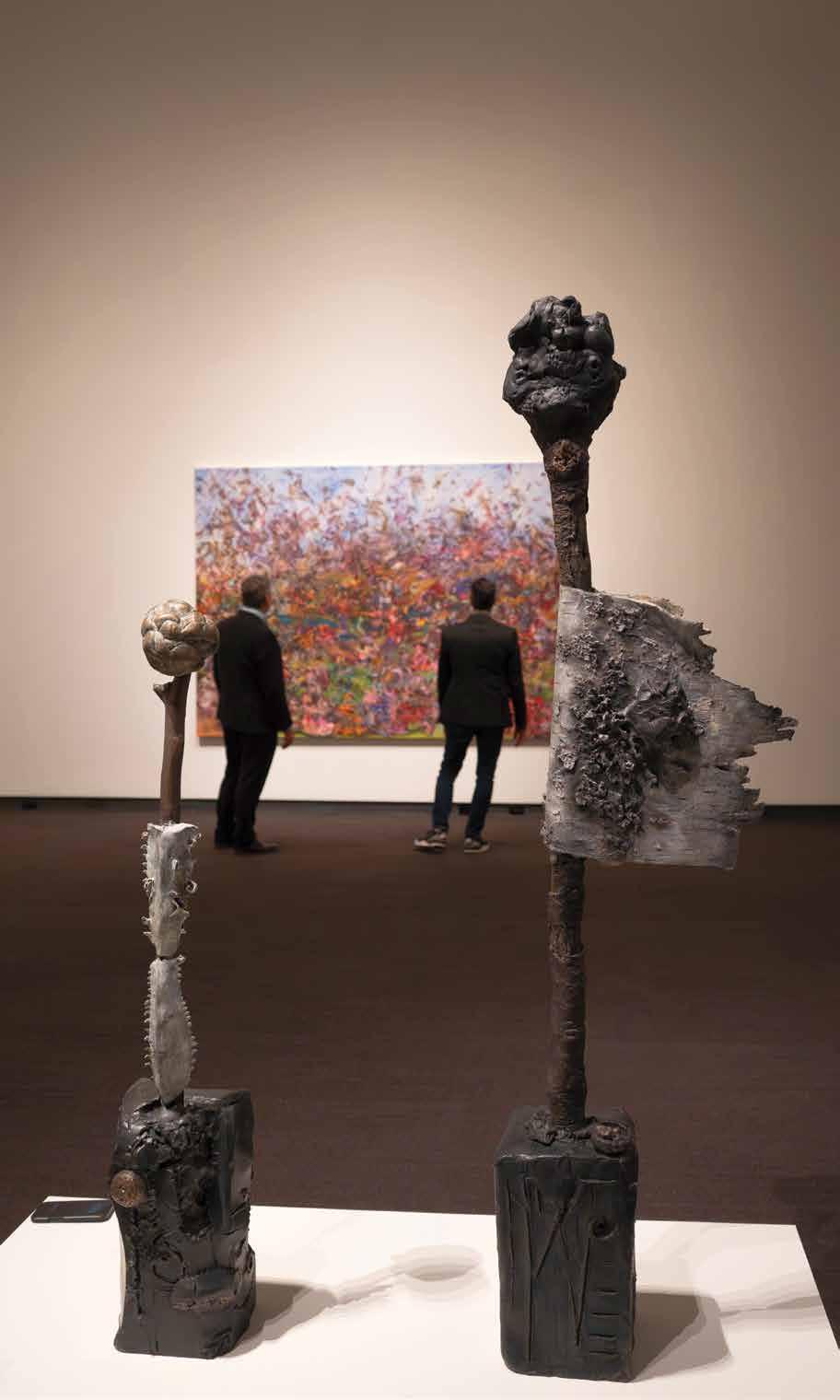
Exhibition tour with Ali Banisadr
So, when a search firm initially contacted him about the opportunity at the MFA, he did not feel a strong draw.
“Why would I leave New York for St. Pete?” he recalls thinking. “But they said, ‘Come down, give it a chance, look at it.’ So, I did, and I walked around and I was so pleased. There's clearly this investment in culture in the city.”
Upon viewing the art spaces, including the museums and mural projects, Rodriguez had a change of heart.
“It reminded me of Brooklyn in some ways, all these little coffee shops, funky shops, bookstores and just an incredible energy. And I said, this is a place that really values culture and community. That was exciting to me,” he offers. “I could see the opportunities, because this museum could be so much more. And you can’t beat this view.”
He returns often to that view of the bay, a reflection of both the area’s natural beauty and the quality of life he has experienced since moving here.
“This place allows me to really have a balance with my personal life that I did not necessarily have in New York,” he enthuses. “That ability to step out into nature resets me—allows me to spend quality time with [my daughter], enjoying nature and being outside. But to me, as far as my best life, I think you can tell…I love the work that I'm doing. I believe in it. I think it's really important.”
From this vantage point, he is charting the museum’s next chapter. It sits at a crossroads—balancing reverence for its history with the need to remain relevant in a city rapidly reimagining itself as a global arts and culture destination.
“My goals in St. Pete include building community connections and trust, internally and externally, and bringing happiness back into the equation. How do we have fun as an institution? How do we make this a joyful place where people come and want to spend time?” he says, almost rhetorically. “I want my impact to be felt in the ways people experience and connect with art—through bold, creative exhibitions and programs that spark curiosity and conversation.”
CURRENT CHALLENGE
The MFA is dedicated to presenting the breadth of human culture across time and geography. Like many legacy institutions, it now faces the challenge of balancing long-term preser vation with the need to remain relevant, inclusive and responsive to contemporary society.
“Museums are not necessarily just about object-based exhibitions. Programming really is about the public, the art and the issues that are happening in the world. And in today's society to be a relevant and engaging and important institution you have to bring diverse voices to the table,” Sandra Jackson-Dumont, an independent scholar, museum
educator and cultural strategist, commented during her tenure as chair of education and public programs at the Metropolitan Museum of Art while participating in a documentary about the museum’s 150th anniversary in 2020.
Her perspective reflects a broader shift as institutions reconsider how they engage with audiences and address questions of diversity, relevance and social responsibility. It also speaks to the central challenge Rodríguez now faces. While many of the previous exhibitions were already in planning when he arrived, he notes that his influence can be seen in the museum’s two newest shows, which opened in April.
They are also part of a fundamental distinction in how he thinks about the institution itself.
“Oftentimes there's a belief that contemporary art is something that's either facile and ready-made or complex and hard to penetrate. What I say is, ‘Everything you see in this museum was contemporary at one moment in time. It
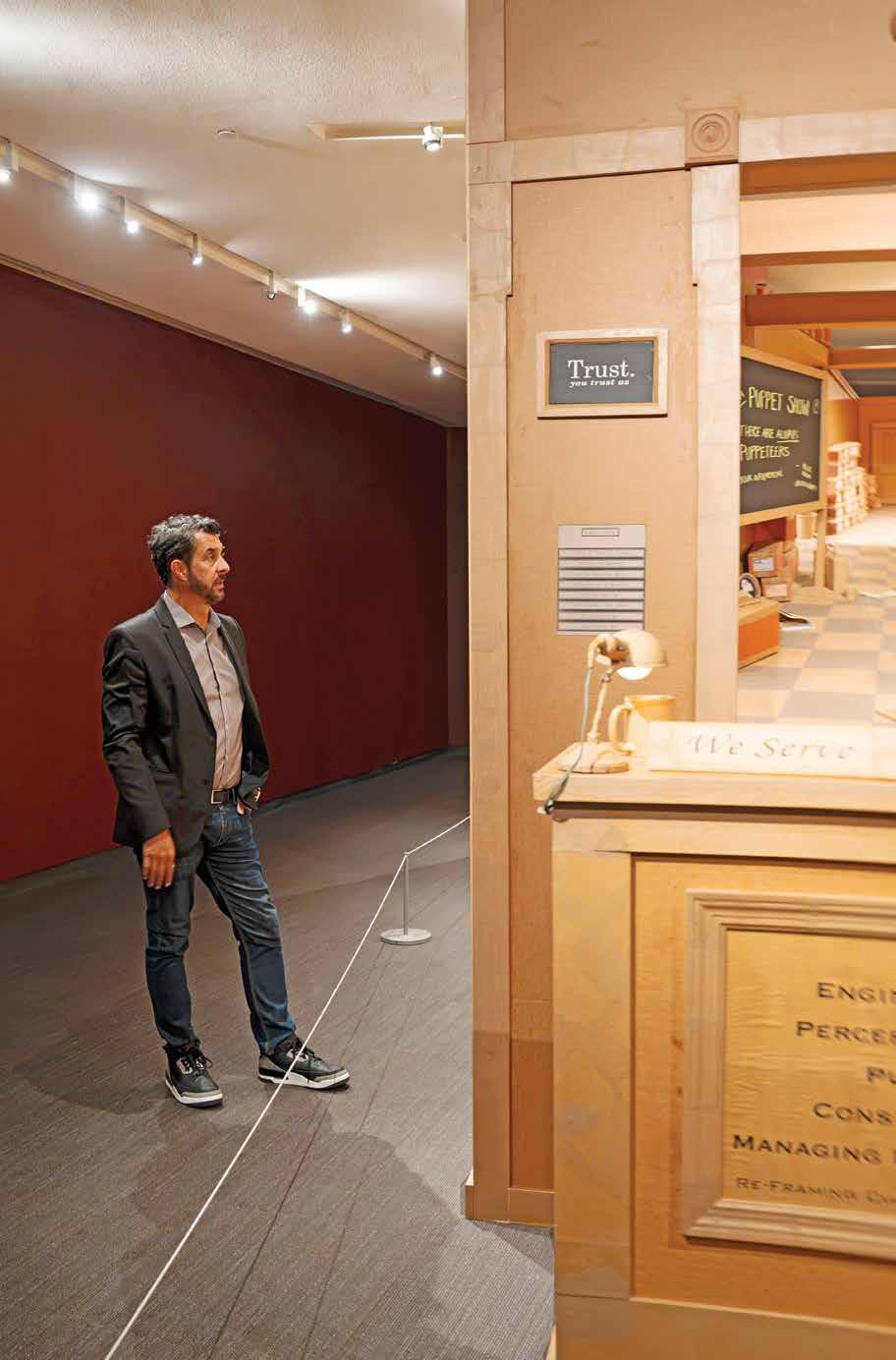
Rodriguez examines the Last Library IV.
was of its time. It was produced during a particular time when it would have been considered contemporary for that period. And it had something to say about its time. It's just the same when we talk about contemporary art now. It’s all work that is reacting and reflecting to something of our contemporary existence,” he offers. “We want to be able to talk about challenges of our time, the concerns of our communities and the people that we're engaging with. It's not about contemporary art. It's about being contemporary in the conversations and the way we present the work. That's the difference between contemporary art and a contemporary museum. I want to keep drilling down on that distinction, because it's really important.”
With that framing established, he has leaned into the conversation through exhibitions informed by his vision.
“ These are absolutely the first two exhibitions that are completely organized and originated by me. I would say they mark the beginning of me putting things in motion that I want to doI've always felt like my role is to open a dialogue. I’ve never felt like it's my position to posit it in a hard perspective. I just want to present work that challenges and makes you question some things.”
tions weave together history, mythology, autobiography and global events, offering reflections on the human condition.
“I was 3 when the revolution happened and 4 when the Iran-Iraq war happened, so I lived through it for eight years,” he shares. “As a kid, I’d make drawings to create these internal worlds to try to understand the external world. It was a way to cope with very large, abstract situations that your mind can't comprehend, break it down and try to understand. Even today, I tend to do that. A lot of other Iranians I know, they started reacting right away. I don't react right away. The emotion is like the fuel that pushes me to spend the time to dive deep and try to understand these things. If there was no emotion, then there would be no fuel to push me in that direction. The emotion is there, but the logic also has to be there in order to get combined with the intuitive emotional response. But for me, it's more about understanding the grander picture, grander history, grander reasons behind things to try to make sense out of it all.”
ART HISTORY DRAWS FROM ITSELF, BUILDS ON ITSELF AND IT KEEPS ADDING TO ITSELF.
—Klaudio Rodriguez
Like Mayorga’s sculpture, the work of these artists explores intricate and timely narratives that engage complex issues and themes.
“I've been familiar with these artists for many years and when I started to think about how we would incorporate them, the timing just worked,” he explains. “The opportunities come and when they do, you avail yourself of them and make sure that you maximize those oppor tunities and put them out there at the right moment.”
This was that moment for Ali Banisadr: The Alchemist and The Last Library IV: Written in Water.
This is the first major U.S. museum exhibition for Banisadr, a contemporary artist born in Tehran, Iran. The exhibition spans nearly 20 years of work across painting, drawing, printmaking and sculpture. Drawing from sources that range from Mesopotamian antiquities to surrealism, abstract expressionism and early-‘90s graffiti, his work balances chaos and composure, abstraction and representation, shaped by early experiences of conflict. His composi-
“I've known Ali for years and had considered working together while I was in New York,” says Rodríguez. “What fascinated me was how deeply he engages with art history. When I came here, I immediately saw how his work could connect with our collection because he draws from so many influences. We even borrowed a work from a local collector and installed it in our Renaissance galleries to place it in dialogue with historic works. That connection reinforces the idea that contemporary artists are not working in a vacuum—art history builds on itself.”
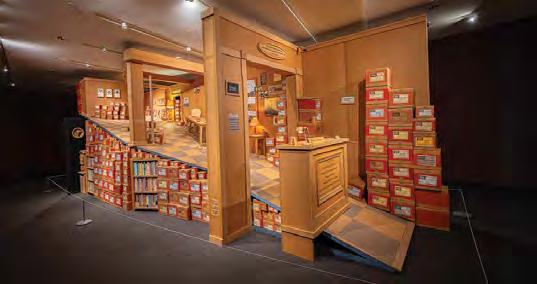
The second installation, The Last Library IV, created by artists Ward Shelley and Douglas Paulson, explores themes of misinformation and banned books.
“The technology of the written word was probably the keystone in our attempts to build a just and fair society and has been an essential component of democracy,” Shelley offers. “Terms such as evidence, authority and the rule of law are meaningless without the written word.”
The installation presents a distorted archive—a “detention center for the written word,” as Shelley describes it—where ideas appear to be in the process of being erased. Constructed from corrugated cardboard—a material both
sturdy and impermanent—it combines fake books, real titles, diagrams and documents to challenge perceptions of authority and truth.
“For more than 5,000 years, the written word has helped build fairer societies… Without writing, words like evidence, authority and rule of law lose their meaning,” the collection notes read. “But in today’s post-Truth Era, it is harder to tell fact from deception or fiction from fantasy.”
Pretty heady territory for a stately Florida museum.
“It really is so on point with what's happening in the world right now. The confluence of these two exhibitions was kismet,” offers Dr. Stanton Thomas, the Hazel and William Hough Chief Curator. “Both have very similar goals, which is the idea of transformation. I think it signals a new chapter. It's an amazing opportunity for dialogue, to get people to come in and look, to get people to think about what's happening in the world right now.”
Both exhibitions run through July 12th, with additional programming already in development for the remainder of the year and into 2027.
OUTSIDE FORCES
Rodríguez also hopes to reimagine the museum’s campus.
“It’s a multi-phased approach,” he says. “The work you see outside right now is temporary, but I’m also working to bring in sculptural pieces that could become more permanent. I’m collaborating with architects to better integrate the campus with the community—whether that’s the parkland next to us or the space in front of the museum. The goal is to create a more accessible and engaging outdoor environment.”
MODERN MOTIVATIONS
Many museums are rethinking traditional models of fundraising and engagement, working to broaden access and connect with a wider public. Progress on that front may prove to be one of the institution’s more complex challenges as it navigates the gulf between perceived barriers and the need to create meaningful access for the entire community. But in terms of programming and meaningful engagement, Rodríguez is already focused on what can be achieved.
“We want to break the myth that museums are only for ‘certain’ kinds of people,” he says. “It’s for everyone. We are here for the community—it is a welcoming and engaging space. We are going to be working very hard to improve on that. My job, if I’m doing it successfully, is making it resonate with you. If I’m not, then I failed.”
Today, the man who once dreamed of transporting people as a bus driver is creating a space for connection,
moving through the galleries and chatting with visitors whenever he can.
“I love to hear what they think,” he says with a growing smile. “I want my impact to be felt in the ways people experience and connect with art—through bold, creative exhibitions and programs that spark curiosity and conversation.”
It would be easy to imagine that Rodríguez’s kinetic energy and promises to create a “more fun, cooler” experience might stir concern among the MFA’s old guard, but, so far, his forward-thinking vision has been embraced and may be the very things that push the museum into a more dynamic and sustainable future.
Visit mfastpete.org for more information.
SMART MOVES
Buying or selling a home can feel a bit overwhelming. There is the excitement, the stress, the financial considerations and the question nearly everyone asks themselves somewhere along the way—am I making the right move? Add in a changing market and shifting buyer habits, and it helps to have advice grounded in what is happening right now.
BY ALEX DAVIS
Today’s real estate landscape comes with a new set of considerations—and opportunities, whichever side of the transaction you are on. For sellers, success hinges on preparation, pricing and presentation. For buyers, especially here in Pinellas County, a more balanced market offers room to breathe, negotiate and make thoughtful decisions. Understanding how both sides are navigating this moment can make all the difference.
MARKET CONDITIONS
This spring, Pinellas County is seeing a noticeable increase in available single-family homes, giving the market a more balanced feel than in recent years. Buyers have more options, and with that comes a bit more leverage. At the same time,
homes that are priced correctly and thoughtfully prepared are still moving at a steady pace—often within a few weeks. That balance is shaping behavior on both sides. Buyers are taking a little more time, comparing properties more closely and negotiating where they can. Sellers, in turn, need to be more strategic from the outset.
And those first few days on the market still carry weight. New listings tend to attract the most attention right away, particularly from buyers who are closely watching for fresh inventory. A strong debut can set the tone for the entire sale, which is why preparation before listing has become more important than ever.
VALUE PROPOSITION
Pricing remains one of the most influential decisions a seller can make—and it’s part math, part psychology.
Today’s buyers are well-informed and quick to compare. A home priced within a narrow range of its true market value tends to generate more activity, more showings and, often, stronger offers. When a property is priced too high, it can sit—and once that initial momentum is lost, it becomes harder to regain.
In a market with more inventory, accuracy matters. The goal isn’t to test the ceiling. It’s to meet the market where it is and create movement from the start. The strongest approach is usually to begin with a clear-eyed understanding of current value.
One prominent local broker put it this way, “If a home is priced right from the start, you create excitement, attract multiple buyers and can lead to stronger offers. However, if it’s priced too high, buyers will scroll past it and as the number of days on market increases, you end up chasing the market with price reductions.”
THOUGHTFUL PREPARATION
Buyers respond to more than just square footage and features. They respond to how a home feels.
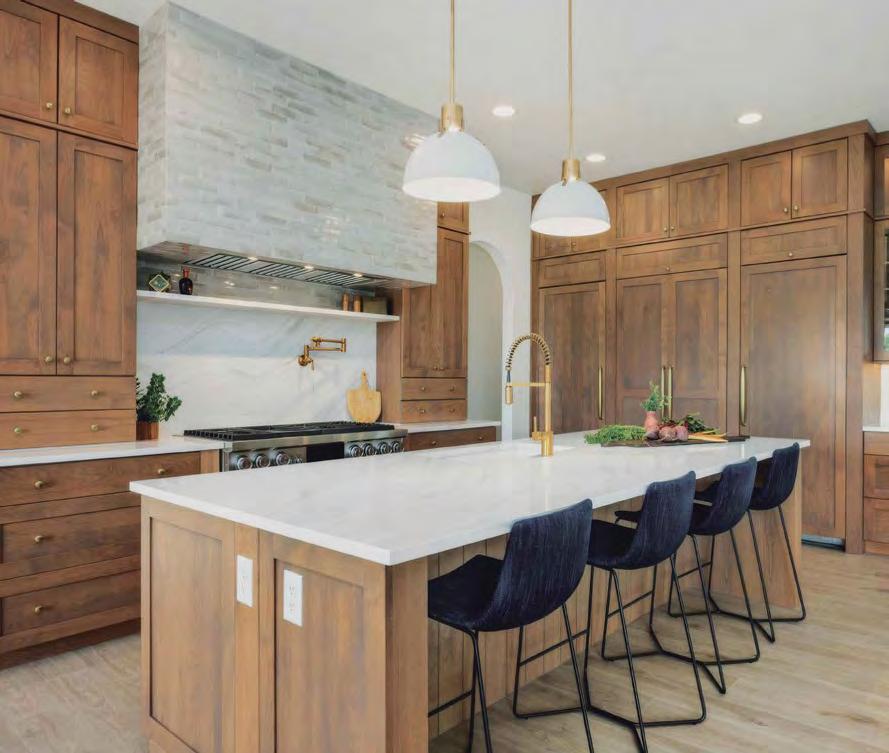
That star ts with the basics—a deep clean, uncluttered rooms and a sense of order. Clear surfaces, organized storage and well-lit spaces can make a home feel larger and more inviting without any major investment.
It’s not about perfection. It’s about creating an environment that feels cared for and easy to step into.
FIRST IMPRESSIONS
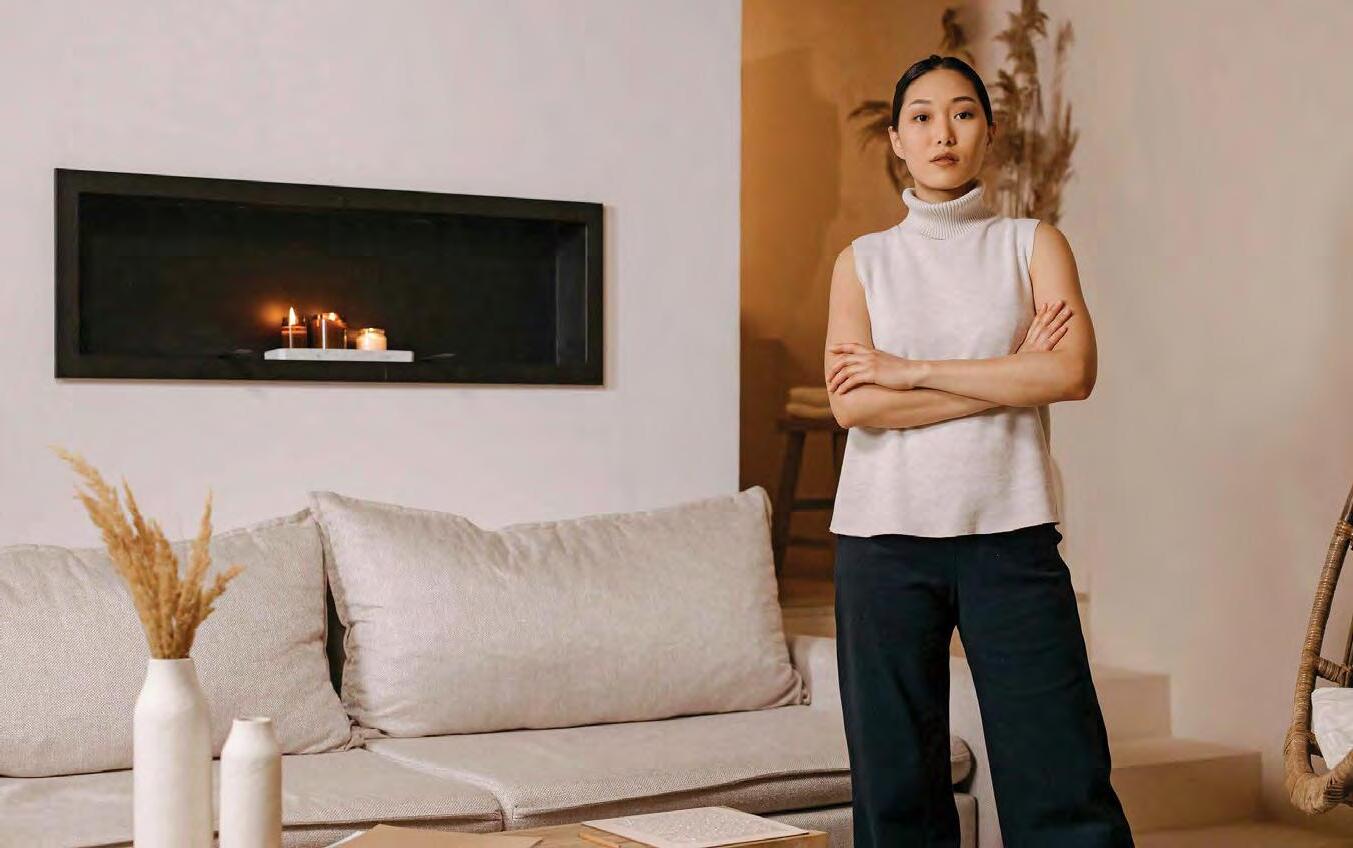
First impressions happen quickly, and they tend to stick. Natural light is one of the most valuable assets a home can offer. Where it’s limited, thoughtful lighting can help. Clean air and a subtle sense of freshness go further than heavy fragrances. The goal is simple: make it easy for buyers to feel comfortable the moment they walk in.
Homes that feel calm, bright and welcoming leave a lasting impression that stays with buyers and quietly influences their decision-making.
“Here’s the part most people don’t realize,” a local agent confides. “Buyers aren’t comparing your home to what they think it is worth, they’re comparing it to every other listing they saw that day. If yours doesn’t stand out, or worse, feels like a compromise, they move on.”
REALITY BITES
Our experts say three things can turn buyers away within seconds of entering a home. The good news is these obstacles can be overcome with the right adjustments.
“ When buyers walk into a showing, their first impression forms almost instantly. Surprisingly, it’s often the small details
that make the biggest difference. Preparing a home properly can dramatically impact how buyers perceive its value,” one agent shares. “No one likes to hear it, but strong scents— whether pet or cooking odors you’ve grown accustomed to, overwhelming room fresheners or a combination of these—can turn buyers off. The second is a cluttered environment. When buyers can’t clearly see the space or imagine themselves living there, they tend to emotionally disconnect. Poor lighting is the third deterrent. A dark home feels smaller and less inviting. These details may seem minor, but they make a major difference when showing a property. If you’re not seeing interest, it may be because the home is not being presented properly.”
SETTING THE SCENE
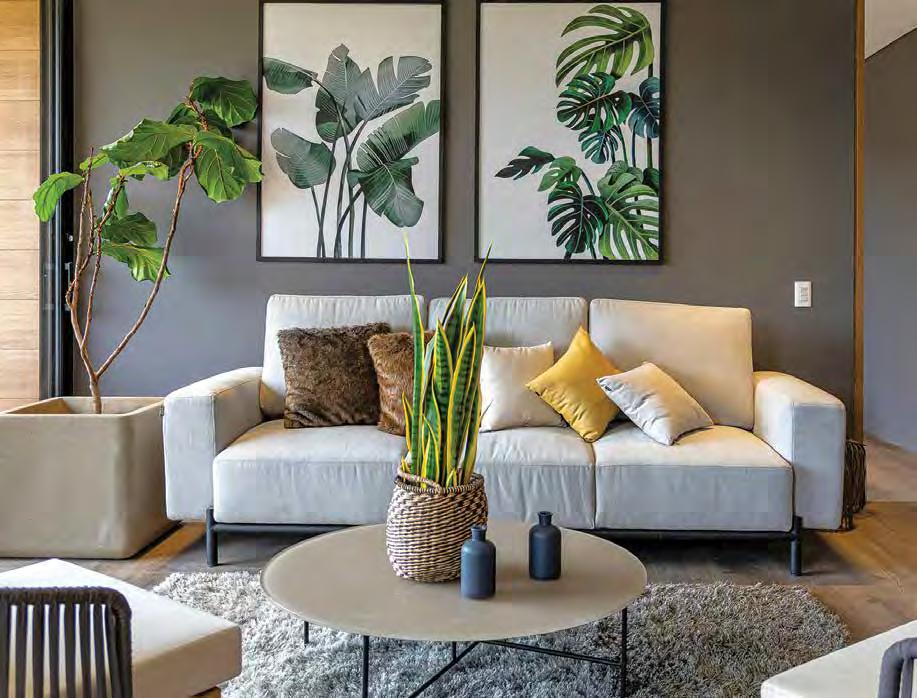
Staging continues to play a meaningful role, particularly in a market where buyers have more choices. Many brokers view staging as one of the most worthwhile investments before listing.
Well-placed furniture helps define how a space is used, shows scale and highlights flow between rooms. In vacant homes, it can prevent spaces from feeling smaller or less functional than they actually are.
And while there has been a trend toward AI-created staging, many real estate professionals discourage sellers from engaging in this practice, sometimes called “housefishing.” Agents warn that traditional, physical staging still wins when it comes to high-end, authentic appeal.
SHINE ONLINE
Most buyers begin their search on a screen.
“Today's buyers are more informed than ever. They scroll Zillow like it's Instagram,” offers a local real estate professional who specializes in both residential and commercial proper ties. “They can compare your listing to 20 other similar ones within a couple of minutes.”
That makes photography one of the most important introductions a home will have. Bright, well-composed images invite buyers to learn more and schedule a visit. Strong listing copy can add context and character.
In a digital-first market, online presentation is increasingly the motivator to schedule a showing—a decision often made in seconds.
UPGRADE SELECTIVELY
Not every improvement needs to be major to make an impact. Smaller updates—fresh paint, updated lighting, new hardware or refreshed countertops—can go a long way.
Kitchen and bath upgrades continue to be big motivators for buyers and a point of differentiation between similar listings, but thoughtful updates usually matter more than perfection. The key is choosing improvements that feel intentional and cohesive.
ROUTINE BUSINESS
If you are living in the home while selling, convenience and adaptability become paramount. Think of it like staging a play on a moment’s notice. If you’ve rehearsed, it can be fairly painless when your audience arrives.
Develop a simple reset routine for showings, with a plan for how to manage everyday clutter, pets and children during appointments. This can make last-minute showings far less stressful. The easier a home is to show, the more opportunities you have to connect with buyers.
LIVE STREAM
Open houses haven’t disappeared—but they’ve evolved.
In markets like Pinellas County, they’re still used, particularly on the first weekend after a listing goes live. When marketed properly, they can create early visibility, attract
casual buyers and, in some cases, generate a sense of momentum without creating a disruptive stream of lookie-loo foot traffic. At the same time, some agents and sellers are turning to live streaming to host virtual open houses. By going live on platforms like Facebook, Instagram or TikTok, they can guide viewers through a property in real time, answering questions and highlighting details as they go.
Think of open houses as part of a broader strategy rather than the centerpiece. They can help introduce a home to the market, but the real activity often happens through individual appointments.
SELLER TAKEAWAY
The homes that perform best right now aren’t necessarily the newest or the most up-to-date. They’re the ones that feel intentional—well-prepared, well-presented and priced with realistic clarity.
That level of preparation rarely happens in isolation. The most successful sellers are leaning on experienced real estate agents to guide pricing and interactions, working with staging companies to present the home in the best possible light and tapping into the marketing expertise of their advisors to ensure their listing reaches the right audience. Careful planning stands out and those decisions often start long before the sign goes in the yard. In a market like ours, where there is no shortage of skilled professionals at your disposal, enlisting the help of the right team can make a measurable difference in both pace and outcome.
It is also not about chasing trends. It is about making smart moves that help buyers say yes.
BE A SAVVY BUYER
In Pinellas County, the current market is offering something that’s been in short supply in recent years: breathing room.
With more homes available and properties spending a bit longer on the market, buyers have the opportunity to explore options more carefully and negotiate more confidently. That doesn’t mean waiting indefinitely—but it does mean there’s space to make informed decisions.
Looking beyond the purchase price is essential. Insurance costs, property taxes, HOA fees and ongoing maintenance all shape the true cost of ownership, particularly in coastal areas. In specific areas, conversations around flood zones, elevation and insurance history are becoming part of the process earlier on. As of early 2026, roughly 35.8% of Pinellas County properties are at high flood risk, with St. Pete showing a 45% concentration. Elevation Certificates (ECs) are essential in high-risk zones (AE/VE) and the county requires new construction to meet Base Flood Elevation
plus one foot of freeboard. Detailed flood risk assessments, map searches and elevation certificate information are important. All of this information is available through Pinellas County’s online mapping tools, including the Flood Map Service Center, which offers interactive flood maps and an All-In-One Flood App for easy exploration, as well as the county’s eGIS app, where you can look up specific property details quickly and directly.
Buyers are also taking a closer look during inspections, paying attention to things like roof age, HVAC systems and any signs of moisture. Many are even getting insurance quotes before closing.
Patience can be an advantage. In a steadier market, buyers who take the time to compare, evaluate and think long-term are often the ones who feel most confident in their decision.
EXPERT INSIDERS
Our lives are enriched by the knowledge and dedication of professionals who bring their expertise and assistance to the many facets of our daily lives.
In this promotional section, local experts across a range of fields offer their perspectives and insights. Together, they provide an invaluable resource for readers seeking guidance, inspiration and trusted care in the areas that matter most.
VALERIE PRIETZ
APRN-CRNA
Spindrift Aesthetics
Valerie Prietz is the founder and lead provider of Spindrift Aesthetics, a boutique medical aesthetics practice specializing in collagen regeneration, skin health, and natural, long-term results.
With over 20 years of experience Valerie brings a level of precision, safety, and anatomical expertise that sets the foundation for every treatment.
What truly defines her approach is a shift away from traditional, volume-based aesthetics towards more holistic, regenerative, collagen-focused care.
Valerie focuses on restoring structure, improving skin quality, and supporting the body’s natural ability to regenerate collagen. Through advanced treatments such as XERF skin tightening, biostimulators and medicalgrade skin therapies, she creates personalized treatment plans designed to help patients age with intention.
Every patient works directly with Valerie from their initial consultation through every stage of treatment. This one-on-one approach allows for a deeper level of trust, consistency, and personalization that is often missing in larger practices. Patients are not passed between providers. They are known, understood, and cared for over time.
This continuity is what allows Valerie to deliver refined, natural results that evolve with each patient’s goals and aging process.
Patients choose Spindrift Aesthetics not just for the treatments but for the experience of having a trusted aesthetic partner guiding them through every stage of their journey.
Photo by Yu-Lee Izyk Valentino. IG: beyuleeful_photography
DR. ROSH
Oculofacial Surgery and Cosmetic
Laser Institute
Roshni Ranjit-Reeves, MD (Dr. Rosh) is a double board-certified oculoplastic surgeon with advanced training in functional and cosmetic procedures of the eyelids and surrounding facial structures. Her practice is built on a singular focus: delivering precise, elegant outcomes that restore confidence without looking surgical.
Her expertise in laser-assisted eyelid surgery offers a modern, refined approach—utilizing laser technology to improve accuracy, minimize trauma to surrounding tissue, and optimize healing.
Complementing her surgical work is a suite of non-surgical treatments, including laser skin resurfacing, photofacials, neuromodulators, and collagen-stimulating biostimulators—paired with physician-formulated skincare for longterm skin health.
For those who value subtlety and lasting results—this is where you begin.
LISA CHASE
Founder, PT, OMPT, CFMM
Back 2 Normal Physical Therapy
For over 30 years, Lisa has challenged the status quo in healthcare, because too many people are told to settle for temporary fixes instead of real solutions. She has built her reputation on one belief: if you’re only treating symptoms, you’re missing the story.
Lisa’s career spans her time serving as the Director of Sport Sciences and Medicine for the WTA Tour to working global events like Wimbledon, the US Open and the Olympic Games. Today, she brings that same elitelevel standard of care to the St. Petersburg community, helping everyone from professional athletes to active adults who want their life back.
Her approach is different. By combining advanced manual therapy, movement science and whole-body lifestyle integration, Lisa empowers patients to take ownership of their health and create lasting change, not dependence on the system. That mission comes to life in her new book, beresponsible™ Because the System Isn’t. Through powerful patient stories and practical self-management strategies, Lisa teaches readers how to better understand their bodies, make smarter daily decisions, and take control of their health. Her approach shifts people from relying on the system to becoming active participants in their recovery and long-term performance.
Known for her hands-on work with the local community and athletes alike, Lisa continues to redefine what true healthcare can look like.
If you’re ready for real results, not temporary relief, this is your next step.
SUSANNE VAN SELOW
President & Owner
Van Selow Design Build, LLC
Navigating St. Petersburg’s FEMA 49% Rule
If you own a home in St. Petersburg—especially in a flood zone—you may have heard of the FEMA 49% Rule. This regulation applies when the cost of repairs or improvements equals 49% or more of the structure’s market value, excluding land.
When a project reaches that threshold, the City of St. Petersburg classifies it as a substantial improvement, requiring the entire home to be brought into compliance with current floodplain and building codes. This can include elevating the structure above base flood elevation, adding flood vents, and using flood-resistant materials—changes that can significantly impact budget and design.
The rule applies not only after storm damage, but also to remodels, additions, and renovations completed over time. All permitted construction costs are counted, which is why careful planning is essential.
The best way to work successfully with the city is to star t early. Meet with your contractor, understand your home’s structure value and review flood zone requirements before finalizing plans.
Partnering with a design-build firm experienced in St. Petersburg’s permitting process can help homeowners stay compliant, manage costs and move projects forward with confidence.
Ali Banisadr: The Alchemist
ON VIEW NOW THROUGH JULY 12, 2026
Ali Banisadr: The Alchemist is organized by the Katonah Museum of Art
This exhibition is curated by Michelle Yun Mapplethorpe, Director and Chief Curator, Katonah Museum of Art
Ward Shelley (American, b. 1950) and Douglas Paulson (American, b. 1980), The Last Library IV: Written in Water (detail), 2025, Paper, wood, corrugated cardboard, laser-printed and hand-written labels, packing tape, acrylic paint, found and manipulated objects. Installation view. Photo by by Jimmy Fashner. Courtesy the Artist. Promised Gift of Jill and Jay Bernstein.
Exploring St. Pete’s Vibrant Culture INSIDER
MEET DAVID AND DUANE HOGG, THE ENTERPRISING TWIN BROTHERS BEHIND HOGG BATCH COFFEE, WHO TURNED A PASSION PROJECT INTO A BELOVED LOCAL BRAND.
Hogg Batch Coffee Roastery
Enterprising twin brothers David and Duane Hogg have built a brand that feels as much about craftsmanship and community as it does about a truly distinctive coffee experience.
BY N.J. VALLONE | PORTRAITS BY JOEY CLAY
What began as curiosity in a home kitchen has evolved into one of the area’s most distinctive coffee concepts. Known for small-batch roasting, experimental processing and their signature barrel-aged coffees, David and Duane Hogg have transformed a passion project into a brand defined by creativity, discipline and an unmistakable point of view. At the hear t of the concept is a process that sets them apart: aging
green coffee beans in bourbon and other spirits barrels, allowing them to absorb aroma and flavor before roasting.
“As twin brothers and business partners, we've been fortunate enough to turn our shared passion for coffee into a thriving business,” Duane offers. “It's not always easy working with family, but there's no one else we'd rather have by our side.”
The core of the concept came together gradually, through adapting and improving over time.
“Hogg Batch started in the most organic way, which is honestly how most good things start,” David recalls. “I was roasting coffee at home in a cast-iron skillet, inspired by Ethiopian tradition and just trying to learn what makes a coffee taste good. Once Duane and I realized we were both all-in, we started treating every batch like an experiment.”
Prior to launching the brand, the brothers were already testing their work in public settings, using community feed back to help shape its direction.
“Before we had anything that looked like a ‘business,’ we were selling at local markets, listening to people and adjusting,” David says. “Publicly, you will see 2019 referenced as our launch year, and that is the year we started putting the brand into the world in a real way. But the journey started earlier, with a lot of curiosity and a lot of trial and error.”
That same inventive spirit continues to define the brand and the elements that set it apart in a crowded field.
“We start with coffees that are strong on their own. Then we think about how to build another layer without covering the coffee up. The barrel matters because it is not just a ‘container.’ It has a history and an aroma, and it changes the way the coffee develops,” Duane explains. “We make those pairings intentionally, and we give it time. That is what makes it feel meaning ful, because people can taste that it was not rushed.”
“We both come from a creative background, so we are naturally drawn to work that is part craft and part expression,” Duane offers.
“The only way we have been able to do it is by treating the creative side as a real discipline, not just a mood,” David adds. “We experiment, but we do it with structure. We taste constantly, we take notes and we keep what works. Then on the business side, we try to keep things clear and consistent. Good systems give you more room to be creative. If everything is chaos behind the scenes, the craft suffers.”
As demand has grown, maintaining that level of intention has remained one of the greatest challenges.
“Scaling something that is experimental is probably the hardest part,” David explains. “Barrel aging is slow and all barrels do not behave the same. The challenge has been growing while keeping the quality and the intention intact. We never want this to feel like we are cutting corners. Success is staying proud of what we are putting out. It is walking into our roastery and still feeling excited about the craft. It is having people trust us enough to try something new. If we can keep evolving and still make coffee that feels honest, that is success.”
“The best reaction is always the pause,” Duane says. “When someone takes a sip and then stops for a second like, ‘Hold on, what is that?’ Not because it is loud or weird, but because it is layered. When people get curious and start asking about the process or the origin or the barrel, that is the moment we love.”
What they are quick to point out is the role the community has had in shaping the business.
“St. Pete is a great place for that, because people here genuinely show up for local makers,” Duane shares. “That support gives you permission to experiment and keep evolving without losing your identity.”
That evolution came through balancing ar tistry with operations, allowing them to build a sustainable structure for the brand.
Their advice for fellow entrepreneurs reflects the same philosophy that built Hogg Batch from the ground up.
“Put the thing in front of people early,” David says. “Do not wait for perfect. Let it be real, let it be honest and let people react to it. That feedback will teach you faster than you can teach yourself. And stay consistent. Follow-through is what builds trust.”
Visit hoggbatch.com to learn more.
Noble Nectar Apiaries
An unexpected discovery sparked a calling built on stewardship, purpose and community.
Matt and Allison Davis’ journey to becoming live honeybee removal specialists and purveyors of local honey began through an unexpected twist of fate in 2015. While working at freeFall Theatre—Matt, as a master carpenter, and Allison, as a scenic painter—the duo discovered their new destiny.
“We discovered a colony of bees in the shop's wall that was slated for extermination. Matt conducted some research and managed to persuade the maintenance team to let us try and get them out alive. Neither of us had any experience in this world, but with some research we ended up setting up our very first trap out,” Allison recalls. “The operation was a success. Thus, we had our first colony of bees. Something we never would have thought we would have.”
This also started them on a transformative path that included training and expert guidance.
“We had mentors along the way. It requires know-how and knowledge. We were totally green to beekeeping when we started. This was not a family business that had been passed down, nor was it something we had ever anticipated doing. Commitment to these creatures is a necessity. You need to know what you are getting into, learn about the inner workings of the hive and best practices,” she explains. “We ended up creating the business in 2016, as a side project mostly, which grew more than we could have ever imagined. People found out and started referring us for removals. Since then, beekeeping and bee rescue have become our
passion and life's work—involving not just us as a couple, but our entire family.”
Over time, they built their niche service into a licensed and insured, humane and eco-friendly apiculture business that prioritizes environmental stewardship by “rescuing” bee colonies and relocating them to produce ethically sourced honey.
“Many people grew up on grocery store honey, so tasting the real thing always comes as such a surprise to them. We have had people tell us our honey is the best they have ever had,” Allison asserts. “But the bees really deserve the credit though!”
Which makes their calling as “bee rescuers” even sweeter.
“Our mission is to offer a safe, affordable alternative to extermination, ensuring the preservation of these magnificent creatures,” Allison shares. “The bees we save are transferred to our apiaries in St. Petersburg and the surrounding Pinellas and Manatee County areas. We tend to our bees without chemicals or pesticides, opting for natural products to maintain their safety, health and prosperity.”
They caution that operating a small business is not for the faint of heart.
“Building ever ything from the ground up with basically just the two of us means that at times we are stretched thin doing everything,” she admits. “We wear multiple hats. And you will always be working out the kinks, but the reward in all of it is so worth it. Thankfully, over the years, we have had so many friends and family members willing to jump in and help. We are so very grateful to have a good circle.”
last year when a neighbor removed his 20 active beehives from his property due to a misunderstanding over property lines, Matt and Allison volunteered to assist in securing the return of most of the hives and spent more than eight hours retrieving them, driving them to Citrus County, setting them up and ensuring they made it safely back to Marquette.
“What a crazy situation that was,” Allison offers. “The initial intention was to have all of our beekeeping community come together to donate bees and equipment to help get him back on his feet. We were not prepared for what happened next. We ended up receiving a phone call from an employee of the party that was involved in the removal of the gentleman’s bees. I think they were feeling the pressure from the community and wanted to bring this to an end,” she adds. “It really seemed like fate that out of all people, he called us. Needless to say, we were able to help recover the majority of the bees, in what felt like some crazy sting operation (no pun intended). We couldn’t just stand by and do nothing knowing someone in our beekeeping community was in need. We are better together, right?”
The pair say that circle and the larger community are at the core of everything they do and what helped them overcome the biggest challenge they have faced to date.
“ The storm surge from Hurricane Helene flooded the apiary in a devastating way, causing much of our equipment to be lost or unsalvageable,” Allison recalls. “We lost half of our hives. We thank everyone who donated and offered helping hands.”
So, when Richard Marquette, an 84-year-old Citrus County beekeeper, was threatened with losing his livelihood
Beyond their business goals and community connections, the husband-and-wife team provide education on honeybees.
“Knowledge is power when it comes to the bees,” Allison explains. “I personally love being able to get out into the community. We delight in encountering new people who share our enthusiasm for bees. What better way to spend your time than doing something you love, all while supporting your family?”
They also recognize the lasting impact their work may potentially have on their own children’s lives.
“Our kids are involved in various ways,” Allison shares. “Best of all, this is something we built…a legacy that we are hopefully creating for the next generations of our family. Clearly it was meant to be, and we are so thankful for the journey the bees have taken us on. Being able to do what we do is a blessing.”
Visit noblenectarapiaries.com to learn more.
SILENT FIRE
Susan Smiley-Height talks with a local board-certified family medicine physician about the quiet but significant role inflammation plays in overall health.
For many of us, inflammation is all too familiar—it shows up as painful joint aches, lingering swelling, stiffness that slows movement or nights of restless sleep. What we often write off as “normal aging” may actually be something deeper—a persistent, low-grade immune response quietly affecting the body over time.
Inflammation is often described as the body’s defense against danger—a built-in system designed to protect and repair. But when that response lingers, it can become chronic and begin to work against us, affecting the heart, brain and other vital organs.
According to the Cleveland Clinic, inflammation plays a role in nearly every major illness—including cancer, heart disease, Alzheimer’s and depression.
Inflammation occurs when an area within the body becomes injured, infected or damaged, explains Dr. David Tran, who is affiliated with Florida Medical Clinic Orlando Health - Internal and Family Medicine in St. Pete.
“Signs or symptoms of inflammation could include redness, swelling, heat over the area or pain,” he notes. “Inflammation is one of our body's main responses to promote healing so, in essence, it is intended to be good. It is a complex and intricate process that draws your fighter cells to the area to help fight infections and repair the damage.”
Tran explains that inflammation becomes harmful when the body’s immune system goes into chronic "overdrive." Essentially, the body gets stuck in a constant 'fight or flight' mode, diverting resources away from healing. In this state, the protective response never shuts off. Rather than repairing itself, it can begin to break down healthy tissue and contribute to long-term health problems.
While we often think of inflammation as a "lingering" fire, modern science suggests chronic issues occur when the body loses its biological off switch. In a healthy system, specific mole-
cules tell the immune system to stop attacking and start the resolution phase. When this transition fails, the "fire" smolders indefinitely.
“ You typically can see inflammation causing harm when it is prolonged by repetitive injury, infections or autoimmune conditions,” Tran explains. “Continued inflammation without any true healing effect may cause more damage.”
Left unchecked, this type of chronic inflammation can result in ongoing fatigue, joint pain, digestive issues and difficulty sleeping.
Increasingly, researchers are looking at the gut microbiome as a central control tower for this response. The bacteria in our digestive system produce metabolites that travel throughout the body, either fueling or calming the inflammatory fire.
Understanding your inflammation often starts with a conversation with a primary care physician. By discussing symptoms, lifestyle factors and medical history, the doctor can determine the best next steps for testing.
“We usually start with a thorough history to determine which organ may be affected, as this can help us tailor our workup,” Tran advises. “Typical tests can range from blood work to imaging to biopsies.”
The blood tests check for inflammation markers. Think of these markers as smoke detectors for your body—they signal when your immune system is overactive. Because these tests are non-specific, they can tell us there’s a fire, but not where it started or what sparked it. Elevated results could stem from something as minor as a cold, a recent injury or more persistent conditions. While standard tests like ESR show general activity, doctors are increasingly using high-sensitivity CRP (hs-CRP) tests. These "high-definition" markers can catch lowlevel vascular inflammation that might otherwise go unnoticed, offering a clearer picture of heart health.
Your doctor will look at the results alongside your symptoms and may recommend additional blood work, imaging or a physical exam to find the source and determine the right course of action. If the cause isn’t immediately clear, testing may be repeated, since inflammation can be temporary and may resolve on its own.
However, when it persists over months or years it can signal a deeper, ongoing stress on the body, quietly affecting organs, tissues and overall health. Over time, it can also shape how we age—impacting how the body moves, recovers and functions. This slow, smoldering state is what scientists now call inflammaging, a blend of “inflammation” and “aging.”
“As we get older, inflammation can increase stress on the body,” Tran offers. “Take for example, arthritis, which is inflammation of the joints. It can cause pain and discomfort with mobility, which can affect quality of life.”
When it comes to managing inflammation, he emphasizes that there’s no single solution—successful approaches often combine short-term treatments with everyday lifestyle habits that support long-term health.
“For acute inflammation, use of non-steroidal anti-inflammatory drugs or NSAIDs, is typically the first line of treatment to help with the pain and swelling. Bear in mind, however, that it may not be appropriate for all patients to take this class of medications, especially those with kidney problems or on certain medication, so it may be best to check with your PCP before proceeding,” Tran cautions. “Sometimes, if the inflammation is too overwhelming, your physician may prescribe steroids.”
Because these treatments are meant for brief use, day-to-day lifestyle choices remain the ultimate key to "cooling" the body.
“For patients who want to focus on a more preventative way to reduce inflammation, simple things such as adequate sleep, stress management, a regular exercise routine and eating a balanced diet can help,” he suggests.
While it’s familiar advice, integrating these habits is essential for long-term relief. Highly processed, fried or sugary foods can act as triggers, while whole foods—like vegetables, fruit and lean meats—can actually help keep inflammation in check. For those looking to dive deeper, the Cleveland Clinic offers a guide to anti-inflammatory eating including tips on which foods to favor and which to limit.
Talk to your doctor if you are experiencing symptoms and visit health.clevelandclinic.org/anti-inflammatory-diet to learn more.
PURE MUSCLE
Nitish S. Rele gets revved up about this next generation "sixpack" muscle car with standard all-wheel drive.
Dodge unleashes some serious power with the 2026 Charger
Scat Pack Plus, which achieves zero to 60 in 3.9 seconds, the quarter mile in 12.2 seconds and a top speed of 177 mph.
More potent than the Hemi V-8 it replaces, the 3.0-liter SIXPACK features a Hurricane twin-turbo inline-six and is possibly the ultimate American muscle car, with its robust acceleration, superb handling and steering.
Step on the throttle and the high output engine blasts off 550 horsepower at 6200 rpm and 531 pounds-feet of torque at 3400 rpm. Mated to a responsive eight-speed auto gearbox, the Charger is available as a four-door or twodoor fastback coupe. It is equipped with razorsharp electric power assist and rack-and-pinion steering. A multilink front suspension works in tandem with an integral link rear setup, with coil springs at both ends to improve ride quality and comfort. Bringing this speed demon to a halt are Brembo 16-inch front six-piston calipers and rear four-piston caliper vented discs.
power dome atop the bulging aluminum hood etched with the branded bezel. The air-intake hood joins a full-width LED light bar on the front fascia, paired with a centered lit Fratzog emblem, a revival of the three-pointed triangular logo first used on the 1962 Polara.
Specifications
Tires: 305/35ZR20
Wheelbase: 121 inches
That this is a race-inspired cabin is evident from the large rounded 180 mph speedometer and 7000 tachometer gauges, along with fuel and temperature readings and a driver information center. The cabin is roomy, offering dual automatic air conditioning, an eight-way driver power seat, a flat top-bottom tilt and telescopic steering column.
Length: 206.6 inches
Height: 59.2 inches
Width: 79.9 inches
Weight: 4,610 pounds
Fuel capacity: 17.5 gallons
City/hwy/comb: city 16 / highway 23 / combined 19
To vary the driving experience, the Charger comes in auto, eco, wet/snow, sport and custom modes. Performance-focused features such as Launch Control, which allows drivers to dial in a preferred launch rpm, and Line Lock, which enables tire burnouts with a button push and throttle input, enhance driver engagement. Attitude Adjustment introduces lighting in 64 colors to shape the mood in the cabin.
Walk around the wide-bodied vehicle and the first element that will grab your attention is a prominent center
Standard safety features include dual front and side airbags, side curtain airbags for both rows and a driver knee airbag, along with electronic stability and traction control and four-wheel antilock brakes with brake assist.
Driver-assist systems include blind-spot monitoring, rear cross-path detection, forward collision warning, active head restraints, front and rear park sense and assist, a surround 360 camera, a tire pressure monitoring system and daytime running lights. A mechanical limited slip differential is also included.
Muscle-car aficionados will not be disappointed as this speedster delivers a compelling blend of power and design at a base price of $54,995.
Nitish S. Rele, the editor/publisher of Motoring Tampa Bay and Khaas Baat, can be reached at motoringtampabay@gmail.com
DESIGNING YOUR IDEAL DAY
With Brook Borup, Business str ategist
“Most business owners build companies that prevent their best life instead of enabling it. Here's how to reverse-engineer your business around the day you actually want to live.”
Close your eyes for a moment. What does your ideal Tuesday look like?
Maybe it starts with coffee on the lanai without checking your phone. A morning workout that isn't interrupted by client emergencies. Focused work time when you're actually creative, not just putting out fires. Dinner with your family where you're mentally present.
Now open your eyes and face reality: when's the last time you had that day?
Here's the uncomfortable truth—you didn't accidentally build a business that consumes your life. You designed it that way. Every time you made yourself the only person who could solve a problem, answer a question or make a decision, you built a business that requires your constant presence.
The irony? Most of us became entrepreneurs for freedom and flexibility. Instead, we created expensive jobs we can't quit.
But here's what I've learned: your ideal day isn't a fantasy. It's a design problem.
Start by actually mapping it out. What time do you wake up? When do you do your best thinking? What activities energize you versus drain you? When do you want to be completely unavailable?
Now audit your current business against that ideal day. Where are the conflicts? What tasks keep you from the life you want? Which responsibilities could be systematized, automated or delegated?
Your business should be the vehicle that delivers your best life, not the obstacle preventing it. That means building systems that function without your constant input.
The business owners living their best lives aren't working the hardest. They're the ones who designed their businesses to support the days they actually want to live.
Let's design your best day together. Your complimentary call is waiting at meetwithbrook.com.
727-894-0500 JMC Center, 2201 4th St. N. Ste A, St. Pete. 727-295-0500 Roosevelt Lakes, 12425 28th St. N. Ste 103, St. Pete. VIP4myeyes.com “A
OPEN MONDAY-THURSDAY MON/WED 9-6 | TUE/THU 9-7 By Appointment Only for a Focused Customer Experience
Good Financial Shape
WITH SEAN GOODRICH, CFP®
We’ve all heard: without your health, wealth means nothing. While that’s true, there’s a flip side we don’t talk about. Without financial wellness, it becomes much harder to protect your health, your independence and your well-being.
The right advice matters for your physical and financial health, both are essential for a long, productive, fulfilling life.
Let me ask you a simple question: what’s your magic number? What do you need to support a sustainable retirement? To help your children through college without sacrificing your future? To protect your family if a long-term care situation arises?
Too often, people rely on computer-generated projections to alone define those numbers. While data and technology play a role, they shouldn’t be the whole answer. Life changes. Markets change. Families change. A good plan must adapt.
Think about how we approach our health. We don’t see a doctor once and call it a day. We schedule checkups, track trends and adjust as needed. Your financial life deserves the same care. Just like in healthcare, the real value comes from having the right professionals in your corner.
Most people don’t wait until a health crisis to start paying attention—we hope. The same applies financially. Proactive planning reduces stress, preserves options, and creates flexibility when the unexpected happens.
At the end of the day, financial wellness isn’t about money. It’s about how money supports your health, helps protect your family and gives you choices. A healthy life is about more than just the years you live. It’s about how well you live them.
Securities offered through Raymond James Financial Services, Inc., member FINRA/SIPC. Investment advisory services are offered through Raymond James Financial Services Advisors, Inc. Goodrich Wealth Planning is not a registered broker/ dealer and is independent of Raymond James Financial Services.
Goodrich Wealth Planning 100 2nd Avenue S, Suite 704S St. Petersburg, FL 33701
goodrichwealthplanning.com 727-897-8760
SCENE
Dreammaker Luncheon
ARMATURE WORKS / APRIL 1
The Children’s Dream Fund honored Raymond James as Dreammaker of the Year, celebrating the theme “Investing in Dreams,” and highlighting family stories, community impact and 45 years of supporting children facing life-threatening illnesses.
Fashion in Bloom
Heels to Heal’s annual fashion show brought together runway fashions, live entertainment and stories of resilience shared by survivors. The evening supported the organization’s crisis counseling services for survivors of domestic violence and sexual assault. Photos by Ernesto Garcia.
SPL Issue Part y
DŌMA HOME FURNISHINGS / MARCH 19
Guests gathered at the stylish DōMA showroom, where the design team hosted an evening celebrating our Home Issue, mingling among artfully curated living spaces, sculptural lighting and sophisticated furnishings amidst a designforward atmosphere. Photos by Misha Pokusa
DIV E IN TO SUM ME R
Just in time for summer, this outdoor renovation transforms a once-overlooked backyard into the ultimate warm-weather retreat. What was once a modest and underused outdoor space has been completely reimagined into a destination for gathering, relaxing, and making the most of sunny days. Previously, the backyard featured only a small deck with enough room for a few chairs and a table, stepping down into an open yard that felt disconnected from the home and lacking a true sense of purpose. The new design introduces a much more intentional and inviting layout, creating distinct zones that support both entertaining and everyday enjoyment.
On one side, a dedicated grilling area sets the stage for summer cookouts, casual dinners, and hosting friends and family with ease. On the other, a beautifully crafted wood deck offers a more serene escape, complete with sun loungers that make it easy to stretch out and soak up the sunshine.
Stef an ie Ba rrett
Lead Designer at Strobel Design Build
At the heart of the renovation is a resort-style pool that instantly elevates the entire backyard experience. Designed with a sun shelf and an integrated jacuzzi, it creates a space that feels both luxurious and welcoming, perfect for cooling off during hot afternoons, lounging with family, or unwinding at the end of a long day.
More than just a visual centerpiece, the pool helps define the entire outdoor setting, bringing a sense of movement, energy, and escape to the backyard. Its placement ties the surrounding features together, making the space feel balanced, intentional, and designed for the way people actually want to live outdoors during the warmer months.
Every element works together to make the backyard feel more connected, functional, and visually cohesive. The transition from one zone to the next feels natural, allowing the grilling area, lounge deck, and poolside experience to complement one another without competing for attention. What was once a small, hidden deck and an underutilized yard is now a fully realized outdoor oasis.
With thoughtful planning and craftsmanship, Strobel Design Build transformed this once-overlooked space into a backyard designed for the way homeowners want to live and gather. To start planning your own outdoor transformation, reach out to Strobel Design Build to schedule your initial appointment.
CARING FOR YOU HOW WE’D CARE FOR OURSELVES.
You’re never a number here. You’re someone with a story. And that’s where we begin.