ATRIUM
Sam Peters
Matt Ross takes on Parkinson’s
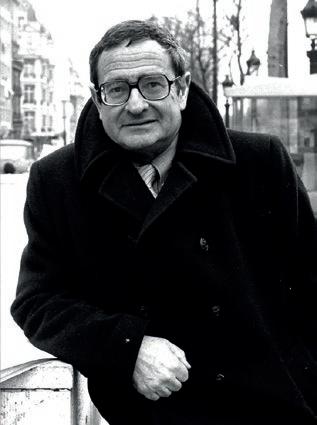
David Herman
The enduring legacy of Oliver Sacks
Pauline Relatives
The Campbells of Jura
ST PAUL’S ALUMNI MAGAZINE
Editorial
Two contributors to Atrium have died recently. They were both Paulines of the 1960s.
David Abulafia (1963–67) died in January. He had twice been the Apposer at Apposition and was a Vice President of the OPC. He penned ‘Atrium Thoughts’ where he shared memories of the St Paul’s History Department, a school trip to Berlin and much else. He dedicated The Boundless Sea, one of his many highly regarded and award-winning books to ‘Praeceptoribus Paulinis ’, in gratitude to members of the St Paul’s Classics and History departments. His article for this magazine (which he sadly did not have time to write) was to have been about how he was, or rather was not, taught Science in V Alpha and Remove. It would undoubtedly, as always, have been erudite and amusing.
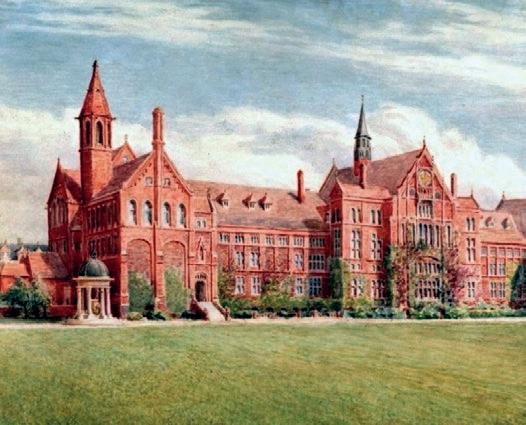
John Dunkin (1964–69), who died in November 2025, was a proud Old Pauline. He was, however, prouder to have been a Pauline who had spent all but his last year at School at the Hammersmith site. He viewed the destruction of the Waterhouse building and the loss of many of its treasures as barbarism. He also felt that the School’s connection with its military heritage was important and should be highlighted. John was often the source of Atrium’s ‘Pauline Gallantry’ as he shared carefully cut out obituaries of our military alumni or passages from The Pauline going back into the nineteenth century. We would ask him for a bio for the magazine’s contributors’ page. This was the only email John ever ignored. He did not want the limelight. He just wanted quietly, and sometimes not so quietly, to promote parts of the Pauline world that mattered to him. Both he and David are missed.
It seems right therefore that this Atrium has a number of articles about our military past and memories from OPs taught at the Hammersmith school including memoirs from Barney Williams (1952–58) and Ian Young (1954–58)
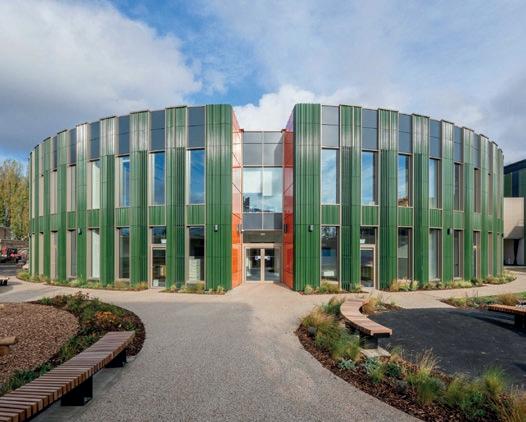
Another area of focus in this magazine is education. Atrium is given a guided tour of the newly opened St Paul’s Prep buildings. We also share comments on the formation of the St Paul’s School Group and the launch of the St Paul’s School Research Centre for the Education of Boys; described as “deliberate and well-timed interventions in an increasingly unsettled independent school landscape (think VAT on school fees, pensions, business rates, economic pressures, wealth exodus, falling birth rates)”. And Theo Hobson (1985–90) meets the Joint Headmaster at West London Free School in Hammersmith.
Our cover story is Neil Wates (1999–2004) interviewing James Reed (1976–80) and discussing, among other topics, the working world. Omar Burhanuddin (2017–22) takes up this theme in his article about the graduate job market.
Old Pauline Club President, Simon Hardy (1974–79) not only has his co-authored book Switzerland –The Smart Traveller’s Wine Guide reviewed later in the magazine but also contributes an article about OPs connected to the wine trade.
Members of Atrium’s editorial board alongside a few ringers came together in November for the annual Thomas Gresham Quiz at School. Our table came second comfortably ahead of the staff table. Coming second in this quiz is a little like having the second-best test batting average after Bradman. The same team of parents canter off into the distance each year.
The quiz is the major fund raiser for the Thomas Gresham Award. Started in 2017 by four Upper Eighth pupils led by Roman RodriguezAlarcon (2013–18), it is a wholly pupil-led appeal, fundraising to
provide a 100% bursary for the highest performing pupil at 11+ who needs financial support. It is of course named after Old Pauline Thomas Gresham, who founded the London Royal Exchange and was financier to King Edward VI, Queen Mary I and Queen Elizabeth I and was quite possibly the richest Pauline ever. Since its establishment, each year’s Thomas Gresham Committee has made an incredible effort to rally the support of the whole school community to raise funds for this bursary, raising a total of £250,000 to date.
Long may the Committee continue with its good work and any OPs who think they can help close the gap with team Bradman please be in touch ahead of the 2026 quiz. Superpowers required are recognising songs you have never heard from one bar of their introduction, knowing the names of ‘famous’ brands from a miniscule part of their logo and er, science.
Jeremy Withers Green (1975–80)
The Editorial Board welcomes its newest member Richard Griffiths (2016–21) and thanks all contributors, particularly Harry Hopkins, our story spotters and proofreaders.
Atrium’s Editorial Board: Omar Burhanuddin, Jonathan Foreman, James Grant, Richard Griffiths, David Herman, Theo Hobson, Neil Wates and Jeremy Withers Green.
Cover
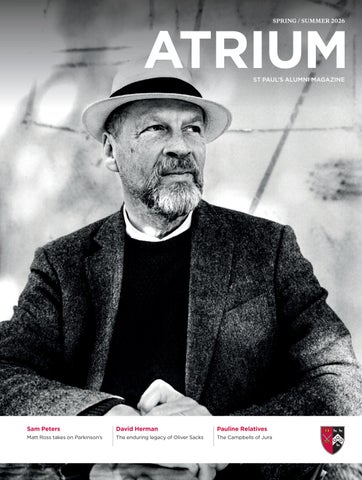
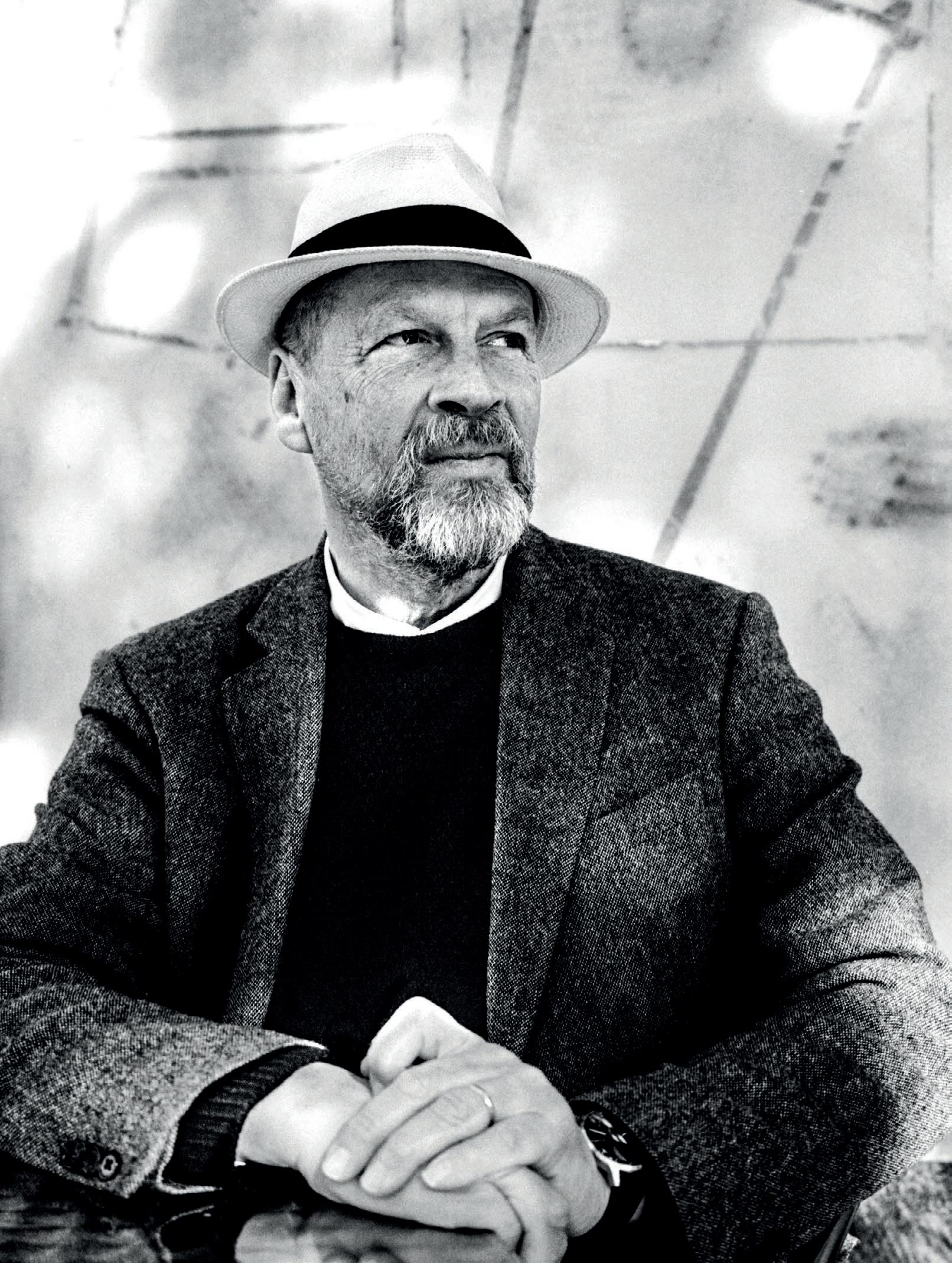
photo: James Reed – photo by Michael Woods
Design: haime-butler.com
Print: Lavenham Press
Simon
Michael
Paul
David
Sam
Jeremy
James
Theo
David
Ian
Including
Barney
Graham
Geoffrey
Lorie Church sets the
Graham Seel taught at St Paul’s from 2012 to 2021. He was Head of History from 2012 to 2017 and was then Head of Humanities. Graham realised that there were important gaps in the Pauline Community’s knowledge relating to the Great War and that there was a wealth of war-related material in the archives of The Pauline and so proposed a major research project. The result was Scholars and Soldiers: a History of Alumni of St Paul’s School and the First World War. It is in two volumes: the first is a general history of the school and the war, including its commemoration; the second is an in-depth study of OPs who fell in the Ypres area.
Michael Simmons (1946–52) read Classics and Law at Emmanuel College, Cambridge. He qualified as a solicitor and, after serving for two years as an officer in the RAF, practised Law in the City and Central London for fifty years. Since retiring, he has pursued a new career as a writer. Michael is in touch with a sadly diminishing number of members of the Upper VIII of 1952.
Barney Williams (1952–58) has lived 87 years that are difficult to precis. He managed it in two tightly typed A4 pages. Here is Atrium’s attempt. Helped at Colet Court and St Paul’s to overcome being bullied for being left-handed and inspired by Sid Pask, Barney has had a full and varied career mostly in medicine but he also holds a law degree. He rowed at Oxford, has played in the front row at Cardiff Arms Park, edited a magazine with Paul Foot and Richard Ingrams, acted as a life model and played cards for money. He has had two wives, four daughters and has eight grandchildren. He lives in Chippenham and has a 2.75-acre garden including a small lake that he and his second wife managed alone until last year’s ‘complete heart block’.
Ian Young (1954–58) obtained a licence-ès-lettres in philosophy from the Sorbonne after leaving St Paul’s. He then qualified in medicine at the Middlesex Hospital in London and spent several years in baffling brain hormone research at St Bartholomew’s Hospital while running the world’s only university department of medical translation, an early casualty of artificial intelligence.
Robin Hirsch (1956–61) is an Oxford, Fulbright and EnglishSpeaking Union Scholar, who has taught, published, acted, directed and produced theatre on both sides of the Atlantic. In 1977 together with two other starving artists, he founded the Cornelia Street Cafe in New York’s Greenwich Village. In 1987 the City of New York proclaimed it “a culinary as well as a cultural landmark.” Cornelia Street Cafe is now ‘in exile’ having been forced to close by greedy landlords.
Laurence Ben-Nathan (1959–64) read Mechanical Engineering at King’s College, London University. He qualified as a Chartered Patent Agent and then, subsequently, became a European Patent Attorney. He practised in London in private practice as well as a short period in industry with BOC (British Oxygen). He was a partner in a large firm of European Patent and Trademark Attorneys before his retirement. He played occasionally for the OP Golf Society.
Paul Cartledge (1960–64) is a Senior Research Fellow of Clare College, Cambridge and was the inaugural A.G. Leventis Professor of Greek Culture in the University’s Faculty of Classics. He is responsible in various ways for publishing over 30 books, most recently a biography of Pericles (Reaktion Books). He is an honorary doctor of the universities of Thessalonike, Thessaly and
Warwick, and a Commander of the Order of Honour (Greece). He is a Vice President of the OPC.
Simon Bishop (1962–65) is a former editor of Atrium. He has worked in publishing for most of his professional life including as art editor for Time Out magazine and for BBC Wildlife magazine.
Geoffrey Matthews (1972–77) was both a Coletine and Pauline. After reading Classics at Cambridge he was an Army officer with the Irish Guards; a management consultant with McKinsey and SRU; Managing Director of the National Gallery’s retail and publishing company; Project Private Secretary to Princes William and Harry (and Producer of Concert for Diana); and Creative Director of the Foreign Office’s campaign to promote Britain in the run up to the London Olympics, and of the National Theatre’s Inside Out Festival in the summer of 2012. Since 2013 he has been Secretary and CEO of the Chelsea Arts Club.
David Herman (1973–75) studied History and English at Cambridge and English and American Literature at Columbia University. He produced arts, history and talk programmes for BBC2, Radio 4 and Channel 4 (when it was good) for nearly 20 years and since then has written about literature, and Jewish culture and history.
Simon Hardy (1974–79) a Durston House alumnus, spent ten years on the Barnes site. He read French and German at Oxford before joining Nestlé, where he spent 25 years in brand marketing and strategy in the UK, USA, and Switzerland. Pursuing his passion for wine, Simon gained the WSET Diploma in 2010 and founded Fitting Wines in Switzerland. Now back in the UK, he organises Swiss Wine Week London, co-wrote The Smart Traveller’s Wine Guide to
Switzerland, co-founded Alpina Vina and judges at the International Wine Challenge. He has been a director at the Old Pauline Trust and Colets Health & Fitness and is currently Old Pauline Club President.
Jeremy Withers Green (1975–80) read history at Magdalene College, Cambridge before starting work in finance. After twenty-seven years in the City, he left J.P. Morgan Cazenove and began working as a volunteer and trustee in the charitable sector at The Haller Foundation, The 999 Club and Friends of the Elderly. In 2016 he joined the OPC Executive Committee and has worked as Communications and Engagement Director and Editor of Atrium and remains a member of the Editorial Board. He was the OPC President from 2023 to 2025.
Ken Clark (1978–79) attended St Paul’s for A Levels. His Headmaster in Canada knew The High Master, Warwick Hele and thought it would be a good experience. After St Paul’s, Ken graduated with a BA from the University of Western Ontario and qualified as a Chartered Accountant. From 1989 to 2024, Ken held Senior Positions in Internal Audit in various multinationals. He retired in 2024. He has contributed articles and reviews to the unofficial John Cale site Fear is Man’s Best Friend and assists a local charity shop to value vinyl that has been donated.
Theo Hobson (1985–90) is a journalist, theologian and currently an ordinand of the Church of England. He read English literature at the University of York, then theology at the University of Cambridge. His latest book is Created for Love (edited alongside Bishop John Inge).
Ed Varley (1985–90): after leaving St Paul’s studied French and Italian at Exeter University. His career
includes Financial Services, Energy Sector (Supply and Technology) and he recently retrained as a languages teacher. Ed continued playing rugby after St Paul’s for Exeter and Benetton Treviso and has been a coach at Brighton RFC.
James Grant (1990–95) sits on the Old Pauline Club’s Executive Committee as Sports Director, as well as holding the posts of Chairman of the Old Pauline Cricket Club and Honorary Secretary of the Old Pauline Golfing Society. After a career in event organising and charity fundraising, he now works at St Paul’s School as Associate Director, Alumni Relations. He is a Vice President of the OPC.
Sam Peters (1991–96) is a journalist and author credited with driving cultural change in sport’s attitude towards concussion. In 2024 Sam’s third book Concussed won the UK Sports Book of the Year Award for Outstanding Sports Writing, having been shortlisted for the William Hill Sports Book of the Year and named a Times, Telegraph and Waterstones Book of the Year. Through his production company Concussed Media, he is developing the book into a film/television adaptation. Sam co-owns Planted; an events and media platform promoting naturebased businesses.
Lorie Church (1992–97): when he is away from the workplace, Lorie encourages people to put letters in little squares. He has had puzzles published in various titles internationally. As well as contributing to the Listener series, Mind Sports Olympiad and Times daily, he sets Atrium’s crossword.
Neil Wates (1999–2004) worked in the property sector for 15 years before training as a Psychodynamic Therapist and Counsellor. He is
a trustee of a UK based charitable trust and an NGO committed to the alleviation of social violence in East Africa. He also founded Friendship Adventure, a craft brewery based in Brixton. Neil is on the OPC Executive Committee.
Omar Burhanuddin (2017–22) is a final-year student of History at Corpus Christi College, Cambridge. Having gained work experience across the nonprofit, development and teaching sectors, Omar is currently aspiring towards a career in academia and waiting on the outcome of his MPhil applications. During his time at Cambridge, Omar has been a keen singer, campus reporter, and May Ball organiser. He continues to keep in touch with many close friends from St Paul’s.
Black Ties and Tears
Dear Atrium,
On reading ‘Past Times’ in Atrium Autumn/Winter 2024, I thought I would share some memories of the gold medallists from the 2000 Olympics GB rowing VIII crew.
One of their coaches was Harry Mahon, probably the best technical coach in the world at the time. He had coached crews that won everything bar one and that was an Olympic gold. Sydney was his last chance as he had been diagnosed with inoperable colon cancer. He died six months after the Sydney Games. At the MBE awards ceremony in May 2001 the crew all wore black ties with their morning suits in memory of, and as a mark of respect for, Harry.
In 2001 my son, Simon Dennis (1989–94) and Luka Grubor went to a heavy metal concert at the Brixton Academy. On their way in they started a conversation with a ticket tout during which the tout said he had been selling tickets at the Olympics the previous year. This led Simon and Luka to say that they had also been in Sydney and why. On learning of their gold medals, the tout said that he had a son at a special centre for vulnerable and severely disadvantaged children and would Simon and Luka be prepared to come and share their story at the school. Of course, they agreed.
On the day of the visit many of the children, apart from being thrilled to see the gold medals, asked Simon and Luka for their autographs. Luka turned round and asked one of the quiet boys for his signature in return. The boy reluctantly started writing out his name in capital letters. Luka said, “no you don’t do a signature like that, it has to be joined up writing” and persuaded the boy to do it that way. Simon noticed that at the back of the classroom there was a teacher with tears in her eyes. On being asked why she said, “we have been trying to teach that boy joined-up writing for at least a year and you have just done it in five minutes, thank you”.
With very best wishes, John Dennis (1959–64)
Letters
Dear Atrium,
Prompted by the piece on page 17 of the Autumn/Winter magazine from Ward’s Book of Days, I have bought the Complete Clerihews. It would have been good if the following had been included, especially in the light of David Abulafia’s most interesting piece on Erasmus and John Colet.
After dinner, Erasmus Told Colet not to be “blas’mous” Which Colet, with some heat, Challenged him to repeat.
Kind regards, Charles Martin (1960–65)
Another Clerihew
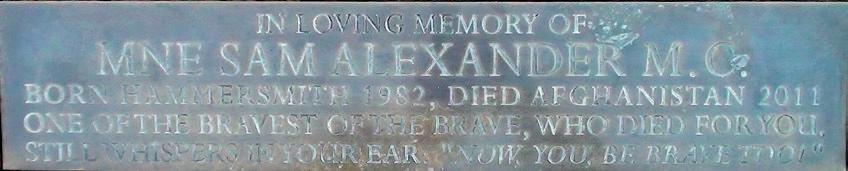
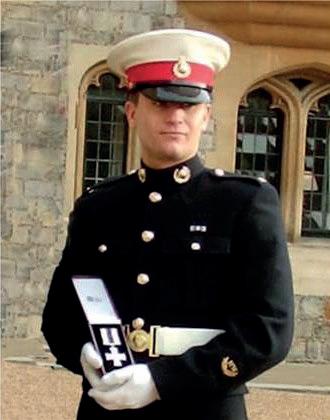
Sam Alexander MC (1995–98)
A letter sent to The Times published on 1 February 2026
Serena Alexander (who taught at St Paul’s in the 1990s) following President Trump’s assertion that non-US forces in Afghanistan stayed “a little back, a little off the front lines” wrote to The Times of her son’s gallantry and sacrifice. My son, Marine Sam Alexander, was awarded the Military Cross for charging at the Taliban armed only with a pistol to save the life of an injured colleague. How much closer to the front line could he have been? Sam was killed by an IED when on patrol in Helmand province on his subsequent tour. My heart is with all bereaved military families.
Serena Alexander
Vivant SPS ‘cum litteris’ – et Atrium Dear Editorial Board
I wanted first to echo the compliments showered upon you by Geoffrey Matthews (1972–77) in his opening letter in the Autumn/Winter 2025 issue. But I wanted also if I may to pick up a thread that seemed to me to run through the issue, from its first page (a Letter from schoolboy classicist Michael Simmons (1946–52)) to its last (‘Last Word’ by Oxford Professor of Philosophical Mathematics, Alex Paseau, 1988–93): the study of Classical (Greek and Latin) letters and language both inside and outside the School, and both today and since the School’s Foundation by humanist John Colet.
David Abulafia (1963–67) in his excellent ‘Atrium Notes’ correctly noted that “Colet’s era is long ago, and Greek is little – too little – studied at St Paul’s nowadays”, a sentiment endorsed by Prof. Paseau. But not perhaps by Rupert Birtles (1963–66), at least not if the teaching of Greek and Latin were such as he says he experienced, or rather suffered, from the eponyms of the biennial Cotter Cruickshank memorial Lecture. Surely that stricture could not be applied to its most recent deliverer, Simon May (p. 61), who devoted it to the translating of Athenian comic playwright Aristophanes. Nor to a predecessor of Simon’s as Head of Classics, John Davie, author this year of Greek To Us. Studying Classical languages may not be a barrel of laughs, but it did not seem to harm Jonathan Miller (1947–53), star of the ‘The funny side of Pauline life’ feature.
Vivant SPS ‘cum litteris’ – et Atrium. Paul Cartledge (1960–64)
Dear Atrium,
I beg to differ
I beg to differ with Rupert Birtles (1963–66) (Letters, Autumn/Winter issue) about Pat Cotter’s teaching ability. In my Upper VIII class of 11, I was placed 10th, and Pat advised me to give up Greek verse before taking my Cambridge scholarship exam. I defiantly declined to accept his advice, and won an exhibition to Trinity Hall, my chosen college, on the basis of my Greek verse. I concede that bridge and croquet (and, I seem to recall, photography) ranked higher than Greek in Pat’s priorities, and his teaching methods were less conventional than those of Wal Cruickshank. But I attribute my success to the belief that some of his brilliance must have rubbed off on me.
Sincerely, Tony Barnett (1959–62)
Postcard from Japan
The land of the rising lid Michael Simmons (1946–52) describes one of the joys of travelling in Japan
Japan has many unique features but none so fascinating to Westerners as its toilet arrangements.
Every time I opened the lavatory door, the lid stood up to attention to greet me. But that was only the beginning. The seat was uncomfortably pre-heated. I could imagine a serious malfunction and the sitter being badly burned. I was completely intimidated by the various buttons with legends both in Japanese and English but I was far too scared to try them out. What possibly were the differences between buttons marked “oscillate” and “pulsate?” Was it possible to oscillate and pulsate at the same time?
“Rear soft” and “front wide” conjured up all kinds of possibilities to appeal to the latently prurient schoolboy in me. “Position” and “dryer” completed the set.
This was a whole new world and I could only marvel at the concentration of Japanese technological wizardry that had gone into the production of that on which I sat. I was faced with a final choice. I could stand up and the apparatus would flush automatically or I could maintain a semblance of control by choosing one of three buttons marked respectively "flush,” “light flush” and “eco flush.” Needless to say, once I had finished, the lid went down automatically only to stand politely to attention when the next user opened the door.
I thought I had seen it all until I went to the city of Nara, where Western tourists normally only visit for the day. They do not know what they are missing. The lavatory in the room reached new heights or plumbed new depths of ingenuity. It played classical music as I sat upon it. The choice sadly was out of my control. Chopin’s Minute Waltz was of little help to one suffering from traveller’s constipation. I felt that the choice of music should be left to the sitter. A fixed programme only reflected the basic rigidity of Japanese society. I could anticipate choosing Handel’s Water Music or in particular circumstances The Flight of the Bumble Bee, though I might follow Doctor Spooner’s example and re-name it The Bum of the Flytle Bee

The lavatory in the room reached new heights or plumbed new depths of ingenuity. It played classical music as I sat upon it. The choice sadly was out of my control.

Poem from Brooklyn
When I die I want to go to Costco by Robin Hirsch (1956–61)
When I die I want to go to Costco:
Costco has everything
And in such abundance and at such a price
From L-shaped sofas (minimum eleven)
To a grain (or rather 40 thousand grains) of rice; From diapers which will serve not just your newborn babe
But your grand and great grandchildren when they emerge – And even you as you find yourself trembling incontinent on your last verge.
From diapers to diamonds the size of the Kohinoor:
One million dollars here, elsewhere two--
How many would you like? A thousand?
For, as you surely know, even a few
Will bring you rewards to set you up for life
With a discounted husband or a brand-new wife.
From eyeglass prescriptions, hearing aids, and pharmaceuticals
To a gross of clippers for your cuticles
From all four tires for your car –
Plus of course a spare –
To a lavish cruise that takes you from your sad staid here
To an unparalleled – don’t keep it to yourself – “Stayed There!”
So let us now, for the sake of all our futures, Regardless of political persuasion, faith, or gender, Importune the powers that prevail at our Grand Warehouse to take over the daily running of our nation
And, with no charge for defective merchandise, No matter the abundance or the price,
Stamp the present miserable administration with an irrevocable “Return to Sender.”
And after every word is said and action done
And we steer our burgeoning cart towards the setting sun
Let us prepare to meet our Heavenly Board
And pray for the redemption of that ultimate reward, The final destination for all industrious, well-meaning souls, The safe harbor not merely of that million-dollar diamond,
But of that dollar fifty hot dog with unlimited soda refills
(So never mind the spills):
The fulfilment in one place of all our earthly goals, Regardless of our total points accrual,
The eternal home to which each mortal surely now aspires
That brilliant, gleaming, singular crown jewel.
Sailing with the cheapest gas and brand-new tires
With every discount that still applies
Let us check out through our Members Only portal With a one-way ticket to the immortal Costco in the skies.
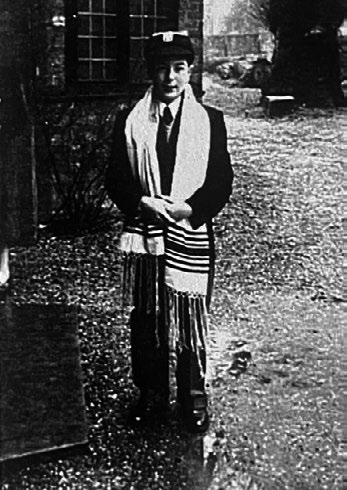
Robin in the 1950s
Masters Remembered
Paul
Cartledge (1960–64)
considers the St Paul’s Classical (Teaching) Tradition
The Founder of St Paul’s, John Colet, Dean of St Paul’s Cathedral, was what was known from the late sixteenth century onwards as a ‘humanist’, or what nowadays would be called a classicist: a student of Classical – that is, ancient Greek and Latin – language and literature, and of ancient Greek and Roman culture and civilisation. In Dean Colet’s brave new 1509 School, 153 scholars ‘of all nacions and countres indifferently’ (Colet’s Statutes, c. 1512) were to be instructed in not only Latin but also, remarkably, ancient Greek.
The first High Man/Master of the School was William Lily, the author of an immensely successful and influential Latin grammar and a prodigious pedagogical innovator through his teaching of ancient Greek.
Since the early sixteenth century, the School has somehow produced a lengthy string of famous or at least highly respectable Classical scholars, several of them included in David Bussey’s John Colet’s Children (timed to coincide with the School’s 500th anniversary). Men of the stature of William Camden (1551–1623), John Milton (1608–74), Thomas Taylor (1758–1835), James Prince Lee (1804–69), and Kenneth Dover (1920–2010).
In an earlier edition of Atrium (Autumn/ Winter 2021) I was fortunate to present a feature on – living – Pauline Professors: two of them are Classicists, though only one is a Professor of Classics (Tim Rood (1982–86)); the other is Ian McColl (1948–51), Baron McColl of Dulwich, an emeritus Professor of surgery. There are simply far too many others to mention, but here I am concerned not with eminent Classical Pauline products but rather with the
teachers who variously helped to produce them. And it is their quirks and quiddities as much as or rather than their pedagogy that I hope will be found entertaining as well as instructive.
For space reasons, I decided to confine this brief survey mostly to a small selection of teachers at the School’s iteration, the one founded in West Kensington in 1884, plus one master who taught on the post-1968 Barnes site. Two of them were High Masters – and I could have included at least one more. They all have a claim to fame, some to some infamy too. To avoid possible embarrassments, all seven so selected are no longer with us. To make clear that I write mostly sine ira et studio, I was taught by only one of them. One further feature seems to unite them. Lee (above) was a distinguished and influential teacher – but he did not teach Classics at St Paul’s. This seems to be a common thread: none of the magnificent seven was himself an (Old) Pauline.
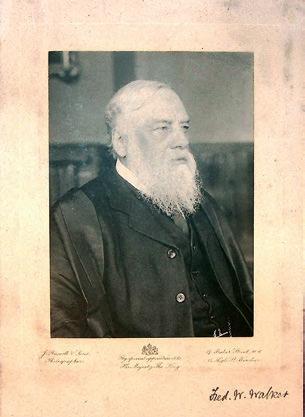
We begin with the Founding High Master of the 1884 School and once the eponym of the School Library. Frederick William Walker was the first High Man (appointed 1877) in over a century not to be in holy orders and the first to admit non-Christian pupils (one of whom is to this day venerated as a Hindu holy man). He transformed the School from one of 211 boys in 1884 to one of 573 in 1888. He also set a tone and a trend that was to be followed rigorously and vigorously, as we shall see again below: that of achieving outstanding success in gaining entrance awards to Oxbridge. His introduction of compulsory games presumably was not so universally welcomed.
One of the Classics masters who began his career on Walker’s watch was Thomas Rice Edward Holmes, usually cited (I mean referenced) as ‘Rice Holmes’, who served for 23 years (1886–1909). Like Pat Cotter (below) he was an Irishman, and like him did not burn the midnight oil on his strictly academic obligations as an Oxford undergraduate. Nor did he relish becoming a schoolteacher, yet having become one he seems to have fallen in love with and on the job: ‘The mightiest force in the world is love; and the teacher who loves his work will make his pupils like it’, so he told an audience of the Classical Association, a body flourishing still that he materially contributed to bringing into existence. High Master Walker happily was more than tolerant of his Staff members’ extracurricular predilections and pursuits. Rice Holmes’s produced Caesar’s Conquest of Gaul (originally 1899) and Ancient Britain and the Invasions of Julius Caesar (1907), a behemoth of xvi + 764 pages.
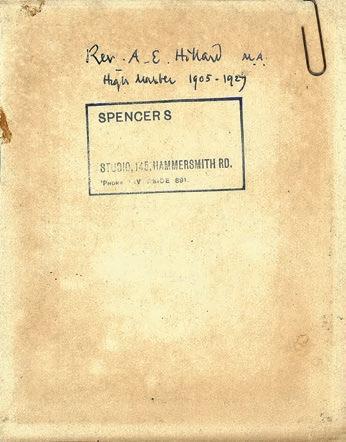
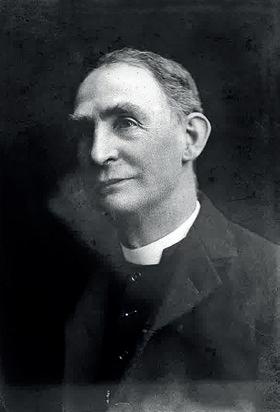
Then we have a partial counterreformation from on high. The Rev. A E Hillard, High Man from 1913–35, at once upon entering office ordered or perhaps ordained three innovations: the holding of (Church of England) Confirmation classes, the institution of the prefect system, and… the introduction of the ‘modern’ pronunciation of Latin. He was himself profoundly shy and probably wisely avoided actual contact with actual pupils. But to generations of Paulines and other schoolchildren he is better known as one half of a pedagogical double-act with M A North of Clifton College: co-authors of Latin Prose Composition (1913). An online bookseller trying to shift a copy of
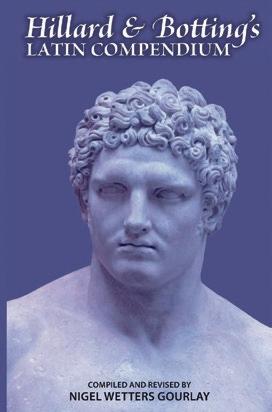
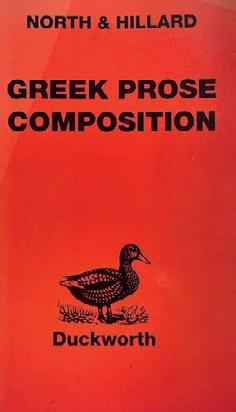
a 1956 reprint edition did not strive over-officiously to be persuasive to potential customers, observing that ‘the venerable little volume’ had ‘traumatised generations of schoolchildren into remembering the ablative absolute long after they’ve forgotten their PIN number’. Perhaps readers will not be amazed to learn that the seller styled itself ‘Crappy Old Books’.
Another of Hillard’s textbook publication double-acts was with G C Botting, who between Colet Court and St Paul’s taught Paulines for 37 years, having been himself educated at Dulwich and Cambridge. Botting too was a traumatiser, not so much of his charges but of his daughter, well-known novelist Antonia White. He was also Stakhanovite in his successful efforts to secure Oxbridge entrance awards for his pupils. Though the more advanced ‘Hillard & Botting’ was, like ‘North & Hillard’, on the Latin side, Botting managed to reconcile his Roman Catholicism (he was a convert) with his love of Plato and Aristotle, whose teachings (he thought) flowered perfectly within the fertile field of Catholic philosophy.
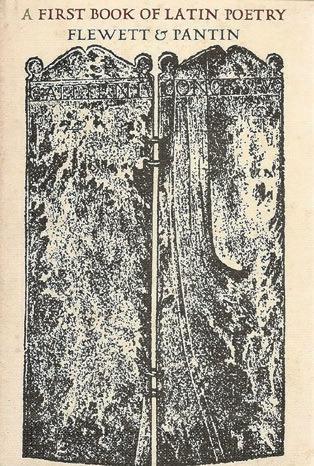
No such religious adherence troubled Henry Flewett hired at St Paul’s in 1921, who taught through a World War until his retirement in 1953. He had served in the Great War and suffered lifelong deafness as a result. Possibly his strongest claim to fame, or notoriety, is that he became father-inlaw to Clement Freud (1938–40) and grandfather to a succeeding generation of notable Freuds. But for us it is his postwar deafness that matters most, since it determined the manner of his teaching – one-on-one in the ‘Classical
Special’, one of Walker’s innovations. Flewett, afforced with his mechanical aid, would preside in the Great Hall, offering individual coaching in Classics (with what Frank Commings, then Surmaster, described in 1972 as his ‘impish sense of humour’). Perhaps not so widely known was that he was what the ancient Greeks would have called a xylourgos, a craftsman in wood, so fine indeed that – despite his deafness – he actually played his own violins in the School orchestra.
The names of another double-act, this time in teaching not publishing, ‘Cotter and Cruickshank’, have become legendary – irritatingly so to some. Between 1946 and 1966 they helped pupils secure over 100 Oxbridge entrance awards. Since I wrote an obituary notice for W W ‘Wol’ Cruickshank in the Independent newspaper (still accessible online), I shall confine myself here to E P C ‘Pat’ Cotter, with whom I shared a residence in Putney. What I did not share were a couple of his extra-curricular passions. Rather hilariously, his Wikipedia entry badges him as (Croquet Player). Besides captaining England at that game, he did likewise at bridge, on which he also wrote columns for the FT and Country Life. Indeed, it is in a way notable that he also found time to teach Greek and Latin at St Paul’s, having excelled at Oxford not for the quality of his degree result but rather for winning the 1924 Gaisford Prize; to achieve which distinction, he had translated Tennyson’s ‘Lady Godiva’ into Theocritean hexameters. I declare an interest: he was directly responsible for my achieving my highest mark in the thirteen papers I sat for the 1967 Oxford Honour Moderations exam: in unseen Greek verse composition.
Last but not by any means least, Stephen Willink, OE (Old Etonian) not OP. Probably not many teachers at St Paul’s, whatever their subject, would have earned the sobriquet, the accolade, of being ‘a Peter Pan of the Common Room’. But so, David Bussey described him on his death in 2001 in a fascinating and affectionate notice in The Pauline. Among a veritable gallimaufry of attainments, he edited an allegedly exhaustive volume on bananas, composed a poem marking the tercentenary of the death of Milton, and – shades of Pat Cotter –frequently passed long nights at the bridge table. At a meeting of the School’s revived Chesterton (debating) Society he and his partner convinced the voting audience 2:1 that xenophobia had virtues. The ancient Spartans would have roared their unanimous assent.
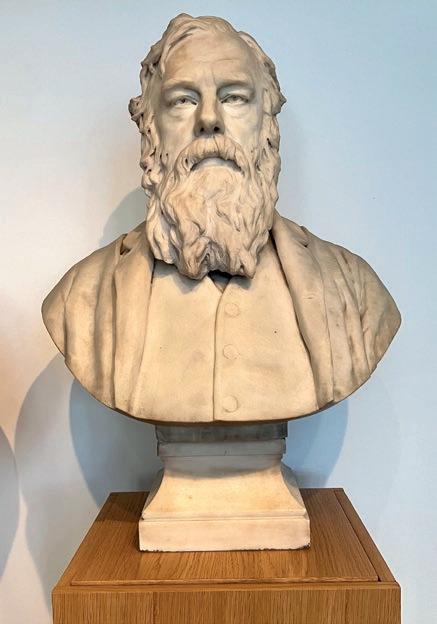
Bust of High Master Walker
High Master Walker
High Master Hillard
Hillard’s textbooks
Briefings

The Pauline Car Industry
St Paul’s is rightfully proud of Firefly Racing but it is
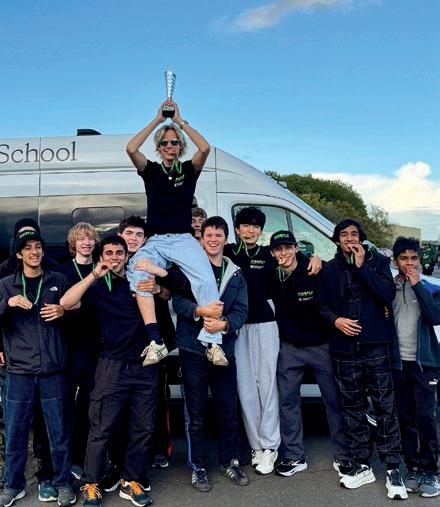
Team Firefly is the School’s motorsport racing team that takes part in the Greenpower F24/F24+ competition.
The aim of the competition is to build and run your own electric car, racing them at famous circuits around the UK such as Goodwood and Castle Combe in an endurance race.
Team Firefly currently races three cars, aimed at different year groups. FF03 is the team’s kit car and is designed to introduce fourteen-year-olds to the team and various basic engineering skills. After that, pupils move on to scratch-built cars (FF01 and FF02) where they can further hone their skills and learn new ones.
Aside from running the cars, Team Firefly is organised into multiple sub-teams such as strategy and data analysis. This allows the team to make use of the pupils’ many interests and skillsets and allows the team to keep striving towards making the cars more efficient and reliable
Racing International’s Final at Goodwood in October 2025 was a nervously anticipated event for Team Firefly as the outcome of the F24+ race would determine the
Championship winners and the team were also defending their Engineering Championship title.
Pole position was shared between Firefly, Green Arrow and The Egg, so the final race position was important. After a tricky practice session, the car stopped dead on track with thankfully just a slipped chain. The junior F24 races went well, but everything was to be decided by the middle senior race. After some careful strategy and tactics, the team came in sixth, securing it a fantastic second place in the championship.
The team from Ford judged the Engineering prize and the range of engineering on show from the St Paul’s team which included a simulator to demonstrate how the drivers train for race days, wowed the panel. For the fourth year running, St Paul’s was awarded the Ford International Engineering Award.
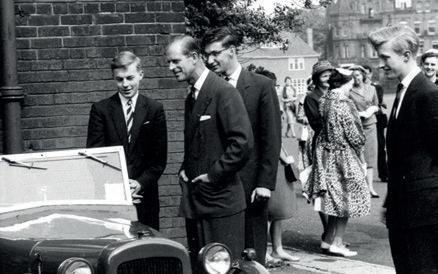
But 75 years earlier, when EVs were not even a pipe dream, George Sayce (1953–59) showed his ‘home-made’ car to Queen Elizabeth and Prince Philip when they visited the School to celebrate five hundred years since its foundation. George’s Austin 7 Special
was purchased in 1957 for £12–10s. It was towed to his home in Hampton from Kilburn because the carburettor was on the back seat. His father was heard to say to a friend – “at least it will keep George off the streets”. It did, for the next 18 months. He dismantled the car completely over the winter and arranged to have the springs flattened to lower the car, fitted a high compression cylinder head, and designed a chassis to suit a two-seat body. When the work was completed, he was allowed to drive to School in his final year.
George takes up the story of the royal visit. “I think it was Jim Gobbett (1953–59) who told me that Prince Philip had wanted to have a ride round the parade ground in the car, but his security officer had advised against this. The High Master was made of sterner stuff. I was quite nervous when, at his request, I had to take him for a ride round the block. At that stage, due to a design flaw, the chassis flexed and the doors tended to open when we went over a bump. But I took him round the block in an anticlockwise direction. At the corners I managed to keep my door closed using my elbow, and Trickle (as High Master Gilkes was affectionately known) was unaware of the problem”.
The car did good service for the next four years, and made a journey round Europe in 1962, when a friend and George drove to Switzerland to the source of the Rhine, and then followed the river to its mouth in the Netherlands taking in several Swiss mountain passes. On route near Nürburg, they found out that they could pay to drive round the Nürburgring racing circuit. George leapt at the chance, and his long-
His father was heard to say to a friend – “at least it will keep George off the streets”. It did, for the next 18 months.
not the first.
Firefly
suffering (non-driving) companion did not complain. Having completed one lap (25.4 km) they paused in the pits for a photo and to ask how they could get out of the circuit and back on the road to Cologne. They were told they had to drive round two thirds of the track a second time – at no extra charge. George’s companion accepted this news bravely.
And before George, there was ‘the hyphen’.
Claude Goodman Johnson (1878–82) was born in 1864 at Datchet, Buckinghamshire, the sixth child and fourth son of William Goodman Johnson and his wife, Sophia Fanny Adams.
The family moved to Ealing with Claude attending St Paul’s from 1878. After School, he enrolled at the Royal College of Art but left at the age of nineteen, saying that he felt he lacked ability. As a clerk in the Imperial Institute, he proved a highly effective organiser of its exhibitions. In 1896 his ability was recognised by the early motor propagandist, Frederick Simms, when the institute arranged the first exhibition of motor cars in London.
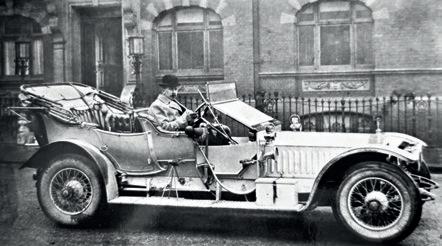
Simms appointed him secretary of the newly formed Automobile Club. Johnson left the RAC in 1903 for an abortive project to manufacture electric carriages and instead joined Charles Rolls’s motor agency. In 1904, Rolls travelled to Manchester to inspect Henry Royce’s works. Later that year an agreement was reached between Rolls, Royce and Johnson, with Johnson becoming ‘the hyphen’ (he nicknamed himself) in Rolls-Royce.
In 1906, Johnson became managing director of Rolls-Royce. He was the business entrepreneur who kept the company alive when Rolls died in an aircraft accident in 1911 and then the increasingly temperamental Royce became seriously ill. His key business decision, which marked him out from other British manufacturers in 1906, was to insist that Royce concentrate on a single model. The result was the celebrated 40/50 Silver Ghost, constructed at a new works at Derby.
The First World War enhanced Rolls-Royce’s reputation as it produced sought-after armoured cars and Royce designed its first aeroengine, the Eagle. The company had become the world’s largest producer of aeroengines by 1918.
In April 1924, Johnson contracted pneumonia but insisted on attending a niece’s wedding, and died at Adelphi Terrace House, London.
His obituary in The Engineer wrote:
“Keen regret will be felt – particularly in the motor world – at the death of Mr. Claude Goodman Johnson, the managing director of Rolls-Royce, Ltd. Mr Johnson died at his London house on Sunday, April 11th, after a short illness…Mr Johnson early realised the great possibilities of the then new mode of locomotive and was one of the founders of the RAC becoming its first secretary. In that capacity he was responsible for the planning of many of the early motor car trials and exhibitions. It was he, also, who
inspired the campaign which was arranged for the education of legislators and county councillors in the utility and safety of the motor car. With the late Mr Charles Royce, Mr Johnson became joint manager of the business which was merged into Rolls-Royce. It was with the building up of that world-renowned firm of motor car and aero machine builders that Mr Johnsons’s name was associated. As well as being the managing director of the British firm, he also occupied a similar position with regard to the allied American and French Rolls-Royce concerns.”

George Sayce and Prince Philip 1959
The Hyphen
Pauline Prizes
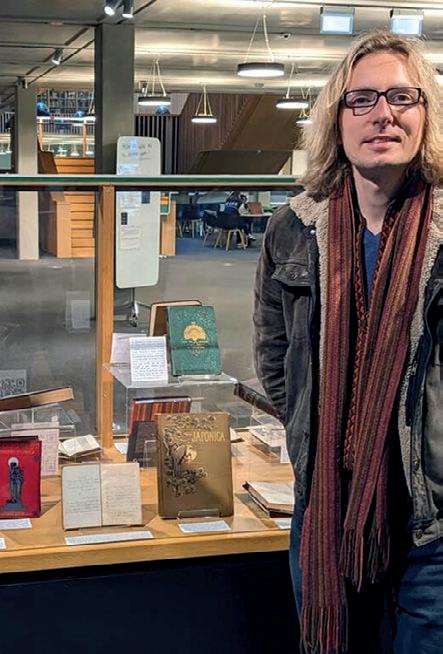
Dr Alexander Bubb (1999–2004), an Associate Professor of English at the University of Roehampton, has achieved a remarkable double victory by winning both the Rosemary Mitchell Book Prize and the Richard Stein Essay Prize for his pioneering work in Victorian literary studies.
Alexander received The Rosemary Mitchell Prize for his book, Asian Classics on the Victorian Bookshelf: Flights of Translation. The book investigates how popular translations of Asian literature – such as the Qur’an, the Bhagavad Gita, and Confucian Analects – became familiar to British readers between 1845 and 1915.
The Richard Stein Prize was awarded to Alexander for his article, Which Translation?: Identifying the True Source of Patten Wilson’s Shahnameh Illustrations. It challenges a longstanding assumption about Victorian artist Patten Wilson’s illustrations. He proves that Wilson’s drawings were inspired by a translation of the Shahnameh by Jewish writer Helen Zimmern, not Matthew Arnold’s poem Sohrab and Rustum as previously believed.
Reflecting on the prizes, Alexander said, “It’s tremendously exciting –when the news of the Mitchell Prize arrived in my inbox, I embarrassed myself by fist-pumping the air in the middle of a busy café.”
At Roehampton, Alexander is based within the School of Arts, Humanities & Social Sciences, where he primarily teaches 19th-century literature in the BA English and MA Children’s Literature programmes.
Puzzled Pauline
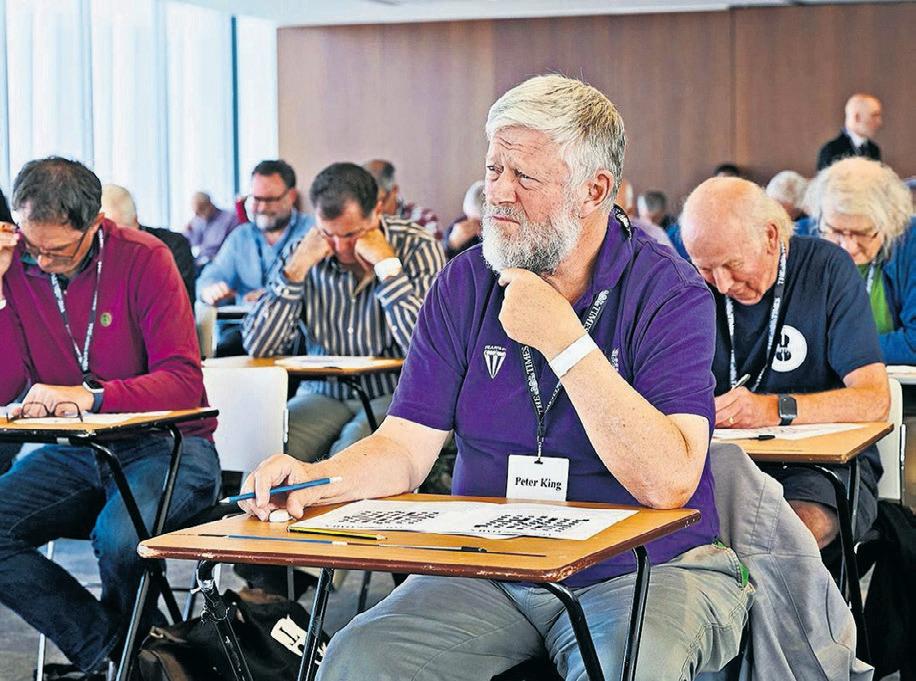
Many generations of Paulines were taught by Peter King (1967–71), from the 1970s until retirement from teaching.
He still works at the School, providing tours to prospective parents. Many readers of The Times will have been pleasantly surprised to see a photograph of a pensive (possibly even puzzled) Peter in October, as part of an article about The Times Cryptic Crossword Championship. He finished in the top 10.
Peter King
Alexander Bubb
Pauline Theatre
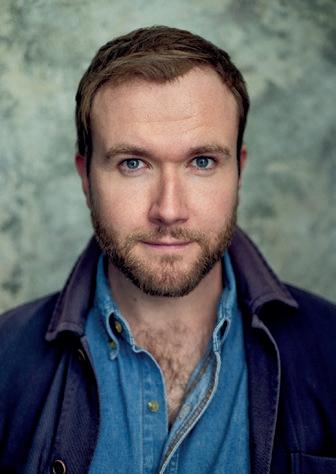
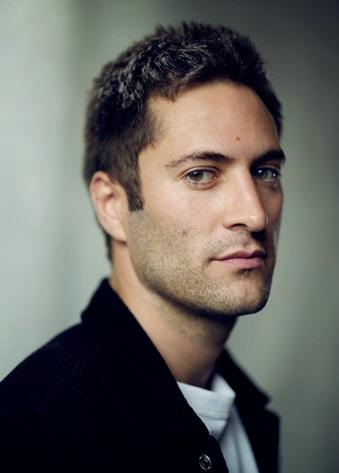
It is a golden period for OPs in the theatre. Adam Goodbody (2010–15) has co-written and performs in Petty Men at the Arcola theatre. It is a radical reworking of Shakespeare’s Julius Caesar set in a dressing room with two understudies attempting to outperform. Adam judged the School’s House drama competition in December.
Also, at the Arcola, Olivier Award winning playwright Sam Grabiner’s (2007–12) new play Christmas Day has been performed. The story of a tense Jewish family gathering in an abandoned building, it is a fascinating, and viciously funny, exploration of family dynamics and rituals.
At the Almeida Theatre, Leo Suter (2007–12) and Arty Froushan (2006–11) were in The Line of Beauty, a portrait of Thatcher’s Britain at its most decadent and divisive, based on the novel by Alan Hollinghurst.
And Joe Bannister (2003–08) appeared as George Tesman, the husband of Hedda Gabler in HEDDA at the Orange Tree in Richmond.
The accolades keep coming for Mark Rosenblatt (1990–95) who has now been included in The Stage Magazine’s Top 100 – the definitive list of the most influential figures in the UK theatre and performing arts industry. Mark’s debut play Giant, an exploration of Roald Dahl’s antisemitism, won multiple awards during its West End run including three Olivier Awards and will run on Broadway this year.
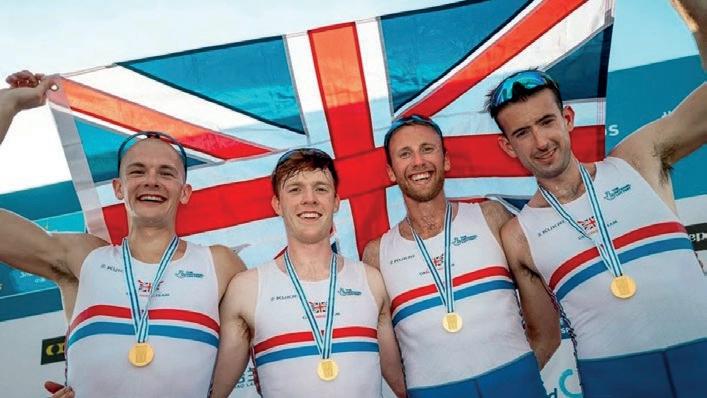
The Great Britain Men’s four stormed to World Under 25 Championship gold on Shanghai waters in September, taking the title ahead of Romania and the Netherlands.
One of the crew was Douwe De Graaf (2013–18) – second left in the photo. A multilingual Harvard and Cambridge graduate, Douwe can also now add World Champion to his impressive CV.
Adam Goodbody
Joe bannister
Arty Froushan
Golden Pauline
Douwe (second left)
Pauline Gallantry
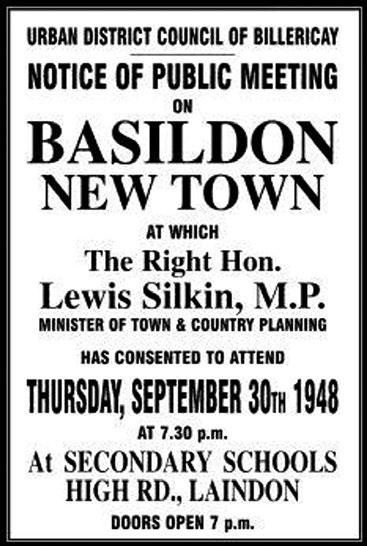
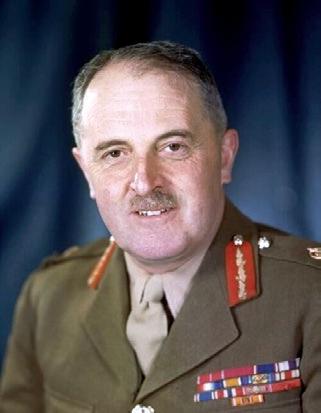
While alumni and Second World War generals, Field Marshal Bernard Montgomery (1902–06), Major-General William Broomhall (1910–15) and Major-General Roy Urquhart (1914–19) are often celebrated, Lieutenant-General Sir Humfrey Gale (1904–08) is less so.
His obituary published in The Times in 1971 highlighted Gale’s gallantry at the front in the First World War when he won the MC and was twice mentioned in dispatches as well as his organisational skills – “he had a gift for getting on well with foreigners, and his sympathetic nature and keen sense of humour endeared him to his subordinates”. Post war, Harold Macmillan persuaded Gale to become chairman of the Basildon New Town Development Corporation, describing him as “one of the most efficient officers he had ever known”.
From The Pauline, July 1971: We regret to record the death of Sir Humfrey Gale, an enthusiastic member of the OTC, and a very efficient NCO in charge of the signal section. He was President of the Old Pauline Club from 1954 to 1957.
This notice appeared in The Times: Lieutenant-General Sir Humfrey Gale, KBE, CB, CVO, MC, who was Chief Administrative Officer and Deputy Chief of Staff to General Eisenhower during the campaigns in North Africa
and in Western Europe, has died at La Tour-de-Peilz, Switzerland, at the age of 80.
Humfrey Myddleton Gale was born on October 4th, 1890, the eldest son of Ernest Gale of Liphook. He was educated at St Paul’s School and the Royal Military College and was commissioned in the Army Service Corps in 1911. In the 1914–18 War he served on the Western Front for four years at regimental duty and in the transport directorate. He won the Military Cross and was twice mentioned in dispatches. Between the wars he held a number of staff appointments at the War Office, graduated at both the Army and Naval Staff Colleges, and was for three years an instructor at Camberley.
At the beginning of the Second World War, he was assistant director of supplies and transport at the War Office. Next, he served as head of the administrative staffs of the 2nd and 3rd Army Corps, for part of the time in France. In 1941 he went to the Scottish Command as major-general in charge of administration, Scottish Command, and a year later he became chief administrative officer to Sir Alan Brooke at GHQ Home Forces.
When General Eisenhower took over the command of the forces preparing for the landing in North Africa, Gale was selected to be his chief administrative officer and deputy chief of staff. This was the beginning of an association which lasted till the end of the war. When the North African
He had a gift for getting on well with foreigners, and his sympathetic nature and keen sense of humour endeared him to his subordinates.
campaign was over, Eisenhower took Gale with him to England as his chief administrative officer for the campaign in Western Europe. He declared that he would be unwilling to undertake another large allied command without his administrative assistance, saying: “He has that irreplaceable quality of being able to handle British American supply problems with tact and judgment, and he is almost as familiar with the American system of supply as with the British.” When the plans for the landing in Normandy were being explained to Mr Churchill it fell to Gale to describe the administrative arrangements.
At the end of the war, he became the personal representative in Europe of Mr Lehman, the Director General of the United Nations Relief and Rehabilitation Administration (UNNRA). In this post, which he held until UNNRA was dissolved in 1947, he was head of a staff of some 2,000 in the regional office, and responsible for the work of missions in seventeen countries. From 1954 to 1964 he was chairman of the Basildon New Town Development Corporation. He was Colonel Commandant, Royal Army Service Corps, from 1944 to 1954 and of the Army Catering Corps from 1946 to 1968.
He married, in 1917, Winifred, second daughter of William Cross, and they had two daughters. She died in 1936, and in 1945 he married, secondly, Minnie Grace, daughter of Count Gregorini-Bingham.
Lieutenant-General Sir Humfrey Gale
Basildon New Town Meeting
Paulines on the TV
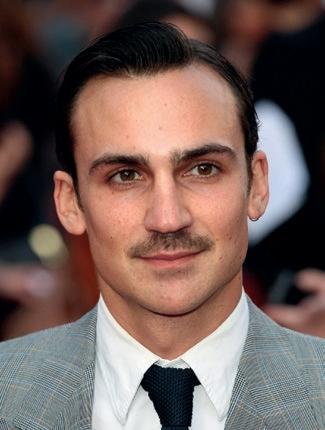
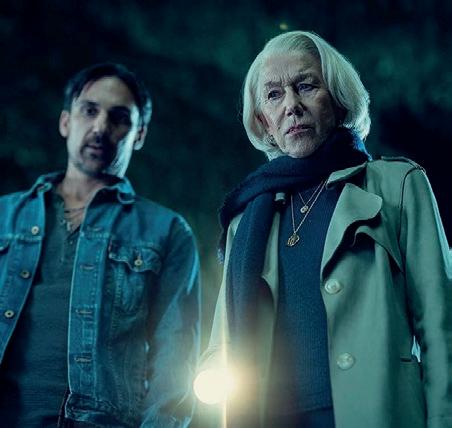
Actor and writer Henry Lloyd-Hughes (1998–2003) is in the Netflix adaptation of The Thursday Murder Club, based on the best-selling novel by Richard Osman. Henry, whose credits include Harry Potter, The Inbetweeners and Killing Eve plays the character of Bogdan Jankowski.
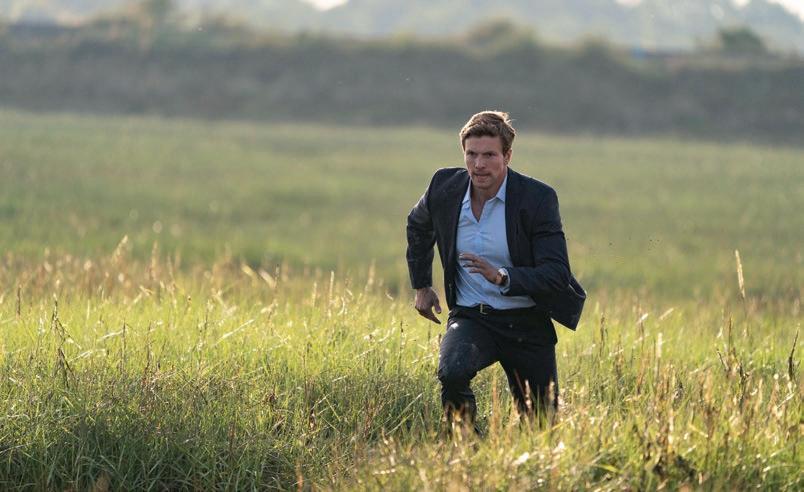
Fresh from winning a BAFTA for Mr Bates vs The Post Office, Patrick Spence (1981–85) has produced another drama detailing real-life scandal. The Hack covers the News International phone hacking scandal and stars David Tennant, Toby Jones, Robert Carlyle and Jonathan Coy (1966–70)
Rory Kinnear (1991–96) reprises his role as the mercurial and bullying Prime Minister in the third series of The Diplomat on Netflix. He is also the Emperor in Amadeus
Leo Suter (2007–12) plays Lynley in the BBC’s reboot of the Elizabeth George detective stories, Inspector Lynley Mysteries which aired for six series between 2001 and 2008 and starred Nathaniel Parker (who played rugby for OPFC). Leo’s role is Tommy Lynley, the detective inspector and 8th Earl of Asherton.
Pauline Appointments
Our congratulations go to Orlando Fraser (1980–84) who received a CBE for Charitable and Public Service, Giles Shilson (1986–91) who was awarded an OBE for services to Outreach and Inclusion and to Charity and Tom Bindoff (1957–62) for the award of a BEM in the New Year Honours List. Orlando, a Barrister, was Chairman of the Charity Commission for England & Wales from 2022 to 2025. Giles is a Bridgemaster of London and was Chair of the City Bridge Foundation from 2021 to 2024. Tom was recognised for work over more than four decades, championing inclusive access to the countryside and helping to ensure that more people can experience and enjoy the outdoors.
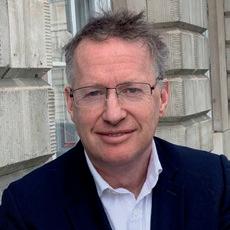
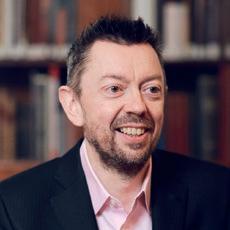
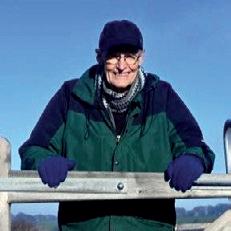
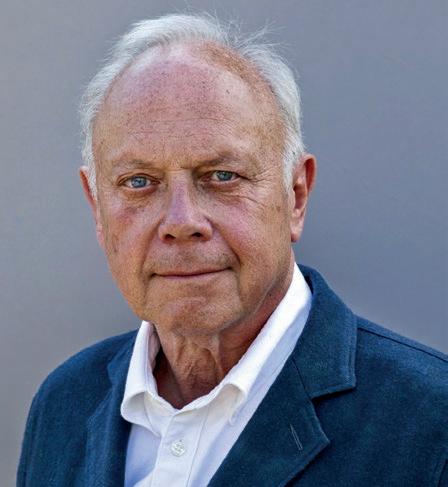
Leo Suter in the recent BBC series Lynley
Orlando Fraser
Tom Bindoff
Giles Shilson
Henry Llyod-Hughes and pictured right, as Bogdan in The Thursday Murder Club
Jonathan Coy
Pauline Books
Atrium (unless otherwise described) uses reviews provided by authors or their publishers.
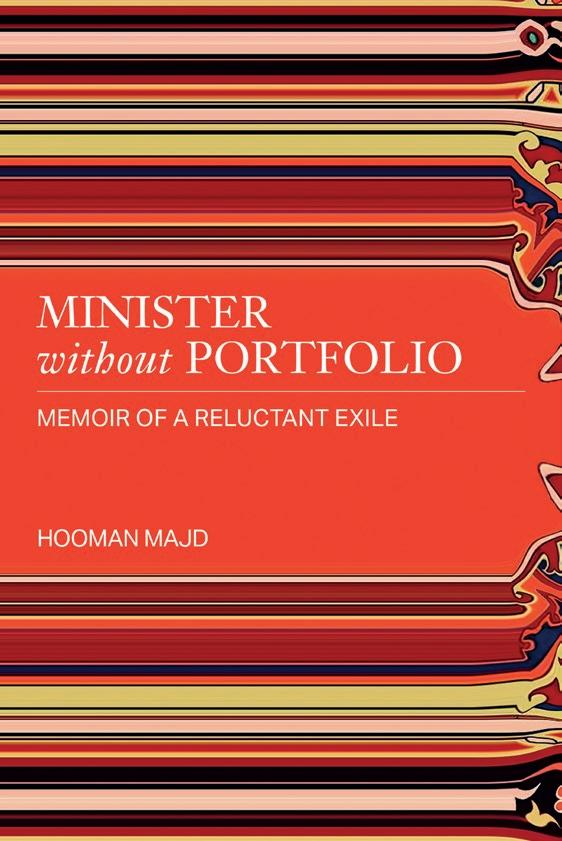
Hooman Majd
Minister without Portfolio
Hooman Majd (1969–74) is an author and journalist based in New York, and a contributor at NBC News. Born in Tehran, Iran, to a diplomatic family, he was raised and educated in the West from infancy. He attended college at George Washington University in Washington, D.C. Prior to his career as a journalist and author, Hooman worked as an executive in the entertainment industry for many years, in both music and film.
In many ways, Hooman has led a charmed life: the son of a high-ranking diplomat in pre-Revolutionary Iran, he grew up in the upper echelons of Iranian society and in cosmopolitan diplomatic enclaves in San Francisco, London, and Washington, DC.
As a young man, after Ayatollah Khomeini’s Revolution in 1979, Majd sold real estate to fellow Iranian exiles in Beverly Hills, tried his hand at writing, and found his way into the orbit of Chris Blackwell, the impresario of Island Records and mastermind behind the careers of Bob Marley & the Wailers, U2, and other global superstars. After rising through the ranks – and sometimes, but not always, the charts – Majd went on to write three influential books about his homeland and served as a consultant and contributor to NBC News on Iran. Yet, for all this authority and access, Majd could never truly call any place ‘home.’
As he recounts in his open-hearted memoir Minister without Portfolio – named for the tonguein-cheek title Blackwell bestowed on him – Hooman Majd has always been shadowed by a sense of precariousness, even as he bantered with ambassadors’ wives at smoke-filled soirées or traded gossip with Grace Jones and Dennis Hopper at Goldeneye, Blackwell’s Jamaican estate and the former home of Ian Fleming. Majd had seen first-hand the havoc wrought on his family – and so many others – by the Iranian revolution. All his life, he has been questioned, frisked, or even threatened at points of entry. Though he has risked several return trips to Iran, today, officially, he can never go back. How can you build an identity when no place will claim you as its own?
Told with grace, insight and longing, and filled with riotous, sometimes shocking portraits of largerthan-life personalities and illuminating insights about the entanglements between Iran and the West. Minister without Portfolio is a trenchant memoir of belonging nowhere and everywhere at once.
Editorial Board: Hooman’s years at St Paul’s cover the period reviewed in ‘The Serious Case Review’. His chapters about his time at School are full and frank.
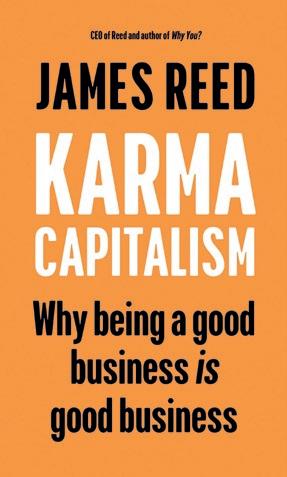
James Reed
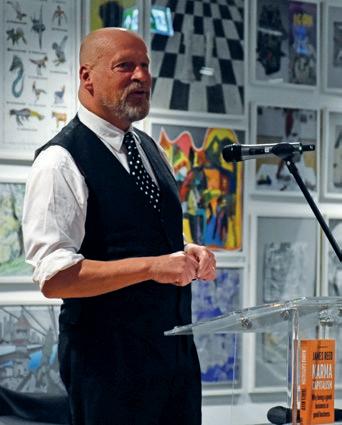
Karma Capitalism: Why being a good business is good business
James Reed (1976–80), Chairman and CEO of Reed and author of Why You? 101 Interview Questions You’ll Never Fear Again, is on a mission to reform capitalism. Corporations, he argues, are largely ignoring their employees, customers and wider community in the pursuit of short-term gain and profit, while charities suffer in the wake of the pandemic and cost-of-living crisis. However, there is an alternative.
James sets out his vision to encourage a whole new generation of PhilCos –philanthropic minded businesses with at least 10 per cent of shares owned by a charitable foundation. Inspired by his own company’s commitment to charity, James shares how PhilCos are more likely to:
– Stay in business for 40 or more years – Foster shareholders that work toward a lasting legacy – Retain and motivate colleagues – Improve lives through charity work
Best of all, being a PhilCo is not a different way of doing business. It is a different way of being a business. Based on his own experiences of running Reed as a PhilCo –and drawing on examples of other successes including IKEA, Lego and Rolex – James explains how to choose the right business model for your PhilCo, how to establish a charitable foundation and how to reinvest your profits to make the most impact in the shortest space of time.
Part-manifesto, part-guide, Karma Capitalism is a compelling and accessible introduction to the PhilCo movement, proving that it is good business to be a good business.
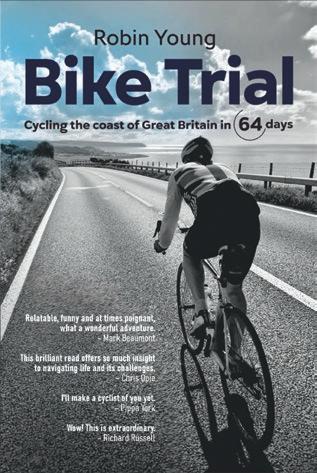
Robin Young Bike Trial: Riding the coast of Great Britain in 64 days
Robin Young (1975–79) completed a charity bike ride around the coast of Great Britain in 2020. Five years on, he has published a book about the ups and downs of preparing for and riding a mammoth challenge as a 58-year-old diabetic. Devised by Hugh Roberts (1969–74), the Great Tour covers 6,500km over 64 straight days, in all weathers.
After a career in business, Bike Trial: Riding the coast of Great Britain in 64 days is Robin’s first book. Having graced the sports fields of Barnes and Thames Ditton in his youth, Robin’s sporting exploits are now on the golf course where he represents the Old Pauline Golf Society off a handicap of one and in the saddle.
What would it be like to cycle the coast of Great Britain in 64 days if you’re 58 years old, diabetic, dejected and overweight? With only nine weeks to prepare, can it even be done? Setting out from the Isle of Wight, anticlockwise towards Brighton and far beyond, this book follows the British coast for six and a half thousand kilometres in search of answers. What unfolds is not just an epic cycle tale or a vivid travelogue. Endurance and forbearance become catalysts for a voyage to the centre of what is most important.
Rich with anecdotes, this unflinching, personal account records the joy and despair of a privileged, once-in-a-lifetime journey. The trip visits unexpected places: elation, fear, rapture, hurt, glorious surroundings, battering from storms, friendships made and others damaged. Tears. Life.
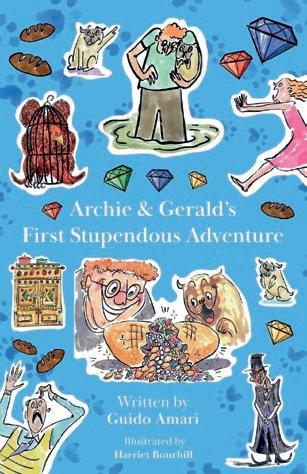
Guido Amari
Archie & Gerald’s First Stupendous Adventure
Guido Amari (1993–99) after leaving School undertook voluntary work as well as working in marketing and attended a Catholic seminary. He qualified as a secondary school teacher and became concerned at what he perceived to be a low level of literacy amongst the children.
Mr Williams (Modern Languages and Creative Arts Departments 1983–2020) inspired him, suggesting Guido should consider writing short stories. So, after he recently took up a teaching position at St Bernard’s Catholic Grammar School in Slough, he is writing a series of adventures where the story will be loved by children; the language used will support vocabulary enrichment and literacy abilities. Written by a multilingual teacher who loves language and is passionate about enhancing the role of vocabulary in learning and fun.
Archie & Gerald’s First Stupendous Adventure is the first in the series.
On a snowy, quiet evening, Gerald the pug suddenly appears on the doorstep of Archie, the baker. Pugnaciously making himself at home, he creates mischief and havoc in the way of pugs, but then, through a series of trials, saves the day.
Following this, a second story involves the pair in a dangerous journey across sea, rail and land to save the baker’s brother – luckily for Archie, he has the pug at his feet. In the third adventure, disaster happens as pug and baker are journeying back home. A mysterious figure appears from out of nowhere to set in motion a series of events that will test both Archie and Gerald.
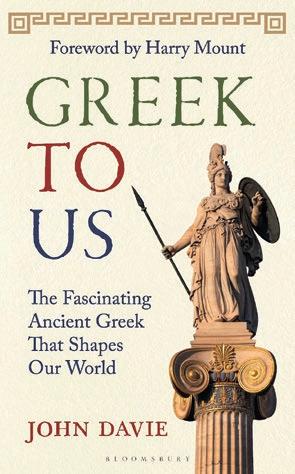
John Davie Greek To Us: The Fascinating Ancient Greek That Shapes Our World
Ancient Greek lives on in our culture in surprising ways. Sometimes funny – the word for an actor, hupokrites, gives us ‘hypocrite’; sometimes beautiful – an astronaut is literally a sailor of the skies. And that is before we get to the myths which gave us our Achilles heel or our Midas Touch. And what about crocodile tears, which comes from the Greek’s belief that crocodiles cried while eating their victims!
This is a learned but always entertaining journey through the world of the Ancient Greeks, their extraordinary language and how it has shaped our own understanding of the world today. After all, what is language but the frame through which we understand the world? Davie aims to bring more than just humour, he seeks to trace the thread of ancient Greek thought that runs through our own civilization, always with the lightness of touch and fascinating etymology. We meet Eros and Aphrodite, Alexander the Great and Oscar Wilde, the stoics, Epicurus and Sparta.
While this is a book about language and the touching and illuminating presence of the ancient Greeks in our current words, it is also about how Ancient Greece shapes our culture today.
John was Head of Classics at St Paul’s before becoming a lecturer at Trinity College, Oxford. He has published translations of Seneca, Horace, Cicero and Euripides. He is the co-author with Harry Mount of Et Tu, Brute? The Best Latin Lines Ever. Harry also wrote the foreword of this book.

Simon Hardy and Marc Checkley
Switzerland – The Smart Traveller’s Wine Guide
Anglo-Swiss settled in London, co-author Simon Hardy (1974–79) organises Swiss Wine Week London on behalf of Swiss Wine Promotion. He is the President of the Old Pauline Club. Marc Checkley, originally from New Zealand, is a journalist and storyteller living in Lavaux, Switzerland. With its towering snow-covered peaks, storybook villages and mirror-like lakes, travellers have been drawn to Switzerland for centuries. But the wonderful wines of this unique Alpine country are less known. Switzerland is home to hundreds of grape varieties; vineyards, planted on ancient stone terraces, cling to the mountain slopes. The wines of Switzerland are one of Europe’s hidden treasures – and there has never been a better time to discover them. The book includes:
– History, geography, grape varieties, and wine styles unique to Swiss terroir
– Suggested wine routes and travel tips by bike, train, foot, or car
– Recommendations for wineries to visit, along with notes on sustainable travel
– Suggestions for places to eat and stay, including winemaker recommendations.
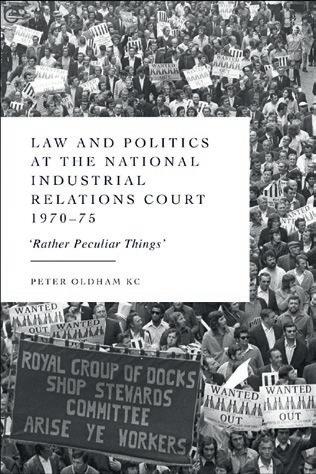
Peter Oldham
Law and Politics at the National Industrial Relations Court 1970–75
Peter Oldham (1976–80) is a KC and a barrister at 11 King’s Bench Walk. Law and Politics at the National Industrial Relations Court 1970–75 gives extraordinary new insights into the legal, political and industrial strife in the UK of the early 1970s, focusing on the National Industrial Relations Court and how its independence came to be injured at a time of national crisis.
When the Heath Government came to power in 1970, it set up the National Industrial Relations Court to referee highly contentious disputes between unions and employers. Regarded with hostility by the labour movement from the start, the Court and its President, Sir John Donaldson, faced mounting suspicion, and were regularly front-page news. When Donaldson jailed five dockers in 1972 – the Pentonville Five – for defying the Court’s orders, strikes erupted and the docks closed. With the country’s food supplies dwindling, a state of emergency loomed. How had it come to this? Could a way through be found?
Law and Politics at the National Industrial Relations Court 1970–75 is a revelatory account of the National Industrial Relations Court’s defining crisis, set in the context of a wider, and frequently startling, exposition of how Donaldson went about his role as its President.
Peter Oldham combines decades of experience as a barrister with archival research to shine a bright new light on how and why the Court found itself doing – in Donaldson’s own words – ‘rather peculiar things’.

Dan Houser A Better Paradise
Dan Houser (1987–92) founded Rockstar Games and is best known for the phenomenally successful Grand Theft Auto. After leaving Rockstar to found his own company Absurd Ventures, he has now released a debut novel A Better Paradise Mark Tyburn dreams of building the perfect video game. Kurt Fischer dreams of being a rich and successful executive. Daisy Tyburn dreams of having the ideal father. John Tyburn Smith dreams of fitting in. Nigel Dave just dreams of becoming human. Set in the near future, A Better Paradise tells the story of the ill-fated development of an ambitious but addictive video game project that goes very wrong. As the software they developed starts to produce unexpected and disturbing results, the project is shut down and abandoned. Until now.
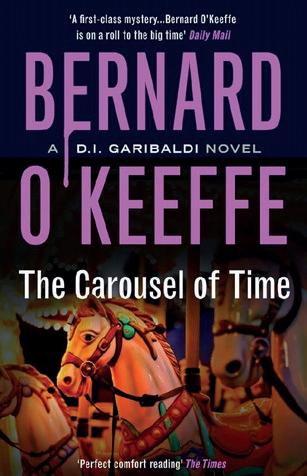
Bernard O’Keeffe
The Carousel of Time
Bernard O’Keeffe taught English at St Paul’s from 1994 to 2017 and was Senior Undermaster from 1997 to 2006. Since he retired, he has written a series of novels featuring DI Garibaldi, all of them set in Barnes.
The Carousel of Time is the fifth in the series.
Every summer four friends gather at Barnes Fair to ride the carousel in memory of Esther, the school friend they lost in a car crash they were all involved in as teenagers.
This year, the morning after the fair, one of those friends, Shelley Gregory, is found murdered on that very carousel.
DI Garibaldi has questions to ask. Who killed Shelley, and why there? Is her death linked to the tragedy the friends commemorate each year, or do the answers lie closer to home in the quiet Thameside village of Barnes, where Shelley was well known but not always well liked?
As Garibaldi pieces together the events of that summer night, he uncovers dark undercurrents beneath Barnes’s genteel surface and begins to see the truth: what goes around comes around when you ride the carousel of time.
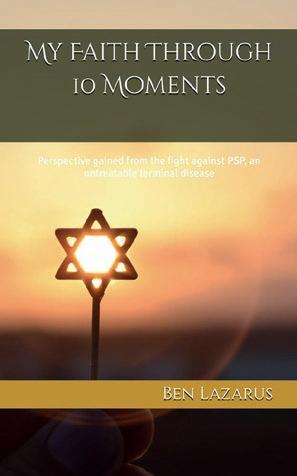
Ben Lazarus
My Faith Through 10 Moments
Ben Lazarus (1988–93) on receiving the news he had a terminal neurological condition which offers no treatment and statistically terrible odds, he reached into his reserves of faith and stubbornness and found a place of calm and happiness. In My Faith Through 10 Moments: Perspective gained from the fight against PSP, an untreatable terminal disease, Ben looked back over his life and identified 10 moments where faith and his ability to act decisively have made a huge impact. If he can manage the challenges he has dealt with, he believes others can too – with faith and a positive attitude and great support.

The House at Number 48
Antony Easton’s entry in the St Paul’s School Registers for Autumn 1976 reads, “Easton, Anthony Miles, b 3 Oct. 1963, s of P.R., Management Cons., of Wimbledon; from Rokeby; left MG, July 1981”. It spells his name with an H and tells us Antony’s father’s initials but little more. David Herman (1973–75) explains the full story.
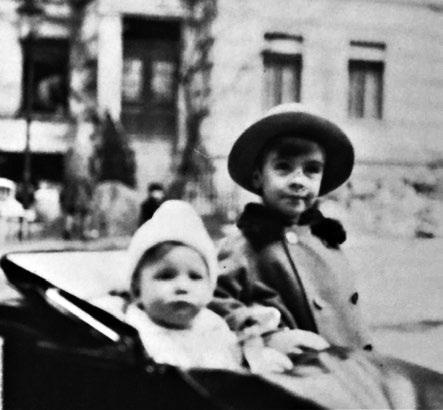
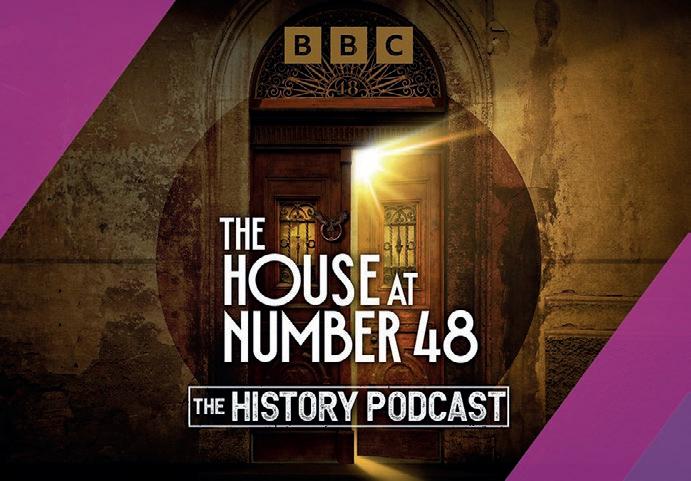
At the end of October 2025, Radio 4 broadcast a ten-part series called The House at Number 48. It was a fascinating series about the real-life story of the family of an Old Pauline, Antony Easton (1976–81), who has had a long and successful career in advertising. But what was so intriguing about these programmes was that it was about his quest to uncover his family’s dark past and reclaim a huge fortune that was stolen from his family by the Nazis.
“Our parents had secrets”, he told the presenter and writer, Charlie Northcott. “Things they kept hidden.” Easton, now in his early sixties, and his sister, Nicola (married to Matthew Burton (1975–80)), should have inherited a legacy worth billions.
Growing up, he always had a sense that his parents were not like other people he knew in his childhood in the 1970s. His father, in particular, was “a difficult person to grow up with.” Antony found him dark, unapproachable. “It was like getting blood out of a stone. He gave very little away,” he said in the opening programme.
There was something else he found strange about his parents. They were always on the move and lived in eleven different homes. Wherever they moved there was always one item that went with them, “a brown leather suitcase –a case full of secrets.” As a child, Antony remembered looking in the suitcase. It was full of strange things: German banknotes, postcards from all over the world, medals and, most intriguing of all, handwritten journals. His father had an English name,
Peter Easton with his younger sister, Helene
The House at Number 48 series is available on BBC sounds
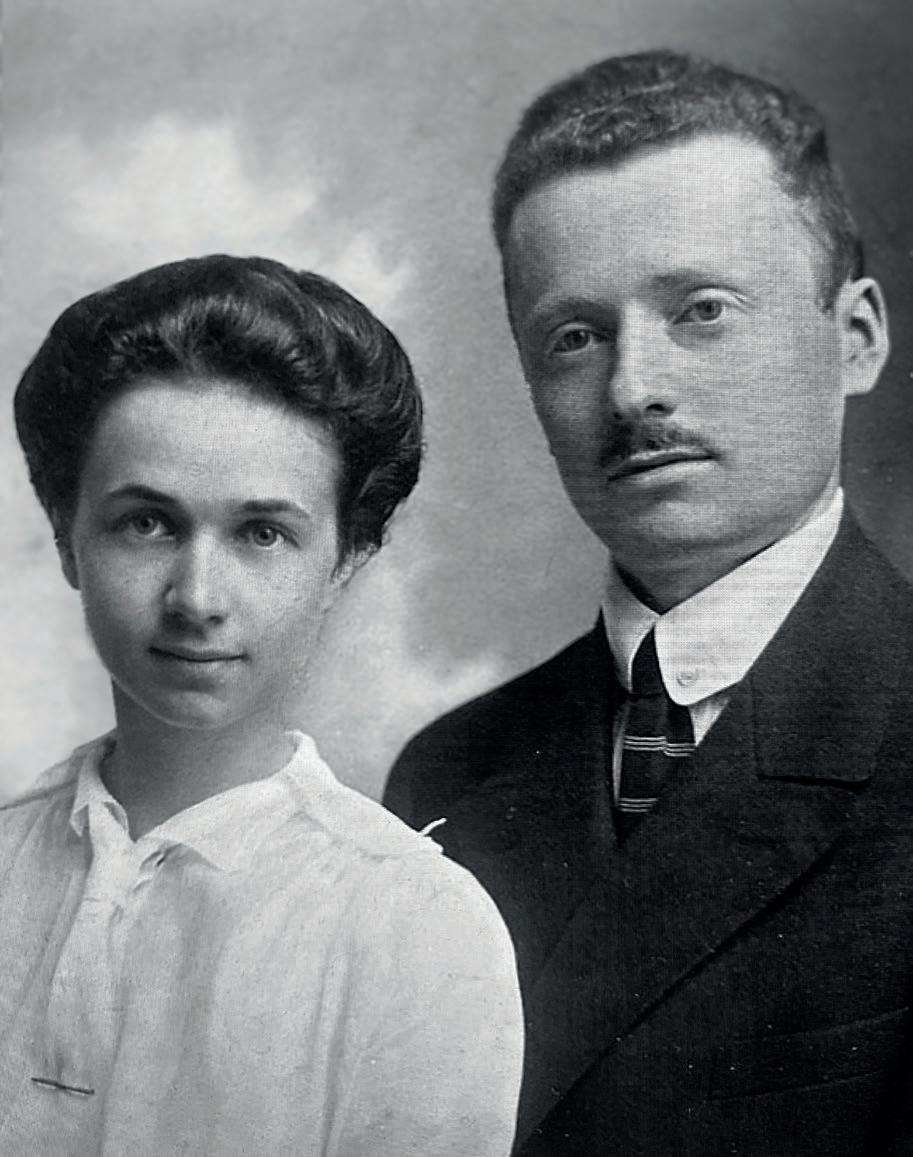
Peter Roderick Easton, but a heavy German accent. But it turned out he also had another identity too: Peter Hans Rudolf Eisner. Whoever this person was, he did not want anything to do with his past. In every way, he was “a closed book”, “an enigma within a mystery.”
When his father died, Antony could at last properly explore what was in the suitcase. He found his father’s birth certificate. It turned out that his father had grown up in a grand country house in Weimar Germany. He found piles of old German money and old newspaper articles, plane tickets, tape recordings, photos, detailed notebooks, and, strangest of all, a folder labelled “British Intelligence.” “The contents of
the suitcase,” according to Antony, were “a riddle.” And then, among the documents, there were indications of a German business that belonged to a family called the Eisners. He was to find out that the Eisners owned one of the biggest companies in Germany. But who were they and what relationship did they have with Peter Easton?
Programme 3 is about “The Eisners”. Antony finds a crucial document, a two-foot-long family tree from 1710 to his father and his great-grandfather, Heinrich Eisner, who was one of the most powerful businessmen in pre-Nazi Germany, owning numerous steel factories across Europe. Heinrich Eisner apparently was a billionaire in today’s money, and around Tiergarten,
in central Berlin, Berlin’s equivalent of Hyde Park, there were FIVE different Eisner properties, including an enormous six-storey property, Number 48. “The Eisners,” according to the narrator, “ooze wealth, sophistication and power.” Heinrich Eisner died in 1918 and left an enormous fortune to his son, Antony’s grandfather, Rudolf. There was one other crucial piece of information, which you may already have guessed. The Eisners were Jewish.
Peter Easton, né Eisner, was raised in a beautiful villa on Genthiner Straße in Berlin. There was a cook, a maid and a nanny. He went to school just a short walk from his home. There were two other Jewish boys in his class and his teacher was a passionate Nazi with a duelling scar.
By then antisemitism started to become more virulent and widespread. Antisemitic legislation targeted Jewish assets, removing Jewish ownership from works of art to businesses and properties. Even families as rich and powerful as the Eisners were not safe. By 1937 Jewish families trying to flee from Germany had to pay a flight tax – 92% of their wealth – to the Nazi regime. They were faced with an agonising dilemma. Should they flee abroad or stay and risk their lives?
At this point a mysterious man called Martin Hartig enters the story. He was a trusted man, close to Rudolf Eisner, a skilled economist who set out to help the family navigate the Nazi storm. But was he a guardian angel or an enemy within?
In February 1938, before Kristallnacht, Rudolf Eisner and his wife and two children decided to leave Germany. They escaped to Prague. Their family’s assets would have been worth a huge fortune today. Martin Hartig, an Aryan, was granted power of attorney over all their properties and businesses. He sold them to himself so they could not be taken over by the Nazis. In the summer of 1939, the Eisners left Czechoslovakia for Warsaw, then Denmark and from there sailed to Harwich. Rudolf was subsequently interned on the Isle of Man, but the Eisners were the lucky ones. Looking through the names on the family tree Antony discovered that his parents and grandparents were the only members of their family who survived the war. About eighty other
Antony’s grandparents, Hildegarde and Rudolf
family members died during the war, many at Terezin, others at Auschwitz. Some were gassed, many died of typhus, diphtheria and other lethal illnesses.
According to a private investigator hired by Antony Easton his grandmother lost 60–70 million Euros worth of property in Berlin. His grandfather Rudolf, who died in 1945, lost around a billion Euros worth of shares in the family business. Easton and his investigator started to track down what had happened to the looted art, businesses and properties. As you may again already have guessed, Martin Hartig seems to have sold much of this and his daughter subsequently inherited the mansion at No. 48 and her daughters continue to live there now. In Programme 8 Antony and his investigator meet the daughter, now in her 80s, and her daughters.
They believed their father was a hero who rescued the Eisners from a certain death and the daughters were devastated to be confronted with documents which showed the truth of what Martin Hartig had done and that far from being a hero he was a member of the Nazi Law Society.
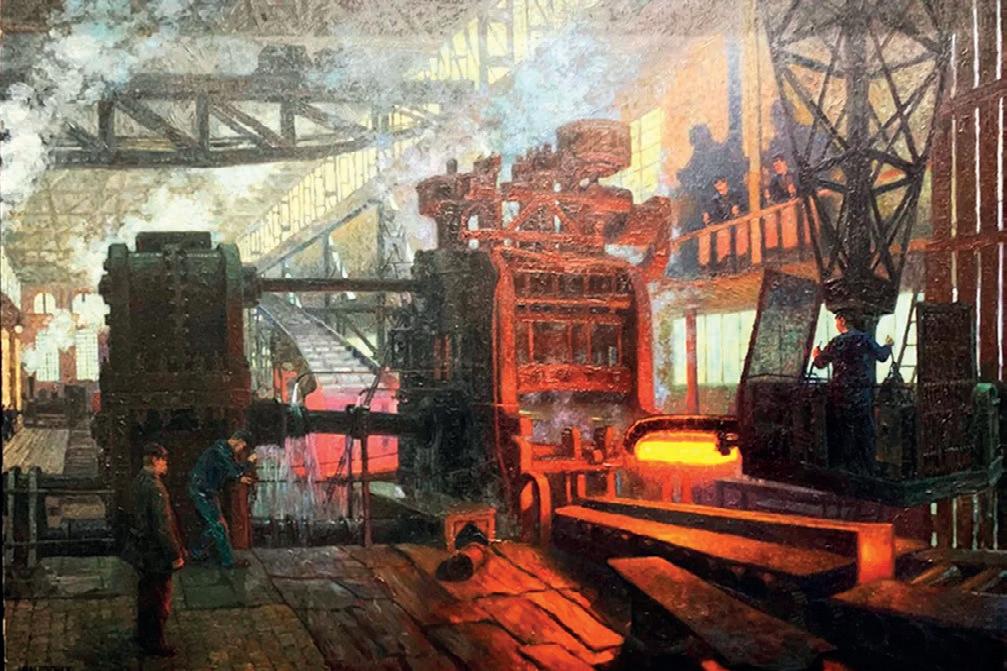
In addition to the properties that belonged to the Eisners there was also a precious oil painting, Eisenwalzwerk, which also belonged to the family and was of great sentimental value.
The House at Number 48 was broadcast on Radio 4 in October 2025 and can be heard on BBC Sounds.
By 1937 Jewish families trying to flee from Germany had to pay a flight tax – 92% of their wealth – to the Nazi regime. They were faced with an agonising dilemma. Should they flee abroad or stay and risk their lives?
It depicted one of the great steelworks that belonged to the Eisners and disappeared during the Nazi years.
Thanks to the research of Yana Slavova, it turned up at a German art museum, but at first there was no paper trail showing who had owned it during the intervening years.
Eventually, thanks to the work of the investigator, she and Antony managed to prove to the curators that the painting had indeed belonged to the Eisner family and the museum agreed to return it to the family.
One of the most interesting revelations in the series was not just that Antony’s father did not try and gain full compensation for these huge losses but that the post-war years were such a different world. There was widespread silence about the Holocaust and the issue of compensation for Jewish refugees from Germany was highly problematic. Reclaiming looted art, confiscated businesses and property was not easy in post-war Germany, lawyers’ fees were prohibitively expensive.
At the end of the series Antony comes to a realisation that there were compelling reasons which explained why his father was so dark and secretive. Antony and Nicola understood for the first time what their father and grandfather had gone through. “The destruction of their father’s world, the loss of his home, the murder of friends and family and escape to England.” Their father’s decision to keep the old suitcase full of documents and secrets was a kind of communication to his children, a message from a traumatic past.
This story is not unique. It will be familiar to many children of Jewish refugees from Nazi Germany, including a number of Old Paulines I have known for more than fifty years and I hope to return to their parents’ experiences in a future article.
One final point. A Stolperstein (a memorial plaque laid to commemorate victims of the Nazi regime) was laid in Genthiner Straße in Berlin in the name of Rudolf Eisner on 17 September 2019.
Eisenwalzwerk
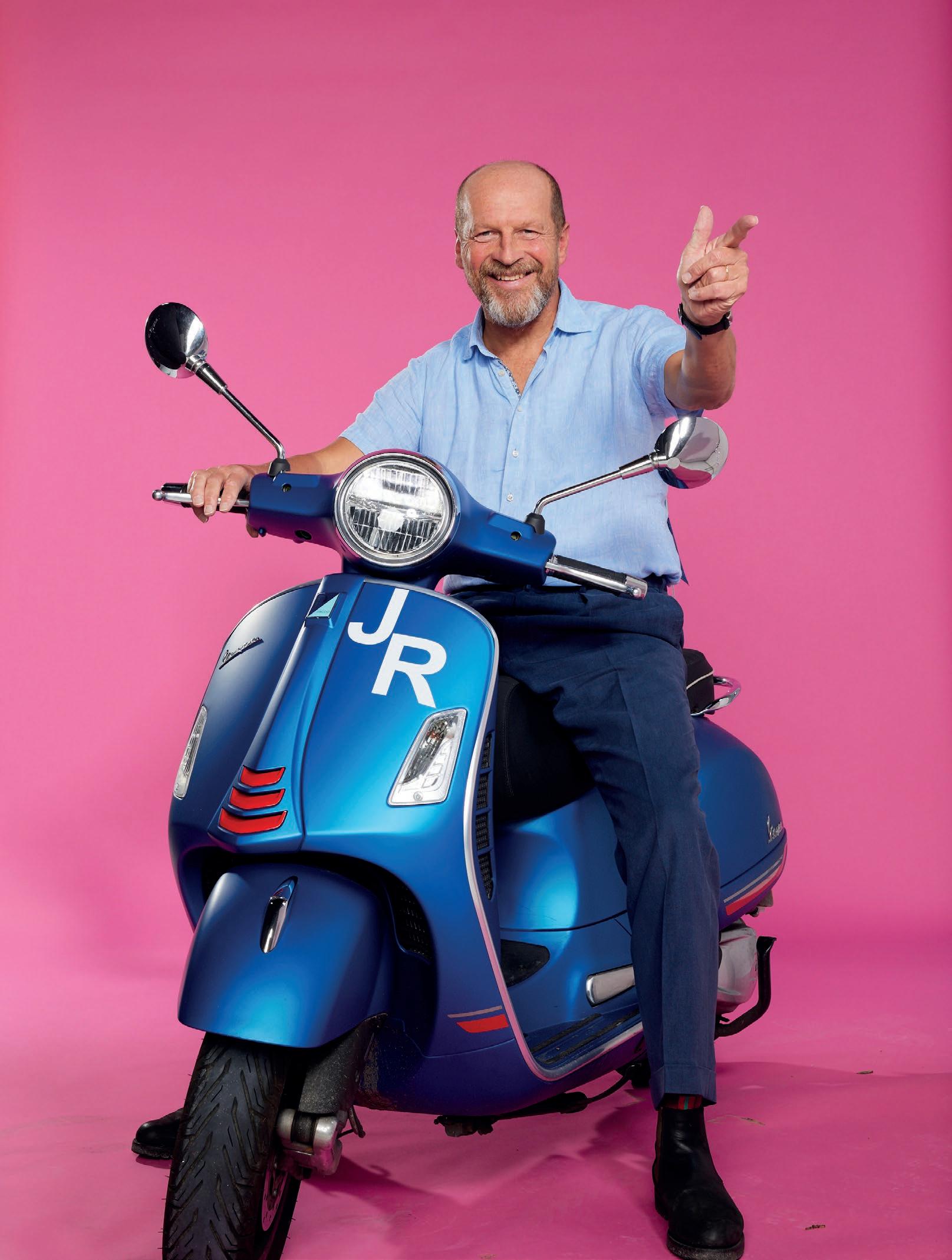
James Reed
Neil Wates (1999–2004) meets James Reed CBE (1976–80)
Ilike entrepreneurs and artists. My family is full of them’ says James Reed towards the beginning of the interview. ‘There’s something in the fact that both professions never retire’. As the conversation unfolded, a clear set of values began to surface. ‘What’s important is hard work, entrepreneurship, creative thinking, sensible stewardship, political consciousness and philanthropic duty’. Pillars of a philosophy that were first framed during his years at St Paul’s.
He arrived in 1976 into High House (the boarding house on the site of what is now the Dorfman Theatre), as he had spent his primary school years in deepest Surrey and boarding was the easier family option. At that time, it was very common to embark on what he describes as ‘five years in four.’ Not a vehicle for academic vanity, but a scholastic process that saw pupils through O Levels in the first two years, A levels in the next two, and a final ‘Oxbridge’ term tacked on for those that sought entry to either university.
There was all the typical pace, pressure and academic rigour that so distinguishes School, but James still enjoys the memories of a period of which he remains particularly fond. He remembers his peers as convivial, funny, and relentlessly curious. The academic pace culminated in the 1980 Oxbridge term, which saw him navigating a transition from schoolboy to Oxford candidate against the backdrop of a country in flux.
The 1979 UK general election marked a major political watershed, ending the post-war consensus and ushering in what became 18 years of Conservative rule, initially under Margaret Thatcher. Prior to this the country had lived through the “Winter of Discontent” – strikes, industrial disputes and the slow buildup of nearly a decade of economic and social turmoil lead to a lost confidence motion in then Prime Minister James Callaghan and a Conservative victory on 3 May, 1979. It was all felt in Barnes, just as it was the rest of the country.
There was a mock election at School at the same time, Reed remembers. Perhaps not surprisingly there was a Conservative landslide there too –
although the political scene at School was both respectful and diverse. James had been involved as chairman of PolEcon for that year and had written to Jo Grimond (former leader of the Liberal Party), who came to speak to the School. ‘I just asked. All for the price of writing a letter, really’.
Curiosity in action. ‘We were surrounded by people who were intellectually curious – curious about each other and curious about the future.’ This culture of inquiry was foundational. In the Reed household, education was a prized commodity, largely because his father, Alec Reed, had been denied that path. Alec’s own mother had famously demanded a school place for him despite a narrow 11+ failure, a story of grit that James carried with him into the more refined, but no less demanding, atmosphere of St Paul’s. James’ parents were in the happy position that they could provide a good education for their children (his brother, Richard (1978–83) is also an OP) but wanted neither pomp nor circumstance. The School’s “grammar school” feel (a term his parents used with affection) was its greatest strength. His parents even saw a positive in the ‘typical’ Pauline approach to uniform. Who knew slovenliness was in fact virtue manifest. James’ parents felt that St Paul’s lacked the aloofness of other great public schools, favouring instead a grounded, industrious spirit. This ultimately rang true for their son – at School he learned that intelligence was only half the battle; the other half was its application.
The School’s “grammar school” feel (a term his parents used with affection) was its greatest strength. His parents even saw a positive in the ‘typical’ Pauline approach to uniform. Who knew slovenliness was in fact virtue manifest.
A voluntary service programme called “You Can Help” provided the moral weight to his education. Not really amounting to much in either rugby or rowing he turned to a voluntary service games half. Its effects were profound and life-lasting. ‘Once a week I visited a lady in Fulham, called Tess. She’d been through the War as a railway guard, a woman of grit and service. However, her life had been irrevocably altered – not by the Blitz, but by a later act of senseless violence: an assault by a “thug” that had left her completely blind’. For a teenager navigating the upwardly mobile world of School and soon Oxford, these weekly visits were a profound collision with a different reality.
James at the OPC Annual Dinner
Spending time with Tess taught him about resilience, the randomness of hardship, and the simple, potent value of presence. It was his first real encounter with what he now calls “sensible altruism” – the idea that one’s time and resources could be systematically used to better another’s life.
The impact of these visits did not fade. Decades later, when Reed’s second daughter was born, he named her Tessa – a living tribute to the woman who had taught him the importance of looking beyond one’s own horizon. The seeds of “Karma Capitalism” – Reed’s philosophy of blending business efficiency with social good – were sown not in a Harvard Business School lecture hall, but in a small flat in Fulham.
Following School, and Oxford, James in fact did not join the family firm. He worked for Gordon and Anita Roddick, (at that time recent) founders of the Bodyshop. ‘I wrote them a letter, as I wanted to be near interesting and responsible entrepreneurs and to learn from them. They rang me up, invited me to their warehouse, which they were also working above. The interview was ‘can you do these series of tasks? Yes? You start Monday’. And that was it’.
He worked a stint at Saatchi & Saatchi and he coordinated relief and development programmes in Bangladesh, Pakistan and (then Sovietoccupied) Afghanistan, on behalf of Help the Aged and Afghanaid. His goal in his 20s was to learn, before an MBA at Harvard, in which he recalls the students working harder than anyone he had ever seen before. ‘There were study groups at 7.30am, which was a bit of a shock for my Pauline bones, but I found it inspiring and challenging. I made lifelong friends. There is a comment in there somewhere about Pauline work habits, but I am not looking too closely for it’.
In 1994 James did join the family firm, but it wasn’t something taken lightly. Family firms can suffer from the ‘nepotism trap’ – gaining a reputation for ushering in the next generation without rigour or scrutiny –and James was aware of this. He was nervous about joining his Dad’s company because he really did not want to mess it up.
Fundamentally, to James Reed, being a good business is good business, and he is uniquely positioned to prove it. So much so that it is the byline to his book ‘Karma Capitalism’. In it he says, ‘I have made it my
life’s work to make ‘philco’ the
business structure of tomorrow’.
This from a 2014 interview, “Joining the family business wasn’t a fait accompli. When my father got to 60, he said, ‘James, there’s not much point having a family business if there isn’t any family in it’. I’d been sitting on the fence for some time. Then one day he said, ‘That job that I have been talking to you about? It’s going to be in The Sunday Times Appointments section next week – do you want to apply or not?’.”
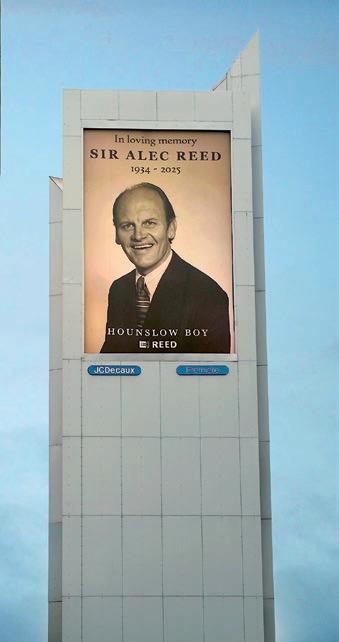
Reed was founded in 1960 by James’s father, Sir Alec Reed, a towering yet grounded influence. His was a journey of pure entrepreneurial odyssey; from selling lead soldiers forged from Blitz-rubble at school before brewing aftershave in his mother’s kitchen. Starting Reed Employment but also Medicare Ltd (sold to Superdrug) and several other senior boardroom responsibilities, he described himself later as a serial founder, and the influence on his son is clear. He viewed his son’s St Paul’s education not as a badge of status, but as a vital investment in potential. But success only mattered if it served a purpose beyond the balance sheet. His philosophy that “without charity, what’s the point of business?” became the bedrock of the Reed legacy. By donating 18% of the company to the Reed Foundation following his own brush with mortality in the 1980s, he ensured that the family firm would never just be a vehicle for “financial obesity,” but a permanent engine for social change.
Big shoes to step into, but it was the right time. 1994 saw the opening up of the internet, and Reed.co.uk was an early adopter. ‘We used to have a lot of shop windows, and we thought of the internet just as a bigger, wider one we could also use alongside our other offerings. We thought maybe 40% of job traffic would be through the internet. It has long since been 100%’. James was appointed Chief Executive in 1997 and Chairman in 2004. Since then Reed has become a billion pound business and Reed.co.uk – the first of its kind, established in 1995 – is the UK’s #1 job site. Reed is now a truly global recruitment company, with more than 4,300 employees (known as co-members) working in over 250 locations around the world.
Tribute to Sir Alec on the A4 in Brentford
If the “You Can Help” programme at School was James’ introduction to service, the subsequent decades have seen that spark alight a systemic engine for change. For the Reed family, philanthropy is not an afterthought or a line item in an annual report; it is, as Sir Alec once proclaimed, the “main mission.”
The vehicle for this is the Reed Foundation. Established in 1985 with the £5 million proceeds from the sale of Alec’s Medicare business, the Foundation was an early adopter of a departure from traditional corporate giving. By owning 18% of the Reed Group, the Foundation effectively turns every employee into a part-time philanthropist. As James often reminds his team, “we work one day a week for charity.” A familiar feeling then for those Paulines with a voluntary service games half – James has effectively extended that Wednesday afternoon into a lifelong corporate structure.
Fundamentally, to James Reed, being a good business is good business, and he is uniquely positioned to prove it. So much so that it is the byline to his book Karma Capitalism. In it he says, ‘I have made it my life’s work to make ‘PhilCo’ the business structure of tomorrow’. The model of a Philanthropic Company is the practical application of the economic logic James honed at School. It moves beyond the “financial obesity” Alec cautioned against, instead creating a circular economy of kindness. James is now a vocal advocate for other firms to follow suit. In a recent retrospective, he argued that giving away 20% of a company’s shares is not just a moral choice – it is a competitive advantage. “The return they’ll get in respect of clients and staff is enormous,” he notes. It is a philosophy that suggests the most industrious thing a business can do is to ensure its success serves more than just its shareholders. For the Pauline reader, there is a familiar resonance here: the idea that intelligence and industriousness reach their highest potential only when they are applied to the service of others.
In 2007, this culminated in the launch of The Big Give, a “PhilTech” platform that has revolutionized how the UK donates by matching donations and using technology to amplify impact, it has raised hundreds
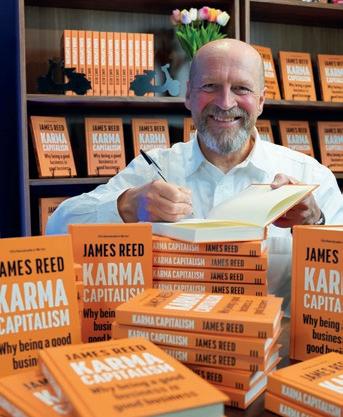
James is a best-selling author of the books, ‘Why You? 101 Interview Questions You’ll Never Fear Again’, ‘The 7 Second CV’, Life’s Work’ and ‘Karma Capitalism’. He also writes a monthly column for City AM and hosts the weekly podcast ‘James Reed: All About Business’, where he interviews entrepreneurs and business leaders.
of millions for causes ranging from Ethiopiaid to Womankind Worldwide James is Chair of Trustees for the Big Give. To date, it has raised and donated over £427 million for over 21,950 charity projects.
Every Pauline has a particular story of how they arrived at School, but Reed’s narrative is punctuated by the places that said “no.” He failed to gain entry to Eton. He also sat for Westminster, but upon discovering he was already “signing for St Paul’s,” the offer was unceremoniously withdrawn. “But I’ve never looked back,” When he eventually returned to Eton to give a talk about careers, he was pleased to express gratitude for the drive given to him by the experience. The industriousness of St Paul’s was, in fact, the superior fit for an entrepreneur. It was a place that offered the best of a private education without the “aloofness” of its peers. It was an environment where intelligence was the baseline, but what you did with that intelligence was the true measure.
At the end of the interview, James spoke to a lesson he learnt from an American colleague. ‘The question ‘who do you support? It is particular for us Brits – we go straight to a football team, or perhaps a political party. But why does that not include local good causes, or campaigns to improve lives, or charities? I’ve been thinking about it a lot recently. Who do you support?’
James is the Chair of Trustees for Big Give, the UK’s biggest match funding platform which doubles donations for charities taking part in its fundraising campaigns.
He is a Fellow of the Chartered Institute of Personnel and Development (CIPD) and the president-elect of the Chartered Management Institute (CMI). James lives in London with his wife Nicola and their six children.
Sir Alec Reed died in December 2025.
The Lure of the Grape
Simon Hardy (1974–79) tracks down other Old Paulines who have made wine their profession
At St Paul’s, we studied geography but never learned about terroir. We mastered French without encountering bâtonnage or élevage. Science covered chemistry and biology, but alcoholic fermentation went unmentioned. History traced the rise and fall of civilisations, yet the monasteries’ role in shaping Europe’s vineyards was left unexplored.
All the building blocks were there – language, science, culture, history and rigorous thinking – but wine itself remained conspicuously absent. Perhaps that is precisely why it became so compelling afterwards.
Today, some twenty Old Paulines around the world make their living from wine: auctioneers, merchants, marketers, educators, writers and even winemakers. Many have discovered that the habits formed at St Paul’s –analytical thinking, respect for craft and intellectual curiosity – are remarkably well suited to the subject.
Accidental careers
Ask any of us how we ended up in wine and you will hear variations on the same story: we stumbled into it, more by serendipity than design.
A role which required Spanish and promised foreign travel led Humphrey Serjeantson (1986–91) to IWSR, global leader in data, analytics and insights for the alcoholic drinks industry. He now serves as Western Europe Research Director. “I’m less a wine expert than a trends person,” he insists modestly, though tracking consumption patterns across Europe and beyond gives him an enviable perspective.
For Richard Bunje (1973–78), the entry was “somewhat accidental.” Fresh out of university, he took a stopgap role in the cellars at Laytons (now Jeroboams). The Chairman insisted that everyone tasted widely –an education that shaped Richard’s unapologetically classical wine preferences and long career selling fine wine to private clients and corporate groups.

After “messing up A levels”, Crispin Bond (1974–78) moved with his father to Australia, where a visit to the Hunter Valley first sparked his interest in wine. Back in the UK, he also worked in the cellars at Laytons where “my palate as a lowly cellar worker was trained on fine white Burgundy and vintage Champagne.” Having earned a Diploma at the WSET (Wine and Spirit Education Trust, the global leader in wine education), he moved into wine broking. With wife Jane, he opened a restaurant in Somerset where, in the end, he achieved his “vision of bringing eclectic wines to the area”.
While searching for 21st birthday beers on the Fuller’s website Ed Fryer (2004–09) clicked on “work for us” for a laugh. He joined their graduate scheme and never left, now serving as their Drinks Marketing Manager. Ed admits that his best “wine” moment actually took place in the Sierra Nevada brewery in North Carolina –“Beer Disneyland for adults”.
Formative moments
Carrying boxes at Le Pont de la Tour wine merchant before university marked the turning point for Sam Clarke (1986–91), working for fellow OP Robin Davis (1983–86). It was there that Sam realised he wanted to work in an industry he loved rather than simply for money – and ideally for himself. Memorable moments include picking grapes at Clos du Mesnil for Krug and pivotal tastings in Burgundy and California. He went on to co-found Flint Wines, now regarded as one of Britain’s foremost Burgundy specialists.

Davis himself went on to found Swig Wines in 1997, driven by a belief that wine should be “accessible and fun”. His interest in wine began at St Paul’s under the influence of tutor Alastair MacKenzie, whose habit of leaving tasting invitations on his desk did not go unnoticed. When working for Terence Conran, he and a colleague found themselves drinking unsaleable bottles of mature Burgundy at home, becoming rather adept at identifying Domaine de la Romanée-Conti by the details that were printed on the cork back then. Robin tastes relentlessly, always with food, over several days and often blind to avoid any influence of the label. “There are so many
famous wines for which you can find a good equivalent at half the price.”
In my case, the spark came unexpectedly. I asked my old Colet Court French teacher to help me find an exchange family. He introduced me to a small winemaker in Pommard and, for a 14-year-old with little wine knowledge, the experience was a revelation. Later, a holiday job at the old Army & Navy Stores placed me, by chance, in the wines and spirits department. Summer jobs with winemakers in Alsace and the Mosel made me start to dream of a life in wine.
Sound advice to gain experience and financial security led to a long marketing career at Nestlé before I finally pursued that dream. I gained the WSET Diploma and founded Fitting Wines in Switzerland, offering a personal wine shopper service to expats. Since returning to the UK in 2019, I champion Swiss wines here.
Specialists and innovators
Some of us have carved out distinctive niches within the wine world’s complex ecosystem – and a few have helped to reshape the industry itself.
Robert Joseph (1968–72) is one of the most influential figures in wine. In 1984 he co-founded Wine International magazine and the London International Wine Challenge (IWC). Sunday Telegraph wine correspondent for sixteen years, he is the award-winning author of over 30 books. In 2005 he pivoted from critic to producer, co-creating Le Grand Noir – French wines designed to compete with New World brands – now sold in over 60 countries. He consults globally and has recently launched a new project in Georgia, the birthplace of wine. Robert does not shy away from creating controversy, which explains the title of his newsletter: Devil’s Advocate.
“Working in wine you can never learn enough”, confesses Archie Dawson (2007–12). After studying engineering and qualifying as a chartered accountant, he joined Bordeaux Index, working on their trading platform and market-making operations to “modernise the way people buy and sell wine in a way that gives value to the consumer”. Why wine? “Wine has the ability to transport me in time and place”.
In 1997, the same year that Andrew Lloyd Webber’s wine collection sold for a world record at £3.7 million at Sotheby’s, James Reed (1980–85) joined the famous auction house. Now a senior specialist, he oversees their wine business across Belgium, Luxembourg and the Netherlands, bringing distinguished private cellars to auction.
David Elghanayan (1988–93) co-founded Vanquish Wine in 2003 where he understood what affluent thirty-somethings want in premium nightlife venues. One outcome was establishing the country’s largest stock of Cristal Champagne that he supplied to many of London’s top clubs.
Polishing glasses, driving the van and sampling “one or two half-decent bottles” sum up the initiation at Corney & Barrow for Taro Crump (1996–2001) Armed with a palate “heavily biased towards Guinness, Grand Cru Chablis and great Bordeaux,” he spent some years trading fine wine in Hong Kong. After a stint in New Zealand he settled back in London. Recently exiting Crump Richmond & Shaw, the fine wine broker he co-founded in 2014, Taro has just launched a new fine wine venture, Ema Vino.
Matthew Hudson (1974–79) entered wine straight from School, also starting at the wheel of a van. “Lucky to be engaged in an industry about to enjoy a 20-year golden age,” he worked at Oddbins, Allied Domecq and John Harvey & Sons – “none of which remain today.” He travelled the world, made great friends and admits to torturing his liver. When the global downturn hit in 2008 he went to run the Wine Business degree course at Plumpton College, the UK’s wine university. Retired since Covid, Matthew reflects on his years in wine as “the most delightful way to be poor.”
Bold reinventions
After two decades in marine insurance, Christos Ioannou (1973–78) made a decisive leap. Wine had been a passion since university, nurtured through WSET qualifications pursued while working in the City. On completing the WSET Diploma in 2002 he founded Criterion Wine Tours, organising bespoke wine trips worldwide, alongside running a London wine and dining club and judging at the IWC.
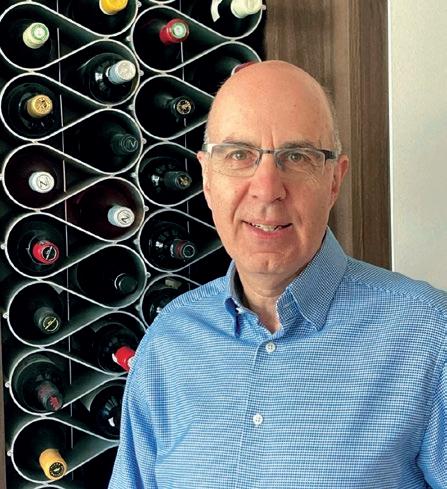
John Salmons (1953–57) took second acts to extremes. After forty years with ICI in Australia, he and wife Leonie sold the family home in 1990 and purchased a plot on the Mornington Peninsula, south of Melbourne. They planted four acres of Pinot vines when the local industry was still in its infancy. What began as weekend vineyard work grew into a fully fledged boutique winery producing around 400 cases per year. James Halliday – Australia’s version of Jancis Robinson – declared their Pinot Meunier the finest he had ever tasted.
For a portfolio career, look no further than Sam Hyman (1992–97) A chartered surveyor running property companies, he is also Managing Director of VinoVeritas Asia, specialising in Italian wines. Initially he and his father were silent investors but became increasingly hands-on as the passion took hold. Sam claims it is “more hobby than profession”, though holding the WSET Advanced Certificate and trips to Mascarello, Quintarelli and Walter Massa suggest otherwise.
Honorary OP talents
Officially, wine was not part of our Pauline existence. Of course, the nearby pubs told different stories, if one chose wisely.
Alastair MacKenzie (retired in 1993) – English and Classics department, fives supremo and avid cricketer – was also an honorary life member of the Circle of Wine Writers. He co-authored definitive works on Sauternes, SaintÉmilion and Pomerol and his 1995
book Daumas Gassac: The Birth of a Grand Cru became a classic. After retiring last summer after 99 terms from Maths, rowing and admissions, Dr Andy ‘Doc’ Mayfield joined his wife full-time on their smallholding in Worcestershire, establishing a vineyard of twelve acres. The inspiration goes back to his sabbatical in 2003 during which he visited New Zealand’s South Island, falling in love with the wines. “We almost stayed and set up a vineyard,” Doc admits, “but our boys would never forgive us if we had abandoned their St Paul’s education.” He now hopes their 7,000 vines of Pinot Noir and Chardonnay will produce some delicious sparkling and still wines within three years. There is much to learn. “Tractor driving needs work,” Doc confesses, “but boat trailer experience has helped.”
Passion rewarded
The Old Pauline wine community remains informal, scattered, largely unrecognised. But our curiosity, once unleashed, has travelled extraordinary distances. We share something enduring: a love of wine not as status or spectacle, but as culture, craft and connection.

After retiring last summer after 99 terms from Maths, rowing and admissions, Dr Andy ‘Doc’ Mayfield joined his wife full-time on their smallholding in Worcestershire, establishing a vineyard of twelve acres.
Christos Ioannou
Andy Mayfield in his vineyard
Desert island wines
Franciacorta sparkling wine from Italy, which deserves to be much better known. (Humphrey Serjeantson)
Champagne from Krug, Burgundy from Domaine de la Romanée Conti, Sauternes from Château d’Yquem and Vintage Port from Taylor’s – unapologetically classical. (Richard Bunje)
Clairet from Courbin Heritage in Bordeaux, my recent favourite, but a Tokay if it’s a dessert island. (Crispin Bond)
Erse Rosso from Tenuta di Fessina in Sicily – since “London Pride isn’t wine”. (Ed Fryer)
Clos St Denis Grand Cru from Domaine Arlaud, one of Burgundy’s finest reds. (Sam Clarke)
Chateau Climens 1971 Barsac from Sauternes. (Robin Davis)
Bollinger PN VZ 15 champagne which he would drink “until the end of time”. (Archie Dawson)
Champagne, white Burgundy and red Bordeaux to suit his traditional tastes. (Christos Ioannou)
Pinot wines from the Mornington Peninsula along with a few local sparklers. (John Salmons)
Quintarelli’s Amarone della Valpolicella Classico Riserva, one of Italy’s reference wines. (Sam Hyman)
Predictably, my choice is from Switzerland: Completer Malanserrebe by Martin Donatsch, made from a rare grape variety, that is incredibly fresh, complex and promises 50 years of pleasure. (Simon Hardy)
Career advice
“Be passionate and keep up to date with the wine trade.”
Richard Bunje
“See wines for what they are and enjoy the unique characteristics of each style, have your favourites but don’t be a wine snob.”
Crispin Bond
“Get in touch with me. Flint Wines runs an intern programme and I would love to hear from you.”
Sam Clarke
“Work face-to-face with customers in the early years so you can understand how different people respond to different wines and taste wines blind, unsaddled with preconceptions.”
Robin Davis
“You won’t become an expert overnight, but stick at it, and you will suddenly realise you know more than most.”
Ed Fryer
“Get qualified, be financially realistic.”
Christos Ioannou
“You need a passion and a love for the product. Find a region to specialise in and throw everything into it.”
Sam Hyman
“Get studying early if you want to be purchasing or selling wine. You need to be a specialist in the industry to make ends meet.”
Archie Dawson
“You need a good apprenticeship and to be very hands on and, above all, know that there’s no quick or big money in it.”
John Salmons
“My counsel is to build some business experience, gain a proper wine education and maintain realistic earnings expectations. Wine rewards passion but demands patience.”
Simon Hardy
The Mayfield’s smallholding
Nothing can prepare you for that moment
Sam Peters (1991–96) describes how Matt Ross (1991–96) is taking on his Parkinson’s diagnosis.
There is a saying in life ‘you make your own luck’. It is palpably and demonstrably untrue. But there is surely truth in the idea that how you interpret your life and all that is thrown at you during it, reveals your true character and values.
For Matt Ross founding Editor of the St Paul’s School magazine Black and White, which celebrates its 30th anniversary this year, a Parkinson’s diagnosis aged 38 was quite something to have thrown at him.
A hugely successful, not to mention ambitious, advertising executive, by 2016, fifteen years after graduating with an MA in Politics and Economics from the University of Manchester, London-born Matt had already risen to the position of global head of brand at YouTube, having already worked for industry titans Ogilvy’s and BBH and others.
Based in Los Angeles and married to a Cambridge graduate and former marketing director of Liberty’s, Fran Page, the couple have two beautiful young children, Max and Esme, and life was theirs for the taking. To those of us who knew them, there was an air of inevitability they would go on to achieve
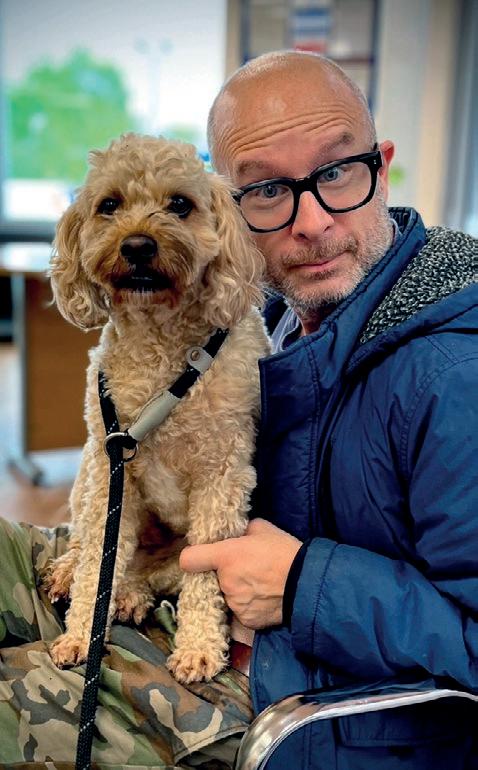
great things. Then came the hammer blow. ‘Luck’, whatever that is, had turned against him.
“I’d been experiencing a number of symptoms including muscle stiffness and fatigue and had lost my balance a couple of times and fallen while exercising. I’d done the thing they tell you not to do and searched for my symptoms online. Everything pointed to Parkinson’s. By the time I saw the specialist and got the official diagnosis, deep down I knew. But even though I thought I was prepared, nothing, and I mean nothing, can prepare you for that moment.”
In the days and weeks following the diagnosis anxiety and fear gripped Matt, along with his family and friends.
When I first heard news, via a phone call from the man who gave me my first newspaper byline in Black and White before convincing me to become a sports journalist midway through an unforgettable six-week tour of Australia with the British Lions in 2001, my initial thoughts were of dark despair. Despair for Matt. Despair for Fran. When I thought of the children, I cried uncontrollably. I know other friends felt the same.
But it soon became clear it was us, not Matt or Fran, who needed to pull ourselves together. Because to say the
Ross family, including his younger brother Ed and father Clive Ross (1963–67) have dealt with the diagnosis with grace, dignity and extraordinary determination would do a disservice to the word ‘understatement’.
As another dear friend and contemporary of ours from St Paul’s, the Olivier Award winning actor Rory Kinnear (1991–96), another Black and White ‘first editioner’, told Matt a week after his diagnosis, “Out of all of us, thank God it’s you who got this diagnosis.”
Harsh? Far from it. It was the ultimate compliment and a typically insightful comment from someone who has known Matt even longer than me, having joined St Paul’s together aged 13 from Tower House Preparatory School in East Sheen, along with Zubin Maini (1991–96), the third member of a tightly-knit friendship group I managed to muscle my way into from our first meeting in the fourth form tuckshop.
What Rory meant, was that Matt was the only one of us equipped to take such a massive, life-changing diagnosis in his stride. He knew he would tackle it in the only way he knew; relentless positivity allied to super-smart strategising, vigour, wit and good humour. For Matt Ross, life’s glass is always half full.
“Of course it was shit, but straight away I began to work out what I needed to do to keep the illness at bay,” Matt says. “I started researching, learning, training. Absorbing as much information as I could. Parkinson’s is a bully, and I was determined not to let it defeat me. I had too much to live for then and I still do now.”
Nine years on and Matt is very much still standing. Having stepped back from the high-rolling lifestyle of LA, moved back to England to be closer to family and friends, Matt’s commercial and branding brain has never stopped whirring. Latterly, it has gone into overdrive.
Today, following several years of work in the background, Matt stands on the brink of arguably his greatest professional and commercial challenge; growing a potentially groundbreaking business which is set to revolutionise Parkinson’s care. Its name? Day2Health.
Matt continues: “What became clear to me from a pretty early stage was that the plan for me, and for pretty
much everyone diagnosed with this awful disease, was one of managed decline. I simply wasn’t prepared to accept that and got to work planning my own care plan. There are loads of shocking statistics around Parkinson’s but for me perhaps the most shocking is that on average, from the point of being diagnosed, it can take up to 18 months to see a specialist in the UK. That is critical time wasted when the perceived wisdom is that the earlier you can start on an exercise and nutrition programme, the better your outcome is going to be. Not to mention being utterly intolerable from a mental health perspective. Can you imagine being given the worst news of your life and then being told you are basically on your own? Day2 aims to end that by providing daily bespoke movement and nutrition plans, advice on sleep and mental health and connections to a community of inspirational people living with Parkinson’s so you won’t be alone.”
Around the same time, they moved back to England in 2021, having fallen in love with a chocolate box Cotswold stone house near Cheltenham, where Max and Esme now go to school, Matt and Fran also welcomed a puppy, Charlie, into their home. Walking the beloved family pet now forms an
intrinsic part of Matt’s daily regime. “Exercise is so important whether you are quote unquote ‘ill’ or not, it provides many of the same benefits as medicine without the side effects,” Matt explains. “No-one told me when I got diagnosed how important exercise would be for me in my fight against Parkinson’s but I sort of worked it out for myself through researching, Facebook groups and stuff like that. Then I just committed myself to it. I wanted to be able to look myself in the mirror and say every day I tried as hard as I could to not let it defeat me. I soon realised my symptoms weren’t progressing that quickly. It’s hard to say what I’d be like now if I hadn’t undertaken such a strict regime but what I do know is that on the rare occasions I don’t exercise I’m stiffer, slower, shakier and my mood drops. I became convinced pretty quickly diet, exercise and generally looking after myself were going to be major factors in slowing the disease progression down.”
Working with innovative LA based physiotherapist and personal trainer Kevin Wallner, less than a decade ago there was next to no scientific evidence to support Matt’s theory that medication alone would significantly
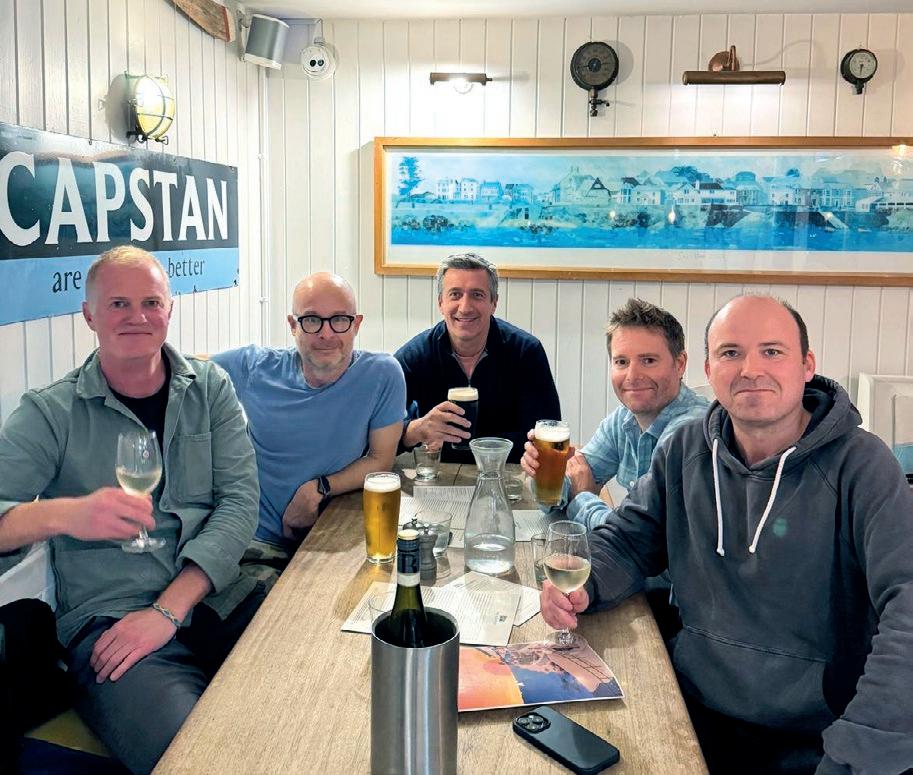
1996 leavers – Sam Peters, Matt Ross, Zubin Maini, Tom Howe and Rory Kinnear
reduce his quality of life compared to if he embraced tailored exercise, nutrition and movement.
Today there is a swathe of robust, peer-reviewed research which shows the sooner an individual with a Parkinson’s diagnosis embarks on a specifically tailored exercise regime and nutrition programme, the higher their chances of living longer, happier and more fulfilled lives. For the NHS, as the number of patients presenting with Parkinson’s increases dramatically, as they are sadly set to do, this could save millions of pounds in the future.
“Parkinson’s presents very differently and the symptoms are very much on an individual-by-individual basis,” Matt says. “Yet the current mode of treatment in the UK is one size fits all. It’s a case of ‘right, here are your meds, see you again in a year’. Day2 is called Day2 because we’ll be with you from the day after you get your diagnosis. Not an eighteen month wait. An immediate community to embrace, alongside a tailored programme, driven by AI and the latest technology, to provide all the information and support you need is available from the off. We’re turning my lived experience with Parkinson’s into something useful. Day2 is my mission to give people the daily, personalised support I couldn’t find – evidence-based tools that protect strength, independence, and quality of life. What healthcare can’t do at scale, we can.”
Excitingly, the tech Matt has worked on with his business partner and friend Ed Shaw, who runs Peak Fitness physiotherapy studio down the road from Matt’s home, could have applications far beyond Parkinson’s. Similar to other neurodegenerative diseases including Motor Neurone Disease and Chronic Traumatic Encephalopathy, there is currently no known cure for Parkinson’s Disease (PD). But like those two diseases, there is increased scrutiny on them, and a renewed determination within medical ranks to both understand and treat them better. And there needs to be.
In 2022 the World Health Organisation warned of a looming ‘Parkinson’s pandemic’, with a doubling in global cases in the previous 25 years, while calling on a ban on certain pesticides (e.g. paraquat and chlorpyrifos) used in food production
and chemicals used elsewhere including trichloroethylene which have been directly linked to the disease. But awareness is one thing, action another.
Another person living with Parkinson’s is BBC technology correspondent Rory Cellan-Jones, who hosts the podcast Movers and Shakers. He recently posed the question “if Parkinson’s and Alzheimer’s had received the same attention and funding as HIV did in the 80s and 90s would we have a range of comparable treatments?” This is a source of bitter frustration for the rapidly expanding community of more than 150,000 people in the UK currently living with Parkinson’s alone.
With his advertising hat still firmly on, Matt believes Parkinson’s is long overdue for rebrand. “Parkinson’s is still largely seen as an old person’s disease when in fact 10% of people who are diagnosed are below the age of 50, which is termed ‘young onset’. And this is the fastest growing segment of Parkinson’s diagnosis. “It is incredibly important people realise this is not just an old person’s disease.”
Day2Health appears to be the perfect vehicle not just to change treatment methods of this ever-growing threat, but to change perceptions through education and awareness. Joyously for Matt his Day2 mission is now engaging some of his oldest and staunchest friends, who have come on board as early investors in this most exciting of tech start-ups. All bar one of the first 10 investors in the business whose strapline is ‘built with empathy, guided by evidence’ are Old Paulines and the solitary outlier is Matt’s brother, Ed, the marketing planning director at ITV.
One of the investors, award-winning music producer Tom Howe (1992–96) recently wrote the music for Apple Plus series Shrinking starring Harrison Ford and Michael J Fox, the Back to the Future star who has become the de facto global ambassador for Parkinson’s and whose charity The Michael J Fox Foundation, has raised more than $2.5billion for research into the disease.
In 2026, Matt plans to host a podcast series with the multi award-winning Kinnear, discussing Parkinson’s disease allied to the value of friendship. One recent post Matt made on LinkedIn,
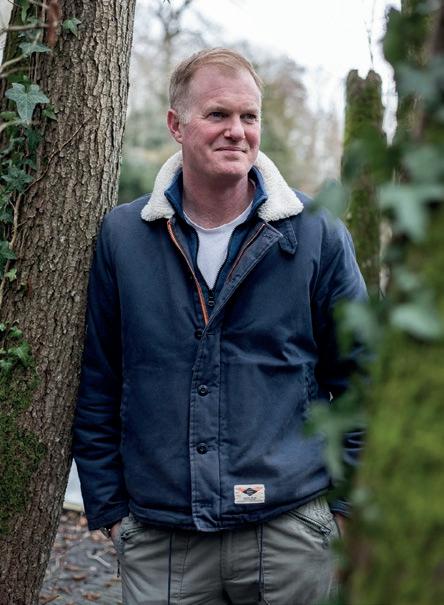
explaining the challenges presented by a chronic illness diagnosis to friendships, went viral and demonstrated Matt’s unique ability to connect and communicate with those in a similar position. “Chronic illness doesn’t fit neatly into anyone’s schedule” he wrote. “It doesn’t resolve. It lingers. And not everyone has the emotional stamina to stay.”
For this correspondent, some 30 years after helping Matt pen the first few editions of Black and White and laughing out loud at his sublime tabloid headline ‘Carling Back and Able’ for an article I wrote about then England captain Will Carling’s return from a ban, the old band is back together, on a mission to create something even more groundbreaking, longstanding and worthwhile. Even better, we are doing it with our friends. Utilising the skills, expertise and connections we have forged in very differing careers in over more than three decades since leaving school in 1996.
Luck? Who needs that anyway? All you need is good friends, perspective and a plan. And Matt Ross has all of those in abundance.
Sam Peters
Old Paulines return to Ypres
September 2025
The party of OPs to be guided by Graham Seel that met at St Paul’s in September was select but spanned five decades of Pauline life. It included Graham Seel (Former Head of Humanities at St Paul’s and Honorary Life Member of the OPC), Andrew Jones, Stuart Bennett (1958–63), Brian Jones (1961–66), Nick Strowbridge (1966–71), Stephen Withers Green (1973–78), Simon Hardy (1974–79), Ron West (1975–80), Jeremy Withers Green (1975–80), James Grant (1990–95) and Ben Dory (2005–10).
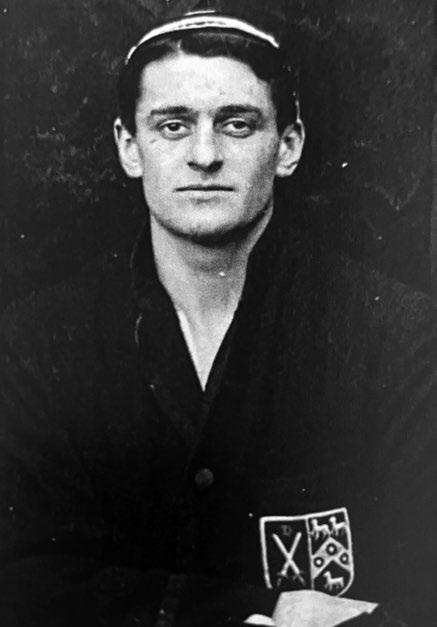
The tour was an homage or even perhaps a pilgrimage that had been inspired by Graham Seel’s book: Scholars and Soldiers: a history of alumni of St Paul’s School and the 1st World War and by his talk to the 2024 Earliest Vintage Lunch. The organisation was handled seamlessly by James Grant and Andrew Jones. The rest of us were like wide-eyed army recruits setting out on a great adventure. For us it was not a march to a London station, a train to Folkestone, a boat to Boulogne and transport to behind the lines in Flanders but a minibus from Lonsdale Road.
On the Thursday, the tour focused on the southern sectors of the Ypres Salient, while Friday covered the northern sectors. The route provided a strong sense of the topography, so important in gaining an understanding of the rhythm of the war around Ypres.
On Friday evening Simon Hardy, as OPC President, had the honour of laying a wreath at the Menin Gate on behalf of OPC and St Paul’s. He was joined by our two retired Colonels, Stuart Bennett and Nick Strowbridge. Saturday saw us unveil a new plaque to commemorate the Paulines who fought and fell during the First World War in the St Georges Memorial Church. This was followed by a visit to Talbot House, where Tubby Clayton (1897–1905) was the inspiration.
Literature about the war in the Salient is substantial. The most famous
contribution by an OP was For the Fallen by Laurence Binyon’s (1881–88) This has often overshadowed the work of others including Letters by Denis Oliver Barnett (1907–14) which gives a fascinating insight into the experiences of a young officer and acts as an excellent vade mecum for anyone visiting the Salient.
On the final day of the trip, we paid our respects at the grave of Denis Barnett (aka Dobbin). His grave’s epitaph reads: Captain of St Paul’s School, Scholar-Elect of Balliol College, Oxford
Barnett is one of three Captains of School to fall in the First World War. He was the first in 1915 and remarkably the other two Thistle Robinson (1904–11) and Lewis Bryett (1911–17) died on the same day just over a fortnight before the Armistice in 1918. Dobbin was Captain of School for two years which is unusual with only six others since 1884 being Captain for more than a year. He is also unusual in that he was Jewish which belies the myth that only Christians could be Captains of School before the end of Preces in the 1960s. His gravestone’s centre piece however is a cross not the Star of David.
He led an extraordinary short life.
The passage below is adapted from the Bedales School website.
“Denis was the only surviving son of Percy Arthur Barnett and his wife Annie. Education was the prime
Denis Barnett
interest of both parents. After graduating from Trinity College, Oxford in 1881 Percy was involved in teacher training until 1893 when he was appointed one of Her Majesty’s Inspectors of Schools and Colleges. Charis (born 1892) and Denis initially were taught at home by their parents – Annie teaching them French and some German whilst Percy concentrated on Latin and Mathematics. In 1902 Percy was seconded to Natal, South Africa as Director of Education to reorganise schooling in the Province in the aftermath of the Boer War.
Rapidly it became apparent that, so soon after the war, Natal was not really a suitable environment for young children so in February 1903 Annie and the children sailed for England. In her last letter before leaving Annie wrote: “Percy has written to Bedales, where the Gilbert Coleridge boy is, to ask if they will take both the children, so I shall hear from the headmaster soon after I get back.”
Charis at 11 joined Bedales for the Summer Term but 8-year-old Denis remained at home until his mother was ready to return to her husband in Natal. In September 1903 Annie deposited both her children in Steep, writing sadly that “I said goodbye to both my children at Bedales’ door”. From 1904 to 1907 both children were ‘home schooled’ for the next three years until, in 1907, they went to St Paul’s Girls’ School and St Paul’s respectively.
At
School, Denis had a glittering career including three years as a successful member of the Rugby XV and the last two years as Captain of School.
At School, Denis had a glittering career including three years as a successful member of the Rugby XV and the last two years as Captain of School. Academically also he excelled, winning an exhibition to Balliol in the December 1912 examinations and improving it to the top Classical Scholarship a year later. He was destined to matriculate in the autumn of 1914 but the outbreak of war on 4 August changed all that.
By 12 August Denis had passed his medical and had been declared “fit for the Territorial Force”; on 31 August he was “embodied as a Private” in the Artists’ Rifles. His experience in the St Paul’s OTC and his physical fitness and considerable size (he was 6 feet 2¾ inches) probably ensured his rapid transfer to a Service Battalion on 27 September and on 26 October he arrived with his battalion in France.
Denis was a prolific letter writer. After his death 150 copies of Denis Oliver Barnett: in happy memory; his letters from France and Flanders were published. It chronicles the maturing of a callow boy of 19, straight from school, into an experienced platoon commander who writes graphically of his experiences whilst trying to shield his parents from the worst he has seen.
On 2 December 1914 he wrote, “We’re frightfully busy with field work and lectures. It is top hole fun with four hairy captains teaching us things. ...They’ve started a short course of training by officers who understand this particular war (which is quite wrong compared with all other wars). We are going round to have practical experience, and see how everything works, and we’re also doing things like map-reading as applied to range finding &c.” As the training progressed the young candidates were taken into front line trenches and took part in exercises, even in No Man’s Land.
On New Year’s Day 1915 Denis went off with about 50 other Artists’ Rifles men destined for commissions to take a machine gun course before being assigned to a regiment. On 12 March 1915 he was posted to the 2nd Leinster Regiment as a 2nd Lieutenant and they were soon enduring considerable hardships.
St Patrick’s Day 1915 left Denis with sufficient leisure to write a long letter home including this comment: “two of my best friends are dead on me besides several I knew very well. That is the only thing that will make a man fight and stick it. Now I can carry on forever with this and mean to.” On 5 May Denis wrote “I got a bit of a shell on the head yesterday... it only gave me a little cut”; he was sent to the Dressing Station and then Field Ambulance but on the following day wrote, “Back to the army again!”
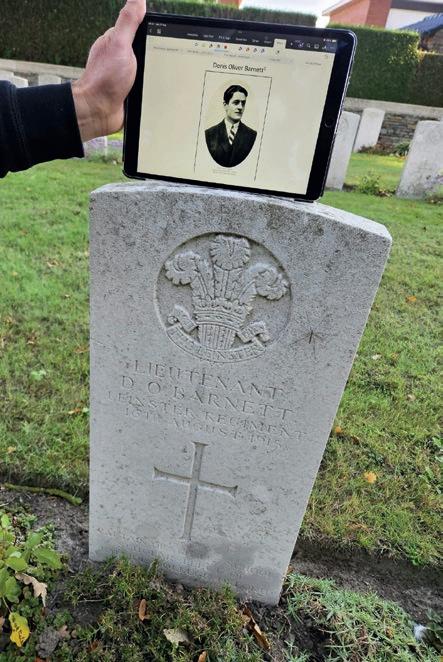
Denis Barnett’s grave
Barnett is one of three Captains of School to fall in the First World War. He was the first in 1915 and remarkably the other two Thistle Robinson (1904–11) and Lewis Bryett (1911–17) died on the same day just over a fortnight before the Armistice in 1918.
During almost a year of service Denis had only two short periods of home leave, one just before joining the Leinsters which allowed him to acquire his new uniform and a few other necessities and the other barely a month before his death. On 2 August he was back at Boulogne and then sent off as bomb officer to rejoin his regiment.”
Life in Belgium did have its lighter moments.
From British Jews in the First World War – Meeting his Cousin at the Front “Dobbin met his cousin Sydney Frankenburg (who would later become his brother-in-law) while in France. ‘Dear old Sydney’ took him to what both were surprised to discover was not a lace-making establishment, as advertised, but a brothel. ‘But we emerged with our good Semitic morals unsullied,’ Dobbin assured his
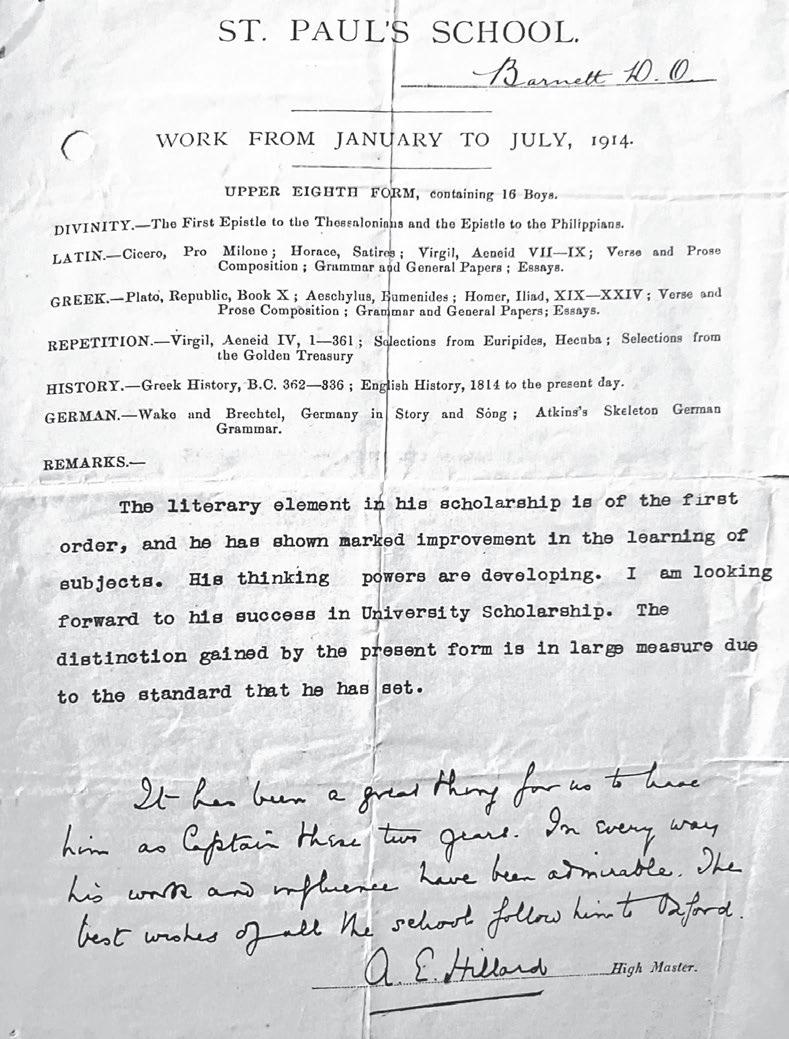
sister, enclosing a piece of lace that she kept for the rest of her life.”
Denis was Killed in Action in August 1915
“He was bomb officer and was in his element, leading all the bomb counterattacks successfully and never getting a scratch. He could throw extraordinarily well and he used to frighten the Germans by getting tonite bombs into their trenches 150 yards away. That night (15 August) Barnett had to start a working party at a place where our trench touched the German trench, with only twenty yards of unoccupied trench in between. He was warned to be careful, as the Germans had a machine gun and several rifles trained on the spot, but with his usual courage he got up on the parapet and from there directed the working-party. A flare showed him up and he was fired at immediately and one bullet hit him in the body. The wound was clearly serious and he was carried from the trenches. On his way back, he met the officer who was to relieve him and insisted on giving him some further directions about the work that he had meant to complete. He spoke a few words to his Colonel and to a brother-officer; but his mind was already beginning to wander. After leaving the dressing station, he lost consciousness and died early on the morning of 16 August at Poperinghe, where he rests. ‘It’s a great ending’ he wrote of the death of a school-friend in action at the Dardanelles: the words were to come true of himself.”
After his death, a friend wrote to Charis: “he was as cheery as ever, though he was firmly convinced that he was going to be killed before he left that place”.
On 20 August the War Office despatched the following telegram: “Deeply REGRET TO INFORM YOU THAT 2 Lieutenant D O Barnett Leinster Regt died of wounds 16 August Lord Kitchener expresses his regrets.”
Denis Barnett was not quite 20 years and 4 months old and had served 350 days in the Army. As well as being remembered at Bedales and St Paul’s, although he had not matriculated, Denis is commemorated on the War Memorial panels in the entrance to Balliol College Chapel.
Denis Barnett’s school report
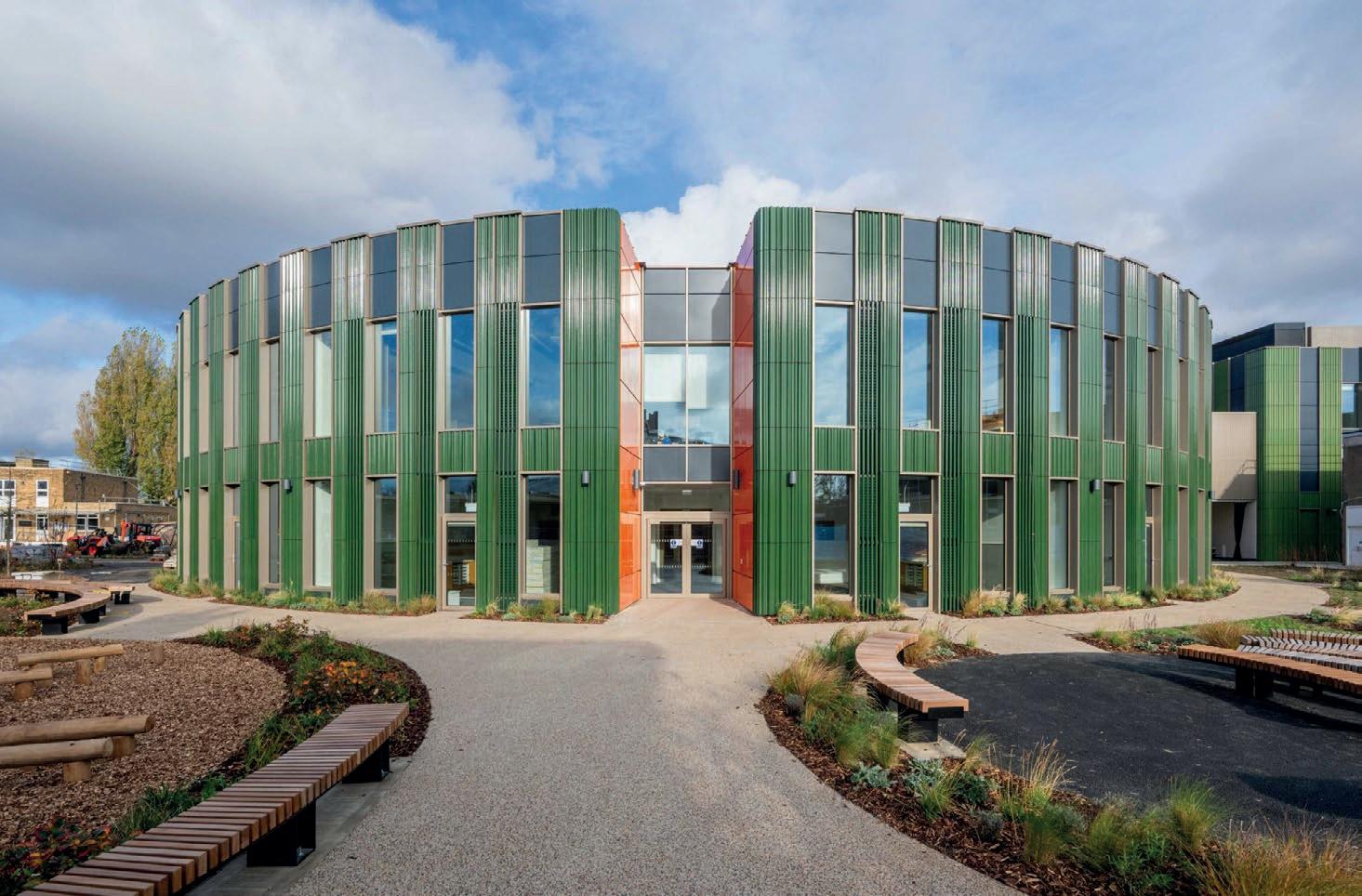
St Paul’s Prep School
James Grant (1990–95) and Jeremy Withers Green (1975–80) tour the new St Paul’s Prep buildings and chart the School’s initiatives in the changing prep school environment.
Aprep school for St Paul’s was founded in 1881 named Bewsher’s by Samuel Bewsher, an Assistant Master and secretary to the High Master. It started with six pupils at a house in Edith Road, West Kensington. In 1883, Bewsher’s was incorporated into the St Paul’s School Foundation, and moved into a new building at 100 Hammersmith Road opposite the then St Paul’s site. It had more than three hundred pupils, and further new buildings to accommodate them were completed in 1890. After a short time as Colet House, in 1892 it changed its name to Colet Court. In the 1970s, the old buildings became the production base of a subsidiary of Thames Television with standing sets for The Sweeney among other shows constructed in the old gymnasium. The main Grade II listed building survives as offices.
In 1968 Colet Court moved alongside St Paul’s to the current Barnes site. In September 2016 the name was changed to St Paul’s Juniors. After the demolition of the 1968 buildings and during the construction of the new building, the school transferred to the old science block of the Senior School. Following a vote among pupils, the building was renamed Ichthys and there is an Ichthys Hall with seating for six hundred in the new building. In 2026 the school changed its name again to St Paul’s Prep School. Atrium was given a tour by Oliver Snowball, the school’s 11th Headmaster. There has been one Headmistress. Oliver has been a teacher for over 20 years. He started as a teacher of English and Theatre and has served as Headmaster since 2022. His limited time in the classroom is now spent teaching Classical Civilisation.
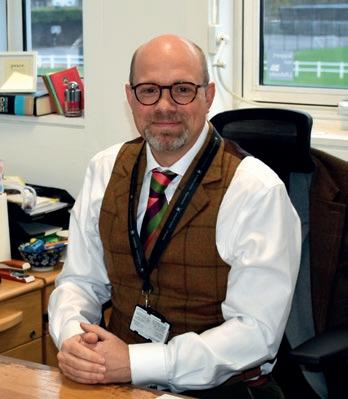
The new Prep School
Oliver Snowball, Head of St Paul’s Prep
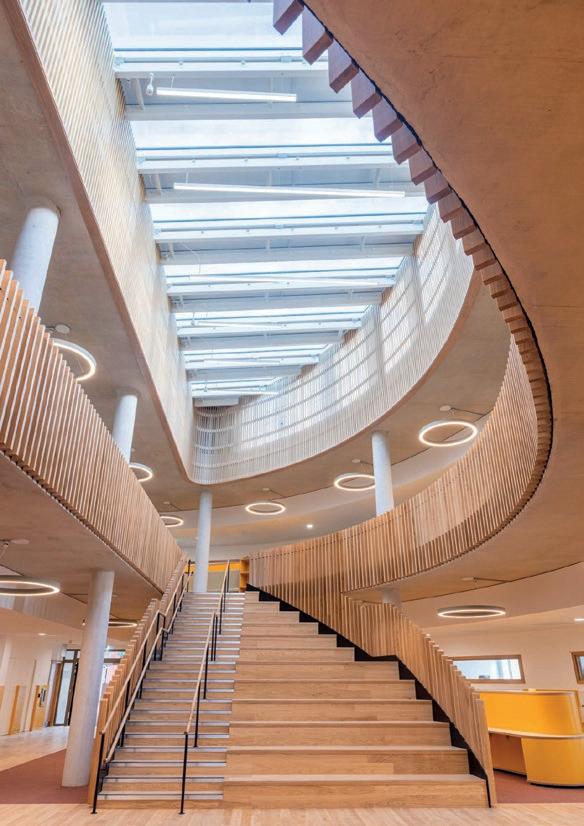
When the building project was signed off by the School governors, their chairman said, “I want the building on time and budget. I do not want to win awards”. The building works were completed on time and to budget. It comprised the construction of a new West building, consisting of a two-storey teaching block with a double height hall, library, playgrounds, covered play and landscaping areas and an East building consisting of a three-storey teaching block and significantly sized changing rooms. The buildings do not use gas as an energy source significantly reducing the carbon footprint of the Barnes site.
Builders Gilbert Ash alongside Bidwells, Arcadis, Hawkins/Brown, Blyth & Blyth and Max Fordham are up for awards.
Our tour started in the West building. There is an immediate wow moment as you enter to wood everywhere and green and gold paintwork – the concrete of the 1968 building can only be found in the stairwells. The classrooms in this area are for the 7and 8-year-olds. The other classrooms for the older year groups are organised on a departmental basis and there are two learning support classrooms. Science, Music and Drama are to be
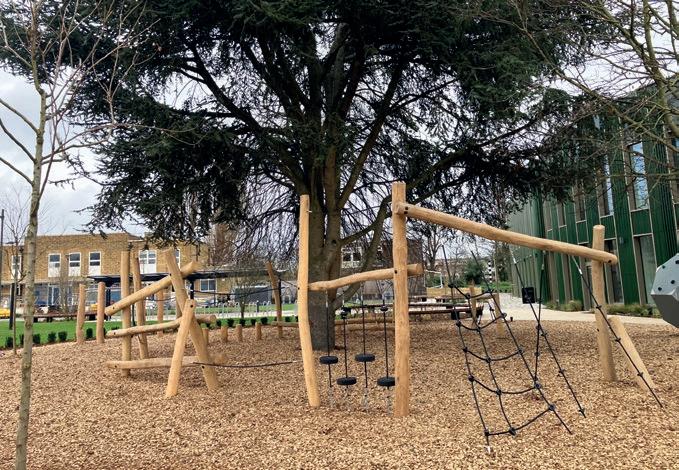
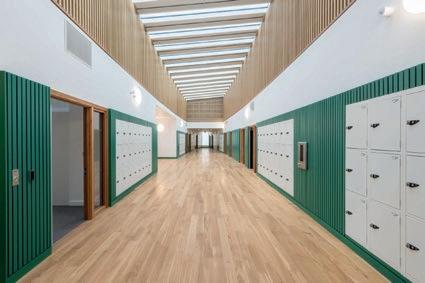
taught in other buildings on the campus that are less than 50 yards from the main buildings. There is not a blackboard or a piece of chalk in sight. Each classroom has a White Board and a BENQ Smart Board. The highlight of the West building is the Ichthys Hall, where the whole school can meet and, with its bleacher seats, can be transformed into an auditorium or theatre to suit audience size and production requirements.
The West and East buildings are linked by a covered external playground with a name recognisable to alumni – ‘The Barn’. Traditionalists will also be pleased to know that the school magazine is still called The Coletine There are lockers wherever you look but they are not intrusive and have the feel of an American High School.
In Ichthys, St Paul’s Prep housed 500 pupils in under half the space available in the new buildings where 550 boys and 60 teaching staff can be accommodated.
St Paul’s Prep will continue to share the chapel, the lunch hall and sports facilities with the Senior School. One of the benefits of the building works is that the Prep and Senior Schools have been brought physically closer together which has made the transition
and integration at the 13+ entry into St Paul’s smoother. Every effort will be made to retain this with the Senior School using some of the Prep’s facilities.
As one can imagine his predecessor Headmasters, Samuel Bewsher in 1883 and Henry Collis in 1968 would have been, our guide was like an excited boy before his first day at school not a long serving schoolteacher. His enthusiasm was infectious. All he could see and describe was the opportunity to teach boys in a modern facility where able boys could flourish and be prepared “to serve society”. Oliver was also delighted that the facilities would be made available to the School’s primary school partners.
The move into the new School building comes at the same time as the formation of the St Paul’s School Group and the launch of the St Paul’s School Research Centre for the Education of Boys.
Edward Borton, the co-founder of ESB Consulting and the former Assistant Head at King’s College School, Wimbledon commented on the formation of St Paul’s School Group. “This marks a deliberate and well-timed intervention in an increasingly unsettled independent school landscape (think
The new Prep School
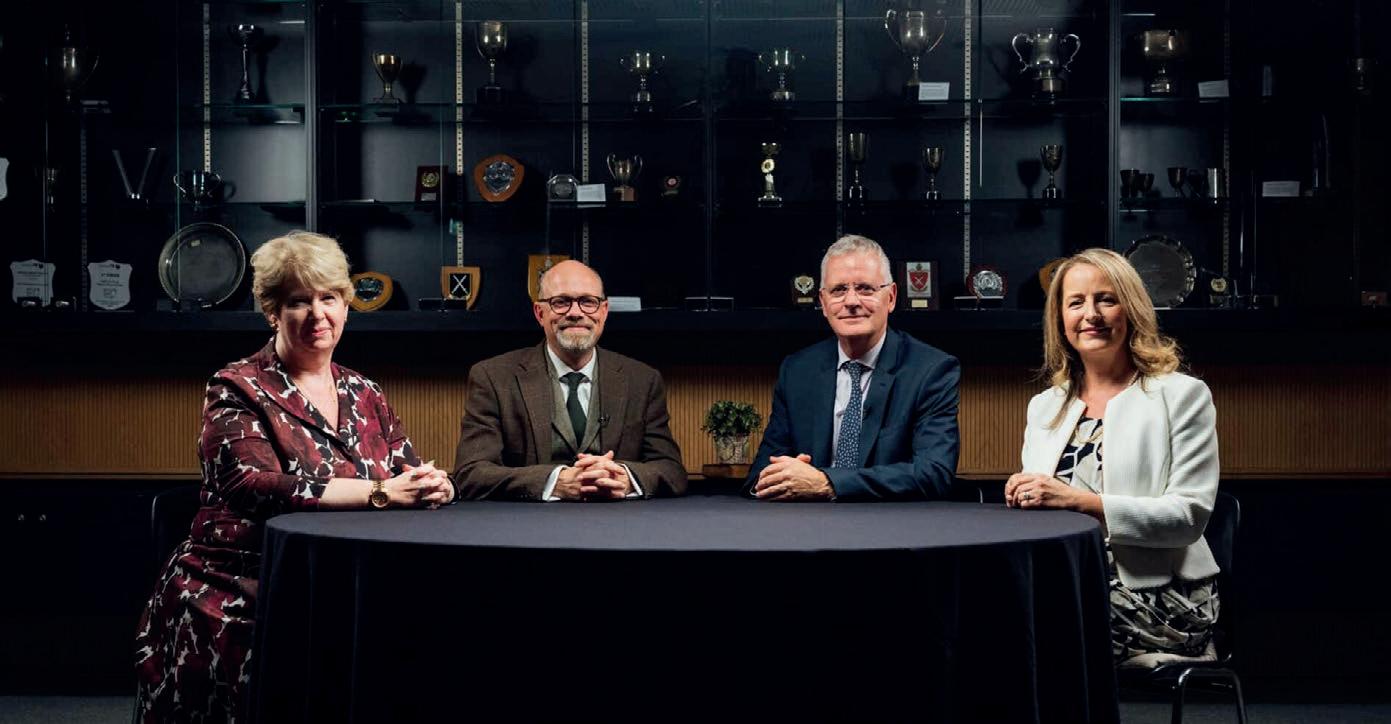
VAT on school fees, pensions, business rates, economic pressures, wealth exodus, falling birth rates).
It signals a firm commitment to all-boys’ education. Rather than moving towards co-education, …the Group is choosing to refine and modernise the boys’ model, investing in research and practice that reflect how boys learn and develop best.
At a time when for-profit ownership is spreading across the sector, St Paul’s School Group’s not-for-profit structure stands out. It aligns the Group’s priorities with educational outcomes and long-term stability rather than commercial growth, reassuring families and professionals alike that governance and values are guiding the strategy.
By bringing Durston House and Shrewsbury House School Trust under one umbrella, the Group is providing financial resilience and strategic coherence to schools that might otherwise be exposed to market pressures. Each retains its own identity while benefiting from shared leadership and resources.
The Group’s explicit support for the 13+ entry route is also notable. As many schools pivot to 11+, this decision reinforces the value of the traditional prep-to-senior progression and safeguards a route that allows more developmental time before transition, especially for boys.
Entry to St Paul’s Prep School and St Paul’s School at 7+, 11+, or 13+ will remain highly competitive and will not be automatic from either Durston House or Shrewsbury House.”
Edward’s is an excellent summary of the aims and ambitions of the St Paul’s School Group and the St Paul’s School Research Centre for the Education of Boys. St Paul’s has evolved over five centuries, meeting new challenges, constructing and moving to new buildings while following the wishes of its founder, John Colet “to provide an education for one hundred and fifty-three boys of all nacions and countres.” The number of boys across St Paul’s and St Paul’s Prep is ten times the figure in 1509 but the ambition to provide an education ‘for able boys to serve society’ remains the same.
By bringing Durston House and Shrewsbury House School Trust under one umbrella, the Group is providing financial resilience and strategic coherence to schools that might otherwise be exposed to market pressures.
Atrium asked OPs who are also alumni of Durston House and Shrewsbury House for their memories of the transition from prep school to St Paul’s:
Hadi Shaikh (2016–21)
Alumnus of Shrewsbury House
I was definitely nervous moving to such a large school whilst only knowing two people. St Paul’s was brilliant at mixing everyone together even students who had been at the junior school already. Being new gave me extra motivation and energy to throw myself into the many extra activities that St Paul’s has to offer and because of this wealth of opportunity I was confident I would always find my people.
Louis Wilson (2017–22)
Alumnus of Durston House
Moving to St Paul’s felt daunting at first, but it was exciting too. The school does a fantastic job of making sure everyone, regardless of background, integrates quickly, and with such a wide range of activities on offer from the start you’re bound to find your people. I also found that the pastoral tutoring system helps to smooth the transition as it provides you with immediate support, so you never feel like you’re doing it alone.
The High Master and the Prep School Heads
Louey Horler (2016–21)
Alumnus of Durston House
The transition from Durston to St Paul’s was intimidating at first – moving from a year group of 37 to a year of 200 pupils is a significant change in environment. However, the transition was made easier by several aspects of Durston House. The focus on academic achievement and performance means that you start St Paul’s equipped with the tools you need to succeed right from the start, slotting back into a familiar academic routine. Additionally, Durston’s sport, art and music focus meant that I could smoothly continue my preferred extra-curricular activities. Simultaneously, St Paul’s is setup in a way in which you’re never made to feel unwelcome when joining – Rugby, society fairs and the initial induction team-building trip helped me fully embrace the St Paul’s environment.
Will Key (2006–11)
Durston House alumnus and current governor
Durston House was a close-knit, nurturing environment. While academically ambitious, it was grounded in the warmth and
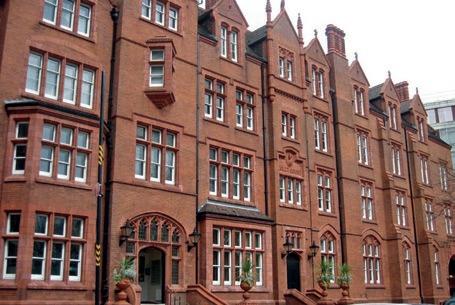
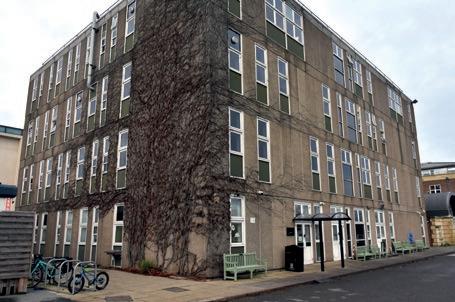
familiarity of leafy Ealing. As a 13-yearold, moving on to St Paul’s was eye opening: I still remember my first day walking across Hammersmith Bridge, taking in the expansive grounds, and very quickly stepping into a broader peer group and a wealth of new subjects and activities. It marked a real transition from youth to young manhood, and an intellectual coming of age. I therefore feel particularly privileged (and nostalgic) to now sit on the board of Durston House as it undergoes its own exciting period of transition, becoming a founding member of the St Paul’s School Group and sharing a continued commitment to academic excellence for boys.
Dan Sivagnanaretnam (1992–97)
Alumnus of Durston House
Thanks to a scholarship at Durston House and an assisted place from St Paul’s, I was able to go to two great schools, despite coming from a relatively poor background. Both schools enabled me to find and develop my passions, including maths and football. I have many fond memories of both schools, including football at Castlebar Sports Ground
and Big Side, as well as some stretching but enjoyable maths. I made many friends at both schools, many of whom I still see regularly over three decades later.
Sunil Kaikini (1986–91)
Alumnus of Durston House and Colets director
Back in the mid 1980s when I was at Durston House it was very different to nowadays. The school was one building and quite small. We used to get battered in most sports by the bigger schools, which I actually found quite character building! I took the examination to enter Colet Court and did not get in. I was very disappointed but the staff at Durston did a great job in encouraging me both academically and in sport and other activities to make sure I had the best opportunity to get into St Paul’s. The transition to St Paul’s was a combination of daunting (because of the sheer size) and comforting (because I had several Old Durstonians moving with me). I think the culture in the two schools was similar and this made the move much easier.
The move into the new school building comes at the same time as the formation of the St Paul’s School Group and the launch of the St Paul’s School Research Centre for the Education of Boys.
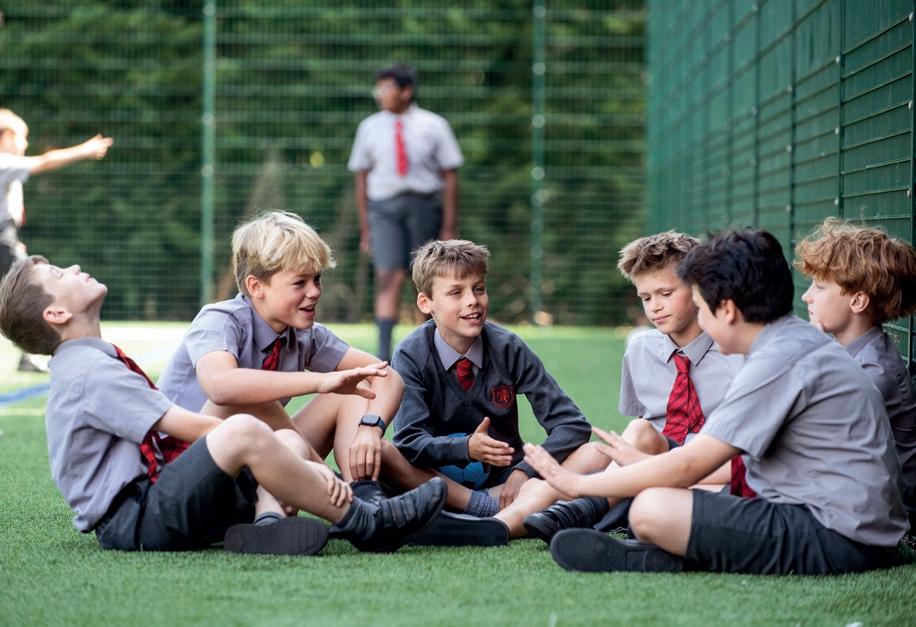
Ichthys
Colet Court on the Hammersmith Road
Setting Schools Free
Theo Hobson (1985–90), whose children have attended West London Free School, meets Robert Peal, Joint Headmaster.
The fair-minded observer of politics will admit that the Tories did one or two good things in their fourteen years in power. Um…OK, one. Their education reforms are widely seen as strikingly successful. One of the architects of those reforms, Robert Peal, happens to be my daughter’s joint headmaster, at West London Free School in Hammersmith. It was one the very first ‘free schools’, set up by Toby Young and others. It has given my three children an excellent education, in which high academic standards are couched in a spirit of community and fun. My daughter will kill me, but she really likes going to school – she even seems to like her teachers.
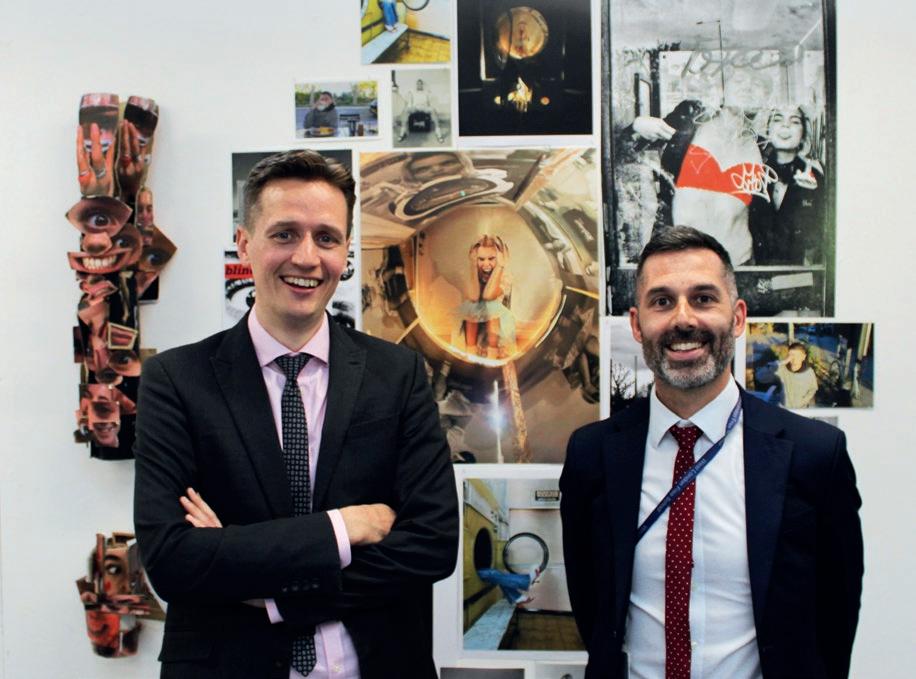
Alongside his early teaching career, Robert Peal was a special advisor to Nick Gibb, the schools minister alongside Michael Gove. Gibb kept a lower profile than Gove and so managed to stay in the department for much longer, bedding the reforms in. Peal’s part in the story was recognised two years ago when he was awarded an MBE. He has just co-authored a book with Nick Gibb: Reforming Lessons: Why English Schools Have Improved Since 2010 and How This was Achieved. It is a must-read for anyone involved in education or public policy. I have met Rob a couple of times before. Last time it was also Atriumrelated: I suggested that the school should start an alumni magazine, or a section within the existing magazine. And last year we got it together: Atrium has a godchild! My daughter will kill me again, but he is a very charming guy, surprisingly young for a headmaster, especially one with a public profile (he is not yet forty). I was planning to ask if he was plotting a return to politics, but it feels unlikely: he is clearly too nice for that world. He was educated at Marlborough College. The teaching was pretty good, he says, but he has subsequently seen better teaching at state schools. Then he studied history at Cambridge, then did a Masters in the US, then applied to Teach First, the scheme that allows teachers to train on the job. In 2011 he worked in a school where the discipline was so poor that he started researching the whole issue and blogging about it. He got in touch with Toby Young, who had just set up WLFS. Then he paused the teaching career and worked for the thinktank Civitas, and then for Nick Gibb.
Robert Peal and Ben McLaughlin
An education reform movement had begun under Tony Blair: his policy advisor Lord Adonis allowed schools to opt out of local authority control and become academies. So, the Tories expanded it? “Yes, it was small-scale before the Tories came in. But it’s beneficial that it started under Labour, it means one can argue that there is a cross-party consensus for more autonomy in schools. One thing that the Tories brought in was standards and accountability, addressing the dumbing down of exams, and not just giving schools freedom but closely monitoring how they use it. Also, there was a lot of unhelpful centralisation under Labour, a lot of quangos – and also teacher training was freed up.”
The book emphasises the role of ordinary teachers, comparing notes, seeking change. “It was really fortuitous that blogs and Twitter were taking off and felt like benign forces then – it allowed a network to form – a wide network, including lots of left-wing teachers who didn’t feel represented by official bodies like the unions.”
like corporal punishment or single-sex education, so we avoided it. Instead, we talked about an ‘evidence-led’ approach.”
Gibb and Peal drew on the work of American educationalists: one of them, Doug Lemov, showed how a ‘warmstrict’ approach to discipline helped students. “That phrase helped, because there are such negative connotations around words like discipline and strictness, but a lot of us did want to see a new approach. But it is crucial to say that strictness should be rooted in a concern for the student’s wellbeing.”
“My daughter will kill me, but she really likes going to school –she even seems to like her teachers.”
The movement criticised various orthodoxies of teaching: the rejection of phonics in the teaching of reading, a child-centred approach to learning, a turn away from knowledge-based learning. But it was careful to avoid praising a ‘traditional’ approach. “That word might imply approval of things

It sounds like common sense, really. But there were a lot of vested interests making such an approach difficult – a whole culture, sometimes known as the ‘Blob’. “Yes, that’s a rather unpleasant term, not very helpful. But it’s undeniable that there was an incredibly entrenched orthodoxy; there were a lot of people whose careers were based around certain ideas and so had a lot to lose if they were challenged –lecturers in education colleges, union general secretaries, quangocrats. It’s amazing how emotive the language was when these ideas were questioned.”
At first it was difficult to make the case for change, because there were almost no exemplary schools to point to. “There was one in East London called Mossbourne Academy that started getting remarkable results, that was about it. And even when some good new schools emerged, there weren’t any exam results to point to yet.” When good new schools did emerge, they began to learn from each other, making centralisation unnecessary. “That is the mechanism by which I think a public service like education is reformed. You allow institutions to have the freedom to do things differently, you have accountability measures in place, and you trust the sector to emulate success when they see it. If a Head hears about a successful innovation in a neighbouring school, they want to copy it, whereas they might resist a directive from the central authority.”
Does he agree that some of the new schools have taken things a bit far, in terms of strictness and the pursuit of top results at any cost? I am thinking about the Michaela School in Wembley, run by Katharine Birbalsingh. I visited it once and found it rather inhuman:
Pupils at West London Free School
for example, students are reprimanded if their gaze strays from the teacher or if they fail to cross their arms when standing round to watch a science experiment. “Yes, a lot of people come here and think we are incredibly dogmatic but there are schools that are much more so. Those are schools that I probably would never want to work in myself.” They get impressive results, I observe. “Yes, but when you look at how those results were achieved…”
Does he agree that some of the new schools have taken things a bit far, in terms of strictness and the pursuit of top results at any cost?
I am thinking about the Michaela School in Wembley, run by Katharine Birbalsingh.
So how does a head create a healthy ethos? “It’s really about culture –getting the culture right at a school is everything really.” OK, so how do you do that? He laughs at the bluntness of the question, then has a stab at it. “You have to have a very clear idea of what you’re doing. You have to have the courage of your convictions to push back on a lot of the time-wasting things that you are often expected to do in a school and say that’s not a worthwhile use of our time.” And presumably you have to create common culture, for example through assemblies? “Yes, they’re really important, and we also have line-up three times a day for the younger years – they’re like mini-assemblies, with a bit of encouragement, or notices from a head of year.” And how much thought goes into the ‘ethos’? “One of the things we’re conscious of is not being a faith school, so we often ask is ‘how do religions do this very well and how can we do that in a secular setting?’ So, for example we have a core set of readings – poems, speeches, so we all have those in common, and it serves the same sort of purpose as a prayer book.”
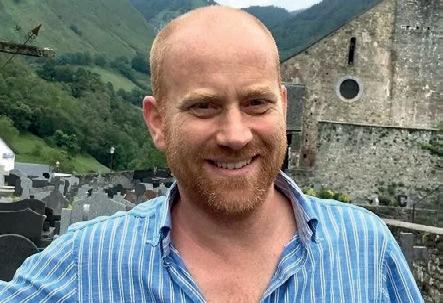
What about nurturing a sense of pride in the institution – that must be a bit difficult when a school lacks 500 years of history (imagine!). “Yes, so you’ve got to cling on to what you can and really emphasise that. So, we have the benefit of being one of the first ever free schools, and we create a real identity around that. And once we started getting really good results we can point to that, and things like being the Sunday Times Comprehensive of the Year, last year.” OK, he is boasting now. Nowadays, I observe, a good state school can be proud of itself in a way that a private school cannot be – there is no need for…awkwardness. I think readers know what I mean. Rob seems to: “Yes, I hope so – we use the word comprehensive a lot, reminding people that anyone in the local area, irrespective of birth or background, can come to this school.”
The present government has not shown much support for free schools, in fact the Schools Bill going through parliament threatens some of the hard-won freedoms. “Yes, the plan is to give local authorities more power over places, which could mean restricting the size of schools like this. They want to limit the amount of branded school uniform we can issue, which can have a really negative effect on a school’s culture, because uniform is a real leveller. And the bill also threatens our ability to decide on our curriculum: we can currently choose not to teach certain subjects and focus on core subjects – that could go.” On the other hand, Labour is not launching a major attack on free schools, is it? “No, free schools are too successful for Labour to take on. They wouldn’t dare.”
When is he returning to politics? Or did Dominic Cummings put him off? “In fact, he was fired a few months
before I arrived at the department. No, I used to think that politics might be where I ended up, but the problem is that working in a school is just too enjoyable. I really enjoy being a teacher here. I also realised I wasn’t very well suited to the political environment of the Department of Education.” This is disappointing. Having been involved in one of the few successful stories of recent politics, surely, he now has an appetite to reform the whole nation? “No, no, and I don’t think my wife would welcome me changing career – especially as we’re about to have our first child.” Come on, I should have said, you even have the right name for a reforming PM – though my know-it-all daughter says the spelling is different.
The present government has not shown much support for free schools, in fact the Schools Bill going through parliament threatens some of the hard-won freedoms.
Theo Hobson
David Herman (1973–75) profiles Oliver Sacks with reference to Letters (Edited by Kate Edgar)
Oliver Sacks
(1945–51)
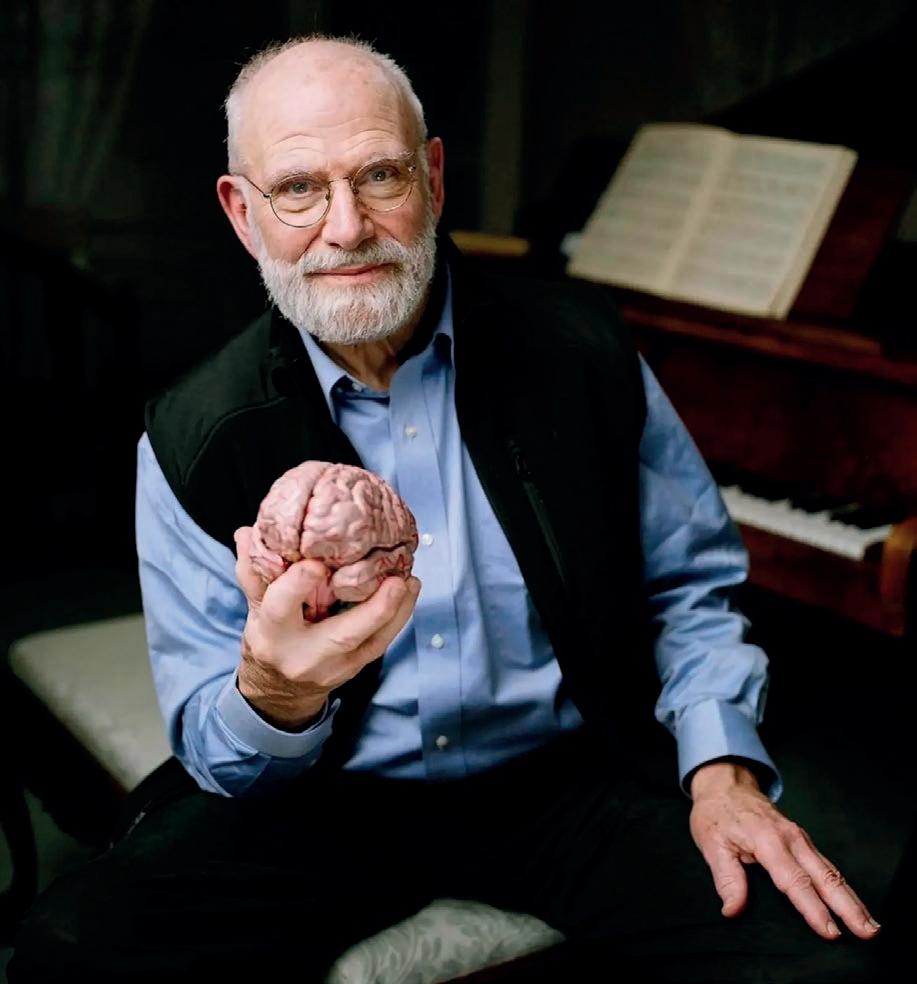
Oliver Sacks is best known for what he called “clinical tales”, books like Awakenings (1973), The Man Who Mistook His Wife for a Hat (1985) and An Anthropologist on Mars (1995), beautifully written case histories about patients with a wide range of extraordinary neurological conditions. As Sacks wrote to his parents, “I somehow convey a sort of passion for the patient and the subject, and a feeling of the texture of patients, the way their symptoms dovetail into their total being…”
He was a prolific writer, writing almost twenty books. But as these letters make clear he was also a passionate correspondent. “Oliver Sacks adored letters,” writes Kate Edgar in her preface to this huge book. “His sheer output of letters was prodigious. The correspondence files in his archive include something like two hundred thousand pages…” This book covers more than fifty years from 1960 to his death in 2015.
1960 was a key turning point in his life. A few days before his twenty seventh birthday, Sacks left England for America, which was to become his home for the rest of his life. It was a hugely liberating moment for him.
“This was the New World,” he wrote later, “and – within limits – I could do what I wished.”
Sixties America could not have been more different from his time at St Paul’s and then Oxford. It was at St Paul’s that he met Jonathan Miller (1947–53) for the first time.“I was hidden in a corner,” he wrote later, “reading a nineteenth-century book on electrostatics – reading, for some reason, about ‘electric eggs’ – when a shadow fell across the page. I looked up and saw an astonishingly tall, gangling boy with a very mobile face, brilliant, impish eyes, and an exuberant mop of reddish hair. We got talking together and have been close friends ever since.”
Oliver Sacks
Another key encounter at St Paul’s was with Sid Pask, a biology teacher (1928–66), who also taught Miller and Robert Winston (1954–59). “Pask was a splendid teacher,” Sacks wrote in 2001. “He was also narrow-minded, bigoted, cursed with a hideous stutter (which we would imitate endlessly), and by no means exceptionally intelligent. By dissuasion, irony, ridicule, or force, he would turn us away from all other activities – from sport and sex, from religion and families, and from all our other subjects at school. He demanded that we be as singleminded as himself.”
From the very beginning of Letters, it becomes clear what was so liberating about America for Sacks. He started to spend time in gay bars and experimented with drugs. He also developed two new passions: bodybuilding and riding motorbikes over huge distances. Intellectually, it was also enormously stimulating. In one of his first letters home he writes, “here, in California, there are enormous clinical-cum-experimental neurology set ups in all the major universities and a number of nonaffiliated hospitals.” What becomes clear from the time he arrived in San Francisco, is that Sacks, still in his early 30s, was already looking to find a new kind of subject and voice as a medical
writer. “I hope that I can somehow survive as a … sort of neuropathological Talmudist,” he writes.
At the same time, he battles with manic depression. “I see myself as manic-depressive now,” he writes in an early letter. “Jewel-like spasms of sharp delight and sensitive in everything, good humour, wild hopes and ceaseless writing, alternating with long horrible periods of sloth and misery.”
By the mid-1960s he describes his “(comparatively harmless) idiosyncrasies – viz. untidiness, unpunctuality, huge size [anything up to 20 stone], waddling gait, mode of transport [motorbikes], etc.” This may sound light-hearted but he had long been plagued by mood swings and by a fear that he might, like his brother Michael, be schizophrenic or perhaps manicdepressive. “I constantly threaten my own existence by impulsiveness and rages…” He continues to take drugs (“I was drugged the whole summer”) and suffers from terrible mood swings (“Each day I sank into deeper despair”).
In the mid- and late-Sixties come three major turning points. In 1965, Sacks left California and moved to New York. In 1966, he began seeing a new psychiatrist, Leonard Shengold. “In later years,” writes Kate Edgar, “OS credited Dr Shengold with saving his life many times over.” He continued
From the very beginning of ‘Letters’, it becomes clear what was so liberating about America for Sacks. He started to spend time in gay bars and experimented with drugs. He also developed two new passions: bodybuilding and riding motorbikes over huge distances.
I met Sacks several times at the height of his fame. He had a huge, bushy beard and glasses. Above all, he was kind and gentle. His range of interests was formidable: music, literature, and, of course, above all, neurology.
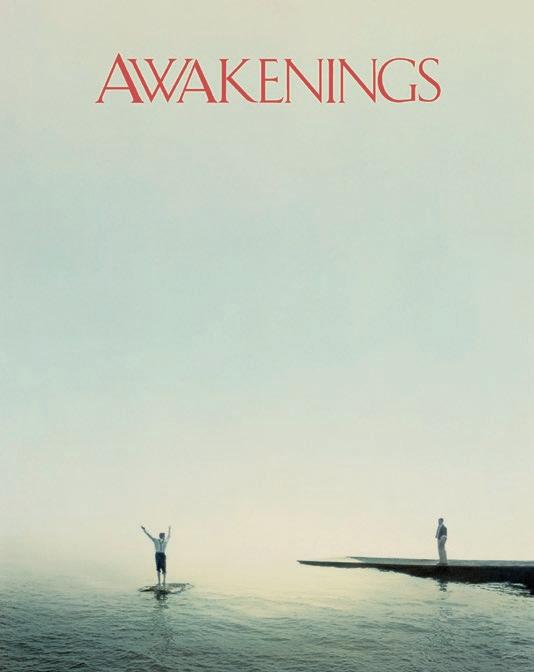
his therapy with Shengold for almost 50 years, until the end of his life. And in 1967 he starts writing what was to become his first book, Migraine (1970). Migraine, he writes, “has opened a door for me into an immensely complex and fascinating area…”
Sacks had started working at Beth Abraham Hospital in 1966 and this led to the biggest breakthrough of all. Sacks, writes Kate Edgar, “began to notice dozens of patients, scattered among the wards, who were virtually immobile and unable to communicate.” They were survivors of the pandemic of encephalitis lethargica that swept the world after World War I and Sacks applied to use a new drug called L-dopa to help these patients. His experiments with this drug led to his extraordinary book, Awakenings (1973) which in turn led to a TV documentary and a film with Robert de Niro and Robin Williams. Awakenings had a mixed reception. It received only a single review but had a huge impact in the literary world, at least in Britain. “You’re famous now,” Jonathan Miller said to him. Sacks started to correspond with well-known literary figures like WH Auden, Thom Gunn and Susan Sontag and the famous Soviet neurologist AR Luria. Harold Pinter wrote a play, A Kind of Alaska, based on the case histories in Awakenings and in the mid-1980s
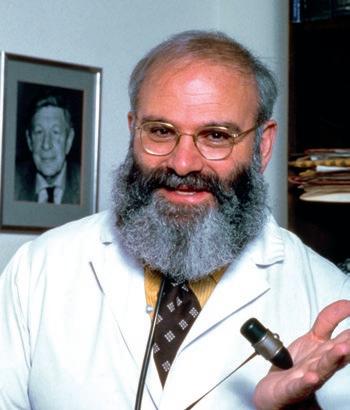
His experiments with this drug led to his extraordinary book, ‘Awakenings’ (1973) which in turn led to a TV documentary and a film with Robert de Niro and Robin Williams.
The London Review of Books and New York Review of Books both started publishing his “clinical tales”, including The Man Who Mistook His Wife for a Hat, the title essay of his most famous collection. It remained on the New York Times best-seller list for six months.
By now he is corresponding with film directors like Peter Weir, famous scientists like Francis Crick and Stephen Jay Gould and philosophers like Daniel Dennett and Peter Singer. The tone of his letters has changed completely. Instead of frequent references to depression, drugs and gay affairs, he is writing about medical science, articles in famous journals and film and theatrical adaptations of his books. After The Man Who Mistook His Wife for a Hat, he publishes nine books during the last thirty years of his life. Curiously, during the heyday of his fame, there are fewer letters, barely a hundred pages during the last twelve years of his life.
In 2015 Sacks was diagnosed with metastatic cancer. It had spread from his right eye to his liver. He was told he had months to live (“My cancer has been rushing ahead like a tidal wave, and nothing seems able to slow it down”). Articles continued to pour out. Nine new essays appeared in The New York Times, The New Yorker and The New York Review of Books. His
last letter is dated August 15th, 2015. It ends, “time is running out.” Oliver Sacks died fifteen days later, shortly after his eighty second birthday. I met Sacks several times at the height of his fame. He had a huge, bushy beard and glasses. Above all, he was kind and gentle. His range of interests was formidable: music, literature, and, of course, above all, neurology. He and Luria launched a new genre of “clinical tales” (Luria’s best-known books included The Mind of a Mnemonist, 1968, and The Man with the Shattered World, 1971), and this will be Sacks’s enduring legacy. These letters offer a fascinating insight into Sacks and show how a compassionate doctor found his voice as one of the most interesting writers of his time.
Current parent Michael Modiano (1981–85) has established the Oliver Sacks Bursary: stpaulsschool.org.uk/foundersawards/
Ian Young (1954–58) remembers
Ed Behr
(1940–44)
The article by Jonathan Foreman (1979–83) about Newsweek journalist and author Edward Behr in the 2024 Autumn/Winter issue of Atrium triggered memories in Ian Young “partly”, he says, “because it was so accurate and partly because the photograph captured its subject exactly as I remember him: face and setting are those of someone at home anywhere and nowhere”.
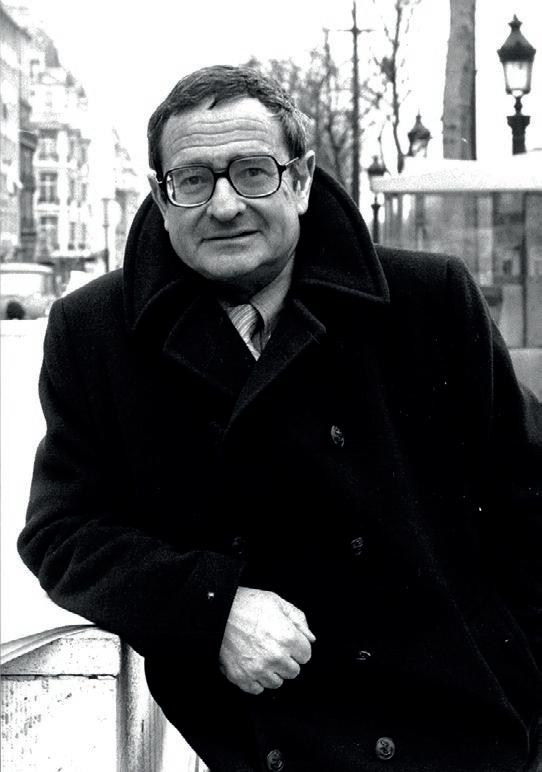
Ifirst met Ed Behr in the Newsweek office on a side street off the Champs-Elysées in the mid-1970s. On reception was a Chinaman I recognised from news footage as having escaped or been freed from a Maoist work camp and been taken in by Behr. It is what we first talked about after choosing lunch downstairs off the Les Trois Moutons menu. We soon established that we were both St Paul’s School old boys, albeit 15 years apart. His memories were of the Crowthorne days when the school transferred out of London to Berkshire, to escape the bombing; mine were of the red brick gothic building on Hammersmith Road. I had recently had published The Private Life of Islam, a diary I had written during a summer internship under a pair of Bulgarian obstetricians in provincial Algeria. To my surprise, Behr, one of the very few journalists with any knowledge of Algeria, had reviewed it in Newsweek. I had sent him a note of thanks for his generosity, not only in having reviewed the book at all but in having done so favourably and above all in
having given it considerably more space than to a book by the West German Nobel laureate Heinrich Böll. Behr had responded by inviting me for lunch.
He was curious to know what impact his daring promotion of a total unknown may have had on the book’s sales. He was outraged –and puzzled – to learn that the answer was “None at all”, this when Newsweek, along with Time, was the world’s best-known Englishlanguage weekly. He could only guess that he had failed to appreciate the depth of disinterest in Algeria among English speakers. This is still the case despite the intervening information revolution and climactic shift in the public profile of Islam. Twenty-five years after it was first published a reprint championed by the doctorpoet Dannie Abse sank in its turn without trace. The book has never recouped the modest advance received from its unlucky publishers. At that first lunch Behr pushed ahead undaunted, the newspaperman né, mining anything I might have to say for nuggets of Newsweek interest. I happened at that time
in my medical career to be doing a six-month stint in the genitourinary surgical team under Mr Grant Williams at the then St Stephen’s Hospital, Chelsea. Williams was one of the few surgeons prepared to undertake gender reassignment, at a rate of barely more than a couple a month, perhaps reflecting his misgivings about the wisdom of such procedures in principle. He was later to resign to avoid having to perform any more.
The hospital was implanted in what must have been the heart of gay London. In charge of the switchboard was Amalia from Spain who dressed in combat fatigues and drove an army jeep. My ward was managed by an Irish charge nurse whose last name, Cannel, meant that he was known to all as Sister Chanel. Only the doctors seemed mostly straight, an array of Kenneth Hornes apparently oblivious to the social and linguistic subtexts to their working days (the outrageous Round the Horne radio show was then at the height of its fame). Although Cannel was a superb nurse, second to none in his niche field, he was allergic to female-to-male transitioners who disdained the NHS dressing gown in favour of a towel knotted round the waist in rugby changing room style, especially when they would lean over the nurses’ station and flaunt their bilateral mastectomy scars in his face. He would shy them away: “Please!”.
This was a world to which Ed had not previously been exposed and he seemed to find it fascinating. A couple of weeks later he was in London to prepare Newsweek features on transgender surgery and the state of the NHS.
With the help of one of the patients, we set up a treat for him. Ben was himself a medic, a child psychiatrist from the provinces where he had been raised as Wendy. He would recall the hell of being dragged into a succession of increasingly frilly outfitters by his well-meaning Mum until he would rush screaming onto the street. By the time I came to know him, the major changes had already been made. Grant Williams had relieved him of breasts, ovaries and uterus, leaving the trickiest item till last: how to channel a passage for urine through a hormonally enhanced clitoris. There had already been two attempts. The result was more sprinkler than hose. Grant Williams took Ben’s word for it, declining the invitation to watch him
“This was a world to which Ed had not previously been exposed and he seemed to find it fascinating. A couple of weeks later he was in London to prepare Newsweek features on transgender surgery and the state of the NHS.”

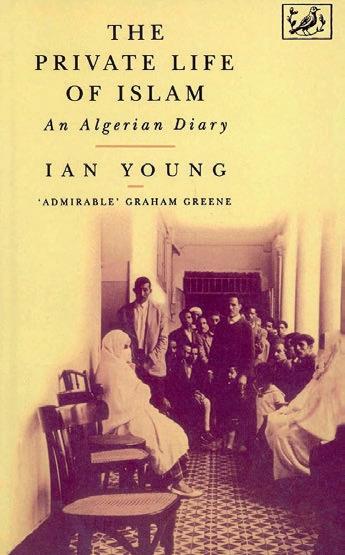
demonstrate in the ward shower. He simply reminded Ben, a keen sailor, that he had set the bar improbably high: Ben was not just looking to pee standing, but to pass muster as a male he needed to pee over the side like everyone else –and “that, my old cock”, said Williams in a surgeon’s typically breezy endearment “is something I am not sure anyone has managed”. A date was set for attempt number 3. In the interim, Ben had said, he would be happy for Ed to come and interview him in his home.
We drove into Cambridgeshire. Anticipation would have been an understatement. Ed’s fingers drummed on the dashboard. “This beats Mao Tse-tung”. I was not so sure. I was excited by his excitement, of course, and deeply grateful to Ben for ticking every box that Ed could have wanted. But as we turned into the mock Georgian close with its identikit middle class houses, I was afraid that Ed may come away underwhelmed. Ben’s social and surgical journey, with the hazardous penile reconstruction to come, was so overwhelming a preoccupation that words were near superfluous. What more could Ben possibly have to say from the depths of his brown armchair to us on the sofa?
“Of course,” he agreed with Ed, it was not all about peeing off a boat. There are plenty of intact males who cannot manage that either, especially among the older generation. It was not even about sex, the more obvious driver. “I was going to ask”, said Ed with engaging upfront prurience, “how do you actually manage?”. Ben responded with his usual honesty. “I tell them I had an accident”. The world of nonpenetrative practice was vast. Women seemed to like him and he enjoyed their pleasure. “So why all the surgery?”, asked Ed, still mystified.
Ben tugged on his wispy beard. “I have had a dream, ever since I started medicine”. He addressed me in particular as a fellow medic. His dream was that when the time came, at the end of life, when his cadaver lay on a slab in the morgue, his brain in a bowl between his thighs, his other body parts awaiting return to a roughly resewn abdomen, the pathologist would set probes, rib shears and stripping forceps aside to dictate the autopsy report, headed with the banal and routine word “Male”. It would contain not a whisper of womanhood. Ben would have passed. The pathologist would not have suspected a thing and would
already be picking up their tools to welcome the next customer.
Ed’s probing had yielded more than I had ever gleaned on the ward. But I could tell he found the revelation uncomfortable, even faintly distasteful. Its radicality was chilling. It stripped sex-change surgery of any erotic overtones. The telephone rang. We heard a woman’s voice. Ben put down the receiver. “I need to go”. His new girlfriend’s husband had just started work, scrambling a Tornado on a Norfolk airfield shared with the Americans. It was the most virile occupation imaginable yet it had left this particular wife unsatisfied – just as it had Ben, forever focussed on his postmortem appointment with the pathologist. The three of us left the house together.
Ben’s story was not ideal Newsweek copy, either then or even now, and it never made the NHS issue. Relegated from front page to back, it led to an anticlimactic drive home. But Ed soon brightened up. “Come to Ramatuelle and meet Christiane”.
Sandwiched within the Saracen ramparts and barely visible from the street, their house had once been a hotel. It was rambling and homely. At the back the ground sloped down through vines all the way to the Bardot beaches. At the front were two unobtrusive entrances, one to Ed’s own quarters that apart from the sauna I never saw, the other to the main house. Christiane was as welcoming as promised, together with young Didier, an artist with a stand-alone studio out the back. They seemed to be the permanent residents, with Ed traveling so much and often staying in his work apartment north of the Madeleine. Mick Jagger had just left and they were still under the spell of his intelligence and charm. I slept in his sheets.
The other guest that weekend was the BBC heart-throb journalist Olivier Todd, just a couple of years younger than Ed and with a remarkably parallel profile. Both were Left-leaning bi-lingual and bi-cultural Jewish atheists who had been to the top schools in London and Paris and studied history at Cambridge. Todd may have had the edge in France, given his quasi-filial relationship to Jean-Paul Sartre, and was to become the definitive biographer of Albert Camus. Both covered France’s colonial wars in Indochina and North Africa, and
“Ed’s probing had yielded more than I had ever gleaned on the ward. But I could tell he found the revelation uncomfortable, even faintly distasteful. Its radicality was chilling.”

were writers rather than reporters, going on to produce novels and memoirs. Surprisingly, given the closeness of their careers, it was Todd’s first visit to Ramatuelle. He seemed unprepared for Didier’s role, observing early on: “He certainly knows where the glasses go”. Ed made no reference to the setup and did absolutely nothing to hide it. Todd himself came with France Huser, an art critic and journalist with stellar academic credentials who had just published her first book, La Maison du Désir, a title and cover that must have had a fair number of people in bookshops turning its pages in the hunt for ‘bits’. One such person had happened to be me. I had fallen on a passage where she described smearing her chest with a new lover’s ejaculate and stepping out to defy the world under a breastplate of dried semen. Didier was understandably intrigued, as he was by her ‘sultry’ childhood, spent at the edge of the Algerian desert. But this all remained dutifully in background, in particular because it became apparent that her true desire was to have a baby with Todd and that there were problems. When she learned, because it seemed helpful to say so, that I was attending the reproductive endocrinology seminar run by Pierre Mauvais-Jarvis at Necker Hospital, France was naturally keen to know of any expert in this field. I said I would try to find out. We flew back on the same plane from Toulon and I drove them home in the car I had parked at Orly. Todd’s last words as he closed the door in the rue de Tournon, seemingly unconcerned whether France overheard or not, were “Do me a favour and don’t get back to us with your people from Necker.” Years later I noticed that they had managed to have a baby together, Aurélia, adopted from the Third World as recounted by France in a slim book with the same name.
Fatherhood did not tempt Ed. As far as I know he was never solicited. Todd on the other hand seemed to have received more pleadings than he could possibly manage, ending up, perhaps despite himself, at the head of one of his country’s most celebrated intellectual dynasties. And so those weekends went. The village was a Paris concentrate. Every other house belonged to someone. Helmut Newton dropped by with Alice Springs to borrow a corkscrew and stayed for predinner drinks. He took no photographs but admired my companion’s
ankles, a compliment she will remember for life. Another time, Ed took us to his favourite village house, owned by a widow who had recently lost a biker lover – his portraits and torn leathers were still everywhere in evidence. She walked us through an orchard of luscious and impossibly pendulous pears until we were joined from the veranda by une vieille copine and current house guest, Stéphane Audran, who had just been left by Claude Chabrol. She referred to the two of them as les pleureuses. Seeing Audran in such a state was a shock for Ed too, who had never met her offscreen before.
The effect of such visits was that for a few years I felt so alert to the first signs of summer in London that I could actually smell the air outside my bedroom in Ramatuelle, making it impossible not to pick up the phone and hear Christiane say “Alors c’est quand que tu arrives?”. I once drove her down in a DS, stopping halfway at Bernard Loiseau’s La Côte d’Or without a reservation and being served the most reverential of lunches, washed down by Rully. It seemed, getting back into the car, that everyone should live like this –indeed, for one magnanimous moment, it felt that everyone did.
The Algerian diary earned me motiveless generosity in London on a par with Ed’s: an invitation from Mary-Kay Wilmers, who had reviewed the book for the New Statesman, to review for the Times Literary Supplement (she had not yet founded the London Review of Books); a similar request from The Lancet; and Mary-Kay again, inviting me for a dinner of ratatouille in Gloucester Crescent with just herself, a writer whose name I failed to catch, and the Millers from up the road. I sat next to Jonathan [Miller] (1947–53) and could not stop laughing at every joke, including a brilliantly savage riff on the ‘historian’, Antonia Fraser. Next morning I was back on the pavement outside, having just picked up from Mary-Kay a bag I had left behind from the evening before. Who, suddenly, was now bearing down the pavement towards me in long hurried strides? For a fraction of a second my eyes met Jonathan’s. Mercifully there was not the slightest sign that he had any idea who I was.
Ed’s first note to me – the lunch invitation – had been typed, then underscored with a manuscript flourish in thick ink: “When are you going to write
“I sat next to Jonathan [Miller] (1947–53) and could not stop laughing at every joke, including a brilliantly savage riff on the ‘historian’, Antonia Fraser. ”
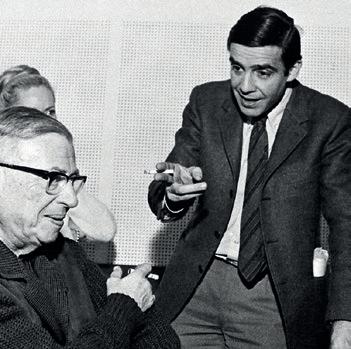
another book? You must!” Mary-Kay was less explicit but for her also the natural assumption seemed to be that I was now an author, with a pipeline of books in me. This was not the case. In contrast to the genuine authors already at work on their second book before the first has even been printed I had no such plan. I could not think of a project or book that would elicit plaudits equivalent to let alone greater than, those generated by the Algerian diary. I tried, for three or four years. I kept some of these attempts until recently. They were terrifyingly inept, even less talented than I remembered at the time. I began to see plausible reasons for the one-off success of the diary: for one thing, the book had received vital structural input, mainly from Robert Silman (1954–58); for another, I had taken advantage of the distance between Bulgaria and the reading world – a distance almost equivalent at the time to that between Earth and its moon – to pillory two of its doctors with a lack of discretion inconceivable had they been living and working in the developed world. It crossed my mind more than once, as I went to answer an unexpected ring of the doorbell in London, that with the new freedom of European movement the caller might be a descendant of Dr Vasilev or Dr Kostov come to kick my head in.
Ed was one of the people I eventually felt obliged to write to, explaining that I knew myself well enough to recognise that I was not the author I had been mistaken for, but simply the writer of a single book, most unlikely ever to be followed by another (it has not been). Ed called immediately: “What about Christiane?”. She’d never read the book, she had no expectations of me, and I had absolutely no problem remaining one of her friends for life. But with Ed, at least in my mind, the friendship was framed on production. I could not imagine it otherwise. It was dependent on me keeping up.
The last I remember of Ed dates to just before I posted that letter. I am on my bike. Ed and Christiane are waving goodbye to me from an open sports car at the bottom of Regent’s Park, outside the apartment where celebrity literary agent Ed Victor is hosting drinks that Ed had invited me to attend and that already I had had to decline. Christiane calls out. The only word I catch is ‘Ramatuelle’.
Omar Burhanuddin (2017–22)
a final-year student of History at Corpus Christi College, Cambridge explains why he is not ready to start working yet
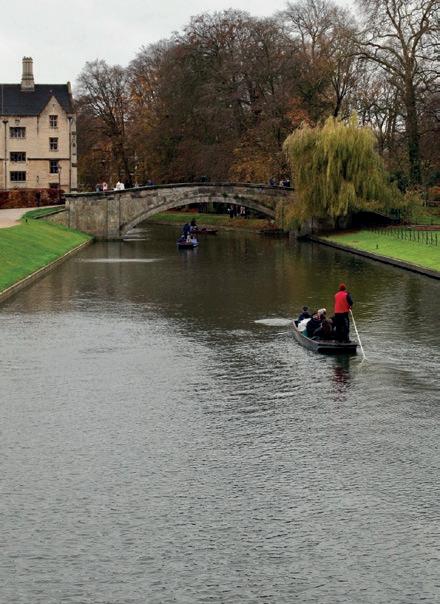
It has been nearly four years since I left St Paul’s, and during that time my head has not stopped spinning. Throughout the first two years of one’s time at Cambridge, it never dawns on you that you will ever leave. Between formal dinners, May Balls, supervisions, and the perpetual scramble to fill up your excessively long holidays with internships, life proceeds at a relentless week-byweek pace. I often found that, during term time, I could barely plan what I was doing next summer, let alone post-graduation.
Now, six months ahead of leaving Corpus Christi’s gilded gates for the final time, I am forced into planning my next steps. But I am one of the lucky ones. Having taken a year out between school and university (on which I reflected within a previous issue of Atrium), I have always been able to see how my peer cohort from St Paul’s have done, ahead of reaching that stage myself the next year. So far, the class of 2022’s post-graduation prospects have been a predictably mixed bag. There is the usual mix of MA and Ph.D students (the overrepresentation of St Paul’s graduates opting for academic careers, even in comparison to other public schools, is a striking trend I have noticed), together with City graduate schemes. A fair number are establishing professional lives abroad, notably within the US East Coast and Bay Area. Where do I fit in within all of this? Well, to be frank, I do not feel ready to enter the job market just yet.
My feelings can be accounted, in part, to the common Gen-Z assumption
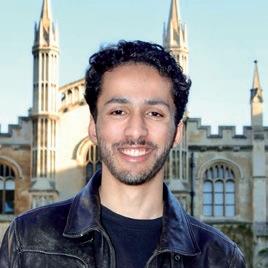
that these are particularly bad times to be a graduate, given the parlous state of the national job market. Consider the plight of those in their early 20s. Hit by the pandemic during our years of education and mass-market AI during our years of employment, our formative years have been roiled by uncertainty. Since 2020, most corporate sectors have undergone seemingly endless rounds of layoffs. Technical fields have become oversaturated to the extent that once-competitive degrees, such as Computer Science, fetch an increasingly diminished premium. Graduate applications become more faceless and demoralising year after year. From hit-record-and-send ‘video interviews’ without an interviewer, to opaque ‘skills tests’ assessing goodness knows what, things just are not as simple as firing off your CV to the highest bidder anymore. Hovering over all of this are stagnant wage levels since 2008, while the cost of living continues to spiral – surely the greatest political problem facing today’s Britain.
Let me pursue a minor digression at this point, on the kinds of jobs –journalism, media, policy, politics, communications, art curation – that humanities students typically go for. Such jobs require a certain level of cultural capital and let us be real, old-money connections that are unavailable to most. This is a complex question. Most St Paul’s graduates, including myself, come from reasonably comfortable backgrounds at minimum. Nevertheless, though our
Punting on the Cam
families possess the financial means sufficient to fork out for the fees, we may lack the crucial social capital. If our parents are employed in technical or IT-based work, or if they are immigrants, categories which both apply to my parents, our chance to land these jobs, still considered the preserve of the British Establishment is limited. As the BBC assessed over 10 years ago, class structures in modern Britain have grown far more complex than the “upper-middleworking” paradigms of the Victorian era. This has consequences for everyone, even Paulines.
But perhaps I am pushing my case too far. In many ways, employment opportunities today are as cushy as they have ever been. Since the pandemic, flexible working has become embedded within most organisations to at least some degree, a particular boon for those with childcare responsibilities. Recruitment schemes are better advertised, make allowances for those with mitigating circumstances, and are generally very transparent about their processes. And after the drama of Brexit, a UK-EU youth mobility scheme finally appears to be on the cards again by the end of this year. Beyond these specific considerations, there has also been a welcome cultural shift in working culture. The stigma against ‘job-hopping’ has long since been dropped. It is rare for people to enter a job in their 20s and stick to
it through their 50s and 60s. Instead, switching around is the new norm. You might train as a lawyer within a blue-chip firm, then later switch to in-house general counsel. Or you could begin with consulting, entering specific industries later once you have developed a specialism. Whether one views this as a liberating tendency or a relapse into the British cult of the generalist is a subjective matter of opinion. In any case, there are options open to us.
Consider also the privileged position that readers of this magazine are in, as members of the St Paul’s alumni community. There are many things that have and will continue to go in our favour. We all received a first-rate education that likely sent us on to good universities, helping us identify the skills and interests relevant to what careers we go on to pursue. Many of us have a home base in London, and if we have benevolent parents, need not navigate the city’s hellish housing market. Most significantly, we are members of a very powerful social network that can set us up for opportunities others may not have even heard of. Friends and acquaintances of mine have received references, been tipped for jobs, house-shared, and even entered relationships based on the connections they made at school. I was lucky enough to have my first office job at the School, preparing me for subsequent internships within the
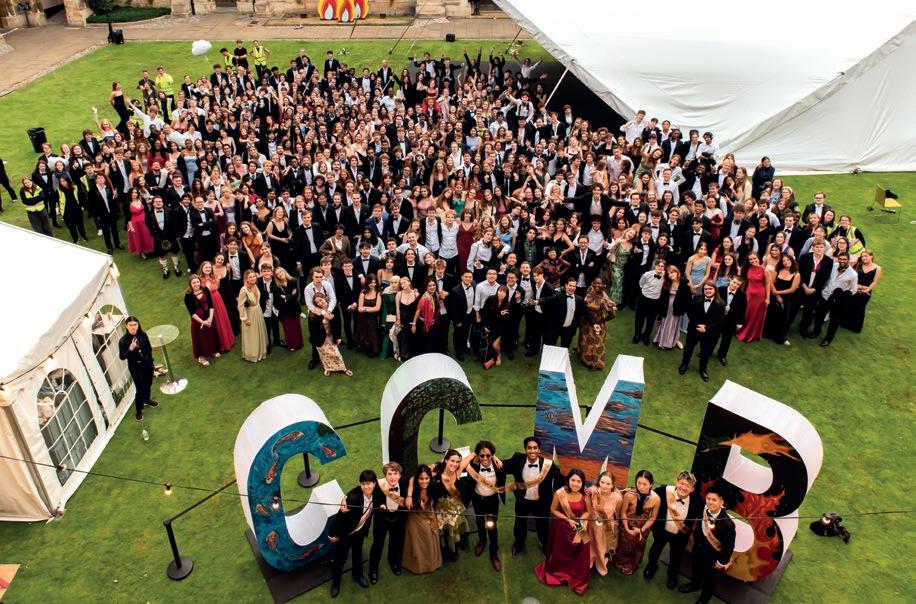
development and nonprofit sectors. As Paulines, we are an educated, articulate, sensitive and impassioned lot. Even so, we should be wary of bewailing the condition of today’s working world, coming from our comfortable vantage point.
In many ways, employment opportunities today are as cushy as they have ever been. Since the pandemic, flexible working has become embedded within most organisations to at least some degree.
Back to me. Why, then, do I feel unready to enter the job market just yet? Simply put, because I am pulled in different directions by the sheer number of options I have and opportunities that I have been fortunate to receive. I am considering academia, presently waiting on the outcomes of my Oxbridge History MPhil applications, and praying for a funded Ph.D offer in the not-toodistant future. I have also dabbled in journalism, having been an enthusiastic reporter for Varsity at Cambridge, collaborated on national stories for The Times and currently hold an offer to study Financial Journalism at City of London. Meanwhile, the field I have the most experience in is fundraising, specifically trusts and foundations. No child tells their parents, ‘When I grow up, I want to be a Philanthropy Officer!’ But it is a job that, at its heart, is about understanding people: what motivates them, what they care about, what makes them tick. I find that very compelling and continue thinking about it as yet another option. Who knows which way I will go? Right now, I do not know. But that is not because of any macro trends in the job market or the economy, or any constraining set of cultural expectations. I am a privileged person and have been shielded from many vagaries of our unstable world. Dealt a lucky hand by life, I know that if things do not work out, it is definitely more to do with me than anything else.
Corpus Christi May Ball
The Not So Humble Cassette
Ken Clark (1978–79) explains why cassettes are cool
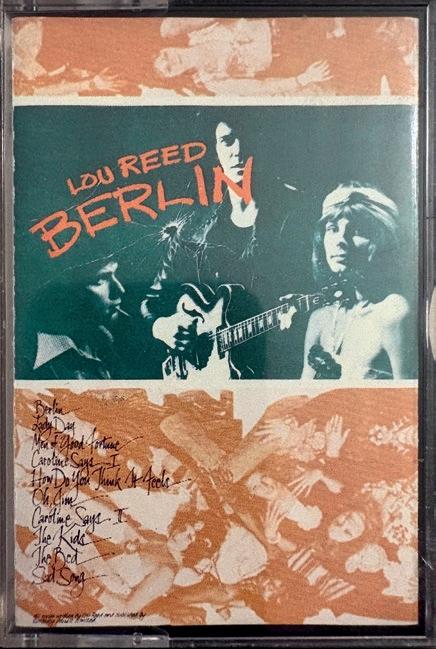
Cassettes can sometimes be problematic, breaking or tearing potentially ruining the music and requiring you to throw them out. Ideally you could also play them in your car, but this also was phased out with the CD. As with many obsolete formats, most people got rid of them but there are many features worth noting if you managed to hang onto them or feel like starting a new hobby.
I had started my listening experiences around 1980 with the standard 1970s Hifi configuration of turntable, cassette deck, receiver and speakers. At first, I mainly listened to vinyl. I would record concerts off the air and make tapes of singles, stray tracks and even sometimes mix tapes with different themes. As a natural process, a large collection started to assemble which took on a life of its own.
Some audio experts cite prerecorded cassettes as one of the best mediums to hear music. Unlike vinyl which degrades in quality as the grooves get smaller towards the end
The humble cassette was introduced to the global marketplace in the mid-1960s and enabled recording and playback. Aided by the great Sony Walkman, sales surpassed vinyl in the mid-1980s and then finally they were superseded by CDs in the early 1990s. The pre-recorded cassette had different fidelity depending on where it was manufactured and pre-recorded cassettes also had different qualities and would also be dependent on what kind of equipment was used to record and play back.
of the side, the cassette can sound consistently brilliant. During the glory years of cassettes, there would be bonus tracks not available on vinyl or different versions of tracks to encourage sales. For example, David Byrne’s first ballet, The Catherine Wheel has two tracks not available on the vinyl version. Lou Reed’s masterpiece, Berlin has additional music not available on the record or the subsequently released CD.
The Compendium Bookshop which had been on Camden High Street for many years, sold great cassettes of Beat writers reading their poetry. One of my favourites is by Alan Ginsberg but I must be careful not to play it too loud in my flat as the neighbours might call the thought police.
Fans would record concerts either off the radio or with hidden microphones in the concert hall. They were sometimes able to obtain studio outtakes or copy band circulated demo recordings and trade or sell them. The most famous groups to benefit from this are the Grateful Dead, Pink Floyd
and Led Zeppelin. Since they never performed a song twice the same and improvised freely, fans sought these out. Many of these tapes were of such high quality musically and in terms of audio that the groups themselves would release them.
Their lawyers and agents would also seize these recordings at market stalls and chase after the sellers, but the demand was so high and the low-cost distribution so easy that these alternate routes to market could never be completely eliminated. Anyone who visited Camden Market in the 1980s will remember tables of these tapes with brightly covered artwork and varying quality. If you were lucky, you might find a great tape of your favourite artist that was better in your humble opinion than anything officially released. For me it would be some of the Joy Division live tapes that are full of the atmosphere or the gig with the pre-song banter and crowd vibe that put you right there.
When the group would eventually release these tapes, they would often
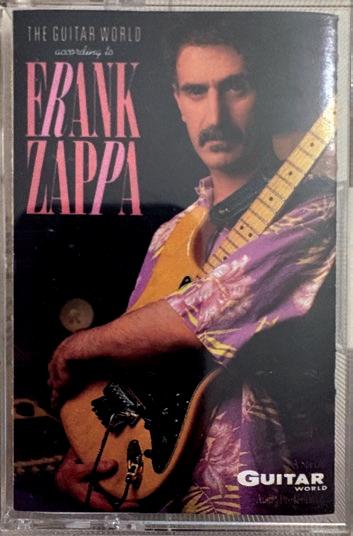
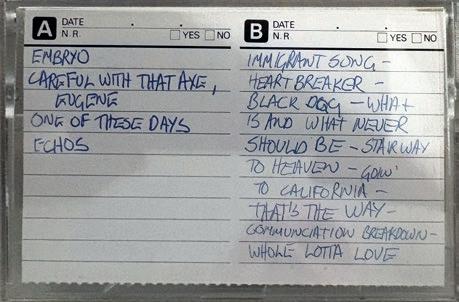

modify the sound, cut out the stage banter, or even correct mistakes or overdub parts. Fans would often prefer the original tapes with all their flaws.
One of my best friends at university, Peter Moore, would record local groups in London, Ontario, Canada, as well as concerts at bars and auditoriums. He used a Siehauser Silent Head Microphone that Lou Reed has used on Street Hassle. These are some of my favourite tapes in my collection.
With this empty canvas, each music lover could be their own producer. A friend of mine sent me a great cassette of sounds he heard in Southeast Asia during a trip he had made, unique and mind blowing. Gentlemen would send romantic tapes to their brides that could be listened to and enjoyed long after the wedding. Completists could compile all the B-sides and stray tracks of their favourite artists. If these were recorded on quality equipment and tapes, they would last indefinitely. Even if the artists were to release subsequently all these songs on a compilation, they might remix,
tamper with the order to improve the original homemade version. You could also do your own artwork, drawings, photos from magazines, to personalise the experience and create a unique item. Mick Jones from the Clash has recently shown his mix tapes from living in New York in the 1980s at pop-up exhibits across London.
Along with vinyl, rare cassettes can attract a lot of attention and obtain high prices at auction. At a recent Omega Auction, a Smiths early mix tape of Meat is Murder with completely different versions of many songs sold for £4,600. Neil Young’s Trans was initially released as a promotional tape with a song which was cut from the final vinyl version, If You Got Love Brian Eno had an album called My Squelchy Life that was issued as a promotional cassette for reviewers in the early 1990s. When the record company delayed its release, Brian cancelled it and refunded the advance he had received. Later he released Nerve Net but it had different tracks from the original cassette.
Cassettes were issued as promotional material with magazines and newspapers and some of these had unreleased material. One NME tape had a Buzzcocks track I Look Alone that only appears on this compilation. So be sure to hunt around for any boxes you may have packed away which may have some of these lovely cassettes. You may experience fabulous memories hearing again these sounds. Like the madeleine in Proust, you could remember a person or a place that you had completely forgotten about listening to an old cassette tape. There are vintage audio shops around London and elsewhere which have cassette decks at all prices to enable you to enjoy these hidden treasures. Flashback Records in Islington buys and sells cassettes. When I chat with the team there, they tell me that cassettes are cool with some of the younger buyers.
If anyone would like to contact me to discuss any of this, they are welcome to do so. Kdciii2006@ yahoo.com
James Grant (1990–95) reveals the story of Football at St Paul’s
Football during my days at St Paul’s was the most popular sport to watch given the advent of the Premier League, or Premiership as was, and it could well have been a popular sport to play were options not so limited.
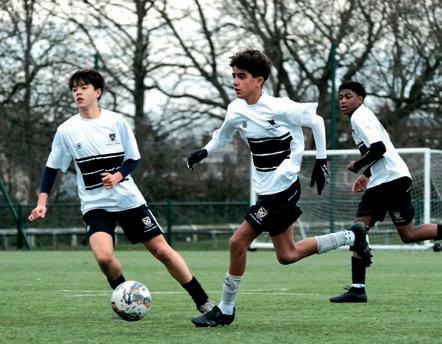
The School had two teams in total: The Colts in the 6th Form, and the 1st XI. Spring term was a term with no dominant sport, unlike Autumn and Summer Terms, and I was personally delighted to be able to play golf. I did though have friends in the 1st XI and often wondered why it was such a minority sport, given how many boys took a football out to Bigside during both morning break and lunch break and played club football elsewhere. OPs in years below me often credit teachers John Gillespie and Joe Sutcliffe with driving football forward as a serious school sport rather than just an afterthought to the Big Three, and I am sure that they would both be delighted to see how it is thriving today.
It turned out that those two teams in my final year of 1995 constituted an embarrassment of riches compared to the past. Laurence Ben-Nathan (1959–64) and Simon Bishop (1962–65) tell us: “For 5 years between 1960 and 1965, an “unofficial” soccer team of Paulines played regular matches. The team, founded by Chris Musk (1956–60), was originally called Real St Paul’s but had to change it to Real São Paulo after an objection by High Master Gilkes. He had no objection to the boys playing soccer
in their own time but they must not hold themselves out as representing St Paul’s, which was then an exclusively rugby playing school.”
The club played its first match against St Matthew’s Youth Club, Ealing, in October 1960, and ran out 5-3 winners. Richard (Dick) Withers Green (1955–61) scored the first goal. Real enjoyed the support of football writer Brian Glanville of The Sunday Times, who also made sure that the team received occasional publicity in his column or with a nudge to the London evening papers. Glanville’s own team, Chelsea Casuals, sprinkled with journalists and literary men, were regular opponents.
Yet by 1963, the tide had begun to turn. Real, now wearing the red England strip from the 1962 World Cup, a gift of the Football Association, took part in 6-a-sides under the supervision of a master, Norman Davies, and acquitted itself with credit.
A first reunion of Real São Paulo players took place in 2019, as reported in the very first issue of Atrium. On 18th September 2025, another reunion was held at the Blue Anchor opposite the School. With – sadly – slightly depleted numbers, a most enjoyable gathering took place with lively conversations reminiscing about playing for Real and several other recollections of times at St Paul’s in the 1960s.
From 1965, let us jump past 1995 to 2025, with football arguably the biggest sport at St Paul’s. I spoke to Tom Vickers who wears many hats –Tom is the school’s Assistant Director of Sport, Head of P.E, Assistant Boarding House Master and Head of Football. Tom is delighted with how
football is going at School but at pains to explain that this is not to the detriment of other sports – for example, it is not on offer as a Games Half during the Autumn Term so boys cannot choose football over rugby.
Tom, along with the school’s Director of Sport Luke Warriner (1998–2003) is keen for boys to become what he calls multi-sport athletes, rather than specialising in one sport, with a desire for them to play as many of the major sports as possible.
So – Zero senior teams in 1965, one in 1995 but eight in 2025, with B, C and D teams in most junior years. In the 2024/5 season 118 competitive matches were played across all age groups, many on the state-of-the-art 3G pitch up by the Swedish School. Lots of matches but what about the results? 69 wins and 30 losses with
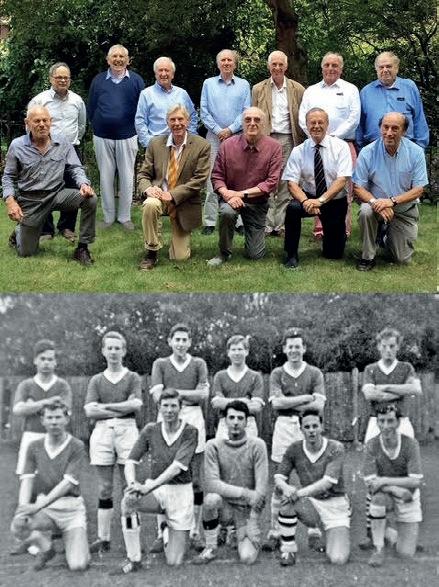
Real Sao Paolo 1960s and 2019
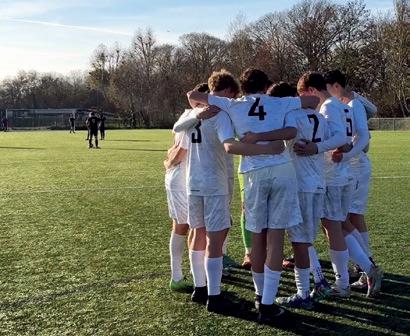
353 goals scored and 182 conceded. The 4th, 6th, 7th and 8th XIs were undefeated.
Teams play in the Southern Independent League alongside schools like Berkhamsted, Haileybury, Dulwich, Harrow and Tonbridge and rivalries are as strong as they ever were on the rugby pitches. The FA Cup equivalent is The Independent Schools Football Association cup, or ‘The ISFA’. The 1st XI lost in the final of the middle tier competition last year and at the time of writing are still in the top tier version this year, having edged a thrilling match against Berkhamsted 4-3 with what felt like half the School watching.
Football is popular in the Staff Room too – only 2 coaches are not full-time teachers. As well as Luke Warriner who coaches the 1st XI, Nick Troen (1999–2004) coaches the 4th XI.
Both Luke and Nick still turn out for OPAFC, and it is interesting to look at how football’s growth at the School has affected the club. That has of course been a hugely positive factor and at University drinks events I am often asked by recent leavers how to join OPAFC. A healthy number of young OPs now turn out at Colets, with a 4th XI recently added and significant success is being seen including the 1st XI winning its league and with that, promotion to the top tier of the AFC for the first time ever. It is great to see those who enjoy football at school continuing to play, and the future is bright for OPAFC as a result.
OLD PAULINE CLUB NEWS
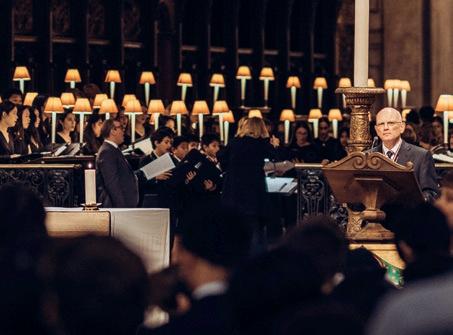
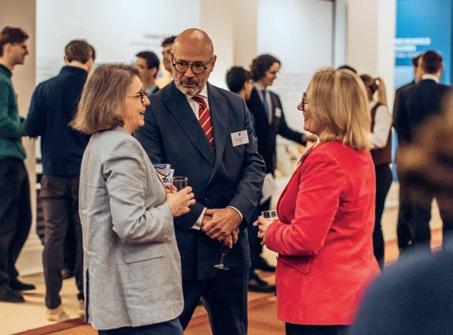
The Feast Service & Supper
This year’s Feast Service at St Paul’s Cathedral was a great success, once again celebrating the links between The Mercers’ Company, our Founder John Colet and both St Paul’s and St Paul’s Girls’ Schools.
The Evensong service, a tradition for our community since 1661, featured a sermon by Rev. William Rogers and contained many of the features of Feast Services of old. OPC President Simon Hardy (1974–79), High Master Sally-Anne Huang and High Mistress Liz Hewer all gave readings or said prayers alongside current pupils and Governors. A collection was held to benefit the Bursary appeals of both schools.
After the service the OPC hosted supper at Mercers’ Hall with OPs from 1953 leavers to 2025 leavers, as well as SPGS Alumnae, Governors and guests all enjoying a buffet supper with wine. Simon Hardy welcomed guests with a speech that included a Chat GPT reimagination of a speech by John Colet, which was certainly a first. This was an evening that cherished tradition and fellowship and remains a key date in the OPC calendar.
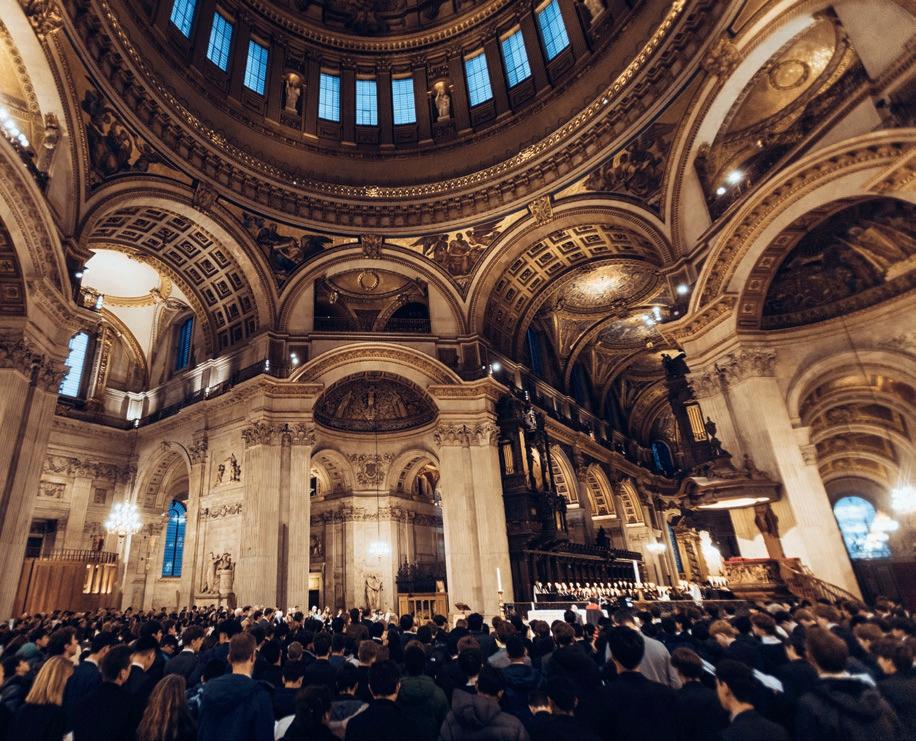
Plaque Dedicated
The OPC President presented a plaque at St George’s Memorial Church in Ypres.
In September Graham Seel (Former Head of Humanities at St Paul’s and Honorary Life Member of the OPC), the church’s Chaplain, and Matthew Knox (School Chaplain and Honorary Life Member of the OPC), organised a service including the commemoration of a plaque to pupils of St Paul’s who fell in the 1st World War.
St George’s Memorial Church was built to commemorate over 500,000 British and Commonwealth troops, who had died in the three battles fought for the Ypres Salient. It was completed in 1929 and consecrated by the Bishop of Fulham after an appeal for a British memorial church to be built. Land was given by the town. The architect was Sir Reginald Blomfield whose work included the Menin Gate.
The church has many plaques and memorials to regiments, associations, individuals and now to the fallen of St Paul’s.
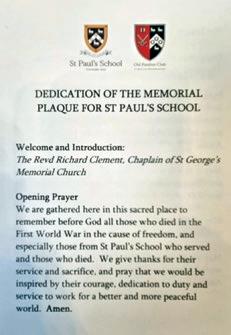
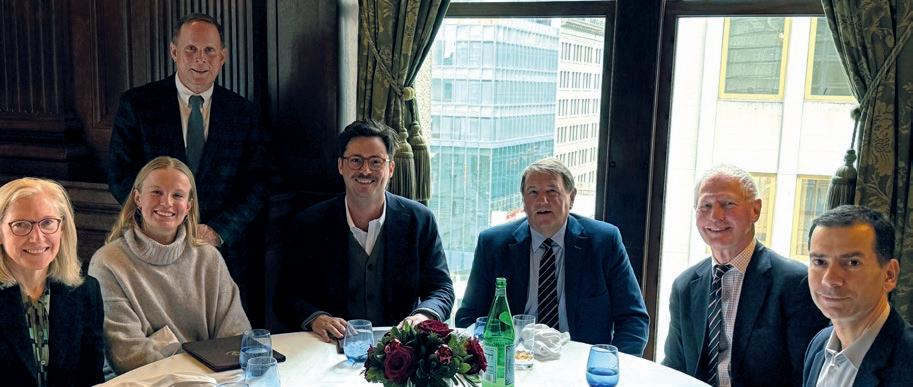
Overseas Branches
Branches and hubs of overseas OPs are a key focus for the school’s Alumni Relations team and for the Old Pauline Club.
To that end both Simon Strauss (1968–73) and James Grant (1990– 95) are working on refreshing existing branches, supporting overseas events and establishing new branches. Over the last year Justan Kitchener (1986–91) has taken over all things OP in Sydney, working closely with his twin brother Tristan in Melbourne; Adrian Lee (1997–02) and Brian Lau (2002–04) will support Arun Nigam (1958–63) in Hong Kong, Patrick Marsden (1997–02) is starting a branch in Los Angeles and Mihaan Manji (2014–19) is getting started in Dubai. The next branches in the pipeline will include Boston USA, South East Asia, Singapore and potentially Switzerland.
Events were held all over the world in 2025, from Athens and Madrid to New York and Sydney. Following the recent Memorandum of Understanding between St Paul’s School and St Paul’s Girls’ School many of our overseas alumni events are held jointly with SPGS Alumnae. This is a model that has worked very well over the years in New York, which has the second highest concentration of OPs behind London.
OPs and Alumnae from St Paul’s Girls’ School met for a successful and convivial holiday season lunch in December at the University Club, New York.
Pictured from left to right: SPGS Alumnae Stephanie Connor and Ellie Wengler, with Chris Fleming (1981–86), Jamie Bomford (2004–09), Robert Engel (1977–79), Simon Strauss (1968–73) and Haik Sahakian (1983–87)
We can only really set up a new branch or hub if there is a critical mass of OPs but if you are overseas and interested in finding out more, please do email community@stpaulsschool.org.uk
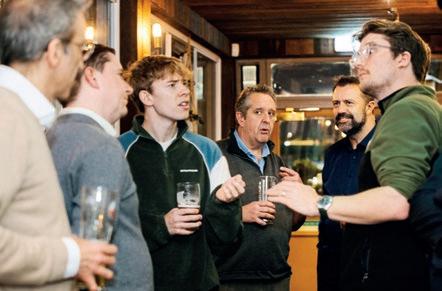
OPs in London
November saw us reprise the ‘OPs in London’ event, which deliberately has no theme or agenda and is just a group of OPs of all ages getting together for drinks.
This time the venue was the excellent riverside pub The Banker. There were of course several useful introductions and conversations on the night, as you’d expect! We hope that these events will become more regular and spread to different cities if the numbers work – if you have any thoughts and ideas please do contact James Grant on jsg@stpaulsschool.org.uk
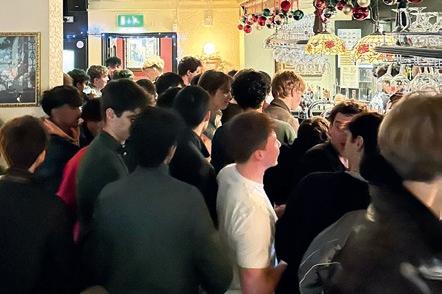
First Term Reunion
Each year the OPC and St Paul’s invite recent leavers to their ‘First Term Reunion’, giving our youngest OPs the chance to meet and catch up about their first few months at universities across the world or their gap years.
This year saw record attendance with 100 at De Hems pub in Soho, with last year’s School Captain Lachlan Murray in particular driving the numbers, even describing attendance as ‘compulsory’ in the year’s WhatsApp group. It was great to spend time with so many from what is, and will continue to be, a very engaged year group.
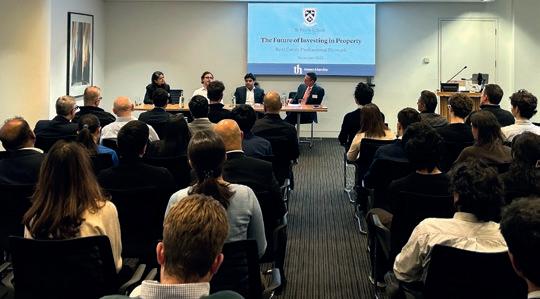
Professional Networks
Since the last Atrium three successful Professional Network events have been held, organised by the School with input from OPC.
The Media event was held at BBC’s studios and hosted by former SPS parent Geeta Gurumurthy, with high profile OPs Jonny Dymond (1983–87) and Philip Bernie (1975–79) appearing on the panel.
The Real Estate event was held at Trowers & Hamlins LLP and kindly hosted by Samir Nathwani (2004–09) with a lively panel including Raoul Malhotra (2004–09) and Sebastian Mattey (2010–15)
Later this year the Medical, Law and Finance events will take place. We are always very grateful to those OPs who give up their time to help with these valuable events which include current pupils and parents as well as OPs.
OPC Annual Dinner
Well over 100 OPs from across seven decades gathered for the Club’s Annual Dinner.
The first-ever OPC Emerging Alumni Awards were presented to Jack Beeston, Oli Troen (both 2006–11) and Noah Zhou (2014–19), all judged to be rising stars, innovators and future leaders in their respective fields of law and music. James Reed CBE (1976–80) delivered a masterful and inspiring address full of gripping stories, sharp humour and genuine insight into the changing world of work.
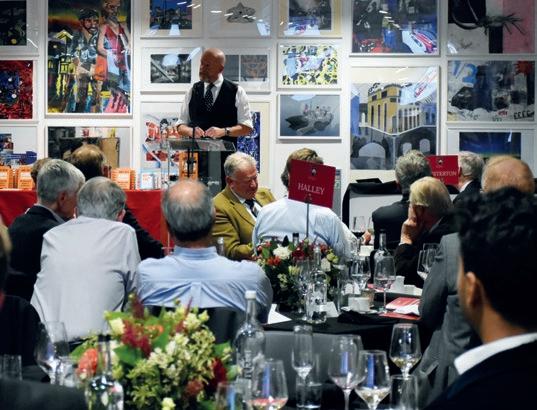
Rugby Reunion
Ed Varley (1985–90) remembers the Colts XV of 1987: Still United, Still Unbeaten.
Nearly 40 years after their extraordinary season, the unbeaten 1987 Colts XV reconvened on the banks of the Thames on a sunny Saturday in June 2025. Despite now living as far afield as Singapore, Sweden, Portugal, and Switzerland, the team regrouped thanks to the efforts of scrumhalf Jamie Nettleton (1985–89)
What followed was an afternoon of warm reconnection. Careers and families had taken players down varied paths, but the bond forged on the rugby pitches of St Paul’s proved unshaken.
Despite a fiercely committed, athletic and talented squad, a large part of the team’s success was down to the coaching of David Rollitt (Maths department 1977–2003), former England international. His Gallic philosophy – flair, raw physicality and gritty defence – suited the team’s strengths perfectly and the result was a season for the ages:
Played: 11 | Won: 11 | Drawn: 0
Points For: 446 | Against: 35 (in 1992 a try changed to 5 points, points for would be 540 in 2026)
Tries For: 94 | Against: 5
Following their resounding 48–3 win against Dulwich College towards the end of the season, the opposition’s Master in Charge of Rugby declared them “the finest side he had seen in 25 years of coaching.” It was a fitting tribute at the end of three seasons during which no side on the formidable SPS fixture list had bettered this team – sides including Wellington, Harrow, Whitgift, Brighton, Radley, and Epsom.
The day was also an opportunity to remember absent friends – Jeremy Hurll (1984–89) the inspirational 6-foot 7-inch captain and England U21 representative, died in 2001. Neither was David Edwards (1984–89) there – the brilliant fullback with such elegance and timing that he was once dubbed the Serge Blanco of the side. He died earlier in 2025.
The 1987 Colts XV remain a proud chapter in the School’s sporting history – and for those who played it is a lasting source of shared memories and friendship.
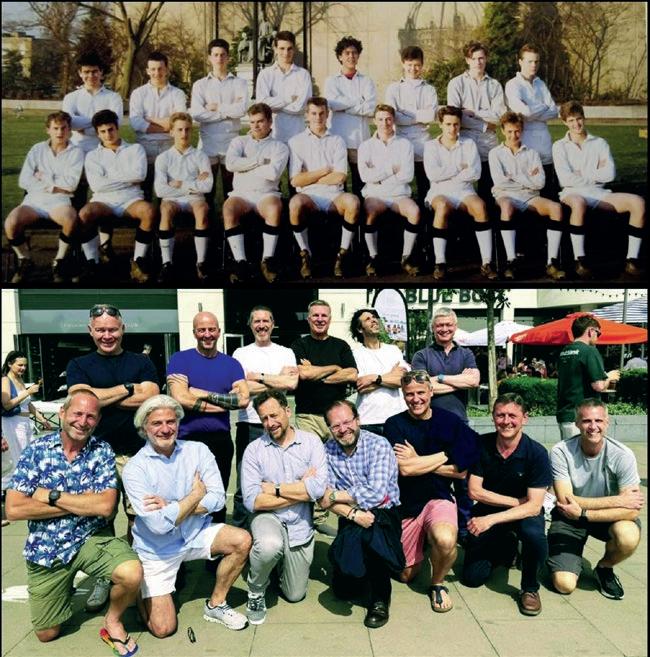
Pauline Grants
OPC President, Simon Hardy (1974–79) celebrates a 50-year legacy of lasting impact.
Many Old Paulines may be surprised to learn that for more than 50 years there had existed a company dedicated to providing financial support to OPs and St Paul’s School –quietly, consistently and generously. The Old Pauline Trust Limited (OPTL) never sought the limelight, and in an age of major capital campaigns and transformational gifts, its work often went unnoticed. Yet for over half a century it made a tangible difference – one thoughtfully-judged grant at a time. The sums involved were rarely headline-grabbing. Typically modest by modern standards, the OPTL’s grants nonetheless proved critical in countless cases. For individual Old Paulines embarking on ambitious and worthwhile personal projects around the world, that “little extra” often meant the difference between an idea remaining aspirational and becoming achievable. The testimonial of recent recipient Henry Ferrabee (2016–21) sums it up perfectly, “It truly enabled a trip that has changed the direction of my life, and I am so grateful for the opportunity.”
Examples abound. These grants have helped OPs cover travel and
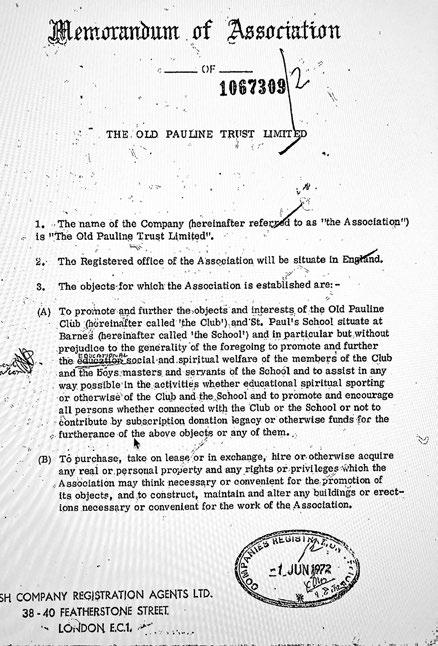
accommodation costs while volunteering in Brazil to empower disadvantaged children through the power of rugby; joining the Centre for Arab-West Understanding in Egypt; filming a geopolitical documentary in Poland; undertaking a rugby tour to Georgia in the Caucasus; and creating a series of short online videos designed to inspire 7–12-year-olds to make positive life choices. These grants, consistently unlocked experiences that shaped outlooks, careers and lives.
The company frequently provided support to affiliated OP sports clubs –including the Cricket Club, Golf Society, Soccer Club and Fives Club – that help sustain participation and activity across generations. The School’s Christian Union likewise received support, reflecting the breadth of the Trust’s objects and its willingness to support the diverse constituents of the St Paul’s community.
More recently, the company launched a new scheme offering grants to the School’s co-curricular societies run by Paulines – an initiative that has already proved both popular and impactful. Four societies were successful in the inaugural round: AsiaSoc, The Geographical Society, The Linguistics Society and Horizon Economics, Business and Finance Magazine. Feedback from pupils has
been extremely positive and teachers are especially enthusiastic as the scheme encourages initiative, broadens horizons and strengthens the co-curricular life of the School. The year of the Old Pauline Club’s centenary in 1972 saw the founding of the Trust by seven far-sighted alumni whose vision underpinned everything that followed:
• Alderman Lt Col Ernest “Tony” Anslow-Wilson (1920–24)
• Guy D Thomas (1947–52)
• W B “Bill” Atkinson (1945–48)
• A C V “Peter” Waite (1928–33)
• P R “Dick” Withers Green (1955–61)
• H Cedric Cunis (1914–19)
• Edwin M Cockburn (1928–33)
The legal establishment of the OPTL was witnessed by A B “Buzz” Barter (1941–48). Each member of this body brought complementary skills, experience and commitment to the new company. Together, they established a capital fund that grew via donations and legacies and whose income would be used to benefit members of the Old Pauline Club and the School in perpetuity. Over the decades, a dedicated succession of OP directors carried this vision forward with care, integrity and remarkable longevity. Among the last to serve was Tim Cunis (1955–60), one of the founders’ sons, providing a living link to the Trust’s origins. Particular thanks are due to long-serving directors John Allport (1937–42), Basil Moss (1948–53), Charlie Hogbin (1956–61), Charles Duckworth (1957–62), Nick Brooks (1965–70) and Peter King (1967–71), some of whom also served as the Company Chairman. Their loyal stewardship ensured that the OPTL’s assets were responsibly managed and its grants dispensed faithfully in line with its objects. The Trust also established several School-wide awards, including the OP Shield, the Thomas Clarkson Award and the OPC Prize, each recognising excellence, initiative and service. On its 50th anniversary in 2022, it made its largest ever single gift to the OPC Bursary Appeal launched by Ed Vaizey (1981–85), President of the Club at the time of its 150th anniversary – an especially fitting contribution that directly supported access to a St Paul’s education.
The creation of the School’s Development, Engagement and Marketing team in the 21st century was a genuine game-changer in the philanthropic life of the School and inevitably put the quieter work of the OPTL further in the shade. Yet the company continued to manage a significant pool of assets with diligence and generosity until it could no longer exist efficiently as a standalone entity. The time had come to bring its affairs to an orderly close.
While the Trust has now been formally wound up, its legacy is not ending but continuing in a new form. Its assets have been transferred to the Old Pauline Club, which has committed to honouring the Trust’s purposes by offering grants to individuals and groups under the same eligibility criteria as before. A dedicated OPC Grants Committee – chaired by Marcus Grainger (1990–95) with Sam Hyman (1992–97) and Adrian Clark (1993–98) – will oversee the application and approval process and, all being former directors of the OPTL, ensure continuity of the company’s aims.
Old Paulines are encouraged to apply for financial support to undertake worthwhile personal projects around the world. Grants generally remain up to £500, consistent with historic practice. The application form can be found on the Grants page of the Old Pauline Club website. To facilitate the growing size of grant applications from existing OP sports and affiliated clubs and in view of the OPTL’s inability to meet fully such requests, the OPC has decided to make an amount of the Club’s money available to support these applications and the creation of new sports clubs and networks.
In lauding the achievements of The Old Pauline Trust, we celebrate something quietly powerful: generosity suitably applied, opportunity unlocked and a visionary legacy that continues to change lives – one grant at a time.
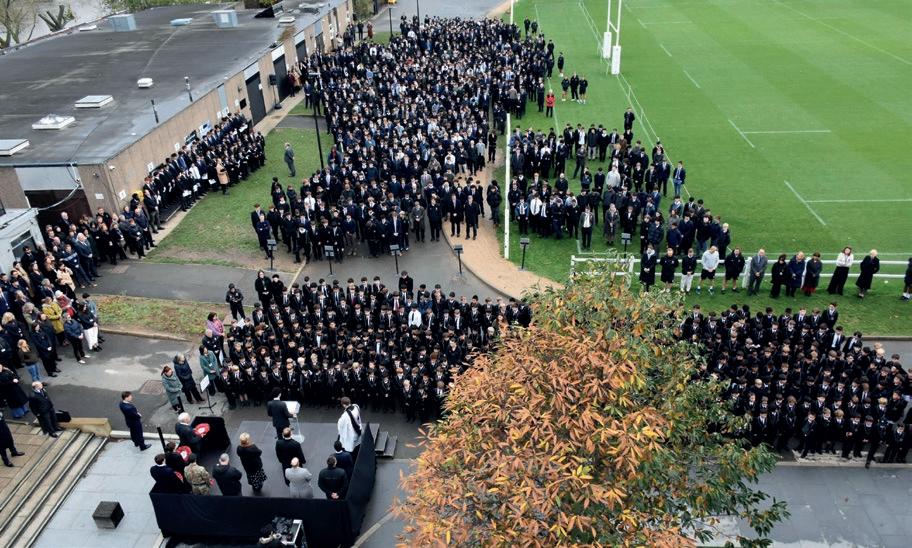
Remembrance Service
The 2025 Act of Remembrance Service at School saw OPs, including members of the OP Armed Forces Network join staff and pupils to honour those who have fought for our freedoms.
This event is the only event that involves all pupils from both Prep and Senior schools and is a key event in the School’s calendar. Vietnam veteran Ross Fenton (1963–65) laid a wreath on behalf of The Old Pauline Club this year. Ross’s story was told in the last edition of Atrium and he will be telling us more as part of a ‘Topical Tuesday’ webinar on the 50th anniversary of the end of the Vietnam war.
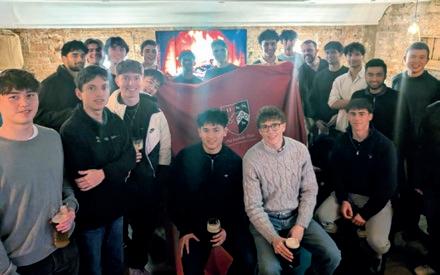
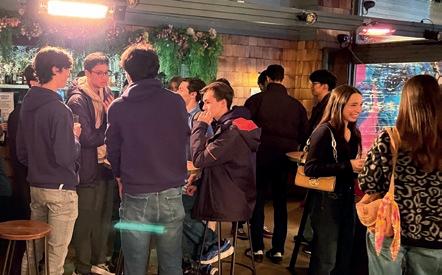
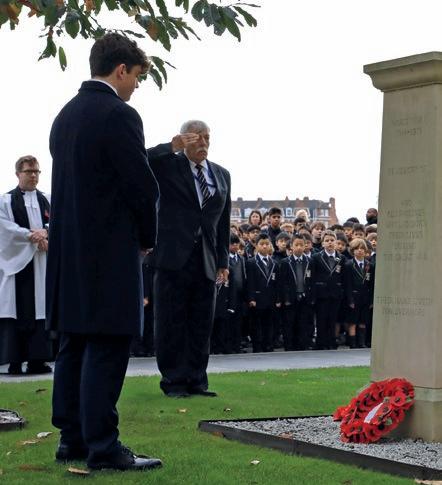
University Drinks
More successful University drinks events were held late last and early this year, in Cambridge, Oxford, Edinburgh and, for the first time, Warwick.
The OPC, St Paul’s School and St Paul’s Girls’ School fund these popular events which are well attended by students keen to catch up with each other and hear the latest from school, as well as enjoying the free food and drinks. In addition, many great conversations take place about how the OPC can support these young OPs in the future. Spring Term will see similar evenings held in London, Bristol, and Durham.
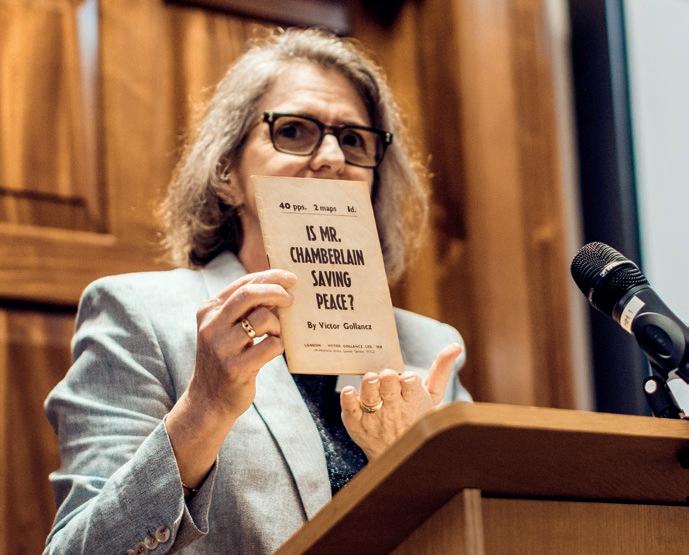
OPC Presents Rare Book at The Feast Service
The Old Pauline Club donates a book to the School’s Rare Books Collection each year. In 2026, the donation was a first edition of Victor Gollancz’s pamphlet Is Mr Chamberlain Saving Peace? This is Gollancz’s rarest work.
Victor Gollancz (1905–12) was one of the few high-profile figures to reject the government’s policy of appeasement. He campaigned tirelessly using the titles distributed through his Left Book Club to create a public critique of the government. Is Mr Chamberlain Saving Peace? was largely written on 23 March 1939, but included postscripts as events overtook it. Just a week later, on 30 March, Neville Chamberlain publicly guaranteed that Britain would defend Poland if Germany attacked. The policy of appeasement was effectively ended.
At School, Gollancz won a prize most years, including the High Master’s Prize and the Governors’ Prize. He kept in touch with the School while at Oxford, and later was Guest of Honour at the School’s Gallery Club dinner.
Gollancz’s distinctive yellow and pink book covers and marketing campaigns changed publishing forever. He created the first modern book club in Britain with the express purpose of helping “in the struggle for world peace and against fascism”. He was a pacifist and campaigned against the death penalty. His movement, Save Europe Now, was created in 1945 to provide relief for the German people who were starving after the end of the war. During the Arab-Israeli war, he organised relief for the affected Arab population. His organisation, the Association for World Peace, continues today as War on Want. He once said, “I hate everything that is pro and anti [different peoples]. I am only one thing: I am pro-humanity.”
His obituary in 1967 in The Times described Sir Victor Gollancz (he was knighted in 1965) as “a remarkable man… a distinguished publisher… a highly articulate man of the left, a socialist preaching his own brand of humanistic socialism, a begetter of movements, a champion of causes, an indefatigable controversialist, an author, anthologist and pamphleteer.”
Old Pauline Club
St Paul’s Alumni Association Spring 2026
President S P D Hardy
Past Presidents
C J W Madge, F W Neate, Sir Alexander Graham GBE DCL, R C Cunis, Professor the Rt Hon the Lord McColl of Dulwich, The Rt Hon the Lord Baker of Dorking CH, J M Dennis, J H M East, Sir Nigel Thompson KCMG CBE, R J Smith, B M Jones, The Rt Hon the Lord Vaizey of Didcot, J Withers Green
Vice Presidents
T M Adeyoola, Rt Revd R W B Atkinson OBE, Professor M D Bailey, P R A Baker, R S Baldock, S C H Bishop, J R Blair CBE, N St J Brooks, R D Burton, W M A Carroll, Professor P A Cartledge, M A Colato, R K Compton, S B B Cook, T J D Cunis, A C Day, S J Dennis MBE, Sir Lloyd Dorfman CVO, CBE, C G Duckworth, A R Duncan, J A H Ellis, R A Engel, D H P Etherton, Sir Brian Fall GCVO KCMG, N J Fitch, Sir Simon Fraser CMG, KCMG, GCMG, B R Girvan, The Rt Hon the Lord Godson of Thorney Island, T J R Goode, D J Gordon-Smith, M S Gould CMG MBE, J S Grant, The Rt Hon the Lord Greenhalgh of Fulham, Professor F D M Haldane, H A Hampson, S R Harding, R J G Holman, J A Howard, S A Hyman, S D Kerrigan, P J King, R M Kinnear, T G Knight, J W S Lyons, I C MacDougall, G C Matthews, Professor C P Mayer CBE, R G McIntosh, A R M McLean CLH, M H Modiano, J D Morgan, A K Nigam, N H Norgren, The Rt Hon George Osborne, Sir Mene Pangalos FRS, T B Peters, D M Porteus, C M Rampling CMG MBE, R M Rayner, The Rt Hon the Lord Razzall of Mortlake CBE, J A Reed CBE, Sir Bernard Rix, B M Roberts, J M Robertson, J E Rolfe, Professor S J Russell OBE FRS, M K Seigel, J Sherjan, J C F Simpson CBE, D R Snow MBE, P M Spence, S Strauss, A G Summers, R Summers, R Ticciati OBE, The Rt Hon Tom Tugendhat MBE, VR, Sir Mark Walport FRS, R T Watkins FRAM, Professor the Lord Winston of Hammersmith
Executive Committee
Simon Hardy (President and Chairman of the Committee), Jeremy Withers Green ( Immediate Past President), Tom Arnold (Secretary), Nick Brooks (Treasurer), Kut Akdogan (US), Jaipal Chawla (30s Decade), Sam Cook (20s Decade), James Grant (Sports and AROPS), Harry Hampson (Governor), Sam Hyman (Co-Opted, Surveyor), Dave Methuen (40s Decade), Elizabeth Monro-Davies (Parent), Nog Norgren (50s Decade, Legal), Rishi Patel (20s Decade), Ellie Sleeman (SPS Development), Simon Strauss (Overseas), Nick Troen (SPS Staff), Neil Wates (Communication and Engagement)
Nominations and Awards Committee
Simon Hardy (Chairman), Jeremy Withers Green, Brian Jones, Peter King, Nog Norgren
Sports Committee
James Grant (Chairman), Rob Rayner, Jehan Sherjan, Nick Troen, Jack Turner
Officers Committee
Simon Hardy (Chairman), Jeremy Withers Green (Immediate Past President), Tom Arnold (Secretary), Nick Brooks (Treasurer), James Grant
Communication and Engagement sub-group
Neil Wates (Chairman) James Grant, Simon Hardy, Jeremy Withers Green
Colets Development Financing sub-group
Stephen Withers Green (Chairman), Nick Brooks, James Grant, Simon Hardy, Richard Holman, Sam Hyman, Brian Jones, Ian Turley
Advisory Council
John East (Chairman)
Peter Baker, Jon Blair, Paul Cartledge, Mike Colato, Ross Compton, Richard Cunis, Tim Cunis, Alan Day, John Dennis, John Ellis, Robert Engel, Brian Fall, Dean Godson, Stephen Greenhalgh, Richard Holman, Brian Jones, Peter King, Charles Madge, Alan McLean, Jon Morgan, Francis Neate, Rob Rayner, Tim Razzall, Bernard Rix, James Rolfe, Mike Seigel, Jehan Sherjan, Nigel Thompson, Ed Vaizey
Archivists
Kelly Strickland, Katherine Gregory (parental leave cover)
Photographer Tom Bradley
Accountants
Kreston Reeves LLP
Trustee
OPC Trustee Company Limited
OLD PAULINE SPORT
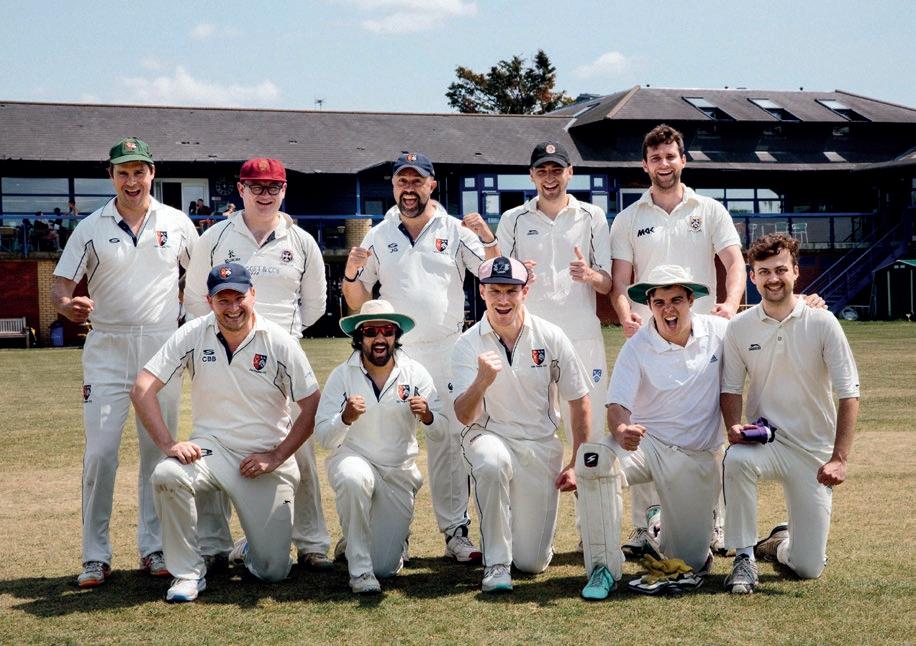
CRICKET
James Grant (1990–95) updates on OPCC.
OPCC enters the 2026 season with renewed confidence and enthusiasm after a difficult couple of years and the decision to consolidate to 2 league teams and the Sunday team. There is an ambition to resurrect the 3rd XI if recruitment goes well, with some positive signs that OPs currently at university will become regulars.
1st XI Captain Sam Cato (2006–11) will look to build on last year’s 5th place in Surrey Division 6 and the 2nd XI, under Olly Stoddart and Vice-Captain Tom Peters (1989–94) are also hopeful of a promotion push. Charlie Malston (1995–2000) will continue to lead the excellent Sunday XI.
As explained so well by Wisden’s Yas Rana (2009–14) in the last Atrium, OPCC is a great club for young OPs and indeed OPs of all ages to play for. We may not attract the cream of the school’s 1st XI each year but we strike an excellent balance between being competitive in league cricket and having a lot of fun. Do consider joining us.
For the 2026 season we are keen to recruit a regular umpire. For more information on that, on how to join as a player, net practice and fixtures please email Chairman James Grant (1990–95) on jsg@stpaulsschool.org.uk
FIVES
Old Paulines continue to dominate the world of Fives.
Our team of Ben Beltrami (2009–14), Julian Aquilina (2005–10) and current Upper Eighth pupil Freddie cruised to victory in the Owers Cup in November, without dropping a game against any of the other alumni teams.
At the National Singles finals in December, it was an all OP final, with eight-time champion Dan Tristao (2002–07) losing narrowly to Ben Beltrami. In the end of year rankings, the top four in the country – Dan, Ed Kay (2005–10), Ben and Julian are all OPs. Sam Roberts (1977–82) continues to coach Fives at St Paul’s after retiring from teaching Biology.
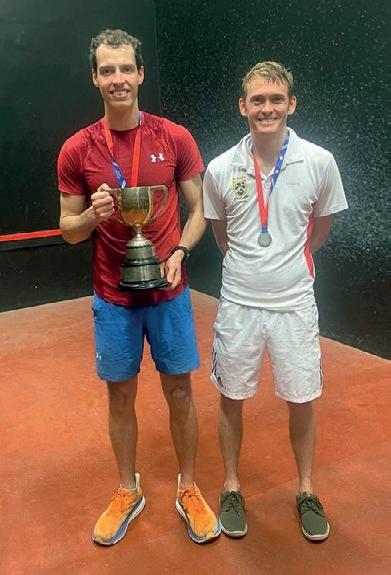
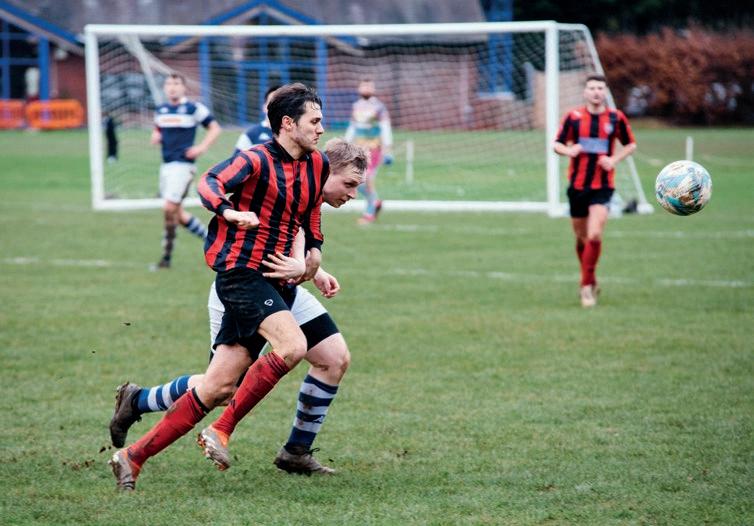
FOOTBALL
The 1st XI has made a stuttering start to life in the London-wide Senior Division after last year’s promotion.
A couple of late goals went against it early on, leaving the team mid table. Even so, an extra time loss to last season’s Premier Division champions showed potential, the league remains wide open, and back to back wins have sparked momentum. If it maintains this form as the season reaches its critical stage, promotion to the topflight of amateur football is within reach.
The 2nd XI has had a strong season so far and currently sits top of the table, having won 10 out of 13 league matches. Highlights include first away wins against Old Whitgiftians and Royal Sun Alliance and a clean sheet while playing in goal for Nick Troen (1998–2003). The focus now is on finishing the season well and pushing for the league title.
The 3rd XI has had another strong season so far, having achieved promotion in its inaugural 2024/25 campaign. Currently sitting top of the league, albeit with familiar rivals Grey College behind having a couple of games in hand, it is well-positioned to have another successful year. Unfortunately, despite having reached the final in the cup last season, it could not put a similar run together this time round – however, that just means full focus on the remaining league matches, in the hopes of becoming champions.
The 4th XI has had a fair season so far, with level Win: Loss and Goals For: Goals Against ratios. A much-improved start to the season compared to last, but there is a desire to have a strong back end to the season given the increase in depth and quality in the squad. This is evident by the team beating the top of the league side 4–0 away before Christmas.
For more information on OP Football please email Club Chairman Ciaran Harries (2006–11) on ciaran.harries@btinternet.com
GOLF
James Grant (1990–95) updates on the Old Pauline Golf Society.
Ian Bailey (1974–78) is the society’s Captain for 2026, taking over from Nick Cardoza (1983–88). All members are grateful to Nick for a successful year as Captain, with the highlight being a very healthy 25 players – including several in their early 20s – at the Captain’s Day and Autumn Meeting at Royal Mid-Surrey in September.
The North Cup (Scratch) was won by Rob Lyon (2007–12), Walker Cup (Handicap Stableford) by Alastair Grant (1993–98), the Courlander Cup (handicap 15 or over) by Mike Rowley (1969–74) and the afternoon foursomes by Nick Cardoza and Charlie Prior (1995–2000)
Autumn matches produced two ties and a lot of fun at Old Fold Manor and Royal Ashdown Forest against Old Cholmeleians and Old Amplefordians. Thank you to match managers Brian Selwyn-Barnett (1956–59) and Ian Starr (1967–72) for organising.
The Winter Meeting was once again held at glorious West Hill, with the Pat Humphreys Cup going to Mike Kiernan (1996–2001), the Downing Salver (scratch) to Ben Turner (2012–17) and the Kayton Cup (over 70s) to Chris Vallender (1960–64)
The AGM was followed by dinner at Royal MidSurrey where the Cunis Cup was presented to Chris Vallender, the Jubilee Salver to Robert Silverstone (1964–68) and the Bewsher Bowl (knockout matchplay tournament) to John East (1960–65)
The 2026 season will include the Halford Hewitt, Alba Trophy and Grafton Morrish for the low handicappers as well as the usual excellent series of matches and meetings and trips to both Princes in Kent and East Sussex National. Ian Bailey’s Captain’s Day will be held at his home course Stoneham.
More than any other sport, golf can bring OPs of all ages together and now is a great time to join the society. For more information about how to join please email Society Secretary James Grant (1990–95) on jsg@stpaulsschool.org.uk
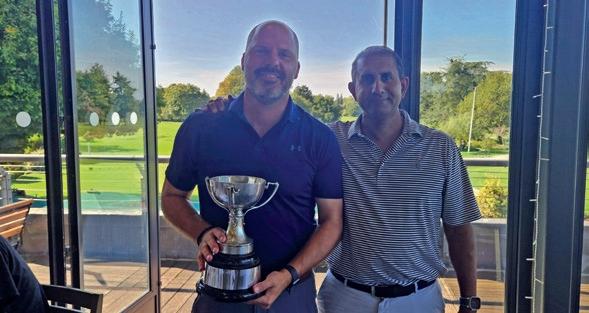
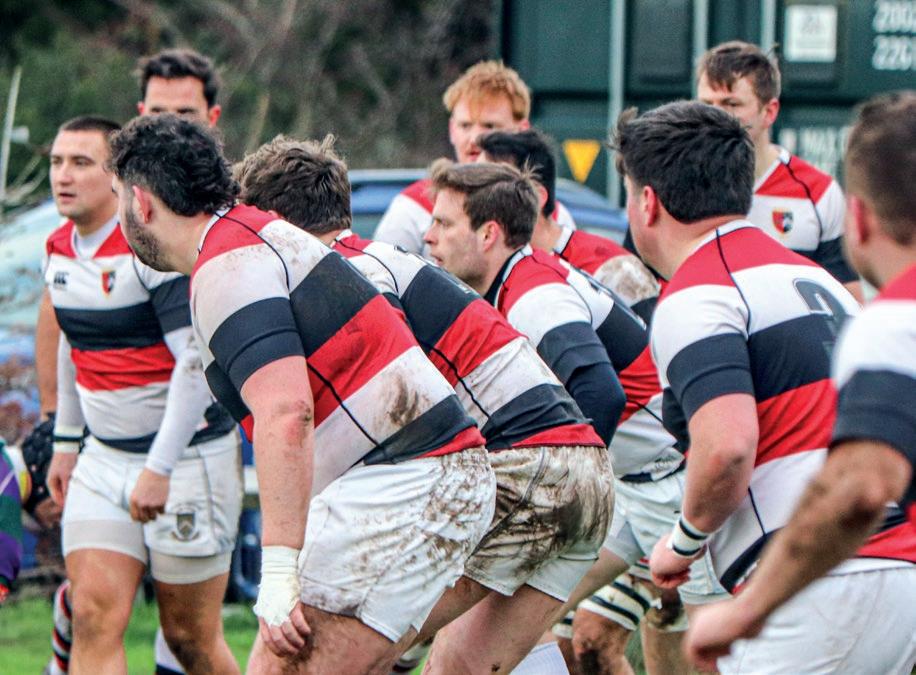
RUGBY
OPFC is enjoying a very successful season, on and off the field having set strong foundations over the summer.
The 1st XV has lost only once this season and at the time of writing is firmly on track to be promoted. Josh Zillig (2014–19) and Max Hart (2013–18) have combined impeccably at 9 and 10. A 95-0 victory over Merton was the pick of several epic wins.
This season has seen the formation of the U22s. Co-captained by Arthur Kenny (2017–22), James Beverley (2017–22) and Rohan George (2020–25), a stacked squad of St Paul’s alumni took on Cobham U22s in January and played out an epic encounter. Reduced to 13 men and trailing by six points with a minute remaining, Andreas Hadjiloizou (2019–24) scored an epic solo try, which was converted to secure the win. The U22s look forward to Surrey Cup finals day, expected to be scheduled over Easter weekend.
The Vets team too has enjoyed a number of close fixtures, with notable wins over Esher and Old Cranleighans. Duncan Gordon-Smith (1984–89) continues to put in tighthead propping masterclasses, giving all of the 1st XV front row a run for their money!
Off the pitch, the Club social calendar has been packed. The inaugural Touch Rugby comp, Ladies Day and Christmas Nativity have been excellently organised, largely at the hands of Social Secretary club jester Harry Strauss (2013–18)
The Club is very keen to welcome new recruits, both playing and spectating. If you are interested in finding out more, you can email clubcaptain@opfc.org.uk or follow the club on Instagram @oldpaulinerugby
RACKETS
Coach Steve Tulley has now retired and left St Paul’s School after 25 years’ service.
As Head of Rackets, Steve was responsible for introducing the sport to St Paul’s, resulting in an outstanding number of successes. Those successes have continued after school with many achieving notable success including James Rossiter (2018–23) who was awarded the Renny Trophy (Most Improved Player) at the Tennis & Rackets Association annual dinner at Queen’s Club. This followed his wins in both the US Amateur and Canadian Amateur Open tournaments, which showed significant success and progress. James has also improved his world ranking to 13th.
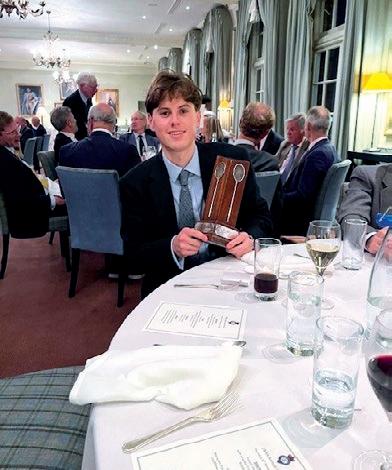
OBITUARIES
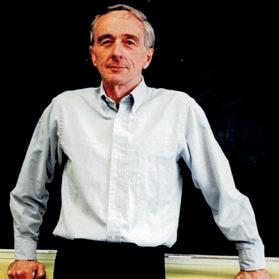
In Memoriam
John A Roth (1934–38)
Christopher J Godfrey (1945–50)
Greville L Megson (1945–51)
Martin L Hening (1948–53)
Godfrey M Whittingham (1950–55)
Michael (Mike) F Branch (1951–55)
Peter J D Whitehead (1951–56)
Hubert L (Lionel) Broad (1951–56)
Alan R Todd (1952–57)
George R N (Neville) Cusworth (1952–57)
John E B Gyford (1952–58)
David C Stazicker (1955–59)
David J Mulhall (1956–58)
John S Matlin (1956–61)
Derek V Sayer (1957–61)
Colin M Bain (1958–63)
David H Cochrane (1959–65)
Alan J Williams (1959–65)
Ronald P Blechner (1960–65)
John ‘Johnny’ M Dunkin (1964–69)
Timothy ‘Tim’ R D Hearn (1977–80)
Andrew Ellams – Former Staff (1999–2004)
Jacqueline ‘Jackie’ Keane – Former Staff (2000–2010)
Colin M Bain (1958–63)
Colin Murray Bain died peacefully at his home in The Village of Arbour Trails, Guelph, Ontario on 21 November 2025.
Born in London, on 19 June 1945, Colin spent his childhood in both London and the Scottish Highlands, his ancestral home. As a pupil at St Paul’s, Colin was steeped in classical 19th century education, studying Latin, History, and English, enjoying boxing, cricket, and rugby, and becoming Lance Sergeant of the school’s Combined Cadet Force. With the encouragement of his brother, Donald Morrison Bain (1939–2009), Colin moved to Hamilton, Ontario in September 1963 to study Social Sciences at McMaster University. At McMaster, Colin met Vida Ruth Seifert (1947–2016), who had come from Sudbury to study Science. They married in 1969 and had forty-seven happy years together.
Colin pursued graduate studies at the University of Guelph and his M.A. in History was granted in 1968. He entered the university’s brand-new doctoral program focusing on the industrial revolution in Scotland. Colin and Vi moved to Scotland for a year and once installed in Kirkcaldy, Fife, Vi organised records for Colin’s research. Accordingly, three years-worth of research were completed in eighteen months, and Colin’s Ph.D. was granted at Guelph in 1973.
Having completed his Ph.D., Colin enrolled at Althouse College of Education in London, Ontario. He joined the teaching staff of Nelson High School and took early retirement from Acton High School in 2000. In collaboration with his writing partner, Dennis DesRivieres, he co-wrote over a dozen social science textbooks for use in Ontario’s schools.
Colin used to say that his finest quality was his luck. He had the luck to be born into a rock-solid family, to have been exposed to an intellectually challenging education, to have met Vi, to find steady employment, and lastly, Colin felt lucky in that he chose to live in the best country in the world.
Donations can be made to Colin’s favourite charity, Halton Learning Foundation, in support of the Colin M. Bain Halton Social Science Scholarship. By Nigel Bain (nephew)
David H Cochrane (1959–65)
Our strongest memory of our brother David at Colet Court is his final sports day, when he was called up to the headmaster’s table, time and again, to receive yet another prize. At St Paul’s, rowing was his main sport, and three photos of him in winning eights still hang on the wall in his house.
His favoured subjects were History and Geography, and his skills were making and keeping friends, and managing people. He greatly enjoyed his time spent with the Honourable Artillery Company. Old photos show him full of smiles in his HAC military uniform, having just come down to earth by parachute, and in fancy dress as Billy Bunter and Dracula.
He chose Economics, and after getting his degree at Reading University he joined Price Waterhouse, where he qualified as a chartered accountant. He greatly enjoyed making good progress in the firm, but after a few years his adored partner became terminally ill and, as her family lived abroad, he asked for leave to be able to look after her. This was typical of him to give help where it was most needed, and as this continued longer than expected he had to give in his notice.
Going back to work he decided to join HSBC which turned out to suit him perfectly. He was sent off to one country after another as an auditor to sort out problems, and spent over a year in Hong Kong, and also in South Africa, and time in New York and South America, always enjoying the challenge.
From an early age family holidays had been spent in North Devon and soon after he started work, he bought a cottage there. Holidays there were offered to all family and friends while he lived in London but when he retired, he was able to exercise his great love of gardening, and the fairly large garden became an amazing site of beauty.
David spent almost twenty years married happily to Cate and was a devoted stepfather to Cate’s daughter and her grandson.
From Cate (wife), John Cochrane (1957–61) and Paul Cochrane (1964–69) (brothers)
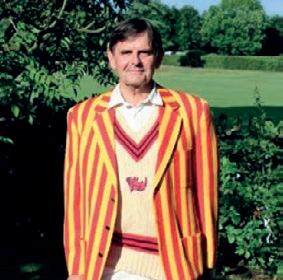
John ‘Johnny’ M Dunkin (1964–69)
John Dunkin, who died on 24 October 2025, was a proud Old Pauline, though prouder still to have spent almost all his schooldays at the St Paul’s Hammersmith site.
He regarded the destruction of the Waterhouse building and the loss of its treasures, as an act of cultural barbarism and he cared deeply that the School’s military heritage should be properly remembered. Quietly persistent and often fiercely principled, he became a valued guardian of Pauline history. Through painstaking research, he helped restore the names, stories and artefacts of Old Paulines, particularly those who fell in both World Wars and he was a regular source of Atrium’s “Pauline Gallantry”.
Beyond the Pauline world, John was a man of immense generosity, loyalty and humour. As an uncle he was ever-present, marking birthdays, saint’s days and milestones with unfailing thoughtfulness. He was happiest at Lord’s Cricket Ground, immaculately dressed, papers spilling from a bag, holding court with warmth and wit. He would often be seen in the Lord’s Pavilion with his OP brothers, twin Stephen (1964–69) and Peter (1969–73). Cricket was a lifelong passion and he was a co-founder of the Rhinos Cricket Club on 23 April 1986, where his welcoming spirit, sense of proportion and gentle authority shaped the club’s enduring character.
A Chartered Surveyor by profession, John moved to and spent seven years in Hong Kong in the late 70s, working for the government’s Dangerous Buildings Division and serving in the Hong Kong Regiment. Back in the UK, he joined the Territorial Army spending several years in the Intelligence Corps. A patriotic Englishman, devoted to tradition, he championed standards of dress, conduct and remembrance wherever he went. He never married, but he was a devoted brother, uncle, Godfather and friend, woven deeply into family life.
John’s last months were happy ones, filled with family, celebration and cricketing fellowship. He is remembered as a true gentleman: modest, principled, kind, and quietly formidable. He is greatly missed. By Atrium’s Editorial board with the help of John’s family
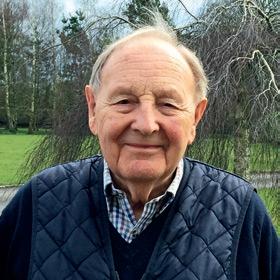
Christopher John Godfrey (1945–50)
Born in Staines, Middlesex, in 1931, Christopher excelled at School both academically and in sport, along with his younger brothers Robert ‘Bob’ A Godfrey (1952–56) and Henry ‘Bill’ W Godfrey (1947–50)
A Scholar, he was Captain of the School in his final year and achieved the remarkable distinction of being Captain of Rugby, Boxing and Cricket – a record at the time that had not been equalled. His love of sport, particularly cricket, remained a constant throughout his life, and he retained strong links with the School, attending Old Pauline reunions regularly and playing for the Old Pauline Cricket Club for many years.
After leaving St Paul’s, Christopher undertook National Service positioned with the Royal Artillery, including serving with the British Army on the Rhine. He went on to read Law at St Catharine’s College, Cambridge.
Christopher moved from Ealing to Knutsford with his family in 1967 and found his vocation in management consultancy, a career which suited his ability to listen carefully, remain impartial and encourage others. Colleagues and friends alike valued his quiet authority, humility and generosity of spirit. He was known for his willingness to guide and support others, always taking care to nurture confidence rather than seek recognition.
In retirement, Christopher remained active, giving his time generously to charitable organisations including the Alzheimer’s Society and many other local organisations and groups. He lived independently following the death of his wife, Sheila, and continued to take a close interest in the lives of those around him.
Above all, Christopher was a devoted family man, immensely proud of, and much loved by, his late son Mark, his daughters Sarah and Anna, his grandchildren and greatgrandchildren. He will be remembered as a true gentleman and a loyal Old Pauline, whose values reflected the very best traditions of his School.
By
Sarah, Anna (daughters) and Andrew (grandson)
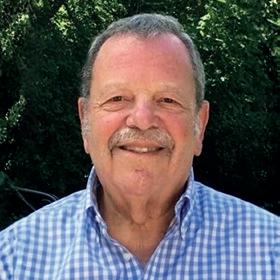
John S Matlin (1956–61)
John Matlin was born in London in 1943; he attended St Paul’s as a weekly boarder and was known as the Pillow Fighting Champion of the school
After St Paul’s, he took his Law exams and began working as a solicitor in the City of London. John soon started his own law practice in his mid-30s until deciding to take an early retirement at 50 years old to pursue his true passion. He went back to university as a mature student and graduated with his PhD in American History and Politics. He taught American History at the University of Birmingham and the University of the Third Age (U3A) and published six books during his second career. He was a teacher at U3A for many years and ran a successful blog.
John was a Founding Member, Trustee of over 30 years and a Patron of Teenage Cancer Trust. From very humble beginnings, the charity now has 28 units around the country, many of which were opened by John. He answered phones for the Samaritans for over ten years on the overnight shifts, only stopping when his young daughter was born needing heart surgery. John also fundraised tirelessly and volunteered his time to secure the opening of the Eric Morecambe Outpatient Cardiac Wing at Harefield Hospital.
John played sport whilst at school including cricket and rugby, and he continued to play and watch all sports, especially his beloved Tottenham Hotspurs. John loved rock ‘n’ roll music, and to dance. In his youth, he was a fantastic dancer. He danced in the London clubs and is still featured on YouTube under British Pathé, Latest In Dancing, 1962. He was featured dancing in the recent Tyrells crisps commercial doing the Locomotion, holding a giant crisp. He was as surprised as his family to see his teenage self appear on TV.
John would tell anyone that his biggest triumph in life was his marriage to his American wife Linda of 51 years. John is survived by his sister Janet Solomon, his two daughters Jessica and Susanna and a grandson.
By Jessica Ralys (daughter)
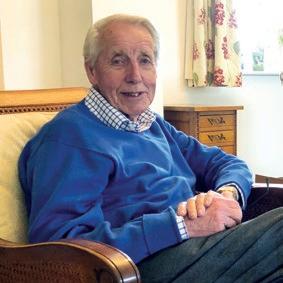
Greville L Megson (1945–51)
Greville was a man of family, love, interests and accomplishments. Born and raised in London during the Second World War, he remembered the air-raid sirens and dashes to the shelters not with fear, but as an accepted and even exciting part of everyday life. At St Paul’s, he excelled both academically and in sport, particularly tennis and squash, before going on to read Geography at Jesus College, Cambridge.
Sport and games remained a lifelong pleasure. He played bowls, first learning the game from his grandfather on the Isle of Wight, followed rugby avidly from the armchair, and rarely missed a televised snooker match. A gentle soul, he disliked conflict of any kind and professed not to mind who won, though he was quietly pleased when victory fell his way. A devoted bibliophile and collector of maps, he was known to rise mid-conversation to retrieve a book or atlas, eager to verify a detail or pursue a new line of inquiry.
At Cambridge, Greville met his first wife, Ruth, and together they raised four children. He later became the proud grandfather of three grandchildren and great-grandfather of three more. The accidental death of his youngest daughter at the age of eleven was a profound and lifelong sorrow.
Following National Service in the RAF, where he learned Russian during the Cold War, he embarked on a career at the dawn of the computer industry, contributing to pioneering work that helped bring computers into commercial use. He remained in the industry throughout his working life.
Greville loved the countryside, especially North Wales, where he holidayed as a child and later lived for four years. He shared this love with his children. A new chapter began when he married Janet, gaining three stepchildren and, eventually, seven more grandchildren. Settling in Malvern, they immersed themselves in local life. Greville became an active member of numerous organisations and was fondly described as “an important piece of the Malvern jigsaw.”
By Janet Megson (wife)
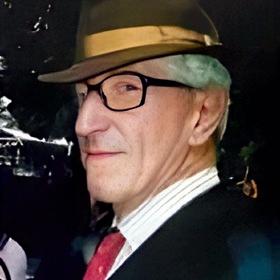
John Richard ‘Dick’ Pike (1950–55)
In early March 2025, at the age of 87, Richard ‘Dick’ Pike died unexpectedly at his home for 56 years at The Priory, Kilpeck in Herefordshire. Dick was well known in the point-to-point and hunt racing fields and was a steward at Ludlow for many years. He rode point-to-point on his own horses, and his last ride was at the age of 70 years. Dick always worked in the agriculture field after attending Cannington Farm Institute, Somerset and then at Reading University. Before college he did National Service in the army and was based in Malaya, after his basic training. He was a very active member of the South Hereford Hounds and was secretary of their point-to-point for many years at Garnons where Jean his wife looked after the hospitality tent. Dick leaves behind Jean, his wife of over sixty years and a family of four children, grandchildren and great grandchildren. Dick held strong views on life in general and will be missed by all who have had the good luck to know him.
By Les Bailey, friend
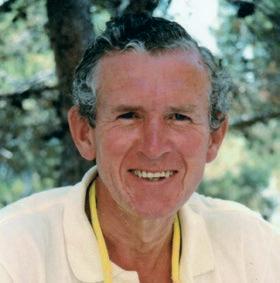
Alan R Todd (1952–57)
Alan, who died aged 86 on 17 August 2025, was the only son of Scottish parents, who moved to London shortly before he was born. His early education was interrupted by a year spent on the Clyde estuary in 1944 to avoid the V bombs over London. He returned to Durston House in Ealing. After St Paul’s he graduated in Chemistry at King’s College, London, where he completed a doctorate and undertook post-doctoral research. During the weekends Alan would turn out for the Old Pauline Football Club, where he was a regular in Buz Barter’s record-breaking B XV, and was a keen member of Ealing Lawn Tennis Club.
Deciding that academia was not for him, Alan went into industry and gained experience in corporate planning, finance and human resources work in the oil, petrochemical and consumer product industries, and in management consultancy, before settling down to a career in a smaller family-controlled group with diverse interests in shipping and property. He was to hold a series of senior positions, latterly as managing director. On reaching the age of 60, he decided, as he put it, to retire properly, by which he meant plenty of tennis and golf, gardening and some charity work.
Alan’s years in retirement were happy ones, with time for improving his skiing, which he took up in his early fifties, travel, and supporting his wife Hilary’s equestrian eventing activities. He also developed a practical interest in investment and devoted time to trustee work. Alan was a knowledgeable music lover and enjoyed visits to the theatre and art galleries. He also had a particular interest in modern European history, learning about what had gone so horribly wrong in the first half of the twentieth century.
Alan and Hilary moved from Godalming to Fivehead, a village near Taunton when he was in his late seventies, where he enjoyed the peace and quiet of a lovely setting. Alan leaves his wife Hilary, his children Edward and Annabel, as well as six grandchildren, two stepchildren and their five children. He is also survived by his first wife, Carolyn.
By Alan Todd himself
This is unlikely to be of interest to anyone but myself. Given my age, minor errors may exist. Memory is an untrustworthy bedfellow.
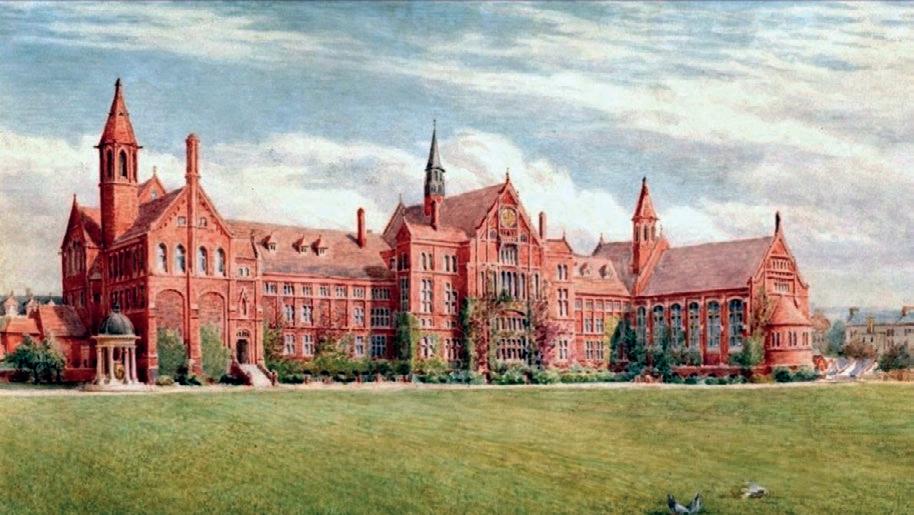
Barney Williams (1952–58) describes and illustrates his boyhood
Iwas born in May 1939 to the young wife of a man who had come as a child to England as a penniless refugee from the Irish Troubles. He had established his reputation as a remarkably inventive chartered mechanical and electrical engineer and had entered the civil service in the Air Ministry.
In those days you could not know in advance if the child would be a boy, but my father had already put me down for St Paul’s because he had learned that it was the best school in the most civilized empire in the world. He had no idea how he would (if) ever be able to pay for this.
Germany hardly used offensive blimps at all in WW2, but, during a reconnaissance flight on 4th October 1940, a naval mine was dropped by parachute from one of these primitive airships (it was not a Zeppelin) on Ravenscourt Park, and my father’s parents were both killed. My father was enraged and at once enlisted in the armed forces. He was sent by the RAF as a Flight Lieutenant to North Africa. I did not see him again till I was six.
My father was not repatriated at VE Day, but by sea and railway in Winter 1946. My parents were delighted to be together again. Neither Daddy nor I could recognise or remember each other at all on the station platform. Nor did we have any ideas how to behave to each other.
My father wanted to be proud of his son, wanted him to be worthy to go to the great public school, and not be an incontinent messy kid who could not write without making a mess. My next school report said, “No-one could be this messy without intending to be.”
Fairly soon my father’s true just and loving nature would emerge. But first he sent me to school in nappies hoping the contempt and bullying would make me “pull my socks up.” He was right about the shame, the contempt and the bullying, but it was no cure. He accepted a big promotion in the Air Ministry and took us all away on a long, early summer, holiday to Pagham, then mostly salt marshes leading down to a long beach. It saved my sanity.
I was given unlimited access to a small Welsh pony, Muffin, and, with really no adult input, allowed to go where I wanted and do what I wanted. I learned to ride much as the Comanche children learned, and could walk, trot, canter, I could jump small gullies. I could gallop along the edge of the sea.
My parents begot my younger brother.
That Autumn, when it was time to go back to school, I ran away to Brockenhurst to live wild with the New Forest ponies. However, I was found by my father that evening, and no more was said about it.
So it was that having survived to be eight I was submitted for entry to Colet Court. I think my father hoped for a bursary, for my sister was on the way already, and three children meant lots of bills. The exam was in January. I started out with a considerable disadvantage. Mr Phillips, as headmaster of the school I was already at, was asked for a report. He practically begged my father not to put my name forward since it would disgrace his school. The report he sent said I was intractably uneducable, messy, miserable and unable to write at all. Colet Court seems to have ignored this. There were three exams –Mathematics, Reasoning and English. While I may have done badly in the first two, it was English that changed things for me forever. There was a 120-word essay to do “How to be happy.” Now my Nan, widow of dear Grandpa killed at the very end of the War, had a calendar hung in her kitchen with all the family birthdays and anniversaries written upon it. It had a picture of a rose garden, and these words printed on it: “God Almighty first planted a garden.” I loved helping Grandpa in our garden while my Daddy was away, so I began my essay with those words, and went on about happy gardens.
I do not know if there was anyone stupid enough to imagine I had read Francis Bacon, and the rest of my essay was difficult to read because of my very messy writing. Anyway, Colet Court was interested enough to tell my father that if he would pay for a handwriting expert to transcribe my essay I could still be considered for a place. He agreed, and I was admitted in September 1948. I have little memory of my first year at Colet Court except the amazing gentlemanliness and kind understanding that helped me settle in.
I had to learn, as a nine-year-old, to walk the mile across Ealing Common to the underground which was pleasant enough in Spring when the horse chestnut trees were full of sweet-scented white-pinkish or white candle-flowers, or in the Autumn with deep drifts of dry leaves to plunge through, and glossy conkers to find. But when the wind roared in those trees, or the rain lashed across the open spaces, or the foul yellow of a London particular made the air unbreathable and so opaque that you could look down and not see your shoes, or going from streetlamp to streetlamp in the cold dark of the New Year. Then, oh then, that small boy, on his own, had to use his
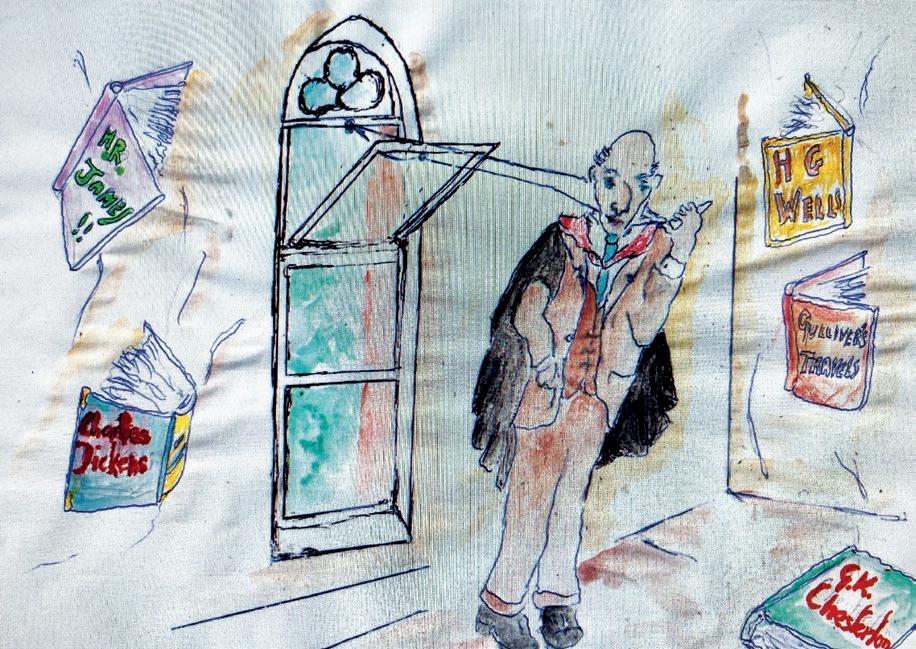
season ticket to catch the train to Hammersmith, and walk that long road also. A journey that frequently took most of an hour, all alone was not remarkable in those days, when children were seen as more selfreliant, capable, and above all, not perceived to be in danger all the while. But daily arriving at that terracotta castle was a welcome sanctuary regained.
The
report he sent said I was intractably uneducable, messy, miserable and unable to write at all. Colet Court seems to have ignored this.
My first couple of terms were more or less settling in, making friends, being quietly assessed. But then the turning point. I was placed in the special class run by Robo. My memory may be distorted, this account a caricature, but I see a very short man who resembled a skittle. His head was a dome rising from broad dome-shaped shoulders and a cylindrical body. The face was pale pink with a blob nose and beady eyes; the whole topped with a gleaming varnish of smooth coal black locks. He looked kindly enough even though he had a sign over his classroom door, “Abandon hope all ye who enter here” in Latin, (the wrong language really, for Dante never wrote in Latin). He also had a length of polished wooden rail, with a huge nail through it near one end, inscribed “Aid to learning” with which he would signal mild impatience by tapping on a pupil’s wooden desk. But it was all a satire really, for he was a very gentle man, and quite unfrightening. With me he set a programme: I was to spend as much time as possible copying maps and diagrams, and to write in the names of places and key features. The method was tracing in pencil, pricking out the lines with a darning needle before filling them in using black ink and a fine line nib. I could use either hand just as I pleased but
Dary Young
never join up any letters. It worked. After two terms I was copying lines from The Owl and the Pussycat and had become fully ambidextrous. And believed in myself. This was a time of transformation. We were given a blue geography textbook. Its frontispiece was a picture of a woman washing clothes in the Ganges. One of my fellow adolescents said it looked like me. He called me “Ganges washerwoman”. It might have caught on, but by a piece of reverse psychology the day was saved. I told my persecutor that I did not mind in the least being called Ganges; what I hated was that my baby sister could not say my name, “Brian”, properly but when she wanted something she would say: “Please, please Barneeeey!” I pretended fury when he told others and have been rewarded by being called “Barney” for the last seventy-six years.
Then there was acting. Colet Court put on plays three times in the four years I was there, and I had parts in all of them, to my delight. I was so impressed by the joy of acting that I joined an amateur group in Ealing where I was in a children’s production with “Toots” Lockwood. One day I would have my Film Artistes Union Card.
I was no good at sport, I only remember being involved with a cricket match once. I was put on the boundary as a fielder and was dozing there when a ball was skied in my direction. Everyone shouted to me. I saw that ball coming down from the clouds like a stooping falcon. I cupped my hands to receive it. Like an oak I stood, (no, perhaps not an oak, more an aspen because I was trembling). It hit me in the middle of the forehead, and I knew nothing more. I did not make the team.
My Father was always loving, but now he was becoming a bit proud of me, and we could discuss all sorts of things in such a good way. I was just thirteen and had been altogether changed by puberty. One thing we did discuss was how the money could be found to pay for the Senior School. There never had been the least family money to fall back on, nor grandparents’ wallets. It looked certain I would not
be good enough to earn a bursary, let alone a foundation scholarship with fish. Indeed, it was quite possible I might not even be good enough to make the cut.
There was one way out. My parents just might, in fact, afford to get me to that massively impressive red brick institution, reminiscent of, but more magnificent than St Pancras station, set in its own forest of glorious plane trees. My father as a fairly senior civil servant, and all-purpose engineer and having had officer rank in the War, could volunteer for a posting overseas.
To Habbaniyah by the rivers of Babylon perhaps. That would mean I was sent by the grateful nation to a boarding school and my father would get a promotion and a higher pay rate. My mother and younger brother and sister would have housing in an officer’s quarters, with a servant, in this oasis city with its irrigated gardens, its racecourse, tennis courts and goodness knows what. So that was what happened. I scraped in and became a Pauline and boarder in High House for two years, starting in 1952.
At that great Waterhouse building I was entitled to walk up the righthand path to the steps and on to those endless faux-marble floors. Approaching from the busy High Road the left-hand path was for masters, prefects, Colts and 1st XV’s. The centre path was strictly reserved for the High Master, the Surmaster, the Captain of School and any visiting Bishop or Sovereign of the realm. Lordy, I was impressed.
It was just part of a totally different world. There was my voice breaking, new activities such as rowing and the Cadet Corps and using the shooting range in the lunch hour, and the amazing libraries, especially the Walker Library in the roof of the building with its comfortable window seats, and the huge Art Room always available with its puppet theatre, and, and and…
The false buttresses were intended to ensure no pupil could see anything distracting through the windows, which were tall and only the top segment of each opened for ventilation. The floors of the
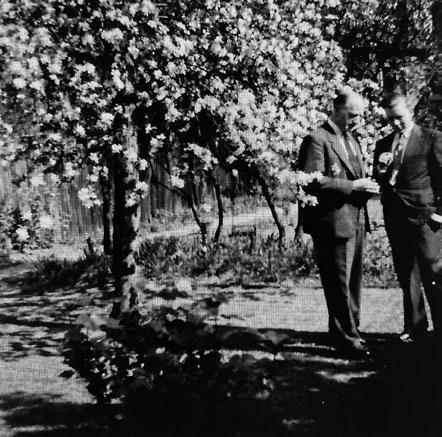
passages were of rose-coloured scagliola. There were huge marble copies of famous sculptures and magnificent staircases.
There was of course still corporal punishment. The class I was sent to was 4B, and the master was one Dary Young. His initials D.A.R.Y. Memory is unreliable after 72 years, but I see him plainly. Somewhat like a benevolent rook in his black gown and scarlet hood, with a remarkable beak-like nose, he would stand in the window with the cord that opened and closed the top frame around his neck. He said, in our first term with him, that we had none of us done anything like enough reading. Our vocabularies, our command of language, our imaginations were deficient. So, he would read to us. That is what he did, in our first couple of terms with him, he read aloud to us. As one who subsequently spent a year teaching in a comprehensive, I think lesson preparation must have been pretty easy for him, but his policy was, for us, very educational. That cord from the window he would put round his neck or shoulders, play with it with his left hand, or occasionally lean into it and swing slowly from side to side. So, on 1 April, we half cut through the cord high up and waited for him to lean his weight into it. But this day he never did. He nearly did, then did not. He had our enraptured attention. Would he? But at the end of the lesson, he gave the cord a sharp tug and broke it, smiled and walked off to the Staff Room.
Barney with his Father
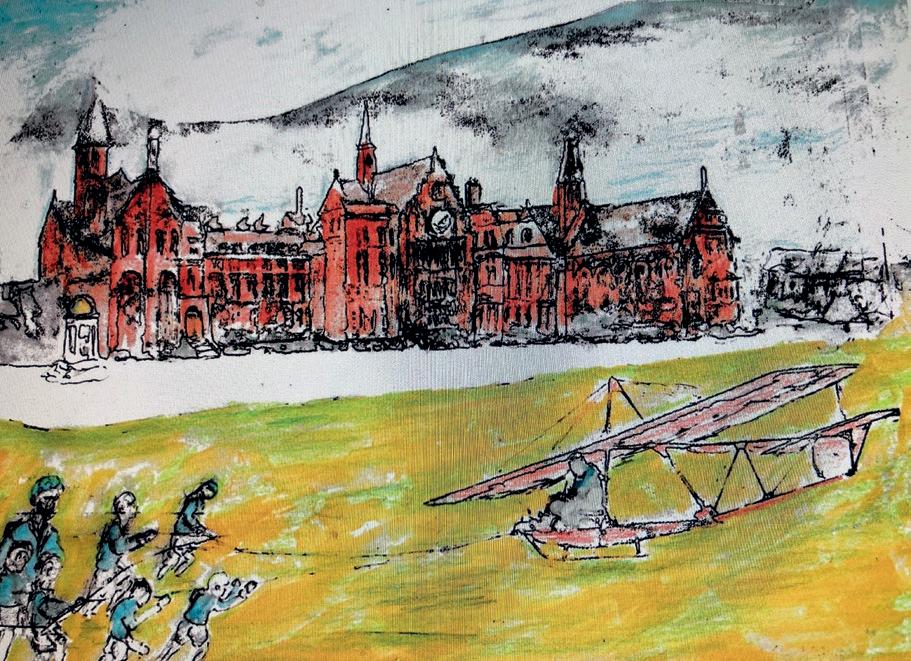
My next year I was in 5B, and in the Officer Training Corps doing “Cert A”. This was purely Army, with trips to Ham Common, which then was much wilder than it is now, especially near the pond. There we learned to crawl on our stomachs. The OTC also taught us to burnish new boots before giving them mirror bright black toecaps, how to blanco belts and gaiters, and the fine art of polishing brass buckles and badges. I was in the firing range in the school basement one day when Montgomery of Alamein came in.
“What have you hit, Lad?” he asked.
“I can’t see clearly, Sir”
“Have you had lunch yet?”
“No, Sir, not yet”
“You haven’t scored anything at all. Never go firing rifles on an empty stomach.”
That beautiful old building was the place where Monty had his happiest school days from 1901 until he went to Sandhurst, having previously been regularly and severely beaten by his grandmother while his father was serving overseas. The old buildings saw him return when our school became the headquarters of Home Forces. He was then General Bernard Montgomery, Head of 21st Army
Group planning for D-Day.
He was a small person with a massive charisma. I later saw him with Dr James, High Master, on the day of the annual inspection of the CCF. They were in the glorious Boardroom with its windows looking towards the parade ground and cricket field, and with its amazingly beautiful conference table. There were several very tall guardsman types, and one or two lofty marines, a stately Air Commodore or Vice-Admiral or two... Anyway, there were just two people who dominated that gathering, Monty and Dr James. It was as if they were illuminated from inside and the other actors were all architectural features of that eminent room.
Dr James as High Master was an interesting character. Each class pre“O” Level had a weekly divinity lesson with him for one half term in each year. These took place in the Boardroom, but were relaxed discussions on ethics, faiths (including a sideways glance at patriotism as a blind faith), politics and personal aims. I remember arguing with him about the ethics of the nuclear destruction of Hiroshima in the light of Matthew 10:15 and Luke 10:12, because I was coming under the heavy influence of a Christian proselyting group for
adolescent boys called Crusaders. Also, another member of my class was surprised to have Dr James defending some ideas within communism as being “worthy”.
However, my most important contact with this deeply sympathetic man was very different. It concerned “Freddie” Page, (father of the famous “Freddie” Page whose real name was Geoffery and who has plaudits and praises considerable and numerous online for his contribution to rowing). This one had a real name of James Houghton Page and is even more well appreciated on the net for his commitment to rowing. Rowing is an excellent sport; it was my main sporting activity while I was at St Paul’s and later in college crews at Oxford but I do not find much about this Freddie’s time as a Latin master at St Paul’s.
My writing had considerably improved by the time I arrived in 5B, but I was still using a wooden dip pen with brass nib and ink from the inkwell on the desk. Freddie set us five sentences to translate into Latin in fifteen minutes, and I dropped my pen onto the floor, ruining the nib. I put up my hand to explain my problem, but Freddie chose to say I had done this deliberately, and that he intended to beat me.
I stood up and point blank refused to accept this. He was furious, and I was determined. So, he marched me off to the Boardroom where the High Master ruled in glory, to have me summarily expelled for defiance, disobedience and deceit. Dr James took a softer line. He asked me for my version of what had happened. He sent me out of the room while he discussed the matter with Mr Page. Then he had me back in the room and asked me if I would accept a caning from him for defying a master. I said I would certainly, but not from Freddie. I cannot remember if such a caning ever happened, but one rowing coach never forgave me.
That year much happened. My family were back from Iraq. Joe Lyons, famed for tea shops and ice-cream, had its base almost next door to School, and so I got my first paid job that Christmas selling ice creams in
The RAF section
the interval at Bertram Mills Circus at Olympia. On the train back to Ealing I encountered my first girlfriend, a Paulina rather older and more experienced than myself. We lasted nearly two years before she met another Pauline.
But best of all was the Colet Clubs Review team, Basil Moss (1948–53), Jonathan Miller (1947–53), Dick Matthiae (1952–57) and all. Anyone’s ideas were welcomed and considered. Mr Harbord, who had been my housemaster when I boarded, maintained a gentle oversight, and it was wonderful.
On then to 6B, a happy world of preparing for “O” levels. I went with my form to Music lessons, and sat through some operatic Wagner, which Ivor Davies, the Master, told us was from Die Meistersinger von Nürnberg, and then he called it a comedy. My sotto voce remark about this reached his ears, and he asked me to stay behind when the class left.
“Williams, I don’t feel you appreciate music. But we can overcome this. There must be some music that you really enjoy...?”
“Yes, Sir. Gilbert and Sullivan.”
“Get out. Leave, You will come to no more Music classes. Ever. Go to the Art department instead, perhaps they will accept you.”
Actually, I could have told him I enjoyed Humphrey Littleton, Duke Ellington and Louis Armstrong, but that might have infuriated him. So, I went to the Art room instead for the rest of my time at St Paul’s. I enjoyed being given the brush. Rodney Burn, known as “Guy”, by the Paulines of my generation was an inspired RA who skilfully drew the best from us.
I sat ten “O”s and got nine. I failed Latin, and was told I could never do medicine, or go to Oxford or Cambridge. But, anyway, I wanted to be a gardener.
On then to the Lower Eighth Biology under “Gert” Lansdowne to do Botany and Zoology, with Physics from “Lippy” Swain and Chemistry. I wish I could remember the Chemistry master’s name He resembled the character Chalky in Giles cartoons. (Editorial Board – perhaps LEM Savill).
The enrichment was not just in core subjects. I was able to attend Mr Parker’s wonderful French classes conducted in a room beneath the clock which had beams across it and was angled so other master could not see all the class, but we did Vol de Nuit, Verlaine’s poems, Bonjour Tristesse, Francois Sagan, Corneille. As for Latin, I had to get a pass somehow, but having failed ordinary GCE twice they sent me to “Tommy” Martin. He taught a select few in the Hall and was inclined to let spittle fall on written work.
Then we had two lectures on Sex given by a very embarrassed medical practitioner to the whole of the Eighth form with no room for questions. There was so much to discover –sporting activities, rowing, semicompulsory boxing, club competitions, the CCF, joining the RAF section to have such adventures as the Bungee Glider flight or the chance to fly in a jet fighter at summer camp at Celle in Germany. I landed the Christmas job of being the Lyons Maid Commodore at the Schoolboys Own Exhibition at Earls Court.
Then we had two lectures on Sex given by a very embarrassed medical practitioner to the whole of the Eighth form with no room for questions.
To get your relations or guardians into Hall for Apposition you had to win a school prize. The Taylor Reading prize was stiff: – one prepared piece, one sight unseen, and one poem or dialect piece. Then there were the Montgomery Prize for Science and the Walker Prize for Drawing (which included all kinds of Art works.)
I am proud to say I did have some representation every year from 1953 to 1957.
The happiest years were those I spent in 8A Biology with Sidney Pask. What a great teacher he was, if hampered by a stammer like the one I had left behind at Colet Court. I remember him saying, “We all know
and fear the wasp that gets into the jghe jghe jghe... marmalade”
He ran a most open type of teaching, based on getting the pupil to ask the question, then go find out the answer. We dissected the earthworm, frog and rat. But we also brought in roadkill and dissected that, and the dead tortoise from the garden, the herring from the fishmonger. We went with him to Hunstanton to study the colonisation of sand dunes or to Flatford Mill to find yellow goat’s beard, or Walton-in-the-Naze for fossils. We could wander off to the Natural History Museum in Kensington.
Best of all were the annual week long trips to the Marine Biology research station on the Isle of Cumbrae, where we could observe foetal development in vitro using sea urchin eggs, and many other things. I remember one exuberant evening when we set out to walk round the island. One of us had a sousaphone, goodness knows why. The first blast was followed by an eruption of life-jacketed men from the Coastguard Cottage, so it was a long while before we tried another hoot. Then there was the time a highland bull, thrusting between his wives, charged our party. After getting offers of university places from Oxford in Animal Physiology and from Southampton in Marine Biology, I was asked to keep Peter Savill (1953–58) company when he sat for a place at Bangor to read Forestry. I tried the Philosophy entrance paper and was offered a scholarship there. Peter later became Reader in Silviculture at Oxford. I left St Paul’s in February 1958 to take up a horticultural position at Kew. But medicine got me in the end.
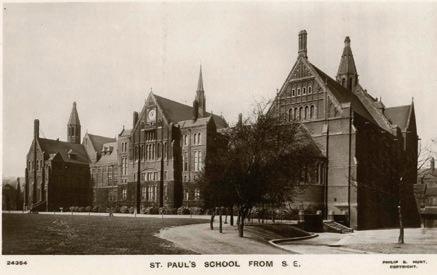
The Campbells, St Paul’s and Lairds of Jura
Graham Seel (History department 2012–21) shares a Pauline Scottish connection.
Colin Campbell, the 10th Laird of Jura and his wife Frances Monteath had four sons, all of whom attended St Paul’s, played in the 1st XV and served in the armed forces. The Admissions Register describes Colin as a ‘tea merchant’; census data shows that, when he was in London, the family lived comfortably at 10 Edith Rd, West Kensington –a stone’s throw from the Hammersmith school. The 1901 census records that a nurse, parlour maid, cook and housemaid were all residents.
The eldest and the youngest – James and Ronald – fell in the First World War. They lie together in the same grave in front of the Campbell of Jura Mausoleum, Kilearnadale Burial Ground on the island of Jura, off the west coast of Scotland. The Imperial War Graves Commission ruled against repatriation of the fallen in April 1915. James died a month ahead of the ruling and Ronald died in Manchester of wounds.
James Archibald Lochnell Campbell (1893–97), was born on the island of Jura. At School, he distinguished himself playing in the 1st XV, before joining the 1st Battalion Argyll and Sutherland Highlanders in 1900 and serving in South Africa, Northern Nigeria and Malta. James gained his commission from the Militia in 1900 and was promoted Captain in 1910. He was station staff officer in the South African War and obtained the Queen’s Medal with three clasps and the King’s with two. From April 1903 to October 1907, and again for three years from December 1908, James served with the West African Frontier Force. He was appointed Adjutant in the 1/6th Battalion Gordon Highlanders in 1912. In 1914 he went to
France with this unit and was mortally wounded on 13 March at the Battle of Neuve Chapelle in 1915. A Report in the unit diary described events thus:
Friday 12 March. Battalion subjected to heavy artillery fire from 4.30 am…Saturday 13 March. Battalion moved off at 4.15am to attack which was ordered to commence at 9.30 am. While moving forward to take up position before daybreak subjected to artillery fire and lost several men… Colonel McLean, who had gone out in front to obtain information, was killed when about to enter a trench occupied by the 2nd Gordons. This would be about 7.30am and about the same time the Adjutant (Capt J A L Campbell) was wounded.
James was extracted from the line and died at Boulogne on 19 March 1915, three days after his 36th birthday. Unusually, his body was returned across the Channel and he is buried in the same grave as his younger brother, Ronald.
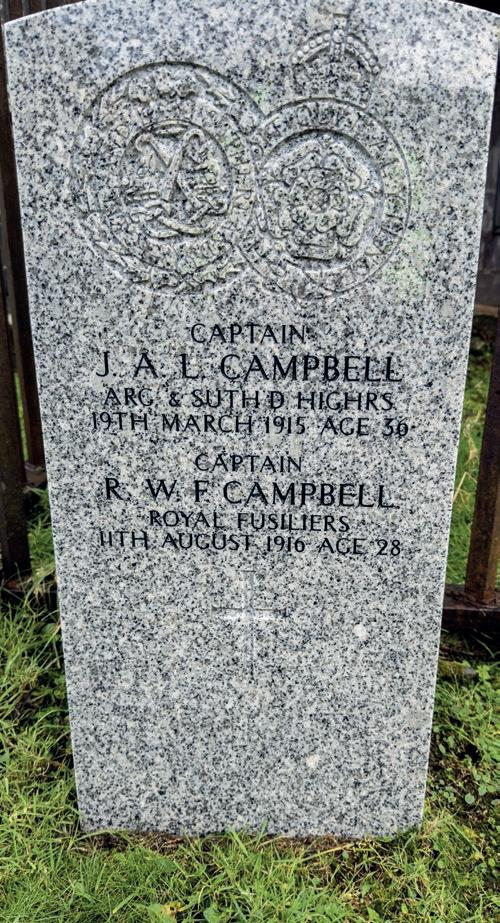
James and Ronald’s shared grave on Jura
Ronald Walker Francis Campbell (1902–06) was born in Richmond, Surrey and was the youngest of the four brothers to attend St Paul’s. He played forward in the 1st XV. On leaving School he went up to Cambridge, where he rowed for Pembroke College and took his Historical Tripos in 1909, and Law Tripos (2nd Class) in 1910. The following year he passed his final Bar Exam. (Class II, placed 4th in order of merit). In January 1913 he was called to the Bar.
On the outbreak of war, he was in camp with the Inns of Court OTC which he had joined on coming down from Cambridge. He immediately volunteered for active service and received a commission in the 10th (Service) Battalion Royal Fusiliers. Soon afterwards he was promoted Lieutenant. In July 1915 he went to France with his battalion and took part in the advance on Pozieres –Contalmaison on the Somme, where he was wounded three times while leading his Company (of which he was then in temporary command).
Ronald’s obituary published in The Pauline described him thus:
Always a keen sportsman and an enthusiastic lover of life in the country, he was never happier than when out on the moors in his home in the Highlands, or rowing round the rugged coast in search of seals or rock pigeon, and his letters home from the front were ever recalling days thus spent.
Readers of Country Life may sometimes have come across short articles by him describing a day’s stalking or winter shooting such as he delighted in.
Old Paulines will remember that his eldest brother, Captain J A L Campbell suffered the same fate so lately as March 1915, succumbing to wounds received in action at Neuve Chapelle. He was mentioned in General French’s dispatch for gallant and distinguished conduct in the field. The remaining two brothers are also serving. His commanding officer wrote: “Did I ever tell you how extraordinarily gallant your son was some days before the attack on Pozieres when he made a splendid and daring reconnaissance towards the chalkpit on the Contalmaison – Pozieres road, and sent us most valuable information?
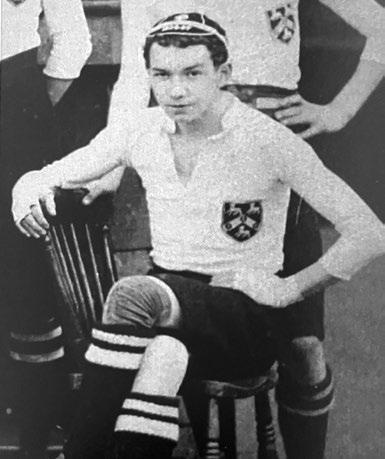
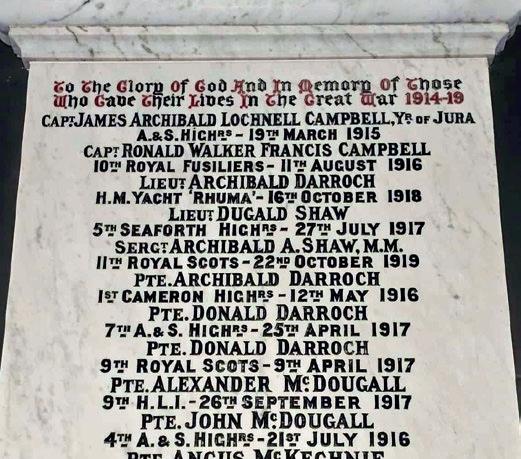
He was so disappointed that he was not allowed to remain there and have reinforcements sent to him. As it was, he remained there for over an hour alone, having shown great nerve and pluck in venturing there at all. The General was immensely pleased. It was a very gallant act. He was a dear, plucky fellow.” He was promoted Captain just before his death.
Ronald was mortally wounded on 15 July 1916 when the battalion advanced up Sausage Valley to the south of La Boisselle, detailed to support the attack of the 112th Brigade on Pozieres. He was extracted from the line and removed back to Britain. He died in hospital in Manchester, from where his body was taken for burial on Jura.
Charles Graham Campbell (1894–98) was the 11th Laird of Jura. After leaving School, Charles served an apprenticeship with James Simpson and Co of Pimlico, after which he was proposed for membership of the Institute of Mechanical Engineers. The following years saw him travelling to Canada, New Zealand, Australia and the USA. During some of this time he undertook gold digging in Alaska, as well as farming. He eventually became an engineer to the first successful fruit cannery in the Chilliwick Valley in British Columbia. After a short period in Scotland, he returned to Australia where he purchased a territory and raised horses at Kooringarro, New South Wales.
Upon the outbreak of war Charles returned to Britain where he sought to enlist, though in the first instance he was not accepted for military service as he had only one eye. Eventually he
joined the Royal Field Artillery with whom he served from 13 June 1918.
After the war Colin resumed his travels and undertook an expedition that took him to Australia, Canada, Java and New Zealand, returning home via the South Sea Islands and the Panama Canal. Charles sold the last of the Campbell’s Jura estate in 1938 to William Riley-Smith of Tadcaster, Yorkshire and purchased a small estate in Melrose. Charles died in London in 1971.
Colin Richard Campbell (1899–1902) served in France initially as 2nd Lieutenant in the Seaforth Highlanders Regiment and Dorsetshire Regiment before transferring to the 3 Battalion Argyll and Sutherland regiment, attached to the Seaforths, with the rank of Lieutenant.
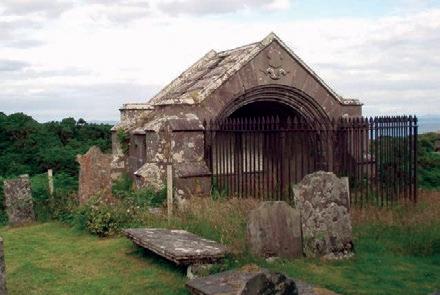
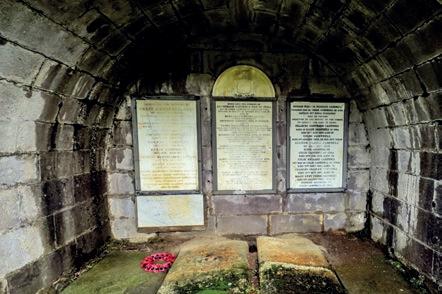
The Campbell’s Mausoleum on Jura
Wormholes in Time
Geoffrey Matthews (1972–77)
Being taught Mediaeval History by Peter Thomson (History Department 1961–64 and 1966–84 and Surmaster 1976–84) in the 1970s was one of the greatest blessings of my life. What a great podcaster he would have been!
Since discovering the RJ Unstead books as a Coletine I had loved history, but Peter taught me how to delight in the drama and the colour of it, how properly to relish the past. A foreign country, where they do things differently? Well, maybe, but Peter helped me get a visceral thrill from recognising that no matter how differently they did things, our ancestors were, well, just like us.
That is why, I think, I take a particular delight in those occasions when a combination of longevity and firsthand testimony creates what seems to be a wormhole in time. Like when I heard from a sculptor in Massachusetts about something he had heard from his grandfather. The old man was
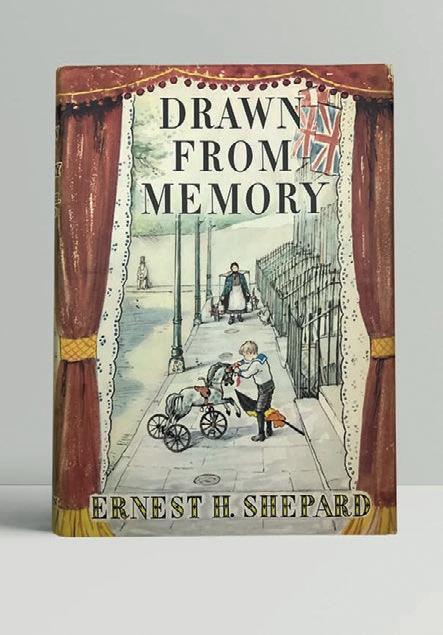
from Virginia, and he told his young grandson that when he was as young as him there had been a veteran with a stooped back who hung out by the war memorial in his hometown. One memorable day the old soldier had launched a torrent of abuse at some English tourists who has asked him the way to the capitol building. Asked why, he replied: ‘Where do you think I got this broken back, you damn redcoat? The Battle of Bunker Hill.’
That third-hand connection to the Revolutionary War of 1775 thrilled me – as did something I came across the other day while reading the childhood memoirs of EH Shepard OBE MC (1894–96), artist and illustrator of Winnie the Pooh. In Drawn from Memory, published in 1957, Shepard describes his Uncle Willie. Willie was a master at St Paul’s in West Kensington, who as a boy had attended the School when it was still in St Paul’s Churchyard – and who once, on his morning walk to School from Tavistock Square, saw a man being hanged in the presence of a large crowd in front of Newgate Prison. Ernest Shepard did not die until 1976, by which time I was in the MVIII in Barnes; but here was a memory, relayed at second-hand only (albeit through the printed word this time) that took me back – well, to a schoolboy experience unchanged in its essence since the 16th century.
If we can reach out and touch the past it cannot really be a foreign country, can it – but what a lot can change in two generations. Consider the case of a family which ranked very high in Peter Thomson’s personal pantheon, the d’Hautevilles of Normandy. Tancred, the patriarch was a rather obscure minor landowner. Born in 980 he had no fewer than 16 children and since there was not enough land to go round in Northern France, the third, fourth, fifth and sixth sons – William, Drogo, Humphrey and
Robert the Guiscard – all travelled to Southern Italy and became mercenaries, fighting for and then against the Byzantine Greek overlords of the region. It was Robert who consolidated Norman rule of Apulia but it was the youngest brother of all, Roger, Tancred’s thirteenth son, who took Sicily from the Arabs and became the first Count of the island in 1071.
Roger II was the youngest of his six children. This second Roger, Tancred’s grandson, became known as ‘Roger the Great’, one of the great European monarchs of the first half of the 12th century, ruler of all of Italy south of Naples as Duke of Apulia and first King of Sicily; and the society which he fostered and over which he presided became a multicultural marvel. At Roger’s court in Palermo you could find the famous Arab geographer, Muhammad al-Idrisia and the Byzantine historian, Nilus Doxopatrius, as well as an Englishman, Thomas Brun, who had begun his civil service career as a clerk to Henry I of England. The commander of the fleet, George of Antioch, meanwhile, was Greek – but had an Arab title: he was known as ‘Emir of Emirs’ or, in Latin, ‘Ammiratus ammiratorum’, from which we derive the word admiral.
Next time I am in Vienna, I want to visit the Imperial Treasury – the Kaiserliche Schatzkammer. There it seems you can see Roger II’s royal mantle which he wore as King of Sicily.
Through its making and its design Roger’s mantle speaks eloquently of the multicultural society he presided over. It is made from red silk imported from the Byzantine Empire, and decorated with Byzantine enamel, with thousands of pearls from the Persian Gulf and with gold embroidery of traditional Muslim design, including a ‘tiraz’ border denoting rank which contains an inscription in Kufic (Iraqi)
calligraphy bestowing blessings on the ruler. The inscription reads:
‘Here is what was created in the princely treasury, filled with luck, eminence, majesty, perfection, long-suffering, superiority, welcome, prosperity, liberality, brilliance, pride, beauty, the fulfilment of desires and hopes, the pleasure of days and nights, without cease or change, of glory, devotion, preservation of protection, luck, salvation, victory and capability, in the capital of Sicily, in the year 528 H.’
Interestingly, 528 in the Islamic calendar is 1133–34, so Roger cannot have worn the mantle for his coronation in 1130. But it obviously became a central part of his regalia until his death in 1154, and the mantle was later used as a coronation cloak by Charlemagne’s successors, the Holy Roman Emperors – hence its current home in Vienna.
In the troubled times in which we live I find it inspiring to think of such a multicultural act of creativity – and of the multicultural society which gave birth to it.
And I never cease to marvel at the fact that Tancred d’Hauteville, born in 980 in a sleepy corner of rural Normandy, had a grandson who 170 years later was Roger the Great of Sicily.
Mendax coquus es! by istenem
In the highlighted squares, solvers will find three characters familiar to anyone who learned Latin in the 1980s to the 2010s.
1 Nicker from Cockney lost & found (4) 4 Piggery maybe made mama fret (4,4) 8 Ayrshire’s milk producers? (6)
9 Old Iranian shows bum in school sports lesson (6)
10 Partly satirise bloomer (4)
11 Connecticut protects wild animal prospector (8)
13 Playing tennis with canoers with passive submission (3–10)
16 To be Roman after time taking top grade mosaic tiles (8)
19 Genuine coin from Brazil (4)
20 Remove shoes in Den Haag for free jam (6)
22 Rodent found back in middle of Cuba-libre glass (6)
23 Like senses in terms of familiarity (8)
24 Soft local education authority maybe not guilty (4)
Raw, beneath, over (9)
High-backed furniture of tailor’s assistant (7)
4 Sum up 99 for Apollo’s realm (5)
5 Shouts of “Howzat!” ringing bells in Northern spring (7)
6 Where a funny thing happened on the way to assembly (5)
7 Deer eggs (3)
12 Prominent feature of giraffe pâté announced: fruit (9)
14 Gaunt special constable, worthless (7)
15 Open shed of parachute supplies (7)
17 Oval’s remarkable military salute (5)
Creeps outside (5)
Vote against any confusion (3)


Stay Connected with Colets
A new £5/month Digital Membership
As part of our lasting connection with the Old Paulines community, Colets is excited to launch a new Digital Membership designed especially for alumni who can’t regularly visit the club.
DIGITAL BENEFITS IN-CLUB BENEFITS
- TRAIN ANYWHERE WITH TECHNOGYM DIGITAL CLASS LIBRARY
- ACCESS TO TECHNOGYM WELLNESS MAGAZINE
- ANNUAL HEALTH STATION CHECK-UP
- IN-CLUB DISCOUNTS
- QUARTERLY FAMILY PASSES
JOIN US TODAY
Visit colets.co.uk/digital-membership to find out more Call 0208 398 7108 or Scan the QR code to join. Use promo code: OPDigital