A lumni Horae
ST. PAUL’S SCHOOL | ISSUE II 2025-26
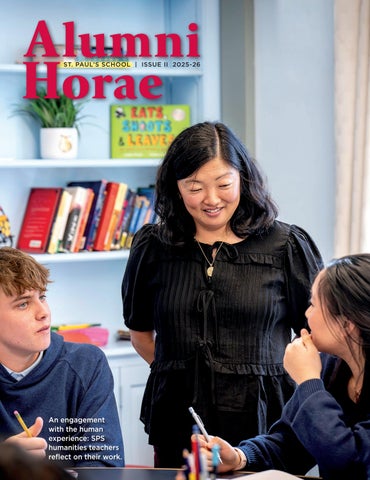
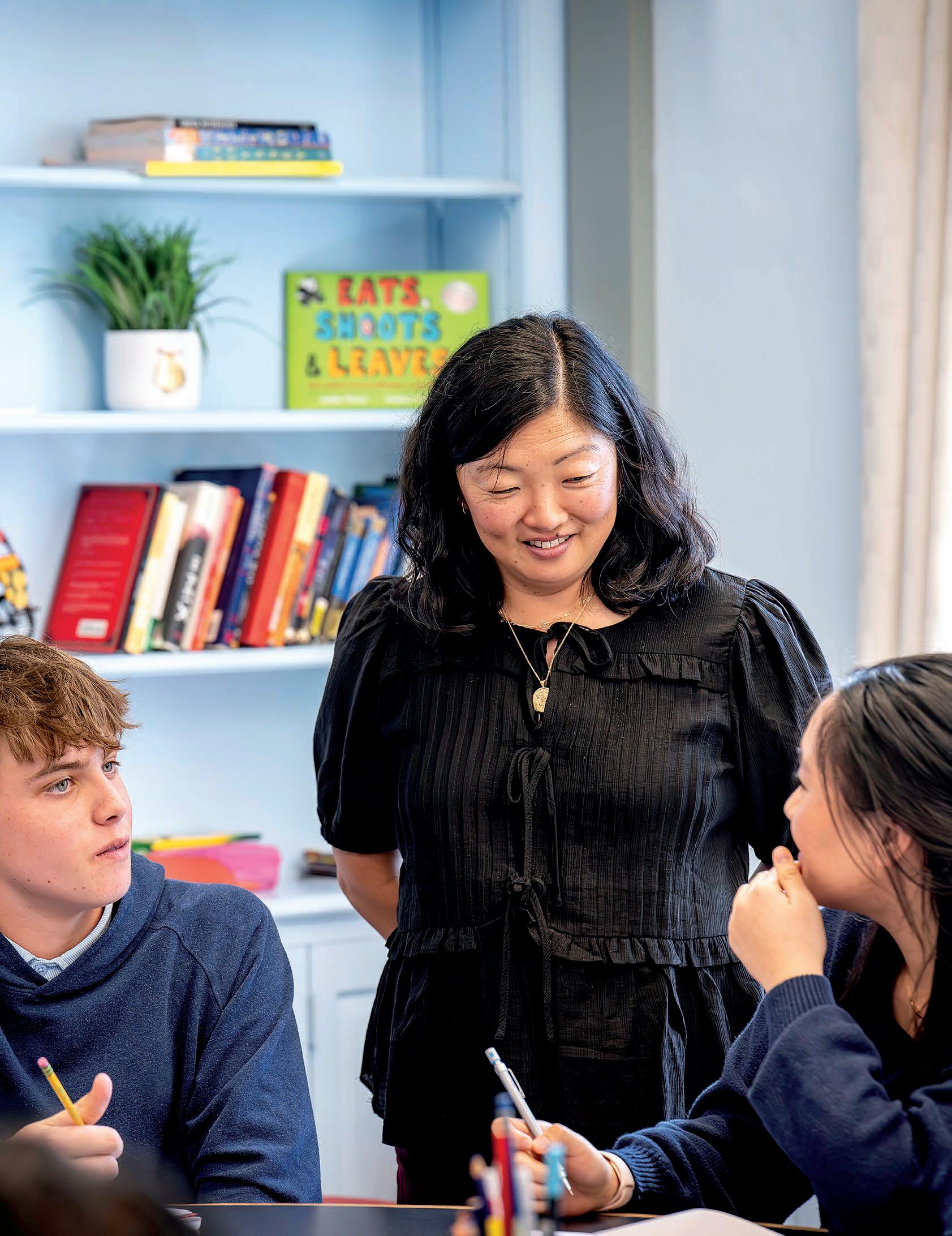
An engagement with the human experience: SPS humanities teachers reflect on their work.
THANK YOU FOR SUPPORTING SPS GIVING DAYS!
One hundred and twenty-five years of Sheldon, 538 students, and 910 St. Paul’s School alumni, parents, faculty, staff and friends. Those are just a few of the numbers by which we’re measuring the success of Giving Days 2026 on Feb. 11 and 12, which raised $637,984 in 48 hours for The SPS Fund to support every aspect of life at today’s SPS for every student.
We’re so grateful to our generous donors, and to the volunteers who inspired their friends and formmates to help us celebrate Sheldon’s renewal as a space for study, socialization and more — honoring both that building’s renewed light at the center of campus and the brightest lights here in Millville: the students who live and learn on our grounds.
DID YOU MISS OUT ON GIVING DAYS?
You can still support today's students with an SPS Fund gift today!
RECTOR
Kathleen C. Giles
EXECUTIVE
Karen Ingraham
MANAGING EDITOR
Kristin Duisberg
EDITOR
Kate Dunlop
DESIGNER
Cindy L. Foote
PHOTOGRAPHY
Ben Flanders
Michael Seamans
ALUMNI ADVISORY BOARD
Elise Loehnen Fissmer ’98
David M. Foxley ’02
Dana R. Goodyear ’94
Jonathan D. Jackson ’09
Malcolm Mackay ’59
Diego H. Nuñez ’08
Published by St. Paul’s School
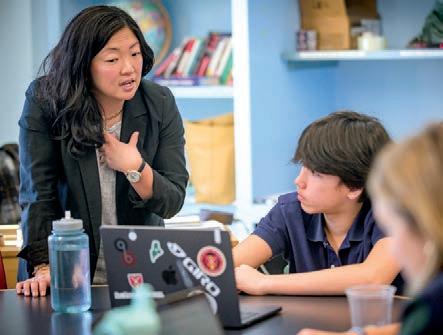
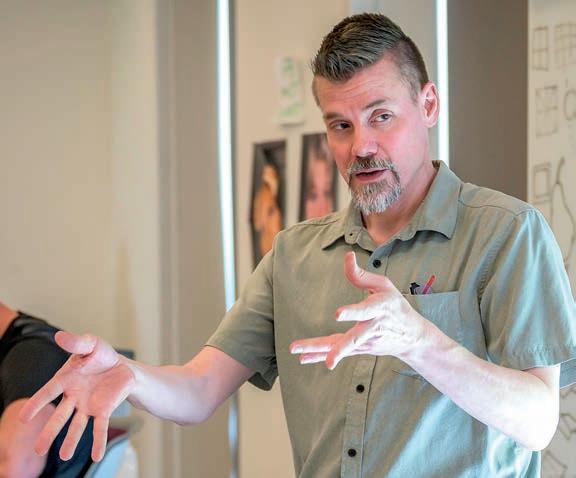
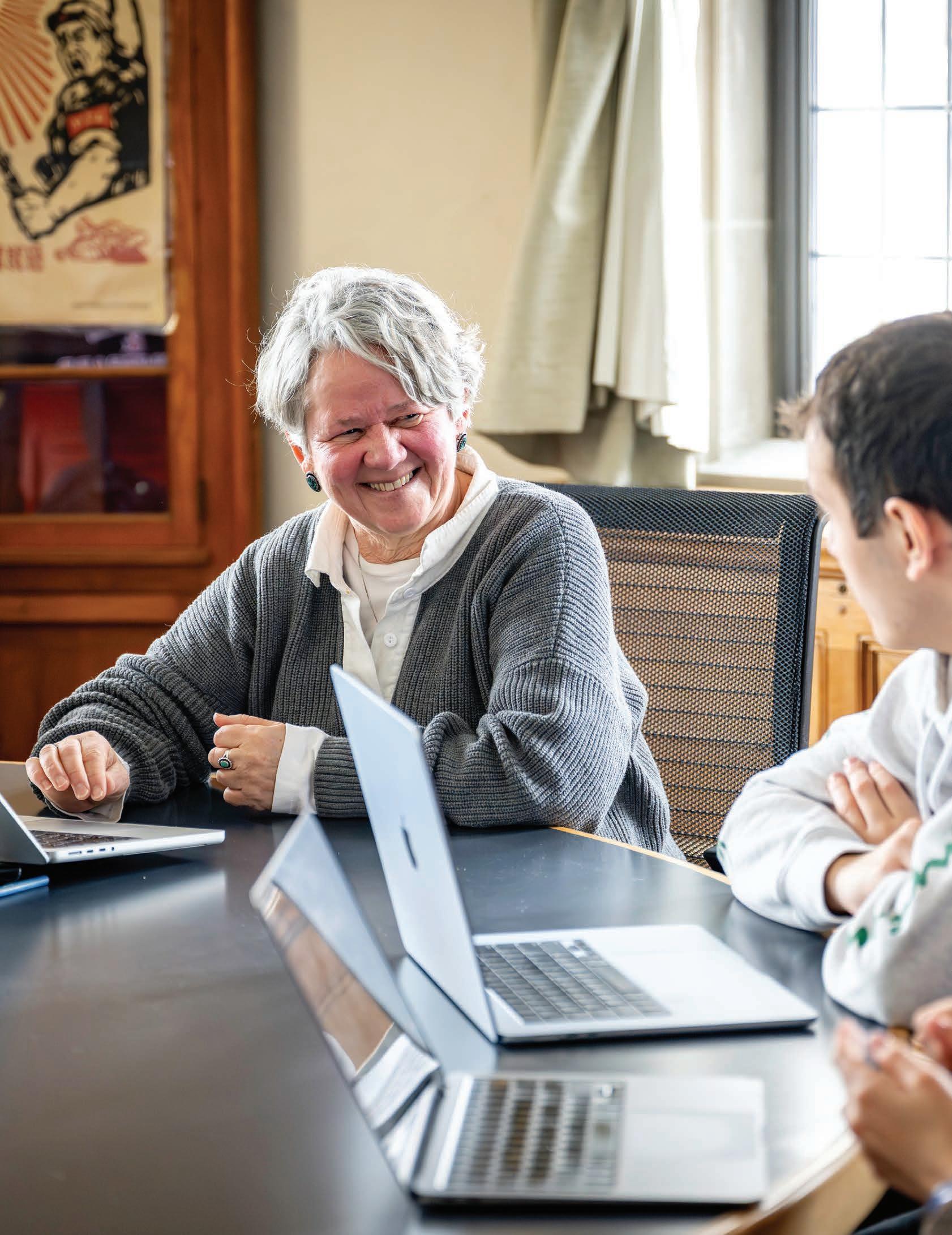
Beth Little joined the Humanities Department in 2019 and teaches Humanities III and creative writing. She currently holds the Kiril Sokoloff ’65 Chair. Outside the classroom, Little coaches crew and is Head of House in Conover Twenty.
PHOTO: MICHAEL SEAMANS
ALUMNI HORAE DEADLINE
Formnotes about the personal and professional lives of alumni, as well as positive interactions with other members of the SPS community, are welcome (200 words maximum). Notes for the next issue — and reunion writeups — are due May 16 and may be submitted to alumni@sps.edu. A clear, high-resolution photo of at least 1 MB may be submitted for publication consideration with an accompanying caption that identifiies people in left-to-right order and provides context. Alumni Horae editors reserve the right to edit and condense formnotes; notes and photos will be included as space allows.
Agency, Independence and Integrity
KATHLEEN C. GILES
Greetings from Millville, where it has been a snowy and energetic winter here on the grounds. One of our best moments came in mid-February when we welcomed retired astronaut Capt. Sunita “Suni” Williams as this year’s Conroy Distinguished Visitor (see story on p. 10). She came to St. Paul’s via her friendship with Board President David Scully ’79, P’21 in their work together for the Woods Hole Oceanographic Institute. After she finished her time with us, we all felt as if we had made a new friend and found an incredible role model for the issues of our times. I’d like to share an excerpt of my follow-up chapel talk on Capt. Williams’ impact on the School community.
Isuspect I am not alone in being tempted to be a scroller — maybe not in all elements of my life, but perhaps when I have a free moment or want to be distracted, or when I’m tired. I can’t blame it on the internet and cellphones. Before them, I was a clicker with the TV remote, and before that, I was a channel surfer on the car radio. With the flick of a finger, I can be on to something new, on to what’s next, browsing, nibbling, grazing without really thinking much about what I’m doing. What’s new for me in this current world is that I do it even though I’m conscious of algorithms shaping my choices, ostensibly for my well-being but actually to cultivate my dependence and then my commerce. Somehow, I’ve let not only my choices but also my independence become a little compromised. I’m pretty fierce about my independence, usually, but when I’m tired or distracted, I become a “coper,” and I tend to feel like things just happen to me, rather than as a result of a choice I make. I’m always disgruntled in coper-mode. It does not feel good. I know I’m wasting my energy and, worse, my time.
Several weeks ago, the Sixth Form Officers and I were talking over breakfast at the Rectory. These morning
meetings are important to me; I learn a lot as we share thoughts and talk through how things are going in the community. We were talking about the most important things students learn and do here, and Henry [Wilson ’26] offered that the most important things for him have included developing agency and independence, along with integrity. I’ve thought a lot about that idea in the weeks since and with thanks to Henry and the SFO team, I’d like to spend a moment this morning on agency, independence, and integrity.
A good definition of “agency” includes the idea of developing the capacity and the discipline to make one’s own decisions and choices, rather than being passively controlled by others or by external forces (like algorithms). When we make the choices or decisions that shape our next steps, we exercise independence from the control of others. One of the most important skills we can learn in life is to make “good” decisions. What makes a decision “good” is that it aligns with one’s principles and beliefs, which don’t change under pressure but in fact come to define us in all kinds of different situations. This quality has a lot to do with our integrity. Integrity can be defined as the quality of being honest and living one’s strong moral principles AND also as the state of being whole and undivided. When our actions align with our words, and our words align with our beliefs, and our beliefs align with our actions, we have the integrity triangle: whole, undivided, and rooted in the good. And when agency, independence, and integrity align around our “why,” moving us toward what we value and care about, then we also feel the good — and we feel good. Regardless of how tired or distracted we get, we all want to be good people who make choices aligned with our values, with the courage and capacity to think and act independently while aligned strongly with our good principles and goals within.
The exercise of our agency — that capacity to make the good choices and decisions — requires real practice. It is so much easier to scroll or click or surf and cope or just react, and many external forces — from the basketball player yelling in your face after a missed shot to the
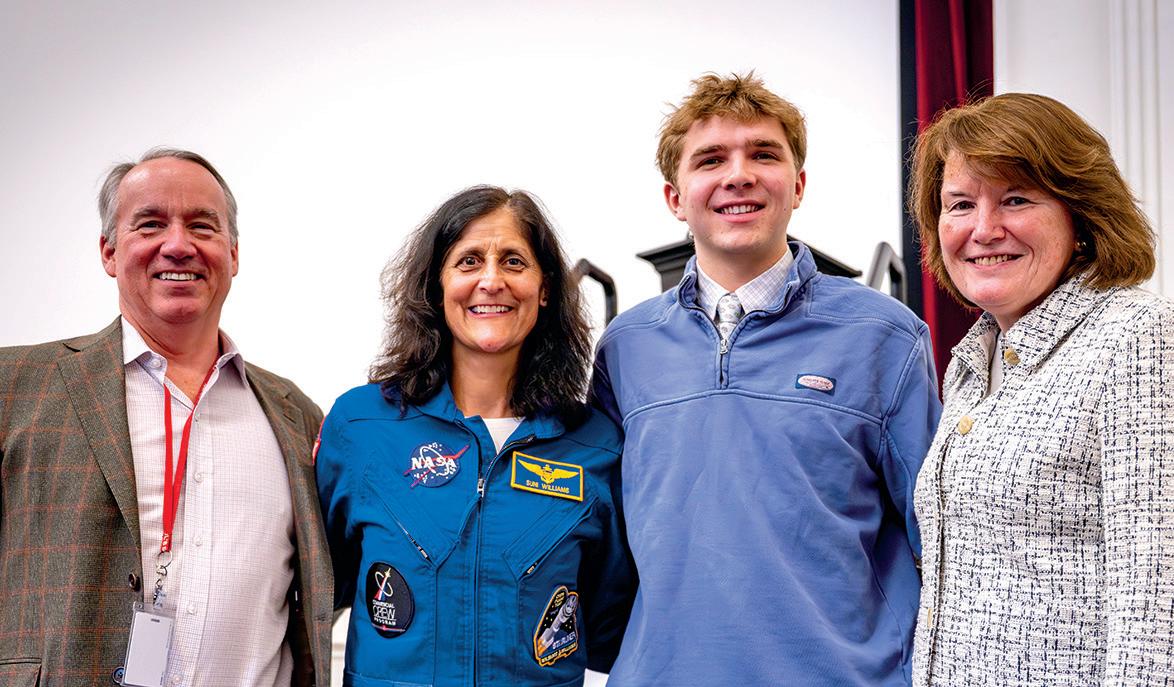
SPS Board President David Scully ’79, P’21; retired NASA astronaut Capt. Sunita Williams, Sixth Form Officer Henry Wilson ’26; and Rector Kathy Giles.
provocative post on your newsfeed to the friend’s surprise comment that zings you — can push us back into coping and passivity and reaction. But it is the “stop and think” moment, or perhaps even just the “take a deep breath” moment before we make a decision or a choice or act, that turns agency into a superpower. Imagine being Suni Williams when she learned that she was going to be stuck on the International Space Station for months. For most of us, these moments don’t come with such intense public scrutiny, but we all have these intense moments to which we have to respond. Sometimes these moments are big, and sometimes they are much more day-to-day. But when they happen is when our agency — the “pause, breathe, choose” of how we respond — turns out to be most important. What I admire most in people whose agency, independence, and integrity are aligned and active is their capacity to frame and reframe experiences and ideas with fairness, positivity, and optimism. Listening to Suni last week, I noted, and you probably also noted, that every third sentence she spoke seemed to begin either with “I’m so grateful” or “I’m so lucky.” She said that about almost everything she told us, including not getting into her top-choice colleges, not getting her top-choice assignments after graduating from the Naval Academy, and perhaps most especially, about getting stuck in space for months. Being able to frame that situation as an incredibly positive opportunity clearly transformed not only her experience but that of her colleagues and probably all of ours, as well, as we watched her from afar. Imagine what the news here in the United States would have been if she had been crushed by being stuck in space, uncertain of her return; if she had succumbed to feeling trapped or isolated; if she had ranted about the incompetence of the engineers or called out the
“WHEN AGENCY, INDEPENDENCE, AND INTEGRITY ALIGN AROUND OUR ‘WHY,’ MOVING US TOWARD WHAT WE VALUE AND CARE ABOUT, THEN WE ALSO FEEL THE GOOD — AND WE FEEL GOOD.”
politics or personalities of the people with her on the “no-personal-space” International Space Station. Instead, she told us, “I’m so lucky.” What an amazing gift Suni gave the world by embracing the situation the way she did. She also showed us what a growth mindset looks like — the belief that if you’re interested and willing to do the work required, you can indeed get better at whatever your goal is. I’ve heard a lot of admiration from everyone here for the way she was doing high-level science experiments, creating Halloween costumes, coming up with birthday cakes and fixing the toilet — just doing it because that was the way she chose to respond to the challenge. That mindset requires agency, independence, and integrity — and her mantra is, “I’m so grateful. I’m so lucky.”
Agency, independence, and integrity. As March begins, I’ve laid down the everyday agency challenge for myself to limit scrolling and make better choices about using my time and energy in ways that have meaning for me, in ways that feel more purposeful. Over the next couple of weeks, I need to keep my promise to Amanda ’28 and read the two Agatha Christie books she recommended. I need to learn more about the war in Ukraine after our Ukrainian students asked us all in chapel last week to choose to care, and Dr. Duclos showed us through his presentation in the library that night what that can look like. I need the reset that moves me out of “coper” mode and back into better “agent” mode. Maybe over the coming weeks you, too, might think about some ways to exercise more active everyday agency and choose to take in the good. Because as we finish up this snowy and wonderful winter, the possibilities of a new spring are at our doorstep. We can choose to be so grateful and, indeed, we are so lucky.

Hear More About the School Today
Listen to Season 1 of Inside SPS, the podcast hosted by Rector Giles that focuses on living and learning together in our community.

GO WITH THE SNOW
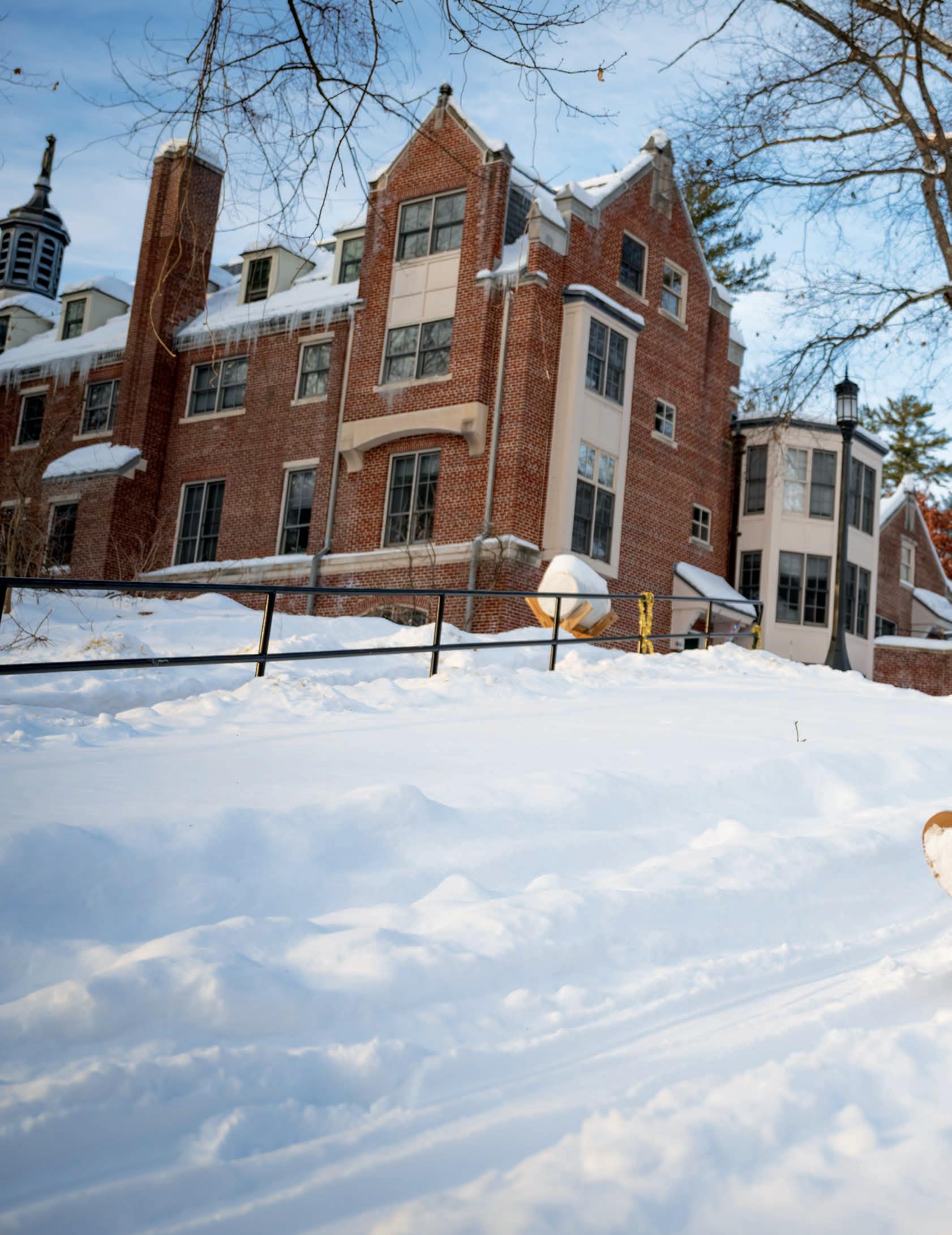
Fresh powder, crisp air and a fast sled make for a great winter break. Here, Fifth Formers Tahlia Muthaiah and Dot Ricard make a path in front of Armour at the end of January.
PHOTO: Ben Flanders
Making Space for Joy
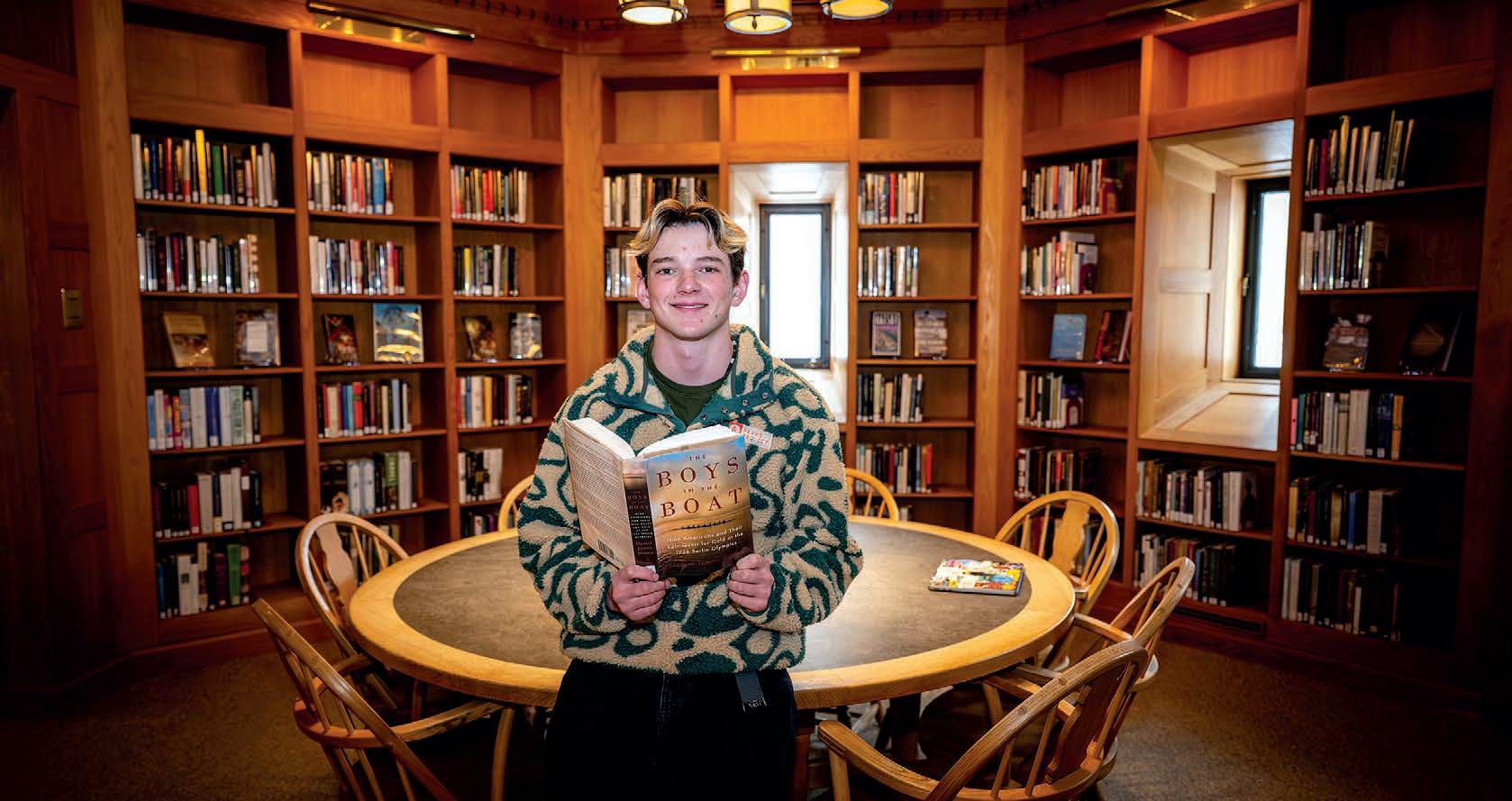
For Kyle Gump ’26, lessons he’s learned as an avid reader help him to slow down and listen
On Feb. 3, Kyle Gump, a Sixth Former from Truckee, California, delivered the following remarks in chapel. Gump, who races with the alpine ski team, runs cross country, plays lacrosse, writes for The Pelican and volunteers in Concord, spoke about the important lessons he’s learned as an avid reader in a world overtaken by screens: to slow down, to listen and to stay with something long enough for it to matter.
Iwant to start with something simple: reading.
Not reading because there’s an essay, a quiz or an annotation requirement attached. Just reading a book, choosing to sit with words on a page and letting yourself stay there. There are no notifications, no tabs open and no background noise tugging at your attention every few seconds. It’s just you, a page and time moving a little slower than usual.
For me this term, that has looked like reading “Jurassic Park” whenever I could: On the alpine bus wedged between my boot bag and the window, or during a few odd minutes before a Seated Meal. Reading like this is not efficient, but it is grounding. Even in a loud bus or hallway, I can disappear into a story for a few minutes and return more present.
Dodging responsibilities to read may sound boring or unrealistic. It may even sound irresponsible. But for
me, reading has become one of the few times when I still practice real attention. And for a long time, I didn’t realize how rare or valuable that was, until I started losing it everywhere else.
When I was in third grade, my parents were worried about me and how I was spending my time. I played sports in the afternoon after school, then would return home, head to the couch in our living room and pick up my latest book. I spent hours reading. It didn’t matter where I was, I was always reading, and my parents were concerned. They were concerned that all the time I was reading was taking away from social interaction and would leave me lost in a world where everyone else knew how to communicate with each other.
Looking back, it’s almost funny: My parents fretted that reading would pull me out of the real world. At the time, though, that concern made sense. It was 2017, when the iPhone 8 was cutting-edge and constantly being online still seemed like progress.
The world has changed a bit in the past nine years. Almost everyone carries a smartphone, and distraction and anxiety have gripped our society, making us worse at being present with each other. Replacing books with endless scrolling didn’t make us better listeners or deeper thinkers. If anything, it made it harder to sit with ourselves, or give someone our full attention.
Reading never made me less social. It taught me how to slow down, how to listen and how to stay with something long enough for it to matter. That’s the irony — reading is still good for us, maybe more than ever, but it’s become rare. Not because it lost its value, but because it requires sustained attention, which we don’t practice much anymore.
When you read, nothing happens instantly. There’s no highlight reel and no algorithm feeding you the most exciting moment every three seconds. You sit with confusion. You wait for meaning. Sometimes you read 10 pages and nothing dramatic happens at all. But when you look back, something has shifted. A character makes more sense. A sentence sticks. You feel something small, but real.
Nothing happens instantly at St. Paul’s, either. We can speed through homework assignments as quickly as possible to get to bed or play video games, or we can think longer. We can make connections to what we are reading or learning. Slow down and feel amazement in biology at the processes within our bodies or wonder at current events in humanities.
Reading taught me how to stay with a moment instead of rushing past it. And that skill of learning how to pay attention turns out to be the same skill you need to find joy in everyday life.
Because joy, I’ve learned, doesn’t usually show up in big, dramatic ways. It doesn’t announce itself. It doesn’t arrive perfectly packaged or scheduled weeks in advance. Most of the time, it’s quiet. And if you’re not paying attention, you miss it.
This isn’t about being happy all the time. This isn’t about pretending life is easy or ignoring stress, pressure or anxiety. I know this could easily sound like sunshine and rainbows, but that’s not my experience.
There have been times when I’ve felt anxious, out of place or unsure of where I belonged. Times when I was surrounded by people and still felt disconnected. Times when I wondered whether everyone else had figured out something I hadn’t.
What surprised me was what I found on the other side of that anxiety. It wasn’t constant happiness or confidence that magically appeared overnight. It was something smaller. I started finding belonging not through big accomplishments or labels, but through small moments of connection. Through shared experiences and by being present long enough to let relationships form naturally.
Reading helped me understand that, too. Books are full of characters who struggle, who feel uncertain, who don’t know exactly who they are becoming. They sit with discomfort. They grow slowly. They change in ways that aren’t always obvious in the moment. And through them, I learned that learning how to be and how to become takes time and patience.
“REPLACING BOOKS WITH ENDLESS SCROLLING DIDN’T MAKE US BETTER LISTENERS OR DEEPER THINKERS. IF ANYTHING, IT MADE IT HARDER TO SIT WITH OURSELVES, OR GIVE SOMEONE OUR FULL ATTENTION.”
Many of my favorite memories have not come from big achievements or carefully planned events. They came from spontaneous, slightly ridiculous ideas, the kind that start with, “Let’s go” and very little planning. These moments are not because I love chaos or adrenaline, but because they feel free — they’re half-baked but full-hearted. They may not look impressive on paper, but they stay with you. A miles-long float down a river that only happened because someone spotted an inflatable raft at Target. A lunchtime thought that turned into a long hike. An evening of sledding down Drury hill with no higher purpose. These things aren’t planned days or weeks in advance and yet they create deeper friendships, shared stories and memories that outlast almost everything else.
In the middle of tough classes, sports, leadership roles and expectations, these moments of spontaneity and presence in the moment ground me. Sometimes they’re the only breath I get in a nonstop week. They break routine. They pull me out of my own head. They bring people together in a way that feels honest and real.
Joy doesn’t just happen. You have to make space for it, especially when life feels too full.
I want to pause here and say something important.
That idea matters, especially in a place like St. Paul’s, where we’re busy, driven and often stretched thin. We all say we want connection. We want community. We want to feel like we belong. But those things don’t come from constant motion and constant distraction. They come from attention. They come from actually showing up. From being willing to stay in moments that are down to earth, uncomfortable and not optimized for efficiency.
One of the gifts of having more time here is the chance to choose how we spend our attention. It’s tempting to fill every quiet moment, to stay busy, to distract ourselves when things feel uncomfortable. But what I’ve learned is that when you slow down enough to actually notice what’s happening around you, life opens up in unexpected ways. You notice people, you notice yourself and you notice small joys that were there all along.
S o, I’m not here to tell you to read more books, although I won’t argue against it. I’m here to suggest something simpler and harder: practice attention. Put yourself in situations where you can actually notice what’s happening. Let yourself be present without immediately reaching for distraction. Let yourself stay with moments that aren’t impressive or productive. Because a joyful life isn’t built from huge, perfect moments. It’s built from noticing the small ones, the ones that don’t demand your attention but patiently wait for it. When you learn how to notice them, life starts to feel bigger, richer and more connected than you ever expected.
The St. Paul’s School community heard from a number of speakers during Winter Term chapels. Here’s a sampling of what some of them had to say.
BRIAN SCHROYER / Dec. 9, 2025
St. Paul’s School Art Teacher
“When I was younger, I used to worry about making the wrong mark on a drawing. The blank page felt like a test I might fail — and, of course, I did fail all the time, in slow, loud and colorful ways. And each and every “failure” taught me something important about how to draw better the next time. … Mistakes are not the opposite of art, they are one of art’s raw materials. … There’s pressure in our culture to make everything perfect the first time. Social media makes it worse: People publish highlights, and we assume everyone else gets it right. But the truth is the opposite. The people who seem to have it together are usually the ones who have practiced revision and tried many wrong things. They’ve learned to make mistakes into materials. … So next time something goes wrong, don’t apologize to yourself. Don’t try to pretend it didn’t happen. Put it on the table. Look at it. Name what it taught you. Try one small change. And then see what else appears.”
VLADYSLAV DEREVKO ’28 / Jan. 15, 2026
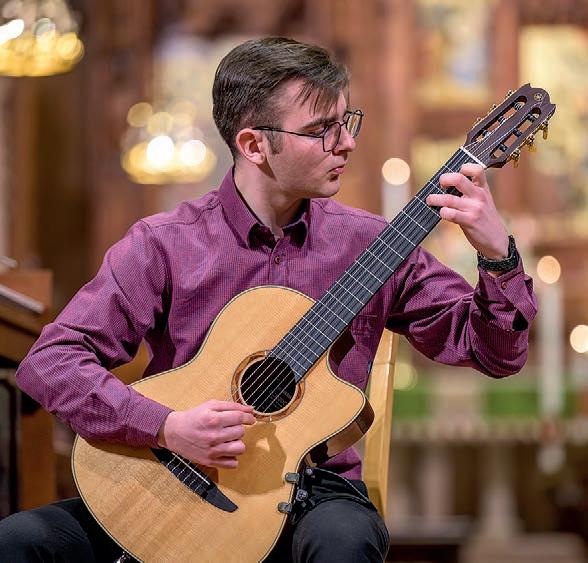
“‘Hotel California’ by the Eagles has a special meaning to me. When I was a child, my grandpa loved introducing many things to me. Science mostly, as he is a physicist, but sometimes it was something different. On a cold winter morning, a six-year-old me clinging to my grandfather and warming up by the fireplace heard a recording of ‘Hotel California’ for the first time. This was something of the kind I had never heard before and I ended up listening to the song maybe 10 more times on the same day. As I got older, it became a ritual for me to listen to ‘Hotel’ when I knew something important was coming up. As I learned to play the guitar I thought about learning how to play the song, but it was not until my guitar teacher, Viacheslav, suggested that I learn it that I actually set out to play it. When the war in my country broke out, my family and I moved to Germany for some time. … After my family and I moved back to Ukraine, Viacheslav volunteered to join the military. I still exchanged my guitar recordings with him as he was at the frontline. He really wanted to come to my music school graduation concert. Because of a mission, Viacheslav couldn’t make it to the concert and it was during that same mission — [well,] he has been lost in action for almost two years now. ‘Hotel California’ is still one of my favorite songs and it evokes a lot of memories. I simply cannot imagine my life without it.”
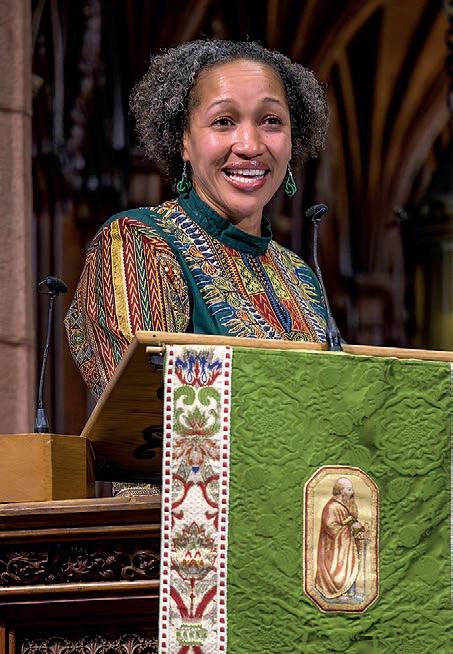
REV. MARIAMA WHITE-HAMMOND / Jan. 19, 2026
Founding pastor of New Roots African Methodist Episcopal Church in Dorchester, Massachusetts
“I have come to realize that change is inevitable. Progress is not. Sometimes the world moves forward because people show up and sometimes it moves backward because good people decide it’s too hard and they check out. This is true for everyone, but it’s particularly true for young people. Mass movements for justice and progress absolutely require the energy and innovation of young people. This moment is no different … [and] we have plenty of modern ways of falling asleep. We’re working, doomscrolling; video games, obsessive productivity … even prayer can be a distraction if it never leads you back to the world. … At this core moment, we are dealing with one question: Do we actually believe that ‘we the people’ means all of us? Do we believe there is enough dignity, safety, opportunity and love for everyone? Or do we believe that some people have to lose in order for others to win?”
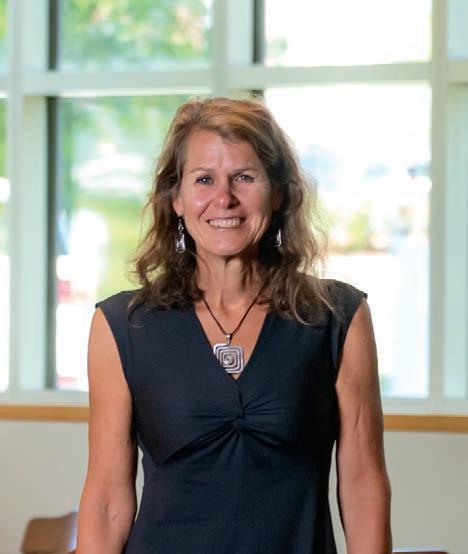
KATE DANIELS / Feb. 13, 2026
Dean of Student Support and Director of Community Engagement
“The woods of our St. Paul’s home are my favorite place to be. … The solutions to countless problems, the birth of my best ideas and the edits to my writing have all come from being alone in the woods, where I have the opportunity to practice being present and connecting with a higher power. I never return home from a morning in the woods without feeling on some level awe and wonder and profound gratitude for my many blessings and for life itself. For more than 30 years, I have walked and run on our trails and have had the privilege of seeing a moose … bears that move surprisingly fast and countless deer ... Several times, I’ve had beavers slap their tails in warning after diving into the water when I’ve interrupted them … Once, I saw a bobcat warily watch me as I walked quickly by, watching him right back. … Great blue herons are a common sight on the banks of the rivers where they patiently fish and I’m grateful for their steady presence. … Ducks and geese with their little families are lovely sights in the quiet of the morning. The pinks, oranges and reds of our sunrises feel like a personal gift given to me simply because I am there, both literally and figuratively, to receive them, which I do, always with a grateful heart. …I have the woods, where in solitude and silence I feel without a doubt the presence of a love that surpasses all understanding.”
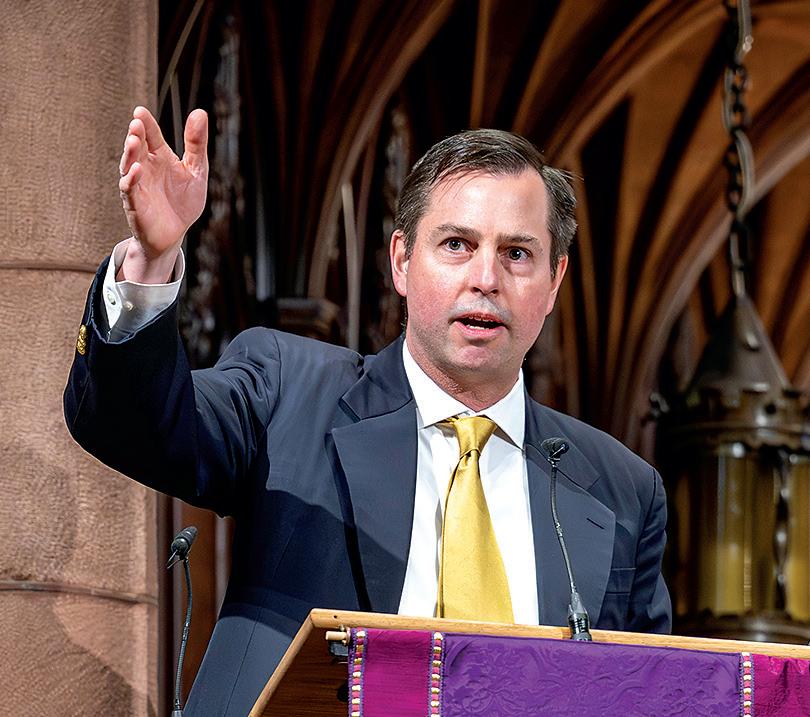
JAY
TRUESDALE ’92 / Feb. 20, 2026
CEO at TD International, career Foreign Service Officer and Foreign Area Officer in the U.S. Navy Reserve
“I took my oath believing that military service was one of the highest callings, a calling to a greater good reminiscent of [philosopher Paul] Tillich’s lessons, a calling to a mission beyond myself. When Ukrainian volunteers took up arms in 2022, by contrast, most weren’t mulling the words of a theologian, nor were they considering a hypothetical deployment. They were faced with an existential crisis that put the greater good ahead of their personal needs. … Ukrainians en masse assessed and acted on what they considered their collective ultimate concern … It’s never too early or too late to ask oneself, ‘What is my ultimate concern? What is a life worth living? And even if I am not forced to volunteer to defend the country in a time of war, what would I sacrifice for?’ … Be grateful for the life you enjoy here at St. Paul’s, but ask yourself, ‘How can I do my part?’”
ENGINEERING EXPERTISE
It was all systems go when Austin Meyer ’88, creator of the X-Plane flight simulator and president of Laminar Research, spent Thursday, Jan. 15, on campus. He attended chapel and an advanced physics class; met with students, faculty members and School leaders; and wrapped up the day with the SPS Robotics Team as members worked on preliminary plans for their FIRST Robotics competition robot.
The team, coached by Science Teacher Gary Garber, who teaches physics and engineering classes, presented Meyer with three possible strategies and robot designs. Full of energy, interest and questions, Meyer quickly homed in on the nuances, pitfalls and opportunities of each idea. He also drew comparisons with his own work with BETA Technologies, a Vermont-based aerospace company designing, manufacturing and selling highperformance electric aircraft, advanced electric propulsion systems, components and charging systems to top global operators.
“ The more you can iterate on each success — and failure, by the way — to make the next version a little bit better and more versatile and reliable, the better you’ll be in each competition as you continue to evolve these designs,” he advised.
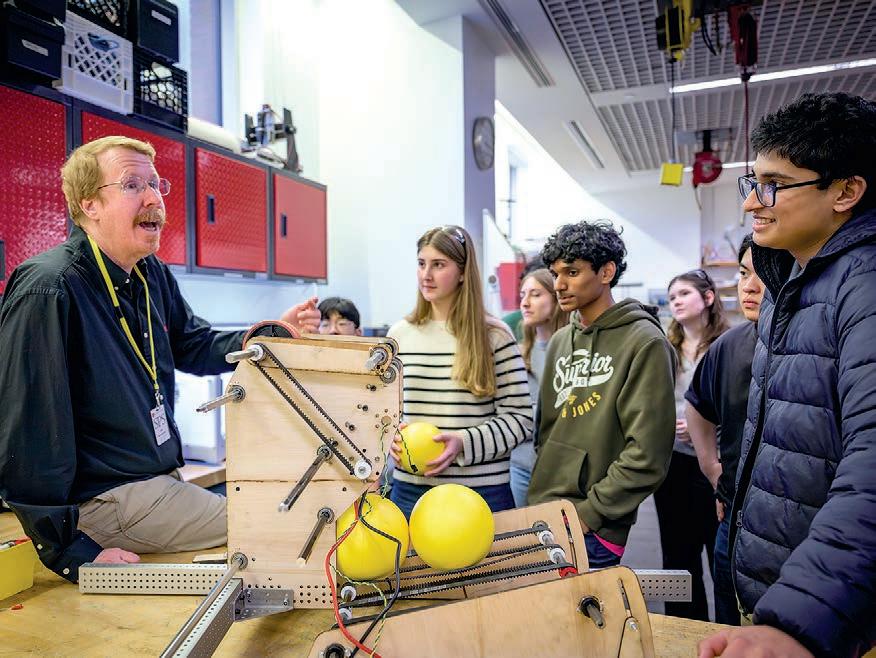
Austin Meyer ’88 with members of the Robotics Team.
A View of the Entire World
NASA astronaut and 2026 Conroy Distinguished Visitor Sunita “Suni” Williams reflects on spaceflight, changed plans and the power of imagination
KRISTIN DUISBERG
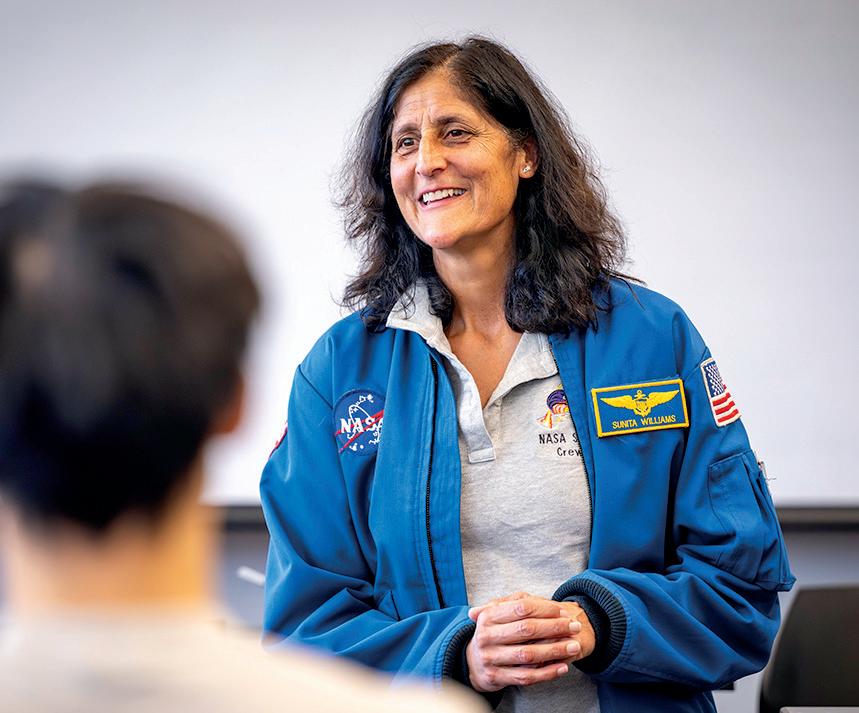
She commanded space stations, set a record for the most spacewalking time by a female astronaut and was the first person to complete a marathon in space. But when retired NASA astronaut and former U.S. Navy Capt. Sunita “Suni” Williams spoke to the St. Paul’s School community on Feb. 19, one of her central messages was about how to face disappointment and find new paths.
The School’s 2026 Conroy Distinguished Visitor, Williams delivered an address in Memorial Hall that provided a guided tour of her journey from her childhood as an Indian-Slovenian American in Needham, Massachusetts, to the 2024 space mission for which she is best known: a planned eight-day test flight on Boeing’s Starliner spacecraft that turned into a stay of more than nine months on the International Space Station. Williams’ remarks touched on the upside of that unexpectedly long mission — necessitated when technical problems with the spacecraft’s thrusters were determined to be too significant to allow for a return flight to Earth — including the achievement of scientific research and maintenance work on the space station itself, stunning views of Earth and space phenomena, and the camaraderie she and her fellow NASA astronaut, Butch Wilmore, experienced living and working in close quarters alongside international colleagues. At the same time, the astronaut didn’t shy away from the adversity attached not just to that mission,
but also to other milestones along the course of her 27-year NASA career.
A standout swimmer and student-athlete at the U.S. Naval Academy, Williams had hoped to become a Navy diver following her graduation. “I was a swimmer, so that seemed natural … and I mention this because we gravitate toward what is familiar,” she explained. When she wasn’t assigned the diving billet, she was disappointed — but quickly reframed that disappointment as the opportunity to learn to fly and to become a helicopter pilot, which led to her flying jets and later spacecraft. “I think the lesson here is that things might not always work out the way you plan, but that’s okay because they then open other doors,” she said. “I loved flying helicopters. … Eventually I applied to NASA, and after I got my master’s degree, I got in, and that’s just part of life.”
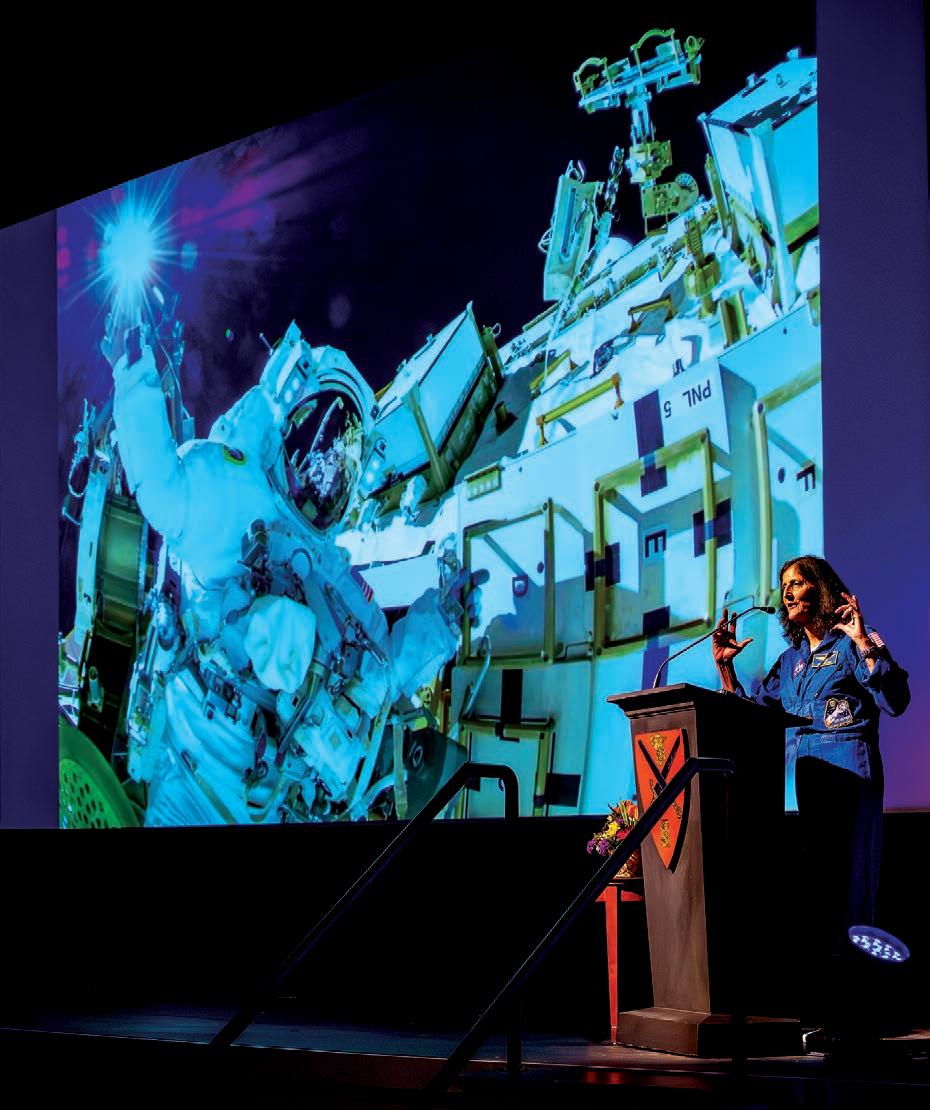
Williams also shared a stunning space photo from a previous mission — in it, she appears to be holding the sun in her gloved hand — that she described as capturing a painful moment. Taken late into a long spacewalk during which she and her colleague were foiled in their attempts to swap out an external circuit breaker box, she explained that the image, taken when she was exhausted, is a reminder of the importance of knowing when to quit. “There’s times in life when you might just have to say, ‘You know what? Right now this is not a good idea to do this.’ … It’s hard in your life to actually have to turn around and take that understanding that so many people are watching, invested in you, counting on you on the space station to fix it and you couldn’t get it done. Luckily enough, we had another chance, and we did get it done, but there’s a couple little hard lessons in life that go on with any profession.”
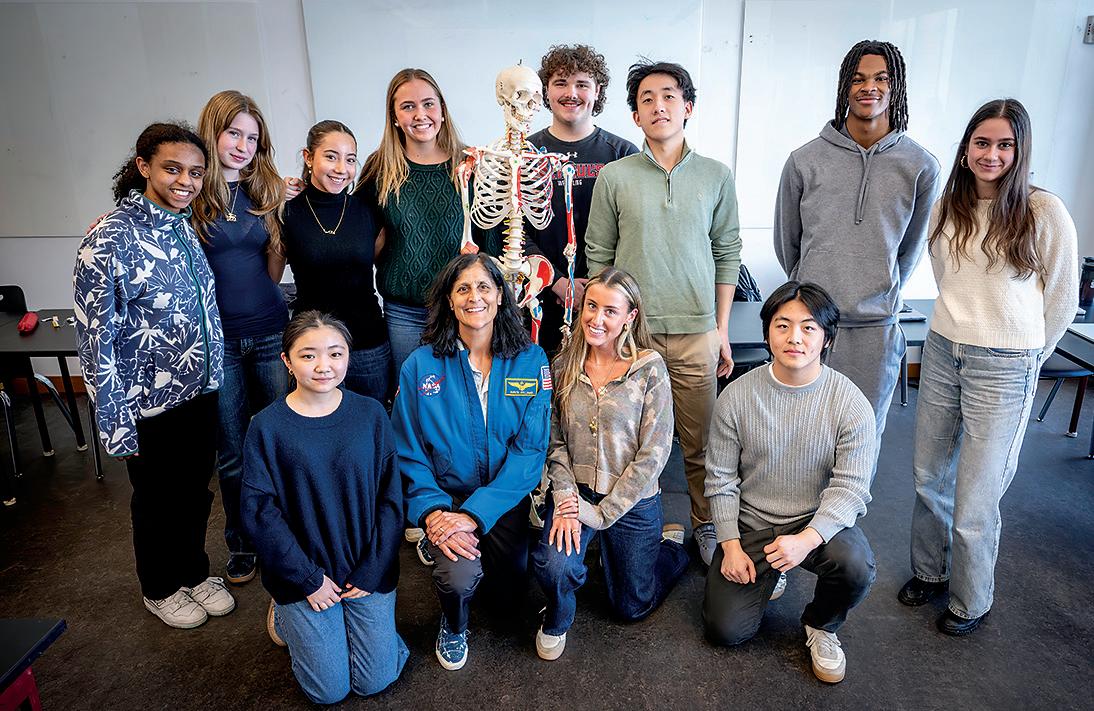
In addition to delivering the Conroy Address, Williams visited three science classrooms, ate lunch in Coit with a group of students and answered questions from student leaders during a student-moderated question-and-answer session. In both Dr. Seth Cohen’s Stellar Astronomy class and Ben McBride’s Advanced Physics class, free-flowing discussion quickly shifted to questions across a wide range of subjects, including the relevance of differential equations to aerodynamics. During a session in Ally Bryant’s Human Anatomy and Physiology class,
Williams shared personal anecdotes about the physiological effects of space travel and zero gravity, providing students with exceptional real-world … and out-of-thisworld … applications of what they are learning in the classroom about blood pressure, bone density, muscle mass and more.
Allyson Duardo ’26 served as one of the two student moderators during the afternoon Q&A with student leaders. A member of the School’s Applied Science and Engineering Program as well as treasurer for the Student Council, Duardo says she found both Williams’ morning presentation and the astronaut’s responses to her peers’ questions inspiring. “Hearing Astronaut Williams speak left our community in what may only be described as awe,” she says. “She shared how being stuck in space for longer than planned, something many considered a disaster, was not the disaster it seemed, but an extended ‘Vacation from Earth.’ Her perspective carried into her message that astronauts leave Earth not as Americans or Russians, but simply as humans.”
Toward the end of her address, Williams outlined some “audacious” next steps for space exploration, including sustainable human life on the moon and successful manned missions to Mars. As she encouraged the students gathered in Memorial Hall to see themselves as the people who will make this work a reality, she shared Albert Einstein’s famous quote about imagination: “… Imagination is everything. It is the preview of life’s coming attractions. Imagination is more important than knowledge.” On a day filled with conversations about success and failure, trust, open-mindedness and the unique challenges of running 26.2 miles from 254 miles above the Earth, it was a fitting observation by a guest whose perspective on the world is like that of few others, and an inspiring charge for an audience in whom both knowledge and imagination is abundant.
The Conroy Distinguished Visitors Program
Established to stimulate and inspire students at St. Paul’s School, to enlarge their view of life, and to suggest directions in which they can serve their country and their communities effectively, the Conroy Distinguished Visitors Program invites outstanding leaders in various fields to the School for discussions, meetings, schoolwide performances and lectures. Conroy Visitors have included poet/author Maya Angelou, cellist Yo-Yo Ma, U.S. Poet Laureate Billy Collins, three-time Olympic gold medalist Misty May-Treanor and photojournalist and filmmaker Pete McBride ’89, among others.
During her Conroy Address in Memorial Hall, Williams shared a photo in which she appears to hold the sun in her hand during a spacewalk.
Williams with Ally Bryant’s Human Anatomy and Physiology class.
Two Schools United by a Man, a
Mission and a Prayer St. Paul’s School Welcomes Bishop John T. Walker School Leaders
KATE DUNLOP
In January, St. Paul’s School hosted a delegation from Bishop Walker School in Washington, D.C., for a two-day visit, part of an SPS series of events and exhibits recognizing the centennial of Bishop John T. Walker’s birth that began in October during BIPOC Alumni Weekend.
During their time in Millville, Dr. Angelina Arrington, head of BWS; Brian Harris, director of outplacement and alumni support; and BWS co-founder the Rev. Canon Preston Hannibal toured the campus, observed classes, and met with students, faculty members and School leaders. Both they and members of the St. Paul’s community came away from the experience with a deeper appreciation of connections the two schools share: Not just the Right Rev. John T. Walker, who in 1956 was appointed the first Black teacher at St. Paul’s, but also a School Prayer and a sense of purpose.
One hundred and one years after St. Paul’s opened its doors to students, Walker’s hiring to teach history made history. In 1959, his presence in the community helped St. Paul’s open its doors wider when the School welcomed its first Black student.
While at St. Paul’s, Walker helped students found the John Winant Society, advised the Missionary Society and Student Council, and coached hockey, soccer and track. He married Rosa Maria Flores in 1962, and two of their three children were born while they lived in Millville, a place he called “more than home to me.” While he left in 1966, he remained connected to the School, both as a parent and a member of the Board of Trustees.
“SERVICE IS HOW YOU USE YOUR POWER. YOU MAY NOT THINK YOU HAVE POWER, BUT YOU DO.”
The Washington school that bears Walker’s name opened in 2008 — a tuition-free private K-5 school for boys. Co-founded by the Rev. Canon Hannibal, himself a former SPS faculty member, the school’s mission is
to “alter the educational and social trajectories of children from historically underserved communities and prepare them for leadership and service inside their communities and beyond.”
In chapel on Jan. 12, Rector Kathy Giles, who spent time at BWS in early 2020, introduced the visitors and noted the common thread of the shared School Prayer.
“In the work they do every day, our visitors embody the values that St. Paul’s School and that Bishop Walker School share,” she said. “And in that eagerness, they work every day to serve the greater good and in so doing make that good greater for the boys at Bishop Walker School and for their families, for the community in which they engage daily and for the future.”
Arrington, a fourth-generation educator, delivered chapel remarks that asked the School community to think about who they are choosing to be, moment to moment, when nobody’s watching, because a life is the sum of repeated choices. She shared how she’s honed her observation skills in the service of inclusion since childhood — noticing who was left out and inviting them in. It’s what she still strives to do.
“Service is how you use your power. You may not think you have power, but you do. Power can look like different things, like humor, academics, empathy, joy. It can look like athletic status. It can look like being a musician or a great singer. It can look like confidence. It can look like the ability to connect, to observe,” she said. “When you have this power, the question you can ask yourself is, ‘Do people feel safer around me or smaller?’ … As a servant leader, I believe my service to my community is making people feel safe and confident and heard.”
On the second day of their visit, Arrington and Harris shared videos to illustrate their work and the structure of BWS, which is rooted in the traditions of Episcopal education, current research on boys’ social and intellectual development, and a progressive educational approach.
Nearly four decades after his death, the legacy of Bishop John Walker is still opening doors for young people and uniting two school communities in a prayer for the happiness of others.
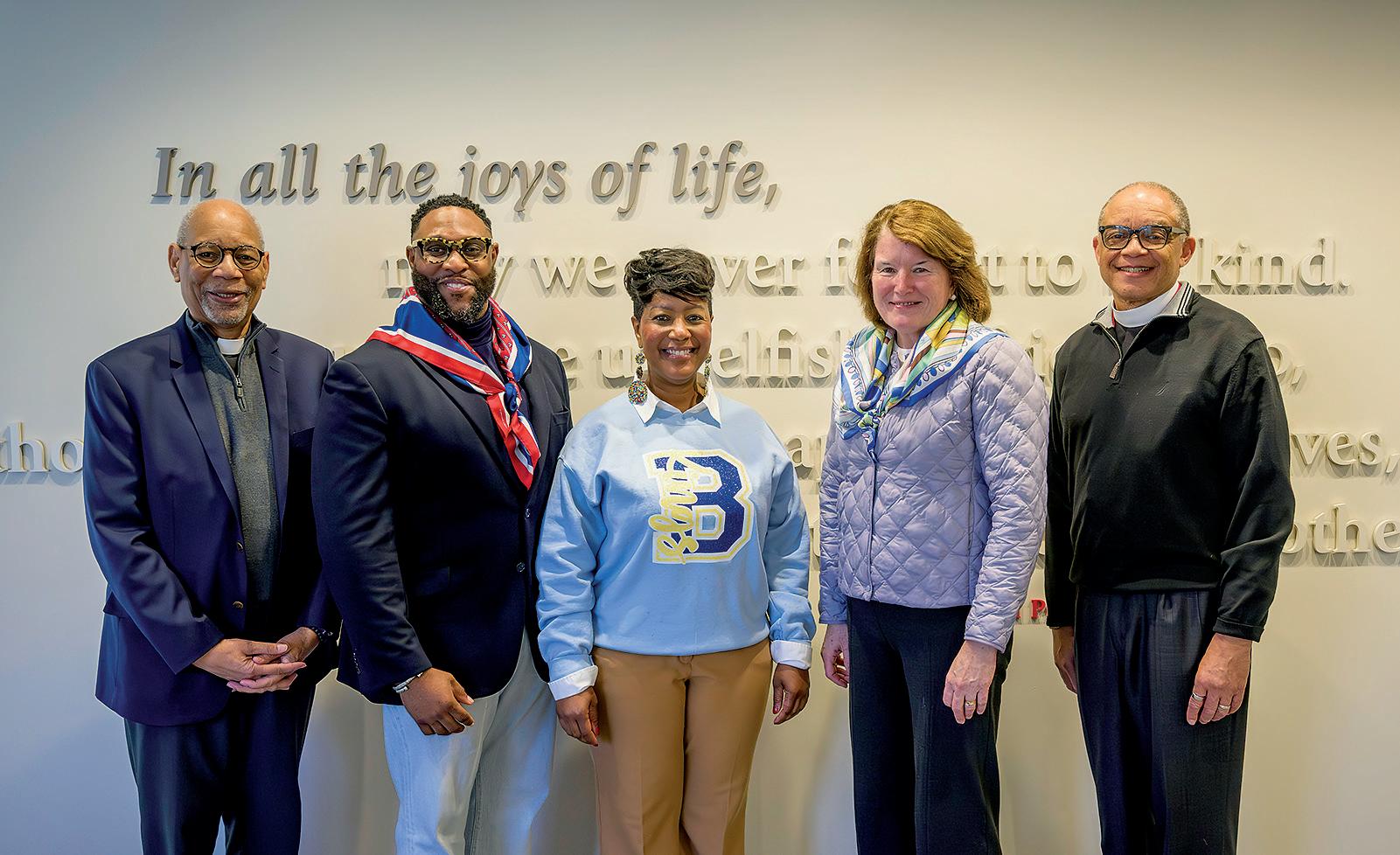
The Rev. Canon Preston Hannibal, an SPS faculty member from 1974 to 1986 and a co-founder of Bishop Walker School (BWS); Brian Harris, director of outplacement and student support at BWS; and Dr. Angelina Arrington, head of school at BWS, with Rector Kathy Giles and the Rev. Charles Wynder Jr., dean of chapel and spiritual life at SPS.
The Year of the Horse Begins at SPS
KRISTIN DUISBERG
The Year of the Horse galloped into Millville in mid-February with more than a week’s worth of activities. The celebration began with New Year calligraphy couplets, which Chinese language students painted on bright red paper and hung on classroom, office and residence doors across the grounds.
Students enjoyed a lively celebration on Feb. 14 featuring sweet and savory delicacies (bubble tea, tanghulu and homemade dumplings, anyone?), music, dance, calligraphy brush painting and more, all organized by their peers in the Chinese, Japanese, Korean
and South East Asian student Mosaic Groups and the Chinese Language Program.
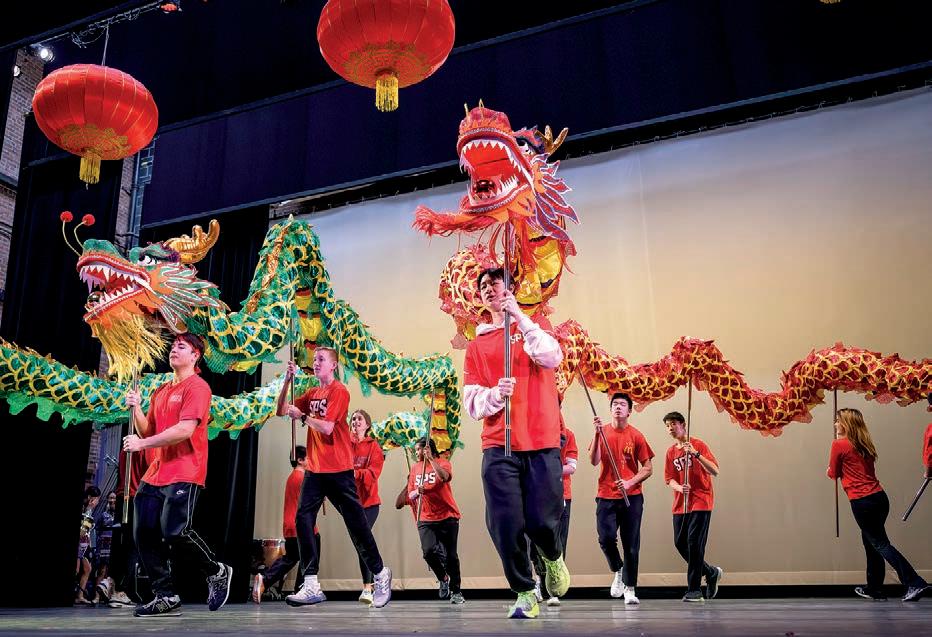
A few days later, the SPS community was treated to a special Lunar New Year chapel that featured a traditional Dragon and Lion dance, vocal and ballet performances, the skit “The Legend of the Nian Monster” and a video highlighting students’ knowledge of the holiday.
One-fifth of the world’s population observes Lunar New Year — and that happens to be the same percentage of students at St. Paul’s School who identify as Asian or Asian American. The festivities concluded with a hot pot dinner for international Chinese students, many of whom are celebrating their first Lunar New Year away from their families.
By the Numbers: Black History Month at SPS
Throughout February, as the United States marked a century of recognizing Black history, St. Paul’s School observed Black History Month with music, food, displays, presentations and more. 1926
THE YEAR Negro History Week was established by Dr. Carter G. Woodson
4
Weekly COMMUNITY DINNERS throughout the month with Blackand African-inspired food plus weekly student presentations in chapel to highlight Black excellence
50
YEARS since President Gerald R. Ford expanded the week-long observance to Black History Month
’90s
THE DECADE at the center of a hip-hop workshop and dance party hosted by the Onyx student Mosaic Group in partnership with SPS Night Life (SNL)
2
DISPLAYS in Ohrstrom Library — one featuring posters and books, another devoted to the Rev. Bishop John T. Walker, the School’s first Black faculty member
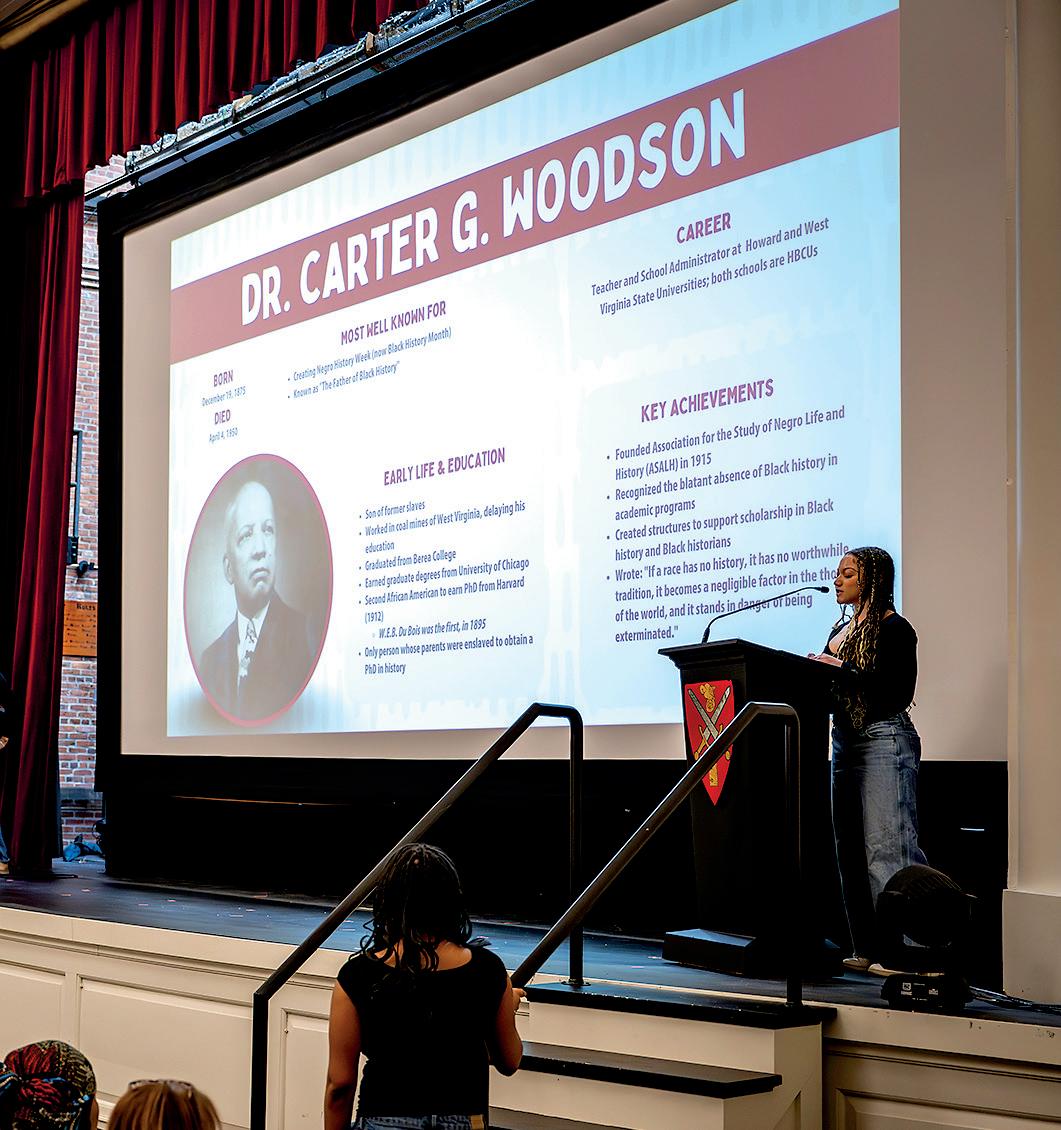
Members of the Onyx student Mosaic Group share a presentation about Black history in the U.S. and at SPS during a special Memorial Hall chapel.
Chinese language students lead the Dragon and Lion dance.
VIDEO
Finding Home Far from Home
International students are one of many groups Dr. Zayer Baazaoui helps to feel seen, supported and connected
IAN ALDRICH
The student body of St. Paul’s School hails from 30 countries outside the United States, including China, South Korea, Singapore and New Zealand. For many students, says Dr. Zayer Baazaoui, the School’s director of international support, being that far away from home can be a significant adjustment.
“We have students who are leaving home for the first time who are as young as 13 years old,” says Baazaoui, who also teaches French. “It’s important that we make them feel like they belong here, that this is an inclusive and
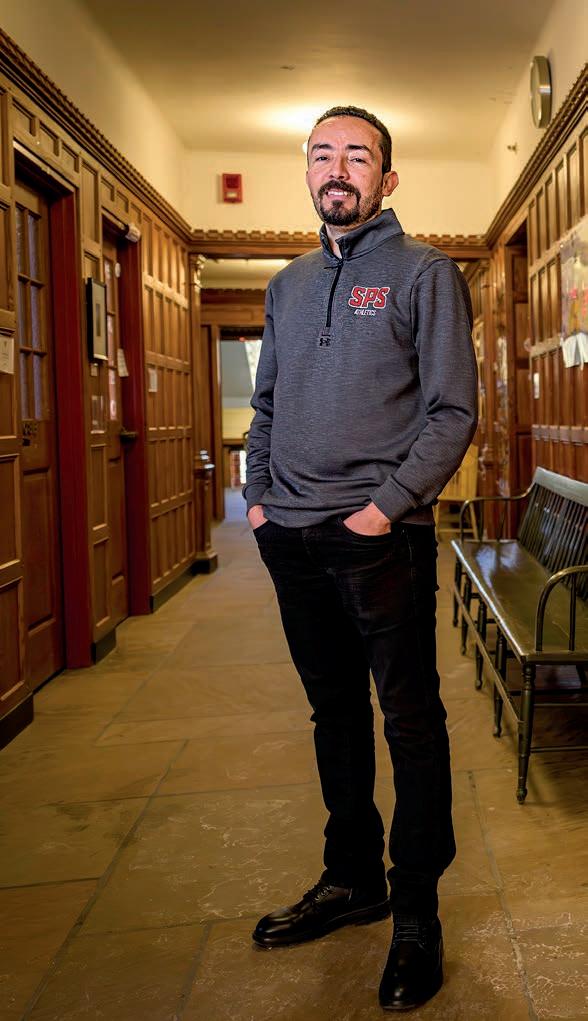
safe space where they can express themselves and share their identities and their culture.”
Baazaoui has some sense of that experience himself. Originally from Tunisia, he came to the United States in 2015 to complete a Ph.D. in literary, cultural and linguistics studies with a focus on French studies at the University of Miami. It was a big transition, one that forced him to acclimate quickly, and he draws heavily from that experience — of starting over, of creating a new home, of fostering a sense of community — in his work at SPS.
“NOT ONLY ARE WE TEACHERS PHYSICALLY PRESENT FOR STUDENTS, WE ALSO MUST BE PRESENT FOR THEM MENTALLY AND EMOTIONALLY.”
“I went through a lot of the things our [international] students are going through,” he says. “I know the paperwork involved to get here, and I can certainly relate to what it feels like to leave your parents behind and come to this country to pursue an education.”
It was good fortune that allowed Baazaoui to find his own sense of home at SPS. After finishing his graduate work, he was certain he wanted to teach but focused on college and university opportunities. Then, in the spring of 2021, he stumbled across an opening at St. Paul’s and a whole new world opened to him.
“I knew there were private independent schools, but a fully residential boarding school, I didn’t know this type of institution existed,” he says. “I didn’t understand until I came here what it meant to live on campus with the students and be so close to their lives.”
B aazaoui quickly appreciated what the setting afforded him, though. Beyond the
convenience of his life at SPS — “I love living just two minutes from the classroom,” he says with a laugh — Baazaoui values all the ways he can intersect with his students’ experiences.
“ The [Sixth Form’s] theme for this year is presence, and for me this is important because not only are we teachers physically present for students, we also must be present for them mentally and emotionally,” he says. “The connections that we build with them I don’t think would be possible in any other educational context or setting.”
B aazaoui’s commitment to promoting inclusivity at SPS has placed him at the center of many aspects of campus life. He’s an adviser to the LGBTQI+ and Gender and Sexuality Alliance Mosaic groups. He’s also the faculty point-person for the School’s interfaith group and its Muslim Society. This year, in addition to stepping in as director of international support, Baazaoui also became head of Middle House.
“It’s important for me as a queer person, as someone who understands the importance of feeling seen and appreciated for who I am, to help these kids feel the same way,” he says. In that sense, Baazaoui sees St. Paul’s as a model for how people from all walks of life can come together and build a healthy community. “These different backgrounds aren’t an obstacle,” he adds. “They’re a plus, and they should be valued that way.”
In his free time, Baazaoui likes to be outdoors. He’s an avid gardener, hiker and photographer. And in his new life in New England, he’s come to love something he’s never had before in his life: a change of seasons.
“I’m always excited for that first snowstorm,” he says. “I know some people don’t like winter but I think it’s beautiful. And being outside, walking around this campus, makes me appreciate that beauty because it’s all around.”
Baazaoui, in other words, has found a home at St. Paul’s School.
AROUND THE GROUNDS
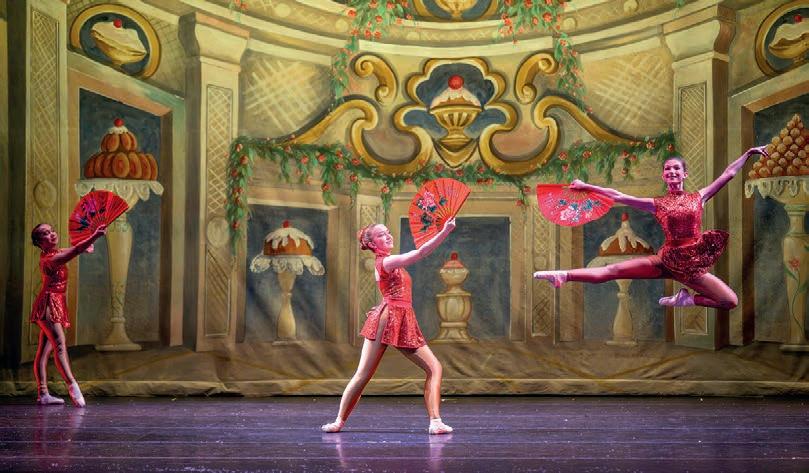
DECK ALL THE HALLS The week before Winter Vacation was full of festive moments and School traditions, including three performances of “The Nutcracker: Act II” in Memorial Hall for the School and Concord communities and a holiday dinner buffet in the Upper.
LACE UP On Jan. 13, Lower School Pond opened for ice skating for the second year in a row.
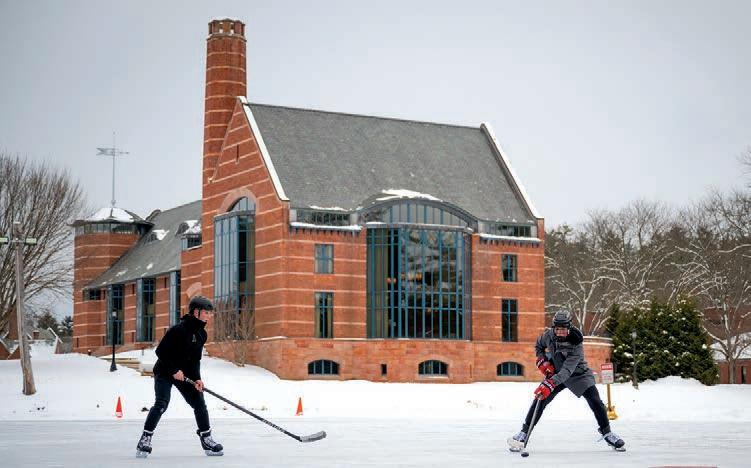
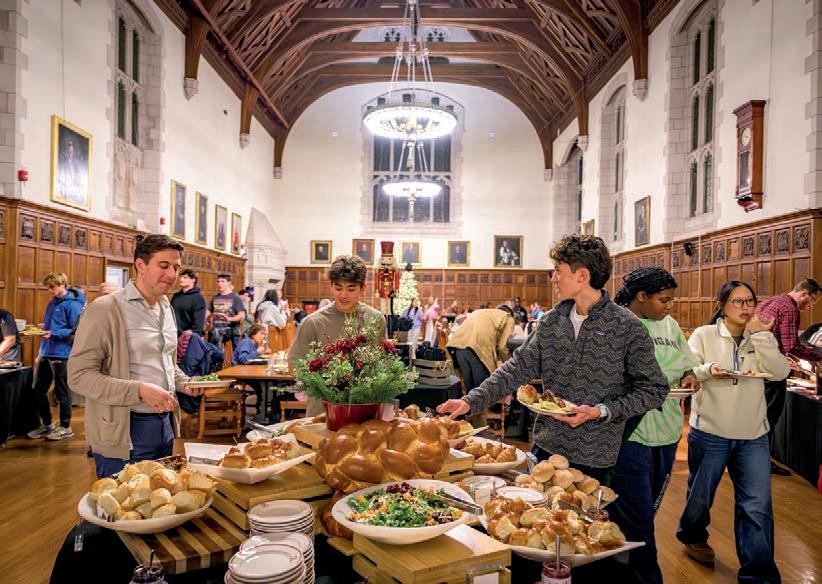
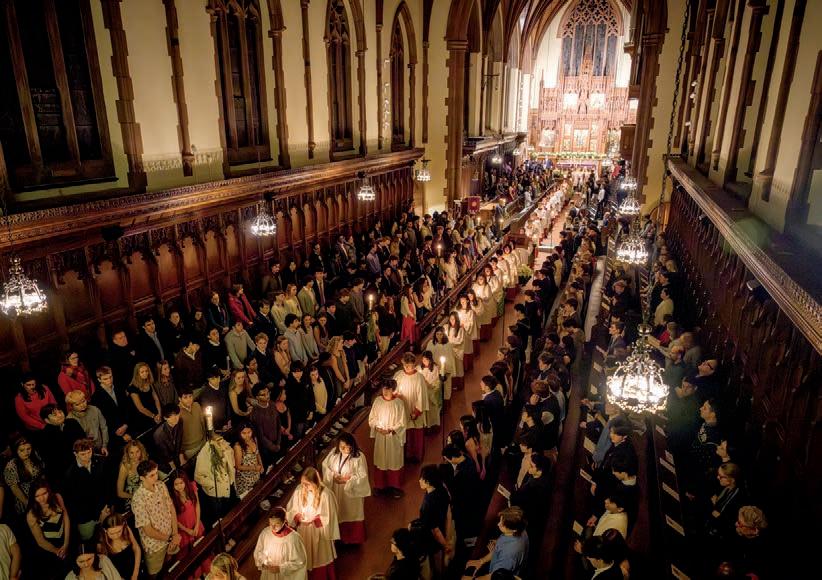
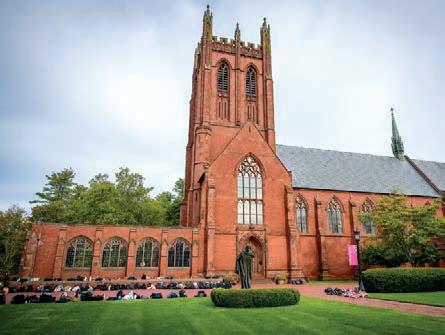
LET IT GLOW The SPS community gathered in the Chapel of St. Peter and St. Paul on Dec. 16 for the fourth annual Celebration of Lights — a multifaith service celebrating Hanukkah, Diwali, the divine light of Islam, the seven candles of Kwanzaa and the Christmas story.
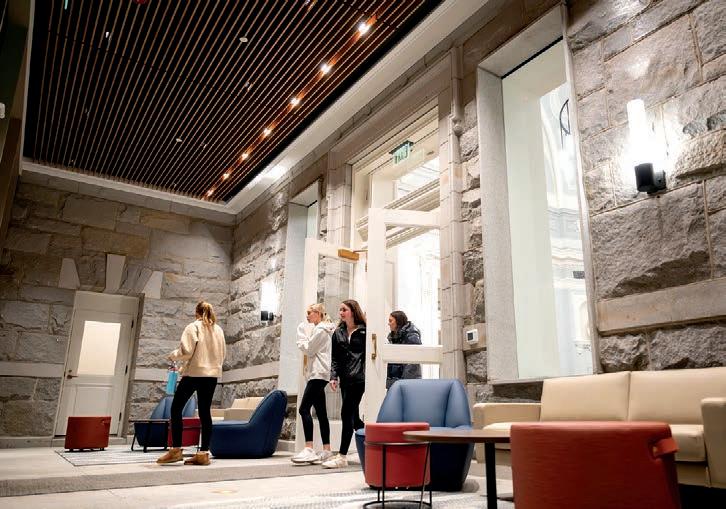
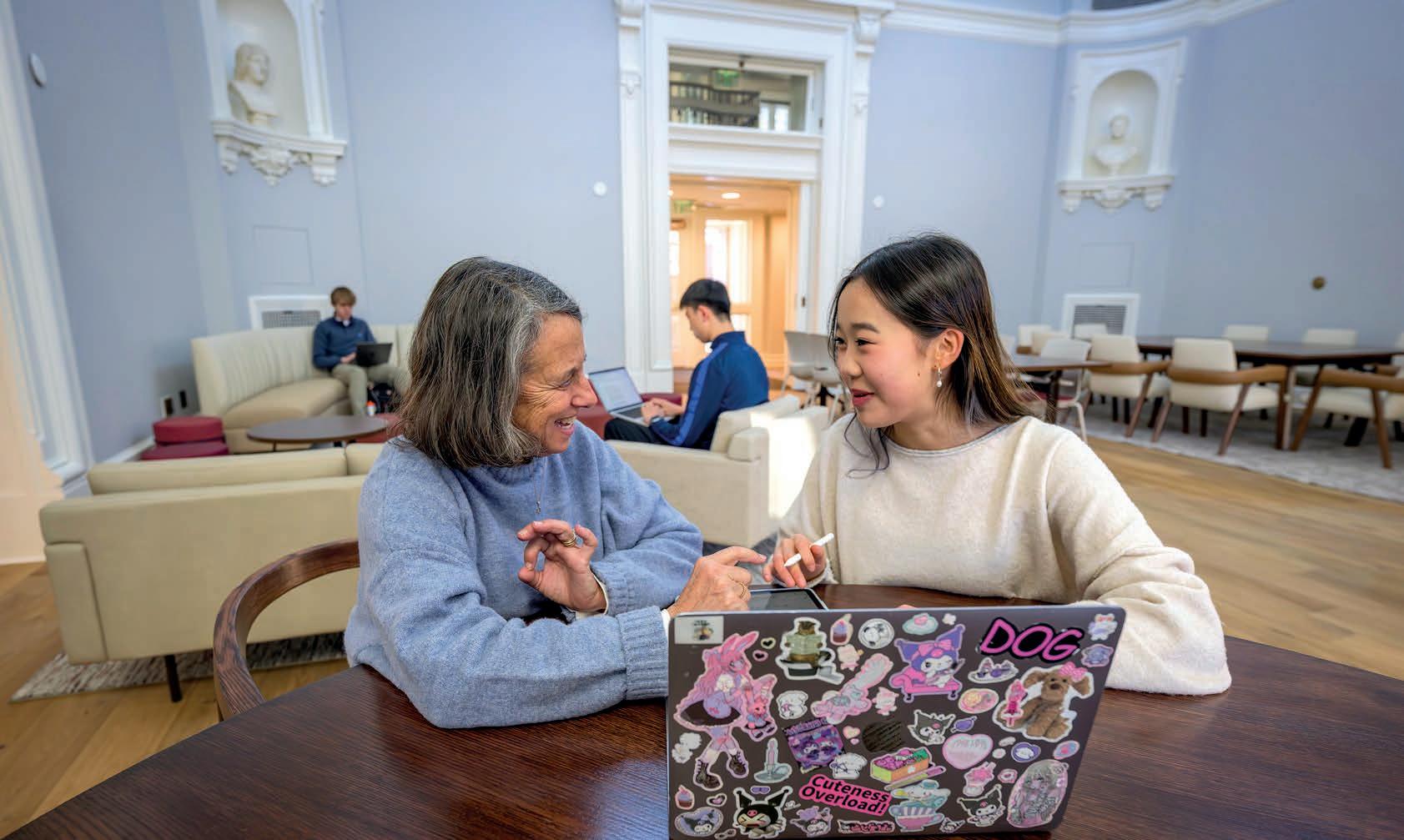
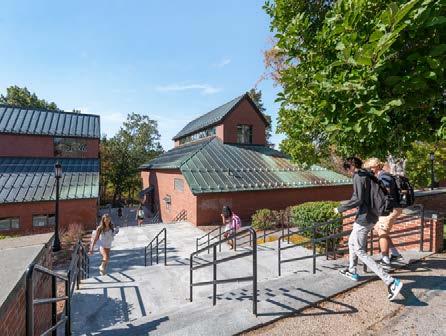
A NEW CHAPTER On Jan. 8, students gathered for the grand reopening of Sheldon Library — complete with refreshments and a look at the building’s renovated first floor. Updates include a heated enclosure for the portico, additional windows in the rotunda that offer views out over Library Pond, and new lights and furnishings. Sheldon now serves as home to the Office of Student Support, evening study hall and the Advanced Studies Program as well as the Chaplaincy and Building Beloved Community Initiatives.
IT GOES SO FAST
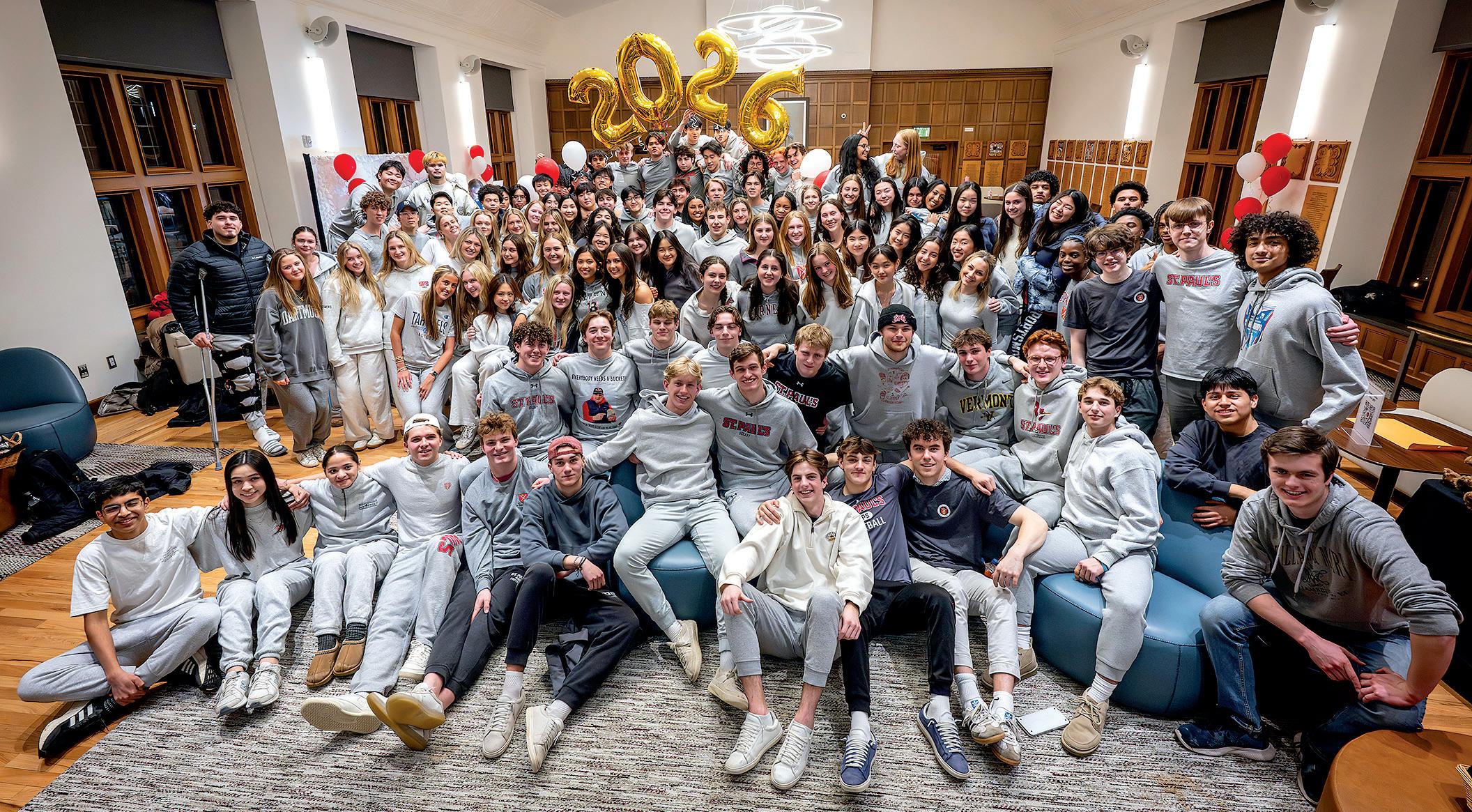
The Form of 2026 gathered on Feb. 19 to mark 100 — or technically, 101 — days until Graduation. The event featured plenty of treats; remarks from Rector Kathy Giles, Chief Advancement Officer Scott Bohan ’94, P’24,’25 and Student Council President Henry Wilson ’26; a photo booth; and a form gift.
ONE ACTS, TWO NIGHTS
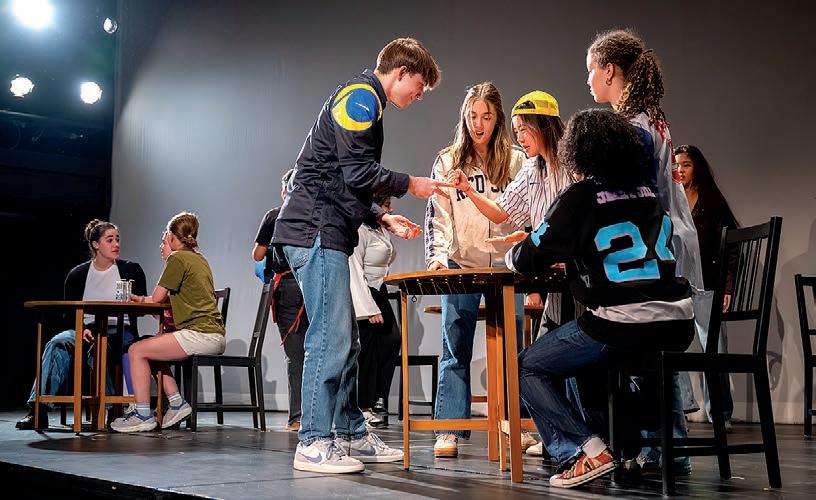
On Feb. 20-21, seven one-act plays written, directed and performed by students debuted in New Space. They ranged from an urban romance to a Western comedy and beyond; in “Backdoor,” shown here, multiple storylines converge in a busy restaurant.
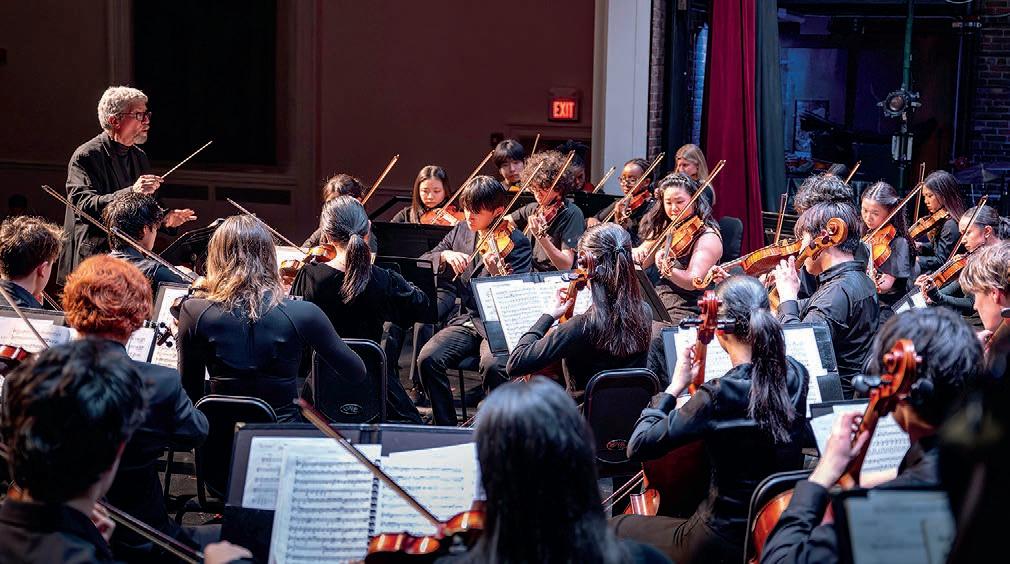
BRAVO! On Feb. 27, student musicians staged a grand finale to the Winter Term, sharing their talent and dedication during the Winter Concert, which featured the orchestra, seen here, along with the a cappella group and the jazz band.
A Pitching Powerhouse
Jelina
Medina
’28
was the youngest member of the Dominican Republic softball team that earned a bronze medal in Peru
JANA F. BROWN
While studying in her room at St. Paul’s School, Jelina Medina ’28 is also honing her softball skills. With her schoolwork spread out in front of her, the right-handed pitcher manipulates a half-moon-shaped rubber training aid with her pitching hand to refine the mechanics of her spin. It’s one of the many manifestations of the Fourth Former’s devotion to softball, which often involves traveling to tournaments on weekends and during school breaks.
Medina has been playing the sport since age eight, when she made the transition to the softball field from the baseball diamond. The daughter of immigrants from the Dominican Republic, Medina competed as a member of the Dominican Republic softball team that earned a bronze medal at the Bolivarian Games at the end of November.
Held in Lima, Peru, the Games feature Olympic-like competition between South American and Caribbean nations in multiple sports. At 15, Medina was the youngest player on her team’s roster, which included athletes up to 34 years old. Although she grew up in the United States, she appreciated the chance to represent her Dominican roots.
“I’m grateful for the opportunity,” Medina says. “A lot of girls don’t have the opportunity to represent their own countries, so I knew I had to go into this with the fullest passion and effort. I love being Hispanic, being Dominican. I love being around the girls, my culture.”
Despite the age range, Medina says the team was able to bond quickly at the Bolivarian Games. During its bronze-medal run, Team DR lost to host Peru and twice to eventual champion Venezuela before beating Bolivia and then Peru in a rematch. The Dominican team dominated Bolivia a second time, 7-0, in the bronze-medal game.
Throughout the tournament, Medina pitched 6.1 innings over three appearances, earning one win for her squad, allowing four
earned runs and striking out four batters. She was particularly pleased with her two innings of work on the mound in the first meeting with Venezuela, calling it a thrill to compete against such a skilled roster.
“Those players were really good,” Medina says of the eventual gold medalists. “It showed how much further I could go as a pitcher and how well I’m already doing because [even though] I didn’t strike anyone out, I was getting ground balls, I was getting them out.”
Medina plans to follow her softball skills as far as possible and has aspirations of playing at the Division I level in college. In addition to being a key member of the SPS softball team, Medina spends every other weekend practicing with her club squad, the Rhode Island Thunder, with teammates from all over New England. While at school, she alternates
pitching and lifting days, balancing athletics with a heavy focus on her studies.
Medina credits SPS softball coach Sarah Boylan with helping her sort through the early interest from top-tier college programs, and other faculty with guiding her through the rigor of academics at SPS. Boylan calls Medina, who pitches consistently in the 60-mph range typical of college players, a “powerhouse in the circle,” noting her ability to throw fastballs and changeups with equal success.
“Her athleticism shows in every pitch — quick, powerful and controlled,” Boylan says, “while her ability to read hitters sets her apart. Jelina’s work ethic is exceptional; she puts in the reps when no one is watching and holds herself to the highest standard.”
Medina is looking forward to the high school softball season, beginning with traveling with the SPS team to Florida over spring break. The Bolivarian Games won’t be held again until 2029, but Medina is already preparing for another opportunity to represent her heritage in a different tournament next summer.
For now, she’s cherishing the bronze medal she earned. “I’m treating it like an Olympic medal,” she says.
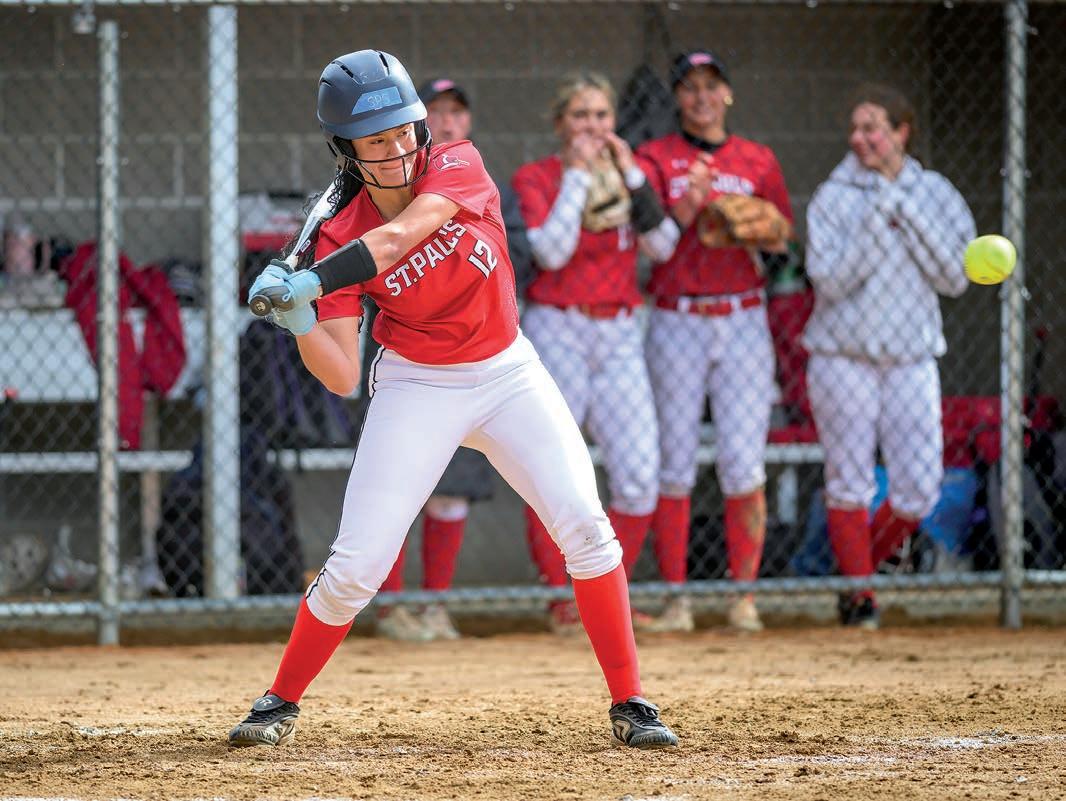
Jelina Medina ’28 up to bat for SPS in a 7-5 win over Andover last spring.

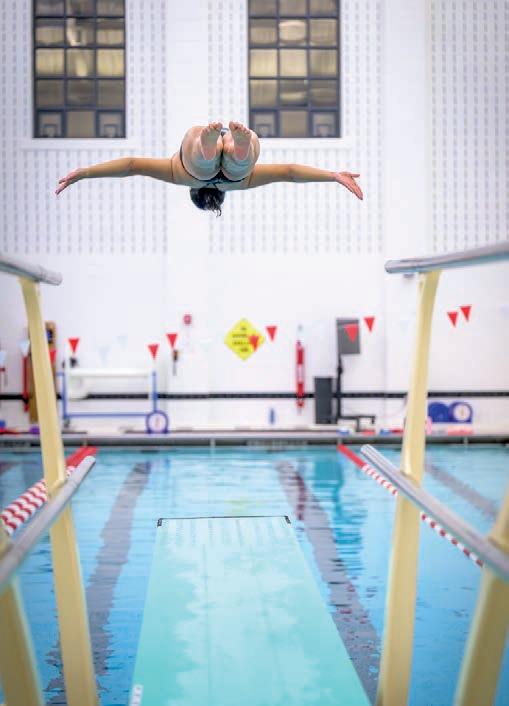
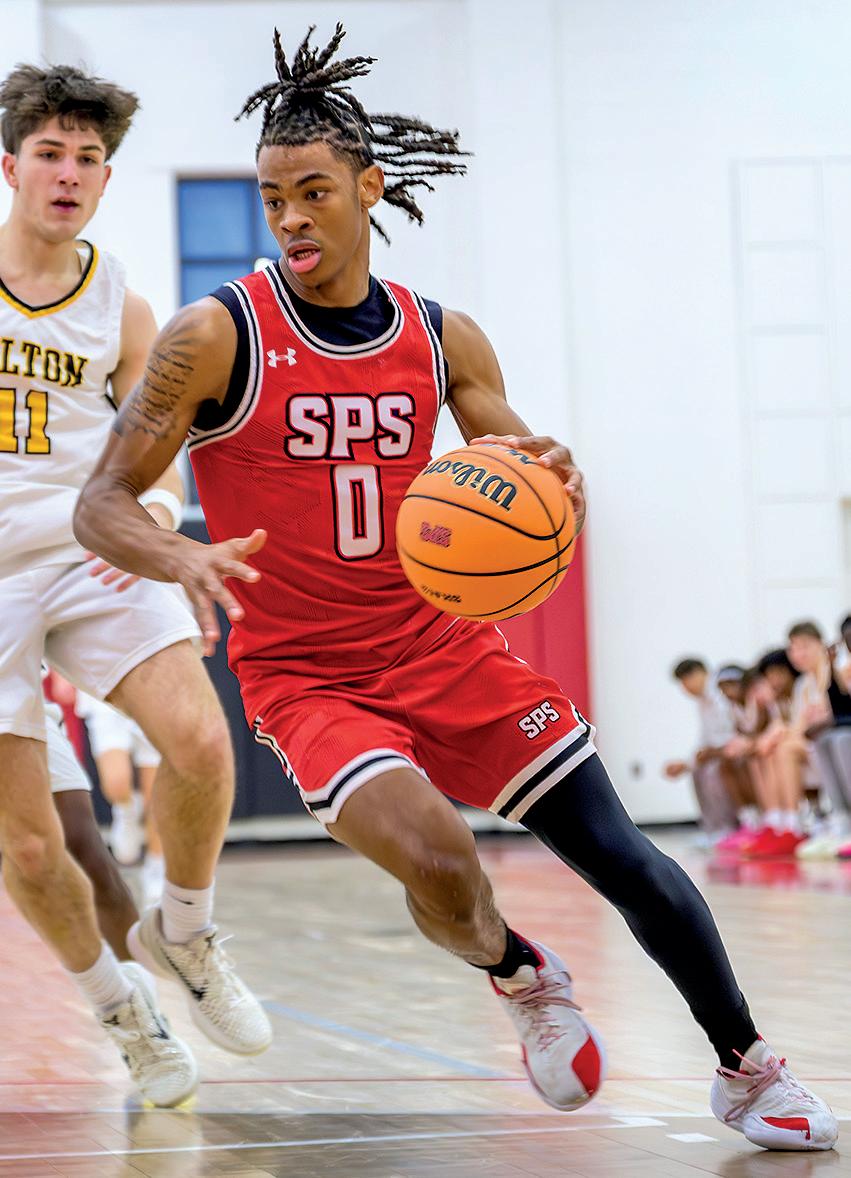
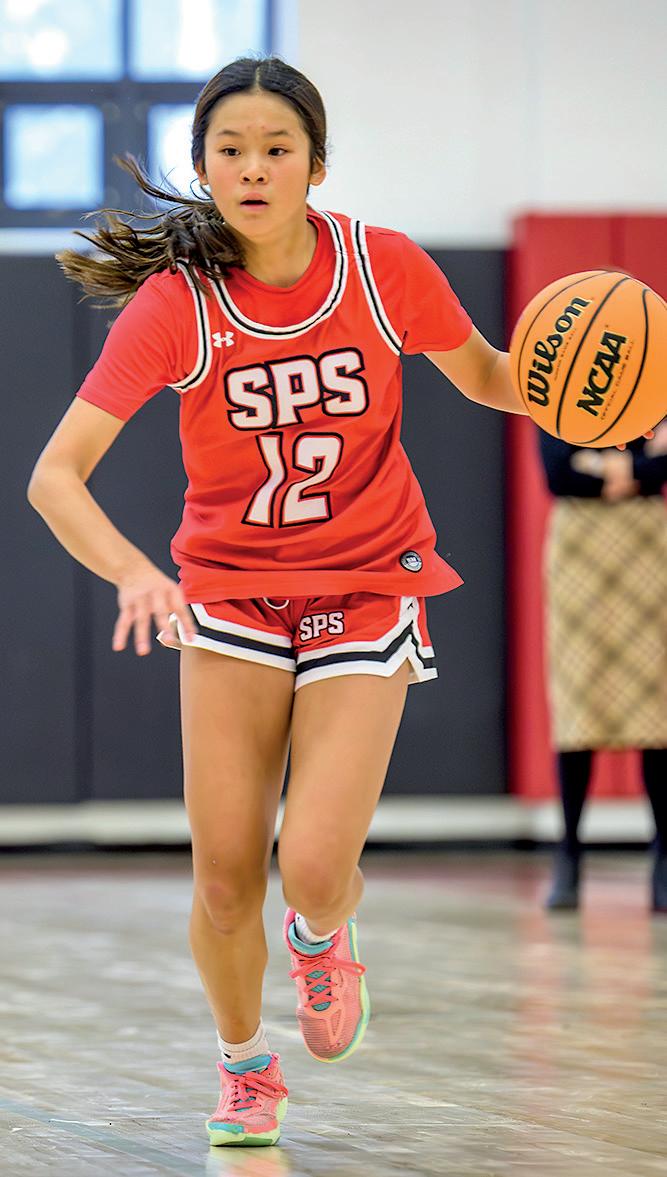
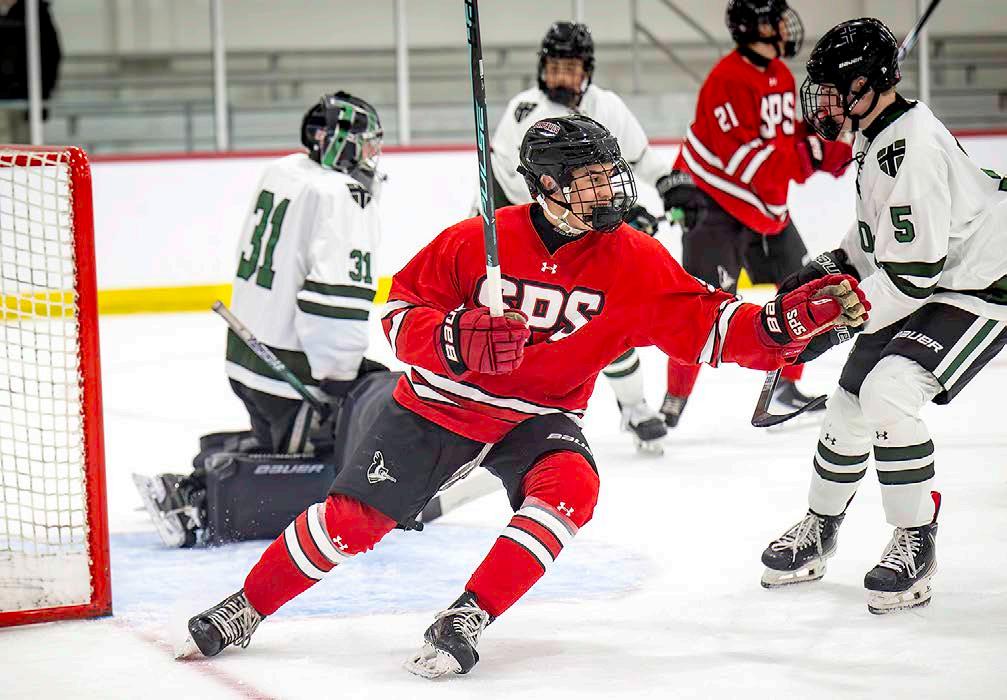
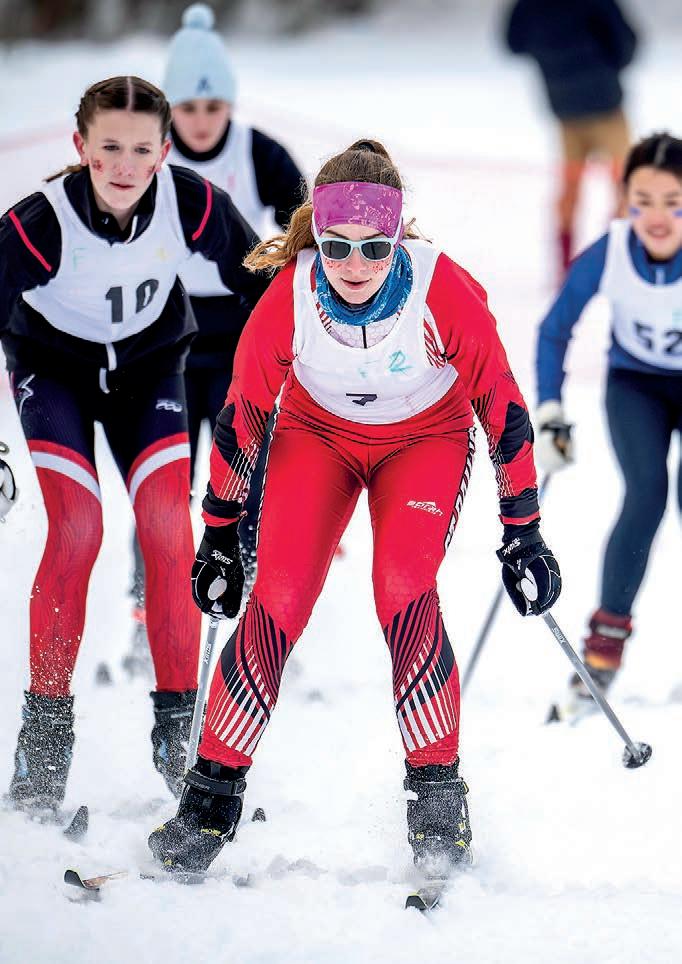
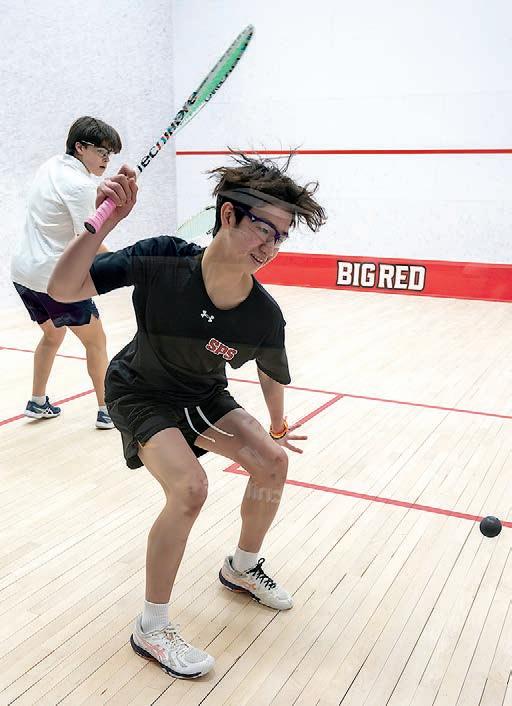
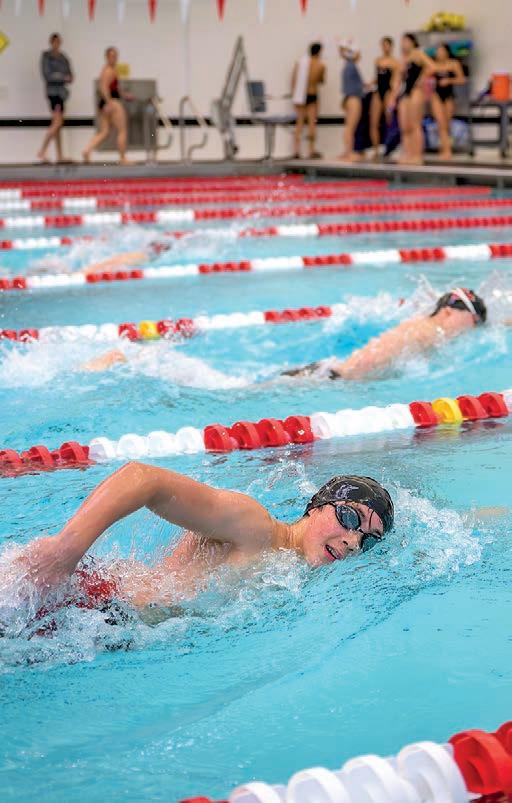
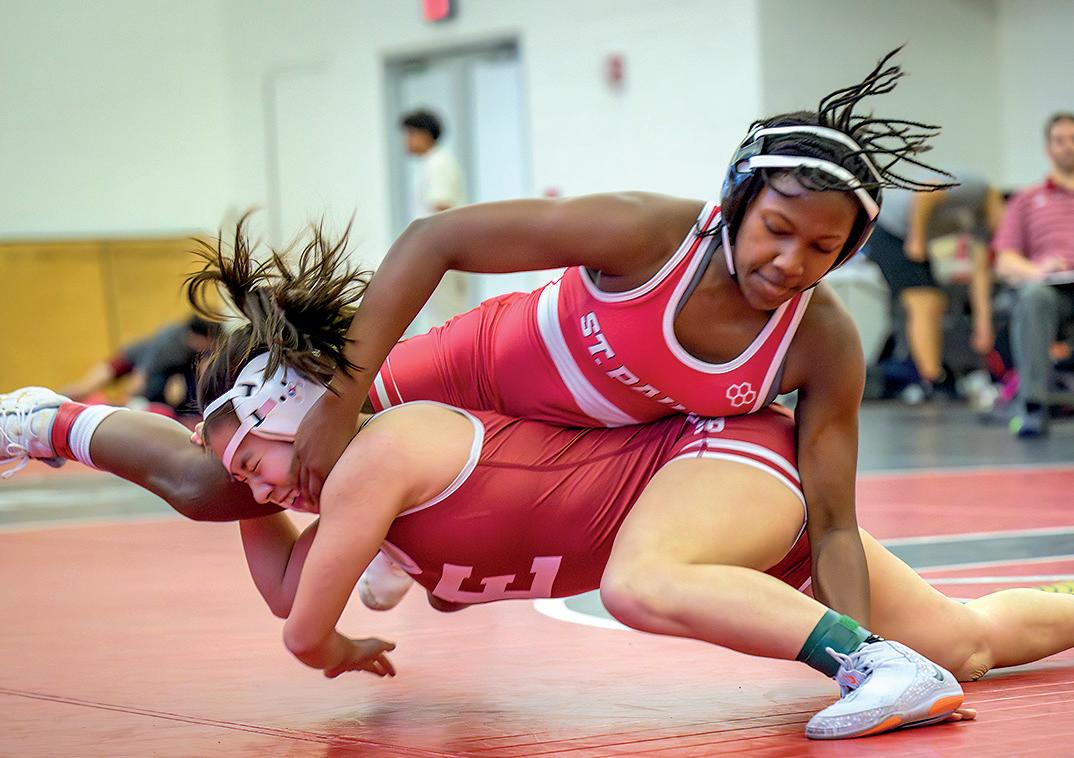
PHOTOS: Michael Seamans



A Life in Spatial Imagery
Architectural photographer Chuck Choi ’77 on capturing three dimensions in two
KATE DUNLOP

MICHAEL
Last October, architectural photographer Chuck Choi ’77 returned to St. Paul’s School for the first time in nearly 50 years. What drew him back? A commission by formmate and SPS Trustee Arthur Zeckendorf ’77, P’05,’07 to photograph some of the School’s most notable buildings.
The two alums had reconnected through Londonbased Foster + Partners, an architectural firm that hired Choi to photograph Zeckendorf’s residential condominium project, 50 United Nations Plaza. “We remained in touch following that collaboration,” Zeckendorf says. “Around the same time, [Trustee] Tim Steinert ’78 shared an edition of Horae magazine with me that featured photography by both me and Chuck. Shortly thereafter, I asked Chuck if he would be interested in photographing the School’s campus.
“St. Paul’s has one of the most beautiful and architecturally significant campuses in the world,” Zeckendorf continues. “As I walked the grounds, it seemed natural to engage a leading architectural photographer — and classmate — to capture the campus. Chuck’s photographs beautifully convey the campus against the New England fall landscape.”
In nearly 40 years of documenting the work of leading architects and designers — from a tranquil New Hampshire lake house to Zeckendorf’s projects, which includes 520 Park Avenue — Choi has transitioned from film to digital photography, and from living in New York City back to Massachusetts, where he grew up.
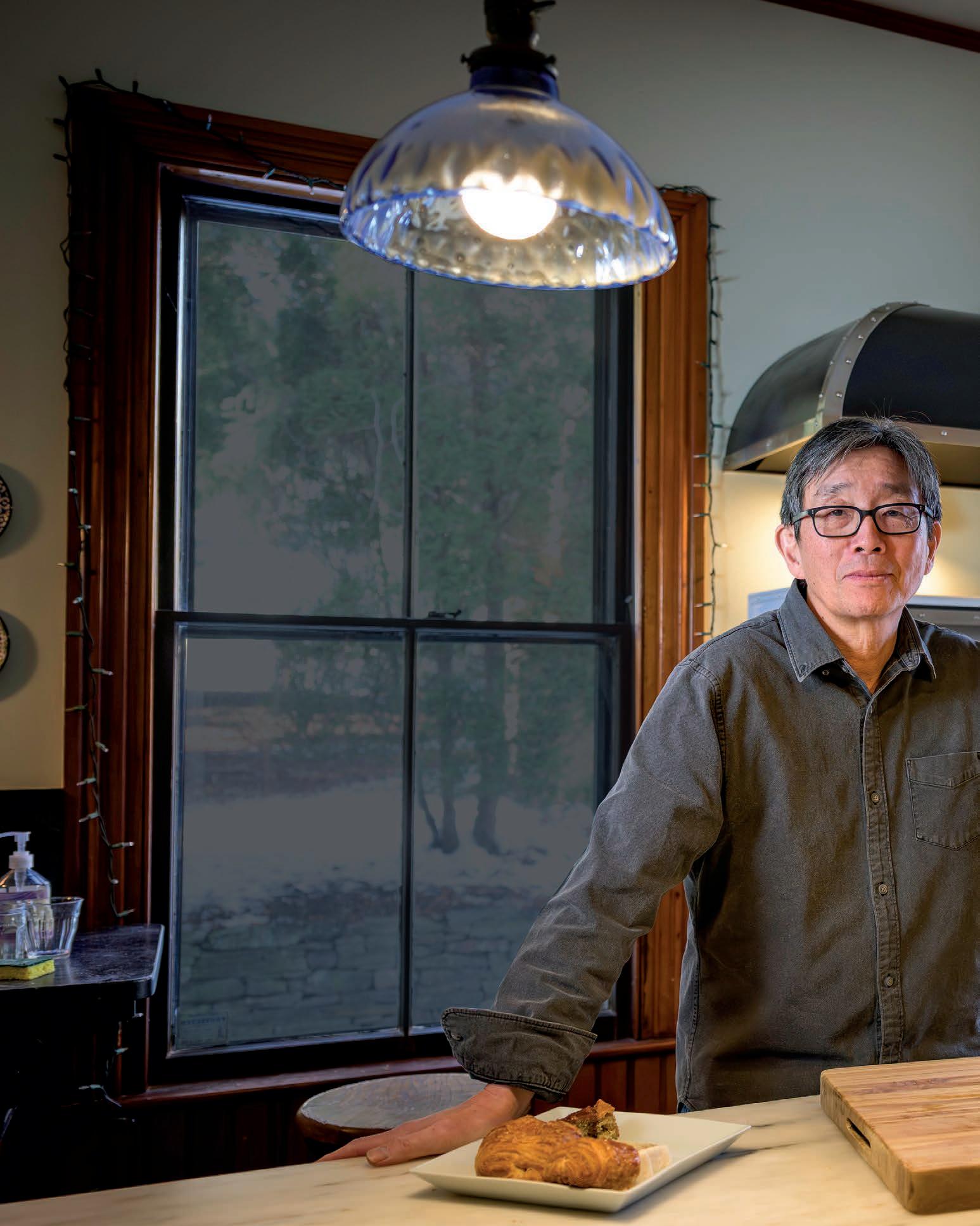
His work has been published in major design publications, including Architectural Digest, Architectural Record and Dwell, but the walls of his 1878 Italianate home, where he works in an attic office, hold framed memories of his children and summers in Wellfleet, Massachusetts. Over tea and lemon poppyseed cake in his kitchen, he reflected on his work as an architectural photographer and where it all began — St. Paul’s School.
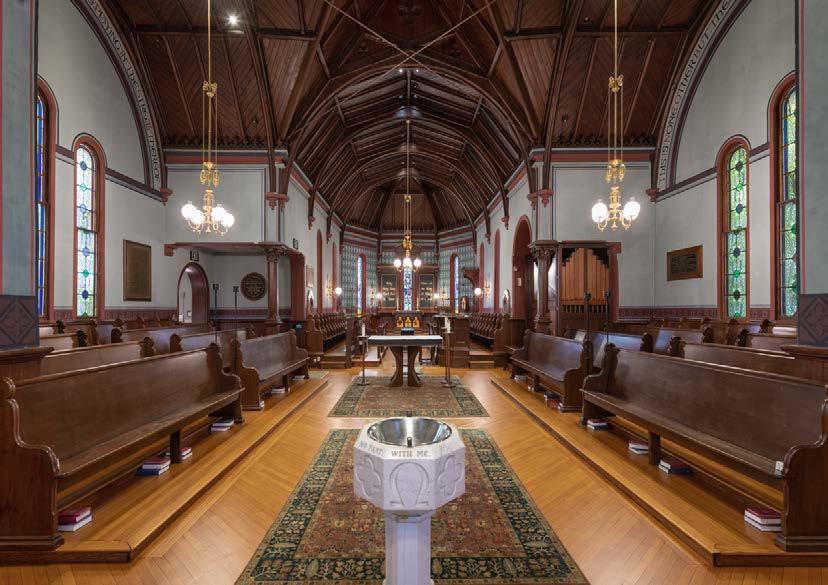
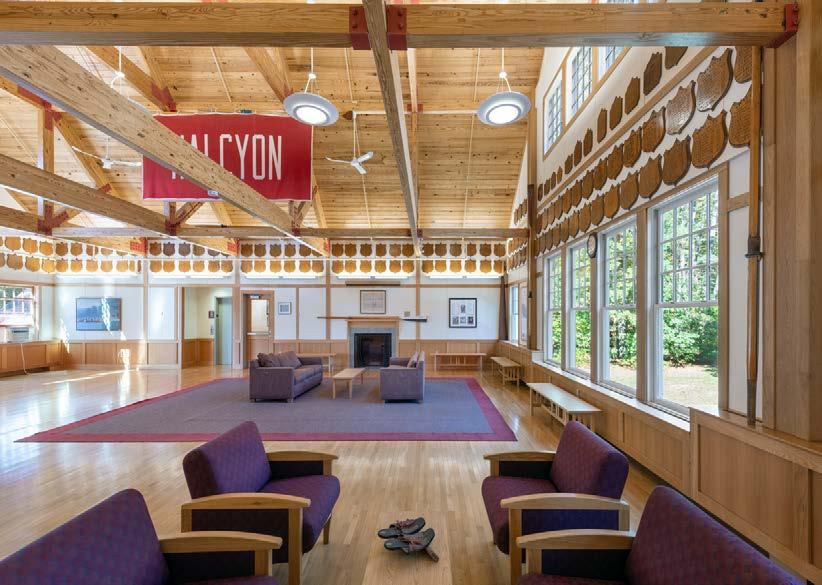
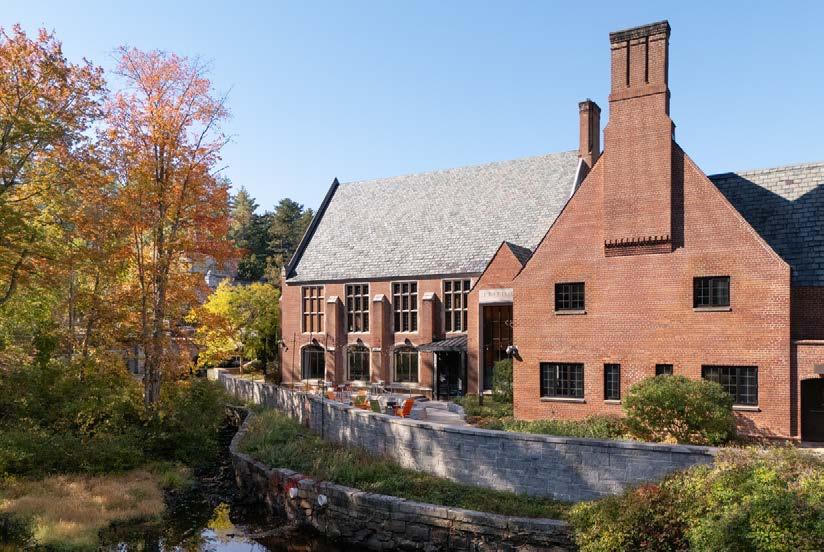
Friedman Community Center, with the Ronald J. Clark Terrace overlooking the Turkey River. | PHOTOS: CHUCK CHOI ’77
Upstairs in the Crumpacker Boathouse.
Inside the Chapel of St. Paul, built in 1858.
When you came to St. Paul’s last fall, you hadn’t been to the School in nearly 50 years. What was it like to return after all that time?
I actually had a hint of trepidation about going back — I’d been a public-school kid and was homesick a lot, and culturally the School was very foreign to me. So, a certain amount of that adolescent angst came up from the depths. But Artie asked if I’d go up and take pictures and I said sure. It turned out to be great. I met Rector Giles and saw what student life is like. St. Paul’s is a different school now, and I could see that, which is a good thing.
Which came first, your interest in photography or architecture?
Definitely photography. And it happened at St. Paul’s. I wasn’t a natural joiner, and photography was something I could do on my own. In Fourth Form, I borrowed my brother’s camera and just started to walk around taking pictures. I just happened to take a picture of Posy Campbell ’76 one day. Posy was a great dancer, and she was practicing in the Upper lounge. I caught her silhouetted form in a perfectly held dance position. It was complete luck and technically not that great, but I discovered what a poetic thing a photo could be.
When I went to Princeton, I took photography with Emmett Gowin. He was truly an inspirational man. I also worked for the communications office as a photographer. For about six years after college, I tried to make it as a fine art photographer, but I couldn’t really make a living. My dad, an economics professor who was always concerned about his son, suggested architecture. I went to architecture school at Princeton for a year and realized architects think differently than people who are visual. They think
spatially; when they make a drawing, they have to extrapolate to see what it is going to look like in three dimensions. You don’t extrapolate from a photograph or painting, it’s all there. And so, it takes a different set of skills. I left school and assisted an architectural photographer for about a year, and then I went out on my own. So, I kind of combined the two interests. I was based in Brooklyn for 25 years, and we moved to Massachusetts 15 years ago.
What got you interested in architecture?
I went to Europe, and it was my first exposure to Renaissance painting, which is the beginning of spatial imagery. There’s a narrative going on, and that’s basically what happens in architectural photography. You are photographing architecture, but there’s also people in the space and the architects are trying to convey a narrative about their project.
How and when do you work with architects?
Buildings are photographed when they’re fresh, before they get mucked up. When an architect hires me, hopefully they will explain what their project is about and the ideas behind it. As a photographer, I have to try to figure out what it is that’s germane about a project.
There’s another problem, too: The architect’s threedimensional ideas might not be manifest in a twodimensional photograph. You’re just not going to get a good photo. On the other hand, I can photograph a space in a way so that it will say something the architect never realized before. If you hire a good photographer, they can bring things out you might have not seen.
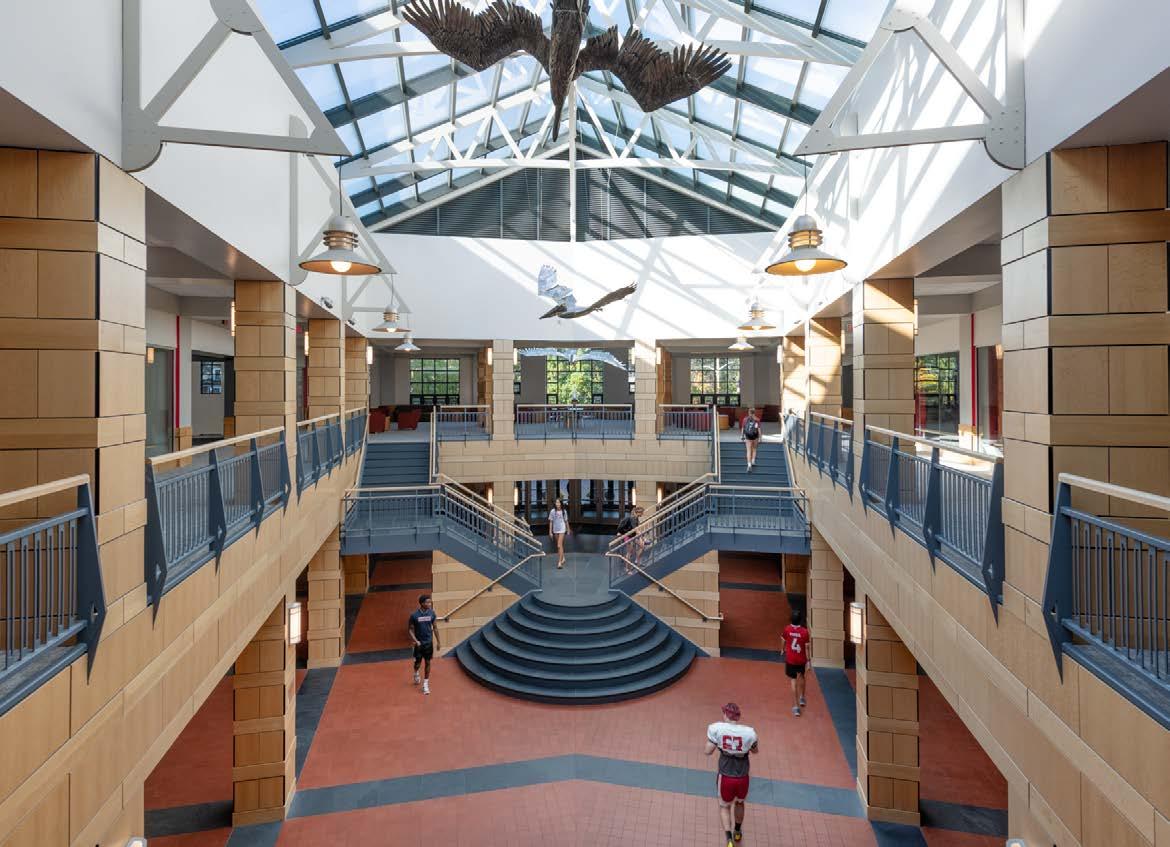
The soaring atrium over Barker Court in the Athletic and Fitness Center.
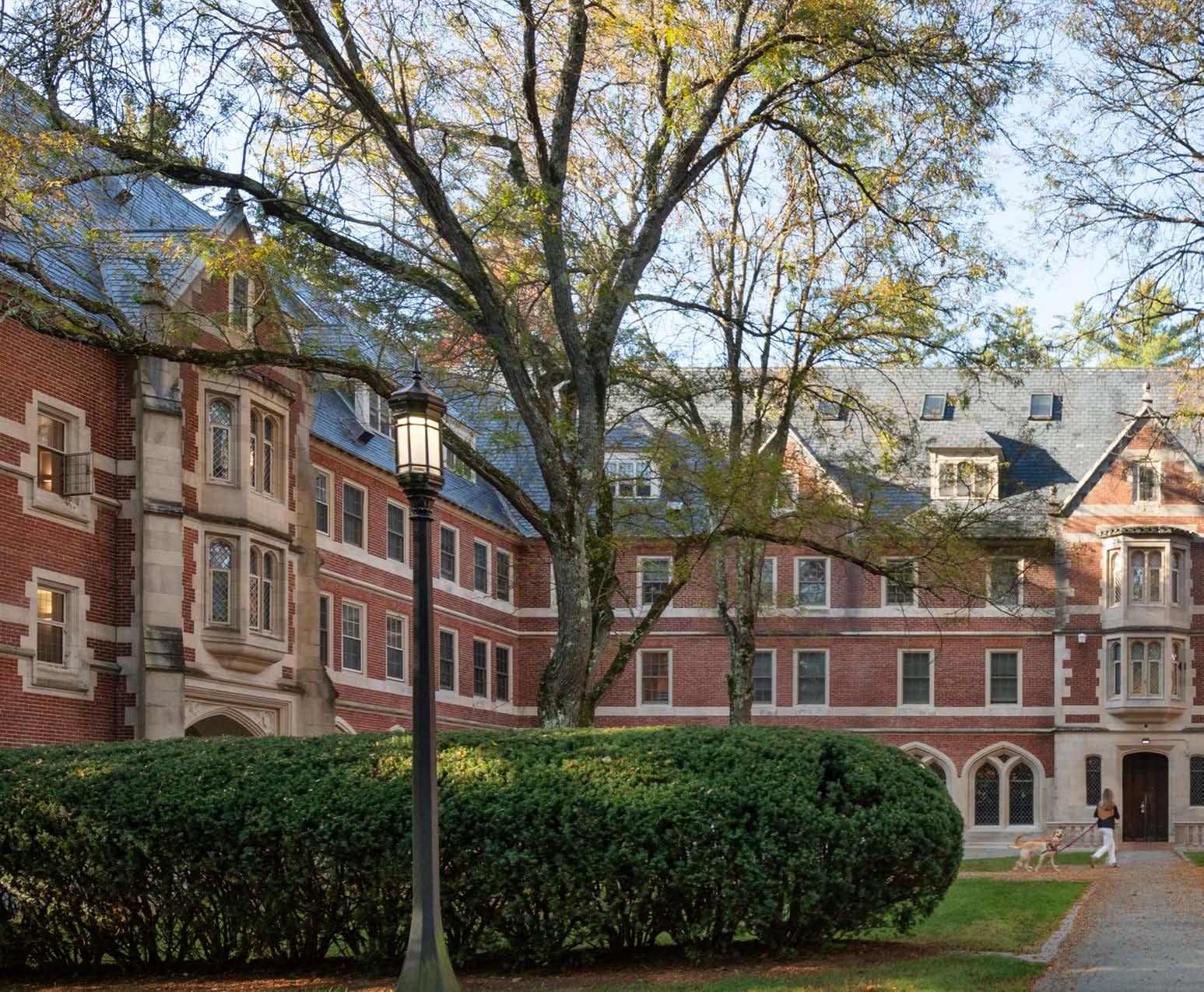
You’ve been in business since 1988. Any idea how many assignments you’ve had?
No, but it wouldn’t be that many, actually. There are whole parts of the year when I don’t work because people are waiting for foliage. Autumn is the busiest time. I have a lot of time at home, and a lot of flexibility. My wife works a normal office job, so I do a lot of the things like taking care of the kids and the house and stuff like that. My epitaph will read, “Here lies Chuck … he raised three children!”
How would you describe your own work?
I’m good at figuring out how to represent a building succinctly and efficiently. I work really fast because I’ve been doing it for so long.
I would say that my work always looks for the architectural idea to come forth. That it’s pretty straightforward. Some photographers embellish, or they try to. But if the idea is there, even if there are some flaws in it, it’s fine because you’ve got the idea. You don’t have to make the thing perfect. Some photographers will agonize over some detail and it’s only important to them. No one’s going to notice it. You’ve got the shot. Forget about the rest.
What makes you like a job at this point?
Whether the architecture is good. Good architects think about how light is going to come into the space. I’m slowing down a bit so I’m trying to be more selective about jobs. I’m also looking for pro-bono opportunities to shoot non-commercially. I joined a group called Save Venice, and they are responsible for restoring artworks and architecture in Venice. They might want to do a book on all the restoration work they’ve done. That sounds like an amazing opportunity. Just put me up somewhere, give me some bistecca and a spritz, and I’ll do it.
A lot of buildings like that, and the Duomo in Florence, were photographed in the 19th century or later for tourism but have never been photographed with serious architectural intent. There’s just no budget.
How would you approach photographing such an iconic building as the Duomo? Well, first of all, I need access. They’re not just going to let someone show up with a camera to take pictures. I would hope to work in tandem with scholars in the field of
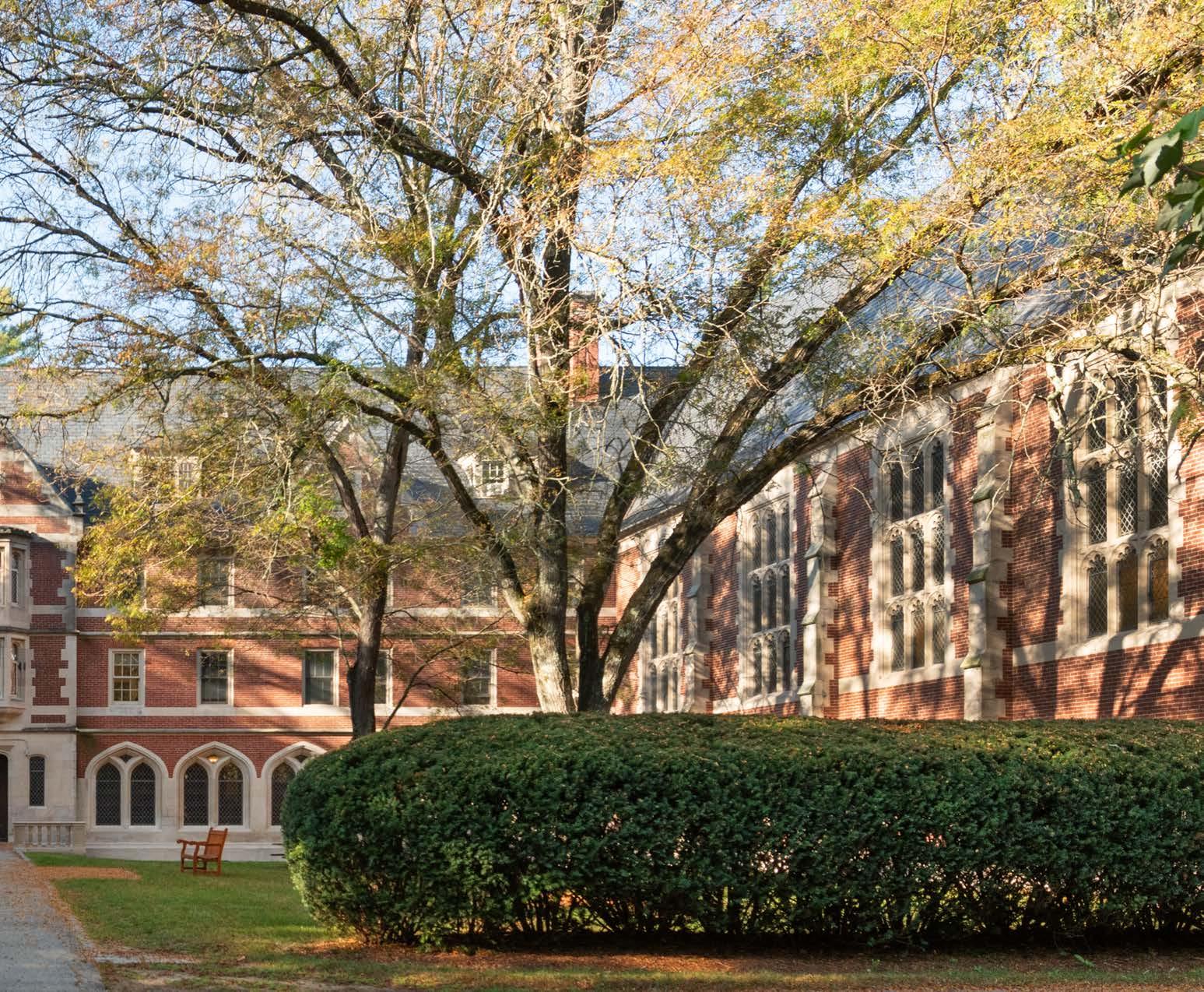
Renaissance architecture. They would enumerate the salient architectural aspects of the building, then it would be my job to render them in two dimensions. The images would be a document that could be used for educational purposes. Digital photography has opened up a world of opportunity for photos that wouldn’t have been available in the days when we worked with a 4x5 camera and had to lug that around, and film, and lights — none of that is required anymore.
The hardest part with the Duomo would be to capture the awesome scale of the building. It’s very easy just to document the building, but what’s difficult is to give a sense of how incredibly massive the building is. That would take some thought.
Do you have any concerns about how few digital images are printed and so could be lost as technology changes?
What I’m concerned about is AI, because photographs are seen as evidence of the truth and when you erode that and people start not believing it, then the photography
loses its value. I mean, why does an architect not just show the rendering? Because they need to prove that their idea actually got built, and this is what it looks like — that’s why they hire me. Some of the alterations you can do today are just chipping away at the trust that people have in photographs.
Has there been a project or a building you especially enjoyed?
Shooting for this architect, Norman Foster, and his firm Foster + Partners — they do really great architecture, so whenever I’ve worked for them, it’s been a pleasure. Artie hired Foster’s firm to do 50 UN Plaza in New York.
You have three children, including two teenagers. Are any of them photographers?
My 17-year-old, Eli, actually. I never pushed him or even suggested that he take up photography, but he commandeered an old camera. He started to take pictures, and he’s taken photography at school. Now he thinks he’s better than me. Hopefully that will turn out to be true!
SEE MORE CHOI PHOTOS
Coit’s courtyard, with the Upper dining room to the right.
Around the Humanities Table, A Larger World
Chris Carter P’17, head of the Humanities Department, teaching Humanities V in the Schoolhouse.
She joined the SPS faculty in 1992 and holds The Donald M. Culver ’43 Chair in Humanities.

From first-year discussions to advanced electives, humanities faculty members share how the discipline invites students — and educators — into deeper engagement with the human experience.
KRISTIN DUISBERG
At the beginning of the year in Beth Little’s Humanities III classes, students learn how to participate in Harkness discussions by using poker chips. For the first few weeks, each student starts the class with three chips and gives one away every time they comment or ask a question, with the goal of leaving the classroom empty-handed. In Major Kevin Brooks’ Contemporary America elective, Fifth and Sixth Form students are greeted each period by the strains of a classic ’80s pop song, and often settle in with a quick writing activity or poem that helps them shift their mental gears to humanities from whatever class they had previously. In every discipline, of course, faculty members have their own approaches to bringing their students into the complex subject matter they teach. The mandate in the St. Paul’s School humanities program, though, is a singular one: helping every student not just understand literature, social science and culture, but consider questions that speak to the very essence of what it means to be human. It’s heady work that involves grappling simultaneously with ideas and materials from traditional English, history and religion classrooms, and doing so in the discussion-based format of Harkness teaching rather than lecture — starting from students’ very first term of high school.
The Humanities Department at St. Paul’s dates back to the mid-1990s, when the School consolidated the English, history and religion departments into a single discipline. A new faculty member at the time, current department chair Christine Carter P’17 was tapped to help design and implement the curriculum as part of a team that included a math teacher with a Ph.D. in philosophy, an art history teacher, a history teacher and two English teachers. “We all went into the program with the understanding that ‘teacher-as-learner’ would be a compelling aspect of our engagement with students,” she says.
A program that today comprises yearlong Third, Fourth and Fifth Form core courses that every student takes, as well as an array of electives for Fourth through Sixth Formers that focus more closely on topics related to literature, religion, philosophy, economics and more, Carter recalls the shift as a tremendous challenge — and a rewarding outcome for teachers and students alike, who set aside textbooks for primary sources, reframed subject matter around themes instead of disciplines, and gained richer and more nuanced understanding not just of the what of past and current events, but also the why. Framed by a mission statement that prioritizes helping students “develop the passion for inquiry essential to a healthy and examined life” and challenges them to “become engaged citizens and responsible leaders in an increasingly complex and globalized world,” Carter emphasizes, “The department is really based on the notion of studying the human condition.”
In 2025, 11 humanities teachers were among the nearly 40 St. Paul’s School faculty members who spent a portion of their summer thinking and writing about their pedagogy — how they teach, why teaching matters and how the work they do in the classroom is just one element of what it means to nurture students’ intellectual growth in the School’s 100% boarding community. They identified a strong connection between their work and the School’s mission to educate students to build lives of purpose in service to the greater good. The following excerpts, which come from four of those faculty writings, reflect that connection, the many ways humanities courses help students understand their own and others’ places in the world, and the transformative experience that is students’ journey from new Third Form learners to Sixth Formers prepared to share what they have taken from that journey with their next group of student peers.
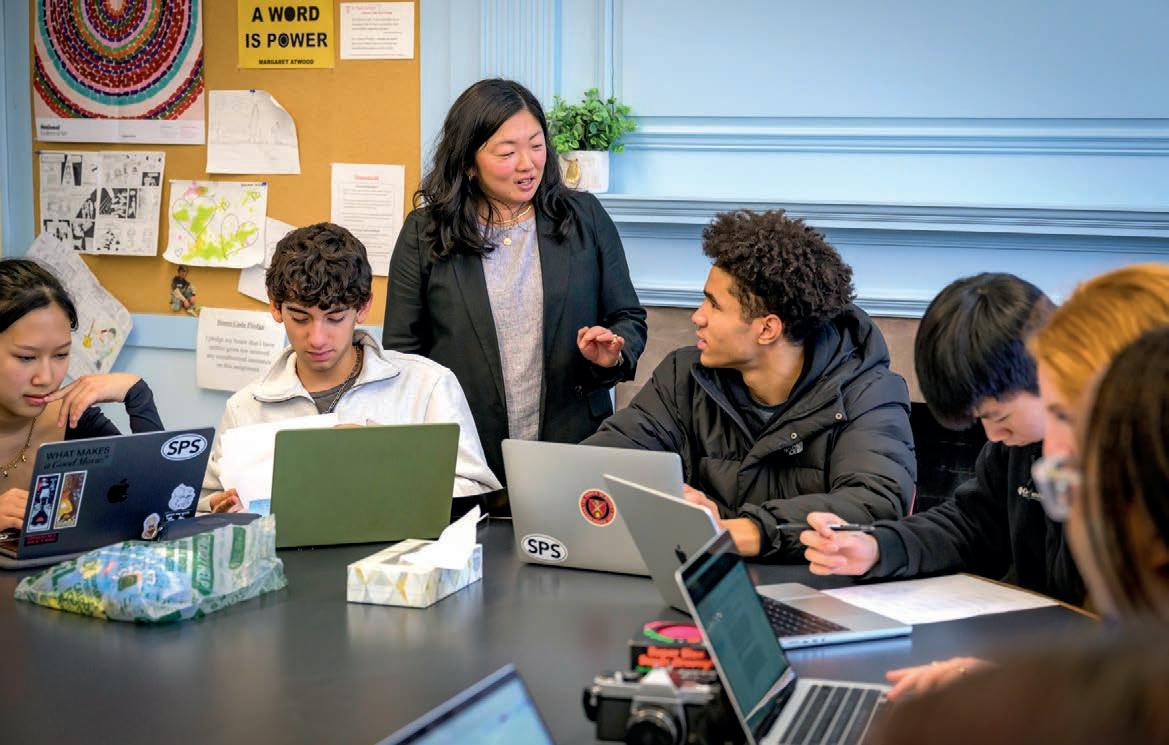
What It Means to be Part of the Human Story
BETH LITTLE, HUMANITIES III
I love being the introduction to a student’s humanities journey at St. Paul’s. Over the course of a year, their understanding of what it means to study literature and history is turned upside down, and they start to see what it means to be a student of humanity and to start to question, learn and understand for themselves what it means to be human and what it means to be part of the human story. We are interested in broadening their perspective on the world and on history. We want them to see the connections between human beings across time and to do that by asking questions, digging for answers and then turning the lens on themselves. We start off the year with questions like: Who am I? What stories and histories have shaped my identity? What are the origin stories of various cultural and religious traditions? How do these stories shape individual, political and national identities? How do the stories we choose to tell — as individuals, institutions and nations — influence the way we interact with others? Each of these inquiries brings us back to stories and humans. History is story. Literature is story. We read to learn and see ourselves in the context of this world, its infinite stories, and we try to understand our place here. We want our students to recognize themselves and see the world in the works we read.
We also introduce them to discussion in the Harkness method. We teach them to actively listen, think before they speak, and respond with honesty and evidence. To watch them grow as discussion participants over the course of the year is a joy. One student I had spent our first practice discussion silent, and then he spent our first graded discussion silent, his nose in his book. After class, I pulled him aside and asked him how he felt about the experience. He said, “I didn’t like it. I didn’t have anything to
say.” After asking a couple more questions, I understood that he did have things to say, but in the pressure of the moment, they were lost. I asked if he’d like to meet for office hours before the next discussion. He agreed. In our meeting, we wrote down questions, marked quotes in his book and had a mini-discussion ourselves. He felt better, he said. More prepared. That day in class for our second graded discussion I called on him to kick off the conversation, and he posed the first question to the group. His peers jumped on it and ran with it. He understood this concept: setting up a peer for success, like running the correct route in football so the quarterback can hit you with the ball in the exact spot he intends. After class, I asked him how he felt about that day and he said, “Okay, but I can do better.” He continued to work with me through practice mini-discussions; he added comments in moments that held lower stakes in class, and in his final comment of the year, I wrote that he had developed through hard work and determination into the “Graded Discussion MVP.” He understood that he was on a team in the Hum III classroom, and that with the support of his peers and coach (me) he could find success, and he did. This is not an uncommon joy to witness in Hum III. I frequently get to see our students in their biggest moment of growth, and I feel truly lucky. The students leave the Hum III classroom understanding what it means to work at something, revise versus edit, to dig into research versus do a cursory web search, to trust their instincts and realize they have the capacity and ability to find the answers they are looking for. It’s important for them to understand that they are a work in progress, throughout their whole SPS career. And each milestone, each summative assessment, is a steppingstone to the next thing. And that by simply giving their all, and trying, struggling through, they are getting better, growing and becoming a true student of the world.
A More Holistic Understanding of Past, Present and Future
MAJOR KEVIN BROOKS, FIFTH AND SIXTH FORM ELECTIVES
During a chapel talk, our guest speaker referenced Romans 12, verse 2: “Do not conform to the pattern of this world, but be transformed by the renewing of your mind.” I find the phrase “be transformed by the renewing of your mind” to be an apt description of our humanities curriculum. Our interactive, interdisciplinary courses are meant to be transformative — we want our students to see and make connections between disparate events and time periods to transform their understanding of themselves and the world. Additionally, we want our students to move beyond rote memorization of facts and focus on synthesizing information from different disciplines and topics into a more holistic understanding of the past, the present and the future. In the process of recognizing these connections, our students become more intellectually curious as they seek to identify and understand the influence of major historical events on contemporary society. I want my students to realize and understand that it is impossible to truly understand our contemporary world without having a solid foundational knowledge of previous societies and cultures that influenced us. In addition, students become (hopefully) less judgmental because they must recognize different perspectives and learn to accept that other perspectives and experiences are just as credible and valuable as their own. This type of learning and knowledge helps our students to better understand what it means to build purposeful lives in service to the greater good.
Teaching a humanities course is energizing in the sense of helping students see and understand important ideas across a broad range of topics and disciplines, but it is also exhausting for the very same reason. It is simply impossible for a teacher to be a qualified expert in literature, history, religion, political studies, geography, sociology and the arts — all elements of a good humanities course. Thus, the
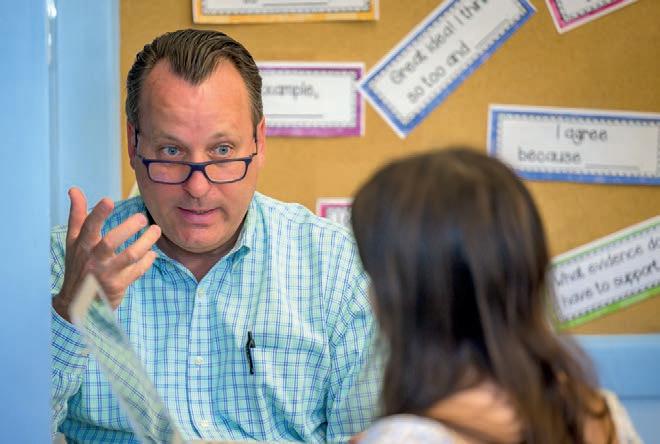
weekly collaboration with colleagues teaching the same core course is essential. We rely on each other’s strengths, backgrounds, and experiences, and we work together to create engaging, holistic courses that offer a pragmatic mix of content and skill development. For me, the value lies in helping students develop their understanding of a complex world and their own place in it, as well as helping students develop confidence in their own voice in their writing and their own ability to express their opinions and arguments successfully in their writing.
Engaging With Pressing Questions of the Modern World
ABBEY EDWARDS, HUMANITIES V St. Paul’s School is unique in that all aspects of the School, from the commitment to being a 100% residential community to the humanities program, are unified by our mission, the School Prayer and the intentionality of the chapel program. While it is easy to state that the School’s mission is to “educate students to build purposeful lives in service to the greater good,” the academic, residential, co-curricular and spiritual programs at SPS truly work together toward this mission. In all of my responsibilities at SPS, I am acutely aware that they are connected; whether I am in Brewster House having a conversation with a student at 10 p.m., teaching a carefully planned Humanities V lesson or coaching during a tense moment of a girls varsity soccer game, I am helping students learn, grow and develop an understanding of how they will each bring their talents to “serve the greater good.”
In Humanities V, students engage with the pressing questions of the modern world. While we follow a timeline that starts with the Industrial Revolution and takes us through the end of the Cold War, students are grappling with important questions of our era, such as, Who has crafted the narratives of our world, and why is that important to understand now? Specific themes that we address are the tension between capitalism and communism; the rise of the modern nation-state; colonialism; the impact of industrialized warfare as seen in both World Wars of the 20th century; the Cold War; and the global and lasting impact of Cold War policy and ideology. Students read a variety of texts, from literature to poetry and short stories and analytical essays, and they write critical analysis essays with the goal of crafting a clear and defendable thesis and proving that thesis in a logical and wellsupported manner. In addition to the traditional content and skill-based goals, the most important outcome is the growth in students’ ability to understand the forces that have shaped our world today and apply these understandings to shaping their lives after they graduate from St. Paul’s School so that they truly become positive global citizens. To that end, the daily classroom experience is central to this learning experience and intellectual, socialemotional and moral growth.
THE ST. PAUL’S-HARKNESS CONNECTION
The teaching method used by the Humanities Department has a distinctive connection to St. Paul’s School: it exists thanks to, and is named after, Form of 1893 alumnus Edward S. Harkness.
As a student, Harkness struggled with the didactic classroom approach favored across the educational landscape at the time; later, he dedicated much of his philanthropy to secondary and higher educational institutions across the Northeastern United States, including St. Paul’s, with his gifts to his alma mater and others focused on “reforming the pedagogical techniques of the country’s elite boarding schools.”
An offshoot of the Socratic method, which employs dialogue and question-asking to promote critical thinking, Harkness teaching is discussion-based, with students and teachers engaging in conversation about course material. To facilitate the conversational dynamic and emphasize the principle that every voice in the room has equal weight, Harkness classes are taught around a table. Teachers offer guidance, clarification and amplification of content, but do not direct the class material as they would in a lecture. In Harkness’ words, the approach represented “a real revolution in methods.”
Nearly 100 years after the Harkness method was first developed, that revolution is alive and well in the Schoolhouse at St. Paul’s, a building made possible by Edward Harkness. On April 15, 1936, Fourth Rector Rev. Dr. Samuel Drury wrote to ask Harkness, already a loyal donor to the School, if he would fund a new Schoolhouse in its entirety. In a letter dated just 12 days later, Harkness replied that he “would be glad to donate such a building.” In a letter from April 1939, Drury reported to Harkness on the new furnishings in the Schoolhouse Reading Room, calling the result “really beautiful,” and concluded that, “all in all, I do not know where in the Country one could find a more beautiful or useful schoolhouse.”
In 1950, after his widow’s death, Harkness’ bequest of $1.5 million came to the School. Sixth Rector Henry Kittredge recognized its significance, noting, “There is now no question but that the policy of small classes and round tables, an educational theory in which Mr. Harkness was so deeply interested, can be continued at all levels.”
And so it has, with today’s students in every form learning around Harkness tables in a building given by the man who was once a boy at St. Paul’s School.
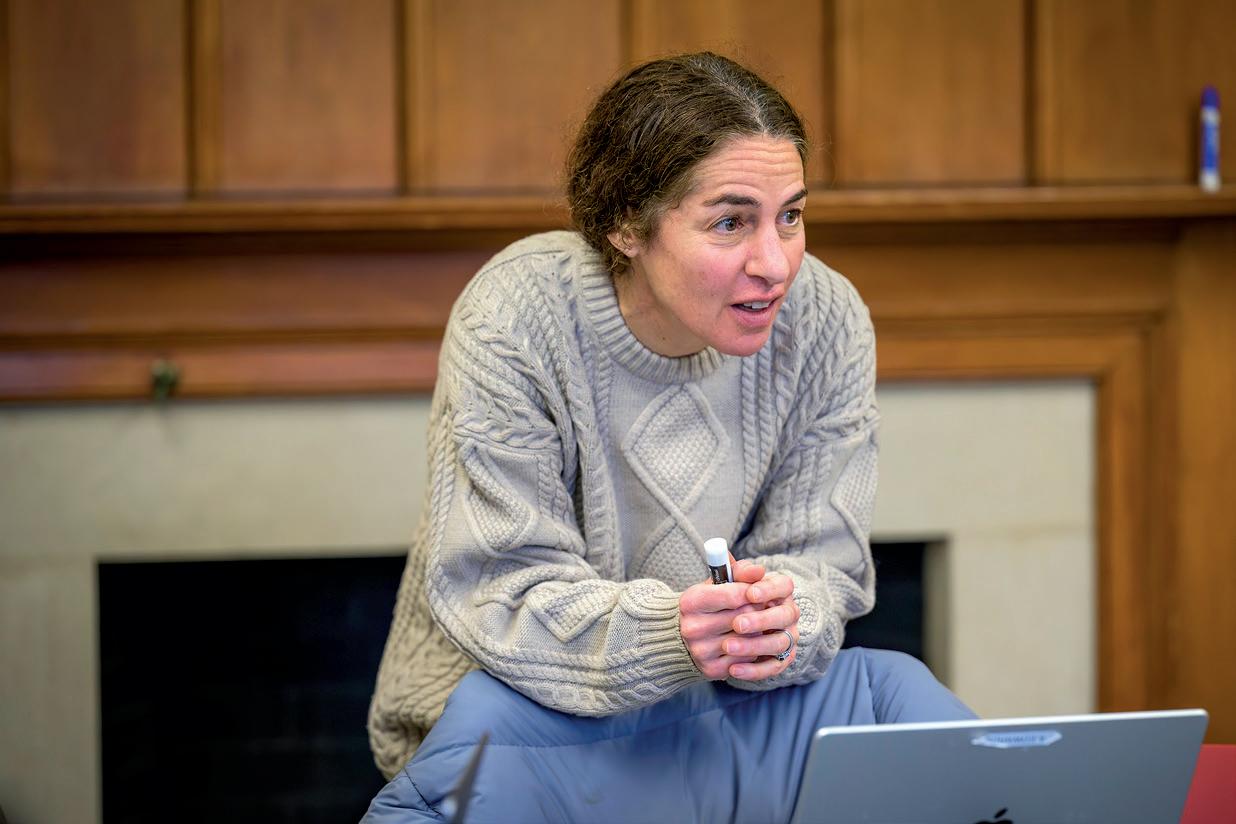
Throughout the year, I work to connect students’ experiences to the time period, culture or literature at hand. For instance, during our World War I unit, we read poetry and short stories that emerged out of the violence of the first industrialized global war. Throughout the unit, students work on identifying poetic and literary devices and the manner in which the poets and authors use these devices to produce meaning and elicit an emotional response from the reader. To further connect the experiences of young adults and adolescents from a century ago to students in the 2020s, we delve into the themes of cynicism, lost innocence and distrust of those who hold power. Students are asked to journal in class and identify areas where and how they see these emotions in today’s world. Over the years, I have had students use these themes to drive their capstone research projects and they have compared the soldiers’ experiences both during and after World War I to U.S. soldiers who have fought in modern wars such as Iraq and Afghanistan. Likewise, during the Spring Term, we read Arundhati Roy’s “The God of Small Things.” This novel is primarily set in the late 1960s in Southwestern India and one of the protagonists is a single mother who is marginalized by her relatively wealthy family for her status as a divorced woman. When responding to prompts regarding gender and social norms, students frequently focus on the time and place as central. Therefore, I ask them to consider the social norms regarding divorced women in their countries of origin in the 1960s as well as to consider societal expectations for women today. This frequently leads to engaging and thought-provoking class discussions regarding power and gender and has led some students to a topic for their capstone projects. These conversations circle back to the first class of the year, when we discuss Chimamanda Ngozi Adichie’s TED Talk, “The Danger of a Single Story,” and the importance of understanding power dynamics throughout the narrative of modern history. These are just two examples of many where the skills and content of Humanities V work together and lead students to a deeper understanding of the modern world and the agency they have to become positive global citizens.
Preparing Thought Leaders for the Journey Beyond St. Paul’s
REV. CHUCK WYNDER JR., FIFTH AND SIXTH FORM ELECTIVES
Throughout my classes, I remind students that they are going somewhere after St. Paul’s School. I tell them that my job is to teach them not only for the now, but in preparation for where they are going and who they are becoming.
One of the skills I focus on in all my religion electives is developing and enhancing the ability to read dense and complex texts. Students learn to engage sacred literature, theological exposition and ethical writings, and they come away understanding the relationship between the text, context, pretext and subtext. I find that explicating this early in the course helps them to locate the foundational ideas in the readings. They are then able to identify the premise and proposition of the writer. This is important in all humanities courses. It is particularly important in religion classes, where symbols and metaphor run throughout the text. Understanding the points of the writer in relationship to larger questions is foundational to the exercise of making meaning.
Requiring students to develop proficiency in meaning making through reading complex texts affords an opportunity for me to introduce the importance of a second skill: thought leadership. I tell students at the beginning of each course that they are thought leaders on campus. Each of
them influences others (in different ways and in different spaces, from the classroom, to the athletic fields and in their dormitories). I then tell them that all of them will seek to influence and persuade others in whatever academic or professional endeavor they pursue following St. Paul’s School. I encourage them to develop the skills and ways of being that thought leaders use, and I tell my classes that thought leaders have partners who help them develop and refine their thinking. Rather than asking them to “pair up” or “get with their buddy,” I ask them to get in their thought leader groups and work with their thinking partners to discuss the reading. I ask them to begin to flesh out their initial thoughts and ideas in their thought leader groups. I often follow this with targeted questions for them to interrogate before bringing the inquiry and dialogue around the Harkness table. This method helps the students to move beyond a competitive and comparative framework in their learning to a shared learning framework. Students are encouraged to bring their social location into their discussions. In doing so, I am attempting to provide a layered individual, small group and plenary exercise of understanding, explanation and application of complex text. I invite them to read against the grain of the text, to read between the lines, to read from below by using a hermeneutic of suspicion. This is a window into the pedagogy I deploy to enhance the critical thinking skills of the students. I often tell students, “The questions are more important than the answers.”
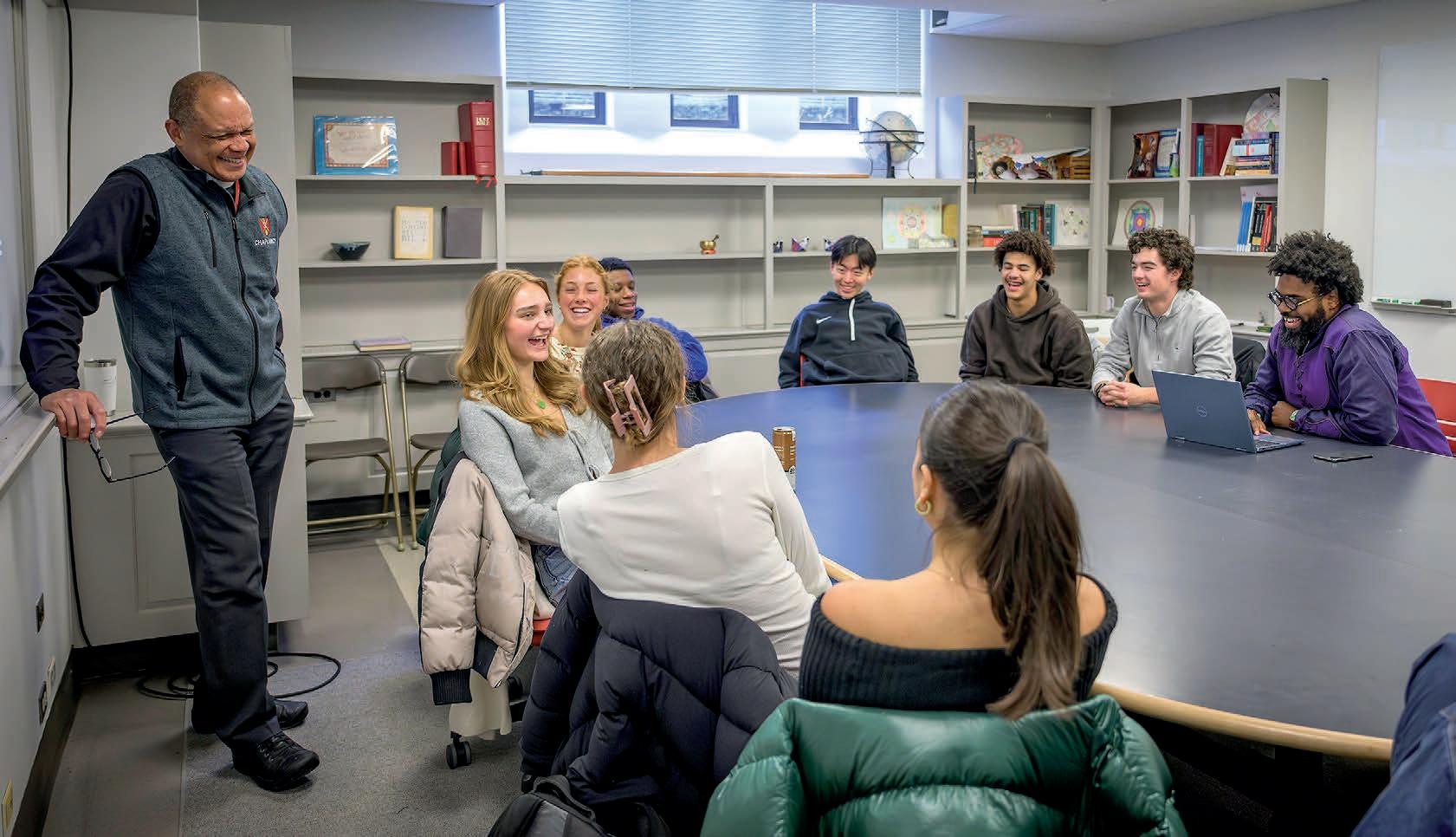
Renewing New Chapel
The critical work needed to preserve a sacred building
KAREN INGRAHAM
Fourteenth Rector Kathy Giles has a daily ritual: walking the grounds at daybreak with her dogs. In an online address to the alumni community this fall, she spoke about that quiet liminal time, noting that the campus community is “designed to help us lift our eyes and lift our hearts. … Somehow, Henry Vaughan had it just right when the sun comes up in the east over St. Paul’s School. The first thing that’s lit up are those beautiful Chapel spires. I don’t think it ever gets old, that kind of moment.”
Vaughan was the architect who designed the Chapel of St. Peter and St. Paul in a style he described as “late decorated.” It became one of the earliest examples in America of a Gothic church when the building was consecrated in 1888. The tower — with its noble spires and 23-bell carillon — was added five years later as a memorial to Mary Bowman Coit, wife of First Rector Rev. Dr. Henry Coit.
Now 138 years old, the Chapel of St. Peter and St. Paul, or New Chapel, is the third oldest building on the grounds, a centerpiece of community life at St. Paul’s that provides profound moments of inspiration and transformation for those seated within as well as for
Time and nature have worn away at its exterior — significant and timely repair and restoration are needed to fortify its continued service.
passersby. Beloved and celebrated by alumni, New Chapel’s beauty and generational impact hide another truth, however. Time and nature have worn away at its exterior, resulting in significant deterioration to the stonework, masonry, window surrounds and roofing that has created significant water damage to the building. These compromised façade issues will only worsen if untreated and therefore threaten the building’s long-term health and viability. Significant and timely repair and restoration are needed — work estimated at $17 million — to fortify its continued service to the community through its second century of life and well into its third.
Nearly 100 years ago, Fourth Rector Rev. Dr. Samuel Drury faced a different dilemma with the Chapel. It was not yet an old building, but the student body had outgrown the original seating just 40 years after it was consecrated. Benches and chairs for boys interrupted aisles during services as seating in stalls ran out. The serenity of the space was challenged by overcrowding and discomfort, and in a 1928 letter to alumni, Dr. Drury and Board President Reeve Schley, a member of the Form of 1899, offered a bold solution: The Chapel would be cut open at the altar, lengthened by two bays, and enhanced by the addition of a choir room, clergy room and chantry. “The Chapel will not only be more adequate but will be distinctly more beautiful even than it is today,” they assured their readers. The changes were audacious but necessary.
The cost of the work was estimated to be $210,000 ($4 million in today’s dollars). “How shall this money be raised?” Drury and Schley asked. “We have reason to believe that many friends are keen to help in this work. … It is a family matter, in which all the School members, past and present, have a right to join.” In a matter of months, the project was funded; the expansion was completed the following year.
The needs that face the New Chapel today may not be as obvious as the dilemma that faced the community a century ago, but they are urgent, as failure to address them will
lead to far greater damage. Describing New Chapel as “the most important building on campus, serving as the heart of the School community,” real estate developer and SPS Trustee Arthur Zeckendorf ’77, P’05,’07, who co-chairs the Board of Trustees’ Grounds and Building Committee, confirms “substantial rehabilitation of the exterior façade as well as interior work are needed for the Chapel of St. Peter and St. Paul to ensure its continued use. This architectural masterpiece will be restored to serve the St. Paul’s community for another century.”
An engineering firm specializing in historic restoration hired by the School produced a 165-page report detailing “building enclosure interventions to address progressive exterior masonry and slate roofing deterioration and to mitigate active leakage that is damaging historic interior finishes.” The bell tower, cloister and chantry require significant remediation, and other repair is required to strengthen the overall envelope of the building to reduce the rate of future deterioration. Construction is anticipated to begin in the next year once funding is in place. The complexity of the undertaking, Zeckendorf notes, is significant due to historic façades, unique architecture and the need for the Chapel to remain open to the community during construction. The work is expected to take approximately 18 months.
In 1928, Drury and Schley confirmed in their letter to alumni, “No part of the School is more endeared to us all than the Chapel, and rightly so. It is there that multitudes of [students] have experienced the deep emotions of early religious life. It is there that many have been confirmed. Wherever St. Paul’s [alumni] go, in however beautiful churches they worship, their recurring comment is, ‘Yes, but you ought to see the Chapel up at School.’”
And one ought to see it, especially at daybreak on a clear morning. “Ours is a school intentionally designed to be beautiful, to address a young person’s spirit as well as their intellect, at an incredibly formative time of one’s life,” Rector Giles says. “It is our turn to once again sustain this beloved space for St. Paul’s School students and faculty. An investment in New Chapel is an investment in the spirits and hearts, minds and bodies of the generations present and to come — and in the greater good that they will learn here to serve.”
Repointing mortar joints with historically appropriate (custommixed) mortar.
Restoration of window traceries and replacement of sealant on window perimeters to improve weather tightness.
Necessary Work Includes:
Removal and replacement of roofing at the bell tower, cloister and chantry that is beyond its useful service life with active leaking, contributing to deterioration of masonry.
Restoring brownstone, which requires sourcing new aesthetically and technically compatible material, as well as salvaging and preserving existing worn masonry.
Implementation of strategic flashings at arched masonry openings to reduce the rate of water-related masonry damage in these areas.
Removal of slate roofing, much of which is original to the building (1888, 1929), to address deteriorated slate conditions and water-related damage of the exterior masonry and wood rafter tails below. Installation of a new sub-roof with flashing under slate roofing.
Rebuilding or replacing cracked or otherwise deteriorated brick.
Community Gatherings
This winter, the greater SPS community gathered in Paris; London; Cambridge, MA; Burbank, CA; Seattle, WA; New York City; online; and around the country for the XIX Society Seated Meal at the end of February. Special thanks to all our Seated Meal hosts as well as Kat Greenbaum ’07 for facilitating the event at the U.S. Open Arena Polo Championship in Burbank and Alexandra Whisnant ’01 for hosting members of the XIX Society at Zuzu’s Petals, her screen-free wine and dessert bar in Cambridge.
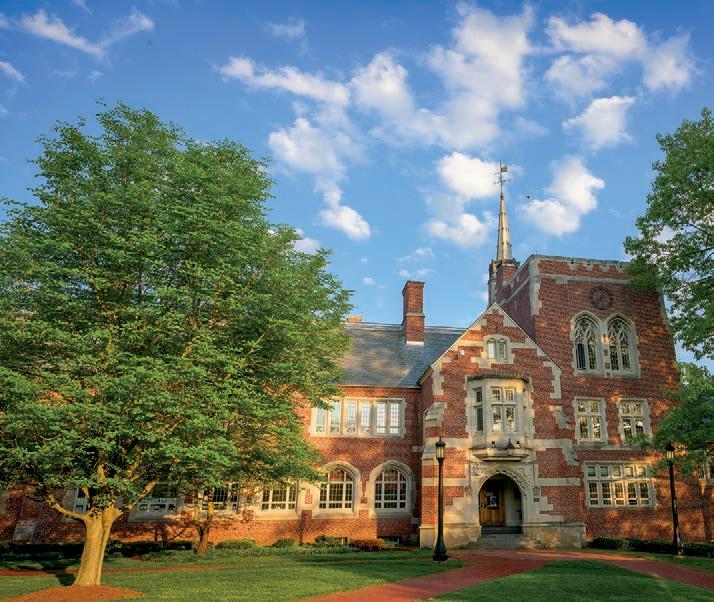
LUNCH IN NYC: More than three dozen alumni from the Forms of 1942-1967 gathered for lunch at The Harvard Club on Jan. 28, where they heard from Board President David Scully ’79, P’21 and Rector Kathy Giles. Special thanks to Dimitri Sevastopoulo ’60 and his wife, Cathy Rasenberger, for organizing. Above: Jim Phillips ’66, Andy Roberts ’66, Lloyd Macdonald ’62, Jad Roberts ’64, Mike Howard ’64, David Irons ’64 and Peter Gerry ’64.
SQUASH IN NYC: Friends and supporters of SPS squash joined Rector Kathy Giles for a reception at the quarterfinal round of the Tournament of Champions at Grand Central Terminal on Jan. 26. (L. to r.) Gordy Rogers ’95, John Musto ’87 and Mac Carbonell ’90; and Jonathan Lin ’94, Vanya Desai ’89 and Chris Smith P’28, director of athletics and head varsity coach for boys and girls squash at SPS.
Plan Ahead. Leave a Legacy.
Legacy gifts of any size qualify for membership in the Hargate Society and help ensure that St. Paul’s students will continue to benefit from the education and values that define the School. While most legacy gifts are made through a will or trust, you may also choose to name St. Paul’s School as a beneficiary of your IRA or other retirement account.
If you have taken the meaningful step of including St. Paul’s School in your estate plans and haven’t yet shared your intentions, please let us know so we may recognize you as a member of the Hargate Society.
To learn more about leaving a legacy at the School or to share your plans, visit sps.edu/giving or contact Diane Heitmiller P’10,’12,’15, director of planned giving, at 603-229-4875 or dheitmiller@sps.edu.
PARIS reception at Le Cercle de l’Union Interalliée.
LONDON gathering at the Royal College of Music with peers from the Eight Schools Association.
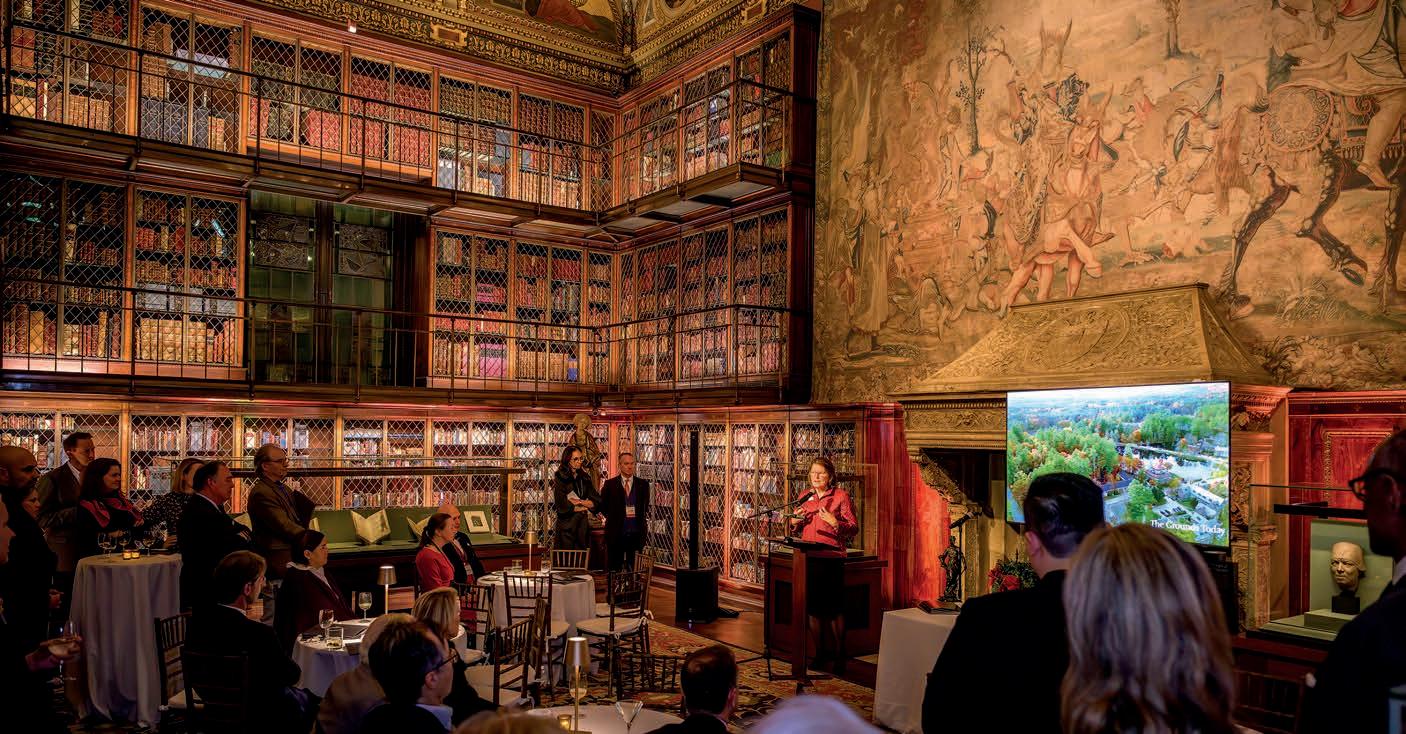
Ambition in Service to the Greater Good
Just more than a century ago, J.P. Morgan Jr., a member of the Form of 1884, gave his father’s New York City library to the world. The decision has been called “one of the most momentous cultural gifts in U.S. history.” Since then, the Morgan Library & Museum has continued to grow, a public home for books, curiosity and education given in service to the greater good. On Dec. 9, 2025, donors who have made leadership gifts to the School gathered for a holiday reception in that space created and stewarded by a St. Paul’s School family.
After a welcome from St. Paul’s School Trustee Susan Fales-Hill P’21, Board President David Scully ’79, P’21 spoke about the impact of his time at the School and looked to a future when “technical mastery will be critical for success … [but] you’ll also have to be a good person because, as J.P. Morgan once said, ‘The first thing is character.’”
“ This is why we teach the humanities,” Scully continued. “This is why our School Prayer compels us to lead lives of service to the greater good. And this is why St. Paul’s is more relevant than ever. Our students are remarkable … smart, capable and disciplined.”
In her remarks, Rector Kathy Giles thanked the “School family that cares deeply” for St. Paul’s and noted that the critical elements of stewardship are foresight, good risk taking and ambition.
“We don’t like to use that word much, but ambition has wonderful energy behind it … [and] our ambition is to be the best version of St. Paul’s School in the service of our mission and the service of our students, our community, our society and our world,” she said. “ …when we serve the greater good, we make the good greater for everyone. That is a critical, critical belief. And we believe that the world needs us to be the best school that we can be and to graduate young people who prioritize serving the greater good and to understand that the we is greater than the me.”
IN MILLVILLE AND BEYOND
MAY
1-2 Anniversary Weekend
31 Graduation
JUNE
30 The SPS Fund closes with the end of the School’s fiscal year
SUMMER
We anticipate hosting receptions for alumni and families in:
• North Haven and Prouts Neck, Maine
• The North Shore, Boston, Martha’s Vineyard and Nantucket, Massachusetts
• Newport, Rhode Island
• New York City, The Hamptons and Fishers Island, New York
• Lake Tahoe, California
Visit sps.edu/events often as more opportunities to connect are added.
Follow


Rector Kathy Giles speaks to leadership donors at the Morgan LIbrary & Museum on Dec. 9, 2025.
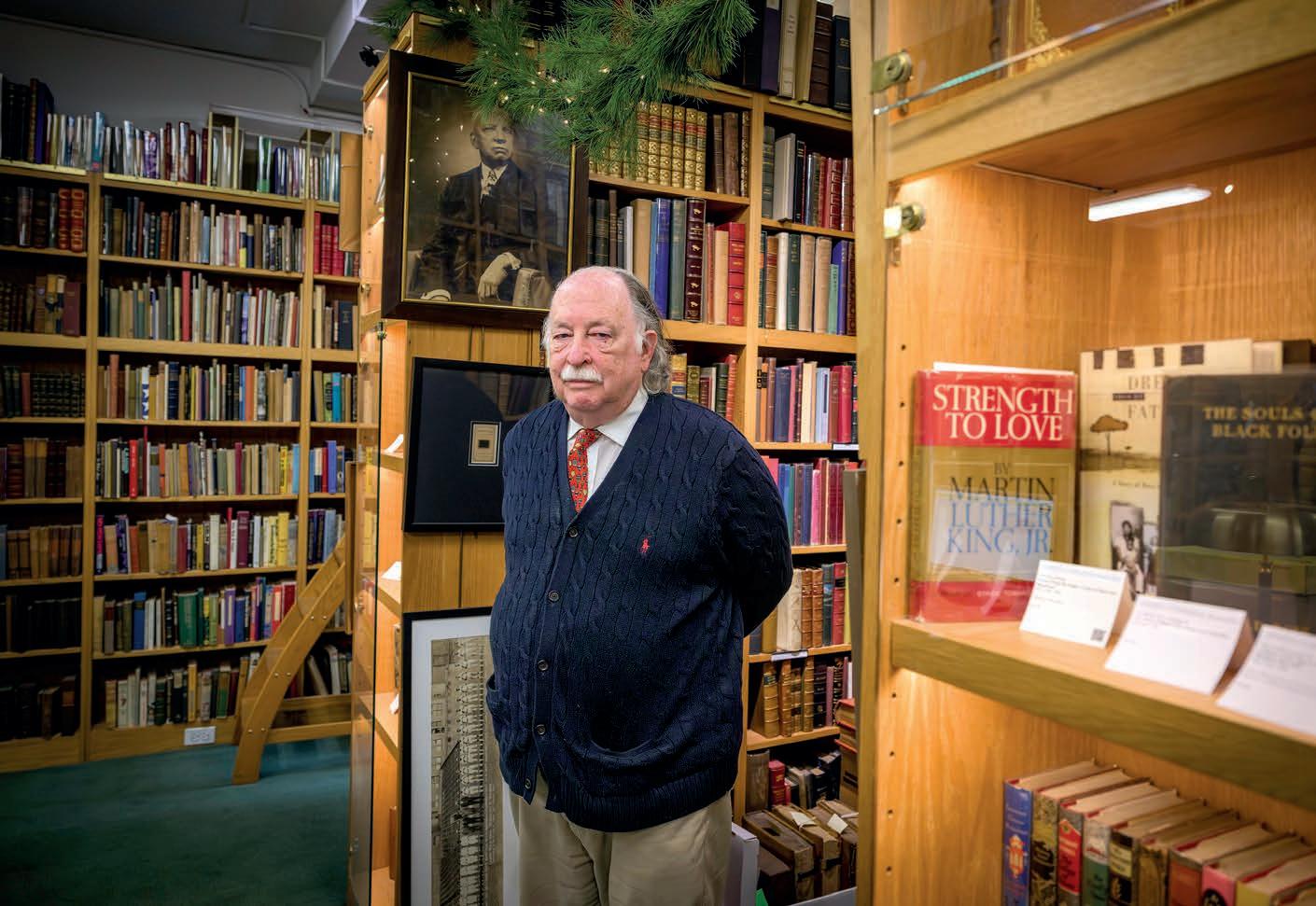
a Rare Path
After more than 50 years in the business, bookseller Jim Cummins ’64 still relishes the hunt for the valuable and unusual
KATE DUNLOP
Soon after “On the Beach” was released in 1957, a pre-teen boy in Morristown, New Jersey, read the post-apocalyptic novel. That tale of nuclear war sparked a love for book collecting that led the boy down a path his physician parents never imagined — right to the door on Madison Avenue that opens to James Cummins Bookseller.
Jim Cummins ’64 founded the business in 1978 and deals in a broad selection of fine and rare books, autographs, manuscripts and works of art. He buys voraciously, filling the store, his house and three warehouses with 400,000 books, authors’ manuscripts and letters. He’s long been one of the leading antiquarian booksellers in New York City, but that authority grew out of uncertainty and a touch of serendipity.
After graduating from Boston University, where he won a book collecting prize,
Cummins began a Ph.D. program in literature at Northwestern University. He studied with renowned Herman Melville scholar Harrison Hayford, who was also a book dealer on the side. Together, they would scour the many Chicago bookstores that stayed open late.
“I collect things that I love, that I have an affection for, either as literature, or because it’s beautiful or it’s what I collected as a young man.”
“I started seriously collecting books; I’d buy them low and try to sell them high. I
loved it. I still love it,” Cummins says. “After a couple years, Hayford said, ‘You know, there aren’t any jobs in English literature coming out of here, and you’re a so-so scholar. But you love books and you’re really good at it.’ I never finished the Ph.D., which is just as well.”
Despite Hayford’s prophetic encouragement to make his living through books in a different way than he had envisioned, Cummins left Chicago for Boston with no clear plan. He drove a cab and waited tables before drifting to New York City, where a friend, who happened to be a book dealer, mentioned that Brentano’s was looking for an assistant. Cummins landed the job, and within two months, his boss in the rare books department quit.
“I didn’t know what I was doing, but I learned on my feet and ran that department
for five years,” Cummins says. By then, he was poised to strike out on his own.
The first big collection he bought was from a dealer who, for 50 years, had taken home the best and most rare books he found, accumulating a treasure trove. Cummins borrowed $75,000 to buy the lot. Six months later, he bought the coveted library of former SPS trustee Bill Moore ’33 of Morristown. Since then, James Cummins Bookseller has overseen the flow of countless titles, including all those in the Washington Cathedral’s rare book library, into private collections as well as institutions such as universities and the Library of Congress. Recently, they sold an archive documenting the life and work of poet Sylvia Plath to Yale, and they’re working to place an Anne Sexton collection. Cummins confirms the old adage is true: oftentimes, the most valuable books are very insignificant looking. One such example is a religious book he sold, the first published in Hawaii, that is a “tiny little thing” and currently valued at $100,000. Another that’s passed through his hands is Edgar Allan Poe’s “Tamerlane and Other Poems,” arguably the rarest book in American literature; according to Cummins, the half-a-million-dollar piece “looks like nothing.”
Two titles with ties to the Form of 1964 hold a special place in his heart: “Pontiac,” a novel by his best friend Jim Schultze ’64 about Third Form boys at a New England boarding school, and F. Scott Fitzgerald’s “The Great Gatsby.” Formmate Thomas “Tim” Addison was Fitzgerald’s grandson.
“ That is a book that resonates all the time, and in terms of literature, it’s iconic,” Cummins says. “‘The Great Gatsby’ is a quarter-of-a-million-dollar book in a dust jacket, or more, depending on how good the dust jacket is. Without a dust jacket, it’s less than $10,000. If it’s inscribed, and we’re trying to buy one now that’s inscribed, it could be anything depending on who it’s to.”
When it comes to guiding new collectors, Cummins has simple advice: “Collect what you really care about. Don’t collect for money,” he says. “I collect things that I love, that I have an affection for, either as literature, or because it’s beautiful or it’s what I collected as a young man.”
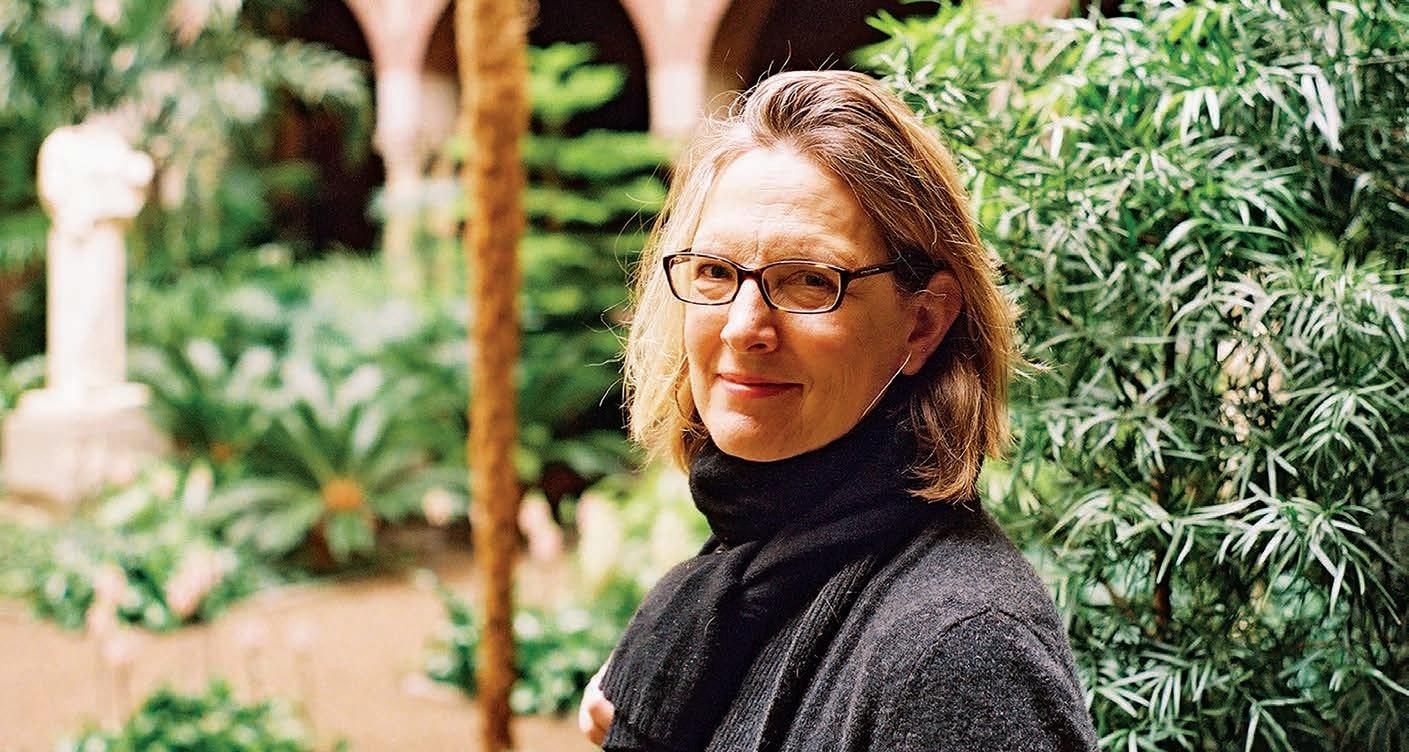
a catalyst for team building
Corinne Zimmermann ’78 is a leader in museum-based education for healthcare professionals
KATE DUNLOP
Picture this: In a Boston-area teaching hospital, a medical team on clinical rounds rotates into a patient’s room. An intern hears the attending doctor say something that doesn’t match what he’s observed. Should he say something? There’s no invitation to ask questions; the doctor’s pace and authority deter the intern, and he stays silent. Later, he learns speaking up could have had a meaningful impact on the patient’s care plan.
Now picture that same team, which includes medical school students, nurses, interns, attendings and residents, gathered at the Museum of Fine Arts for a team building workshop. The hierarchy of the hospital lingers. It’s up to healthcare consultant Corinne Zimmermann ’78 to create an environment where the team members can feel free to share stories, ask questions and learn from one other.
To start, she leads the group through playful warmups that get them talking and moving before transitioning into an interpretive conversation, during which her goal is for them to slow down and really see a work of art. She might use “Watson and the Shark,” a piece that portrays a life-or-death crisis, and ask them to share what they think is going on, what grounds their ideas in the evidence of the picture, who in the picture they identify with and why — and how their patterns of observation, listening and communication are relevant to their work.
“By then, they’re open and share personal and clinical stories in a way that allows
them to reflect on their shared profession,” Zimmermann says. “It’s beautiful when they talk about their joys, because it’s a choice to lean into a joy, but they also talk in very vulnerable ways about their struggles, and that creates real connection which can help bond a team and mediate burnout.”
“I’m always learning, and it allows me to be creative, connect with people and make a difference.”
The workshop experience also shifts how providers see their teammates and to recognize their own blind spots. As one physician participant put it, “I used to only listen to people I thought were important. I’ve realized everybody has something important to say.” That sort of revelation carries over to the clinical setting, where the team works together with new awareness and respect.
To make such an impact, Zimmermann draws on the influence of her family, her love for art history and her decades as a museum educator.
The daughter of a diplomat, Zimmermann lived in Venezuela, Yugoslavia, Moscow and Paris before coming to St. Paul’s School. Each new location offered a museum that Zimmermann’s mother turned into an adventure of discovery — from a young age, she says,
museums have felt like home.
“I love museums. When I walk into one, there’s always this sense of an exhale,” she says. “I enter with a sense of curiosity and the anticipation of seeing new things, or sometimes even of visiting old friends.”
At St. Paul’s, Zimmermann took an art history course and fell in love with the subject because it was about the world — about people and ideas. She earned undergraduate and graduate degrees in art history and followed a calling to make museums more accessible to a broader public. Years as an educator at the Harvard Art Museums, Peabody Essex Museum and the Isabella Stewart Gardner Museum honed her mission. In 2010, she started to balance that work with healthcare consulting; in 2019, soon after her mother died, she decided to consult full time and co-founded the Harvard Macy Fellowship in Art Museum-based Education for Healthcare Professionals. In 2023, she co-authored “Activating the Art Museum: Designing Experiences for the Health Professions.”
“A lot of the work I’ve done is about bringing a sense of play and creating pathways for connection as a means to build team skills and self-awareness,” she says. “Healthcare can be rewarding, but it’s hard and exhausting, and there is rarely space in the hospital for providers to breathe, process or reflect. There is that space in a museum, and it’s an incredible honor to do this work. I’m always learning, and it allows me to be creative, connect with people and make a difference.”
exploring the creator community
Jonathan Jackson ’09 builds worlds and connections through media
JANA F. BROWN
Dinners at the Jackson family’s kitchen table in Nashua, New Hampshire, were special times to gather and share a meal — and much more. For Jonathan Jackson ’09 and his brothers, breaking bread together also meant conversations that extended beyond the surface, challenging them to develop their critical thinking skills.
“If you made a point, you had to have source material,” Jackson says. “My parents made sure we defended our arguments. Education is important to them, so they forced us to do the work to have a clear opinion.”
That self-directed approach led Jackson to the idea of boarding school. After research-
ing about two dozen options and zeroing in on St. Paul’s School, he delivered a PowerPoint presentation to his parents and convinced them the School was the best place for him to continue his intellectual development. Once enrolled, Jackson found that the discussions that began at his family table were amplified around the Harkness tables of St. Paul’s. Those healthy debates helped him develop his mission-driven approach to life beyond higher learning.
“I’m a person who likes to ask questions that bring people closer to the truth,” Jackson explains. “I think that’s my life’s work.”
It didn’t take long for Jackson to get started. In 2014, the year after he graduated from Washington University in St. Louis, he was one of four co-founders of Blavity, a tech and media company “for forward-thinking Black millennials pushing the boundaries of culture and the status quo.” Blavity now reaches more than 100 million users per month on its many platforms, ranging from culture to fashion to tech to home, and more. With the company thriving, in 2018, Jackson felt he’d accomplished what he was “called to do” and decided to move on.
“I have an insatiable hunger to learn, and I get really uncomfortable with stasis,” he explains.
His choice to navigate the unknown beyond the success of Blavity is what has defined the last decade for Jackson. Unfailingly curious and industrious at heart, he’s chosen to reinvent himself. Today, he identifies as an entrepreneur and media builder who wears multiple hats. In his role as an adviser, Jackson works with entrepreneurs, creators and lead-
ers to help them develop their thinking on narrative strategy, serving as “a fractional biographer” who helps clients extract the parts of their story they take for granted. He also co-hosts a podcast, “Due Dilly” (short for “diligence”), that he dubs “Frontline for business” — referencing the PBS documentary show — and has launched a newsletter, that focuses on creating research-driven content for business audiences who enjoy stories about the evolving creator economy. Jackson is also focused on an upcoming project that centers around food, music and culture.
In taking these professional risks, Jackson emphasizes craftsmanship over quantity, noting that he believes in taking his time to create content people can trust. “There’s a false dichotomy between volume and enjoyment,” he says. He’s particularly interested in “the quality of questions we ask” and focused on clarity and consistency in communication.
Unfailingly curious and industrious at heart, he’s chosen to reinvent himself.
His recent work as a 2024 Global Fellow with the Ford Foundation has refined Jackson’s strategic thinking around media and entrepreneurship. Through various mediums, he focuses on building ecosystems for creative environments and asking critical questions related to investment in ideas, disruption and innovation. Jackson sees the creator economy not as something entirely new, but as a new way of communicating. He’s encountered several shifts since co-founding Blavity, including moving from an era of guaranteed traffic to today’s landscape that features significant fragmentation between streaming, independent newsletters and subscription-based communities. He sees opportunities to create online hubs connected through common values and history.
As the media landscape continues to evolve with artificial intelligence in the equation, Jackson’s approach offers a blueprint taken from those childhood discussions at his family’s kitchen table: stay curious, recognize patterns, build for human connection and “always ask what world you’re trying to create.”
This section was updated Jan. 23, 2026. Please note that deaths are reported as we receive notice of them. Therefore, alumni dates of death are not always reported chronologically.
1944 – Bayard D. Clarkson Dec. 30, 2025
1945 – Douglas R. Coleman Jan. 3, 2026
1947 – Louis W. Pemberton
Dec. 21, 2025
1947 – John S. Wiseman
Dec. 18, 2025
1948 – Alfred L. Malabre Jr. Jan. 10, 2026
1948 – Richard DeW. Sawyer Nov. 30, 2025
1951 – H. Felix Kloman II Nov. 18, 2025
1952 – Gerhard R. Schade Jr. Nov. 2025
1952 – Jan W. Sissener Dec. 30, 2023
1953 – William J. Powell Dec. 26, 2025
1953 – Enos Richardson Jr.
Nov. 17, 2025
1955 – Robert S. Hurlbut Jr.
Dec. 22, 2025
1956 – August T. Jaccaci Jr.
Nov. 16, 2025
1956 – Benjamin H. Oehlert III
Oct. 7, 2025
1956 – Thomas B. Trumpy Nov. 11, 2025
1947
Louis W. Pemberton died peacefully at NewYork-Presbyterian Hospital on Dec. 21, 2025. He was 97. Born in New York City on Nov. 27, 1928, Louis was the second of two sons born to Catherine Watjen and John Clifford Pemberton. He was a fourth-generation New Yorker and believed there was no greater city. He attended St. Bernard’s School and had many boyhood adventures with his brother and cousins in Central Park.
1957 – Alden H. Irons Sept. 10, 2025
1959 – Barclay G. Howe Dec. 11, 2025
1959 – A. Tracy Johnson Jr. Sept. 14, 2025
1959 – John B. Tytus July 25, 2024
1962 – Zeb Mayhew Jr. Oct. 31, 2025
1963 – Douglas S. Makepeace Jan. 4, 2026
1963 – Arthur S. Thomas III Jan. 28, 2025
1964 – H. Townsend Blodget Oct. 18, 2025
Pursuing an interest in finance, Louis began his career with First National City Bank of New York (now Citibank) in 1953, opting to be sent to their overseas division in Rio de Janeiro, Brazil. There he met and married Patricia Covington. After three years in Rio, Louis transferred back to Manhattan with Patricia and a baby daughter, Christine, who was later joined by sisters Anne and Julie. The marriage ended in divorce in 1973.
Louis met his second wife, Suzanne Grace, at an art gallery opening in Soho in 1980. She was a costume designer for film and television living in Los Angeles at the time, but the couple began a bi-coastal romance and married in 1981. They had a daughter, Andrea, and enjoyed 44 happy years of marriage. Louis was an engaged and loving father to all of his daughters.
1964 – Richard S. W. Shepard Oct. 27, 2025
1967 – Thomas B. Lincoln Nov. 11, 2025
1975 – Glenn B. Aragon Oct. 2025
1977 – Roslyn Rawls Dec. 24, 2025
1992 – Herman D. Wilkins III Nov. 2, 2025
FACULTY/STAFF
Jane H. Boesch (ASP and SPS) Nov. 18, 2025
Norma J. M. Whitcomb Sept. 29, 2025
1952 – Frederick Whiting Hays Nov. 7, 2025 was admired as an outstanding stock picker throughout his career but what he loved most about his work was the people with whom he engaged every day. His generous spirit and curiosity about the people he met and worked with was infectious and left an impression on those who crossed his path. Louis will be remembered for his love of history and study of his ancestry. His father, John Clifford Pemberton, a lawyer and Civil War historian, wrote a biography of his grandfather, General John C. Pemberton. His mother was a descendant of the D.H. Watjen shipping line established in Bremen, Germany, in the early 1800s. Lou was intrigued with his mother’s New York family history and reconnected with many of his Watjen relatives in Germany and around the world. He also will be remembered for his unconventional and adventurous years living on St. Mark’s Place from 1967 to 1977. He embraced the changing times, wearing Huntsman’s suits by day and suede bellbottoms by night. During these years, he was renowned for his ability to throw an amazing dinner party in his East Village fifth-floor walkup, followed by a night out on the dance floor. He was a generous host and enthusiastic dancer throughout his entire life. His friends and family cherish having shared these celebratory moments with him. Louis leaves a large and loving family, including his wife, Suzanne; daughters, Anne Pemberton (Mary Summers), Julia Pemberton Hellums (Jay Hellums) and Andrea Pemberton
Louis cherished his years at St. Paul’s School, including playing ice hockey on the frozen ponds of New Hampshire and competing in football, baseball and squash. He served as a prefect and was active with the Glee Club, the Missionary Society, Student Council and The Pelican. He went on to study American literature at Princeton University, where he served as captain of the rugby team and graduated with the Class of 1951. He served in the U.S. Marine Corps as a sergeant from 1950 to 1952.
For nearly 70 years, Louis maintained a storied career in the financial markets. After leaving Citibank, he joined Lehman Bros. in 1961 as a vice president of institutional and retail sales for companies including Chubb, Atlantic Richfield and Guinness Mahon. After a brief period of forming Pemberton Associates, he joined Bear Stearns in 1975 as a managing director with many private clients. In 1993, he joined Oppenheimer & Co. as a senior vice president. Three years later, he became a principal with Liam Dalton, forming Spruce Partners. Later, he joined Axiom Capital Management as managing director and worked there until his retirement at 96. Louis
(Charles Follini); and grandchildren, Justin Snyder, Frances Hellums, Robert Hellums, Jedediah Follini and Beckett Follini. He was predeceased by his brother, John Clifford Pemberton Jr. ’44; his nephew, John; and his daughter, Christine.
1947
Herbert S. Poole Jr. of Cudjoe Key, Florida, died peacefully on Nov. 3, 2024, under his stepdaughter’s loving care. He was 95.
Herbert was an honorable man. Born on July 9, 1929, in Boston, Massachusetts, he was the son of the late Herbert Slade Poole and Dorothy Todd “Dord” Poole. Herbert attended Kingsbury School in Wellesley and The Fessenden School in Newton before heading north. At St. Paul’s School, he was a prefect and participated in the Cadmean/ Concordian Literary Societies, Debate Team, The Pelican and the yearbook. He played football and lacrosse and rowed, but his passion was ice hockey. Later, at Williams College, he was the varsity goalie for four years.
Herbert and his first wife, Mary Lynn Hart, resided in Beverly, Massachusetts, and York, Maine. They had two children, Jennifer Poole and Herbert Poole III. In 1979, he married his second wife, Lizzy Lester Beane, and they split their time between Maine and Cudjoe Key, enjoying deep-sea fishing, bicycling, swimming and Key West.
A lifelong learner, Herbert took flying lessons and soloed a single-engine Piper plane. He was an avid skier at Sugarloaf and loved animals, especially dogs. Herbert loved all things Maine and the sea and was known for his daily fresh-caught fish. He was a consummate learner and tinkerer and adored reading
everything, often aloud. He loved speaking Spanish and had a playful sense of humor. Along with Lizzy, he was involved in peace and environmental activism in the Keys. He was affectionately known to his family and friends as “The Font” (of knowledge), G-pa, Pops and Pudge.
Herbert’s professional life included working for Young & Ramsdell baiting trawlers, setting long lines and selling fish. He was part of the youngest crew on the Maine coast on a mackerel purse seiner fishing boat run out of Ogunquit. He worked at Farm Fresh Packing & Canning Company in New Jersey, where he learned everything about asparagus. He also worked on shrimp boats out of Key West, Florida, and Brownsville, Texas. Herbert eventually became a food broker at the family’s J.R. Poole Co. in Boston and traveled to Japan many times while developing the Three Diamonds brand with the Mitsubishi Corporation. He visited more than 25 countries and always claimed Portugal was his favorite because of the seafood. Due to Herbert’s love of fishing, he became a charter boat captain. While still working, and even after he retired, he ran charters out of York, Maine, on his boats, The Marian and The Blackback. He also served on the York Harbor Board, the Northeast Charterboat Captains Association, and was a Registered Maine Guide. He won the Bailey Island Fishing Tournament in 1976 for catching the largest rod and reel tuna. He was proficient at harpooning and was also a lobsterman at times.
Herbert is survived by his daughter, Jennifer Poole; son Herbert Poole III; stepdaughter Nancy Beane Kolligian and her husband, Mark; step-granddaughter Bailey Kolligian and her husband, Shane Moorehead; step-grandson Max Kolligian and his wife, Haley; nephew Todd Poole and his wife, Lisa; and niece Catherine Poole and her partner Anne McClintock and their daughter, Miriam. He was preceded in death by his wives, Mary Lynn Poole and Elizabeth “Lizzy” Poole; stepson Charles E. Beane; brother Todd Forrester Poole ’46; and sister-in-law Mary Louise Poole.
1947
John S. Wiseman of Thackeston Cottage in Somerset, United Kingdom, died Dec. 18, 2025, at 96 after suffering a stroke.
John was born in New York City on June 22, 1929, to Mark Huntington Wiseman, an advertising executive and author, and Evelyn Sayre, a teacher at the Henry Street Settlement. John grew up in the MacDougalSullivan Gardens in the Village and the “garden kids” he knew there remained his closest friends throughout his life.
John attended the Little Red School House and the Collegiate School prior to enrolling at St. Paul’s School, where he played squash. At Princeton, he played rugby and was elected to the Ivy Club. After graduating, John joined the U.S. Marine Corps. He was eventually discharged with the rank of captain. His marriage to Jane Gentry Shelton, with whom he had three children, ended in divorce in 1959. In 1963, John married Sarah Paton Mitchell, a native of Scotland, and welcomed three more children.
For many years, John worked for the publishing division of Time-Life Books in New York, Los Angeles and Mexico. He also ran Editorial Novaro and Dimsa in Mexico, the women’s division of Editora Abril in Brazil and worked at Marshall Cavendish in London.
In 1994, John and Sarah moved to a cottage in Somerset, U.K., which was constantly filled with friends, children and grandchildren. Their lives were punctuated by regular visits to their farm in Bridgehampton, Long Island. These old, shingled buildings became the focus for gatherings of their extended family. There, John taught his children to ride the Atlantic waves and play roofball, a game he invented in the 1950s inspired by a paddle game played on the beach in Rio de Janeiro.
Roofball tournaments embodied John’s finest qualities, his welcome to all he met and his competitive side.
John is survived by his wife, Sarah; his children, Sayre, Shelley, Johnny ’76, Octavia, Alix and Adam; nine grandchildren and one great-grandson; and his siblings, Carter and Margaret.
1949
C. Christian “Chris” Beels died in New York City on June 29, 2025, at 94. Born in Tulsa, Oklahoma, on Dec. 21, 1930, Chris was the only child of Clemens Christian Alexander Beels and Elizabeth Alden Holmes. The family moved frequently to follow his father’s work as a landman in the burgeoning American oil business. As that work took on an international scope, the Beels were encouraged to send Chris to boarding school. He arrived at St. Paul’s School as a Third Former in 1945. As one of the few representatives of the American Southwest, he felt a bit like a fish out of water but was enthralled with the place he would come to call home.
At St. Paul’s, Chris played soccer and reluctantly learned to play hockey, enthusiastically participated in theater productions, was a member of the German Club, and wrote for The Pelican and Horae Scholasticae, becoming an editor of the latter as a Fourth Former. Quoting the hymns and poetry he learned at SPS remained among his favorite tidbits with which to pepper conversations throughout his life.
At Harvard, Chris was a pre-med biology major and active in the theater. For a brief stint after college, he taught biology, directed theater productions and, to his great surprise, coached hockey at St. George’s School in Newport, Rhode Island, before deciding to pursue medicine. He received an M.D. from the University of Rochester School of Medicine and Dentistry in 1960 and, after graduation, married Margaret Rabi, the daughter of Nobel
Prize-winning physicist Isidor Isaac Rabi and Helen Newmark. The couple met through mutual friends — Chris’ St. Paul’s and Harvard roommate, Francis “Dick” Cunningham ’49, who had married Margaret’s roommate, Kitty Spalding.
Chris continued his psychiatric training in New York and Washington, D.C., eventually practicing at Bronx State Hospital and teaching at Albert Einstein College of Medicine and Columbia University’s College of Physicians and Surgeons. Deciding to forgo a lucrative private practice, he joined the growing Community Psychiatry movement, spurred by the increasing deinstitutionalization of mental patients in the 1960s and 1970s, and focused on a less privileged constituency with little access to first-rate mental health care.
In 1981, Chris created the Fellowship in Public Psychiatry at the New York State Psychiatric Institute and Columbia University to provide subspecialty training for psychiatrists who plan careers in the public sector. He directed the program through the 1980s and recounted his experiences with community psychiatry in his 2001 book, “A Different Story: The Rise of Narrative in Psychotherapy.” The author of many articles published in The New York Times as well as professional journals, Chris also served on the editorial boards of Family Process, Journal of the American Association of Marital and Family Therapy, and Contemporary Family Therapy. Expanding on his interest in studying family and community dynamics, Chris earned an M.S. in epidemiology in 1980 from Columbia University School of Public Health. He was pleased to be drafted by the faculty to teach part of the course. He retired from Columbia and the Psychiatric Institute in 1987 but continued his private practice into the 2010s.
As he scaled back on his psychiatric career, Chris focused more on his longtime and growing interest in figurative painting, sparked by his friendship with Dick Cunningham, a leading figurative painter in New York. Chris was a member of the Art Students League of New York as well as The Painting Group. In 2006, the group joined with Supreme Court Justice Sandra Day O’Connor to paint portraits of her that were exhibited at the National Portrait Gallery in 2007. In addition, as a member of New York’s Century Association, Chris contributed to the annual member shows there during his tenure.
While attending his 70th reunion at SPS in 2019, Chris reflected on the profound impact St. Paul’s had on his life and decided it was time to write his memoir. He published “Inventing Family: A Life in Search of Community” in 2023; in the prologue, he writes, “St. Paul’s filled a void at a crucial moment in my life. It provided me with a supportive community structure that gave me a lifelong interest in life-saving institutions, their governance and design.”
Chris is survived by Margaret, his wife of 65 years; his children, Alexander Rabi Beels and Jessica Holmes Beels; and his grandchildren, Anika Beels Burg and Max Beels Burg.
1951
H. Felix Kloman II died peacefully with family at his side on Nov. 18, 2025.
Born on April 16, 1933, he was the son of the late Very Rev. E. Felix Kloman and Olivia Rogers Pragoff Kloman of Washington, D.C. At St. Paul’s School, Felix was a prefect and involved with the Library Association, the Glee Club, the Cadmean/Concordian Literary Societies, the Missionary Society, Student Council and The Pelican. He played baseball, football and ice hockey, and he rowed and sailed.
He earned a degree in history at Princeton, where he was a member of Colonial Club. He graduated in 1955 and served on active duty with the U.S. Navy in the Pacific from 1955 to 1957, which allowed him to explore Japan and the South Pacific and continue his lifelong curiosity about people, places and ideas.
Felix joined the insurance brokerage firm of Lukens, Savage & Washburn in Philadelphia in 1957 and became a partner in 1964. Three years later, he and his family moved to Rowayton, Connecticut, and he joined the brokerage firm of Alexander & Alexander. In 1970, Felix founded Risk Planning Group in Darien and served as its president until its merger with Tillinghast, Nelson & Warren in
1984 and, a year later, with Towers, Perrin, Forster & Crosby (now Willis Towers Watson). He continued as a principal there until his retirement in 1994.
In 1974, he created Risk Management Reports, a bimonthly journal he published, edited and wrote for more than 33 years. Seawrack Press, Inc., of which he was president, published three of his books, “Mumpsimus Revisited: Essays on Risk Management,” (2005); “The Fantods of Risk: Essays on Risk Management,” (2008); and “Dead Reckoning: A Personal History,” (2011).
In 1994, Felix and his wife, Ann, moved to Lyme, Connecticut, where he was a counselor in the Southeastern Connecticut chapter of SCORE and a trustee of The Williams School. An active sailor and racer all his life, he served as commodore of the Princeton University Yacht Club and the Norwalk Yacht Club, was a member of the Hamburg Cove Yacht Club and The Corinthians; and was the founding director of the St. George Community Sailing Foundation in Tenants Harbor, Maine, where he and his family vacationed each summer.
An avid hockey player, Felix played for the Wissahickon Skating Club in Philadelphia and the New Canaan Winter Club in Connecticut, and he helped form the Darien Winter Club in 1977. He also led old-timer hockey teams to several Senior Olympics.
As a rower, he was a member of the University Barge Club in Philadelphia from 1957 to 2012, and enjoyed sculling on the Schuylkill River, Long Island Sound, Connecticut River, and in the waters of Tenants Harbor.
Felix’s wife of 61 years, Ann, died in 2018. He is survived by his children and their spouses, Edward Felix Kloman (Kelly Schwenkmeyer), Alexis Hills Southworth, Blair Trapnell Kloman ’82 (John McLeod), and Sarah Pendleton Kloman (Michael Smith); and 10 wonderful grandchildren.
1955
Robert S. “Bob” Hurlbut Jr. died peacefully on Dec. 22, 2025, from complications of heart disease. He was 88. Bob was an educator, community activist and lifelong supporter of his beloved hometown of Cambridge, Massachusetts. He cherished his family and many friends and will be deeply missed.
Born in 1937, Bob was the son of the late Robert S. and Sally D. Hurlbut. Just before his eighth birthday, he lost his father, a naval surgeon serving aboard the USS Halligan, when the ship struck a mine near Okinawa. His mother later married James T. Baldwin.
At St. Paul’s School, Bob was active in the Choir and Glee Club. At Harvard, where he studied history and literature, he sang with the Krokodiloes and played football and varsity lacrosse. He continued his family’s legacy of service by enlisting in the U.S. Navy, and was stationed in Antigua and Norfolk, Virginia. In April 1960, he married his high school sweetheart, Ann “Nancy” Gannett. They began a life together defined by family, faith and community while pursuing careers in education.
Bob’s first civilian role was teaching history at Newton North High School in Massachusetts. In 1969, he was appointed headmaster of The Park School in Brookline and led the school through 24 years of significant growth. Under his leadership, Park moved to a modern campus on Goddard Avenue. He was an early advocate for diversity, equity and inclusion, and he was deeply committed to the Park School community. Bob was known for offering students a simple but lasting piece of advice: Look people in the eye and give them a firm handshake. After retiring from Park in 1993, Bob continued his lifelong commitment to service at the Cambridge Community Foundation. As its first executive director, he professionalized grantmaking, helped form the Cambridge Nonprofit Coalition,
and established Cambridge Volunteers to strengthen civic engagement throughout the city. Bob was a meticulous notetaker and an extraordinary keeper of information. He possessed an encyclopedic knowledge of Boston’s backroads and back channels. He was a natural connector, linking people, ideas and communities, and he served as a model for educators and philanthropists. He was rarely seen without his signature jacket and colorful tie.
Bob’s personal passions were wide-ranging and rooted in his devotion to community and education. He attended morning prayers at Harvard Memorial Church, participated in the Cambridge Book Club, joined poetry readings at The Cambridge Homes and led the Rotary Club of Cambridge’s Leaders of Today and Tomorrow program. He hosted a Cambridge Community Television program, “Seniors Needed,” organized a monthly “ROMEOs” luncheon and attended many Fly Club events. Bob sailed throughout his life in Marblehead and cherished summers camping with his family on Lake Champlain. A believer in simple joys, he delighted in fried clams, hamburgers and Brigham’s coffee ice cream.
Bob is survived by his children, Angie Hurlbut, and her husband, Andrew Nyhart; Rob Hurlbut, and his wife, Amy; and Sam Hurlbut, and his wife, Maria Blanco. He was the proud grandfather of Byron, Noah, Isabelle, Gracey, Lucy, Caleb, Susannah and Vivianne. He also leaves his siblings, Sally Hurlbut, Patty Jenkins, Lynn Hall, and Jay Baldwin. Bob’s beloved wife, Nancy, died in 2024.
1956
John C. Graham Jr. died in Minneapolis after a long illness on June 1, 2025. He was 86.
The son of John and Polly Graham, John was born and raised in Bedford, New York. He was a history major at Williams College and earned a graduate degree in music theory at Manhattan School of Music. He taught
choral music and directed choirs at Choate Rosemary Hall and La Pietra Hawaii School for Girls as well as other private schools on the mainland. John’s special interest was Renaissance choral music, and his love of choral singing was evidenced by lifelong membership in church choirs from New York City to Honolulu and Minneapolis. He was a published composer of sacred choral music.
After retiring from teaching in 1989, John moved to the Twin Cities, where he enjoyed traveling, singing at St. Mark’s Episcopal Cathedral in Minneapolis and working as an advocate for members of Service Employees International Union.
Beginning in 1946, John was an avid collector of toy soldiers; the thousands that he amassed are being auctioned and consigned, along with his hundreds of books on military history.
John treasured his days at St. Paul’s School and remained active in alumni activities of the Form of 1956. A noteworthy accomplishment was his planning of a memorial service for the 50th anniversary of the Form of 1956, held at the Chapel of St. Peter and St. Paul.
John is survived by his wife of 24 years, Sharon Kleckner; his nephews, Eric and Ian Graham; and his niece, Paget Graham. He was predeceased by his siblings, Margot Humphreys Moncure and Campbell “Sandy” Graham ’58.
1956
August T. “Gus” Jaccaci Jr. died peacefully at Schooner Estates, a residential care facility in Auburn, Maine, on Nov. 16, 2025. Gus was loved and appreciated for his creativity, intellect, humor, graciousness, teaching ability, commitment to his ideals and being an inspirational champion for those close to him for all of life.
Gus was born in New York City on March 9, 1937, the son of Thayer and Helen (Jenkins) Jaccaci. He grew up in Madison, Connecticut, with his family and beloved sister, Gail.
A lifelong love of learning took root at St. Paul’s School, where he was awarded the School Medal at graduation, recognizing his scholarship, athletics and community membership. He was involved in many facets of School life as a prefect and as a member of the Art Association, Scientific Association, Cadmean/Concordian Literary Societies, choral groups and Student Council. He skied (alpine and Nordic), rowed, ran track and played football.
Gus began his college studies at the University of Colorado, where he pursued his love of ski racing, art and academics. He transferred after his sophomore year to complete his undergraduate studies at Harvard, where he also earned a master’s degree in education. While studying for his master’s, Gus worked as an assistant to the admissions committee and coached the Harvard ski team. He continued his education by earning an MFA in painting from the Rhode Island School of Design.
Gus was a longtime arts and English educator. He started his teaching career at Rutland High School in Rutland, Vermont, and then taught at Phillips Andover Academy, Boston College, Lawrence Academy and Burke Mountain Academy. Students appreciated Gus for fostering their independent thinking, creativity and ability to stretch their imaginations for what was possible. Gus shared that “you cannot teach art; you can only encourage people to make their meaning. When a student shared their art with me, I had only two responses, and they were either ‘Yes!’ or ‘Tell me more.’”
Following his teaching career, Gus extended his work into the areas of general systems thinking, futurism, social architecture and strategic planning, consulting with organizations in diverse industries. Gus was the creator of the Metamatrix model that maps how organizations, civilization and humanity evolve through stages of evolutionary growth. For 20 years, Gus taught at the Creative Problem Solving Institute, earning its Distinguished Leader Award in 2005.
Gus’ self-defined “Vermonumental Idealism” reflected his commitment to progressive politics and led him to run for governor of Vermont twice, creating a party he called People of Vermont, as he worked to usher in a new citizen’s branch of the government. Gus also ran as a Planetician, a person he defined as a protector of all life. He also blended his vision and creativity to run for Congress and
president of the United States while taking on the character of Thomas Jefferson. Gus shared his ideas and ideals through several books, including “Amocracy in America: Imaginary Letters from Beloved Visionaries,” “Awake America: A Declaration of Interdependence,” “General Periodicity: Nature’s Creative Dynamics,” and “CEO: Chief Evolutionary Officer — Leaders Mapping the Future,” which he co-authored with Susan Gault.
Gus had three loving marriages. He married Robin Middleton Jaccaci in 1963, and they had sons Tony and Alex. In 1986, Gus married Mary Alima Baker. In 1999, he married Joanne Hobbs Spear Jaccaci; they were happily married until Joanne’s passing in 2018. Joanne was a devoted wife and collaborator, co-running the nonprofit Unity Scholars to spread the message of love, unity and peace.
Gus is survived by and will be missed by his sons, Tony and Alex, and their wives, Lucia and Maureen; his grandchildren, Nick, Sam, Ben, Daniel and Emma; his nieces, Penny and Sue, and their children, Roman and Claire; and Joanne’s daughters, Lynne and Vicki, and grandchildren Ross, Angela, Gina, Rocco, Conner and Mackenna.
Gus was inspired by St. Francis of Assisi, from whom he received a message while meditating in Assisi, Italy: “… if you build anything, build it on a web of love and it will be both ephemeral and timeless, momentary and enduring.” He held this guidance close to his heart and his life’s purpose.
1956
Thomas B. Trumpy died in Luxembourg in his 88th year after a full and very active life on the Old Continent, where he greatly appreciated traveling, music, museums, theater and good company. His motto was “Never Under-Do.”
At St. Paul’s School, Thomas participated in the Library Association, Glee Club, theater and ice hockey. At Princeton, he studied in the special program in European Civilization
and wrote his thesis on French Renaissance architecture. Thomas insisted that the following be his eulogy for Princeton: “Youth is made to make mistakes; thankfully, Princeton was my only one … for I had already been to St Paul’s and learned more than Princeton could offer me.”
Tom earned his law degree at Columbia, spent a year at The Hague Academy and the Geneva Graduate Institute, and returned to New York to begin his law career. He worked as legal counsel for several U.S.-based companies in New York and New England, moved to Paris and then Brussels in the 1970s and 1980s, and established his own firm in the latter city.
He is survived by his wife, Flore, and their son, Paul; a daughter-in-law; and three grandchildren.
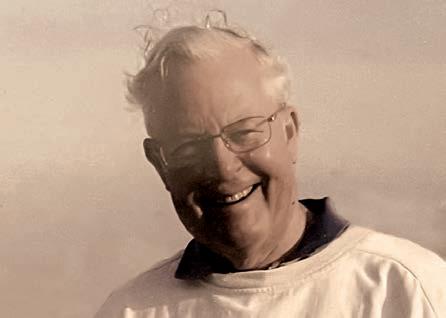
1957
Alden H. Irons retired Foreign Service Officer, died on Sept. 10, 2025, at his home in Ashburn, Virginia, of complications from Parkinson’s disease. He was 85.
In his assignments in Mali, Norway, Finland, Haiti and Morocco, Alden held political, economic, human rights and international labor reporting roles as well as consular positions. Early in his career, between overseas assignments, he focused on post-colonial African political and economic affairs, an early and lifelong interest.
Born on Nov. 3, 1939, to Richard K. Irons, who taught history at Groton School for 40 years, and his English wife, Audrey (née Radcliffe), Alden grew up on the Groton campus in an international family with a deep interest in foreign affairs.
At St. Paul’s School, he was active with the Library Association, Cadmean/Concordian Literary Societies, the Debate Team and The Pelican. He rowed and played ice hockey, soccer and tennis. It was while a student at SPS that his fascination with Africa began,
inspired in no small measure by the early career of Kwame Nkrumah, who led Ghana to independence from British rule.
A post-graduate-year at St. Paul’s School in London deepened Alden’s study of anticolonial movements across Africa. He entered Harvard as a sophomore history major and in his junior year created an interview show on WHRB, a student-run radio station, which focused on conversations about decolonizing Africa. Ralph Bunche, the first African American Nobel Peace Prize winner, Undersecretary-General of the United Nations, and America’s most senior African American diplomat before Colin Powell, was an early guest. Getting Hastings Banda, leader of Malawi’s bid for independence, on his show was also “a real coup.”
In 1962, Alden married Wellesley alumna Judith Ann Lisle in Locust Valley, New York, after his first year at Johns Hopkins School of Advanced International Studies. A month later, responding to the State Department’s call, they landed in Bamako, Mali, for Alden’s first assignment. In his rookie year, he learned what made an embassy run. As the general service officer, he was responsible for much of the local staff, logistics, supply and administration. His experiences with Malians from all walks of life enriched Alden’s understanding of the politics, economics and post-colonial difficulties of the country.
Alden and Judy’s first child, Catherine, was born in Bamako in 1963. Their next posting was to Oslo in 1964, where Alden worked for three years as a consular officer in visa administration. As it was the turbulent 1960s, there was also the occasional need to assist American tourists in trouble. Their second child, Stephen, arrived in 1967, about three weeks before the family returned to the United States for their first Foggy Bottom assignment. That was followed by two years in the State Department’s Human Resources Department, interviewing and assigning Foreign Service Officers to embassies and consulates across Europe. During this time, Judy earned her BSN and began a long and varied nursing career.
In his last overseas assignment, Alden was the labor officer for Morocco and de facto consul general in Casablanca. Judy became the consulate nurse as well as the nurse consultant for the Joint Distribution Committee. In 1986, the family settled in Arlington, Virginia, and Alden undertook a three-month assignment in the State Department Inspection
Corps. After that, and for the rest of his career, he focused on international labor issues in the State Department’s Bureau of Democracy, Human Rights, and Labor. In 1988, he converted from being a Foreign Service Officer to become a senior civil servant with the same job at the Bureau.
Though he formally retired in 2002, Alden continued to work part-time. Friends described his role then as “the State Department’s institutional memory on labor diplomacy.” Alden served from 1963 to 2009, from John F. Kennedy’s presidency to Barack Obama’s.
He is survived by Judith; his children, Catherine Olson, Stephen Irons (Mei Tan) and Richard Irons (Lisa D’Ambrosio-Irons); nine grandchildren, all of whom have referred to Alden as their “favorite encyclopedia;” and his two younger brothers, Clifford and David ’64.
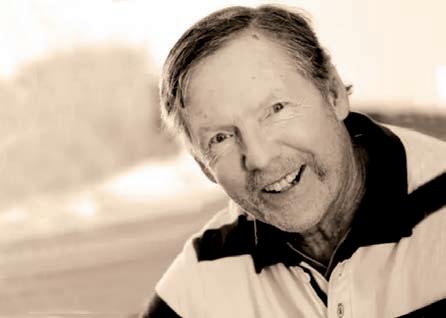
1959
A. Tracy Johnson Jr. of New York City, died on Sept. 14, 2025, at 84. Born April 28, 1941, in Dayton, Ohio, Tracy’s unwavering kindness, infectious humor and selfless nature endeared him to many. He spent his early years in Dayton before moving to Roslyn, New York. He attended The Green Vale School before coming to St. Paul’s School. At SPS, he played ice hockey, baseball, football and soccer, was a prefect, and was active with the Acolyte’s Guild, Missionary Society and The Pelican.
After graduating from Hobart College, where he was an avid baseball and hockey player, he served with the National Guard from 1965 to 1975. Tracy worked in banking, journalism and with publisher McGraw-Hill. He enjoyed getting out on the tennis and paddle tennis courts and loved watching sports. His passion for reading was unparalleled. His engaging personality and sense of humor guaranteed an atmosphere filled with warmth and laughs at any gathering. His legacy is one of love for his family and someone
who always put others before himself.
Tracy leaves behind a loving family that includes his wife of 38 years, Jane; his sons, Timothy (Kristen) and Duncan (Joelle); his granddaughter, Molly; sister, Diane Wade; nieces, Jennifer Lannan (Michael) and Leslie Kelly (Denis); and great-nieces, Lucy Lannan and Hope Kelly. He was predeceased by his brother, Michael Johnson ’64.
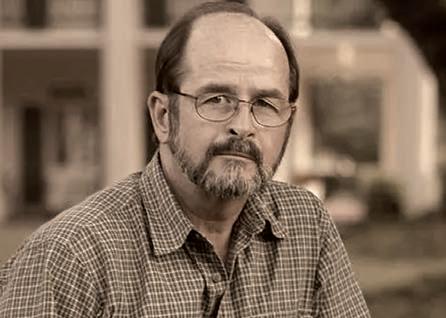
1962
Zeb Mayhew Jr. died peacefully at his second home in Slidell, Louisiana, on Oct. 31, 2025.
Born on Oct. 30, 1943, in Venezuela, where his father worked for Creole Petroleum, he was the son of Ruby Odom Mayhew and Zeb Mayhew ’33. When his father was promoted to an executive position with Standard Oil in 1953, the family moved to Greenwich, Connecticut, where Zeb and his siblings, Jonathan and Sheridan, spent their formative years.
Zeb continued a four-generation tradition by attending St. Paul’s School. He continued his education at Tulane University, where he was a member of the Kappa Alpha Order and graduated with a B.A. in political science. Zeb began his professional career as a Spanish teacher at Metairie Park Country Day School and subsequently engaged in the New Orleans commercial real estate business. Throughout his tenure in New Orleans, his affinity for Oak Alley Plantation, then owned by his great-aunt Josephine “Tita” Stewart and a place of meaningful childhood visits, continued to grow. He assisted Tita in informal tours of the historic home, and upon her death in 1972, found himself playing an evergrowing role in the management and restoration of the plantation, with the house, its quarter-mile alley of oaks and 25 (later 63) acres of the 1,200 acre plantation being placed in a nonprofit foundation and opened to the public.
Zeb’s role eventually grew into the fulltime duties of executive director of the Oak Alley Foundation, a role he held until his death. Concurrently, his vision for creating a world-renowned historic destination extended to building a complementary hospitality business on his adjoining plantation land, which he owned and operated. As the Louisiana tourism industry grew, and notably as visitation to the historic plantation homes along River Road increased, the importance of Oak Alley, and Zeb’s vision for preserving and presenting its historical significance to visitors, expanded into a broader leadership role in Louisiana tourism and economic development. He worked tirelessly to promote all of Louisiana’s treasured historic locations, viewing communal success as critical for all.
Zeb’s extensive roles included serving as board president on the Louisiana Travel Promotion, the Louisiana Bed & Breakfast Association and the River Region Area Chamber of Commerce as well as serving on the St. James Parish Economic Development Board, the Greater New Orleans Tourist and Convention Commission, the Louisiana Preservation Alliance, and the River Parishes Tourist Commission. For his work, the Louisiana Travel and Tourism Association honored him with its Lifetime Achievement Award.
Beyond his professional pursuits, Zeb was known for his wide circle of friends, his loyalty and the time he committed to discuss any topic. While sometimes his legendary conversational skills might have taken circuitous routes, there was always some embedded logic. He cared for everyone in his universe and was generous to a fault in assisting those in need.
Zeb is survived by his loving wife and soulmate, Debra Daigle Mayhew, and three children, Elizabeth Shelby Mayhew Saer (John); Zeb Mayhew III; and Aaron Munro (Amanda). He was the adored Paw Paw to his seven grandchildren, John Kenneth Saer III ’11, Tobin Mayhew Saer (Erin), Julia Armstrong Saer, Zeb Mayhew IV, Mary Katherine Mayhew, Skyler Nova Munro and Summer Ella Munro. Zeb is also survived by his brother, Jonathan (Chichi); nieces, Ashley Mayhew Dineen (David) and Cristie Mayhew Veeder (Gerrit); and six great nieces and nephews. He was predeceased by his sister, Sheridan, and his nephew, Trevor.
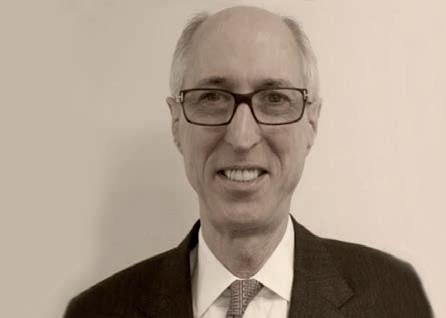
1963
Douglas S. Makepeace died peacefully at UPMC Shadyside Hospital in Pittsburgh, Pennsylvania, in the early hours of Jan. 4, 2026. He was born in Plainfield, New Jersey, on Nov. 21, 1944, to Roger Sherman Makepeace and Elizabeth Appleton Douglas Makepeace.
At St. Paul’s School, Douglas was a member of the Library Association, a barbershop quartet and Choir, and he joyfully participated in many dramatic productions. He earned his B.A. in psychology from Columbia University and a master’s from the Manhattan School of Music. At Columbia, Douglas was a proud member of the Beta Theta Pi fraternity.
Music was Douglas’ lifelong passion. While a student in New York, he sang in churches, including St. John the Divine and Saint Thomas, and in choral groups around the city. He was never shy about bursting into song and gladly sang a Bach cantata at his sister’s wedding.
Douglas worked at IBM in London for five years before returning to New York to work as an account executive at Merrill Lynch and then at Bear, Stearns & Co. In 1988, he founded Sperry Fund Management, focusing on hedge fund investing. His initial investors included some of the most prominent capital allocators of their time. By 2004, based on the 15-year record of the first fund, Sperry’s assets under management exceeded $500 million.
Douglas’s second career and long-term goal was to make education truly universal. In 2016, he co-founded LearnOnMobile, a language-learning app offering 1,400 interactive lessons for reading English. The app enables anyone with a mobile device and an internet connection to learn to read English better and faster.
Douglas is survived by his wife, Mayra Makepeace; his son, Jonathan A. Makepeace, and stepdaughter, Giselle Huron; and his sister, Anne A. Makepeace.
1963
Arthur S. “Tommy” Thomas died surrounded by his family on Jan. 28, 2025, in Lawrenceville, New Jersey. He was 80.
Tommy was born on March 22, 1944, in Brooklyn. His family moved to New London, New Hampshire, and he entered St. Paul’s School in the Second Form. At St. Paul’s, he played soccer, basketball and baseball and he was active with the Athletic Association. He also was involved with the Choir, music and choral groups, and the Cum Laude Society, and he loved studying French. St. Paul’s had a profound impact on Tommy’s life — his father died shortly before he entered, and the mentoring and support he received during those formative years was crucial.
After graduating from Amherst College, Tommy began a long and distinguished career in education that included teaching at St. Paul’s. He left the School to serve as a naval aviator, completing a tour of duty in Vietnam. He then went to work with his good friend Ed Potter ’61 at The Peddie School before spending the last 20 years as director of college counseling at Lawrenceville.
An avid sports fan, Tommy loved baseball, golf and college basketball, usually rooting for the underdog. Born a Brooklyn Dodgers fan, he became a staunch supporter of the Red Sox after the Dodgers defected to Los Angeles.
Tommy was a superb communicator. He needed no words, just a wide grin and an enthusiastic lift of his eyebrows at the mention of dessert. (He had a lifelong love of jelly doughnuts dating back to his St. Paul’s days.) He was clear and direct, a master of distilling his message to its essence. He was genuinely interested in people, inevitably charming guests at any party and inspiring confidence in young people after a single conversation. He made people feel wonderful about themselves. Tommy was also very funny. This indefatigable sense of humor kept him in good spirits
through myriad medical challenges. He was extraordinarily fortunate to receive a heart transplant in 2006. Because of this, he was able to attend all his children’s graduations and weddings and meet all his grandchildren. He traveled all over the world with his family and was able once again to ski, water ski and scuba dive. He was honored to walk the daughter of his heart donor down the aisle at her wedding in 2016.
Tommy is survived by his beloved wife of 42 years, Nancy; his children, Reid (Carey), Rob (Tamar), Jackie (Tait) and Chris (Lauren); and his eight grandchildren, Finley, Corinne, Arlo, Georgia, Keslye, Rosalie, Cannon and Agnes.
1964
H. Townsend “Towny” Blodget died peacefully on Oct. 18, 2025, from pancreatic cancer. He was 79.
Towny possessed a high intelligence, impeccable style, and deep love for family and friends. He loved to skate, was an adept sailor and excellent company. He learned to shoot with his father and enjoyed trap shooting and bird hunting. Never without a book, he read widely, enjoying literature, philosophy and art and took great pleasure — until the end — in sharing his knowledge with others. It was his 60-year affliction with schizophrenia, however, that defined and altered the course of his life.
Born in St. Louis, Missouri, on March 19, 1946, to Louise French Blodget and Alden S. Blodget Jr. ’34, Towny was the youngest of three brothers. In the immediate aftermath of World War II, his parents moved the family several times before settling in Princeton, New Jersey, soon after his younger sister was born. Towny was a tender, bright-eyed boy; skinny, athletic and, from an early age, intellectually curious. He spent his childhood summers in Annisquam, Massachusetts, where he played tennis, sailed and developed a love of the
ocean. Perhaps a harbinger of his academic success, early in his teens Towny spent one of those summers memorizing the dictionary with a friend.
As St. Paul’s School, he received the Dumm Latin Prize and earned the Charles S. Knox Memorial Cup, awarded to the graduating student who has attained the greatest distinction in scholarship during their years at St. Paul’s School. He graduated with honors in five subjects. He also was an Alms Bearer and a member of the Acolyte’s Guild, the Missionary Society, Sixth Form Council, the Palamedean Classics Society, Propylean Literary Society, the Rifle Club, Shavian Society and Yearbook Committee. Towny played Old Hundred hockey in 1961 and 1962, SPS soccer in 1962 and 1963, and was on the School’s tennis team.
In 1968, he graduated with honors from Harvard, where he was a member of the Fly Club and performed in the Hasty Pudding shows.
In the years before his illness claimed him, Towny lived life large. After college, while working in Boston at SAIL Magazine, he drew a low number in the Vietnam draft and joined the Army Reserves (boot camp was in Louisiana during one hot summer). He moved to New York and worked at the Metropolitan Museum of Art. He loved Central Park, swell parties and the New York nightlife.
Soon, though, the struggle to sort out reality overwhelmed his mind. The paranoid delusions and auditory hallucinations that intensified over the course of his 20s left him feeling increasingly unsafe in the world. He left New York City and, for the remainder of his life, moved from apartments to motels throughout New England, always close to a university town or a good bookstore. Despite his parents’ heartbreaking struggle to hold on to him, he cut ties with his family, though he maintained a thread of connection through a handful of close friends or relatives with whom he kept in touch. The family extends its heartfelt thanks to everyone who delivered messages and news. These ties played an important role in allowing the family to keep him safe.
Through sheer force of will and much suffering, Towny lived unmedicated but triumphantly independent. In his mind, his autonomy was critical to his survival. In the end, his family came to see that his delusions of fame and fortune offered a self-protective shelter from
the reality of his life. In his last four years, he had the great good fortune to move into a cottage at a motel in Williamstown, Massachusetts, where the innkeeper and his wife watched over him until he became ill. In the end, he accepted medical care and died peacefully in hospice. In his last weeks, Towny welcomed visits from his sister and his niece and expressed gratitude for their loving attention. Shortly before he died, he spoke about sailing over to Crane Beach for picnics.
Towny is survived by his brothers, Alden S. Blodget (Dale) and Dudley F. Blodget ’63 (Pam Budner), and his sister, Sally Blodget Carton (John). He is also survived by nieces Alexandra Heidinger, Caitlin Pingree, Casey Bardzik and Margaret Pugel and nephew Sanford Carton.
1965
Stephen J. Easter of Potsdam, New York, died in his sleep on May 3, 2025, after a lovely day spent with family and friends. He was 77.
Steve was born in St. Louis, Missouri, in 1947 to George H. Easter, an Episcopal priest, and Ruth Winifred Eaton Easter, a professional singer and music teacher. Clergy families tend to move often, and Steve and his younger siblings, Kate and John, grew up in Buffalo and Philadelphia and then Canterbury, England, where Steve was the first American to sing as a boy chorister (and carry the Archbishop of Canterbury’s ceremonial train) at Canterbury Cathedral Choir School. Steve attended the Magdalen College Campus School on the Oxford University campus, where C.S. Lewis and J.R.R. Tolkien were dons. Steve often told the story of caroling at what turned out to be Tolkien’s home, where the great man invited the carolers in from the cold and awed them by heating a sword red-hot in the fireplace, then plunging it into a cauldron of cider, making a dramatic hissing sound and sending
clouds of steam circling round the ceiling. Tolkien poured the steaming cider into mugs and distributed them to the boys. The memory of that mug of hot cider warmed Steve for all his days.
He attended St. Paul’s School on a scholarship and was a member of the Choir and choral and music groups; he fondly remembered singing in Chapel and frozen mornings playing hockey on the pond. He was involved with rifle/ trap/skeet shooting, skiing, soccer and crew as well as the Missionary Society.
At Oberlin College, Steve earned a degree in government and his stripes as a touring musician, singing great choral works under the baton of Robert Fountain, Aaron Copeland and others. He also served in leadership for his housing cooperative at Oberlin, foreshadowing his lifetime of volunteer service. After college, Steve moved to the Adirondacks to be closer to family. There, he helped to rehabilitate a Great Camp that George and Ruth purchased from Paul Smith’s College. Steve helped design and build a boathouse, mastered home repair and discovered a love for temperamental wooden boats of all varieties. He became a skillful and decorated racing skipper for the 32' wooden Idem sailboat they bought from a neighbor, and he also acquired and restored a decrepit Chris-Craft motor launch. He earned his 46-R badge climbing the High Peaks and spent many happy hours paddling all around the Adirondacks. He worked as a reporter for the Adirondack Daily Enterprise in Saranac Lake, but he also spent summers mentoring young boys as a counselor at Camp Kabeyun on Lake Winnipesaukee in New Hampshire and working at the Camelot Home for Delinquent Boys in Lake Placid.
At Camelot, he came to believe that the boys were “pretty good kids who’d been horribly failed by their parents and the legal system.” This revelation led him to earn his law degree at Albany Law School; he then moved to Potsdam to start working at Krebs Law Firm. A few years later, he opened his own practice. One of his real passions was co-founding and serving in the law guardian program (now the Attorney for the Child program), which provided children with free attorneys to represent their best interests during custody battles and other family disruptions.
Steve took a part-time job in 1985 working as principal law clerk in the St. Lawrence County Court under Judge Eugene Nicandri, where he researched case law, drafted opinions and supported the judge in operating the court. In 1996, the New York State Office of Court Administration made those positions full-time, and Steve made the tough decision to close his private practice so he could continue working in the courts. When Judge Nicandri retired, Steve stayed on, working under Judges Kathleen Martin Rogers and Jerome Richards. They worked together until Steve retired in 2015. Steve was known in the court system for mentoring younger attorneys, developing a training program to support town justices, teaching other attorneys at conferences, and helping to pioneer the use of “drug court,” a criminal diversion program rooted in addiction science that offers treatment and wraparound support to help break the cycle of drug abuse and criminality.
S erving others mattered to Steve. He volunteered at his son’s schools as a chaperone, host, volunteer driver, handyman and more. He sang in the choir of Trinity Episcopal Church in Potsdam and served on its vestry for decades, including several terms as warden. He also shouldered the task of maintaining and winding the ancient mechanical clock inside the clock tower. Steve spent many years serving on the Community Services Board for St. Lawrence County, sometimes as chair. He also co-founded the Potsdam Community Chorus and helped to establish it as a nonprofit organization. He was an early board member of the Potsdam Food Co-op. He served on many other boards, including NYSARC, North Country Legal Services (now Legal Aid Society of Northeastern New York), the St. Lawrence County Bar Association, and the Canton-Potsdam Hospital Foundation. He crafted and maintained innumerable geocaches throughout New York, helping people to discover the wilderness, and he led many hikes and paddling trips.
Steve’s largest volunteer commitment was to Reachout of St. Lawrence County, the nonprofit crisis and suicide hotline cofounded by his wife, Karen. Steve provided invaluable technical and legal expertise on setting up a nonprofit and inventing an operating structure for what was, at the time, a new form of organization. He served on Reachout’s board in the early years, trained many volunteers on
legal issues related to hotline work, jumped into service as Reachout’s middle-of-thenight emergency plumber for decades and baked thousands of chocolate-peanut butterchip cookies for nearly a half century of training classes.
After retirement, Steve faced a combination of health challenges and neurocognitive decline but remained passionate about many things: his family, especially his grandson; justice in the world; beautiful music; the preservation of green and wild spaces; and the sublime delights of a good ice cream cone. He read widely, studied many languages, traveled the world, knew the plot of every British murder mystery and could still sing all of Handel’s Messiah from memory.
Steve is survived by his wife of 48 years, Karen; his son, Hollis; daughter-in-law, Jasmine; grandson, Finlay; his sister, Kathryn Chmurny; his brother, John Easter ’71, and his family; his stepfather, Byron Whitney; his first wife, Kathryn Weld, who was a wife for a short time and a member of the family forever, and her husband, Sheldon Brown; and many nieces, nephews, and other born and chosen family.
2015
Waverly Jones-Pouliot “Wei” Wentworth
died in Cambridge, Massachusetts, on Aug. 5, 2025, at the age of 28.
Born on Feb. 21, 1997, in Fort Hood, Texas, Waverly’s life, though brief, was marked by intelligence, grace and an unwavering curiosity and love about the world and its people. She was the cherished daughter of Lucretia and Clayton Wentworth and beloved stepsister of Brian Wentworth and Carla Plank. She was also the adored granddaughter of Luke and Gloria Harden Jones and the late Carmin and Maurice Pouliot. Waverly’s family and friends will remember her as loving, humble and filled with a sense of humor that could brighten anyone’s day.
Waverly was baptized at St. Anthony’s Catholic Church in Pensacola, Florida, and confirmed at St. Dominic’s Catholic Church in Panama City. A gifted scholar, she attended St. Michael’s and St. John’s Catholic Schools in Pensacola before enrolling at St. Paul’s School, where she was active with the Debate Team and studied in Italy for School Year Abroad. Her passion for cultures and ideas led her to Harvard University, where she earned a B.S. in social anthropology with minors in Celtic studies and Russian. She pursued graduate studies at St. Anne’s, one of the University of Oxford’s largest colleges, and Yale Law School, continuing to inspire those around her with her dedication to learning and justice.
Beyond her academic accomplishments, Waverly found joy in languages, reading, travel and cooking — pursuits that reflected her adventurous and generous spirit. Waverly was employed at Day-Pitney LLP, Boston. She was actively involved in the Blackstone Fellowship and the Federalist Society, communities that valued her intellect and integrity.
Waverly’s life was one of compassion, quiet brilliance and devotion to the Catholic Church. Though her time was far too short, she leaves behind a legacy of kindness, and a deep appreciation for the beauty of understanding others.
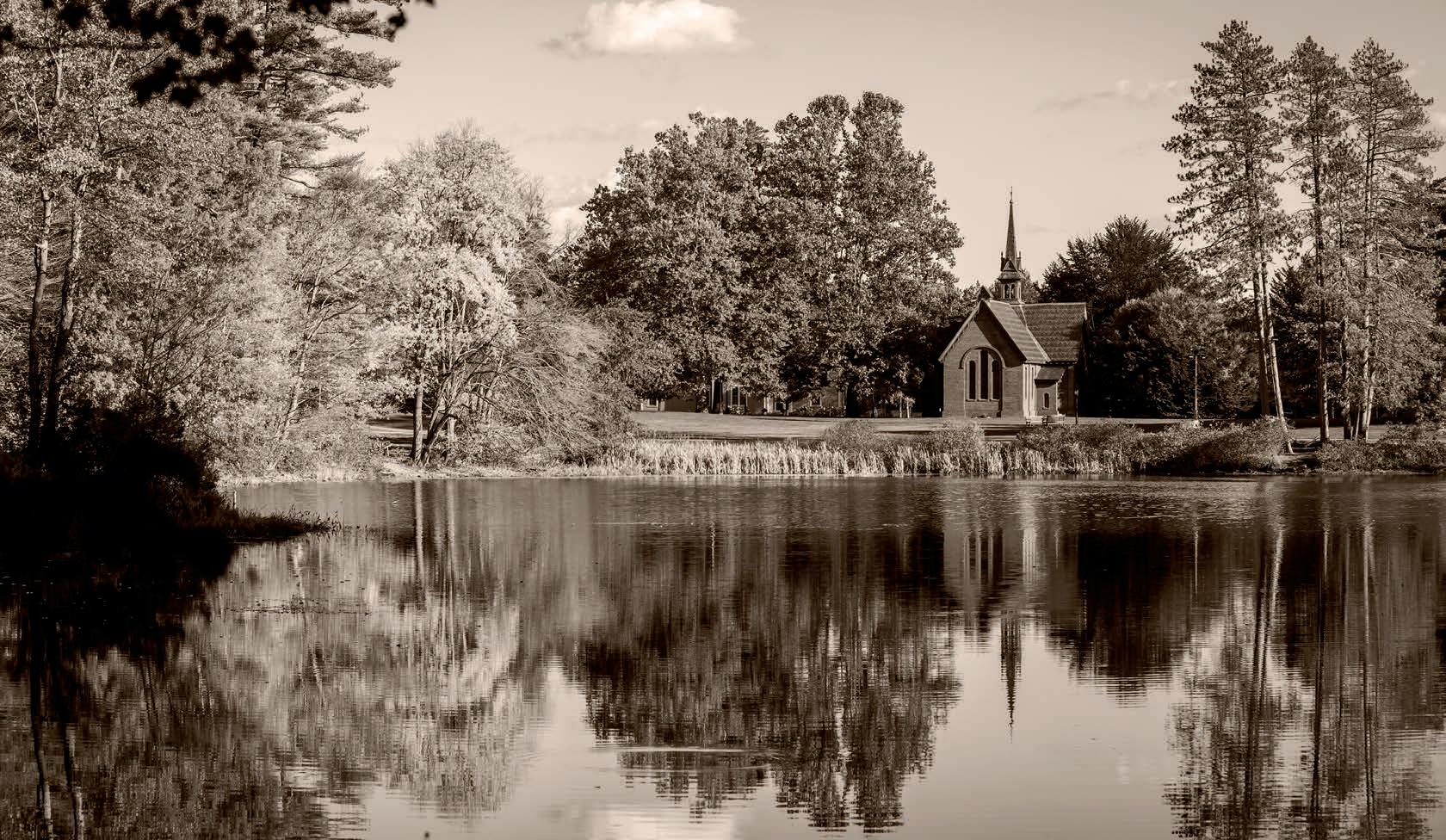
[This page intentionally left blank]
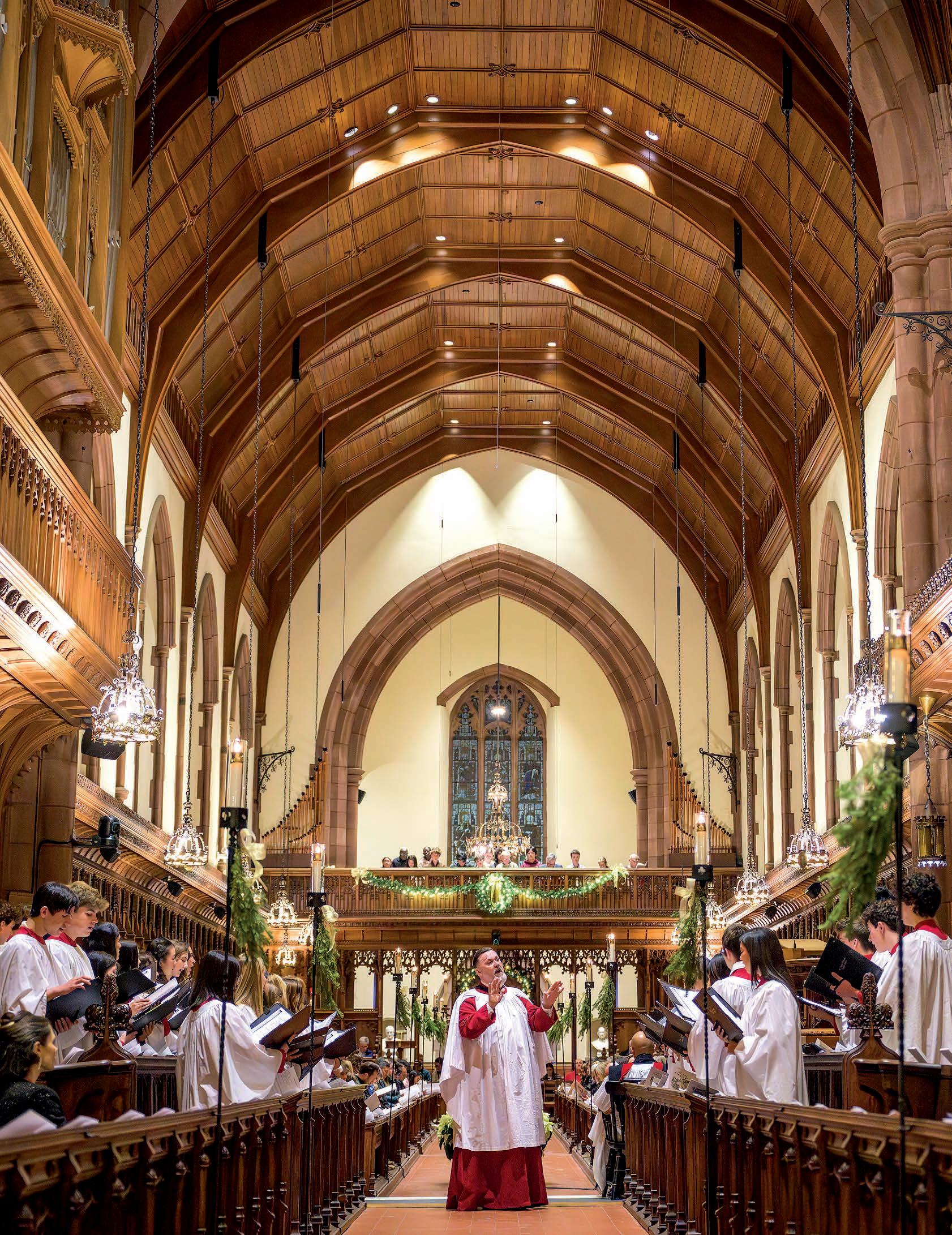
PHOTO: MICHAEL SEAMANS
In the historic Chapel of St. Peter and St. Paul, organist and Director of Chapel Music Nick White conducts the SPS Choir during the 55th annual Festival of Lessons and Carols in December.
Alumni Horae
St.
Paul’s School
325 Pleasant Street
Concord, NH 03301-2591
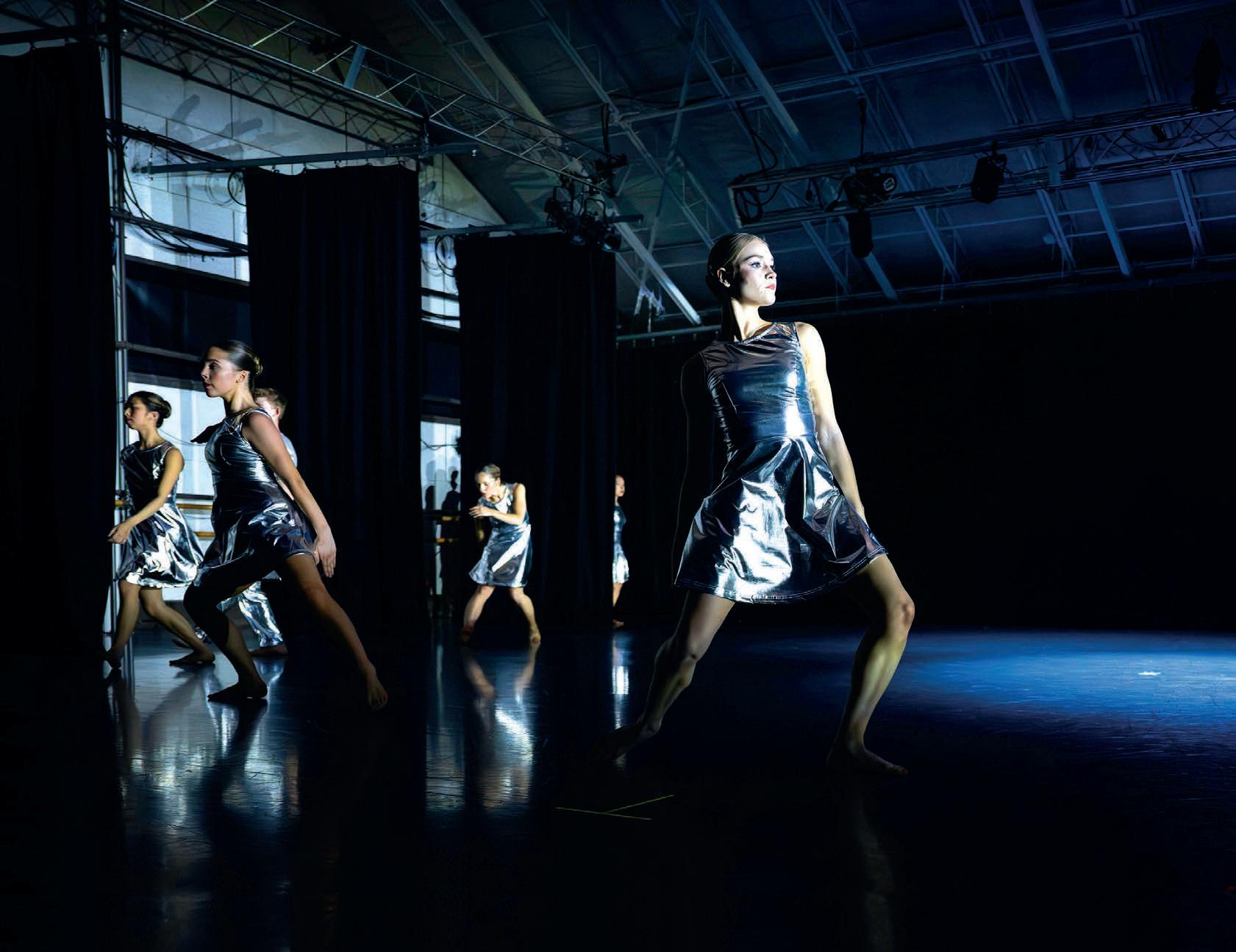
Dancers in the St. Paul’s School Ballet Company Winter Performance in the piece “Walled Garden,” choreographed by Peabody Award-winning guest artist Rosalind LeBlanc.
PHOTO: MICHAEL SEAMANS