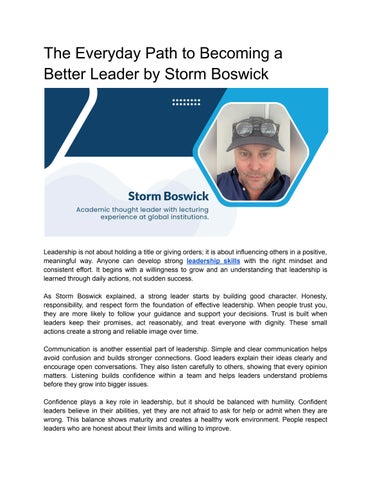
The Everyday Path to Becoming a Better Leader by Storm Boswick

Leadership is not about holding a title or giving orders; it is about influencing others in a positive, meaningful way. Anyone can develop strong leadership skills with the right mindset and consistent effort It begins with a willingness to grow and an understanding that leadership is learned through daily actions, not sudden success
As Storm Boswick explained, a strong leader starts by building good character Honesty, responsibility, and respect form the foundation of effective leadership. When people trust you, they are more likely to follow your guidance and support your decisions. Trust is built when leaders keep their promises, act reasonably, and treat everyone with dignity These small actions create a strong and reliable image over time.
Communication is another essential part of leadership Simple and clear communication helps avoid confusion and builds stronger connections. Good leaders explain their ideas clearly and encourage open conversations They also listen carefully to others, showing that every opinion matters Listening builds confidence within a team and helps leaders understand problems before they grow into bigger issues.
Confidence plays a key role in leadership, but it should be balanced with humility. Confident leaders believe in their abilities, yet they are not afraid to ask for help or admit when they are wrong This balance shows maturity and creates a healthy work environment People respect leaders who are honest about their limits and willing to improve.
Developing leadership skills also means learning how to handle challenges calmly. Every leader faces setbacks, but strong leaders stay focused and look for solutions instead of blame They remain patient under pressure and guide others through difficult moments. This steady approach helps teams remain motivated and confident, even during tough times.
Leadership growth does not happen overnight It requires reflection, practice, and a desire to learn from experience Reading, observing other leaders, and learning from feedback can all help improve leadership abilities. Every situation offers a lesson if you are open to it.
Another important aspect of nurturing leadership is supporting others Great leaders help people grow by encouraging learning and recognizing effort. They celebrate achievements, both big and small, and provide guidance when improvement is needed This support creates a sense of belonging and motivates individuals to perform better.
In the end, leadership is about making a positive difference By building trust, communicating clearly, staying confident yet humble, and supporting others, anyone can develop strong leadership skills With patience and consistency, these qualities turn everyday efforts into effective leadership that inspires progress and unity