Choose Happy, Earned the HardWay Bobby Caine Motor City Snow: Building Community One Turn at a Time Bobby Caine Motor City Snow: Building Community One Turn at a Time THE PIGPEN CATCHES UP: A CONVERSATION WITH AL KING THE PIGPEN CATCHES UP: A CONVERSATION WITH AL KING
Yorg Detroit sits down with Cheyenne Scott Yorg Detroit sits downwith Cheyenne Scott
MEET THE CREW BEHIND STOKE
Leadership & Editorial
Philip Hutchinson Founder / Editor-in-Chief / Pig Pen Member
Founder of STOKE Magazine and Northern Territory Imaging, Philip has spent more than two decades capturing the creative heartbeat of Michigan
A storyteller, photographer, and editor, he built STOKE to document the people and places driving the state’s outdoor and cultural movement
Under his direction, STOKE blends artistry, journalism, and community into one clear mission: to fuel Michigan’s creative fire and keep it burning Pig Pen Crew
(Riders, leaders, and core culture contributors)
Taylor “Birdman” Jepsen Rider / Sales / Social Media Manager / Pig Pen Member
Taylor represents STOKE in the field and on the frontlines from the chairlifts to the boardshops
As both a sales representative and lifelong rider, he keeps the magazine connected to Michigan’s snow and surf communities, embodying the energy that drives STOKE’s outdoor storytelling.
Al King The Pig Pen / Field Leader / Pig Pen Member
A founding member of The Pig Pen snowboard crew and frontman for The Strains, Al anchors STOKE’s winter coverage with leadership, authenticity, and humor
He’s the crew ’ s voice on the hill and in the mix guiding the next generation of riders with equal parts grit and heart
Kenny “The Missile” Fortune Rider / Feature Talent / Pig Pen Member
Kenny is pure Michigan energy on snow
Fearless, loyal, and larger than life, he embodies the STOKE mindset where community and creativity collide with raw drive and fun
As a Pig Pen member, he brings the same grit, loyalty, and family-first attitude that define the crew ’ s legacy across Michigan’s winter scene
Editorial & Writing
Yorg Music Columnist / The Drop
A veteran of Detroit’s music scene, Yorg curates The Drop STOKE’s ongoing look into Michigan’s evolving sound
His interviews and features connect readers with the musicians, producers, and promoters defining the state’s creative pulse, from the underground to the main stage
Vince “Borbolla” Kowalewicz Staff Writer / Director of Partnerships
Writer, strategist, and author of Lorenzo’s Journey, Vince leads STOKE’s partnership development and contributes deeply to its editorial voice.
His stories explore heritage, resilience, and the shared threads that connect Michigan’s people and places
Geoffrey supports STOKE across writing, sales, and editorial refinement
With a versatile skill set and a sharp eye for detail, he helps maintain the magazine’s quality while strengthening community relationships through thoughtful storytelling
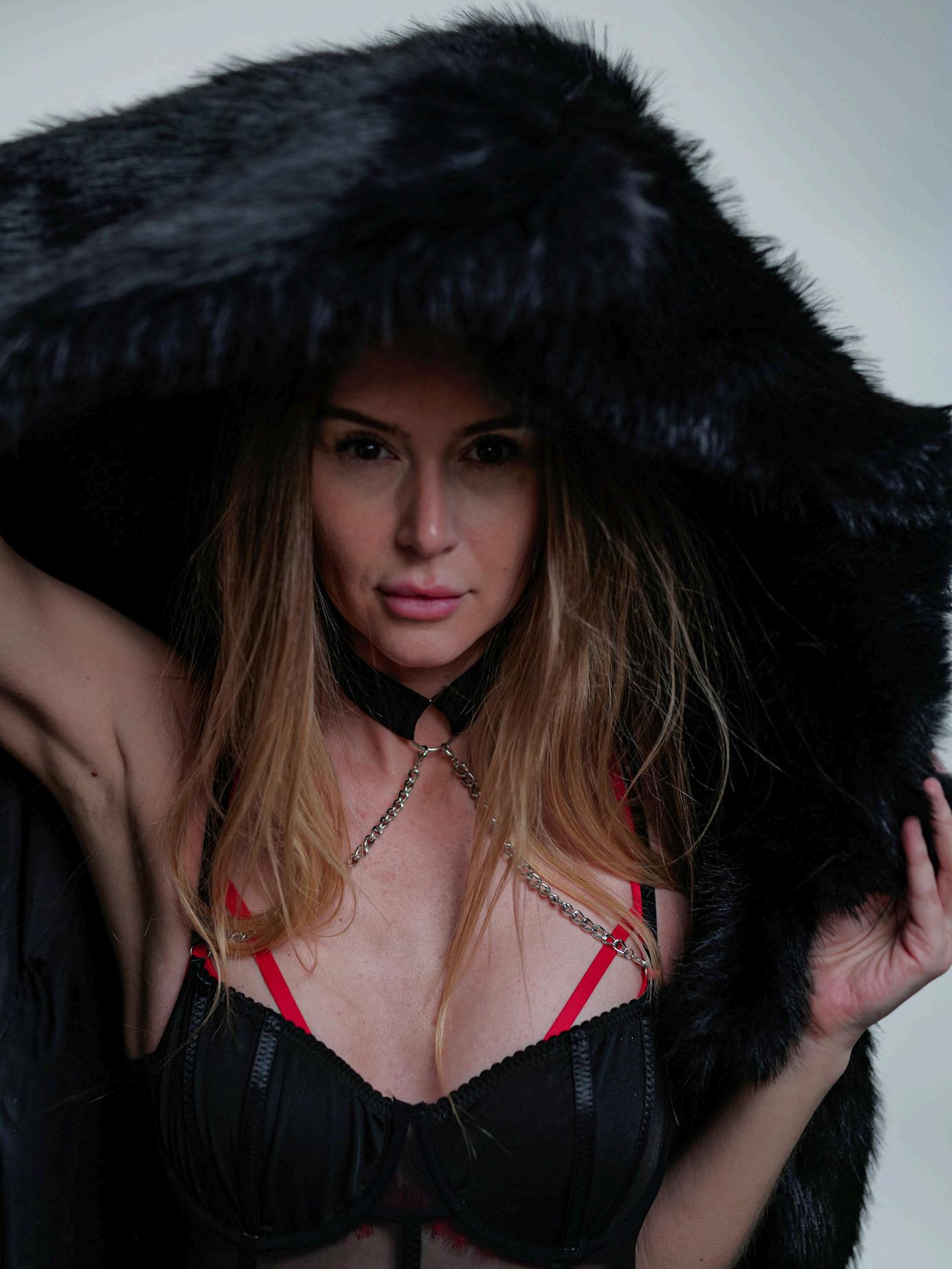
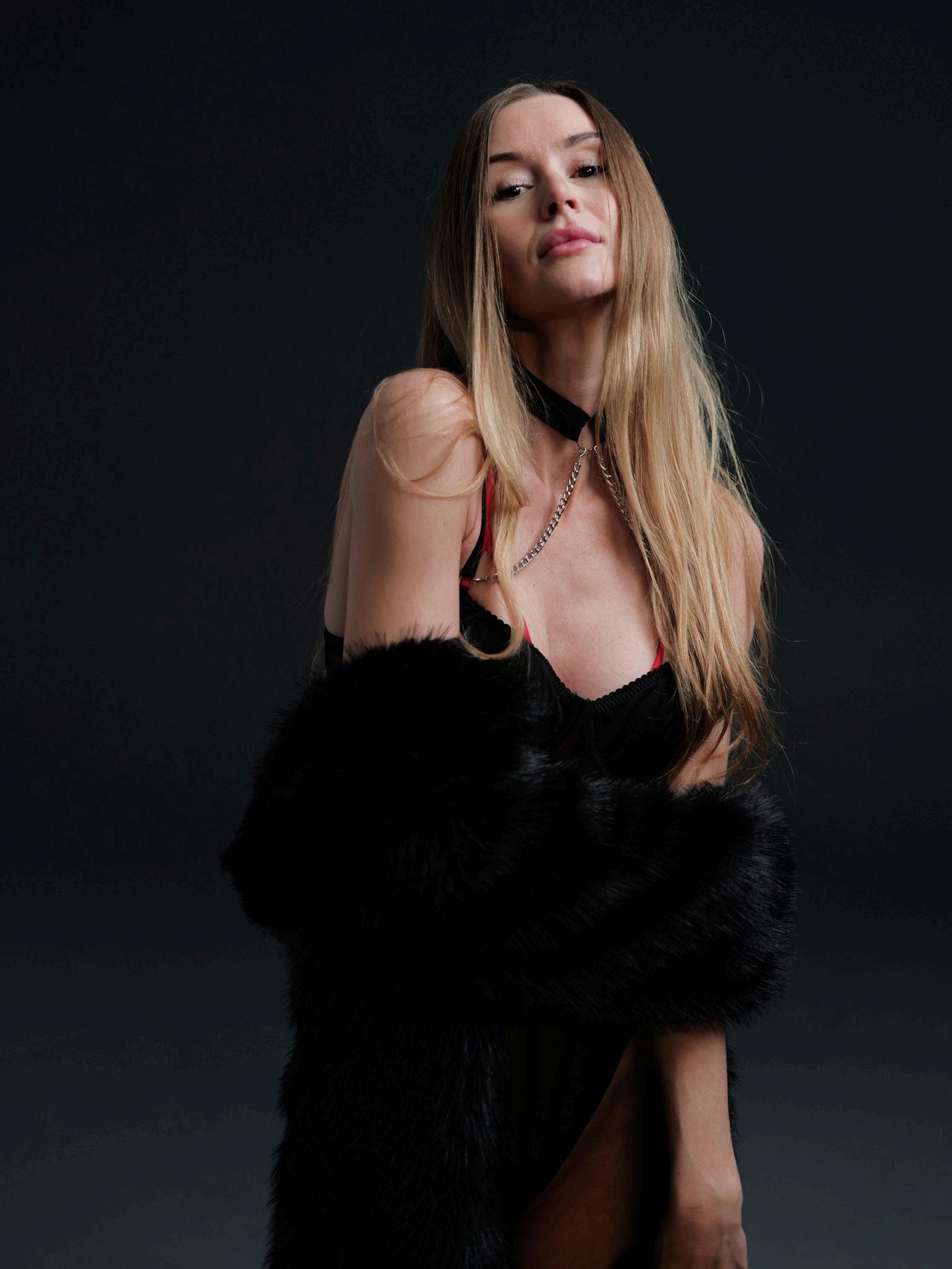
Emily is a key part of STOKE’s daily rhythm blending creative marketing insight with photography, sales support, and editorial precision.
A cofounder of Eva Boudoir, she brings clarity, craft, and visual storytelling to the team, helping ensure each issue is intentional, polished, and connected to STOKE’s community roots.
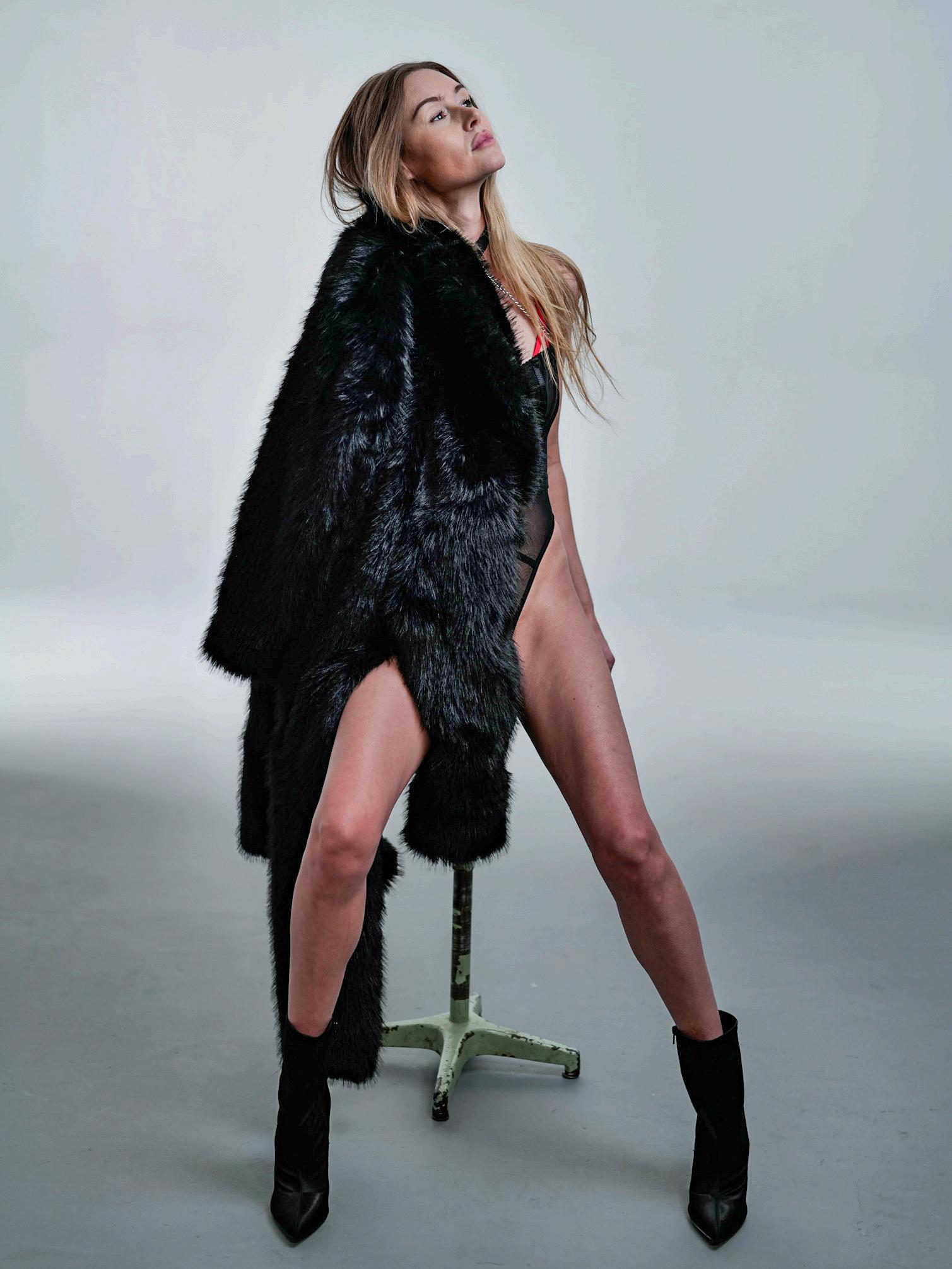
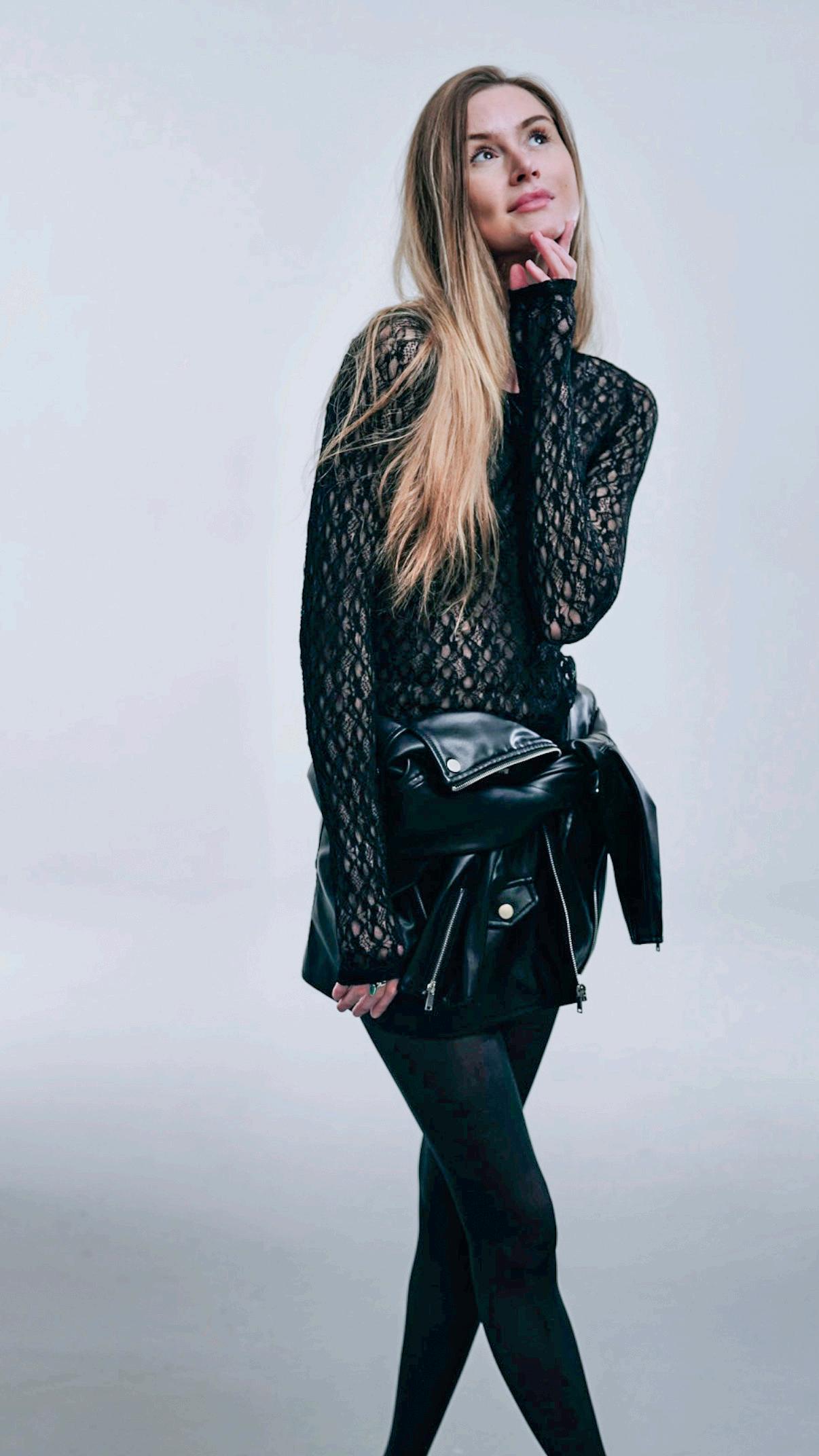
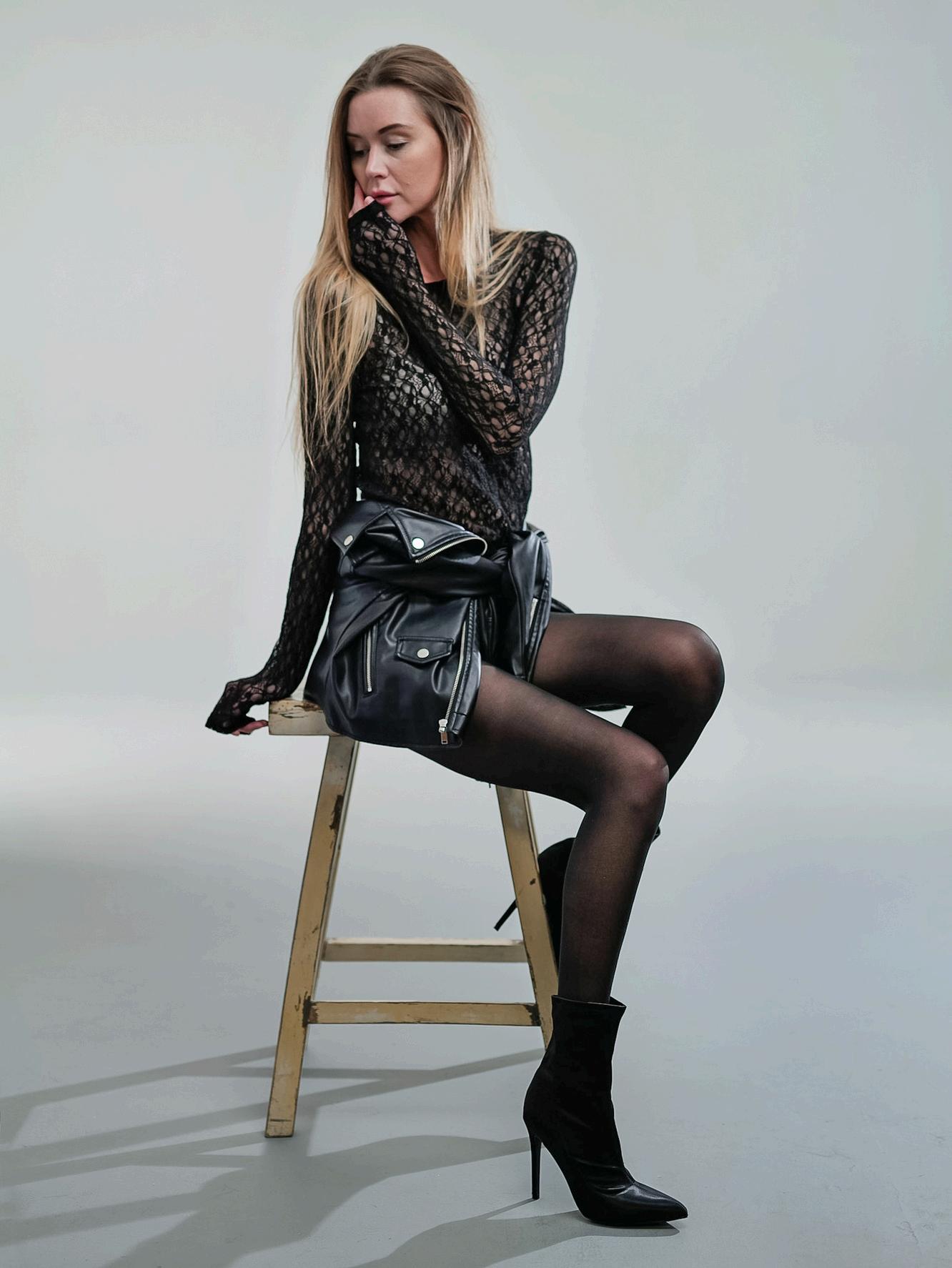
Stacey “In the Snow” Creative / Model / Design Support
Stacey brings creative direction, design instincts, and a visual voice that helps define STOKE’s style
As a model and creative collaborator, she plays a central role in shaping the magazine’s aesthetic identity and visual storytelling
January 2026
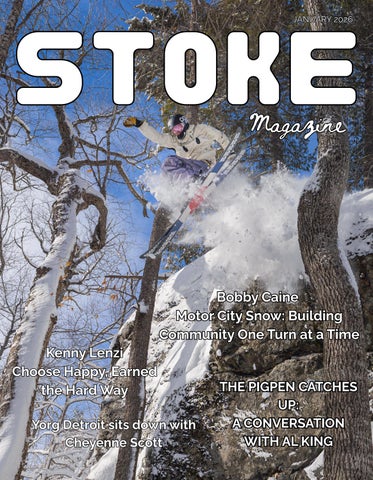
Cover
Cover Shot by the One and Only
Camera Jesus
aka Joe Gall
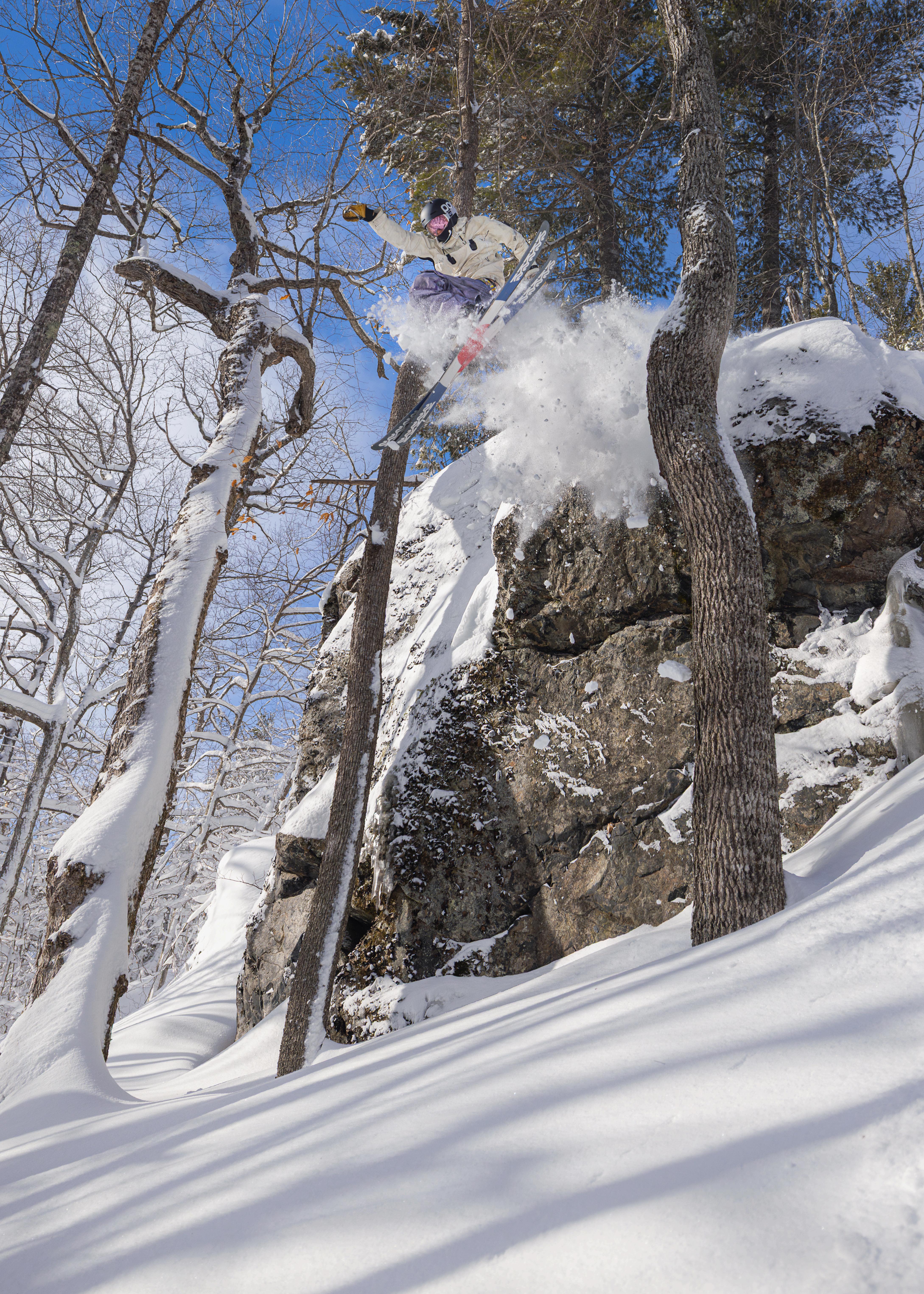
Elon Barber — Skier
Location: Michigan Backcountry
Visual Artist
�� camerajesus.com
�� Socials: Camera Jesus / Joe Gall
Features
MOTOR CITY SNOW
Building Community One Turn at a Time
Bobby Cain Comes to Nubs Nob
A Day With the Crew
By Bobbie Cain
THE PIGPEN CATCHES UP
A Conversation with Al King
CHOOSE HAPPY, EARNED THE HARD WAY
An Interview with Kenny Lenzi
Co-Founder & President, Skroove
DROPYORG DETROIT
Yorg-the-Drop in Conversation with Cheyenne Scott
Closing Feature
LORENZO’S JOURNEYTO DETROIT
Chapters 10 & 11
By Vince Borbolla
BOBBY CAINE
Motor City Snow: Building Community One
Motor City Snow: Building Community One Turn at a Time
Turn at a Time
Motor City Snow didn’t start as a brand.
It didn’t start as a mission statement or a logo or a five-year plan.
It started as a feeling
“I’ve been around the outdoors my whole life,” he says “My dad was a professional fisherman. I grew up hunting, fishing, doing seminars and shows with him That was normal to me ”
But normal shifts depending on where you ’ re standing
When he’d head back home, back to his neighborhood, the contrast was impossible to ignore The outdoors snowboarding, skiing, fishing felt like a different world Not because people didn’t want it, but because they’d never been invited into it
“That stuff is purely circumstantial,” he says “It’s not that people don’t want to do it. They just haven’t seen themselves in it”
That realization planted the seed for what would eventually become Motor City Snow.
Motor City Snow: Building Community One Turn at a Time Motor City Snow didn’t start as a brand. It started as a feeling
Q: Where did this all begin for you?
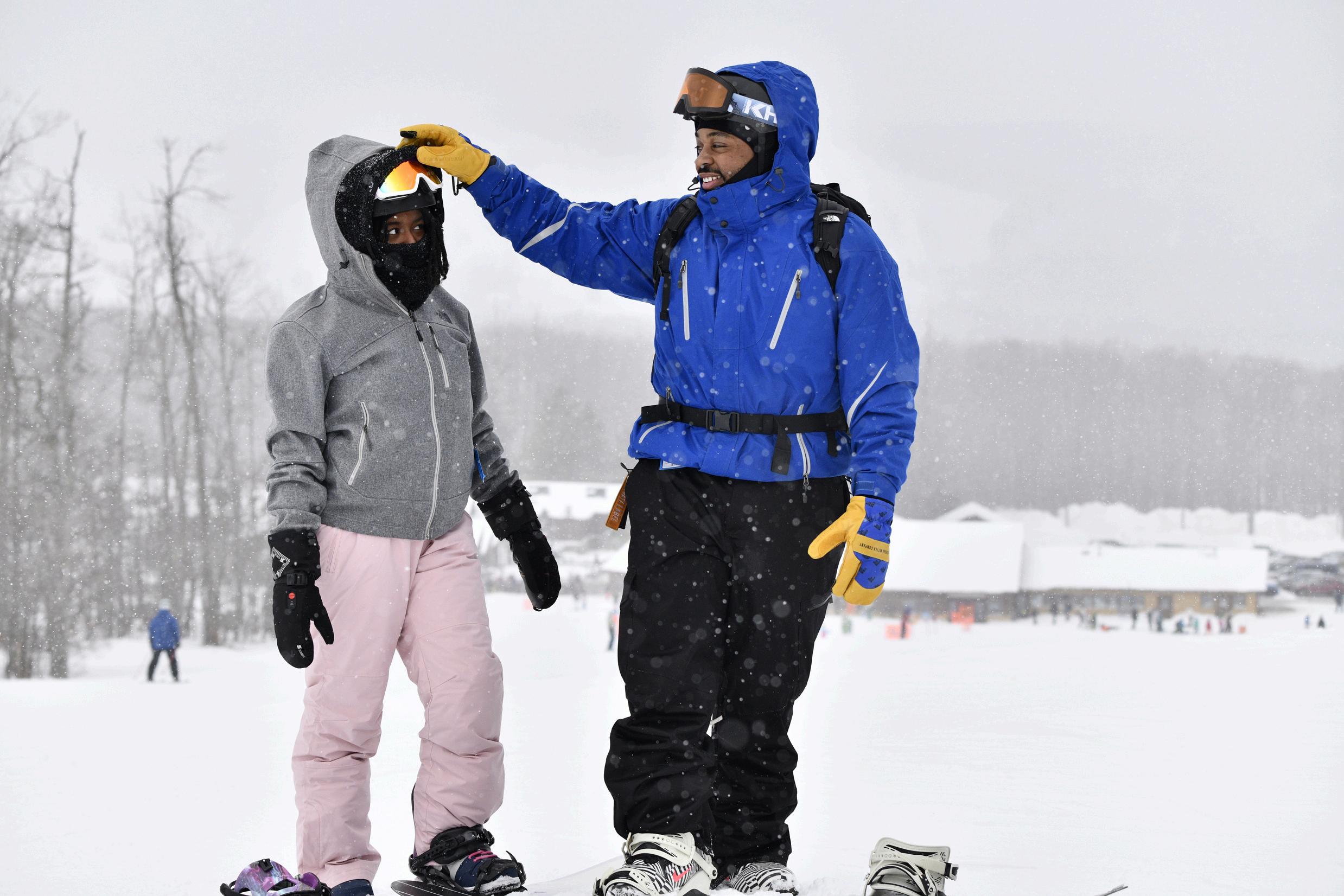
“I’ve been around the outdoors my whole life,” he says “My dad was a professional fisherman I grew up hunting, fishing, doing seminars and shows with him. That was normal to me. ” But when he’d return home, back to his neighborhood, the contrast was obvious The outdoors snowboarding, skiing, fishing felt like a different world. Not because people didn’t want it, but because they’d never been invited into it
“That stuff is purely circumstantial,” he explains “It’s not that people don’t want to do it. They just haven’t seen themselves in it”
After stepping away during college and early adulthood, he found his way back to snowboarding and everything clicked again
“The outdoors isn’t exclusive —it’s just been badly introduced.” —it’s just been badly introduced.”
Q: What brought you back?
“Honestly? It was still fun And now we ’ re adults You don’t need your parents to take you You don’t need a ton of money If you plan a little, don’t eat out for a couple days, you can make it happen”
What started as inviting friends to the hill slowly became something bigger: a space where people especially Black riders and riders of color could show up without feeling like outsiders
“People say, ‘We don’t do that,’” he laughs “Yeah we do The first Black ski club in Michigan started in 1958 Jim Dandy That’s before the civil rights movement They weren’t welcome, but they showed up anyway and made their own space ” That history matters Representation matters And so does safety not just physical safety, but emotional safety
Q: What does ‘safe space ’ mean to you in this context?
“It means you don’t have to worry We all drove hours to be here. We’re here together.”
“‘WE DON’T DO THAT’ USUALLY JUST MEANS ‘NO ONE EVER ASKED US TO.’”
Q: That’s a lot to take on Why do it?
“You can’t say you ’ re building community and not take care of people.”
Ultimately, Motor City Snow is about changing perspective
“I want outdoor experiences to be more appealing than the club scene. That stuff isn’t going anywhere but this? This changes how you live”
He pauses, then smiles
“I used to say I wanted to change the world. Maybe not the whole world But somebody’s world? Yeah That I can do”
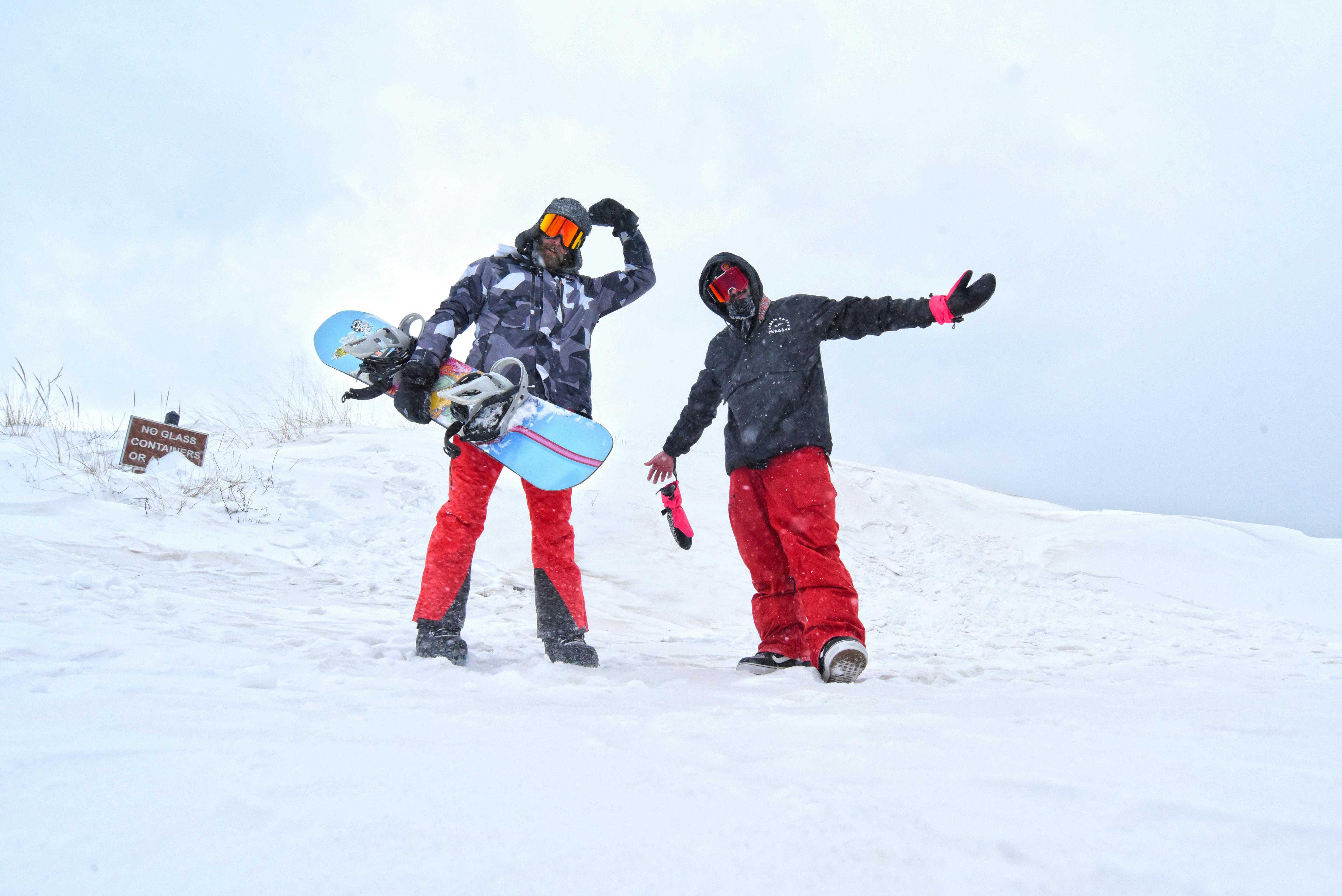
Motor City Snow rides almost every Saturday, mainly at Pine Knob and Mt Holly places with better conditions for beginners. The goal is always the same: make the first experience fun
“I don’t want someone ’ s first day to be on ice, falling all day, hurting their knees. I want them to leave saying, ‘That was dope I want to do it again’”
And it works
People show up who never thought they’d snowboard. Some start tubing Some just hang out Then they come back Then they bring friends
“You get them outside first. The rest follows.”
Q: The community around snowboarding feels different Why do you think that is?
“It reminds me of skateboarding. Ripped pants, mismatched gear nobody cares If you ’ re here and you ’ re riding, you ’ re good”
That openness extends to the pros too. Riders like Zeb Powell, Russell Winfield, and others who bridge worlds by simply being present and accessible “They’re people of the people. That’s how you keep a culture alive”
For him, this isn’t about clout or money He works a regular job. He pays for food. He grills for the group. He buys passes out of pocket
“MOTOR CITY SNOW DIDN’T START AS A BRAND. IT STARTED AS AN INVITE.”
Want to Ride?
Motor City Snow rides every Saturday during the season
Best way to connect: Instagram & TikTok
@MotorCityMoto313
CATCHES UP: A CONVERSATION WITH AL KING**
“All right we ’ re recording.”
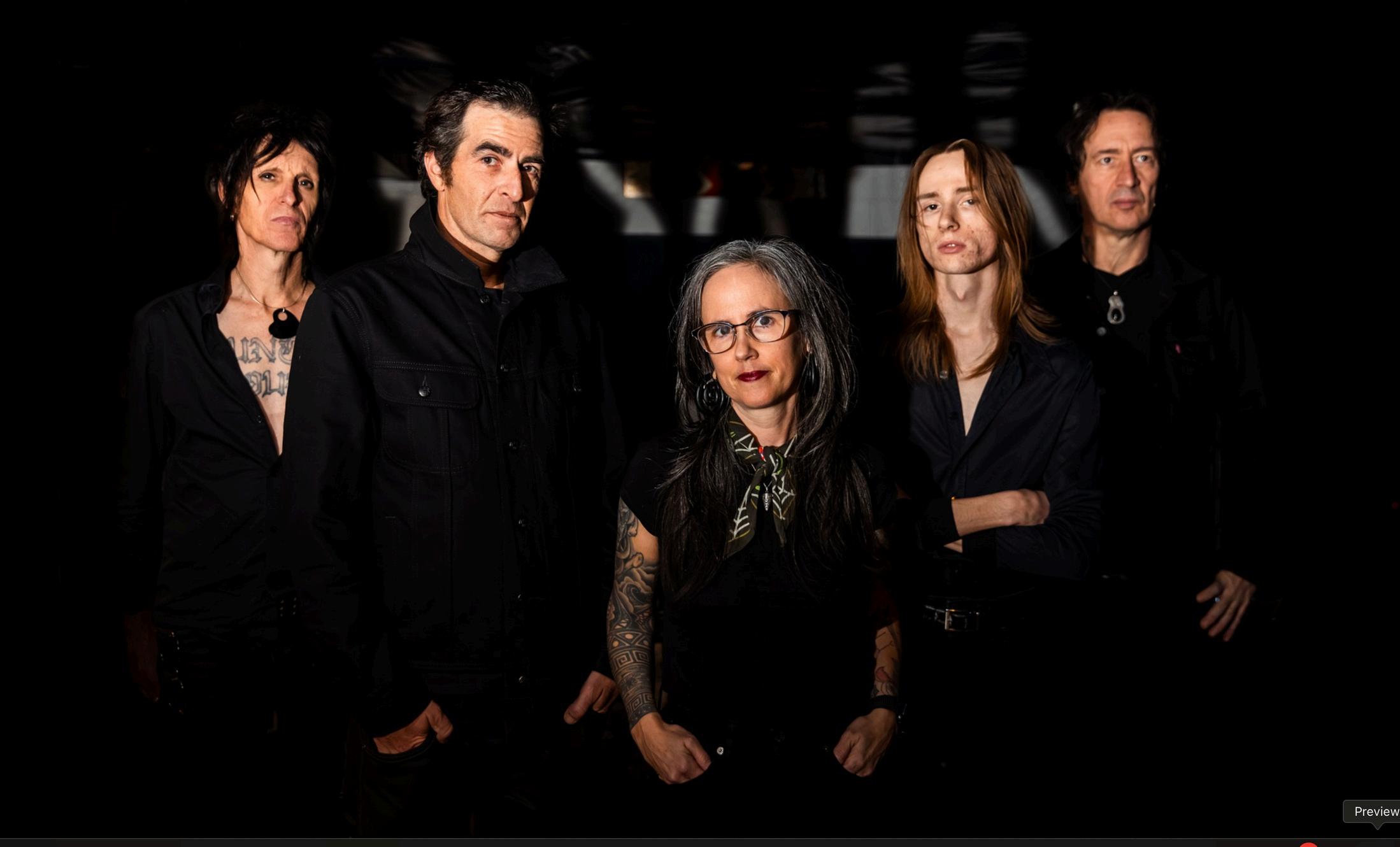
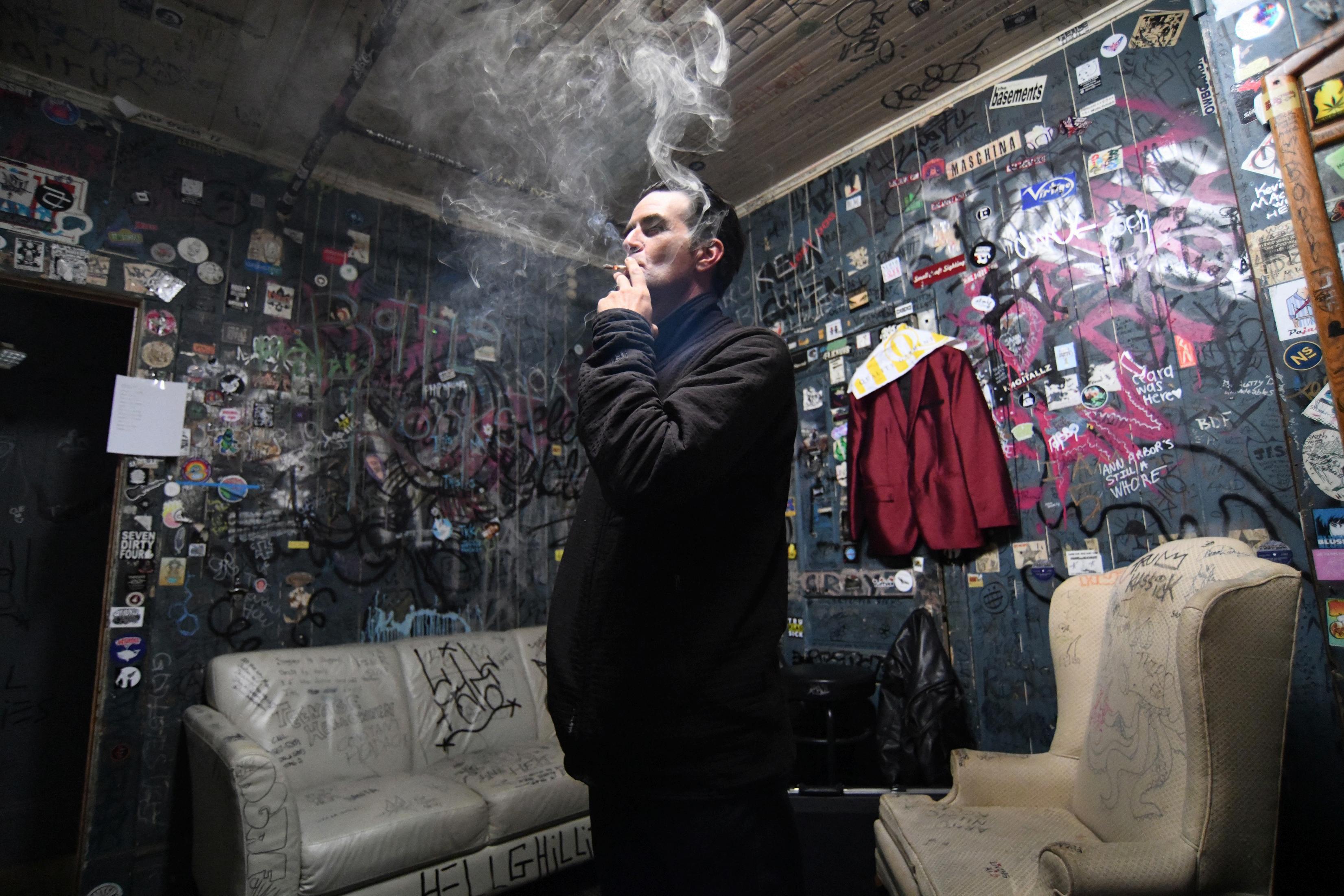
The Pigpen catches up with Al King drummer for The Strains, Detroit punk lifer, rider, teacher, and one of our own. He’s just back from a US run from the Midwest to the West Coast thirty-one shows, forty days, one van and winter has finally slowed things down enough to sit still. Boards are leaned against the wall. Coffee’s gone cold. The road noise fades This is a conversation, not an interview the kind that happens when everyone at the table already knows each other
“YOU LEARN WHO YOU ARE BY WHAT YOU DON’T LEAVE BEHIND.”
PIGPEN: Everybody throws the word “punk” around What is it to you?
AL: The Strains are rock and roll with punk in the blood. It’s not about a strict genre It’s about honesty. Hooks. Feel. Something people can grab onto When people who didn’t connect with my other bands hear this and say, “yeah that hits,” that’s enough.
PIGPEN: Let’s go back Have you always played drums, or were you just wired that way?
AL KING: I started playing drums when I was four years old My mom bought me an Animal-from-theMuppets drum set this was 1982 The Muppets were hot
I slept in the box it came in for about six months Blanket, pillow, everything Played it every day I was always banging on pots and pans, so that love started early
By 13, it was the neighborhood band thing One kid had a bass, one had a guitar, I had a drum set, someone had a mic let’s start a band I never really stopped
PIGPEN: The Strains didn’t feel random That meeting felt inevitable
AL: It really clicked at that MC5 tribute I was playing with Scott Morgan, Gary Rasmussen from Sonic Rendezvous Band, Kenny Olson and Chris “Jukebox” Taylor put the whole thing together
The Strains were there with another drummer We saw each other They saw me It was immediate Like, this makes sense
I’d known Paul, the singer, around Detroit for years Absolute lifer We shared history through Scott Morgan and The Hydromatics in Europe We’d been circling each other for a long time This was just the moment it finally lined up
PIGPEN: And then you went straight into it
AL: Pretty much 31 shows in 40 days Midwest into the West Coast
Half the band’s from Dayton, half from Michigan Paul’s in Detroit I’m in Charlevoix Detroit’s always the meeting point that’s where the band started We kicked it off at the Melody Inn in Indianapolis for Punk Rock Night, rolled through Norman, Oklahoma, Albuquerque, then drove 12 hours straight to San Diego
That’s where the West Coast run really started touring with Frank Meyer, Nick Oliveri Legends We were lucky to be in that mix
PIGPEN: A lot of people think touring is glamorous
AL: I hadn’t toured like that in over a decade, so I jumped straight into the deep end But the friendships, the community, the connections that’s the real payoff
Anything that goes sideways just becomes part of the story later
PIGPEN: And then it stops Winter hits
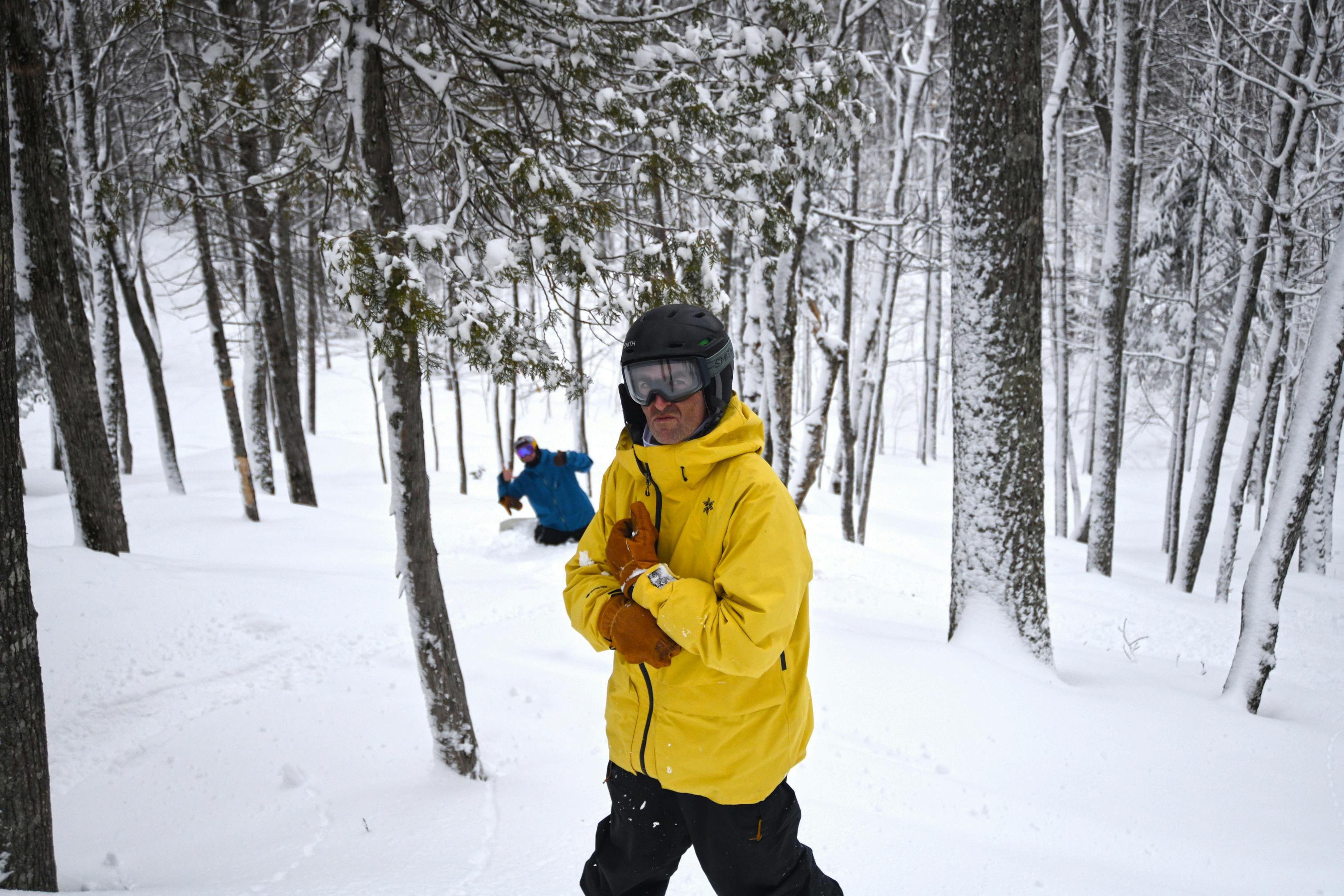
AL: Snowboarding saves me Straight up I work at Boyne Mountain in the winter I ride with you guys We film We build STOKE Teaching’s always been part of my life first drums, then snowboarding
Snowboarding feels like punk to me No ego Just people wanting to see each other do better
“YOU DON’T NEED MOMENTUM IF YOU HAVE DIRECTION.”
Nothing really ends here
PIGPEN: It wasn’t just shows. It was full survival mode.
AL: Two bands One Sprinter van Same gear Same drives Frank Meyer’s band and The Strains traveled together Kellen and I pulled double duty for nine shows one set with Frank, one with The Strains Seven adults. One van. All the gear. We drove, loaded, set up road crew, techs, band all the same people
You really learn who people are like that. The jokes. The stories The smells Gas station food Roller-grill dinners It’s all part of it
It just pauses long enough to notice what’s still there. The drums don’t stop they wait. The road doesn’t disappear — it folds back in on itself Winter comes, boards come out, people gather closer. What matters stays simple: show up, do the work, don’t lose the people
When the van fires back up, it will be the same hands on the wheel.
When the snow melts, it will still be the same hill Different miles. Same weight.
That’s how it keeps going
By STOKE Magazine
Kenny Lenzi, Skroove, and building something real
KENNY LENZI, SKROOVE : CHOOSE HAPPY, EARNED THE HARD WAY
KENNY LENZI, SKROOVE : CHOOSE HAPPY, EARNED THE HARD WAY
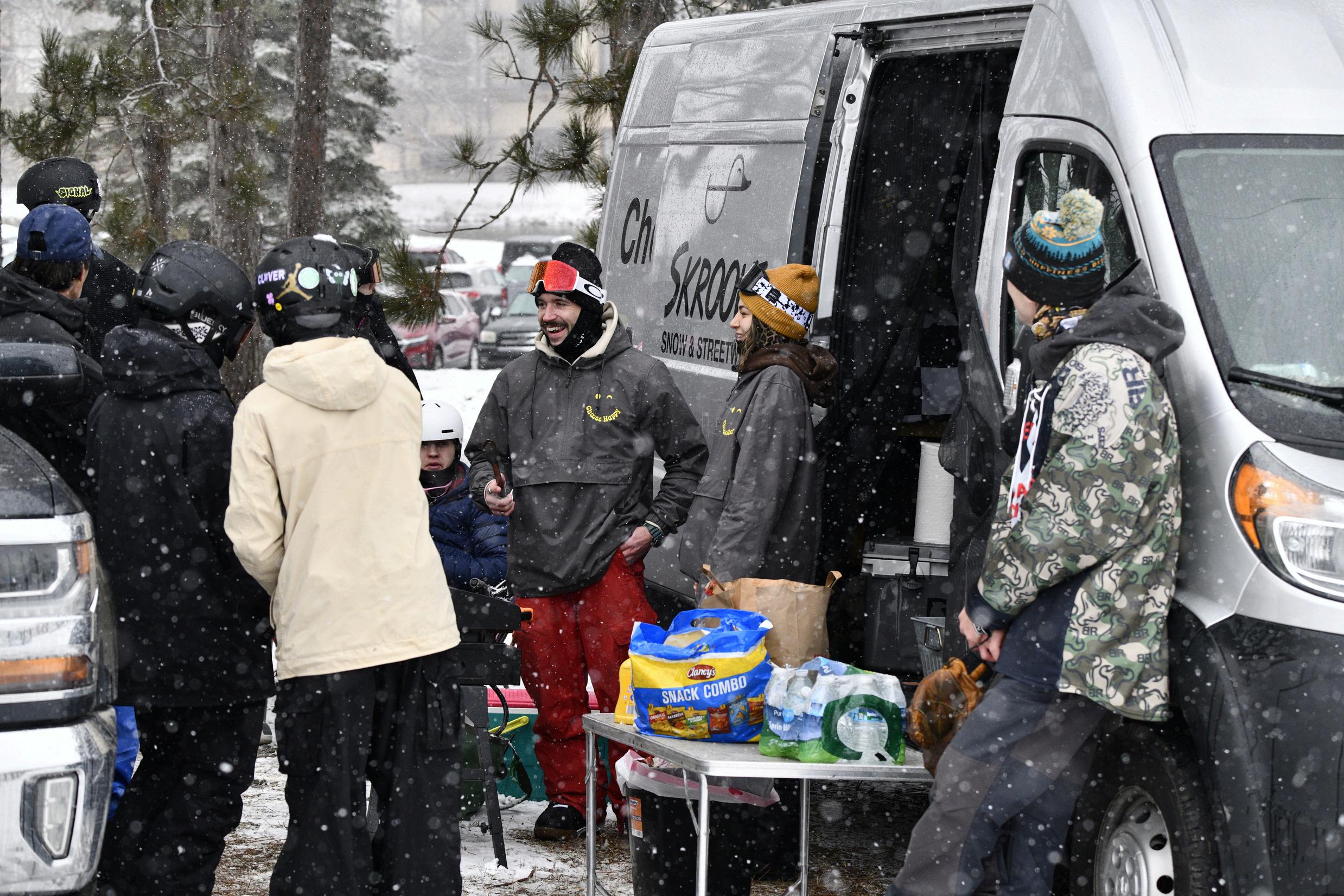
We didn’t meet Kenny Lenzi through a brand pitch or a DM We met him the right way through time, snow, and shared miles
A few years back we linked up with Joe Gall aka Camera Jesus Over time, Joe became part of our orbit He’d come up north to shoot, and every visit turned into another excuse to ride together, explore, and just exist as a crew One winter two or three years ago Joe rolled into town with a new guy His name was Ken No big introduction No hype Just another human showing up with boards, layers, and an easy smile
At the time, Skroove was still growing, and Ken was early in that chapter But none of that mattered We rode Mount McSauba, lapped Nub’s Nob, wandered the state park in Charlevoix, froze our asses off, laughed a lot, and did what crews do when they’re in it together No expectations Just surviving winter and stacking moments That trip explained Skroove better than any mission statement ever could
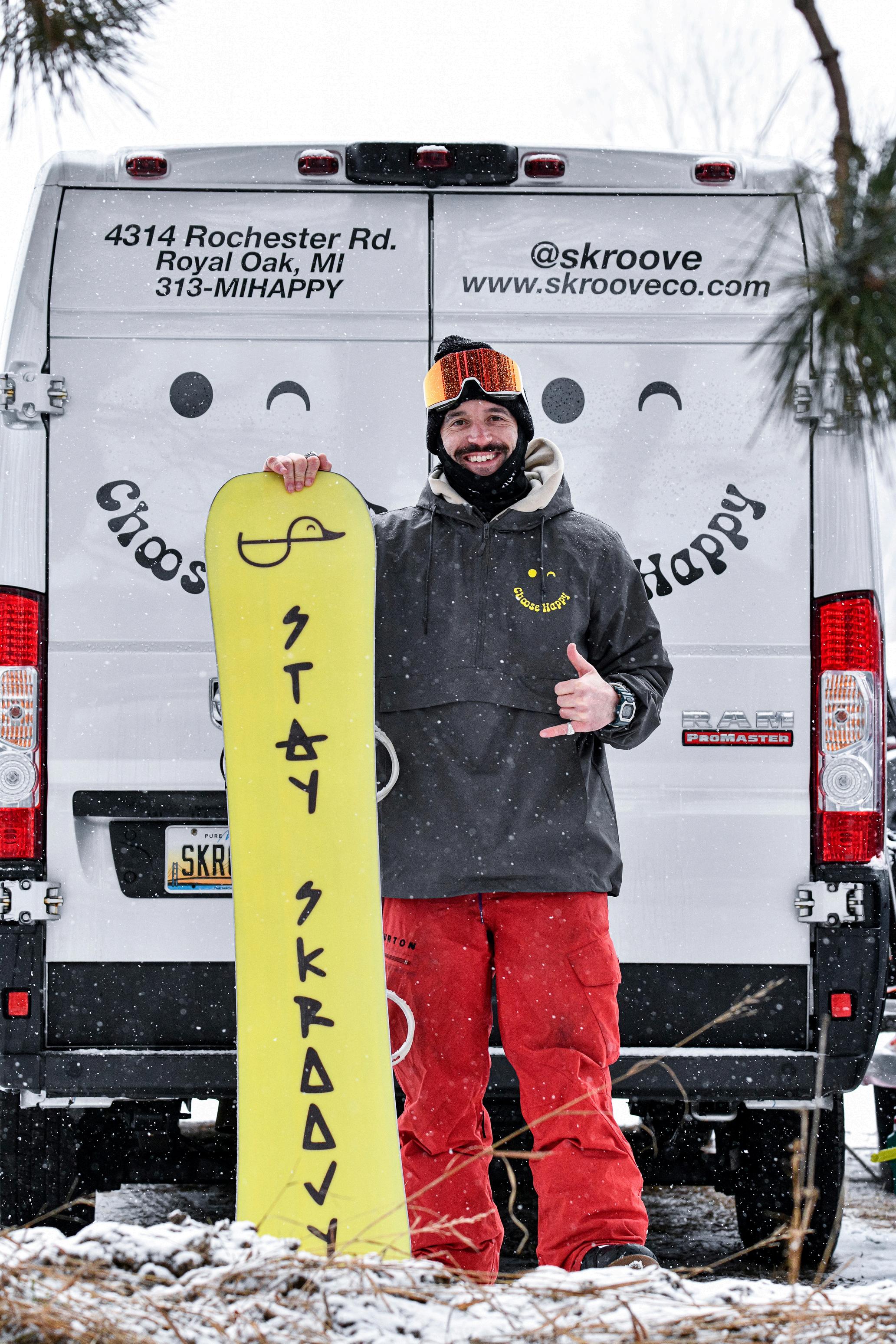
Skroove was founded in 2013 by brothers Kenny and Tyler Lenzi while they were still in college, with a simple idea: make things that feel good to wear and reflect how you actually want to live Not polished Not perfect Just honest Built around the mantra Choose Happy, Skroove grew into a lifestyle apparel and creative brand rooted in skating, snowboarding, Great Lakes surf, road trips, and everyday life with friends It isn’t about chasing trends it’s about documenting real moments as they happen
From the beginning, Skroove was never just clothing The brand grew alongside creative projects focused on community, curiosity, and enjoying the ride The clothes came from the lifestyle, not the other way around “Choose Happy” was never about ignoring reality it was about deciding how you show up when things aren’t easy
Building a brand with your brother isn’t clean It’s layered with shared history and unfiltered honesty Kenny and Tyler didn’t set out to build something that looked big they wanted something that felt right, something they could stand behind even when nobody was watching That closeness shows in Skroove’s DNA It’s a brand shaped by real dialogue, not brand decks
After that first trip north, we stayed connected Ken sent gear He kept coming back Every year it was the same show up, plug in, bring that same energy Full of laughs Full of optimism Carrying the Choose Happy mindset without ever needing to say it out loud
That’s how Skroove makes sense to us Not as a logo Not as merch But as something lived built through friendships, cold days, repeat visits, and people who actually show up
This isn’t a product story It’s a people story It’s about building something honestly, choosing optimism without pretending it’s easy, and earning happiness instead of performing it This interview isn’t about selling you something it’s about how a brand and a group of people found each other the natural way, by riding together and staying in touch
Choose Happy, Earned the Hard Way
Kenny Lenzi, Skroove
By STOKE Magazine
STOKE: Take us back to 2013 what was the moment Skroove went from an idea to something real?
SKROOVE: My brother Tyler and I were in college together at Saginaw Valley State University I was a junior and he was a freshman We were both studying marketing and business management and had the idea to start our own clothing brand We talked about it, brainstormed ideas, and eventually decided to just pull the trigger. We legally formed the business in November of 2013 By December we had a design ready for pre-order for family and friends, and by March of 2014 we received a purchase order from our first retailer in Key West, Florida We’ve been figuring it out ever since STOKE: How did building Skroove with your brother shape the brand for better and for worse?
SKROOVE: It’s made building the brand the most fun adventure I could imagine. There are a lot of ups and downs in building a business, and having your brother and best friend as your business partner is a huge advantage. It’s helped the DNA of Skroove stay true for the last 12 years Skroove was founded on having fun and doing what makes you happy Choose Happy and leaning on each other when life and business get hard has made it easier
STOKE: What was the first Skroove product, and how does it compare to what you ’ re making now?
SKROOVE: The first product wasn’t actually a Skroove product it was under the name Serindipiti We liked what the word meant: “happy accidents” It was a t-shirt, and honestly it’s pretty comparable to what we make now From the beginning we ’ ve focused on sourcing the best garments we can and keeping designs simple Less is more
STOKE: “Choose Happy” gets said a lot what does it actually mean when things aren’t going right?
SKROOVE: We believe happiness and perspective are choices, especially when things aren’t going your way In the moment it might suck, but you’ll get through it You can either choose to be miserable or choose happy Like someone once said, life’s a wave ride it That’s what we try to do
STOKE: Was happiness something you were chasing, or something you had to learn over time?
SKROOVE: Happiness is a constant pursuit It comes from growth and chasing a dream or goal It’s not about achieving the thing it’s about enjoying the journey and the process, including the ups and downs
STOKE: What part of yourself is Skroove an extension of?
SKROOVE: All of me I love bringing people together and doing cool shit with fun people
A lot of Skroove’s ethos are my ethos
STOKE: How much of Skroove comes directly from skating, snowboarding, and being outside?
SKROOVE: A lot of it We believe life is meant to be lived and that pushing yourself out of your comfort zone matters Snowboarding, skating, and being outside doing things you enjoy are a huge part of what Skroove stands for
STOKE: Which activity or environment has influenced your design mindset the most?
SKROOVE: Surfing and snowboarding I try to keep a simple, laid-back, and positive approach to most of our designs
STOKE: What’s a Skroove trip, session, or moment that still sticks with you?
SKROOVE: Our snowboarding adventure film from 2019, 12 Degrees & Dark Skies
STOKE: What’s the hardest part of running a lifestyle brand that people don’t see?
SKROOVE: Wearing all the different hats as a small business owner
“We didn’t wait until it was perfect. We just pulled the trigger and figured it out as we went”
STOKE: What part of the apparel industry do you straight-up dislike?
SKROOVE: The lack of little hats with propellers on them
STOKE: What mistake taught you the most as a founder?
SKROOVE: No single mistake just having the mindset of a student and constantly learning the game
STOKE: What keeps you motivated when the brand starts to feel heavy?
SKROOVE: The opportunity to turn my dream into a reality
STOKE: What pisses you off creatively?
SKROOVE: Sprinkles
STOKE: What’s something people assume about you that’s completely wrong?
SKROOVE: That I’ve always had a mustache
“Choose Happy isn’t about pretendin g everythin g’s good. It’s about deciding how you show up when it isn’t. ”
“Choose Happy isn’t about g It’s about up isn’t”
STOKE: How important is community to Skroove, and how do you protect it as the brand grows?
SKROOVE: Extremely important Community is at the core of what we ’ re building From day one we ’ ve focused on creating a positive, welcoming group of people As long as Skroove exists, we’ll keep creating fun, positive experiences for anyone to be a part of
STOKE: What makes Midwest culture different from the coastal brand noise?
SKROOVE: The passion and the vibes We snowboard and surf because we love it Conditions aren’t always perfect, but we go out and make the most of it The Midwest has the most fun
STOKE: Who’s someone in your circle who deserves more shine?
SKROOVE: My girlfriend Emma, and my mom, dad, and brother Carla, Rob, and Cooper They’re huge supporters and help with everything from prepping orders to cooking hotdogs I’m extremely grateful for them
STOKE: Where do you honestly want Skroove to be in five years?
SKROOVE: The biggest clothing brand to come out of the Midwest a brand the Midwest can identify with and call their own
STOKE: If Skroove disappeared tomorrow, what would you hope people remembered about it?
SKROOVE: How it made them feel
YORG-THE DROP CHEYENNE SCOTT YORG-THE DROP CHEYENNE SCOTT
YORG DETROIT IN CONVERSATION WITH CHEYENNE SCOTT
SINCE JULY, YORG DETROIT HAS BEEN ONE OF STOKE’S KEY VOICES, DELIVERING MONTHLY DROPS THAT SPOTLIGHT CULTURE, STYLE, AND THE PEOPLE SHAPING IT FOR JANUARY, YORG CONNECTS WITH INTERNATIONAL SUPERMODEL CHEYENNE SCOTT, A METRO DETROIT NATIVE WHOSE CAREER HAS TAKEN HER FROM MICHIGAN TO NEW YORK, CHINA, AND BEYOND WHAT FOLLOWS IS A CANDID Q&A ON FASHION, DETROIT ROOTS, AND STAYING GROUNDED IN A GLOBAL INDUSTRY.
1 How did your journey in the modeling industry begin in Detroit? It started with Italian Vogue submissions through Lesa Ferencz we met through my senior picture photographer From there, I began connecting with other successful photographers, and my first clients in New York actually had ties back to Michigan. I got my first contract by attending Launch Showcase in Chicago, which really propelled my career I also won a scholarship from the Dare to Dream–Keisha MacDonald Foundation, and that’s when I drove to New York City
2 What was the most surprising aspect of moving to New York City for modeling? Taking the chance with no guarantees and having everything actually work out That first week, I made lifelong friends. I woke up my first day to find Cailin Russo as my bunkmate, which felt like home since my sister’s name is Caylin and we grew up with bunk beds Even Yorg was in town that same week it all felt like a blessing. I was offered a modeling apartment right away and paid rent through the jobs I booked I expected to be homesick, but seeing things fall into place was the craziest part.
3. Can you share a memorable moment from your time on the runway?
Mercedes-Benz Fashion Week stands out the most Another unforgettable moment was attending the Victoria’s Secret Fashion Show casting I was fresh and nervous, but it was incredible The building was industrial, and we moved room to room waiting to be seen. The final room had a raised runway the first I’d ever seen at a casting They filmed me and asked questions on camera It felt huge, like my biggest opportunity yet.
4 What are some challenges you faced while making a name for yourself in the industry?
My Midwest demeanor. Everyone said I was “too nice.” But once I started promoting myself as Native American, it really helped me stand out I was proud of that, and it took me far in New York. One of my favorite designers I worked with was Sophie Theallet she booked me constantly She loves Native culture and designs, and I even got to present her full collection for an important awards show.
5 How has your style evolved since your early days of modeling?
Honestly, I had no style at first. I was fresh out of high school, and New York style is very different from Michigan On my first shoot with Victoria’s Secret Fashion Show photographer Seth Sabal, his girlfriend gave me a pair of her own jeans the first ones that actually fit After trading work for clothing on a few jobs, I started building a real wardrobe with statement pieces.
6 What has been your favorite campaign or photoshoot to date, and why?
Some of my favorite shoots were in China. The creativity was next level One time they put me in a pool, painted my face, and photographed me underwater Another time I had flowers in my hair and was styled like a petal on a plant. They even covered me in sequins from head to chest in the most tasteful way
7. How do you manage the pressures of the modeling world? There’s a lot of pressure promoters, fitting in, partying, staying safe You have to stay true to yourself and trust your intuition. If something doesn’t feel right, it probably isn’t.
8 What advice would you give to aspiring models starting out in Detroit?
Don’t give up. Do as many test shoots as you can. Detroit isn’t a huge fashion market, so travel New York, Chicago, LA, Miami and go to open calls Detroit is great for meeting designers and photographers who work New York shows.
9 How does the modeling scene in Detroit compare to New York?
New York is nonstop Fashion Weeks, Market Week, jobs year-round Detroit is more of a promotional and brand ambassador market
10. What are some of your favorite spots in Metro Detroit now that you ' re back?
Frankenmuth After meeting so many people from Germany over the years, I really appreciate it. It’s perfect for out-oftowners, and during the holidays it feels magical
11 What do you appreciate most about Detroit compared to NYC?
Cars Having your own transportation makes life easier And having a yard for my dog Zeppelin was a big reason I came home. In New York, commuting from Williamsburg was tough, especially with a dog
12 How did Detroit influence your career as a model? Detroit is where my heart is. I started with auto shows before New York, and that pushed me toward traveling I’ve since done auto shows in China, New York, LA, and Chicago working with Ford, Audi, Maserati, Lincoln, Cadillac, and more
13 Have you noticed changes in the fashion industry over the years?
Definitely Retro styles are back disco, bell bottoms, roller skating Fashion always repeats itself, but now with a futuristic twist.
14 What role does community play in your life now? I recently started working with a special needs family, and it’s been incredibly rewarding. Community service is a big part of their life Zeppelin is also an amazing service dog and brings joy everywhere we go
16. Any behind-the-scenes stories from high-fashion shows? Backstage chaos is real quick changes, racks moving, shoe swaps Once I had shoes that were way too big for the finale walk, and it was the hardest walk of my life trying to keep them on
17 How do you balance personal life with modeling? You have to make time for yourself, family, and friends. It’s a constant balancing act
18 What message do you want to share with young women? Believe in yourself and never give up. Everyone has something to be proud of channel that confidence into what you love
19. How do you stay inspired?
Vogue magazines The photography inspires my posing and pushes me to keep my portfolio fresh and evolving
20. What are your hopes for the future of Detroit’s fashion scene?
I hope Detroit develops a major fashion industry like New York. With so many designers and artists here, it would be an incredible shift for the city
LORENZO’S JOURNEY TO DETROIT
BY VINCE BORBOLLA
CHAPTER 10: LESSONS
The weeks passed quietly after te tobacco incident. Pedro and I kept to our routines long days at the warehouse, short nights above the shop But something in me shifted. The iron hook still hung behind the counter, and I’d catch myself glancing at it each time a customer raised his voice.
One morning as we unpacked a shipment of canned milk, Pedro wiped his brow and said, know, you ’ re wasting your talents stacking tins. You look like a poet with sunburn
”
“You I laughed
“And you look like a mule with manners
”
“A mule that got you a job, don’t forget, ” he said, jabbing my ribs with his elbow The chance came through one of his friends a clerk whose sister worked at a small private school on the edge of town They needed help someone dependable to sweep, carry, fix, and keep quiet Pedro lit a cigar and handed me the address “Go on, smart boy Try not to correct their grammar
” The next day I wore my cleanest shirt and walked the long avenue to the school The building was tidy, painted light blue with white shutters. The headmaster was a wiry man with spectacles perched so low on his nose they seemed about to fall off He studied me for a moment, then asked:
“Name?”
“Lorenzo Borbolla.
”
“From Spain?”
“Yes, sir.
” “Castilian?”
I nodded.
“Ever work with children?”
“No, sir Just Pedro
He blinked, then let out a dry chuckle.
“That might qualify
The job was simple but steady sweeping classrooms, hauling firewood, polishing desks I oiled the hinges of creaky doors, patched a broken stair, and even trimmed the hedges once I convinced the groundskeeper I knew what I was doing But the real gift came after the bell rang I stayed late most evenings, listening in on English lessons One young teacher, Ramón, took notice
“You have a good ear, ” he said.
“I have two, ” I answered He laughed.
“Then let’s put them to use
”
He taught me slowly, with patience and jokes. I’d repeat phrases after him, thick with accent, and he’d shake his head
“No, no. You sound like a British goat.
”
At night, I returned to our rented room Pedro would often be sitting on the steps, shirt open, puffing his cigar
“So, Professor, ” he’d say. three of them?”
“How many languages do you speak now? Or do you just shout in “Only one, ” I’d reply, “but very loud.
”
Sometimes we ate late dinners together cheap fried rice and bits of pork wrapped in banana leaf Pedro would tell wild stories about customers and shopkeepers, each one louder than the last. He made a face like the woman with the crooked eye who accused him of short-changing her
“I said,
‘Señora, if you saw two coins, then may God strike me if I gave you three!’”
“And?” I asked.
“She blessed herself and walked away I ran
”
I laughed so hard I nearly choked on my rice
The school became a second home I came in early and stayed late I helped a girl find her missing glove, mended the strap of a boy’s satchel, even stood watch outside the lavatory when the lock broke. The children began to greet me with grins and nods, some calling me maestro just to see me flinch.
One afternoon, a teacher fell ill, and the headmaster asked if I could read the day’s passage to the students I hesitated “In English?”
He nodded
“You’ve been listening long enough
”
I stood at the front of the room, palms damp, and read slowly from A Child’s Reader, stumbling once on chimney-sweep but catching myself before the laughter started When I finished, the class clapped some politely, some just to be mischievous
Back in the courtyard, the headmaster patted my shoulder language,
” he said
“You’re learning more than At night, I wrote on scraps of brown paper: My name is Lorenzo. I work at the school.
I want to learn.
The ink stained my hands, but I wore it like pride. Sometimes I thought of my father and wondered what he’d make of it Me, in Havana, working in a school, reading English with a trembling voice and a hopeful heart
And sometimes, when Pedro tossed me an extra roll with dinner or clinked his cup against mine with that crooked grin, I knew he saw it too
This wasn’t the end of my story It was the beginning of something
CHAPTER 11: CLASSROOM
Each morning I arrived before the bell, broom in hand, the courtyard still dark with dew The school was quiet then, the walls cool and the windows fogged I swept the tile, hauled water from the well, scrubbed ink stains from the desks It was steady work, and I’d grown to like its silence
Don Amador, the headmaster, remained a man of few words.
“Early,
” he’d say, or “Straighten the mats.
” But now and then, I caught a glimpse of something else behind his spectacles a nod of approval, a pause before he moved on. I didn’t need more than that
Professor Salinas continued to lend me books Thin volumes in English, printed in London, their pages worn soft at the corners
“Read aloud,
” he’d say.
“Let the tongue learn, not just the eyes
” I practiced every evening, tripping over the foreign sounds, but less and less with each attempt
Pedro teased me constantly
“Another book?” he said one night, watching me fumble through an English reader starting your own school next
”
“You’ll be
“I’ll hire you to sweep,
” I shot back.
He grinned
“I’ll need a raise
”
One night, as we finished a pot of rice and lentils, someone pounded on the door with the force of a small storm.
“Open up, or I’ll huff and puff and eat all your food!”
Carmelo
He swept into the room like he still owned the docks, arms wide and gold tooth flashing He bear-hugged me until my back popped and slapped Pedro so hard on the shoulder he nearly dropped the pan
“You look too clean, Lorenzo, ” he said, inspecting me.
“Where’s the salt and grease?”
“Left it behind with the bruises
”
“Bah! Now you walk around with books and clean fingernails like some fancy priest
”
Pedro poured him a drink and said, “He still smells the same
We ate late into the night boiled plantains, leftover stew, and a crust of bread Pedro had hidden for emergencies. Carmelo filled the room with laughter and stories: how a crate of onions split open on a customs officer’s foot, how a drunk sailor mistook a pelican for a woman, how someone tried to bribe a dock foreman with a chicken
I laughed until my ribs ached
“You’re not coming back to the docks, are you?” Carmelo asked when the laughter died down I shook my head
“Not if I can help it
” He nodded slowly
“Good You were too quick for that place
” When he left, Pedro stood at the window watching him go, cigar glowing in the dark
“He’s got a big heart,
” he said
“But yours beats different
” I didn’t answer I just opened my grammar book, lit the lamp, and started the next lesson reading aloud into the night, as Pedro hummed along to some tune I didn’t know the words to yet
A few days later, after another quiet morning at the school, I came home to find Pedro holding a small brown parcel
“What’s that?” I asked
He didn’t say anything just unwrapped it and handed it to me Inside was a black wool beret, the kind worn back in Villanueva I turned it over in my hands, surprised by how soft it felt, how familiar
“It’s not much,
” he said, almost sheepishly you’d want something that smells a little like home
”
“But I saw it in the market and thought well, maybe I didn’t know what to say I just nodded and placed it on my head
“It suits you,
” he said
“Makes you look like one of those old poets you keep reading
”
“I’ll wear it when I’m famous, ” I replied
“You’d better Or I’m taking it back
” We laughed But he wasn’t done
“Now grab your shoes,
” Pedro said
“We’re going out
”
”
“Out where?”
“It’s your birthday, isn’t it?”
I blinked
“How did you remember?”
“I forget nothing, Lorenzo Especially things worth celebrating
”
He led me down a narrow alley near the Plaza Vieja, past carts of mangoes and roasted peanuts, to a little workshop tucked behind a shuttered café
Inside, an old man sat rolling cigars with fingers as quick as a magician’s The scent was rich earthy, warm, and tinged with honey
Pedro leaned over the counter
“A good one for the boy
”
The man studied me, then picked a cigar from a cedar box and clipped the tip with the grace of a priest blessing a relic
“This one,
” he said
“For someone starting his own road
Pedro lit it for me and handed it over like a sacred torch I drew in the smoke slow, cautious and coughed so hard I nearly lost my balance They both laughed so loud the pigeons scattered from the window
“You’ll get used to it,
” Pedro said “But not too used to it, eh?”
We walked home under the Havana stars, the night warm, the street alive with music and motion I kept the beret on my head and the cigar between my fingers like some younger version of my father
Back upstairs, Pedro poured two shots of rum into chipped glasses He handed me one and raised his own
“To Villanueva,
” he said
“To Havana,
” I answered
We drank in silence, the room lit by the hum of street music and the quiet pride of survival
STOKE Magazine
Advertising, Content & Brand Partnerships
Native-Owned Independent Built With Purpose
ABOUT STOKE MAGAZINE
Michigan has history, momentum, and its own kind of energy From industry to outdoors, from music and food to travel and design, this state has always shaped culture in its own way
STOKE Magazine exists inside that space.
STOKE Magazine is a Native-owned and operated lifestyle and culture publication built for people who move with purpose. We document real places, real people, and the work it takes to build something meaningful whether that’s a brand, a career, a lifestyle, or a legacy.
Our storytelling is grounded in lived experience, long-term thinking, and respect for the communities we document. We focus on ambition, creativity, discipline, and momentum not trends or shortcuts
We don’t chase what’s next.
We document what lasts
This isn’t a trend it’s who we are.
THREE WAYS TO PARTNER WITH STOKE MAGAZINE
STOKE works with individuals and brands in three clear ways, depending on goals, budget, and level of involvement:
1 Philanthropic Support supporting independent, community-driven media
2. Digital Magazine Advertising visibility inside our bi-monthly publication
3 Social Media Content Partnerships trusted presence across STOKE platforms
Each option is designed to support both the mission of STOKE and the goals of our partners.
1 PHILANTHROPY & SUPPORT STOKE
Supporting community-driven media.
Independent storytelling matters especially at the local level.
STOKE is supported by readers, individuals, brands, and community partners who believe in community-first media, creative integrity, and long-term cultural impact We don’t extract stories from communities we grow with them, show up consistently, and tell stories the right way
Philanthropic support helps fund:
On-location journalism
Community-based storytelling
Emerging creatives and contributors
Independent media rooted in real people not algorithms
Ways to Support
One-Time Contribution (any amount)
Recurring Supporter
Every contribution matters Thank you to everyone who helps keep STOKE independent WHY INVEST IN STOKE
STOKE is trusted because we are embedded.
We don’t parachute into communities. We show up and stay. Through years of work in media, outdoor culture, creative production, and local storytelling, we ’ ve built real relationships and earned trust
That trust transfers
Our audience knows when something is authentic and when it isn’t Brands that work with STOKE don’t interrupt the conversation. They become part of it.
2. DIGITAL MAGAZINE ADVERTISING
Bi-Monthly Digital Publication
STOKE Magazine is a bi-monthly digital publication (one issue every two months).
All advertising placements live inside the editorial flow of the magazine and remain visible for the full issue cycle
Best for brands that value:
Credibility over clicks
Placement over interruption
Longevity over short-term impressions
Every advertising partner receives Placement in one full bi-monthly digital issue
Professionally designed layout
Visibility alongside STOKE editorial content
Social media posting is not included with digital-only advertising
One issue = two months
Discounts apply for consistent placement
STANDARD INTERIOR PLACEMENT
Quarter-Page Digital Ad
• 1 Issue: $350
• 3 Issues (6 Months): $840
• 6 Issues (12 Months): $1,260
Half-Page Digital Ad
• 1 Issue: $750
• 3 Issues (6 Months): $1,800
• 6 Issues (12 Months): $2,700
Full-Page Digital Ad (Interior)
• 1 Issue: $1,150
• 3 Issues (6 Months): $2,760
• 6 Issues (12 Months): $4,140
PREMIUM FULL-PAGE PLACEMENTS
Limited availability per issue Back Page
• 1 Issue: $1,500
• 3 Issues (6 Months): $3,600
• 6 Issues (12 Months): $5,400
Page 2 Inside Front Cover
• 1 Issue: $1,325
• 3 Issues (6 Months): $3,180
• 6 Issues (12 Months): $4,770
Page 3 Early Interior Placement (Within the first two interior pages)
• 1 Issue: $1,300
• 3 Issues (6 Months): $3,120
• 6 Issues (12 Months): $4,680
Premium placements are reserved on a first-come basis.
SOCIAL MEDIA CONTENT PARTNERSHIPS
Community-first visibility
Social Media Content Partnerships are designed for brands that want consistent, trusted presence across STOKE’s platforms without feeling forced or transactional.
Content is created and shared organically by STOKE contributors who already have credibility within their communities.
Platforms may include:
Instagram
Facebook
YouTube (long-form features when applicable)
SOCIAL MEDIA
PARTNERSHIP TIERS
Tier 1 – Core Visibility
$600/month
• 1 short-form video reel per month
• 1 photo post per week
Tier 2 – Growth Amplification
$1,200/month
• 1 short-form video reel per week
• 2 photo posts per week
Tier 3 – Premium Brand Feature $1,800/month
• 2 short-form video reels per week
• 2 photo posts per week
• 1 long-form video feature per month
Social Media Content Partnerships are billed monthly and are separate from digital magazine advertising.
WORK WITH STOKE
Brands that work with STOKE aren’t buying space they’re investing in trust, place, and culture.
We build partnerships intentionally, collaboratively, and with long-term value in mind.