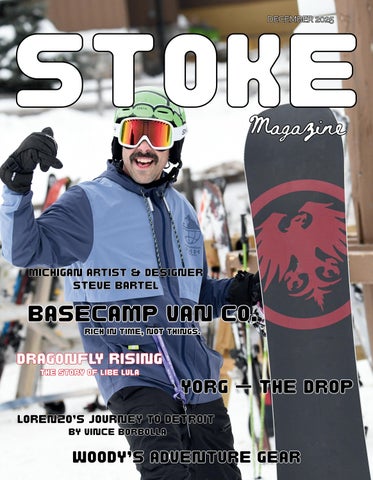
STOKE MAGAZINE IS A NATIVE-OWNED AND OPERATED PUBLICATION BUILT ON COMMUNITY, CREATIVITY, AND THE UNAPOLOGETIC ENERGY OF MICHIGAN.
WE CELEBRATE THE STORIES, ART, AND PEOPLE THAT SHAPE THIS STATE — FROM SNOW AND SURF TO SOUND AND SOUL — AND THE CREW BEHIND STOKE REFLECTS THAT SAME MIX OF PASSION AND PURPOSE.
FROM THE TEAM
WE DIDN’T START STOKE TO BE PRETTY.
WE STARTED IT BECAUSE MICHIGAN’S GOT STORIES NO ONE’S TELLING — REAL ONES. THE KIND WRITTEN IN BUSTED KNUCKLES, FROZEN BOOTS, GARAGE RIFFS, AND SECONDHAND GEAR. THE KIND BORN FROM GRIT, NOT GLOSS.
THIS PUBLICATION IS FOR THE ONES CHASING THE FEELING — NOT THE FAME.
THE ONES WHO SHOW UP EARLY, STAY LATE, AND LEAVE IT ALL OUT THERE, WHETHER ANYONE’S WATCHING OR NOT.
WE BUILT STOKE TO GIVE THAT ENERGY A HOME.
TO PUT A SPOTLIGHT ON THE SCENE BEHIND THE SCENES. THE MIDWEST MISFITS. THE DIEHARDS. THE UNDERGROUND LEGENDS. IT’S RAW. IT’S REAL. IT’S MICHIGAN. AND WE’RE JUST GETTING STARTED.
MEET THE CREW BEHIND STOKE
Leadership & Editorial
Philip Hutchinson — Founder / Editor-in-Chief / Pig Pen Member
Founder of STOKE Magazine and Northern Territory Imaging, Philip has spent more than two decades capturing the creative heartbeat of Michigan.
A storyteller, photographer, and editor, he built STOKE to document the people and places driving the state’s outdoor and cultural movement.
Under his direction, STOKE blends artistry, journalism, and community into one clear mission: to fuel Michigan’s creative fire — and keep it burning.
Pig Pen Crew
(Riders, leaders, and core culture contributors)
Taylor “Birdman” Jepsen — Rider / Sales / Social Media Manager / Pig Pen Member
Taylor represents STOKE in the field and on the frontlines — from the chairlifts to the boardshops.
As both a sales representative and lifelong rider, he keeps the magazine connected to Michigan’s snow and surf communities, embodying the energy that drives STOKE’s outdoor storytelling.
Al King — The Pig Pen / Field Leader / Pig Pen Member
A founding member of The Pig Pen snowboard crew and frontman for The Strains, Al anchors STOKE’s winter coverage with leadership, authenticity, and humor.
He’s the crew’s voice on the hill and in the mix — guiding the next generation of riders with equal parts grit and heart.
Kenny “The Missile” Fortune — Rider / Feature Talent / Pig Pen Member
Kenny is pure Michigan energy on snow.
Fearless, loyal, and larger than life, he embodies the STOKE mindset — where community and creativity collide with raw drive and fun.
As a Pig Pen member, he brings the same grit, loyalty, and family-first attitude that define the crew’s legacy across Michigan’s winter scene.
Editorial & Writing
Yorg — Music Columnist / The Drop
A veteran of Detroit’s music scene, Yorg curates The Drop — STOKE’s ongoing look into Michigan’s evolving sound. His interviews and features connect readers with the musicians, producers, and promoters defining the state’s creative pulse, from the underground to the main stage.
Vince “Borbolla” Kowalewicz — Staff Writer / Director of Partnerships
Writer, strategist, and author of Lorenzo’s Journey, Vince leads STOKE’s partnership development and contributes deeply to its editorial voice.
His stories explore heritage, resilience, and the shared threads that connect Michigan’s people and places.
Geoffrey supports STOKE across writing, sales, and editorial refinement.
With a versatile skill set and a sharp eye for detail, he helps maintain the magazine’s quality while strengthening community relationships through thoughtful storytelling.
Emily is a key part of STOKE’s daily rhythm — blending creative marketing insight with photography, sales support, and editorial precision.
A cofounder of Eva Boudoir, she brings clarity, craft, and visual storytelling to the team, helping ensure each issue is intentional, polished, and connected to STOKE’s community roots.
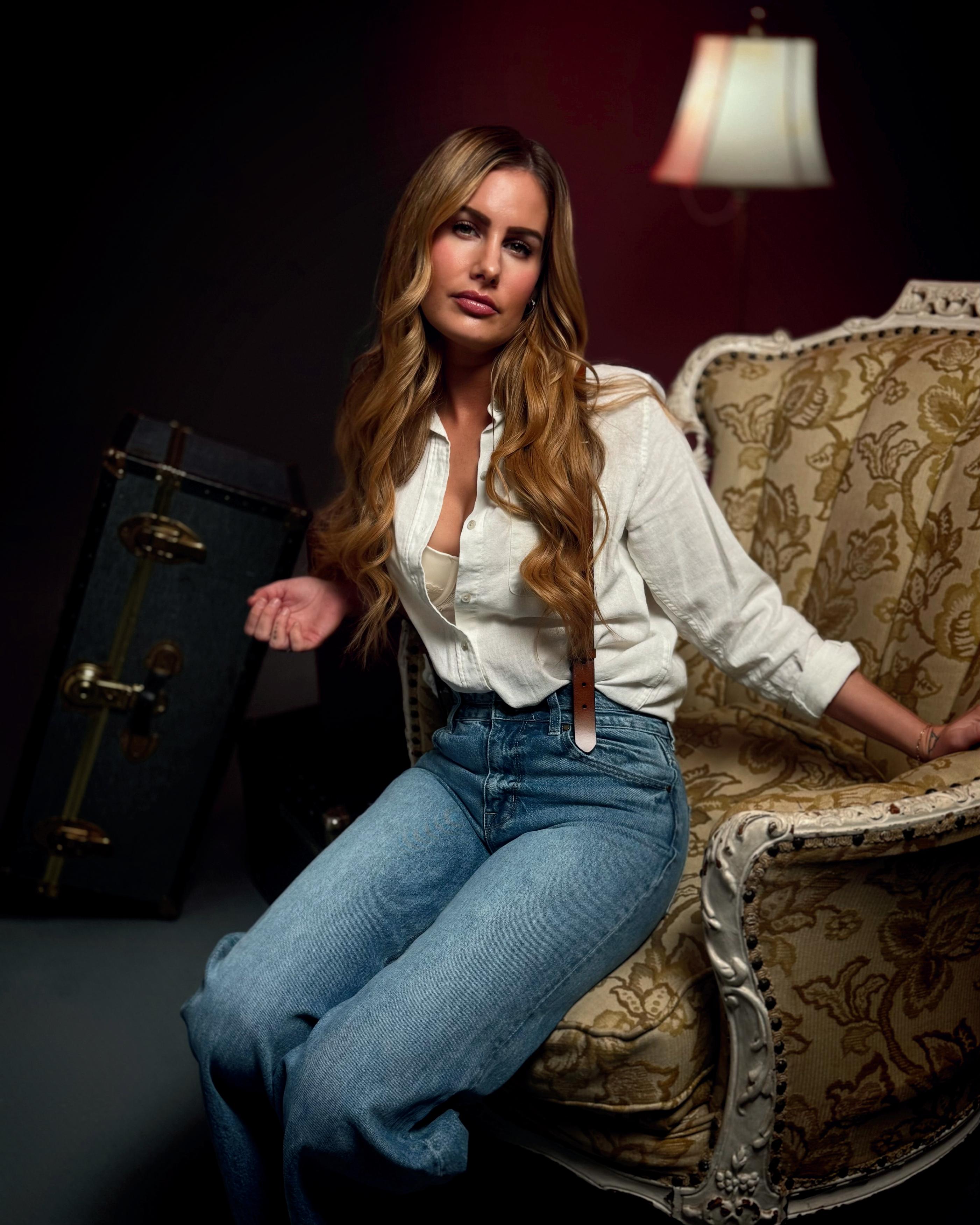
Stacey “In the Snow” — Creative / Model / Design Support
Stacey brings creative direction, design instincts, and a visual voice that helps define STOKE’s style
As a model and creative collaborator, she plays a central role in shaping the magazine’s aesthetic identity and visual storytelling.
TABLE OF CONTENTS
FEATURES
BASECAMP VAN CO
Rich in time, not things.
PAINT THE SQUARE
How Northern Michigan artist & designer Steve Bartel is gearing up to explode in his 50s
DRAGONFLY RISING
The Story of Libe Lula
By STOKE Magazine
WOODY’S ADVENTURE GEAR
From a Missouri kid and a Chicago hustle to a building on M-119—Northern Michigan’s new home base for stoke
YORG — THE DROP
With artist Glenbrooke, a Michigan-based singersongwriter blending country, Americana, blues, and rock into harmony-driven, hard-earned storytelling
LORENZO’S JOURNEY TO DETROIT
cover model - Donald Edward Chippewa III
By Vince Borbolla
Chapters 8 & 9
BASECAMP VAN CO. BASECAMP VAN CO.
“Rich in time, not things.”
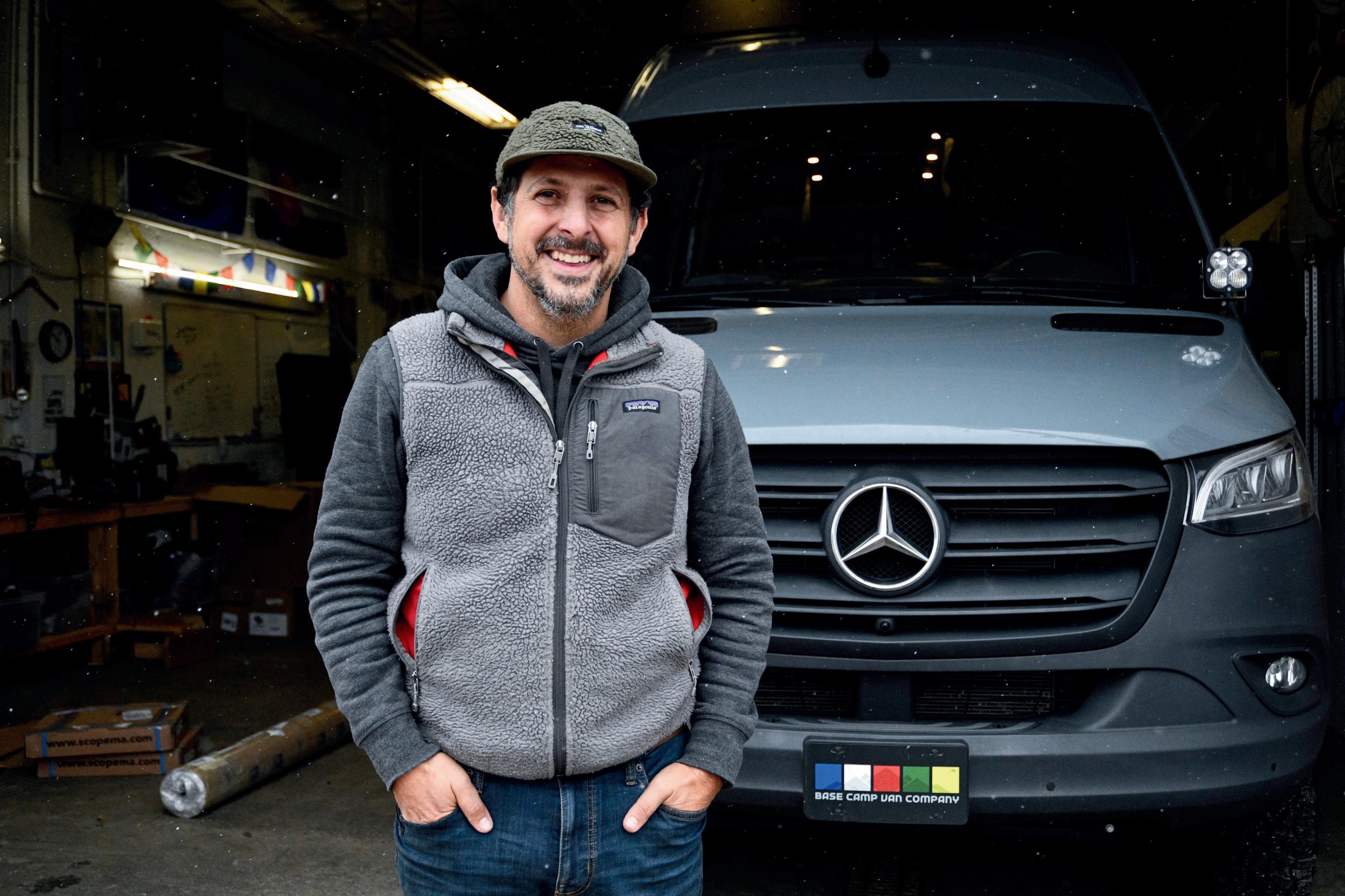
Day before Thanksgiving. Gray Michigan sky. Freshly returned from the Smokies in the middle of the night, the founder of Basecamp Van Co. drops into a shop chair and shrugs like this pace is normal. He laughs about Chris Farley vans down by the river and $200,000 Sprinters in the same breath, and he means it when he says they both do the same thing: get you out there.
We sat down in the Lansing shop to talk about how a fly-shop guy with a human bio degree ended up building adventure rigs, why his kids’ best classroom has four wheels, and what it really means to be “rich” these days.
STOKE: For people who have never heard of you, what is Basecamp Van Co?
Basecamp:
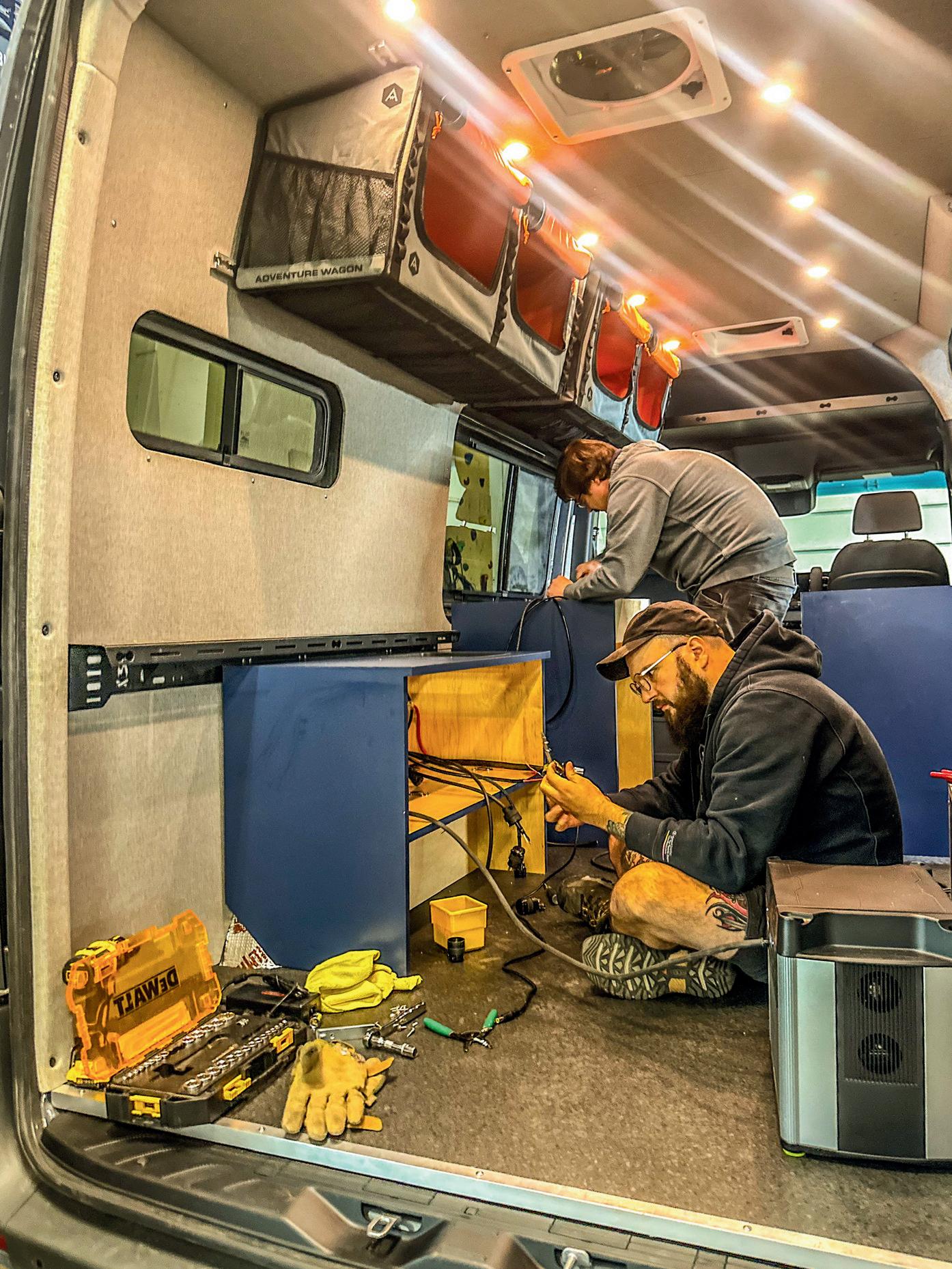
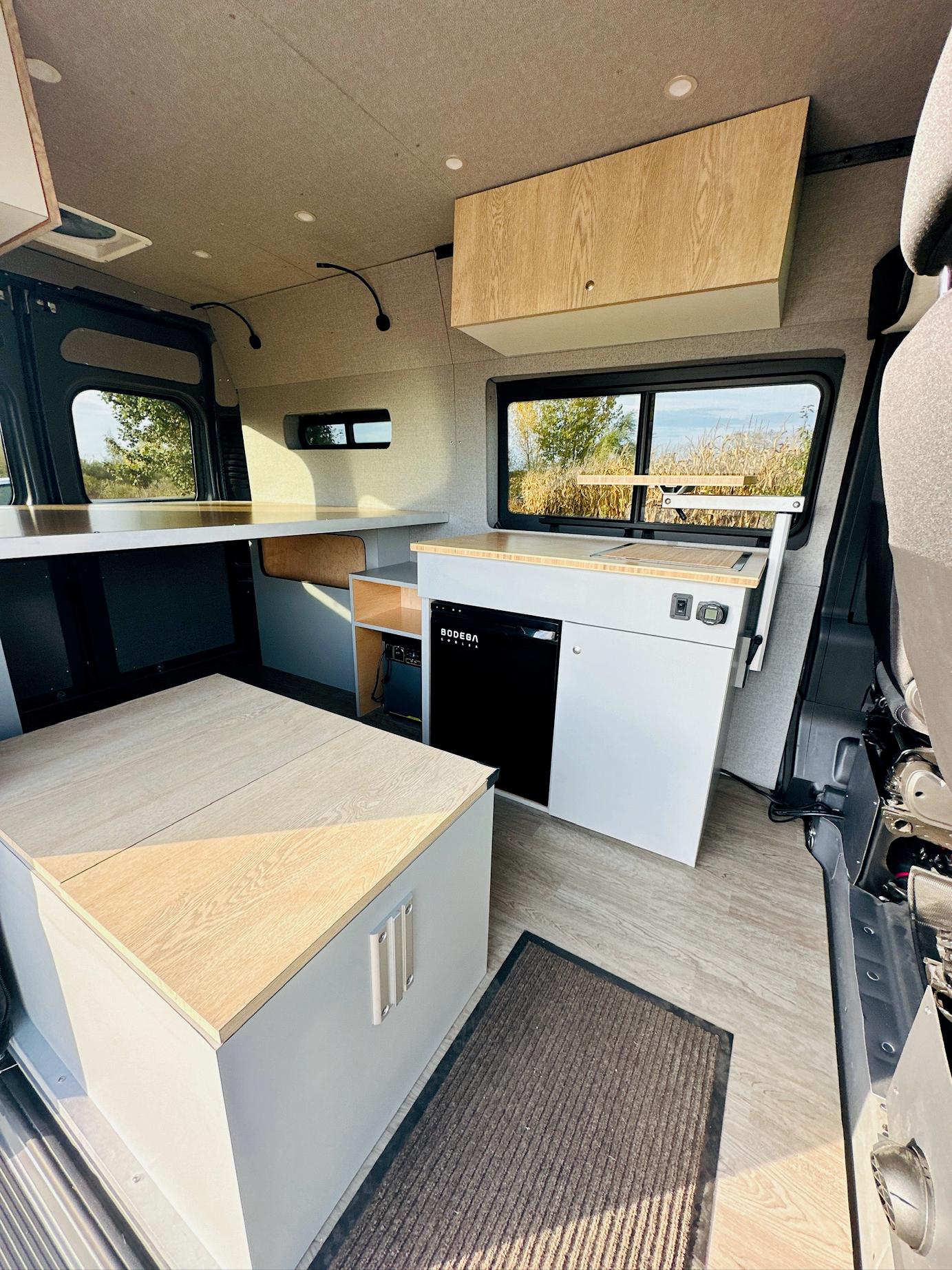
At its core, we build adventure vans that actually get used.
That can be anything from a total Chris Farley van down by the river—mattress in the back, super simple—all the way to a fully builtout, high-end Mercedes with every bell and whistle. The funny part is, they all do the same thing in the end: they give you a place to sleep so you can wake up where you want to be.
The technology’s gotten to the point where you can make a van crazy fancy, or keep it clean and simple and still have the exact same experience. I like that. You don’t have to overcomplicate it to be comfortable.
One of the builds we’re working on now, the owners already have a rig with 300,000 miles on it. It’s not glamorous. It’s a bit of a beater. But they’ve used the hell out of it. That’s the part that matters to me.
STOKE: How did you end up in the van world in the first place?
Basecamp:
So my background wasn’t automotive at all. I graduated from Michigan State with a human biology degree. I actually wanted to be a pharmaceutical rep.
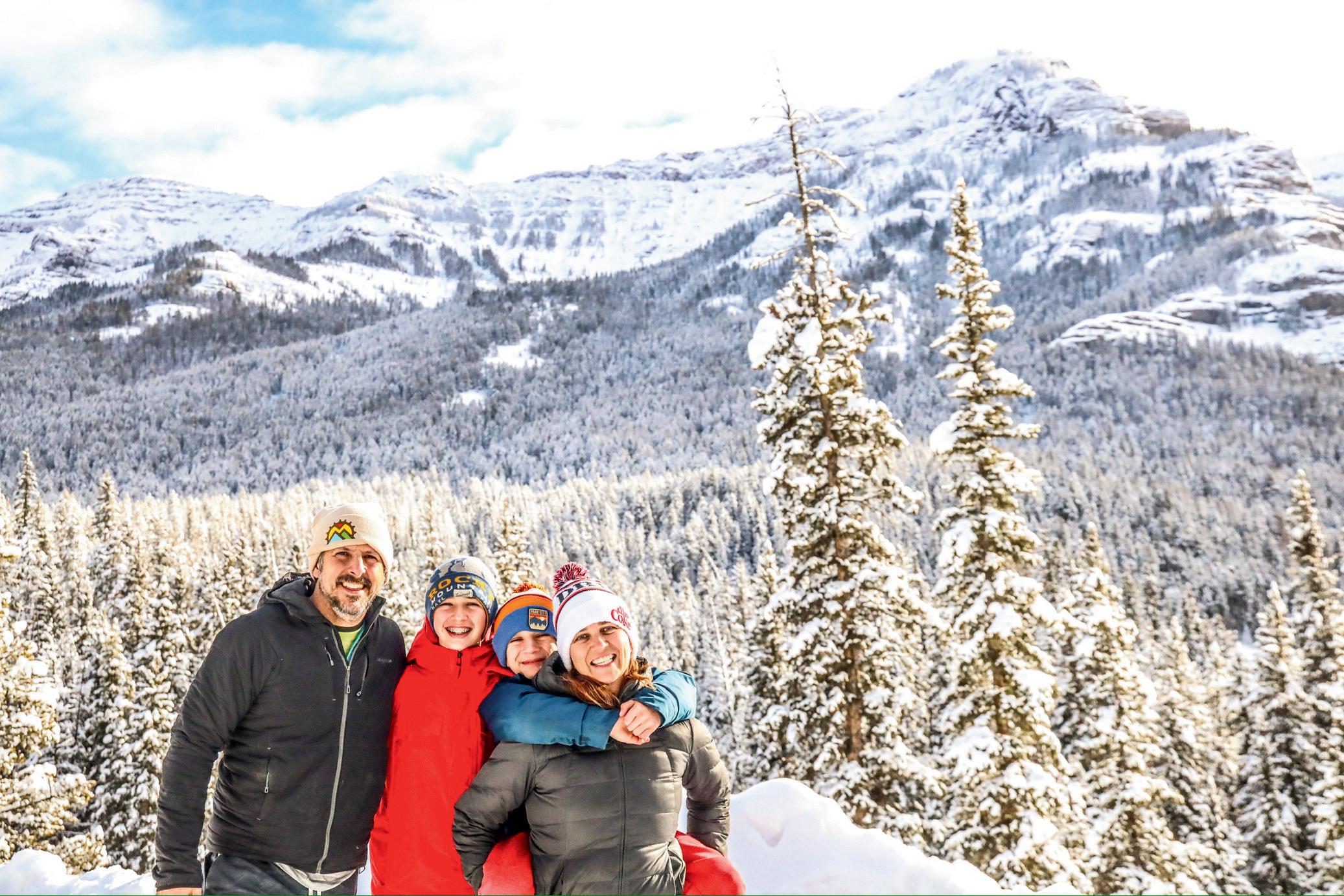
Right when I was heading that way, the government cracked down on that whole space and my career plan just… evaporated. Total pivot. I ended up in fly fishing retail instead. I’m still in that world — I’ve got a couple of fly shops here in Michigan. I love it. It’s niche, but it overlaps really well with vans: people chasing water, trails, snow. The real switch happened because of family and travel. My wife’s a teacher. A few years back she took a sabbatical to write curriculum for a TV show, so she suddenly had flexibility. Our boys were in first and third grade at the time, and in 2019 we said, “Let’s take them out of school and go west.”
Our first big trip was Yellowstone and Sequoia. We were just tent camping out of a Sequoia SUV. We discovered the Junior Ranger programs at the national parks — the kids get booklets, learn about history, ecology, Indigenous people, all of it — and we realized: This is better education than what they’re getting in a classroom right now. We took them out again for another three weeks to do Arizona. Then March 2020, we took a foster baby — he was three months old — and we headed down to the Everglades and the Keys. That’s literally when COVID hit. Lockdown started while we were traveling. We flew home, everything shut down, and suddenly we’re stuck like everybody else.
But we were still missing the parks. After lockdown we said, “OK, let’s actually do this van thing.” One of my fly shop customers was a carpenter. We started talking and decided to build a Promaster van together. That first van turned into: “Hey, can you build me one?”
One van became two… then ten… and now we’ve built somewhere around 70 vans. All of it spun out of COVID, national parks, and a need to get our kids experiencing the world instead of just reading about it.
STOKE: How do you handle the vehicle side? Do you source the vans?
Basecamp: Nope — you bring us the vehicle. That’s a big piece of how we can meet different budgets. Some folks show up with a brand new Sprinter or Transit. Others bring an old ProMaster that lived its first life as an Amazon delivery van.
We do both new and used.
We can build you a basic, budget-friendly, “down by the river” setup or a high-end, fully off-grid rig. Same shop, same crew. We definitely prefer a clean slate, but we’re not afraid of projects. The real
STOKE: Have you built out anything weird?
Basecamp: Oh yeah.
Aside from the usual suspects — Sprinters, ProMasters, Transits — we’ve done: A horse trailer converted into a tiny, super basic getaway camper.
Old-school Chevy Express vans with shaggy, retro vibes that we modernized and re-worked. Then there are the non-recreational builds, which I love:
Bookmobiles for Capital Area District Libraries — community outreach rigs that bring books to kids across the Lansing area. Healthcare clinic vans that go to music festivals to do AIDS testing and mobile health work.
A van for the State of Michigan that tests pregnant women for things like lead in their bloodstream. A Wayne State University rig used in a cannabis research study with veterans and PTSD. The RV builds are fun, but the community outreach projects hit different. Those builds feel like they’re doing double duty — still a van, but they’re changing lives.
STOKE: Who’s actually buying these vans? Is there a “typical”
Basecamp customer?
Basecamp:
There’s a little bit of everything. You’ve got the classic middle-aged couple whose kids are getting older and they’re realizing, “We can actually go do things again.” You’ve got young families who want to travel with their kids before sports and school schedules take over. You’ve got hardcore bike and ski people.
One of my favorite stories: we had a family of five, friends of ours. We built them a van and they hit the road for a year. Just traveled. Really basic, minimalist setup. She worked remotely, they homeschooled, and the experiences they packed into that year… you can’t buy that back later.
COVID really opened that door. Remote work, flexible schedules, people realizing, “I don’t have to sit in a cubicle to do my job.” Vans became the tool to take advantage of that.
STOKE: You talk a lot about experience over stuff. How does that play out with your family and how you travel?
Basecamp:
We really try to teach our kids that experiences beat things. Hiking a trail costs gas money and some food. I know we’re privileged to be able to do that. But the memories — like the Watchtower hike in Sequoia where we still joke about how scary it was — those come up monthly. That sticks. The toy you bought that same year? It’s in a landfill.
We also do it pretty dirtbag when we can: Sleeping in Cracker Barrel parking lots or free dispersed camping instead of resorts.
PB&Js in the van instead of restaurants every night. Using apps like The Dyrt or iOverlander to find free spots on BLM land.
One of our all-time favorite spots is Shadow Mountain in the Tetons. You drive up this switchback, park, and your view is the entire Teton range. It’s free. It feels like you paid a fortune for that view. Honestly, three weeks out west in a van is cheaper than a week at Disney. And I know which one I’d pick every time.
We’ve taken the kids to Ghana too, through a connection with MSU and a reciprocal student exchange. Learning about the history of the slave trade on the ground… that’s an education you won’t get from a textbook, no matter what school you’re in.
STOKE: Tell us about your crew — at work and at home.
Basecamp:
At home it’s:
My wife, Katie — we met at Michigan State. She’s been a teacher forever and now she’s a PhD student in MSU’s education program, focusing on curriculum.
Two boys: one’s a freshman in high school, the other’s in sixth grade.
Two labs: Sally, our older black lab, and Luna, the younger yellow chaos machine. They’ve all logged serious van miles. We’ll go hard for five or six days, then maybe grab an Airbnb to do laundry and take long showers. The dogs find every crumb ever dropped in the van, but they love it too. In the shop, it’s a small team — and that’s intentional. Most of the guys are outdoors people: hunting, fishing, hiking. One of them is a photographer. During duck season they roll in late because they’ve been in the marsh. It’s a good vibe. We give each other space to live our lives, not just crank out work.
“One van turned into two, turned into ten, turned into seventy—and every one of them put someone closer to the outdoors.”
“One van turned into two, turned into ten, turned into seventy—and every one of them someone closer to the outdoors.”
STOKE: What does the future look like for Basecamp Van Co?
Basecamp: Honestly? I like it small.
The world feels insane right now — politics, tariffs, all of it. You never quite know what’s up or down. I would rather have:
A small team
Manageable workload
Good work–life balance
…than a giant operation and no time.
“We’ve traveled the hell out of these vans. That’s why we build them the way we do.”
I’m not trying to get rich in dollars. I’m trying to be rich in time and experience. That feels more valuable to me than a bank account number.
I’ve got a friend in the outdoor industry who works for a huge brand. Great money. Three little kids. And he’s gone all the time. I keep telling him, “They’re going to be in high school and then gone, man. You don’t get this back.”
We’ve had friends in their 40s with sudden brain aneurysms. It can be over tomorrow. That’s part of why I push a little hard sometimes — “Let’s go. Let’s jump in the van. Let’s chase this storm or that sunset.”
So the future? Keep building solid rigs for people who are actually going to use them. Keep the crew tight. Keep saying yes to the trips with my family while I still can.
If we can do that, I’m good.
Basecamp Van Co. isn’t chasing scale. It’s chasing time. Time with kids before they’re suddenly in high school and gone. Time to say yes when the snow report pops or a distant friend says, “Come visit, we’ve got a driveway.” Time to build just enough to live a little more.
That’s the same current that birthed this magazine on a long drive to Boho—half joke, half dream, all possibility somewhere north of the bridge—and it’s the same current running through every welded seam and cabinet edge in this shop. Because in Michigan, under all the gray skies and long winters, there’s this stubborn little spark that keeps saying: You don’t have forever. Go now.
Load the dogs. Wake the kids. Kill the screen. Turn the key. Find your base camp.
Find your miles.
Find your STOKE.
STOKE Michigan.
STEVE BARTEL STEVE BARTEL
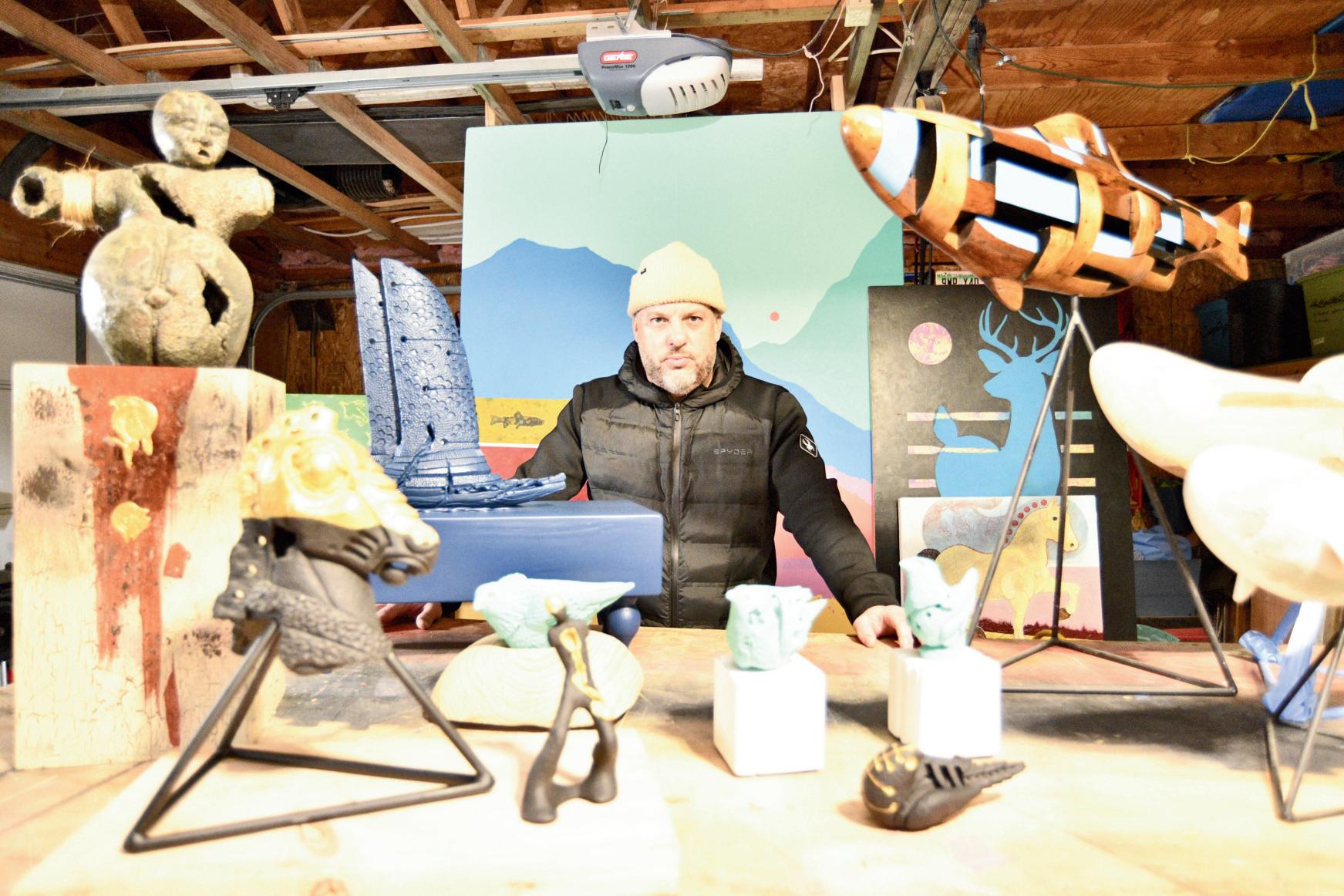
When you sit down with Steve Bartel, you don’t really “start” the interview — you just try to keep up. He’ll start with a joke, wander through childhood, drop something raw about faith or loss, then casually mention restoring woodwork at the Ritz-Carlton in Vail or building a barbershop from scratch in Ohio. And somehow, it all connects.
“I’m not sure how the first chapter starts,” he says.
Born With It — and Given Permission
Ask Bartel when he “became” an artist and he almost laughs. “I was born with whatever this is,” he says, tearing up midanswer. “I’m super grateful, and sometimes emotional about it, because I don’t feel like I earned it.”
From the time he was a kid, he was taking toys apart, gluing different pieces together to make new ones, drawing constantly, sculpting, just…making things. What made it stick wasn’t just talent, but support.
His family didn’t just tolerate his art — they showcased it.
PAINT THE SQUARE PAINT THE SQUARE
“At Thanksgiving, my mom or dad or grandpa would say, ‘Hey Steve, go get that picture you drew,’” he remembers. “They’d make me show the whole family. That kind of recognition feels pretty good when you’re six.”
His grandfather was a watercolor painter and photographer; his father was a photographer. Steve grew up around darkrooms and paint desks, Houghton Lake cottage sessions full of old war drawings and watercolors, stories about his grandfather’s friend, author Ed Jablonski, who wrote about aviation and war. “I got all the supplies as gifts,” he says.
“MORE IMPORTANT THAN SUPPORT IS PERMISSION . SOMEONE HAS TO GIVE YOU PERMISSION TO BE WHO YOU ARE — OR YOU FIGURE OUT HOW TO GIVE IT TO YOURSELF.”
“Sketchbooks for Christmas, drawing tables, paints. But more important than the support was the permission. The unspoken message that it was okay to be who I was.”
That idea of permission—who gives it, who withholds it—has become one of his core themes.
“A lot of people don’t live the lives they want because they’re worried about what their parents will think, or society, or whatever,” he says. “Someone either gives you permission or you spend half your life trying to give it to yourself.”
He’s finally doing the latter.
From Bay City to the North
Bartel grew up in a family that loved to camp. Summers meant state parks, long drives north, and day trips to Lake Michigan.
His grandparents had a cottage on Houghton Lake, which became the launchpad for exploring small Up North towns — especially Charlevoix and the Lake Michigan coast. Winters were for skiing: his grandfather would load him into the car and drive up to Nubs Nob or Boyne Mountain.
“I knew the area before I ever lived here,” he says. “Ski trips, day trips, cottage trips — Northern Michigan was always on the radar.”
Vail, Colorado and a Hard Detour
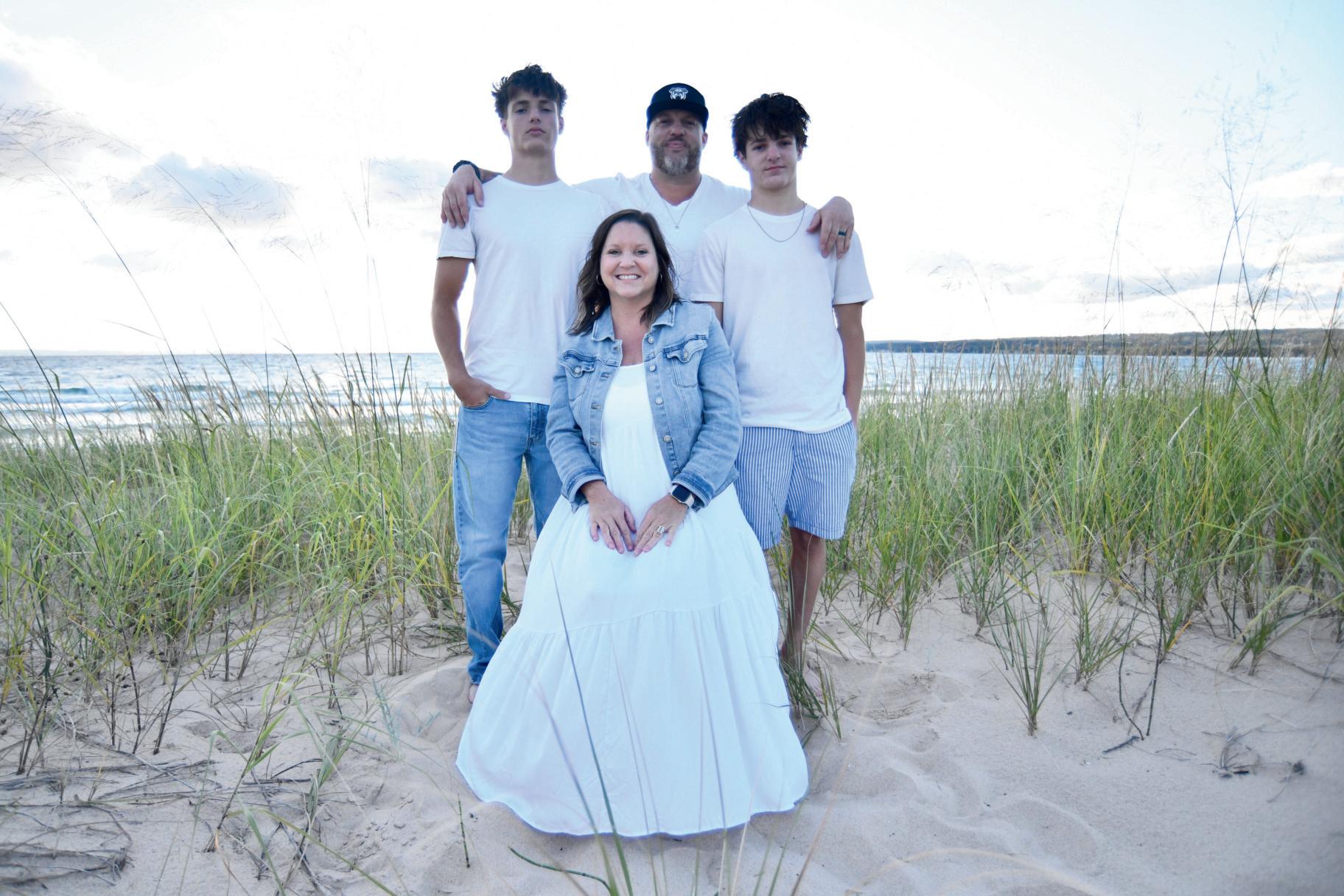
Bartel and his wife, Courtney, didn’t start their family in Michigan, though. They launched it out West, in Eagle, Colorado, just west of Vail.
There, Steve carved out a niche doing wood repair, faux finishes, and custom paint work in some of the most high-end properties in the Rockies:
Four Seasons Vail
Solaris, Vail
The Ritz-Carlton, Vail
The Arabelle at Vail Square
Aspen Snowmass base village
High-end homes in Denver and Eagle
He describes wood repair, paint matching, and faux finishes in condos, penthouses, bowling alleys, and hotel bars like most people describe changing a tire. Quietly, he was building a serious portfolio.
Then life took a turn.
Bartel and Courtney’s younger son, Avon, was diagnosed with a rare condition. The family spent half a year essentially living in Denver Children’s Hospital as Avon went through a bone marrow transplant. When the transplant looked like it might fail, the best specialist they could find was in Cincinnati, Ohio.
A Blind Move to Petoskey
Bartel made a list of 18 towns along the Lake Michigan coast — from Glen Arbor and Glen Lake up to Petoskey. Courtney is a schoolteacher; Steve was doing marketing, branding, and graphic design remotely for a restaurant group. That meant they could move anywhere, as long as there was a classroom for her and an internet connection for him.
“So I told her, ‘We can move to Michigan, but I’ve got to be on the west coast of the state. I know how amazing it is here.’”
Courtney applied to a posting at Ottawa Elementary in Petoskey. She got the job. They didn’t know anyone. They moved anyway.
“We just moved blind,” he says. “We had no network. No safety net. Just this sense that this is where we were supposed to be.”
Beards, Beer, and Labels on the Shelf
“So we moved back to the Midwest,” Bartel says. “My in-laws lived a couple hours north of Cincinnati. It looked like we were going to have to do a second bone marrow transplant.”
Those years were a blur of hospitals, waiting rooms, and uncertainty. But when they finally emerged on the other side, one thing was crystal clear: if they were going to rebuild their life, it needed to be in a place that felt like a reward for surviving it. “We wanted to live somewhere that felt like a vacation,” he says. “That’s what took us to the Rockies in the first place. I just told my wife, ‘If you don’t want to move across the country again, what about Northern Michigan?’”
If you’ve spent any time in Petoskey, chances are you’ve seen Bartel’s work without realizing it.
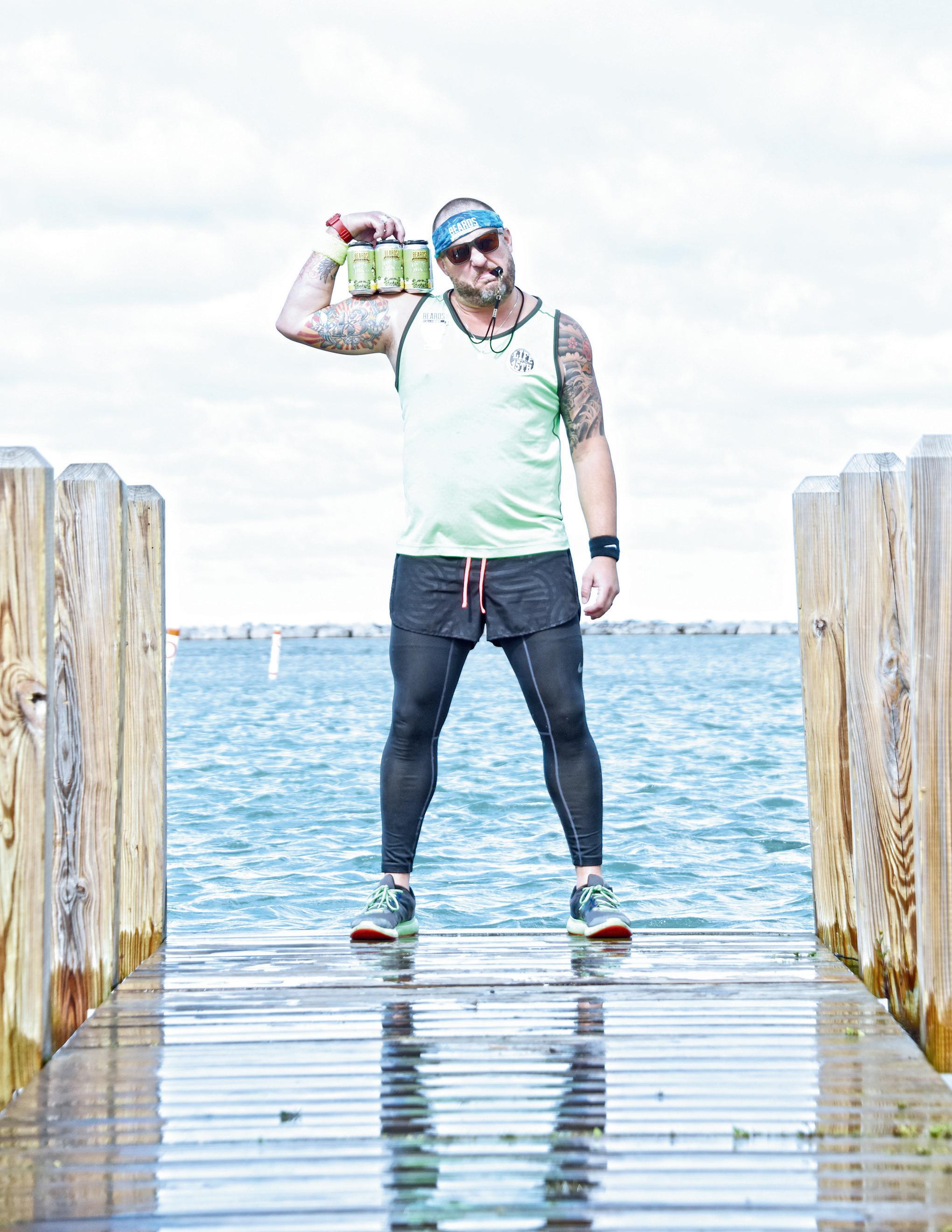
He had a six–seven year run doing branding and packaging work with Beards Brewery, helping shape the look and feel of cans and bottles that now feel baked into downtown.
“I loved working with those guys,” he says. “We had a blast.”
He’s recently done a label revamp and an Oktoberfest beer label for Petoskey Brewing, with more projects quietly in the works. New brands. New looks. New stories to wrap around a can.
“I love the moment where something goes from a sketch on my desk to something sitting cold on a shelf that somebody grabs because it just feels right,” he says.
Dad, Coach, Player-Developer
If you’ve seen Steve on a basketball court, you know he doesn’t half-step.
He didn’t get into coaching because he needed something to do. He got into it because his boys, Ryder and Avon, fell hard for the game.
“I heard an actor once say, ‘If you want to spend time with your kids, get into whatever they’re into.’ That hit me,” Steve says. “So when my kids got into basketball, well, okay. I’m in.”
He binge-watches NBA and college coaching clinics on YouTube. Sits in on camps with a notebook, not hovering over his kids, but stealing drills from instructors. Learns the game from the ground up.
“I’m not some big X-and-O guy,” he says. “I’m a player-development dude. I can watch a kid and say, ‘Fix these three things and you’ll be way better.’ That’s my sweet spot.”
Now, with one son a senior and the other a sophomore, he’s stepped away from coaching. He’s back to being just dad in the bleachers — yelling, cheering, probably overanalyzing. But he doesn’t regret a minute of the grind.
“Did it help my bank account? Not really,” he says. “Did it help my soul? A hundred percent. I promised my mom I’d be a good husband and a good father. That’s the kind of success I care about most.”
Hometown Mascots: High School Gear with an Actual Pulse
One of the clearest expressions of his design brain and hometown obsession is
At first glance, it’s an apparel company. High school gear. Town gear. Mascots and legends and in-jokes. Underneath, it’s a small rebellion against boring.
“So much school gear is just cookie-cutter,” he says. “Basic fonts. Basic prints. Zero personality. But kids now? They have style. They see everything online. They know there are options.”
Hometown Mascots is his answer:
New mascot concepts
Fresh typography and colorways
Fashion-forward cuts and combinations
Designs that feel more Brooklyn thrift shop than bulk booster order
“Your school might be blue and white, but maybe you like green,” he says. “Why can’t you rep your hometown or your kid’s team in a way that feels like you?”
It’s all online — no brick-and-mortar, by design. That way, the kid who left Petoskey for Seattle still has a way to wear home on their chest.
Bloomfield’s Barbershop & the Long Game
Then there’s Bloomfield’s Barbershop in Defiance, Ohio — another slow-burn project.
One of Steve’s old wrestling buddies, Chris Bloomfield, is the head barber. Together, they renovated a building, built out a classic barbershop, and are quietly growing it.
“I always joked with my mom that I wanted to own a barbershop, a laundromat, a McDonald’s, and a funeral home,” he laughs. “Because none of those things are going away.”
The older he got, the more that list evolved.
“I don’t want to pedal poison, so the McDonald’s thing dropped off. Funeral homes… I don’t have the stomach for that kind of grief every day. But haircuts? Community spaces? I’m still very much about that.”
The barbershop isn’t some overnight money-printing machine. It’s a long-term service to a town, another physical mark he’s leaving in the world.
his brand Hometown Mascots.
Faith, Loss, and Painting the Square
Under all the jokes and tangents is something heavy and steady: faith. He doesn’t talk about religion like a brand. He talks about God like someone he’s been having side conversations with for decades.
“I’m not great at formal prayer,” he says. “I’m pretty good at just talking to God. I don’t think He cares what format we use.” That openness has been stress-tested: losing friends, nearly losing a child, saying goodbye to his parents. The older he gets, the more he sees his talent not as an achievement, but a responsibility.
“I didn’t earn this,” he says. “I was given this. So yeah, I’ve got to use it.”
That openness has been stress-tested: losing friends, nearly losing a child, saying goodbye to his parents. The older he gets, the more he sees his talent not as an achievement, but a responsibility. “I didn’t earn this,” he says. “I was given this. So yeah, I’ve got to use it.”
One idea that radically shaped how he approaches that gift came from painter Chuck Close. Later in life, Close painted massive works by breaking them into tiny squares, sometimes painting with a brush in his mouth. One square at a time. Day by day.
“The lesson for me was simple: paint the square,” Steve says. “If I’ve got five minutes, I work on something. I don’t wait for the perfect four-hour block or the magical uninterrupted day. I just touch the work.”
That’s his plan going into his 50s.
“Every day, I show up and paint the square,” he says. “Sometimes that’s designing a t-shirt. Sometimes it’s carving. Sometimes it’s sketching a snowboard bunny. It doesn’t matter. It all adds up.”
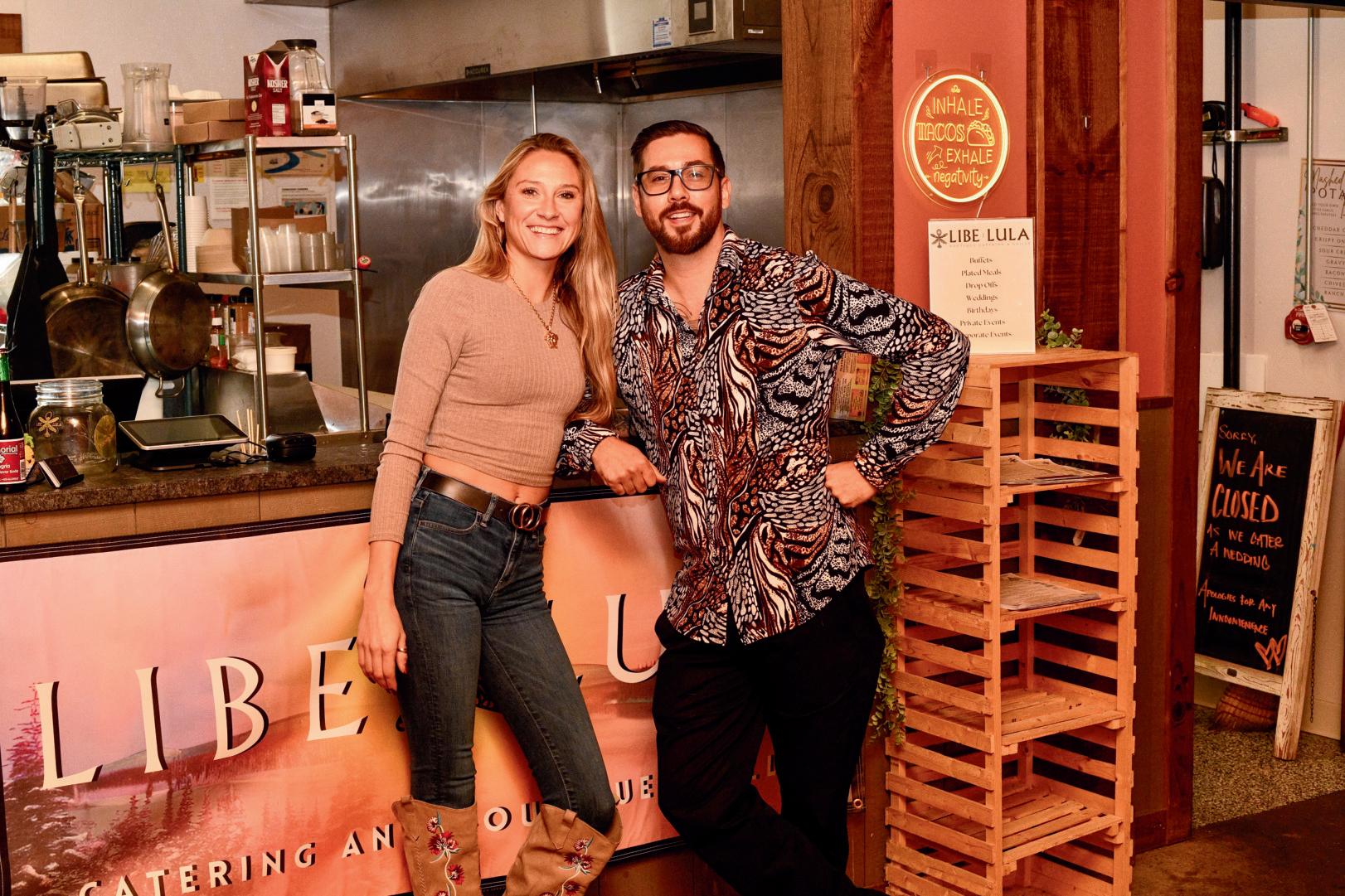
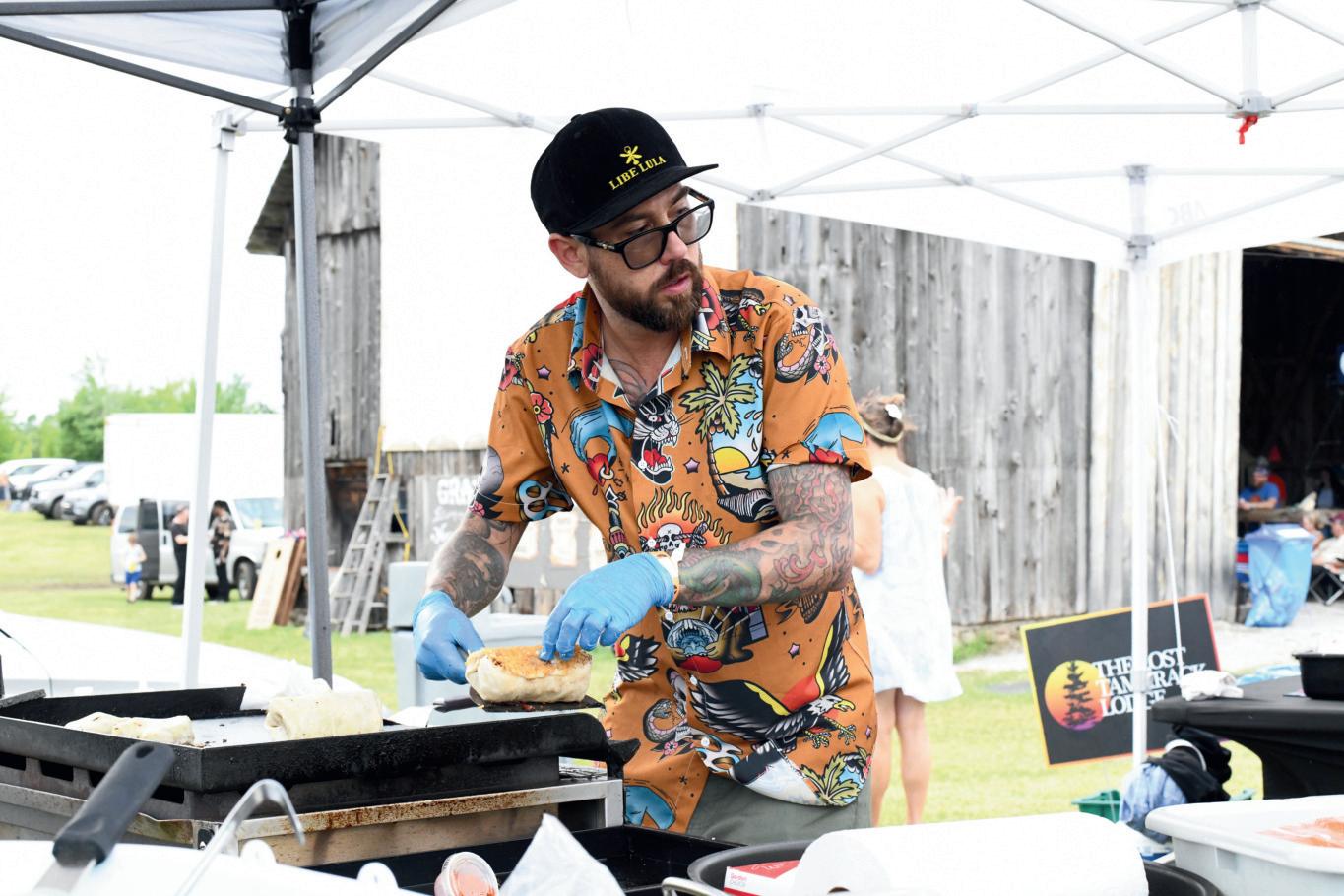
DRAGONFLY RISING: THE STORY OF LIBE LULA
STOKE: Alright, let’s start with the cliché question you’ve probably been asked a hundred times. Why food? Why this grind? Because you two could easily be doing something else.
FLORENCIO: Food connects everyone. Everybody eats. If we can give people a good moment, a smile, a memory— that’s the whole point.
OLIVIA: And we’ve tried leaving the industry before. We always come back. You know how some people have a thing they were just built for? This is ours.
STOKE: How did you two meet again? I know it’s a restaurant story, but tell it fresh.
OLIVIA: Meat BBQ in Lansing. Not glamorous at all.
FLORENCIO: I’d been working there for a year. She just… showed up.
OLIVIA: We became best friends. For years.
FLORENCIO: And then we weren’t just friends anymore.
OLIVIA: Then we moved north.
FLORENCIO: Those weekend trips turned into… “why don’t we just live here?”
OLIVIA: So we did. No big plan. Just… jumped.
STOKE: What does winter look like when you finally shut it down?
OLIVIA: Mexico. Sun. Painting. Trash TV.
FLORENCIO: Naps. Animals. Movies. Lord of the Rings marathons.
OLIVIA: It’s like we deflate.
FLORENCIO: Then rebuild.
OLIVIA: Then January hits and we start planning again.
FLORENCIO: But winter is the only time we breathe.
STOKE: And the name. Tell me that story again because it actually hits hard.
OLIVIA: Libélula means “dragonfly” in Spanish.
FLORENCIO: My mom had a dragonfly tattoo. She got it after she survived something she wasn’t supposed to.
OLIVIA: It was her sign—her symbol.
FLORENCIO: And my dad was Mexican.
OLIVIA: So we put them together.
FLORENCIO: Made the dragonfly body into a spoon.
OLIVIA: Printed the first menu at OfficeMax. No logo. No idea what we were doing.
FLORENCIO: Texted High Five Spirits.
OLIVIA: They go, “Yeah, you can start tomorrow.”
FLORENCIO: And that was the beginning.
STOKE: How do you describe your food? No fancy words.
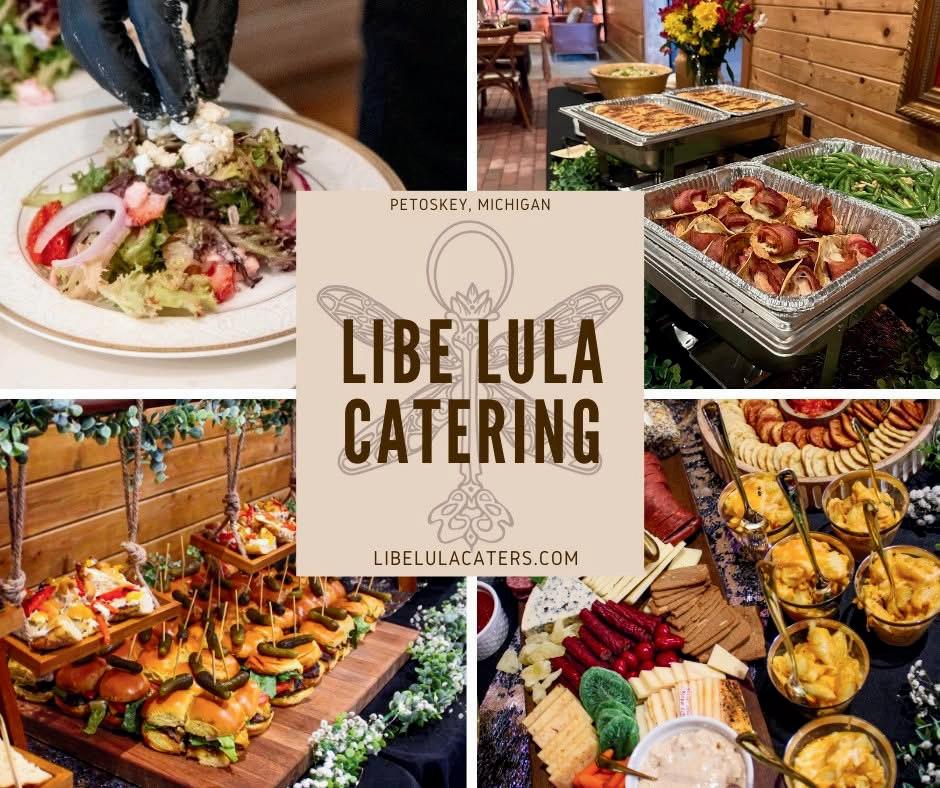
FLORENCIO: Honest. From scratch. We care about every detail.
OLIVIA: If a piece of cheese is crooked, he’ll remake the whole damn thing.
FLORENCIO: People eat with their eyes first.
OLIVIA: He can build a sauce from anything.
FLORENCIO: And she’ll eat tacos forever.
OLIVIA: Forever.
STOKE: You travel a lot. How does that show up on the menu?
OLIVIA: In everything.
FLORENCIO: Barcelona changed our potatoes.
OLIVIA: Mexico changed our salsas.
STOKE: And 2026? What’s the goal?
FLORENCIO: Be busy.
OLIVIA: Go swimming.
FLORENCIO: More weddings.
OLIVIA: Fewer headaches.
FLORENCIO: Everything feels smoother now.
OLIVIA: Like we’re finally hitting our stride.
FLORENCIO: Best year yet.
OLIVIA: Yeah. Best year yet.
FLORENCIO: We don’t copy dishes—we interpret them.
OLIVIA: It’s always evolving. Nothing gets frozen in time.
STOKE: The business keeps growing. What’s that feel like?
OLIVIA: Honestly? Surreal. Every year we double.
FLORENCIO: Summer is wild now.
OLIVIA: We’ve finally figured out staff—three people in winter, more in summer, and then extra help for the big events.
FLORENCIO: It lets us stay small without drowning.
OLIVIA: We don’t want to become a giant company. We just want to be really good at what we do.
When we wrapped up, the sun had dropped lower and the building felt even quieter. That late-fall light was coming in sideways, hitting the copper stills and the empty chairs, making the whole place glow like it knew something good was coming. Florencio and Olivia stood up, stretched, and went right back into motion without even thinking about it—cleaning up cups, straightening chairs, checking a prep list taped to the wall. They don’t know how to stop working. It’s built into them. Not hustleculture bullshit. Not ego. Just… this is the life they chose, and they choose it every day. That’s the thing about Libe Lula. There’s no gimmick.
No branding team.
No fake “chef persona.”
Just two people who love food, love people, and refuse to half-ass anything. I’ve seen them under stress.
I’ve seen them mid-event when the heat is up and the pressure is stupid. I’ve seen them when the line is out the door and the music’s too loud and the plates need to move. And they don’t crack. They dial in. They take care of people. They do work.
That’s why this place—this community—keeps calling them back. Why couples trust them with their weddings. Why Gypsy Farms puts their name on the preferred list. Why their business doubles every damn year without them shouting about it.
WOODY’S WOODY’S
ADVENTURE GEAR
HOW A MISSOURI KID, A CHICAGO HUSTLE, AND A BUILDING ON M-119 TURNED INTO NORTHERN MICHIGAN’S NEW HOME BASE FOR STOKE
HOW A MISSOURI KID, A CHICAGO HUSTLE, AND A BUILDING ON M-119 TURNED INTO NORTHERN MICHIGAN’S NEW HOME BASE FOR STOKE
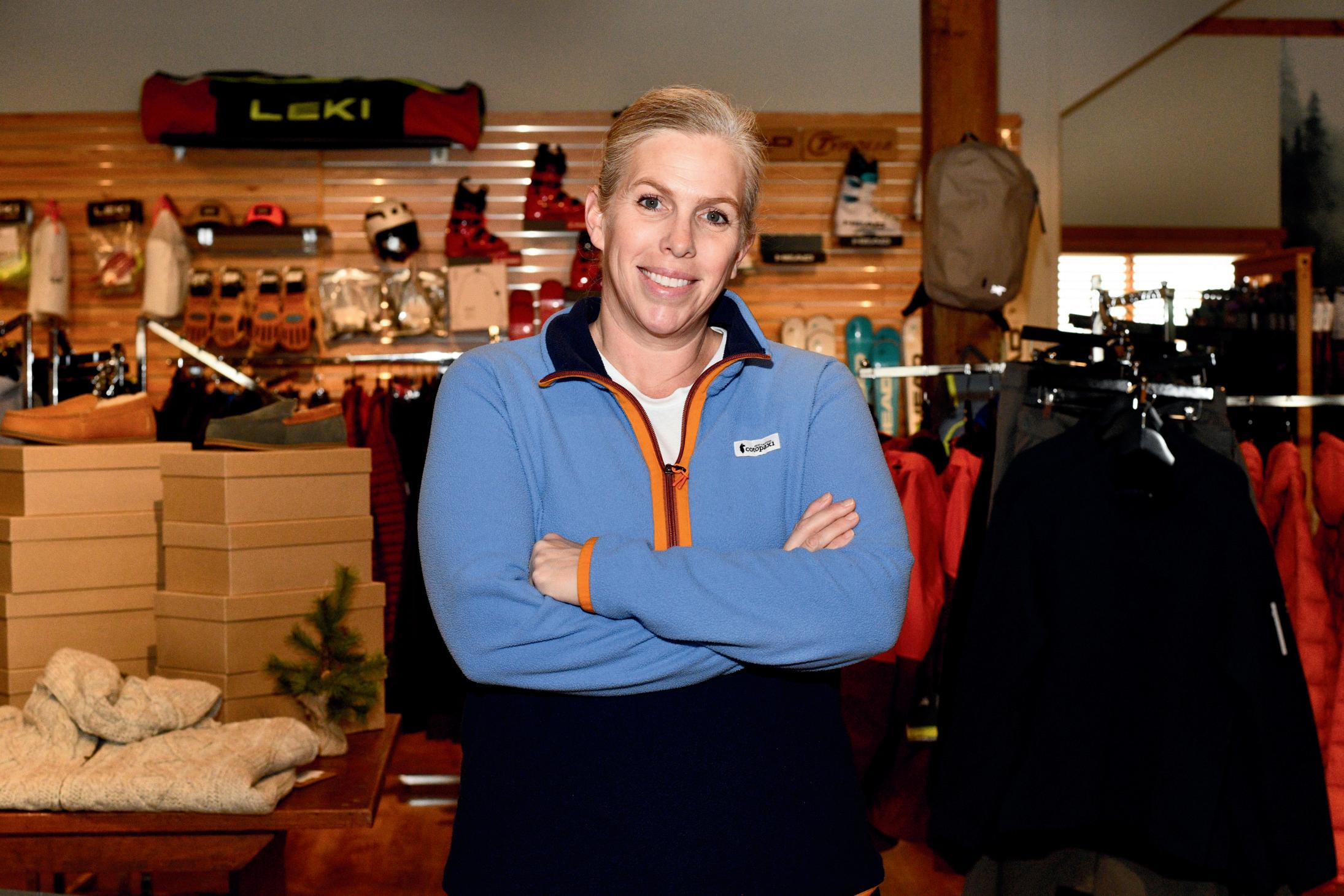
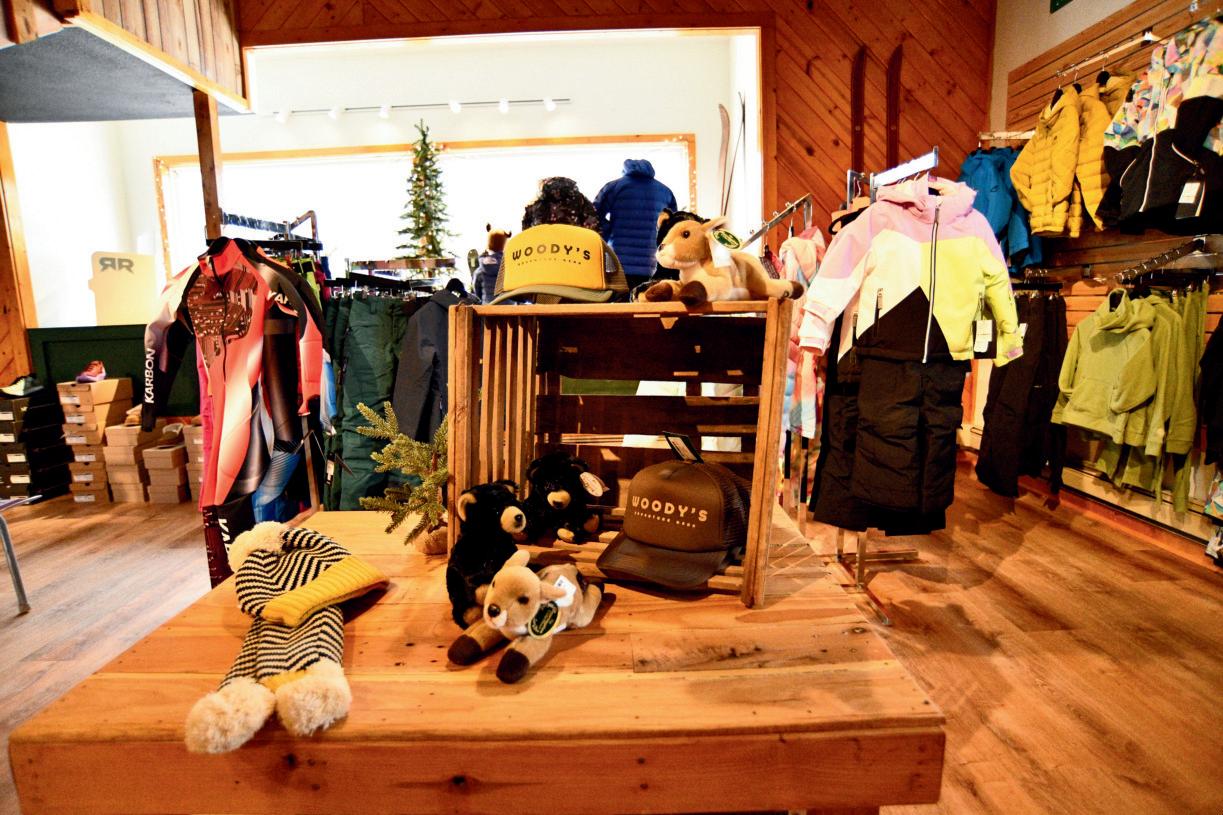
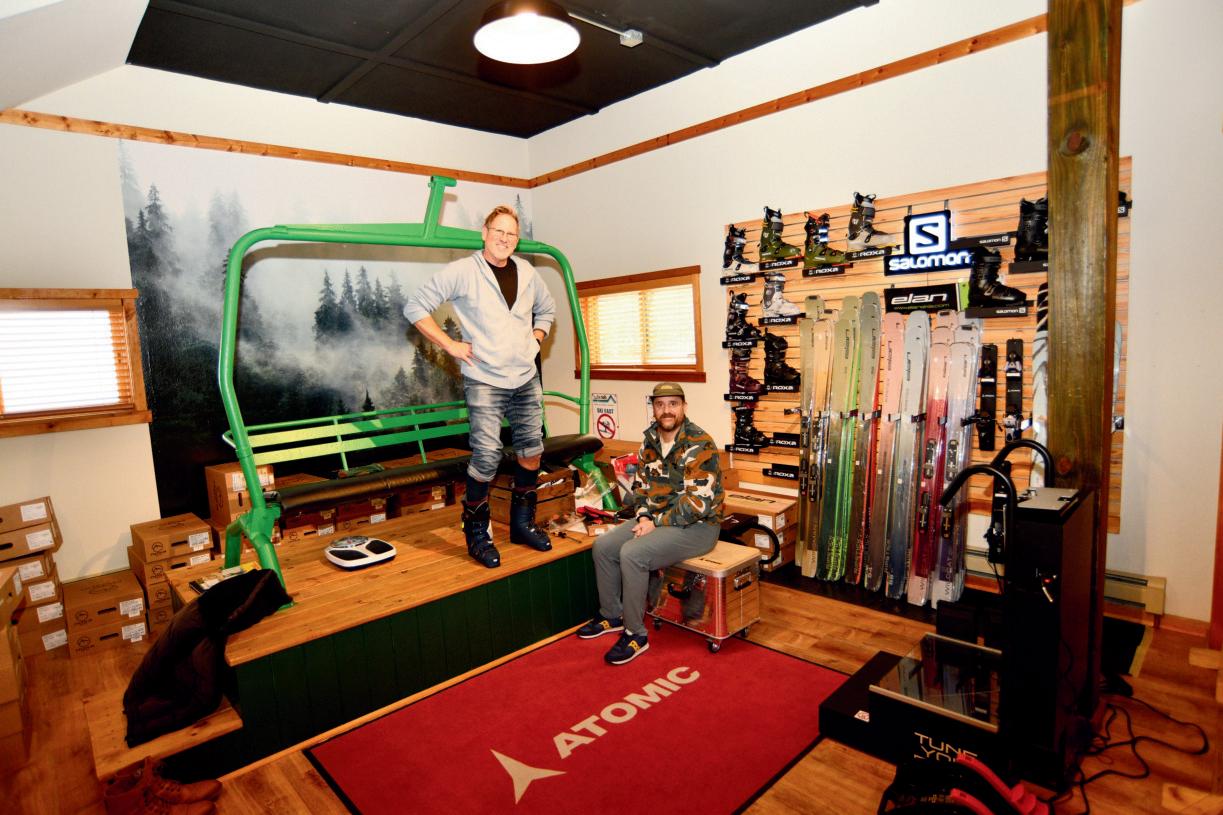
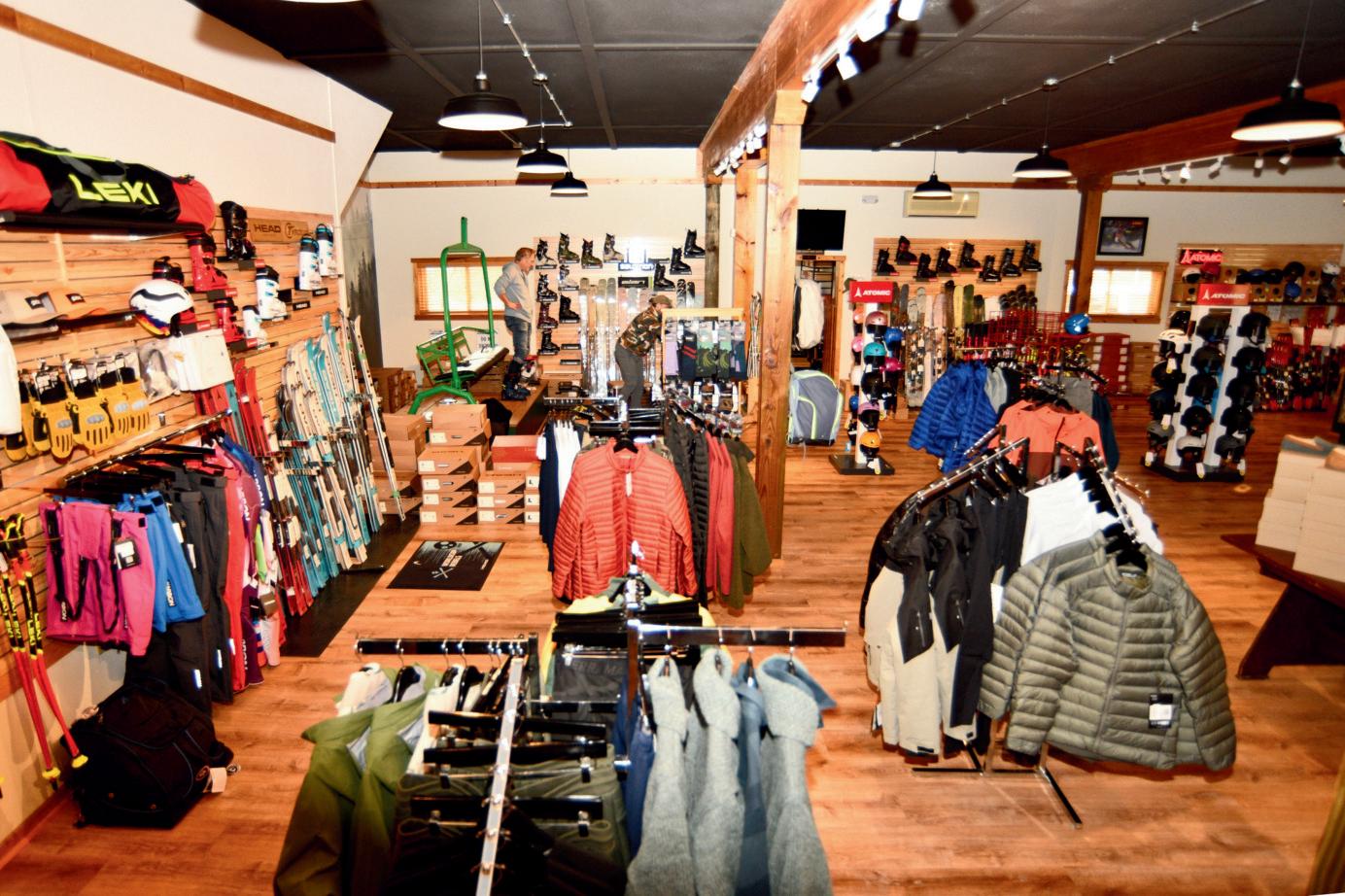
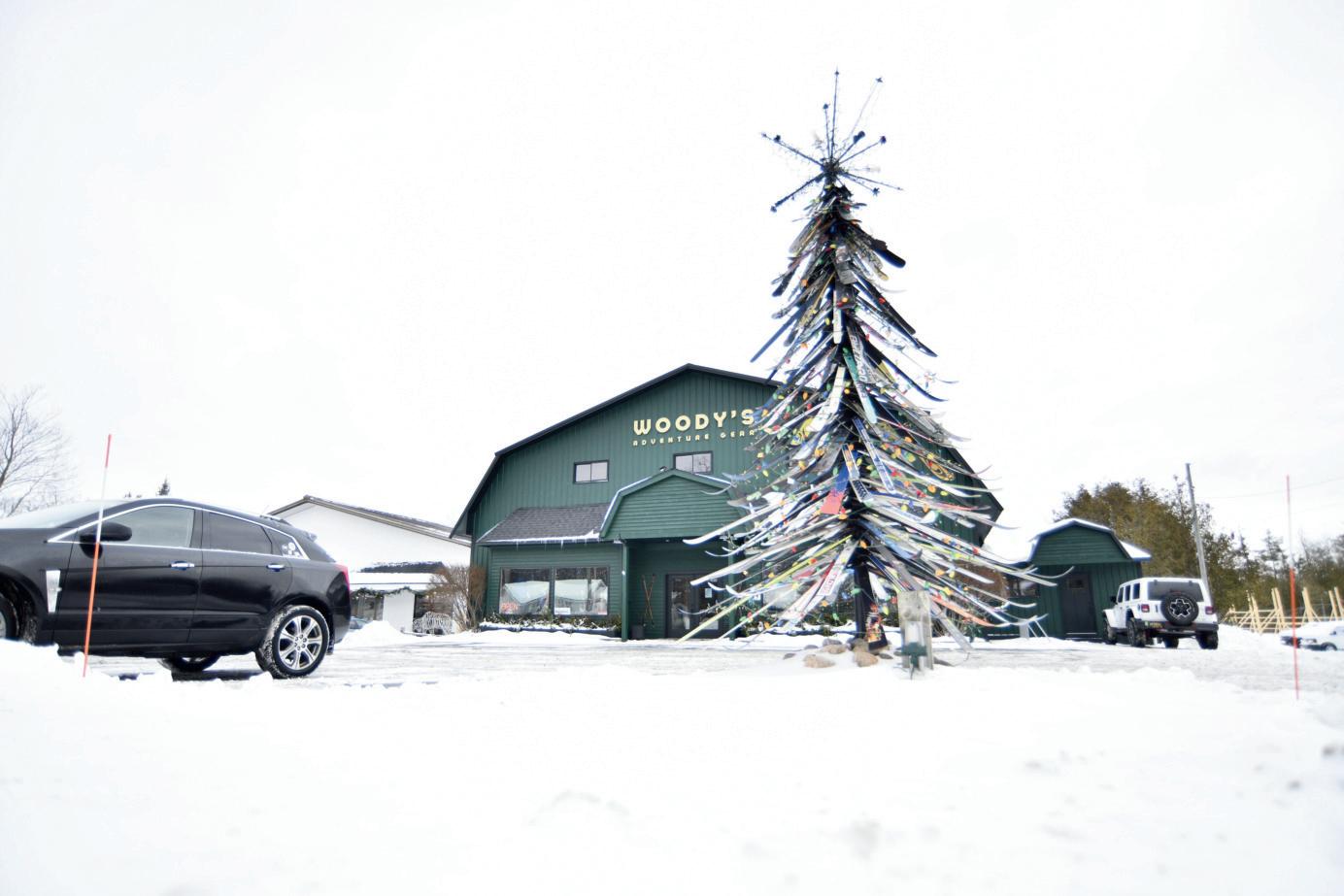
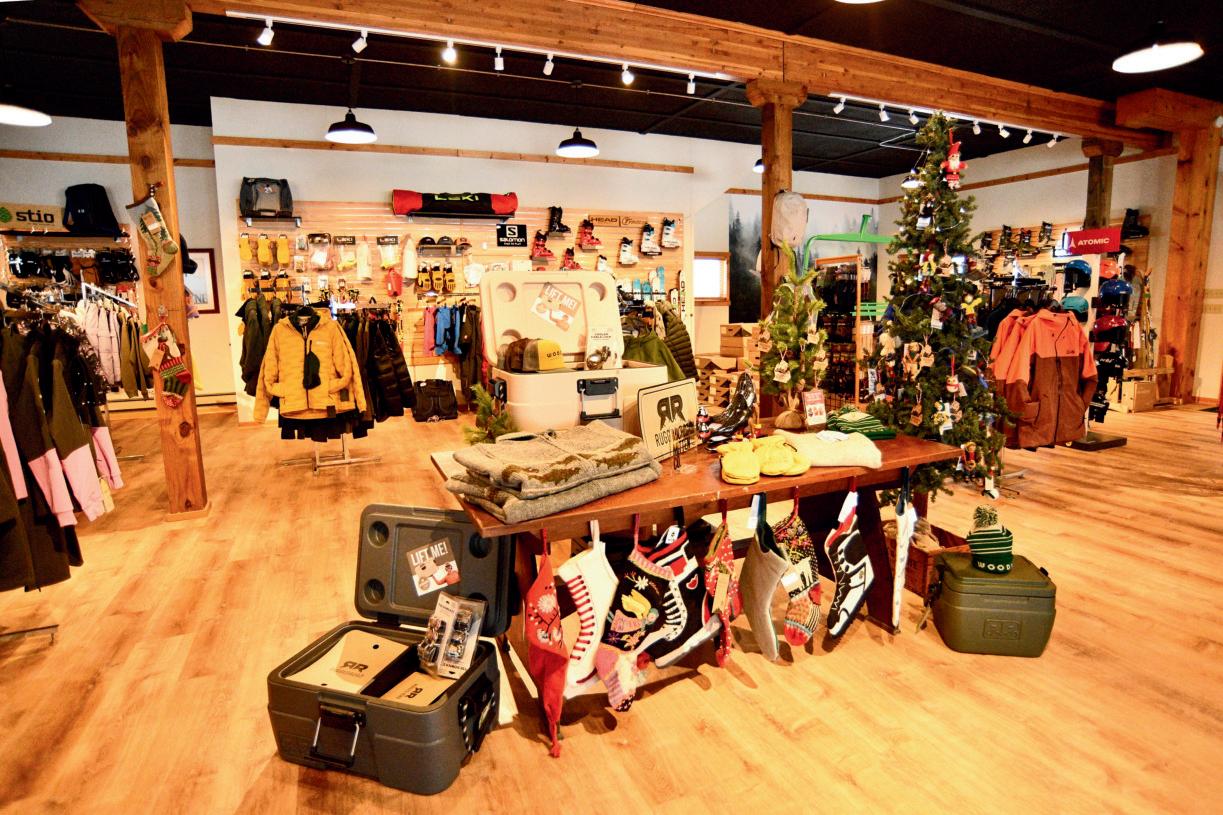
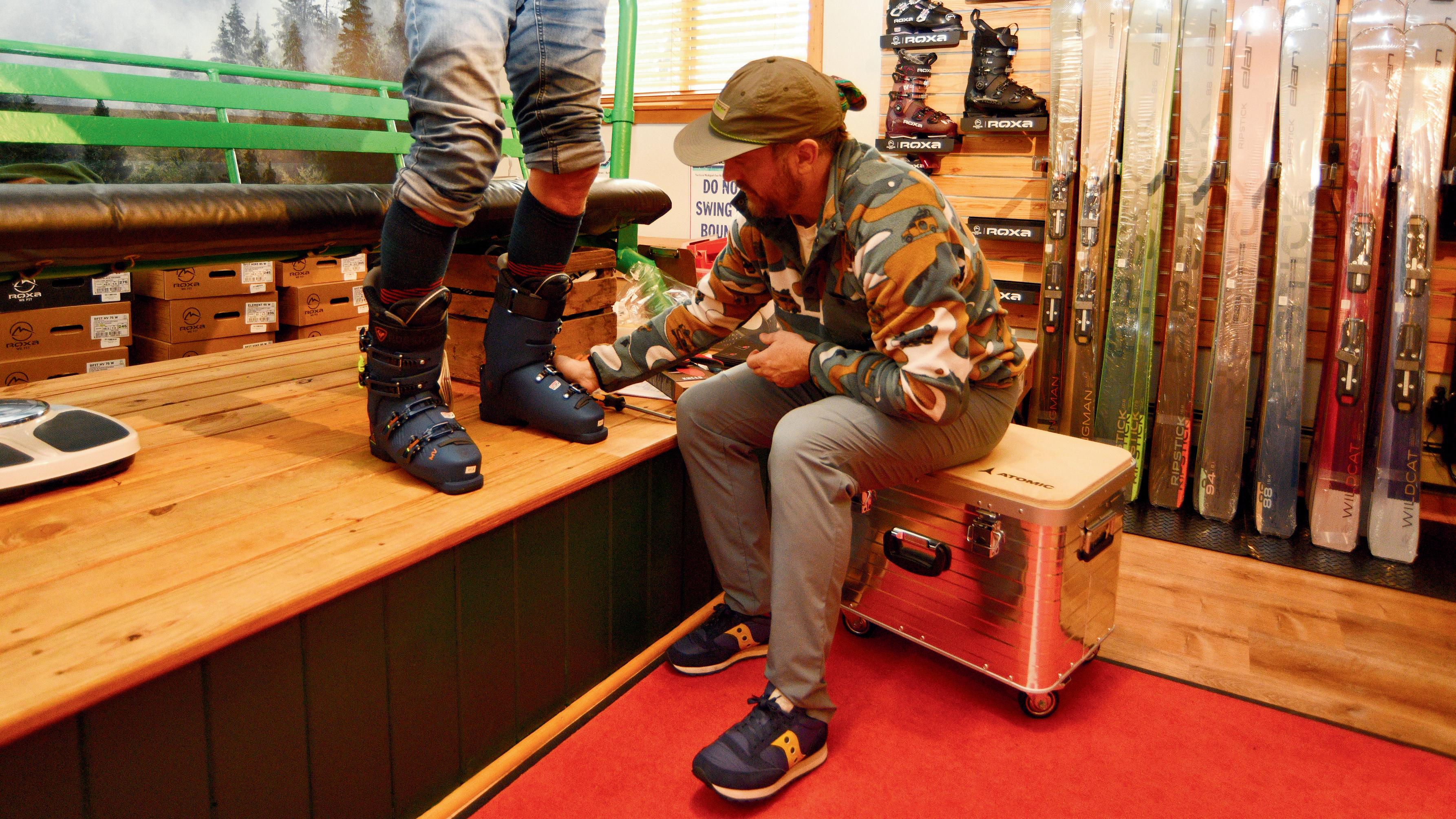
If you grew up around Petoskey or Harbor, you know this building. You’ve driven past it a thousand times on M-119, cruising between town and the state park, watching the seasons change on the dunes and in the pines. For years it was a ski shop, a landmark, the place you pointed at and said, “Yeah, that’s where Tim runs his place.” But a lot of locals — like me — never actually stepped inside. Now the sign out front reads Woody’s Adventure Gear, and the inside feels different: brighter, bigger, rebuilt from the studs out. The sales floor has been pushed back into what used to be an old apartment; the bedroom is now an office; the ceiling has battle scars from surprise collapses. Fresh racks stand where walls once were. It smells like new lumber, hot coffee, and fresh wax. It’s Brooke’s place now.
“I didn’t give myself much time to think about it. I just got to work.”
“The goal was never to be the biggest. The goal was to be real.”
“This isn’t just a shop — it’s a home base for getting outside.”
“I’ve always known I’d come back here — this place gets into you.”
“When I moved here, it felt very necessary to try skiing and snowboarding. I fell in love with the culture immediately.”
STOKE: You grew up in Missouri. What pulled you into the ski world when you moved to Harbor Springs?
BROOKE: “Coming from Missouri, everything up here amazed me — the snow, the terrain, the weather. It was so different. My parents pushed me to try skiing and snowboarding my senior year, and I just fell in love with the whole culture. It was an easy fit.”
STOKE: What was your first step into the industry?
BROOKE: “Right out of high school I started working at Boyne — ski shops in the winter, golf shops in the summer. When I went to Michigan State, I’d drive up on weekends to work at the Highlands store, then back downstate to work in Lansing. I even helped reps at the MRA shows.”
STOKE: What gave you the confidence to buy a building and open your own shop?
STOKE: Why the name “Woody’s”?
BROOKE: “My husband’s trader badge was WDEY — Woody — and that became his nickname. My family said I had to name the shop Woody’s. I said, ‘That’s his name, not mine,’ and they said, ‘You’re Woodham — you’re Woody too.’ So here we are.”
BROOKE: “Honestly? I didn’t give myself much time to think. I just said, ‘I can do this.’ With my background in real estate and retail, I knew I could handle every angle of it. It was exciting for about a minute, then it turned into: I have so much to do. Just keep your head down and go.”
STOKE: What about summer? What’s Woody’s going to look like once the snow melts?
BROOKE: “My love is trail running. So that’s going to be a big one. Camping, backpacking, outdoor gear — all things Northern Michigan. And we’re a mile from Petoskey State Park, so beach gear and essentials make total sense. I really want to do summer big.”
YORG-THE DROP
GLENBROOKE
The Drop is where Yorg digs into the real story. In this session, he connects with GlenBrooke, a Michigan-based singer-songwriter blending country, Americana, blues, and rock into harmony-driven, hard-earned storytelling. Whether performing solo or alongside Julianne Ankley and Michelle Chenard in the trio Triana, GlenBrooke’s music is rooted in resilience, belief, and the refusal to quit. No polish without purpose—just songs built to last.
THE DROP
Yorg: What first pulled you toward country music?
GlenBrooke: Storytelling. It’s where I naturally land. Country gives me the freedom to tell my stories honestly.
Yorg: How does Michigan’s music scene shape your songwriting?
GlenBrooke: The community inspires me constantly—ideas, emotions, struggles, celebrations. It all finds its way into my songs.
Yorg: Do you have a favorite place to play in Michigan?
GlenBrooke: Lexington Village Theatre, Bob Knob, Ali Bar, Thumb Brewery, and White’s Bar. They all feel like home.
Yorg: How do the seasons affect your work?
GlenBrooke: Spring through fall is huge here. When winter hits, I travel, get creative, and explore new states and audiences.
Yorg: Who are some Michigan artists that inspire you?
GlenBrooke: Julianne Ankley and Michelle Chenard, for sure—though the list is long. We’ve written together, shared incredible experiences, and they continue to guide and inspire me.
Yorg: What’s been a defining moment in your career so far?
GlenBrooke: Winning a Review Magazine award for Best Country Music Video for Tattoo Ain’t About You—and receiving a Grammy nomination in three categories.
Yorg: How do you connect with audiences live?
GlenBrooke: Through the music and real interaction. I love people, so connecting comes naturally.
Yorg: What challenges come with being a country artist in Michigan?
GlenBrooke: My music crosses into other genres, which can be an obstacle—but I’ve learned to embrace it.
Yorg: What themes show up most in your writing?
GlenBrooke: Love, heartbreak, emotional reflection, depression—real life.
Yorg: What advice would you give to artists coming up in Michigan?
GlenBrooke: Stay in your lane and ignore the noise.
Yorg: Where do you see Michigan’s country scene headed?
GlenBrooke: Only upward. This state is full of incredible artists, with more on the way.
Yorg: Is there a song that feels especially close to you right now?
GlenBrooke: What If I Told You, a new single releasing in December. It carries a lot of my heart—and I wrote it with Julianne Ankley, which makes it even more meaningful.
Yorg: How important is collaboration in Michigan’s music community?
GlenBrooke: Huge. Most artists are eager to write together, and collaboration always makes the songs stronger.
Yorg: How do you promote your music in a crowded industry?
GlenBrooke: Creatively, sincerely, and personally.
Yorg: How has your music evolved over time?
GlenBrooke: I’m more confident now—writing what I truly feel instead of trying to please the industry. It keeps me real.
Yorg: What do you love most about being a country musician in Michigan?
GlenBrooke: That I’m one of them. I’m grateful every day.
Yorg: What’s next?
GlenBrooke: Traveling the world with my music—and making my kids proud.
LORENZO’S JOURNEY TO DETROIT
BY VINCE BORBOLLA
CHAPTER 8: IRON AND SALT
By the end of my first week on the docks, my hands were raw again—different from the cane fields, but no less painful. Saltwater soaked everything. The ropes scraped. The crates bruised. But I didn’t complain. Complaining didn’t earn you a place in Havana.
Carmelo worked beside me most days. He moved like a man built for the work—back straight, hands fast, mouth always ready with a joke. He had a gold tooth that caught the sun when he grinned, and a way of talking that made it feel like we’d known each other longer than a week.
“You’re lucky,” he said once, wiping sweat from his brow. “They don’t usually keep the green ones past Wednesday.”
“I work,” I told him. “That’s all.”
He barked a laugh. “That’s all it takes here.”
We ate lunch sitting on crates when we could steal the time. Salt cod, boiled cassava, sometimes just stale bread. No one lingered. There was always more to carry.
At night, I’d return to the room above the cantina. The music never stopped. Neither did the arguments. Someone was always laughing or shouting, or breaking a bottle against the wall. I slept little, but I learned to rest anyway—with one eye closed and the other half-open.
By the second week, the foreman started assigning me better work—marked crates, overseas shipments, sealed inventory. The pay was still modest, but the routine steadied me. I kept my head down and earned my keep.
Carmelo showed me the older piers near the naval warehouses, where the cargo was heavier but the work steadier. Government shipments, grain, tools, crates of sugar. The men there didn’t talk much—they just loaded and moved, same as us. But the pay came regular, and no one asked you to look the other way.
“You do good here,” Carmelo said, handing me a canvas strap to help with the next lift. “They remember that.” We worked under the sun until our shirts were soaked through. There was a pride to it—hard, honest labor. And in that, I found something familiar. Not comfort exactly, but certainty.
At the end of the day, we sat on the dock, sharing bread and watching the water darken. Ships rose and fell with the tide. The air smelled of brine and oil.
“You thinking of staying long?” Carmelo asked.
“I don’t know yet.”
He nodded. “There’s work if you want it. The kind you can be proud of.” That was all he said. And I was grateful for it.
The days passed quickly. Ships came and went, loaded with sugar, rum, tobacco. My arms grew stronger, my back steadier. The dock became its own kind of classroom. I learned to read markings on crates, to understand which flags meant fast turnarounds, which meant waiting. I learned when to keep moving and when to stay out of the way.
Carmelo knew everyone. He greeted the captains, joked with the customs men, and always managed to slip us a bit of extra rest when no one was watching.
“Watch and listen,” he told me one morning, as we loaded bags of flour onto a British steamer. “You don’t have to talk much to learn everything.”
That advice stayed with me.
One afternoon, a clerk approached the crew. He held a clipboard and wore shoes too clean for the docks.
“They need two men for the warehouse in La Machina,” he said. “Temporary. Four days. Better pay.”
Carmelo nudged me. “Take it,” he whispered. “You’ll be working under a roof.”
So I did.
The warehouse sat near the railyard, its tin roof echoing with every footstep. It was dusty and hot, but dry. I spent the next few days lifting barrels and sorting manifests, scribbling numbers I barely understood, but learning fast. The foreman was stern, but fair.
“You know your letters?” he asked on the second day. “Enough,” I said.
He tossed me a pencil. “Then help the scribe tomorrow. Less lifting. More thinking.”
That night, I wrote my name at the top of a crumpled scrap of paper and stared at it a long while. Lorenzo. It looked steadier than it had before. Like it belonged here.
The scribe was a man named Estévez, thin and quiet, with ink-stained fingers and a habit of clearing his throat before speaking. He showed me how to record weights, destinations, and dates in a thick ledger bound in worn leather. My handwriting was slow, but legible. He didn’t complain.
“You’re careful,” he said on the second day. “Most just rush through. Mistakes cost money.”
We worked side by side, calling out numbers, checking manifests, tying tags to burlap sacks. I missed the physical exhaustion of the docks, but I liked the order of the books— columns, records, sense.
At lunch, Estévez asked where I was from.
“Spain,” I said.
He raised an eyebrow. “You came all this way to lift sacks and count crates?” “I came to survive.”
He gave a slight nod, then passed me his coffee flask without another word.
By the end of the fourth day, the work was finished. The ledger was signed, the crates loaded, and the floor swept. The foreman handed me a sealed envelope with my pay and said, “If you ever need work, ask for me.”
I thanked him, then walked back toward the waterfront, the late sun glinting off the tin roofs. My shoulders ached in a new way—not from strain, but from standing still too long. I didn’t know yet what came next, but I’d learned something: I could do more than swing a blade or haul a barrel. And Havana—noisy, crowded Havana—hadn’t broken me.
I stopped by the cantina to collect my things. Carmelo was there, cleaning under his fingernails with a pocketknife.
“How was the desk life?” he asked. “Clean. Boring.”
He grinned. “You’re not made for quiet.” “Maybe not.”
He stood and slapped my shoulder. “Come on. I know a place with strong coffee and fried plantains that’ll burn the roof off your mouth.” And I went.
The café Carmelo brought me to was wedged between a watch repair shop and a tailor’s. Inside, it smelled of grease, charcoal, and chicory. The tables were chipped, the cups mismatched, and the plantains every bit as dangerous as promised. I ate until the heat made my eyes water.
Carmelo talked about the docks, the ships, the men who came and went. I listened. That night, I didn’t feel like a stranger. Not entirely.
When we stepped back into the street, the breeze off the bay was cool and steady. Somewhere in the distance, a ship’s bell rang twice.
I walked alone from there, past the cantina, past the plaza, toward a stretch of road I hadn’t yet taken. The city wasn’t smaller—but it felt less like it would swallow me whole. And for the first time in many weeks, I didn’t feel like I was running. I felt like I was building something, even if I didn’t yet know what it was.
CHAPTER 9: BLOOD AND FORTUNE
It happened at the docks, just after sunrise.
Carmelo and I had just finished unloading a barge of coffee sacks. The morning light stretched over the harbor, and the sound of ship’s bells mingled with the cries of vendors and the thud of crates. I was in good spirits—tired, yes, but proud.
Then I heard someone shout my name—not a nickname, but my real name.
“¡Lorenzo!”
I turned, confused.
Pedro. My cousin. His face lit up with shock and joy. He ran to me and threw his arms around me like I had come back from the dead.
“Pedro?” I said.
“¡Dios mío! I thought you were gone—back to Spain or worse.”
Carmelo squinted at him. “Friend of yours?”
“My cousin,” I said.
Pedro stepped back and looked me over. “What are you doing here?”
“Working.”
He glanced at the cargo behind me and shook his head. “Not anymore you’re not. Come—my uncle owns a business near the Plaza. We’ll get you something better.”
I hesitated. Carmelo clapped my back. “Go on. You’ve earned a break. Just don’t forget us when you're rich.”
I nodded to him in thanks, then turned and followed Pedro.
That evening, Pedro took me to the shop—a wholesale grocery run by his uncle. It sold rice, salt, flour, dried meats, and oils in bulk to smaller vendors. They offered me a small cot in the storeroom, gave me clean clothes, and put me to work.
I swept floors, hauled sacks, made deliveries through the narrow streets, and helped with the counting. It was quieter than the docks and steadier too. I began to settle in.
On my second Saturday night, Pedro took me out to town.
We walked down lamplit streets, past cigar shops and open shutters where music drifted out onto the street. The air smelled of molasses, smoke, and roasting peanuts. He led me to a café near Parque Central—one of those places where the laughter spilled out before you even stepped through the door.
Inside, the café was alive. Three men played a trío in the corner—guitar, maracas, and a small bongo. One sang with that Havana rasp, all soul and sorrow in every note. Couples swayed by the bar. Waiters darted between tables with trays of small plates—fried plantains, pickled onions, thin slices of chorizo, and towers of yucca dressed in garlic oil.
We sat near the back. Pedro ordered two glasses of aguardiente and a dish of ropa vieja, which came hot and fragrant, the shredded beef soaked in spices I couldn’t name but still remember. He poured a splash of rum into my cup and raised his glass with a grin.
“You’ve earned this,” he said. “No more carrying salt and sweat.”
He introduced me to friends—boys our age, girls with flowers tucked into their hair, a man with a silver cane who winked and called me jovenazo. One of the girls sat beside me for a time. She had dark eyes and a quiet laugh, and when she leaned in to ask where I was from, I nearly forgot how to speak.
I didn’t say much that night. I listened. I watched. The sound of music, the warmth of food, the scent of perfume mixed with smoke—Havana opened itself for me in a way it never had before.
For the first time, I didn’t feel like I was on the outside looking in.
For the first time, I felt like I had arrived.
But not everything was so easy.
Luis was one of the older workers at the shop. He didn’t like me from the start. Said I watched too closely. Claimed I was there to spy for my cousin’s father. I avoided him when I could, answered plainly when I couldn’t. But the resentment built.
Then one morning, a package of tobacco went missing from the stockroom. Luis didn’t hesitate.
“I saw him back there,” he said to the others. “He’s always poking around.”
I stepped forward. “I haven’t taken anything.”
Luis’s eyes narrowed. “You think you can get away with anything because of your cousin? Say that again.”
He grabbed my arm.
Without thinking, I stepped back and drew the navaja I carried in my pocket. The blade snapped open with a clean, final sound. I held it low, firm.
“Touch me again,” I said, “and you’ll regret it.”
He froze, startled by the steel in my hand and the calm in my voice.
That’s when Pedro’s uncle arrived, drawn by the noise. He separated us, questioned everyone. I told him the truth. I hadn’t touched the tobacco.
Later that day, they found it—tucked deep in a barrel at the far end of the storeroom, where it had slipped during a rushed delivery.
Luis said nothing after that. He didn’t apologize, but he kept his distance. The others treated me differently. Not with fear— but with respect. I hadn’t backed down, and I hadn’t lied.
I wasn’t just a newcomer anymore.
I had defended my name—and earned my place.
PARTNER WITH STOKE
Built in Michigan. Made to move.
Stoke Magazine was never meant to sit quietly on a shelf — it was built to move.
To tell the stories of the people who build, ride, cook, carve, perform, and create across this state. We shine a light on the characters that make Michigan pulse — the ones who chase storms, late nights, and impossible dreams.
If your brand shares that same energy — if you live for passion, purpose, and the kind of work that leaves a mark — we want to work with you.
WHY WORK WITH US
We’re not an agency. We’re a crew.
A team of photographers, filmmakers, riders, chefs, writers, and creatives who’ve turned our craft into a movement. Together, we’ve built a platform that reaches thousands of authentic Michiganders every month — people who live this life, not just like it.
Working with us means connecting your brand to that community — through stories that matter and visuals that hit hard.
WHAT WE OFFER
• Sponsorship & Advertising Packages – Get your brand in front of our growing statewide audience through digital features, print ads, and social media partnerships.
• Branded Storytelling – We’ll tell your story with authenticity and cinematic impact — through film, photography, or editorial features that fit naturally into the Stoke ecosystem.
• Collaborations & Activations – From event coverage and athlete partnerships to seasonal campaigns, we bring Michigan’s creative energy to life.
• Custom Media Production – Whether you need photo, video, or social storytelling, our team delivers with purpose and power.
BE PART OF THE STORY
We write about the people, places, and brands shaping Michigan culture — but we also collaborate with those who want to be part of it.
If you’ve got a story that deserves to be told, a vision that fits our spirit, or a partnership idea that feels right — reach out.
Let’s build something authentic, exciting, and unmistakably Michigan.