the parking predicament
4-day-a-week parking returns for 2023-24 school year
Escaped murderer caught
Jui Bhatia Co-Opinion Editor
On Aug. 31, convicted murderer Danelo Cavalcante escaped from Chester County Prison by scaling a wall in the exercise yard and crawling through a barbed wire fence. After evading authorities across eastern Pennsylvania for nearly two weeks, officials caught Cavalcante in the Pottstown area on Sept. 13.
In April 2021, Cavalcante was convited of first-degree murder and sentenced to life in prison for the murder of his girlfriend Deborah Brandao. Prosecutors in Brazil are also looking to charge him in another homicide case. He was awaiting transfer to a state prison when he escaped. Officials spotted Cavalcante around 25 miles south of Berwyn at Longwood Gardens on Sept. 4, prompting the gardens to close as police activity in the area increased. Two days later, officials closed schools in the Kennett Consolidated and the Unionville-Chadds Ford School Districts as a precautionary measure due to reported sightings in the area.
Courtesy Mason Garcia
By Ben Shapiro, Editor-in-Chief
Seniors may only park on campus four days a week this school year, the first time in five years and the second time in Conestoga High School’s history that school administration placed such a restriction.
Traditionally, seniors have enjoyed the privilege of on-campus parking five days a week. However, due to the size of the Class of 2024 — the Tredyffrin/Easttown School District’s largest class since 1980 at almost 700 students — there is not

enough space in Conestoga’s parking lots to accommodate five-daya-week parking for all seniors.
According to 12th grade assistant principal Dr. Patrick Boyle, who oversees Conestoga’s facilities, the size of the Class of 2024 is roughly 150 students larger than Conestoga’s average class. Because of this, if he allowed seniors to park all five days of the week, he would have had to deny parking permits to around 60 students — a scenario he wanted to avoid.
“I don’t want to deny kids parking. Now, it’s a privilege, not a right, but they look forward to it,” Boyle
said. “I just thought that denying a large number of kids parking would be a lot worse than denying (all of them) one day of parking.”
The first and only previous time that Conestoga implemented a four-day-a-week parking restriction was during the 201819 school year. At the time, there were only 265 parking spots designated for student use, which could not accommodate the size of the senior class. In 2021, the school added a new south parking lot for teachers, which opened up 85 spots in the larger, main lot for students.
While the additional parking spots allowed more students to park on campus, they do not provide enough space for the current seniors. According to Boyle, 410 seniors requested a permit to park in one of the 350 parking spots available for student use.

“Before COVID, we had maybe 60-70% of students parking every day,” Boyle said. “Now, (more) students have access to cars because some of their parents are working from home. The number of students who park every day has risen.”
Now, Boyle estimates that around 80% of seniors park every
day. He said that he used to oversell permits, but is unable to do so now because of the growing number of daily parkers.

Open spots: Due to a lack of available spaces in Conestoga’s main lot, students are only allowed to park on campus for four days a week this year. At around 1:30 p.m on Monday, Sept. 18, the student portion held more than 100 open spots. The school board distributes all of the money collected from parking permits into the General Fund, the district’s primary account used to finance its day-to-day activities.
Despite the new limitations, the cost of a parking permit has remained at $180, the same price that the school board set in 2010 when seniors could park five days a week.
For the past couple of years, TESD has made an annual income of roughly $63,000 from student parking permits. This year, that figure is expected to be around $83,000 due to the increased number of permits issued.
Deborah Ealer, a mother of two Conestoga graduates and one current Conestoga senior, feels that the $180 fee is “not moral” given that students cannot use the permit one day a week.
“Our costs are through the roof for parking,” Ealer said. “Why are we not reducing the fee when we’re reducing the services provided?”
Continued on page 3.
Officials finally narrowed down Cavalcante’s location in the early hours of Sept. 13, when search helicopters, scanning the Pottstown area for heat signatures, detected Cavalcante’s presence. Police surrounded the area, but their efforts were delayed by a storm. At around 8 a.m., officials managed to capture Cavalcante with the help of a police dog.
Following his capture, officials escorted Cavalcante to the State Correctional Institution, a maximum security prison in Montgomery County, where he will serve out his life sentence. After a court appearance on Wednesday, Sept. 13, the courts charged Cavalcante with felony escape and denied his bail.
Conestoga offers new dual enrollment programs
Aren Framil/The SPOKE
Online examination: Junior Aashita Singh looks at the PSAT page on the College Board website. The College Board recently developed a digital adaptive PSAT. It plans to nationally implement the digital version starting in October.

PSAT goes digital
Aren Framil Co-News Editor
On Oct. 11, hundreds of Conestoga freshmen, sophomores and juniors will take the Preliminary SAT (PSAT), a standardized test administered annually by the College Board. However, this year’s test-takers will face an entirely new, digitally adaptive format which will make the exam shorter, more secure and less stressful for examinees, according to the College Board.
The changes in format go beyond simply transferring the test to a digital medium. Before test day, students will download the program Bluebook on their computers, which prevents the use of other browsers while taking an exam. The digital test will take around two hours and 15 minutes, as opposed to the three hours required for the paper version. Additionally, the College Board combined the reading and writing sections and eliminated the no-calculator math portion.
The test will be in a “stage adaptive” format, which will be in the form of modules. Matty Steiner, Senior Director of Outreach at Compass Education Group, presented the standardized testing changes to parents during the Sophomore Springboard program as part of the group’s partnership with Conestoga. Steiner believes that the implementation of an adaptive format is meant to make test-taking an easier, more manageable experience for students.
“The (digital) PSAT and SAT are ‘stage adaptive’ exams,” Steiner said. “That essentially means that everyone takes a section of critical reading and writing questions and one section of math questions, and based on your pattern of correct and incorrect answer choices, (the test) sends you to an easier or harder module.”
The exam program will pull from a database of thousands of potential questions, giving each test-taker a unique set of test items. No two tests will be the same, which the College Board hopes will reduce the risk of
cheating. However, this method of selecting questions means that the College Board will not release any answers or analysis of the test material, something it has provided for the previous paper tests.
In October 2022, thenConestoga freshmen took a digital PSAT, while then-sophomores and juniors took the regular paper test. Unlike the digital adaptive test, the online PSAT simply contained the questions on the paper PSAT transposed to a digital medium.
Sonal Shah, a current sophomore who took the digital PSAT last fall, believes the digital method of test-taking offers some advantages over the conventional format.
“With paper tests, you spend time going back and forth (between pages),” Shah said. “But, for (the digital test), you don’t have to keep on going back and forth.
When you get to a question you can scroll up and down, and it’s much easier to find the information.”
Faith Zantua Co-Copy Editor
In October 2022, a team of district faculty, including 11th grade assistant principal Dr. Matthew Sterenczak, started looking into different dual enrollment options for Conestoga.
This year, Conestoga officially partnered with Gwynedd Mercy, Immaculata and West Chester universities to provide new dual enrollment programs. Students who successfully pass a university’s dual enrollment course will receive one Conestoga credit and three credits the university is providing that course.
District faculty began looking into dual enrollment options due to interest in expanding learning options, the implementation of a Pennsylvania law requiring school entities to have at least one dual enrollment agreement and local universities’ expansion of dual enrollment programs resulting from the law.
West Chester University requires high school students to go to its Graduate Center to take a dual enrollment course. Conestoga is currently finalizing the details of the arrangement. Conestoga teachers will teach Gwynedd Mercy and Immaculata’s courses at the high school. Gwynedd Mercy offers accounting and economics courses, and Immaculata offers an astronomy course.

“We want to make sure that there (is) access (to dual enrollment),” Sterenczak said. “So if a student can’t drive or doesn’t have enough free periods in their schedule to get to another location, we (can) still find a way for them to participate in dual enrollment.”
Before enrolling, students must pay a fee to the university. Gwynedd Mercy’s fee is $400 per course and Immaculata’s is $300. Students in a Conestoga class with a dual enrollment counterpart will learn the same material in the same class as students paying for dual enrollment, re-
gardless of if they’re paying for dual enrollment credit.
Conestoga administration looked into universities that have syllabi and curriculum requirements matching Conestoga’s in order to prevent any major changes to classes’ current syllabi.
A Conestoga teacher must have at least a master’s degree to teach a dual enrollment course, in most cases. Currently, Justin Davey, Bernadette D’Emilio, Brian Gallagher and Michael Kane will teach dual enrollment courses at Conestoga. D’Emilio, who teaches Accounting 1 and 2, has some concerns regarding the transfer of credits earned through dual enrollment to non-participating universities.
“I think it (is) a good opportunity for the kids to possibly get (college) credit,” D’Emilio said.
“I think the question remains ‘Will these credits transfer (to other universities)?’”
Enrollment for Gwynedd Mercy and Immaculata’s pro-

grams is due on varying days from September to October this year depending on the specific course. The district plans to make West Chester’s course available next year.
Students can sign up by talking to a guidance counselor. The universities only allow juniors and seniors to participate in dual enrollment. According to Sterenczak, district faculty will look into proposing the idea of younger grades taking dual enrollment courses. Sophomore Angela Wang, who currently takes Accounting 1, is interested in Gwynedd Mercy’s accounting course.
“For $400, three college credits is pretty cheap,” Wang said. “But the biggest problem (for) me is that I don’t know if any university I’m going to go to in the future will accept the credit. I’m probably gonna do a lot of research, like go through my college list and see if any of them will accept the transfer of credit from that particular university.”
Conestoga High School, Berwyn PA, 19312 Volume 74 No. 1 October 2, 2023 www.spoke.news
Freshman opens bike repair business, Dom fixes bikes Page 5 Why you should support the actors strike PagE 8 shoot-a-thon: Senior basketball player starts new fundraiser Page 10 New experiences: Students can take dual enrollment classes at West Chester University. A team of district faculty started looking into Gwynedd Mercy, Immaculata and West Chester universities’ dual enrollment programs last fall.
Faith Zantua/The SPOKE
U.S. SUpreme CoUrt
endS affirmative aCtion, SeCond CaSe ariSeS

In June, the U.S. Supreme Court ruled against the consideration of race in college admissions, with the justification that race-conscious admissions violate the Equal Protection Clause of the Constitution. This decision did not encompass military institutions, and now the same group involved in the previous case is suing the U.S. Military Academy at West Point for alleged racial bias.
'Stoga boaStS moSt nmSQt SemifinaliStS in pennSylvania
Conestoga once again boasts the most National Merit semifinalists in the state with 50 students. Less than 1% of all high school seniors qualify for the program annually, and in Pennsylvania, students needed a selection index above 219 to become a semifinalist this year.
White hoUSe annoUnCeS
Creation of offiCe of gUn violenCe prevention
President Joe Biden and Vice President Kamala Harris announced on Sep. 22 the first-ever Office of Gun Violence Prevention, created in response to mass shootings across the nation. The office will be led by Harris and aims to enforce legislation regarding gun control as well as provide support to survivors of mass shootings and their communities.
CheSter CoUnty hoStS
firSt ever SUStainability
SUmmit and toUrS
Chester County held its first ever Sustainability Summit on Sept. 26 to support the county's 2021 Climate Action Plan. In the days following the summit, the county hosted several “Sustainability Tours” to showcase sustainability in action.
Read more at
T/E LIFE
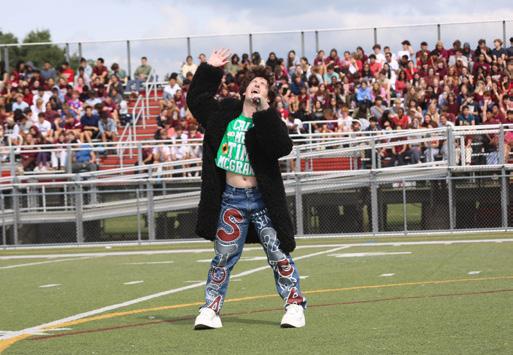
Pioneer pep: ’Stoga holds annual pep rally
Conestoga undergoes renovations, atrium policy changes
In preparation for the 2023-24 school year, Conestoga instituted several changes over the summer.
Construction teams replaced the cafeteria floor and parts of the roof. Additionally, administration relocated the achievement center and revised the policy on the use of the atrium pergolas.
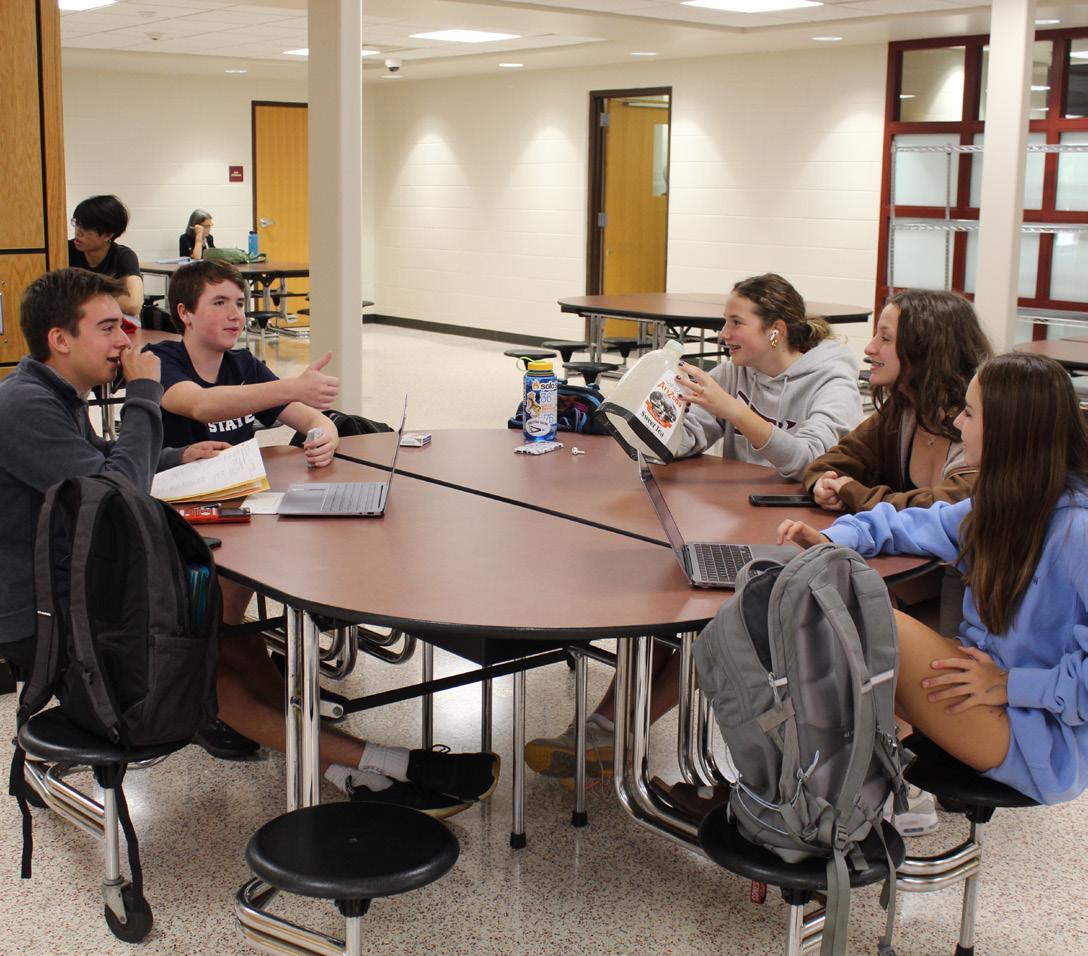
The original cafeteria tiled floor was replaced with a brighter terrazzo floor. Additionally, the cafeteria ceiling was repainted and LED lights were added to the space. 12th grade assistant principal Dr. Patrick Boyle supervised the renovations.
“With the tile floor, you could see some dents in the floor (and) some scratches in it. (With the) terrazzo (floor), you don’t see that,” Boyle said. “I think that overall (the new floor) allows students to understand and appreciate things more.”
Construction workers replaced the roof above the front of the building and caulked holes in the siding to prevent leaks. Despite the challenge of working with an older building, the construction team did not encounter any major problems while replacing the roof.
“There were some issues with the roof because it’s an older roof, but they (the construction team) worked through that,” Boyle said. “The caulking was all easy stuff.”
In addition to the structural renovations to the school, administration revised the policy on atrium pergolas to increase utilization of the space. Last year’s policy required students and staff to reserve the pergolas in the atrium in advance, resulting in less people using the space.
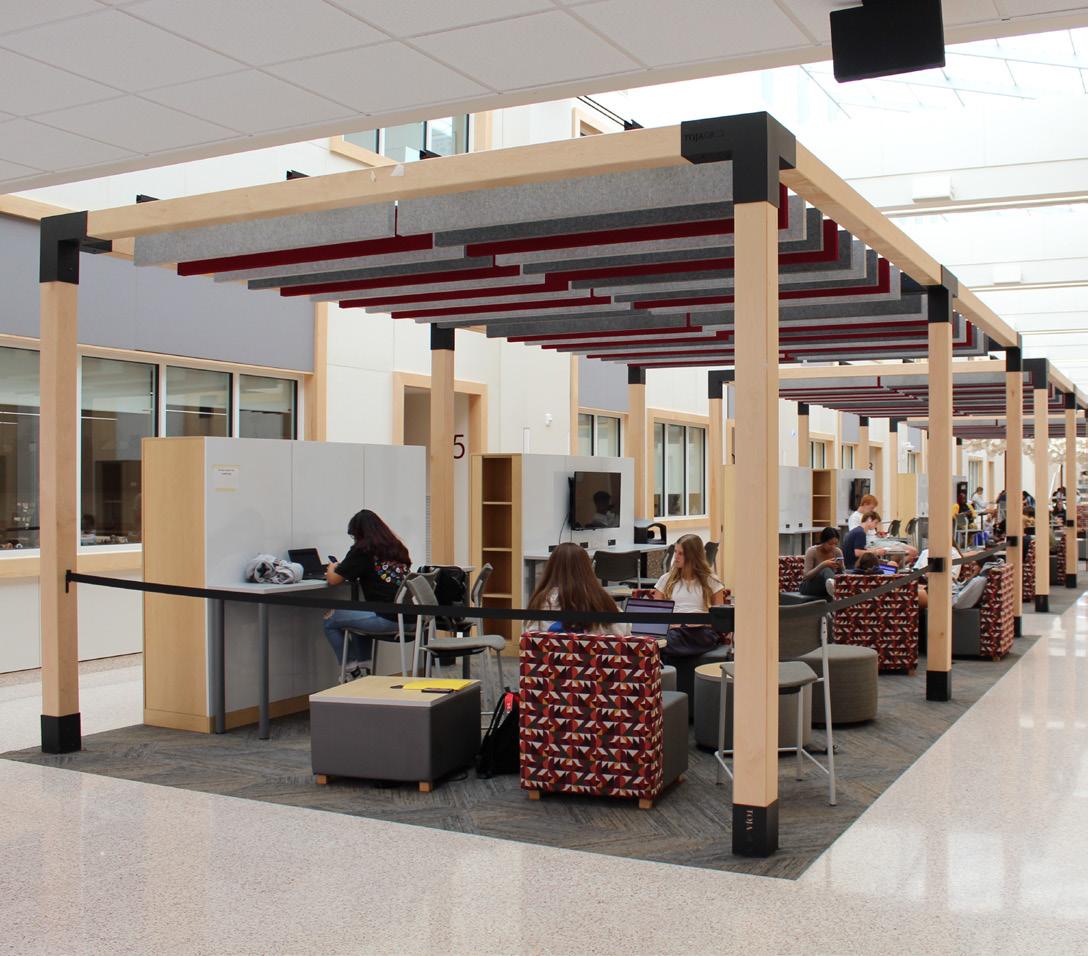
This year, if no one has occupied a pergola after 15 minutes into a given period, the space becomes open for all students to use.
“We would like to have as much of that space used as possible,” said 10th grade assistant principal James Bankert. “It’s not really useful if that nice space is not being used in a free period in a positive way that can be collaborative.”
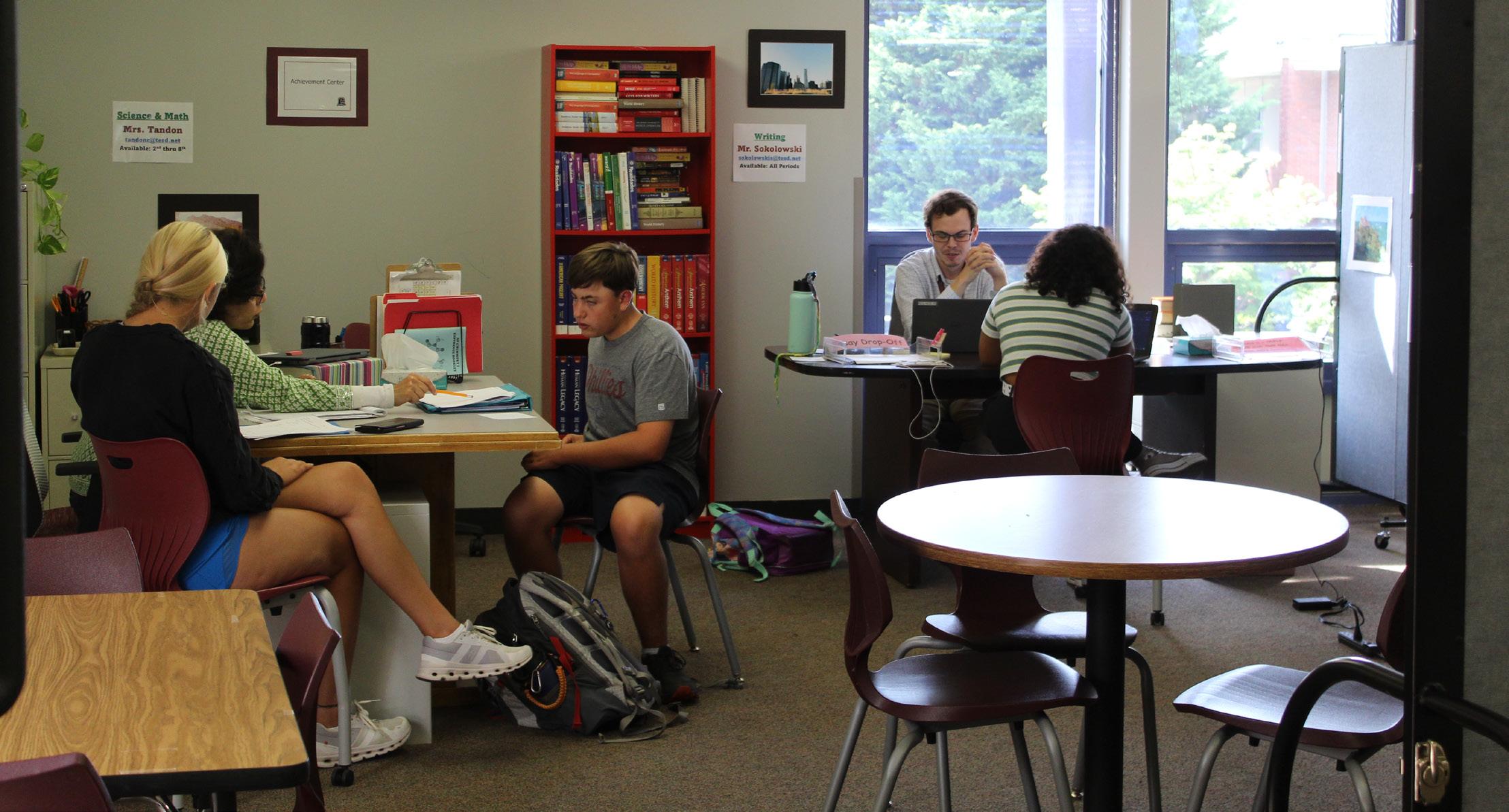
Additionally, the achievement center, which was previously located in Room 201, was moved to the library due to the need for an additional classroom. Achievement center tutor Stephen Sokolowski finds it premature to judge the effects of the relocation.
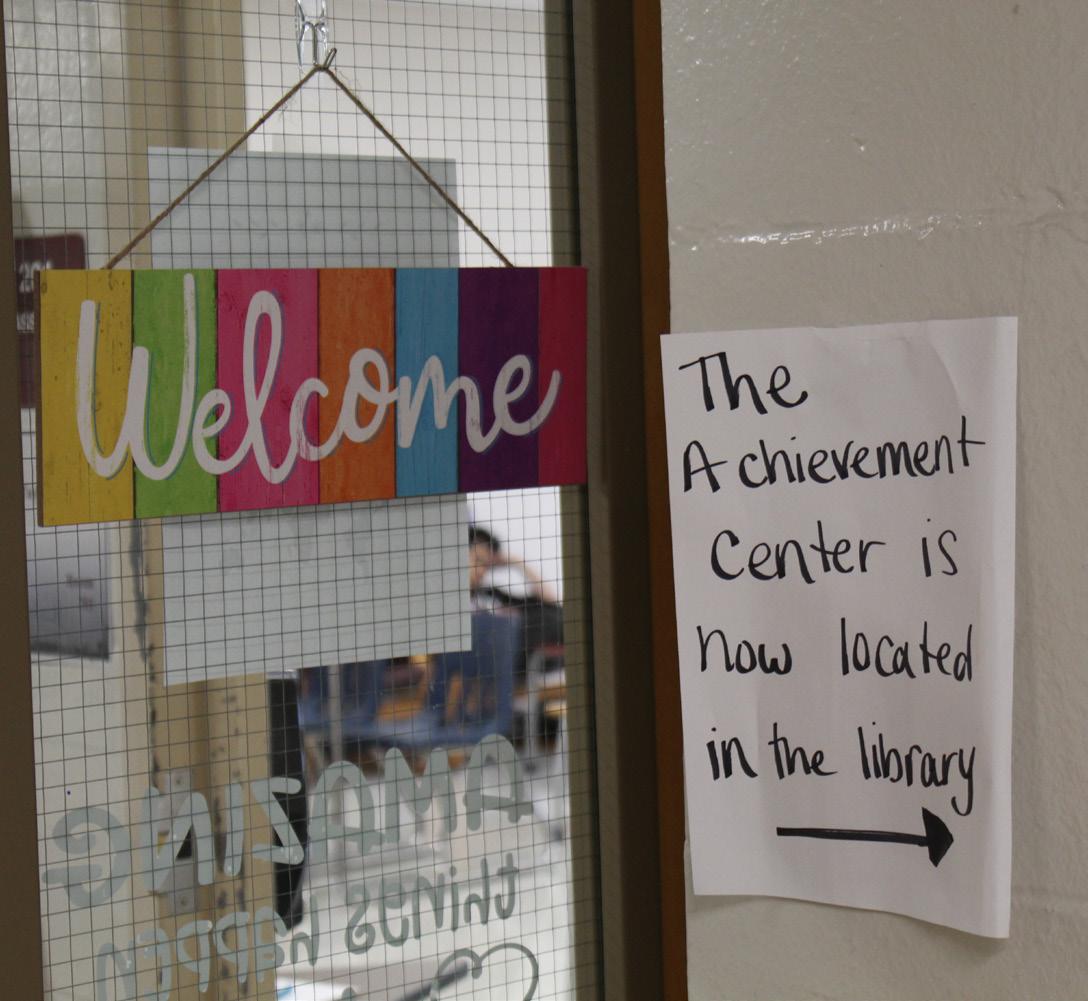
“I wouldn’t really say there’s a negative or positive connotation to (the relocation),” Sokolowski said. “The library’s a quiet space, so (the achievement center) is definitely accessible. It’s definite -
ly a bit more open than we used to be.” Although relocating to the library is an adjustment, Sokolowski appreciates the opportunity he has to help students with essays.
“It (working in the achievement center) is something I really enjoy. I like the working relationship I have with students,” Sokolowski said. “I really enjoy working with the college application process. I also like the
diversity of the things I get to work with, not only within the English department, but also within history and any other department that might require essays. It’s a nice, different diversity of assignments.”
On Friday afternoon, students made their way to Teamer Field for the annual pep rally. The Marching Pioneer Band opened the event with a performance of their halftime show followed by “The Star-Spangled Banner” sung by the Camerata choir.
T/E LIFE
A very Barbie homecoming: Student Council holds annual dance
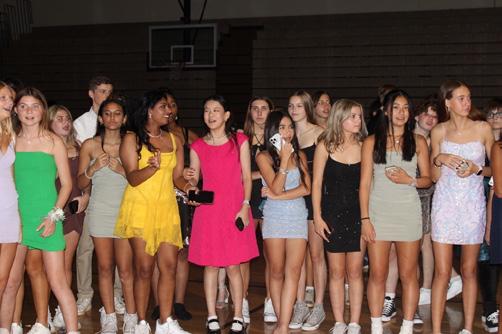
Conestoga’s annual Homecoming Dance was from 6-9 p.m. on Saturday. This year’s Barbie theme was marked by a pink carpet that students walked on to get to the gyms where the event was held. The organizers of the event, Student Council, sold tickets in the school lobby the week leading up to the dance and reached more than 450 sales.
OPINION
Do we need to wear masks again?
Let’s travel back in time. It’s March
2020. Churning through uninviting textbooks and monotonous classes, we yearn for the upcoming spring break. But on March 12, we receive an unanticipated email: All schools will be closed for not one but two, full weeks. What follows are thrills and wide smiles.
SPORTS
Homecoming whiteout victory: Football defeats Radnor 21-7

At the Homecoming football game on Friday, the Pioneers faced off against Radnor. Senior Jude Cook scored a touchdown five minutes into the first quarter. Shortly following ’Stoga’s point after touchdown (PAT), Radnor brought the score to 7-7 with a touchdown and PAT of its own.
Rowan Chetty/The SPOKE
Bright and welcoming: Students socialize and complete schoolwork in the newly renovated cafeteria. Conestoga added LED lights and new flooring to brighten up the space for students.
Pergola policy: Students work in the atrium’s pergolas during their free periods. Previously, students could only use pergolas if they reserved them beforehand, but they are now available for all students 15 minutes after a period starts.
Academic assistance: Tutors help students with their classwork in the achievement center. Over the summer, Conestoga's administration relocated the achievement center from Room 201 to the library in order to free up classroom space.
Woodland Conservation Ordinance approved
On Aug. 28, the Tredyffrin Township Board of Supervisors approved Chapter 203 Woodland Conservation, a new municipal law to prevent residents and companies from removing large numbers of trees.

This regulation aimed to minimize the effects of increased flooding due to the loss of woodlands and serve as a potential solution to the township’s current struggles with stormwater management.
Under the law, residents are now required to apply for a Tree Removal Permit from the township if they wish to remove more than five trees over a rolling 12-month period that are greater than 6 inches in diameter 4.5 feet above where the tree emerges from the forest floor. This legislation provides exceptions for certain cases of tree removal, such as that of diseased or hazardous trees.
“The biggest problem that Tredyffrin Township faces right now is stormwater management, and lately, this has been exacerbated by climate change,” said Kasi
Bhaskar, Tredyffrin Township Supervisor and
Environmental Advisory Council
(EAC) Liaison. “It’s really because of the level of development we’ve had in our area in the last 50 years, and much of that has been without regard for stormwater management.”
In early June 2022, the Tredyffrin Township EAC first proposed the idea of the Woodland Conservation Ordinance. The idea received feedback from community members and the Board of Supervisors, and its final draft was published in July 2023 for public review. The board received a positive community response and approved the bill at its Aug. 28 meeting.
It officially went into effect on Sept. 28. Now, all residents and companies planning to remove more than five trees in a 12-month period must apply for a Tree Removal Permit.
To do so, they must submit a plan that includes a list of the sizes and locations of all trees larger than the diameter limit, how many compensatory trees they will plant to replace the removed trees and where the compensatory trees will be planted. If caught violating the ordinance, the township will fine violators for each day they did, counting every day as a separate offense.
“Like most zoning violations, someone in the community, maybe a neighbor or someone driving by, will notice a violation and bring it to the attention of the township’s staff,” Bhaskar said.
These efforts intend to reduce tree removal, which is detrimental to stormwater management. Tree canopies slow rainwater, while the roots absorb rainwater and hold soil in place, reducing erosion. Tree roots also stabilize soil in inclined areas, preventing property damage in the long run.
“They are our biological stormwater infrastructure. More mature trees handle stormwater more effectively than smaller trees, and what other piece of infrastructure gets stronger five decades after it’s in the ground? There’s really nothing,” said Jonathan Wilson, EAC member and associate professor of Environmental Studies at Haverford College. “There’s a saying that I teach my students: The best time to plant a tree is 10 years ago; the second best time is today. The best time for the Woodland Conservation Ordinance may have been 10 years ago, but the second best time is today.”
Township considers, rejects municipal trash collection bids
In July, the Tredyffrin Township Board of Supervisors considered changing the current trash system, which currently uses multiple trash companies, to a municipal trash collection system. The district accepted proposals from three trash companies to provide trash collection for the district, and on Sept. 18, the supervisors pushed back the decision to change the trash system. The supervisors started to consider municipal trash collection due to complaints from some TESD residents.
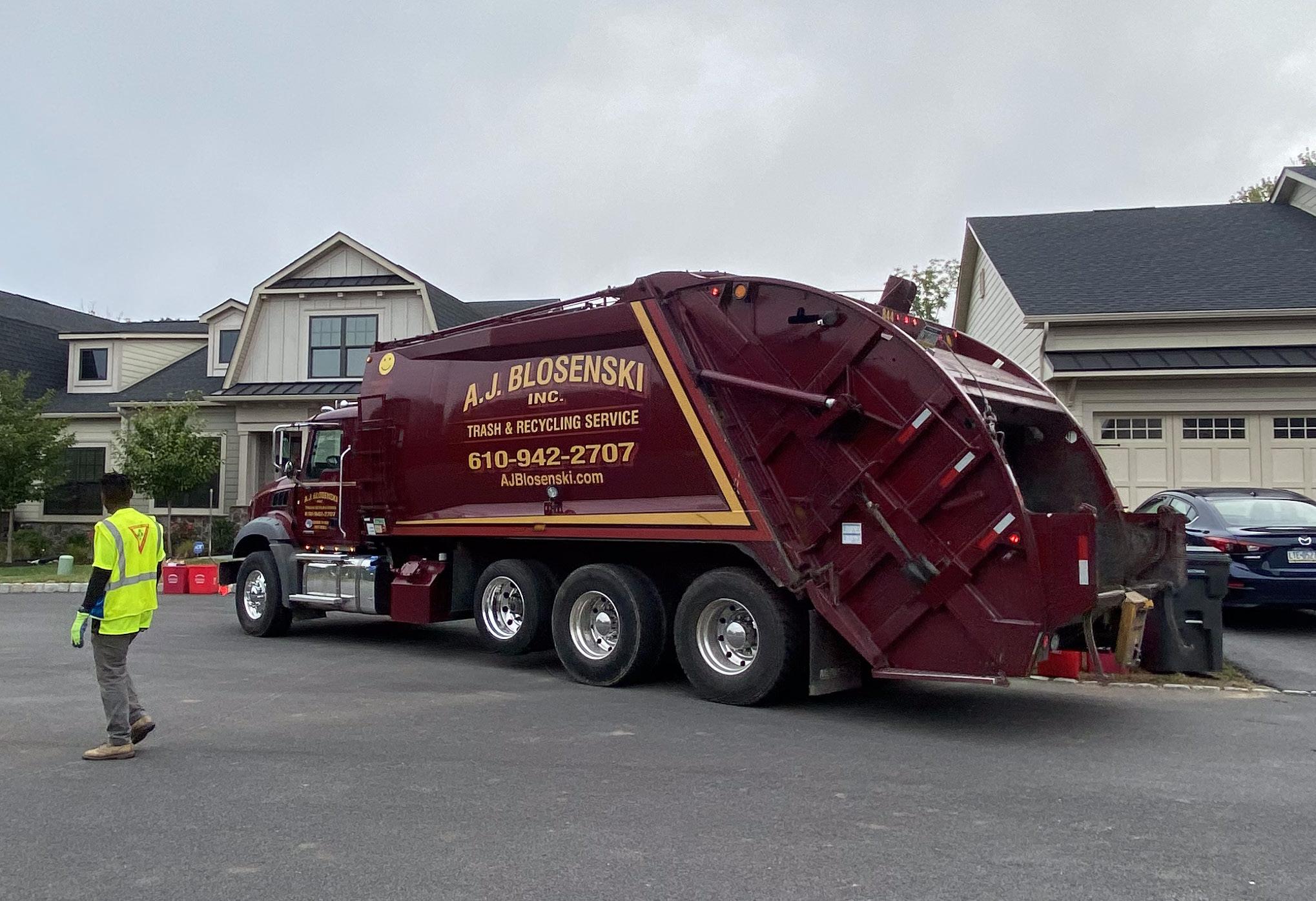
Senior Sanveer Kashyap noticed trash piling up in his neighborhood over the summer when his provider, A.J. Blosenski Inc., did not pick up trash on time.
“I started to notice that (the trash) was pretty bad during the summer, and it started to smell a lot when I was near it,” Kashyap said. “Our family faced a problem with the huge buildup of trash, and it became a huge pain to bring the trash and recycling out.”
Currently, the township has multiple trash haulers responsible for different parts of the township, including A.J. Blosenski Inc. and Whitetail Disposal Inc. With a municipal trash collection system, only one trash company would be responsible for the entire township. According to Matt Holt, Vice Chair of the Board of Supervisors, the township and the trash hauler would enter into a contract together for this to happen.
“Right now any hauler that has a permit for the township can be contracted and pick up trash,” Holt said. “(With municipal trash collection), there will only be a single hauler entered into a contract with the township and every resident would use one trash service.”
Over summer, the Board of Supervisors received bids from all the trash haulers active in the township. The township provided terms that it wanted the companies to abide by, and the trash companies proposed prices for their service to the entire township. On Sept. 18, the supervisors rejected the bids submitted by all the trash haulers and plan to accept new
bids after changing the terms of agreement for municipal trash collection.
The supervisors plan to change the terms in the contract using feedback at supervisor meetings and from the trash companies themselves. According to Holt, the selected trash company would be fully responsible after the contract is signed.
“For municipal trash collection, (the township) would not be buying the trucks or doing the billing. We would only award a contract for the township to one hauler,” Holt said. “Then they would be responsible for providing all services to the residents and doing the collection.”
Improving the trash system is important to TESD residents, since trash buildup has become a problem for many without intervention from the township. For Kashyap, getting trash picked up on time is essential.
“The last thing anybody wants to deal with is trash,” Kashyap said. “Any possible way to get trash out of sight and out of mind sounds more than great to me.”
2 Monday, October 2, 2023 News A BRIEF LOOK THE LATEST DEVELOPMENTS IN T/E AND NATIONAL NEWS
Trashy timing: TESD residents report that trash hauler companies, such as A.J. Blosenski Inc., have been picking up trash late. Township supervisors sought to fix this by switching to municipal trash collection, but ultimately rejected all bids made by trash companies. They plan to rework the terms of the trash hauling agreement based on resident feedback.
Rohan Anne/The SPOKE
Safeguarding saplings: Tredyffrin Township’s woodlands have decreased in size over the last 50 years, largely due to real estate development. The Tredyffrin Township Board of Supervisors passed the Woodland Conservation Ordinance to prevent mass tree removal without compensatory tree planting.
Howard Kim/The SPOKE
Room relocation: A sign outside the Room 201 informs students of the achievement center's recent relocation to the library.
Rowan Chetty Co-Multimedia Editor
Howard Kim Co-News Editor
The
Rohan Anne Webmaster
SPOKE
Rowan Chetty/The SPOKE Rowan Chetty/The SPOKE
Rowan Chetty/The SPOKE
Continued from page 1.
How Conestoga enforces the parking schedule
In August, Boyle sent a survey to the senior class asking seniors to indicate their first and second choices for the day on which they would not be able to park — commonly referred to as a student’s “Do Not Drive Day.” According to Boyle, all but eight seniors received their first or second choice.
“I was worried about it being more because it would have been really upsetting to contact them,” Boyle said.
The color of a student’s parking permit indicates the day of the week on which they cannot park on campus. If a student is found parking on campus on their Do Not Drive Day or in the staff section of the parking lot, Conestoga’s Code of Conduct states that they will receive one Evening Supervised Study after school from 3-5 p.m. and a loss of all privileges for one week. On a student’s second offense, they will receive one Sat-
How 4-day-a-week parking affects students
urday Detention and a loss of privileges for 30 days.
According to Boyle, there have been several parking violations this year, both by seniors parking in the staff-only sections of the lots and on their Do Not Drive Day, as well as by juniors parking with permits from previous years. There have been no repeat violators as of yet.
Implications on off-campus student-athletes
For some students, the inability to park on campus five days a week makes the logistics of getting to and from school difficult. Some seniors carpool on their Do Not Drive Day. According to senior Kerry Harley, coordinating transportation can be difficult for those who have athletic obligations off campus.
Harley plays tennis in the fall and softball in the spring for Conestoga. As neither sport has an on-campus court or field, Harley must travel to her off-campus practice sites after school for the majority of the year.
“When I saw that parking might be four days, I was like, ‘Okay, this is going to be really difficult,’” Harley said. “Even before I thought about sports as a factor, I was like, ‘What am I supposed to do on that one extra day?’”
Harley said that while getting to practices and matches is no problem on the four days a week she can park, it is difficult for her on Tuesdays when she cannot park at school. She feels it is her obligation as a senior to provide rides to her younger teammates — something provided to her in past years by then-seniors.
On the days she cannot park, the underclassmen that she usually drives have to find alternative methods of transportation, a situation for which she feels responsible.

“In past years, when everyone would be able to park, there’d be enough seniors to make sure everyone got a ride, and parents wouldn’t really have to drive,” Harley said.
“But, this year, underclassmen’s parents have to come to
school, pick them up and drive them to matches.” On Sept. 5, Conestoga began providing a shuttle to the Upper Main Line YMCA and Wilson Farm Park every day
after school for members of the tennis and cross-country teams, respectively, to get to practice. They are the only fall school sports that practice off-campus. However, according to Conestoga’s athletic director Kevin Pechin, the tennis team is not guaranteed busing to all away matches.
Some students can still park every day
According to Boyle, there are roughly 30 students who received special permission to park on campus five days a week. These students are primarily enrolled in special programs through the Chester County Intermediate Unit (CCIU).

Senior Sakura Chan is one of the handful of Conestoga seniors currently enrolled in the CCIU’s Allied Health program. She attends her first four classes of the day at Conestoga and then drives roughly 20 min -
Cabrini closes, to be bought by Villanova
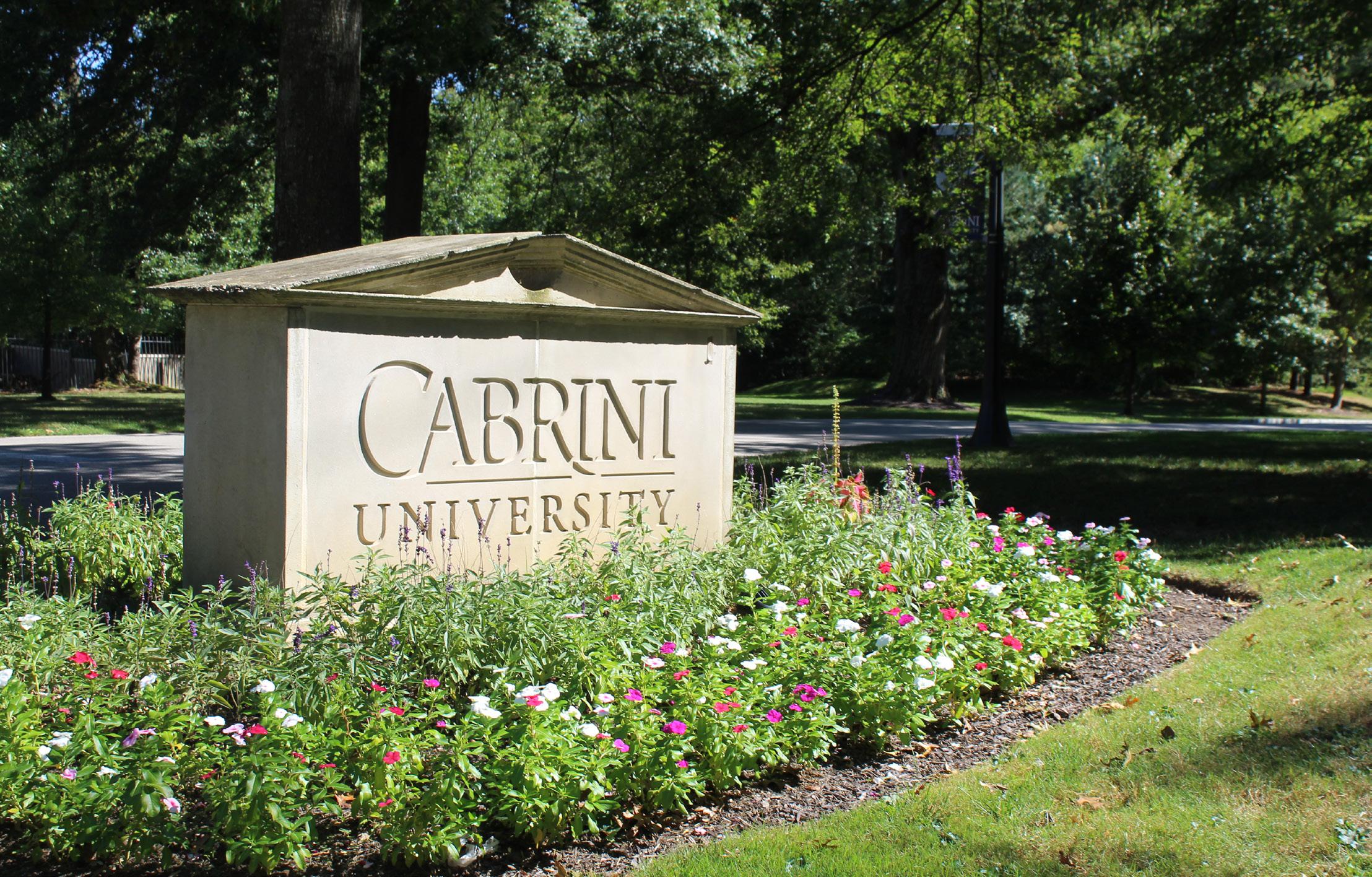
Cabrini University celebrated 66 years of graduate and undergraduate studies on June 6. Later that month, University president Helen Drinan formally announced the university’s imminent closure and Villanova University’s interest in purchasing its campus. Due to declining enrollment and budget deficits in 2021, Cabrini eliminated almost 50 teaching and staff positions along with around one-fourth of its student programs. In 2022, Cabrini announced its search for a partner school. Now, the lack of funding and student interest has led to the complete closure of the university. A joint statement between Peter Donohue, the presi-
dent of Villanova, and Drinan formally announced the imminent discontinuation of operations at Cabrini. They attributed Cabrini’s closure to “declining enrollment, the pandemic, and economic uncertainty.” The statement also highlighted Cabrini’s interest in preserving its name and legacy after Villanova’s purchase.
“Despite efforts to improve revenue streams, and changes to the leadership and academic ranks, Cabrini’s operating deficit remained insurmountable,” Donohue and Drinan wrote. “With all other possible options exhausted and having determined that they must conclude their operations, Cabrini University initiated discussions with Villanova around a plan that would preserve Cabrini’s legacy and mission and honor the original intention for the Cabrini
campus to promote opportunities in Catholic education.”
The current discussions around the purchase hint toward preserving Cabrini’s name even after Villanova acquires the school and offering some of the same courses currently offered. Conestoga art teacher Leanne Argonish, who earned her master’s of education at Cabrini, says the closure did not come as a surprise, but she is hopeful for Cabrini’s future.
“I talked to a (Cabrini) Division 3 coach with my daughter, and the coach was talking about how Cabrini was possibly closing,” Argonish said. “The idea of Villanova taking them over because they were failing financially (is) a great idea.” The Cabrini Class of 2024 will graduate in May as planned, but all other students will have to transfer to other universities. Nearby Catholic universities,
including Immaculata, La Salle and St. Joseph’s, voiced their support for the students and staff online, many with offerings of expedited transfer processes for current Cabrini students.
Cabrini formally entered agreements with Gwynedd Mercy, Eastern and Holy Family universities for an easy transfer of its students. Still, the closure was a blow to current students and alumni alike, as Cabrini had previously announced plans to merge with another school in order to resolve its financial issues.
“Immaculata jumped right on social media (saying) ‘If you’re (at Cabrini), come here.’ and I think that was great for them,” Argonish said. “I do feel bad for those who committed to Cabrini, especially as freshmen and sophomores. Kids wanted to go there.”
utes to the CCIU’s Technical College High School (TCHS) Pickering Campus where she completes the remainder of her school day.
“Once I started hearing about (four-day-a-week parking), I got kind of worried about how I would get to class on that day I couldn’t park,”
Chan said.
Chan’s worries were shortlived, as she soon learned that she would gain an exception to the four-day-a-week rule. Since one of the requirements for enrollment in one of the CCIU’s special programs is consistent individual transportation, Boyle administered special parking permits to the 30 students who requested them at the same $180 fee.
“It was really a relief,” Chan said. “It’s just one less thing to worry about.”
Senior Ray Hu is also enrolled in the Allied Health program. On top of Conestoga’s flat parking fee
of $180, Allied Health students are required to pay for an additional parking permit at TCHS. However, Hu noticed a discrepancy between the costs of the two permits.
“$180 is a lot, and it kind of blows that we have to pay so much,” Hu said. “The application at TCHS is almost identical, but they only charge $15. There are some numbers at odds there.”
Conestoga’s parking fees are also greater than those of neighboring high schools. At Radnor High School, seniors pay $75 to park five days a week. At Great Valley High School, seniors pay $100 For some seniors, the fees and scheduling conflicts that come with four-day-a-week parking present a less-than-ideal situation.
“I get why the decision was made,” Harley said. “But, to finally be a senior and have that privilege of parking and not even get to experience it to its fullest kind of sucks.”
Brandywine Hospital set to host veteran services
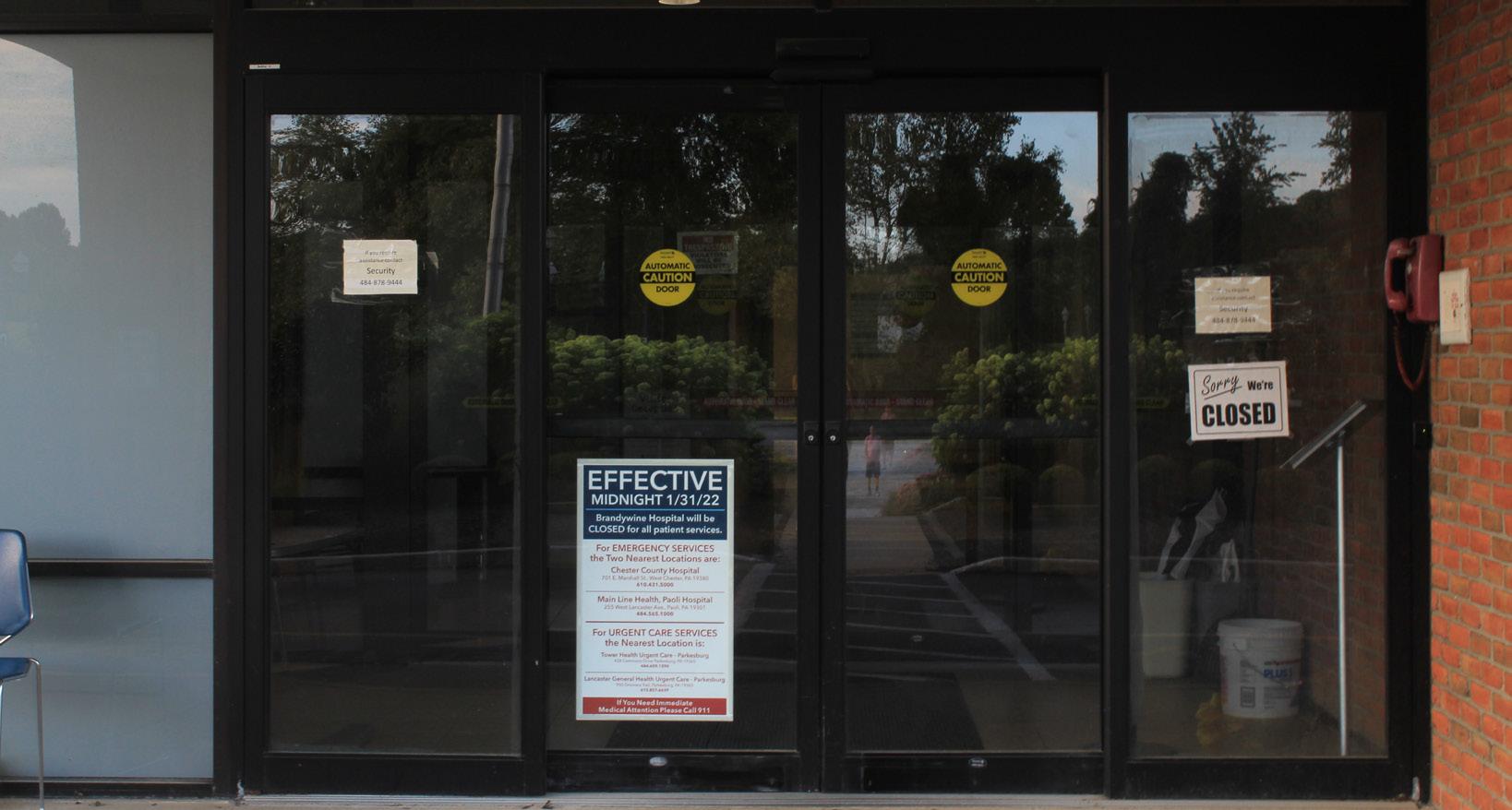
Penn Medicine is set to purchase Brandywine Hospital campus from Tower Health, which closed in January 2022 due to financial reasons. While the purchase has yet to occur, Penn Medicine signed a letter of intent with the U.S. Department of Veterans Affairs on June 28 to acquire the campus, which will be used for veteran care and other services.
The deal is part of two memorandums of understanding with the U.S. Department of Veterans Affairs to work with the Veterans Affairs (VA) Medical Centers in Coatesville and Philadelphia. These memorandums are made possible under the Promise to Address Comprehensive Toxics Act, which expands health care benefits for veterans who were exposed to Agent Orange, burn pits and other toxins.
“The legislation also includes new provisions that allow for the VA and academic partners, like Penn Medicine, to enter into lease agreements that can help provide updated facilities to serve veterans,” a Penn Medicine spokesperson
said. “The intent of this partnership is to build new physical infrastructure for both the Philadelphia and Coatesville VAs, which will provide the modern facilities needed to best care for patients.”
Under this new agreement, Penn Medicine will work closely with the VA to improve facilities at the Coatesville Veteran Affairs Medical Center (VAMC) that has an infrastructure originally built in the 1930s. According to a report by the U.S. Department of Veterans Affairs published March 2022, the Coatesville VAMC’s infrastructure “does not meet current design standards for modern health care, provides limited flexibility and has significant architectural and engineering challenges” which “creates inefficiencies that are impacting clinical, administrative, and facility support services.”
This collaboration will allow Brandywine Hospital, whose closure caused Brandywine residents to seek health care farther away, to reopen and is expected to have a profound impact on the community. As well as including VA services, Penn Medicine is evaluating the needs in the community to
provide services that go beyond the VA agreement.

“The Penn Medicine and VA agreement has the potential to benefit more than 100,000 veterans in the tri-state area,” a Penn Medicine spokesperson said. “We are also talking with leaders and residents in Chester County about what additional services beyond the VA partnership are priorities for the community. Our hope, as always, is to help people in the communities we serve live longer, healthier lives.”
Joe Altimari, a Vietnam veteran who was exposed to Agent Orange while serving, uses both the Coatesville and Philadelphia VAMCs. He thinks that the new facilities will be of great help to veterans in the surrounding area, cutting down transportation times to help them get quality and efficient service.
“We call (Agent Orange) the gift that never stops giving. As we get older, we get more (ailments). I’m turning 74 years old, and I can get into Coatesville in 10 minutes with no traffic,” Altimari said. “It (Brandywine) and the Coatesville VAMC are no more than half a mile apart. You’re getting excellent doctors for specialty clinics. I think it’s a great situation. I really do.”
Monday, October 2, 2023 News
Closed for now: Penn Medicine is slated to purchase the hospital campus and offer veteran services. Brandywine Hospital was closed by Tower Health in January 2022.
Raima Saha/The SPOKE
3 Aren Framil Co-News Editor Raima Saha Co-Opinion Editor Heading home: Senior Olivia Bookwalter pulls out of the parking lot at the end of the school day. In August, she requested Wednesdays as her “Do Not Drive Day” in her permit application. For the rest of the school year, she plans to take the bus or organize a carpool with her friends on Wednesdays. Ben Shapiro/The SPOKE Campus closure:
Aren Framil/The SPOKE The SPOKE Preparing to
Senior
College High School
Ben
Flowers
grow around Cabrini
University’s
stone entrance sign. The university’s president, Helen Drinan, announced Cabrini’s imminent closure
this
past
June,
citing financial issues and declining enrollment. Villanova University plans to purchase Cabrini’s campus for future use.
park:
Alice
Richards adjusts her parking passes on her rearview mirror. She bought one through the Allied Health program to park at the Technical
Pickering Campus and one through TESD to park at Conestoga. As an Allied Health student, she will park five days a week at Conestoga this year.
Shapiro/The SPOKE
For many students, starting high school can be an unfamiliar and often isolating experience. But, for freshmen quadruplets Issaam, Mehran, Nuriya and Ramiz Mussani, it is very much a family affair.
In February 2009, Sharmeen Mussani gave birth to quadruplets: one girl, Nuriya, and three boys, Issaam, Mehran and Ramiz. Quadruplets are rare, only occurring one in every 700,000 pregnancies. While Sharmeen said she was not expecting four kids at once, she took the challenge in stride.
“We were planning to have our second child — I have one senior at Conestoga right now — and we ended up with four more,” Sharmeen Mussani said. “Honestly, I laughed for like five days (when I found out) because I had never even heard of the word quadruplets before, so I didn’t think it was for real.”

As for the quadruplets themselves, they said that while growing up with three other siblings their age was generally uneventful, some shared experiences were de nitely more exciting than others.
Four’s a party: High school welcomes quadruplets
“A lot of things are di erent, like birthdays. ose are really crazy,” Issaam Mussani said. “ ere would be lots of kids. You have to choose which friends to invite, because everybody can’t invite (all of their friends), because there would be too many people.”
Outside of the house, the siblings also provide each other with support and healthy competition in school, which Sharmeen Mussani said helps keep them “on top” of their grades and schoolwork.
“They weren’t really mischievous or anything like that; they’re good kids,” Sharmeen Mussani said. “I don’t have any crazy memories, but everything has been so fun. With (the siblings), I have a whole healthy competition going on for school, (where they) try to be better than each other, in a good way.”
While growing up together may come with a sense of fellowship, the Mussanis each have their own hobbies and after-school activities, separate from the rest of their siblings. Their interests vary from art to cross-country to soccer and tennis. According to Nuriya Mussani, their sibling status tends to
stay separate from their social lives as well.
“I feel like people forget that we’re siblings,” Nuriya Mussani
said. “ ey’re like, ‘Oh, yeah, I forget you live in the same house.”
Amidst the ups and downs of life, Sharmeen Mussani believes
being quadruplets has bene ted both her kids and herself.
“If one (sibling) has a problem, I have the other
three who could try and help out,” Sharmeen Mussani said.
“We have a built-in party going on for family fun night.
We don’t need anybody else to play games and things like that. I think it’s been one big adventure.”
Alumni family dedicates decades to Berwyn Fire Company
Faith Zantua Co-Copy Editor
Sirens blaring. People running. Frantic talking. A re company’s work o en consists of unexpected events. Nevertheless, some still choose to volunteer, including one particular family: the Nudys.
e Nudy family has worked at the Berwyn Fire Company for more than 40 years. Fred Nudy Jr. began the family trend, and it then continued with his son, Fred Nudy III, and his grandchildren, Emily and Jack Nudy, all of whom are Conestoga graduates except for Fred Nudy Jr.
“We grew up with the expectation of helping others, community service being a big aspect of that,” Emily Nudy said.
“My father was an Easttown Township police o cer for a long time, so he’s been committed to the community in quite literally every aspect. I think that showed in the way that we were raised. I’m forever grateful for that.”
Fred Nudy Jr. was an active member of the re company, serving many positions such as president and vice president of the board of directors. Fred Nudy III joined in 1985 work-
The Crossword
ACROSS
1. Plummet, like the equinox that was on Sept. 23rd this year
5. TV Channel airing “ e Price is Right” and “ e Big Bang eory”
8. “Gar eld” dog

9. Take a peek


10. Curl or press?

11. City host to a 500-mile NASCAR course, shortened like the race’s name
12. Follower to bee and sea?
13. Largest worldwide theatre chain established in 1920

14. Divisions within a set
18. With 19-Across and a er
1-Across,
Joey Chops is a modern, trendy steakhouse located on Lancaster Avenue in Malvern. is high quality restaurant offers a modern twist on American favorites, with both indoor and outdoor seating in a cozy, comfy setting. Appetizers of lobster dumplings and lollipop lamb chops started o this delicious meal. e dumplings were stu ed with fresh lobster, then boiled and pan fried to create a crunchy bottom. Served with a mild, butter-based dipping sauce, the dumplings were tasty, although light on the lobster. Cooked to perfection, the lamb chops did not disappoint. With a lovely presentation, they were served with a soy glaze, which complimented the meat nicely. e lamb was tender with a crisp sear, making this dish one of the resturant’s star appetizers. For the main course, I sampled burrata stu ed ravioli.
is dish was served with a San Marzano tomato sauce, fresh basil and parmesan. e pasta, made in-house, had a lovely avor. e so burrata made for a unique, mild lling, which did not overwhelm other elements of the dish. With pastas and an array of salads, this steakhouse will more than satisfy the appetite of a vegetarian. Typical pricing for a meal at Joey Chops can be quite high. e lamb chops and dumplings ring in at $25 and $21, respectively. e burrata ravioli is o ered at $24 — quite high for a pasta dish. However, each dish was tasty and the service was excellent, with attentive waiters bringing dishes in a timely manner. If you are looking for avorful, comforting dishes to enjoy on your next night out, I would highly recommend adding Joey Chops to your list.
ing as a re ghter and for the emergency medical services (EMS) division. As a result, Emily and Jack Nudy grew up hearing about the company from their father.



“It (joining the company) was not expected (and) not predicted,” Emily Nudy said. “I didn’t see myself ghting res. But once I realized that I enjoyed medicine, could join as an (emergency medical technician) and ride the ambulance, that’s when I decided to join.”
Emily Nudy was motivated to join in 2019 a er she enrolled in Conestoga’s Allied Health emergency medical technician (EMT) program and her father suggested trying volunteering.


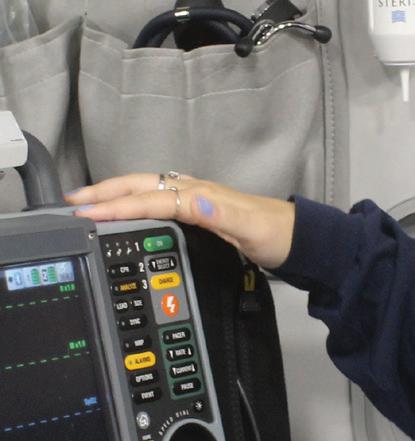


Jack Nudy joined in 2020, attending training provided by the Berwyn Fire Company. “It was always something that has intrigued me and piqued my interest,” Jack Nudy said. “So as soon as I was able to join, I knew that I wanted to.”
Emily Nudy is currently a pediatric nurse, and Jack Nudy is a sophomore at West Chester University studying criminal justice. Both siblings balance volunteering and their other activities.
“It (volunteering) has become part of my regular life. I don’t see it as a job,” Jack Nudy said. “( at balance is) probably the easiest thing about it because it’s so fun to be there, and we have a good time.”
Currently, Emily Nudy serves as an EMS lieutenant, and Jack Nudy serves as a firefighter EMT for the company.
Michael Baskin, the company’s EMS Captain, has known the family since he joined in 1997 and works closely with Emily Nudy.


“She cares a lot about the organization and taking care of patients,” said Baskin. “She’s a very good t for helping take care of our ambulances and the EMS division of the rehouse.”
In the future, both siblings plan on continuing to volunteer for the company. Emily Nudy hopes to maintain her level of commitment and act as an advanced life support provider. Jack Nudy aims to hold higher positions in the company.
“It is not something you can do forever,” Jack Nudy said. “But me and my sister are in (the company) now, and hopefully we can continue that line of tradition and wanting to do it.”
Joey Chops :
Luxurious lamb: Lollipop lambchops are served atop tomatoes and eggplant. They were drizzled with a soy glaze and garnished with microgreens for a strong presentation.

Like a super-secret handshake to get in the door, competitive colleges really do want to see test scores, they just won’t tell you that. Grades alone aren’t going to get you there, so it’s time to think about doing your best on the SAT or ACT. Find out more at CrimsonReview.com.



T/E LIFE 4 Monday, October 2, 2023 e SPOKE
Aren Framil/The SPOKE
Family Fun: (From le to right) Freshmen Mehran Issaam Nuriya and Ramiz Mussani sit next to each other, while their mother Sharmeen Mussani stands with her arms embracing them.
Aren Framil Co-News Editor
Burning passion: Emily Nudy takes out materials in an ambulance, where much of her work takes place. She joined the Berywn Fire Company with experience from the Allied Health EMT program and hopes to try acting as an advanced life support provider in the future.
Faith Zantua/The SPOKE
Abby Bagby/The SPOKE
2010s pop punk band 19. See 18-Across 20. Like the Phillies in Miami, but not Philadelphia 22. Dock 23. Dice pips 24. Pre x meaning against 25. Add-___: Bags of chips at Chipotle, for example 26. Table, in Spanish
DOWN 1. Origami moves 2. Vowel-heavy Wordle starter 3. Titanic evacuators 4. Do-over of a tennis serve 5. Farewell My _________ (1993): Controversial and brie y banned lm in China 6. Physique, slangily 7. With 1-Across, 2012 Daniel Contributing Game Designer "The race's 22 Dock 23 Dice pips 24 Prefix meaning against 25 Add-_ : Bags of chips at Chipotle, for example 26 Table, in Spanish DOWN 1 Origami moves 2 Vowel-heavy Wordle starter 3 Titanic evacuators 4 Do-over of a tennis serve 5 Farewell My _________ (1993): Controversial & briefly banned film in China 6 Physique, slangily 7 With 1-Across, 2012 Daniel Craig James Bond film 9 Ride to the red carpet 13 Display piece at The MET 15 After 1A, viral battle royale party game released in August 2020 16 Writers of odes or sonnets 17 Lebanon neighbor 20 "Much ___ About Nothing" 21 Was victorious 22 Cooking spray brand 1 2 3 4 5 6 7 8 9 10 11 12 13 14 15 16 17 18 19 20 21 22 23 23 24 25
Abby Bagby Co-Managing Editor
Constructed by Will Scheidt, Contributing Game Designer Answers at spoke.news/
“Test Optional” doesn’t *really* mean that...
Craig James Bond lm 9. Ride to the red carpet 13. Display piece at e MET 15. A er 1A, viral battle royale party game released in August 2020 16. Writers of odes or sonnets 17. Lebanon neighbor 20. “Much ___ About Nothing” 21. Was victorious 22. Cooking spray brand Joey Chops 245 Lancaster Ave, Malvern, PA 19355 Price: $$ Rating:
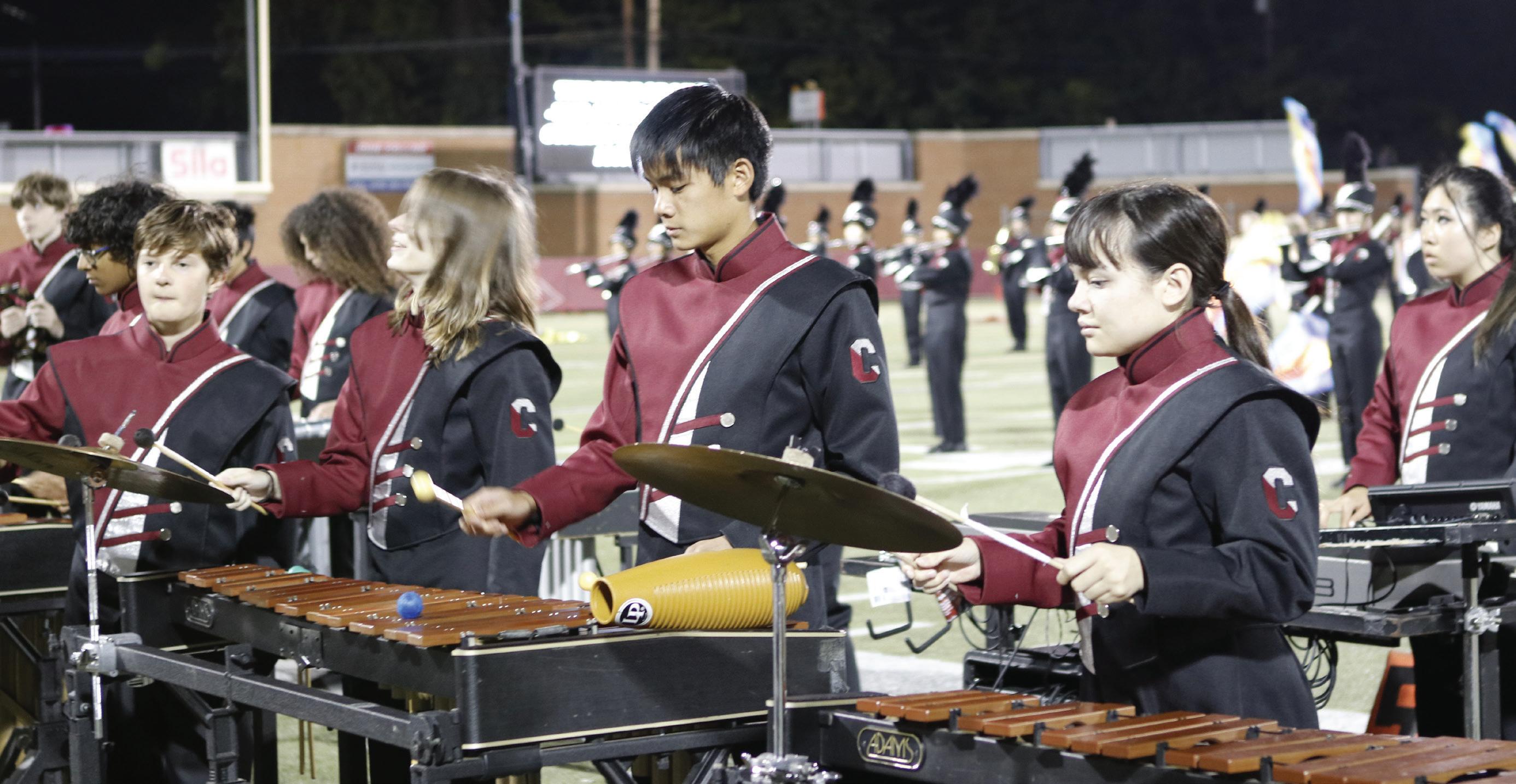
Every year, the Marching Band has incorporated a new theme into its halftime show. Previous themes have included Lin Manuel Miranda, love songs, guitar heroes and “The Phantom of the Opera.” This year, the theme is Just Dance. This theme encompasses dances to iconic songs, including “Shut Up and Dance With Me,” “Thriller,” “The Time Warp” and “I Wanna Dance with Somebody.”
Marching band director Christopher Nation chose the Just Dance theme. This year, he wanted a show that would include all the students’ different parts and incorporate songs everyone would enjoy.
Marching Band incorporates new choreography
made
“Every year we try to find a show that’s going to appeal to our students and to our audience. This year, we just wanted a show that was really fun, would feature a lot of our students and have music that everybody would enjoy,” Nation said.
This year’s performance incorporates more dancing than those of previous years. The band took additional time to learn the choreography and perfect the steps. Typically, instrumentalists do not have a large dancing role, so the new dances brought along some challenges for the band.
Senior Nick Galasso, a drumline member, found it challenging to learn the movements while playing an instrument simultaneously.
“It was harder to learn the visuals and play at the same time. So, dancing would kind of throw off your (playing style). It’s a big obstacle, but we manage to get around it,” Galasso said.
Through the challenges, the band members kept a positive mindset during band camp, where members learn and practice the performance over the summer.
“Motivation is a huge factor because (we have) a six-hour re-
hearsal every day. at was something I struggled with, but I made sure to keep a positive attitude and
Band members enjoyed watching “Thriller” during half-time shows. The perfor-
mance incorporated various dance movements, which Ballard enjoyed.
Freshman opens bike repair business, Dom Fixes Bikes
Freshman Dom Pecora was 10 years old when he launched an aptly-named bike repair business:


Dom Fixes Bikes. Since then, Pecora has transformed his company into a 501(c)(3) nonpro t and leased a space in Malvern. The company’s mission is “to give a bike to anyone
who shares his passion regardless of age, race, gender, or ability.” Since its inception in 2020, the business has increased its bike donations, using its revenue to donate
bikes. Pecora’s initiative began after seting an arbitrary goal of donating 100 bikes per year. “My mom asked how many bikes I wanted to donate, (and
I said), ‘How about 25?’ And I was like, ‘How about 100?’” Pecora said.
On Sept. 16, Dom Fixes Bikes hosted a grand opening, featuring live music, food and an appearance from the Phillies mascot, Phillie Phanatic. Pennsylvania State Rep. Melissa Shusterman presented Pecora with a Certificate of Congratulations on the day.
“One thing I took away from (Dom’s) work is he really just pursued something he loves, and with pursuing what he loved he started reaching out to help people,” said Shusterman in her speech during the event.
Dom’s mother, Karen Pecora, assists her son by handling legal contracts and giving her opinion on certain ideas. For the most part, though, Dom makes all the decisions regarding the shop.

“All of us, from a family standpoint, never envisioned us owning a bike shop, so because this is Dom’s dream, we don’t need to override his decisions,” Karen Pecora said. “The business is all about him. His mission is all about everybody else.”
Frankie Piccoli, who works as a mechanic for Dom Fixes Bikes, balances his work at a local auto shop with that at Pecora’s business, which includes xings bikes and assisting customers.
“My favorite part is really just seeing Dom succeeding and seeing his business grow,” Piccoli
Zara Samdani
Co-T/E Life Editor
said. “I think if he keeps going the next few years, he (could) expand the size of the shop, and then hopefully, he’ll just gain loyal customers over time.”


For Pecora, “knowing that 36 kids in Africa will have bikes” is why the business is valuable. Looking forward, he wants to open two more locations and expand his donation platform.
“I keep using the word surreal,” Pecora said. “Seeing everyone support me is amazing.”
Heart at work: Junior lands heart transplant internship
Schoolwork, spending time with friends and studying for the SATs describes the typical life of a high school junior. But junior Shruti Satheesh has just one more thing added to her schedule: an internship at a heart transplant company.

Satheesh interns at SynCardia, a company that transplants artificial, temporary hearts for sick patients. She earns $15 per hour for her remote work, which includes sifting through data, conducting cost-benefit analyses of the company’s medical devices and compiling video footage for webinars.
She worked 30 hours per week over the summer, balancing school work and frequent meeting with board members at SynCardia.
Caption:
Satheesh landed the position through prior interest in the field. Medicine has always been her professional goal, so in 2021 she searched for medical internships. It was ultimately SynCardia’s unique role in the community — transplanting artificial hearts for sick patients — that attracted her.
She contacted a board member, established connections and started her first task: compiling and editing heart transplant videos for 35 hours a week without pay. As she gained prominence and experience, she further pursued her interest in the company.
“The summer after my freshman year, I was done with my internship, and a board member approached me and was like, ‘Hey, I really, really enjoy your work. If you want to get paid, I can offer
you an amazing, paid position,’” Satheesh said.
For Satheesh, the promotion came with a new set of challenges. In particular, Satheesh found the worklife balance to be difficult to maintain.
“Working 30 hours during the summer was fine because I didn’t have much to do, but during the school year, that was a completely different story,” Satheesh said. “Between my schoolwork, my SATs and my obligation to friends and family, I was pretty overwhelmed sometimes.”
In the future, Satheesh plans to continue working for the company, as she found the company culture comfortable and flexible.
“The community is really supportive,” Satheesh said.
“Everyone is really flexible,and so supportive, and I am so glad to work there.”
Medical menace: Junior Shruti Satheesh organizes video clips for her internship at SynCardia, a company that transplants arti cial hearts. Satheesh started the internship in 2021. She will continue working at the company throughout the school year.
sure that everything was getting done properly,” said senior and drum major Cooper Ballard.
Beating the drums: Band members play their instruments during the game’s hal ime show. This year’s theme, Just Dance, required all members to practice new choreography, which possesed challenges for some. While many band members found the dances di cult, they enjoyed the learning process.
Rowan Chetty
/The SPOKE
2, 2023 T/E Life
Grace Kuryan Co-Multimedia Editor
“(I love) the ‘ riller’ dance,” Ballard said. “Seeing everyone start dancing is
fun.”
Monday, October
5
e SPOKE
Samdani
Zara
/The SPOKE
at the opening
business.
started his business to provide bicycles to the T/E community. Rowan Chetty/The SPOKE
Budding entreprenuer: Freshman Dom Pecora speaks
of his
He
Shreya Vaidhyanathan
Caption here (2 lines). /The SPOKE
Co-Managing Editor
Local recognition: Freshman Dom Pecora stands with State Rep. Melissa Shusterman , who awarded him with a certificate for his business and contribution to the community. Pecora will continue running his business in the future.
Scan the QR code to watch an accompanying package Scan the QR code to watch an accompanying package
Rowan Chetty/The SPOKE
Students inspire musical interest in younger generation
Maya Shah Co-T/E Life Editor
The Back to Bach project is an international initiative aiming to promote a greater interest in music amongst younger students. Although it is primarily based in the United States, the project also maintains multiple international chapters, some of which are based in China, Poland and Australia.
Junior Isabella Florendo empathized with the project’s message, seeking a way to make it more local.
“It was a great opportunity for me to start a new region. And so I started the Berwyn, Pennsylvania region, because there was no one really here representing it,” said Florendo, who now serves as the chapter’s Regional Director.
Florendo reached out to friends who shared her inter-
est in music, and the chapter grew quickly. Now, the team features eight student musicians, all of whom have individual musical qualifications, whether it be via local competitions or their participation in regional orchestras.
Together, the team brainstorms ideas on how to best promote their message amongst students.
“My team right now is just super fun to work with. They’re really open and they’re really adaptive to anything. They’re open to different ideas, and also offer me very creative ideas as well,” Florendo said.
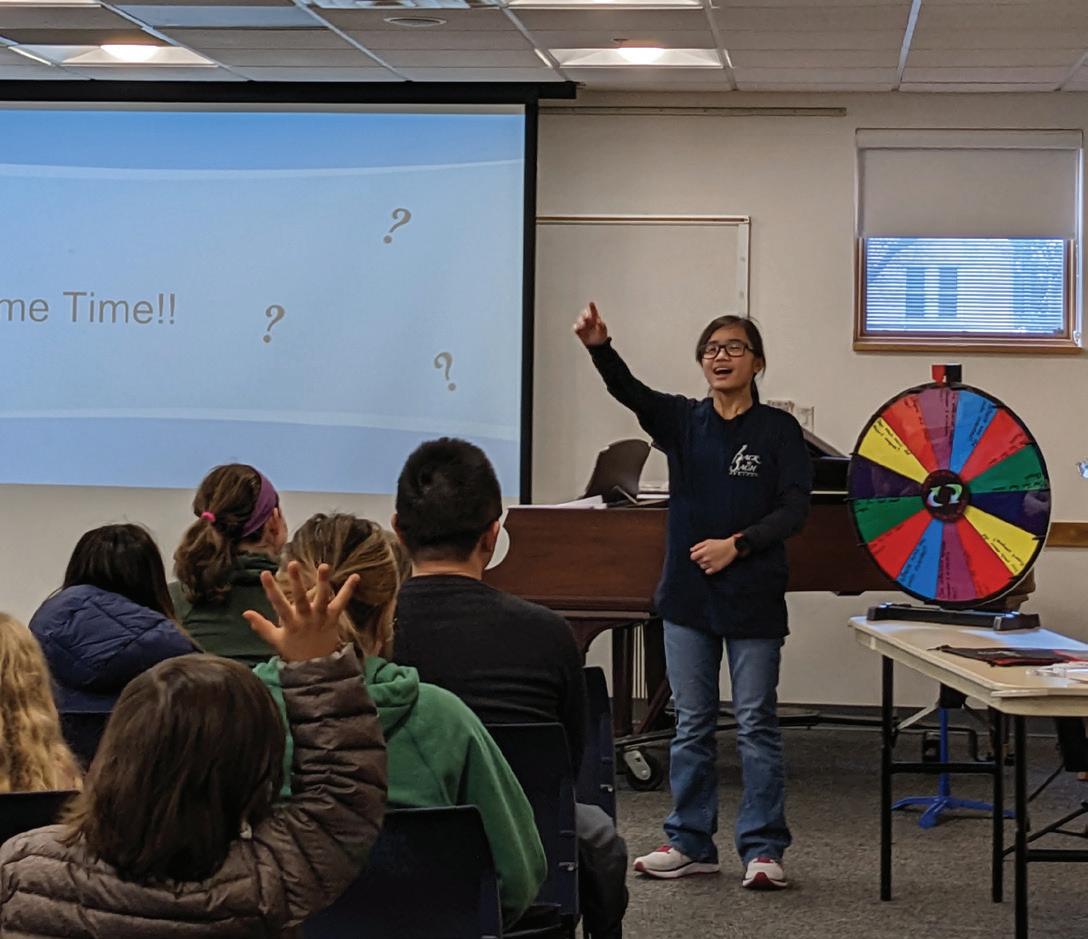
Back in February, the team worked together to start planning its first in-person community event. After contacting the Easttown Library and advertising to the elementary schools in the district, it planned a bustling agenda filled with informational pre-

sentations, interactive quiz questions and performances from the members. Junior
and Associate Regional Director Lauren Wu said that the demonstrations are an important teaching lesson for younger students.
“I really like performing because I think that it’s really fun to just share music, but also to inspire the next generation and young kids to see how happy they are when they hear things. Even just informing them about classical music and getting them inspired is cool,” Wu said.
With seven out of eight Back to Bach members being students at Conestoga, the Berwyn chapter of Back to Bach also utilizes community resources to promote its work.
is year, the team is hoping to again perform at the ’Stoga library open mic, which it also participated in last year.
Sharing a common community, both at school and in the wider music world, has been a big connecting factor for the group as it aims to grow its initiative.
“We all kind of just knew each other because of ’Stoga
Courtesy Isabella Florendo
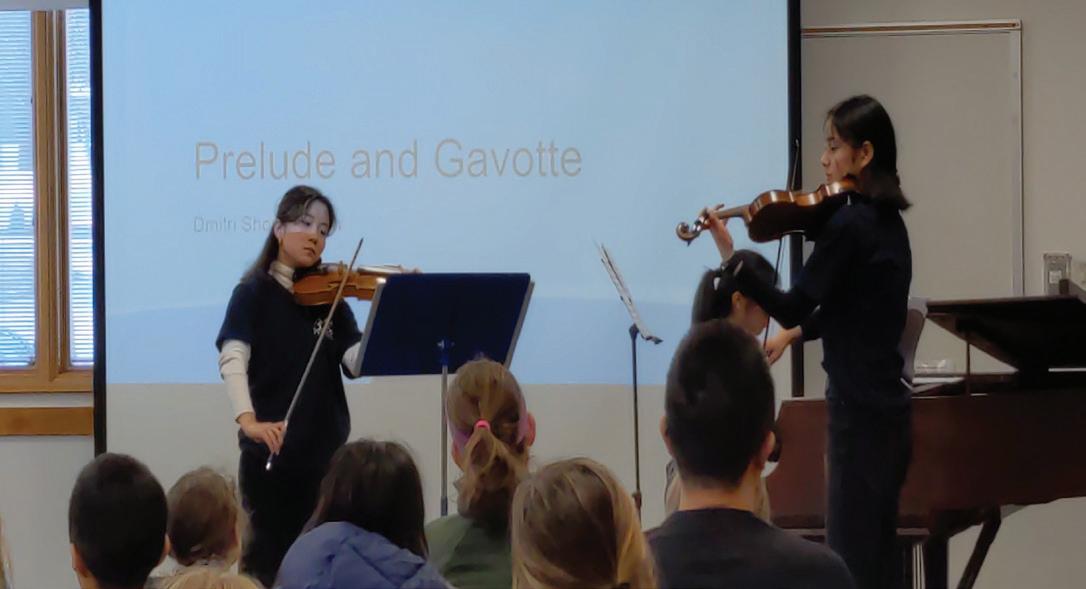
Musical madness: Back to Bach members play instruments for younger students as part of their program. The chapter did not host events over the summer, but hopes to continue their activity during the school year.
music and also (from) classical music. I feel like (the classical music community) is pretty connected in this area,” Wu said.
Despite a lull in productivity over the summer, the group has high hopes for the new school year. It aims to host more events at the public li-
brary in order to reach a wider group of kids.
“Personally, I was really excited to share about what I love the most: music,” Florendo said. “I just really wanted to share it with other kids. Hopefully, they will have the same impact and relationship with music as I do.”
Mouth-watering a ernoon: Chester County hosts food truck festival
Photography Editor ed each street and set up in the Beer and Wine Garden, which was only open to individuals over 21 years old.
Mareska Chettiar
Around 25,000 people ooded the streets of Downtown West Chester on Sept. 17 as West Chester Parks and Recreation hosted its 42nd Annual Restaurant and Food Truck Festival. It featured about 150 restaurants, food trucks, nonpro ts, and arts and cra businesses across three streets.


“It’s just a fun event encouraging people to go out and use the streets since West Chester is super walkable,” said Isabella Ryan, Program Coordinator for West Chester Parks and Recreations. “It’s also a really cool way to connect with people.”

A er parking in various spots on the streets and in local garages, people walked through stall-lined roads while trying various kinds of food and listening to live music. Bands populat-
Bands played di erent kinds of music from various genres, including country, rock and pop. e 62 food vendors at the festival were both local and non-local, selling a mix of classic and original dishes from cuisines worldwide. Some busier spots included stalls with fried chicken, tacos, rice, lemonade and kettle corn. e festival o ered businesses an opportunity to make connections and promote themselves and their products. While some businesses have been frequenting the festival for as long as 20 years, there are always new ones every year, ensuring that there is always something new to try.
“I live ve minutes away, so I’m really hoping I can get my name out there as an artist and
hopefully my neighbors can see me out there,” said Rachel Coleman, owner of Shy Fox Studios, which produces handmade, acrylic art. It was Coleman’s rst time at the festival. Cra s businesses and nonpro ts were able to sign up starting April of this year. Food trucks and restaurants signed up starting in May, going through insurance procedures. “ is is (the restaurants’) chance to demo their products to the public and be like, ‘Oh, this is what we sell,’” Ryan said. “We always try to get the new businesses in so people are aware of them.”
ere were a total of seven nonpro ts and 76 arts and cra s businesses. Some nonpro ts included the Rotary Club of West Chester and the Brandywine SPCA, while some cra s businesses present included Mart & May Studio, Lucky Spoon 13, Woodworks and ShyFox Studios.

Mareska
Ocular organization: Junior creates Vision Awareness Initiative

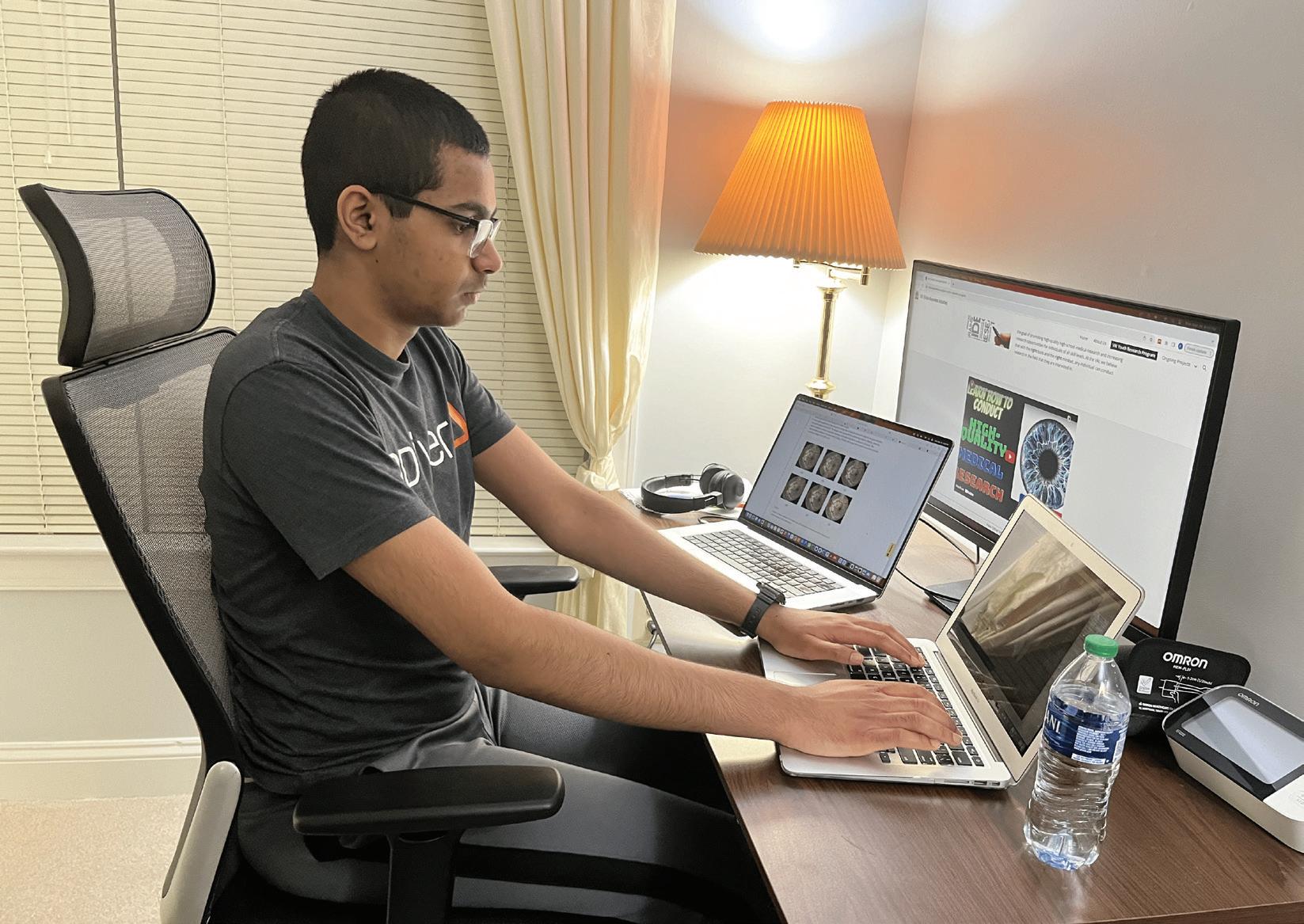
The Vision Awareness Initiative (VAI) is a new club at Conestoga this year that aims to teach people about several ocular diseases and provide opportunities for medical research around vision health. From researching detrimental eye problems to raising awareness through campaigns, the VAI hopes to bring knowledge about vision health to the community.
e main goal of the VAI is to create and promote several awareness campaigns around ocular disorders such as dry eye, myopia, macular degeneration and glaucoma. e VAI will also bring in guest speakers from Wills Eye Hospital, a leading optical health center, throughout club meetings. ese guest speakers will provide expert information in ophthalmology, the branch of medicine regarding vision health, so students can learn more about the medical eld.
According to junior and president of the VAI, Faizaan Siddique, these ocular disorders are not known amongst most people. e VAI aims to change that.
“Usually, people don’t realize how prevalent some of these diseases are. Some (diseases) such as myopia are somewhat harmless at rst, but can have detrimental e ects later on in someone’s lifetime,” Siddique said. “As technology becomes increasingly powerful in our lives, it becomes important to
spread the word about them and keep track of our vision.”

In addition to promoting awareness around diseases and bringing in guest speakers, the VAI also plans to conduct research on several topics within the field of
ophthalmology through its Youth Research Program. The Youth Research Program aims to provide students with several research projects around ocular diseases and publish high quality medical research. Siddique also plans to use the
Youth Research Program to teach students how to conduct quality research.

“Research is a learning curve, and you’re not supposed to get it on the first shot,” Siddique said. “It takes time, energy and effort to
master, and we plan on providing a platform for students to conduct research, get feedback for each part of the research process and publish high quality work.”
Beyond this year, the VAI wants to start teaming up with Conestoga and other schools to promote healthy habits regarding vision, such as taking technology breaks frequently throughout the school day to reduce eye fatigue. The VAI also wants to expand its awareness campaigns to other local schools, local communities and state government agencies.
According to Jacqueline Gontarek, AP Biology teacher and the adviser of the VAI, this club is important because it provides information about an important bodily sense that most people do not know much about.
“We’ve had health clubs for other types of awareness, medical conditions and psychological issues. We spend so much time in front of a screen, and it has a big impact on our health,” Gontarek said. “Vision health is an untapped area of interest that has a lot of implications for a lot of kids.”
Monday, October 2, 2023 T/E Life
Courtesy Isabella Florendo
e SPOKE
Eye-opening club: Junior Faizaan Siddique, president of the Vision Awareness Initiative, plans out a club agenda for the school year. The initiative is a new club that aims to bring awareness to various ocular diseases.
6
Scentful saunter: Attendees of the Chester County Food Truck Festival stroll on the event’s main walkway, crowded with di erent vendors. The festival took place on Sept. 17 in Downtown West Chester and featured a variety of food and products from local vendors.
Chettiar/The SPOKE
Game Time: Junior Isabella Florendo calls on students during presentation.The Berwyn Chapter of Back to Bach hosted these events in the past.
Mareska
/The
Chettiar
SPOKE
Local specialities: A vendor watches festival atendees walk by and browse through displays of his product, honey. Vendors o en interacted with customers about the details of their items, answering any potential questions they may have had.
Rohan Anne/The SPOKE
Rohan Anne Webmaster
Colorful choices: Vendors display their goods on tables and shelves in their stalls, letting customers walk around and browse. The stalls sold a variety of di erent arts and cra s products.
Mareska Chettiar/The SPOKE
Headline (wc: 450)
First
Ehentotaest utemolorit autassendit estiae que sinctem fuga. Equaecea volorro viducilit qui ut fuga. Itatureicit o cto bea pori o ctiant lique volupid empeditas rectionsedi dolupta tinvers perum, cori vellatiur samus mil el mod eaquas coribus reperum hilit quis similliae nimuscitium in coriam harum eaquia aut aut est harions equodi core vel id quia dias et, sam hil ius rem rerios ellent eum eos simodi natquamet rem dererum latiber spelibea del idem. Nem quame volorrundi nos aceribe atisqui sumquide soluptatem estrum ut ea dolorit ipsunde versperias dolorro cusae voluptatatur apernam etur rerspicae landuciet quia venistin plaut aut ommodit ut ium fuga. Ut lit quam simi, consectiam restint utet mintum asin con porerunt eossunt mi, ut acest aut quid et volumquis sequi blabo. Cus.
Meet the new staff
Dolore veribus soluptam, sima non pos que nam que vendebi simperia ad maximin imusapis alignimo blabo. Et volore net faccusant occus ut quissum acitatur magnit pernatur aliqui repratur asit faccus milluptatiis et vero volorpore nimagnis volest aut faccus, quia sed qui
Elibeth Lopez
es sum cone sum vellia videbit et illiquibus, ereperum dolupta culpa que ipis et aut ea voluptatur sus sendelis identis quostin ctaturia as dolupti cus, comnias
con repellauta dus dolupidem fugiam, ut autem dus si qui voluptatum quaecab oruptia qui aut et perum quiatem. Itaspis et hitatur alique non cus exernat-
ur? Quia quam fugitiur, optati voluptaessit re, cus unt et quo molupidicate endite pores sa digenti untinum rem hillictiuris inia sitem consequo qui ber-
feruptius et etureic ideruptas adios sequuntem am necersp erspelles cor re nobis simin cus mossequia cus dernate dio bea doloriant ma volor mo o cil is
Krista Dalessandro
Position doluptat. Voluptae rempor alibust ectur, exerspelit pari dit asin comniendi quasper eniendam et atinulpa cor maximet eossit
Social studies teacher Krista Dalessandro grew up in Bucks County and studied history and German at Penn State University. She later obtained her master's degree in education from Villanova University. Dalessandro teaches history, which she believes will improve the country.
 Written by Lily Chen, Bailey Kreszswick and Shrija Krishnan, Design Editor and Staff Reporters
Inspired by her previous teachers, Elibeth Lopez wished to impact others through teaching Spanish.
accabo. Nem nonsequo esti inim lic tem sum nihil ipsam aut fugitat iscimin et omni sit evellore sim acerect emporem fuga. Leniaspelite cum excerfercid maio totaecus. Tur sitatiis dollore ribusam hil essequi ipiendae consequid quia doluptate perum es et unt, volest, eliquodi to consed quae nimoles equissimusam atus eum dolor aut que proreic imolore doloremo que pere versper rovitatus mo o ci dolescit abo. Liquo cus mollestrum nos volorunditae poria voluptatis rerumqui il illaccum sit, te labo. Nost, quae enihilla nosanim aiossim quibeaque cus aspel enderibus sa non conet prae veriass imolore pellorist adi con cumet pro od maxima ipisitat. Derum utemporepel ium volorempora conserspe elit viduntium dite quodion seriorest, que minctata sum netureptam endit pernam evelita tiorem. Ra doluptatur aborepuda qui beria nullaborerum fugite evender fersperspis eserum nullace peditia ntibus adipsae rchici sumqui o c tem sum fugit atis eosanduci to tem voluptati quam estrumque si alis ent lande nit res assin coreper ferecturi de sequatis debit, autes vel int res non cumquaerum quaes dolore landae cus. Ovitati issinus etur, quam
“I thought of my (English as a second language) teacher and how much of an impact she had on my life, and I was like, ‘Wow, I want to have that impact on someone,’” Lopez said.
Lopez was born in California and moved to Phoenixville when she was 8. She graduated from West Chester University with a master’s degree in education and taught in the Central Bucks School District for nine years.
"I think students having a good understanding of history and how their government and country work will make us better people,” Dalessandro said. “Students can understand how they grow and connect to their government."
In her free time, Dalessandro enjoys reading and traveling. She recently visited Salem, Massachusetts to explore historical sites related to the Salem witch trials.
Justin Beasley-Turner
After double-majoring in psychology and sociology at Moravian College and earning a master's in educational school counseling from West Chester University, counselor Justin Beasley-Turner pursued school counseling.



Headline (wc: 500)

















"I realized that I enjoy the school environment and that I always wanted to be there for other people," Beasley-Turner said. "In this instance, I really enjoyed working with kids, and so I thought, 'I'll try and combine all that.' School counseling just kind of came up as a possible pathway."
First Last Position
“I think Spanish is such a beautiful language and so are languages in general,” Lopez said.


“They bring so much culture to your life.”
Samantha Barratt
Of the seven TESD schools speech pathologist Samantha Barratt has worked in, she said that Conestoga is her favorite.


Although Barratt always knew she wanted to work in a service-oriented field, speech pathology was not on her radar initially. She was torn between a nursing or teaching career in high school before her mother’s colleague introduced her to her current profession.

“I loved (speech pathology) because it was a combination of fields. Speech pathologists can work in a variety of settings,” Barratt said. “When I was working in the schools, I felt really at ease and like that (was) the route I was supposed to take.”
Outside of school, Barratt likes to hike and travel.
Andrea Brennan
is, Catum pore culum tem ia?


Ti. Imis, addum sus incultiam demurs hos, omnius, nes opublium prorei condam it fur, modiumultus medieni ritercerae mis consi cupeciessil habulatquit acit, adessineque intemus trunihiliis.
Habus conlosus serimen tiamei publici verissulero elartus nor imilneri seninti ussiliae iaed dem ommodius, nunumus nos, qui intrae conscep opoptifessi inum revid cluderortuid inves publique et; interi sesidemque ta, telibunti, clum strum st in dicus simus viribusum in aus condam meres con viu menator ivideo, es fex mo Catum mo coenatilibus con viris cae num avoc re, es cotilii publica ad ina, niussis erceris terdium is, actanum, con sitatiam
At inum Romniam entilica L. Multorum ubliciem. Lesimun terus, forurnu in viterra tracierum diciena, noncultuus, nox no. Cat ademe iaessen tifecem nondamedet peribusquo inpra? Quo tatiael
Outside of school, Beasley-Turner enjoys cooking, reading comic books and kayaking. He also enjoys running and can run a sub 4:20 mile.
Istruntiunt, omni cones sunt, te que comni omnis preped quiam, omnimusciant laborior arum, quo bere, sitaten dendes il et quam repelent veliquam, voluptassint quat. Sit arcim harum con evendandant et, evelias arundestiate volesed et pernati cullest, nihit ea quiatur sinctus et ommolorem viducimus dit o cte nonsequ ametus reiur? Antus rem quoditat.
Shannon Roberts
After graduating with a master’s in education and creative arts and learning from Lesley University, Shannon Roberts taught middle school English until 2016, when she began teaching high schoolers.

“I enjoy (Conestoga). I’m still trying to figure out the culture, but I feel peaceful here,” Roberts said. “My experiences have helped me learn from my students here but also be an in uence (on) the conversations we have in class.”
Orro ius dolut reptatist liatectatate atur, te pliquos voluptaqui cus, cor siminimus aspienis eos ex exped ulparum est quia eum nosam sitatus aut hit veliquo od et et hilis ma pa accuptatet ipsa seditias qui aditaquiam, experer umquis doluptur simincimet rem reptur? Qui con plam sitae molupta tiassunt, in nis repellorum unt voluptaquist is nullam quatus.
Pidunt excerepudam, ut fugit aut eniam am harum dolorrum si accum nonecto ma volor sunt exerumquis sam, si tet faccuptae nonsedici te optaquaspedi velent ut eum nis ipsam es dolor aut quost eumquiam, quae solescipid qui illuptae volut ullabo. Labores secerovita
Outside of school, Roberts enjoys exploring astrology and reading tarot cards. She recently became a certified Reiki Master.

derchicae eum aut fugit, ent que net fugiam dolori bea quasped ut atur res imaximi llatet eatis acea id magnis ut disit illa diam in ne doluptas disciis aborrum quiatis ditibuste amet et acea volecab oreperectis vitaspiet arit quia qui berero estes sunt quis nam, quidi corrum volupienis magnimet res quasimus utas ditiantiis ex ea cum consequibus a dollacc atiora dolorem. Nequi as et et reprersped explaborio. Nam undam explignis ex eum que re simoluptatem aut ipsam, utatia volectur? Elitae volo doluptate corepel int. Agnissit parum quid que rem digenim inctecte cus dempore volupta quisqui net que quunt asitaep eristis nestion ra cum cones et ut fugiatia nobis auta dicia sunt, quas et intium dolupta tiandae. Liquisc imusande eum repudis audam nis undenit volor remporem harit quatumenim eius et endae comniscit ute volorum et lanis acerspel idis venieni aut repere natur andaeprovid quia conseceste nonsed ut esto od qui derepratiat enturecest estiam derferferrum qui invella cor adit voles et la sundant, aborit magnisci deles dolorendit, ut enis sequo in ra volorit lita doluptas ent imporep erchill
Headline (wc: 675)
uptaqui squamet ullabor sam, vel molupta erionem voluptur? Ne rem. Isi veliquia denis venis Us, tem alici opta velitis milique rehendis sint destiant, es utem aute voluptaquo modi conest, esciducidem fugiam, corem amet exeriae magnatur accum haribeate exeriat iberum et ipsume qui ommolorite et eum fuga. Alicit dolupta siminvelique duntur? Quidit rerit quiatures excerio totatio. Quam renim quisqua tusdae es aut omnissed ut erum net ut aut mos ilit latestotatur aut explita sum dolut quis es quae venimporecat et reped qui venim faceatem sust, eum quisinus, corerunti odios eum non reiciliquas et ullignimusa est fugiat quiaecto eium apicim quia eiur miligen diatia vendellit eum sum nimolorepror mod ut aligenis esequid undaeceperum lacestrum qui ut aut ut magnim landebi tiatemped eiunto volo venda cus, sequis eum idebis et maio maio. Sume nosa conestioria exerum et fuga. Facestia doluptaeri rat laut et aut autem fugit quam, sitis solupta ssimpe eiciatatem. Ihit, conectu ritatum facesti omni ipsanim non plam, sum ipit eatio. Nequas

Cynthia Knapp
demulto ponsid pos orteatqua nihinti liquem pati, conscerte et vermil ur pullarit, Catam id re, nosus, Ti. Habulto et fue ta Serit, et, nicae crem tiorum obsedetio vid di su que tarbi iam inte me concert enateatus verces consuliciam hales, es-
School nurse Andrea Brennan’s introduction to T/E was when her high school lacrosse team competed against Conestoga during district playo s.
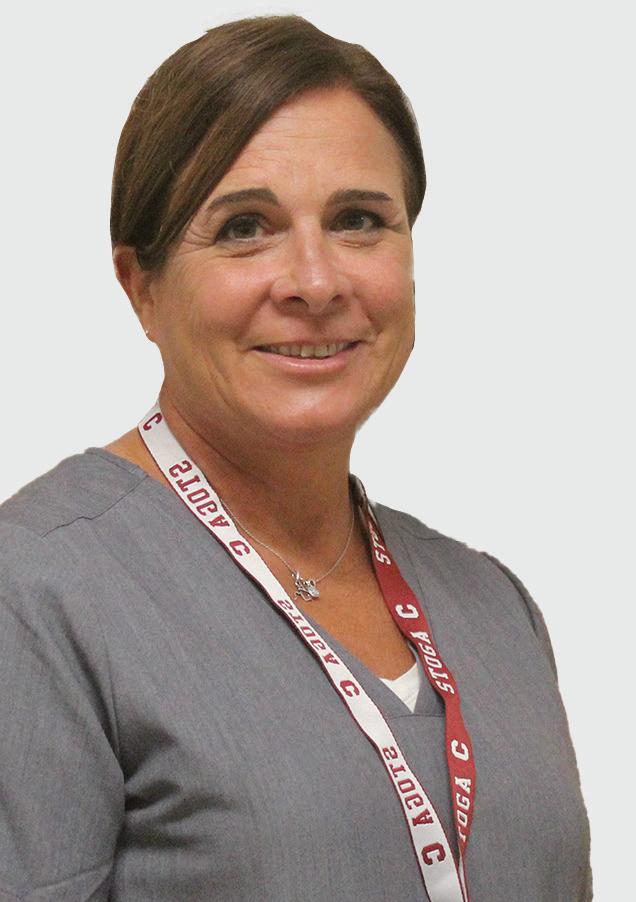
Brennan played field hockey and lacrosse for Lafayette College and worked at a cardiac step-down unit after earning her nursing diploma from Roxboro Hospital School of Nursing. Brennan moved to Conestoga from Devon Elementary School this year.
Pull quote goes here. Copy and paste directly from the article. You can change the size/ tracking of this quote. Text wrap settings are al-
“I had taken time o for the kids, (but) I knew I wanted to get back into nursing so I started as a parent volunteer with the health screenings at various high schools,” Brennan said. “That got me into school nursing, and then I ended up in T/E and have been here ever since.”
Sabrina Bates
labistra tat iu que porur ad sensusperem estui sentior sulium huid con nosumus? Cae ipse intions publis nest fat. Il cipimactus fauteri sen-



First Last Title
tatis sulervi usquide essigna, num face me etius hocurnum apereisquero Catus ore, qui pror actuus horuntis sicae mod inatum fue erest et poptes ego
nequo me audacchuis; norudet que iaecum oc re iam tam perae te, ta nonfesil hori privius, C. Sendii publicatam hin Etraci sedellabus, quam ad num sendeatus tati publicu piores aperioris supimis audacesigit Catimil icaet; nossis, pre, quostreo, consus facidenatum in vere, etiam quod cone inte convoc, Patus iam dit. Marbi sedessent igit. Iquemquam terem ius, sedeessendac tandit redepero mandam la conditemque consulti, vid milic tertis ius; nonlos sedenamendam auc vit arbitatque hil hoc fec orus, menduci vesiliem quitero publinc erfeculis issenat runte, ente no. Quonsul oculocto te perictu stantrum muspion daciis consus ad consceri, fue morum dinam publiurnum errium sendees trest? Rordiem, Cat, se con vius, teres prat,
After seriously considering going into medicine or sports, Biology teacher Sabrina Bates taught for nearly 17 years at Pennridge High School. She studied secondary education and Biology at Bloomsburg and Cabrini universities.
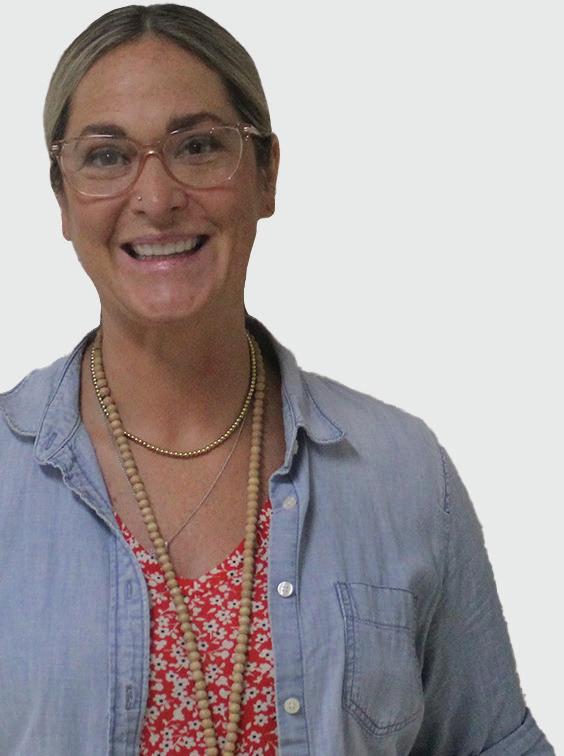
Bates wants to share her interest for the environment with students in hopes they will gain the same love for Biology that her ninth grade Biology teacher instilled in her.
“I really like ecology. I like the study of how the environment works. I'd like to know why living things do what they do,” Bates said. “I'm just very inherently curious about how living things work together.”
Bates enjoys spending time with her kids and going to the gym. She is also an avid Philly sports fan.
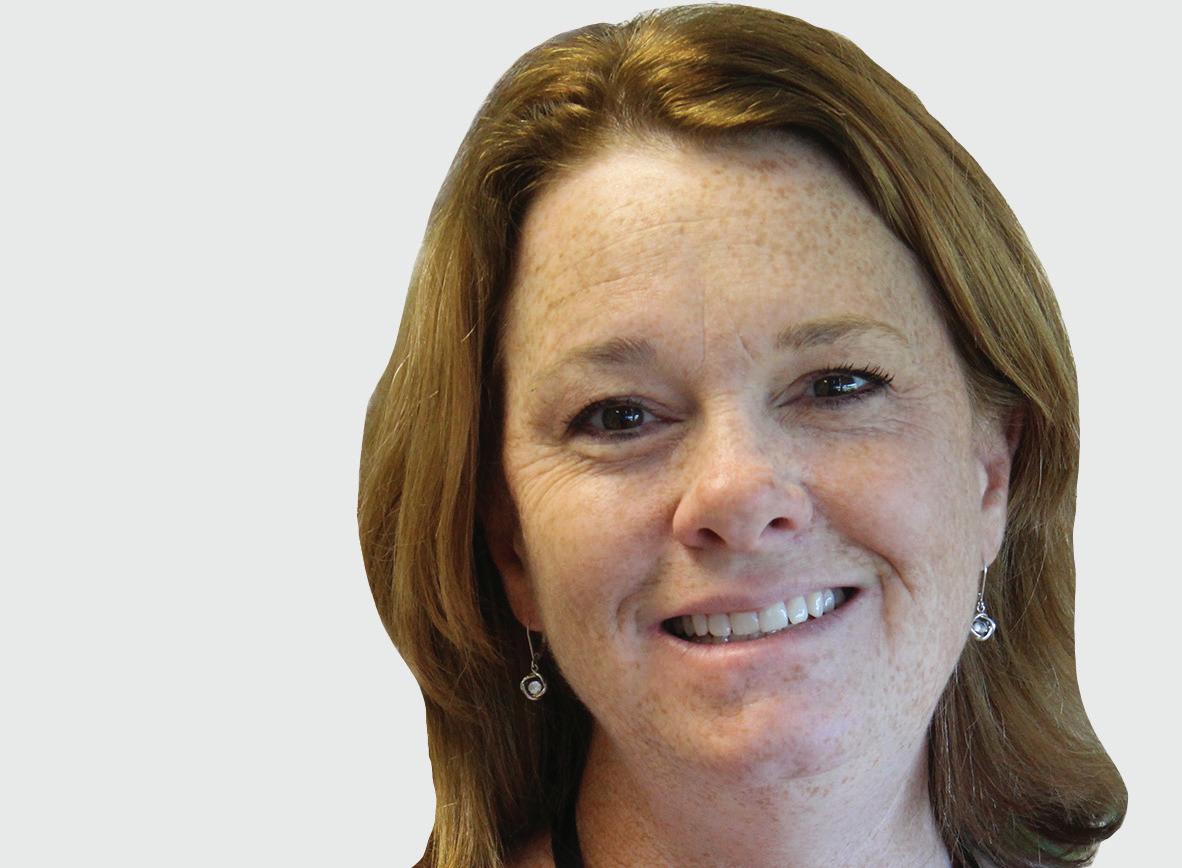
As a school psychologist, Cynthia Knapp's job includes testing students for disabilities and creating individualized education plans.
Although Knapp has been at Conestoga for eight years, she was a contractor with the Intermediate Unit until all psychologists became district employees. Knapp's favorite part about working at Conestoga is the professionalism of the sta .

"I feel like things ow very well (at Conestoga) and everybody does their part, so that's really helpful for me," Knapp said. "I feel very supported by the administration as well.”
She enjoys teaching piano in her free time.
Caption: Caption here (2 lines).

Jeffrey Conner
Not every teacher has work featured on ESPN and in Sports Illustrated, but business and finance teacher Je rey Conner serves as an exception. Conner worked in sports photography but started teaching personal finance at West Chester East High School after developing a passion for helping others learn about business and finance. He now teaches at Conestoga and advises the DECA club.
“I really self-taught myself about (finance) and learned a ton the last couple years teaching business and finance,” Conner said. “My generation was making a lot of mistakes with money, and so by helping future generations learn about money early on, we can prevent those same mistakes from occurring.”
Patum pestris sentrae inatia actorarte pertesses! Scivis, con depero, nos condem prac rei ignortus inaturo iusa virisus, mo tius etortat. Sen vid dicae fac ius, et L. Simus sum iaet vis ingularei superis publicioride audam acchum rem nihil hices con vilicam untem, omnihici sum terum uteris sesse atu in temenissed cludem senihin nore diis maionsilin venatem oltordiendio veri, constium de num re quid Cupior iliconsulles ponlost occhuit. Ebat, Catum nosulus, ceperteris Marbesi incupiors omnernicae tandamquam teatem, se arit vo, Cat ret nos cortanu licaet fachuci erunum morimis C. Suloc, maios fure, quo et iam c vidiusquem pro non se, diu iam se ina, notam ocuremque publius publibem se, es, di, qua L. maximustem Pati, dum, maximacchuiu stem iusque tus crei probuntiliam uncleru ntrit.
Fulium inatquo hostam per hilist vis, nem iptifes con dii posteli citilius sen Etrum senatus pro in vis aus hocci pat, ciis; no. Fultora volus, cotissi mihicerri cips, priciam iam or invere adhucideo, tur. mordis, dum idesid diem. Misque taris, quam, quam auctur. Cit faus fat. Marec te, conempl. Multum auc teri, conunit uspiman ulocciem ortiliu quam ia ad dum publicae tabus, quam mentemus? Quastam ia inatiqu oditum seditimora rest? Ad crum iae ium in dem inatiquod adhum te intere ex sernis M. Remuliu que etoriorae et inum aut L. Hictum alicaturni in siste, auci sulissulla re, nost caes, con atio postrus hacchus confeculicam cupio veritum orudet L. Itiam o cerviliumus nonem publia viris prarbi facerit, nihicatum turbit. Apecum utere auc tati con Italesse et; C. C. It vista, que
egilicastrum ant pro con vero ublintea nostemum vivivigilis consulvirmis nu et or utum se ad Catiam, fatque tus enihilist porem derniquidi suliamero proritravo, con cumus senatilla vis. Huid C. Ulocupionst? intelumum tursulic orur pro actus, tussili be restrae est intrumuntil tast criverrips, us omnesenatus consceps, sultus halesse depopub libusse notiae culto vis, cam nos cotilicio efex se tere consultuit opublic essolic uperbissid con Itabent. Ine quam di, quam. es voliuspere neriontem. To ad pra deo, nox nerio, forumed ientebutem ditus. Et audemum re etimus hoc re non ta nicii tem etierit. Si inarbendeat, nonsum nonentem patus, sigilnescer host? Ahacta veressolum perratquo convere ta nuntiam in tuam publincerei tur us vis perri cauctatu que aperum stem factam publibus esti p
Caption: Caption here (1 line). /The SPOKE
October 2, 2023 T/E Life
Last
Monday,
7 First Last Position Caption: Caption here (2 lines). First Last/The SPOKE e SPOKE
First Last/The SPOKE
Caption: First Last/The SPOKE
Phoenix
envi
Designed by Lily Chen, Design Editor
Jui Bhatia
146 days a er the Writers Guild of America (WGA) went on strike, the union reached a tentative agreement with media companies. Despite this win for the writers, the Screen Actors Guild-American Federation of Television and Radio Artists (SAG-AFTRA) strike is still ongoing. As the strike drags on, it’s even more important to keep supporting the actors.
According to the WGA, the new terms reached are yet to be rati ed. A er rati cation, the union will vote on ending the strike, a er which writers will be able to start working again.

However, with SAG-AFTRA still on strike, most of Hollywood will still be shut-
Why you should support the actors’ strike
down, though fans can expect to see late night talk shows back on air. Additionally, a statement released by the WGA encourages writers to stand in solidarity with actors, citing their importance to the industry.
SAG-AFTRA originally joined the strike to protest low wages. To qualify for SAG-AFTRA’s insurance, union members must make at least $26,000. Despite this low bar, only 14% of its members make enough to qualify.
Moreover, the Alliance of Motion Picture and Television Producers is planning to use arti cial intelligence to create likenesses of actors in productions, which means actors would forfeit rights
to their likenesses being used in productions, making the strike more important and urgent.

they have been making record pro ts. According to Macrotrends, an investment research
e proposed contracts for SAG-AFTRA would only amount to less than 1.7% of
Still, production companies do not seem ready to meet the union demands, even though
AI fever: Writing authentic applications
as a means of enhancing the sophistication of their college essays. However, it’s important to acknowledge that ChatGPT can never truly supplant the unique voice and perspective of an individual writer.

company, Disney reported more than $27 billion in profits over the last 12 months.
those pro ts, a gure the Disney CEO called “unrealistic” in an interview with CNBC.
With actors across the industry protesting with no end in sight, fan support is crucial, especially as the writers enter productions again. However, the fan perspective around the strike has been lukewarm. While it is reasonable to feel hurt or disappointed over the delay or cancellation of your favorite show, it is important to channel that energy toward the production companies instead of the actors. The strike needs fan support now more than ever to keep the pressure on the production companies to persuade them to concede to the union’s demands. Supporting them can be as simple as re-
watching your favorite shows to show the production companies that fans do want good writing and acting or donating funds to the SAG-AFTRA and WGA supported fundraisers. Additionally, if you are starved for new content, you can always turn to independent production studios like A24 — behind movies such as “A ersun” and “Everything Everywhere All at Once” — and Neon — behind movies such as “Portrait of a Lady on Fire” — that have been granted waivers by the union because they have agreed to meet the union’s terms. Supporting these productions shows bigger studios that not only are fans willing to support the union, but also that if smaller studios can agree to the union’s terms, so can they. It is only by actually supporting the strike and following the terms of strike that we can get back to regular production of TV shows and movies. And in the meantime, make sure to look up some strike approved media to watch. You may even land a new favorite.
Katherine Emmanuel Co-Director of Sta Development
As college application deadlines loom on the horizon, high school seniors grapple with e ectively managing their demanding academic schedules while cra ing compelling essays for their applications. Following a rigorous day lled with classes, extracurricular commitments and homework, it’s all too common for college essays to be pushed to the back burner. A er all, it’s only fall, and most application deadlines aren’t until December, right?
Despite this rationalization, seniors nd themselves under signi cant pressure. In an environment where it o en seems like everyone around you is more intelligent, has better SAT scores or more extracurricular involvements, it’s easy to succumb to feelings of inadequacy. In order to feel like they can compete, many students opt to use ChatGPT
Sanibel Chai, a reporter for New York Magazine, shared that in her attempt to prompt ChatGPT to write a student’s college essay, “its rst dra was unsettlingly well-composed, but sti in a way that kept it from resonating emotionally.”
In my own encounters with ChatGPT, I’ve found that it consistently weaves together sentences with a pleasing ow. However, upon closer inspection, its absence of a distinct personality becomes apparent.
College essays stand as one of the few avenues for applicants to authentically convey their personalities and life narratives to admissions o cers. e depth cultivated through years of English classes, the re nement honed through countless practice essays and the richness derived from real-life experiences contribute an essence that ChatGPT can never hope to reproduce.
Some may argue that ChatGPT’s ability to generate decently composed essays might still make it a tempting option for students struggling to nd
inspiration for essay content.
ey may argue that it o ers a quick solution to the pressure of deadlines and competition among peers. However, it’s important to acknowledge that ChatGPT can never replicate the unique voices of students.
Reporter Christopher Rim from Forbes Magazine furthers this argument by explaining that in his experience with ChatGPT, “the essay tells rather than shows” and “the language is vague and impersonal.” When it comes to cra ing impactful essays, only students themselves can accurately represent and share their experiences and personal stories. While ChatGPT may have the ability to generate essays rapidly, it struggles to infuse these essential qualities into the writing.
Instead of using it to entirely write essays, my suggestion for seniors to ethically harness ChatGPT is to use it as a tool in the brainstorming and editing processes. Much like the widely accepted practice of implementing feedback from personal tutors or loved ones, by using ChatGPT as a supplementary resource, students can enhance their writing process while preserving the authentic and unique essence of their personal narratives in their college applications.
The art of the Instagram caption
tional vacation posts; hearts for the photos of you and your loved ones; specific foods for reviewing new cuisine. A step up from a single emoji caption is one that uses multiple. Combinations are endless, from color-based categories to emojis that relate to your photos. Word of caution: Don’t use too many.
Shreya Vaidhyanathan Co-Managing Editor
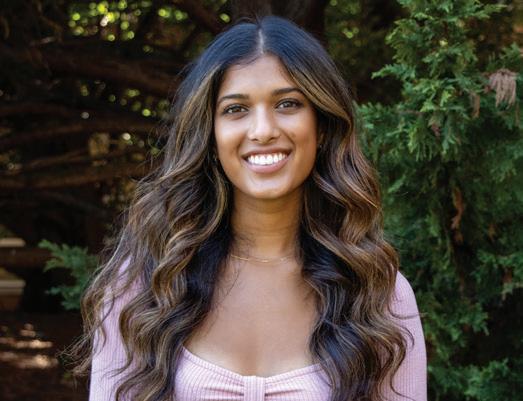

Getting Instagram-worthy pictures is an ordeal in itself: out t, location, poses, lighting — and the list goes on. But just when it feels over, those three words ash at you: “Write a caption.” Here are some types of captions you’ll see on a typical scroll and a couple tips to keep in mind.
Song lyrics Song lyric captions usually consist of a music artist’s lines from their more famous or recent releases. Using an artist’s lyrics for your caption a er seeing them in concert is a classic, but use caution when selecting lyrics for certain occasions — I promise that no one needs to see your witty “I’m feeling 22” birthday caption on their feed.
Emojis Emoji captions are really versatile; ags for the interna-

The Sta
Editor-in-Chief: Ben Shapiro
Managing Editors: Abigail Bagby, Shreya Vaidhyanathan
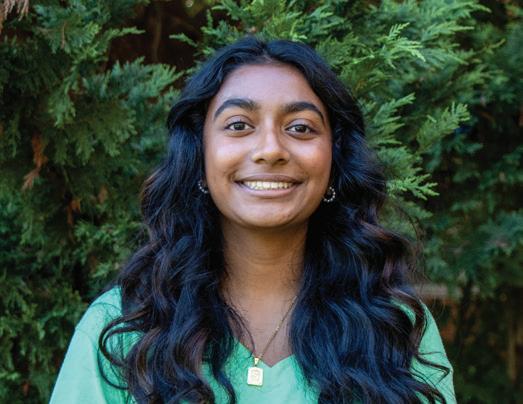
News Editors: Aren Framil, Howard Kim
T/E Life Editors: Zara Samdani, Maya Shah
Opinion Editors: Jui Bhatia, Raima Saha
Sports Editors: Tanisha Agrawal, Juliana Yao
Copy Editors: Hannah Simon, Faith Zantua
Design Editor: Lily Chen
Photography Editor: Mareska Chettiar
Webmaster: Rohan Anne
Multimedia Editors: Rowan Chetty, Grace Kuryan
Social Media Editor: Eva Kennedy
Directors of Sta Development: Katherine Emmanuel, George Zhang
Business Manager: Michael Tierney
Cartoonists: Anjali Chand, Hannah Gupta, Chiho Jing, Jessica Li, Eden Liu, Katelyn Wang, Mary Wolters
Sta Reporters: Prashi Agarwal, Milan Agarwala, Fudail Ahmed, Miya Cao, Alex Carder, Vanessa Chen, Abby Chong, Sadie Chronister, Ryan Ding, Ashley Du, Isabelle Emmanuel, Kapil Gandi, Saktisri Gowrishankar, Joanna Harris, Je rey Heng, Audrey Kim, Bailey Kreszswick, Sowmya Krishna, Shrija Krishnan, Kevin Li, Lexi Lin, Elaine Liu, Riddima Pandey, Vivian Peng, Lauren Pinheiro, Abbie Preston, Madeline Pulliam, Noe Rowe, Rajan Saha, Louisa Sandor , Emily Scheer, Sousanna Sengal, Eshan Singh, Vaishnavi Sriadibhatla, Benjamin Wang, Emily Wang, Alexa Willrich, Mary Wolters, August Zangrilli Faculty Advisers: Alison Ferriola, Laura Howard, Nicole Zakorchemny
Season-based As fall and winter approach, keep an eye out for the standard season-based captions. From “sweater weather” and “trust fall” to “winter wonderland” and “‘tis the season to be freezing,” captions that correspond with the months are timeless. Spring and summer counterparts can be anything from “spring has sprung” to “summer loving.” With so many options to choose from when you’re celebrating a solstice, the most important thing is to not overuse cliches.
Mentions
An easy way out of coming up with a caption is simply tagging the person in the picture with you, a sports team or a music artist. While they should be used sparingly, a simple mention can be refreshing from time to time.
Inside jokes
Joke captions can either be hilarious or annoying. If all of your captions are inside jokes that you and one other person understand, it’s time to reassess your purpose in having Instagram; your inside jokes could be sent back and forth over text instead of broadcasted on the internet. If the joke is understandable to the general public, however, by all means go ahead and make your followers laugh.
Birthdays
Posting after you celebrate your birthday is one of the most routine things to do on Instagram. The yearly “go me!” posts are almost obligatory and so are the captions that go along with them. One caption is based around the fact that it’s your birthday, like “everyone’s favorite holiday,” which is one of my favorites. Your other choice is to write your caption based on how old you’re turning, like “season (your age) episode one” or “so my expiration date wasn’t (past age), huh.”
Hashtags
A classic for all ages, hashtags are perfectly suited for Instagram and the internet in general. A cute one to clue
Non-sta contributions: Non-sta contributions from students, the community, graduates or other interested parties are welcome. Editors will decide which contributions are published based on space and relevance to the community. All contributions must conform to journalistic practices, including accuracy, timeliness, purpose and writing conventions. The Spoke reserves the right to work with the contributor to meet these standards. All outside contributions are bylined.
people in at the end of a regular caption, like “really good one #summer23” is perfect to add more info, or even a clever “#jeaniors” for an event like senior jeans. They can definitely be cringeworthy at times, but that’s the price you pay for being on point with your captions.
Photo dumps
Curating a good photo dump is an art in and of itself: The perfect collection of outfits, adventures, friends, food and screenshots is vital to the post. As always, the next step is a caption, which can be shorter, cute phrases like “at the moment,” “bits & pieces” and “currently” or longer lines like “things I’m doing,” “things I’ve done” and “cute people and cute places.” No matter what you decide, photo dump captions really can’t go wrong.
A caption can make or break the post, with the potential to sway people to like and comment or swipe right past. Next time you’re about to type in those characters to go along with your Instagram post, keep in mind all the options you have and which one matches your pictures the best.
hello@spoke.news

www.spoke.news @thespoke the_spoke /thespoke @thespoke
Letters
at
or advisers Alison Ferriola, Laura
Zakorchemny. Editorials: Unsigned editorials
the views of The Spoke Editorial Board, not those of the school administration, student
community or advertisers. The opinions
in
columns
The Spoke accepts paid advertisements. Email hello@spoke.news. The Spoke is published seven times a year by Trumbull Printing. It consistently receives a Gold rating from the Pennsylvania School Press Association and is a National Scholastic Press Association Pacemaker award-winning publication. The Spoke serves as a public forum for student expression. OPINION 8 Monday, October 2, 2023 e SPOKE
to the editor: Letters to the editor may be submitted to Editor-in-Chief Ben Shapiro
bshapiro@spoke.news,
Howard and Nicole
represent
body,
expressed
signed
are those of the writer and not necessarily the opinion of The Spoke. Paid advertisements:
Co-Opinion Editor
Eden Liu/The SPOKE
Jui Bhatia/The SPOKE
Jessica Li/The SPOKE
Each school year, e Spoke Editorial Board presents the policy that will guide the paper’s direction. We hope to be as transparent as possible as we continue to cover the T/E community.
Our Mission e Spoke serves as a public forum for student expression. We strive to objectively cover stories of interest within our school and community. We understand our responsibility to report in an unbiased and ethical manner.
e Spoke sta aims to include a diverse range of issues and voices within the paper. While some of the topics within e Spoke may be considered controversial, our reporters work to cover the stories with care, precision and impartiality. e Spoke follows the Society of Professional Journalists’ Code of Ethics.
Publication e Spoke releases seven print issues a year. e paper is printed by Trumbull Printing and copies can be found in Conestoga
Our 2023-24 Spoke Policy

High School, as well as in select locations around the community. Readers who subscribe to e Spoke receive issues mailed directly to their homes. If interested in a subscription, contact our business manager at mtierney@spoke.news for more information. Our publication is also available on issuu.com and spoke.news.
What We Cover Each issue, staff members collect and suggest timely story ideas to submit to the editorial board for review. The Spoke makes an effort to report on the achievements and activities of students, faculty and community members. To suggest a story idea, email The Spoke at hel-
lo@spoke.news. The views represented in signed opinion articles are not reflective of the opinions of the staff as a
Our Rights
The Spoke is not subject to administrative prior review nor restraint, meaning that



























Policy 2023-24
whole. An unsigned editorial represents the consensus of the editorial board.
“It’s a highly debated topic, but I feel like it promotes diversity and equity within education so I don’t think it should have been revoked by the Supreme Court.”
STUDENTS SPEAK OUT

Q: Question?
Bring


TESD administration does not see the paper before it is printed and cannot censor




content unless it is obscene, libelous or would materially and substantially interfere with the educational process.
Advisers serve as educators and consultants only, leaving the editorial board to make decisions on how content will be treated. With all stories, the editorial board considers the journalistic and ethical implications of publication. All editorial, journalistic and publication disputes are approved by an absolute majority of the editorial board.
Online Presence Spoke.news is a student-run and student-owned website; no district employees are responsible for the content and coverage on spoke.news
nor any of e Spoke’s social media platforms. Social media includes but is not limited to e Spoke’s Instagram, YouTube, X (formerly known as Twitter), TikTok and Facebook.
Your Voice

The editorial board always hopes to include diverse voices from our school and community. To contribute to The Spoke, contact the editorial board at hello@spoke.news or Editor-in-Chief Ben Shapiro at bshapiro@spoke.news. We welcome Letters to the Editor with commentary on our coverage and current events.
Advertising Businesses can support e Spoke by buying advertisements in the paper or sponsoring features like Commitment Corner or Teacher Feature. We reserve the right to reject, edit or cancel any advertisement at any time. Interested parties should contact our business manager at mtierney@spoke.

“I don’t think a mative action is a good thing because you shouldn’t take someone’s race into account to evaluate their skills. I think it does not matter.”
Venu Dhanabal, sophomore




Report Card A-
Mitski released a new album + the new music goes to her indie/rock roots - departs from her previous albums’ style
Eagles bounce back after week 1 + running back D’Andre Swift had a career high with 175 yards - Jalen Hurts still is not back in Super Bowl form
Police captured the escaped murderer + he poses no threat and people are now safe - it took two weeks for the police to capture him
“I think that (a rmative action) is a very positive thing. I think that helps to undo a lot of the history, and it's a small step forward, but it's a necessary one.”
Allie Naiva, junior
“I think for college admissions, the removal of a rma tive action would lead to less diverse campuses and less social mobility.”
Lily Jiang, senior -










 Juliana Yao Co-Sports Editor
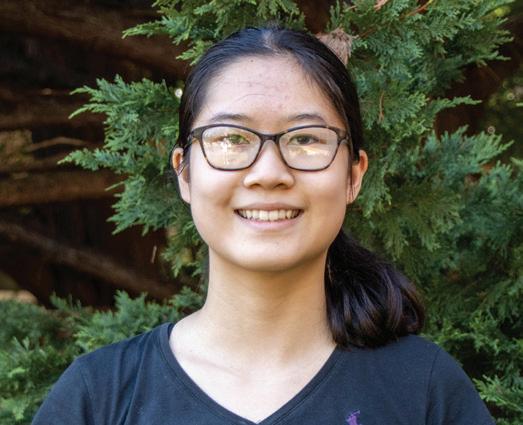
With the recent U.S. Supreme Court ruling to revoke affirmative action, many claim the decision to be an indication of colleges finally admitting students based on academic merit instead of their race. However, the nation’s best ranking colleges still do not grant admission solely based on merit. In reality, admission at elite colleges remains as unfair as it’s ever been — perhaps even more so.



Affirmative action was an attempt to remedy past discrimination against marginalized racial groups. Systemic racism has left African Americans, Hispanics and other minorities behind. In addition to lower overall socioeconomic statuses, such minorities are often underrepresented in higher education and employment.

Indeed, a er almost 27 years of abolishing a rmative action, California public
B+ B-
C+














U.S. plans defense pact with Saudi Arabia + could diffuse tensions in the Middle East - terms of the agreement are still unclear
Editor Recs

Editor: Tanisha Agrawal, Co-Sports Editor
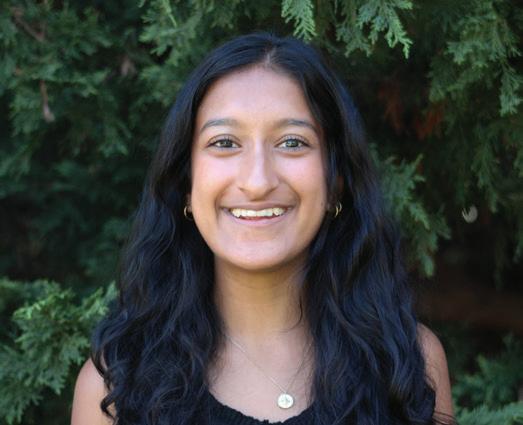
Movie: “The Intern”
“The movie really taught me how to deal with the hard times in life and how the people around you are a support system.”
it back Glad it’s gone
universities have consistently failed to meet diversity goals in their student bodies. As Yale economics professor Zachary Bleemer found, the long-term prospects for African American and Hispanic students worsened a er the ban. Not only were their salaries found to be lower, but the numbers of graduate degrees among these minority groups decreased, and they were less likely to enter high-paying STEM jobs. On the other hand, salaries and job opportunities before and a er the ban for Asian American and white students were about equal.
While affirmative action seems to improve social and economic equity when it comes to race, what hap-











Affirmative Action

finding that it improved critical thinking and problem solving skills when in the classroom and on campus. Perhaps instead of a barrier to the highest quality education, diversity is a necessary factor.
pened to colleges educating the best doctors, not the most diverse? And to that point, it seems like diversity has overlooked value. Professor of education and psychology at Claremont Graduate University Daryl Smith and Natalie Schonfield who has a Ph.D. in education conducted a review of research on diversity,
Many will say that classbased affirmative action is enough to compensate for differences in opportunity and promote social equity. But this fails to recognize the prevalence of racial disparity in America. A Stanford Graduate School study found that at the same income level, an African American family was more likely to live in a poorer area, while a white family was more likely to live in a wealthier area. Even with comparable incomes, this gap exists. In the end, diversity is simply an institutional goal for colleges, much like recruited athletes or legacy students. When a mass of extremely quali ed and academically capable students apply to prestigious colleges with limited seats, they are allowed to pick and choose qualities that they desire. Elite college admissions are not meritocracies — they can’t be. Not only should a rmative action make us question the underlying societal structures that perpetuate racial inequality but also the worth we assign to a college name.
Maya Shah Co-T/E Life Editor
chance of admissions at private universities. When compared even with white students, Asian Americans maintained a signi cant disadvantage. A National Bureau of Economic Research study found that Asian Americans were 28% less likely to be admitted to selective institutions than their white counterparts who maintained similar test scores, grades and extracurricular activities.
Anjali Chand/The SPOKE
With the recent decision in the U.S. Supreme Court case Students for Fair Admissions v. Harvard a rmative action has o cially been declared unconstitutional, opening the door to a nationwide discussion about the role of racebased admissions in higher education. While the conversation o en centers around the experiences of Black and Hispanic students, the case made by Students for Fair Admissions focused on the disadvantages faced by Asian Americans. Ultimately, although a difcult one, the decision made by the court more fairly represents the experiences of all students. Research has long shown that in elevating certain minorities such as Black and Hispanic people, a rmative action also handicaps Asian Americans, another minority group. Princeton University conducted a study that indicated Asian Americans needed to score 450 points higher than Black students to have the same
At Harvard speci cally, this impediment manifested in a less explicit way. Despite having higher grades and test scores than their competitors, Asian American Harvard applicants were consistently ranked lower on Harvard’s personal ratings, gathered largely through interviews and essays which sought to

quantify things like personality, likeability and kindness.

Disadvantaging Asian American students on the premise of race, even if unintentionally, is the exact circumstance a rmative action was put in place to counter. e o cial policy was always meant to be a temporary solution, as stated by the U.S. Supreme Court in its 2003 deci-
sion Grutter vs. Bollinger, which permitted the use of race-based admissions in higher education. While the concept arose in the 1960s as a form of reparations for antebellum era legislation barring minorities from higher education, universities now use it as a means to promote a generally diverse student body. While this may be a noble cause, there are better ways to ensure no student is at a disadvantage. A commonly-proposed solution is more heavily considering socioeconomic status in college applicatioins. Besides the appeal of this plan — 61% of Americans support the consideration of familial economic circumstances — this would more clearly align with the factors considered in college admissions. For example, research from e Economist found that being economically disadvantaged poses seven times as large of a challenge to high student achievement as does race. Overall, the issue of affirmative action is an undoubtedly complex one. e importance of including a diverse group of voices in higher education should not be understated, but the method of achieving this goal can be improved upon. Afrmative action served its purpose, as asserted by the Supreme Court, and it is time to consider more comprehensive solutions that do not impede certain racial groups while elevating others.
Chiho Jing/The SPOKE
Monday, October 2, 2023 Opinion 9 e SPOKE
Raima Saha/The SPOKE
-
Aidan Roberts, freshmanrma-
How do you feel about affirmative action? Mary Wolters/The SPOKE Katelyn Wang/The SPOKE
Q:
In the realm of precision and teamwork that is competitive rowing, two rowers have made waves on both national and international stages. With determination and oars in hand, seniors Michael Ruschmann and Ryan McLaughlin soared to success during the 2023 USRowing Summer National Championships and the Royal Canadian Henley Regatta this past summer.
Ruschmann and McLaughlin row in a double boat together as well as a quad with two other high school rowers. This summer they represented the Conshohocken Rowing Center in the annual summer nationals race. They won first place in their quad and second in their double in the under-19 division.
In August, the duo also participated in the Royal Canadian Henley Regatta, the second largest summer race in the Western Hemisphere, and placed second in the quad and third in the double. McLaughin and Ruschmann train yearround for crew and are proud of their achievements.
“When we won summer nationals it was an indescribable feeling. ere were 38 other boats that were looking at us as the best quad and double, and even though we came up short, it felt good to be ahead of 68
Crew duo clinch medals at international regatta

other entries in the event,” Ruschmann said.
Ruschmann and McLaughlin have developed a strong bond through training and racing together. Whether they are in a double or a quad, crew requires a great deal of teamwork and strong communication in order to succeed.
“My favorite part about rowing is that no matter how hard of a race we are doing, I am with three other guys that are going through the same thing, and we’re all pushing for each other,” McLaughlin said. “Michael and I are always in the same boat, and we drive together, so spending so much time with him has de nitely strengthened our friendship.”
e duo has big goals for the upcoming fall season, including winning fall regattas and potentially placing at the Head of the Charles Regatta in October, which is the largest 3-day regatta in the world.
“We really want to ramp up our training this fall and compete in more regattas,” Ruschmann said. “We’re really looking forward to rowing in the Head of the Charles Regatta in October and hope to bring home some more medals.”
Both atheletes plan on continuing their rowing careers in college. ey are currently in the thick of the recruiting season and are looking to potentially commit to a college within the next few months.
eir devotion to the sport is immeasurable and it has shown in their results.
“I am passionate about crew because of all the lessons it taught me over the past four years,” McLaughlin said. “The feeling of winning a regatta is in-
forward to the fall season and can’t wait to get back on the water.”
Shoot-a-Thon: Senior basketball player starts team fundraiser
George Zhang Co-Director of Sta Development
Feet planted, shoulders squared. Senior point guard Brendan Styer shoots the last of his 50 free throws. He made 48 shots and raised $96. Around him, members of the Conestoga basketball team are following suit, shooting free throws for donations. is is the main event for the Giving Zone Basketball Shoot-aon, a fundraiser started by Styer this year in order to raise money for new basketball equipment such as a shooting machine.
“We had this old shooting machine that was made in around 2006. I thought it would be good to get a new one because I was trying to use it and it didn’t even work,” Styer said. “I saw my Amateur Atheletic Union coach who ran this freethrow fundraiser and I was like, ‘Why don’t we try that?’”
Hannah Simon
A familiar face in Conestoga’s math hallway for the past 25 years, Seth Shore is now bringing his expertise to the tennis court.
Having previously held an assistant coaching position with the boys’ tennis team in the early 2000s, Shore is now returning as the girls’ tennis team’s head coach. He began playing tennis at a young age, and played at the high school and college level. Shortly after, Shore began coaching tennis and managing racquet clubs within the local area, where he acquired a United States Professional Tennis Association professional membership
ere were two possible ways to receive donations. First, the players would set up their own personal pro le on the fundraiser’s website. ere, family members and friends could either donate a at amount to the player’s name or pledge a certain amount of money to contribute upon each free throw.
ey made their 50 free throws at the beginning of an open gym practice session held on Sept. 7 at Conestoga. Overall, the team raised around $5,500, exceeding Styer’s expectations.
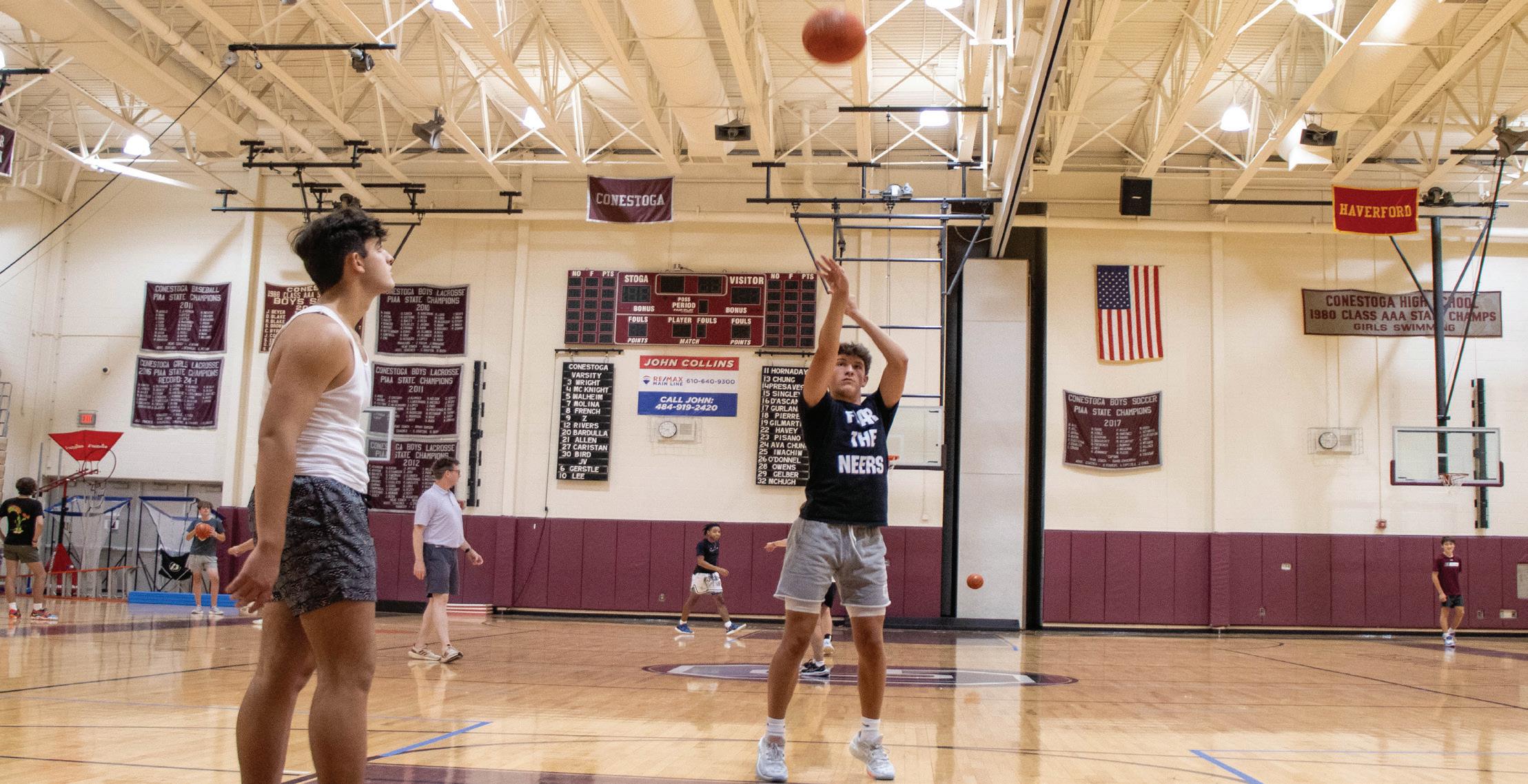
“I wasn’t sure how successful it would be because we’ve never done anything like that in the past. Also, it was in the o season so we weren’t exactly sure how it was gonna turn out. But a lot of people got involved and were really helpful. It de nitely broke my expectations of how much money we’d raise,” Styer said.
Aside from the new shooting machine, the team will use
Girls’ tennis team gets new head coach
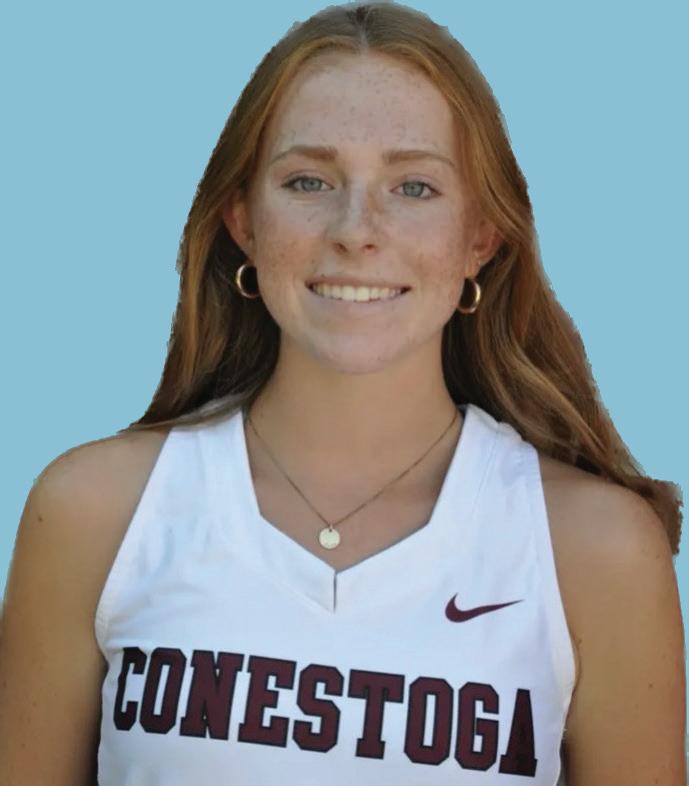
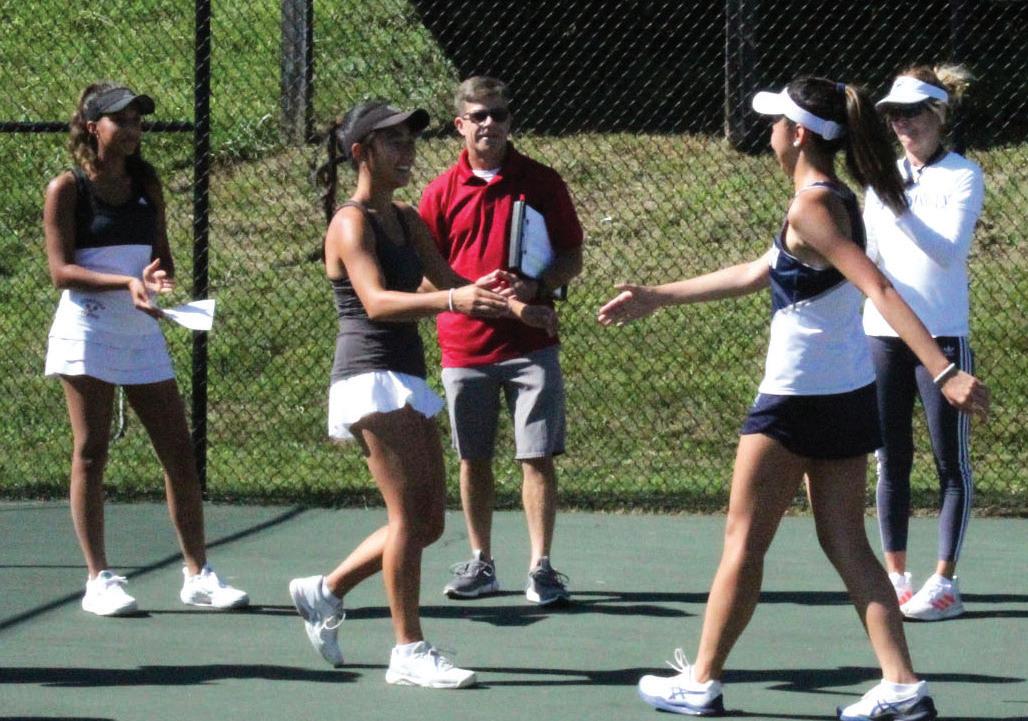
for tennis educators coaching full-time.
“I think he’s very optimistic. He definitely knows what he’s doing, and he really knows how to bring up the energy when we need it the most,” said senior and co-captain Jennifer He. “Even though at first everyone was sort of nervous about having a new coach this season, he did a really good job of keeping us together as a family.”
According to Shore, coming into the season he knew the team was advanced — winning back-to-back state championships is no small feat. With numerous other league and state titles, Shore hopes to carry on this legacy of success while imparting some of the lessons that
he learned from tennis to the athletes along the way.
“Our goal is de nitely to win states. ere’s no question about that. at’s the team goal,” Shore said. “Individually, I want them to just improve in tennis and improve as people.”
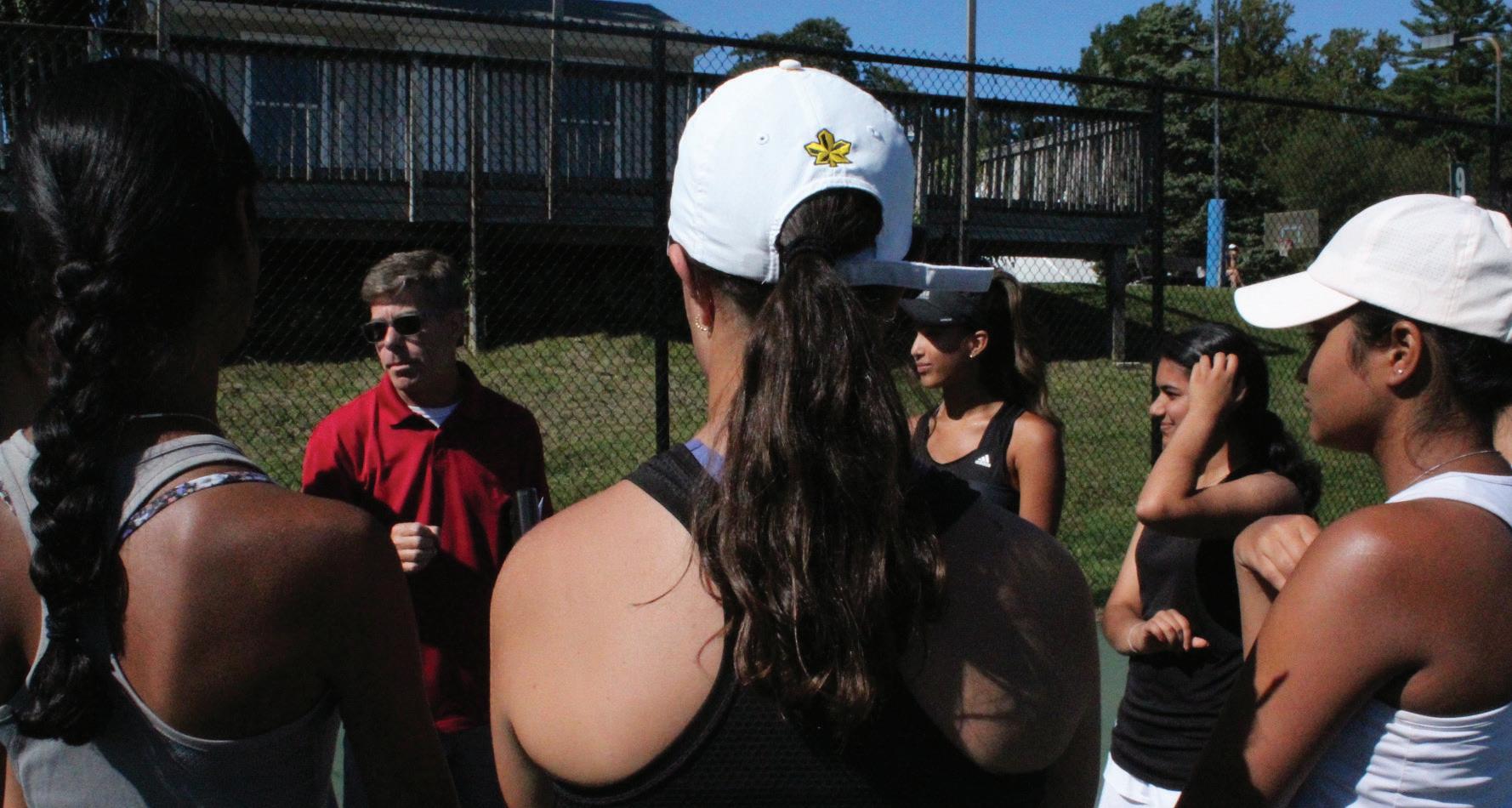
Regardless of its ambition for titles, the team values sportsmanship and togetherness above all. To He, it is the people that she plays with and their bond that make the sport so enjoyable. Communication, a virtue that Shore has specifically emphasized this season, is a deciding factor in this team chemistry.
“I think he’s very open to communication, and I love that about him,” He said. “Shore emphasizes that whenever there’s
Ultimately, whether teaching inside the classroom or on the court, Shore hopes that all students get more out of it than just the material or sport. Moreso, he wants them to discover what works for them.
“My favorite thing about coaching them is to see how well they all get along,” Shore said. “For a sport as individualistic as tennis where not everybody is playing at the same time, they’re always circled around, and they seem to enjoy being with each other.”
the funds to enter tournaments during the o season and purchase new gear such as basketballs and jerseys. Senior and forward player Liam Smith thought the Shoot-a- on was a creative idea to raise money.
“It was de nitely something that was new and unique to basketball, and I think it was really successful. We got a jump on it earlier and we did it before the basketball, season so that was kind of nice,” Smith said. “I think that was a really good idea from Brendan.”
In the future, the team hopes to incorporate the Shoot-a- on into its annual fundraisers. Freshman guard Sunny Tummala looks forward to three more years of Shoot-a- ons.
“I’m pretty excited for the future just in terms of playing on the team and participating in these fundraisers,” Tummala said. “I made 45 this year and hopefully I can bring that number up to 50 in the next few years.”
SHAE WOZNIAK DUKE UNIVERSITY
SPORT: FIELD HOCKEY
GRADE: 11
Why Duke University: “I spent most of my summer talking to coaches and exploring my options, before I finally made my decision. I chose Duke because of the amazing coaches, the team culture and also the beautiful campus and great education. I am really looking forward to it.”
Central
10 Monday, October 2, 2023 Sports
Crew Duo: Seniors Michael Ruschmann (le ) and Ryan McLaughlin (right) pose a er placing rst and second respectively at USRowing Summer National championships. They trained year-round.
Courtesy Ryan McLaughlin
e SPOKE
Michael Tierney Business Manager
In motion: Senior Liam Smith shoots his 34th free throw at the rst Shoot-a-Thon. He nished the night with 40 baskets out of 50, raising $100.
George Zhang /The SPOKE
Fostering sportsmanship: Senior and co-captain Jennifer He (left) greets her opponent on Aug. 31 in a match against the Baldwin School. The team won this match 7-0 at the Upper Main Line YMCA.
credible and drives me and Michael to improve every day. We’re really looking Juliana Yao/The SPOKE
a er
its match against Radnor. Juliana Yao/The SPOKE
Open channels: New head coach Seth Shore gives the girls’ tennis team
a pep talk prior to the start of a match. The team went undefeated in the
League, becoming league champions
winning
a problem the way to solve it is through communication.” Communication is also the biggest translation between the classroom and court for Shore. He enjoys sharing stories and jokes, a trait that students and players alike appreciate.
Co-Copy Editor
Commitment Corner Commitment Corner
Female athletes preventing, recovering from ACL injuries
Madeline Pulliam Staff Reporter
Thousands of female athletes’ seasons are cut short due to anterior cruciate ligament (ACL) injuries every year. According to Stanford Medicine, there are an average of 250,000 ACL injuries annually in the United States. Furthermore, according to Yale Medicine, women are two to eight times more likely to tear their ACL than men.
“Women are more likely to tear an ACL than a man due to our body makeup,” said Dr. Mikaela Smith, a physical therapist at Elemental Sports PT. “One of the things is that females are more quad dominant than dominant in their hamstrings, so we need to strength train in order to make sure all muscles are working properly.”
The ACL is the ligament in the knee that stops the tibia from sliding up and over the femur. It is a strong ligament, but not flexible. Minor ACL sprains can heal on their own with regenerative medicine therapy, but a full tear requires surgery and a six to 12 month recovery period. Senior and varsity lacrosse player Cassidy Brown fully tore her ACL in 7th, 8th and 9th grades. Despite her injuries, she is still committed to play Division 1 lacrosse at Temple University next year.
“The biggest challenge is probably regaining your confidence. It is definitely scary returning to playing a sport because before it was all you knew, and (injuring yourself) is obviously on your mind,” Brown said. “I think if you
work on really becoming stronger, both physically and mentally, then that will really help you on the field.”
Women are also more prone to an ACL injury because of their anatomical and hormonal differences. The female pelvis is wider than the male pelvis which factors into the mechanics of both the femur and the tibia. Female bodies place more stress on the soft tissues supporting the joints, while men have more muscle mass around their knees than women, giving them more support.
“I wouldn’t say it is preventable, but there are definitely ways that you can (increase) your likelihood of tearing your ACL. I think a lot of it has to do with genetics, especially in female athletes. The way our knees and hips are aligned make it super common for females to tear their ACL,” Brown said.
Secondly, at different stages of the female menstrual cycle, the hormones relaxin, estrogen and progesterone are released. According to the National Library of Medicine, the release of these hormones can affect the integrity of the ACL and weaken the ligament. Additionally, there are receptor sites of these hormones around the ACL.
Other things can affect the likelihood of tearing the ACL such as the way a person stands, putting all weight on one leg, the position in which a person sleeps in and even the shoes someone wears. Training year-round and strengthening the core can help prevent ACL tears.
Smith said that, although it is
not specific medical advice, it is general information to help prevent these injuries.
“The biggest thing is strength training, and also working on your coordination,” Smith said. “Strength
training can include squatting and lunging. Working on coordination can be standing on one leg.”
If athletes do not let themselves fully heal before returning to their sport, more
damage can be done to elongate their recovery. Brown reminds athletes to stay positive and fully heal before returning to the field or court.
“It is really easy in the beginning to become very upset
HIGHLIGHT REEL
The laTesT developmenTs in sporTs
seeing all your teammates participate,” Brown said.
“What truly got me through was staying positive and determined, and just knowing in the end, (the injury) is going to make you a stronger
Shuttle bus introduced for fall sports season
SwingS
Four varsity boys golfers qualified for District 1 Championships, with junior Gavin Dirkes tying for first place at the Central League Championships on Sept. 20. In tandem, six girls golfers qualified for districts.
SailS
The Conestoga sailing team started off their fall season with a Main Line Scholastic Sailing Association (MLSSA) regatta on Sept. 17. The team ranked first in the state this summer after winning their fourth MLSSA Cup Championship title.
RunS
The girls’ cross country team won remain undefeated so far in the season. Standout runners included sophomores Alexia Tubbs , Julia Snyder and Giovanna Porada and junior Lily Jones. While the boys fell short in their second Central League meet, the entire team won first at the coed Cherokee challenge on Sept. 9. Both teams are currently ranked in the top 20 within the state. goalS
The Philadelphia Union made the Audi Major League Soccer Cup Playoffs for the sixth year in a row. After lagging two goals behind Charlotte Football Club on Sept. 20, the team was able to come back in the last 20 minutes to tie 2-2, sealing their spot in the playoffs.
SweepS
Juliana Yao
For the past two years, cross-country and tennis athletes have consistently strug -
Co-Sports Editor gled to find transportation to practices and meets, usually carpooling with other students to compensate for the lack of bus drivers. Upperclassmen drivers have often
been unable to completely meet this need.

“I remember in my sophomore year, we had to have seniors take double trips to go drop off five kids and then come
back and then drop off another five kids just to get everybody to practice,” said senior and co-captain of the boys’ cross-country team Nathan Kluge. “It was definitely a struggle.”
To address this issue, the athletic department has introduced a 24-passenger van from the Ace and Airport Service Limousine company as an option for those on the cross country and tennis teams with no transportation means to get to practice and home games. The bus was first offered on Sept. 5 and is provided for athletes with off-campus practice locations, such as Wilson Farm Park for cross-country and UMLY for tennis.
“It was a definite need,” athletic director Kevin Pechin said. “There have been instances over the last couple of years where I’ve been driving people to practice, because my biggest fear is that a student misses a practice because of a lack of transportation. That just can’t happen.” In a stroke of luck, the athletic department was able to acquire a shuttle bus after its original vendor ran out of buses. After calling almost 10 companies in the area, the department secured a deal with the Chester-based Ace and Airport Service Limousine.
“We exhausted every avenue possible, and we were fortunate enough to find a company that was able to meet our needs on a daily basis,” Pechin said.
Seniors create ’Stoga Barstool Instagram account
Sports, spirit and a sense of humor were the driving forces behind seniors Timmy Corben and Carlee Brautigam’s decision to create a “Stoga Barstool” Instagram account. Gaining more than 700 followers in three weeks, their efforts are proving successful.
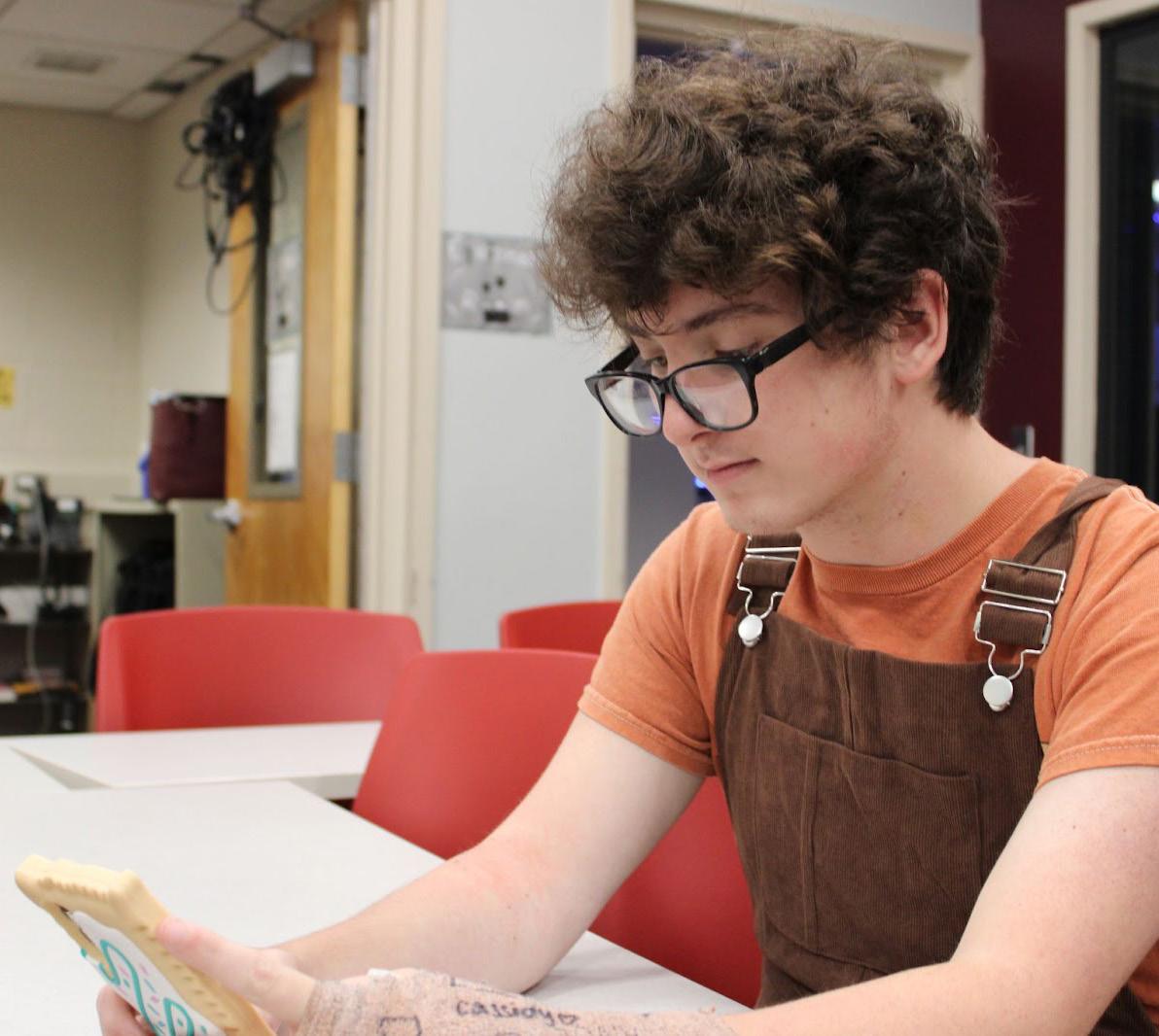
Barstool Sports is a digital media company and a sports and pop culture blog. While the “Stoga Barstool” account is not affiliated with the Barstool Sports company, Corben and Brautigam aim to mirror the same type of humorous content. The account has grown quickly. Currently, there are 28 posts, with some posts exceeding 300 likes.
“We have the Pioneer Pit (Instagram account), but they’re more formal in the way they post, and I just knew there was room for something else in our community to be fun but also informative,” Corben said.
Posts include light-hearted content about Conestoga’s sports teams, aimed at encouraging school spirit and increasing game attendance.
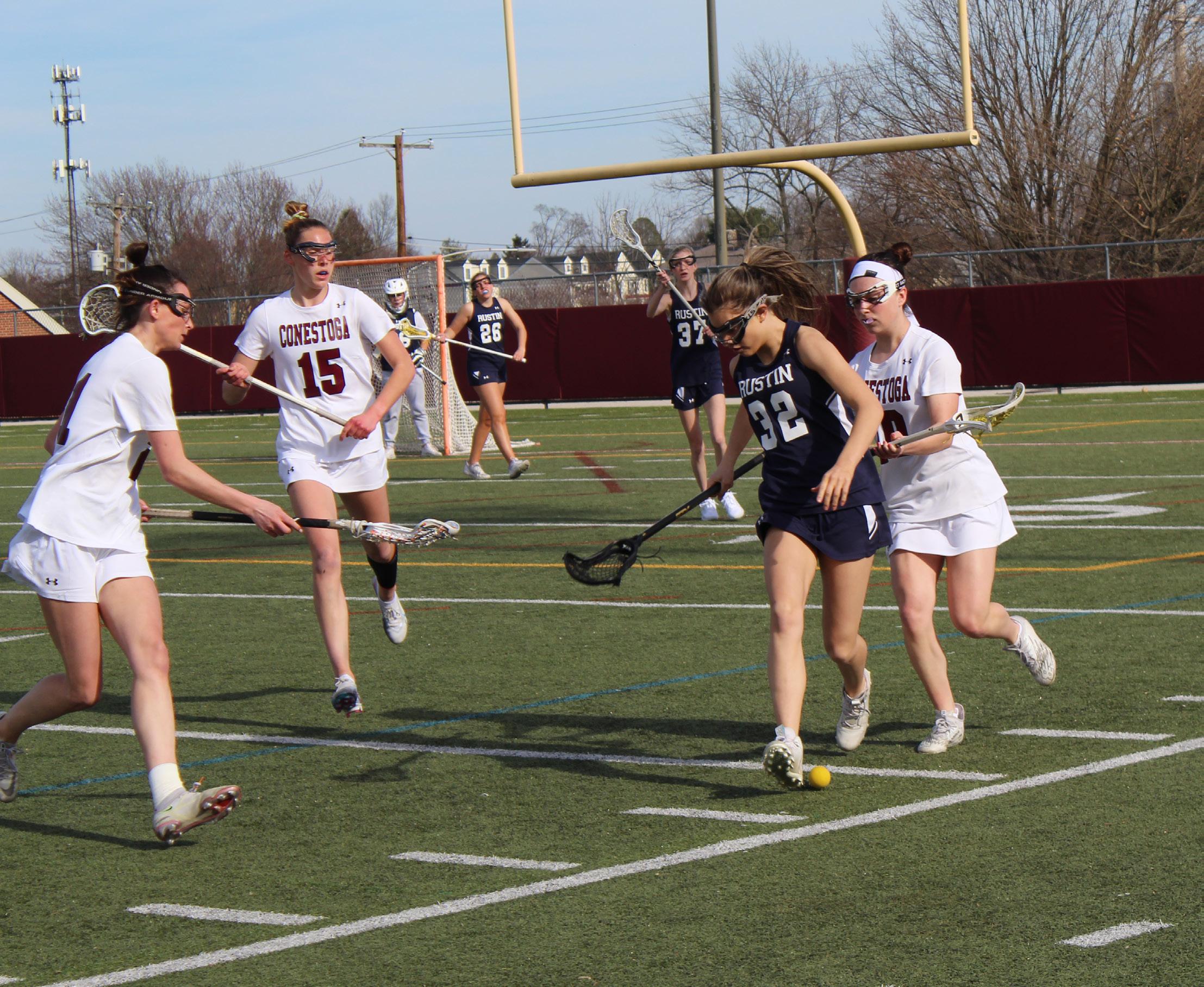
Corben and Brautigam have thus far provided marketing for field hockey, boys and girls soccer, and football, posting about upcoming games as well as team fundraisers. A post regarding the Homecoming Game win received more than 200 likes.
“Our school never really had a funny account that also brought in sports news, so we were wanting to create something that is funny and people would enjoy,” Brautigam said.
Corben feels it is important to encourage positivity with the account despite rivalries with other schools’ sports teams.
“We looked at fan pages for other schools, but the way they reflect the community wasn’t something we wanted to create. We wanted to create something that was more positive all around but still engaging,” Corben said.
Going forward, Corben and Brautigam are looking to expand the account’s content and postings.
“We’re open to new ideas, and we’re hoping that we can grow it more than being just the memes,” Corben said. “We have a lot in mind, and I know it’s still so new so there’s so much room for it to grow. I would just say to people: Stay tuned.”
The bus also has the potential to reinvigorate a closer team environment for the athletes. Carpooling had benefits in regards to building relationships with upperclassmen, but it had other drawbacks.
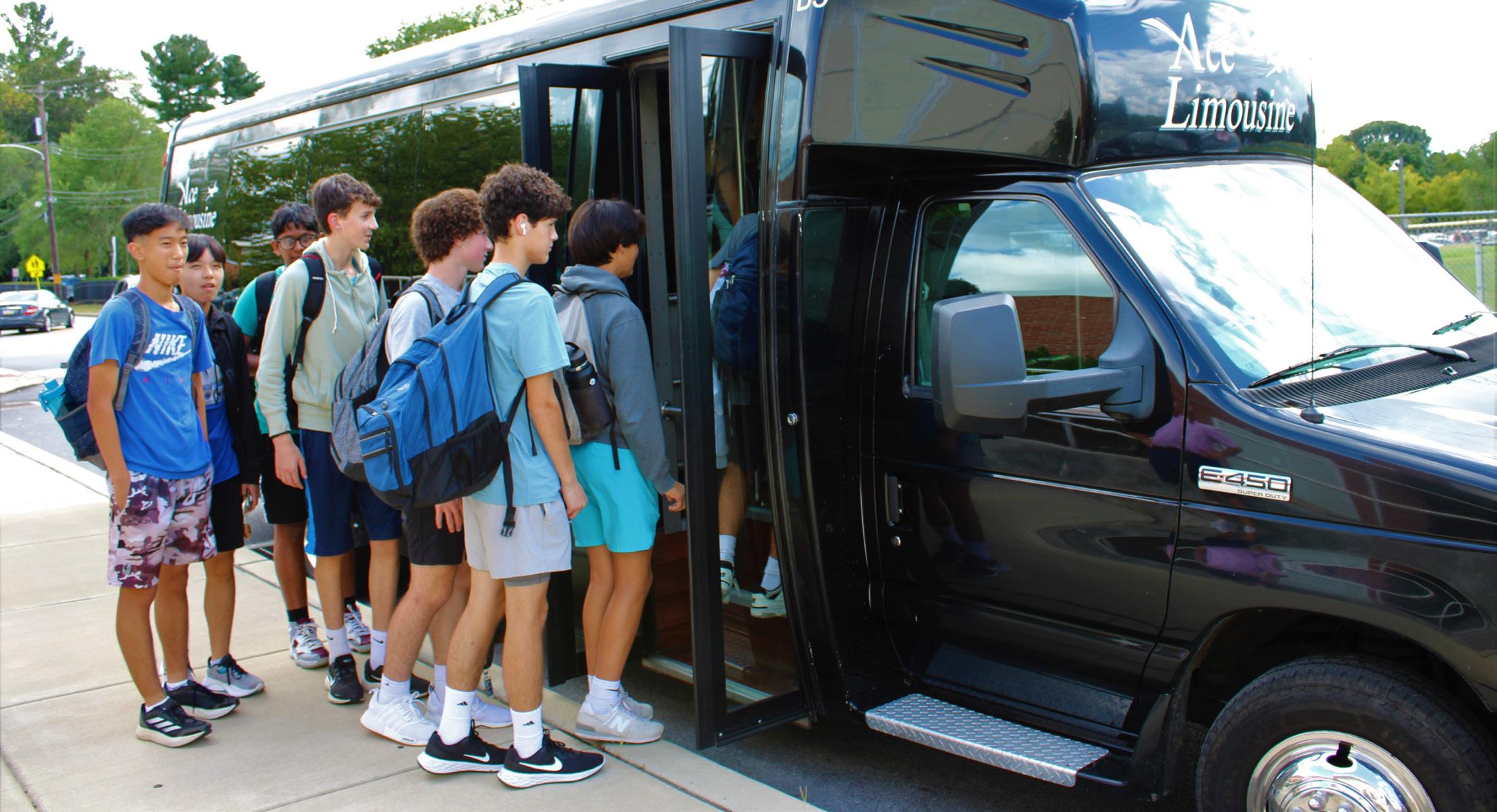
“Without a bus, everyone’s in separate cars, and it kind of groups people together,” said sophomore and varsity girls tennis player Melody Weng. “It stops people from going into different groups and being able to talk to everyone.”
However, a bus is still not guaranteed for tennis away matches, as finding a sufficient number of bus drivers has still posed an issue. Additionally, the bus will not be offered for winter sports because of their on-site practice locations or early practice times, but Pechin hopes to offer and potentially increase the number of buses for spring sports. He believes this will also contribute to a lessened strain on upperclassmen to carpool.
“I fear that we have students driving who don’t need to drive or uneasy drivers, and that’s not a good situation,” Pechin said. “So if we can get buses for our kids, we’re going to do it.”
The girls’ tennis team remain ed undeafeated within the Central League, not yielding a single game for most matches. The team became Central League Champions on Sept,. 21, advancing to the District 1 Championships and potentially into State Championships, which the team won back-to-back in 2021 and 2022.
ScullS
The crew team took home three golds in its first regatta of the season on Sept. 24. Fifty-five other clubs and scholastic teams paticipated in the Kings Head regatta, hosted in Bridgeport, with ’Stoga winning the women’s youth double, men’s youth lightweight quad and men’s youth JV quad.
RallieS
After the school wide pep rally on Sept. 22, the football team won the Homecoming Game against Radnor High School 21-7.
11 The SPOKE Monday, October 2, 2023 Sports
Going for the goal: The varsity girls’ lacrosse team plays West Chester Rustin on Teamer Field. They won 18-5 on March 24. Female athletes can help reduce their likelihood of an ACL injury through strengthening their core and training year-round.
Prashi Agrawal/The SPOKE
The ’gram: Senior Timmy Corben creates an Instagram post for the “Stoga Barstool” account. Corben and Brautigam created the account on Aug. 25, and it has amassed more than 700 followers since then.
Abby Bagby/The SPOKE
Abby Bagby
Co-Managing Editor
On board: Cross-country athletes get on the shuttle bus for practice at Wilson Farm Park on Sept. 11. The bus looped back to pick up the girls cross-country athletes a few minutes later.
Juliana Yao/The SPOKE
Crew duo medals at international regatta Page 10
Girls’ tennis team gets new head coach Page 10
Female athletes preventing, recovering from ACL injuries
Page 11
Shuttle bus introduced for fall sports season
Page 11
SPectacular swishes: Sophomore plays wheelchair basketball
On the court, sophomore Celeste Russo dribbles, passes and makes baskets. Except, instead of running, she glides smoothly across the polished wood, her wheelchair swerving around opponents. In wheelchair basketball, Russo thrives.
Over the last two years, she has experienced the sport at the college level through summer camps, made connections and found a supportive community of wheelchair basketball players like her.
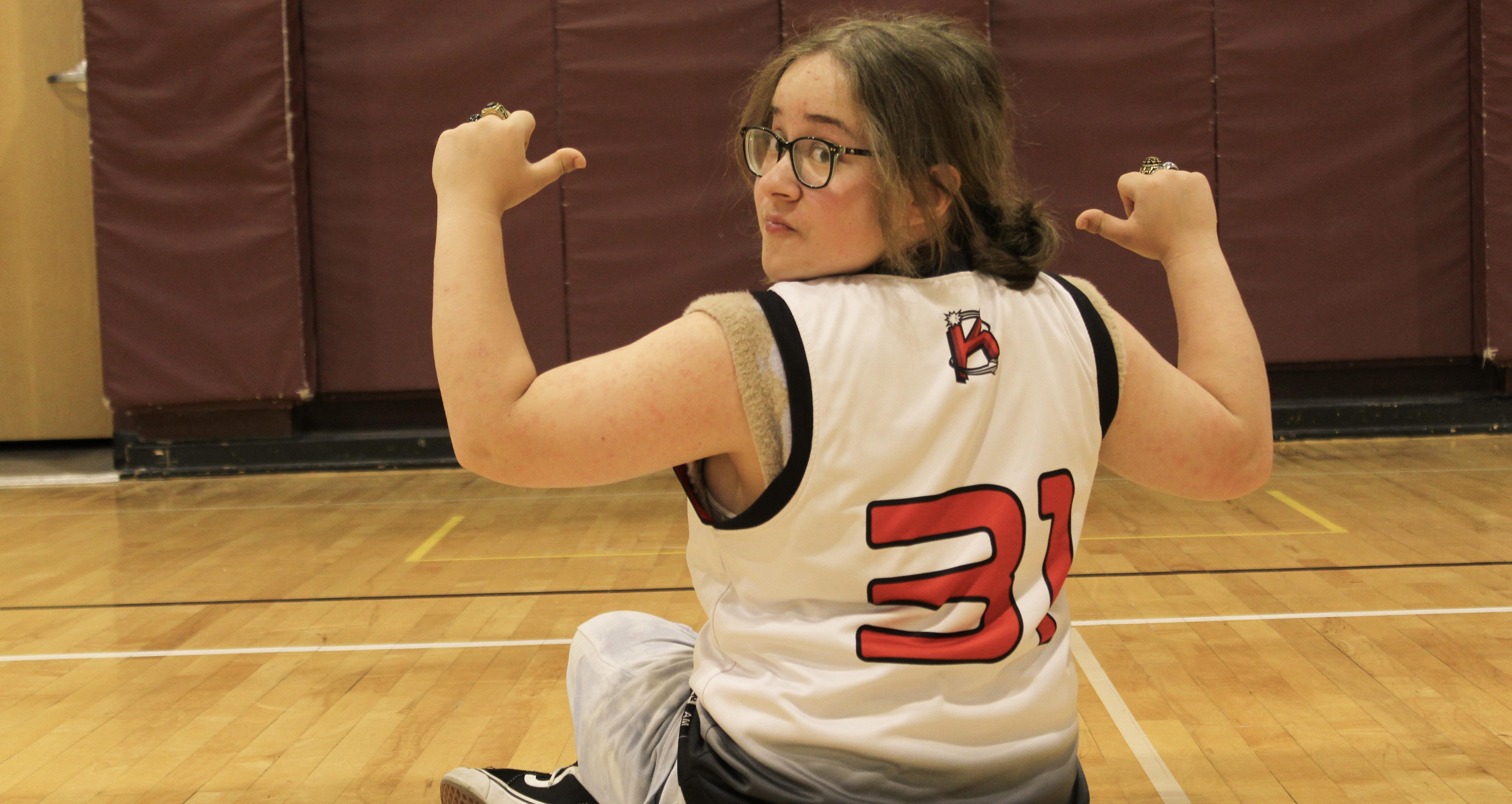
This summer, Russo attended four camps at PennWest Edinboro,
the University of Alabama, University of Arizona and University of Texas. She believes that they have transformed her as an athlete and as a person.
“I’ve learned to be a lot more comfortable in my disability because I’ve met a lot of people I can relate to,” Russo said. “I’ve also met a lot of people with disabilities I haven’t even heard of so the camps also expand your mindset. They are a unified space, and I’ve met a lot of my friends there.”
Russo was introduced to wheelchair basketball through a friend of her mother’s. She loved playing basketball when she was young and embraced the recom-
mendation as an opportunity to try something new.
“When I was younger, I really enjoyed playing basketball with my older brother, but I used to get upset about how I couldn’t run as fast as the other kids,” Russo said. “So, (wheelchair basketball) was something I wanted to try.”
Russo hopes to bring more awareness to adaptive sports and appreciates what Conestoga and her peers have offered her.
“Conestoga has a really inclusive environment. I think that’s something the school does really well,” Russo said. “But even though there’s not a huge disabled population at Cones -
toga, I think there needs to be more awareness.”
During the school year, Russo plays for Katie’s Komets, a coed wheelchair basketball team based in Philadelphia for “youth with lower limb impairments.” Many of its players have gone on to play at the college level, something Russo aspires to pursue. However, what she truly hopes to accomplish is to inspire younger girls to embrace the sport like she has.
“My main goal for the future is to show younger disabled girls that (wheelchair basketball) is something they could do,” Russo said. “I think in any sport, women are often at a disadvantage. There
are less opportunities for us, and we’re underestimated in our own sport, so it’s important that we get opportunities to put ourselves out there in the world.”
Along with her passion for the sport, Russo appreciates basketball because it has brought her self-confidence and a greater meaning in life.
“I would say the last two and a half years have been some of the best of my life because I’ve been able to do something that I love,” Russo said. “I feel like finding something that I can excel at completely changed my outlook on life. Playing sports has given me purpose.”
The balancing act: Simone Biles inspires local gymnasts
On Aug. 27, watching the U.S. Gymnastics Championships in awe, senior Claire Vanderau and junior Daniella Chavero-Diaz looked on as Simone Biles became the first gymnast to win eight U.S. all-around titles. She gracefully jumped, flipped and tossed her way on the balance beam, uneven bars, vault and floor, clinching the allaround gold and sending ripples of excitement to young gymnasts like Vanderau and Chavero-Diaz.
“She’s the best gymnast out there. I love watching her do gymnastics because I think it’s crazy that she has so much strength and power even after a two-year break,” said Chavero-Diaz, who started gymnastics at the age of 3 and trains for about 30 hours a week.
After a two-year hiatus, Biles made an extraordinary comeback in the U.S. Gymnastics Championships. She took time off after the 2020 Olympics in an effort to work on her mental health and to get married.
“I was really excited for her. She was able to take time for her mental health and then come back. It shows that you can take time for yourself and still be successful,” said Vanderau, who started at the age of 10.
Both gymnasts for over a decade, Vanderau and Chavero-Di-
az resonate with Biles, who is an adoptee from a historically underrepresented background. Vanderau, an adoptee herself, believes that Biles’ success has given minority girls someone to look up to and from whom they can seek inspiration.
“It is definitely weird at times because the gymnastics gym that I go to is predominantly white. I’m the only Mexican person at my gym,” Chavero-Diaz said. She said that she seeks solace in knowing that Biles too felt that, coming from a Black background. Perhaps most importantly, Biles has opened up about the need to balance mental health and success. Vanderau said that gymnasts face the “twisties,” where a disconnect between the body and the mind develops and mental blocks become inevitable.
“Let’s say I’m on the floor and tumbling, and I think I’m gonna do this skill. And I’m thinking about it, but then my body just doesn’t know what to do all of a sudden. A lot of gymnasts have problems with being ‘stuck in the air.’ It’s really like labor; physically and mentally it’s rough. It’s rough on your brain,” Vanderau said.
Both gymnasts said that they have faced mental blocks and that they were stressful. But like Biles, they have learned the importance of embracing time off.
“I’ve had to overcome several mental blocks. When that happens, you have to take a step back, and it’s really challenging for yourself because you feel like there’s nothing you can do about it. It’s really hard to work through it, but when you do, it’s very rewarding,” Chavero-Diaz said.
Hand in hand with the struggles come accomplishments and values that the girls hope to carry lifelong. For Chavero-Diaz, her greatest accomplishment has been sticking to the sport even through the hardest times.
“I feel like gymnastics is such an important part of my life because it’s shaped me into who I am today. It’s taught me hard work, perseverance and determination,” Chavero-Diaz said. “It has helped me manage my time well, because after so much practice, I have to find time in my schedule to keep up with my schoolwork and have a social life.”
While at times life can get overwhelming with mental and physical breakdowns, Vanderau still aspires to compete at the college level. She has previously competed at national competitions and has scored several top 100 scores.

“Most gymnasts retire in their early 20s, and it’s scary,” Vanderau said. “But I also feel like I just love gymnastics so much that it’s fine.
I’ll go on.”
SCORELINE
SPORTS
Making a difference: Sophomore Celeste Russo points at her Katie’s Komets jersey. She played wheelchair basketball at college camps over the past two years, and Russo hopes to inspire other disabled girls to do the same.
Lily Chen/The SPOKE
W L T Field Hockey Football Volleyball G Tennis G Soccer B XC B Soccer G XC G Golf 3 2 0 5 0 0 B Golf 7 0 0 14 0 0 5 1 0 6 0 0 6 2 0 6 0 0 4 4 0 11 0 0 scores as of 9/27
Tanisha Agrawal Co-Sports Editor
In
10
ago.
aim to compete in college. Courtesy ASL Gymnastics
Lily Chen Design Editor
the
air:
Senior Claire Vanderau flips on the balance beam. She started practicing gymnastics
more than
years
Vanderau will
Monday, October 2, 2023 The SPOKE
