CCS
Newberrys
The

State awaits extension of Gateway –or Medicaid expansion
By Sandra Jordan Of The
Act’s Health Insurance Marketplace opening on October 1, St. Louis-area health care providers and consumers await word on whether Missouri’s Gateway to Better Health Demonstration Project will be extended past its initial end date on December 30. The extension by the Centers for Medicare and Medicaid Services would continue enrollment and outpatient coverage for lower-income residents for a period, offering a reprieve while the Republican supermajority in the Missouri Legislature is pressured to approve

Some faculty oppose her fiscal restraint on overload pay and ‘double dipping’
By Rebecca S.Rivas Of The
By Chris King Of The St.Louis American
program.
percent Hispanic and 3.7 percent multiracial. When she was new to Parkway, she thought the lack of diversity among administrators, faculty and staff might play a role in the district’s apparent achievement gap. “Not many people in Parkway
me,” Ijei said. “I was the only counselor of color.” She said the achievement gap was based, in part, on an

Teyana takes all in Rihanna social media battle
Teyana Taylor assumed that Rihanna was mocking her when she posted an Instagram video of a male member of her entourage wearing a curly wig and cap singing the same song that Taylor was singing on her Instagram account a few weeks earlier.
Taylor was not amused – and subsequently dragged Rihanna for dear life on Twitter.
“Don’t let Twitter get you [expletive] up,” Taylor tweeted. “You can bully everybody else and get away with that [expletive], but that [expletive] ain’t gonna work over here. “Let me stop, y’all know RiRi punk [expletive] be pressin’ charges.”
Rihanna made not-sosubliminal jabs, but after Rihanna deleted any evidence of the twitter beef, Taylor went for

She temporarily changed her Twitter cover picture to a photoshopped image of herself and Rihanna’s faces placed on top of two fighters going head to head in a boxing match – and used an image of Rihanna that showcased her facial injuries following the singer’s infamous assault by Chris Brown.
Taylor later deleted any evidence of the social media spat as well, saying her mother asked her to – but resolved that she meant every word.
Oprah denies nervous breakdown rumors


She spoke of her “aha moment” when she was interviewing Kony 2012 director Jason Russell, whose own running-naked-in-the-streetsof-San-Diego meltdown went viral earlier that year.
“I was sitting and listening to Jason Russell describe his symptoms.
… Saying, ‘Um, this sounds pretty familiar to me. I will tell you when I realized that I thought, ‘All right, if I don’t calm down I’m going to be in serious trouble. I mean, I wasn’t ready to go run naked in the streets. Let’s make that very clear. But I had reached a point where I just couldn’t take in any more stimulation. OK? That’s what I meant by that.”
two even talked about creating some tracks together,” a source told the newspaper.
Def Jam music exec Abou Thiam — who’s one of Brown’s managers and brother of Akon – was said to be the mediator of the reunion.
“We’re told Thiam is “very friendly with Drake, and worked to try and get him and Chris together to put their differences aside,” a source told the paper.
Kordell responds to Porsha’s subliminal sexuality accusations
Earlier this week Oprah Winfrey’s Gayle King defended her against reports that the media mogul had gotten dangerously close to having a nervous breakdown while trying to launch her OWN network.
Winfrey confirms the story has been blown out of proportion.
“Never had a breakdown. Not even close,” Winfrey said via Twitter.
The rumors were fueled by an interview with “Access Hollywood” where Winfrey talked about overstimulation during shooting Lee Daniels’ “The Butler.”
Akon’s brother reportedly squashed Breezy vs. Drake beef
According to The New York Post, a truce has been called between Drake and Chris Brown
The two have been enemies since their epic melee at Soho nightclub W.I.P. in 2012, but they reportedly hugged it out at the iHeartRadio Music Festival in Las Vegas over the weekend.
Sources told the publication that Drake and his crew came to the music fest on Friday specifically to watch Brown’s performance and were super friendly after Brown’s set.
“We’re told the reunion went so well, the
Last week a preview for the sixth season of “Real Housewives of Atlanta” implied Porsha Stewart may have been questioning her husband Kordell’s sexuality while trying to figure out what went wrong in her marriage.
Kordell released an official statement saying he’s ashamed of Porsha’s behavior.
“The rumors have never been true. I’m not gay,” Kordell said. “It is sad that she would target the homosexual community – which often times lacks support to begin with. It is very disappointing that she will do anything and say anything for a minute of so- called fame. She can have that life, I just want to continue to be the best single dad and father that I can for my son.”
Sources: Access Hollywood, Huffington Post, Twitter, The New York Post, Straight from the A






























‘Freedom Sunday’ service held 50 years to the day after church bombing
By Ciera Simril For The
St. Louis
American
At 10 a.m. on Sunday, September 15, ushers lined the middle aisle at Lane Tabernacle
C.M.E. Church, 910 N. Newstead Ave., singing “Lift Every Voice and Sing” before Pastor James Morris delivered an empowering message.
This “Freedom Sunday” service was dedicated to a “Celebration of the Black Church and its Role in the Civil Rights Movement.”
It acknowledged the 50th anniversary of the four little girls who were killed when the Sixteenth Street Baptist Church in Birmingham, Alabama was bombed on Sunday, September 15, 1963 as an act of racially motivated terrorism.
The girls –Denise McNair, 11, and Cynthia Wesley, Carole Robertson and Addie Mae Collins, all 14 – were getting ready in the church basement
dressing room, discussing their first days at school and preparing for the service at 11 a.m. that morning. The church had been the center for many civil rights rallies and meetings.
The explosion that killed these four girls marked a turning point in the Civil Rights Movement. It became a major point to draw many moderate whites into the movement. Outrage at the racist violence contributed to the passage of the Civil Rights Act of 1964.
This made a major impact on the African-American community throughout the country. It was a horrific event that made parents worry for and cherish their children and brought together families all over the country.
Some in the congregation at Lane Tabernacle reflected on where they were during this moment in history and recalled events that took place at that time. Others attended this commemorative service to express concern for today’s struggles. The speakers all spoke about how far we have come, yet how much further we have to go. They reminded everyone to stay encouraged and involved in the community.
Adolphus Pruitt, president of the St. Louis city branch of the NAACP, acknowledged the tragedy of the “four little

4th Ward Alderman Sam Moore spoke during Lane Tabernacle C.M.E. Church’s Freedom Sunday service on September 15 to honor the four children killed in the Sixteenth Street Baptist Church bombing in Birmingham, Alabama in 1963. Local politicians and civil rights leaders spoke during the service. September 15 marked precisely the 50th anniversary of this racist terrorist act.
Photo by Wiley Price

girls” and called them “four black angels.” He added that “they were fighting for the civil rights we live for today.” Pruitt said that churches were the movement’s safehouses. He said, “The church and the movement were one in the same.” Pruitt reminded the congregation that there are many more fights ahead and urged congregants to prepare for those battles.
4th Ward Alderman Samuel Moore spoke about his own life experiences that have changed his outlook. He said the community has “a huge problem” that needs to be addressed. Moore said there are 150 churches in the 4th Ward alone and that he wants to see them engaged with the community as they were during the Civil Rights Movement.
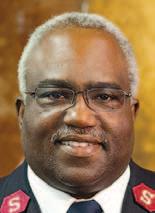
Children worry about a whole host of things, like homework, relationships with friends, and whether or not they’re wearing the newest fashions and trends. These are things we all worry about in our younger years. But children today are coping with an issue not even adults should be accustomed to.
According to the St. Louis Area Foodbank, the St. Louis region is home to 172,660 children who are struggling with hunger. Statewide, nearly a quarter of Missouri’s children are hungry or at risk of hunger. These figures place Missouri fifth in the country and among the states with the highest increase of hungry children.
We discovered a few summers ago, a child attending The Salvation Army’s Camp Mihaska in
Bourbon, Mo., was surprised to learn he would be given three meals a day because at home his family could only afford to provide him with one meal. It’s a sobering realization that so many local children are struggling with such a basic human need.
St. Louisans are flocking to local food pantries and social-service agencies in record numbers. Within the past two years, The Salvation
n Statewide, nearly a quarter of Missouri’s children are hungry or at risk of hunger.
Army’s O’Fallon Worship and Community Center went from serving 45 people each month to almost 500 at its food pantry. These numbers show no sign of decreasing, especially after House lawmakers recently approved the federal Farm Bill after stripping the food-stamp program used by 48 million Americans and threatening to
make more devastating cuts to the program. In Missouri, 416,000 children rely on food stamps to survive.
Anti-hunger organization Bread for the World has estimated that if the proposed cuts are enacted to the food-stamp program, every religious congregation in the United States would need to spend $50,000 a year for the next 10 years to feed the people who would be affected.
Hunger has become a serious problem in the St. Louis area, and social-service organizations have worked diligently to combat it as best we can. But, the truth is, we are struggling to keep up with the influx of need. The Salvation Army will continue to feed children, adults and senior citizens every day as long as we are able. We pray that your continued support will allow our local children to just be kids, instead of worrying when they’ll be able to eat again.
Major Lonneal Richardson is divisional commander of The Salvation Army –Midland Division.

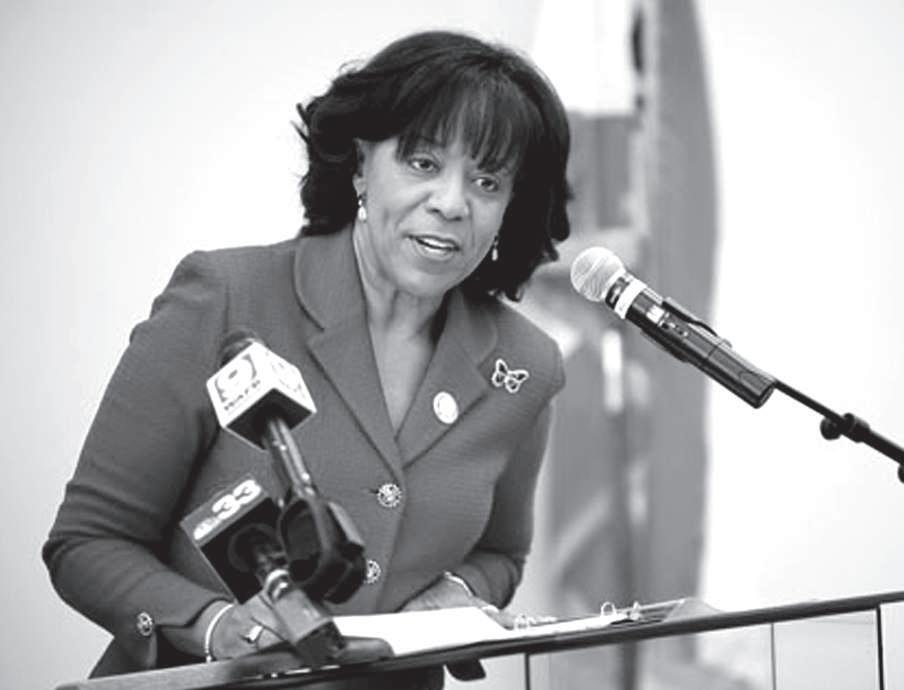
St. Louis Community College Chancellor
Myrtle E.B. Dorsey faced opposition from faculty after she instituted reforms on overload faculty pay.
Last month, the St. Louis Post-Dispatch assigned four reporters from its depleted newsroom to produce a front-page two-story package – ranging longer than 2,000 words, roughly four-times the length of a typical news report – about St. Louis Community College Chancellor Myrtle E.B. Dorsey. Despite the alarmist positioning of the story under the doom-and-gloom, thick-and-bold headline “Dorsey’s downfall,” the chancellor is guilty of no wrongdoing. The news nugget wrapped in this elaborate package was that the college Board of Trustees had deadlocked 3-3 in renewing her contract.
“There must be more to it,” we reported at the time in our political column, making note of the Post’s drastic overplay of the story – “and indeed, there is.” At the time, we teased out the racial dynamics that operated under the surface of the Post report. “The Post sources five faculty members [opposed to Dorsey] without identifying any by race,” we noted. “Since all five faculty members are white and the chancellor they opposed is black, their race might be pertinent. The Post has no black editor who would have seen this copy or discussed how the story would be played, and all four Post reporters who worked on the story package are white.”
This analysis in our Political EYE column turned up two inside sources from the college who are sympathetic to our reporting, and who insisted there is still more to the story. We have since interviewed one of these sources, and Rebecca S. Rivas’ front-page news report in today’s paper documents the facts in this source’s claims. The other source has not yet come forth, and we continue to check the claims this person made in a long, cogent but anonymous letter mailed to the newspaper. What is clear, at this point, is that the Post missed the story in its reflexive siding with the disgruntled white faculty opposed to the black chief executive. Dorsey may or may not have a high-handed, non-collegial management style, as her critics claim. If so, this certainly would
not be unusual in St. Louis, where our executive class has the full range of human foibles typically found among hard-driving leaders of large organizations. Dorsey’s tone shift in how she handled professional development may have been jarring to a faculty that, as our reporting makes clear, had grown accustomed to some very generous perks. But what is now certain is that a new chancellor brought a new level of fiscal accountability and restraint, as well as concern for students’ long-term success at the college, and this threatened entrenched faculty and counselors who were benefitting financially from more lax management practices.
According to the May 2013 finance report to the Board of Trustees, the college has reduced part-time and overload salaries by $2.1 million, compared to the 2011-2012 academic year, under Dorsey’s leadership. This money, as our reporting makes clear, came directly from the pockets of veteran faculty, who had been exploiting a lax system of overload pay to push their salaries into the six-figure range, in many cases. By enforcing discipline on this unregulated pay process and saving the college money, Dorsey made some bitter enemies among faculty and its union leadership. The fact that it was an independently minded African-American executive who uncovered and cracked down on practices that benefitted a largely white faculty may have contributed to the vitriol of the opposition (and how dramatically the Post played the story), but Dorsey’s so-called “downfall” is attributable to her fiscal discipline and its faculty discontents, more than her leadership style.
Whoever leads the college moving forward, we expect them to be accountable for sound management of this vital institution of higher education. We hope that the Post and other stakeholders join us in urging the new chancellor to institute needed fiscal reforms at a college system that is central to our workforce development and, therefore, to the viability and prosperity of the region.
Republicans in the House are like a bunch of 3-year-olds playing with matches. Their hapless leaders don’t have the sense to scold them and send them to their rooms, which means President Obama has to be the disciplinarian in this dysfunctional family.
Mature adults in the GOP should have explained reality to these tantrum-throwing tykes long ago: It simply is not within their constitutional power to make Obamacare go away. They can scream at the top of their lungs, roll around on the floor, hold their breath until they turn blue, waste everybody’s time with 41 useless votes – whatever. All they can really do is hurt themselves or others. Yet here we are, with Speaker John Boehner cowed into letting his members threaten to shut down the government unless they are allowed to stay up all night watching television and eating candy. Also, unless the Senate and Obama agree to nullify health-care reform before it fully takes effect. I happen to believe that Obamacare is a great accomplishment, providing access to medical insurance to millions of Americans who lack it and bringing the nation much closer to universal health care. It’s an imperfect law, to
be sure, but it could be made much better with the kind of constructive tinkering that responsible leaders performed on Social Security and Medicare. Even if Obamacare were tremendously flawed, however, it would be wrong to let a bunch of extremist ideologues hold the country hostage in this manner. If Republicans want to repeal the reforms, they should win the Senate and the presidency. If not, they’re welcome to pout and sulk all they want – but not to use extortion to get their way. At issue is not just the threat of a federal shutdown, which will happen Oct. 1 unless Congress passes a continuing resolution to fund government operations. The debt ceiling has to be raised before the Treasury hits its borrowing limit, which will happen around Oct. 18. If House Republicans don’t kill or neutralize Obamacare with the funding bill, they are ready to threaten the nation and the global economy with a potentially catastrophic default. Obama is by nature a reasonable and flexible man, but this time he must not yield. Even if you leave aside what delaying or defunding Obamacare would mean for his legacy, it would be irresponsible for him to bow to the GOP zealots’ demands. Individuals who have been uninsured are anticipating access to adequate care. State governments, insurance companies and health care providers have spent vast amounts of time and money preparing for the law to take
The majority party in the Missouri General Assembly has made it clear they have no taste for expanding the Medicaid program that is meant to provide care to those who need it most. While the federal government has offered to pick up the tab on expanding this program, the leaders in both the Missouri House and Senate have said they do not want to extend coverage to some of our poorest Missourians.
Their excuses have ranged from a philosophical disagreement with the expansion of a government program to a perceived threat to state funding for services like education if the federal government can’t make good on its promise to pay.
Our governor has pushed vigorously for an expansion of the program and continued to lobby for the House and Senate to take action on this important issue. This standoff helped to prompt the creation of a special working group of citizens and legislators that has studied this issue.
As part of the committee, it was my honor to travel around the state and listen to what Missouri citizens think about this important issue. After weeks of gathering testimony,
L
effect. To suddenly say “never mind” would be unbelievably reckless.
The political implication of compromising with blackmailers would be an unthinkable surrender of presidential authority. The next time he said “I will do this” or “I will not do that,” why should Congress or the American people take him seriously?
Obama has said he will not accept a budget deal that cripples Obamacare and will never negotiate on the debt ceiling. Even if the Republicans carry through with their threats, the president has no option but to stand his ground. You don’t deal with bullies by making a deal to keep the peace. That only rewards and encourages them. You have to push back.
This showdown is a sure political loser for the GOP. Boehner doesn’t want this fight, and in fact should be grateful if Obama hangs tough and shows the crazies the limits of their power. Republicans in the Senate don’t want this fight. It’s doubtful that even a majority of House Republicans really, truly want this fight.
But irresponsible demagogues -- I mean you, Sen. Ted Cruz, R-Texas -have whipped the GOP base into a frenzy of unrealistic expectations. House members who balk at jumping off the cliff risk being labeled “moderate,” which is the very worst thing you can call a Republican.
The way to end this madness is by firmly saying no. If Boehner won’t do it, Obama must.
the committee assembled mountains of facts and figures that point to one undeniable truth – we must expand our Medicaid program.
Medicaid expansion would lead to an additional 159,260 Missourians joining the program in 2014. These are individuals and families who otherwise would have no access to quality care, and many of these people are here in the St. Louis area.
Medicaid expansion targets our poorest households and offers individuals who have no other means to obtain insurance a way to finally receive proper health care. Right now, approximately 42 percent of all nonelderly adults with incomes below 138 percent of the poverty level lack insurance.
When we recognize that two out of every five of our poorest citizens have no insurance and no way to affordably receive care, it becomes impossible to argue against expansion.
Nationally, uncompensated care for the uninsured had a price tag of $56 billion in 2008, and with medical inflation that cost would increase to $80 billion in 2016. State and local governments pick up 30 percent of these costs. Medicaid expansion would allow states to greatly reduce the number of uninsured and with it the cost of uncompensated care.
And remember, the federal government is paying for almost all of the expansion, which means that states would save money as their spending on uncompensated care would
What makes St. Louis special is we’re a community that helps each other – that cares. And one of the important ways people in this community care for one another is through United Way.
We’ve understood the significance of United Way for many years, and now we’re honored to share the importance of United Way throughout our community. As this year’s United Way of Greater St. Louis campaign co-chairs, we’ve visited dozens of United Way-supported agencies, met dozens of people who are helped and heard countless stories of the importance of United Way’s stable funding source for partner agencies.
We are asking our community to once again answer the call to help people through United Way. If we each give what we can to help people in our region, we will make a positive difference in the lives of many. Every gift matters, nothing is too small or too big.
With one in three people in our region helped by United Way, it may be your neighbor, the person you work or live next to, or it could even be yourself you’ll be helping.
Ron and Cheri Fromm, co-chairs
2013 United Way of Greater St. Louis campaign
Missouri Attorney General Chris Koster has shown tremendous leadership in moving the issue of urban crime forward. Crime has many contributing factors – poverty, lack of education, hopelessness and sometimes just bad people. Many policymakers – on both sides of the aisle – pay lip service to the need of attacking the contributing factors of crime. However, if crime and gang activity do not affect their neighborhood, very little is done.
decrease by $18.1 billion because of Medicaid expansion. These are savings that even fiscal conservatives cannot deny.
It is crucial to remember that Medicaid expansion is really about people. It is about making sure that individuals and families have access to the preventative care they need to live longer and healthier lives. It is about ensuring a higher quality of life for the hundreds of thousands of Missourians who right now have no insurance, including the tens of thousands of uninsured people in St. Louis. It is about saving an estimated 155,362 precious human lives each year across the nation. And it is about making the right choice for our state and for our nation as we attempt to do what is truly best for the people. Without proper health care, a large portion of our population will never have the opportunity to pursue their dreams or to break free from the clutches of poverty. If we want to empower people and give them the opportunity to be healthy, productive citizens, we must expand Medicaid to provide care to those who need it most. Anything else is an injustice to the people who have elected us to serve with their best interests at heart.
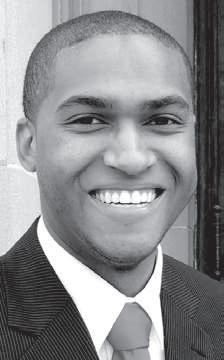
Josh Peters (D–St. Louis) represents the 76th District in the Missouri House of Representatives.
All letters are edited for
Crime truly is a metropolitan-area discussion, not only limited to the city. Criminal activity –including gang-supported criminal activity – occurs as much, if not more, in St. Louis County as it does in the city. In the county, law enforcement officers must frequently coordinate across several municipal police departments in order to apprehend criminals. School districts in the county also need to coordinate to ensure that knowledge about gang activity in the schools is being transferred to the proper authorities so better-informed law enforcement decisions can be made.
State Senator Maria Chappelle-Nadal, University City
Public school not open to all?
Concerning your article parsing City Garden Montessori, what makes me angry about charter schools is the false hope they bring for our children. Charter schools simply don’t take our most demanding students, and City Garden Montessori is a shining example.
City Garden Montessori is located in an area where the public schools are over 80 percent minority with a like amount living in poverty. In 2012-13 City Garden had less than 50 percent black and just over 40 percent on free lunch. In St. Louis Public Schools over 16 percent are homeless and almost 15 percent are handicapped. City Garden Montessori had no homeless and only 8 percent handicapped.
When City Garden gives shelter to the homeless, opens its doors to the physically and sexually abused children of dysfunctional homes, and takes in and tries to reform the Crips and the Bloods, then and only then do they deserve our money and support. We wouldn’t use public funds for a library or a park which wasn’t open to
and



The Community Against Poverty (CAP) coalition will sponsor its Sixth Annual Volunteer Fair 3:30 to 5 p.m. on Sunday, September 29 at The Heights, 8001 Dale Avenue in Richmond Heights.
Participants will have an opportunity to talk with representatives from area not-for-profit agencies to learn about their work and to learn about volunteer opportunities that are available. There will be a broad range of agencies participating, with volunteer positions for all ages, interests and abilities.
CAP, a coalition of faith-based and civic organizations, was convened in 2008 by the Jewish Community Relations Council and is dedicated to addressing the issue of poverty through education, advocacy and service. The event is free and open to all. Those attending are asked to bring a donation of food to support area food pantries.
For more information, call Gail Wechsler at 314-442-3894 or 314-503-5814 or visit www.jcrcstl.org or www.communityagainstpoverty.org.
St. Louis County Library has expanded its popular FLIPkit collection to all 20 branches starting September 9. The kits are part of the Family Literacy Involvement Program (FLIP), a nationwide effort to involve parents with the development of language skills in their young children.
Previously, the kits were available at only six of the library’s branches. The expansion is possible because of a grant from the Allan P. and Josephine B. Green Foundation.
The cornerstone of the FLIPkits is the understanding that early involvement promotes reading readiness in young children. Each kit will include at least one book, a guide for parents, items and instructions for a fun, book-related activity. The book and activities will be appropriate for children from infancy to grades 2-3.
For more information about FLIPliteracy kits, please call 314 994-3300.
Crisis Nursery is requesting the support of local Holiday Angels for the 2013 Holiday Hearts Campaign. They ask the public to join their effort and grant holiday wish list items (e.g., toys, clothing, household products, non-perishable food, rent and utility assistance, etc.) to deserving children and families in need. Supporters may choose to sponsor a family or purchase items off of the Crisis Nursery Holiday Wish List. For more information, visit www.crisisnurserykids.org or call 314-292-5770.
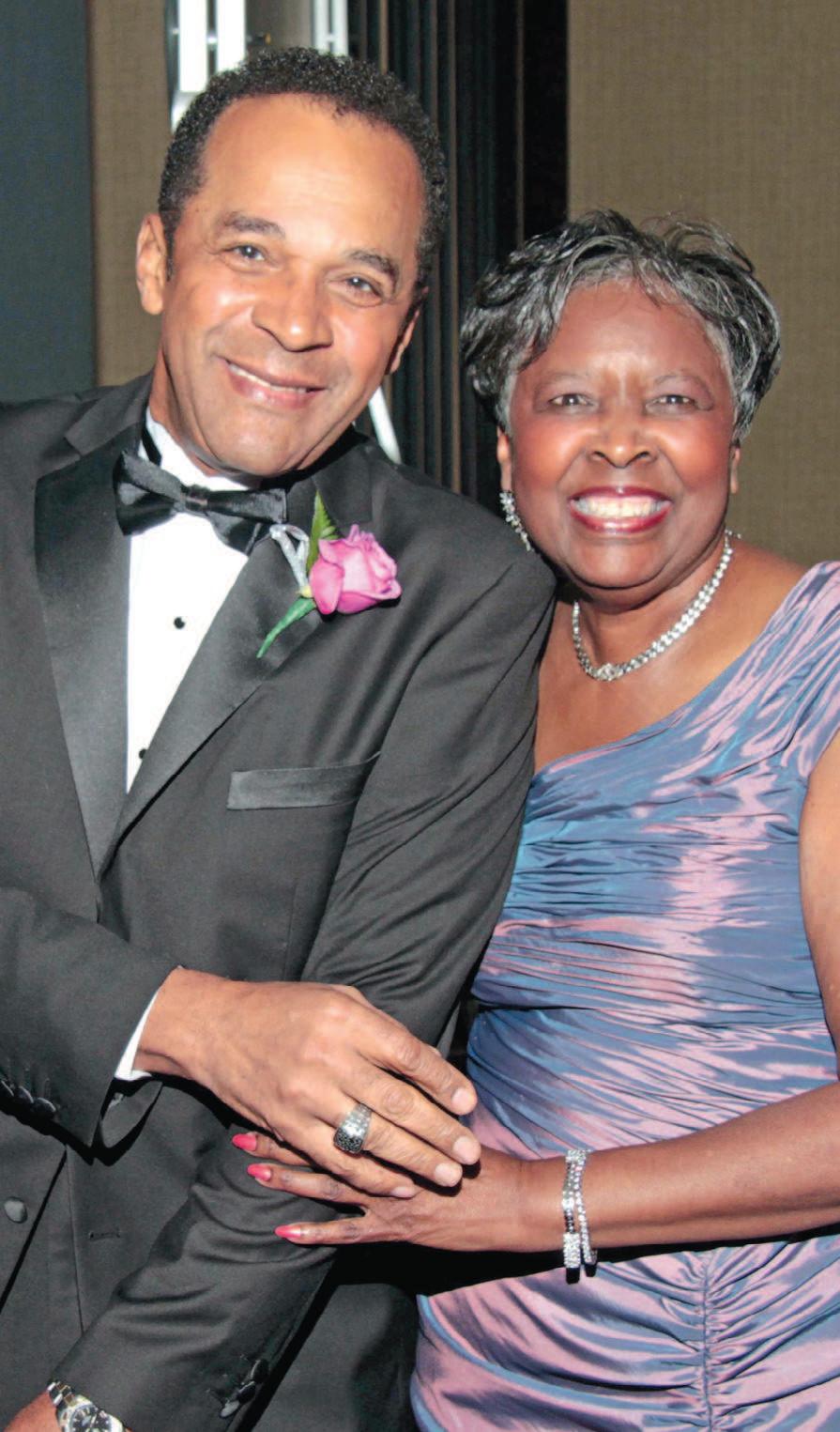
R&B vocalist Uvee Hayes joined actor,singer and songwriter the Rev.Clifton Davis as headliners recently at the Mathews-Dickey Boys’& Girls’Club Education Program benefit.Hayes has recorded more than 25 albums of classic blues with an urban edge,featuring some of the world’s finest musicians,including Otis Clay, The Emotions,Oliver Sain,Stevie Wonder,Earth Wind and Fire’s Phoenix Horns and Aretha Franklin’s rhythm section.Davis is perhaps best known for his portrayal as Rev.Reuben Gregory on TV’s “Amen”Series and for penning the Jackson 5 hit single “Never Can Say Goodbye.”

By A.Bolanle Ambonisye For The St.Louis American
Agrowing number of us seem to be unaware that upon enrollment in school, our entire family becomes part of a group. We don’t know that our children become part of the student body, we become part of the parent body, and we have a responsibility to all the other parents, students and school staff to actively participate in the education of everyone’s children.
No one lives in a vacuum. We are, like it or not, part of one another’s lives. What we do, and how we do it, either positively or negatively impacts one another. Nowhere is the impact more negative than when dealing with someone who thinks s/he is separate from everyone else.
Because of this narrow view, we expect to be treated as individuals. Instead of attending regularly scheduled parent meetings to share information and concerns, we make repeat, unannounced visits with the expectation of a meeting without regard for anything else that is going on at the time.
We also expect our children to be treated as individuals, as if our children’s needs are more important than every other student’s needs: “Don’t suspend my baby just because s/he is keeping everybody else from learning.”
School is a place where students learn how to function as a group. Our children, hearing our short-sighted view, believe they are supposed to get individualized treatment and become high-maintenance children. This entitlement attitude sucks attention and learning time away from the other students. Who wants their children assigned to a room where teaching and learning time is diminished because of a high-maintenance child or three?
Your child is no longer just your child; your child is now our child. Your child is now part of a group. That means your child is not more important than any other child, nor is s/he more important than the group
Your child is not the only one in your family who is enrolled; you become part of a body of parents who, with the assistance of school staff, are responsible for the positive growth and development of the entire group of children. Your family is now part of a school community. If you don’t want the responsibility and accountability that comes with being part of a school community – making sure your child follows his/her teachers’instructions, paying close attention to your child’s behavior with other students, attending parent meetings regularly, volunteering in a substantive way, staying accessible to your child’s school, responding to home-school communications – you really should do the school staff, other students and parents a huge favor and home school.
A. Bolanle Ambonisye, www.freematerials4parents.com, facilitates parent empowerment workshops. She can be reached at bambonisye@yahoo.com.

Continued from A1
she calls a “whirlwind” of activity attempting to bring district attention to social justice issues, which swiftly moved beyond the district’s neglect of its AfricanAmerican student talent.
“I wrote a social justice program, Honoring All Voices,” Ijei said. “I wanted the district to look at how all our kids were being treated: African Americans, students perceived as being GLBT, students from poverty, all of the oppressions – sexism, racism, heterosexualism.”
She suggested that all firstyear teachers undergo three days of training on these issues. “I got a lot of pushback,” Ijei said. “They said we weren’t ready and wanted to wait four years. You can do a lot of damage in four years. Finally, I got it through.”
It didn’t go far enough.
“The problem was, the gains were not sustainable,” Ijei said. “They would go through social justice training, feel the pain, then go back to the classroom and nothing would change.”
Change accelerated after an incident in 2003 when a white student referred to black student using a racist epithet on a Parkway school bus. “That was the trigger,” Ijei said. “I was the only person of color at the district level. It was clear we needed social justice training from the top down.”
Ijei describes this dramatic transition in her Ph.D. dissertation, which she is currently writing.
“There were about 20 of us who met for more than a year. Recommendations were made, approved by the Parkway Board of Education, and included social justice training for all administrators and teachers, parents, community members and others,” Ijei writes.
“Specific non-discrimination and non-racial policies were written and approved that had guidelines with procedures

and protocols for reporting and reacting to such incidents in a timely manner. Parkway made intentional efforts to hire more administrators and teachers of color. This incident also prompted Parkway to look at more intentional, sustainable, social justice training for all administrators and teachers.”
The district brought in Education Equity Consultants and its Leadership and Racism Program. “We wanted to make sure we looked at internalized oppression and white privilege,” Ijei said. This included an off-campus training program built around a two-night stay with four days of follow-up sessions, graduating what Ijei calls a “social justice cohort.”
The district has now graduated 20 such groups with an average of 30 participants in each cohort. Last year, the entire staff at Northeast Middle school (“the cooks, everybody”) went through this intensive social justice training. Ijei now feels that she has “many white allies” in the district for her social justice work, including (among senior administrators) Superintendent Keith Marty, Deputy Superintendent Desi Kirchhofer and Assistant Superintendent Chelsea Watson and (among school board members) Bruce Majors and Helen Casteel. This year, 24 percent of new hires in the district are administrators and

teachers of color – “the most we’ve ever had,” Ijei said. Ijei’s title is now director of diversity and pupil personnel for the district. Like many diversity officers, Ijei does many different things. She supervises social workers and counselors in the district, works with parents moving into the district who need a hardship waiver, handles resident affidavits, hears discrimination grievances and (if that were not enough) supervises all district records. “The first person who graduated from Parkway, I have their file,” Ijei said.
Until last year, she reported directly to the superintendent. “But he wanted an ex-principal to corral all the different
departments doing social justice initiatives into one,” Ijei said. So now she reports to Chelsea Watson, assistant superintendent of student services.
Ijei was well prepared for the work she is doing. She was 16 when she moved to St. Louis in 1964 from Poplar Bluff, Arkansas, where she saw the public schools forcibly integrated when she was in 10th grade. She had been top of her class in the black high school, but in the integrated high school, using the newer and better textbooks that had been reserved for the white schools, she “didn’t understand half the words.”
“I knew if I stayed in Poplar Bluff, I wasn’t going to
get the education I needed,” she said. She has been getting the education she needed every since, with bachelor’s and master’s degrees in education from the University of Missouri-St. Louis and a doctorate in educational leadership forthcoming from Maryville University in 2014. And now she is determined to see that all students in Parkway schools get the education they need. “We have a district-wide Diversity in Action plan to make sure the kids of color get a fair chance,” Ijei said. “Now we push them into challenge classes and honor classes, and they do well.”

Continued from A1
lege policy.
The maximum number of overload credit hours a faculty member can take on is 18 credit hours per academic year, the policy states. Overload compensation for professors at the college is $1,069 per credit hour. This overload pay schedule can launch faculty salaries into the six-digit range. Take Don Cusumano, department chair of psychology at the Forest Park campus. He maxed out his overload pay in the 2012-2013 year by teaching 10 extra credit hours in fall 2012 and eight credit hours in spring 2013, according to expense records documented in Board of Trustees meeting minutes. By doing so, he added $19,240 to his $95,600 salary. In the summer of 2012, he earned another $9,530 from extra projects and classes.
Cusumano was paid $3,200 to teach a three-hour, entrylevel psychology class, for which an adjunct professor would get paid about $1,200. As a department chair,
Continued from A1
Medicaid expansion next legislative session.
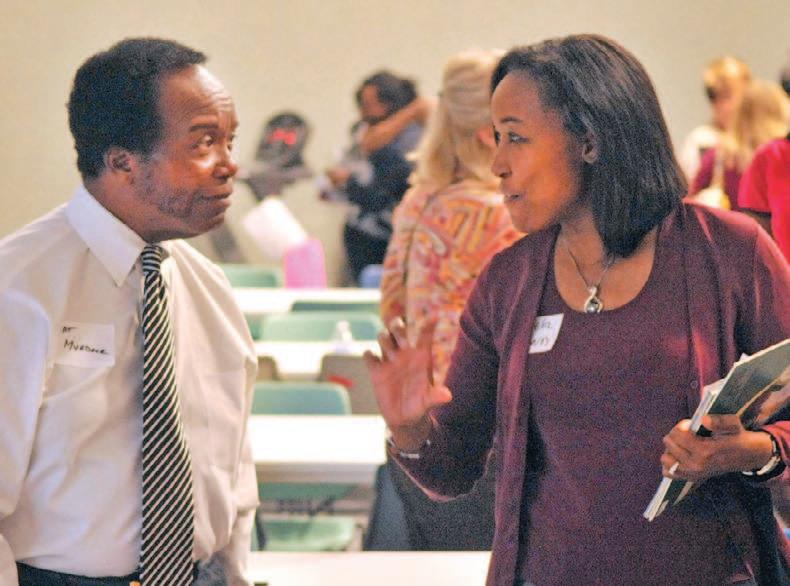
“We should be lobbying our legislators to get Medicaid expanded,” said Nathaniel Murdock, MD. “If we don’t do that, the whole house is going to crumble.”
At a St. Louis Safety Net Community Meeting, held Monday evening at the Metropolitan Psychiatric Center, St. Louis Regional Health Commission President and CEO Rob Fruend said unless approval comes in the next few days, 90-day notice letters will go out early next week, informing Gateway enrollees that their benefits are
Cusumano also receives six credit hours of “release time,” or time compensated at the regular pay rate to perform administrative duties and attend professional development programs. Basically he is given two fewer courses to teach so he can tend to his administrative responsibilities. Yet, this past academic year he picked up 18 credit hours in overload courses.
Cusumano is not the only department chair who spends his release time teaching classes. Many department chairs at Forest Park use those six hours, which are intended for administrative time, to pick up more classes and earn overload pay.
Dorsey budgets for extras
After Dorsey arrived as chancellor in the summer of 2011, she saw that the college was paying for overload expenses with funds meant for “lapsed salaries.” These are funds left over from unfilled positions and recent retirements. In fall 2011, she put a stop to that practice on all campuses.
Prior to her actions, overload expenses were not bud-
ending. RHC has asked for a three-year extension.
“There will be some confusion if we don’t get this Gateway program by Monday,” Fruend said. “We have had some dialogue with CMS. They are very aware of our situation, and they allowed me today to say that we can be optimistic that we’ll have an answer this week.”
Fruend said 20 to 25 percent of all funding for the St. Louis community health centers come from Gateway. If the extension is not approved, it would be a dire strike on the backs of poor people who need health care, particularly those with incomes below 100 percent of the federal poverty guidelines. There is nothing in the exchange to offset insurance costs for this income
geted. Any funds from open positions were used to cover overload salaries at the end of each fiscal year.
Dorsey forced the college’s campuses to budget for overload, rather than pulling from a “slush fund” at the end of the fiscal year without knowing how much the expense might be in advance.
The St. Louis American asked the college for overload pay records and “total compensation” reports of all faculty members and employees, through a Sunshine Law information request. The college said they would charge The American $320 for the info.
However, according to expense records in the board minutes, the total cost for overload courses and a few other additional assignments for full-time faculty members was $1.84 million in the spring and $1.8 million in the fall 2012.
According to the May 2013 finance report to the board, the college has reduced part-time and overload salaries by $2.1 million, compared to the 20112012 academic year, under Dorsey’s leadership.
Opposition and extra pay
One of Dorsey’s most fervent critics, who has been on the frontlines in all the attempts to oust her, is Cindy Campbell, a physical education teacher at the Florissant Valley campus and faculty union vice president of the Junior College District National Education Association (JCD-NEA). Campbell’s contract salary was $77,750 in 2012-2013. She added $19,600 to her salary through overload pay during the academic year. And in summer 2012, she added another $17,100. Through overload pay and extra work hours, she earned an extra $36,700 for the year – nearly a 50 percent salary increase.
For several months, Campbell has fought fiercely against Dorsey, along with Doug Hurst, president of the JCD-NEA. At a spring JCDNEAforum, 87.7 percent of 114 faculty members agreed to vote “no confidence” in Dorsey at the May 16 Board of Trustees meeting.
However, Board of Trustees Vice Chair Craig Larson told association leaders that the vote didn’t represent the voice of 1,800 employees, including
For the 48 contiguous states and D.C.,100 percent of poverty for a family of one is $11,490 per year in income or $220.96 a week.For a family of four,it is $23,554 per year or $452.88 per week.
Source:apse.hhs.gov
bracket.
“If you are under 100 percent of poverty, we don‘t have much for you,” Fruend said.
“If you are a single adult, there is nothing. If you make more than $10 a day, you’re uninsured.”
Healthcare for this group hinges on extending the Gateway demonstration project and Medicaid expansion, Fruend reiterated. Fruend said there are two
coalitions working on Medicaid expansion: the Missouri Medicaid Coalition and the Coalition for Health and Economic Growth.
Late last week, St. Louis city and county leaders and healthcare stakeholders met with U.S. Health and Human Services Secretary Kathleen Sebelius. She visited St. Louis and Kansas City to promote the Health Insurance Marketplace.
about 500 full-time professors and hundreds of adjuncts, according to a report in The Montage, the student newspaper for the Meramec campus. Larson voted in favor of extending Dorsey’s contract, along with trustees Doris Graham and Melissa Hattman.
In a closed executive session in July, the motion to extend Dorsey’s contract failed on the 3-3 vote. Those voting against were trustees Hattie Jackson, Joan McGivney and Libby Fitzgerald. The African-American support for Dorsey, who is black, on the Board of Trustees is split. Graham supported her contract renewal, while Jackson opposed it. None of Dorsey’s most active faculty opponents is black.
When Dorsey arrived at the college, many students with Pell grants were amassing incredible amounts of credit hours without obtaining degrees, according to inside sources. College counselors are supposed to ensure that students take mainly the courses needed for degrees and prevent them from spiraling into
It is estimated that 800,000 uninsured Missourians –100,000 of them in the St. Louis area – are eligible for coverage.
“In the first six years, there is more than $8 billion of federal funding that Missouri could receive for newlyenrolled Medicaid-eligible citizens that will not come to the state – 100 percent federal funding for the first three years,” Sebelius said.
“As a recovering governor of a nearby state, I would have loved to have that deal on the table in a heartbeat. That funding will be reduced gradually, but never less than 90 percent over the 10 years.”
There is no deadline for Missouri to expand Medicaid, Sebelius said, adding she will continue to work with Gov.
unnecessary student debt. However, these students were taking elective classes that didn’t apply to their degrees –some of which were taught by their counselors. Before Dorsey arrived, faculty counselors on the Forest Park campus were earning overload pay by teaching courses during their eight-hour workdays. Current trustee Libby Fitzgerald, who voted against Dorsey, is a former Forest Parkcampus counselor who earned overload pay until 2007 when she retired. In the fall 2006, Fitzgerald taught three personal development courses, earning $900 per course. She also taught a global education course, earning $2,700 for that. In total she earned $10,200 in overload courses for 2006-2007, adding to her then $70,535 salary. In fall of 2011, Dorsey’s team put an end to this form of “double dipping” for counselors, angering many who benefitted from the extra perks at the Forest Park campus. Among the trustees, Fitzgerald, along with Jackson, led the charge against Dorsey retaining her contract. For analysis, see Political EYE.
Jay Nixon on efforts to get Medicaid expanded in the state.
“We are going to actively continue that discussion, not only in Missouri but states around the country, hoping that the business community and the health care provider community are able to convince legislators not to turn down that money to pay for uninsured Missourians,” Sebelius said.
“Those tax dollars could be diverted into education spending or economic development or other areas that would benefit the state overall.”
For more information on the health insurance marketplace, go to covermissouri.org or www.healthcare.gov.

When you become a member of United Way’s african american leadership – charmaine chapman society, you are doing good. lots of good. in fact, more than $2 million worth of good deeds. meet hundreds of driven local leaders who share the same vision of making a diference in our community. Join the premier african-american philanthropic society in the country and see how much fun it is to be good. contact Jerilyn at jerilyn.sinskey@stl.unitedway.org. 2012 aal-ccs memBers/earlY 2013 pledges
Ms. Regina A. McWilliams, MBA, PMP Leah Anne Merrifield
Gail Montgomery-Edwards
* Jeffery L. Moore, Sr. Michael D. Mulligan
Mr. Darryl Munden
Ms. Victoria Musa
Patricia Penelton
* Kim Perry
Robert J. and
Sharon Dungy-Peters
Lionel J. Phillips
Debra J. Pitts
Luther M. Reames, Jr.
Victoria Reaves
* Gussie M. Reed
Ms. Leslie R. Ridgley
Mr. Jason Riley
Ms. Linda Robinson
* David Rodgers
* Mr. John E. Roland, Jr Ms. Susan Rollins Angela Ruffin-Stacker Napoleon L. and Carolyn Sanders Joanna S. Schooler
Wilma J. Searcy
* Cheryl Sharpe
Mr. Steve Sharpe John Shivers
* Leroy J. Shumpert, Jr. * Crystal (Ross) and Patrick Smith
Mr. Larry E. Smith
* Patrick Smith, Sr.
* Susan M. Arceneaux
* Ms. Darlene Y. Sowell
Ms. Veronica Dario Stacker
Charles A. Stewart, Jr., C.P.A.
* Dr. Monica A. Stewart
* Susan A. Stith
Mr. Halbert Sullivan, MSW Royce and Lori Sutton
* Mr. Chris Tabourne
Travis & Patricia Tate
Tracy A. Tate
* Katrina Tatum and James Tatum
Mr. Bobby H. Taylor
* J. Danielle Carr
* Mrs. Gloria Carter-Hicks
* Johnetta Carver
* Brenda Cass
* Ms. Michele Cheatham
Mr. Marvin J. Clark
Ms. Vinisha Clark
Mr. Donald Clay Mildred Clines
Ms. Cherina D. Coffman Carnecia Cole
John P. Coleman
Mr. Rodney Crim
Ms. Elaine Curry
Allieze Ruby Curry Edward and Jaia Curtis
Reba Dabney
Vera Daniel
* Ms. Jasmine Davis Vernon and Karen Davis
Mr. David Dawkins
Michael E. Dorn
Westley B. Dryden
* Dr. G. Vincient Dudley, Sr.
* Honorable Jimmie M. Edwards and Mrs. Stacy M. Edwards
Ms. Tonia Edwards
* Mr & Mrs James Farmer
Jerome Farquharson
Craig C. and Regina D. Fowler
Frankie M. Freeman
William E. Fronczak
* Cris Gavin O’Neal
Josephine E. Goode-Evans Charles Gooden
Gabriel Gore
Ms. Juanita R. Graham
Ms. Stacia Graham
* Regina L. Greer
Ms. Serena J Gregory Lesstene Griffin
Ms. Rochelle L. Griffin Stephanie Grise
* Ms. Arica January Harris
* Mr. Steven L. Harris
Mr. Terrence L. Harris
Milton Hatchett
Leonard Hawthorne
* Ms. Patricia Heavens-Kosh
Ms. Patricia Hernandez
Jan Hess
Dr. Kimberly Hodge-Bell
* Timothy Holloway
Mr. Keith J. Hopkins
Mrs. Phakisha K. Horne
* Earline Huddleston
* Carla Louise & Samuel Jay Hudson
Brian and Rhonda Hurd
Mr. Tim Ilsley
Chris and Tina Jackson
Hattie R. Jackson
Mr. Edmond E. Johnson
Mike Jones
* Ms. Shirley Jones
Terry “Chip” Jones
* Ms. Pamela P. Kelly
* Paula D. Knight
Chris & Kris Lewis
Mrs. Alisa Lock-Rash
Myron Lofton
* Osbert L. Lomax
Mr. Brian C. Lunceford
Ann W. Marr
Kerwin Marshall
* Mr. Anthony A. McBride
* Marquis McCoy
Sylva McDonald
Ms. Lois A. Taylor
* Daniel Tea
Maurice A Tennial
Christopher J. Terry
Dr. Rance Thomas
Mary J. Trice
Ms. Maxine Valdez
Marcia N. Vincent
Brenda Walker McCain
* Dr. Dorris J. WalkerMcGahee, D.D., Th.D. Mr. Albert Ware
Barbara Ann Washington
Denise S Watson
* Vanessa Wayne
* Ms. Pamela A. Westbrooks-Hodge
Cheryl L. Whalen
Dorothy L. White-Coleman
Chuck Whitehead
* Jennifer A. Willingham
Mr. Frank and Juanita Wilson
James R. Wood
* Wanda Wyatt
Builder $1,000 - $1,499
Cynthia D. Ackins
* Ms. Adriann Adams-Gulley
* Kittrell Adewunmi
Mr. Adon Allen Jr.
Ms. Sophia H. Allen Ms. Alike A. Anderson Ms. Melanie Anderson
Christine Andrews
Denise Anthony Veronica Armouti
* Ms. Tamiko Armstead
* Cheryl Armstead-Batey
Ms. Christina P. Bailey
Nishelle Bailey
* Brittany Banks
Angela and Ernest Banks Raynell Banks
* Rhoda Banks
Ms. Tracey Banks Lashanda Barnes
Ms. Chanti M. Battle Professor John G. Baugh Jr.
* Mrs. Ebony E. Beattle
* Kimberly R Beck
William
Clark-Scott
Rudolph Clay, Jr.
Yvonne Clemons
Cory Clines
and Darnetta Clinkscale
Cobb
* Henry L. Colbert *
Colbert
and Rasheen Coleman
* Mrs. Patricia Coleman
* Darryl and Kenita Collier
* Margaret M Collins
* Wilbon Cooper
* Roland Corvington
Mr. Steven H. Craig
Dwight Cramer
Darcella K. Craven
Byron and Kim Crawford
* Gale Crenshaw
* Anita Shanks Cross, Esq. Ronald Cross
Mr. Arthur R. Culver
* Mr. and Mrs. John E.
Cunningham
Ms. Simone Cunningham
Travers L. Curry
Anthony and Vanessa Curtis
* Ms. Trishana D. Dailey
* Ms. Christina L. Dancy
Ms. Teresa Dancy
Ms. Towanda Daniel
* Ms. Nakia Daniels
Debra Daniels
* Donna Roberts Dansberry
Adreinne Davis, J.D.
* Ms. Chandrea L. Davis
* Daronda Davis
Ms. Kiesha N. Davis MSW
Ms. Laraine L. Davis
Lisa Monet Davis
Mrs. Sacoyya N. Davis
Stephanie Davis
Ms. Yolanda DeGrange
Larry L. Deskins
Reginald D. Dickson Monique Dillard
* Ms. Jill Dixon
* Mrs. Erika Dominick
* Ms. Shirley Doss
* Mr. and Mrs. Jeffrey Douglas
* Helen Douthit
* Ms. Irasa L. Downing
* Ms. Latonya Draggs
* Ms. Renita D. Duncan
Freddie L. and Frances V. Dunlap
Rico Dunn
* Saundra L. Eckstadt
Mr. Andre L. Edison
Andre’ L. Edwards Paulette E. Edwards
* Mr Timon W Edwards
Ms. Vicki Taylor Edwards
Mr. Udonna Eke-Okoro
and Melody Eskridge
* Arica Evans
R. Evans-Blackmon
Charles E. Facen
* Dione M. Farria
and Mrs. Lathon
Y. Ferguson Bush
Fields
L. Fisher
Leon Fitts
Sheilah E.
*
*
Ms.
*
Mr.
* Mr. Gerald Grier
* Bert Griffin
* Michelle N. Griffin
Constance Gully
Ms. Sherita Michelle Haigler
Mr. John F. Haliburton, Sr.
* Ms. Sheena R. Hamilton
Mr. Terrell Hamilton
Florinda Hammond
Ms. Sarajeni A Hammond
Ms. Yvonne Hammonds
* Ms. Sandii Handrick
* Kenya Haney, MSN, RN BJC
Healthcare Kenya Haney, MSN, RN
* John D. Hardiman
Sharonica L. Hardin
Ms. Anita L. Harding
Mr. Rodney Hare
* Lena Harness
Ms. Melissa Harper
Freddie L. Harris
* John Harris
Denise Harrison
Ms. Falishia G. Harrold
Sharon Harvey Davis
Raymond M. Harvey
Previn A. Hatchett
Ms. Donna Hayes
Ms. Tiffany Diane Hayes
* James Heidelberg
Eric S. Henderson
Karan P. Henderson
Lori Henderson
* Mr. Odell Hendricks
Ms. Alisha N. Hill
Ms. Chyriell Hill
* Erica Hill
Donovan and Kelly Hill
Roger Hines
* Mrs. Traci L. Hodges
Ms. Donna HolbrookHopkins
* Ms. Darlene Holland
* Ms. Yvonne Holland
Stacy Hollins
* Ms. Leslie Holloway
Ms. Aliah B. Holman
Desarie Holmes, Ph.D.
Marie Holmes
Luke Bobo and Rita Holmes-
Bobo
Mrs. Andreal Hoosman
* Linda Hopkins
* Mr. Jeffrey Houston
Mr. Frederick Hudson
* Mr. Phillip Huiswoud
Mrs. Petra D. Humphrey
Amy A. Hunter
* Ms. Osereme L. Imeokparia
* Ms. Kristina R. Ingram
Mr. Justin E. Irving
Tom Irwin
E. Paulette Isaac-Savage, Ed.D.
* Ms. Carla Jackson
Carlos Jackson
Carolyn A. Jackson
Ms. Cyeria Jackson
* Ms. Demetria R. Jackson
MBA
* Francella Jackson
* Keith S. Jackson
Mr. Nathaniel Jackson
* Ms. Sylvia Jean Jackson
MCRP
* Ms. Terneicesa N. Jackson
* Ms. Tina Jackson
Harry James Jennelle M. James
Ralonda M. Jasper
Ms. Jacqueline Jefferson
Ms. Jacqueline Jenkins
Ms. Tanya L. Jenkins
Ms. Danielle Johnson
Mr. Frederick Johnson
Ms. Kamella L. Johnson
Keisa M. Johnson
Mrs. Natalie I Johnson
Ms. Raegan Johnson
* Sheila Johnson
Ms. Stacy E. Johnson
* Mrs. Carla Jointer
Mr. William T. Jolly
* Debbie Jones
Mr. Jeff A. Jones Karen Renee Jones
Ms. Lora L. Jones
* Mrs. Mareka M.
*
Mr. Fontez M. Mark
Maretha Martin
Yvette Martin Ms. Kimberly Matthews
May
Theresa Mayberry Derek and Keia Mays Mr. James D. McBride
* Arlett McCain Ms. Shannon M. McCall Ms. Camille McCaskill Mr. Brandon McClain
George and Melody McClellan
Ms. Dora McClendon
Karla R. McClendon
Ms. Cheryl McCree Earl McDowell, Jr. Loretta McDuffie
Ms. Felicia McGee
Mr. Ulric McGough
* Rita McIntosh
Ms. Erica Jennifer McLemore
Mrs. Clara P. McLeod
Karen L. McMurray
* Cheryl McNeil
* Danielle McPherson
Mr. Tyrone McNichols Jr., Ed. D.
Ms. Wendy McSweeney
* Mr. Matthew Mickens
Darius T. Miller
Deborah L. Miller
Mr. Kenneth Miller
Lauren and Leo Ming Neuka B. Mitchell
* Breanna Moore Ms. Lakakilia S. Moore Ms. Qiana A. Moore
L. and Sandra M. Moore Monnika Morey
* Annette C. Morris Emma J. Morris Aubrey R. Morrison, M.D. John Moten Mr. and Mrs. Earnest Muex Rosietta Muskin
* Dr. Otha Myles
Mrs. Christine Myrick
* Reverend Earl E. Nance, Jr.
* Ms. Trelana M. Nance
* Hafiz Nasiruddin Mr. Michael T. Naughton
Rev. Robert W. Lay
Rev. Robert W. Lay expired unexpectedly on September, 13, 20013, in Pittsburgh, Pennsylvania.
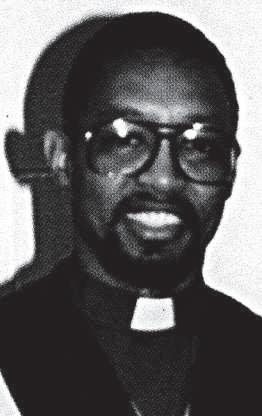
Rev. Lay, a native St. Louisian, aspired to become a Minister of the Gospel at a young age. He was educated in the St. Louis Public Schools, and was very active in sports, especially wrestling, track tennis, and weight lifting. He completed collegiate studies at Howard University in Washington, D.C. and earned a Master of Divinity Degree from Yale Divinity School in New Haven, Connecticut. In 1974, he became an ordained minister and accepted the position of chaplin at The Ohio State University in Columbus, Ohio. He was the first Afro-American to be employed In this exalted and prestigious position. Later, he pastored at Trinity AMEZ Church and Holliday Memorial AMEZ Church in Pittsburgh, Pennsylvania. He also served as Chaplain for twenty-three years at John J. Kane Regional Center in Glen Hazel, Pennsylvania.
Rev. Lay had a jovial and outgoing personality. His love for youth was expressed as he instructed them in chess, wrestling, and tennis, and in his volunteer services at the Boys and Girls Club in Pittsburgh. He also volunteered his services as Director of tennis tournaments sponsored by the Pittsburgh branch of the NAACP and the city of Pittsburgh. His most recent tournament was as late as a few weeks ago. He was a beloved member of Cote Brilliante Presbyterian
Church in St. Louis, where as a child, He was nurtured in the Christian Faith. He returned frequently to deliver the Ministerial Message. Rev. Lay is the father of three children: Brittney (Nathanial) Arnett, Robert Lay, II, Chauntel Lay, and the grandfather of Gavin Lay, all of Pittsburgh, Pennsylvania. He is the son of Margaret Buck Lay and the late Robert A. Lay, of St. Louis and the brother of Ronald A. Lay of Oakland, California.
Lynn Rochelle Caldwell Gibbs
Lynn Rochelle Caldwell Gibbs, 55, of New Jersey, passed away on Tuesday, September 3, 2013 after a long battle with cancer. Lynn was born in St. Louis, Mo on September 27, 1957. She is the daughter of Oscar and Cecelia Selfe and mother to Latoya Denise Gibbs. The family of the late Lynn Rochelle (Caldwell) Gibbs wishes to acknowledge with sincere appreciation, the many comforting messages, floral tributes, prayers, food and other expressions of kindness and concern.
Reginald
“Reggie” Wells
The life of Reginald “Reggie” Wells is divided into three chapters—the past, present and future. In the past: Reginald was the second of five children born to Albert and Helene Wells, October 28, 1940 in St. Louis, Mo. Both parents preceded him in death.
Reggie was a shy boy, most inquisitive and mischievous, but very loving. He was a graduate of John Marshall Elementary School and a 1960 gradu-
As a service to the community, we list obituaries in the St. Louis American Newspaper, on a space-available basis and online at stlamerican.com. AT NO CHARGE.
Please send all obituary notices to kdaniel @stlamerican.com.

ate of Hadley Technical High School. He received a military Honorable Discharge from the U.S. Army after three years of service and underwent demolition training, experiencing tours of duty in Germany and the United States. He was united in the sacrament of Holy Matrimony to Dianna Pearl Dyer on November 17, 1962. To this union, one lovely daughter, Roxanne Denise, was born in 1965. In 1964 Reggie was employed by the St. Louis County Water Company (now Missouri American Water Co.) in the construction department, and was promoted several times before his retirement in 2004.
Reggie was a former member of Kennerly Temple COGIC and played trumpet in the church band. Reggie converted to Catholicism in 1956 and was a member of St. Mark “The Evangelist” Catholic Church until the five church merger in 1992 and became a member of St. Augustine Catholic Church.
In the present: Reggie is a lifetime member of AMVETS Post 67 and a member in good standing of the Knights of Peter Claver Council 339 of St. Augustine Church. He was a former Junior League Football Coach for Mathews-Dickey Boys Club and a member of the Parents Organization for many years. He traveled and supported the Lancers Drum and Bugle Corps and the Police Youth Corps. He also supported reunions and activities for Hadley Technical High School.
In the future: Reggie’s lips were silenced by God on September 9, 2013. He leaves
to cherish his fond, loving memories of life: devoted wife of 50 years, Dianna; dedicated daughter, Roxanne (Algie); loving grandsons, Dynasty and Algie IV; brothers, Harold (Frances) of Raleigh, NC and Homer (Natalie); sister, Veronica (A.B. Jr.); 101 year old aunt, Eula Bell; special mom, Eddie Ruth Boston; nephews, nieces, cousins, other relatives, friends and acquaintances.
Charles Simms, Jr.
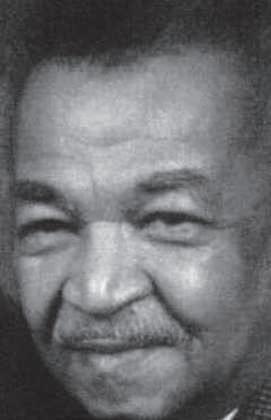
Mr. Simms departed this life on Friday, September 13, 2013 at the age of 85. He was a native of New Iberia, LA before relocating to St. Louis, MO. Mr. Simms was the Chief of Pharmacy with the Veterans Administration Hospitals for over 20 years. He was also co-proprietor of Union-Page Drug Company in St. Louis, MO for several decades.
Mr. Simms is survived by his wife of 60 years, Ida Bell Simms (Ezell); three sons, Charles R. Simms, Stephen Simms (Marsha); Martin Simms (Linda); two daughters, Catherine Cheeks; Helen Glenn (Marvin); 17 grandchildren; three great-grandchildren; and one brother, Raymond Simms of New Iberia, LA; and a host of nieces and nephews. One son, Michael Simms (Wanda) preceded him in death.
The St. Louis County Library Foundation will present the 2013 Sidney Johnson Learning Award winner to local teen Oluwatosin Mosuro for his outstanding volunteer service. Oluwatosin, 17, has been a volunteer at the Florissant Valley Branch since 2011, contributing more than 150 hours of volunteer service.
Oluwatosin will receive $1,000 at the St. Louis County Library Foundation’s Gala on September 21.
Oluwatosin has helped with tasks such as arranging items for the branch’s book sales, preparing for story time, and shelving library books. Youth Specialist Jennifer Illardi recommended him for the annual award, saying, “he has a strong mind for problemsolving and is not shy to suggest alternative ways to tackle an issue. He deserves this award because of his dedication to service.” She is also impressed with the way Oluwatosin makes an effort to include new volunteers.
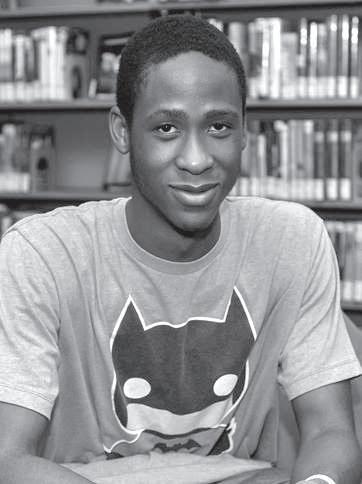
“He is very friendly and welcoming, which makes me very comfortable having new volunteers work alongside him,” said Ilardi.
A senior at Hazelwood Central High School, Oluwatosin is involved in Chess Club and Robotics and intends to pursue a degree in engineering.
Harris-Stowe Homecoming Sept. 29-Oct. 5
This year’s highlights include the Kickoff Block Party on September 30, which will take place outside on Laclede Avenue, under the Bank of America Entryway Arch.
The “So St. Louis” Comedy Show, featuring the talents of Javon Bibbs, Terrell Tate and DeAndre Whitner, is October 2, in the Henry Givens Jr. Administration Building Main
Auditorium at 7 p.m. A new event, the Family Fun Festival and Carnival, will be held October 4.
On Saturday, October 5, Homecoming will conclude with the HSSU Alumni Association Evening Jazz Reception at 6:30 p.m. in the Bosley Dining Hall featuring songstress Uvee Hays and Point of View, a student jazz ensemble from Riverview Gardens School District.


According to inside sources, when one vice president for academic affairs arrived at St. Louis Community College, this person asked about how overload pay was budgeted and was told, “Don’t worry about it.” Overload is pay that fulltime staffers receive for teaching extra classes on top of their 30 credit-hour load. For years at the college, it was not a budgeted expense but a surprise that got calculated at the end of the fiscal year. And the expense was covered by using funds from lapse salaries, or empty positions.
Chancellor Myrtle E.B. Dorsey didn’t think expenses should come as surprises, so she put a stop to the practice at all four campuses. Overload pay became part of the budget in fall 2011, and that’s also the time when she started feeling pushback from several faculty members.
One of the most vocal was Cindy Campbell, a physical education professor at the Florissant Valley campus and vice president of the faculty union JCD-National Education Association. As a side note, Campbell earned an extra $36,700 in the 2012-13 academic year – about a 50 percent increase in her $77,700 salary – through overload pay. But there’s a bit more to Campbell’s story than clutching onto her dollars.
Campbell is a strong supporter of Marcia Pfieffer president of the Florissant Valley campus since 2002. Pfieffer, who joined the Flo Valley campus as a faculty member in 1980, applied for the chancellor position along with Dorsey. According to insiders, Pfieffer was basically groomed by Chancellors Henry Shannon and Zelema Harris for the role. On several occasions she served as acting chancellor and represented the college at local and national events. In fact, the entire college leadership team signed a letter stating that they supported Pfieffer and wanted her to be the next chancellor. At the time, the leadership team consisted of three white campus presidents, Vice Chancellor of Finance Carla Chance, Vice Chancellor of Workforce Development Rodney Nunn (who is black) and the Vice Chancellor of Technology J. Craig Klimczak. Dorsey is black; Pfieffer is white.
Once Dorsey took the helm, Campbell became an instigator against many decisions Dorsey made. And as the faculty union’s vice president, she called on the predominately white faculty to stand behind her. The biggest bone of contention was the overload pay. Campbell was not the only faculty member earning enough

overload pay to push her salary into six digits. While overload pay is not guaranteed, many faculty members feel entitled to it. Any administrator who dares to fill a teaching slot with an adjunct professor will likely face a grievance by the union.
Many adjuncts are African Americans looking for an opportunity to gain experience and aspire to become fulltime faculty. And though at Forest Park and Florissant Valley the student population is predominately AfricanAmerican, the faculty on both campuses is majority white.
Dorsey also began questioning the physicaleducation requirement for graduation, which threatened Campbell’s job.
Professional dilly dally day
So what were faculty members’ other critiques of Dorsey? She hired Lita Pener an African-American woman with extensive training and development experience, as the college’s professional development director. A white Flo Valley faculty member, Donna Nelson, had also
Cindy Campbell, a physical education professor at STLCCFlorissant Valley and vice president of the faculty union, has led the charge against Chancellor Dorsey.
applied for the job. Nelson had helped plan professional development activities for 10 years.
Prior to Pener’s arrival, there was very little spending oversight and professional development activities were planned willy-nilly, insiders say. However, coordinators and faculty were made livid by the changes Dorsey made to professional development. Numerous meetings and emails flowed about the audacity of Dorsey to hire Pener and “disrespect” the professional development coordinators. Before any activities were even planned, the faculty had worked themselves into a frenzy. What made things worse was that Dorsey made the professional development day mandatory. In past years, many employees skipped the day.
The undertones of race were undeniable. A black chancellor who beat out an inside white candidate (Pfieffer) for the top job hired a black professional development director to replace a white faculty member from Flo Valley, which is led by Pfieffer.
To prove their disdain, a predominately white faculty crowd showed up at a board meeting to express their
outrage at Dorsey’s handling of professional development day. They bitterly and publically berated her, each giving a twominute verbal whipping.
Smelling blood in the water, members of Dorsey’s own leadership team – who signed the support letter for Pfieffer – began to make derogatory comments towards her as well.
Selective outrage
At 8 a.m. on April 18, a male STLCC student attacked a female student in a women’s bathroom at the Meramec campus. The male student was choking the woman, but she was able to scream before he covered her mouth.
The woman’s professor heard the student scream, noticed she was not in class and ran into the bathroom. The heroic professor, also a woman, grabbed the attacker and dragged him from the bathroom and yelled for police.
After the attack, board trustees asked Jeffrey T. Demerath of Armstrong Teasdale to investigate the incident and how the arrest was handled. Demerath found that campus police did not properly process the case or arrest. Also, then-president of Meramec campus George Wasson did not notify Dorsey about the assault, even though they were both at the same conference in California that weekend.
The incident happened on a Thursday, and Dorsey wasn’t informed of the incident until Monday, according to the report.
In internal meetings and private conversations, Meramec faculty members placed the blame on its campus leadership and not the chancellor. Wasson, who failed to alert the campus or the chancellor after being notified of the attack the morning it occurred, resigned on April 26.
Ironically, no faculty members appeared at the board meeting to demand Wasson’s ouster, nor for the head of the white Meramec campus police chief.
However, when the chancellor demanded attendance at a paid professional development day, the faculty showed up in full force to elicit cries of “no confidence.”
One of the two AfricanAmerican women on the board voted against renewing Dorsey’s contract – Hattie Jackson. She is seen as reliably pro-black students and problack community. In fact, Jackson has been known to take a public stance in support of issues of importance to minority contractors. In board meetings, she openly questions how contracts are awarded and how building repairs are made and financed, particularly at the Forest Park campus. But on the other hand, along with board trustee Libby Fitzgerald, it is widely felt that Jackson is 100 percent in support of the predominately white faculty and pro-union. This, in itself, is not bad. However, the impact of the meddling from Jackson and Fitzgerald has resulted in a failure to institute some of the serious changes needed to improve the retention and graduation of students in general and African-American students in particular.
Fitzgerald, a former counselor at Forest Park who enjoyed the perks of overpay until she retired in 2007, also opposed Dorsey. Despite the gains made under Dorsey’s leadership, Jackson and Fitzgerald are products of the relationship-over-resultsoriented STLCC culture, insiders say.
Unfortunately, those who were encouraged by the changes in the direction the college was heading feel that they have lost the battle to turn around the college. If Pfieffer becomes chancellor, she will likely be the relationshipover-results leader that many at STLCC have become comfortable with, and the reforms instituted by Dorsey to tighten the college’s budget and

By Rebecca S. Rivas
Of The St. Louis American
On September 17, Circuit Court
Judge Thomas Grady sentenced Rico Paul, 21, to life in prison without parole for the murder of Paul Reiter, the longtime circulation manager of The St. Louis American
On August 16, a diverse jury convicted Paul of first-degree murder, first-degree attempted burglary and armed criminal action.
Paul, of the 3500 block of Bamberger, also was sentenced to 20 years in prison for armed criminal action and seven years for attempted burglary, to be served concurrently with his life sentence.
On the morning of May 9, 2011, Reiter interrupted Paul and an accomplice in the act of robbing Reiter’s next door neighbor in the 5000 block of Idaho. Reiter yelled that he would call the police if they didn’t stop the burglary, and Paul responded
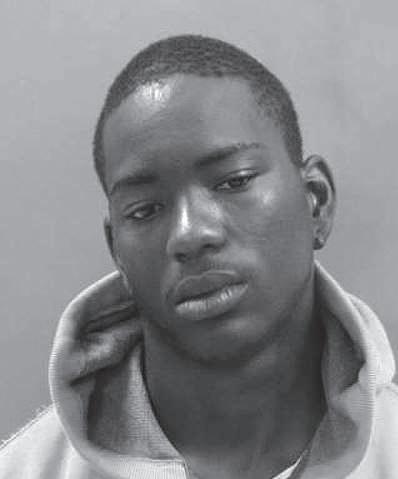
by fatally shooting Reiter, 58, who died clutching his cell phone with 911 dialed but not called.
Reiter’s son, Christopher Reiter, 22, and several siblings and family members were in the courtroom at the sentencing. Melissa Gilliam, prosecuting attorney for the St. Louis
Circuit Attorney’s Office, read a letter that Christopher wrote to his father’s murderer.
“Whether you are listening or not, I forgive you. Whether you feel remorse or not, I forgive you. Whether you have forgiven yourself or not, I forgive you,” Christopher Reiter wrote.
“And believe it or not, I feel pain for you. I wouldn’t wish this situation on my worst enemy. But I also wish I still had Paul.”
While Gilliam read the letter, Rico Paul bent his head several times to wipe his face on his orange jumpsuit, as his hands were in handcuffs.
Paul Reiter’s brother, Mark Reiter, also testified at the sentencing hearing.
“The first time you came into the courtroom, I saw in your eyes that you were sorry,” Mark Reiter said to Rico Paul. “You are forgiven. I hope your heart gets freed.”
Mark Reiter brought a bible that belonged to his deceased wife and asked Rico Paul if he would like to have it. Looking stoically at Mark Reiter while he spoke, Paul answered, “Yes.”
Mathew Waltz of the Missouri State

Public Defender Office provided able defense. After the sentencing, Paul complained to the judge that Waltz did not contact four witnesses that could have helped his case. Waltz said he attempted to call and seek out the witnesses, but received no response from any of them.
Waltz said he would file an appeal. Gilliam explained to the family that the appeal is common procedure, but it has little chance of moving forward.
Paul’s first murder trial in December ended in a hung jury. Family members said they were relieved that after two years the case was finally over.
Outside of this case, Paul still has about 30 counts of burglary pending, Gilliam said. At the time of Reiter’s murder, Paul was already on probation for robbery and assault. Paul’s probation was revoked after he was charged with the murder, and he was sentenced to 15 years in that case.
Several of Paul’s family members also attend the sentencing. After the hearing, his mother was escorted to a nearby room to visit with Paul before he was taken back to jail.






Harry’s Big Adventure: My Bug World! presented by Terminix® is
In our “Super-Size” world, we can easily lose track of what an actual serving size means. When reading labels on a food or drink product, you can determine the nutrients, sodium, fiber,
Another fun way to increase your physical
is to become part of a


Take advantage of the many teacher programs we offer at the Zoo to supplement your students’ classroom experience. The Zoo Outreach Program offers instructors who can bring live animals to YOUR classroom. We offer a variety of teacher kits you can check out, and we offer other resources (videos, books, etc.) FREE for you from our library. We even designed a cool poster you can hang in the classroom!
We’re here to help you succeed, and there are even scholarships available. Just visit stlzoo.org/teachers or call us at (314) 646-4544 to learn more.
sugar and calories of a serving size. But be careful; just because it looks like one small bottle of soda — it may not be considered one serving size. For example, a 20-oz bottle contains 2.5 servings. So if the bottle states “110 calories per serving,” that means the entire bottle contains a total of 275 calories! Remember to watch those serving sizes and you’ll have better control over what you’re eating and drinking.
Learning Standards: HPE 2, HPE 4, HPE 5, NH 1, NH 2, NH 3, NH 5 Be A
team. This teaches you sportsmanship, cooperation, commitment and discipline. Find a sport you enjoy and practice enough to try out for the team! What team sports are available in your area? Possible options are baseball,
of a formal team keeps you regularly active. And as a
—
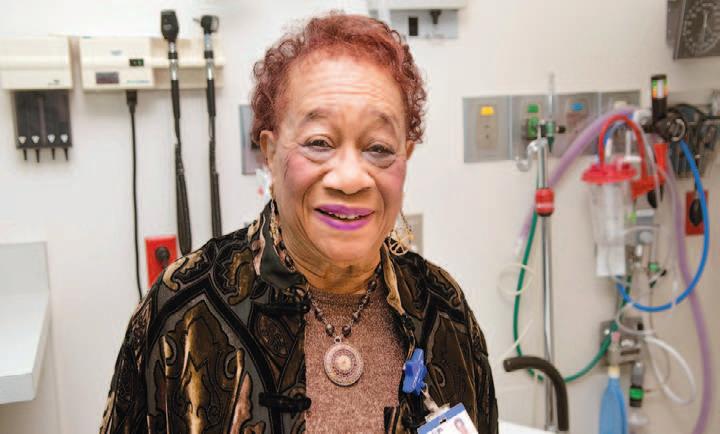
Where do you work? I work at St. Louis Children’s Hospital, BJC.
Where did you go to school? I graduated from Vashon High School and attended Stowe Teachers College. Healthcare is an ongoing educational experience due to the new discoveries in the medical field and laws that govern the healthcare system.
What does a liaison do? I welcome our customers with a smile and appropriate language, comforting our patients and families when they are frightened and offering the children books and toys during their stay. The skills needed for this job include computer skills, reading and writing skills, and problem solving. It is also important to be able to initiate conversations with others and understand families of all cultures.
Why did you choose this career? I was inspired by a prominent physician by the name of Dr. P.J. White, pediatrician at Homer G. Phillips and St. Louis Children’s Hospital. After 56 years, this is not a “job,” but a spiritual calling.

What is your favorite part of the job you have? I enjoy meeting and greeting old and new families and conversing with them, also meeting new medical and nursing staff. My travels across the world have increased my knowledge of diversity in the medical field.
Learning Standards: HPE 6, NH 3

4th Grade
Ms.
Fourth


Although Americans of all ages are consuming more sugar than ever before in soft drinks and processed foods, children are more likely to choose sugar’s sweet temptation. Sugar has many forms including dextrose, fructose, corn syrup, honey, and molasses. Too much sugar can lead to health problems, such as obesity, tooth decay, hyperactivity, and more. Foods that contain a lot of sugar may taste good, but often they offer little nutritional value.
When children substitute high-sugar beverages for milk and dairy products, they are at risk for lower bone density, which can lead to bone fractures. Sweetened soft drinks often have caffeine, which is a stimulant that can cause sleep issues and headaches. Finally, childhood consumption of excess sugar could be a contributing factor in the development of Type 2 Diabetes in adults.

In this experiment, you will learn about solutions as you add sugar to water of different temperatures.
Materials Needed:
• Sugar cubes • Cold water in a glass • Hot water in a glass • Spoon for stirring Procedure:
q Make sure the glasses have an equal amount of water.
Does this mean you should completely eliminate sugar? Of course not. Sugar is a form of energy. The key is to eat a balanced diet and limit the amount of added sugar. According to Family Education magazine, children are eating up to seven times the daily recommended amount of sugar. The American Heart Association recommends 6-8 grams of added sugar a day for a school aged child. Keep in mind that sugars are found naturally in fruits, dairy products, and whole grains. These sugars also offer many nutrients and health benefits. These are not added sugars. Beware of hidden sugars in fruit juices, cereal, yogurt, and flavored milk. Watch this video to see just how much sugar is in soda: www.sciencekids.co.nz/videos/experiments/sugarinsoda.html For more information, read: www.mindbodygreen.com/0-4543
Learning Standards: I can read nonfiction text to learn about the pros and cons of sugar.
r Repeat the same process for the hot water.
t Compare the number of sugar cubes dissolved in each liquid. Which dissolved more?

Photo:browsebiography.com
Bertram Oliver Fraser-Reid was born on February 23, 1934, in Coleyville, Jamaica. His mother died when he was only nine months old. Fraser-Reid attended Bryce Elementary School, where his father was headmaster. In 1948, Fraser-Reid attended Clarendon College where he became a junior teacher. He became fascinated with chemistry after reading, TeachYourselfChemistry. In 1956, he enrolled at Queen’s University in Canada and received both his bachelor’s and his master’s degrees in Chemistry from there. During his college career, Fraser-Reid studied the chemistry of sugars. In 1964, he earned his doctorate in chemistry from the University of Alberta.
After graduation, Fraser-Reid conducted research at Imperial College in London, England. In 1966, he returned to Canada to continue his research on the chemistry of carbohydrates. In 1980, he traveled to the United States and studied the structure of potential cancer-fighting molecules while he was working at the University of Maryland.
CnH2nOn
Next, Fraser-Reid went to Duke University where he returned to his studies of the chemistry of sugars. This research opened the doors for further studies. Fraser-Reid learned that he could use sugars to create scents to spray on trees to prevent the harmful damage of insects. He also applied his research for cures for diseases, such as malaria, tuberculosis, and AIDS. Fraser-Reid’s work has been recognized by organizations from Australia, Japan, the United Kingdom, and Canada. He was nominated for the Nobel Prize in chemistry in 1988. The American Institute of Chemistry named him the North Carolina Chemist of the Year in 1995. In 2007, he was awarded the Gold Medal by the Institute of Japan.
Thisisthechemicalcompositionofalmost allsugars.Therearetwotypesofsugars— monosaccharides,anddisaccharides. Glucose,fructoseandgalactoseareall simplesugars.Sucrose,maltose,andlactose aredisaccharides.
w Put a sugar cube into the cold water and stir until the sugar disappears. Repeat this process until the sugar stops dissolving and gathers on the bottom of the glass. Be sure to count the number of sugar cubes you added. e Write down how many sugar cubes you could dissolve in the cold water.

A soda may be a delicious and refreshing beverage, but did you ever stop to think about how much added sugar is in one 20 oz bottle of soda? Look at the nutritional information on a bottle of soda. Note: If the container has more than one serving, multiply the number of grams of sugar by the number of servings to get the total grams of sugar in the container. For example, 27 grams sugar x 2.5 total servings = 65 grams of sugar in the entire 20 oz bottle.
Calculation: Grams of sugar ÷ 4 = teaspoons of sugar. For example, if your drink has 65 grams of sugar (÷ 4), you are



Discuss: When the cold water solution becomes “saturated,” sugar starts forming on the bottom of the glass. The hot water solution has faster moving molecules with bigger gaps. This allows more sugar molecules to fit in between.
Learning Standards: I can follow sequential directions to complete an experiment. I can make observations and deductions from the results.
drinking 16.25 teaspoons of added sugar.
Activity: Bring in different drink labels to calculate added sugar: juices, flavored milk, lemonade, soda, etc. Calculate the number of teaspoons of added sugar.
Discussion Questions: Were you surprised at the amount of added sugar in drinks? What is a healthy choice to drink when you are thirsty?
Learning Standards: I can add, subtract, multiply and divide to solve a problem.

and
Discussion Questions: What was the most interesting thing you learned about Dr. Fraser-Reid? Look at the list of ingredients on the back of any food package and you will often find ingredients that end in the suffix “-ose.” These are sugars. Find three packaged foods or drinks that contain these ingredients. List the sugars you find in each item.
Learning Standards: I can read a biography to learn about an African American who has made contributions in science, math, technology, or engineering.


Use the newspaper to complete the following activities: Types of News: Look through the newspaper’s advertisements for sports and fitness equipment. Judging from the ads, what are the most popular forms of exercise? Discuss the benefits of each type of exercise. Create a newspaper advertisement for the form of exercise that you enjoy most. Be sure to include the benefits of exercise in your advertisement. Interview: As a class, interview the head of the school cafeteria to find out what guidelines are used in preparing healthy foods for lunch. Then, write a newspaper story based on your interview. Be sure to include a catchy headline.
Learning Standards: I can use the newspaper to locate information. I can categorize and summarize that information.


members, $2.26 million
More than 300 people attended United Way of Greater St. Louis’ 2013 African American Leadership -Charmaine Chapman Society kickoff at the St. Louis Zoo Tuesday, September 17. Co-chaired by Brenda and Maurice Newberry, this year’s goal is to have 1,000 members and raise $2.26 million toward United Way’s $72.25 million goal to help people throughout the community. The Society is the largest African American Giving Initiative of its kind in the United States.
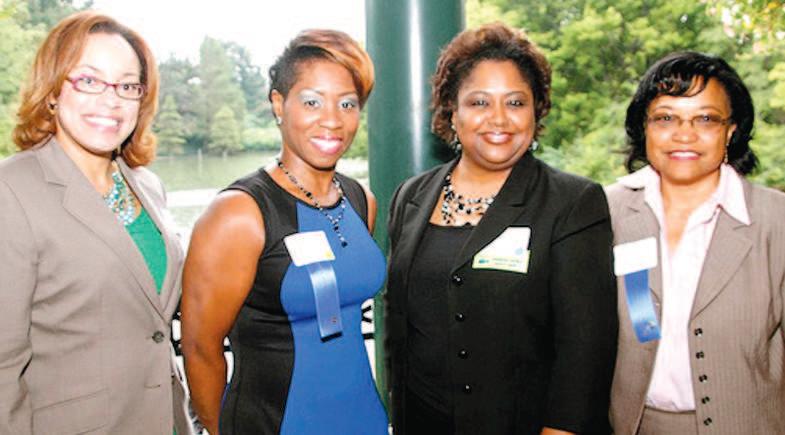

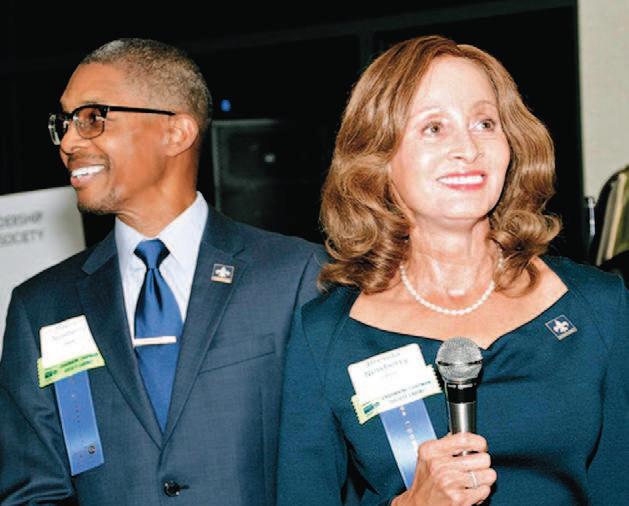

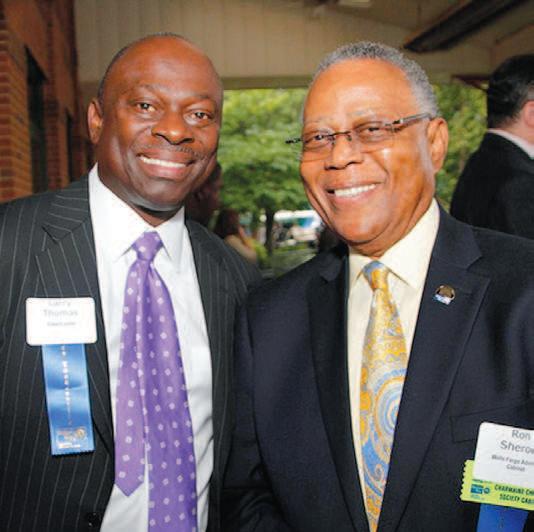


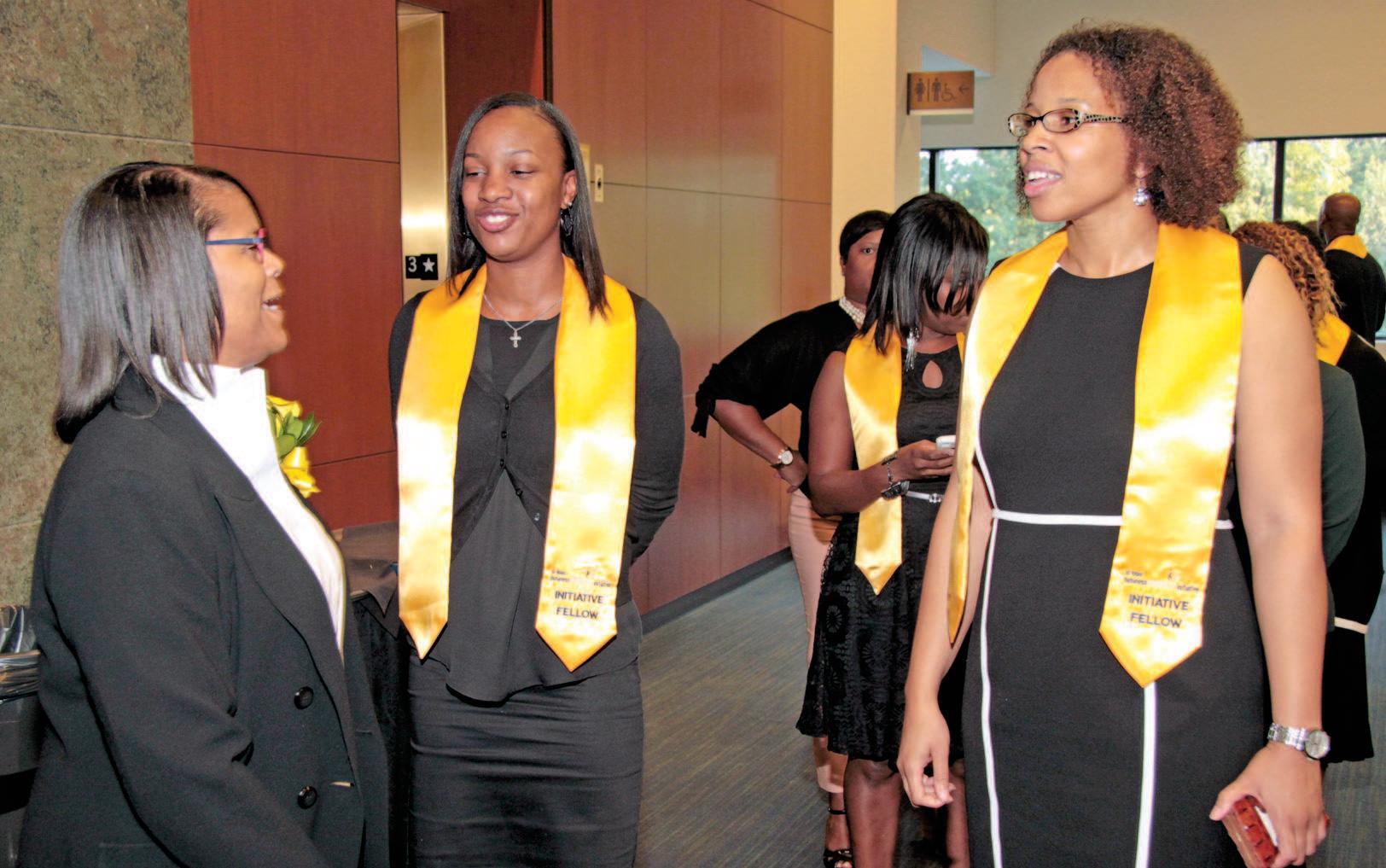
By Rebecca S.Rivas
Benjamin
“None of us will leave the program the same way we entered.”
– Rhonda Garrett,a manager at Anheuser-Busch InBev
failure as real-time feedback and didn’t allow it to define me,” he said. “One of the other lessons I learned is the importance of fear. It’s okay to be scared, because fear
and being scared are the prerequisites to courage.”
Akande told the 66 leadership program graduates – professionals representing 39 companies – that they will experience much fear as they go through their careers, often not knowing when the next opportunity will arise. Many of the graduates were mid-level managers who hope to rise to the top ranks of their companies.
“Just realize that it’s a transitional
Newberrys seek 1,000 African Americans to donate $1K or more to United Way
By Bridjes O’Neil
“So often, we give to other communities and we don’t give to our own.If you’re able to give, why not?”
– Yvette Whitlock

“Hopefully, $2.26 million of that will come from this group,” Jerilyn Sinskey, vice president of major gifts for the United Way of Greater St. Louis, said of the
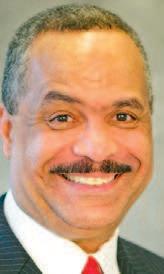
Reuben Shelton is the new president-elect of the Missouri Bar. Created in 1944 by order of the Supreme Court of Missouri, the Missouri Bar serves all 30,000 of Missouri’s practicing attorneys. Shelton is senior litigation counsel for Monsanto Corporation in St. Louis. He received his legal education at Saint Louis University School of Law and has been a member of the Missouri Bar’s Board of Governors since 2008. P. John (Jack) Brady of Kansas City is the new president.
Sonni Fort Nolan has joined Husch Blackwell as senior counsel after seven years at Express Scripts Inc., most recently as associate general counsel. She is a member of the firm’s Technology, Manufacturing & Transportation industry team where she will advise clients on labor and employment matters. She was a member of the Charmaine Chapman Society while at Express Scripts and served on its founding Diversity Council, implementing its Affirmative Action Program.
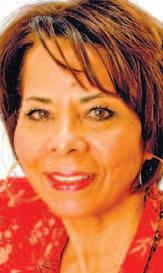
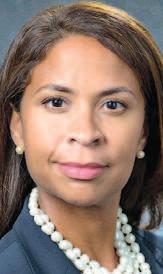
Brenda Youngblood was recently selected as chairwoman of the Special School District (SSD) Governing Council. She serves as the treasurer for the Hazelwood School District Board of Education. The Governing Council elects a Board of Education, approves a budget and approves a Comprehensive School Improvement Plan for SSD, which educates about 23,000 students with disabilities at sites throughout St. Louis County, including 265 public schools.
Nesa Joseph has been named president and CEO of the Visiting Nurse Association of Greater St. Louis. The 102-year-old not-for-profit organization has a new strategic plan and mission to provide a coordinated continuum of care to terminally ill patients and their families that promotes independence and dignity. Joseph has served in senior management positions with hospitals throughout the United States and India for more than 25 years.
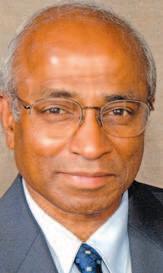
Kwame Foundation raises $100K forminority scholarships
The Kwame Foundation raised more than $100,000 to fund higher education scholarships through its 10th annual Kwame Foundation Golf Tournament. More than 150 golfers participated in the tournament, which was held in August at the Norman K. Probstein Golf Course at Forest Park. The foundation endows approximately $150,000 a year in scholarships and grants at colleges and universities across the country that improve educational opportunities for minorities.For more information, visit www.kwamefoundation.org or call 314-8625344.
Maurice and Brenda and Newberry, co-chairs of the 2013 Charmaine Chapman Leadership Society,visited with Orvin Kimbrough,the new president and CEO of the United Way of Greater St. Louis,at the society’s 2013 campaign kick-off on September 17 at the
On September 12, Chrysler Group hosted the 14th annual Matchmaker at its Auburn Hills, Mich. headquarters. More than 270 suppliers participate in the day-long program. Matchmaker provides minorityowned, women-owned and veteran-owned businesses access to Chrysler Group’s Tier 1 suppliers and to decision makers in the company’s procurement organization. The program has generated more than $2 billion in new business opportunities for exhibitors since 2000.
Chrysler Group’s supplier diversity goals require that 10 percent of a Tier 1 supplier’s procurement buy be sourced to certified minority suppliers. Chrysler Group itself spent $2 billion with approximately 200 minority suppliers in 2012, representing 7.7 percent of its total annual purchasing.
Subscription sales forJazz St. Louis up nearly 32 percent
Subscription revenue for Jazz St. Louis’2013-14 Season has already surpassed last year’s revenue by nearly 32 percent.Its subscription renewal rate has ticked up to 88 percent and new subscription seats at the Bistro are up by 26 percent compared to last year. Last year Jazz St. Louis sold 5,755 subscription seats for subscription revenue of $151,417. Subscriptions available at www.jazzstl.org or 314289-4030.
By Jason Alderman
Few events inspire more dread than an IRS tax audit.
Even if you’re confident you’ve accounted for every cent of income and only taken legitimate deductions, it’s hard not to worry what a close examination of your tax returns might uncover – not to mention the time spent tracking down old records.
Here are a few pointers to help allay your fears and better prepare in case you should ever get chosen for the dreaded IRS audit: There are three basic types of IRS audits:
ï Correspondence audit, which is conducted entirely by mail. You’ll receive a letter from the IRS asking for additional information about specific items on your tax return.
ï Field audit, where an IRS agent comes to your home or business to examine records and observe where you work.
ï Office audit, where you must be interviewed at an IRS office.
According to Chris Kollaja, a certified public accountant and partner at A.L. Nella & Company in San Francisco, California, if you’re having a correspondence audit and you feel your records are too voluminous to mail, you can request a face-to-face audit.
“You can also ask a representative, such as your accountant, tax preparer or lawyer, to help prepare for the audit and even attend it in your place, if allowed,” says Kollaja. “An experienced tax professional can tell you what to expect, guide your responses and keep the audit on track
should you get tongue-tied or start sharing more than is necessary.”
The chances of being audited are low. “Sometimes returns are randomly selected for audit, but more often it’s because something jumped out in the computer analysis each return receives,” he explains.
Common items that might trigger an audit:
ï Taxable income listed on your return doesn’t match amounts W-2 or 1099 forms, 401(k) plan or IRAdistributions, brokerage accounts, etc.
ï Taking above-average charitable deductions relative to your income.
ï Deducting business meals,
travel and entertainment.
ï Claiming the home office deduction.
ï Failure to report foreign bank account assets.
ï Concealing cash income or receipts.
ï Excessive cash transactions over $10,000.
ï Your close relationship to another taxpayer being audited.
ï Someone reports suspicious activity by you (the IRS offers a Whistleblower Award).
Kollaja recommends several ways to prepare for and attend an audit: Respond to the IRS within the stated deadline –usually 30 days.
Organize paperwork and
receipts pertinent to the issues they’ve identified. If you won’t have everything ready in time for the audit, contact your auditor to discuss whether it can proceed anyway, or if they’ll agree to postpone it. Bring or send only documentation requested in the initial notice. At an in-person audit, keep you answers brief and don’t voluntarily provide information that could launch a fishing expedition.
If the examiner questions you on an item not mentioned in the initial notice, you’re allowed to ask for additional time to fulfill additional requests. Never give original receipts to the IRS agent –they are not responsible for lost paperwork. You’re allowed to make an
audio recording of the audit provided you sent your agent written notice 10 days before the appointment. Video recordings are not allowed. Always be polite. Acting belligerent or evasive can only hurt your cause. Kollaja suggests reading IRS Publication 556 to learn more about how the audit process works and reviewing the section on itemized deductions in Publication 17, both available at www.irs.gov. Bottom line: Think positively – you might even come out of the audit with a tax refund – it happens.
Jason Alderman directs Visa’s financial education programs. To Follow Jason Alderman on Twitter: www.twitter.com/ PracticalMoney
$250M in public works, $4B in MSD contracts ready to be let
By Hazel Erby St.Louis County Council
I’ve called St. Louis County my home for 40 years, and during that time I’ve come to see my community as one large family. We live in a wonderfully diverse community with people from all racial, ethnic and demographic backgrounds.
Businesses and residents throughout St. Louis County share many of the same core values and gladly pay taxes, honor the laws and respect others. And St. Louis County government responds by providing valued services. Our government is also a major procurer of goods and
services. Yet certain segments of our community, particularly minority- and women-owned business enterprises (M/WBEs), have been either deliberately or accidentally excluded from economic opportunities – or, in effect, shut out of St. Louis County’s business model.
Many of these highly competitive, competent and capable businesses can’t break through a system that favors certain businesses over others. Yet we all have an interest in their welfare.
The results of a recent disparity study by the Metropolitan Sewer District (MSD) sent off alarm bells in me. Upon review of past uti-
lization practices, the study found significant evidence of substantial disparity in the St. Louis region, which formed the basis for recommendations to establish new participation goals for contracting with MWBEs.
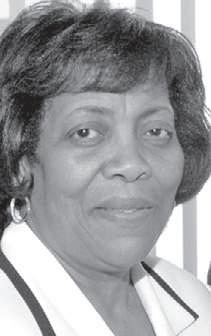
The study confirmed what most of us already know: minority and women contractors were underrepresented in government contracts even though the marketplace had the capacity to service the demand.
Hazel Erby
The result is that qualified

businesses and workers were being left out of opportunities that could provide much-needed jobs to some 37,000 unemployed workers across the county. Although the county’s unemployment rate stands at 7.1 percent, the Economic Policy Institute reported that the rate is significantly higher for African Americans.
As the first and only African-American woman elected to St. Louis County Council, I’ve long been an advocate for inclusion and workplace fairness, and I condemn discriminatory hiring practices, intentional or otherwise. It’s a priority of mine that we have policies that embrace all residents and businesses of St. Louis County.
With more than $250 million in public works projects ready to begin in St. Louis County, in addition to more than $4 billion in water and wastewater system improvements planned by MSD, the time to address these issues is now. Government has a responsibility to taxpayers to procure the best goods and services at the least cost. Yet it also has a duty to provide a level playing field that allows all businesses an opportunity to succeed and to develop a path for success for workers to earn skills required to obtain good jobs.
I see setting realistic and achievable minority and women participation goals as an important and necessary
step to growing St. Louis County and including all segments in our government’s business model. I support establishing sensible goals at MSD and St. Louis County as well as affiliated agencies for procuring goods and services.
The MSD study uncovered a number of barriers preventing M/WBEs from being awarded government contracts, which ultimately keeps these businesses from gaining a
The study confirmed what most of us already know:minority and women contractors were underrepresented in government contracts.
position in the marketplace. We should treat these findings as lessons learned, using them as a roadmap to identify similar problems with the county’s contracting and procurement process and seek remedies to correct them.
For example, we should: expand communication of bid notifications; build a searchable database of contractors based on key identifying factors (e.g., size, experience, ownership, etc.); look to other governments for best practices for possible application here; streamline the business application process and eliminate redundancies; establish a fast-track prequalification process; and create a M/WBE liaison.
Let’s make the process more open and transparent.
Flaws with Bill #289
Recent attention to participation goals renews my focus to correct certain flaws with Bill #289. The bill imposes guidelines for purchasing goods and services exceeding $25,000.
Among its problems is that it restricts bidders to only those who meet certain financing, training and wage conditions, which could unintentionally exclude, not only M/WBEs, but also small businesses from competing for government contracts. It’s time we did what we said we’d do at the time the vote occurred – and revisit issues with certain aspects of this bill.
I’m convinced that there’s a middle ground that can be reached to satisfy both sides. I’ve been successful at working with unions to negotiate participation goals on past projects and know that I can be successful again. One short-term fix that I support is raising the contract amount threshold for bill #289 to more than $1,000,000.
As St. Louis County’s population becomes more diverse, government must ensure it has a diversity policy that removes exclusionary practices from its contracting and procurement process in order to provide more economic opportunities for all citizens.
Hazel Erby (D-University City) represents District 1 in St. Louis County Council.
“I want to apologize to the team, the organization, my family and everyone I let down.”
– San Francisco 49ers defensive end Aldon Smith, after his arrest last week

With Earl Austin Jr.
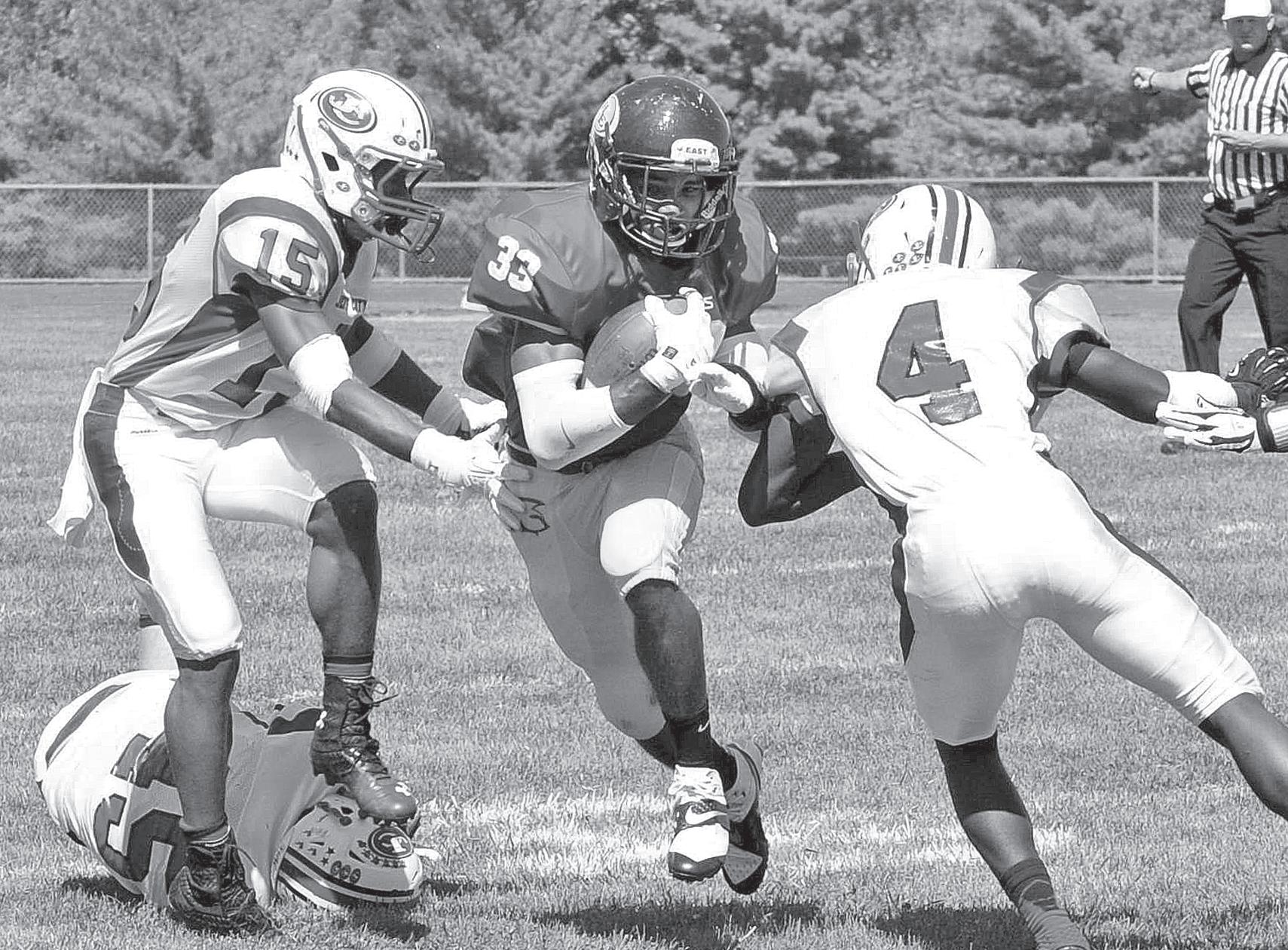
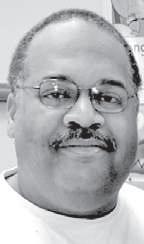
It is the midway point of the season and there are some very tasty matchups coming up in conference play this weekend. Undefeated Parkway Central faces its first big test of the season when it travels to Webster Groves on Friday night at Moss Field in a big Suburban South Conference game. The experienced Colts have dominated their first four opponents. In Webster Groves, the Colts will face an opponent that has won two consecutive games after losing their first two to Class 6 contenders
In St.Charles County, Francis Howell and Fort Zumwalt West will square off this weekend.
Hazelwood Central and Francis Howell. Speaking of Hazelwood Central, the 4-0 Hawks will host undefeated Ritenour in a Suburban North Conference showdown on Saturday afternoon. The Hawks have one of the area’s most explosive offensive units while the Huskies will counter with a very stout defense. It should be interesting. Kickoff is at 1 p.m.
Murky details emerge on six-game doping suspension
When the encyclopedia of the world’s greatest sports cheaters is compiled, I imagine there will be harrowing tales of mastermind plots and plans. It will contain untold chronicles of Walter White Heizenberg-like master chemists frantically and feverishly searching for the right mixture of compounds, ions, enzymes and electrons to give athletes significant physical advantages without being detected. Guys like Lance Armstrong, Mark McGwire and Barry Bonds will be enshrined into the cheaters hall of fame for their ability to beat the system dur-
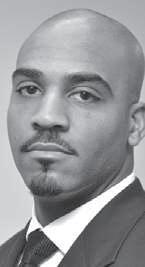
ing their playing days. Their methods will be studied by other aspiring cheaters in attempt to gain insight into beating whatever the latest, greatest method of PED detection that will exist. Sadly, Von Miller will not be on the syllabus.
The Denver Broncos Pro Bowl linebacker was suspended six games this season for failing an off-season drug test. The suspension was odd considering the NFL’s anti-doping policy stipulates that Miller should have missed just four games. Protected by a confidentiality
In St. Charles County, Francis Howell and Fort Zumwalt West will square off this weekend in what has annually become the top game in the Gateway Athletic Conference. Both teams are currently 3-1 and are looking strong. Howell has an impressive win over Webster Groves while Fort Zumwalt West took down CBC in its opening game.
In the Metro Catholic Conference, CBC will host Vianney on Friday in what will be a most interesting game. CBC (3-1) has been among the area’s elite teams in recent years. Meanwhile, Vianney (3-1) is trying to get a
See PREP, B5
With Palmer Alexander III
San Francisco 49ers in town this week
It’s a good thing the St. Louis Rams have a short work week, because it might help them forget about the clunker of a football performance in their 31-7 loss to the Dallas Cowboys.

Cowboys running back Demarco Murray came into the game with 111 rushing yards in just the first two contests of the season. He did slightly better against this perplexinglooking defense. Murray didn’t just do better; he had his second-highest performance ever in an NFLgame. Guess which team he had his career game against? Why, it just might be against the St. Louis Rams. The Rams came into this came looking so uninspired to play football. Where was the team that fought back on the road when trailing the Atlanta Falcons by 21 points last week? The team that showed up to play against the Dallas Cowboys played with no intensity, a lack of focus, and poor preparation.
In all three phases of the game, the Rams came up shorter than short.
The one area on the team that many of us felt would be a strength and could carry this young team is the defense. But for some reason this defense with pretty much the same personnel as last season – when they flirted with Top 10 status and tied for first place with sacks (52) – has looked feeble and unimposing. It always looks like the Rams are a step slow in getting to the ball or player. I don’t know what new defensive coordinator Tim Walton plans on doing to rectify this situation. This shouldn’t be happening. The Rams’secondary is not playing physical enough. The coverage and the types of cushion displayed by the cornerbacks and the linebackers are way too soft.
What is the deal with Chris Long dropping off in coverage? The Rams had only one sack against the Cowboys and had trouble getting pressure even when they blitzed. So then why drop one of your better pass rushers into coverage?
This was such a total team loss. Not only do the players need to execute, the coaches
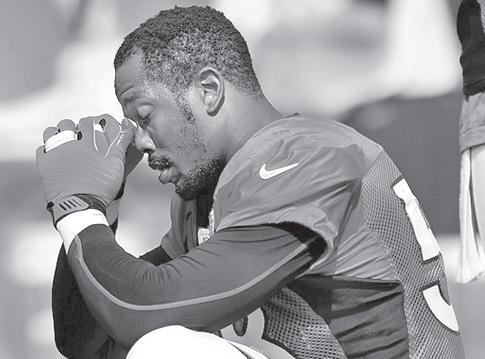
Von Miller,the Denver Broncos Pro Bowl linebacker,was suspended six games this season for failing an off-season drug test.
With Mike Claiborne
It was just another Saturday afternoon of college football around the country last week, with blood donors giving major blood to the Ohio States of the world. Another ho-hum Saturday, so we thought. Actually, it was the fledgling beginning of a movement on campus. While this movement should not be likened to campus protests in the 1960s and ‘70s, one has to think that the “All Players United” statement will not fall on deaf ears. Or will it?

If you are new to the party, some football players from Georgia, Georgia Tech and Northwestern had the letters APU – All Players United – written on their gear during Saturday’s games as a show of solidarity that organizers hope will lead to changes in the NCAA.
The National College Players Association, an advocacy group for college athletes, organized All Players United and launched the campaign Saturday with an announcement on its website. While this is truly a grass-roots effort, the battle will be uphill as not all are on board yet. At Georgia Tech, head coach Paul Johnson said that not all of his players were aware of the statement. Johnson went on to say that he wished the matter would have been put to vote. Yeah, OK.
The NCAA, which is under fire from every direction these days, issued a make-nice statement.
“As a higher education association, the NCAAsupports open and civil debate regarding all aspects of college athletics,” NCAADirector of Public and Media Relations Stacey Osburn said in a statement Saturday night. “Studentathletes across all 23 sports provide an important voice in discussions as NCAAmembers offer academic and athletic opportunities to help the more than 450,000 student-athletes achieve their full potential.”
Nice. It is no coincidence that current head of the NCAA Mark Emmert came out on Monday saying that changes were coming to the NCAA. He did not elaborate on if he and his staff will be departing by
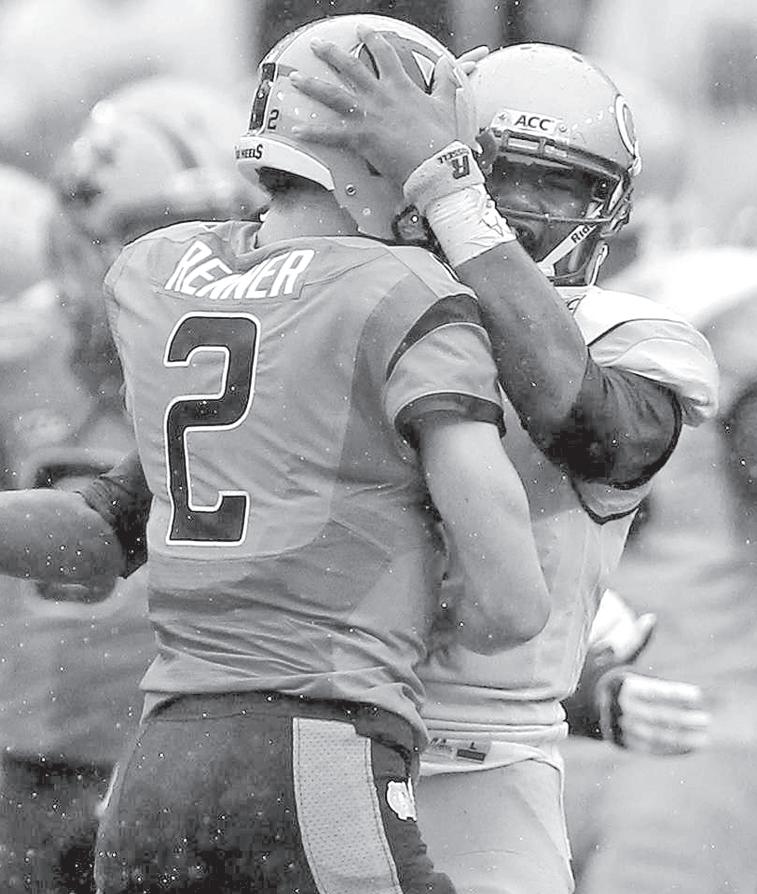
sundown.
This will be a challenge for the National College Players Association, as they will not get much help from the NCAA and their media partners in promoting the cause. Why would ESPN, Fox and CBS support an overthrow of the current regime when they benefit so much as it is and do not have to spend one dime on

players? There will be token stories done on the movement, but the best thing the NCAA can hope for is that these leaders of the movement will graduate from college and the movement will be placed on the back burner.
This movement should prepare for the guerrilla approach by those who currently support the NCAAand its treatment of athletes. The next step will go to toward politely attempting to discredit this group because their numbers are too small to make a difference. Then again, they could get coaches involved in suppressing the movement.
I only wish “Johnny Football” Manziel would wear some tape in support. His name is the biggest in college football. At that point, they would have to pay attention to the cause. It’s my hope that this will not go away any time
Continued from B3
agreement between the league, players and testers, Miller gave the standard denial, appeal plea and promise of a future explanation that has become all too common in sports today. But just as the information eventually leaked on the aforementioned great sports cheats, information leaked out this week on a pretty poor one. As it turns out, Miller initially failed his test by using the good ole “did I do that?” method perfected by Steve Urkel, after fumbling his urine sample upon giving it to the collector. When he was re-tested later, the second sample also failed for being diluted. Miller and the NFLPlayer’s Union were prepared to appeal until someone noticed a small inconsistency with Miller’s testing. The linebacker was not present in the city where his drug-testing supposedly took place. According to ESPN, Miller
Some football players from Georgia,Georgia Tech and Northwestern had the letters APU –All Players United –written on their gear during Saturday’s games as a show of solidarity that organizers hope will lead to changes in the NCAA.
soon, as the National College Players Association has some valid points that need to be heard, discussed and resolved ... while we are young.
Most valuable, not sentimental
As the baseball season winds down, the awards will be voted on by the media. There are two honors that have a St. Louis Cardinal flavor. When it comes to Pittsburgh Pirates’player Andrew McCutcheon and manager Clint Hurdle, the word “sentimental” is always included in the sentence when their names come up for Most valuable Player and Manager of the Year, respectively. Both are having outstanding seasons, but the awards should be left in St. Louis.
If you think McCutcheon is
was in cahoots with a drugtester to have false samples provided for him. I’m not sure what is worse, the fact that he wasn’t smart enough to at least be in the same town as his drug-free urine sample or that the chosen substitute sample provider apparently needed to flush something out of his own system if his test came back as a fail also.
What’s even more remarkable is how the NFL chose to handle the faux pas, even though the league had solid proof of Miller’s willful attempt to cheat the system; they gave him a slap on the wrist. Miller was automatically set to miss four games on the strength of the failed test. However, one would expect a much harsher sentence from league sheriff Roger Goodell
having a good season, look at Matt Carpenter. His numbers are better in batting average, and he will be the only player in the National League with 200 hits or more. He leads the league in doubles, hits, runs scored, multi-hit games and a few other categories. If the Cardinals finish ahead of the Pirates, how can you not give MVPto Carpenter – or, that matter, YadierMolina? As for Mike Matheny, I wonder where Clint Hurdle would finish if he lost one of his top pitchers at the beginning of the spring in Chris Carpenter, a 40-plus-save closer in Jason Motte and two other starters in your rotation for big chunks of the season. Did I mention that 20 players made their Major League debut for Matheny this season, 10 of whom were pitchers? As the Cardinals go
What’s even more remarkable is how the NFL chose to handle the faux pas, even though the league had solid proof of Miller’s willful attempt to cheat the system;they gave him a slap on the wrist.
on such a blatant act. Some might have expected the suspension to be doubled, plus a postseason ban. Others have called for a full year without football for Mr. Miller. But the league rolled over and settled on just a sixgame ban with Miller and the NFLPA. The Broncos have remained largely silent on the issue as they patiently wait for their star linebacker to return. Say what you want about the St. Louis Rams, but when JoLonn Dunbar was busted for PEDs, Jeff Fisher and Les Snead wasted no time in showing him the door. While Dunbar isn’t a Pro Bowler, he was a key contributor last season. Now he’s on the unemployment line. Meanwhile Miller is somewhere shrugging his shoulders
into this weekend’s play, they will be in the hunt for the division title. If they win it, hand it over to Matheny. As for McCutcheon and Hurdle, everyone is happy that after a drought of 20 years, the Pirates are in the playoffs. It’s good for Pittsburgh and it’s good for baseball, but that is no reason to give these two awards to them. Next year have an award for Most Sentimental and make sure they get plenty of ice cream and cake to go along with the trophies.
Rams?
They will have their fourth game under their belt after tonight as they play the 49’ers. Evaluation and predictions come next week.
at the nationwide uproar knowing that his agreement with the league forbids any extension of his suspension despite the embarrassment and credibility hit the NFLtook. No, the NFLis not the Cub Scouts and I don’t expect all players to be perfect gentlemen at all times, but there’s a difference between knuckleheads getting into trouble off the field and someone attempting to defraud his workplace. Meanwhile, on the field, players are getting fined and suspended for simply hitting too hard.
The NFLmissed a major opportunity to send a strong and clear message to drug cheats. The league has a habit of showing its softer side through various rule changes, all in the name of “player safety.” Yet when a ploy is uncovered to undermine the most essential rule to player safety, the league drops the ball.
By Earl Austin Jr.
Of The St.Louis American
The St. Louis Gateway Classic Sports Foundation celebrates the 20th anniversary of its annual black football college extravaganza this weekend.
Making this anniversary even more special is the debut of Tennessee State University, which has been one of the big names in black college football for decades. TSU will take on Central State University (Ohio) on Saturday afternoon at the Edward Jones Dome. Kickoff is at 2 p.m.
These two schools enjoyed a spirited rivalry back in the 1950s and ‘60s when Central State and then Tennessee A&I were members of the National Association of Intercollegiate Athletics. There was great competition between the two schools in all sports, including football. Since then, the two institutions have gone in different directions. Tennessee State is now a NCAADivision I FCS (Football Championship Series School), which competes in the Ohio Valley Conference. Central State remained a NAIAschool for several more years and became a national power in the 1980s and ‘90s, which included a couple of NAIAnational championships. The Marauders even made a couple of appearances in the Gateway Classic in the 1990s. However, the school dropped football in the late ‘90s for financial reasons. The program was reinstated in 2005, and Central State now competes as a NCAADivision II school. Tennessee State is off to an excellent start this season with a 3-1 record. The Tigers
Continued from B3
need to formulate a game plan. In all three phases of the game, the Rams came up shorter than short. Penalties on the special teams unit wiped out a score – as if it’s not enough of a chore for the offense to score, let alone sus-
Continued from B3 piece of the action. The Golden Griffins defeated SLUH last Friday night to win their first MCC game in four years. They also have the area’s top offensive player in senior tailback Markel Smith. In the Metro East, O’Fallon will host Belleville West in a big Southwestern Conference matchup on Saturday afternoon. O’Fallon (3-1) is coming off a big 10-6 victory at East St. Louis last weekend while West is off to a quick start at 4-0 with its variety of offensive weapons. In the tough Metro League, John Burroughs (4-0) will host MICDS (3-1) on Saturday in the renewal of one of the area’s top small school rivalries. The Bombers have continued their excellent run of success in winning four games in dominating fashion. Meanwhile, the Rams are rebounding nicely from a 1-9 season a year ago. Kickoff is at 2 p.m. If you want a nice non-conference game, DeSmet will head to Mid-Missouri on Friday night to visit Jefferson City. DeSmet rolled off two impressive victories after two close losses to open the season while the Jays will try to rebound from its first loss of the season to Hazelwood East last weekend. It should be a tremendous week of high school football. Enjoy.

State
defeated Jackson State 26-16 in the annual Heritage Classic in Memphis two weeks ago. Last week, Tennessee State defeated Tennessee Tech 41-21 in their OVC opener. On offense, the Blue Tigers employ two quarterbacks in Ronald Butler (471 yards passing and one touchdown) and Michael German (246 yards, three TDs). Their top running threat is Tim Broughton, who has rushed for 376 yards and two touchdowns. Their top receiver is A.C. Leonard, who has 219 yards and two touchdowns.
Defensive end Samquan Evans was the OVC Defensive Player of the Week after registering eight tackles, two tackles for loss and 1.5 sacks against Tennessee Tech last week. Defensive back David
tain a few drives and keep the quarterback from getting flattened. The defense was just bad. No pressure up front, no turnovers, bad tackling and no legitimate game plan. The offense is still vanilla. This was the third straight game they come out slow and unimaginative, only to again quicken the pace after they fell behind. The Rams have the San
Stunning comeback
Hazelwood East pulled off a tremendous fourth-quarter comeback to stun visiting Jefferson City 32-22 last Saturday. The Spartans trailed 22-12 going into the fourth quarter, but they hit the Jays with a 21-0 blitz in the final stanza to take the victory and improve to 3-1. Senior Jimmy Jones scored the last two touchdowns for East. Senior quarterback Brandon Brice threw three touchdown passes and ran for another.
Four TDs for Crump McCluer South-Berkeley’s Andre Crump had 280 all-pur-
Van Dyke has a team-high four interceptions.
Central State will be looking for its first win of the season after three losses. Saturday’s game will be a homecoming of sorts for head coach E.J. Junior, who played eight seasons with the St. Louis Cardinals from 1981-88. Junior was a two-time ProBowl selection while playing for the Big Red.
The Gateway Classic football game is the showcase event that highlights a great weekend, including the Battle of the Bands at halftime, the annual parade and many more great activities.
For more information on the Gateway Classic weekend, you can visit the website at www.stlgatewayclassic.org.
Francisco 49ers in town this week, so they get to quickly forget about the 1 for 13 conversion ratio on third downs and all the dropped passes in the loss to the Cowboys. But, should they not make changes following what took place in Dallas, the 49ers will have a field day and their own lopsided win against the Rams.
pose yards and four touchdowns to lead the Bulldogs to a 52-7 victory over Clayton. Crump scored on runs of 11,2, 4 and 80 to lead the Bulldogs, who are now 3-1.
Overtime victory
Miller Career Academy improved to 4-0 with a 28-22 overtime victory over Gateway Tech. Marquis Stewart rushed for 171 yards and two touchdowns, including the gamewinner in overtime on a 15yard run.
(You can watch Earl Austin Jr. on the KTVI-Fox 2 Prep Zone every Friday night at 10:20 p.m.)

O’Fallon – Football

The standout senior defensive end was a dominant force for the Panthers in their 10-6 victory over East St. Louis last Saturday afternoon. The 6’5” 255-pound Hendrix had three quarterback sacks and forced two fumbles to lead a stingy O’Fallon defense that did not allow the Flyers to score an offensive touchdown. For the season, Hendrix leads the Panthers in both tackles and sacks. He is one of the top defensive linemen in the country. Hendrix has more than 20 collegiate offers, including the likes of Missouri, Ohio State, USC, Tennessee, Florida and Cal. O’Fallon (3-1) will host Belleville West on Saturday afternoon at 1 p.m.
Francis Howell Central – Football
The 5’11” 190-pound Morris turned in a big offensive performance in leading the Spartans to a 51-7 victory over Troy last Friday night. Morris amassed a total of 296 all-purpose yards and scored four touchdowns to lead the Howell Central rout. He scored on runs of 79, 2 and 40 yards. Morris also scored on a 95-yard kickoff return. For the season, Morris has rushed for 806 yards, which is currently third in the St. Louis metro area. He has also scored nine touchdowns. Francis Howell Central will visit Francis Howell North on Friday night at 7 p.m.



United Way of Greater St. Louis has raised 30 percent of its goal.
Before introducing 2013 Charmaine Chapman Leadership Society Co-chairs Brenda and Maurice Newberry, emcee Carol Daniel, news anchor of KMOX, said she had only one goal in mind.
“I am here to get you excited about being a member of the Charmaine Chapman Society,” Daniel said. “The reason we are here is to help this community survive, be better and thrive.”
Brenda Newberry announced a new membership goal for this year, stating that in the past the Charmaine Chapman Leadership Society typically has had a difficult time exceeding 800 members. This year’s goal is to reach 1,000 members, she said. She then jokingly challenged the audience to meet that goal in one night.
“We’re going to lock all the doors. We’re going to stop serving food and drink until we get 200 people,” she said.
Yvette Whitlock, director of customer service and senior employee relations and human resources manager at Macy’s
Continued from B1 process,” Akande said. “You will go from fear to courage to success. I think I’m living proof of that. And if opportunity doesn’t knock, I find a way to build a door.”
Yemi Akande-Bartsch joined her brother, Benjamin Akande, in addressing the graduating class.
“St. Louis is on the cusp on a revival,” said AkandeBartsch, vice president of leadership and alumni programs at
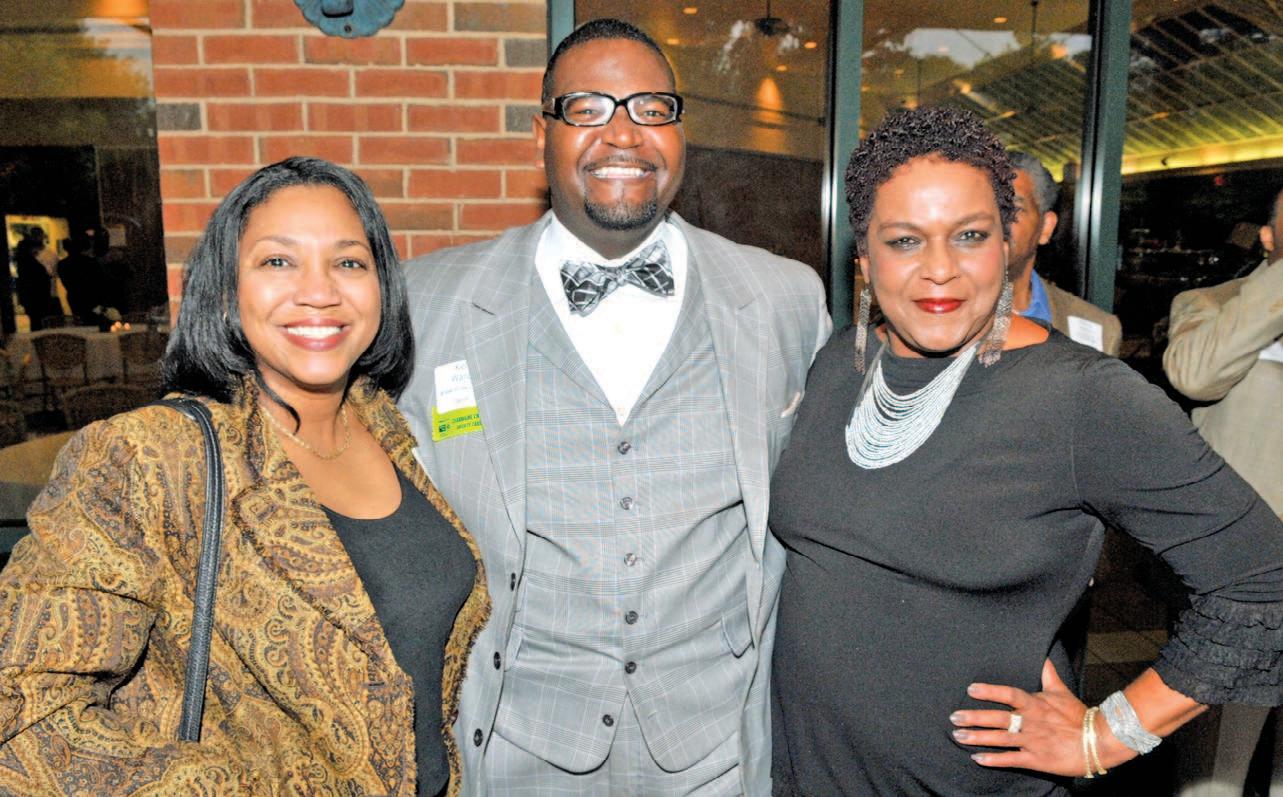
Credit and Customer Services, was one of the first to sign the pledge card.
“It was the right thing to do,” Whitlock said. “So often, we give to other communities and we don’t give to our own. If you’re able to give, why not?”
To date, Sinskey said, the Charmaine Chapman Leadership Society has welcomed 70 new members.
Next year will mark 20
FOCUS St. Louis. “My vision of St. Louis is all of you in leadership positions, helping drive the agenda and policy along talent attraction and retention.”
The fellows began the yearlong leadership program last September, and every month they explored topics of diversity and inclusion. But they were also asked many personal questions, such as “Why are you here? Why are you alive?” said Rhonda Garrett, a manager at Anheuser-Busch InBev. These discussions undeniably had an effect on the fellows’ professional and personal
“I give because I think that there’s a great need in the St.Louis community.”
– 2013 Charmaine Chapman Leadership Society Co-chair Maurice Newberry
years since Donald M. Suggs, publisher and executive editor of The St. Louis American, founded the Charmaine Chapman Leadership Society,
growth, she said.
“None of us will leave the program the same way we entered,” Garrett said.
Fellow Caleb Chou of Peabody Energy said the group engaged their hearts and shared their professional dreams, along with the challenges they face. Honesty laid the foundation for their ability to grow this past year, he said.
“We had discussions that I would never thought I would have,” said Chou, earning some laughs from his graduating class. “I was most impressed by seeing your dedication to becoming better and

Katrina Farmer, Kel Ward and Wray Clay visited at the 2013 campaign kick-off for the Charmaine Chapman Leadership Society on September 17 at the St.Louis Zoo’s Lakeside Café.It is the largest AfricanAmerican leadership giving initiative at any United Way in the nation.
African-American community predominantly, including the Annie Malone Children & Family Service Center, Urban League of Metropolitan St. Louis and area boys and girls clubs.
“This means that our dollars are actually going to help those in need,” Maurice Newberry said.
“In fact, some of them may have a difficult time surviving if it were not for our dollars,” Brenda Newberry added. Brenda and Maurice Newberry, CEO and COO of Nesher LLC, respectively, are long-time supporters of the United Way. This is the second consecutive year that the power couple has co-chaired the Charmaine Chapman Leadership Society.
“I give because I think that there’s a great need in the St. Louis community,” Maurice said.
Leadership Society is both the highest-ranked philanthropic program for African Americans in the St. Louis region and the largest African-American leadership giving initiative at any United Way in the nation.
which recognizes African Americans who pledge an annual gift of $1,000 or more to United Way. The Charmaine Chapman
seeing your communities become better.”
Last October, the initiative, which was launched in 2001, became part of the St. Louis Regional Chamber, said Valerie E. Patton, vice president of economic inclusion and executive director of the St. Louis Business Diversity Initiative.
Its role has now expanded to encompass four areas: offering leadership development, creating a more welcoming and inclusive St. Louis, growing minority businesses, and leading efforts in talent attraction and retention.
Since its inception, the Charmaine Chapman Leadership Society has raised over $24 million for United Way to support more than 170 member agencies. Of these agencies, 37 percent serve the
However, the fellows program, now in its seventh year, remains the initiative’s flagship program. With this graduating class, there are now 317 alumni. Patton announced that on Oct. 1, the initiative’s coordinator Rosalind Reese will be promoted to program manager of economic inclusion. She will manage the fellows program, alumni activities and the initiative’s leadership development opportunities.
“She has been with me for eight years, and she is the wind beneath my wings,” Patton said of Reese. “She
He acknowledged each cabinet member of the Charmaine Chapman Leadership Society, thanking them for their time and commitment.
“You guys are the drivers behind the work we do for the society,” he said, “and that is absolutely inspiring.” To learn more or become a member of the 2013 Charmaine Chapman Leadership Society, call (314) 539-4191 or visit www.stl.unitedway.org.
makes it all happen.” On Sept. 26, the new group of 70 fellows will start the yearlong program, she said. Benjamin Akande said the initiative builds up a “bench” of leaders that our region needs to make those “unexpected plays” of growth and expansion.
“At some point in time, you will be able to get in the game,” Akande said. “In getting in the game, you are going to be called to play when you least expect it. You are going to be called to play a powerful position, and you have to be ready.”

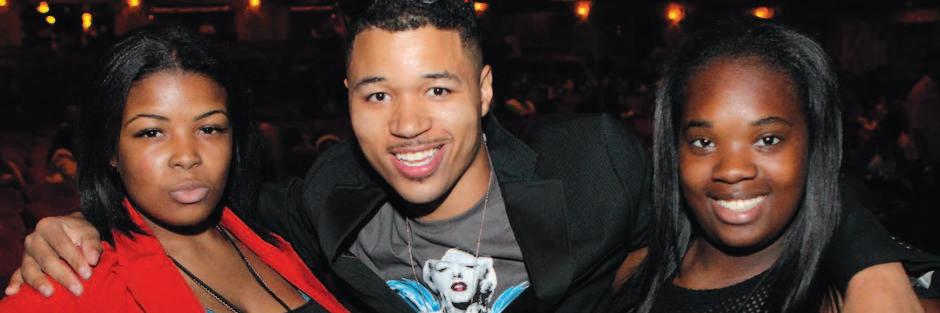
Wale and J. Cole brought their “What Dreams May Come” tour to the Fox Theatre on Thursday night.
Photos by Lawrence Bryant

By Kenya Vaughn Of The St. Louis American
The swag, bling and blah that have become commonplace in the diluted rap element of the urban music scene were nowhere to be found at the Fox Theatre Thursday night as two anti-rap stars teamed up and illustrated true hiphop in its finest form. With Wale as the featured guest, J. Cole and his “What Dreams May Come” tour reminded the audience that true talent and substance have the power to trump the clever packaging and industry tactics that have been
churning out hip-hop acts and gimmicks at a pace that could rival any assembly line. Ironically, his guest verse on “No Hands” would kick off Wale’s set. The guilty pleasure Wacka Flocka Flame radio and club hit, also featuring Roscoe Dash, introduced Wale to the masses thanks to its heavy rotation, but his hour-plus-long set proved that there is much more to him than the average rapper – including his peers on that particular track. He stands alone as a D.C.-based

Sands
By Kenya Vaughn Of The St. Louis American
“I’m not doing a narrative -based work about her at all,” said worldrenowned choreographer Uri Sands.
“I’m not trying to tell a story at all about Henrietta Lacks’ life or the impact that she’s had on the medical field. I simply want to say, ‘This is for you.’” Sands was commissioned by Dance St. Louis Executive Director Michael Uthoff to create a piece connected to Lacks for Dance St. Louis’ presentation of PNC Arts Alive New Dance Horizons II on October 4 and 5 at the Touhill Performing Arts Center. The event will feature four of the nation’s most notable choreographers creating pieces for four area dance troupes. A former principal dancer with Alvin Ailey American Dance Theater, Sands founded TU Dance in Minneapolis in 2004 with his

wife, Toni Pierce-Sands. She is also a former dancer with Alvin Ailey. Recognized in 2005 by Dance Magazine as one of the “25 Choreographers To Watch,” Sands is known for blending high physicality with fine technique while drawing on a broad range of dance traditions.
He says that audiences can expect a performance from Common Thread Contemporary Dance Company that will be very clear, very simple and “extremely full.” In her 2010 best-selling book The Immortal Life of Henrietta Lacks journalist and author Rebecca Skloot introduced the masses to a poor black tobacco farmer who in 1951 unwittingly changed the landscape of modern medicine and science.
Her cells were taken without her permission while she was being treated for the cancer that would take her life months later, and those cells would become one of the most important tools in medicine. HeLa

cells would be vital for developing the polio vaccine, cloning, gene mapping, in vitro fertilization and more. Skloot’s book illustrates that while Lacks’ cells have been bought and sold by the billions, the cell donor remained essentially
Choreographer Uri Sands
anonymous – and her family couldn’t afford health insurance.
While Sands intentionally shied away from recreating her story through movement, he drew inspiration from his research into Lacks’ story.
“I’ve drawn on different elements from things that I’ve read,” Sands says. “As far as the movement within the work, I was just thinking about feelings. I was thinking about Ms. Lacks’ daughter Deborah. I would find myself thinking about the feelings she had. I would use those feelings to help me generate movement.”
The medical relationships inspired him.
“I thought about the anxieties that Deborah had when the doctors reached out to the family in an attempt to draw more blood and do more studies and how that stressed the family,” he said. “So I would say, ‘What is stress – and what does it make your body do?’”
Lacks has been the subject of articles, books and documentaries. But Sands and Dance St. Louis are embarking on unchartered territory
See DANCE, C4

Marty Ehrlich’s Rites Quartet will perform 7:30 p.m. Friday, October 4 at at the Kranzberg Arts Center, 501 N. Grand, as part of the New Music Circle’s 2013 series.
Marty Ehrlich’s Rites Quartet plays New Music Circle series Oct. 4
By Chris King Of
The St. Louis American
Jazz composer and bandleader Marty Ehrlich hasn’t lived in St. Louis since he left University City High School for college in 1972, but his hometown will deeply color his performance here 7:30 p.m. Friday, October 4 at the Kranzberg Arts Center, 501 N. Grand, as part of the New Music Circle’s 2013 series.
Ehrlich will lead the Rites Quartet, which features Michael Formanek on bass, Michael Sarin on drums, James Zollar on trumpet and himself on saxophone and clarinet. He owes the quartet’s name to a strong St. Louis connection, the brilliant late composer and bandleader Julius Hemphill, co-founder of the Black Artists’ Group (BAG) in St. Louis.
“I got the name ‘Rites Quartet’ from a composition by Julius Hemphill, ‘Rites,’ which refers back to his record Dogon, A.D.,” Ehrlich said.
“Along with working with Julius for many years while he was alive, after his passing I have done all I could to keep his music in the public eye, including trying to record a lot of the music he wrote that didn’t get recorded in his lifetime.”
After an initial performance with the Rites Quartet featuring previously unrecorded music by Hemphill, Ehrlich “liked it so much I kept it going,” he said. “I like the connection to ‘rites,’ in the religious sense, but when you hear it said, it also could be ‘rights,’ as in human rights. It’s an

How to place a calendar listing
1.Email your listing to calendar@stlamerican.com OR
2.Visit the calendar section on stlamerican.com and place your listing
Calendar listings are free of charge, are edited for space and run on a space-available basis.
Thur., Sept. 26, 7 p.m., KG
Productions presents El Debarge with Dirty Muggs and Nikko Smith. The Ambassador, 9800 Halls Ferry Rd., 63136. For more information, call (314) 869-9090.
Thurs., Sept. 26, 8 p.m., Band Burrage, Robbie’s House of Jazz, 20 Allen Ave # 150St Louis, MO 63119. For more information, call (314) 968-5556.
Fri., Sept. 27 – Sat., Sept. 28, 8:30 p.m. (7:30 p.m. doors) Band Burrage, Kranzberg Arts Center, 501 N. Grand. For more information, visit https://www.facebook.com/eve nts/487894367961047/
Fri., Sept. 27, 9 p.m., Blueberry Hill presents Cody Chesnutt. 6504 Delmar Blvd., 63101. For more information, call (314) 727-4444.
Fri., Sept. 27, 9 p.m., Hammerstone’s presents Roland Johnson & The Soul Endeavors. 2028 S. Ninth St., 63104. For more information, call (314) 773-5565.
Through Sept. 28, Jazz St. Louis presents The Yellowjackets, Jazz at the Bistro, 3536 Washington. For more information, visit www.metrotix.com or call (314) 534-1111.
Sun., Sept. 29, 5 p.m., Swagg Savvy Nation andT1 Production present Travie McCoy. Hosted by Drew Streets, with DJ Reese, DJ Blazel and DJ Styles. Pop’s, 300 Monsanto Ave., Sauget, IL. 62201. For more information, call (314) 566-4526.
Oct. 4 – 5, 7:30 & 9:30 p.m., Jazz St. Louis presents Laurence Hobgood Quintet feat. Ernie Watts. Pianist Laurence Hobgood has enjoyed a multi-faceted and dynamic career. Two-time Grammy Award-winner Ernie
Watts is one of the most versatile and prolific saxophone players in music. It has been more than 50 years since he first picked up a saxophone, and from age 16 on, he has been playing professionally. Jazz at the Bistro, 3536 Washington. For more information, visit www.metrotix.com or call (314) 534-1111.
Sun., Oct. 6, 7 p.m., The Missouri History Museum welcomes The Last Poets. The Missouri History Museum, 5700 Lindell. Tickets available at mohistory.org or by calling (314) 361-9017.
Sun., Oct. 13, 8 p.m., Café Soul welcomes Raheem DeVaughn to The Pageant, 6161 Delmar. For more information, visit www.thepageant.com
Oct. 9 – 12, 7:30 & 9:30 p.m., Jazz St. Louis presents Lou Donaldson Quartet. Jazz at the Bistro, 3536 Washington. For more information, visit www.metrotix.com or call (314) 534-1111.
Oct. 9 – 12, 7:30 & 9:30 p.m., Jazz St. Louis presents A Night in Treme feat. The Donald Harrison Quintet Jazz at the Bistro, 3536 Washington. For more information, visit www.metrotix.com or call (314) 534-1111.
Thurs., Sept. 26, Walk of Fame Ceremony sponsored by Ameren 2013 Inductees: Ida Woolfolk, Richard Mark, James Buford, Robbie Montgomery and Betty Thompson, Gateway Classic Sports Complex, 2012 Dr. Martin Luther King Drive, 63106. For more information, please call the Gateway Classic at 314.621.1994
Fri., Sept. 27, 12 noon,


Coaches Luncheon sponsored by the St. Louis Rams Gateway Classic Sports Complex, 2012 Dr. Martin Luther King Drive, 63106. For more information, please call the Gateway Classic at 314.621.1994.
Fri., Sep. 27 12 noon, Fish Fry and Pep Rally sponsored by Fifth Third Bank, Cole and Convention across from Edward Jones Domes Pep Rally featuring Central State University and Tennessee State University Bands. For more information, please call the Gateway Classic at 314.621.1994.
Fri., Sept. 27, 6 p.m., Gateway Classic Honors Dinnersponsored by World Wide Technology, Millennium Hotel, 200 South 4th Street. For more information, please call the Gateway Classic at 314.621.1994.
Sat., Sept. 28, 10 a.m.
Gateway Classic Parade sponsored by Pepsi, Gateway Classic Sports Complex. For more information, please call the Gateway Classic at 314.621.1994.
Sat., Sept. 28, 12 noon,Day Parties in the Dome, Edward Jones Dome-Bud Light Party Zone on Concourse Level and the Rams Club on Club Level. Entrance is free with ticket to Gateway Football Classic. For more information, please call the Gateway Classic at 314.621.1994.
Sat., Sept. 28, 2 p.m., Ameren and MO Lottery presents Gateway Classic Game. This year’s gamefeaturestwo highly anticipated collegiate teams. Central State University (Wilberforce, OH) returns to the Classic for the first time since the 90’s and Tennessee State University making their first appearance ever.Edward Jones Dome, 901 N. Broadway, 63101. For more information, visit www.gatewayclassic.org
Saturdays, 3 p.m., The Kendrick Smith Quartet, Premier Lounge, 5969 Dr.
Martin Luther King Drive. For more information, call (314)385-5281 or e-mail crusadersforjazz@hotmail.com.
Sept. 26, Beyond Housing presents Divas Fora Cause 3 with performances by Erin Bode, Denise Thimes and the PeterMartin Duo featuring special guest Dianne Reeves. Sheldon Concert Hall, 3648 Washington. For more information, call (314) 533-0600 extension 20.
Sept. 26 – 29, Chaifetz Arena presents Disney on Ice: 100 Years of Magic. 1 S. Compton Ave., 63103. For more information, call (314) 977-5000.
Sept. 27 – 29, The Budweiser Taste of St. Louis. An awardwinning celebration of the best food, music, art and culture St. Louis has to offer. Soldiers Memorial, 12th and Market St., 63103. For more information, visitwww.tastestl.com Sat., Sept. 28, 8:00 a.m., 5th Annual 5K Run/Walk for Freedom. Help rescue girls from the horrors of Sex Trafficking by participating in our Annual 5K Run/Walk. All proceeds from this event go toward rescuing girls and providing a SAFE Home for them to live in. There will be cash prizes awarded to the top 3 runners, pre & Post race refreshments, free T-shirt & race-day bag, Free Raffle Prizes including a: Free Plasma TV. Queeny County Park, 1675 S. Mason Rd., 63131. For more information, call (314) 487-1400.
Sat., Sept. 28, 10 a.m., Best Friend Animal Society presents Strut YourMutt. Join fellow dog lovers as we strut our mutts to raise money and save the lives of shelter pets! Strut Your Mutt is a relaxing walk to help homeless pets and then celebrate afterwards at the ultimate doggie festival. Tilles Park, 9551 Litzsinger Rd., 63124. For more information, visit www.strutyourmutt.org/STL
Sat., Sept. 28, 9 p.m., NightSociety and BfreeStLouis hosts Gateway Classic AfterParty. Lola, 500 N. 14th St., 63118. For more information, call (314) 8848785 or visit www.gwcpartystl.com.
Fri., Oct. 4, 11 a.m., Renaissance St. Louis Airport Hotel’s 6th Annual Charity Golf Tournament. Proceeds benefit the Give Kids the World Village. The Give Kids the World Village is a 70acre resort tailored to children with life threatening illnesses. Normandie Golf Club, 2799 Normandy Dr., 63121. For more information, call (314) 890-3101.
Fri., Oct. 4, 6 p.m., Macy’s and Clinton Kelly present A Girls Night Out Fashion Tutorial. Grab your best gal pals and join the makeover master himself, Clinton Kelly, for a special night of fashion, food and fun! Macy’s St. Louis Galleria, 1155 St. Louis Galleria, 63117.
Sat., Oct. 5, 8 p.m., All In 1 Entertainment and Unique Magic Catering present “Where are They Now?” Old School Reunion Party. You are invited to the biggest mature old-school celebration party of the year, hosted by The Real J.R. Come out and have a good time like you used to as we take you through the 60s, 70s, 80s, 90s, and today’s music. Machinist Hall, 12365 St. Charles Rock Rd., 63044. For more information, call (314) 473-9250.
Oct. 12 – 13, 11 a.m., St. Louis Kids Expo. Events and activities include, free bike helmets, pony rides, fitness demonstrations, and more. North County Recreation Center, 2577 Redman Rd., 63136. For more information, call (314) 995-8625 or visit www.stlkidsexpo.com.
Oct. 12 – 13, 11 a.m., St. Louis Kids Expo. Events and activities include, free bike helmets, pony rides, fitness demonstrations, and more. North County Recreation Center, 2577 Redman Rd., 63136. For more information, call (314) 995-8625 or visit
www.stlkidsexpo.com.
Sat., Oct. 19, 6 p.m., 2013 Epsilon Lambda Charitable Foundation Black & Gold Scholarship Ball. The mission of the Epsilon Lambda Charitable Foundation is to promote and uplift the education of youth and the advancement of community. Crowne Plaza Hotel Airport, 11228 Lone Eagle Dr., 63044. For more information, call (314) 531-0051.
Sun., Oct. 20, 11 a.m., 2013 Harvest Festival. Celebrate the best autumn has to offer: delicious eats from St. Louis area restaurants, a farmers’ market featuring fresh local produce, arts and craft wares, family activities, and more. Laumeier Sculpture Park, 12580 Rott Rd., 63127. For more information, call (314) 615-5278 or visit www.laumeier.org.
Sun., Oct. 20, 4 p.m., Entertaining Around Heaven All Day. This is the 4th Jazz Heaven Series. Aseries filled with music, songs and poetic artistry to highlight the lives of some of the most legendary vocalists, musicians, artists on whose shoulders we still stand. Billie Holiday, Ella Fitzgerald, Frank Sinatra, Peggy Lee, Etta James, Charlie Parker, Phyllis Hyman, Lou Rawls just to name a few. Ethical Society, 9001 Clayton Rd., 63117. For more information, call (314) 534-1111 or visit http://www.wendylgordonsings.com.
Sun., Oct. 20, 4:30 p.m., The East St. Louis Branch of the NAACP presents 59th Annual Freedom Fund Awards Banquet: Game Changers. Renaissance Grand Downtown St. Louis, 800 Washington Ave., 63101. For more information, call (618) 271-4698 or email eslnaacp@eslnaacp.org.
Fri., Oct. 25, 8 p.m., The Sheldon Concert Hall presents ArtSounds: Divas and Designers. Featuring vocal divas Erin Bode and Coco Soul and a high-end fashion show by Neiman Marcus and Distinctions. The evening benefits the exhibitions and education programs of the Sheldon Art Galleries. 3648 Washington Blvd., 63108. For more information, call (314) 533-9900.
Oct. 26 – 27, WOWNational OutdoorRecreation & Conversation School presents Exploring, Discovering, Learning. Discover how much fun the great outdoors can be at an overnight camping experiencing. Activities include fishing, archery, rocking climbing, and more. Also, experience the outdoors during an overnight campout. Registration is required and the deadline is October 11. Forest Park. For more information, call 1-800-334-6946.
Tue., Oct. 29, 7 p.m., An Evening with STAX SongwriterDavid Porter The program will feature an onstage interview with one of the most successful songwriters of the 1960s. Porter and Isaac Hayes composed more than 200 songs, including a string of hits for Stax Records’ stars like Sam & Dave ( “Soul Man,” “Hold On, I’m Comin’”), Carla Thomas (“BA-B-Y”) and Johnnie Taylor (I Got to Love Somebody’s

Baby,” “I Had a Dream”). He was inducted into the Songwriters Hall of Fame in 2005 and is a member of the Board of Trustees of The Recording Academy. Central Library Auditorium, 1301 Olive St., 63103. For more information, visit http://www.nationalbluesmuseum.org/programs.
Sat., Sept. 28, 9:15 a.m., St. Louis Public Library presents AuthorBreakfast. Enjoy a light breakfast with eight of St. Louis’most notable authors. Register is required. Carondelet, 6800 Michigan Ave., 63111. For more information, call (314) 206-6779 or visit www.slpl.org
Wed., Oct. 2, 7 p.m., Terry McMillan signs and discusses “Who Asked You?”
Kaleidoscopic, fast-paced, and filled with McMillan’s inimitable humor, “Who Asked You?” Christ Church Cathedral, 1210 Locust St., 63108. For more information, call (314) 367-6731.
Thur., Oct. 3, 7 p.m., St. Louis Public Library hosts author Marshall Cohen, author of Rough Cuts: AMan, APlan, and a Gym – Uplifting Stories from the St. Louis Hood. Cohen is the founder of Lift for Life Gym. In this frank, moving and humorous memoir, Cohen shares his struggles and the all-too-real stories of kids at the gymfrom the plight of a homeless girl too ashamed to admit her circumstances, to the inspiring but heartbreaking story of a boy with sickle cell anemia. Books for sale courtesy of the author. Schlafly Branch, 225 N. Euclid Ave., 63108. For more information, call (314) 206-6779.
Oct. 5, The Fox Theater welcomes Chris Tucker. 527 N. Grand Blvd., 63103.For more information, call (314) 5341111 or visit www.metrotix.com
Nov. 2, 8 p.m., The Peabody Opera House welcomes Sinbad. Peabody Opera House, 1400 Market. For more information, visit www.peabodyoperahouse.com or call (314) 499-7600.
Oct. 8 – 20, The Fox presents Evita. Tim Rice and Andrew Lloyd Webber’s Tony Award®-winning musical returns. 527 N. Grand Blvd., 63103. For more information, call (314) 534-1678.
Sat., Oct. 12, 11 am. Gifted Productions will be holding auditions fortheirholiday production “The Unhappy Toy Shop,” searching for children ages 6-13, The Ivory Theater7620 Michigan AvenueSt. Louis, MO 63111. For more information, call 314-352-4857 or314-6318330.
Oct. 25 – 26, 7 & 9 p.m., COCA presents The Turn of the Screw. Recommended for teens and adults. 524 Trinity Avenue, 63130. For more information, call (314) 7256555 or visit www.cocastl.org.
Sat., 28, 6 p.m., Opening reception and Gallery Talk for10th Street Gallery’s presentation of East St. Louis native Abraham Lincoln Walker(1921-1993). This unforgettable exhibition was curated by Dr. Jacquelyn Lewis Harris, Associate Professor of Education and Director of theConnecting Human Origin & Cultural Diversity program at the University of Missouri, St. Louis. The exhibit will be on display at 10th Street Gallery through November, 419 N. 10th Street. For more information, call 314-436-1806 or visit www.10thstreetgallery.com.
Through Jan. 6, Rashid Johnson: Message to Our Folks. Mildred Lane Kemper Art Museum, Washington University, One Brookings Dr., 63130. For more information, call (314) 935-4523.
Through Sept. 30, The Griot Museum of Black History presents Crowning Glory. This exhibitexplores four main themes with more than 50 hats and head-coverings and other artifacts from The Griot’s collections and private citizens. The exhibit is curated by Lois D. Conley, Founding Executive Director and James A.Vincent, historian.The Griot Museum of Black History, 2505 St. Louis Ave., St. Louis, MO 63106. For more information, call (314) 241-7057 or visit http://www. thegriotmuseum.com
Tue., Oct. 29, 6 p.m., Contemporary Art Museum St. Louis presents From the Collection of… An art auction to benefit the Museum’s exhibitions and programs. This festive gathering will feature a silent auction of artwork donated by CAM’s Board of Directors from their own private collections, encompassing a range of price points, artists, and media.This is the perfect opportunity for both new and seasoned collectors to add to their collections. 3750 Washington Blvd., 63108. For more information, call (314) 535-4660 or visit http://camstl.org/calendar.

Tues., Oct. 1, 9 a.m., Free Small Business Workshop, How do you get a small business idea to blossom into a healthy business? Where can you find the money and other resources that will help you grow your business into a success? Come to U. City Library and get answers to some of these questions. This workshop is FREE but does require pre-registration. You may register on-line at www.universitycitychamber.com ,in person at the U. City Library, or by calling the Chamber at 314337-2489 or the library at 314727-3150.
Wed., Oct. 2, 7 p.m., Former University of Missouri – St. Louis ChancellorBlanche M. Touhill. UMSLwas established in 1963 as the region’s first public university. Fifty years later, UMSLis a worldclass institution of learning and research. Former chancellor Blanche M. Touhill presents an eloquent look back at the development of this beloved establishment’s mission, its identity, and its aspirations for the future. Books for signing will be available for purchase. St. Louis County Library Headquarters, 1640 S. Lindbergh Blvd., 63131. For more information, call (314) 994-3300.
Sat., Oct. 5, 12 p.m., The Institute forCommunity, Youth & Family Services, Inc. (The Institute) invites you to attend a Free GrantWriting Workshop. Non-profit & Faith-Based organizations, as well as individuals interested in providing community services and partnership opportunities are encouraged to attend. Workshops are Free but seating is limited. Please register. Julia Davis Branch Library,

Terry McMillan returns to St.Louis to sign and discuss her latest novel ‘Who Asked You?’See LITERARY for more information.
4415 Natural Bridge Ave., 63115. For more information, call (314) 600-0694.
Wed., Oct. 30, 6:30 p.m., The Scholarship Foundation of St. Louis presents Financial Aid Basics Workshop. Students and parents are introduced to the basics of paying for higher education and learn to identify people, organizations, and sources of information that can help them as they prepare to address the financial aid challenges associated with attending college. 8215 Clayton Rd., 63117. For more information, call (314) 7257990 or visit www.sfstl.org.
Sat., Sept. 28, 8:30 a.m., Free to Breathe St. Louis presents 4th Annual Lung Cancer5K Run/Walk & 1-Mile Walk. All proceeds support the National Lung Cancer Partnership, a non-profit organization dedicated to doubling lung cancer survival by 2022. Tremayne Shelter, Creve Coeur Park, 13725 Marine Ave., 63043. For more information, to register or donate,
visit www.FreetoBreathe.org/stlouis
Sun., Sept. 29, 8:30 a.m., Purple Stride St. Louis 2013 5K Run/1 Mile Walk. Proceeds benefit Pancreatic Cancer Action Network. Enjoy music, food, kids’activities, our PurpleStore, and awards, all while raising awareness of pancreatic cancer. Forest Park Upper Muny Parking Lot, Macklind Dr. and Union Dr., 63110.
Saturdays through Oct. 2, 10 a.m., North City Farmers Market, they grow community health in North St. Louis by offering affordable fresh produce, free health screenings, free kids activities, and healthy cooking demonstrations while encouraging community participation and being a stabilizing force in the community – and an array of diverse musical guests each week! Located across from Crown Candy Kitchen in Old North St. Louis at the intersection of St. Louis Ave. and N. 14th Street (two blocks east of Florissant). For more information, visit https://www.facebook.com/pag es/North-City-FarmersMarket/129815293783
Sat., Oct. 5, 8:30 a.m. Metro East Step Out: Walk to Stop Diabetes, a one-day fundraising walk benefiting the American Diabetes Association.SIU Edwardsville Parking Lot A. Registration is available now at www.diabetes.org/stepoutmetroeast.
Sun., Oct. 6, 8 a.m., Miles for Hope hosts 2nd Annual Moving Towards a Cure. 5K Run and 1M Survivor Walk. Proceeds go towards finding a cure for brain tumors. Tremayne Shelther, Creve Coeur Park, 13725 Marine Ave., 63146. For more information, visit www.milesforhope.org.
Sun., Oct. 6, Pedal the Cause Bike Ride. Our mission is to provide funding for cancer research at Siteman Cancer Center and St. Louis Children’s Hospital through
our annual cycling challenge. 100% of the funds raised STAYin St. Louis! There will be games, activities, and prizes. There are also different trip lengths for cyclists to ride. Soldiers Memorial Park. For more information, call (314) 787-1932 or visit www.stlouis.pedalthecause.org.
Oct. 11, 6:30 p.m., Sounds Of Unlimited Love Ministry presentsFrom “Bach to Gospel” RECITALBENEFIT Fundraiser To Stop Diabetes, Emerson Performance Center, Harris-Stowe University. Thur., Oct. 17, SSM Breast Care Free Clinical Breast Exams. Breast care exams, mammograms and breast care education for women 40 and older with no insurance or insurance that does not pay for mammograms and haven’t had a mammogram in 13 months. SSM Breast Care at St. Mary’s, 1031 Bellevue Ave., 63117. For more information, call (314) 768-8697 or visit www.ssmhealth.com/stmarys.
St. Peter’s United Church of Christ in Ferguson is partnering with the Muslim Community of St. Louis physicians to provide free basic healthcare to adults. The clinic is offered at the St. Peter’s UCC at no charge each Saturday from 11 a.m. to 1 p.m. on a walk-in basis Call 314-521-5694 for more information.
Wed., Oct. 2, 7:30 p.m., ATOD United in Worship presents Fall Conference 2013: Seize the Opportunity We want to invite you to come and get your praise on. Ephesians 5:16 encourages us to redeem the time or seize the opportunity.Come let us help you realize the opportunities that are available to you.The conference is free to all attendees. Come and be our friend for a day, you may find a family for life.5001 Washington Ave., 63108.

Continued from C1
Excellence
wars over the chocolate lava cake.
A few of the supporters enjoying the post-gala activities that included MC Lyte, DJ Kut and Denise Thimes were Flint and June Fowler Richard Banks and Larissa Steele, Sheila Banks, Marnita Spite, Wilbert Allen Irene Graham Jeannette Cofield, Steve and Holly Cousins, Honorable Tishaura Jones, Honorable Darlene Jones, Honorable Mike McMillan Johnny Ware, Pam Weston, Malaika
Horne, Maxine Jackson, Britt Johnson Paula Knight
Daraa Seward, Linda Clark, Denise Casey VernWilson Henry and Belma Givens
Helen Williams, Marsha Merry Derwin Johnson and Tracy White
The major attendance prize winners were Sheila Jones (a four-day-cruise) and Major Rochelle Jones (ruby red earrings). The foundation’s 14th Annual Salute to Excellence in Business Awards and Networking Luncheon will be held Thursday, November
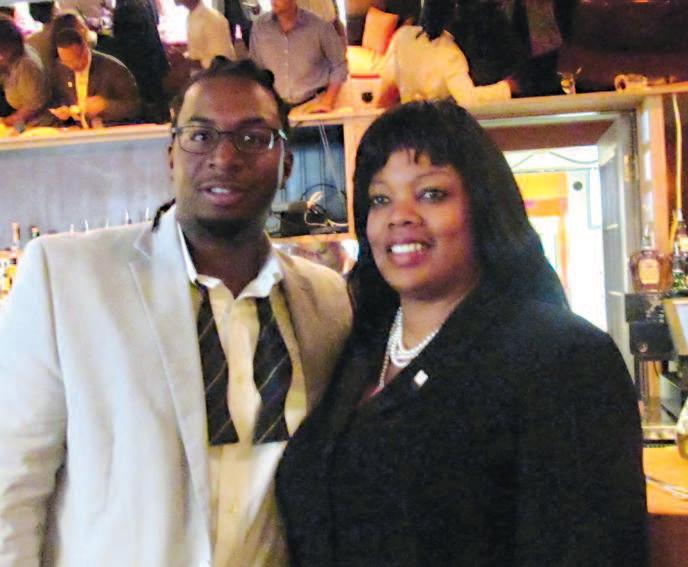
Nicole Colbert-Botchway, Esq. is the new Mound City Bar president and Kenneth Poole, MD, is the new Mound City Medical Forum president
14 at the Ritz-Carlton Hotel. Tickets are now on sale. Call 314-533-8000.
Light the Night Walk is the Leukemia & Lymphoma Society’s evening walk and fundraising event. It is the nation’s night to pay tribute and bring hope to thousands of people battling blood cancers and to commemorate and celebrate loved ones lost. St. Louis’ event will be held Friday, September 27 in Forest Park at 7:30 p.m. Walk night is a family-oriented evening in which participants carry illuminated balloons, raise awareness of blood cancers and come together as a caring community. By joining Team Veronica Stevenson (Wellcare)
and raising funds for this important cause, you’ll be making an impact on her fight against cancer. Every walker who raises $100 or more will be a Champion For Cures and will be recognized on Walk night. For additional information, meet Veronica in Forest Park (registration is at 5:30 p.m.) or call the Leukemia and Lymphoma Society at 314-878-0780.
The Mound City Bar Association and the Mound City Medical Forum are both under new leadership. Nicole Colbert-Botchway, Esq. is the new Mound City Bar president and Kenneth Poole, MD, is the new Mound City Medical Forum president.
Continued from C1
as they express an extension of her legacy through dance. “It’s about the honoring of her – and not even so much what she has contributed to the medical field, but who she was as a person,” Sands said. “If she were sitting in the audience I would say, ‘This is the piece that I’ve created for you, Ms. Lacks, I hope that it is to your liking.’” Dance St. Louis’ presentation of PNC Arts Alive New Dance Horizons II will take place on Friday, October 4 at 8 p.m. & Saturday, October 5 at 2 & 8 p.m. at The Touhill Performing Arts Center on the Campus of University of Missouri – St. Louis. For more information, call 314-534-6622 or visit www.dancestlouis.org.
Continued from C1
evocative word.”
At the New Music Circle gig, his Rites Quartet will feature music from a record of theirs that also has an evocative title with St. Louis roots: Frog Leg Logic
“When I was in high school, there was an influential saxophone player in St. Louis named Jim Marshall of the

Human Arts Ensemble. He was close to BAG, and in fact I met most of the guys from BAG at his apartment,” Ehrlich said.
“Jim had a poem about choosing to put on a Monk record versus a Mingus record. It had a line something like, ‘Mingus, you can never leave without taking the sky with you. Today, I want a child’s tale of frog leg logic.’ I heard him read that poem probably when I was 16.”
Evidently, it stuck with him.
“Separate from knowing the poem, it’s an evocative title,” he said, and he used it for a Rites Quartet record. “The music is springy,” he says, with a laugh. “The record is more upbeat, has a more outwardlooking feel to me.”

So the public can expect some springy, upbeat, outwardlooking music at the Kranzberg Center, though not only that.
“We’ll cover a lot of territory, a lot of musical directions, my compositions and improvisations with these great musicians,” Ehrlich said.
“Some very rhythmic, some melodic, some textural.”
He hopes to have with him his newest record, A Trumpet in the Morning, a large jazz ensemble record which is officially due in November. It also has what he describes as “a strong St. Louis connection.”
A Trumpet in the Morning is based on a poem by St. Louis poet Arthur Brown
and
is an internationally recognized visual artist associated with BAG, whom Ehrlich also met as a precocious musician growing up in St. Louis in the ferment of the late 1960s and early 1970s.
Ehrlich’s family moved away from St. Louis the year he left for the New England Conservatory of Music, so he only visits for “professional reasons,” such as this gig, which itself evokes early, positive memories.
“It will be a real pleasure to return to play as part of the New Music Circle,” he said. “It was in existence when I was in high school. I actually went to their concerts when I was in high school.” In addition to the New Music Circle concert, there will be a free Q&A with Ehrlich at 7 p.m. Thursday, October 3 at the Regional Arts Commission, 6128 Delmar Blvd. Tickets to the concert are $20, or $10 for students and “struggling music Lovers.” admission. Tickets may be purchased at the door with cash or check, or in advanced online at Brown Paper Tickets. For more information, visit NewMusicCircle.org.
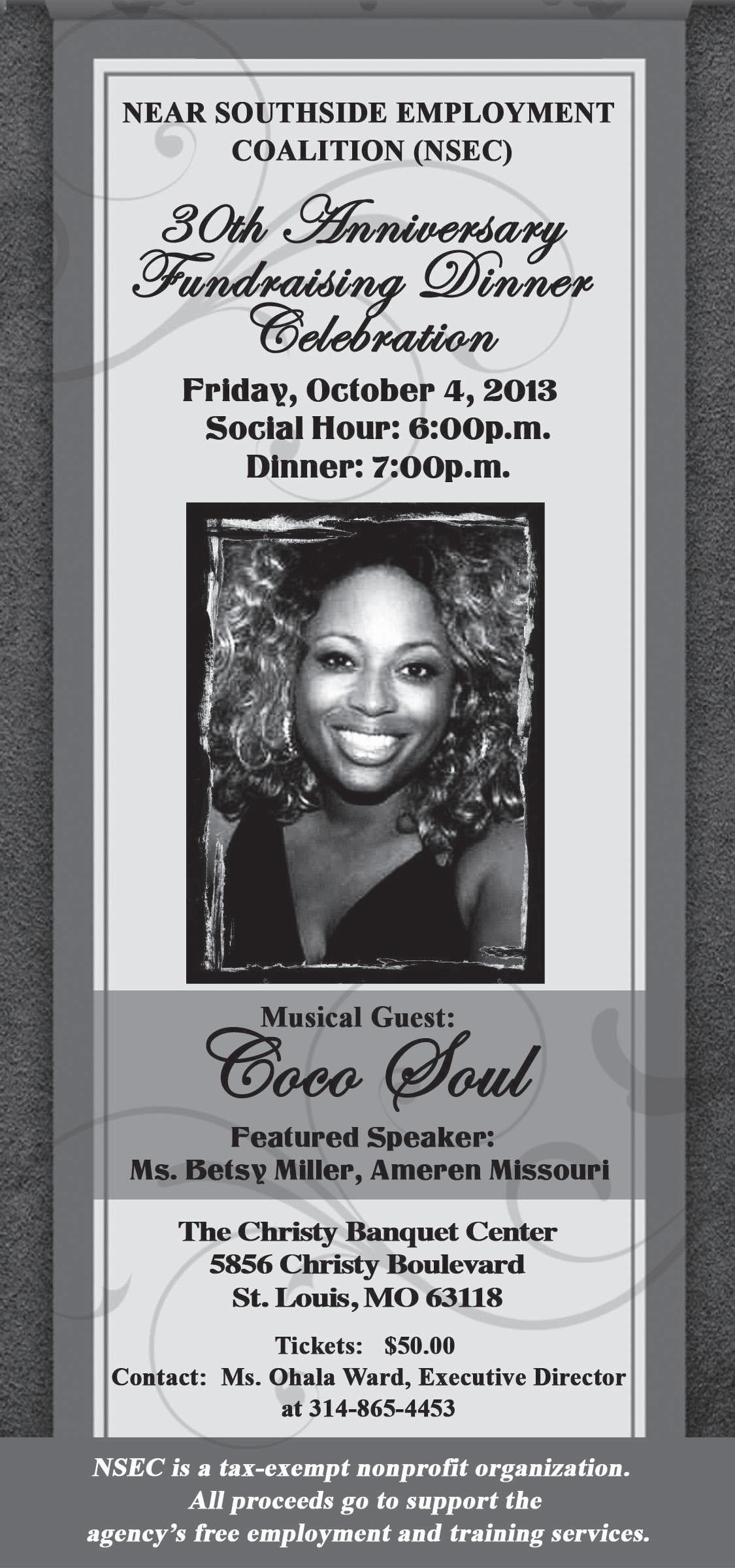


St. Louis Regional Chamber

Affordability, luxury, fine cuisine and star-studded entertainment makes Pinnacle Entertainment’s River City Casino’s new Event Center and Hotel a sure bet. Not since the days when riverboats plied the Mississippi has South St Louis County had such a destination. So it’s no surprise designers of this 82-million dollar addition project took its cue from history to create River City’s New Age Victorian steamboatdÈcor style, a style that’s bodacious and opulent that doesn’t skip on the needs of discerning 21st century visitors.
River City Event Center and new River City Hotel, which officially opened September 15 is a dynamite duo - where a concert or event can be rolled into an overnight escape or weekend getaway. River City’s Hotel lavishly appointed rooms
Continued from C1
rapper in the mainstream hiphop game. Signature go-go beats that echo through the music scene of his hometown could be felt both in his rhyme cadence and the live band hidden behind his white set.
Although assumed to be a relative rookie, Wale is approaching 10 years in the hip-hop game, and both his confidence and experience showed on stage as he used his set list to show that he’s not as new to the game as many people assume. He also managed to interweave tributes to hip-hop icons Tupac and Notorious B.I.G. while he presented songs like “Ambition,” “Simple Man,” “Rotation” and “88.”
More than anything, though, Wale appeared to be having fun – and constantly reaching out to the audience to establish both an authentic connection
equipped with pillow-top mattresses, 42-inch HD TVs, WIFI, overhead rain showers and claw foot soaking tubs will spoil you. Traveler Tip: check out the garden patio rooms. Spacious well-appointed, each with its own private garden patio niche that’s perfect to lounge and catch either sunrays or moonbeams while sipping your favorite libation. Visitors may want to check in early to allow ample time to chill out and enjoy the room before strolling the gaming floor or indulging those culinary cravings at one of River City’s five signature restaurants as the1904 Steakhouse, renown for prime streaks and seafood or Lewy Nine’s CafÈ, a retro diner theme named in honor of St Louis’ namesake, King Louis IX. If you’re lucky, the special
and a concert experience that they wouldn’t soon forget.
And through his more popular selections “Lotus Flower Bomb,” “Bad” and “Love Hate Thang” his efforts appeared to not be in vain. He came out to audiovisuals with unclear intentions and a stage emersion that seemed to labor on forever. But within the first line of the first verse, J. Cole proved he had the chops to bounce back when he greeted the audience with a taste of his newest album Born Sinner by way of “Trouble.”
Heralded by many –including Jay-Z himself – as the next Jay-Z, J. Cole has the audacity, confidence and charisma to potentially align him alongside the greats of hip-hop and he proved as much throughout the course of his show.
Cole stood alone – well, aside from a full scale band, backup singers and DJ – and rocked the crowd from start to finish.
Although noticeably more subdued than his tour mate
event you’re attending could include food. Lucky indeed, so prepare to partake in sumptuous gourmet fare as Mustard –glazed Missouri Lamb Chops, Red Lentil Miso crusted Sea bass or Pinnacle Prime beef on menus created by Event Center Chef Chris Lee and his culinary team.
Beyond the plate – River City’s Event Center is outfitted with the latest and best acoustics and lighting effects found anywhere in St Louis. The result, a concert experience that’s memorable.
Summer may be over, but there is still plenty to experience in St. Louis – aren’t you glad you live here?!
For more information about things to do and places to visit in St. Louis, visit www. explorestlouis.com
Wale, Cole’s natural talent and precision grabbed the audience and they never wavered.
With the “What Dreams May Come” tour, Cole presented the same variety – ranging from thoughtprovoking introspection and personal narrative to run of-the-mill club bangers –that embody his four studio albums. “Blow Up,” “Nobody’s Perfect” and “She Knows” were among them. The show was modestly attended, considering the combined buzz of Wale and Cole – especially the hype that has surrounded Cole since his career went into overdrive after being certified (and mentored) by Jay-Z.
But by the time the curtain closed with Cole’s current hits “Crooked Smile” and his “Power Trip” finale, even fairweather fans would have been sold on the idea of him being hoisted at the head of hiphop’s next class of superstars, while Wale looked like a major player among the new school of ones to watch.




Happy Birthday #78 to Maeomi Bowen on September 29. Mom, may the Lord continue to bless you. We love you! Friends and relatives, join us at Cedars to wish her a Happy Birthday.
and James
their
Pam and Great-Grandmother Dorothy

All reunion announcements can be viewed online!
Beaumont High School class of 1969 is preparing for its 45th reunion in 2014. Contact info: LaDonne Felton at beaumontclassof1969@yahoo.com.
Beaumont Class of 1979 will
be having our first fundraiser event on Saturday, October 5, at the Old Tymers Bar, 12667 New Halls Ferry, 63033 from 6pm-10pm. For additional information on purchasing a raffle ticket, please contact Scarlett McWell at 314-4587782 or send email to msscarletto@yahoo.com or Sandra Hooker at ayaina612@sbcglobal.net.
Beaumont High Class of 1983, please send your reunion forms in to BHS Class of 83, PO Box 211322St Louis, MO 63121 with your payment, ASAP.This will be our 30th year Alumni Celebration Oct. 4-6, that you do not want to
on
are
Family and friends came together to celebrate the 90th birthday of Celestine Redding on September 23. Celestine has lived to see and have many siblings, children, grandchildren, great-grandchildren, great-great-grandchildren and a host of nieces, nephews and extended family and friends. To God be the glory for 90 years!
miss! If you need your reunion form to turn in send email to bhsco1983@gmail.com or call Tammy Flowers at 314-3247615.
SumnerAlumni Association presents a Maroon and White Homecoming Week Oct. 1419, 2013. For more info and a full schedule of events, contact Michelle Elgin at 314.452.1275, Sheila Goodwin S.H.S. 314.371.1048 (Parade) or email: sumneralumniassn@yahoo.com.
SumnerClass Of 1974 has started planning its 40th class reunion. Meetings are held each third Saturday of the

month at 2-4 p.m. At New Beginnings Missionary Baptist Church, 4055 Edmundson Rd., 63134. Please contact Marsha D. Roberts-Moore at sumnerclassof1974@yahoo.com, 314-3673159 or Joyce Bush-Cruesoe at cruesoe2195@att.net, 314-4841552.
SumnerClass of 1979 is looking for classmates to participate in activities leading up to its 35th Class Reunion, June 20-22, 2014 in Lake Ozarks, MO. Please forward contact information to sumner1979@ymail.com or call Sara at 314-482-1558. Various activities are planned and we want as many classmates as possible to participate.
Do you have a celebration you’re proud of? If so we would like to share your good news with our readers. Whether it’s a birth, graduation, wedding, engagement announcement, anniversary, retirement or birthday, send your photos and a brief announcement (50 words or less) to us and we may include it in our paper and website – AT NO COST – as space is available Photos will not be returned. Send your announcements to: kdaniel@stlamerican. com or mail to: St. Louis American Celebrations c/o Kate Daniel 4242 Lindell Ave St. Louis, MO 63108 FREE OF CHARGE
Reunion notices are free of charge and based on space availability. We prefer that notices be emailed to us! However, notices may also be sent by mail to: Kate Daniel, 4242 Lindell Blvd., St. Louis, MO 63108. Deadline is 10 a.m. on Friday.
If you’d like your class to be featured in a reunion profile, email or mail photos to us. Our email address is: reunions@stlamerican.com

By American staff
“Ain’t He all right?”
For over four decades at Union Tabernacle Missionary Baptist Church, that question was posed in nearly every sermon preached by its illustrious pastor, Rev. Dr. Louis T. Shelton. After 43 years of leadership, this pillar of the community and father of many nations is released to retire from the rigors and the joys of serving as senior pastor. During the entire month of August, this spiritual icon of the city of St. Louis was saluted with tributes. The celebration kicked off with a reunion concert (which garnered former members from around the country) and was followed by weekly tributes from his sons and daughters in the ministry and then finally accolades from the spiritual community of St. Louis.
A native of Cleveland, Mississippi, in August 1957
Pastor Shelton, his wife Retha and their eight children made their pilgrimage to St. Louis. After only a few months in the city, Pastor Shelton found his place at Greater Bethlehem M. B. Church under the leadership of the late Rev. Cleophus Robinson Sr. Pastor Shelton served as an usher and deacon before announcing his call to the preached ministry on December 15, 1964. He was licensed on January 12, 1965.
Five and half years later, Pastor Shelton became the second pastor of Union Tabernacle on Sunday, August 4, 1970. During that time, he asked his wife Retha if she thought he would ever pastor another church. Prophetically, the woman of God told her husband, “No.”
The church began to rapidly grow under his dynamic preaching, teaching, organizing and vision. Two years later, the church was able to completely renovate and refurbish its original sanctuary. To accommodate the continuous growth of the membership, Pastor Shelton led the leadership, parishioners, family and
friends into the church’s beautiful new edifice in May 1983. After 30 years as an employee of McDonnell Douglas, he retired in 1988. Many retirees travel, but not Pastor Shelton. He always encouraged the youth of his church to follow his five-point plan for successful spiritual life: 1) get saved; 2) get an education; 3) obtain a career; 4) get married; and 5) have children. He took his own advice and earned a bachelor’s degree at the age of 61! Challenge has never been a stranger to this anointed man. On June 23, 1996, while in the process of adding an educational wing to the church building, and after a gloriously powerful prayer meeting and bible study, a wall collapsed

InspIratIonal Message Surround yourself accordingly
and the roof of the church caved in. The entire church needed to be demolished and reconstructed. Pastor Shelton, along with his committed leadership (deacons, trustees and building committee) labored to find temporary dwelling for the church as the ministry had to continue.
On May 9, 1998, he again led the congregants of the church and the community from Delmar and Union in their triumphant return to the “miracle corner” of Delmar and Newstead. The new building was so much larger than its previous structure that the church’s address had to change from 618 to 626 N. Newstead. As Pastor Napolean Bryant said, “Pastor Shelton is the only man I know who has built two buildings in the same place.”
During his 43 years at Union Tabernacle, Pastor Shelton has licensed 39 and ordained 27 ministers. Eleven of the ministers have organized their own churches, and five ministers have been called to serve as senior pastors at other churches. Pastor William Johnson (originally a son of Olivet M.B. Church) shared how Pastor Shelton embraced young pastors and graciously allowed them to minister from his pulpit during their early ministry years.
He and his wife of nearly seven decades will continue to serve at Union Tabernacle M. B. Church after his retirement. He is also blessed by his seven surviving children, Gloria, Louis Jr., Dyann, Pauline, Joyce, Yvonne and Larry. From those offspring, Pastor Shelton is blessed with 23 grandchildren, 54 greatgrandchildren and nine greatgreat-grandchildren.
One of the things that is almost a necessity when you turn your life over to Christ is to consciously and deliberately surround yourself with other people of faith. Recently I have had the privilege of talking to people who are currently experiencing their own transformations and are exploding in their knowledge and thirst for the Word. I must admit, it’s kind of refreshing for me as I remember my own experience.
In the beginning, I was so hungry and thirsty spiritually that I thought I was headed to seminary. I needed that kind of instruction, or so I thought. When I told a minister friend of mine, he made a valid point. One of my misconceptions at that time was believing that intellectual pursuit was a solution to most of my confusion or ignorance.
to become a mature Christian have been matched stride for stride by those who have attended bible study with me. I can’t tell you how wonderful it is to have someone else recognize spiritual awakening in you.
Boy, was I wrong. That kind of thinking kept me out of church, and my friend reminded me of that. He let me know that many people can quote scripture backwards and forwards, yet have no faith. He thought I would be better served if I surrounded myself with people who were as hungry for the Word as I was. He surmised that fortifying one’s emerging faith was far more important than spiritual intellectualism. That’s when I started bible study.
That pastor friend of mine was right. Indeed, my efforts
That’s why I find it sometimes overwhelming to watch others testify to what God is beginning to do and what He has done in their lives. It rekindles those early feelings I had upon the recognition and acceptance of Christ as my personal lord and savior. I am reminded of how people responded to me. Folks that I knew forever and never knew them as believers seemed to appear out of nowhere.
I’m convinced that until I offered, until I confessed to them of my transformation, they had no way to touch that part of me. Once opened, fellowship had a place to enter my previously walled-off soul.
“What is more, I consider everything a loss compared to the surpassing greatness of knowing Christ Jesus, my Lord, for whose sake I have lost all things. I consider rubbish that I may gain Christ and be found in Him. Not having a righteousness of my own that comes from the law, but that which is through faith in Christ-the righteousness that comes from God and is by faith” (Philippians 3:8-9). Think about it, and surround yourself accordingly.
The American is accepting Inspirational Messages from the community. Send your column (no more than 400 words) as a Word document and pasted text to cking@stlamerican. com and attach a photo of yourself as a jpeg ile. Please be patient; we will run columns in the order received.








By American staff

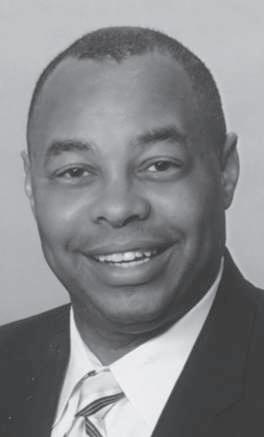

Bria Torrence has a passion for construction and design.
Engaged by her construction class at Beaumont High School, Torrence was encouraged by her guidance counselor to apply for the Technology Scholars Academy at Linn State Technical College.
“I really loved the hands on work that I was doing in my construction class,” said Torrence. “When I got accepted to the academy, I was excited because I couldn’t wait to explore all the career options in the construction field.”
Started in 2012, the Technology Scholars Academy is a partnership between St. Louis Public Schools and Linn State Technical College to provide students academic and personal growth experiences the summer before their senior year.
Torrence used the three week academy in Linn, Missouri to reinforce her interests in a construction career. She and 11 others from high schools within the St. Louis Public School system were challenged in both specific and broader technical areas so they could more readily visualize their career options.
“We’ve gotten to see some pretty cool stuff,” said Torrence. “Before coming, I had only learned about the interior parts of construction, but now I know the importance of the foundation even down to the type of rock.” Torrence and her classmates got to visit an aggregate plant to see how even the smallest rock can affect construction decisions in buildings and roadways. These types of onsite visits as well as exposure to hands-on projects and professionals in their field truly reinforce student learning at the academy.
“Not only did I learn a lot at the academy,” said Torrence. “But I was surrounded by stu-
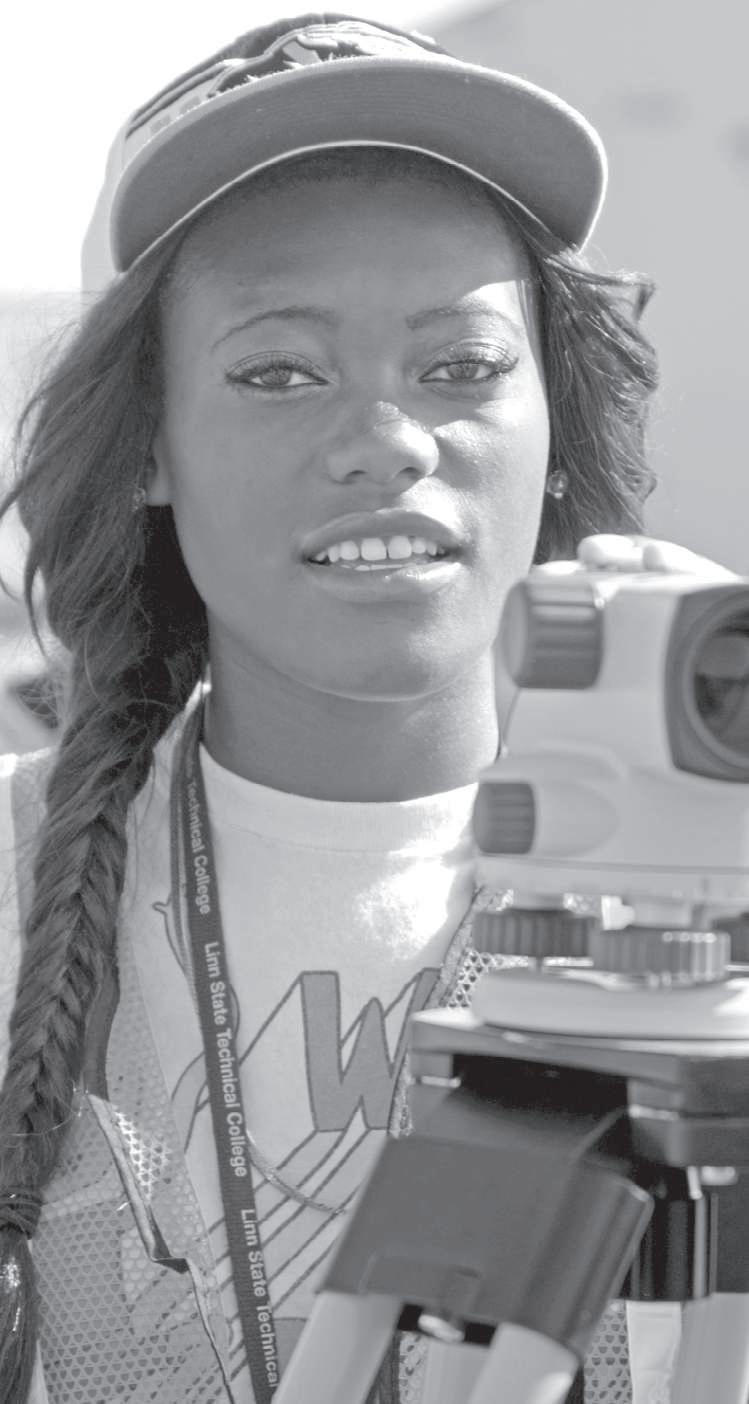
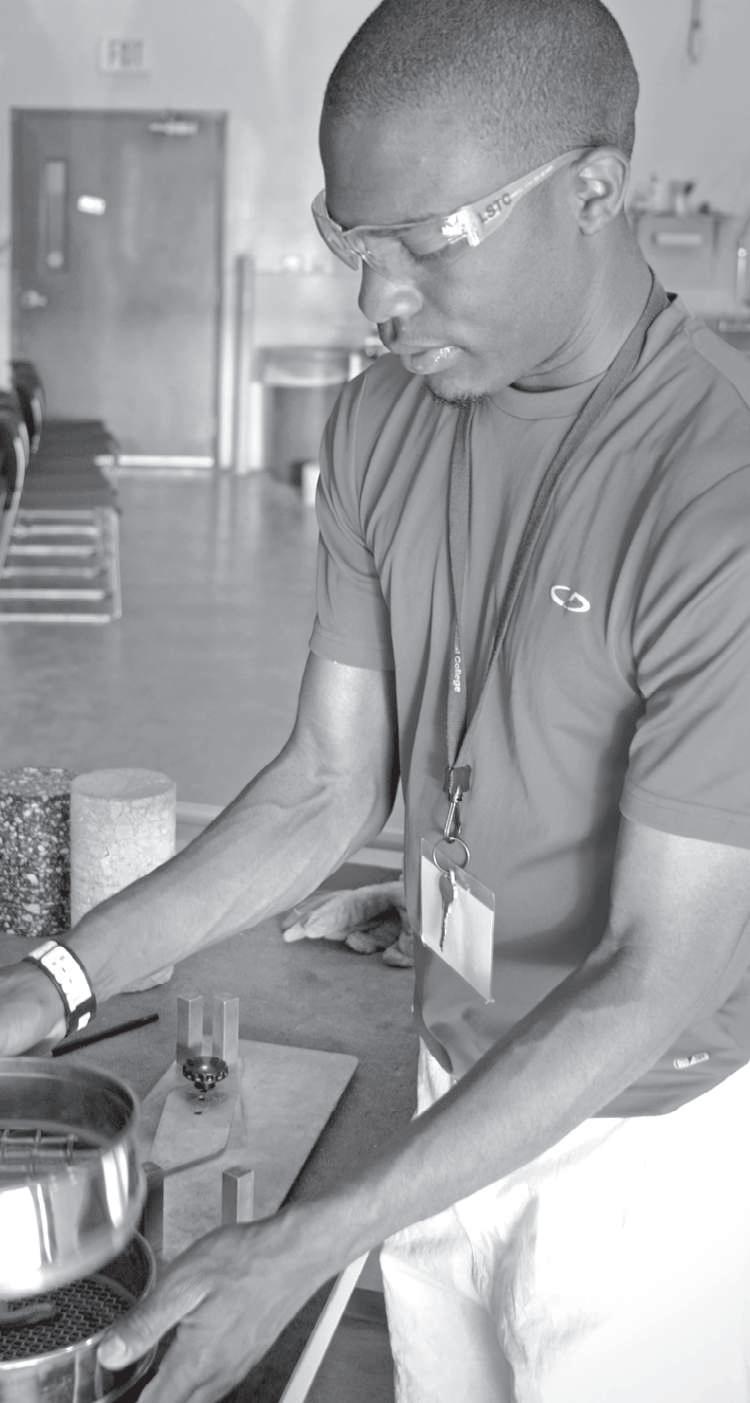
dents and instructors that were just as passionate about handson learning as I am. That made it even better.”
Dean of Institutional Research and Planning at Linn State Technical College, Rick
Mihalevich, notes that the students are really engaged when they get to do and see the work that happens behind the scenes.
“The exploratory technical exposure that the academy pro-
vides is not something these students readily have access to in their high schools,” said Mihalevich. “When they come to Linn State their activities really help them see the actual work they will be doing with a

technical degree.” Torrence is sold. Motivated by a tough military mom, she pushes herself to explore nontraditional roles. “I know construction is not typically for girls,” said Torrence. “But I’m tough, and I get that from my mom. This academy really showed me that a career in construction is the path for me.”
Future civil engineer
Whether it’s piano keys or cockpit controls, Gateway STEM senior, Jotham Nixon, is captivated. Aself taught pianist and aviation maintenance major, Nixon learns by doing. His hands-on approach to life made him a perfect fit for the Technology Scholars Academy at Linn State Technical College. Nixon applied to the academy with two goals in mind. “I applied because I knew there would be more hands-on
coursework and I wanted to get my feet wet in civil engineering technology,” said Nixon. He took full advantage of the academy’s educational philosophy.
“I went in expecting to focus on civil engineering and surveying,” said Nixon. “I didn’t know I would learn to control some huge CAT equipment. Once I figured it out, I scooped up a ball and dropped it into a basket. That was pretty cool.”
These experiences and others really showed Nixon that there is more to do within the civil engineering career path than he knew. The academy reinforced his learning with hands-on projects, on-site visits, and exposure to professionals in the field.
After completing the three week academy in Linn, Missouri he realizes that aviation maintenance is just the tip of the iceberg in terms of technical career options. Though he isn’t entirely sure what he’ll do, he does have a dream.
“Well, in a perfect world, I would be a civil engineering tech by day and a professional musician by night,” said Nixon.
To learn more about the Technology Scholars Academy at Linn State Technical College visit http://tsa.linnstate.edu/index. php.
STLCC offers free training
St. Louis Community College is part of a statewide community college consortium to offer free training to unemployed, underemployed, low-skilled adults, veterans and Trade Adjustment Act participants.
MoManufacturingWINs will focus on preparing workers to earn nationally recognized credentials endorsed by the National Association of Manufacturers such as the National Career Readiness Certificate, the National Institute for Metalworking Skills and the Manufacturing Skill Standards Council.
STLCC offers three training pathways in the areas of certified logistics associate, certified production technician and precision machining technician. Ahigh school degree or equivalent is required to be eligible for this program. For more information, visit www.stlcc.edu/MMW.
To get started, click on the “apply now” button and complete the online application.







Warming up to ‘What Dreams May Come.’ I assumed that the teeny bopper hip-hop heads would come out in droves to see J. Cole and Wale bless the mic as part of the “What Dreams May Come” Tour last Thursday at the Fox. I have never been so wrong in all of my life. Truth be told, it was quietly empty boots up in there. I’m guessing the mid-semester progress reports didn’t warrant a live music reward. Oh well, I still enjoyed myself as the second oldest person on my row. They had a couple of little opening acts, but most of the audience was too busy engaged in a call and response of “who is that?” and “I don’t know.”
Wale kicked things off as far as the main attractions and I must admit I got more life than I ever expected! All that white and gold made him looked like he was styled by LisaRaye, but I forgave him for it – even the custom made white and gold LeBron James high tops. I don’t know what his little singing side man was going through, but Wale nailed it with his extreme crowd interaction and that sickening band with the secret identity.
J. Cole and the dancing machines. And as if Wale wasn’t enough, this turned up couple – who were both clearly regulars at Kinloch lounges and BYOB bingo hall games – gave J. Cole a run for his money as the featured attraction. At first I assumed they were somebody’s wayward grandparents, but they made it clear that they were by no means chaperones and came to tear the club up on their own accord. I’ve seen a lot in my years of working the club, but I have never…I mean NEVER…seen a harmless elderly two-step transition into an AARP sweaty twerk session. Ceephus and Reesie 2.0 were bringing it! Picture this: a man in slacks and a faux silk blouse gyrating like his life depended on it right behind a seasoned woman threating to part company with her clip-on ponytail thanks to her ferocious drop-it-like-it’s-hot festivities.
J. Cole had me all like “boy, what” when he kicked the show off with some fake news footage about him and his crew being involved in a car accident. I had to keep myself from rushing the stage and saying “just sing ‘Power Trip,’ ‘Nobody’s Perfect,’ ‘She Knows’ and ‘Crooked Smile’ and be done with it so I can go home.” But once he came out, I was eating my imaginary words! I forgave him for everything except for those overzealous body rolls his backup singers were serving up. Even though I secretly caught more life from Wale’s stage presence, pound for pound J. Cole was great and “What Dreams May Come” was a solid show. I’m glad I bothered.
Blame the rain. Whatever I felt like J. Cole didn’t give me as far as stage charisma, he more than made up for it when he stopped through the Liquid Assets/Me So Social after party Thursday night at Harry’s. He was the coolest dude ever…and I think why he had me at hello was how he was paying the tragic groupies the dust for the sake of the ordinary people. And when I tell you the “wanna be something right for the night to the stars” girls were in the building…know that you have no idea. The patio area and not much else was packed to the gills and folks seemed to be having a good enough time until that tsunami style rain came down and had the girls scattering shielding sew-ins for dear life – which brings me to the worst “when bad fashion happens to good people” experience I’ve suffered through in a while. Now, I know people feel a certain kind of way about Cherie Campbell, but I don’t share the sentiments. She’s always so cordial and friendly when I see her and that goes a long way with me. But that white cut-out item that I wouldn’t dare fix my lips to call a dress was more desperate glowstick struggle than raw seduction. So much so that I have to publicly beg her never to wear anything like that again in life. Girl, you’re cute enough to not have to quietly expose your lady business in an outfit. Now I know you weren’t expecting to have to make a great escape from the storm in that thing, so I’ll give you that…but still. I don’t know what you want for yourself, but I don’t want that kind of attention for you. There I said it. Log in to win FREE TICKETS. Now by now y’all know The St. Louis American has the hottest tickets in town for our giveaways. And it will be business as usual – but on a whole ‘notha (yes, I said notha) level –as we bless lucky winners with a once in a lifetime experience when Chris Tucker graces the stage at the Fox next Saturday. Along with some prime VIP seating, we will be offering some up-close and personal face time by way of a private meet and greet with Agent Smokey Carter. Visit stlamerican.com and/or our Facebook page for details on how to win. And be sure to like us if you haven’t already.
HellaFly’s Saturday night live. I made my way to the Coliseum for the HellaFly joint venture and I must say that it was one of the winning festivities of this past weekend. The folks were deep up in there and steady strolling in well after midnight. I was thrilled for them to have a decent crowd as plenty of the folks rested up for the epic weekend that will be Gateway Classic – and word on the curb is that it goes down as such every Saturday. The Classic is back. Since I’ve already started with the classic I might as well continue, the 20 year anniversary is this weekend and it’s going to feel like the Bayou Classic (look it up if you aren’t about that HBCU life) with all of the stuff official and unofficial popping off this weekend in The STL before, during and after Central State and Tennessee State take the field. I mean… things kick off on Thursday and don’t shut down until Sunday. There’s even a day party on Friday...yes, a day party on a Friday. And everybody from NFL and R&B stars to reality TV side chicks are coming to town to join the party. I really don’t have time – or the space – to tell it all, but I’ve made a special list for you to skim through on the site, so visit stlamerican.com if you want the run down.







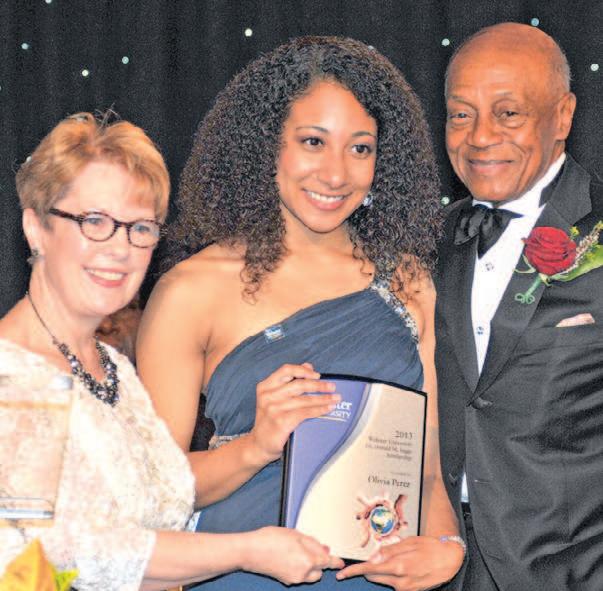
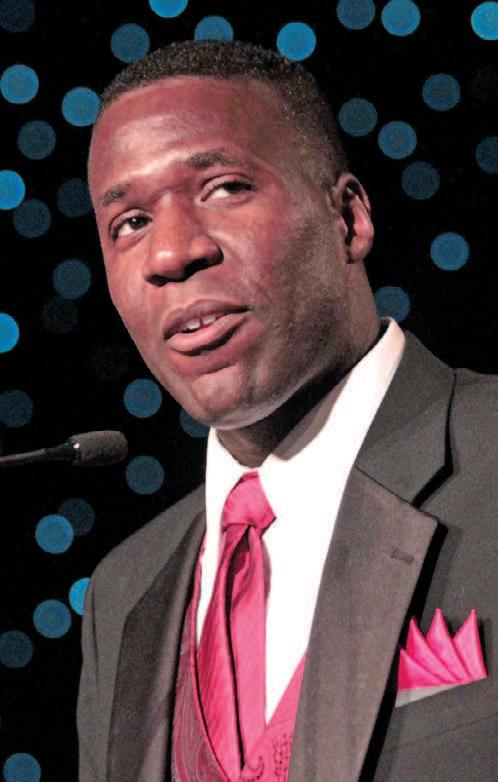
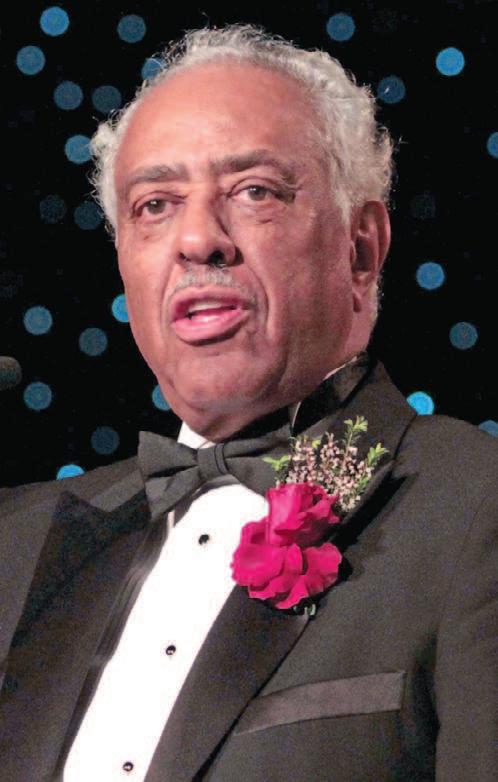
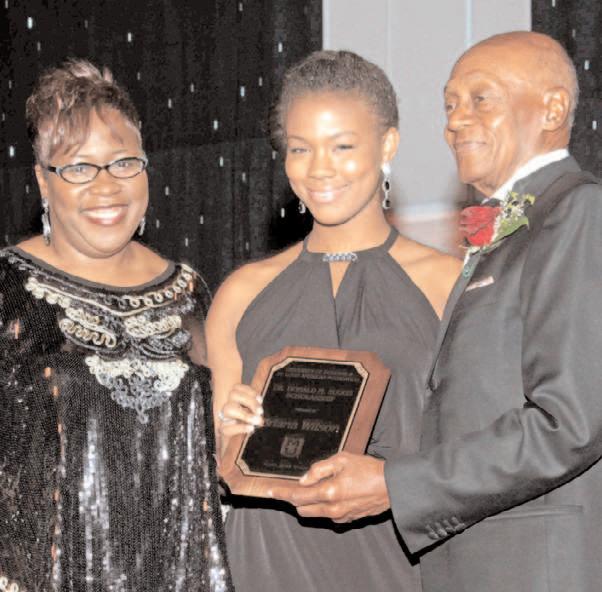

The sold-out 26th Anniversary Salute to Excellence in Education Scholarship and Awards Gala provided a memorable evening of elegance and inspiration, from lively receptions to outstanding varied musical entertainment and splendid dining. Nearly 1,500 attendees filled America’s Center to pay tribute to Lifetime Achiever Lynn Beckwith Jr., Ed.D. and Stellar Performer Dr. Art McCoy, Ph.D. and to honor the outstanding accomplishments of individual educators and scholarship recipients.
As the world around us increasingly presents tremendous challenges, this Salute to Excellence coverage demonstrates that St. Louisans are eager to support noteworthy achievements and good works of its own.



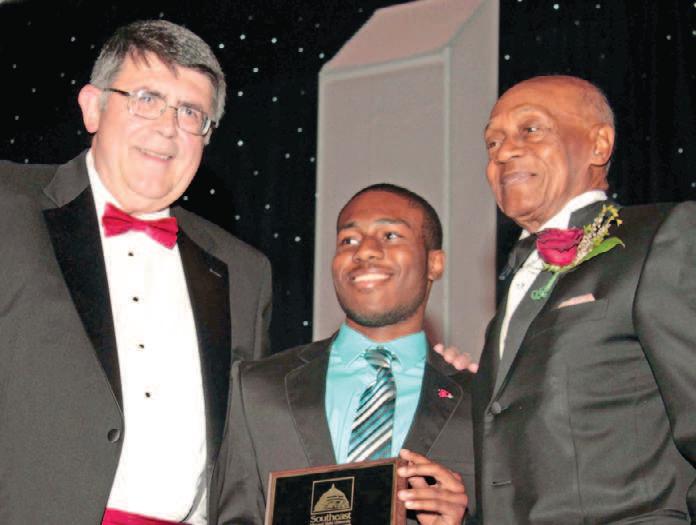
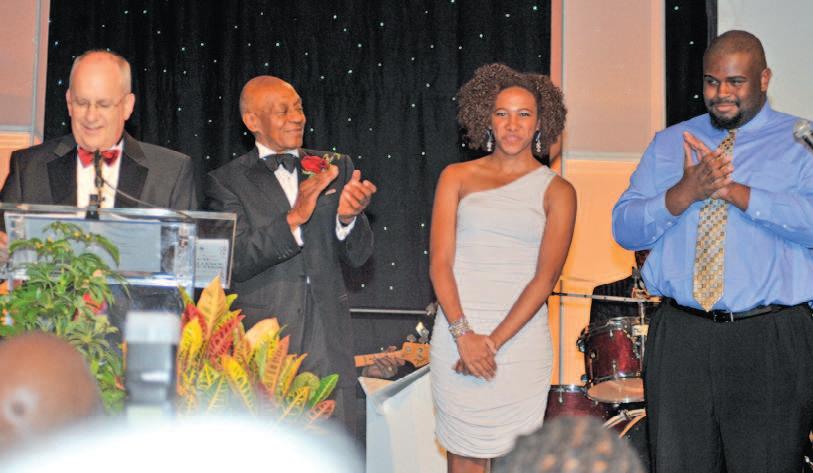
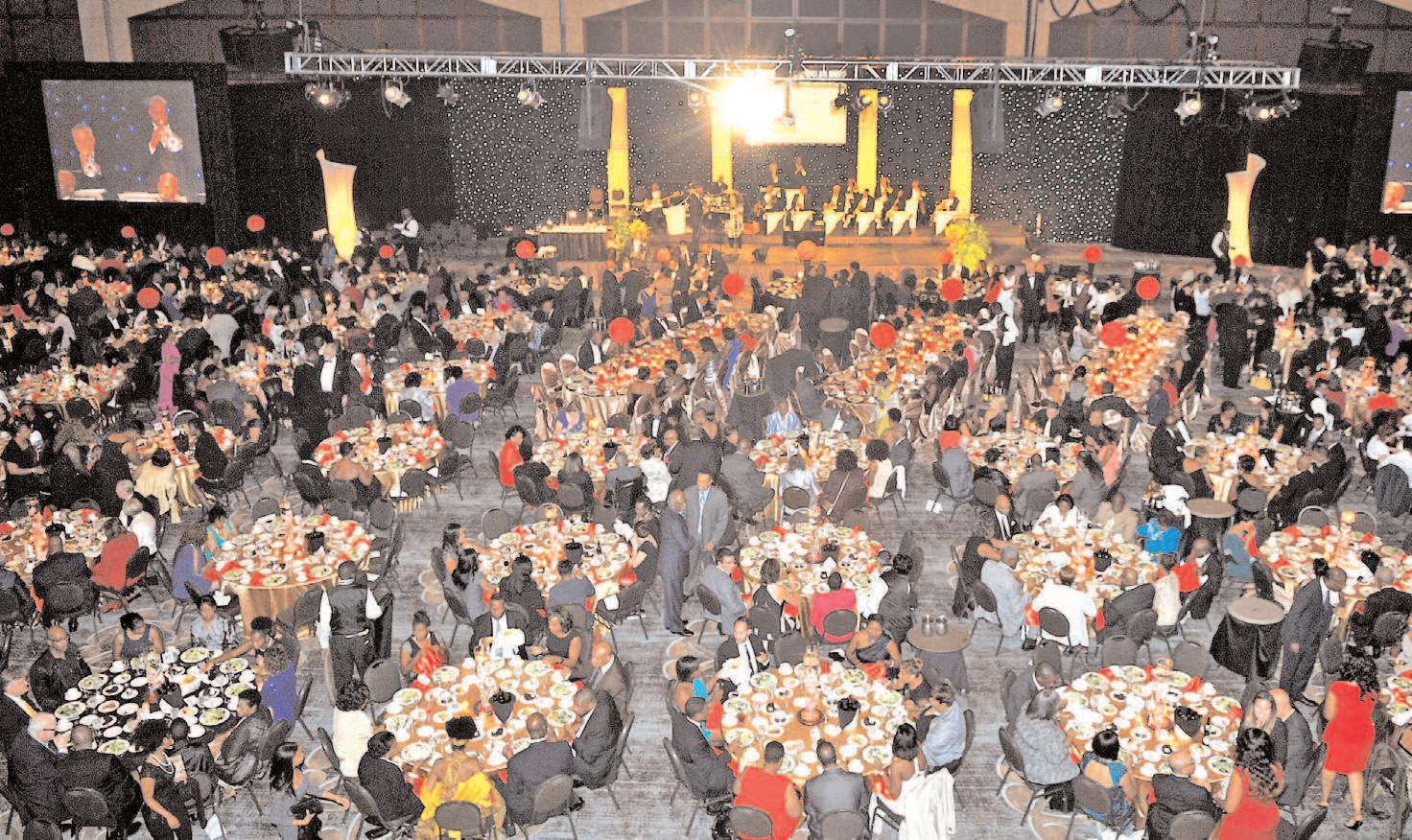
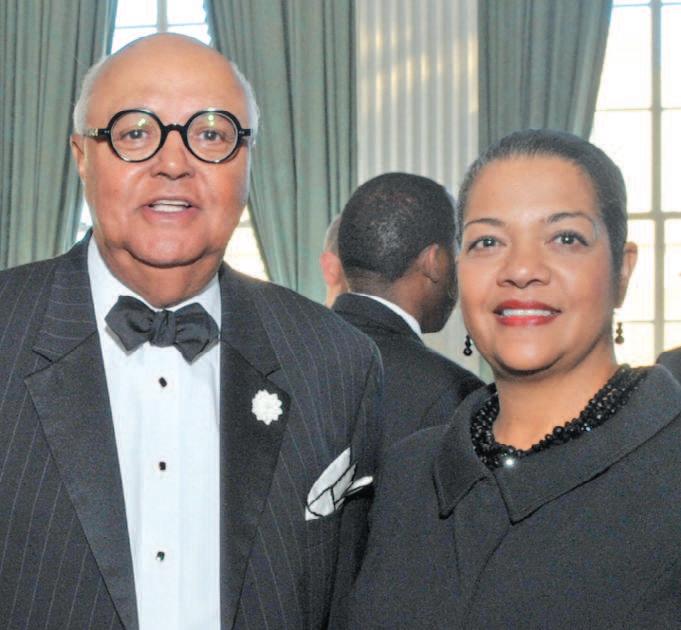
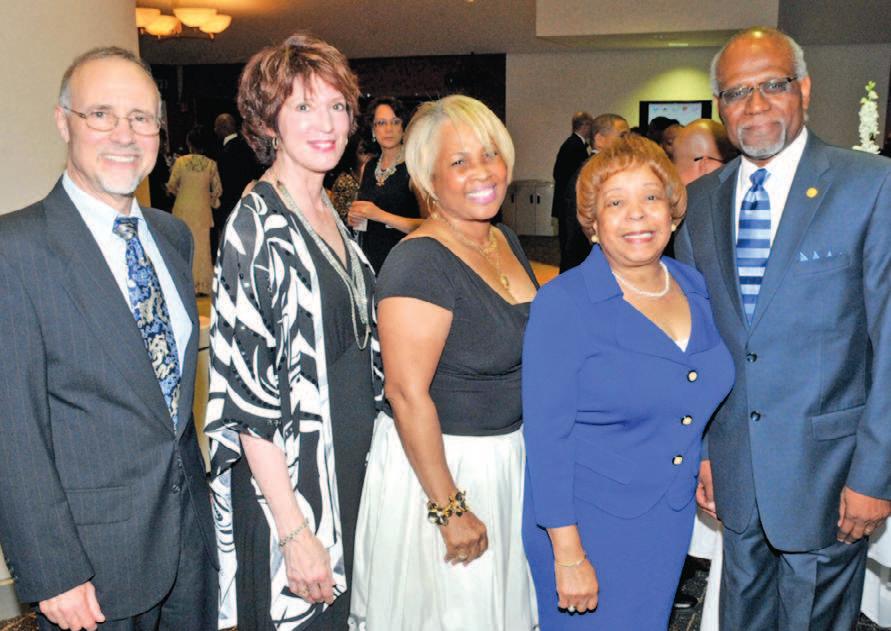
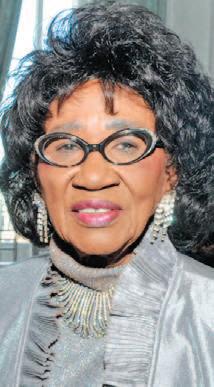
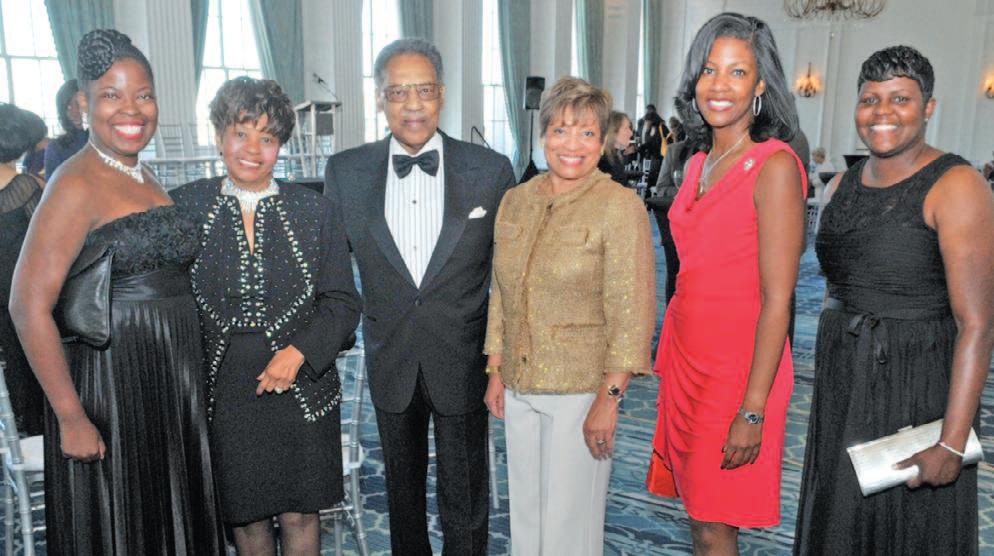

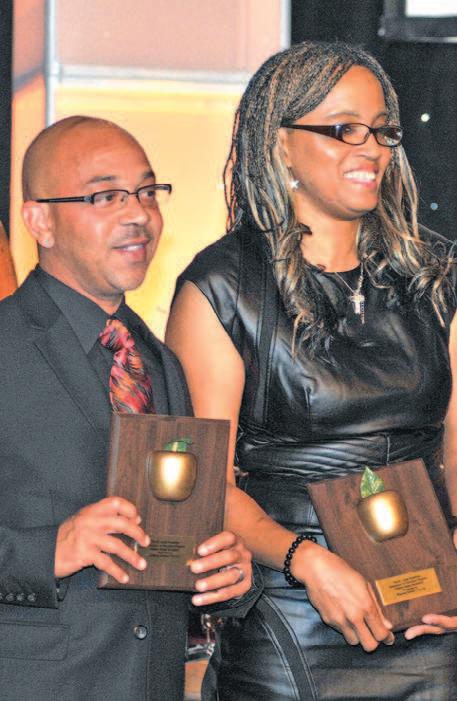


Dr.Gwendolyn Diggs,Becky Spellmeyer,Carla Baranouski,Kathleen Hardegan,Terrance White,Suzette Simms