

St. LouiS AmericAn
‘’90s summers’ nostalgia

Parents today seek balance between freedom, safety
By Ashley Winters St. Louis American
The sound of kids laughing in the spray of an open hydrant, bikes scattered across front porches and neighborhood games stretching until the streetlights flickered on are memories many adults now romanticize as the perfect “’90s summer.” But while social media celebrates the freedom and nostalgia of those childhood summers, pediatricians say some of the habits many grew up with can carry real risks in today’s world.
For Michelle “Shell” Laden, summer in St. Louis meant long days outside with little supervision and even fewer worries. She remembers drinking straight from garden hoses, playing jump rope in the middle of the street and walking to the corner candy store alone as a child.
“Our parents would send us outside and we would be OK,” Laden
See Summer, A10
Court ruling won’t end police budget dispute
By Sylvester Brown Jr.
St. Louis American
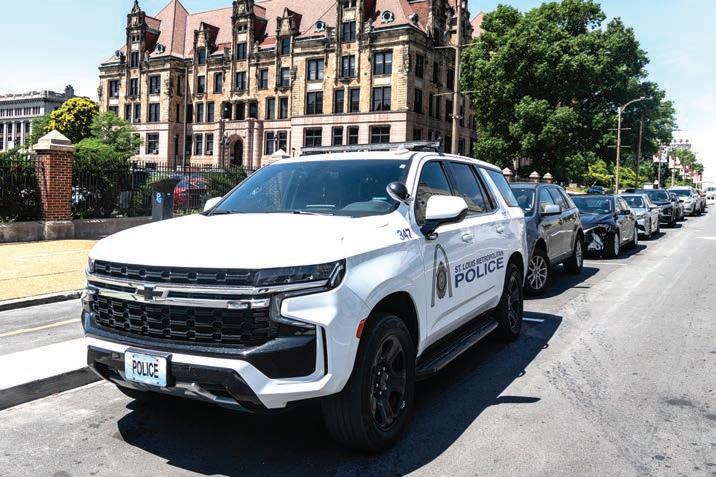
A legal battle over police funding in St. Louis is headed to the next round after the state-appointed Board of Police Commissioners said it will appeal a judge’s ruling rejecting its bid for roughly $67.5 million in additional city funding. The announcement came a day after Circuit Judge Joan Moriarty ruled that Rams settlement proceeds and city budget reserves should not be counted as current-year revenue when calculating the minimum amount the city must provide for the St. Louis Metropolitan Police Department. Board of Police Commissioners President Chris Saracino said Wednesday that the board intends to challenge the decision.
The ruling drew praise from city leaders, who argued that the board’s interpretation of state law would have forced deep cuts to other city services.
Board of Aldermen President Megan Green said the decision reinforced arguments made in a separate lawsuit challenging the authority of the state-controlled board. “The state-controlled board of police commissioner’s overreach here isn’t only shameful — it’s indefensible,” Green said. “Their inclination toward rushed, ill-informed decision-making

See Police, A11


By Sylvester Brown Jr. St. Louis American
The U.S. Supreme Court’s ruling involving Louisiana’s congressional map has emboldened some Missouri Republicans who are openly questioning districts drawn to preserve Black voting strength.
Additionally, the Missouri Supreme Court recently upheld lawmakers’ authority to redraw congressional districts mid-decade, leaving intact a Republican-backed map that reshaped the Kansas Citybased district represented by U.S. Rep. Emanuel Cleaver. Now, some Black elected officials and voting-rights advocates worry the St. Louis-based 1st Congressional District could eventually face similar scrutiny. The court’s decision did not affect the 1st District, currently represented by Democratic U.S. Rep. Wesley Bell. But some Missouri Republicans, including Secretary of State Denny Hoskins, have argued that districts drawn around race deserve renewed examination. Drawing districts based on skin color is the “definition of racism,” Hoskins recently told reporters. “We don’t want that in Missouri.”
According to a News From the States report, Sen. Eric Schmitt, a Republican from Missouri who chairs the Senate Judiciary Subcommittee on the Constitution, urged the U.S. Department of Justice to examine districts around the country that were drawn to protect Black voting strength.
“These maps do not become constitutional because they’re already in use,” Schmitt said. “They do not survive because politicians call them voting rights maps. Yet, they will not
See District, A11
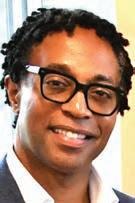
William Clay Sr.
Hakim Gibson, 2, splashes through the fountains at Citygarden in downtown St. Louis.
Photo by Lawrence Bryant / St. Louis American
Mayor Cara Spencer called the decision “a win for St. Louis.”
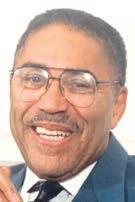
William Lacy Clay Jr.
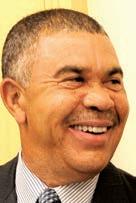
Wesley Bell
Cori Bush
A St. Louis Metropolitan Police Department vehicle sits outside St. Louis City Hall amid an ongoing dispute over police funding.
Photo by Lawrence Bryant / St. Louis American
Editorial / CommEntary
Guest Editorial
Invest in North City and downtown
By Karen Branding and Ron Kitchens
Pope Leo is true man of faith, unlike Trump Commentary
core means less vacancy, more jobs and more visitors who generate the tax revenue needed to serve families and neighborhoods in every corner of the city.
As the city of St. Louis contemplates how to allocate more than $250 million in Rams settlement funds, we agree: North St. Louis should receive the largest share of these resources. The devastation caused by decades of disinvestment — compounded by the May 16, 2025, tornado — demands bold action.
But if we are serious about rebuilding North St. Louis for the long term, we must also invest significant Rams funds in the economic engine that helps fund services and investments throughout the entire city: downtown.
Downtown is the city’s economic backbone. While downtown makes up less than 4% of St. Louis’ geography, the hotels, restaurants, residences, offices, sports and event venues and entertainment corridors within downtown account for more than 20% of the city’s tax base. At Busch Stadium, for example, the Cardinals generate an average of $12 million in tax revenue for the city each season. In just one week, the U.S. Figure Skating Championships held downtown this past January generated more than $416,000 in sales taxes and nearly $400,000 in hotel taxes for the city. The downtown footprint revitalized in 2024 through the CityArchRiver project, which connected and expanded the park’s grounds and museums, created $30.7 million in tax revenues for the region. These are just a few examples of the fuel the downtown economic engine generates.
The Rams settlement is a one-time opportunity. Decisions on how to spend it are not easy. There is more need than there are dollars available. But, applied strategically, the Rams settlement funds can help restore and strengthen several critically important priorities for St. Louis: North City, downtown and citywide infrastructure.

Like Missouri disaster funding, FEMA dollars, private dollars and philanthropic support, the Rams funds are an essential financial infusion for rebuilding North City. Fortunately, the possibilities for ongoing disaster support do not end with the deployment of Rams funds.

Earnings taxes, commercial and residential property taxes, sales taxes and hotel taxes flow from downtown into the city’s operating budget. The city depends on these revenues to provide services that reach residents citywide — public safety, parks, streets, trash removal, mental health services and more.of
When downtown thrives, St. Louis thrives. According to St. Louis-based Development Strategies, Inc., for every dollar the city’s general fund puts into downtown-related spending, it gets four dollars back in taxes. Investments in downtown have ripple effects far beyond its two-square-mile footprint.
When downtown struggles, though, that tax revenue shrinks, and the city’s operating budget has less money to spend on critical services. That is the situation today. Downtown is at an important inflection point, and it is critical that we invest in its growth. A stronger urban
The next major phase of tornado recovery and rebuilding will require pursuing significant federal funding through the Department of Housing and Urban Development’s Community Development Block Grant program. Those grants are designed to cover unmet needs after insurance, FEMA assistance, SBA loans and other aid have been exhausted.
The business community will stand with St. Louis and Missouri in pursuing those federal block grants to support the ongoing rebuilding of North City. Downtown and North St. Louis are not in competition for St. Louis’ future. They are linked. Placebased investment done thoughtfully lifts more than the place it lands. Smart commitments to downtown today will create compounding returns for St. Louis for years to come.
Excluded from Rams investments, downtown will generate fewer of the resources that make true recovery possible elsewhere. Included, downtown becomes a multiplier.
We say this not as advocates for one neighborhood but as believers that growth is a prerequisite for inclusive prosperity.
We encourage St. Louis to choose strategy rather than choosing sides. Invest the Rams settlement boldly in North St. Louis and strategically in downtown and infrastructure. The future of each depends in part on the success of the other.
Karen Branding is president and CEO of the St. Louis Regional Business Council. Ron Kitchens is managing partner for Greater St. Louis, Inc.
“Neither can we deny or diminish the delay with which both society and the Church came to denounce the scourge of slavery. … This constitutes a wound in Christian memory, one from which we cannot consider ourselves detached. It is impossible not to feel deep sorrow when contemplating the immense suffering and humiliation endured by so many in stark contrast to their immeasurable dignity as persons infinitely loved by the Lord. For this, in the name of the Church, I sincerely ask for pardon.”
— Pope Leo XIV
By Marc Morial
Despite his bungled attempts to quote the Bible or portray himself as Jesus Christ, the president of the United States is not a faith leader. Such leadership demands not only the condemnation of atrocities, but “acknowledging the harm done, just reparation and taking steps to prevent it from happening again.”
These were the eloquent words of Pope Leo XIV’s first encyclical, in which he formally apologized for the role the Vatican played in legitimizing slavery and its centuries-long failure to condemn it.
Columnist Marc Morial
The Pope’s principled and unequivocal declaration stands in stark contrast to the Trump administration’s unconscionable vote against a United Nations resolution designating the transatlantic slave trade “the gravest crime against humanity.”
According to the resolution, “States bear responsibility for internationally wrongful acts and have an obligation to cease the act … offer appropriate assurances and guarantees of non-repetition … and to make full reparation for the injury caused.”
Neither the U.N. resolution nor Pope Leo’s encyclical specify what forms such reparation should take, but Deputy U.S. Ambassador to the U.N. Dan Negrea’s feeble and dishonest defense of the indefensible vote was that the United States “does not recognize a legal right to reparations for historical wrongs that were not illegal under international law at the time they occurred.”
the most widely recognized of which is the Civil Liberties Act of 1988, which granted formal apologies and reparations to Japanese Americans who were forcibly relocated and incarcerated in internment camps during World War II. Between 1946 and 1978, the Indian Claims Commission awarded more than $800 million to tribes for land taken without fair compensation. In 1974, the United States provided reparations to survivors of the Tuskegee Syphilis Study and their heirs.
The United States even provided reparations to slaveholders when the institution was abolished in the District of Columbia. Even if the issue of reparations were set aside, the only historical injustice the Trump administration affirmatively acknowledges is imaginary discrimination against white people. In his encyclical, Pope Leo wrote, “injustices do not arise solely from the wrong choices of individuals, but also from structures, mechanisms and economic and cultural systems that produce inequality almost automatically.”
The Pope’s principled and unequivocal declaration stands in stark contrast to the Trump administration’s...
The president repeatedly cloaks his actions and policies in the language and imagery of faith — wielding a Bible for a photo op, claiming he was chosen by God, and pandering to the religious right. But when confronted with faith’s moral demands, he has resisted and rejected it. The contrast is not merely a disagreement over policy, but a deeper conflict over whether faith is an instrument to defend authority or to hold it to account.
Marc Morial is National Urban League president and CEO.
Donald M. Suggs Publisher ADMINISTRATION
Dina M. Suggs – Sr. Vice President
In fact, the United States has repeatedly recognized the right to reparations,
Commentary
Black athletes should boycott some SEC schools
By Terrance Harris
America — particularly Black America — is at a difficult crossroads that literally threatens the complexion of our nation.
Last month’s Supreme Court ruling that blew up Section 2 of the Voting Rights Act of 1965, allowing states to redistrict and gerrymander to dilute the vote of Black Americans, threatens to set our voting rights back significantly, especially in the South, if we don’t do something.
Sure, we can protest, we can scream and just be upset.
But our real fighting power is in showing up at the polls like never before and withholding our buying power where our vote isn’t respected.
influence in this state and the country. I say, go for it and make these offending states suffer where it hurts. But don’t stop at the SEC. Extend it to schools in the Big 12 and ACC conferences, in states where people want to cheer for Black athletes on the football field but don’t want them to have true representation in Congress, the Senate or even their more influential local elections.
It’s time Black athletes understand their influence and power. It’s time they free themselves from being viewed as glorified gladiators who perform for people who don’t respect them as equals or as real human beings, for that matter.

We also have another power that is sure to get the attention of White folks who don’t think we should have a say in this country’s political landscape. It’s through our gifted young Black athletes, whom they love to cheer for in the uniforms of their favorite college athletic teams.
In the wake of the Supreme Court’s 6-3 ruling in Louisiana v.Callais, Black people are calling for the top Black athletes to avoid playing for any primarily White college or university in the South.
We’re talking kids boycotting programs in Florida, Louisiana, Mississippi, Alabama, South Carolina, Georgia, Tennessee and Kentucky — places where the Black vote is being diluted.



Black people are calling for the top Black athletes to avoid playing for any primarily White college or university in the South.
We Black Texans have had a front-row seat to how gerrymandering can cripple the Black vote, and specifically in Houston, where Donald Trump commanded Gov. Greg Abbott, his good soldier, to find him five congressional seats ahead of the upcoming midterm elections. And right now, we have lost a Black seat in Houston and forced two candidates — Christian Menefee and Al Green — with similar liberal leanings into a fierce, nasty battle that will weaken Black political
As one of the last football conferences to integrate, the SEC found out back in the 1970s that it couldn’t stay relevant without Black athletes. Does the name Sam “Bam” Cunningham of USC ring a bell?
If the SEC felt pressure then, imagine what it would feel today if the best Black athletes in the South suddenly started heading North or going out West. Imagine if young Black student-athletes and their families did start to align their recruitment with the consciousness of what kind of power play that would be. The natural destinations would be in the North and West, but what about HBCUs?
Imagine what Prairie View head football coach Tremaine Jackson or Texas Southern coach Cris Dishman could do if the recruits who would have ordinarily gone to UT or Texas A&M suddenly landed in their laps. No, the amount of money they could make at the bigger schools might not be there, but the NIL and revenue-sharing pots would be significantly larger than they are today.
It’s time that Black athletes and their families understand their power and influence and then use it.
Terrance Harris is a sports writer and columnist with The Houston Defender.
Columnist Karen Branding
Columnist Terrance Harris
Columnist
Ron Kitchens
“A critical number of Republicans did not believe in putting a man over the law.”
— U.S. Rep. Jim Clyburn, after South Carolina Republicans blocked a Trumpbacked plan to redraw his congressional district

As recovery drags on, North St. Louis groups receive tornado-relief grants
By Ashley Winters St. Louis American
Nearly a year after a tornado tore through North St. Louis, many residents are still struggling to repair homes, navigate insurance claims and recover from the emotional toll of the disaster.
Community leaders say those ongoing needs are one reason seven grassroots organizations involved in recovery efforts will receive a combined $70,000 through the St. Louis Regional Racial Healing +Justice Fund.
Board, which said many residents remain in recovery nearly a year after the tornado damaged or destroyed thousands of homes, businesses, churches and other buildings across the city.
“Nearly a year later, many are still navigating recovery, rebuilding, and stability,” said Dr. Shonda Ambers-Phillips, a member of the Community Governance Board.
The onetime crisis-response grants are intended to support organizations providing direct aid, mental health services, housing support, food access and community healing in neighborhoods hardest hit by the May 16, 2025 storm.
“I had to just stand there and call on the name of
Recipients include 314Oasis, 4theVille, Action St. Louis, Black Healers Collective, Dream Builders for Equity, Chosen For Change and St. James AME Church.
The grants were awarded by the fund’s Community Governance
For Joyce White, recovery has been far slower than she expected. White still remembers standing in her bathroom praying as the tornado ripped through her North St. Louis neighborhood. “I had to just stand there and call on the name of Jesus,” she said. Her home sustained extensive damage. Although she eventually received a tarp for her roof, she said rain continued leaking inside, damaging ceilings and her grandson’s room. More than a year later, portions of the two-family flat she owns still need repairs.
“One window is 500 bucks,” White said.
“That’s a lot of money for one window.”
White said she also remains frustrated by what she sees as a slow recovery process in some North St. Louis neighborhoods.
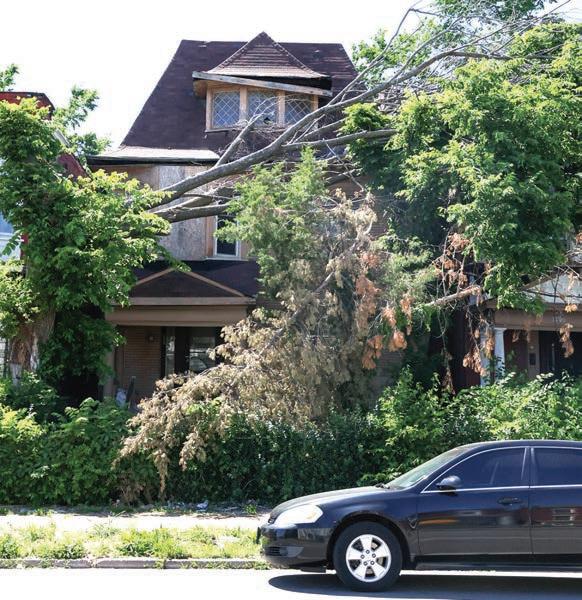
Across the street from her home, she said, a tree that crashed into a vacant house during the tornado has yet to be removed.
“I’ve been looking at it since May 16,” White said.
Property owner David Walker said he is still repairing tornado-damaged buildings more than a year later.
Walker, who owns several properties in heavily
damaged neighborhoods, said he spent months dealing with debris removal and emergency repairs and has invested more than $100,000 into recovery efforts.
“A year later and I’m still fixing stuff,” he said.
Community organizations receiving grants say stories like White’s and Walker’s remain common.
Rebeccah Bennett of InPower Institute’s Black Healers Collective said her organization continues to encounter residents dealing with displacement, housing instability and emotional trauma tied to the storm.
A fallen tree still rests against a vacant North St. Louis home across from Joyce White’s property more than a year after the May 16, 2025 tornado. White said the lingering damage reflects the slow and uneven recovery many residents continue to face.
“Displacement, despondency, despair, and depression have become the new norms for many community members,” Bennett said.
She said Black Healers Collective and its partners have organized healing events, wellness programs and crisis counseling services for residents affected by the tornado.
“The recovery process has been stunted and uneven, with most residents not getting adequate city and FEMA assistance to repair their homes, restore their lives, and rebuild their neighborhoods,” Bennett said.
Chosen For Change, founded by Michael Brown Sr. and Cal Brown, said the grant will support its work providing grief support, mentorship and crisis-response services. Since the tornado, the organization said it has helped provide hotel stays, meals, toiletries and children’s services for affected families.
Cal Brown said one lesson from the recovery effort has been the importance of collaboration among neighborhood groups, churches and volunteers.
“While the road to recovery remains long and frustrating for many, grassroots organizations, churches and volunteers continue to fill the gaps where systemic responses have fallen short,” Brown said.
The Racial Healing + Justice Fund was launched in 2020 through a partnership involving Forward Through Ferguson, Deaconess Foundation and Missouri Foundation for Health to support community-led efforts focused on racial healing and equity across the St. Louis region. Fund leaders said the tornado-recovery grants recognize organizations that stepped in to help residents in the immediate aftermath of the storm and continue providing support as recovery enters its second year.

Photo by Lawrence Bryant / St. Louis American
Jesus.”
– Joyce White
Commentary
Poll finds three-way tie in county executive race
Recent polling suggests the Democratic primary for St. Louis County executive remains highly competitive, with a large share of voters still undecided.
A Missouri Scout survey conducted in early April found a three-way tie among Democratic candidates, with state Sens. Brian Williams and Sen. Angela Mosley and St. Louis
County Assessor Jake Zimmerman, each receiving 16% support. More than half of voters surveyed, 52%, were undecided.
The poll offers an early snapshot of the race to succeed County Executive Sam Page, who is not seeking re-election. The Democratic primary is scheduled for Aug. 4.
Vacant Page Boulevard building to come down
The city of St. Louis is seeking bids to demolish a long-vacant building at 3509 Page Blvd. that became the focus of a yearslong legal dispute involving developer Paul McKee’s NorthSide Regeneration, the St. Louis Business Journal reported.
The city’s Land Reutilization Authority acquired the property last year through a settlement stemming from a lawsuit filed by the Covenant Blu Grand Center Neighborhood Association. According to bid doc-
Armory data center approval challenged
The St. Louis Board of Adjustment is expected to hear appeals challenging the city’s approval of a permit for a proposed data center near the Armory in Midtown.
Residents, business owners and advocacy groups have filed multiple appeals seeking to overturn the conditional-use permit granted in April for the project, which would convert the former Famous-Barr warehouse into a data center and redevelop the Armory as office space.
Opponents have raised concerns about potential impacts on water use, energy consumption, noise and neighborhood development.
City officials approved the project with a series of conditions and a community benefits agreement aimed at addressing those concerns.
uments, demolition could begin by July 15 and be completed by Sept. 30.
The Land Reutilization Authority initially hoped to preserve the structure for redevelopment but later concluded the building had deteriorated beyond economically feasible repair. The project will be funded with American Rescue Plan Act dollars, and the site is expected to be cleared for future redevelopment.
Police board delays vote on command staff raises
The St. Louis Board of Police Commissioners has postponed consideration of proposed pay raises for command staff, according to St. Louis Magazine. The proposal would have provided raises ranging from 16% to 22% for high-ranking police officials and 4% raises for civilian employees.
The delay comes amid ongoing disputes between the board and city leaders over police funding and budget priorities.
Supporters say the raises are needed to improve recruitment and retention, while city officials have expressed concerns about the financial impact as the city prepares its next budget.
The trust factor
By Michelle D. Tucker
Building a trusted brand is essential in today’s ever-challenging world. Friendships and professional relationships thrive on one simple idea: the integrity of our word. It’s not just a cliché to say, “Your word is your bond.” It’s a principle that guides both personal and professional interactions. When we consistently keep our promises, trust develops, leading to meaningful connections.
Trust is key
Trust is more than a desirable trait. It is critical for sustainable success. When we strive to deliver on our promises, we build a reputation that goes beyond simple business transactions. Clients, colleagues and teammates appreciate reliability, which enhances collaboration and promotes loyalty. A trusted brand becomes synonymous with quality and integrity.
hand. A trusted brand relies on consistently applying those values. When individuals and companies live by their stated values, trust among stakeholders grows stronger. On the flip side, breaking that trust can damage relationships and reputations. Seeing this connection in action underscores the importance of alignment. When actions reflect core values, both personal and organizational brands become stronger. That alignment creates a culture of accountability and transparency, making it easier to tackle challenges and celebrate successes together.
Lessons learned, practical advice
Think about how we feel when we meet someone who genuinely follows through on commitments. It naturally encourages deeper engagement. This principle applies to both personal and professional relationships. Trust reinforces the idea that integrity is non-negotiable, drawing people closer together.
Guiding principles
Core values play a major role in shaping our actions. They shouldn’t just be statements we talk about; they should guide our everyday decisions. A solid set of core values keeps us grounded and provides a framework for decision-making.
When faced with tough choices, reflecting on core values such as honesty, respect and a commitment to excellence can help clarify the path forward. I’ve personally found that organizations operating on shared values tend to be more cohesive and resilient. Employees feel more engaged when they believe in the company’s mission, which boosts both productivity and morale.
Connecting trust and values
Trust and core values go hand in
•Keep your promises: Always follow through, whether it’s a small favor or a major commitment. Reliability builds a strong reputation.
•Define your core values: Establish clear values that guide decision-making. Make sure they are reflected in daily actions throughout your organization.
•Communicate openly: Maintain open lines of communication. Regular updates and transparency about challenges and successes help reinforce trust.
•Invest in relationships: Building meaningful connections takes time and effort. Strong relationships create lasting partnerships.
•Stay true to your values: Revisit your core values regularly to ensure your decisions align with them. This practice promotes accountability and long-term success.
Building a trusted brand requires a commitment to keeping your word and living by your core values. These principles are practical strategies for achieving lasting success. When we integrate trust and values into our daily practices, we create meaningful relationships that endure.
So, how can we continue strengthening trust and core values every day in our lives? It starts with the choices we make, the promises we keep and the values we demonstrate through our actions.
Michelle D. Tucker is president and CEO of United Way of Greater St. Louis.

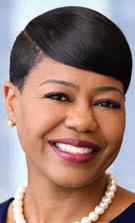
Michelle Tucker
Charting a path to success
Marian students get firsthand look at construction careers
St. Louis American staff
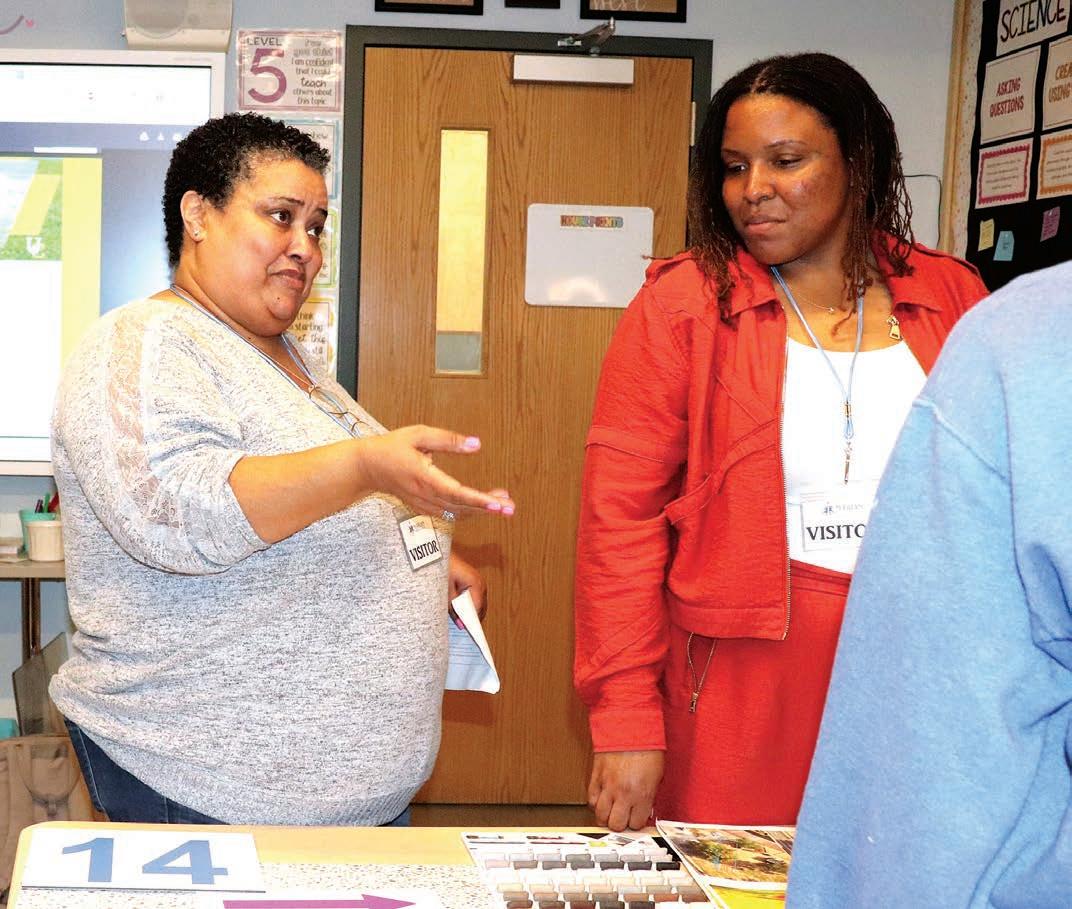
Students at Marian Middle School recently got an inside look at careers in construction, engineering and project management during a classroom visit by professionals from KWAME Building Group.
Originally planned as a construction site visit, the event was moved indoors because of weather. Instead, the presenters brought construction materials, visual demonstrations and examples of projects to help students
learn how buildings move from planning to completion. The visit introduced students to career paths that included engineering, project management and construction operations. Organizers, including the school’s National Society of Black Engineers chapter, said the session gave students an
The visit introduced students to career paths that included engineering, project management and construction operations.
opportunity to ask questions and learn about the day-to-day work involved in the building industry.
Students also learned that all three presenters had participated in NSBE junior programs when they were younger. Organizers said seeing women working in construction, engineering
and project management provided examples of career opportunities in fields where women and people of color have historically been underrepresented.
The program was organized in partnership with the Archway (Missouri) chapter of The Links, Inc. Presenters included KWAME employees DeAna Carter, a senior project manager; Makesha Bradford, a project engineer; and Lisa Johnson, a project leader.
Katrina commander brings disaster-recovery lessons to St. Louis
St. Louis American staff
The retired Army general who led the military response to Hurricane Katrina will visit St. Louis this weekend to discuss disaster preparedness as North St. Louis continues recovering from a tornado that exposed challenges in emergency response, recovery and neighborhood resilience.
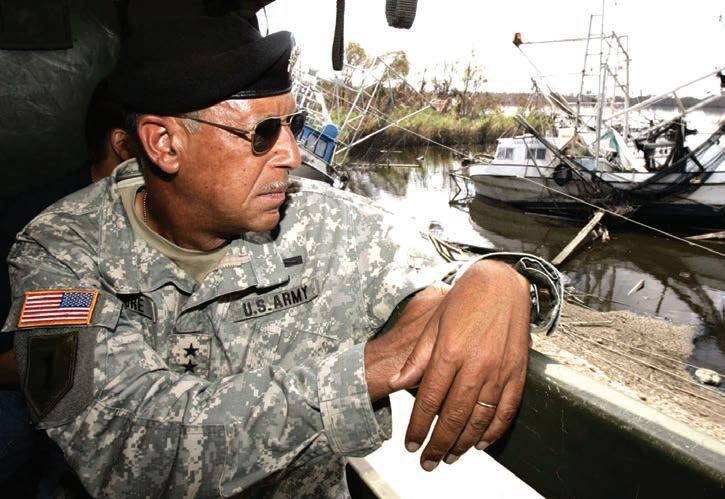
Retired Lt. Gen. Russell L. Honoré, commander of Joint Task Force Katrina during the 2005 hurricane that devastated New Orleans, will headline the Disaster Preparedness Community Forum at 1 p.m. Saturday, June 6, at the University of Missouri-St. Louis Millennium Student Center.
Honoré became a nationally recognized figure during Katrina, when he helped coordinate military relief operations following one of the deadliest and costliest natural disasters in U.S. history. Since retiring from the Army in 2008, he has remained active
See Commander, A6
Lincoln U. professor receives governor’s award

Amber Bell, associate professor of social work at Lincoln University of Missouri, has received the 2026 Missouri Governor’s Award for Excellence in Education. Bell serves as director of the university’s Bachelor of Social Work program and has taught in the Department of Social and Behavioral Sciences since 2019. She became program director in 2020 and was promoted to associate professor in 2025. Bell has developed courses in peer mentoring and digital mental health and advises two student organizations.
STLCC professor selected for writing programs
Ellen Usher, an English professor at St. Louis Community CollegeForest Park, has been selected for two writing programs.

Ellen Usher
Invest STL named Usher a resident storyteller fellow in its Neighborhood Storytelling Practice pilot program, which focuses on community-based storytelling in North St. Louis. Usher also received Gotham Writing Group’s 2025 Writers of Color Screenwriting Scholarship. She is taking screenwriting courses and developing several projects, including an original television drama series set in St. Louis.
Taylor named substance abuse task force vice chair
State Rep. Del Taylor, a Democrat from St. Louis, has been appointed vice chair of Missouri’s Substance Abuse Prevention and Treatment Task Force.

Taylor will help oversee efforts focused on substance-abuse prevention, treatment access and recovery initiatives statewide. The task force works with health providers, state agencies and community organizations on issues including the opioid epidemic and other substance-use challenges.
Lincoln U. honors Crockett Oaks III
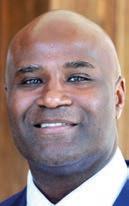
Crockett Oaks III
Lincoln University awarded preservationist Crockett Oaks III an honorary Doctor of Humane Letters degree during commencement ceremonies May 9. Oaks recently left his position at Missouri State University-West Plains to focus on restoration efforts at Lincoln School, a one-room schoolhouse built for Black children in 1926 in West Plains. The building closed in 1954 and is now listed on the National Register of Historic Places.
Promotion, board appointment, new hire, award... please submit your People on the Move item (including photo) to areid@stlamerican.com.
Amber Bell
Photo courtesy of Kreol Magazine
Retired U.S. Army Lt. Gen. Russell Honoré, who led the military response to Hurricane Katrina, will speak about disaster preparedness during a June 6 forum at the University of Missouri-St. Louis.
Photo courtesy of KWAME Building Group
Del Taylor
KWAME Building Group Project Engineer Makesha Bradford, left, and Senior Project Manager DeAna Carter, interact with a Marian Middle School student during a classroom visit.
Business Briefs
SLDC reopens homebuyer assistance program
First-time homebuyers in St. Louis can once again apply for down-payment assistance through the St. Louis Development Corporation’s HomeSTL program.
Eligible participants may receive assistance with no monthly payments and 0% interest for up to 10 years.
Applicants must occupy
The program, which reopened with $1 million in American Rescue Plan Act funding, provides up to $40,000 toward the purchase of a home. Buyers purchasing in designated areas of the city may qualify for up to $50,000.
the home as their primary residence, meet income and credit requirements. Other information on eligibility requirements, approved lenders and application procedures is available through the HomeSTL program at DevelopStLouis.org/ HomeSTL.
SSM expands support beyond hospital care
SSM Health announced Tuesday the creation of a $10 million fund designed to help patients address needs such as food access, housing and transportation after leaving the hospital.
Retired Lt. Gen. Russell L. Honoré will headline disaster preparedness forum
Commander
The fund was established through a donation from Carolyn Kindle, owner and CEO of St. Louis City SC, an SSM Health board member and president of the Enterprise Mobility Foundation.
SSM Health said the initiative will support partnerships with community organizations serving low-income and economically disadvantaged residents in the St. Louis region. The St. Louis Area Foodbank is among the participating organizations.
The fund also will
support medical respite care programs at Haven Recovery Homes and LIV Sober Living, providing temporary housing, meals, medical support and case management for eligible patients. SSM officials said the effort aims to address social factors that can affect health outcomes and reduce avoidable emergency room visits.


Continued from A5 in disaster preparedness, advising communities on emergency response and recovery efforts. In 2021, then-House Speaker Nancy Pelosi appointed him to lead a review of security failures at the U.S. Capitol following the January 6 attack.
In an interview with NPR last summer, Honoré said Katrina demonstrated what can happen when a disaster overwhelms local systems.
“The storm overmatched the infrastructure and it overmatched the ability for them to deal with it,” Honoré said.
Honoré has said the lessons of Katrina remain urgent as communities face increasingly severe weather and climate-related disasters. He has pointed to the importance of preparedness, effective communication and ensuring vulnerable residents are not left behind during emergencies.
Many of the challenges Honoré has highlighted in the years since Katrina — strained infrastructure, communication failures and the disproportionate impact disasters can have on vulnerable communi-
ties — also surfaced in St. Louis after the May 16, 2025 tornado. The storm caused an estimated $1.6 billion in damage and left thousands of homes, businesses, churches and other buildings damaged or destroyed across North St. Louis and surrounding communities.
A review by the Crisis Cleanup Coalition, a network of nonprofit and faith-based disaster-relief organizations that assessed storm damage throughout the city, found nearly 2,000 properties were assessed after the tornado, including 558 high-priority cases. The coalition identified 476 properties requiring major repairs or possible demolition.
Recovery has been especially difficult in some of the hardest-hit neighborhoods, where the Missouri Department of Commerce and Insurance reported that roughly 73% of homeowners lacked insurance coverage before the storm.
For many community leaders and researchers, the tornado revealed vulnerabilities that existed long before the storm arrived.
“Disasters do not create inequity. They expose it and accelerate it,” Mohammed Abba-Aji, a postdoctoral research
associate at Washington University in St. Louis School of Public Health told The St. Louis American for a story in its one-year anniversary coverage.
City officials have acknowledged shortcomings in the response to the tornado and have since reorganized portions of the city’s emergency management operations while expanding severe-weather preparedness efforts. Saturday’s forum will focus on severe-weather safety, emergency planning, community coordination, response efforts and available disaster resources.
Honoré said communities must prepare before disaster strikes.
“Mother Nature can break anything built by man,” he told NPR. “When we get proper warning, we need to evacuate and we need to be prepared to evacuate.”
The forum is hosted by state Sen. Angela Mosley and state Reps. Chanel Mosley and Yolonda Fountain-Henderson. Sponsors include ARCHS, Family and Community Trust, the American Red Cross, Salvation Army, Missouri State Highway Patrol and the Missouri Department of Public Safety.

HealthMattersHealthMattersHealthMatters

Demolitions
after tornado bring relief –and health concerns
Airborne dust prompts warnings for neighbors with asthma and other conditions
By Sarah Fentem St. Louis Public
O
n Enright Avenue, a two-story house built in 1903 is finally coming down.
The tornado that tore through North St. Louis on May 16, 2025, severely damaged the Victorian home, leaving it partially collapsed. As an excavator tears into the structure, clouds of dust rise into the air despite efforts to keep the site wet.
A nearby truck supplies water, and workers continuously spray the demolition area to suppress dust. But some dust is unavoidable.
“There’s truly no way to prevent any dust (from escaping),” said construction worker Kristie Jenkins. “But if he wasn’t spraying, you probably wouldn’t even be able to see the
Panel explores intersection of food, health, inequality
By Jennifer Porter Gore Word In Black
Recent federal changes to the Supplemental Nutrition Assistance Program, or SNAP, have prompted concerns among hunger-prevention advocates, who say the policy shifts could disproportionately affect Black Americans and other vulnerable populations.
Those concerns were the focus of a May 13 panel discussion convened by Word In Black, which brought together food-policy experts, scholars and faith-based organizers to discuss food access, health disparities and the policies that shape how Americans obtain food.
Recent federal changes to SNAP have prompted concerns among hunger-prevention advocates.
Hosted by Joseph Williams, Word In Black’s head of content, and sponsored by the Knight Foundation, the discussion explored what Williams described as two themes often associated with food in Black communities: joy and survival.
The panel featured Rev. Dr. Heber Brown III, founder of the Black Church Food Security Network; Ty Jones Cox, vice president for food assistance at the Center on Budget and Policy Priorities; and Dr. Ashanté Reese,

Breast cancer walk highlights disparities
Black women continue to have higher death rates from the disease than white women
St. Louis American staff
The Susan G. Komen
“More Than Pink Walk” will return to the St. Louis area on Saturday, June 6, at Westport Plaza in Maryland Heights. The annual event brings together breast cancer survivors, people undergoing treatment, those living with metastatic breast cancer and their supporters. Organizers hope to raise $500,000 to support breast cancer research, patient assistance programs and public policy efforts.
The walk comes as significant disparities in breast cancer outcomes persist in the St. Louis
Organizers hope to raise $500,000 to support breast cancer research, patient assistance programs and public policy efforts.
region. Susan G. Komen research found that Black women in St. Louis City and St. Louis County are screened for breast cancer at rates similar to or higher than White women but have experienced signifi-
cantly higher death rates from the disease. A 2025 Komen report found that progress has been made in narrowing those disparities, though gaps in outcomes remain.
Megan Hoffman, executive director of Susan G.Komen Missouri and Kansas, said the walk is intended to bring together survivors, patients and supporters while raising money for breast cancer research and assistance programs.
“By uniting survivors, people in treatment today, those living with metastatic disease, friends and family members, we can all make a difference in

our efforts to detect breast cancers early and improve treatments for all types of breast cancer,” Hoffman said.
In Missouri, approximately 6,300 people are expected to be diagnosed with breast cancer this year and about 970 are expected to die from the disease.
Photo by Charlotte Keene / St. Louis Public Radio
Photo courtesy of SSM Health
Susan G. Koman ‘More Than Pink Walk’
radio
Dakota Ragsdale of Environmental Infrastructure Solutions sprays water on a demolition site along Enright Avenue in North St. Louis’ Academy neighborhood on May 12 to help reduce airborne dust.
Envato photo
Continued from A7
author of several books, including “Gather: Black Food, Nourishment, and the Art of Togetherness.”
Brown said his work addressing food insecurity grew out of his experience as pastor of Pleasant Hope Baptist Church in Baltimore.
“I just have never been the kind of minister who’s just concerned about the spiritual welfare of members of my church,” Brown said. “In fact, I have a more expansive view of what it means to be spir-
Continued from A7
itually healthy and that includes being physically healthy and whole as well.”
Brown said the effort expanded after the 2015 death of Freddie Gray and the unrest that followed in Baltimore, when some grocery stores temporarily closed in neighborhoods where many residents already faced limited food access. The church began growing food on its property, and the effort later expanded into a national network connecting Black churches and Black farmers. Reese said food insecurity in Black communities is shaped by multiple
The event marks the walk’s second major location change in recent years. After many years downtown, the event moved to Tower Grove Park before relocating to Westport Plaza. Organizers cited logistical considerations and regional accessibility.
Breast cancer affects about 1 in 8 women and 1 in 1,000 men in the United States during their lifetimes. According to Susan G. Komen, more than 320,000 women nationwide are expected to be diagnosed with invasive breast cancer in 2026, while nearly 43,000 women are expected to die from the disease. An estimated 2,670 men will be diagnosed and about 530 will die.
HealthMattersHealthMattersHealthMatters
factors, including access, affordability and changes in the food supply.
“There are far more things that are allowed to be in our food than there were 15 years ago, 20 years ago, 40 years ago,” Reese said. “A lot of times people will say, ‘Why is this stuff now all of a sudden unhealthy? Our grandparents used to eat the same way.’ Not saying that that’s necessarily how we should eat. We might be eating the same things, but the composition of those things are not the same as they were.”
Reese also discussed broader economic and social factors that influ-
In Missouri, approximately 6,300 people are expected to be diagnosed with breast cancer this year and about 970 are expected to die from the disease. Susan G. Komen reported providing direct support to 409 Missouri patients during fiscal year 2025, including $163,200 in financial assistance for people in active treatment or living with metastatic breast cancer.
Hoffman said community fundraising events help support research, patient assistance and advocacy efforts.
Bank of America is the national presenting sponsor of the walk. Natera is the national premier sponsor, while Guardant Health, Novartis and Lilly are national series sponsors.
More information and registration details are available at komen.org/ stlouiswalk.
ence food access, citing the work of geographer Ruth Wilson Gilmore. Jones Cox focused on recent changes to SNAP. She said reductions in federal spending, expanded work requirements and other policy changes have resulted in fewer people receiving assistance.
“You can’t tell me that children should be working or that children are undeserving or that children are fraud,” Jones Cox said.
The panelists also discussed proposals affecting what SNAP recipients can purchase and debated how policymakers approach food and nutrition issues.
Asked about possible solutions, Brown pointed to historical examples of community-based food systems, including Fannie Lou Hamer’s Freedom Farm Cooperative and other efforts centered on local food production.
“This system, I believe, is beyond redemption,” Brown said.
He urged greater investment in community-based food initiatives. Reese highlighted local organizing efforts and food-justice networks, while Jones Cox emphasized civic engagement and public awareness.
Word In Black Research Director Dr.
Christa Mahlobo also discussed a recently completed survey that sought to gather Black Americans’ views on food access, well-being and potential solutions to food insecurity.
“Through this research we highlight that we’re not just studying what it is that folks are eating, but what food means to us in this sort of cultural, emotional, and even spiritual way,” Mahlobo said.
The discussion was part of a broader effort by Word In Black to examine how food policy, health outcomes and economic conditions intersect in Black communities.


Demolitions
Continued from A7 machine with all the dust.”
The scene is likely to become increasingly common across tornado-damaged neighborhoods in the coming months. City, state and federal agencies, along with private property owners, are preparing to demolish hundreds of buildings damaged or destroyed by the storm. Experts say residents should take precautions to protect themselves from dust and debris generated during the work.
Long-awaited demolitions
A year after the storm, the city has demolished about 100 buildings, according to STL Recovers. Earlier this month, Mayor Cara Spencer announced that another 120 homes would be demolished with the help of state recovery funding.
The Federal Emergency Management Agency, the Land Reutilization Authority and private property owners are also removing damaged buildings and debris. City officials estimate that as many as 1,600 structures ultimately may need to be demolished, with about 80% of them vacant or condemned before the tornado.
Hariel Johnson, whose home sits next to the Enright Avenue demolition site, said she was relieved to see crews remove the long-vacant structure.
Her home suffered minor damage during the tornado, but she escaped injury. Since then, however, she has noticed more dust in the neighborhood.
“I don’t get out as
much, but when I do go, dust is everywhere,” said Johnson, who has asthma. “We don’t know what’s in everything they knock down.”
Health concerns
Experts say dust generated by tornado debris and demolition work can pose risks, particularly for people with asthma, emphysema or other respiratory conditions.
“For people who are predisposed — maybe they have asthma or emphysema — this could exacerbate or magnify that condition,” said Jay Turner, an environmental science professor at Washington University who is studying air quality in tornado-affected neighborhoods.
For healthy individuals, the dust may be little more than a nuisance. But older homes often contain materials that can become airborne during demolition, said Rachel Sanford of the American Lung Association.
The buildings may contain lead, asbestos, fiberglass and metals such as arsenic or nickel, she said.
“A lot of these particles are really, really small,” Sanford said. “They travel very deep into the lungs when they’re inhaled.”
Because many of the homes now being demolished were built decades ago, experts say residents should take steps to reduce exposure whenever demolition work is underway nearby.
Dust-control efforts
Containing dust is a major concern for city officials overseeing tornado recovery, said Chief Recovery Officer Julian Nicks.
“That includes saying keep your windows closed, do not watch it from outside, and if you are, make
sure you’re wearing a proper mask,” Nicks said. Residents should also avoid entering construction zones, vacuum indoor spaces to remove settled dust and replace air filters more frequently than normal, officials said.
City rules require contractors to use water suppression during demolitions. According to city spokesman Rasmus Jorgensen, crews must use either misting fans or large hoses to reduce airborne dust.
Nicks said asbestos-containing materials are removed before demolition begins and that professional contractors oversee all recovery-funded demolitions. He encouraged residents to report dust-control violations through the city’s 311 system.
“We have strong laws around finding and taking demo licenses of people who don’t actively follow those tactics,” he said.
Monitoring the air
In the coming weeks, Turner and other researchers will install monitoring devices throughout tornado-damaged neighborhoods to measure airborne particles and track changes in air quality.
“If there’s numerous demolitions happening every day, the question is: What is that cumulative effect?” Turner said. The city is also assembling a team to monitor asbestos and lead levels in the air.
Officials say the testing will help determine whether current dust-control measures are sufficient and whether additional safeguards are needed.
“This is a top priority,” Nicks said. “We still want to move with speed on demolition, but we don’t want to do it at the risk of public health.”
The event marks the walk’s second major location change in recent years. After many years downtown, the event moved to Tower Grove Park before relocating to Westport Plaza. Organizers cited logistical considerations and regional accessibility.
Photo courtesy of SSM Health

R&B singer Foster Sylvers dies at 64
Foster Sylvers — the child star whose early solo success and later work with his family helped shape the sound of 1970s R&B — has died at 64. His brother, Leon Sylvers III, confirmed the news to Eurweb. com. He shared that Foster had been battling prostate cancer that had spread to other parts of his body.
Born in Memphis and raised in the Watts neighborhood of Los Angeles, Sylvers broke through at just 11 years old with his 1973 selftitled debut album. Its standout single, “Misdemeanor,” became a national hit and
led to appearances on “American Bandstand” and “Soul Train.”
He later joined his siblings in The Sylvers, the family group behind a run of charting singles including the No. 1 hit “Boogie Fever,” which became a defining track of the era’s R&B, soul and disco crossover. After his time with the group, Sylvers moved into studio work, contributing to projects including Dynasty’s “Your Piece of the Rock,” “When You Feel Like Giving Love,” and “Satisfied,” as well as Evelyn “Champagne” King’s “Shake Down.”
Peabo Bryson dies at 75
Peabo Bryson, the Grammywinning balladeer whose voice defined some of Disney’s most iconic love songs, has died, according to a statement from his family. Best known for “Beauty and the Beast” with Celine Dion and “A Whole New World” with Regina Belle, Bryson suffered a stroke earlier in the week.
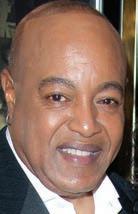
“With broken hearts and profound sadness, the family of two-time Grammy Awardwinning singer, songwriter and balladeer, Peabo Bryson, announces his passing,” the
Ice Cube and Mike Epps say the Friday franchise is finally moving forward. They confirmed that they’re actively writing the script for the longawaited next installment, titled Last Friday. The first new film in the series will come more than 30 years after the original “Friday” became a cultural phenomenon.
statement read. “He transitioned peacefully at 5:00 p.m. ET on the evening of Tuesday, June 2, 2026, surrounded by the love of his family and those closest to him.”
Bryson’s fivedecade career spanned R&B, adult contemporary and film soundtracks, earning him a reputation as one of music’s most expressive and enduring voices.
“While our hearts are broken, we find comfort in knowing how deeply Peabo was loved and how many lives were touched by his voice and his generous spirit,” the statement said.
“We writing the script right now,” Cube said during an interview on Big Boy TV, noting that the franchise’s return comes with a major celebration event in the works as well. Cube explained that casting will follow the same approach that shaped the original films — finding the right performers and letting them bring their own energy to the roles. He said the script comes first, but
improvisation is part of the process once the actors are locked in.
“To me, when people say, ‘We adlibbed the whole thing,’ I’m like, ‘Hold up — the script is laughoutloud funny before we even shoot it,’” Cube said. “It’s no shooting the script until everybody that read it is laughing.”
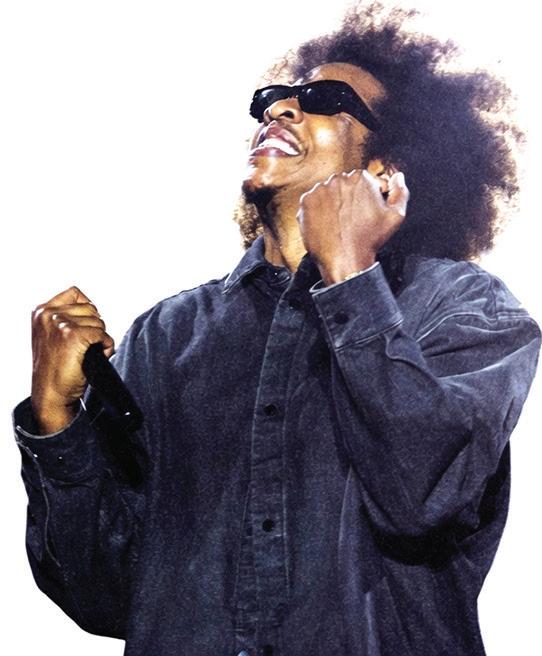
Jay-Z fires shots at Kanye, Nicki and more
Jay-Z didn’t hold back during his headlining set at The Roots Picnic in Philadelphia on May 30. Hov took aim at major artists — including Kanye West and Nicki Minaj — who previously came for him on social media or on tracks as tens of thousands packed the Belmont Plateau. The fifty-sixyearold rapper reunited with The Roots 25 years after their MTV Unplugged collaboration and used the moment to get responses to their previous shots off his chest.
“That lady back on that stuff, she sounds like she’s in love with ’em / Her Ken can’t even… pick they kid… enough of them / A rapper can’t be my opp, I got MAGA Republicans,” he rapped, a clear shot at Minaj. Jay also addressed West’s past online attacks on Beyoncé and their children.
“You ever heard of wonderkin? My children are some of them,” Jay-Z rapped. “You really wanna get under my skin? I’ll really get under ya skin (stab), ask Un how I’m playing.”
Sheet Sources:

Peabo Bryson
Hot
Jay-Z
Gun violence changed how children play
Summer
Continued from A1
said. “These kids don’t get the learning experience of playing outside anymore.”
Children today generally have fewer opportunities to walk, bike and play without adult supervision than previous generations, according to a review by researchers in Washington University’s McLeod Scholars Program.
As nostalgia for ’90s summers trends online, health experts are reminding families that balancing outdoor freedom with modern safety precautions is critical. Pediatricians say simple measures — reapplying sunscreen, staying hydrated, wearing helmets and setting clear check-in expectations — can prevent serious injuries while still allowing children to enjoy active summers outdoors.
Dr. Daniel Wachstock, a pediatrician, said parents should not let fear keep children inside all summer.
“The worst thing for kids is to sit on the couch and play video games all summer,” Wachstock said. “I want the kids moving, get out there and have fun.”
Still, he cautions that some childhood habits celebrated online are not as harmless as many remember. Garden hoses, once treated like neighborhood drinking fountains, can contain bacteria, insects and harmful metals.
“I’m not opposed to drinking out of a water hose, kids need to get in the dirt and play to build up their immune system,” Wachstock said.

However, data show that water left sitting in hoses under the summer sun can become hot enough to cause severe burns.
Wachstock said one of his biggest concerns during the hottest months is heat-related illness. Children experiencing dehydration or heat exhaustion may complain of headaches, vomiting or extreme fatigue. Sunburns can also escalate quickly, especially during peak afternoon UV hours.
“When the skin is still red, go inside for a while or cover up the skin,” he said, stressing the importance of reapplying sun-
screen throughout the day. Bike and scooter injuries remain another common summer danger. Wachstock said helmets are one of the simplest ways to reduce serious injuries, noting that protective headgear can significantly lower the risk of traumatic brain injuries.
Part of the ’90s summer nostalgia includes long afternoons at community pools, lakes and beaches.
But water-safety advocates warn that those memories can carry greater risks for Black children.
Black children ages 5 to 9 drown at rates more than twice as high as white children. Advocates say
the disparity is tied in part to generations of unequal access to pools and swim instruction.
The issue has touched St. Louis families directly. The 2022 drowning death of 6-year-old T.J. Mister during a St. Louis County summer camp outing sparked renewed conversations about water safety, swimming education and access to swim lessons in the region.
For many adults, though, the nostalgia tied to those summers is less about the risks and more about the independence they experienced. Elizabeth Sharp-Taylor recalls going to the pool
with friends as a teenager without cellphones or adults nearby.
“As long as we had a big group and were home by a certain time, my parents were OK with me going,” she said. “I also remember riding my bike during this age with no supervision.”
Sharp-Taylor believes children today miss opportunities to develop decision-making skills that naturally came with outdoor play and independence.
“I think kids today are missing the opportunity to make small decisions on their own,” she said.
“Learning how to judge strangers, deciding if this
is a trusted person, or knowing when to leave if the group is doing something they don’t value.”
Research highlighted in the WashU review found that children given greater independence spend more time outdoors and are more physically active.
But as a parent herself, she admits the world feels different now. Her 7-year-old son is already being taught to be cautious around strangers, and she expects he will eventually have a cellphone for safety reasons.
“Not because I don’t trust him,” she said, “it’s just a way to have connection to him because I don’t trust others.”
Laden shares those concerns. While she fondly remembers bikes left on porches and children roaming freely through neighborhoods, she said she would not allow her grandchildren to experience the same level of independence today. Concerns about reckless driving, gun violence and kidnappings have changed how families approach outdoor play.
“There is no community,” Laden said. “Neighbors don’t look out for the kids who play outside.”
The WashU review also found that parents’ perceptions of neighborhood safety and community trust are among the strongest factors influencing whether children are allowed to walk, bike and play independently. Even so, both parents and pediatricians agree children still need time outdoors. The challenge for today’s families is finding a balance between the carefree spirit of summers past and the safety precautions modern life demands.

Quentajah Bailey helps her son, Carter Sherman, 1, play in the fountains at Citygarden as families enjoy a summer afternoon in downtown St. Louis.
Photo by Lawrence Bryant / St. Louis American
District
Continued from A1
disappear on their own.
The Department of Justice has an obligation to act.”
Rachel Dumke, a spokeswoman for Schmitt, added, “Redistricting is up to the state legislature, but this SCOTUS decision ensures that should the 1st District be redrawn, it will not be done so based on race.”
The 1st District, which includes most of St. Louis and parts of St. Louis County, remains the state’s strongest Democratic congressional seat and the district where Black voters are most politically concentrated.
State Rep. Marty Murray, a Democrat from St. Louis, believes the district could eventually face another redistricting fight.
“I think they’ll try. ... I think the phone calls will come in to try to redistrict it,” Murray said.
State Sen. Brian Williams, a Democrat from St. Louis County, said Black political leaders should remain vigilant.
“I don’t put anything past this administration to influence the legislatures
Police
Continued from A1
and their unwillingness to consider the needs of the entire city are precisely why the city should continue to hold its own ground.”
Mayor Cara Spencer called the ruling “a win for St. Louis.”
“It is absurd to claim that city reserves and Rams funds are somehow
Redistricting revisited
History of 1st District
Missouri’s 1st Congressional District has been the state’s center of Black political representation for nearly six decades.
Before 1967, the district extended beyond St. Louis into rural Missouri. After the U.S. Supreme Court required congressional districts to contain roughly equal populations, Missouri lawmakers redrew the map and concentrated the district in St. Louis and parts of North St. Louis County.
The new boundaries reflected demographic shifts already underway and created a district where Black voters held greater political influence.
The new boundaries reflected demographic shifts already underway and created a district where Black voters held greater political
throughout the country,” Williams said. “And I think this summer, we need to be just as engaged — encouraging folks to register to vote, and most importantly, talk about the importance of protecting voting rights as well as representation in our city and beyond.”
Republicans nationally have pointed to the
current-year revenue, and I’m pleased and grateful that the courts have now ruled as much,” Spencer said in a statement.
Moriarty’s ruling stemmed from a lawsuit filed by the police board, which argued that the city failed to meet state funding requirements for the police department during the current fiscal year.
The board sought roughly $67.5 million before the fiscal year ends June 30.
In her decision,
influence. In 1968, civil rights activist and St. Louis alderman William L.Clay Sr. became Missouri’s first Black member of Congress.
The district has remained Missouri’s strongest Democratic congressional seat ever since. Clay represented it for 32 years, followed by his son, William Lacy Clay Jr. More recently, voters elected Cori Bush and Wesley Bell.
Although the boundaries have changed slightly over time, the district’s identity as a St. Louis-based center of Black political influence has remained largely intact since the late 1960s.
Louisiana decision as justification for revisiting districts where Black voters gained greater electoral influence.
Last year, Republicans successfully redrew Cleaver’s Kansas Citybased district after President Donald Trump urged Republican-led states to revisit congressional maps in hopes of
Moriarty wrote that “general revenue only includes current income of the fiscal year in question and does not include income from prior years,” rejecting the argument that reserve funds and Rams settlement proceeds should be included in the calculation.
Saracino said the board was disappointed by the ruling and cited staffing shortages, heavy overtime demands, aging infrastructure and recruitment and retention challenges as rea-
strengthening Republican prospects in future House elections.
According to Fox 2, Republican lawmakers concluded that changing the St. Louis district would have been more difficult politically and legally than altering Kansas City’s district.
The battle over Missouri’s congressional
sons it believes additional resources are needed. He said the board remains committed to serving city residents and intends to appeal.
The dispute is one of several clashes between city officials and the police board since Missouri lawmakers returned control of the department to a state-appointed commission in 2024.
The funding fight also drew scrutiny from the Board of Aldermen, which
map is not finished.
People Not Politicians, a coalition opposing the Kansas City redraw, submitted more than 300,000 signatures seeking a referendum that could overturn the map. But the Missouri Supreme Court ruled that filing referendum signatures does not automatically suspend the law, allowing the map to remain in effect while Secretary of State Denny Hoskins reviews the petitions.
The Missouri Supreme Court’s ruling also found no constitutional restriction limiting congressional redistricting to once every decade after the census, a decision some voting-rights advocates fear could open the door to additional redistricting battles before the next census.
In his book “Bill Clay: A Political Voice at the Grassroots,” the late Congressman William Clay Sr. wrote that a coalition of Republicans, Black legislators and rural Democrats helped create a district centered on St. Louis’ Black community.
That political compromise largely shaped the district for more than six decades.
Since 1969, the district has remained a center of Black political representation, electing Clay Sr. (1969-2001), his son, William Lacy Clay Jr. (2001-2021), Cori Bush (2021-2025) and Bell, who took office in 2025.
last month issued subpoenas seeking records related to the board’s budgeting process and financial requests.
The legal dispute comes as the board considers substantial raises for command staff. In a statement released Sunday, commissioners proposed pay increases ranging from 16% to 22% for lieutenants, captains, majors and lieutenant colonels beginning July 1.
On Wednesday,
Cleaver argued the Kansas City redraw would “silence voices” and “deny representation.”
Bell called the recent redistricting effort “bluntly partisan and unfair.”
“It continues taking our constitutional rights down a dark path not befitting the promise of the greatest democracy the world has ever known,” Bell said.
The 1st District survived Missouri’s latest round of redistricting. But after Republicans successfully altered Kansas City’s congressional district, the Missouri Supreme Court affirmed lawmakers’ authority to redraw districts before the next census, and Republican officials began publicly questioning districts drawn to preserve Black voting strength, some elected officials and voting-rights advocates say the fight over Missouri’s congressional map may not be over.
Sylvester Brown Jr. is the Deaconess Foundation Community Advocacy Fellow.
Spencer voted to postpone consideration of the raises for two weeks, and the board agreed. For now, Moriarty’s ruling leaves the city’s current police funding plan in place. But the board’s appeal ensures the dispute over police funding — and the authority of the state-appointed commission — will continue.
Sylvester Brown Jr. is the Deaconess Foundation Community Advocacy Fellow.

STL business community supporting UMSL
St. Louis American Staff
The University of Missouri–St. Louis continues to receive strong support from the St. Louis business community as it grows its newly formed School of Engineering.
Ameren has pledged $1 million to support construction of the Ameren Electrical Engineering Lab, now underway in the UMSL Science Complex. The investment also includes funding for scholarships and programming that will expand hands-on learning opportunities for engineering students. The support comes at a critical time as demand for skilled engineers continues to rise across Missouri’s energy, infrastructure and technology sectors.
Ameren leaders will also serve on the School of Engineering’s Founding Corporate Council and
Ameren invests $1 million in School of Engineering
Engineering Advisory Council, helping shape curriculum and strengthen alignment with industry needs.
In addition, Ameren will continue its investment in the UMSL Bridge Program’s Saturday and Summer Academies, which provide STEMfocused instruction and college preparation to more than 2,000 middle and high school students and their families across the region each year.
“Ameren’s extraordinary investment will have a profound impact on the future of our School of Engineering and in the students we serve,” Chancellor Kristin Sobolik said. “We are deeply grateful for this support as we expand opportunities for hands-on learning, strengthen connections with industry and help prepare the next generation of

engineers and innovators for the St. Louis region and beyond.”
The investment also underscores Ameren’s broader focus on strengthening the region’s talent pipeline and supporting institutions preparing students for high-demand fields.

“We are committed to investing in the future of our communities and the workforce that powers them,” said Gwen Mizell, senior vice president and chief sustainability officer at Ameren. “Our partnership with UMSL will help create hands-on learning opportunities, expand access to engineering education and prepare students for in-demand careers in energy and technology.”
The School of Engineering launched last fall with more than 60 students in its inaugural freshman class. Enrollment will grow again this fall with the addition of new first-year, transfer and upper-level students preparing to meet increasing demand for engineers across the region.
As UMSL continues to build its programs and faculty, experiential learning remains central to the student experience.
The new Ameren Electrical Engineering Lab will serve as a key training ground featuring mobile
Dr. George Nnanna, founding director of UMSL’s new School of Engineering, began his tenure last year.
student workstations, complete 0.2 kW EMS modular systems, dissectible machines, an electric power technology training system, multimeters, soldering stations and more.
Ameren is also supporting an engineering student programming fund that will help launch initiatives such as math boot camps and collegiate engineering competitions — including robotics, concrete canoe, steel bridge and Formula SAE — as well as industry site visits and student organization activities. These experiences will help cultivate innovation, teamwork and problem-solving skills in environments that mirror expectations across the engineering field.
The Ameren Scholarship Fund will support annual scholarships in perpetuity for UMSL engineering students, easing financial barriers as they prepare for their careers.
Through participation on the School of Engineering’s Founding Corporate Council and Engineering Advisory
Council, Ameren leaders will help ensure UMSL’s programs align with ABET accreditation standards and evolving industry needs. The partnership also creates a direct talent pipeline, giving Ameren early access to emerging engineering graduates through internships, capstone projects and career engagement.
The impact extends across the region. More than 90% of UMSL students are Missouri residents, and 75% remain in the region after graduation, strengthening the local workforce and economy for years to come.
Dr. George Nnanna is the founding director of UMSL’s new School of Engineering, he began his tenure last year. A professor of mechanical engineering, he brings more than a decade of administrative experience, including serving as the founding dean of engineering at the University of Texas Permian Basin from 2018–2023. Nnanna is committed to growing UMSL’s engineering school to serve student needs and regional economic development, emphasizing experiential learning and industry collaboration.
“We aim to significantly advance UMSL’s strategic initiatives in recruitment, retention, interdisciplinary research, innovation, entrepreneurship and philanthropy while actively engaging our students in meaningful experiential learning opportunities,” Nnanna said.

Photo courtesy of University of Texas Permian Basin
“Do

Living It
Fashion refined
‘The Runway Edit’ continues LAHA’s showcase of young designers, models
By Zaria Mac St. Louis American
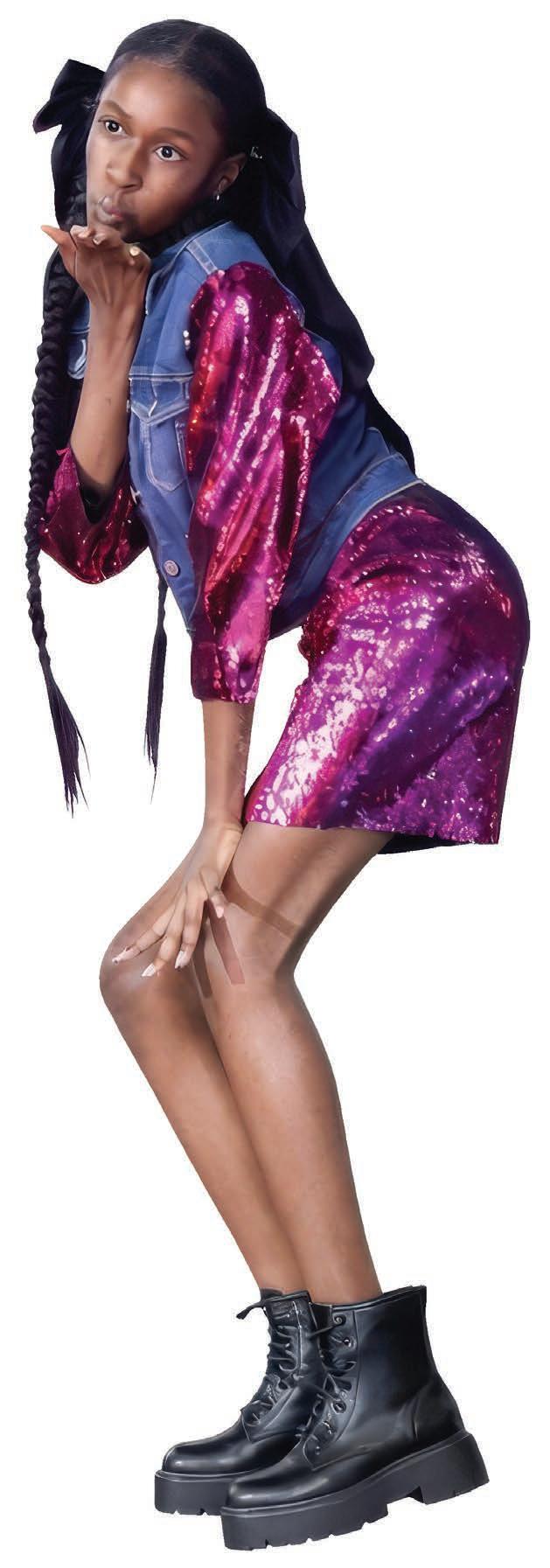
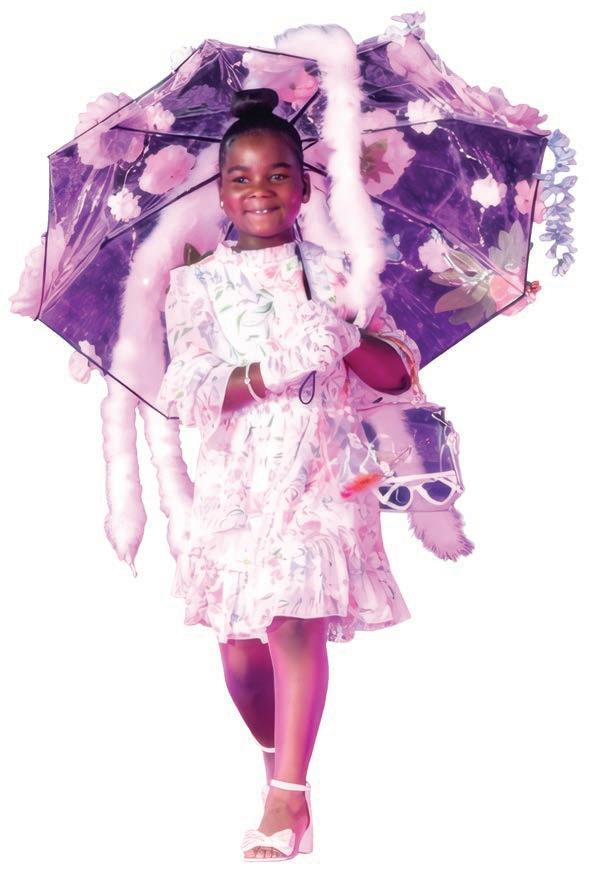
With The Runway Edit, LAHA founder Lillian Tiner once again turned the runway into a training ground for young talent. Sunday’s show at SLU marked her 17th annual children’s fashion showcase, continuing a legacy she began in 2009 of helping kids step into confidence, creativity and possibility.
For nearly two decades, Tiner has empowered young people ages 5 to 16 through runway coaching — helping them build confidence, coordination and connections with local designers that can lead to portfoliobuilding opportunities.
One of those success stories is Styling with K. She began her fashion journey with Tiner at age 14 and is now presenting her fourth fashion show. “Inspired by creativity, confidence and self-expression, Styling with K blends street wear and glamour to create bold and elevated looks that celebrate individuality and authentici ty,” said Lady Re, comedian and host of The Runway Edit.
See Fashion, B3

‘Moonlight changed the geography of
our
imagination’
19th Annual QFest marks film’s 10th anniversary with openingnight screening
By Kenya Vaughn St. Louis American
Cinema St. Louis will open the 19th Annual QFest St. Louis Film Festival with a return to the film that moved the ground beneath the Black queer storytelling space within mainstream cinema. QFest will open with a 10th anniversary screening of Moonlight on Friday, June 12 — a film that reshaped how Black queer stories are seen, discussed, and valued on screen.
“Screening Moonlight is so much more than celebrating a great film,” said Cinema St. Louis Festival Curator Emmett Williams. “It’s acknowledging what for many was a cultural shift.”
In his second feature, writerdirector Barry Jenkins took the familiar “tales from the ’hood” framework and turned it inward, centering humanity, vulnerability and a love story rarely allowed to exist in Black cinema. Adapted from Tarell Alvin McCraney’s semiautobiographical play In Moonlight Black Boys Look Blue, the film follows
Moonlight,

By Zaria Mac St. Louis American
Resilience remains in the hearts and minds of St. Louisans following the anniversary of the May 16 tornado. At Our Songs — a free community concert presented by Opera Theatre of Saint Louis — three local performing artists used poetry, movement and music to work through the emotions that linger after a natural disaster. Blake
Three local performing artists used poetry, movement and music to work through the emotions that linger after a natural disaster.
“Concert Black” Hernton, Tre’von Griffith and Alicia Revé Like shaped the evening around what the city has carried since the storm. They curated the program through the lens of the voices and experiences of the people who lived it.
Opening the concert at Third Baptist Church, Opera Theatre Board Chair Kim Eberlein noted the significance of the moment.
“Tonight’s program is extra special because we have three exceptionally talented local artists who have curated a program that reflects their music, their stories and experiences living in St. Louis,” she said. “We are
Chiron across Courtesy photo
B3
Artists, B4
On Oscar night, Moonlight won Best Picture after the nowinfamous envelope mixup in which La La Land was mistakenly announced as the winner.
Photos by Taylor Marrie / St. Louis American
JUNETEENTH EVENTS
Sat., June 13, 8 a.m.
–5 p.m., Delmar Blvd
Juneteenth Festival featuring the Race for Reconciliation 5K (8 a.m.) , 5900 Delmar Blvd. For more information, visit www.VisitTheLoop.com.
Fri., June 19, 9
a.m. – 4 p.m., Rest Reimagined—A Juneteenth Celebration presented by Frizzy By Nature, honoring Juneteenth and the power of rest, reflection, and release, Saint Louis Art Museum. For more information, visit www.slam.
org.
Fri., June 19, 10 a.m., Summer Family Fun Series: Celebrating Juneteenth, Missouri History Museum, Lindell and DeBaliviere in Forest Park. For more information, visit www.mohistory.
org.
Fri., June 19, 12 noon, House of Soul’s 7th Annual Juneteenth Festival Block Party, House of Soul, 1204 Washington Ave. For more information, visit www. houseofsoulstl.com.
Fri., June 19, 12 noon, JuneteenthSTL Festival Parade & Cultural Celebration presented by the City of Dellwood, featuring a blend of national and regional talent, including Southern soul sensation Pokey Bear and hip-hop artist Lil Scrappy, Dellwood Recreation Center, 10266 W.Florissant Ave.
Fri., June 19, 7:30 p.m.,
Soul of a People A Juneteenth Celebration of Black Music featuring LaKisha Jones (American Idol) and Ryan Shaw (America’s Got Talent) alongside the SLSO and IN UNISON Chorus. Powell Symphony Hall. For more information, visit www.slso.org.
CONCERTS
Fri., June 5, 8 p.m. (7 p.m. doors) The Sherm Summer starring Mike Sherm, Delmar Hall, 6133 Delmar. For more information, visit www.thepageant.com.
Sat., June 6, 7:30 p.m., SLSO welcomes Terence Blanchard and Ravi Coltrane for a special centennial celebration for John Coltrane and Miles Davis, Powell Hall. For more information, visit www.slso.org.
Sat. June 13, 7 p.m., The Eta Boule Foundation presents An Evening with Jeffrey Osborne, Sheldon Concert Hall and Galleries, 3648 Washington Blvd. For more information, visit www.metrotix.com.
Fri., June 19, 8 p.m. (7 p.m. doors) The Gogel Law Firm welcomes The R&B Meets Throwback Hip Hop Tour with Stokely and Kool Moe Dee, The Pageant, 6161 Delmar. For more information, visit www.thepageant.com.
SPECIAL EVENTS
Sat., June 6, 4 p.m. Route 66 Cars and Guitars
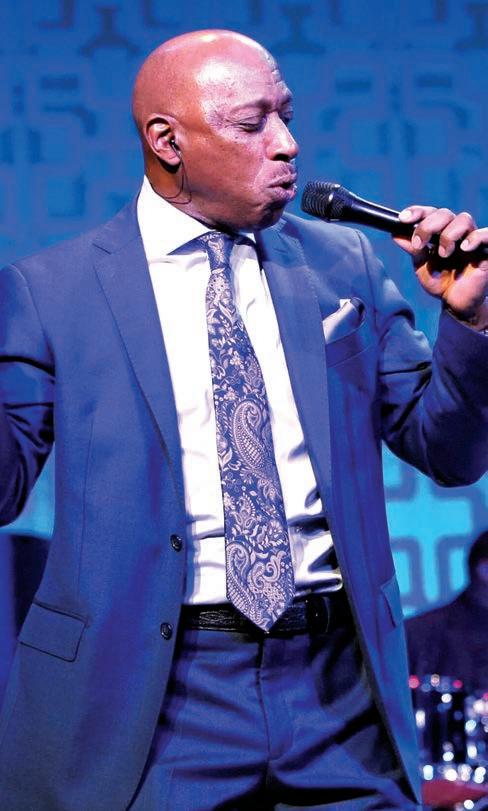
Festival, Downtown Kirkwood. For more information visit www.kirkwoodmo.org.
Sat., June 6-7, Bommarito 500 Weekend, World Wide Technology Raceway, 700 Raceway Blvd., Madison, IL 62060. For more information, visit wwtraceway. com.
Sun., June 14, 5 p.m.

For more information, visit www.blackwallstreet314. com
COMEDYS
Fri., Jun. 5, 7 p.m. & 9:15 p.m. Helium Presents: Chris Redd, Helium Comedy Club, 1151 St Louis Galleria St, St Louis MO 63117. For more information, visit https://st-louis.heliumcomedy.com.
Fri., Jun. 12 - 14, Special Event: Bruce Bruce, Helium Comedy Club, 1151 St Louis Galleria St, St Louis MO 63117. For more information, visit https://st-louis.heliumcomedy.com.
Fri., June 26 - 28, 7 p.m. Special Event: Earthquake, Helium Comedy Club, 1151 St Louis Galleria St, St Louis MO 63117. For more information, visit https:// st-louis.heliumcomedy. com.
ST. LOUIS MUSIC SPOTLIGHT
Fri., June. 5, Brass and Boujee, The Key, 3225 Olive St, St. Louis, MO 63103. For more information visit https://kranzbergartsfoundation.org.
R&B Block Party Experience, 4140 Manchester Ave, 63110. For more information, visit jamopresents.com.
Sat., June 20, 1p.m. and 7:30 p.m. St. Louis SERA Rodeo, Chaifetz Arena, find more information at www.chaifetzarena.com.
Sat., June 27, 1 p.m., Black Wall Street 314 Festival, Wellston Loop.
Sat., June 6, doors 6 p.m. National Blues Alumni Jam, The Key, 3225 Olive St, St. Louis, MO 63103. For more information visit www.thekeystl.com.
Thurs., June 25, 7:30 p.m., Wellston’s own A.J. McQueen, City Winery, 3730 Foundry Way, St. Louis, MO. For more information, visit www.
citywinery.com
THEATRE
Fri., June 5, 7:30 p.m., I Do. I Did. I’m Done: A One Woman Show with Kandi Burruss, City Winery, 3730 Foundry Way, St. Louis, MO. For more information, visit www.citywinery.com
Through June 7, The Black Rep presents Fat Ham, Washington University’s Edison Theatre. For more information, visit www.theblackrep.org.
Through June 21, 8 p.m., St. Louis Shakespeare Festival presents The Tempest, Shakespeare Glen in Forest Park. For more information, visit stlshakes.org
ART
Through Jun. 28, Martine Syms: Soliloquy, St. Louis Art Museum, 1 Fine Arts Drive, Forest Park, St. Louis, MO 63110. For more information, visit www.slam.org.
Through June 2026, The Future Is Female, 21c Hotel and Museum Hotel St. Louis, 1528 Locust St, St. Louis, MO 63103. For more information, visit https://21cmuseumhotels. com
Through Aug. 9, Teaser by Ayana Evans, Contemporary Art Museum, 3750 Washington Blvd, St. Louis, MO 63108. For more information, visit https://camstl.org.

The Eta Boule Foundation presents An Evening with Jeffrey Osborne for A Salute to Fathers & Mentors. See CONCERTS for more information.
Courtesy photo
Continued from B1
three chapters of his life as he navigates masculinity, survival and the quiet spaces where identity forms. The story is gritty without leaning on the usual tropes — trading spectacle for intention and introspection.
When Moonlight premiered, it went on to earn eight Academy Award nominations. On Oscar night, the film won Best Picture after the nowinfamous envelope mixup in which La La Land was mistakenly announced as the winner. Mahershala Ali also won Best Supporting Actor —and Jenkins and McCraney won for Best Adapted Screenplay. The film’s understated power and groundbreaking representation cemented its place as one of the most influential works thus far in the 21st century.
“For so long, Black queer stories on screen were treated as a niche within a niche, forced to exist on the margins of
both Black cinema and queer cinema,” Williams said. “Moonlight changed the geography of our imagination. To screen it now, a decade later, is a reminder that our stories don’t have to be loud or hypertragic to be monumental; they can be quiet and tender.”
years like it?”
When Moonlight premiered, it went on to earn eight Academy Award nominations.
The screening will be followed by a panel discussion featuring Maxi Glamour and additional panelists to be announced. Williams said the conversation will explore the film’s impact on Hollywood and what its Best Picture win meant for representation. Among the questions: “Has the win moved the needle? While it for sure forced the industry to take a look at itself, has anything really changed? Have we seen another film in the last ten
QFest runs June 12–21 under the theme OUT, LOUD, highlighting visibility, resilience and the role queer cinema plays in helping communities see themselves and connect. The festival closes with the 25th anniversary screening of Y Tu Mamá También and features new documentaries, global shorts, and the return of the Trans Youth Art Sale at the HiPointe.
“QFest and this year’s theme, OUT, LOUD, is a celebration of filmmakers and a queer community that continues to do bold, inventive, and deeply meaningful work,” Williams said. “What excites me most is just how these films feel urgent, personal, and crafted with real vision. This festival is about showing up, being seen, and celebrating the power of great filmmaking to connect us.”
Cinema St. Louis’ 19th Annual QFest will take place from June 12-21 at The High Pointe. For a full schedule of films and related programming, visit www.cinemastlouis.org.

The children who participate in these shows aren’t simply placed on the runway. They spend months preparing, perfecting posture, pacing and stage presence. They practice posing and learn simple runway techniques, including twirls.
Continued from B1
Her models wore preppy outfits paired with sneakers, capturing an elevated streetwear aesthetic. Jewels sparkled as they walked the runway, and many wore chiffon bows in their hair or around their necks, accented with oversized gems. The looks remained stylish and youthful — and carried the unmistakable confidence that comes with being a LAHA model.
The children who participate in these shows aren’t simply placed on the runway. They spend months preparing, perfecting posture, pacing and stage presence. They practice posing and learn simple runway techniques, including twirls and sidestepping. Throughout the process, participants build confidence and meaningful connections at no cost to their parents. All that’s required is a willingness to show up and learn something new.
Another featured line was Kiddos Kidswear, a children’s boutique offering sizes from 2T to 20, with select styles available in adult sizes. Founded by Terrence Mohammad, the boutique has locations in the St. Louis Galleria and St. Clair Square. “They have the freshest and the dopest boys and girls street wear, keeping the latest trends in stock so your children will always be dripped out in the newest fashion,” Lady Re said as she introduced the brand.
His models wore vibrant shades of denim — yellow, pink and cobalt blue — in casual, readytowear pieces that stayed highly trendfocused.
Stacked jeans, oversized shirts and bold graphic designs dominated the runway. By offering a wide range of sizes in the latest styles, Mohammad is carving out a unique niche in the children’s luxury fashion market.
The show highlighted another rising talent: designer Amira, who is just 12 years old. Originally from St. Louis and now based in Los Angeles, she is already making her mark in the industry. “She has been building a brand that celebrates confidence, individuality and self-expression for the young girl,” Lady Re said. “And tonight’s collection, ‘Exactly Who She Thinks She Is,’ is a global reminder that every girl deserves to feel confident and stylish — unapologetically herself.”
Her collection featured fringe skirts made from unconventional materials such as feathers and tinsel. Other looks used pink and black tulle to create dramatic silhouettes. Several models wore long black gloves that added a glitzy, “Material Girl” feel. Their confident walks underscored the message: determination can be a defining factor in success, no matter your age.
Guests were treated to CEM Designs by Caprice Merritt, who has spent more than a decade designing for children and adults. Her collection
centered on denim — coordinated skirts, pants and matching sets — with silver fringe accents and hot pink sequins adding sparkle throughout.
The show concluded with collections from Tiner herself, who had already presented two lines earlier in the evening. Her first featured highfashion couture tulle and satin dresses for special occasions and holiday celebrations. Her second included embellished Cardinals jerseys, a staple during 314 Day festivities.
Tiner closed the evening with a collection of monochromatic blackandwhite ensembles. Some looks featured solid fabrics, while others incorporated polka dots and stripes. The collection was playful and youthful while maintaining an unmistakable sense of luxury.
More than a fashion show, The Runway Edit serves as a celebration of youth, creativity and selfexpression. Tiner’s commitment to mentoring young people underscores the importance of investing in the next generation and creating opportunities for them to thrive. The event provides a safe, supportive space where children can explore their creativity, develop confidence and sharpen their talents in fashion and design.
Through programs like this, Tiner continues to empower young people to embrace their individuality, pursue their passions and recognize their potential — both on and off the runway.

Juneteenth is not the end of the story
By Lyah LeFlore-Ituen, Missouri Historical Society
Every year, Juneteenth arrives wrapped in celebration.
We gather in parks and plazas. We lift music into the summer air. We dress in red, black, and green. We speak the word “freedom” with pride and remembrance. We honor a history that for too long was pushed to the margins of American storytelling.
But this year, Juneteenth feels less like a holiday and more like a personal reckoning.
The older I get, the more I understand that history is not simply what happened. History is what survives. It is the names that remain after generations have passed. The stories that endure despite silence. The photographs tucked into family Bibles. The census pages. The faded signatures. The graves. The fragments.
And sometimes, history is what we are still searching for.
world still determined to limit Black possibility.
Their story reflects a reality often absent from conversations about emancipation.
History books tell us when slavery ended. They spend far less time telling us what formerly enslaved people did next. They married. They worshipped. They worked. They bought land. They established churches. They formed civic organizations. They built families and institutions that would outlive them.
By 1930, census records show Harriet owned land valued at $1,000.
Pause there for a moment.
As Juneteenth approaches, I find myself thinking about a woman named Harriet Cayce (Casey). Not because monuments bear her name. They do not.
Not because she occupies a chapter in most history books. She does not, though her story appears in Missouri’s Black Heritage by Lorenzo J. Greene, Gary R. Kremer, and Antonio F. Holland. No, Harriet rests heavily on my mind because without her, I would not be here.
Harriet was my mother’s greatgrandmother. She was born into slavery in Missouri during the 19th century. For most of my life, I believed I knew her story. Like many Black families, ours passed history from one generation to the next through memory and storytelling. We carried what we knew. We repeated what had been told to us. We filled the gaps with family lore.
Then I started digging. What began as genealogy became something much deeper. It became a conversation with history. What I discovered was both simple and profound: Harriet Casey was enslaved. And she lived to see freedom. I have repeated that sentence to myself countless times: She lived to see freedom.
A Black woman born into slavery became a property owner. Not because opportunity was freely given, but because she transformed freedom into something tangible. She helped organize Bethel AME Church in Fredericktown. She became one of the oldest members of the Eastern Star. She became what so many formerly enslaved people became: A founder. A builder. A keeper of community.
The deeper I researched, the more I realized that Juneteenth is not simply a story about emancipation. It is a story about transformation.
It is a story about people who took freedom and turned it into legacy.
That lesson feels especially urgent today.
We are living through a moment when the teaching of Black history is being challenged in classrooms, libraries, and public discourse. We are witnessing efforts to narrow America’s story, sanitize its contradictions, and erase the complexity that makes understanding possible.
It is the names that remain after generations have passed. The stories that endure despite silence. The photographs tucked into family Bibles. The census pages. The faded signatures.
The graves. The fragments.
The Emancipation Proclamation was issued on January 1, 1863. Juneteenth commemorates June 19, 1865, when enslaved people in Texas finally learned they were free. More than a century and a half later, in 2021, Juneteenth became a federal holiday.
Yet long before America officially recognized Juneteenth, Black families understood its significance.
We understood because we carried its consequences.
For Harriet, freedom was not a symbolic concept debated in classrooms or political circles. It was something she had to learn how to live. After emancipation, she married John Casey in 1873. Together they began building a life in Mine La Motte, Missouri, where John worked as an iron smelter. Together they raised children, endured heartbreak and loss, and navigated a
But history does not disappear because it is inconvenient. History disappears when it is forgotten. That is why Juneteenth matters. Not because it allows us to celebrate the past. Because it demands that we understand it. It asks us to recover names. To recover stories. To recover places. To recover the humanity of people whose lives were often reduced to property records, census schedules, and ledger books. As AAHI Program Specialist Julia Clark so beautifully reminds us, Juneteenth “developed as a celebration of Black joy in the face of oppression. Black freedom is so much more than emancipation; it is the liberty to laugh, breathe, and love without consequence or fear. The work we do demonstrates our commitment to continuing a celebration of our powerful history, resilience, and the everlasting hope for a better future.”
Harriet Casey never lived to see Juneteenth become a federal holiday. She never lived to see museums dedicated to preserving Black history. She never lived to see her descendants searching for her name across centuries.
But because she endured, because she built, and because she believed in a future she would never see, I know this: Juneteenth is not the end of the story. It is the annual reminder that somebody survived long enough for us to have one.
Photo by Taylor Marrie / St. Louis American
Lyah LeFlore-Ituen

Chow for now Twilight Thursdays. The spring season of Twilight Thursdays closed with Carmen Anderson and her tribute to Diana Ross It was cute! I’m not gonna say she ate down to the gristle, but she tasted it for sure. You know what…she went beyond tasting. She pulled one of those moves back when we used to tear off each other’s sandwiches to share. You know when the person you were kind enough to share with took a piece so big you had less than they did – and it was your sandwich. I said all of that to say that Carmen did her thing. She gave us Diana’s glamour for sure! The gloves were an amazing touch, Miss Ma’am. I enjoyed it so much that I played my personal The Supremes greatest hits playlist on the way home. I was satisfied with how this season came to a close. I hit up the Missouri History Museum for three of the four Twilight Thursdays and I don’t even regret the fact that I had to park on Wash U.’s campus for a couple of them. I was able to get my steps in and catch a groove in one swoop. Shout out to JAM, The Coleman Hughes Project featuring Adrianne and Carmen for giving us a good reason to pop outside. It was family reunion/cookout/concert vibes all in one! I can’t wait to see how the next season shakes.
Lights. Cameras. LAHA! Y’all already know that I have been supporting my girl Lillian Tiner and her LAHA Clothing movement at this point for the better part of 20 years. So you can best believe that I was perched, pooched and sat at the 17th Annual fashion show on Sunday at SLU. The show features the babies that Lillian works with to the point where they WERK! I’m a grown woman of a certain age and I was taking notes from the children on how to slay. The way they were ripping that runway, bayybeee! The aunties, mimis, gigis, mamas, daddies, cousins and siblings were taking notes. Who did the toddler with the blinged out bell bottoms belong to? She had all the sauce! So did the future heartbreaker who showed off his muscles and that gorgeous Naomi Campbell Jr. in the leather outfit and yellow chiffon train. And can we take a hot second to give it up to Lady Re, the hostess with the most. That woman is so funny, that I came for a fashion parade and got a comedy show I didn’t know I needed. I cannot say enough about Lillian and how she has been committed to our young people by using fashion/style as a platform to pour into the next generation.
Sang Shanelle! After I left LAHA and ‘nem, I scooted from Midtown to the Mangrove to check out Taylor Made Music Group and Industrie Global’s joint presentation of “The Pocket Concert Series.” This one showcased The Dhoruba Collective featuring Shanelle. I know a few folks were a bit antsy because the show started a little bit late. But the timing was perfect for me because I would have missed the first bite of the show because I was double booked. So it was a divine delay for me. Dhoruba and his crew of heavy hitters made it worth the wait! Even before my girl Shanelle took the stage, that funked out cover of Nirvana’s “Smells Like Teen Spirit” gave me everything I needed. So, when Shanelle stepped to the microphone and proceeded to sing the microblade off my eyebrows, they could have just carried me out on a stretcher. Her voice is in my top three – that’s local, national and global. And the way she seamlessly blended Erykah Badu’s “Didn’t Cha Know” with Kirk Franklin’s “Brighter Day” had me ready to do a praise break right up in Atomic by Jamo! I can’t say I cosign those pants with the reflective circles at the bottom. But she loved them – and that’s all that matters. The way she sings, she could hit the stage in a hazmat suit and I would be like, “She is killing it!” and her skills are so official, that I feel like her runs would even slap through a gas mask! Seeing her on stage for the first time in a while makes me


want her to have a Verzuz battle with Cherise Louis Mason. I feel like they are so good that we wouldn’t be able to pick a winner, but it would be an amazing show to watch!
An Afro Sexy Cool rewind. Y’all I was so busy serving up the rundown that I ran out of space for one of my favorite sets. So, I’m about to run it back and give y’all the 411 on AfroSexyCool’s 10th anniversary party that went down Memorial Day weekend at Sophie’s Artists Lounge. Saturday to be exact. My favorite people were up in there giving flowers to one of the freshest sets in the STL. I promise AfroSexyCool is a vibe, no matter what! I ran into Blvck Spade when I first walked in and watched the artist formerly known as Needles – now James Biko- slay the tables to smithereens! Then I popped on my faves Tracie and Sarita – who was celebrating her birthday. Girl, are you ever gonna let us have a chance? The top-to-bottom denim b-day look was absolutely everything. I’m talking main character energy that was giving, gave and got! And since I’m on the subject of giving, Heather Beal was giving me Heather P. Newton with that hot red “tam” (aka beret) and the camo pants. I know I will be accused of playing favorites for name dropping her two weeks in a row. And am!
grateful to them for sharing their talents with the community in new ways tonight.”
Her remarks set the tone for an evening that blended artistry with remembrance.
Opera Theatre board trustee Crystal Allen Dallas expanded on that framing. “Tonight Black, Alicia and Tre have created a program that captures the depth and the breadth of what the St. Louis community has been through since the tornado struck last May,” she said. “They will take us through the chaos of the storm, the anguish we all felt, the gathering of people that came together to support each other. They invited artists from different genres to create something greater than the sum of its parts, reflecting the rich diversity, unity and power we have when we collaborate.”
The first movement, The Storm, opened with the Gentlemen of Vision awardwinning step team performing Organized Chaos. Their claps and stomps mimicked thunder and lightning, growing larger with each sequence as they clapped under their legs, leapt into the air and rolled across the floor. The physicality of the piece echoed the unpredictability of the tornado itself — sudden, overwhelming and impossible to ignore.
That energy shifted into a quieter reflection as Audrianna Hughes performed Langston Hughes’ The Negro Speaks of Rivers as a mezzosoprano, accompanied by Matthew Gemmill on piano. They were joined by Angel Love, Shyheim Selvan Hinnant and Chamber Project St. Louis for Enough Is Enough, a heavyhearted ballad com-
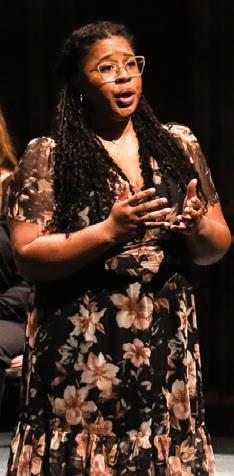
of those disparities, with empty lots and damaged homes standing as markers of uneven rebuilding. The next section, The Gathering, shifted toward collective strength. “It is a reminder of how we have come together,” Like said. “The gathering shows us the strength we hold in our togetherness.” Hinnant led with Make Them Hear You from Ragtime, followed by Edmond Rodriguez performing Comfort Ye My People from Messiah. The section also featured Solar Eclipse, another cinematic piece by Concert Black that underscored the theme of finding light in community.
posed by Concert Black.
The transition from storm to stillness allowed the audience to sit with the emotional weight of what had been lost.
Curator Alicia Revé Like explained the intention behind the movement.
“The variations of speed and tempo mimic how quick a storm can show itself and also how in the very next breath a storm will simply disappear,” she said. She added that the next movement would “make room for our anger and sorrow… our truest and deepest feelings surrounding the loss of what we once knew.”
The Lament followed, featuring Legacy, another Concert Black composition performed by Hinnant, Chamber Project St. Louis and Gemmill. The section also included Eulogy of the Skyline, a poem by Leethal The Poet that reflected on how the tornado altered the city’s landscape — and how inequity shapes the pace of recovery. A year later, some neighborhoods remain living reminders
The final movement, The Rebuild, opened with Williams and Total Praise performing Christ Did It For Me, a joyful, faithdriven original. The world premiere of Joy — also composed by Concert Black — followed, offering a hopeful message about resilience with subtle pop undertones. The music carried a sense of forward motion, a reminder that rebuilding is both a physical and emotional process. The concert closed with the full company and curator Tre’von Griffith on piano, leading the audience in the Assata Chant, built from the famous words of Assata Shakur: It is our duty to fight for our freedom. It is our duty to win. We must love each other and support each other. We have nothing to lose but our chains. The refrain grew louder with each repetition — a final reminder of collective strength.
“The Rebuild is a collection of pieces to reset and reinvigorate our strength and that this city and its community belong to the people and is ours that we get to love,” Like said. “May you leave with a little more drive and a little more joy in your heart.”
Fashionistas Asante, Swayze and RahJanae came through to support LAHA as they presented their 17th annual fashion experience entitled The Runway Edit.
Photo by Lawrence Bryant / St. Louis American
Angel Love performs during Our Songs — a free community concert presented by Opera Theatre of Saint Louis.
Photo by Taylor Marrie / St. Louis American
“It’s been an honor to be part of this team, be a part of this organization that’s bringing the word ‘hope’ back to the city.”
— New York Knicks center
Karl-Anthony Towns, ahead of the NBA Finals

InSIdE SportS
With Earl Austin Jr.
St. Louis athletes deliver standout performances at state meet
The St. Louis area was well represented at last weekend’s Missouri Class 4 and 5 State Track and Field Championships at Jefferson City High.
The two most dominant individual performances in the girls Class 4 meet came from juniors Bailey Hensgens of Incarnate Word Academy and Jahmeishia Patterson of Festus. Hensgens lived up to her status as an AllAmerican in the jumping events while Patterson led Festus to its second consecutive state championship.
Hensgens won three individual state championships: the high jump, long jump and triple jump. She won the high jump with a clearance of 5 feet 11 inches, breaking the state record. Hensgens had cleared 6 feet during the season. She also won the long jump with a leap of 19 feet 6 inches and the triple jump with an effort of 40 feet 3 1/4 inches.
team to a state championship. All four of the Tigers’ relay teams placed in the top eight to earn points. The 4x200 relay team finished fourth, the 4x400 team was eighth and the 4x800 team finished third. Jessica Hawkins finished second in the 100-meter hurdles and third in the 300-meter hurdles.

While Hensgens led Incarnate Word to a second-place finish, the Red Knights also got a strong performance from Ava Tobias, who won the 400-meter dash in 56.34. She also finished third in the 200. The two athletes accounted for all of the Red Knights’ 54 points at the state meet.
Ladue and Cardinal Ritter girls take home team trophies in Class 5
Hensgens may already be the best all-around girls’ jumper in Missouri prep track and field history. She also finished second in the 200-meter dash, earning a total of 38 points, which powered the Red Knights to a second-place finish in the team standings behind Festus.
Patterson led the Tigers to their state title with her work in the sprints and hurdles. She finished first in the 200 in 24.48 seconds and the 100-meter hurdles in 14.2 seconds. She also finished second in the 100 and anchored the Tigers’ 4x100-meter relay
Ladue and Cardinal Ritter are no strangers to team success at the state championships. Ladue finished third in the Class 5 meet while Cardinal Ritter finished fourth.
Ladue was led by sprinter Laila Murray, who placed second in the 100, 200 and 400. The Rams also finished fourth in the 4x100, second in the 4x200 and 4x400. Ladue’s one individual state champion was Sabra Fink, who won the discus with a throw of 139 feet 1 inch.
Cardinal Ritter’s lone state champion was Nalia Kerr, who won the 100meter hurdles in a time of 13.98 seconds. Sasha Redding finished second in the shot put while the Lions finished eighth in

the 4x100, sixth in the 4x200 and third in the 4x400.
The top individual performers in the girls Class 5 meet from the St. Louis area were sprinter Justyce Sanders of MICDS and distance runner Brooke Samuelson of Eureka. Sanders won the 200 in 23.94 seconds and the 400 in 54.55 seconds. Samuelson won the 800-
meter run in 2:07.43 and the 1,600-meter run in 4:43.27.
Belleville West, Cahokia bring home team trophies at Illinois state meet
The Belleville West Maroons finished second at the IHSA Class 3A state championships at Eastern Illinois University in Charleston last weekend.
SportS EyE
With Alvin A. Reid
Junior Bailey Hensgens of Incarnate Word Academy won three individual events at the Missouri Class 4 state track and field championships in Jefferson City. Hensgens won the long jump, triple
and
The Maroons had a pair of individual state champions in Morquez Bulliner in the 400 and Jalyn Cole in the 110-meter hurdles. Bulliner won the 400 in 47.2 seconds while Cole finished first in 13.53 seconds. West also won the 4x400-meter relay in 3:15.04. The 4x200 relay team also finished second. Cahokia finished second in the Class 2A team standings. The Comanches’ top performer was Victreze Thomas, who won the triple jump with an effort of 46 feet. Daylin Donaldson of Belleville East won the Class 3A state title in the 300-meter intermediate hurdles while East St. Louis won the Class 2A state title in the 4x100.
Abdul Carter hits bullseye on Dart’s Trump intro
If New York Giants quarterback Jaxson Dart didn’t realize introducing President Donald Trump during a Republican candidates’ political rally on May 22, 2026, would elicit a sour reaction from some teammates, he is truly naïve.
After being immediately called out on social media by Giants linebacker Abdul Carter, Dart tried to distance himself from his own controversy, saying, “Obviously, this was a unique opportunity, being asked and given the opportunity to introduce the President of the United States.”
the Giants locker room remains unified. He said Dart has a right to do what he wishes politically – but that it is his right and responsibility to speak up too.
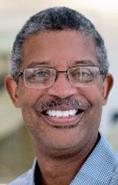
He said his action was apolitical and gave a wandering statement about past military and governmental service by family members.
Nice try, Jaxson. Not enough.
Dart reportedly spoke in a team meeting following his Trump escapade, as did Carter and other Giants.
Carter said there is no “beef” between him and Dart, adding that
His first response was on X: “Thought this s--was AI, what we doing man,” said Carter with a repost of Dart’s presidential introduction. He followed that up during an interview last week, one that should be a must-read for every Black athlete, regardless of age or success level.
“Some things are bigger than football, and this is one of those things,” Carter said.
“Jaxson is one of our leaders. He’s the face of our franchise. He not only represents himself and what he does, but he represents all of us, and that goes for anybody who wears a Giants uniform.
“But if he chooses to align himself with a man like President Trump, it’s my responsibility based on what I believe and what I stand on, to not only show my teammates that I’m

against that but to show the world.” Bravo, Mr. Carter. Black America needs more sports figures like you.
The Reid Roundup
IndyNXT driver Myles
Rowe was pushing for the lead late in the Detroit Grand Prix last Sunday, but the race ended under a caution flag, sending him to a second-place finish behind Enzo Fittipaldi. It was Rowe’s best finish of the 2026 season and sends
him to St. Louis for the June 7 race at World Wide Technology Raceway, one of his favorite tracks, on an upswing… Congratulations to my Kansas Jayhawks for winning the NCAA Baseball Tournament Regional with a 13-10 win over Arkansas. Dariel Osoria had four hits and two outstanding defensive plays to help secure the victory… A pair of Black stars will be representing their respective teams in the 2026 Stanley Cup Finals… Right winger Keegan Kolesar of the Vegas Golden Knights is a physical player who searches for contact on the ice. He tallied six goals and 11 assists during the regular season and has one postseason goal… K’Andre Miller, Carolina defenseman, is a skilled offensive threat who scored eight goals and added an outstanding 29 assists for the Hurricanes… Hall of Fame retired pitcher CC Sabathia is Major League Baseball’s most current Black Ace” pitcher, an African American hurler who has recorded a 20-win season. Two young
Black pitchers could reach that elite status at some point in their respective careers… Cincinnati Reds pitcher Chase Burns, 23, is destined for his first All-Star Game appearance in 2026. His 7-1 record and 1.96 ERA are among MLB’s best. He has 72 strikeouts with a mere 20 walks, and his WHIP (Walks, Hits per Inning) is a minuscule 0.96… Taj Bradley, 25, of the Tampa Bay Rays, is 5-1 with a 3.21 ERA, 65 strikeouts and just 21 walks… If Hunter Greene of the Reds could stay healthy, he has the tools to win 20 games – but he will again miss a chunk of the season on the injured list… I realize it’s still early in the season, but how could anyone other than Will Venable of the Chicago White Sox be the leading candidate for American League Manager of the Year? After three consecutive 100-plus-loss seasons, Venable had the White Sox at 32-27 following a weekend sweep of Detroit and just one game out of first place behind Cleveland in the AL Central.
jump
high jump. She also finished second in the 200-meter dash in leading the Red Knights to a second place finish in the team standings.
Alvin A. Reid
New York Giants linebacker Abdul Carter is correct in saying “some things are bigger than football” after he chastised Jaxson Dart for introducing President Donald Trump on May 22.
Photo courtesy of Facebook /Kathryn Coleman
Earl Austin Jr.
Photo courtesy of Julian Leshay Guadalupe / Imagn Images
Jobs, Jobs, Jobs

Unemployment rate remains high for Black workers
St. Louis American staff
hen the economy begins to slow, Black workers often feel it first.
Recent employment data suggest that may be happening again, even as the overall job market in Missouri and the St. Louis region remains relatively stable.

Missouri’s unemployment rate stood at 3.8% in April, lower than the national rate of 4.3%. In the St. Louis metropolitan area, unemployment was 4.3% in April, according to federal labor data.
Yet a closer look at the numbers reveals a different reality for many Black workers.
Missouri’s Black unemployment rate reached 7.2% in the first quarter of 2026, compared with 3.2% for white workers, according to an analysis by the Economic Policy Institute. Nationally, Black unemployment also stood at 7.2%.
The disparity comes as employers across the country have become more cautious about hiring.

By Nikki Porcher Word In Black
If


Photo courtesy of Word In Black
Ellen DiGerolamo of Aerotek helps Raven Nash schedule an appointment during the Urban League of Metropolitan St. Louis job fair, part of the Weekend of Service connecting residents with employment opportunities and
Photo by Lawrence Bryant / St. Louis American
Job market described as ‘low hire, low fire’
Unemployment
Continued from B6
In a speech this spring, St. Louis Federal Reserve President Alberto Musalem described the labor market as “low hire, low fire” — a period when employers are laying off relatively few workers but also adding fewer new ones.
For people looking for work, that can mean fewer openings, more competition and longer job searches, even when the broader economy appears healthy.
The gap is not new. A city of St. Louis equity analysis conducted before the pandemic found Black residents were far more likely than white residents to be unemployed, reflecting disparities that local leaders have grappled with for years.
Economists have long observed that Black workers often experience higher unemployment rates than white workers regardless of whether the economy is expanding or contracting. Those gaps can widen when hiring slows.
These employment disparities can become even more difficult to overcome when communities face unexpected setbacks.
The May 16, 2025 tornado that tore through North St. Louis added another challenge for many residents in some of the region’s hardest-hit neighborhoods. The storm damaged thousands of
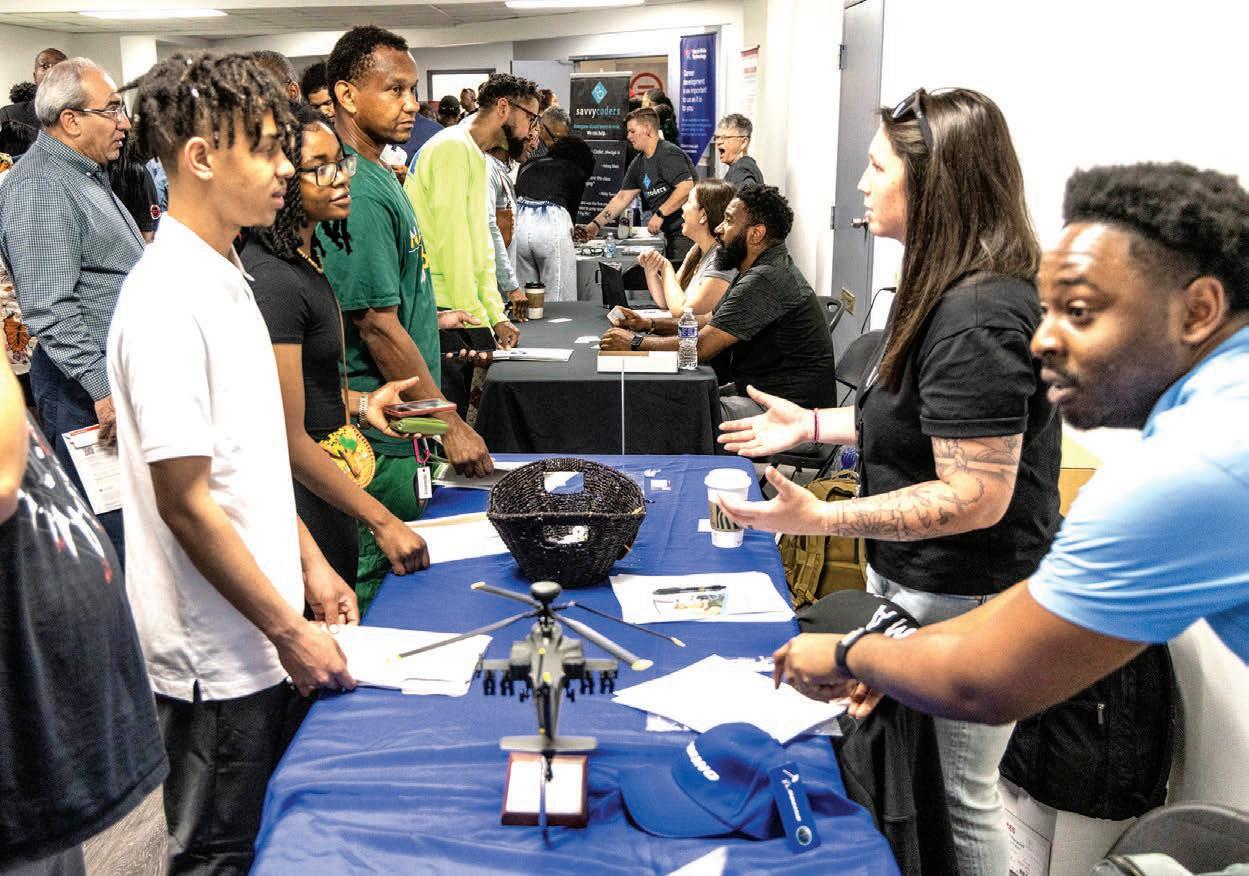
homes, businesses and community institutions in areas that were already facing economic hurdles.
Some employment opportunities have emerged through the recovery effort.
This spring, the St. Louis Agency on Training
and Employment (SLATE) began administering a Disaster Recovery Jobs Program funded through a federal grant from the U.S. Labor Department. The initiative connects residents to temporary jobs supporting cleanup, repairs and rebuilding efforts in
tornado-affected neigh-
borhoods. Participants can earn up to $25 an hour while working on recovery projects across the city.
While temporary in nature, the program represents one example of how rebuilding efforts are creating employment
opportunities in communities still recovering from the storm.
Missouri’s overall unemployment rate remains relatively low, and employers continue to hire in many industries.
But the latest figures suggest the labor market
is not working equally for everyone.
For Black workers, finding a job — or finding a better one — may be becoming more difficult even in an economy that appears stable on the surface.
Attacks on DEI have left Black women jobless
grams that supported Black women entrepreneurs. We are seeing continued attacks on diversity, equity, and inclusion initiatives that opened doors in hiring, contracting, and access to capital.
We are witnessing workforce priorities advance without accounting for the people most impacted by those decisions. That is not a coincidence. That is a set of policy decisions playing out in real time. And it is exactly why leadership in labor matters.
When systems fail
I know this because I have spent the last decade doing the work where these systems fall short.
Through my work with Buy From A Black Woman, I have helped
more than 700 entrepreneurs generate over $6.12 million in revenue. I have worked directly with women who are building businesses, creating jobs, and supporting families while navigating barriers that should not exist.
I have built partnerships with companies such as American Express, PayPal, and Goldman Sachs to put real resources in the hands of people doing the work. I don’t just talk about the workforce. I have built within it.
And what I’ve seen is simple. When support shows up, Black women don’t just stabilize. We grow. We hire. We reinvest. We build ecosystems around us.
But when systems fail, the impact spreads just as fast.
Leadership and lived experiences
So if we are serious about rebuilding the work-

force, we need to be just as clear about what needs to change.
Workforce development

has to start with people, not just employers. If it doesn’t reflect real lives, real schedules, and real
barriers, it will continue to miss the people it is supposed to serve.
Small business support has to go beyond getting started. If we want job creation, we have to invest in growth, in hiring, and in sustainability for the businesses already rooted in our communities.
And labor leadership has to come from lived experience. We need leaders who understand what it means to navigate delayed payments, unstable systems, and the reality that childcare can determine whether someone keeps a job or loses it.
Because when you build a labor system that works for Black women, you build one that works for everyone.
‘We need action’
Right now, we are at a moment where we can keep talking about the problem or we can start building solutions.
That is why the Word In Black virtual event on Black women workforce matters. Thousands of Black women are out of work. So what now? This is not just another conversation. It is a working session. Entrepreneurs, organizers, and community members coming together to share resources, identify what is missing, and build something people can actually use. Because awareness is not enough. We need action.
Black women have always been the blueprint for America’s workforce. The question now is whether we are finally going to build a labor system that reflects that.
Nikki Porcher is a Georgia-based workforce and small business advocate with experience in education and community development. She is a candidate for Georgia Labor Commissioner.

Landon Hicks speaks with Boeing representatives during the Urban League of Metropolitan St. Louis job fair, part of its Weekend of Service connecting residents with employment opportunities and recovery resources.
Envato photo
Photo by Lawrence Bryant / St. Louis American
Free employment readiness programs
Job seekers looking for training, career coaching and employment support can find free assistance through a variety of St. Louis-area organizations. Services vary by program and may include resume preparation, interview coaching, transportation assistance, career training and job placement support.
Better Family Life Inc.
Who it’s for:
Recipients of SNAP, Temporary Assistance for Needy Families (TANF)
and other eligible assistance programs. Programs: SkillUP and Missouri Work Assistance
Services: •Workplace ethics training •Resume development
•Transportation assistance
Contact: Errol Bush, employment manager, (314)376-3440
Fathers & Families Support Center
Who it’s for: Parents
seeking employment and job-readiness support.
Program: Employment Development & Mentoring Program (EDMP)
Services: •Resume development •Mock interviews
•Career coaching
•Job placement assistance Contact: (314) 3334322
Mission: St. Louis
Who it’s for: Adults ages 18 and older.
Program: Beyond Jobs Services: •Skills training
•Professional attire assistance
•Transportation assistance Contact: (314) 5341188
St. Louis Agency on Training and Employment (SLATE)
Who it’s for: Individuals of all ages and abilities.
Programs: Various workforce training, youth employment and career development programs. Services: •Career training
•Financial assistance for eligible participants
•Job-search assistance
•Professional workshops
Contact: (314) 5898000
St. Louis Job Corps Center
Who it’s for: Young adults ages 16-24.
Programs: Several Services: •Housing assistance
•Child care assistance
•Hands-on career training
Contact: (314) 6796200
Urban League of Metropolitan St. Louis
Program: Save Our Sons, Save Our Sisters Who it’s for: Eligibility varies by program.
Services:
•Transportation assistance
• Professional attire assistance
•Services available at multiple locations
Contact: (314) 6153600
Blacks in tech field are underrepresented
By Aswad Walker Houston Defender
The presence of Black people in tech jobs has increased between 2005 and 2025, but they remain substantially underrepresented in the industry. This stagnation in increasing the number of Black professionals in tech is blamed on multiple factors, including a lack of access to computer science education and retention problems within companies.
And according to Black techies, the political policies and climate of 2025 have only made things worse.
Impact of 2025 politics
Idaho Edokpayi, who works in Denver as a SolutionArchitect, showed a level of caution in his response that spoke volumes about the current political climate.
“I have to be careful what I say just because
of the climate, the environment, whatever,” said Edokpayi. “But it’s not been great. I mean, if I were speaking for myself, I might speak differently.”
Tim Hamner, a Los Angeles-based IT director for a marketing firm, says the current political climate makes it harder to find better talent, not because the talent is not available, but because of the sheer number of people looking for work.
“As we’re seeing with the jobs report, [tech] isn’t the only industry that this happens to. It’s just going on worldwide,” said Hamner. “Amazon just laid off 30,000 people. That’s 30,000 qualified people who are going to be out there, I don’t want to say mucking up a lot of the job searches, but competition is getting greater.”
Hamner says this new reality causes him to pay extra attention to who he’s trying to hire and bring on
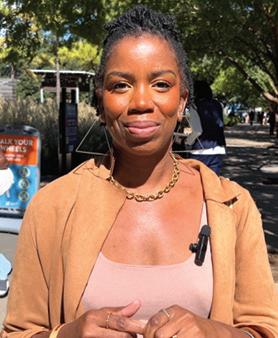
to his team.
Similarly, Glennda Bivens owns Engagement Angel LLC, a firm that provides business strategies for creatives. So, she is looking for employment in the form of additional contracts for her business while simultaneously seeking to hire new talent.
“As someone who has actively been on the job market, it has been really hard finding opportunities that align with my skill

Glennda Bivens owns Engagement Angel LLC, a firm that provides business strategies for creatives. So, she is looking for employment in the form of additional contracts for her business while simultaneously seeking to hire new talent.
sets,” said Bivens. “A number of places have had to withdraw a number of positions due to funding constraints, particularly connected to policies, and just kind of the way things are right now, the lack of stability.”
Bivens spoke of the impact of 2025 political realities on friends of hers, some of whom are in tech, and some who are not.
“I also have really close friends who work within
the federal government who are currently not being paid,” shared Bivens.
“We are really leaning on one another to make sure that we have our basic needs met, whether it be paying our mortgages, our bills, making sure everyone is eating, but then also tapping into the emotional and spiritual welfare and wellness of one another.
“I think there is a more silent part of this experience politically that it can chip away at the soul and the uniqueness of individuals.”
Bivens asserts that right now, in particular, Black techies and others must hold fast to the aspects of “our heritage, our lineage, our community,” etc., that have historically kept us connected.
“Right now, it seems as though there’s a bigger divide and a fracture, not from us, but being imposed upon us,” added Bivens. “So being really creative
and thinking about how we can continue to build one another up and stay connected is important, because we are not one another’s enemy.”
By the numbers
Despite being 11.6% of the total U.S. workforce, Black workers were only 7.4% of the high-tech workforce in 2022, showing they are underrepresented. The number of Black people in high-tech roles increased between 2005 and 2022, but their share of the overall hightech workforce remained stagnant at around 7.4% according to the U.S. Equal Employment Opportunity Commission (EEOC). Additionally, Black workers are significantly underrepresented in high-tech management positions, comprising only 5.7% of high-tech managers in 2022.



ASST. PROF. FINANCE.
your work directly contributes to strengthening communities and supporting affordable housing initiatives that make a difference in people’s lives. We offer a collaborative environment, meaningful work, professional growth opportunities, and the chance to be part of a mission-focused organization dedicated to service and community impact.
Apply today and become part of a team committed to excellence, accountability, and community development.
PRINCIPAL ROLE AND RESPONSIBILITIES Support recruitment activities by coordinating job postings, screening applicants, scheduling interviews, and assisting with the onboarding process.
• Maintain employee records through accurate personnel file management, assist with digital record upkeep, and adhere to document retention requirements.
• Assist with benefits administration by helping employees with enrollment, processing changes, and responding to general benefits inquiries.
• Coordinate training programs by scheduling sessions, tracking attendance, issuing training certifications, and maintaining complete training records.
• Assist with HR policy support, including updates, distribution, and employee communication.
• Manage documents and workflows by creating forms, tracking approvals, and streamlining processes.
• Handle employee relations and inquiries through frontline support, participation in investigations, and proactive communication with staff and supervisors.
• Assist the Chief Administrative Officer and Director of Human Resources with leading initiatives, process improvements, and special projects.
EDUCATION, KNOWLEDGE, SKILLS, AND EXPERIENCE
• Associate’s degree in HR, Business Administration, or related field required.
• Bachelor’s degree preferred.
• A minimum of two years of experience in human resources, administrative support, or office operations. To apply, go to Countyhousing.org County Housing is an equal employment opportunity employer.
•
•
and desktop procedures.
EDUCATION, KNOWLEDGE, SKILLS, AND EXPERIENCE • Bachelor of Science in Accounting or equivalent from an accredited university.
• Five to seven years of experience in a position with similar duties preferred.
• Knowledge of tax credit reporting requirements is a plus.
• Experience with property management software desired (Yardi, RealPage, AppFolio).
• Knowledge of HUD Procurement and Contracting policies and procedures.
To apply, go to Countyhousing.org County Housing is an equal employment opportunity employer.
SENIOR DATA SOLUTION
ARCHITECT/ENGINEER,
Land O’Lakes, Gray Summit,
MO. Req.
Master’s in Comp. Sci., Eng’g Sci., or Data Sci./Analytics & 2 yrs’ exp. as a data sci. or data eng’r. 2 yrs’ exp w/: ETL tools, SQL Databases, Data Warehousing, & Data Modeling; Python, R, SQL, & Scala for processing large datasets in animal sci., incl. statistical analysis & predictive modeling; Power platforms (Power BI, Power Automate, Power Apps, Power Pivot, Microsoft Fabric) to create dashboards & reports related to animal health/farm productivity/research findings; Collab. w/ barn managers, animal technicians, & veterinarians to develop/ support custom apps. in VB6 for animal nutrition data collection & performance tracking; Designing & optimizing data pipelines of farm data using cloud technolo gies, incl. Azure Functions, Data Lake, & APIs. 1 yr’ exp w/: Senior Data Solution Architect/Engineer, Building, training, & deploying machine learning & data science models to predict health, feeding, growth, & performance-related attributes; Developing & supporting data solutions that interface w/ barn mgm’t sys. using SSAS, SSIS, SSRS, T-SQL, & similar tools; Network engineering, incl. maint. networking hardware like switches, routers, & APs. Position allows for hybrid work. Must live within reasonable commuting distance of Gray Summit, MO. For confidential consideration, apply at https://careers.landolakesinc.com/. Requisition #R-39085. No agencies or phone calls.
St. Louis Univ. PhD Fin. or Bus. Adm. w/ Fin. conc. Expert., res., xlnt teach in FinTech, Mach. Learn., AI. Full descr.& apply slu. wd5.myworkday jobs.com/Careers
SOLICITING BID
Reinhardt Construction LLC is Soliciting Bids from MBE/WBE/DBE/ Veteran/SDVE for the following: O2544-01 Remodel Space for Print Shop Utilization Scruggs Station Warehouse
Contact: Estimating Department ; estimating@ reinhardtconstructionllc. com
Phone: 573-682-5505
REQUEST FOR BIDS FOR DEMOLITION CONTRACTING SERVICES AT
207 N 6TH ST. & CITY BLOCK 129 ST. LOUIS, MO 63101
ISSUED: MAY 29, 2026
RESPONSES DUE: JUNE 19, 2026
The Land Clearance of Redevelopment Authority of the City of St. Louis (“LCRA”) is seeking sealed proposals from licensed Demolition Contractors for demolition work at 207 N. 6th Street and a skybridge that crosses Pine St. between 6th and 7th Streets, St. Louis, Missouri 63101. Work includes environmental remediation, demolition, and site restoration of a two-story building and the removal of a skybridge.
Responses will be received at 1520 Market Street, Suite 2000, St. Louis, Missouri 63103 (Attention: LCRA) and STL City Permits until 1:00 p.m. on June 19, 2026.
The services to be provided through this RFB will be funded by The Coronavirus State and Local Fiscal Recovery Fund allocated to the City of St. Louis by the United States Department of the Treasury and passed through the City’s Community Development Administration to LCRA.
The full invitation and all other documents may be downloaded at: STLPermits.com and https://www.stlouis-mo.gov/government/ procurement.
2, 2026. Project information available at: http://oa.mo. gov/facilities
SOLICITING BID
Reinhardt Construction LLC is Soliciting Bids from MBE/WBE/DBE/ Veteran/SDVE for the following: Cole County Public Works Shop Addition and Renovation
Contact: Estimating Department ; estimating@ reinhardtconstructionllc. com Phone: 573-682-5505
ZOO MUSEUM EXHIBIT FABRICATION
RFP 2026
The Saint Louis Zoo seeks bids from qualified vendors. Bid documents are available as of 6/3/26 on the Saint Louis Zoo website: stlzoo.org/vendor.

INVITATION TO BID #: 57826154 - REBID GILLESPIE RESIDENCE HALL (GRH) SHINGLE ROOF REPLACEMENT AND INSTALLATION OF A ROOF HATCH ON THE GRH ROOF
Harris-Stowe State University (HSSU) is again requesting bids for Shingle Roof Replacement and installation of a roof hatch on the roof at Gillespie Residence hall which is located at 3026 Laclede Avenue, St. Louis, MO 63103.
Bids must be emailed no later than 11:00 a.m. on Wednesday, June 17, 2026 to Barbara Morrow at email address: morrowb@hssu.edu and Erika Cotton at cottone@hssu.edu. Responses to the ITB will be opened and read at a virtual bid opening on Wednesday, June 17, 2026 at 11:30 a.m. The link to the virtual bid opening will be sent at the time of bid submission.
A pre-bid conference and walk-through will be held on Wednesday, June 10, 2026, at 10:00 a.m. Interested parties are to meet in the Gillespie Residence Hall lobby. The Pre-Bid meeting is not mandatory but highly encouraged. Bidders are at a minimum required to visit the site on their own prior to the bid date.
A copy of the Invitation to Bid and Bidding Documents can be obtained by contacting Barbara Morrow at: morrowb@hssu.edu and Erika Cotton at cottone@hssu.edu
The University reserves the right to reject any and all bids and to waive all informalities in bids.
REQUEST FOR BIDS
Great Rivers Greenway is requesting bids for St. Vincent Greenway: Eskridge High School to St. Charles Rock Road. Go to https://greatriversgreenway. org/bids/ for details and submit by June 18, 2026.
REQUEST FOR BIDS FOR DEMOLITION CONTRACTING SERVICES AT 3509 PAGE BLVD. ST. LOUIS, MO 63106
ISSUED: MAY 29, 2026
RESPONSES DUE: JUNE 19, 2026
The Land Reutilization Authority of the City of St. Louis (“LRA”) is seeking sealed proposals from licensed Demolition Contractors for demolition work at 3509 Page Blvd, St. Louis, Missouri 63106. Work includes environmental remediation and demolition of a four-story building and site restoration.
Responses will be received at 1520 Market Street, Suite 2000, St. Louis, Missouri 63103 (Attention: LRA BID) and STL City Permits until 1:00 p.m. on June 19, 2026.
The services to be provided through this RFB will be funded by The Coronavirus State and Local Fiscal Recovery Fund allocated to the City of St. Louis by the United States Department of the Treasury and passed through the City’s Community Development Administration to LCRA.
The full invitation and all other documents may be downloaded at: STLPermits.com and https://www.stlouis-mo.gov/government/ procurement.

PUBLIC NOTICE
Notice is hereby given that the Metropolitan St. Louis Sewer District Requests for Quotes, Bids and Proposals are posted online for public download. Please navigate to www.msdprojectclear.org
> Doing Business With Us
> View Bid Opportunities
Metropolitan St. Louis Sewer District is an Equal Opportunity Employer.
ELECTRICAL SERVICES II RFP 2026
The Saint Louis Zoo seeks bids from qualified vendors. Bid documents are available as of 6/3/26 on the Saint Louis Zoo website: stlzoo.org/vendor.
REQUEST FOR BIDS FOR DEMOLITIONCONTRACTING SERVICES AT 4322 ALDINE AVE. ST. LOUIS, MO 63113
ISSUED: MAY 14, 2026
RESPONSES DUE: JUNE 4, 2026
The Land Clearance of Redevelopment Authority of the City of St. Louis (“LCRA”) is seeking sealed proposals from licensed Demolition Contractors for demolition work at 4322 Aldine Ave., St. Louis, Missouri 63113. Work includes environmental remediation, demolition, and site restoration of a one-story ancillary building.
Responses will be received at 1520 Market Street, Suite 2000, St. Louis, Missouri 63103 (Attention: LCRA) and STL City Permits until 1:00 p.m. on June 4, 2026.
The services to be provided through this RFB will be funded by The Coronavirus State and Local Fiscal Recovery Fund allocated to the City of St. Louis by the United States Department of the Treasury and passed through the City’s Community Development Administration to LCRA.
The full invitation and all other documents may be downloaded at: STLPermits.com and https://www.stlouis-mo.gov/government/ procurement.




I still have joy
A word of endurance and assurance from
By Rev. Dr. Anthony L. Riley
Joy is deeper than happiness. Not a smile for the camera. Not a moment of comfort. Joy is an inner well-being. A settled assurance. Contentment in the middle of circumstances that say you should have collapsed by now. How many of you still have joy?
That word reaches across centuries and lands right here in St. Louis. In neighborhoods where schools struggle but brilliance still rises.
Based on what our community has been through, going through, and what we can see coming around the corner, you should not have joy. Too much pressure. Too much grief. Too much history. The Apostle Paul knew something about pressure. Five times beaten. Three times with rods. Shipwrecked. Betrayed. Hungry. Cold. Exhausted. Surrounded by danger. Yet Paul writes from prison and declares something strange: “I still have joy.”
That word reaches across centuries and lands right here in St. Louis. In neighborhoods where schools struggle but brilliance still rises. On streets where development skips blocks but hope refuses eviction. In families navigating debt, health disparities, gun violence, and systems that often discount
Black dignity. And yet, somehow, we still have joy. Joy when our history is debated but never erased. Joy when contributions are used but credit is withheld. Joy when labor builds cities but equity moves at a crawl. Joy does not deny the struggle. Joy survives it. Paul makes an unusual claim in Philippians. His imprisonment is not embarrassment. It is opportunity.
“What has happened to me has actually advanced the gospel.” Chains became a pulpit. Prison became a platform. The imperial guard heard the name of Christ. Sometimes what looks like restriction becomes redirection. Our community knows something about that. Cracked systems. Broken pathways. Closed doors. But God keeps planting flowers along the road. Like the old story of the cracked clay pot. One perfect. One flawed. The cracked pot leaked water every day. Felt ashamed. Thought it was useless. Until the woman carrying it showed the flowers blooming along the path, watered by the crack. The flaw became the channel for beauty.
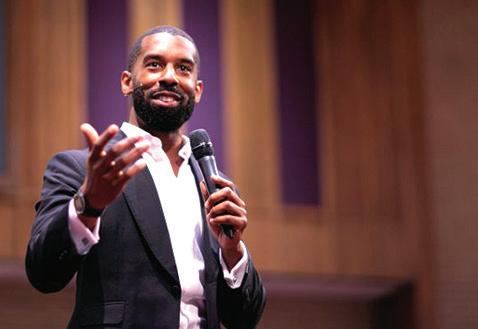
The same is true for a people who turned sorrow into song. Pain into preaching. Survival into spiritual power. Paul says his suffering also produced boldness. Others saw him endure and began speaking the Word with greater courage. Pressure does that. It hardens some. Strengthens others. The question is not whether we face trials. The question is what we become inside them. Are we carrots that soften? Eggs that hard-

en? Or coffee beans that transform the water around them?
The Black church has long chosen transformation. We gather with candles in the blackout. We sing while the storm rages. We organize while the odds resist us. Because joy is not the absence of darkness. Joy is the light in the middle of it. Paul closes with perspective. Through prayer and the Spirit of Jesus Christ, he believes every-
thing will turn toward deliverance. Whether by life or death, Christ will be exalted. That testimony still stands.
The charges against God — neglect, abandonment, cruelty — do not hold. Too many witnesses. Too much evidence of mercy. Based on what we have seen. Based on what we have survived. God is not guilty.
So excuse us if we clap our hands. Excuse us if we lift our voices. Excuse us
if we testify in the middle of unfinished struggle. Trouble in the land. Trouble in the family. Trouble in the body. Trouble in the mind. But this joy we have, the world did not give it. And the world cannot take it away.
The Rev. Dr. Anthony L. Riley serves as the 14th pastor of the historic Central Baptist Church of St. Louis, the second-oldest Black church in St. Louis.
Photo courtesy of Central Baptist Church
The Rev. Dr. Anthony L. Riley serves as the 14th pastor of the historic Central Baptist Church of St. Louis.