

Plan would close up to 22 schools, expand Pre-K-8 and reshape transportation
By Na’Porsha Williams St. Louis American
St. Louis Public
Schools is asking families and residents to weigh in on the most sweeping overhaul of the district in decades — a plan that could close or repurpose up to 22 schools while reshaping grade configurations, transportation,
magnet programs and the future use of school buildings.
District leaders say years of declining enrollment, aging facilities and mounting financial pressures have made the current system unsustainable. Three draft proposals outlined in the district’s “Future Ready SLPS: School Portfolio Preview”
District leaders say years of declining enrollment, aging facilities and mounting financial pressures have made the current system unsustainable.
would reduce the district from 62 schools to between 40 and 47 by the
2027-28 school year.
“This work is not simply about closing or
consolidating schools,” the report says. “It is about creating a stronger system of well-resourced schools where students have access to high-quality academic programming, safe learning environments, enrichment opportunities and sustainable facilities.”
SLPS will hold three community meetings this month before presenting a

summer temperatures.
By Sylvester Brown Jr. St. Louis American
“What to the Slave is the Fourth of July?”
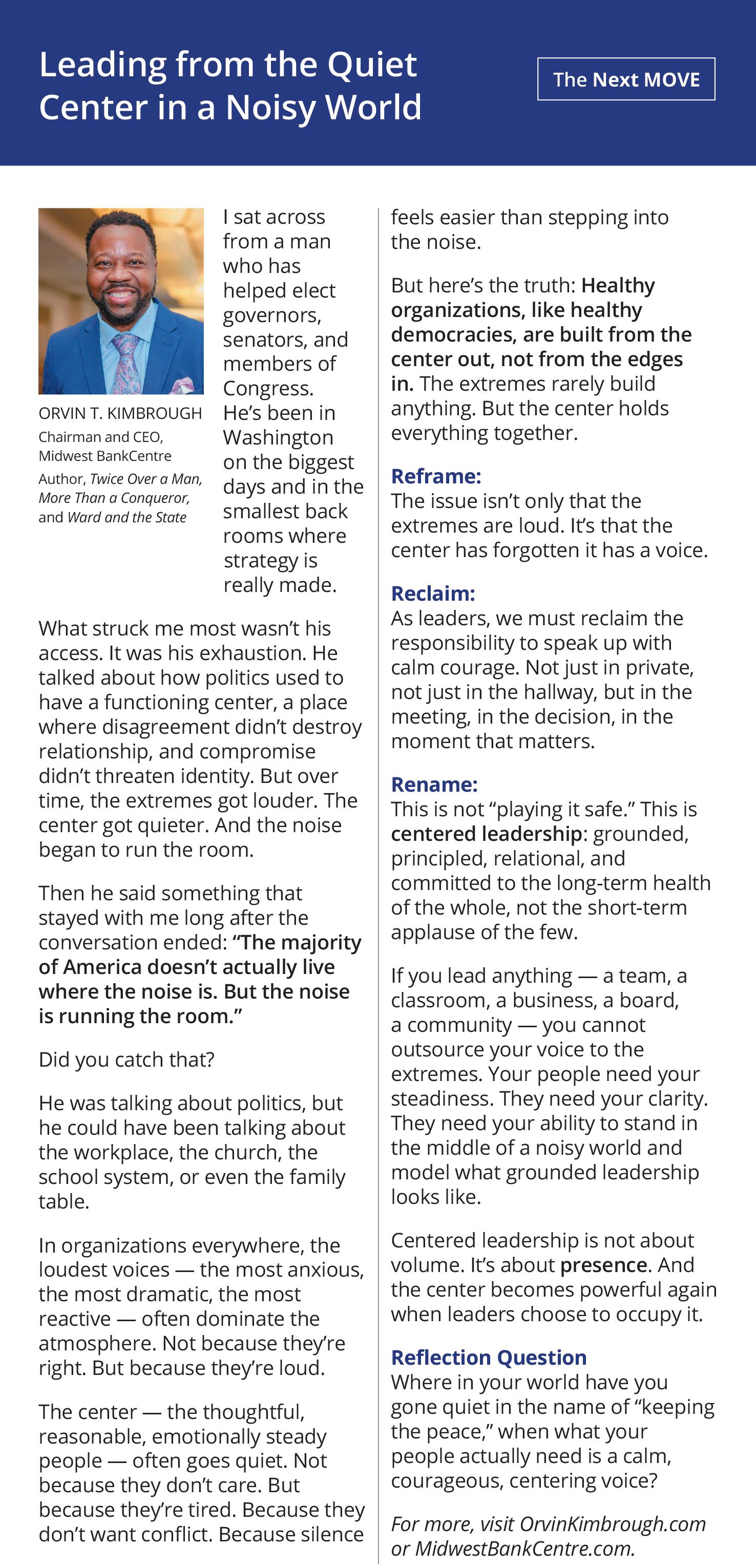
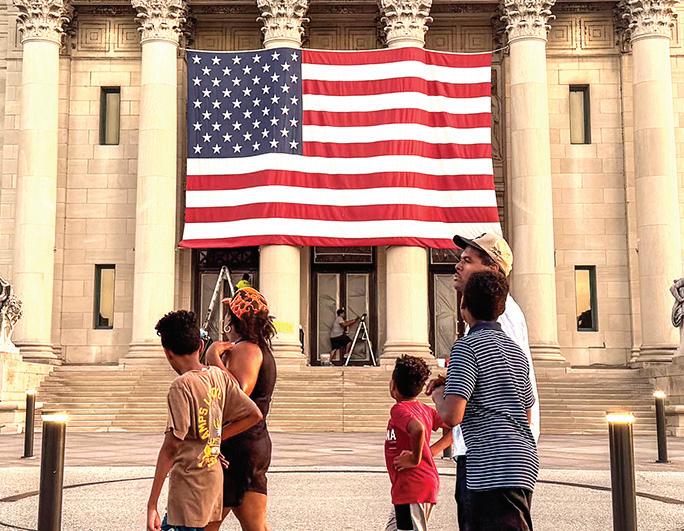
Those were the words of abolitionist, orator and writer, Frederick Douglass. He delivered them during his July 5, 1852 speech in Rochester, New York. Although slavery ended in 1865, 161 years later, Douglass’ question is still relevant to the descendants of a nation founded in slavery. What should America’s 250th anniversary mean to Black America? Should it be collectively celebrated or independently ignored, denounced or dismissed?
“That’s for them, not us,” Dawn Wise, founder of See America, A9
final recommendation to the Board of Education, which is expected to vote in August.
After previewing the proposals to civic, business and community leaders, Superintendent Dr. Myra Berry said attendees recognized that significant change is necessary.
See SLPS, A10
Police say infant was shot by 10-year-old boy
By Lauren Marisol Preston and Na’Porsha Williams
A week after 7-month-old Kiyomi Parker was fatally shot inside a North St. Louis home, her mother isn’t asking people to choose sides. She’s asking them to pray.

“I want others to pray for my family,” 19-year-old Janyla Parker told KSDK. “Pray for her father’s family as well.” Her plea has lingered as St. Louis continues searching for answers to a tragedy that has drawn national attention. Educators, counselors and child-development experts who spoke to The St. Louis American say understanding how something like this happens requires looking long before the moment a trigger is pulled. Investigators say the shooting happened June 26 inside a home in the 8400 block of North Broadway after a 10-yearold boy found a loaded handgun hidden beneath a mattress and shot Kiyomi. She died later at a hospital. Police charged Kiyomi’s father, 19-year-old Ca’Marion Pawnell, alleging the handgun belonged to him and had been left accessible to children. The 10-year-old also faces a murder charge in juvenile court. For many child advocates, however, the legal case is only one part of
See Shooting, A9
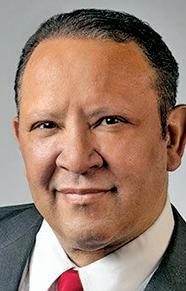
By Marc Morial
President Trump’s allies on the Supreme Court have had to jump through some hoops to justify their decisions supporting his reckless and discriminatory policies. But Justice Samuel Alito’s claim not to see racism in the effort to end Temporary Protective Status for Haitians defies belief.
As Justice Kagen noted in her dissent, even the president’s own lawyers avoided repeating his shocking slur against Haiti and other predominantly Black nations when he demanded, “Take them out.” But even more telling than the slur was the response in the room: “Because if you do, it will be obvious why.”
“Obvious” to everyone but Trump’s allies on the Supreme Court, apparently.
“fairly shout” that race played a role in the decision. Justice Alito and his colleagues in the majority have turned a deaf ear.
The administration has made no secret of its intent to base immigration policy on race. It has turned our refugee program into a “Whites only” pathway to the United States even planning a “welcome bag” containing racist literature.
The Trump administration did not decide to deport protected Haitian and Syrian immigrants because it determined those nations are safe. It arbitrarily determined they were “safe” so that it could deport those immigrants. The Department of State maintains a strict “Level 4 - Do Not Travel” advisory due to the risk of “crime, terrorism, kidnapping, unrest, and limited health care” in Haiti and “terrorism, unrest, kidnapping, hostage taking, crime, and armed conflict” in Syria.
Haitian and Syrian TPS holders are now expected to do what Americans are explicitly warned against.
Just as troubling as the human consequences of the court’s ruling is its reasoning. The public record is littered with examples of the President’s animus toward Haitians. He stunningly advanced a baseless and widely debunked claim that Haitian immigrants were “eating the pets” of residents in Ohio. At other times, he suggested Haitian immigrants were bringing disease into the United States and accused them of “destroying” a community’s way of life.
As Kagen noted, these statements
The president has invoked Nazi terminology to dehumanize immigrants from South America, Africa and Asia. He’s expressed a preference for immigrants from “nice countries,” such as Denmark, Norway and Switzerland, whose populations are each more than 90% White. Just as it did with its egregious Callais decision, the Court has embraced the fiction that blatant racial bias can somehow be walled off from policymaking, as long as it’s not explicitly written into the law itself.
When leaders repeatedly vilify a particular group and then act in ways that strip that group of legal protections it is reasonable to ask whether those words and actions are connected. The Court’s majority, however, demands a level of proof so narrow that it is nearly impossible to meet. In doing so, it effectively immunizes decision-making from scrutiny, even when there is clear evidence of bias in the public sphere.
The consequences of the Court’s decision are not abstract. They will be measured in families torn apart, in lives upended, and in the erosion of a principle as old as the Constitution itself: that justice must be blind to race, not blind to racism. When the highest Court in the land refuses to confront discrimination so clearly etched into the public record, it does more than misinterpret the law — it signals that some forms of prejudice can be ignored, excused, or even sanctioned. And that is a precedent far more dangerous than any single decision.
Marc Morial is National Urban League president and CEO
By Mathew Foggy Jr.
As the United States celebrates its 250th anniversary, there is a group of people who were indispensable to its birth, growth and survival. But they have received almost no attention during this historic celebration. However, there was nothing that early Americans paid more attention to or paid more money for than their unpaid labor force, people commonly referred to as slaves.
According to 131 of the nation’s most prominent Ph.D. historians, those first 12 generations of Black people in America were the indispensable factor in the U.S. becoming the most successful nation in modern history.
America. Those opportunities exist because of the first 12 generations of Black people in America. The question is not whether we honor these indispensable contributors but how should we honor them.
The time that has elapsed does not diminish the magnitude or importance of their contribution. If anything, it increases our responsibility to acknowledge that contribution.
Black unpaid laborers began building the physical and economic foundation of what would become the United States of America almost a century before any of the Founding Fathers were born. For 2½ centuries, they cleared forests, cultivated fields, built roads, constructed cities and created extraordinary wealth that fueled America’s meteoric rise.
By 1860, Americans had invested more money in unpaid laborers than for anything else. Black people represented the nation’s largest capital investment. Their unpaid labor was the engine that powered the young nation’s economy, making their contribution impossible to separate from America’s growth and prosperity.
Donald M. Suggs Publisher ADMINISTRATION
Dina M. Suggs – Sr. Vice President
Julie Erickson – Chief Operating Officer
Raven Whitener – Director,
The St. Louis American Foundation and Special Events
Reba Smith –Executive Assistant-Coordinator
EDITORIAL
Rod Hicks – Executive Editor
Alvin A. Reid – City Editor
Kenya Vaughn – Arts and Entertainment Editor
Earl Austin Jr. – Sports Editor
Lawrence Bryant – Visual Journalist
Sylvester Brown Jr. – Deaconess Advocacy Fellow
Na’Porsha Williams – Breaking News Reporter



The 10 million forgotten, nameless, faceless souls who were bought, sold and forced to toil for 250 years building America’s prosperity must not be forgotten. Those 10 million Black people had their humanity and dignity attacked. They were robbed of their labor, their liberty and even their children.
There is nothing we can do about the past. But it would be another grave injustice to rob them of the credit that is due them for their indispensable role in America’s birth, growth and survival. It is especially important that we celebrate them while celebrating America’s anniversary.
The question is not whether we honor these indispensable contributors but how should we honor them.
Their collective contribution extended far beyond economics.
Black soldiers were needed in the Revolutionary War to help the nation win its independence. Black people were the determining factor in the location of our nation’s capital. The unpaid labor system was the cause of the Civil War, the deadliest conflict in American history. During that war, 180,000 Black soldiers fought to help preserve the U.S. and end slavery. The first 12 generations of Black people in America stand alone in American history for the magnitude of their collective contribution to the success of the United States.
People from all over the world have immigrated here to take advantage of the opportunities that are available in
On this 250th anniversary, let’s celebrate by acknowledging that Black folks played a major role in building America. And let us abolish the 350-year-old lie that Black people are inferior.
A lie that was legalized by the American government to justify slavery. That government-endorsed lie continues to justify attacks on Black people (i.e., voting rights and Black history) today. If that false narrative survives, America cannot live up to its founding ideals. We cannot proclaim that “all men are created equal” and are endowed by their Creator with certain unalienable rights to life, liberty and the pursuit of happiness until we acknowledge the truth about those who helped build this nation and abolish the lie that denied their humanity.
The first 12 generations of Black people in America deserve to be remembered — not as a footnote, but as indispensable builders of the United States of America.
Mathew Foggy Jr. is a St. Louis-based civil rights activist, founder and CEO of Skate King, creator of the Unpaid Labor Project.
Trump remains resentful, envious of Obama
By Joseph Williams
The irony is impossible to miss.
Nearly a decade after dismantling former President Barack Obama’s signature foreign policy achievement — a painstakingly negotiated nuclear treaty with Iran — President Donald Trump found himself defending a hastily stitched-together agreement that ends the Iran conflict, a wildly unpopular war that he and Isreal unilaterally started. It invited uncomfortable comparisons to what his predecessor created and what Trump destroyed.
trim, erudite, captivating — stood at a lectern on Chicago’s South Side before thousands gathered to celebrate the opening of the Obama Presidential Center, a project more than a decade in the making.
Every living presidential couple attended — except one.
That dynamic, however, points to a larger truth: You can’t understand Trump without Obama. And it’s hard to see why Obama continues to live rent-free in Trump’s head without understanding what the first Black president represents to his successor, the creator of the MAGAverse.
Obama the man, and his historic presidency are benchmarks of achievement, popularity and historical stature that Trump has, obviously, spent years trying to surpass — and likely never will.
Trump’s Iran agreement immediately invited comparison to Obama’s Joint Comprehensive Plan of Action, which Trump spent years attacking. It was negotiated in 2015, ran 159 pages and was the product of grinding diplomacy involving European allies, Russia, China and international inspectors. Supporters argued it significantly slowed Iran’s path to a nuclear weapon without requiring military intervention.
Now, after military strikes, American casualties, economic disruption and months of instability, he has arrived at an arrangement that many critics view as narrower and less durable than the one he discarded.
As Trump took fire from the left and right over his Iran strategy, Obama —
The absence was notable because the Obama Center itself embodies a fundamentally different vision of legacy. Trump’s public life has often been defined by monuments to himself — buildings, brands and projects carrying his name. Obama’s center was conceived as a civic space first and a presidential monument second.
“The exhibits in the center are not meant to evoke nostalgia for some gauzy bygone era,” Obama said during the dedication. Instead, he spoke about democratic institutions, civic engagement, integrity, public service and the peaceful transfer of power. That silence matters because Trump’s relationship with Obama has never been entirely ideological. It has always carried the unmistakable undertones of white anger and grievance.
It’s because the first Black president achieved the admiration, legitimacy and cultural stature Trump desperately craves.
That fixation likely traces back to the 2011 White House Correspondents’ Dinner.
Obama stood at the podium and dismantled Trump’s birther conspiracy theories and humiliated Trump to his face with a few jokes and impeccable comic timing. The room erupted in laughter. Trump sat stone-faced.
Trump continues to define himself against Obama. Obama rarely appears to define himself against Trump.
One is still trying to prove he belongs in the same conversation. The other has shown that it will never happen. Joseph Williams is head of content for Word In Black.
“The decision — I don’t want to understate and sugarcoat its importance — it’s definitely bad news.”
— Immigration advocate Ahilan Arulanantham, on the Supreme Court’s decision allowing temporary protected status to be revoked for 350,000 Haitians.
By Sylvester Brown Jr. St. Louis American
Nearly a year after St. Louis ended alley recycling because of widespread contamination, a city task force is recommending the biggest overhaul of the city’s refuse collection system in decades: replacing alley dumpsters with universal curbside roll carts for trash and recycling.
The 13-member task force, formed to study the city’s recycling system, recently released a preliminary report, tentatively titled “Bringing Recycling Home.” Its central recommendation calls for phasing out alley dumpsters and expanding roll-cart service citywide while allowing residents to request a second recycling cart at no additional cost.
The proposed system would provide “improved services and accountability, less illegal dumping, cleaner alleys, increased waste diversion, reduced landfill use, increased public participation and reduced recycling contamination,” according to the report.
In presenting the recommendations to Mayor Cara Spencer, Sustainability Director Elysia Russell said the task force wanted to make recycling easier and more accessible.
“We decided that we really wanted to bring
recycling home,” Russell said. “We didn’t like the idea that recycling was far away.”
The recommendations come nearly a year after the city ended alley recycling and shifted residents to curbside recycling and neighborhood drop-off locations. City officials said the move was intended to reduce contamination caused by residents mixing trash with recyclable materials while making better use of taxpayer dollars.
According to the report, only about 20% of St. Louis homes currently use roll carts for waste collection. Residents who do not have curbside recycling now rely on about 40 drop-off recycling locations throughout the city.
The task force concluded that the city’s sixmonth experience with drop-off recycling demonstrated both the strengths and limitations of the current system.
Contamination in collected recycling has fallen 83% since the city shifted to drop-off sites, while the amount of recycled material has increased 8% compared with previous years. By no longer paying recycling fees for highly contaminated loads that ultimately ended up in landfills, the city has saved an average of about $100,000 per month, according to the report.
The task force concluded that drop-off recycling

locations alone are not sufficient because only a fraction of residents make the trip to recycle. The report says the current system captures recyclable materials only from residents who are willing and able to make the extra effort.
Although task force members largely agreed on the recommendation, they also acknowledged that replacing alley dumpsters with curbside carts could create challenges for some residents.
Spencer noted that roll carts might not work well
for older residents and people with physical disabilities or mobility challenges.
Task force member Tom Bratkowski, an Old North St. Louis resident, raised similar concerns.
“We have hills where there might be 15 steps that the person would have to get their cart down,” Bratkowski said. “It’s going to stay out there on the street continuously. It’s not like we all have front driveways.”
The city has been collecting waste from
alley dumpsters since the 1980s, a system now used by few large U.S. cities. According to the report, St. Louis is the largest city still relying on the system, and more than 50% of the material placed in recycling dumpsters was consistently contaminated, forcing much of it into landfills while the city continued paying recycling processing fees.
Task force member Joe Cunningham, program manager at Operation Brightside, acknowledged that the current system
offers conveniences.
Residents do not have to remember collection schedules, and if one dumpster is full, they can use another nearby. Still, Cunningham concluded that alley dumpsters also create environmental, sanitary and safety concerns. The task force also concluded that public education will be critical if the city ultimately adopts the recommendations.
“Strategic investment in marketing and education will help ensure the City’s updates to refuse collection are understood, adopted, and effective,” the report states.
Several key questions remain unanswered, including how much it would cost to replace alley dumpsters with universal roll carts, how the transition would be phased in and when any changes might take effect. The preliminary recommendations do not propose increasing residents’ refuse fees, but the report does not include implementation cost estimates. The recommendations are preliminary and nonbinding. The task force is awaiting the results of a roll-cart feasibility study before issuing final recommendations later this year.
Sylvester Brown Jr. is the Deaconess Foundation Community Advocacy Fellow.
The Way I See It
By Jamala Rogers
It’s been 174 years since the famous abolitionist, Frederick Douglass, issued his scathing address on July 4 celebrations. The nation couldn’t handle the truth then, and it cannot handle it now. The Trump regime is giving us a harsh reality check as the country prepares to celebrate its 250th birthday.
Coming out of jubilant Juneteenth celebrations, most Black people in the U.S. are feeling far less celebratory about the 4th of July in 2026. We have been challenged by the racist whitelash from the postObama administration and a brutal wave of repression by the MAGA enforcers. Trump’s anti-Black policies are attempting to erase our history, culture, and our very existence.
have oppressed us, regardless of how normalized it has become. If we are to have a sobering forecast of the future, it must always start with our past. Our ancestors gifted us with the concept of Sankofa, which translates to “go back and get it.” This means that we must examine the past to inform, build, and guide our future.
In his address to the Rochester Ladies’ AntiSlavery Society, Douglass promised to use the severest language he could command. He would not sugarcoat the savagery of U.S. slavery. Douglass wanted his sharp words to pierce through the white-privileged skin to their hearts and souls, and tap into their humanity. It was clear by the tone of his riveting words in 1852 that Douglass’ patience was wearing thin with white people’s complicity with slavery.
“What to the Slave Is the Fourth of July?” was clearly meant for white folks. But I believe the descendants of slaves were the secondary audience. Douglass skillfully paints an ugly picture of slavery to move fair-minded white people into action. The address also serves as a reminder to Black people of the impact of chattel slavery on us and why we must rise in defense of our own humanity.
Black people must constantly evaluate our relationship with those who
Too often, Black folks have taken the U.S. government at its word. We have ignored the broken promises to native peoples, and even those made to our own people. Despite laws on the books, Black people have lost land, sacred institutions, intellectual property, and our lives. We’ve seen the erosion of civil rights, including the coveted right to vote, pushing us to the bottom of the economic ladder, and in general, making our lives unbearable. Through it all, we have shown remarkable resilience and strength in the face of persistent adversity. People of African descent have contributed significantly to this nation, making undeniable sacrifices that have strengthened its moral, political, cultural, and economic fabric.
Douglass gave white folks the assignment to work harder to make the foundational documents real for all those who reside in this land. He urged them to fight for the freedoms of all people, regardless of their color or gender.
To preserve this struggling democracy, our paths forward must be fundamentally different. We must be cleareyed about the past and look to the future with unfettered determination. The struggle for freedom and equality will continue. Differently.
Jamala Rogers is an opinion writer and one of the founding members of the Organization for Black Struggle, based in St. Louis.

By Julianne Malveaux
I have never been much for flag-waving patriotism. I respect the rituals, and I understand why they move some people. But my own relationship with patriotism has always been complicated, even chilly.
I do not even pledge allegiance easily. Allegiance to what? To two nations, one Black and one white, under whose God, divisible, with justice for some? We are asked to place hands over hearts and recite words that have never fully described this country.
“The land of the free and the home of the brave” too often reads, in Black history, like the land of the thief and the home of the enslaved. That is not cynicism. It is memory.
As America prepares to celebrate its 250th anniversary, we are sure to see fireworks, pageantry, speeches, flags, concerts, and carefully choreographed displays of national pride. There will be much talk about freedom, democracy, courage, and sacrifice. There will be less talk about enslavement, Indigenous dispossession, racial terror, women’s exclusion, immigrant exploitation, and the centuries-long struggle required to force this country to honor even a portion of its promises.
That is the problem with patriotic spectacle. It too often asks us to celebrate the promise while ignoring the breach.
The Declaration of Independence declared that “all men are created equal” in 1776, even as enslaved people were bought, sold, whipped, raped, and worked without wages. The Constitution protected slavery. Black people built wealth they were forbidden to own. Women were excluded from the franchise. Native people were pushed from their land. And still, generation after generation, people denied the full benefits of citizenship fought to expand the meaning of democracy.
That is the America I honor — not the myth, but the struggle. Frederick Douglass asked in 1852, “What to the Slave Is the Fourth of July?” His question still echoes because the contradiction still echoes. How does a nation celebrate liberty while denying it? How does a nation praise democracy while suppressing votes? How does a nation honor veterans while abandoning them? How does a nation speak of freedom while banning books, distorting history and punishing truth-tellers? America’s 250th anniversary could be an opportunity. It could invite us into a deeper, more mature patriotism — one rooted not in denial, but in honesty. Patriotism does not require amnesia. Patriotism that understands critique as care. Patriotism that knows telling the truth about America is different from hating America. But that will not happen if we allow commemoration to become one more exercise in mythmaking.
We have already seen the direction of travel. A UFC-style cage fight on the White House lawn, wrapped in patriotic branding and corporate spectacle, is not a celebration of democracy. It is the denouement of ritual — the hollowing out of civic meaning until the symbols remain but the substance is gone. When the people’s house becomes an arena, when national commemoration becomes marketing, when patriotism is staged as combat, we should not pretend this is harmless entertainment. It is a sign of civic decay.
At 250, America should be old enough to stop lying about itself. Let there be fireworks if there must be. Let there be speeches and ceremonies. But let there also be memory, humility, and an accounting. Patriotism without truth is propaganda. Celebration without reckoning is evasion. And a nation that refuses to remember honestly cannot be trusted to move forward justly.
Julianne Malveaux, a former college president, is an economist, author and commentator based in Washington, D.C.

By Sylvester Brown Jr.
St. Louis American
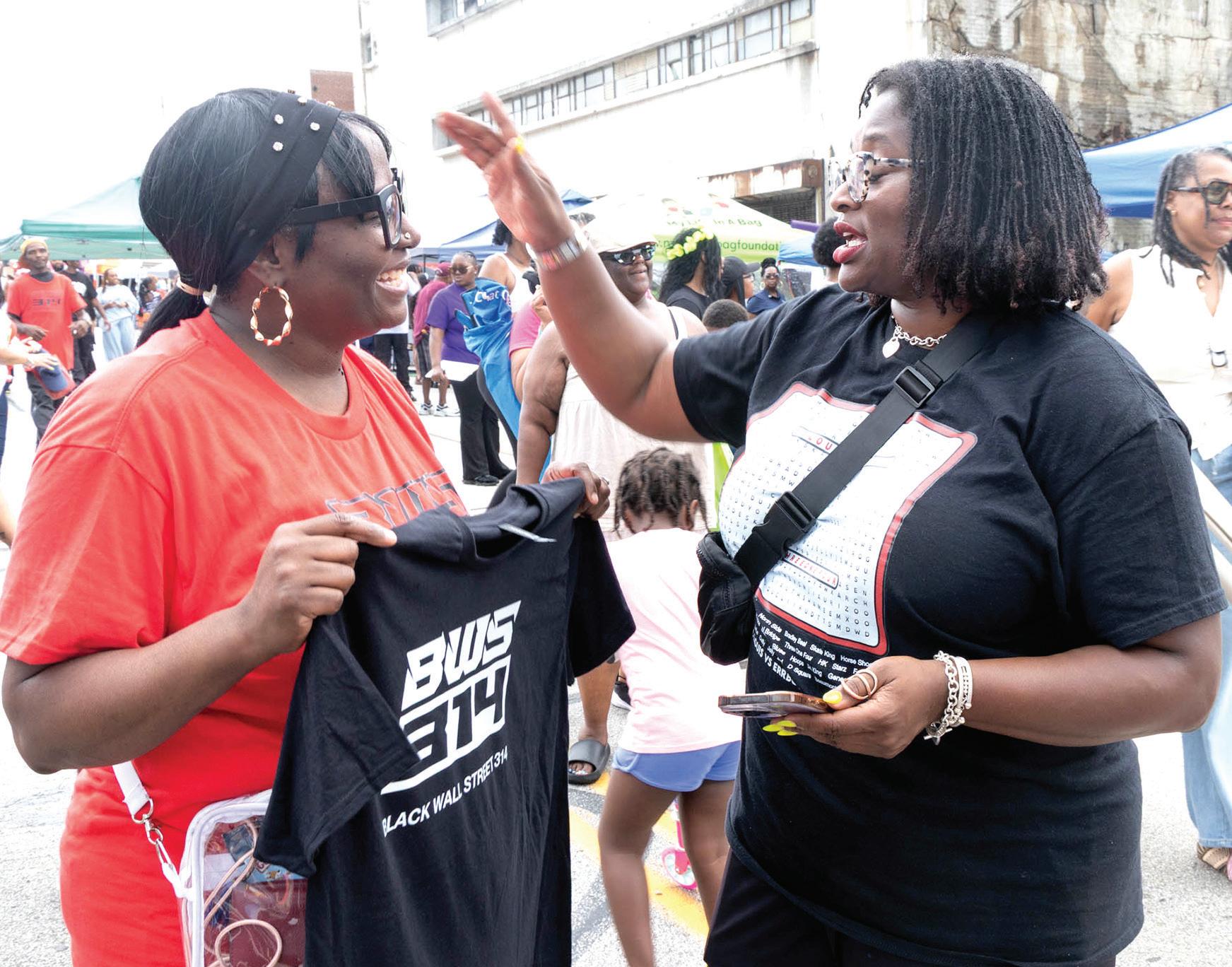
Farrakhan Shegog says the rise, destruction and resilience of Tulsa, Oklahoma’s historic Black Wall Street, known as the Greenwood District, offer a model for rebuilding Black wealth and opportunity in North St. Louis County.
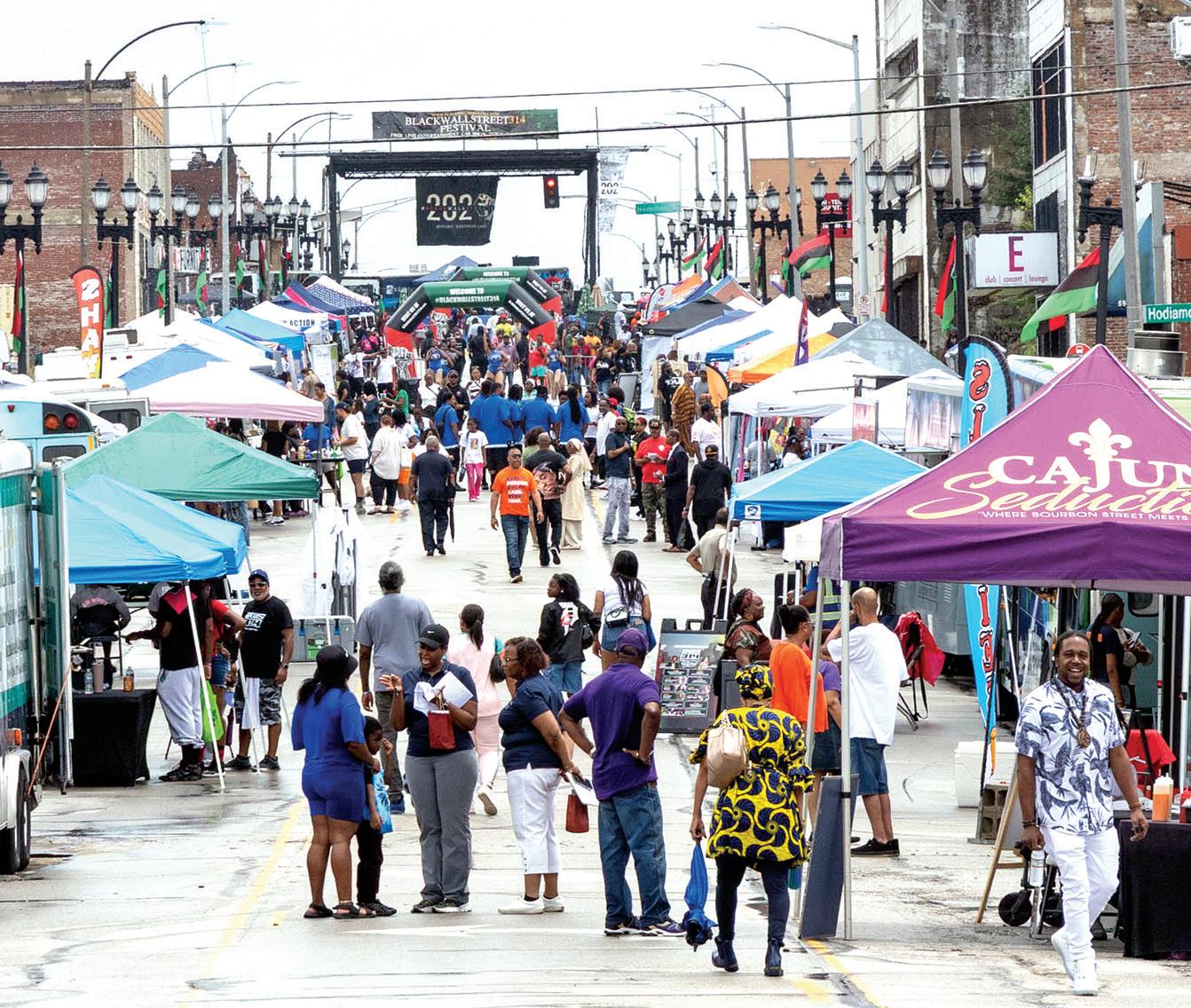
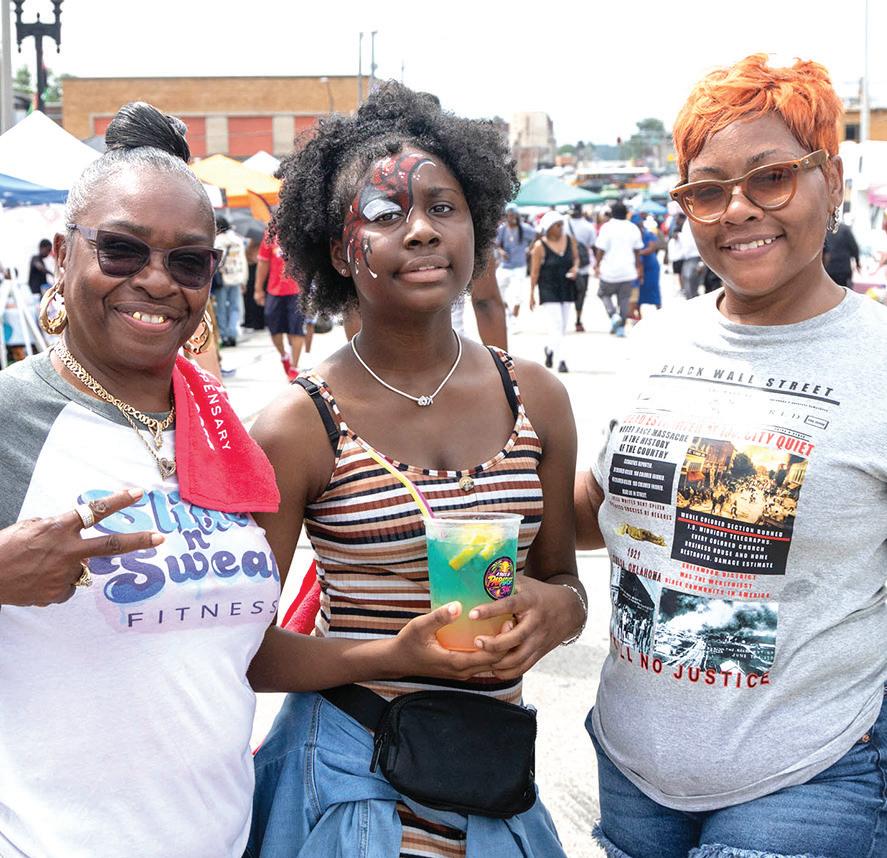
That vision drew hundreds of people to the Historic Wellston Loop on Saturday for the 11th annual Black Wall Street 314 festival. Despite overcast skies and
occasional rain, vendors lined the streets with colorful tents selling everything from handmade skin care products and Afrocentric clothing to jewelry and food.
“Resiliency. We are connected by the resiliency of the people.”
– Farrakhan Shegog
Children chased giant bubbles while music filled the corridor and families gathered to celebrate Black entrepreneurship and community. Asked what Tulsa’s
Greenwood District and Wellston have in common, Shegog doesn’t hesitate.
“Resiliency.”
“We are connected by the resiliency of the people,” said Shegog, president of Young Voices with Action. “And it’s time to refocus on our history of resiliency and ingenuity to build our own economic
and social futures.”
“It’s called ‘Black Wall Street 314’ because Greenwood in Tulsa set the standard of Black thriving communities across the country,” Shegog said. “We’re showcasing to the St. Louis community that the value of circulating the Black dollar can have tremendous impact on housing, politics, health care — everything that is dictated by how we spend and harness the Black dollar.”
The festival featured
St. Louis American staff
A $20,000 investment from the Clayco Foundation will allow Affinia Healthcare to continue and expand a program designed to encourage men to talk openly about their mental health.
The grant, awarded through the Clayco Foundation Relief Fund, will support “A Conversation,” a monthly discussion group that Affinia launched in 2023 after identifying men’s mental health as a significant community need.
Unlike traditional counseling sessions, the program brings men together in an informal setting where they can discuss life challenges with the guidance of a licensed counselor or therapist. Organizers say the goal is to create an environment that feels approachable for men who may be reluctant to seek mental health care.
The funding represents a corporate investment in a com-
Clayco, A6

Aaron joins Explore St. Louis leadership
joined
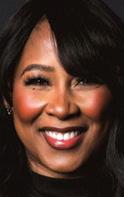
Charmian Aaron
of
She will focus on strengthening relationships with stakeholders across the hospitality, arts and culture, neighborhood, business and tourism.
Aaron previously served as vice president of engagement for Greater St. Louis, Inc., where she led stakeholder engagement initiatives and cultivated relationships across the region’s business, civic and community sectors.
Hubbard promoted to Regions leadership role
Mia Hubbard has been appointed retail service delivery manager for Regions Bank’s branch network across the Southeast, Midwest and Texas.
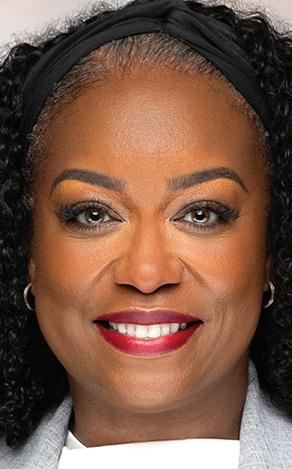
Mia Hubbard
Hubbard began her career with Regions as a teller in East Point, Georgia, and later advanced into branch and regional leadership positions overseeing service strategies in Georgia, North Carolina and South Carolina.
In her new role, she will work with leaders across consumer banking, community and market engagement, risk, compliance and operations to improve customer service.
Hill elected Legend Singers board chair

Perry Hill IV
Perry Hill IV, Ph.D., has been elected chair of the board of directors for The Legend Singers Choral Ensemble. Hill is an educational leader with more than a decade of experience in public education. His leadership roles have included director of field services for the Illinois Association of School Boards, principal and assistant principal. Founded at Sumner High School in 1940 by the late Dr. Kenneth Brown Billups, The Legend Singers Choral Ensemble celebrated its 85th anniversary on May 31.
Promotion, board appointment, new hire, award... please submit your People on the Move item (including photo) to areid@stlamerican.com
Black-owned businesses, live entertainment, a community parade, fashion shows and conversations about public safety, entrepreneurship, youth programming, homeownership and community development.
For Shegog, the event’s message begins with history.
After Emancipation, African Americans established prosperous communities across Oklahoma, including Greenwood. The Tulsa neighborhood became known as “Black Wall Street” because of its concentration of Black-owned businesses, churches, schools and civic organizations.
On May 31, 1921, white mobs destroyed much of Greenwood during one of the deadliest racial massacres in American history.
Although their histories differ, Greenwood and Wellston followed similar trajectories.
“Greenwood and Wellston share another commonality: destruction,” Shegog said. “One city by a deadly riot and the other by white flight and ensuing economic death.”
Once a thriving industrial city anchored by employers such as Wagner Electric Co., Wellston also boasted a vibrant commercial district along Easton Avenue, now Dr. Martin Luther King Drive. White flight in the 1960s and the departure of major manufacturers in the 1980s eroded the city’s tax base, population and economic vitality.
Shegog believes both communities demonstrate that recovery begins with local investment.
“Black Wall Street 314 offers a fuller conversa-
tion about public safety, one rooted not only in response, but in prevention through opportunity,” he said.
For vendor Dawn Wise, whose skin care business operates under the name “Prettii,” the festival represents more than a marketplace. “I love the empower-
ment aspect of it, and I feel we deserve it,” Wise said. “It’s been a long time coming. There’s so much Black ideas, Black creativity, Black entrepreneurship and Black intelligence that’s been dismissed. So this is an amazing thing to do and it’s our time.”
Festival attendees also learned about Young

Voices with Action’s planned $13 million, 31,000-square-foot Easton @ Wellston Loop mixed-use development. The project will include residential housing, retail businesses, community gathering space and the organization’s future headquarters. In May, the organization secured $3 million in federal American Rescue Plan Act funding for the project.
The festival also comes as Wellston is seeing additional investment.
Earlier this month, the St. Louis County Land Clearance for Redevelopment Authority announced an agreement to sell the 28-acre Wellston Industrial Park on Ogden Avenue to THO Investments for $1 million. Officials estimate the project could create at least 50 jobs, with the potential for more.
The authority also reached an agreement with McBride Homes to develop a proposed 178-home subdivision on dozens of vacant lots in the Lulu Heights neighborhood.
Wellston Mayor Nathaniel Griffin said both projects are part of “a much larger plan to rebuild our tax base, strengthen our neighborhoods and create opportu-
Continued from A5 munity-based program aimed at reducing barriers to behavioral health services. Mental health professionals have long cited stigma, limited access to care and reluctance to seek treatment as reasons many men delay getting help for depression, anxiety, grief and other behavioral health concerns.
Affinia officials said attendance has grown steadily since the program began.
“Our group has grown significantly over the last three years, and this grant helps us sustain our meetings and reach more men in the community,” said LaDon Meriweather, Affinia Healthcare’s outreach director, who launched the initiative. “As a Black man, I know we go through a lot, and we don’t always have a space to just communicate.”
nity for current and future residents. From housing to commercial corridors to public infrastructure, the City has multiple active projects underway.”
Shegog said he welcomes the investment but hopes redevelopment also includes meaningful community engagement and opportunities for current residents to share in the benefits.
Ultimately, he said, Black Wall Street 314 is about more than remembering Greenwood’s past.
Affinia developed the program after conducting a community health needs assessment that highlighted concerns about men’s behavioral health, particularly among Black men. While the discussions initially focused on Black men, the meetings have since expanded to welcome all men.
“The statistics tell the story of how men’s health, specifically Black men’s health, has been neglected by the health care system, and this is especially the case when it comes to mental health,” said Dr. Kendra Holmes, Affinia Healthcare’s president and CEO.
Holmes said many men avoid seeking care because of the stigma surrounding mental health treatment.
“We know that men are hesitant to see a doctor, and the stigma attached to mental health really dissuades men from seeing a professional,” she said. “We want this to be a soft introduction to what
It is about applying its lessons to Wellston’s future.
“The goal of Black Wall Street 314 is to promote economic freedom through Black collective involvement and investment,” Shegog said. “It’s one thing to say you’re free, but it’s another thing to have the economic willpower and the economic resources to be able to sustain that freedom.”
Sylvester Brown Jr. is the Deaconess Foundation Community Advocacy Fellow.
mental health care can look like, providing a safe space for men to start having the conversations that help address their mental health.”
Clayco, a St. Louisbased design-build, real estate and construction company, supports nonprofit organizations through the Clayco Foundation. The grant will help Affinia continue hosting the monthly discussions while expanding outreach to additional participants. Although the program centers on conversation rather than formal therapy, Affinia leaders say the discussions often serve as a first step for men who may later choose to seek counseling or other behavioral health services. The next phase of the initiative will focus on sustaining the monthly meetings and increasing awareness of the resource throughout the community.
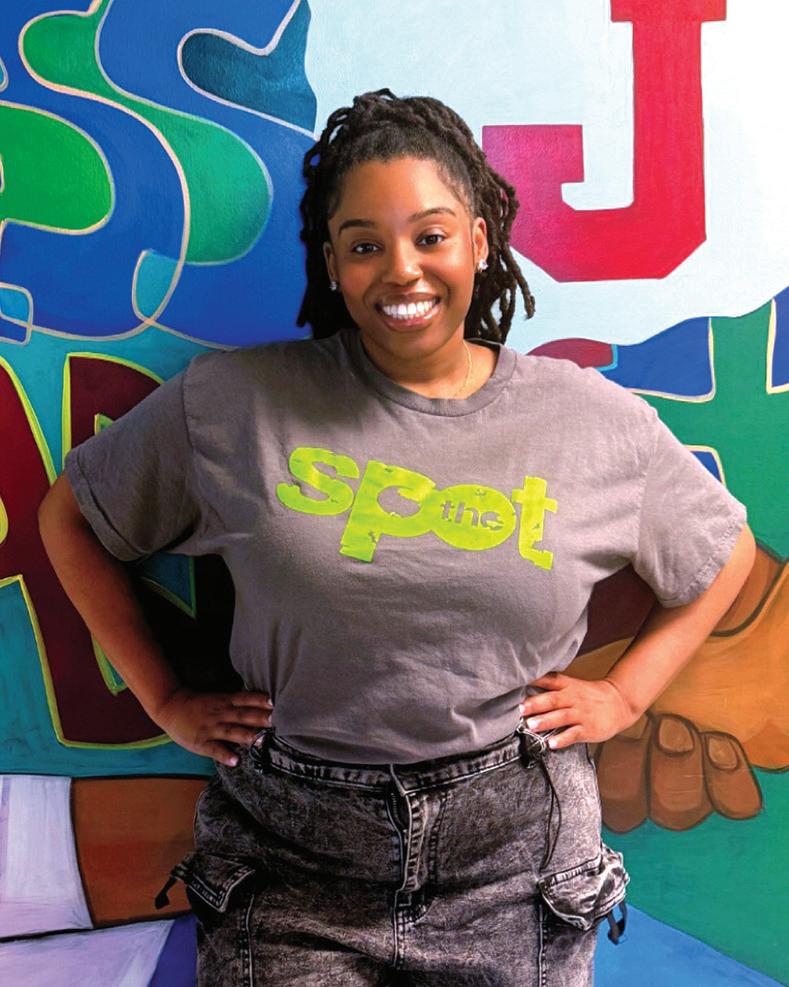
Ashley Randall returned to her alma mater, Jennings High School, as a social work caseworker who connects students with mental health support, housing resources and other services that help them stay in school and succeed.
By Richard H. Weiss For The St. Louis American
Ashley Randall remembers being cheer captain, homecoming queen and prom queen at Jennings High School.
She also remembers homecoming parades rolling down Jennings Station Road and a school community that felt connected.
“There was more community,” Randall said.
Today, Randall is back at Jennings High. But now she is a social work caseworker inside The SPOT, the school’s health and wellness center,
Students arrive with needs that traditional health care often struggles to address.
helping students navigate homelessness, suicidal thoughts, unstable housing, anxiety, family stress and isolation.
From Jennings to North St. Louis to University City, school leaders and
health care providers are increasingly turning schools into hubs for health care, counseling, food assistance and other services once handled by separate institutions. What began as an effort to improve access to medical care has evolved into something larger: an attempt to help children overcome the barriers that prevent them from learning and thriving.
One recent student came to Randall in distress. The teenager had been moving among relatives and friends. She worried about food, housing and
How people can reduce their exposure to plastics
St. Louis facility is first in Missouri
St. Louis America staff
For survivors of violent crime, healing often requires more than counseling.
Many struggle with post-traumatic stress, depression and anxiety while also facing practical barriers such as transportation, housing instability, financial hardship or distrust of traditional institutions. Those challenges can prevent people from getting the care they need long after the immediate crisis has passed.
A new St. Louis center aims to change that.
The center will help survivors of gun violence, sexual assault and child abuse.
“It is a landmark moment for behavioral health, trauma survivors and the St. Louis community,” said Dr. Lekesha Davis, chief operating officer of Ignite Hope Trauma Recovery Center, which will celebrate its grand opening on July 24. Organizers say the facility is Missouri’s first and only nationally recognized trauma recovery center. It is designed to provide comprehensive services for survivors of violent crime and other traumatic events using an evidence-based model that combines mental health treatment with case management, peer support and assistance navigating community resources.
The trauma recovery center model was developed to reach victims who often do not access traditional mental health services. Rather than relying solely on office-based counseling, centers work to remove barriers to care through outreach, care coordination and support tailored to each client’s circumstances.
According to the National Alliance of Trauma Recovery Centers, about 55 trauma recovery centers operate nationwide. They serve people affected by a range of issues, including gun violence, domestic violence, sexual assault, child
How plastics became an environmental justice issue
By Jennifer Porter Gore Word In Black
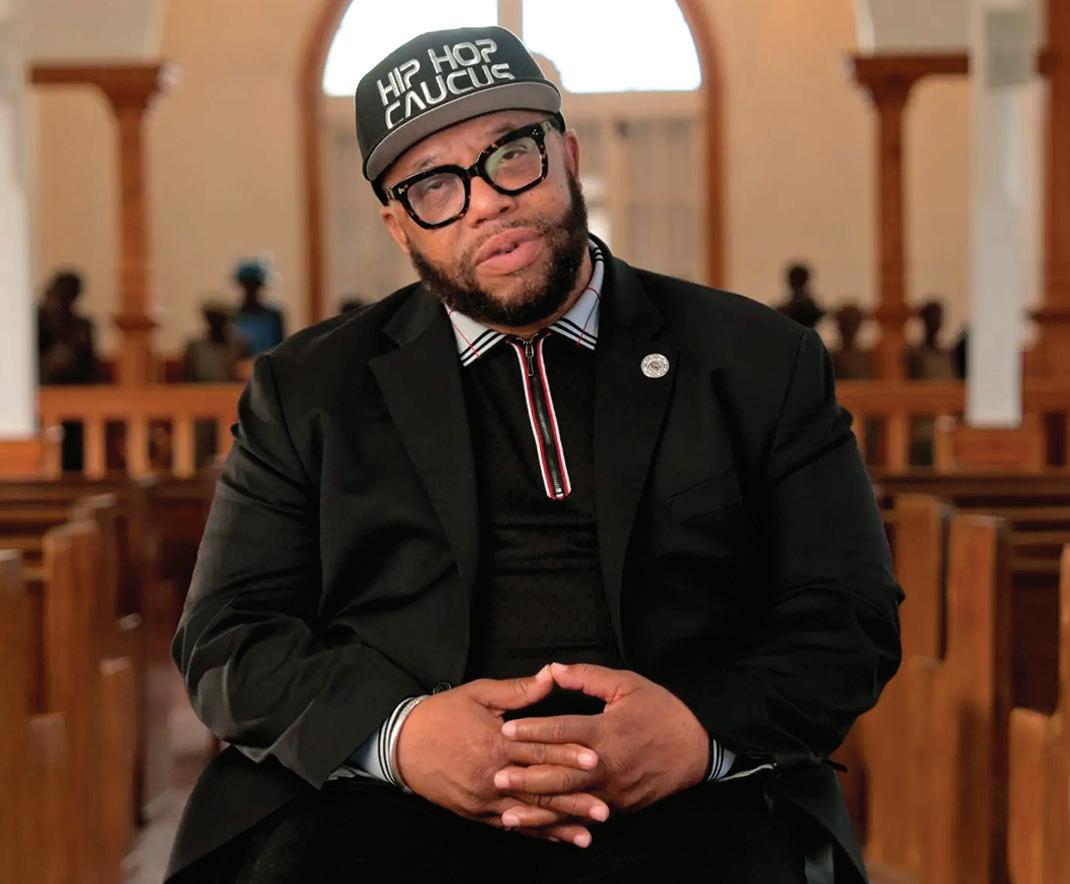
Rev. Lennox Yearwood
Jr., president and CEO of the Hip Hop Caucus, has spent more than two decades advocating for environmental justice in Black communities.
Featured in the Netflix documentary “The Plastic Detox,” Yearwood argues that microplastics and the petrochemical industry have become civil rights issues because Black communities disproportionately bear the health and environmental costs.
ties care about microplastics?
Rev. Lennox Yearwood argues that microplastics and the petrochemical industry have become civil rights issues.
In this edited interview, he explains why plastic pollution matters, why he considers it an environmental justice issue, and what people can do to reduce their exposure.
Word In Black: Why should Black communi-
Rev. Lennox Yearwood Jr.: It’s simple: stop plastics — particularly as they are impacting our community. For too long, our community has been seen as the path of least resistance. Companies have been looking to put things in our communities that they wouldn’t put anywhere else. Plastics come from fossil fuels, from oil and gas, and these facilities are being placed specifically in Black communities, causing tremendous pain through toxic exposure.
Continued from A7
abuse, human trafficking and other violent crimes.
Services may include trauma-focused therapy, case management, help obtaining victim compensation,
assistance accessing housing and medical care, and accompaniment to legal or court proceedings.
Ignite Hope, a nonprofit behavioral health organization founded in 2023, says it became Missouri’s only nationally recognized Trauma Recovery Center after securing national
funding and implement-
ing the alliance’s evidence-based model of care. The organization was founded by licensed professional counselors Teresa Brandon, chief executive officer; COO Davis; and K.A. Wilson, clinical services director.
The center will operate
with multidisciplinary teams that include licensed trauma therapists, case managers and peer support specialists. Officials say services are intended to reduce common barriers that prevent crime victims from receiving care, including transportation challenges, financial
hardship and reluctance to engage with traditional systems. The organization also says no one will be denied services because of an inability to pay.
The opening comes as communities across the St. Louis region continue searching for ways to address the long-term
effects of violence. Mental health experts increasingly recognize that recovery often requires coordinated services extending beyond traditional therapy, particularly for survivors experiencing housing instability, ongoing safety concerns or other social challenges.

Continued from A7
rates in the country — particularly affecting Black people in that community. The fact that a business plan exists that amounts to a death sentence for our communities means we have to do everything we can to stop it.
WIB: How are plastics affecting people’s health?
Yearwood: We figured it would be tough for people to understand petrochemicals. They may understand plastics, though, which is why we were part of “The Plastic Detox.” The film is about how plastic is affecting your life.
Let me be very clear: this isn’t about some faraway person who doesn’t live near you. The plastic in your kitchen, the
Continued from A7 whether she was becoming a burden. Randall listened. She connected the student with food and hygiene supplies. She helped her think through housing and job-training options. She encouraged her to focus on what she could still control: getting to school, treating others well and staying engaged.
Weeks later, the student returned with good news.
Her housing situation had stabilized. She had been accepted into a training program. She had won recognition in band. Then she proudly showed Randall her report card.
Four A’s.
“That was emotional for me,” Randall said.
plastic in your house that is breaking down — we are consuming roughly a credit card’s worth of plastic every single week. That’s the amount of plastic going into our bodies through everyday exposure as plastic breaks down around us.
If you have plastic cups, utensils, laundry packets or takeout containers in your home, that has a huge impact. The film shows how that affects everything from sleep and asthma to reproduction. We followed families who agreed to be tested. We went into their homes, took urine and blood samples, removed the plastic and tracked what happened. According to the documentary, participants reported sleeping better, losing weight and experiencing less brain fog. In some cases, people who had struggled with infertility were able to have children.
Then she offered a sentence that may explain the importance of schoolbased health care better than any statistic.
“They’re determined to live,” she said of the students she serves. “Despite everything that may be going on, they still choose to show up each day.”
The clinic where Randall works reflects a growing recognition that schools increasingly serve as front-line social infrastructure. They are still places of learning, but in communities facing poverty, trauma, violence, housing instability and health disparities, they have also become places where young people encounter mental-health support, medical care and trusted adults.
For the St. Louis region, the rise of schoolbased health care is not
Another key part of this story is that women — and Black women in particular — are on the front lines and fence lines of the environmental justice movement. They are literally staying home and fighting back against corporations.
We’re not saying get rid of every use of plastic. There are important medical and industrial uses, from heart stents to aerospace. What we’re saying is that the fossil fuel industry is trying to maintain its margins by creating a gluttony of plastic that we simply don’t need, and that excess is what’s harming us.
WIB: How can people reduce their exposure to plastics?
Yearwood: Step one is what you’re doing right now: engaging with journalism and storytelling that tells these stories. We
simply a medical story. It is also an education story and a post-Ferguson story.
Dr. Sarah Garwood, who helps lead The SPOT through partnerships involving Washington University and St. Louis Children’s Hospital, said the Jennings program began in 2014, around the time Michael Brown was killed in Ferguson.
“We kind of started in a very tense climate,” Garwood said.
Students were grappling with trauma, grief and national attention focused on their community.
The clinic now provides medical care, behavioral-health support and case management.
Garwood said many students arrive with needs that traditional health care often struggles to address.
Some have never received regular preventive
appreciate Black media especially, which has been critical for covering issues that mainstream outlets ignored for too long. Step two is the documentary. At Hip Hop Caucus, we’ve come to understand that we’re fighting differently than our parents did. Our parents fought for equality in the 20th century. Today, when it comes to plastics, petrochemicals and environmental justice, we are fighting for existence in the 21st century. We have to tell the story differently — through documentaries, social media, town halls and every channel we have.
Even if you don’t live in Louisiana or other places with heavy concentrations of petrochemical facilities, it still affects you. Clean air and clean water are impacted everywhere. We now have detectable plastic in the
care. Some have untreated dental or vision problems. Others are struggling with anxiety, depression or the effects of violence and trauma.
“I was somewhat surprised by the number of kids who had experienced community violence,” she said.
A school-based clinic removes barriers that often prevent young people from receiving help. Students do not need transportation. Parents do not need to miss work. Providers can follow up regularly. Randall sees the impact every day.
Some students come seeking counseling. Others need deodorant, snacks or information about health services. Some simply need a safe place to sit quietly for a few minutes.
One student routinely spent lunch alone in the
placenta. If it’s this bad in 2026, imagine what people will ask 100 years from now. They’ll want to know what kind of world we chose to leave behind.
On a practical level, reduce the plastic in your home. Replace plastic cups and utensils where you can. Stop microwaving food in plastic containers. Be mindful of takeout packaging. And watch the film — it walks you through what to do, step by step.
WIB: Do you see connections between data centers and the petrochemical industry?
Yearwood: Absolutely. What’s striking is the similarity: these companies look at predominantly poor Black communities and see them as the path of least resistance. They believe these communities can’t defend themselves. So they place the worst of
clinic to avoid the cafeteria. Randall worried that hiding from peers every day would only deepen the student’s isolation.
She encouraged the girl to take a chance and spend time with other students.
The girl resisted at first.
Later she returned and wrapped Randall in a hug.
“I made friends,” she said.
After graduating in 2010, Randall earned degrees in criminal justice and social work. She worked in juvenile justice, hospitals, schools and crisis intervention. Yet she always hoped to return to the community that helped shape her.
“You grow where you’re planted,” she said. “I wanted to come back to the community and let them know, you may be
the worst — petrochemical plants, data centers and pipelines — in those neighborhoods, destroying not only people’s current lives but their children’s futures. Data centers consume enormous amounts of water, and petrochemical facilities pollute the air. The cumulative burden falls on communities that have historically had the least political power. Our parents fought for equality in the 20th century, and we are still fighting for that. But now, because of petrochemical facilities and other environmental threats, we are also fighting for existence itself.
The babies born today deserve blue skies, clean water and healthy communities. Our job, like our parents before us, is to fight for their freedom to live well.
rooted here, but you can still grow and sprout and go to other places.”
Returning has also shown her how much the community has changed.
Yet she rejects any suggestion that Jennings students are broken.
She believes many are stronger than earlier generations in one important way. When she was growing up, mental health struggles were rarely discussed openly. Students suffering from depression or suicidal thoughts often kept those feelings hidden.
Today’s students are more likely to ask for help.
“That takes strength,” Randall said. “They are courageous. They are determined to live.”
This story was commissioned by the River City Journalism Fund.
Continued from A1
Prettii skincare products, said bluntly. “I just feel it’s a celebration the colonizers put on us versus Black people’s independence and freedom. Those things just don’t coincide … but, hey, it’s a celebration for everybody … I guess.”
Wise’s sentiments were echoed in recent surveys detailing Black Americans’ complex views about this country’s independence. While some celebrate the holiday, others have bittersweet feelings because of the genesis of Black people in this country.
Most said the country has never lived up to the Founding Fathers’ claim that “all men are created equal,” scribed in the Declaration of Independence.
An April University of Massachusetts Amherst
Continued from A1
the story.
“Everybody who touches the life of a child — everybody’s responsible,” said licensed professional counselor Etoya White.
White said Kiyomi’s death cannot be understood by looking only at one terrible afternoon. The adults surrounding children, the trauma they experience and the opportunities available all shape how they navigate the world long before a crisis occurs.
Communities often rush to ask what punishment should follow, White said, instead of asking what conditions brought a child to that moment.
“A 10-year-old is still a child regardless of race,” White said.
“Developmentally, we can’t selectively accelerate childhood because the child is Black.”
Researchers call that bias “adultification” — the tendency to perceive Black children as older, less innocent and more responsible than they are developmentally.
Dr. Jerome Morris, president of the American Educational Research Association, describes a related concept as the “innocence gap,” in which Black children are often perceived as less vulnerable than they are.
His challenge, he said, is simple: “Love Black
poll found that nearly 60% of Black Americans believe those ideas are disconnected from reality, while 42% believe the ideas of the document still guide the country today.
A Lord Ashcroft poll revealed Black Americans’ mixed feelings about the issue. While many are proud of the country, only 20% said they feel the U.S. has truly lived up to its founding ideals of liberty and opportunity for all.
Elizabeth Donielle, founder of her own public relations and media firm, became visibly upset as she talked about how the United States ignored Black history and Black contributions in the past and again in modern times under the Trump administration.
“We don’t need to be blind about our accomplishments in all those years; We need to put some respect on it,” Donielle said. “We need
children.”
Healthy neighborhoods, stable schools, supportive adults and meaningful opportunities matter because, Morris said, “healthy communities create healthy children.”
That message resonates with one St. Louis teenager who knows how quickly childhood can become intertwined with gun violence.
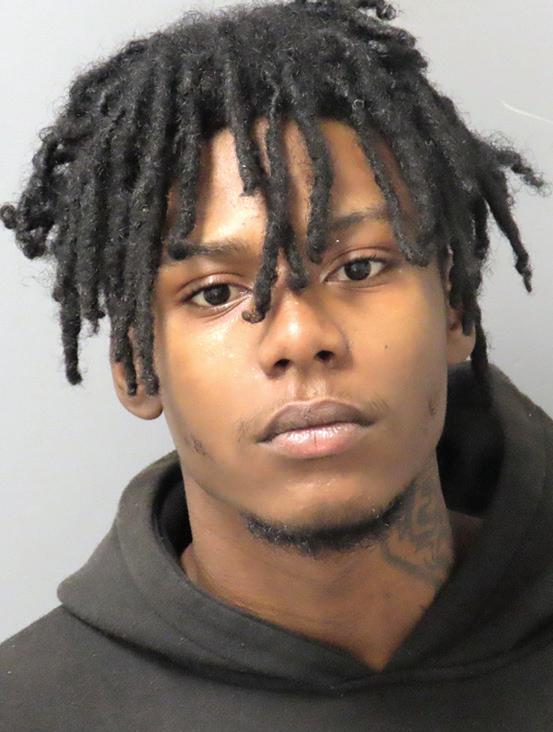
The high school sophomore, who requested anonymity because of his history with gun violence, said he once carried a handgun because he believed it would keep him safe.
“My environment played a big part,” he said. “I didn’t grow up in a good area.”
Carrying a gun felt like protection until the day he was accidentally shot.
“It was a wake-up call,” he said. “But I had to want to change.”
Looking back, he said adults often underestimate how much neighborhoods, peer groups and constant exposure to violence shape a child’s thinking. His own turning point came because his family refused to give up on him.
“The moment that stayed with me wasn’t getting shot,” he said. “It was what my choices put my mother through.”
Tanesia Simmons, executive director of Believe Middle College, said relationships are built long before a crisis.
She recalled a student
to put some respect on our culture, our ancestors. … We need to put some respect on the generations of Black people that really contributed to this country.”
The St. Louis American spoke with some attendees of the Black Wall Street festival in Wellston last weekend. There, Greg McAboy expressed frustration with America’s place in history.
“I believe I’ve become a little jaded as I’ve gotten older, and I think a lot of us are,” McAboy said. “I don’t think we’re where we’re supposed to be … and the proof of that is Donald Trump in the White House, right now. … That proves America is not where it’s supposed to be.”
For State Rep. Marty Joe Murray, who represents downtown St. Louis and surrounding neighborhoods, the Supreme Court’s recent ruling that weakened the Voting Rights Act is a
troubling sign.
“We’re constantly seeing a rollback into an unrecognizable era,” Murray said. “What does 250 years mean?” He said the anniversary makes him think of Douglass’ famous question.
“I can see celebrating it from the position that maybe America has an opportunity to live up to its ideas, but that’s about it.” Murray said.
An older man in the crowd, wearing a colorful dashiki, said he’ll be celebrating “the best part” of America: The election of President Barack Obama.
“In 2008, we elected Obama, the second-best president next to Abraham Lincoln, who ‘they’ believe is the first best president. For me though, Obama is the best. Period!”
Several people at the festival said Juneteenth should be what Black Americans celebrate instead of, or in addition to, the Fourth. A woman
returning to school after being shot over the weekend. Staff noticed the bandage on his arm, and he turned to them for help.
“He knew that he could tell us what happened, show remorse and get help changing his bandage at our school,” Simmons said.
“People have started to paint all youth in St. Louis with a single brush,” she said. “They each have different stories, and if given the opportunity, will rise to the occasion.”
Kiyomi’s killing has attracted national attention in part because prosecutors rarely bring a murder charge against a 10-yearold child. Under Missouri law, children younger than 12 cannot be certified to stand trial as adults, so the case will remain in juvenile court.
For White and others, the more pressing question is not how the justice sys-

wearing a St. Louis Cardinals hat and an American flag T-shirt said she has no problem celebrating Independence Day as long as we also honor the contributions of Black people.
“Our history is etched in those 250 years,” she stressed. “So many people try to change the narrative, but we (must) let people know that we played an important part in all those years. We need to not only celebrate but elevate our history and our communities.”
Black Americans are not the only group with mixed feelings about the holiday on Saturday. While most Americans feel proud of the country, there are sharp divides in their feelings.
A recent Gallup poll found that 77% of all Americans believe the founders would be disappointed with how the U.S. has turned out today. A Fox News survey reported that 53% of voters are
charged Kiyomi’s father, 19-year-old Ca’Marion
alleging the handgun belonged to him and had been left accessible to children. The 10-year-old also faces a murder charge in juvenile court.
tem responds after a tragedy but what adults can do to prevent one.
The tragedy has also renewed attention to children’s access to firearms.
According to the St. Louis Metropolitan Police Department, Kiyomi was the second juvenile killed by gunfire and the 24th juvenile shooting victim in the city this year — matching the total at the same point last year.
Statewide, firearms are the leading cause of death for children and teenagers in Missouri. More than 50 children younger than 17 were shot across the St. Louis metropolitan area last year, nearly half fatally. Missouri also ranks among the states with the highest rates of unintentional shootings involving children, incidents that overwhelmingly occur inside homes.
Community organizations have tried to reduce
proud of the country, with 34% feeling extreme pride — a 25-year low, according to Gallup.
Marlon Wharton, with the nonprofit Gentlemen of Vision, said he will not celebrate America’s anniversary until Black people make the country live up to its principles.
“It’s going to take organizations, communities and people to all come together and just be selfish,” Wharton said. “We just have to say, ‘we’re going to keep our dollars inside our communities.’ We have to be selfish!”
Patricia Battle, a vendor at the festival, has no problem celebrating America’s 250th birthday.
“We helped build this; we are part of it,” Battle said. “So, what do I have to say? … Happy Birthday America!”
Sylvester Brown Jr. is the Deaconess Foundation Community Advocacy Fellow.
those risks by making gun locks more accessible. Through partnerships with the Lock It for Love campaign and Be SMART St. Louis, free gun locks are available at every branch of the St. Louis Public Library and the St. Louis County Library. White said those resources are important, but so is changing the conversation.
“From an accountability and responsibility standpoint, we do have to have that conversation again about weapons being within reach of young people that are not locked, that are not secured,” White said. “Please, if you have children in the home, secure your weapons.”

Continued from A1
“The community is ready ... to make a change,” Berry told St. Louis Public Radio. “The community has understood for a while that we have to do something, but also do something to preserve the history of the district while also moving forward.”
Not everyone agrees.
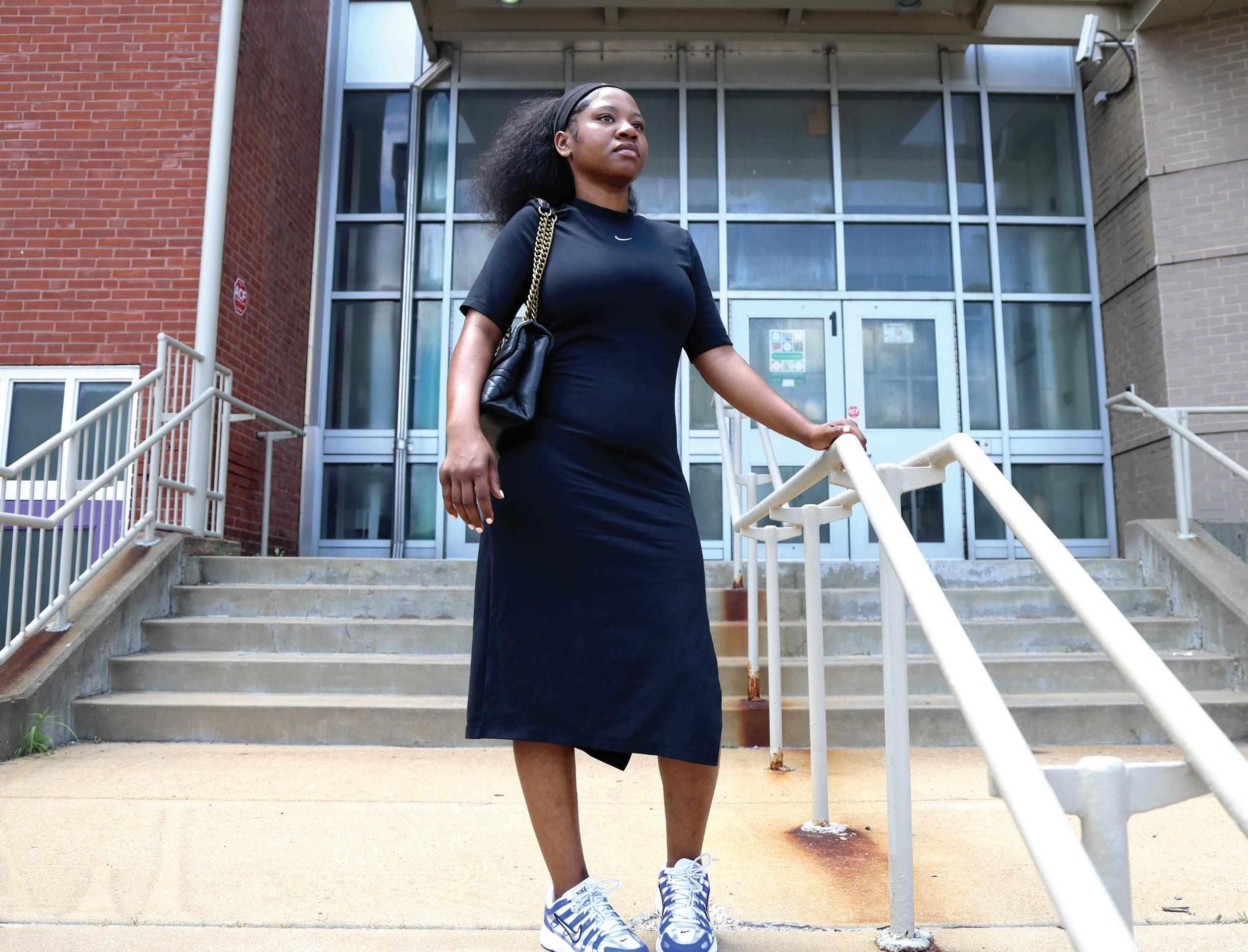
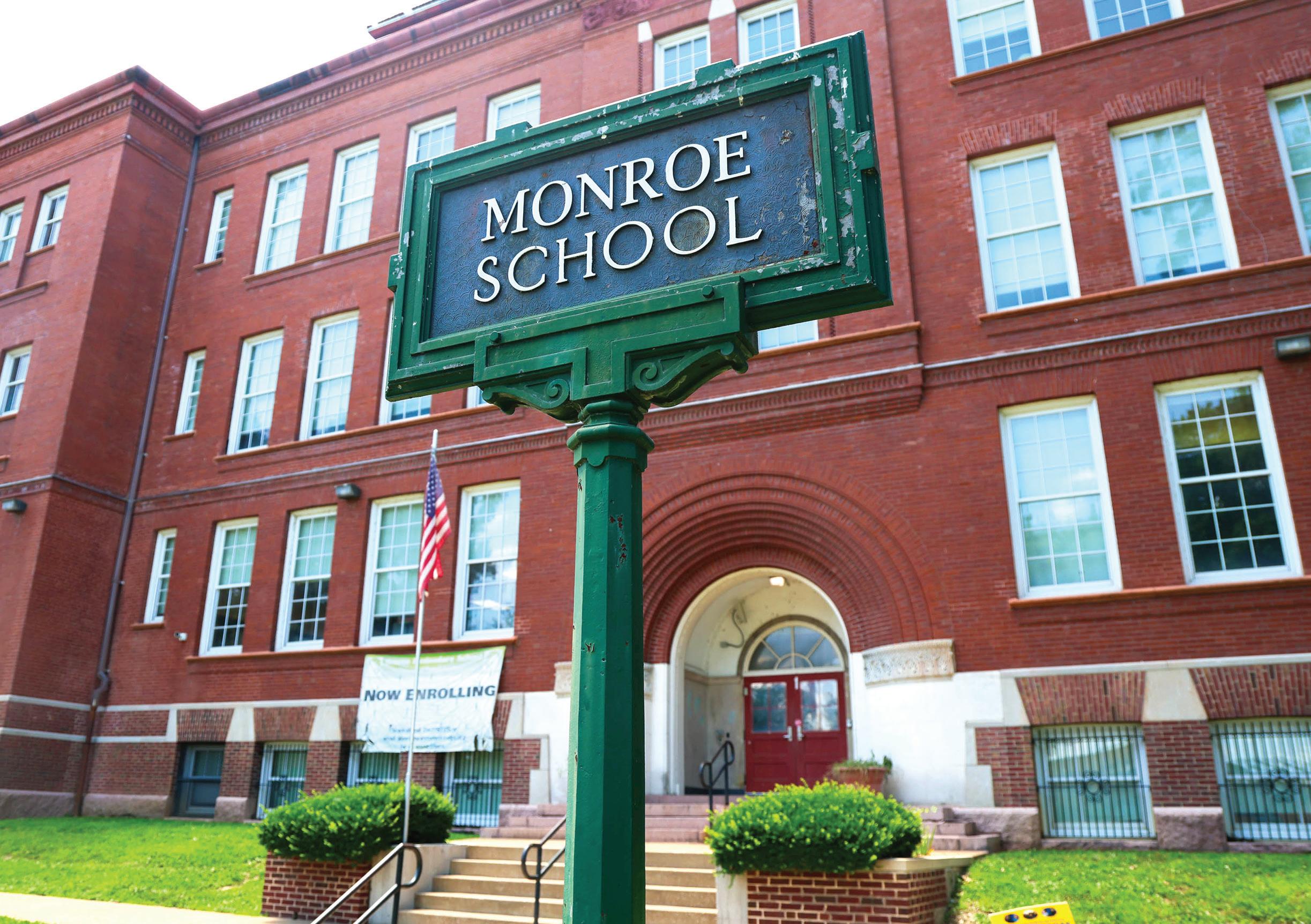
Turlisha Smith, who has three daughters attending Monroe Elementary in South St. Louis, opposes the proposal to close or repurpose the school.
“It is where they have built friendships, formed trusting relationships with teachers and staff and found a sense of stability and belonging,” Smith said. “Closing their school means taking away a familiar environment where they feel safe and supported.”
The district projects enrollment will decline to about 16,723 students this fall, down from 43,284 in 1991 — a loss of more than 58%. At the same time, SLPS faces a projected $41 million budget deficit while maintaining dozens of aging buildings operating well below capacity.
The report presents three options: preserving the traditional elementary-middle-high school structure, creating a hybrid system with selected Pre-K-8 schools, or shifting largely to a Pre-K-8 model. Depending on the option selected, the district would operate between 40 and 47 schools.
Across all three proposals, 17 elementary schools are identified for closure or repurposing: Adams, Ames, Ashland, Bryan Hill, George W. Carver, Columbia, Hamilton, Henry, Humboldt, Jefferson, Laclede, Lyon at Blow, Meramec, Monroe, Peabody, Shenandoah and Walbridge. The plans also would phase out traditional high school programs at McKinley High School and Clyde C. Miller Career Academy by 2030 while continuing gifted and career education pathways
in revised forms.
District leaders say a smaller school portfolio would allow more consistent academic offerings, stronger staffing and expanded student supports, including certified teachers in every classroom, broader access to STEM and enrichment programs, and dedicated counselors, nurses, social workers and behavioral support staff.
Krystal Barnett, founder and CEO of Bridge to Hope, said she supports the proposal because consolidating schools could concentrate resources that have been spread too thin.
“It doesn’t have to be a negative,” Barnett said. “They need to look at this as a point of pivot and change, which is
hard. But the voice of the people can really lead the district in the right direction to support the kids the way the data has been telling us they need it over the last 20 years.”
Depending on the model selected, bus routes would decline from 226 to between 150 and 210, saving an estimated $2 million to $13 million annually. Transportation for specialized academic programs generally would be provided only for students living at least four miles from school, while protections would remain
District leaders say a smaller school portfolio would allow more consistent academic offerings, stronger staffing and expanded student supports.
for students with disabilities, students experiencing homelessness and other eligible groups.
Smith said transportation is her greatest concern as a single mother.
“No parent should have to choose between earning a living and making sure their children receive an education,” she said.
The district estimates the proposals would save another $16.6 million to $17.9 million annually in staffing and benefits.
Officials say about 90 teaching positions would be eliminated through
vacancies and long-term substitute positions rather than layoffs.
The report also proposes repurposing many former school buildings for teacher housing, student transition housing, health clinics, early childhood centers, community hubs, wraparound services and public-private redevelopment partnerships. Ray Cummings, president of AFT St. Louis Local 420, said that distinguishes the proposal from previous closure plans.
“The closures are not closures because there’s a whole page of repurposing for what’s going on in those communities,” Cummings told KSDK.
“Those buildings are not going to be left shuttered like in the past.”
Last summer, consultants recommended
closing 38 of the district’s 68 schools, but the board never acted after the district shifted its focus to tornado recovery, leadership changes and financial challenges.
The current proposal is narrower in scope but broader in strategy, combining school closures with changes to academics, transportation, feeder patterns and redevelopment. It also calls for reopening Sumner and Soldan high schools in January 2027 following tornado repairs.
Community meetings are scheduled for July 8 at Vashon High School, July 15 at Central Visual and Performing Arts High School and July 22 at the district’s Central Office before administrators present a final recommendation to the board in August.
By Zaria Mac St. Louis American
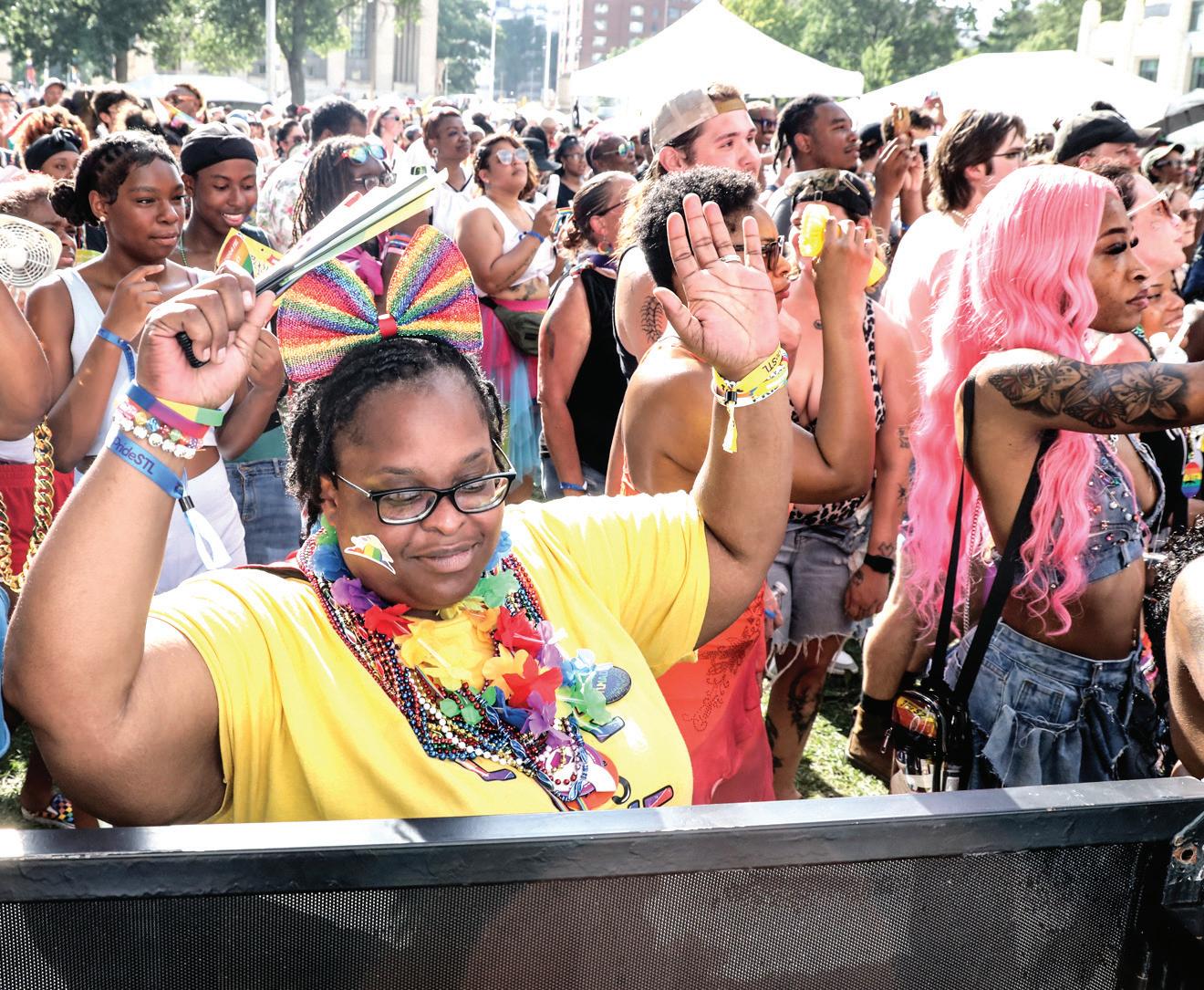
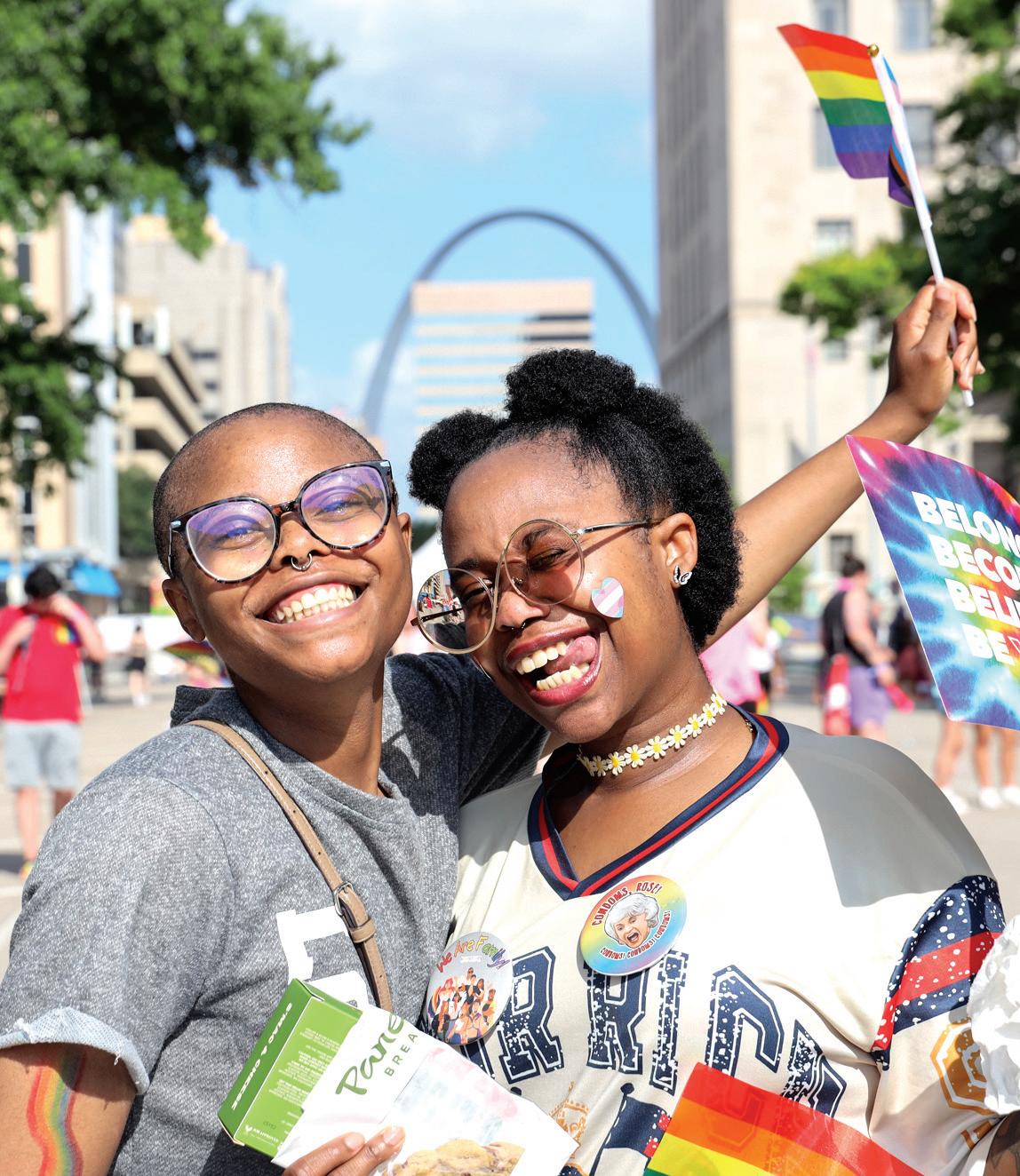
Pride STL once again demonstrated its annual commitment to the region’s LGBTQIA+ community. For more than 45 years – through a pandemic and periods of reduced sponsorship – the organization has continued to celebrate, uplift and connect the community through events such as Pride Idol, Last Comic Standing and, most notably, PrideFest St. Louis, which took place this past weekend at Soldiers Memorial Park in downtown St. Louis.
The full weekend of programming culminated Sunday afternoon as the festival showcased an impressive lineup of performances on the main stage. Local artists and groups, including Maven Lee of Ballroom Together, brought the renowned TENS Experience to life with fierce, creative vogue performances from dancers such as Yarri LanVin and Chakra Bodega. Festival-goers also enjoyed a performance from The Divas of the Grove, the resident drag cast at Rehab Bar, who blended vogue, jazz and political storytelling to highlight the artistry of drag and the joy it brings to communities. Rainbows and vibrant colors filled the festival grounds as couples, friends, families and allies gathered to celebrate, support and learn more about the vibrant and resilient LGBTQIA+ community.
PrideFest St. Louis also featured an ener-
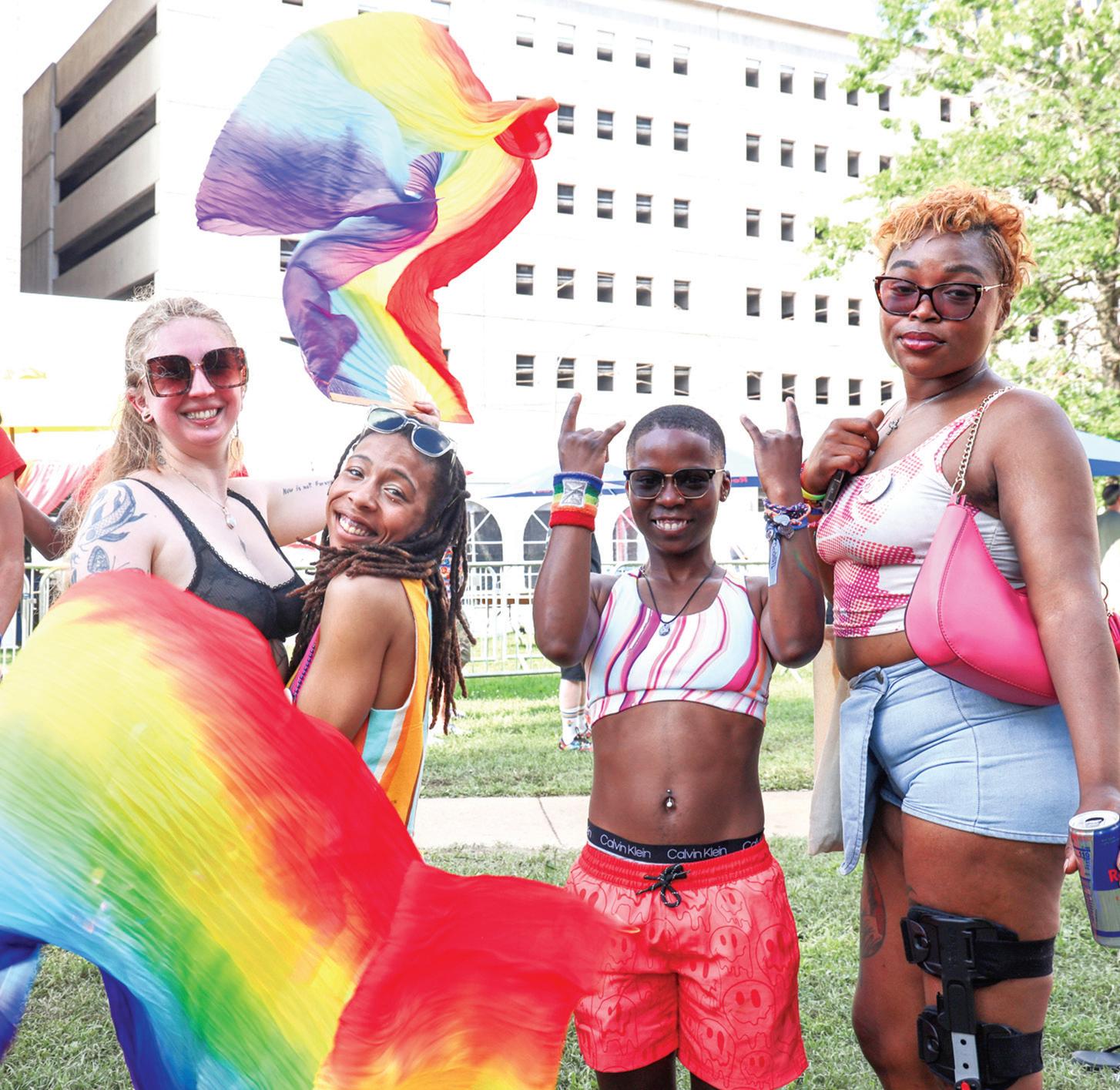
Festival-goers also enjoyed a performance from The Divas of the Grove, the resident drag cast at Rehab Bar.
getic set from DJ PBN Jeffy, a Black queen DJ known for performances at WerQfest and Sophie’s Artist Lounge. His set was presented in collab-
oration with the STL Hive, which created a sober, welcoming space for LGBTQIA+ community members ages 25 and younger. The overwhelming sense of community endured See Pride, B3

By Zaria Mac St. Louis American
Affirmations and introspection filled City Winery’s intimate performance space last Thursday night during the St. Louis stop of the “Everything’s That Deep” album tour by Wellston native AJ McQueen. Joining him were fellow St. Louis artist KVtheWriter and Dajha Vu of Memphis. Together, they delivered a show that encouraged the audience to reflect on their present circumstances while claiming the future they desire.
At the concert, McQueen — a rapper, songwriter, poet and author — shared words of wisdom and offered an intimate glimpse into his spiritu al worldview.
“The reason it’s hard to fly is because you have weights on you,” He said. “Sometimes you have to reflect on the past, use it as fuel and alchemize it. It’s okay to go back to see how far you came.”
He also revealed that he fills his music with affirmations.
“The letters are really spells, that’s why it’s called spelling and you have to speak good spells over you,” he said. “Some people don’t know how to do that and that’s why my music is a cheat code. You can use my music to speak the words
over yourself.”
The passion for using music as a healing mechanism was also shared by opening act KVtheWriter, who turned to music after losing her father and brother to gun violence. She performed “You
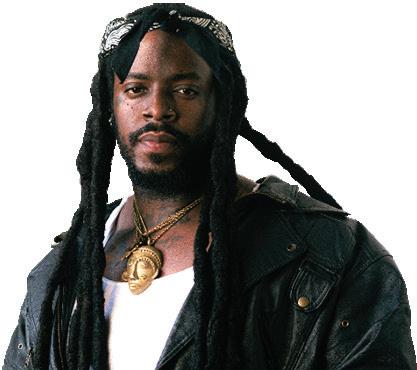
ful message about her loved ones and persevering through loss. She also performed the triumphant “Feel Good,” which shares its name with her line of CBD products and the poetic rap “Pray.” She closed with her viral hit
“Figure Out the Rest,” a song many listeners are still surprised to learn was written and performed by KVtheWriter.
Next was Memphis
Artist returns with same drive that fueled his first first STL popup
By Kenya Vaughn St. Louis American
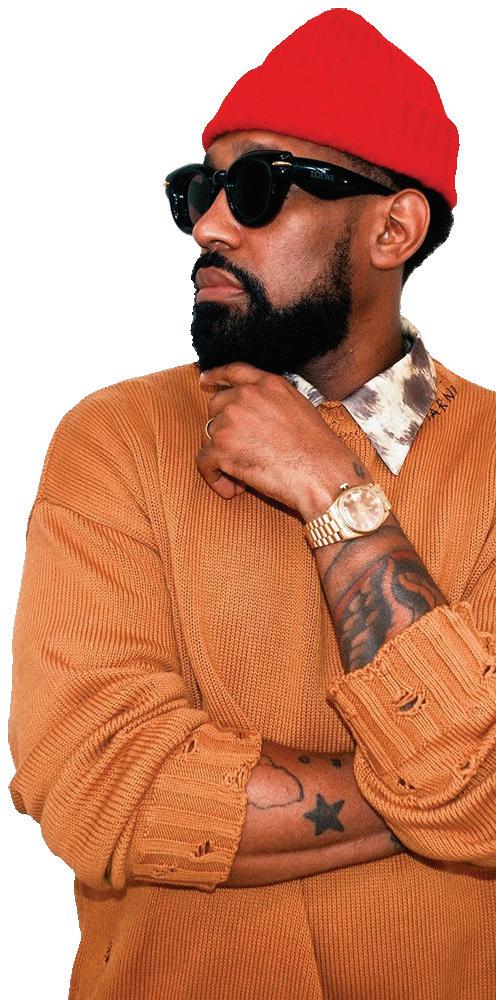
Exactly 15 years ago, PJ Morton was supposed to be headlining Fair St. Louis as a member of Maroon 5. The weather had other plans. Torrential rain and thunderstorms made the outdoor performance impossible.
Morton, who was also building a solo career in soul music at the time, had a different idea. He hopped on Twitter and told his followers in St. Louis to pull up at Lola, the nowdefunct down town nightspot known for live music.
“Now I’m known for my popup shows, but that was my very first one ever,” Morton said. “I thought, ‘My
Sun., July 5, 7 p.m., City Winery St. Louis welcomes Glenn Jones, City Winery, 3730 Foundry Way, St. Louis, MO. For more information, visit www.citywinery.com
Fri., July 10, 7 p.m.
doors, St. Lunatics 25th Anniversary Show, The Pageant, 6161 Delmar Blvd, St. Louis, MO 63112. For more information, visit www.thepageant.com.
Thur., July 16, 7:30 p.m. MATI presents Jon Baptiste Live: A Fantastical Musical Journey, The Fox Theatre, 527 N Grand Blvd, St. Louis, MO 63106. For more information, visit www.fabulousfox.com.
Fri., July 17-July 19, Music At The Intersection (MATI) 2026, various times and locations within the Grand Center Arts District. For more information, visit matistl.org.
Tue., July 21, 7 p.m.
The R&B Tour starring Usher and Chris Brown, The Dome at America’s Center. For more information, visit www.livenation. com.
Fri., July 24, 7 p.m. doors, Buddy Guy 90 with Carlise Guy & The Nu Blu Band, The Factory, 17105 N Outer 40 Rd, Chesterfield, MO 63005. For more information, visit www.thefactorystl.com.


July 3 – July 4, Celebrate St. Louis presents Celebrate 250: America’s Biggest Birthday Party featuring Ludacris, Stephen Marley and more www. celebratesaintlouis.org
Through July 5, 2026 Barbershop Harmony Society International Convention, The Dome at America’s Center. For event schedule and more information, visit www. barbershop.org.
Sun., Jul. 12, 5 p.m. Second Sunday: R&B with a Twist: The Rodeo, Atomic by Jamo, 4140 Manchester Ave, St. Louis, MO 63110. For more information, visit jamopresent.com.
July 17 – July 18, Sundiata King of Mali: Afriky Lolo 20th Anniversary Celebration, Touhill Performing Arts Center. For more information, visit www.touhill.org.
COMEDY
Fri., July 3 - 5, Special Event: TK Kirkland, Helium Comedy Club, 1151 St Louis Galleria St, St Louis MO 63117. Various showtimes. For more information, visit https://st-louis.heliumcomedy.com.
Fri., Jul. 10 - 11, 7 p.m. Guy Torry, Funny Bone, 614 Westport Plaza Dr, St. Louis, MO 63146. For more information visit, https://stlouisfunnybone. com.
Fri., Jul. 17 - 19,

Special Event: George Wallace, Helium Comedy Club, 1151 St Louis Galleria St, St Louis MO 63117. For more information, visit https://st-louis. heliumcomedy.com.
ST. LOUIS
MUSIC SPOTLIGHT
Wed., July 8, 7:30 p.m., Soundcheck with Thomas Paden & Family, City Winery, 3730 Foundry Way, St. Louis, MO. For more information, visit www. citywinery.com
Sun., Jul. 12, 5 p.m. The Chad Evans Quintet, The Dark Room, 3610 Grandel Sq, St. Louis, MO 63103. For more information, visit https://kranzbergartsfoundation.org.
Fri., Jul. 24, 9 p.m. Ish
Ensemble feat. Alayna Lovelyy, The Dark Room, The Dark Room, 3610 Grandel Sq, St. Louis, MO 63103. For more information, visit https://kranzbergartsfoundation.org.
Through July 2, 8 p.m. The Muny presents Shrek The Musical, The Muny, 1 Theatre Dr, St. Louis, MO 63112. For more information, visit muny.org.
July 6 – July 12, 8 p.m. The Muny presents South Pacific, The Muny, 1 Theatre Dr, St. Louis, MO 63112. For more information, visit muny. org.
July 16 – July 22, The Muny presents Disney’s Newsies, The Muny, 1
Theatre Dr, St. Louis, MO 63112. For more information, visit muny.org.
July 17 - 26, 7 p.m.
Disney’s The Little Mermaid, Catherine B. Berges Theatre at COCA, 6880 Washington Ave, St. Louis, MO 63130. Various showtimes, for more information, visit www.cocastl. org.
Mon., July 27, 8 p.m. The Muny presents Ain’t Too Proud, The Muny, 1 Theatre Dr, St. Louis, MO 63112. For more information, visit https://muny.org.
ART
July 11, 10 a.m., CAM annual Summer Family Day. This free, drop-in event celebrates creativity, connection, and community, Contemporary Art Museum St. Louis 3750 Washington Boulevard St. Louis, MO 63108. For more information, visit www.camstl.org
Sat., July 25, 2 p.m. Urban Arts Expo, 5261 Delmar Blvd, St. Louis, MO 63108. For more information, visit https:// artbydeonne.com.
Sat., July 25, 8 p.m. Art, Mimosa and Pancakes, The Hawthorn, 2231 Washington Ave, St. Louis MO 63103. For more information, visit https://ampexhibit.com/.
Through Aug. 9, Teaser by Ayana Evans, Contemporary Art Museum, 3750 Washington Blvd, St. Louis, MO 63108. For more information, visit https://camstl.org.

Continued from B1 artist Dajha Vu. She came out swinging – blending her southern accent with a New York-style rap flow over iconic beats such as “If I Ruled the World” and “The Players Anthem.” She also performed her version of “I Choose Me,” a song about self-love and personal growth. Her setlist also included “Fear.” The unreleased track about losing herself to fear featured a repetitive chorus that could easily become a personal mantra.
The mantras continued with headliner AJ McQueen.
“My music is affirmation music,” he said. “Any song that I do, repeat the words and you are literally speaking to your spirit.”
McQueen has taken his affirmation-centered music across the nation, spreading “God Body
Energy” while embarking on his fourth independent tour. He opened with “THAT THING,” which samples Lauryn Hill, and “Ginger Root,” a standout track from his previous album, “When We Evolve.”
The melodic and hopeful song was followed by his “Sweet Love” remix from his viral On the Radar appearance. After finishing the song, he repeated his favorite and most thought-provoking verse, giving the audience another opportunity to absorb its message.
He did the same later in the show with songs such as “TOUCH SOME GRASS” and “GREEN PASTURES,” two poetic tracks about finding deeper love, moving with faith and taking accountability. He then invited Dajha Vu back to the stage to perform their collaborative single, “Just Like Music.”
The soulful love song captivated the audience, with heads nodding along
as some sang the lyrics while others grooved to the music. McQueen continued his soulful, high-vibrational set, blending fan favorites with songs from his new album, Everything’s That Deep.
He closed the performance with “SIT YUH SELF DOWN,” a song that shares its title with the introspective book he released this spring. Before beginning the poetic rap, he encouraged the audience to open themselves to the lyrics, let go of excuses that keep them from living for themselves and embrace the determined energy that filled the room.
“I pray that my music makes you do something. Makes you forgive yourself and others, makes you love yourself and make you love others,” McQueen said as he ended the concert. “Go do something with the energy. It can’t be created or destroyed so you might as well use it.”
Continued from B1
despite temperatures climbing into the 1990s. Even under the relentless summer sun, attendees packed the festival grounds, proving that neither the heat nor the humidity could diminish their pride or their desire to celebrate together.
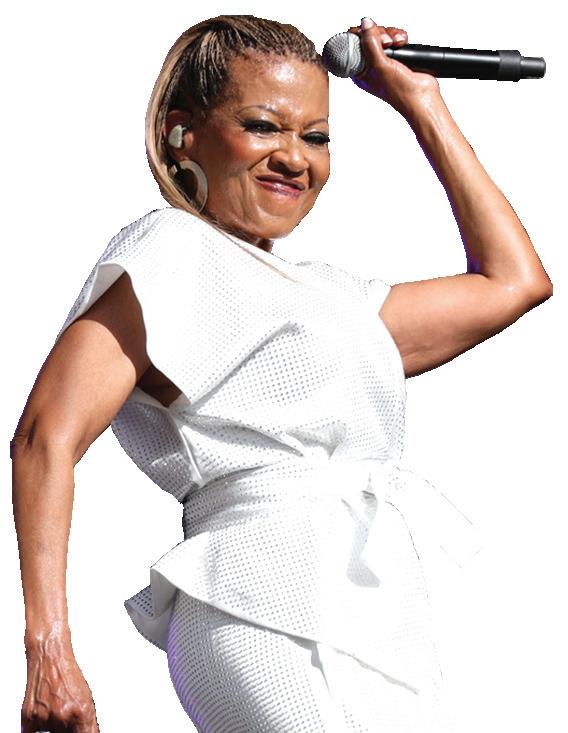
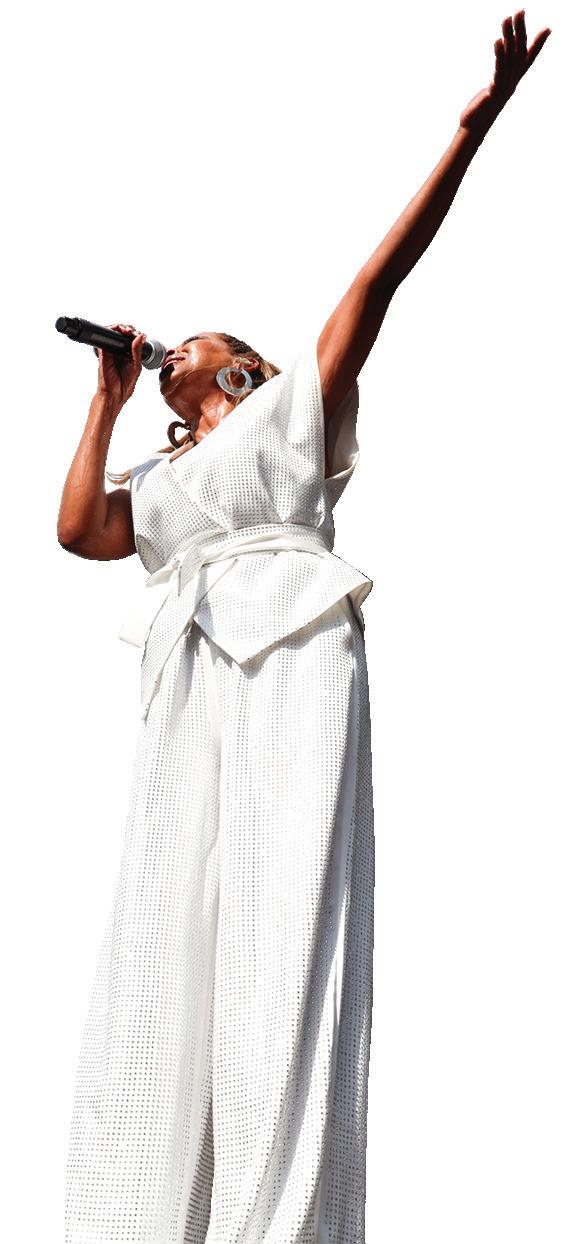
Guests filled the festival with laughter, music and connection, but the afternoon’s biggest draw was veteran R&B group En Vogue. Their iconic catalog brought PrideFest St. Louis 2026 to a memorable close. The trio took the stage in striking white sequined ensembles that perfectly reflected their signature blend of elegance, strength and sophistication – and harmony. Their confidence and polished vocals served as a reminder of why they have remained one of R&B’s most enduring acts for nearly four decades.
The crowd erupted as the group performed “My Lovin’ (You’re Never Gonna Get It),” a song
whose infectious groove has remained timeless across generations. More than 30 years after its release, the hit still felt as fresh and empowering as ever, reaffirming the lasting impact of En Vogue’s music. They followed it with “You Don’t Have to Worry,” immediately proving that their harmonies remain as strong as ever – and that they came prepared to deliver a stellar performance for their St. Louis fans. The audience was understandably on its feet when the opening notes of “Whatta Man” filled the park. The carefree anthem sparked an unmistakable feeling of joy that rippled through the crowd as strangers danced together, friends sang at the top of their lungs and the entire festival seemed united in celebration. They kept that energy alive with “Free Your Mind,” prompting one of the loudest singalongs of the evening. A mix of excitement and disbelief filled the audience as the song began to play, a blast from the past that was gratefully received.
The group then slowed
the pace with the soulful “Give Him Something He Can Feel,” inspiring a festival-wide singalong. They followed with their smash hit “Hold On,” leaving fans captivated as they flawlessly delivered the iconic “Who’s Lovin’ You” introduction before transitioning into the song’s unmistakable groove.
En Vogue closed the night with “Don’t Let Go,” creating one of the festival’s most memorable moments. Friends wrapped their arms around one another, couples swayed together and thousands of voices joined in unison, transforming the performance into a powerful celebration of love, resilience and belonging. By the end of the day, no one seemed to notice the heat or the sweat that accompanied PrideFest St. Louis 2026. What remained was a shared sense of joy, acceptance and community – and a reminder that everyone deserves a place where they can be seen, supported and free to be themselves.

By Lyah B. LeFlore-Ituen, Director of AAHI
This Fourth of July feels different.
As Americans gather to celebrate our nation’s 250th anniversary, there will be fireworks, family reunions, line-dancing at the backyard cookout, and all the familiar rituals that mark Independence Day. Like many Black Americans, I will celebrate alongside family and friends while reflecting on the complicated history this day represents.
My parents used to remind me that for us, patriotism has always existed alongside perseverance. We honored the ideals of liberty and justice while acknowledging that our ancestors spent generations fighting to make those promises real. They helped build this nation long before they were allowed to fully participate in it. Their labor and brilliance built cities, shaped American music, literature, business, science, and culture. Their courage challenged America to become more faithful to its founding ideals. Here in St. Louis, those stories are woven into every corner of our city.
confidence, discipline, leadership, and belonging. That same spirit is needed today.
Our city continues to recover from last year’s devastating tornado. Families are rebuilding. Schools face uncertainty. Neighborhoods continue to evolve. Many of our young people are searching for connection, purpose, and hope in a world that often feels divided.
History reminds us that every generation inherits challenges. It also reminds us that every generation has a choice.
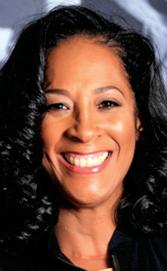
This Independence Day, we should also pause to honor the African Americans who defended freedoms abroad while often returning home to unequal treatment here in America. Their service reminds us that patriotism is not blind acceptance. It is an enduring belief that our nation can continue striving toward its highest ideals. Here in St. Louis, Soldiers Memorial stands as a testament to that sacrifice and to the generations who answered the call to serve.
As America marks 250 years, what will Black St. Louis carry into the next 250?
Our history has never been defined solely by what happened to us. It has been defined by how we responded.
When Black children were finally allowed to swim at Fairground Park in 1949, their glee and excitement were met by an angry white mob determined to deny them something as simple as a summer afternoon at the pool. Simple recreation became a battleground for equality.
Long before hashtags and social media, Black St. Louisans organized in church basements, neighborhood centers, schools, union halls, and living rooms. They marched through sweltering summers because freedom could not wait for cooler weather.
When lunch counters remained segregated, Black students and community leaders staged sit-ins, insisting that dignity could no longer wait.
Those moments were not isolated chapters in history. They reflected something much deeper about this city.
Long before hashtags and social media, Black St. Louisans organized in church basements, neighborhood centers, schools, union halls, and living rooms. They marched through sweltering summers because freedom could not wait for cooler weather. They registered voters, mentored young people, built businesses, strengthened churches, founded civic organizations, and created institutions that became anchors for generations.
They invested in our children through organizations like the YMCA, the YWCA, MathewsDickey, Herbert Hoover Boys & Girls Club, Wohl Recreation Center, and summer camps that offered more than activities. They created places where young people learned
Perhaps that is why it feels especially meaningful that, during this season of America’s 250th anniversary, the Missouri History Museum is preparing to close one of its most powerful exhibitions, Mill Creek: Black Metropolis. Thousands of visitors have walked through the story of a neighborhood that was far more than streets and buildings. Mill Creek was home, entrepreneurship, faith, music, education, and community. Its destruction reminds us that progress without people is never true progress, but its legacy reminds us that a community cannot be erased if its stories continue to be told.
On July 9–12, the Museum will welcome the community for four days of celebration, reflection, music, conversation, and remembrance. It will not only mark the closing of an exhibition, but also honor a promise that the stories of Mill Creek—and Black St. Louis—will not disappear again.
That may be the greatest lesson of America’s 250th anniversary. So, this holiday weekend, while the fireworks light the sky, ask an elder to tell a story you’ve never heard before. Thank a veteran. Write down your family’s story before it is lost. Because history does not belong only in museums. It belongs around our dinner tables, in our neighborhoods, in our classrooms, and at family reunions. The next generation and America’s next 250 years will be shaped by what we choose to remember today. My hope is that Black St. Louis will continue doing what it has always done—meeting adversity with courage, answering injustice with action, and ensuring that our history is not simply remembered, but lived.

Photos by Lawrence Bryant and Taylor Marrie / St. Louis American
Big ups to Black Wall Street 314. I love her, but Mother Nature really be hating, don’t she? I was over the moon for my boy Farrakhan Shegog when I saw how he had the Wellston Loop looking all lively with community Saturday afternoon. I found a parking space and made the little walk down Martin Luther King Drive to the middle of the action. Then a tsunami hit. It was swift and soggy! I took off running like somebody was chasing me. I was soaked to the bone, bra and panties. By the time I got home, my boho braids looked like Jay-Z after Beyoncé combed those locs out. Too bad I can’t afford nobody’s Cecred. Blue Magic and protein gel got the job done, but my scalp was throbbing. But back to Black Wall Street 314. The rain might have interrupted the moment, but Farrakhan and all parties involved made something magical happen in an area that has been disinvested. I got a chance to see it with my own eyes. I’m sure it showed what is possible – and hopefully it can spawn something permanent for an area that was once bubbling over with Black excellence.
On fire with En Vogue at PrideFest STL. Y’all already know I was gonna be front and center at PrideFest STL anyway. However, the minute they announced that my girls En Vogue would be closing things out for 2026, it was set in stone. My Sunday afternoon was committed to hearing an “Oooohhhh Boppp” or two live – and adding a layer of unsolicited harmony to “Who’s Lovin’ You!” I dusted off my black body dress and made my way to Soldier’s Memorial Park to catch the concert. I got a show before the show because of how my beloved folks carried on as they took Pride month out with a bang, a vogue and a death drop (yes, on that sizzling ground). And I got life from every bit of it. Too bad I barely survived the heat. The best way to describe the comfort level – or lack thereof – is to tell y’all that my support undergarments cooked me from the outside in! It was to the point where my stomach skin was crunchy like somebody put me in the oven on broil to get crispy brown edges. I blame myself for not having the shape I had in 1990. But I’m gonna tell you who did – Cindy, Maxine and Teri! Y’all, En Vogue looked so snatched they had me regretting all the crispy Totino’s pizzas I used to eat while I watched them on “Video Soul.” And they sounded good too! My vocal cords would have turned to dust in that air fryer heat, but they held it together!
Birthday things with Latrelle Yancey at Opus. You know the spot is poppin’ when the day party decides to stick around for the night set. That’s exactly what happened Saturday at Opus. I came through around 10 p.m. to have a birthday toast with my boy Latrelle Yancey. Y’all know Latrelle…he is the personal photographer for Bam Adebayo. Yes, the Miami Heat star who now has the record for the second-highest points scored in a single game in the history of the NBA. Latrelle was right there to caption that moment – and he is from right here in The Lou. He decided to celebrate his birthday at home, and I’m so glad he did. Anyway, I popped in and was like, “Why didn’t anybody tell me this was a white party?” Turns out it wasn’t. There was a white day party. The folks were having such a good time that they stayed perched up in Opus even after their set ended. I can see why! The vibe was right and DJ Reminisce was killing it on the tables! I had the cutest time turning up with Latrelle and his crew – which included some folks from my crew too! And speaking of cute, Indigo Sams…girl, give me the details on that glorious jumpsuit! Oh, and shout out to Fred and Keith for having the type of spot that makes the folks want to stay put even after their party is over!

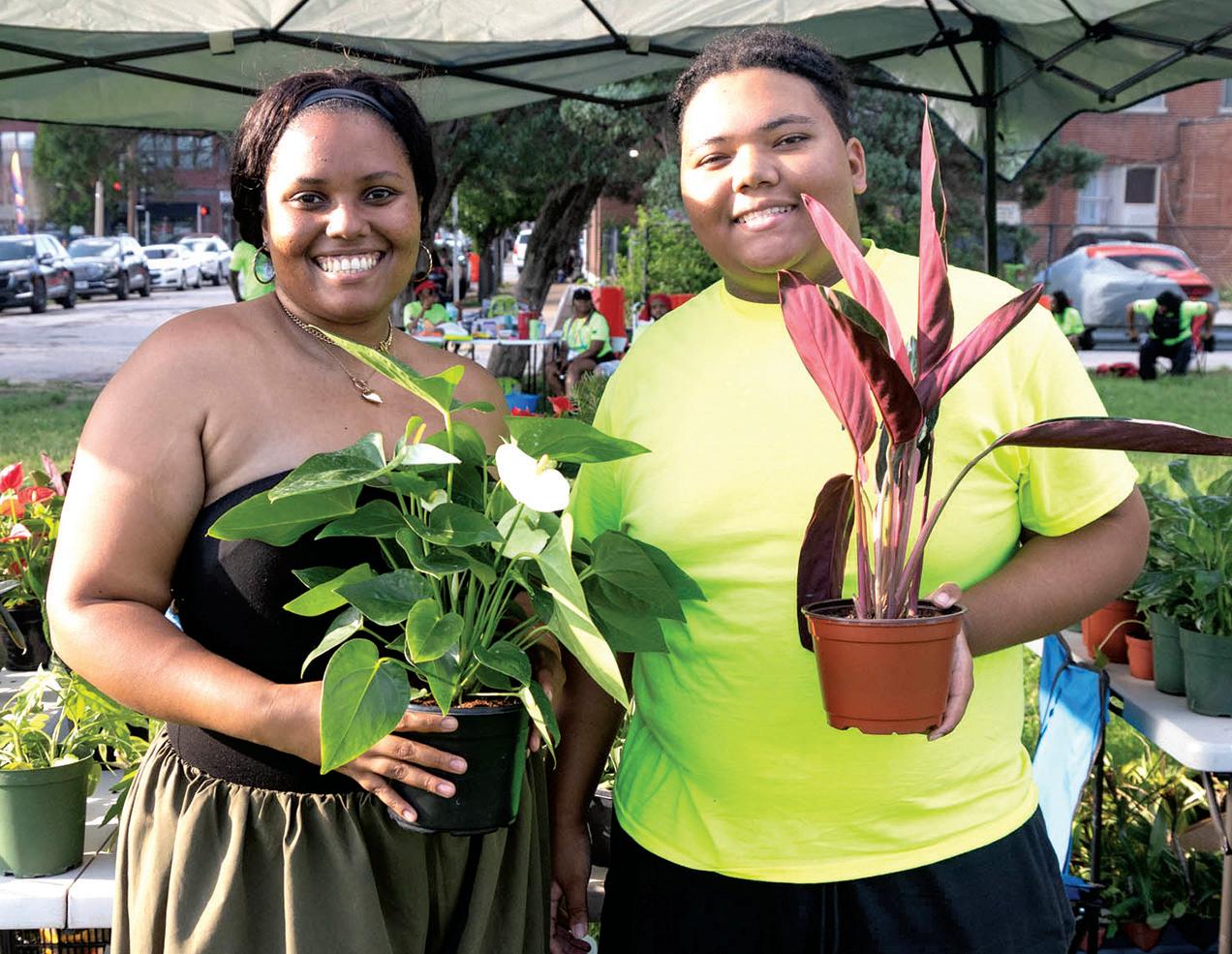
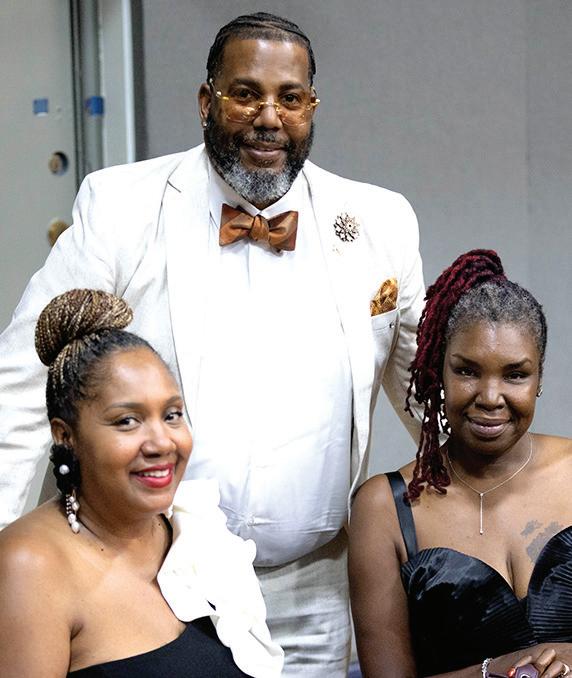
the
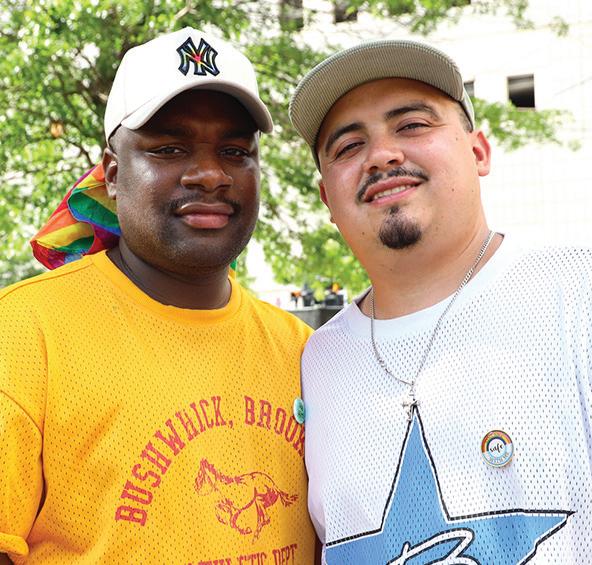
Evolutionary energy with AJ McQueen. Since I’m talking about Wellston, I might as well hip y’all to one of its favorite sons making major moves in music. AJ McQueen has already broken into the mainstream and is on the verge of being the next name to represent for STL hip hop. I’m claiming it. I caught AJ McQueen at Delmar Hall for his “We All Evolve” show last year and made it my business to have his City Winery set on my to do list. I’m thrilled that I checked it off. Between him, KVtheWriter and Dajha Vu gave me enough positive energy Thursday night to carry me through the week! When I tell you AJ has done the self-work to make me want to embark on yet another evolution. I can’t wait until he blows all the way up so I can go ahead and say I told you so!
and its connection to New Orleans. “We feel like cousins in the way that we respect music — the way that we have shaped music.”
band is here, we want to play for the people — the people want to see it. So, let’s do it. If we got that, that’s all we need.’”
The room filled quickly. Condensation gathered on both sides of the windows — rain pressing from the outside and body heat rising from the inside.
“That night still blows my mind,” he said.
“Something special definitely happened.”
When Morton takes the stage in two weeks as part of Music at the Intersection 2026, he said audiences can expect the same energy he brought to Lola back in 2011. “I haven’t lost that hunger,” he said. “I’m still down to pop up the same way we did like that 15 years ago.”
Morton is still a member of Maroon 5, but he has also earned five Grammys as a solo artist. He stopped through St. Louis last month for an intimate listening party for his latest album, “Saturday Night/Sunday Morning,” released June 19. The project features Ferguson native Keyon Harrold and blends the gospel foundation that shaped Morton with the R&B and soul sensibilities he has refined across his career.
“I’m always looking for something new,” Morton said. “I’ve done so many different things that I thought it was finally time for me to bring it all full circle.” He described the album as a space where both sides of his musical identity coexist. “I wanted to create the type of gospel album I would want to hear — and of course the soul album is something I do more often. Just creating the world where both of them live together.”
Morton’s affinity for St. Louis stems from the city’s relationship to music
Harrold is a major part of that connection. Morton met him early in his career. “Erykah Badu was my very first tour out of college,” he said. “Keyon was already there. He was the horn player, and this was me coming in as a keyboard player, guitar player, background singer.” They were the youngest musicians on the tour and quickly formed a bond that has spanned more than 20 years.
“We became tight,” Morton said. “He was like a young legend already — that’s why I gave him the nickname ‘the legendary Keyon Harrold.’ I’ve been calling him that since back then.” He said Harrold’s musicianship and St. Louis roots helped deepen his respect for the city.
“Keyon has been a friend of mine for many, many years,” Morton said. “St. Louis and New Orleans — we speak the same musical language.” Morton will be a featured artist at MATI on Sunday, July 19 at The Fabulous Fox — bringing “Saturday Night/Sunday Morning” to a festival that continues to grow in scale and ambition. Presented by the Kranzberg Arts Foundation, in partnership with the Steward Family Foundation and The Regional Arts Commission (RAC) of St. Louis, MATI returns to the Grand Center Arts District July 17–19 with more than 100 national, regional and St. Louis-based artists. They include The Sovereign, The Big Top, Jazz St. Louis, Sophie’s Artist Lounge and, new for 2026, The Fabulous Fox Theatre.
The festival will also kick off early with a separately ticketed Jon Batiste performance on July 16.
MATI headliners
include Wyclef Jean, Killer Mike, Zapp featuring Tuxedo, Big Freedia, Destin Conrad, Moonchild and LA LOM. Grammywinning percussionist Chris Dave will appear throughout the weekend as ArtistatLarge. MATI’s free daytime conference returns with panels focused on music, art, entrepreneurship and innovation. St. Lunatics members Murphy Lee and Kyjuan will join Eric “Remrod” Mayes for a conversation on creativity and movementbuilding. Mannie Fresh and Juvenile will record a live episode of their Still 400 podcast and participate in an audience Q&A. Additional sessions will cover pitching ideas, creative entrepreneurship, St. Louis’ film industry and more. Partner events will activate Grand Center with Latinx Arts Network’s Barrio celebration at The Key, Mannie Fresh’s DJ set presented by Delux, The Soul of St. Louis legends concert at The Grandel, and Brothers Lazaroff’s album release brunch at Jazz St. Louis. MATI’s free community block party will stretch down Washington Avenue on Friday and Saturday evenings, featuring DJ Spinderella, Natasha Diggs, roller skating, fashion activations, circus performances, visual art installations, local vendors and culinary popups. Morton’s Sunday performance will be one of the festival’s most anticipated moments — a return to a city that has been part of his musical story since before his first Grammy. “I always want to be growing and moving forward,” he said. “Trying to make sure that I do beautiful things and stay intentional about creating and connecting.” Music at the Intersection runs July 17–19. Passes and tickets are available at MATIstl. org and MetroTix.com.
“LeBron knows the Lakers are building for the future, and he also wants to compete for championships.”
— Rich Paul, agent of LeBron James, after his decision to leave the Lakers as a free agent
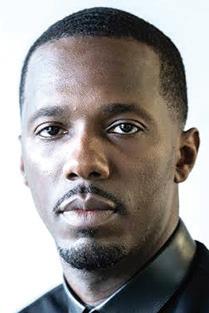
With Alvin A. Reid
Remember when you viewed, read about, or attended a sporting event to escape “the news?”
Now, unfortunately, sports are often “the news.”
Whether it’s lawsuits, athletes being arrested, gambling scandals, or threatened work stoppages, the fun of sports is being drained away.
It’s sad but, it’s a reality.
I’ve shared before that I was an equipment manager for the University of Kansas football team while in college. I received a monthly stipend, overtime pay during preseason, a per diem when we traveled and was eligible for in-state tuition.
athlete’s 19th birthday, whichever comes first. It is just a matter of time until this is challenged in a courtroom, but it is worth the fight.
Several college athletes have successfully sued to remain in college and play a sport not only for wins, but for the money. Ole
Miss quarterback Trinidad Chambliss won an additional year of eligibility by suing the NCAA over a medical waiver.
Learning a valuable lesson, the NCAA wants to end judging athletes on individual cases – likely because it keeps losing. Instead, there is now a blanket policy.
Seeing that
I got more out of the program than many of its players. I’ve always supported compensation for college athletes, and those dollars should not be restricted by presidents, Congress or boosters.
However, the merry-goround of transfers which leads to players playing for four teams in four years or players being eligible for six or seven years and playing until they are in their mid-20s must end.
Last week, the NCAA approved a major change to athlete eligibility. It made the news, but I think was underreported.
Players will now be granted five years of eligibility to be completed within five years of high school graduation or an
African American players are the respective anchors of Power 4 conference college football and basketball, this new rule will have a major impact on Black families.
The education of young Black players must begin now. It should begin with parents and include coaches and administrators.
The clock is ticking faster now on college eligibility and the irresponsible action of moving from team to team for a few dollars or a shallow reason will be more difficult.
The money will still be there, but the mobility will not. Seemingly never-ending college careers are also rightfully coming to a close.
Black athletes should get all they can when they

can, but they must realize this train is coming to a stop sooner rather than later.
The college playbook is being revised. Learning the new plays is now necessary in the Black community.
In addition, my guess is that a review of eligibility standards is also coming soon to college athletics. As more fans and alumni become disgusted with the courtroom drama and million-dollar salaries of some college players, there will be more attention paid to graduation rates, and aca-
demic performance. It’s a new world in college athletics and Black families should be prepared to face a new level of responsibility in educating their young athletes in current and future realities.
The Reid Roundup
As fan balloting for the All-Star game ends on July 2, St. Louis Cardinals outfielder Jordan Walker was not in the top six of National League outfielders. Certainly, NL manager Dave Roberts will name him to the team…
With Earl Austin Jr.
At the halfway point of the season, Chicago White Sox manager Will Venable is American League manager of the year. One of two Black MLB managers, Venable has the White Sox in first place in the AL Central and four games over .500 on June 30…Based on voting, the NL will have a Black starting shortstop in the All-Star Game in Philadelphia. CJ Abrams of the Washington Nationals is first, followed by L.A. Dodgers shortstop Mookie Betts NL manager of the year
Mississippi quarterback Trinidad Chambliss successfully challenged the NCAA in court to gain an additional year of eligibility, helping spur changes to the organization’s eligibility rules.
at the season’s midpoint is Oliver Marmol of the Cardinals. Often called baseball’s worst manager by misguided fans, Marmol has shown his ability to lead, adjust, and win in 2026…Former NBA star John Wall, a longtime Washington Wizard whose career was derailed by injuries, was recently named the Howard University president of basketball operations. Wall says he hopes to become an NBA general manager.
Vashon High and Principia met in a high school basketball game last Friday night at Edwardsville High School in Edwardsville, Illinois. The game took place on June 26, but the crowd size and electric atmosphere in that Metro East gymnasium might have made you think it happened during the excitement of March Madness.
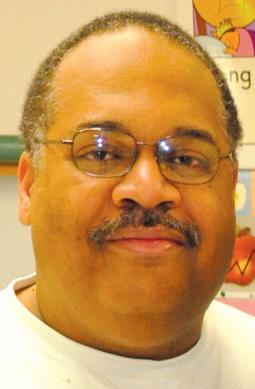
That’s what happens when two St. Louis powerhouse programs take the court for a big showdown. However, this Vashon-Principia dynamic is different from any other we’ve seen in St. Louis. Vashon has sat atop the area basketball food chain for decades. The Wolverines have won six state championships in the past seven years.
Principia, on the other hand, is a newcomer to the scene as a St. Louis power program. In the past three seasons, the Panthers have won a couple of state championships. Principia has also made a name for itself on the national scene, as it’s won multiple games in national tournaments.
The Panthers finished last season in the top 10 of the
national rankings. What added more intrigue to this matchup was that Vashon and Principia had yet to meet on the court. A game scheduled for February 2025 fell through, leaving fans of both schools only to speculate. Just three weeks ago, both teams were in Columbia to play in the Midwest Showcase. Twice, their games were played simultaneously on adjacent courts. I sat between the two courts so I could monitor both games. It was an interesting dynamic because although they played different opponents, it still seemed like they were playing against each other. Both teams finished 4-0 in Columbia.
People asked me if they were going to play each other in Columbia. I told them they wouldn’t, but if you were in Edwardsville, Illinois, on Friday, June 26, you could watch it happen. The schedule for the Edwardsville Live Showcase was already set and the word spread like wildfire. The anticipation for this June game was
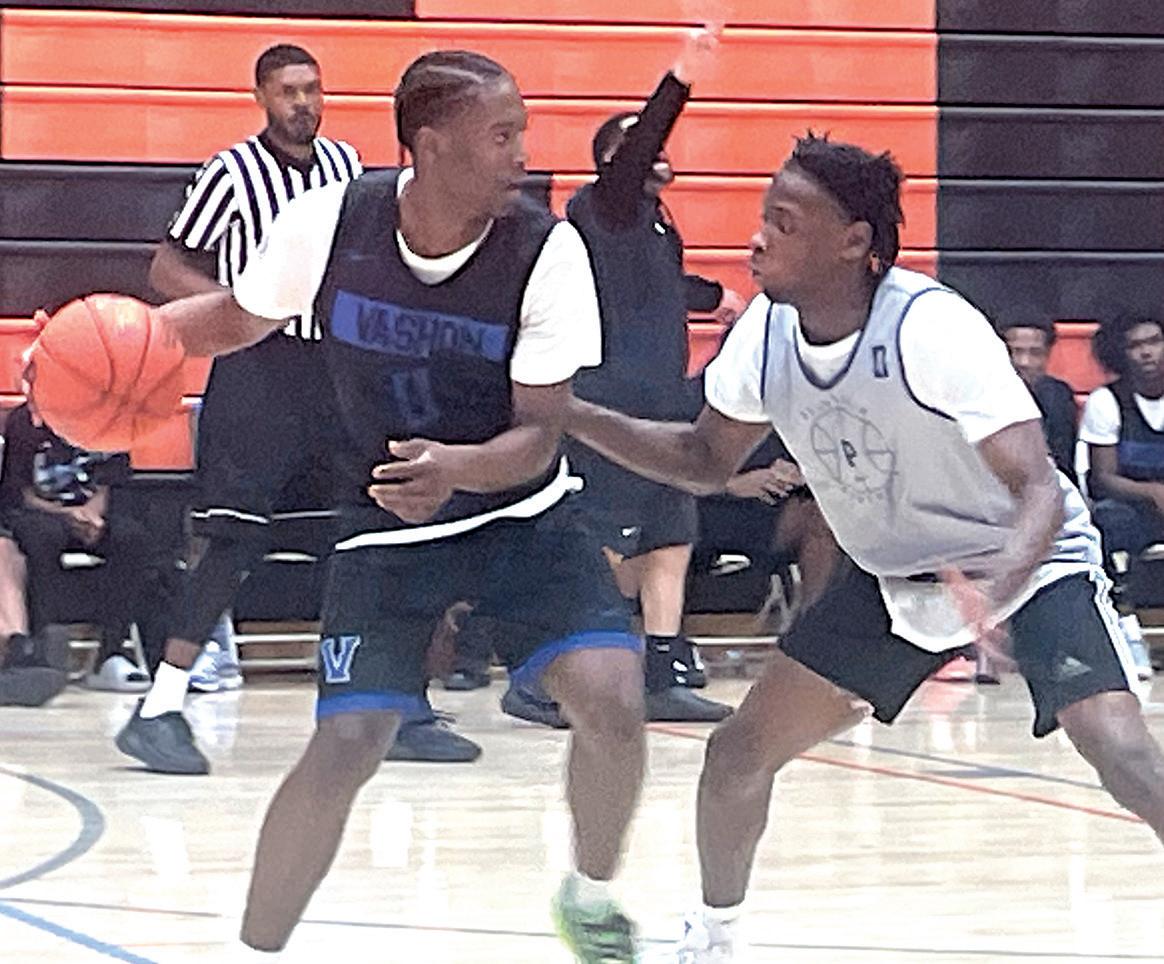
unlike anything I could imagine. The Edwardsville Live Showcase is an outstanding event that featured 75 teams from Missouri and Illinois during the live evaluation period. However, in the minds of many fans, only one game mattered. Fast forward to last Friday and you saw a crowd at Edwardsville unlike any other for a summer event. There were folks lined up five deep around the court. Upstairs in the balcony area, they were lined up five deep around the perimeter and,
in some spots, more than five deep. A huge number of college coaches were also in attendance to watch, as several high-level Division I prospects were on the floor. Teams not scheduled to play during that time were sitting courtside. It was really a sight to see. The game itself proved very exciting with an ending that will be talked about as much as any regular-season or state tournament game well into the future. The big crowd and the atmosphere in the gym were great, and the play
on the court was fierce, showing high-level intensity and competitive fire. Vashon dominated the game from the opening tipoff at both ends of the court. Their speed and quickness were on full display as they built a 20-6 halftime lead.
A pair of Vashon legacy players led the way to this big first-half advantage. Jimmy McKinney III knocked down 3-pointers and scored on drives in the paint. Senior forward Leon Powell Jr. crashed the offensive boards for rebounds and putback baskets. The Wolverines’ lead ballooned to 21 points in the second half as they threatened to blow the game wide open.
Principia, however, had other plans. They showed their championship mettle by mounting a big second-half rally.
The Panthers went to a run-and-jump trapping defense that sped up Vashon and caused turnovers. On offense, they used their huge front line to dominate play in the paint. The trio of 6-foot-9 Sekou Cisse, 6-foot-11 Tyran Frazier and 6-foot9 Majok Ater was starting to impose its will inside.
An offensive tip dunk by Ater cut the lead
to 42-41. Then, senior Kingston Money hit two free throws to give the Panthers a 43-42 lead with 38 seconds left. The Wolverines regained the lead at 44-43 on two free throws by senior forward Jaylan Mitchell with seven seconds left. The Panthers had one final possession, getting the ball to senior guard Gassim Toure, who drove the length of the court and got off a good shot in the lane. The ball bounced off the back of the rim, but out of nowhere came the 6-foot-9 Ater, who swooped in for the putback dunk as time expired to give the Panthers a dramatic 45-44 victory. The crowd erupted. That was a fun basketball game to witness. Neither team was in regular-season form, but both competed extremely hard and gave the fans a great show. Several different groups of people convened in the concourse area and outside the building talking about what they had just witnessed. Although this was a summertime game that will not count toward anyone’s official record, it was an event the St. Louis basketball community will remember for a long time.
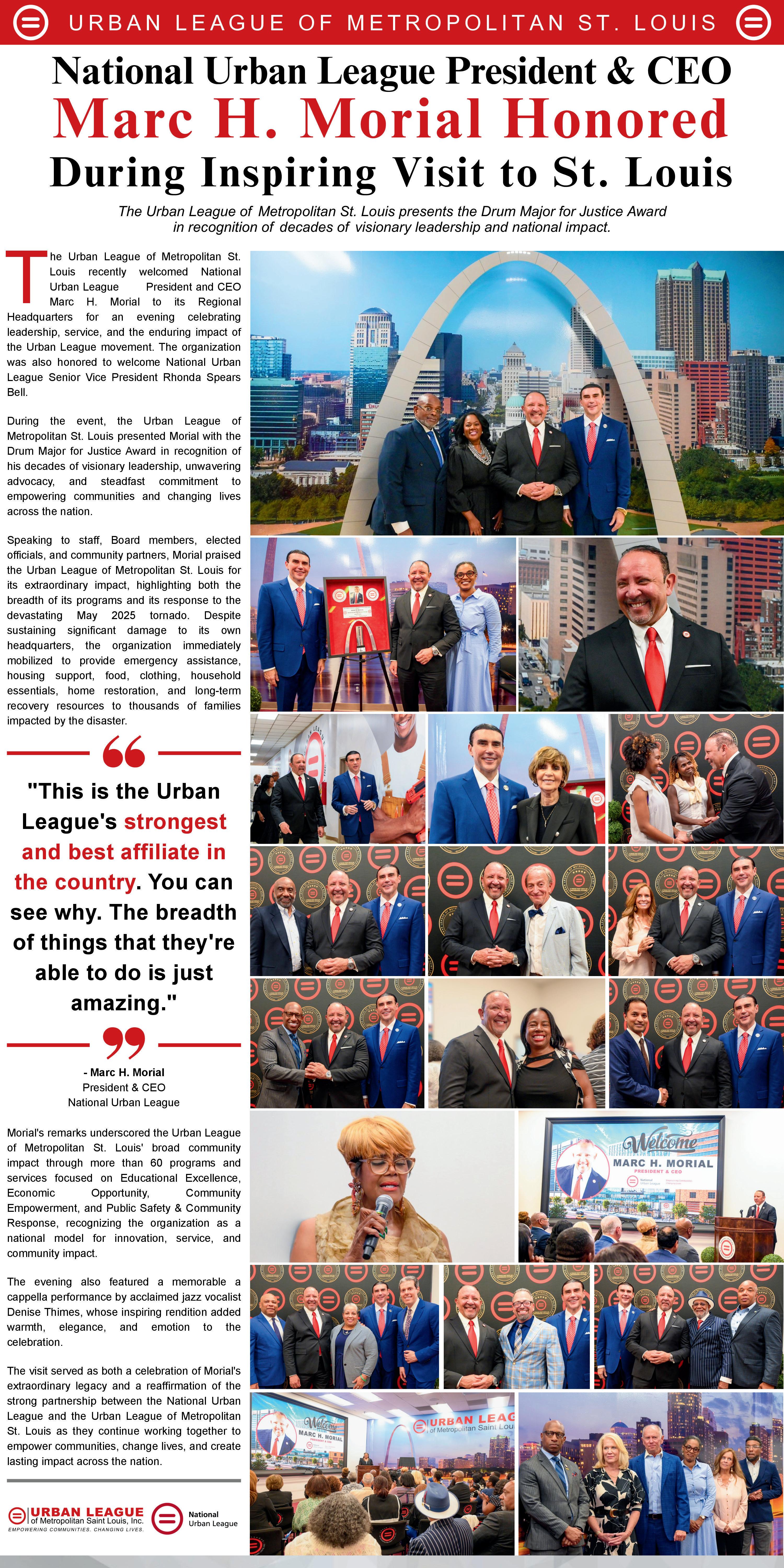

Teyana Taylor was overcome with emotion when her idol Janet Jackson presented the singer and actress with the Icon of the Year honors during the 2026 BET Awards on Sunday, June 28.
As Jackson made her way to the stage for her surprise appearance, Taylor was in tears.

“Teyana Taylor, what a year it’s been for you,” Jackson began. “It seems like only yesterday a rose from Harlem grew out of the concrete and blossomed into our Icon of the
Teyana Taylor
Year.” Jackson said that she has been paying attention to Taylor as she ascended within the entertainment industry.
“[I’ve enjoyed] watching you defy expectations, rewrite the rules, and lead with an unstoppable work ethic,” Jackson said. “Your gifts are from God. They’re God-given, and as long as you remain close to God, your light will forever shine bright.”
Long revealed that she underwent a double lung transplant after
week to live.
about her decade-long battle with Lupus, but only recently disclosed the latest health update.

Last fall, the Grammy-winning R&B singer was on the road as one of the opening acts on Brandy and Monica’s “The Boy is Mine” Tour. She developed pneumonia in November and wound up in the hospital.
“I never should have taken that tour,” Long told “Good Morning America.” “But there was so much going on in my life where I had to do it.” In the hospital, doctors told Long she only had a week to live if she didn’t have the transplant.
“They were kind of like, ‘This is not a joke. You need to make a choice’,” Long said. “‘You can either go to hospice, or you can get these lungs.’”
She had initial hesitation that Long said was rooted in vanity –and concerns about her voice.
“But then I look at my son, and I think about how much more life that I have to live,” Long said. “I can’t sing if I’m not here.”
During an interview with “Swiftologist” that was released on Sunday, Lizzo discussed the poor sales of her latest album [b-word expletive].
The follow up to her critically acclaimed and Grammy Award-winning 2022 album “Special,” only sold 2,649 copies during its first week of its June 5 release.
“There was, like, 24 hours of my life where I based my success and my worth on a number,” Lizzo said. “And I think that was soul-crushing.”
The album also failed to chart on the Billboard 200, according to Rolling Stone.
“I was really stressed and I was really sad for a few days because I was like, ‘Wait a minute. This is some of my best stuff,” Lizzo said. “I want people to find it.’”
She also said that she had to “come to terms with the fact that her connection, musically, with the world is different than it once was” with the release of the record – which is her fifth studio album.
Big Tigger, popular media personality and former host of BET’s “Rap City,” took to his social media to “unequivocally” deny the charges that led to his recent arrest.
The current Atlanta radio host, whose real name is Darian Morgan, was arrested by the Sandy Springs Police Department and booked into the Fulton County jail on June 20. The arrest stemmed from charges related to aggravated assault and child cruelty in a June 9 Incident.
“Because this is an active legal matter, I am limited in what I can say,” Morgan said via Instagram. “What I can say is that I have complete confidence in the facts and in the legal process.” Morgan was released the same day on a $10,000 surety bond. Jail records obtained by CBS News Atlanta show a $9,000
for the aggravated battery charge and a $1,000
posted for the cruelty to children charge.


Asst. Prof. Info. Sys. St. Louis Univ. PhD
Info Sys., Syst. Eng. or closely related. Record collegiate-level teaching on-campus & remote. Full descr.& apply slu.wd5.mywork dayjobs.com/Careers
Bids received by Zion Travelers Community Involvement Association
Bids for Commercial Flat Roof Replacement Bids for A/C Units w/ Warehouse Ceiling Fans
Full Details Available At: ZTCIA.ORG
2026
The Saint Louis Zoo seeks bids from qualified vendors. Bid documents are available as of 7/1/26 on the Saint Louis Zoo website: stlzoo.org/vendor
Hazelwood MO. Fin rep. Inter controls. Res to IRS & state Dep of Rev. Work w/ CPA. Bachelor’s in acc or finance. 2 yrs of acc exp. Res: Artur Express Inc. jolas@arturexpress. com
Notice is hereby given that the Metropolitan St. Louis Sewer District Requests for Quotes, Bids and Proposals are posted online for public download. Please navigate to www.msdprojectclear.org
> Doing Business With Us
> View Bid Opportunities
Metropolitan St. Louis Sewer District is an Equal Opportunity Employer.
The City of Flordell Hills, Missouri, is currently seeking bids from Professional Park Planners to assist in visualizing and revitalizing our community.
We invite you to visit our project sites located at the corner of Jennings Station Road and Greenhaven Drive, 63136, as well as 7001 Brandon Street, 63136.
If you are interested in this opportunity, please submit your bid by 2:00 PM on July 14, 2026. Your submission should include at least two summaries of any prior relevant projects.
Please send all submissions to cityclerk@flordell.com to the attention of Alderwoman Rhonda McQueen.
The Core Collective at Saint Vincent invites qualified contractors to submit bids for ADA Accessibility Upgrades at its historic 100,000-square-foot main building and adjacent outdoor restroom facilities. This project will transform underutilized space into fully inclusive, multi-use community assets and support neighborhood economic and community development. The scope of work includes, but is not limited to:
• Renovation of lower-level indoor restroom facilities and outdoor restroom facilities to meet current Americans with Disabilities Act (ADA) standards;
• Installation of two chair lifts to provide accessible mobility between the gymnasium, main floor, and lower-level recreation and training spaces;
• Replacement of multiple non-compliant interior and exterior doors with ADA-compliant models, including push-handle hardware;
• Associated electrical upgrades necessary to support accessibility improvements and equipment installation.
Contractors may submit bids for the entire project or for individual portions of the work. Sealed bids must be received by July 10, 2026, and may be submitted by email or mail to:
The Core Collective
Attn: Karen Cummings, Chief Operating Officer 7401 Florissant Road St. Louis, MO 63121
Email: kcummings@theccstl.org
Contractors are encouraged to visit the site prior to submitting bids. Building walkthroughs will be available on Wednesdays and Thursdays from 9:00 a.m. to 2:00 p.m. Advance notice is required.
For questions regarding the project or to schedule a site visit, please contact Karen Cummings, Chief Operating Officer, or Elonzo Brock, Director of Maintenance, at 314-261-6011.
The Core Collective reserves the right to reject any or all bids and to waive any informalities in the bidding process.
Bids for Troop C CDL Supersite Upgrade HVAC & Control System, Project No. R2513-01 will be received by FMDC, State of MO, UNTIL 1:30 PM, July 30, 2026. Project information available at: http://oa.mo. gov/facilities
Electronic bids submitted through the Bid Express Online Portal will be received by the Board of Public Service until 1:45 PM, CT, on July 28, 2026, then publicly opened and read. Proposals must be submitted electronically using “Bid Express Online Portal” at https://www.bidexpress.com/businesses/20618/home
Plans and Specifications may be examined online through Bid Express at https://www.bidexpress.com/businesses/20618/home and may be downloaded for free.
A pre-bid conference for all contractors bidding on this project will be held July 7, 2026 at 9:00 a.m. The pre-bid conference will be held in City Hall, 1200 Market Street, Room #301, St. Louis, Missouri 63103.
The project has a DBE goal of 0%, and an On the Job Training (OJT) goal of 0 slot for 1,000 hours.
Bidders shall comply with all applicable City, State and Federal laws (including MBE/WBE policies).
All bidders must regard Federal Executive Order 11246, “Notice of Requirement for Affirmative Action to Ensure Equal Employment Opportunity”, the “Equal Opportunity Clause” and the “Standard Federal Equal Employment Specifications” set forth within and referenced at www.stl-bps.org (Announcements).
East-West Gateway Council of Governments (EWG) is inviting public review and comment on the draft of its updated FY 2027-2030 Transportation Improvement Program (TIP). Bi-state area residents will have the opportunity to engage with this important regional planning document by attending four in-person meetings. The draft TIP includes detailed maps, project statuses, and funding information. The TIP outlines planned or active state and federal transportation projects throughout the region over the next four years. These projects, including roads, bridges, transit, and supporting infrastructure, are aligned with the region’s Long-Range Transportation Plan, also produced by EWG.
Sealed bids for the South Woods Mill Road I-64 to Brooking Park project, St. Louis County Project No. AR-1825, Federal Project No. STBG-9901(687) will be received electronically thru the County’s Vendor Self Service portal at https://stlouiscountymov endors.munisselfservice. com/Vendors/default.aspx, until 2:00 PM on July 22, 2026
Plans and specifications will be available on June 29, 2026 from the St. Louis County Web Site (www.stlouiscounty mo.gov) or by contacting Cross Rhodes Print & Technologies, 2731 South Jefferson Avenue, St. Louis, MO 63118 (314) 678-0087.
DIRECTOR OF PROCUREMENT ST. LOUIS COUNTY
The public comment period begins Wednesday, 7/1/26, and ends Friday, 7/31/26. The draft TIP will also be posted online for comment at www.ewgateway.org on 7/1/26. Residents are encouraged to review the TIP and provide feedback online through EWG’s interactive eTIP database at ewgateway.ecointeractive.com. Comment forms may also be submitted in writing or digitally at scheduled in-person meetings. Comments can further be submitted by email to TIP@ewgateway. org or by mail to East-West Gateway Council of Governments, Attn: TIP, 1 S. Memorial Drive, Ste. 1600, St. Louis, MO 63102. Public input is a vital part of the regional planning process, helping ensure that transportation investments reflect the needs and priorities of local communities. Throughout the comment period, EWG staff will answer questions on the document. Comments or questions must be received or postmarked by midnight, Friday, 7/31/26.
The public is invited to view these documents and supporting materials at a series of open house meetings. Dates and locations are listed below.
• Tuesday, 7/7/26 – Washington, MO City Hall – 405 Jefferson St., Washington, MO 63090, 4:30-6:30 p.m.
• Wednesday, 7/8/26 – Great Rivers Greenway offices at City Foundry – 3745 Foundry Way, Suite 253, St. Louis, MO 63110, 4:30-6:30 p.m.
• Thursday, 7/9/26 –Richmond Heights Community Center8001 Dale Ave., Richmond Heights, MO 63117, 4:30-6:30 p.m.
• Monday, 7/13/26 – Belleville, IL City Hall – 101 S. Illinois St., Belleville, IL 62220, 4:30-6:30 p.m.
• Thursday, 7/16/26 – Lake St. Louis, MO City Hall – 200 Civic Center Dr., Lake St. Louis, MO 63367, 4:30 – 6:30 p.m.
EWG is committed to ensuring that all meetings are both ADA and LEP accessible. To request a reasonable accommodation for the open house meetings please contact EWG’s Title VI Coordinator at least 48 business hours prior to an open house meeting at (314) 421-4220 or (618) 274-2750 or titlevi@ewgateway.org.
The City of St. Louis Department of Human Services is soliciting proposals for the FY27 Family Caregiver and Evidence-Based Disease Prevention & Health Promotion programs. Beginning June 24, 2026, RFP packets will be available via pick-up at: Department of Human Services St. Louis Area Agency on Aging, 1520 Market, Room 4086, St. Louis, MO 63103 Or at: https://www.stlouis-mo.gov/ government/departments/human-services/aging-services/family-caregiver-evidence-based-disease-prevention-health-promotion.cfm
Questions may be referred by email only and must be submitted on or before June 29, 2026, to Anneliese Stoever, Director of the St. Louis Area Agency on Aging at stoevera@stlouis-mo.gov
The RFPs closing date is 4:30 p.m., July 8, 2026.
Great Rivers Greenway is requesting qualifications for Maline Greenway: Ted Jones Trail to West Florissant. Go to www.great riversgreenway.org/ vendors for details and submit by July 22, 2026.
Great Rivers Greenway is requesting qualifications for Preconstruction and Construction Management Service for multiple projects Go to www.greatriv ersgreenway.org/ vendors for details and submit by July 13, 2026.
Bids for New Outdoor Pavilion, Missouri Veterans Home, St. James, MO, Project No. U261001 will be received by FMDC, State of MO, UNTIL 1:30 PM, July 30, 2026. Project information available at: http://oa.mo. gov/facilities
FOR RENT Fully Furnish, $600/mo, Wi-fi, Tv, Fridge, on St. Louis Ave., Btwn Goodfellow/Clara SSI Welcome, Call Tammy 314-397-1542
Bids for REBID
OA-FMDC, State of MO will have the following MO National Guard projects that will be open for public bid through September 2026, subject to available funding. When released, bid documents will be available at https://oa.mo. gov/facilities/ T2411-01 Construct Solar Array, Whiteman AFB ANG Readiness Center, Knob Noster T2526-01 Install New Emergency Generator, Hangar Helicopter AASF, Whiteman AFB ANG Readiness Center, Knob Noster
NORTH PARKING LOT ASPHALT OVERLAY & MILLING RFP 2026
The Saint Louis Zoo seeks bids from qualified vendors. Bid documents are available as of 7/1/26 on the Saint Louis Zoo website: stlzoo.org/vendor
FOR RENT Clean, Furnished, Wash/Dry Util, Free Wi-Fi, $600/ mo, $150/Dep 314-629-5051

ROOMS FOR RENT Upscale, Very Clean, Good heating and cooling. Cable 314-484-3147 WINTER GARDEN

Renovate Interior & Exterior, Readiness Center Building, Project No. T2421-01 will be received by FMDC, State of MO, UNTIL 1:30 PM, July 30, 2026. Project information available at: http://oa.mo. gov/facilities
Bids for New Columbarium Plaza and Pre-Placed Crypts, Project No. U241901 will be received by FMDC,State of MO, UNTIL 1:30 PM, July 21, 2026. Project information available at: http://oa.mo. gov/facilities
Persons with disabilities or who otherwise need assistance should contact the Department of Human Services at ocd@stlouiscountymo.gov or (314) 615-4405 at least 48 hours prior to the public hearing. Residents who are deaf, hard-of-hearing or have a speech disability may contact Relay Missouri at 711.
Translation and interpretation services are available upon request for individuals with limited English proficiency. Requests should be made at least 48 hours prior to the public hearing.
AGENCIES
St. Louis County is the “Lead Agency” for the St. Louis County HOME Consortium (the Consortium). The Consortium is a group of contiguous units of local government that have joined together for the purpose of receiving HOME funds and administering a HOME Program as a single grantee. The members of the Consortium include St. Louis County, Jefferson County, St. Charles County, and the cities of Florissant and O’Fallon.
PURPOSE
The 2026-2030 Draft Consolidated Plan summarizes the five-year community development priorities, goals, and proposed actions of the Consortium.
The Consolidated Plan includes housing and homeless needs assessment, housing market analysis, strategic priorities, and funding strategies that guide the use of the federal formula grant funding administered by the U.S. Department of Housing and Urban Development (HUD). The Plan includes the following HUD-funded programs:
• Community Development Block Grant (CDBG)
• HOME Investment Partnerships (HOME)
• Emergency Solutions Grant (ESG)
The Consolidated Plan provides information on how funding received through the CDBG and ESG programs will be spent in St. Louis County as well as information on how HOME funds will be spent in St. Louis County and in the jurisdictions of the members of the Consortium. This notice is published in accordance with HUD’s citizen participation requirements.
ACTION Notice is hereby given that the Consortium is presently seeking public input on its 2026-2030 Draft Consolidated Plan. The draft Plan may be revised prior to its submission to HUD.
PUBLIC HEARING
A public hearing to engage residents and stakeholders of the Consortium will be held on July 14, 2026, beginning at 5:30 p.m. at the St. Louis County Library— Clark Family Branch, Meeting Room A, at 1640 South Lindbergh Boulevard, St. Louis, MO 63131. This meeting location is physically accessible to individuals with disabilities.
COMMENT PERIOD
Now that the 2026-2030 Draft Consolidated Plan is published, there will be a 30-day comment period to allow residents and stakeholders additional opportunity to provide input; July 6, 2026, through August 4, 2026.
Comments concerning the 2026-2030 Draft Consolidated Plan can be made during the Public Hearing. Written comments will also be accepted until 4:00 p.m. on August 4, 2026, and may be submitted via email to ocd@stlouiscountymo.gov or mailed to ATTN: 2026-2030 Draft Consolidated Plan, St. Louis County Office of Community Development, 500 Northwest Plaza Drive, Suite 801, St. Ann, MO 63074.
All comments received during the public comment period will be reviewed and considered prior to submission of the Consolidated Plan to HUD. The County anticipates submitting the final 2026-2030 Consolidated Plan to HUD in August 2026. The 2026-2030 Draft Consolidated Plan is available online at: https://stlouiscountymo.gov/st-louis-county-departments/human-services/ community-development/ Physical copies may be requested by calling 314-615-4405 EQUAL OPPORTUNITY EMPLOYER


By Joseph Williams and Rev. Dorothy S. Boulware Word In Black
At offering time in many churches, worshippers often hear that God loves a cheerful giver.
A new national study suggests that while generosity remains strong among Christians, there is a significant gap between believers’ intentions and their actual giving habits.
Researchers with the faith-based giving platform Givelify found that while 95% of Christian donors surveyed said they aspire to give consistently, only about 30% currently do. Even so, despite economic uncertainty, most Christians remain optimistic about supporting their churches financially.
The data, released last week, are part of Givelify’s latest research on faith-based generosity and giving behavior. Researchers say the findings could help churches better understand donor motivations while potentially unlocking billions of dollars in additional support for congregations and community ministries.
Financial challenges
“What we’re seeing here is that it’s the consistency that is not matching the aspirations of people,” said Wale Mafolasire, founder and chief executive officer of Givelify. “The intention is there, but when we look at what
the data shows, only 30% of the people are actually doing what they intend to do.”
The findings are especially relevant to the Black church, which has long played an expanded role in addressing food insecurity, housing instability, education and community development. At the same time, declining membership and changing attitudes toward tithing among younger generations continue to create financial challenges.
The study surveyed nearly 2,000 Christian donors and almost 900 church leaders, including pastors, associate pastors and financial administrators. Researchers said the sample included strong representation from Black churches and Black donors.
Generosity ‘alive and well’
Researchers estimate that even modest improvements in giving consistency could generate up to $30 billion in additional annual giving nationwide, or roughly $50,000 more per church each year. Fifty-seven percent of churches reported increased year-over-year giving, and most expect giving to continue growing in 2026.
Giving also continues to move online, with 81% of donors using digital or mobile platforms.
“Generosity is alive and well,” Mafolasire said.
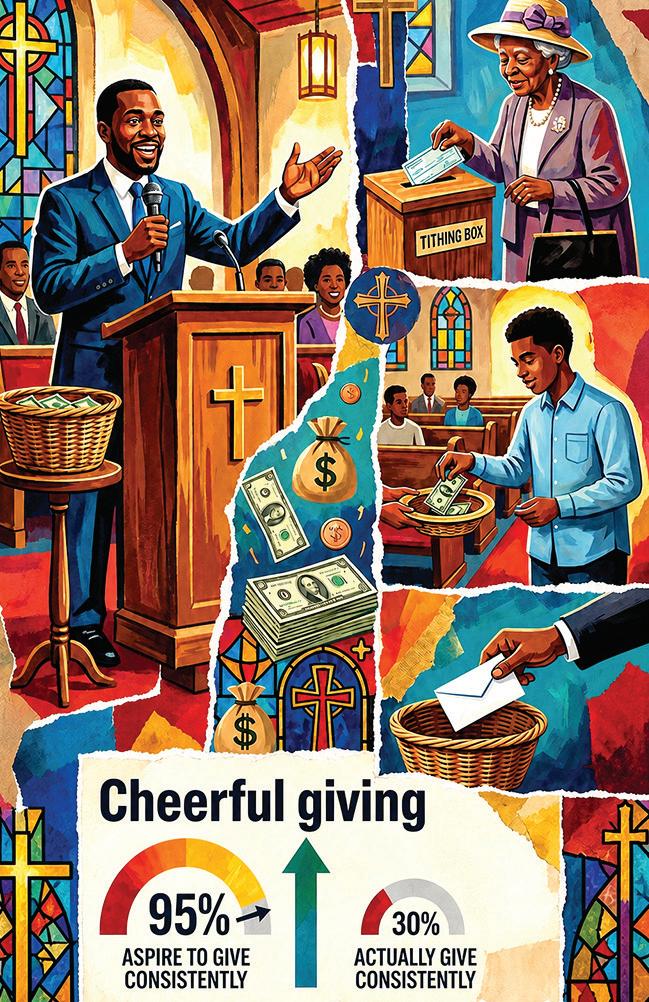
“Pastors are optimistic about it, churchgoers are optimistic about it, looking into the future.”
Consistency defined
The study defines a “consistent giver” as someone who contributes at least once a month for at least nine months of the year, rather than some-

on Faith & Giving said the definition emerged from donor responses rather than researchers’ assumptions.
“It wasn’t something that we had preconceived and came in there with,” King said. “The clear definition sort of bubbled up from what the data was saying back to us.”
‘Life happens’
Researchers said donors wanted a definition that recognized life’s inevitable interruptions.
“Life happens,” Mafolasire said. “The identity of someone who has been doing this thing consistently—they do not want to lose that identity because life happened one or more times in a year.”
giving.
“We saw that pastors equated consistent giving to automatic recurring giving,” Mafolasire said. “The data shows us that even with recurring givers, the rate of consistency is still 30%.”
Only about 17% of donors preferred a “set it and forget it” approach through automatic recurring gifts.
Giving is good
Researchers identified four donor profiles to help churches tailor stewardship efforts.
one who simply tithes or makes recurring donations.
“We’re introducing a new definition for consistent giving so that everybody can be on the same page,” Mafolasire said.
“We’re defining that as giving one or more times a month, or most months in a year.”
David King of Indiana University’s Lake Institute
The study also found a disconnect between church leaders and donor behavior. While actual consistency averaged about 30%, pastors estimated that roughly 54% of their congregations gave consistently, a gap researchers attributed to pastoral optimism and limited visibility into individual giving patterns.
Automatic or intentional
Researchers also challenged assumptions about recurring electronic giving. Although many church leaders equate automatic donations with consistent stewardship, the study found recurring gifts alone do not guarantee regular
The largest group, “steady givers,” accounted for about 27% of donors and consistently supported their churches. Another 21% were “awakening givers,” who wanted to give consistently but cited financial constraints.
Researchers also identified “devoted givers,” who regularly contributed financially and through volunteer service.
“We find that their level of spirituality tends to be at the highest of all four groups,” Mafolasire said.
King said churches should emphasize encouragement over pressure, helping people see generosity as part of spiritual growth rather than simply a financial obligation.
“Giving is not only good for the church and the church’s budget,” King said. “It’s good for the giver.”