


By Chris King Of The St. Louis American
ArchCity Defenders and co-counsel
filed a suit in federal court on Monday, January 28 that seeks to undo St. Louis’ current system of pretrial detention, which they claim “violates plaintiffs’ Fourteenth Amendment rights to equal protection and due process through a policy or practice that jails individuals based on their poverty.” The suit, which they hope to have certified as a class action, names most major players in the city’s criminal justice system as defendants: the city itself, sheriff, commissioner of corrections, and five judges of the 22nd Judicial Circuit. The named plaintiffs are three black men and one white man, all currently being held by the city in the Workhouse because they could not afford to post cash bond. Included as co-counsel for the plaintiffs are
n “This is illegal, unjust and the city – and the nation – needs to be put on notice that lives are at stake.”
– Blake Strode, executive director of ArchCity Defenders
the Advancement Project National Office, Civil Rights Corps, and Georgetown Law’s Institute for Constitutional Advocacy and Protection. Though the suit calls for the named plaintiffs’ immediate release on grounds that their detention is unconstitutional, it goes much further in asking the federal court to

on Tuesday, January 29.
Privacy advocate says city’s Real Time Crime Center is ‘like a spy agency’
By Rebecca Rivas For The St. Louis American
Part two of a series based on a six-month joint-investigation by The St. Louis American and Type Investigations. Winston Calvert, then St. Louis’ city counselor,
Union of Missouri’s concerns about public privacy and the city’s new surveillance capacity in its Real Time Crime Center (RTCC), and set up a meeting with city officials and the ACLU in April 2015. Present were the city’s Director of Operations
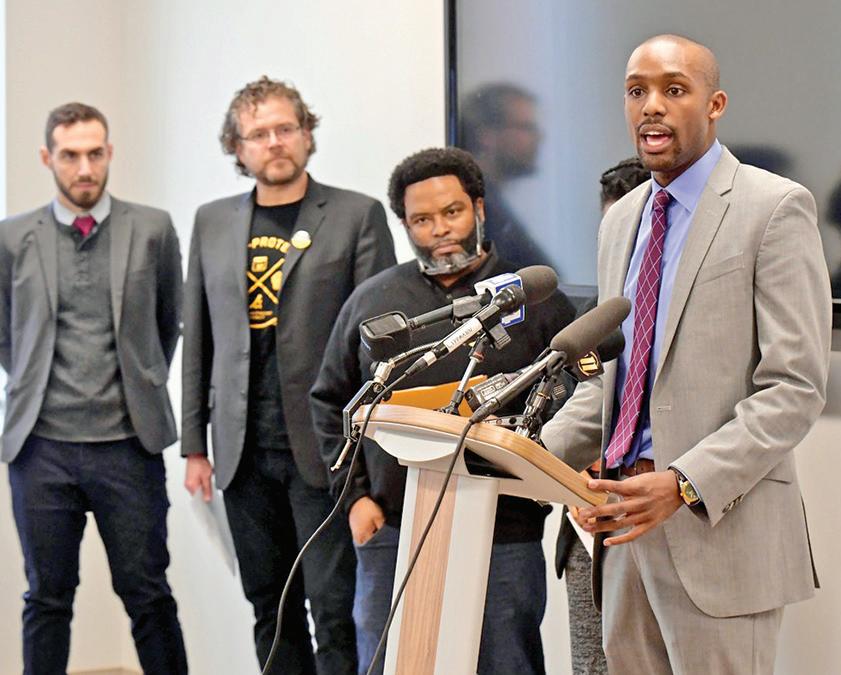
Blake Strode, executive director, ArchCity Defenders, outlined a federal suit his firm filed with co-counsel challenging St. Louis and the 22nd Judicial Circuit’s system of pretrial detention on Monday, January 28 at the Deaconess Center for Child Well-Being. Listening were co-counsel Seth Wayne of Georgetown Law’s Institute for Constitutional Advocacy and Protection, co-counsel Thomas Harvey of the Advancement Project National Office and Montague Simmons of the Close the Workhouse Campaign.
Collecting signatures for statewide ballot petition to effect change in 2020
By Jason Rosenbaum Of St. Louis Public Radio
A group known as Better Together is recommending an end to the “Great Divorce” between St. Louis and St. Louis County — a move that would dramatically change how the region’s residents are represented and how they receive services. Better Together is proposing an ambitious plan that would be decided through a statewide vote.
Proponents contend it will scrape away layers of local government that has been holding the St. Louis region back. Opponents believe the plan will create an unwieldy and large centralized government that could be implemented against the will of city and county residents.
Better Together, which formed in 2013 to study the possibility of a city-county merger, released its recommended proposal on Monday, January
See MERGER, A7

On May 23, the RTCC’s commander Lt. Brent Feig gave a 30-minute tour to about a dozen members of the local media. Feig touted their success in achieving the center’s goals – use of the high-definition video for quick facial recognition and quick capture of criminals and providing more “situational awareness” for officers on the street.


Grammy winning R&B singer James Ingram passes at 66
Famed actress and choreographer Debbie Allen took to her social media to inform the world that Grammy Award winning singer James Ingram had passed at the age of 66.
Ingram died following a battle with brain cancer.
“I have lost my dearest friend and creative partner James Ingram to the Celestial Choir,” his dear friend Allen said via Twitter. ” He will always be cherished, loved and remembered for his genius, his love of family and his humanity. I am blessed to have been so close. We will forever speak his name.”
Ingram’s instantly identifiable tenor vocals could be heard on some of the biggest R&B hits of the 1980s. Ingram had charted
eight Top 40 hits on the U.S. Billboard Hot 100 charts from the early 1980s through the early 1990s – including “Baby Come To Me” (a duet with Patti Austin), “One Hundred Ways” and “I Don’t Have The Heart.”
Nelly wants anonymous sexual misconduct accuser to be revealed
According to celebrity legal news site is hoping to get the woman who anonymously filed a sexual misconduct lawsuit against him last year to make herself known.
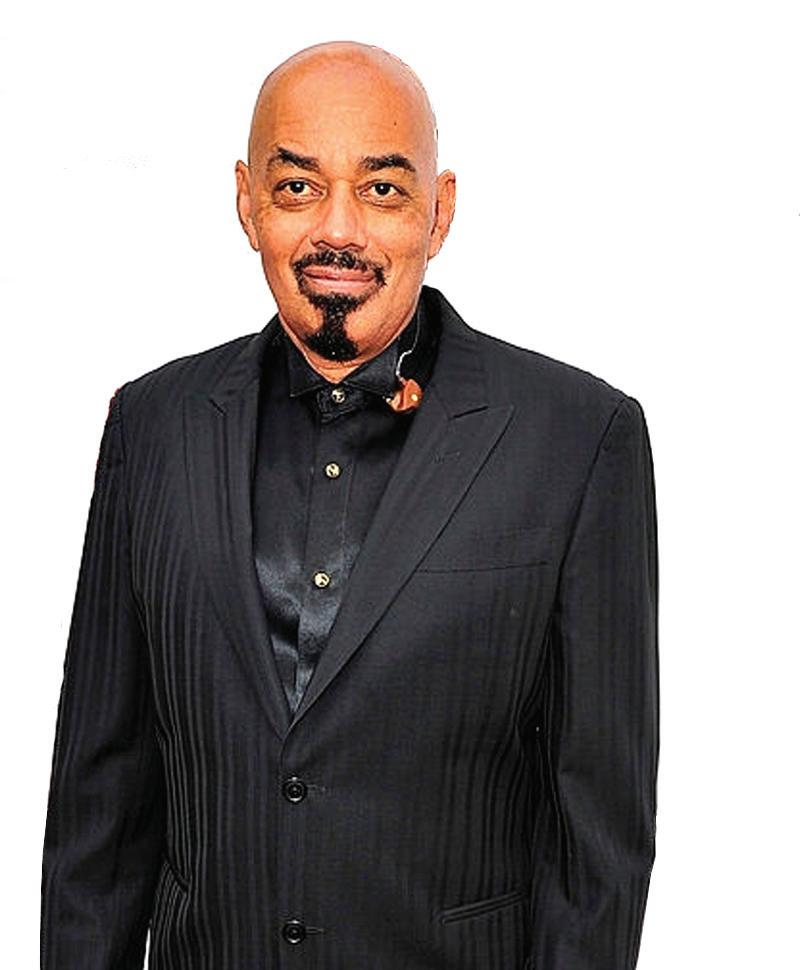
“On January 24, Nelly filed court docs seeking for a Missouri sexual assault lawsuit to be dismissed stating, ‘Without first petitioning the Court to do so, Plaintiff filed her complaint anonymously, standing behind that anonymity as she makes serious allegations that the Complaint makes clear that she is aware will receive public attention,’” The Blast said. “The rapper claims the ‘Jane Doe’ has previously leveled similar allegations in connection with other legal proceedings, and the hip-hop star believes
the woman should not be allowed to avoid public scrutiny by hiding ‘behind a cloak of anonymity.’
According to TMZ.com, the FBI is investigating whether or not R. Kelly transported a minor across state lines for illegal purposes.
“R. Kelly allegedly arranged a coast-tocoast trip for Azriel Clary when she was underage, and the FBI is now looking into the trip to see if R. Kelly committed a federal crime,” TMZ. com said. “Azriel, one of the women featured in “Surviving R. Kelly,” was flown from Palm Springs to Phoenix to Orlando on May 25, 2015.
A source connected to Azriel’s family told TMZ the flights were arranged by a woman who was R. Kelly’s assistant at the time.
signed note from Azriel’s mom gave Kelly’s assistant consent to care for Azriel.’
Jussie Smollett violently attacked in Chicago
Chicago police are saying that an early morning attack on ‘Empire’ co-star Jussie Smollett is a “possible hate crime.”
According to TMZ, the actor arrived in Chicago from New York and went to a Subway. The celebrity news and gossip site said that when he walked out, someone yelled, “Aren’t you that [gay slur] ‘Empire’ [n-word expletive].”
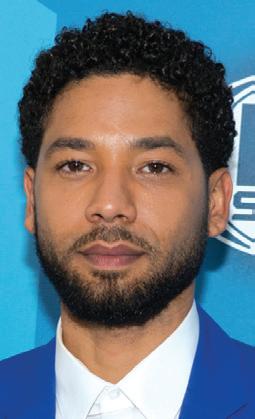
Jussie Smollett
“Here’s why it’s potentially a big deal. Azriel was only 17 at that time and that means R. Kelly could have violated the Mann Act – the federal act that makes it illegal to transport a minor across state lines for purposes of sex, debauchery or prostitution.”
TMZ says that the FBI learned about the flights within the last week.
“R. Kelly sources tell us the singer believes he did nothing wrong because he claims a

The offenders physically attacked Smollett and “poured an unknown chemical substance on the victim,” police told CNN.
According to police, one of Smollett’s alleged attackers also put a rope around his neck before both fled the scene. Smollett reportedly took himself to Northwestern Hospital and “is in good condition.”
The police issued a statement regarding the attack, saying, “given the severity of the allegations, we are taking this investigation very seriously and treating it as a possible hate crime.”
Smollett has starred on Fox’s “Empire” since 2015 as Jamal Lyons. Like his character, Smollett identifies as gay.
Sources: TMZ.com, CNN.com, The Blast, Twitter
for our Black History
Feb. 7th28th


By Joseph Smart
For The St. Louis American
Part of a year-long series, presented by The American and the Brown School at Washington University, about changing the narratives and outcomes of young black males in St. Louis.
Growing up in Kinloch, I was exposed to a lot of positive things due to the type of family that I had. I was also experiencing a bunch of negative things throughout the city because of some of the friends I kept around.
Church was an important part of my upbringing. My mother made us go to church a lot, so having a right mind and a good heart was always a part of who I was. Although church was as long as ever and I never wanted to go, I still give credit to God for how my life turned out.
Outside of going to church and school, I was basically a homebody. I rarely could go anywhere with my friends. When I did go outside, I would always have to stay in the front of the house. I thought that my mother was real strict. It wasn’t until I was older that I realized she was just trying to protect me and keep me from being exposed to everything negative that was going on.
Once I aged and started to move around more, I would start to experience more negative things happening to the people who were close to me and the people who I loved.
As a black male teen, I already had a target on my back, whether from the police or people I didn’t get along with, but I always watched my back and moved with the people I trusted the most.
My friends always tried to get me to go places I couldn’t go. Most of the times when

the people I hung out with would go out they would do something real stupid that would get them in a lot of trouble. I was scared of trouble because I knew that with trouble there would be consequences, and those consequences I did not want a part of. I tried my best to stay out of trouble.
Going into my freshman year of high school, I was dealing with a lot of sadness and anger because one of my cousins had been shot and killed. I was very hurt because his death caught us off-guard. We didn’t expect him to go like that and so instant.
Before my cousin passed away, he came to church with a whole new look. He had cut his dreds off and walked with more confidence. He still had that big smile on his face. He came in the church and rededicated his life to the Lord. We had rarely seen him in church and never thought he would cut his hair, so it was kind of like he knew his time to leave us was soon approaching.
Following the death of my cousin was the killing of Mike Brown by Darren Wilson, a police officer with the Ferguson Police Department. Mike Brown also had a target on his back. The death of Mike Brown sparked world controversy, bringing different celebrities and civil rights activists like Al Sharpton, Jesse Jackson, J. Cole, and others to Ferguson. His death would also bring out the negativity in people, and they started to loot and burn down local businesses that the community needed. I lived only a couple streets over from the scene and where they destroyed a bunch of things in the community. So those nights were very rough for my family and the people in my community. School was
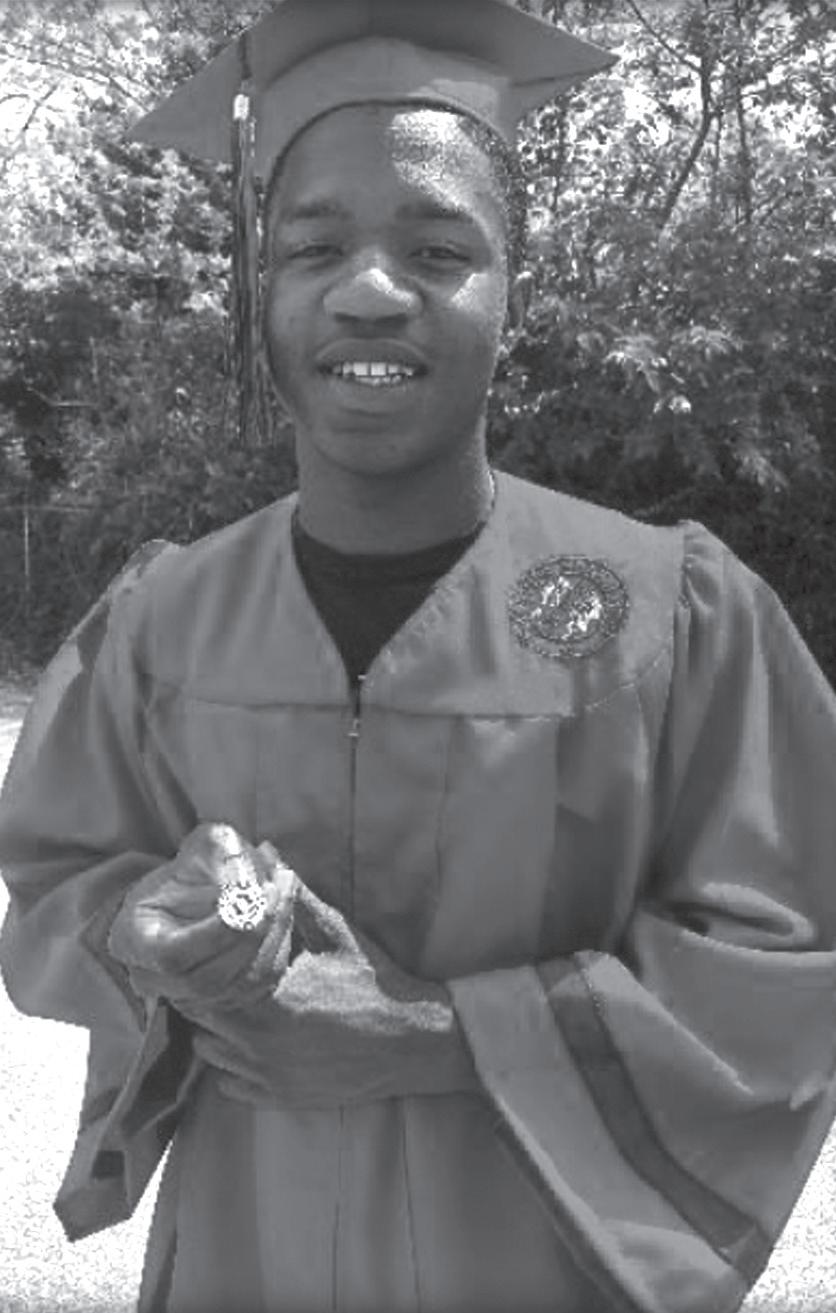
cancelled for a week or two, and the first day of school was pushed back to the end of August 2014. The summer after my freshman year of high school I was informed about the Boys & Girls Club of Greater St. Louis. I never knew that these people would change my life forever. They made me see life through




a whole different perspective. They inspired me to go to school and try to be something in life.
In high school, I was an excellent track athlete and became the captain of the McCluer Comet track team. Little did I know I would fall in love with the sport and become very addicted to it as if it were
n That really took a toll on me, because we had watched each other grow together and just knew that our future lives would be successful.
my drug. That sport pushed me through high school and kept me out of a lot of trouble.
But close to the end of my junior year, in the middle of my third track season, my family faced another tragedy. My cousin Darion, who was only 12 days older than me, was in a car accident 10 days before his 17th birthday. The way I found out was so crazy. I watched a Facebook live video of car crash, and I thought to myself that looked like the highway right behind my grandmother’s house. So I clicked on the video and said, “Momma, this look like Darion,” real loud. We watched for a while and found out it was him and called around to get some information on what happened.
Darion was pronounced dead the next day at the hospital. That really took a toll on me, because we had watched
each other grow together and just knew that our future lives would be successful. Throughout the rest of my high school career, everything I did I did it for him.
That summer after my senior year I lost a lot of friends, whether they would walk out of my life or be taken from me. So I had to watch my back, because I knew I was destined to be successful. I am currently enrolled at Alabama State University. I am majoring in Business Management. I am not yet on the track team, but I do plan to join later and make the best of it. As a teen I always wanted to run in the Olympics or go back and coach for my old team, so I may try and make track a fulltime commitment. Graduating college and getting a degree is definitely a part of my future. After graduation I would love to continue settling down with the love of my life and later get married and have a family.
The Boys & Girls Club of Greater St. Louis play a big part in my journey. They taught me how to help someone in need. Success requires a plan: “If you fail to plan, you plan to fail.” So, beware of the roadblocks in the way and find a way through it. Joseph Smart is a student at Alabama State University and an alumnus of the Boys and Girls Club of Greater St. Louis. “Homegrown Black Males” is a partnership between HomeGrown STL at the Brown School of Social Work at Washington University in St. Louis and The St. Louis American, edited by Sean Joe, Benjamin E. Youngdahl Professor and associate dean at the Brown School, and Chris King, managing editor of The American, in memory of Michael Brown.




For us, the choice for president of the St. Louis Board of Aldermen comes down to two viable options, Jamilah Nasheed or the incumbent, and not simply because Nasheed and Lewis Reed are black, but because our mission is to strengthen St. Louis by empowering its black community.
The other candidate, Megan Ellyia Green, who is not black, is a candidate with an appealing progressive policy platform, much of which, if enacted into law, would help empower the black community and strengthen a racially divided St. Louis. However, Green has not yet demonstrated the necessary skill set to successfully maneuver in a complex political role like the aldermanic presidency. Moreover, she has not been an especially successful and impactful alderman. Her politics are to the left of most city residents, which are largely to the left of the board majority. We wish St. Louis and (especially) the city’s legislative body were more progressive, but wishing is not an effective political strategy and we do not believe Green would be the most effective aldermanic president among the three candidates. Further, her campaign is woefully underfunded. Her progressive advocacy on the board would, however, be strengthened by the election of a more progressive aldermanic president with more respect for her and her advocacy than Reed has shown.
We have endorsed Lewis Reed in the past for two of the city’s three most impactful citywide positions. Indeed, our early and strong support for Reed in his first campaign for aldermanic president – when he was a little-known 6th Ward alderman from Joliet, Illinois – was seen as vital to his initial election to his current position. It would be hypocritical and unfair of us to turn on Reed at this point and dismiss his accomplishments. Indeed, we offered him a front-page commentary space that he used to tout his accomplishments as board president. However, we feel he has held one of the city’s three most powerful citywide positions for more than a decade, and St. Louis should have much more to show for his leadership after 11 years to warrant giving him four more years in this position.
Voters must consider the position of aldermanic president strategically as one of the three seats on the city’s chief fiscal body, the Board of Estimate and Apportionment (E and A), that also includes the mayor and comptroller. Reed’s position as aldermanic president has given E and A an African-American majority for more than a decade, and yet the city’s black community concerns have not been forcefully addressed. Clearly Reed and Comptroller Darlene Green have never evolved any shared vision of how to improve conditions in the black community and, in so doing, strengthen the city overall. There is a need for the city to move more aggressively to enact policies that help realize our community’s vast, underutilized
potential. Our community needs and deserves more forward-looking change.
We believe Nasheed would provide that change agency, not only at the Board of Aldermen but also on the Board of E and A. She has had some significant success in the state Legislature for a minority in a super-minority party. She has shown keen political skill working with the Republicans who dominate both houses of the Legislature, which she will need at the Board of Aldermen with its legacy of many dominant, entrenched, inept Democrats. Her policy stands in the Legislature, as Reed points out, have not always been progressive. While we would not defend all of her past policy positions and actions, she has shown an understanding of how to engage in transactional politics that benefit her community when the right deal is on the table. Moreover, we believe she has evolved as a person and as a more consistently progressive legislator over the years. Finally, we are certain that as aldermanic president she will face the unrelenting scrutiny that will make it politically impossible for her to act against the will of her community with impunity.
Importantly, we value Nasheed, in a large degree, because of her personal evolution, from a street-tough North City kid to a sometimesreckless state legislator to a more mature and visionary state senator who represents her community ably and forcefully. That vision and forcefulness is something that city politics is lacking in its senior leadership positions. Consider all of the pain and suffering in our community since the election of Reed (and, before him, the comptroller) to two of our city’s most powerful public offices. Think of all of the acts done, without pushback, that ignore our community’s interests in those years. How many times have Reed (and, before him, the comptroller) stood up and seized the bully pulpits of these powerful positions to call attention to our pain and to demand change? It has happened too infrequently. While we believe that both are decent individuals, we feel that they have been much too compliant to a stagnant political status quo.
The city is experiencing an inflection period with some encouraging signs of significant economic growth and a more prosperous future, but the African-American community is suffering and is ill-prepared to benefit from any future economic upturn. We need an outspoken, engaged leader from our community to stand up, call attention to that pain, demand inclusive change, and then do the necessary, often unpleasant, hard political work to effect that change. We believe only one candidate for aldermanic president on the March 5 ballot has this requisite combination of courage, energy and political skill. Nasheed will be a bold advocate rather than a compliant office holder. That is why we strongly endorse JAMILAH NASHEED FOR PRESIDENT OF THE BOARD OF ALDERMEN.
As I See It - A Forum for Community
By Nicole Galloway
For The St. Louis American
There is nothing more American than the right of citizens to petition their government.
In recent years, voters across Missouri have gone to the ballot box to consider changes to the state’s laws and Constitution. By convincing margins, they voted in favor of campaign contribution limits, limiting new taxes on services, curtailing the culture of lobbyist gifts in Jefferson City, increasing the minimum wage, and repealing a rightto-work provision enacted by the legislature and Gov. Eric Greitens.
Now, only a few months after the last election, some politicians in Jefferson City are declaring it their first order of business to make it harder for citizens to have their voice heard at the ballot box. I don’t share the priority of politicians undermining the vote of the people. Legislators are elected as the voters’ representatives to pass laws and pass a yearly budget. But the state Constitution is clear on the ability of citizens to make changes themselves: “The people reserve power to propose and enact or reject laws and amendments to the constitution by the initiative, independent of the general assembly, and also reserve power to approve or reject by referendum any act of the general assembly…” The current initiative petition process is not an easy
bar to clear. Before an issue reaches the ballot, it’s already gone through several steps that include review by three statewide elected officials, a public comment period, and the writing of a ballot title comprising a ballot summary and a fiscal note summary. Only then can petition organizers proceed with gathering the tens of thousands of signatures from registered voters throughout the state needed to be on the ballot. As state auditor, I have a significant role in the initiative petition process. My office reviews every proposed petition sent to us by the secretary of state and prepares the fiscal note summary that estimates the cost or savings, if any, to taxpayers. Those steps – done under strict deadlines set by law –take time and careful review. But we carry them out with due diligence hundreds of times each year. The people of Missouri have entrusted the auditor with this responsibility, just as they have entrusted responsibility in the secretary of state and the attorney general to carry out their roles in the initiative petition process professionally and without complaint. Legislators have not been
By Karishma Furtado and David Dwight IV For The
American
St. Louis
What gets measured gets managed. That’s the conventional wisdom, courtesy of the world of business management. We like to modify it slightly for broader applicability: what’s measured gets purposefully (and hopefully effectively) changed.
For this reason, we should celebrate the Equity Indicators tool as a crucial step down the path towards racial equity, a state in which life outcomes can no longer be predicted by race.
Achieving racial equity will require a great deal of intentional, systemic change. With the Equity Indicators we have more clarity on where that change needs to take place and how we will know whether our efforts are moving the needle.
The road that led to the Equity Indicators was neither short nor smooth. But the process that yielded it is part of why we believe it will be more useful than other regional measurement initiatives. While many people used the word “equity,” few could articulate what that would practically look like in their work or for St. Louis residents, and many sectors lacked a shared way to measure that change.
Producing the final dashboard took dozens of meetings by the project manager, Cristina Garmendia, with stakeholders and government officials to do the difficult and messy work of building consensus and commitment to a shared vision. Without these meetings, the impact of the tool would have been very different – even if on the surface the indicators looked exactly the same. Imagine that Garmendia had gone into her office, shut the door, and pulled together a tool comprised of the same 72 indicators without input from anyone else. It would have been much easier and far faster. It also would have been less likely to be used or to
endure. Process is as important a product as the end goal, especially when the value of this tool lies in our ongoing willingness to be vulnerable, invite scrutiny, and lean into discomfort.
Another example of the radically collaborative nature of the Equity Indicators lies in the work, led by the United Way, to expand the tool to the regional level this spring. This involved the United Way making the difficult decision to redirect similar work that was already underway to be in better regional alignment. They understood that, while it would be painful to pause and even take a few steps back on their progress, it would ultimately yield a much stronger, regionally impactful product.
The Equity Indicators tool isn’t perfect. Numbers never are – we should keep that in mind when we’re trying to determine how to use them. These numbers are a tool we can leverage to gain clarity on where our inequities lie and to catalyze solutionsoriented conversations. They are a reference point to change systems and policies and to help us understand where and whether we’re making progress.
But the numbers are only a tool. Like with any tool, if they are not used well, it won’t really matter how sophisticated they are.
shy about exercising their power to put their own issues on the ballot in the past few years. Yet, I’m not aware of any movement by the General Assembly to reduce its own authority in this area.
Many of the recent issues placed on the ballot by citizens using the initiative process were ones voters desired but the General Assembly failed to address. Perhaps not surprisingly, these included measures on campaign contribution limits and cleaning up corruption in Jefferson City.
Look at the map of Missouri in the last primary and general elections. By and large, initiative petition measures had convincing majorities in counties that were rural, urban and suburban, Republican and Democratic.
To put it in the plain words of the secretary of state’s website: “the initiative petition process gives Missouri citizens the opportunity to directly participate in our democracy.”
But some politicians want to give Missourians less of a voice in their government.
So here’s the question for politicians who want to curtail the will of the people: why were the voters smart when they elected you, but not so smart when they spoke out on the policies they wanted to see in their government?
My message to those politicians is clear: don’t mess with the voice of Missourians.
Nicole Galloway is Missouri state auditor.
Disappointed in the treasurer
I am disappointed in the decision of the treasurer to endorse Jamilah Nasheed for president of the Board of Aldermen. There are substantial differences between Senator Nasheed and I when it comes to cracking down on payday lenders, being smart on crime versus tough on crime, tax breaks to wealthy corporations, and connections to right-wing billionaire Rex Sinquefield - all of which have been extensively covered by The St. Louis American over the last decade. I look forward to the next two months where these policy differences will become more apparent and presenting St. Louis with a real progressive vision for our future.
Alderwoman Megan Ellyia Green, St. Louis
No coverage of blues museum flap
The scant coverage by The American regarding the National Blues Museum continues, especially in the face of the recent “resignation” of Jeffery Hardin as the executive director. Although Bernie Hayes is a solid choice as interim director, I found it odd how the vitriol and controversy between Hardin and virtually everyone associated with the museum (including local blues star Marquis Knox) received zero attention on your pages.
Given the historic divide between church folks and blues music/blues culture, the choice of Mr. Hardin (someone with
That starts by reading it. Yes, we know, it’s long: 262 pages. Would it help if we said it’s a pretty quick read? If digging into the whole thing isn’t your cup of tea, we recommend the executive summary and the helpful context found in the letters from Garmendia, Nicole Hudson and Patrick Brown. Then jump to just the areas that are of greatest interest and applicability to you. If you have the appetite, though, we encourage you to go through it all – at least the summary pages at the beginning of each section – because disparities are interrelated. To meaningfully impact these numbers will require that we grapple with this complexity.
After reflecting on the numbers, we must plan, then implement, then evaluate once more. The Equity Indicators are meant to be updated annually: we must ensure the city and the region continue in their commitment to do so. We should build on the inaugural Equity Indicators report by starting to collect data on the indicators in the “what metrics are missing and why” sections. What we measure is a reflection of our collective priorities. It’s not okay that we don’t have measures of family housing instability, rates of being unbanked, or early childhood education enrollment.
When the United Way releases its regional version of the Equity Indicators, we need to do all of the above with it, too. It’s an iterative process, as necessary as it is uncomfortable. But it’s our way out of this state of deep inequity that we have allowed ourselves to reach.
Karishma Furtado is research and data catalyst and David Dwight IV is senior strategy catalyst at Forward Through Ferguson.
We cannot permit the Equity Indicators to become a checkthe-box activity, an outward demonstration of a superficial commitment to racial equity. This is a responsibility we must all shoulder.
no background in blues, but who claimed blues music came entirely out of the church and was a music of “depression,” while displaying the personality of a disapproving stiff-necked deacon on Sunday) was an outright misfire last spring on the part of the museum’s board.
Mr. Hardin even alienated the BBQ joint next door (hint: if whoever is in charge of a blues museum cut ties to the popular next-door BBQ place, that might be an indication of a bad fit). I find odd The American’s non-coverage of this situation –not even one paragraph in your Party Line column. This was a scoop covered in the PostDispatch, yet not in the city’s black weekly publication. Why was that?
Tom Ray, St. Louis



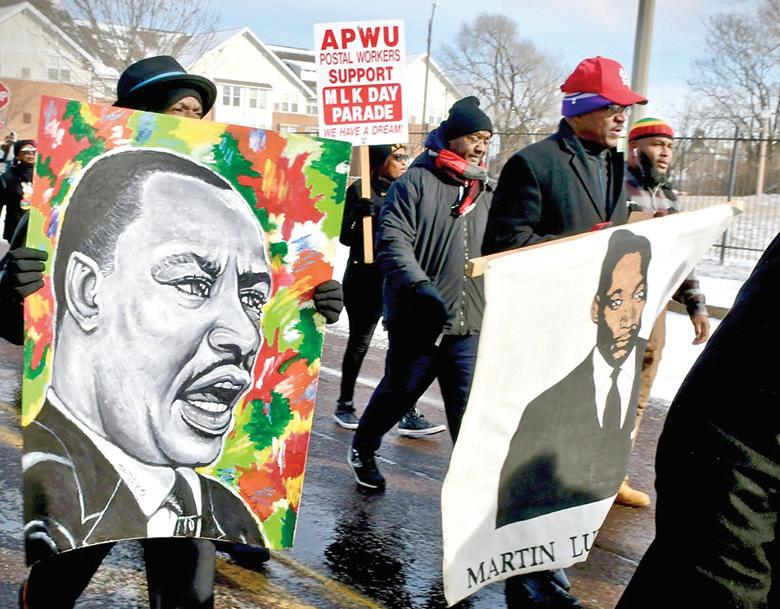
The March 1 deadline is approaching for local young actors to register to compete in the National Society of Arts and Letters (NSAL) 2019 Chapter Drama Competition. NSAL, a non-profit organization that recognizes and supports talented, young emerging artists, will award prizes up to $2,000 and the opportunity to compete at the national competition for up to $12,000.
Actors between the ages of 18 and 27 who live or go to college within the NSAL Saint Louis Chapter region of Missouri, southern Iowa, Kansas and southern Illinois are eligible to apply. Contestants are encouraged to start planning early as they must present two audition monologues from memory, including a comedic and serious piece.
The contestants will perform for a panel judges at the NSAL Chapter Drama Competition on March 16 at Webster
University. The first place NSAL Saint Louis Chapter Drama Competition winner will receive $2,000 and full financial support to compete for up to $12,000 at the national competition in Washington D.C., May 30 through June 2. The second-place chapter winner will receive $1,000. The third-place chapter winner will receive $750.
Actors must register for the competition by March 1. For more information or to view the application form, rules and performance requirements, visit https://nsalstl. org/competitions. Applications should be emailed to nsal. drama.19@gmail.com or mailed to NSAL Saint Louis Chapter, P.O. Box 50101, Clayton, Missouri 63105. General inquiries should be sent to Cecilia Nadal, competition chair, at info@gitana-inc.org.
By Kanya Bennett
For The St. Louis American
Hawaiian vacation. Margarita machine. Sparkles the Clown. Are we going to add Trump’s border wall to the list of “ridiculous things” that civil asset forfeiture funds have been spent on?
It seems so if left up to this administration.
Two congressional Republicans recently told the Associated Press that the administration had been looking at civil asset forfeiture funds to finance the border wall’s construction. And it’s easy to see why. The federal government’s forfeiture fund currently has $3.7 billion in cash, but over $7.6 billion in assets. For the Trump administration, what could be more tempting than liquidating this slush fund to build the wall it wants a new influx of $5.7 billion for?
This scheme exemplifies all that is wrong with civil asset forfeiture, which occurs when law enforcement takes property away from someone based on the mere suspicion it is connected to a crime. To be clear — because people can’t believe this is a thing — you do not have to be arrested or convicted of a crime to have your property seized and taken under civil asset forfeiture.
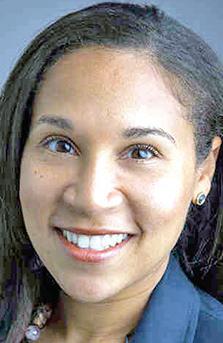
And once forfeited, local law enforcement in many places can use this money for almost anything it wants. This is how civil forfeiture has earned the nickname “policing for profit.” And this is why the Trump administration thinks forfeiture funds are on the table for a border wall.
That assumption at the federal level, however, is mistaken.
Building a wall with federal forfeiture funds is no slam dunk Federal law limits the use of such funds to certain law enforcement purposes.
“Border wall” is not one of them. And it doesn’t look like Congress would take action to change the law so that “border wall” is a permissible expense. Even though we’ve heard a member of Congress suggest that a wall should be built with forfeiture funds, most federal officials are strongly opposed to civil forfeiture.
U.S. Sen. Mike Lee (D-Utah), a civil forfeiture reformer, questioned attorney general nominee William Barr on the practice. Lee got Barr to concede that you “have to strike the right balance” on civil forfeiture. In 1991, Barr said that civil asset forfeiture could give law enforcement a “speed-trap mentality” where agencies pursue forfeitures to line their own coffers.
And U.S. Reps. Tim Walberg (R-Mich.) and Jamie Raskin (D-Md.) kicked off the 116th Congress by participating in a briefing on civil asset forfeiture reform, with Walberg sharing his plan to again reintroduce the FAIR Act, a comprehensive reform bill on the subject. Last Congress, the House adopted bipartisan amendments to a spending bill that would have prohibited the Justice Department from using federal dollars to increase forfeiture practices, but those amendments were not included in the final package.
When 84 percent of constituents oppose civil asset forfeiture, and 76 percent of voters are more likely to support candidates who back forfeiture reform, elected officials better listen. And this administration should listen to those who are saying building a wall with forfeiture “might be the worst idea yet.”
Kanya Bennett is a senior legislative counsel at the American Civil Liberties Union.

Continued from A1
Todd Waelterman, thenmayor’s assistant Patrick R. Brown, Calvert and ACLU leaders, according to an email from Calvert setting up the meeting. Two representatives from the RTCC, 6th Ward Alderwoman Christine Ingrassia and the city’s Commissioner of Traffic Deanna Venker, were later brought into the conversation as well, according to privacy advocate John Chasnoff, who previously worked for the ACLU and wrote a 2014 report, “Caught in the Web of Mass Surveillance.”
“The city said right up front at the beginning of those meetings that the policies they put together were just their first attempt,” Chasnoff said. “They realized that they were essentially inadequate and needed to be bolstered and thought through more carefully.”
According to Chasnoff, after about 10 months, the committee seemed to be “within inches” of finalizing a policy – one that addressed the ACLU’s and alderwoman’s concerns. “At that point, it just evaporated into a black hole,” he said.
When Chasnoff tried to follow up with then-St. Louis Police Chief Sam Dotson and the office of then-Mayor Francis G. Slay, he said they pointed fingers at each other, each saying that it was on the other one’s desk. That was in the spring 2016 – nearly three years ago.
“We still have the same policies in place,” said Chasnoff, who is now a member of the Privacy Watch STL coalition, which includes the ACLU and several local organizations. “The city has said that theirs is inadequate and not fully thought through and not reconciled with the police department’s policy. We’ve been in the situation that the city admits is not adequate for three years now.” When asked to comment
on the St. Louis Metropolitan Police Department’s participation in revising the privacy policy that was never enacted, a department spokeswoman said, “The RTCC policy was last updated in November 2016.”
The update in November 2016 did not include or pertain to any of the changes agreed upon in the revised privacy policy. It included one additional paragraph, stating that the RTCC will notify the police chief about incidents in which there may be a question about the department’s liability or one that could result in heightened community interest.
The police department also stated that “the access to the private cameras as well as the entire camera network is extremely limited. Access to the system is not available for all police officers or members of the police department. A request must be submitted to retrieve video.”
Waelterman – who remained the city’s director of Operations when Mayor Lyda Krewson took office – did not return The American’s request for comment about the meetings.
A Black Box
To get a better understanding of the police’s stance on privacy issues, The American requested a tour of the crime center. While Krewson’s Public Safety Director Jimmie Edwards granted the tour, it was just the beginning of a long, fruitless effort to learn what, if anything, is being done to safeguard citizens’ privacy.
On May 23, the RTCC’s commander Lt. Brent Feig gave a 30-minute tour to about a dozen members of the local media. Feig touted their success in achieving the center’s goals – use of the high-definition video for quick facial recognition and quick capture of criminals and providing more “situational awareness” for officers on the street.
“If we can give them some reactionary time, the better we increase their safety,” Feig

said.
While Feig couldn’t say if the center prevents crime, he said that its license plate recognition technology has been responsible for more than 600 felony arrests – which were focused on capturing violent-crime offenders, Feig said.
The American asked Feig how many Sunshine Law public record requests the center receives for access to surveillance data.
“A lot,” Feig said. “Anywhere from simple auto accidents to much larger requests as far as footage.”
Krewson’s spokesman Koran Addo interrupted Feig to say, “But you can actually Sunshine that.”
The American followed Addo’s advice and submitted a Sunshine request on July 10, 2018 to find out who has been accessing the city’s surveillance information.
According to the police’s policy, individuals – including “media, public, police fire and various criminal justice personnel” – can request the center’s information via emails, letters, facsimiles and subpoenas. The requests are then subject to approval by the RTCC commander or a designee.
It also states that the center will keep a record of all these requests, “which will include the person, office or agency initiating the request, nature of the request, and what information was provided to fulfill the request.”
The American asked for this record of requests.
However on August 20, the police department responded that the request was “submitted too broadly.” The American asked the custodian of records if we could talk about how to make the request clearer, and the police, in effect, instructed us to blindly try again.
On August 31, The American requested to meet with the Public Safety director to seek help in obtaining the public information and got a meeting with Edwards five weeks later, on October 5.
The American explained that police policy mandates that all requests for information be documented, and we would like to see that record of requests.
“I have never seen it,” Edwards said. “Let me see what’s there. I’ll ask and see what we have.”
Edwards then said he suspected that if homicide officers asked to look at some footage, they would be given access to it – and that’s not
going to be documented.
“What’s going to be documented is if we have some outside, non-law-enforcement person,” he said. “That’s my assumption.”
At the end of that meeting, Edwards said that he would provide logs of the requests –both requests that came from outside and within the police department.
However, on November 19 he emailed a statement: “Remaining questions were not answered in cases where doing so would require the police department to release information that could jeopardize a criminal investigation or pose a clear and present danger to the safety of any victim, witness, officer or other person.”
The department did not provide a redacted copy of these records that blacked out the names of victims and officers, which is often done when the public requests police records.
According to the current police policy, department employees must fill out a special form, called a “video extraction request,” if they want access to RTCC information. The policy does not exclude homicide detectives or any other
Aviation Boatswain’s Mate (Equipment) 3rd Class Tanisha Walton, from St. Louis, talks into a soundpowered phone on the flight deck of the aircraft carrier USS Theodore Roosevelt (CVN 71). Theodore Roosevelt is home-ported in San Diego.
employee. The American asked for these forms as well in our Sunshine Law request and was told that it was “not procedurally how these types of requests are submitted; nonresponsive.”
On September 21, The American requested to interview Feig – who has been in charge of the center since it opened – regarding how the center approves access to the footage, seeing that no documents were provided to demonstrate this. The department denied the request, stating that “most, if not all, of your questions were answered” during the May 23 tour and that they had provided additional information through our Sunshine requests.
Chasnoff said that the police’s responses to the American are an example of how the police “always keep their information too close to the vest.”
“It’s not healthy for democratic policing,” Chasnoff said. “But the [RTCC] is more extreme – they act like they’re a spy agency. That’s destructive of our freedom.”
This article is part one in a series reported in partnership with Type Investigations. Part three will appear next week.

Continued from A1
28. It would create a “metro government” where current St. Louis and St. Louis County residents would elect a mayor, assessor and prosecutor, as well as a 33-person council. The City of St. Louis’ government would effectively cease to exist, meaning many of its offices — like recorder of deeds or license collector — would be absorbed into appointee-run departments in St. Louis County. St. Louis County’s cities and their elected officials would still exist, but they would lose most of their ability to levy sales taxes. Those “municipal districts” would not be able to have a police department or a municipal court, as the new metro government would be responsible for both. And the metro government would also have a big say over how developmental incentives, like tax increment financing, are handed out.
Municipal officials could still pass local laws as long as they didn’t conflict with broader ones and would control city services such as trash collection and parks and recreation.
The plan does not affect fire-protection or school districts.
If the plan gets approved, elections for St. Louis and St. Louis County-based offices would be suspended after 2021 begins. The 33-person council would be elected in 2022.
Continued from A1
order St. Louis and the 22nd Judicial Circuit to disband their current policies and procedures and replace them with policies and procedures that follow the U.S. Constitution and reflect best practices in corrections. These procedures would include:
• providing notice to individuals arrested that their financial information will be collected;
• determination of each individual’s ability to pay money bail and the amount they can afford;
• giving individuals arrested an opportunity to be heard by a judge at the first opportunity concerning their ability to afford money bail and what nonmonetary release conditions, if any, are necessary;
• giving each individual an opportunity in this hearing to present evidence, to make arguments concerning those issues, and to contest any evidence or argument offered by the government;
• requiring the judge conducting this hearing to make substantive findings on the record about why an individual’s continued incarceration is warranted and why no less restrictive alternatives to detention address the state’s concerns; and
• giving the individual free counsel at this hearing.
If the suit succeeds on these crucial points, these procedures would replace a current system, described by plaintiffs and their attorneys, where two very different systems of justice exist in St. Louis – one for those who can afford an attorney and bail, and another for those who cannot.
The current system described in detail condemns suspects to indefinite detention simply because they cannot post cash bail for an amount that was decided without consideration of their ability to pay or their risk to flee or any proof that their detention before trial protects the public’s safety. The commissioner of corrections and sheriff enforce the court’s detention orders, hence their inclusion in the suit. At issue is the first hearing with a judge that detained individuals receive, which, according to the suit, is handled via television monitor with no court record and after a

Whoever is St. Louis County’s executive, prosecutor and assessor after 2021 would serve as the metro city’s mayor, prosecutor and assessor from 2023 to the beginning of 2025.
“So we’re not having political campaigns in the midst of starting a whole new political structure,” said Dave Leipholtz, Better Together’s director of community studies.
Proponents are planning to circulate an initiative petition to
sheriff’s deputy has told the suspect not to speak to the judge. If addressed in this initial hearing, according to the suit, the judge says he or she will wait until the suspect has an attorney before hearing any complaints about detention –which alone guarantees weeks in jail without a real hearing.
“Indigent individuals are therefore denied any opportunity to challenge or request modification of their release conditions until a public defender enters on their case. This process takes an average of four weeks from the time of arrest due to the chronic underfunding of the Missouri State Public Defender system. Even after a public defender enters as counsel and files a motion to reduce bond, at least a week elapses before a judge hears the motion,” the suit states.
“Thus, indigent defendants remain incarcerated on average four to five weeks before they are given any opportunity to challenge or modify the release conditions set in their case.
Poor individuals who do not qualify for a public defender, but also cannot afford to hire a private attorney, may face even longer delays waiting for a court determination that they are eligible for services by a public defender.”
The constitutional violation becomes evident in the comparison: “Conversely,” the suit claims, “wealthier individuals can either immediately pay the set monetary amount or hire an attorney to quickly challenge their release conditions.”
The four weeks (on average) it takes to be appointed a public defender and be in a position to file complaints about conditions of detention will spiral into nearly a year of pretrial detention, on average.
“A presumptively innocent person is caged in the Workhouse on average 291 days because they simply cannot afford bail,” said Blake Strode, executive director of ArchCity Defenders.
“This is time missed from work, school, family that is lost forever. The collateral consequences are devastating: loss of wages or the loss of one’s job altogether; the inability to care for loved ones and the possibility of children going into the foster care system; and the race disparity impacting our city’s black population is unforgivable. This is illegal, unjust and the city – and the nation – needs to be put on notice that lives are at stake.”
The City of St. Louis said the city counselor had not yet received the filing.
A spokesperson for Sheriff Vernon Betts said the sheriff had not yet been served on the case. Thom Gross, public
have the entire state vote on the plan during the 2020 election cycle. Prior attempts to merge St. Louis and St. Louis County through what’s been known historically as the Board of Freeholders process were voted on only by city and county residents — and didn’t pass.
Better Together officials said their plan needs to change Missouri’s Constitution — especially when it comes to merging police departments
information officer for the 22nd Judicial Circuit of Missouri, stated, “The 22nd Judicial Circuit has been compliant
and courts.
The Municipal League of Metro St. Louis is backing a plan to create a Board of Freeholders to study the issue of a city-county merger, which could present a reorganization plan that would only be decided on by city and county voters.
The decision to embark on a statewide vote, rather than a local one, has elicited bipartisan scorn
with all applicable Missouri statutes in the setting of pretrial release conditions, including bail bonds, and we would
St. Louis Mayor Lyda Krewson and St. Louis County Executive Steve Stenger spoke in favor of Better Together’s ambitious plan to merge city and county governments through a statewide vote during a press conference on Monday, January 28.
a clause where the plan only went into effect if it passed in the city and county but that would run into constitutional issues.
St. Louis County Executive Steve Stenger and St. Louis Mayor Lyda Krewson have said they think a statewide vote is necessary. Since Stenger and Krewson would appoint the majority of a Board of Freeholders, it’s unclear how their opinion would affect the Muni League’s process.
Better Together Executive Director Nancy Rice said she would have preferred that the plan be decided locally. But after Michael Brown’s death in Ferguson exposed problems with the region’s policing and municipal courts, she said it was necessary to submit a more ambitious plan.
“If it’s going to be a vote, shouldn’t it be the city and county?” said state Rep. Dottie Bailey, R-Eureka.
Better Together’s proposal prompted some in Jefferson City to consider ways to combat the proposal — including placing a corresponding initiative on the 2020 ballot requiring a merger to have approval from city and county voters. Leipholtz said his group considered adding
welcome a federal review of the constitutionality of those statutes and practices.”
“I can’t speak for everyone, but when I saw what was going on in the municipalities in the courts and with some of the police, I couldn’t look away,” Rice said. “So I thought it should be a city-and-county vote. All right? But when I had to weigh the value of reforming our police and courts against the value of having been wrong with what I believed a couple of years ago, I came down on the side of ‘We have to reform police and courts.’”
Read the full report at https://tinyurl.com/BetterTogether-Report.
Follow Jason on Twitter: @ jrosenbaum.
Edited for length and reprinted with permission from news.stlpublicradio.org.
Read the full complaint at https://tinyurl.com/ArchCityclass-action.


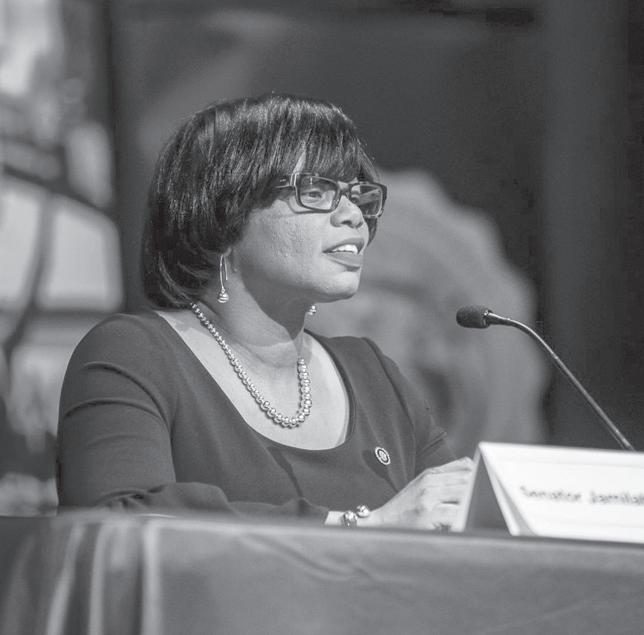
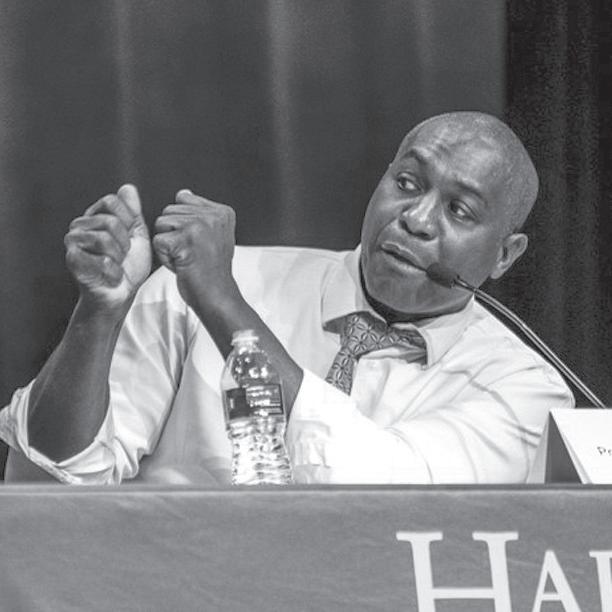
A debate for Board of Aldermen president on Saturday, January 26 turned into a showdown between the two African-American candidates - incumbent Lewis Reed and challenger Jamilah
Nasheed
Reed, who has served as board president for 12 years, repeatedly called Nasheed a “double agent,” and Nasheed called him “Lying Lewis.” Both attacked each other’s voting records, claiming that their votes countered the goals of the Ferguson Commission - which was the basis of the debate’s questions. Several blackled organizations hosted the “Questions from the People” forum, held at Harris-Stowe State University.
Another challenger, Alderwoman Megan Ellyia Green (D-Ward 15), came out mostly unscathed.
Nasheed started the scuffle by taking a shot at Reed in her opening remarks.
“We know there will not be a change under Lewis Reed20 years is long enough,” said Nasheed, a state senator. “We cannot have individuals who’s willing to make back door deals on the back of our airport.”
Lewis later alleged that Nasheed recently met with conservative billionaire Rex Sinquefield, a leader in the effort to privatize St. LouisLambert International Airport, and expressed her support. Nasheed denied that claim. The St. Louis American followed up with Reed’s team for his source on this alleged meeting and was not provided one. All three candidates said they support a public vote for airport privatization.
Nasheed said Reed uses his role as board president as “an aldermanic seat on steroids” and to serve his own interests.
Reed fired back that Nasheed has voted with Republicans in the state Legislature “more

often than not.” He pointed to a bill that reduced unemployment benefits (Senate Bill 673 in 2014) and one that increased small loan bank fees (Senate Bill 345 in 2015).
Moderator Blake Strode, executive director of the Arch City Defenders, asked Nasheed, “Are those specific votes accurate or inaccurate?” Nasheed responded, “Lewis is lying.” In fact, Nasheed did vote with Republicans on these two bills. On SB 345, then-Gov. Jay Nixon sent the bill back to the Senate with his disapproval, stating that it was the second time in two years that the Legislature had raised fees on small loans and that “allowing lenders to charge Missourians more in fees is not the way to move Missouri forward.”
Senate Bill 673 reduced the amount of time that Missourians could receive unemployment benefits that they’ve earned, Nixon stated with his dissent in 2014, and that it would be “unfair to communities that experience a spike in unemployment.”
Reed also pointed to Nasheed’s vote supporting a bill that increased court costs to fund an array of local capital projects (Senate Bill 67 in 2015). Democrats opposed the bill, saying raising court fees was the wrong way to pay for capital projects.
And, finally, Reed said that Nasheed as a state representative in 2009 was one of the lone Democratic votes on Senate Bill 306 that limited Medicare expansion, especially for working parents. In negotiations on the bill, the House refused to accept Missouri hospitals’ offer to provide $52.5 million, the state’s entire cost for a Medicaid expansion in order to qualify the state for $93 million in matching federal funds, according to a St. Louis Post-

Dispatch report.
Nasheed argued that Reed hasn’t used his power to implement any of the Ferguson Commission’s recommendations. She called him “unethical,” pointing to a Post-Dispatch story last week that stated he hasn’t paid a Missouri Ethics Commission fine for failing to report eight campaign contributions during his 2017 mayoral campaign.
After Reed criticized her for “vigorously” supporting Mayor Francis G. Slay in the 2012 mayoral race, Nasheed said, “Lewis Reed has carried the water for Mayor Slay for over 16 years, and now all the sudden I’m the bad guy? When he dismantled the strongest black ward in the City of St. Louis, he was the deciding vote to dismantle the 20th Ward under the leadership of Mayor Slay.”


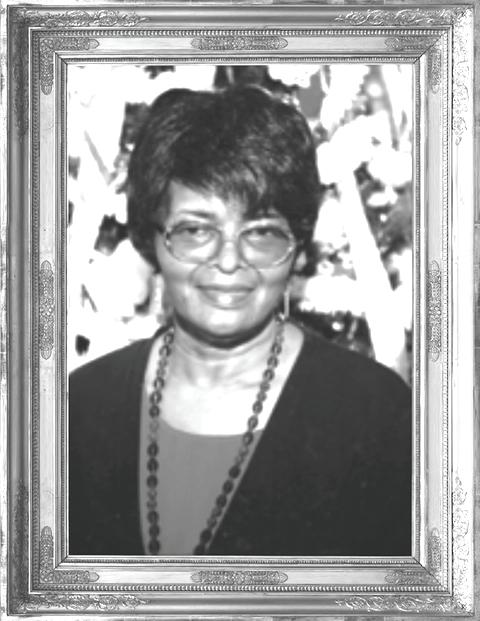

Green received a couple of passing comments from Reed, but he largely was focused on Nasheed, who he apparently feels is the bigger threat. Green and Nasheed both worked together on Tishaura O.
Jones’ 2017 mayoral campaign (when Reed also was running) and did not criticize each other all night.
“The status quo in this city is not working,” Green stated in her opening statement. “We are known nationally right now for our problems, whether it is our high crime rates, the number of officer-involved shootings, our STDs rates, our infant mortality rates, our child asthma rates – the list goes on and on. I’m tired of us being known for our problems. I want us to be known for our solutions.”
Green proposed several action steps, including creating a citywide plan for tax incentives and development, putting social workers on the police department, prioritizing ward capital funds for the wards with the lowest investments, and passing legislation that keeps lobbyists off the floor during the Board of Aldermen Friday meetings. Being smarter about tax incentives would also help with funding for public schools, and she argued that the Board of Aldermen needed to have an
education committee.
The Affordable Housing Trust Fund needs to be fully funded every year in order to address homelessness and reduce crime, she said. And the $975,000 in Prop P funds that was promised to voters who passed the proposition in November 2017 for youth employment needs to be met.
“Last year it didn’t go to youth jobs,” Green said. “It went to the police cadet programs, which doesn’t count as youth jobs.”
The debate’s speed round attempted to get a “yes” or “no” answer out of the candidates. Reed was the only candidate who said he was seeking the police union’s endorsement, and Green was the only candidate who said she wouldn’t accept it if it was offered. Green also was the only candidate who opposed Prop P, which was a sales tax increase to raise police salaries.
Prior to the debate, organizers asked the candidates questions that were submitted from community members, and those answers are available at
https://actionstl.org/board-ofalderman-voter-guide. They then asked more specific questions at the debate. The debate is also available to view on ACTION St. Louis’ Facebook page, www.facebook. com/ActionSTL.
“We got a lot of feedback appreciating the fact that we didn’t take it easy on the candidates,” said Kayla Reed an organizer with ACTION St. Louis. “This being our third time hosting a debate, we really want to make democracy accessible and we believe that the candidates need to answer the questions that everyday voters don’t know to ask.”
The organizing groups included ACTION St. Louis, ArchCity Defenders, Mound City Bar Association, WePower, Missouri Faith Voices and HSSU Student Ambassadors.
“Each candidate has a wealth of knowledge and different things to offer,” Kayla Reed said, “but they need to lead with that and less with the arguments of ‘I’m more deserving.’”






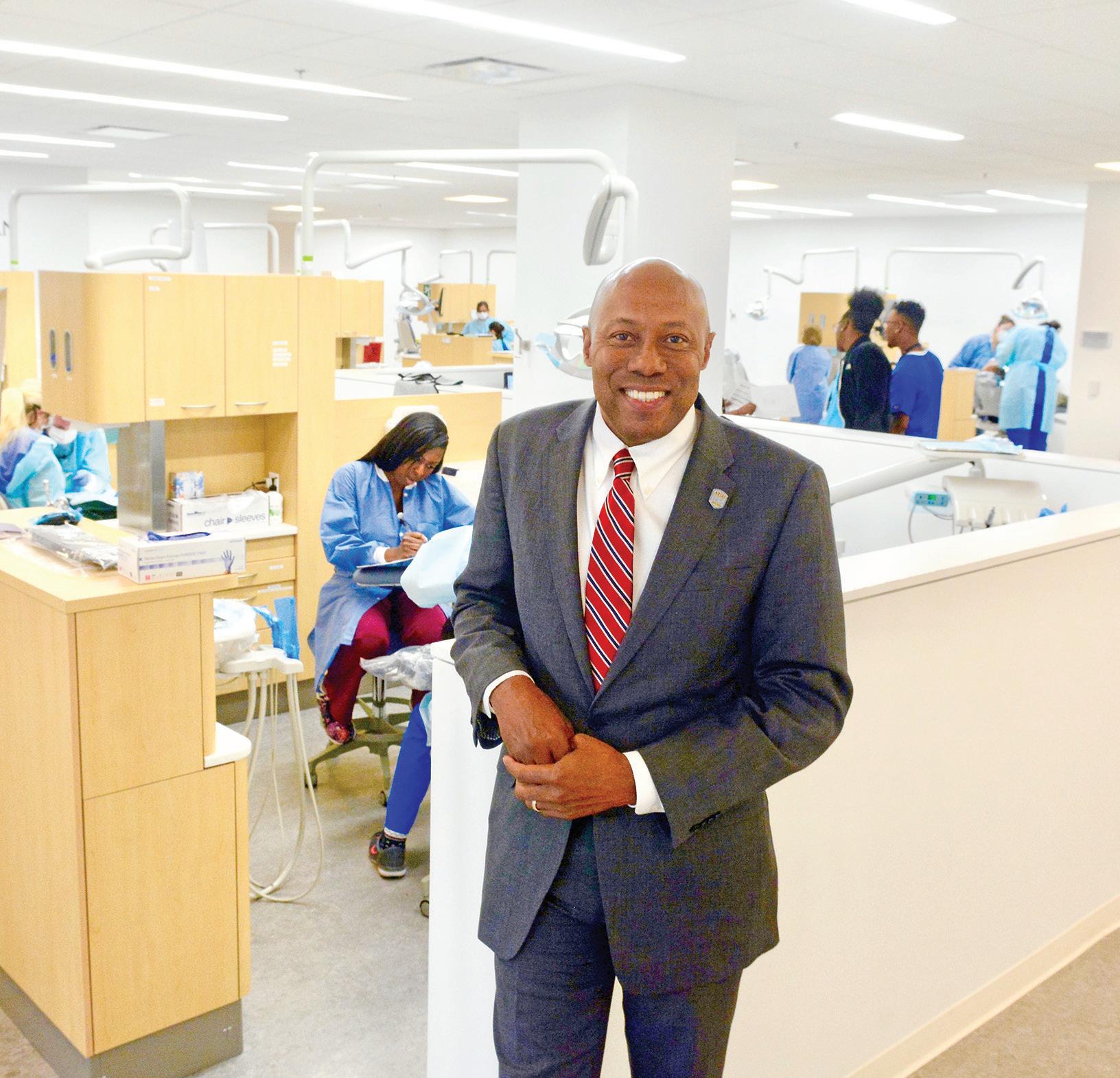
By Dr. Dwight McLeod For The St. Louis American
Did you know a person’s oral health is an indicator of one’s overall health, and the absence of good oral health can have an adverse impact on the rest of the body? At the St. Louis Dental Center, our dentists, hygienists, and dental students encourage patients to learn more about the connection between oral health and overall health. If your gums bleed easily, you may have swelling of the gums (gingivitis) or gum disease (periodontitis) caused by bacteria. If the bacteria associated with gum disease enters your bloodstream, it can affect your
n If the bacteria associated with gum disease enters your bloodstream, it can affect your heart, kidneys, and other organs, causing potentially serious systematic infections.
heart, kidneys, and other organs, causing potentially serious systematic infections. Additionally, recent research studies have found possible links between gum disease and low birth weight babies, as well as
Alzheimer’s disease.
Bad breath can be due to smoking or forgetting to brush your teeth; however, it can also signal something more concerning. It may simply reflect poor dental habits or it can be an indicator of more serious health concerns, such as dental infections and even some types of cancer and metabolic diseases.
You may think tooth pain is due to biting something hard like popcorn but if the pain continues, it may be a tooth fracture, extensive dental decay or an abscess. Painful back teeth can indicate a sinus infection which can be treated by a decongestant or
By Kenya
guests who attended the Christian Hospital Foundation’s Dr. Martin Luther King Jr. Celebration Luncheon on Friday, January 18 were reminded that Dr. King was an activist who spent his later years fighting for human rights and social justice while campaigning against poverty. Rev. William J. Barber II, one of the orchestrators of the revival of Dr. King’s Poor People’s Campaign, was scheduled to deliver the keynote address, but a death in the family
prevented him from attending. Rev. Traci Blackmon, who has a special connection to both Barber and Christian Hospital, was a fitting substitute.
“Christian Hospital was my first employer when I relocated to St. Louis as a young critical care nurse 32 years ago,” Blackmon said. “Christian Hospital was a socially conscious, community-oriented health provider back then, and it remains one today. Blackmon is now executive minister of Justice and Witness at United Church of Christ, based in Cleveland, yet still pastor
at Christ The King United Church of Christ in Florissant and firmly rooted here.
“I’ve lived all of my 32 years in St. Louis in North County,” Blackmon said. “I’ve lived here long enough to see the neighborhoods change drastically. Slowly we’ve watched opportunities leave our community, but Christian Hospital has remained. Not only has the hospital remained, but Christian continues to invest in quality health care and our communal well-being.” Blackmon told the audience she believes
See BLACKMON, A11
Public breakfast meeting at hospital on February 1
By Sandra Jordan Of The St. Louis American
A 2018 data dive into Christian Hospital ambulance calls in North St. Louis County reveals a growing prevalence of heroin and opioid overdose in the area, and a public meeting on Friday, February 1 will give concerned citizens an opportunity to learn about opioid addiction and options available to treat it.
According to Brian Hokamp, Christian Hospital chief of Emergency Medical Services (EMS), “On average Christian Hospital EMS responds to one to two 911 requests a day where Naloxone is administered,” said. Naloxone is the lifesaving medication that, if given in time, can counteract an overdose and revive the patient.
n “What we have found at Christian EMS is that the opioid crisis affects all walks of life and does not discriminate based on gender, race, religion or age.”
– Brian Hokamp, Christian Hospital chief of Emergency Medical Services
The Christian Hospital Foundation is asking community leaders, school administrators, elected officials, first responders, clergy and concerned citizens to learn about heroin and opioid abuse and overdose in North County, by coming to the public meeting 7:30-9 a.m. Friday, February 1 in the hospital’s Detrick Building Atrium. Breakfast will be served. Christian Hospital is located at 11133 Dunn Rd.
“We are trying to bring awareness to the situation,” said Necole Powell, executive director of the Christian Hospital Foundation, “because if people think it’s only in rural areas, it will spiral out of control.”
In addition to finding out about the latest drugs that are impacting the community, attendees will experience a simulated 911 overdose call; first responders will demonstrate lifesaving techniques used to treat overdose patients; and attendees will learn about collaborative efforts to combat this health issue.
“We’re putting together a bit of a task force to address this growing issue in our community,” Powell said. “We have
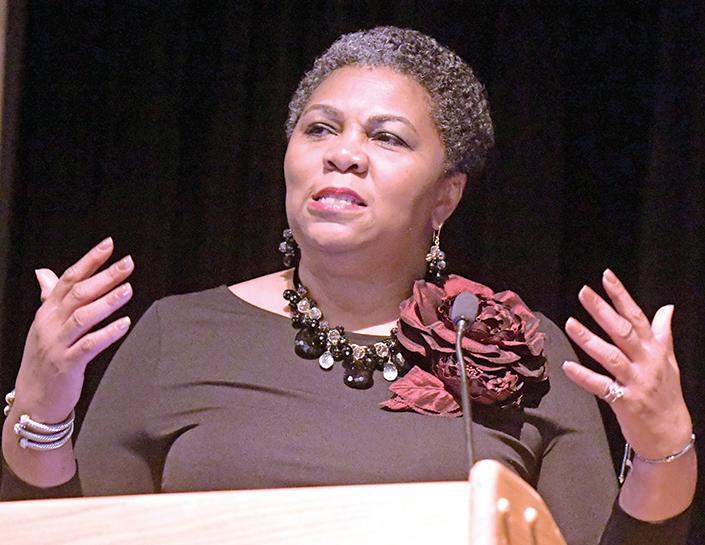


Patients should discuss new guidelines with health care providers
By Sandra Jordan Of The St. Louis American
Promoting healthy lifestyles and giving statins to those who can most benefit from them is the impetus for new cholesterol guidelines released November 2018 from the American College of Cardiology and the American Heart Association. This is an update from the 2013 guidelines. Risk factors for cardiovascular disease due to high cholesterol has evolved from targeting a specific set of numbers to a more holistic, individualized view of risk factors for each patient from their health care provider.
n “In those individuals with diabetes, we start thinking about lowering cholesterol at a younger age than we might have previously.”
– Jin-Moo Lee, M.D.
“A lot of progress has been made in the research regarding cholesterol metabolism and our understanding of its relationship to the risk of cardiovascular disease and stroke,” said neurologist Jin-Moo Lee, M.D., the Norman J. Stupp Professor of
Continued from A10
programs we want to put into school districts, and we are working with school officials and some other community leaders to help people.”
Hokamp said Christian Hospital’s EMS department is fighting the opioid crisis using a three-pronged approach. “First, we want to provide education about the opioid crisis to our community,” Hokamp said. “Second, we want to try and prevent future overdoses. Third, we want to provide followup care and treatment by partnering with the Environment, Policy, and Improved Clinical Care Program, known as EPICC, and the Christian Hospital Access Program (CHAP).”
Anyone who thinks this crisis is not their problem is mistaken,” Hokcamp said.
“What we have found at Christian EMS,” Hokcamp said, “is that the opioid crisis affects all walks of life and does not discriminate based on gender, race, religion or age.”
To register for the meeting or for more information, contact Kamille Pope at 314-653-4191 or email Kamille.Pope@bjc.org.
Continued from A10
that the hospital’s desire to celebrate the legacy of Dr. King is authentically rooted in King’s belief in beloved community – just as the man she was standing in for as keynote speaker.
Soon after becoming a national figure because of her work on the frontlines of the Ferguson unrest, Blackmon traveled the country with Barber, Rev. James Forbes and sister Simone Campbell in a Moral Revival that lasted 365 days.
“We were tilling the ground for what was to come with the revival of the Poor People’s Campaign,” Blackmon said.
“I learned so much from these giants of the faith. I’m
Continued from A10
antibiotic. If you have not seen a dentist, please schedule an appointment to be evaluated. Permanent tooth stains, broken teeth, bleeding gums or mouth sores can be signs to get your attention about other medical problems. Everyone should see a dentist routinely to maintain

Neurology and director of the Cerebrovascular section of the department of Neurology at Washington University School of Medicine in St. Louis. Based on the best available evidence, Lee said there are several different changes.
“There is an emphasis to personalize the
recommendations, based on a variety of factors, including levels and certain additional risk factors,” he said. “For those at risk, we want to lower as much as possible, because we know from the available evidence that the lower the cholesterol level is, the better it is in terms of reducing risk.”
Those additional risk factors include existing health issues, genetics and lifestyles.
“One of the major risk factors is diabetes,” Lee said. “If you have diabetes, we know that strict lowering of cholesterol is even more important. In those individuals with diabetes, we start thinking about lowering cholesterol at a younger age than we might have

previously. We are looking at lower middle-ages – people aged around 40 or more.” Other risk factors, Lee said, smoking, high blood pressure, high blood sugar, family history, race and ethnicity. There is a new calculator that considers the many factors that go into making a decision about starting someone on a statin therapy for cholesterol.
EMS data by zip code provided to The American by Christian Hospital reflect field responses and do not include opioid overdoses that came directly into the hospital’s emergency department, nor through other ambulance services or facilities in North County. The largest number of opioid overdoses Christian’s EMS responded to last year was in its own backyard – in zip code 63136, where there were 207 calls.
63136 207 Dellwood, Bellefontaine Neighbors, Jennings, Flordell Hills, Northwoods, Castle Point, Country Club Hills, Moline Acres, Pine Lawn, Ferguson, St. Louis 63137 81 St. Louis, Bellefontaine Neighbors, Glasgow Village, Riverview, St. Louis County
63135 68 Ferguson, Hazelwood, Calverton Park, Jennings, Dellwood, Normandy 63138 65 Spanish Lake 63134 54 Ferguson, Berkeley, Woodson Terrace, Edmundson, Bel-Ridge, Kinloch, Cool Valley, St. John
63133 48 Pagedale, Bel-Nor, Hanley Hills, Wellston, Hillsdale, Greendale, Vinita Park
63033 30 Black Jack and Florissant
63034 20 Old Jamestown area of unincorporated St. Louis County
63114 8 St. John, Overland, Breckenridge Hills, Charlack, Vinita Park
63031 7 Florissant, Hazelwood
63121 6 Berkeley, Pine Lawn, Velda City, Norwood court, Bel Ridge, Cool Valley, Jennings, Velda Village Hills, Pasadena Hills, Bel-Nor, Normandy, Northwoods, Pasadena Park, Hillsdale, Glen Echo Park, Beverly Hills, Greendale, Uplands Park, Carsonville, Bellerive
63386 5 West Alton
63042 3 Hazelwood, Bridgeton
63130 3 University City
63112 2 St. Louis 63140 2 Kinloch
Additionally in 2018, there was one call that Christian EMS responded to in each of the following zip codes: 63102 (St. Louis), 63122 (Kirkwood, Glendale, Des Peres, Meacham Park) and 63366 (O’Fallon, Wentzville, St. Paul).
grateful to be one who does not have to look to social media or TV or news reports for my heroes. I live among my heroes – and I learn from them daily.”
She said Barber and Rev. Liz Theoharis are embracing the dream of Dr. King by leading a movement to make hunger and poverty visible again in the United States.
“As long as some of us can live in a dreamlike state of individuality and idealism, then it’s easier for us not to see the devastating effects of the interrelatedness of what Dr. King called the triple evils –racism, poverty and militarism – on the lives that can’t help but to see,” Blackmon said.
According to Blackmon, the national holiday in Dr. King’s name has resulted in the “sanitization” of his message.
“This selective framing of his legacy within a bus boycott
oral health. The St. Louis Dental Center welcomes children and parents to visit our team to begin a life-long habit of excellent oral healthcare. If you or your child has never had an examination, it is important for you to start now to ensure a healthy mouth and body and maintain excellent oral hygiene habits. Located in the Lafayette Square neighborhood, our St. Louis Dental Center team provides affordable dental care to patients of all ages
n “We have sanitized Martin Luther King Jr. – depriving our nation of King’s true dream of radical social vision, love and prophetic insight.” – Rev. Traci Blackmon
and a march on Washington attempts to reshape Dr. King from a prophetic voice into a public personality – one that speaks of sentimental love and is disconnected from social justice,” Blackmon said.
“In the process, we have sanitized Martin Luther King Jr. – depriving our nation of King’s true dream of radical social vision, love and prophetic insight at a time when our world desperately needs Dr. King’s vision and wisdom like never before.”
She reminded the audience
in a state-of-the-art facility. We are a community health center created by A. T. Still University-Missouri School of Dentistry & Oral Health (ATSU-MOSDOH) in an innovative partnership with Affinia Healthcare. We work with other affiliated health centers within our community, and our dental students are involved in more than 500 “work-weeks” or 16,000 hours at external sites serving the underserved. With our outreach program at
that by the time he was assassinated in 1968, 72 percent of whites and 55 percent of blacks disapproved of his vocal opposition to the Vietnam War and his emphasis on anti-poverty efforts.
Blackmon discussed Dr. King’s realization that the advancement of civil rights alone had not been enough to advance the social conditions of the marginalized in society – and the shift of the Southern Christian Leadership Conference from reform to revolution.
ATSU-MOSDOH, students spread oral health literacy and participate in dental screening, preventive, interceptive, and urgent dental care in 32 events annually.
Our Dentures for Veterans program provides free oral healthcare to qualified veterans in St. Louis and Dexter, Missouri, where some veterans drive for hundreds of miles to receive dental treatment. Our faculty and students, some of whom are veterans themselves, enjoy the smiles of those
“It was in 1967 that Dr. King had gone from being America’s negro of choice to what then-FBI director J. Edgar Hoover called him – the most dangerous man in America,” Blackmon said. “He went from being a moderate preacher to a national security threat. He went from being Time’s person of the year to being inconsequential to America’s mainstream in both black and white communities.”
Interactions with the people he served would not allow him to construct a moral framework that was dismissive of the social and economic inequities inherently present in their lives.
“How could Dr. King call himself a minister of a gospel concerned with the care of the least of these and yet watch a majority of our
“There is a risk calculator that will examine all of these factors to determine what your risk for cardiovascular disease is,” Lee said. “And the variables that go into this calculator are race, cholesterol, LDL, HDLcholesterol, blood pressure, diabetes and smoking. And so these risk calculators help us determine who would best benefit most from cholesterol lowering.”
Lee said cholesterol and cardiovascular risk should be a discussion between you and your doctor or health care provider, because there are still other factors beyond the calculator that go into it.
“With our accumulated understanding of cholesterol, we have learned that it’s incredibly important in terms of our lifetime risk for cardiovascular disease and stroke, and so understanding what our levels are as well as our risk factors are very important even from a young age,” Lee said. “Because the sooner we get therapy onboard, the more we can prevent future disease.”
citizens of every skin tone fall prey to an unbridled capitalistic economy?” Blackmon said. “According to Dr. King, ‘Any religion that professes to be concerned with the souls of humanity and is not concerned about the slums that damned them, the economic conditions that strangle them and the social conditions that cripple them is a spiritually morbid religion awaiting burial.’” If King had lived to see what would have been his 90th year, Blackmon said his words would be just as relevant and challenging today – and his dream just as unrealized.
“We must strain to hear the yearnings of the powerless as clearly as we do the expectations of the powerful,” Blackmon said, “and be willing to see, to dream and to act to change this world.”
patients who were not able to receive care previously due to lack of finances or access to dental services. The St. Louis Dental Center provides a home for all patients. We offer a bilingual staff, interpretation services for non-English speaking patients, and a wheelchair recliner/lift for limited mobility patients, and those who have disabilities or are obese. I am proud and grateful to work with so many dedicated professionals who provide access to care for underserved populations. We are here to address your urgent and comprehensive dental needs. To schedule an appointment, please call (314) 833-2700, or if you have an urgent need, please come in between the hours of 8:30 a.m. - 5:00 p.m.
Dr. Dwight McLeod is dean of A.T. Still University – Missouri School of Oral & Dental Health and director of the St. Louis Dental Center.
One of the reasons that we might overeat is because we just don’t really recognize what a proper “portion” looks like. (Portion is the size of the serving that you put on your plate.)
Balance is an important part of physical fitness. Balance relates to how steady and straight you can hold your body while doing different activities. Practice your balance by doing the most basic balance test. Stand on one foot, hold your arms out to your side and see how long you can hold this pose. Is it harder if you close your eyes?
Only take pills (medicine) that have been given to you by your parent (or a doctor/nurse). Never take anything that is being offered by a friend just because they say it’ll make you “feel good.” Many school-aged kids die every year because their body has a bad reaction to pills


To help you visualize what those portion sizes should be, here are a few examples using items that you are very familiar with their size.

For Other Examples, Visit: http://www.webmd.com/diet/ healthtool-portion-size-plate. Try coming up with your own visual portion size ideas!
Learning Standards: HPE 2, HPE 5, NH 1, NH 5
Now challenge yourself to increasingly difficult balancing actions. Try holding something heavy in one hand, leaving the other hand empty. Can you lean over (while still on one foot) and place the object on the floor? Can you stack a number of items on the floor while staying on just the one foot?
that they should not be taking.
If someone offers you a pill, be sure to tell your parent or teacher. By helping to keep these pills away from others, you could be saving a life!
Learning Standards: HPE 2, HPE 5, NH 4, NH 5
“Questions or comments? Contact Cathy Sewell csewell@stlamerican.com or 314-289-5422
Do you think balance can be improved with practice? Try some different balance activities for several days in a row and see if your balance gets better the more you do them.
Learning Standards: HPE 1, HPE 4, NH 1
Crispy Tortilla Pizza
Ingredients: 2 Whole wheat tortillas ¼ Cp Pasta or pizza sauce

Healthy toppings (spinach, turkey, low-fat mozzarella cheese, tomato slices, etc.)
Directions: Preheat oven to 400 degrees. Place tortillas on a cookie sheet, spread with sauce and toppings evenly. Cook until cheese is melted and tortilla is crisp. Makes 2 servings.
Where do you work? I am the owner of BetterVessel Nutrition and I also work for Saint Louis University.
Where did you go to school? I graduated from Clear Creek High School in Texas. I then earned a BS in Biology from Stephen F. Austin State University, Nacogdoches, Texas, a BS in Nutrition and Dietetics from Kansas State University, Manhattan, Kansas, and I’m currently completing an MS in Human Nutrition from Logan University in Chesterfield, Missouri.
What does a dietician do? I am a dietitian that specializes in sports and physical activity. I educate and help people understand how to make healthy choices with their foods. I work with organizations in the St. Louis area and help develop community and youth programs such as Let’s Move! STL. And I teach people how to exercise and workout properly.
Why did you choose this career? I chose to be a sports dietitian because I want to help people understand how to improve their health and teach the benefits of eating healthy meals like fruits, vegetable, whole grains, and lean meats. I also wanted to show people how to exercise so their body can become stronger and live longer.
What is your favorite part of the job you have? I enjoy educating people and showing them fun ways to eat healthy. I like that many people are learning better eating habits and have started exercising more. I also like traveling to speak to groups, organizations, and schools to teach students, parents, and teachers ways that they can make healthier choices.
Learning Standards: HPE6, NH3


The Saint Louis Science Center’s YES Program turns 20!
YES (Youth Exploring Science) encourages students to explore, create and share their ideas using an informal learning environment and a project-based education model to facilitate STEAM learning.
The program prioritizes college and career readiness training and prolonged mentoring to help high school students who never considered college a possibility.
For more information, visit slsc.org/yes

The Saint Louis Zoo is currently accepting applications for Zoo ALIVE, our teen volunteer program. High school students 15 and older may apply. As a Zoo ALIVE volunteer, you can share your love of animals with our diverse audiences by helping at classes, camps, overnights, birthday parties, and special events. Volunteers can also participate in group conservation activities, camping trips, and more. This is a year-round program for dedicated and responsible teens.
For more information, visit stlzoo.org/education.

Questions or comments? Contact Cathy Sewell csewell@stlamerican.com or

At Aspire Academy 5th grade teacher
VaNetta Clark works with students Kaleesha Morris,
Jones, Heavenly



Sir Isaac Newton is the physicist who came up with three ideas about motion. After being tested throughout the years, they have been labeled Newton’s laws of motion.
The first law states that an object at rest tends to stay at rest and an object in motion tends to stay in motion, unless acted upon by an outside force.
For example, if you are roller blading and hit a rock on the sidewalk, your body will stay in motion moving forward, even though your skates have stopped.
The second law states that acceleration is produced when a force acts on a mass. The greater the mass (of the object being accelerated), the greater

Background
Process:
q

the amount of force needed (to accelerate the object). If you are going to kick a tennis ball, it will take less force than is needed to kick a bowling ball.
The third law states that for every action, there is an equal and opposite reaction. This can be used to explain the motion of a rocket. The rocket’s action is to push down on the ground with the force of its powerful engines, and the reaction is that the ground pushes the rocket upwards with an equal force.
For more information about the laws of motion, with quizzes and activities, visit: http:// teachertech.rice.edu/Participants/ louviere/Newton/.
Learning Standards: I can read nonfiction text for main idea and supporting details.
w Add a couple of drops of food coloring.
e Refrigerate your bowl of solution.
r Check your solution in 4-6 hours. There will be crystal formations. Pour off the excess solution to examine them
Analyze: How did the cooler temperatures affect the growth of crystals?
Learning Standards: I can follow sequential directions to complete an experiment. I can analyze results.
There are many different branches of math involved in physics, including probability and statistics. Practice your probability skills with the following questions.
z There are 30 students in the fifth grade. 18 are boys, the rest are girls. A student is selected randomly to be a volunteer.
What is the probability of selecting a boy? ________
What is the probability of selecting a girl? ________
x The probability of choosing a red ball is 2/7 and a black ball is 3/7. Find the odds in favor of red. ________ Find the odds in favor of black. ________ Find the odds against red or black. ________ Find the odds in favor of red or black.



c If you use one die from a set of dice, find the probability of the following: Find the probability of showing an even number: ________
Find the probability of showing an odd number: ________ Find the probability of showing a prime number ________ Find the probability of showing an even prime number: ________
Check out these fun math games: http://www.sciencekids.co.nz/gamesactivities/math.html.
Learning Standards: I can think critically to answer probability problems. I can add, subtract, multiply, and divide to solve a problem.

David Garrison was born on October 27, 1975, in Chicago, Illinois. When he was very young, he moved to Missouri and attended Mount Vernon Elementary School in O’Fallon, Fort Zumwalt North Middle School, and Fort Zumwalt North High School. Garrison was very active in the jazz band while in school and graduated high school in 1993. From there, he went to Massachusetts Institute of Technology where he played football while earning his bachelor’s degree in physics in 1997. In 2002, he received his PhD in physics from Pennsylvania State University.
While in graduate school, he created a software program used to analyze money metrics. It was called Fast Financial Analysis. When he graduated, Garrison worked as a professor at the University of Houston-Clear Lake (UHCL), where he worked to add more courses and degrees offered in the physics department. This change gave Garrison more students who were qualified to help him in his research of cosmology, computational physics, and plasma physics. Garrison also worked with NASA’s Johnson Space Center to develop the plasma rocket engine. He has served on many planning committees and became an advisory board member for the Space Center Houston. He also published What Every Successful Physics Graduate Student Should Know.
Learning Standards: I can read a biography about a person who has made a contribution in the field of science, technology, or mathematics.


Use the newspaper to complete the following activities.
Activity One
Parts of Speech:


Use the newspaper to complete a parts of speech scavenger hunt. Find examples of nouns, verbs, pronouns, adverbs, adjectives, prepositions, interjections, articles, and conjunctions. How many can you find in 15 minutes? Use these words to write a story.
Activity Two — Energy Awareness: Create a machine that you think would save energy. Write a news story telling about your invention.
Learning Standards: I can use the newspaper to locate information. I can write for a variety of purposes and audiences. I can identify parts of speech.



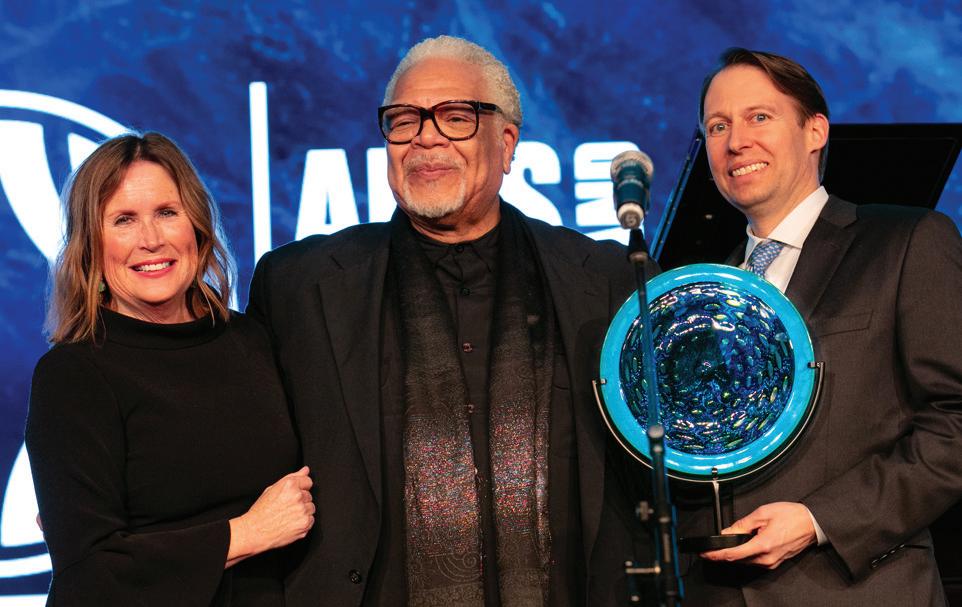

It was a celebration of the diversity and vibrancy of the St. Louis arts community January 21 at the Arts and Education Council’s 28th annual St. Louis Arts Awards. Guests from across the region gathered at the Chase Park Plaza Royal Sonesta Hotel for performances honoring seven individuals and organizations that have made significant contributions to the arts in St. Louis. Honored at the Jan. 21 event were: Ken Page, actor and singer, Lifetime Achievement in the Arts; Noémi and Michael Neidorff, Excellence in Philanthropy; Brent Benjamin, Saint Louis Art Museum, Excellence in the Arts; Sue Greenberg, St. Louis Volunteer Lawyers and Accountants for the Arts and The Muny, Champion for the Arts; Chris Hansen, Kranzberg Arts Foundation, Arts Innovator; Tennessee Williams Festival St. Louis, Arts Startup of the Year; and Amy Freet, FergusonFlorissant School District, Art Educator of the Year.
Proceeds from the St. Louis Arts Awards benefit the Arts and Education Council, whose grants and programs reach more than 70 arts organizations and 1.6 million adults and children across the St. Louis region each year. Presenting sponsor of the 2019 St. Louis Arts Awards was Centene Charitable Foundation. Edward Jones and Emerson served as principal sponsors. The event was hosted by emcee Adrienne Davis of Washington University and co-chairs Pat Smith Thurman and Solomon Thurman, who own 10th Street Gallery downtown.
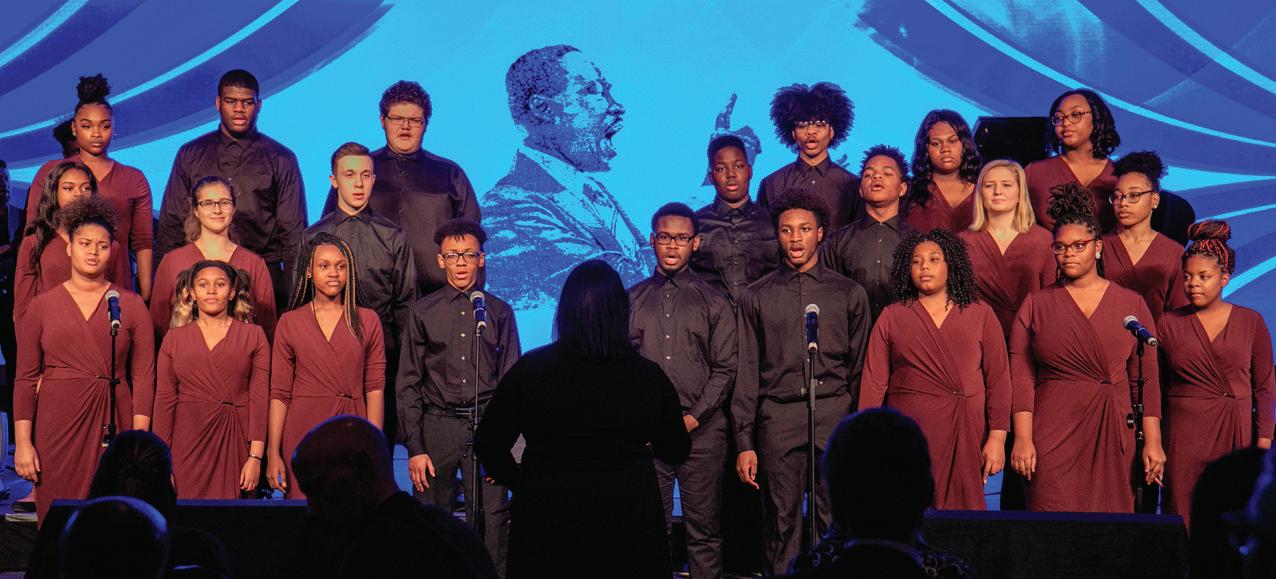




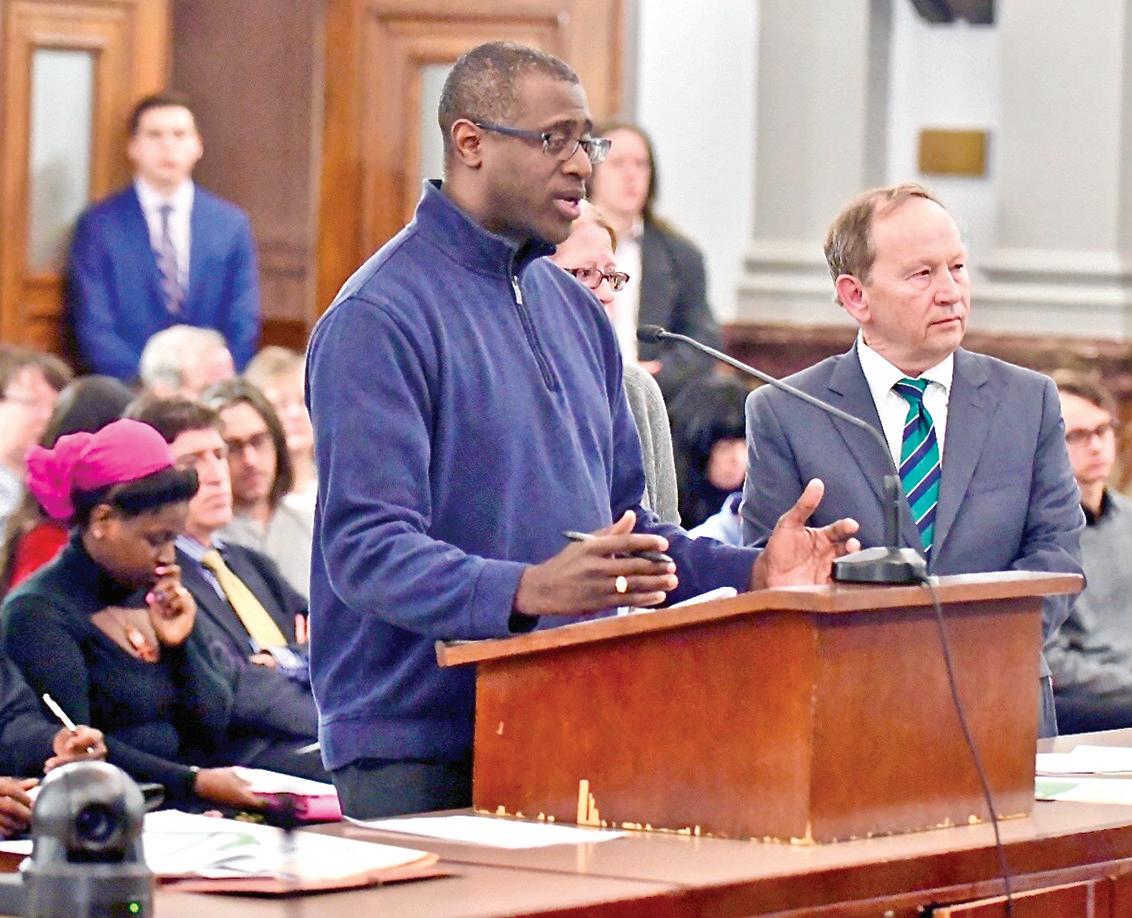
On Thursday, January 24, an aldermanic committee unanimously passed Board Bill 222, sponsored by Alderman
(left), to authorize the issue of $40 million in bonds to stabilize 200 vacant, city-owned residential properties. At right is Steve Conway, the mayor’s chief of staff.
By Rebecca Rivas
Of The St. Louis American
It’s been nearing two years since voters approved a $40-million bond issue to stabilize 200 vacant, city-owned residential properties a year. After a yearlong legal battle over whether Proposition NS, the vacancy proposition that passed in April 2017, actually received enough votes to pass, the court sided with the City of St. Louis in September and now work can get underway – almost.
On January 24, an aldermanic committee unanimously passed Board Bill 222, sponsored by Alderman Jeffrey Boyd (D-Ward 22) to authorize the bond process to move forward.
n “What we really are wanting is to have existing neighborhood residents be able to help give input on properties that are selected.”
– Sundy Whiteside, St. Louis Association of Community Organizations board member
The bill authorizes the sale of up to $6 million in bonds each year to stabilize vacant residential buildings in the city’s Land Reutilization Authority (LRA) “land bank.” The LRA,
which is staffed by the St. Louis Development Corporation (SLDC), will manage the $6 million annual fund. Acting as a general contractor, the LRA will allocate up to $30,000 for a singlefamily home or $50,000 for a multi-family building to stabilize them and then sell them to individual rehabbers or small developers.
The bond will be repaid through a propertytax increase – that will start with a one-cent annual raise the first year and eventually go up to a seven-cents increase.
While the bill passed out of committee unopposed, it sparked an hour-long debate, led by Aldermen Cara Spencer (D-Ward 20) and John Collins-Muhammad (D-Ward 21).
See BILL, B2
Veteran newscaster said ‘coon’ pronouncing Dr. Martin Luther King Jr.’s name on air
Rick Stevens was elected chair of the Board of Directors of North County Incorporated, a regional development association. He will serve a one-year term and succeeds Chris Kilbride, superintendent for the Ritenour School District. As president of Christian Hospital, Stevens provides strategic leadership and oversees daily operations of the 220-staffed-bed hospital.
Jacqueline Powell earned her doctorate degree in Educational Leadership from Maryville University. She is lead guidance counselor at Normandy High School and has worked for the district for 22 years. She taught math at the high school for five years before shifting her focus to counseling. She has master’s degrees from the University of Missouri-St. Louis in school counseling and secondary education.
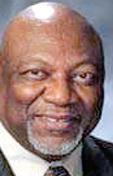
Tommie Pierson Sr. is the only African American running for mayor of the City of Bellefontaine Neighbors. The city, whose population is 85 percent AfricanAmerican, has never elected a black mayor. He is former state representative for District 66 in the Missouri House of Representatives. He is hosting a meet and greet 6-8 p.m. Tuesday, February 5 at Greater St. Mark Church, 1826 Chambers Rd.

Tonie Leatherberry was elected chair of The Executive Leadership Council, the pre-eminent global organization composed of current and former black CEOs, senior executives, and board members of Fortune 1000 and equivalent companies; top-tier entrepreneurs; and global thought leaders. She is principal of Deloitte & Touche LLP and president of the Deloitte Foundation.
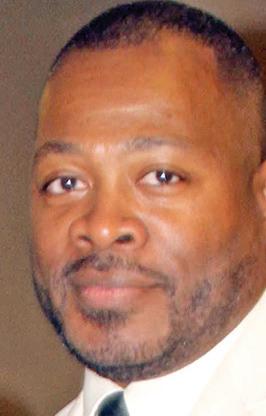
Christopher Young-El received an “Apple for the Teacher” awards from the Alpha Zeta Chapter of Iota Phi Lambda Sorority Inc. He is principal at the Normandy 7th-8th Grade Center. Iota Phi Lambda is a business and professional women’s organization founded in 1929. It provides scholarships for high school and college students interested primarily in business education.
American staff
KTVI Fox 2 newscaster Kevin Steincross has taken indefinite leave from the station, he announced via a video statement. Last week Steincross inserted a racial slur while pronouncing the Rev. Dr. Martin Luther King Jr.’s name during a morning broadcast.

Kevin Steincross
“Station management and I have agreed that I need to step away from the anchor desk for now,” Steincross said in the video, which originally aired on KTVI sister station KPLR on January 25.
“I will begin working to regain your trust. I know the work I need to do will take time, and I will do everything I can to address the pain I
n “Rather than reporting the news, I have been the news, and a mistake I made has been the topic of conversation throughout our region.”
– Kevin Steincross
caused. For 22 years, I’ve reported and anchored the news on Fox 2. Now my job is to regain the trust of our entire community.”
KTVI management also issued a statement.
“KTVI is deeply sorry for the understandable pain to our viewers and disrespect shown to Dr. Martin Luther King Jr. caused during our early morning news broadcast of January 17,” KTVI stated.
“During the past week, we have met with or spoken to representatives from the NAACP, the Urban League, the Greater St. Louis Association of Black Journalists, and other civic groups in the area about the seriousness with which we approach issues of importance to our community. We have met with our employees and listened to our viewers. These meetings and discussions have been healthy and very productive. We are committed to the healing process and moving forward together through open dialogue and action. We look forward to continuing these discussions and taking specific action in the days ahead.”
State Senator Jamilah Nasheed challenged KTVI Fox 2 and its parent company Tribune Media to mandate racial bias training for all staff and invited Steincross to tour St. Louis with
See STEINCROSS, B2

Andrea Scott has created a learningtutoring center, Dream IT, located at 6221 Wanda St. in South St. Louis to help train educators to pass the state certification test and help individuals to learn the Spanish language. She has over seven years of teaching experience and has taught every grade level from PreK-to college level courses. In addition, she teaches online to foreign learners in several countries around the world.
On the move?
By Ellen Bern For The
St. Louis American
University City citizens
reviewing pages of projected tax tables considered by the City Council related to the proposed TIF development at I-170 and Olive Boulevard have found grave mistakes in projected income to the city. The financial tables produced for the city by the city’s consultant, PGAV Planners, were incorrectly
based on the city being a point-of-sale municipality. In fact, University City is a pool city and shares sales tax collected with other cities in the pool. That greatly dilutes the benefit of increased sales tax revenue from the proposed development.
Sales tax revenue from the project will be less than half of the amount estimated. The difference is more than $27 million. This amount is significant revenue we thought
we would be getting from the project, and now we will not.
As a pool city, University City receives back about 4.7 percent of the countywide sales tax and about 11.5 percent of the capital improvement sales tax collected locally. The developer’s consultants assumed University City would keep 84.7 percent and 85 percent of those two taxes, respectively. The actual amount is about 8 percent total.
PGAV estimated these two
taxes would bring us about $30 million over the life of the TIF. Actually, they will bring us about $2.5 million, a decrease of over $27 million.
This calculating tax mistake, and the resulting decrease in expected revenue, calls into serious question the economic benefit of the project.
A last-minute change in the draft development agreement also includes a 50 percent property tax abatement on what the new project would
otherwise pay the city and other tax jurisdictions over the next 21 years.
The combination of errors in calculating future tax income to the city, along with a significant reduction in property taxes, means this project would provide little to no financial gain to the city coffers.
It’s time for the City Council to step back from this proposed development until a financial analysis
By David Rapach and Bonnie Wilson
For The St. Louis American
There is a “man of system” in our midst—at work in our state, in our city, in our institutions of higher education. In the “Theory of Moral Sentiments,” Adam Smith warned us to beware such men.
“The man of system... is apt to be very wise in his own conceit; and is often so enamoured with the supposed beauty of his own ideal plan of government, that he cannot suffer the smallest deviation from any part of it,” Smith writes. “He goes on to establish it completely and in all its parts, without any regard either to the great interests, or to the strong prejudices which may oppose it. Sound like anyone you know?
by a third party ensures the development agreement is in the best interest of the residents of University City. Surely the revised financial analysis of this development should be cause for the city to hold open study sessions so that the public can also understand these complicated issues. Public hearings for the community to voice their concerns would be most welcomed.
Ellen Bern is a resident of University City.
STL Youth Jobs accepting applicants
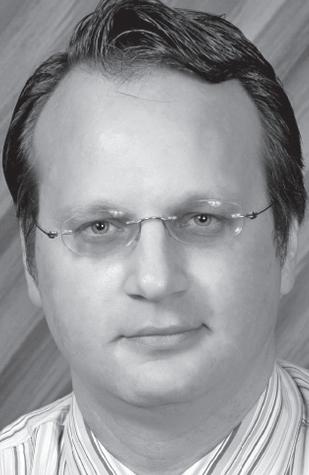
As Smith tried to teach us, it is not necessarily the ends of the man of system that constitute a threat. It is the means of the man of system that are dangerous. The man of system seeks to use power and purchased influence to impose his will. In the process, he disregards the moral autonomy of others. He seems to imagine that he can arrange the different members of a great society with as much ease as the hand arranges the different pieces upon a chess board. He does not consider that the pieces upon the chess board have no other principle of motion besides that which the hand impresses upon them; but that, in the great chess board
of human society, every single piece has a principle of motion of its own ...
As a way of proceeding, such an approach falls far short of the ideals of a liberal democracy. Furthermore, such an approach, Smith warns us, may well backfire: “If those two principles ... are opposite or different, the game will go on miserably, and the society must be at all times in the highest degree of disorder.”
The man of system faces a knowledge problem. He does not know the social context in which each of us operates and makes decisions. Even when he seeks to promote liberty, if he does not recognize the knowledge problem he faces and proceed with the appropriate humility. The disruption and harm his plan produces can generate such a backlash as to upend the entire endeavor.
There is a man of system within all of us. Fortunately,

most of us possess neither the political capacity nor the money to purchase our ideal plan. Instead, in pursuit of our interests, we must use the power of persuasion. We must respect the moral autonomy of our neighbors and convince them to employ their agency towards the causes we favor.
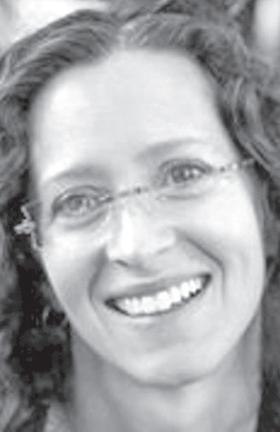
As we consider the best structure for our state and local government, as we appraise the wisdom of the privatization of publicly owned and operated entities, as we examine the extent of external influence we should allow in our institutions of higher education, we would be well advised to beware the man of system in our midst. Our elected offcials,
continued from page B1
“I was a big supporter of Proposition NS,” said Spencer. “To remind everyone, Proposition NS was a citizenled petition process that put together this concept, under the leadership of SLACO (St. Louis Association of Community Organizations) and citizen volunteers who spent countless hours gathering signatures to help this city find a funding mechanism to address vacancy throughout our city.”
Spencer questioned why the bill does not include a process for selecting the properties that will be stabilized, and one that includes the community’s input. She was concerned that the properties would end up going to large developers, and “that is not the intended purpose of Prop NS,” Spencer said.
Boyd said that if he included a selection process in the bill and it didn’t end up working like they wanted, they would have to come back and amend the ordinance.
“We have to be careful that we don’t over-legislate,” Boyd said.
Collins-Muhammad said that he doesn’t understand why the mayor’s office or
continued from page B1
her. Tribune Media, KTVI Fox 2 and Steincross have not responded to The American for comment more than 10 days later.
The full transcript of the video by Steincross announcing his leave from the station reads as follows:
“As you may know, I haven’t been on the air since last Thursday. Rather than reporting the news, I have been the news, and a mistake I made has been the topic of conversation throughout our region.
“Last week I apologized for misspeaking. I have since had
especially, should commit to the power of persuasion as the means through which they operate and respect the moral autonomy of those they represent.
The passionate views of an individual should not be accorded greater merit simply because that individual happens to be financially wealthy. Let none of us sell ourselves and our neighbors to any man of system.
(While we follow Smith in using “man of system,” our concerns obviously apply to any person, regardless of gender, who exhibits the behavior identified by Smith.)
David Rapach is professor of Economics and the John Simon Endowed Chair in Economics at Saint Louis University. Bonnie Wilson is associate professor of Economics at Saint Louis University.
bill sponsor hasn’t reached out to him to help establish a selection process – seeing that his North City ward has one of the highest number of vacant properties.
“I’d like to know why the aldermen are being left on the back burner,” CollinsMuhammad said. “I’m disappointed in the mayor’s office.”
Steve Conway, the mayor’s chief of staff, replied that the mayor knows the aldermen need to be included and that they will be consulted.
Residents living in neighborhoods plagued by vacant buildings know which homes should be stabilized first, said the Prop NS petitioners.
“What we really are wanting is to have existing neighborhood residents be able to help give input on properties that are selected,” said Sundy Whiteside, a Walnut Park resident and board member of St. Louis Association of Community Organizations.
“If we succeed in this, and we are inclusive, transparent and have measurable outcomes, this could have a profound effect on the relations between the public and the politicians.”
Whiteside felt discouraged after a December 12 meeting with Conway, LRA leaders and the petitioners to discuss the process they would like
the opportunity to reflect and to learn. What I should have done then, and what I’m doing now, is apologize for the pain my mistake caused. I am truly sorry.
“Words matter. Words have been and still are, used to inflict pain and to make people feel less than equal. I know that.
“I know my words, especially in the context of Dr. King’s name, and heading into the weekend when we celebrate his birth, inflicted and reopened deep wound for my friends, my colleagues, and our viewers.
“No apology can heal those wounds. I only hope that time and my efforts will show who I am in my heart. I will live the rest of my life knowing how much pain I caused.
Young people ages 16-24 have until April 30 to apply for STL Youth Jobs, which provides training and summer job opportunities to youth, and local businesses also are encouraged to sign up to employ youth by that deadline. In 2018, STL Youth Jobs provided 739 youth with summer jobs, yet 68 percent of applicants were unable to participate in the program due to staggering gap in funding and business participation. Partner agencies include MERS Missouri Goodwill Industries, the St. Louis Internship Program and the St. Louis Agency on Training and Employment. STL Youth Jobs is a component of the St. Louis Community Foundation. To apply for a job, visit http://stlyouthjobs.org/apply. For information on hiring youth through the program, visit http://stlyouthjobs.org/hire or call 314-499-8176.
to use in selecting buildings. However, Whiteside said she has recently received calls from Conway and Laura Costello, director of real estate with the SLDC, asking SLACO to submit its suggestions for a fair selection process.
“We want their input,” Conway told The American “We want them to submit properties. Anyone willing to do the work, we are happy to take those referrals.”
Conway said that the city will be using $250,000 from the economic development fund, which comes from the sales-tax increase passed in April 2017 largely earmarked for MetroLink expansion, to hire two people to work on these projects.
On April 4, 2017, Prop NS passed with 58.57 percent of the vote. The city filed a lawsuit in September 2017, arguing that the proposition passed under state law, which mandates four-sevenths (57.14 percent) voter approval. The City Charter requires two-thirds (66.67 percent) voter approval before the city can issue bonds.
On September 13, the judge sided with the city. The bill will now head to the full Board of Aldermen on Friday, February 1, where Boyd will mostly likely try to get the bill passed before the board goes on a break that will last until March.
“For 22 years, I’ve reported and anchored the news on Fox 2. Now my job is to regain the trust of our entire community.
“Station management and I have agreed that I need to step away from the anchor desk for now. I will begin working to regain your trust. I know the work I need to do will take time, and I will do everything I can to address the pain I caused.
“I hope that my mistake will not detract from the good work of my colleagues. The last thing I want is for my mistake to damage their reputations.
“I want you to know I am committed to doing what it takes for all of you to welcome me back into your homes again.”
n “Yes. Yes. Age has definitely taken a toll.”
— Rams cornerback Nickell Robey-Coleman on Patriots quarterback Tom Brady
Martin not on Mizzou’s
Both boys and girls on display in Bank of O’Fallon and Webster Winter tourneys
One of the top late-season events on the basketball calendar is the Bank of O’Fallon Shootout, which takes place at O’Fallon High’s Panther Dome.
This weekend’s two-day event will be held on Friday and Saturday with seven games, featuring schools from Missouri, Illinois and Iowa.
The first three games at O’Fallon will be held on Friday night. Opening the Shootout will be an excellent matchup between Alton High vs. Illinois Class 3A state power Springfield Southeast. The next matchup will be Belleville West vs. O’Fallon in a Southwestern Conference game. Friday’s finale will be Collinsville vs. Springfield Lanphier.
Earl Austin Jr.
The action resumes on Saturday with CBC taking on Normal (Illinois) West in the opener at 4 p.m. O’Fallon will take on Triad at 5:30 p.m.; Chicago Whitney Young will face Iowa City West at 7 p.m. The final game of the event will feature Belleville West vs. Chicago Simeon in a battle of Illinois Class 4A state contenders.
Webster Girls Classic
Many of the area’s top girls’ basketball programs will be on hand at Webster Groves this weekend for the Webster Winter Classic.
The action got underway with first round games on Tuesday and Wednesday. The semifinals will be held on Friday night at 7 and 8:30 p.m. with the championship game set for Saturday afternoon at 4:30 p.m. Leading the field will be two-time Class 4 state champion Incarnate Word Academy, which is having another strong season behind its senior trio of forward Kiki Britzmann, guard Marissa Warren and center Rickie Woltman. Other top teams in the field include Parkway Central, Columbia Rock Bridge, Ladue, Troy and St. Joseph’s Academy.

The first question has kept executives in smaller markets up at night for decades. Despite the league’s best efforts to incentivize players to stay with their original teams, time and time again star players chuck deuces to cities such as New Orleans, Memphis or Cleveland for brighter lights and more lucrative endorsement opportunities. Or do they? Is the problem really market size? Above anything, the current NBA is a star-driven league. In today’s NBA, star players want to team up to compete for championships. When LeBron James was in Cleveland
players lined up to follow him. When he went to Miami
players
Mardi Gras can’t arrive quickly enough for New Orleans residents. Just one week removed from the shady no-call that cost the Saints a trip to the Super Bowl, Pelicans superstar Anthony Davis delivered another Cajun Sparkle-coated kick to the gut. Rich Paul, Davis’ agent, publicly revealed that the five-time AllStar has no intention of extending his contract with the Pelicans when he becomes a free-agent in 2020. Davis’ team has formally requested a trade. All signs point to “The Brow” eventually making his way to sunny Los Angeles to play alongside Paul’s friend and marquee client, LeBron James The revelation rehashed two great water cooler debates surrounding the NBA and free agency. First, how can small market teams defend their players from being poached by teams in massive media markets? Secondly, should bona fide superstars join super teams to chase championships or try to shoulder the load themselves?

With Alvin A. Reid
Missouri was up 14 points with a bit more than two minutes left against LSU last Saturday and its largest crowd of the season was cheering on the host Tigers.
A collapse of epic portion ensued, and the Tigers fell to the visiting Tigers 86-80.
A year ago, even with the absence of injured star Michael Porter, the Tigers battled their way through the SEC and the squad earned respect under the guidance of first-year coach Cuonzo Martin.
Porter returned to play a respective game in the SEC and NCAA Tournaments – and Mizzou dropped both games.
His brother, Jontay Porter, passed on the NBA Draft and returned to Columbia. Then one of his knees gave out and he is sidelined for the season. Tough luck for Martin and the Tigers.
You also would never assume the guy pegged as Mizzou basketball’s savior last year has more than his share of critics.
Martin signed a seven-year deal worth a reported $21 million and other perks, including a swanky country club membership. His two teams are light years ahead of previous coach Kim Anderson’s squads – yet there is disgruntled group of fans who more than ready to pounce on the second-year coach.
A sampling from a comment section following a game story in the Kansas City Times: “It’s time to hire a good coach.”
Want more? From the Post-Dispatch: “Good coaches fine ways to prevent 14-point leads with under 4 minutes left from slipping away This should never happen.”
Missouri found itself at 1-5 in the SEC and 10-8 after the shocking loss to LSU. It’s not looking good for a NCAA Tournament bid – and the blue skies of 2017-18 are now covered with storm clouds for Martin.
While the players lost their cool and lost the game, Martin was man enough to place the blame on himself.
“I just simply said to the guys, ‘I have to find a way to get you over the hump in a game like that,’” Martin said after the game.
“It’s just a hard, hard pill to swallow, and hopefully it’s one we can learn from and never have to witness again. You never assume the game is over until it’s over.”
I cleaned this one up grammatically and the guy sounds drunk, but, “Martin lets officials run all over his players. But u got losers still defending him and saying it’s (a) rebuild ... Martin is a bum. He can’t coach period.” Martin’s job is far from in danger. But if you wonder where the seeds of discontent that bloom into misguided rage come from, there is your answer.
Suggs ups his game

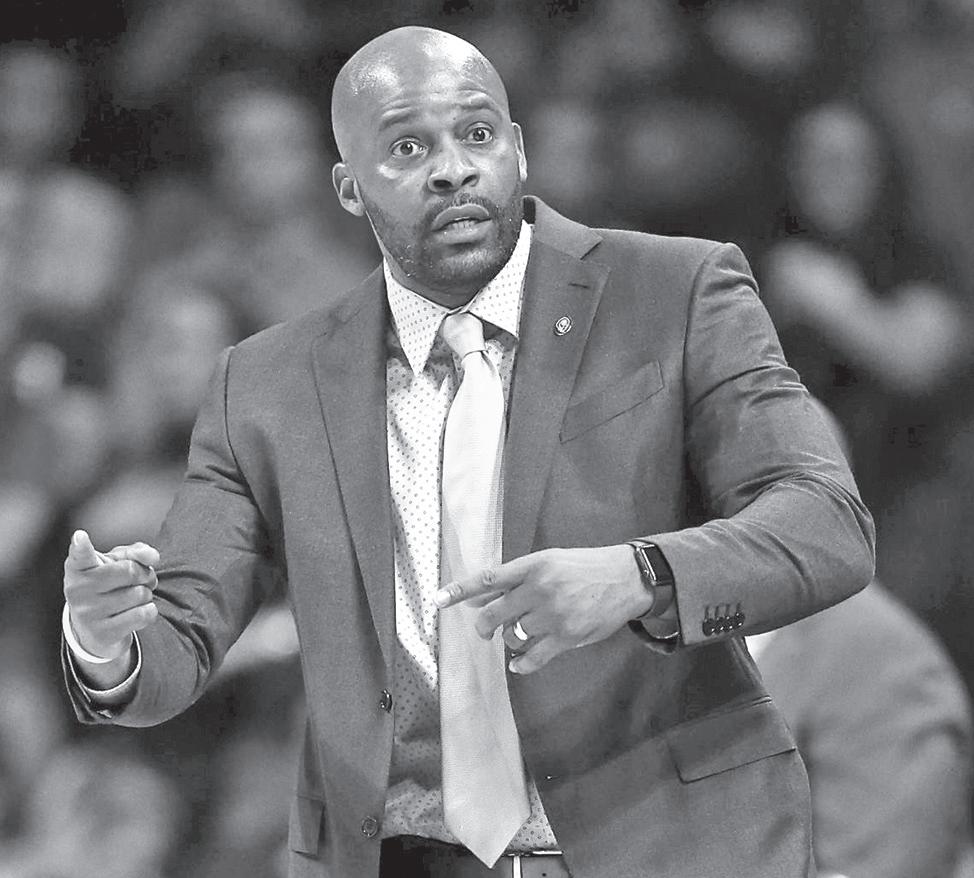
A bright spot in the deflating loss to LSU was Washington, Misssouri product and University of Washington transfer Ronnie Suggs. In 29 minutes, Suggs scored a season-high nine points and contributed four rebounds before fouling out on a questionable call. As Missouri surged to what seemed like an insurmountable second-half lead, Suggs played 17 minutes.
OK, he hit just one of six shots, but he managed to get to the free throw line nine times. He also played a superb defensive game. Unfortunately, he had a key turnover during Mizzou’s late game meltdown.
A controversial foul call after a missed shot sent him to the bench late in regulation and led to LSU’s tying free throw.
“I tried to block out best I could. (The referees) said I was walking underneath (the LSU player.) I’ve got to be smarter and get better position,” Suggs said.
Martin backed his player after the tough call.
“It looked like he came over Ronnie’s back. That’s with my eyes seeing it,” he said.
Missouri looked awful

during the second half of last week’s 72-60 loss to Arkansas, but Martin said following the game that Suggs would see more playing time. He earned his lengthy minutes because “he’s assertive and can get downhill. Plus, (he has the) ability to defend multiple guys,” Martin said. Suggs has averaged almost 20 minutes a game in the Tigers’ last three games. He logged five minutes in the team’s first three SEC games. He has won the coach’s trust. Now hopefully, he can help the Tigers start winning some games.
The Reid Roundup
Free Kevin Steincross … Bet on the New England Patriots to cover the 2.5 spread against the L.A Rams in the Super Bowl. Take the under on 56.5 total points. And don’t blame me when we lose … Kansas City Chiefs quarterback Patrick Mahomes will most likely be honored as the NFL’s MVP on Saturday night in Atlanta. I’m sure he would trade the recognition for a spot in Sunday’s Super Bowl … Mahomes led the AFC to a 23-7 win over the NFC and was named the Pro Bowl’s MVP. Great for him, but the game itself is a joke … Missouri State throttled
Missouri Valley Conference leader Loyola 70-35 last week and then thumped Bradley. The Bears moved to 9-10 and 4-4 in league play with a game against Valparaiso (11-7, 5-3) on Tuesday. They are a MVC Tournament dark horse … Obediah Church, a two-star forward from Springfield, Illinois, has left Missouri State’s team. He started 100 of the 106 games he played for the Bears and is scheduled to graduate in May. Under the new transfer rules, he could be eligible to play next season. If so, would SLU, Mizzou or Illinois be interested? ... Tough loss for St. Louis University last Saturday. Jordan Goodwin missed two free throws with less than a second left in the game, and Davidson hung on for a 54-53 victory … Seriously, shouldn’t SLU be in the MVC? ... Seriously, shouldn’t Missouri be in the Big 12? ... I wonder if MLS officials and owners would like to know about the immoral end run Better
Together is trying to pull off on the city and St. Louis County and the nasty campaign which is now underway? ... Memphis first-year coach Penny Hardaway said this week that many NCAA coaches are jealous of him and other former pros because of their NBA expe-
rience and jump into college coaching. “So, we didn’t quote, unquote, ‘Pay our dues.’ So, the coaches and their so-called boys that are in the media, they’re going to always throw jabs at us.” … Chris Mullin has St. John’s program on the rebound and Patrick Ewing is bringing life back to Georgetown basketball. Both are former NBA stars … Barry Bonds and Roger Clemens were again denied a place in the National Baseball Hall of Fame in Cooperstown, N.Y. Hypocrisy at the highest level. Columnist Jeff Passan said on ESPN last week that he talked to 60 writers who said they voted against Bonds and Clemens, and “Only 10 percent or so are full-time baseball writers.” Here’s my commentary: Only cowards refuse to release their ballot.
Alvin A. Reid was honored as the 2017 “Best Sports Columnist – Weeklies” in the Missouri Press Association’s Better Newspaper Contest and is a New York Times contributor. He is a panelist on the Nine Network program, Donnybrook, a weekly contributor to “The Charlie Tuna Show” on KFNS and appears monthly on “The Dave Glover Show” on 97.1 Talk.” His Twitter handle is @aareid1.

Continued from C7
put forth a perennial contender for the past two decades. It explains how Milwaukee (#35) has the best record in the East after finding Giannis Antetokounmpo in a lower-level Greek league. The team wisely surrounded him with a team of long, threeand-D types and finally landed a talented coach in Mike Budenholzer Oklahoma City (#45) earned its way into title contention after drafting Kevin Durant Russell Westbrook and James Harden. Even after dealing Harden and losing Durant the Thunder is still one of the top teams in the West and managed to re-sign Paul George, one of the most-coveted players in free agency in 2018. George was expected to sign with the Lakers but shocked everyone by staying with Oklahoma City because he preferred to play alongside Westbrook than under the shadow of James. Meanwhile, perennially bad teams typically have perennially bad front offices. The Knicks have more money than anybody but typically throw money at terrible players and haven’t reached the playoffs since 2012. The Grizzlies were once a symbol of consistency, but then threw max contracts at Chandler Parsons and the talented-but-oft-injured Mike Conley Jr. have been in a free fall ever since.
Back to Davis, nobody should have a problem with him requesting a trade and trying to work his way to Los
Continued from C7
Vashon goes 2-1 in Florida
The Vashon Wolverines made their second trip to the state of Florida to compete in a national-level tournament.
Vashon participated in the Montverde Academy Classic came away with a 2-1 record while playing against three nationally ranked teams.
Vashon defeated No. 15

Angeles. Davis has done everything asked of him in New Orleans but unfortunately the team has not been able to build a winner. In Davis’ six years with the Pelicans, the team has only qualified for the playoffs twice.
Since drafting Davis, the
Long Island Lutheran (New York) in the first round before dropping a game to No. 3 and host Montverde Academy in the semifinals. The Wolverines rebounded to defeat No. 5 Wasatch Academy (Utah) in the third place game. Vashon has compiled a 13-5 record against its national schedule.
St. Louis Collegiate wins Herculaneum Tournament
Another nice story in basketball circles is the emergence of St. Louis Collegiate Prep, which is rolling along with a
Pelicans’ front office has not performed very well. Following Davis’ selection in 2012, the Pelicans’ first-round picks have been: Austin Rivers Nerlens Noel (traded for Jrue Holiday) and Buddy Hield (traded in a package for Cousins). The Pelicans trades haven’t been
16-2 record and a couple of tournament championships.
St. Louis Collegiate won the championship of the Herculaneum Tournament last weekend with a 46-45 victory over St. Pius. They won the championship of the PHL Holiday Tournament in late December.
The leader of the pack is guard Kalind Anderson, who is averaging a team-high 15.5 points a game. Forward Dakari Gray is averaging 13 points and 10 rebounds while Demarious Haywood is averaging 11 points and 11 rebounds a game.
The ST. LouiS AmericAn PreP AThLeTeS of The Week
DeSmet – Boys Basketball
The sophomore forward enjoyed a big week in helping the Spartans to the championship of the Circle 7 Ranch Tournament at Parkway West.
The 6’9” Keita averaged 10 points, 17 rebounds and four blocks a game in DeSmet’s three victories. In the championship game Keita had 13 points and a career high 26 rebounds in a victo-
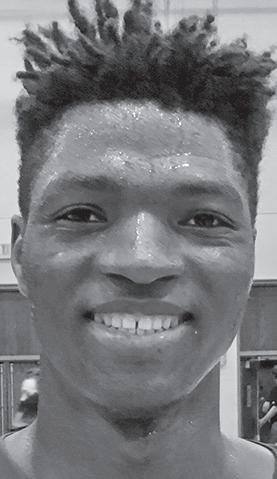
ry over Hazelwood Central. For the season, Keita is averaging 7.3 points, 8.5 rebounds and 2.2 blocks per game. As a freshman, he averaged 10 points and 11 rebounds a game. DeSmet is currently 17-3 with its only game at home against Metro Catholic Conference rival Chaminade on Friday night.

bad, but they haven’t done enough to create a team worthy of contending in the uber-competitive West.
At 25-years-old, Davis is entering his prime and doesn’t want to wait for the front office to get its act together and build a contender. He’s well within
Fort Zumwalt South and DeSmet win tournament titles
The DeSmet Spartans won the championship of the Circle 7 Ranch Tournament at Parkway West. The top-seeded Spartans defeated No.
his rights to move on. People complaining and clamoring for the NBA to make it harder for players to leave are misguided. Sure, in the NBA’s golden years, the 80s and 90s, many star players decided they wanted the challenge of leading their own team
2 seed Hazelwood Central for the championship game. Sophomore forward Yaya Keita scored 13 points and grabbed an incredible 26 rebounds in the game. Senior guard Evan Asleson and 6’10” sophomore Sekou Gassamma also scored 13 points for DeSmet.
to a championship. But let’s face it, those days are over. Players today have choice. And I’ll never complain about watching talented black athletes choosing their own paths rather than allowing billionaires to direct it for them. Eventually the tide will change and stars will go back to wanting to win on their own. It’s already happening with a few. Harden wanted out of OKC to prove he is a superstar that can stand on his own two feet. I have a strong feeling Antetokounmpo will stay in Milwaukee once his contract is up. Kyrie Irving forced his way out of Cleveland because he wanted to be top dog (though he’s now seemingly backtracked).
The NBA has done what it can to persuade players to stay with their current teams by giving players monetary incentives. Davis is giving up an estimated $80M by declining to sign a contract extension with the Pelicans. What more can the league do? If AD wants to play with King James, let him. Instead of whining about unfairness of big market teams, the little guys need to invest in scouting, front office and creating a winning atmosphere so that when they do land stars via the luck of the draft, they can convince them to stay and recruit their superstar BFFs.
Follow Ishmael and In the Clutch on Twitter @ishcreates. Subscribe to The St. Louis American’s YouTube page to see weekly sports videos starting Ishmael and Melvin Moore at youtube.com/stlamericanvideo.
Fort Zumwalt
guard EJ Bellinger scored 25 points to lead the Bulldogs while junior forward J.J. Schwepker added 16 points.

By Chad Davis
Of St. Louis Public Radio
Donna Rogers didn’t receive a paycheck in weeks. A U.S. Army veteran who works at the U.S. Department of Agriculture (USDA) office in St. Louis, she was among the 800,000 federal employees around the nation working without pay or on furlough.
The lack of a paycheck weighed on her, with the partial government shutdown the longest running in U.S. history and President Trump saying another shutdown remains an option.
“Being a single mom, bills are still due, period,” Rogers said. “So whether you have kids or no kids, you have teenagers, grown folks, whatever; I mean, bills are still coming through.” Now veterans and their advocates are worried how financial instability is affecting this group of federal workers’ mental health, especially since many veterans consider the federal government an employer of last resort.
mental-health issues among veterans.
“I just went through 13 pages of stories and quotes of veterans being affected right now,” Attig said. “And the No. 1 thing that they talk about is the heightened level of stress that the possibility of not being paid is giving to them.”
Attig said financial instability is one of the leading causes of veteran suicide.
n “Being a single mom, bills are still due, period.”
– Donna Rogers, a U.S. Army veteran who works at the U.S. Department of Agriculture
Data from the VA National Suicide Data Report shows between 2008 and 2016, more than 6,000 veterans died by suicide each year. In 2016, the national suicide rate for veterans was 30 percent, while the Missouri veteran suicide rate was 34 percent.
“As these veterans start to go into their savings that make up their financial stability, they’re going to slowly become less and less stable when it comes to finances, which will lead to instability in other parts of their lives,” Attig said.
“Being unstable financially can cause a whole lot of more issues for our veterans,” Rogers said. “Not only we came to where some of us couldn’t get jobs once we got out the military, we have to be trained because nobody was accepting the jobs we did.”
The federal government is the largest employer of veterans in the U.S. One-third of the federal government is made up of veterans.
William Attig, the executive director of the AFL-CIO Union Veterans Council, is on high alert for shutdown-related
Funding for the U.S. Department of Veterans Affairs (VA) has been secured through September, which means services such as disability pay and mental-health services will continue at least through then. Other services many veterans rely on are at risk of losing funding, including the Supplemental Nutrition Assistance Program (SNAP), commonly known as food stamps.
About 1.4 million veterans rely on food stamps, according to a report by the U.S. Census Bureau’s American Community Survey, and funding food stamps is one of many programs controlled through
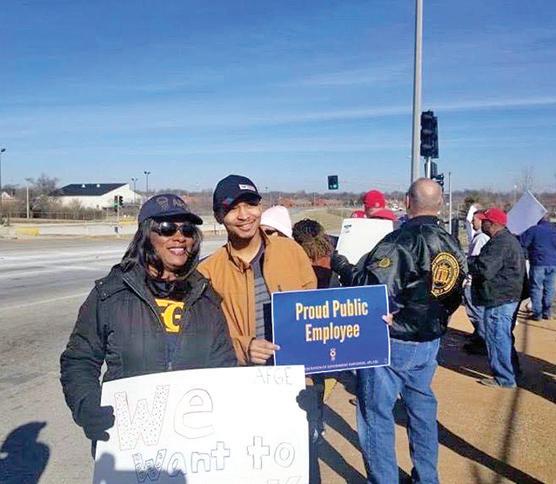
the USDA. That funding is expected to last at least through February. Other services including loan processing are also among those affecting veterans and others.
“It’s hurting that we can’t be of service to people who

also are suffering like we are,” Rogers said. “They’re not necessarily a veteran employee. They’re a mom, they’re farmers; there’s an elderly lady who can’t get her medicine because she can’t afford some things.”
Rogers likens her federal job as a continuation of her service to country. Now she fears that service is being taken for granted.
“We served our country, and we’re still serving our country, because we come to the civilian
government job with that same mindset that we took an oath,” Rogers said. Follow Chad on Twitter @ iamcdavis. Reprinted with permission from


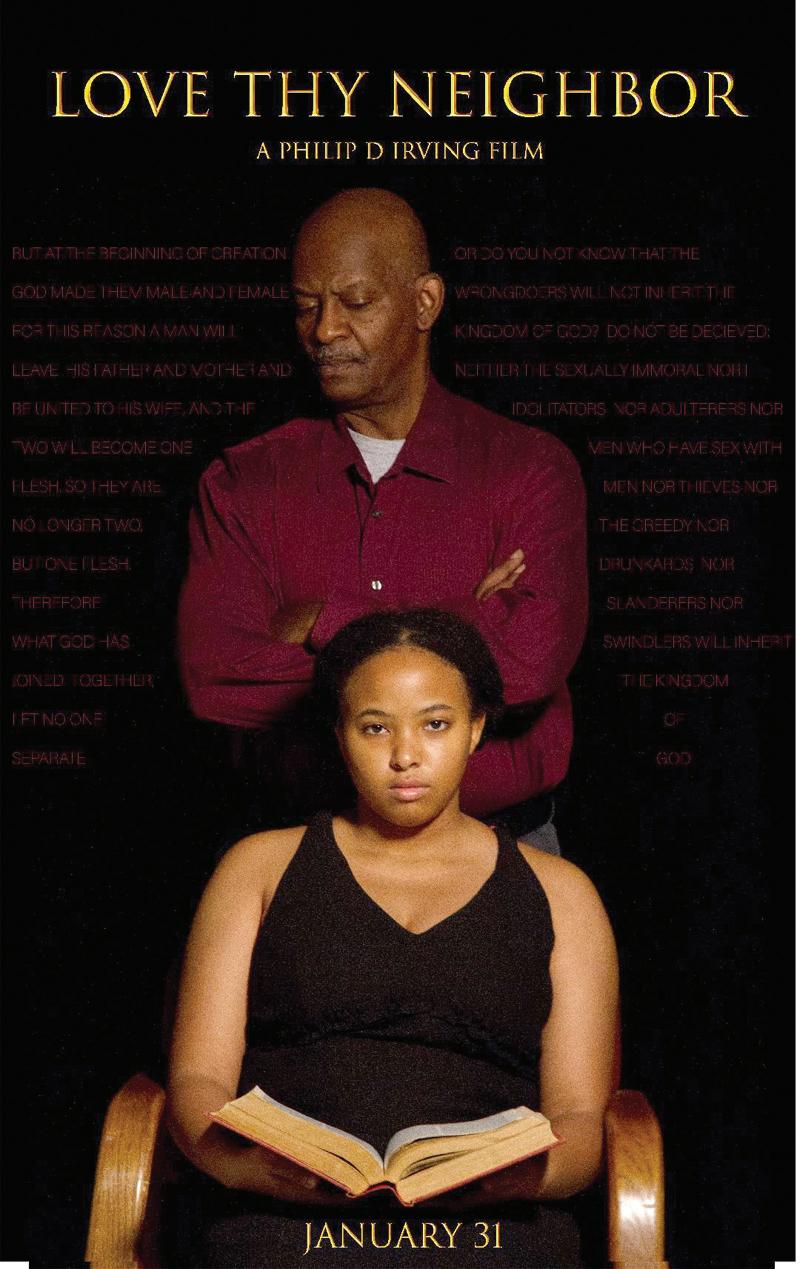
By Kenya Vaughn Of The St. Louis American
Webster University film student Philip Irving had no idea what to expect when he teamed up with fellow student filmmaker Travis Haughton to debut their respective short films to the general public. They received plenty of positive feedback from peers and professors. But that does not exempt one from playing before an empty house.
Pulling an audience won’t be a problem for them tonight (Jan. 31). The response for their first-ever screening was so overwhelming, that it sold out. They are in the process of working on a second screening to accommodate the demand.
For Irving, one word sums it up. “Amazing.”
“For me it’s a little unreal because I thought we were just going to film it and show it to our class and that was going to be the end of it,” said Sally McGinnis, who produced Irving’s film, entitled “Love Thy Neighbor.” “Now there’s so much hype around it and it’s really, really exciting. I never thought we would get this far.”
“Love Thy Neighbor,” Irving’s directorial debut, will screen with Haughton’s “I’m Not The Only One” tonight on Webster’s campus. A post
show Q&A will follow the screening.
“Love Thy Neighbor” is about a young African American woman coming out as a lesbian to her Baptist preacher father. “She’s really hiding a huge part of herself,”
n “First going in I was like, ‘Maybe I can make this thing come together, but probably not.’ But everyone had so much faith in me – and everyone had such faith in each other – that I felt like we could actually do this.”
- Philip Irving
Irving said. “Thematically I wanted to explore what happens when religion clashes with the LGBTQ community and the black community. I think there are differences in how it is handled in the black community.”

Saint Louis Art Museum’s ‘Graphic Revolution’ includes black
By Kenya Vaughn
Of The St. Louis American
“I’m especially excited about Graphic Revolution because of the arc of time of ‘Graphic Revolution’ really overlaps with some of the best eras of African American art making,” said Adrienne Davis.
By profession, Davis is vice provost and the William M. Van Cleve professor of Law at Washington University. But she holds her own alongside the most-informed and eloquent curators when she talks about visual arts as an influencer, collector and enthusiast.
Such was the case on Saturday morning when she joined Elizabeth Wyckoff, curator of prints, drawings, and photographs, and Gretchen L. Wagner, Andrew W. Mellon Fellow for Prints, Drawings, and Photographs, to discuss the African-American artists represented in the Saint Louis Art Museum’s latest exhibition “Graphic Revolution: American Prints 1960s to Now” on a guided tour with the Friends of African American Arts group.
Wyckoff described “Graphic Revolution” as a wide ranging, inclusive survey of contemporary art in the United States over the past six decades.
“African Americans have been making art since we’ve been brought to this country,”

Davis said. “But here you find the expansions of the genres and all the different kinds of art in the 50s, 60s and 70s – and of course the contemporary era.” Nearly 20 works by black artists are fea-
Above: Julie Mehretu, American (born Ethiopia), born 1970; Epigraph, Damascus, 2016; overall: 85 7/16 inches × 205 1/2 inches; Saint Louis Art Museum, Eliza McMillan Trust and Friends Endowment Fund.
Photo courtesy of the artist and BORCH Editons © Julie Mehretu
Left: Kerry James Marshall, American, born 1955; Rythm Mastr: Every Beat of My Heart, 1999; artist’s newspaper comic; sheet (folded): 16 15/16 × 11 3/8 inches; Saint Louis Art Museum, Richardson Memorial Library, Saint Louis Art Museum EXH17.238.1 © Kerry James Marshall.
of the artist and Jack Shainman
tured in the exhibition, which closes this Sunday (February 3). They include Kerry James Marshall, Glenn Ligon, David Hammons, Robert

He wanted to pose the question, “How do you treat someone in that community if you truly believe that it’s wrong?”
“I can understand that you see that the scripture doesn’t back a person being homosexual, but how do you go forward treating them as human beings?” Irving asked. “In a lot of ways, I feel Christians have failed at doing that – a lot of times we use scripture to reinforce our prejudices even though regardless whether we believe it was right.”
Irving said that he is not in any way trying to convince viewers what to believe.
“I want the audience in general to come out with the message that you don’t have to agree with somebody to choose to love them,” Irving said. “That’s what that title ‘Love Thy Neighbor’ means – and it’s pulled from scripture too.” In addition to their first official film credit –and a sold-out audience – Irving and McGinnis gained a boatload of confidence by seeing the film’s vision through.
“First going in I was like, ‘Maybe I can make

Saturday (Feb. 1- 2) at The Marcelle Theatre.
TLT Productions to spotlight African American modern concert choreography
By Kenya Vaughn Of The St. Louis American
If the performances go anything like the conversation with TLT Productions Producing Director Tre’von Griffith and “Black AF” chore-
which speaks to the urban slang translation of the abbreviation in the concert’s name. The unapologetically black modern dance concert – a joint creative concept by Beal, Griffith, his TLT producing partner Lauron

How to place a calendar listing
1. Email your listing to calendar@stlamerican. com OR
2. Visit the calendar section on stlamerican.com and place your listing
Calendar listings are free of charge, are edited for space and run on a space-available basis.
Sat., Feb. 2, 2 p.m., Edna Patterson-Petty Quilting Our Story Workshop. 14th St. Artist Community, 2701 N. 14th St., 63106. For more information or to register, visit www.eventbrite.com.
Sun., Feb. 3, 3 p.m., Dhati Kennedy Drumming Our Story: African Drumming & Story. 14th St. Artist Community, 2701 N. 14th St., 63106. For more information or to register, visit www. eventbrite.com.
Thur., Feb. 7, 6:30 p.m., Hidden Figures in St. Louis’s African-American History. Maplewood Public Library, 7550 Lohmeyer, 63143. For more information, visit www. maplewoodpubliclibrary.com.
Thur., Feb. 7, 7 p.m., Missouri History Museum presents Unfinished Business: From the Great Migration to Black Lives Matter. This musical documentary documents oral histories of African American elders. 5700 Lindell Blvd., 63112. For more information, visit www. mohistory.org.
Sat., Feb. 9, 10 a.m., Alpha Phi Alpha Fraternity, Inc., Epsilon Lambda Chapter presents the 2nd Annual Martin Luther King, Jr. Celebration. 10 a.m.: Peace Walk (Fountain Park); 11:30 a.m.: Panel. Centennial Christian Church, 4950 Fountain Ave., 63113. For more information, call (314) 367-1818.
Sun., Feb. 10, 1 p.m., Neighbors Impacting Communities invites you to a Black History Extravaganza. Storytelling, performances, and more. The Omega Center, 3900 Godfellow Blvd., 63120. For more information, visit www.
blackhistoryextravaganza.com.
Sun., Feb. 10, 2 p.m., St. Louis Public Library welcomes Black History Month 2019 Feature Speaker: Ozzie Smith. Central Library, 1301 Olive St., 63103. For more information, visit www.slpl. org.
Sun., Feb. 10, 3 p.m., Blacks in America: 400 Years Plus. The topic will be Black Struggle, Resiliency, and Hope for the Future. Graham Chapel, Washington University, 1 Brookings Dr., 63130. For more information, visit www. eventbrite.com.
Sat., Feb. 16, 1 p.m., Fair Housing 50 Years Later Film Screening. Marking the 70th anniversary of the landmark Shelley v. Kraemer Supreme Court decision and the 50th anniversary of the Fair Housing Act. Missouri History Museum, 5700 Lindell Ave., 63112. For more information, visit www.eventbrite.com.
Thur., Feb. 21, 6:30 p.m., Maplewood Public Library presents The History of Negro Leagues Baseball. Learn how men of color organized a league of their own. 7550 Lohmeyer Ave., 63143. For more information, visit www. maplewoodpubliclibrary.com.
Thur., Feb. 21, 7 p.m., St. Louis Public Library presents Times’s Getting Harder: Stories of the Great Migration. Part of the 2019 Black history series: Black Migrations. Schlafly Branch, 225 N. Euclid Ave., 63108. For more information, visit www.slpl.org.
Fri., Feb. 22, 7:30 p.m., St. Louis Symphony Orchestra presents Lift Every Voice: Black History Month Celebration. 718 N. Grand Blvd., 63103. For more information, visit www.slso. org.

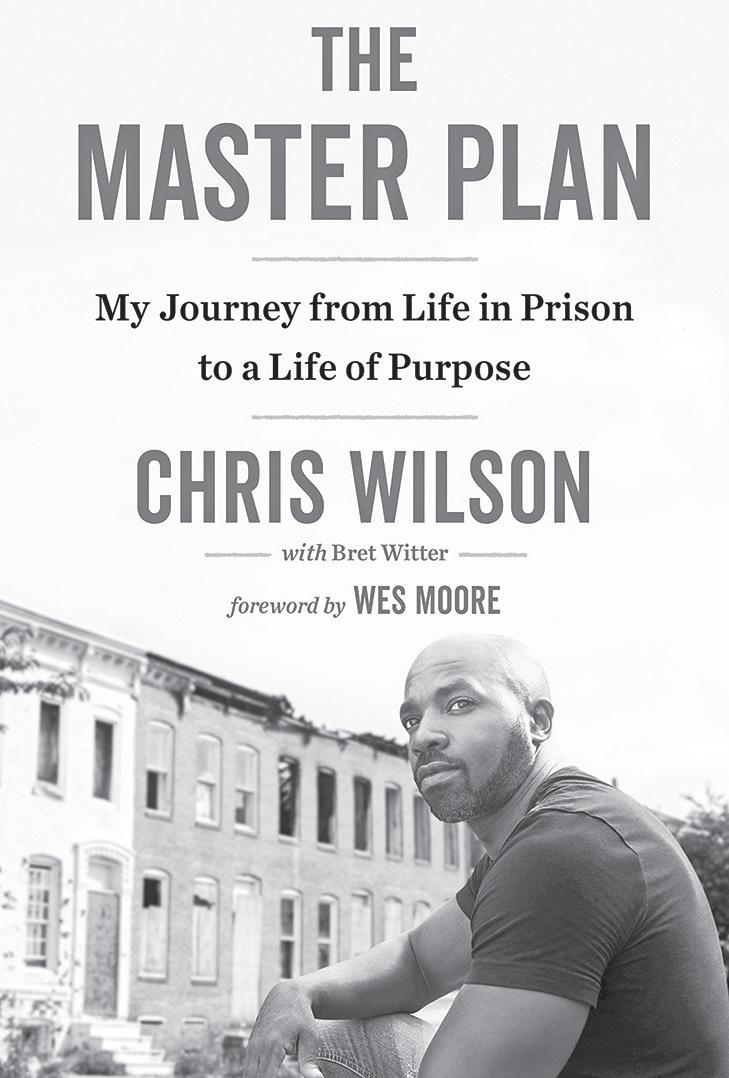
Sat., Feb. 9, 8 p.m., Sheldon Concert Hall presents Diane Reeves. 3648 Washington Blvd., 63108. For more information, visit www. thesheldon.org.
Sun., Feb. 10, 5:30 p.m., Breakaway Productions & Witherspoon Entertainment present a Valentine’s Weekend KickOff with Will Downing Special guest Lamont Hadley. Givens Auditorium, Harris Stowe, 3026 Laclede Ave., 63103. For more information, visit www. metrotix.com.
Sun., Feb. 17, 7 p.m., The Sophisticated Soul Tour starring Lalah Hathaway, Lyfe Jennings and Raheem DeVaughn, Stifel Theatre. For more information, visit www.stifeltheatre.com.
Sun., Feb. 17, 8 p.m., The Ready Room presents Bryce Vine. With special guest Kid Quill. 4195 Manchester Ave., 63110. For more information, visit www.thereadyroom. com.
Sun., Feb. 17, 8 p.m., The Pageant presents The 2009 Tour feat. Wiz Khalifa and Curren$y. 6161 Delmar Blvd., 63112. For more information, visit www.ticketmaster.com.
Mon., Feb. 18, 8 p.m., Travis Scott: Astroworld - Wish You Were Here Tour 2, Enterprise Center. For more information, visit www. ticketmaster.com
Sun., Feb. 24, 6:30 p.m., Sheldon Concert Hall presents Ladysmith Black Mambazo. 3648 Washington Blvd., 63108. For more information, visit www. thesheldon.org.
Sat., Mar. 2, 7 p.m., Ambassador presents Ginuwine, Jon B., and Adina Howard. 9800 Halls Ferry Rd., 63136. For more information, visit www. metrotix.com.
Sun., Mar. 3, 8 p.m., Sheldon Concert Hall presents Aaron Neville. 3648 Washington Blvd., 63108. For more information, visit www. metrotix.com.

St. Louis Public Library hosts Chris Wilson, author of ‘The Master Plan: My Journey from Life in Prison to a Life of Purpose.’ For more information, see LITERARY.
Jan. 30 – Feb. 3, Jazz St. Louis presents Bistro All Stars. Feat. Tia Fuller, Sean Jones, Peter Martin, and Warren Wolf. Jazz at the Bistro, 3536 Washington Ave., 63103. For more information, visit www.jazzstl.org.
Mondays in January, The Monday Night Mixer hosted by the Keith Bowman Quartet. Dark Room at the Grandel, 3610 Grandel Sq., 63103. For more information, visit www.thedarkroomstl.com.
Sat., Feb. 2, 5 p.m., Femfest 5: An All-Female Showcase Fubar, 3108 Locust St., 63103. For more information, visit www.do314.com/events.
Sat., Feb. 9, 6 p.m., J&A Music invites you to The Love Affect CD Release Concert. Various styles of gospel music from contemporary to traditional. Medici, 2065 Walton Rd., 63114. For more information, visit www.eventbrite.com.
Sat., Feb. 9, 7 p.m., Distinguished Entertainment
Group and 7 Entertainment & Productions, LLC present Luther Vandross & Maze Benefit Concert ft. Justin Hoskin And The Movie Proceeds benefit Looking For An Angel, Inc. The Jewel Event Center, 407 Dunn Rd., 63031. For more information, visit www.facebook.com.
Sun., Feb. 10, 6 p.m., Shades of Love. Feat. Nevi, Deveaon, Cheron, and J. Fitzgerald. Special Times Banquet Hall, 5950 Natural Bridge Ave., 63120. For more information, visit www.facebook.com.
Feb. 11 – 12, Sheldon Concert Hall presents Endless Lovefest. celebrate Valentine’s Day with Beethoven, Schumann, Poulenc and CMSSL. 3648 Washington Ave., 63108. For more information, visit www. chambermusicstl.org.
Jan. 30 – Feb. 3, Jazz St. Louis presents Bistro All Stars. Feat. Tia Fuller, Sean Jones, Peter Martin, and Warren Wolf. Jazz at the Bistro, 3536 Washington Ave., 63103. For more information, visit www.jazzstl.org.

Feb.3, Disney On Ice
celebrates 100 Years of Magic, Enterprise Center in St. Louis. Tickets are available by calling Ticketmaster at 800745-3000 or visiting www. Ticketmaster.com. To discover more about Disney On Ice, go to www.Disneyonice.com.
Sat., Feb. 2, 2:30 p.m., Better Family Life 6th Annual Jr. Unity Ball: Celebrating Our Legacy. 5415 Page Blvd., 63112. For more information, visit www.bflyouth.org.
Feb. 8 – 10, St. Louis Golf Expo. St. Charles Convention Center, 1 Convention Center Plz., 63303. For more information, visit www. strangertickets.com.
Sat., Feb. 9, 8 p.m., Blaq Pearls presents Wine, Dine & Valentine. Love and Laughter mixed with the smooth sounds of jazz is on the menu. 10832 Bellefontaine Rd., 63137. For more information, visit www. eventbrite.com.
Sun., Feb. 17, 1 p.m., Beauties & Bruhs Brunch 2019. Hosted by Miss Tiffany. Polish Heritage Center, 1413 N. 20th St., 63106. For more information, visitwww. eventbrite.com.
Sun., Feb. 17, 2 p.m., St. Louis Area Voting Initiative invites you to a Candidates Forum: Board of Alderman President City of St. Louis New Northside Conference Center, 5939 Goodfellow Blvd., 63147. For more information, visit www. facebook.com.
Sun., Feb. 17, 3 p.m., Delta Sigma Theta Sorority, Inc., East St. Louis Alumnae Chapter presents A Red Hot Affair Day Party Founders’ Day Celebration. Grand Marais Golf Club, 5802 Lake Dr., Centreville, IL. 62203. For more information, visit www. facebook.com.
Sat., Feb. 23, 3 p.m., Delta Sigma Theta Sorority, Inc., St. Louis Metropolitan Alumnae Chapter presents the 2019 Jabberwock: Standing on the Promises Missouri Athletic Club, 405 Washington Ave., 63102. For more information, visit www. eventbrite.com.
Sun., Feb. 24, 1 p.m., The Sumner High School Alumni Association hosts its 16th Annual Membership RoundUp, Sumner’s Journey: Past and Present. Lifetime Members will be honored and as well as “Showcase Your Talent II”. Sumner High School. Individuals or groups that would like to showcase, please respond by February 5th at 314.345.2676 or e-mailing sumneralumniassn@yahoo. com.
Feb. 1 – 2, Helium Comedy Club presents Sheryl Underwood. 1151 St. Louis

Galleria St., 63117. For more information, visit www. heliumcomedy.com.
Feb. 7 – 9, Helium Comedy Club presents Tommy Davidson. 1151 St. Louis Galleria St., 63117.
Feb. 8 – 10, The Laugh Lounge presents Larry Lacaster. 11208 W. Florissant Ave., 63033. For more information, visit www. thelaughloungestl.com.
Tues., Feb. 12, 7 p.m., St. Louis County Library hosts author Emily Bernard, author of Black is the Body: Stories from My Grandmother’s Time, My Mother’s Time, and Mine. Headquarters, 1640 S. Lindbergh Blvd., 63131.
Tues., Feb. 12, 7 p.m., St. Louis Public Library hosts author Chris Wilson, author of The Master Plan: My Journey from Life in Prison to a Life of Purpose. Special guest Jeff Smith. Central Branch, 1301 Olive St., 63103. For more information, visit www.slpl. org.
Wed., Feb. 20, 4:30 p.m., Webster University hosts authors Lynn Rubright and Ted Green, authors of Oh Freedom After While: The Missouri Sharecropper Protest of 1939. A screening of the documentary by the same name and Q&A with the authors. University Library, 470 E. Lockwood, 63119. For more information, visit www. facebook.com.
Feb. 1 – 2, Black Anthology
30th Anniversary: The Creation. A play written, produced, and performed by students at Washington University. Edison Theatre, 6465 Forsyth Blvd., 63015. For more information, call (314) 935-7879 or email black. anthology@gmail.com.
Feb. 1 – 2, TLT Productions presents Black AF. The exploration of blackness, love, culture and the AfricanAmerican experience brought to life through original works of dance. Marcelle, 3310 Samuel Shepard Dr., 63103. For more information, visit www.metrotix.com.
Feb. 8 – 9, Washington University’s Lunar New Year Festival. The show includes many colorful performances woven together by a play that will tell a story of this year’s theme, “The Strength Within”. Edison Theatre, 6465 Forsyth Blvd., 63105. For more information, visit www.lnyf. wustl.edu.
Sat., Feb. 9, 6 p.m., Marriage Works, If You Work It Stage Play. Touhill Performing Arts Center, 1 University Blvd., 63121. For more information, visit www.touhill.org.
Fri., Feb. 1, 6 p.m., Journeys of the African Spirit Exhibit Opening Night. UrbArts, 2600 N. 14th St., 63106. For more information, call (314) 7183791.
Through February 3, The Saint Louis Art Museum presents Graphic Revolution: American Prints 1960 to Now, Saint Louis Art Museum. One Fine Arts Drive, Forest Park. For more information,

call (314) 721-0072 or visit www.slam.org.
Through February 10, Kehinde Wiley: Saint Louis, Saint Louis Art Museum. One Fine Arts Drive, Forest Park. For more information, call (314) 721-0072 or visit http:// www.slam.org/exhibitions/ kehinde-wiley.php
Fri., Feb. 15, 5 p.m., Sheldon Concert Hall and Art Galleries’ Winter/ Spring Gallery Open. 3648 Washington Blvd., 63108. For more information, visit www. thesheldon.org.
Through Feb. 28, National Blues Museum presents Our Living Past: A Platinum Portrait of Music Maker
Photographer Timothy Duffy provides a look at the true pioneers and forgotten heroes of American roots music. 615 Washington Ave., 63101. For more information, visit www. nationalbluesmuseum.com.
Sat., Feb. 9, 1 p.m., Conversation on Arts Education: Innovation in Public Schools. Pulitzer Arts Foundation, 3716 Washington Blvd., 63108. For more information, visit www. pulitzerarts.org.
Tues., Feb. 19, 5 p.m., Grace Hill Women’s Business Center presents a Legal Clinic. 2125 Bissell St., 63107. For more information, visit www.eventbrite.com.
Through Apr 16, numerous Volunteer Income Tax Assistance & AARP TaxAide sites will open to prepare income tax returns free of charge. For more information, visit these sites: https:// mctcfreetax.org/, https:// stlouistap.org/
Fri., Feb. 1, 11:30 a.m., St. Louis Go Red for Women Luncheon. American Heart Association, 460 N. Lindbergh Blvd., 63141. For more information, visit www. ahastlouis.ejionme.org.
Sat., Feb. 2, 2:30 p.m., Health Healing & Triumph Awareness Benefit Banquet. Engineer Club of Saint Louis, 4359 Lindell Blvd., 63108. For more information, visit www. eventbrite.com.
Sat., Feb. 2, 6:30 p.m., Heart & Soul – A Night in the City of Love. Proceeds benefit Cardinal Glennon. Chase Park Plaza, 212 Kingshighway Blvd., 63108. For more information, visit www. glennon.org/heart-and-soul.
Thur., Feb. 7, 5 p.m., Saint Louis Crisis Nursery presents Eat. Shop. Love. Bring gently used (or new) purses filled with toiletries, gas cards, and accessories to donate. Plaza Frontenac - North Court, 1701 S. Lindbergh Blvd., 63131. For more information, visit www. crisisnurserykids.org.
Fri., Feb. 1, 8 p.m., St. Louis Cathedral Concerts presents American Spiritual Ensemble. 4431 Lindell Blvd., 63108. For more information, visit www.cathedralconcerts. org.

this thing come together, but probably not.’ But everyone had so much faith in me – and everyone had such faith in each other – that I felt like we could actually do this.”
Irving says that “Love Thy Neighbor” is also a testament to the caliber of creativity and talent in the region.
“There’s this conception that you are going to get the best of the best out of [film] schools in LA or in New York,” Irving said. “But everyone who worked on this pulled their own and brought something to it –and we found all of them in the St. Louis area.”
Though he was thrilled with the final result, Irving admitted that the process of making “Love Thy Neighbor” was extremely stressful.
“It was like a long calculus
Continued from C1
Thompson and costume designer Marissa Perry – will play the Marcelle Theatre this weekend (Feb. 1 – Feb. 2).
“We wanted to do something for the culture,” Griffith said. The show incorporates music and storytelling to weave the experience together, but at its core it is a modern dance production.
“I really wanted to bring black concert dance to the St. Louis area, particularly in a way that is palatable for a St. Louis audience that is not used to dance,” Beal said. “I feel like we have a young black theater audience, a young black music audience, a young black visual arts audience and we and also have a young black poetry audience. But we do not have a young black dance audience.”
She also wants to get the black St. Louis dance community out of the box of being primarily either African or hiphop.
“My definition of black modern dance is any modern dance that is created by or for black folks,” Beal said. “I’m

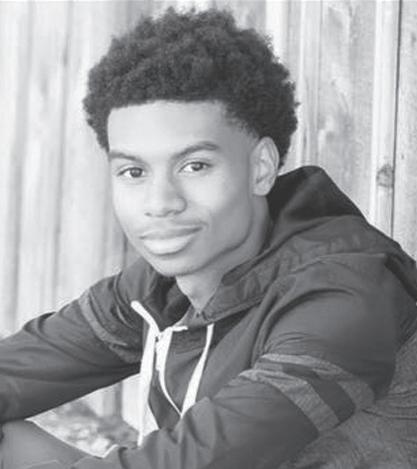
problem,” Irving said. “There are so many steps and each one has to be right or it will ruin the final result. “There are a million ways you can mess up a film, but there are only a few ways to get it right. It’s hard to know what path to take.”
The road traveled for “Love Thy Neighbor” was the right one.
It’s truly one of the most satisfying things I’ve ever done
dancing from my soul. I’m dancing on the shoulders of my ancestors.”
Griffith is happy that he and Thompson can provide the platform for “Black AF” through their TLT Productions umbrella.
“We’ve done ‘Black Boy Joy’. We’ve done ‘Black Girl Magic,’” Griffith said. “We are just really on that trend of cre-
n Nothing about the show will be the runof-the-mill, obligatory Black History Month program.
ating spaces for people of color to enjoy entertainment.” Beal and Griffith are certain that whoever is even remotely familiar with the black experience will find an element that they will relate to over the course of “Black AF.”
“We as black people are unique as individuals, but we also have these universal experiences that transcend space and time,” Beal said. “This how we feel when we go into church. This is how it feels when we go
in my life,” Irving said. “For people to care about these characters and respond to them like they are, I couldn’t be more happy with how it turned out.”
Philip Irving and Travis Haughton have launched a GoFundMe campaign to raise money for a trip to the American Black Film Festival this summer. To donate, visit: https://www.gofundme. com/6ikel54.
into the nightclub and everybody is lit. There is a feeling that is uniquely black – and universally black.”
Nothing about the show will be the run-of-the-mill, obligatory Black History Month program, but there is a common intention with the month that celebrates the achievements and triumphs of African Americans.
“Don’t be ashamed of you and your culture,” Griffith said.
“Black is dope – everything about us,” Beal added. “Black AF can be anything. And when we say that, we mean it could be black love, black joy, black pain, black power. All of those things are blackness.
“Black is dope – and that goes for everything about us. And the show is going to be very ‘litty’.”
TLT Productions’ presentation of “Black AF” will take place at 8 p.m. Friday, Feb. 1 and 3 p.m. and 8 p.m. on Saturday, Feb. 2 at The Marcelle Theatre, 3310 Samuel Shepard Dr, St. Louis, Mo., 63103. An afterparty with sounds provided by DJ Nune will follow each performance. For more information, or to purchase tickets. Visit www. metrotix.com or call (314) 5341111.



from C1
Blackburn, Betye Saar, Lorna Simpson, Nick Cave, Ellen Gallagher and Martin Puryear. The exhibition includes works from Davis’ personal collection. Wyckoff and Wagner said that it was intentional for them to include a robust mix of artists from the underrepresented communities.
Through her passion and knowledge, Davis added context and helped further forge a connection with the power that comes with representations that defy stereotypes and counter the narratives imposed on black people for simply existing.
“From the moment we arrived in this country – before it was a nation – it was an American tradition to completely exploit and oppress and subordinate African Americans in some of the worst ways that human history has ever seen,” Davis said. “It’s not surprising that a lot of African American artwork was about trying to recover the human dignity of African Americans.”
Ironically, the first the first piece of work to be discussed was controversial artist Kara Walker’s “Keys to the Coop.” The black and white silhouette features a black woman with pronounced lips and kinky hair designed to resemble racist negative imagery in the act of eating the head of a freshly decapitated chicken.
“I think it’s about undermining this idea of respect – everything that is used to stereotype black people as unattractive,” Davis said. “Part of the tradition that African American artists have tried to work with is even in ugliness, you can find profound beauty.
That is very much part of the African American tradition that your life circumstances can be appalling, but that doesn’t make you less than human. You can still find dignity and beauty.”
Davis pointed out that several black women artists – including some that are fea-
tured in “Graphic Revolution” launched a campaign against Walker when she was awarded the MacArthur “Genius” grant in the late 1990s. Those artists were successful in blocking exhibitions of Walker’s work.
“They felt that she was profoundly undermining African American art and they felt that the art market was valuing her so much because the images she was putting out were devaluing black people,” Davis said.
“She helped open up the genre and helped open the range of representation that is permissible – and spark a lot of great conversation.”
As the group of ten or so walked through the Main Gallery for the remainder of the exhibit, the type of art ran the gamut. Walker’s “Keys to the Coop” gave jarring pause. Kerry James Marshall’s “Rythm Mastr: Tower of
n As the group of ten or so walked through the Main Gallery for the remainder of the exhibit, the type of art ran the gamut.
Power” elicited black pride.
He was inspired by the Marvel “Black Panther” comic strip to create his own version of an afro-futuristic comic series where the protagonist is a master drummer from Chicago.
“He’s going into museums, looking at African sculpture and taking those power figures he sees in the museum and animating them and turning them into super heroes,” Wagner said.
The African American artists “Graphic Revolution” take the viewer through past, present and future of the black experience. Glenn Ligon’s “Runaways” is a series of lithographs that are an autobiographical interpretation of the fugitive slave advertisements.
“You see this distinct group of African American artists all revisiting slavery in their work,” Davis said. “So even though it’s this institution people tell us is over, What is so marvelous about black artists is how this institution continues to inform the art but in the ways that are completely different.”
Time didn’t allow for every work by a black artist to be dissected for the group. Lorna Simpson’s “Wigs” would have surely sparked an interesting dialogue as a reflection of the contemporary work in the exhibition. But the topics that would have been talking points for “Wigs” came up during the discussion about Ellen Gallagher’s “DeLuxe.” “What the mass media was putting forth as acceptable beauty in the African American community and beginning to deconstruct those and call out some of the things she was observing,” Davis said. With “DeLuxe,” Gallagher builds a complex print work from advertisements found in African-American lifestyle magazines for products geared to black consumers.
“This body of work falls into when she really starts looking into the experience of black women and double subordination,” Davis said. “The other thing that I think is so profound is that so much of black culture is about advertisement and how we are depicted.
“We are the object of advertising. Even the people who dehumanize us try to sell us things – and we are also constantly used to try to sell things.”
Saint Louis Art Museum’s presentation of “Graphic Revolution: American Prints 1960 to Now” will continue through Sunday, February 3. For more information, visit www.slam.org or call (314) 721-0072.
“His work overall, looks at issues of race in America. But this was a very specific moment when he turned to the history of slavery,” said Wagner. Saar’s “The Fragility of Smiles (of Strangers Lost at Sea) honors the Middle Passage.

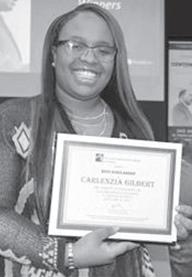
Carlenzia Gilbert, a senior at the Hazelwood Opportunity Center, received a $500 scholarship from the Christian Hospital Foundation on Friday, Jan. 18. Gilbert received the scholarship at the secondannual Dr. Martin Luther King, Jr. Celebration Luncheon, hosted by the Foundation. Gilbert plans to attend Southern University and pursue a double major in Health Administration and Hospitality Management. She was recognized for her leadership within the Hazelwood School District, as she is a member of the Superintendent’s Student Advisory Board and an exceptional building leader at the Opportunity Center.
Beaumont High School Class Of 1969 will celebrate i’s 50 year reunion Sept 20-22, 2019 at Embassy Suites St. Charles.. Come join us as we celebrate these golden years, “Living Life Like It’s Golden.” For more information contact Dennis Hayden 314 276-6188 or beaumontclassof1969@ yahoo.com or send your questions to P.O. Box 155, Florissant, MO 63032.
Beaumont High School Class of 1979 is planning its 40 year reunion. All activities are scheduled for the weekend of September 27-29. The location is The Airport Marriot at 10700 Pear Tree Drive, St. Louis 63134. For more information, contact Milton Jackson at 314-2764392 or Yolanda Lockhart at lockhartyo08@gmail.com.
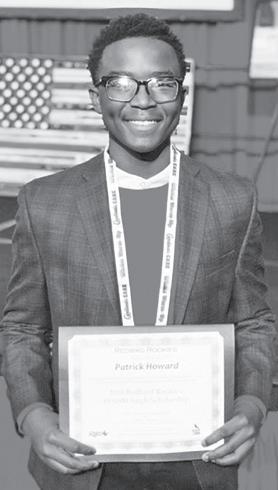
Date to sail is set for July 20, 2019 and you can feel free to contact: Duane Daniels at 314-568-2057 or Howard Day at 414-698-4261 for further information. Please don’t miss the boat!
Sumner Alumni Association hosts its 16th Annual Membership Round-Up Sunday, February 24, 2019, 1-4 pm at Sumner High School. Theme: Sumner’s Journey: Past and Present and “Showcase Your Talent II”. Activities: Reception 12:301:45 pm catered by Murray’s Catering, Angelo “Sax” Shaw, displays, souvenir items, vendors, and more. New, renewal or upgrade Alumni Assn Membership; program 2 pm. Bring canned goods for a Ville’s church food pantry. Vendors ($50 Fee). For flyer or more info, email: sumneralumniassn@ yahoo.com or call J. House, Chairperson (314) 420-3442. All reunion announcements can be viewed online!
Northwest Class of 1979 is planning on cruising for our 40th class reunion and would love for you to join us!
Soldan Class of 1979 is planning its 40th year reunion for the weekend of August 2-3, 2019. Yearlong reunion activities will begin with a kickoff at Soldan High School Homecoming on Saturday, October 13, 2018 prior to the game at 1 p.m. For more information or to assist with reunion activities, please email at: soldanclassof1979@gmail. com or call Barbara at 314 456-3391.

Congratulations to Patrick Benjamin Howard, an eighthgrader at MICDS, who was awarded a $10,000 Redbird Rookies Saigh Scholarship from the St. Louis Cardinals. The Redbird Rookies Saigh Scholarship is given to students who demonstrate outstanding integrity, confidence, leadership and teamwork as a Redbird Rookies team member as well as the strength of character, attitude, and promise that define a successful graduate of Redbird Rookies program. The scholarship is to be applied to his college education upon graduation from high school.
Sumner Class Of 1969 50th reunion “Living Life Like It’s Golden” June 28-30, 2019. Looking for classmates of 1969 to contact us with your updated information via address:sumnerclass1969@ gmail.com or our FB page: Sumner High.
Sumner Class of 1979 will hold its “Bulldogs Rock the Boat” BIG 4-0 Reunion Cruise, June 22-27, 2019. For further information, email your contact information to sumner1979@ymail.com or call 314-406-4309. Join our Facebook group at Sumner High Class of ‘79.
Do
Deadline is
a.m. on Friday. If you’d like your class to be featured in a reunion profile, email or mail photos to us. Our email address is: reunions@stlamerican.com

Terrell Carter, a bi-vocational pastor and full-time professor of practical theology at a Baptist seminary, will release his eighth book, “Learning to be the Church in a New World: Understanding and Overcoming the Challenges to Organized Faith in the 21st Century,” this month through Pinnacle Leadership Press.
Carter researches trends within churches in America to understand how religious life has been shaped and supported, especially in black communities. He then uses this information to inform what he teaches students who hope to be future pastors and leaders, as well as how he leads the congregation he serves.
“This book came from several years of research that was based on the question: ‘Why have so many churches in America become smaller since the 1980s?’” Carter said.
“Although multiple megachurches exist, the reality is that most churches in America have less than 80-90 people that attend on any given Sunday.”
His hope is to help people of faith understand the changes that have been occurring to, and around, churches in America since the mid-20th century, as well as provide hope and strategies for Christian congregations that are seeking ways to remain connected and impactful within their communities.
“Even a casual observer can tell that there are multiple challenges

facing todays churches. Some of those easiest to identify are the fact that fewer people are attending churches in general, and the people that do attend are typically older,” Carter said.
“Having a congregation made up of older members isn’t a bad thing. But it does mean that younger people aren’t participating in traditions that have shaped our families and communities for generations.”
One of the reasons for declining numbers is the fact that many people don’t feel like churches still positively influence communities as they used to.
“Unfortunately, when some people
think about church, they think about past transgressions of leaders who stood up on Sundays and told them how to live their lives but weren’t personally maintaining the standards that they were holding everyone else to,” Carter said.
“They also are turned off by what they see as some church’s focus on political issues that divide people instead of drawing them together around God’s love for all people. And, people consistently frown upon what they consider an overemphasis on giving tithes and offerings as a symbol of a person’s spiritual maturity.”
that they are enemies of the traditional church. “
– Terrell Carter
Carter said that another reason for decline is a general changing view about how a person can hear God speak to them.
“In the past, the pastor, minister, or deacon was the person who primarily held knowledge about God, and they were entrusted to share that knowledge with their congregation. Now, that knowledge, which previously was only available to a select few, is available to anyone with a computer or smart phone. And the information that is available speaks in a way that everyone can understand,” Carter said.
“You don’t have to be able to read Greek or Hebrew to be able to understand what a passage in the Bible means because someone who has been classically trained has likely shared their knowledge on the subject on the internet and has made it free
for everyone. So, when a preacher says, ‘God has told me to tell you…’ a person can pull out their phone while that minister is speaking and verify what they are saying.”
But Carter said the church has an opportunity to address these challenges head on and help a new generation of people meet God right where they are.
“Although many people prefer that their spiritual relationships exist outside traditional church walls, that doesn’t mean that they are enemies of the traditional church. They simply see faith in a different way,” Carter said.
“They see faith as being bound less by a particular day and time and more by how that faith is lived out on a daily basis. To them, faith should lead to tangible positive impacts in other people’s lives, not only more people in a building on a particular day of the week.”
Carter sees similarities between the current state of the church and a passage found in the Book of Acts.
“If we hope to be in relationship with people who understand the practice of faith to look different from long-held tradition, it would benefit us to find ways to be in conversation with them so we can understand them better and figure out what ways we can work better together. It’s similar to what happened in the Book of Acts,” Carter said.
“As the new church was growing, some people believed that everyone had to be circumcised. They eventually found out that people who hadn’t been circumcised were still showing the same signs and gifts as those who had been circumcised. Church leaders agreed that God was able to work both through people who followed tradition and those who didn’t. I think we have the same opportunity now. God is able to use people who follow tradition and those who don’t. It’s our privilege to talk to each other so we can better understand how God is using each group to bring about the kingdom.”
For more information, visit https:// www.pinnlead.com/press or https:// terrellcarter.net.
BIDS REQUESTED
New Construction Section 3 / MBE /WBE
Encouraged
40 Units Multi Family Cape Girardeau, MO
For Bid Information: 636-931-4244 or leegreg70@gmail.com / nleoni@sbcglobal.net
Double Diamond Construction
1000 A Truman Blvd. Crystal City, MO 63019
BIDS REQUESTED
Rehab Section 3 / MBE /WBE
Encouraged
48 Units Multi Family Marble Hill, MO For Bid Information: 636-931-4244 or leegreg70@gmail.com / nleoni@sbcglobal.net
Double Diamond Construction 1000 A Truman Blvd. Crystal City, MO 63019

Webster Groves School District
Is soliciting “Request for Qualifications” for Architectural and Engineering (A/E) Services. A single or multiple A/E firm/s will be selected to prepare the contract documents for the following projects:
DESIGN PACKAGE #1
Hixson Middle School Addition.
DESIGN PACKAGE #2
District Safety, Security and Accessibility improvements.
The Request for Qualifications will be available on the District Website on February 11th 2019 @ www.webster. k12.mo.us and can be accessed under “Need to Know” – RFP/RFQ Responses to the RFQ will be received by the WGSD Construction Project Manager on February 25th, 2019 at 1:00 p.m. at the WG Service Center 3232 South Brentwood Blvd, Webster Groves, MO, 63119. The owner reserves the right to reject all proposals
SEALED BIDS for Replace Roof, Peery Apartments, Kansas City, Missouri, Project No. M1805-01 will be received by FMDC, State of MO, UNTIL 1:30 PM, 2/28/2019. For specific project information and ordering plans, go to: http://oa.mo. gov/ facilities
SEALED BIDS for Replace HVAC & E q u i p m e n t , Petroleum Octane L a b o r a t o r y , Jefferson City, MO, Project No. O1812-01 will be received by FMDC, State of MO, UNTIL 1:30 PM, 2/28/2019. For specific project information and ordering plans, go to: http:// oa.mo.gov/ facilities
McCarthy Building Companies, Inc. requests bids for Structural Steel, Concrete Flatwork and Doors/ Frames/Hardware Supply scopes from qualified and certified MBE/DBE/WBE subcontractors for the following project:
Saint Louis University SLUCare Administration Offices Imagine Building and Drummond Hall
Bid Date: February 14, 2019 at 2:00 pm CST
Contact: Mary Peterein at mpeterein@mccarthy.com or 314-919-2171 for more information
Prequalification is required and can be accessed at https://www.mccarthy.com/subcontractors
McCarthy Building Companies, Inc. is proud to be an equal opportunity and affirmative action employer.

We need a trustworthy and hardworking Office Assistant, Job duties include handling day-today office task application should be emailed to jangozo@outlook.com.
Rose Hill M.B. Church, Villa Ridge MO: seeking full-time pastor. If interested please call 314-480-2616
Family seeking a babysitter who has flexible availability from Mon-Fri. Applicant must have at least a year experience in the field,willing to complete a background check and have references. apply with your resume or cover letter to (azontogau@gmail.com).
Lead Teachers with minimum of nine (9) college credit hours in early childhood, child development, child/family related courses leading to a CDA; or Current CDA credential. Please reply to Center Manager Linda Davis at (314) 679-5440.
PositionAvailable
New Management Company
Part Time position Assistant Property Manager for Multifamily Senior Affordable HousingApartments Tax Credit and Voucher Program Experience is Required Send Resumes Only to: lillie@alphaterraceapartments.com
Performs user approved testing, troubleshooting, data quality, and procedural documentation for the Business Development Department technical applications and functions as a gatekeeper for all broker data. To apply, please visit: https://www.safetynational.com/ careers-page/
The Sales OperationsAnalyst will work closely with the Manager, Business DevelopmentAnalytics and the sales team to cultivate pipelines, increase sales efficiency, determine process improvements, increase team CRM fluency, oversee sales data quality, and provide strategic insights through the use of analytics. To apply, please visit: https://www.safetynational.com/ careers-page/


Are you a people person? Do you have Sales, Cash Handling, & Client Service Experience?
RBOM is seeking Candidates like you! No Banking Experience Required.Part-Time, Benefits, Competitive Wage, Student Loan Repayment. Job Description & Application at www.royalbanksofmo.com
or misdirected, or
after February 8, 2019, 4:00p.m. CST.
The O’Fallon Fire Protection District is an Equal Opportunity Employer
Webster University is seeking a Public Safety Officer in the Department of Public Safety. Please visit our website at https://webster. peopleadmin.com/ for a complete job description. No phone calls please. We are proud to be an equal opportunity affirmative action employer. Women and minorities are encouraged to apply.
As member of the Products Compliance Unit of the Corporate Compliance Department, attorney responsible for drafting endorsements for assigned lines of business, conducting compliance-related research in support of company product offerings, assisting in the triage of compliance inquiries, and analyzing legislative/regulatory matters for potential impact of Company operations or products. To apply, please visit: https://www. safetynational.com/careers-page/
Responsible for designing and implementing a stable and secure infrastructure, providing Tier 3 technical support of end users, and administering Windows, Cisco infrastructure, and SAN. To apply, please visit: https://www.safetynational.com/ careers-page/
Responsible for handling assigned claims from initial assignment to closure as well as supervising Claims Analyst(s) and Claims Manager(s) handling Liability claims.Also, will provide assistance in various administrative functions associated with the Liability Line of Business (LOB), and will liaison withAccount Management, Underwriting, Risk Control and Finance departments, as needed. To apply, please visit: https://www. safetynational.com/careers-page/
Lead level professional position responsible for designing and implementing solutions that support business goals and objectives within the Salesforce platform. Serves as a mentor for others within the Salesforce Development team. Demonstrates advanced working knowledge and concepts of software development. Collaborates with SolutionArchitects and other product teams on Salesforce integrations. To apply, please visit: https://www. safetynational.com/careers-page/
Bayer CropScience L.P. seeks Project Management Horticulture Sustainable Growth Rate to work in St. Louis, MO, & lead Phase 3 horticultural project development through registration submission to commercial launch (phase 4) as well as support the Early Development & Marketing Product Manager. Apply at https://career.bayer.us, #30585.
GENERALCOUNSEL
The Supreme Court of Missouri currently has a vacancy for the position of General Counsel. This is attorney work of the highest level providing legal advice and counsel to Judges of the Court, the Clerk of the Court and related offices. Starting salary range for this fully benefited state position is $99,312 to $113,424. Interested parties may refer to the judiciary web site http://www.courts.mo.gov and clicking on Careers for additional details. Applications accepted until position is filled. Preference given to applications received on or before January 18, 2019. The Supreme Court of Missouri is an Equal Opportunity Employer.
Assistant Teacher or Teacher’s Aid with a minimum of six (6) college credit hours in early childhood child development, youth development, or child/family related courses. Please reply to Center Manager Linda Davis at (314) 679-5440.
Responsible for leading the back scanning effort and providing support in our continued transition to Image Now. In addition to assisting with technical support for systems and software used by the Policy Services department including performing and coordinating user testing of system implementations and upgrades. To apply, please visit: https://www.safetynational.com/ careers-page/
JOB OPENING CITY OF OLIVETTE POLICE CADET
The City of Olivette Police Department is seeking candidates interested in attending the St. Louis County and Municipal Police Academy for a rewarding career in law enforcement. The candidate chosen will earn a salary while attending the Academy. Applicants must have a valid driver’s license, high school diploma or equivalent, a minimum of 60 hours of college credit preferred, and must be 21 years of age at the time of commission. Applications and additional information are available online at www.olivettemo. com (click on Careers on the home page), in person at the Olivette City Center, 1140 Dielman Road,, MO 63132, or by contacting Human Resources at dmandle@olivettemo.com or 314-9835231. APPLICATION DEADLINE IS FRIDAY, FEBRUARY 8, 2019 AT 4:30 PM.


The Land Clearance for Redevelopment Authority of the County of St. Louis (“LCRA”) is solicits bids from qualified firms for the demolition of certain residential structures in Wellston, Missouri. The work generally consists of asbestos surveys of all structures, abatement of asbestos containing material, demolition of the structures, removal of demolition debris, site clearing and grading. The project will be funded in whole or in part by a Community Development Block Grant under Title 1 of the Housing and Community Development Act of 1974, as amended. All applicable federal regulations shall be in full force and effect. A MBE-participation goal of 20% will apply to this project. LCRA will accept sealed bids for the work at 7733 Forsyth Blvd., Suite 2200, St. Louis, MO 63105, Attn: Howl Bean II until Thursday, February 28, 2019, at 3:00 PM, at which time and place bids will be opened and read aloud publicly. Bid documents and a complete listing of potential demolition sites are available at www.stlpartnership.com. Any questions should be directed to Howl Bean II at (314) 615-7663 or hbean@stlpartnership.com.
St. Louis Economic Development Partnership Equal Opportunity Employer
MWBE PreBid Meeting Notice
The SITE Improvement Association is hosting a Prebid meeting for Qualified and Certified MWBE contractors to discuss working on St. Louis County’s
James S. McDonnell Connector Project Project No. AR-1700
This meeting is being held on behalf of the following SITE contractor members:
J.M. Marschuetz Construction Co. 15 Truitt Drive, Eureka, MO 63025 636/938-3600
Gershenson Construction Co., Inc. 2 Truitt Drive, Eureka, MO 63025 636/938-9595
Krupp Construction, Inc. 415 Old State Rd., Ellisville, MO 63021 636/391-8844
Pace Construction Company
1620 Woodson Rd., St. Louis, MO 63114 314/524-7223
The meeting will take place at 10:00 a.m. February 7, 2019
St. Vincent Community Center 7335 St Charles Rock Road, St. Louis, MO 63133
Project plans are available from St Louis County. For questions regarding this prebid meeting, contact SITE Improvement Association at 314/966-2950.
www.stlamerican.com
for Install Recreational Fencing, Southeast Missouri Mental Health Center, Farmington, Missouri, Project No. M1901-01 will be received by FMDC, State of MO, UNTIL 1:30 PM, 2/21/2019. For specific project information and ordering plans, go to: http://oa.mo. gov/ facilities
Normandy Schools Collaborative is soliciting sealed General Contractor Bids for Interior Renovations to four Elementary School Buildings.
The entire bidders package will be available electronically on Tuesday, February 5, 2019, through TR,i Architects at 314-395-9750. A mandatory pre-bid conference and walk-through will be held on Tuesday, February 12, 2019, 9:00 a.m. starting at the Normandy Kindergarten Center (Bel Nor), 3101 Nordic Drive, St. Louis, MO 63121. Site visits will continue at Lucas Crossing, Jefferson and Washington Schools to review scope at each.
Sealed proposals will be received at: Normandy Schools Collaborative, Attention: Randal Charles, 3855 Lucas and Hunt Road, St. Louis, MO 63121 until 2:00 p.m., February 26, 2019.
Normandy School Collaborative reserves the right to reject any and all bids, in whole and in part, and to waive any informality.
It is the policy of Normandy Schools Collaborative that no person shall, on the basis of race, ethnicity, socio-economic status, gender, age, sexual orientation, religion, or disability, be subject to discrimination in employment or activity in the District.
All inquiries pertaining to this project shall be directed to: Angela Rodriguez TR,i Architects 9812 Manchester Road, St. Louis, MO 63119 angela.rodriguez@triarchitects.com (314) 395-9750 x236
# 57819025, CERTIFIED PRE-OWED VEHICLES
Harris-Stowe State University (HSSU) is requesting sealed proposals for two (2) each certified pre-owned 2015 or newer model vehicles. A copy of the RFP is available by calling (314) 340-3325, emailing: barskys@hssu.edu or faxing a written request to: (314) 340-3322. Proposals will be received until 10:00 a.m. on Monday, February 11, 2019 and should be mailed or delivered in sealed envelopes clearly marked “Proposal for Certified Pre-Owned Vehicles” to Harris-Stowe State University, Attn: Shelley Barsky; 3026 Laclede Ave., Room 105, St, Louis, MO 63103.
Public Notice of Single Source Procurement
Notice is hereby given that the Metropolitan St. Louis Sewer District is proposing to procure: Annual Renewal of TyMetrix T-360 Software. The District is proposing single source procurement to Wolters Kluwer for this service. Any inquiries should be sent to ameyer@stlmsd.com
Metropolitan St. Louis Sewer District is an Equal Opportunity Employer.
Public Notice of Single Source Procurement
Notice is hereby given that the Metropolitan St. Louis Sewer District is proposing to procure: ANNUAL FEE SKILLSOFT 1000 LICENSES. SUMTOTAL (SKILLSOFT) was used for this service. Any inquiries should be sent to gjamison@stlmsd.com.
Metropolitan St. Louis Sewer District is an Equal Opportunity Employer.
Public Notice of Single Source Procurement
Notice is hereby given that the Metropolitan St. Louis Sewer District is proposing to procure: Extension of IBM Hardware and Server Service and Support. The District is proposing single source procurement to IBM for this service. Any inquiries should be sent to ameyer@stlmsd.com.
Metropolitan St. Louis Sewer District is an Equal Opportunity Employer.
Notice is hereby given that the Metropolitan St. Louis Sewer District is proposing to procure: HS730 LOOP CHAIN. The District is proposing single source procurement for this equipment because EVOQUA WATER TECHNOLOGIES LLC is the only known available source. Any inquiries should be sent to gjamison@stlmsd.com.
Metropolitan St. Louis Sewer District is an Equal Opportunity Employer.
NOTICE OF REQUEST FOR PROPOSALS
REQUEST FOR PROPOSALS to be received by Forest Park Forever located at 5595 Grand Dr in Forest Park, St. Louis, MO 63112 until Feb. 21, 2019, at 1 PM for a Natural Playscape Project in Forest Park. RFP docs are available in PDF format at www.forestparkforever.org/bids or for copy at FPF during office hours. Equal opportunity bidding event. Women and Minority in Business are encouraged to participate.
Proposals for St. Louis Community College on B0003746 for Print Shop Management, Printing of Marketing Materials, Inter-Campus Mail Courier/Consolidation Services and Leasing of Multi-Function Devices will be received until 10:00 A.M. (local time) on Monday, February 26, 2019 at the Dept. of Purchasing, 3221 McKelvey Road; Bridgeton, MO 63044, and immediately thereafter opened and read. RFP documents can be accessed on our website at www.stlcc.edu/purchasing or by calling (314) 539-5227. EOE/AA Employer.




Sealed proposals will be received by the Board of Public Service in Room 208 City Hall, 1200 Market Street, St. Louis, Mo. Until 1:45 PM, CT, on March 5, 2019, then publicly opened and read. Plans and Specifications may be examined on the Board of Public Service website http://www.stl-bps.org/planroom (BPS On Line Plan Room) and may be purchased directly through the BPS website from INDOX Services at cost plus shipping. No refunds will be made.
Bidders shall comply with all applicable City, State and Federal laws (including MBE/WBE policies).
All bidders must regard Federal Executive Order 11246, “Notice of Requirement for Affirmative Action to Ensure Equal Employment Opportunity”, the “Equal Opportunity Clause” and the “Standard Federal Equal Employment Specifications” set forth within and referenced at www.stl-bps.org (Announcements).
METROPOLITAN ST. LOUIS
SEWER DISTRICT
Notice is hereby given that the Metropolitan St. Louis Sewer District will receive sealed bids in the Purchasing Division, 2350 Market Street, St. Louis, Missouri 63103-2555 until 10:00am February 20, 2019 for: Press Roller Resurface
call 314.768.2735 to request a copy of this bid.
Metropolitan St. Louis Sewer District is an Equal Opportunity Employer.
Specifications and bid forms may be obtained from www.stlmsd.com - click on “MSD At Work”, then “Bidding on Projects”. The bid document will be identified as 9782 RFQ. If you do not have access to the internet, call (314) 7686314 to request a copy of this bid.
Metropolitan St. Louis Sewer District is an Equal Opportunity Employer.





Retired NBA star Larry Hughes celebrated his big 4-0 in major style with his Casino Royale themed bash Saturday night at Majorette. As usual, his lovely wife Carrie was by his side.






Young Leaders 2K19 is around the corner. That’s right, in less than a month, the ultimate opportunity to get introduced -or reminded – to the individuals that hold the region’s future in their hands will be here. The St. Louis American Foundation’s 9th Annual Salute to Young Leaders Awards and Networking Reception. Thursday, Feb. 21 is the date – 5:30 p.m. is the time. The Four Seasons is the place. I absolutely, positively cannot wait. And if I don’t find a replica of that sickening hot, fire red coat Nancy Pelosi was wearing last month when she let Trump know that she was not to be trifled with in a 2X by next Tuesday, I will be commissioning a local designer to make me one. My grand and epic entrance will have the girls saying “Olivia Poooopppppeeee?” *Soulja Boi ‘Breakfast Club’ interview voice*. But enough about me, let’s get back to Young Leaders. I can’t reveal the 2019 class just yet – but as per usual, there will be some shining stars to join the alumni that have gone on to make major moves in this city and beyond for the better part of a decade. Plenty of the past winners come through, which makes for a night of networking that you wouldn’t believe. So, get your best business attire game together – and don’t forget those business cards (you have enough time to get some made if you don’t have them already) because professional connections will be made for those who come prepared. Be sure to get your tickets before its too late. Visit www.stlamerican.com or call (314) 533-8000. No feature from Rudy Francisco. I remember being crammed up in the Blank Space during the early days of Poetic Justice and now Corey Black is packing out the Grandel for its debut as the latest venue for the monthly open mic. If that ain’t a “started from the bottom, now we here” testimony/ministry, I don’t know what is! I was sick to my stomach when I learned that a flight logistical nightmare (and no, it wasn’t due to the shutdown) meant that Rudy Francisco wouldn’t be in the building. But the crowd didn’t mind one bit. They were in it for the long haul too. The show officially started at 8:30 and poets were still spitting after 11. And folks really poured their hearts out on that stage from “Me Too” to a white ally telling his folks about themselves for their centuries of crimes against people of color. “It’s time for America to be who we said we were going to be…with all men created equal” got all sorts of finger snaps. I can’t say that I wasn’t disappointed that I didn’t get to see Rudy Francisco spit live in the flesh. But I had a wonderful time with all the woke folks and wordsmiths.
A birthday jam at BBs. I ended my weekend by stopping through BB’s Sunday night to wish my favorite bass player in the game a happy b-day. Now folks will claim that I’m being partial to Melvin Moore because he also works for the paper, but anybody who stopped through could see for themselves that Mello is the truth – and has plenty of love from the music scene in this city. I got more life from The Love Jones Band’s Melvin’s birthday jam session than I have plenty of major concerts. I’m just saying. If I get to naming folks, I’m sure I will leave somebody out, so I will go ahead and say many of my faves were there to support. They got down. There were so many certified clutch musicians in the building that they pulled a “a presto change-o” and swapped the whole doggone band out without missing a beat. You heard me – a whole other impromptu band took the stage and tore it up. As much as I enjoyed the music, I still feel a type of way that BB’s was out of their famous fried cheese grits by the time I decided to go ahead and place a to-go order. Serves me right for straying from my diet!
NBA Lateboy. Perhaps I should have googled him to find out that NBA Youngboy was only 19. Because I was not expecting to feel like I was at a high school homecoming pep rally when I went to check him out Saturday night at The Ambassador. When they said 21 and under, they meant that. I haven’t been in the midst of a crowd that spry since I went to that KidGoalss show at The Pageant awhile back – which looked like Disney on Ice or a throwback to Sesame Street Live. Those baby millennials were eyeing me up and down like a school dance parent chaperone, just one “Shoot Dance” away from embarrassing my child up in the concert. NBA Young Boy took his sweet time getting to that stage – and some of them had been up in there since their legal guardian dropped them off after dinner. The kids seemed to forgive him, even though he showed up at almost afterparty time. I can’t say the same for the folks responsible for carting his fans back home. I can’t tell you how many times a window rolled down from a running car to ask me “Is it over yet?” as I walked along Halls Ferry (where I had to park) headed to my next stop.
Bowties, stilettos and brown liquor. Let me tell you how a QuikTrip run ended up being a hot tip for lit time. I was minding my business getting a Big Q when I ran into Damion “Super Ego” Mitchell. He told me that he was having his Bowties and Stilettos 8-Year Anniversary Party at Lowe’s Saturday night and asked me to stop through. I’m so glad fate saw fit for us to run into each other, because I had a blast. Him and Raphael from the Umbrella Group were clean as the board of health. Damion’s jacket was doing the absolute most – yet I lived. I don’t think the club had to turn the lights on that bedazzled thing was so bright. They could have hooked him to the ceiling and spun him around as the strobe light. I’m not hating. It looked good. It was just extra. But not as extra as the girls who were celebrating their birthday with multiple sips of that brown. The turn up was real.