


By Alvin A. Reid
The St. Louis American
While Supreme Court nominee Ketanji Brown Jackson’s Senate confirmation seems assured, Sen. Dick Durbin (D-Illinois) said on the Senate floor that some Republicans were hurtful and unfair to her.
“It pains me to even bring it to the floor, but this notion that she is soft on crime. The law enforcement groups would not be endorsing her if they believed she was soft on crime,” he said.
And the notion that somehow, in the words of one Republican senator, quote, ‘her sentencing endangers children.’ It’s painful because he said as much in front of her family, and I thought about that, how painful that must have been for her to hear those words. They’re not true.”
While Durbin said “there are things that could have been handled better” when Democrats were in the minority during confirmation hearings, he chastised some GOP members for going too far.
“To take one or two situations, each of them unique in their factual
See JACKSON, A7
Props R, 1 get citywide support
By Alvin A. Reid
The St. Louis American
St. Louis voters Tuesday overwhelmingly supported two ballot issues, including one that strips the Board of Aldermen of responsibility for drawing ward maps every 10 years.
Proposition R passed with 69% of the vote, easily surpassing the 60% threshold needed. Approval means a citizen commission will take over the redistricting process after the 2030 U.S. Census data is released.
n “The voters of St. Louis City have spoken; they want accountability and transparency at the Board of Alderpersons.”
– LaShana Lewis
“The voters of St. Louis City have spoken; they want accountability and transparency at the Board of Alderpersons,” LaShana Lewis, Show Me Integrity Education Fund board chair said in a statement.
“On behalf of Show Me Integrity, thank you to our dedicated coalition partners who made this possible. We look forward to building more cross-partisan coalitions for transformative change in our region, and we invite partners to join us in that conversation.”
While opposed by Board of Aldermen President Lewis Reed, the city’s Democratic Committee, and some labor unions, Show Me Integrity’s Lewis said Proposition R “was written by St. Louisans in an open, community-driven process in consultation with national experts.”
The ballot measure establishes a four-member commission picked randomly from applicants by an aldermen-appointed oversight board. The oversight board will be composed of three retired judges and representatives of Comptroller Darlene Green’s office and the city Planning and Urban Design Agency. Those commissioners would then select another five to create a nine-member panel. Public hearings would be held during the commission’s mapping process.


‘We’ve got to do better by Black children’
Youngest Black learners may be lagging behind due to pandemic
By Sophie Hurwitz For the St. Louis American
Even before COVID-19, only about 20% of Black third-graders in the city of St. Louis were reading on or above grade level, according to the Black Education Research Collective. This problem with literacy levels is hardly confined to the city. It is representative of a pervasive issue throughout the region.
n Youth literacy is a strong predictor of later success: A student who can’t read at grade level by third grade is four times less likely to graduate by age 19 than a child who does read proficiently by that time, according to an Edweek. com study.
The disruptions to learning that COVID-19 brought, according to the research collective at Columbia University, have made the situation worse. In a July 2021 report, it found that around 45% of Black educator respondents were “extremely” concerned about the academic progress of Black students in the wake of COVID-19, and a little more than 30% of respondents felt that the mental health and wellness of Black students was “extremely impacted.” Research has well established that literacy is critical to students’ ability to thrive. Youth literacy is a strong predictor of later success: A student who can’t read at grade level by third grade is four times less likely to graduate by age 19 than a child who does read proficiently by that time, according to an edweek.com study.
And if students fail to meet minimum literacy requirements in the third grade – which 75% of Black St. Louis students and 35% of white St. Louis students don’t meet – they run the risk of being held back a year in school until they do. Known as a reading retention law, this statute in Missouri (and many other states) incentivizes schools to hold back the children who don’t pass third grade reading assessments–such as the majority of the Black children in the city of St. Louis. Local leaders such as Julius B. Anthony, founder of St. Louis Black Authors of Children’s Literature, are on a mission to change that landscape and make literacy education in St. Louis work for Black kids.
“The reality is that Black children weren’t doing well prior to the pandemic,” Anthony said. “And so it makes perfect sense that what was a cold prior to the pandemic has turned into a severe flu as a result of the pandemic. And so, our issue continues to be a severe one, a nefarious one, and as we look at Black children this isn’t new for us.” Anthony added that mainstream narratives often blame Black kids themselves for lagging behind in literacy, when in reality the problem is structural,


Albert and Deidre Pujols divorce after more than 20 years of marriage
Returning Cardinals player Albert Pujols and his wife Deidre Pujols have decided to call it quits after more than 20 years of marriage. Albert released a statement about the decision.
“I’ve been asked a lot of questions over the past few days regarding what’s been going on at home and sadly, after 22 years of marriage, I have made the decision to file for divorce from my wife, Deidre,” Pujols wrote in a statement. “I realize this is not the most opportune time with Opening Day approaching and other family events that have recently taken place.
These situations are never easy and isn’t something that just happened overnight. As a devout Christian, this is an outcome that I never wanted to see happen. For many long days and nights, I prayed, asking the Lord for His guidance. I am thankful for the five beautiful children that we brought into this world and remain committed to raising them in a loving and safe environment. I ask that you please respect our privacy and the privacy of our five children during this
time.”
Last week, Deidre Pujols revealed she was seeking surgery for a brain tumor that was discovered last fall. Her surgery fell on the same day her husband opened spring training in Jupiter, Florida with the St. Louis Cardinals. He reportedly told ESPN he wouldn’t be in attendance if the situation was life-threatening.
Albert recently signed a $2.5 million contract to return with the Cardinals.
East St. Louis native Reginald Hudlin renews first-look deal with Universal Content Productions
East St. Louis native and filmmaker
Reginald Hudlin’s gig with Universal Content Productions isn’t going anywhere anytime soon.
The Hollywood Reporter shares that Hudlin has renewed his first-look contract with the Universal Studio Group-backed division.
His company, Hudlin Entertainment, resumes development and production of scripted programming for the Beatrice Springbornled studio.
The news arrives while Hudlin oversees a Sidney Poitier documentary for Apple and a feature documentary titled “Number One on the Call Sheet.” His company also created the live-action DC Comics feature “Static Shock,” centered on a character from Hudlin’s publishing company, Milestone Media.
“Throughout my whole career, I’ve created work in a variety of genres, from comedies
like “House Party” to dramas like “Marshall,” and UCP has embraced that wide range of genres that interest me,” Hudlin said in a statement. “As we continue to grow and expand, we are keen on further developing our many outstanding projects — while still putting emphasis on quality Black entertainment with a global appeal. Our partnership with UCP ... gives me the utmost confidence that we will be successful in connecting with the large audience hungry for the kind of stories we tell.”
Mo’Nique and Lee Daniels have reunited, ending decades-long feud
Time heals all. More than a decade later, the hatchet has been buried between Mo’Nique and Lee Daniels now-viral video shows Daniels apologizing to Mo’Nique on stage in an auditorium full of fans, sup porters, and more.
“Sometimes in life, you get caught up,” Daniels says in the clip. “When you a n****a and you come from nothing you get blinded by some [expletive] and it took me a long time to realize. I am so sorry for hurting you in any way that I did.”
Since Daniels and Mo’Nique have let bygones be bygones, the pair is currently working together on a thriller titled “Demon House.”
The film tells the story of a mother and her three children who experience paranormal activities in their small town home of Gary, Indiana. Mo’Nique replaces Octavia Spencer, who was originally casted to play the lead role. Their ongoing feud started when Mo’Nique claimed Daniels, Tyler Perry, and Oprah Winfrey blackballed her for not promoting “Precious” throughout awards season. Her contract reportedly didn’t say that was a requirement and she didn’t want to be isolated from her family. The three dismissed her blackball allegations. However, multiple sources say Daniels and Mo’Nique hadn’t spoken to each other for 13 years over their differences. She separately filed a lawsuit in 2019 against Daniels claiming she was racially and gender discriminated against by being underpaid for her stand-up special, while several other stars were paid millions. Amy Schumer was one of the stars in the lawsuit mentioned, who made 26 times the $500,000 Mo’Nique was offered.

Sources: Fox 2 Now, The Hollywood







































St. Louis American staff
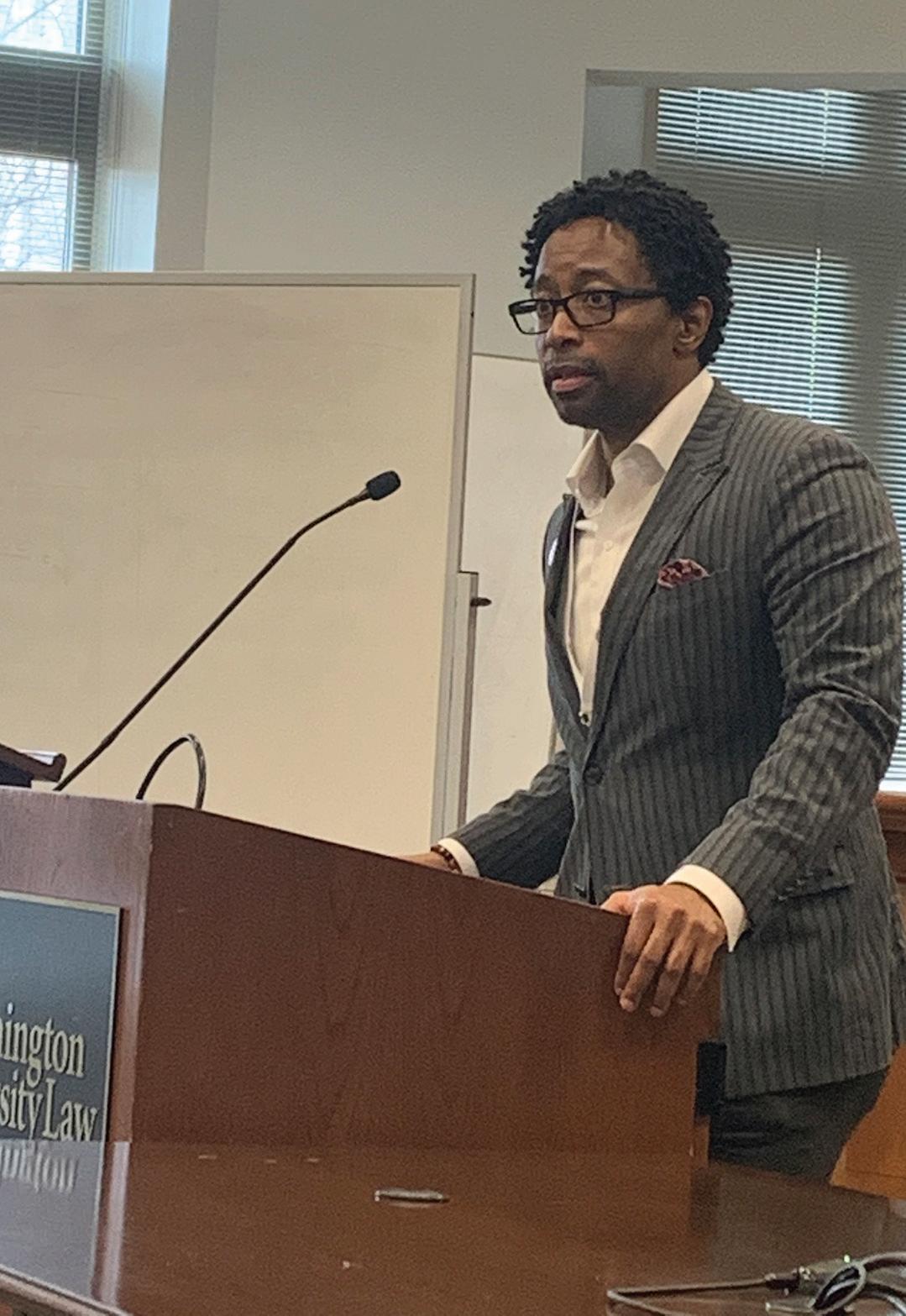
St. Louis County Prosecuting
Attorney Wesley Bell told Washington University law students on Tuesday, “If you look at the facts, being ‘tough on crime’ is empty rhetoric.”
“Violent offenders, where there is a clear victim - yes, of course, we are going to hold them accountable. But there are many people who wind up in the criminal justice system who don’t belong in jail or prison.” Bell cited as examples people with mental health or substance abuse issues “who have no victim of their behavior except themselves.”
Rather than seek prison time for such defendants, on a case by case basis, Bell could recommend that they enter one of the 21st Circuit’s Alternate Courts or the Prosecutor-led Diversion Program that he
introduced after he was elected in 2018.
Bell provided data as to why progressive rather than traditional prosecution is actually “tougher on crime” with many of these defendants. “The recidivism rate for our Diversion Program is 8%,” Bell said, “which means that 92% of the people we offer a chance to avoid a conviction and to stay out of prison never commit another crime.”
By contrast, he said, the recidivism rate for people released by Missouri prisons is around 45%. “And many of those individuals go on to commit worse crimes than what sent them to prison in the first place,” Bell said.
Bell also explained why seeking the death penalty, which he has not done and said he will not do, is not actually “tougher on crime.”
“Most people sentenced to death are, in fact, never exe-
cuted,” Bell said. “These cases - rightly - receive the most
scrutiny and are most likely to get tied up in endless appeals or even overturned and sent back to the trial court. Imagine the victims’ families being told, years later, that the case has to be retried and they have to relive and go through this all over again.”
His experience, meeting with the families of murder victims, is that they want closure.
“Which you typically have right away when a defendant is sentenced to life without possibility of parole,” Bell said, “while death penalty cases can drag on for literally decades.”
Bell pointed out further that there is no positive correlation between districts where the death penalty is charged and those with low homicide rates. In fact, the opposite is the trend - districts where the death penalty is charged tend to have higher homicide rates than those where the death penalty is not charged. “So, clearly, the death penalty has no deterrent effect,” Bell said.
Bell was the guest of Dr. Kimberly Norwood, who holds an endowed chair at the law school. She introduced him by describing how varied his career has been. He served as a public defender and municipal judge, operated a private law practice, and taught criminal justice in college before he was elected prosecutor. Bell explained his career arc.
“For years, based on my experiences of criminal justice growing up, many of the folks I saw were on the business end of the criminal justice system. I wanted to ensure everyone received a fair trial,” Bell said.
“Then, I thought the biggest impact to help people was to be a judge.

Guest Editorial
By Liz Dwyer
Some of my most vivid childhood memories are of my mom and her sisters sitting around the kitchen table on hot summer nights, talking about everyone and everything.
They’d talk about people they’d grown up with and the latest news (and hairdos) in Ebony, Jet, and Essence magazines. They’d talk about the racism and sexism in the schools and at their jobs, and how I — and my knuckleheaded siblings and cousins — had been cutting up. But what I looked forward to most was when they’d get to reminiscing about their childhoods.
Sometimes when they talked about things that happened when they were kids, the conversation turned to the killing of Emmett Till.
On Tuesday, March 29, President Biden signed The Emmett Till Antilynching Act, named after the 14-year-old killed on August 28, 1955, in Mississippi, for supposedly whistling at and flirting with a white woman.
This historic moment comes after more than 200 failed attempts to pass antilynching legislation over the past 120-odd years. It is an understatement to say the legislation is long overdue. But, as Chicago native Rep. Bobby Rush (D-IL), told Vox, “Biden’s signing of the Emmett Till Antilynching Act sends a message that America will no longer continue to ignore this shameful chapter of our history and that the government engaged in legislative failure for far too long.”
the photos of Till’s battered decomposing body in his casket on the front page of the Chicago Defender. And every time I’ve heard her mention this, she’s gotten tears in her eyes, and used the same word to describe the moment: “Terrifying.”
She and my aunts were clear that what happened to Emmett Till could happen to them, too. Growing up, I also got the same message. My grandmother would sometimes tell me that a mob of white people could snatch me up, kill me, and nothing would happen to them.
Indeed, an all-white jury had an acquittal wrapped up with a bow for the men who snatched and killed Emmett Till. Roy Bryant, the husband of Carolyn Bryant — the white woman who Till supposedly whistled at — and J.W. Milam, Roy Bryant’s half-brother, literally got away with murder and told their story in Look magazine in 1956.
When I was a kid, I had no idea that when my grandma spoke of these things, she hinted at a family history that was too painful for her to share. It wouldn’t be until 1999, months before her death, that she finally talked about her older brother going out for a walk where they lived in Georgia and ending up lynched. My mom hadn’t known before that moment that my grandma even had a brother.

“Lynching is a clear example of one’s inhumanity toward another,” Rush said. “It’s a uniquely American act of terrorism that is motivated by hatred, and, before today, was never punished by our legal system.” A person convicted under the act can now be sentenced to up to 30 years in prison.
My mom was 10-years-old at the time of Till’s brutal killing. Like Till — and many other Black Chicagoland residents whose families had come to the shores of Lake Michigan during the Great Migration — my mom and her siblings regularly went down South during the summer to visit relatives. After his killing, their desire to go to Tennessee to see family was dampened by fear.
In the 1980s, sitting in that kitchen listening to my mom and her sisters talk, I could hear the pain in their voices as if Till had been killed that very same day. I’ve often thought about how traumatic it must have been for my mother and my aunts to find out that a child — a teenage boy not much older than they were, living not too far from where they lived — had been stripped naked, brutally beaten, had an eye gouged out, and been shot in the head before being tied to a 75-pound cotton gin with barbed wire and thrown into the Tallahatchie River.
My mom remembers what it was like to see
When the antilynching legislation was still on Biden’s desk, New York Amsterdam News Publisher Elinor Tatum, wrote “We have the modern-day lynching of James Byrd in Jasper, Texas, in 1998; Ahmaud Arbery in Brunswick, Georgia in 2020; and George Floyd in Minneapolis, Minnesota, in 2020. And who can forget the killing of 17-year-old Trayvon Martin in Sanford, Florida, in 2012?”
The lie of white supremacy would have America believe that if the Ku Klux Klan didn’t do it, it’s not a lynching. We’re supposed to believe that lynching is only hanging — it’s not — and that this violence is firmly in America’s past.
Who indeed? Every time Black parents have “the talk” with our children, we’re haunted by the horrors of what can happen to innocent Black folk who are just living life — like Emmett Till.
The legislation is not a magic wand that will transform the United States into racial Nirvana. It can’t change the reality that in some places across this country, due to so-called anti-Critical Race Theory laws, even teaching the truth in public schools about what happened to Emmett Till is no longer permitted. But this legislation is a step towards accountability and justice — and Emmett Till is owed that.
Liz Dwyer is managing director of Word In Black, a digital collaboration of the nation’s leading Black publishers managed by Local
As I See It - A Forum for Community Issues
We trust a justice system when we see ourselves as part of it
By Camille Davidson
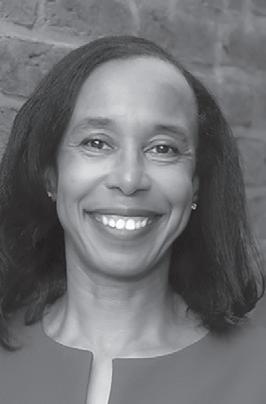
The day President Biden nominated Judge Ketanji Brown Jackson to serve on the U.S. Supreme Court, my daughter, a college sophomore at Howard University in Washington, D.C., went to the Supreme Court with her friends, and she texted me a picture of them on the steps of the building. I shed a tear of joy. That image is a reminder that representation matters. We can see what is achievable. And it is important for all of us that our Constitution be interpreted through various lenses. A common metaphor for America is a melting pot, where cultures disappear into a larger body. A tossed salad is a better comparison. The U.S. has many diverse cultures that maintain their distinctiveness while enriching the whole. On our highest court, it’s so important for the social richness of our country for all cultures to be visible.
Diversity in organizations is always good. Multiple perspectives instill trust in public institutions, including the judicial system. We tend to trust
a system when we see ourselves among the decision makers. Like most of the justices, Judge Jackson is Ivy League educated, a graduate of Harvard University and Harvard Law School. Her career is more distinctive. If confirmed, she would be one of the few justices with experience as a public defender, ensuring indigent defendants have the fair trial promised by the Sixth Amendment. That in itself would be a fresh perspective to the Supreme Court. Judge Jackson has been confirmed by the U.S. Senate three times, as vice chair of the U.S. Sentencing Commission, judge on the U.S. District Court of the District of Columbia and judge on the U.S. Court of Appeals for the D.C. Circuit. Since her confirmation as judge in 2013, she has authored over 550 opinions, more than four other
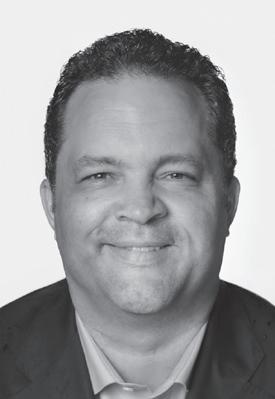
By Ben Jealous (TriceEdneyWire.com) - We
keep learning more about the attack on the U.S. Capitol. And we keep learning more about the many schemes former President Donald Trump and his team tried to use to overturn the 2020 presidential election. In some ways, it is discouraging. We know just how badly Trump’s inner circle was corrupted by his desire to keep power at all costs. We had lawyers writing memos about how to break the law and stop Congress from affirming Trump’s defeat. We had members of Congress repeating his lies about a stolen election and trying to take the decision away from the voters.
In other ways, it is encouraging that the truth continues to come out. News stories that expose lies and corruption remind us of the importance of a free press. The investigation by the Jan. 6 select committee reminds us how much we need the checks and balances that are built into our system.
Those checks and balances—like the ability of Congress to conduct oversight of the Executive Branch—are necessary to prevent abuses of power and hold politicians accountable.
But for those protections to work, we must have public officials who are committed to upholding the rule of law. That’s not what we’re seeing from former Trump staffers and advisers. Just the opposite. They are stonewalling the congressional investigation and defying its subpoenas.
And with just a few exceptions, congressional Republicans are not acting hon-
orably. Rather than embracing the search for truth, they try to discredit the investigation.
Rather than face up to the antidemocratic rot in their party, they would like to sweep it all under the rug.
Let’s be clear. Trump and his lawbreaking friends are trying to keep Americans from learning the truth about the attack on Congress and the attempt to overthrow the will of the voters.
Specifically, Trump and his supporters are trying to run out the clock. They are counting on their allies taking a majority in the House of Representatives in this year’s elections. And then they’ll shut the investigation down before the full truth can come out.
That would be disastrous for our democracy.
Consider just a few of the things we have learned recently.
When the White House handed over logs of Trump’s calls on the day of the insurrection, there was a seven-hour gap covering the crucial hours before, during, and after the attack on Congress. What violations of law are hiding in that gap?
We also learned that Ginni Thomas, a hard-right activist and wife of Supreme Court Justice Clarence Thomas, was in regular contact with Trump’s chief of staff Mark Meadows in the days and weeks after the presidential election.
Senate Bill 897-- profit and principle
Tax exemptions of the Missouri legislature are based upon 1. profit— the underlying margin which the state stands to lose or gain and 2. principle— the notion that our state should not collect funds from certain essential purchases. We tax-exempt hospital beds, newspapers and textbooks, but also bingo cards and hotel shampoo.
Missouri legislators are currently considering Senate Bill 897, which aims to exempt femine hygiene products— medical and sanitary materials that most Missouri women need— from taxation. As this legislative session comes to a close, I ask of you to join the other 13 states which have lifted the tampon tax, and the other
justices combined. It’s like she has been training for this moment since law school. It is why I joined Black law school deans throughout the country in signing a letter supporting her nomination and urging a swift, bipartisan confirmation. Without a doubt, Judge Jackson is eminently qualified, and she is ready for this position. Her credentials and experience are impeccable. But equally important is diversity in our line of sight. Since 1790, all but seven Supreme Court justices have been white men. Thurgood Marshall made history in 1967 as the first Black man appointed; Sandra Day O’Connor was the first woman justice in 1981. It is high time a Black woman is represented. Judge Jackson’s nomination is a deliberate step to ensuring the Supreme Court looks like the country. Her nomination is not just a big deal for Black women. It’s a big deal for America.
Camille Davidson is dean of the Southern Illinois University Carbondale School of Law.
She embraced even the most extreme and ridiculous far-right conspiracy theories about the election.
She even said she hoped it was true that members of the “Biden crime family,” reporters, and elected officials were being arrested and would be held on barges in Guantanamo Bay to face military trials for sedition. She urged Trump not to concede defeat.
It just so happens that Justice Clarence Thomas was the only Supreme Court justice who backed Trump’s attempt to keep White House records from being shared with the Jan. 6 committee. It was an 8-1 vote. That explains why so many people are now calling on Thomas to resign—or at the very least to recuse himself from any other cases about the insurrection that come before the Court. We can’t make Clarence Thomas act honorably. But that doesn’t mean we are powerless to protect our democracy. It was we the people who voted Trump out of power. Trump’s ability to pressure and bully election officials and legislators into joining his corrupt schemes was limited by the fact that he lost in multiple battleground states, not just one. His supporters’ ability to shield him from accountability will be determined in part by what happens in this year’s elections. When Americans go to the polls this fall to elect members of Congress, we will not only be participating in democracy. We will be determining its future.
Ben Jealous serves as president of People For the American Way
All letters are edited for length and style
31 which have introduced similar legislation this year. The profit unrighteously taken from this state’s women makes up roughly 0.017% of your $35 billion budget, and if you can’t let such a profit slip away, start with getting bingo sheets off the list. If the state still wants more, cash in some of the recent $3 billion budget surplus (which would still leave a whopping $2.94 billion of excess funds to play with). Missourians as a whole can surely agree that if the state has no will to tax tractor lubricant, then it has not the principle nor the profit incentive to tax maxipads.
G.F. Fuller St. Louis





The St. Louis Area Foodbank is doing more than helping feed people throughout the region. It also strives to provide nutritious foods that meet community needs. Through an alliance with the Partnership for a Healthier America (PHA), during the next two years the St. Louis Area Foodbank and 31 organizations will implement nutrition ranking systems.
PHA will help partners assess nutritional quality of inventories “and make strategic decisions within and across food categories to improve nutritional quality, enhancing food equity for the communities they serve,” according to a release.
“Our mission at the St. Louis Area Foodbank is to nourish people, empower communities, and transform systems – all with the lens of ensuring that everyone has access to sufficient, safe, and nutritious food that meets their dietary needs and food preferences to live an active and healthy life,” Meredith Knopp, St. Louis Area Foodbank president and CEO, said in a release.
“This means that we are listening to our partners,
understanding the unique cultural and dietary needs of our communities, and building new relationships with food producers to raise awareness and access to the very best foods for our community.”
St. Louis Area Foodbank received $35,000 in grant funding from PHA to begin implementation of Healthy Eating Resource (HER) guidelines and the Supporting Wellness At Pantries (SWAP) ranking tools, and for distribution of nutritionally dense fresh produce.
Knopp said the “turn-key resource will allow all of us to directly impact the health and wellness of those we serve in our 26-county service area.”
“PHA’s Healthy Hunger Relief partners serve as the foundation of our mission to transform the food landscape in pursuit of food equity,” said Nancy E. Roman, PHA president and CEO said.
“Through our work together, we’re ensuring that communities and families all across the country have access to healthier, high-quality, culturally relevant, and nutritious foods.”
Last year, PHA committed to providing 50 million servings of vegetables, fruits, and legumes to food-insecure families by 2025.

By Oseye Boyd
I knew when President Joe Biden held true to his word and nominated a Black woman, Judge Ketanji Brown Jackson, to the Supreme Court, the confirmation hearing would be must-watch TV.
I knew there would be tough questions from Republicans. I knew there would be racist and sexist dog whistles. I knew it would be interesting.
I didn’t know it would be such a crap show. I didn’t know it would get downright embarrassing and uncomfortable to watch.
I wanted to learn more about Jackson and her legal expertise. I wanted tough questions. I wanted her to prove to those who questioned her credentials and asked if she’s the best person for the job that indeed she is.

I expected softballs from the Democrats and hardballs from Republicans.
Again, I didn’t expect a crap show, but that’s what I, and everyone else, got. Forget about dog whistles. We got downright, blatant racist and misogynistic questions. We were treated to a red-faced Sen. Lindsey Graham as well as Sens. Ted Cruz and Josh Hawley questioning her ad nauseum about child pornography cases she’s adjudicated. Sen. Tom Cotton also got in a few potshots too.
Graham looked as if he had an axe to grind. He wanted retribution for past confirmation hearings, and he planned to take his anger out on Brown Jackson. By the way, he didn’t have that energy when he confirmed Brown Jackson as a federal appellate court judge about a year ago. What changed, Lindsey?
Questions were asked without giving her a chance to answer before the next one came. The senators argued with the chair of the Senate Judiciary Committee, Dick Durbin. They went over their allotted time and seemed to forget all sense of propriety and decorum. Again, this was embarrassing.
This was nothing but a performance of posturing and grandstanding that made it difficult to take these senators seriously. Is this what America’s come to? Our elected officials do things just for show for their constituents. Quite frankly, it was a dereliction of duty as we got nothing of substance from the hearings.
God bless Judge Ketanji Brown Jackson.
Brown Jackson withstood it all with a stoicism to which Will Smith can only aspire. She sat there day after day, listening to attacks on her character and knowing she had to choose her words carefully with each response. Being a Black woman, she knew every facial expression and her body language would be scrutinized to the Nth degree.
Talk about being under a microscope. She sat there knowing a daughter, her mother and husband were seated nearby and had to watch her endure this theatrical performance better known as a confirmation hearing. I can only imagine how her family felt at this misogynistic line of questioning. They all held their composure throughout the day only to return the next day and do it again. I was exhausted just watching on my computer. I couldn’t feel the tension in the room or look directly into the eyes of the people causing so much pain.
God bless Jackson and her family.
Not only was I exhausted with the line of questioning, but I was also frustrated since the senators, who are lawyers, wouldn’t acknowledge they are a big part of the problem when it comes to child pornography. Like most judges in this country, Brown Jackson followed sentences guidelines established by Congress in 1987.
In the confirmation hearing of a Black female judge, privileged, mediocre white men became the focal point. I believe these senators wanted to steal the show from Brown Jackson. I believe she will have the last laugh, though, when she’s confirmed to the Supreme Court. She’ll be more than a footnote in history. Oseye Boyd is editor of the Indianapolis Recorder

Continued from A1 and “it’s the adults’ responsibility to fix.” He described experiences in classrooms where students don’t see themselves represented as “traumatic.”
“The learning to read process must be a joyful one…for many children, it is a traumatic experience,” Anthony said. “This whole idea of rendering children invisible…that they don’t see themselves through the learning process, that’s traumatic. That’s an adult issue. That’s not a child’s issue.”

The strategies for getting that literature to children, though, have had to adapt even as COVID exacerbates disparities in children’s literacy. Sheila Oliveri of Ready Readers, a nonprofit that has been sending volunteers into area schools and daycares to get preschool-age children more engaged in reading and to distribute reading materials in low-income areas since 1997, said the organization’s way of accomplishing that work has evolved throughout the pandemic.
When COVID-19 first came to the area, Oliveri said, Ready Readers went remote, finding its way into day cares and preschools through Zoom and Google Meet, doing read-alouds more or less as usual – just on big screens in front of classrooms full of criss-cross-applesauce kids, rather than sitting among them. This strategy, however, didn’t work for the youngest children Ready Readers serves.
“It’s a little bit ridiculous to expect a 3 year old, certainly a 2 year old, even a 4 year old to be able to focus on a screen and, and have a sense of reality about that,” Oliveri said.
“They don’t know what’s real and what’s make-believe… they’re used to watching a screen and being a passive observer.” The kids found it too difficult to focus on the screen and understand that it was a person there talking to them through the screen rather than a TV show.
To compensate, Ready Readers has been sending more books into schools, along with instructional material to help parents help their kids engage with the books. Surprisingly, this meant that more children could engage with the reading material Ready Readers provides.
“We jumped from having, say, 85 classes of 2 year olds to having 250 classes of 2 year olds,” Oliveri said. They also branched out from reading to other skills that may help children with literacy by helping them understand a confusing and often traumatizing world


– and teaching them new ways to articulate and process their responses to that world.
“Why do kids exhibit inappropriate behavior? Mostly because they don’t have the communication skills to tell people what they need, then they get frustrated, and then they act out to get attention,” Oliveri said.
“We need to start naming these emotions for kids and giving them books to read that talk about it. And then we need to play games with kids, where they can explore these emotions.”
Ready Readers has started working with teachers to explore trauma-informed practices, yoga for kids, and other ways to help children deal
with stress–so they can then move on to the critical business of literacy. The St. Louis Black Authors of Children’s Literature, Anthony said, are embracing a similar strategy–and encouraging parents, teachers and community members to think more broadly about literacy in order to make it more accessible. So are organizations such as the region-wide Turn the Page STL, which is partnering with local libraries and districts to provide access to books, virtual learning, games and other activities to children in high-poverty areas even while they aren’t in school.
After all, as Anthony explained, literacy goes far beyond books and beyond the classroom walls. “It’s theater,
it’s graphic novels, it’s digital interactions…it’s the way we walk, it’s the way we talk.” That means that many paths beyond teaching A B Cs and how to recognize phonemes might be useful in helping kids learn literacy.
“Literacy is all around us. If music is the pathway, use it. If speaking, if oral tradition is the pathway, use it.”
Whatever pathways are used, though, one thing is clear to Anthony: we must do better.
“The research says that you must be a reader at the end of third grade in order to have a successful experience in school, and to have a thriving adult life,” he said. “If that is true…then we’ve got to do better by black children.”
Continued from A1 circumstances, and to generalize in terms of her position on an issue of that gravity is fundamentally unfair,” Durbin said.
Sen. Tom Cotton (R-Arkansas) went as far to say Brown Jackson might have defended Nazis during the postWorld War II war crimes trials in Nuremberg, Germany. In 2020, Cotton called slavery “a necessary evil.”
The Anti-Defamation League called Cotton’s Nazi comments “absolutely shameful.”
“To use a Nazi analogy as some sort of twisted way to attack Judge Ketanji Brown Jackson is reprehensible,” the group said in a release.
U.S. Rep. Ilhan Omar (D-Minn.) said Cotton is “a joke,” adding that he seems offended by “a brilliant Black woman” serving on the Supreme Court.
If confirmed, she would be the first Black woman Supreme Court Justice, the first to have served as a public defender, and the first with significant criminal defense experience since the late Thurgood Marshall Jackson, 51, would be the second-youngest member of the Supreme Court and could serve for decades. Jackson’s confirmation could be guaranteed after Sen. Mitt Romney of Utah joined fellow Republicans Susan Collins of Maine, and Lisa Murkowski of Alaska in announcing they would vote to confirm the nominee.
On Twitter Tuesday, Romney called Jackson a “well-qualified jurist and a person of honor” who “more than meets the standard of excellence and integrity.”
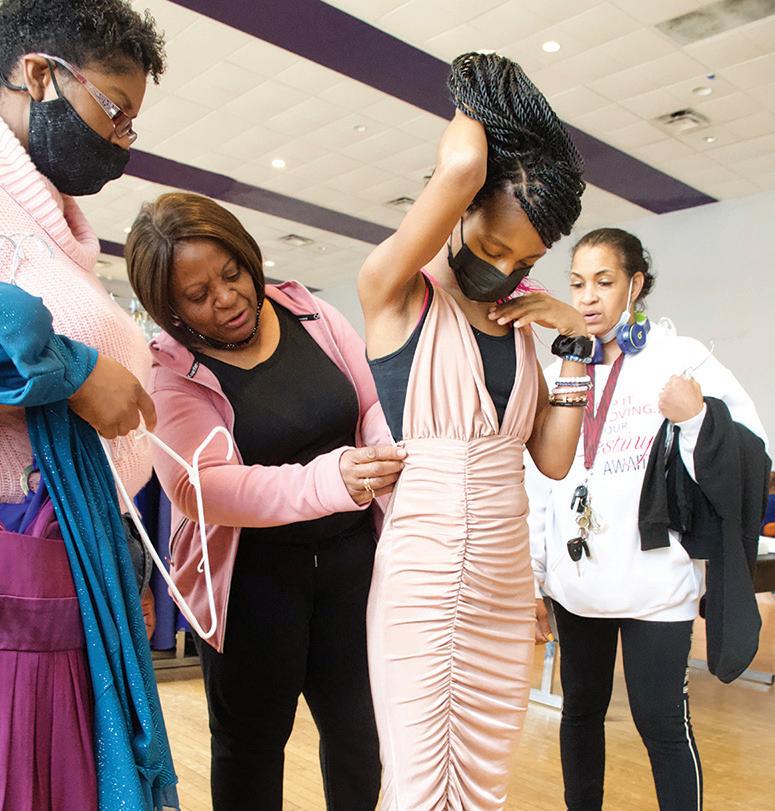
Jaleah Lewis, a student at Riverview Gardens Middle School (center), is fitted for an evening dress by seamstress Robyn Wilform and Lottie Lasley (right) with the assistance of her mother Jalil Lewis, Saturday, April 2, 2022 at the Demetrius Johnson West End Community Center. The event was the Soul Glam Prom Dress Giveaway. Students were allowed to pick a prom dress of their liking for free to wear to their high school prom at the Demetrious Johnson Center.
Association (NNPA), said “It appears now that the U.S. Senate will do the right thing at the right time with the confirmation of Judge Jackson at a time in our nation where the racial divide has not been closed.”
On Monday, before Brown’s nomination was passed to the full Senate, Majority Leader Chuck Schumer said, “Let’s be clear: Despite Republican opposition, Judge Jackson has enough votes to get confirmed to the Supreme Court on a bipartisan basis.”
“The Senate is going to keep working until she is confirmed.”
Benjamin F. Chavis Jr., president and CEO of the National Newspaper Publishers
“After multiple in-depth conversations with Judge Jackson and deliberative review of her record and recent hearings, I will support her historic nomination to be an Associate Justice on the U.S. Supreme Court,” Murkowski said in a statement. She said her decision also “rests on my rejection of the corrosive politicization of the review process for Supreme Court nominees, which, on both sides of the aisle, is growing worse and more detached from reality by the year.”
“Having Judge Jackson on the Supreme Court will at least give Black Americans and other communities of color a strong voice for fairness and equal justice.”
A Yahoo News/YouGov poll released Monday showed 42% of respondents support Brown’s nomination, while 27% were opposed. Nearly one-third of Americans (31%) said they’re not sure whether they support or oppose Jackson.





Voters across St. Louis County and city made their voices heard on Tuesday, ushering in a wave of transformative laws and charter amendments for the region.
Most notably was voters’ overwhelming support for Proposition R in the city, which garnered 69% of supportive votes. Prop R installs a code of ethics for the Board of Aldermen – long overdue -- and requires that alderpersons disclose any potential conflict of interest prior to taking an action, like sponsoring a bill or voting on it. This means, for instance, that Alderman Jeffrey Boyd (Ward 22) would have been required to publicly disclose his conflict of interest involving a $40,000 federal grant that he received through SLDC’s Neighborhood Commercial District Improvement Program, in part due to his position as an alderman serving as chair of the Neighborhood Development Committee.
Unsurprisingly, Boyd and his allies were among the most vocal opponents to the passage of Prop R. Opposition efforts were lead and primarily funded by the St. Louis city Republicans, although President Lewis Reed and Alderpersons Brandon Bosley (Ward 3), Carol Howard (Ward 14), Tom Oldenberg (Ward 16), Marlene Davis (Ward 19), John CollinsMuhammad (Ward 21), Joe Vaccaro (Ward 23), and Pamela Boyd (Ward 27), all jumped in to fight against Prop
R’s passage. Interestingly, the city’s Democratic Central Committee found itself aligned with city Republicans in opposition to Prop R, although it’s worth noting that the DCC also opposed 2020’s Prop D, which reformed the city’s electoral system and brought us approval voting.
Prop R also requires that each alderperson make their financial disclosure statements available to the public and explicitly prohibits the Board of Aldermen from undoing voterenacted laws (such as Prop D). Finally, Prop R establishes an independent commission to redraw ward lines, although this piece of the new law will not take effect for another decade since a new ward map was just redrawn in December. Although opponents of Prop R loudly decried the 10% voter

Pianos for People provides free access to the transformative power of music for those who need it most – children and families with limited resources, and the organizations that serve them.
WE OFFER:
• Beginner Group Piano Classes Ages 4 - Adult
• Music Production For Beginners
• Music Therapy
• Recitals
• Enrichment Classes
• Summer Piano Camps
TWO PIANO SCHOOL LOCATIONS:
• Cherokee Street
• Ferguson REGISTER ONLINE: WWW.PIANOSFORPEOPLE.ORG
3138 CHEROKEE ST. LOUIS, MO 63118 314-285-5852 Kayia@pianosforpeople.org

turnout across the city, they showed little effort to register voters, to educate voters on the ballot issues, or to inform voters of the now-past April 5 Election Day. Instead, they engaged in a fear-mongering campaign with non-specific “threats” to voters, that the proposition would “end critical checks and balances” for aldermen or that an “inequitable process that limits African-American & Minority judges” from participating in redistricting -- all which were misrepresentations of what the law actually said. But this is a new political era in St. Louis, where misleading voters and pushing narratives of fear no longer work.
With its overwhelming support, Prop R is the first citizeninitiated petition to pass in the city to amend the charter
in nearly 70 years. The last proposition introduced by citizens to pass was in 1941 and established the Civil Service Commission.
Conversely, Proposition 1 passed with 84% of the vote and with little controversy. It was endorsed by nearly every city elected official. Prop 1 allows the city to issue and allocate up to $50 million in municipal bonds (read: no additional taxes!) for fixing potholes, repairing crumbling bridges, upgrading city parks and recreational centers, and improving accessibility.
In St. Louis County, voter turnout fared slightly better, with 19.1% of total registered voters casting their ballots. County residents resoundingly rejected efforts to add a county-wide sales tax for online purchases (Prop C) and to lease part of Queeny Park to a charter school (Prop D). More concerning, however, were the number of voters who fell victim to another misleading campaign involving the County Executive and whether the person holding that office can hold a second job. Although current County Executive Sam Page has not found himself in any actual conflict or danger between his elected role and the one weekend per month that he works as an anesthesiologist, the narrative still is pushed predominantly by police lobbyist Jane Dueker, the cacophonous small fry challenging Page in the August primary. Finally, and perhaps long overdue was the passage of
Prop A, which requires the County Executive’s Office to disclose the salaries of politically-appointed persons who work within that office. This means, for example, that any work that Dueker did for her old boss, former County Executive and now-convicted white collar criminal Steve
Stenger, would have had to be disclosed under the new law.
With so many ethical reforms passed this week, one thing is for certain: St. Louis’ old guard should pay close attention to what voters want, instead of telling them what they need.


The University of Missouri–St. Louis Bridge Program is a unique, comprehensive college preparation service for students and families in the St. Louis community.
This award-winning program helps high school students successfully transition to college – and our Summer Academy is your first step!
Enroll in the Summer Academy session today!
June 20-July 15, Monday-Friday, 7:45 am-12 pm
In-person instruction at the University of Missouri–St. Louis North Campus Application due by Friday, May 13, 2022
Students must be enrolled in grades 9 or 10 at a St. Louis metropolitan area high school, enrolled in or completed algebra, and have a cumulative GPA of 2.5 or higher.
To apply, visit umsl.edu/precollegiate. For more information, call 314-516-5196 or email precollegiate@umsl.edu




By Danielle Brown The St. Louis American
St. Louis native Cedric the Entertainer and his sister Sharita Kyles Wilson’s mission to financially support and acknowledge the launch of SSM Health Foundation’s Women’s Health Initiative took them throughout St. Louis on March 31, 2022.
The siblings lost their mother, longtime educator and reading specialist Rosetta Boyce Kyles, to cancer in 2015. Kyles received cancer treatment and care at SSM Health St. Mary’s Hospital, and her children say they were “inspired by the compassion and care their mother received.”
Cedric and Kyles Wilson have supported SSM Health’s with donations and fundraising efforts, and the SSM St. Mary’s Rosetta Boyce Kyles Pavilion was established in 2016.
According to SSM, $1.9 million has been
n “When my mother got diagnosed with cancer and started on her journey of recovery, SSM showed us great compassion.”
– Cedric the Entertainer
raised to help launch the Women’s Health Initiative, which includes patient-centered programs affecting all women. Cedric and his sister donated $25,000 to the fundraising effort at an event the evening of March 31.
“When my mother got diagnosed with cancer and started on her journey of recovery, SSM showed us great compassion,” Cedric said at the KSDK downtown studios.
“We saw that was the natural way they
cared about all their patients. It was an opportunity to get involved and bring awareness to work that’s done there to be able to help other people. I wanted to be able to contribute and build upon that.”
Kyles Wilson said the SSM Initiative can help reduce health care disparities that exist between women in white and minority communities.
“We have to be mindful, ask questions, seek other opinions and search for all the resources we can find to make sure that we’re okay,” she said.
“Women often overlook their health, and we want to change that. We’re typically caregivers and don’t always take good care of ourselves because we’re so busy taking care of others and meeting their needs. With this initiative, we want to make sure women have the resources they need.”
ACA signed into law 12 years ago
St. Louis American staff
Former President Barack Obama joined President Biden and Vice President Kamala Harris on Tuesday at The White House to celebrate the 12-year anniversary of his successful Affordable Care Act [ACA], known as “Obamacare.”
n Biden announced a change to the ACA to allow more people eligibility for premium tax credits.
Obama received a standing ovation when he entered the East Room and then said, “It is good to be back at the White House.”
Obama said passage of his historic health care bill “an example of why you run for office in the first place.”
“We’re not supposed to do this just to occupy a seat or to hang on to power. We’re supposed to do this because it’s making a difference in the lives of the people who sent us here.”
Biden announced a change to the ACA to allow
more people eligibility for premium tax credits. Families would receive tax credits if the cost of their coverage exceeds more than 10 percent of their incomes.
“Let’s be honest, the Affordable Care Act has been called a lot of things, but Obamacare is the most fitting,” Biden said.
“Once today’s proposed rule is finalized, starting next year, working families in America will get the help they need to afford full family coverage, with this change, it’s estimated that 200,000 presently uninsured Americans are going to gain coverage. Nearly one million Americans will see their coverage become more affordable.” On March 23, 2010, Obama signed the Patient Protection and Affordable Care Act into law.
See OBAMA, A11
By Denise Hooks-Anderson

You may have heard that a new variant of COVID-19, BA.2, has begun to surge in other parts of the world and here in the U.S. Over the past year and a half, American surges have typically followed surges in Europe, including the Delta and Omicron variants. The approximately 5.2 million cases of COVID reported in Europe during the last weeks of March could be a warning signal for us. However, as opposed to the previous outbreaks, Americans are slightly more prepared. Many Americans have been vaccinated, boosted, and many possess natural immunity from a past infection with COVID.
n Though I do not believe we are headed for a massive shut-down, I do believe that large COVID spikes could again cause unexpected disruptions.
Home tests are also available and there are plenty of vaccines ready for willing individuals. But at the same time, many places have eased restrictions and there are people who still refuse to be vaccinated. Places of business are again allowing patrons to enter without masks. Masks are optional in many schools, flights are full, and airports are seeing traffic at pre-pandemic levels. Such conditions have the potential to cause a spike in the number of confirmed cases. Though I do not believe we are headed for a massive shutdown, I do believe that large COVID spikes could again cause unexpected disruptions. So, what can we do to prepare for this next phase of COVID?
In my opinion, the first low-hanging fruit would be to get immunized with one of the COVID-19 vaccines. The vaccine has been proven to decrease hospitalizations and death. The vaccine is readily available at most local pharmacies and is free. Receiving the COVID19 booster would also add additional protec-



“Taking Care of You”
By Stacy M. Brown NNPA
White people surveyed in the United States in fall 2020 cared less and were even more likely to shun pandemic safety precautions after learning about the disproportionate ways it impacts Black communities and other communities of color, a University of Georgia Department of Social Science & Medicine study concluded.
“When white people in the U.S. were more aware of racial disparities in COVID-19, they were less fearful of COVID19,” said Allison SkinnerDorkenoo, assistant professor of psychology at the University of Georgia and a co-author of the study on racial disparities during the pandemic.
“We found evidence of less empathy for people who are vulnerable to COVID-19, and we also found evidence of reduced support for safety precautions to prevent the spread of COVID-19.”
Skinner-Dorkenoo said the study revealed that white people mostly showed less concern about the virus and its impact when they believe it is “not a white people problem.”
According to an earlier study by the Black Coalition Against COVID, the Yale School of Medicine, and the Morehouse School of Medicine, African Americans struggled more than most during the pandemic.
During early 2020, the authors wrote that the average weekly case rate per 100,000 Black Americans was 36.2, compared with 12.5 for white Americans.
In addition, the Black hospitalization rate was 12.6 per 100,000 people, compared with 4 per 100,000 for white people.
Cedric
The death rate was also higher: 3.6 per 100,000 compared with 1.8 per 100,000.
“The severity of COVID-19 among Black Americans was the predictable result of structural and societal realities, not differences in genetic predisposition,” the authors stated.
Although the elevated rates of COVID-19 infection and mortality among people of color in the U.S. do not objectively reduce the risks of infection among white people, they may reduce perceptions of risk by serving as a source of downward comparison, the
Continued from A10 throughout the year,” Cedric said.
The siblings have hosted benefit galas to help raise financial support, and they have decided to take a more direct approach.
“Our long-term plan for the program is to [increase] public service announcements, radio, and TV ads for people to hear the message
Continued from A10
According to U.S. Department of Health and Human Services data, about 50 million Americans were without health insurance when the ACA became law. In its most recent statistics, the Department of Health and Human Services revealed that a record 31 million Americans have health coverage through Obamacare.
The 2021 report revealed
“We think this kind of fundraising and crowdsourcing resonates more with people than expecting all the rich people to [lend support.] It’s about donating money to someone in need. It could help them catch an Uber ride to the doctor’s office or pay for their bus pass. We have to be more intentional about caring for the women in our lives and communities.”
drastic reductions in uninsurance rates in every state since the law’s coverage expansions took effect.
“The Affordable Care Act has not only led to enhanced insurance coverage and dramatically reduced uninsured rates – but it’s lowered barriers to care, reduced people’s medical debt burdens, reduced outof-pocket spending for a lot of people who had pre-existing conditions prior to the Affordable Care Act’s reforms,” Dr. Sara Collins of the Commonwealth Fund,
authors said.
“When people compare themselves to others who are less well off, they feel more satisfied with their current situation,” the authors asserted.
“When confronted with threatening health concerns, people often spontaneously engage in downward comparisons as a means of coping, which has been shown to reduce engagement in health-protective behaviors. Therefore, news stories about COVID-19 racial disparities may facilitate downward comparison among White U.S. res-
“This campaign gives each of us an unprecedented opportunity to tangibly improve the lives of women in our region, by providing high-quality care for the evolving health needs a woman experiences throughout her lifetime,” said Paul R. Ross, SSM Health Foundation – St. Louis president said in a release.
“When women don’t have access to specialized and comprehensive health care, they too often end up suffering in
testified this month during a House Oversight Reform Committee.
“So, this has been a substantial change – both for coverage rates and improving people’s financial security,” Collins stated.
“Four out of five Americans can find quality coverage for under $10 a month, and families are saving an average of $2,400 on their annual premiums — $200 in savings every month back to families.”
According to a Biden administration fact sheet:
idents, reducing the perceived threat of the virus and endorsement of safety precautions.”
They added that awareness of COVID-19 racial disparities could also influence how psychologically distant white U.S. residents feel from COVID-19.
“When people and things are more psychologically distant from us socially, in time, or in space, they seem more abstract and less concerning,” the authors concluded, adding that information about COVID19 racial disparities might not have the same effect on all white U.S. residents.
silence or delaying care until it’s too late. This campaign gives the community an opportunity to unite behind the women in our lives and ensure they receive the care they need and deserve.”
According to SSM, the program “will integrate care across specialties from preventative visits to community needs assessments, to behavioral health support and beyond in order to create a holistic approach to each indi-
• The Administration has lowered costs and increased enrollment to a record high of 14.5 million Americans— including nearly 6 million who newly gained coverage.
• With the addition of Missouri and Oklahoma, two states that expanded Medicaid last year, nearly 19 million low-income Americans are enrolled in the ACA’s Medicaid expansion coverage, adding up to a record nearly 80 million children, pregnant women, seniors, people with
Continued from A10 tion. Sadly, less than 70% of Americans over the age of 65 have had their first booster. Secondly, just because masks are optional in most places, does not mean that you are obligated to be maskless. Mask fatigue is real, and I empathize with everyone who wishes to be completely done wearing them. Shall I remind everyone, however, that wearing masks helped keep our schools and businesses open? A moment of inconvenience compares poorly to a lifetime of good health and peace of mind. During this moment of relative COVID-19 stillness, it is important to make sure we are prepared when a spike occurs. Now is the time to review your mask inventory. Do you have enough quality masks available? Surgical, N95, and KN95 are the types of masks that have been shown to be most effective in stopping the spread of COVID-19. These masks are readily available now as compared to the beginning of the pandemic. Make sure you have a supply at home. No hoarding please. Let us not revisit the tissue and paper towel situations of 2020.
They noted that previous research had revealed that U.S. residents who are more knowledgeable about past racial injustices tend to be more concerned about systemic inequalities and racism in the present.
“These findings suggest that white U.S. residents who are more knowledgeable about the systemic and structural inequalities that led people of color to be harder hit by COVID-19 may also be more concerned about COVID-19 racial disparities,” the authors wrote.
“This line of thinking suggests that systemic knowledge
vidual woman’s needs.”
It will address pregnancy-related mental health issues such as depression, anxiety, and mood disorders; standardization of screening timelines, tools, and referrals; coordination of care with a Nurse Navigator to obtain needed supports and additional access to nurse practitioners experienced in women’s and behavioral health.
There is also a partnership with SSM Health DePaul
disabilities, and other low-income Americans covered by Medicaid.”
• Current regulations define employer-based health insurance as ‘affordable’ if the coverage solely for the employee, and not for family members, is affordable, making family members ineligible for a premium tax credit even though they need it to afford high-quality coverage through the Marketplace.”
Labeled the “family glitch,” it affects about 5 million peo-
Lastly, if this new variant does cause another outbreak, we must exercise good judgment such as consistently wearing masks, social distancing, and increasing our hand washing routines. These skills should lie deep in the recesses of our brains. We must also consider altering our behavior if necessary. During an outbreak, having large crowds at family gatherings is probably not the wisest idea.
of contributors to COVID-19 racial disparities would be associated with greater concern about COVID-19 and increased support for safety precautions.” Skinner-Dorkenoo said “This didn’t just happen; it wasn’t just random. It was socially designed to happen this way.”
“I think there is potential to think about educating people about the structural and systemic inequalities. Contextualizing this but giving more information and … really highlighting the injustice of these vulnerabilities.”
Behavioral Health Urgent Care Center for acute needs.
“The fundraising campaign will provide vital support needed to reach women in all of SSM Health’s service areas in the entire St. Louis region,” Ross said.
To donate or learn more about the initiative visit https:// www.givetossmhealth.org/ womenshealth/ or call 314-5238044.
ple who can’t use the premium tax credit to purchase an affordable, high-quality Marketplace plan.
Biden’s proposal reportedly would require some time before taking effect, thus the goal is for it to begin in January 2023.
Administration officials said more than 14.5 million people purchased ACA marketplace plans this winter. That number included 6 million who purchased health insurance for the first time.
Our entanglement with the COVID-19 virus is not over and may be with us for some time. Learning to live with the virus and pivot, when necessary, will be crucial to our ability to control it in the future.
Denise Hooks-Anderson, M.D., is SLUCare Family Medicine interim assistant dean of diversity, equity, and inclusion and associate professor. yourhealthmatters@stlamerican.com

PRESENT:






When we’re lucky enough to have a chance to go out for dinner, there are a few ways to stay healthy with our food


those leftovers for lunch the
food choice?










See if the restaurant will let you “share” a meal. Many meals are two, three or more times an actual serving size.
We each need at least 3 servings per day of whole grains. But what does that mean? How can we know what foods contain whole grains?

Look at the ingredients list of a package of food you are about to eat. If the word “whole” is used, then there is most likely a whole grain ingredient. A few items that don’t use the word whole
Spend some time this week looking through the grocery ads in The St. Louis American and watching TV commercials on TV. Make a list of 10 different food ads that you feel were specifically
In our “Super-Size” world, we can easily lose track of what an actual serving size means. When reading labels on a food or drink product, you can determine the nutrients, sodium, fiber, sugar and calories of a serving size. But be careful; just because it looks like one small bottle
As soon as you’ve divided your plate into the right size servings, ask your server for a to-go box. Go ahead and box up what you don’t need to eat right away. You can enjoy
are popcorn, wheatberries, brown rice and wild rice.

lifestyle. You can do this by forming new habits. For example, if you decide to eliminate sugary drinks completely, it only takes a few weeks until this becomes what you’re used to.
Let’s make a game out of exercise!
Ask the server how the different menu items are prepared. Fried, sautéed, and
INGREDIENTS:
First, locate either a deck of cards or two dice.
> Decide you’re going to switch from soda to water.
Getting plenty of whole grains in your diet can improve your health and reduce your chance for some chronic illnesses such as stroke, diabetes, heart disease and high blood pressure. Visit wholegrainscouncil.com for more information.
Here are the steps to making a healthy permanent change. We‘ll use the sugary drink change as an example.
As spring approaches, warmer weather allows us all to get more outdoor exercise. Here are some ways to become a more active person.
> Start by substituting one drink per day to water.
targeting children. Answer the following questions about each of the ads:
> Avoid gravies, cheese sauces and other kinds of toppings that often just add fat and calories.
> What was the item being advertised?
Now write a persuasive essay with the topic, “Should companies be allowed to target kids with advertisements about unhealthy food choices?” (Or hold a classroom discussion/ debate.)
Melissa Douglass, MSW
Deborah Edwards, School Nurse
> Every few days increase the amount of water and decrease your soda intake.
> After 3-4 weeks, this change will become a habit.
of soda — it may not be considered one serving size. For example, a 20-oz bottle contains 2.5 servings. So if the bottle states “110 calories per serving,” that means the entire bottle contains a total of 275 calories! Remember to watch those serving sizes and you’ll have better control over what you’re eating and drinking.
> How did I know it was meant to appeal to kids?
> Stick with water to drink. Not only will you save money, but you won’t be adding in extra calories from a sugarfilled drink.
Learning Standards:
Learning Standards: HPE
HPE 2, HPE 5, HPE 6, NH 1, NH 2
Learning Standards: HPE 2, HPE 5, NH 1, NH 3, NH 5
> What are other ways to stay healthy while dining out?
When you automatically reach for water instead of soda, it has now become a lifestyle change!
> Did the ad include a healthy



Where do you work? I am a family nurse practitioner for BJC Medical Group.
even simmered can all mean, “cooked in oil.” Instead, choose baked or grilled options.
Learning Standards: HPE 1, HPE 2, HPE 5, NH 1, NH 5
Where do you work? I am a school nurse with St. Louis Public Schools.
Where do you work? I am a school nurse at Monroe Elementary School.
It’s important that before you embark on any kind of exercise to remember two things: warm up and cool down. Start with some slow stretches and movement (like walking) to increase your heart rate a little. Warm up for a good five minutes before increasing your heart rate.
Create a list of 6-10 different kinds of exercise. You can ask your health or P.E. teacher for suggestions. You and your friends should spread out in an open room. Each friend chooses a different exercise. Set a timer for two minutes. For those two minutes you work hard to see
March 20, 2021, is the first day of spring. With spring comes warmer weather and longer days (later sunset). Make it a habit to spend as much time playing outside as the weather allows.
Secondly, when you are finished with any kind of strenuous (very active) exercise, take some time to cool down. You can slowly stretch your arms and
how many times you can do the exercise you
Learning Standards: HPE 1, HPE 2, HPE 5, NH 1, NH 5
Instead of watching TV — ride your bike with friends.
legs again, and continue with reduced speed movements until your heart rate begins to slow down.
and breathing. You want to have fun, but it’s also a great way to help keep your heart, lungs and body healthy.
chose. When the timer goes off, switch places and reset the timer — until you have all done each of the exercises.
Instead of playing video games — play baseball, football, badminton, or some other active game.
Keeping your heart rate up and breathing heavily helps build a stronger heart, burn calories and increase your lung capacity. Set a goal to do Circuit Training at least three days a week with your friends!
Where did you go to school? I graduated from McCluer North High School. I earned an Associate of Applied Science in Nursing from Meramec College in Kirkwood and completing my bachelor’s degree at Webster University in Webster Groves.
Next you’ll need to make a list of different types of exercise: jumping jacks, sit-ups, lunges, etc. Write each exercise item on a small piece of paper or index
Instead of surfing the ‘Net — go for a brisk walk around the neighborhood.
Some fun outdoor games to play include tag, kickball, basketball, Frisbee, and bicycling. Choose activities that increase your heart rate
> NEVER walk on a “frozen” pond, lake, river or any other body of water. Just because it looks frozen does not mean it is safe.
Break into small groups and define what it means to be a bully. Share your ideas with the class. Did you have the same things listed (as the other groups) that you would consider as bullying behavior? Now back in your groups, create a newspaper ad that includes at least two of the following:
card and fold into a small square. Put these squares into a bowl. Take turns rolling the dice (or drawing a card) and selecting an exercise from the bowl. The total number on the dice or card tells you how many of the exercise you must do. Face cards (king,
Make a list of your favorite 10 activities to do outdoors. Compare your list with your classmates and create a chart to see what are the most popular.
Can you think of other ways to be more active? Going outside and staying active not only increases your heart rate and burns calories, but it also helps you build friendships!
Learning Standards:
This warm-up and recovery period is important for your heart health. It also helps to reduce the amount of muscle pulls and strains.
Learning Standards: HPE1, HPE 2, HPE 5, NH 1, NH 5
HPE 2, HPE 3, HPE 5, NH 1, NH 5
Where did you go to school? I graduated from McCluer High School. I then earned a Bachelor of Nursing and a Master of Nursing Practice from the University of Missouri – St. Louis. And finally, I earned a Doctorate of Nursing Practice from Maryville University.
queen or jack) should all count as the number 10. Aces are “wild” and you can do as many as you want! To really challenge yourself, have one person roll the dice and the second can select the exercise. See who can complete the exercise challenge first!
Learning Standards: HPE 2, HPE 5, NH 1
Where did you go to school? I graduated from Sumner High School. I then earned Associate Degree in Nursing from Forest Park College and a BS in Business Administration from Columbia College.
Where do you work? I am the founder and distance counselor for Goal Driven Counseling, LLC. Where did you go to school? I graduated from Whitney Young Magnet High School in Chicago, IL: same as former first lady Mrs. Michelle Obama. I then earned a Bachelor of Science in Social Work, and a Master of Social Work from the University of Missouri – St. Louis. I also completed two more years of supervision and exams to become a Licensed Clinical Social Worker in the state of Missouri.
Where do you work? I am a clinical nurse specialist, working with trauma, geriatric trauma and acute care surgery at BarnesJewish Hospital. Where did you go to school? I graduated from Unity High School in Chicago, Illinois. I then earned a diploma of nursing from Jewish Hospital School of Nursing, St. Louis, Missouri, a Bachelor of Science in Nursing and a Master of Science in Nursing from Saint Louis University, St. Louis, Missouri, and a Doctor of Nursing Practice from the University of Kansas, Kansas City, Kansas.
What does a school nurse do? I assess the concerns of students who are ill, injured or experiencing alterations in their normal health. Nurses screen daily staff, students and visitors for safety. Monroe School is a pilot school for Covid-19 test sites in partnership with the city.
What does a school nurse do? I love giving students medications, so they’re able to focus on learning. I clean and bandage wounds. I use medical equipment like a stethoscope, for example, to evaluate whether or not my asthmatics are breathing well. Moreover, I teach and promote healthy habits to my students.
What does a Licensed Clinical Social Worker do? I use technology to help teens and young adults explore their emotions, better understand their feelings, work through relationships, and address common challenges completely online through a computer, tablet, or smart phone. Similar to a Facetime call, I support and guide my clients from the comfort of their home or private location where they are comfortable
By far, one of the easiest ways that we can have an impact on the environment is to take advantage of recycling programs. For one day, keep a list of all of the opportunities you see for recycling. Does your school recycle lunch waste? Do you have a recycle bin
A BMI (Body Mass Index) is a generic way to calculate where your weight falls into categories (thin, average, overweight, obese). However, it’s a good idea to remember that a BMI may not take into consideration many things such as athleticism (how athletic you are), your bone density and other factors. Discuss your BMI with your
How much time do you spend each day looking down at a phone, laptop or video game?
Chiropractors around the country see young patients every day suffering from back, neck and head-aches resulting from the extra strain you put on your body when you look down for long periods of time.
> If you are with someone that falls through the ice, first run (or call) for help. Do not try to go out onto the ice to help your friend. You can fall through the ice too.
> How bullying hurts others.
> What to do if you are bullied.
at your home? Maybe the grocery store by your house recycles plastic grocery bags.
Learning Standards: HPE 1, HPE 2, HPE 5, NH 1
> What to do if you see someone else bullied.
Learning Standards: HPE 2, HPE 4, HPE 5, NH 1
What does a family nurse practitioner do? Each day I have office visits with patients to help treat new health conditions and/or manage established health conditions. I perform physical examinations on patients, order labs, read x-rays results, and more.
What does a clinical nurse specialist do on the job? We usually start with a huddle every morning in which we discuss all our patients, their problems, and the care they need. Most people come to our nursing unit because of an accident, such as a fall or car accident and may need surgery. We provide the care to get them home, which includes antibiotics, wound care, and therapies.
As a class, discuss new ways that recycling could become a part of your day, every day.
doctor if you have any questions. The formula to calculate your BMI is 703 X weight (lbs) ÷ height (in inches/squared) or search “BMI Calculator” to find an easy fill-in chart online. If your number is high, what are some ways to lower your BMI?
> What to do if YOU are the bully.
1. Most importantly — take breaks! Have a goal of a 3 minute break every 15-20 minutes. Move around, stretch your neck and relax, without looking down!
> Also — remember to look up! Icicles injure numerous people every year. If you see large icicles forming over your front steps, ask your parents to use a broom handle to knock them off to the side before they break loose from your gutters.
Learning Standards: HPE 2, SC 4, NH 1, NH 7
Ingredients:
8 Saltine crackers
Why did you choose this career? I chose this career to help improve the health of my community.
Why did you choose this career? I am a St. Louis native, and was an asthmatic child who experienced frequent hospitalizations. Besides having the influence of nurses in my family, the local nurses who helped take care of me were my “angels” and always managed to nurse me back to health, thus sparking my interest.
Look through the newspaper for examples of ad layouts and design. Discuss the words “compassion,” “empathy” and “sympathy.” How do they each play into your response to bullying at your school?
> What other ice hazards are there?
Learning Standards: HPE 1, HPE 2, NH 5
2. Set your tech device in a holder to keep it at eye level, reducing the need to look down.
Learning Standards: HPE 2, HPE 5, NH 4
Learning Standards: HPE 2, HPE 5, HPE 7, NH 5, NH 7
“Questions or comments? Contact Cathy Sewell csewell@stlamerican.com or 314-289-5422
> When walking on icecovered roadways or sidewalks, take baby steps. Walk carefully and slowly.
A couple of quick tips that will reduce that strain on your neck are:
Learning Standards: HPE 1, HPE 2, NH 1, NH 5
Easy Hummus Dip Ingredients:
4 Tbsp Peanut butter
Peeled and Cut into Chunks
1 Apple, Cut into Chunks
Ingredients:
Ingredients: 1/2 Cp Vanilla Greek yogurt, 3 Tbsp Natural peanut butter, 1 Ripe banana (sliced and frozen), Splash of vanilla (optional) 6 Ice cubes
Why did you choose this career? I love nursing because there are many opportunities in hospitals, schools, clinics and offices, insurance, legal and research. My passion is working in the schools with students, parents, staff and community partners.
Why did you choose this career? I chose this career because I enjoy being a support to teens and young adults in a very challenging phase of life that can be overwhelming. I enjoy teaching them how to best take care of themselves so they can live healthy and fulfilling lives.
1 15-Oz Can Garbanzo beans
(Can substitute Kiwi, Grapes, Oranges)
2 Large Strawberries
1 cup blueberries
Why did you choose this career? I like teaching nurses how to take excellent care of patients so they can be safely discharged home in better conditions than when they came to our hospital! What is your favorite part of the job you have? Meeting and talking with nurses, patients, and doctors is so interesting. Not only am I teaching them, but I am also learning from them.
What is your favorite part of the job you have?
1 Garlic clove, crushed
1 Tbsp Honey (optional)
1 cup non-fat Greek Yogurt
2 Tsp Cumin, 1 Tsp Olive oil, ½ Tsp Salt
Directions: Thread the strawberries, cantaloupe, banana and apple pieces alternately onto skewers, placing at least 2 pieces of fruit on each skewer.
Directions: Combine all ingredients in a blender until smooth. Enjoy with baked tortilla chips or raw vegetables.
Directions: Blend all ingredients until Smooth. Makes 2 yummy smoothies!
Directions: Spread peanut butter on four of the crackers and top with sliced strawberries. Drizzle with honey and top with the other crackers to make four cracker-wiches.
Directions: Drop each blueberry into the yogurt. Using a spoon, swirl around to coat and place each blueberry on a cookie sheet topped with parchment paper. Freeze for at least an hour.
What is your favorite part of the job you have? Many chronic health conditions (diabetes, high cholesterol, high blood pressure) are preventable, and early detection is key. Thus my favorite part of the job is partnering with patients to establish and manage a plan to help them each live a long and healthy life.
What is your favorite part of the job you have? I enjoy when a child tells you, “I want to be a nurse.” And best of all, I love the smiles, hugs and “thank-yous”.
Learning Standards: HPE6, NH3
Learning Standards: HPE6, NH3
My childhood health challenges have given me sensitivity to children suffering with illness. After being given a new lease on life, I consider it an honor to be in a position to promote health to the children of my community, in whatever capacity I serve – in turn, being their “angel.”
What is your favorite part of the job you have? I love that my job makes talking about mental health not as scary and even makes it kind of cool. I love that I get to build valuable relationships with so many people that trust me to be there for them. I love that no matter where my clients are, we can simply connect with a video call and I can not only support them through hard times, but lots of good times as well.
Learning Standards: HPE6, NH3
Learning Standards: HPE 6, NH 3
Learning Standards: HPE6, NH3
“Questions or comments? Contact Cathy Sewell csewell@stlamerican.com or 314-289-5422
“Questions or comments? Contact Cathy Sewell csewell@stlamerican.com or 314-289-5422
“Questions or comments? Contact Cathy Sewell csewell@stlamerican.com or 314-289-5422





The St. Louis American’s award winning NIE program provides newspapers and resources to more than 8,000 teachers and students each week throughout the school year, at no charge.
Questions or comments? Contact Cathy Sewell csewell@stlamerican.com or 618-910-9551.

Teacher Rhonda Stovall provides the tools for Gateway Elementary School first grade student Anthony Taylor-El. He is mimicking how plants and animals use their external parts to help them survive, grow, and meet their needs. Gateway Elementary School is in the Saint Louis Public Schools District.
Photo by Rhonda Stovall
Louis American’s NIE program and would like to nominate your class for a Classroom Spotlight, please email: nie@stlamerican.com.

Hydroelectricity is the process of creating electricity from the gravitational force of falling water.
Power stations use water held in dams to drive turbines and generators to turn mechanical energy into electrical energy.


This is a renewable energy and is considered the oldest source of energy, dating back to the paddle wheel that was used to grind grain. The first US hydroelectric plant was constructed on the Fox River in Wisconsin on September 30, 1882.
In the U.S., Washington, California and Oregon generate more than half of the country’s hydroelectric power. Of these three, the biggest contributor is the state of Washington
where you can find the country’s largest hydroelectric power plant, the Grand Coulee Dam. The majority of these dams are built by the Federal Government. Norway, Canada, Brazil, New Zealand, Paraguay, Venezuela and Switzerland are among the countries that produce the majority of their electricity this way. Three Gorges Dam in China houses the largest hydroelectric power station in the world.
To Learn More About Hydroelectricity, Visit: https://www.ducksters.com/science/environment/hydropower. php.
Learning Standards: I can read nonfiction text for main idea and supporting details.


Ayanna Howard was born in Rhode Island on January 24, 1972. She later moved to Pasadena, California, where she graduated from John Muir High School, before attending Brown University to earn a bachelor’s degree in engineering. Next, she received her M.S. and Ph.D. degrees in electrical engineering from the University of Southern California, finishing in 1999. While studying at the University of Southern California, Howard worked at NASA’s Jet Propulsion Laboratory in many different positions, including computer scientist, information systems engineer, robotics researcher and senior robotics researcher. Howard decided to continue her education and attended Claremont Graduate University to earn her M.B.A. degree in 2005. That same year, she took a job at Georgia Institute of Technology where she worked as associate professor in the School of Electrical and Computer Engineering and was able to operate her own lab, the Human-Automation Systems (HumAnS) Lab. HumAnS has focused on robot functionality. Howard is also a member of the Center for Robotics and Intelligent Machines. Howard currently serves as the robotics Ph.D. program coordinator at Georgia Tech.

Background Information:
In this experiment, you will determine which type of bulb and wattage produces the most heat.
Materials Needed:
• A goose-neck style lamp (important: make sure it can safely use all light bulbs listed)
• 6 Incandescent light bulbs:
25 watt, 40 watt, 60 watt, 75 watt, 100 watt, and 150 watt •
2 Compact Fluorescent light bulbs:
7 watt, 23 watt • Thermometer • Measuring tape or yard stick (to measure distance between the thermometer and light bulb) • White towel • Stopwatch • A piece of paper and pencil to record your observations
Procedure:
q Lay out the white towel on a flat table and place the lamp on one end of the towel.
w Make sure the lamp is unplugged and screw in lowest wattage bulb. (Keep the lamp turned off.)
e Place the thermometer at the other end of the towel and measure the distance between the thermometer and light bulb. (Be sure to check and record the starting

Many people are concerned about the cost of using electricity. Energy consumption is typically measured in kwh, kilowatt hour. If you know how many watts your appliance is, you will divide by 1000 to determine the kilowatts.
For example, if your appliance has 450 watts, that would calculate to .45 kilowatts (450 divided by 1000). To determine the kilowatts used in a 4 hour time span, multiply by 4. The

Standby power (which is a device not currently in use) adds approximately 10% to the average electricity bill.
temperature of the thermometer.)
r Point the lamp at the thermometer, turn the lamp on and start the stopwatch.
t After 5 minutes have passed, measure and record the temperature on the thermometer.

y Turn the lamp completely off and wait for the light bulb to cool down before removing it.
u Repeat steps 2-6 with the next highest wattage bulb until you’ve tested all the bulbs.
Analyze: What did you observe? What is the difference between incandescent bulbs and compact fluorescent bulbs?
Safety Tips: Always wait for the bulb and thermometer to cool down before testing any new bulbs!
Be sure the lamp is turned off and unplugged completely when switching bulbs.
Learning Standards: I can follow sequential directions to complete an experiment. I can make predictions, analyze results, and draw conclusions.
answer is 1.8 kwh. Use the example to answer the following questions.
z You have a light bulb that is 60 watts. If you used it for 8 hours per day, calculate the kwh.
60/1000 = ______ x 8= ______ kwh
x What is the kwh consumption for a 680 watt load that is run for 3 hours?
c What is the kwh consumption for a 720 watt load that is run for 5 hours? ______
v What is the kwh consumption for a 600 watt load that is run for 8 hours per day, five days per week? ______
Learning Standards: I can use a formula to solve word problems. I can add, subtract, multiply, and divide to solve problems.
Howard is most famous for her work with robotics and engineering. She used SnoMote robots to study the impact of climate change in the Antarctic Ice Shelves, earning international recognition in 2008. She has earned many awards, including the 2001 Lew Allen Award for Excellence in Research from the Jet Propulsion Laboratory, the Institute of Electrical and Electronic Engineers Early Career Award in Robotics and Automation in 2005, and the National Society of Black Engineers Janice Lampkin Educator Award in 2009. Howard has published her research in more than 100 academic papers.
To View Dr. Howard’s Faculty Page at Georgia Tech, Visit: https://www.ece.gatech.edu/faculty-staffdirectory/ayanna-maccalla-howard.
To Learn More About What Electrical Engineers Do, Visit: http://www.wisegeek.org/what-does-aelectrical-engineer-do.htm.
Learning Standards: I can read a biography about a person who has made contributions to the fields of science, technology, engineering, and mathematics.

Use the newspaper to complete the following activities.
Activity One —
Dictionary Skills: your newspaper to find five unfamiliar words. Use
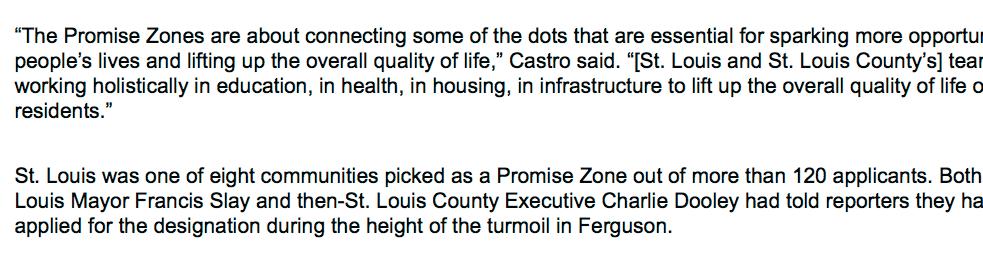


Activity Two —
Careers: In the help wanted ads, study the list of jobs available. How many jobs require a college degree? How many jobs require a high school diploma? How many jobs require previous experience? Choose one job to evaluate carefully. What skills would a person need to be successful with that job?
Learning Standards: I can use the newspaper to locate information. I can use the dictionary to locate words and apply the definitions. I can evaluate training and skills needed for jobs.


building
By Sylvester Brown Jr.
The St. Louis American
“Buy when there’s blood in the streets, even if the blood is your own.”
Rayne Overall shared that quote attributed to 18th-century British nobleman Baron Rothschild when discussing business and the perils of the pandemic.
Rothschild made millions of dollars buying in the panic that followed Napoleon’s defeat at the Battle of Waterloo. According to historians, Rothschild rejected popular business opinions and held onto the belief that the worse things seemed in the market, the better the opportunities for profit.
When the COVID-19 pandemic began in early 2020, Overall, a native of St. Elizabeth Bay, Jamaica, made a Rothschild-like decision. He bought a building in Wellston and decided to change the direction of his business.
Overall came to St. Louis in 2011 and created a lucrative business for himself as a DJ who
n “The housing market went up, but commercial property [values] went down,” Overall said. “Because of that, I got a very good deal on a more than 7,000-foot building in tiptop condition.”
– Rayne Overall, entrepreneur on the purchase of a building in Wellston
hosted private events. He works full time as an operations specialist for Spectrum, but hosting weddings and private parties created another steady revenue source.
That changed when the pandemic prohibited people from attending large gatherings.
“It started with weddings; that business just went away,” Overall explained.
“At first, events were postponed until the
following year, 2021. Then they got postponed again. It was tough.”
Because he always required a 25% retainer on planned events, Overall said he didn’t lose much money. Still, he felt it was time to refocus his energies.
“The pandemic allowed me to go back to the table and see what I could do differently. So, I started looking at event spaces,” Overall explained.
“Although bars were closing because they couldn’t have large gatherings, I saw the private event business almost triple. They were getting so many bookings through private gatherings because people are social beings. They’re always going to want to do something and find a way to do it.”
Overall and his partner and wife, Rahale Tulu, did the necessary research and found surprising opportunities directly related to the pandemic.
“The housing market went up but commercial
See OVERALL, B2
Appointed SBA Great Plains administrator
St. Louis American staff
President Joe Biden appointed Vercie Lark as the new Small Business Administration Region 7 administrator in February and he directs SBA programs and services in Missouri, Kansas, Iowa, and Nebraska.
“My key goal for the SBA in the Region 7 Great Plains states is to increase access to capital for micro and small business owners in inner cities, rural communities, small towns, and farmers,” Lark told The St. Louis American “There are specific programs and changes to programs the SBA has made to support this goal.”
The SBA offers micro loans up to $50,000, and SBA Community Advantage Loans recently increased from $250,000 to $350,000 to provide more capital for eligible small businesses owners, according to Lark.
In addition, federal contracting set aside goals for federal agencies will increase to 15% by 2026 for small/disadvantaged businesses, “which will add billions of dollars in future revenue growth opportunities for business owners who decide to be suppliers of goods and services to the federal government,” Lark said.
“I want to build on the new connections we
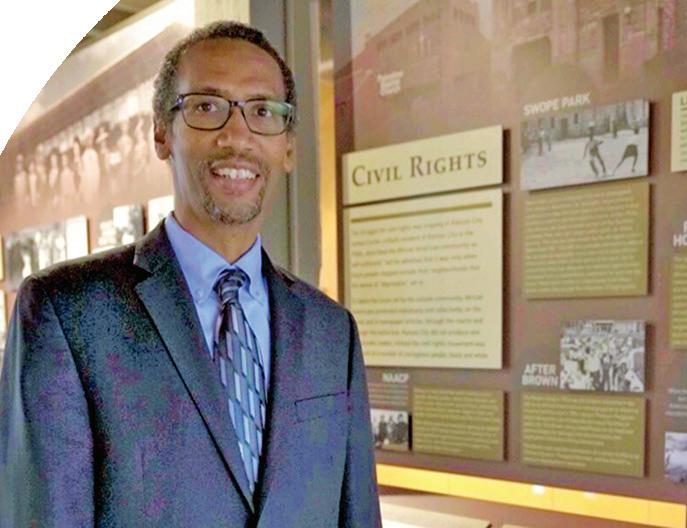
Paredes named Construction Forum VP
Tillis named CEO of nonprofit Shonnah Paredes

Cheri Tillis, COO of Fathers and Families Support Center for seven years and acting CEO for the past eight months, has been named CEO effective Jan. 1, 2022. She succeeds Halbert Sullivan, the organization’s founder, who passed away April 15, 2021. FFSC, was founded in 1997 with the intent of transforming absent fathers into nurturing parents. As CEO, she now has overall responsibility for the organization which has an annual budget of $4.3 million and 52 employees at five St. Louis metro locations.
Murray to teach project management
Marty Joe Murray, Jr.
Marty Joe Murray, Jr. was recently named adjunct professor and will teach project management at HarrisStowe State University. Under Murray, the MIS 0491 course will become available for students this fall. The curriculum is designed to help students pursue a career in project management and become certified. The course includes industry professionals from the region’s Fortune 500 companies and will offer students a chance at internships. Murray graduated from Southern Illinois University Carbondale with a baccalaureate of science in business management, and acquired his PMP, PMI-ACP and an MBA at the University of MissouriTrulaske Executive Program.
Landa named Glasgow principal Shonnah Paredes, manager of diversity programs for the Metropolitan St. Louis Sewer District, will serve as vice president of Construction Forum. Construction Forum, founded in 2013, is a nonprofit organization, that serves as a convener, communication channel, and collaborative builder in the workforce DEI space. Paredes has worked in the Diversity, Equity, and Inclusion space for 22 years. She has spent the last decade revitalizing the diversity programs of MSD.

Kasia Landa
coach at Glasgow from 2017 until her appointment as interim principal in January 2022. Landa also served as a classroom teacher in the district from 20142017. Landa earned a Bachelor of Science in Educational Education from the University of Missouri - St. Louis. She also earned a master of education in education administration and an educational specialist degree in education administration from UMSL.
Promotion, board appointment, new hire, award... please submit your People on the Move item (including photo) to kjones@stlamerican.com


Continued from B1
“Because of that, I got a very good deal on a more than 7,000-foot building in tip-top condition. We got it for less than $22,000 cash. With our savings, we were able to buy it outright. So, we don’t owe a mortgage or anything.”
The building is an old appliance shop at Martin Luther King Dr. and Kienlen Ave. near the Wellston Loop. The couple is renovating the building to open as an event party space in 2023.
The pandemic, Overall said, didn’t stop him. In fact, it made it easier for him to survive a historic economic downturn in business, especially Blackowned businesses.
After suffering crippling blows early in the pandemic, Black-owned firms are enjoying a rebound of sorts. Robert Fairlie, a professor at University of California, Santa Cruz, found that the number of African American businesses surged to almost 1.5 million in January 2021. An increase of almost 40% from February 2020, before COVID-19 swept across the nation. The ranks of Hispanic owners rose by 15% in the same period, while white and Asian entrepreneurs fell by 3% and 2%, respectively.
The surge in Black business owners can be attributed to multiple factors. They include people who lost jobs during the pandemic, turning to entrepreneurism, especially online business ventures and expanded COVID-related government assistance programs.
However, much relief for Black enterprises came from the “Buy Black movement” that seemed to go into overdrive during the pandemic.
Make no mistake about it; Black-owned firms were initially crushed by shelter-inplace orders and the economic downturn in the United States. According to data from the National Bureau of Economic Research, there was a 41% decline in Black business ownership from February to April 2020.
But, because of police-related killings like the murder of George Floyd by a former Minneapolis police officer,
Continued from B1 property [values] went down,” Overall said.
made during the pandemic and use those to help train and finance the dreams of many more aspiring and existing small owners in communities across our region.”
Lark recently retired from DST Systems of Kansas City where he served as an executive vice president and head of U.S. financial services. He led a billion-dollar line of business that served finance, banking, brokerage, and retirement investment industries.
SBA celebrated Women’s history month last month, and Lark said the SBA has expanded the number of Women’s Business Centers to over 150 across the country to provide greater access to training, mentoring, and advice to the fastest growing small business segment.
The SBA also launched “one of the most critical achievements of 2021, the historic $100 million Community

multiple factors. They include people who lost jobs during the pandemic, turning to entrepreneurism, especially online business ventures and expanded COVIDrelated government assistance programs.
the social justice movement inspired more people to increase their efforts to seek out and support black business owners.
The news of Americans, Black, white, and “other,” purposely supporting Black-owned firms during the pandemic is refreshing. But there are still many obstacles to overcome.
Even though African Americans make up over 14 percent of the population, they own only 2.3% of the employer businesses in the U.S. According to the Federal Reserve, the median net worth of white families was $188,200, 7.8 times that of their Black peers at $24,100.
The fact that Black-owned businesses opened in abundant numbers during the pandemic speaks volumes about the tenacity and resiliency of a people who’ve always had to navigate a world where they were disproportionately denied loans and capital to start or maintain business enterprises.
In May 2020, the Washington Post reported that large banks were approving around 60% of loans sought by white small business own-
Navigator Pilot Program.”
This Biden-Harris Administration initiative leverages a hyperlocal hub-andspoke approach to extend the reach of timely, accessible, and culturally relevant resources to small businesses. The two-year pilot program is designed to put more SBA knowledgeable resources on the ground in hundreds of new locations to better serve small business owners located small towns, rural and underserved communities.
The Jefferson County Community Action Corporation, a nonprofit organization whose mission is to serve those in need and raising awareness of the challenges of living in poverty, was named a HUB organization in the state of Missouri.
“There’s no need for owners to spend lots of money on training when there’s free high-quality training, counseling and mentoring already available through the SBA’s small business network,” Lark said.
“The SBA continues to provide free and low-cost business

ers, 50% of those sought by Hispanic or Latinx small-business owners, and just 29% of those sought by Black small business owners.
Overall is aware of the challenges many Black entrepreneurs face.
“When things are not going your way, stop thinking, ‘this is how I want things to go’ and start thinking, ‘how can I make things work for me.’”
To emphasize his point, Overall provided another favorite quote; this one from business magnate, investor, and philanthropist, Warren Buffet:
“I’ll tell you how to become rich. Close the doors. Be fearful when others are greedy. Be greedy when others are fearful.”
Overall said he was “fearful” when he hit “rock bottom” years before the pandemic. The remedy for those fears, he said, was resiliency, creativity and changing his mindset.
“I’m not sure if it’s a Jamaican thing or what, but the way I saw it, I had to start thinking outside the box.”
Sylvester Brown Jr. is The St. Louis American’s inaugural Deaconess Fellow.
training and technical assistance through SCORE, Small Business Development Centers (SBDCs), Women’s Business Centers (WBCs), and our regional Veteran’s Business Center in St. Louis, which serves the entire region.
“Nationally, they provided assistance that enabled small businesses to access more than $44.8 billion in capital infusion, start over 26,000 new businesses, and create and retain more than 2,100,000 jobs, last fiscal year.
Lark said he has heard from business owners and entrepreneurs who benefitted from the Restaurant Revitalization Fund, the Paycheck Protection Program COVID Economic Injury Disaster Loans, and Shuttered Venue Operators Grants
“Many of them credit those programs for saving their businesses. There’s more to be done,” Lark said.
“There will be more opportunities for small businesses on the horizon thanks to President Biden’s Infrastructure Investment and Jobs Act and Made in America priorities. The SBA and our local partners will continue to work to make sure our smallest businesses benefit
“I would be remiss if I did not express my thanks and gratitude to the people in the SBA who gave so much of their lives to save and recover thousands of businesses and millions of livelihoods for our fellow Americans during the pandemic.”
The SBA was “transformational for small businesses during the pandemic, providing over $450 billion in critical recovery funding to more than 6 million entrepreneurs,” he said.
“The SBA’s workforce remains committed to ensuring every small business opportunity is afforded to small businesses because this is the key to keeping America’s small businesses resilient in 2022.”

By Earl Austin Jr.
With each passing season, Dawn Staley adds to her status as a legend of college basketball.
On Sunday night, Staley led her South Carolina Gamecocks to a dominant 64-49 victory over Connecticut in the national championship game of the NCAA Women’s Tournament in Minneapolis. Staley joins an exclusive group of head coaches to win at least two national titles.
The most impressive part about the resounding win was that it was a microcosm of South Carolina’s season. After building an early 18-point lead, Staley’s Gamecocks cruised. South Carolina was tabbed as the team to beat in the preseason, and it more than lived up to the hype. She was an All-American point guard during her playing days at Virginia, reaching three Final Fours and the championship game. She was one of the best guards to ever play in the WNBA.
Staley has coached for more than two decades at Temple and South Carolina, respectively, and has known nothing but success. She was inducted into the James Naismith Basketball Hall of Fame in 2013 and that was before the South Carolina program skyrocketed into national prominence.
In addition to making South Carolina a perennial power, she was also head coach of the USA Olympic Team that breezed to another gold medal in Japan last summer.
When Staley led the Gamecocks to the NCAA title in 2017, she joined Carolyn Peck as the only African American women to lead their teams to the national title. Peck led Purdue to the championship in 1999. Now, Staley is the only Black woman to have two national championships.
“What I think is important as a Black woman and coach is the way you do it, like the example that you set for other coaches to follow,” Staley said after Sunday’s game.
“I just want to be a great example of how to do things the right way and keep our game in a place where the integrity is intact, because that’s the way we’ll grow.”
A native of Philadelphia, Staley is as tough and competitive as they come, but she is also as upbeat and relatable to the young ladies who come under her tutelage. She’s a great coach and leader of young women.
On a personal note, I have a 3-year old great niece who is the daughter of very tall parents. It remains to be seen whether she will ever pick up a basketball, but it really doesn’t matter.

There are so many positive role models that I’m going to let her know about, and Dawn Staley is going to be right at the top of the list.
Brandon Miller wins national title
Former John Burroughs track and field star
Brandon Miller added to his list of collegiate accomplishments by being name the Regional Male Athlete of the Year by the United States Track & Cross County Coaches Association.
Miller just concluded a successful indoor season at Texas A&M by winning the NCAA national championship in the 800-meter run. He became the first Aggie athlete to win the
national title in that event. Miller’s winning time of 1 minute 47.19 seconds was not only a new school record, but also an American collegiate record.
Miller won a second national title by running a leg on the Aggies’ victorious 4x400-meter relay. He turned in a split of 45.45 seconds while running on the third leg. He also repeated as the Southeastern Conference champion in the 800. As a freshman, Miller was the SEC champion in the 800 and the national runner-up in the event as the NCAA Outdoor Nationals. He also earned a spot at the USA Olympic Trials in Eugene, Oregon.
With Alvin A. Reid
Miller graduated from John Burroughs as the state record holder in the 800.
Antwon Hayden to Illinois
A top St. Louis area high school football prospect is headed to the Big Ten Conference. Standout linebacker of Antwon Hayden of Duchesne gave a verbal commitment to the University of Illinois last week.
A 6’3” 220-pound junior linebacker, Hayden helped lead the Flyers to a berth in the IHSA Class 6 state championship game last season. As a junior, Hayden had 78 solo tackles with 39 assists with five quarterback sacks and two fumble recoveries.
Hubert Davis would have joined an elite group of men had his North Carolina Tar Heels prevailed in Monday night’s NCAA men’s basketball national championship game against the Kansas Jayhawks. Just four Black coaches had captured the men’s tournament’s top prize, beginning with John Thompson of Georgetown University in 1984. The Hoyas beat the University of Houston in the NCAA final, 84-75, to win the school’s only national championship. In 1994, Nolan Richardson became the second Black coach to win a title, leading the Arkansas Razorbacks to a 76-72 win over the Duke Blue Devils.
ship trophy.
After storming back from a 15-point halftime deficit, KU prevailed 72-69 and left Davis proudly standing up for his team.
“I can’t remember a time in my life when I should be disappointed, but I feel so much pride,” Davis said during his postgame press conference.
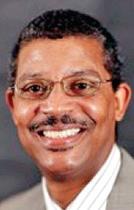
Alvin A. Reid
Four years later in 1998, Tubby Smith led Kentucky to the crown, making him the third Black coach to win the national title in 14 years. Kevin Ollie coached the University of Connecticut (UConn) to the title in 2004 and remains the last Black coach to hoist the champion-
“The way [the team] represented the university, this program, the community, I couldn’t ask for them to do any more than they have done.”
Richardson told USA TODAY that Davis’ run is essential to creating opportunities for more Black coaches at the highest level of the NCAA.
“It’s been a beautiful ride for this young man to be in the final game,” Richardson said.
“You think about all the opportunities that [Black coaches] didn’t have. He’s taken the best of us and helped pave roads that have always been rough to go around.
I’m from the old school and I remember how hard it was

to get jobs. It’s about opening doors and winning opens doors.”
According to the NCAA, 55% of Division I men’s basketball players are Black, yet 69% of Division I basketball coaches are white. A meager 9% of NCAA athletic directors are Black.
Big man, wise words
Kareem Abdul-Jabbar told Washington Post NBA writer
Ben Golliver he’d be willing to meet L.A. Lakers’ star LeBron James to discuss their differences on issues including vaccine advocacy. “I admire the things he’s done… Sending a whole school to college, wow, that’s amazing… Some of the things he’s done he should be embarrassed by,” Jabbar said. Regardless of how you feel about the March 27 Academy Awards fracas, Jabbar also penned a must-read essay on Will Smith and Chris Rock at
kareem.substack.com. If you’re wondering what his take is, the essay is titled “Will Smith Did a Bad, Bad thing,” and Jabbar writes that Smith “perpetuated stereotypes.”
against the Pittsburgh
The
Cardinals are worth an estimated $2.45 billion and rank seventh on Forbes magazine’s list of franchise values. Topping the Redbirds are the N.Y. Yankees ($6B); L.A. Dodgers ($4.07B); Boston Red Sox ($3.9B); Chicago Cubs
During the
weeks between F1 races, superstar driver Lewis Hamilton pursued one of his off-track passions: skydiving. “Today I have done 10 jumps and I have learned something new with each one. It’s a fantastic way to clear your mind before you focus on the next week,” he told reporters on April 3 in United Arab Emirates.
The Reid Roundup South Carolina coach Dawn Staley said pieces of the nets cut down after her team’s national championship victory over UConn would be sent to Black male coaches “because they don’t get the opportunity.” Strands will also go to Black journalists “who helped elevate the game,” and also to some Black journalists who “don’t get an opportunity to elevate.”…Albert Pujols was scheduled be in an Opening Day starting lineup for a 22nd time when he serves at designated hitter on April 7 at
Partnership includes investments to help make golf more diverse
The Ascension Charity Classic presented by Emerson, an official PGA TOUR Champions event held annually in North St. Louis County at historic Norwood Hills Country Club, has announced a long-term partnership with the Normandie Golf Course renovation project. It will be led by the Metropolitan Amateur Golf Association and Beyond Housing, in conjunction with Nicklaus Design. The partnership will include financial support, charitable and tournament alignment, and investments to help make golf more diverse and inclusive in North St. Louis County and beyond.
An additional component of the new relationship includes
a significant investment in the effort to restore and revitalize Normandie Golf Course, one of the oldest public golf courses west of the Mississippi River and located in North St. Louis County in the city of Bel-Nor. The option to purchase the real estate from the University of Missouri System (UMSL) has been exercised and the project is expected to break ground in the fall of 2022. In April 2021 it was announced that Nicklaus Design would lead the renovation effort and Normandie would become a Jack Nicklaus Signature Golf Course.
“It made perfect sense for the Ascension Charity Classic to get involved in this effort to restore and revitalize
Normandie Golf Course given our long-term commitment to North St. Louis County through our PGA TOUR Champions and APGA Tour events, as well as our commitment to making golf more diverse and inclusive,” said Nick Ragone, executive vice president and chief marketing officer, Ascension.
“We appreciate the Ascension Charity Classic’s long-term investments in North St. Louis County, and this partnership with the Normandie Golf project will only further our efforts to encourage investments in our community that reinforce and accelerate social change,” said Missouri State Senator Brian Williams.

By Jessica Rogen UMSL Daily
For more than two decades, the UMSL Trailblazers Award has honored, celebrated and uplifted the achievements of exceptional women who have paved the way for others on campus and beyond. The annual awards are part of the university’s Women’s History Month programming, and this year’s theme was “Womyn’s Lives: Paths to Healing, Hope, and Empowerment.”
This year’s awardees included Melissa Douglas and Sheila Grigsby. Here’s more about them:
Melissa Douglass is a trailblazing social entrepreneur who is known in professional spaces as “The Virtual Clinician.” She is a licensed clinical social worker and the founder/clinical director
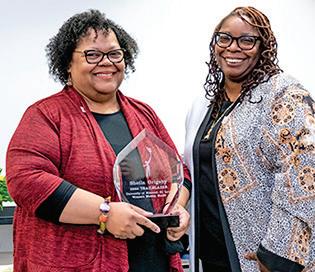
of Goal Driven Counseling, one of the first Black-owned, virtual mental health counseling practices in the U.S. Her work and passion meet at the intersection of modern tech utilization and trauma-informed wellness strategies, and she serves as a professional devel-

opment trainer and consultant on mental health literacy topics and trauma-informed systems of care. Douglass values impactful change and enjoys partnering with organizations to guide actionable, solution-focused strategies that center equitable approaches

through a person-centered lens. She is equally invested in the development of future social workers as an adjunct professor and has shared mental health and tech-related knowledge on nationwide platforms such as National Public Radio, Blackdoctor.org, KPLR News
Sheila Grigsby holds her Trailblazer Award, with UMSL Vice Chancellor and Chief Diversity Officer Tanisha Stevens.
Channel 11, the National Association of Social Workers Conference as the Plenary speaker, and at conferences, organizations and universities.
Sheila Grigsby received her doctorate from the University of Missouri–Kansas City
School of Nursing. In addition to working on her degree and teaching, she has spent much of the last year focusing on a project funded by the Patient-Centered Outcomes Research Institute. This study, in collaboration with organizations, seeks to reduce health disparities in the St. Louis region by engaging community members through focus groups and other activities to address asthma and other issues among youth. A longtime member of the UMSL teaching faculty, Dr. Grigsby has worked extensively in the St. Louis region as a community organizer and health coalition builder. She is interested in teen pregnancy prevention, sexual and reproductive health and preventing chronic disease in the African American community using participatory research methods.

By Kenya Vaughn
The St. Louis American
Well before the sitcom was officially declared a breakout hit in its debut season, St. Louis native William Stanford Davis, who portrays the lovable wisecracking custodian Mr. Johnson, knew “Abbott Elementary” was something special.
On the show – which was recently renewed by ABC for a second season – he saw a reflection of the type of education he received at the now closed Cote Brilliante Elementary while growing up in St. Louis.
“I had all African American teachers who cared so much,” Davis said. “That’s what this show reminds me of. Every time I see an episode, I see someone that I knew growing up.”
Created by and starring Quinta Brunson, “Abbott Elementary” hilariously displays the challenges of educators in a fictional Philadelphia public school trying to give their students the best learning experience possible despite limited resources and systemic support.
“They do a hard job – sometimes an impossible job – but they make do, especially African American teachers,” Davis said. “A lot of them have been through what those kids are going through.”
The show, which airs as a part of ABC’s Tuesday night lineup, also stars Sheryl Lee Ralph, Janelle James, and Tyler James Williams.
“I see my aunt, Helen Flagg, who was a teacher at Cote Brilliante,” Davis said. “Quinta’s character reminds me of her – because she cares so much.” His aunt opened the doors of her home to students. She made sure they had clothes. She made sure they had food. And she made sure that despite the obstacles they faced at home, that they understood they were worthy of a quality
See Davis, C6
By Danielle Brown
The St. Louis American
Upon entering “The Artivist” exhibition inside the Center of Creative Arts (COCA) ‘s Millstone Gallery, visitors viewed a message by its creator, Brock Seals.
“The direct path to becoming who I am is to navigate away from labels and titles. They never truly define my talent or give a true representation of what I have to present,” Seals states. His reflection on his work continues with him explaining if he were ever totally satisfied with his efforts, it would be similar to exposing Superman to ‘kryptonite.’
“It would diminish my skills and individuality, and I can’t go for that!” he wrote.
He affirmed on that first exhibit wall he wants to be a representative who breaks barriers for artists and inspires them to be their authentic selves.
“Join me as I shade the status quo with the stroke of my paintbrush,” he wrote.
The showcase documented Seals’ journey over the past two years on how he’s transformed into an artist turned artivist (an artist with a pas-


sion for activism).
“I adopted the term [artivist] after hearing someone refer to me [as that],” Seals said.
“Being an artivist is about using my art as my voice on politics and other issues affecting the community. I need to speak out about specific topics because I represent my community and others similar to me.
“St. Roulette’’ (a Russian Roulette board with multi-hued hands placing roulette balls in slots marked with St. Louis zip codes), “Heritage” (an STL fitted cap he customized in collaboration with St. Louis Cardinals), and more were featured in the exhibition.
“I wanted to give my community a space within the art because many people follow me

Jazmine Sullivan, Doja Cat, among those awarded
By Danielle Brown The St. Louis American
The Grammy’s record of not having a Black artist to win Album of the Year in 14 years shifted when Jon Batiste won Album of the Year for this project, “We Are” on Sunday, April 3 at the 64th Annual Grammy Awards. Herbie Hancock won the award for his contribution to “River: The Joni Letters,” in 2008.

Leading with 11 nominations, Batiste carried home five trophies including top album.
for being from St. Louis or a rapper,” Seals said.
“Art is new to them. I wanted them to feel welcomed when they came in. They can see stuff they recognize and feel comfortable being in an art gallery because many people I know have never been to an art gallery or seen art as something fun. I wanna make art comfortable and accessible to my people.”
Seals released an album and action figurine of the same name with the exhibition.
Last year, he painted the word ‘Reparations’ on a street in front of St. Louis City Hall in response to injustices that inspired the Black Lives Matter movement. It’s what he says
See Artivist, C6
“I really believe this to my core; there is no best musician, the best artist, best dancer, best actor,” Batiste said. “The creative arts are subjective and they reach people at a point in their lives when they need it most.” In addition to his winning streak, he also performed a whimsical and quirky performance of “Freedom,” from his Grammy-winning top album. The show consisted of Afrofuturism elements combined with old-time nostalgia. Imagine a mix of Black people ruling Dr. Seuss’ fictional books with characters from Willy Wonka and The Chocolate Factory. That best describes what Batiste brought his audience. Black Coffee also accomplished a historic milestone with his win becoming the first South African producer to win Best Dance/Electronic Album at the 2022 Grammys. Last year, Kaytranada was the first Black artist to win in that category.
Music’s biggest night returned Sunday, with a live broadcast. Rising numbers of COVID-19 cases, fueled by the Omicron variant, forced the star-studded ceremony to be rescheduled from the original date of Jan. 31.
The main event also moved from its previous venue the Crypto.com Arena (formerly the Staples Center) in downtown Los Angeles, to
See Grammy, C6



By Mallory Noe-Payne
Becoming a gospel musician or mu-
sic producer is a path that often goes through a church. But one university in Richmond is hoping to provide another route.
One of Hezekiah Walker’s flashmob youtube videos has more than 92 million views. It’s just one sign of success for the pastor. Another is his multiple Grammy awards. Now he’s got another accomplishment to add to the list: start a gospel school. Although he’s from Brooklyn,
Walker has recently been spending time in Richmond – a city close to his heart.
“Richmond was probably one of the cities that kept calling me back to do gospel concerts back in the day,”
Walker explained over a recent zoom interview. “So I have to say that Richmond is like one of the cities that put me on the map.”
Walker recently found his way back to Virginia’s capital city as a student.
He’s getting his master’s in theology at Virginia Union University.
“And what really made me want to

get back into school was because I was singing, but I didn’t really know the Bible,” he said. “And so I didn’t really want to keep singing about something that I didn’t really know.”
About a year into his program word leaked out that a famous gospel singer
was on campus. School leaders approached Walker to enlist his help in starting a music program. It seemed a natural fit.
Virginia Union is Richmond’s only historically black university. The school was founded after the Civil War for Black freedmen who wanted to enter the ministry. Today, many religious leaders call VUU’s seminary their alma mater.
“And so if this is the hub for theology. It should be the hub for gospel music,” said Walker.
Those plans came to fruition last summer, when Virginia Union announced plans to open the Hezekiah Walker Center for Gospel Music. In December, the new center hosted a single five-hour long master class.
Now they’re gearing up for their first full semester of course offerings.
Courses include a business class on publishing and licensing, and a history course on the heritage of gospel.
Reverend Zynora Manson will be one of the program’s teachers. She’s a Richmond local, long-time teacher, pastor, and musician herself. She gave me a glimpse of what
students can expect as she took to the piano to play and sing “Swing low Sweet Chariot”, all while explaining the important background of the spiritual as a coded song sung by the enslaved.
“Swing low meant come down, in other words get ready to escape from slavery,” Manson explained. “But the master thought they were just singing a beautiful song.” Manson is excited to bring this information and more to a group of students.
“This is going to be a life changing, engaging, inspirational experience, because I get the opportunity to share what I literally heard myself, not just studied… but that I literally heard my mom and my dad sing when I was a little girl,” she said.
Courses for the spring are online and enrollment is open to anyone, not just VUU students. Each class is four weeks long and students may register for a single course or multiple. Registration is open now.
Mallory Noe-Payne is Radio IQ’s Richmond reporter and bureau chief.
By Rae Karim
The Book of Jeremiah is filled with conversation between the weeping prophet and God.
Of the many conversations among them, there was something different about the beginning of the one in chapter 33. Let’s look at the text. While Jeremiah was still confined in the courtyard of the guard, the Lord gave him this second message: 2 “This is what the Lord says — the Lord who made the earth, who formed and
established it, whose name is the Lord: 3 Ask me and I will tell you remarkable secrets you do not know about things to come” (New Living Translation).
The first verse is quick to provide context, letting us know Jeremiah is in jail. He is confined to a particular place, for a particular amount of time. As such, his mobility is limited. Yet there’s one thing that cannot be restricted. In the latter half of the verse, we see the Lord speak to Jeremiah. Though Jeremiah’s lockdown limits his hands and feet, his
ears are still able to hear. Even more, confinement never disrupts dialogue from God. Notice I said from God, because God has a way and will make a way to get instruction, information, and encouragement to us. The other side of that is dialogue to God, which is where we take the stage. The interesting irony is that at times we consider confinement in one area of life to mean confinement in all areas of life. It’s as if when one thing shuts down so does everything else. Not so, and verse one proves it. Granted I’m not God, but all things considered, I don’t think God would speak to Jeremiah if Jeremiah weren’t listening. Therefore, we can take his example and apply it to our lives. God is always speaking. The question is are we listening?

In verse two, Jeremiah engaged in a moment of awe. After having read the verse multiple times, this time, I was in awe with him. Jeremiah and I considered the greatness of the Lord who made, formed, and established the Earth. Might not seem like a lot but think about it for a moment: The Lord who made, formed, and established the Earth decided to talk to Jeremiah and decides to talk to us, despite our confinement. That should make you want to lift your hands in thanksgiving!
The conversation begins in verse three. Another interesting irony shows up, in that the Lord did the talking. And God’s words were an invitation to Jeremiah that is extended to us: Call to me. It’s that simple. Call to God. Call on God. Call for God.
Whatever way works best for you, do it. Why? The answer is in the next part of the verse: I will tell you. While we appreciate God telling us about the hidden things, the fact that God will tell us anything is yet another reason to be continually grateful. Natural confines don’t stop supernatural conversation. They may be the catalyst to start conversations. Think about it: While in some cases we shut down when we’re confined, in other cases we call to God. Therefore, the confines of fear, stress, finances, employment, relationships, health, or any other limitation shouldn’t prevent us from calling to God. God is always ready to talk to us. We must accept the invitation for conversation that will free us in more ways than we know.
Rae Karim is pastor at First Christian Church of Honolulu










Responsible for implementing solutions that support business goals and objectives within the Salesforce platform. Collaborates with Solution Architects and other product teams on Salesforce integrations. Should have knowledge of the Salesforce ecosystem, including its capabilities and limitations.
To apply, please visit: https://www.safetynational. com/careers-page/
Lead level professional position which contributes to the accomplishment of project/ program practices and objectives that will achieve business goals and objectives. Supervises and Directs team within Program Management. Manages, leads and mentors others within Program Management. Demonstrates and mentors advanced working knowledge and concepts of Information Technology.
To apply, please visit: https://www.safetynational.com/ careers-page/
Responsible for contributing to the efforts around the development of a Next Generation Data Warehouse. Also responsible for contributing to the architecture and design of a Next Generation Data Warehouse. To apply, please visit: https:// www.safetynational.com/
www.stlamerican.com
The St. Louis County Library is seeking applicants for a full time Assistant Branch Manager at the Lewis & Clark Branch. This position will assist the Branch Manager with the operation and maintenance of the branch to provide quality Library services to all Library customers. A Master’s degree in Library Science is required. Must possess excellent communication and organizational skills. Salary: $54,886 plus paid health insurance and vacation. Apply online at https://www.slcl. org/content/employment. Equal Opportunity Employer.
The St. Louis County Library is seeking qualified applicants to fill a Full-time Public Safety Specialist position. The Public Safety Specialist will work in a public library setting, ensuring a welcoming, safe and secure environment for employees, patrons, and the protection of library assets.
A High School diploma or GED required. A Bachelor’s degree or 60 hours college credit preferred. Three-five years of experience in security, social services, or related experience working directly with the public. Requires good interpersonal skills and excellent organization and communication skills. Salary - $45,240 plus paid benefits. Apply online at https://www.slcl. org/content/employment. Equal Opportunity Employer.
Position Summary: Provide executive leadership to the organization, including supervision of employees, developing, and managing projects, and serving as the organization’s representative before various City and State entities.
Position reports to: Board of Directors
Position Responsibilities:
• Supervise employees daily, including delegation of responsibilities and job functions, as well as conduct regular employee reviews and evaluations.
• Develop and manage potential construction projects, including creating and maintaining project files and coordinate construction and development schedules.
• Serve as a representative of the organization to elected officials and community leaders.
• Other responsibilities as assigned.
Application Process: To apply for this position, please submit your resume and cover letter to Sal Martinez at martinezs@employmentstl.org or mail to 4601 Pope Ave., St. Louis, MO 63115 Attn: Sal Martinez, Board Vice-Chair. Resumes and cover letters must be received by April 17, 2022 at 11:59 pm. North Newstead Association is an Equal Opportunity Employer.
Essential Functions:
• Coordinating and attending meetings/events on or off-site as directed
• Providing technical assistance to neighborhood associations and residents designed to increase their capacity to improve the quality of life in their communities
• Developing and assisting in the distribution of marketing materials that describe the programs/activities of the organization
• Assisting in the intake and analysis of documents needed to determine the eligibility of clients and/or participants
• Providing general project management support
Requirements:
• Bachelor’s degree in urban studies, public policy or related field
• Excellent analytical and problem-solving skills
• Proficiency in Microsoft Office Suite and other computer applications
• Must be able to work in a community setting with diverse populations including community groups, elected and appointed officials, professional staff and volunteers
• Must be able to work periodically on evenings and weekends
Application Process: To apply for this position, please submit your resume and cover letter to Sal Martinez at martinezs@employmentstl.org or mail to 4601 Pope Ave., St. Louis, MO 63115 Attn: Sal Martinez, Board Vice-Chair. Resumes and cover letters must be received by April 17, 2022 at 11:59 pm. North Newstead Association is an Equal Opportunity Employer.

Responsible for coordinating the Family Self-Sufficiency (FSS) and other component programs. Knowledge of the FSS Program, HCV Program, Affordable Housing Programs, and HUD regulations. Knowledge of data processing programs such as Microsoft Office and Yardi. BS Degree in Social Work, Human Services, Business or Public Admin is required and/or its equivalent and 3 years working experience with a PHA or affordable housing experience. A combination of education and experience will be accepted. MA Degree in Social Work, Human Services, or Public Admin with 5 years working experience with a PHA or affordable housing organization preferred.
Apply via our website www.slha.org Position will be open until filled. A Drug Free Work Place/EOE.
www.stlamerican.com
Deaconess Foundation will sponsor a network of Children’s Defense Fund Freedom Schools® programs this summer. The seven-week program provides summer enrichment for children and families. College-age young adults and recent college graduates play a key role as facilitators in the CDF Freedom Schools program in the position of Servant Leader Intern (SLI).
The Servant Leader Intern’s primary responsibility is to supervise and maintain the safety of children.
The Servant Leader Intern will facilitate daily literacy activities; manage classroom spaces; establish and maintain a supportive, structured environment; serve as Harambe leader, afternoon activities facilitator, and field trip chaperone. Starting salary range is $15.00 to $18.00 per hour.
To apply for this position, submit cover letter, resume and references, all as one document, at: https://deaconess.org/joinus
DEPARTMENT: Public Administrator
General: The Public Administrator (PA) is charged with the duties of administering decedent estates, conservatorship estates, and serving as guardian for those matters assigned to the office by the Probate Division. The PA supervises a staff of eight persons including deputy public administrators.
Qualifications: Candidates should possess a Juris Doctorate and be licensed to practice law in the State of Missouri with 3-5 years experience working in probate and possess an excellent working knowledge of probate law and practice. In addition to probate issues, the PA will face challenges related to property interests in marketable securities, real property, contracts, insurance, and other issues. The PA must also be able to navigate through elder law issues such as Medicaid program eligibility, disability law, and special needs trusts. Candidates must be at least 21 years of age and are required to be bonded.
Duties: The PA must supervise staff including the management of payroll and benefits, in conjunction with the Circuit Court. Each position in the office has a job description and performance criteria for individual review and evaluation of the staff.
The administration of decedent and conservatorship estates can require a great deal of time marshalling assets. The PA may spend many hours making an inventory of safe deposit boxes, collecting bank deposits, sifting through personal papers, and making inquiries regarding additional assets. The PA should retain the services of contract agents when possible to assist in the processing of personal property.
The PA must make reasonable efforts to assure that tax returns have been filed and tax obligations paid. This may require additional inquiry with the Internal Revenue Service and the assistance of competent tax preparers. The PA is ultimately responsible for proper payment of all expenses of administration, claims and distributions to heirs. The PA will work with members of the Probate Division, attorneys, bankers, real estate agents, social workers, Department of Mental Health employees, physicians, and other mental health providers.
Notice and How to apply: Interested parties should send their cover letter and resume to the following address or via email addressed to: St. Louis County Family Court, ATTN: Human Resources, 105 S. Central Avenue, Clayton, Missouri, 63105, or to SLCCourtJobs@courts.mo.gov on or before May 5, 2022. At the recommendation of the probate judge a vote will be made by the court en banc and forwarded to the Saint Louis County Council for confirmation. The current appointment will be made for the current partial term which expires December 31, 2024. Subsequent appointments may be renewed by the court en banc for a 4 year term thereafter. EOE. Please contact the Human Resources Department at 615-4471 (voice) or RelayMo 711 or 800-735-2966 if you need any accommodations in the application process, or if you would like this posting in an alternative form.

Description Primary responsibilities for this position include conducting a variety of legal research and writing legal memoranda, judgments, and opinions for judges and court administrators.
Minimum Qualifications Applicants must have graduated from an accredited law school and be licensed in the state of Missouri. Applicants with judicial clerkship experience are preferred.
FOR MORE INFORMATION AND HOW TO APPLY: Applicants interested in applying for this position should visit our website at www.governmentjobs.com/careers/ stlouis. We only accept On-line applications.
EQUAL EMPLOYMENT OPPORTUNITY POLICY: The policy of the Civil Service Commission of St. Louis County is to support fair and equitable employment opportunities for all persons regardless of race, color, religion, sex, national origin, age, disability, sexual orientation, gender identity, marital status, veterans’ status or political affiliation. Call the Division of Personnel at (314) 615-5429 for more information on this policy.
St. Louis County Division of Personnel, 7th Floor Clayton, MO 63105 (314) 615-5429 Relay MO 711 or 800-735-2966
An Equal Opportunity Employer Fax: (314) 615-7703 www.stlouiscountymo.gov
Poettker-IMPACT Strategies JV, LLC, as the selected Construction Manager, is requesting Subcontractor bids for the SoGro Apartments project in St. Louis, MO.
This is a taxable project.
This project consists of complete ground-up construction of a (3) separate, 4-story apartment buildings with a total of 179 units. Construction includes a new Clubhouse, Pool and Amenity Deck, Management and Business Offices, Sky Lounges/Decks, Police Sub Station, and full site development.
Building Trade Work required for this job includes, but is not limited to Building & Site Concrete, Concrete Topping, Masonry, Structural Steel and Erection, Rough Carpentry, Structural Wood Materials, Damproofing and Waterproofing, Thermal Insulation, Weather Barriers, Siding, TPO Membrane Roofing, Fiber Cement Siding, Flashing and Sheet Metal, Gutters and Downspouts, Fireproofing, Penetration Firestopping, Joint Sealants, Metal Doors, Frames and Hardware, Flush Wood Doors, Overhead Doors, Entrances and Storefronts, Vinyl Windows, Drywall, Flooring, Painting, Toilet Compartments, Toilet, Bath and Laundry Accessories, Fire Safety Specialties, Postal Specialties, Wire Storage Shelving, Awnings, Parking Control Equipment, Residential Appliances, Stone Countertops, Elevators, Pool, Fire Protection, Plumbing, HVAC, Electrical, Electronic Safety and Security, Earthwork, Soil Treatment, Asphalt Paving and Pavement markings, Fences and Gates, Landscaping and Irrigation, and Site Water, Sanitary and Storm Utilities.
The SoGro Apartments project will comply with the Diversity Goals as governed by Ordinance 71094 of the City of St. Louis. Ordinance 71094 outlines Enterprise (Contract Spend) requirements.
Workforce Participation Goals are also included below.
Enterprise (Contract Spend)
African American - 21%
Hispanic - 2%
Asian American - .5%
Native American - .5%
Women - 11%
Workforce Participation (Boots on the Ground)
Apprentice - 20%
Minority - 25% Women- 7%
City Resident - 23%
Successful Contractors will be required to participate in the St. Louis Development Corporation (SLDC) program (GPTS) for documenting compliance with the Workforce and Prevailing Wage Ordinances.
This project also requires prevailing wages, based upon the current Missouri Division of Labor Standards – General Wage Order No. 28.
Poettker-IMPACT Strategies JV, LLC will be offering (2) Pre-Bid Opportunities for this project. Details will be announced ASAP.
Project bid documents, as well as samples of Subcontract documents and insurance requirements can be viewed at IMPACT Strategies, Southern Illinois Builders Association, The Asian American Chamber of Commerce, The Congress of Racial Equality - North Central region, Cross Rhodes Print & Technologies, Employment Connection, The Hispanic Chamber of Commerce, MO-KAN plan Room and Mcgraw Hill Dodge. Documents are also available for view/download from GradeBeam.com and the following direct link:
https://buildwithimpact.exavault.com/share/view/2wxh1-fnan5q4s
The lead Estimator on this project is Andrew Martiszus. Amartiszus@buildwithimpact.com
Subcontractor bids are due to IMPACT Strategies, Inc. by 2:00 PM on May 4, 2022. Bids should be emailed to Emily Yost. eyost@buildwithimpact.com
The following people are in debt to Gateway Storage Mall. The contents of their storage unit(s) will be sold at auction to compensate all or part of that debt.
Auction at the Dupo, IL location will be held online with www.storageauctions.com on April 26th, 2022, at 10:00 AM. A cash deposit will be REQUIRED for all winning bids. Gateway Storage-Dupo: P07- Crisseanna White, P12- Cody Bergman, 9-Erica Carner-Flanagan, 39-Mary Suschanke, 47-Nicole Wright, 150-Joe Barnhardt, 403- Roy/Amanda Venus, 477—Kimberly Young
Auction at the Columbia, IL location will be held online with www. storageauctions.com on April 27th, 2022, at 10:00 AM. A cash deposit will be REQUIRED for all winning bids. Gateway Storage-Columbia: A008—Brenda McDermont, 107—Krystal Bostic
For all rules, regulations, and bidding process, please contact www. storageauctions.com. All other questions, please call (618) 744-1588 or mail: 300 Rueck Rd, Columbia, IL, 62236.
Is soliciting “Request for Quote” responses for Clear Bookbags for the 22/23 school year and will be received until 1:00 PM (CST) on April 13, 2022. RFQ and information can be obtained from the district website at https://www.fergflor.org/ domain/2531
The City of St. Louis Department of Health seeks proposals for Youth Services Summer Programming.
Requests for Proposals may be obtained beginning March 21, 2022, by downloading from the City of St. Louis website at www. stlouis-mo.gov/health. The deadline for submitting proposals is April 11, 2022, by 4:30 P.M., timestamped via email to Craig Schmid, schmidc@stlouis-mo. gov, City of St. Louis Department of Health. The Department reserves the right to reject any or all responses with or without cause.
Kairos Academies (Agreement Number 115-931) is accepting bids for fixed price food service management companies for the close of the 2021-2022 school year and going forward. Bids are due by May 9, 2022 at 12:01 PM. There will be a mandatory walkthrough for all bidders on April 22 at 2:30 PM. For questions and bid specifications please contact Ben Huebner at (314) 252-0602 Ext: 4 or FSMC@ KAIROSACADEMIES.ORG
Kairos Academies reserves the right to reject any and all bids. Kairos Academies is an equal employment and educational opportunity institution.
At St. Louis Lambert International Airport
Sealed proposals will be received by the Board of Public Service in Room 301 City Hall, 1200 Market Street, St. Louis, Mo. Until 1:45 PM, CT, on Tuesday, May 17, 2022, then publicly opened and read in room 325. Plans and Specifications may be examined on the Board of Public Service website http://www.stl-bps.org (BPS On Line Plan Room) and may be purchased directly through the BPS website from INDOX Services at cost plus shipping. No refunds will be made.
Bidders shall comply with all applicable City, State and Federal laws (including DBE policies). Mandatory prebid meeting will be held on Tuesday, April 19, 2022, at 10:00 A.M. via Zoom:
Meeting URL: https://cmtengr.zoom.us/j/86916851826? pwd=YXl3RVNzSjY2azlhb2lQMWRMMDNvQT09 [ cmtengr.zoom.us]
Meeting ID: 869 1685 1826 Passcode: 527909
Dial by your location US +1 301 715 8592 or +1 312 626 6799 or +1 929 205 6099 or +1 253 215 8782 or +1 346 248 7799 or +1 669 900 6833 Find your local number: https://cmtengr.zoom.us/u/ kbK1BRFqu [cmtengr.zoom.us]
All bidders must regard Federal Executive Order 11246, “Notice of Requirement for Affirmative Action to Ensure Equal Employment Opportunity”, the “Equal Opportunity Clause” and the “Standard Federal Equal Employment Specifications” set forth within and referenced at www.stl-bps.org (Virtual Plan Room).

The City of Jennings is seeking an INVITATION TO BID for the Project, to be known as the Jennings City Center, consists of Two New Buildings: A New City Hall, approximately 13,000 square feet, and a New Community Center, approximately 15,000 square feet. Work includes, but is not limited to, site clearing and excavation, concrete foundations and flatwork, structural steel, roofing, landscaping, sanitary and storm sewers, HVAC, electrical, plumbing, and communications work. Seeking sealed lump sum bids due by Tuesday, May 3, 2022. All bids will be publicly opened at 2:00 pm (CST) at Jennings City Hall –2120 Hord Avenue; 63115. Visit our website for details: www.cityofjennings.org
CITY OF ST. LOUIS BOARD OF PUBLIC SERVICE
REQUEST FOR QUALIFICATIONS for PROFESSIONAL ENGINEERING SERVICES FOR CASS AVENUE MULTIMODAL IMPROVEMENTS, PHASE 1, ST. LOUIS, MISSOURI. Statements of Qualifications due by 5:00 PM CT, April 20, 2022 through the Bid Express online portal at https://www.bidexpress.com/ businesses/20618/home
RFQ may be obtained from BPS website www.stl-bps.org , under On Line Plan Room-Plan Room, or call Board of Public Service at 314-589-6214. 25% MBE and 5% WBE participation goals.
Paric Corporation is seeking proposals for the following project: THE BRIDGE APARTMENTS
Following up to our advertisement in February, PARIC Corporation is soliciting bids for the SITE, CORE AND SHELL ONLY for THE BRIDGE APARTMENTS. This is a five story structure located on Delmar Ave scheduled for an August 2022 tentative construction start. Access to documents is available from our Smartbid link, if you have not received a bid invitation send your company information to tlalexaner@paric.com
The Core and Shell consisting of Site & Civil Drawings, Structural Foundation Drawings and Structural Steel.
The last day for questions is currently APRIL/20/22.
BIDS WILL BE DUE ON MAY 11, 2022
Send all questions to Cory Paschen CPaschen@paric.com
Goals for Construction Business Enterprise
• 21% African American
• 11% Women
• 3% Other – Hispanic, Asian American, Native American
Goals for Workforce (field) participation
• 25% Minority
• 7% Women
• 20% Apprentice
• 23% City of St Louis Resident
All bids should be delivered to Paric via e-mail (bids@paric.com) or fax (636-561-9501).
PARIC CORPORATION IS AN EQUAL OPPORTUNITY EMPLOYER
www.stlamerican.com
Bids for Chiller
James C. Kirkpatrick State Information Center and Change In Scope RebidAnnex Building 2nd Floor Renovation,
Project Nos. O201101 and R2115-01, respectively, will be received by FMDC, State of MO, UNTIL 1:30 PM, 5/5/2022 via MissouriBUYS. Bidders must be registered to bid. For specific project information, go to: http://oa.mo.gov/ facilities
Bids for Replace
Center, Project No. C2002-01, will be received by FMDC, State of MO, UNTIL 1 : 3 0 P M , 4/28/2022 via MissouriBUYS. Bidders must be registered
F o r specific project information, go to: http://oa.mo. gov/facilities
Vanstar is requesting subcontractor bids for the MacDonald Building renovation at 1800 Washington Ave. For more details, contact us at ehugeback@ vanstarconstruction.com/ 314-770-2400
Bids for Install Solar Array, Building Corrosion Control Facility, Project No. T2034-01, and Chiller Plant ImprovementsBuilding #29, Project No. T2120-01, at Missouri National Guard Springfield AVCRAD will be received by FMDC, State of MO, UNTIL 1:30 PM, 5/5/2022 via MissouriBUYS. Bidders must be registered to bid. For specific project information, go to: http://oa.mo.gov/ facilities
INVITATION TO BID CHALLENGER LEARNING CENTER-ST. LOUIS
JANITORIAL SERVICES
Sealed bids for Janitorial Services at the Challenger Learning Center-St. Louis (part of the Ferguson-Florissant School District) will be received by April 28, 2022 at 10:00 AM CST. Specifications must be obtained from the Ferguson-Florissant School District website: https://www.fergflor. org/domain/2531. Contact Tasmyn Front (314) 521-6205.
Two U.S. Magistrate Judge vacancies, Eastern District of Missouri. Current Salary is $205,528.00 per annum and term of office is eight years. Full public notice and instructions on how to apply are posted on the court’s website at www.moed.uscourts. gov. Applications due by 5/2/2022. EOE
> Proposal for Parking Facilities Garage Repair Design Services
> Proposals will be received by City of St. Louis Treasurer UNTIL 3:00PM 4/25/2022
> For specific project information, go to > https://www.stltreasurer.org/ Request for Proposals/
Advertised herein is subject to the Federal Fair Housing Act, which makes it illegal to advertise any preference, imitation, or discrimination because of race, color, religion, sex, handicap, familial\status, or national origin, or intention to make any such preference, limitation, or discrimination.
“We will not knowingly accept any advertising for real estate which is in violation of the law. All persons are hereby informed that all dwellings advertised are available on an equal opportunity basis.”

education and capable of excellence. “And that’s pretty much what happened at all the Black schools in St. Louis,” Davis said. “They were underfunded, but we made do with what we had. We received a lot of support – and a lot of guidance.”
And that nurturing extended beyond teachers and administrators, as Davis attempts to illustrate each week when he presents Mr. Johnson to viewers. “Custodians keep their ear to the ground. They get to know the kids on a personal level too,” Davis said. He believes his role displays what is possible when staff works with faculty and administration and apply their skills with the intention of pouring into the children.
“He wants to make sure things are running smoothly,” Davis said of his character. “To the best that he can, Mr. Johnson is trying to make sure that the kids have what they need as they walk the halls.”
The performing bug bit Davis during his days at Cote Brilliante. They didn’t have any theater classes, but they had a lot of music – including a choir and glee club. It was his trips to the movies with his grandmother Josie Evans that inspired his
inspired an album and the single “Reparations.”
“This is me reacting to all of the major issues affecting our Black community. All the artwork I was creating was in response to that,” Seals said.
He says the idea behind the action figure comes from his interest in wrestling figures.
“I was like I wanna make my own in addition to the artivist album,” Seals said.
Recently, Seals hosted a 314
decision to become an actor. “My grandmother would take me to the movies – She took me to see everything from ‘My Fair Lady’ to ‘The Defiant Ones,’” Davis said. “And once I saw Sidney Poitier in ‘The Defiant Ones,’ I was hooked. I saw the emotion in her face – I saw how it moved her – and I felt that was something that I wanted to do. I wanted to have that effect on people.”
After graduating from Northwest High School, Davis wanted to pursue acting while attending Lincoln University in Jefferson City, Mo., but he felt intimidated by the caliber of talent he saw in the college theater troupe. “I wanted to join, but I was just too chicken [expletive] to try out,” Davis said. “They did ‘Purlie Victorious,’ – they did all of these plays that I knew and wanted to do – but I would say, ‘man, these guys are good.’”
After college he worked in radio for several years. But the desire to act never left him. “It was something that was always eating in my craw,” Davis said. He was working at a country radio station in Texas when he decided to pack all his possessions into his Pontiac Grand Prix and head to Hollywood.
“My car caught on fire the second I got to Los Angeles, but I didn’t turn back.”
He learned the business through networking and acting classes and built up a resume
Day pop-up event in the same space as his exhibition, where he sold hoodies he designed. Every purchase included a Vess soda, an order of fried rice, and a unique painted box.
“We celebrate the crib any and every time we can,” Seals said.
“Every year, 314 Day gets bigger and bigger, so I took advantage of having the gallery space. It lined up perfectly because I wanted to bring people here [COCA] to celebrate the city with my art.”
With the trend of NFTs becoming more popular, Seals decided to join the phenomenon, teaming up with the digital
of recurring roles and series regulars on several hit shows –including “Snowpiercer,” “Ray Donovan” and the HBO prequel “Perry Mason.”
He feels like personality traits common to the soul of St. Louis had a hand in him landing the role of Mr. Johnson. There was the comedic timing of the only line he delivered during his audition.
“My audition line was, ‘she got some big feet,’” Davis said. “A couple of months later, my agent said, ‘they want you for the pilot.’ I said, ‘for what pilot? You mean that little show with the ‘big feet’ line?’”
They also wanted him to dance.
“Now coming from St. Louis, I knew how to dance – I grew up doing the bop,” Davis said. “The guy in wardrobe set up his camera and they handed me a broom and I started dancing with the broom. And they said, ‘okay, we will see you on set.’”
Davis calls “Abbott Elementary “a show for the culture.”
“It’s a show about hope and optimism,” Davis said.
It’s also a show St. Louis can be proud that he’s a part of.
“Abbott Elementary” airs Tuesday nights on ABC. Check local listings channels and visit https://abc.com/shows/abbottelementary for additional information about the show.
platform EUCLiD unveiling his own called “Genesis Block.”
“The NFT inside is called an infinite object. It’s a small frame that plays the NFT,” Seals said. “We’re giving you something physical and digital. We thought it was a good time to collaborate and make something good for the city.”
Learn more about “Genesis Block” here: https://eucliiid. xyz/brock-seals-x-euclid/.
Products from Seals’ 314 Day collection are available for purchase: https://march14. bigcartel.com/.
The exhibit was open from January 21- to March 20.
Continued from C1
the MGM Grand Garden Arena hotel in Las Vegas, Nevada. ’70s funk and soul-inspired duo Bruno Mars and Anderson. Paak smoothly graced the stage wearing white Elvis-esque embellished jumpsuits with symbols from a deck of cards embossed on one sleeve.
Mars’ tightly coiled ringlet curls reappeared as they always, but Anderson took a different approach with his mane. He decided to pay respect to retro times rocking a silky bowl cut wig identical to the late Ike Turner’s signature hairstyle.
Their groovy performance of “777” from their debut collaboration album “An Evening with Silk Sonic,” showed they know what it means to stick to a theme, as the song is a dedication to the casino. Images of a lucky number seven jackpot and a spinning blackjack table flashed on the jumbo screens while the popular new duo wowed everyone in the building with their high-energy time travel machine to the iconic disco era.
Will Smith’s Oscar’s slap has remained a trending topic since the incident occurred more than a week ago when he accosted comedian Chris Rock on stage for making a joke about wife Jada Pinkett-Smith’s bald head. It was still the talk of the town at the Grammys.
Noah subtly mocked Smith joking, “We’re gonna be keeping people’s names out of our mouths.”
Questlove also poked fun at the unforgettable moment, which happened moments before he was awarded best documentary feature at the Oscars. “I’m gonna present this award and I’m gonna trust you people will stay 500 feet away from me, just playing,” he said before presenting Silk Sonic with the Song of the Year for their hit, “Leave the Door Open.” They also took home awards for best R&B performance, best R&B song, and Record of the Year.
“We are truly trying our hardest to remain humble at this point, but in the industry, we call that a clean sweep,” Paak said during the group’s acceptance.
#Slapgate wasn’t the only controversy sparked at this year’s Oscar ceremony. Backlash followed online for Best Reggae Album which went to white American band, SOJA for the album “Beauty In The Silence.” #BlackTwitter unanimously argued the honor should’ve gone to Spice, Sean Paul or the other Jamaican native nominated in the category.
Unapologetically Black queer rapper Lil Nas X was nominated for five categories including Record and Song of the Year. He gave viewers a show stopping medley performance of “Dead Right Now,” the controversial “Call Me By Your Name’’ (featuring clips and screenshots of critics not pleased with the video’s imagery), and “Industry Baby,” with Jack Harlow.
Dua Lipa and Megan Thee Stallion’s cute case of “[Expletive] Stole My Look,” (R.I.P. to the late Joan Rivers, originator of the term) was a reenactment of Mariah Carey and Whitney Houston’s 1998 MTV Video Music Awards gowns. The difference between Lipa and Megan’s dresses was that they wore long Black Donatella Versace dresses decked with safety pins, unlike Carey and Houston who donned matching brown Vera Wang gowns. Just like in the 1998 moment, tweaks were made to the 2022 dupes done live on stage by Versace herself.
Lipa says, “Well, I was told I have the exclusive I’m gonna have to talk with Donatella.” Megan said, “Yeah, because I thought I was the Versace hottie.” The ladies presented Olivia Rodrigo with the best new artist. who also took home awards for best pop solo performance and best pop vocal album.
Hip-Hop royalty Nas impressed all present at the ceremony immaculately rapping “I Can,” “Made You Look,” “One Mic,” and “Rare,” (off his
“King’s Disease” album, which he won a Grammy for in 2020) from his then 20-year long career. He graciously bowed in the finale of his performance leaving the stage with a standing ovation.
Baby Keem won his first Grammy for the track, “Family Ties” featuring his cousin 14-time Grammy winner Kendrick Lamar. It was an exciting feat for Keem, who is a Las Vegas native and won the coveted Best Rap Performance award on stage in his hometown.
A St. Louis-born and injured SZA accepted her and Doja Cat’s award for Best Pop Duo/ Group Performance on “Kiss Me More,” on crutches. Doja, who about a week ago Tweeted she was quitting music tearfully accepted her first Grammy win and thanked SZA for her feature on the song.
“I like to downplay a lot of [expletive], but this is a big deal,” Doja said. “SZA you are everything to me. You are incredible, you are the epitome of talent.”
H.E.R. wore an electrifying blue sequin two-piece outfit with a matching fringe jacket and pants while performing alongside iconic songwriting and producing team Jimmy Jam and Terry Lewis, who she sampled “Making Love in the Rain,” from for her song, “Damage.” Blink 182 drummer Travis Barker and Lenny Kravitz also joined the multitalented musician for a riveting rock performance of “Are You Gonna Come My Way.” Cynthia Ervio, Leslie Odom Jr., and Rachel Zegler performed a moving salute to all the music industry professionals we’ve lost over the past year and a half. Young Dolph, Virgil Abloh, DMX, and Shock G were some of the stars honored during the memoriam.
John Legend joined Ukrainian artists Siuzanna Iglidan, Mika Newton and Lyuba Yakimchuk for an emotional tribute to all the lives lost and surviving in Ukraine during a performance of “Free.”
For a full list of winners, visit https://www.grammy.com/.



(StatePoint) While filing taxes can be anxiety-provoking, there’s no need to stress. The right digital tools, along with smart strategies can make tax season a breeze:
There are many services to help you e-file your taxes, walking you through each step for a quick, painless way to get your tax return faster. In some cases, you may be able to file for free, or for just a small fee. More accurate than paper filing, e-filing through a service such as TurboTax or TaxAct can offer peace of mind for an audit-free tax season.
Scammers are known to use seasonal moments like filing taxes in the spring or insurance enrollment in the fall to prey on unsuspecting people, and these scams are on the rise. In fact, recent T-Mobile network data showed over a 116% increase in scam attempts from 2020 to 2021. Here’s how to protect yourself: Be suspicious of unexpected calls. The IRS will never demand immediate payment over the phone or threaten action from law enforcement. You have
the right to dispute any charges with the IRS. Don’t answer unknown numbers. Even if the number on your phone looks legitimate, if you suspect it’s a scam, let it go to voicemail. If it sounds too good to be true, it might be a scam. If you need to return the call, don’t call the number provided, instead, locate the customer service number online.

Beware of Facebook messages. Scammers can also contact you by email, text and social media. Know that the IRS will never contact you through these channels.
Get scam call protection. Today, most major wireless providers have tools to help customers prevent scam calls. For example, T-Mobile gives customers free scam identification, free scam blocking and free Caller ID with Scam Shield. Scam Shield is built into the heart of the T-Mobile network and updates every
six minutes as new threats are detected, keeping customers better protected and identifying or blocking an average 1.8 billion calls monthly. T-Mobile and Metro by T-Mobile customers can download Scam Shield in the
Google Play or App Store. Sprint customers can get scam protection through the Call Protect app.
Whether you owe the government money or have a tax return coming your way, it’s a good time of year to think about where you can make smart budgeting decisions and save. Many people never look at their wireless bill as a place to save money but did you know that switching to T-Mobile from AT&T or Verizon’s premium unlimited plans can save a family of four up to $1,000 per year on service? And not only will you
save on your bill, T-Mobile’s Magenta and Magenta MAX plans are packed with additional value, including a Netflix subscription and a free year of Paramount+ and Apple TV+ as well as free stuff and discounts every week with T-Mobile Tuesdays.
Prefer paying for your wireless service in advance? Consider switching to Metro by T-Mobile, where a family of four on Metro’s top plan can save up to $720 annually on service compared to Boost’s premium plan. Metro by T-Mobile customers also get more value with T-Mobile Tuesdays, Google One cloud storage included and a free Amazon Prime membership.
And how about a free phone while you’re at it? At both T-Mobile and Metro by T-Mobile, you can bring the phone you already love or pick up a free new 5G phone. At T-Mobile, get a free Samsung Galaxy S22 when trading-in an eligible device on Magenta MAX or eligible Sprint plan or get a free Samsung Galaxy A13 5G when you switch to Metro by T-Mobile.
With some smart planning and knowhow, you can have a pain-free tax season and financially-savvy year.

Your home is likely your biggest investment. It’s also your sanctuary; the place where you do it all – raise children, gather with loved ones, work, play and rest. Maintaining or improving your living space not only makes all of these things more enjoyable, it makes financial sense as well.

Even if you aren’t planning to sell your home any time soon, it’s a good idea to retain or elevate your home’s value. Fortunately, now is a great time to affordably invest in your home, from simple repairs to dream renovations.
Why should I consider making home improvements now?
It’s not just a seller’s market, it’s a homeowner’s market. Homeowners have two advantages right now:
1. Historically low interest rates, and 2. Record-high home values.
Chances are your home has appreciated over the past year, so you’ve probably gained equity in your home. Equity is the difference between your home’s current market value and what you owe on your
mortgage. For example, if your home is currently worth $175,000, and you still owe $100,000 on your mortgage, you have $75,000 in equity. If its value goes up, so does its equity.
You can actually tap into that equity money to use as you’d like with a home equity line of credit (HELOC). Doing this now means you can take advantage of today’s lower interest rates before the expected rate hike, helping you to save money with lower payments.

What is a Home Equity Line of Credit (HELOC)?
A HELOC is way to borrow against the equity in your home, so you can use
the money however you wish. It functions like a credit card, with access to funds as you need it, and a limit based on the amount of equity in your home. You pay back, with variable interest, the amount of money that you spend in monthly payments. Because the funds are available on an ongoing basis,
HELOCs are particularly helpful for large renovations, which require flexibility as expenses pop up. HELOCs can also be used to help fund a college education, emergency expenditures, or consolidate high-interest debt.
What are the benefits HELOCs?
HELOCs and AHILs typically offer more affordable ways to access funds
than other loan products, with considerably lower interest rates than credit cards. In addition, the interest you pay on a HELOC or AHIL may be tax deductible.
How do I know which one is right for me?
If you’re planning a large, ongoing expense, requiring funds to be available for an extended time, a HELOC may be right for you.
If you are planning a small to medium one-time home improvement project or repair, and you want to lock in a low fixed rate, an AHIL could be a better fit.
How do I qualify?
For a HELOC, you must own your home and have it appraised. A home appraiser will estimate your home’s value. Similar to applying for a mortgage, lenders will look at your credit score, income, debt, and your home’s estimated equity to determine if you qualify.
For an AHIL, you must own your home, and either live in a low-to-moderate income area or qualify as a low income individual/household.


Spoiling yourself from time to time is not a bad thing. Consider using a portion of your refund to take a trip to a new destination, treat someone special in your life or donate to one of your favorite organizations, because you only live once.
(StatePoint) Tax season is in full swing, and the IRS has processed and delivered more than $1 billion in refunds so far this year. Whether you’re receiving a tax refund or not, now may be the perfect time to spring clean your personal finances. Here are a few ways to get started:
• Save those extra funds: Studies show the latest tax refund trends are using the influx towards paying down debt and setting it aside to save up for large purchases like a car or home. To get in on the trend, start by tracking your monthly expenses and categorizing each expense as a want or a need. Avoid using a credit card if you are unable to pay the balance each month to avoid interest charges, and make a plan to pay off any
outstanding debt. Financial experts recommend having an emergency fund covering three to six months of living expenses if you can. If not, start with an emergency fund goal of $1,000.
• Get invested: Investing can be the best way to grow your financial portfolio. According to a recent study from MagnifyMoney, more than three-quarters of millennials wish they would have started investing earlier. The main factors that respondents cited preventing them from investing are lack of knowledge, feeling intimidated and feeling overwhelmed about where to start. There is hope and help – many financial institutions offer free online workshops and opportunities to work with an advisor to help guide you through your
financial future.
• Reassess monthly bills and spending habits: Now is a great time to review your monthly expenses and see what you can adjust or live without. Simple changes like cutting down on eating out or canceling subscriptions you don’t use can have a large impact. Shopping around for homeowner’s or car insurance is also a great way to secure some extra savings. Phone plans and home internet bills are other musthave services to shop for price comparisons and savings. T-Mobile offers rate plan discounts for first responders, active-duty military and military veterans, and those ages 55 and up. T-Mobile also offers 5G Home Internet – available to more than 30 million households
nationwide – for just $50 per month with Auto Pay. And, you don’t have to be a T-Mobile wireless customer to take advantage of the service.
• Treat yourself: Spoiling yourself from time to time is not a bad thing, in fact, studies from the American Psychological Association have shown it to be a good boost to your overall mental health. Consider using a portion of your refund to upgrade your smartphone, take a trip to a new destination, treat someone special in your life or donate to one of your favorite organizations, because you only live once.
However you plan to use your tax refund or set finance goals this year, make a plan and stay consistent.
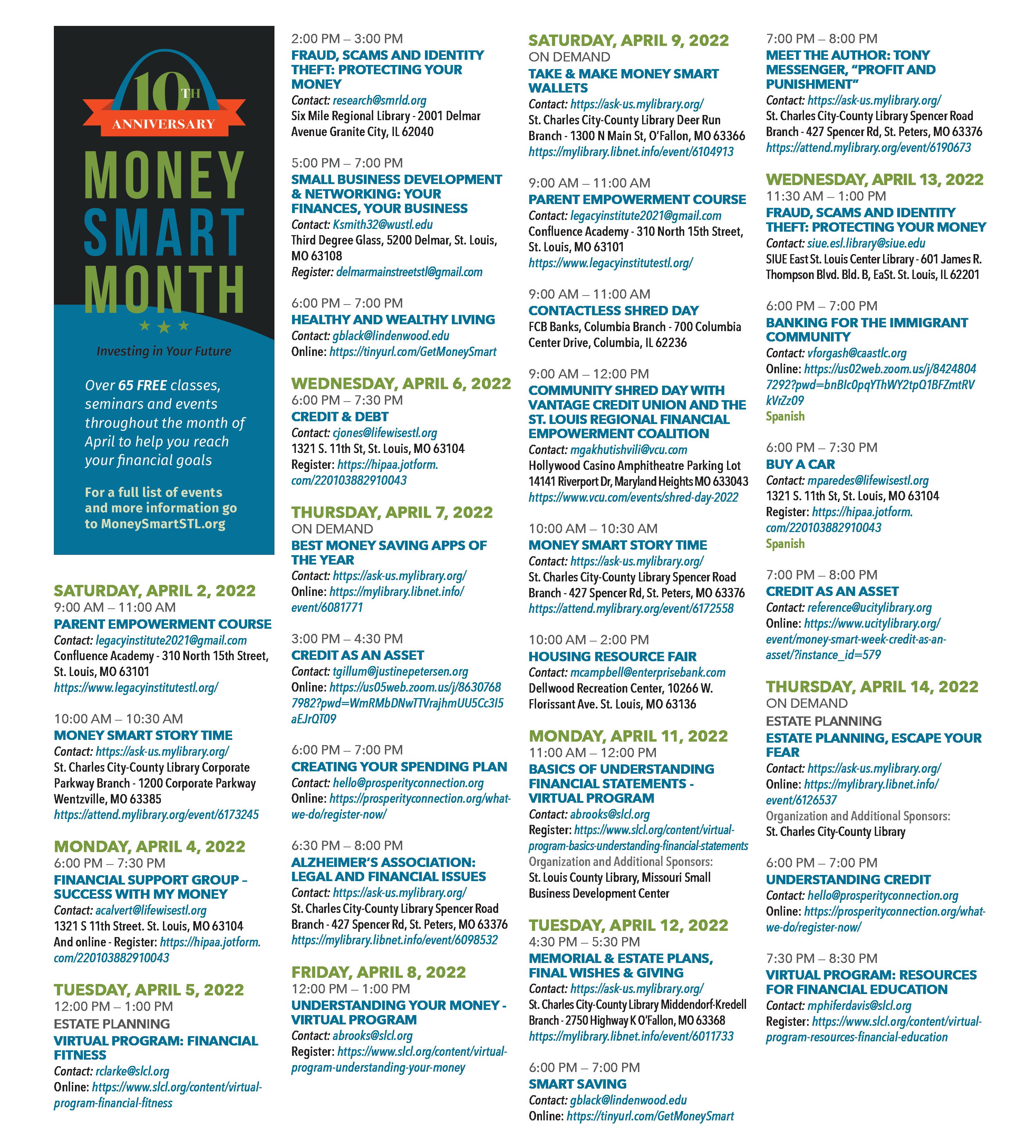
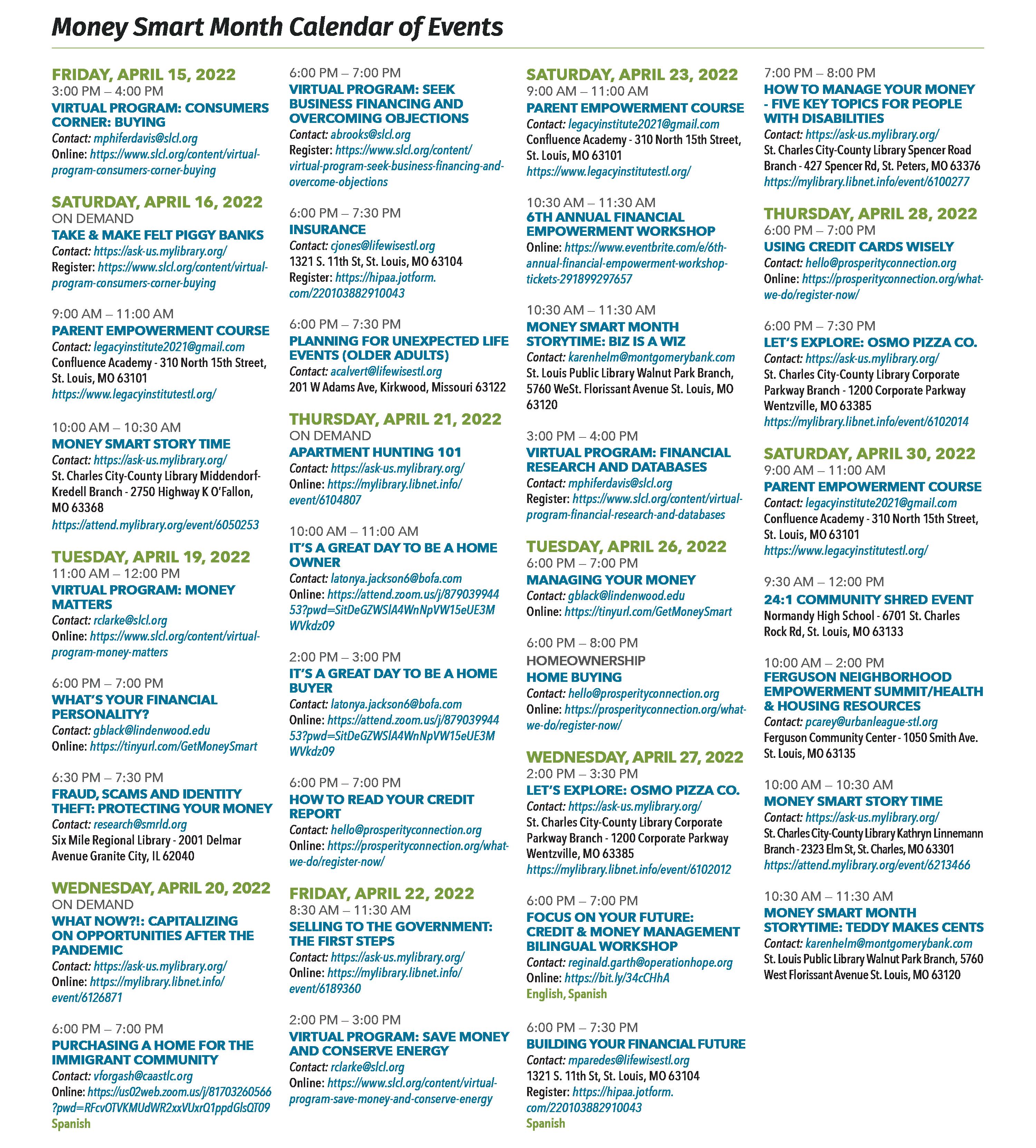
By Commerce Bank
If you’re a parent, you recognize the importance of being proactive about your kids’ safety. These days, a big part of that involves being careful about your children’s personal information.
There are good reasons to be mindful. A report from Javelin Strategy and Research found that as many as one million children are victims of identity fraud each year, resulting in total losses of $2.6 billion and more than $540 million in out-of-pocket costs to the victims’ families. Javelin’s research also indicates that two-thirds of kids impacted by identity theft are under the age of eight.
Mike Meyer, a product manager at Commerce Bank who oversees identity theft services, says thieves target younger children’s personally identifiable information — such as Social Security numbers, home addresses and birth dates — because it gives them more time before those children would typically begin applying for credit and thus discover the fraud.
“Criminals view kids’ information as an easy way to create synthetic identities,” says Meyer. “Young kids don’t have credit histories, so it’s a blank slate
that thieves can use to make new identities.” The victims are unlikely to be aware of the theft for years and may not discover it until the child is a teenager applying for their first credit card, car loan or student loan.
In many cases, the victim of child identify fraud personally knows the perpetrator. According to Javelin’s study, this happens in 60% of child identity fraud cases, as compared to just 7% of cases involving adult victims. It therefore can be important to keep items like kids’ Social Security cards and your tax returns in a locked location and password-protect all computers in your home.
n “Criminals
view kids’ information as an easy way to create synthetic identities. Young kids don’t have credit histories, so it’s a blank slate that thieves can use to make new identities.”
know if your child’s information has been compromised, because in many cases criminals won’t use it immediately. “Sometimes they’re patient,” he says. “They may acquire a child’s information, then wait a fairly long period of time before doing anything with it. When they start, they often make small charges on a new account to establish credit. The activity can go undetected because small transactions often fly under the radar.”
Fortunately, there are steps parents can take to safeguard their children’s identity.
– Mike Meyer
Another way that criminals access children’s information is through hacking. “Thieves often target hospital databases, pediatricians’ offices or even schools to get the information they want,” says Meyer. “They’ll then sell the information on the dark web or use it themselves to create a new identity.”
Meyer notes that it can be tricky to
• Understand where your child’s personally identifiable information is being stored — at schools, doctor’s offices and other locations — and ask them how they’re keeping this information secure.
• Be vigilant about any indications your child’s identity might be compromised. “If you start receiving credit card offers in the mail with your child’s
name on it, that’s a red flag,” Meyer says. “You should pay attention to that just as much as you would if an actual bill arrived in your child’s name, or you received a call from a collections agent asking for your child. Those are all causes for concern.”
• Keep close tabs on what kids share via social media. “Sometimes a criminal may have a child’s Social Security number but may need other information, like a home address,” says Meyer. “It can sometimes be easy to find information like that on a child’s social media profiles.”
If you’re starting to think about running a credit report on your child’s Social Security number, Meyer says that isn’t necessary unless you have a specific concern. “Most children won’t have a credit report,” he notes. “If you notice any red flags, however, then go ahead and run a report. If your child has a credit report at all, there’s a good chance it’s fraudulent.”
If you do discover that your child’s information has been used fraudulently, the first step is to contact all three credit

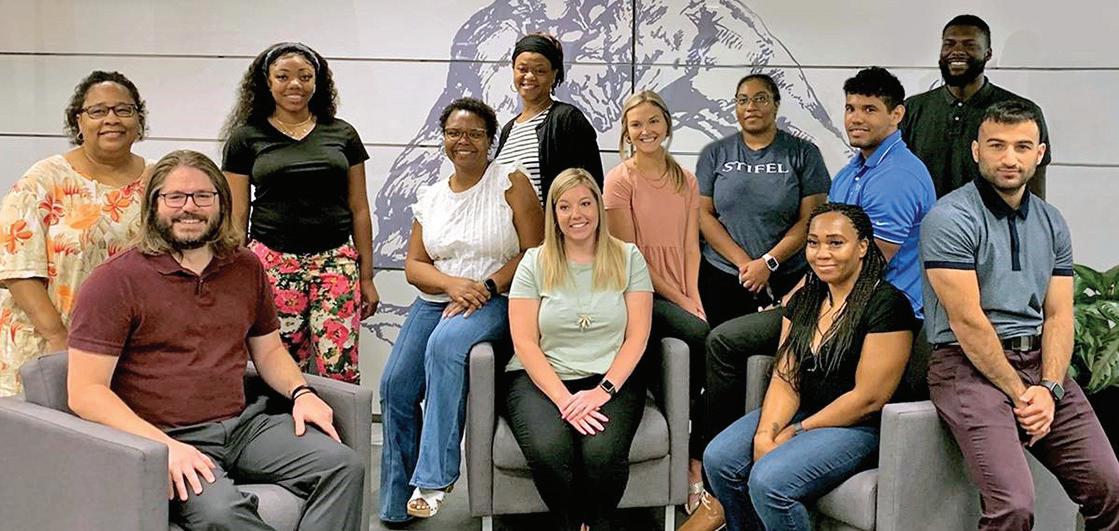
By Stifel
Money Smart Month highlights the importance of personal financial education for all members of our community. Stifel Bank & Trust is proud to be a member and leading supporter of the St. Louis Regional Financial Empowerment Coalition, supporting financial education and growth in April and throughout the year.
For many, Spring can signify a season of change, bringing beautiful blooms to your garden and a sense of renewal. Spring can be an ideal time to review your financial position and priorities for the coming season and coming year. Financial priorities may include:
1. Filing your taxes – The filing deadline to submit 2021 tax returns (or an extension) and pay tax owed is Monday, April 18, 2022, for most taxpayers.
2. Creating a family budget – Budgeting for an event, a month, or a more extended period can be crucial to your financial wellness. Be sure to involve the family members who play a role in the
money coming in and out of your household. Review your goals and adjust your budget to pay for current needs while considering if you need to save for future plans.
3. Reviewing your credit reportRequest and review your credit report at least once a year to ensure no errors exist. You may access your credit report for free annually from the credit bureaus at www.annualcreditreport.com. If errors are found, report them immediately. Accurate credit history is key to the credit scores that determine approvals for home lending, insurance, credit cards, and the interest charged on many types of debt.
4. Brushing up on financial education - Consider attending one of the 65 FREE virtual personal financial education classes, which are part of Money Smart Month. These classes and events focus on financial education and are taught by St. Louis’ nonprofit and financial institutions partners. Courses cover budgeting and saving, building credit, getting out of debt, home buying, planning for retirement, estate planning, insurance, paying
for college, raising “money smart” kids, and small business development.
One of the most significant changes to consider in your family’s financial future can be taking new steps on your career path. If you are interested in building a challenging, rewarding career with one of St. Louis’ most diverse and creative teams, Stifel’s banking and trust services divisions have a variety of opportunities that may be a fit for you (or someone you know). We’ve highlighted a few exciting opportunities below:
• dministrative Assistant – supports trust services personnel with group reporting, clerical tasks, and handling information requests from other areas of the firm and clients.
• Credit Analyst – supports the lending team by preparing cash flow and credit profile analysis for business loan applicants across various industries.
• Mortgage Quality Control Auditor –reviews mortgage files for completeness, accuracy, and compliance with company guidelines and policies. The auditor will detect issues and recommend process improvements.
Stifel’s banking and trust services teams collaborate to support our clients and our hometown community of St. Louis through capital and advisory support. Suzy Agin has been with Stifel Bank & Trust for nearly ten years. She serves as senior vice president on the Corporate Lending team. Her passion for making a difference in the community serves her well in her other role as the director of community development.
Agin states, “I am proud to lead Stifel’s efforts to provide capital and advisory support to non-profits, spur revitalization, finance affordable housing, and create education and wealth-building opportunities in our local community. Working for Stifel Bank & Trust continues to be a rewarding and fulfilling experience, especially due to the supportive culture and diverse workplace.”
Please visit our website, www.stifel. com/careers, to apply, and for additional opportunities not listed above. We’re looking for professionals who are ready to do what it takes to help our clients and fellow employees achieve their goals.

Labor and supply shortages continue to plague small and mid-sized businesses. Despite these challenges, there’s prevalent optimism, which experts say is an encouraging sign of what’s to come.
(StatePoint) Supply chain issues top the list of concerns for small business owners over the last six months, but they see those pressures easing by mid-year, according to new research. In the meantime, inflation is expected to continue impacting business owners, with a majority planning to further raise their own prices.
The latest PNC semi-annual Economic Outlook survey of small and mid-size business owners and executives is a good gauge of the overall economy, however analysts point out that the situation in Eastern Europe that’s unfolded since has likely intensified some of the sentiments expressed by respondents. “The events in Ukraine were not on the minds of business owners when the survey was conducted in January,” says PNC chief economist, Gus Faucher, “There was concern at that time about rising prices, and that worry has likely intensified, given the rapid increase in energy prices, among other factors.”
In January, 34% of owners who rely on a supply chain said timeliness had worsened in the previous six months and
28% of businesses that rely on inventory are faced with the challenge of not having enough supply to meet expected demand. However, 57% expect these issues to improve in the next six months. “Supply chain problems have been a big contributor to the highest inflation the U.S. has seen in almost 40 years. But it’s encouraging that most small businesses see this easing soon,” Faucher said. ”The wild card now is how long inflationary factors due to the Ukraine crisis last.”
Rising prices also are on the minds of business owners – 51% expect to increase their prices in the next six months and 34% percent say their prices have already gone up in the past six months. “Six months ago, businesses were raising prices because demand was strong enough that they could. Now it appears higher costs are forcing them to,” Faucher said.
Forty-three percent of business owners report losing staff since the start of the pandemic, which they agree is bad for business. Top reasons for employee
departures are illness or death (50%), worker concerns over health or safety (46%), and changes in lifestyle or priorities (36%).
Among businesses with employees, 26% say it’s become harder to hire qualified personnel. Businesses are responding to recruiting challenges, most notably through improved work conditions, like health and safety improvements, allowing more flexible work arrangements, and increasing compensation. In the meantime, businesses are coping with worker shortages by increasing existing employees’ workloads, having owners or managers cover shifts and by increasingly relying on technology or automation.
Other key survey findings include:
• Vaccine boosterism: Fifty-six percent of business owners say a majority of their workforce has a COVID-19 booster vaccination. Sixty-five percent have taken some action to encourage boosters through a requirement (31%), assistance and/or education (29%), incentives (22%) or restrictions for
those who choose not to receive the booster (19%).
• Tempered optimism: Business leaders’ expectations about their own companies remain strong with 47% feeling highly optimistic and only 2% feeling pessimistic. However, their outlook for the national and local economies has shifted to cautious.
• Business adaptation: Small and midsized businesses have made dramatic, lasting changes to adapt to the pandemic environment. Ninety-two percent have made at least one change to policies, processes, operations or use of technology, and almost all of those owners expect one or more of the changes to become permanent.
For full survey results, visit pnc.mediaroom.com.
Labor and supply shortages continue to plague small and mid-sized businesses. Despite these challenges, there’s prevalent optimism, which experts say is an encouraging sign of what’s to come.
Continued from page 8
reporting companies: Equifax, Experian and TransUnion. “Run a report with each one,” says Meyer. “They may not show the same activity, and you want to be thorough. Ask them to freeze your child’s credit.”
Securing a police report is also import-
ant. “Contact your local police department, file a report, and get a copy of it,” Meyer says. “When you start contacting creditors listed on the credit report, they are likely to ask for a copy of the police report. They’ll want to see that before they take any action.”
Meyer adds that resolving cases of identity theft is possible, but it can be time-consuming and arduous. “It can take weeks, months or even a year or more to get everything straightened out,” he says.

Commerce Bank offers two products that can help with resolving identity theft issues impacting you and your household. Commerce ID Recover provides restoration services that can help in the event of identity theft or suspected fraud. Commerce ID Monitor includes those same restoration services in addition to proactive credit and dark web monitoring for the primary account holder and one designated family member. Both services provide the opportunity to have
Continued from page 4
Give us a call. We know that choosing a loan can feel overwhelming, in addition to the stress of home improvements. Our home loan specialists can help you choose the best loan for your budget and goals and walk you through the process.
Call 314-631-5500, or email us at newhomeloans@midwestbankcentre.com. You can also apply online at www.midwestbankcentre.com Your current home
Commerce’s resolution specialists contact creditors and act on your behalf throughout the restoration process, saving you time while you benefit from the experience of the Commerce Bank team.
“At Commerce, we understand that managing your identity is more important than ever,” Meyer says. “We give you the tools to fight fraud. In today’s connected world, we think these tools offer peace of mind, and we’re happy to help.”
can be your dream home. Start today!
Your home is where our heart is.
Midwest BankCentre is one of St. Louis’s largest and oldest community banks. A values-led bank, we invest in people and their potential – not just credit scores. An investment in you and your home is an investment in the entire community.
“If you’re considering a home improvement project and need a loan, let us earn your business.
When you DREAM BIG, we all RISE TOGETHER.”
Midwest BankCentre. Member FDIC. Equal Housing Lender.