Dwaun J. Warmack was senior VP at Bethune-Cookman

n “We need a transfer tuition fix, but it’s clear we are not going to get a tuition fix by itself. The key is what else comes with that.”
– Chris Nicastro
MOKAN convenes minority business symposium May 9
By Rebecca Rivas
Of
The
St. Louis American
St. Louis’ government and corporate leaders often pay lip service to the importance of diversity and inclusion. But when the deal’s on the table, do they follow through? In the past few years, the minority business community has had plenty of reasons to wonder. In 2012, the city government’s St. Louis Development Corporation (SLDC) allowed Ballpark Village developers –who are benefitting from city tax dollars – to build about $23 million in retail construction without monitoring how many minority businesses and workers were working on the site. SLDC made this deal despite St. Louis city’s laws that enforce minority inclusion on taxpayerbacked projects.
n “There is at least a conversation about diversity. Now, let’s have that talk mean something.”
– Yaphett El-Amin
In fall 2012, minority business leaders fought CORTEX to make sure minority participation requirements were a part of the bioresearch park’s $168 million taxincentive package.
After minority business advocates refused to back down in 2011, the Metropolitan Sewer District adopted interim inclusion goals before embarking on $4.7 billion in reconstruction in 2012.
“What I see happening now – there is at least a conversation about diversity,” said
By Chris King Of The St. Louis American
As the Missouri Legislature went into its final debates over an omnibus education bill that could make – or break – public education in Missouri, The American discussed the crisis in public education with Missouri Commissioner of Education Chris Nicastro.
At this precarious and uncertain moment, Nicastro spoke to us about St. Louis Public Schools being reauthorized as a transitional district, the school transfer crisis, tuition vouchers for faith-based schools, and whether public education in Missouri is headed for a
“Mad Max Beyond Thunderdome” doomsday scenario.
The St. Louis American: The state school board just authorized St. Louis Public Schools to continue for two more years as a transitional district and it was barely treated as news in St. Louis.
Commissioner of Education Chris Nicastro: If people had perceived it as a bad thing, it would have been news. I know the elected board would like the district to go back under their authority. I have had, and

n
By Bridjes O’Neil Of The St. Louis American
City Academy in North St. Louis city is celebrating 15 years of providing families in underserved communities with access to a quality early education.
“We created something really unique and special where students leave ready for new challenges,” said Don Danforth III, president and co-founder of City Academy.
City Academy was founded in 1999 with only 42 students schooled within the MathewsDickey Boys’ and Girls’ Club. Danforth, along with co-founder Duncan Marshall, set out to
create a “top-flight” school, Danforth said, that was equal to any school. The school currently serves 165 students age three through sixth grade in its


Columbus Short’s scandalous behavior continued on TJMS
Tom Joyner Sybil Wilkes and J. Anthony Brown are still shaking their heads after a bizarre interview with “Scandal” actor Columbus Short on the Tom Joyner Morning Show. Short was already generating controversy for three domestic violence allegations. The most recent one accompanied his estranged wife Tanee McCall‘s third divorce filing where she said he pulled a knife on her and threatened to kill her and himself.
After Thursday’s explosive Scandal finale, Short called in for his previously scheduled interview on Friday, but the interview soon took a strange turn when he used the n-word to refer to Joyner and responded erratically to a series of questions about the show and his new music.
Short later issued a statement apologizing for his behavior citing fatigue as the culprit.
morning. Unfortunately, the early morning following a late-night event had me at what some describe, less than my best,” Short said in a statement. “I was not high, drunk or otherwise under the influence. I was simply exhausted. This was no excuse – you and those who support me deserved better. It would be an honor to appear on the TJMS in the future to set things right with your audience.”
Former stepmother speaks on being set out by Oprah
Oprah Winfrey’s former stepmother is telling all about recently being evicted from her marital home by Oprah herself.
“My sincerest apologies for the confusion over my appearance on your show last Friday
“’You say I never talk to you: I’m talking to you now’,” Winfrey claims Oprah said in a birthday phone call. “You have until Monday to get out of MY house.”
According to The UK Daily Mail, Barbara – who was married to Oprah’s father for 14 years – said, “Vernon been telling everyone he was unhappy with the marriage. He told Stedman and he told Oprah, so she came up with an escape plan I guess to get me out of the picture, make all the scandal of what he’d done go away. The settlement they offered was the
house that I had owned but lost, the car I’d had since 2004, with 110,000 miles on the clock and I had to sign a confidentiality agreement.”
She says Vernon also asked for a chunk of her pension, claiming Barbara was the main earner in the household.
At the time, Barbara’s daughter and fiveyear-old grandson were living in Barbara’s old house, which is now owned by Oprah’s company. “That house lay empty and then it was sold. Tell me, what sort of person does that? I would have walked away quietly but she put my baby and my grandbaby out on the street. That made
Did R. Kelly pay under the table for bump and grind attempts?
as 2010 by a 36-year-old housekeeper, but he settled the case out of court for $100,000 to avoid litigation. The source also reportedly said there’s been discord in the singer’s inner circle lately, and further secrets about him are “starting to float to the surface about the millions he paid out over the years to a wide variety of women.

According to the New , the inner circle for R&B singer R. claims he’s been less than on his best behavior with the ladies – and it has cost him a pretty penny. Page Six says a source claims Kelly was accused of sexual harassment as recently
B. Scott loses to BET
Last August internet personality B. Scott sued BET for forcing him to take off his make-up and remove his high heel shoes just moments before hosting a segment for the BET Awards preshow.
The case has been dismissed. The judge ruled in BET’s favor on the grounds of their 1st Amendment right to run their show as they see fit. “It disheartens me that the message sent today wasn’t a message of acceptance, but rather it’s acceptable to discriminate against transgender individuals on the basis of their gender identity and expression,” B. Scott told TMZ.com.
B. Scott plans to appeal the ruling.
Sources: Blackamericaweb.com, Nypost.com, TMZ.com, E! Online, The UK Daily Mail























By Chris King Of The St. Louis American
Mayor Francis G. Slay, whose office now runs the St. Louis Metropolitan Police Department, and Circuit Attorney Jennifer Joyce, whose office prosecutes most crimes in the city, have both been clear about one change that they say would help the city fight violent crime. They say the circuit court in the city needs to open a gun docket that deals exclusively with gun cases. The judges of the 22d Judicial Circuit of Missouri declined to do that last year.
“The judges felt that a more equitable and efficient way to dispose of gun possession cases was to make some adjustments in how they move uncomplicated cases to trial,” said Thom Gross, public information officer for the 22d Judicial Circuit.
“They felt that setting up a separate gun court or docket would actually slow these cases – or compete for precious resources from the court, prosecutors and defense attorneys.” Instead, the judges devised and adopted, as of January 1, a new trial assignment system for cases of many illegal gun possession that, they claim, has shortened disposition time and reduced backlogs.
In the first three months of this year, the court reports, it has moved 245 gun possession cases to trial divisions, 180 of which have been disposed –143 through guilty pleas, 11 through trial verdicts, and 26 because prosecutors dismissed them. Of the remaining 65 pending cases, approximately half are scheduled for guilty pleas in coming weeks, the court reported. Under the new system, the

criminal assignment division, under Circuit Judge Bryan L. Hettenbach, develops a weekly docket, assigning simple gun possession cases to one of the court’s criminal trial divisions at the first setting date following the formal filing of charges.
Previously, the assignment division treated these cases as other felonies, automatically granting a continuance at the first setting, which postpones the trial date for six weeks. After that delay, the assignment division commonly granted continuances at the request of prosecutors or defense attorneys.
The new procedure applies to all cases charging felons in possession of firearms or unlawful use of a weapon by carrying a concealed weapon or by exhibiting or flourishing a firearm.
Gun cases including simple drug possession charges are included. Excluded are gun cases accompanied by any other charge involving a specific victim. These go through the normal felony
docketing process.
The time of disposition of these cases – from formal charge to conclusion through guilty plea, trial verdict, or dismissal by prosecutors –dropped under the new system, the court reported. Cases of felons in possession were 27.2 percent shorter in duration, while case times for unlawful use of a weapon declined 14 percent.
“Under this system, we have reduced the gun possession caseload to a very manageable level, ensuring that our circuit court will swiftly handle all gun possession cases brought by the police and circuit attorney,” Judge Hettenbach said.
Mayor Slay, who now administers the city police through the Department of Public safety, said how swiftly these cases are being heard and decided “answers only part of the question.”
Through a spokesperson, Slay said “the public” also would like to know: “Have the courts have been able to make well informed judgments on

who should be released and who should be held pretrial? What’s the track record of defendants who are granted probation? How many have stayed out of trouble? How many have been implicated in new crimes?”
Slay’s spokesperson said the most important unanswered question is: “what are we learning from these cases that will help the courts improve the quality of justice and keep our neighborhoods safe?”
Shirley Rogers, chief trial assistant for the Circuit Attorney’s Office, said she remains “disappointed” that the courts did not pass and implement the gun docket proposal presented by Judge John Garvey.
“That proposal had some important components that could help us measure the outcomes of our efforts,” Rogers said.
“While we are pleased that we are moving cases through the system quickly, we believe that it is important to analyze these cases further to measure the effectiveness of the court’s approach.”
She said the circuit attorney’s office is in the process of doing its own evaluation of the first three months of data from the revised trial assignment system.
As of Monday, the City of St. Louis had recorded 42 homicides in 2014. On that date in 2013, the city had recorded 29 homicides.
As of Monday, there were 380 aggravated assaults with a gun recorded in the city. On that date in 2013, the city had recorded 363 aggravated assaults with a gun.
Follow this reporter on Twitter @chriskingstl.
Fifty years later, former President Lyndon Johnson got the tribute he more than earned. Four presidents praised his contribution. The Great Society, the War on Poverty, Civil Rights Act and Voting Rights Act opened doors that had been locked.
“I lived out the promise of LBJ’s efforts,” said President Barack Obama, rejecting the cynicism of those who would dismantle Medicare and food stamps, signature LBJ achievements. Bill Clinton praised LBJ for demonstrating “the power of the presidency to redeem the promise of America.”
For decades, LBJ’s achievements have been slighted. Liberals scorned him because of the war in Vietnam, and finally drove him to not seek re-election. Conservatives loathed him because of the civil rights achievements, with Republicans moving to displace Democrats as the party of the South. The War on Poverty, which dramatically reduced poverty in America, was dismissed as a failure. New Democrats dismissed him for believing in big government.
In fact, as the Civil Rights Summit at the LBJ Library in Austin, Texas recognized, Johnson was a giant, standing with Franklin Roosevelt and Abraham Lincoln as presidents who saved America. Under Johnson, the scourge of segregation was finally ended, and equal protection under the law moved from a lie to a promise.
Johnson’s reforms –civil rights, voting rights, immigration, Medicare, child nutrition, food stamps and more – were nearly as great as those of FDR, and never matched since. Johnson
was propelled by a massive movement for civil rights, as Americans moved at the courage and dignity of ordinary heroes willing to stand up or sit down, protest or march, suffer abuse and jail for their rights. He was helped by allies like Dr. Martin Luther King. In the wake of the assassination of JFK, he had a legacy that he could invoke. But his leadership, passion, energy and skill were indispensable. Today, America is more unequal than ever. Our schools are segregated, by race and by class, separate and unequal. We rank second to the lowest among industrial nations in the assistance we provide to the poor. In LBJ’s time, we enjoyed a broad middle class. Now the middle class is sinking and we suffer mass unemployment. And across the country, basic rights are under assault. State after state, particularly across the South, are passing measures to suppress voting – limiting voting days, ending Sunday voting, demanding voter ID, stripping the right to vote from nonviolent drug offenders who have served their time. The Supreme Court has weakened the Voting Rights Act and is rolling back affirmative action. Republicans in the Congress want to turn Medicare into a voucher, gut Medicaid, slash food stamps, Pell grants and other support for the vulnerable. We do well to honor Lyndon Johnson. He understood the power of government to make America better. But it is not enough to honor his legacy. It is time to stir ourselves to defend his contributions and extend them to meet the challenges of our day.

Affirmative action lost a major battle on Tuesday. In a 6-2 decision, the U.S. Supreme Court allowed a majority of voters in Michigan to end affirmative action there. The Schuette v. Coalition to Defend Affirmative Action case has set a dangerous precedent. “This case says majority rules in a land of minorities,” as Gloria J. BrowneMarshall, associate professor of constitutional law at John Jay College, writes in a trenchant commentary. Opponents of affirmative action argued that Michigan voters had a right to end it by state-wide ballot, and the court agreed. The use of any preferences based on race, sex, color, ethnicity and national origin is now banned in Michigan in any employment, contracting and education decisions involving state and local government.
Justice Sonia Sotomayor dissented with the majority, arguing that to allow the majority to decide the fate of minorities, who rely on affirmative action for equal education and employment opportunities, would turn back the clock on justice in America. Research data suggest that Sotomayor, rather than this court majority, is speaking for the American public.
of independents, according to Pew data. Among Republicans, 50 percent see racial preferences as a bad thing and 43 percent view them as a good thing.
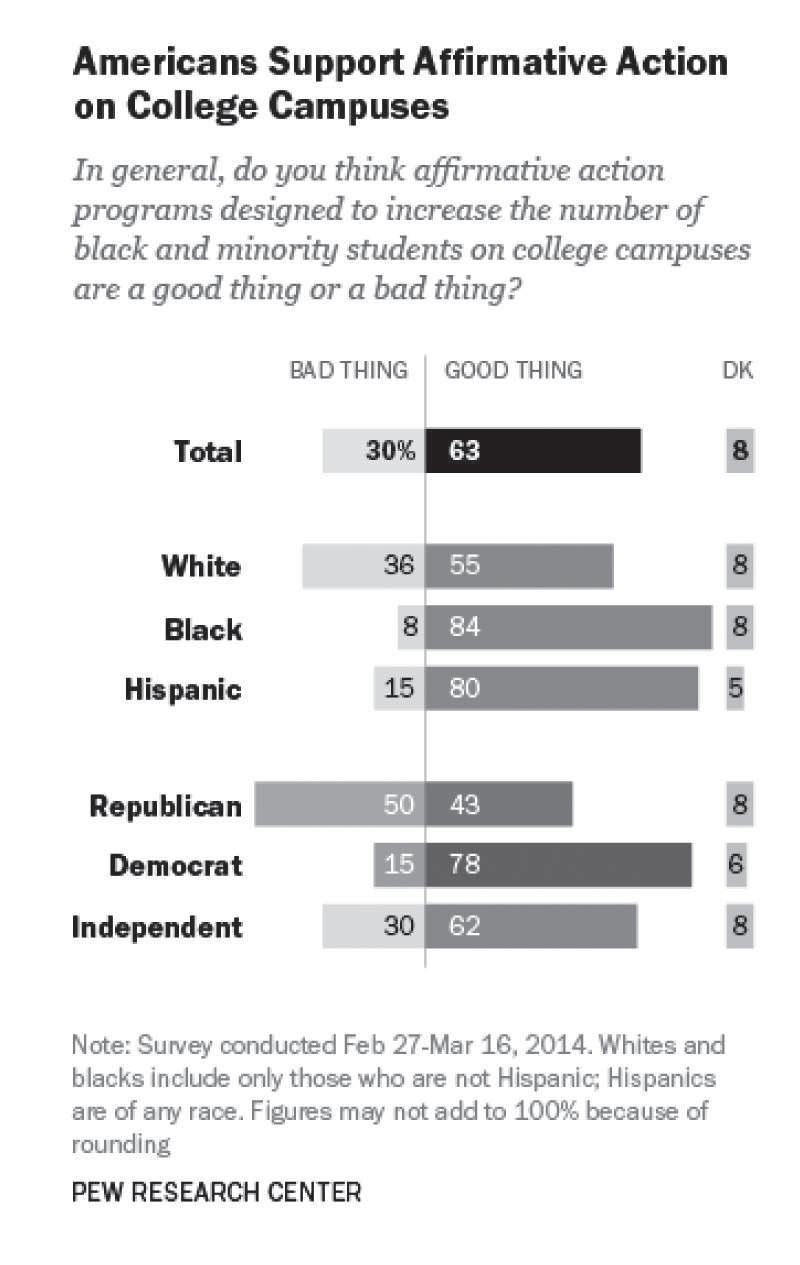
Americans say by roughly two-to-one (63 percent to 30 percent) that affirmative action programs designed to increase the number of black and minority students on college campuses is a “good thing,” according to a survey conducted by the Pew Research Center February 27-March 16. This was almost the same result Pew Research found in 2003.
While a majority (55 percent) of whites support affirmative action programs on campus, that compares with 84 percent of blacks who believe they are a good thing and 80 percent of Hispanics, Pew reported. Justice Clarence Thomas, the only African-American justice, is a minority among minorities in rejecting affirmative action. Anyone familiar with the voting record of Thomas, himself an affirmative action beneficiary, knew he would vote to uphold Michigan’s ban.
There is also a partisan division on this issue. Nearly eight-in-ten (78 percent) Democrats back the programs as a good thing, as do 62 percent
However, the majority in favor of affirmative action reported by Pew may not be reflected in any given statewide vote, given state demographics, the vagaries of voter turnout, crafty ballot language and the deep funding that tends to back such statewide ballot initiatives, which can sway public perception in an election with low voter turnout. That is why the court’s relegating this crucial matter to statewide elections is dangerous. Statewide elections, in many states, shift power outside of diverse urban and suburban areas to rural and exurban voters. Proposition 2 passed in Michigan by a wide – 58 percent to 42 percent – margin. Texas is first in line among the states that will now rush to follow Michigan in pushing a statewide referendum to ban affirmative action. Missouri’s Republican ideologues tend to fall in lockstep with the national conservative movement and will almost certainly pursue a statewide ban here.
Public figures and elected officials who wish to defend affirmative action should be encouraged by the polls and fight any statewide referendum boldly. The new Pew report is not a fluke. A CBS News/New York Times poll conducted last May found that 53 percent of the public supported affirmative action programs in hiring, promoting and college admissions, while 38 percent opposed them. When CBS News/ New York Times asked those surveyed why they support these programs, 63 percent said it was because they increased diversity while 24 percent said it was to make up for past discrimination. To those responses, we say yes – and yes. Affirmative action addresses past discrimination and increases diversity, and in both cases the pursuit is necessary and good. Now more than ever, it is important to boldly defend affirmative action against its opponents, who may have won an important battle this week, but who remain a numerical minority.
As I See It - A Forum for Community Issues
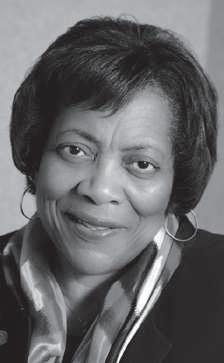
As councilwoman for the 1st District of St. Louis County, I represent 39 municipalities that include six school districts serving more than 150,000 people. Normandy is one of those districts. Without $5 million in supplemental funds from the state, Normandy School District will go bankrupt by the end of the school year, at which point it would be dissolved. The Legislature has shown no concern for the impact Normandy’s closure would have on its students, beyond this school year.
Our students and parents should not be punished, because they chose to believe in their community school and its chance to succeed, regardless of its unaccredited status.
Our students are entitled to an education from a school in their community. Disrupting the educational climate this school year is simply unthinkable. It compromises students’ rights to a decent education and adds insult to injury. Think about the pressure that these students are experiencing due to the uncertainty of their future. Unfortunately, the public expectation is that they are totally concentrating on their learning and will perform well on the state assessment, despite this stressful situation. Lawmakers should be focused on doing what is in the best interest of Normandy’s students, ensuring that the education of thousands of students is not unnecessarily
put at risk and that their chances of academic success are not needlessly sabotaged. Instead, lawmakers are more concerned with the precedent it might set if they were to provide Normandy this one-time funding infusion.
It would be criminal if these students witnessed their school buildings abandoned and saw that their classmates were forced to be bussed to different schools throughout the county. Equally important is whether nearby school districts are adequately prepared to receive transfers. These issues, coupled with the similar experience of the Wellston students after their school merged with their rival Normandy, forces us to question the judgment of the decision-makers.
Normandy’s financial troubles resulted from the Missouri Supreme Court’s decision to uphold the transfer law, which imposed an unfunded and unfair mandate.
Normandy’s unaccredited status requires that it foot the bill for tuition and (in some cases) transportation for any student who transfers out, even if the tuition is higher at the alternative school. This is what led to Normandy’s budget problems.
The solution is money –money to keep Normandy open and more money for unaccredited schools to manage their enrollments and offset the financial loss from students transferring to nearby schools. This is the only practical way to provide unaccredited schools with a real chance to implement necessary educational reforms.
Lawmakers created the fiscal minefield that contributed to this financial disaster, and they appear unwilling to admit that they
lack an effective strategy to address underperforming schools. Their reluctance only hurts Normandy students. Missouri must reevaluate its school transfer policy that seeks to financially punish an underperforming school under the pretense of choice. While no child should be denied the right to a quality education, the state has taken draconian measures to address failing school districts that undermine their ability to implement reforms and risk their financial solvency. This puts an unaccredited school district on the fast track to closure, with no regard for the important role a school provides to a community and any sensitivity for the students. Many in our community believe that this was always the intent of the legislation.
This issue reaches far beyond Normandy –and endangers any school district categorized as unaccredited in the state.
The Legislature’s approach for improving underperforming schools is shallow and refuses to acknowledge that these schools often represent other systematic issues, such as poverty, crime, inadequate resources, single-family homes and poor nutrition – each of which impact a child’s ability to learn and a school’s educational standing.
The state’s transfer policy cannot fix the problems that internally or externally impact Normandy and other school districts like it – and should be changed to make way for real reform proposals that truly support our public school districts and the students they serve.
Hazel Erby is councilwoman for the 1st District of St. Louis County.
It’s all over but the shouting: Obamacare is working.
All the naysaying in the world can’t drown out mounting evidence that the Affordable Care Act, President Obama’s signature domestic achievement, is a real success. Republican candidates running this fall on an anti-Obamacare platform will have to divert voters’ attention from the facts, which tell an increasingly positive story.
care system – which involves private health insurance companies and fee-for-service care – the Affordable Care Act reforms are a tremendous advance.
A new report by the nonpartisan Congressional Budget Office estimates that, despite all the problems with the HealthCare. gov website launch, 12 million people who previously lacked insurance will obtain coverage this year. By 2017 – the year Obama leaves office – the CBO predicts that an additional 14 million uninsured will have managed to get coverage.
Why was the Affordable Care Act so desperately needed? Because without it, 54 million Americans would presently have no health insurance. Within three years, according to the CBO, Obamacare will have slashed the problem nearly in half.
Most industrialized countries have some kind of single-payer system offering truly universal coverage. But if you have to work within the framework of the existing U.S. health
Many Republican critics of Obamacare know, but refuse to acknowledge, that the reforms are here to stay. Does the GOP propose to let insurance companies deny coverage because of pre-existing conditions, as they could before the ACA? Does the party want to reimpose lifetime caps on the amount an insurer will pay?
Tell young adults they can no longer be covered under their parents’ policies?
I didn’t think so.
More likely, Republicans will continue to mumble vaguely about “privatesector incentives” and “consumer choice” – without acknowledging that the ACA reforms offer plenty of both. And the GOP will continue to bray about “big government health care,” which is an outand-out lie.
Obamacare, to the contrary, will leave the present system basically intact. The CBO predicts that a decade from now, the great majority of nonelderly Americans will still obtain health insurance through their employers – an estimated 159 million, as opposed to 166 million if Obamacare never existed. Only about 25 million people are expected to get coverage through the federal and state health insurance exchanges. Even this coverage, mind you, will be provided
Community left out of cleanup
I was at a recent meeting regarding the Carter Carburetor site. I live in the neighborhood around this site and have attended a few of the meetings. At no time, in my opinion, were any plans seriously addressed about giving neighborhood residents the opportunity to apply for positions to work at cleaning up this site. If there was to be any chance of this happening, it would have been done long before now. Right now it would take training and other pre-employment services for many of the residents to qualify to work this site, considering the health and safety hazards that exist. There are a number of community agencies they could have contacted that would have made this a nonissue. For example, the SLATE workforce development agency has been used many times for such purposes, at no costs to the employers. To act like they were unaware is dishonest.
Shame on the parties involved for what looks to have been a blatant disregard of this neighborhood’s opportunity to assist in cleaning up what has been an eyesore and a health risk to us for many years.
Lee A. Evans, St. Louis
Fundamental racism is embedded in the core beliefs of the Republican Party. The Tea Party, conservatives, and the Republican Party have decided that civil rights laws must be repealed, and they will use the U.S. Supreme Court to achieve their goals.
There is a conservative movement in the country to restrict voting, and last year the U.S. Supreme Court threw out the crucial section of the Voting Rights Acts. This section of the act required that all or parts of 15 states with a history of discrimination in voting get federal approval before changing their election laws.
Many in the country now believe that discrimination does not exist and it is unfair to regulate a state, because people in power have changed. But
by private health insurance companies, not the government. So, to recap: The Affordable Care Act is a cautiously designed set of reforms whose impact on most people is approximately zero. It is well on the way toward providing coverage to the uninsured. Given all the good news – including the fact that 7.5 million people have now signed up for insurance through the state and federal exchanges, more than projected – you’d think that Republicans might start looking for another issue to run on in the fall. But you’d be wrong.
All the apocalyptic endof-freedom rhetoric that we continue to hear from the far right sounds increasingly ridiculous to moderate voters who have no strong party allegiance. But the GOP’s activist base continues to respond with campaign donations and raring-to-go enthusiasm – factors that can make the difference in a midterm election when moderate voters often stay home. In the long run, no matter what happens in the election, I’m more convinced than ever that the Affordable Care Act will be seen as landmark legislation. First, it shifts the incentive structure in the health care industry in ways that promise to hold down rising costs. And second, it establishes the principle that health care should be considered a right, not a privilege.
minorities know that racism and discrimination are alive and well.
Minorities, independents, Democrats, and Americans who believe in Democratic principles must challenge restrictive voting laws and bogus arguments. The midterm election of 2014 will determine if American continues to move forward or slips backward where voting is restrictive, and justice is controlled by power and money.
Roger Caldwell, Via email
City should support hip-hop showcase
St. Louis has a fruitful supply of hip-hop talent, shelling out hundreds in local makeshift studios, traveling out of town to perform for $250 and an average of 10 minutes, or locally at the thin line of talent showcases that we have in town.
The city is going to have to do better and ensue that these unsung talents get their just due. I suggest a large city showcase at the Busch Stadium, bringing all the independent rap/hip-hop talents together in one place.
Of course, everybody won’t make it like Nelly, Chingy or Gena. But it certainly will feel good swallowing a delicious juice of pride, knowing you gave it your all and did what you always dreamt of doing.
Rodney M Norman, Via email
War and taxes
As so many good citizens comply with out tax responsibilities, I find it important to reflect on what is still true. Last year 40 percent of our tax payments went to pay for war – 40 percent for destruction and desolation.
This year both administration and congressional proposed budgets only increase that amount while they tell us we must accept cuts to Head Start, food stamps and Medicare. I hope that Missouri’s Senators Blunt and McCaskill and Representatives Clay and Wagner will work to reverse these priorities this year. They can start by eliminating the more than $100 billion of documented waste, fraud and abuse
found in the Pentagon’s budget every year. We might disagree about the need to invest in the tools for war, but surely we can agree on the need to spend our tax dollars responsibly.



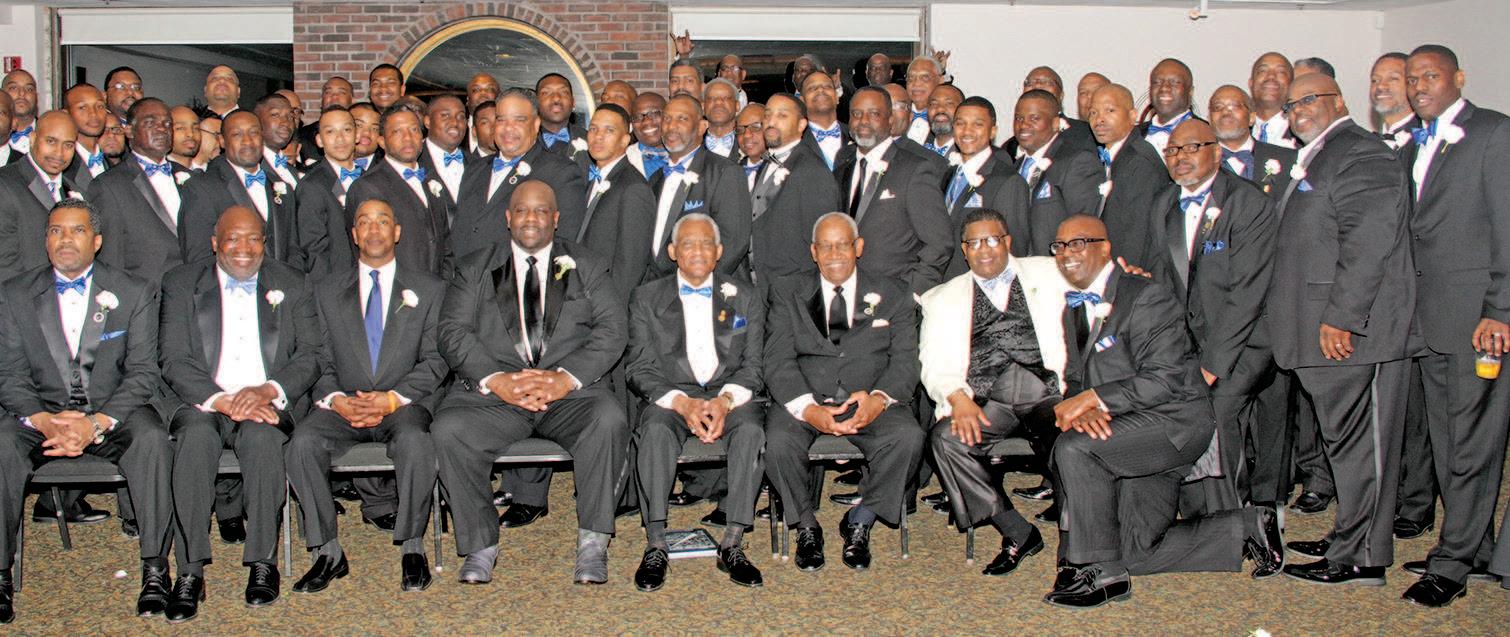
The St. Louis chapter of Phi Beta Sigma, Inc. celebrated the fraternity’s 100th anniversary recently in a Centennial Gala held at the Sheldon. Front row from left to right:
E.
Chapter President Robert T. Jordan Jr., Flint Fowler, U.S. District Judge Brian Wimes, International President Rev. Jonathan Mason, Conrad Jordan, Joseph Dubose Jr., Bishop Courtney
The Urban League Guild of Metropolitan St. Louis will host My Sister’s Closet, a consignment fundraising event for new and gently used clothing and designer products, 10 a.m. to 2 p.m. Saturday, April 26 at the Cardinal Ritter College Prep Gym, 701 North Spring Ave. There is no price for admission.
Proceeds from the sale will benefit the guild’s health fair, college scholarships and Urban League literacy projects.
The Urban League Guild of Metropolitan St. Louis is comprised of community volunteers, civic leaders, business and professional men and women committed to improving the quality of life for African Americans and others. It promotes the Urban League’s efforts to empower African Americans and others throughout the region securing economic self-reliance, social equality and civil rights.
For more information, call Angelia D. Bills at 314-615-3604.
Prescription drug take-back this Saturday
On Saturday, April 26, from 10 a.m. to 2 p.m. the St. Louis County Police Department partner with the Drug Enforcement Administration in a prescription drug take-back initiative.
The service is free and anonymous, no questions asked. Just deposit the unwanted drugs and leave.
Prescription drugs will be collected drugs at four sites:
* North County Recreation Complex, 2577 Redman Road, 63136
* Mehlville Substation, 3229 Lemay Ferry Road
* City of Fenton Precinct, 625 New Smizer Mill Road
* City of Wildwood Municipal Building and precinct station, 16860 Main Street, Wildwood Town Center. Visit www.dea.gov for other collection sites.
The Human Services department at St. Louis Community CollegeForest Park and its Human Services Club will conduct a community event to address specific challenges and discuss resources available to residents ages 16-25 years old.
“Inner City Change” will take place 11 a.m.-3 p.m. on Saturday, April 26, at the William J. Harrison Education Center, 3140 Cass Ave. Specific challenges identified are education, employment, health care and safety.
“We welcome the community to participate with a survey, and answer questions about resources available to the community,” said Angela Roffle, Human Services department chair.
The Human Services program now is based at the Harrison Center.
For more information, contact Roffle at aroffle1@stlcc.edu; Angela Dattoli, president of the Human Services Club, adattoli3@my.stlcc. edu; or Theresa Washington, vice president of the Human Services Club, twashington66@my.stlcc.edu.

By Leslie K. Gill For The St. Louis American
One of the most effective ways to break the intergenerational cycle of poverty for families in our region is to help area high school students graduate and ensure that they have a post-secondary plan in place which focuses on either additional education or a career.
When they are able to do this, students greatly increase their income potential for a lifetime, raise expectations for future generations, and create a stronger workforce and economy for our region.
Making college and postsecondary training a reality for students is the mission of College Summit, and we are excited by the progress being made. In 2005 the college enrollment rate for St. Louis Public Schools was 38 percent; today that number is 66 percent.
This marks a dramatic shift in attitude – a change in the way students see themselves, their futures and their place in the world. The College Summit program, operating in St. Louis Public, charter high schools, as well Normandy High School, is designed to create a college-going culture and to help students seek education and training after graduation.
To influence this outcome, we bring together a group of students from each participating high school in the summer between their junior and senior years to a college immersion experience. While there they learn intensively about applying for, selecting and attending college –information to which they may not have been previously exposed. They are then tasked with helping their fellow students as peer-leaders.
During the school year they work with teachers – who have also undergone training – to facilitate a college-going culture in their schools.
We know that this program is having a positive effect – the rate of SLPS seniors who applied to college last year was an overwhelming 93 percent. But we also know that a massive roadblock still exists for many students on the path to postsecondary education – preventing too many of those who apply to school from actually attending.
That barrier is, simply, cost.
Students and their families are often wholly unprepared for the stickershock they face when they begin considering colleges. In families where parents or caregivers have not previously attended college, the cost can seem insurmountable. Discussions and concerns about how to afford this overwhelming expense can deter students from their plans to attend college or seek other postsecondary training.
Deciding to take that step can seem like a major financial burden – but seeking further education after high school can also be the most important investment students and their families make in their future. It is an action that can change the economic trajectory for students, their families and our community.
College Summit is making great strides in building and sustaining a college-going culture in St. Louis area schools, and beyond. Recognizing the financial burden of affording college, while still helping our students see that path as viable, is the challenge we face going forward. We need to increase conversations within our families, churches, community organizations and schools, and especially with our elected officials, about the importance of finding ways to help today’s students afford postsecondary education opportunities.
In doing so, we can help them become leaders who will keep our region strong in the future.
Leslie K. Gill is executive director of College Summit.

American staff
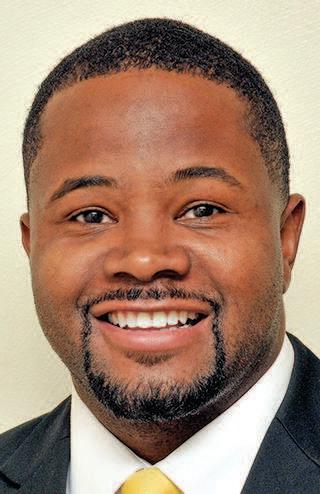
Dwaun J. Warmack, Ed.D., is the new president of Harris-Stowe State University, effective July 14, the Board of Regents announced on Tuesday. He leaves his position as senior vice president for administration and student services at Bethune-Cookman University.
“The Board of Regents and search committee were impressed with Dr. Warmack’s strong record of
Continued from A1
we agree with that. But it is our opinion, and the state board concurred, that having stability there is good.
The American: Tell us about the status of the transfer student bill.
Chris Nicastro: It’s getting close to the end of the session, and the department has been clear from the beginning that it’s so critical to have a tuition calculation fix, in order to have specific monies available in the community left to support schools in that community.
collaboration and his ability to work with various university constituencies,” Thelma V. Cook, chairwoman of the Harris-Stowe Board of Regents, said in a statement. Previously, he was vice president for student affairs at Bethune-Cookman and associate dean of students at Rhodes College in Memphis, TN. Warmack has also held positions at Western Carolina University in Cullowhee, NC, and Delta State University in Cleveland, MS.
The American: We have written that this could lead to a domino effect of one bankrupt public school district falling after another. Do you feel in the pit of your stomach that we would be facing a kind of “Mad Max Beyond Thunderdome” for public education in Missouri?
Chris Nicastro: Certainly, I would have fears if we keep attaching one district to another. If Normandy goes bankrupt and you assign all those children to a neighboring district, at some point you reach the end of that game. There may be some people who think that’s exactly what should happen. But if you look at the numbers of children, Normandy has 4,000 students. What happens to neighboring school districts if you assign
The search committee was headed by Michael Holmes, president of Rx Outreach and a former top executive at Express Scripts and Edward Jones. The committee included representatives from the faculty, staff, student body, alumni and community leaders.
“I am eager to work with the Harris-Stowe and St. Louis
these 4,000 kids to their population? What does their performance look like? What is the impact of that? So we can’t keep attaching one district to another. Even if it worked, it’s not the right thing to do. It’s really important to have schools in a community. You can’t just close all the school buildings and ship the kids out and hope to have any viable community left for them to go home to at night. The relationship between school and home is important. Sadly, a lot kids of bring baggage when they come to school, but the message can’t be that there
n
“If
communities to strengthen recruitment and graduation rates, enhance alumni and community engagement, and position the university as a significant asset in a growing, thriving region,” Warmack said in a statement. “I have a special interest in improving the educational attainment of African-American males, but I am also committed to
no longer will be schools in their community. I don’t think anyone is prepared to deliver that message.
Normandy goes bankrupt and you assign all those children to a neighboring district, at some point you reach the end of that game.”
– Chris Nicastro
The American: In your department’s proposal of an alternative district for unaccredited districts, can you save these schools?
Chris Nicastro: Only if we maintain taxing authority in that community. You have to have enough money to operate something. Those are the questions that need wrestling with, those are the questions the Transition Task Force is
n “I have a special interest in improving the educational attainment of African-American males.”
– Dwaun J. Warmack
Harris-Stowe being a beacon of opportunity for all students. ” Warmack holds a doctor of education degree in educational leadership with specialization in higher education from Union University in Jackson, TN.
wrestling with. Under what structure do you maintain the schools that are there? – that’s the question we are wrestling with.
And we don’t have much time. The session is over in four weeks, and our board meeting is the Monday and Tuesday after the session. We can’t do anything definite until Legislature is done, because we can’t come out there with a plan only to have it undone by what they decide to do. We need a transfer tuition fix, but it’s clear we are not going to get a tuition fix by itself. The key is what else comes with that, and whether they can move that through the House and Senate, as well as have the governor sign it. There is talk of vouchers, and it is clear what his position is on that.


He earned his master’s and bachelor’s degrees from Delta State University in Cleveland, MS. Originally from Detroit, MI., he and his wife LaKisha have one daughter, Morgan.
The American: By vouchers, do you mean tax relief for parents who send their student to private school, even if it’s a faith-based school?
Chris Nicastro: Most legislators realize there is a problem with the Blaine Amendment if you start sending public money to faithbased schools. Some only want vouchers for non-sectarian schools, and that appeases some people. We may be in a position where we have to take the worst among a bunch of bad solutions in order to get things done.
The American: Many parents in host districts are complaining that their students are in larger classrooms, because of the transfer students. What do you say to them?
I don’t hear directly from them. They are focused on their local school districts. There is no reason for that situation. Those districts are getting more than sufficient money to afford to hire additional teachers. If parents are seeing a negative impact, that’s an issue with the districts that could be addressed – and I have said that to superintendents. We are working to get the tuition for transfer students reduced, not because we don’t think the host districts deserve to be compensated, but because we think they are being compensated more than they should be.
I am working here in the middle territory, between those who are typically called “school reformers,” who want to throw away public school, and those who think the status quo is fine. Neither is right. We have to have public schools. It’s one the bedrocks of our country and our communities. It’s an equity issue – without public schools, there is no equity. Without public schools, only those who have money will have education. I can’t conceive of a time when we go back to that approach.
But I am also past the point of telling the status quo folks, the people who don’t want anything to change, that “folks, we have choice in our system already.” They can’t keep arguing willy nilly against school choice. It’s gratuitous by now.
We have charter schools –which are, by the way, public. Should we insist on quality? No question, but they exist and I don’t think they will go away. Does the system need to change? Absolutely, but at the end of this, there has to be some option for parents to send their children somewhere else if their school district is failing. And, frankly, I tell anyone arguing against some constrained, well-orchestrated, well-designed school choice option that they need to meet with parents and look them in the eye and tell them, “Your children don’t deserve to go to a good school.”
Continued from A1
Yaphett El-Amin, executive director of MOKAN, a minority business advocacy organization. “Now, let’s have that talk mean something. It means something when you quantify it with dollar and cents, with real people and companies.”
On May 9 at the Union Station Hotel, MOKAN will host “Bridging Rhetoric to Reality,” a symposium that will bring together public, private and non-profit industry stakeholders and minority business owners. The main focus is expanding capacitybuilding opportunities for minority businesses in the region.
For years, St. Louis city has had laws that attempt to ensure minority inclusion on projects using taxpayer money. However, Nicole Adewale, principal and president of ABNA Engineering, said the commitment to meeting these standards in St. Louis pales in comparison to other cities.
Continued from A1
Kathleen Hall chose City Academy for her daughter Sydni because she was looking for a school with a challenging curriculum. Now she is impressed that her thirdgrade son, Steven, is already dissecting animals in his science classes.
“I didn’t start dissecting until I was in high school,” Hall said. She commended the school’s small class sizes and the family-like environment it created.
“Because the class sizes are
“In general, St. Louis doesn’t seem to have it as a priority, as a culture, compared to Atlanta and Washington, D.C.,” said Adewale, who will be a panelist on the Power Panel Luncheon at the symposium. And that sentiment stems from public and private institutions often saying, “We can’t find anyone,” she said. “People say that we don’t have the capacity,” said El-Amin. “If that is the reality, what are we doing to build it and develop opportunities for minority businesses to partner and strengthen relationships with other industry partners? The symposium is a step in the direction.”
In St. Louis County, Councilwoman Hazel Erby is currently trying to pass legislation that would amend a 2012 bill (#289) that limits minority businesses from bidding on county government contracts. The bill states that bidders must “maintain their own Department of Laborapproved apprentice program.” Union contractors are often the only ones that meet this requirement.
so small,” she said, “they’re able to focus on each child’s weaknesses and strengths.”
The school also places a high emphasis on its STEAM (science, technology, engineering, art and math) program.
Julie Bugnitz, an early childhood and art teacher at City Academy, bounced from table to table on Monday, overseeing students working on the day’s assignment. Evan Henderson, a thirdgrader at City Academy, explained that they were told to construct 3-D houses using solely paper materials. Bugnitz said art develops critical thinking skills and instills confidence in students.


n “St. Louis doesn’t seem to have minority inclusion as a priority, as a culture, compared to Atlanta and Washington, D.C..”
– Nicole Adewale
n “Minorities should take more leadership roles.”
– Glenda White
Restricting non-union contractors from bidding on county projects also restricts minority-owned general or prime contractors. Additionally, the bill forbids independent contractors from
It also develops an appreciation for aesthetically beautiful things, which she said is just as important.
City Academy incorporates a specialist model into its curriculum.
Children learn from teachers who are experts in their field, like Laurie Reycraft, who teaches the Suzuki method on violin and viola to first through sixth graders. Reycraft has played as a substitute with the National Symphony Orchestra and is currently a regular substitute
county construction worksites, specifically those who are self-employed. Most AfricanAmerican truckers who own their own trucks operate as “independent contractors” and thus are forbidden from
with the St. Louis Symphony Orchestra.
n City Academy is a private school with 100 percent of families qualifying for financial assistance and tuition.
Kip Warr, a sixth grade humanities teacher, said he developed a sixth-grade economics class incorporating the same subject matter you find in AP high school economics classes.
Graduates like Hall’s daughter Sydni are thriving as leaders and scholars in some of the area’s most competitive secondary schools. Sydni is a freshman at the Mary Institute and Saint Louis Country Day School, or
working on county worksites. Tim Person, president of Person & Associates and a partner in the symposium, said Erby’s amendment to Bill 289 will level the playing field for minority businesses.
“When you take into consideration that most of minority business owners live in St. Louis County, they are taxpayers, they should have a fair opportunity to participate in St. Louis County contracts,” Person said. “It’s been proven that without the inclusion programs, minorities and women don’t get a chance to participate. It’s so important that everybody has an opportunity.”
Adewale said one of the biggest barriers for minority businesses is establishing “genuine relationships.” On a macro level, the construction industry often operates on relationships – and not always for the best value, she said.
“The entity is often going to choose the one they are familiar with,” she said. “Any level of exposure and access to decision makers can make a difference.”
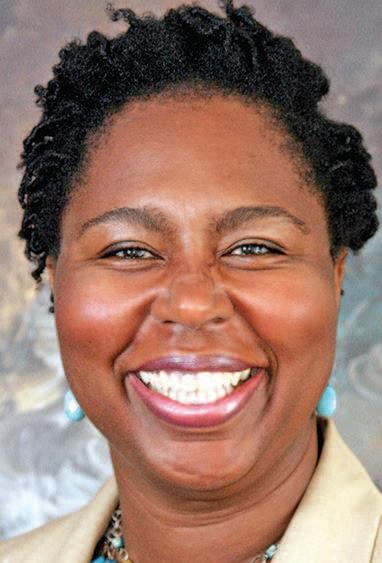
Glenda White, CEO of
MICDS. Graduates transition from secondary schools to some of the nation’s leading colleges, universities, and HBCUs.
Sydni has not yet zeroed in on a particular college or university, but said she plans to become a doctor of pharmacy.
Sydni is also involved in the college prep component of City Academy’s Strive Program, run by Nikky Doughty, director of placement and alumni relations.
At City Academy, Doughty said, there is an expectation that students matriculate into high-performing schools.
Medi-Plex Health Professionals and a certified nurse, started her own home health care business 15 years ago. She said she owns the only minority business enterprise (MBE) in Missouri that offers home hospice care.
“Health care is an industry where minorities are a small group,” said White, who is also panelist at the luncheon session. “We need more minorities in the medical field. Minorities should take more leadership roles.”
In her experience, minorities often shy away from management positions, and management is an important step towards starting a business.
The symposium will address inclusion issues in the region, as well as host workshops on access to capital, new business growth opportunities, and business development and marketing trends.
For more information, visit www.mokansymposium. com or call 314-454-9675. Registration opens on May 8 followed by a networking event, and workshops begin on May 9.
Doughty said there has been an “educational paradigm” shift in terms of the impact City Academy has had in the lives of families and students.
“We’ve been able to provide them with an opportunity to experience what a strong educational model looks like,” Doughty said. She said City Academy has had an impact on the greater community by broadening people’s perspective of what an urban education looks like. Danforth looks ahead to the next 15 years.
“There’s always room for growth,” he said. “We’re never satisfied and always looking critically at how can we prepare more students for success.”
Follow this reporter on Twitter: @BridjesONeil.

Special to The American
The Children’s Education Alliance of Missouri believes that in order for high quality educational options to thrive and expand, parents have to have access to information about school performance and to resources that will help them make the right choice for their children.
As a result CEAM has compiled the resources listed below to support parents as they prepare to make this decision.
The School Report Card Finder (http://www.ceamteam.org/resources/ school-report-card-finder/)
The Missouri School Improvement Program (MSIP) 5 data released by Department of Elementary and Secondary Education (DESE) gives an evaluation of all public schools in a complicated format that does not allow parents to assess a school’s performance the same way they would

for their own students. Because the information on the DESE’s website is still difficult to find and understand for most, CEAM has taken the academic achievement, graduation rate, attendance, college and career readiness, and other factors on a 140point scale for each of Missouri’s public schools and translated the information into an easily understood format.
It is important to understand that this information is just a snapshot
of how a school is performing and currently only represents one year of data. Additionally, for early childhood centers, alternative schools and schools that do not include traditional grade level groupings (i.e. k-6, 7-8. 9-12) these ratings should just serve as a guide and not a definitive report on the school’s quality.
How to Access the DESE Data Portal. http://www.ceamteam.org/ wp-content/uploads/2013/06/DESEData-Portal.pdf
There is an incredible amount of data on student performance and school demographics on DESE’s website. The problem for most people is that it is nearly impossible to navigate without some assistance. Therefore, CEAM has created a simple step-by-step guide for parents who are interested in digging into their school’s, or potential school’s, performance data.
CEAM’s mission is to improve Missouri’s K-12 education system by advancing education policies that ensure all families have the right to
choose the education they determine is best for their children. An important step toward realizing this mission is providing accurate information about school quality and resources to help parents choose the school that will best serve the unique needs of their children.
School Visit Checklist
http://www.ceamteam.org/wp-content/ uploads/2013/06/2014-School-VisitChecklist.pdf
In addition to understanding the academic outcomes of each school you are considering for your child, one of most important thing about choosing a school is making sure it meets their unique needs. The best, and perhaps only, way to do this, is to visit the school. A visit to a school you are considering for your child can be complicated and overwhelming. In order to make this process easier and put your mind at ease, CEAM has created a school visit checklist that will guide you through a school visit. Contact CEAM at 314-454-6544.

Teen performer with Circus Harmony wins $8,500 in scholarships and prizes
By Bridjes O’Neil
St. Louis American
The
Of
Before Donesha Buhr took home first place recently in the final round of the 4th Annual St. Louis Teen Talent Competition, she was already a winner in her mind. Her “trophy,” Buhr said, was a guaranteed spot to perform at the Fabulous Fox Theatre.
“I’m still bursting with joy that I actually did it,” she said. “I’m still bursting with joy that the prize is so big.”
She won a $7,000 college scholarship underwritten by Ameren Missouri.
Her 1920s flapper-inspired hula hoop act also garnered this year’s “I” Award for the most imaginative, inspired and inventive act, winning a $1,500 cash prize underwritten by Terry and Sally Schnuck. The Fox Performing Arts Charitable Foundation presented the competition that began with nearly 200 contestants from 78 schools in
the bi-state metropolitan area.
“What’s inspiring about my act would be that I’m an African-American girl doing hula hoops in the circus,” Buhr said.
She performs weekends at the City Museum with Circus Harmony’s St. Louis Arches, a youth circus performance troupe. The troupe can also be booked for special occasions like birthday parties and weddings.
Circus Harmony is a local non-profit social circus organization that expands circus education opportunities for St. Louis youth. Circus Harmony offers classes and workshops in a variety of circus arts for people ages five and up.
On a recent Saturday during an hour-long break before her second show, Buhr reminisced with giddiness about her Fox performance. She revealed that fellow St. Louis Arches juggler Kellin Quinn influenced her decision to try out for the



n “What’s inspiring about my act would be that I’m an African-American girl doing hula hoops in the circus.”
– Donesha Buhr
competition. Quinn placed third in the final round of the 2012 competition.
“There are some tremendously talented young people in the St. Louis area,” said Jessica Hentoff, artistic and executive director of Circus Harmony (and Quinn’s mother). “It’s pretty extraordinary that both of our students placed so well.”
Hentoff formed the St. Louis Arches in 1989 with 10 inner-city children at Jefferson Elementary School in the St. Louis Public School (SLPS)
system.
“I get to be like Peter Pan,” Hentoff said. “I sprinkle the magic dust on people, which is circus, and they get to fly.”
Buhr’s mother, Sharon, enrolled her in circus classes 10 years ago when the girl was nine years old. She began developing her act during her freshman year in high school with the help of Rosa Yagaantsetseg. Yagaantsetseg is a Mongolian hula hoop artists and strength and flexibility and hula hoop coach with Circus Harmony.
Buhr is now a senior at SLPS’ Fresh Start Academy, and plans to commit full time to the circus before heading off to college. When she resumes her studies, she will work toward a career in teaching or recreational therapy with hopes of working with younger children who have special needs.
Hentoff said Buhr, who works as a part-time student teacher with Circus Harmony, has a natural gift for teaching.
Buhr is gearing up for her first overseas trip and will travel to Israel with the St. Louis Arches for two weeks in July. In 2007, Circus Harmony began the Peace through Pyramids partnership between the St. Louis Arches and the Galilee Circus, an Israeli Jewish/Arab troupe. Hentoff said it is a costly trip, and the group is still raising funds.
“We have raised about $15,000,” Hentoff said, “but we really need about $30,000.”
She said it is an opportunity to demonstrate that race, religion, and socio-economic background do not matter in the circus, but rather what an individual brings to the ring.
“There’s going to be a really big culture shock seeing how they live versus how we live,” Buhr said, “and how circus is for them versus how circus is for us.”
Buhr said a lot can be gained by participating in the circus.
“I’m confident about myself as a person,” she said. “Ready to conquer anything that comes my way.”
Circus Harmony’s Flying Trapeze Center is now open at Union Station. Book your classes online at www. TrapezeSTL.com or call 314504-4298. More information on Circus Harmony: www. circusharmony.org or 314-4367676.
Follow this reporter on Twitter: @BridjesONeil.



By Eugene Robinson Washington Post
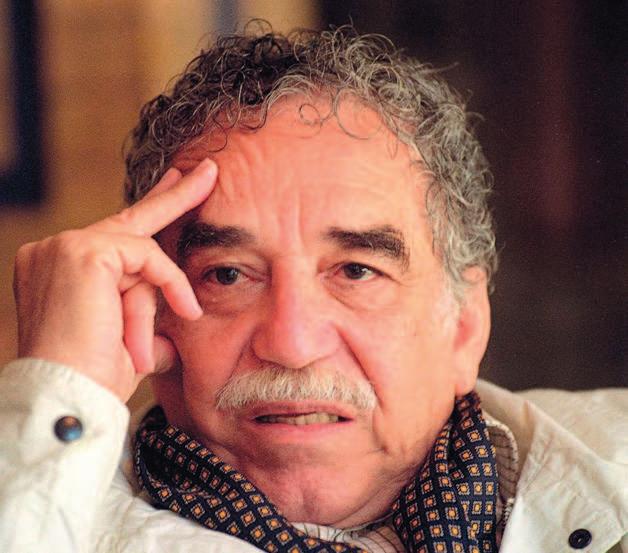
Years before I met him, Gabriel Garcia Marquez changed my life.
“One Hundred Years of Solitude” gave me a new way of looking at the world. Reading his masterpiece was like stepping through a portal into a Technicolor reality where the streets are paved with metaphor and the air is fragrant with dreams.
Garcia Marquez, who died Thursday at 87, was my introduction to modern Latin American literature. I wanted more.
When I got a Nieman fellowship at Harvard University – a year off to study anything I wanted – the first thing I did was sign up for a literature course taught by the great Mexican novelist Carlos Fuentes. I hoped someday to read my favorite authors in their native tongue, so I took a Spanishlanguage course. The novels I was reading referred to unfamiliar events, so I enrolled in a Latin American history course.
but he was never around – he lived in Mexico City and visited his homeland infrequently. Unrelenting violence involving drug traffickers, leftist guerrillas, paramilitary groups and the Colombian armed forces meant that my forays into the countryside had to be brief. I felt I never had the chance to fully experience the source of Garcia Marquez’s inspiration.
I was settled back in Washington when, in 1995, I got a phone call from Maria Jimena Duzan, a friend in Colombia and a brave columnist for El Espectador, the newspaper where Garcia Marquez once worked. She said a group of American journalists was being invited to take a tour of the Colombian drug industry, and wondered if I wanted to come. I told her no thanks, I’d seen more than enough. She said she understood, but I might want to reconsider because “the tour guide is Gabo.”
Midway through the academic year, I learned that The Washington Post’s South America bureau was coming open. I had prepared myself for the job – accidentally – and so instead of returning to Washington in the summer of 1988, I moved with my family to Buenos Aires.
In four years of crisscrossing the continent, I felt as if Garcia Marquez were my constant companion. The name of the fictional town where “One Hundred Years of Solitude” is set, Macondo, became shorthand for the bizarre, magical-realist things that happened all the time in Latin America but seemingly nowhere else.
Here’s one example, not from the deepest Amazon or the highest Andes but from the heart of cosmopolitan Buenos Aires.
Two women are walking side by side down the street. For no particular reason, they change places. High above, a dog falls from an apartment balcony and lands on one woman’s head, killing her. A pedestrian crossing the street sees the fatal accident, is understandably distracted, and gets run over by a bus. An elderly man who witnesses the entire sequence of events clutches his chest and falls dead of a heart attack.
Macondo.
I especially thought of Garcia Marquez during reporting trips to Colombia, where he was known by the nickname “Gabo.” I wanted to meet him
So I flew down and spent three days hopscotching across Colombia with a handful of U.S. and Colombian journalists and Gabriel Garcia Marquez. The great man was warm and funny, less the brooding novelist than the quickwitted journalist – curious, a bit cynical, easy to laugh.
He pitched a fit when he came to suspect that the trip, ostensibly sponsored by a civic-minded nonprofit, was actually a propaganda exercise by the Colombian government. He had agreed to come, he said, because he wanted Americans to understand what their insatiable demand for drugs was doing to his country.
One stop was Itagui prison near Medellin, where a cellblock had been modified to comfortably house the three Ochoa brothers –pioneering drug traffickers who surrendered in exchange for light sentences. This is from the story I wrote:
“In addition to offering conversation, the Ochoas offered lunch – ground beef, rice, beans, avocado and pork rinds. There, around two long tables in the exercise area, sat eight American journalists, three acknowledged drug czars, the drug czars’ attorney, and novelist and Nobel laureate Gabriel Garcia Marquez. ... All were being served food by a former paramilitary marauder, who asked if anyone wanted more beans.”
Only in Macondo, Gabo. Adios. Eugene Robinson’s email address is eugenerobinson@washpost.com




Planting the Seeds for Success!




We specialize in making science fun!

Harry’s Big Adventure:
Harry’s Big Adventure:
Investigate and explore over 700 interactive exhibits and take in a ilm on one of world’s largest domed screens in OMNIMAX® Theater. Come, play and exercise your brain! General admission is always free. slsc.org/nie4
Investigate and explore over 700 interactive exhibits and take in a ilm on one of the world’s largest domed screens in our OMNIMAX® Theater. Come, play and exercise your brain! General admission is always free. slsc.org/nie3
exercise
Nutrition Challenge:
When you graze, it means that you eat small snacks all day long without eating a regular meal. “So, what’s wrong with that?” you ask. Grazing prevents your body from ever really feeling full, causing
As the weather continues to get warmer, we can all take advantage of the change to be more active! Here are some ways to become a more active person.
And... April is Earth Month! As a class, decide on a project that you could do for your school or community that would be a great way to celebrate. Here are a few ideas to inspire you… but your class can probably come up with even better projects!
My Bug World! presented by Terminix® is a multisensory experience that immerses you into the world of bugs. Harry the Chinese Praying Mantis and his bug friends will lead you through freestanding and interactive habitats in a hands-on, fun way!
My Bug World! presented by Terminix® is a multisensory experience that immerses you into the world of bugs. Harry the Chinese Praying Mantis and his bug friends will lead you through freestanding and interactive habitats in a hands-on, fun way!
Harry’s Big Adventure: My Bug World! presented by Terminix® is a multisensory experience that immerses you into the world of bugs. Harry the Chinese Praying Mantis and his bug friends will lead you through freestanding and interactive habitats in a hands-on, fun way!
slsc.org/hbanie1
slsc.org/hbanie2
slsc.org/hbanie4
Present: Healthy Kids is a weekly series that focuses on nutrition, exercise, safety and more.
you to eat more throughout the day. Instead, sit down; eat a nice, solid, balanced, nutritional meal. Your body will tell you when it’s full, and the benefits are that you won’t be hungry for a while, you’ll eat less, and you won’t be tempted by lessnutritious snacks.
Learning Standards: HPE 2, HPE 5, NH 1, NH 5
Insteadofsuringthe‘Net— go for a brisk walk around the neighborhood.
InsteadofwatchingTV— ride your bike with friends.
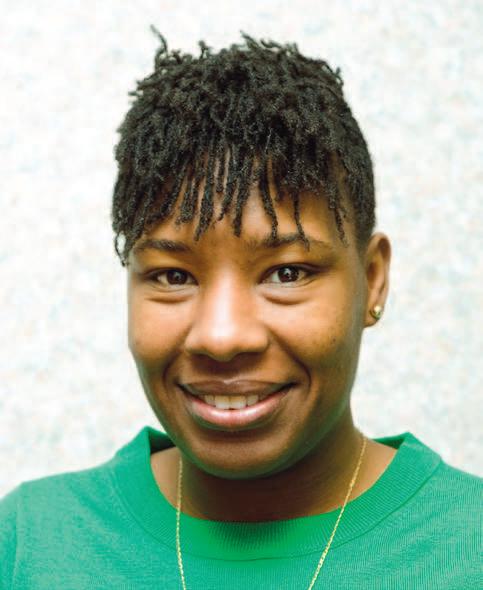
Where do you work? I work at St. Louis Children’s Hospital.
Where did you go to school? I attended Riverview High School and received my associate’s in nursing from St. Louis Community College at Forest Park. I will graduate with my bachelor’s in nursing from Barnes-Jewish at Goldfarb this month.
Insteadofplayingvideo games— play baseball, football, badminton, or some other active game.
Can you think of other ways to be more active? Going outside and staying active not only increases your heart rate and burns calories, but it also helps you build friendships!
Learning Standards: HPE 1, HPE 2, HPE 5, NH 1, NH 5
> Have a trash pick-up day on your playground. protect your hands from dirt and germs.
> Plant flowers near the school entrance, or in your own front yard.

> Create a recycle program for home or school.
> What other great project ideas did your classmates suggest?
Learning
What does a nurse do? I work on a unit that helps children with different heart diseases. Some of the children have even had heart transplants! Sometimes they may be in the hospital for a long time. I get to talk to them, learn about their home life and even play games with them! I also get to teach them and their parents how to take care of themselves once they are back home.
Why did you choose this career? I chose this career because I like learning about the heart. Even though I am done with school for now, I can still learn so much from the kids I meet each day.

What is your favorite part of the job you have? My favorite part of the job is seeing children get better. Their families and friends are so excited, and we are too! Being able to watch a very sick child get better and go home is the best part!
Learning Standards: HPE 6, NH 3

Robinwood Elementary School 4th grade teacher
Mrs.


NEUROSURGEON AND BRAIN TUMOR EXPERT:


Your brain is a complicated system with many parts that work together. We’re going to focus on five of those parts: cerebrum, cerebellum, hypothalamus, pituitary, and the brain stem.
The cerebrum accounts for 85% of your brain and is divided into two sides. Some scientists believe the left side affects the more analytical thinking tasks, such as math, while the right side affects more creative tasks, such as music and art. Although there is a lot of debate about that theory, scientists do know that the left side of the brain controls the right side of the body and vice versa.
The cerebellum is located in the back of the brain and accounts for 1/8 of its size. It controls balance, movement, and coordination. The brain stem is located between the cerebrum and cerebellum and connects the brain to the spinal cord. The brain stem is responsible for assisting

In this experiment, you will see how your body and brain work together. Did you know you have a dominant side for using your hands, feet, and eyes?
Materials Needed:
• A Pen or Pencil • Paper or a Notebook
• An Empty Tube (an old paper towel tube is good) • A Cup of Water • A Small Ball
Procedure:
q Test your eyes: Which eye do you use to blink? Which eye do you use to look through an empty tube? Extend your arms in front of your body. Make a triangle shape using your fore fingers and thumbs. Bring your hands together, making the triangle smaller (about the size of a coin). Find a small object in the room and focus on it through the hole in your hands (using both eyes). Try closing just your left eye and then just your right, if your view of the object improved

If you read about the brain, you will see some interesting statistics on the percent of body weight that it encompasses compared to the amount of energy it uses. In this activity, you will flex your brain as you practice calculating percentages.
1. An ice cream dessert contains 1,200 calories. One hundred forty-four calories come from fat. What percent of the total calories comes from fat? _________


your body with many things, including breathing air, digesting food, and circulating blood.
The pituitary gland is very small, about the size of a pea. It produces and releases hormones into your body that control growth, and keeps your metabolism going. The hypothalamus controls temperature. Your body temperature should be approximately 98.6 degrees. If it is too cold, the hypothalamus tells your body to shiver. If it is too hot, the hypothalamus tells it to sweat.
Every day, the brain oversees many functions. Do all you can to protect your brain and keep it healthy.
Learning Standards: I can read nonfiction text for main idea and supporting details.
when you closed your left eye mark down “left,” if it improved when you closed your right eye mark down “right.”
w Test your hands: Which hand do you use to write? Which arm do you use to throw a ball? In your notebook, record “left” or “right.”
e Test your feet: Drop the ball and kick it. Which foot did you use? Run forward and jump. Which leg did you use to jump? In your notebook, record “left” or “right.”
Analyze your results: Are you right handed or left handed? Which eye is dominant? Which foot is dominant? Do you tend to favor one side? Compare your results with your classmates.
To complete online challenges to test your reaction time, visit: http://faculty.washington.edu/chudler/chgames.html.
Learning Standards: I can follow directions to complete an experiment. I can analyze the results.
2. Janet made a fruit juice using red and green grapes. Thirty percent of the grapes were green. If she used a total of 60 grapes, how many red grapes did she use? ___________
3. Jerry, an electrician, worked 7 months out of the year. What percent of the year did he work?
4. A baseball pitcher won 80% of the games he pitched. If he pitched 35 ballgames, how many games did he win? ________________
5. I purchased a scooter for $290.00 but was charged an additional 5% for delivery. What was my total?
Learning Standards: I can add, subtract, multiply, and divide to solve a problem.

form a memory.


Keith Black was born on September 13, 1957, in Tuskegee, Alabama. His mother was a school teacher and his father was a school principal. Black was very interested in biology, and taught himself to dissect frogs. His father encouraged him by buying a cow’s heart for him to dissect. When he was 10, Black moved to Cleveland, Ohio, because his family wanted their children to have access to strong educational opportunities and enrichment programs. Black joined an apprentice program in the lab at Case Western Reserve University, and took a part time job at Cleveland St. Luke’s Hospital. He was an assistant to Frederick Cross and Richard Jones, who invented the Cross-Jones artificial heart valve. With their guidance, he learned to perform transplant surgeries and heart valve replacements in the lab. He published his first scientific paper at the age of 17, which focused on the damaged red blood cells he observed in heart valve replacement patients. This paper won him the national Westinghouse Science Talent Search competition.
He enrolled in the University of Michigan’s Medical School accelerated program. Through this program, he completed an undergraduate degree and medical school in six years. While in medical school, he became fascinated with the brain, and chose neurosurgery as his specialty. In 1987, he joined the University of California, Los Angeles’ medical school as an assistant professor of neurosurgery. He was at UCLA for 10 years, and then moved to Cedars-Sinai Medical Center as the leader of the Neurological Institute. He was also a member of the faculty of the University of California’s Irvine School of Medicine.
Black wanted to perfect the technique for removing brain tumors. If surgeons remove too much, the brain is permanently damaged. If they remove too little, the cancer will continue to grow. He discovered a chemical that can attack brain tumors without damaging the healthy parts of the brain. He also discovered a procedure to remove cells from a patient and alter them so that he could replace them into the patient to stimulate their immune system. Black also explored a technique to remove a patient’s white blood cells and train them to search out and destroy cancer cells. He also created a method of reaching the skull base through the nasal passage to remove cancerous tissue. Black has performed over 5,000 operations, and has opened a brain tumor research center at Cedars-Sinai.
His work has received national attention. His profile appeared on the television series The New Explorers and Esquire magazine included him on the list of “The 21 Most Important People of the 21st Century,” and TIME magazine placed him on the cover of the 1997 special edition, “Heroes of Medicine.” His autobiography, “Brain Surgeon” was published in 2009.
Learning Standards: I can read a biography about a person who has made a contribution in the field of science, technology, or mathematics.

Use the newspaper to complete these activities to sharpen your MAP skills.
Activity One —
Current Events: Find a newspaper article that is about each of the following and clip them out to paste onto another sheet of paper: a meeting of a government agency, a press conference, a disaster or unexpected happening.

Activity Two — Scientific Advances: Using the newspaper, collect advertisements for products that were not available twenty years ago. Can you identify the scientific advances that have made this new product possible?
Learning Standards: I can use the newspaper to locate information. I can classify information and use evidence to defend my answers.



Alderman Jeffrey L. Boyd asked for a retraction in a letter to The American dated April 21 – and indeed he is owed one and is going to get it.
Boyd quoted a claim now made twice in the EYE that “black politicians attempted to persuade Boyd to run instead against incumbent Recorder of Deeds (for life) Sharon Carpenter” rather than incumbent License Collector Mavis T. Thompson
“I am asking you to release the names of the politicians who you claim give credibility to your reporting,” Boyd demanded.
Fair enough. Most journalists rely at times on unnamed sources, because quite often the people who know the truth are too close to the action to tell the truth with attribution without disrupting their own work and life. Though when challenged about an unnamed source, it’s a professional responsibility to revisit your source and ask them to go on the record.
The EYE went back to the source, a black elected official who spoke for a group of peers who, he said, were confronting Boyd. Their appeal to Boyd – an old one in St. Louis’ venerable two-party system of white Democrat, black Democrat – was for Boyd to “protect a black seat.” Thompson is the only black citywide official on the August primary ballot. Carpenter and Collector of Revenue Gregg F.X. Daly, also on the August ballot, are white. Daly has more cash on hand than Rex Sinquefield, so Carpenter seemed like the easier target for a black politician with citywide ambitions who would rather not run against a black incumbent.
That was the story. The EYE expected the source to stick by the story, but beg continued anonymity, even if it hurt the credibility of the item. It’s a small town, and elected officials need to be able to work with one another, even when their backroom deals go sour.
But the source did not stick by the story. Apparently the “protect the black seat” contingent only talked about approaching Boyd, without actually doing it.
“There was supposed to be a bigger collaboration of folks to come to Jeff and ask him to get out of (the license collector’s) race and get into the recorder of deeds race,” the source responded by email. “Unfortunately, that never came to fruition.”
So much for that. Retraction: no black elected officials pressured Boyd to run against Carpenter, rather than Thompson, as previously reported in this column. These black elected officials only talked about doing so. Boyd is correct, the EYE was mistaken. We regret the error. And the credibility of a previously trustworthy source has been diminished.
‘Top black elected officials’
So: why did this conversation with Boyd never happen, as planned and as the EYE was told it would happen?
“I think that everyone was waiting for our African-American political leadership to step up and have that conversation with (Boyd),” the source said. “I think it really shows how unorganized as a community we are because we waited for our top black elected officials to take care of
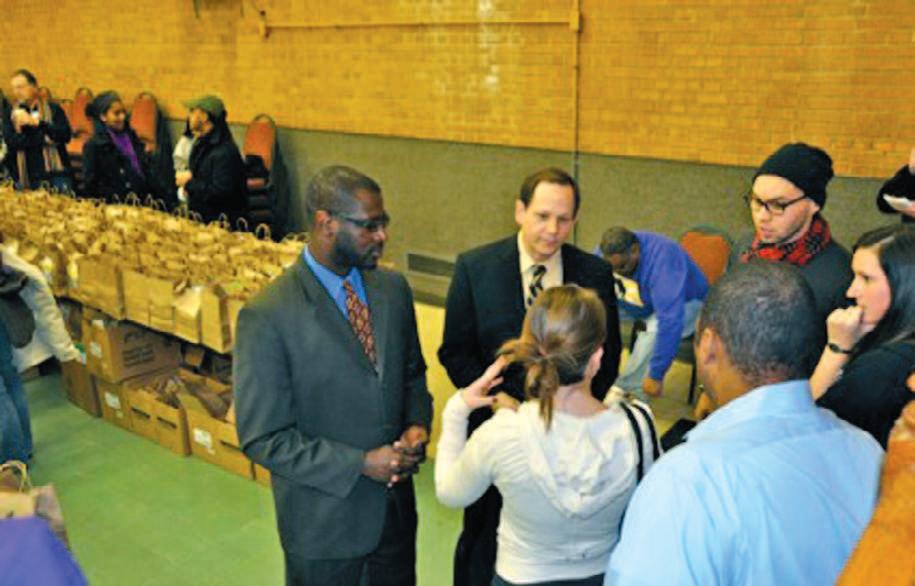
business and they were a no-show.”
This still unnamed black elected official did not name the “top black elected officials” who failed to take care of business. The EYE leaves it to the reader to imagine who those “top black elected officials” who did nothing to “protect a black seat” might be.
The EYE now feels like a fool. Not so much for relying on a source that proved faulty – that is part of the business. The foolish part is to have cared about “protecting a black seat” more than the black people who hold black seats care about “protecting a black seat.”
Friends like these
Let’s forget, for the moment, about “top black elected officials” and the lesser black elected officials who wait for them to show the leadership they do not show. Let’s forget about unnamed sources who say one thing but do (or don’t do) another. Let’s stick to the facts.
A black elected official, faced with the choice of running against one of two white citywide elected officials or one black citywide elected official, chose to run against the black incumbent. Carpenter and Daly, the white officials who were spared a challenger, are not exactly Jeanette Mott Oxford or the late Rory Ellinger in fearless championing progressive causes that seek to uplift the poor or expand opportunities for minorities. They are typical South Side political hacks.
It’s clear that Boyd picked what

he perceived to be a more opportune target in Thompson. The fact that she is black did not deter him. The EYE does not expect for white voters to hold this against Boyd. Thompson certainly is counting on black voters to hold it against him.
What did Boyd win in making a choice that eases his path to victory (presumably), but at the expense of “protecting a black seat”? He won strengthened support from Daly and Carpenter’s South Side base. Mayor Francis G. Slay endorsed Boyd before filing had closed, and he was soon joined on the welcome wagon by Sheriff James Murphy. What does this tell us about Boyd, as a black man in St. Louis politics?
It tells us that both of his earliest endorsers are white citywide elected officials who have been successfully sued by black men for racial insensitivity, hostility and/or discrimination during their current tenures in office.
As the EYE noted last week, “In 2010 a St. Louis jury awarded a combined $850,000 to William ‘Patrick’ Hill and Jacques Hughes, two black men who worked for Murphy, after they sued the sheriff for what the Post summarized as ‘a weak response’ when a supervisor hung a noose in a courthouse in 2006. The jury agreed that Murphy was condoning ‘a racially hostile work environment’ in his failure to comprehend why black men refused to tolerate a noose displayed in their workplace.”
With friends like these, who needs enemies?
As for Slay, Deputy Fire Chief
Alderman Jeffrey L. Boyd spent the 2011 MLK National Day of Service with Mayor Francis G. Slay and staff.
Charles Coyle successfully sued the mayor and the city for racial discrimination when he was passed over for promotion to fire chief in favor of a less-qualified white candidate of a lower rank. In May 2011, a racially diverse jury awarded Coyle $300,000 for actual damages, “but only $50,000 of the $1 million he asked in punitive damages,” the Post-Dispatch reported in a 472-word blurb. This decision was upheld lest September on appeal.
Coyle introduced significant evidence, the appeals court noted, that the city failed to promote him because of race, including that he was “better qualified to be fire chief” than Dennis Jenkerson, the white battalion chief promoted over the head of Coyle, a black deputy chief. Also, the appeals court noted, Charles Bryson, then director of public safety for Slay, “stated publicly that race would be a factor in the appointment of fire chief.” Finally, the appeals court noted, “Chief Jenkerson’s promotion from battalion chief to fire chief was contrary to the city’s code and its historical practice of promoting deputy fire chiefs to the fire chief position.”
So Boyd’s candidacy has been endorsed by:
• a white sheriff who does not understand why black deputy sheriffs are outraged by the sight of a noose in their workplace, and • a white mayor who promotes a white battalion chief over a better qualified black deputy chief (all of this, of course, after the Fire Chief Sherman George fiasco).
And both this sheriff and this mayor have lost legal fights that claimed they exhibited racial insensitivity, hostility and/or discrimination.
“Please cease and desist from your ‘campaign of misinformation’ in your efforts to dismantle my campaign for license collector,” Boyd wrote in his letter this week. While we have retracted an error we made twice, printing the same mistake twice does not constitute a “campaign of misinformation.” Indeed, sticking to the facts should do plenty of damage to Boyd’s campaign.

Normandy Mayor Patrick Green celebrated with elementary school students Thursday during the dedication of a sculpture by St. Louis artist Catharine Magel. The event was the kick-off to University Square, the Great Streets/ Natural Bridge Initiative spearheaded by UMSL that will see Natural Bridge Road developed into a pedestrianfriendly street scape from Hanley Road to Lucas and Hunt Road.

By Jason Rosenbaum
Of St. Louis Public Radio
n Betty Van Uum, senior officer for public affairs and economic development at UMSL, said the initiative is trying “to spur development in the neighborhood around the university.”
County. Green’s sister was one of the four victims. Thursday’s ceremony, he said, was akin to taking “something that was sad and turning it into joy.”
have wanted to say, ‘I’ve moved on. But my spirit still exists there. And I want that place to be a happy place. Not just for me. But for those who pass through and will come in the future.’”
The unveiling of Catherine Magel’s “Changing Identities” sculpture was a poignant moment for Normandy Mayor Patrick Green. The unveiling showcases a community development organization for the municipalities surrounding the University of Missouri-St. Louis. But it was also a tribute to four people who died in a 1997 bus crash in north St. Louis See UMSL, B6
“Actually, that’s what she would have wanted,” Green said. “She would
The community development organization – University Square – is a not-for-profit organization intended to improve the commercial infrastructure in communities close to UMSL. It’s funded in part by a grant from the St. Louis County Port Authority. And it seeks to redevelop the area’s housing for residents, employees of nearby businesses and people associated with the university. Betty Van Uum, senior officer for public affairs and economic development at UMSL, said the
Financial
By Tishaura O. Jones
For The St. Louis American
When I ran for treasurer, I envisioned the office as a key resource to bring forth programs and new ideas to improve the quality of life of our citizens. One of these programs is financial literacy. Simply put, financial literacy is the ability to understand how money works. But financial literacy isn’t just about balancing your checkbook or knowing how
to be held Saturday at Harris-Stowe much money you have in the bank. Financial literacy is about planning for the future. Being financially literate can help you do things like save money for a down payment on a home, save for your child’s college education, or have money saved up for emergencies so you don’t need payday loans or other predatory lending companies. When you know how to manage your money,
you can make better choices about your future. Financial literacy will also help us to build a strong community. Currently, we are working with banks to increase their financial commitment to the revitalization of the city by offering mortgage and home improvement loans to creditworthy individuals. Improving your financial literacy will help you to become one of those individuals, allowing you to invest in our city.
By Esther J. Cepeda Washington Post
The National Urban League’s 2014 report on the state of black America released a torrent of negative assessments. “Dismal and getting worse,” read one headline. “Blacks behind whites, Latinos in job market, report says,” read another. While superficial, these summaries do contain one
truth: On measures of economics, health, education, social justice and civic engagements, African Americans have realized less of the American Dream than have their white and Hispanic peers. Indeed, the Urban League report notes, 56.5 percent of AfricanAmerican households are less than middle income compared to 50.8
n Financial literacy isn’t just about balancing your checkbook or knowing how much money you have in the bank.
As treasurer, I am committed to helping city residents become financially literate and learn how to confidently manage money. Our
See FAIR, B2
n “Being economically self-sufficient through owning your own business is not a new concept in the African-American community.”
– Donna Jones Baker, Urban League of Greater Cincinnati
percent of Hispanic and 35.5 percent of white households. But that’s far from the end of the story. Dig deeper and you’ll
find that the African-American community possesses untapped

Eva Frazer, M.D., was named a 2014 Women of Achievement in the category of Community Health. Frazer is a former member of Saint Louis University’s Board of Trustees. Along with her husband Steven Roberts, she donated space to SLU’s Health Resource Center, a free clinic operated by medical school students under the guidance of SLU doctors. The award recognizes women “who have demonstrated outstanding commitment to the betterment of the St. Louis region through volunteer leadership.”
James H. Buford has been nominated to serve on the Harris-Stowe State University Board of Regents by Gov. Jay Nixon. The seven-member Board of Regents develops policy and provides oversight of the university administration and operation. Buford is a national board member of the National Urban League, among many other board commitments, and was the longtime president and CEO of the Urban League of Metropolitan St. Louis.
Ida H. Early was named a 2014 Women of Achievement in the category of Volunteer Leadership. As secretary to the Board of Trustees of Washington University, she coordinates the 45-year-old Women’s Society of Washington University, a 600-member volunteer organization committed to education and leadership. The award recognizes women “who have demonstrated outstanding commitment to the betterment of the St. Louis region through voluntary contributions and volunteer leadership.”
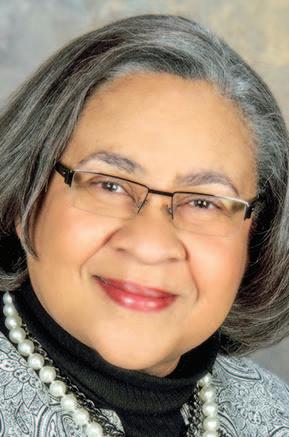
Ronald Norwood has been nominated to serve on the Harris-Stowe State University Board of Regents by Gov. Jay Nixon. The Board of Regents develops policy and provides oversight of university administration and operation. Norwood joined Lewis Rice Fingersh Law Firm in 1988 after serving as a law clerk for U.S. District Court Judge Scott O. Wright. He also is an arbitrator with the American Arbitration Association.

Cartelia Lucas has been appointed the new administrative intern at Highcroft Ridge Elementary for the 201415 school year, pending school board approval. An administrative intern in the Parkway School District is in essence an assistant principal. She currently is the instructional coach at Craig Elementary and was previously its literacy coach. She will officially start as administrative intern at the beginning of next school year.

Anthony Hall Sr. has been named head men’s basketball coach at Fontbonne University. Hall, currently the associate athletic director for the university, succeeds Steve Schafer, who stepped down as coach in March. Hall will become just the third head men’s basketball coach in Fontbonne’s history. Prior to his position at Fontbonne, Hall served as director of athletics and recreation at Avila University in Kansas City, Mo.

By Jason Alderman
If you’ve got teenagers, you already know how expensive high school can be. Besides food, clothing and school supplies, a whole host of extracurricular activities are competing for a share of your wallet – even as you frantically try to save for college and your own retirement.
One of the biggest expenses you’ll encounter is prom. Gone are the days of borrowing dad’s suit and crepe paper streamers in the school gym: Today’s proms are often more like a Hollywood premiere with limousines, designer gowns and swanky afterparties.
I’m not kidding. According to a recent nationwide survey conducted by Visa Inc., the average U.S. family with a high school student attending the prom expects to spend $978 this year. Surprisingly, that’s down 14 percent from last year’s survey average of $1,139 per family.
A few other interesting statistics the survey uncovered:
• On average, parents plan to pay for about 56 percent of prom costs, with their kids picking up the remaining 44 percent.
• Parents in lower income brackets (less than $50,000 a year) plan to spend an average of $733 – a considerable share of the family budget. Thankfully, that’s down significantly from last year’s $1,245 estimate.
• Those earning over $50,000 will spend an average of $1,151.
Here’s a breakdown of how those prom dollars typically get spent:
• New prom dresses often cost $100 to $500 or more.
• Plan on spending another couple hundred for shoes, accessories, flowers and professionally styled hair, nails and make-up.
• New tuxedos cost several hundred dollars, not to mention the formal shirt, tie, studs and shoes you’ll need. Even
Continued from B1 plans include helping city residents improve their overall

renting all this will likely run over $150.
• Figure at least $80 an hour plus tip to rent a limousine for a minimum of four to six hours.
• Prom tickets typically cost $50 to $150 per person, depending on venue, entertainment, meals, etc. And don’t forget about commemorative photos.
• The couple will probably need at least $50 for a nice pre-prom meal.
• After-parties can run anywhere from a few bucks at the bowling alley to hundreds of dollars for group hotel suites.
As with weddings and vacations, spending on prom can easily spiral out of control, especially if your teenager isn’t used to sticking to a
financial health by warning them about the dangers of predatory lending, decreasing the percentage of families that aren’t using banking services, and helping people craft budgets that teach them how to
budget. Use this as a learning experience by getting your kid involved making tough decisions, helping to prioritize expenses from vital to nonessential.
To help with the prom budgeting process, Visa launched a free smartphone app last year called Plan’it Prom. You simply enter your budgeted amounts for each item and then track actual spending on your phone or tablet as you shop. The app also includes budgeting tips, a photo gallery and a timeline for tracking pre-prom deadlines. Plan’it Prom is available at the iTunes store, the Google Play store and from www.practicalmoneyskills. com/prom.
Here are a few prom costsaving ideas:
• Shop for formal wear at consignment stores or online. As with tuxedos, many outlets rent formal dresses and
live within their means.
We invite you to attend our inaugural Financial Empowerment Fair, scheduled for Harris-Stowe State University on Saturday, April 26 from 11 a.m. to 3 p.m.
accessories for one-time use.
• Have make-up done at a department store’s cosmetics department or find a talented friend to help out.
• Split the cost of a limo with other couples, or drive yourselves.
• Team up with other parents to host a pre-prom dinner buffet or after-party.
• Take pre-prom photos yourself and have the kids use their cellphones or digital cameras for candid shots at various events.
Bottom line: You want to ensure your child has a memorable high school experience, but not at the expense of your overall budget.
Jason Alderman directs Visa’s financial education programs. To Follow Jason Alderman on Twitter: www.twitter.com/ PracticalMoney.
This event – co-sponsored by Harris-Stowe State University, the Urban League of Metropolitan St. Louis, and the United Way of Greater St. Louis – promises to be a day of family fun and financial
Kwame to provide construction management for $43M Loop Trolley
The Loop Trolley Transportation Development District has selected Kwame Building Group to provide construction management services on the $43 million Loop Trolley. The 2.2-mile electric trolley system will connect The Loop to Forest Park with a stop at the Missouri History Museum. The project includes installation of the tracks and overhead electric lines, construction of 10 station stops, and a roundabout at the western terminus. KWAME expects to begin issuing construction bid packages in late April and May.
MOKAN to host Minority Business Symposium
MOKAN will host, “Bridging Rhetoric to Reality,” a Minority Business Symposium, Thursday, May 8 and Friday, May 9 at the Union Station Hotel located in downtown St. Louis. It will provide minority business owners with networking opportunities with St. Louis’ business and corporate community, as well as workshops on Access To Capital, New Business Growth Opportunities, Latest Trends in Business Development, and Business Marketing Tips to Win & Keep Clients. Register at www.mokansymposium.com or call 314-4549675.
PNC Foundation commits $700K for early childhood education at Grace Hill
The PNC Foundation committed $700,000 in continued funding for Grace Hill Settlement House as its partner in early childhood education as part of PNC’s national initiative, Grow Up Great. Grace Hill will receive $250,000 of that commitment for the 2013/2014 Head Start Program Year.
City, credit union partner in Sure Rides Auto Loan program
St. Louis Community Credit Union, in conjunction with the City of St. Louis, is launching a lending partnership called the Sure Rides Auto Loan program, made possible by a grant from the U.S. Treasury. To be eligible, an individual must be currently employed or starting a new job within 30 days with one of St. Louis’ designated workforce partners (SLATE, FWCA, Employment Connection or the Urban League); live or work in St. Louis city or county or in St. Clair, Madison, Monroe and Jersey counties in Illinois; and meet other requirements. For more information, call 314-256-3999 or visit www.stlouiscommunity.com.
Better Business Bureau offers free document shredding Saturday
The Better Business Bureau (BBB) and the Consumer Fraud Task Force will offer free shredding of outdated but sensitive documents Saturday, April 26 at Saint Louis Galleria (southeast parking lot, I-64 at Brentwood Blvd.) and Schnucks in Edwardsville, Ill., 2222 Troy Road. Consumers can shred up to three boxes of documents from 8 a.m. to noon. BBB asks that consumers use bags or boxes that can be shredded along with papers. Contact
empowerment. Apart from providing valuable educational resources, the Financial Empowerment Fair will include activities for the whole family, including a special keynote address from John Hope
Bryant, CEO and founder of Operation Hope.
Tishaura O. Jones is treasurer of the City of St. Louis.
Co-owner Kris Kleindienst said, “We were in negotiations for several months with our landlord, but ultimately could not reach an agreement.” Kleindienst and co-owner Jarek Steele are considering expanding the CWE location, opening a second store either downtown or in another St. Louis neighborhood, and adding a coffee or a
n “The problem with the Knicks isn’t Mike Woodson. They just got a bunch of bums up there.”
– Charles Barkley
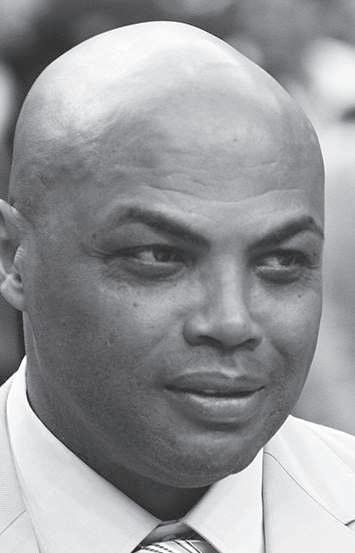
Incarnate Word Academy basketball star Napheesa Collier gave a verbal commitment to the University of Connecticut. Collier is one of the top juniors in the country.
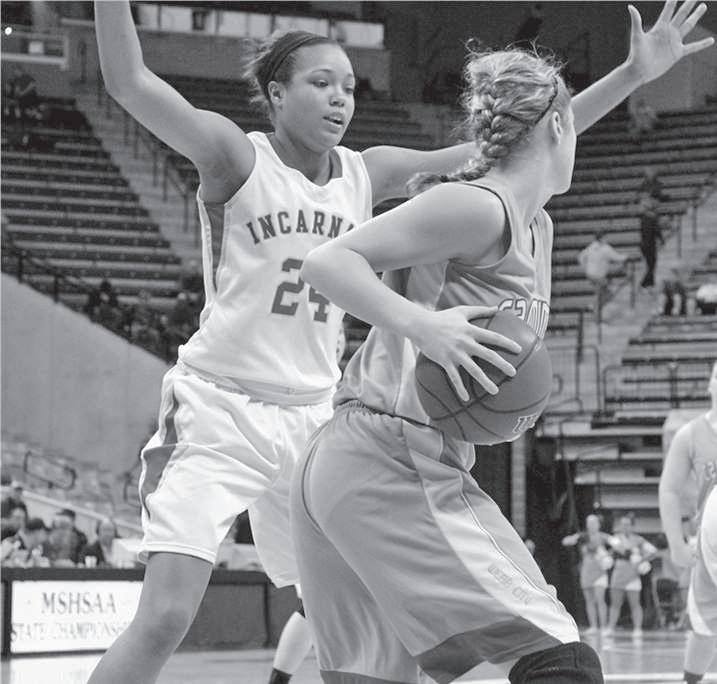
Incarnate Word Academy junior basketball star Napheesa Collier has given a verbal commitment to NCAA champion Connecticut.
The 6’1” All-American chose UConn over Notre Dame, Maryland, Missouri and Kentucky.
Collier is one of the top-ranked juniors in the United States. She is ranked No. 4 by AllStar Girls Report, No. 6 by Full Court and No. 7 in the ESPN Hoop Gurlz Super 60 players in the Class of 2015. She becomes the first Class of ’15 player to commit to coach Geno Auriemma’s powerhouse program.
Collier is coming off a stellar 2014 campaign in which she led the Red Knights to the Missouri Class 4 state championship for the second consecutive season. Collier averaged
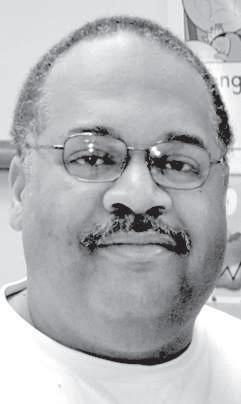
Earl Austin Jr.
23.7 points and 10 rebounds a game to lead the Red Knights to a 31-1 record. She scored 33 points in the Red Knights’ victory over Dexter in the statechampionship game. In two seasons, Collier has led Incarnate Word to a 62-1 record, two Class 4 state championships and a USA Today No. 1 national ranking, which was achieved during the 2014 season. She also earned numerous postseason awards, including the St. Louis American Girls Player of the Year. UConn is coming off a 40-0 season and
its ninth NCAA championship. The Huskies defeated Notre Dame 79-58 in a national title game which featured two undefeated teams for the first time. Collier can officially sign a binding national letter of intent during the fall signing period from November 12-19.
Moten, Hilton commit
Two other top players from the Class of 2015 gave verbal commitments last week. Football standouts John Moten of John Burroughs and Cameron Hilton of
A group of athletes from the St. Louis area made the trip to Lawrence, KS. to participate in the KU Relays on the campus of the University of Kansas. Those athletes did quite well in Jayhawk Land.
Cardinal Ritter College Prep standout Charles Jones was a double winner in the 400-meter dash and the 800-meter run. His specialty is the 800, but he showed that he can sprint was well in winning the 400 in 47.71 seconds.
Hazelwood Central’s standout duo of Marcus Davis (48.28) and Brandon Chunn (48.86) finished second and third behind Jones, who also won the 800-meter run in 1 minute 53.36 seconds.
Michael Wells of Cleveland Naval Jr. ROTC won the 100-meter dash in a quick 10.49 seconds. Wells recently signed with the University of Oklahoma.
Maya Cody of Lutheran South finished third in the girls’ 100 with a time of 11.91. The first and second-place times ahead of Cody were 11.47 and 11.74, so it was a fast race. Hazelwood Central won the 4x400-meter relay in a time of 3:22.43 seconds while sophomore Sophie Rivera of Brentwood won the shot put with a throw of 43 feet 6 inches. Kristen Adams of Francis Howell won the 3,200-meter run and led the Vikings to victory in the 4x1,600-meter relay.
Good show at Rockwood Summit
The girls put on a good show at the Corey Siebert Invitational at Rockwood Summit. McCluer North standout Jasmine Burge doubled in the 100-meter high hurdles and 300meter low hurdles in times of 14.75 and 44.45, respectively.
Freshman Mariya Hudson of Cahokia finished first in a very good 400-meter dash in a winning time of 55.46. Hudson was followed by Rachel Culberson of McCluer North (57.82)
Hopkins and Porter shine on Showtime
It says a lot when boxing’s unified heavyweight champion of the world is making a title defense on ESPN. The sports network is known for hosting bouts between young fighters making their way up the ranks or old guys on their way out. However, this Saturday, Wladimir Klitschko (61-3-0, 51 KO) will defend his WBA, WBO and IBF titles against Alex Leapai (30-4-3, 24 KO) in Germany. Alex Who, you ask? Exactly. Leapai is an unknown in an unknown era of heavyweights. While Klitschko must be given
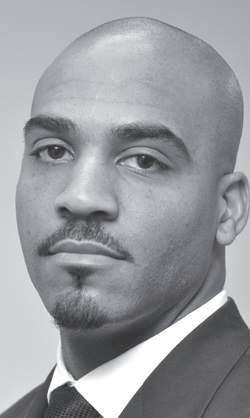
credit for being a dominant champion, his dull, jab and grab style has not made many fans. Elder brother Vitali had a more exciting style (though equally awkward), but injuries, politics and a desire to see his younger brother shine caused the older Klitschko to stay in the shadows and ultimately retire. Hopefully Wlad will follow his older brother’s footsteps into retirement soon. Other than GoT’s Joffrey, never has a reign been as despised by the masses than the current one by the younger KlitschBro.

Both Bernard “The Alien” Hopkins (pictured with Golden Boy Promotions CEO Richard Shaefer) and Shawn “Showtime” Porter dazzled fans en route to impressive victories last weekend.
Hopkins and Porter put on a show
AARP may have found its new spokesman. Forty-nine year old Bernard “The Alien” Hopkins continued to astound boxing fans by unifying the WBA and IBF Light Heavyweight Championships by soundly defeating Beibut Shumenov Saturday night on Showtime Championship Boxing.
Most professional prizefighters have retired well before the age of 40 and keep senior citizen sippy cups on deck as they enter their 50s. Meanwhile, Hopkins (55-62, 32 KO), aka the ageless wonder, used superior defense and movement to control the pace of the fight with Shumenov. He routinely (and fluidly) moved away from his opponent’s jab, limiting Shumenov’s (14-1, 9 KOs) punch output and making him vulnerable to Hopkins’ straight right potshots. Shumenov, who doesn’t employ a trainer, could not figure out the master boxer’s style during the course of the fight. After the third round, the fight looked like a seven-yearold trying to solve advanced calculus homework. No, I’m not talking about one of those rare brainiac kids who graduate from Ivy League schools by the age of 12 and develop advanced algorithms for NASA before they can drive a car. I’m talking about the normal sevenyear-old kid who watches Phineus & Ferb in his Ninjago pajamas and cries if there’s no more syrup for his French
See CLUTCH,
Claib’s Call
With Mike Claiborne
Let the blame game begin. Former basketball coach for University of Missouri, Frank Haith, decided to abandon ship after he realized there was no way he would be able to turn things around within the foreseeable future. Well, at least he had vision. Since then, the annual call to blame and hope to get athletic director Mike Alden fired has once again resurfaced.

Mike Claiborne
Great idea, blame Alden. Make sure you are blaming him for the right reasons. If you want to blame Alden for this one, it would go back to hiring Haith in the first place. There were many who said “Frank Who?” when it was announced he would be the coach. Only a few knew about him and were the ones who did the head shakes in disbelief. Once hired, it was discovered that Haith was in a spot of trouble with the NCAA. This eventually saw him suspended for five games after a botched NCAA investigation could not prove as much as was on the table. We took Alden’s word on this one, but there is more.
Frank Haith was a nice guy to those who knew him. He was also a nice guy to those who did not work for him. One problem! He obviously did not know enough people, as he did a poor job of recruiting in the St. Louis area. In addition, it was hard for him to have any coaching continuity with his assistants, as they headed for the hills. Throw in the fact that he was not a good “X’s and O’s’ coach, and eventually you were going to have problems.
Did I mention that he had more transfers, junior college players, and short-toured players come through Mizzou than the two previous coaches combined in half the time?
Alden is to blame also, as he signed off on the hiring. Once he realized that Haith could not survive, he elected not to grant Haith a contract extension. Communication, according to some, was less frequent and Haith was left to fend for himself. Now you know why coaches get paid millions of
Continued from B3
toast. Shumenov had absolutely no clue what was going on in the ring. By the time he began applying serious pressure and throwing combinations, he was already far behind on the scorecards and weakened by the steady diet of right hands to the face. Despite being an astounding 19 years older than his opponent, Hopkins was the fresher man down the stretch and managed to drop Shumenov in the 11th round with his favorite punch. Though the fight wasn’t close, one judge, Gustavo Padilla, inexplicably scored the bout for Shumenov 114-113. Maybe Padilla thought the fight was actually a contest to see who could headbutt their opponent’s gloves the most over 12 rounds. That’s the only way Shumenov would’ve deserved a win. Luckily he was overruled by the two sane judges who both scored the bout 116-111 for Hopkins, who won by split decision. In the co-feature fight, IBF Welterweight Champion Shawn Porter silenced all critics, myself included, by destroying the usually-resilient Paulie Malignaggi in four rounds. Porter (24-0-1, 15 KO) displayed a surprising mix of fighting both forwards and backwards to keep Malignaggi (33-6, 7 KO) guessing. When he came forward, the stocky fighter used his brute strength and awkward punching angles to apply effective and pain-inducing

dollars. saw the writing on the wall, grabbed his hat and coat, and took a lesser job, leaving Missouri behind. Now Alden seems to have a target on his back by some who have short memories. Alden has been shrewd in developing relationships around the state. If there is a better fundraiser, the Democrats and Republicans would like to meet him. When it comes to facilities and construction of new ones, Alden’s watch has been unlike any athletic department in the 100-plus years of athletics at Mizzou.
As for winning, there have been more programs that have won since his arrival, more than ever before. Now some programs find themselves nationally ranked with reasonable regularity. There still is not a Final Four appearance or BCS championship, but at least there is a conversation now when it comes to Bowl season.
Alden has the ability to keep many people at a respectable distance. He is truly apolitical when it comes to hot topics,
pressure to his opponent. Porter was extremely effective fighting out of clenches and had almost no problem closing the distance between himself and a man believed to be a superior technical boxer. Without punching power, Malignaggi had no answer for Porter and was put out of misery by
and he can at times be hard to pin down. He seldom reaches out to the media. While he is not perfect, he has done a lot that Mizzou fans should feel good about.
As for finding a basketball coach, that has not worked out well, although when you look back at the three he hired, two of them appeared to be sound hires. Quin Snyder had the Duke pedigree and was considered one of the up and comers. In the end, it was more like over and out. Anderson was the first African American head coach hired by the university in its 100 years of athletics. Alden did not just hire someone who was black, he hired a very good coach who happened to be black. With those hires came everything one could ever imagine, from off-court embarrassment to on-court losing. Here we go again, as another hire will take place. The question is now why would any good proven coach take the Mizzou job? They have no really good established players to speak of. They play
referee Sam Williams with 1:14 left in the fourth round.
With the impressive KO, Porter has now set himself up for some potential bigmoney fights in the loaded welterweight division. His next bout is expected to be a mandatory title defense against UK welterweight Kell Brook (32-0-0, 22 KO).
in front of more empty seats than the law should allow. They are in a conference they cannot win for the foreseeable future. Other than that, it sounds like a fun job.
The next coach will have his hands full in just trying to find players in the state. He should get to know Demetrious Johnson, who has been a friend to coaches who have earned his respect, and Rich Gray, who runs the St. Louis Eagles AAU program that has produced countless college and NBA players. Neither looks for anything under the table nor would accept it. They share the mission of getting kids the opportunity that they need and are willing to work for.
While I am sure there will be some media types who will want everything from the kissing of their ring to elite status access, there is really no need for a coach to do that. He just needs to just do his job and coach. The media need to do their job of reporting what the coach is coaching.
This is the most important hire for Alden. He has to get
Meanwhile, Malignaggi, who is also a boxing commentator for Showtime, is contemplating retirement.
Follow Ishmael on Twitter @IshmaelSistrunk and on Google+. Tune in to ‘In the Clench,’ the weekly boxing Hangout, Monday nights at www.youtube.com/ stlamericanvideo.

it right. He has to make sure that all are on board from the administration, boosters and fan base. He cannot let an occurrence compared to Tennessee with then-Coach Cuonzo Martin occur in Missouri. They let the inmates run the asylum, and with it they lost a good coach who will have the last laugh on that hillbilly foundation in Knoxville.
My time
Yes, it’s here: the Masters, Cardinals baseball, NBA and NHL Playoffs all start at the same time.
As for the NBA, the early rounds is where it is at, as you see the up-and-coming teams making it interesting for the big boys. You see players you normally do not see because of the NBA and the networks of giving us LeBron and Kobe whenever they can stand up and run.
Now you see the local kids in Bradley Beal and David Lee show their stuff. You
see a Brooklyn team that no one wants to play because they may have a run in them. There is Golden State who features Steph Curry and Clay Thompson, who shoot it like it should be taught.
Now I understand why Scandal had it season finale last week, as command of the remote control in some households would have been an issue. Peace descends on the Earl Austin Jr. household, now with Scandal on hiatus and the Washington Wizards in the playoffs. The Stanley Cup Playoffs is what true competition is all about. The Stanley Cup is the hardest trophy to win in team sports. The physical and mental sacrifice is unlike anything in other sports. What hockey players do to play games and win games makes you tip your cap for the effort. The Blues have a real chance to go far. If you like it rough and tumble, look no further than your St. Louis Blues. It’s worth the watch, for sure.

Associated Press
Rubin “Hurricane” Carter, the boxer whose wrongful murder conviction became an international symbol of racial injustice and the subject of a Bob Dylan song and Denzel Washington film, died Sunday. He was 76. He had been stricken with prostate cancer in Toronto, the New Jersey native’s adopted home.
Carter spent 19 years in prison for three murders at a tavern in Paterson, N.J., in 1966. He was convicted John Artis in 1967 and again in a new trial in 1976.
Carter was freed in November 1985 when his convictions were set aside after years of appeals and public advocacy. His ordeal and the alleged racial motivations behind it were publicized in Dylan’s 1975 song “Hurricane,” several books and a 1999 film starring Denzel Washington.
Carter’s murder convictions abruptly ended the boxing career of a former petty criminal who became an undersized middleweight contender largely on ferocity and punching power.
Although never a world champion, Carter went 27-12-1 with 19 knockouts, memorably stopping two-division champ Emile Griffith in the first round in 1963. He also fought for a middleweight title in December
Continued from B3
and Chastity Franklin of Cardinal Ritter (58.4).
Hudson also finished second in the long jump with a effort of 17-9 ½. The winner of the event was Traci Mills of Soldan with a winning leap of 18-1 ½. Another field event standout was Summit’s Aliyah Brown, who finished first in the shot put with a throw of 44-10.
McCluer SouthBerkeley’s girls did quite well in the short sprints. Octavia Cato won the 100 in 12.68. The Bulldogs also won the 4x100-meter relay in 47.52 seconds and the 4x200-meter relay in 1.41.26. They have been putting down some of the top times in the area this season.
Team titles swept Lafayette’s boys and Eureka’s girls swept the team titles at the Henle Holmes Invitational at Parkway Central last week. Dylan Quisenberry of Lafayette was a double winner in the 800 and 1,600 to lead the Lancers. Alvin Houston won the 400 while Devon Williams was first in the 300-meter intermediate hurdles.
1964, losing a unanimous decision to Joey Giardello. In June 1966, three white people were shot by two black men at the Lafayette Bar and Grill in Paterson. Carter and Artis were convicted by an all-white jury largely on the testimony of two thieves who later recanted their stories.
Rubin “Hurricane” Carter
Carter was granted a new trial and briefly freed in 1976, but sent back for nine more years after being convicted in a second trial.
Dylan became aware of Carter’s plight after reading the boxer’s autobiography. He met Carter and co-wrote “Hurricane,” which he performed on his Rolling Thunder Revue tour in 1975.
Carter eventually won his release from U.S. District Judge H. Lee Sarokin, who wrote that Carter’s prosecution had been “predicated upon an appeal to racism rather than reason, and concealment rather than disclosure.”
Born on May 6, 1937, into a family of seven children, Carter
Parkway Central’s big man duo of Khalen Saunders and Michael Slater swept the weight events. Saunders won the shot put with a heave of 59-3 while Slater won the discus with a throw of 149 feet. Slater also finished second to his teammate in the shot put.
Junior sprinter John Moten of John Burroughs won the 100 and 200 at Henle Holmes. On the girls side, freshman Lailah Elliott of John Burroughs won the long jump and triple jump while teammate Jordan McClendon won the shot put and discus.
Kicking it in Kirkwood
The Dale Collier Kirkwood Invitational was held at MICDS last weekend. Sprinter Ja’lanna Williams of Sumner won the girls 400 in a time of 57.68 seconds. Jocelyn Payne of Kirkwood swept the 100meter high hurdles and 300meter low hurdles. McCluer’s Lydia Harrold won the 200meter dash and anchored the Comets to victories in the 4x100- and 4x200-meter relays.
struggled with a hereditary speech impediment and was sent to a juvenile reform center at 12 after an assault. He escaped and joined the U.S. Army in 1954, experiencing racial segregation and learning to box while in West Germany.
Carter then committed a series of muggings after returning home, spending four years in various state prisons.
He began his pro boxing career in 1961 after his release, winning 20 of his first 24 fights mostly by stoppage.
Carter eventually wrote and spoke eloquently about his plight, publishing his autobiography, “The Sixteenth Round,” in 1974. Benefit concerts were held for his legal defense.
After his release, Carter moved to Toronto, where he served as the executive director of the Association in Defence of the Wrongly Convicted from 1993 to 2005. He received two honorary doctorates for his work.
Carter wrote an opinion essay for the New York Daily News in February, arguing vehemently for the release of David McCallum, convicted of a kidnapping and murder in 1985. Carter also briefly mentioned his health.
“Now I’m looking death straight in the eye,” Carter wrote. “He’s got me on the ropes, but I won’t back down.”
New school records
Collinsville’s Martinus Mitchell is continuing his fine season in the throwing events. Mitchell won the shot put at the Granite City Invitational last week with a new schoolrecord throw of 58 feet 1 inch. Another school record set last week came from Kirkwood’s Bryant Boyd, who cleared 6-8 to win the high jump at the Dale Collier Kirkwood Invitational at MICDS.
Big meets this weekend
A couple of big meets on the schedule this weekend are the Fred Lyon Invitational at Parkway North on Thursday and Friday and the Phil Brusca/ Connie Strobach Invitational at Ladue on Saturday.


Cahokia – Boys Track and Field
The senior standout was a double-winner at last week’s Granite City Invitational in the hurdles.
Hickman won the 110-meter high hurdles in 14.2 seconds, then came back to win the 300-meter intermediate hurdles in 39.13 seconds. Hickman helped lead the Comanches to an impressive victory in the team standings.
Hickman is one of the top returning performers from last year’s IHSA Class 2A state championship team. He earned All-State honors by finishing second in the 100-meter high hurdles and fifth in the 300-meter intermediate hurdles.
O’Fallon – Girls Track and Field

The senior sprinter was the top individual performer at the O’Fallon Girls Invitational as she won three events.
Jones accomplished the sprint triple as she won the 100-, 200- and 400-meter dashes. She won the 100 in 12.4 seconds, the 200 in 25.7 seconds and the 400 in 58.7 seconds. Jones led O’Fallon to the team championship as well.
Jones earned three All-State medals as part of the Panthers sprint relays at last year’s IHSA Class 3A state championships. She earned a fourth-place medal in the 4x100-meter relay team and fifth place medals with the 4x200 and 4x400-meter relay teams.
Continued from B3
Webster Groves made their announcements as well. Hilton committed to the University of Missouri while Moten gave a commitment to Northwestern University.
The 6’1” 195-pound Hilton is an outstanding two-way performer for the Statesmen, who advanced to the Class 5 semifinals. As a wide receiver, he had 54 receptions for 522 yards and 17 touchdowns. As a defensive back, he had 43 tackles and a team-high seven interceptions. The
6’0” 190-pound Moten rushed for 1,638 yards and scored 30 touchdowns to lead the Bombers to a 13-1 record and a berth in the Class 3 state semifinals.
McCaw to UNLV
Former CBC basketball standout Patrick McCaw gave a verbal commitment to UNLV last weekend. The 6’6” McCaw spent his senior season at Montrose Christian Academy in Maryland. He was a twoyear starter for CBC, averaging 12.5 points and 3.5 assists while shooting 39 percent from 3-point range as a junior in 2013.
Longmeyer to Lincoln Land
Pattonville High basketball standout Eddie Longmeyer has signed with Lincoln Land Community College in Springfield, Ill. The 6’2” Longmeyer averaged 22 points a game and was named the Suburban North Conference Player of the Year. Guard Barrion Jones of Northwest Transportation and Law has signed with Highland Community College in Freeport, Ill. The 6’0” Jones averaged 19.9 points, 4.1 assists and 2.0 steals a game for Northwest.

potential that represents authentic opportunities.
As a bright counterpoint to the gloomy news about blacks’ current well-being, half of the 12 essays included in the Urban League’s annual appraisal were about the topic of entrepreneurism.
Randal D. Pinkett and Jeffrey A. Robinson, both entrepreneurs as well as scholars, call entrepreneurism no less than “the most important vehicle of economic development in the black community.”
Donna Jones Baker is the president/CEO of the Urban League of Greater Cincinnati, which runs a variety of business development programs. She writes, “Being economically selfsufficient through owning your own business is not a new concept in the AfricanAmerican community. We have traditionally owned the neighborhood grocery, the barber shop, the beauty parlor and the funeral home – all providing needed services and specializing in serving the African-American community. We recognize such businesses as the backbone of America in general.”
But African-American business ownership is not –and should not be perceived as being – limited to mom-and-
Continued from B1 group’s focus area would be bounded by Lucas-Hunt Road, Interstate 170, Interstate 70 and St. Charles Rock Road. The overarching goal, she said, is trying “to spur development in the neighborhood around the university.”
She called the area within the University Square footprint “a beautiful community, with
pop shops.
“We see a wide diversity of interest in building different types of business from home health care, to mail and fulfillment enterprises, and telecommunications firms,” Baker told me. “And the rewards of that diversity aren’t just for the individuals creating their business, but for the community at large where those businesses then develop workforce needs and then begin to hire. It all works together for the benefit of the community at large.”
It’s not all rosy, of course. Pinkett and Robinson note that while they believe that entrepreneurs are the major wealth creators in America and entrepreneurism can transform the black community, “unfortunately, less than 5 percent of the black population is self-employed or engaged in founding and running registered businesses. Furthermore, the entrepreneurs who are making money in black communities are not black. Often, the wealth that is created through entrepreneurship doesn’t stay in the black community and, therefore, our communities do not reap the benefits of the kind of entrepreneurship that also invests in the local community.”
The answer these experts suggest to encourage new African-American businesspeople is businessfocused education and workforce training, heavy
wonderful people and gorgeous assets.” But, Van Uum added, “There are commercial areas, particularly, that have become a little outdated.”
And Wayne Goode – a member of the University of Missouri Board of Curators – said he was hopeful that the organization would draw the surrounding communities closer together.
“They are looking for business,” said Goode, a Normandy resident and a former member of the Missouri

investments in entrepreneurship programs and small business incubation programs, and better access to capital for up-andcoming minority entrepreneurs.
But it seems that what’s necessary above all is the fundamental reframing of the perception of African Americans so that they are considered an underutilized
Senate. “So if you want to do business in University Square or you know people who want to do it, come see these folks. Because they’re going to take the lead and move this forward.”
Van Uum also said a $14 million effort to bring more bike- and pedestrian-friendly features to Natural Bridge Road will be a net positive for the community. The Great Streets initiative will provide the busy street more pedestrian- and bike-friendly features. It’s

pool of potential job creators just waiting to be tapped.
Jim Butler Auto Group donated $10,000 to the Boys & Girls Clubs of Greater St. Louis to support programs for its youth members. The support was the result of an online promotion featuring “a day in the life of a car in the service department.”
Jim Butler Auto Group encouraged their customers to view the video and committed to donating $10 to the Boys & Girls Clubs of Greater St. Louis for each view, up to a maximum of $10,000. The goal was met within the first hour.
“In a study conducted by the Kauffman Foundation,” Pinkett and Robinson write, “it was noted that black Americans, and in particular black males, were the most likely to say they wanted to open their own business. Unfortunately, the statistics also tell us that blacks are the least likely to actually open a business.”
also slated to place overhead utility wires underground and accommodate more landscaping and art.
Metro CEO and President John Nations said the project – which should be complete by the end of 2015 – will connect residents, students and businesspeople better to the transit service’s train and bus options.
“Turning Natural Bridge into one of the great streets and redesigning it will make it better for pedestrians, it will
That has to be in no small part because the most common narratives about African Americans have to do with incarceration, unemployment and underachievement.
It’s time to flip the script.
We need to stop seeing the African-American community strictly as one in need of recuperative social services and begin to understand that it could reach its full potential if we invested in its inherent ability to be enterprising.
make it better for commuters, it will make the entire area more inviting,” Nations said.
Both Van Uum and Green said the projects could spur more collaboration between the municipalities that surround UMSL. Van Uum said it’s a positive that there are many small municipalities around the university, adding that the town’s elected officials amount to “five or six volunteers.”
Green added the projects are going “to allow the leadership to realize that when
Esther Cepeda’s email address is estherjcepeda@ washpost.com. Follow her on Twitter, @estherjcepeda.
they collaborate, good things happen.”
“It’s OK to work together with your local neighbor, with your mayor, your other councils in the area,” Green said. “It’s OK to collaborate on projects financially. It’s OK to collaborate politically to get bigger projects done beyond just your borders.”
Edited slightly and reprinted with permission from news. stlpublicradio.org.


WITH DANA G. RANDOLPH
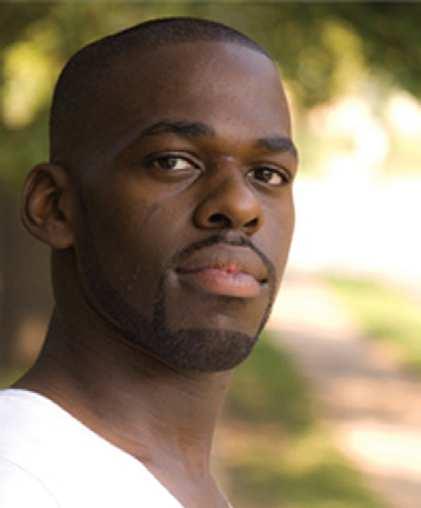
Christopher Page is the creator/director/choreographer and media producer behind Continuing the Legacy.
I thoroughly enjoyed COCA’s COCAdance encore presentation of Continuing the Legacy last month. The performance was sponsored by McCormack, Baron & Salazar and Dentons. Native St. Louisan
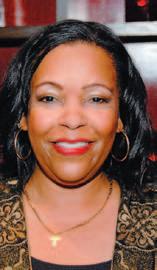
Christopher Page is the creator/ director/choreographer and media producer for this moving piece depicted in three movements: “Life Ain’t Been No Crystal Stair,” “Blowing Winds of Change” and “Infinite Possibilities.” Continuing the Legacy chronicles African-American life in three stages beginning with the end of slavery/ Reconstruction through the Great Migration, the Black Renaissance, the Civil Rights Movement, 9/11 to the Present.
Christopher received his education and dance training from COCA and the Conservatory of Music and Dance at UMKC. He is in his third season as a member of the Cleo Parker Robinson Dance Ensemble in Denver. A few of the stellar performers included the gifted Talia Bennett (daughter of Vince and Christina Bennett Joye Forrest (daughter of Jeffrey and Sheila Little-Forrest), Trey Johnson, Alexandria Stephens Winter Brown Brooke Terry, Alisa Cooper, David Hubbard and Kamal Lado
The St. Louis Alumnae Chapter and the St. Louis Alumnae Delta Foundation of Delta Sigma Theta, Inc. presented the 2nd Annual Spring Gospel, Jazz and Blues Brunch last month. The wellorchestrated affair was chaired by Ida Goodwin Woolfolk and co-chaired by Shirley Brown. What a duo. Music abounded at this popular brunch held in the Grand Ballroom of the St. Louis Marriott Hotel. The See POTPOURRI, C5

By Nancy Fowler Of St. Louis Public Radio
A South City Prep student who wrote about her best friend’s death set a high bar in the 7th Grade Poetry Foundation contest, created by Aaron Williams. But this year’s school winner seems ready to carry the mantle.
Last Wednesday, April 16, 83 seventh-graders performed an exercise in courage: reading their original poems at the Missouri History Museum in front of an audience. It was
the final event of the 7th Grade Poetry Foundation, called “Poetry on Their Own Terms.”
South City Preparatory Academy eighth-grader Kalise Harris knows how they feel. Representing her school last year, Harris laid it all on the line. Her poem paid tribute to her fifth-grade best friend, who committed suicide after kids made fun of her for living in a foster home.
“I kept telling myself, ‘Don’t cry don’t cry,’ but when I finally let the tears out it actually made me feel so much better,” Harris said. “I used to
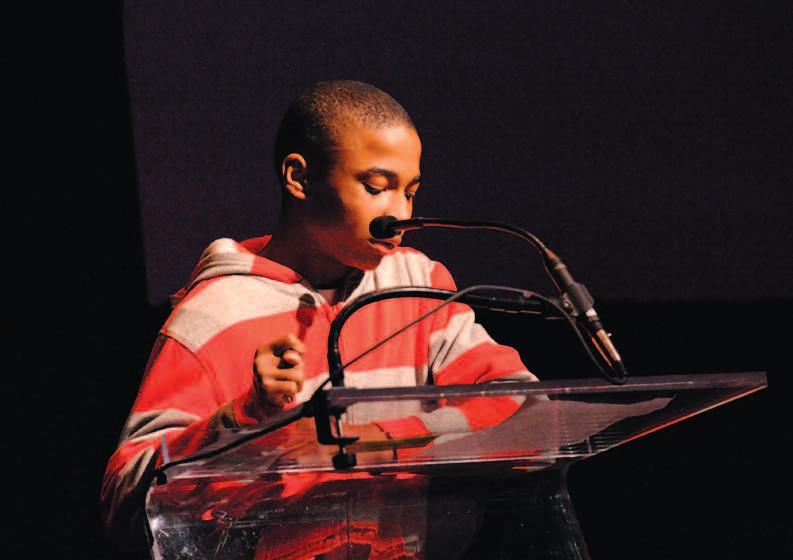


By Kenya Vaughn Of The St. Louis American
“The main objective of this international festival is the promotion of knowledge, life and culture of the people of Africa worldwide through the art of documentary filmmaking,” said Ephrem Andemariam, the program coordinator of African and African American studies at the University of Missouri St. Louis. Andemariam is an organizer of the Africa World Documentary Film Festival, which returns for its seventh year this week at the Missouri History Museum.
Sponsored by the E. Desmond Lee Professorship in African/African American Studies and International
Studies and Programs at UMSL, this year’s festival features films that showcase a broad range of the many layers of life found within the African experience.
“Through the art of documentary filmmaking, the festival is committed to the promotion of knowledge, life and culture, of the people of Africa worldwide,” said Niyi Coker, festival director and E. Desmond Lee Professor in African and African-American Studies at the University of Missouri –St. Louis.
“We celebrate and congratulate the extraordinary group of talented filmmakers who have employed their craft and skills in the exploration of African subjects.”
The festival features submissions by

How to place a calendar listing
1. Email your listing to calendar@stlamerican. com OR
2. Visit the calendar section on stlamerican.com and place your listing
Calendar listings are free of charge, are edited for space and run on a space-available basis.
Fri., Apr. 25, 8 p.m., The Ambassador presents Lil Boosie. 9800 Halls Ferry Rd., 63136. For more information, visit www.metrotix.com.
Sun., Apr. 27, 6 p.m., St. Louis Symphony in Unison Chorus Community Concert. New Sunny Mount Missionary Baptist Church, 4700 W. Florissant Ave., 63115. For more information, visit www.stlsymphony.org/ inunisonchorus.
Sun., Apr. 27, 8 p.m., The Pageant presents Bone Thugs N Harmony. 6161 Delmar Blvd., 63112. For more information, call (314) 7266161.
Wed., Apr. 30, 8 p.m., Old Rock House presents Mobb Deep. 1200 S 7th St., 63104. For more information, visit www.metrotix.com.
Thurs., May 8, 8 p.m., The Sheldon presents “An Evening for Hope” with the Marcus Roberts Trio. All proceeds from the Evening of Hope will benefit the Hope Center for Neurological Disorders. 3648 Washington Blvd., 63108. For more information, visit www. metrotix.com.
Sat., May 10, 7 p.m., Super Fresh Hip Hop Fest feat. Too Short, Doug E Fresh, Naughty By Nature, Mc Lyte, and more. Chaifetz Arena, 1 S. Compton Ave., 63103. For more information, visit www.ticketmaster.com.
Sun., May 11, 5:30 p.m., The Sheldon presents Denise Thimes and Friends Mother’s Day Concert. The events will benefit The Mildred Thimes Foundation for Pancreatic Cancer. The concert features Cyrus Chestnut, piano; Tom Braxton, saxophone with John King, bass and Demarius Hicks, drums. 3648 Washington
Blvd., 63108. For more information, visit www. metrotix.com.
May 14-17, Jazz at the Bistro presents Jane Monheit. An extraordinarily gifted vocalist whose sincere and romantic interpretations of exceptional songs have made her a favorite in both the jazz and cabaret worlds. Her first album, Never Never Land, was voted Top Debut Recording by the Jazz Journalist’s Association and stayed on the Billboard jazz chart for over a year. 3536 Washington Blvd., 63101. For more information, visit www. grandcenter.org.
Sat., May 17, 6 p.m., The Peabody Opera House presents Cabaret for a Cause, starring local jazz favorite Erin Bode, 1400 Market St., 63103. To learn more about all the ways Lutheran Senior Services helps older adults, visit LSSLiving.org/Giving today.
Tues., May 6, 6 p.m., Missouri History Museum presents Twilight Tuesdays feat. Soulard Blues Band. 5700 Lindell Blvd., 63112. For more information, visit www. mohistory.org.
Fred Walker and his Saxy Jazz Music Show returns to Ms. Piggie’s Smokehouse on Sundays with the best in live and recorded Jazz and Gospel. 12noon - 4pm 10612 Page Ave. St. Louis, Mo. 63132 call (314) 428-7776 for information.
Sundays, 6:30 p.m. (6 p.m. doors) Jazz @ Eventide, featuring Black and White Trio. Sip N Savor, 286 DeBaliviere, 1/2 block north of the Forest park Metro link. For more information, call (314)361-2116.
Wednesdays, 6-10 p.m., Lexus Len’s “Winedown Wednesdays,” Live Band


featuring: Cheryl Brown, Jeremiah Allen, Jeff Taylor, Gerald Warren & Amos Brewer, The Loft, 3112 Olive.
Thurs., Apr. 24, 12 a.m., St. Louis Effort for Aids presents Dining Out For Life. This annual fundraiser will take place at more than 150 St. Louis-area restaurants. The restaurants will donate some or all of their proceeds that day to Saint Louis Effort for AIDS. For information on participating restaurants, visit www.diningoutforlife.com or call 314-645-6451.
Thurs., Apr. 24, 6 p.m., 360 St. Louis Hilton at the Ballpark hosts Annual Sip Into Spring Tasting Event at 360. Tickets include samples of wine and select new menu items. One S. Broadway, 63102. For more information, visit www.360-stl.com.
Thurs., Apr. 24, 6 p.m., 2014 Women’s Justice Awards. This event recognizes women across the state of Missouri who have demonstrated leadership, integrity, service, sacrifice and accomplishment in improving the quality of justice and exemplifying the highest ideals of the legal profession. The awards reach out to women in various segments of the legal community, including the bar, the bench, public office, business, academia, nonprofits and the state at large. Four
Seasons Hotel St. Louis, 999 N. Second St., 63102.
Thurs., April 24, 7 p.m., The Family Arena hosts Family Feud Live. Complete with big laughs and big money, contestants will have an opportunity to be grouped into their new stage show “family” and compete for cash and prizes in gameplay taken directly from the Emmy award-winning TV show. 2002 Arena Parkway St. Charles, 63303. For more information, visit www.metrotix .com.
Fri., Apr. 25, 11 a.m., Centene Corporation and Home State Health Plan present The St. Louis American Foundation’s 14th Annual Salute to Excellence in Health Care Awards Luncheon. Hilton St. Louis Frontenac, 1335 S. Lindbergh Blvd., 63131. For more information, call (314) 5338000 or visit www.stlamerican. com.
Apr. 25 – 26, The Fox Theater presents Alvin Ailey American Dance Theater. 527 N Grand Blvd., 63103. For more information, visit www. metrotix.com.
Sat., Apr. 26, 10 a.m., 2014 My Sister’s Closet. A consignment fundraising for new and gently used designer products and more. There will be free facials, jewelry and accessories, designer clothing and more. Cardinal Ritter College Prep Gym, 701 N. Spring Ave., 63108. For more information, call (314) 7495032.
Sat., Apr. 26, 2 p.m.,

The Pageant presents Bone Thugs N Harmony. See CONCERTS for details.
Sportport of Maryland Heights hosts Holi Hai!!! Festival of colors - Saint Louis 2014. Come and play Holi and connect with friends, dance a little, and get crazy with colors. Everybody is welcome, join the largest Holi celebration in town. The festival that brings everyone together. 12525 Sportport, 63043. For more information, visit www.djsamhifi.com/ STLdesiparty.
Sat., Apr. 26, 10:30 a.m., The Chase Park Plaza presents Run Way Lights fashion Show. Experience a New York-style runway show at Chase Park Plaza featuring the St. John Pre Fall 2014 Collection. St. John is an American luxury house, featuring timeless and elegant clothing. All proceeds benefit Variety the children’s charity of St. Louis to directly fund programs and vital medical equipment for St. Louis children with disabilities. 212 N. Kingshighway Blvd., 63108. For more information, visit varietystl.org.
Sat., Apr. 26, 2 p.m., Sportport of Maryland Heights hosts Holi Hai!!! Festival of colors - Saint Louis 2014. Come and play Holi and connect with friends, dance a little, and get crazy with colors. Everybody is welcome, join the largest Holi celebration in town. The festival that brings everyone together. 12525 Sportport, 63043. For more information, visit www.djsamhifi.com/ STLdesiparty.
Sat., Apr. 26, 2 p.m., Macy’s Spring Fashion Show. Join us for a Spring Fashion event with a Secret Garden theme hosted by Jessie Miller and Helene Sayad. Guests will get a preview of the seasons most sought after trends while enjoying sips & sweets, a photo-op, DIY stations, music from our DJ and more! RSVP at macysstlspringfasion. eventbrite.com. St. Louis Galleria, 1155 Saint Louis Galleria, 63117.
Sat., Apr. 26, 6:30 p.m., American Scores St. Louis hosts 2014 Celebrity Voices fundraiser. A time to experience a unique one night benefit concert to help America SCORES highlight the importance of academic achievement for at-risk youth. The Celebrity Voices event will feature local and national celebrities, like NBC’s The Voice finalist Matthew Schuler, Walt Aldridge, who will perform poetry and music alongside America SCORES scholar-athletes. St. Louis City Hall Rotunda, 1200 Market St. 63103. For more information, visit celebrityvoices.org.
Sun., Apr. 27, 9 a.m., Animal Protective Association presents Fast and the Furriest 5K Run & 1 Mile Walk. It’s the furriest race in town! 5K features RFID chip timing on a course accurately measured by Fleet Feet Sports. 1 Mile Walk offers a nice stroll in the park. This event also includes activities for kids! Register by April 5 to receive a t-shirt and goody bag. Well-behaved dogs on leash are welcome in both the 5K and the 1 Mile. Proceeds benefit the Animal Protective Association of Missouri. Tower Grove Park, 4256 Magnolia Ave., 63110. For more information, call
(314) 645-4610 or visit www. apamo.org.
Sun., Apr. 27, 11:30 a.m., The Old Post OfficeWebster University host Off White Indie Wedding Show 2014. 815 Olive St., 63101. For more information, visit www.offwhiteweddingshow. com.
Sun., Apr. 27, 5 p.m., Lumen hosts Something Like Fashion Urban Arts Expo. This event is a collaborative effort of Blaq Seance Productions, BE Colorblind Apparel, and The Network. 2201 Locust St., 63167. For more information, contact alexisboldin@yahoo.com.
May 2 – 3, Forest Park hosts 19th Annual St. Louis Microfest. A beer tasting festival that offers festivalgoers the chance to sample international and craft beers. admission includes a great experience at a fun filled event including: Tastes from over 75 breweries and 100 international and craft brews, a tasting glass, live music, silent auction, and food. Proceeds from Microfest benefit Lift For Life Gym. Macklind Dr and Union Dr., 63110. For more information, visit www. stlmicrofest.org.
Fri., May 2 (5 p.m.) and Sat. May 3 (11 a.m. and 3 p.m.) Afro World presents Meet and Greet with Harriet Rosebud and “Hattitudes”in store Fashion Show, 7276 Natural Bridge Road St. Louis, Missouri 63121. For more information, call (314) 3895194.
Sat., May 3, 2 p.m., Street celebration Austin A. Layne, Jr., Austin Layne Chapel, 7302 West Florissant Avenue and Austin A. Layne, Jr. Way, Jennings, MO 63136.
Sun., May 4, 8 a.m., Six Flags presents Roller Coaster Race. Enjoy a fun 5K on an exciting course that winds around and through the park, and under and between some of Six Flags’ world famous coasters. There will also be a Roller Coaster 5K Ride. Participants’ coaster rides will be tracked on the park’s nine coasters during regular park hours, and people riding a total distance of 5K win a medal. 4900 Six Flags St. Louis Railroad, Eureka, 63069. For more information, visit rollercoasterrace.com.
Sat., May 10, 10 a.m., Crowne Plaza- St. Louis Airport hosts Mother’s Day Off – Spa Party. Enjoy a rejuvenating day of relaxation, shopping and great food. Free buffet served from noon until 1:30pm. The first 50 women to register will receive a free gift bag filled with goodies. 11228 Lone Eagle Dr., 63044. For more information, visit www. mothersdayoffspaparty.com.
Sat., May 10, 10 a.m., District 9 Machinist Hall hosts Glitz & Glam Mother’s Day Gala. These are just 2 of mom’s favorite things... Shopping & Fashion. At 3 p.m., there will be an “All Eyes on Mom” Fashion Show. Give mom what she really wants this Mother’s Day. 12365 St. Charles Rock Rd., 63044. For more information, visit asyougoevents.com.
Thurs., May 15, 11:15 a.m., The Ritz-Carlton hosts 2014 Women of Achievement Luncheon. The St. Louis Women of Achievement Award is the oldest, ongoing program in the area whose sole mission is to honor and recognize the volunteer service and leadership of women. Women of Achievement recognizes the 2014 Class of Honorees, which includes Ida H. Early and Eva Frazer. 100 Carondelet Plz., 63105. Reservations can be made by contacting Sarah Thorowgood at MAC Meetings & Events at (314) 421-2005 or sthorowgood@macmeetings. com.
Sat., May 17, Concordia Lutheran Church hosts 6th Annual Anthony Smith 3on3 Memorial Tournament. Anthony Smith and his twin brother Antoine graduated from Kirkwood High School in 2001. Anthony died of
Leukemia at the young age of 24. The aim of the annual Smith 3-on-3 Basketball Tournament is to encourage and inspire young athletes, and to support the Leukemia &Lymphoma Society and other local outreach organizations.
505 S Kirkwood Rd., 63122. For more information, visit www.keepwatching50.org.
Sat., May 17, 6 p.m., St Peter AME Church hosts Send a Student to College. Katara Scholarship Foundation is a nonprofit organization that provides scholarships to students with learning disabilities. Katara Scholarship Foundation is having its first annual charity dinner and the guest speaker will be Michael McMillan, the President and Chief Executive Officer of the Urban League. Applications are still being accepted for anyone with a learning disability for high school seniors planning to attend college. The deadline for application is April 30, 2014. 4730 Margaretta Ave., 63115. For more information, visit http://katarascholarfoundat. wix.com/katarascholarfound or contact Tamara Walker at (314)537-0785 or Keilah Evans at (314) 683-3188.
Sat., May 24, 7 a.m., Cardinal Ritter College Prep HS hosts CDM Mind and Body 5K Health and Fitness Event. The third annual CDM Mind and Body 5K health and fitness event, hosted by Christ Deliverance Ministry challenges St. Louisans to implement lifestyle change with a 5K race through midtown’s historic Grand Center, challenge themselves to a boot camp, and learn about leading their best life through healthy living seminars. 701 North Spring Ave., 63108. For more information, visit www. cdmmindandbody.org.
Thursdays, 7 p.m. (6 p.m. practice), The Cultural Bop Society Of St. Louis Continuing the Bop with Style (CBS) (BOP the official Dance of St. Louis, Free Bop Lessons and Bop Set Every Thursday Night, 7555 Olive Blvd. in U-City, St. Louis, MO 63130.
Thurs., Apr. 24, 7:30 p.m., The Fox Theater presents Aziz Ansari. 527 N Grand Blvd., 63103. For more information, visit www. metrotix.com.
Fri., May 9, 7:30 p.m., Chaifetz Arena presents Mother’s Day Comedy Jam. Comedians include Lavell Crawford, Lil Duval, Sheryl Underwood, Tony Roberts, Luenell, and Michael Blackson. One S. Compton Ave., 63103. For more information, visit www.
Through April 27, The Black Rep presents The Trials of Brother Jero. This play depicts a delightful day in the life of an evangelical con man, forced to deal with creditors, politicians, and the endless temptation of beautiful women. Emerson Performance Center, Harris Stowe State University, 3026 Laclede Ave., 63103. For more information, call (314) 534-3810 or visit www. theblackrep.org.
Fri., Apr. 25 5 p.m., WPT & 3E Events presents “The Juice Box Diaries.” The Juice Box Diaries is an episodic play based on Sharon McGhee’s Pocketbook Monologues. Each of the monologues deals with an aspect of the feminine experience, touching on matters such as love, relationships, and matters of the heart. Event will be held at the Village Theater 6500 Old Missouri Ave., Centreville, Illinois 62207.
Sun., May 11, 3 & 7 p.m., The Peabody Opera House presents The Color Purple. 1400 Market St., 63103. For more information, visit colorpurple.com.
May 13 – 18, The Fox Theater presents The Wizard of Oz. Andrew Lloyd Webber’s new production of The Wizard of Oz is an enchanting adaptation of the all-time classic, totally reconceived for the stage. 527 N. Grand Blvd., 63103. For more information, visit www. fabulousfox.com.
Thurs., Apr. 24, 6:30 p.m., Literary St. Louis feat. Tennessee Williams. As part of our quarterly series, Jim Kirchherr, Senior Producer at the Nine Network (KETC), will explore how important St. Louis was to the life and work of Tennessee Williams. Maplewood Public Library, 7550 Lohmeyer Ave., 63143. For more information, call (314) 781-2174.
Thurs., Apr. 24, 7 p.m., Maryville Talks Books and Left Bank Books present An Evening with Austin Kleon author of Show Your Work: 10 Ways to Share Your Creativity and Get Discovered. This book will teach you how to put your work out in the world for people to discover while staying focused on getting really good at what you do. St. Louis Ethical Society, 9001 Clayton Rd., 63117. For more information, call (314) 3676731.
Thurs., Apr. 24, 7 p.m., St.

Louis Public Library hosts author Jerroll Sanders, author of The Physics of Money: If You’ve Got My Dollar, I Don’t. Sanders delivers what Americans have long awaited: a detailed, step-by-step action plan that empowers African Americans economically while serving as a potent prescription for improved race relations in America. Schlafly Branch, 225 N. Euclid Ave., 63108. For more information, call (314) 880-8759 or visit www.slpl. org.
Sat., Apr. 26, 3:30 p.m., Jamala Rogers Book Signing Event. Community organizer, writer and social justice educator Jamala Rogers will share her insight and sign autographs of her book, The Best of The Way I See It. Progressive Emporium & Education Center, 1108 N. Sarah Ave., 63113. For more information, call (314) 875-9277 or email progressiveemporium@yahoo. com.
Tues., Apr. 29, 7 p.m., Joe Edwards discusses “St. Louis Walk of Fame: 140 Great St. Louisans” St. Louis County Library Headquarters, 1640 S. Lindbergh Blvd. Contact St. Louis County Library by phone 314-994-3300 or visit www.slcl.org.
Sat., May 17, 7 p.m., Contemporary Art Museum hosts Apocalyptic Wonderland. The premiere event in the Fête series, the exhibition will be a transformative journey through darkness, limbo and light via performing and fine art, high fashion and music. Featured artists include avantgarde accessories designer Erica Dunk of Hyper Haute,
Dance St. Louis welcomes the Alvin Ailey American Dance Theatre. For more information, see SPECIAL EVENTS.
fashion and costume designer
Michele Sansone of Sansone Designs, runway and editorial hair/makeup team Victoria Lambert, fine art photographer Brian DeMint, indie rock band Shotgun Abby and Missouri Ballet Theatre. 3750 Washington Blvd., 63108. For more information, visit www. FeteEventSeries.eventbrite. com.
Through May 18, The St. Louis University Museum of Art presents Tradition Redefined: The Larry and Brenda Thompson of African-American Art. The Thompson collection includes the work of notable artists, as well as those by artists who have been considered emerging, regional or lesser known and has typically not been recognized in the traditional narratives of African-American art. 3663 Lindell Blvd., 63108.
Thurs., Apr. 24, 10 a.m., Clayton Oasis presents 1968: When Reggae Hit the Town. Explore a year of epic change in Jamaican music & culture as KDHX reggae DJs Ital K (“Ital Rhythms”) and Michael Kuelker (“Positive Vibrations”) deliver a lively lecture with music. The focus is 1968, when the culture in Jamaica was brimming with change, when rocksteady was giving way to new sounds. 50 Gay Ave., 2nd Floor, 63105. For more information, visit www.oasisnet.org.
Sat., Apr. 26, 1 p.m., Missouri Legislative Black Caucus Town Hall Meeting. Missouri Legislative Black Caucus along with State Rep. Brandon Ellington will host a kcmo Town hall meeting. So if you have any problems with
any state office such as Social Services ... like WIC OR Food stamps you need to be at this event. If you have legal issues you need to be at this event. Greater St. Mark Family Church, 9950 Glen Owen Dr., 63136.
Thur., May 1, 7 p.m., Delmar Divide, The Finale Panel. Join us for the finale discussion of a series that has spanned over the course of two years. This evening will include reflection from the organizations involved and updates from the organizations you selected, such as the Cowry Collective and the Sweet Potato Project. Feel free to bring information to distribute from your own division addressing projects. Missouri History Museum, 5700 Lindell Blvd., 63112. For more information, call (314) 746-4599.
Fri., Apr. 25, 8 a.m., St. Louis University hosts MOAMFT Conference 2014 - Trauma Informed Care: Working Together to Heal. The Missouri Association of Marriage & Family Therapy is excited to announce the 2014 conference. This year’s featured speaker is Dr. John Rolland, MD, MPH. 221 N. Grand Blvd., 63103. For more information, call ( 573) 6348760.
Sat., Apr. 26, 9 a.m., The Muny-St. Louis Forest Park hosts St. Louis March for Babies. Get your friends, family and co-workers to join and walk to support the health of all babies. It’s a great event for families, with lots of childfriendly activities. Macklind Dr. and Union Dr., 63110. For more information, visit www. marchforbabies.org.
Sat., Apr. 26, 8 p.m., Plush hosts That 80s Prom. Join the Young Friends of SLU Liver Center at That 80s Prom. Whether you wore leggings, booties, or off the shoulder sleeves when you were prom queen, you can meet your king in baby blue on the dance floor. Wear your best 80s gear to earn your place on the prom court and dance the night away to That 80s Band. All proceeds will benefit the Young Friends of the Slu Liver Center. 3224 Locust St., 63103. To learn more about the cause, visit www.friendsoftheslulc.org/ young-friends.
May 10, Community Women Against Hardship 10th Annual Walk-a-thon and Health Fair, Tower Grove Park sponsored by Community Women Against Hardship in cooperation with Ameren Missouri, Barnes-Jewish Hospital and Richardson Endocrine Care. Choose 1k, 3k or 5k.
The event provides health information from a myriad of physicians and health care providers. Come and enjoy Food, Fitness and Fun. Volley Ball Games, Hula Hoop Contest, Arts & Crafts, Face Painting, Line Dancing, and much more. For more information, visit www.cwah. org, or call 314-289-7523.
Sat., May 17, 11 a.m., Christ Community United Methodist Church presents We Survive...We Thrive Women’s Complimentary Luncheon & Panel Discussion in conjunction with National Women’s Health Week, 8841 Old Lucas & Hunt, Jennings, MO 63136. RSVP: (314) 3881211.
Through Apr. 25, 7 p.m. nightly, Destin to Win ministries (under the direction of Pastor Marquello and Missionary Kaneisha Futrell) annual Destined to Win Conference 2014. Guest speakers include, Wess Morgan, Bishop Corby Busch, Prophetess Janice Mixon, Apostle J. Cortez Vaughn and Bishop Jack Vaughn. All Creation Northview Holiness Family Church, 1442 Hudson Rd. Ferguson, Mo. For more information, call (314) 5212444.
May 2 – May 3, Lane Tabernacle C.M.E. Church hosts the 2014 Spring Convocation and Quadrennial Celebration of the Third Episcopal District of the C.M.E. Church, St. Louis Airport Marriott Hotel. For more information, call 5330534!
Sun., May 4, 8 a.m. and 3 p.m., Bishop John Mitchell, Jr.’s 25th Pastoral Anniversary Celebration, Southern Mission Baptist Church (SMBC), 8171 Wesley Ave., Kinloch, MO. For more information, call (314) 314521-3951.
Sun., May 4, 3 p.m., The 24th Pastoral Anniversary celebration of Theodore V. Foster (Ted) of Eastern Star Missionary Baptist Church. Christ Pilgrim Rest Church, 1341 N. Kingshighway, 63113. For more information, call (314) 716-2194.
Fri., Apr. 25, 8 p.m., The Washington University Visual Media Research Lab presents RAWSTOCK. A free archival screening night where anything goes. The film will be shown at Melt, 2712 Cherokee St., 63118. For more information, visit library.wustl.edu/units/ spec/filmandmedia/index.html.


feelings are hers but the person in the poem may or may not actually be her. She describes the protagonist in the third person.
help her enough, that I didn’t listen to her,” Harris said. “Sometimes I still look back and think I could have helped more.”
Attorney recruiter Aaron Williams created the foundation, also called 7GP, to give middle-schoolers in the St. Louis area and across the country the opportunity to read their poems aloud, be published in an anthology and receive cash prizes of $25. But at its heart, the effort is about the value of self-expression.
Putting pen to paper is also how 13-year-old Jordan Morris, this year’s South City Prep winner, sorts through the ups and downs of being a teenager.
“I write down things in poems about my feelings about somebody such as … a boy.” Morris said.
Morris’ winning poem “The Golden Vein” gushes with raw emotion in lines like, “Blood is
“The more emotion she shows, the thicker her blood gets,” Morris said. “Emotions just make you stronger.”
South City Prep communication arts teacher
Michelle Oyolo said students
n “The more emotion she shows, the thicker her blood gets. Emotions just make you stronger.”
– Jordan Morris
writing out their feelings may very well help to cut down on bullying.
“They’re able to have conversations about that and to think deeply about what makes all of us the same,” Oyola
Not every young poet is as emotionally driven as those at South City Prep. Some write about sports, an annoying sibling or the arrival of spring. In her winning poem last year, 14-year-old Olivia DuCharme of St. Catherine Laboure used a humorous approach to a serious topic: feeling left out.
DuCharme had recently gotten ahold of a vintage typewriter, and noticed the letter “Q” was set apart from the others. So when her teacher asked her to compose a poem using the concept of personification, she imagined how “Q” must feel, which led her to write “The Lonely Life of a Letter.”
“I just kind of sympathize with people who feel that way,” DuCharme said.
The end of her poem –which has “Q” realizing who it’s meant to be – is something she understands first-hand. “It’s kind of about self-acceptance, accepting who you are and embracing it,” she said.
Edited slightly and reprinted with permission from news. stlpublicradio.org.
Continued from C1
event was filled to capacity and our suggestion for next year is to move this concert to the Chaifetz Arena.
Sponsors were World Wide Technology, The Steward Family Foundation, Centene Corporation, Home State Health, Ameren Missouri Andy’s Seasonings and Wells Fargo Advisors. Special donors were People’s Health Centers and the Urban League of Metropolitan St. Louis. World Wide Technology, Inc. (David and Thelma Steward) flew in legendary jazz organist Joey DeFrancisco and his trip for the afternoon. Also on stage: Big George and the House Rockers, Karen Hylton, Gregg Haynes and the Happy Guitar Uvee Hayes The Riverview Gardens High School Jazz Band Leslie Johnson The Knez Jackovac Trio, Cheryl Brown, Anita Jackson The Bosman Twins Ptah Williams, Jeffrey
Continued from C1
Zimbabwe and plenty of places in between.
“Some of the major subjects covered in these documentary films are culture, environment, history, gender, music, performing arts, religion, politics, sports as well as human rights,” Andemariam said. It began as a small festival developed within the walls of UMSL, but has grown to be rooted all around the world – and not just because of the film origins.
Shortly after its inception, Coker took the festival on the road to the Diaspora for a special showcase. He started with one St. Louis screening
Anderson, Demarinas Hicks and Henry Taylor Charles Creath served as music and stage director. Guests enjoyed a delicious Southern brunch. E. Kim Banks, president of the St. Louis Alumnae Chapter, greeted the guests and noted the occasion. Ida presided and Chaplain Melva Jones gave the invocation. Shirley gave a tribute in honor of Women’s History Month and chapter members Ruth Johnson and Wandaleen Brown offered a tribute recognizing the 250th Anniversary of the City of St. Louis Centene Corporation and Home State Health Plan present The St. Louis American Foundation’s 14th Annual Salute to Excellence in Health Care on Friday, April 25, at 11 a.m. The sold out affair will be held at the St. Louis Frontenac Hilton Hotel. Major awardees include Sherrill Jackson (president and founder of The Breakfast Club, Inc.) and Gloria Taylor (founder & CEO of Community Women Against Hardship). This is always an enjoyable as well as
and another abroad.
By 2014, the festival has solidified its international presence with a multi-city tour that stops in three continents – including Africa. It has screened as close by as Kansas and as far as Bellville, South Africa.
For the St. Louis presentation, a dozen or so films will play over the course of four days – which will also include question and answer sessions with directors for select films.
“What the festival started to do was open up the world to people here in St. Louis of African descent,” Coker told former St. Louis Public Radio fellowship producer Erin Williams. “The films show the history, the heritage, the beauty, the aesthetics, and the cosmology of African people in parts of the world that we
informative luncheon. Parkway North High School’s recent production of Legally Blonde – The Musical was quite impressive to say the least. The ensemble included my niece Dana Grace Randolph as Elle’s BFF Pilar. Legally Blonde was written by Heather Hach based on the novel by Amanda Brown. Music and lyrics were keyed by Laurence O’Keefe and Nell Benjamin. This production was produced through special arrangements with Music Theatre International in New York. Elle was played by the talented Matilda Burch and Margot and Serena by Diana Radomyslsky and Layla Kousari respectively. I can’t say enough about the production team and crew members led by Dominique King and Sean Harrigan Mark Linn served as the pit orchestra conductor. The school boasted sold-out performances for the threenight engagement. Dana Grace: dgrandolph@ live.com.
wouldn’t even think about.”
The Missouri History Museum is on the tail end of the festival tour that has included Cameroon, Nigeria, Philadelphia and will wrap up in Kingston, Jamaica after a stop in London.
“I think it’s an affirmation of not just the African humanity but the connections that we all share as human beings,” Coker said. “What you’ve just seen on screen is a universal human story. The African experience is the human experience.”
The Africa World Documentary Film Festival will take place April 24-27 at the Missouri History Museum, 5700 Lindell Blvd. in St. Louis (63112). For more information, a schedule and full lineup of films, visit www. africaworldfilmfestival.com.



St. Louis Convention and Visitors Commission
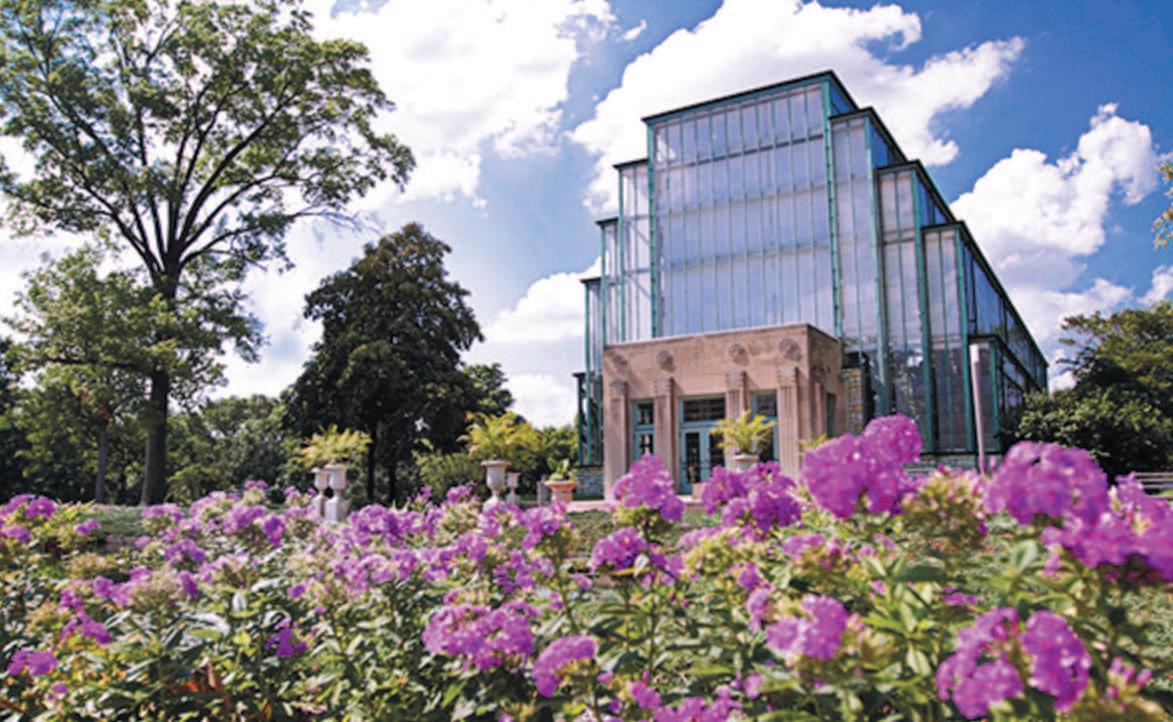
Are you ready for some COLOR? After that long, long winter, we say, “Yes!”
It’s an Amazing April in St. Louis so check out the colorful splashes of flower power around the STL while they last.
“This April, we’re a little bit behind with the crummy weather we’ve had,” Holly Berthold, spokeswoman for the Missouri Botanical Garden, said. “Last year the tulips were up and gone by now and the irises and flowering cherries were going full force. But this year everything seems to be running two to three weeks behind.”
Spring may be taking its time coming this year but a number of venues in St. Louis are awash with the color of the earliest flowers of the season. Magnolia trees, among the earliest blooming trees, are already putting on their annual flashy purplish-pink show, and daffodils are turning hillsides yellow.
“Flowering cherries, which ‘everyone just adores’ are a favorite at the Garden,” Berthold said. “We get asked all the time, ‘Are they coming? Are they coming?’ You really kind of get a sense of how many fans we have of those flowering cherries. The flowering cherry trees usually peak in mid to late April but they are running late, too. Flowers may be lagging in making their appearance this year but once they’re up, admire them quickly because they’re gone fast. The flowering cherries, for example, last only six to 10 days. This year the azaleas aren’t even budding yet, but they will be coming soon in pretty splashes of scarlet and pink and even yellow.”
Here are some additional places you can experience Amazing April in St. Louis.
Forest Park: There are tons of places to enjoy flower power in St. Louis’ 1,300-acre playground. A wash of yellow daffodils lines the drive to the Missouri History Museum, tulips spring forth at the Lagoon/Skinker entrance to the park and at the World’s Fair and Hampton Roundabouts, and crabapple and cherry groves will soon be adding a splash of color at the Jewish Memorial.
Over at the Jewel Box, a unique vintage greenhouse in Forest Park is where visitors can view flowers year-round. Yellow reigns at an outdoor bed of daffodils while at another outdoor bed tulips are “up and starting to open,” said
Tina Rein, garden supervisor for the St. Louis Parks Department. “With the lag caused by cool weather, the tulips are slower in opening.
“Another great spot for flower lovers is Pagoda Circle in front of the Muni Opera,” Rein said. “The daffodils are up, and they look pretty terrific. Everything’s been cut back and just waiting on spring to come, and things will start popping up. There’s a big selection of perennials there.”
City Garden: This incredible oasis of nature and art in the middle of the urban core features native Missouri trees, shrubs, grasses, ground covers and wildflowers. Daffodils and irises provide spring color. Visitors can enjoy a setting of lush plantings as they relax amid renowned sculpture and landscaping studded with imaginative uses of water and stone.
Faust Park: At this unique park in West County, daffodils and magnolias are creating a colorful show. While you’re at the park, check out The Sofia M. Sachs Butterfly Garden, the historic carousel, the Historic Village and Thornhill, home of Missouri’s second governor.
Jefferson Barracks Park: “The recently renamed Laborer’s House Garden – now called the John and Bonnie Lorenz Wedding Garden – is sporting a colorful display of early spring flowers,” said St. Louis County Parks Director Tom Ott. This historic park overlooking the Mississippi River was a U. S. Army post from 1826 to 1946.
Queeny Park: Colorful flowers currently in bloom in this popular park can be viewed at the Mason Road side of the park from the entrance to the American Kennel Museum of the Dog and around the Queeny barn to the Jarville Garden. Ott suggests returning when the lilacs are in bloom. A double hedge of the fragrant blossoms runs between the barn and the Garden–with a walkway between them. When the lilacs are blooming, “It’s just gorgeous,” Ott said. And if daffodils and tulips aren’t your favorite, just wait a while. “The red buds are just getting ready to push out a bit of color.”
It may be a bit late in coming this year, but there’s no doubt – spring, glorious spring has arrived in St. Louis!

Continued from C1
She was referring to Harriet Rosebud of New York. Like all grand divas – Aretha, Patti, Oprah – “Rosebud” has become the singular name synonymous with signature hat making, also known as millinery.
She’s particularly renowned among those connoisseurs of the large church hats commonly referred to as “crowns.”
Thanks to Afro World, Rosebud has a special connection with St. Louis.
“She’s so committed to come back to this city because she loves the experience when she comes,” Forest said.
Rosebud has been coming to town for the better part of 20 years – and will return next weekend (May 2-3) for a reception and hat fashion show that Forest promises will be filled with “Hattitude.”
“Sometimes we don’t take advantage of the people we can have right in our presence,” Forest said. “But for Rosebud, the feedback is phenomenal and the show gets bigger and bigger every year. People will ask, ‘When is she coming back?’ or ‘Did she leaves some more hats?’ And they buy the tickets for the next visit the same day of the previous show – a whole year in advance.”
This year’s visit will have the added bonus of an evening reception the evening before the fashion show. As usual, guests will have the rare opportunity to see (and buy) the one-of-a-kind designs presented by Rosebud herself.
Anyone who has tried to buy a Rosebud online – only to be met with a sold-out icon – can attest to the gift being bestowed on St. Louis next.
“Her hats are phenomenal. They are all very unique like a work of art,” Forest said.
“All different sizes varieties, colors – I don’t care what

color your skin is, she has something for everyone. I have not seen one head that she cannot fit.”
Or one occasion one of her hats does not fit.
“She’s so passionate about what she does that it’s easy to convey the Rosebud brand and relate to everybody,” Forest said. “It has a flare of Afrocentricism, but it’s also very classy and classic – where you can go to a very elegant event, or to the mall, and everything in between. She has everything from high end ‘Derby’ to just strolling in the park.”
Speaking of parks, Afro World’s Rosebud weekend has added significance in that a portion of the proceeds will be donated to Forest Park Forever.
Several years ago Cheryl Polk and Susan McCollum were involved with Forest Park Forever’s annual Hat Luncheon. They brought Afro World’s Rosebud event on board, and there was no turning back.
“The one thing that comes out of it for me – and this has been our push the whole time – is that St. Louis is so polarized,” Forest said. “But the way we get to connect is with our park. So this is the coolest exchange. It is bringing together people who wouldn’t normally connect. And we all should share in the
glory of the park by coming together and to raise funds for that.” At first, Rosebud’s visits were targeted specifically to the African-American community, but by tying in with Forest Park Forever, they reached a new audience.
“We’ve drawn in this whole different group of people,” Forest said. “It’s really tremendous and an experience that they don’t want to miss.”
Forest says that the event connects women from all walks of life and socioeconomic backgrounds and has items for just about every spending range.
“Whether it’s a hatpin, a mug or a miniature –everybody gets to take a piece of Rosebud home,” Forest said. “You are buying something special for you, but you are also offering something that is special for others to enjoy – and that’s giving a piece of the funds back to the park and keeping the park beautiful.”
Afro World’s Meet and Greet with Harriet Rosebud of New York will take place at 5 p.m. Friday, May 2. The “Hattitudes” in-store fashion show will take place 11 a.m. to 3 p.m. Saturday, May 3. Afro World is located at 7276 Natural Bridge Rd. For more information, call 314-3895194.

John and Emily Phillips formerly of Saint Louis, Missouri, currently residing in the Isle of Palms, South Carolina are pleased to announce the upcoming marriage of their daughter, Lauren R. Phillips to Theo B. Hill on Sunday, May 25, 2014 in Tyler, Texas. Lauren attended John Burroughs School before graduating from Princeton University and George Washington University Law School. Lauren is an attorney with the federal government in Washington, DC. Theo is a May 2014 graduate of Howard University College of Medicine and will begin his residency as an anesthesiologist at Beth Israel Deaconess Medical Center in Boston.
Beaumont Class of 1968 46th Reunion Weekend: Happy Hour, Friday, June 6 and Picnic, Saturday, June 7. Meetings to wrap up plans for the weekend will be Saturday, April 26, 3-5 pm with final meeting May 24, 2014 2-5 pm, both at STL County

Happy 95th Birthday Mrs. Oletha “Mama” Sills on April 25. Thank you for always loving us! With Love Your Children: Marguerite, Joseph, Diane, Vess, Elsie, Annette, Charles & Barb
Wishing my beautiful twins Tyra and Tyreek Smith a Happy Birthday on April 25. I am proud of you, and I love you! Your mom and family
RyLeigh Janelle turns 5 years old on April 27. Happy Birthday, Bunny! We love you very much! Love, Mommy & PaPa
Wishing Lamar Glenn a Happy 18th Birthday on April 27 with lots of love. May God bless you as you graduate from Gateway STEM and begin a new life at college! Your family is proud you!
Staff Sgt. Perry O. Cole Casey — April 27 Rose Boyd (49) — April 22


Library 7606 Natural Bridge. For more information email bhsco1968@att.net or call 314-869-8312.
Beaumont class of 1969 45-year planning committee will meet at the St. Louis County Library Normandy Branch, 7606 Natural Bridge Rd., on Saturday April 19, May 10 and June 14, 2014 from 1-3 p.m. For more info contact beaumontclassof1969@yahoo. com or LaDonne at 314-2775095.
East. St. Louis Lincoln Sr. High Class of 1969 had started planning its 45th class reunion. Meetings are held every second Saturday of the
month. For more information please contact Robert Whitehead at 618-397-5498 or email at robtwhitehead@att. net.
Homer G. Phillips Alumni Nurses Inc. has planned a 2014 trip to Chicago, June 23-27. The $450.00 fee includes Motorcoach transportation,four nights lodging, eight meals: four breakfasts, four dinners and transportation for several tours. For more information, please call 636-978-8693, or 3149224756, or e-mail asims4@ charter.net.
Jennings Senior High School’s Class of 2004 will be hosting its ten-year class

reunion July 26-27, 2014. If you are a member of the Class of 2004 and you would like to participate, please contact your Class President, Alona Sistrunk, at alona724@gmail. com with your name (and name at the time of graduation if it has changed), your address, your phone number, and your email address. We will be in touch soon with additional information.
O’Fallon Tech High School Class of 1984 has started planning its 30 year reunion. If you wish to participate, please contact Cyndi with Varsity Reunions at 314647-6565, or go to info@ varsityreunions.com.
Soldan class of 1969 is planning its 45th reunion on June 6-8, 2014. Please contact Bennie Robinson at 314243-6441 or Barry Taylor at 314-520-1179. For more info visit us on the web at www. soldancwc1969.com.
Soldan High School Class of 1974 will hold its 40th Reunion Weekend, August 15-17, 2014 at Hollywood Casino & Resort, St. Louis. More info to come soon!
Sumner High School Class of 1984 is planning a 30 year reunion for August 22-24, 2014. For more information please contact Priscilla (Ms. Prissy) at 314-556-3944, or Robin Allen at 314-369-9549.
Do you have a celebration you’re proud of? If so we would like to share your good news with our readers. Whether it’s a birth, graduation, wedding, engagement announcement, anniversary, retirement or birthday, send your photos and a brief announcement (50 words or less) to us and we may include it in our paper and website – AT NO COST – as space is available Photos will not be returned. Send your announcements to: kdaniel@stlamerican. com or mail to: St. Louis American Celebrations c/o Kate Daniel 2315 Pine St. St. Louis, MO 63103 FREE OF CHARGE
Reunion notices are free of charge and based on space availability. We prefer that notices be emailed to us! However, notices may also be sent by mail to:
Kate Daniel, 2315 Pine St., St. Louis, MO 63103
Deadline is 10 a.m. on Friday. If you’d like your class to be featured in a reunion profile, email or mail photos to us. Our email address is: reunions@ stlamerican.com

By Bishop Lawrence M. Wooten
And Rev. Douglas M. Parham
Of the Ecumenical Leadership Council
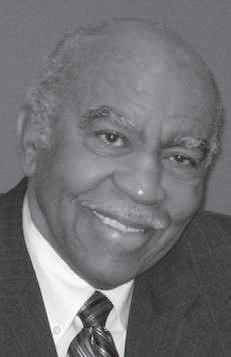
Last week, an angry, misguided individual deliberately shot and fatally wounded three individuals in the Kansas City area because he falsely assumed that they were Jewish. As it turns out, the victims of his violent and senseless rampage were Christians, the very group to which the shooter claims lifelong membership. Seventythree-year-old Frazier Glen Cross, a former Ku Klux Klan leader, believed those that he shot were Jewish simply because they were on facilities that were identified as being Jewish. With clear deliberation and forethought, Cross chose to vent his rage at a Jewish assisted living center and a Jewish synagogue. In committing his acts of violence, he undermined the sense of security and safety of the Jewish community in Kansas City, while advancing his pedigree among those who, like him, choose violence and hatred over compassion and understanding. Amazingly, the deluded Cross actually thinks that acts like his defines him as a “real American.”
On behalf of the pastors of the Ecumenical Leadership Council, representing over 90 predominantly African-American churches, we first offer our deepest prayers and sympathy for those that died by the hand of Cross. As clergy leaders, we have developed a deep and binding relationship with our counterparts in the Jewish community. In representing our respective faiths, we have marched together, cried together, and fellowshipped together on issues that have strengthened

both of our communities. Although, the Ecumenical Leadership Council is confronted with the consequences of senseless violence on an almost daily basis, we are sensitive to the violence committed on other groups simply because they worship or look different than Cross and his deranged followers. As Americans, faith leaders, and people committed to a violence-free environment, let us once and for all publicly reject the dark path of hatred and embrace the benefits of understanding and acceptance. By doing so, the Frazier Glen Crosses of the world will soon be relegated to an unpleasant footnote in history, instead of
Gospel great Yolanda Adams performed at the American Heart Association’s Most Powerful Voices Gospel Concert and Health Fair hosted recently at Abundant Life Fellowship Church, 6055 Parker Rd. in Florissant. She headlined the free concert organized to educate the African-American community about the risk factors associated with stroke.
the headlines of the newspapers.
Bishop Lawrence M. Wooten is president of the Ecumenical Leadership Council and Rev. Douglas M. Parham is its vice president.
celebrates the spiritual Michael McElroy, director of Broadway Inspirational Singers, will share conducting duties with Kevin McBeth as the St. Louis Symphony Orchestra’s IN UNISON Chorus presents “A Celebration of the Spiritual” 6 p.m. Sunday, April 27 at New Sunny Mount Missionary Baptist Church, 4700 W. Florissant Ave. Doors open at 5 p.m. on a first-come, first-seated bases. A free-will offering will support the IN UNISON Chorus Scholarship Fund. More information: stlsymphony.org/inunisonchorus. FREE!

When life gets really upside down with me spiritually, I get anxious and scattered. If not reminded by those closest to me, I get a gentle nudge from my wife to remember my perceived angst has nothing to with the answers to my problems. God’s already taken care of that. When I eventually calm down (and I always do), most of my current issues are related to time, or my perceived lack thereof. It’s then that I hear a sermon titled “There is no such thing as an emergency in eternity,” by Dr. Freddie D. Haynes III, senior pastor of Friendship West Baptist Church in Dallas, Texas. He reminds me and you that for those who claim Christianity, we err if we think God’s time must somehow be reconciled with our own. We all tend to want what we want now, immediately, including those things we ask God for. It’s an unspiritual byproduct of the fast-paced world in which we live. Be saved now. Answer my prayer now. Solve this for me now. Deliver me from this job, this person, this situation now. Some of us even have the nerve to question God’s judgment based on the amount of time we perceive Him to be taking to get around to our situation.
Prayer is compared to texting, waiting for God to text us back. One thing I have learned, the hard way I might add, is that God will answer and His answer will be right on time. His time! God delivers when He knows you can handle and or appreciate the blessing He is about to bestow.
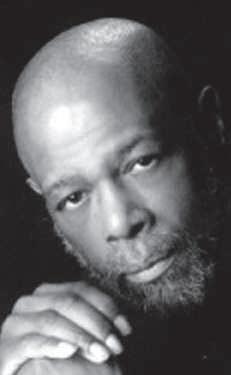
Many a time I have known I couldn’t go another further. And then something happened. I placed it in God’s hands and truly let it go because I certainly couldn’t deal with it. Let go. Let God. Jesus has already done the dirty work. “It is not for you to know the times or the dates the father has set by His own authority. But you will receive power when the Holy Spirit comes on you.” Acts 1:7-8. This power is evident when patience and prayer align and reveal to us that there is indeed a divine reason for us to experience whatever it is that we’re going through. We see right past these things, these people who are placed in our lives to insure that we understand how blessed we really are when we are in a rush, when we are about to lose our minds, when we are
400 words) as a Word document and pasted text to cking@stlamerican. com and attach a photo of yourself as a jpeg ile. Please be patient; we will run columns in the order received.

MAY 30
FRIDAY AT 7:30PM
Byron Stripling, trumpet and vocals Trumpet sensation Byron Stripling returns to Powell Hall for a concert devoted to legendary swing hits that will set your soul on ire. From Mahalia Jackson to Aretha Franklin, with the inluences of Bessie Smith and Duke Ellington, selections include “Down by the Riverside,” “Nobody Knows the Trouble I’ve Seen” and “He’s Got the Whole World.” Stripling and the STL Symphony will have you clapping your hands,
your toes and jumping
your feet




Lawrence and Marni
a select few STL tastemakers for a special Avion Tequila appreciation dinner presented by Delux Magazine Friday night @ The
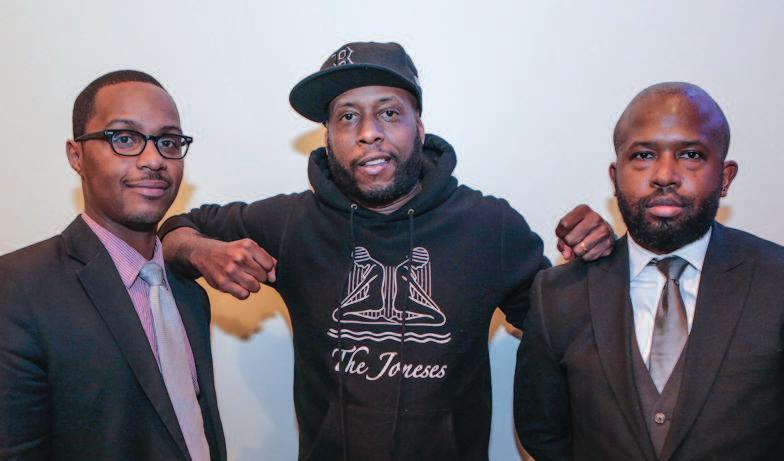
Swagger
Terry Harris and MK Stallings with rap star and education advocate Talib Kweli. It was standing room only as Kweli hit the stage Thursday to talk education and his upcoming book for “Remixing Education” – a co-presentation of The Missouri History Museum along with The Parkway and Rockwood School Districts.

Rapping on education. My boo Mos Def’s former rhyme partner Talib Kweli kicked off my weekend at the Missouri History Museum Thursday night for the Remixing Education series. Nappy DJ Needles did his thing, keeping us entertained as MK Stallings stalled until Talib showed up. I always feel the need to pretend that I’m natural at certain events ‘cause the twist-out YouTube watching product junkie sisters love to give the evil eye at these events that they would prefer said “Natural Hair Only.” Anyway, Talib did his thing and gave us a sneak peek into his upcoming book. It was packed to the gills and an enlightening time, but I’m going to need the History Museum to get a mic to pass around next time, because MK was having a ball dominating the conversation.
Lola’s winning weekend. Dear Lola: I would like to thank you for restoring my faith in the St. Louis nightlife. Your dedication to this community was evident in the many women who, for the first time, didn’t mind sweating out their Easter hairdo a couple of days early in the name of good music and an old school dance off. Talib Kweli came through on Thursday and after dropping knowledge he had a few folks dropping it like it was hot… in a very respectful manner… if that’s possible. Friday night the legendary mix master and unofficial international ambassador of team light skin Kid Capri came through and made every DJ sit in the corner and take plenty of notes. Mocha Latte was there doing her thang (yes, I said “thang) and she always manages to get the crowd going regardless if she’s working or not. My two favorite ladies to see out, Kira and Lakisha, were looking too cute and every man in the building took notice #WERK. Lola’s glorious three-day assault on the scene concluded with Mr. Larry Blue’s birthday bash. Please know that he brought out the Partyline alumni for his birthday too! Anybody who was somebody in the clubs 8-10 years ago got a babysitter and put their respective bowties and Easter dresses on, ‘cause they clearly planned to shut Lola down and head straight to somebody’s Resurrection Day sunrise service. DJ Kut stayed as close to the door as possible to keep from melting because he and DJ Reminisce turned the whole spot into a sweat box. And birthday boy Blue quietly thought he was on stage while he danced on the speakers. Blue brought out the city…do you hear me!?! And ladies next time you hear about him doing a party…go and be prepared to catch you a man while you’re there cause they were out and looking better than anything Lola was serving up on that menu.
A wispy crowd for Webbie. I left Lola to sneak off and see my secret ratchet spelling champ boo Webbie. Sadly, the Ambassador was E-M-P-T-Y with a side D-E-A-D for his show Friday night. King Yella has the game on lock with pictures, but we’re gonna work on his promotions game – ‘cause I don’t think bringing Webbie a week prior to Boosie was the best move. What? You know the baby mamas have saved just enough of that tax refund to buy a ticket for one Louisiana Rapper – and they were all repping team #FreeBoosie from the get.
A DELUX Avion experience. DELUX Magazine’s Keith Griffin is making some serious moves courtesy of this new tequila brand. He hosted a private dinner at Rustic Goat Friday with a very few select who’s who in the city and the whole ambience was so swagged out I thought he had secretly transported me to an upscale NYC tastemaker event without my knowledge. The vibe was fantastic and the food was even better.

Paying homage to “The Purple One.” Yes we are about to discuss him. And you can save your little perm jokes, ‘cause he’s now team natural. Dwight knew exactly what he was doing by having a Prince tribute at the Gramophone on Saturday night. It was the only place in St. Louis that forgot our city was divided by race – or age…or status. Attorney Richard Banks was posted up in the cut along with Sal Martinez… and who could blame them. My only note for the night goes to the young lady in her post-pedicure flip flops – girl, what were you goin’ through? Anyway, Coco Soul and the band Super Hero Killer made me a fan. I’m still a little salty at “The Voice” for not even giving my girl Theresa Payne proper camera time. But that’s ok, ‘cause she won the crowd over with her tribute to Prince when she sang “Adore” in her big girl mini dress. She so brave and fearless! I see you T-Payne...Don’t hurt ‘em!
Underwhelmed by a ‘Basketball Wife’ at EXO. I regretfully passed up an opportunity to stop and get some chicken so I could check out Brittish from “Basketball Wives: LA” and her 6’7 future husband who is too short to play in the NBA (girl, bye…). I saw her makeup artist post an Instagram update on how she beat that face at 9pm (Chaunteia, I hope she is flying you to LA for taping, ‘cause you put in work!), but she still hadn’t arrived to EXO by 12:30. Brittish finally showed up looking sad because the crowd was the rejects from your run of the mill ratchet hole in the wall (pick one). But you couldn’t tell the promoter a thing in his new Easter suit. I know he cried when he got home.
Much love for The Marquee. The Marquee may be my new spot to party because I don’t think anybody else has such a grand menu of goodies for us wonderful women of chunk. On top of that, there were tasty treats for the ladies (I saw you Tara, Shaki, Gab Davis and crew), and eye candy for the men rolled up in such a nice spot. But you know it’s always somebody who can’t do right. I saw a certain “relationship expert” go right out the side door and make an outhouse behind some cars instead of walking his Steve Harvey advice-giving self to the restroom like a respectable human. It was birthday party central and anytime I can see my boo Mario “The Great” it makes for a magnificent night. Melanie and Andre, do you have a private, veiled booth for me to eat my dessert without being looked at funny by your skinny patrons?